AB 664: Community colleges: baccalaureate degree program: Southwestern Community College District.
- Session Year: 2025-2026
- House: Assembly
- Latest Version Date: 2026-09-04
Current Status:
Failed
(2026-09-27: Vetoed by Governor.)
Introduced
In Committee
Awaiting First Chamber Vote
Passed First Chamber
In Committee
Awaiting Second Chamber Vote
Passed Second Chamber
Enacted
What does this bill do?
This bill lets the California Community Colleges chancellor allow the Southwestern Community College District to offer up to four workforce-focused bachelor’s degree programs in forensic studies, allied health education and leadership, interaction design, and teaching English to speakers of other languages to serve South San Diego County residents. The district must show labor-market need and partnerships with regional universities to avoid duplication, and state analysts must review and report on the programs in 2031 and 2035.
The summary is provided by generative AI which can make mistakes. For original language, please view the details in the table below.
Existing law establishes the California Community Colleges, under the administration of the Board of Governors of the California Community Colleges, as one of the segments of public postsecondary education in this state. Existing law establishes community college districts throughout the state and authorizes them to provide instruction at the campuses they operate. Existing law authorizes the Board of Governors of the California Community Colleges, in consultation with the California State University and the University of California, to authorize the establishment of community college district baccalaureate degree programs, as provided.
This bill would authorize the Chancellor of the California Community Colleges to authorize the Southwestern Community College District to offer no more than 4 workforce-aligned baccalaureate degree programs, one each in forensic studies, allied health education and leadership, interaction design, and teaching English to speakers of other languages, as provided. The bill would require the Legislative Analysts Office to, on or before July 1, 2031, conduct and present to the Legislature and the Governor an interim evaluation of any of the baccalaureate degree programs that are offered pursuant to that authorization and, on or before July 1, 2035, a final evaluation of those degree programs, as provided. The bill would repeal these provisions on January 1, 2037.
This bill would make legislative findings and declarations as to the necessity of a special statute for the Southwestern Community College District.
This bill would not become operative if either AB 2694 or SB 960 of the 202526 Regular Session, or both of those bills, are enacted and take effect on or before January 1, 2027.
Existing law establishes the California Community Colleges, under the administration of the Board of Governors of the California Community Colleges, as one of the segments of public postsecondary education in this state. Existing law establishes community college districts throughout the state and authorizes them to provide instruction at the campuses they operate. Existing law authorizes the Board of Governors of the California Community Colleges, in consultation with the California State University and the University of California, to authorize the establishment of community college district baccalaureate degree programs, as provided.
This bill would authorize the Chancellor of the California Community Colleges to authorize the Southwestern Community College District to offer no more than 4 workforce-aligned baccalaureate degree programs, programs, one each in forensic studies, allied health education and leadership, interaction design, and teaching English to speakers of other languages, as provided. The bill would require the Legislative Analysts Office to, on or before July 1, 2030, 2031, conduct and present to the Legislature and the Governor an interim evaluation of any of the baccalaureate degree programs that are offered pursuant to that authorization and, on or before July 1, 2034, 2035, a final evaluation of those degree programs, as provided. The bill would repeal these provisions on January 1, 2035. 2037.
This bill would make legislative findings and declarations as to the necessity of a special statute for the Southwestern Community College District.
Existing law establishes the California Community Colleges, under the administration of the Board of Governors of the California Community Colleges, as one of the segments of public postsecondary education in this state. Existing law establishes community college districts throughout the state and authorizes them to provide instruction at the campuses they operate. Existing law authorizes the Board of Governors of the California Community Colleges, in consultation with the California State University and the University of California, to authorize the establishment of community college district baccalaureate degree programs, as provided.
This bill would state the intent of the Legislature to enact subsequent legislation that would expand access to workforce-aligned baccalaureate degree programs in underserved, college desert areas like South San Diego County by authorizing authorize the Chancellor of the California Community Colleges to authorize the Southwestern Community College District to offer a limited number of no more than 4 workforce-aligned baccalaureate degrees, degree programs, as provided. The bill would require the Legislative Analysts Office to, on or before July 1, 2030, conduct and present to the Legislature and the Governor an interim evaluation of any of the baccalaureate degree programs that are offered pursuant to that authorization and, on or before July 1, 2034, a final evaluation of those degree programs, as provided. The bill would repeal these provisions on January 1, 2035.
This bill would make legislative findings and declarations as to the necessity of a special statute for the Southwestern Community College District.
Existing law establishes the California Community Colleges, under the administration of the Board of Governors of the California Community Colleges, as one of the segments of public postsecondary education in this state. Existing law establishes community college districts throughout the state and authorizes them to provide instruction at the campuses they operate. Existing law authorizes the Board of Governors of the California Community Colleges, in consultation with the California State University and the University of California, to authorize the establishment of district baccalaureate degree programs, as provided.
This bill would state the intent of the Legislature to enact subsequent legislation that would expand access to workforce-aligned baccalaureate degree programs in underserved, college desert areas like South San Diego County by authorizing Southwestern Community College District to offer a limited number of baccalaureate degrees, as provided.
The Legislature finds and declares all of the following:
(a)The City of Chula Vista is the largest city in California with a population exceeding 200,000 that does not have a public university offering baccalaureate degree programs. This gap has created a barrier to higher education access for the 585,000 residents of South San Diego County, where the Southwestern Community College District (SWC) is the sole public postsecondary educational institution.
(b)Labor market analyses conducted by the San Diego Regional Policy and Innovation Center and the University Now Initiative have identified 147 priority occupations critical to regional economic growth. These occupations require baccalaureate degrees in fields such as business, health care, technology, and the arts, which are in high demand and largely unmet by existing public postsecondary educational institution offerings in the area.
(c)Workforce projections for South San Diego County anticipate the creation of over 25,000 jobs by 2033, with the majority of these requiring baccalaureate degrees. Expanding access to baccalaureate degrees at SWC will directly address regional labor shortages while supporting educational equity.
(d)The binational nature of the region, which includes substantial cross-border commuting for work and education, underscores the need for accessible, bilingual, and bicultural degree programs tailored to meet the unique demands of the California-Mexico border area.
(e)Community colleges have demonstrated the capacity to offer high-quality baccalaureate degree programs that align with workforce demands, as evidenced by the success of the California Community Colleges Baccalaureate Degree Program.
(f)Workforce-aligned baccalaureate degree programs in forensic studies, allied health education and leadership, interaction design, and teaching English to speakers of other languages address documented regional labor market needs in South San Diego County.
SEC. 2.Article 3.3 (commencing with Section 78047) is added to Chapter 1 of Part 48 of Division 7 of Title 3 of the Education Code, to read:3.3.Southwestern Community College District Workforce-Aligned Baccalaureate Degree Programs78047.For purposes of this article, the following definitions apply:
(a)Regional public university means a public university located within the community college districts service area.
(b)Underserved, college desert area means the designated service area of a community college district that does not include a public university and where the nearest public university majors have been declared impacted.
78047.5.(a)(1)Notwithstanding Section 66010.4 or Article 3 (commencing with Section 78040), the Chancellor of the California Community Colleges may authorize the Southwestern Community College District to offer no more than four workforce-aligned baccalaureate degree programs, one in each of the following fields:
(A)Forensic Studies.
(B)Allied Health Education and Leadership.
(C)Interaction Design.
(D)Teaching English to Speakers of Other Languages.
(2)The chancellor shall ensure that the application and review procedures and requirements described in paragraphs (1), (3), and (4) of subdivision (h) of Section 78042 are met for any program authorized pursuant to this article.
(b)The governing board of the Southwestern Community College District shall submit proposals for baccalaureate degree programs to be authorized pursuant to this article to the chancellor. A proposal shall include all of the following:
(1)Data supporting the regional labor-market demand for the proposed degree program.
(2)Data demonstrating the lack of availability of the proposed degree program at the regional public universities or the inability of a degree program offered at a regional public university to meet the demand for the degreed, skilled workforce in the region.
(3)Evidence of collaboration that prioritizes structured partnerships between the Southwestern Community College District and regional public universities to avoid unnecessary duplication and to expand access to baccalaureate degrees. The structured partnerships may include, but not be limited to, any of the following:
(A)Guaranteed transfer agreements.
(B)2+2 articulation agreements.
(C)Dual enrollment pathways with high school and public university partners such as 1+1+2 models.
(D)Credit for prior learning.
(E)Shared use of facilities to support colocation or cross-location delivery models.
(4)Evidence of program approval through the appropriate accreditation body, if necessary.
(c)Full-time equivalent students enrolled in a baccalaureate program authorized pursuant to this article shall be included in the funding model developed and adopted pursuant to, and the fee provisions described in, subdivision (g) of Section 78042.
78047.6.(a)On or before July 1, 2031, the Legislative Analysts Office shall conduct and present to the Legislature, in compliance with Section 9795 of the Government Code, and to the Governor, an interim evaluation of any baccalaureate degree programs offered pursuant to this article that includes all of the following:
(1)Which programs, if any, were approved by the Chancellor of the California Community Colleges.
(2)Which programs, if any, were denied by the chancellor.
(3)Trends in workforce demand in the region that may require additional degree programs to be offered by the Southwestern Community College District or other regional partners.
(4)Completion rates, if available, for each cohort of students in the degree programs.
(5)Information on the impact of the degree programs on underserved and underprepared students.
(6)Information regarding other forms of collaboration between the Southwestern Community College District and public universities to address workforce demand in the region.
(b)On or before July 1, 2035, the Legislative Analysts Office shall conduct and present to the Legislature, in compliance with Section 9795 of the Government Code, and to the Governor, a final evaluation of any baccalaureate degree programs offered pursuant to this article that includes all of the following:
(1)Data regarding students participating in the degree programs, including the number of applicants, admitted students, enrolled students, and degree recipients.
(2)The extent to which the degree programs meet identified workforce needs in the region, including regional supply and demand data that considers the capacity of the California State University, the University of California, and the independent colleges and universities in the region.
(3)Information on the place of employment of students in the degree programs and the subsequent job placement of graduates of the degree programs.
(4)Time-to-degree rates and completion rates for students in the degree programs.
(5)Information regarding other areas of collaboration between the Southwestern Community College District and regional partners and how those partnerships addressed regional workforce needs.
(6)Information on the impact of the degree programs on underserved and underprepared students.
(7)Recommendations on whether and how the degree programs can or should be expanded or amended based on the results of the evaluation.
(c)(1)The Southwestern Community College District shall provide the information necessary to conduct the evaluations, as determined by the Legislative Analysts Office, to the chancellor.
(2)The chancellor shall provide the information received pursuant to paragraph (1) to the Legislative Analysts Office upon request.
78048.This article shall remain in effect only until January 1, 2037, and as of that date is repealed.
SEC. 3.The Legislature finds and declares that a special statute is necessary and that a general statute cannot be made applicable within the meaning of Section 16 of Article IV of the California Constitution because of the unique positioning of the Southwestern Community College District service area, being in an underserved, college desert area.
SEC. 4.This act shall not become operative if Assembly Bill 2694 of the 202526 Regular Session, Senate Bill 960 of the 202526 Regular Session, or both of those bills are enacted and take effect on or before January 1, 2027.
The Legislature finds and declares all of the following:
(a)The City of Chula Vista is the largest city in California with a population exceeding 200,000 that does not have a public university offering baccalaureate degree programs. This gap has created a barrier to higher education access for the 585,000 residents of South San Diego County, where the Southwestern Community College District (SWC) is the sole public postsecondary educational institution.
(b)Labor market analyses conducted by the San Diego Regional Policy and Innovation Center and the University Now Initiative have identified 147 priority occupations critical to regional economic growth. These occupations require baccalaureate degrees in fields such as business, health care, technology, and the arts, which are in high demand and largely unmet by existing public postsecondary educational institution offerings in the area.
(c)Workforce projections for South San Diego County anticipate the creation of over 25,000 jobs by 2033, with the majority of these requiring baccalaureate degrees. Expanding access to baccalaureate degrees at SWC will directly address regional labor shortages while supporting educational equity.
(d)The binational nature of the region, which includes substantial cross-border commuting for work and education, underscores the need for accessible, bilingual, and bicultural degree programs tailored to meet the unique demands of the California-Mexico border area.
(e)Community colleges have demonstrated the capacity to offer high-quality baccalaureate degree programs that align with workforce demands, as evidenced by the success of the California Community Colleges Baccalaureate Degree Program.
(f)Workforce-aligned baccalaureate degree programs in forensic studies, allied health education and leadership, interaction design, and teaching English to speakers of other languages address documented regional labor market needs in South San Diego County.
SEC. 2.Article 3.3 (commencing with Section 78047) is added to Chapter 1 of Part 48 of Division 7 of Title 3 of the Education Code, to read:3.3.Southwestern Community College District Workforce-Aligned Baccalaureate Degree Programs78047.For purposes of this article, the following definitions apply:
(a)Regional public university means a public university located within the community college districts service area.
(b)Underserved, college desert area means the designated service area of a community college district that does not include a public university and where the nearest public university majors have been declared impacted.
78047.5.(a)(1)Notwithstanding Section 66010.4 or Article 3 (commencing with Section 78040), the Chancellor of the California Community Colleges may authorize the Southwestern Community College District to offer no more than four workforce-aligned baccalaureate degree programs. programs, one in each of the following fields:
(A)Forensic Studies.
(B)Allied Health Education and Leadership.
(C)Interaction Design.
(D)Teaching English to Speakers of Other Languages.
(2)The chancellor shall ensure that the application and review procedures and requirements described in paragraphs (1), (3), and (4) of subdivision (h) of Section 78042 are met for any program authorized pursuant to this article.
(b)The governing board of the Southwestern Community College District shall submit proposals for baccalaureate degree programs to be authorized pursuant to this article to the chancellor. A proposal shall include all of the following:
(1)Data supporting the regional labor-market demand for the proposed degree program.
(2)Data demonstrating the lack of availability of the proposed degree program at the regional public universities or the inability of a degree program offered at a regional public university to meet the demand for the degreed, skilled workforce in the region.
(3)Evidence of collaboration that prioritizes structured partnerships between the Southwestern Community College District and regional public universities to avoid unnecessary duplication and to expand access to baccalaureate degrees. The structured partnerships may include, but not be limited to, any of the following:
(A)Guaranteed transfer agreements.
(B)2+2 articulation agreements.
(C)Dual enrollment pathways with high school and public university partners such as 1+1+2 models.
(D)Credit for prior learning.
(E)Shared use of facilities to support colocation or cross-location delivery models.
(4)Evidence of program approval through the appropriate accreditation body, if necessary.
(c)Full-time equivalent students enrolled in a baccalaureate program authorized pursuant to this article shall be included in the funding model developed and adopted pursuant to, and the fee provisions described in, subdivision (g) of Section 78042.
78047.6.(a)On or before July 1, 2030, 2031, the Legislative Analysts Office shall conduct and present to the Legislature, in compliance with Section 9795 of the Government Code, and to the Governor, an interim evaluation of any baccalaureate degree programs offered pursuant to this article that includes all of the following:
(1)Which programs, if any, were approved by the Chancellor of the California Community Colleges.
(2)Which programs, if any, were denied by the chancellor.
(3)Trends in workforce demand in the region that may require additional degree programs to be offered by the Southwestern Community College District or other regional partners.
(4)Completion rates, if available, for each cohort of students in the degree programs.
(5)Information on the impact of the degree programs on underserved and underprepared students.
(6)Information regarding other forms of collaboration between the Southwestern Community College District and public universities to address workforce demand in the region.
(b)On or before July 1, 2034, 2035, the Legislative Analysts Office shall conduct and present to the Legislature, in compliance with Section 9795 of the Government Code, and to the Governor, a final evaluation of any baccalaureate degree programs offered pursuant to this article that includes all of the following:
(1)Data regarding students participating in the degree programs, including the number of applicants, admitted students, enrolled students, and degree recipients.
(2)The extent to which the degree programs meet identified workforce needs in the region, including regional supply and demand data that considers the capacity of the California State University, the University of California, and the independent colleges and universities in the region.
(3)Information on the place of employment of students in the degree programs and the subsequent job placement of graduates of the degree programs.
(4)Time-to-degree rates and completion rates for students in the degree programs.
(5)Information regarding other areas of collaboration between the Southwestern Community College District and regional partners and how those partnerships addressed regional workforce needs.
(6)Information on the impact of the degree programs on underserved and underprepared students.
(7)Recommendations on whether and how the degree programs can or should be expanded or amended based on the results of the evaluation.
(b)(c)(1)The Southwestern Community College District shall provide the information necessary to conduct the evaluations, as determined by the Legislative Analysts Office, to the chancellor.
(2)The chancellor shall provide the information received pursuant to paragraph (1) to the Legislative Analysts Office upon request.
78048.This article shall remain in effect only until January 1, 2035 2037, and as of that date is repealed.
SEC. 3.The Legislature finds and declares that a special statute is necessary and that a general statute cannot be made applicable within the meaning of Section 16 of Article IV of the California Constitution because of the unique positioning of the Southwestern Community College District service area, being in an underserved, college desert area.
The Legislature finds and declares all of the following:
(a)The City of Chula Vista is the largest city in California with a population exceeding 200,000 that does not have a public university offering baccalaureate degree programs. This gap has created a barrier to higher education access for the 585,000 residents of South San Diego County, where the Southwestern Community College District (SWC) is the sole public postsecondary educational institution.
(b)Labor market analyses conducted by the San Diego Regional Policy and Innovation Center and the University Now Initiative have identified 147 priority occupations critical to regional economic growth. These occupations require baccalaureate degrees in fields such as business, health care, technology, and the arts, which are in high demand and largely unmet by existing public postsecondary educational institution offerings in the area.
(c)Workforce projections for South San Diego County anticipate the creation of over 25,000 jobs by 2033, with the majority of these requiring baccalaureate degrees. Expanding access to baccalaureate degrees at SWC will directly address regional labor shortages while supporting educational equity.
(d)The binational nature of the region, which includes substantial cross-border commuting for work and education, underscores the need for accessible, bilingual, and bicultural degree programs tailored to meet the unique demands of the California-Mexico border area.
(e)Community colleges have demonstrated the capacity to offer high-quality baccalaureate degree programs that align with workforce demands, as evidenced by the success of the California Community Colleges Baccalaureate Degree Program.
SEC. 2.It is the intent of the Legislature to enact subsequent legislation that would expand access to workforce-aligned baccalaureate degree programs in underserved, college desert areas like South San Diego County by authorizing Southwestern Community College District to offer a limited number of baccalaureate degrees. It is the further intent of the Legislature that these programs do all of the following:(a)Address critical unmet workforce needs as identified by the San Diego Regional Policy and Innovation Center and University Now Initiative research, focusing on areas where current academic offerings are insufficient or unavailable to meet regional labor market demands.(b)Not compete with existing programs offered by public postsecondary educational institutions in the region whenever possible, while allowing for the development of programs that address unmet workforce demand when regional labor market data demonstrates that existing regional offerings are insufficient to meet the regions workforce needs.(c)Require collaboration with regional public postsecondary educational institutions on the development of programs to ensure they effectively address workforce demand gaps and minimize unnecessary regional competition.SEC. 2.Article 3.3 (commencing with Section 78047) is added to Chapter 1 of Part 48 of Division 7 of Title 3 of the Education Code, to read:3.3.Southwestern Community College District Workforce-Aligned Baccalaureate Degree Programs78047.For purposes of this article, the following definitions apply:
(a)Regional public university means a public university located within the community college districts service area.
(b)Underserved, college desert area means the designated service area of a community college district that does not include a public university and where the nearest public university majors have been declared impacted.
78047.5.(a)(1)Notwithstanding Section 66010.4 or Article 3 (commencing with Section 78040), the Chancellor of the California Community Colleges may authorize the Southwestern Community College District to offer no more than four workforce-aligned baccalaureate degree programs.
(2)The chancellor shall ensure that the application and review procedures and requirements described in paragraphs (1), (3), and (4) of subdivision (h) of Section 78042 are met for any program authorized pursuant to this article.
(b)The governing board of the Southwestern Community College District shall submit proposals for baccalaureate degree programs to be authorized pursuant to this article to the chancellor. A proposal shall include all of the following:
(1)Data supporting the regional labor-market demand for the proposed degree program.
(2)Data demonstrating the lack of availability of the proposed degree program at the regional public universities or the inability of a degree program offered at a regional public university to meet the demand for the degreed, skilled workforce in the region.
(3)Evidence of collaboration that prioritizes structured partnerships between the Southwestern Community College District and regional public universities to avoid unnecessary duplication and to expand access to baccalaureate degrees. The structured partnerships may include, but not be limited to, any of the following:
(A)Guaranteed transfer agreements.
(B)2+2 articulation agreements.
(C)Dual enrollment pathways with high school and public university partners such as 1+1+2 models.
(D)Credit for prior learning.
(E)Shared use of facilities to support colocation or cross-location delivery models.
(4)Evidence of program approval through the appropriate accreditation body, if necessary.
(c)Full-time equivalent students enrolled in a baccalaureate program authorized pursuant to this article shall be included in the funding model developed and adopted pursuant to, and the fee provisions described in, subdivision (g) of Section 78042.
78047.6.(a)On or before July 1, 2030, the Legislative Analysts Office shall conduct and present to the Legislature, in compliance with Section 9795 of the Government Code, and to the Governor, an interim evaluation of any baccalaureate degree programs offered pursuant to this article that includes all of the following:
(1)Which programs, if any, were approved by the Chancellor of the California Community Colleges.
(2)Which programs, if any, were denied by the chancellor.
(3)Trends in workforce demand in the region that may require additional degree programs to be offered by the Southwestern Community College District or other regional partners.
(4)Completion rates, if available, for each cohort of students in the degree programs.
(5)Information on the impact of the degree programs on underserved and underprepared students.
(6)Information regarding other forms of collaboration between the Southwestern Community College District and public universities to address workforce demand in the region.
(b)On or before July 1, 2034, the Legislative Analysts Office shall conduct and present to the Legislature, in compliance with Section 9795 of the Government Code, and to the Governor, a final evaluation of any baccalaureate degree programs offered pursuant to this article that includes all of the following:
(1)Data regarding students participating in the degree programs, including the number of applicants, admitted students, enrolled students, and degree recipients.
(2)The extent to which the degree programs meet identified workforce needs in the region, including regional supply and demand data that considers the capacity of the California State University, the University of California, and the independent colleges and universities in the region.
(3)Information on the place of employment of students in the degree programs and the subsequent job placement of graduates of the degree programs.
(4)Time-to-degree rates and completion rates for students in the degree programs.
(5)Information regarding other areas of collaboration between the Southwestern Community College District and regional partners and how those partnerships addressed regional workforce needs.
(6)Information on the impact of the degree programs on underserved and underprepared students.
(7)Recommendations on whether and how the degree programs can or should be expanded or amended based on the results of the evaluation.
(b)(1)The Southwestern Community College District shall provide the information necessary to conduct the evaluations, as determined by the Legislative Analysts Office, to the chancellor.
(2)The chancellor shall provide the information received pursuant to paragraph (1) to the Legislative Analysts Office upon request.
78048.This article shall remain in effect only until January 1, 2035, and as of that date is repealed.
SEC. 3.The Legislature finds and declares that a special statute is necessary and that a general statute cannot be made applicable within the meaning of Section 16 of Article IV of the California Constitution because of the unique positioning of the Southwestern Community College District service area, being in an underserved, college desert area.
REVISIONS: HeadingLine 2.The Legislature finds and declares all of the following:
(a)The City of Chula Vista is the largest city in California with a population exceeding 200,000 that does not have a public university offering baccalaureate degree programs. This gap has created a barrier to higher education access for the 585,000 residents of South San Diego County, where Southwestern Community College District (SWC) is the sole public postsecondary educational institution.
(b)Labor market analyses conducted by the San Diego Regional Policy and Innovation Center and the University Now Initiative have identified 147 priority occupations critical to regional economic growth. These occupations require baccalaureate degrees in fields such as business, health care, technology, and the arts, which are in high demand and largely unmet by existing public postsecondary educational institution offerings in the area.
(c)Workforce projections for South San Diego County anticipate the creation of over 25,000 jobs by 2033, with the majority of these requiring baccalaureate degrees. Expanding access to baccalaureate degrees at SWC will directly address regional labor shortages while supporting educational equity.
(d)The binational nature of the region, which includes substantial cross-border commuting for work and education, underscores the need for accessible, bilingual, and bicultural degree programs tailored to meet the unique demands of the California-Mexico border area.
(e)Community colleges have demonstrated the capacity to offer high-quality baccalaureate degree programs that align with workforce demands, as evidenced by the success of the California Community Colleges Baccalaureate Degree Program.
SEC. 2.It is the intent of the Legislature to enact subsequent legislation that would expand access to workforce-aligned baccalaureate degree programs in underserved, college desert areas like South San Diego County by authorizing Southwestern Community College District to offer a limited number of baccalaureate degrees. It is the further intent of the Legislature that these programs do all of the following:
(a)Address critical unmet workforce needs as identified by the San Diego Regional Policy and Innovation Center and University Now Initiative research, focusing on areas where current academic offerings are insufficient or unavailable to meet regional labor market demands.
(b)Not compete with existing programs offered by public postsecondary educational institutions in the region whenever possible, while allowing for the development of programs that address unmet workforce demand when regional labor market data demonstrates that existing regional offerings are insufficient to meet the regions workforce needs.
(c)Require collaboration with regional public postsecondary educational institutions on the development of programs to ensure they effectively address workforce demand gaps and minimize unnecessary regional competition.
|
Date
|
Status
|
|---|---|
| Sep 27, 2026 | Vetoed by Governor. |
| Sep 14, 2026 | Enrolled and presented to the Governor at 1:30 p.m. |
| Aug 31, 2026 | Senate amendments concurred in. To Engrossing and Enrolling. (Ayes 68. Noes 1.). |
| Aug 31, 2026 | Senate amendments concurred in. To Engrossing and Enrolling. (Ayes 68. Noes 1. Page 7030.). |
| Aug 31, 2026 | Senate amendments concurred in. To Engrossing and Enrolling. |
| Aug 31, 2026 | In Assembly. Concurrence in Senate amendments pending. |
| Aug 31, 2026 | Read third time. Passed. Ordered to the Assembly. (Ayes 39. Noes 0.). |
| Aug 24, 2026 | Read second time. Ordered to third reading. |
| Aug 21, 2026 | Read third time and amended. Ordered to second reading. |
| Aug 13, 2026 | Read second time. Ordered to third reading. |
| Aug 13, 2026 | From committee: Do pass. (Ayes 7. Noes 0.) (August 13). |
| Aug 3, 2026 | In committee: Referred to APPR. suspense file. |
| Jul 2, 2026 | From committee: Do pass and re-refer to Com. on APPR. (Ayes 6. Noes 0.) (July 1). Re-referred to Com. on APPR. |
| May 22, 2026 | From committee chair, with author's amendments: Amend, and re-refer to committee. Read second time, amended, and re-referred to Com. on ED. |
| May 6, 2026 | Referred to Com. on ED. |
| Jan 27, 2026 | In Senate. Read first time. To Com. on RLS. for assignment. |
| Jan 26, 2026 | Read third time. Passed. Ordered to the Senate. (Ayes 69. Noes 1. Page 3830.) |
| Jan 22, 2026 | Read second time. Ordered to third reading. |
| Jan 22, 2026 | In committee: Set, first hearing. Referred to suspense file. |
| Jan 22, 2026 | From committee: Do pass. (Ayes 15. Noes 0.) (January 22). |
| Jan 22, 2026 | Assembly Rule 63 suspended. (Page 3806.) |
| Jan 14, 2026 | From committee: Do pass and re-refer to Com. on APPR. (Ayes 9. Noes 1.) (January 13). Re-referred to Com. on APPR. |
| Jan 14, 2026 | Coauthors revised. |
| Jan 6, 2026 | Re-referred to Com. on HIGHER ED. |
| Jan 5, 2026 | Referred to Com. on HIGHER ED. |
| Jan 5, 2026 | From committee chair, with author's amendments: Amend, and re-refer to Com. on HIGHER ED. Read second time and amended. |
| Feb 15, 2025 | From printer. May be heard in committee March 17. |
| Feb 14, 2025 | Read first time. To print. |
|
Date
|
Description
|
Location
|
Votes
|
|
|---|---|---|---|---|
| Aug 31, 2026 | AB 664 Alvarez Concurrence in Senate Amendments | Assembly Floor |
Passed |
|
| Aug 31, 2026 | Assembly 3rd Reading AB664 Alvarez et al. By Padilla | Senate Floor |
Passed |
|
| Aug 13, 2026 | Do pass | Senate Standing Committee on Appropriations |
Passed |
|
| Aug 3, 2026 | Placed on suspense file | Senate Standing Committee on Appropriations |
Passed |
|
| Jul 1, 2026 | Do pass, but first be re-referred to the Committee on [Appropriations] | Senate Standing Committee on Education |
Passed |
|
| Jan 26, 2026 | AB 664 Alvarez Assembly Third Reading | Assembly Floor |
Passed |
|
| Jan 22, 2026 | Do pass. | Assembly Standing Committee on Appropriations |
Passed |
|
| Jan 13, 2026 | Do pass and be re-referred to the Committee on [Appropriations] | Assembly Standing Committee on Higher Education |
Passed |
This list shows positions taken on this bill by organizations on the date displayed, which is linked to the original source.
Positions by individuals are not included.
|
Organization
|
Position
|
Date
|
|---|---|---|
| Associated Student Organization - Southwestern College | ** Support | |
| California Faculty Association | ** Against | |
| California School Employees Association | ** Support | |
| California State University (CSU) | ** Against | |
| California State University, Office Of The Chancellor | ** Against | |
| CCC Colegas | ** Support | |
| Chula Vista Chamber Of Commerce | ** Support | |
| City Of Chula Vista | ** Support | |
| Governor Gavin Newsom | ** Against | |
| HOMEFED CORPORATION | ** Support | |
| Los Angeles Regional Consortium | ** Support | |
| National University | ** Support | |
| San Bernardino Community College District | ** Support | |
| San Diego Community College District | ** Support | |
| San Diego ‘s Building and Construction Trades | ** Support | |
| San Diego’s Building and Construction Trades | ** Support | |
| South County Economic Development Council | ** Support | |
| Southwestern College Academic Senate | ** Support | |
| Southwestern Community College District | ** Support | |
| Southwestern Community College District (sponsor) | ** Support | |
| Student Senate for California Community Colleges | ** Support | |
| The CSU | ** Against | |
| UC Office of the President | ** Against | |
| University of California | ** Against |
GOVERNOR′S VETO
GV Bill Id:AB 664
Author:(Alvarez)
As Enrolled Ver:September 4, 2026
2/3 vote
SUMMARY
Authorizes the California Community Colleges (CCC) Chancellor to allow Southwestern Community College District to offer four workforce-aligned baccalaureate degree programs, outside of the existing CCC baccalaureate degree approval process. It further requires an interim and final report from the Legislative Analyst′s Office (LAO), and sunsets the provisions of the bill on January 1, 2037.
Senate Amendments
Amendments taken in the Senate make the provisions of the bill inoperative if AB 2694 (Alvarez) Chapter 308 Statutes of 2026, SB 960 (Cabaldon), Chapter 320, Statutes of 2026, or both bills are enacted and take effect by January 1, 2027.
Governor′s Veto Message
″This bill authorizes the California Community Colleges (CCC) Chancellor to allow the Southwestern Community College District to offer four workforce-aligned baccalaureate degree programs outside of the existing CCC baccalaureate degree approval process.
Recently, I signed AB 2694 and SB 960 to create a statewide framework for community college districts to establish baccalaureate programs where there is demonstrated workforce demand and lack of capacity in regional universities.
This bill contains a provision that states it will not go into effect, even with my signature, if AB 2694 and SB 960 become law. To avoid confusion, I am vetoing this bill, but I encourage Southwestern Community College District to continue to develop workforce-aligned baccalaureate-level programs needed in their region and utilize the new option afforded by the signing of AB 2694 and SB 960.″
COMMENTS
Background. As noted by the author, efforts have existed for decades to increase four-year program availability in the Chula Vista region. The city of Chula Vista introduced a four-year university plan in 1993, during the development of the Otay Ranch land-use plan.
Current initiative. The University Now Initiative (UNI) was created by SWCCD and the City of Chula Vista to ″…create a thriving, binational higher education ecosystem that supports the binational region′s economic development by producing a skilled workforce aligned with industry demands.″ The UNI Steering Committee is made up of 50 regional leaders from higher education, business, economic development organizations, and other sectors, and included San Diego State University, the University of California (UC) San Diego, Sweetwater Union High School District, National University, and the San Diego Chamber of Commerce, amongst many other partners.
In 2024 UNI published a white paper that outlined their vision and goals for a university innovation district. The white paper recommends the expansion of academic programs that align with the region′s workforce demands, emphasizing partnerships between SWCCD, the UC, and the California State University (CSU) systems. The report also specifically recommends expanding baccalaureate degree programs, noting that it would be ideal to craft ″…legislation that would prioritize and expedite approval of [baccalaureate degree program] applications from community colleges that are in a service area lacking a public university presence or for a program that previously received approval through the [baccalaureate degree program] process. Fast-tracking approval of [baccalaureate degree] applications in underserved areas ensures timely access to high-demand programs, helping address workforce gaps and providing educational equity.
Master Plan for Higher Education. For a detailed a detailed history, see the Committee on Higher Education analysis.
Recent efforts to duplicate baccalaureate degree programs offered by CCC campuses and CSU campuses, like those found in AB 1400 (Soria) of 2025, were vetoed by Governor Newsom, who noted in his AB 1400 (Soria) veto message that ″…in recent years, both the CCC and the CSU have been authorized to offer independent programs outside of their traditional roles, provided they do not duplicate degree offerings of other public segments. I encourage the CCC system to focus on implementing this expanded authority and to ensure that it can continue to make progress on the unique and vital role the CCC plays in serving its students and the state. Given these significant changes, a pause should be maintained to understand their full impact before additional authorities are granted.″
According to the Author
According to the author, ″South County San Diego is one of the largest regions in California without a public university offering bachelor′s degrees, leaving many residents, particularly working adults, place bound students, and transit dependent families, without realistic access to the credentials required by today′s regional economy. While Southwestern College has long standing partnerships with UC San Diego, San Diego State University, CSU San Marcos, and the City of Chula Vista, existing public university capacity and proximity are not sufficient to meet local bachelor′s level workforce demand.″
The author states that, ″AB 664 is a targeted, place-based pilot grounded in years of faculty led, regionally driven research and intersegmental collaboration. The workforce aligned bachelor′s degree programs contemplated by the bill were identified through sustained academic planning, labor market analysis, and program mapping conducted by faculty in coordination with regional UC and CSU partners. These efforts were undertaken to ensure that any proposed programs respond to documented workforce needs while avoiding unnecessary duplication.″
Further, the author contends that, ″the bill authorizes Southwestern College to offer a limited number of bachelor′s degree programs in fields not adequately served by regional universities, requires collaboration with UC, CSU, and local partners, and includes evaluation and sunset provisions to ensure accountability. AB 664 is not intended to predetermine future university governance or siting decisions. Instead, it serves as a near term, collaborative step within the broader intersegmental strategy already endorsed by the Legislature and Governor to expand higher education access in South County. By allowing the region to address immediate access and workforce gaps while generating data on demand, program viability, and intersegmental coordination, AB 664 supports informed, evidence based planning for the future of higher education in South County San Diego.″
Arguments in Support
The Southwestern Community College District argues, in part, ″AB 664 addresses only the bachelor′s-level workforce gaps that remain even with University Center partnerships in place; programs where no local public university offers a pathway to placebound students in South San Diego County, even with co-located university partners on campus. No more than four programs may be authorized, collaboration with university partners is required first, and every authorization runs through the Chancellor′s established review process. AB 664 does something a broader access bill cannot: it generates documented, independently assessed evidence of what regional intersegmental collaboration looks like when it works. We built this pilot to be evaluated; not just the programs, but the entire collaboration model. We want the LAO′s findings to give the Legislature an honest picture of what this model produced and what it would take to build on it.″
Arguments in Opposition
The CSU argues, in part, that ″The CSU supports the author′s intent to expand access to higher education in South San Diego County and the City of Chula Vista. In the past year, San Diego State University and California State University San Marcos have worked to address the region′s workforce needs as identified by Southwestern College through the development of various ″2+2″ programs. This has included work toward establishing in-person baccalaureate degree programs in nursing, psychology, business administration, computer information systems and cyber security at Southwestern College′s campus in Chula Vista. However, AB 664 would undermine the collaboration at the heart of these partnerships. We encourage Southwestern Community College District to pursue their baccalaureate degree proposals through the AB 927 process that is prescribed in state law. As noted earlier, there have been 52 baccalaureate degree programs created at community colleges throughout the state. If there are problems with the AB 927 process, we welcome conversations on how to improve, rather than circumvent, the process. The CSU is willing to engage in conversations that improve the AB 927 process to provide better outcomes for the students we serve.″
FISCAL COMMENTS
According to the Senate Appropriations Committee analysis, this bill would have the following fiscal impact:
- The Chancellor′s Office indicates that the estimated one-time Proposition 98 General Fund costs of $80,000 to $138,000 for the Southwestern Community College District to implement up to four new workforce-aligned baccalaureate degree programs could be absorbed within existing resources, while the ongoing costs of providing these programs would be offset by state apportionments and student fee revenues. These costs would include the design of academic standards and student learning outcomes, updates to existing curriculum, and implementation of new courses.
- The Chancellor′s office estimates one-time General Fund workload costs of up to $33,000 to develop the application for the college, issue guidance, and provide technical assistance.
- This bill could result in one-time General Fund costs, potentially in the high tens of thousands to low hundreds of thousands of dollars, for the Legislative Analyst Office (LAO) to complete the report and submit it to the Legislature each year. It may also impact the ability of the LAO to fulfill other existing or future legislative mandates and requests, as the LAO′s budget is subject to the Legislature′s constitutional spending cap.
VOTES
ASM HIGHER EDUCATION: 9-1-0
YES: Fong, Boerner, Jeff Gonzalez, Jackson, Muratsuchi, Patel, Ahrens, Sharp-Collins, Tangipa
NO: DeMaio
ASM APPROPRIATIONS: 15-0-0
YES: Wicks, Hoover, Stefani, Calderon, Caloza, Dixon, Fong, Mark González, Krell, Bauer-Kahan, Pacheco, Pellerin, Solache, Ta, Tangipa
ASSEMBLY FLOOR: 69-1-10
YES: Addis, Aguiar-Curry, Ahrens, Alanis, Alvarez, Ávila Farías, Bains, Bauer-Kahan, Bennett, Berman, Boerner, Bonta, Bryan, Calderon, Caloza, Carrillo, Chen, Connolly, Davies, Dixon, Elhawary, Fong, Gabriel, Gallagher, Garcia, Gipson, Jeff Gonzalez, Mark González, Hadwick, Haney, Harabedian, Hart, Hoover, Irwin, Jackson, Kalra, Krell, Lackey, Lee, Lowenthal, McKinnor, Muratsuchi, Nguyen, Ortega, Pacheco, Patel, Patterson, Pellerin, Petrie-Norris, Quirk-Silva, Ramos, Ransom, Michelle Rodriguez, Rogers, Blanca Rubio, Schiavo, Schultz, Sharp-Collins, Solache, Soria, Stefani, Tangipa, Valencia, Wallis, Ward, Wicks, Wilson, Zbur, Rivas
NO: DeMaio
ABS, ABST OR NV: Arambula, Castillo, Ellis, Flora, Johnson, Macedo, Papan, Celeste Rodriguez, Sanchez, Ta
SENATE FLOOR: 40-0-0
YES: Allen, Alvarado-Gil, Archuleta, Arreguín, Ashby, Becker, Blakespear, Cabaldon, Caballero, Cervantes, Choi, Cortese, Dahle, Durazo, Gonzalez, Grayson, Grove, Hurtado, Jones, Laird, Limón, McGuire, McNerney, Menjivar, Niello, Ochoa Bogh, Padilla, Pérez, Reyes, Richardson, Rubio, Seyarto, Smallwood-Cuevas, Stern, Strickland, Umberg, Valladares, Wahab, Weber Pierson, Wiener
ASSEMBLY FLOOR: 68-1-10
YES: Addis, Aguiar-Curry, Ahrens, Alanis, Alvarez, Ávila Farías, Bains, Bauer-Kahan, Bennett, Berman, Boerner, Bonta, Bryan, Caloza, Carrillo, Connolly, Davies, Dixon, Elhawary, Ellis, Flora, Fong, Gabriel, Garcia, Gipson, Jeff Gonzalez, Mark González, Hadwick, Haney, Harabedian, Hart, Hoover, Irwin, Jackson, Kalra, Krell, Lee, Lowenthal, Muratsuchi, Nguyen, Ortega, Pacheco, Papan, Patel, Patterson, Pellerin, Petrie-Norris, Quirk-Silva, Ramos, Ransom, Celeste Rodriguez, Michelle Rodriguez, Rogers, Blanca Rubio, Schiavo, Schultz, Solache, Soria, Stefani, Ta, Tangipa, Valencia, Wallis, Ward, Wicks, Wilson, Zbur, Rivas
NO: DeMaio
ABS, ABST OR NV: Arambula, Calderon, Castillo, Chen, Johnson, Lackey, Macedo, McKinnor, Sanchez, Sharp-Collins
UPDATED
VERSION: September 4, 2026
CONSULTANT: Kevin Powers / HIGHER ED. / (916) 319-3960 FN: 0004608
CONCURRENCE IN SENATE AMENDMENTS
CSA1 Bill Id:AB 664
Author:(Alvarez)
As Amended Ver:August 21, 2026
Majority vote
SUMMARY
Authorizes the California Community Colleges (CCC) Chancellor to allow Southwestern Community College District to offer four workforce-aligned baccalaureate degree programs, outside of the existing CCC baccalaureate degree approval process. It further requires an interim and final report from the Legislative Analyst's Office (LAO), and sunsets the provisions of the bill on January 1, 2037.
Senate Amendments
Amendments taken in the Senate make the provisions of the bill inoperative if AB 2694 (Alvarez, 2026), SB 960 (Cabaldon, 2026), or both bills are enacted and take effect by January 1, 2027.
COMMENTS
Background. As noted by the author, efforts have existed for decades to increase four-year program availability in the Chula Vista region. The city of Chula Vista introduced a four-year university plan in 1993, during the development of the Otay Ranch land-use plan.
Current initiative. The University Now Initiative (UNI) was created by SWCCD and the City of Chula Vista to "…create a thriving, binational higher education ecosystem that supports the binational region's economic development by producing a skilled workforce aligned with industry demands." The UNI Steering Committee is made up of 50 regional leaders from higher education, business, economic development organizations, and other sectors, and included San Diego State University, the University of California (UC) San Diego, Sweetwater Union High School District, National University, and the San Diego Chamber of Commerce, amongst many other partners.
In 2024 UNI published a white paper that outlined their vision and goals for a university innovation district. The white paper recommends the expansion of academic programs that align with the region's workforce demands, emphasizing partnerships between SWCCD, the UC, and the California State University (CSU) systems. The report also specifically recommends expanding baccalaureate degree programs, noting that it would be ideal to craft "…legislation that would prioritize and expedite approval of [baccalaureate degree program] applications from community colleges that are in a service area lacking a public university presence or for a program that previously received approval through the [baccalaureate degree program] process. Fast-tracking approval of [baccalaureate degree] applications in underserved areas ensures timely access to high-demand programs, helping address workforce gaps and providing educational equity.
Master Plan for Higher Education. For a detailed a detailed history, see the Committee on Higher Education analysis.
Committee staff notes that recent efforts to duplicate baccalaureate degree programs offered by CCC campuses and CSU campuses, like those found in AB 1400 (Soria) of 2025, were vetoed by Governor Newsom, who noted in his AB 1400 (Soria) veto message that "…in recent years, both the CCC and the CSU have been authorized to offer independent programs outside of their traditional roles, provided they do not duplicate degree offerings of other public segments. I encourage the CCC system to focus on implementing this expanded authority and to ensure that it can continue to make progress on the unique and vital role the CCC plays in serving its students and the state. Given these significant changes, a pause should be maintained to understand their full impact before additional authorities are granted."
According to the Author
According to the author, "South County San Diego is one of the largest regions in California without a public university offering bachelor's degrees, leaving many residents, particularly working adults, place bound students, and transit dependent families, without realistic access to the credentials required by today's regional economy. While Southwestern College has long standing partnerships with UC San Diego, San Diego State University, CSU San Marcos, and the City of Chula Vista, existing public university capacity and proximity are not sufficient to meet local bachelor's level workforce demand.
"AB 664 is a targeted, place-based pilot grounded in years of faculty led, regionally driven research and intersegmental collaboration. The workforce aligned bachelor's degree programs contemplated by the bill were identified through sustained academic planning, labor market analysis, and program mapping conducted by faculty in coordination with regional UC and CSU partners. These efforts were undertaken to ensure that any proposed programs respond to documented workforce needs while avoiding unnecessary duplication.
"The bill authorizes Southwestern College to offer a limited number of bachelor's degree programs in fields not adequately served by regional universities, requires collaboration with UC, CSU, and local partners, and includes evaluation and sunset provisions to ensure accountability. AB 664 is not intended to predetermine future university governance or siting decisions. Instead, it serves as a near term, collaborative step within the broader intersegmental strategy already endorsed by the Legislature and Governor to expand higher education access in South County.
"By allowing the region to address immediate access and workforce gaps while generating data on demand, program viability, and intersegmental coordination, AB 664 supports informed, evidence based planning for the future of higher education in South County San Diego."
Arguments in Support
The Southwestern Community College District argues, in part, "AB 664 addresses only the bachelor's-level workforce gaps that remain even with University Center partnerships in place; programs where no local public university offers a pathway to placebound students in South San Diego County, even with co-located university partners on campus. No more than four programs may be authorized, collaboration with university partners is required first, and every authorization runs through the Chancellor's established review process. AB 664 does something a broader access bill cannot: it generates documented, independently assessed evidence of what regional intersegmental collaboration looks like when it works. We built this pilot to be evaluated; not just the programs, but the entire collaboration model. We want the LAO's findings to give the Legislature an honest picture of what this model produced and what it would take to build on it."
Arguments in Opposition
The CSU argues, in part, that "The CSU supports the author's intent to expand access to higher education in South San Diego County and the City of Chula Vista. In the past year, San Diego State University and California State University San Marcos have worked to address the region's workforce needs as identified by Southwestern College through the development of various "2+2" programs. This has included work toward establishing in-person baccalaureate degree programs in nursing, psychology, business administration, computer information systems and cyber security at Southwestern College's campus in Chula Vista. However, AB 664 would undermine the collaboration at the heart of these partnerships. We encourage Southwestern Community College District to pursue their baccalaureate degree proposals through the AB 927 process that is prescribed in state law. As noted earlier, there have been 52 baccalaureate degree programs created at community colleges throughout the state. If there are problems with the AB 927 process, we welcome conversations on how to improve, rather than circumvent, the process. The CSU is willing to engage in conversations that improve the AB 927 process to provide better outcomes for the students we serve."
FISCAL COMMENTS
According to the Senate Appropriations Committee analysis, this bill would have the following fiscal impact:
- The Chancellor's Office indicates that the estimated one-time Proposition 98 General Fund costs of $80,000 to $138,000 for the Southwestern Community College District to implement up to four new workforce-aligned baccalaureate degree programs could be absorbed within existing resources, while the ongoing costs of providing these programs would be offset by state apportionments and student fee revenues. These costs would include the design of academic standards and student learning outcomes, updates to existing curriculum, and implementation of new courses.
- The Chancellor's office estimates one-time General Fund workload costs of up to $33,000 to develop the application for the college, issue guidance, and provide technical assistance.
- This bill could result in one-time General Fund costs, potentially in the high tens of thousands to low hundreds of thousands of dollars, for the Legislative Analyst Office (LAO) to complete the report and submit it to the Legislature each year. It may also impact the ability of the LAO to fulfill other existing or future legislative mandates and requests, as the LAO's budget is subject to the Legislature's constitutional spending cap.
VOTES:
ASM HIGHER EDUCATION: 9-1-0
YES: Fong, Boerner, Jeff Gonzalez, Jackson, Muratsuchi, Patel, Ahrens, Sharp-Collins, Tangipa
NO: DeMaio
ASM APPROPRIATIONS: 15-0-0
YES: Wicks, Hoover, Stefani, Calderon, Caloza, Dixon, Fong, Mark González, Krell, Bauer-Kahan, Pacheco, Pellerin, Solache, Ta, Tangipa
ASSEMBLY FLOOR: 69-1-10
YES: Addis, Aguiar-Curry, Ahrens, Alanis, Alvarez, Ávila Farías, Bains, Bauer-Kahan, Bennett, Berman, Boerner, Bonta, Bryan, Calderon, Caloza, Carrillo, Chen, Connolly, Davies, Dixon, Elhawary, Fong, Gabriel, Gallagher, Garcia, Gipson, Jeff Gonzalez, Mark González, Hadwick, Haney, Harabedian, Hart, Hoover, Irwin, Jackson, Kalra, Krell, Lackey, Lee, Lowenthal, McKinnor, Muratsuchi, Nguyen, Ortega, Pacheco, Patel, Patterson, Pellerin, Petrie-Norris, Quirk-Silva, Ramos, Ransom, Michelle Rodriguez, Rogers, Blanca Rubio, Schiavo, Schultz, Sharp-Collins, Solache, Soria, Stefani, Tangipa, Valencia, Wallis, Ward, Wicks, Wilson, Zbur, Rivas
NO: DeMaio
ABS, ABST OR NV: Arambula, Castillo, Ellis, Flora, Johnson, Macedo, Papan, Celeste Rodriguez, Sanchez, Ta
UPDATED
VERSION: August 21, 2026
CONSULTANT: Kevin J. Powers / HIGHER ED. / (916) 319-3960 FN: 0004402
SENATE RULES COMMITTEE Office of Senate Floor Analyses (916) 651-4171 | AB 664 |
THIRD READING
Bill No: AB 664
Author: Alvarez (D), et al.
Amended: 8/21/26 in Senate
Vote: 21
SENATE EDUCATION COMMITTEE: 6-0, 7/1/26
AYES: Ochoa Bogh, Cabaldon, Choi, Cortese, Gonzalez, Reyes
NO VOTE RECORDED: Pérez
SENATE APPROPRIATIONS COMMITTEE: 7-0, 8/13/26
AYES: Cervantes, Seyarto, Cabaldon, Dahle, Grayson, Richardson, Wahab
ASSEMBLY FLOOR: 69-1, 1/26/26 - See last page for vote
SUBJECT: Community colleges: baccalaureate degree program: Southwestern Community College District
SOURCE: Southwestern Community College District
DIGEST:
This bill authorizes the California Community Colleges (CCC) Chancellor to allow Southwestern Community College District to offer four workforce-aligned baccalaureate degree programs, outside of the existing CCC baccalaureate degree approval process. It further requires an interim and final report from the Legislative Analyst’s Office (LAO), and sunsets the provisions of the bill on January 1, 2037.
Senate Floor Amendments of 8/21/26 make the provisions of the bill inoperative if AB 2694 (Alvarez, 2026), SB 960 (Cabaldon, 2026), or both bills are enacted and take effect by January 1, 2027.
ANALYSIS:
Existing law:
- Differentiates the missions and functions of public and independent institutions of higher education. Under these provisions:
- The primary mission of the California State University (CSU) is to offer undergraduate and graduate instruction through the master’s degree in the liberal arts and sciences and professional education, including teacher education. The CSU is authorized to establish two-year programs only when mutually agreed upon by the Trustees and the CCC Board of Governors. The CSU is also authorized to jointly award the doctoral degree with the University of California (UC) and with one or more independent institutions of higher education.
- The UC provides undergraduate and graduate instruction and has exclusive jurisdiction in public higher education over graduate instruction in the professions of law, medicine, dentistry, and veterinary medicine. The UC is also the primary state-supported academic agency for research.
- The independent institutions of higher education provide undergraduate and graduate instruction and research in accordance with its respective mission.
- The mission and function of the CCCs are to offer academic and vocational instruction at the lower division level, and the CCCs are authorized to grant the associate degrees. The CCCs are also required to offer learning supports to close learning gaps, English as a Second Language instruction, and adult noncredit instruction, and support services which help students succeed at the postsecondary level. (Education Code (EC) § 66010.4)
- Authorizes the CCC Board of Governors, in consultation with the CSU and the UC, to establish baccalaureate degree programs that do not duplicate a baccalaureate degree program offered by the CSU or UC. Allows for the approval of 30 CCC baccalaureate degree programs per academic year. Current law further requires the CCC Chancellor to consult with and seek feedback from the CSU Chancellor, the UC President, and the President of the Association of Independent California Colleges and Universities on proposed baccalaureate degree programs, as specified, and establishes a mechanism for the assessment, consultation, and approval of programs where duplication is identified, as specified. (EC § 78040 et seq.)
- Requires the CSU Trustees to ensure that any changes in the admission criteria for campus admission comply with specified consultation, public meeting, notification, and disclosure requirements, and prohibits any change from becoming effective until one year has elapsed, or six months, if the change is based upon the resources of the local service area of the affected campus. Applies these requirements to all changes in the admission criteria that affect eligibility of local service area applicants, including changes to transfer requirements and determinations regarding impaction of majors. (EC § 89030.5)
This bill:
- Authorizes the CCC Chancellor to authorize the Southwestern Community College District to offer no more than four workforce-aligned baccalaureate degree programs, one in each of the following fields:
- Forensic Studies.
- Allied Health Education and Leadership.
- Interaction Design.
- Teaching English to Speakers of Other Languages (TESOL).
- Requires that the CCC Chancellor ensure that the application and review procedures and requirements related to the application period and timelines are met for any authorized program.
- Requires the Southwestern Community College District to submit proposals for baccalaureate degree programs to be authorized pursuant to the bill’s provisions to the CCC Chancellor and requires that the proposals include all of the following:
- Data supporting the regional labor market demand for the proposed
degree program.
- Data demonstrating the lack of availability of the proposed degree
program at the regional public universities or the inability of a degree program offered at a regional public university to meet the demand for the skilled degree workforce in the region.
- Evidence of collaboration that prioritizes structured partnerships
between the Southwestern Community College District and regional public universities to avoid unnecessary duplication and to expand access to baccalaureate degrees. The structure of partnerships may include, but not be limited to, any of the following:
- Guaranteed transfer agreements.
- 2 + 2 articulation agreements.
- Dual enrollment pathways with high school and public
university partners such as 1+1+2 models.
- Credit for prior learning.
- Shared use of facilities to support co-location or cross-location
delivery models.
- Evidence of program approval through the appropriate accreditation
body, if necessary.
- Specifies that full-time equivalent students enrolled in a baccalaureate program authorized by this bill’s provisions will be included in the existing funding model developed and adopted consistent with the fee provisions for community college baccalaureate degree programs, as specified.
- Requires the LAO to conduct and present to the Legislature and to the Governor an interim evaluation by July 1, 2031, and a final evaluation by July 1, 2035, of any baccalaureate degree programs offered under this bill that includes information about completion rates and program impact on underserved and underprepared students, among other things.
- Requires the Southwestern Community College District to provide the information necessary to conduct the evaluations, as determined by the LAO, to the CCC Chancellor and requires the Chancellor to provide that information to the LAO upon request.
- Sunsets this bill’s provisions on January 1, 2037.
- Makes the provisions of the bill inoperative if AB 2694 (Alvarez, 2026), SB 960 (Cabaldon, 2026), or both bills are enacted and take effect by January 1, 2027.
- States that a special statute is necessary and that a general statute cannot be made applicable because of the unique position of the Southwestern Community College service area, being in an underserved college desert area.
Comments
Need for the bill. According to the author, “South County San Diego is one of the largest regions in California without a public university offering bachelor’s degrees, leaving many residents, particularly working adults, place bound students, and transit dependent families, without realistic access to the credentials required by today’s regional economy. While Southwestern College has long standing partnerships with UC San Diego, San Diego State University, CSU San Marcos, and the City of Chula Vista, existing public university capacity and proximity are not sufficient to meet local bachelor’s level workforce demand.
“AB 664 is a targeted, place based pilot grounded in years of faculty led, regionally driven research and intersegmental collaboration. The workforce aligned bachelor’s degree programs contemplated by the bill were identified through sustained academic planning, labor market analysis, and program mapping conducted by faculty in coordination with regional UC and CSU partners. These efforts were undertaken to ensure that any proposed programs respond to documented workforce needs while avoiding unnecessary duplication.
“The bill authorizes Southwestern College to offer a limited number of bachelor’s degree programs in fields not adequately served by regional universities, requires collaboration with UC, CSU, and local partners, and includes evaluation and sunset provisions to ensure accountability. AB 664 is not intended to predetermine future university governance or siting decisions. Instead, it serves as a near term, collaborative step within the broader intersegmental strategy already endorsed by the Legislature and Governor to expand higher education access in South County.
“By allowing the region to address immediate access and workforce gaps while generating data on demand, program viability, and intersegmental coordination, AB 664 supports informed, evidence based planning for the future of higher education in South County San Diego.”
Mission differentiation. The state has four segments of higher education: three public and one private. Each plays a vital and unique role for the state and its students. Their mission statements are outlined in state statute. The CCCs are to have an open admission policy and bear the most extensive responsibility for lower-division undergraduate instruction. Its primary area of mission includes academic and vocational instruction leading to associate degrees and university transfer, career technical education, and remedial education. The primary mission of the CSU is undergraduate and graduate instruction through the master’s degree. The UC was granted the sole authority to offer doctoral degree programs and is the state’s primary research institution. Despite the differentiation of mission, the Legislature has authorized the CSU and CCCs to go beyond their original mission to offer doctoral degrees and baccalaureate degree programs, respectively, so long as programs do not duplicate those offered by the other segments with primary jurisdiction. Further expansion of CCC baccalaureate degree authority, as proposed in this bill, would signal the Legislature’s willingness to allow CCCs to potentially deviate further from their core mission, duplicate programs offered by a segment with primary jurisdiction, and bypass the existing CCC baccalaureate approval process.
Existing CCC Baccalaureate degree program. SB 850 (Block, Chapter 747, Statutes of 2014) authorized the Board of Governors, in consultation with the CSU and the UC, to establish a CCC baccalaureate degree pilot program. The pilot program included 15 participating CCC Districts to offer one baccalaureate degree program each to meet local workforce needs, as long as it did not duplicate a baccalaureate degree program already offered by the CSU or the UC. The original pilot led to the statewide authorization established by AB 927 (Medina, Chapter 565, Statutes of 2021), which allows the CCC Board of Governors to approve qualifying programs twice a year on an ongoing basis. Today, as reported on the CCC Chancellor’s website, there are more than 50 approved CCC baccalaureate programs statewide, primarily in applied and workforce-related fields such as health care, industrial technology, and public safety. Specific degree offerings include respiratory care, mortuary science, industrial automation, and public safety management. These programs are intended to address unmet regional workforce needs rather than broad expansion into traditional academic fields of study. Since 2017, approximately 1,893 students have attained a CCC bachelor’s degree, with 293 completed in the 2023-2024 academic year. Rather than expanding access through that existing statewide process, this bill establishes a separate statutory pathway applicable only to Southwestern Community College District.
District specific authorizations could result in a patchwork of district specific statutes. As mentioned, existing law establishes a uniform process for approving community college baccalaureate degree programs that applies equally to all community college districts. This bill instead creates a district-specific exception authorizing Southwestern Community College District to seek approval from the CCC Chancellor for four specified programs under separate statutory authority. The District would be required to demonstrate regional workforce demand, show that existing public universities cannot adequately meet that demand, and provide evidence of collaboration with regional public universities before programs could be authorized. This bill also requires interim and final evaluation by the LAO before the authority sunsets in 2037. While this bill attempts to address the higher education needs of South San Diego County, creating regional exceptions based on the circumstances of a single community college district could encourage similar requests from other regions and result in a patchwork of district-specific statutes rather than a consistent statewide policy. Targeting underserved regions, workforce shortages, or limited access to nearby public university programs may warrant additional flexibility for community college baccalaureate degrees. However, those policy questions may be better addressed through statewide changes that establish objective criteria applicable to all community college districts, rather than through legislation tailored to a single community college district.
TESOL degree. Under this measure, Southwestern Community College District may seek approval to offer baccalaureate degree programs in Forensic Studies, Allied Health Education and Leadership, Interaction Design, and TESOL. According to the Southwestern Community College District, the proposed bachelor’s degree in TESOL is intended to prepare graduates for careers in adult education, workforce English training, instructional coordination, and other settings that do not require a California teaching credential. The Southwestern Community College District further states that the program is not intended to serve as a K-12 teacher preparation program or satisfy California’s credentialing requirements. Rather, graduates interested in becoming K-12 teachers would pursue a post-baccalaureate credential program offered through the applicable four-year university. While this explanation provides helpful context, this bill does not specify the intended scope or purpose of the proposed TESOL degree. Because “Teaching English to Speakers of Other Languages” could reasonably be interpreted by prospective students as preparation to teach in California public schools, the absence of clarifying language may create uncertainty regarding the careers for which the degree is designed.
Alternative solutions include intersegmental collaboration. This bill requires the Southwestern Community College District to demonstrate that it has explored partnership opportunities with the CSU and the UC before seeking approval to offer a baccalaureate degree program. This requirement recognizes the state’s goals for intersegmental collaboration where feasible. If it is the desire of the Legislature to expand access to baccalaureate degree programs, arguably, more effective and efficient alternatives do not require a departure from the CCC’s mission but instead could focus on expanding and streamlining bachelor’s degree pathways between CCCs and public or nonprofit universities. There are numerous examples of successful CCC/CSU pathway partnerships across the state, including Sonoma State University’s (SSU) liberal studies bachelor’s degree completion program, which provides upper-division instruction to transfer students taught by SSU faculty on the Mendocino Community College campus. This model brings the university to CCC students, building on the strengths of each segment. Further, in its recommendation for alternatives to the original CCC baccalaureate degree pilot program, the LAO’s evaluation of the original pilot notes that improving alignment between CCC and the universities could increase the number of CCC students who ultimately obtain a bachelor’s degree and reduce the amount of time students take to obtain a bachelor’s degree. The LAO report asserts that CCCs and university pathways could not only be more cost-effective but also benefit more students (including place-bound students), thereby having a more widespread impact. Additional state efforts to strengthen intersegmental partnerships could provide another pathway for expanding bachelor’s degree access without having to expand independent CCC programs.
FISCAL EFFECT: Appropriation: No Fiscal Com.: Yes Local: No
According to the Senate Appropriations Committee analysis, this bill would have the following fiscal impact:
- The Chancellor’s Office indicates that the estimated one-time Proposition 98 General Fund costs of $80,000 to $138,000 for the Southwestern Community College District to implement up to four new workforce-aligned baccalaureate degree programs could be absorbed within existing resources, while the ongoing costs of providing these programs would be offset by state apportionments and student fee revenues. These costs would include the design of academic standards and student learning outcomes, updates to existing curriculum, and implementation of new courses.
- The Chancellor’s office estimates one-time General Fund workload costs of up to $33,000 to develop the application for the college, issue guidance, and provide technical assistance.
- This bill could result in one-time General Fund costs, potentially in the high tens of thousands to low hundreds of thousands of dollars, for the Legislative Analyst Office (LAO) to complete the report and submit it to the Legislature each year. It may also impact the ability of the LAO to fulfill other existing or future legislative mandates and requests, as the LAO’s budget is subject to the Legislature’s constitutional spending cap.
SUPPORT: (Verified 8/24/26)
Southwestern Community College District (source)
Associated Student Organization - Southwestern College
California School Employees Association
Chula Vista Chamber of Commerce
City of Chula Vista
HomeFed Corporation
Los Angeles Regional Consortium
National University
San Bernardino Community College District
San Diego’s Building and Construction Trades
South County Economic Development Council
Southwestern College Academic Senate
Student Senate for California Community Colleges
OPPOSITION: (Verified 8/24/26)
California Faculty Association
California State University, Office of the Chancellor
University of California
ARGUMENTS IN SUPPORT: The Southwestern Community College District argues, in part, “AB 664 addresses only the bachelor’s-level workforce gaps that remain even with University Center partnerships in place; programs where no local public university offers a pathway to placebound students in South San Diego County, even with co-located university partners on campus. No more than four programs may be authorized, collaboration with university partners is required first, and every authorization runs through the Chancellor’s established review process. AB 664 does something a broader access bill cannot: it generates documented, independently assessed evidence of what regional intersegmental collaboration looks like when it works. We built this pilot to be evaluated; not just the programs, but the entire collaboration model. We want the LAO’s findings to give the Legislature an honest picture of what this model produced and what it would take to build on it.”
ARGUMENTS IN OPPOSITION: The CSU argues, in part, that “The CSU supports the author’s intent to expand access to higher education in South San Diego County and the City of Chula Vista. In the past year, San Diego State University and California State University San Marcos have worked to address the region’s workforce needs as identified by Southwestern College through the development of various “2+2” programs. This has included work toward establishing in-person baccalaureate degree programs in nursing, psychology, business administration, computer information systems and cyber security at Southwestern College’s campus in Chula Vista. However, AB 664 would undermine the collaboration at the heart of these partnerships. We encourage Southwestern Community College District to pursue their baccalaureate degree proposals through the AB 927 process that is prescribed in state law. As noted earlier, there have been 52 baccalaureate degree programs created at community colleges throughout the state. If there are problems with the AB 927 process, we welcome conversations on how to improve, rather than circumvent, the process. The CSU is willing to engage in conversations that improve the AB 927 process to provide better outcomes for the students we serve.”
ASSEMBLY FLOOR: 69-1, 1/26/26
AYES: Addis, Aguiar-Curry, Ahrens, Alanis, Alvarez, Ávila Farías, Bains, Bauer-Kahan, Bennett, Berman, Boerner, Bonta, Bryan, Calderon, Caloza, Carrillo, Chen, Connolly, Davies, Dixon, Elhawary, Fong, Gabriel, Gallagher, Garcia, Gipson, Jeff Gonzalez, Mark González, Hadwick, Haney, Harabedian, Hart, Hoover, Irwin, Jackson, Kalra, Krell, Lackey, Lee, Lowenthal, McKinnor, Muratsuchi, Nguyen, Ortega, Pacheco, Patel, Patterson, Pellerin, Petrie-Norris, Quirk-Silva, Ramos, Ransom, Michelle Rodriguez, Rogers, Blanca Rubio, Schiavo, Schultz, Sharp-Collins, Solache, Soria, Stefani, Tangipa, Valencia, Wallis, Ward, Wicks, Wilson, Zbur, Rivas
NOES: DeMaio
NO VOTE RECORDED: Arambula, Castillo, Ellis, Flora, Johnson, Macedo, Papan, Celeste Rodriguez, Sanchez, Ta
Prepared by: Olgalilia Ramirez / ED. / (916) 651-4105
8/24/26 13:00:39
SENATE RULES COMMITTEE Office of Senate Floor Analyses (916) 651-4171 | AB 664 |
THIRD READING
Bill No: AB 664
Author: Alvarez (D), et al.
Amended: 5/22/26 in Senate
Vote: 21
SENATE EDUCATION COMMITTEE: 6-0, 7/1/26
AYES: Ochoa Bogh, Cabaldon, Choi, Cortese, Gonzalez, Reyes
NO VOTE RECORDED: Pérez
SENATE APPROPRIATIONS COMMITTEE: 7-0, 8/13/26
AYES: Cervantes, Seyarto, Cabaldon, Dahle, Grayson, Richardson, Wahab
ASSEMBLY FLOOR: 69-1, 1/26/26 - See last page for vote
SUBJECT: Community colleges: baccalaureate degree program: Southwestern Community College District
SOURCE: Southwestern Community College District
DIGEST:
This bill authorizes the California Community Colleges (CCC) Chancellor to allow Southwestern Community College District to offer four workforce-aligned baccalaureate degree programs, outside of the existing CCC baccalaureate degree approval process. It further requires an interim and final report from the Legislative Analyst’s Office (LAO), and sunsets the provisions of the bill on January 1, 2037.
ANALYSIS:
Existing law:
- Differentiates the missions and functions of public and independent institutions of higher education. Under these provisions:
- The primary mission of the California State University (CSU) is to offer undergraduate and graduate instruction through the master’s degree in the liberal arts and sciences and professional education, including teacher education. The CSU is authorized to establish two-year programs only when mutually agreed upon by the Trustees and the CCC Board of Governors. The CSU is also authorized to jointly award the doctoral degree with the University of California (UC) and with one or more independent institutions of higher education.
- The UC provides undergraduate and graduate instruction and has exclusive jurisdiction in public higher education over graduate instruction in the professions of law, medicine, dentistry, and veterinary medicine. The UC is also the primary state-supported academic agency for research.
- The independent institutions of higher education provide undergraduate and graduate instruction and research in accordance with its respective mission.
- The mission and function of the CCCs are to offer academic and vocational instruction at the lower division level, and the CCCs are authorized to grant the associate degrees. The CCCs are also required to offer learning supports to close learning gaps, English as a Second Language instruction, and adult noncredit instruction, and support services which help students succeed at the postsecondary level. (Education Code (EC) § 66010.4)
- Authorizes the CCC Board of Governors, in consultation with the CSU and the UC, to establish baccalaureate degree programs that do not duplicate a baccalaureate degree program offered by the CSU or UC. Allows for the approval of 30 CCC baccalaureate degree programs per academic year. Current law further requires the CCC Chancellor to consult with and seek feedback from the CSU Chancellor, the UC President, and the President of the Association of Independent California Colleges and Universities on proposed baccalaureate degree programs, as specified, and establishes a mechanism for the assessment, consultation, and approval of programs where duplication is identified, as specified. (EC § 78040 et seq.)
- Requires the CSU Trustees to ensure that any changes in the admission criteria for campus admission comply with specified consultation, public meeting, notification, and disclosure requirements, and prohibits any change from becoming effective until one year has elapsed, or six months, if the change is based upon the resources of the local service area of the affected campus. Applies these requirements to all changes in the admission criteria that affect eligibility of local service area applicants, including changes to transfer requirements and determinations regarding impaction of majors. (EC § 89030.5)
This bill:
- Authorizes the CCC Chancellor to authorize the Southwestern Community College District to offer no more than four workforce-aligned baccalaureate degree programs, one in each of the following fields:
- Forensic Studies.
- Allied Health Education and Leadership.
- Interaction Design.
- Teaching English to Speakers of Other Languages (TESOL).
- Requires that the CCC Chancellor ensure that the application and review procedures and requirements related to the application period and timelines are met for any authorized program.
- Requires the Southwestern Community College District to submit proposals for baccalaureate degree programs to be authorized pursuant to the bill’s provisions to the CCC Chancellor and requires that the proposals include all of the following:
- Data supporting the regional labor market demand for the proposed
degree program.
- Data demonstrating the lack of availability of the proposed degree
program at the regional public universities or the inability of a degree program offered at a regional public university to meet the demand for the skilled degree workforce in the region.
- Evidence of collaboration that prioritizes structured partnerships
between the Southwestern Community College District and regional public universities to avoid unnecessary duplication and to expand access to baccalaureate degrees. The structure of partnerships may include, but not be limited to, any of the following:
- Guaranteed transfer agreements.
- 2 + 2 articulation agreements.
- Dual enrollment pathways with high school and public
university partners such as 1+1+2 models.
- Credit for prior learning.
- Shared use of facilities to support co-location or cross-location
delivery models.
- Evidence of program approval through the appropriate accreditation
body, if necessary.
- Specifies that full-time equivalent students enrolled in a baccalaureate program authorized by this bill’s provisions will be included in the existing funding model developed and adopted consistent with the fee provisions for community college baccalaureate degree programs, as specified.
- Requires the LAO to conduct and present to the Legislature and to the Governor an interim evaluation by July 1, 2031, and a final evaluation by July 1, 2035, of any baccalaureate degree programs offered under this bill that includes information about completion rates and program impact on underserved and underprepared students, among other things.
- Requires the Southwestern Community College District to provide the information necessary to conduct the evaluations, as determined by the LAO, to the CCC Chancellor and requires the chancellor to provide that information to the LAO upon request.
- Sunsets this bill’s provisions on January 1, 2037.
- States that a special statute is necessary and that a general statute cannot be made applicable because of the unique position of the Southwestern Community College service area, being in an underserved college desert area.
Comments
- Need for the bill. According to the author, “South County San Diego is one of the largest regions in California without a public university offering bachelor’s degrees, leaving many residents, particularly working adults, place bound students, and transit dependent families, without realistic access to the credentials required by today’s regional economy. While Southwestern College has long standing partnerships with UC San Diego, San Diego State University, CSU San Marcos, and the City of Chula Vista, existing public university capacity and proximity are not sufficient to meet local bachelor’s level workforce demand.
“AB 664 is a targeted, place based pilot grounded in years of faculty led, regionally driven research and intersegmental collaboration. The workforce aligned bachelor’s degree programs contemplated by the bill were identified through sustained academic planning, labor market analysis, and program mapping conducted by faculty in coordination with regional UC and CSU partners. These efforts were undertaken to ensure that any proposed programs respond to documented workforce needs while avoiding unnecessary duplication.
“The bill authorizes Southwestern College to offer a limited number of bachelor’s degree programs in fields not adequately served by regional universities, requires collaboration with UC, CSU, and local partners, and includes evaluation and sunset provisions to ensure accountability. AB 664 is not intended to predetermine future university governance or siting decisions. Instead, it serves as a near term, collaborative step within the broader intersegmental strategy already endorsed by the Legislature and Governor to expand higher education access in South County.
“By allowing the region to address immediate access and workforce gaps while generating data on demand, program viability, and intersegmental coordination, AB 664 supports informed, evidence based planning for the future of higher education in South County San Diego.”
- Mission differentiation. The state has four segments of higher education: three public and one private. Each plays a vital and unique role for the state and its students. Their mission statements are outlined in state statute. The CCCs are to have an open admission policy and bear the most extensive responsibility for lower-division undergraduate instruction. Its primary area of mission includes academic and vocational instruction leading to associate degrees and university transfer, career technical education, and remedial education. The primary mission of the CSU is undergraduate and graduate instruction through the master’s degree. The UC was granted the sole authority to offer doctoral degree programs and is the state’s primary research institution. Despite the differentiation of mission, the Legislature has authorized the CSU and CCCs to go beyond their original mission to offer doctoral degrees and baccalaureate degree programs, respectively, so long as programs do not duplicate those offered by the other segments with primary jurisdiction. Further expansion of CCC baccalaureate degree authority, as proposed in this bill, would signal the Legislature’s willingness to allow CCCs to potentially deviate further from their core mission, duplicate programs offered by a segment with primary jurisdiction, and bypass the existing CCC baccalaureate approval process.
- Existing CCC Baccalaureate degree program. SB 850 (Block, Chapter 747, Statutes of 2014) authorized the Board of Governors, in consultation with the CSU and the UC, to establish a CCC baccalaureate degree pilot program. The pilot program included 15 participating CCC Districts to offer one baccalaureate degree program each to meet local workforce needs, as long as it did not duplicate a baccalaureate degree program already offered by the CSU or the UC. The original pilot led to the statewide authorization established by AB 927 (Medina, Chapter 565, Statutes of 2021), which allows the CCC Board of Governors to approve qualifying programs twice a year on an ongoing basis. Today, as reported on the CCC Chancellor’s website, there are more than 50 approved CCC baccalaureate programs statewide, primarily in applied and workforce-related fields such as health care, industrial technology, and public safety. Specific degree offerings include respiratory care, mortuary science, industrial automation, and public safety management. These programs are intended to address unmet regional workforce needs rather than broad expansion into traditional academic fields of study. Since 2017, approximately 1,893 students have attained a CCC bachelor’s degree, with 293 completed in the 2023-2024 academic year. Rather than expanding access through that existing statewide process, this bill establishes a separate statutory pathway applicable only to Southwestern Community College District.
- District specific authorizations could result in a patchwork of district specific statutes. As mentioned, existing law establishes a uniform process for approving community college baccalaureate degree programs that applies equally to all community college districts. This bill instead creates a district-specific exception authorizing Southwestern Community College District to seek approval from the CCC Chancellor for four specified programs under separate statutory authority. The District would be required to demonstrate regional workforce demand, show that existing public universities cannot adequately meet that demand, and provide evidence of collaboration with regional public universities before programs could be authorized. This bill also requires interim and final evaluation by the LAO before the authority sunsets in 2037. While this bill attempts to address the higher education needs of South San Diego County, creating regional exceptions based on the circumstances of a single community college district could encourage similar requests from other regions and result in a patchwork of district-specific statutes rather than a consistent statewide policy. Targeting underserved regions, workforce shortages, or limited access to nearby public university programs may warrant additional flexibility for community college baccalaureate degrees. However, those policy questions may be better addressed through statewide changes that establish objective criteria applicable to all community college districts, rather than through legislation tailored to a single community college district.
- TESOL degree. Under this measure, Southwestern Community College District may seek approval to offer baccalaureate degree programs in Forensic Studies, Allied Health Education and Leadership, Interaction Design, and TESOL. According to the Southwestern Community College District, the proposed bachelor’s degree in TESOL is intended to prepare graduates for careers in adult education, workforce English training, instructional coordination, and other settings that do not require a California teaching credential. The Southwestern Community College District further states that the program is not intended to serve as a K-12 teacher preparation program or satisfy California’s credentialing requirements. Rather, graduates interested in becoming K-12 teachers would pursue a post-baccalaureate credential program offered through the applicable four-year university. While this explanation provides helpful context, this bill does not specify the intended scope or purpose of the proposed TESOL degree. Because “Teaching English to Speakers of Other Languages” could reasonably be interpreted by prospective students as preparation to teach in California public schools, the absence of clarifying language may create uncertainty regarding the careers for which the degree is designed.
- Alternative solutions include intersegmental collaboration. This bill requires the Southwestern Community College District to demonstrate that it has explored partnership opportunities with the CSU and the UC before seeking approval to offer a baccalaureate degree program. This requirement recognizes the state’s goals for intersegmental collaboration where feasible. If it is the desire of the Legislature to expand access to baccalaureate degree programs, arguably, more effective and efficient alternatives do not require a departure from the CCC’s mission but instead could focus on expanding and streamlining bachelor’s degree pathways between CCCs and public or nonprofit universities. There are numerous examples of successful CCC/CSU pathway partnerships across the state, including Sonoma State University’s (SSU) liberal studies bachelor’s degree completion program, which provides upper-division instruction to transfer students taught by SSU faculty on the Mendocino Community College campus. This model brings the university to CCC students, building on the strengths of each segment. Further, in its recommendation for alternatives to the original CCC baccalaureate degree pilot program, the LAO’s evaluation of the original pilot notes that improving alignment between CCC and the universities could increase the number of CCC students who ultimately obtain a bachelor’s degree and reduce the amount of time students take to obtain a bachelor’s degree. The LAO report asserts that CCCs and university pathways could not only be more cost-effective but also benefit more students (including place-bound students), thereby having a more widespread impact. Additional state efforts to strengthen intersegmental partnerships could provide another pathway for expanding bachelor’s degree access without having to expand independent CCC programs.
FISCAL EFFECT: Appropriation: No Fiscal Com.: Yes Local: No
According to the Senate Appropriations Committee analysis, this bill would have the following fiscal impact:
- The Chancellor’s Office indicates that the estimated one-time Proposition 98 General Fund costs of $80,000 to $138,000 for the Southwestern Community College District to implement up to four new workforce-aligned baccalaureate degree programs could be absorbed within existing resources, while the ongoing costs of providing these programs would be offset by state apportionments and student fee revenues. These costs would include the design of academic standards and student learning outcomes, updates to existing curriculum, and implementation of new courses.
- The Chancellor’s office estimates one-time General Fund workload costs of up to $33,000 to develop the application for the college, issue guidance, and provide technical assistance.
- This bill could result in one-time General Fund costs, potentially in the high tens of thousands to low hundreds of thousands of dollars, for the Legislative Analyst Office (LAO) to complete the report and submit it to the Legislature each year. It may also impact the ability of the LAO to fulfill other existing or future legislative mandates and requests, as the LAO’s budget is subject to the Legislature’s constitutional spending cap.
SUPPORT: (Verified 8/13/26)
Southwestern Community College District (source)
Associated Student Organization - Southwestern College
California School Employees Association
Chula Vista Chamber of Commerce
City of Chula Vista
HomeFed Corporation
Los Angeles Regional Consortium
National University
San Bernardino Community College District
San Diego’s Building and Construction Trades
South County Economic Development Council
Southwestern College Academic Senate
Student Senate for California Community Colleges
OPPOSITION: (Verified 8/13/26)
California Faculty Association
California State University, Office of the Chancellor
University of California
ARGUMENTS IN SUPPORT: The Southwestern Community College District argues, in part, “AB 664 addresses only the bachelor’s-level workforce gaps that remain even with University Center partnerships in place; programs where no local public university offers a pathway to placebound students in South San Diego County, even with co-located university partners on campus. No more than four programs may be authorized, collaboration with university partners is required first, and every authorization runs through the Chancellor’s established review process. AB 664 does something a broader access bill cannot: it generates documented, independently assessed evidence of what regional intersegmental collaboration looks like when it works. We built this pilot to be evaluated; not just the programs, but the entire collaboration model. We want the LAO’s findings to give the Legislature an honest picture of what this model produced and what it would take to build on it.”
ARGUMENTS IN OPPOSITION: The CSU argues, in part, that “The CSU supports the author’s intent to expand access to higher education in South San Diego County and the City of Chula Vista. In the past year, San Diego State University and California State University San Marcos have worked to address the region’s workforce needs as identified by Southwestern College through the development of various “2+2” programs. This has included work toward establishing in-person baccalaureate degree programs in nursing, psychology, business administration, computer information systems and cyber security at Southwestern College’s campus in Chula Vista. However, AB 664 would undermine the collaboration at the heart of these partnerships. We encourage Southwestern Community College District to pursue their baccalaureate degree proposals through the AB 927 process that is prescribed in state law. As noted earlier, there have been 52 baccalaureate degree programs created at community colleges throughout the state. If there are problems with the AB 927 process, we welcome conversations on how to improve, rather than circumvent, the process. The CSU is willing to engage in conversations that improve the AB 927 process to provide better outcomes for the students we serve.”
ASSEMBLY FLOOR: 69-1, 1/26/26
AYES: Addis, Aguiar-Curry, Ahrens, Alanis, Alvarez, Ávila Farías, Bains, Bauer-Kahan, Bennett, Berman, Boerner, Bonta, Bryan, Calderon, Caloza, Carrillo, Chen, Connolly, Davies, Dixon, Elhawary, Fong, Gabriel, Gallagher, Garcia, Gipson, Jeff Gonzalez, Mark González, Hadwick, Haney, Harabedian, Hart, Hoover, Irwin, Jackson, Kalra, Krell, Lackey, Lee, Lowenthal, McKinnor, Muratsuchi, Nguyen, Ortega, Pacheco, Patel, Patterson, Pellerin, Petrie-Norris, Quirk-Silva, Ramos, Ransom, Michelle Rodriguez, Rogers, Blanca Rubio, Schiavo, Schultz, Sharp-Collins, Solache, Soria, Stefani, Tangipa, Valencia, Wallis, Ward, Wicks, Wilson, Zbur, Rivas
NOES: DeMaio
NO VOTE RECORDED: Arambula, Castillo, Ellis, Flora, Johnson, Macedo, Papan, Celeste Rodriguez, Sanchez, Ta
Prepared by: Olgalilia Ramirez / ED. / (916) 651-4105
8/14/26 15:07:38
**** END ****
SENATE COMMITTEE ON
Senator Sabrina Cervantes, Chair
2025 - 2026 Regular Session
AB 664 (Alvarez) - Community colleges: baccalaureate degree program: Southwestern Community College District
Version: | Policy Vote: |
Urgency: | Mandate: |
Hearing Date: | Consultant: |
Bill Summary:
This bill authorizes the Southwestern Community College District to offer four workforce-aligned baccalaureate degree programs outside of the existing California Community Colleges (CCCs) baccalaureate degree approval process.
Fiscal Impact:
- The Chancellor’s Office indicates that the estimated one-time Proposition 98 General Fund costs of $80,000 to $138,000 for the Southwestern Community College District to implement up to four new workforce-aligned baccalaureate degree programs could be absorbed within existing resources, while the ongoing costs of providing these programs would be offset by state apportionments and student fee revenues. These costs would include the design of academic standards and student learning outcomes, updates to existing curriculum, and implementation of new courses.
- The Chancellor’s office estimates one-time General Fund workload costs of up to $33,000 to develop the application for the college, issue guidance, and provide technical assistance.
- This bill could result in one-time General Fund costs, potentially in the high tens of thousands to low hundreds of thousands of dollars, for the Legislative Analyst Office (LAO) to complete the report and submit it to the Legislature each year. It may also impact the ability of the LAO to fulfill other existing or future legislative mandates and requests, as the LAO’s budget is subject to the Legislature’s constitutional spending cap.
Background:
Under existing law, the primary mission of the California State University (CSU) is to offer undergraduate and graduate instruction through the master’s degree in the liberal arts and sciences and professional education including teacher education. The CSU is authorized to establish two-year programs only when mutually agreed upon by the Trustees and the CCC Board of Governors. The CSU is also authorized to jointly award the doctoral degree with the University of California (UC) and with one or more independent institutions of higher education.
The UC is authorized to provide undergraduate and graduate instruction and has exclusive jurisdiction in public higher education over graduate instruction in the professions of law, medicine, dentistry and veterinary medicine. The UC is also the primary state-supported academic agency for research.
Under existing law, the mission and function of the CCC is the offering of academic and vocational instruction at the lower division level, and the CCC are authorized to grant the Associate in Arts and the Associate in Science degrees. The community colleges are also required to offer learning supports to close learning gaps, English as a Second Language instruction, and adult noncredit instruction, and support services which help students succeed at the postsecondary level.
Proposed Law:
This bill allows the CCC Chancellor to authorize the Southwestern Community College District to offer no more than four workforce-aligned baccalaureate degree programs, one in each of the following fields: forensic Studies, allied Health Education and Leadership, interaction Design, and teaching English to Speakers of Other Languages (TESOL).
This bill requires the Chancellor to ensure that the application and review procedures and requirements related to the application period and timelines are met for any authorized program.
This bill requires the Southwestern Community College District to submit proposals for baccalaureate degree programs to be authorized pursuant to the bill’s provisions to the Chancellor and requires that the proposals include all of the following:
- Data supporting the regional labor market demand for the proposed degree program.
- Data demonstrating the lack of availability of the proposed degree program at the regional public universities or the inability of a degree program offered at a regional public university to meet the demand for the skilled degree workforce in the region.
- Evidence of collaboration that prioritizes structured partnerships between the Southwestern Community College District and regional public universities to avoid unnecessary duplication and to expand access to baccalaureate degrees. The structure of partnerships may include guaranteed transfer agreements, 2 + 2 articulation agreements, dual enrollment pathways with high school and public university partners such as 1+1+2 models, credit for prior learning, and shared use of facilities to support co-location or cross-location delivery models, and evidence of program approval through the appropriate accreditation body, if necessary.
This bill specifies that full-time equivalent students enrolled in a baccalaureate program authorized by the bill’s provisions will be included in the existing funding model developed and adopted consistent with the fee provisions for community college baccalaureate degree programs, as specified.
This bill requires the LAO to conduct and present to the Legislature and to the Governor, an interim evaluation by July 1, 2031, and a final evaluation by July 1, 2035, of any baccalaureate degree programs offered under the bill that includes information about completion rates and program impact on underserved and underprepared students, among other things. The bill requires the Southwestern Community College District to provide the information necessary to conduct the evaluations, as determined by the LAO, to the CCC Chancellor and requires the chancellor to provide that information to the LAO upon request.
The bill’s provisions would sunset on January 1, 2037.
Related Legislation:
AB 2301 (Soria, 2026) requires the Chancellor’s Office to establish a Community College Baccalaureate Degree in Nursing Pilot Program that would authorize 10 community college districts to offer a Bachelor of Science in Nursing degree. AB 2301 is pending in this committee.
AB 2694 (Alvarez, 2026) changes the standard governing when community college districts may offer baccalaureate degree programs, replacing a hard prohibition on duplicating CSU or UC programs with a more flexible "substantially similar within the geographic region" test that includes exceptions for unmet workforce need and lack of CSU or UC enrollment from that region. AB 2694 is pending in this committee.
SB 960 (Cabaldon, 2026) limits the prohibition on CCC duplication of CSU baccalaureate degree programs to instances where a CSU’s campus local admission area includes or overlaps with the CCC district’s territory, except when the CSU program has been impacted for at least three consecutive years. SB 960 is pending in the Assembly Appropriations Committee.
AB 1400 (Soria, 2025) would have required the CCC Chancellor to develop a Bachelor of Science in Nursing (BSN) Pilot Program that authorizes select districts to offer a BSN degree. AB 2104 was vetoed by the Governor with the following message:
Last year, I vetoed a nearly identical bill, citing two primary reasons that continue to persist.
First, the 2024 Budget Agreement included $60 million per year, from 2025-26 to 2028-29, for the Rebuilding Nursing Infrastructure Grant Program, which may be used to develop or expand BSN partnerships with UC, CSU, and independent nonprofit higher education institutions. These partnerships have proven successful in expanding BSN access for community college students and increasing the number of BSN degree recipients. All segments of higher education must continue to collaborate on building these programs, and returning this bill will ensure those collaborative efforts are not undermined.
Second, in recent years, both the CCC and the CSU have been authorized to offer independent programs outside of their traditional roles, provided they do not duplicate degree offerings of other public segments. I encourage the CCC system to focus on implementing this expanded authority and to ensure that it can continue to make progress on the unique and vital role the CCC plays in serving its students and the state. Given these significant changes, a pause should be maintained to understand their full impact before additional authorities are granted.
Staff Comments:
Existing law establishes a uniform process for approving community college baccalaureate degree programs that applies equally to all community college districts. This bill instead creates a district-specific exception authorizing Southwestern Community College District to seek approval from the CCC Chancellor for four specified programs under separate statutory authority. The district would be required to demonstrate regional workforce demand, show that existing public universities cannot adequately meet that demand, and provide evidence of collaboration with regional public universities before programs could be authorized. According to the author, “South County San Diego is one of the largest regions in California without a public university offering bachelor’s degrees, leaving many residents, particularly working adults, place bound students, and transit dependent families, without realistic access to the credentials required by today’s regional economy. While Southwestern College has long standing partnerships with UC San Diego, San Diego State University, CSU San Marcos, and the City of Chula Vista, existing public university capacity and proximity are not sufficient to meet local bachelor’s level workforce demand. AB 664 is a targeted, place based pilot grounded in years of faculty led, regionally driven research and intersegmental collaboration. The workforce aligned bachelor’s degree programs contemplated by the bill were identified through sustained academic planning, labor market analysis, and program mapping conducted by faculty in coordination with regional UC and CSU partners. These efforts were undertaken to ensure that any proposed programs respond to documented workforce needs while avoiding unnecessary duplication.”
-- END --
SENATE COMMITTEE ON EDUCATION
Senator Sasha Renée Pérez, Chair
2025 - 2026 Regular
Bill No: Hearing Date: July 1, 2026
Author: | |||
Version: |
| ||
Urgency: | Fiscal: | ||
Consultant: | |||
Subject: .
SUMMARY
This bill authorizes the California Community Colleges (CCC) Chancellor to allow Southwestern Community College District to offer four workforce-aligned baccalaureate degree programs, outside of the existing CCC baccalaureate degree approval process. It further requires an interim and final report from the Legislative Analyst’s Office (LAO), and sunsets the provisions of the bill on January 1, 2037.
BACKGROUND
Existing law:
1) Differentiates the missions and functions of public and independent institutions of higher education. Under these provisions:
- The primary mission of the California State University (CSU) is to offer undergraduate and graduate instruction through the master’s degree in the liberal arts and sciences and professional education, including teacher education. The CSU is authorized to establish two-year programs only when mutually agreed upon by the Trustees and the CCC Board of Governors. The CSU is also authorized to jointly award the doctoral degree with the University of California (UC) and with one or more independent institutions of higher education.
- The UC provides undergraduate and graduate instruction and has exclusive jurisdiction in public higher education over graduate instruction in the professions of law, medicine, dentistry, and veterinary medicine. The UC is also the primary state-supported academic agency for research.
c) The independent institutions of higher education provide undergraduate and graduate instruction and research in accordance with its respective mission.
d) The mission and function of the CCC are to offer academic and vocational instruction at the lower division level, and the CCC is authorized to grant the associate degrees. The CCCs are also required to offer learning supports to close learning gaps, English as a Second Language instruction, and adult noncredit instruction, and support services which help students succeed at the postsecondary level. (Education Code (EC) § 66010.4)
2) Authorizes the CCC Board of Governors, in consultation with the CSU and the UC, to establish baccalaureate degree programs that do not duplicate a baccalaureate degree program offered by the CSU or UC. Allows for the approval of 30 CCC baccalaureate degree programs per academic year. Current law further requires the CCC Chancellor to consult with and seek feedback from the CSU Chancellor, the UC President, and the President of the Association of Independent California Colleges and Universities on proposed baccalaureate degree programs, as specified, and establishes a mechanism for the assessment, consultation, and approval of programs where duplication is identified, as specified. (EC § 78040 et seq.)
3) Requires the CSU Trustees to ensure that any changes in the admission criteria for campus admission comply with specified consultation, public meeting, notification, and disclosure requirements, and prohibits any change from becoming effective until one year has elapsed, or six months, if the change is based upon the resources of the local service area of the affected campus. Applies these requirements to all changes in the admission criteria that affect eligibility of local service area applicants, including changes to transfer requirements and determinations regarding impaction of majors. (EC § 89030.5)
ANALYSIS
This bill:
- Authorizes the CCC Chancellor to authorize the Southwestern Community College District to offer no more than four workforce-aligned baccalaureate degree programs, one in each of the following fields:
- Forensic Studies.
- Allied Health Education and Leadership.
- Interaction Design.
- Teaching English to Speakers of Other Languages (TESOL).
- Requires that the CCC Chancellor ensure that the application and review procedures and requirements related to the application period and timelines are met for any authorized program.
- Requires the Southwestern Community College District to submit proposals for baccalaureate degree programs to be authorized pursuant to the bill’s provisions to the CCC Chancellor and requires that the proposals include all of the following:
- Data supporting the regional labor market demand for the proposed
degree program.
- Data demonstrating the lack of availability of the proposed degree
program at the regional public universities or the inability of a degree program offered at a regional public university to meet the demand for the skilled degree workforce in the region.
- Evidence of collaboration that prioritizes structured partnerships between
the Southwestern Community College District and regional public universities to avoid unnecessary duplication and to expand access to baccalaureate degrees. The structure of partnerships may include, but not be limited to, any of the following:
- Guaranteed transfer agreements.
- 2 + 2 articulation agreements.
- Dual enrollment pathways with high school and public university
partners such as 1+1+2 models.
- Credit for prior learning.
- Shared use of facilities to support co-location or cross-location
delivery models.
- Evidence of program approval through the appropriate accreditation body,
if necessary.
- Specifies that full-time equivalent students enrolled in a baccalaureate program authorized by the bill’s provisions will be included in the existing funding model developed and adopted consistent with the fee provisions for community college baccalaureate degree programs, as specified.
- Requires the LAO to conduct and present to the Legislature and to the Governor, an interim evaluation by July 1, 2031, and a final evaluation by July 1, 2035, of any baccalaureate degree programs offered under the bill that includes information about completion rates and program impact on underserved and underprepared students, among other things.
- Requires the Southwestern Community College District to provide the information necessary to conduct the evaluations, as determined by the LAO, to the CCC Chancellor and requires the chancellor to provide that information to the LAO upon request.
- Sunsets the bill’s provisions on January 1, 2037.
- States that a special statute is necessary and that a general statute cannot be made applicable because of the unique position of the Southwestern Community College service area, being in an underserved college desert area.
STAFF COMMENTS
- Need for the bill. According to the author, “South County San Diego is one of the largest regions in California without a public university offering bachelor’s degrees, leaving many residents, particularly working adults, place bound students, and transit dependent families, without realistic access to the credentials required by today’s regional economy. While Southwestern College has long standing partnerships with UC San Diego, San Diego State University, CSU San Marcos, and the City of Chula Vista, existing public university capacity and proximity are not sufficient to meet local bachelor’s level workforce demand.
“AB 664 is a targeted, place based pilot grounded in years of faculty led, regionally driven research and intersegmental collaboration. The workforce aligned bachelor’s degree programs contemplated by the bill were identified through sustained academic planning, labor market analysis, and program mapping conducted by faculty in coordination with regional UC and CSU partners. These efforts were undertaken to ensure that any proposed programs respond to documented workforce needs while avoiding unnecessary duplication.
“The bill authorizes Southwestern College to offer a limited number of bachelor’s degree programs in fields not adequately served by regional universities, requires collaboration with UC, CSU, and local partners, and includes evaluation and sunset provisions to ensure accountability. AB 664 is not intended to predetermine future university governance or siting decisions. Instead, it serves as a near term, collaborative step within the broader intersegmental strategy already endorsed by the Legislature and Governor to expand higher education access in South County.
“By allowing the region to address immediate access and workforce gaps while generating data on demand, program viability, and intersegmental coordination, AB 664 supports informed, evidence based planning for the future of higher education in South County San Diego.”
- Mission differentiation. The state has four segments of higher education: three public and one private. Each plays a vital and unique role for the state and its students. Their mission statements are outlined in state statute. The CCCs are to have an open admission policy and bear the most extensive responsibility for lower-division undergraduate instruction. Its primary area of mission includes academic and vocational instruction leading to associate degrees and university transfer, career technical education, and remedial education. The primary mission of the CSU is undergraduate and graduate instruction through the master’s degree. The UC was granted the sole authority to offer doctoral degree programs and is the state’s primary research institution. Despite the differentiation of mission, the Legislature has authorized the CSU and CCCs to go beyond their original mission to offer doctoral degrees and baccalaureate degree programs, respectively, so long as programs do not duplicate those offered by the other segments with primary jurisdiction. Further expansion of CCC baccalaureate degree authority, as proposed in this bill, would signal the Legislature’s willingness to allow CCCs to potentially deviate further from their core mission, duplicate programs offered by a segment with primary jurisdiction, and bypass the existing CCC baccalaureate approval process.
- Existing CCC Baccalaureate degree program. SB 850 (Block, Chapter 747, Statutes of 2014) authorized the Board of Governors, in consultation with the CSU and the UC, to establish a CCC baccalaureate degree pilot program. The pilot program included 15 participating CCC Districts to offer one baccalaureate degree program each to meet local workforce needs, as long as it did not duplicate a baccalaureate degree program already offered by the CSU or the UC. The original pilot led to the statewide authorization established by AB 927 (Medina, Chapter 565, Statutes of 2021), which allows the CCC Board of Governors to approve qualifying programs twice a year on an ongoing basis. Today, as reported on the CCC Chancellor’s website, there are more than 50 approved CCC baccalaureate programs statewide, primarily in applied and workforce-related fields such as health care, industrial technology, and public safety. Specific degree offerings include respiratory care, mortuary science, industrial automation, and public safety management. These programs are intended to address unmet regional workforce needs rather than broad expansion into traditional academic fields of study. Since 2017, approximately 1,893 students have attained a CCC bachelor’s degree, with 293 completed in the 2023-2024 academic year. Rather than expanding access through that existing statewide process, this bill establishes a separate statutory pathway applicable only to Southwestern Community College District.
- District specific authorizations could result in a patchwork of district specific statutes. As mentioned, existing law establishes a uniform process for approving community college baccalaureate degree programs that applies equally to all community college districts. This bill instead creates a district-specific exception authorizing Southwestern Community College District to seek approval from the CCC Chancellor for four specified programs under separate statutory authority. The District would be required to demonstrate regional workforce demand, show that existing public universities cannot adequately meet that demand, and provide evidence of collaboration with regional public universities before programs could be authorized. The bill also requires interim and final evaluation by the LAO before the authority sunsets in 2037. While the bill attempts to address the higher education needs of South San Diego County, creating regional exceptions based on the circumstances of a single community college district could encourage similar requests from other regions and result in a patchwork of district-specific statutes rather than a consistent statewide policy. If it is the desire of the Committee that underserved regions, workforce shortages, or limited access to nearby public university programs warrant additional flexibility for community college baccalaureate degrees, those policy questions may be better addressed through statewide changes that establish objective criteria applicable to all community college districts, rather than through legislation tailored to a single community college district.
- Clarifying purpose of the TESOL degree. Under this measure, Southwestern Community College District may seek approval to offer baccalaureate degree programs in Forensic Studies, Allied Health Education and Leadership, Interaction Design, and TESOL. According to the District, the proposed bachelor’s degree in TESOL is intended to prepare graduates for careers in adult education, workforce English training, instructional coordination, and other settings that do not require a California teaching credential. The District further states that the program is not intended to serve as a K-12 teacher preparation program or satisfy California’s credentialing requirements. Rather, graduates interested in becoming K-12 teachers would pursue a post-baccalaureate credential program offered through the applicable four-year university. While this explanation provides helpful context, the bill does not specify the intended scope or purpose of the proposed TESOL degree. Because “Teaching English to Speakers of Other Languages” could reasonably be interpreted by prospective students as preparation to teach in California public schools, the absence of clarifying language may create uncertainty regarding the careers for which the degree is designed. The Committee may wish to consider whether the bill should more clearly describe the intended workforce focus of the TESOL degree or expressly clarify that the program does not constitute an approved educator preparation program or satisfy California teaching credential requirements.
- Alternative solutions include intersegmental collaboration. This bill requires the District to demonstrate that it has explored partnership opportunities with the CSU and the UC before seeking approval to offer a baccalaureate degree program. This requirement recognizes the state’s goals for intersegmental collaboration where feasible. If it is the desire of the Legislature to expand access to baccalaureate degree programs, arguably, more effective and efficient alternatives do not require a departure from the CCC’s mission but instead could focus on expanding and streamlining bachelor’s degree pathways between CCCs and public or nonprofit universities. There are numerous examples of successful CCC/CSU pathway partnerships across the state, including Sonoma State University’s (SSU) liberal studies bachelor’s degree completion program, which provides upper-division instruction to transfer students taught by SSU faculty on the Mendocino Community College campus. This model brings the university to CCC students, building on the strengths of each segment. Further, in its recommendation for alternatives to the original CCC baccalaureate degree pilot program, the LAO’s evaluation of the original pilot notes that improving alignment between CCC and the universities could increase the number of CCC students who ultimately obtain a bachelor’s degree and reduce the amount of time students take to obtain a bachelor’s degree. The LAO report asserts that CCCs and university pathways could not only be more cost-effective but also benefit more students (including place-bound students), thereby having a more widespread impact. The Committee may wish to consider whether additional state efforts to strengthen intersegmental partnerships could provide another pathway for expanding bachelor’s degree access before authorizing more independent CCC programs.
- Related legislation.
AB 2302 (Soria, 2026) requires the California Community College (CCC) Chancellor’s Office to establish a Community College Baccalaureate Degree in Nursing Pilot Program that would authorize 10 community college districts to offer a Bachelor of Science in Nursing degree. AB 2301 is scheduled to be heard in this Committee on July 1, 2026.
AB 2053 (Ta, 2026) authorizes the Chancellor of the CCC to authorize the Coast Community College District to offer a workforce-aligned cybersecurity baccalaureate degree program at Coastline College, as provided. Require the LAO to, on or before July 1, 2030, conduct and present to the Legislature and the Governor an interim evaluation of the baccalaureate degree program that is offered pursuant to that authorization and, on or before July 1, 2034, a final evaluation of that degree program, as provided. AB 2053 (Ta) was heard in the Assembly Committee on Higher Education on April 21, 2026 and failed passage.
AB 2136 (Pacheco, 2026) authorizes the BOG of the CCC to authorize the Cerritos Community College District to offer up to three applied baccalaureate degree programs in the fields of public safety management, paralegal studies, and automotive technology. AB 2136 was held in the Assembly Committee on Higher Education.
AB 2694 (Alvarez, 2026) changes the standard governing when community college districts may offer baccalaureate degree programs, replacing a hard prohibition on duplicating CSU or UC programs with a more flexible "substantially similar within the geographic region" test that includes exceptions for unmet workforce need and lack of CSU or UC enrollment from that region. The bill also modifies the objection and consultation process, narrowing the required consultation to programs that may be substantially similar to nearby CSU or UC offerings and streamlining the written agreement process when an objection is filed. AB 2694 is scheduled to be heard in this Committee on July 1, 2026.
SB 960 (Cabaldon, 2026) limits the prohibition on CCC duplication of CSU baccalaureate degree programs to instances where a CSU’s campus local admission area includes or overlaps with the CCC district’s territory, except when the CSU program has been impacted for at least three consecutive years. SB 960 is currently pending hearing in the Assembly Committee on Appropriations.
SUPPORT
Southwestern Community College District (sponsor)
Associated Student Organization - Southwestern College
Chula Vista Chamber of Commerce
City of Chula Vista
HomeFed Corporation
Los Angeles Regional Consortium
National University
San Bernardino Community College District
San Diego ‘s Building and Construction Trades
South County Economic Development Council
Southwestern College Academic Senate
OPPOSITION
California Faculty Association
California State University, Office of the Chancellor
-- END --
ASSEMBLY THIRD READING
ATR Bill Id:AB 664
Author:(Alvarez)
As Amended Ver:January 5, 2026
Majority vote
SUMMARY
Authorizes the Chancellor of the California Community College (CCC) to allow the Southwestern Community College District (SWCCD) to offer no more than four workforce-aligned baccalaureate degrees programs, as provided. Requires interim and final reports from the Legislative Analyst′s Office (LAO), and sunsets the provisions on January 1, 2035.
Major Provisions
- Authorizes, as specified, the Chancellor of the CCC to allow SWCCD to offer no more than four workforce-aligned baccalaureate degree programs.
- Requires the Chancellor of the CCC to ensure that the application and review procedures and requirements, as specified, are met for any program authorized under these provisions.
- Requires the governing board of the SWCCD to submit proposals for baccalaureate degree programs to be authorized pursuant to this article to the chancellor. A proposal must include all of the following:
- Data supporting the regional labor-market demand for the proposed degree program;
- Data demonstrating the lack of availability of the proposed degree program at the regional public universities or the inability of a degree program offered at a regional public university to meet the demand for the degreed, skilled workforce in the region;
- Evidence of collaboration that prioritizes structured partnerships between the SWCCD and regional public universities to avoid unnecessary duplication and to expand access to baccalaureate degrees. The structured partnerships may include, but not be limited to, any of the following:
- Guaranteed transfer agreements.
- 2+2 articulation agreements.
- Dual enrollment pathways with high school and public university partners such as 1+1+2 models.
- Credit for prior learning.
- Shared use of facilities to support colocation or cross-location delivery models.
- Evidence of program approval through the appropriate accreditation body, if necessary.
- Specifies that full-time equivalent students enrolled in a baccalaureate program authorized pursuant to this article will be included in the existing funding model developed and adopted pursuant to, and the fee provisions, for community college baccalaureate degree program, as specified.
- Requires the LAO, on or before July 1, 2030, to conduct and present to the Legislature and to the Governor, an interim evaluation of any baccalaureate degree programs, as specified.
- Requires the LAO, on or before July 1, 2034, to conduct and present to the Legislature and to the Governor, a final evaluation of any baccalaureate degree programs, as specified.
- Requires SWCCD to provide the information necessary to conduct the evaluations, as determined by the LAO, to the CCC Chancellor, and for the CCC Chancellor to provide that information to the Legislative Analyst′s Office.
- Specifies that the article will remain in effect only until January 1, 2035, and as of that date is repealed.
- Makes the following definitions:
- ″Regional public university″ means a public university located within the community college district′s service area.
- ″Underserved, college desert area″ means the designated service area of a community college district that does not include a public university and where the nearest public university majors have been declared ″impacted.″
- Finds and declares that a special statute is necessary and that a general statute cannot be made applicable within the meaning of Section 16 of Article IV of the California Constitution because of the unique positioning of the SWCCD service area, being in an underserved, college desert area.
COMMENTS
Background. As noted by the author, efforts have existed for decades to increase four-year program availability in the Chula Vista region. The city of Chula Vista introduced a four-year university plan in 1993, during the development of the Otay Ranch land-use plan.
Current initiative. The University Now Initiative (UNI) was created by SWCCD and the City of Chula Vista to ″…create a thriving, binational higher education ecosystem that supports the binational region′s economic development by producing a skilled workforce aligned with industry demands.″ The UNI Steering Committee is made up of 50 regional leaders from higher education, business, economic development organizations, and other sectors, and included San Diego State University, UC San Diego, Sweetwater Union High School District, National University, and the San Diego Chamber of Commerce, amongst many other partners.
In 2024 UNI published a white paper that outlined their vision and goals for a university innovation district. The white paper recommends the expansion of academic programs that align with the region′s workforce demands, emphasizing partnerships between SWCCD, the UC, and the CSU systems. The report also specifically recommends expanding baccalaureate degree programs, noting that it would be ideal to craft ″…legislation that would prioritize and expedite approval of [baccalaureate degree program] applications from community colleges that are in a service area lacking a public university presence or for a program that previously received approval through the [baccalaureate degree program] process. Fast-tracking approval of [baccalaureate degree] applications in underserved areas ensures timely access to high-demand programs, helping address workforce gaps and providing educational equity.
Master Plan for Higher Education. For a detailed a detailed history, see the Committee on Higher Education analysis.
Committee staff notes that recent efforts to duplicate baccalaureate degree programs offered by CCC campuses and CSU campuses, like those found in AB 1400 (Soria) of 2025, were vetoed by Governor Newsom, who noted in his AB 1400 (Soria) veto message that ″…in recent years, both the CCC and the CSU have been authorized to offer independent programs outside of their traditional roles, provided they do not duplicate degree offerings of other public segments. I encourage the CCC system to focus on implementing this expanded authority and to ensure that it can continue to make progress on the unique and vital role the CCC plays in serving its students and the state. Given these significant changes, a pause should be maintained to understand their full impact before additional authorities are granted.″
According to the Author
According to the author, ″South County is one of the largest regions in California without a public university offering bachelor′s degrees, leaving hundreds of thousands of residents - many of them working adults, place-bound students, and transit-dependent families - without realistic access to the credentials our regional economy increasingly requires. Even with strong partnerships among Southwestern College, UC San Diego, San Diego State University, CSU San Marcos, and the City of Chula Vista, we continue to see bachelor′s-level workforce shortages that existing public university capacity alone cannot meet.″
″AB 664 provides a targeted and collaborative response. It allows Southwestern College to offer a limited number of workforce-aligned bachelor′s degrees in fields where regional universities do not offer programs or cannot meet demand, while requiring coordination and partnership across public higher education systems. This approach builds on regional workforce research, employer input, and the broader multi-campus vision taking shape in South County. In addition to addressing immediate bachelor′s-degree access and workforce gaps, AB 664 advances South County′s long-standing vision to establish a public university presence in Chula Vista by building the academic and institutional foundation necessary for that goal.″
Arguments in Support
SWCCD wrote in support of this legislation, noting that ″Southwestern College has demonstrated that collaboration, not competition, can work. Our University Center hosts degree programs from San Diego State University, CSU San Marcos, and UC San Diego, showing that systems can operate as an ecosystem: sharing responsibility, aligning pathways, and using public resources effectively.″
″AB 664 builds on that foundation by authorizing a narrow, faculty-led, and carefully evaluated pilot with clear guardrails. These guardrails include required collaboration with CSU and UC partners, explicit prohibition on program duplication, independent evaluation by the Legislative Analyst′s Office, and a statutory sunset. Together, they ensure the pilot remains limited in scope, accountable in design, and focused on areas where local public capacity is demonstrably insufficient. The bill is intentionally structured to advance academic infrastructure in parallel with, not ahead of, broader intersegmental governance and fiscal coordination already underway through AB 662. This sequencing allows progress to continue responsibly while longer-term system solutions move forward.″
″AB 664 does not revise or expand statewide baccalaureate authority. Instead, it reflects a measured, time-limited approach that aligns with the State′s existing emphasis on collaboration,
coordination, and workforce responsiveness: principles already affirmed through enacted legislation. In doing so, it allows students and employers in regions without a public university to move forward now, without pre-judging future statewide policy decisions.″
Arguments in Opposition
The CSU Chancellor′s Office wrote in opposition, noting that ″State law has authorized, with the passage of Assembly Bill 927 (Medina), that the California Community Colleges (CCC) may establish up to 30 baccalaureate degree programs per academic year, provided that the program or program curricula is not already offered by the CSU or University of California (UC). AB 927 requires the CCC to consult with and seek feedback from the CSU, UC, and the Association of Independent California Colleges and Universities on proposed baccalaureate degree programs to identify and prevent duplication, and to provide documentation of the collaborative approaches these institutions have taken to meet regional workforce needs. This process has led to the creation of more than 50 baccalaureate degree programs offered at community colleges across the state.″
″As proposed, AB 664 would allow Southwestern Community College District to circumvent the consultation and feedback required by state law and offer up to four undefined baccalaureate degree programs. More broadly, AB 664 creates a precedent for other community college districts to do the exact same thing. This broad authority raises significant concerns of unfettered duplication of existing baccalaureate degree programs and the inefficient use of state resources.″
″The CSU supports the author′s intent to expand access to higher education in South San Diego County and the City of Chula Vista. In the past year, San Diego State University and California State University San Marcos have worked to address the region′s workforce needs as identified by Southwestern College through the development of various ″2+2″ programs. This has included work toward establishing in-person baccalaureate degree programs in nursing, psychology, business administration, computer information systems and cyber security at Southwestern College′s campus in Chula Vista.″
″However, AB 664 would undermine the collaboration at the heart of these partnerships. We encourage Southwestern Community College District to pursue their baccalaureate degree proposals through the AB 927 process that is prescribed in state law. As noted earlier, there have been 52 baccalaureate degree programs in community colleges created throughout the state. If there are problems with the AB 927 process, we welcome conversations on how to improve, rather than circumvent, this process, if insufficient to meet the region′s workforce needs. The CSU is willing to engage in conversations that streamline the AB 927 process to provide better outcomes to the CSU, UC and community colleges.″
FISCAL COMMENTS
According to the Assembly Committee on Appropriations:
- One-time Proposition 98 General Fund costs of an unknown but potentially significant amount, likely ranging from high tens of thousands to low hundreds of thousands of dollars, according to the Chancellor′s Office, for the SCCD to implement up to four new workforce-aligned baccalaureate degree programs.
- One-time General Fund costs of up to $33,000 for the Chancellor′s Office to develop an application for the pilot, issue guidance, and provide technical assistance.
VOTES
ASM HIGHER EDUCATION: 9-1-0
YES: Fong, Boerner, Jeff Gonzalez, Jackson, Muratsuchi, Patel, Ahrens, Sharp-Collins, Tangipa
NO: DeMaio
ASM APPROPRIATIONS: 15-0-0
YES: Wicks, Hoover, Stefani, Calderon, Caloza, Dixon, Fong, Mark González, Krell, Bauer-Kahan, Pacheco, Pellerin, Solache, Ta, Tangipa
UPDATED
VERSION: January 5, 2026
CONSULTANT: Kevin J. Powers / HIGHER ED. / (916) 319-3960 FN: 0002233
Date of Hearing: January 22, 2026
ASSEMBLY COMMITTEE ON APPROPRIATIONS
Buffy Wicks, Chair
ABPCA Bill Id:AB 664
Author:(Alvarez) – As Amended Ver:January 5, 2026
Policy Committee: | Higher Education | Vote: | 9 - 1 |
|
| ||
|
|
Urgency: No State Mandated Local Program: No Reimbursable: No
SUMMARY:
This bill allows the Chancellor of the California Community Colleges to authorize the Southwestern Community College District (SCCD) to offer up to four workforce-aligned baccalaureate degree programs as a pilot program, requiring interim and final reports by the Legislative Analyst’s Office (LAO), through January 1, 2035.
FISCAL EFFECT:
- One-time Proposition 98 General Fund costs of an unknown but potentially significant amount, likely ranging from high tens of thousands to low hundreds of thousands of dollars, according to the Chancellor’s Office, for the SCCD to implement up to four new workforce-aligned baccalaureate degree programs.
- One-time General Fund costs of up to $33,000 for the Chancellor’s Office to develop an application for the pilot, issue guidance, and provide technical assistance.
COMMENTS:
- Purpose. According to the author’s office, the south San Diego County and Chula Vista area continues “to see bachelor’s-level workforce shortages that existing public university capacity alone cannot meet.” Under existing law, community college districts (CCDs) may apply with the California Community Colleges Chancellor’s Office (CCCCO) to authorize new baccalaureate degrees (up to 30 total per year across the state) to meet local workforce needs so long as they are deemed non-duplicative of existing programs at the California State University (CSU) or University of California (UC).
Proponents of this bill, such as the SCCD, argue that it does not revise or expand existing community college baccalaureate authority, but instead “reflects a measured, time-limited approach that aligns with the State’s existing emphasis on collaboration, coordination, and workforce responsiveness.” However, both the CSU Chancelor’s Office and UC Office of the President, in opposition, state this bill allows SCCD to circumvent the existing process for community college districts to establish baccalaureate degrees and sets a precedent for more districts to do the same, potentially leading to degree duplication. Notably, while the bill authorizes SCCD to establish up to four baccalaureate degrees, it does not specify the areas of study for these degrees.
- Background. In 2014 the Legislature authorized the California Community Colleges Board of Governors, in consultation with the CSU and UC, to establish a baccalaureate degree pilot program. The pilot program allowed up to 15 participating CCDs to offer one baccalaureate degree program each to meet local workforce needs provided it was not duplicating a baccalaureate degree program already offered by the CSU or the UC. The LAO conducted interim and final evaluations of the pilot program.
In 2021, the Legislature permanently approved the original pilot programs and allowed authorization for as many as 30 new baccalaureate degrees per year statewide. As of publication of this analysis there are a total of 47 approved programs across 38 community colleges. Most participating campuses currently offer one program. Current law continues to prohibit any of the CCC baccalaureate degree programs to duplicate any program offered by the CSU or UC, except with regard to Bachelor of Science in Nursing (BSN) degree programs offered by the CCC.
- Related Legislation. AB 1400 (Soria), of the current legislative session, would have required the CCCCO to develop a BSN Pilot Program. The bill would have limited the pilot program to 10 CCDs statewide and would have required the CCCCO to identify and select eligible CCDs based on specified criteria. The Governor vetoed the bill.
- Prior Legislation. AB 927 (Medina and Choi), Chapter 565, Statutes of 2021, permanently authorized the offering of baccalaureate degree programs at CCCs.
SB 850 (Block), Chapter 747, Statutes of 2014, established a baccalaureate degree pilot program. The program allowed up to 15 participating community college districts to offer one baccalaureate degree program each to meet local workforce needs as long as they did not duplicate a baccalaureate degree program already offered by the CSU or the UC.
Analysis Prepared by: Aaron Heredia / APPR. / (916) 319-2081
Date of Hearing: January 13, 2026
ASSEMBLY COMMITTEE ON HIGHER EDUCATION
Mike Fong, Chair
ABPCA Bill Id:AB 664 (
Author:Alvarez) – As Amended Ver:January 5, 2026
SUBJECT: Community colleges: baccalaureate degree program: Southwestern Community College District
SUMMARY: Authorizes the Chancellor of the California Community College (CCC) to allow the Southwestern Community College District (SWCCD) to offer no more than four workforce-aligned baccalaureate degrees programs, as provided. Requires interim and final reports from the Legislative Analyst’s Office (LAO), and sunsets the provisions on January 1, 2035. Specifically, this bill:
- Authorizes, as specified, the Chancellor of the CCC to allow SWCCD to offer no more than four workforce-aligned baccalaureate degree programs.
- Requires the Chancellor of the CCC to ensure that the application and review procedures and requirements, as specified, are met for any program authorized under these provisions.
- Requires the governing board of the SWCCD to submit proposals for baccalaureate degree programs to be authorized pursuant to this article to the chancellor. A proposal must include all of the following:
- Data supporting the regional labor-market demand for the proposed degree program;
- Data demonstrating the lack of availability of the proposed degree program at the regional public universities or the inability of a degree program offered at a regional public university to meet the demand for the degreed, skilled workforce in the region;
- Evidence of collaboration that prioritizes structured partnerships between the SWCCD and regional public universities to avoid unnecessary duplication and to expand access to baccalaureate degrees. The structured partnerships may include, but not be limited to, any of the following:
- Guaranteed transfer agreements.
- 2+2 articulation agreements.
- Dual enrollment pathways with high school and public university partners such as 1+1+2 models.
- Credit for prior learning.
- Shared use of facilities to support colocation or cross-location delivery models.
- Evidence of program approval through the appropriate accreditation body, if necessary.
- Specifies that full-time equivalent students enrolled in a baccalaureate program authorized pursuant to this article will be included in the existing funding model developed and adopted pursuant to, and the fee provisions, for community college baccalaureate degree program, as specified.
- Requires the LAO, on or before July 1, 2030, to conduct and present to the Legislature and to the Governor, an interim evaluation of any baccalaureate degree programs offered pursuant to this article that includes all of the following:
- Which programs, if any, were approved by the Chancellor of the CCC;
- Which programs, if any, were denied by the CCC Chancellor;
- Trends in workforce demand in the region that may require additional degree programs to be offered by the SWCCD or other regional partners;
- Completion rates, if available, for each cohort of students in the degree programs;
- Information on the impact of the degree programs on underserved and underprepared students; and,
- Information regarding other forms of collaboration between the SWCCD and public universities to address workforce demand in the region.
- Requires the LAO, on or before July 1, 2034, to conduct and present to the Legislature and to the Governor, a final evaluation of any baccalaureate degree programs offered pursuant to this article that includes all of the following:
- Data regarding students participating in the degree programs, including the number of applicants, admitted students, enrolled students, and degree recipients;
- The extent to which the degree programs meet identified workforce needs in the region, including regional supply and demand data that considers the capacity of the California State University (CSU), the University of California (UC), and the independent colleges and universities in the region;
- Information on the place of employment of students in the degree programs and the subsequent job placement of graduates of the degree programs;
- Time-to-degree rates and completion rates for students in the degree programs;
- Information regarding other areas of collaboration between the SWCCD and regional partners and how those partnerships addressed regional workforce needs;
- Information on the impact of the degree programs on underserved and underprepared students; and,
- Recommendations on whether and how the degree programs can or should be expanded or amended based on the results of the evaluation.
- Requires SWCCD to provide the information necessary to conduct the evaluations, as determined by the LAO, to the CCC Chancellor, and for the CCC Chancellor to provide that information to the Legislative Analyst’s Office.
- Specifies that the article will remain in effect only until January 1, 2035, and as of that date is repealed.
- Makes the following definitions:
- “Regional public university” means a public university located within the community college district’s service area.
- “Underserved, college desert area” means the designated service area of a community college district that does not include a public university and where the nearest public university majors have been declared “impacted.”
- Finds and declares that a special statute is necessary and that a general statute cannot be made applicable within the meaning of Section 16 of Article IV of the California Constitution because of the unique positioning of the SWCCD service area, being in an underserved, college desert area.
EXISTING LAW:
- Differentiates the missions and functions of public and independent institutions of higher education. Under these provisions:
- The primary mission of the CSU is to offer undergraduate and graduate instruction through the master’s degree in the liberal arts and sciences and professional education including teacher education. The CSU is authorized to establish two-year programs only when mutually agreed upon by the Trustees and the CCC Board of Governors (BOG). The CSU is also authorized to jointly award the doctoral degree with the UC and with one or more independent institutions of higher education.
- The UC is authorized to provide undergraduate and graduate instruction and has exclusive jurisdiction in public higher education over graduate instruction in the professions of law, medicine, dentistry and veterinary medicine. The UC is also the primary state-supported academic agency for research.
- The independent institutions of higher education are required to provide undergraduate and graduate instruction and research in accordance with their respective missions.
- The mission and function of the CCC is the offering of academic and vocational instruction at the lower division level, and the CCC are authorized to grant the Associate in Arts and the Associate in Science degrees. The community colleges are also required to offer learning supports to close learning gaps, English as a Second Language instruction, and adult noncredit instruction, and support services which help students succeed at the postsecondary level. (Education Code (EDC) Section 66010.4)
- Authorizes the BOG of the CCC to establish permanent district baccalaureate degree programs, and provided that only 15 baccalaureate degree programs are approved during each application period allowing for a total of 30 baccalaureate degree programs per academic year. Additionally, existing law:
- Specifies that CCDs, as part of the baccalaureate degree program, will have the additional mission to provide high-quality undergraduate education at an affordable price for students and the state.
- Requires the Chancellor of the CCC to consult with and seek feedback from the Chancellor of the CSU, the President of the University of California (UC), and the President of the Association of Independent California Colleges and Universities (AICCU) on proposed baccalaureate degree programs, as specified, and establishes a mechanism for the assessment, consultation, and approval of programs where duplication is identified, as specified;
- Requires a community college district (CCD) to continue to offer an associate degree program in the same academic subject for which baccalaureate degree program has been approved, unless the CCD has received approval from the CCC Chancellor to eliminate the associate degree program, and requires the CCC Chancellor to evaluate both changes to the labor market viability of an associate degree and changes to the minimum education required to maintain program accreditation when making a decision to authorize the elimination of an associate degree program; and,
- Specifies that the total number of baccalaureate degree programs offered by a CCD, at any time, does not exceed 25% of the total number of associate degree programs offered by the CCD, including associate degrees for transfer. (EDC Section 78040, et seq.)
- Authorizes the CSU to award professional or applied doctoral degrees statewide that do not duplicate UC doctoral degrees and satisfy certain requirements. Requires a CSU campus seeking authorization to offer a professional or applied doctoral degree to submit specified information on the proposed doctoral degree for review by the office of the Chancellor of the CSU, and approval by the CSU Board of Trustees (BOT), as provided. Authorizes a proposed doctoral degree that is approved for implementation by the BOT to be implemented at the CSU systemwide, but would limit the number of doctoral degree programs that may be offered at a CSU campus. (EDC Section 66046, et seq.)
- Authorizes the CSU to independently award the Doctor of Education (Ed.D.) degree focused solely on preparing administrative leaders for California public elementary and secondary schools and community colleges and on the knowledge and skills needed by administrators to be effective leaders in California public schools and community colleges. (EDC Section 66040, et seq.)
- Authorizes the CSU to offer the Doctor of Audiology (Au.D) degree; and, specifies that the Au.D degree programs at the CSU will focus on preparing audiologists to provide health care services and shall be consistent with the standards for accreditation set forth by the Council on Academic Accreditation in Audiology and Speech-Language Pathology. (EDC Section 66041, et seq.)
- Authorizes the CSU to offer the Doctor of Physical Therapy (D.P.T.) degree, and specifies that the D.P.T. degree programs at the CSU will focus on preparing physical therapists to provide health care services, and be consistent with meeting the requirements of the Commission on Accreditation in Physical Therapy Education. (EDC Section 66042, et seq.)
- Authorizes CSU to offer the Doctor of Nursing Practice (DNP) degree programs, and specifies that the DNP offered by the CSU will focus on the preparation of nursing faculty to teach in postsecondary nursing education programs and may also train nurses for advanced nursing practice or nurse leadership. (EDC Section 89280, et seq.)
- Authorizes CSU to offer the Doctor of Occupational Therapy (OTD) degree, and specifies that OTD degree programs offered by the CSU will focus on preparing occupational therapists to provide health care services and to be consistent with the standards for accreditation set forth by the appropriate accrediting body. (EDC Section 66043, et seq.)
- Authorizes CSU to offer the Doctor of Public Health (Dr.PH) degree, and specifies that DrPH degree programs offered by the CSU will focus on health and scientific knowledge translation and transformative community leadership, and will be designed to address the community public health workforce needs of California and prepare qualified professionals to be leaders and experienced practitioners who apply their advanced knowledge in service to California’s diverse communities in areas such as community health administration, health education and promotion, and public health advocacy. (EDC Section 66044, et seq.)
FISCAL EFFECT: Unknown.
COMMENTS: Purpose. According to the author, “South County is one of the largest regions in California without a public university offering bachelor’s degrees, leaving hundreds of thousands of residents - many of them working adults, place-bound students, and transit-dependent families - without realistic access to the credentials our regional economy increasingly requires. Even with strong partnerships among Southwestern College, UC San Diego, San Diego State University, CSU San Marcos, and the City of Chula Vista, we continue to see bachelor’s-level workforce shortages that existing public university capacity alone cannot meet.”
“AB 664 provides a targeted and collaborative response. It allows Southwestern College to offer a limited number of workforce-aligned bachelor’s degrees in fields where regional universities do not offer programs or cannot meet demand, while requiring coordination and partnership across public higher education systems. This approach builds on regional workforce research, employer input, and the broader multi-campus vision taking shape in South County. In addition to addressing immediate bachelor’s-degree access and workforce gaps, AB 664 advances South County’s long-standing vision to establish a public university presence in Chula Vista by building the academic and institutional foundation necessary for that goal.”
“For decades, regional leaders, policymakers, and residents have identified the absence of a public university in Chula Vista and South County as a structural barrier to educational attainment, workforce development, and economic mobility. While planning efforts—most recently through the South County Higher Education Planning Task Force established by AB 662—are examining governance, finance, land use, and long-term institutional models, there is currently no near-term academic mechanism to begin expanding upper-division capacity in the region.”
“AB 664 addresses this gap by allowing Southwestern College to serve as an initial academic anchor for bachelor’s-level instruction, workforce alignment, and intersegmental collaboration. By authorizing a limited number of baccalaureate programs in coordination with UC San Diego, San Diego State University, and CSU San Marcos, the bill helps establish the instructional infrastructure, faculty expertise, employer partnerships, and student demand patterns that are essential components of a future university campus.” Rather than supplanting or prejudging future decisions about university governance or location, AB 664 provides a pragmatic, interim step that allows the region to demonstrate sustained demand, program viability, and effective collaboration across higher education systems. This approach ensures that long-term university planning is informed by real enrollment data, workforce outcomes, and institutional experience, rather than remaining purely conceptual.”
Background. As noted by the author, efforts have existed for decades to increase four-year program availability in the Chula Vista region. The city of Chula Vista introduced a four-year university plan in 1993, during the development of the Otay Ranch land-use plan. AB 24 (Block), of 2009, would have Chancellor of the CSU to conduct a study regarding the feasibility of establishing a CSU satellite program and independent campus at Chula Vista, requiring the CSU Chancellor to complete and submit the study to the CSU Trustees within 18 months that the Trustees have certified that sufficient non-state funds were available to conduct the study. AB 24 (Block) was vetoed by Governor Schwarzenegger. His veto read, in part:
“Nothing under current law prohibits the California State University (CSU) or any other entity to conduct a study regarding the feasibility of establishing another CSU campus in Chula Vista. I appreciate the author’s intention to plan for options for the future, and to ensure that any study would be funded with non-State General Fund dollars. I encourage the author to work with the CSU system, local and regional entities, and all other stakeholder groups to see if this objective is viable.”
Current initiative. The University Now Initiative (UNI) was created by SWCCD and the City of Chula Vista to “…create a thriving, binational higher education ecosystem that supports the binational region’s economic development by producing a skilled workforce aligned with industry demands.” The UNI Steering Committee is made up of 50 regional leaders from higher education, business, economic development organizations, and other sectors, and included San Diego State University, UC San Diego, Sweetwater Union High School District, National University, and the San Diego Chamber of Commerce, amongst many other partners.
In 2024 UNI published a white paper that outlined their vision and goals for a university innovation district. The white paper recommends the expansion of academic programs that align with the region’s workforce demands, emphasizing partnerships between SWCCD, the UC, and the CSU systems. The report also specifically recommends expanding baccalaureate degree programs, noting that it would be ideal to craft “…legislation that would prioritize and expedite approval of [baccalaureate degree program] applications from community colleges that are in a service area lacking a public university presence or for a program that previously received approval through the [baccalaureate degree program] process. Fast-tracking approval of [baccalaureate degree] applications in underserved areas ensures timely access to high-demand programs, helping address workforce gaps and providing educational equity.
Master Plan for Higher Education. As outlined in the Master Plan for Higher Education and by state statute, the CCCs are designated to have an open admission policy and bear the most extensive responsibility for lower-division undergraduate instruction. Its three primary areas of mission include education leading to associates degrees and university transfer, career technical education, and basic skills. The primary mission of the CSU is undergraduate and graduate instruction through the master’s degree. The UC was granted the sole authority to independently offer doctoral degrees.
Notwithstanding the differentiation of the mission envisioned by the Master Plan, as outlined in statute, the Legislature authorized the CSU to go beyond its original mission to offer six professional doctoral degrees which include the Au.D, Ed.D, D.P.T., DNP, OTD, and Dr.PH. Each program was individually approved through legislation. Fees were capped at the rate charged at the UC, no additional funding was provided by the state, and these programs were to be implemented without diminishing or reducing enrollment in undergraduate programs. Additionally, the CSU programs that offer applied doctorates were not duplicative of degrees offered by UC.
Parallel expansion. SB 850 (Block), Chapter 747, Statutes of 2014, authorized the CCC BOG, in consultation with the CSU and the UC, to establish a baccalaureate degree pilot program. The pilot program allowed up to 15 participating CCDs to offer one baccalaureate degree program each to meet local workforce needs as long as it was not duplicating a baccalaureate degree program already offered by the CSU or the UC. The LAO conducted interim and final evaluations of the pilot program.
AB 927 (Medina and Choi), Chapter 565, Statutes of 2021 made the original pilot program (SB 850 (Block) Chapter 747, Statutes of 2014) permanent, perpetually approving the original pilot programs and authorizing as many as 30 new baccalaureate degrees per year. As of publication of this analysis there are a total of 47 approved programs across 38 colleges. Most participating campuses currently offer one program. Consistent with the provisions of SB 850 (Block), AB 927 (Medina and Choi) mandates that none of the CCC baccalaureate degree programs can duplicate programs offered by the CSU or UC.
AB 656 (McCarty), Chapter 663, Statutes of 2023, authorizes the CSU to award professional or applied doctoral degrees statewide that do not duplicate UC doctoral degrees and satisfy certain requirements.
Arguments in support. SWCCD wrote in support of this legislation, noting that “Southwestern College has demonstrated that collaboration, not competition, can work. Our University Center hosts degree programs from San Diego State University, CSU San Marcos, and UC San Diego, showing that systems can operate as an ecosystem: sharing responsibility, aligning pathways, and using public resources effectively.”
“AB 664 builds on that foundation by authorizing a narrow, faculty-led, and carefully evaluated pilot with clear guardrails. These guardrails include required collaboration with CSU and UC partners, explicit prohibition on program duplication, independent evaluation by the Legislative Analyst’s Office, and a statutory sunset. Together, they ensure the pilot remains limited in scope, accountable in design, and focused on areas where local public capacity is demonstrably insufficient. The bill is intentionally structured to advance academic infrastructure in parallel with, not ahead of, broader intersegmental governance and fiscal coordination already underway through AB 662. This sequencing allows progress to continue responsibly while longer-term system solutions move forward.”
“AB 664 does not revise or expand statewide baccalaureate authority. Instead, it reflects a measured, time-limited approach that aligns with the State’s existing emphasis on collaboration,
coordination, and workforce responsiveness: principles already affirmed through enacted legislation. In doing so, it allows students and employers in regions without a public university to move forward now, without pre-judging future statewide policy decisions.”
Arguments in opposition. The CSU Chancellor’s Office wrote in opposition, noting that “State law has authorized, with the passage of Assembly Bill 927 (Medina), that the California Community Colleges (CCC) may establish up to 30 baccalaureate degree programs per academic year, provided that the program or program curricula is not already offered by the CSU or University of California (UC). AB 927 requires the CCC to consult with and seek feedback from the CSU, UC, and the Association of Independent California Colleges and Universities on proposed baccalaureate degree programs to identify and prevent duplication, and to provide documentation of the collaborative approaches these institutions have taken to meet regional workforce needs. This process has led to the creation of more than 50 baccalaureate degree programs offered at community colleges across the state.”
“As proposed, AB 664 would allow Southwestern Community College District to circumvent the consultation and feedback required by state law and offer up to four undefined baccalaureate degree programs. More broadly, AB 664 creates a precedent for other community college districts to do the exact same thing. This broad authority raises significant concerns of unfettered duplication of existing baccalaureate degree programs and the inefficient use of state resources.”
“The CSU supports the author’s intent to expand access to higher education in South San Diego County and the City of Chula Vista. In the past year, San Diego State University and California State University San Marcos have worked to address the region’s workforce needs as identified by Southwestern College through the development of various “2+2” programs. This has included work toward establishing in-person baccalaureate degree programs in nursing, psychology, business administration, computer information systems and cyber security at Southwestern College’s campus in Chula Vista.”
“However, AB 664 would undermine the collaboration at the heart of these partnerships. We encourage Southwestern Community College District to pursue their baccalaureate degree proposals through the AB 927 process that is prescribed in state law. As noted earlier, there have been 52 baccalaureate degree programs in community colleges created throughout the state. If there are problems with the AB 927 process, we welcome conversations on how to improve, rather than circumvent, this process, if insufficient to meet the region’s workforce needs. The CSU is willing to engage in conversations that streamline the AB 927 process to provide better outcomes to the CSU, UC and community colleges.”
Committee comments. As noted by in the CSU Chancellor’s Office opposition letter, the single-district scale of AB 664 (Alvarez) creates precedent for future legislation that would request similar baccalaureate duplication exemptions on a district-by-district level. And yet, a pilot program is consistent with prior legislative expansions of both CSU’s doctoral degree authority and the CCCs baccalaureate degree program authority. Pilot programs provide opportunities for new ideas to be implemented on a relatively small scale, studied, and considered before broad statewide adoption.
The Committee and the author may wish to consider if, given the potential for program duplication that could cause disruption and create competition between higher education segments, the pilot program should be expanded to include more than one CCD – perhaps in multiple regions of the state. By having a larger sample size in the pilot program, the state may be better equipped to make an informed decision about future statewide adoption.
Committee staff notes that recent efforts to duplicate baccalaureate degree programs offered by CCC campuses and CSU campuses, like those found in AB 1400 (Soria) of 2025, were vetoed by Governor Newsom, who noted in his AB 1400 (Soria) veto message that “…in recent years, both the CCC and the CSU have been authorized to offer independent programs outside of their traditional roles, provided they do not duplicate degree offerings of other public segments. I encourage the CCC system to focus on implementing this expanded authority and to ensure that it can continue to make progress on the unique and vital role the CCC plays in serving its students and the state. Given these significant changes, a pause should be maintained to understand their full impact before additional authorities are granted.”
Prior legislation. AB 1400 (Soria) of 2025 would have required the Chancellor of the CCC to develop a BSN Pilot Program to authorize a CCD to offer a Bachelor of Science in Nursing (BSN) degree. The bill would have limited the pilot program to 10 CCDs statewide and would have required the CCC Chancellor’s Office to identify and select eligible CCDs based on specified criteria. AB 1400 (Soria) was vetoed by the Governor.
AB 2401 (Soria) of 2024, would have required Chancellor of the CCC to develop a BSN Pilot Program that authorizes select community college districts to offer a BSN degree. AB 2401 (Soria) was vetoed by the Governor.
SB 895 (Roth) of 2024, would have required the CCC Chancellor’s Office to establish a Community College BSN Pilot Program that would authorize 10 community college districts to offer a BSN degree. AB 895 (Roth) was vetoed by the Governor.
AB 656 (McCarty), Chapter 663, Statutes of 2023, authorized the CSU to award professional or applied doctoral degrees statewide that do not duplicate UC doctoral degrees and satisfy certain requirements. Required a CSU campus seeking authorization to offer a professional or applied doctoral degree to submit specified information on the proposed doctoral degree for review by the office of the Chancellor of the CSU, and approval by the CSU Board of Trustees, as provided.
AB 1311 (Soria), Chapter 126, Statutes of 2023, required the LAO to conduct an assessment, on or before January 1, 2025, evaluating the efficacy of existing programs in allied health jointly offered between campuses of the California Community Colleges, the California State University, and the University of California. Required the final assessment to be reported, in writing, to the Legislature and the Governor on or before January 1, 2025, as specified.
SB 684 (Hueso), Chapter 936, Statutes of 2022, authorized CSU to offer the DrPH degree, and specified that DrPH degree programs offered by the CSU will focus on health and scientific knowledge translation and transformative community leadership.
AB 927 (Medina and Choi), Chapter 565, Statutes of 2021, removed the cap on the total number of baccalaureate degree programs allowed within the CCC system and eliminates the January 1, 2027, sunset date of the statewide baccalaureate degree pilot program, thereby permanently authorizing the offering of baccalaureate degree programs at CCCs.
SB 874 (Hill) of 2020, would have extended the operation of the statewide baccalaureate degree pilot program indefinitely. The bill would have removed the requirements that the program consist of a maximum of 15 community college district programs and for a student to commence a program by the end of the 2022–23 academic year. SB 874 was held in the Senate Committee on Education due to bill restrictions from COVID-19.
AB 829 (Bloom), Chapter 183, Statutes of 2019, authorized CSU to offer the OTD degree, and specifies that OTD degree programs offered by the CSU will focus on preparing occupational therapists to provide health care services and to be consistent with the standards for accreditation set forth by the appropriate accrediting body.
SB 577 (Dodd), Chapter 603, Statutes of 2018, established the CCC Teacher Credentialing Partnership Pilot Program, awarding grants to collaboratives of one or more teacher-credentialing higher education institutions partnering with one or more community colleges for the purpose of offering teacher credentialing programs at community colleges.
AB 422 (Arambula), Chapter 702, Statutes of 2017, authorized CSU to offer the DNP degree programs, and specified that the DNP offered by the CSU shall focus on the preparation of nursing faculty to teach in postsecondary nursing education programs and may also train nurses for advanced nursing practice or nurse leadership.
SB 769 (Hill) of 2017, would have extended the operation of the statewide baccalaureate degree pilot program until July 1, 2028. SB 769 was held in the Assembly Committee on Appropriations.
AB 2317 (Mullin), Chapter 267, Statutes of 2016, authorized the CSU to offer the Au.D degree, and specifies that the Au.D degree programs at the CSU shall be focused on preparing audiologists to provide health care services and shall be consistent with the standards for accreditation set forth by the Council on Academic Accreditation in Audiology and Speech-Language Pathology.
SB 850 (Block), Chapter 747, Statutes of 2014, authorized the CCC BOG, in consultation with the CSU and the UC, to establish a baccalaureate degree pilot program. The pilot program allows up to 15 participating community college districts to offer one baccalaureate degree program each to meet local workforce needs as long as it does not duplicate a baccalaureate degree program already offered by the CSU or the UC.
AB 661 (Block, 2011) authorized Grossmont-Cuyamaca and the San Mateo Community College districts to offer one baccalaureate degree pilot program per campus. AB 661 was heard and passed in the Assembly Higher Education Committee by a vote of 6-0 but was moved to the inactive file on the Assembly Floor.
AB 2400 (Block, 2010) authorized the San Diego, Grossmont-Cuyamaca and San Mateo Community College districts to establish baccalaureate degree pilot programs. No vote was taken and AB 2400 was held in the Assembly Higher Education Committee.
AB 2382 (Blumenfield), Chapter 425, Statutes of 2010, authorized the CSU to offer the D.P.T. degree, and specified that the D.P.T. degree programs at the CSU shall be focused on preparing physical therapists to provide health care services, and shall be consistent with meeting the requirements of the Commission on Accreditation in Physical Therapy Education.
SB 724 (Scott), Chapter 269, Statutes of 2005, authorized the CSU to independently award the Ed.D degree focused solely on preparing administrative leaders for California public K-14 schools.
REGISTERED SUPPORT / OPPOSITION:
Support
CCC Colegas
Chula Vista Chamber of Commerce
City of Chula Vista
Homefed Corporation
National University
San Diego Community College District
South County Economic Development Council
Southwestern College Academic Senate
Southwestern Community College District
Opposition
California State University, Office of the Chancellor
University of California, Office of the President
Analysis Prepared by: Kevin J. Powers / HIGHER ED. / (916) 319-3960
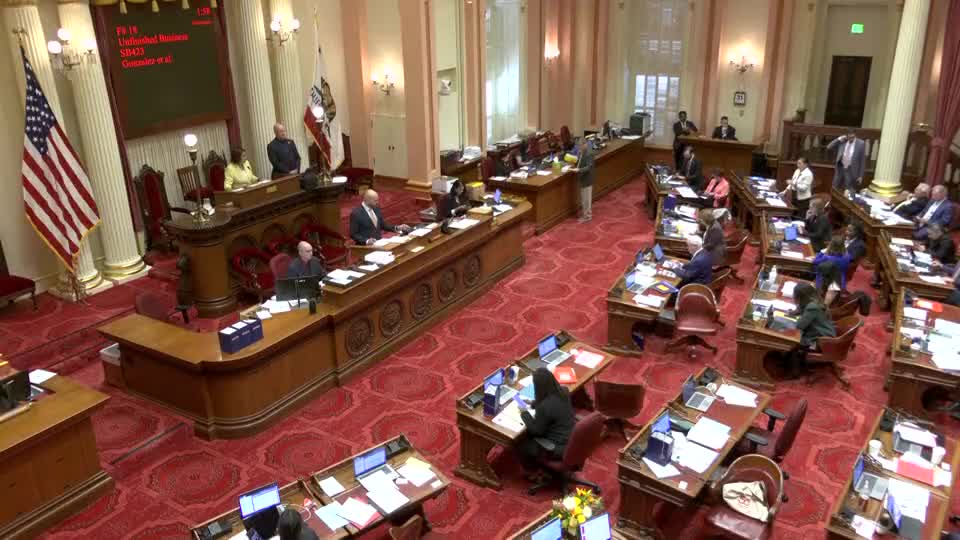
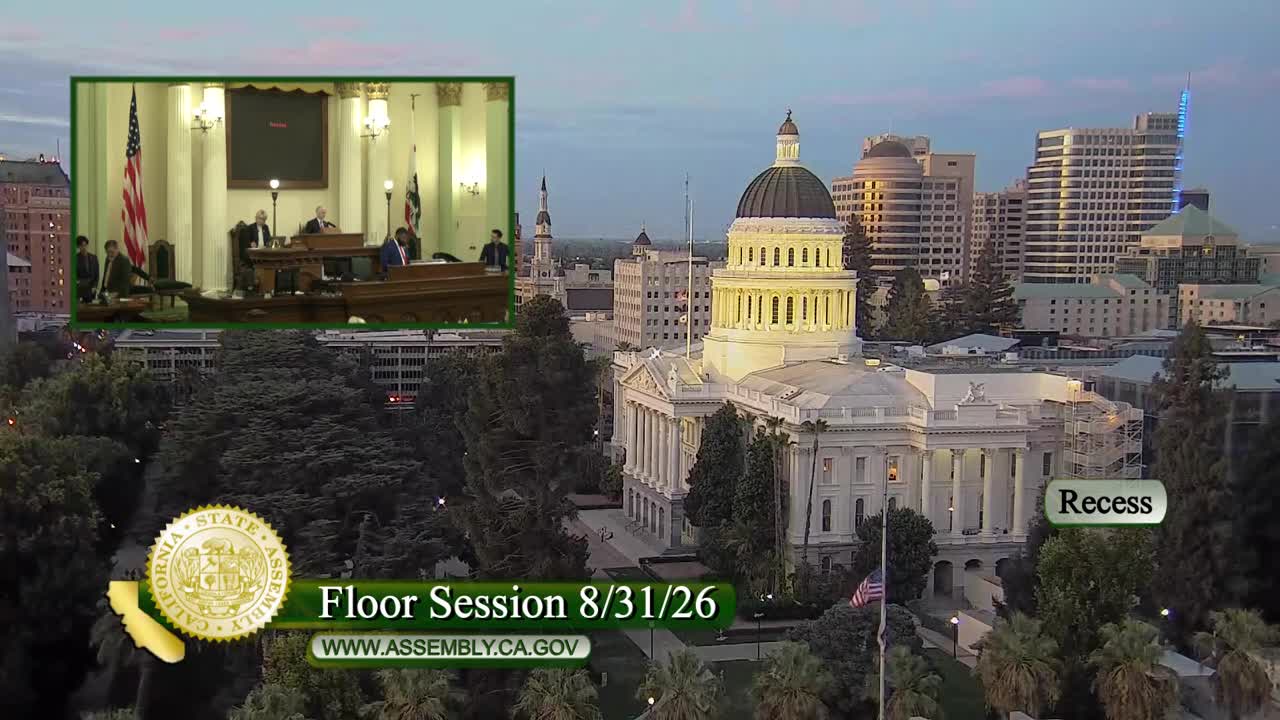
Bill Author