AB 1050: Occupational safety and health: permanent variances.
- Session Year: 2015-2016
- House: Assembly
- Latest Version Date: 2016-08-31
Existing law establishes the Occupational Safety and Health Standards Board in the Department of Industrial Relations and authorizes the board to adopt, amend, or repeal employment safety and health standards and orders. Existing law authorizes the board, upon the application of an employer, to grant a permanent variance from an occupational standard or order after specified notice and hearing requirements regarding employees or employee representatives are met.
This bill would, when the request for a permanent variance pertains to a conveyance covered by the elevator safety orders, require the applicant to provide the required notice regarding the hearing to the local union representing elevator workers and to those workers who will be performing the tasks pursuant to the proposed variance, or their authorized representative. The bill would grant party status at the hearing to those workers or their authorized representative upon their request to the board.
Existing law authorizes the California Victim Compensation and Government Claims Board to approve plans for payroll deduction from the salaries or wages of state officers and employees for charitable contributions to the agency handling the principal combined fund drive in any area. Existing law also authorizes the board to approve requests of charitable organizations to receive designated deductions if the charitable organization qualifies as an exempt organization under both state and federal income tax laws. Existing law requires a charitable organization approved by the board to certify under penalty of perjury that it is in compliance with the Fair Employment and Housing Act.
This bill would additionally require the charitable organization to certify under penalty of perjury that it is in compliance with the Unruh Civil Rights Act. The bill would require the charitable organization to provide the board, in electronic format, a written nondiscrimination policy or statement that it does not have one, but otherwise complies with the Unruh Civil Rights Act. By expanding the definition of a crime, this bill would impose a state-mandated local program.
The California Constitution requires the state to reimburse local agencies and school districts for certain costs mandated by the state. Statutory provisions establish procedures for making that reimbursement.
This bill would provide that no reimbursement is required by this act for a specified reason.
Existing law authorizes the California Victim Compensation and Government Claims Board to approve plans for payroll deduction from the salaries or wages of state officers and employees for charitable contributions to the agency handling the principal combined fund drive in any area. Existing law also authorizes the board to approve requests of charitable organizations to receive designated deductions if the charitable organization qualifies as an exempt organization under both state and federal income tax laws. Existing law requires a charitable organization approved by the board to certify under penalty of perjury that it is in compliance with the Fair Employment and Housing Act.
This bill would additionally require the charitable organization to certify under penalty of perjury that it is in compliance with the Unruh Civil Rights Act. The bill would require the charitable organization to provide the board with board, in electronic format, a written nondiscrimination policy or statement that it does not have one, but otherwise complies with the Unruh Civil Rights Act. By expanding the definition of a crime, this bill would impose a state-mandated local program.
The California Constitution requires the state to reimburse local agencies and school districts for certain costs mandated by the state. Statutory provisions establish procedures for making that reimbursement.
This bill would provide that no reimbursement is required by this act for a specified reason.
Existing law authorizes the California Victim Compensation and Government Claims Board to approve plans for payroll deduction from the salaries or wages of state officers and employees for charitable contributions to the agency handling the principal combined fund drive in any area. Existing law also authorizes the board to approve requests of charitable organizations to receive designated deductions if the charitable organization qualifies as an exempt organization under both state and federal income tax laws. Existing law requires a charitable organization approved by the board to certify under penalty of perjury that it is in compliance with the Fair Employment and Housing Act.
This bill would additionally require the charitable organization to annually certify under penalty of perjury that it is in compliance with the Unruh Civil Rights Act. The bill would require the charitable organization to provide the board with a written nondiscrimination policy. policy or statement that it does not have one, but otherwise complies with the Unruh Civil Rights Act. By expanding the definition of a crime, this bill would impose a state-mandated local program.
The California Constitution requires the state to reimburse local agencies and school districts for certain costs mandated by the state. Statutory provisions establish procedures for making that reimbursement.
This bill would provide that no reimbursement is required by this act for a specified reason.
Existing law authorizes the California Victim Compensation and Government Claims Board to approve plans for payroll deduction from the salaries or wages of state officers and employees for charitable contributions to the agency handling the principal combined fund drive in any area. Existing law also authorizes the board to approve requests of charitable organizations to receive designated deductions if the charitable organization qualifies as an exempt organization under both state and federal income tax laws. Existing law requires a charitable organization approved by the board to certify under penalty of perjury that it is in compliance with the Fair Employment and Housing Act.
This bill would require the charitable organization to annually provide the board with a written nondiscrimination policy.
(a)The board shall conduct hearings on such requests for a permanent variance after employees or employee representatives are properly notified and given an opportunity to appear.
(b)If a request for a permanent variance pertains to a conveyance covered by the elevator safety orders, the applicant shall notify the union representing elevator workers in the region where the building is being constructed or modified and to those workers who will be performing the tasks pursuant to the proposed variance, or their authorized representative, pursuant to the requirements of subdivision (a). These workers, or their authorized representative, shall be granted party status upon request to the board.
(c)All board decisions on permanent variance requests shall be final except for any rehearing or judicial review provided for by law.
(a)The board shall conduct hearings on such requests for a permanent variance after employees or employee representatives are properly notified and given an opportunity to appear. All
(b)If a request for a permanent variance pertains to a conveyance covered by the elevator safety orders, the applicant shall notify the union representing elevator workers in the region where the building is being constructed or modified and to those workers who will be performing the tasks pursuant to the proposed variance, or their authorized representative, pursuant to the requirements of subdivision (a). These workers, or their authorized representative, shall be granted party status upon request to the board.
(c)All board decisions on permanent variance requests shall be final except for any rehearing or judicial review provided for by law.
SECTION 1.Section 13923 of the Government Code is amended to read:13923.(a)The board may approve plans for payroll deduction from the salaries or wages of state officers and employees under subdivision (f) of Section 1151 for charitable contributions to the agency handling the principal combined fund drive in any area. The board shall establish necessary rules and regulations, including the following:
(1)Standards for establishing what constitutes the principal combined fund drive in an area.
(2)A requirement that the agency to receive these contributions shall pay, for deposit in the General Fund, the additional cost to the state of making these deductions and remitting the proceeds, as determined by the Controller.
(3)A requirement that the agency to receive these contributions shall pay, for deposit in the General Fund, the boards cost to administer the annual charitable campaign fund drive. This amount shall be determined by the board and may be appropriated in support of the board as reimbursements to Item 8700-001-0001 of the annual Budget Act.
(4)Provisions for standard amounts of deductions from which each state officer or employee may select the contribution that he or she desires to make, if any.
(5)A prohibition upon state officers or employees authorizing more than one payroll deduction for charitable purposes to be in effect at the same time.
(6)A provision authorizing the Controller to combine in his or her records deductions for employee association dues, if authorized, and charitable deductions, if authorized.
(b)The board, in addition, may approve requests of any charitable organization qualified as an exempt organization under Section 23701d of the Revenue and Taxation Code, and Section 501(c)(3), of the Internal Revenue Code that is not an affiliated member beneficiary of the principal combined fund drive to receive designated deductions from the principal fund drive.
(c)(1)The principal combined fund drive agency, any charitable organization that is an affiliated member beneficiary of the principal combined fund drive, and any charitable organization approved by the board to receive designated deductions on the payroll authorization form of the principal fund drive, shall certify under penalty of perjury to the board that it is in compliance with both Section 51 of the Civil Code and the Fair Employment and Housing Act (Part 2.8 (commencing with Section 12900)) as a condition of receiving these designated deductions.
(2)As part of the certification process, the charitable organization shall provide to the board, in an electronic format, either the written nondiscrimination policy of the organization or a written statement to indicate that the organization does not have a written nondiscrimination policy, but otherwise complies with Section 51 of the Civil Code.
(d)The principal combined fund drive shall obtain from the board the list of approved nonaffiliated beneficiaries, eligible for designated deductions in its approved drive area, and shall provide this information to each employee at the time of the principal fund drive. The principal combined drive agency shall provide a designation form for the employee to indicate those amounts to be contributed to affiliated and nonaffiliated beneficiaries. The designation form shall consist of a copy for each of the following: (1) the employee, (2) the employees designated beneficiary agency, and (3) the principal combined fund drive agency. The principal combined fund drive agency shall pay the amount collected for the employee designated beneficiary agency less the amount necessary to reimburse the principal combined fund drive agency for fundraising and administrative expenses. The fee charged for fundraising and administrative cost reimbursement shall be determined by the board, published in campaign literature and made available to the employee during the solicitation process.
(e)Nothing contained in this section shall preclude a principal fund drive agency from giving a percentage of the undesignated funds to charities that are not members of the agency handling the principal drive, or honoring an employees designated deduction to any charitable organization.
SEC. 2.No reimbursement is required by this act pursuant to Section 6 of Article XIIIB of the California Constitution because the only costs that may be incurred by a local agency or school district will be incurred because this act creates a new crime or infraction, eliminates a crime or infraction, or changes the penalty for a crime or infraction, within the meaning of Section 17556 of the Government Code, or changes the definition of a crime within the meaning of Section 6 of Article XIIIB of the California Constitution.
(a)The board may approve plans for payroll deduction from the salaries or wages of state officers and employees under subdivision (f) of Section 1151 for charitable contributions to the agency handling the principal combined fund drive in any area. The board shall establish necessary rules and regulations, including the following:
(1)Standards for establishing what constitutes the principal combined fund drive in an area.
(2)A requirement that the agency to receive these contributions shall pay, for deposit in the General Fund, the additional cost to the state of making these deductions and remitting the proceeds, as determined by the Controller.
(3)A requirement that the agency to receive these contributions shall pay, for deposit in the General Fund, the boards cost to administer the annual charitable campaign fund drive. This amount shall be determined by the board and may be appropriated in support of the board as reimbursements to Item 8700-001-0001 of the annual Budget Act.
(4)Provisions for standard amounts of deductions from which each state officer or employee may select the contribution that he or she desires to make, if any.
(5)A prohibition upon state officers or employees authorizing more than one payroll deduction for charitable purposes to be in effect at the same time.
(6)A provision authorizing the Controller to combine in his or her records deductions for employee association dues, if authorized, and charitable deductions, if authorized.
(b)The board, in addition, may approve requests of any charitable organization qualified as an exempt organization under Section 23701d of the Revenue and Taxation Code, and Section 501(c)(3), of the Internal Revenue Code that is not an affiliated member beneficiary of the principal combined fund drive to receive designated deductions from the principal fund drive.
(c)(1)The principal combined fund drive agency, any charitable organization that is an affiliated member beneficiary of the principal combined fund drive, and any charitable organization approved by the board to receive designated deductions on the payroll authorization form of the principal fund drive, shall certify under penalty of perjury to the board that it is in compliance with both Section 51 of the Civil Code and the Fair Employment and Housing Act (Part 2.8 (commencing with Section 12900)) as a condition of receiving these designated deductions.
(2)The As part of the certification process, the charitable organization shall provide to the board with board, in an electronic format, either the written nondiscrimination policy of the organization or a written statement to indicate that the organization does not have a written nondiscrimination policy, but otherwise complies with Section 51. 51 of the Civil Code.
(d)The principal combined fund drive shall obtain from the board the list of approved nonaffiliated beneficiaries, eligible for designated deductions in its approved drive area, and shall provide this information to each employee at the time of the principal fund drive. The principal combined drive agency shall provide a designation form for the employee to indicate those amounts to be contributed to affiliated and nonaffiliated beneficiaries. The designation form shall consist of a copy for each of the following: (1) the employee, (2) the employees designated beneficiary agency, and (3) the principal combined fund drive agency. The principal combined fund drive agency shall pay the amount collected for the employee designated beneficiary agency less the amount necessary to reimburse the principal combined fund drive agency for fundraising and administrative expenses. The fee charged for fundraising and administrative cost reimbursement shall be determined by the board, published in campaign literature and made available to the employee during the solicitation process.
(e)Nothing contained in this section shall preclude a principal fund drive agency from giving a percentage of the undesignated funds to charities that are not members of the agency handling the principal drive, or honoring an employees designated deduction to any charitable organization.
SEC. 2.No reimbursement is required by this act pursuant to Section 6 of Article XIIIB of the California Constitution because the only costs that may be incurred by a local agency or school district will be incurred because this act creates a new crime or infraction, eliminates a crime or infraction, or changes the penalty for a crime or infraction, within the meaning of Section 17556 of the Government Code, or changes the definition of a crime within the meaning of Section 6 of Article XIIIB of the California Constitution.
(a)The board may approve plans for payroll deduction from the salaries or wages of state officers and employees under subdivision (f) of Section 1151 for charitable contributions to the agency handling the principal combined fund drive in any area. The board shall establish necessary rules and regulations, including the following:
(1)Standards for establishing what constitutes the principal combined fund drive in an area.
(2)A requirement that the agency to receive these contributions shall pay, for deposit in the General Fund, the additional cost to the state of making these deductions and remitting the proceeds, as determined by the Controller.
(3)A requirement that the agency to receive these contributions shall pay, for deposit in the General Fund, the boards cost to administer the annual charitable campaign fund drive. This amount shall be determined by the board and may be appropriated in support of the board as reimbursements to Item 8700-001-0001 of the annual Budget Act.
(4)Provisions for standard amounts of deductions from which each state officer or employee may select the contribution that he or she desires to make, if any.
(5)A prohibition upon state officers or employees authorizing more than one payroll deduction for charitable purposes to be in effect at the same time.
(6)A provision authorizing the Controller to combine in his or her records deductions for employee association dues, if authorized, and charitable deductions, if authorized.
(b)The board, in addition, may approve requests of any charitable organization qualified as an exempt organization under Section 23701d of the Revenue and Taxation Code, and Section 501(c)(3), of the Internal Revenue Code that is not an affiliated member beneficiary of the principal combined fund drive to receive designated deductions from the principal fund drive.
(c)(1)The principal combined fund drive agency, any charitable organization that is an affiliated member beneficiary of the principal combined fund drive, and any charitable organization approved by the board to receive designated deductions on the payroll authorization form of the principal fund drive, shall certify under penalty of perjury to the board that it is in compliance with both Section 51 of the Civil Code and the Fair Employment and Housing Act, Part Act (Part 2.8 (commencing with Section 12900), 12900)) as a condition of receiving these designated deductions.
(2)The charitable organization shall annually provide the board with either the written nondiscrimination policy of the organization. organization or a written statement to indicate that the organization does not have a written nondiscrimination policy, but otherwise complies with Section 51.
(d)The principal combined fund drive shall obtain from the board the list of approved nonaffiliated beneficiaries, eligible for designated deductions in its approved drive area, and shall provide this information to each employee at the time of the principal fund drive. The principal combined drive agency shall provide a designation form for the employee to indicate those amounts to be contributed to affiliated and nonaffiliated beneficiaries. The designation form shall consist of a copy for each of the following: (1) the employee, (2) the employees designated beneficiary agency, and (3) the principal combined fund drive agency. The principal combined fund drive agency shall pay the amount collected for the employee designated beneficiary agency less the amount necessary to reimburse the principal combined fund drive agency for fundraising and administrative expenses. The fee charged for fundraising and administrative cost reimbursement shall be determined by the board, published in campaign literature and made available to the employee during the solicitation process.
(e)Nothing contained in this section shall preclude a principal fund drive agency from giving a percentage of the undesignated funds to charities that are not members of the agency handling the principal drive, or honoring an employees designated deduction to any charitable organization.
SEC. 2.No reimbursement is required by this act pursuant to Section 6 of Article XIIIB of the California Constitution because the only costs that may be incurred by a local agency or school district will be incurred because this act creates a new crime or infraction, eliminates a crime or infraction, or changes the penalty for a crime or infraction, within the meaning of Section 17556 of the Government Code, or changes the definition of a crime within the meaning of Section 6 of Article XIIIB of the California Constitution.
(a)The board may approve plans for payroll deduction from the salaries or wages of state officers and employees under subdivision (f) of Section 1151 for charitable contributions to the agency handling the principal combined fund drive in any area. The board shall establish necessary rules and regulations, including the following:
(a)
(1)Standards for establishing what constitutes the principal combined fund drive in an area.
(b)
(2)A requirement that the agency to receive these contributions shall pay, for deposit in the General Fund, the additional cost to the state of making these deductions and remitting the proceeds, as determined by the Controller.
(c)
(3)A requirement that the agency to receive these contributions shall pay, for deposit in the General Fund, the boards cost to administer the annual charitable campaign fund drive. This amount shall be determined by the board and may be appropriated in support of the board as reimbursements to Item 8700-001-0001 of the annual Budget Act.
(d)
(4)Provisions for standard amounts of deductions from which each state officer or employee may select the contribution that he or she desires to make, if any.
(e)
(5)A prohibition upon state officers or employees authorizing more than one payroll deduction for charitable purposes to be in effect at the same time.
(f)
(6)A provision authorizing the Controller to combine in his or her records deductions for employee association dues, if authorized, and charitable deductions, if authorized.
The
(b)The board, in addition, may approve requests of any charitable organization qualified as an exempt organization under Section 23701d of the Revenue and Taxation Code, and paragraph (3) of subsection (c) of Section 501 501(c)(3), of the Internal Revenue Code of 1954, which that is not an affiliated member beneficiary of the principal combined fund drive to receive designated deductions from the principal fund drive.
The
(c)(1)The principal combined fund drive agency, any charitable organization which that is an affiliated member beneficiary of the principal combined fund drive, and any charitable organization approved by the board to receive designated deductions on the payroll authorization form of the principal fund drive, shall certify under penalty of perjury to the board that it is in compliance with the Fair Employment and Housing Act, Part 2.8 (commencing with Section 12900), as a condition of receiving these designated deductions.
(2)The charitable organization shall annually provide the board with the written nondiscrimination policy of the organization.
The
(d)The principal combined fund drive shall obtain from the board the list of approved nonaffiliated beneficiaries, eligible for designated deductions in its approved drive area, and shall provide this information to each employee at the time of the principal fund drive. The principal combined drive agency shall provide a designation form for the employee to indicate those amounts to be contributed to affiliated and nonaffiliated beneficiaries. The designation form shall consist of a copy for each of the following: (1) the employee, (2) the employees designated beneficiary agency, and (3) the principal combined fund drive agency. The principal combined fund drive agency shall pay the amount collected for the employee designated beneficiary agency less the amount necessary to reimburse the principal combined fund drive agency for fundraising and administrative expenses. The fee charged for fundraising and administrative cost reimbursement shall be determined by the board, published in campaign literature and made available to the employee during the solicitation process.
Nothing
(e)Nothing contained in this section shall preclude a principal fund drive agency from giving a percentage of the undesignated funds to charities which that are not members of the agency handling the principal drive, or honoring an employees designated deduction to any charitable organization.
|
Date
|
Status
|
|---|---|
| Aug 15, 2016 | Read second time. Ordered to third reading. |
| Feb 10, 2016 | Read second time and amended. Ordered returned to second reading. |
| Feb 11, 2016 | Read second time. Ordered to third reading. |
| Feb 12, 2016 | Re-referred to Com. on RLS. pursuant to Senate Rule 29.10(c). |
| Mar 3, 2016 | Re-referred to Com. on L. & I.R. |
| Jun 8, 2016 | From committee: Do pass and re-refer to Com. on APPR. (Ayes 3. Noes 1.) (June 8). Re-referred to Com. on APPR. |
| Jun 21, 2016 | In committee: Hearing postponed by committee. |
| Aug 1, 2016 | In committee: Referred to APPR. suspense file. |
| Aug 11, 2016 | From committee: Do pass. (Ayes 5. Noes 2.) (August 11). |
| Feb 10, 2016 | Ordered to second reading. |
| Aug 23, 2016 | Read third time. Passed. Ordered to the Assembly. |
| Aug 23, 2016 | Read third time. Passed. Ordered to the Assembly. (Ayes 26. Noes 13. Page 5301.). |
| Aug 24, 2016 | In Assembly. Concurrence in Senate amendments pending. May be considered on or after August 26 pursuant to Assembly Rule 77. |
| Aug 25, 2016 | Re-referred to Com. on L. & E. pursuant to Assembly Rule 77.2. |
| Aug 29, 2016 | From committee: That the Senate amendments be concurred in. (Ayes 5. Noes 2.) (August 29). |
| Aug 30, 2016 | Senate amendments concurred in. To Engrossing and Enrolling. |
| Aug 30, 2016 | Senate amendments concurred in. To Engrossing and Enrolling. (Ayes 52. Noes 28. Page 6462.). |
| Sep 8, 2016 | Enrolled and presented to the Governor at 4 p.m. |
| May 26, 2015 | In Senate. Read first time. To Com. on RLS. for assignment. |
| Feb 27, 2015 | From printer. May be heard in committee March 29. |
| Mar 19, 2015 | Referred to Com. on P.E., R., & S.S. |
| Apr 6, 2015 | Re-referred to Com. on A. & A.R. pursuant to Assembly Rule 96. |
| Apr 21, 2015 | From committee chair, with author's amendments: Amend, and re-refer to Com. on A. & A.R. Read second time and amended. |
| Apr 22, 2015 | Re-referred to Com. on A. & A.R. |
| Apr 29, 2015 | From committee: Do pass and re-refer to Com. on APPR. (Ayes 8. Noes 1.) (April 29). Re-referred to Com. on APPR. |
| May 13, 2015 | From committee: Do pass. (Ayes 13. Noes 4.) (May 13). |
| May 14, 2015 | Read second time. Ordered to third reading. |
| Feb 26, 2015 | Read first time. To print. |
| May 26, 2015 | Read third time. Passed. Ordered to the Senate. |
| May 26, 2015 | Read third time. Passed. Ordered to the Senate. (Ayes 62. Noes 7. Page 1584.) |
| Jun 4, 2015 | Referred to Com. on JUD. |
| Jun 24, 2015 | From committee: Do pass and re-refer to Com. on APPR. (Ayes 5. Noes 1.) (June 23). Re-referred to Com. on APPR. |
| Jul 6, 2015 | From committee: Be placed on second reading file pursuant to Senate Rule 28.8 and be amended. |
| Jul 7, 2015 | Read second time and amended. Ordered to third reading. |
| Sep 11, 2015 | Ordered to inactive file at the request of Senator Mitchell. |
| Feb 10, 2016 | From inactive file. |
|
Date
|
Description
|
Location
|
Votes
|
|
|---|---|---|---|---|
| Aug 30, 2016 | AB 1050 LOW Concurrence in Senate Amendments | Assembly Floor |
Passed |
|
| Aug 29, 2016 | With recommendation: That Senate amendments be concurred in. | Assembly Standing Committee on Labor and Employment |
Passed |
|
| Aug 23, 2016 | Assembly 3rd Reading AB1050 Low By Leno | Senate Floor |
Passed |
|
| Aug 11, 2016 | Do pass | Senate Standing Committee on Appropriations |
Passed |
|
| Aug 1, 2016 | Placed on suspense file | Senate Standing Committee on Appropriations |
Passed |
|
| Jun 8, 2016 | Do pass, but first be re-referred to the Committee on [Appropriations] | Senate Standing Committee on Labor and Industrial Relations |
Passed |
|
| Jun 23, 2015 | Do pass, but first be re-referred to the Committee on [Appropriations] | Senate Standing Committee on Judiciary |
Passed |
|
| May 26, 2015 | AB 1050 LOW Assembly Third Reading | Assembly Floor |
Passed |
|
| May 13, 2015 | Do pass. | Assembly Standing Committee on Appropriations |
Passed |
|
| Apr 29, 2015 | Do pass and be re-referred to the Committee on [Appropriations] | Assembly Standing Committee on Accountability and Administrative Review |
Passed |
This list shows positions taken on this bill by organizations on the date displayed, which is linked to the original source.
Positions by individuals are not included.
|
Organization
|
Position
|
Date
|
|---|---|---|
| Anti-Defamation League | ** Support | Jun 8, 2016 |
| Associated Builders And Contractors Of California | ** Against | Aug 29, 2016 |
| California Building Industry Association | ** Against | Aug 29, 2016 |
| California Business Properties Association | ** Against | Aug 23, 2016 |
| California Chamber Of Commerce | * Against | Aug 29, 2016 |
| California Hospital Association | ** Against | Aug 23, 2016 |
| California Labor Federation, Afl-Cio | * Support | Aug 29, 2016 |
| California Manufacturers And Technology Association | ** Against | Aug 23, 2016 |
| California State Association Of Electrical Workers | ** Support | Aug 29, 2016 |
| California State Pipe Trades Council | ** Support | Aug 29, 2016 |
| Coalition of California Utility Employees | ** Support | Aug 29, 2016 |
| Equality California | ** Support | Jun 8, 2016 |
| Gay-Straight Alliance Network of California | ** Support | Jun 8, 2016 |
| Gender Health Center | ** Support | Jun 8, 2016 |
| International Union of Elevator Constructors | * Support | Aug 29, 2016 |
| LGBT Community Center of the Desert | ** Support | Jun 8, 2016 |
| Professional Association of Specialty Contractors | ** Against | Aug 23, 2016 |
| State Building & Construction Trades Council Of California | * Support | Aug 29, 2016 |
| Western States Council Of Sheet Metal Workers | ** Support | Aug 29, 2016 |
GOVERNOR'S VETO
GV Bill Id:AB 1050
Author:(Low)
As Enrolled Ver:September 8, 2016
2/3 vote
ASSEMBLY: |
| (May 26, 2015) | SENATE: | 26-13 | (August 23, 2016) |
(vote not relevant)
COMMITTEE VOTE: | 5-2 | (August 29, 2016) | RECOMMENDATION: | concur |
L. & E.
ASSEMBLY: | 52-28 | (August 30, 2016) |
Original Committee Reference: A. & A.R.
SUMMARY: Makes changes related to permanent variances to elevator safety orders.
The Senate amendments delete the contents of the bill and instead:
- Provide that if a request for a permanent variance pertains to a conveyance covered by the elevator safety orders, the applicant shall notify the union representing elevator workers in the region where the building is being constructed or modified and to those workers who will be performing the tasks pursuant to the proposed variance (or their authorized representative).
- Provide that these workers, or their authorized representative, shall be granted party status upon request to the Occupational Safety and Health Standards Board (Standards Board).
EXISTING LAW:
- Permits employers to apply to the Standards Board for a permanent variance from an occupational safety health standard, order, or special order upon showing an alternate program, method, practice, means, device, or process which will provide equal or superior safety for the employees.
- Provides that the Standards Board shall issue such a variance if it determines on the record, after opportunity for an investigation where appropriate and a hearing, that the proponent of the variance has demonstrated by a preponderance of evidence that the conditions, practices, means, methods, operations, or processes used or proposed to be used by an employer are as safe and healthful as those which would prevail under the standard.
- States that the variance shall prescribe the conditions the employer must maintain and the practices, means, methods, operations, and processes which the employer must adopt and utilize to the extent they differ from the standard in question.
- Authorizes the Standards Board to grant a variance from any standard or portion thereof where it determines a variance is necessary to permit an employer to participate in an approved experiment designed to demonstrate or validate new and improved techniques to safeguard the health or safety of workers.
- Provides that a permanent variance may be modified or revoked upon application by an employer, employees, or the division, or by the Standards Board on its own motion, as specified.
- Requires that the Standards Board conduct hearings on such requests for a permanent variance after employees or employee representatives are properly notified and given an opportunity to appear.
FISCAL EFFECT: According to the Senate Appropriations Committee, the Department of Industrial Relations indicates that it would incur first-year costs of $166,000 and ongoing costs of $160,000 to implement the provisions of this bill.
COMMENTS: Under current law, the Standards Board has authority to consider variances to California/OSHA (Occupational Safety and Health Administration) standards when a building is being constructed, repaired, or updated – the vast majority of these variances are requests for conveyances such as elevators and escalators. Existing law provides that a variance may be considered by the Standards Board only after notice is given to employees. However, in practice 'employees' are considered to be the employees of the applicant who is seeking the variance, which may not be the employees that will actually work on the project. For example, in the installation of an elevator, the employees that will be impacted by a variance from a safety order will be the employees of the contractor or elevator manufacturer who are brought in to perform the work. The author argues that this lack of notification prevents workers who are actually doing the work from participating in the variance hearing or even be notified that a variance has been requested.
This bill would help ensure that a permanent variance request pertaining to conveyances receives a thorough hearing by requiring that the applicant notify the union representing elevator workers in the region where the building is being constructed or modified and those workers who will be performing the tasks, or their authorized representative, of the request for a variance. The bill would also grant these workers, or their authorized representative, party status upon request to the Standards Board.
According to supporters, this bill seeks to correct an oversight in the Cal/OSHA Standards Board variance application process with respect to requests for an elevator, or other public conveyances variance. They argue that with these variance requests, the building owner is not required to notify those employees who will be installing the conveyance for which a variance application has been filed. They note that approximately 90% of all permanent variance applications are for elevators and other public conveyances, and approximately 95% of these installations are done by the men and women of the International Union of Elevator Constructors. This legislation, they argue, simply requires that the variance applicant provide notice to these workers, or their representatives, of the application for a safety order variance.
The author and supporters believe that this bill will help guarantee that a variance request receives a thorough and fair hearing, while making certain that the Standards Board has all of the relevant facts before making a decision on a variance request. They argue that this bill ensures that those workers who will be the ones actually doing the work will be notified as part of the application process and will be allowed to participate in the variance hearing.
Opponents of the measure are opposed unless amended arguing that this bill creates expansive new notification requirements for conveyance variance applicants. According to opponents, this bill is substantially similar to AB 578 (Low) of 2015, which Governor Brown vetoed, indicating that it was unclear which employees would be affected by the new notice requirements and questioned why the existing process was not sufficient to protect workers' rights. Opponents argue that like its predecessor, this bill creates a new expanded category of workers and their representatives to be notified by a conveyance variance applicant and such an expansion creates a number of compliance and enforcement issues.
This bill requires employers seeking a permanent variance from an elevator safety order to notify the union representing elevator workers in the region where the building is located and to also notify the workers who will be performing the work. The bill also requires the Occupational Safety and Health Standards Board to grant party status to affected workers, or their authorized representative, to participate in the variance proceedings.
As I noted last year, the board routinely works with stakeholders to provide timely written notice of a variance request and permits those parties to intervene in the proceedings. I continue to believe that the existing process is one that provides adequate opportunity for interest and affected workers to be heard.
Analysis Prepared by: Benjamin Ebbink / L. & E. / (916) 319-2091 FN: 0005074
CONCURRENCE IN SENATE AMENDMENTS
CSA2 Bill Id:AB 1050
Author:(Low)
As Amended Ver:February 10, 2016
Majority vote
ASSEMBLY: |
| (May 26, 2015) | SENATE: | 26-13 | (August 23, 2016) |
(vote not relevant)
COMMITTEE VOTE: | 5-2 | (August 29, 2016) | RECOMMENDATION: | concur |
L. & E.
Original Committee Reference: A. & A.R.
SUMMARY: Makes changes related to permanent variances to elevator safety orders.
The Senate amendments delete the contents of the bill and instead:
- Provide that if a request for a permanent variance pertains to a conveyance covered by the elevator safety orders, the applicant shall notify the union representing elevator workers in the region where the building is being constructed or modified and to those workers who will be performing the tasks pursuant to the proposed variance (or their authorized representative).
- Provide that these workers, or their authorized representative, shall be granted party status upon request to the Occupational Safety and Health Standards Board (Standards Board).
EXISTING LAW:
- Permits employers to apply to the Standards Board for a permanent variance from an occupational safety health standard, order, or special order upon showing an alternate program, method, practice, means, device, or process which will provide equal or superior safety for the employees.
- Provides that the Standards Board shall issue such a variance if it determines on the record, after opportunity for an investigation where appropriate and a hearing, that the proponent of the variance has demonstrated by a preponderance of evidence that the conditions, practices, means, methods, operations, or processes used or proposed to be used by an employer are as safe and healthful as those which would prevail under the standard.
- States that the variance shall prescribe the conditions the employer must maintain and the practices, means, methods, operations, and processes which the employer must adopt and utilize to the extent they differ from the standard in question.
- Authorizes the Standards Board to grant a variance from any standard or portion thereof where it determines a variance is necessary to permit an employer to participate in an approved experiment designed to demonstrate or validate new and improved techniques to safeguard the health or safety of workers.
- Provides that a permanent variance may be modified or revoked upon application by an employer, employees, or the division, or by the Standards Board on its own motion, as specified.
- Requires that the Standards Board conduct hearings on such requests for a permanent variance after employees or employee representatives are properly notified and given an opportunity to appear.
FISCAL EFFECT: According to the Senate Appropriations Committee, the Department of Industrial Relations indicates that it would incur first-year costs of $166,000 and ongoing costs of $160,000 to implement the provisions of this bill.
COMMENTS: Under current law, the Standards Board has authority to consider variances to California/Occupational Safety and Health Administration (OSHA) standards when a building is being constructed, repaired, or updated – the vast majority of these variances are requests for conveyances such as elevators and escalators. Existing law provides that a variance may be considered by the Standards Board only after notice is given to employees. However, in practice 'employees' are considered to be the employees of the applicant who is seeking the variance, which may not be the employees that will actually work on the project. For example, in the installation of an elevator, the employees that will be impacted by a variance from a safety order will be the employees of the contractor or elevator manufacturer who are brought in to perform the work. The author argues that this lack of notification prevents workers who are actually doing the work from participating in the variance hearing or even be notified that a variance has been requested.
This bill would help ensure that a permanent variance request pertaining to conveyances receives a thorough hearing by requiring that the applicant notify the union representing elevator workers in the region where the building is being constructed or modified and those workers who will be performing the tasks, or their authorized representative, of the request for a variance. This bill would also grant these workers, or their authorized representative, party status upon request to the Standards Board.
According to supporters, this bill seeks to correct an oversight in the Cal/OSHA Standards Board variance application process with respect to requests for an elevator, or other public conveyances variance. They argue that with these variance requests, the building owner is not required to notify those employees who will be installing the conveyance for which a variance application has been filed. They note that approximately 90% of all permanent variance applications are for elevators and other public conveyances, and approximately 95% of these installations are done by the men and women of the International Union of Elevator Constructors. This legislation, they argue, simply requires that the variance applicant provide notice to these workers, or their representatives, of the application for a safety order variance.
The author and supporters believe that this bill will help guarantee that a variance request receives a thorough and fair hearing, while making certain that the Standards Board has all of the relevant facts before making a decision on a variance request. They argue that this bill ensures that those workers who will be the ones actually doing the work will be notified as part of the application process and will be allowed to participate in the variance hearing.
Opponents of the measure are opposed unless amended arguing that this bill creates expansive new notification requirements for conveyance variance applicants. According to opponents, this bill is substantially similar to AB 578 (Low) of 2015, which Governor Brown vetoed, indicating that it was unclear which employees would be affected by the new notice requirements and questioned why the existing process was not sufficient to protect workers' rights. Opponents argue that like its predecessor, this bill creates a new expanded category of workers and their representatives to be notified by a conveyance variance applicant and such an expansion creates a number of compliance and enforcement issues.
Analysis Prepared by: Ben Ebbink / L. & E. / (916) 319-2091 FN: 0004965
Date of Hearing: August 29, 2016
ASSEMBLY COMMITTEE ON LABOR AND EMPLOYMENT
Tony Thurmond, Chair
ABPCA Bill Id:AB 1050 (
Author:Low) – As Amended Ver:February 10, 2016
SUBJECT: Occupational safety and health: permanent variances
SUMMARY: Makes changes related to permanent variances to elevator safety orders. Specifically, this bill:
- Provides that if a request for a permanent variance pertains to a conveyance covered by the elevator safety orders, the applicant shall notify the union representing elevator workers in the region where the building is being constructed or modified and to those workers who will be performing the tasks pursuant to the proposed variance (or their authorized representative).
- Provides that these workers, or their authorized representative, shall be granted party status upon request to the Occupational Safety and Health Standards Board (Standards Board).
EXISTING LAW:
- Permits employers to apply to the Standards Board for a permanent variance from an occupational safety health standard, order, or special order upon showing an alternate program, method, practice, means, device, or process which will provide equal or superior safety for the employees.
- Provides that the Standards Board shall issue such a variance if it determines on the record, after opportunity for an investigation where appropriate and a hearing, that the proponent of the variance has demonstrated by a preponderance of evidence that the conditions, practices, means, methods, operations, or processes used or proposed to be used by an employer are as safe and healthful as those which would prevail under the standard.
- States that the variance shall prescribe the conditions the employer must maintain and the practices, means, methods, operations, and processes which the employer must adopt and utilize to the extent they differ from the standard in question.
- Authorizes the Standards Board to grant a variance from any standard or portion thereof where it determines a variance is necessary to permit an employer to participate in an approved experiment designed to demonstrate or validate new and improved techniques to safeguard the health or safety of workers.
- Provides that a permanent variance may be modified or revoked upon application by an employer, employees, or the division, or by the Standards Board on its own motion, as specified.
- Requires that the Standards Board conduct hearings on such requests for a permanent variance after employees or employee representatives are properly notified and given an opportunity to appear.
FISCAL EFFECT: According to the Senate Appropriations Committee, the Department of Industrial Relations indicates that it would incur first-year costs of $166,000 and ongoing costs of $160,000 to implement the provisions of this bill.
COMMENTS: Under current law, the Standards Board has authority to consider variances to Cal/OSHA standards when a building is being constructed, repaired, or updated – the vast majority of these variances are requests for conveyances such as elevators and escalators. Existing law provides that a variance may be considered by the Standards Board only after notice is given to employees. However, in practice ‘employees’ are considered to be the employees of the applicant who is seeking the variance, which may not be the employees that will actually work on the project. For example, in the installation of an elevator, the employees that will be impacted by a variance from a safety order will be the employees of the contractor or elevator manufacturer who are brought in to perform the work. The author argues that this lack of notification prevents workers who are actually doing the work from participating in the variance hearing or even be notified that a variance has been requested.
This bill would help ensure that a permanent variance request pertaining to conveyances receives a thorough hearing by requiring that the applicant notify the union representing elevator workers in the region where the building is being constructed or modified and those workers who will be performing the tasks, or their authorized representative, of the request for a variance. The bill would also grant these workers, or their authorized representative, party status upon request to the Standards Board.
According to supporters, this bill seeks to correct an oversight in the Cal/OSHA Standards Board variance application process with respect to requests for an elevator, or other public conveyances variance. They argue that with these variance requests, the building owner is not required to notify those employees who will be installing the conveyance for which a variance application has been filed. They note that approximately 90 percent of all permanent variance applications are for elevators and other public conveyances, and approximately 95 percent of these installations are done by the men and women of the International Union of Elevator Constructors. This legislation, they argue, simply requires that the variance applicant provide notice to these workers, or their representatives, of the application for a safety order variance.
The author and supporters believe that this bill will help guarantee that a variance request receives a thorough and fair hearing, while making certain that the Standards Board has all of the relevant facts before making a decision on a variance request. They argue that this bill ensures that those workers who will be the ones actually doing the work will be notified as part of the application process and will be allowed to participate in the variance hearing.
Opponents of the measure are opposed unless amended arguing that this bill creates expansive new notification requirements for conveyance variance applicants. According to opponents, this bill is substantially similar to AB 578 (Low) from last year, which Governor Brown vetoed, indicating that it was unclear which employees would be affected by the new notice requirements and questioned why the existing process was not sufficient to protect workers’ rights. Opponents argue that like its predecessor, this bill creates a new expanded category of workers and their representatives to be notified by a conveyance variance applicant and such an expansion creates a number of compliance and enforcement issues.
Prior Related Legislation
This bill is similar, but not identical, to AB 578 (Low) from last year. AB 578 was vetoed by Governor Brown, who stated the following in his veto message:
"This bill requires employers who apply for variances of existing occupational safety or health standards to formally notice workers, or representatives of workers, who will be impacted.
While this bill is intended to provide an opportunity for affected workers to be notified of variances and raise concerns during a relevant hearing, it is unclear what workers would be affected, and why the current process at the Occupational Safety and Health Standards Board is not sufficient. In fact the board routinely works with stakeholders to provide timely written notice of variance requests and permits those parties to intervene in the proceedings. I believe that process is one that provides adequate opportunity for interested and affected workers to be heard."
REGISTERED SUPPORT / OPPOSITION:
Support
California Labor Federation, AFL-CIO
California State Association of Electrical Workers
California State Pipe Trades Council
Coalition of California Utility Employees
International Union of Elevator Constructors (sponsor)
State Building and Construction Trades Council
Western States Council of Sheet Metal Workers
Opposition
Associated Builders and Contractors of California
California Building Industry Association
California Business Properties Association
California Chamber of Commerce
California Hospital Association
California Manufacturers and Technology Association
Professional Association of Specialty Contractors
Analysis Prepared by: Ben Ebbink / L. & E. / (916) 319-2091
CONCURRENCE IN SENATE AMENDMENTS
CSA1 Bill Id:AB 1050
Author:(Low)
As Amended Ver:February 10, 2016
Majority vote
ASSEMBLY: |
| (May 26, 2015) | SENATE: | 26-13 | (August 23, 2016) |
(vote not relevant)
Original Committee Reference: A. & A.R.
SUMMARY: Makes changes related to permanent variances to elevator safety orders.
The Senate amendments delete the contents of the bill and instead:
- Provide that if a request for a permanent variance pertains to a conveyance covered by the elevator safety orders, the applicant shall notify the union representing elevator workers in the region where the building is being constructed or modified and to those workers who will be performing the tasks pursuant to the proposed variance (or their authorized representative).
- Provide that these workers, or their authorized representative, shall be granted party status upon request to the Occupational Safety and Health Standards Board (Standards Board).
EXISTING LAW:
- Permits employers to apply to the Standards Board for a permanent variance from an occupational safety health standard, order, or special order upon showing an alternate program, method, practice, means, device, or process which will provide equal or superior safety for the employees.
- Provides that the Standards Board shall issue such a variance if it determines on the record, after opportunity for an investigation where appropriate and a hearing, that the proponent of the variance has demonstrated by a preponderance of evidence that the conditions, practices, means, methods, operations, or processes used or proposed to be used by an employer are as safe and healthful as those which would prevail under the standard.
- States that the variance shall prescribe the conditions the employer must maintain and the practices, means, methods, operations, and processes which the employer must adopt and utilize to the extent they differ from the standard in question.
- Authorizes the Standards Board to grant a variance from any standard or portion thereof where it determines a variance is necessary to permit an employer to participate in an approved experiment designed to demonstrate or validate new and improved techniques to safeguard the health or safety of workers.
- Provides that a permanent variance may be modified or revoked upon application by an employer, employees, or the division, or by the Standards Board on its own motion, as specified.
- Requires that the Standards Board conduct hearings on such requests for a permanent variance after employees or employee representatives are properly notified and given an opportunity to appear.
FISCAL EFFECT: According to the Senate Appropriations Committee, the Department of Industrial Relations indicates that it would incur first-year costs of $166,000 and ongoing costs of $160,000 to implement the provisions of this bill.
COMMENTS: Under current law, the Standards Board has authority to consider variances to California/Occupational Safety and Health Administration (Cal/OSHA) standards when a building is being constructed, repaired, or updated – the vast majority of these variances are requests for conveyances such as elevators and escalators. Existing law provides that a variance may be considered by the Standards Board only after notice is given to employees. However, in practice 'employees' are considered to be the employees of the applicant who is seeking the variance, which may not be the employees that will actually work on the project. For example, in the installation of an elevator, the employees that will be impacted by a variance from a safety order will be the employees of the contractor or elevator manufacturer who are brought in to perform the work. The author argues that this lack of notification prevents workers who are actually doing the work from participating in the variance hearing or even be notified that a variance has been requested.
This bill would help ensure that a permanent variance request pertaining to conveyances receives a thorough hearing by requiring that the applicant notify the union representing elevator workers in the region where the building is being constructed or modified and those workers who will be performing the tasks, or their authorized representative, of the request for a variance. The bill would also grant these workers, or their authorized representative, party status upon request to the Standards Board.
According to supporters, this bill seeks to correct an oversight in the Cal/OSHA Standards Board variance application process with respect to requests for an elevator, or other public conveyances variance. They argue that with these variance requests, the building owner is not required to notify those employees who will be installing the conveyance for which a variance application has been filed. They note that approximately 90% of all permanent variance applications are for elevators and other public conveyances, and approximately 95% of these installations are done by the men and women of the International Union of Elevator Constructors. This legislation, they argue, simply requires that the variance applicant provide notice to these workers, or their representatives, of the application for a safety order variance.
The author and supporters believe that this bill will help guarantee that a variance request receives a thorough and fair hearing, while making certain that the Standards Board has all of the relevant facts before making a decision on a variance request. They argue that this bill ensures that those workers who will be the ones actually doing the work will be notified as part of the application process and will be allowed to participate in the variance hearing.
Opponents of the measure are opposed unless amended arguing that this bill creates expansive new notification requirements for conveyance variance applicants. According to opponents, this bill is substantially similar to AB 578 (Low) of 2015, which Governor Brown vetoed, indicating that it was unclear which employees would be affected by the new notice requirements and questioned why the existing process was not sufficient to protect workers' rights. Opponents argue that like its predecessor, this bill creates a new expanded category of workers and their representatives to be notified by a conveyance variance applicant and such an expansion creates a number of compliance and enforcement issues.
Analysis Prepared by: Ben Ebbink / L. & E. / (916) 319-2091 FN: 0004009
Office of Senate Floor Analyses (916) 651-1520 Fax: (916) 327-4478 | AB |
THIRD READING
Bill No: AB 1050
:
PRIOR VOTES NOT RELEVANT
SENATE LABOR & IND. REL. COMMITTEE: 3-1, 6/8/16
AYES: Mendoza, Leno, Mitchell
NOES: Stone
NO VOTE RECORDED: Jackson
SENATE APPROPRIATIONS COMMITTEE: 5-2, 8/11/16
AYES: Lara, Beall, Hill, McGuire, Mendoza
NOES: Bates, Nielsen
SOURCE: International Union of Elevator Constructors
DIGEST: This bill (1) requires that employers seeking a permanent variance to an elevator safety order notify specified affected workers, and (2) grant party status to affected workers, or their authorized representative, to participate in variance proceedings.
Existing law:
- Permits employers to apply to the Occupational Safety and Health Standards Board (Board) for a permanent variance from an occupational safety health standard, order, or special order upon showing an alternate program, method, practice, means, device, or process which will provide equal or superior safety.
- Provides that the Board shall issue such a variance if it determines on the record, after opportunity for an investigation where appropriate and a hearing, that the proponent of the variance has demonstrated by a preponderance of evidence that the conditions, practices, means, methods, operations, or processes used or proposed to be used by an employer are as safe and healthful as those which would prevail under the standard.
- Authorizes the Board to grant a variance from any standard or portion thereof where it determines a variance is necessary to permit an employer to participate in an approved experiment designed to demonstrate or validate new and improved techniques to safeguard the health or safety of workers.
- Provides that a permanent variance may be modified or revoked upon application by an employer, employees, or the division, or by the board on its own motion, as specified.
- Requires that the Board conduct hearings on such requests for a permanent variance after employees or employee representatives are properly notified and given an opportunity to appear. (Labor Code §143.1)
This bill:
- Requires employers seeking a permanent variance to a conveyance covered by the elevator safety orders to notify the union representing elevator workers in the region where the building is being constructed or modified and those workers who will be performing the tasks pursuant to the proposed variance, or their authorized representative.
- Grants these workers, or their authorized representative, party status upon request to the Board.
Background
The Board adopts safety and health standards that are designed to protect California workers. However, existing law authorizes and sets forth a process whereby an employer may apply for a "variance," which is generally permission to deviate or not follow an existing standard. These variances fall into two categories – permanent variances and temporary variances. The application process for both permanent and temporary variances includes a requirement that the employer notify employees of the variance being sought and gives employees an opportunity to engage in the hearing process.
The focus of this bill is on the permanent variance process and what constitutes notification to employees – more specifically, which employees need to be notified of the variance request. The law requires the Board to conduct hearings on requests for permanent variances after employees or employee representatives are properly notified and given an opportunity to appear. The Board regulations provide that "affected employees" and authorized employee representative may elect to participate as parties at any time before commencement of the variance hearing. (California Code of Regulations, Title 8, Section 406(a)). The regulations define "affected employee" to mean: "[A]n employee of the employer seeking the variance who is exposed, as a result of his or her assigned duties, to the condition or hazards covered by the standard for which the variance is sought." (California Code of Regulations, Title 8, Section 403(l)).
The “employees of the employer seeking the variance,” however, may not actually be the workers that will be performing the duties associated with the request because not all affected workers are technically employees of the employer. For example, in the installation of an elevator, the employees that will be impacted by a variance from a safety order will be the employees of the contractor or elevator manufacturer who are brought in to perform the work.
The author argues that this lack of notification prevents workers who are actually doing the work from participating in the variance hearing or even be notified that a variance has been requested. This bill helps ensure that a permanent variance request pertaining to conveyances receives a thorough hearing by requiring that the applicant notify the union representing elevator workers in the region where the building is being constructed or modified and those workers who will be performing the tasks, or their authorized representative, of the request for a variance.
Prior Legislation
AB 578 (Low, 2015) was similar to this bill, but not identical. AB 578 was broader in its approach and included notification requirements for both permanent and temporary variance requests. AB 578 was vetoed by the Governor who stated, “While this bill is intended to provide an opportunity for affected workers to be notified of variances and raise concerns during a relevant hearing, it is unclear what workers would be affected, and why the current process at the Occupational Safety and Health Standards Board is not sufficient. In fact the board routinely works with stakeholders to provide timely written notice of variance requests and permits those parties to intervene in the proceedings. I believe that process is one that provides adequate opportunity for interested and affected workers to be heard.”
FISCAL EFFECT: Appropriation: Fiscal Com.: Local:
According to the Senate Appropriations Committee, the Department of Industrial Relations indicates that it would incur first-year costs of $166,000 and ongoing costs of $160,000 to implement the provisions of this bill (special fund).
International Union of Elevator Constructors (source)
California Labor Federation, AFL-CIO
California State Association of Electrical Workers
California State Pipe Trades Council
Coalition of California Utility Employees
State Building and Construction Trades Council
Western States Council of Sheet Metal Workers
OPPOSITION: (Verified 8/17/16)
Associated Builders and Contractors of California
California Building Industry Association
California Business Properties Association
California Chamber of Commerce
California Hospital Association
California Manufacturers and Technology Association
Professional Association of Specialty Contractors
ARGUMENTS IN SUPPORT: According to proponents, this bill seeks to correct an oversight in the Board variance application process with respect to requests for an elevator, or other public conveyances variance. They argue that with these variance requests, the building owner is not required to notify those employees who will be installing the conveyance for which a variance application has been filed. They note that approximately 90% of all permanent variance applications are for elevators and other public conveyances, and approximately 95% of these installations are done by the men and women of the International Union of Elevator Constructors. This bill, they argue, simply requires that the variance applicant provide notice to these workers, or their representatives, of the application for a safety order variance.
The author and proponents believe that this bill will help guarantee that a variance request receives a thorough and fair hearing, while making certain that the Board has all of the relevant facts before making a decision on a variance request. They argue that this bill ensures that those workers who will be the ones actually doing the work will be notified as part of the application process and will be allowed to participate in the variance hearing.
ARGUMENTS IN OPPOSITION: According to opponents, this bill is substantially similar to AB 578 (Low) from last year, which Governor Brown vetoed, indicating that it was unclear which employees would be affected by the new notice requirements and questioned why the existing process was not sufficient to protect workers’ rights. Opponents of this bill are opposed unless amended arguing that this bill creates expansive new notification requirements for conveyance variance applicants and such an expansion creates a number of compliance and enforcement issues.
First, they argue, the tasks and personnel who will perform them are not determined until the variance is granted and the associated work is undertaken, while the notice requirements are imposed at the beginning of the process. Second, the workers who perform tasks pursuant to an elevator variance are not limited to elevator mechanics – administrative, management and other functions are often required by the variance, complicating the proposed notification requirements further. And third, they argue that expanding the notification requirements and granting party status to such a broad spectrum opens the door to abuse by periphery interests and could cause additional delays in the process.
Opponents are proposing an amendment that would strike the notification requirement “to those workers who will be performing the tasks pursuant to the proposed variance or their authorized representative” as well as strike the language granting these workers party status. They argue that these proposed amendments address the notification to the union without subjecting employers to the onerous requirement of searching out the identity and contact information for personnel of contracted conveyance companies. Further, they argue that the proposed amendments would prevent potential abuse of an expansion of parties and keep potential delays in the process under control.
ASSEMBLY FLOOR: 62-7, 5/26/15
AYES: Achadjian, Alejo, Baker, Bonilla, Bonta, Brown, Burke, Calderon, Campos, Chang, Chau, Chiu, Chu, Cooley, Cooper, Dababneh, Daly, Dodd, Eggman, Frazier, Cristina Garcia, Eduardo Garcia, Gatto, Gipson, Gomez, Gonzalez, Gordon, Gray, Roger Hernández, Holden, Irwin, Jones-Sawyer, Kim, Lackey, Levine, Linder, Lopez, Low, Maienschein, McCarty, Medina, Mullin, Nazarian, Obernolte, O'Donnell, Perea, Quirk, Rendon, Ridley-Thomas, Rodriguez, Salas, Santiago, Steinorth, Mark Stone, Thurmond, Ting, Wagner, Waldron, Weber, Williams, Wood, Atkins
NOES: Bigelow, Beth Gaines, Gallagher, Grove, Jones, Patterson, Wilk
NO VOTE RECORDED: Travis Allen, Bloom, Brough, Chávez, Dahle, Hadley, Harper, Mathis, Mayes, Melendez, Olsen
8/17/16 14:40:49
**** END ****
Office of Senate Floor Analyses (916) 651-1520 Fax: (916) 327-4478 | AB |
THIRD READING
Bill No: AB 1050
:
PRIOR VOTES NOT RELEVANT
SENATE LABOR & IND. REL. COMMITTEE: 3-1, 6/8/16
AYES: Mendoza, Leno, Mitchell
NOES: Stone
NO VOTE RECORDED: Jackson
SENATE APPROPRIATIONS COMMITTEE: 5-2, 8/11/16
AYES: Lara, Beall, Hill, McGuire, Mendoza
NOES: Bates, Nielsen
SOURCE: International Union of Elevator Constructors
DIGEST: This bill (1) requires that employers seeking a permanent variance to an elevator safety order notify specified affected workers, and (2) grant party status to affected workers, or their authorized representative, to participate in variance proceedings.
Existing law:
- Permits employers to apply to the Occupational Safety and Health Standards Board (Board) for a permanent variance from an occupational safety health standard, order, or special order upon showing an alternate program, method, practice, means, device, or process which will provide equal or superior safety.
- Provides that the Board shall issue such a variance if it determines on the record, after opportunity for an investigation where appropriate and a hearing, that the proponent of the variance has demonstrated by a preponderance of evidence that the conditions, practices, means, methods, operations, or processes used or proposed to be used by an employer are as safe and healthful as those which would prevail under the standard.
- Authorizes the Board to grant a variance from any standard or portion thereof where it determines a variance is necessary to permit an employer to participate in an approved experiment designed to demonstrate or validate new and improved techniques to safeguard the health or safety of workers.
- Provides that a permanent variance may be modified or revoked upon application by an employer, employees, or the division, or by the board on its own motion, as specified.
- Requires that the Board conduct hearings on such requests for a permanent variance after employees or employee representatives are properly notified and given an opportunity to appear. (Labor Code §143.1)
This bill:
- Requires employers seeking a permanent variance to a conveyance covered by the elevator safety orders to notify the union representing elevator workers in the region where the building is being constructed or modified and those workers who will be performing the tasks pursuant to the proposed variance, or their authorized representative.
- Grants these workers, or their authorized representative, party status upon request to the Board.
Background
The Board adopts safety and health standards that are designed to protect California workers. However, existing law authorizes and sets forth a process whereby an employer may apply for a "variance," which is generally permission to deviate or not follow an existing standard. These variances fall into two categories – permanent variances and temporary variances. The application process for both permanent and temporary variances includes a requirement that the employer notify employees of the variance being sought and gives employees an opportunity to engage in the hearing process.
The focus of this bill is on the permanent variance process and what constitutes notification to employees – more specifically, which employees need to be notified of the variance request. The law requires the Board to conduct hearings on requests for permanent variances after employees or employee representatives are properly notified and given an opportunity to appear. The Board regulations provide that "affected employees" and authorized employee representative may elect to participate as parties at any time before commencement of the variance hearing. (California Code of Regulations, Title 8, Section 406(a)). The regulations define "affected employee" to mean: "[A]n employee of the employer seeking the variance who is exposed, as a result of his or her assigned duties, to the condition or hazards covered by the standard for which the variance is sought." (California Code of Regulations, Title 8, Section 403(l)).
The “employees of the employer seeking the variance,” however, may not actually be the workers that will be performing the duties associated with the request because not all affected workers are technically employees of the employer. For example, in the installation of an elevator, the employees that will be impacted by a variance from a safety order will be the employees of the contractor or elevator manufacturer who are brought in to perform the work.
The author argues that this lack of notification prevents workers who are actually doing the work from participating in the variance hearing or even be notified that a variance has been requested. This bill helps ensure that a permanent variance request pertaining to conveyances receives a thorough hearing by requiring that the applicant notify the union representing elevator workers in the region where the building is being constructed or modified and those workers who will be performing the tasks, or their authorized representative, of the request for a variance.
Prior Legislation
AB 578 (Low, 2015) was similar to this bill, but not identical. AB 578 was broader in its approach and included notification requirements for both permanent and temporary variance requests. AB 578 was vetoed by the Governor who stated, “While this bill is intended to provide an opportunity for affected workers to be notified of variances and raise concerns during a relevant hearing, it is unclear what workers would be affected, and why the current process at the Occupational Safety and Health Standards Board is not sufficient. In fact the board routinely works with stakeholders to provide timely written notice of variance requests and permits those parties to intervene in the proceedings. I believe that process is one that provides adequate opportunity for interested and affected workers to be heard.”
FISCAL EFFECT: Appropriation: Fiscal Com.: Local:
According to the Senate Appropriations Committee, the Department of Industrial Relations indicates that it would incur first-year costs of $166,000 and ongoing costs of $160,000 to implement the provisions of this bill (special fund).
International Union of Elevator Constructors (source)
California Labor Federation, AFL-CIO
California State Association of Electrical Workers
California State Pipe Trades Council
Coalition of California Utility Employees
State Building and Construction Trades Council
Western States Council of Sheet Metal Workers
OPPOSITION: (Verified 8/12/16)
Associated Builders and Contractors of California
California Chamber of Commerce
California Manufacturers and Technology Association
Professional Association of Specialty Contractors
ARGUMENTS IN SUPPORT: According to proponents, this bill seeks to correct an oversight in the Board variance application process with respect to requests for an elevator, or other public conveyances variance. They argue that with these variance requests, the building owner is not required to notify those employees who will be installing the conveyance for which a variance application has been filed. They note that approximately 90% of all permanent variance applications are for elevators and other public conveyances, and approximately 95% of these installations are done by the men and women of the International Union of Elevator Constructors. This bill, they argue, simply requires that the variance applicant provide notice to these workers, or their representatives, of the application for a safety order variance.
The author and proponents believe that this bill will help guarantee that a variance request receives a thorough and fair hearing, while making certain that the Board has all of the relevant facts before making a decision on a variance request. They argue that this bill ensures that those workers who will be the ones actually doing the work will be notified as part of the application process and will be allowed to participate in the variance hearing.
ARGUMENTS IN OPPOSITION: According to opponents, this bill is substantially similar to AB 578 (Low) from last year, which Governor Brown vetoed, indicating that it was unclear which employees would be affected by the new notice requirements and questioned why the existing process was not sufficient to protect workers’ rights. Opponents of this bill are opposed unless amended arguing that this bill creates expansive new notification requirements for conveyance variance applicants and such an expansion creates a number of compliance and enforcement issues.
First, they argue, the tasks and personnel who will perform them are not determined until the variance is granted and the associated work is undertaken, while the notice requirements are imposed at the beginning of the process. Second, the workers who perform tasks pursuant to an elevator variance are not limited to elevator mechanics – administrative, management and other functions are often required by the variance, complicating the proposed notification requirements further. And third, they argue that expanding the notification requirements and granting party status to such a broad spectrum opens the door to abuse by periphery interests and could cause additional delays in the process.
Opponents are proposing an amendment that would strike the notification requirement “to those workers who will be performing the tasks pursuant to the proposed variance or their authorized representative” as well as strike the language granting these workers party status. They argue that these proposed amendments address the notification to the union without subjecting employers to the onerous requirement of searching out the identity and contact information for personnel of contracted conveyance companies. Further, they argue that the proposed amendments would prevent potential abuse of an expansion of parties and keep potential delays in the process under control.
ASSEMBLY FLOOR: 62-7, 5/26/15
AYES: Achadjian, Alejo, Baker, Bonilla, Bonta, Brown, Burke, Calderon, Campos, Chang, Chau, Chiu, Chu, Cooley, Cooper, Dababneh, Daly, Dodd, Eggman, Frazier, Cristina Garcia, Eduardo Garcia, Gatto, Gipson, Gomez, Gonzalez, Gordon, Gray, Roger Hernández, Holden, Irwin, Jones-Sawyer, Kim, Lackey, Levine, Linder, Lopez, Low, Maienschein, McCarty, Medina, Mullin, Nazarian, Obernolte, O'Donnell, Perea, Quirk, Rendon, Ridley-Thomas, Rodriguez, Salas, Santiago, Steinorth, Mark Stone, Thurmond, Ting, Wagner, Waldron, Weber, Williams, Wood, Atkins
NOES: Bigelow, Beth Gaines, Gallagher, Grove, Jones, Patterson, Wilk
NO VOTE RECORDED: Travis Allen, Bloom, Brough, Chávez, Dahle, Hadley, Harper, Mathis, Mayes, Melendez, Olsen
8/15/16 20:26:52
**** END ****
SENATE COMMITTEE ON APPROPRIATIONS
Senator Ricardo Lara, Chair
2015 - 2016 Regular Session
AB 1050 (Low) - Occupational safety and health: permanent variances
Version: February 10, 2016 | Policy Vote: JUD. 5 - 1, L. & I.R. 3 - 1 |
Urgency: No | Mandate: No |
Hearing Date: August 1, 2016 | Consultant: Robert Ingenito |
This bill meets the criteria for referral to the Suspense File.
Bill Summary:
AB 1050 would (1) require that employers seeking a permanent variance to an elevator safety order notify specified affected workers, and (2) grant party status to affected workers, or their authorized representative, to participate in variance proceedings.
Fiscal Impact:
The Department of Industrial Relations (DIR) indicates that it would incur first-year costs of $166,000 and ongoing costs of $160,000 to implement the provisions of the bill (special fund).
Background:
The Occupational Safety and Health Standards Board (Standards Board) adopts occupational safety and health standards that are designed to protect state California workers. However, current law includes a process whereby an employer may apply for permission to deviate or not follow an existing standard (also known as a variance). Variances can be either permanent or temporary in nature.
An employer may apply to the Standards Board for a permanent variance from a standard (or portion of one) upon a showing of an alternative program, method, practice, means, device, or process which will provide equal or superior safety for employees. The Standards Board will grant the request if it determines that the condition or practice proposed to be used by the employer will provide places of employment which are as safe and healthful as those which would prevail if he or she complied with the existing standard. The Standards Board is required to conduct hearings on requests for permanent variances after employees or employee representatives are properly notified.
In contrast, temporary variances are short-term in duration. Temporary variances also have different procedures and standards that apply. First, applications for temporary variances are made to the Division of Occupational Safety and Health (DOSH), rather than the Standards Board. However, the decision by DOSH to allow or deny the variance may be appealed to the Standards Board.
The criteria for the granting of a temporary variance also differ from those governing permanent variances. A temporary variance shall be granted only if it has been established that the employer (1) is unable to comply with a standard by its effective date because of unavailability of professional or technical personnel or of materials and equipment needed to come into compliance with the standard or because necessary construction or alteration of facilities cannot be completed by the effective date, (2) is taking all available steps to safeguard the employees against the hazards covered by the standard; and (3) has an effective program for coming into compliance with the standard as quickly as practicable.
Proposed Law:
This bill would (1) require employers seeking a permanent variance to a conveyance covered by the elevator safety orders to notify the union representing elevator workers in the region where the building is being constructed or modified, and those workers who will be performing the tasks pursuant to the proposed variance, or their authorized representative, and (2) grant these workers, or their authorized representative, party status upon request to the Standards Board.
Related Legislation:
AB 578 (Low) of 2015, was similar to this bill, but was broader in scope and included notification requirements for both permanent and temporary variance requests. The bill was vetoed by the Governor.
Staff Comments:
As noted above, current law requires the Standards Board to conduct hearings on requests for variances after employees or their representatives are properly notified and given an opportunity to appear. Standards Board regulations provide that "affected employees" and an authorized employee representative may elect to participate as parties at any time before commencement of the variance hearing. "Affected employee" includes employees of the employer seeking the variance (rather than those of other employers).
Regarding instances of requests for variances for elevator construction and other public conveyances, such requests generally come from the building owner. However, the owner typically has few affected employees. Instead, employees performing the labor to repair an elevator would be installing the public conveyance but would not have been a party to the variance proceeding.
DIR indicates that the increased workload resulting from the bill would require additional staff, at a cost of $166,000 initially and $160,000 ongoing.
-- END --
SENATE COMMITTEE ON LABOR AND INDUSTRIAL RELATIONS
Senator Tony Mendoza, Chair
2015 - 2016 Regular
Bill No: AB 1050 Hearing Date: June 8, 2016
Author: | Low | ||
Version: | February 10, 2016 | ||
Urgency: | No | Fiscal: | Yes |
Consultant: | Alma Perez-Schwab | ||
Subject: Occupational safety and health: permanent variances
KEY ISSUES
Should the Legislature require that employers seeking a permanent variance to an elevator safety order notify affected workers of the request - including the union representing elevator workers in the region and those workers who will be performing the tasks in the proposed variance?
Should the Legislature grant party status to affected workers, or their authorized representative, to participate in variance proceedings?
ANALYSIS
Existing law:
- Permits employers to apply to the Occupational Safety and Health Standards Board for a permanent variance from an occupational safety health standard, order, or special order upon showing an alternate program, method, practice, means, device, or process which will provide equal or superior safety for the employees. (Labor Code §143)
- Provides that the board shall issue such a variance if it determines on the record, after opportunity for an investigation where appropriate and a hearing, that the proponent of the variance has demonstrated by a preponderance of evidence that the conditions, practices, means, methods, operations, or processes used or proposed to be used by an employer are as safe and healthful as those which would prevail under the standard.
- States that the variance shall prescribe the conditions the employer must maintain and the practices, means, methods, operations, and processes which the employer must adopt and utilize to the extent they differ from the standard in question.
- Authorizes the board to grant a variance from any standard or portion thereof where it determines a variance is necessary to permit an employer to participate in an approved experiment designed to demonstrate or validate new and improved techniques to safeguard the health or safety of workers.
- Provides that a permanent variance may be modified or revoked upon application by an employer, employees, or the division, or by the board on its own motion, as specified.
- Requires that the board conduct hearings on such requests for a permanent variance after employees or employee representatives are properly notified and given an opportunity to appear. (Labor Code §143.1)
This bill would require employers seeking a permanent variance to a conveyance covered by the elevator safety orders to notify the union representing elevator workers in the region where the building is being constructed or modified and those workers who will be performing the tasks pursuant to the proposed variance, or their authorized representative.
This bill would grant these workers, or their authorized representative, party status upon request to the Standards Board.
COMMENTS
1. Background on Variances and the Occupational Safety and Health Standards Board:
The Occupational Safety and Health Standards Board adopts safety and health standards that are designed to protect California workers. However, existing law authorizes and sets forth a process whereby an employer may apply for a "variance," which is generally permission to deviate or not follow an existing standard. These variances fall into two categories – permanent variances and temporary variances. The application process for both permanent and temporary variances includes a requirement that the employer notify employees of the variance being sought and gives employees an opportunity to engage in the hearing process.
The focus of this bill is on the permanent variance process and what constitutes notification to employees – more specifically, which employees need to be notified of the variance request. The law requires the Standards Board to conduct hearings on requests for permanent variances after employees or employee representatives are properly notified and given an opportunity to appear. Standards Board regulations provide that "affected employees" and authorized employee representative may elect to participate as parties at any time before commencement of the variance hearing. (California Code of Regulations, Title 8, Section 406(a)). The regulations define "affected employee" to mean: "[A]n employee of the employer seeking the variance who is exposed, as a result of his or her assigned duties, to the condition or hazards covered by the standard for which the variance is sought." (California Code of Regulations, Title 8, Section 403(l)).
The “employees of the employer seeking the variance,” however, may not actually be the workers that will be performing the duties associated with the variance request because not all affected workers are technically employees of the applying employer.
2. Need for this bill?
As noted above, the Standards Board has authority to consider variances to Cal/OSHA standards when a building is being constructed, repaired, or updated – the vast majority of these variances are requests for conveyances such as elevators and escalators. Existing law provides that a variance may be considered by the Standards Board only after notice is given to employees. However, in practice ‘employees’ are considered to be the employees of the applicant who is seeking the variance, which may not be the employees that will actually work on the project. For example, in the installation of an elevator, the employees that will be impacted by a variance from a safety order will be the employees of the contractor or elevator manufacturer who are brought in to perform the work. The author argues that this lack of notification prevents workers who are actually doing the work from participating in the variance hearing or even be notified that a variance has been requested.
This bill would help ensure that a permanent variance request pertaining to conveyances receives a thorough hearing by requiring that the applicant notify the union representing elevator workers in the region where the building is being constructed or modified and those workers who will be performing the tasks, or their authorized representative, of the request for a variance. The bill would also grant these workers, or their authorized representative, party status upon request to the Standards Board.
3. Proponent Arguments:
According to proponents, this bill seeks to correct an oversight in the Cal/OSHA Standards Board variance application process with respect to requests for an elevator, or other public conveyances variance. They argue that with these variance requests, the building owner is not required to notify those employees who will be installing the conveyance for which a variance application has been filed. They note that approximately 90% of all permanent variance applications are for elevators and other public conveyances, and approximately 95% of these installations are done by the men and women of the International Union of Elevator Constructors. This legislation, they argue, simply requires that the variance applicant provide notice to these workers, or their representatives, of the application for a safety order variance.
The author and proponents believe that this bill will help guarantee that a variance request receives a thorough and fair hearing, while making certain that the Standards Board has all of the relevant facts before making a decision on a variance request. They argue that this bill ensures that those workers who will be the ones actually doing the work will be notified as part of the application process and will be allowed to participate in the variance hearing.
4. Opponent Arguments:
Opponents of the measure are opposed unless amended arguing that this bill creates expansive new notification requirements for conveyance variance applicants. According to opponents, this bill is substantially similar to AB 578 (Low) from last year, which Governor Brown vetoed, indicating that it was unclear which employees would be affected by the new notice requirements and questioned why the existing process was not sufficient to protect workers’ rights. Opponents argue that like its predecessor, this bill creates a new expanded category of workers and their representatives to be notified by a conveyance variance applicant and such an expansion creates a number of compliance and enforcement issues.
First, they argue, the tasks and personnel who will perform them are not determined until the variance is granted and the associated work is undertaken, while the notice requirements are imposed at the beginning of the process. Second, the workers who perform tasks pursuant to an elevator variance are not limited to elevator mechanics – administrative, management and other functions are often required by the variance, complicating the proposed notification requirements further. And third, they argue that expanding the notification requirements and granting party status to such a broad spectrum opens the door to abuse by periphery interests and could cause additional delays in the process.
Opponents are proposing an amendment that would strike the notification requirement “to those workers who will be performing the tasks pursuant to the proposed variance or their authorized representative” as well as strike the language granting these workers party status. They argue that these proposed amendments address the notification to the union without subjecting employers to the onerous requirement of searching out the identity and contact information for personnel of contracted conveyance companies. Further, they argue that the proposed amendments would prevent potential abuse of an expansion of parties and keep potential delays in the process under control.
5. Prior Legislation:
AB 578(Low) of 2015, was similar to this bill, but not identical. AB 578 was broader in its approach and included notification requirements for both permanent and temporary variance requests. AB 578 was vetoed by the Governor who stated, “While this bill is intended to provide an opportunity for affected workers to be notified of variances and raise concerns during a relevant hearing, it is unclear what workers would be affected, and why the current process at the Occupational Safety and Health Standards Board is not sufficient. In fact the board routinely works with stakeholders to provide timely written notice of variance requests and permits those parties to intervene in the proceedings. I believe that process is one that provides adequate opportunity for interested and affected workers to be heard.”
SUPPORT
International Union of Elevator Constructors – Sponsor
California Labor Federation, AFL-CIO
California State Association of Electrical Workers
California State Pipe Trades Council
Coalition of California Utility Employees
State Building and Construction Trades Council
Western States Council of Sheet Metal Workers
OPPOSITION
Associated Builders and Contractors of California
California Chamber of Commerce
California Manufacturers & Technology Association Professional Association of Specialty Contractors
-- END --
AB 1050
Page 5
|
Office of Senate Floor Analyses (916) 651-1520 Fax: (916) 327-4478 |
THIRD READING
Bill No: AB 1050
Amended: 7/7/15 in Senate
SENATE JUDICIARY COMMITTEE: 5-1, 6/23/15
AYES: Jackson, Hertzberg, Leno, Monning, Wieckowski
NOES: Anderson
NO VOTE RECORDED: Moorlach
SENATE APPROPRIATIONS COMMITTEE: Senate Rule 28.8
ASSEMBLY FLOOR: 62-7, 5/26/15 - See last page for vote
SUBJECT: State employees: charitable deductions
DIGEST: This bill requires a charitable organization seeking authorization to participate in the state employees’ charitable giving program to also certify under penalty of perjury to the California Victim Compensation and Government Claims Board (board) (which oversees the program) that the organization is in compliance with the Unruh Civil Rights Act (Unruh). This bill also requires that a charitable organization provide to the board, in electronic format, as part of the certification process, either: (1) the written nondiscrimination policy of the organization; or (2) a written statement to indicate that the organization does not have a written nondiscrimination policy, but otherwise complies with Unruh.
Existing law:
Prohibits, under the Fair Employment and Housing Act (FEHA), discrimination in housing and employment on the basis of race, religious creed, color, national origin, ancestry, physical disability, mental disability, medical condition, genetic information, marital status, sex, gender, gender identity, gender expression, age, sexual orientation, or military and veteran status.
Provides, under Unruh, that all persons in California are free and equal, and regardless of a person’s sex, race, color, religion, ancestry, national origin, disability, medical condition, genetic information, marital status, or sexual orientation, everyone is entitled to the full and equal accommodations, advantages, facilities, privileges, or services in all business establishments.
Provides authorization under the board to approve plans for payroll deduction from the salaries or wages of state officers and employees for charitable contributions to the agency handling the principal combined drive in any area.
Permits state employees to authorize deductions from their wages and salaries for various purposes such as for the payment of charitable contributions under any plan approved by the board in accordance with procedures established by the State Controller.
Requires that the principal combined fund drive agency, any charitable organization that is an affiliated member beneficiary of the principal combined fund drive, and any charitable organization approved by the board to receive designated deductions on the payroll authorization form of the principal fund drive, certify under penalty of perjury to the board that it is in compliance with FEHA as a condition of receiving these designated deductions.
This bill:
Requires that the above entities also certify under penalty of perjury that they have complied with Unruh.
Requires, as part of the certification process, that the charitable organization also provide to the board, in an electronic format, either the written nondiscrimination policy of the organization, or, a written statement to indicate that the organization does not have a written nondiscrimination policy, but otherwise complies with Unruh.
Makes other technical, nonsubstantive changes.
Background
California law, FEHA and Unruh, prohibit discrimination in employment, housing, public accommodation, and services provided by business establishments on the basis of specified personal characteristics such as sex, race, color, national origin, religion, and disability. Separately, California law allows for the board to approve plans for payroll deduction from state employees’ salaries or wages for charitable contributions to the agency handling the principal combined fund drive in any area. (Gov. Code Sec. 13923(a).) In accordance with this allowance, state employees are permitted to authorize deductions to be made from their salaries or wages for payment of various purposes, including for the payment of charitable contributions under any plan approved by the board in accordance with procedures established by the Controller.
Existing law already requires that the principal combined fund drive agency, any charitable organization that is an affiliated member beneficiary of the principal combined fund drive, and any charitable organization approved by the board to receive designated deductions on the payroll authorization form of the principal fund drive, certify under penalty of perjury to the board that it is in compliance with FEHA as a condition of receiving these designated deductions. This bill now adds that the principal combined fund drive agency, and specified charitable organizations, must also certify under penalty of perjury to the board that it is in compliance with Unruh. This bill also requires that, as part of the certification process, the charitable organization provide to the board, in an electronic format, either: (1) the written nondiscrimination policy of the organization; or (2) a written statement to indicate that the organization does not have a written nondiscrimination policy, but otherwise complies with Unruh.
Comments
As stated by the author:
The “Our Promise: California State Employees Giving at Work” is a program administered by the California Victim Compensation and Government Claims Board. Formerly the California State Employee Charitable Campaign, the campaign provides state employees with an annual list of organizations to which they can make contributions to[,] through the convenience of payroll deduction.
While the list of organizations are vetted and approved based on their federal tax-exempt status and compliance to California Department of Fair Employment and Housing Regulations, there are still organizations on the list that do not fully abide by the state’s nondiscrimination policy.
An example is the Boy Scouts of America (BSA). In 2012, BSA denied Ryan Andresen, a California Boy Scout, his Eagle Scout award because he is openly gay. BSA’s exclusion of youth like Andresen flies in the face of state nondiscrimination law. Although BSA has since reversed its policy so that no youth may be denied membership on the basis of sexual orientation, they continue to maintain its ban on gay adult leaders.
AB 1050 will require charitable organizations participating in the campaign drive to submit to the board its nondiscrimination policy as part of its annual application. In no way does this prohibit employees from making a donation to an organization like the Boy Scouts nor does it prevent those donations from being tax-deductible.
FISCAL EFFECT: Appropriation: No Fiscal Com.: Yes Local: Yes
Equality California (source)
American Civil Liberties Union
Anti-Defamation League
Gay-Straight Alliance Network of California
Gender Health Center
LGBT Community Center of the Desert
None received
ASSEMBLY FLOOR: 62-7, 5/26/15
AYES: Achadjian, Alejo, Baker, Bonilla, Bonta, Brown, Burke, Calderon, Campos, Chang, Chau, Chiu, Chu, Cooley, Cooper, Dababneh, Daly, Dodd, Eggman, Frazier, Cristina Garcia, Eduardo Garcia, Gatto, Gipson, Gomez, Gonzalez, Gordon, Gray, Roger Hernández, Holden, Irwin, Jones-Sawyer, Kim, Lackey, Levine, Linder, Lopez, Low, Maienschein, McCarty, Medina, Mullin, Nazarian, Obernolte, O'Donnell, Perea, Quirk, Rendon, Ridley-Thomas, Rodriguez, Salas, Santiago, Steinorth, Mark Stone, Thurmond, Ting, Wagner, Waldron, Weber, Williams, Wood, Atkins
NOES: Bigelow, Beth Gaines, Gallagher, Grove, Jones, Patterson, Wilk
NO VOTE RECORDED: Travis Allen, Bloom, Brough, Chávez, Dahle, Hadley, Harper, Mathis, Mayes, Melendez, Olsen
Prepared by: Ronak Daylami / JUD. / (916) 651-4113
7/7/15 17:17:37
**** END ****
AB 1050 (Low)
Page 5 of 5
Senator Hannah-Beth Jackson, Chair
2015-2016 Regular Session
AB 1050 (Low)
Version: April 21, 2015
Hearing Date: June 23, 2015
Fiscal: Yes
Urgency: No
RD
SUBJECT
State employees: charitable deductions
DESCRIPTION
Existing law authorizes the California Victim Compensation and Government Claims Board to approve plans for payroll deduction from the salaries or wages of state officers and employees, as specified, for charitable contributions to the agency handling the principal combined fund drive in any area. Existing law requires that the principal combined fund drive agency, as well as specified charitable organizations, certify under penalty of perjury to the board that it is in compliance with the Fair Employment and Housing Act as a condition of receiving these designated deductions.
This bill would require that a charitable organization provide the board with either: (1) the written nondiscrimination policy of the organization; or (2) a written statement to indicate that the organization does not have a written nondiscrimination policy, but otherwise complies with the Unruh Civil Rights Act.
BACKGROUND
California law, the Fair Employment and Housing Act (FEHA) and the Unruh Civil Rights Act (Unruh), prohibit discrimination in employment, housing, public accommodation, and services provided by business establishments on the basis of specified personal characteristics such as sex, race, color, national origin, religion, and disability. Separately, California law allows for the California Victim Compensation and Government Claims Board (“board”) to approve plans for payroll deduction from state employees’ salaries or wages for charitable contributions to the agency handling the principal combined fund drive in any area. (Gov. Code Sec. 13293(a).) In accordance with this allowance, state employees are permitted to authorize deductions to be made from their salaries or wages for payment of various purposes, including for the payment of charitable contributions under any plan approved by the board in accordance with procedures established by the Controller.
Existing law already requires that the principal combined fund drive agency, any charitable organization that is an affiliated member beneficiary of the principal combined fund drive, and any charitable organization approved by the board to receive designated deductions on the payroll authorization form of the principal fund drive, certify under penalty of perjury to the board that it is in compliance with FEHA as a condition of receiving these designated deductions. This bill would now add that the principal combined fund drive agency, and specified charitable organizations, must also certify under penalty of perjury to the board that it is in compliance with Unruh. This bill would also require the charitable organization to provide the board with either: (1) the written nondiscrimination policy of the organization; or (2) a written statement to indicate that the organization does not have a written nondiscrimination policy, but otherwise complies with Unruh.
CHANGES TO EXISTING LAW
Existing law, the Fair Employment and Housing Act (FEHA), prohibits discrimination in housing and employment on the basis of race, religious creed, color, national origin, ancestry, physical disability, mental disability, medical condition, genetic information, marital status, sex, gender, gender identity, gender expression, age, sexual orientation, or military and veteran status. (Gov. Code Sec. 12920 et seq.)
Existing law, the Unruh Civil Rights Act, provides that all persons in California are free and equal, and regardless of a person’s sex, race, color, religion, ancestry, national origin, disability, medical condition, genetic information, marital status, or sexual orientation, everyone is entitled to the full and equal accommodations, advantages, facilities, privileges, or services in all business establishments. (Civ. Code Sec. 51.)
Existing law provides the California Victim Compensation and Government Claims Board may approve plans for payroll deduction from the salaries or wages of state officers and employees for charitable contributions to the agency handling the principal combined drive in any area. (Gov. Code Sec. 13293(a).) Existing law permits state employees to authorize deductions from their wages and salaries for various purposes such as for the payment of charitable contributions under any plan approved by the board in accordance with procedures established by the Controller. (Gov. Code Sec. 1151(f).)
Existing law requires that the principal combined fund drive agency, any charitable organization that is an affiliated member beneficiary of the principal combined fund drive, and any charitable organization approved by the board to receive designated deductions on the payroll authorization form of the principal fund drive, certify under penalty of perjury to the board that it is in compliance with FEHA as a condition of receiving these designated deductions. (Gov. Code Sec. 13293(f).)
This bill would require that the above entities certify under penalty of perjury that they have also complied with Unruh. This bill would also require the charitable organization to provide the board with either the written nondiscrimination policy of the organization, or, a written statement to indicate that the organization does not have a written nondiscrimination policy, but otherwise complies with Unruh.
This bill would make other technical, nonsubstantive changes.
COMMENT
1. Stated need for the bill
According to the author:
The “Our Promise: California State Employees Giving at Work” is a program administered by the California Victim Compensation and Government Claims Board. Formerly the California State Employee Charitable Campaign, the campaign provides state employees with an annual list of organizations to which they can make contributions to[,] through the convenience of payroll deduction.
While the list of organizations are vetted and approved based on their federal tax-exempt status and compliance to California Department of Fair Employment and Housing Regulations, there are still organizations on the list that do not fully abide by the state’s nondiscrimination policy.
An example is the Boy Scouts of America (BSA). In 2012, BSA denied Ryan Andresen, a California Boy Scout, his Eagle Scout award because he is openly gay. BSA’s exclusion of youth like Andresen flies in the face of state nondiscrimination law. Although BSA has since reversed its policy so that no youth may be denied membership on the basis of sexual orientation, they continue to maintain its ban on gay adult leaders.
AB 1050 will require charitable organizations participating in the campaign drive to submit to the board its nondiscrimination policy as part of its annual application. In no way does this prohibit employees from making a donation to an organization like the Boy Scouts nor does it prevent those donations from being tax-deductible.
2. State already requires participating charitable donations certify they have complied with FEHA
As noted in the Background, existing law allows for the California Victim Compensation and Government Claims Board (“board”) to approve plans for payroll deduction from state employees’ salaries or wages for charitable contributions to the agency handling the principal combined fund drive in any area. (Gov. Code Sec. 13293(a).) In accordance with this provision, state employees are permitted to authorize deductions to be made from their salaries or wages for payment of various purposes, including for the payment of charitable contributions under any plan approved by the board in accordance with procedures established by the Controller. (Gov. Code Sec. 1151(f).) According to the “Our Promise: California State Employees Giving at Work” website, over the previous five years, this initiative has raised upwards of $7 million dollars. In 2014, out of a total of 261,704 employees, 35,478 (14 percent) donated a total of $6,460,474, and, in 2013, employees donated $6,661,903. (See Our Promise, Results <http://www.ourpromiseca.org/results> [as of Jun. 12, 2015].)
Notably, existing law already requires that a charitable organization participating in this initiative, as approved by the board, certify under penalty of perjury to the board that it is in compliance with Fair Employment and Housing Act (FEHA) as a condition of receiving these designated deductions. (Gov. Code Sec. 13293(f).) This bill would require that the organization also certify that it is in compliance with the Unruh Civil Rights Act. Whereas FEHA prohibits discrimination in housing and employment on the basis of race, religious creed, color, national origin, ancestry, physical disability, mental disability, medical condition, genetic information, marital status, sex, gender, gender identity, gender expression, age, sexual orientation, or military and veteran status, Unruh prohibits discrimination in services provided by business establishments on the basis of those characteristics.
Accordingly, this bill would appear to be in line with the general state public policy that prohibits any person in the State of California from being unlawfully denied full and equal access to the benefits of, or be unlawfully subjected to discrimination under any program or activity that is conducted, operated, or administered by the state, or receives any financial assistance from the state, on the basis of race, national origin, ethnic group identification, religion, age, sex, sexual orientation, color, genetic information, or disability, be unlawfully denied full and equal access to the benefits of, or be unlawfully subjected to discrimination under, any program or activity that is conducted, operated, or administered by the state or by any state agency, is funded directly by the state, or receives any financial assistance from the state. (See Gov. Code Sec. 11135.)
Equality California, the sponsor of this bill notes that “[w]hile much progress has been made in the charitable sector regarding nondiscrimination, there are still some organizations that may openly discriminate based on sexual orientation and gender identity, in particular. Such policies institutionalize the rejection lesbian, gay, bisexual, transgender people face simply because of who they are. It is important that we ensure these organizations are held to the same standard of inclusivity as we hold the state itself.”
Support: American Civil Liberties Union; Anti-Defamation League; LGBT Community Center of the Desert; Gender Health Center; Gay-Straight Alliance Network of California
Opposition: None Known
HISTORY
Source: Equality California
Related Pending Legislation: None Known
Prior Legislation: None Known
Prior Vote:
Assembly Floor (Ayes 62, Noes 7)
Assembly Appropriations Committee (Ayes 13, Noes 4)
Assembly Accountability and Administrative Review Committee (Ayes 8, Noes 1)
**************
AB 1050
Page 2
ASSEMBLY THIRD READING
AB 1050
(Low)
As Amended April 21, 2015
Majority vote
Committee |
Votes |
Ayes |
Noes |
Accountability |
8-1 |
Salas, Lackey, Brough, Burke, Frazier, Irwin, Medina, Rodriguez |
Beth Gaines |
Appropriations |
13-4 |
Gomez, Bloom, Bonta, Calderon, Chang, Daly, Eggman, Eduardo Garcia, Holden, Quirk, Rendon, Weber, Wood |
Bigelow, Gallagher, Jones, Wagner |
SUMMARY: Requires a charitable organization seeking to participate in the state employees' charitable giving program (program) to provide a statement to the program administrator certifying that it complies with existing civil rights and nondiscrimination laws. Specifically, this bill:
Requires a charitable organization seeking to participate in the program to certify to the program administrator, the Victims Compensation and Government Claims Board (Board), under penalty of perjury that it complies with the state's existing civil rights and nondiscrimination statutes, as a condition of approval from the Board.
Requires the charitable organization to provide the Board with its written nondiscrimination policy or, if it does not have one, a written statement indicating that it complies with the state's existing civil rights laws.
EXISTING LAW:
Authorizes, in the Government Code, payroll deductions from state employees for an annual charitable fund drive and gives the Board responsibility to develop the necessary rules and regulations to carry out the program.
Requires every state employee to receive an approved list of charitable organizations, a payroll deduction form, and a designation form.
Establishes a process and standards for use by the Board in approving donor organizations, including a requirement for an organization to certify to the Board under penalty of perjury that it complies with the California Fair Employment and Housing Act (FEHA).
Generally prohibits, under the Unruh Civil Rights Act, business establishments from discriminating on the basis of sex, race, color, religion, ancestry, national origin, disability, or medical condition, marital status, or sexual orientation and provides civil remedies for violations of its provisions.
Prohibits, under FEHA, workplace and housing discrimination or harassment against any person on the basis of age, ancestry, color, religion, familial status, disability, marital status, medical condition, military and veteran status, national origin, race, sex, gender, and sexual orientation.
FISCAL EFFECT: According to the Assembly Appropriations Committee:
Minor, likely absorbable costs to the Board (special funds) to modify its application forms and update regulations.
Minor costs to the Board (special funds) to receive and process written nondiscrimination policies or statements. Staff notes that the Board has moved to a fully automated and electronic application process, and that accepting paper statements from 3,000 applicants burdens their existing process.
COMMENTS: The "Our Promise: California State Employees Giving at Work" program is a fundraising drive coordinated by the Board that allows state employees to direct regular contributions from their paychecks to participating charities. According to the Board, approximately 35,000 to 40,000 state employees participate in the program annually and provide donations averaging about $6.5 million per year to nearly 3,000 designated charities.
To qualify as a designated charity in the program, an organization must submit an electronic application to the Board, register as a non-profit 501(c)(3) organization, and certify under penalty of perjury that it complies with FEHA. The Board can disqualify any organization if it fails to comply with these requirements or files an application containing false or intentionally misleading information.
Currently, the Board verifies an organization tax-exempt status and the organization self-certifies its compliance with FEHA in the application process. This bill would additionally require a charity to self-certify its compliance with the state's existing civil rights laws under penalty of perjury. It would also require organizations to provide a written statement to the Board indicating their compliance with the state's existing civil rights and nondiscrimination laws.
The author argues that, although the organizations in the program are vetted and approved by the Board based on their tax-exempt status and FEHA compliance, there are still organizations approved that do not fully abide by the state’s nondiscrimination statutes. For example, the author cites the Boy Scouts of America which had, until recently, denied membership to youth on the basis of sexual orientation. The author states that, because the charities in this program are supported by state employee contributions, they should be held to the same standard of inclusiveness that is reflected in the state's existing civil rights and nondiscrimination laws. According to the author, this bill is intended to bring more transparency to the program's donor approval process.
Analysis Prepared by: Cassie Royce / A. & A.R. / (916) 319-3600 FN: 0000388
AB 1050
Page 2
Date of Hearing: May 13, 2015
ASSEMBLY COMMITTEE ON APPROPRIATIONS
Jimmy Gomez, Chair
AB 1050
(Low) – As Amended April 21, 2015
Policy Committee: |
Accountability and Administrative Review |
Vote: |
8 - 1 |
|
|
|
|
|
|
|
|
Urgency: No State Mandated Local Program: Yes Reimbursable: No
SUMMARY:
This bill requires a charitable organization seeking to participate in the employees’ charitable giving program to certify to the program administrator, the Victims Compensation and Government Claims Board (Board), under penalty of perjury that it complies with the state's existing civil rights and nondiscrimination statutes, as a condition of approval from the Board.
It further requires the charitable organization to provide the Board with its written nondiscrimination policy or, if it does not have one, a written statement indicating that it complies with the state's existing civil rights laws.
FISCAL EFFECT:
Minor, likely absorbable costs to the Board (special funds) to modify its application forms and update regulations.
Minor costs to the Board (special funds) to receive and process written nondiscrimination policies or statements. Staff notes that the Board has moved to a fully automated and electronic application process, and that accepting paper statements from 3,000 applicants burdens their existing process.
COMMENTS:
Purpose. The author argues that although the organizations in the program are vetted and approved by the Board, based on their tax-exempt status and FEHA compliance, there are still organizations approved that do not fully abide by the state’s nondiscrimination statutes. The author cites the Boy Scouts of America which had, until recently, denied membership to youth on the basis of sexual orientation. The author states that, because the charities in this program are supported by state employee contributions, they should be held to the same standard of inclusiveness that is reflected in the state's existing civil rights and nondiscrimination laws.
Background. The "Our Promise: California State Employees Giving at Work" program is a fundraising drive coordinated by the Board that allows state employees to direct regular contributions from their paychecks to participating charities. According to the Board, approximately 35,000 to 40,000 state employees participate in the program annually and provide donations averaging about $6.5 million per year to nearly 3,000 designated charities.
To qualify as a designated charity in the program, an organization must submit an electronic application to the Board, register as a non-profit 501(c)(3) organization, and certify under penalty of perjury that it complies with FEHA. The Board can disqualify any organization if it fails to comply with these requirements or files an application containing false or intentionally misleading information.
Currently, the Board verifies an organization's tax-exempt status and the organization self-certifies its compliance with FEHA in the application process. This bill would additionally require a charity to self-certify its compliance with the state's existing civil rights laws under penalty of perjury, and further requires organizations to provide a written statement to the Board indicating their compliance with the state's existing civil rights and nondiscrimination laws.
Analysis Prepared by: Jennifer Swenson / APPR. / (916) 319-2081
AB 1050
Page 2
Date of Hearing: April 29, 2015
ASSEMBLY COMMITTEE ON ACCOUNTABILITY AND ADMINISTRATIVE REVIEW
Rudy Salas, Chair
AB 1050
(Low) – As Amended April 21, 2015
SUBJECT: State employees: charitable deductions
SUMMARY: Requires a charitable organization seeking to participate in the state employees' charitable giving program (program) to provide a statement to the program administrator certifying that it complies with existing civil rights and nondiscrimination laws. Specifically, this bill:
Requires a charitable organization seeking to participate in the program to certify to the program administrator, the Victims Compensation and Government Claims Board (Board), under penalty of perjury that it complies with the state's existing civil rights and nondiscrimination statutes, as a condition of approval from the Board.
Requires the charitable organization to provide the Board with its written nondiscrimination policy or, if it does not have one, a written statement indicating that it complies with the state's existing civil rights laws.
EXISTING LAW:
Authorizes, in the Government Code, payroll deductions from state employees for an annual charitable fund drive and gives the Board responsibility to develop the necessary rules and regulations to carry out the program.
Requires every state employee to receive an approved list of charitable organizations, a payroll deduction form, and a designation form.
Establishes a process and standards for use by the Board in approving donor organizations, including a requirement for an organization to certify to the Board under penalty of perjury that it complies with the California Fair Employment and Housing Act (FEHA).
Generally prohibits, under the Unruh Civil Rights Act, business establishments from discriminating on the basis of sex, race, color, religion, ancestry, national origin, disability, or medical condition, marital status, or sexual orientation and provides civil remedies for violations of its provisions.
Prohibits, under FEHA, workplace and housing discrimination or harassment against any person on the basis of age, ancestry, color, religion, familial status, disability, marital status, medical condition, military and veteran status, national origin, race, sex, gender, and sexual orientation.
FISCAL EFFECT: Unknown
COMMENTS: The "Our Promise: California State Employees Giving at Work" program is a fundraising drive coordinated by the Board that allows state employees to direct regular contributions from their paychecks to participating charities. According to the Board, approximately 35,000 to 40,000 state employees participate in the program annually and provide donations averaging about $6.5 million per year to nearly 3,000 designated charities.
To qualify as a designated charity in the program, an organization must submit an electronic application to the Board, register as a non-profit 501(c)(3) organization, and certify under penalty of perjury that it complies with FEHA. The Board can disqualify any organization if it fails to comply with these requirements or files an application containing false or intentionally misleading information.
Currently, the Board verifies an organization tax-exempt status and the organization self-certifies its compliance with FEHA in the application process. This bill would additionally require a charity to self-certify its compliance with the state's existing civil rights laws under penalty of perjury. It would also require organizations to provide a written statement to the Board indicating their compliance with the state's existing civil rights and nondiscrimination laws.
The author argues that, although the organizations in the program are vetted and approved by the Board based on their tax-exempt status and FEHA compliance, there are still organizations approved that do not fully abide by the state’s nondiscrimination statutes. For example, the author cites the Boy Scouts of America which had, until recently, denied membership to youth on the basis of sexual orientation. The author states that, because the charities in this program are supported by state employee contributions, they should be held to the same standard of inclusiveness that is reflected in the state's existing civil rights and nondiscrimination laws. According to the author, this bill is intended to bring more transparency to the program's donor approval process.
REGISTERED SUPPORT / OPPOSITION:
Support
Equality California (sponsor)
Anti-Defamation League
Gay-Straight Alliance Network of California
Gender Health Center
LGBT Community Center of the Desert
Opposition
None on file
Analysis Prepared by: Cassie Royce / A. & A.R. / (916) 319-3600
Discussed in Hearing
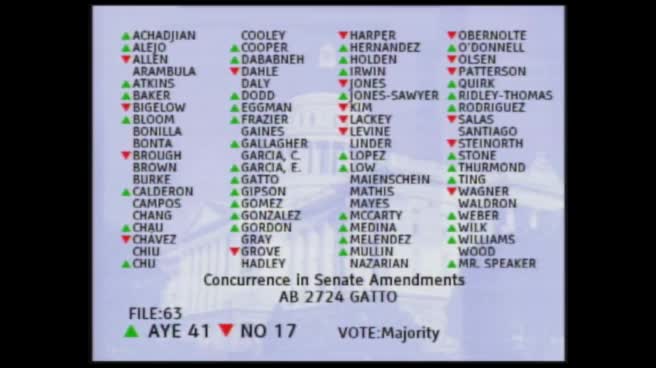 52SEC
Assembly Floor
 8MIN
Assembly Standing Committee on Labor and Employment
 2MIN
Senate Floor
 6MIN
Senate Standing Committee on Labor and Industrial Relations
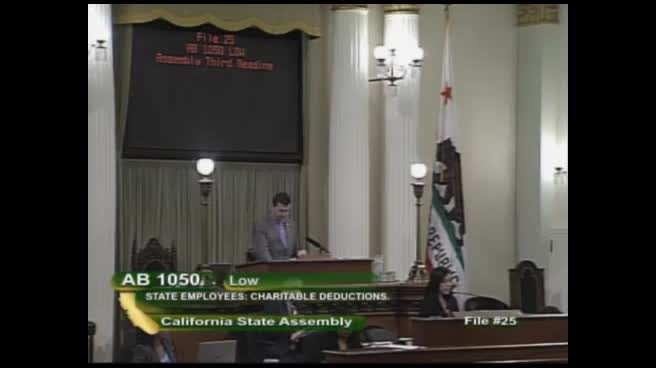 1MIN
Assembly Floor
 1MIN

