AB 1072: Insurance: firefighters’ or police officers’ benefit and relief associations.
- Session Year: 2015-2016
- House: Assembly
- Latest Version Date: 2015-10-05
Existing law generally provides for the regulation of insurers by the Department of Insurance pursuant to laws set forth in the Insurance Code. Existing law authorizes the Insurance Commissioner to make certain examinations, investigations, and prosecutions and, upon making a determination of the existence of certain conduct, conditions, or grounds, to issue orders reasonably necessary to correct, eliminate, or remedy the conduct, conditions, or grounds.
Existing law exempts from the requirements set forth in the Insurance Code firemens, policemens, and peace officers benefit and relief associations that comply with specified criteria, including, among other things, a requirement that the membership consist solely of peace officers, members of police or fire departments, and emergency medical personnel employed by fire departments, as specified. Existing law prohibits an association from operating or doing business in the state without a certificate of authority.
This bill would require every association that holds a certificate of authority and that issues long-term disability or long-term care policies or contracts, as specified, to submit to the commissioner the opinion, as specified, of a qualified actuary as to whether the reserves and related actuarial items that support the policies or contracts issued are expected to be adequate to satisfy contractual provisions, are based on reasonable assumptions, and are based on specified actuarial standards. The bill would also require an association seeking a certificate of authority to file an opinion that meets specified requirements and that establishes that it would have adequate resources to provide benefits, as specified, as required to satisfy its proposed contractual obligations. The bill would recognize that information submitted by a company pursuant to those provisions and in the possession or control of the department as proprietary and containing trade secrets. The bill would require that information to be confidential and privileged, exempt from disclosure by the commissioner pursuant to the California Public Records Act, and not subject to subpoena or discovery from the commissioner or admissible into evidence in a private civil action if obtained from the commissioner. The bill would require the commissioner to notify the association of the deficiencies in the filing if the association fails to provide an opinion and supporting memoranda to the commissioner that meets the requirements of the bill, as specified. The bill would require an association that self-funds all or part of the benefits to include specified disclosure language in all contracts that are not regulated by the department and in certificates evidencing coverage under those contracts. The bill would also require the commissioner, if he or she determines that the laws governing these associations are inadequate to protect the interests of the members of the associations, to develop and deliver recommendations to the Assembly Committee on Insurance and the Senate Committee on Insurance regarding changes in the law necessary to protect the interests of members of the associations. The provisions of the bill would remain in effect only until December 31, 2018, and as of that date would be repealed.
Existing constitutional provisions require that a statute that limits the right of access to the meetings of public bodies or the writings of public officials and agencies be adopted with findings demonstrating the interest protected by the limitation and the need for protecting that interest.
This bill would make legislative findings to that effect.
Existing law generally provides for the regulation of insurers by the Department of Insurance pursuant to laws set forth in the Insurance Code. Existing law authorizes the Insurance Commissioner to make certain examinations, investigations, and prosecutions and, upon making a determination of the existence of certain conduct, conditions, or grounds, to issue orders reasonably necessary to correct, eliminate, or remedy the conduct, conditions, or grounds.
Existing law exempts from the requirements set forth in the Insurance Code firemens, policemens, and peace officers benefit and relief associations that comply with specified criteria, including, among other things, a requirement that the membership consist solely of peace officers, members of police or fire departments, and emergency medical personnel employed by fire departments, as specified. Existing law prohibits an association from operating or doing business in the state without a certificate of authority.
This bill would require every association that holds a certificate of authority and that issues long-term disability or long-term care policies or contracts, as specified, to submit to the commissioner the opinion, as specified, of a qualified actuary as to whether the reserves and related actuarial items that support the policies or contracts issued are expected to be adequate to satisfy contractual provisions, are based on reasonable assumptions, and are based on specified actuarial standards. The bill would also require an association seeking a certificate of authority to file an opinion that meets specified requirements and that establishes that it would have adequate resources to provide benefits, as specified, as required to satisfy its proposed contractual obligations. The bill would recognize that information submitted by a company pursuant to those provisions and in the possession or control of the department as proprietary and containing trade secrets. The bill would require that information to be confidential and privileged, exempt from disclosure by the commissioner pursuant to the California Public Records Act, and not subject to subpoena or discovery from the commissioner or admissible into evidence in a private civil action if obtained from the commissioner. The bill would require the commissioner to notify the association of the deficiencies in the filing if the association fails to provide an opinion and supporting memoranda to the commissioner that meets the requirements of the bill, as specified. The bill would require an association that self-funds all or part of the benefits to include specified disclosure language in all contracts that are not regulated by the department and in certificates evidencing coverage under those contracts. The bill would also require the commissioner, if he or she determines that the laws governing these associations are inadequate to protect the interests of the members of the associations, to develop and deliver recommendations to the Assembly Committee on Insurance and the Senate Committee on Insurance regarding changes in the law necessary to protect the interests of members of the associations. The provisions of the bill would remain in effect only until December 31, 2018, and as of that date would be repealed.
Existing constitutional provisions require that a statute that limits the right of access to the meetings of public bodies or the writings of public officials and agencies be adopted with findings demonstrating the interest protected by the limitation and the need for protecting that interest.
This bill would make legislative findings to that effect.
Existing law generally provides for the regulation of insurers by the Department of Insurance pursuant to laws set forth in the Insurance Code. Existing law authorizes the Insurance Commissioner to make certain examinations, investigations, and prosecutions and, upon making a determination of the existence of certain conduct, conditions, or grounds, to issue orders reasonably necessary to correct, eliminate, or remedy the conduct, conditions, or grounds.
Existing law exempts from the requirements set forth in the Insurance Code firemens, policemens, and peace officers benefit and relief associations that comply with specified criteria, including, among other things, a requirement that the membership consist solely of peace officers, members of police or fire departments, and emergency medical personnel employed by fire departments, as specified. Existing law prohibits an association from operating or doing business in the state without a certificate of authority.
This bill would require every association that holds a certificate of authority and that issues long-term disability or long-term care policies or contracts, as specified, to submit to the commissioner the opinion, as specified, of a qualified actuary as to whether the reserves and related actuarial items that support the policies or contracts issued are based on assumptions that expected to be adequate to satisfy contractual provisions, are consistent with prior reported amounts, based on reasonable assumptions, and are based on specified actuarial standards and procedures. standards. The bill would also require an association seeking a certificate of authority to file an opinion that meets specified requirements and that establishes that it would have adequate resources to provide benefits, as specified, as required to satisfy its proposed contractual obligations. The bill would recognize that information submitted by a company pursuant to those provisions and in the possession or control of the department as proprietary and containing trade secrets. The bill would require that information to be confidential and privileged, exempt from disclosure by the commissioner pursuant to the California Public Records Act, and not subject to subpoena or discovery from the commissioner or admissible into evidence in a private civil action if obtained from the commissioner. The bill would require the commissioner to notify the association of the deficiencies in the filing if the association fails to provide an opinion and supporting memoranda to the commissioner that meets the requirements of the bill, as specified. The bill would require an association that self-funds all or part of the benefits to include specified disclosure language in all contracts that are not regulated by the department and in certificates evidencing coverage under those contracts. The bill would also require the commissioner, if he or she determines that the laws governing these associations are inadequate to protect the interests of the members of the associations, to develop and deliver recommendations to the Assembly Committee on Insurance and the Senate Committee on Insurance regarding changes in the law that would better necessary to protect the interests of members of the associations. The provisions of the bill would remain in effect only until December 31, 2018, and as of that date would be repealed.
Existing constitutional provisions require that a statute that limits the right of access to the meetings of public bodies or the writings of public officials and agencies be adopted with findings demonstrating the interest protected by the limitation and the need for protecting that interest.
This bill would make legislative findings to that effect.
Existing law generally provides for the regulation of insurers by the Department of Insurance pursuant to laws set forth in the Insurance Code. Existing law authorizes the Insurance Commissioner to make certain examinations, investigations, and prosecutions and, upon making a determination of the existence of certain conduct, conditions, or grounds, to issue orders reasonably necessary to correct, eliminate, or remedy the conduct, conditions, or grounds.
Existing law exempts from the requirements set forth in the Insurance Code firemens, policemens, and peace officers benefit and relief associations that comply with specified criteria, including, among other things, a requirement that the membership consist solely of peace officers, members of police or fire departments, and emergency medical personnel employed by fire departments, as specified. Existing law prohibits an association from operating or doing business in the state without a certificate of authority.
This bill would require every association that holds a certificate of authority and that issues long-term disability or long-term care policies or contracts, as specified, to submit to the commissioner the opinion, as specified, of a qualified actuary as to whether the reserves and related actuarial items that support the policies or contracts issued are based on assumptions that satisfy contractual provisions, are consistent with prior reported amounts, and are based on specified actuarial standards and procedures. The bill would also require an association seeking a certificate of authority to file an opinion that meets specified requirements and that establishes that it would have adequate resources to provide benefits, as specified, as required to satisfy its proposed contractual obligations. The bill would recognize that information submitted by a company pursuant to those provisions and in the possession or control of the department as confidential and privileged, exempt from disclosure by the commissioner pursuant to the California Public Records Act, and not subject to subpoena or discovery from the commissioner or admissible in into evidence in a private civil action. action if obtained from the commissioner. The bill would require the commissioner to notify the association of the deficiencies in the filing if the association fails to provide an opinion and supporting memoranda to the commissioner that meets the requirements of the bill, as specified. The bill would require an association that self-funds all or part of the benefits to include specified disclosure language in all contracts that are not regulated by the department and in certificates evidencing coverage under those contracts. The bill would also require the commissioner, if he or she determines that the laws governing these associations are inadequate to protect the interests of the members of the associations, to develop and deliver recommendations to the Assembly Committee on Insurance and the Senate Committee on Insurance regarding changes in the law that would better protect the interests of members of the associations. The provisions of the bill would remain in effect only until December 31, 2018, and as of that date would be repealed.
Existing constitutional provisions require that a statute that limits the right of access to the meetings of public bodies or the writings of public officials and agencies be adopted with findings demonstrating the interest protected by the limitation and the need for protecting that interest.
This bill would make legislative findings to that effect.
Existing law generally provides for the regulation of insurers by the Department of Insurance pursuant to laws set forth in the Insurance Code. Existing law authorizes the Insurance Commissioner to make certain examinations, investigations, and prosecutions and, upon making a determination of the existence of certain conduct, conditions, or grounds, to issue orders reasonably necessary to correct, eliminate, or remedy the conduct, conditions, or grounds.
Existing law exempts from the requirements set forth in the Insurance Code firemens, policemens, and peace officers benefit and relief associations that comply with specified criteria, including, among other things, a requirement that the membership consist solely of peace officers, members of police or fire departments, and emergency medical personnel employed by fire departments, as specified. Existing law prohibits an association from operating or doing business in the state without a certificate of authority.
This bill would require every association that holds a certificate of authority and that issues long-term disability or long-term care policies or contracts, as specified, to submit to the commissioner the opinion, as specified, of a qualified actuary as to whether the reserves and related actuarial items that support the policies or contracts issued are based on assumptions that satisfy contractual provisions, are consistent with prior reported amounts, and are based on specified actuarial standards and procedures. The bill would also require an association seeking a certificate of authority to file an opinion that meets specified requirements and that establishes that it would have adequate resources to provide benefits, as specified, as required to satisfy its proposed contractual obligations. The bill would recognize that information submitted by a company pursuant to those provisions and in the possession or control of the department as confidential and privileged, exempt from disclosure pursuant to the California Public Records Act, and not subject to subpoena or discovery or admissible in evidence in a private civil action. The bill would require the commissioner to notify the association of the deficiencies in the filing if the association fails to provide an opinion and supporting memoranda to the commissioner that meets the requirements of the bill, as specified. The bill would require an association that receives that notice to, commencing 30 days from the notification date, self-funds all or part of the benefits to include specified disclosure language in all contracts that are not regulated by the department and in certificates evidencing coverage under those contracts. The bill would also require the commissioner, if he or she determines that the laws governing these associations are inadequate to protect the interests of the members of the associations, to develop and deliver recommendations to the Assembly Committee on Insurance and the Senate Committee on Insurance regarding changes in the law that would better protect the interests of members of the associations. The provisions of the bill would remain in effect only until December 31, 2018, and as of that date would be repealed.
Existing constitutional provisions require that a statute that limits the right of access to the meetings of public bodies or the writings of public officials and agencies be adopted with findings demonstrating the interest protected by the limitation and the need for protecting that interest.
This bill would make legislative findings to that effect.
Existing law generally provides for the regulation of insurers by the Department of Insurance pursuant to laws set forth in the Insurance Code. Existing law authorizes the Insurance Commissioner to make certain examinations, investigations, and prosecutions and, upon making a determination of the existence of certain conduct, conditions, or grounds, to issue orders reasonably necessary to correct, eliminate, or remedy the conduct, conditions, or grounds.
Existing law exempts from the requirements set forth in the Insurance Code firemens, policemens, and peace officers benefit and relief associations that comply with specified criteria, including, among other things, a requirement that the membership consist solely of peace officers, members of police or fire departments, and emergency medical personnel employed by fire departments, as specified. Existing law prohibits an association from operating or doing business in the state without a certificate of authority.
This bill would require every association that holds a certificate of authority and that issues long-term disability or long-term care policies or contracts, as specified, to submit to the commissioner the opinion, as specified, of a qualified actuary as to whether the reserves and related actuarial items that support the policies or contracts issued are based on assumptions that satisfy contractual provisions, are consistent with prior reported amounts, and are based on specified actuarial standards and procedures. The bill would also require an association seeking a certificate of authority to file an opinion that meets specified requirements and that establishes that it would have adequate resources to provide benefits, as specified, as required to satisfy its proposed contractual obligations. The bill would require the commissioner to notify the association of the deficiencies in the filing if the association fails to provide an opinion and supporting memoranda to the commissioner that meets the requirements of the bill, as specified. The bill would require an association that receives that notice to, commencing 30 days from the notification date, include specified disclosure language in all contracts that are not regulated by the department and in certificates evidencing coverage under those contracts. The bill would also require the commissioner, if he or she determines that the laws governing these associations are inadequate to protect the interests of the members of the associations, to develop and deliver recommendations to the Assembly Committee on Insurance and the Senate Committee on Insurance regarding changes in the law that would better protect the interests of members of the associations. The provisions of the bill would remain in effect only until December 31, 2018, and as of that date are would be repealed.
Existing law generally provides for the regulation of insurers by the Department of Insurance pursuant to laws set forth in the Insurance Code. Existing law authorizes the Insurance Commissioner to make certain examinations, investigations, and prosecutions and, upon making a determination of the existence of certain conduct, conditions, or grounds, to issue orders reasonably necessary to correct, eliminate, or remedy the conduct, conditions, or grounds.
Existing law exempts from the requirements set forth in the Insurance Code firemens, policemens, and peace officers benefit and relief associations that comply with specified criteria, including, among other things, a requirement that the membership consist solely of peace officers, members of police or fire departments, and emergency medical personnel employed by fire departments, as specified. Existing law prohibits an association from operating or doing business in the state without a certificate of authority.
This bill would require every association that holds a certificate of authority to submit to the commissioner the opinion, as specified, of a qualified actuary as to whether the reserves and related actuarial items that support the policies or contracts issued are based on assumptions that satisfy contractual provisions, are consistent with prior reported amounts, and are based on specified actuarial standards and procedures. The bill would also require an association seeking a certificate of authority to file an opinion that meets specified requirements and that establishes that it would have adequate resources to provide benefits, as specified, as required to satisfy its proposed contractual obligations. The bill would require the commissioner to notify the association of the deficiencies in the filing if the association fails to provide an opinion and supporting memoranda to the commissioner that meets the requirements of the bill, as specified. The bill would also require the commissioner, if he or she determines that the laws governing these associations are inadequate to protect the interests of the members of the associations, to develop and deliver recommendations to the Assembly Committee on Insurance and the Senate Committee on Insurance regarding changes in the law that would better protect the interests of members of the associations. The provisions of the bill would remain in effect only until December 31, 2018, and as of that date are repealed.
Existing law generally provides for the regulation of insurers by the Department of Insurance pursuant to laws set forth in the Insurance Code. Existing law authorizes the Insurance Commissioner to make certain examinations, investigations, and prosecutions and, upon making a determination of the existence of certain conduct, conditions, or grounds, to issue orders reasonably necessary to correct, eliminate, or remedy the conduct, conditions, or grounds.
Existing law exempts from the requirements set forth in the Insurance Code firemens, policemens, and peace officers benefit and relief associations that comply with specified criteria, including, among other things, a requirement that the membership consist solely of peace officers, members of police or fire departments, and emergency medical personnel employed by fire departments, as specified. Existing law prohibits an association from operating or doing business in the state without a certificate of authority.
This bill would require every association that holds a certificate of authority to submit to the commissioner the opinion, as specified, of a qualified actuary as to whether the reserves and related actuarial items that support the policies or contracts issued are based on assumptions that satisfy contractual provisions, are consistent with prior reported amounts, and are based on specified actuarial standards and procedures. The bill would also require an association seeking a certificate of authority to file an opinion that meets specified requirements and that establishes that it would have adequate resources to provide benefits, as specified, as required to satisfy its proposed contractual obligations. The bill would require the commissioner to notify the association of the deficiencies in the filing if the association fails to provide an opinion and supporting memoranda to the commissioner that meets the requirements of the bill, as specified. The bill would also require the commissioner, if he or she determines that the laws governing these associations are inadequate to protect the interests of the members of the associations, to develop and deliver recommendations to the Assembly Committee on Insurance and the Senate Committee on Insurance regarding changes in the law that would better protect the interests of members of the associations. The provisions of the bill would remain in effect only until December 31, 2018, and as of that date are repealed.
(1)Existing law generally provides for the regulation of insurers by the Department of Insurance pursuant to laws set forth in the Insurance Code. Existing law authorizes the Insurance Commissioner to make certain examinations, investigations, and prosecutions and, upon making a determination of the existence of certain conduct, conditions, or grounds, to issue orders reasonably necessary to correct, eliminate, or remedy the conduct, conditions, or grounds. Existing law also prohibits insurers from engaging in unfair or deceptive acts or practices, including advertising insurance that an insurer will not sell. A violation of that prohibition is a misdemeanor.
Existing law exempts from the requirements set forth in the Insurance Code firemens, policemens, and peace officers benefit and relief associations that comply with specified criteria, including, among other things, a requirement that the membership consist solely of peace officers, members of police or fire departments, and emergency medical personnel employed by fire departments, as specified. Existing law prohibits an association from operating or doing business in the state without a certificate of authority, and imposes a filing fee of $590 for the application for that certificate.
This bill would repeal those provisions and would enact new provisions governing those entities. Among other things, the bill would revise requirements governing membership, by authorizing these associations to consist of a majority of the members described above.
The bill would also impose new reporting, reserve, and disclosure requirements upon certain associations that offer long-term benefits, as defined. The bill would authorize the commissioner to examine the operations, affairs, transactions, conduct, and financial condition of an association, and to carry out other enforcement duties with respect to these associations. The bill would require these associations to pay a filing fee of $590 for the application for the certificate, and an annual fee of $350, thereby imposing taxes, and would require these associations to pay $347 for filing financial information. The bill would also make these associations subject to the prohibitions against unfair or deceptive acts or practices. By expanding the scope of a crime, the bill would impose a state-mandated local program.
(2)The California Constitution requires the state to reimburse local agencies and school districts for certain costs mandated by the state. Statutory provisions establish procedures for making that reimbursement.
This bill would provide that no reimbursement is required by this act for a specified reason.
(3)This bill would include a change in state statute that would result in a taxpayer paying a higher tax within the meaning of Section 3 of Article XIIIA of the California Constitution, and thus would require for passage the approval of 2/3 of the membership of each house of the Legislature.
(1)Existing law generally provides for the regulation of insurers by the Department of Insurance pursuant to laws set forth in the Insurance Code. Existing law authorizes the Insurance Commissioner to make certain examinations, investigations, and prosecutions and, upon making a determination of the existence of certain conduct, conditions, or grounds, to issue orders reasonably necessary to correct, eliminate, or remedy the conduct, conditions, or grounds. Existing law also prohibits insurers from engaging in unfair or deceptive acts or practices, including advertising insurance that an insurer will not sell. A violation of that prohibition is a misdemeanor.
Existing law exempts from the requirements set forth in the Insurance Code firemens, policemens, and peace officers benefit and relief associations that comply with specified criteria, including, among other things, a requirement that the membership consist solely of peace officers, members of police or fire departments, and emergency medical personnel employed by fire departments, as specified. Existing law prohibits an association from operating or doing business in the state without a certificate of authority, and imposes a filing fee of $590 for the application for that certificate.
This bill would repeal those provisions and would enact new provisions governing those entities. Among other things, the bill would revise requirements governing membership, by authorizing these associations to consist of a majority of the members described above.
The bill would also impose new reporting, reserve, and disclosure requirements upon certain associations that offer long-term benefits, as defined. The bill would authorize the commissioner to examine the operations, affairs, transactions, conduct, and financial condition of an association, and to carry out other enforcement duties with respect to these associations. The bill would require these associations to pay a filing fee of $590 for the application for the certificate, and an annual fee of $350, thereby imposing taxes, and would require these associations to pay $347 for filing financial information. The bill would also make these associations subject to the prohibitions against unfair or deceptive acts or practices. By expanding the scope of a crime, the bill would impose a state-mandated local program.
(2)The California Constitution requires the state to reimburse local agencies and school districts for certain costs mandated by the state. Statutory provisions establish procedures for making that reimbursement.
This bill would provide that no reimbursement is required by this act for a specified reason.
(3)This bill would include a change in state statute that would result in a taxpayer paying a higher tax within the meaning of Section 3 of Article XIIIA of the California Constitution, and thus would require for passage the approval of 2/3 of the membership of each house of the Legislature.
(a)(1)Each association that holds a certificate of authority pursuant to this chapter and that issues long-term disability or long-term care policies or contracts shall submit to the commissioner the opinion of a qualified actuary as to whether the reserves and related actuarial items that support the policies or contracts issued pursuant to this chapter, including policies and contracts issued by entities established by these associations that provide benefits described in this chapter, are expected to be adequate to satisfy contractual provisions, are based on reasonable assumptions, and are based on actuarial standards of practice published by the American Academy of Actuaries and the Actuarial Standards Board. An association that holds a certificate of authority pursuant to this chapter shall file its opinion no later than July 1, 2016. The opinion shall have been completed no earlier than December 31, 2013.
(2)An association is considered to have issued a long-term care or disability policy or contract if it self-funds all or part of the resulting obligation. An association that markets long-term policies or contracts issued by an insurer that is admitted by the department to offer insurance products in the state is exempt from this reporting requirement.
(3)An association seeking a certificate of authority pursuant to this chapter shall file an opinion, to the extent feasible, that establishes that it would have adequate resources to provide benefits described in this chapter as required to satisfy its proposed contractual obligations.
(b)The opinion required by subdivision (a) shall include supporting memoranda from the same qualified actuary as to whether the reserves and related actuarial items held in support of the policies and contracts, when considered in light of the assets held by the association with respect to the reserves and related actuarial items, including, but not limited to, the investment earnings on the assets and the considerations anticipated to be received and retained under the policies and contracts, and shall make adequate provision for the associations obligations under the policies and contracts, including, but not limited to, the benefits and any administrative and operating expenses associated with the policies and contracts.
(c)The opinion required by subdivision (a) shall be governed by the following provisions:
(1)It shall include supporting memoranda consistent with actuarial standards of practice published by the American Academy of Actuaries and the Actuarial Standards Board.
(2)If the association fails to provide an opinion and supporting memoranda to the commissioner that meets the requirements of this section, the commissioner shall notify the association of the deficiencies in the filing, and shall make a specific request that identifies the issues that should be addressed in an amended filing. The requests shall be consistent with actuarial standards of practice published by the American Academy of Actuaries and the Actuarial Standards Board.
(d)If the commissioner determines, after a review of the filings from the associations, that the laws governing these associations are inadequate to protect the interests of the members of the associations, he or she shall, on or before July 1, 2017, develop and deliver recommendations to the Assembly Committee on Insurance and the Senate Committee on Insurance regarding changes in the law necessary to protect the interests of members of the associations.
(e)Documents, materials, or other information, including the opinion with supporting memoranda, submitted pursuant to this section that are in the possession or control of the Department of Insurance and that are obtained by, created by, or disclosed to the commissioner or any other person pursuant to this section, are recognized by this state as being proprietary and to contain trade secrets. Those documents, materials, or other information shall be confidential by law and privileged, shall not be subject to disclosure by the commissioner pursuant to the California Public Records Act (Chapter 3.5 (commencing with Section 6250) of Division 7 of Title 1 of the Government Code), and shall not be subject to subpoena or discovery from the commissioner or admissible into evidence, in a private civil action if obtained from the commissioner. The commissioner shall not otherwise make those documents, materials, or other information public without the prior written consent of the association.
(f)This section shall remain in effect only until December 31, 2018, and as of that date is repealed, unless a later enacted statute, that is enacted before December 31, 2018, deletes or extends that date.
SEC. 2.Section 11401.6 is added to the Insurance Code, to read:11401.6.(a)An association that self-funds all or part of the benefits provided under this chapter shall include the following language, or other language approved by the commissioner, in all contracts that are not regulated by the department, and in certificates evidencing coverage under those contracts, in capital letters and in a minimum of 12-point type:
ALL OR A PORTION OF THE BENEFITS PROVIDED BY THIS CONTRACT ARE NOT SUBJECT TO REGULATION BY THE CALIFORNIA DEPARTMENT OF INSURANCE, AND THE CONTRACT IS NOT GUARANTEED BY THE CALIFORNIA LIFE AND HEALTH INSURANCE GUARANTEE ASSOCIATION.
(b)This section shall remain in effect only until December 31, 2018, and as of that date is repealed, unless a later enacted statute, that is enacted before December 31, 2018, deletes or extends that date.
SEC. 3.The Legislature finds and declares that Section 1 of this act, which adds Section 11401.5 of the Insurance Code, imposes a limitation on the publics right of access to the meetings of public bodies or the writings of public officials and agencies within the meaning of Section 3 of Article I of the California Constitution. Pursuant to that constitutional provision, the Legislature makes the following findings to demonstrate the interest protected by this limitation and the need for protecting that interest:
In order to protect proprietary information, it is necessary to enact legislation that limits the publics right of access to insurance holding company information that is provided pursuant to Section 11401.5 of the Insurance Code.
(a)(1)Each association that holds a certificate of authority pursuant to this chapter and that issues long-term disability or long-term care policies or contracts shall submit to the commissioner the opinion of a qualified actuary as to whether the reserves and related actuarial items that support the policies or contracts issued pursuant to this chapter, including policies and contracts issued by entities established by these associations that provide benefits described in this chapter, are expected to be adequate to satisfy contractual provisions, are based on reasonable assumptions, and are based on actuarial standards of practice published by the American Academy of Actuaries and the Actuarial Standards Board. An association that holds a certificate of authority pursuant to this chapter shall file its opinion no later than July 1, 2016. The opinion shall have been completed no earlier than December 31, 2013.
(2)An association is considered to have issued a long-term care or disability policy or contract if it self-funds all or part of the resulting obligation. An association that markets long-term policies or contracts issued by an insurer that is admitted by the department to offer insurance products in the state is exempt from this reporting requirement.
(3)An association seeking a certificate of authority pursuant to this chapter shall file an opinion, to the extent feasible, that establishes that it would have adequate resources to provide benefits described in this chapter as required to satisfy its proposed contractual obligations.
(b)The opinion required by subdivision (a) shall include supporting memoranda from the same qualified actuary as to whether the reserves and related actuarial items held in support of the policies and contracts, when considered in light of the assets held by the association with respect to the reserves and related actuarial items, including, but not limited to, the investment earnings on the assets and the considerations anticipated to be received and retained under the policies and contracts, and shall make adequate provision for the associations obligations under the policies and contracts, including, but not limited to, the benefits and any administrative and operating expenses associated with the policies and contracts.
(c)The opinion required by subdivision (a) shall be governed by the following provisions:
(1)It shall include supporting memoranda consistent with actuarial standards of practice published by the American Academy of Actuaries and the Actuarial Standards Board.
(2)If the association fails to provide an opinion and supporting memoranda to the commissioner that meets the requirements of this section, the commissioner shall notify the association of the deficiencies in the filing, and shall make a specific request that identifies the issues that should be addressed in an amended filing. The requests shall be consistent with actuarial standards of practice published by the American Academy of Actuaries and the Actuarial Standards Board.
(d)If the commissioner determines, after a review of the filings from the associations, that the laws governing these associations are inadequate to protect the interests of the members of the associations, he or she shall, on or before July 1, 2017, develop and deliver recommendations to the Assembly Committee on Insurance and the Senate Committee on Insurance regarding changes in the law necessary to protect the interests of members of the associations.
(e)Documents, materials, or other information, including the opinion with supporting memoranda, submitted pursuant to this section that are in the possession or control of the Department of Insurance and that are obtained by, created by, or disclosed to the commissioner or any other person pursuant to this section, are recognized by this state as being proprietary and to contain trade secrets. Those documents, materials, or other information shall be confidential by law and privileged, shall not be subject to disclosure by the commissioner pursuant to the California Public Records Act (Chapter 3.5 (commencing with Section 6250) of Division 7 of Title 1 of the Government Code), and shall not be subject to subpoena or discovery from the commissioner or admissible into evidence, in a private civil action if obtained from the commissioner. The commissioner shall not otherwise make those documents, materials, or other information public without the prior written consent of the association.
(f)This section shall remain in effect only until December 31, 2018, and as of that date is repealed, unless a later enacted statute, that is enacted before December 31, 2018, deletes or extends that date.
SEC. 2.Section 11401.6 is added to the Insurance Code, to read:11401.6.(a)An association that self-funds all or part of the benefits provided under this chapter shall include the following language, or other language approved by the commissioner, in all contracts that are not regulated by the department, and in certificates evidencing coverage under those contracts, in capital letters and in a minimum of 12-point type:
ALL OR A PORTION OF THE BENEFITS PROVIDED BY THIS CONTRACT ARE NOT SUBJECT TO REGULATION BY THE CALIFORNIA DEPARTMENT OF INSURANCE, AND THE CONTRACT IS NOT GUARANTEED BY THE CALIFORNIA LIFE AND HEALTH INSURANCE GUARANTEE ASSOCIATION.
(b)This section shall remain in effect only until December 31, 2018, and as of that date is repealed, unless a later enacted statute, that is enacted before December 31, 2018, deletes or extends that date.
SEC. 3.The Legislature finds and declares that Section 1 of this act, which adds Section 11401.5 of the Insurance Code, imposes a limitation on the publics right of access to the meetings of public bodies or the writings of public officials and agencies within the meaning of Section 3 of Article I of the California Constitution. Pursuant to that constitutional provision, the Legislature makes the following findings to demonstrate the interest protected by this limitation and the need for protecting that interest:
In order to protect proprietary information, it is necessary to enact legislation that limits the publics right of access to insurance holding company information that is provided pursuant to Section 11401.5 of the Insurance Code.
(a)(1)Each association that holds a certificate of authority pursuant to this chapter and that issues long-term disability or long-term care policies or contracts shall submit to the commissioner the opinion of a qualified actuary as to whether the reserves and related actuarial items that support the policies or contracts issued pursuant to this chapter, including policies and contracts issued by entities established by these associations that provide benefits described in this chapter, are based on assumptions that expected to be adequate to satisfy contractual provisions, are consistent with prior reported amounts, based on reasonable assumptions, and are based on actuarial standards and procedures established of practice published by the American Academy of Actuaries and the Actuarial Standards Board. An association that holds a certificate of authority pursuant to this chapter shall file its opinion no later than July 1, 2016. The opinion shall have been completed no earlier than December 31, 2013.
(2)An association is considered to have issued a long-term care or disability policy or contract if it self-funds all or part of the resulting obligation. An association that markets long-term policies or contracts issued by an insurer that is admitted by the department to offer insurance products in the state is exempt from this reporting requirement.
(3)An association seeking a certificate of authority pursuant to this chapter shall file an opinion, to the extent feasible, that establishes that it would have adequate resources to provide benefits described in this chapter as required to satisfy its proposed contractual obligations.
(b)The opinion required by subdivision (a) shall include an opinion with supporting memoranda consistent with from the same qualified actuary as to whether the reserves and related actuarial items held in support of the policies and contracts, when considered in light of the assets held by the association with respect to the reserves and related actuarial items, including, but not limited to, the investment earnings on the assets and the considerations anticipated to be received and retained under the policies and contracts, and shall make adequate provision for the associations obligations under the policies and contracts, including, but not limited to, the benefits under any and any administrative and operating expenses associated with the policies and contracts.
(c)The opinion required by subdivision (b) (a) shall be governed by the following provisions:
(1)It shall include a memorandum, in form and substance supporting memoranda consistent with actuarial standards and procedures acceptable to of practice published by the American Academy of Actuaries and the Actuarial Standards Board, in support of the opinion. Board.
(2)If the association fails to provide an opinion and supporting memoranda to the commissioner that meets the requirements of this section, the commissioner shall notify the association of the deficiencies in the filing, and shall make a specific request that identifies the issues that should be addressed in an amended filing. The requests shall be consistent with actuarial standards of practice published by the American Academy of Actuaries and the Actuarial Standards Board.
(d)If the commissioner determines, after a review of the filings from the associations, that the laws governing these associations are inadequate to protect the interests of the members of the associations, he or she shall, on or before July 1, 2017, develop and deliver recommendations to the Assembly Committee on Insurance and the Senate Committee on Insurance regarding changes in the law that would better necessary to protect the interests of members of the associations.
(e)Documents, materials, or other information, including the opinion with supporting memoranda, submitted pursuant to this section that are in the possession or control of the Department of Insurance and that are obtained by, created by, or disclosed to the commissioner or any other person pursuant to this section, are recognized by this state as being proprietary and to contain trade secrets. Those documents, materials, or other information shall be confidential by law and privileged, shall not be subject to disclosure by the commissioner pursuant to the California Public Records Act (Chapter 3.5 (commencing with Section 6250) of Division 7 of Title 1 of the Government Code), and shall not be subject to subpoena or discovery from the commissioner or admissible into evidence, in a private civil action if obtained from the commissioner. The commissioner shall not otherwise make those documents, materials, or other information public without the prior written consent of the association.
(f)This section shall remain in effect only until December 31, 2018, and as of that date is repealed, unless a later enacted statute, that is enacted before December 31, 2018, deletes or extends that date.
SEC. 2.Section 11401.6 is added to the Insurance Code, to read:11401.6.(a)An association that self-funds all or part of the benefits provided under this chapter shall include the following language, or other language approved by the commissioner, in all contracts that are not regulated by the department, and in certificates evidencing coverage under those contracts, in capital letters and in a minimum of 12-point type:
ALL OR A PORTION OF THE BENEFITS PROVIDED BY THIS CONTRACT ARE NOT SUBJECT TO REGULATION BY THE CALIFORNIA DEPARTMENT OF INSURANCE, AND THE CONTRACT IS NOT GUARANTEED BY THE CALIFORNIA LIFE AND HEALTH INSURANCE GUARANTEE ASSOCIATION.
(b)This section shall remain in effect only until December 31, 2018, and as of that date is repealed, unless a later enacted statute, that is enacted before December 31, 2018, deletes or extends that date.
SEC. 3.The Legislature finds and declares that Section 1 of this act, which adds Section 11401.5 of the Insurance Code, imposes a limitation on the publics right of access to the meetings of public bodies or the writings of public officials and agencies within the meaning of Section 3 of Article I of the California Constitution. Pursuant to that constitutional provision, the Legislature makes the following findings to demonstrate the interest protected by this limitation and the need for protecting that interest:
In order to protect proprietary information, it is necessary to enact legislation that limits the publics right of access to insurance holding company information that is provided pursuant to Section 11401.5 of the Insurance Code.
(a)(1)Each association that holds a certificate of authority pursuant to this chapter and that issues long-term disability or long-term care policies or contracts shall submit to the commissioner the opinion of a qualified actuary as to whether the reserves and related actuarial items that support the policies or contracts issued pursuant to this chapter, including policies and contracts issued by entities established by these associations that provide benefits described in this chapter, are based on assumptions that satisfy contractual provisions, are consistent with prior reported amounts, and are based on actuarial standards and procedures established by the American Academy of Actuaries and the Actuarial Standards Board. An association that holds a certificate of authority pursuant to this chapter shall file its opinion no later than July 1, 2016. The opinion shall have been completed no earlier than December 31, 2013.
(2)An association is considered to have issued a long-term care or disability policy or contract if it self-funds all or part of the resulting obligation. An association that markets long-term policies or contracts issued by an insurer that is admitted by the department to offer insurance products in the state is exempt from this reporting requirement.
(3)An association seeking a certificate of authority pursuant to this chapter shall file an opinion, to the extent feasible, that establishes that it would have adequate resources to provide benefits described in this chapter as required to satisfy its proposed contractual obligations.
(b)The opinion required by subdivision (a) shall include an opinion with supporting memoranda consistent with the same qualified actuary as to whether the reserves and related actuarial items held in support of the policies and contracts, when considered in light of the assets held by the association with respect to the reserves and related actuarial items, including, but not limited to, the investment earnings on the assets and the considerations anticipated to be received and retained under the policies and contracts, and shall make adequate provision for the associations obligations under the policies and contracts, including, but not limited to, the benefits under any expenses associated with the policies and contracts.
(c)The opinion required by subdivision (b) shall be governed by the following provisions:
(1)It shall include a memorandum, in form and substance consistent with actuarial standards and procedures acceptable to the American Academy of Actuaries and the Actuarial Standards Board, in support of the opinion.
(2)If the association fails to provide an opinion and supporting memoranda to the commissioner that meets the requirements of this section, the commissioner shall notify the association of the deficiencies in the filing, and shall make a specific request that identifies the issues that should be addressed in an amended filing.
(d)If the commissioner determines, after a review of the filings from the associations, that the laws governing these associations are inadequate to protect the interests of the members of the associations, he or she shall, on or before July 1, 2017, develop and deliver recommendations to the Assembly Committee on Insurance and the Senate Committee on Insurance regarding changes in the law that would better protect the interests of members of the associations.
(e)Documents, materials, or other information, including the opinion with supporting memoranda, submitted pursuant to this section that are in the possession or control of the Department of Insurance and that are obtained by, created by, or disclosed to the commissioner or any other person pursuant to this section, are recognized by this state as being proprietary and to contain trade secrets. Those documents, materials, or other information shall be confidential by law and privileged, shall not be subject to disclosure by the commissioner pursuant to the California Public Records Act (Chapter 3.5 (commencing with Section 6250) of Division 7 of Title 1 of the Government Code), and shall not be subject to subpoena or discovery, discovery from the commissioner or admissible in into evidence, in a private civil action. action if obtained from the commissioner. The commissioner shall not otherwise make those documents, materials, or other information public without the prior written consent of the association.
(f)This section shall remain in effect only until December 31, 2018, and as of that date is repealed, unless a later enacted statute, that is enacted before December 31, 2018, deletes or extends that date.
SEC. 2.Section 11401.6 is added to the Insurance Code, to read:11401.6.(a)An association that self-funds all or part of the benefits provided under this chapter shall include the following language, or other language approved by the commissioner, in all contracts that are not regulated by the department, and in certificates evidencing coverage under those contracts, in capital letters and in a minium minimum of 12-point type:
ALL OR A PORTION OF THE BENEFITS PROVIDED BY THIS CONTRACT ARE NOT SUBJECT TO REGULATION BY THE CALIFORNIA DEPARTMENT OF INSURANCE, AND THE CONTRACT IS NOT GUARANTEED BY THE CALIFORNIA LIFE AND HEALTH INSURANCE GUARANTEE ASSOCIATION.
(b)This section shall remain in effect only until December 31, 2018, and as of that date is repealed, unless a later enacted statute, that is enacted before December 31, 2018, deletes or extends that date.
SEC. 3.The Legislature finds and declares that Section 1 of this act, which adds Section 11401.5 of the Insurance Code, imposes a limitation on the publics right of access to the meetings of public bodies or the writings of public officials and agencies within the meaning of Section 3 of Article I of the California Constitution. Pursuant to that constitutional provision, the Legislature makes the following findings to demonstrate the interest protected by this limitation and the need for protecting that interest:
In order to protect proprietary information, it is necessary to enact legislation that limits the publics right of access to insurance holding company information that is provided pursuant to Section 11401.5 of the Insurance Code.
(a)(1)Each association that holds a certificate of authority pursuant to this chapter and that issues long-term disability or long-term care policies or contracts shall submit to the commissioner the opinion of a qualified actuary as to whether the reserves and related actuarial items that support the policies or contracts issued pursuant to this chapter, including policies and contracts issued by entities established by these associations that provide benefits described in this chapter, are based on assumptions that satisfy contractual provisions, are consistent with prior reported amounts, and are based on actuarial standards and procedures established by the American Academy of Actuaries and the Actuarial Standards Board. An association that holds a certificate of authority pursuant to this chapter shall file its opinion no later than July 1, 2016. The opinion shall have been completed no earlier than December 31, 2013.
(2)An association is considered to have issued a long-term care or disability policy or contract if it self-funds all or part of the resulting obligation. An association that markets long-term policies or contracts issued by an insurer that is admitted by the department to offer insurance products in the state is exempt from this reporting requirement.
(3)An association seeking a certificate of authority pursuant to this chapter shall file an opinion, to the extent feasible, that establishes that it would have adequate resources to provide benefits described in this chapter as required to satisfy its proposed contractual obligations.
(b)The opinion required by subdivision (a) shall include an opinion with supporting memoranda consistent with the same qualified actuary as to whether the reserves and related actuarial items held in support of the policies and contracts, when considered in light of the assets held by the association with respect to the reserves and related actuarial items, including, but not limited to, the investment earnings on the assets and the considerations anticipated to be received and retained under the policies and contracts, and shall make adequate provision for the associations obligations under the policies and contracts, including, but not limited to, the benefits under any expenses associated with the policies and contracts.
(c)The opinion required by subdivision (b) shall be governed by the following provisions:
(1)It shall include a memorandum, in form and substance consistent with actuarial standards and procedures acceptable to the American Academy of Actuaries and the Actuarial Standards Board, in support of the opinion.
(2)If the association fails to provide an opinion and supporting memoranda to the commissioner that meets the requirements of this section, the commissioner shall notify the association of the deficiencies in the filing, and shall make a specific request that identifies the issues that should be addressed in an amended filing.
(3)(A)An association that receives a notification from the commissioner pursuant to paragraph (2) shall not indicate in any form of communication that it is operating under the auspices of, or was established under, the authority of any provision of this code, the commissioner, or the department, and shall, commencing 30 days from the date of the notification from the commissioner, include the following language in all contracts that are not regulated by the department, and in certificates evidencing coverage under those contracts, in capital letters and in a minium of 12-point type:
THE BENEFITS PROVIDED BY THIS CONTRACT ARE NOT SUBJECT TO REGULATION BY THE CALIFORNIA DEPARTMENT OF INSURANCE, AND THE CONTRACT IS NOT GUARANTEED BY THE CALIFORNIA INSURANCE GUARANTEE ASSOCIATION.
(B)The requirements of this paragraph shall continue until the association satisfies the requirements of this section.
(d)If the commissioner determines, after a review of the filings from the associations, that the laws governing these associations are inadequate to protect the interests of the members of the associations, he or she shall shall, on or before July 1, 2017, develop and deliver recommendations to the Assembly Committee on Insurance and the Senate Committee on Insurance regarding changes in the law that would better protect the interests of members of the associations.
(e)Documents, materials, or other information, including the opinion with supporting memoranda, submitted pursuant to this section that are in the possession or control of the Department of Insurance and that are obtained by, created by, or disclosed to the commissioner or any other person pursuant to this section, are recognized by this state as being proprietary and to contain trade secrets. Those documents, materials, or other information shall be confidential by law and privileged, shall not be subject to disclosure pursuant to the California Public Records Act (Chapter 3.5 (commencing with Section 6250) of Division 7 of Title 1 of the Government Code), and shall not be subject to subpoena or discovery, or admissible in evidence, in a private civil action. The commissioner shall not otherwise make those documents, materials, or other information public without the prior written consent of the association.
(e)
(f)This section shall remain in effect only until December 31, 2018, and as of that date is repealed, unless a later enacted statute, that is enacted before December 31, 2018, deletes or extends that date.
SEC. 2.Section 11401.6 is added to the Insurance Code, to read:11401.6.(a)An association that self-funds all or part of the benefits provided under this chapter shall include the following language, or other language approved by the commissioner, in all contracts that are not regulated by the department, and in certificates evidencing coverage under those contracts, in capital letters and in a minium of 12-point type:
ALL OR A PORTION OF THE BENEFITS PROVIDED BY THIS CONTRACT ARE NOT SUBJECT TO REGULATION BY THE CALIFORNIA DEPARTMENT OF INSURANCE, AND THE CONTRACT IS NOT GUARANTEED BY THE CALIFORNIA LIFE AND HEALTH INSURANCE GUARANTEE ASSOCIATION.
(b)This section shall remain in effect only until December 31, 2018, and as of that date is repealed, unless a later enacted statute, that is enacted before December 31, 2018, deletes or extends that date.
SEC. 3.The Legislature finds and declares that Section 1 of this act, which adds Section 11401.5 of the Insurance Code, imposes a limitation on the publics right of access to the meetings of public bodies or the writings of public officials and agencies within the meaning of Section 3 of Article I of the California Constitution. Pursuant to that constitutional provision, the Legislature makes the following findings to demonstrate the interest protected by this limitation and the need for protecting that interest:
In order to protect proprietary information, it is necessary to enact legislation that limits the publics right of access to insurance holding company information that is provided pursuant to Section 11401.5 of the Insurance Code.
(a)(1)Each association that holds a certificate of authority pursuant to this chapter and that issues long-term disability or long-term care policies or contracts shall submit to the commissioner the opinion of a qualified actuary as to whether the reserves and related actuarial items that support the policies or contracts issued pursuant to this chapter, including policies and contracts issued by entities established by these associations that provide benefits described in this chapter, are based on assumptions that satisfy contractual provisions, are consistent with prior reported amounts, and are based on actuarial standards and procedures established by the American Academy of Actuaries and the Actuarial Standards Board. An association that holds a certificate of authority pursuant to this chapter shall file its initial opinion no later than July 1, 2016. The opinion shall have been completed no earlier than December 31, 2013.
(2)An association is considered to have issued a long-term care or disability policy or contract if it self-funds all or part of the resulting obligation. An association that markets long-term policies or contracts issued by an insurer that is admitted by the department to offer insurance products in the state is exempt from this reporting requirement.
(2)
(3)An association seeking a certificate of authority pursuant to this chapter shall file an opinion, to the extent feasible, that establishes that it would have adequate resources to provide benefits described in this chapter as required to satisfy its proposed contractual obligations.
(b)The opinion required by subdivision (a) shall include an opinion with supporting memoranda consistent with the same qualified actuary as to whether the reserves and related actuarial items held in support of the policies and contracts, when considered in light of the assets held by the association with respect to the reserves and related actuarial items, including, but not limited to, the investment earnings on the assets and the considerations anticipated to be received and retained under the policies and contracts, and shall make adequate provision for the associations obligations under the policies and contracts, including, but not limited to, the benefits under any expenses associated with the policies and contracts.
(c)The opinion required by subdivision (b) shall be governed by the following provisions:
(1)It shall include a memorandum, in form and substance consistent with actuarial standards and procedures established by acceptable to the American Academy of Actuaries and the Actuarial Standards Board, in support of the opinion.
(2)If the association fails to provide an opinion and supporting memoranda to the commissioner that meets the requirements of this section, the commissioner shall notify the association of the deficiencies in the filing, and shall make a specific request that identifies the issues that should be addressed in an amended filing.
(3)(A)An association that receives a notification from the commissioner pursuant to paragraph (2) shall not indicate in any form of communication that it is operating under the auspices of, or was established under, the authority of any provision of this code, the commissioner, or the department, and shall, commencing 30 days from the date of the notification from the commissioner, include the following language in all contracts that are not regulated by the department, and in certificates evidencing coverage under those contracts, in capital letters and in a minium of 12-point type:
THE BENEFITS PROVIDED BY THIS CONTRACT ARE NOT SUBJECT TO REGULATION BY THE CALIFORNIA DEPARTMENT OF INSURANCE, AND THE CONTRACT IS NOT GUARANTEED BY THE CALIFORNIA INSURANCE GUARANTEE ASSOCIATION.
(B)The requirements of this paragraph shall continue until the association satisfies the requirements of this section.
(d)If the commissioner determines, after a review of the filings from the associations, that the laws governing these associations are inadequate to protect the interests of the members of the associations, he or she shall develop and deliver recommendations to the Assembly Committee on Insurance and the Senate Committee on Insurance regarding changes in the law that would better protect the interests of members of the associations.
(e)This section shall remain in effect only until December 31, 2018, and as of that date is repealed, unless a later enacted statute, that is enacted before December 31, 2018, deletes or extends that date.
(a)(1)Each association that holds a certificate of authority pursuant to this chapter shall submit to the commissioner the opinion of a qualified actuary as to whether the reserves and related actuarial items that support the policies or contracts issued pursuant to this chapter, including policies and contracts issued by entities established by these associations that provide benefits described in this chapter, are based on assumptions that satisfy contractual provisions, are consistent with prior reported amounts, and are based on actuarial standards and procedures established by the American Academy of Actuaries and the Actuarial Standards Board. An association that holds a certificate of authority pursuant to this chapter shall file its initial opinion no later than July 1, 2016, and each July 1 thereafter. 2016.
(2)An association seeking a certificate of authority pursuant to this chapter shall file an opinion, to the extent feasible, that establishes that it would have adequate resources to provide benefits described in this chapter as required to satisfy its proposed contractual obligations.
(b)The opinion required by subdivision (a) shall include an opinion with supporting memoranda consistent with the same qualified actuary as to whether the reserves and related actuarial items held in support of the policies and contracts, when considered in light of the assets held by the association with respect to the reserves and related actuarial items, including, but not limited to, the investment earnings on the assets and the considerations anticipated to be received and retained under the policies and contracts, and shall make adequate provision for the associations obligations under the policies and contracts, including, but not limited to, the benefits under any expenses associated with the policies and contracts.
(c)The opinion required by subdivision (b) shall be governed by the following provisions:
(1)It shall include a memorandum, in form and substance, substance consistent with actuarial standards and procedures established by the American Academy of Actuaries and the Actuarial Standards Board, in support of the opinion.
(2)If the association fails to provide an opinion and supporting memoranda to the commissioner that meets the requirements of this section, the commissioner shall notify the association of the deficiencies in the filing, and shall make a specific request that identifies the issues that should be addressed in an amended filing.
(d)If the commissioner determines, after a review of the filings from the associations associations, that the laws governing these associations are inadequate to protect the interests of the members of the associations, he or she shall develop and deliver recommendations to the Assembly Committee on Insurance and the Senate Committee on Insurance regarding changes in the law that would better protect the interests of members of the associations.
(e)This section shall remain in effect only until December 31, 2018, and as of that date is repealed, unless a later enacted statute, that is enacted before December 31, 2018, deletes or extends that date.
(a)(1)Each association that holds a certificate of authority pursuant to this chapter shall submit to the commissioner the opinion of a qualified actuary as to whether the reserves and related actuarial items that support the policies or contracts issued pursuant to this chapter, including policies and contracts issued by entities established by these associations that provide benefits described in this chapter, are based on assumptions that satisfy contractual provisions, are consistent with prior reported amounts, and are based on actuarial standards and procedures established by the American Academy of Actuaries and the Actuarial Standards Board. An association that holds a certificate of authority pursuant to this chapter shall file its initial opinion no later than July 1, 2016, and each July 1 thereafter.
(2)An association seeking a certificate of authority pursuant to this chapter shall file an opinion, to the extent feasible, that establishes that it would have adequate resources to provide benefits described in this chapter as required to satisfy its proposed contractual obligations.
(b)The opinion required by subdivision (a) shall include an opinion with supporting memoranda consistent with the same qualified actuary as to whether the reserves and related actuarial items held in support of the policies and contracts, when considered in light of the assets held by the association with respect to the reserves and related actuarial items, including, but not limited to, the investment earnings on the assets and the considerations anticipated to be received and retained under the policies and contracts, and shall make adequate provision for the associations obligations under the policies and contracts, including, but not limited to, the benefits under any expenses associated with the policies and contracts.
(c)The opinion required by subdivision (b) shall be governed by the following provisions:
(1)It shall include a memorandum, in form and substance, consistent with actuarial standards and procedures established by the American Academy of Actuaries and the Actuarial Standards Board, in support of the opinion.
(2)If the association fails to provide an opinion and supporting memoranda to the commissioner that meets the requirements of this section, the commissioner shall notify the association of the deficiencies in the filing, and shall make a specific request that identifies the issues that should be addressed in an amended filing.
(d)If the commissioner determines, after a review of the filings from the associations that the laws governing these associations are inadequate to protect the interests of the members of the associations, he or she shall develop and deliver recommendations to the Assembly Committee on Insurance and the Senate Committee on Insurance regarding changes in the law that would better protect the interests of members of the associations.
(e)This section shall remain in effect only until December 31, 2018, and as of that date is repealed, unless a later enacted statute, that is enacted before December 31, 2018, deletes or extends that date.
SECTION 1.Chapter 10A (commencing with Section 11400) of Part 2 of Division 2 of the Insurance Code is repealed.SEC. 2.Chapter 10A (commencing with Section 11400) is added to Part 2 of Division 2 of the Insurance Code, to read:10A.Firefighters, Police Officers, or Peace Officers Benefit and Relief Associations1.Definitions and Scope11400.(a)For purposes of this chapter, the following definitions apply:
(1)ERISA refers to the Employee Retirement Income Security Act of 1974 (Public Law 93-406).
(2)Long-term benefits means scheduled member benefits that are eligible to be paid for a period exceeding one year in duration. These benefits include, without limitation, any benefit providing coverage for loss of income as a result of disability, as described in Section 799.01, or for long-term care insurance, as defined in Section 10231.2, or any similar coverage or benefit providing for payments which may last for a period longer than one year.
(b)Firefighters, police officers, or peace officers benefit and relief associations now existing, or which may be formed on and after January 1, 2016, for the purpose of aiding their members or dependents of their members in case of sickness, accident, distress, or death, shall be subject to the provisions of this chapter.
(c)An association that offers benefits, and that operates in, and accepts members as described in Section 11403 only from a single government entity, shall comply with this article, but is not subject to Article 2 (commencing with Section 11408). If an association operates strictly in accordance with this article, it shall not be subject to any other provision of this code, nor to any law of this state relating to insurance, whether now existing or hereafter enacted, except as expressly provided in this chapter.
(d)(1)An association that either offers long-term benefits, or operates in and accepts members as described in Section 11403 from more than one government entity, or that does both, shall comply with this chapter, except that the association may receive support from bona fide employee organizations which represent a majority of 50 percent of the membership plus one member of the associations members in negotiations with their employers.
(2)An association described in paragraph (1) shall also comply with Article 2 (commencing with Section 11408), except as otherwise provided in paragraph (3).
(3)An association that arranges at all times to have all long-term benefits provided completely and continuously by an insurer admitted in this state for the class of benefits offered shall not be subject to Article 2 (commencing with Section 11408).
(e)The commissioner may take regulatory action pursuant to any remedy specified in this code against any association which fails to comply with the applicable provisions of this chapter.
(f)The commissioner may adopt reasonable rules and regulations for the implementation and administration of this chapter.
(g)This chapter shall not be construed in a manner that conflicts with ERISA. Associations governed by ERISA, as amended, shall also comply with this chapter, except to the extent that the association reasonably believes that compliance with this chapter would conflict or interfere with or unduly burden the associations obligation to comply with ERISA.
11401.An association shall not operate or do business in this state without a certificate of authority. The commissioner shall issue a certificate of authority to an association unless he or she determines, after examination, that it does not comply with the applicable provisions of this chapter. The filing fee for the application for the certificate of authority shall be five hundred ninety dollars ($590). An association shall apply for a certificate no later than 18 months after its establishment or the effective date of this chapter, whichever is later. An association shall be permitted to operate or do business in this state during the first 18 months of its establishment and while its application for a certificate of authority is pending, provided the association complies in good faith with this chapter.
11402.The association may be incorporated or unincorporated, but, if incorporated, it shall neither issue nor be authorized to issue shares of stock.
11403.The membership of an association shall consist solely of the following or any combination thereof:
(a)(1)A majority consisting of at least 50 percent of the membership plus one member of the associations members of police departments of municipal or public corporations or districts.
(2)Other associations that are each comprised of a majority consisting of at least 50 percent of the membership plus one member of police departments of municipal or public corporations or districts that meet the eligibility criteria to participate in an association and that satisfy the criteria to participate in an association that intends to comply with the requirements of this chapter and has been admitted to participate by the association.
(b)(1)A majority consisting of at least 50 percent of the membership plus one member of the associations members of fire departments of municipal or public corporations or districts.
(2)Other associations that are each comprised of a majority consisting of at least 50 percent of the membership plus one member of the associations members of fire departments of municipal or public corporations or districts and that satisfy the criteria to participate in an association that intends to comply with the requirements of this chapter and has been admitted to participate by the association.
(c)(1)A majority consisting of at least 50 percent of the membership plus one member of the associations peace or law enforcement officers who are regular and salaried officers or employees of the state or of a single county or other political subdivision or public or municipal corporation.
(2)Other associations that are each comprised of a majority consisting of at least 50 percent of the membership plus one member of the peace or law enforcement officers who are regular and salaried officers or employees of the state or of a single county or other political subdivision or public or municipal corporation and that satisfy the criteria to participate in an association that intends to comply with the requirements of this chapter and has been admitted to participate by the association.
(d)(1)A majority consisting of at least 50 percent of the membership plus one member of the associations persons who are emergency medical services personnel and employed by a fire department of a city, county, or district.
(2)Other associations that are each comprised of a majority consisting of at least 50 percent of the membership plus one member of the peace or law enforcement officers who are emergency medical services personnel and employed by a fire department of a city, county, or district and that satisfy the criteria to participate in an association that intends to comply with the requirements of this chapter and has been admitted to participate by the association.
(e)A majority consisting of at least 50 percent of the membership plus one member of the associations persons who at the time of becoming members of the association were qualified pursuant to subdivision (a), (b), (c), or (d).
11404.The association shall not pay or promise or agree to pay, either directly or indirectly, any consideration of any nature for the solicitation or procuring of members or applications for membership.
11405.The membership of the association who are eligible to vote shall elect the trustees or directors, or the governing body of the association, by whatever name their office is known or designated.
11406.Moneys or property directly or indirectly contributed to the association by its members shall not be paid out as benefits to any persons other than its members, their dependents, or beneficiaries nominated in writing by the members or as provided by a written plan document governing the payment of that benefit.
11407.The association shall be supported mainly by contributions from its members, whether in the form of fees, dues, assessments, or otherwise, and by donations made to it from time to time and from any investment earnings on those contributions.
2.Benefit and Relief Associations Providing Long-Term Benefits or Comprised of Multiple Government Subdivisions: Reserve Requirements11408.An association that is subject to this article shall do all of the following:
(a)Operate in accordance with sound actuarial principles, and be able to meet its obligation to provide the benefits that it promises to its members.
(b)Establish and maintain appropriate loss and loss adjustment reserves determined by sound actuarial principles as provided in Section 11410 to adequately fund the present value of expected future payments provided that the reserve on all policies to which the method or basis applied is not less in the aggregate than the required reserves as determined in Section 11409 or as determined by a qualified actuary that satisfies the requirements of Section 10489.15 and is based on the standards adopted by the Actuarial Standards Board.
(c)Maintain a contingency reserve of not less than 20 percent of the greater of the past 12 months premium or the expected annual premium for the next 12 months.
(d)Hold all reserves and other funds for the payment and administration of benefits provided pursuant to this chapter in trust, to be used for the exclusive purpose for which they were intended, which may include necessary and reasonable administrative costs.
11409.(a)Reserves required by this article shall be invested as prescribed in this subdivision and subdivision (b). An association shall maintain at least 25 percent of the contingency reserve required by subdivision (d) of Section 11408 in investments specified in Article 3 (commencing with Section 1170) of Chapter 2 of Part 2 of Division 1 and in Section 1192.5.
(b)The balance of the assets of the association in an amount equal to the reserves may be invested in assets permissible for investment by multiple employer welfare arrangements pursuant to subdivision (b) of Section 742.245.
(c) The commissioner may, after a hearing, by written order, require the disposal of any investment made pursuant to subdivision (b) if the association has failed to maintain cash or liquid assets sufficient to meet its claims and any other contractual obligations.
11410.(a)Each association that is subject to this article shall file with the commissioner, no later than the last day of the 11-month period after the end of each calendar year, or the last day of the 11-month period after the end of each fiscal year not on a calendar year basis, or within 30 days of the filing of the associations annual return with the United States Department of Labor, whichever is earlier, financial statements audited by a certified public accountant. Furthermore, no later than May 1 of every third calendar year or the first day of the fifth month after the end of each third fiscal year not on a calendar year basis, beginning January 1, 2014, an actuarial opinion shall be rendered by a qualified actuary that satisfies the requirements of Section 10489.15. The opinion shall be based on standards adopted from time to time by the Actuarial Standards Board and on any additional standards that the commissioner may by regulation prescribe. For the purposes of this section, qualified actuary means a member in good standing of the American Academy of Actuaries who meets the requirements set forth in regulations of the commissioner.
(b)Each association that is subject to this article shall provide to its members a summary annual report within the meaning of ERISA detailing the associations year-end financial condition. The report shall be provided to members in the time and manner required by ERISA. The association shall also provide a copy of the report to the commissioner.
11411.The commissioner or any persons designated by the commissioner shall have the power to examine the operations, affairs, transactions, conduct, and financial condition of an association, and for that purpose shall have access to all books, records, and documents that relate to the business of the association that is regulated by this chapter during the normal and regular business hours of the association, and may examine under oath its trustees, officers, agents, and employees in relation to the operations, affairs, transactions, conduct, and condition of the association. If, after a duly noticed hearing with the association during which the association is given a full and fair opportunity to address the written issues or concerns raised by the commissioner following his or her examination of the associations operations, affairs, transactions, conduct, and financial condition of the association, the commissioner determines that the associations operations, affairs, transactions, conduct, or financial condition do not comply with requirements of this chapter, the commissioner may apply any remedies authorized by this code. Examinations will be conducted at the expense of the department.
11412.(a)Upon reasonable request of the commissioner, and at reasonable intervals as prescribed by him or her, any association that reasonably appears to the commissioner to require immediate regulatory attention based on written evidence or other information shall provide to the commissioner supplemental accounting, financial, and actuarial information. The commissioner shall provide all written evidence or other information that forms the basis of the commissioners request to an association at the time the request is made. The commissioner may request that an association select and retain an independent certified public accountant, a certified public accountant corporation, an actuarial corporation, or an independent actuary satisfactory to the commissioner, if the association has not already retained experts of this type who meet the then-current regulatory standards of the actuarial society. The commissioner, at the expense of the association, may select or retain an independent certified public accountant, a certified public accountant corporation, an actuarial corporation, or an independent actuary, if the association does not within a reasonable time make the selection as requested by the commissioner.
(b)The provisions of Sections 925.1 to 925.4, inclusive, shall apply to all proceedings under this section.
11413.Books, records, and documents pertaining to the business of an association that is subject to this article shall be maintained either by the association or by its administrator if any, or both, for a period of five years after the end of the year when the transaction evidenced thereby ends. Administrator, as used in this section, has the same meaning as that contained in Section 1002(16)(A) of Title 29 of the United States Code.
11414.An association that is subject to this article shall not avoid the applicability of this article by making statements in any contract for benefits, or by any other means, to the effect that payment of benefits to any member when eligible for benefits based on the date of injury (and provided the member has satisfied the associations reasonable claims procedure) is contingent upon the availability of assets, moneys, or other financial resources sufficient to make the payment. This article does not provide for the vesting of any benefit that is not already in pay status and does not affect an associations right to amend or terminate a plan in whole or in part.
11415.(a)All contracts that are not regulated by the department for benefits, and certificates evidencing coverage thereunder, shall include the following disclosure, in capital letters and in a minimum of 12-point font:
THE ASSOCIATION DOES NOT PARTICIPATE IN ANY OF THE INSURANCE GUARANTEE FUNDS CREATED BY CALIFORNIA LAW. THEREFORE, THESE FUNDS WILL NOT PAY YOUR CLAIMS OR PROTECT YOUR BENEFITS IF THE ASSOCIATION BECOMES INSOLVENT AND IS UNABLE TO MAKE PAYMENTS AS PROMISED.
THE ASSOCIATION IS NOT REGULATED BY THE STATE OF CALIFORNIA TO THE SAME EXTENT AS INSURERS THAT PARTICIPATE IN ANY OF THE INSURANCE GUARANTEE FUNDS CREATED BY CALIFORNIA LAW, AND ARE LICENSED UNDER OTHER PROVISIONS OF THE CALIFORNIA INSURANCE CODE.
(b)An association shall, upon written request from any member, provide to that member a copy of the contract for benefits, certificate evidencing coverage, or other plan document that describes the benefits being provided to that member, within 30 days of the request.
(c)Members shall be given notice of any material benefit plan amendment within the time and in the manner required for Summary Material Modifications under ERISA.
(d)If an association maintains an Internet Web site, the association shall provide an electronic link within that Internet Web site where both members and prospective members can see the most current benefit plan documents and the most recent certified audited financial statements that the association is required to file with the United States Department of Labor, Internal Revenue Service, or the Franchise Tax Board.
11416.(a)An association that elects to cease operation in this state shall be governed by and comply with the provisions of Sections 1070 to 1076, inclusive.
(b)Notwithstanding subdivision (a), if an association is a tax-exempt voluntary employee benefit association (VEDA), it shall cease operations in accordance with the rules applicable to VEDAs and ERISA plans.
11417.An association shall owe and pay the following annual fees, in addition to any other remuneration required by law:
(a)An annual fee of three hundred fifty dollars ($350) in advance, that shall be due on each March 1, and shall be delinquent on and after April 1.
(b)An annual fee of three hundred forty-seven dollars ($347) for filing of financial information, due when the information is filed pursuant to Section 11410.
11418.The commissioner may exercise stop order power over an association that is subject to this article, pursuant to Sections 1065.1 to 1065.7, inclusive.
11419.(a)An association shall continue to provide long-term benefits to any individual or entity that is no longer a member but became entitled to benefits prior to the end of membership, as if that individual or entity remained a member, provided the member satisfied the associations reasonable claims procedure.
(b)Benefits may be limited to the duration of the benefit period, if any, or to payment of the maximum benefits, and may be subject to any policy waiting period, and all other applicable provisions of the policy consistent with this section, including any reasonable claims procedure.
(c)An association may stop providing benefits to an individual or entity specified in subdivision (a) upon receipt of written confirmation from a successor association or admitted insurer that the individual or entity will begin receiving those benefits without lapse. Notwithstanding the foregoing, an association may reduce or coordinate the members benefit with the successor associations plan or insurers policy if the association has a reasonable belief that the member is receiving or is eligible for benefits under the successor plan or insurance policy.
(d)Notwithstanding any other provision of this chapter, any individual or entity that is no longer a member of the association, but, while still a member, paid all funds or contributions necessary to be entitled to paid-up, long-term benefits, shall be entitled to receive benefits as if that individual or entity remained a member, unless the obligation to pay those benefits is assumed by a successor association or admitted insurer.
11419.5.An association that is subject to this article is subject to the provisions of Sections 790 to 790.09, inclusive.
11419.6.(a)(1)Any individual or entity aggrieved by an action taken by an association regarding payment of benefits, or entitlement to benefits, or eligibility to participate in a plan sponsored by an association, may file a complaint or submit an inquiry to the commissioner pursuant to the applicable provisions of Sections 12921.1 to 12921.4, inclusive.
(2)Notwithstanding paragraph (1), for an association whose plan provides benefits that are subject to this chapter that are also subject to ERISA, an individual or entity may not file a complaint or submit an inquiry regarding the payment of those benefits, or entitlement to benefits, or eligibility to participate in a plan sponsored by an association, to the commissioner until the individual or entity has exhausted the associations internal claims and appeals procedure.
(b)An individual or entity may file a complaint or submit an inquiry to the commissioner regarding an associations compliance with Section 11401, 11402, 11403, 11404, 11405, 11406, 11407, 11408, 11409, 11410, or 11415 pursuant to the applicable provisions of Sections 12921.1 to 12921.4, inclusive.
11419.7.If, upon sufficient complaint or inquiry as provided in subdivision (a) or (b) of Section 11419.6, the commissioner has good cause to believe that an association has violated any of the provisions of this chapter, the commissioner may hold a public hearing in connection with those violations. This hearing may be in accordance with the administrative adjudication provisions of the Administrative Procedure Act (Chapter 4.5 (commencing with Section 11400) of, and Chapter 5 (commencing with Section 11500) of, Part 1 of Division 3 of Title 2 of the Government Code), and the commissioner shall have all the powers granted pursuant to these provisions. For any complaint or inquiry as provided in subdivision (a) of Section 11419.6 regarding the payment of benefits, or entitlement to benefits, the commissioner shall not have the power to direct the payment of any benefit to a member unless the terms of the plan governing the benefit expressly allows for that payment.
11419.8.If, after a hearing pursuant to Section 11419.7 regarding a complaint or inquiry as provided in Section 11419.6 and the administrative adjudication provisions of the Administrative Procedure Act (Chapter 4.5 (commencing with Section 11400) of, and Chapter 5 (commencing with Section 11500) of, Part 1 of Division 3 of Title 2 of the Government Code), the commissioner finds that an association has violated the provisions of this chapter, the commissioner may, in addition to other penalties and remedies provided in this code, suspend or revoke, in whole or in part, the certificate of authority of any association granted pursuant to Section 11401.
SEC. 3.No reimbursement is required by this act pursuant to Section 6 of Article XIIIB of the California Constitution because the only costs that may be incurred by a local agency or school district will be incurred because this act creates a new crime or infraction, eliminates a crime or infraction, or changes the penalty for a crime or infraction, within the meaning of Section 17556 of the Government Code, or changes the definition of a crime within the meaning of Section 6 of Article XIIIB of the California Constitution.
(a)For purposes of this chapter, the following definitions apply:
(1)ERISA refers to the Employee Retirement Income Security Act of 1974 (Public Law 93-406).
(2)Long-term benefits means scheduled member benefits that are eligible to be paid for a period exceeding one year in duration. These benefits include, without limitation, any benefit providing coverage for loss of income as a result of disability, as described in Section 799.01, or for long-term care insurance, as defined in Section 10231.2, or any similar coverage or benefit providing for payments which may last for a period longer than one year.
(b)Firefighters, police officers, or peace officers benefit and relief associations now existing, or which may be formed on and after January 1, 2016, for the purpose of aiding their members or dependents of their members in case of sickness, accident, distress, or death, shall be subject to the provisions of this chapter.
(c)An association that offers benefits, and that operates in, and accepts members as described in Section 11403 only from a single government entity, shall comply with this article, but is not subject to Article 2 (commencing with Section 11408). If an association operates strictly in accordance with this article, it shall not be subject to any other provision of this code, nor to any law of this state relating to insurance, whether now existing or hereafter enacted, except as expressly provided in this chapter.
(d)(1)An association that either offers long-term benefits, or operates in and accepts members as described in Section 11403 from more than one government entity, or that does both, shall comply with this chapter, except that the association may receive support from bona fide employee organizations which represent a majority of 50 percent of the membership plus one member of the associations members in negotiations with their employers.
(2)An association described in paragraph (1) shall also comply with Article 2 (commencing with Section 11408), except as otherwise provided in paragraph (3).
(3)An association that arranges at all times to have all long-term benefits provided completely and continuously by an insurer admitted in this state for the class of benefits offered shall not be subject to Article 2 (commencing with Section 11408).
(e)The commissioner may take regulatory action pursuant to any remedy specified in this code against any association which fails to comply with the applicable provisions of this chapter.
(f)The commissioner may adopt reasonable rules and regulations for the implementation and administration of this chapter.
(g)This chapter shall not be construed in a manner that conflicts with ERISA. Associations governed by ERISA, as amended, shall also comply with this chapter, except to the extent that the association reasonably believes that compliance with this chapter would conflict or interfere with or unduly burden the associations obligation to comply with ERISA.
11401.An association shall not operate or do business in this state without a certificate of authority. The commissioner shall issue a certificate of authority to an association unless he or she determines, after examination, that it does not comply with the applicable provisions of this chapter. The filing fee for the application for the certificate of authority shall be five hundred ninety dollars ($590). An association shall apply for a certificate no later than 18 months after its establishment or the effective date of this chapter, whichever is later. An association shall be permitted to operate or do business in this state during the first 18 months of its establishment and while its application for a certificate of authority is pending, provided the association complies in good faith with this chapter.
11402.The association may be incorporated or unincorporated, but, if incorporated, it shall neither issue nor be authorized to issue shares of stock.
11403.The membership of an association shall consist solely of the following or any combination thereof:
(a)(1)A majority consisting of at least 50 percent of the membership plus one member of the associations members of police departments of municipal or public corporations or districts.
(2)Other associations that are each comprised of a majority consisting of at least 50 percent of the membership plus one member of police departments of municipal or public corporations or districts that meet the eligibility criteria to participate in an association and that satisfy the criteria to participate in an association that intends to comply with the requirements of this chapter and has been admitted to participate by the association.
(b)(1)A majority consisting of at least 50 percent of the membership plus one member of the associations members of fire departments of municipal or public corporations or districts.
(2)Other associations that are each comprised of a majority consisting of at least 50 percent of the membership plus one member of the associations members of fire departments of municipal or public corporations or districts and that satisfy the criteria to participate in an association that intends to comply with the requirements of this chapter and has been admitted to participate by the association.
(c)(1)A majority consisting of at least 50 percent of the membership plus one member of the associations peace or law enforcement officers who are regular and salaried officers or employees of the state or of a single county or other political subdivision or public or municipal corporation.
(2)Other associations that are each comprised of a majority consisting of at least 50 percent of the membership plus one member of the peace or law enforcement officers who are regular and salaried officers or employees of the state or of a single county or other political subdivision or public or municipal corporation and that satisfy the criteria to participate in an association that intends to comply with the requirements of this chapter and has been admitted to participate by the association.
(d)(1)A majority consisting of at least 50 percent of the membership plus one member of the associations persons who are emergency medical services personnel and employed by a fire department of a city, county, or district.
(2)Other associations that are each comprised of a majority consisting of at least 50 percent of the membership plus one member of the peace or law enforcement officers who are emergency medical services personnel and employed by a fire department of a city, county, or district and that satisfy the criteria to participate in an association that intends to comply with the requirements of this chapter and has been admitted to participate by the association.
(e)A majority consisting of at least 50 percent of the membership plus one member of the associations persons who at the time of becoming members of the association were qualified pursuant to subdivision (a), (b), (c), or (d).
11404.The association shall not pay or promise or agree to pay, either directly or indirectly, any consideration of any nature for the solicitation or procuring of members or applications for membership.
11405.The membership of the association who are eligible to vote shall elect the trustees or directors, or the governing body of the association, by whatever name their office is known or designated.
11406.Moneys or property directly or indirectly contributed to the association by its members shall not be paid out as benefits to any persons other than its members, their dependents, or beneficiaries nominated in writing by the members or as provided by a written plan document governing the payment of that benefit.
11407.The association shall be supported mainly by contributions from its members, whether in the form of fees, dues, assessments, or otherwise, and by donations made to it from time to time and from any investment earnings on those contributions.
2.Benefit and Relief Associations Providing Long-Term Benefits or Comprised of Multiple Government Subdivisions: Reserve Requirements11408.An association that is subject to this article shall do all of the following:
(a)Operate in accordance with sound actuarial principles, and be able to meet its obligation to provide the benefits that it promises to its members.
(b)Establish and maintain appropriate loss and loss adjustment reserves determined by sound actuarial principles as provided in Section 11410 to adequately fund the present value of expected future payments provided that the reserve on all policies to which the method or basis applied is not less in the aggregate than the required reserves as determined in Section 11409 or as determined by a qualified actuary that satisfies the requirements of Section 10489.15 and is based on the standards adopted by the Actuarial Standards Board.
(c)Maintain a contingency reserve of not less than 20 percent of the greater of the past 12 months premium or the expected annual premium for the next 12 months.
(d)Hold all reserves and other funds for the payment and administration of benefits provided pursuant to this chapter in trust, to be used for the exclusive purpose for which they were intended, which may include necessary and reasonable administrative costs.
11409.(a)Reserves required by this article shall be invested as prescribed in this subdivision and subdivision (b). An association shall maintain at least 25 percent of the contingency reserve required by subdivision (d) of Section 11408 in investments specified in Article 3 (commencing with Section 1170) of Chapter 2 of Part 2 of Division 1 and in Section 1192.5.
(b)The balance of the assets of the association in an amount equal to the reserves may be invested in assets permissible for investment by multiple employer welfare arrangements pursuant to subdivision (b) of Section 742.245.
(c) The commissioner may, after a hearing, by written order, require the disposal of any investment made pursuant to subdivision (b) if the association has failed to maintain cash or liquid assets sufficient to meet its claims and any other contractual obligations.
11410.(a)Each association that is subject to this article shall file with the commissioner, no later than the last day of the 11-month period after the end of each calendar year, or the last day of the 11-month period after the end of each fiscal year not on a calendar year basis, or within 30 days of the filing of the associations annual return with the United States Department of Labor, whichever is earlier, financial statements audited by a certified public accountant. Furthermore, no later than May 1 of every third calendar year or the first day of the fifth month after the end of each third fiscal year not on a calendar year basis, beginning January 1, 2014, an actuarial opinion shall be rendered by a qualified actuary that satisfies the requirements of Section 10489.15. The opinion shall be based on standards adopted from time to time by the Actuarial Standards Board and on any additional standards that the commissioner may by regulation prescribe. For the purposes of this section, qualified actuary means a member in good standing of the American Academy of Actuaries who meets the requirements set forth in regulations of the commissioner.
(b)Each association that is subject to this article shall provide to its members a summary annual report within the meaning of ERISA detailing the associations year-end financial condition. The report shall be provided to members in the time and manner required by ERISA. The association shall also provide a copy of the report to the commissioner.
11411.The commissioner or any persons designated by the commissioner shall have the power to examine the operations, affairs, transactions, conduct, and financial condition of an association, and for that purpose shall have access to all books, records, and documents that relate to the business of the association that is regulated by this chapter during the normal and regular business hours of the association, and may examine under oath its trustees, officers, agents, and employees in relation to the operations, affairs, transactions, conduct, and condition of the association. If, after a duly noticed hearing with the association during which the association is given a full and fair opportunity to address the written issues or concerns raised by the commissioner following his or her examination of the associations operations, affairs, transactions, conduct, and financial condition of the association, the commissioner determines that the associations operations, affairs, transactions, conduct, or financial condition do not comply with requirements of this chapter, the commissioner may apply any remedies authorized by this code. Examinations will be conducted at the expense of the department.
11412.(a)Upon reasonable request of the commissioner, and at reasonable intervals as prescribed by him or her, any association that reasonably appears to the commissioner to require immediate regulatory attention based on written evidence or other information shall provide to the commissioner supplemental accounting, financial, and actuarial information. The commissioner shall provide all written evidence or other information that forms the basis of the commissioners request to an association at the time the request is made. The commissioner may request that an association select and retain an independent certified public accountant, a certified public accountant corporation, an actuarial corporation, or an independent actuary satisfactory to the commissioner, if the association has not already retained experts of this type who meet the then-current regulatory standards of the actuarial society. The commissioner, at the expense of the association, may select or retain an independent certified public accountant, a certified public accountant corporation, an actuarial corporation, or an independent actuary, if the association does not within a reasonable time make the selection as requested by the commissioner.
(b)The provisions of Sections 925.1 to 925.4, inclusive, shall apply to all proceedings under this section.
11413.Books, records, and documents pertaining to the business of an association that is subject to this article shall be maintained either by the association or by its administrator if any, or both, for a period of five years after the end of the year when the transaction evidenced thereby ends. Administrator, as used in this section, has the same meaning as that contained in Section 1002(16)(A) of Title 29 of the United States Code.
11414.An association that is subject to this article shall not avoid the applicability of this article by making statements in any contract for benefits, or by any other means, to the effect that payment of benefits to any member when eligible for benefits based on the date of injury (and provided the member has satisfied the associations reasonable claims procedure) is contingent upon the availability of assets, moneys, or other financial resources sufficient to make the payment. This article does not provide for the vesting of any benefit that is not already in pay status and does not affect an associations right to amend or terminate a plan in whole or in part.
11415.(a)All contracts that are not regulated by the department for benefits, and certificates evidencing coverage thereunder, shall include the following disclosure, in capital letters and in a minimum of 12-point font:
THE ASSOCIATION DOES NOT PARTICIPATE IN ANY OF THE INSURANCE GUARANTEE FUNDS CREATED BY CALIFORNIA LAW. THEREFORE, THESE FUNDS WILL NOT PAY YOUR CLAIMS OR PROTECT YOUR BENEFITS IF THE ASSOCIATION BECOMES INSOLVENT AND IS UNABLE TO MAKE PAYMENTS AS PROMISED.
THE ASSOCIATION IS NOT REGULATED BY THE STATE OF CALIFORNIA TO THE SAME EXTENT AS INSURERS THAT PARTICIPATE IN ANY OF THE INSURANCE GUARANTEE FUNDS CREATED BY CALIFORNIA LAW, AND ARE LICENSED UNDER OTHER PROVISIONS OF THE CALIFORNIA INSURANCE CODE.
(b)An association shall, upon written request from any member, provide to that member a copy of the contract for benefits, certificate evidencing coverage, or other plan document that describes the benefits being provided to that member, within 30 days of the request.
(c)Members shall be given notice of any material benefit plan amendment within the time and in the manner required for Summary Material Modifications under ERISA.
(d)If an association maintains an Internet Web site, the association shall provide an electronic link within that Internet Web site where both members and prospective members can see the most current benefit plan documents and the most recent certified audited financial statements that the association is required to file with the United States Department of Labor, Internal Revenue Service, or the Franchise Tax Board.
11416.(a)An association that elects to cease operation in this state shall be governed by and comply with the provisions of Sections 1070 to 1076, inclusive.
(b)Notwithstanding subdivision (a), if an association is a tax-exempt voluntary employee benefit association (VEDA), it shall cease operations in accordance with the rules applicable to VEDAs and ERISA plans.
11417.An association shall owe and pay the following annual fees, in addition to any other remuneration required by law:
(a)An annual fee of three hundred fifty dollars ($350) in advance, that shall be due on each March 1, and shall be delinquent on and after April 1.
(b)An annual fee of three hundred forty-seven dollars ($347) for filing of financial information, due when the information is filed pursuant to Section 11410.
11418.The commissioner may exercise stop order power over an association that is subject to this article, pursuant to Sections 1065.1 to 1065.7, inclusive.
11419.(a)An association shall continue to provide long-term benefits to any individual or entity that is no longer a member but became entitled to benefits prior to the end of membership, as if that individual or entity remained a member, provided the member satisfied the associations reasonable claims procedure.
(b)Benefits may be limited to the duration of the benefit period, if any, or to payment of the maximum benefits, and may be subject to any policy waiting period, and all other applicable provisions of the policy consistent with this section, including any reasonable claims procedure.
(c)An association may stop providing benefits to an individual or entity specified in subdivision (a) upon receipt of written confirmation from a successor association or admitted insurer that the individual or entity will begin receiving those benefits without lapse. Notwithstanding the foregoing, an association may reduce or coordinate the members benefit with the successor associations plan or insurers policy if the association has a reasonable belief that the member is receiving or is eligible for benefits under the successor plan or insurance policy.
(d)Notwithstanding any other provision of this chapter, any individual or entity that is no longer a member of the association, but, while still a member, paid all funds or contributions necessary to be entitled to paid-up, long-term benefits, shall be entitled to receive benefits as if that individual or entity remained a member, unless the obligation to pay those benefits is assumed by a successor association or admitted insurer.
11419.5.An association that is subject to this article is subject to the provisions of Sections 790 to 790.09, inclusive.
11419.6.(a)(1)Any individual or entity aggrieved by an action taken by an association regarding payment of benefits, or entitlement to benefits, or eligibility to participate in a plan sponsored by an association, may file a complaint or submit an inquiry to the commissioner pursuant to the applicable provisions of Sections 12921.1 to 12921.4, inclusive.
(2)Notwithstanding paragraph (1), for an association whose plan provides benefits that are subject to this chapter that are also subject to ERISA, an individual or entity may not file a complaint or submit an inquiry regarding the payment of those benefits, or entitlement to benefits, or eligibility to participate in a plan sponsored by an association, to the commissioner until the individual or entity has exhausted the associations internal claims and appeals procedure.
(b)An individual or entity may file a complaint or submit an inquiry to the commissioner regarding an associations compliance with Section 11401, 11402, 11403, 11404, 11405, 11406, 11407, 11408, 11409, 11410, or 11415 pursuant to the applicable provisions of Sections 12921.1 to 12921.4, inclusive.
11419.7.If, upon sufficient complaint or inquiry as provided in subdivision (a) or (b) of Section 11419.6, the commissioner has good cause to believe that an association has violated any of the provisions of this chapter, the commissioner may hold a public hearing in connection with those violations. This hearing may be in accordance with the administrative adjudication provisions of the Administrative Procedure Act (Chapter 4.5 (commencing with Section 11400) of, and Chapter 5 (commencing with Section 11500) of, Part 1 of Division 3 of Title 2 of the Government Code), and the commissioner shall have all the powers granted pursuant to these provisions. For any complaint or inquiry as provided in subdivision (a) of Section 11419.6 regarding the payment of benefits, or entitlement to benefits, the commissioner shall not have the power to direct the payment of any benefit to a member unless the terms of the plan governing the benefit expressly allows for that payment.
11419.8.If, after a hearing pursuant to Section 11419.7 regarding a complaint or inquiry as provided in Section 11419.6 and the administrative adjudication provisions of the Administrative Procedure Act (Chapter 4.5 (commencing with Section 11400) of, and Chapter 5 (commencing with Section 11500) of, Part 1 of Division 3 of Title 2 of the Government Code), the commissioner finds that an association has violated the provisions of this chapter, the commissioner may, in addition to other penalties and remedies provided in this code, suspend or revoke, in whole or in part, the certificate of authority of any association granted pursuant to Section 11401.
SEC. 3.No reimbursement is required by this act pursuant to Section 6 of Article XIIIB of the California Constitution because the only costs that may be incurred by a local agency or school district will be incurred because this act creates a new crime or infraction, eliminates a crime or infraction, or changes the penalty for a crime or infraction, within the meaning of Section 17556 of the Government Code, or changes the definition of a crime within the meaning of Section 6 of Article XIIIB of the California Constitution.
|
Date
|
Status
|
|---|---|
| Sep 1, 2015 | Read third time. Passed. Ordered to the Assembly. |
| Jun 29, 2015 | Re-referred to Com. on RLS. |
| Jun 29, 2015 | Withdrawn from committee. |
| Jul 2, 2015 | From committee chair, with author's amendments: Amend, and re-refer to committee. Read second time, amended, and re-referred to Com. on JUD. |
| Jul 15, 2015 | From committee: Do pass and re-refer to Com. on APPR. (Ayes 7. Noes 0.) (July 14). Re-referred to Com. on APPR. |
| Aug 17, 2015 | From committee: Be placed on second reading file pursuant to Senate Rule 28.8. |
| Aug 18, 2015 | Read second time. Ordered to third reading. |
| Aug 19, 2015 | Read third time and amended. Ordered to second reading. |
| Aug 20, 2015 | Read second time. Ordered to third reading. |
| Sep 1, 2015 | In Assembly. Concurrence in Senate amendments pending. May be considered on or after September 3 pursuant to Assembly Rule 77. |
| Jun 29, 2015 | Re-referred to Com. on JUD. |
| Sep 1, 2015 | Read third time. Passed. Ordered to the Assembly. (Ayes 37. Noes 0. Page 2331.). |
| Sep 2, 2015 | Assembly Rule 77 suspended. |
| Sep 2, 2015 | Assembly Rule 77 suspended. (Page 2795.) |
| Sep 2, 2015 | Senate amendments concurred in. To Engrossing and Enrolling. (Ayes 79. Noes 0. Page 2810.). |
| Sep 2, 2015 | Senate amendments concurred in. To Engrossing and Enrolling. (Ayes 79. Noes 0.). |
| Sep 15, 2015 | Enrolled and presented to the Governor at 4 p.m. |
| Oct 5, 2015 | Approved by the Governor. |
| Oct 5, 2015 | Chaptered by Secretary of State - Chapter 503, Statutes of 2015. |
| May 6, 2015 | From committee: Do pass. (Ayes 17. Noes 0.) (May 6). |
| Mar 1, 2015 | From printer. May be heard in committee March 31. |
| Mar 2, 2015 | Read first time. |
| Mar 19, 2015 | Referred to Com. on INS. |
| Apr 13, 2015 | From committee chair, with author's amendments: Amend, and re-refer to Com. on INS. Read second time and amended. |
| Apr 14, 2015 | Re-referred to Com. on INS. |
| Apr 27, 2015 | From committee: Amend, and do pass as amended and re-refer to Com. on APPR. (Ayes 12. Noes 0.) (April 22). |
| Apr 28, 2015 | Read second time and amended. |
| Apr 29, 2015 | Re-referred to Com. on APPR. |
| Feb 27, 2015 | Introduced. To print. |
| May 7, 2015 | Read second time. Ordered to third reading. |
| May 11, 2015 | In Senate. Read first time. To Com. on RLS. for assignment. |
| May 11, 2015 | Read third time. Passed. Ordered to the Senate. |
| May 11, 2015 | Read third time. Passed. Ordered to the Senate. (Ayes 79. Noes 0. Page 1387.) |
| May 21, 2015 | Referred to Com. on INS. |
| Jun 10, 2015 | From committee chair, with author's amendments: Amend, and re-refer to committee. Read second time, amended, and re-referred to Com. on INS. |
| Jun 24, 2015 | From committee: Amend, and do pass as amended and re-refer to Com. on APPR. (Ayes 8. Noes 0.) (June 24). |
| Jun 25, 2015 | Read second time and amended. Re-referred to Com. on APPR. |
|
Date
|
Description
|
Location
|
Votes
|
|
|---|---|---|---|---|
| Sep 2, 2015 | AB 1072 DALY Concurrence in Senate Amendments | Assembly Floor |
Passed |
|
| Sep 1, 2015 | Assembly 3rd Reading AB1072 Daly By Roth | Senate Floor |
Passed |
|
| Jul 14, 2015 | Do pass, but first be re-referred to the Committee on [Appropriations] | Senate Standing Committee on Judiciary |
Passed |
|
| Jun 24, 2015 | Do pass as amended, but first amend, and re-refer to the Committee on [Appropriations] | Senate Standing Committee on Insurance |
Passed |
|
| May 11, 2015 | AB 1072 DALY Assembly Third Reading | Assembly Floor |
Passed |
|
| May 6, 2015 | Do pass. | Assembly Standing Committee on Appropriations |
Passed |
|
| Apr 22, 2015 | Do pass as amended and be re-referred to the Committee on [Appropriations] | Assembly Standing Committee on Insurance |
Passed |
This list shows positions taken on this bill by organizations on the date displayed, which is linked to the original source.
Positions by individuals are not included.
|
Organization
|
Position
|
Date
|
|---|---|---|
| Aaron Reed and Associates | * Indeterminate | Apr 22, 2015 |
| Anaheim Police Association | ** Support | Sep 1, 2015 |
| California Correctional Peace Officers Association | ** Support | Sep 1, 2015 |
| California Correctional Peace Officers Association Benefit Trust Fund | ** Support | Sep 1, 2015 |
| California Firefighters' Association | ** Support | Sep 1, 2015 |
| California Statewide Law Enforcement Association | * Neutral | Apr 22, 2015 |
| Madera Police Officers Association | ** Support | Sep 1, 2015 |
| Monterey County Probation Association | ** Support | Sep 1, 2015 |
| National Peace Officers and Firefighters Benefit Association | * Indeterminate | Apr 22, 2015 |
| Oakland Police Officers Association | ** Support | Sep 1, 2015 |
| Peace Officers Research Association Of California | ** Support | Sep 1, 2015 |
| San Bernardino County Safety Employees' Benefit Association | ** Support | Sep 1, 2015 |
| Santa Monica Police Officers Association | ** Support | Sep 1, 2015 |
| Shasta County Deputy Sheriffs Association | ** Support | Sep 1, 2015 |
| Simi Valley Police Officers' Association | ** Support | Sep 1, 2015 |
| Ventura County Deputy Sheriffs' Association | ** Support | Sep 1, 2015 |
AB 1072
Page 4
CONCURRENCE IN SENATE AMENDMENTS
AB 1072
(Daly)
As Amended August 19, 2015
Majority vote
ASSEMBLY: |
79-0 |
(May 11, 2015) |
SENATE: |
37-0 |
(September 1, 2015) |
Original Committee Reference: INS.
SUMMARY: Requires firefighters' and police officers' benefit and relief associations (associations) to file an actuarial opinion with the Insurance Commissioner (commissioner) that meets specified standards.
The Senate amendments:
Limit the number of associations required to comply with the bill to those that provide long term disability and long term care benefits.
Exempt an association from the bill if the association merely markets policies that are issued by licensed insurance companies.
Add a confidentiality provision, similar to current law that governs insurance companies that file similar information with the commissioner, to protect against inappropriate disclosure of proprietary financial information.
Require associations that provide self-funded benefits to members to include a disclosure statement in its contracts warning members that the promised benefits are not subject to state regulation or guarantees.
Clarify the specifics of what must be included in the actuarial opinion and related documents.
EXISTING LAW:
Provides for the regulation of insurance by the commissioner, through the Department of Insurance (DOI).
Requires in most cases that any person or entity that accepts money in exchange for a promise to pay benefits in the future upon the occurrence of some event or fact is required to obtain a certificate of authority (license) from the commissioner to act as an insurer, and is subject to the full range of regulations that govern insurers.
Provides that a firefighters' or police officers' benefit and relief association is totally exempt from all rules governing insurance companies if:
It asks for a certificate from the commissioner;
It has an elected board of directors; and
Its members are employees of police or fire departments, or their dependents.
Authorizes these associations to provide benefits to members "in case of sickness, accident, distress or death."
FISCAL EFFECT: According to the Senate Appropriations Committee, pursuant to Senate Rule 28.8, negligible state costs.
COMMENTS:
Purpose. According to the sponsors, the Peace Officers Research Association of California (PORAC) and the California Correctional Peace Officers Association (CCPOA), there are police and fire benefit associations that are operating in the state that do not adequately reserve for their promise to pay future benefits, and this inadequate reserving places the safety officers who join those groups in a risky position that they may not appreciate. The bill is designed to provide a neutral party – the Insurance Commissioner – with adequate information to be able to make a judgment about the security of benefits promised to members of these associations.
Background. Police and firefighter benevolent associations have been around in the United States for well over 150 years. These groups formed to provide aid and assistance to either injured public safety employees or their dependents. In general, the benevolent associations were made up of officers in the same department – a brotherhood of sorts. As needs and sophistication developed, the nature of benefits developed as well. These groups have been long-codified in California as associations that are totally exempt from any insurance regulation. Current law states that these associations "shall not be subject to any other provision of this code nor to any law of this State relating to insurance, whether now existing or hereafter enacted."
The potential problem is that the nature of benefits provided by these associations has grown to the point where they resemble, or are identical to, sophisticated insurance products. The two most common benefit offerings are disability income benefits (very similar to the disability income insurance available to Assembly employees through AFLAC) and long term care benefits (very similar to the long term care coverage available to Assembly employees through the California Public Employees Retirement System (CalPERS)). Disability income is often referred to as "long-term disability" (LTD) and long-term care is referred to as LTC. As the nature of benefits has expanded, and the number of members has expanded, concerns have arisen about the unregulated status of these associations. These concerns have led many associations to shift from self-insured entities (entities that keep the money, charge membership fees, and pay benefits out of the funds collected) to insured programs (where the entities contract with a licensed insurance company to provide the benefits.) Nonetheless, many associations have continued to operate as self-insured (and therefore unregulated) organizations.
Association structure. Fire and peace officer unions can form benefit associations that are comprised only of the union's members, for the benefit of the union members. However, the law does not limit these associations to a "one employer" or "one union" model. Thus, there can be a benefit association established by virtually anyone, and as long as it is comprised of qualified public safety members, elects its board of directors, and seeks a certificate from the commissioner, it can offer any scope of health care, disability and related benefits it chooses, independent of any governmental regulation. One particular association group has organized itself in this latter form. The California Law Enforcement Association (CLEA) for police, and the California Association of Professional Firefighters (CAPF) for firefighters are multi-employer associations that offer LTD benefits, and their joint trust, the National Peace Officers and Fire Fighters Benefit Association (NPFBA) offers LTC benefits. PORAC has a multi-employer association that offers LTD benefits, and CCPOA is a single union association that offers LTD benefits. There are approximately 70 of these associations in the various forms operating in California, but the entities just noted are among the largest.
Reserving vs. Pay As You Go. Whether to fully reserve for future obligations, or whether it is prudent to rely on future contributions from future members in order to fund benefits for current members, appears to be the primary policy debate posed by the bill. It is a fundamental of insurance regulation that an entity that accepts a consumer's money today, on the promise to pay something in the future, must have adequate resources to make good on that promise. As the sophistication of promised benefits has grown, the sophistication of financial regulation to ensure promises are kept has also grown. However, in the case of these benefit associations, there is no financial regulation, and thus concerns have arisen as to whether legitimate government oversight to protect association members' rights has developed adequately in comparison to the nature of the future financial promises that are now being made.
CLEA, CAPF, and NPFBA acknowledge that they, at least partially, rely on a "pay as you go" model to fund their benefit promises. That is, they are depending on the premiums paid currently by active members to fund at least some of the obligations owed to members who accrued their membership rights in the past. This is not dissimilar to how social security funding currently works. The difference is that social security is an "all in" governmentally mandated program, and police and fire benefit associations are totally voluntary. Thus, if current members decide to simply stop paying, which they have a right to do, the funding structure may be problematic.
The CLEA groups argue that they are mutual benevolent associations, and the members have an affinity amongst themselves, and this potential problem is not an issue. They further point out that on both the LTD and the LTC side of their groups' operations, they have never failed to make good on promised benefits. As a result, they argue strict insurance-model reserving for this sort of self-insured association is not necessary or appropriate. The bill's proponents are not convinced of this argument, and believe more oversight is needed. While proponents have concluded that a financial regulatory program is in order, as the "introduced" version of the bill called for, they support the evaluation by a sufficiently sophisticated neutral regulator – the Insurance Commissioner – as to whether existing associations' financial structure is adequate to protect the interests of members who are expecting benefits to be paid in the future.
LTC insurance. Long term care insurance, a relatively new insurance product, has proven to be a financial disaster to the insurers and other large institutions that have attempted to collect money today, to pay for complex benefits many years in the future. Most private insurers no longer sell LTC insurance to new customers. CalPERS recently froze its program temporarily, and instituted a 95% rate increase. On one hand, this may suggest that alternatives to insurance are needed. On the other hand, this may suggest that as a society, we have underestimated the true cost of funding LTC services. This discussion is relevant because the NPFBA trust offers an LTC benefit program at a very favorable price. According to the trust's own Web site, for comparable benefit packages, pricing for the trust and other LTC providers is as follows:
Trust: $63 per month (maximum premium of $30,240)
CalPERS: $170 per month
Genworth: $262 per month
John Hancock: $262 per month
According to proponents, the Trust's pricing is "too good to be true" over the long term, and justifies further scrutiny. The trust responds that over more than a decade, it has met its contractual obligations, and that its ability to pay benefits in both LTC and LTD over time suggests it can continue to do so. It also argues that the nature of its members is a different mix than in CalPERS and other commercial programs, and the different mix of members enables its pricing to be more favorable. Proponents are concerned that it is relatively easy to pay LTC benefits in the short run, but that other LTC providers such as CalPERS and private insurers that have been at it longer discovered that underpricing is a serious problem. As a result, further evaluation by the commissioner is warranted.
Association bylaws vs. insurance policies. One of the distinctions between an insurance policy and an association benefit is the nature of when benefit rights vest. Under an insurance policy, the benefits attach at the time the policyholder pays premium. An association can establish through its bylaws that the specific benefits that a member is entitled to receive vest when the right to benefits is triggered. That is, until the point where the disability that triggers a disability income benefit, or an LTC benefit, actually happens, the precise level of benefits has not vested. This flexibility allows an association to better manage its risk; however, absent clear disclosure, it may leave members with an impression that benefits are more guaranteed than they really are. This feature can be a characteristic of all associations, but proponents argue that those associations that under-reserve are more prone to having to resort to benefit reductions in the future.
Analysis Prepared by: Mark Rakich / INS. / (916) 319-2086 FN: 0001834
AB 1072
Page 6
|
Office of Senate Floor Analyses (916) 651-1520 Fax: (916) 327-4478 |
THIRD READING
Bill No: AB 1072
Amended: 8/19/15 in Senate
SENATE INSURANCE COMMITTEE: 8-0, 6/24/15
AYES: Roth, Gaines, Berryhill, Glazer, Hernandez, Liu, Mitchell, Wieckowski
NO VOTE RECORDED: Hall
SENATE JUDICIARY COMMITTEE: 7-0, 7/14/15
AYES: Jackson, Moorlach, Anderson, Hertzberg, Leno, Monning, Wieckowski
SENATE APPROPRIATIONS COMMITTEE: Senate Rule 28.8
ASSEMBLY FLOOR: 79-0, 5/11/15 - See last page for vote
SUBJECT: Insurance: firefighters’ or police officers’ benefit and relief associations
SOURCE: California Correctional Peace Officers Association Benefit Trust Fund
California State Firefighters’ Association
Peace Officers Research Association of California
DIGEST: This bill requires firefighters’ and police officers’ benefit and relief associations (associations) to file an actuarial opinion with the Insurance Commissioner (IC) that meets specified standards.
Senate Floor Amendments of 8/19/15 clarify the actuarial standards to be applied as those published by the American Academy of Actuaries and the Actuarial Standards Board, and recast the authority of the IC to make recommendations to the Legislature on changes in law necessary to protect the interests of members of the associations.
Existing law:
Prohibits a person, generally, from transacting insurance without a certificate of authority from the IC and establishes laws and standards applicable to the business of insurance.
Provides that firemen’s, policemen’s or peace officers’ benefit and relief associations formed for the purpose of aiding their members and dependents in case of sickness, accident, distress, or death shall not be subject to any other provision of the Insurance Code nor any state law relating to insurance.
Requires associations to obtain a certificate of authority from the IC.
Limits membership to current and former members (who qualified at the time of membership in the association) of police departments and fire departments; regular and salaried peace or law enforcement officers; and emergency medical services personnel employed by a fire department of a city, county, or district.
Requires that the trustees, directors or governing body be elected by the membership.
Prohibits the use of money or property from being paid out as benefits to anyone other than its members, their dependents, or beneficiaries nominated in writing by them.
Provides that the association shall be supported mainly by contributions from its members and by donations.
This bill:
Requires associations that issue long-term disability or long-term care policies or contracts to submit an actuarial opinion and supporting memorandum to the IC, no later than July 1, 2016, as to whether the reserves and related actuarial items that support the policies or contracts are expected to be adequate to satisfy contractual provisions, based on reasonable assumptions, and based on actuarial standards of practice published by the American Academy of Actuaries and the Actuarial Standards Board.
Permits the association to submit a previously prepared opinion if completed no earlier than December 31, 2013.
Exempts associations that offer benefits through an admitted insurer.
Provides that an association that is seeking a certificate of authority may file, if feasible, an actuarial opinion that it would have adequate resources to provide the benefits promised in its contracts.
Requires the IC to notify an association if a filing fails to meet the standards required by this bill and specify issues that are deficient to be addressed in an amended filing, consistent with actuarial standards of practice published by the American Academy of Actuaries and the Actuarial Standards Board.
Prohibits an association that receives a notification from indicating that it is operating under the auspices of the authority of any provision of the Insurance Code, the IC or the California Department of Insurance (CDI), and shall, commencing 30 days from the date of the notification, include the following language or other language approved by the IC in all contracts that are not regulated by CDI, and in certificates evidencing coverage under those contracts: “ALL OR A PORTION OF THE BENEFITS PROVIDED BY THIS CONTRACT ARE NOT SUBJECT TO REGULATION BY THE CALIFORNIA DEPARTMENT OF INSURANCE, AND THE CONTRACT IS NOT GUARANTEED BY THE CALIFORNIA LIFE AND HEALTH INSURANCE GUARANTEE ASSOCIATION.”
Provides that if the IC determines, after a review of the filings from the associations, that the laws governing these associations are inadequate to protect the interests of the members of the associations, he or she shall, on or before July 1, 2017, develop and deliver recommendations to the Senate and Assembly Committees on Insurance regarding changes in the law necessary to protect the interests of members of the associations.
Recognizes that information submitted by a company pursuant to those provisions and in the possession or control of the CDI as confidential and privileged, exempt from disclosure by the IC pursuant to the California Public Records Act, and not subject to subpoena or discovery from the IC or admissible in into evidence in a private civil action if obtained from the IC.
Sunsets on December 31, 2018.
Background
Police, peace officer, and firefighter benevolent associations have been around in the United States for well over 150 years. These groups formed to provide aid and assistance to injured public safety employees and their dependents. In general, the benevolent associations were made up of officers in the same department. As needs and sophistication developed, the nature of benefits developed as well.
The nature of benefits provided by these associations has grown to the point where they resemble sophisticated insurance products including long-term disability income (LTD) benefits and long term care (LTC) benefits. As the nature of benefits has expanded, and the number of members has expanded, concerns have arisen about the unregulated status of these associations. These concerns have led many associations to shift from self-insured arrangements (entities that keep the money, charge membership fees, and pay benefits out of the funds collected) to insured programs where the entities contract with a licensed insurance company to provide the benefits.
The associations follow the pattern shared with other mutually beneficial risk management arrangements exempt from insurance regulation. These associations may not sell benefits to the general public, they must limit their membership to specified public safety personnel, and the members must elect the governing body. It also prohibits the use of contributions from its members for use as benefits for anyone other than members, their dependents, or beneficiaries.
The law does not limit these associations to a “one employer” or “one union” model; a benefit association may be established by virtually anyone as long as it meets the necessary organizational qualifications. It may offer any scope of health care, disability and related benefits it chooses. Since they are organized around employment, they are often connected with organized labor and frequently qualify as ERISA plans subject to oversight by the U.S. Department of Labor.
There are approximately 70 of these associations in operating in California, but the following entities are among the largest. The California Law Enforcement Association for police and the California Association of Professional Firefighters for firefighters are multi-employer associations that offer LTD benefits; their joint trust, the National Peace Officers and Fire Fighters Benefit Association, offers LTC benefits. The Peace Officers Research Association of California has a multi-employer association that offers LTD benefits and the California Correctional Peace Officers Association is a single union association that offers LTD benefits.
Insurance regulation typically requires that an insurer must have adequate resources to make good on promised benefits. This is usually, but not always, established through reserving requirements. As the sophistication of promised benefits has grown, the sophistication of financial regulation to ensure promised benefits has evolved as well. However, benefit relief associations are not subject to commercial insurance oversight and there is no formal mechanism at the state level for evaluating the financial status of the system.
Some associations rely on a “pay as you go” model to fund their benefit promises. That is, they are depending on the premiums paid currently by active members to fund at least some of the obligations owed to members who accrued their membership rights in the past. These benefit associations are voluntary; if the association has to adjust contributions or benefits in a way that make the product unattractive, the association could suffer from adverse selection or a self-perpetuating cycle of premium increase/benefit reductions and membership losses. On the other hand, some of these groups providing pay-as-you-go benefits have been offering these benefits for up to 30 years and have not failed to make good on promised benefits.
This bill requires these associations to provide an opinion by a qualified actuary with supporting memoranda regarding the associations’ reserves and related practices are actuarially sound. The IC will review and analyzes all of these opinions and advise the Legislature on any recommended changes to existing law necessary to ensure members receive promised benefits.
FISCAL EFFECT: Appropriation: No Fiscal Com.: Yes Local: No
California Correctional Peace Officers Association Benefit Trust Fund (co-source)
California Firefighters’ Association (co-source)
Peace Officers Research Association of California (co-source)
Anaheim Police Association
California Correctional Peace Officers Association
Madera Police Officers Association
Monterey County Probation Association
Oakland Police Officers Association
San Bernardino County Safety Employees’ Benefit Association
Santa Monica Police Officers Association
Shasta County Deputy Sheriffs Association
Simi Valley Police Officers’ Association
Ventura County Deputy Sheriffs’ Association
OPPOSITION: (Verified 8/20/15)
None received
ARGUMENTS IN SUPPORT: According to the California Correctional Peace Officers Association Benefit Trust Fund, this bill is intended to insure that benefits offered to, and paid for, by peace officers and firefighters are actually available when they need them. The primary mechanism for carrying out this goal is to insure that such benefits are offered on an actuarially sound basis. The trust notes that AB 1072 does not propose to regulate these associations on the same basis as insurance companies offering similar products. Rather it proposes only a one-time check to insure the fiscal soundness of the programs.
ASSEMBLY FLOOR: 79-0, 5/11/15
AYES: Achadjian, Alejo, Travis Allen, Baker, Bigelow, Bloom, Bonilla, Bonta, Brough, Brown, Burke, Calderon, Campos, Chang, Chau, Chávez, Chiu, Chu, Cooley, Cooper, Dababneh, Dahle, Daly, Dodd, Eggman, Frazier, Beth Gaines, Gallagher, Cristina Garcia, Eduardo Garcia, Gatto, Gipson, Gomez, Gonzalez, Gordon, Gray, Grove, Hadley, Harper, Roger Hernández, Holden, Irwin, Jones, Jones-Sawyer, Kim, Lackey, Levine, Linder, Lopez, Low, Maienschein, Mathis, Mayes, McCarty, Medina, Melendez, Mullin, Nazarian, Obernolte, O’Donnell, Olsen, Patterson, Perea, Quirk, Rendon, Ridley-Thomas, Rodriguez, Salas, Santiago, Steinorth, Mark Stone, Thurmond, Ting, Wagner, Waldron, Weber, Wilk, Williams, Wood
NO VOTE RECORDED: Atkins
Prepared by: Erin Ryan / INS. / (916) 651-4110
8/21/15 10:37:45
**** END ****
AB 1072 (Daly)
Page 10 of 10
Senator Hannah-Beth Jackson, Chair
2015-2016 Regular Session
AB 1072 (Daly)
Version: July 2, 2015
Hearing Date: July 14, 2015
Fiscal: Yes
Urgency: No
TMW
SUBJECT
Insurance: firefighters’ or police officers’ benefit and relief associations
DESCRIPTION
This bill would require firemen’s, policemen’s or peace officers’ benefit and relief associations (associations) that issue long-term disability or long-term care policies or contracts to submit actuarial opinions, as specified, to the Insurance Commissioner.
This bill would require associations that currently hold a certificate of authority to file an actuarial opinion no later than July 1, 2016, require that opinion to be completed no earlier than December 31, 2013, and require associations seeking a certificate of authority to submit an actuarial opinion.
BACKGROUND
Historically, firemen’s, policemen’s, and peace officers’ benefit and relief associations originally provided help to survivors of deceased officers and firefighters through a charity type of mechanism wherein fellow peace officers and firefighters provided monies to the surviving families. In order to operate, these associations could apply to the California Insurance Commissioner (Commissioner) for a certificate of authority, which is not subject to renewal once it is issued.
These associations evolved to provide valuable long-term disability coverage, long-term care coverage, and other types of health and welfare plan coverage for their eligible members. The associations may offer the coverage on a self-insured basis, where the association is responsible for paying claims, or through a group insurance policy, where the association enters into a contract with a third-party insurance carrier. This coverage is not available to the general public and is generally designed to address the specific needs of peace officers or firefighters.
This bill would require associations with a certificate of authority to submit a one-time actuarial opinion (a statement evaluating the company’s pricing, underwriting, and exposure controls), as specified, to the Commissioner. This bill would provide confidentiality and non-disclosure provisions for the information submitted by the associations, as specified.
This bill was heard by the Senate Insurance Committee on June 24, 2015, and passed out on a vote of 8-0.
CHANGES TO EXISTING LAW
Existing law generally prohibits a person from transacting any class of insurance business without first being admitted for that class, which is secured by procuring a certificate of authority, granted upon conforming to specified requirements, from the California Insurance Commissioner (Commissioner). (Ins. Code Sec. 700.)
Existing law provides that the commissioner shall examine every domestic insurer before issuing to it a certificate of authority, other than renewal, to transact any class of insurance in California. (Ins. Code Sec. 730(a).) When scheduling and determining the nature, scope, and frequency of examinations, the commissioner shall consider, among other things, actuarial opinions. (Ins. Code Sec. 730(b).)
Existing law authorizes the Commissioner in making insurer examinations to have free access to all the books and papers of the company, thoroughly inspect and examine all its affairs, ascertain its condition and ability to fulfill its obligations, ascertain if it has complied with all laws applicable to its insurance transactions, appraise or cause to be appraised by competent appraisers appointed by him or her all property in which the insurer has or claims an interest, or which is security, in any form, for the payment of any debt or obligation to the insurer, and, in conducting the examination, observe those guidelines and procedures set forth in the Examiner’s Handbook adopted by the National Association of Insurance Commissioners (NAIC). (Ins. Code Sec. 733.)
Existing law provides that a commissioner may make public any final or preliminary examination report, any examiner or company workpapers or other documents, or any other information discovered or developed during the course of any examination in the furtherance of any legal or regulatory action which the commissioner may deem appropriate. (Ins. Code Sec. 735.5(a).) However, all working papers, recorded information, documents, and copies thereof produced by, obtained by, or disclosed to the commissioner or any other person in the course of an examination made are given confidential treatment and are not subject to subpoena and not to be made public by the commissioner or any other person, except as provided. (Ins. Code Sec. 735.5(c).)
Existing law generally requires insurers to provide annual, quarterly, and supplemental financial statements in conformity with the standards adopted by the National Association of Insurance Commissioners. (Ins. Code Sec. 900 et seq.)
Existing law makes the actuarial documents, materials, or other information in the possession or control of the Commissioner provided in support of the Statement of Actuarial Opinion confidential and privileged, and not made public by the Commissioner or any other person and are exempt from disclosure under the California Public Records Act (CPRA), not subject to subpoena, and not subject to discovery or admissible in evidence in any civil action brought by a private party. (Ins. Code Sec. 923.6(f)(1).)
Existing law requires admitted life and disability insurers to submit annual actuarial opinions or statements, as specified. (Ins. Code Secs. 10489.15, 10506.4(d)(1)(B).)
Existing law exempts from public disclosure any memorandum or material submitted in support of a life or disability insurer’s actuarial opinion unless: (1) the insurer consents in writing to disclosure; (2) the American Academy of Actuaries provides a written request and statement for the materials, which are required for professional disciplinary proceedings and that the Academy observes the commissioner’s confidentiality requirements; or (3) the insurer uses the confidential material as part of its marketing efforts, releases the material to any government agency other than a state insurance department, or releases the material to any news medium. (Ins. Code Sec. 10489.15(c)(8)(A).)
Existing law provides that the confidential material related to a life or disability insurer’s actuarial opinion shall be subject to subpoena on the commissioner’s consent or after notice to the commissioner and all other interested parties and a hearing in which the superior court determines that the need for the subpoena outweighs the interests of the insurer or actuary in preventing disclosure of the material and the public interest and any ongoing investigation or proceeding conducted by the commissioner will not be unnecessarily jeopardized by compliance with the subpoena. (Ins. Code Sec. 10489.15(c)(8)(B).)
Existing law, the CPRA, generally requires records maintained by public agencies to be accessible to the public. (Gov. Code Sec. 6250 et seq.) Existing law exempts from public disclosure applications submitted by insurance companies to state agencies. (Gov. Code Sec. 6254(d)(1).)
Existing law makes firemen’s, policemen’s or peace officers’ benefit and relief associations (associations) formed for the purpose of aiding their members or dependents of their members in case of sickness, accident, distress, or death, are subject only to certain provisions of the Insurance Code, as specified. (Ins. Code Sec. 11400.)
Existing law prohibits associations from operating or doing business in California without a certificate of authority, which must be issued by the Commissioner unless he or she determines, after examination, that the association does not comply with specified requirements. (Ins. Code Sec. 11401.)
Existing law authorizes associations to be incorporated or unincorporated, but if incorporated they are prohibited from issuing shares of stock. (Ins. Code Sec. 11402.)
Existing law limits membership of an association solely to the following or any combination thereof:
members of police departments of municipal or public corporations or districts;
members of fire departments of municipal or public corporations or districts;
peace or law enforcement officers who are regular and salaried officers or employees of the state or of a single county or other political subdivision or public or municipal corporation;
persons who are emergency medical services personnel and employed by a fire department of a city, county, or district; or
persons who at the time of becoming members of such association were qualified members. (Ins. Code Sec. 11403.)
Existing law prohibits an association from paying, promising, or agreeing to pay, either directly or indirectly, any consideration of any nature for the solicitation or procuring of members or applications for membership. (Ins. Code Sec. 11404.)
Existing law requires trustees, directors or the governing body of the association, by whatever name their office is known or designated, to be elected by the membership of the association. (Ins. Code Sec. 11405.)
Existing law prohibits moneys or property directly or indirectly contributed to an association by its members from being paid out as benefits to any persons other than its members, their dependents, or beneficiaries nominated in writing by them. (Ins. Code Sec. 11406.)
Existing law requires an association to be supported mainly by contributions from its members, whether in the form of fees, dues, assessments, or otherwise, and by donations made to it from time to time. (Ins. Code Sec. 11407.)
This bill would require each association that holds a certificate of authority and that issues long-term disability or long-term care policies or contracts to submit to the Commissioner the opinion of a qualified actuary as to whether the reserves and related actuarial items that support the policies or contracts issued, including policies and contracts issued by entities established by the association that provide benefits, are based on assumptions that satisfy contractual provisions, are consistent with prior reported amounts, and are based on actuarial standards and procedures established by the American Academy of Actuaries and the Actuarial Standards Board. This bill would require the association that holds a certificate of authority to file its opinion no later than July 1, 2016, and would require that opinion to be completed no earlier than December 31, 2013.
This bill would consider an association to have issued a long-term care or disability policy or contract if it self-funds all or part of the resulting obligation, but an association that markets long-term policies or contracts issued by an insurer that is admitted by the Department of Insurance to offer insurance products in the state would be exempt from this reporting requirement.
This bill would require an association seeking a certificate of authority to file an opinion, to the extent feasible, that establishes that it would have adequate resources to provide benefits as required to satisfy its proposed contractual obligations.
This bill would require the opinion to include an opinion with supporting memoranda consistent with the same qualified actuary as to whether the reserves and related actuarial items held in support of the policies and contracts, when considered in light of the assets held by the association with respect to the reserves and related actuarial items, including, but not limited to, the investment earnings on the assets and the considerations anticipated to be received and retained under the policies and contracts, and shall make adequate provision for the association’s obligations under the policies and contracts, including, but not limited to, the benefits under any expenses associated with the policies and contracts.
This bill would require the opinion include a memorandum, in form and substance consistent with actuarial standards and procedures acceptable to the American Academy of Actuaries and the Actuarial Standards Board, in support of the opinion, and if the association fails to provide an opinion and supporting memoranda to the Commissioner that meets the requirements, the Commissioner would be required to notify the association of the deficiencies in the filing, and make a specific request that identifies the issues that should be addressed in an amended filing.
This bill would require the Commissioner, to determine after a review of the filings from the associations, that the laws governing these associations are inadequate to protect the interests of the members of the associations, he or she shall, on or before July 1, 2017, whether to develop and deliver recommendations to the Assembly Committee on Insurance and the Senate Committee on Insurance regarding changes in the law that would better protect the interests of members of the associations.
This bill would provide that documents, materials, or other information, including the opinion with supporting memoranda, required to be submitted by an association, in the possession or control of the Department of Insurance (Department) that are obtained by, created by, or disclosed to the Commissioner or any other person, are recognized as being proprietary and containing trade secrets, and those documents, materials, or other information would be required to be kept confidential by law and privileged, not subject to disclosure by the Commissioner pursuant to the CPRA, and not subject to subpoena, discovery from the Commissioner, or admissible into evidence in any private civil action if obtained from the Commissioner in any manner.
This bill would prohibit the Commissioner from otherwise making those documents, materials, or other information public without the prior written consent of the association.
This bill would require an association that self-funds all or part of the benefits to include the following language, or other language approved by the Commissioner, in all contracts that are not regulated by the Department, and in certificates evidencing coverage under those contracts, in capital letters and in a minimum of 12-point type: “ALL OR A PORTION OF THE BENEFITS PROVIDED BY THIS CONTRACT ARE NOT SUBJECT TO REGULATION BY THE CALIFORNIA DEPARTMENT OF INSURANCE, AND THE CONTRACT IS NOT GUARANTEED BY THE CALIFORNIA LIFE AND HEALTH INSURANCE GUARANTEE ASSOCIATION.”
This bill would remain in effect only until December 31, 2018, and as of that date would be repealed, unless a later enacted statute, that is enacted before December 31, 2018, deletes or extends that date.
This bill contains legislative findings and declarations that, in order to protect proprietary information, it is necessary to enact legislation that limits the public’s right of access to insurance holding company information provided under this bill.
COMMENT
1. Stated need for the bill
The author writes:
Insurance Code Section 11400 Benefit and Relief Associations (which have evolved from more-than-a-century-old “widows and orphans” associations for fallen safety officers) can offer their members sophisticated “insurance-like” products (long-term disability income programs similar to what AFLAC-type insurance products offer; long-term care programs, similar to what CalPERS and Genworth, among other insurers, offer). However, they can offer these benefits with ZERO regulatory oversight. In fact, some of these associations openly market that they are “pay as you go” arrangements – that is, current members are not funding their own future benefits, but rather, they are funding past generations of members’ benefits, and future members will fund current members’ benefits.
The statute authorizes any association that 1) raises its hand and identifies itself as such an association to the DOI, 2) has members who are policy/fire employees or dependents, and 3) elects its board of directors to operate within this unregulated environment.
The basic concern is that these [associations] have evolved to the point of providing sophisticated insurance-like products, and are funding their promises to pay benefits in unsustainable ways. Future benefits reductions (after members have paid, but before the triggering event that entitles the member to benefits) is not a “financing” mechanism that would be acceptable with insurance, but is one of the tools these associations can use if they do not have adequate funds to meet all of their obligations. Another tool – increasing price on current members to pay for past members’ benefits – risks chasing away current members, with a resulting disastrous impact on members who have expectations of near-term or further in the future benefits. In addition, at least with respect to some of these programs, monthly “premiums“ being charged [] as low as 1/3 of what private insurers charge for comparable benefits.
AB 1072 calls for a [one]-time actuarial filing with the Insurance Commissioner so that a qualified, neutral analyst can evaluate the financial soundness of these associations, and make recommendations to the Legislature in the event it is determined that current law does not adequately protect the expectation of association members to receive the benefits they have been paying for.
2. Confidential, non-disclosable, non-discoverable information
This bill would exempt actuarial opinions and all related information and materials submitted to the Insurance Commissioner (Commissioner) by a firemen’s, policemen’s, or peace officer’s benefit and relief association (association) from disclosure under the California Public Records Act (CPRA), a subpoena, and civil trial discovery requests.
CPRA confidentiality and non-disclosure
The CPRA requires state and local agencies to make public records available for inspection by the public, with specified exceptions. (Gov. Code Sec. 6250 et seq.) The CPRA provides for the confidentiality and non-disclosure of numerous classes of information, including applications submitted by insurance companies to a state agency and actuarial information of life and disability insurers. (Gov. Code Secs. 6254(d)(1), 6276.28.)
Proponents argue that the goal of this bill is to ensure that the benefits offered to, and paid for, by peace officers and firefighters are actually available when they need them. Proponents assert that the primary mechanism for carrying out this goal is to ensure that associations that self-insure long-term disability or long-term care coverage maintain appropriate reserves, which would include the requirement to use a certified actuary to assist in the determination of the reserve. Proponents assert that this bill would not regulate the associations on the same basis as insurance companies offering similar coverage, but, rather, the bill would provide a modest degree or regulation to ensure the fiscal soundness of the program and give the Commissioner authority to oversee the associations.
This bill would provide that actuarial opinion materials required to be submitted to the Commissioner would not be subject to disclosure pursuant to the CPRA because of the sensitive nature of the information and documents shared with the Commissioner. To protect the information submitted by the associations to the Commissioner, this bill would apply the existing confidentiality provisions that protect actuarial opinion information provided for insurance companies.
Civil action discovery
Under this bill, all actuarial opinion information, documents, and copies thereof obtained by or disclosed to the Commissioner as required under this bill would not be subject to subpoena, discovery, or be admissible as evidence in any private party civil action.
Generally, all working papers, recorded information, documents, and copies thereof produced by, obtained by, or disclosed to the Commissioner or any other person in the course of an examination are given confidential treatment, are not subject to subpoena, and cannot be made public by the Commissioner or any other person. (Ins. Code Sec. 735.5(c).) Existing law protects various types of insurance documents submitted to the Commissioner from discovery or use as evidence in civil actions. (See, i.e., Ins. Code Sec. 923.6(f)(1) (insurer certification examination); Ins. Code Sec. 935.8 (own risk and solvency information); (Ins. Code Sec. 1215.8(a), (e) Insurance Holding Company System Regulatory Act information.) These protections from disclosure ensure the critical cooperation and full disclosure of insurers and affiliates who otherwise may be forced to seek protection under other law. Similarly, this bill would apply these confidentiality and non-disclosure provisions to actuarial opinion information submitted by associations.
3. Oppositions’ concerns
In opposition, the San Diego County Public Safety Retiree Medical Trust (SDCPSRMT), which is comprised of the members of the Deputy Sheriffs’ Association of San Diego County, the San Diego County Probation Officers’ Association, the San Diego County Supervising Probation Officers Association, and the San Diego County District Attorney Investigator’s Association, argues that this bill would, in essence, eliminate the ability for public safety associations throughout the State to continue, or assume, the responsibility of providing their members with reasonable and reliable benefits of which the members themselves have direct control over. Further, SDCPSRMT states that their public safety trusts are models of transparency and accountability with no documented financial issues or concerns.
Additionally, the Los Angeles County Professional Peace Officers Association, the Sacramento County Deputy Sheriffs’ Association, the Long Beach Police Officers Association, the Santa Ana Police Officers Association, and the California State Lodge, Fraternal Order of Police raise concerns that this bill would increase the operational costs if an actuarial opinion review is applied to non-profit benefit associations, which have been able to offer their members high quality benefits at a very competitive rate by keeping administrative costs to a minimum, and by rigorously pursuing statutory workers’ compensation benefits that are available to public safety personnel in California. These groups argue that the associations have never failed to pay benefits to its members in the 40 plus years they have been in existence. However, these groups note that they would not object to a retrospective financial review of the long-term disability plans offered by associations, as long as the review focuses on whether the revenue and claims of the plan have been managed in compliance with existing and historical standards applied to such “pay as you go” long-term disability plans.
Support: Anaheim Police Association; Madera Police Officers Association; Monterey County Probation Association; Oakland Police Officers Association; San Bernardino County Safety Employees’ Benefit Association; Santa Monica Police Officers’ Association; Shasta County Deputy Sheriff’s Association; Simi Valley Police Officers’ Association; Ventura County Deputy Sheriffs’ Association
Opposition: San Diego County Public Safety Retiree Medical Trust
HISTORY
Source: California Correctional Peace Officers Association Benefit Trust Fund; California State Firefighters’ Association; Peace Officers Research Association of California
Related Pending Legislation: SB 696 (Roth, 2015) would establish a new method of calculating reserve requirements for various types of life and disability policies and contracts using a principle-based valuation that meets specified conditions and make confidential all information, documents, and copies thereof obtained by or disclosed to the Insurance Commissioner or any other person in the course of an examination or investigation regarding life and disability insurance reserve liabilities, and all information required to be reported to the Commissioner in support of reserve liability opinions. SB 696 would also exempt that information from disclosure under the California Public Records Act and provide that the information would not be subject to subpoena or discovery from the Commissioner or admissible into evidence in any private civil action if obtained from the Commissioner in any manner.
Prior Legislation: AB 2366 (Bocanegra, 2014) would have authorized the Commissioner to receive and investigate formal written complaints made against a firemen’s, policemen’s, or peace officer’s benefit and relief association that has been issued a certificate of authority, as specified, and would have authorized the Commissioner, after providing notice and an opportunity for a hearing, to suspend or rescind the certificate if a complaint cannot be resolved in a timely manner. AB 2366 was held without hearing in the Assembly Insurance Committee.
Prior Vote:
Senate Insurance Committee (Ayes 8, Noes 0)
Assembly Floor (Ayes 79, Noes 0)
Assembly Appropriations Committee (Ayes 17, Noes 0)
Assembly Insurance Committee (Ayes 12, Noes 0)
**************
AB 1072 (Daly) Page 5 of 5
SENATE COMMITTEE ON INSURANCE
Senator Richard Roth, Chair
2015 - 2016 Regular
Bill No: AB 1072 Hearing Date: June 24, 2015
Author: |
Daly |
||
Version: |
June 10, 2015 Amended |
||
Urgency: |
No |
Fiscal: |
Yes |
Consultant: |
Hugh Slayden |
||
Subject: Insurance: firefighters’ or police officers’ benefit and relief associations.
SUMMARY
Requires firefighters' and police officers' benefit and relief associations to file an actuarial opinion with the Insurance Commissioner (IC) that meets specified standards.
DIGEST
Existing law
Prohibits a person, generally, from transacting insurance without a certificate of authority from the IC and establishes laws and standards applicable to the business of insurance.
Provides that firemen's, policemen’s or peace officers’ benefit and relief associations (“associations”) formed for the purpose of aiding their members and dependents in case of sickness, accident, distress, or death shall not be subject to any other provision of the Insurance Code nor any state law relating to insurance.
Requires associations to obtain a certificate of authority from the IC.
Limits membership to current and former members (who qualified at the time of membership in the association) of police departments and fire departments; regular and salaried peace or law enforcement officers; and emergency medical services personnel employed by a fire department of a city, county, or district.
Requires that the trustees, directors or governing body be elected by the membership.
Prohibits the use of money or property from being paid out as benefits to anyone other than its members, their dependents, or beneficiaries nominated in writing by them.
Provides that the association shall be supported mainly by contributions from its members and by donations.
This bill
Requires associations that issue long-term disability or long-term care policies or contracts to submit an actuarial opinion and supporting memorandum to the IC, no later than July 1, 2016, as to whether the reserves and related actuarial items that support the policies or contracts are based on assumptions that satisfy contractual provisions, consistent with prior reported amounts, and based on actuarial standards and procedures established by the American Academy of Actuaries and the Actuarial Standards Board.
Permits the association to submit a previously prepared opinion if it had been completed no earlier than December 31, 2013.
Exempts associations that offer benefits through an admitted insurer.
Provides that an association that is seeking a certificate of authority to file, if feasible, an actuarial opinion that it would have adequate resources to provide the benefits promised in its contracts.
Requires the IC to notify an association if a filing fails to meet the standards required by the bill and specify issues that are deficient to be addressed in an amended filing.
Prohibits an association that receives a notification from indicating that it is operating under the auspices of the authority of any provision of the Insurance Code, the IC or the Department of Insurance, and shall, commencing 30 days from the date of the notification, include the following language in all contracts that are not regulated by CDI, and in certificates evidencing coverage under those contracts: “THE BENEFITS PROVIDED BY THIS CONTRACT ARE NOT SUBJECT TO REGULATION BY THE CALIFORNIA DEPARTMENT OF INSURANCE, AND THE CONTRACT IS NOT GUARANTEED BY THE CALIFORNIA INSURANCE GUARANTEE ASSOCIATION.”
Authorizes the IC to make recommendations to the Assembly and Senate Committees on Insurance in the event a review of the filings required by the bill leads to the conclusion that existing law does not adequately protect the interests of the police and fire members of the associations.
Sunsets on December 31, 2018.
COMMENTS
Purpose of the bill According to the CCPOA Benefit Trust Fund (“Trust”), one of the co-sponsors, this bill is intended to insure that benefits offered to, and paid for, by peace officers and firefighters are actually available when they need them. The primary mechanism for carrying out this goal is to insure that such benefits are offered on an actuarially sound basis. The trust notes that AB 1072 does not propose to regulate these associations on the same basis as insurance companies offering similar products. Rather it proposes only a one-time check to insure the fiscal soundness of the programs.
Background Police, peace officer, and firefighter benevolent associations have been around in the United States for well over 150 years. These groups formed to provide aid and assistance to either injured public safety employees or their dependents. In general, the benevolent associations were made up of officers in the same department. As needs and sophistication developed, the nature of benefits developed as well.
The nature of benefits provided by these associations has grown
to the point where they resemble sophisticated insurance products
including long-term disability income (LTD) benefits and long term
care (LTC) benefits. As the nature of benefits has expanded, and the
number of members has expanded, concerns have arisen about the
unregulated status of these associations. These concerns have led
many associations to shift from self-insured arrangements (entities
that keep the money, charge membership fees, and pay benefits out of
the funds collected) to insured programs (where the entities contract
with a licensed insurance company to provide the benefits).
The associations follow the pattern shared with other mutually beneficial risk management arrangements exempt from insurance regulation. These associations may not sell benefits to the public, they must limit their membership to specified public safety personnel, and the members must elect the governing body. It also prohibits the use of contributions from its members for use as benefits for anyone other than members, their dependents, or beneficiaries.
The law does not limit these associations to a "one employer" or "one union" model; a benefit association may be established by virtually anyone as long as it meets the necessary organizational qualifications. It may offer any scope of health care, disability and related benefits it chooses. Since they are organized around employment, they are often connected with organized labor and frequently qualify as ERISA plans subject to oversight by the U.S. Department of Labor.
There are approximately 70 of these associations in the various forms operating in California, but the following entities are among the largest. The California Law Enforcement Association (CLEA) for police and the California Association of Professional Firefighters (CAPF) for firefighters are multi-employer associations that offer LTD benefits; their joint trust, the National Peace Officers and Fire Fighters Benefit Association (NPFBA), offers LTC benefits. PORAC has a multi-employer association that offers LTD benefits and CCPOA is a single union association that offers LTD benefits.
Insurance regulation typically requires that an insurer must have adequate resources to make good on promised benefits. This is usually, but not always, established through reserving requirement. As the sophistication of promised benefits has grown, the sophistication of financial regulation to ensure promises has evolved as well. However, benefit relief associations are not subject to commercial insurance oversight and there is no formal mechanism at the state level for evaluating the status of the system.
Some associations rely on a "pay as you go" model to fund their benefit promises. That is, they are depending on the premiums paid currently by active members to fund at least some of the obligations owed to members who accrued their membership rights in the past. These benefit associations are voluntary; if the association has to adjust contributions or benefits in a way that make the product unattractive, the association could suffer from adverse selection or a self-perpetuating cycle of premium increase/benefit reductions and membership losses. On the other hand, some of these groups providing pay-as-you-go benefits have been offering these benefits for up to 30 years and have not failed to make good on promised benefits.
This bill would require these associations to provide an opinion by a qualified actuary with a supporting memorandum regarding the association’s reserves and related practices are actuarially sound. The IC will review and analyzes all of these opinions and may advise the Legislature on recommended changes to existing law necessary or helpful in making sure members receive promised benefits.
Suggested Amendments
The bill provides that if IC determines that the actuarial opinion does not meet the standards provided in this bill, the association shall not communicate that it is operates under the auspices of the Insurance Code, the IC, or CDI, and shall within 30 days include prescribed language in all of its contracts that the benefits provided are not subject to regulation by CDI or is a member of an insurance guarantee association.
The proposed notice in the contract language is usually required of similar insurance-like arrangements that are not subject to the same standards as commercial insurers, such as nonprofit risk pools, risk retention groups, and the California Earthquake Authority. The notice discloses critical information to consumers regardless of whether the association submits a compliant opinion.
Additionally, this provision authorizes the IC to prohibit them from disclosing truthful information (that the association operates lawfully under the auspices of the Insurance Code Section 11400). This raises issues of commercial free speech, especially since the IC may only suspend or rescind an association’s authority for reason unrelated to this bill. For these reasons, the Committee may wish to consider amendments that strike paragraph (3) of subdivision (c) in proposed section 11401.5 and insert a new section that requires all associations that self-funds all or a part of the promised benefits to provide a notice in its contracts and certificates, as appropriate, that it is not regulated by CDI and not a member of the appropriate insurance guarantee association.
Given the importance and urgency of protecting members’ benefits, the Committee may wish to consider amendments that would require the IC to make the report and recommendations on or before July 1, 2017.
The information provided to the IC under this proposal involves sensitive and proprietary information. Typically, the type of information gathered in the course of a similar examination of a commercial insurer would be exempted from the California Public Records Act, the civil litigation process, subpoena, etc. The Committee may wish to consider amendments that would add language to that effect in order to encourage frank conversation between the association and CDI.
Prior and Related Legislation AB 2366 (Bocanegra, 2013-14) proposed to authorize the IC to receive and investigate written complaints against an association, and revoke an association's certificate if those complaints could not be resolved. The bill was held in the Assembly Insurance Committee without hearing.
POSITIONS
Support
CCPOA Benefit Trust Fund (co-sponsor)
Peace Officers Research Association of California (co-sponsor)
Anaheim Police Association
San Bernardino County Safety Employees' Benefit Association
California Correctional Peace Officers Association*
California Firefighters’ Association
Madera Police Officers Association
Monterey County Probation Association
Oakland Police Officers Association
Santa Monica Police Officers Association
Shasta County Deputy Sheriffs Association
Simi Valley Police Officers’ Association
Ventura County Deputy Sheriffs' Association
Oppose
None received
-- END –
AB 1072
Page 5
ASSEMBLY THIRD READING
AB 1072
(Daly)
As Amended April 28, 2015
Majority vote
Committee |
Votes |
Ayes |
Noes |
Insurance |
12-0 |
Daly, Beth Gaines, Calderon, Cooley, Cooper, Dababneh, Frazier, Gatto, Gonzalez, Grove, Mayes, Rodriguez |
|
Appropriations |
17-0 |
Gomez, Bigelow, Bloom, Bonta, Calderon, Chang, Daly, Eggman, Gallagher, Eduardo Garcia, Holden, Jones, Quirk, Rendon, Wagner, Weber, Wood |
|
SUMMARY: Requires firefighters' and police officers' benefit and relief associations (associations) to file an actuarial opinion with the Insurance Commissioner (commissioner) that meets specified standards. Specifically, this bill:
Requires each association to file, by July 1, 2016, and each July thereafter, the opinion of a qualified actuary as the whether the reserves and related actuarial items are adequate to support the benefits promised by the contracts.
Provides that an association that is seeking a certificate of authority to act as an association must file, if feasible, an actuarial opinion that it would have adequate resources to provide the benefits promised in its contracts.
Requires the opinion to meet the standards established by the American Academy of Actuaries and the Actuarial Standards Board.
Requires the opinion be accompanied with supporting memoranda.
Requires the commissioner to notify an association if a filing fails to meet the standards required by the bill, and specify the issues that are deficient.
Authorizes the commissioner to make recommendations to the Legislature in the event his review of the filings required by this bill leads him to conclude that existing law does not adequately protect the interests of the police and fire members of the associations.
EXISTING LAW:
Provides for the regulation of insurance by the commissioner, through the Department of Insurance (DOI).
Requires in most cases that any person or entity that accepts money in exchange for a promise to pay benefits in the future upon the occurrence of some event or fact is required to obtain a certificate of authority (license) from the commissioner to act as an insurer, and is subject to the full range of regulations that govern insurers.
Provides that a firefighters' or police officers' benefit and relief association is totally exempt from all rules governing insurance companies if:
It asks for a certificate from the commissioner;
It has an elected board of directors; and
Its members are employees of police or fire departments, or their dependents.
Authorizes these associations to provide benefits to members "in case of sickness, accident, distress or death."
FISCAL EFFECT: According to the Assembly Appropriations Committee, one-time costs under $100,000 (Insurance Fund) to review filings and develop related recommendations.
COMMENTS:
Purpose. According to the sponsors, the Peace Officers Research Association of California (PORAC) and the California Correctional Peace Officers Association (CCPOA), there are police and fire benefit associations that are operating in the state that do not adequately reserve for their promise to pay future benefits, and this inadequate reserving places the safety officers who join those groups in a risky position that they may not appreciate. Specifically, PORAC and CCPOA point to an association that has targeted PORAC and CCPOA members to switch to a program for long term disability and long term care benefits that might be "too good to be true." This bill is designed to provide a neutral party – the Insurance Commissioner – with adequate information to be able to make a judgment about the security of benefits promised to members of these associations.
Background. Police and firefighter benevolent associations have been around in the United States for well over 150 years. These groups formed to provide aid and assistance to either injured public safety employees or their dependents. In general, the benevolent associations were made up of officers in the same department – a brotherhood of sorts. As needs and sophistication developed, the nature of benefits developed as well. These groups have been long-codified in California as associations that are totally exempt from any insurance regulation. Current law states that these associations "shall not be subject to any other provision of this code nor to any law of this State relating to insurance, whether now existing or hereafter enacted."
The potential problem is that the nature of benefits provided by these associations has grown to the point where they resemble, or are identical to, sophisticated insurance products. The two most common benefit offerings are disability income benefits (very similar to the disability income insurance available to Assembly employees through AFLAC) and long term care benefits (very similar to the long term care coverage available to Assembly employees through CalPERS). Disability income is often referred to as "long-term disability" (LTD) and long-term care is referred to as LTC. As the nature of benefits has expanded, and the number of members has expanded, concerns have arisen about the unregulated status of these associations. These concerns have led many associations to shift from self-insured entities (entities that keep the money, charge membership fees, and pay benefits out of the funds collected) to insured programs (where the entities contract with a licensed insurance company to provide the benefits.) Nonetheless, many associations have continued to operate as self-insured (and therefore unregulated) organizations.
Clear statutory exemption. There are many entities that would, by application of general insurance laws, be subject to regulation as insurers by the DOI. In some cases limited exemptions have been granted for entities in unique circumstances. In other cases, partial or lesser regulatory programs, less comprehensive that what is applicable to insurers, have been adopted. The associations at issue in this bill, however, have the most complete and explicit exemption from all insurance laws otherwise applicable to insurance or insurance-like entities. The specific rationale is not clear, but probably lies in the fact that these associations started historically as mutual benefit societies offering relatively minor benefits to members. Nonetheless, it is clear that the commissioner currently has no regulatory authority over these associations, as long as they meet the 3) criteria noted above.
Association structure. Fire and peace officer unions can form benefit associations that are comprised only of the union's members, for the benefit of the union members. However, the law does not limit these associations to a "one employer" or "one union" model. Thus, there can be a benefit association established by virtually anyone, and as long as it is comprised of qualified public safety members, elects its board of directors, and seeks a certificate from the commissioner, it can offer any scope of health care, disability and related benefits it chooses, independent of any governmental regulation. One particular association group has organized itself in this latter form. The California Law Enforcement Association (CLEA) for police, and the California Association of Professional Firefighters (CAPF) for firefighters, are multi-employer associations that offer LTD benefits, and their joint trust, the National Peace Officers and Fire Fighters Benefit Association (NPFBA) offers LTC benefits. PORAC has a multi-employer association that offers LTD benefits, and CCPOA is a single union association that offers LTD benefits. There are approximately 70 of these associations in the various forms operating in California, but the entities just noted are among the largest.
Reserving vs. Pay As You Go. Whether to fully reserve for future obligations, or whether it is prudent to rely on future contributions from future members in order to fund benefits for current members, appears to be the primary policy debate posed by this bill. It is a fundamental of insurance regulation that an entity that accepts a consumer's money today, on the promise to pay something in the future, must have adequate resources to make good on that promise. As the sophistication of promised benefits has grown, the sophistication of financial regulation to ensure promises are kept has also grown. However, in the case of these benefit associations, there is no financial regulation, and thus concerns have arisen as to whether legitimate government oversight to protect association members' rights has developed adequately in comparison to the nature of the future financial promises that are now being made.
CLEA, CAPF, and NPFBA acknowledge that they, at least partially, rely on a "pay as you go" model to fund their benefit promises. That is, they are depending on the premiums paid currently by active members to fund at least some of the obligations owed to members who accrued their membership rights in the past. This is not dissimilar to how social security funding currently works. The difference is that social security is an "all in" governmentally mandated program, and police and fire benefit associations are totally voluntary. Thus, if current members decide to simply stop paying, which they have a right to do, the funding structure may be problematic.
The CLEA groups argue that they are mutual benevolent associations, and the members have an affinity amongst themselves, and this potential problem is not an issue. They further point out that on both the LTD and the LTC side of their groups' operations, they have never failed to make good on promised benefits. As a result, they argue strict insurance-model reserving for this sort of self-insured association is not necessary or appropriate. This bill's proponents are not convinced of this argument, and believe more oversight is needed. While proponents have concluded that a financial regulatory program is in order, as the "introduced" version of this bill called for, they support the evaluation by a sufficiently sophisticated neutral regulator – the Insurance Commissioner – as to whether existing associations' financial structure is adequate to protect the interests of members who are expecting benefits to be paid in the future.
LTC insurance. Long term care insurance, a relatively new insurance product, has proven to be a financial disaster to the insurers and other large institutions that have attempted to collect money today, to pay for complex benefits many years in the future. Most private insurers no longer sell LTC insurance to new customers. CalPERS recently froze its program temporarily, and instituted a 95% rate increase. On one hand, this may suggest that alternatives to insurance are needed. On the other hand, this may suggest that as a society, we have underestimated the true cost of funding LTC services. This discussion is relevant because the NPFBA trust offers an LTC benefit program at a very favorable price. According to the trust's own Web site, for comparable benefit packages, pricing for the trust and other LTC providers is as follows:
Trust: $63 per month (maximum premium of $30,240)
CalPERS: $170 per month
Genworth: $262 per month
John Hancock: $262 per month
According to proponents, the Trust's pricing is "too good to be true" over the long term, and justifies further scrutiny. The trust responds that over more than a decade, it has met its contractual obligations, and that its ability to pay benefits in both LTC and LTD over time suggests it can continue to do so. It also argues that the nature of its members is a different mix than in CalPERS and other commercial programs, and the different mix of members enables its pricing to be more favorable. Proponents are concerned that it is relatively easy to pay LTC benefits in the short run, but that other LTC providers such as CalPERS and private insurers that have been at it longer discovered that underpricing is a serious problem. As a result, further evaluation by the commissioner is warranted.
Association bylaws vs. insurance policies. One of the distinctions between an insurance policy and an association benefit is the nature of when benefit rights vest. Under an insurance policy, the benefits attach at the time the policyholder pays premium. An association can establish through its bylaws that the specific benefits that a member is entitled to receive vest when the right to benefits is triggered. That is, until the point where the disability that triggers a disability income benefit, or an LTC benefit, actually happens, the precise level of benefits has not vested. This flexibility allows an association to better manage its risk; however, absent clear disclosure, it may leave members with an impression that benefits are more guaranteed than they really are. This feature can be a characteristic of all associations, but proponents argue that those associations that under-reserve are more prone to having to resort to benefit reductions in the future.
Enforcement. Proponents have suggested that this bill's requirements that associations file actuarial information that meets certain criteria is somewhat illusory, because there is no mechanism in this bill for the commissioner to take any action to force a non-compliant association to meet the requirements of this bill. The author may wish to consider adding a provision that establishes some form of sanction or incentive to ensure that associations fully comply with the filing requirements.
Prior legislation. Last year, AB 2366 (Bocanegra) of 2014, proposed to authorize the commissioner to receive and investigate written complaints against an association. It would further have authorized the commissioner to revoke an association's certificate if those complaints could not be resolved. The bill was held in the Assembly Insurance Committee without hearing. In lieu of moving the bill, the DOI committed to the author to holds discussion with stakeholders to determine whether further regulation would be appropriate and agreeable to the industry. Some participants in those discussions proposed this bill, as introduced. But not all associations were either involved or in agreement with that proposal.
Analysis Prepared by: Mark Rakich / INS. / (916) 319-2086 FN: 0000361
AB 1072
Page 1
Date of Hearing: May 6, 2015
ASSEMBLY COMMITTEE ON APPROPRIATIONS
Jimmy Gomez, Chair
AB 1072
(Daly) – As Amended April 28, 2015
Policy Committee: |
Insurance |
Vote: |
12 - 0 |
|
|
|
|
|
|
|
|
Urgency: No State Mandated Local Program: No Reimbursable: No
SUMMARY:
This bill requires firefighters' and police officers' benefit and relief associations to file an actuarial opinion with the Insurance Commissioner that meets specified standards, and requires the commissioner to recommend changes in the law if, upon review of the filings, he or she finds the laws governing these associations are inadequate to protect the interests of the members.
FISCAL EFFECT:
One-time costs under $100,000 (Insurance Fund) to review filings and develop related recommendations.
COMMENTS:
Purpose. This bill attempts to provide the Insurance Commissioner with information to be able to assess the security of benefits promised to members of firefighters' and police officers' benefit and relief associations (associations). The sponsors of this bill, Peace Officers Research Association of California (PORAC) and the California Correctional Peace Officers Association (CCPOA), contend associations may be overpromising benefits and that this measure will protect members from situations where associations are not able to make good on their promises.
Background. Police and firefighter benevolent associations have been codified in California as associations that are exempt from any insurance regulation. These groups are formed to provide aid and assistance to either injured public safety employees or their dependents. The potential problem this bill addresses is that the nature of benefits provided by these associations has grown to the point where they resemble sophisticated insurance products, while remaining unregulated.
Lack of regulation means a lack of oversight as to whether these associations can fulfill solvency requirements and meet their obligations of paying promised benefits – a fundamental requirement for regulated carriers. This is a concern particularly for long-term care (LTC) benefits. Proponents argue the too-low prices charged for some benefits, including LTC, coupled with the lack of solvency assessment, argues for the transparency measures of this bill.
Analysis Prepared by: Lisa Murawski / APPR. / (916) 319-2081
AB 1072
Page 5
Date of Hearing: April 22, 2015
ASSEMBLY COMMITTEE ON INSURANCE
Tom Daly, Chair
AB 1072
(Daly) – As Amended April 13, 2015
SUBJECT: Insurance: firefighters or police officers’ benefit and relief associations
SUMMARY: Requires firefighters' and police officers' benefit and relief associations (associations) to file an actuarial opinion with the Insurance Commissioner (commissioner) that meets specified standards. Specifically, this bill:
Requires each association to file, by July 1, 2016, and each July thereafter, the opinion of a qualified actuary as the whether the reserves and related actuarial items are adequate to support the benefits promised by the contracts.
Provides that an association that is seeking a certificate of authority to act as an association must file, if feasible, an actuarial opinion that it would have adequate resources to provide the benefits promised in its contracts.
Requires the opinion to meet the standards established by the American Academy of Actuaries and the Actuarial Standards Board.
Requires the opinion be accompanied with supporting memoranda.
Requires the commissioner to notify an association if a filing fails to meet the standards required by the bill, and specify the issues that are deficient.
Authorizes the commissioner to make recommendations to the Legislature in the event his review of the filings required by the bill leads him to conclude that existing law does not adequately protect the interests of the police and fire members of the associations.
EXISTING LAW:
Provides for the regulation of insurance by the commissioner, through the Department of Insurance (DOI).
Requires in most cases that any person or entity that accepts money in exchange for a promise to pay benefits in the future upon the occurrence of some event or fact is required to obtain a certificate of authority (license) from the commissioner to act as an insurer, and is subject to the full range of regulations that govern insurers.
Provides that a firefighters' or police officers' benefit and relief association is totally exempt from all rules governing insurance companies if:
It asks for a certificate from the commissioner;
It has an elected board of directors; and
Its members are employees of police or fire departments, or their dependents.
Authorizes these associations to provide benefits to members "in case of sickness, accident, distress or death."
FISCAL EFFECT: Undetermined
COMMENTS:
Purpose. According to the sponsors, the Peace Officers Research Association of California (PORAC) and the California Correctional Peace Officers Association (CCPOA), there are police and fire benefit associations that are operating in the state that do not adequately reserve for their promise to pay future benefits, and this inadequate reserving places the safety officers who join those groups in a risky position that they may not appreciate. Specifically, PORAC and CCPOA point to an association that has targeted PORAC and CCPOA members to switch to a program for long term disability and long term care benefits that might be "too good to be true." The bill is designed to provide a neutral party – the Insurance Commissioner – with adequate information to be able to make a judgment about the security of benefits promised to members of these associations.
Background. Police and firefighter benevolent associations have been around in the United States for well over 150 years. These groups formed to provide aid and assistance to either injured public safety employees or their dependents. In general, the benevolent associations were made up of officers in the same department – a brotherhood of sorts. As needs and sophistication developed, the nature of benefits developed as well. These groups have been long-codified in California as associations that are totally exempt from any insurance regulation. Current law states that these associations "shall not be subject to any other provision of this code nor to any law of this State relating to insurance, whether now existing or hereafter enacted."
The potential problem is that the nature of benefits provided by these associations has grown to the point where they resemble, or are identical to, sophisticated insurance products. The two most common benefit offerings are disability income benefits (very similar to the disability income insurance available to Assembly employees through AFLAC) and long term care benefits (very similar to the long term care coverage available to Assembly employees through CalPERS). Disability income is often referred to as "long-term disability" (LTD) and long-term care is referred to as LTC. As the nature of benefits has expanded, and the number of members has expanded, concerns have arisen about the unregulated status of these associations. These concerns have led many associations to shift from self-insured entities (entities that keep the money, charge membership fees, and pay benefits out of the funds collected) to insured programs (where the entities contract with a licensed insurance company to provide the benefits.) Nonetheless, many associations have continued to operate as self-insured (and therefore unregulated) organizations.Clear statutory exemption. There are many entities that would, by application of general insurance laws, be subject to regulation as insurers by the DOI. In some cases limited exemptions have been granted for entities in unique circumstances. In other cases, partial or lesser regulatory programs, less comprehensive that what is applicable to insurers, have been adopted. The associations at issue in this bill, however, have the most complete and explicit exemption from all insurance laws otherwise applicable to insurance or insurance-like entities. The specific rationale is not clear, but probably lies in the fact that these associations started historically as mutual benefit societies offering relatively minor benefits to members. Nonetheless, it is clear that the commissioner currently has no regulatory authority over these associations, as long as they meet the 3 criteria noted above.
Association structure. Fire and peace officer unions can form benefit associations that are comprised only of the union's members, for the benefit of the union members. However, the law does not limit these associations to a "one employer" or "one union" model. Thus, there can be a benefit association established by virtually anyone, and as long as it is comprised of qualified public safety members, elects its board of directors, and seeks a certificate from the commissioner, it can offer any scope of health care, disability and related benefits it chooses, independent of any governmental regulation. One particular association group has organized itself in this latter form. The California Law Enforcement Association (CLEA) for police, and the California Association of Professional Firefighters (CAPF) for firefighters, are multi-employer associations that offer LTD benefits, and their joint trust, the National Peace Officers and Fire Fighters Benefit Association (NPFBA) offers LTC benefits. PORAC has a multi-employer association that offers LTD benefits, and CCPOA is a single union association that offers LTD benefits. There are approximately 70 of these associations in the various forms operating in California, but the entities just noted are among the largest.
Reserving vs. Pay As You Go. Whether to fully reserve for future obligations, or whether it is prudent to rely on future contributions from future members in order to fund benefits for current members, appears to be the primary policy debate posed by the bill. It is a fundamental of insurance regulation that an entity that accepts a consumer's money today, on the promise to pay something in the future, must have adequate resources to make good on that promise. As the sophistication of promised benefits has grown, the sophistication of financial regulation to ensure promises are kept has also grown. However, in the case of these benefit associations, there is no financial regulation, and thus concerns have arisen as to whether legitimate government oversight to protect association members' rights has developed adequately in comparison to the nature of the future financial promises that are now being made.
CLEA, CAPF, and NPFBA acknowledge that they, at least partially, rely on a "pay as you go" model to fund their benefit promises. That is, they are depending on the premiums paid currently by active members to fund at least some of the obligations owed to members who accrued their membership rights in the past. This is not dissimilar to how social security funding currently works. The difference is that social security is an "all in" governmentally mandated program, and police and fire benefit associations are totally voluntary. Thus, if current members decide to simply stop paying, which they have a right to do, the funding structure may be problematic.
The CLEA groups argue that they are mutual benevolent associations, and the members have an affinity amongst themselves, and this potential problem is not an issue. They further point out that on both the LTD and the LTC side of their groups' operations, they have never failed to make good on promised benefits. As a result, they argue strict insurance-model reserving for this sort of self-insured association is not necessary or appropriate. The bill's proponents are not convinced of this argument, and believe more oversight is needed. While proponents have concluded that a financial regulatory program is in order, as the "introduced" version of the bill called for, they support the evaluation by a sufficiently sophisticated neutral regulator – the Insurance Commissioner – as to whether existing associations' financial structure is adequate to protect the interests of members who are expecting benefits to be paid in the future.LTC insurance. Long term care insurance, a relatively new insurance product, has proven to be a financial disaster to the insurers and other large institutions that have attempted to collect money today, to pay for complex benefits many years in the future. Most private insurers no longer sell LTC insurance to new customers. CalPERS recently froze its program temporarily, and instituted a 95% rate increase. On one hand, this may suggest that alternatives to insurance are needed. On the other hand, this may suggest that as a society, we have underestimated the true cost of funding LTC services. This discussion is relevant because the NPFBA trust offers an LTC benefit program at a very favorable price. According to the trust's own website, for comparable benefit packages, pricing for the trust and other LTC providers is as follows:
Trust: $63 per month (maximum premium of $30,240)
CalPERS: $170 per month
Genworth: $262 per month
John Hancock: $262 per month
According to proponents, the
Trust's pricing is "too good to be true" over the long
term, and justifies further scrutiny. The trust responds that over
more than a decade, it has met its contractual obligations, and that
its ability to pay benefits in both LTC and LTD over time suggests it
can continue to do so. It also argues that the nature of its members
is a different mix than in CalPERS and other commercial programs, and
the different mix of members enables its pricing to be more
favorable. Proponents are concerned that it is relatively easy to
pay LTC benefits in the short run, but that other LTC providers such
as CalPERS and private insurers that have been at it longer
discovered that underpricing is a serious problem. As a result,
further evaluation by the commissioner is warranted.
Association bylaws vs. insurance policies. One of the distinctions between an insurance policy and an association benefit is the nature of when benefit rights vest. Under an insurance policy, the benefits attach at the time the policyholder pays premium. An association can establish through its bylaws that the specific benefits that a member is entitled to receive vest when the right to benefits is triggered. That is, until the point where the disability that triggers a disability income benefit, or an LTC benefit, actually happens, the precise level of benefits has not vested. This flexibility allows an association to better manage its risk; however, absent clear disclosure, it may leave members with an impression that benefits are more guaranteed than they really are. This feature can be a characteristic of all associations, but proponents argue that those associations that under-reserve are more prone to having to resort to benefit reductions in the future.
Enforcement. Proponents have suggested that the bill's requirements that associations file actuarial information that meets certain criteria is somewhat illusory, because there is no mechanism in the bill for the commissioner to take any action to force a non-compliant association to meet the requirements of the bill. The author may wish to consider adding a provision that establishes some form of sanction or incentive to ensure that associations fully comply with the filing requirements.
Prior legislation. Last year, AB 2366 (Bocanegra) proposed to authorize the commissioner to receive and investigate written complaints against an association. It would further have authorized the commissioner to revoke an association's certificate if those complaints could not be resolved. The bill was held in the Assembly Insurance Committee without hearing. In lieu of moving the bill, the DOI committed to the author to holds discussion with stakeholders to determine whether further regulation would be appropriate and agreeable to the industry. Some participants in those discussions proposed this bill, as introduced. But not all associations were either involved or in agreement with that proposal.
REGISTERED SUPPORT / OPPOSITION:
Support
Anaheim Police Association (co-sponsor)
CCPOA Benefit Trust Fund (co-sponsor)
Peace Officers Research Association of California (co-sponsor)
San Bernardino County Safety Employees' Benefit Association (co-sponsor)
California Correctional Peace Officers Association
Oakland Police Officers Association
Ventura County Deputy Sheriffs' Association
Opposition
None received
Analysis Prepared by: Mark Rakich / INS. / (916) 319-2086
Discussed in Hearing
 56SEC
Assembly Floor
 2MIN
Senate Floor
 3MIN
Senate Standing Committee on Judiciary
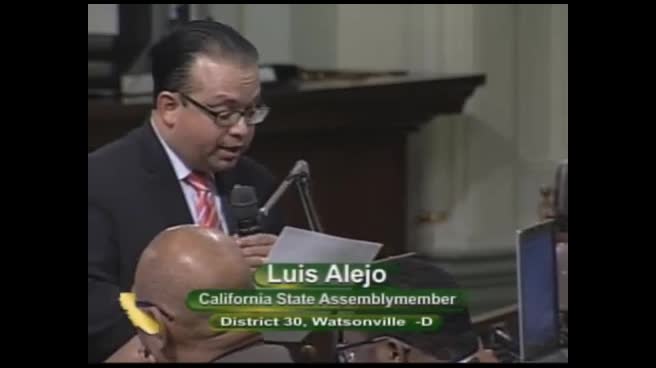 1MIN
Assembly Floor
 1MIN
Assembly Standing Committee on Appropriations
 12MIN
Assembly Standing Committee on Insurance
Bill Author

Bill Co-Author(s):