AB 1084: Charter schools: operation.
- Session Year: 2015-2016
- House: Assembly
- Latest Version Date: 2016-08-19
Existing law, the Charter Schools Act of 1992, authorizes a charter school to elect to operate as, or be operated by, a nonprofit public benefit corporation, as specified.
This bill, commencing with the 201718 school year and each school year thereafter, would do both of the following: (1) prohibit a virtual or online charter school, as defined, from being owned or operated by, or operated as, a for-profit entity; and (2) prohibit a nonprofit online charter school, nonprofit charter virtual academy, and a nonprofit entity that operates an online or virtual charter school from contracting with a for-profit entity for the provision of instructional services. on July 1, 2017, would instead require that a charter school only operate as, or be operated by, a nonprofit public benefit corporation, a school district, a county office of education, or the University of California.
Existing law, the Charter Schools Act of 1992, authorizes a charter school to elect to operate as, or be operated by, a nonprofit public benefit corporation, as specified.
This bill, commencing with the 201718 school year and each school year thereafter, would do both of the following: (1) prohibit a virtual or online charter school, as defined, from being owned or operated by, or operated as, a for-profit entity; and (2) prohibit a nonprofit online charter school, nonprofit charter virtual academy, and a nonprofit entity that operates an online or virtual charter school from contracting with a for-profit entity for the provision of instructional services.
The Clinical Social Worker Practice Act provides for the licensure and regulation of clinical social workers by the Board of Behavioral Sciences within the Department of Consumer Affairs. The act requires an applicant for licensure to, among other things, have at least 3,200 hours of post-masters degree supervised experience providing social work services. The act requires an applicant who possesses a masters degree from a school or department of social work that is a candidate for accreditation by a specified accrediting body, to register with the board as an associate clinical social worker in order to gain the required experience in social work services; however, the act prohibits that applicant from being eligible for examination for licensure until the school or department of social work receives accreditation. On and after January 1, 2016, an applicant for licensure under the act is required to pass 2 examinations, a California law and ethics examination and a clinical examination.
This bill would, instead, prohibit an applicant who possesses a masters degree from a school or department of social work that is a candidate for accreditation, from taking only the clinical examination until the school or department receives the accreditation.
Existing law, requires the Department of Housing and Community Development to prepare a guidebook for use by certain public and private entities in the planning and development of a housing supply to meet the need created by employment growth, and requires the Assembly Office of Research to complete a study on the effectiveness of the guidebook.
This bill would delete those provisions.
(a)Charter schools may elect to operate On and after July 1, 2017, a charter school shall only operate as, or be operated by, a nonprofit public benefit corporation, formed and organized pursuant to the Nonprofit Public Benefit Corporation Law (Part 2 (commencing with Section 5110) of Division 2 of Title 1) 1 of the Corporations Code). Code), a school district, a county office of education, or the University of California.
(b)The governing board of a school district that grants a charter for the establishment of a charter school formed and organized as a nonprofit public benefit corporation pursuant to this section shall be entitled to a single representative on the board of directors of the nonprofit public benefit corporation.
(c)An authority that grants a charter to a charter school to be operated by, or as, a nonprofit public benefit corporation is not liable for the debts or obligations of the charter school, or for claims arising from the performance of acts, errors, or omissions by the charter school, if the authority has complied with all oversight responsibilities required by law, including, but not necessarily limited to, those required by Section 47604.32 and subdivision (m) of Section 47605.
SECTION 1.Section 47604.2 is added to the Education Code, to read:47604.2.Notwithstanding any other law, commencing with the 201718 school year, and each school year thereafter:
(a)A virtual or online charter school shall not be owned or operated by, or operated as, a for-profit entity. For purposes of this section, virtual or online charter school means a charter school in which at least 80 percent of teaching and pupil interaction occurs via the Internet.
(b)A nonprofit online charter school, nonprofit charter virtual academy, or a nonprofit entity that operates an online or virtual charter school shall not contract with a for-profit entity for the provision of instructional services.
Notwithstanding any other law, commencing with the 201718 school year, and each school year thereafter:
(a)A virtual or online charter school shall not be owned or operated by, or operated as, a for-profit entity. For purposes of this section, virtual or online charter school means a charter school in which at least 80 percent of teaching and pupil interaction occurs via the Internet.
(b)A nonprofit online charter school, nonprofit charter virtual academy, or a nonprofit entity that operates an online or virtual charter school shall not contract with a for-profit entity for the provision of instructional services.
SECTION 1.Section 4996.18 of the Business and Professions Code is amended to read:4996.18.(a)A person who wishes to be credited with experience toward licensure requirements shall register with the board as an associate clinical social worker prior to obtaining that experience. The application shall be made on a form prescribed by the board.
(b)An applicant for registration shall satisfy the following requirements:
(1)Possess a masters degree from an accredited school or department of social work.
(2)Have committed no crimes or acts constituting grounds for denial of licensure under Section 480.
(3)Commencing January 1, 2014, have completed training or coursework, which may be embedded within more than one course, in California law and professional ethics for clinical social workers, including instruction in all of the following areas of study:
(A)Contemporary professional ethics and statutes, regulations, and court decisions that delineate the scope of practice of clinical social work.
(B)The therapeutic, clinical, and practical considerations involved in the legal and ethical practice of clinical social work, including, but not limited to, family law.
(C)The current legal patterns and trends in the mental health professions.
(D)The psychotherapist-patient privilege, confidentiality, dangerous patients, and the treatment of minors with and without parental consent.
(E)A recognition and exploration of the relationship between a practitioners sense of self and human values, and his or her professional behavior and ethics.
(F)Differences in legal and ethical standards for different types of work settings.
(G)Licensing law and process.
(c)An applicant who possesses a masters degree from a school or department of social work that is a candidate for accreditation by the Commission on Accreditation of the Council on Social Work Education shall be eligible, and shall be required, to register as an associate clinical social worker in order to gain experience toward licensure if the applicant has not committed any crimes or acts that constitute grounds for denial of licensure under Section 480. That applicant shall not, however, be eligible to take the clinical examination until the school or department of social work has received accreditation by the Commission on Accreditation of the Council on Social Work Education.
(d)All applicants and registrants shall be at all times under the supervision of a supervisor who shall be responsible for ensuring that the extent, kind, and quality of counseling performed is consistent with the training and experience of the person being supervised, and who shall be responsible to the board for compliance with all laws, rules, and regulations governing the practice of clinical social work.
(e)Any experience obtained under the supervision of a spouse or relative by blood or marriage shall not be credited toward the required hours of supervised experience. Any experience obtained under the supervision of a supervisor with whom the applicant has a personal relationship that undermines the authority or effectiveness of the supervision shall not be credited toward the required hours of supervised experience.
(f)An applicant who possesses a masters degree from an accredited school or department of social work shall be able to apply experience the applicant obtained during the time the accredited school or department was in candidacy status by the Commission on Accreditation of the Council on Social Work Education toward the licensure requirements, if the experience meets the requirements of Section 4996.23. This subdivision shall apply retroactively to persons who possess a masters degree from an accredited school or department of social work and who obtained experience during the time the accredited school or department was in candidacy status by the Commission on Accreditation of the Council on Social Work Education.
(g)An applicant for registration or licensure trained in an educational institution outside the United States shall demonstrate to the satisfaction of the board that he or she possesses a masters of social work degree that is equivalent to a masters degree issued from a school or department of social work that is accredited by the Commission on Accreditation of the Council on Social Work Education. These applicants shall provide the board with a comprehensive evaluation of the degree and shall provide any other documentation the board deems necessary. The board has the authority to make the final determination as to whether a degree meets all requirements, including, but not limited to, course requirements regardless of evaluation or accreditation.
(h)A registrant shall not provide clinical social work services to the public for a fee, monetary or otherwise, except as an employee.
(i)A registrant shall inform each client or patient prior to performing any professional services that he or she is unlicensed and is under the supervision of a licensed professional.
(a)A person who wishes to be credited with experience toward licensure requirements shall register with the board as an associate clinical social worker prior to obtaining that experience. The application shall be made on a form prescribed by the board.
(b)An applicant for registration shall satisfy the following requirements:
(1)Possess a masters degree from an accredited school or department of social work.
(2)Have committed no crimes or acts constituting grounds for denial of licensure under Section 480.
(3)Commencing January 1, 2014, have completed training or coursework, which may be embedded within more than one course, in California law and professional ethics for clinical social workers, including instruction in all of the following areas of study:
(A)Contemporary professional ethics and statutes, regulations, and court decisions that delineate the scope of practice of clinical social work.
(B)The therapeutic, clinical, and practical considerations involved in the legal and ethical practice of clinical social work, including, but not limited to, family law.
(C)The current legal patterns and trends in the mental health professions.
(D)The psychotherapist-patient privilege, confidentiality, dangerous patients, and the treatment of minors with and without parental consent.
(E)A recognition and exploration of the relationship between a practitioners sense of self and human values, and his or her professional behavior and ethics.
(F)Differences in legal and ethical standards for different types of work settings.
(G)Licensing law and process.
(c)An applicant who possesses a masters degree from a school or department of social work that is a candidate for accreditation by the Commission on Accreditation of the Council on Social Work Education shall be eligible, and shall be required, to register as an associate clinical social worker in order to gain experience toward licensure if the applicant has not committed any crimes or acts that constitute grounds for denial of licensure under Section 480. That applicant shall not, however, be eligible for to take the clinical examination until the school or department of social work has received accreditation by the Commission on Accreditation of the Council on Social Work Education.
(d)All applicants and registrants shall be at all times under the supervision of a supervisor who shall be responsible for ensuring that the extent, kind, and quality of counseling performed is consistent with the training and experience of the person being supervised, and who shall be responsible to the board for compliance with all laws, rules, and regulations governing the practice of clinical social work.
(e)Any experience obtained under the supervision of a spouse or relative by blood or marriage shall not be credited toward the required hours of supervised experience. Any experience obtained under the supervision of a supervisor with whom the applicant has a personal relationship that undermines the authority or effectiveness of the supervision shall not be credited toward the required hours of supervised experience.
(f)An applicant who possesses a masters degree from an accredited school or department of social work shall be able to apply experience the applicant obtained during the time the accredited school or department was in candidacy status by the Commission on Accreditation of the Council on Social Work Education toward the licensure requirements, if the experience meets the requirements of Section 4996.23. This subdivision shall apply retroactively to persons who possess a masters degree from an accredited school or department of social work and who obtained experience during the time the accredited school or department was in candidacy status by the Commission on Accreditation of the Council on Social Work Education.
(g)An applicant for registration or licensure trained in an educational institution outside the United States shall demonstrate to the satisfaction of the board that he or she possesses a masters of social work degree that is equivalent to a masters degree issued from a school or department of social work that is accredited by the Commission on Accreditation of the Council on Social Work Education. These applicants shall provide the board with a comprehensive evaluation of the degree and shall provide any other documentation the board deems necessary. The board has the authority to make the final determination as to whether a degree meets all requirements, including, but not limited to, course requirements regardless of evaluation or accreditation.
(h)A registrant shall not provide clinical social work services to the public for a fee, monetary or otherwise, except as an employee.
(i)A registrant shall inform each client or patient prior to performing any professional services that he or she is unlicensed and is under the supervision of a licensed professional.
SECTION 1.Section 65890.3 of the Government Code is repealed.SEC. 2.Section 65890.5 of the Government Code is repealed.The Department of Housing and Community Development shall prepare a guidebook for use by cities, counties, councils of government, state agencies, and the private sector in the planning and development of a housing supply to meet the need created by employment growth. The guidebook shall be prepared in time for use following the availability of the 1990 Census of Population and Housing.
SEC. 2.Section 65890.5 of the Government Code is repealed.65890.5.(a)The guidebook shall include the following:
(1)Methodologies for measuring the balance of jobs and housing.
(2)Methodologies for analysis of the projected needed housing supply to serve projected employment growth.
(3)Methodologies to encourage the balance of jobs and housing.
(4)Incentives which local, regional, and state agencies may offer to the private sector to encourage developments and design which will facilitate an improved balance between employment generating land use and residential land use.
(5)Methodologies cities and counties may use to analyze trip generation and vehicle miles traveled to and from employment centers.
(6)Methodologies cities and counties may use to achieve more efficient use of transportation facilities serving major employment centers.
(7)Descriptions of successful and unsuccessful efforts by cities or counties to move toward improved jobs-housing balance.
(b)The guidebook shall seek to describe and evaluate the various tools available to local, regional, and state governments to measure, evaluate, and improve the balance of jobs and housing and to mitigate the undesirable effects of any imbalance between jobs and housing. The guidebook shall describe efforts by cities, counties, and regional agencies to improve the balance of jobs and housing.
(c)The department shall consult with interested parties and organizations such as academic institutions, environmental groups, businesses, labor unions, real estate groups, housing advocacy groups, cities, counties, and regional agencies. The final guidebook shall be completed no later than December 31, 1993.
(d)Within two years of final publication of the guidebook, the Assembly Office of Research shall complete a study of the effectiveness of the guidebook as a decisionmaking tool by public agencies and the private sector to facilitate improved jobs-housing balance. The study shall include the offices recommendations for legislation needed to improve the effectiveness of decisionmaking as it relates to achieving jobs-housing balance, if any.
|
Date
|
Status
|
|---|---|
| Jan 27, 2016 | In Senate. Read first time. To Com. on RLS. for assignment. |
| Aug 30, 2016 | Ordered to inactive file at the request of Senator Block. |
| Aug 22, 2016 | Read second time. Ordered to third reading. |
| Aug 19, 2016 | Read third time and amended. Ordered to second reading. |
| Jun 30, 2016 | Read second time. Ordered to third reading. |
| Jun 29, 2016 | From committee: Do pass. (Ayes 6. Noes 2.) (June 29). |
| Jun 15, 2016 | Re-referred to Com. on ED. |
| Jun 8, 2016 | Withdrawn from committee. |
| Jun 8, 2016 | Re-referred to Com. on RLS. |
| Jun 6, 2016 | From committee chair, with author's amendments: Amend, and re-refer to committee. Read second time, amended, and re-referred to Com. on B., P. & E.D. |
| Feb 4, 2016 | Referred to Com. on B., P. & E.D. |
| Jan 27, 2016 | Read third time. Passed. Ordered to the Senate. (Ayes 78. Noes 0. Page 3509.) |
| Feb 27, 2015 | Introduced. To print. |
| Jan 21, 2016 | Read second time. Ordered to Consent Calendar. |
| Jan 21, 2016 | From committee: Do pass. To Consent Calendar. (Ayes 17. Noes 0.) (January 21). |
| Jan 12, 2016 | From committee: Do pass and re-refer to Com. on APPR. with recommendation: To Consent Calendar. (Ayes 14. Noes 0.) (January 12). Re-referred to Com. on APPR. |
| Jan 5, 2016 | From committee: Be re-referred to Com. on B. & P. Re-referred. (Ayes 11. Noes 0.) (January 5). Re-referred to Com. on B. & P. |
| Jan 4, 2016 | Re-referred to Com. on RLS. pursuant to Assembly Rule 96. |
| Jan 4, 2016 | Re-referred to Com. on H. & C.D. |
| Jan 4, 2016 | From committee chair, with author's amendments: Amend, and re-refer to Com. on H. & C.D. Read second time and amended. |
| Mar 19, 2015 | Referred to Com. on H. & C.D. |
| Mar 2, 2015 | Read first time. |
| Mar 1, 2015 | From printer. May be heard in committee March 31. |
|
Date
|
Description
|
Location
|
Votes
|
|
|---|---|---|---|---|
| Jun 29, 2016 | Do pass | Senate Standing Committee on Education |
Passed |
|
| Jan 27, 2016 | AB 1084 BONILLA Consent Calendar Second Day Regular Session | Assembly Floor |
Passed |
|
| Jan 21, 2016 | Do pass. To Consent Calendar. | Assembly Standing Committee on Appropriations |
Passed |
|
| Jan 12, 2016 | Do pass and be re-referred to the Committee on [Appropriations] with recommendation: To Consent Calendar | Assembly Standing Committee on Business and Professions |
Passed |
|
| Jan 5, 2016 | Be re-referred to the Committee on [Business and Professions] | Assembly Standing Committee on Rules |
Passed |
This list shows positions taken on this bill by organizations on the date displayed, which is linked to the original source.
Positions by individuals are not included.
|
Organization
|
Position
|
Date
|
|---|---|---|
| Association Of California School Administrators | * Support | Jun 29, 2016 |
| California Charter Schools Association | * Against | Jun 29, 2016 |
| California Connections Academy | * Against | Jun 29, 2016 |
| California Federation Of Teachers | * Support | Jun 29, 2016 |
| California School Employees Association | * Against | Jun 29, 2016 |
| California State Parent Teacher Association | * Support | Jun 29, 2016 |
| California Teachers Association | * Support | Jun 29, 2016 |
| California Virtual Acadamies | * Support | Jun 29, 2016 |
| Learn for Life Charter Schools | * Against | Jun 29, 2016 |
| Mount W. Unified School District | * Support | Jun 29, 2016 |
| University High School | * Support | Jun 29, 2016 |
Office of Senate Floor Analyses (916) 651-1520 Fax: (916) 327-4478 | AB |
THIRD READING
Bill No: AB 1084
:
SENATE EDUCATION COMMITTEE: 6-2, 6/29/16
AYES: Block, Hancock, Leyva, Mendoza, Monning, Pan
NOES: Huff, Vidak
NO VOTE RECORDED: Liu
ASSEMBLY FLOOR: 78-0, 1/27/16 (Consent) - See last page for vote
DIGEST: This bill provides that effective July 1, 2017, charter schools shall only operate as, or be operated by, a school district, county board of education, or University of California.
Senate Floor Amendments of 8/19/16 remove the provisions regarding the operation of virtual or online charter schools and add a provision providing that charter schools shall only operate as, or be operated by, a nonprofit public benefit corporation, school district, county board of education, or University of California.
Existing law:
- Establishes the Charter Schools Act of 1992 which provides for the establishment of charter schools in California for the purpose, among other things, to improve student learning and expand learning experiences for pupils who are identified as academically low achieving. A charter school may be authorized by a school district, a county board of education, or the State Board of Education, as specified. Except where specifically noted otherwise, California law exempts charter schools from many of the statutes and regulations that apply to schools and school districts.
- Authorizes a charter school to elect to operate as, or be operated by, a nonprofit public benefit corporation, formed and organized pursuant to the Nonprofit Public Benefit Corporation Law.
- Specifies that the governing board of a school district that grants a charter for the establishment of a charter school shall be entitled to a single representative on the board of directors of the nonprofit public benefit corporation.
- Specifies that an authority that grants a charter to a charter school to be operated by, or as, a nonprofit public benefit corporation is not liable for the debts or obligations of the charter school, or for claims arising from the performance of acts, errors, or omissions by the charter school, if the authority has complied with all oversight responsibilities required by law, including, but not limited to, those required by Education Code § 47604.32 and 47605(m). (Education Code § 47604)
This bill provides that effective July 1, 2017, charter schools shall only operate as, or be operated by, a nonprofit public benefit corporation, as specified, or a school district, county board of education, or University of California.
Comments
Need for the bill. According to the author’s office, “there have been troubling examples of for profit online charter schools in California that are not serving the academic needs of their students. Some are structured as nonprofit entities, but contract with for-profit entities to provide all services, including instructional services. Charter schools receive funding from the State of California to educate their students. It is an inherent conflict-of-interest for a charter school to be operated as a for-profit entity or solely contract with for-profit entities for instructional services. Taxpayer dollars should be spent on academic services and improving the educational experience of California students, not on paying shareholders or enriching a company.”
Appropriate use of taxpayer dollars? While current law explicitly authorizes a charter school to operate as a nonprofit corporation, statute is silent on whether a charter school is permitted to operate as a for-profit corporation. Because of the permissive nature of the Education Code and absent a clear prohibition, several charter schools are currently operating as for-profit corporations. The California Charter School Association indicates there are six for-profit charter schools in the state. California Virtual Academies (CAVA) is California’s largest provider of online public K-12 education and a public charter school network that may exist entirely online, serving approximately 15,000 students. Students take classes from home, primarily communicating with teachers via computer. CAVA’s primary vendor and manager is K-12, Inc., a for-profit corporation that operates virtual schools nationwide.
Is it an appropriate use of state taxpayer dollars for-profit corporations to operate public schools? Specifically, does this model provide a perverse incentive for these charter schools to limit services for students in order to increase profits?
Similar bill vetoed. This bill is similar to AB 787 (Hernandez, 2015) from last year which would have prohibited a charter school from operating as, or being operated by, a for-profit corporation. AB 787 was eventually vetoed by the Governor with the following message:
Under this bill, beginning January 1, 2017, a charter school could not "operate as" or be "operated by" a for-profit corporation.
I don't believe the case has been made to eliminate for-profit charter schools in California. Moreover, the somewhat ambiguous terms used in this bill could be interpreted to restrict the ability of non-profit charter schools to continue using for-profit vendors.
It does not appear that this bill addresses the concerns raised in the Governor’s veto message.
Clarification is necessary. Similar to the concern raised in the Governor’s veto message, can the terms regarding this bill’s requirement for charters to only be operated by, or operated as, a non-profit entity be interpreted to limit their ability to contract with a for-profit entity, even for day-to-day operations such as payroll, human resources or janitorial services? Would this requirement also extend to contracts in place for other instructional related operations such as the provision of assessments, instructional materials, classroom learning tools, professional development, or more importantly, services required as part of a special education student’s individualized education plan?
Impact on students. Notwithstanding the issues regarding the appropriateness of using taxpayer dollars for charter schools operating as for-profit corporations, what would happen to students attending these schools if this bill were to become law? Presumably, the operating entities could restructure or reorganize themselves as nonprofit corporations to comply. If not, would a charter school need to shut down its operations? Additionally, as this bill would become operative commencing with the 2017-18 school year, it is not clear if this allows for a sufficient transition period for students that are displaced to find placement in a new school, particularly students that are disabled or have unique learning needs.
Currently, there are for-profit virtual charter schools which identify special education or at-risk children and youth as their target student populations. These include students in the juvenile justice system and students who are at risk of dropping out. Virtual charter schools may also be a more viable option among non-traditional students, including exceptional athletes, actors, and high-mobility students, such as children from military families. On the other hand, there are charter schools and school districts that currently contract with for-profit entities to offer online curriculum for advanced courses that they are unable to provide. Could this bill potentially lead to a disruption in the educational services provided to these students? Could it also limit local discretion and prohibit arrangements with online programs that have provided students with successful options?
Local control and accountability plan (LCAP) process. Implementing Local Control Funding Formula statutes include the requirement that all school districts and county offices of education complete and provide an annual update to their LCAPs. While the various statutes governing charter school authorizations only reference the annual update section of the LCAP, the regulations adopted by the State Board of Education in 2015 regarding the LCAP template reflect the requirement that all local educational agencies, including charter schools, complete an LCAP each year. Further, the 2016-17 budget includes a provision specifying that charter schools must complete an LCAP.
Current statute requires an LCAP to include both of the following, a description of the annual goals (for all students and each subgroup of students) to be achieved for each of the state priorities and for any additional local priorities identified by the governing board, and a description of the specific actions the school district will take during each year of the LCAP to achieve these goals, including the enumeration of any specific actions necessary for that year to correct any deficiencies in regard to the state priorities. To the extent there are concerns from parents, students, or the local community regarding the delivery of instruction or the outcomes of students attending a particular online charter school, does the LCAP process provide an effective means to promote change?
Responsibility for charter authorizers. As part of the process for considering petitions for the establishment or renewal of a charter school, a description of the educational program of the school is required. This should include the mode of instruction and whether it is online, blended, or classroom-based. Statute provides that a school district shall grant a charter if it is satisfied that granting the charter is consistent with sound educational practice, and specifies that the districts shall not deny the petition unless it makes specific findings, including a finding that the charter school present as unsound educational program or that the petitioners are demonstrably unlikely to successfully implement the program.
As part of the charter petition renewal process, the authorizer is required to consider increases in pupil academic achievement for all groups of pupils served by the charter school as the most important factor in determining whether to grant a charter renewal. To the extent there are concerns regarding the use of online instruction provided by a for-profit entity, does the existing petition process allow the opportunity for charter authorizers to sufficiently address these concerns?
FISCAL EFFECT: Appropriation: No Fiscal Com.: No Local: No
California Charter Schools Association
California Teachers Association
OPPOSITION: (Verified 8/19/16)
California School Employees Association
AYES: Achadjian, Alejo, Travis Allen, Baker, Bigelow, Bloom, Bonilla, Bonta, Brough, Brown, Burke, Calderon, Campos, Chang, Chau, Chávez, Chiu, Chu, Cooley, Cooper, Dababneh, Dahle, Daly, Dodd, Eggman, Frazier, Beth Gaines, Gallagher, Cristina Garcia, Eduardo Garcia, Gatto, Gipson, Gomez, Gonzalez, Gordon, Gray, Grove, Hadley, Harper, Roger Hernández, Holden, Irwin, Jones, Jones-Sawyer, Kim, Lackey, Levine, Linder, Lopez, Low, Maienschein, Mayes, McCarty, Medina, Melendez, Mullin, Nazarian, Obernolte, O'Donnell, Olsen, Patterson, Quirk, Rendon, Ridley-Thomas, Rodriguez, Salas, Santiago, Steinorth, Mark Stone, Thurmond, Ting, Wagner, Waldron, Weber, Wilk, Williams, Wood, Atkins
NO VOTE RECORDED: Mathis
8/24/16 10:01:31
**** END ****
Office of Senate Floor Analyses (916) 651-1520 Fax: (916) 327-4478 | AB |
THIRD READING
Bill No: AB 1084
:
SENATE EDUCATION COMMITTEE: 6-2, 6/29/16
AYES: Block, Hancock, Leyva, Mendoza, Monning, Pan
NOES: Huff, Vidak
NO VOTE RECORDED: Liu
ASSEMBLY FLOOR: 78-0, 1/27/16 (Consent) - See last page for vote
DIGEST: This bill provides that effective July 1, 2017, charter schools shall only operate as, or be operated by, a school district, county board of education, or University of California.
Senate Floor Amendments of 8/19/16 remove the provisions regarding the operation of virtual or online charter schools and add a provision providing that charter schools shall only operate as, or be operated by, a nonprofit public benefit corporation, school district, county board of education, or University of California.
Existing law:
- Establishes the Charter Schools Act of 1992 which provides for the establishment of charter schools in California for the purpose, among other things, to improve student learning and expand learning experiences for pupils who are identified as academically low achieving. A charter school may be authorized by a school district, a county board of education, or the State Board of Education, as specified. Except where specifically noted otherwise, California law exempts charter schools from many of the statutes and regulations that apply to schools and school districts.
- Authorizes a charter school to elect to operate as, or be operated by, a nonprofit public benefit corporation, formed and organized pursuant to the Nonprofit Public Benefit Corporation Law.
- Specifies that the governing board of a school district that grants a charter for the establishment of a charter school shall be entitled to a single representative on the board of directors of the nonprofit public benefit corporation.
- Specifies that an authority that grants a charter to a charter school to be operated by, or as, a nonprofit public benefit corporation is not liable for the debts or obligations of the charter school, or for claims arising from the performance of acts, errors, or omissions by the charter school, if the authority has complied with all oversight responsibilities required by law, including, but not limited to, those required by Education Code § 47604.32 and 47605(m). (Education Code § 47604)
This bill provides that effective July 1, 2017, charter schools shall only operate as, or be operated by, a nonprofit public benefit corporation, as specified, or a school district, county board of education, or University of California.
Comments
Need for the bill. According to the author’s office, “there have been troubling examples of for profit online charter schools in California that are not serving the academic needs of their students. Some are structured as nonprofit entities, but contract with for-profit entities to provide all services, including instructional services. Charter schools receive funding from the State of California to educate their students. It is an inherent conflict-of-interest for a charter school to be operated as a for-profit entity or solely contract with for-profit entities for instructional services. Taxpayer dollars should be spent on academic services and improving the educational experience of California students, not on paying shareholders or enriching a company.”
Appropriate use of taxpayer dollars? While current law explicitly authorizes a charter school to operate as a nonprofit corporation, statute is silent on whether a charter school is permitted to operate as a for-profit corporation. Because of the permissive nature of the Education Code and absent a clear prohibition, several charter schools are currently operating as for-profit corporations. The California Charter School Association indicates there are six for-profit charter schools in the state. California Virtual Academies (CAVA) is California’s largest provider of online public K-12 education and a public charter school network that may exist entirely online, serving approximately 15,000 students. Students take classes from home, primarily communicating with teachers via computer. CAVA’s primary vendor and manager is K-12, Inc., a for-profit corporation that operates virtual schools nationwide.
Is it an appropriate use of state taxpayer dollars for-profit corporations to operate public schools? Specifically, does this model provide a perverse incentive for these charter schools to limit services for students in order to increase profits?
Similar bill vetoed. This bill is similar to AB 787 (Hernandez, 2015) from last year which would have prohibited a charter school from operating as, or being operated by, a for-profit corporation. AB 787 was eventually vetoed by the Governor with the following message:
Under this bill, beginning January 1, 2017, a charter school could not "operate as" or be "operated by" a for-profit corporation.
I don't believe the case has been made to eliminate for-profit charter schools in California. Moreover, the somewhat ambiguous terms used in this bill could be interpreted to restrict the ability of non-profit charter schools to continue using for-profit vendors.
It does not appear that this bill addresses the concerns raised in the Governor’s veto message.
Clarification is necessary. Similar to the concern raised in the Governor’s veto message, can the terms regarding this bill’s requirement for charters to only be operated by, or operated as, a non-profit entity be interpreted to limit their ability to contract with a for-profit entity, even for day-to-day operations such as payroll, human resources or janitorial services? Would this requirement also extend to contracts in place for other instructional related operations such as the provision of assessments, instructional materials, classroom learning tools, professional development, or more importantly, services required as part of a special education student’s individualized education plan?
Impact on students. Notwithstanding the issues regarding the appropriateness of using taxpayer dollars for charter schools operating as for-profit corporations, what would happen to students attending these schools if this bill were to become law? Presumably, the operating entities could restructure or reorganize themselves as nonprofit corporations to comply. If not, would a charter school need to shut down its operations? Additionally, as this bill would become operative commencing with the 2017-18 school year, it is not clear if this allows for a sufficient transition period for students that are displaced to find placement in a new school, particularly students that are disabled or have unique learning needs.
Currently, there are for-profit virtual charter schools which identify special education or at-risk children and youth as their target student populations. These include students in the juvenile justice system and students who are at risk of dropping out. Virtual charter schools may also be a more viable option among non-traditional students, including exceptional athletes, actors, and high-mobility students, such as children from military families. On the other hand, there are charter schools and school districts that currently contract with for-profit entities to offer online curriculum for advanced courses that they are unable to provide. Could this bill potentially lead to a disruption in the educational services provided to these students? Could it also limit local discretion and prohibit arrangements with online programs that have provided students with successful options?
Local control and accountability plan (LCAP) process. Implementing Local Control Funding Formula statutes include the requirement that all school districts and county offices of education complete and provide an annual update to their LCAPs. While the various statutes governing charter school authorizations only reference the annual update section of the LCAP, the regulations adopted by the State Board of Education in 2015 regarding the LCAP template reflect the requirement that all local educational agencies, including charter schools, complete an LCAP each year. Further, the 2016-17 budget includes a provision specifying that charter schools must complete an LCAP.
Current statute requires an LCAP to include both of the following, a description of the annual goals (for all students and each subgroup of students) to be achieved for each of the state priorities and for any additional local priorities identified by the governing board, and a description of the specific actions the school district will take during each year of the LCAP to achieve these goals, including the enumeration of any specific actions necessary for that year to correct any deficiencies in regard to the state priorities. To the extent there are concerns from parents, students, or the local community regarding the delivery of instruction or the outcomes of students attending a particular online charter school, does the LCAP process provide an effective means to promote change?
Responsibility for charter authorizers. As part of the process for considering petitions for the establishment or renewal of a charter school, a description of the educational program of the school is required. This should include the mode of instruction and whether it is online, blended, or classroom-based. Statute provides that a school district shall grant a charter if it is satisfied that granting the charter is consistent with sound educational practice, and specifies that the districts shall not deny the petition unless it makes specific findings, including a finding that the charter school present as unsound educational program or that the petitioners are demonstrably unlikely to successfully implement the program.
As part of the charter petition renewal process, the authorizer is required to consider increases in pupil academic achievement for all groups of pupils served by the charter school as the most important factor in determining whether to grant a charter renewal. To the extent there are concerns regarding the use of online instruction provided by a for-profit entity, does the existing petition process allow the opportunity for charter authorizers to sufficiently address these concerns?
FISCAL EFFECT: Appropriation: No Fiscal Com.: No Local: No
California Charter Schools Association
OPPOSITION: (Verified 8/19/16)
California School Employees Association
AYES: Achadjian, Alejo, Travis Allen, Baker, Bigelow, Bloom, Bonilla, Bonta, Brough, Brown, Burke, Calderon, Campos, Chang, Chau, Chávez, Chiu, Chu, Cooley, Cooper, Dababneh, Dahle, Daly, Dodd, Eggman, Frazier, Beth Gaines, Gallagher, Cristina Garcia, Eduardo Garcia, Gatto, Gipson, Gomez, Gonzalez, Gordon, Gray, Grove, Hadley, Harper, Roger Hernández, Holden, Irwin, Jones, Jones-Sawyer, Kim, Lackey, Levine, Linder, Lopez, Low, Maienschein, Mayes, McCarty, Medina, Melendez, Mullin, Nazarian, Obernolte, O'Donnell, Olsen, Patterson, Quirk, Rendon, Ridley-Thomas, Rodriguez, Salas, Santiago, Steinorth, Mark Stone, Thurmond, Ting, Wagner, Waldron, Weber, Wilk, Williams, Wood, Atkins
NO VOTE RECORDED: Mathis
8/22/16 23:20:13
**** END ****
Office of Senate Floor Analyses (916) 651-1520 Fax: (916) 327-4478 | AB |
THIRD READING
Bill No: AB 1084
:
SENATE EDUCATION COMMITTEE: 6-2, 6/29/16
AYES: Block, Hancock, Leyva, Mendoza, Monning, Pan
NOES: Huff, Vidak
NO VOTE RECORDED: Liu
ASSEMBLY FLOOR: 78-0, 1/27/16 (Consent) - See last page for vote
DIGEST: This bill prohibits an online charter school from being owned or operated by, or operated as, a for-profit entity, and also prohibits a nonprofit charter virtual academy or a nonprofit online charter school from contracting with a for-profit entity for the provision of instructional services.
Existing law:
- Establishes the Charter Schools Act of 1992 which provides for the establishment of charter schools in California for the purpose, among other things, to improve student learning and expand learning experiences for pupils who are identified as academically low achieving. A charter school may be authorized by a school district, a county board of education, or the State Board of Education, as specified. Except where specifically noted otherwise, California law exempts charter schools from many of the statutes and regulations that apply to schools and school districts.
- Authorizes a charter school to elect to operate as, or be operated by, a nonprofit public benefit corporation, formed and organized pursuant to the Nonprofit Public Benefit Corporation Law.
- Specifies that the governing board of a school district that grants a charter for the establishment of a charter school shall be entitled to a single representative on the board of directors of the nonprofit public benefit corporation.
- Specifies that an authority that grants a charter to a charter school to be operated by, or as, a nonprofit public benefit corporation is not liable for the debts or obligations of the charter school, or for claims arising from the performance of acts, errors, or omissions by the charter school, if the authority has complied with all oversight responsibilities required by law, including, but not limited to, those required by Education Code § 47604.32 and 47605(m). (Education Code § 47604)
This bill:
- Provides that a virtual or online charter school shall not be owned or operated by, or operated as, a for-profit entity.
- Provides that a nonprofit online charter school, nonprofit charter virtual academy, or a nonprofit entity that operates an online or virtual charter school shall not contract with a for-profit entity for the provision of instructional services.
- Defines virtual or online charter school as a charter school in which at least 80 percent of teaching and pupil interaction occurs via the Internet.
Comments
Need for the bill. According to the author’s office, “there have been troubling examples of for profit online charter schools in California that are not serving the academic needs of their students. Some are structured as nonprofit entities, but contract with for-profit entities to provide all services, including instructional services. Charter schools receive funding from the State of California to educate their students. It is an inherent conflict-of-interest for a charter school to be operated as a for-profit entity or solely contract with for-profit entities for instructional services. Taxpayer dollars should be spent on academic services and improving the educational experience of California students, not on paying shareholders or enriching a company.”
Premature due to current efforts to address charter oversight issues? The Senate Education Committee will have an informational hearing on August 3, 2016 to investigate the charter school petition process, the role of charter school authorizers and their specific oversight responsibilities in current law, and whether there are sufficient mechanisms in place to ensure adequate oversight and accountability. The objective of the hearing will be to identify opportunities for improvement and reform with respect to charter school oversight. Additionally, the Superintendent of Public Instruction recently announced that it has contracted with the State Controller’s Office to conduct an audit of the California Virtual Academies and related charter schools because of serious questions raised about a number of their practices. Specifically, “the goal of the audit is to make sure these schools are spending public education funds properly and serving their students well.” Further, the Joint Legislative Audit Committee recently approved a request for an audit of the Alliance College-Ready Public Schools charter management organization and the charter schools under their operational jurisdiction within the Los Angeles Unified School District. Similarly, the audit is intended to address, in part, whether the resources provided to these schools are being used appropriately.
Is advancing this bill premature since the Legislature could likely benefit from information that will be provided by the Senate Education Committee’s informational hearing in August as well the findings and recommendations resulting from the related audits?
Appropriate use of taxpayer dollars? While current law explicitly authorizes a charter school to operate as a nonprofit corporation, statute is silent on whether a charter school is permitted to operate as a for-profit corporation. Because of the permissive nature of the Education Code and absent a clear prohibition, several charter schools are currently operating as for-profit corporations. The California Charter School Association indicates there are six for-profit charter schools in the state. California Virtual Academies (CAVA) is California’s largest provider of online public K-12 education and a public charter school network that may exist entirely online, serving approximately 15,000 students. Students take classes from home, primarily communicating with teachers via computer. CAVA’s primary vendor and manager is K-12, Inc., a for-profit corporation that operates virtual schools nationwide.
Is it an appropriate use of state taxpayer dollars for-profit corporations to operate public schools? Specifically, does this model provide a perverse incentive for these charter schools to limit services for students in order to increase profits?
Similar bill vetoed. This bill is similar to AB 787 (Hernandez, 2015) from last year which would have prohibited a charter school from operating as, or being operated by, a for-profit corporation. AB 787 was eventually vetoed by the Governor with the following message:
Under this bill, beginning January 1, 2017, a charter school could not "operate as" or be "operated by" a for-profit corporation.
I don't believe the case has been made to eliminate for-profit charter schools in California. Moreover, the somewhat ambiguous terms used in this bill could be interpreted to restrict the ability of non-profit charter schools to continue using for-profit vendors.
It does not appear that this bill addresses the concerns raised in the Governor’s veto message. However, the author’s office indicates that “AB 1084 is different in that its language is much more specific about what an online charter school cannot contract with a for-profit to provide—instructional services. Online schools should not be having a for-profit employ its teachers.”
Clarification is necessary. Similar to the concern raised in the Governor’s veto message, can the terms regarding this bill’s prohibition on online charters being owned or operated by, or operated as, a for-profit entity be interpreted to limit their ability to contract with a for-profit entity, even for day-to-day operations such as payroll, human resources or janitorial services? Further, this bill prohibits nonprofit online charter schools from contracting with a for-profit entity for the provision of instructional services. It is unclear if this prohibition would extend to contracts in place for other instructional related operations such as the provision of assessments, instructional materials, classroom learning tools, professional development, or more importantly, services required as part of a special education student’s individualized education plan? Or is this bill limited only to the actual instructors employed by for-profit entities? To prevent differing practical interpretations, the author may wish to consider clarifying amendments as this bill moves forward.
Impact on students. Notwithstanding the issues regarding the appropriateness of using taxpayer dollars for charter schools operating as for-profit corporations, what would happen to students attending these schools if this bill were to become law? Presumably, the operating entities could restructure or reorganize themselves as nonprofit corporations to comply. If not, would a charter school need to shut down its operations? This bill also extends to nonprofit online charter schools that contract with for-profit entities for the provision of instructional services. To the extent that these entities are unable to enter into new contracts exclusively with nonprofit entities, similarly, would these charter schools be required to close? Additionally, as this bill would become operative commencing with the 2017-18 school year, it is not clear if this allows for a sufficient transition period for students that are displaced to find placement in a new school, particularly students that are disabled or have unique learning needs.
Currently, there are virtual schools which identify special education or at-risk children and youth as their target student populations. These include students in the juvenile justice system and students who are at risk of dropping out. Virtual charter schools may also be a more viable option among non-traditional students, including exceptional athletes, actors, and high-mobility students, such as children from military families. On the other hand, there are charter schools and school districts that currently contract with for-profit entities to offer online curriculum for advanced courses that they are unable to provide. Could this bill potentially lead to a disruption in the educational services provided to these students? Could it also limit local discretion and prohibit arrangements with online programs that have provided students with successful options?
Local control and accountability plan (LCAP) process. Implementing Local Control Funding Formula (LCFF) statutes include the requirement that all school districts and county offices of education complete and provide an annual update to their LCAPs. While the various statutes governing charter school authorizations only reference the annual update section of the LCAP, the regulations adopted by the State Board of Education in 2015 regarding the LCAP template reflect the requirement that all local educational agencies, including charter schools, complete an LCAP each year. Further, the 2016-17 budget includes a provision specifying that charter schools must complete an LCAP.
Current statute requires an LCAP to include both of the following, a description of the annual goals (for all students and each subgroup of students) to be achieved for each of the state priorities and for any additional local priorities identified by the governing board, and a description of the specific actions the school district will take during each year of the LCAP to achieve these goals, including the enumeration of any specific actions necessary for that year to correct any deficiencies in regard to the state priorities. To the extent there are concerns from parents, students, or the local community regarding the delivery of instruction or the outcomes of students attending a particular online charter school, does the local control and accountability plan process provide an effective means to promote change?
Responsibility for charter authorizers. As part of the process for considering petitions for the establishment or renewal of a charter school, a description of the educational program of the school is required. This should include the mode of instruction and whether it is online, blended, or classroom-based. Statute provides that a school district shall grant a charter if it is satisfied that granting the charter is consistent with sound educational practice, and specifies that the districts shall not deny the petition unless it makes specific findings, including a finding that the charter school present as unsound educational program or that the petitioners are demonstrably unlikely to successfully implement the program.
As part of the charter petition renewal process, the authorizer is required to consider increases in pupil academic achievement for all groups of pupils served by the charter school as the most important factor in determining whether to grant a charter renewal. To the extent there are concerns regarding the use of online instruction provided by a for-profit entity, does the existing petition process allow the opportunity for charter authorizers to sufficiently address these concerns?
Nonclassroom-based instruction. Online or virtual charter schools operate within the context of nonclassroom-based instruction. A charter school that does not meet the requirements to be a classroom-based instruction school is considered to be nonclassroom-based and must have a funding determination approved by the State Board of Education. Classroom-based instruction occurs only when pupils are under the immediate supervision and control of a certificated teacher. Further, the charter school must offer at least 80 percent of its instructional time at the school site (for classroom instruction) and attendance must be required at the school site for at least 80 percent of the minimum instructional time required to be offered. Charter schools can only claim average daily attendance for pupils who are residents of the county in which the charter school is authorized, or who are residents of a county immediately adjacent to that county.
Existing law defines a virtual or online charter school as one in which at least 80 percent of teaching and student interaction occurs via the Internet. In order for a virtual or online charter school to be funded, it must demonstrate specified conditions. For example, the online charter school would need to demonstrate that instructional expenditures are at least 85 percent of the overall school budget and at least 25 percent is spent on technology that directly benefits students and teachers and results in improved student achievement.
Independent study. Independent study programs provide school districts with the ability to offer alternative education settings for students. These programs utilize alternative instructional strategies that respond to individual student needs and learning styles. The flexibility afforded by these programs makes it possible to serve a wide variety of students, including those who otherwise may not be able to graduate from school. Students who enroll in independent study include students who have health problems, are parents, need to work, or are child actors. Independent study may also serve students who desire to accelerate more quickly or more slowly through a course. Students may also utilize independent study to make up a course that they may have missed or failed in a traditional classroom. School districts may offer independent study through a variety of formats, including online courses, home-based formats, through alternative schools, and as special or advanced courses.
According to information provided by the California Department of Education, there were 1,418 schools that reported students engaged in independent study with an enrollment of more than 128,000 students in grades K-12 in October 2008. For the 2007-08 school year, more than 19,000 independent study students graduated from high school or passed a high school equivalency exam.
It is unclear to what extent the existing independent study programs utilize online instruction offered by for-profit entities. K-12, Inc. indicates that it works with approximately 60 traditional school districts in the state serving just under 20,000 students. If part of the rationale for introducing this measure is the concern over the use of online instruction, why does it apply only to charter schools and not traditional school districts or county offices of education?
FISCAL EFFECT: Appropriation: Fiscal Com.: Local:
California State PTA
California Teachers Association
Letters from individuals
California Charter Schools Association
California Connections Academy
California Parents for Public Virtual Education
Charter School Capital
Charter Schools Development Center
K-12, Inc.
Learn4Life
ASSEMBLY FLOOR: 78-0, 1/27/16
AYES: Achadjian, Alejo, Travis Allen, Baker, Bigelow, Bloom, Bonilla, Bonta, Brough, Brown, Burke, Calderon, Campos, Chang, Chau, Chávez, Chiu, Chu, Cooley, Cooper, Dababneh, Dahle, Daly, Dodd, Eggman, Frazier, Beth Gaines, Gallagher, Cristina Garcia, Eduardo Garcia, Gatto, Gipson, Gomez, Gonzalez, Gordon, Gray, Grove, Hadley, Harper, Roger Hernández, Holden, Irwin, Jones, Jones-Sawyer, Kim, Lackey, Levine, Linder, Lopez, Low, Maienschein, Mayes, McCarty, Medina, Melendez, Mullin, Nazarian, Obernolte, O'Donnell, Olsen, Patterson, Quirk, Rendon, Ridley-Thomas, Rodriguez, Salas, Santiago, Steinorth, Mark Stone, Thurmond, Ting, Wagner, Waldron, Weber, Wilk, Williams, Wood, Atkins
NO VOTE RECORDED: Mathis
7/29/16 10:50:12
**** END ****
SENATE COMMITTEE ON EDUCATION
Senator Carol Liu, Chair
2015 - 2016 Regular
Bill No:
Author: | |||
Version: | Hearing Date: June 29, 2016 | ||
Urgency: | Fiscal: | ||
Consultant: | |||
Subject:
NOTE: This bill has been amended to replace its contents and this is the first time the bill is being heard in its current form.
SUMMARY
This bill prohibits an online charter school from being owned or operated by, or operated as, a for-profit entity, and also prohibits a nonprofit charter virtual academy or a nonprofit online charter school from contracting with a for-profit entity for the provision of instructional services.
BACKGROUND
Existing law:
- Establishes the Charter Schools Act of 1992 which provides for the establishment of charter schools in California for the purpose, among other things, to improve student learning and expand learning experiences for pupils who are identified as academically low achieving. A charter school may be authorized by a school district, a county board of education, or the State Board of Education, as specified. Except where specifically noted otherwise, California law exempts charter schools from many of the statutes and regulations that apply to schools and school districts.
- Authorizes a charter school to elect to operate as, or be operated by, a nonprofit public benefit corporation, formed and organized pursuant to the Nonprofit Public Benefit Corporation Law.
- Specifies that the governing board of a school district that grants a charter for the establishment of a charter school shall be entitled to a single representative on the board of directors of the nonprofit public benefit corporation.
- Specifies that an authority that grants a charter to a charter school to be operated by, or as, a nonprofit public benefit corporation is not liable for the debts or obligations of the charter school, or for claims arising from the performance of acts, errors, or omissions by the charter school, if the authority has complied with all oversight responsibilities required by law, including, but not limited to, those required by Education Code § 47604.32 and 47605(m).
(Education Code § 47604)
ANALYSIS
This bill:
- Provides that a virtual or online charter school shall not be owned or operated by, or operated as, a for-profit entity.
- Provides that a nonprofit online charter school, nonprofit charter virtual academy, or a nonprofit entity that operates an online or virtual charter school shall not contract with a for-profit entity for the provision of instructional services.
- Defines virtual or online charter school as a charter school in which at least 80 percent of teaching and pupil interaction occurs via the Internet.
STAFF COMMENTS
- Need for the bill. According to the author’s office, “there have been troubling examples of for profit online charter schools in California that are not serving the academic needs of their students. Some are structured as nonprofit entities, but contract with for-profit entities to provide all services, including instructional services. Charter schools receive funding from the State of California to educate their students. It is an inherent conflict-of-interest for a charter school to be operated as a for-profit entity or solely contract with for-profit entities for instructional services. Taxpayer dollars should be spent on academic services and improving the educational experience of California students, not on paying shareholders or enriching a company.”
- Premature due to current efforts to address charter oversight issues? This Committee will have an informational hearing on August 3, 2016 to investigate the charter school petition process, the role of charter school authorizers and their specific oversight responsibilities in current law, and whether there are sufficient mechanisms in place to ensure adequate oversight and accountability. The objective of the hearing will be to identify opportunities for improvement and reform with respect to charter school oversight. Additionally, the Superintendent of Public Instruction recently announced that it has contracted with the State Controller’s Office to conduct an audit of the California Virtual Academies and related charter schools because of serious questions raised about a number of their practices. Specifically, “the goal of the audit is to make sure these schools are spending public education funds properly and serving their students well.” Further, the Joint Legislative Audit Committee recently approved a request for an audit of the Alliance College-Ready Public Schools charter management organization and the charter schools under their operational jurisdiction within the Los Angeles Unified School District. Similarly, the audit is intended to address, in part, whether the resources provided to these schools are being used appropriately.
The Committee may wish to consider whether advancing this bill is premature at this point since it could likely benefit from information that will be provided by the Committee’s informational hearing in August as well the findings and recommendations resulting from the related audits.
- Appropriate use of taxpayer dollars? While current law explicitly authorizes a charter school to operate as a nonprofit corporation, statute is silent on whether a charter school is permitted to operate as a for-profit corporation. Because of the permissive nature of the Education Code and absent a clear prohibition, several charter schools are currently operating as for-profit corporations. The California Charter School Association indicates there are six for-profit charter schools in the state. California Virtual Academies (CAVA) is California’s largest provider of online public K-12 education and a public charter school network that may exist entirely online, serving approximately 15,000 students. Students take classes from home, primarily communicating with teachers via computer. CAVA’s primary vendor and manager is K-12, Inc., a for-profit corporation that operates virtual schools nationwide.
Is it an appropriate use of state taxpayer dollars for-profit corporations to operate public schools? Specifically, does this model provide a perverse incentive for these charter schools to limit services for students in order to increase profits?
- Similar bill vetoed. This bill is similar to AB 787 (Hernandez, 2015) from last year which would have prohibited a charter school from operating as, or being operated by, a for-profit corporation. AB 787 passed this Committee but was eventually vetoed by the Governor with the following message:
Under this bill, beginning January 1, 2017, a charter school could not "operate as" or be "operated by" a for-profit corporation.
I don't believe the case has been made to eliminate for-profit charter schools in California. Moreover, the somewhat ambiguous terms used in this bill could be interpreted to restrict the ability of non-profit charter schools to continue using for-profit vendors.
It does not appear that the bill addresses the concerns raised in the Governor’s veto message. However, the author’s office indicates that “AB 1084 is different in that its language is much more specific about what an online charter school cannot contract with a for-profit to provide—instructional services. Online schools should not be having a for-profit employ its teachers.”
- Clarification is necessary. Similar to the concern raised in the Governor’s veto message, can the terms regarding the bill’s prohibition on online charters being owned or operated by, or operated as, a for-profit entity be interpreted to limit their ability to contract with a for-profit entity, even for day-to-day operations such as payroll, human resources or janitorial services? Further, the bill prohibits nonprofit online charter schools from contracting with a for-profit entity for the provision of instructional services. It is unclear if this prohibition would extend to contracts in place for other instructional related operations such as the provision of assessments, instructional materials, classroom learning tools, professional development, or more importantly, services required as part of a special education student’s individualized education plan? Or is the bill limited only to the actual instructors employed by for-profit entities? To prevent differing practical interpretations, the author may wish to consider clarifying amendments if the bill moves forward.
- Impact on students. Notwithstanding the issues regarding the appropriateness of using taxpayer dollars for charter schools operating as for-profit corporations, the Committee may wish to consider whether the bill contemplates what would happen to students attending these schools if the bill were to become law. Presumably, the operating entities could restructure or reorganize themselves as nonprofit corporations to comply. If not, would a charter school need to shut down its operations? The bill also extends to nonprofit online charter schools that contract with for-profit entities for the provision of instructional services. To the extent that these entities are unable to enter into new contracts exclusively with nonprofit entities, similarly, would these charter schools be required to close? Additionally, as the bill would become operative commencing with the 2017-18 school year, it is not clear if this allows for a sufficient transition period for students that are displaced to find placement in a new school, particularly students that are disabled or have unique learning needs.
Currently, there are virtual schools which identify special education or at-risk children and youth as their target student populations. These include students in the juvenile justice system and students who are at risk of dropping out. Virtual charter schools may also be a more viable option among non-traditional students, including exceptional athletes, actors, and high-mobility students, such as children from military families. On the other hand, there are charter schools and school districts that currently contract with for-profit entities to offer online curriculum for advanced courses that they are unable to provide. Could the bill potentially lead to a disruption in the educational services provided to these students? Could it also limit local discretion and prohibit arrangements with online programs that have provided students with successful options?
- Local control and accountability plan (LCAP) process. Implementing Local Control Funding Formula (LCFF) statutes include the requirement that all school districts and county offices of education complete LCAPs and an annual update to an local control and accountability plan (LCAP). While the various statutes governing charter school authorizations only reference the annual update section of the LCAP, the regulations adopted by the State Board of Education in 2015 regarding the LCAP template reflect the requirement that all local educational agencies, including charter schools, complete an LCAP each year. Further, the current education trailer bill for the 2016-17 budget includes a provision specifying that charter schools must complete an LCAP.
Current statute requires an LCAP to include both of the following, a description of the annual goals (for all students and each subgroup of students) to be achieved for each of the state priorities and for any additional local priorities identified by the governing board, and a description of the specific actions the school district will take during each year of the LCAP to achieve these goals, including the enumeration of any specific actions necessary for that year to correct any deficiencies in regard to the state priorities. To the extent there are concerns from parents, students, or the local community regarding the delivery of instruction or the outcomes of students attending a particular online charter school, does the local control and accountability plan process provide an effective means to promote change?
- Responsibility for charter authorizers. As part of the process for considering petitions for the establishment or renewal of a charter school, a description of the educational program of the school is required. This should include the mode of instruction and whether it is online, blended, or classroom-based. Statute provides that a school district shall grant a charter if it is satisfied that granting the charter is consistent with sound educational practice, and specifies that the districts shall not deny the petition unless it makes specific findings, including a finding that the charter school present as unsound educational program or that the petitioners are demonstrably unlikely to successfully implement the program.
As part of the charter petition renewal process, the authorizer is required to consider increases in pupil academic achievement for all groups of pupils served by the charter school as the most important factor in determining whether to grant a charter renewal. To the extent there are concerns regarding the use of online instruction provided by a for-profit entity, does the existing petition process allow the opportunity for charter authorizers to sufficiently address these concerns?
- Nonclassroom-based instruction. Online or virtual charter schools operate within the context of nonclassroom-based instruction. A charter school that does not meet the requirements to be a classroom-based instruction school is considered to be nonclassroom-based and must have a funding determination approved by the State Board of Education. Classroom-based instruction occurs only when pupils are under the immediate supervision and control of a certificated teacher. Further, the charter school must offer at least 80 percent of its instructional time at the school site (for classroom instruction) and attendance must be required at the school site for at least 80 percent of the minimum instructional time required to be offered. Charter schools can only claim average daily attendance for pupils who are residents of the county in which the charter school is authorized, or who are residents of a county immediately adjacent to that county.
Existing law defines a virtual or online charter school as one in which at least 80 percent of teaching and student interaction occurs via the Internet. In order for a virtual or online charter school to be funded, it must demonstrate specified conditions. For example, the online charter school would need to demonstrate that instructional expenditures are at least 85 percent of the overall school budget and at least 25 percent is spent on technology that directly benefits students and teachers and results in improved student achievement.
- Independent study. Independent study programs provide school districts with the ability to offer alternative education settings for students. These programs utilize alternative instructional strategies that respond to individual student needs and learning styles. The flexibility afforded by these programs makes it possible to serve a wide variety of students, including those who otherwise may not be able to graduate from school. Students who enroll in independent study include students who have health problems, are parents, need to work, or are child actors. Independent study may also serve students who desire to accelerate more quickly or more slowly through a course. Students may also utilize independent study to make up a course that they may have missed or failed in a traditional classroom. School districts may offer independent study through a variety of formats, including online courses, home-based formats, through alternative schools, and as special or advanced courses.
According to information provided by the California Department of Education, there were 1,418 schools that reported students engaged in independent study with an enrollment of more than 128,000 students in grades K-12 in October 2008. For the 2007-08 school year, more than 19,000 independent study students graduated from high school or passed a high school equivalency exam.
It is unclear to what extent the existing independent study programs utilize online instruction offered by for-profit entities. K-12, Inc. indicates that it works with approximately 60 traditional school districts in the state serving just under 20,000 students. If part of the rationale for introducing this measure is the concern over the use of online instruction, why does it apply only to charter schools and not traditional school districts or county offices of education?
- Related legislation.
AB 787 (Hernandez, 2015) would have prohibited a charter school from operating as, or being operated by, a for-profit corporation. This bill passed this Committee but was vetoed by the Governor.
AB 2007 (Grove, Chapter 807, Statutes of 2014), until January 1, 2018, authorizes a virtual or online charter school to claim independent study average daily attendance for a pupil who is enrolled in a virtual or online charter school and moves to a residence outside of the geographic boundaries in which the virtual or online charter school is authorized to operate for the duration of the pupil’s courses or until the end of the school year, whichever occurs first.
SUPPORT
California State PTA
California Teachers Association
Letters from individuals
OPPOSITION
California Connections Academy
California Parents for Public Virtual Education
Charter School Capital
Charter Schools Development Center
K-12, Inc.
Learn4Life
-- END --
Date of Hearing: January 21, 2016
ASSEMBLY COMMITTEE ON APPROPRIATIONS
Jimmy Gomez, Chair
ABPCA Bill Id:AB 1084
Author:(Bonilla) – As Amended Ver:January 4, 2016
Policy Committee: | Business and Professions | Vote: | 14 - 0 |
|
|
Urgency: No State Mandated Local Program: No Reimbursable: No
SUMMARY:
This bill makes conforming changes to the examination requirements for an applicant for licensure as a clinical social worker (LCSW), who possesses a master's degree from a school or department of social work, that is seeking accreditation, to allow the applicant to take the law and ethics examination while the applicant's school or department is a candidate for accreditation, as specified.
FISCAL EFFECT:
Negligible state costs.
COMMENTS:
- Purpose. This is an author-sponsored bill that clarifies examination requirements for LCSW licensure applicants.
- Background. Current law specifies persons in training to be an LSCW must register as an associate clinical social worker (ACSW). It further specifies ACSW registration applicants are not eligible to take any examinations while the applicant's school or department is a candidate for accreditation. However, SB 704 (Negrete McLeod), Chapter 387, Statutes of 2011, restructured the examination process, requiring ACSW applicants to take the California law and ethics examination as a condition of licensure effective January 1, 2016. AB 1084 specifies applicants are not allowed to take the clinical exam while their school is seeking accreditation, thereby allowing them to take the law and ethics exam even through their school is unaccredited.
Analysis Prepared by: Lisa Murawski / APPR. / (916) 319-2081
Date of Hearing:
ASSEMBLY COMMITTEE ON BUSINESS AND PROFESSIONS
Susan Bonilla, Chair
ABPCA Bill Id:AB 1084
Author:(Bonilla) – As Amended Ver:January 4, 2016
SUBJECT: Social workers: examination.
SUMMARY: Makes conforming changes to the examination requirements for an applicant for licensure as a clinical social worker (LCSW), who possesses a master's degree from a school or department of social work, that is seeking accreditation, to allow the applicant to take the law and ethics examination while the applicant's school or department is a candidate for accreditation, as specified.
EXISTING LAW:
- Requires a person who wishes to be credited with experience toward licensure as an LCSW to register with the Board of Behavioral Sciences (BBS) as an associate clinical social worker (ACSW) prior to obtaining that experience. (Business and Professions Code (BPC) Section 4996.18 (a))
- Requires an applicant for registration as an ACSW to possess a master's degree from an accredited school or department of social work; have committed no crimes, as specified, and completed specified training and coursework in California law and professional ethics for clinical social workers. (BPC Section 4996.18(b))
- Specifies that an applicant who possesses a master’s degree from a school or department of social work that is a candidate for accreditation by the Commission on Accreditation of the Council on Social Work Education (Commission), is required to register as an ACSW in order to gain experience toward licensure, but the applicant is not eligible to take an examination until the school or department of social work has received accreditation by the Commission. (BPC Section 4996.18 (c))
- States that registration as an ACSW expires one year from the last day of the month during which it was issued; and in order to renew the registration, the applicant must complete all of the following: (BPC Section 4996.28(a))
- Apply for renewal on a form prescribed by the BBS;
- Pay the required renewal fee;
- Notify the BBS of any specified convictions of a felony or misdemeanor, or of any disciplinary action taken by a regulatory or licensing board in California or another state;
- On or after January 1, 2016, obtain a passing score on the California law and ethics examination.
- Apply for renewal on a form prescribed by the BBS;
States that registration as an ACSW may be renewed a maximum of five times, and when no renewal is available, an applicant may apply for a new ACSW registration, as specified. (BPC Section 4996.28(a)(b))
THIS BILL:
Revises the examination eligibility requirements for those applicants who possess a master's degree from a school or department of social work that is a candidate for accreditation by the Commission, to take the California law and ethics examination while their school or department is seeking accreditation, as specified, and maintains the current prohibition on those applicants from taking the clinical examination.
FISCAL EFFECT: Unknown. This bill is keyed fiscal by the Legislative Counsel.
COMMENTS:
Purpose. This bill is sponsored by the Author. According to the author, "this bill makes conforming changes to the examination eligibility requirements to allow an applicant for licensure as an LCSW to take the California law and ethics examination while the applicant's school or department of social work is waiting for accreditation. This bill will clarify that an applicant for registration will be eligible to take the law and ethics examination, one of the two required examinations for licensure, during the time that an applicant's educational institution is seeking accreditation from the [Commission] in order to renew their registration as an ACSW."
Background. LCSW's may be employed in health facilities, private practice, or state and county mental health agencies, among others. The minimum requirements for licensure for LCSWs include a master's degree in social work from an accredited school or department of social work, 3,200 hours of supervised experience, as specified, 1,700 which must be gained under the supervision of a licensed LCSW; however, all required supervised hours must be gained in California and accrued while registered with the BBS as an ACSW.
SB 704 (Negrete McLeod) Chapter 387, Statutes of 2011, restructured the examination process for Licensed Marriage and Family Therapists (LMFTs), LCSWs, and Licensed Professional Clinical Counselors (LPCCs). That bill established new requirements for licensure and registration which included a provision that applicants must take and pass both a California law and ethics examination and a clinical examination as prescribed by the BBS. Those changes also required that beginning January 1, 2016, in order to renew registration as an ACSW, an individual must take and pass the California law and ethics examination. However, under current law, BPC Section 4996.18 specifies that a LCSW applicant is not eligible to take any examination until his or her school or department of social work has received accreditation by the Commission. Without the changes proposed by this bill, an individual may not be able to take the California and law and ethics examination rendering the applicant ineligible for renewal.
According to information from the BBS, the purpose of BPC Section 4996.18 was to prohibit an LCSW applicant from obtaining licensure until the applicant's school or department of social work obtained accreditation from the Commission. However, as a result of SB 704, the new examination requirements will be implemented January 1, 2016. After this date, in order to renew an ACSW registration, an applicant must take and pass the law and ethics examination. Previously, both required examinations were taken at the end of acquiring hours and upon meeting educational accreditation standards. Since accrediting a school can takes several years, the current law could cause a first year associate to be unable to take the California law and ethics examination, and consequently, be unable to renew his or her registration. This bill simply makes conforming changes to allow applicants for LCSW to take the law and ethics examination while their school or department of social work is waiting for accreditation, in order to meet new examination requirements for those registered as ACSWs.
REGISTERED SUPPORT:
None on file.
REGISTERED OPPOSITION:
None of file.
Analysis Prepared by: Elissa Silva / B. & P. / (916) 319-3301
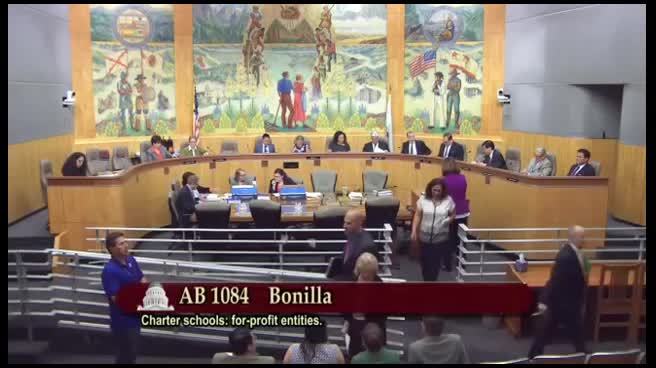
Bill Author
Bill Co-Author(s):