AB 1129: Emergency medical services: data and information system.
- Session Year: 2015-2016
- House: Assembly
- Latest Version Date: 2015-09-30
Existing law, the Emergency Medical Services System and the Prehospital Emergency Medical Care Personnel Act, governs local emergency medical services (EMS) systems. The act establishes the Emergency Medical Services Authority, which is responsible for the coordination and integration of all state agencies concerning emergency medical services. Existing law requires a local EMS agency to plan, implement, and evaluate an emergency medical services system, as specified, and authorizes the local EMS agency to develop and submit a plan to the authority for an emergency medical services system according to prescribed guidelines that address data collection and evaluation, among other things.
This bill would require an emergency medical care provider to, when collecting and submitting data to a local EMS agency, use an electronic health record system that exports data in a format that is compliant with the current versions of the California Emergency Medical Services Information System (CEMSIS) and the National Emergency Medical Services Information System (NEMSIS) standards, includes those data elements required by the local EMS agency, and uses an electronic health record system that can be integrated with the local EMS agencys data system, as specified. The bill would prohibit a local EMS agency from mandating that a provider use a specific electronic health record system to collect and share data with the agency. The bill would not modify or affect a written contract or agreement executed before January 1, 2016, between a local EMS agency and an emergency medical care provider.
Existing law, the Emergency Medical Services System and the Prehospital Emergency Medical Care Personnel Act, governs local emergency medical services (EMS) systems. The act establishes the Emergency Medical Services Authority, which is responsible for the coordination and integration of all state agencies concerning emergency medical services. Existing law requires a local EMS agency to plan, implement, and evaluate an emergency medical services system, as specified, and authorizes the local EMS agency to develop and submit a plan to the authority for an emergency medical services system according to prescribed guidelines that address data collection and evaluation, among other things.
This bill would require an emergency medical care provider to, when collecting and submitting data to a local EMS agency, use an electronic health record system that exports data in a format that is compliant with the current versions of the California Emergency Medical Services Information System (CEMSIS) and the National Emergency Medical Services Information System (NEMSIS) standards, includes those data elements required by the local EMS agency, and uses an electronic health record system that can be integrated with the local EMS agencys data system, as specified. The bill would prohibit a local EMS agency from mandating that a provider use a specific electronic health record system to collect and share data with the agency. The bill would not modify or affect a written contract or agreement executed before January 1, 2016, between a local EMS agency and an emergency medical care provider.
Existing law, the Emergency Medical Services System and the Prehospital Emergency Medical Care Personnel Act, governs local emergency medical services (EMS) systems. The act establishes the Emergency Medical Services Authority, which is responsible for the coordination and integration of all state agencies concerning emergency medical services. Existing law requires a local EMS agency to plan, implement, and evaluate an emergency medical services system, as specified, and authorizes the local EMS agency to develop and submit a plan to the authority for an emergency medical services system according to prescribed guidelines that address data collection and evaluation, among other things.
This bill would require an emergency medical care provider to, when collecting and submitting data to a local EMS agency, use an electronic health record system that exports data in a format that is compatible compliant with the current versions of the California Emergency Medical Services Information System (CEMSIS) and the National Emergency Medical Services Information System (NEMSIS) standards, includes those data elements required by the local EMS agency, and uses an electronic health record system that can be integrated with the local EMS agencys data system, as specified. The bill would prohibit a local EMS agency from mandating that a provider use a specific electronic health record system to collect and share data with the agency. The bill would not modify or affect a written contract or agreement executed before January 1, 2016, between a local EMS agency and an emergency medical care provider.
Existing law, the Emergency Medical Services System and the Prehospital Emergency Medical Care Personnel Act, governs local emergency medical services (EMS) systems. The act establishes the Emergency Medical Services Authority, which is responsible for the coordination and integration of all state agencies concerning emergency medical services. Existing law requires a local EMS agency to plan, implement, and evaluate an emergency medical services system, as specified, and authorizes the local EMS agency to develop and submit a plan to the authority for an emergency medical services system according to prescribed guidelines that address data collection and evaluation, among other things.
This bill would require an emergency medical care provider to, when collecting and submitting data to a local EMS agency, use a an electronic health record system that exports data in a format that is compatible with the California Emergency Medical Services Information System (CEMSIS) and the National Emergency Medical Services Information System (NEMSIS) standards, includes those data elements required by the local EMS agency, and uses a an electronic health record system that can be integrated with the local EMS agencys data system, as specified. The bill would prohibit a local EMS agency from mandating that a provider use a specified specific electronic health record system to collect and share data with the agency. The bill would not modify or affect contract or agreement executed before January 1, 2016, between a local EMS agency and an emergency medical care provider.
Existing law, the Emergency Medical Services System and the Prehospital Emergency Medical Care Personnel Act, governs local emergency medical services (EMS) systems. The act establishes the Emergency Medical Services Authority, which is responsible for the coordination and integration of all state agencies concerning emergency medical services. Existing law requires a local EMS agency to plan, implement, and evaluate an emergency medical services system, as specified, and authorizes the local EMS agency to develop and submit a plan to the authority for an emergency medical services system according to prescribed guidelines that address data collection and evaluation, among other things.
This bill would require an emergency medical care provider to, when collecting and sharing data with submitting data to a local EMS agency, use a system that exports data in a format that is compatible with the California Emergency Medical Services Information System (CEMSIS) and the National Emergency Medical Services Information System (NEMSIS) standards and ensure that the standards, includes those data elements required by the local EMS agency, and uses a system that can be integrated with the local EMS agencys system, as specified. The bill would prohibit a local EMS agency from mandating that a provider use a specified system to collect and share data with the agency.
Existing law, the Emergency Medical Services System and the Prehospital Emergency Medical Care Personnel Act, governs local emergency medical services (EMS) systems. The act establishes the Emergency Medical Services Authority, which is responsible for the coordination and integration of all state agencies concerning emergency medical services. Existing law requires a local EMS agency to plan, implement, and evaluate an emergency medical services system, as specified, and authorizes the local EMS agency to develop and submit a plan to the authority for an emergency medical services system according to prescribed guidelines that address data collection and evaluation, among other things.
This bill would require an emergency medical care provider to, when collecting and sharing data with a local EMS agency, use a system that is compliant exports data in a format that is compatible with the California Emergency Medical Services Information System (CEMSIS) and the National Emergency Medical Services Information System (NEMSIS) standards and ensure that the system can be integrated with the local EMS agencys system, as specified. The bill would prohibit a local EMS agency from mandating that a provider use a specified system to collect and share data with the agency.
Existing law, the Emergency Medical Services System and the Prehospital Emergency Medical Care Personnel Act, governs local emergency medical services (EMS) systems. The act establishes the Emergency Medical Services Authority, which is responsible for the coordination and integration of all state agencies concerning emergency medical services. Existing law requires a local EMS agency to plan, implement, and evaluate an emergency medical services system, as specified, and authorizes the local EMS agency to develop and submit a plan to the authority for an emergency medical services system according to prescribed guidelines that address data collection and evaluation, among other things.
This bill would require an emergency medical care provider to, when collecting and sharing data with a local EMS agency, use a system that is compliant with the California Emergency Medical Services Information System (CEMSIS) and the National Emergency Medical Services Information System (NEMSIS) standards and ensure that the system can be integrated with the local EMS agencys system, as specified. The bill would prohibit a local EMS agency from mandating that a provider use a specified system to collect and share data with the agency.
(a)An emergency medical care provider shall do both of the following when collecting and submitting data to a local EMS agency:
(1)Use an electronic health record system that exports data in a format that is compliant with the current versions of the California Emergency Medical Services Information System (CEMSIS) and the National Emergency Medical Services Information System (NEMSIS) standards and includes those data elements that are required by the local EMS agency.
(2)Ensure that the electronic health record system can be integrated with the local EMS agencys data system, so that the local EMS agency may collect data from the provider.
(b)A local EMS agency shall not mandate that a provider use a specific electronic health record system to collect and share data with the local EMS agency.
(c)This section does not modify or affect a written contract or agreement executed before January 1, 2016, between a local EMS agency and an emergency medical care provider.
(a)An emergency medical care provider shall do both of the following when collecting and submitting data to a local EMS agency:
(1)Use an electronic health record system that exports data in a format that is compliant with the current versions of the California Emergency Medical Services Information System (CEMSIS) and the National Emergency Medical Services Information System (NEMSIS) standards and includes those data elements that are required by the local EMS agency.
(2)Ensure that the electronic health record system can be integrated with the local EMS agencys data system, so that the local EMS agency may collect data from the provider.
(b)A local EMS agency shall not mandate that a provider use a specific electronic health record system to collect and share data with the local EMS agency.
(c)This section does not modify or affect a written contract or agreement executed before January 1, 2016, between a local EMS agency and an emergency medical care provider.
(a)An emergency medical care provider shall do both of the following when collecting and submitting data to a local EMS agency:
(1)Use an electronic health record system that exports data in a format that is compatible compliant with the current versions of the California Emergency Medical Services Information System (CEMSIS) and the National Emergency Medical Services Information System (NEMSIS) standards and includes those data elements that are required by the local EMS agency.
(2)Ensure that the electronic health record system can be integrated with the local EMS agencys data system, so that the local EMS agency may collect data from the provider.
(b)A local EMS agency shall not mandate that a provider use a specific electronic health record system to collect and share data with the local EMS agency.
(c)This provision shall section does not modify or affect an existing a written contract or agreement executed before January 1, 2016, between a local EMS agency and an emergency medical care provider.
(a)An emergency medical care provider shall do both of the following when collecting and submitting data to a local EMS agency:
(1)Use a an electronic health record system that exports data in a format that is compatible with the California Emergency Medical Services Information System (CEMSIS) and the National Emergency Medical Services Information System (NEMSIS) standards and includes those data elements that are required by the local EMS agency.
(2)Ensure that the electronic health record system can be integrated with the local EMS agencys data system, so that the local EMS agency may collect data from the provider.
(b)A local EMS agency shall not mandate that a provider use a specific electronic health record system to collect and share data with the local EMS agency.
(c)This provision shall not modify or affect an existing contract or agreement executed before January 1, 2016, between a local EMS agency and an emergency medical care provider.
(a)An emergency medical care provider shall do both of the following when collecting and sharing data with submitting data to a local EMS agency:
(1)Use a system that exports data in a format that is compatible with the California Emergency Medical Services Information System (CEMSIS) and the National Emergency Medical Services Information System (NEMSIS) standards. standards and includes those data elements that are required by the local EMS agency.
(2)Ensure that the system can be integrated with the local EMS agencys system, so that the local EMS agency may collect data from the provider.
(b)A local EMS agency shall not mandate that a provider use a specific system to collect and share data with the local EMS agency.
(a)An emergency medical care provider shall do both of the following when collecting and sharing data with a local EMS agency:
(1)Use a system that is compliant exports data in a format that is compatible with the California Emergency Medical Services Information System (CEMSIS) and the National Emergency Medical Services Information System (NEMSIS) standards.
(2)Ensure that the system can be integrated with the local EMS agencys system, so that the local EMS agency may collect data from the provider.
(b)A local EMS agency shall not mandate that a provider use a specific system to collect and share data with the local EMS agency.
(a)An emergency medical care provider shall do both of the following when collecting and sharing data with a local EMS agency:
(1)Use a system that is compliant with the California Emergency Medical Services Information System (CEMSIS) and the National Emergency Medical Services Information System (NEMSIS) standards.
(2)Ensure that the system can be integrated with the local EMS agencys system, so that the local EMS agency may collect data from the provider.
(b)A local EMS agency shall not mandate that a provider use a specific system to collect and share data with the local EMS agency.
|
Date
|
Status
|
|---|---|
| Jul 2, 2015 | From committee: Do pass and re-refer to Com. on JUD. (Ayes 8. Noes 0.) (July 1). Re-referred to Com. on JUD. |
| Sep 30, 2015 | Chaptered by Secretary of State - Chapter 377, Statutes of 2015. |
| Sep 30, 2015 | Approved by the Governor. |
| Sep 10, 2015 | Enrolled and presented to the Governor at 4 p.m. |
| Sep 1, 2015 | Senate amendments concurred in. To Engrossing and Enrolling. (Ayes 79. Noes 0.). |
| Sep 1, 2015 | Senate amendments concurred in. To Engrossing and Enrolling. (Ayes 79. Noes 0. Page 2742.). |
| Sep 1, 2015 | Assembly Rule 77 suspended. (Page 2729.) |
| Sep 1, 2015 | Assembly Rule 77 suspended. |
| Aug 31, 2015 | Read third time. Passed. Ordered to the Assembly. (Ayes 40. Noes 0. Page 2298.). |
| Aug 31, 2015 | Read third time. Passed. Ordered to the Assembly. |
| Aug 31, 2015 | In Assembly. Concurrence in Senate amendments pending. May be considered on or after September 2 pursuant to Assembly Rule 77. |
| Aug 24, 2015 | Read second time. Ordered to third reading. |
| Aug 20, 2015 | Read third time and amended. Ordered to second reading. |
| Jul 6, 2015 | Read second time. Ordered to third reading. |
| Jul 2, 2015 | Withdrawn from committee. |
| Jul 2, 2015 | Ordered to second reading. |
| Feb 27, 2015 | Introduced. To print. |
| Jun 23, 2015 | From committee chair, with author's amendments: Amend, and re-refer to committee. Read second time, amended, and re-referred to Com. on HEALTH. |
| May 21, 2015 | Referred to Coms. on HEALTH and JUD. |
| May 7, 2015 | Read third time. Passed. Ordered to the Senate. (Ayes 77. Noes 0. Page 1330.) |
| May 7, 2015 | Read third time. Passed. Ordered to the Senate. |
| May 7, 2015 | In Senate. Read first time. To Com. on RLS. for assignment. |
| May 4, 2015 | Read third time and amended. Ordered to third reading. (Page 1256.) |
| Apr 23, 2015 | Read second time. Ordered to third reading. |
| Apr 22, 2015 | From committee: Do pass. (Ayes 11. Noes 0.) (April 21). |
| Apr 15, 2015 | From committee: Do pass and re-refer to Com. on P. & C.P. (Ayes 16. Noes 0.) (April 14). Re-referred to Com. on P. & C.P. |
| Apr 7, 2015 | Re-referred to Com. on HEALTH. |
| Apr 6, 2015 | From committee chair, with author's amendments: Amend, and re-refer to Com. on HEALTH. Read second time and amended. |
| Mar 19, 2015 | Referred to Coms. on HEALTH and P. & C.P. |
| Mar 2, 2015 | Read first time. |
| Mar 1, 2015 | From printer. May be heard in committee March 31. |
|
Date
|
Description
|
Location
|
Votes
|
|
|---|---|---|---|---|
| Sep 1, 2015 | AB 1129 BURKE Concurrence in Senate Amendments | Assembly Floor |
Passed |
|
| Aug 31, 2015 | Assembly 3rd Reading AB1129 Burke By Nguyen | Senate Floor |
Passed |
|
| Jul 1, 2015 | Do pass, but first be re-referred to the Committee on [Judiciary] | Senate Standing Committee on Health |
Passed |
|
| May 7, 2015 | AB 1129 BURKE Assembly Third Reading | Assembly Floor |
Passed |
|
| Apr 21, 2015 | Do pass. | Assembly Standing Committee on Privacy and Consumer Protection |
Passed |
|
| Apr 14, 2015 | Do pass and be re-referred to the Committee on [Privacy and Consumer Protection] | Assembly Standing Committee on Health |
Passed |
This list shows positions taken on this bill by organizations on the date displayed, which is linked to the original source.
Positions by individuals are not included.
|
Organization
|
Position
|
Date
|
|---|---|---|
| Ambulance Association of Orange County | ** Support | Aug 31, 2015 |
| AmbuServe Ambulance | ** Support | Aug 31, 2015 |
| American Ambulance in Fresno | * Indeterminate | Apr 14, 2015 |
| California Ambulance Association | ** Support | Aug 31, 2015 |
| California Association of Air Medical Services | ** Against | Aug 31, 2015 |
| California Fire Chiefs Association | ** Support | Aug 31, 2015 |
| California Professional Firefighters | ** Support | Aug 31, 2015 |
| California Right to Life Committee, Inc. | ** Against | Apr 21, 2015 |
| Care Ambulance Service | ** Support | Aug 31, 2015 |
| Chino Valley Fire District | ** Support | Aug 31, 2015 |
| City Of Ontario | ** Support | Aug 31, 2015 |
| County of San Bernardino | ** Against | Aug 31, 2015 |
| Emergency Ambulance Service | ** Support | Aug 31, 2015 |
| Emergency Medical Services Administrators Association of California | ** Against | Apr 21, 2015 |
| EMS Medical Directors Association of California | ** Against | Aug 31, 2015 |
| Inland Counties Medical Agency | * Indeterminate | Jul 1, 2015 |
| Los Angeles County Ambulance Association | ** Support | Aug 31, 2015 |
| Shoreline Ambulance | ** Support | Aug 31, 2015 |
AB 1129
Page 2
CONCURRENCE IN SENATE AMENDMENTS
AB 1129
(Burke)
As Amended August 20, 2015
Majority vote
ASSEMBLY: |
77-0 |
(May 7, 2015) |
SENATE: |
40-0 |
(August 31, 2015) |
Original Committee Reference: HEALTH
SUMMARY: Requires an emergency medical services (EMS) provider, when collecting and submitting data to with a local emergency medical services agency (LEMSA), to use an electronic health record (EHR) system compliant with California Emergency Medical Services Information System (CEMSIS) and National Emergency Medical Services Information System (NEMSIS) standards, as specified, and includes those data elements that are required by the LEMSA. Prohibits an LEMSA from mandating that an EMS provider use a specific EHR system to collect and share this data. Clarifies that the provisions of this bill do not affect or modify existing written contracts or agreements executed before January 1, 2016, between an LEMSA and an EMS provider.
The Senate amendments:
Specify an EMS provider is required to use an EHR system compliant instead of a system compatible with CEMSIS and NEMSIS when collecting and submitting data to an LEMSA.
Clarify that the provisions of this bill do not affect or modify existing written contracts or agreements executed before January 1, 2016, between an LEMSA and an EMS provider.
FISCAL EFFECT: None
COMMENTS: According to the author, current law authorizes LEMSAs to plan, implement, and oversee day-to-day EMS in California. In order to monitor local EMS providers and services, LEMSAs collect data from those providers. The author further states, as local providers have shifted to electronic patient records; the potential for better analysis of EMS has increased. LEMSAs are able to provide the data they collect from EMS providers to the Emergency Medical Services Authority (EMSA) through CEMSIS compliant software. Although the software and hardware must be compatible with CEMSIS, there are many different systems in use and many more available. The author explains that without guidelines in law, LEMSAs are able to require EMS providers in their jurisdiction to purchase specific software or hardware for data collection. Requiring providers that cover multiple counties or contract with multiple LEMSAs to purchase specific software and/or hardware can be an unnecessary and costly burden. The author asserts existing law is silent on whether or not an LEMSA can require a specific hardware or software provider for EMS providers in their jurisdiction.
NEMSIS was formed in 2001 by the National Association of State EMS Directors, in conjunction with the National Highway Traffic Safety Administration and the Trauma/EMS Systems program of the Health Resources and Services Administration's Maternal Child Health Bureau, in order to develop a national EMS database. NEMSIS is the national repository that will be used to potentially store EMS data from every state in the nation, and was developed to help states collect more standardized elements to allow submission to the national database.
According to EMSA, CEMSIS is a demonstration project for improving EMS data analysis across California. CEMSIS offers a secure, centralized data system for collecting data about individual EMS requests, patients treated at hospitals, and EMS provider organizations. EMSA states that at least 14 of California's 33 LEMSAs currently send a variety of local data collections to CEMSIS on a voluntary basis, and in return, these local agencies gain access to digital tools for running comprehensive reports on their own data at no cost.
EMSA states when fully operational with 100% local participation, it is estimated that CEMSIS will catalogue more than 3 million EMS events per year. According to EMSA, it will use the data to develop and coordinate high quality emergency medical care in California through activities such as healthcare quality programs that monitor patient care outcomes, agency collaboration across jurisdictional boundaries, and public health surveillance.
On October 1, 2014, the NEMSIS Technical Advisory Committee announced that California was the first state to successfully transmit NEMSIS Version 3 EMS data to the national repository using field and state level software "certified compliant". NEMSIS Version 3, provides a set of tools that EMS professionals can use to integrate EMS patient care data with electronic medical records at hospitals, leading to better patient outcomes and a smarter system of care.
The California Ambulance Association, the sponsor of this bill, along with the Los Angeles County Ambulance Association, and several ambulance providers write in support of this bill. Supporters state that the growing practice of LEMSAs to direct or require EMS providers in their region to purchase and employ specific software vendors undermines the purpose of a universal standard allowing providers to use whatever system is most efficient and effective for their area of operation, so long as it complies with the universal standard. Supporters write that there are numerous programs and vendors compatible with NEMSIS standards that can facilitate the exchange of healthcare information between the state and federal data repositories.
The California Association of Air Medical Services (CAL-AAMS) is opposed to this bill. CAL-AAMS' air ambulance providers operate helicopter and fixed wing aircraft flying emergency missions within and between LEMSA jurisdictions. Because this bill has no requirement for the 33 LEMSAs to use a standardized EMS reporting system, air ambulance providers would have the burden to pay for and report data compatible with each LEMSA they serve. CAL-AAMS is strongly supportive of the development of a single statewide data collection system and argues that this bill would undermine the development of a consistent system with information that will improve the safety and effectiveness of care to patients.
The Emergency Medical Services Administrators Association of California and the EMS Medical Directors Association of California are both opposed to this bill, unless it is amended. The opposition writes that although they are supportive of the concept of the use of electronic EMS data, they are opposed to the prohibition of LEMSAs mandating specific data collection systems. According to the opposition, while it is uncommon for a LEMSA to require a single system-wide patient care record system, such an approach could be in the best interest of patients to assure the transfer and continuity of patient care data from prehospital providers, receiving hospitals, and specialty care centers.
Analysis Prepared by: Patty Rodgers / HEALTH / (916) 319-2097 FN: 0001580
AB 1129
Page 7
|
Office of Senate Floor Analyses (916) 651-1520 Fax: (916) 327-4478 |
THIRD READING
Bill No: AB 1129
Amended: 8/20/15 in Senate
SENATE HEALTH COMMITTEE: 8-0, 7/1/15
AYES: Hernandez, Nguyen, Hall, Mitchell, Monning, Nielsen, Pan, Roth
NO VOTE RECORDED: Wolk
ASSEMBLY FLOOR: 77-0, 5/7/15 - See last page for vote
SUBJECT: Emergency medical services: data and information system
SOURCE: Ambulance Association of Orange County
DIGEST: This bill requires an emergency medical care provider, when submitting data to a local emergency medical services agency (LEMSA), to use an electronic health record system that is compatible with specified standards, and that includes those data elements that are required by the LEMSA. This bill prohibits a LEMSA from mandating that a provider use a specific electronic health record system.
Senate Floor Amendments of 8/20/15 clarify that the provision of this bill that states that this bill does not modify or affect an existing contract applies to “written” contracts, and makes other minor, technical changes.
Existing law:
Establishes the Emergency Medical Services Agency (EMSA), which is responsible for the coordination and integration of all state activities concerning emergency medical services (EMS), including the establishment of minimum standards, policies, and procedures.
Requires EMSA to develop planning and implementation guidelines for EMS systems which address specified components, including communications, system organization and management, and data collection and evaluation.
Authorizes counties to develop an EMS program and designate a LEMSA responsible for planning and implementing an EMS system, which includes day-to-day EMS system operations.
Establishes an 18-member Commission on EMS, within the California Health and Human Services Agency (HHSA). Defines the duties of the Commission to include reviewing regulations, standards, and guidelines developed by EMSA; advising EMSA on a data collection system; advising on emergency facilities and services, emergency communications, medical equipment, personnel training, and various aspects of the EMS system; and, making recommendations for further development of the EMS system.
This bill:
Requires an emergency medical care provider to do both of the following when collecting and submitting data to a LEMSA:
Use an electronic health record system that exports data in a format that is compliant with the current versions of the California Emergency Medical Services Information System (CEMSIS) and the National Emergency Medical Services Information System (NEMSIS) standards and includes those data elements that are required by the LEMSA; and,
Ensure that the electronic health record system can be integrated with the LEMSA’s data system, so that the LEMSA can collect data from the provider.
Prohibits a LEMSA from mandating that a provider use a specific electronic health record system to collect and share data with the LEMSA.
Prohibits this bill from modifying or affecting a written contract or agreement executed before January 1, 2016, between a LEMSA and an emergency medical care provider.
Comments
Author’s statement. According to the author, this bill ensures that California has an accurate picture of its EMS programs across the state, improves our coordination with national efforts, and provides local EMS providers with the guidance and flexibility they need to deploy electronic patient record systems, without placing an unnecessary burden on local EMS providers, particularly those that cover multiple LEMSAs. According to the author, a key requirement for any electronic patient record is compatibility with CEMSIS and NEMSIS standards to ensure that both the state and federal authorities can track EMS trends accurately. However, without guidelines in law, LEMSAs are able to require EMS providers in their jurisdiction to purchase specific software or hardware for electronic patient records and data collection. While that may be acceptable for EMS providers that only serve a single LEMSA, for providers that cover multiple LEMSAs, such as air ambulance providers, specific LEMSA requirements for software and/or hardware can be an unnecessary and costly burden. The author states that there are currently 60 different software packages that are NEMSIS compliant. Over 90% of California’s EMS providers already have a NEMSIS compatible data system in place. In many areas, EMS providers can choose the electronic patient record software that best meets their needs and budget, so long as it is NEMSIS compatible. For smaller EMS providers, changing software due to a LEMSA change in requirements is very expensive and additional training will be required of EMS personnel. This bill helps ensure the consistency and quality of data collection across California by requiring the data collected by EMS providers to be consistent with both NEMSIS and CEMSIS data standards for EMS services, and compliant with the LEMSA’s system, but allows the EMS provider to select the data collection system, hardware, or software to use.
NEMSIS and CEMSIS. NEMSIS was formed in 2001 by the National Association of State EMS Directors, in conjunction with the National Highway Traffic Safety Administration and the Trauma/EMS Systems program of the Health Resources and Services Administration’s Maternal Child Health Bureau, in order to develop a national EMS database. NEMSIS is the national repository that will be used to potentially store EMS data from every state in the nation, and was developed to help states collect more standardized elements to allow submission to the national database.
According to EMSA, CEMSIS is a demonstration project for improving EMS data analysis across California. CEMSIS offers a secure, centralized data system for collecting data about individual EMS requests, patients treated at hospitals, and EMS provider organizations. EMSA states that at least 14 of California’s 33 LEMSAs currently send a variety of local data collections to CEMSIS on a voluntary basis, and in return, these local agencies gain access to digital tools for running comprehensive reports on their own data at no cost. EMSA states when fully operational with 100% local participation, it is estimated that CEMSIS will catalogue more than three million EMS events per year. According to EMSA, it will use the data to develop and coordinate high quality emergency medical care in California through activities such as healthcare quality programs that monitor patient care outcomes, agency collaboration across jurisdictional boundaries, and public health surveillance.
In order to improve local data quality and prepare California EMS for health information exchange, EMSA is planning to adopt new data standards known as NEMSIS Version 3, which will provide a set of tools that EMS professionals can use to integrate EMS patient care data with electronic medical records at hospitals, leading to better patient outcomes and a smarter system of care. On October 1, 2014, the NEMSIS Technical Advisory Committee announced that California was the first state to successfully transmit NEMSIS Version 3 EMS data to the national repository using field and state level software “certified compliant” with the NEMSIS V3 standard. According to EMSA, through its partnership with the Inland Counties Emergency Medical Agency, test data from three different software vendors was sent to NEMSIS.
Related Legislation
AB 503 (Rodriguez) permits a hospital to release patient-identifiable medical information to an EMS provider, to the LEMSA, or to the EMSA, for quality assessment and improvement purposes. AB 503 is pending on the Senate Floor.
Prior Legislation
AB 1621 (Lowenthal, 2014) would have required the EMSA to adopt a single statewide standard for the collection of information regarding pre-hospital care for CEMSIS, required EMSA to develop standards for electronic patient care records systems used by LEMSAs and local pre-hospital EMS providers to ensure compatibility with CEMSIS, and required LEMSAs to submit patient information to EMSA utilizing the single statewide standard in a timely manner. AB 1621 was held on the Senate Appropriations Committee suspense file.
AB 1975 (R. Hernández, 2014) would have required local EMS agencies to contract with the American College of Surgeons every five years to conduct a comprehensive assessment of their regional trauma system. AB 1975 was held on the Assembly Appropriations Committee suspense file.
SB 535 (Nielsen, 2013) would have increased the membership of the EMS Commission from 18 to 20 members, and required the additional members to be an air ambulance representative appointed by the Senate Committee on Rules, and representative appointed by the Speaker of the Assembly from a public agency that provides air rescue and transport. SB 535 was vetoed by the Governor.
FISCAL EFFECT: Appropriation: No Fiscal Com.: No Local: No
Ambulance Association of Orange County (source)
AmbuServe Ambulance
California Ambulance Association
California Fire Chiefs Association
California Professional Firefighters
Care Ambulance Service
Chino Valley Fire District
City of Ontario
Emergency Ambulance Service
Los Angeles County Ambulance Association
Shoreline Ambulance
OPPOSITION: (Verified 8/26/15)
California Association of Air Medical Services
California Right to Life Committee
County of San Bernardino
EMS Medical Directors Association of California
ARGUMENTS IN SUPPORT: According to the author, this bill is sponsored by the Ambulance Association of Orange County (AAOC), which states that this bill precludes a LEMSA from mandating any particular software or hardware on ambulance companies or fire departments, and instead, only requires compatibility with NEMSIS and CEMSIS programs. AAOC states that the goal of NEMSIS is to set a standard for the exchange of healthcare information among different providers and agencies, and that it is not meant, nor is it necessary, to mandate a particular software to meet this standard. AAOC states that mandating a particular software platform creates the need for duplicative systems because many providers serve multiple counties throughout the state. The City of Ontario states in support that this bill is simple, yet effective. The City of Ontario states that requiring EMS providers to collect data in a system compatible with CEMSIS and NEMSIS ensures that data can easily be transferred across agencies, and that in emergency situations, fluidity of data transfer can have a significant effect on a medical provider’s ability to care for patients. The California Professional Firefighters states in support that this bill will ensure California has an accurate picture of its EMS programs across the state, improves coordination with national efforts, and provides local EMS providers with the guidance they need to deploy electronic patient record systems.
ARGUMENTS IN OPPOSITION: The County of San Bernardino (County) states in opposition that its overall concern with this bill is the lack of clarity and specificity regarding the “data” to be shared, and that it is unclear what data a medical care provider is collecting and sharing with the LEMSA. The County states that if this bill is intended to apply to the real-time data passed from a care provider’s system to a LEMSA live data system with the intent to create and update live electronic patient care records, rather than reporting data after-the-fact to meet state mandates for records, there is a high likelihood of suffering data integrity issues when a centralized LEMSA system attempts to assimilate real-time data from a different system utilized by a provider. The County states in order for ICEMA (the LEMSA for San Bernardino, Inyo and Mono Counties) to provide this functionality, the systems would have to be re-designed, reconfigured and redeployed as a new system while trying to concurrently maintain the existing systems to accommodate the decentralized approach for allowing care providers to use different systems. According to the County, its experience in trying to collect vital patient data from disparate sources has demonstrated that it is extremely complicated and difficult to merge the elements of system compatibility and data integrity, and that a single system is crucial to managing patient care and safety not only in San Bernardino County, but in the other counties across the state submitting data through its system.
This bill is also opposed by the California Right to Life Committee, which states that it is concerned that the data systems required by this bill could eventually include data on a statewide Physicians’ Orders for Life Sustaining Treatment (POLST) registry or other similar end of life registries, and it is opposed to the POLST type of form on end of life decision-making.
The California Association of Air Medical Services (CAL-AAMS) states in opposition that this bill is internally conflicting, and undermines the effort of EMSA to adopt a single statewide data collection system. According to CAL-AAMS, this bill would allow each of the 33 LEMSA’s to develop or maintain their own non-standardized data reporting systems, and place the burden onto each provider to pay for the cost of modifying their CEMSIS/NEMSIS compliant software to be compatible with each individual LEMSA system. CAL-AAMS states that air ambulances operate as a statewide resource, and regularly cross LEMSA jurisdictional boundaries, and may routinely conduct business in more than a dozen LEMSA’s. According to CAL-AAMS, complying with non-standardized data collection and reporting at each LEMSA level is not practical, and is cost prohibitive for air ambulance providers.
ASSEMBLY FLOOR: 77-0, 5/7/15
AYES: Achadjian, Alejo, Travis Allen, Baker, Bigelow, Bloom, Bonilla, Bonta, Brough, Brown, Burke, Calderon, Chang, Chau, Chávez, Chiu, Chu, Cooley, Cooper, Dababneh, Dahle, Daly, Dodd, Eggman, Frazier, Beth Gaines, Gallagher, Cristina Garcia, Eduardo Garcia, Gatto, Gipson, Gomez, Gonzalez, Gordon, Gray, Grove, Hadley, Harper, Holden, Irwin, Jones, Jones-Sawyer, Kim, Lackey, Levine, Linder, Lopez, Low, Maienschein, Mathis, Mayes, McCarty, Medina, Melendez, Mullin, Nazarian, Obernolte, O'Donnell, Olsen, Patterson, Perea, Quirk, Rendon, Ridley-Thomas, Rodriguez, Salas, Santiago, Mark Stone, Thurmond, Ting, Wagner, Waldron, Weber, Wilk, Williams, Wood, Atkins
NO VOTE RECORDED: Campos, Roger Hernández, Steinorth
Prepared by: Vince Marchand / HEALTH /
8/26/15 16:01:11
AB 1129
Page 7
|
Office of Senate Floor Analyses (916) 651-1520 Fax: (916) 327-4478 |
THIRD READING
Bill No: AB 1129
Amended: 8/20/15 in Senate
SENATE HEALTH COMMITTEE: 8-0, 7/1/15
AYES: Hernandez, Nguyen, Hall, Mitchell, Monning, Nielsen, Pan, Roth
NO VOTE RECORDED: Wolk
ASSEMBLY FLOOR: 77-0, 5/7/15 - See last page for vote
SUBJECT: Emergency medical services: data and information system
SOURCE: Ambulance Association of Orange County
DIGEST: This bill requires an emergency medical care provider, when submitting data to a local emergency medical services agency (LEMSA), to use an electronic health record system that is compatible with specified standards, and that includes those data elements that are required by the LEMSA. This bill prohibits a LEMSA from mandating that a provider use a specific electronic health record system.
Senate Floor Amendments of 8/20/15 clarify that the provision of this bill that states that this bill does not modify or affect an existing contract applies to “written” contracts, and makes other minor, technical changes.
Existing law:
Establishes the Emergency Medical Services Agency (EMSA), which is responsible for the coordination and integration of all state activities concerning emergency medical services (EMS), including the establishment of minimum standards, policies, and procedures.
Requires EMSA to develop planning and implementation guidelines for EMS systems which address specified components, including communications, system organization and management, and data collection and evaluation.
Authorizes counties to develop an EMS program and designate a LEMSA responsible for planning and implementing an EMS system, which includes day-to-day EMS system operations.
Establishes an 18-member Commission on EMS, within the California Health and Human Services Agency (HHSA). Defines the duties of the Commission to include reviewing regulations, standards, and guidelines developed by EMSA; advising EMSA on a data collection system; advising on emergency facilities and services, emergency communications, medical equipment, personnel training, and various aspects of the EMS system; and, making recommendations for further development of the EMS system.
This bill:
Requires an emergency medical care provider to do both of the following when collecting and submitting data to a LEMSA:
Use an electronic health record system that exports data in a format that is compliant with the current versions of the California Emergency Medical Services Information System (CEMSIS) and the National Emergency Medical Services Information System (NEMSIS) standards and includes those data elements that are required by the LEMSA; and,
Ensure that the electronic health record system can be integrated with the LEMSA’s data system, so that the LEMSA can collect data from the provider.
Prohibits a LEMSA from mandating that a provider use a specific electronic health record system to collect and share data with the LEMSA.
Prohibits this bill from modifying or affecting a written contract or agreement executed before January 1, 2016, between a LEMSA and an emergency medical care provider.
Comments
Author’s statement. According to the author, this bill ensures that California has an accurate picture of its EMS programs across the state, improves our coordination with national efforts, and provides local EMS providers with the guidance and flexibility they need to deploy electronic patient record systems, without placing an unnecessary burden on local EMS providers, particularly those that cover multiple LEMSAs. According to the author, a key requirement for any electronic patient record is compatibility with CEMSIS and NEMSIS standards to ensure that both the state and federal authorities can track EMS trends accurately. However, without guidelines in law, LEMSAs are able to require EMS providers in their jurisdiction to purchase specific software or hardware for electronic patient records and data collection. While that may be acceptable for EMS providers that only serve a single LEMSA, for providers that cover multiple LEMSAs, such as air ambulance providers, specific LEMSA requirements for software and/or hardware can be an unnecessary and costly burden. The author states that there are currently 60 different software packages that are NEMSIS compliant. Over 90% of California’s EMS providers already have a NEMSIS compatible data system in place. In many areas, EMS providers can choose the electronic patient record software that best meets their needs and budget, so long as it is NEMSIS compatible. For smaller EMS providers, changing software due to a LEMSA change in requirements is very expensive and additional training will be required of EMS personnel. This bill helps ensure the consistency and quality of data collection across California by requiring the data collected by EMS providers to be consistent with both NEMSIS and CEMSIS data standards for EMS services, and compliant with the LEMSA’s system, but allows the EMS provider to select the data collection system, hardware, or software to use.
NEMSIS and CEMSIS. NEMSIS was formed in 2001 by the National Association of State EMS Directors, in conjunction with the National Highway Traffic Safety Administration and the Trauma/EMS Systems program of the Health Resources and Services Administration’s Maternal Child Health Bureau, in order to develop a national EMS database. NEMSIS is the national repository that will be used to potentially store EMS data from every state in the nation, and was developed to help states collect more standardized elements to allow submission to the national database.
According to EMSA, CEMSIS is a demonstration project for improving EMS data analysis across California. CEMSIS offers a secure, centralized data system for collecting data about individual EMS requests, patients treated at hospitals, and EMS provider organizations. EMSA states that at least 14 of California’s 33 LEMSAs currently send a variety of local data collections to CEMSIS on a voluntary basis, and in return, these local agencies gain access to digital tools for running comprehensive reports on their own data at no cost. EMSA states when fully operational with 100% local participation, it is estimated that CEMSIS will catalogue more than three million EMS events per year. According to EMSA, it will use the data to develop and coordinate high quality emergency medical care in California through activities such as healthcare quality programs that monitor patient care outcomes, agency collaboration across jurisdictional boundaries, and public health surveillance.
In order to improve local data quality and prepare California EMS for health information exchange, EMSA is planning to adopt new data standards known as NEMSIS Version 3, which will provide a set of tools that EMS professionals can use to integrate EMS patient care data with electronic medical records at hospitals, leading to better patient outcomes and a smarter system of care. On October 1, 2014, the NEMSIS Technical Advisory Committee announced that California was the first state to successfully transmit NEMSIS Version 3 EMS data to the national repository using field and state level software “certified compliant” with the NEMSIS V3 standard. According to EMSA, through its partnership with the Inland Counties Emergency Medical Agency, test data from three different software vendors was sent to NEMSIS.
Related Legislation
AB 503 (Rodriguez) permits a hospital to release patient-identifiable medical information to an EMS provider, to the LEMSA, or to the EMSA, for quality assessment and improvement purposes. AB 503 is pending on the Senate Floor.
Prior Legislation
AB 1621 (Lowenthal, 2014) would have required the EMSA to adopt a single statewide standard for the collection of information regarding pre-hospital care for CEMSIS, required EMSA to develop standards for electronic patient care records systems used by LEMSAs and local pre-hospital EMS providers to ensure compatibility with CEMSIS, and required LEMSAs to submit patient information to EMSA utilizing the single statewide standard in a timely manner. AB 1621 was held on the Senate Appropriations Committee suspense file.
AB 1975 (R. Hernández, 2014) would have required local EMS agencies to contract with the American College of Surgeons every five years to conduct a comprehensive assessment of their regional trauma system. AB 1975 was held on the Assembly Appropriations Committee suspense file.
SB 535 (Nielsen, 2013) would have increased the membership of the EMS Commission from 18 to 20 members, and required the additional members to be an air ambulance representative appointed by the Senate Committee on Rules, and representative appointed by the Speaker of the Assembly from a public agency that provides air rescue and transport. SB 535 was vetoed by the Governor.
FISCAL EFFECT: Appropriation: No Fiscal Com.: No Local: No
Ambulance Association of Orange County (source)
AmbuServe Ambulance
California Ambulance Association
California Fire Chiefs Association
California Professional Firefighters
Care Ambulance Service
Chino Valley Fire District
City of Ontario
Emergency Ambulance Service
Los Angeles County Ambulance Association
Shoreline Ambulance
OPPOSITION: (Verified 8/20/15)
California Right to Life Committee
County of San Bernardino
EMS Medical Directors Association of California
ARGUMENTS IN SUPPORT: According to the author, this bill is sponsored by the Ambulance Association of Orange County (AAOC), which states that this bill precludes a LEMSA from mandating any particular software or hardware on ambulance companies or fire departments, and instead, only requires compatibility with NEMSIS and CEMSIS programs. AAOC states that the goal of NEMSIS is to set a standard for the exchange of healthcare information among different providers and agencies, and that it is not meant, nor is it necessary, to mandate a particular software to meet this standard. AAOC states that mandating a particular software platform creates the need for duplicative systems because many providers serve multiple counties throughout the state. The City of Ontario states in support that this bill is simple, yet effective. The City of Ontario states that requiring EMS providers to collect data in a system compatible with CEMSIS and NEMSIS ensures that data can easily be transferred across agencies, and that in emergency situations, fluidity of data transfer can have a significant effect on a medical provider’s ability to care for patients. The California Professional Firefighters states in support that this bill will ensure California has an accurate picture of its EMS programs across the state, improves coordination with national efforts, and provides local EMS providers with the guidance they need to deploy electronic patient record systems.
ARGUMENTS IN OPPOSITION: The County of San Bernardino (County) states in opposition that its overall concern with this bill is the lack of clarity and specificity regarding the “data” to be shared, and that it is unclear what data a medical care provider is collecting and sharing with the LEMSA. The County states that if this bill is intended to apply to the real-time data passed from a care provider’s system to a LEMSA live data system with the intent to create and update live electronic patient care records, rather than reporting data after-the-fact to meet state mandates for records, there is a high likelihood of suffering data integrity issues when a centralized LEMSA system attempts to assimilate real-time data from a different system utilized by a provider. The County states in order for ICEMA (the LEMSA for San Bernardino, Inyo and Mono Counties) to provide this functionality, the systems would have to be re-designed, reconfigured and redeployed as a new system while trying to concurrently maintain the existing systems to accommodate the decentralized approach for allowing care providers to use different systems. According to the County, its experience in trying to collect vital patient data from disparate sources has demonstrated that it is extremely complicated and difficult to merge the elements of system compatibility and data integrity, and that a single system is crucial to managing patient care and safety not only in San Bernardino County, but in the other counties across the state submitting data through its system.
This bill is also opposed by the California Right to Life Committee, which states that it is concerned that the data systems required by this bill could eventually include data on a statewide Physicians’ Orders for Life Sustaining Treatment (POLST) registry or other similar end of life registries, and it is opposed to the POLST type of form on end of life decision-making.
ASSEMBLY FLOOR: 77-0, 5/7/15
AYES: Achadjian, Alejo, Travis Allen, Baker, Bigelow, Bloom, Bonilla, Bonta, Brough, Brown, Burke, Calderon, Chang, Chau, Chávez, Chiu, Chu, Cooley, Cooper, Dababneh, Dahle, Daly, Dodd, Eggman, Frazier, Beth Gaines, Gallagher, Cristina Garcia, Eduardo Garcia, Gatto, Gipson, Gomez, Gonzalez, Gordon, Gray, Grove, Hadley, Harper, Holden, Irwin, Jones, Jones-Sawyer, Kim, Lackey, Levine, Linder, Lopez, Low, Maienschein, Mathis, Mayes, McCarty, Medina, Melendez, Mullin, Nazarian, Obernolte, O'Donnell, Olsen, Patterson, Perea, Quirk, Rendon, Ridley-Thomas, Rodriguez, Salas, Santiago, Mark Stone, Thurmond, Ting, Wagner, Waldron, Weber, Wilk, Williams, Wood, Atkins
NO VOTE RECORDED: Campos, Roger Hernández, Steinorth
Prepared by: Vince Marchand / HEALTH /
8/25/15 15:38:22
AB 1129
Page 7
|
Office of Senate Floor Analyses (916) 651-1520 Fax: (916) 327-4478 |
THIRD READING
Bill No: AB 1129
Amended: 6/23/15 in Senate
SENATE HEALTH COMMITTEE: 8-0, 7/1/15
AYES: Hernandez, Nguyen, Hall, Mitchell, Monning, Nielsen, Pan, Roth
NO VOTE RECORDED: Wolk
ASSEMBLY FLOOR: 77-0, 5/7/15 - See last page for vote
SUBJECT: Emergency medical services: data and information system
SOURCE: Ambulance Association of Orange County
DIGEST: This bill requires an emergency medical care provider, when submitting data to a local emergency medical services agency (LEMSA), to use an electronic health record system that is compatible with specified standards, and that includes those data elements that are required by the LEMSA. This bill prohibits a LEMSA from mandating that a provider use a specific electronic health record system.
Existing law:
Establishes the Emergency Medical Services Agency (EMSA), which is responsible for the coordination and integration of all state activities concerning emergency medical services (EMS), including the establishment of minimum standards, policies, and procedures.
Requires EMSA to develop planning and implementation guidelines for EMS systems which address specified components, including communications, system organization and management, and data collection and evaluation.
Authorizes counties to develop an EMS program and designate a LEMSA responsible for planning and implementing an EMS system, which includes day-to-day EMS system operations.
Establishes an 18-member Commission on EMS, within the California Health and Human Services Agency (HHSA). Defines the duties of the Commission to include reviewing regulations, standards, and guidelines developed by EMSA; advising EMSA on a data collection system; advising on emergency facilities and services, emergency communications, medical equipment, personnel training, and various aspects of the EMS system; and, making recommendations for further development of the EMS system.
This bill:
Requires an emergency medical care provider to do both of the following when collecting and submitting data to a LEMSA:
Use an electronic health record system that exports data in a format that is compatible with the California Emergency Medical Services Information System (CEMSIS) and the National Emergency Medical Services Information System (NEMSIS) standards and includes those data elements that are required by the LEMSA; and,
Ensure that the electronic health record system can be integrated with the LEMSA’s data system, so that the LEMSA can collect data from the provider.
Prohibits a LEMSA from mandating that a provider use a specific electronic health record system to collect and share data with the LEMSA.
Prohibits this bill from modifying or affecting an existing contract or agreement executed before January 1, 2016, between a LEMSA and an emergency medical care provider.
Comments
Author’s statement. According to the author, this bill ensures that California has an accurate picture of its EMS programs across the state, improves our coordination with national efforts, and provides local EMS providers with the guidance and flexibility they need to deploy electronic patient record systems, without placing an unnecessary burden on local EMS providers, particularly those that cover multiple LEMSAs. According to the author, a key requirement for any electronic patient record is compatibility with CEMSIS and NEMSIS standards to ensure that both the state and federal authorities can track EMS trends accurately. However, without guidelines in law, LEMSAs are able to require EMS providers in their jurisdiction to purchase specific software or hardware for electronic patient records and data collection. While that may be acceptable for EMS providers that only serve a single LEMSA, for providers that cover multiple LEMSAs, such as air ambulance providers, specific LEMSA requirements for software and/or hardware can be an unnecessary and costly burden. The author states that there are currently 60 different software packages that are NEMSIS compliant. Over 90% of California’s EMS providers already have a NEMSIS compatible data system in place. In many areas, EMS providers can choose the electronic patient record software that best meets their needs and budget, so long as it is NEMSIS compatible. For smaller EMS providers, changing software due to a LEMSA change in requirements is very expensive and additional training will be required of EMS personnel. This bill helps ensure the consistency and quality of data collection across California by requiring the data collected by EMS providers to be consistent with both NEMSIS and CEMSIS data standards for EMS services, and compliant with the LEMSA’s system, but allows the EMS provider to select the data collection system, hardware, or software to use.
NEMSIS and CEMSIS. NEMSIS was formed in 2001 by the National Association of State EMS Directors, in conjunction with the National Highway Traffic Safety Administration and the Trauma/EMS Systems program of the Health Resources and Services Administration’s Maternal Child Health Bureau, in order to develop a national EMS database. NEMSIS is the national repository that will be used to potentially store EMS data from every state in the nation, and was developed to help states collect more standardized elements to allow submission to the national database.
According to EMSA, CEMSIS is a demonstration project for improving EMS data analysis across California. CEMSIS offers a secure, centralized data system for collecting data about individual EMS requests, patients treated at hospitals, and EMS provider organizations. EMSA states that at least 14 of California’s 33 LEMSAs currently send a variety of local data collections to CEMSIS on a voluntary basis, and in return, these local agencies gain access to digital tools for running comprehensive reports on their own data at no cost. EMSA states when fully operational with 100% local participation, it is estimated that CEMSIS will catalogue more than three million EMS events per year. According to EMSA, it will use the data to develop and coordinate high quality emergency medical care in California through activities such as healthcare quality programs that monitor patient care outcomes, agency collaboration across jurisdictional boundaries, and public health surveillance.
In order to improve local data quality and prepare California EMS for health information exchange, EMSA is planning to adopt new data standards known as NEMSIS Version 3, which will provide a set of tools that EMS professionals can use to integrate EMS patient care data with electronic medical records at hospitals, leading to better patient outcomes and a smarter system of care. On October 1, 2014, the NEMSIS Technical Advisory Committee announced that California was the first state to successfully transmit NEMSIS Version 3 EMS data to the national repository using field and state level software “certified compliant” with the NEMSIS V3 standard. According to EMSA, through its partnership with the Inland Counties Emergency Medical Agency, test data from three different software vendors was sent to NEMSIS.
Related Legislation
AB 503 (Rodriguez) permits a hospital to release patient-identifiable medical information to an EMS provider, to the LEMSA, or to the EMSA, for quality assessment and improvement purposes. AB 503 is set for hearing on July 14, 2015, in the Senate Judiciary Committee.
Prior Legislation
AB 1621 (Lowenthal,
2014) would have required the EMSA to adopt a single statewide
standard for the collection of information regarding pre-hospital
care for CEMSIS, required EMSA to develop standards for electronic
patient care records systems used by LEMSAs and local pre-hospital
EMS providers to ensure compatibility with CEMSIS, and required
LEMSAs to submit patient information to EMSA utilizing the single
statewide standard in a timely manner. AB 1621 was held on the Senate
Appropriations Committee suspense file.
AB
1975 (R. Hernández, 2014) would have required local EMS agencies to
contract with the American College of Surgeons every five years to
conduct a comprehensive assessment of their regional trauma system.
AB 1975 was held on the Assembly Appropriations Committee suspense
file.
SB 535
(Nielsen, 2013) would have increased the membership of the EMS
Commission from 18 to 20 members, and required the additional members
to be an air ambulance representative appointed by the Senate
Committee on Rules, and representative appointed by the Speaker of
the Assembly from a public agency that provides air rescue and
transport. SB 535 was vetoed by the Governor.
FISCAL EFFECT: Appropriation: No Fiscal Com.: No Local: No
Ambulance Association of Orange County (source)
AmbuServe Ambulance
California Ambulance Association
California Fire Chiefs Association
California Professional Firefighters
Care Ambulance Service
Chino Valley Fire District
City of Ontario
Emergency Ambulance Service
Los Angeles County Ambulance Association
Shoreline Ambulance
California Right to Life Committee
County of San Bernardino
EMS Medical Directors Association of California
ARGUMENTS IN SUPPORT: According to the author, this bill is sponsored by the Ambulance Association of Orange County (AAOC), which states that this bill precludes a LEMSA from mandating any particular software or hardware on ambulance companies or fire departments, and instead, only requires compatibility with NEMSIS and CEMSIS programs. AAOC states that the goal of NEMSIS is to set a standard for the exchange of healthcare information among different providers and agencies, and that it is not meant, nor is it necessary, to mandate a particular software to meet this standard. AAOC states that mandating a particular software platform creates the need for duplicative systems because many providers serve multiple counties throughout the state. The City of Ontario states in support that this bill is simple, yet effective. The City of Ontario states that requiring EMS providers to collect data in a system compatible with CEMSIS and NEMSIS ensures that data can easily be transferred across agencies, and that in emergency situations, fluidity of data transfer can have a significant effect on a medical provider’s ability to care for patients. The California Professional Firefighters states in support that this bill will ensure California has an accurate picture of its EMS programs across the state, improves coordination with national efforts, and provides local EMS providers with the guidance they need to deploy electronic patient record systems.
ARGUMENTS
IN OPPOSITION: The County of San Bernardino (County) states in
opposition that its overall concern with this bill is the lack of
clarity and specificity regarding the “data” to be shared, and
that it is unclear what data a medical care provider is collecting
and sharing with the LEMSA. The County states that if this bill is
intended to apply to the real-time data passed from a care provider’s
system to a LEMSA live data system with the intent to create and
update live electronic patient care records, rather than reporting
data after-the-fact to meet state mandates for records, there is a
high likelihood of suffering data integrity issues when a centralized
LEMSA system attempts to assimilate real-time data from a different
system utilized by a provider. The County states in order for ICEMA
(the LEMSA for San Bernardino, Inyo and Mono Counties) to provide
this functionality, the systems would have to be re-designed,
reconfigured and redeployed as a new system while trying to
concurrently maintain the existing systems to accommodate the
decentralized approach for allowing care providers to use different
systems. According to the County, its experience in trying to collect
vital patient data from disparate sources has demonstrated that it is
extremely complicated and difficult to merge the elements of system
compatibility and data integrity, and that a single system is crucial
to managing patient care and safety not only in San Bernardino
County, but in the other counties across the state submitting data
through its system.
This
bill is also opposed by the California Right to Life Committee, which
states that it is concerned that the data systems required by this
bill could eventually include data on a statewide Physicians’
Orders for Life Sustaining Treatment (POLST) registry or other
similar end of life registries, and it is opposed to the POLST type
of form on end of life decision-making.
ASSEMBLY FLOOR: 77-0, 5/7/15
AYES: Achadjian, Alejo, Travis Allen, Baker, Bigelow, Bloom, Bonilla, Bonta, Brough, Brown, Burke, Calderon, Chang, Chau, Chávez, Chiu, Chu, Cooley, Cooper, Dababneh, Dahle, Daly, Dodd, Eggman, Frazier, Beth Gaines, Gallagher, Cristina Garcia, Eduardo Garcia, Gatto, Gipson, Gomez, Gonzalez, Gordon, Gray, Grove, Hadley, Harper, Holden, Irwin, Jones, Jones-Sawyer, Kim, Lackey, Levine, Linder, Lopez, Low, Maienschein, Mathis, Mayes, McCarty, Medina, Melendez, Mullin, Nazarian, Obernolte, O'Donnell, Olsen, Patterson, Perea, Quirk, Rendon, Ridley-Thomas, Rodriguez, Salas, Santiago, Mark Stone, Thurmond, Ting, Wagner, Waldron, Weber, Wilk, Williams, Wood, Atkins
NO VOTE RECORDED: Campos, Roger Hernández, Steinorth
Prepared by: Vince Marchand / HEALTH /
7/8/15 16:34:11
**** END ****
AB 1129 (Burke) Page 5 of 5
SENATE COMMITTEE ON HEALTH
Senator Ed Hernandez, O.D., Chair
BILL NO: AB 1129
AUTHOR: |
Burke |
||
VERSION: |
June 23, 2015 |
||
HEARING DATE: |
July 1, 2015 |
|
|
CONSULTANT: |
Vince Marchand |
||
SUBJECT: Emergency medical services: data and information system.
SUMMARY:
Requires an emergency medical care provider, when submitting data to a local emergency medical services agency (LEMSA), to use an electronic health record system that is compatible with specified standards, and that includes those data elements that are required by the LEMSA. Prohibits a LEMSA from mandating that a provider use a specific electronic health record system.
Existing law:
Establishes the Emergency Medical Services Agency (EMSA), which is responsible for the coordination and integration of all state activities concerning emergency medical services (EMS), including the establishment of minimum standards, policies, and procedures.
Requires EMSA to develop planning and implementation guidelines for EMS systems which address specified components, including communications, system organization and management, and data collection and evaluation.
Authorizes counties to develop an EMS program and designate a LEMSA responsible for planning and implementing an EMS system, which includes day-to-day EMS system operations.
Establishes an 18-member Commission on EMS, within the California Health and Human Services Agency (HHSA). Defines the duties of the Commission to include reviewing regulations, standards, and guidelines developed by EMSA; advising EMSA on a data collection system; advise on emergency facilities and services, emergency communications, medical equipment, personnel training, and various aspects of the EMS system; and, to make recommendations for further development of the EMS system.
This bill:
Requires an emergency medical care provider to do both of the following when collecting and submitting data to a LEMSA:
Use an electronic health record system that exports data in a format that is compatible with the California Emergency Medical Services Information System (CEMSIS) and the National Emergency Medical Services Information System (NEMSIS) standards and includes those data elements that are required by the LEMSA; and,
Ensure that the electronic health record system can be integrated with the LEMSA’s data system, so that the LEMSA can collect data from the provider.
Prohibits a LEMSA from mandating that a provider use a specific electronic health record system to collect and share data with the LEMSA.
Prohibits this bill from modifying or affecting an existing contract or agreement executed before January 1, 2016, between a LEMSA and an emergency medical care provider.
FISCAL EFFECT:
This bill has been keyed non-fiscal.
PRIOR VOTES:
Assembly Floor: |
77 - 0 |
Assembly Health Committee: |
16 - 0 |
COMMENTS:
Author’s statement. According to the author, this bill ensures that California has an accurate picture of its EMS programs across the state, improves our coordination with national efforts, and provides local EMS providers with the guidance and flexibility they need to deploy electronic patient record systems, without placing an unnecessary burden on local EMS providers, particularly those that cover multiple LEMSAs. According to the author, a key requirement for any electronic patient record is compatibility with CEMSIS and NEMSIS standards to ensure that both the state and federal authorities can track EMS trends accurately. However, without guidelines in law, LEMSAs are able to require EMS providers in their jurisdiction to purchase specific software or hardware for electronic patient records and data collection. While that may be acceptable for EMS providers that only serve a single LEMSA, for providers that cover multiple LEMSAs, such as air ambulance providers, specific LEMSA requirements for software and/or hardware can be an unnecessary and costly burden. The author states that there are currently 60 different software packages that are NEMSIS compliant. Over 90% of California’s EMS providers already have a NEMSIS compatible data system in place. In many areas, EMS providers can choose the electronic patient record software that best meets their needs and budget, so long as it is NEMSIS compatible. For smaller EMS providers, changing software due to a LEMSA change in requirements is very expensive and additional training will be required of EMS personnel. This bill helps ensure the consistency and quality of data collection across California by requiring the data collected by EMS providers to be consistent with both NEMSIS and CEMSIS data standards for EMS services, and compliant with the LEMSA’s system, but allows the EMS provider to select the data collection system, hardware, or software to use.
NEMSIS and CEMSIS. NEMSIS was formed in 2001 by the National Association of State EMS Directors, in conjunction with the National Highway Traffic Safety Administration and the Trauma/EMS Systems program of the Health Resources and Services Administration’s Maternal Child Health Bureau, in order to develop a national EMS database. NEMSIS is the national repository that will be used to potentially store EMS data from every state in the nation, and was developed to help states collect more standardized elements to allow submission to the national database.
According to EMSA, CEMSIS is a demonstration project for improving EMS data analysis across California. CEMSIS offers a secure, centralized data system for collecting data about individual EMS requests, patients treated at hospitals, and EMS provider organizations. EMSA states that at least 14 of California’s 33 LEMSAs currently send a variety of local data collections to CEMSIS on a voluntary basis, and in return, these local agencies gain access to digital tools for running comprehensive reports on their own data at no cost. EMSA states when fully operational with 100% local participation, it is estimated that CEMSIS will catalogue more than three million EMS events per year. According to EMSA, it will use the data to develop and coordinate high quality emergency medical care in California through activities such as healthcare quality programs that monitor patient care outcomes, agency collaboration across jurisdictional boundaries, and public health surveillance.
In order to improve local data quality and prepare California EMS for health information exchange, EMSA is planning to adopt new data standards known as NEMSIS Version 3, which will provide a set of tools that EMS professionals can use to integrate EMS patient care data with electronic medical records at hospitals, leading to better patient outcomes and a smarter system of care. On October 1, 2014, the NEMSIS Technical Advisory Committee announced that California was the first state to successfully transmit NEMSIS Version 3 EMS data to the national repository using field and state level software “certified compliant” with the NEMSIS V3 standard. According to EMSA, through its partnership with the Inland Counties Emergency Medical Agency, test data from three different software vendors was sent to NEMSIS.
Related legislation. AB 503 (Rodriguez), would permit a hospital to release patient-identifiable medical information to an EMS provider, to the LEMSA, or to the Emergency Medical Services Agency, for quality assessment and improvement purposes.
AB 503 is set for hearing on July 1, 2015 in this committee.
Prior legislation. AB 1621 (Lowenthal, 2014), would have required the EMSA to adopt a single statewide standard for the collection of information regarding pre-hospital care for CEMSIS, required EMSA to develop standards for electronic patient care records systems used by LEMSAs and local pre-hospital EMS providers to ensure compatibility with CEMSIS, and required LEMSAs to submit patient information to EMSA utilizing the single statewide standard in a timely manner. AB 1621 was held on the Senate Appropriations Committee suspense file.
AB 1975 (R. Hernández, 2014),would have required local EMS agencies to contract with the American College of Surgeons every five years to conduct a comprehensive assessment of their regional trauma system. AB 1975 was held on the Assembly Appropriations Committee suspense file.
SB 535 (Nielsen, 2013), would have increased the membership of the EMS Commission from 18 to 20 members, and required the additional members to be an air ambulance representative appointed by the Senate Committee on Rules, and representative appointed by the Speaker of the Assembly from a public agency that provides air rescue and transport. SB 535 was vetoed by the Governor.
Double referral. This bill is double referred. Should it pass out of this committee, it will be referred to the Senate Judiciary Committee.
Support. According to the author, this bill is sponsored by the Ambulance Association of Orange County (AAOC), which states that this bill would preclude a LEMSA from mandating any particular software or hardware on ambulance companies or fire departments, and instead, only require compatibility with NEMSIS and CEMSIS programs. AAOC states that the goal of NEMSIS is to set a standard for the exchange of healthcare information among different providers and agencies, and that it is not meant, nor is it necessary, to mandate a particular software to meet this standard. AAOC states that mandating a particular software platform creates the need for duplicative systems because many providers serve multiple counties throughout the state. The City of Ontario states in support that this bill is simple, yet effective. The City of Ontario states that requiring EMS providers to collect data in a system compatible with CEMSIS and NEMSIS ensures that data can easily be transferred across agencies, and that in emergency situations, fluidity of data transfer can have a significant effect on a medical provider’s ability to care for patients. The California Professional Firefighters states in support that this bill will ensure California has an accurate picture of its EMS programs across the state, improves coordination with national efforts, and provides local EMS providers with the guidance they need to deploy electronic patient record systems.
Opposition. The County of San Bernardino (County) states in opposition that its overall concern with this bill is the lack of clarity and specificity regarding the “data” to be shared, and that it is unclear what data a medical care provider is collecting and sharing with the LEMSA. The County states that if this bill is intended to apply to the real-time data passed from a care provider’s system to a LEMSA live data system with the intent to create and update live electronic patient care records, rather than reporting data after-the-fact to meet state mandates for records, there is a high likelihood of suffering data integrity issues when a centralized LEMSA system attempts to assimilate real-time data from a different system utilized by a provider. The County states in order for ICEMA (the LEMSA for San Bernardino, Inyo and Mono Counties) to provide this functionality, the systems would have to be re-designed, reconfigured and redeployed as a new system while trying to concurrently maintain the existing systems to accommodate the decentralized approach for allowing care providers to use different systems. According to the County, its experience in trying to collect vital patient data from disparate sources has demonstrated that it is extremely complicated and difficult to merge the elements of system compatibility and data integrity, and that a single system is crucial to managing patient care and safety not only in San Bernardino County, but in the other counties across the state submitting data through its system.
This bill is also opposed by the California Right to Life Committee, which states that it is concerned that the data systems required by this bill could eventually include data on a statewide Physicians’ Orders for Life Sustaining Treatment (POLST) registry or other similar end of life registries, and it is opposed to the POLST type of form on end of life decision-making.
SUPPORT AND OPPOSITION:
Support: Ambulance Association of Orange County (sponsor)
AmbuServe Ambulance
California Ambulance Association
California Fire Chiefs Association
California Professional Firefighters
Care Ambulance Service
Chino Valley Fire District
City of Ontario
Emergency Ambulance Service
Los Angeles County Ambulance Association
Shoreline Ambulance
Oppose: California Right to Life Committee
County of San Bernardino
EMS Medical Directors Association of California
-- END –
AB 1129
Page 2
ASSEMBLY THIRD READING
AB 1129
(Burke)
As Amended May 4, 2015
Majority vote
Committee |
Votes |
Ayes |
Noes |
Health |
16-0 |
Bonta, Maienschein, Burke, Chávez, Chiu, Gomez, Gonzalez, Lackey, Nazarian, Patterson, Ridley-Thomas, Rodriguez, Santiago, Thurmond, Waldron, Wood |
|
Privacy |
11-0 |
Gatto, Wilk, Baker, Calderon, Chang, Chau, Cooper, Dababneh, Dahle, Gordon, Low |
|
SUMMARY: Requires an emergency medical services (EMS) provider, when collecting and submitting data to with a local emergency medical services agency (LEMSA), to use a system compatible with California Emergency Medical Services Information System (CEMSIS) and National Emergency Medical Services Information System (NEMSIS) standards, as specified, and includes those data elements that are required by the LEMSA. Prohibits a LEMSA from mandating that an EMS provider use a specific system to collect and share this data.
FISCAL EFFECT: None
COMMENTS: According to the author, current law authorizes LEMSAs to plan, implement, and oversee day-to-day EMS in California. In order to monitor local EMS providers and services, LEMSAs collect data from those providers. The author further states, as local providers have shifted to electronic patient records; the potential for better analysis of EMS has increased. LEMSAs are able to provide the data they collect from EMS providers to the Emergency Medical Services Authority (EMSA) through CEMSIS compatible software. Although the software and hardware must be compatible with CEMSIS, there are many different systems in use and many more available. The author explains that without guidelines in law, LEMSAs are able to require EMS providers in their jurisdiction to purchase specific software or hardware for data collection. Requiring providers that cover multiple counties or contract with multiple LEMSAs to purchase specific software and/or hardware can be an unnecessary and costly burden. The author asserts existing law is silent on whether or not a LEMSA can require a specific hardware or software provider for EMS providers in their jurisdiction.
NEMSIS was formed in 2001 by the National Association of State EMS Directors, in conjunction with the National Highway Traffic Safety Administration and the Trauma/EMS Systems program of the Health Resources and Services Administration’s Maternal Child Health Bureau, in order to develop a national EMS database. NEMSIS is the national repository that will be used to potentially store EMS data from every state in the nation, and was developed to help states collect more standardized elements to allow submission to the national database.
According to EMSA, CEMSIS is a demonstration project for improving EMS data analysis across California. CEMSIS offers a secure, centralized data system for collecting data about individual EMS requests, patients treated at hospitals, and EMS provider organizations. EMSA states that at least 14 of California's 33 LEMSAs currently send a variety of local data collections to CEMSIS on a voluntary basis, and in return, these local agencies gain access to digital tools for running comprehensive reports on their own data at no cost.
EMSA states when fully operational with 100% local participation, it is estimated that CEMSIS will catalogue more than 3 million EMS events per year. According to EMSA, it will use the data to develop and coordinate high quality emergency medical care in California through activities such as healthcare quality programs that monitor patient care outcomes, agency collaboration across jurisdictional boundaries, and public health surveillance.
On October 1, 2014, the NEMSIS Technical Advisory Committee announced that California was the first state to successfully transmit NEMSIS Version 3 EMS data to the national repository using field and state level software "certified compliant". NEMSIS Version 3, provides a set of tools that EMS professionals can use to integrate EMS patient care data with electronic medical records at hospitals, leading to better patient outcomes and a smarter system of care.
The California Ambulance Association, the sponsor of this bill, along with the Los Angeles County Ambulance Association, and several ambulance providers write in support of this bill. Supporters state that the growing practice of LEMSAs to direct or require EMS providers in their region to purchase and employ specific software vendors undermines the purpose of a universal standard allowing providers to use whatever system is most efficient and effective for their area of operation, so long as it complies with the universal standard. Supporters write that there are numerous programs and vendors compatible with NEMSIS standards that can facilitate the exchange of healthcare information between the state and federal data repositories.
The Emergency Medical Services Administrators Association of California and the EMS Medical Directors Association of California are both opposed to this bill, unless it is amended. The opposition writes that although they are supportive of the concept of the use of electronic EMS data, they are opposed to the prohibition of LEMSAs mandating specific data collection systems. According to the opposition, while it is uncommon for a LEMSA to require a single system-wide patient care record system, such an approach could be in the best interest of patients to assure the transfer and continuity of patient care data from prehospital providers, receiving hospitals, and specialty care centers.
Analysis Prepared by: Patty Rodgers / HEALTH / (916) 319-2097 FN: 0000322
AB 1129
Page 2
ASSEMBLY THIRD READING
AB 1129
(Burke)
As Amended April 6, 2015
Majority vote
Committee |
Votes |
Ayes |
Noes |
Health |
16-0 |
Bonta, Maienschein, Burke, Chávez, Chiu, Gomez, Gonzalez, Lackey, Nazarian, Patterson, Ridley-Thomas, Rodriguez, Santiago, Thurmond, Waldron, Wood |
|
Privacy |
11-0 |
Gatto, Wilk, Baker, Calderon, Chang, Chau, Cooper, Dababneh, Dahle, Gordon, Low |
|
SUMMARY: Requires an emergency medical services (EMS) provider, when collecting and sharing data with a local emergency medical services agency (LEMSA), to use a system compatible with California Emergency Medical Services Information System (CEMSIS) and National Emergency Medical Services Information System (NEMSIS) standards, as specified. Prohibits a LEMSA from mandating that an EMS provider use a specific system to collect and share this data.
FISCAL EFFECT: None
COMMENTS: According to the author, current law authorizes LEMSAs to plan, implement, and oversee day-to-day EMS in California. In order to monitor local EMS providers and services, LEMSAs collect data from those providers. The author further states, as local providers have shifted to electronic patient records; the potential for better analysis of EMS has increased. LEMSAs are able to provide the data they collect from EMS providers to the Emergency Medical Services Authority (EMSA) through CEMSIS compatible software. Although the software and hardware must be compatible with CEMSIS, there are many different systems in use and many more available. The author explains that without guidelines in law, LEMSAs are able to require EMS providers in their jurisdiction to purchase specific software or hardware for data collection. Requiring providers that cover multiple counties or contract with multiple LEMSAs to purchase specific software and/or hardware can be an unnecessary and costly burden. The author asserts existing law is silent on whether or not a LEMSA can require a specific hardware or software provider for EMS providers in their jurisdiction.
NEMSIS was formed in 2001 by the National Association of State EMS Directors, in conjunction with the National Highway Traffic Safety Administration and the Trauma/EMS Systems program of the Health Resources and Services Administration’s Maternal Child Health Bureau, in order to develop a national EMS database. NEMSIS is the national repository that will be used to potentially store EMS data from every state in the nation, and was developed to help states collect more standardized elements to allow submission to the national database.
According to EMSA, CEMSIS is a demonstration project for improving EMS data analysis across California. CEMSIS offers a secure, centralized data system for collecting data about individual EMS requests, patients treated at hospitals, and EMS provider organizations. EMSA states that at least 14 of California's 33 LEMSAs currently send a variety of local data collections to CEMSIS on a voluntary basis, and in return, these local agencies gain access to digital tools for running comprehensive reports on their own data at no cost.
EMSA states when fully operational with 100% local participation, it is estimated that CEMSIS will catalogue more than 3 million EMS events per year. According to EMSA, it will use the data to develop and coordinate high quality emergency medical care in California through activities such as healthcare quality programs that monitor patient care outcomes, agency collaboration across jurisdictional boundaries, and public health surveillance.
On October 1, 2014, the NEMSIS Technical Advisory Committee announced that California was the first state to successfully transmit NEMSIS Version 3 EMS data to the national repository using field and statelevel software "certified compliant". NEMSIS Version 3, provides a set of tools that EMS professionals can use to integrate EMS patient care data with electronic medical records at hospitals, leading to better patient outcomes and a smarter system of care.
The California Ambulance Association, the sponsor of this bill, along with the Los Angeles County Ambulance Association, and several ambulance providers write in support of this bill. Supporters state that the growing practice of LEMSAs to direct or require EMS providers in their region to purchase and employ specific software vendors undermines the purpose of a universal standard allowing providers to use whatever system is most efficient and effective for their area of operation, so long as it complies with the universal standard. Supporters write that there are numerous programs and vendors compatible with NEMSIS standards that can facilitate the exchange of healthcare information between the state and federal data repositories.
The Emergency Medical Services Administrators Association of California and the EMS Medical Directors Association of California are both opposed to this bill, unless it is amended. The opposition writes that although they are supportive of the concept of the use of electronic EMS data, they are opposed to the prohibition of LEMSAs mandating specific data collection systems. According to the opposition, while it is uncommon for a LEMSA to require a single system-wide patient care record system, such an approach could be in the best interest of patients to assure the transfer and continuity of patient care data from prehospital providers, receiving hospitals, and specialty care centers.
Analysis Prepared by: Patty Rodgers / HEALTH / (916) 319-2097 FN: 0000201
AB 1129
Page 5
Date of Hearing: April 21, 2015
ASSEMBLY COMMITTEE ON PRIVACY AND CONSUMER PROTECTION
Mike Gatto, Chair
AB 1129
(Burke) – As Amended April 6, 2015
SUBJECT: Emergency medical services: data and information system
SUMMARY: Sets standards for the electronic patient record systems that emergency medical services (EMS) providers in California use. Specifically, this bill:
Requires EMS providers to use electronic patient record systems that:
Meet California Emergency Medical Services Information System (CEMSIS) data standards; and
Can be integrated with a Local Emergency Medical Services Agency (LEMSA), so that the LEMSA can collect data from the EMS provider.
Prohibits a LEMSA from mandating an EMS provider use a specific system (i.e., specific software or hardware) to collect and share electronic patient records with the LEMSA.
EXISTING LAW:
Authorizes counties to develop an EMS program and designate a LEMSA responsible for planning and implementing an EMS system and authorizes LEMSAs to plan, implement and oversee day-to-day EMS. (Health and Safety Code (HSC) Section 1797.200, et seq.)
Establishes the state Emergency Medical Services Authority (EMSA), which is responsible for the coordination and integration of all state activities concerning EMS, including establishing the minimum standards for the policies and procedures necessary for medical control of the EMS system. (HSC 1797.100, et seq.)
Requires EMSA, utilizing local and regional information, to asses each EMS area or LEMSA service area to determine the need for additional EMS services, coordination of EMS services, and the effectiveness of EMS services. (HSC 1797.102)
Prohibits, under the State Confidentiality of Medical Information Act (CMIA), providers of health care, health care service plans, or contractors, as defined, from sharing medical information without the patient’s written authorization, subject to exceptions, including among others, certain research. (Civil Code Section 56, et seq.)
Protects, under the federal Health Insurance Portability and Accountability Act (HIPAA), the privacy of patients’ health information and generally provides that a covered entity, as defined (health plan, health care provider, and health care clearing house), may not use or disclose “protected,” i.e., individually identifiable, health information except as specified or as authorized by the patient in writing. (45 Code of Federal Regulations Section 160, et seq.)
FISCAL EFFECT:
None. This bill has been keyed non-fiscal by the Legislative
Counsel.
COMMENTS:
Purpose of this bill. This bill is intended to help ensure that LEMSAs can collect data from and oversee EMS providers by requiring them to use electronic data collection and sharing systems that are compliant with that CEMSIS and NEMSIS. While the bill sets data system standards for EMS providers, it specifically prohibits LEMSAs from requiring EMS providers to use a specific data system, so that EMS providers are not inadvertently forced to maintain two or more separate data systems – one for each of the LEMSAs the EMS provider serves. This bill is sponsored by the California Ambulance Association.
Author’s statement. According to the author, “A key requirement for any electronic patient record is compatibility with CEMSIS and NEMSIS standards to ensure that both the state and federal authorities can track EMS trends accurately. There are currently 60 different software packages that are NEMSIS compliant. Over 90% of California’s EMS providers already have a NEMSIS compatible data system in place. In many areas, EMS providers can choose the electronic patient record software that best meets their needs and budget, so long as it is NEMSIS compatible."
“However, without guidelines in law, LEMSAs are able to require EMSs in their jurisdiction to purchase specific software or hardware for electronic patient records and data collection. While that may be acceptable for EMS providers that only serve a single LEMSA, for providers, like air ambulance providers, that cover multiple LEMSAs specific LEMSA requirements for software and or hardware can be an unnecessary and costly burden.”
EMSA, NEMSIS, and CEMSIS. Prior to 1980, California did not have a central state agency responsible for coordinating EMS services (ambulance, fire, emergency helicopter services) statewide. The Legislature established EMSA as a lead agency to oversee emergency and disaster medical services throughout California. EMSA is one of thirteen departments within California’s Health and Human Services Agency. EMSAS provides leadership and direction to California’s 33 LEMSAs that provide EMS for California’s 58 counties.
One of EMSA’s goals is to ensure that data systems in EMS are positioned for the electronic capture of data and transmission to the hospital in real time. Specifically, EMSA’s responsibilities for data collection include the development and maintenance of an aggregated statewide pre-hospital database, the establishment and maintenance of core measure data set for California emergency services, and the provision of guidance and technical assistance to LEMSAs for the development and improvement of local EMS data collection systems.
According to the EMSA website, CEMSIS is a demonstration project for improving EMS data analysis across California. CEMSIS offers a secure, centralized data system for collecting data about individual EMS requests, patients treated at hospitals, and EMS provider organizations. When LEMSAs send data to CEMSIS, they gain access to digital tools for running comprehensive reports on their own data at no cost. However, participation in CEMSIS is voluntary, and currently less than half – 14 of 33 – LEMSAs submit data to CEMSIS. According to EMSA, the authority for the creation of CEMSIS stems from the general statutory authority granted to EMSA to “asses each...LEMSA service area to determine the need for additional EMS services, coordination of EMS services, and the effectiveness of EMS services.” (HCS 1797.102)
NEMSIS was formed in 2001 by the National Association of State
EMS Directors, in conjunction with the National Highway Traffic
Safety Administration and the Trauma/EMS Systems program of the
Health Resources and Services Administration’s Maternal Child
Health Bureau, in order to develop a national EMS database. NEMSIS is
the national repository that will be used to potentially store EMS
data from every state in the nation, and was developed to help states
collect more standardized elements to allow submission to the
national database.
In order to improve local data quality
and prepare California EMS providers for the new federal health
information exchange, EMSA recently adopted a new data standard known
as NEMSIS Version 3, which provides a set of tools that EMS
professionals can use to integrate EMS patient care data with
electronic medical records at hospitals, leading to better patient
outcomes and a smarter system of care.
Medical privacy. In California, the CMIA prohibits a provider of health care, health plan, or contractor from disclosing medical information regarding a patient or an enrollee or subscriber without first obtaining an authorization, unless the disclosure is permitted by law. Under federal law, HIPAA requires the protection and confidential handling of protected health information. HIPAA provides federal protections for personal health information held by covered entities and gives patients an array of rights with respect to that information. Disclosure of personal health information is permitted when needed for patient care and other important purposes. On the other hand, HIPAA specifies a series of administrative, physical, and technical safeguards for covered entities to use to assure the confidentiality, integrity, and availability of electronic data.
The American Civil Liberties Union (ACLU), Electronic Frontier Foundation, and the Consumer Federation of California have opposed prior legislation, AB 1621 (Lowenthal) of 2014, on the grounds that EMSA and CEMSIS may not be entities covered under CMIA or HIPAA.
Comments and questions for the Committee. As local EMS providers adopt systems that meet CEMSIS and NEMSIS standards, the state will be able to collect more comprehensive data about EMS care provided to patients throughout California. With 100% participation, EMSA estimates CEMSIS will receive more than three million EMS events every year. EMSA plans to use the data to develop and coordinate high quality emergency medical care in California through activities such as health care quality programs that monitor patient care outcomes, agency collaboration across jurisdictional boundaries, and public health surveillance.
While improving the quality of emergency care in California through statewide reporting of EMS patient data is a worthy goal, policymakers should also have the objective of ensuring the data held in statewide databases is protected – both under current privacy laws and also against cyber security breaches.
The author and the Committee may wish to consider whether legislation is needed to require EMSA to assess and address the privacy and data security issues associated with maintaining a comprehensive database of all EMS transactions in the state, such as: the extent to which CEMSIS data is protected under current medical privacy laws, data retention standards, and limits on sharing personally identifiable information.
Arguments in support. The California Ambulance Association states in support of AB 1129, “EMS data collection practices are inconsistent with and contrary to the goal of NEMSIS, which is the setting of a standard for the exchange of health care information among different providers and agencies. It is not meant, nor necessary, to mandate particular software to meet the NEMSIS standards.”
The Los Angeles County Ambulance Association writes, “Mandating specific software creates the need for duplicative systems because many providers serve multiple counties throughout the state.”
According to AmbuServe, “A goal of federal healthcare reform is to hold costs down… If each LEMSA has a different software requirement for sharing healthcare information, an EMS or other health care provider would essentially have to run duplicate systems, all at great cost to the private sector.”Arguments in opposition. The Emergency Medical Services Administrators Association of California (EMSAAC) and the EMS Medical Directors Association of California (EMDAC) state in opposition to this bill that, “EMSAAC and EMDAC are generally supportive of the concept of expanding the use of electronic emergency medical services data; however, we are ]opposed to AB 1129’s prohibition that…LEMSAs…may not adopt a single system-wide patient care record system…While it is not common for a LEMSA to mandate a single system-wide patient care record system, such an approach may clearly be in the best interest of patients in order to assure the transfer and continuity of patient care data from and to prehospital providers, receiving hospitals, and specialty care centers.”
The California Right to Life Committee, Inc. opposed this bill
on the basis this bill “could eventually include the data on a
statewide Physicians’ Orders for Life Sustaining Treatment Registry
(POLST) and other similar end of life registries. CRLC is opposed to
the POLST type form of end of life decision making in which medical
or non-medical personnel complete a form and the patient does not
have to sign or verify its statements…The person’s name on such a
registry or data base could negate the patient’s true choices for
end of life treatment.”
Author’s amendment. The author would like to accept the following minor amendment to address the concerns expressed by some opponents:
On Page 6, line 2, strike out “is compliant” and insert:
exports data in a format that is compatible
Prior legislation. AB 1621 (Lowenthal) of 2014 would have required the EMSA to adopt a single statewide standard for the collection of information regarding pre-hospital care for its CEMSIS. Would have required EMSA to develop standards for electronic patient care records systems used LEMSAs and local pre-hospital EMS providers to ensure compatibility with CEMSIS, and required local EMS agencies to submit patient information to EMSA utilizing the single statewide standard in a timely manner. AB 1621 was held on the Senate Appropriations Committee suspense file.
AB 1975 (R. Hernández) of 2014 would require LEMSAs to contract with the American College of Surgeons every five years to conduct a comprehensive assessment of their regional trauma system. AB 1975 was held on the Assembly Appropriations Committee suspense file.
SB 535 (Nielsen), of 2013 would have increased the membership of the EMS Commission from 18 to 20 members, and required the additional members to be an air ambulance representative appointed by the Senate Committee on Rules, and representative appointed by the Speaker of the Assembly from a public agency that provides air rescue and transport. SB 535 was vetoed by the Governor.
Double-referral. This bill was double-referred to the Assembly Health Committee where it was heard on April 14, 2015, and passed on a 16-0 vote.
REGISTERED SUPPORT / OPPOSITION:
Support
California Ambulance Association (CAA)
AmbuServe Ambulance
Los Angeles County Ambulance Association, Inc.
Care Ambulance Service
Shoreline Ambulance
Emergency Ambulance Service
Opposition
California Right to Life Committee, Inc.
EMS Medical Directors Association of California (EMDAC)
Emergency Medical Services Administrators Association of California
Analysis Prepared by: Jennie Bretschneider / P. & C.P. / (916) 319-2200
AB 1129
Page 5
Date of Hearing: April 14, 2015
ASSEMBLY COMMITTEE ON HEALTH
Rob Bonta, Chair
AB 1129
Burke – As Amended April 6, 2015
SUBJECT: Emergency medical services: data and information system.
SUMMARY: Requires an emergency medical services (EMS) provider, when collecting and sharing data with a local emergency medical services agency (LEMSA), to use a system compatible with California Emergency Medical Services Information System (CEMSIS) and National Emergency Medical Services Information System (NEMSIS) standards, as specified. Prohibits a LEMSA from mandating that an EMS provider use a specific system to collect and share this data.
EXISTING LAW:
Establishes the state EMSA which is responsible for the coordination and integration of all state activities concerning EMS, including establishing the minimum standards for the policies and procedures necessary for medical control of the EMS system.
Requires EMSA, utilizing local and regional information to asses each EMS area or LEMSA service area to determine the need for additional EMS services, coordination of EMS services, and the effectiveness of EMS services.
Requires EMSA to develop planning and implementation guidelines for EMS systems which address specified components, including communications, system organization and management, and data collection and evaluation.
Authorizes counties to develop an EMS program and designate a LEMSA responsible for planning and implementing an EMS system, which includes day-to-day EMS system operations.
FISCAL EFFECT: This bill has not yet been analyzed by a fiscal committee.
COMMENTS:
PURPOSE OF THIS BILL. According to the author, current law authorizes LEMSAs to plan, implement, and oversee day-to-day EMS in California. In order to monitor local EMS providers and services, LEMSAs collect data from those providers. The author further states, as local providers have shifted to electronic patient records; the potential for better analysis of EMS has increased. LEMSAs are able to provide the data they collect from EMS providers to EMSA through CEMSIS compatible software. Although the software and hardware must be compatible with CEMSIS, there are many different systems in use and many more available. The author explains that without guidelines in law, LEMSAs are able to require EMS providers in their jurisdiction to purchase specific software or hardware for data collection. By requiring providers that cover multiple counties or contract with multiple LEMSAs, purchase specific software and/or hardware can be an unnecessary and costly burden. The author asserts existing law is silent on whether or not a LEMSA can require a specific hardware or software provider for EMS providers in their jurisdiction.
BACKGROUND. NEMSIS was formed in 2001 by the National Association of State EMS Directors, in conjunction with the National Highway Traffic Safety Administration and the Trauma/EMS Systems program of the Health Resources and Services Administration’s Maternal Child Health Bureau, in order to develop a national EMS database. NEMSIS is the national repository that will be used to potentially store EMS data from every state in the nation, and was developed to help states collect more standardized elements to allow submission to the national database.
According to EMSA, CEMSIS is a demonstration project for improving EMS data analysis across California. CEMSIS offers a secure, centralized data system for collecting data about individual EMS requests, patients treated at hospitals, and EMS provider organizations. EMSA states that at least 14 of California’s 33 LEMSAs currently send a variety of local data collections to CEMSIS on a voluntary basis, and in return, these local agencies gain access to digital tools for running comprehensive reports on their own data at no cost.
EMSA states when fully operational with 100% local participation, it is estimated that CEMSIS will catalogue more than 3 million EMS events per year. According to EMSA, it will use the data to develop and coordinate high quality emergency medical care in California through activities such as healthcare quality programs that monitor patient care outcomes, agency collaboration across jurisdictional boundaries, and public health surveillance.
On October 1, 2014, the NEMSIS Technical Advisory Committee announced that California was the first state to successfully transmit NEMSIS Version 3 EMS data to the national repository using field and statelevel software “certified compliant”. NEMSIS Version 3, provides a set of tools that EMS professionals can use to integrate EMS patient care data with electronic medical records at hospitals, leading to better patient outcomes and a smarter system of care.SUPPORT. The California Ambulance Association, the sponsor of this bill, along with the Los Angeles County Ambulance Association, and several ambulance providers write in support of this bill. Supporters state that the growing practice of LEMSAs to direct or require EMS providers in their region to purchase and employ specific software vendors undermines the purpose of a universal standard allowing providers to use whatever system is most efficient and effective for their area of operation, so long as it complies with the universal standard. Supporters write that there are numerous programs and vendors compatible with NEMSIS standards that can facilitate the exchange of healthcare information the state and federal data repositories.
OPPOSITION. The California Right to Life Committee (CRLC) writes in opposition to this bill. The CRLC is concerned about the provision of the bill that would require the EMS providers’ data systems be integrated with the LEMSA’s data system and this could eventually include data on a statewide Physicians’ Orders for Life Sustaining Treatment Registry (POLST) or other similar end of life registries. CRLC is opposed to a POLST type form of end of life decisionmaking in which medical and nonmedical complete the form and the patient is not required to sign or verify the statements. If a person’s name is automatically entered into a statewide or national registry, the person may not be treated properly if paramedics are called and their true choices for end of life decisions may not be known.
POLST. According to the POLST Legislative Guide, approved February 28, 2014 by the National POLST Paradigm Task Force, the POLST Paradigm is a clinical process designed to facilitate communication between health care professionals and patients with serious illness or frailty (or their authorized surrogate). The POLST paradigm promotes the use of a highly visible, portable medical form that transfers from one setting to another with the patient. Current law requires the form to be completed by a health care provider based on patient preferences and medical indications, and signed by a physician and the patient or his or her “legally recognized health care decision maker.” Current law requires the health care provider, during the process of completing the form, to inform the patient about the difference between an advance health care directive and the POLST form. An advance health care directive is a health care instruction or a power of attorney for health care that allows an individual to provide their health care decisions or assign a legal representative to make medical decisions on their behalf. Unlike the POLST, state law requires information about end of life care, advance health care directives, and registration of the advance health care directives at a registry available on the Websites of the Secretary of State, the Department of Health Care Services, the office of the Attorney General, the Department of Managed Health Care, the California Department of Insurance, the Board of Registered Nursing, and the Medical Board of California.
OPPOSE UNLESS AMENDED. The Emergency Medical Services Administrators Association of California and the EMS Medical Directors Association of California are both opposed to this bill, unless it is amended. The opposition writes that although they are supportive of the concept of the use of electronic EMS data, they are opposed to the prohibition of LEMSAs mandating specific data collection systems. According to the opposition, while it is uncommon for a LEMSA to require a single system-wide patient care record system, such an approach could be in the best interest of patients to assure the transfer and continuity of patient care data from prehospital providers, receiving hospitals, and specialty care centers.
RELATED LEGISLATION.
AB 70 (Waldron) changes the reporting requirement that EMSA report annually to the Legislature on the effectiveness of the statewide trauma system to once every five years. AB 70 is currently pending hearing in the Assembly Health Committee.
AB 503 (Rodriguez) allows a health facility to release patient-identifiable medical information to an EMS provider and LEMSA when specific data elements are requested for the purpose of quality assessment and improvement. Requires EMSA to develop minimum standards for the implementation of this data collection system. AB 503 was hear in this Committee on April 7, 2015 and passed on a vote of 17-0 and is currently pending the Assembly Appropriations Committee.
AB 430 (Roger Hernández) requires EMSA to develop a statewide trauma plan that addresses all aspects of a trauma care system and report the status the plan to the Legislature no later than March 31, 2016. Requires LEMSAs implementing trauma care systems to commission an independent nonprofit organization or governmental entity qualified to assess trauma systems to conduct a comprehensive regional assessment of equitability and access to its trauma system at least once every five years. AB 430 is currently pending hearing in the Assembly Health Committee.
AB 791 (Cooley) requires DHCS to establish a registry for people to file their end of life directives. AB 791 is pending hearing in this Committee
AB 637 (Campos) expands the ability to sign a POLST form to nurse practitioners and physician assistants (current law only allows a physician to sign the POLST form). AB 637 passed the Assembly Judiciary Committee on April 7, 2015 on a vote of 10-0.
PREVIOUS LEGISLATION.
AB 1975 (Roger Hernández) of 2014 would have required LEMSAs to contract with the American College of Surgeons every five years to conduct a comprehensive assessment of the county trauma system. AB 1975 was held on the Suspense file in the Assembly Appropriations Committee.
AB 1621 (Lowenthal and Rodriguez), also of 2014, would have required EMSA to develop the State Emergency Medical Services Data and Information System in order to assess each EMS area or LEMSAs service area to determine the need for additional EMS services, coordination of EMS services, and the effectiveness of EMS. AB 1621 was held on the Suspense file in the Senate Appropriations Committee.
SB 266 (Romero) of 2005 would have required EMSA to establish a trauma care advisory committee and required the committee to develop a statewide trauma care plan by January 1, 2007. SB 266 was vetoed by Governor Schwarzenegger, stating " I am directing EMSA, informed by its Trauma Advisory Committee, to complete its statewide trauma care plan and provide me recommendations by no later than June 1, 2006."
AB 1988 (Diaz), Chapter 333, Statutes of 2002, requires EMSA to convene a task force to study the delivery and provision of EMS. Requires the task force, among other things, to develop a plan to ensure that all Californians are served by appropriate coverage areas for emergency and trauma services and that sufficient numbers of emergency departments and trauma centers exist to serve each area's population.
REGISTERED SUPPORT / OPPOSITION:
Support
Ambulance Association of Orange County (sponsor)
AmbuServe Ambulance
California Ambulance Association
Care Ambulance Service, Inc.
Emergency Ambulance Service, Inc.
Los Angeles County Ambulance Association, Inc.
Shoreline Ambulance
Opposition
California Right to Life Committee, Inc.
Analysis Prepared by: Patty Rodgers / HEALTH / (916) 319-2097
Discussed in Hearing
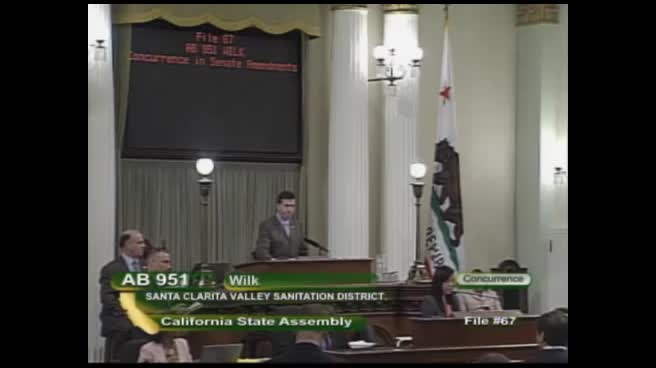 1MIN
Assembly Floor
 2MIN
Senate Floor
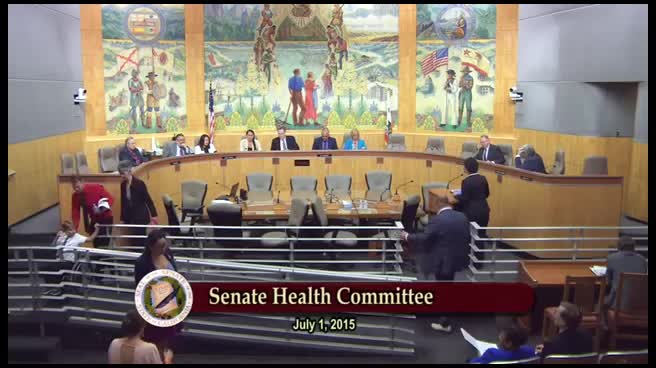 11MIN
Senate Standing Committee on Health
 1MIN
Assembly Floor
 58SEC
Assembly Floor
 5MIN
Assembly Standing Committee on Privacy and Consumer Protection
 2MIN
Assembly Standing Committee on Health
Bill Author

Bill Co-Author(s):