AB 1150: Energy: University of California and California State University partnership.
- Session Year: 2015-2016
- House: Assembly
- Latest Version Date: 2015-10-08
The Warren-Alquist State Energy Resources Conservation and Development Act establishes the State Energy Resources Conservation and Development Commission. The act requires the State Energy Resources Conservation and Development Commission, beginning November 1, 2003, and by November 1 of every odd year thereafter, to adopt an integrated energy policy report which includes an overview of major energy trends and issues facing the state, an assessment and forecast of system reliability, and the need for resource additions, efficiency, and conservation.
Under existing law, the Public Utilities Commission has regulatory authority over public utilities, including electrical corporations and gas corporations, as defined, while local publicly owned electric utilities, as defined, and local publicly owned gas utilities are under the direction of their governing board.
Existing law establishes the system of public postsecondary education in the state, which includes the University of California, administered by the Regents of the University of California, and the California State University, administered by the Trustees of the California State University.
This bill would request the Regents of the University of California, and require the California State University, to consider aligning their greenhouse gas reduction goals with those of the statewide institutional partnership between the California State University, the University of California, and investor-owned energy utilities and with those of the state, as specified. As a condition for participation in the expanded partnership, the bill would require the California State University and the University of California to report to each investor-owned energy utility or local publicly owned energy utility the annual reduction in emissions of greenhouse gases from the expanded partnership at all California State University and University of California facilities within that utilitys service territory.
The Warren-Alquist State Energy Resources Conservation and Development Act establishes the State Energy Resources Conservation and Development Commission. The act requires the State Energy Resources Conservation and Development Commission, beginning November 1, 2003, and by November 1 of every odd year thereafter, to adopt an integrated energy policy report which includes an overview of major energy trends and issues facing the state, an assessment and forecast of system reliability, and the need for resource additions, efficiency, and conservation.
Under existing law, the Public Utilities Commission has regulatory authority over public utilities, including electrical corporations and gas corporations, as defined, while local publicly owned electric utilities, as defined, and local publicly owned gas utilities are under the direction of their governing board.
Existing law establishes the system of public postsecondary education in the state, which includes the University of California, administered by the Regents of the University of California, and the California State University, administered by the Trustees of the California State University.
This bill would request the Regents of the University of California, and require the California State University, in consultation with the State Energy Resources Conservation and Development Commission and Public Utilities Commission, to expand the existing statewide institutional partnership with investor-owned energy utilities, as defined, to create an integrated and flexible program across all the California State University and University of California facilities, that accomplishes specified matter, including extending participation to the California State University and University of California facilities served by local publicly owned energy utilities that choose to participate. to consider aligning their greenhouse gas reduction goals with those of the statewide institutional partnership between the California State University, the University of California, and investor-owned energy utilities and with those of the state, as specified. As a condition for participation in the expanded partnership, the bill would require the California State University and the University of California to report to each investor-owned energy utility or local publicly owned energy utility the annual reduction in emissions of greenhouse gases from the expanded partnership at all California State University and University of California facilities within that utilitys service territory.
The Warren-Alquist State Energy Resources Conservation and Development Act establishes the State Energy Resources Conservation and Development Commission. The act requires the State Energy Resources Conservation and Development Commission, beginning November 1, 2003, and by November 1 of every odd year thereafter, to adopt an integrated energy policy report which includes an overview of major energy trends and issues facing the state, an assessment and forecast of system reliability, and the need for resource additions, efficiency, and conservation.
Under existing law, the Public Utilities Commission has regulatory authority over public utilities, including electrical corporations and gas corporations, as defined, while local publicly owned electric utilities, as defined, and local publicly owned gas utilities are under the direction of their governing board.
Existing law establishes the system of public postsecondary education in the state, which includes the University of California, administered by the Regents of the University of California, and the California State University, administered by the Trustees of the California State University.
This bill would request the Regents of the University of California, and require the California State University, in consultation with the State Energy Resources Conservation and Development Commission and Public Utilities Commission, to expand the existing statewide institutional partnership with investor-owned energy utilities, as defined, to create an integrated and flexible program across all the California State University and University of California facilities, that accomplishes specified matter, including extending participation to the California State University and University of California facilities served by local publicly owned energy utilities that choose to participate. As a condition for participation in the expanded partnership, the bill would require the California State University and the University of California to report to each investor-owned energy utility or local publicly owned energy utility the annual reduction in emissions of greenhouse gases from the expanded partnership at all California State University and University of California facilities within that utilitys service territory.
The Warren-Alquist State Energy Resources Conservation and Development Act establishes the State Energy Resources Conservation and Development Commission. The act requires the State Energy Resources Conservation and Development Commission, beginning November 1, 2003, and by November 1 of every odd year thereafter, to adopt an integrated energy policy report which includes an overview of major energy trends and issues facing the state, an assessment and forecast of system reliability, and the need for resource additions, efficiency, and conservation.
Under existing law, the Public Utilities Commission has regulatory authority over public utilities, including electrical corporations and gas corporations, as defined, while local publicly owned electric utilities, as defined, and local publicly owned gas utilities are under the direction of their governing board.
Existing law establishes the system of public postsecondary education in the state, which includes the University of California, administered by the Regents of the University of California, and the California State University, administered by the Trustees of the California State University.
This bill would require the State Energy Resources Conservation and Development Commission, in consultation with the Public Utilities Commission, the California State University, and the University of California, request the Regents of the University of California, and require the California State University, in consultation with the State Energy Resources Conservation and Development Commission and Public Utilities Commission, to expand the existing statewide institutional partnership between the California State University, the University of California, and with investor-owned energy utilities, as defined, to create an integrated and flexible program across all the California State University and University of California facilities, that accomplishes specified matter, including extending participation to the California State University and University of California facilities served by local publicly owned energy utilities that choose to participate. As a condition for participation in the expanded partnership, the bill would require the California State University and the University of California to report to the State Energy Resources Conservation and Development Commission each investor-owned energy utility or local publicly owned energy utility the annual reduction in emissions of greenhouse gases from the expanded partnership at all participating California State University and University of California facilities. facilities within that utilitys service territory.
The Warren-Alquist State Energy Resources Conservation and Development Act establishes the State Energy Resources Conservation and Development Commission. The act requires the State Energy Resources Conservation and Development Commission, beginning November 1, 2003, and by November 1 of every odd year thereafter, to adopt an integrated energy policy report which includes an overview of major energy trends and issues facing the state, an assessment and forecast of system reliability, and the need for resource additions, efficiency, and conservation.
Under existing law, the Public Utilities Commission has regulatory authority over public utilities, including electrical corporations and gas corporations, as defined, while local publicly owned electric utilities, as defined, and local publicly owned gas utilities are under the direction of their governing board.
Existing law establishes the system of public postsecondary education in the state, which includes the University of California, administered by the Regents of the University of California, and the California State University, administered by the Trustees of the California State University.
This bill would require the State Energy Resources Conservation and Development Commission, in consultation with the Public Utilities Commission Commission, the California State University, and the University of California, to expand the existing statewide institutional partnership between the California State University, the University of California California, and investor-owned energy utilities, as defined, to create an integrated and flexible program across all the California State University and University of California facilities, that accomplishes specified matter, including extending participation to the California State University and University of California facilities served by local publicly owned energy utilities that choose to participate. As a condition for participation in the expanded partnership, the bill would require the California State University and the University of California to report to the State Energy Resources Conservation and Development Commission the annual reduction in emissions of greenhouse gases from the expanded partnership at all participating California State University and University of California facilities.
The Warren-Alquist State Energy Resources Conservation and Development Act establishes the State Energy Resources Conservation and Development Commission. The act requires the State Energy Resources Conservation and Development Commission, beginning November 1, 2003, and by November 1 of every odd year thereafter, to adopt an integrated energy policy report which includes an overview of major energy trends and issues facing the state, an assessment and forecast of system reliability, and the need for resource additions, efficiency, and conservation.
Under existing law, the Public Utilities Commission has regulatory authority over public utilities, including electrical corporations and gas corporations, as defined, while local publicly owned electric utilities, as defined, and local publicly owned gas utilities are under the direction of their governing board.
This bill would require the State Energy Resources Conservation and Development Commission, in consultation with the Public Utilities Commission and the University of California, to expand the existing statewide institutional partnership between the University of California and investor-owned energy utilities, as defined, to create an integrated and flexible program across all University of California facilities, that accomplishes specified matter, including extending participation to University of California facilities served by local publicly owned energy utilities that choose to participate. As a condition for participation in the expanded partnership, the bill would require the University of California to report to the State Energy Resources Conservation and Development Commission the annual reduction in emissions of greenhouse gases from the expanded partnership at all participating University of California facilities.
The Legislature finds and declares all of the following:
(a)The University of California has committed to achieving carbon neutrality through aggressive measures to increase energy efficiency and develop renewable energy resources.
(b)Because of its size and subsequent required energy consumption, there are significant opportunities for reducing emissions of carbon dioxide and other greenhouse gases at University of California facilities.
(c)Collectively, the University of California has substantially contributed to the states energy efficiency goals by saving 373 million kilowatthours per year and 18,700,000 therms per year through 2014 as part of an institutional statewide partnership with investor-owned energy utilities established in 2004.
(d)Additional deep energy efficiency potential exists at University of California facilities. The identified potential deep energy efficiency projects could produce savings of 426,000,000 kilowatthours per year and 15,700,000 therms per year, equating to $59 million per year in utility cost savings.
(e)There is a need to expand the existing University of California institutional statewide partnership to capture carbon and reduce emissions of greenhouse gases and to ensure meaningful and reliable energy assessments, cost-effective energy efficiency improvements, and the incorporation of projects that are demonstrated to be cost effective on a carbon basis.
SEC. 2.Article 10 (commencing with Section 66090) is added to Chapter 2 of Part 40 of Division 5 of Title 3 of the Education Code, to read:10.University Energy Efficiency Partnership66090.(a)For purposes of this section, the following terms have the following meanings:
(1)Investor-owned energy utilities means the states three largest electrical corporations, as defined in Section 218 of the Public Utilities Code, and each gas corporation, as defined in Section 222 of the Public Utilities Code, of the state.
(2)Local publicly owned energy utility means a local publicly owned electric utility, as defined in Section 224.3 of the Public Utilities Code, or a local publicly owned gas utility.
(3)Partnership means the statewide institutional partnership between the California State University, the University of California, and investor-owned energy utilities.
(4)University means the University of California and the California State University.
(b)The Regents of the University of California are requested to, and the California State University shall, consider aligning their greenhouse gas reduction goals with those of the partnership and the state by doing all of the following:
(1)Expanding participation in the partnership to include the university facilities served by local publicly owned energy utilities that choose to participate, and seeking the assistance of the State Energy Resources Conservation and Development Commission in requesting the participation of those local publicly owned energy utilities.
(2)Evaluating activities that reduce greenhouse gas emissions and improve energy efficiency based upon adherence to the Public Utilities Commissions energy efficiency and savings protocols, if applicable, including, but not limited to, deep energy efficiency and eligible renewable energy resources, subject to applicable funding.
(3)Wherever feasible, utilizing whole-building, or whole-campus, meter-based verification.
(4)Developing an administrative framework that can be utilized by the partnership, to the extent allowable by the funding source, to allocate any future funding from the state or other sources for energy projects or projects for reducing greenhouse gas emissions.
(c)This section does not affect the eligibility of a university to receive resources from federal, state, and local government, or from public utilities or other sources through the partnership, and to leverage those resources.
(d)Funds associated with an investor-owned energy utility shall be used in compliance with Public Utilities Commission requirements at the university facilities within the service territory of the investor-owned energy utility.
(e)As a condition to participation in the expanded partnership, a university shall report to each investor-owned energy utility or local publicly owned energy utility the annual reduction in emissions of greenhouse gases from the expanded partnership at all university facilities within that utilitys service territory, by a mutually agreed upon date.
The Legislature finds and declares all of the following:
(a)The University of California has committed to achieving carbon neutrality through aggressive measures to increase energy efficiency and develop renewable energy resources.
(b)Because of its size and subsequent required energy consumption, there are significant opportunities for reducing emissions of carbon dioxide and other greenhouse gases at University of California facilities.
(c)Collectively, the University of California has substantially contributed to the states energy efficiency goals by saving 373 million kilowatthours per year and 18,700,000 therms per year through 2014 as part of an institutional statewide partnership with investor-owned energy utilities established in 2004.
(d)Additional deep energy efficiency potential exists at University of California facilities. The identified potential deep energy efficiency projects could produce savings of 426,000,000 kilowatthours per year and 15,700,000 therms per year, equating to $59 million per year in utility cost savings.
(e)There is a need to expand the existing University of California institutional statewide partnership to capture carbon and reduce emissions of greenhouse gases and to ensure meaningful and reliable energy assessments, cost-effective energy efficiency improvements, and the incorporation of projects that are demonstrated to be cost effective on a carbon basis.
SEC. 2.Article 10 (commencing with Section 66090) is added to Chapter 2 of Part 40 of Division 5 of Title 3 of the Education Code, to read:10.University Energy Efficiency Partnership66090.(a)For purposes of this section, the following terms have the following meanings:
(1)Investor-owned energy utilities means the states three largest electrical corporations, as defined in Section 218 of the Public Utilities Code, and each gas corporation, as defined in Section 222 of the Public Utilities Code, of the state.
(2)Local publicly owned energy utility means a local publicly owned electric utility, as defined in Section 224.3 of the Public Utilities Code, or a local publicly owned gas utility.
(3)Partnership means the statewide institutional partnership between the California State University, the University of California, and investor-owned energy utilities.
(4)University means the University of California and the California State University.
(b)The Regents of the University of California are requested to, and the California State University shall, consider aligning their greenhouse gas reduction goals with those of the partnership and the state by doing all of the following:
(1)Expanding participation in the partnership to include the university facilities served by local publicly owned energy utilities that choose to participate, and seeking the assistance of the commission State Energy Resources Conservation and Development Commission in requesting the participation of those local publicly owned energy utilities.
(2)Evaluating activities that reduce greenhouse gas emissions and improve energy efficiency based upon adherence to the Public Utilities Commissions energy efficiency and savings protocols, if applicable, including, but not limited to, deep energy efficiency and eligible renewable energy resources, subject to applicable funding.
(3)Wherever feasible, utilizing whole-building, or whole-campus, meter-based verification.
(4)Developing an administrative framework that can be utilized by the partnership, to the extent allowable by the funding source, to allocate any future funding from the state or other sources for energy projects or projects for reducing greenhouse gas emissions.
(c)This section does not affect the eligibility of a university to receive resources from federal, state, and local government, or from public utilities or other sources through the partnership, and to leverage those resources.
(d)Funds associated with an investor-owned energy utility shall be used in compliance with Public Utilities Commission requirements at the university facilities within the service territory of the investor-owned energy utility.
(e)As a condition to participation in the expanded partnership, a university shall report to each investor-owned energy utility or local publicly owned energy utility the annual reduction in emissions of greenhouse gases from the expanded partnership at all university facilities within that utilitys service territory, by a mutually agreed upon date.
The Legislature finds and declares all of the following:
(a)The University of California has committed to achieving carbon neutrality through aggressive measures to increase energy efficiency and develop renewable energy resources.
(b)Because of its size and subsequent required energy consumption, there are significant opportunities for reducing emissions of carbon dioxide and other greenhouse gases at University of California facilities.
(c)Collectively, the University of California has substantially contributed to the states energy efficiency goals by saving 373 million kilowatthours per year and 18,700,000 therms per year through 2014 as part of an institutional statewide partnership with investor-owned energy utilities established in 2004.
(d)Additional deep energy efficiency potential exists at University of California facilities. The identified potential deep energy efficiency projects could produce savings of 426,000,000 kilowatthours per year and 15,700,000 therms per year, equating to $59 million per year in utility cost savings.
(e)There is a need to expand the existing University of California institutional statewide partnership to capture carbon and reduce emissions of greenhouse gases and to ensure meaningful and reliable energy assessments, cost-effective energy efficiency improvements, and the incorporation of projects that are demonstrated to be cost effective on a carbon basis.
SEC. 2.Article 10 (commencing with Section 25404.5 66090) is added to Chapter 2 of Part 40 of Division 5 of Title 3 of the Public Resources Education Code, to read:10.University Energy Efficiency Partnership25404.5.66090.(a)For purposes of this section, the following terms have the following meanings:
(1)Investor-owned energy utilities means the states three largest electrical corporations, as defined in Section 218 of the Public Utilities Code, and each gas corporation, as defined in Section 222 of the Public Utilities Code, of the state.
(2)Local publicly owned energy utility means a local publicly owned electric utility, as defined in Section 224.3 of the Public Utilities Code, or a local publicly owned gas utility.
(3)Partnership means the statewide institutional partnership between the California State University, the University of California, and investor-owned energy utilities.
(4)University means the University of California and the California State University.
(b)The Regents of the University of California are requested to, and the California State University shall, in consultation with the commission and the Public Utilities Commission, expand the statewide institutional partnership with investor-owned energy utilities to create an integrated and flexible program across all the California State University and University of California facilities, that accomplishes consider aligning their greenhouse gas reduction goals with those of the partnership and the state by doing all of the following:
(1)Participation Expanding participation in the partnership is extended to California State University and University of California to include the university facilities served by local publicly owned energy utilities that choose to participate. The participate, and seeking the assistance of the commission shall request in requesting the participation of those local publicly owned energy utilities serving the California State University and the University of California. utilities.
(2)A project is evaluated Evaluating activities that reduce greenhouse gas emissions and improve energy efficiency based upon the projects adherence to the Public Utilities Commissions energy efficiency and savings protocols, and, secondarily, upon the projects effect in reducing emissions of greenhouse gases and the cost effectiveness in achieving those reductions, if applicable, including, but not limited to, deep energy efficiency and eligible renewable energy resources, subject to applicable funding.
(3)Wherever feasible, the partnership utilizes utilizing whole-building, or whole-campus, meter based verification in order to reduce costs associated with traditional field verification and engineering hand calculations. meter-based verification.
(4)Developing an administrative framework that can be utilized by the partnership, to the extent allowable by the funding source, to allocate any future funding from the state or other sources for energy projects or projects for reducing greenhouse gas emissions.
(c)The Public Utilities Commission and the commission shall authorize the existing partnership to accommodate the potential for multiple funding sources, and the partnerships existing administrative framework shall, subject to subdivision (e), be utilized to allocate any future funding from the state for energy projects or projects for reducing emissions of greenhouse gases.
(d)
(c)This section does not affect the eligibility of the California State University and the University of California a university to receive resources from federal, state, and local government, or from public utilities or other sources through the partnership, and to leverage those resources.
(e)
(d)Funds associated with an investor-owned energy utility shall be used only for projects that are in compliance with Public Utilities Commission requirements at the California State University and University of California university facilities within the service territory of the investor-owned energy utility.
(f)
(e)As a condition to participation in the expanded partnership, the California State University and the University of California a university shall report to each investor-owned energy utility or local publicly owned energy utility the annual reduction in emissions of greenhouse gases from the expanded partnership at all California State University and University of California university facilities within that utilitys service territory, by a mutually agreed upon date. When reporting the results of partnership projects, all savings calculations shall utilize a baseline reflecting the existing conditions prior to the upgrade.
The Legislature finds and declares all of the following:
(a)The University of California has committed to achieving carbon neutrality through aggressive measures to increase energy efficiency and develop renewable energy resources.
(b)Because of its size and subsequent required energy consumption, there are significant opportunities for reducing emissions of carbon dioxide and other greenhouse gases at University of California facilities.
(c)Collectively Collectively, the University of California has substantially contributed to the states energy efficiency goals by saving 373 million kilowatthours per year and 18,700,000 therms per year through 2014 as part of an institutional statewide partnership with investor-owned energy utilities established in 2004.
(d)Additional deep energy efficiency potential exists at University of California facilities. The identified potential deep energy efficiency projects could produce savings of 426,000,000 kilowatthours per year and 15,700,000 therms per year, equating to $59 million per year in utility cost savings.
(e)There is a need to expand the existing University of California institutional statewide partnership to capture carbon and reduce emissions of greenhouse gases and to ensure meaningful and reliable energy assessments, cost-effective energy efficiency improvements, and the incorporation of projects that are demonstrated to be cost effective on a carbon basis.
SEC. 2.Section 25404.5 is added to the Public Resources Code, to read:25404.5.(a)For purposes of this section, the following terms have the following meanings:
(1)Investor-owned energy utilities means the states three largest electrical corporations, as defined in Section 218 of the Public Utilities Code, and each gas corporation, as defined in Section 222 of the Public Utilities Code, of the state.
(2)Local publicly owned energy utility means a local publicly owned electric utility, as defined in Section 224.3 of the Public Utilities Code, or a local publicly owned gas utility.
(3)Partnership means the statewide institutional partnership between the California State University, the University of California, and investor-owned energy utilities.
(b)The Regents of the University of California are requested to, and the California State University shall, in consultation with the commission and the Public Utilities Commission, expand the statewide institutional partnership with investor-owned energy utilities to create an integrated and flexible program across all the California State University and University of California facilities, that accomplishes all of the following:
(1)Participation in the partnership is extended to California State University and University of California facilities served by local publicly owned energy utilities that choose to participate. The commission shall request the participation of those local publicly owned energy utilities serving the California State University and the University of California.
(2)A project is evaluated based upon the projects adherence to the Public Utilities Commissions energy efficiency and savings protocols, and, secondarily, upon the projects effect in reducing emissions of greenhouse gases and the cost effectiveness in achieving those reductions, including, but not limited to, deep energy efficiency and eligible renewable energy resources, subject to applicable funding.
(3)Wherever feasible, the partnership utilizes whole-building, or whole-campus, meter based verification in order to reduce costs associated with traditional field verification and engineering hand calculations.
(c)The Public Utilities Commission and the commission shall authorize the existing partnership to accommodate the potential for multiple funding sources, and the partnerships existing administrative framework shall, subject to subdivision (e), be utilized to allocate any future funding from the state for energy projects or projects for reducing emissions of greenhouse gases.
(d)This section does not affect the eligibility of the California State University and the University of California to receive resources from federal, state, and local government, or from public utilities or other sources through the partnership, and to leverage those resources.
(e)Funds associated with an investor-owned energy utility shall be used only for projects that are in compliance with Public Utilities Commission requirements at the California State University and University of California facilities within the service territory of the investor-owned energy utility.
(f)As a condition to participation in the expanded partnership, the California State University and the University of California shall report to each investor-owned energy utility or local publicly owned energy utility the annual reduction in emissions of greenhouse gases from the expanded partnership at all California State University and University of California facilities within that utilitys service territory, by a mutually agreed upon date. When reporting the results of partnership projects, all savings calculations shall utilize a baseline reflecting the existing conditions prior to the upgrade.
The Legislature finds and declares all of the following:
(a)The University of California has committed to achieving carbon neutrality through aggressive measures to increase energy efficiency and develop renewable energy resources.
(b)Because of its size and subsequent required energy consumption, there are significant opportunities for reducing emissions of carbon dioxide and other greenhouse gases at University of California facilities.
(c)Collectively the University of California has substantially contributed to the states energy efficiency goals by saving 373 million kilowatthours per year and 18,700,000 therms per year through 2014 as part of an institutional statewide partnership with investor-owned energy utilities established in 2004.
(d)Additional deep energy efficiency potential exists at University of California facilities. The identified potential deep energy efficiency projects could produce savings of 426,000,000 kilowatthours per year and 15,700,000 therms per year, equating to $59 million per year in utility cost savings.
(e)There is a need to expand the existing University of California institutional statewide partnership to capture carbon and reduce emissions of greenhouse gases and to ensure meaningful and reliable energy assessments, cost-effective energy efficiency improvements, and the incorporation of projects that are demonstrated to be cost effective on a carbon basis.
SEC. 2.Section 25404.5 is added to the Public Resources Code, to read:25404.5.(a)For purposes of this section, the following terms have the following meanings:
(1)Investor-owned energy utilities means the states three largest electrical corporations, as defined in Section 218 of the Public Utilities Code, and each gas corporation, as defined in Section 222 of the Public Utilities Code, of the state.
(2)Local publicly owned energy utility means a local publicly owned electric utility, as defined in Section 224.3 of the Public Utilities Code, or a local publicly owned gas utility.
(3)Partnership means the statewide institutional partnership between the California State University, the University of California, and investor-owned energy utilities.
(b)The commission, in consultation with the Public Utilities Commission, the California State University, and the University of California, shall The Regents of the University of California are requested to, and the California State University shall, in consultation with the commission and the Public Utilities Commission, expand the statewide institutional partnership between the California State University, the University of California, and with investor-owned energy utilities to create an integrated and flexible program across all the California State University and University of California facilities, that accomplishes all of the following:
(1)Participation in the partnership is extended to California State University and University of California facilities served by local publicly owned energy utilities that choose to participate. The commission shall collaborate with request the participation of those local publicly owned energy utilities serving the California State University and the University of California to ensure the participation of the California State University, the University of California, and local publicly owned energy utilities. California.
(2)A project is evaluated based upon the projects effect in reducing emissions of greenhouse gases and the cost effectiveness in achieving those reductions, including, but not limited to, deep energy efficiency and eligible renewable energy resources, subject to applicable funding.
(3)Wherever feasible, the partnership utilizes whole-building, or whole-campus, meter based verification in order to reduce costs associated with traditional field verification and engineering hand calculations.
(c)The Public Utilities Commission and the commission shall leverage authorize the existing partnership to allow flexibility and to accommodate the potential for multiple funding sources, and the partnerships existing administrative framework shall, subject to subdivision (e), be utilized to allocate any future funding from the state for energy projects or projects for reducing emissions of greenhouse gases.
(d)This section does not affect the eligibility of the California State University and the University of California to receive resources from federal, state, and local government, or from public utilities or other sources through the partnership, and to leverage those resources.
(e)Funds associated with an investor-owned energy utility shall be used only for projects that are in compliance with Public Utilities Commission requirements at the California State University and University of California facilities within the service territory of the investor-owned energy utility.
(f)As a condition to participation in the expanded partnership, the California State University and the University of California shall report to the commission each investor-owned energy utility or local publicly owned energy utility the annual reduction in emissions of greenhouse gases from the expanded partnership at all participating California State University and University of California facilities, facilities within that utilitys service territory, by a mutually agreed upon date. When reporting the results of partnership projects, all savings calculations shall utilize a baseline reflecting the existing conditions prior to the upgrade.
(g)The Public Utilities Commission and the commission, to the extent possible, shall utilize existing resources, administrative structures, and expertise in implementing this section.
The Legislature finds and declares all of the following:
(a)The University of California has committed to achieving carbon neutrality through aggressive measures to increase energy efficiency and develop renewable energy resources.
(b)Because of its size and subsequent required energy consumption, there are significant opportunities for reducing emissions of carbon dioxide and other greenhouse gases at University of California facilities.
(c)Collectively the University of California has substantially contributed to the states energy efficiency goals by saving 373 million kilowatthours per year and 18,700,000 therms per year through 2014 as part of an institutional statewide partnership with investor-owned energy utilities established in 2004.
(d)Additional deep energy efficiency potential exists at University of California facilities. The identified potential deep energy efficiency projects could produce savings of 426,000,000 kilowatthours per year and 15,700,000 therms per year, equating to $59 million per year in utility cost savings.
(e)There is a need to expand the existing University of California institutional statewide partnership to capture carbon and reduce emissions of greenhouse gases and to ensure meaningful and reliable energy assessments, cost-effective energy efficiency improvements, and the incorporation of projects that are demonstrated to be cost effective on a carbon basis.
SEC. 2.Section 25404.5 is added to the Public Resources Code, to read:25404.5.(a)For purposes of this section, the following terms have the following meanings:
(1)Investor-owned energy utilities means the states three largest electrical corporations, as defined in Section 218 of the Public Utilities Code, and each gas corporation, as defined in Section 222 of the Public Utilities Code, of the state.
(2)Local publicly owned energy utility means a local publicly owned electric utility, as defined in Section 224.3 of the Public Utilities Code, or a local publicly owned gas utility.
(3)Partnership means the statewide institutional partnership between the California State University, the University of California California, and investor-owned energy utilities.
(b)The commission, in consultation with the Public Utilities Commission Commission, the California State University, and the University of California, shall expand the statewide institutional partnership between the California State University, the University of California California, and investor-owned energy utilities to create an integrated and flexible program across all the California State University and University of California facilities, that accomplishes all of the following:
(1)Participation in the partnership is extended to California State University and University of California facilities served by local publicly owned energy utilities that choose to participate. The commission shall collaborate with those local publicly owned energy utilities serving the California State University and the University of California to ensure the participation of the California State University, the University of California California, and local publicly owned energy utilities.
(2)A project is evaluated based upon the projects effect in reducing emissions of greenhouse gases and the cost effectiveness in achieving those reductions, including, but not limited to, deep energy efficiency and eligible renewable energy resources, subject to applicable funding.
(3)Wherever feasible, the partnership utilizes whole-building, or whole-campus, meter based verification in order to reduce costs associated with traditional field verification and engineering hand calculations.
(c)The Public Utilities Commission and the commission shall leverage the existing partnership to allow flexibility and to accommodate the potential for multiple funding sources, and the partnerships existing administrative framework shall, subject to subdivision (e), be utilized to allocate any future funding from the state for energy projects or projects for reducing emissions of greenhouse gases.
(d)This section does not affect the eligibility of the California State University and the University of California to receive resources from federal, state, and local government, or from public utilities or other sources through the partnership, and to leverage those resources.
(e)Funds associated with an investor-owned energy utility shall be used only for projects that are in compliance with Public Utilities Commission requirements at the California State University and University of California facilities within the service territory of the investor-owned energy utility.
(f)As a condition to participation in the expanded partnership, the California State University and the University of California shall report to the commission the annual reduction in emissions of greenhouse gases from the expanded partnership at all participating California State University and University of California facilities, by a mutually agreed upon date. When reporting the results of partnership projects, all savings calculations shall utilize a baseline reflecting the existing conditions prior to the upgrade.
(g)The Public Utilities Commission and the commission, to the extent possible, shall utilize existing resources, administrative structures, and expertise in implementing this section.
The Legislature finds and declares all of the following:
(a)The University of California has committed to achieving carbon neutrality through aggressive measures to increase energy efficiency and develop renewable energy resources.
(b)Because of its size and subsequent required energy consumption, there are significant opportunities for reducing emissions of carbon dioxide and other greenhouse gases at University of California facilities.
(c)Collectively the University of California has substantially contributed to the states energy efficiency goals by saving 373 million kilowatthours per year and 18,700,000 therms per year through 2014 as part of an institutional statewide partnership with investor-owned energy utilities established in 2004.
(d)Additional deep energy efficiency potential exists at University of California facilities. The identified potential deep energy efficiency projects could produce savings of 426,000,000 kilowatthours per year and 15,700,000 therms per year, equating to $59 million per year in utility cost savings.
(e)There is a need to expand the existing University of California institutional statewide partnership to capture carbon and reduce emissions of greenhouse gases and to ensure meaningful and reliable energy assessments, cost-effective energy efficiency improvements, and the incorporation of projects that are demonstrated to be cost effective on a carbon basis.
SEC. 2.Section 25404.5 is added to the Public Resources Code, to read:25404.5.(a)For purposes of this section, the following terms have the following meanings:
(1)Investor-owned energy utilities means the states three largest electrical corporations, as defined in Section 218 of the Public Utilities Code, and each gas corporation, as defined in Section 222 of the Public Utilities Code, of the state.
(2)Local publicly owned energy utility means a local publicly owned electric utility, as defined in Section 224.3 of the Public Utilities Code, or a local publicly owned gas utility.
(3)Partnership means the statewide institutional partnership between the University of California and investor-owned energy utilities.
(b)The commission, in consultation with the Public Utilities Commission and the University of California, shall expand the statewide institutional partnership between the University of California and investor-owned energy utilities to create an integrated and flexible program across all University of California facilities, that accomplishes all of the following:
(1)Participation in the partnership is extended to University of California facilities served by local publicly owned energy utilities that choose to participate. The commission shall collaborate with those local publicly owned energy utilities serving the University of California to ensure the participation of the University of California and local publicly owned energy utilities.
(2)A project is evaluated based upon the projects effect in reducing emissions of greenhouse gases and the cost effectiveness in achieving those reductions, including, but not limited to, deep energy efficiency and eligible renewable energy resources, subject to applicable funding.
(3)Wherever feasible, the partnership utilizes whole-building, or whole-campus, meter based verification in order to reduce costs associated with traditional field verification and engineering hand calculations.
(c)The Public Utilities Commission and the commission shall leverage the existing partnership to allow flexibility and to accommodate the potential for multiple funding sources, and the partnerships existing administrative framework shall, subject to subdivision (e), be utilized to allocate any future funding from the state for energy projects or projects for reducing emissions of greenhouse gases.
(d)This section does not affect the eligibility of the University of California to receive resources from federal, state, and local government, or from public utilities or other sources through the partnership, and to leverage those resources.
(e)Funds associated with an investor-owned energy utility shall be used only for projects that are in compliance with Public Utilities Commission requirements at University of California facilities within the service territory of the investor-owned energy utility.
(f)As a condition to participation in the expanded partnership, the University of California shall report to the commission the annual reduction in emissions of greenhouse gases from the expanded partnership at all participating University of California facilities, by a mutually agreed upon date. When reporting the results of partnership projects, all savings calculations shall utilize a baseline reflecting the existing conditions prior to the upgrade.
(g)The Public Utilities Commission and the commission, to the extent possible, shall utilize existing resources, administrative structures, and expertise in implementing this section.
|
Date
|
Status
|
|---|---|
| Sep 8, 2015 | Read third time. Passed. Ordered to the Assembly. (Ayes 40. Noes 0. Page 2592.). |
| Jul 9, 2015 | Read second time and amended. Re-referred to Com. on APPR. |
| Aug 17, 2015 | In committee: Referred to APPR. suspense file. |
| Aug 27, 2015 | From committee: Amend, and do pass as amended. (Ayes 7. Noes 0.) (August 27). |
| Aug 31, 2015 | Read second time and amended. Ordered to third reading. |
| Sep 3, 2015 | Read third time and amended. Ordered to second reading. |
| Sep 4, 2015 | Read second time. Ordered to third reading. |
| Sep 8, 2015 | In Assembly. Concurrence in Senate amendments pending. May be considered on or after September 10 pursuant to Assembly Rule 77. |
| Sep 8, 2015 | Read third time. Passed. Ordered to the Assembly. |
| Jul 8, 2015 | From committee: Amend, and do pass as amended and re-refer to Com. on APPR. (Ayes 10. Noes 0.) (June 30). |
| Sep 9, 2015 | Assembly Rule 77 suspended. |
| Sep 9, 2015 | Assembly Rule 77 suspended. (Page 2990.) |
| Sep 9, 2015 | Senate amendments concurred in. To Engrossing and Enrolling. |
| Sep 9, 2015 | Senate amendments concurred in. To Engrossing and Enrolling. (Ayes 79. Noes 0. Page 3003.). |
| Sep 9, 2015 | Senate amendments concurred in. To Engrossing and Enrolling. (Ayes 79. Noes 0.). |
| Sep 17, 2015 | Enrolled and presented to the Governor at 4 p.m. |
| Oct 8, 2015 | Approved by the Governor. |
| Oct 8, 2015 | Chaptered by Secretary of State - Chapter 597, Statutes of 2015. |
| May 18, 2015 | Re-referred to Com. on APPR. |
| Mar 1, 2015 | From printer. May be heard in committee March 31. |
| Mar 2, 2015 | Read first time. |
| Mar 19, 2015 | Referred to Coms. on U. & C. and HIGHER ED. |
| Apr 21, 2015 | From committee: Do pass and re-refer to Com. on HIGHER ED. (Ayes 14. Noes 0.) (April 20). Re-referred to Com. on HIGHER ED. |
| Apr 29, 2015 | From committee: Do pass and re-refer to Com. on APPR. (Ayes 12. Noes 0.) (April 28). Re-referred to Com. on APPR. |
| May 5, 2015 | From committee chair, with author's amendments: Amend, and re-refer to Com. on APPR. Read second time and amended. |
| May 6, 2015 | Re-referred to Com. on APPR. |
| May 14, 2015 | From committee chair, with author's amendments: Amend, and re-refer to Com. on APPR. Read second time and amended. |
| Feb 27, 2015 | Introduced. To print. |
| May 20, 2015 | From committee: Do pass. To Consent Calendar. (Ayes 15. Noes 0.) (May 20). |
| May 21, 2015 | Read second time. Ordered to Consent Calendar. |
| May 26, 2015 | In Senate. Read first time. To Com. on RLS. for assignment. |
| May 26, 2015 | Read third time. Passed. Ordered to the Senate. |
| May 26, 2015 | Read third time. Passed. Ordered to the Senate. (Ayes 76. Noes 0. Page 1595.) |
| Jun 4, 2015 | Referred to Coms. on ED. and E., U., & C. |
| Jun 17, 2015 | From committee: Do pass and re-refer to Com. on E., U., & C. with recommendation: To Consent Calendar. (Ayes 8. Noes 0.) (June 17). Re-referred to Com. on E., U., & C. |
|
Date
|
Description
|
Location
|
Votes
|
|
|---|---|---|---|---|
| Sep 9, 2015 | AB 1150 LEVINE Concurrence in Senate Amendments | Assembly Floor |
Passed |
|
| Sep 8, 2015 | Assembly 3rd Reading AB1150 Levine By Fuller | Senate Floor |
Passed |
|
| Aug 27, 2015 | Do pass as amended | Senate Standing Committee on Appropriations |
Passed |
|
| Aug 17, 2015 | Placed on suspense file | Senate Standing Committee on Appropriations |
Passed |
|
| Jun 30, 2015 | Do pass as amended, but first amend, and re-refer to the Committee on [Appropriations] | Senate Standing Committee on Energy, Utilities and Communications |
Passed |
|
| Jun 17, 2015 | Do pass, but first be re-referred to the Committee on [Energy, Utilities and Communications] with the recommendation: To Consent Calendar | Senate Standing Committee on Education |
Passed |
|
| May 26, 2015 | AB 1150 LEVINE Consent Calendar Second Day Regular Session | Assembly Floor |
Passed |
|
| May 20, 2015 | Do pass. To Consent Calendar. | Assembly Standing Committee on Appropriations |
Passed |
|
| Apr 28, 2015 | Do pass and be re-referred to the Committee on [Appropriations] | Assembly Standing Committee on Higher Education |
Passed |
|
| Apr 20, 2015 | Do pass and be re-referred to the Committee on [Higher Education] | Assembly Standing Committee on Utilities and Commerce |
Passed |
This list shows positions taken on this bill by organizations on the date displayed, which is linked to the original source.
Positions by individuals are not included.
|
Organization
|
Position
|
Date
|
|---|---|---|
| California State University | ** Support | Sep 8, 2015 |
| Sierra Club | ** Support | Sep 8, 2015 |
| u None received. | ** Against | Jun 30, 2015 |
| University of California | ** Support | Sep 8, 2015 |
AB 1150
Page 2
CONCURRENCE IN SENATE AMENDMENTS
AB 1150
(Levine)
As Amended
Majority vote
ASSEMBLY: |
76-0 |
(May 26, 2015) |
SENATE: |
40-0 |
(September 8, 2015) |
Original Committee Reference: U. & C.
SUMMARY: Requires the University of California (UC) and the California State University (CSU), in consultation with the California Energy Commission (CEC) and the Public Utilities Commission (CPUC), to expand their existing institutional partnership with investor-owned utilities (IOUs) and to include those publicly-owned utilities (POUs) requested by the CEC to participate and who choose to participate.
The bill also requires UC and CSU to report to the applicable utilities the annual reduction in emissions of greenhouse gases as a result of projects undertaken under the expanded partnership.
The Senate amendments:
Move the language to the Education Code.
Delete the requirements on CSU and instead encourage both the UC and CSU to expand their partnership.
Delete the requirement for the CPUC and the CEC to authorize the existing partnership.
Delete the requirement that savings calculations utilize a baseline reflecting existing conditions.
Clarifying changes.
EXISTING LAW:
Requires POUs to encourage energy savings and greenhouse gas emission reductions in existing residential and nonresidential buildings, while taking into consideration the effect of the program on rates, reliability, and financial resources. (Public Utilities Code Section 9503)
Requires the CEC to adopt an integrated energy policy report which includes an overview of major energy trends and issues facing the state, and the need for resource additions, efficiency, and conservation. (Public Resources Code Sections 25228 and 25300)
Directs the CEC and the CPUC, each in consultation with Air Resources Board (ARB), to reevaluate and continue, modify, or replace the greenhouse gas emission performance standard, once an enforceable standard is in place, for POUs and load-serving entities, respectively. (Public Utilities Code Sections 8340, et seq.)
FISCAL EFFECT: According to Senate Appropriations, as amended, minor and absorbable costs to the Public Utilities Reimbursement Account (special) to consult with the UC and CSU on their partnership.
COMMENTS:
Author’s Statement: The University of California has been at the forefront of our state's energy efficiency goals. Over the past 10 years, UC has collectively saved 373 million kilowatt-hours per year and over 18 million therms per year through the Energy Efficiency Partnership Program. This bill will build upon those achievements and help UC achieve greater energy efficiency by expanding the existing Partnership Program between IOUs to include POUs that are willing to participate.
Current Energy Efficiency Partnerships: UC currently participates in a program called the Energy Efficiency Partnership with California's large IOUs, such as Pacific Gas & Electric, Southern California Edison, and San Diego Gas and Electric. This Partnership was established in 2004 as a framework for providing energy efficiency resources for UC and CSU campuses. UC has received a total of $63.3 million in incentives from utility ratepayers as part of the program. The program currently engages in retrofit projects, monitoring-based commissioning, and training and education.
The Need for Expansion: In November of 2013, UC President Janet Napolitano announced the Carbon Neutrality Initiative, which commits the UC to emitting net zero greenhouse gases from its buildings and car fleet by 2025. This bill is in line with that goal, and expands on current practices to achieve it.
If POUs have not participated in UC's Energy Efficiency Partnerships, they could do so if they wanted to. POUs have independent governing boards who make these decisions. While current law does not give the UC the ability to partner with POUs in the Energy Efficiency Partnership Program, nothing in statute prohibits UC from doing partnerships with POUs.
The locations of UC campuses served by POUs are: Los Angeles and Riverside, and it is unknown whether these UC campuses are served by those local POUs, Southern California Edison, or both.
There are few campuses located within the service areas of POUs. Therefore there may be little benefit to UC to enter into such partnerships.
In addition, UC recently became its own electricity service provider, which is in addition to the existing direct access contracts that UC has entered into for electricity services.
If a campus is not served by a POU, it could be difficult for a POU to justify providing ratepayer-funded incentives to that campus. Similarly, if a campus is not served by an IOU, there would be no justification for providing ratepayer funds from IOU customers to that campus.
Analysis Prepared by: Sue Kateley / U. & C. / (916) 319-2083 FN: 0002238
AB 1150
Page 5
|
Office of Senate Floor Analyses (916) 651-1520 Fax: (916) 327-4478 |
THIRD READING
Bill No: AB 1150
Amended: 9/3/15 in Senate
SENATE EDUCATION COMMITTEE: 8-0, 6/17/15
AYES: Liu, Runner, Block, Hancock, Leyva, Monning, Pan, Vidak
NO VOTE RECORDED: Mendoza
SENATE ENERGY, U. & C. COMMITTEE: 10-0, 6/30/15
AYES: Hueso, Fuller, Cannella, Hertzberg, Hill, Lara, Leyva, McGuire, Morrell, Pavley
NO VOTE RECORDED: Wolk
SENATE APPROPRIATIONS COMMITTEE: 7-0, 8/27/15
AYES: Lara, Bates, Beall, Hill, Leyva, Mendoza, Nielsen
ASSEMBLY FLOOR: 76-0, 5/26/15 (Consent) - See last page for vote
SUBJECT: Energy: University of California and California State University partnership
DIGEST: This bill requests the University of California (UC) and requires the California State University (CSU), to consider aligning greenhouse gas reduction goals with those of the existing statewide institutional partnership with investor-owned utilities (IOU) to include facilities served by publicly owned utilities (POU) that choose to participate.
Senate Floor Amendments of 9/3/15 correct a drafting error clarifying that the “commission,” means the State Energy Resources Conservation and Development Commission.
Existing law:
Establishes the UC as a public trust, administered by the Regents and provides that statutes related to UC are applicable only to the extent that the UC Regents make such provisions applicable. (Constitution of California, Article IX, Section 9)
Confers upon the CSU Trustees the powers, duties, and functions with respect to the management, administration, and control of the CSU system. (Education Code § 66606)
Requires the California Energy Commission (CEC) to develop and administer a series of programs to provide cost-effective energy efficiency and conservation contracts, grants, and loans to eligible entities. Additional financial assistance is available through IOUs, as required by the PUC. (Public Resources Code § 25410-25474)
Requires POUs to encourage energy savings and greenhouse gas emissions reductions in existing residential and non-residential buildings, while taking into consideration the effect of the program on rates, reliability, and financially resources. (PUC § 9503)
This bill:
Requests the UC and requires the CSU to do all of the following:
Expand participation in the statewide institutional partnership with the IOU for purposes of aligning greenhouse gas reduction goals, to include university facilities served by POUs that choose to participate and seeking the assistance of the State Energy Resources Conservation and Development Commission in requesting the participation of those local POUs.
Evaluate activities that reduce greenhouse gas emission and improve energy, as specified.
Utilize whole building or whole campus meter-based verification
Develop an administrative framework for in order to accommodate for multiple funding sources, as specified.
Requires UC and CSU to report to the applicable POU or IOU the annual reduction in emissions of greenhouse gases as a result of the project performed under the expanded partnership.
Requires funds associated with an investor-owned energy utility to be used only for projects that comply with CPUC requirements at facilities located within its service territory.
Specifies, that the provision of this bill does not affect UC and CSU eligibility to receive or leverage resources from various entities.
Makes a variety of legislative findings and declarations regarding UC’s commitment to achieving carbon neutrality and developing renewable energy resources through various measures including expanding its statewide partnerships.
Defines various terms for the purposes of this bill.
Comments
Need for the bill? According to the author, current law limits the UC’s and CSU’s energy efficient program known as the Energy Efficiency Partnership, to those campuses located within an IOU service territory. This approach limits a POU served campus from participating in the program. Additionally, the program’s current structure is outdated and the provisions in this bill provide for advanced and long-lasting “deep” energy efficient projects that will ultimately deliver ongoing savings and assist UC and CSU in meeting their energy goals.
This bill codifies and streamlines the expanded partnership program, proposes a new metric of carbon reduction for evaluating energy efficiency projects and updates the existing administrative framework related to energy efficiency programs to accommodate future funds.
Energy Efficiency Partnership. In 2004, the UC and the CSU each established partnerships with California’s four largest IOUs (Pacific Gas and Electric, San Diego Gas and Electric, Southern California Edison and Southern California Gas Company) to provide an energy management program and improve the energy performance of existing buildings. As a result of this partnership, UC has achieved an annual savings of 373 million kilowatt-hours (electricity), and 18.7 million therms-per-year (gas) through 2014. In total, the UC has received $63.6 million in incentives from utilities.
However, six CSU and UC campuses are unable to participate in the Energy Efficiency Partnership given that they are located within a POU service territory. Those campuses include the UC Los Angeles, UC Riverside, UC Davis Medical Center, and CSU at Sacramento, Northridge, and Los Angeles. A key difference between a public and investor owned utility is that IOU are required to use a portion of ratepayer funds for projects that comply with California Public Utilities Commission (CPUC) requirements. In contrast, POU’s are independent of the CPUC requirements and are regulated by locally elected boards or city councils each with their own methods for reaching energy saving goals. According to the UC, the absence of the partnership incentives for POU served campuses has limited the ability of some campuses to implement energy efficiency projects.
The provisions in this bill aim to help position UC and CSU campuses located within the territories of POU’s to receive incentives generated as a result of the partnership by inviting POU’s to participate. This bill specifies that the campuses may seek the assistance of the State Energy Resources Conservation and Development Commission to encourage the involvement of those local publicly owned energy utilities.
Prior Legislation
AB 1959 (Skinner, 2014) would have required the CEC to develop a financial assistance program for energy efficiency projects on the UC and CSU campuses. The bill died in the Senate Appropriations Committee.
FISCAL EFFECT: Appropriation: No Fiscal Com.: Yes Local: No
According to the Senate Appropriations Committee, there are minor and absorbable costs to the Public Utilities Reimbursement Account (special) to consult with the UC and CSU on their partnership.
California State University
Sierra Club
University of California
None received
ASSEMBLY FLOOR: 76-0, 5/26/15
AYES: Achadjian, Alejo, Travis Allen, Baker, Bigelow, Bonilla, Bonta, Brough, Brown, Burke, Calderon, Campos, Chang, Chau, Chiu, Chu, Cooley, Cooper, Dababneh, Dahle, Daly, Dodd, Eggman, Frazier, Beth Gaines, Gallagher, Cristina Garcia, Eduardo Garcia, Gatto, Gipson, Gomez, Gonzalez, Gordon, Gray, Grove, Hadley, Roger Hernández, Holden, Irwin, Jones, Jones-Sawyer, Kim, Lackey, Levine, Linder, Lopez, Low, Maienschein, Mayes, McCarty, Medina, Melendez, Mullin, Nazarian, Obernolte, O'Donnell, Olsen, Patterson, Perea, Quirk, Rendon, Ridley-Thomas, Rodriguez, Salas, Santiago, Steinorth, Mark Stone, Thurmond, Ting, Wagner, Waldron, Weber, Wilk, Williams, Wood, Atkins
NO VOTE RECORDED: Bloom, Chávez, Harper, Mathis
Prepared by: Olgalilia Ramirez / ED. / (916) 651-4105
9/4/15 19:12:05
**** END ****
AB 1150
Page 5
|
Office of Senate Floor Analyses (916) 651-1520 Fax: (916) 327-4478 |
THIRD READING
Bill No: AB 1150
Amended: 8/31/15 in Senate
SENATE EDUCATION COMMITTEE: 8-0, 6/17/15
AYES: Liu, Runner, Block, Hancock, Leyva, Monning, Pan, Vidak
NO VOTE RECORDED: Mendoza
SENATE ENERGY, U. & C. COMMITTEE: 10-0, 6/30/15
AYES: Hueso, Fuller, Cannella, Hertzberg, Hill, Lara, Leyva, McGuire, Morrell, Pavley
NO VOTE RECORDED: Wolk
SENATE APPROPRIATIONS COMMITTEE: 7-0, 8/27/15
AYES: Lara, Bates, Beall, Hill, Leyva, Mendoza, Nielsen
ASSEMBLY FLOOR: 76-0, 5/26/15 (Consent) - See last page for vote
SUBJECT: Energy: University of California and California State University partnership
DIGEST: This bill requests the University of California (UC) and requires the California State University (CSU), to consider aligning greenhouse gas reduction goals with those of the existing statewide institutional partnership with investor-owned utilities (IOU) to include facilities served by publicly owned utilities (POU) that choose to participate.
Existing law:
Establishes the UC as a public trust, administered by the Regents and provides that statutes related to UC are applicable only to the extent that the UC Regents make such provisions applicable. (Constitution of California, Article IX, Section 9)
Confers upon the CSU Trustees the powers, duties, and functions with respect to the management, administration, and control of the CSU system. (Education Code § 66606)
Requires the California Energy Commission (CEC) to develop and administer a series of programs to provide cost-effective energy efficiency and conservation contracts, grants, and loans to eligible entities. Additional financial assistance is available through IOUs, as required by the PUC. (Public Resources Code § 25410-25474)
Requires POUs to encourage energy savings and greenhouse gas emissions reductions in existing residential and non-residential buildings, while taking into consideration the effect of the program on rates, reliability, and financially resources. (PUC § 9503)
This bill:
Requests the UC and requires the CSU to do all of the following:
Expand participation in the statewide institutional partnership with the IOU, known as the Energy Efficiency Partnership, to include university facilities served by POUs that choose to participate, as specified, for purposes of aligning greenhouse gas reduction goals.
Evaluate activities that reduce greenhouse gas emission and improve energy, as specified.
Utilize whole building or whole campus meter-based verification
Develop an administrative framework for in order to accommodate for multiple funding sources, as specified.
Requires UC and CSU to report to the applicable POU or IOU the annual reduction in emissions of greenhouse gases as a result of the project performed under the expanded partnership.
Requires funds associated with an investor-owned energy utility to be used only for projects that comply with CPUC requirements at facilities located within its service territory.
Specifies, that the provision of this bill does not affect UC and CSU eligibility to receive or leverage resources from various entities.
Makes a variety of legislative findings and declarations regarding UC’s commitment to achieving carbon neutrality and developing renewable energy resources through various measures including expanding its statewide partnerships.
Defines various terms for the purposes of this bill.
Comments
Need for the bill? According to the author, current law limits the UC’s and CSU’s energy efficient program known as the Energy Efficiency Partnership, to those campuses located within an IOU service territory. This approach limits a POU served campus from participating in the program. Additionally, the program’s current structure is outdated and the provisions in this bill provide for advanced and long-lasting “deep” energy efficient projects that will ultimately deliver ongoing savings and assist UC and CSU in meeting their energy goals.
This bill codifies and streamlines the expanded partnership program, proposes a new metric of carbon reduction for evaluating energy efficiency projects and updates the existing administrative framework related to energy efficiency programs to accommodate future funds.
Energy Efficiency Partnership. In 2004 the UC and CSU each established partnerships with California’s four largest IOUs (Pacific Gas and Electric, San Diego Gas and Electric, Southern California Edison and Southern California Gas Company) to provide an energy management program and improve the energy performance of existing buildings. As a result of this partnership, UC has achieved an annual savings of 373 million kilowatt-hours (electricity), and 18.7 million therms-per-year (gas) through 2014. In total, the UC has received $63.6 million in incentives from utilities.
However, six CSU and UC campuses are unable to participate in the Energy Efficiency Partnership given that they are located within a POU service territory. Those campuses include the UC Los Angeles, UC Riverside, UC Davis Medical Center, and CSU at Sacramento, Northridge, and Los Angeles. A key difference between a public and investor owned utility is that IOU are required to use a portion of ratepayer funds for projects that comply with California Public Utilities Commission (CPUC) requirements. In contrast, POU’s are independent of the CPUC requirements and are regulated by locally elected boards or city councils each with their own methods for reaching energy saving goals. According to the UC, the absence of the partnership incentives for POU served campuses has limited the ability of some campuses to implement energy efficiency projects.
The provisions in this bill aims to help position UC and CSU campuses located within the territories of POU’s to receive incentives generated as a result of the partnership by inviting POU’s to participate if they so choose.
Prior Legislation
AB 1959 (Skinner, 2014) would have required the CEC to develop a financial assistance program for energy efficiency projects on the UC and CSU campuses. The bill died in the Senate Appropriations Committee.
FISCAL EFFECT: Appropriation: No Fiscal Com.: Yes Local: No
According to the Senate Appropriations Committee, minor and absorbable costs to the Public Utilities Reimbursement Account (special) to consult with the UC and CSU on their partnership.
California State University
Sierra Club
University of California
OPPOSITION: (Verified 8/31/15)
None received
ASSEMBLY FLOOR: 76-0, 5/26/15
AYES: Achadjian, Alejo, Travis Allen, Baker, Bigelow, Bonilla, Bonta, Brough, Brown, Burke, Calderon, Campos, Chang, Chau, Chiu, Chu, Cooley, Cooper, Dababneh, Dahle, Daly, Dodd, Eggman, Frazier, Beth Gaines, Gallagher, Cristina Garcia, Eduardo Garcia, Gatto, Gipson, Gomez, Gonzalez, Gordon, Gray, Grove, Hadley, Roger Hernández, Holden, Irwin, Jones, Jones-Sawyer, Kim, Lackey, Levine, Linder, Lopez, Low, Maienschein, Mayes, McCarty, Medina, Melendez, Mullin, Nazarian, Obernolte, O'Donnell, Olsen, Patterson, Perea, Quirk, Rendon, Ridley-Thomas, Rodriguez, Salas, Santiago, Steinorth, Mark Stone, Thurmond, Ting, Wagner, Waldron, Weber, Wilk, Williams, Wood, Atkins
NO VOTE RECORDED: Bloom, Chávez, Harper, Mathis
Prepared by: Olgalilia Ramirez / ED. / (916) 651-4105
8/31/15 17:14:47
**** END ****
AB 1150 (Levine) Page 0 of 1
SENATE COMMITTEE ON APPROPRIATIONS
Senator Ricardo Lara, Chair
2015 - 2016 Regular Session
AB 1150 (Levine) - Energy: University of California and California State University partnership.
|
|
Version: July 9, 2015 |
Policy Vote: ED. 8 - 0, E., U., & C. 10 - 0 |
Urgency: No |
Mandate: No |
Hearing Date: August 27, 2015 |
Consultant: Marie Liu |
*********** ANALYSIS ADDENDUM – SUSPENSE FILE ***********
The following information is revised to reflect amendments
adopted by the committee on August 27, 2015
Bill Summary:
AB 1150 would require the California State University (CSU) and request the Regents of the University of California (UC) to expand its statewide institutional partnership with invest-owned energy utilities (IOUs) as specified.
Fiscal Impact:
Minor and absorbable costs to the Public Utilities Reimbursement Account (special) to consult with the UC and CSU on their partnership.
Author Amendments:
Move the language to the Education Code
Delete the requirements on CSU and instead encourage both the UC and CSU to expand their partnership
Delete the requirement for the CPUC and the CEC to authorize the existing partnership
Delete the requirement that savings calculations utilize a baseline reflecting existing conditions
Clarifying changes
-- END --
AB 1150 (Levine) Page 3 of 3
SENATE COMMITTEE ON APPROPRIATIONS
Senator Ricardo Lara, Chair
2015 - 2016 Regular Session
AB 1150 (Levine) - Energy: University of California and California State University partnership
|
|
Version: July 9, 2015 |
Policy Vote: ED. 8 - 0, E., U., & C. 10 - 0 |
Urgency: No |
Mandate: No |
Hearing Date: August 17, 2015 |
Consultant: Marie Liu |
This bill meets the criteria for referral to the Suspense File.
Bill Summary:
AB 1150 would require the California State University (CSU) and request the Regents of the University of California (UC) to expand its statewide institutional partnership with invest-owned energy utilities (IOUs) as specified.
Fiscal Impact:
Cost pressures to the General Fund and various special funds that fund energy efficiency and GHG emission reduction programs.
Minor and absorbable administrative cost to the General Fund to the UC and CSU to expand the statewide institutional partnership as specified in the bill
Minor and absorbable costs to the Energy Resources Control Account (General Fund) to consult with UC and CSU on their partnership.
Minor and absorbable costs to the Public Utilities Reimbursement Account (special) to consult with the UC and CSU on their partnership.
Background:
The California Public Utilities Commission (CPUC) regulates all aspects of IOUs including overseeing public benefit programs and ensuring rates are reasonable. Existing law requires the CPUC to identify all potentially-achievable and cost-effective electricity and natural gas efficiency savings in order to establish energy efficiency procurement targets and ratepayer-funded programs for electrical and gas corporations. The responsibility to meeting this target is distributed proportionately amongst the state’s investor-owned utilities (IOUs), who administer the energy efficiency programs. These programs are paid by ratepayer funds that are approved by the CPUC. Currently, the IOUs are collectively approved to collect approximately $1 billion for various energy efficiency measures programs including financial incentives, loans, and rebates for installing energy efficient appliances, lighting, windows, HVAC systems, whole-house retrofits, and specialized programs aimed at a variety of sectors.
POUs are governed by their locally elected boards from the service territory they represent. They are not regulated by the CPUC, though it does have reporting responsibilities to the California Energy Commission (CEC) for compliance with the Renewable Energy Portfolio Standard requirements. Many of the statutory requirements for IOUs do not apply to POUs.
In 2004, the UC and CSU each established partnerships with California’s four largest IOUs to provide an energy management program called the “Energy Efficiency Partnership” in order to improve the energy performance of existing buildings. However, six CSU and UC campuses were unable to participate in the partnership given that they are within the service territory of a POU. Monies that IOUs receive from ratepayers for energy efficiency projects must be spent in that IOU’s territory.
Proposed Law:
This bill would require the CSU and encourage the UC, in consultation with the CPUC and CEC, to expand the statewide institutional partnership with IOUs to include POUs that choose to participate. The CEC would be required to request POUs participate in this partnership.
This bill would also require that projects under this partnership be evaluated upon the CPUC’s energy efficiency and savings protocols and, secondarily, upon the project’s effect in reducing emissions of greenhouse gases (GHG). The partnership would be required to utilize whole-building or whole-campus, meter based verification where feasible.
The CPUC and the CEC would be required to “authorize” the existing partnership to “accommodate the potential for multiple funding sources.”
The bill would require that any future funding from the state for energy efficiency or GHG-reducing projects be allocated according to the partnership’s existing administrative framework.
The bill would also require the CSU and the UC to report annually to each IOU and participating POU on the annual reduction in emissions of GHG from the expanded partnership within that utility’s jurisdiction. Energy savings shall utilize a baseline reflecting the existing conditions prior to the efficiency project.
Staff Comments:
The UC and CSU report that they would have minor and absorbable costs to expand their existing partnership with the IOUs to POUs that chose to participate. Staff notes that there is nothing in existing law that limits POUs participation in this program.
The bill would require the CPUC and the CEC to “authorize” the existing partnership to accommodate the potential for multiple funding sources. The author’s intent in this provision is unclear as neither the CPUC or the CEC have the authority to review the existing partnership. If the CPUC or the CEC interpreted this bill as giving them such authority, it is unclear the basis on which they would be reviewing the partnership or what benefit such an authorization would have. Staff recommends that the bill be amended to remove the requirement that the CPUC and CEC “authorize” the existing partnership as it will not actually lead to any action of either entity, nor would such an authorization make project eligible for potential funding sources. The CEC and CPUC have not estimated any costs with this section as they assume they would not be taking any action as a result of this bill.
By suggesting that the partnership be authorized to accommodate the potential for multiple funding sources, this bill appears to be intending to increase the number of energy efficiency and GHG emission reduction that would be eligible for funding under various programs, creating cost pressures on those programs.
This bill would also allow all savings calculations to utilize a baseline reflecting the existing conditions prior to the upgrade. However, current CPUC protocols require that the energy savings usually be calculated against the energy usage that the building would have if it met current building code standards for energy efficiency. Thus, allowing the savings calculations to be based on existing conditions instead of current building code standards, allows for the project to get credit for larger, perhaps substantially larger, savings. If the projects are calculated with a different baseline compared to other projects within the IOU’s or POU’s jurisdiction, partnership projects would receive a higher priority for funding. Staff notes that this provision conflicts with an earlier requirement in the bill that the project adhere to the CPUC’s energy efficiency and savings protocols, which do not always use existing conditions as the baseline for calculating savings. Staff recommends that this bill be amended to remove this inconsistency.
-- END --
AB 1150 (Levine) Page 5 of 5
SENATE COMMITTEE ON ENERGY, UTILITIES AND COMMUNICATIONS
Senator Ben Hueso, Chair
2015 - 2016 Regular
Bill No: AB 1150 Hearing Date: 6/30/2015
Author: |
Levine |
||
Version: |
5/14/2015 As Amended |
||
Urgency: |
No |
Fiscal: |
Yes |
Consultant: |
Nidia Bautista |
||
SUBJECT: Energy: University of California and California State University partnership
DIGEST: This bill requests the Regents of the University of California (UC) and requires the California State University (CSU), in consultation with the California Energy Commission (CEC) and the California Public Utilities Commission (CPUC), to expand their partnership with the investor-owned utilities (IOU) to include those publicly-owned utilities (POU) that choose to participate.
ANALYSIS:
Existing law:
Establishes the UC as a public trust, administered by the Regents and provides that statutes related to UC are applicable only to the extent that the UC Regents make such provisions applicable. (California Constitution, Article IX, §9)
Confers upon the CSU Trustees the powers, duties, and functions with respect to the management, administration, and control of the CSU system. (Education Code §66606)
Requires the CEC to develop and administer a series of programs to provide cost-effective energy efficiency and conservation contracts, grants, and loans to eligible entities. Additional financial assistance is available through IOUs, as required by the CPUC. (Public Resources Code §25410-25474)
Requires POUs to encourage energy savings and greenhouse gas (GHG) emissions reductions in existing residential and non-residential buildings, while taking into consideration the effect of the program on rates, reliability, and financial resources. (Public Utilities Code §9503)
This bill:
1) Requests the Regents of the UC and requires the CSU, in consultation with the CEC and the CPUC, to expand their statewide institutional partnership with the IOUs to include those POU that chose to participate.
2) Requires UC and CSU campuses, as a condition of participation, to report to their respective utilities the annual reduction of GHG emissions from the partnership.
Background
In 2004, the UC and the CSU each established partnerships with California’s four largest IOUs (Pacific Gas & Electric, San Diego Gas & Electric, Southern California Edison and Southern California Gas) to provide an energy management program and improve the energy performance of existing buildings. As a result of this partnership, UC has achieved an annual savings of 373 million kilowatt-hours (electricity), and 18.7 million therms-per-year (gas) through 2014. In total, the UC has received $63.6 million in incentives from utilities. However, six CSU and UC campuses are unable to participate in the Energy Efficiency Partnership (Partnership) given that they are located within the service territory of a POU. Those campuses include: UC at Los Angeles, UC at Riverside, UC Davis Medical Center, and California State University campuses at Los Angeles, Northridge and Sacramento.
State energy loading order. The state's energy "loading order" guides the state's energy policies and decisions according to the following order of priority: (1) decreasing electricity demand by increasing energy efficiency; (2) responding to energy demand by reducing energy usage during peak hours; (3) meeting new energy generation needs with renewable resources; and (4) meeting new energy generation needs with clean fossil-fueled generation. This policy has been adopted by the energy agencies - the CEC and CPUC - and its principles guide all energy programs.
Investor-Owned Utilities vs. Publicly-Owned Utilities. CPUC regulates all aspects of IOUs including overseeing public benefit programs and ensuring rates are reasonable. POUs are governed by their locally elected boards from the service territory they represent. POUs represent roughly a quarter of the state’s electricity through 35, mostly small and mid-sized local agencies. While IOUs are required to use a portion of ratepayer funds for projects that comply with CPUC requirements, the CPUC can not make such requirements of POUs.
UC adopts carbon neutrality goal. In November 2013, UC President Janet Napolitano announced the Carbon Neutrality Initiative, which commits UC to emitting net zero GHG from its buildings and vehicle fleet by 2025. UC has noted that it will need bold steps to expand its energy efficiency efforts and dramatically increase its use of energy from renewable resources.
Greenhouse Gas Reduction Funds (GGRF). The state budget adopted in June 2014 included an allocation of $20 million to the CEC from the GGRF in order to finance energy efficiency retrofits and clean energy projects in state buildings, including the UC and CSU campuses. The Governor’s proposed budget for the 2015-16 fiscal year includes funding for the same purpose to the Department of General Services (DGS). According to the CEC, the initial funding from the 2014-15 budget has not been awarded in anticipation of the Administration’s desire to move the funding to DGS. The Legislature and Governor have held off allocations of this budget cycle’s allocation of funding from the GGRF until later this session.
Is this bill necessary? POUs are not currently prevented from working with their respective CSU and UC campuses to address energy efficiency. This bill will request, but not require, POUs to participate in the Partnership. Therefore, POUs will need to decide whether incentive programs for these campuses are to the benefit of the ratepayers in their respective territories.
Energy Savings vs. Greenhouse Gas Emissions. This bill alters the goal of the existing Partnership from specific energy savings requirements based on project type to focus on GHG emissions reductions. With the passage of the Global Warming Solutions Act of 2006 (AB 32, Nuñez/Pavley), California adopted a goal to reduce GHG emissions to 1990 levels by 2020. In his 2015 State-of-the-State speech, Governor Brown announced the need to further advance California’s efforts towards a 2030 and 2050 target. However, as it relates to energy efficiency, a project that provides the most energy savings may or may not provide the most GHG emissions reductions. The CPUC provides guidance and requirements over the IOUs public benefit programs, including energy efficiency programs, such as the Partnership. The goal of reducing GHG emissions is clearly of importance to the state. However, a given project’s energy savings is still important factor in calculating and prioritizing among energy efficiency projects.
In order to ensure consistency with CPUC efforts, the author and committee may wish to amend the bill to include the goal of energy savings achieved in a manner consistent with the CPUC’s evaluation protocols for IOU ratepayer programs.
Prior/Related Legislation
AB 1959 (Skinner, 2014) would have required the CEC to develop a financial assistance program for energy efficiency projects on the UC and CSU campuses. The bill died in the Senate Committee on Appropriations.
SB 35 (Pavley, 2013) would have established the Higher Education Energy Solutions Fund to fund energy retrofits at UCs, CSUs and California Community Colleges (CCC) and required each entity to establish a system-wide energy action plan. The bill was subsequently amended and chaptered with unrelated language.
AB 29 (Williams, 2013) would have allocated $152 million in five consecutive fiscal years to the CEC to administer grants, loans, or other financial assistance for the UC, CSU, and CCC to reduce energy demand and consumption. The bill was held in Assembly Committee on Utilities and Commerce.
FISCAL EFFECT: Appropriation: No Fiscal Com.: Yes Local: No
PRIOR VOTES :
Senate Education Committee (8-0)
Assembly Floor (76-0)
Assembly Appropriations Committee (15-0)
Assembly Higher Education Committee (12-0)
SUPPORT:
University of California (source)
California State University
Sierra Club California
OPPOSITION:
None received
ARGUMENTS IN SUPPORT: According to the UC, the sponsor of the bill: “Under AB 1150, UC facilities served by POUs will be able to participate in the partnership program, provided that the partnership remains in compliance with existing CPUC requirements for IOU ratepayer resources. AB 1150 enters the expanded partnership program into statute and establishes clear roles for all parties involved. This formalization will break down silos between the state’s energy agencies, producing significant efficiencies across all participating UC programs and facilitating the exchange of information among our campuses.”
-- END --
AB 1150 (Levine) Page 3 of 3
SENATE COMMITTEE ON EDUCATION
Senator Carol Liu, Chair
2015 - 2016 Regular
Bill No: AB 1150
Author: |
Levine |
||
Version: |
May 14, 2015 Hearing Date: June 17, 2015 |
||
Urgency: |
No |
Fiscal: |
Yes |
Consultant: |
Olgalilia Ramirez |
||
Subject: Energy: University of California and California State University partnership
NOTE: This bill has been referred to the Committee on Education and the Committee on Energy, Utilities and Communications. A "do pass" motion should include referral to the Committee on Energy, Utilities and Communications.
SUMMARY
This bill requests the University of California (UC) and requires the California State University (CSU), in consultation with the California Energy Commission (CEC) and the California Public Utilities Commission (CPUC), to expand their partnership with the investor-owned utilities (IOU) to include those publicly owned utilities (POU) that choose to participate.
BACKGROUND
Existing law:
Establishes the UC as a public trust, administered by the Regents and provides that statutes related to UC are applicable only to the extent that the UC Regents make such provisions applicable. (Constitution of California, Article IX, Section 9)
Confers upon the CSU Trustees the powers, duties, and functions with respect to the management, administration, and control of the CSU system.
(Education Code § 66606)
Requires the CEC to develop and administer a series of programs to provide cost-effective energy efficiency and conservation contracts, grants, and loans to eligible entities. Additional financial assistance is available through IOUs, as required by the PUC. (Public Resources Code § 25410-25474)
Requires POUs to encourage energy savings and greenhouse gas emissions reductions in existing residential and non-residential buildings, while taking into consideration the effect of the program on rates, reliability, and financially resources. (PUC § 9503)
ANALYSIS
This bill:
Requests the University of California (UC) and requires the California State University (CSU), in consultation with the California Energy Commission (CEC) and the California Public Utilities Commission (CPUC), to do all of the following:
Expand their partnership with the investor-owned utilities (IOU), known as the Energy Efficiency Partnership, to include those publicly owned utilities (POU) that choose to participate.
Create integrated and flexible programs across all the CSU and UC facilities.
Evaluate projects based on their effect in reducing emissions of greenhouse gases and the cost effectiveness in achieving those reductions, as specified.
Requires the use of meter based verification in order to reduce costs and streamlines the existing administrative framework related to energy projects in order to accommodate for multiple funding sources, as specified.
Requires UC and CSU to report to the applicable utilities their annual reduction in emissions of greenhouse gases as a result of the project performed under the expanded partnership.
Requires funds associated with an investor-owned energy utility to be used only for projects that comply with CPUC requirements at facilities located within its service territory.
Makes a variety of Legislative findings and declarations regarding UC’s commitment to achieving carbon neutrality and developing renewable energy resources through various measures including expanding its statewide partnerships.
Specifies, that the provision of this bill does not affect UC and CSU eligibility to receive or leverage resources from various entities.
Defines various terms for the purposes of this bill.
STAFF COMMENTS
Need for the bill: According to the author, current law limits the UC’s and CSU’s energy efficient program known as the Energy Efficiency Partnership, to those campuses located within an IOU service territory. This approach limits a POU served campus from participating in the program. Additionally, the program’s current structure is outdated and the provisions in this bill provide for advanced and long-lasting “deep” energy efficient projects that will ultimately deliver ongoing savings and assist UC and CSU in meeting their energy goals.
This bill codifies and streamlines the expanded partnership program, proposes a new metric of carbon reduction for evaluating energy efficiency projects and updates the existing administrative framework related to energy efficiency programs to accommodate future funds.
Energy Efficiency Partnership: In 2004 the University of California (UC) and the California State University (CSU) each established partnerships with California’s four largest IOUs (Pacific Gas and Electric, San Diego Gas and Electric, Southern California Edison and Southern California Gas Company) to provide an energy management program and improve the energy performance of existing buildings. As a result of this partnership, UC has achieved an annual savings of 373 million kilowatt-hours (electricity), and 18.7 million therms-per-year (gas) through 2014. In total, the UC has received $63.6 million in incentives from utilities.
However, six CSU and UC campuses are unable to participate in the Energy Efficiency Partnership given that they are located within a publicly owned utilities (POU) service territory. Those campuses include the University of California at Los Angeles, University of California at Riverside, UC Davis Medical Center, and California State University at Sacramento, Northridge, and Los Angeles. A key difference between a public and investor owned utility is that investor-owned utilities (IOU) are required to use a portion of ratepayer funds for projects that comply with California Public Utilities Commission (CPUC) requirements. In contrast, POU’s are independent of the CPUC requirements and are regulated by locally elected boards or city councils each with their own methods for reaching energy saving goals. According to the UC, the absence of the partnership incentives for POU served campuses has limited the ability of some campuses to implement energy efficiency projects.
This bill would help position UC and CSU campuses located within the territories of POU’s to receive incentives generated as a result of the partnership by inviting POU’s to participate if they so choose. It is unclear if there are implications of publicly-owned utilities participating in a partnership with investor-owned utilities. This issue can be explored in the next committee.
Prior Legislation
AB 1959 (Skinner, 2014) would have required the California Energy Commission (CEC) to develop a financial assistance program for energy efficiency projects on the UC and CSU campuses. This bill died in the Senate Appropriations Committee.
SUPPORT
Sierra Club California
University of California
OPPOSITION
None received.
-- END --
AB 1150
Page 1
Date of Hearing: May 20, 2015
ASSEMBLY COMMITTEE ON APPROPRIATIONS
Jimmy Gomez, Chair
AB 1150
(Levine) – As Amended May 14, 2015
Policy Committee: |
Utilities and Commerce |
Vote: |
14 - 0 |
|
Higher Education |
|
12 - 0 |
|
|
|
|
Urgency: No State Mandated Local Program: No Reimbursable: No
SUMMARY:
This bill requires the University of California (UC) and the California State University (CSU), in consultation with the California Energy Commission (CEC) and the Public Utilities Commission (PUC), to expand their partnership with the investor-owned utilities and to include those publicly-owned utilities requested by the CEC to participate and choose to participate.
The bill also requires UC and CSU to report to the applicable utilities the annual reduction in emissions of greenhouse gases as a result project undertaken under the expanded partnership.
FISCAL EFFECT:
To the extent expansion of these partnerships provides opportunities for UC and CSU campuses to undertake energy efficiency measures in the territories of the publicly-owned utilities, the segments will realize ongoing cost savings. Any administrative costs to UC or CSU and to the CEC will be minor and absorbable.
COMMENTS:
Background and Purpose. According to the author, UC and CSU currently participate in the Energy Efficiency Partnership with California's large investor-owned utilities (IOUs). This Partnership was established in 2004 as a framework for providing energy efficiency resources for UC and CSU campuses. UC has received a total of $63.6 million in incentives from utilities as part of the program, and has saved more than 265 million kilowatt-hours/year and 14.4 million therms/year.
This bill will allow those UC and CSU campuses not located within the territories of the IOUs—UCLA, UC Riverside, and the UC Davis Medical Center and the CSUs in Los Angeles, Northridge, Sacramento, and Stanislaus—to participate in this program.
Analysis Prepared by: Chuck Nicol / APPR. / (916) 319-2081
AB 1150
Page 3
Date of Hearing: April 28, 2015
ASSEMBLY COMMITTEE ON HIGHER EDUCATION
Jose Medina, Chair
AB 1150
(Levine) – As Introduced February 27, 2015
[Note: This bill is doubled referred. On April 20, 2015, this bill was heard and approved by a vote of 14-0 in the Assembly Committee on Utilities and Commerce.]
SUBJECT: Energy: University of California partnership
SUMMARY: Expands the existing Energy Efficiency Partnership Program between the University of California (UC) and investor-owned utilities to include publicly owned utilities that are willing to participate in the program. Specifically, this bill:
Establishes the following findings and declarations:
UC has committed to achieving carbon neutrality through aggressive measures to increase energy efficiency and develop renewable energy resources.
Because of its size and subsequent required energy consumption, there are significant opportunities for reducing emissions of carbon dioxide and other greenhouse gases at UC facilities.
Collectively UC has substantially contributed to the state’s energy efficiency goals by saving 373 million kilowatthours per year and 18,700,000 therms per year through 2014 as part of an institutional statewide partnership with investor-owned energy utilities established in 2004.
Additional deep energy efficiency potential exists at UC facilities. The identified potential deep energy efficiency projects could produce savings of 426,000,000 kilowatthours per year and 15,700,000 therms per year, equating to $59 million per year in utility cost savings.
There is a need to expand the existing UC institutional statewide partnership to capture carbon and reduce emissions of greenhouse gases and to ensure meaningful and reliable energy assessments, cost-effective energy efficiency improvements, and the incorporation of projects that are demonstrated to be cost effective on a carbon basis.
Requires the California Energy Commission (CEC) to expand existing partnerships to create an integrated and flexible energy efficiency program across all UC campuses.
Requires UC to report to the CEC the annual reduction in emissions of greenhouse gases (GHG) as a result of the expanded partnership.
Requires UC to evaluate projects based on their effect in reducing emissions of greenhouse gases and the cost effectiveness in achieving those reductions.
Requires the California Public Utilities Commission (CPUC) and the CEC to leverage their existing partnership to allow flexibility and to accommodate the potential for multiple funding sources.
EXISTING LAW: Establishes UC as a public trust and confers the full powers of the UC upon the UC Regents. The Constitution establishes that the UC is subject to legislative control only to the degree necessary to ensure the security of its funds and compliance with the terms of its endowments. Judicial decisions have held that there are three additional areas in which there may be limited legislative intrusion into university operations: authority over the appropriation of state moneys; exercise of the general police power to provide for the public health, safety and welfare; and, legislation on matters of general statewide concern not involving internal university affairs. (Constitution of California, Article IX, Section 9)
FISCAL EFFECT: Unknown
COMMENTS: Purpose of this bill. According to the author, UC currently participates in the Energy Efficiency Partnership with California's large investor-owned utilities (IOUs) such as Pacific Gas & Electric, Southern California Edison and San Diego Gas and Electric. This Partnership was established in 2004 as a framework for providing energy efficiency resources for UC and CSU campuses. UC has received a total of $63.6 million in incentives from utilities as part of the program, and has saved more than 265 million kWh/year and 14.4 million therms/year, substantially contributing to the State’s energy efficiency goals.
According to the author, in the ten years since the program’s inception, the structure of the partnership has not grown or evolved to account for changing realities within California’s energy environment. The current approach limits energy efficiency programs to only those campuses located within IOU service territory, and continues to bases funding levels on cost-effectiveness calculations that favor easy energy efficiency upgrades. This practice limits UC’s ability to obtain additional resources for advanced, long lasting energy efficiency projects that are more costly and complex, but ultimately deliver greater savings.
According to the author, this bill expands the existing Energy Efficiency Partnership Program between the UC and IOUs to include publicly owned utilities who are willing to participate, requires the UC to utilize a new metric of carbon reduction for the evaluation of future energy efficiency projects, and updates UC’s existing administrative framework related to energy efficiency programs to accommodate potential funds from new revenue sources.
Arguments in support. UC is the sponsor of this bill, which seeks to allow UC to expand its successful statewide institutional partnership with IOUs, creating an integrated and flexible energy efficiency program across all UC facilities and reducing emission of greenhouse gases. UC estimates that savings from the expanded partnership, as detailed in this bill, could be in the millions of dollars for UC. Of note, UC is not requesting state funding through the proposed legislation, but instead seeking to establish a framework and policy that will enable UC to utilize future funding in the most efficient and cost effective manner.
REGISTERED SUPPORT / OPPOSITION:
Support
University of California (sponsor)
Opposition
None on File
Analysis Prepared by: Laura Metune / HIGHER ED. / (916) 319-3960
AB 1150
Page 3
Date of Hearing: April 20, 2015
ASSEMBLY COMMITTEE ON UTILITIES AND COMMERCE
Anthony Rendon, Chair
AB 1150
(Levine) – As Introduced February 27, 2015
SUBJECT: Energy: University of California partnership
SUMMARY: This bill expands the existing Energy Efficiency Partnership Program between the University of California (UC) and investor-owned utilities to include publicly owned utilities that are willing to participate in the program. Specifically, this bill:
Requires the California Energy Commission (CEC) to expand existing partnerships to create an integrated and flexible energy efficiency program across all University of California (UC) campuses.
Requires UC to report to the CEC the annual reduction in emissions of greenhouse gases (GHG) as a result of the expanded partnership.
Requires UC to evaluate projects based on their effect in reducing emissions of greenhouse gases and the cost effectiveness in achieving those reductions.
Requires the California Public Utilities Commission (CPUC) and the CEC to leverage their existing partnership to allow flexibility and to accommodate the potential for multiple funding sources.
EXISTING LAW:
Requires Publicly Owned Utilities (POUs) to encourage energy savings and greenhouse gas emission reductions in existing residential and nonresidential buildings, while taking into consideration the effect of the program on rates, reliability, and financial resources. (Public Utilities Code Section 9503)
Requires the CEC to adopt an integrated energy policy report which includes an overview of major energy trends and issues facing the state, and the need for resource additions, efficiency, and conservation. (Public Resources Code Sections 25228 and 25300)
Directs the CEC and the CPUC, each in consultation with Air Resources Board (ARB), to reevaluate and continue, modify, or replace the GHG emission performance standard, once an enforceable standard is in place, for Public Owned Utilities (POU) and load-serving entities, respectively. (Public Utilities Code Sections 8340 et seq.)
FISCAL EFFECT: Unknown.
COMMENTS:
Author’s Statement: The University of California has been at the forefront of our state’s energy efficiency goals. Over the past ten years, UC has collectively saved 373 million kilowatt-hours per year and over 18 million therms per year through the Energy Efficiency Partnership Program. AB 1150 will build upon those achievements and help UC achieve greater energy efficiency by expanding the existing Partnership Program between investor-owned utilities to include publicly owned utilities that are willing to participate. Furthermore, this bill makes progress towards UC’s commitment to becoming carbon neutral by 2025 by requiring UC to utilize a new metric of carbon reduction for the evaluation of future energy efficiency projects.
Success of current Energy Efficiency Partnerships: UC currently participates in a program called the Energy Efficiency Partnership with California’s large investor-owned utilities (IOUs) such as Pacific Gas & Electric, Southern California Edison, and San Diego Gas and Electric. This Partnership was established in 2004 as a framework for providing energy efficiency resources for UC and CSU campuses. UC has received a total of $63.3 million in incentives from utility ratepayers as part of the program, and has saved more than 265 million kWh/year and 14.4 therms/year, substantially contributing to the State’s energy efficiency goals. The program currently engages in retrofit projects, monitoring based commissioning, and training and education.
The Need for Expansion: In November of 2013, UC President Janet Napolitano announced the Carbon Neutrality Initiative, which commits the UC to emitting net zero greenhouse gasses from its buildings and car fleet by 2025. AB 1150 is in line with that goal, and expands on current practices to achieve it.
If POUs have not participated in UC's Energy Efficiency Partnerships, they could do so if they wanted to. POUs have independent Governing Boards who make these decisions. While current law does not give the UC the ability to partner with Public Owned Utilities (POUs) in the Energy Efficiency Partnership Program nothing in statute prohibits UC from doing partnerships with POUs.
The locations of UC campuses where there are POUs are: Los Angeles and Riverside and it is unknown whether these UC campuses are served by those local POUS, Southern California Edison, or both.
There are few campuses located within the service areas of POUs. Therefore there may be little benefit to UC to enter into such partnerships.
In addition, UC recently became its own electricity service provider, which is in addition to the existing direct access contracts that UC has entered into for electricity services.
If a campus is not served by a POU it could be difficult for a POU to justify providing ratepayer funded incentives to that campus. Similarly, if a campus is not served by an IOU would have difficult justifying providing ratepayer funds to that campus.
Double referral. This bill is double referred to the Assembly Committee on Higher Education.
REGISTERED SUPPORT / OPPOSITION:
Support
University of California (Sponsor)
Opposition
None on file.
Analysis Prepared by: Allegra Roth / U. & C. / (916) 319-2083
Discussed in Hearing
 50SEC
Assembly Floor
 1MIN
Senate Floor
 43SEC
Senate Standing Committee on Appropriations
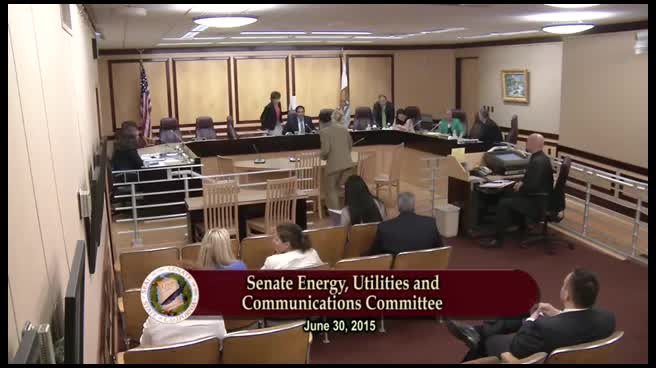 5MIN
Senate Standing Committee on Energy, Utilities and Communications
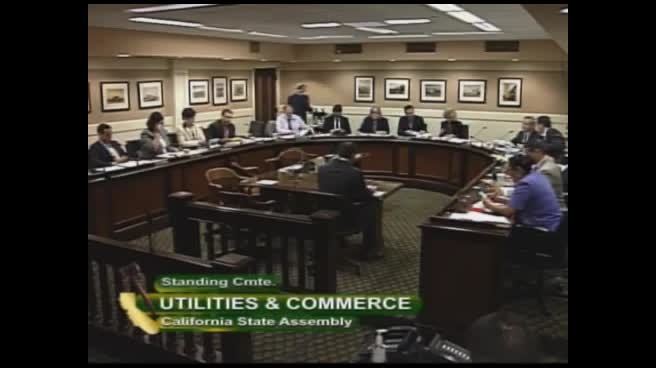 3MIN
Assembly Standing Committee on Utilities and Commerce
Bill Author

Bill Co-Author(s):