AB 1153: School accountability: local control and accountability plans: posting: evaluation rubrics.
- Session Year: 2015-2016
- House: Assembly
- Latest Version Date: 2015-04-20
Existing law required, requires, on or before July 1, 2014, the governing boards of school districts and county boards of education to adopt a local control and accountability plan using a state template adopted by the State Board of Education. Existing law requires the local control and accountability plan to include, among other things, a description of annual goals for all pupils and specified subgroups of pupils to be achieved for each state priority, as specified, and a description of the specific actions the school district or county superintendent of schools will take to achieve those goals. Existing law requires the state board, on or before October 1, 2015, to adopt evaluation rubrics to, for purposes of, among other things, assist assisting a school district, county office of education, or charter school in evaluating its strengths, weaknesses, and areas that require improvement.
This bill would require, on or before January 31, 2017, the state board to consider a revision to the template to include a section or appendix sufficient to monitor actual progress on certain outcomes.
Existing law requires governing boards of school districts and county boards of education to annually adopt or revise local control and accountability plans that align with the annual budget and contain specified elements. Existing law requires superintendents the superintendent of a school districts district and a county superintendents superintendent of schools to post on the Internet Web site of his or her school districts district or county offices office of education, as appropriate, applicable, the local control and accountability plans plan approved by the governing board of the school district or the county board of education, as appropriate, applicable, and any updates or revisions to the local control and accountability plans plan approved by the appropriate applicable governing bodies. Existing law also requires the Superintendent of Public Instruction to post links to all local control and accountability plans approved by the governing boards of school districts and county boards of education.
This bill would additionally require school districts, districts and county superintendents of schools, and the Superintendent schools to post their respective populated evaluation rubric data rubric on their respective Internet Web sites, except as specified. The bill also would require the Superintendent to post the evaluation rubrics adopted by the state board to its Internet Web site. By imposing additional duties on school district and county office of education officials, the bill would impose a state-mandated local program.
The California Constitution requires the state to reimburse local agencies and school districts for certain costs mandated by the state. Statutory provisions establish procedures for making that reimbursement.
This bill would provide that, if the Commission on State Mandates determines that the bill contains costs mandated by the state, reimbursement for those costs shall be made pursuant to these statutory provisions.
Existing law required, on or before July 1, 2014, the governing boards of school districts and county boards of education to adopt a local control and accountability plan using a state template adopted by the State Board of Education. Existing law requires the local control and accountability plan to include, among other things, a description of annual goals for all pupils and specified subgroups of pupils to be achieved for each state priority, as specified, and a description of the specific actions the school district or county superintendent of schools will take to achieve those goals. Existing law requires the state board, on or before October 1, 2015, to adopt evaluation rubrics to, among other things, assist a school district, county office of education, or charter school in evaluating its strengths, weaknesses, and areas that require improvement.
Existing law requires governing boards of school districts and county boards of education to annually adopt or revise local control and accountability plans that align with the annual budget and contain specified elements. Existing law requires superintendents of school districts and county superintendents of schools to post on the Internet Web site of school districts or county offices of education, as appropriate, local control and accountability plans approved by the governing board of the school district or the county board of education, as appropriate, and any updates or revisions to local control and accountability plans approved by the appropriate governing bodies. Existing law also requires the Superintendent of Public Instruction to post links to all local control and accountability plans approved by the governing boards of school districts and county boards of education.
This bill would additionally require school districts, county superintendents of schools, and the Superintendent to post evaluation rubric data on their respective Internet Web sites, as specified. The bill also would require the Superintendent to post the evaluation rubrics adopted by the state board to its Internet Web site. By imposing additional duties on school district and county office of education officials, the bill would impose a state-mandated local program.
The California Constitution requires the state to reimburse local agencies and school districts for certain costs mandated by the state. Statutory provisions establish procedures for making that reimbursement.
This bill would provide that, if the Commission on State Mandates determines that the bill contains costs mandated by the state, reimbursement for those costs shall be made pursuant to these statutory provisions.
(a)On or before March 31, 2014, the state board shall adopt templates for the following purposes:
(1)For use by school districts to meet the requirements of Sections 52060 to 52063, inclusive.
(2)For use by county superintendents of schools to meet the requirements of Sections 52066 to 52069, inclusive.
(3)For use by charter schools to meet the requirements of Section 47606.5.
(b)The templates developed by the state board shall allow a school district, county superintendent of schools, or charter school to complete a single local control and accountability plan to meet the requirements of this article and the requirements of the federal No Child Left Behind Act of 2001 related to local educational agency plans pursuant to Section 1112 of Subpart 1 of Part A of Title I of Public Law 107-110. The state board shall also take steps to minimize duplication of effort at the local level to the greatest extent possible. The template shall include guidance for school districts, county superintendents of schools, and charter schools to report both of the following:
(1)A listing and description of expenditures for the 201415 fiscal year, and each fiscal year thereafter, implementing the specific actions included in the local control and accountability plan.
(2)A listing and description of expenditures for the 201415 fiscal year, and each fiscal year thereafter, that will serve the pupils to whom one or more of the definitions in Section 42238.01 apply and pupils redesignated as fluent English proficient.
(c)If possible, the templates identified in paragraph (2) of subdivision (a) for use by county superintendents of schools shall allow a county superintendent of schools to develop a single local control and accountability plan that would also satisfy the requirements of Section 48926.
(d)The state board shall adopt the template pursuant to the requirements of the Administrative Procedure Act (Chapter 3.5 (commencing with Section 11340) of Part 1 of Division 3 of Title 2 of the Government Code). The state board may adopt emergency regulations for purposes of implementing this section. The adoption of emergency regulations shall be deemed an emergency and necessary for the immediate preservation of the public peace, health, safety, or general welfare.
(e)Notwithstanding subdivision (d), the state board may adopt the template in accordance with the requirements of the Bagley-Keene Open Meeting Act (Article 9 (commencing with Section 11120) of Chapter 1 of Part 1 of Division 3 of Title 2 of the Government Code). When adopting the template pursuant to the requirements of the Bagley-Keene Open Meeting Act, the state board shall present the template at a regular meeting and may only take action to adopt the template at a subsequent regular meeting. This subdivision shall become inoperative on January 31, 2018.
(f)Revisions to a template or evaluation rubric shall be approved by the state board by January 31 before the fiscal year during which the template or evaluation rubric is to be used by a school district, county superintendent of schools, or charter school.
(g)On or before January 31, 2017, the state board shall consider a revision to the template to include a section or appendix sufficient to monitor actual progress on outcomes adopted pursuant to subdivision (c) of Section 52064.5.
(g)
(h)The adoption of a template or evaluation rubric by the state board shall not create a requirement for a governing board of a school district, a county board of education, or a governing body of a charter school to submit a local control and accountability plan to the state board, unless otherwise required by federal law. The Superintendent shall not require a local control and accountability plan to be submitted by a governing board of a school district or the governing body of a charter school to the state board. The state board may adopt a template or evaluation rubric that would authorize a school district or a charter school to submit to the state board only the sections of the local control and accountability plan required by federal law.
SECTION 1.SEC. 2.Section 52065 of the Education Code is amended to read:52065.(a)The superintendent of a school district shall post on the Internet Web site of the school district any local control and accountability plan approved by the governing board of the school district, any updates or revisions to a local control and accountability plan approved by the governing board of the school district, and, if available, the school districts populated evaluation rubric data. unless the state board revises the template for the local control and accountability plan pursuant to subdivision (g) of Section 52064.
(b)A county superintendent of schools shall do all of the following:
(1)Post on the Internet Web site of the county office of education any local control and accountability plan approved by the county board of education, any updates or revisions to a local control and accountability plan approved by the county board of education, and, if available, the county office of educations populated evaluation rubric data. unless the state board revises the template for the local control and accountability plan pursuant to subdivision (g) of Section 52064.
(2)Post all local control and accountability plans submitted by school districts and the school districts evaluation rubric data, districts, or links to those plans and data, plans, on the Internet Web site of the county office of education.
(3)Transmit or otherwise make available to the Superintendent all local control and accountability plans submitted to the county superintendent of schools by school districts and the local control and accountability plan approved by the county board of education.
(c)The Superintendent shall post links to all local control and accountability plans approved by the governing boards of school districts and county boards of education, the evaluation rubrics adopted by the state board, and each school districts and county office of educations evaluation rubric data education on the Internet Web site of the department.
SEC. 2.SEC. 3.If the Commission on State Mandates determines that this act contains costs mandated by the state, reimbursement to local agencies and school districts for those costs shall be made pursuant to Part 7 (commencing with Section 17500) of Division 4 of Title 2 of the Government Code.
(a)The superintendent of a school district shall post on the Internet Web site of the school district any local control and accountability plan approved by the governing board of the school district, and any updates or revisions to a local control and accountability plan approved by the governing board of the school district. district, and the school districts evaluation rubric data.
(b)A county superintendent of schools shall do all of the following:
(1)Post on the Internet Web site of the county office of education any local control and accountability plan approved by the county board of education, and any updates or revisions to a local control and accountability plan approved by the county board of education. education, and the county office of educations evaluation rubric data.
(2)Post all local control and accountability plans submitted by school districts, districts and the school districts evaluation rubric data, or links to those plans, plans and data, on the Internet Web site of the county office of education.
(3)Transmit or otherwise make available to the Superintendent all local control and accountability plans submitted to the county superintendent of schools by school districts and the local control and accountability plan approved by the county board of education.
(c)The Superintendent shall post links to all local control and accountability plans approved by the governing boards of school districts and county boards of education education, the evaluation rubrics adopted by the state board, and each school districts and county office of educations evaluation rubric data on the Internet Web site of the department.
SEC. 2.If the Commission on State Mandates determines that this act contains costs mandated by the state, reimbursement to local agencies and school districts for those costs shall be made pursuant to Part 7 (commencing with Section 17500) of Division 4 of Title 2 of the Government Code.
|
Date
|
Status
|
|---|---|
| Feb 27, 2015 | Introduced. To print. |
| Mar 1, 2015 | From printer. May be heard in committee March 31. |
| Mar 2, 2015 | Read first time. |
| Mar 19, 2015 | Referred to Com. on ED. |
| Apr 20, 2015 | From committee chair, with author's amendments: Amend, and re-refer to Com. on ED. Read second time and amended. |
| Apr 21, 2015 | Re-referred to Com. on ED. |
| Apr 30, 2015 | From committee: Do pass and re-refer to Com. on APPR. with recommendation: To Consent Calendar. (Ayes 6. Noes 0.) (April 29). Re-referred to Com. on APPR. |
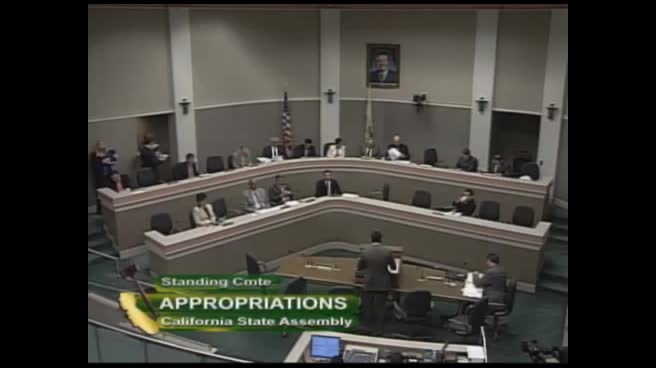
| May 13, 2015 | From committee: Do pass. (Ayes 17. Noes 0.) (May 13). |
| May 14, 2015 | Read second time. Ordered to third reading. |
| May 18, 2015 | In Senate. Read first time. To Com. on RLS. for assignment. |
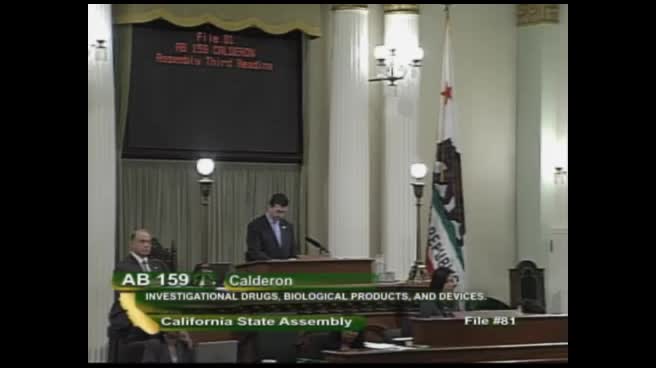
| May 18, 2015 | Read third time. Passed. Ordered to the Senate. |
| May 18, 2015 | Read third time. Passed. Ordered to the Senate. (Ayes 77. Noes 0. Page 1487.) |
| May 28, 2015 | Referred to Com. on ED. |
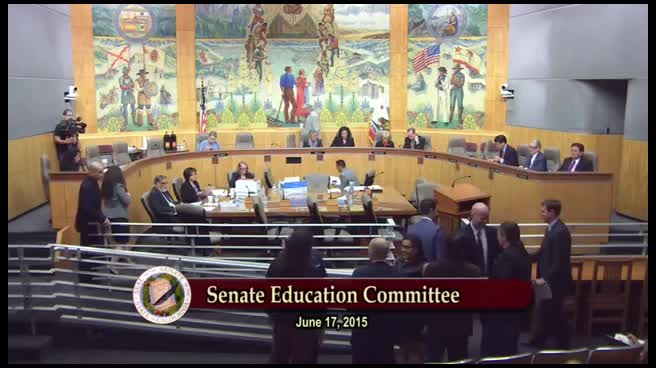
| Jun 17, 2015 | From committee: Do pass and re-refer to Com. on APPR. (Ayes 8. Noes 0.) (June 17). Re-referred to Com. on APPR. |
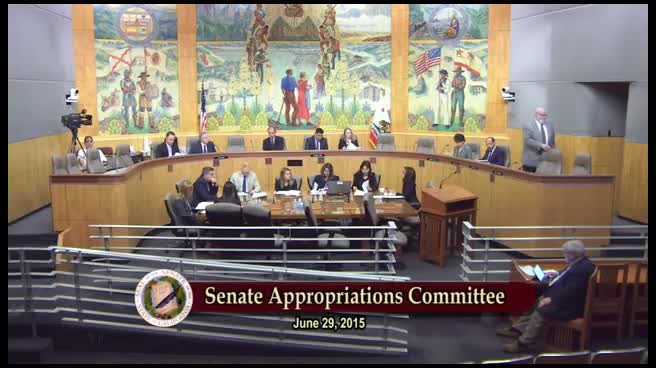
| Jun 29, 2015 | In committee: Referred to APPR. suspense file. |
| Aug 27, 2015 | In committee: Held under submission. |
|
Date
|
Description
|
Location
|
Votes
|
|
|---|---|---|---|---|
| Jun 29, 2015 | Placed on suspense file | Senate Standing Committee on Appropriations |
Passed |
|
| Jun 17, 2015 | Do pass, but first be re-referred to the Committee on [Appropriations] | Senate Standing Committee on Education |
Passed |
|
| May 18, 2015 | AB 1153 CALDERON Assembly Third Reading | Assembly Floor |
Passed |
|
| May 13, 2015 | Do pass. | Assembly Standing Committee on Appropriations |
Passed |
|
| Apr 29, 2015 | Do pass and be re-referred to the Committee on [Appropriations] with recommendation: To Consent Calendar | Assembly Standing Committee on Education |
Passed |
This list shows positions taken on this bill by organizations on the date displayed, which is linked to the original source.
Positions by individuals are not included.
|
Organization
|
Position
|
Date
|
|---|---|---|
| Alliance for Boys and Men of Color | ** Support | Jun 17, 2015 |
| Bay Area Council | ** Support | Jun 17, 2015 |
| California Association For Bilingual Education | ** Support | Jun 17, 2015 |
| California School-Based Health Alliance | ** Support | Jun 17, 2015 |
| Children Now | * Support | Jun 17, 2015 |
| Dolores Huerta Foundation | ** Support | May 13, 2015 |
| Education Trust West | * Support | Jun 17, 2015 |
| Education Trust-West | * Support | Jun 17, 2015 |
| Edvoice | ** Support | Jun 17, 2015 |
| Families In Schools | * Support | Jun 17, 2015 |
| Fight Crime | ** Support | May 13, 2015 |
| Invest in Kids | ** Support | May 13, 2015 |
| PICO California | ** Support | Jun 17, 2015 |
| Restorative Schools Vision Project | ** Support | Jun 17, 2015 |
| u None received. | ** Against | Jun 17, 2015 |
AB 1153 (Calderon) Page 3 of 3
SENATE COMMITTEE ON APPROPRIATIONS
Senator Ricardo Lara, Chair
2015 - 2016 Regular Session
AB 1153 (Calderon) - School accountability: local control and accountability plans: posting: evaluation rubrics.
|
|
Version: April 20, 2015 |
Policy Vote: ED. 8 - 0 |
Urgency: No |
Mandate: Yes |
Hearing Date: June 29, 2015 |
Consultant: Jillian Kissee |
This bill meets the criteria for referral to the Suspense File.
Bill Summary:
This bill requires the State Board of Education (Board) to consider revising the local control and accountability plan (LCAP) template to include a section or appendix sufficient to monitor a school district’s or county office of education’s progress on outcomes related to the evaluation rubric adopted by the Board. If the Board does not make this revision, this bill requires the populated evaluation rubric of a school district or county office of education to be posted on their respective websites, if it is available.
Fiscal Impact:
Department costs: The State Department of Education (SDE) estimates that it would cost approximately $70,000 General Fund to revise the LCAP template.
Mandate costs: Potential, minor state mandate costs to school districts and county offices of education to post available populated evaluation rubrics, if the Board does not revise the template. If the template is revised, potentially more significant mandated costs could instead be incurred by school districts and county offices of education through additional reporting of actual progress. These additional reporting costs would ultimately depend on the revised template adopted by the Board. (Proposition 98)
Background:
AB 97 (Committee on Budget, Chapter 47, Statutes of 2013) and subsequent legislation created the Local Control Funding Formula (LCFF), which consolidated most of the state’s categorical programs with general purpose revenue limit funding, with additional funding to be phased in over the coming years. One of the main principles behind the LCFF is that English learners and low-income students require more attention and resources in the classroom than students who do not have these same challenges.
In addition to the LCFF, the 2013 Budget established a new system for school accountability. Under the new system, school districts, county offices of education, and charter schools are required to complete an LCAP. The LCAP must include a district's annual goals in each of the following eight state priority areas: 1) student achievement; 2) student engagement; 3) other student outcomes; 4) school climate; 5) implementation of the Common Core State Standards; 6) course access; 7) basic services; and 8) parental involvement. Districts are required to consult with stakeholders on their plans and hold at least two public hearings before adopting or updating their LCAP.
The LCFF legislation also requires that on or before October 1, 2015, the Board adopt evaluation rubrics for the following purposes: 1) to assist a school district, county office of education, or charter school in evaluating its strengths, weaknesses, and areas that require improvement; 2) to assist a county superintendent of schools in identifying school districts and charter schools in need of technical assistance; and 3) to assist the Superintendent of Public Instruction in identifying school districts for which state intervention is warranted. The evaluation rubrics are required to reflect a holistic, multidimensional assessment of school district and individual school site performance and to address all of the state priorities described in the LCAP. Additionally, as part of the evaluation rubrics, the Board is required to adopt standards for school district and individual school site performance and expectation for improvement with regard to each of the state priorities.
Proposed Law:
This bill requires the Board to consider a revision to the LCAP template to include a section or appendix sufficient to monitor actual progress with respect to the Board-adopted standards and expectations for improvement, as specified.
This bill also requires the superintendent of a school district to post on the school district’s website its populated evaluation rubric, if it is available, unless the Board revises the template to include a section or appendix to monitor actual progress on outcomes. Similarly, this bill requires a county superintendent of schools to post on the website of the county office of education its populated evaluation rubric, if available.
Staff Comments:
This bill would set forth in law two possible scenarios for tracking local educational agency progress on outcomes. First, the Board is required to consider revising the LCAP template to include a section or appendix to monitor actual progress in the context of the Board-adopted standards and expectations for improvement which are currently in development. If the Board does not make this revision, this bill requires school districts and county offices of education to post populated evaluation rubrics, if available, on their respective websites.
If the Board decides to revise the LCAP template pursuant to this bill, the SDE estimates costs of about $70,000 to redirect existing staff. Activities required to update the template would include, staff time to collaborate with the Board to determine revisions, attorney staff time to review the revised template, updating the electronic LCAP and associated user manual, implementation of the regulations process to remove the existing template from regulations and adopting the revised template via the Bagley-Keene Open Meeting Act, and providing technical assistance to the field on the template modifications.
Existing law requires that if any activities related to the implementation of the LCAP provisions and regulations are found to be a state reimbursable mandate, funding provided to local educational agencies through the Local Control Funding Formula must be used to directly offset any mandated costs. To the extent the Commission on State Mandates determines LCAP activities are a state reimbursable mandate, this bill could potentially expand the mandated costs. Costs would be related to posting populated evaluation rubrics online, if they are available, or if the template is revised, additional reporting required of local educational agencies in their LCAP. The extent of additional reporting would depend on the Board-adopted revised template.
Staff notes that Chapter 13, Statutes of 2015 (AB 104), the education omnibus trailer bill, extends the date by which the Board must adopt evaluation rubrics by one year to October 1, 2016. The SDE has indicated that the work required by this bill would likely take one year from the date the Board takes action to adopt the rubrics.
-- END --
AB 1153 (Calderon) Page 3 of 3
SENATE COMMITTEE ON EDUCATION
Senator Carol Liu, Chair
2015 - 2016 Regular
Bill No: AB 1153
Author: |
Calderon |
||
Version: |
April 20, 2015 Hearing Date: June 17, 2015 |
||
Urgency: |
No |
Fiscal: |
Yes |
Consultant: |
Lenin Del Castillo |
||
Subject: School accountability: local control and accountability plans: posting: …………..evaluation rubrics
SUMMARY
This bill requires the State Board of Education (SBE), by January 31, 2017, to consider revising the template for the local control and accountability plan (LCAP) to include a section or appendix sufficient to monitor actual progress on outcomes related to the evaluation rubric adopted by the SBE. This bill also requires each school district and county office of education to post on its internet web site its populated evaluation rubric, if available.
BACKGROUND
AB 97 (Committee on Budget, Chapter 47, Statutes of 2013) and subsequent legislation created the Local Control Funding Formula (LCFF), which consolidated most of the state’s categorical programs with general purpose revenue limit funding and would be phased in over the coming years. One of the main principles behind the LCFF is that English learners and low-income students require more attention and resources in the classroom than students who do not have these same challenges. By providing more services (and in turn, additional funding) to these student populations, it is widely believed that this will help close the achievement gap and help all students perform better.
In addition to the LCFF, the 2013 Budget established a new system for school accountability. Under the new system, school districts, county offices of education, and charter schools are required to complete an LCAP. The LCAP must include a district's annual goals in each of the following eight state priority areas: 1) student achievement; 2) student engagement; 3) other student outcomes; 4) school climate; 5) implementation of the Common Core State Standards; 6) course access; 7) basic services; and 8) parental involvement. The LCAPs must also include both district wide goals and goals for specific subgroups. Districts are required to consult with stakeholders on their plans and hold at least two public hearings before adopting or updating their LCAP.
Additionally, the LCFF legislation requires that on or before October 1, 2015, the State Board of Education shall adopt evaluation rubrics for the following purposes: 1) to assist a school district, county office of education, or charter school in evaluating its strengths, weaknesses, and areas that require improvement; 2) to assist a county superintendent of schools in identifying school districts and charter schools in need of technical assistance, as specified, and the specific priorities upon which the technical assistance should be focused; and 3) to assist the Superintendent of Public Instruction in identifying school districts for which intervention is warranted. The evaluation rubrics shall reflect a holistic, multidimensional assessment of school district and individual school site performance and shall include all of the state priorities described in the local control and accountability plan (LCAP). Additionally, as part of the evaluation rubrics, the State Board of Education (SBE) is required to adopt standards for school district and individual school site performance and expectation for improvement in regard to each of the state priorities.
Further, the Local Control Funding Formula (LCFF) legislation established a new system of school district support and intervention. The California Collaborative for Educational Excellence (CCEE) was created in order to provide advice and assistance to local educational agencies (LEAs). Under the new system, if an LEA does not meet performance expectations in the eight state priority areas, they could be subject to intervention by their county office of education or the CCEE. LEAs that are continuously not meeting performance standards, as specified, could be subject to intervention by the SBE and Superintendent of Public Instruction. However, LEAs also may seek assistance from the CCEE on their own.
ANALYSIS
This bill requires the SBE, by January 31, 2017, to consider a revision to the LCAP template to include a section or appendix to monitor actual progress with respect to the SBE-adopted standards and expectations for improvement, as specified.
This bill also requires a superintendent of a school district or county superintendent of schools to post on its internet web site, if available, its populated evaluation rubric unless the SBE revises the template for the LCAP, as specified.
STAFF COMMENTS
Need for the bill. According to the author’s office, there is no requirement that districts publicly report or simply post online annual data on the eight state priorities and accompanying data metrics for each. Absent availability of critical baseline data, it is difficult if not impossible to have meaningful stakeholder engagement. The author’s office indicates that making this information available will make for more informed needs assessments and conversations as districts and communities prioritize local LCFF goals and actions.
Is the bill premature? On or before October 1, 2015, the SBE is required to adopt the evaluation rubrics. While LEAs will be able to use the rubrics for self-assessment, evaluating strengths and weaknesses, and in identifying schools and districts in need of technical assistance, there does not appear to be an explicit requirement for LEAs to utilize the evaluation rubrics. Additionally, as part of the rubrics, the SBE is required to adopt standards for school district and individual school site performance and expectation for improvement in regard to each of the state priorities.
Just recently, a variety of stakeholders and organizations within the education community requested that the Administration and Legislature enact legislation that would delay adoption of the evaluation rubrics to February 2016. They indicate a statutory extension is necessary to balance the need for further deliberation with the goal of providing useful guidance to the field to inform the development of 2016-17 local control and accountability plans (LCAPs) and to provide more time for stakeholders and the State Board of Education (SBE) to engage on numerous technical and policy issues that need to be further discussed. While no legislative action has been taken as of the date of this analysis, the bill’s provisions could be premature if any delay on the adoption of the rubrics were to happen. One could also argue that any revision to the LCAP template regarding the evaluation rubrics at this point is premature given that the soonest the SBE is likely to adopt them is late summer or early fall of 2015 (the statutory deadline is on or before October 1, 2015). As the bill would require the SBE to consider a revision to the LCAP template by January 31, 2017, the Committee may wish to consider whether this provides sufficient time for the SBE to consider whether such a revision is necessary and also whether it provides ample time to develop any changes.
Duplication. This bill requires a school district or county office of education to post its populated evaluation rubric, if available, on its internet web site. However, if the SBE elects to revise the LCAP template to include evaluation rubrics data, it appears that this provision would be redundant because LCAPs are already required to be posted online.
SUPPORT
Alliance for Boys and Men of Color
Bay Area Council
California Association for Bilingual Education
California School-Based Health Alliance
Children Now (sponsor)
Education Trust—West
EdVoice
Families In Schools
Fight Crime: Invest in Kids California
PICO California
Restorative Schools Vision Project
OPPOSITION
None received.
-- END --
AB 1153
Page 2
ASSEMBLY THIRD READING
AB 1153
(Calderon)
As Amended April 20, 2015
Majority vote
Committee |
Votes |
Ayes |
Noes |
Education |
6-0 |
O'Donnell, Chávez, Kim, Santiago, Thurmond, Weber |
|
Appropriations |
17-0 |
Gomez, Bigelow, Bloom, Bonta, Calderon, Chang, Daly, Eggman, Gallagher, Eduardo Garcia, Holden, Jones, Quirk, Rendon, Wagner, Weber, Wood |
|
SUMMARY: Requires the State Board of Education (SBE), by January 31, 2017, to consider revising the template for the local control and accountability plan (LCAP) to include a section or appendix sufficient to monitor actual progress on outcomes related to the evaluation rubric adopted by the SBE. Also requires each school district and county office of education (COE) to post on its Internet Web site its populated evaluation rubric, if available.
FISCAL EFFECT: According to the Assembly Appropriations Committee:
General Fund administrative costs to COE and SBE staff of approximately $70,000 to revise the LCAP template and the instructions to the template. These costs include legal review, stakeholder and public meetings, and technology services workload related to revising the LCAP electronic template.
Unknown, likely minor, Proposition 98 (1988)/General Fund reimbursable state mandated costs for school districts and COEs to post the populated evaluation rubric on the district or COE's website, to the extent a website is available.
COMMENTS: LCAPs and the evaluation rubrics provide accountability under the local control funding formula (LCFF). School districts and COEs are required to identify specific performance goals in their LCAPs, then, in the updated LCAP for the subsequent year, report on the extent to which they achieved the prior year goals. Existing law requires each district and COE to develop its LCAP using the SBE-adopted template and post it on its Internet Web site, if it has one. Meanwhile, the SBE is required to adopt standards for achievement and expectations for improvement in each of the eight state priorities. However, the goals in each LCAP are locally set and need not reflect the state level standards and expectations adopted by the SBE.
This bill requires the SBE, by January 31, 2017, to consider a revision to the LCAP template to include a section or appendix to monitor each district's or COEs progress with respect to the SBE-adopted standards and expectations for improvement. If the SBE adopts such a revision, then the LCAP of each district and COE will reflect how well it has performed relative to state goals as well as to its own locally-set goals.
Existing law provides that LEAs may use the evaluation rubrics for self-assessment and in identifying schools and districts in need of technical assistance. Accordingly, there is no requirement that districts or COEs use the evaluation rubrics on a routine, annual basis to monitor their performance. This bill provides that, if available, a school district or COE shall post its populated evaluation rubric on its Internet Web site. If the SBE revises the LCAP template to include this information, then this provision would be redundant, because LCAPs are already required to be posted online.
Analysis Prepared by: Rick Pratt / ED. / (916) 319-2087 FN: 0000424
AB 1153
Page 1
Date of Hearing: May 13, 2015
ASSEMBLY COMMITTEE ON APPROPRIATIONS
Jimmy Gomez, Chair
AB 1153
(Calderon) – As Amended April 20, 2015
Policy Committee: |
Education |
Vote: |
6 - 0 |
|
|
|
|
|
|
|
|
Urgency: No State Mandated Local Program: Yes Reimbursable: Yes
SUMMARY:
This bill requires the State Board of Education (SBE), by January 31, 2017, to consider revising the template for the local control and accountability plan (LCAP) to include a section or appendix sufficient to monitor actual progress on outcomes related to the evaluation rubric adopted by the SBE. Also requires each school district and county office of education (COE) to post on its Internet Web site its populated evaluation rubric, if available.
FISCAL EFFECT:
General Fund administrative costs to CDE and SBE staff of approximately $70,000 to revise the LCAP template and the instructions to the template. These costs include legal review, stakeholder and public meetings, and technology services workload related to revising the LCAP electronic template.
Unknown, likely minor, Proposition 98/GF reimbursable state mandated costs for school districts and COEs to post the populated evaluation rubric on the district or COE’s website, to the extent a website is available.
COMMENTS:
Purpose. LCAPs and the evaluation rubrics provide accountability under the local control funding formula (LCFF). School districts and COEs are required to identify specific performance goals in their LCAPs, then, in the updated LCAP for the subsequent year, report on the extent to which they achieved the prior year goals. Existing law requires each district and COE to develop its LCAP using the SBE-adopted template and post it on their Internet Web site, if they have one. Meanwhile, the SBE is required to adopt standards for achievement and expectations for improvement in each of the eight state priorities. However, the goals in each LCAP are locally set and need not reflect the state level standards and expectations adopted by the SBE.
This bill requires the SBE, by January 31, 2017, to consider a revision to the LCAP template to include a section or appendix to monitor each district's or COEs progress with respect to the SBE-adopted standards and expectations for improvement. If the SBE adopts such a revision, then the LCAP of each district and COE will reflect how well it has performed relative to state goals as well as to its own locally-set goals.
Analysis Prepared by: Misty Feusahrens / APPR. / (916) 319-2081
AB 1153
Page 3
Date of Hearing: April 29, 2015
ASSEMBLY COMMITTEE ON EDUCATION
Patrick O'Donnell, Chair
AB 1153
(Calderon) – As Amended April 20, 2015
SUBJECT: School accountability: local control and accountability plans: posting: evaluation rubrics data
SUMMARY: Requires the State Board of Education (SBE), by January 31, 2017, to consider revising the template for the local control and accountability plan (LCAP) to include a section or appendix sufficient to monitor actual progress on outcomes related to the evaluation rubric adopted by the SBE. Also requires each school district and county office of education (COE) to post on its Internet Web site its populated evaluation rubric, if available.
EXISTING LAW:
Requires each school district and COE to adopt and annually update an LCAP, using a template adopted by the SBE.
Requires the LCAP to be aligned with the district's or COE's budget and describe how the district or COE will "increase or improve services for unduplicated pupils in proportion to its increase in funds apportioned on the basis of the number and concentration of unduplicated pupils in the district."
Defines "unduplicated pupil" as a pupil who is eligible for free or reduced-price meals, an English learner, or in foster care.
Requires the LCAP to address the following eight state priorities:
Requirements related to the Williams v. State of California settlement agreement related to fully credentialed teachers, instructional materials, and school facilities;
Implementation of academic and performance standards, including English language development standards;
Parental involvement;
Pupil achievement, as measured by statewide assessments;
Pupil engagement, as measured by attendance, dropout and graduation rates, and expulsions/suspensions;
School climate, as measured by suspension rates, expulsion rates, and other local measures, such as surveys;
The extent to which pupils have access to and are enrolled in a broad course of study; and
Pupil outcomes, if available, for non-state-assessed courses of study.
Requires the SBE, by October 1, 2015, to adopt evaluation rubrics to assist LEAs in identifying their own strengths and weaknesses and to assist in the identification of LEAs in need of assistance.
Requires the SBE, as part of the evaluation rubrics, to adopt standards for school district and individual schoolsite performance and expectations for improvement in regard to each of the eight state priorities.
FISCAL EFFECT: Unknown
COMMENTS: LCAPs and the evaluation rubrics provide accountability under the local control funding formula (LCFF). School districts and COEs are required to identify specific performance goals in their LCAPs, then, in the updated LCAP for the subsequent year, report on the extent to which they achieved the prior year goals. Existing law requires each district and COE to develop its LCAP using the SBE-adopted template and post it on its Internet Web site, if it has one. Meanwhile, the SBE is required to adopt standards for achievement and expectations for improvement in each of the eight state priorities. However, the goals in each LCAP are locally set and need not reflect the state level standards and expectations adopted by the SBE.
This bill requires the SBE, by January 31, 2017, to consider a revision to the LCAP template to include a section or appendix to monitor each district's or COEs progress with respect to the SBE-adopted standards and expectations for improvement. If the SBE adopts such a revision, then the LCAP of each district and COE will reflect how well it has performed relative to state goals as well as to its own locally-set goals.
Existing law provides that LEAs may use the evaluation rubrics for self-assessment and in identifying schools and districts in need of technical assistance. Accordingly, there is no requirement that districts or COEs use the evaluation rubrics on a routine, annual basis to monitor their performance. This bill provides that, if available, a school district or COE shall post its populated evaluation rubric on its Internet Web site. If the SBE revises the LCAP template to include this information, then this provision would be redundant, because LCAPs are already required to be posted online.
Need for the bill. According to the author's office, "the public reporting of the annual progress on all of the state priorities and metrics is needed to ensure that baseline performance on all of the legislatively established LCFF state priorities is available somewhere….Making this information available will make for more informed needs assessments and conversations as districts and communities prioritize local LCFF goals and actions."
REGISTERED SUPPORT / OPPOSITION:
Support
Alliance for Boys and Men of Color
American Civil Liberties Union
Bay Area Council
California School-Based Health Alliance
Children Now
Dolores Huerta Foundation
Education Trust-West
EdVoice
Families in Schools
Fight Crime/Invest in Kids
PICO California
Opposition
None received
Analysis Prepared by: Rick Pratt / ED. / (916) 319-2087
Discussed in Hearing
 4MIN
Senate Standing Committee on Appropriations
 11MIN
Senate Standing Committee on Education
 1MIN
Assembly Floor
 1MIN
Assembly Standing Committee on Appropriations
Bill Author

Bill Co-Author(s):