AB 1164: Water conservation: drought tolerant landscaping.
- Session Year: 2015-2016
- House: Assembly
- Latest Version Date: 2015-10-09
Existing law generally authorizes every city and county, including a charter city, in this state to make and enforce within its limits all local, police, sanitary, and other ordinances and regulations that are not in conflict with general laws.
This bill would prohibit a city, including a charter city, county, and city and county, from enacting or enforcing any ordinance or regulation that prohibits the installation of drought tolerant landscaping, synthetic grass, or artificial turf on residential property, as specified. The bill would additionally state that this is an issue of statewide concern.
This bill would declare that it is to take effect immediately as an urgency statute.
Existing law generally authorizes every city and county, including a charter city, in this state to make and enforce within its limits all local, police, sanitary, and other ordinances and regulations that are not in conflict with general laws.
This bill would prohibit a city, including a charter city, county, and city and county, from enacting or enforcing any ordinance or regulation that prohibits the installation of drought tolerant landscaping, synthetic grass grass, or artificial turf on residential property, as specified. The bill would additionally state that this is an issue of statewide concern.
This bill would declare that it is to take effect immediately as an urgency statute.
Existing law generally authorizes every city and county, including a charter city, in this state to make and enforce within its limits all local, police, sanitary, and other ordinances and regulations that are not in conflict with general laws.
This bill would prohibit a city, including a charter city, county, and city and county, from enacting or enforcing any ordinance or regulation that prohibits the installation of synthetic grass or artificial turf on residential property, as specified. The bill would additionally state that this is an issue of statewide concern.
The bill would continuously appropriate $300,000,000 from the General Fund to the Department of Water Resources in equal amounts of $100,000,000 for each of the 201516, 201617, and 201718 fiscal years, to provide matching funds to specified local agencies to provide incentives to residents to replace water inefficient landscaping with drought tolerant landscaping.
This bill would declare that it is to take effect immediately as an urgency statute.
Existing law generally authorizes every city and county, including a charter city, in this state to make and enforce within its limits all local, police, sanitary, and other ordinances and regulations that are not in conflict with general laws.
This bill would prohibit a city, including a charter city, county, and city and county, from enacting or enforcing any ordinance or regulation that prohibits the installation of synthetic grass or artificial turf on residential property property, as specified. The bill would additionally state that this is an issue of statewide concern.
The bill would continuously appropriate $300,000,000 from the General Fund to the Department of Water Resources in equal amounts of $100,000,000 for each of the 201516, 201617, and 201718 fiscal years, to provide matching funds to specified local agencies to provide incentives to residents to replace water inefficient landscaping with drought tolerant landscaping.
This bill would declare that it is to take effect immediately as an urgency statute.
Existing law generally authorizes every city and county, including a charter city, in this state to make and enforce within its limits all local, police, sanitary, and other ordinances and regulations that are not in conflict with general laws.
This bill would prohibit a city, including a charter city, county, and city and county, from enacting or enforcing any ordinance or regulation that prohibits the installation of synthetic grass or artificial turf on residential property. The bill would additionally state that this is an issue of statewide concern.
The bill would continuously appropriate $300,000,000 from the General Fund to the State Water Resources Control Board Department of Water Resources in equal amounts of $100,000,000 for each of the 201516, 201617, and 201718 fiscal years, to provide matching funds to specified local agencies to provide incentives to residents to replace water inefficient landscaping with drought tolerant landscaping.
The bill would state the intent of the Legislature to streamline the installation of infrastructure that collects graywater for the purposes of recycling water to be used for nonpotable uses.
This bill would declare that it is to take effect immediately as an urgency statute.
Existing law generally authorizes every city and county, including a charter city, in this state to make and enforce within its limits all local, police, sanitary, and other ordinances and regulations that are not in conflict with general laws.
This bill would prohibit a city, including a charter city, county, and city and county, from enacting or enforcing any ordinance or regulation that prohibits the installation of synthetic grass or artificial turf on residential property. The bill would additionally state that this is an issue of statewide concern.
The bill would continuously appropriate $300,000,000 from the General Fund to the State Water Resources Control Board in equal amounts of $100,000,000 for each of the 201516, 201617, and 201718 fiscal years, to provide matching funds to specified local agencies to provide incentives to residents to replace water inefficient landscaping with drought tolerant landscaping.
The bill would state the intent of the Legislature to streamline the installation of infrastructure that collects graywater for the purposes of recycling water to be used for nonpotable uses.
This bill would declare that it is to take effect immediately as an urgency statute.
Existing law gives the Department of Transportation full possession and control of the state highways. Existing law requires the department to prepare a state highway operation and protection program for the expenditure of transportation funds for major capital improvements that are necessary to preserve and protect the state highway system.
This bill would require the department, in consultation with specified entities, to conduct an annual evaluation and rating of the overall quality of the state highway system and the resources needed to provide a system in good repair, and would require a report to specified committees of the Legislature in that regard annually until 2020. The bill would also require the department to post the report on its Internet Web site.
Existing law gives the Department of Transportation full possession and control of the state highways. Existing law requires the department to prepare a state highway operation and protection program for the expenditure of transportation funds for major capital improvements that are necessary to preserve and protect the state highway system.
This bill would require the department to develop performance measures, department, in consultation with specified entities, to establish conduct an annual evaluation and rating of the overall quality of the state highway system, system and the resources needed to provide a system in good repair, and would require a report to specified committees of the Legislature in that regard annually until 2020. The bill would also require the department to post the report on its Internet Web site.
Existing law gives the Department of Transportation full possession and control of the state highways. Existing law requires the department to prepare a state highway operation and protection program for the expenditure of transportation funds for major capital improvements that are necessary to preserve and protect the state highway system.
This bill would require the department to develop performance measures, in consultation with specified entities, to establish an evaluation and rating of the overall quality of the state highway system, and would require a report to specified committees of the Legislature in that regard annually until 2020. The bill would also require the department to post the report on its Internet Web site.
Existing law authorizes the operation of an autonomous vehicle on public roads for testing purposes by a driver who possesses the proper class of license for the type of vehicle being operated if specified requirements are satisfied. Existing law requires the Department of Motor Vehicles to adopt regulations no later than January 1, 2015, setting forth requirements for the submission of evidence of insurance, surety bond, or self-insurance, and for the submission and approval of an application to operate an autonomous vehicle.
This bill would make technical, nonsubstantive changes to that provision.
The Legislature hereby finds and declares:
(a)With the lowest snowpack ever recorded, California finds itself in 2015 in the fourth year of a historic, prolonged, and potentially devastating drought.
(b)Governor Edmund G. Brown Jr. issued an Executive order on April 1, 2015, which, for the first time in California history, directs the State Water Resources Control Board to implement mandatory water reductions across the state to reduce water usage by 25 percent.
(c)One component of the Governors Executive order compels the replacement of 50 million square feet of lawns throughout the state with drought tolerant landscaping.
(d)Among a wide variety of drought tolerant landscaping are a variety of native plants and landscaping alternatives, including the installation of synthetic grass or artificial turf.
(e)According to the Department of Water Resources, landscape irrigation represents 43 percent of urban water use. The installation of synthetic grass or artificial turf, in lieu of conventional lawns and landscapes, can directly reduce outdoor water use to help meet the Governors mandated 25-percent statewide water use reduction.
SEC. 2.Section 53087.7 is added to the Government Code, to read:53087.7.(a)A city, including a charter city, county, or city and county, shall not enact any ordinance or regulation, or enforce any existing ordinance or regulation, that prohibits the installation of drought tolerant landscaping, synthetic grass, or artificial turf on residential property.
(b)A city, including a charter city, county, or city and county, may impose reasonable restrictions on the type of drought tolerant landscaping, synthetic grass, or artificial turf that may be installed on residential property provided that those restrictions do not do any of the following:
(1)Substantially increase the cost of installing drought tolerant landscaping, synthetic grass, or artificial turf.
(2)Effectively prohibit the installation of drought tolerant landscaping, synthetic grass, or artificial turf.
(3)Significantly impede the installation of drought tolerant landscaping, including, but not limited to, a requirement that a residential yard must be completely covered with living plant material.
SEC. 3.The Legislature finds and declares the prolonged drought, along with climate change, requires the state to address water conservation goals that will have long-term impacts in this state. The Legislature further finds and declares that drought tolerant landscaping, including the installation of synthetic grass or artificial turf, is a viable landscaping alternative that will further the goal of addressing long-term water conservation. Therefore, allowing property owners in this state to install drought tolerant landscaping, synthetic grass, or artificial turf on their residential properties is a matter of statewide concern, not a municipal affair as that term is used in Section 5 of Article XI of the California Constitution.
SEC. 4.This act is an urgency statute necessary for the immediate preservation of the public peace, health, or safety within the meaning of Article IV of the Constitution and shall go into immediate effect. The facts constituting the necessity are:
In order to address the historic, prolonged, and potentially devastating drought, it is necessary that residents of this state be able to replace water inefficient landscaping with drought tolerant landscaping as quickly as possible; therefore, it is necessary that this act take effect immediately.
The Legislature hereby finds and declares:
(a)With the lowest snowpack ever recorded, California finds itself in 2015 in the fourth year of a historic, prolonged, and potentially devastating drought.
(b)Governor Edmund G. Brown Jr. issued an Executive order on April 1, 2015, which, for the first time in California history, directs the State Water Resources Control Board to implement mandatory water reductions across the state to reduce water usage by 25 percent.
(c)One component of the Governors Executive order compels the replacement of 50 million square feet of lawns throughout the state with drought tolerant landscaping.
(d)Among a wide variety of drought tolerant landscaping are a variety of native plants and landscaping alternatives, including the installation of synthetic grass or artificial turf.
(e)According to the Department of Water Resources, landscape irrigation represents 43 percent of urban water use. The installation of synthetic grass or artificial turf, in lieu of conventional lawns and landscapes, can directly reduce outdoor water use to help meet the Governors mandated 25-percent statewide water use reduction.
SEC. 2.Section 53087.7 is added to the Government Code, to read:53087.7.(a)A city, including a charter city, county, or city and county, shall not enact any ordinance or regulation, or enforce any existing ordinance or regulation, that prohibits the installation of drought tolerant landscaping, synthetic grass grass, or artificial turf on residential property.
(b)A city, including a charter city, county, or city and county, may impose reasonable restrictions on the type of drought tolerant landscaping, synthetic grass grass, or artificial turf that may be installed on residential property provided that those restrictions do not do either any of the following:
(1)Substantially increase the cost of installing drought tolerant landscaping, synthetic grass grass, or artificial turf.
(2)Effectively prohibit the installation of drought tolerant landscaping, synthetic grass grass, or artificial turf.
(3)Significantly impede the installation of drought tolerant landscaping, including, but not limited to, a requirement that a residential yard must be completely covered with living plant material.
SEC. 3.The Legislature finds and declares the prolonged drought, along with climate change, requires the state to address water conservation goals that will have long-term impacts in this state. The Legislature further finds and declares that drought tolerant landscaping, including the installation of synthetic grass or artificial turf, is a viable landscaping alternative that will further the goal of addressing long-term water conservation. Therefore, allowing property owners in this state to install drought tolerant landscaping, synthetic grass grass, or artificial turf on their residential properties is a matter of statewide concern, not a municipal affair as that term is used in Section 5 of Article XI of the California Constitution.
SEC. 4.This act is an urgency statute necessary for the immediate preservation of the public peace, health, or safety within the meaning of Article IV of the Constitution and shall go into immediate effect. The facts constituting the necessity are:
In order to address the historic, prolonged, and potentially devastating drought, it is necessary that residents of this state be able to replace water inefficient landscaping with drought tolerant landscaping as quickly as possible; therefore, it is necessary that this act take effect immediately.
The Legislature hereby finds and declares:
(a)With the lowest snowpack ever recorded, California finds itself in 2015 in the fourth year of a historic, prolonged, and potentially devastating drought.
(b)Governor Edmund G. Brown Jr. issued an Executive order on April 1, 2015, which, for the first time in California history, directs the State Water Resources Control Board to implement mandatory water reductions across the state to reduce water usage by 25 percent.
(c)One component of the Governors Executive order compels the replacement of 50 million square feet of lawns throughout the state with drought tolerant landscaping.
(d)Among a wide variety of drought tolerant landscaping are a variety of native plants and landscaping alternatives, including the installation of synthetic grass or artificial turf.
(e)According to the Department of Water Resources, landscape irrigation represents 43 percent of urban water use. The installation of synthetic grass or artificial turf, in lieu of conventional lawns and landscapes, can directly reduce outdoor water use to help meet the Governors mandated 25-percent statewide water use reduction.
SEC. 2.Section 53087.7 is added to the Government Code, to read:53087.7.(a)A city, including a charter city, county, or city and county, shall not enact any ordinance or regulation, or enforce any existing ordinance or regulation, that prohibits the installation of synthetic grass or artificial turf on residential property.
(b)A city, including a charter city, county, or city and county, may impose reasonable restrictions on the type of synthetic grass or artificial turf that may be installed on residential property provided that those restrictions do not do either of the following:
(1)Substantially increase the cost of installing synthetic grass or artificial turf.
(2)Effectively prohibit the installation of synthetic grass or artificial turf.
SEC. 3.The Legislature finds and declares the prolonged drought, along with climate change, requires the state to address water conservation goals that will have long-term impacts in this state. The Legislature further finds and declares that drought tolerant landscaping, including the installation of synthetic grass or artificial turf, is a viable landscaping alternative that will further the goal of addressing long-term water conservation. Therefore, allowing property owners in this state to install synthetic grass or artificial turf on their residential properties is a matter of statewide concern, not a municipal affair as that term is used in Section 5 of Article XI of the California Constitution.
SEC. 4.Notwithstanding Section 13340 of the Government Code, the sum of three hundred million dollars ($300,000,000) is hereby continuously appropriated from the General Fund to the Department of Water Resources to be expended in equal shares of one hundred million dollars ($100,000,000) for each of the 201516, 201617, and 201718 fiscal years to provide matching funds to any city, county, city and county, public water agency, or private water agency to provide incentives to residents to replace water inefficient landscaping with drought tolerant landscaping.
SEC. 5.SEC. 4.This act is an urgency statute necessary for the immediate preservation of the public peace, health, or safety within the meaning of Article IV of the Constitution and shall go into immediate effect. The facts constituting the necessity are:
In order to address the historic, prolonged, and potentially devastating drought, it is necessary that residents of this state be able to replace water inefficient landscaping with drought tolerant landscaping as quickly as possible; therefore, it is necessary that this act take effect immediately.
The Legislature hereby finds and declares:
(a)With the lowest snowpack ever recorded, California finds itself in 2015 in the fourth year of a historic, prolonged, and potentially devastating drought.
(b)Governor Edmund G. Brown Jr. issued an Executive order on April 1, 2015, which, for the first time in California history, directs the State Water Resources Control Board to implement mandatory water reductions across the state to reduce water usage by 25 percent.
(c)One component of the Governors Executive order compels the replacement of 50 million square feet of lawns throughout the state with drought tolerant landscaping.
(d)Among a wide variety of drought tolerant landscaping are a variety of native plants and landscaping alternatives, including the installation of synthetic grass or artificial turf.
(e)According to the Department of Water Resources, landscape irrigation represents 43 percent of urban water use. The installation of synthetic grass or artificial turf, in lieu of conventional lawns and landscapes, can directly reduce outdoor water use to help meet the Governors mandated 25-percent statewide water use reduction.
(f)The vast majority of Californians may today elect to install synthetic grass or artificial turf in their single-family residential landscapes.
SEC. 2.Section 53087.7 is added to the Government Code, to read:53087.7.(a)A city, including a charter city, county, or city and county, shall not enact any ordinance or regulation, or enforce any existing ordinance or regulation, that prohibits the installation of synthetic grass or artificial turf on residential property.
(b)A city, including a charter city, county, or city and county, may impose reasonable restrictions on the type of synthetic grass or artificial turf that may be installed on residential property provided that those restrictions do not do either of the following:
(1)Substantially increase the cost of installing synthetic grass or artificial turf.
(2)Effectively prohibit the installation of synthetic grass or artificial turf.
SEC. 3.The Legislature finds and declares the prolonged drought, along with climate change, requires the state to address water conservation goals that will have long-term impacts in this state. The Legislature further finds and declares that drought tolerant landscaping, including the installation of synthetic grass or artificial turf, is a viable landscaping alternative that will further the goal of addressing long-term water conservation. Therefore, allowing property owners in this state to install synthetic grass or artificial turf on their residential properties is a matter of statewide concern, not a municipal affair as that term is used in Section 5 of Article XI of the California Constitution.
SEC. 4.Notwithstanding Section 13340 of the Government Code, the sum of three hundred million dollars ($300,000,000) is hereby continuously appropriated from the General Fund to the Department of Water Resources to be expended in equal shares of one hundred million dollars ($100,000,000) for each of the 201516, 201617, and 201718 fiscal years to provide matching funds to any city, county, city and county, public water agency, or private water agency to provide incentives to residents to replace water inefficient landscaping with drought tolerant landscaping.
SEC. 5.This act is an urgency statute necessary for the immediate preservation of the public peace, health, or safety within the meaning of Article IV of the Constitution and shall go into immediate effect. The facts constituting the necessity are:
In order to address the historic, prolonged, and potentially devastating drought, it is necessary that residents of this state be able to replace water inefficient landscaping with drought tolerant landscaping as quickly as possible; therefore, it is necessary that this act take effect immediately.
The Legislature hereby finds and declares:
(a)With the lowest snowpack ever recorded, California finds itself in 2015 in the fourth year of a historic, prolonged, and potentially devastating drought.
(b)Governor Edmund G. Brown Jr. issued an Executive order on April 1, 2015, which, for the first time in California history, directs the State Water Resources Control Board to implement mandatory water reductions across the state to reduce water usage by 25 percent.
(c)One component of the Governors Executive order compels the replacement of 50 million square feet of lawns throughout the state with drought tolerant landscaping.
(d)Among a wide variety of drought tolerant landscaping are a variety of native plants and landscaping alternatives, including the installation of synthetic grass or artificial turf.
(e)According to the Department of Water Resources, landscape irrigation represents 43 percent of urban water use. The installation of synthetic grass or artificial turf, in lieu of conventional lawns and landscapes, can directly reduce outdoor water use to help meet the Governors mandated 25-percent statewide water use reduction.
(f)The vast majority of Californians may today elect to install synthetic grass or artificial turf in their single-family residential landscapes.
SEC. 2.It is the intent of the Legislature to streamline the installation of infrastructure that collects graywater for the purposes of recycling water to be used for nonpotable uses.
SEC. 3.SEC. 2.Section 53087.7 is added to the Government Code, to read:53087.7.A city, including a charter city, county, or city and county, shall not enact any ordinance or regulation, or enforce any existing ordinance or regulation, that prohibits the installation of synthetic grass or artificial turf on residential property.
SEC. 4.SEC. 3.The Legislature finds and declares the prolonged drought, along with climate change, requires the state to address water conservation goals that will have long-term impacts in this state. The Legislature further finds and declares that drought tolerant landscaping, including the installation of synthetic grass or artificial turf, is a viable landscaping alternative that will further the goal of addressing long-term water conservation. Therefore, allowing property owners in this state to install synthetic grass or artificial turf on their residential properties is a matter of statewide concern, not a municipal affair as that term is used in Section 5 of Article XI of the California Constitution.
SEC. 5.SEC. 4.Notwithstanding Section 13340 of the Government Code, the sum of three hundred million dollars ($300,000,000) is hereby continuously appropriated from the General Fund to the State Water Resources Control Board Department of Water Resources to be expended in equal shares of one hundred million dollars ($100,000,000) for each of the 201516, 201617, and 201718 fiscal years to provide matching funds to any city, county, city and county, public water agency, or private water agency to provide incentives to residents to replace water inefficient landscaping with drought tolerant landscaping.
SEC. 6.SEC. 5.This act is an urgency statute necessary for the immediate preservation of the public peace, health, or safety within the meaning of Article IV of the Constitution and shall go into immediate effect. The facts constituting the necessity are:
In order to address the historic, prolonged, and potentially devastating drought, it is necessary that residents of this state be able to replace water inefficient landscaping with drought tolerant landscaping as quickly as possible; therefore, it is necessary that this act take effect immediately.
The Legislature hereby finds and declares:
(a)With the lowest snowpack ever recorded, California finds itself in 2015 in the fourth year of a historic, prolonged, and potentially devastating drought.
(b)Governor Edmund G. Brown Jr. issued an Executive order on April 1, 2015, which, for the first time in California history, directs the State Water Resources Control Board to implement mandatory water reductions across the state to reduce water usage by 25 percent.
(c)One component of the Governors Executive order compels the replacement of 50 million square feet of lawns throughout the state with drought tolerant landscaping.
(d)Among a wide variety of drought tolerant landscaping are a variety of native plants and landscaping alternatives, including the installation of synthetic grass or artificial turf.
(e)According to the Department of Water Resources, landscape irrigation represents 43 percent of urban water use. The installation of synthetic grass or artificial turf, in lieu of conventional lawns and landscapes, can directly reduce outdoor water use to help meet the Governors mandated 25-percent statewide water use reduction.
(f)The vast majority of Californians may today elect to install synthetic grass or artificial turf in their single-family residential landscapes.
SEC. 2.It is the intent of the Legislature to streamline the installation of infrastructure that collects graywater for the purposes of recycling water to be used for nonpotable uses.
SEC. 3.Section 53087.7 is added to the Government Code, to read:53087.7.A city, including a charter city, county, or city and county, shall not enact any ordinance or regulation, or enforce any existing ordinance or regulation, that prohibits the installation of synthetic grass or artificial turf on residential property.
SEC. 4.The Legislature finds and declares the prolonged drought, along with climate change, requires the state to address water conservation goals that will have long-term impacts in this state. The Legislature further finds and declares that drought tolerant landscaping, including the installation of synthetic grass or artificial turf, is a viable landscaping alternative that will further the goal of addressing long-term water conservation. Therefore, allowing property owners in this state to install synthetic grass or artificial turf on their residential properties is a matter of statewide concern, not a municipal affair as that term is used in Section 5 of Article XI of the California Constitution.
SEC. 5.Notwithstanding Section 13340 of the Government Code, the sum of three hundred million dollars ($300,000,000) is hereby continuously appropriated from the General Fund to the State Water Resources Control Board to be expended in equal shares of one hundred million dollars ($100,000,000) for each of the 201516, 201617, and 201718 fiscal years to provide matching funds to any city, county, city and county, public water agency, or private water agency to provide incentives to residents to replace water inefficient landscaping with drought tolerant landscaping.
SEC. 6.This act is an urgency statute necessary for the immediate preservation of the public peace, health, or safety within the meaning of Article IV of the Constitution and shall go into immediate effect. The facts constituting the necessity are:
In order to address the historic, prolonged, and potentially devastating drought, it is necessary that residents of this state be able to replace water inefficient landscaping with drought tolerant landscaping as quickly as possible; therefore, it is necessary that this act take effect immediately.
SECTION 1.Section 14526.7 is added to the Government Code, to read:14526.7.(a)The department shall conduct an annual evaluation and rating of the overall quality of the state highway system and the resources needed to provide a system in good repair. The evaluation shall demonstrate how resource, staffing, and programming decisions impact the overall condition of the state highway system. The evaluation shall address the number of distressed lane miles, bridge conditions, and life cycle costs. The evaluation shall also include, but not be limited to, all of the following:
(1)The rating of the states urban interstate lane miles, measured according to the International Roughness Index, and the schedule and resources needed to bring at least 90 percent of the lane miles rated less than 170 (the federal rating of poor condition) into good condition.
(2)The rating of the states rural interstate lane miles, measured according to the International Roughness Index, and the schedule and resources needed to bring at least 95 percent of the lane miles rated less than 170 (the federal rating of poor condition) into good condition.
(3)The percentage of lane miles on the state freeways and highways that are distressed lane miles and the schedule and resources needed to bring the percentage of distressed lane miles to 5 percent or less.
(4)The schedule and resources needed to bring the pavement level of service to the well-maintained pavement level for 95 percent or more of the lane miles on the state freeways and highways.
(5)The percentage of the states bridges that achieve a bridge health index (BHI) rating of at least 94, the percentage of bridges with a BHI rating of 80 or lower, and the schedule and resources needed to perform bridge maintenance and capital repairs to ensure that all of the states bridges achieve a BHI rating of at least 94.
(6)The number of the states bridges that are structurally deficient or functionally obsolete under federal standards and the schedule and resources needed to ensure that no more than 10 percent of the states bridges are structurally deficient or functionally obsolete.
(b)In conducting the evaluation specified in subdivision (a), the department shall consult with the following:
(1)The commission.
(2)Regional transportation agencies.
(3)County transportation agencies.
(c)The department shall provide the evaluation and rating specified in subdivision (a) in an annual report, on or before March 31, to the Assembly Committee on Transportation and the Senate Committee on Transportation and Housing. The report shall also be posted on the departments Internet Web site.
(d)The requirement for submitting a report imposed under subdivision (c) is inoperative after March 31, 2020, pursuant to Section 10231.5.
(a)The department shall develop performance measures to establish conduct an annual evaluation and rating of the overall quality of the state highway system. system and the resources needed to provide a system in good repair. The measures evaluation shall demonstrate how resource, staffing, and programming decisions impact the overall condition of the state highway system. The measures evaluation shall address the number of distressed lane miles, bridge conditions, and life cycle costs. The evaluation shall also include, but not be limited to, all of the following:
(1)The rating of the states urban interstate lane miles, measured according to the International Roughness Index, and the schedule and resources needed to bring at least 90 percent of the lane miles rated less than 170 (the federal rating of poor condition) into good condition.
(2)The rating of the states rural interstate lane miles, measured according to the International Roughness Index, and the schedule and resources needed to bring at least 95 percent of the lane miles rated less than 170 (the federal rating of poor condition) into good condition.
(3)The percentage of lane miles on the state freeways and highways that are distressed lane miles and the schedule and resources needed to bring the percentage of distressed lane miles to 5 percent or less.
(4)The schedule and resources needed to bring the pavement level of service to the well-maintained pavement level for 95 percent or more of the lane miles on the state freeways and highways.
(5)The percentage of the states bridges that achieve a bridge health index (BHI) rating of at least 94, the percentage of bridges with a BHI rating of 80 or lower, and the schedule and resources needed to perform bridge maintenance and capital repairs to ensure that all of the states bridges achieve a BHI rating of at least 94.
(6)The number of the states bridges that are structurally deficient or functionally obsolete under federal standards and the schedule and resources needed to ensure that no more than 10 percent of the states bridges are structurally deficient or functionally obsolete.
(b)In developing the performance measures conducting the evaluation specified in subdivision (a), the department shall consult with the following:
(1)The commission.
(2)Regional transportation agencies.
(3)County transportation agencies.
(4)The Institute of Transportation Studies at the University of California.
(5)Departments of transportation from other states.
(c)The department shall report annually, provide the evaluation and rating specified in subdivision (a) in an annual report, on or before March 31, on its activities and findings under this section to the Assembly Committee on Transportation and the Senate Committee on Transportation and Housing. The report shall also be posted on the departments Internet Web site.
(d)The requirement for submitting a report imposed under subdivision (c) is inoperative after March 31, 2020, pursuant to Section 10231.5.(a)The department shall develop performance measures to establish an evaluation and rating of the overall quality of the state highway system. The measures shall demonstrate how resource, staffing, and programming decisions impact the overall condition of the state highway system. The measures shall address the number of distressed lane miles, bridge conditions, and life cycle costs.
(b)In developing the performance measures specified in subdivision (a), the department shall consult with the following:
(1)The commission.
(2)Regional transportation agencies.
(3)County transportation agencies.
(4)The Institute of Transportation Studies at the University of California.
(5)Departments of transportation from other states.
(c)The department shall report annually, on or before March 31, on its activities and findings under this section to the Assembly Committee on Transportation and the Senate Committee on Transportation and Housing. The report shall also be posted on the departments Internet Web site.
(d)The requirement for submitting a report imposed under subdivision (c) is inoperative after March 31, 2020, pursuant to Section 10231.5.
SECTION 1.Section 38750 of the Vehicle Code is amended to read:38750.(a)For purposes of this division, the following definitions apply:
(1)Autonomous technology means technology that has the capability to drive a vehicle without the active physical control or monitoring by a human operator.
(2)(A)Autonomous vehicle means any vehicle equipped with autonomous technology that has been integrated into that vehicle.
(B)An autonomous vehicle does not include a vehicle that is equipped with one or more collision avoidance systems, including, but not limited to, electronic blind spot assistance, automated emergency braking systems, park assist, adaptive cruise control, lane keep assist, lane departure warning, traffic jam and queuing assist, or other similar systems that enhance safety or provide driver assistance, but are not capable, collectively or singularly, of driving the vehicle without the active control or monitoring of a human operator.
(3)Department means the Department of Motor Vehicles.
(4)An operator of an autonomous vehicle is the person who is seated in the drivers seat, or, if there is no person in the drivers seat, causes the autonomous technology to engage.
(5)A manufacturer of autonomous technology is the person as defined in Section 470 that originally manufactures a vehicle and equips autonomous technology on the originally completed vehicle or, in the case of a vehicle not originally equipped with autonomous technology by the vehicle manufacturer, the person that modifies the vehicle by installing autonomous technology to convert it to an autonomous vehicle after the vehicle was originally manufactured.
(b)An autonomous vehicle may be operated on public roads for testing purposes by a driver who possesses the proper class of license for the type of vehicle being operated if all of the following requirements are met:
(1)The autonomous vehicle is being operated on roads in this state solely by employees, contractors, or other persons designated by the manufacturer of the autonomous technology.
(2)The driver shall be seated in the drivers seat, monitoring the safe operation of the autonomous vehicle, and capable of taking over immediate manual control of the autonomous vehicle in the event of an autonomous technology failure or other emergency.
(3)Prior to the start of testing in this state, the manufacturer performing the testing shall obtain an instrument of insurance, surety bond, or proof of self-insurance in the amount of five million dollars ($5,000,000), and shall provide evidence of the insurance, surety bond, or self-insurance to the department in the form and manner required by the department pursuant to the regulations adopted pursuant to subdivision (d).
(c)Except as provided in subdivision (b), an autonomous vehicle shall not be operated on public roads until the manufacturer submits an application to the department, and that application is approved by the department pursuant to the regulations adopted pursuant to subdivision (d). The application shall contain, at a minimum, all of the following certifications:
(1)A certification by the manufacturer that the autonomous technology satisfies all of the following requirements:
(A)The autonomous vehicle has a mechanism to engage and disengage the autonomous technology that is easily accessible to the operator.
(B)The autonomous vehicle has a visual indicator inside the cabin to indicate when the autonomous technology is engaged.
(C)The autonomous vehicle has a system to safely alert the operator if an autonomous technology failure is detected while the autonomous technology is engaged, and when an alert is given, the system shall do either of the following:
(i)Require the operator to take control of the autonomous vehicle.
(ii)If the operator does not or is unable to take control of the autonomous vehicle, the autonomous vehicle shall be capable of coming to a complete stop.
(D)The autonomous vehicle shall allow the operator to take control in multiple manners, including, without limitation, through the use of the brake, the accelerator pedal, or the steering wheel, and it shall alert the operator that the autonomous technology has been disengaged.
(E)The autonomous vehicles autonomous technology meets Federal Motor Vehicle Safety Standards for the vehicles model year and all other applicable safety standards and performance requirements set forth in state and federal law and the regulations promulgated pursuant to those laws.
(F)The autonomous technology does not make inoperative any Federal Motor Vehicle Safety Standards for the vehicles model year and all other applicable safety standards and performance requirements set forth in state and federal law and the regulations promulgated pursuant to those laws.
(G)The autonomous vehicle has a separate mechanism, in addition to, and separate from, any other mechanism required by law, to capture and store the autonomous technology sensor data for at least 30 seconds before a collision occurs between the autonomous vehicle and another vehicle, object, or natural person while the vehicle is operating in autonomous mode. The autonomous technology sensor data shall be captured and stored in a read-only format by the mechanism so that the data is retained until extracted from the mechanism by an external device capable of downloading and storing the data. The data shall be preserved for three years after the date of the collision.
(2)A certification that the manufacturer has tested the autonomous technology on public roads and has complied with the testing standards, if any, established by the department pursuant to subdivision (d).
(3)A certification that the manufacturer will maintain, an instrument of insurance, a surety bond, or proof of self-insurance as specified in regulations adopted by the department pursuant to subdivision (d), in an amount of five million dollars ($5,000,000).
(d)(1) As soon as practicable, but no later than January 1, 2015, the department shall adopt regulations setting forth requirements for the submission of evidence of insurance, surety bond, or self-insurance required by subdivision (b), and the submission and approval of an application to operate an autonomous vehicle pursuant to subdivision (c).
(2)The regulations shall include any testing, equipment, and performance standards, in addition to those established for purposes of subdivision (b), that the department concludes are necessary to ensure the safe operation of autonomous vehicles on public roads, with or without the presence of a driver inside the vehicle. In developing these regulations, the department may consult with the Department of the California Highway Patrol, the Institute of Transportation Studies at the University of California, or any other entity identified by the department that has expertise in automotive technology, automotive safety, and autonomous system design.
(3)The department may establish additional requirements by the adoption of regulations, which it determines, in consultation with the Department of the California Highway Patrol, are necessary to ensure the safe operation of autonomous vehicles on public roads, including, but not limited to, regulations regarding the aggregate number of deployments of autonomous vehicles on public roads, special rules for the registration of autonomous vehicles, new license requirements for operators of autonomous vehicles, and rules for revocation, suspension, or denial of any license or any approval issued pursuant to this division.
(4)The department shall hold public hearings on the adoption of any regulation applicable to the operation of an autonomous vehicle without the presence of a driver inside the vehicle.
(e)(1)The department shall approve an application submitted by a manufacturer pursuant to subdivision (c) if it finds that the applicant has submitted all information and completed testing necessary to satisfy the department that the autonomous vehicles are safe to operate on public roads and the applicant has complied with all requirements specified in the regulations adopted by the department pursuant to subdivision (d).
(2)Notwithstanding paragraph (1), if the application seeks approval for autonomous vehicles capable of operating without the presence of a driver inside the vehicle, the department may impose additional requirements it deems necessary to ensure the safe operation of those vehicles, and may require the presence of a driver in the drivers seat of the vehicle if it determines, based on its review pursuant to paragraph (1), that such a requirement is necessary to ensure the safe operation of those vehicles on public roads. The department shall notify the Legislature of the receipt of an application from a manufacturer seeking approval to operate an autonomous vehicle capable of operating without the presence of a driver inside the vehicle and approval of the application. Approval of the application shall be effective no sooner than 180 days after the date the application is submitted.
(f)This division does not limit or expand the existing authority to operate autonomous vehicles on public roads, until 120 days after the department adopts the regulations required by paragraph (1) of subdivision (d).
(g)Federal regulations promulgated by the National Highway Traffic Safety Administration shall supersede the provisions of this division when found to be in conflict with any other state law or regulation.
(h)The manufacturer of the autonomous technology installed on a vehicle shall provide a written disclosure to the purchaser of an autonomous vehicle that describes what information is collected by the autonomous technology equipped on the vehicle. The department may promulgate regulations to assess a fee upon a manufacturer that submits an application pursuant to subdivision (c) to operate autonomous vehicles on public roads in an amount necessary to recover all costs reasonably incurred by the department.
(a)For purposes of this division, the following definitions apply:
(1)Autonomous technology means technology that has the capability to drive a vehicle without the active physical control or monitoring by a human operator.
(2)(A)Autonomous vehicle means any vehicle equipped with autonomous technology that has been integrated into that vehicle.
(B)An autonomous vehicle does not include a vehicle that is equipped with one or more collision avoidance systems, including, but not limited to, electronic blind spot assistance, automated emergency braking systems, park assist, adaptive cruise control, lane keep assist, lane departure warning, traffic jam and queuing assist, or other similar systems that enhance safety or provide driver assistance, but are not capable, collectively or singularly, of driving the vehicle without the active control or monitoring of a human operator.
(3)Department means the Department of Motor Vehicles.
(4)An operator of an autonomous vehicle is the person who is seated in the drivers seat, or, if there is no person in the drivers seat, causes the autonomous technology to engage.
(5)A manufacturer of autonomous technology is the person as defined in Section 470 that originally manufactures a vehicle and equips autonomous technology on the originally completed vehicle or, in the case of a vehicle not originally equipped with autonomous technology by the vehicle manufacturer, the person that modifies the vehicle by installing autonomous technology to convert it to an autonomous vehicle after the vehicle was originally manufactured.
(b)An autonomous vehicle may be operated on public roads for testing purposes by a driver who possesses the proper class of license for the type of vehicle being operated if all of the following requirements are met:
(1)The autonomous vehicle is being operated on roads in this state solely by employees, contractors, or other persons designated by the manufacturer of the autonomous technology.
(2)The driver shall be seated in the drivers seat, monitoring the safe operation of the autonomous vehicle, and capable of taking over immediate manual control of the autonomous vehicle in the event of an autonomous technology failure or other emergency.
(3)Prior to the start of testing in this state, the manufacturer performing the testing shall obtain an instrument of insurance, surety bond, or proof of self-insurance in the amount of five million dollars ($5,000,000), and shall provide evidence of the insurance, surety bond, or self-insurance to the department in the form and manner required by the department pursuant to the regulations adopted pursuant to subdivision (d).
(c)Except as provided in subdivision (b), an autonomous vehicle shall not be operated on public roads until the manufacturer submits an application to the department, and that application is approved by the department pursuant to the regulations adopted pursuant to subdivision (d). The application shall contain, at a minimum, all of the following certifications:
(1)A certification by the manufacturer that the autonomous technology satisfies all of the following requirements:
(A)The autonomous vehicle has a mechanism to engage and disengage the autonomous technology that is easily accessible to the operator.
(B)The autonomous vehicle has a visual indicator inside the cabin to indicate when the autonomous technology is engaged.
(C)The autonomous vehicle has a system to safely alert the operator if an autonomous technology failure is detected while the autonomous technology is engaged, and when an alert is given, the system shall do either of the following:
(i)Require the operator to take control of the autonomous vehicle.
(ii)If the operator does not or is unable to take control of the autonomous vehicle, the autonomous vehicle shall be capable of coming to a complete stop.
(D)The autonomous vehicle shall allow the operator to take control in multiple manners, including, without limitation, through the use of the brake, the accelerator pedal, or the steering wheel, and it shall alert the operator that the autonomous technology has been disengaged.
(E)The autonomous vehicles autonomous technology meets Federal Motor Vehicle Safety Standards for the vehicles model year and all other applicable safety standards and performance requirements set forth in state and federal law and the regulations promulgated pursuant to those laws.
(F)The autonomous technology does not make inoperative any Federal Motor Vehicle Safety Standards for the vehicles model year and all other applicable safety standards and performance requirements set forth in state and federal law and the regulations promulgated pursuant to those laws.
(G)The autonomous vehicle has a separate mechanism, in addition to, and separate from, any other mechanism required by law, to capture and store the autonomous technology sensor data for at least 30 seconds before a collision occurs between the autonomous vehicle and another vehicle, object, or natural person while the vehicle is operating in autonomous mode. The autonomous technology sensor data shall be captured and stored in a read-only format by the mechanism so that the data is retained until extracted from the mechanism by an external device capable of downloading and storing the data. The data shall be preserved for three years after the date of the collision.
(2)A certification that the manufacturer has tested the autonomous technology on public roads and has complied with the testing standards, if any, established by the department pursuant to subdivision (d).
(3)A certification that the manufacturer will maintain, an instrument of insurance, a surety bond, or proof of self-insurance as specified in regulations adopted by the department pursuant to subdivision (d), in an amount of five million dollars ($5,000,000).
(d)(1) As soon as practicable, but no later than January 1, 2015, the department shall adopt regulations setting forth requirements for the submission of evidence of insurance, surety bond, or self-insurance required by subdivision (b), and the submission and approval of an application to operate an autonomous vehicle pursuant to subdivision (c).
(2)The regulations shall include any testing, equipment, and performance standards, in addition to those established for purposes of subdivision (b), that the department concludes are necessary to ensure the safe operation of autonomous vehicles on public roads, with or without the presence of a driver inside the vehicle. In developing these regulations, the department may consult with the Department of the California Highway Patrol, the Institute of Transportation Studies at the University of California, or any other entity identified by the department that has expertise in automotive technology, automotive safety, and autonomous system design.
(3)The department may establish additional requirements by the adoption of regulations, which it determines, in consultation with the Department of the California Highway Patrol, are necessary to ensure the safe operation of autonomous vehicles on public roads, including, but not limited to, regulations regarding the aggregate number of deployments of autonomous vehicles on public roads, special rules for the registration of autonomous vehicles, new license requirements for operators of autonomous vehicles, and rules for revocation, suspension, or denial of any license or any approval issued pursuant to this division.
(4)The department shall hold public hearings on the adoption of any regulation applicable to the operation of an autonomous vehicle without the presence of a driver inside the vehicle.
(e)(1)The department shall approve an application submitted by a manufacturer pursuant to subdivision (c) if it finds that the applicant has submitted all information and completed testing necessary to satisfy the department that the autonomous vehicles are safe to operate on public roads and the applicant has complied with all requirements specified in the regulations adopted by the department pursuant to subdivision (d).
(2)Notwithstanding paragraph (1), if the application seeks approval for autonomous vehicles capable of operating without the presence of a driver inside the vehicle, the department may impose additional requirements it deems necessary to ensure the safe operation of those vehicles, and may require the presence of a driver in the drivers seat of the vehicle if it determines, based on its review pursuant to paragraph (1), that such a requirement is necessary to ensure the safe operation of those vehicles on public roads. The department shall notify the Legislature of the receipt of an application from a manufacturer seeking approval to operate an autonomous vehicle capable of operating without the presence of a driver inside the vehicle and approval of the application. Approval of the application shall be effective no sooner than 180 days after the date the application is submitted.
(f)Nothing in this division shall This division does not limit or expand the existing authority to operate autonomous vehicles on public roads, until 120 days after the department adopts the regulations required by paragraph (1) of subdivision (d).
(g)Federal regulations promulgated by the National Highway Traffic Safety Administration shall supersede the provisions of this division when found to be in conflict with any other state law or regulation.
(h)The manufacturer of the autonomous technology installed on a vehicle shall provide a written disclosure to the purchaser of an autonomous vehicle that describes what information is collected by the autonomous technology equipped on the vehicle. The department may promulgate regulations to assess a fee upon a manufacturer that submits an application pursuant to subdivision (c) to operate autonomous vehicles on public roads in an amount necessary to recover all costs reasonably incurred by the department.
|
Date
|
Status
|
|---|---|
| Sep 10, 2015 | Re-referred to Com. on L. GOV. pursuant to Assembly Rule 77.2. |
| Jul 8, 2015 | From committee: Do pass and re-refer to Com. on N.R. & W. (Ayes 6. Noes 0.) (July 8). Re-referred to Com. on N.R. & W. |
| Jul 15, 2015 | From committee: Amend, and do pass as amended and re-refer to Com. on APPR. (Ayes 9. Noes 0.) (July 14). |
| Jul 16, 2015 | Read second time and amended. Re-referred to Com. on APPR. |
| Aug 17, 2015 | In committee: Referred to APPR. suspense file. |
| Aug 31, 2015 | From committee: Amend, and do pass as amended. (Ayes 6. Noes 0.) (August 27). |
| Sep 1, 2015 | Read second time and amended. Ordered to third reading. |
| Sep 4, 2015 | Read third time and amended. Ordered to second reading. |
| Sep 8, 2015 | Read second time. Ordered to third reading. |
| Sep 9, 2015 | In Assembly. Concurrence in Senate amendments pending. |
| Sep 9, 2015 | Read third time. Urgency clause adopted. Passed. Ordered to the Assembly. |
| Sep 9, 2015 | Read third time. Urgency clause adopted. Passed. Ordered to the Assembly. (Ayes 39. Noes 1. Page 2635.). |
| Jul 1, 2015 | From committee chair, with author's amendments: Amend, and re-refer to committee. Read second time, amended, and re-referred to Com. on GOV. & F. |
| Sep 11, 2015 | Assembly Rule 63 suspended. |
| Sep 11, 2015 | Assembly Rule 63 suspended. (Page 3156.) |
| Sep 11, 2015 | From committee: That the Senate amendments be concurred in. (Ayes 8. Noes 0.) (September 11). |
| Sep 11, 2015 | Joint Rule 62(a), file notice suspended. |
| Sep 11, 2015 | Joint Rule 62(a), file notice suspended. (Page 3133.) |
| Sep 11, 2015 | Urgency clause adopted. Senate amendments concurred in. To Engrossing and Enrolling. |
| Sep 11, 2015 | Urgency clause adopted. Senate amendments concurred in. To Engrossing and Enrolling. (Ayes 78. Noes 1. Page 3165.). |
| Sep 11, 2015 | Urgency clause adopted. Senate amendments concurred in. To Engrossing and Enrolling. (Ayes 78. Noes 1.). |
| Sep 25, 2015 | Enrolled and presented to the Governor at 2 p.m. |
| Oct 9, 2015 | Approved by the Governor. |
| Oct 9, 2015 | Chaptered by Secretary of State - Chapter 671, Statutes of 2015. |
| May 28, 2015 | From committee: Do pass. (Ayes 17. Noes 0.) (May 28). |
| Mar 1, 2015 | From printer. May be heard in committee March 31. |
| Mar 2, 2015 | Read first time. |
| Mar 26, 2015 | From committee chair, with author's amendments: Amend, and re-refer to Com. on TRANS. Read second time and amended. |
| Mar 26, 2015 | Referred to Com. on TRANS. |
| Apr 6, 2015 | Re-referred to Com. on TRANS. |
| Apr 14, 2015 | In committee: Set, first hearing. Hearing canceled at the request of author. |
| Apr 16, 2015 | In committee: Set, first hearing. Hearing canceled at the request of author. |
| Apr 21, 2015 | From committee chair, with author's amendments: Amend, and re-refer to Com. on TRANS. Read second time and amended. |
| Apr 22, 2015 | Re-referred to Com. on TRANS. |
| Apr 28, 2015 | From committee: Do pass and re-refer to Com. on APPR. (Ayes 16. Noes 0.) (April 27). Re-referred to Com. on APPR. |
| May 13, 2015 | In committee: Set, first hearing. Referred to APPR. suspense file. |
| Feb 27, 2015 | Introduced. To print. |
| May 28, 2015 | Read second time. Ordered to third reading. |
| Jun 1, 2015 | In Senate. Read first time. To Com. on RLS. for assignment. |
| Jun 1, 2015 | Read third time. Passed. Ordered to the Senate. |
| Jun 1, 2015 | Read third time. Passed. Ordered to the Senate. (Ayes 80. Noes 0. Page 1725.) |
| Jun 11, 2015 | Referred to Com. on RLS. |
| Jun 18, 2015 | Re-referred to Com. on T. & H. |
| Jun 22, 2015 | From committee chair, with author's amendments: Amend, and re-refer to committee. Read second time, amended, and re-referred to Com. on T. & H. |
| Jun 23, 2015 | Re-referred to Com. on RLS. |
| Jun 23, 2015 | Withdrawn from committee. |
| Jun 25, 2015 | Re-referred to Coms. on GOV. & F. and N.R. & W. |
|
Date
|
Description
|
Location
|
Votes
|
|
|---|---|---|---|---|
| Sep 11, 2015 | AB 1164 GATTO Concurrence - Urgency Added | Assembly Floor |
Passed |
|
| Sep 11, 2015 | With recommendation: That Senate amendments be concurred in. | Assembly Standing Committee on Local Government |
Passed |
|
| Sep 9, 2015 | Assembly 3rd Reading AB1164 Gatto By Galgiani Urgency Clause | Senate Floor |
Passed |
|
| Aug 27, 2015 | Do pass as amended | Senate Standing Committee on Appropriations |
Passed |
|
| Aug 17, 2015 | Placed on suspense file | Senate Standing Committee on Appropriations |
Passed |
|
| Jul 14, 2015 | Do pass as amended, but first amend, and re-refer to the Committee on [Appropriations] | Senate Standing Committee on Natural Resources and Water |
Passed |
|
| Jul 8, 2015 | Do pass, but first be re-referred to the Committee on [Natural Resources and Water] | Senate Standing Committee on Governance and Finance |
Passed |
|
| Jun 1, 2015 | AB 1164 GATTO Assembly Third Reading | Assembly Floor |
Passed |
|
| May 28, 2015 | Do pass. | Assembly Standing Committee on Appropriations |
Passed |
|
| Apr 27, 2015 | Do pass and be re-referred to the Committee on [Appropriations] | Assembly Standing Committee on Transportation |
Passed |
This list shows positions taken on this bill by organizations on the date displayed, which is linked to the original source.
Positions by individuals are not included.
|
Organization
|
Position
|
Date
|
|---|---|---|
| American Planning Association, California Chapter | ** Support | Sep 11, 2015 |
| Association Of California Water Agencies | ** Support | Sep 11, 2015 |
| Burbank Water and Power | ** Support | Sep 11, 2015 |
| Burbank, City of | ** Support | Sep 9, 2015 |
| California Association Of Realtors | ** Support | Sep 11, 2015 |
| California Building Industry Association | * Support | Jul 8, 2015 |
| California Landscape Contractor'S Association | ** Support | Sep 11, 2015 |
| California Municipal Utilities Association | ** Support | Sep 11, 2015 |
| Coachella Valley Water District | ** Support | Sep 9, 2015 |
| Honorable Eric Garcetti, Mayor of Los Angeles | ** Support | Sep 11, 2015 |
| Los Angeles, City Of | ** Support | Sep 9, 2015 |
| Nexu Water | * Support | Jul 8, 2015 |
| San Diego County Water Authority | ** Support | Sep 11, 2015 |
| The Metropolitan Water District Of Southern California | ** Support | Sep 11, 2015 |
| Three Valleys Municipal Water District | ** Support | Sep 11, 2015 |
| Three Valleys MWD | ** Support | Sep 9, 2015 |
| Turf Terminators, LLC | ** Support | Sep 9, 2015 |
AB 1164
Page 3
(Without Reference to File)
CONCURRENCE IN SENATE AMENDMENTS
AB 1164
(Gatto)
As Amended September 4, 2015
2/3 vote. Urgency
ASSEMBLY: |
|
(June 1, 2015) |
SENATE: |
39-1 |
(September 9, 2015) |
(vote not relevant)
COMMITTEE VOTE: |
8-0 |
(September 11, 2015) |
RECOMMENDATION: |
concur |
(L. Gov.)
Original Committee Reference: TRANS.
SUMMARY: Prohibits cities and counties from enacting or enforcing any ordinance or regulation that prohibits the installation of drought tolerant landscaping, synthetic grass or artificial turf on residential property.
The Senate amendments strike the Assembly version of this bill, and instead:
Prohibit a city, including a charter city, county, or city and county, from enacting any ordinance or regulation, or enforce any existing ordinance or regulation, that prohibits the installation of drought tolerant landscaping, synthetic grass, or artificial turf on residential property.
Allow a city, including a charter city, county, or city and county, to impose reasonable restrictions on the type of drought tolerant landscaping, synthetic grass, or artificial turf that may be installed on residential property provided that those restrictions do not do any of the following:
Substantially increase the cost of installing drought tolerant landscaping, synthetic grass, or artificial turf;
Effectively prohibit the installation of drought tolerant landscaping, synthetic grass, or artificial turf; or,
Significantly impede the installation of drought tolerant landscaping, including, but not limited to, a requirement that a residential yard must be completely covered with living plant material.
Make a number of findings and declarations.
Contain an urgency clause, and specify the facts constituting the necessity are:
In order to address the historic, prolonged, and potentially devastating drought, it is necessary that residents of this state be able to replace water inefficient landscaping with drought tolerant landscaping as quickly as possible.
EXISTING LAW delegates, pursuant to the California Constitution, the police power to cities and counties to make and enforce within limits all local, police, sanitary, and other ordinances and regulations not in conflict with general laws.
FISCAL EFFECT: According to the Senate Appropriations Committee, no state costs are anticipated as a result of provisions that prohibit cities and counties from enacting or enforcing specified ordinances and regulations prohibiting synthetic grass.
COMMENTS:
Bill Summary. This bill prohibits cities and counties from enacting or enforcing any ordinance or regulation that prohibits the installation of drought tolerant landscaping, synthetic grass, or artificial turf on residential property, and applies to all cities, including charter cities, and all counties. This bill is sponsored by the author and contains an urgency clause.
Background. Governor Brown issued two proclamations of a State of Emergency in early 2014 due to severe and ongoing drought conditions. In light of the impacts of the drought on water supply, the Governor issued Executive Order B-29-15 on April 1, 2015, which includes orders to save water, increase enforcement against water waste, invest in new technologies, and streamline government response, as specified. Among its provisions, the Executive Order requires the State Water Resources Control Board to impose restrictions to achieve a statewide 25% reduction in potable urban water usage through February 28, 2016, and requires Department of Water Resources (DWR) to lead a statewide initiative, in partnership with local agencies, to replace 50 million square feet of lawns and ornamental turf with drought tolerant landscapes. DWR is directed to provide funding to allow for lawn replacement programs in underserved communities to complement existing local programs.
In response to the directive in the Executive Order, DWR has developed the Turf Replacement Initiative, consisting of three integrated program components:
A Residential Turf Rebate Program, which provides customer rebates and contractor direct rebates for residential turf removal and replacement efforts.
A Commercial, Industrial and Institutional Turf Replacement Program targeting turf removal and replacement on government and commercial sites in underserved communities of the San Joaquin Valley.
A Statewide Campaign to Promote Drought Tolerant Landscapes, which is a DWR partnership with state, regional, local, and nonprofit entities to publicize the rebate initiative and communicate the benefits of converting lawns to drought tolerant landscapes, including outreach, community engagement, and technical support.
The 2015 Budget Act includes $25 million in Proposition 1 general obligation bond funds designated for water use efficiency to fund DWR's Turf Replacement Initiative. This level of funding is expected to support the conversion of over 10 million square feet of turf. The guidelines for the Residential Turf Rebate Program specify the state program rebate amount will be $2 per square foot of turf removed with a maximum rebate of $2,000 per household. The guidelines require rebated portions of converted landscapes to only include low water use, drought tolerant, or California native plants, and prohibit the use of rebates for live or synthetic turf on converted landscapes.
Existing law, California Constitution Article XI, Section 7, vests cities and counties with the police power to make and enforce within their limits all local, police, sanitary, and other ordinances and regulations not in conflict with general laws. Courts have interpreted the police power as including the power to regulate the physical of appearance of the environment within a community, including ordinances that enforce aesthetic standards. Some California local governments have adopted ordinances that ban residents from using synthetic grass or artificial turf to replace natural turf lawns.
Author's Statement. According to the author, "California is in the fourth year of an unparalleled drought, the worst in the State's recorded history. However, despite this dire situation and the ambitious water use reductions goals facing cities and water agencies, some Californians seeking to save water are facing barriers to doing so.
"One of the areas with the highest potential water use savings is landscape irrigation, which accounts for nearly 43% of urban water use in California – making it the largest user of urban water. Reducing this type of use, whether by decreasing watering of lawns, replacing lawns with drought tolerant landscapes, or replacing lawns with turf will be necessary to meet water reduction goals.
"This bill lifts outdated bans on the use of artificial turf on front lawns and also provides funds to local governments and water agencies to provide incentives for those who want to replace their existing lawns with drought-tolerant landscaping. This bill will give Californians more tools to do their part to save water during the state's continuing drought while also facilitating more sustainable long-term outdoor irrigation practices."
Arguments in Support. Supporters argue that the bill is necessary to lift outdated bans on the installation of artificial turf statewide, and that outdoor landscaping is one of the areas with the highest potential for water use savings.
Arguments in Opposition. None on file.
Urgency Measure. This bill is an urgency measure and requires a two-thirds vote of each house.
Analysis Prepared by: Debbie Michel / L. GOV. / (916) 319-3958 FN: 0002402
AB 1164
Page 3
Date of Hearing: September 11, 2015
ASSEMBLY COMMITTEE ON LOCAL GOVERNMENT
Brian Maienschein, Chair
AB 1164 (
Gatto) – As Amended September 4, 2015
SUBJECT: Water conservation: drought tolerant landscaping.
SUMMARY: Prohibits cities and counties from enacting or enforcing any ordinance or regulation that prohibits the installation of drought tolerant landscaping, synthetic grass, or artificial turf on residential property. Specifically, this bill:
Prohibits a city, including a charter city, county, or city and county, from enacting any ordinance or regulation, or enforce any existing ordinance or regulation, that prohibits the installation of drought tolerant landscaping, synthetic grass, or artificial turf on residential property.
Allows a city, including a charter city, county, or city and county, to impose reasonable restrictions on the type of drought tolerant landscaping, synthetic grass, or artificial turf that may be installed on residential property provided that those restrictions do not do any of the following:
Substantially increase the cost of installing drought tolerant landscaping, synthetic grass, or artificial turf;
Effectively prohibit the installation of drought tolerant landscaping, synthetic grass or artificial turf; or,
Significantly impede the installation of drought tolerant landscaping, including, but not limited to, a requirements that a residential yard must be completely covered with living plant material.
Makes a number of findings and declarations.
Contains an urgency clause, and specifies the facts constituting the necessity are:
In order to address the historic, prolonged, and potentially devastating drought, it is necessary that residents of this state be able to replace water inefficient landscaping with drought tolerant landscaping as quickly as possible.
EXISTING LAW delegates, pursuant to the California Constitution, the police power to cities and counties to make and enforce within limits all local, police, sanitary, and other ordinances and regulations not in conflict with general laws.
FISCAL EFFECT: According to the Senate Appropriations Committee, no state costs are anticipated as a result of provisions that prohibit cities and counties from enacting or enforcing specified ordinances and regulations prohibiting synthetic grass.
COMMENTS:
Bill Summary. This bill prohibits cities and counties from enacting or enforcing any ordinance or regulation that prohibits the installation of drought tolerant landscaping, synthetic grass, or artificial turf on residential property, and applies to all cities, including charter cities, and all counties. This bill is sponsored by the author and contains an urgency clause.
Background. Governor Brown issued two proclamations of a State of Emergency in early 2014 due to severe and ongoing drought conditions. In light of the impacts of the drought on water supply, the Governor issued Executive Order B-29-15 on April 1, 2015, which includes orders to save water, increase enforcement against water waste, invest in new technologies, and streamline government response, as specified. Among its provisions, the Executive Order requires the State Water Resources Control Board to impose restrictions to achieve a statewide 25 percent reduction in potable urban water usage through February 28, 2016, and requires the Department of Water Resources (DWR) to lead a statewide initiative, in partnership with local agencies, to replace 50 million square feet of lawns and ornamental turf with drought tolerant landscapes. DWR is directed to provide funding to allow for lawn replacement programs in underserved communities to complement existing local programs.
In response to the directive in the Executive Order, DWR has developed the Turf Replacement Initiative, consisting of three integrated program components:
A Residential Turf Rebate Program, which provides customer rebates and contractor direct rebates for residential turf removal and replacement efforts.
A Commercial, Industrial and Institutional Turf Replacement Program targeting turf removal and replacement on government and commercial sites in underserved communities of the San Joaquin Valley.
A Statewide Campaign to Promote Drought Tolerant Landscapes, which is a DWR partnership with state, regional, local, and nonprofit entities to publicize the rebate initiative and communicate the benefits of converting lawns to drought tolerant landscapes, including outreach, community engagement, and technical support.
The 2015 Budget Act includes $25 million in Proposition 1 general obligation bond funds designated for water use efficiency to fund DWR’s Turf Replacement Initiative. This level of funding is expected to support the conversion of over 10 million square feet of turf. The guidelines for the Residential Turf Rebate Program specify the state program rebate amount will be $2 per square foot of turf removed with a maximum rebate of $2,000 per household. The guidelines require rebated portions of converted landscapes to only include low water use, drought tolerant, or California native plants, and prohibit the use of rebates for live or synthetic turf on converted landscapes.
Existing law, Article XI, Section 7 of the California Constitution, vests cities and counties with the police power to make and enforce within their limits all local, police, sanitary, and other ordinances and regulations not in conflict with general laws. Courts have interpreted the police power as including the power to regulate the physical of appearance of the environment within a community, including ordinances that enforce aesthetic standards. Some California local governments have adopted ordinances that ban residents from using synthetic grass or artificial turf to replace natural turf lawns.
Author's Statement. According to the author, "California is in the fourth year of an unparalleled drought, the worst in the State’s recorded history. However, despite this dire situation and the ambitious water use reductions goals facing cities and water agencies, some Californians seeking to save water are facing barriers to doing so.
"One of the areas with the highest potential water use savings is landscape irrigation, which accounts for nearly 43% of urban water use in California—making it the largest user of urban water. Reducing this type of use, whether by decreasing watering of lawns, replacing lawns with drought tolerant landscapes, or replacing lawns with turf will be necessary to meet water reduction goals.
"This bill lifts outdated bans on the use of artificial turf on front lawns and also provides funds to local governments and water agencies to provide incentives for those who want to replace their existing lawns with drought-tolerant landscaping. This bill will give Californians more tools to do their part to save water during the state’s continuing drought while also facilitating more sustainable long-term outdoor irrigation practices."
Arguments in Support. Supporters argue that the bill is necessary to lift outdated bans on the installation of artificial turf statewide, and that outdoor landscaping is one of the areas with the highest potential for water use savings.
Arguments in Opposition. None on file.
Urgency Measure. This bill is an urgency measure and requires a two-thirds vote of each house.
REGISTERED SUPPORT / OPPOSITION:
Support
American Planning Association, California Chapter
Association of California Water Agencies
Burbank Water and Power
California Association of Realtors
California Landscape Contractors Association
California Municipal Utilities Association
Honorable Eric Garcetti, Mayor of Los Angeles
San Diego County Water Authority
The Metropolitan Water District of Southern California
Three Valleys Municipal Water District
Opposition
None on file
Analysis Prepared by: Debbie Michel / L. GOV. / (916) 319-3958
AB 1164
Page 3
CONCURRENCE IN SENATE AMENDMENTS
AB 1164
(Gatto)
As Amended September 4, 2015
2/3 vote. Urgency
ASSEMBLY: |
80-0 |
(June 1, 2015) |
SENATE: |
39-1 |
(September 9, 2015) |
Original Committee Reference: TRANS.
SUMMARY: Prohibits cities and counties from enacting or enforcing any ordinance or regulation that prohibits the installation of drought tolerant landscaping, synthetic grass or artificial turf on residential property.
The Senate amendments strike the Assembly version of this bill, and instead:
Prohibit a city, including a charter city, county, or city and county, from enacting any ordinance or regulation, or enforce any existing ordinance or regulation, that prohibits the installation of drought tolerant landscaping, synthetic grass, or artificial turf on residential property.
Allow a city, including a charter city, county, or city and county, to impose reasonable restrictions on the type of drought tolerant landscaping, synthetic grass, or artificial turf that may be installed on residential property provided that those restrictions do not do any of the following:
Substantially increase the cost of installing drought tolerant landscaping, synthetic grass, or artificial turf;
Effectively prohibit the installation of drought tolerant landscaping, synthetic grass, or artificial turf; or,
Significantly impede the installation of drought tolerant landscaping, including, but not limited to, a requirement that a residential yard must be completely covered with living plant material.
Make a number of findings and declarations.
Contain an urgency clause, and specify the facts constituting the necessity are:
In order to address the historic, prolonged, and potentially devastating drought, it is necessary that residents of this state be able to replace water inefficient landscaping with drought tolerant landscaping as quickly as possible.
EXISTING LAW delegates, pursuant to the California Constitution, the police power to cities and counties to make and enforce within limits all local, police, sanitary, and other ordinances and regulations not in conflict with general laws.
FISCAL EFFECT: According to the Senate Appropriations Committee, no state costs are anticipated as a result of provisions that prohibit cities and counties from enacting or enforcing specified ordinances and regulations prohibiting synthetic grass.
COMMENTS:
Bill Summary. This bill prohibits cities and counties from enacting or enforcing any ordinance or regulation that prohibits the installation of drought tolerant landscaping, synthetic grass, or artificial turf on residential property, and applies to all cities, including charter cities, and all counties. This bill is sponsored by the author and contains an urgency clause.
Background. Governor Brown issued two proclamations of a State of Emergency in early 2014 due to severe and ongoing drought conditions. In light of the impacts of the drought on water supply, the Governor issued Executive Order B-29-15 on April 1, 2015, which includes orders to save water, increase enforcement against water waste, invest in new technologies, and streamline government response, as specified. Among its provisions, the Executive Order requires the State Water Resources Control Board to impose restrictions to achieve a statewide 25 percent reduction in potable urban water usage through February 28, 2016, and requires Department of Water Resources (DWR) to lead a statewide initiative, in partnership with local agencies, to replace 50 million square feet of lawns and ornamental turf with drought tolerant landscapes. DWR is directed to provide funding to allow for lawn replacement programs in underserved communities to complement existing local programs.
In response to the directive in the Executive Order, DWR has developed the Turf Replacement Initiative, consisting of three integrated program components:
A Residential Turf Rebate Program, which provides customer rebates and contractor direct rebates for residential turf removal and replacement efforts.
A Commercial, Industrial and Institutional Turf Replacement Program targeting turf removal and replacement on government and commercial sites in underserved communities of the San Joaquin Valley.
A Statewide Campaign to Promote Drought Tolerant Landscapes, which is a DWR partnership with state, regional, local, and nonprofit entities to publicize the rebate initiative and communicate the benefits of converting lawns to drought tolerant landscapes, including outreach, community engagement, and technical support.
The 2015 Budget Act includes $25 million in Proposition 1 general obligation bond funds designated for water use efficiency to fund DWR's Turf Replacement Initiative. This level of funding is expected to support the conversion of over 10 million square feet of turf. The guidelines for the Residential Turf Rebate Program specify the state program rebate amount will be $2 per square foot of turf removed with a maximum rebate of $2,000 per household. The guidelines require rebated portions of converted landscapes to only include low water use, drought tolerant, or California native plants, and prohibit the use of rebates for live or synthetic turf on converted landscapes.
Existing law, California Constitution Article XI, Section 7, vests cities and counties with the police power to make and enforce within their limits all local, police, sanitary, and other ordinances and regulations not in conflict with general laws. Courts have interpreted the police power as including the power to regulate the physical of appearance of the environment within a community, including ordinances that enforce aesthetic standards. Some California local governments have adopted ordinances that ban residents from using synthetic grass or artificial turf to replace natural turf lawns.
Author's Statement. According to the author, "California is in the fourth year of an unparalleled drought, the worst in the State's recorded history. However, despite this dire situation and the ambitious water use reductions goals facing cities and water agencies, some Californians seeking to save water are facing barriers to doing so.
"One of the areas with the highest potential water use savings is landscape irrigation, which accounts for nearly 43% of urban water use in California – making it the largest user of urban water. Reducing this type of use, whether by decreasing watering of lawns, replacing lawns with drought tolerant landscapes, or replacing lawns with turf will be necessary to meet water reduction goals.
"This bill lifts outdated bans on the use of artificial turf on front lawns and also provides funds to local governments and water agencies to provide incentives for those who want to replace their existing lawns with drought-tolerant landscaping. This bill will give Californians more tools to do their part to save water during the state's continuing drought while also facilitating more sustainable long-term outdoor irrigation practices."
Arguments in Support. Supporters argue that the bill is necessary to lift outdated bans on the installation of artificial turf statewide, and that outdoor landscaping is one of the areas with the highest potential for water use savings.
Arguments in Opposition. None on file.
Urgency Measure. This bill is an urgency measure and requires a two-thirds vote of each house.
Substantially Amended. The subject matter of this bill has not been heard in any Assembly policy committee this legislative session.
Analysis Prepared by: Debbie Michel / L. GOV. / (916) 319-3958 FN: 0002261
AB 1164
Page 4
|
Office of Senate Floor Analyses (916) 651-1520 Fax: (916) 327-4478 |
THIRD READING
Bill No: AB 1164
Amended: 9/4/15 in Senate
SENATE GOVERNANCE & FIN. COMMITTEE: 6-0, 7/8/15
AYES: Hertzberg, Nguyen, Beall, Hernandez, Lara, Pavley
NO VOTE RECORDED: Moorlach
SENATE NATURAL RES. & WATER COMMITTEE: 9-0, 7/14/15
AYES: Pavley, Stone, Allen, Hertzberg, Hueso, Jackson, Monning, Vidak, Wolk
SENATE APPROPRIATIONS COMMITTEE: 6-0, 8/27/15
AYES: Lara, Bates, Beall, Hill, Leyva, Mendoza
NO VOTE RECORDED: Nielsen
ASSEMBLY FLOOR: 80-0, 6/1/15 - See last page for vote
SUBJECT: Water conservation: drought tolerant landscaping
DIGEST: This bill prohibits cities and counties from enacting and enforcing any ban on the installation of synthetic grass or artificial turf on residential property.
Senate Floor Amendments of 9/4/15 extend this bill’s prohibition on local bans on the installation of synthetic grass or artificial turf in residential landscapes to drought tolerant landscaping.
ANALYSIS: Existing law, Article XI, Section 7 of the California Constitution, delegates the police power to cities and counties to "make and enforce within [their] limits all local, police, sanitary, and other ordinances and regulations not in conflict with general laws."
This bill:
Prohibits a city, including a charter city, county, or city and county, from enacting any ordinance or regulation, or enforcing any existing ordinance or regulation, that prohibits the installation of drought tolerant landscaping, synthetic grass, or artificial turf on residential property.
Allows a city, including a charter city, county, or city and county, to impose reasonable restrictions on the type of drought tolerant landscaping, synthetic grass, or artificial turf that may be installed on residential property provided that those restrictions do not do either of the following:
Substantially increase the cost of installing drought tolerant landscaping, synthetic grass, or artificial turf.
Effectively prohibit the installation of drought tolerant landscaping, synthetic grass, or artificial turf.
Background
On January 17, 2014, pursuant to his powers under state law, including the California Emergency Services Act, Governor Brown issued a proclamation of a state of emergency due to drought conditions. On April 1, 2015, Governor Brown issued an executive order that, among its many provisions intended to improve government response to the drought and promote water conservation:
Directs the State Water Resources Control Board to impose restrictions to achieve a statewide 25% reduction in potable urban water usage through February 28, 2016, which will require water suppliers to California's cities and towns to reduce usage as compared to the amount used in 2013.
Directs the Department of Water Resources (DWR) to lead a statewide initiative, in partnership with local agencies, to collectively replace 50 million square feet of lawns and ornamental turf with drought tolerant landscapes.
In response to the Governor’s executive order, DWR is in the process of establishing a program to reduce lawn irrigation by replacing residential turf and promoting low water-use landscapes.
The police power is the inherent authority of sovereign governments to regulate private behavior, consistent with constitutional rights and procedures. The California Constitution delegates the police power to cities and counties to "make and enforce within [their] limits all local, police, sanitary, and other ordinances and regulations not in conflict with general laws" (Article XI, Section 7). Courts have interpreted the police power as including the power to regulate the physical of appearance of the environment within a community, including ordinances that enforce aesthetic standards. Exercising their authority under the police power, some California local governments have adopted ordinances that ban residents from using synthetic grass or artificial turf to replace real grass lawns.
Water conservation advocates want the Legislature to invalidate local prohibitions against artificial turf and provide funding to DWR for programs to implement the Governor’s executive order.
FISCAL EFFECT: Appropriation: No Fiscal Com.: No Local: No
According to the Senate Appropriations Committee, no state costs are anticipated as a result of provisions that prohibit cities and counties from enacting or enforcing specified ordinances and regulations prohibiting synthetic grass.
American Planning Association, California Chapter
Association of California Water Agencies
California Association of Realtors
California Landscape Contractors Association
California Municipal Utilities Association
City of Burbank
City of Los Angeles
Coachella Valley Water District
Metropolitan Water District of Southern California
San Diego County Water Authority
Three Valleys MWD
Turf Terminators
OPPOSITION: (Verified 9/4/15)
None received
ASSEMBLY FLOOR: 80-0, 6/1/15
AYES: Achadjian, Alejo, Travis Allen, Baker, Bigelow, Bloom, Bonilla, Bonta, Brough, Brown, Burke, Calderon, Campos, Chang, Chau, Chávez, Chiu, Chu, Cooley, Cooper, Dababneh, Dahle, Daly, Dodd, Eggman, Frazier, Beth Gaines, Gallagher, Cristina Garcia, Eduardo Garcia, Gatto, Gipson, Gomez, Gonzalez, Gordon, Gray, Grove, Hadley, Harper, Roger Hernández, Holden, Irwin, Jones, Jones-Sawyer, Kim, Lackey, Levine, Linder, Lopez, Low, Maienschein, Mathis, Mayes, McCarty, Medina, Melendez, Mullin, Nazarian, Obernolte, O'Donnell, Olsen, Patterson, Perea, Quirk, Rendon, Ridley-Thomas, Rodriguez, Salas, Santiago, Steinorth, Mark Stone, Thurmond, Ting, Wagner, Waldron, Weber, Wilk, Williams, Wood, Atkins
Prepared by: Dennis O'Connor / N.R. & W. / (916) 651-4116
9/8/15 14:55:30
**** END ****
AB 1164 (Gatto) Page 0 of 1
SENATE COMMITTEE ON APPROPRIATIONS
Senator Ricardo Lara, Chair
2015 - 2016 Regular Session
AB 1164 (Gatto) - Water conservation: drought tolerant landscaping.
|
|
Version: July 16, 2015 |
Policy Vote: GOV. & F. 6 - 0, N.R. & W. 9 - 0 |
Urgency: Yes |
Mandate: No |
Hearing Date: August 27, 2015 |
Consultant: Mark McKenzie |
*********** ANALYSIS ADDENDUM – SUSPENSE FILE ***********
The following information is revised to reflect amendments
adopted by the committee on August 27, 2015
Bill Summary:
AB 1164, an urgency measure, would prohibit cities and counties from enacting or enforcing any ordinance or regulation that prohibits the installation of synthetic grass or artificial turf on residential property.
Fiscal Impact:
No state costs.
Committee Amendments:
Delete Section 4 of the bill, which would have continuously appropriated $300 million from the General Fund to the Department of Water Resources to provide matching funds to local entities that provide incentives for the replacement of water inefficient landscaping with drought tolerant landscaping.
-- END --
AB 1164
Page 4
|
Office of Senate Floor Analyses (916) 651-1520 Fax: (916) 327-4478 |
THIRD READING
Bill No: AB 1164
Amended: 9/1/15 in Senate
SENATE GOVERNANCE & FIN. COMMITTEE: 6-0, 7/8/15
AYES: Hertzberg, Nguyen, Beall, Hernandez, Lara, Pavley
NO VOTE RECORDED: Moorlach
SENATE NATURAL RES. & WATER COMMITTEE: 9-0, 7/14/15
AYES: Pavley, Stone, Allen, Hertzberg, Hueso, Jackson, Monning, Vidak, Wolk
SENATE APPROPRIATIONS COMMITTEE: 6-0, 8/27/15
AYES: Lara, Bates, Beall, Hill, Leyva, Mendoza
NO VOTE RECORDED: Nielsen
ASSEMBLY FLOOR: 80-0, 6/1/15 - See last page for vote
SUBJECT: Water conservation: drought tolerant landscaping
DIGEST: This bill prohibits cities and counties from enacting and enforcing any ban on the installation of synthetic grass or artificial turf on residential property.
ANALYSIS: Existing law, Article XI, Section 7 of the California Constitution, delegates the police power to cities and counties to "make and enforce within [their] limits all local, police, sanitary, and other ordinances and regulations not in conflict with general laws."
This bill:
Prohibits a city, including a charter city, county, or city and county, from enacting any ordinance or regulation, or enforcing any existing ordinance or regulation, that prohibits the installation of synthetic grass or artificial turf on residential property.
Allows a city, including a charter city, county, or city and county, to impose reasonable restrictions on the type of synthetic grass or artificial turf that may be installed on residential property provided that those restrictions do not do either of the following:
Substantially increase the cost of installing synthetic grass or artificial turf.
Effectively prohibit the installation of synthetic grass or artificial turf.
Background
On January 17, 2014, pursuant to his powers under state law, including the California Emergency Services Act, Governor Brown issued a proclamation of a state of emergency due to drought conditions. On April 1, 2015, Governor Brown issued an executive order that, among its many provisions intended to improve government response to the drought and promote water conservation:
Directs the State Water Resources Control Board to impose restrictions to achieve a statewide 25% reduction in potable urban water usage through February 28, 2016, which will require water suppliers to California's cities and towns to reduce usage as compared to the amount used in 2013.
Directs the Department of Water Resources (DWR) to lead a statewide initiative, in partnership with local agencies, to collectively replace 50 million square feet of lawns and ornamental turf with drought tolerant landscapes.
In response to the Governor’s executive order, DWR is in the process of establishing a program to reduce lawn irrigation by replacing residential turf and promoting low water-use landscapes.
The police power is the inherent authority of sovereign governments to regulate private behavior, consistent with constitutional rights and procedures. The California Constitution delegates the police power to cities and counties to "make and enforce within [their] limits all local, police, sanitary, and other ordinances and regulations not in conflict with general laws" (Article XI, Section 7). Courts have interpreted the police power as including the power to regulate the physical of appearance of the environment within a community, including ordinances that enforce aesthetic standards. Exercising their authority under the police power, some California local governments have adopted ordinances that ban residents from using synthetic grass or artificial turf to replace real grass lawns.
Water conservation advocates want the Legislature to invalidate local prohibitions against artificial turf and provide funding to DWR for programs to implement the Governor’s executive order.
FISCAL EFFECT: Appropriation: No Fiscal Com.: No Local: No
According to the Senate Appropriations Committee, no state costs are anticipated as a result of provisions that prohibit cities and counties from enacting or enforcing specified ordinances and regulations prohibiting synthetic grass.
American Planning Association, California Chapter
Association of California Water Agencies
California Association of Realtors
California Landscape Contractors Association
California Municipal Utilities Association
City of Burbank
City of Los Angeles
Coachella Valley Water District
Metropolitan Water District of Southern California
San Diego County Water Authority
Three Valleys MWD
Turf Terminators
OPPOSITION: (Verified 8/27/15)
None received
ASSEMBLY FLOOR: 80-0, 6/1/15
AYES: Achadjian, Alejo, Travis Allen, Baker, Bigelow, Bloom, Bonilla, Bonta, Brough, Brown, Burke, Calderon, Campos, Chang, Chau, Chávez, Chiu, Chu, Cooley, Cooper, Dababneh, Dahle, Daly, Dodd, Eggman, Frazier, Beth Gaines, Gallagher, Cristina Garcia, Eduardo Garcia, Gatto, Gipson, Gomez, Gonzalez, Gordon, Gray, Grove, Hadley, Harper, Roger Hernández, Holden, Irwin, Jones, Jones-Sawyer, Kim, Lackey, Levine, Linder, Lopez, Low, Maienschein, Mathis, Mayes, McCarty, Medina, Melendez, Mullin, Nazarian, Obernolte, O'Donnell, Olsen, Patterson, Perea, Quirk, Rendon, Ridley-Thomas, Rodriguez, Salas, Santiago, Steinorth, Mark Stone, Thurmond, Ting, Wagner, Waldron, Weber, Wilk, Williams, Wood, Atkins
Prepared by: Brian Weinberger / GOV. & F. / (916) 651-4119
9/1/15 21:30:29
**** END ****
AB 1164 (Gatto) Page 3 of 3
SENATE COMMITTEE ON APPROPRIATIONS
Senator Ricardo Lara, Chair
2015 - 2016 Regular Session
AB 1164 (Gatto) - Water conservation: drought tolerant landscaping
|
|
Version: July 16, 2015 |
Policy Vote: GOV.&F. 6-0, N.R.&W. 9-0 |
Urgency: Yes |
Mandate: No |
Hearing Date: August 17, 2015 |
Consultant: Mark McKenzie |
This bill meets the criteria for referral to the Suspense File.
Bill Summary:
AB 1164, an urgency measure, would prohibit cities and counties from enacting or enforcing any ordinance or regulation that prohibits the installation of synthetic grass or artificial turf on residential property. The bill would also continuously appropriate $300 million from the General Fund to the Department of Water Resources (DWR) to provide matching funds to local entities that provide incentives for the replacement of water inefficient landscaping with drought tolerant landscaping, as specified.
Fiscal Impact:
General Fund appropriation of $300 million, to be expended in $100 million increments over the 2015-16, 2016-17, and 2017-18 fiscal years.
Unknown, potentially significant DWR costs (General Fund) to develop and administer a new grant program, likely in the low millions annually over three years. There is no explicit authority in the bill to allow DWR to use a portion of the appropriated funds for administrative purposes.
No state costs are anticipated as a result of provisions that prohibit cities and counties from enacting or enforcing specified ordinances and regulations prohibiting synthetic grass.
Background:
Governor Brown issued two proclamations of a State of Emergency in early 2014 due to severe and ongoing drought conditions. In light of the impacts of the drought on water supply, the Governor issued Executive Order B-29-15 on April 1, 2015, which includes orders to save water, increase enforcement against water waste, invest in new technologies, and streamline government response, as specified. Among its provisions, the Executive Order requires the State Water Resources Control Board to impose restrictions to achieve a statewide 25 percent reduction in potable urban water usage through February 28, 2016, and requires DWR to lead a statewide initiative, in partnership with local agencies, to replace 50 million square feet of lawns and ornamental turf with drought tolerant landscapes. DWR is directed to provide funding to allow for lawn replacement programs in underserved communities to complement existing local programs.
In response to the directive in the Executive Order, DWR has developed the Turf Replacement Initiative, consisting of three integrated program components:
A Residential Turf Rebate Program, which provides customer rebates and contractor direct rebates for residential turf removal and replacement efforts.
A Commercial, Industrial and Institutional Turf Replacement Program targeting turf removal and replacement on government and commercial sites in underserved communities of the San Joaquin Valley.
A Statewide Campaign to Promote Drought Tolerant Landscapes, which is a DWR partnership with state, regional, local, and nonprofit entities to publicize the rebate initiative and communicate the benefits of converting lawns to drought tolerant landscapes, including outreach, community engagement, and technical support.
The 2015 Budget Act includes $25 million in Proposition 1 general obligation bond funds designated for water use efficiency to fund DWR’s Turf Replacement Initiative. This level of funding is expected to support the conversion of over 10 million square feet of turf. The guidelines for the Residential Turf Rebate Program specify the state program rebate amount will be $2 per square foot of turf removed with a maximum rebate of $2,000 per household. The guidelines require rebated portions of converted landscapes to only include low water use, drought tolerant, or California native plants, and prohibit the use of rebates for live or synthetic turf on converted landscapes.
Existing law, Article XI, Section 7 of the California Constitution, vests cities and counties with the police power to make and enforce within their limits all local, police, sanitary, and other ordinances and regulations not in conflict with general laws. Courts have interpreted the police power as including the power to regulate the physical of appearance of the environment within a community, including ordinances that enforce aesthetic standards. Some California local governments have adopted ordinances that ban residents from using synthetic grass or artificial turf to replace natural turf lawns.
Proposed Law:
AB 1164, an urgency measure, would prohibit a city or county, including a charter city, from enacting or enforcing any ordinance or regulation that prohibits the installation of synthetic grass or artificial turf on residential property. The bill would allow local agencies to impose reasonable restrictions on the type of synthetic grass that may be installed if it doesn’t substantially increase the costs or effectively prohibit the installation.
AB 1164 would also continuously appropriate $300 million from the General Fund to DWR to provide matching funds to any city, county, or public or private water agency to provide incentives to residents to replace water inefficient landscaping with drought tolerant landscaping. The funds must be expended in equal shares of $100 million for each of the 2015-16, 2016-17, and 2017-18 fiscal years.
Related Legislation:
AB 349 (Gonzalez, 2015) would void, or make unenforceable, any provision of a common interest development’s governing document or architectural or landscaping guidelines or policies that prohibit the use of artificial turf or any other synthetic surface that resembles grass. AB 349 is currently pending on the Senate Floor. In 2011, Governor Brown vetoed SB 759 (Lieu), which contained language identical to AB 349. The Governor’s veto message stated the following:
Under this bill, homeowners associations that govern Common Interest Developments would be forced to approve the installation of Astro Turf. The decision about choosing synthetic turf instead of natural vegetation should be left to individual homeowners associations, not mandated by state law. For this reason, I am returning this bill.
Staff Comments:
AB 1164 appropriates significant funding to DWR for matching grants to local agencies, but does not explicitly provide funding allowance for DWR’s administrative costs. When the legislative budget committees approved expenditures of Urban Water Use Efficiency funds from Proposition 1 in the 2015-16 Budget, including the Turf Removal Rebate Program, $5.9 million in state operations costs was approved for DWR to administer the distribution of $39 million in funds. DWR would likely incur administrative costs in the low millions to administer a program with $100 million in annual funding over three years.
The current Turf Removal Rebate Program provides customer rebates and contractor direct rebates for residential turf removal and replacement efforts. AB 1164 provides matching funds to specified public agencies to provide incentives to residents to replace water inefficient landscaping with drought tolerant landscaping. Since the program would provide matching grants, rather than direct rebates, it appears to be inconsistent with the existing program. As such, DWR would need to develop and adopt regulations to establish the parameters for the program envisioned by this bill.
The Committee may wish to consider whether the level of funding provided in the bill is appropriate. Using information in the guidelines for the existing turf removal program, it appears that $100 million in total expenditures would be needed to meet the goals to replace 50 million square feet of lawns and ornamental turf with drought tolerant landscapes, as specified in the Governor’s Executive Order. The Committee may also wish to consider whether this purpose would be the highest and best use for significant General Fund revenues, considering other competing funding needs.
-- END --
AB 1164 (Gatto) Page 3 of 3
SENATE COMMITTEE ON NATURAL RESOURCES AND WATER
Senator Fran Pavley, Chair
2015 - 2016 Regular
Bill No: AB 1164 Hearing Date: July 14, 2015
Author: |
Gatto |
|
|
Version: |
July 1, 2015 Amended |
||
Urgency: |
Yes |
Fiscal: |
Yes |
Consultant: |
Dennis O'Connor |
||
Subject: Water conservation: drought tolerant landscaping.
BACKGROUND AND EXISTING LAW
On April 1, 2015, the Governor issues Executive Order B-29-15. That order, among other things, directed the State Water Resources Control Board to implement mandatory water reductions in cities and towns across California to reduce water usage by 25 percent.
Among its many provisions, the Executive Order directed the Department of Water Resources (DWR) to “lead a statewide initiative, in partnership with local agencies, to collectively replace 50 million square feet of lawns and ornamental turf with drought tolerant landscapes. The Department shall provide funding to allow for lawn replacement programs in underserved communities, which will complement local programs already underway across the state.”
PROPOSED LAW
This bill would:
Make a number of findings and declarations regarding the current drought and the role reducing turf could play in helping to reduce urban water use.
Prohibit any city, including a charter city, county, or city and county, from enacting or enforcing any ordinance or regulation that prohibits the installation of synthetic grass or artificial turf on residential property.
Continuously appropriate $300 M from the General Fund to DWR to be expended in equal shares of $100 M for each of the 2015–16, 2016–17, and 2017–18 fiscal years to provide matching funds to any city, county, city and county, public water agency, or private water agency to provide incentives to residents to replace water inefficient landscaping with drought tolerant landscaping.
Finding that allowing property owners in this state to install synthetic grass or artificial turf on their residential properties is a matter of statewide concern, not a municipal affair as that term is used in Section 5 of Article XI of the California Constitution.
Establish that the bill is an urgency measure, the facts constituting the necessity are:
In order to address the historic, prolonged, and potentially devastating drought, it is necessary that residents of this state be able to replace water inefficient landscaping with drought tolerant landscaping as quickly as possible; therefore, it is necessary that this act take effect immediately.
ARGUMENTS IN SUPPORT
According to the author, “One of the areas with the highest potential water use savings is landscape irrigation, which accounts for nearly 43% of urban water use in California—making it the largest user of urban water. Reducing this type of use, whether by decreasing watering of lawns, replacing lawns with drought tolerant landscapes, or replacing lawns with turf will be necessary to meet water reduction goals.”
“AB 1164 acknowledges this new reality by lifting outdated bans on the installation of artificial turf. In an effort to enable Californians who want to help with reducing urban water use, the bill also will provide money to local governments and water agencies to provide incentives for those who want to replace existing lawns with landscaping that uses less water.”
“AB 1164 will go a long way towards upgrading our state’s infrastructure in the most efficient manner possible, which will save Californian lives, time, and money.”
ARGUMENTS IN OPPOSITION: None Received
COMMENTS
Provisions Not Strictly Linked. While the bill does two basic things, authorize artificial turf and funding more efficient landscaping, the author’s staff assert that the two actions are not linked. That is, the funding for turf removal is not necessarily funding for installing artificial turf. Indeed, the language of the bill states that the funding is “to provide incentives to residents to replace water inefficient landscaping with drought tolerant landscaping.”
Related Bills. AB 349 (Gonzalez, 2015) would void, or make unenforceable, any provision of a common interest development’s governing document or architectural or landscaping guidelines or policies that prohibit the use of artificial turf or any other synthetic surface that resembles grass. AB 349 is currently awaiting a hearing in the Senate Judiciary Committee.
In 2011, Governor Brown vetoed SB 759 (Lieu), which contained language identical to AB 349. The Governor’s veto message stated:
Under this bill, homeowners associations that govern Common Interest Developments would be forced to approve the installation of Astro Turf. The decision about choosing synthetic turf instead of natural vegetation should be left to individual homeowners associations, not mandated by state law. For this reason, I am returning this bill.
Hyperbole is the Best! One of the bill’s findings states “The vast majority of Californians may today elect to install synthetic grass or artificial turf in their single-family residential landscapes.” While some Californians may wish to install artificial turf, there is no evidence that the “vast majority” are so inclined. (See Suggested Amendment)
Governance & Finance Amendments. This bill was recently heard in the Senate Governance and Finance Committee. At that hearing, the author agreed to amend Section 2 by adding the following as an author’s amendment in this committee:
(b) A city, including a charter city, county, or city and county, may impose reasonable restrictions on what type of synthetic grass or artificial grass may be installed on residential property provided that those restrictions may not do either of the following:
(1) Substantially increase the cost of installing synthetic grass or artificial turf within the city.
(2) Effectively prohibit the installation of synthetic grass or artificial turf within the city.
SUGGESTED AMENDMENT
On page 2, delete lines 21 through 23
SUPPORT
City of Los Angeles
California Association of Realtors
Three Valleys MWD
Metropolitan Water District of Southern California
American Planning Association, California Chapter
OPPOSITION
None Received
-- END --
AB 1164 (Gatto) 6/30/15 Page 3 of 3
SENATE COMMITTEE ON GOVERNANCE AND FINANCE
Senator Robert M. Hertzberg, Chair
2015 - 2016 Regular
Bill No: |
AB 1164 |
Hearing Date: |
7/8/15 |
Author: |
Gatto |
Tax Levy: |
No |
Version: |
6/30/15 |
Fiscal: |
Yes |
Consultant: |
Weinberger |
||
WATER CONSERVATION AND LOCAL ORDINANCES (URGENCY)
Prohibits cities and counties from enacting and enforcing any ban on the installation of synthetic grass or artificial turf on residential property.
Background and Existing Law
On January 17, 2014, pursuant to his powers under state law, including the California Emergency Services Act, Governor Brown issued a proclamation of a state of emergency due to drought conditions. On April 1, 2015, Governor Brown issued an executive order that, among its many provisions intended to improve government response to the drought and promote water conservation:
Directs the State Water Resources Control Board to impose restrictions to achieve a statewide 25% reduction in potable urban water usage through February 28, 2016, which will require water suppliers to California's cities and towns to reduce usage as compared to the amount used in 2013.
Directs the Department of Water Resources (DWR) to lead a statewide initiative, in partnership with local agencies, to collectively replace 50 million square feet of lawns and ornamental turf with drought tolerant landscapes.
In response to the Governor’s executive order, DWR is in the process of establishing a program to reduce lawn irrigation by replacing residential turf and promoting low water-use landscapes.
The police power is the inherent authority of sovereign governments to regulate private behavior, consistent with constitutional rights and procedures. The California Constitution delegates the police power to cities and counties to "make and enforce within [their] limits all local, police, sanitary, and other ordinances and regulations not in conflict with general laws" (Article XI, Section 7). Courts have interpreted the police power as including the power to regulate the physical of appearance of the environment within a community, including ordinances that enforce aesthetic standards. Exercising their authority under the police power, some California local governments have adopted ordinances that ban residents from using synthetic grass or artificial turf to replace real grass lawns.
Water conservation advocates want the Legislature to invalidate local prohibitions against artificial turf and provide funding to DWR for programs to implement the Governor’s executive order.
Proposed Law
Assembly Bill 1164 prohibits a city, including a charter city, county, or city and county, from enacting any ordinance or regulation, or enforcing any existing ordinance or regulation, that prohibits the installation of synthetic grass or artificial turf on residential property.
AB 1164 makes a continuing appropriation of $300 million from the General Fund to the Department of Water Resources to be expended in equal shares of $100 million for each of the 2015–16, 2016–17, and 2017–18 fiscal years to provide matching funds to any city, county, city and county, public water agency, or private water agency to provide incentives to residents to replace water inefficient landscaping with drought tolerant landscaping.
State Revenue Impact
No estimate.
Comments
1. Purpose of the bill. According to the Department of Water Resources, landscape irrigation represents 43 percent of urban water use. Installing synthetic grass or artificial turf to replace conventional lawns can directly reduce outdoor water use to help meet statewide water use reduction goals. California’s prolonged drought requires that no possible water-savings options should remain unavailable to the state’s residents. AB 1146 provides an urgent response to emergency drought conditions by allowing property owners throughout the state to install water-saving synthetic grass and by supporting DWR’s programs to promote water-conserving landscapes.
2. Middle ground? The severe drought conditions confronting California make it difficult to justify local ordinances that completely prohibit a resident from installing water-conserving synthetic turf. However, health concerns and aesthetic preferences may warrant some local regulation of what types of turf that residents are allowed to install. The Committee may wish to consider amending AB 1164 to allow local ordinances that prohibit specific types of turf that don’t meet specified health or aesthetic standards, as long as those local prohibitions don’t effectively ban the use of any type of synthetic turf within a local jurisdiction.
3. Related legislation. AB 349 (Gonzalez, 2015) would void, or make unenforceable, any provision of a common interest development’s governing document or architectural or landscaping guidelines or policies that prohibit the use of artificial turf or any other synthetic surface that resembles grass. AB 349 is currently awaiting a hearing in the Senate Judiciary Committee. In 2011, Governor Brown vetoed SB 759 (Lieu), which contained language identical to AB 349. The Governor’s veto message stated:
Under this bill, homeowners associations that govern Common Interest Developments would be forced to approve the installation of Astro Turf. The decision about choosing synthetic turf instead of natural vegetation should be left to individual homeowners associations, not mandated by state law. For this reason, I am returning this bill.
4. Charter cities. The California Constitution allows cities that adopt charters to control their own “municipal affairs.” In all other matters, charter cities must follow the general, statewide laws. Because the Constitution doesn’t define “municipal affairs,” the courts determine whether a topic is a municipal affair or whether it’s an issue of statewide concern. AB 1164 says that it applies to all cities, including charter cities. To support this assertion, the bill includes a legislative finding and declaration that the bill's provisions are a matter of statewide concern because allowing property owners to install synthetic grass or artificial turf will advance the state’s long-water conservation goals in response to prolonged drought conditions.
5. Urgency. Regular statutes take effect on January 1 following their enactment; bills passed in 2015 take effect on January 1, 2016. The California Constitution allows bills with urgency clauses to take effect immediately if they're needed for the public peace, health, and safety. AB 1164 contains an urgency clause declaring that it is necessary for its provisions to go into effect immediately to enable California residents to replace water inefficient landscaping with drought tolerant landscaping as quickly as possible.
6. Double-referred. The Senate Rules Committee has ordered a double-referral of AB 1164 -- first to the Senate Governance & Finance Committee, which has jurisdiction over bills relating to local governments’ police powers, and then to the Senate Natural Resource & Water Committee, which has jurisdiction over bills relating to the Department of Water Resources’ programs to replace residential turf and promote drought-tolerant landscaping.
7. Gut-and-amend. As passed by the Assembly, AB 1164 contained provisions relating to the evaluation and rating of the overall quality of the state highway system. The Senate Governance & Finance Committee never heard that version of the bill. The June 22 amendments deleted AB 1164's contents and inserted the current language relating to local agencies’ synthetic turf ordinances and DWR’s drought-tolerant landscaping programs.
Assembly Actions
Not relevant to the June 30, 2015 version of the bill.
Support and Opposition
(7/2/15)
Support: American Planning Association; California Association of Realtors; Metropolitan Water District of Southern California; Three Valleys Municipal Water District.
Opposition: Unknown.
-- END --
AB 1164
Page 2
ASSEMBLY THIRD READING
AB 1164
(Gatto)
As Amended April 21, 2015
Majority vote
Committee |
Votes |
Ayes |
Noes |
Transportation |
16-0 |
Frazier, Achadjian, Baker, Bloom, Chu, Daly, Dodd, Eduardo Garcia, Gomez, Kim, Linder, Medina, Melendez, Nazarian, O'Donnell, Santiago |
|
Appropriations |
17-0 |
Frazier, Achadjian, Baker, Bloom, Chu, Daly, Dodd, Eduardo Garcia, Gomez, Kim, Linder, Medina, Melendez, Nazarian, O'Donnell, Santiago |
|
SUMMARY: Requires the California Department of Transportation (Caltrans) to conduct an annual evaluation and rating of the quality of the state highway system, using specified measurements, and to report on its findings. Specifically, this bill:
Requires Caltrans to conduct an annual evaluation and rating of the overall quality of the state highway system and the resources needed to provide a system in good repair.
Requires the evaluation to demonstrate how resource, staffing, and programming decisions impact the overall condition of the state highway system.
Requires the evaluation to address the number of distressed lane miles, bridge conditions, and life cycle
Requires Caltrans, until March 31, 2020, to submit annual reports to the Legislature regarding its evaluation and rating.
FISCAL EFFECT: According to the Assembly Appropriations Committee, Caltrans indicates that, while it is already doing much of the work required in this bill, because this bill does not fully align with requirements of the federal Moving Ahead for Progress in the 21st Century Act (MAP-21), the bill will entail more work, which nevertheless can be accomplished within existing resources.”
COMMENTS: Caltrans is responsible for maintaining and operating the approximately 50,000 lane-mile state highway system, including nearly 13,000 bridges. The department monitors the condition and operational performance of the state highway through periodic inspections, traffic studies, and system analysis. From this, Caltrans prepares its ten-year State Highway Operation Protection Plan (SHOPP) plan. The plan is required by existing law to include the identified needs for a ten-year period based on quantifiable accomplishments and a cost estimate for at least the first five years. According to Caltrans, the goal-constrained needs developed as a part of this analysis represents the estimated cost to meet reasonable performance goals. For example, for pavements, the goal is to reduce the current level of distressed lane miles of pavement on the state highway system down to 10% in ten years. Other elements of the SHOPP have similar performance goals, such as:
Roadway preservation: Reduce to 10% the number of distressed lane miles.
Bridge preservation: Reduce to 3% of bridges distressed.
Major damage: Restore damage within 180 days.
Through the 10-year SHOPP plan, and other tools, Caltrans uses a strategic approach to managing highway assets. This approach has been already endorsed at the federal and state level. In fact, recent legislation at both the federal and state levels already requires Caltrans to develop a system to evaluate its assets much like the one required by this bill. For example, MAP-21 requires each state to develop a risk-based asset management plan for the national highway system to improve or preserve the condition of the assets and the performance of the system. The plans are to include strategies that lead to progress toward achieving specific targets related to asset condition and performance. At a minimum, states must address pavements and bridges but are encouraged to include all infrastructure assets within the highway right-of-way in their asset management plan.
Last session, the Legislature passed and the Governor signed SB 486 (DeSaulnier), Chapter 917, Statutes of 2014, that, among other things, requires Caltrans to prepare an asset management plan to guide development of the SHOPP. Asset management is a strategic and systematic process of operating, maintaining, and improving physical assets. Caltrans focuses on engineering and economic analysis, based upon quality information, to identify a structured sequence of maintenance, preservation, repair, rehabilitation, and replacement actions that will achieve and sustain a desired and sustainable state of good repair over the lifecycle of the assets at minimum practicable cost.
Unlike MAP-21, SB 486 did not identify specific categories of assets to include in the asset management plan. Instead it requires California Transportation Commission to adopt targets and performance measures that reflect state policy goals and objectives.
The author believes the state highway system is in dire need of improvement. He notes that it is operating well beyond its design life and beyond its capacity. Additionally, he is concerned that continued population growth imposes even greater wear and tear on the already-aging system. He introduced AB 1164 to provide a valuable tool for decision makers to help them prioritize projects.
Committee concern: The author's desire for a performance management approach to managing the state's highway system is just the sort of approach that could lead to a better use of the state's limited transportation resources. The problem with this bill is, however, this approach is already being done at the local, state, and federal levels.
Please see the policy committee analysis for full discussion of this bill.
Analysis Prepared by: Janet Dawson / TRANS. / (916) 319-2093 FN: 0000779
AB 1164
Page 2
Date of Hearing: May 13, 2015
ASSEMBLY COMMITTEE ON APPROPRIATIONS
Jimmy Gomez, Chair
AB 1164
(Gatto) – As Amended April 21, 2015
Policy Committee: |
Transportation |
Vote: |
16 - 0 |
|
|
|
|
|
|
|
|
Urgency: No State Mandated Local Program: No Reimbursable: No
SUMMARY:
This bill requires Caltrans to annually evaluate and report on the condition of the state highway system and the resources needed to provide a system in good repair. Specifically, this bill:
Requires Caltrans evaluation to include:
A rating of the state's urban interstate lane miles and the schedule and resources needed to bring 90% of those rated in poor condition into good condition.
A rating of the state's rural interstate lane miles and the schedule and recourses needed to bring 95% of those rated in poor condition into good condition.
The percentage of lane miles on freeways and highways that are distressed and the schedule and resources needed to bring the percentage to 5% or less.
The schedule and resources needed to bring at least 95% of the lane pavement on freeways and highways to a condition of well-maintained.
The percentages state bridges with ratings of at least 94 and of 80 or less, and the schedule and resources needed to ensure all bridges are rated at least 94.
The number of bridges structurally deficient or functionally obsolete and the schedule and resources to ensure no more than10% are this way.
Requires Caltrans to report annually, by March 31, to the Legislature's transportation committee, and makes the reporting requirement inoperative after 2020.
FISCAL EFFECT:
The federal Moving Ahead for Progress in the 21st Century Act (MAP-21) requires each state to develop a risk-based asset management plan for the national highway system to improve or preserve the condition of the assets and the performance of the system. The plans are to include strategies that lead to progress toward achieving specific targets related to asset condition and performance.
Caltrans indicates that, while it is already doing much of the work required in this bill, because AB 1164 does not fully align with requirements of the MAP 21, the bill will entail more work, which nevertheless can be accomplished within existing resources.
COMMENTS:
Background. Caltrans is responsible for maintaining and operating the approximately 50,000 lane-mile state highway system, including nearly 13,000 bridges. The department monitors the condition and operational performance of the state highway through periodic inspections, traffic studies, and system analysis. From this, Caltrans prepares its ten-year State Highway Operation and Protection Program (SHOPP) plan. The plan is required by existing law to include the identified needs for a ten-year period based on quantifiable accomplishments and a cost estimate for at least the first five years.
Purpose. According to the author, "The only way to stay on top maintenance and prevent more costly rehabilitation is with the freshest information available. Sporadic reporting is not helpful. This bill will guarantee we continue to get regular information that will inform our decisions as policymakers."
Analysis Prepared by: Chuck Nicol / APPR. / (916) 319-2081
AB 1164
Page 4
Date of Hearing: April 27, 2015
ASSEMBLY COMMITTEE ON TRANSPORTATION
Jim Frazier, Chair
AB 1164
(Gatto) – As Amended April 21, 2015
SUBJECT: State highways: performance measures
SUMMARY: Requires the California Department of Transportation (Caltrans) to conduct an annual evaluation and rating of the quality of the state highway system, using specified measurements, and to report on its findings. Specifically, this bill:
Requires Caltrans to conduct an annual evaluation and rating of the overall quality of the state highway system and the resources needed to provide a system in good repair.
Requires the evaluation to demonstrate how resource, staffing, and programming decisions impact the overall condition of the state highway system.
Requires the evaluation to address the number of distressed lane miles, bridge conditions, and life cycle costs and to also include the following:
The rating of the state's urban interstate lane miles, measured according to the International Roughness Index (IRI), and the schedule and resources needed to bring at least 90% of the lane miles rated in poor condition into good condition;
The rating of the state's rural interstate lane miles, also measured according to the IRI, and the schedule and resources needed to bring at least 95% of the lane miles rated in poor condition into good condition.
The percentage of lane miles on the state freeways and highways that are distressed lane miles and the schedule and resources needed to bring the percentage of distressed lane miles to 5% or less.
The schedule and resources needed to bring the pavement level of service to the well-maintained pavement level for 95% or more of the lanes miles on the state highway system.
The percentage of the state's bridges with a bridge health index (BHI) rating of at least 94, the percentage of bridges with a BHI of 80 or lower, and the schedule and resources needed to perform bridge maintenance and capital repairs to ensure that all of the state's bridges achieve a BHI rating of at least 94.
The number of the state's bridges that are structurally deficient or functionally obsolete under federal standards and the schedule and resources needed to ensure that no more than 10% of the state's bridges are structurally deficient or functionally obsolete.
Requires Caltrans to consult with other specified entities in conducting the evaluation.
Requires Caltrans, until March 31, 2020, to submit annual reports to the Legislature regarding its evaluation and rating.
EXISTING LAW:
Grants Caltrans broad authority related to control of state highways.
Directs Caltrans to improve and maintain the state highways.
Requires Caltrans to prepare a 10-year state rehabilitation plan for the rehabilitation and reconstruction of all state highways and bridges owned by the state. The plan is to inform the State Highway Operation and Protection Program (SHOPP) by identifying all rehabilitation needs as well as specific milestones and quantifiable accomplishments, such as miles to be repaved and number of bridges to be retrofitted. The plan is required to include strategies to control costs and improve the efficiency of the program.
Directs Caltrans to develop the SHOPP, a program of major capital projects necessary to preserve and protect the state highway system. Projects in the SHOPP are limited to those that do not add new capacity to the system.
Requires Caltrans, in consultation with the CTC, to prepare an asset management plan to guide development of the SHOPP and requires CTC to adopt related targets and performance measures that reflect state policy goals and objectives.
Vests CTC with authority to review and approve the final asset management plan, as described.
As set forth in the federal Moving Ahead for Progress in the 21st Century Act (MAP-21), requires each state to develop a risk-based asset management plan for the national highway system to improve or preserve the condition of the assets and the performance of the system.
FISCAL EFFECT: Unknown
COMMENTS: Caltrans is responsible for maintaining and operating the approximately 50,000 lane-mile state highway system, including nearly 13,000 bridges. The department monitors the condition and operational performance of the state highway through periodic inspections, traffic studies, and system analysis. From this, Caltrans prepares its ten-year SHOPP plan. The plan is required by existing law to include the identified needs for a ten-year period based on quantifiable accomplishments and a cost estimate for at least the first five years. According to Caltrans, the goal-constrained needs developed as a part of this analysis represents the estimated cost to meet reasonable performance goals. For example, for pavements, the goal is to reduce the current level of distressed lane miles of pavement on the state highway system down to 10% in ten years. Other elements of the SHOPP have similar performance goals, such as:
Roadway preservation: Reduce to 10% the number of distressed lane miles.
Bridge preservation: Reduce to 3% of bridges distressed.
Major damage: Restore damage within 180 days.
Through the ten-year SHOPP plan, and other tools, Caltrans uses a strategic approach to managing highway assets. This approach has been already endorsed at the federal and state level. In fact, recent legislation at both the federal and state levels already require Caltrans to develop a system to evaluate its assets much like the one required by this bill. For example, MAP-21 requires each state to develop a risk-based asset management plan for the national highway system to improve or preserve the condition of the assets and the performance of the system. The plans are to include strategies that lead to progress toward achieving specific targets related to asset condition and performance. At a minimum, states must address pavements and bridges but are encouraged to include all infrastructure assets within the highway right-of-way in their asset management plan. Additionally, the federally required asset management plan is to include:
A summary listing of the pavement and bridge assets on the national highway system in the state, including a description of the condition of those assets;
Asset management objectives and measures;
Performance gap identification;
Lifecycle cost and risk management analysis;
A financial plan; and,
Investment strategies.
Last session, the Legislature passed and the Governor signed SB 486 (DeSaulnier), Chapter 917, Statutes of 2014, that, among other things, requires Caltrans to prepare an asset management plan to guide development of the SHOPP. Asset management is a strategic and systematic process of operating, maintaining, and improving physical assets. Caltrans focuses on engineering and economic analysis, based upon quality information, to identify a structured sequence of maintenance, preservation, repair, rehabilitation, and replacement actions that will achieve and sustain a desired and sustainable state of good repair over the lifecycle of the assets at minimum practicable cost.
Unlike MAP-21, SB 486 did not identify specific categories of assets to include in the asset management plan. Instead it requires CTC to adopt targets and performance measures that reflect state policy goals and objectives.
AB 1164 requires Caltrans to conduct an evaluation using specified measures, including:
International Roughness Index: This index is used to monitor pavement smoothness. IRI data measures the relative up and down movement of the vehicle. On a smooth road, such as a newly paved rehabilitation project, the up and down movement is low. On rough pavements, IRI values are high.
Bride Health Index: A single-number assessment of a bridge’s condition based on the bridge’s economic worth, determined from an element level inspection. The index makes it possible to ascertain the structural quality of a single bridge or a network of bridges and to make objective comparisons with other bridges or networks.
The author believes the state highway system is in dire need of improvement. He notes that it is operating well beyond its design life and beyond its capacity. Additionally, he is concerned that continued population growth imposes even greater wear and tear on the already-aging system. He introduced AB 1164 to provide a valuable tool for decision makers to help them prioritize projects.
Committee concern: The author's desire for a performance management approach to managing the state's highway system is just the sort of approach that could lead to a better use of the state's limited transportation resources. The problem with the bill is, however, this approach is already being done at the local, state, and federal levels.
Previous legislation: SB 486 (DeSaulnier), Chapter 917, Statutes of 2014, among other things, requires Caltrans, in consultation with the CTC, to prepare an asset management plan to guide development of the SHOPP and requires CTC to adopt related targets and performance measures that reflect state policy goals and objectives.
REGISTERED SUPPORT / OPPOSITION:
Support
None on file
Opposition
None on file
Analysis Prepared by: Janet Dawson / TRANS. / (916) 319-2093
Discussed in Hearing
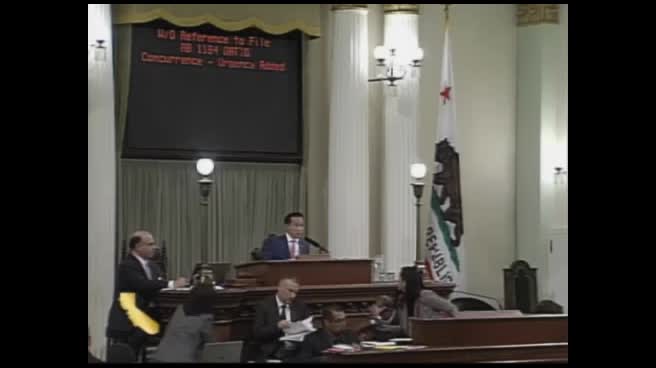 1MIN
Assembly Floor
 3MIN
Senate Floor
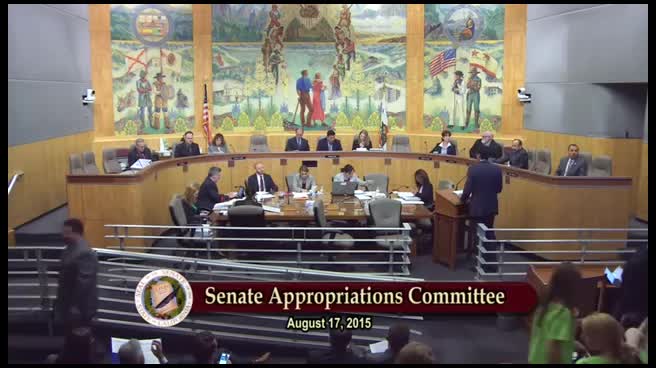 17SEC
Senate Standing Committee on Appropriations
 17MIN
Senate Standing Committee on Governance and Finance
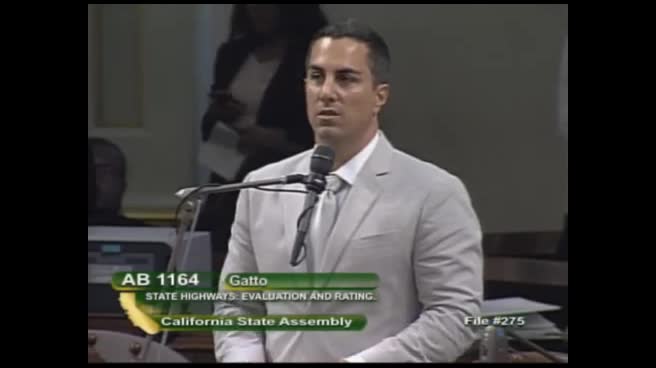 38SEC
Assembly Floor
 2MIN
Assembly Standing Committee on Transportation
Bill Author


