AB 1174: Automotive Repair Act: violations: regulations: reports.
- Session Year: 2015-2016
- House: Assembly
- Latest Version Date: 2016-08-31
The Automotive Repair Act provides for the licensure and regulation of automotive repair dealers, among others, by the Chief of the Bureau of Automotive Repair under the supervision and control of the Director of Consumer Affairs. The act requires the director, on the directors initiative or in response to a complaint, to investigate a violation of the act, or of any regulation adopted pursuant to the act, by any automotive repair dealer, automotive technician, or employee, partner, officer, or member of any automotive repair dealer. The act authorizes the director to adopt and enforce the rules and regulations that the director determines are reasonably necessary to carry out the purposes of the act and declaring the policy of the bureau, including a system for the issuance of citations pursuant to a specified law. The act, except as specified, makes a violation of any requirement of the act by any person punishable as a misdemeanor.
This bill would clarify that the specified law under which the director may adopt and enforce rules and regulations under the Automotive Repair Act authorizes any board, bureau, or commission within the Department of Consumer Affairs to establish, by regulation, a system for the issuance to a licensee of a citation when the licensee is in violation of the applicable licensing act or any regulation adopted pursuant thereto.
This bill would, with certain exceptions, require the bureau to adopt regulations regarding the bureaus policies and procedures for handling complaints, investigations, and all the bureaus methods of resolution, as specified. The bill would require the bureau to post on its Internet Web site the regulations adopted. The bill would require the bureau to track and retain data on every method of resolution attempted and completed by the bureau for each automotive repair dealer, including, but not limited to, the type of complaint being resolved. The bill would require the bureau to submit a report to the Legislature by January 1, 2018, and annually thereafter, that details the bureaus resolution efforts, as specified.
The Automotive Repair Act provides for the licensure and regulation of automotive repair dealers, among others, by the Chief of the Bureau of Automotive Repair under the supervision and control of the Director of Consumer Affairs. The act requires the director, on the directors initiative or in response to a complaint, to investigate a violation of the act, or of any regulation adopted pursuant to the act, by any automotive repair dealer, automotive technician, or employee, partner, officer, or member of any automotive repair dealer. The act authorizes the director to adopt and enforce the rules and regulations that the director determines are reasonably necessary to carry out the purposes of the act and declaring the policy of the bureau, including a system for the issuance of citations pursuant to a specified law. The act, except as specified, makes a violation of any requirement of the act by any person punishable as a misdemeanor.
This bill would clarify that the specified law under which the director may adopt and enforce rules and regulations under the Automotive Repair Act authorizes any board, bureau, or commission within the Department of Consumer Affairs to establish, by regulation, a system for the issuance to a licensee of a citation when the licensee is in violation of the applicable licensing act or any regulation adopted pursuant thereto.
This bill would would, with certain exceptions, require the bureau to adopt regulations regarding the bureaus policies and procedures for handling complaints, investigations, and all the bureaus methods of resolution, as specified. The bill would require the bureau to post on its Internet Web site the regulations adopted. The bill would require the bureau to track and retain data on every method of resolution attempted and completed by the bureau for each automotive repair dealer, including, but not limited to, the type of complaint being resolved. The bill would require the bureau to submit a report to the Legislature by January 1, 2018, and annually thereafter, that details the bureaus resolution efforts, as specified.
The Automotive Repair Act provides for the licensure and regulation of automotive repair dealers, among others, by the Chief of the Bureau of Automotive Repair under the supervision and control of the Director of Consumer Affairs. The act requires the director, on the directors initiative or in response to a complaint, to investigate a violation of the act, or of any regulation adopted pursuant to the act, by any automotive repair dealer, automotive technician, or employee, partner, officer, or member of any automotive repair dealer. The act authorizes the director to adopt and enforce the rules and regulations that the director determines are reasonably necessary to carry out the purposes of the act and declaring the policy of the bureau, including a system for the issuance of citations pursuant to a specified law. The act, except as specified, makes a violation of any requirement of the act by any person punishable as a misdemeanor.
This bill would clarify that the specified law under which the director may adopt and enforce rules and regulations under the Automotive Repair Act authorizes any board, bureau, or commission within the Department of Consumer Affairs to establish, by regulation, a system for the issuance to a licensee of a citation when the licensee is in violation of the applicable licensing act or any regulation adopted pursuant thereto.
This bill would require the bureau to adopt regulations regarding the bureaus policies and procedures for handling complaints, investigations, and mediation, all the bureaus methods of resolution, as specified. The bill would require the bureau to post on its Internet Web site the regulations adopted. The bill would require the bureau to track and retain data on every mediation method of resolution attempted and completed by the bureau for each automotive repair dealer, including, but not limited to, the type of complaint being mediated. resolved. The bill would require the bureau to submit a report to the Legislature by January 1, 2018, and annually thereafter, that details the bureaus mediation proceedings, resolution efforts, as specified.
This bill would require the bureau to post on its Internet Web site the name of an automotive repair dealer that has more than a certain number of complaints, which the bureau has determined are the fault of the automotive repair dealer, filed with the bureau within a certain number of months and would require the bureau to determine by regulation the certain number of complaints and months that are the threshold amount for posting on the bureaus Internet Web site.
This bill would require the bureau to conduct a study on the feasibility, effectiveness, and impact of requiring all service workers who are employed by an automotive repair dealer to be licensed or certified by the bureau and would require the bureau to submit that report to the Legislature by July 1, 2018.
This bill would require the bureau to adopt regulations that require the bureau to issue a citation and administrative fine to an automotive repair dealer that has had more than a certain number of complaints filed against it within a certain number of months or has agreed to pay more than a certain amount in mediation within a certain number of months and would require the bureau to determine by regulation the certain number of complaints, dollar amounts, and months that will be the threshold for that citation and administrative fine. The bill would provide that a violation of those regulations shall not be punished as a misdemeanor.
The Automotive Repair Act provides for the licensure and regulation of automotive repair dealers, among others, by the Chief of the Bureau of Automotive Repair under the supervision and control of the Director of Consumer Affairs. The act requires the director, on the directors initiative or in response to a complaint, to investigate a violation of the act, or of any regulation adopted pursuant to the act, by any automotive repair dealer, automotive technician, or employee, partner, officer, or member of any automotive repair dealer. The act authorizes the director to adopt and enforce the rules and regulations that the director determines are reasonably necessary to carry out the purposes of the act and declaring the policy of the bureau, including a system for the issuance of citations pursuant to a specified law. The act, except as specified, makes a violation of any requirement of the act by any person punishable as a misdemeanor.
This bill would clarify that the specified law under which the director may adopt and enforce rules and regulations under the Automotive Repair Act authorizes any board, bureau, or commission within the Department of Consumer Affairs to establish, by regulation, a system for the issuance to a licensee of a citation when the licensee is in violation of the applicable licensing act or any regulation adopted pursuant thereto. The bill would require the director to publicly post on the bureaus Internet Web site the findings of, and specified information related to, each investigation completed by the director in response to a complaint.
This bill would require the bureau to adopt regulations regarding the bureaus policies and procedures for handling complaints, investigations, and mediation, as specified. The bill would require the bureau to track and retain data on every mediation attempted and completed by the bureau for each automotive repair dealer, including, but not limited to, the type of complaint being mediated. The bill would require the bureau to submit a report to the Legislature by January 1, 2018, and annually thereafter, that details the bureaus mediation proceedings, as specified.
This bill would require the bureau to post on its Internet Web site the name of an automotive repair dealer that has more than a certain number of complaints, which the bureau has determined are the fault of the automotive repair dealer, filed with the bureau within a certain number of months and would require the bureau to determine by regulation the certain number of complaints and months that are the threshold amount for posting on the bureaus Internet Web site.
This bill would require the bureau to conduct a study on the feasibility, effectiveness, and impact of requiring all service workers who are employed by an automotive repair dealer to be licensed or certified by the bureau and would require the bureau to submit that report to the Legislature by July 1, 2018.
This bill would require the bureau to adopt regulations that require the bureau to issue a citation and administrative fine to an automotive repair dealer that has had more than a certain number of complaints filed against it within a certain number of months or has agreed to pay more than a certain amount in mediation within a certain number of months and would require the bureau to determine by regulation the certain number of complaints, dollar amounts, and months that will be the threshold for that citation and administrative fine. The bill would provide that a violation of those regulations shall not be punished as a misdemeanor.
The Automotive Repair Act provides for the licensure and regulation of automotive repair dealers, among others, by the Chief of the Bureau of Automotive Repair under the supervision and control of the Director of Consumer Affairs. The act requires the director, on the directors initiative or in response to a complaint, to investigate a violation of the act, or of any regulation adopted pursuant to the act, by any automotive repair dealer, automotive technician, or employee, partner, officer, or member of any automotive repair dealer. The act authorizes the director to adopt and enforce the rules and regulations that the director determines are reasonably necessary to carry out the purposes of the act and declaring the policy of the bureau, including a system for the issuance of citations pursuant to a specified law.
This bill would clarify that the specified law under which the director may adopt and enforce rules and regulations under the Automotive Repair Act authorizes any board, bureau, or commission within the Department of Consumer Affairs to establish, by regulation, a system for the issuance to a licensee of a citation when the licensee is in violation of the applicable licensing act or any regulation adopted pursuant thereto. The bill would require the director to publicly post on the bureaus Internet Web site the findings of, and specified information related to, each investigation completed by the director in response to a complaint.
Existing law provides for the licensure and regulation of various professions and vocations by boards within the Department of Consumer Affairs. Existing law requires various state licensing boards, including the Medical Board of California and the Board of Psychology, to create and maintain a central file of the names of licensees to provide an individual historical record for each licensee with information on acts of licensee misconduct and discipline, as specified.
This bill would add the California Board of Podiatric Medicine to the list of state licensing boards required to create and maintain such records.
Existing law establishes the Inclusion of Women and Minorities in Clinical Research Act, which requires a grantee, as defined, in conducting or supporting a project of clinical research, as defined, to ensure that women of all ages, and members of minority groups, as defined, are included as subjects in the clinical research projects, except under prescribed circumstances. Existing law also requires state agencies to, and would declare legislative intent that the University of California include in specified progress reports, data on the extent to which state funds administered by state agencies and the University of California are used by grantees for research on diseases, disorders, and health conditions, that includes women and minorities in the research trials, and that studies diseases, disorders, and health conditions of particular concern to women and minorities. Existing law also states the legislative intent that research include, but not be limited to, specified diseases, disorders, and health conditions.
This bill would create the State Contingency Fund for Ancillary Costs and the Ancillary Costs Committee. The bill would authorize the fund to receive private donations. The bill would require the committee to develop grant criteria once a to be determined amount is deposited into the fund. The bill would authorize the committee to award, on a competitive basis, grants to various organizations, to increase patient access to cancer clinical trials.
Existing law imposes various functions and duties on the State Department of Public Health with respect to the administration and oversight of various health programs and facilities relating to the prevention of disease and the promotion of health. The department is required to develop a coordinated state strategy for addressing the health-related needs of women, including implementation of goals and objectives for womens health.
This bill would require the State Department of Public Health to report to the Assembly Committee on Health and the Senate Committee on Health the state strategy, goals established, and progress made toward achieving those goals on or before January 1, 2017, and biennially thereafter. The bill would make related changes.
(a)There is in the Department of Consumer Affairs a Bureau of Automotive Repair under the supervision and control of the director. The duty of enforcing and administering this chapter is vested in the chief who is responsible to the director. The director may adopt and enforce those rules and regulations that he or she determines are reasonably necessary to carry out the purposes of this chapter and declaring the policy of the bureau, including a system for the issuance of citations for violations of this chapter as specified in Section 125.9, which authorizes any board, bureau, or commission within the department to establish, by regulation, a system for the issuance to a licensee of a citation when the licensee is in violation of the applicable licensing act or any regulation adopted pursuant thereto. These rules and regulations shall be adopted pursuant to Chapter 3.5 (commencing with Section 11340) of Part 1 of Division 3 of Title 2 of the Government Code.
(b)Notwithstanding any other law, the powers and duties of the bureau, as set forth in this article and under the Automotive Repair Act, shall be subject to review by the appropriate policy committees of the Legislature. In that review, the bureau shall have the burden of demonstrating a compelling public need for the continued existence of the bureau and its regulatory program, and that its function is the least restrictive regulation consistent with the public health, safety, and welfare. The review shall be performed as if this chapter were scheduled to be repealed as of January 1, 2019.
SEC. 2.Section 9882.6 is added to the Business and Professions Code, to read:9882.6.(a)The bureau shall adopt regulations regarding the bureaus policies and procedures for handling complaints, investigations, and all the bureaus methods of resolution, including, but not limited to, education, training, conferences, and mediation. For purposes of this section, policies and procedures shall not include the bureaus policies and procedures for conducting undercover investigations.
(b)The regulations shall include, but not be limited to, all of the following:
(1)How a complaint is to be filed with the bureau.
(2)How a complaint is to be investigated by the bureau.
(3)How mediation is used by the bureau. The regulations regarding mediation shall clearly identify when mediation is used, how mediation is implemented by the bureau, and how mediation data is collected and reported by the bureau.
(c)The bureau shall post on its Internet Web site all regulations adopted pursuant to the requirements of this section.
SEC. 3.Section 9882.7 is added to the Business and Professions Code, to read:9882.7.(a)The bureau shall track and retain data on every method of resolution attempted and completed by the bureau for each automotive repair dealer, including, but not limited to, all of the following:
(1)The type of complaint being resolved.
(2)The remedy or remedies sought and obtained in resolution, including, but not limited to, restitution, refund, work to be redone at no charge, bill adjustments, returns or exchanges, and the dollar amount of any remedy, if applicable.
(3)The number of complaints where resolution was attempted but where no remedy was reached and the number of complaints where any method of resolution was successful.
(b)The bureau shall submit a report to the Legislature by January 1, 2018, and annually thereafter, that details the bureaus resolution efforts. The report shall include, but not be limited to, the data in subdivision (a).
(c)The report shall be submitted pursuant to Section 9795 of the Government Code.
(d)Method of resolution for purposes of this section includes, but is not limited to, education, training, conferences, and mediation.
(a)There is in the Department of Consumer Affairs a Bureau of Automotive Repair under the supervision and control of the director. The duty of enforcing and administering this chapter is vested in the chief who is responsible to the director. The director may adopt and enforce those rules and regulations that he or she determines are reasonably necessary to carry out the purposes of this chapter and declaring the policy of the bureau, including a system for the issuance of citations for violations of this chapter as specified in Section 125.9, which authorizes any board, bureau, or commission within the department to establish, by regulation, a system for the issuance to a licensee of a citation when the licensee is in violation of the applicable licensing act or any regulation adopted pursuant thereto. These rules and regulations shall be adopted pursuant to Chapter 3.5 (commencing with Section 11340) of Part 1 of Division 3 of Title 2 of the Government Code.
(b)Notwithstanding any other law, the powers and duties of the bureau, as set forth in this article and under the Automotive Repair Act, shall be subject to review by the appropriate policy committees of the Legislature. In that review, the bureau shall have the burden of demonstrating a compelling public need for the continued existence of the bureau and its regulatory program, and that its function is the least restrictive regulation consistent with the public health, safety, and welfare. The review shall be performed as if this chapter were scheduled to be repealed as of January 1, 2019.
SEC. 2.Section 9882.6 is added to the Business and Professions Code, to read:9882.6.(a)The bureau shall adopt regulations regarding the bureaus policies and procedures for handling complaints, investigations, and mediation. and all the bureaus methods of resolution, including, but not limited to, education, training, conferences, and mediation.
(b)The regulations shall include, but not be limited to, all of the following:
(1)How a complaint is to be filed with the bureau.
(2)How a complaint is to be investigated by the bureau.
(3)How mediation is used by the bureau. The regulations regarding mediation shall clearly identify when mediation is used, how mediation is implemented by the bureau, and how mediation data is collected and reported by the bureau.
(c)The bureau shall post on its Internet Web site all regulations adopted pursuant to the requirements of this section.
SEC. 3.Section 9882.7 is added to the Business and Professions Code, to read:9882.7.(a)The bureau shall track and retain data on every mediation method of resolution attempted and completed by the bureau for each automotive repair dealer, including, but not limited to, all of the following:
(1)The type of complaint being mediated. resolved.
(2)The remedy or remedies sought and obtained in mediation, resolution, including, but not limited to, restitution, refund, work to be redone at no charge, bill adjustments, returns or exchanges, and the dollar amount of any remedy, if applicable.
(3)The number of complaints where mediation resolution was attempted but where no remedy was reached and the number of complaints where mediation any method of resolution was successful.
(b)The bureau shall submit a report to the Legislature by January 1, 2018, and annually thereafter, that details the bureaus mediation proceedings. resolution efforts. The report shall include, but not be limited to, the data in subdivision (a).
(c)The report shall be submitted pursuant to Section 9795 of the Government Code.
(d)Method of resolution for purposes of this section includes, but is not limited to, education, training, conferences, and mediation.
SEC. 4.Section 9882.8 is added to the Business and Professions Code, to read:9882.8.(a)The bureau shall post on its Internet Web site the name of an automotive repair dealer that has more than a certain number of complaints, which the bureau has determined are the fault of the automotive repair dealer, filed with the bureau within a certain number of months.
(b)The bureau shall determine by regulation the certain number of complaints and months that are the threshold amount for posting on the bureaus Internet Web site provided for in subdivision (a).
SEC. 5.Section 9882.9 is added to the Business and Professions Code, to read:9882.9.(a)The bureau and the Department of Consumer Affairs shall conduct a study on the feasibility, effectiveness, and impact of requiring all service workers who are employed by an automotive repair dealer to be licensed or certified by the bureau.
(b)The bureau and the department shall submit the study required by this section to the Legislature by July 1, 2018.
(c)The study shall be submitted in compliance with Section 9795 of the Government Code.
SEC. 6.Section 9889.23 is added to the Business and Professions Code, to read:9889.23.(a)The bureau shall adopt regulations that require the bureau to issue a citation and administrative fine to an automotive repair dealer that has had more than a certain number of complaints filed against it within a certain number of months or has agreed to pay more than a certain amount of dollars in mediation within a certain number of months.
(b)The bureau shall determine by regulation the certain number of complaints, dollar amounts, and months that will be the threshold for the citation and administrative fine provided for in subdivision (a).
(c)Notwithstanding any law, violation of the regulations adopted pursuant to this section shall be punished only by a civil administrative fine and shall not be punished as a misdemeanor pursuant to Section 9889.20.
(a)There is in the Department of Consumer Affairs a Bureau of Automotive Repair under the supervision and control of the director. The duty of enforcing and administering this chapter is vested in the chief who is responsible to the director. The director may adopt and enforce those rules and regulations that he or she determines are reasonably necessary to carry out the purposes of this chapter and declaring the policy of the bureau, including a system for the issuance of citations for violations of this chapter as specified in Section 125.9, which authorizes any board, bureau, or commission within the department to establish, by regulation, a system for the issuance to a licensee of a citation when the licensee is in violation of the applicable licensing act or any regulation adopted pursuant thereto. These rules and regulations shall be adopted pursuant to Chapter 3.5 (commencing with Section 11340) of Part 1 of Division 3 of Title 2 of the Government Code.
(b)Notwithstanding any other law, the powers and duties of the bureau, as set forth in this article and under the Automotive Repair Act, shall be subject to review by the appropriate policy committees of the Legislature. In that review, the bureau shall have the burden of demonstrating a compelling public need for the continued existence of the bureau and its regulatory program, and that its function is the least restrictive regulation consistent with the public health, safety, and welfare. The review shall be performed as if this chapter were scheduled to be repealed as of January 1, 2019.
SEC. 2.Section 9882.5 of the Business and Professions Code is amended to read:9882.5.(a)The director shall on his or her own initiative or in response to complaints, investigate on a continuous basis and gather evidence of violations of this chapter and of any regulation adopted pursuant to this chapter, by any automotive repair dealer or automotive technician, whether registered or not, and by any employee, partner, officer, or member of any automotive repair dealer. The director shall establish procedures for accepting complaints from the public against any dealer or automotive technician. The director may suggest measures that, in the directors judgment, would compensate for any damages suffered as a result of an alleged violation. If the dealer accepts the suggestions and performs accordingly, such fact shall be given due consideration in any subsequent disciplinary proceeding.
(b)For each investigation the director completes in response to a complaint pursuant to subdivision (a), the director shall publicly post on the bureaus Internet Web site both of the following:
(1)The findings of the completed investigation.
(2)The name, business address, and, if applicable, the registration type and number, of the investigated automotive repair dealer, automotive technician, or employee, partner, officer, or member of an automotive repair dealer.
SEC. 2.Section 9882.6 is added to the Business and Professions Code, to read:9882.6.(a)The bureau shall adopt regulations regarding the bureaus policies and procedures for handling complaints, investigations, and mediation.
(b)The regulations shall include, but not be limited to, all of the following:
(1)How a complaint is to be filed with the bureau.
(2)How a complaint is to be investigated by the bureau.
(3)How mediation is used by the bureau. The regulations regarding mediation shall clearly identify when mediation is used, how mediation is implemented by the bureau, and how mediation data is collected and reported by the bureau.
SEC. 3.Section 9882.7 is added to the Business and Professions Code, to read:9882.7.(a)The bureau shall track and retain data on every mediation attempted and completed by the bureau for each automotive repair dealer, including, but not limited to, all of the following:
(1)The type of complaint being mediated.
(2)The remedy or remedies sought and obtained in mediation, including, but not limited to, restitution, refund, work to be redone at no charge, bill adjustments, returns or exchanges, and the dollar amount of any remedy, if applicable.
(3)The number of complaints where mediation was attempted but where no remedy was reached and the number of complaints where mediation was successful.
(b)The bureau shall submit a report to the Legislature by January 1, 2018, and annually thereafter, that details the bureaus mediation proceedings. The report shall include, but not be limited to, the data in subdivision (a).
(c)The report shall be submitted pursuant to Section 9795 of the Government Code.
SEC. 4.Section 9882.8 is added to the Business and Professions Code, to read:9882.8.(a)The bureau shall post on its Internet Web site the name of an automotive repair dealer that has more than a certain number of complaints, which the bureau has determined are the fault of the automotive repair dealer, filed with the bureau within a certain number of months.
(b)The bureau shall determine by regulation the certain number of complaints and months that are the threshold amount for posting on the bureaus Internet Web site provided for in subdivision (a).
SEC. 5.Section 9882.9 is added to the Business and Professions Code, to read:9882.9.(a)The bureau and the Department of Consumer Affairs shall conduct a study on the feasibility, effectiveness, and impact of requiring all service workers who are employed by an automotive repair dealer to be licensed or certified by the bureau.
(b)The bureau and the department shall submit the study required by this section to the Legislature by July 1, 2018.
(c)The study shall be submitted in compliance with Section 9795 of the Government Code.
SEC. 6.Section 9889.23 is added to the Business and Professions Code, to read:9889.23.(a)The bureau shall adopt regulations that require the bureau to issue a citation and administrative fine to an automotive repair dealer that has had more than a certain number of complaints filed against it within a certain number of months or has agreed to pay more than a certain amount of dollars in mediation within a certain number of months.
(b)The bureau shall determine by regulation the certain number of complaints, dollar amounts, and months that will be the threshold for the citation and administrative fine provided for in subdivision (a).
(c)Notwithstanding any law, violation of the regulations adopted pursuant to this section shall be punished only by a civil administrative fine and shall not be punished as a misdemeanor pursuant to Section 9889.20.
(a)There is in the Department of Consumer Affairs a Bureau of Automotive Repair under the supervision and control of the director. The duty of enforcing and administering this chapter is vested in the chief who is responsible to the director. The director may adopt and enforce those rules and regulations that he or she determines are reasonably necessary to carry out the purposes of this chapter and declaring the policy of the bureau, including a system for the issuance of citations for violations of this chapter as specified in Section 125.9. 125.9, which authorizes any board, bureau, or commission within the department to establish, by regulation, a system for the issuance to a licensee of a citation when the licensee is in violation of the applicable licensing act or any regulation adopted pursuant thereto. These rules and regulations shall be adopted pursuant to Chapter 3.5 (commencing with Section 11340) of Part 1 of Division 3 of Title 2 of the Government Code.
(b)Notwithstanding any other law, the powers and duties of the bureau, as set forth in this article and under the Automotive Repair Act, shall be subject to review by the appropriate policy committees of the Legislature. In that review, the bureau shall have the burden of demonstrating a compelling public need for the continued existence of the bureau and its regulatory program, and that its function is the least restrictive regulation consistent with the public health, safety, and welfare. The review shall be performed as if this chapter were scheduled to be repealed as of January 1, 2019.
SEC. 2.Section 9882.5 of the Business and Professions Code is amended to read:9882.5.(a)The director shall on his or her own initiative or in response to complaints, investigate on a continuous basis and gather evidence of violations of this chapter and of any regulation adopted pursuant to this chapter, by any automotive repair dealer or automotive technician, whether registered or not, and by any employee, partner, officer, or member of any automotive repair dealer. The director shall establish procedures for accepting complaints from the public against any dealer or automotive technician. The director may suggest measures that, in the directors judgment, would compensate for any damages suffered as a result of an alleged violation. If the dealer accepts the suggestions and performs accordingly, such fact shall be given due consideration in any subsequent disciplinary proceeding.
(b)For each investigation the director completes in response to a complaint pursuant to subdivision (a), the director shall publicly post on the bureaus Internet Web site both of the following:
(1)The findings of the completed investigation.
(2)The name, business address, and, if applicable, the registration type and number, of the investigated automotive repair dealer, automotive technician, or employee, partner, officer, or member of an automotive repair dealer.
SECTION 1.Section 800 of the Business and Professions Code is amended to read:800.(a)The Medical Board of California, the Board of Psychology, the Dental Board of California, the Dental Hygiene Committee of California, the Osteopathic Medical Board of California, the State Board of Chiropractic Examiners, the Board of Registered Nursing, the Board of Vocational Nursing and Psychiatric Technicians of the State of California, the State Board of Optometry, the Veterinary Medical Board, the Board of Behavioral Sciences, the Physical Therapy Board of California, the California State Board of Pharmacy, the Speech-Language Pathology and Audiology and Hearing Aid Dispensers Board, the California Board of Occupational Therapy, the Acupuncture Board, the California Board of Podiatric Medicine, and the Physician Assistant Board shall each separately create and maintain a central file of the names of all persons who hold a license, certificate, or similar authority from that board. Each central file shall be created and maintained to provide an individual historical record for each licensee with respect to the following information:
(1)Any conviction of a crime in this or any other state that constitutes unprofessional conduct pursuant to the reporting requirements of Section 803.
(2)Any judgment or settlement requiring the licensee or his or her insurer to pay any amount of damages in excess of three thousand dollars ($3,000) for any claim that injury or death was proximately caused by the licensees negligence, error or omission in practice, or by rendering unauthorized professional services, pursuant to the reporting requirements of Section 801 or 802.
(3)Any public complaints for which provision is made pursuant to subdivision (b).
(4)Disciplinary information reported pursuant to Section 805, including any additional exculpatory or explanatory statements submitted by the licentiate pursuant to subdivision (f) of Section 805. If a court finds, in a final judgment, that the peer review resulting in the 805 report was conducted in bad faith and the licensee who is the subject of the report notifies the board of that finding, the board shall include that finding in the central file. For purposes of this paragraph, peer review has the same meaning as defined in Section 805.
(5)Information reported pursuant to Section 805.01, including any explanatory or exculpatory information submitted by the licensee pursuant to subdivision (b) of that section.
(b)(1)Each board shall prescribe and promulgate forms on which members of the public and other licensees or certificate holders may file written complaints to the board alleging any act of misconduct in, or connected with, the performance of professional services by the licensee.
(2)If a board, or division thereof, a committee, or a panel has failed to act upon a complaint or report within five years, or has found that the complaint or report is without merit, the central file shall be purged of information relating to the complaint or report.
(3)Notwithstanding this subdivision, the Board of Psychology, the Board of Behavioral Sciences, and the Respiratory Care Board of California shall maintain complaints or reports as long as each board deems necessary.
(c)(1)The contents of any central file that are not public records under any other law shall be confidential except that the licensee involved, or his or her counsel or representative, shall have the right to inspect and have copies made of his or her complete file except for the provision that may disclose the identity of an information source. For the purposes of this section, a board may protect an information source by providing a copy of the material with only those deletions necessary to protect the identity of the source or by providing a comprehensive summary of the substance of the material. Whichever method is used, the board shall ensure that full disclosure is made to the subject of any personal information that could reasonably in any way reflect or convey anything detrimental, disparaging, or threatening to a licensees reputation, rights, benefits, privileges, or qualifications, or be used by a board to make a determination that would affect a licensees rights, benefits, privileges, or qualifications. The information required to be disclosed pursuant to Section 803.1 shall not be considered among the contents of a central file for the purposes of this subdivision.
(2)The licensee may, but is not required to, submit any additional exculpatory or explanatory statement or other information that the board shall include in the central file.
(3)Each board may permit any law enforcement or regulatory agency when required for an investigation of unlawful activity or for licensing, certification, or regulatory purposes to inspect and have copies made of that licensees file, unless the disclosure is otherwise prohibited by law.
(4)These disclosures shall effect no change in the confidential status of these records.
(a)The Medical Board of California, the Board of Psychology, the Dental Board of California, the Dental Hygiene Committee of California, the Osteopathic Medical Board of California, the State Board of Chiropractic Examiners, the Board of Registered Nursing, the Board of Vocational Nursing and Psychiatric Technicians of the State of California, the State Board of Optometry, the Veterinary Medical Board, the Board of Behavioral Sciences, the Physical Therapy Board of California, the California State Board of Pharmacy, the Speech-Language Pathology and Audiology and Hearing Aid Dispensers Board, the California Board of Occupational Therapy, the Acupuncture Board, the California Board of Podiatric Medicine, and the Physician Assistant Board shall each separately create and maintain a central file of the names of all persons who hold a license, certificate, or similar authority from that board. Each central file shall be created and maintained to provide an individual historical record for each licensee with respect to the following information:
(1)Any conviction of a crime in this or any other state that constitutes unprofessional conduct pursuant to the reporting requirements of Section 803.
(2)Any judgment or settlement requiring the licensee or his or her insurer to pay any amount of damages in excess of three thousand dollars ($3,000) for any claim that injury or death was proximately caused by the licensees negligence, error or omission in practice, or by rendering unauthorized professional services, pursuant to the reporting requirements of Section 801 or 802.
(3)Any public complaints for which provision is made pursuant to subdivision (b).
(4)Disciplinary information reported pursuant to Section 805, including any additional exculpatory or explanatory statements submitted by the licentiate pursuant to subdivision (f) of Section 805. If a court finds, in a final judgment, that the peer review resulting in the 805 report was conducted in bad faith and the licensee who is the subject of the report notifies the board of that finding, the board shall include that finding in the central file. For purposes of this paragraph, peer review has the same meaning as defined in Section 805.
(5)Information reported pursuant to Section 805.01, including any explanatory or exculpatory information submitted by the licensee pursuant to subdivision (b) of that section.
(b)(1)Each board shall prescribe and promulgate forms on which members of the public and other licensees or certificate holders may file written complaints to the board alleging any act of misconduct in, or connected with, the performance of professional services by the licensee.
(2)If a board, or division thereof, a committee, or a panel has failed to act upon a complaint or report within five years, or has found that the complaint or report is without merit, the central file shall be purged of information relating to the complaint or report.
(3)Notwithstanding this subdivision, the Board of Psychology, the Board of Behavioral Sciences, and the Respiratory Care Board of California shall maintain complaints or reports as long as each board deems necessary.
(c)(1)The contents of any central file that are not public records under any other provision of law shall be confidential except that the licensee involved, or his or her counsel or representative, shall have the right to inspect and have copies made of his or her complete file except for the provision that may disclose the identity of an information source. For the purposes of this section, a board may protect an information source by providing a copy of the material with only those deletions necessary to protect the identity of the source or by providing a comprehensive summary of the substance of the material. Whichever method is used, the board shall ensure that full disclosure is made to the subject of any personal information that could reasonably in any way reflect or convey anything detrimental, disparaging, or threatening to a licensees reputation, rights, benefits, privileges, or qualifications, or be used by a board to make a determination that would affect a licensees rights, benefits, privileges, or qualifications. The information required to be disclosed pursuant to Section 803.1 shall not be considered among the contents of a central file for the purposes of this subdivision.
(2)The licensee may, but is not required to, submit any additional exculpatory or explanatory statement or other information that the board shall include in the central file.
(3)Each board may permit any law enforcement or regulatory agency when required for an investigation of unlawful activity or for licensing, certification, or regulatory purposes to inspect and have copies made of that licensees file, unless the disclosure is otherwise prohibited by law.
(4)These disclosures shall effect no change in the confidential status of these records.
SECTION 1.The Legislature finds and declares the following:
(a)Almost 50 percent of clinical trial studies do not finish in time due to low patient participation, recruitment and navigation difficulties, and other barriers for patients. Due to economic and socioeconomic circumstances and lack of patient knowledge, clinical oncology trial participation and retention are both very low as they relate to eligible participants.
(b)Overall, only 3 percent of eligible cancer patients participate in clinical trials and of those, only 5 percent of trial participants are from racial or ethnic minority communities.
(c)One barrier that prevents patients from participating in federal Food and Drug Administration clinical trials is finances. Patients cant bear the burden of the ancillary costs of participating, such as airfare, lodging, rental cars, and fuel.
SEC. 2.Section 100240 is added to the Health and Safety Code, to read:100240.The Ancillary Costs Committee is hereby created to be made up of private and public health stakeholders.
SEC. 3.Section 100241 is added to the Health and Safety Code, to read:100241.(a)The State Contingency Fund for Ancillary Costs is hereby created in the State Treasury to be made up of donations from private entities. Moneys in the State Contingency Fund for Ancillary Costs shall, upon appropriation by the Legislature to the committee, be allocated by the committee as provided by Section 100242.
(b)The board shall not use more than 10 percent of funds made available for the grant program for administrative costs.
SEC. 4.Section 100242 is added to the Health and Safety Code, to read:100242.(a)Upon an unspecified amount of moneys being donated to the fund, the committee shall establish a grant program to determine grant parameters and criteria, and to make grant awards.
(b)In order to increase patient access to clinical trials, the committee may award grants from any funds that may be made available pursuant to Section 100241, on a competitive basis, to both of the following:
(1)Public and private research institutions and hospitals that conduct cancer trials approved by the federal Food and Drug Administration approved cancer clinical trials.
(2)A nonprofit organization described in Section 501(c)(3) of the Internal Revenue Code of 1954 which is exempt from income tax under Section 501(a) of that code that specializes in direct patient support for improved clinical trial enrollment and retention.
(c)The funds awarded pursuant to subdivision (b) shall be used for activities to increase patient access to clinical trials, including, but not limited to:
(1)Payment of ancillary costs for patients and caregivers, including, but not limited to:
(A)Airfare during the clinical trial.
(B)Lodging during the clinical trial.
(C)Rental cars during the clinical trial.
(D)Fuel during the clinical trial
(E)Meals during the clinical trial.
(F)Child care costs during the clinical trial.
(2)Patient navigator services or programs.
(3)Education and community outreach.
(4)Patient-friendly technical tools to assist patients in identifying available clinical trials.
SEC. 5.Section 100243 is added to the Health and Safety Code, to read:100243.Grant recipients shall report to the committee to ensure the appropriate use of the funds.
The Legislature finds and declares the following:
(a)Almost 50 percent of clinical trial studies do not finish in time due to low patient participation, recruitment and navigation difficulties, and other barriers for patients. Due to economic and socioeconomic circumstances and lack of patient knowledge, clinical oncology trial participation and retention are both very low as they relate to eligible participants.
(b)Overall, only 3 percent of eligible cancer patients participate in clinical trials and of those, only 5 percent of trial participants are from racial or ethnic minority communities.
(c)One barrier that prevents patients from participating in federal Food and Drug Administration clinical trials is finances. Patients cant bear the burden of the ancillary costs of participating, such as airfare, lodging, rental cars, and fuel.
SEC. 2.Section 100240 is added to the Health and Safety Code, to read:100240.The Ancillary Costs Committee is hereby created to be made up of private and public health stakeholders.
SEC. 3.Section 100241 is added to the Health and Safety Code, to read:100241.(a)The State Contingency Fund for Ancillary Costs is hereby created in the State Treasury to be made up of donations from private entities. Moneys in the State Contingency Fund for Ancillary Costs shall, upon appropriation by the Legislature to the committee, be allocated by the committee as provided by Section 100242.
(b)The board shall not use more than 10 percent of funds made available for the grant program for administrative costs.
SEC. 4.Section 100242 is added to the Health and Safety Code, to read:100242.(a)Upon an unspecified amount of moneys being donated to the fund, the committee shall establish a grant program to determine grant parameters and criteria, and to make grant awards.
(b)In order to increase patient access to clinical trials, the committee may award grants from any funds that may be made available pursuant to Section 100241, on a competitive basis, to both of the following:
(1)Public and private research institutions and hospitals that conduct cancer trials approved by the federal Food and Drug Administration approved cancer clinical trials.
(2)A nonprofit organization described in Section 501(c)(3) of the Internal Revenue Code of 1954 which is exempt from income tax under Section 501(a) of that code that specializes in direct patient support for improved clinical trial enrollment and retention.
(c)The funds awarded pursuant to subdivision (b) shall be used for activities to increase patient access to clinical trials, including, but not limited to:
(1)Payment of ancillary costs for patients and caregivers, including, but not limited to:
(A)Airfare during the clinical trial.
(B)Lodging during the clinical trial.
(C)Rental cars during the clinical trial.
(D)Fuel during the clinical trial
(E)Meals during the clinical trial.
(F)Child care costs during the clinical trial.
(2)Patient navigator services or programs.
(3)Education and community outreach.
(4)Patient-friendly technical tools to assist patients in identifying available clinical trials.
SEC. 5.Section 100243 is added to the Health and Safety Code, to read:100243.Grant recipients shall report to the committee to ensure the appropriate use of the funds.
SECTION 1.Section 137 of the Health and Safety Code is amended to read:137.(a)The State Department of Public Health shall develop a coordinated state strategy for addressing the health-related needs of women, including implementation of goals and objectives for maintaining and improving womens health.
(b)The approved programmatic costs associated with this strategy shall be the responsibility of the State Department of Public Health unless otherwise provided by law.
(c)(1)The State Department of Public Health shall report to the Assembly Committee on Health and the Senate Committee on Health on the state strategy, goals established, and progress made toward achieving those goals. This report shall be submitted on or before January 1, 2017, and biennially thereafter.
(2)Pursuant to Section 10231.5 of the Government Code, the requirement for submitting a report imposed under paragraph (1) is inoperative on January 1, 2021.
(a)The State Department of Public Health shall develop a coordinated state strategy for addressing the health-related needs of women, including implementation of goals and objectives for maintaining and improving womens health.
(b)The approved programmatic costs associated with this strategy shall be the responsibility of the State Department of Public Health unless otherwise provided by law.
(c)(1)The State Department of Public Health shall report to the Assembly Committee on Health and the Senate Committee on Health on the state strategy, goals established, and progress made toward achieving those goals. This report shall be submitted on or before January 1, 2017, and biennially thereafter.
(2)Pursuant to Section 10231.5 of the Government Code, the requirement for submitting a report imposed under paragraph (1) is inoperative on January 1, 2021.
|
Date
|
Status
|
|---|---|
| Aug 18, 2016 | Read third time. Passed. Ordered to the Assembly. (Ayes 36. Noes 0.). |
| Jun 8, 2016 | In committee: Set, first hearing. Hearing canceled at the request of author. |
| Jun 20, 2016 | From committee chair, with author's amendments: Amend, and re-refer to committee. Read second time, amended, and re-referred to Com. on B., P. & E.D. |
| Jun 20, 2016 | In committee: Hearing postponed by committee. |
| Jun 28, 2016 | From committee: Do pass and re-refer to Com. on APPR. (Ayes 9. Noes 0.) (June 27). Re-referred to Com. on APPR. |
| Aug 1, 2016 | From committee: Be placed on second reading file pursuant to Senate Rule 28.8 and be amended. |
| Aug 2, 2016 | Read second time and amended. Ordered to third reading. |
| Aug 18, 2016 | Read third time. Passed. Ordered to the Assembly. |
| Aug 18, 2016 | Read third time. Passed. Ordered to the Assembly. (Ayes 36. Noes 0. Page 5106.). |
| Jun 8, 2016 | From committee chair, with author's amendments: Amend, and re-refer to committee. Read second time, amended, and re-referred to Com. on B., P. & E.D. |
| Aug 19, 2016 | In Assembly. Concurrence in Senate amendments pending. May be considered on or after August 21 pursuant to Assembly Rule 77. |
| Aug 22, 2016 | Joint Rule 62(a), file notice suspended. |
| Aug 22, 2016 | Joint Rule 62(a), file notice suspended. (Page 6006.) |
| Aug 22, 2016 | Re-referred to Com. on B. & P. pursuant to Assembly Rule 77.2. |
| Aug 25, 2016 | From committee: That the Senate amendments be concurred in. (Ayes 16. Noes 0.) (August 24). |
| Aug 30, 2016 | Senate amendments concurred in. To Engrossing and Enrolling. |
| Aug 30, 2016 | Senate amendments concurred in. To Engrossing and Enrolling. (Ayes 79. Noes 0. Page 6420.). |
| Sep 8, 2016 | Enrolled and presented to the Governor at 4 p.m. |
| Jan 4, 2016 | Re-referred to Com. on RLS. |
| Mar 1, 2015 | From printer. May be heard in committee March 31. |
| Mar 2, 2015 | Read first time. |
| Mar 23, 2015 | Referred to Com. on HEALTH. |
| Apr 20, 2015 | From committee chair, with author's amendments: Amend, and re-refer to Com. on HEALTH. Read second time and amended. |
| Apr 21, 2015 | Re-referred to Com. on HEALTH. |
| Apr 23, 2015 | Re-referred to Com. on RLS. pursuant to Assembly Rule 96. |
| Apr 28, 2015 | In committee: Hearing postponed by committee. |
| Jan 4, 2016 | From committee chair, with author's amendments: Amend, and re-refer to Com. on RLS. Read second time and amended. |
| Feb 27, 2015 | Introduced. To print. |
| Jan 5, 2016 | From committee: Be re-referred to Com. on B. & P. Re-referred. (Ayes 11. Noes 0.) (January 5). Re-referred to Com. on B. & P. |
| Jan 12, 2016 | From committee: Do pass and re-refer to Com. on APPR. with recommendation: To Consent Calendar. (Ayes 14. Noes 0.) (January 12). Re-referred to Com. on APPR. |
| Jan 21, 2016 | From committee: Do pass. To Consent Calendar. (Ayes 17. Noes 0.) (January 21). |
| Jan 21, 2016 | Read second time. Ordered to Consent Calendar. |
| Jan 27, 2016 | In Senate. Read first time. To Com. on RLS. for assignment. |
| Jan 27, 2016 | Read third time. Passed. Ordered to the Senate. (Ayes 78. Noes 0. Page 3509.) |
| Feb 4, 2016 | Referred to Com. on B., P. & E.D. |
| Mar 7, 2016 | From committee chair, with author's amendments: Amend, and re-refer to committee. Read second time, amended, and re-referred to Com. on B., P. & E.D. |
|
Date
|
Description
|
Location
|
Votes
|
|
|---|---|---|---|---|
| Aug 30, 2016 | AB 1174 BONILLA Concurrence in Senate Amendments | Assembly Floor |
Passed |
|
| Aug 24, 2016 | With recommendation: That Senate amendments be concurred in. | Assembly Standing Committee on Business and Professions |
Passed |
|
| Aug 18, 2016 | Assembly 3rd Reading AB1174 Bonilla By Hill | Senate Floor |
Passed |
|
| Jun 27, 2016 | Do pass, but first be re-referred to the Committee on [Appropriations] | Senate Standing Committee on Business, Professions and Economic Development |
Passed |
|
| Jan 27, 2016 | AB 1174 BONILLA Consent Calendar Second Day Regular Session | Assembly Floor |
Passed |
|
| Jan 21, 2016 | Do pass. To Consent Calendar. | Assembly Standing Committee on Appropriations |
Passed |
|
| Jan 12, 2016 | Do pass and be re-referred to the Committee on [Appropriations] with recommendation: To Consent Calendar | Assembly Standing Committee on Business and Professions |
Passed |
|
| Jan 5, 2016 | Be re-referred to the Committee on [Business and Professions] | Assembly Standing Committee on Rules |
Passed |
This list shows positions taken on this bill by organizations on the date displayed, which is linked to the original source.
Positions by individuals are not included.
|
Organization
|
Position
|
Date
|
|---|---|---|
| Allstate Insurance Company | ** Support | Aug 18, 2016 |
| Automotive Service Councils Of California | * Support | Jun 27, 2016 |
| California Autobody Association | * Support | Jun 27, 2016 |
| California Automotive Business Coalition | ** Support | Jun 27, 2016 |
| Personal Insurance Federation Of California | * Support | Jun 27, 2016 |
GOVERNOR'S VETO
GV Bill Id:AB 1174
Author:(Bonilla)
As Enrolled Ver:September 8, 2016
2/3 vote
ASSEMBLY: |
| (January 27, 2016) | SENATE: | 36-0 | (August 18, 2016) |
(vote not relevant)
COMMITTEE VOTE: | 16-0 | (August 24, 2016) | RECOMMENDATION: | concur |
(B. & P.)
ASSEMBLY: | 79-0 | (August 30, 2016) |
|
|
|
Original Committee Reference: B. & P.
SUMMARY: Requires the Bureau of Automotive Repair (BAR) to adopt regulations regarding its policies and procedures for handling specified enforcement actions, as specified, requires the BAR to track and retain data on every method of resolution, and requires the BAR to submit a report that details the BAR's resolution efforts to the Legislature by January 1, 2018, and annually thereafter, as specified.
The Senate amendments delete the original contents of this bill and insert the current contents.
FISCAL EFFECT: According to the Senate Appropriations Committee, pursuant to Senate Rule 28.8, negligible state costs.
COMMENTS:
Purpose. This bill is sponsored by the author. According to the author, the "BAR is tasked with overseeing the state's ARDs [automotive repair dealers] and protecting California consumers, but it is unclear what policies and procedures they have in place for handling consumer complaints and their subsequent investigations and resolutions. [This bill] will enhance the transparency of [ARDs] and BAR, improve consumer protection by requiring BAR to adopt regulations, and develop a clear process for handling complaints, investigations and all methods of resolution. In addition, this bill will help ensure a higher standard of business practices in the auto repair industry by requiring BAR to track and retain data on every resolution to a consumer complaint, attempted and completed by BAR."
Background. In February 2016, the National Broadcasting Company (NBC) Bay Area Investigative Unit ran a report which investigated a situation in which a San Jose Midas automobile repair shop covered up damage to a SUV (sport utility vehicle) that fell from a mechanical lift. While the vehicle was elevated by a mechanical lift, the vehicle fell on its side and was significantly damaged. After the shop returned the vehicle, the family noticed several issues and reported the issues to the shop.
According to the NBC report, the shop initially denied that there were any issues. Eventually, whistleblower employees contacted the family and explained that the district manager ordered them to repair the vehicle without informing the family of what happened. The NBC report states that the district manager "confirmed 'the lift malfunctioned' and in a memo to the [family] admitted, there was a 'cover-up,' but [the district manager] denied any involvement and blamed it all on [the] employees."
According to the NBC report, the family filed a complaint with the BAR. However, at the time, discussions with both Midas and the BAR led to no resolution for the family and the family considered suing.
Bureau of Automotive Repair. The BAR is the state agency tasked with enforcing the Automotive Repair Act. Both the Automotive Repair Act and the BAR were established by SB 51 (Beilenson), Chapter 1578, Statutes of 1971. The purpose of the Act is to provide an additional layer of consumer protection from unsafe and unethical automotive repair practices and improve consumer confidence.
The Act protects consumers by establishing various notice and technician competency requirements that ARDs must follow. Those who wish to perform automotive repairs for a fee must register with the BAR and comply with the requirements, which include providing various notices and prohibit incompetent, negligent, and fraudulent practices. The Act makes it a crime, usually a misdemeanor, for failing to register or otherwise fail to comply with the requirements if performing repairs as defined by the Act.
The Act authorizes the BAR to mediate complaints, investigate violations, and take disciplinary action against ARDs and technicians that fail to comply with the Act or the BAR's regulations. The BAR can be viewed as a first line of defense against unfair, deceptive, and harmful practices. The BAR's broad investigatory authority includes the ability to perform interviews, inspect premises, and utilize sting operations.
However, the BAR is an administrative and regulatory agency, not a law enforcement agency. The BAR's statutory authority is limited to administrative fines and various actions related to an ARD's registration. Further, as a state agency, it is required to comply with the due process rights of its registrants, and all registrants are entitled to notice and a hearing when being deprived of a registration.
Still, operating without a registration when required by the Act is a crime. If the BAR finds an egregious case, it is authorized to refer the case to a district attorney or city attorney for prosecution. In addition, consumers may sue for damages.
I am returning Assembly Bill 1174 without my signature.
This bill requires the Bureau of Automotive Repair (Bureau) to adopt regulations regarding its policies and procedures for handling complaints and investigations.
This bill is unnecessary and duplicative of existing practice at the Bureau.
Analysis Prepared by: Vincent Chee / B. & P. / (916) 319-3301 FN: 0005060
CONCURRENCE IN SENATE AMENDMENTS
CSA2 Bill Id:AB 1174
Author:(Bonilla)
As Amended Ver:August 2, 2016
Majority vote
ASSEMBLY: |
| (January 27, 2016) | SENATE: | 36-0 | (August 18, 2016) |
(vote not relevant)
COMMITTEE VOTE: | 16-0 | (August 24, 2016) | RECOMMENDATION: | concur |
(B. & P.)
Original Committee Reference: B. & P.
SUMMARY: Requires the Bureau of Automotive Repair (BAR) to adopt regulations regarding its policies and procedures for handling specified enforcement actions, as specified, requires the BAR to track and retain data on every method of resolution, and requires the BAR to submit a report that details the BAR's resolution efforts to the Legislature by January 1, 2018, and annually thereafter, as specified.
The Senate amendments delete the original contents of this bill and insert the current contents.
FISCAL EFFECT: According to the Senate Appropriations Committee, pursuant to Senate Rule 28.8, negligible state costs.
COMMENTS:
Purpose. This bill is sponsored by the author. According to the author, the "BAR is tasked with overseeing the state's ARDs [automotive repair dealers] and protecting California consumers, but it is unclear what policies and procedures they have in place for handling consumer complaints and their subsequent investigations and resolutions. [This bill] will enhance the transparency of [ARDs] and BAR, improve consumer protection by requiring BAR to adopt regulations, and develop a clear process for handling complaints, investigations and all methods of resolution. In addition, this bill will help ensure a higher standard of business practices in the auto repair industry by requiring BAR to track and retain data on every resolution to a consumer complaint, attempted and completed by BAR."
Background. In February 2016, the National Broadcasting Company (NBC) Bay Area Investigative Unit ran a report which investigated a situation in which a San Jose Midas automobile repair shop covered up damage to a SUV (sport utility vehicle) that fell from a mechanical lift. While the vehicle was elevated by a mechanical lift, the vehicle fell on its side and was significantly damaged. After the shop returned the vehicle, the family noticed several issues and reported the issues to the shop.
According to the NBC report, the shop initially denied that there were any issues. Eventually, whistleblower employees contacted the family and explained that the district manager ordered them to repair the vehicle without informing the family of what happened. The NBC report states that the district manager "confirmed 'the lift malfunctioned' and in a memo to the [family] admitted, there was a 'cover-up,' but [the district manager] denied any involvement and blamed it all on [the] employees."
According to the NBC report, the family filed a complaint with the BAR. However, at the time, discussions with both Midas and the BAR led to no resolution for the family and the family considered suing.
Bureau of Automotive Repair. The BAR is the state agency tasked with enforcing the Automotive Repair Act. Both the Automotive Repair Act and the BAR were established by SB 51 (Beilenson), Chapter 1578, Statutes of 1971. The purpose of the Act is to provide an additional layer of consumer protection from unsafe and unethical automotive repair practices and improve consumer confidence.
The Act protects consumers by establishing various notice and technician competency requirements that ARDs must follow. Those who wish to perform automotive repairs for a fee must register with the BAR and comply with the requirements, which include providing various notices and prohibit incompetent, negligent, and fraudulent practices. The Act makes it a crime, usually a misdemeanor, for failing to register or otherwise fail to comply with the requirements if performing repairs as defined by the Act.
The Act authorizes the BAR to mediate complaints, investigate violations, and take disciplinary action against ARDs and technicians that fail to comply with the Act or the BAR's regulations. The BAR can be viewed as a first line of defense against unfair, deceptive, and harmful practices. The BAR's broad investigatory authority includes the ability to perform interviews, inspect premises, and utilize sting operations.
However, the BAR is an administrative and regulatory agency, not a law enforcement agency. The BAR's statutory authority is limited to administrative fines and various actions related to an ARD's registration. Further, as a state agency, it is required to comply with the due process rights of its registrants, and all registrants are entitled to notice and a hearing when being deprived of a registration.
Still, operating without a registration when required by the Act is a crime. If the BAR finds an egregious case, it is authorized to refer the case to a district attorney or city attorney for prosecution. In addition, consumers may sue for damages.
Analysis Prepared by: Vincent Chee / B. & P. / (916) 319-3301 FN: 0004924
Date of Hearing: August 24, 2016
ASSEMBLY COMMITTEE ON BUSINESS AND PROFESSIONS
Rudy Salas, Chair
ABPCA Bill Id:AB 1174
Author:(Bonilla) – As Amended Ver:August 2, 2016
SUBJECT: Automotive Repair Act: violations: regulations: reports.
SUMMARY: Requires the Bureau of Automotive Repair (BAR) to adopt regulations regarding its policies and procedures for handling specified enforcement actions, requires the BAR to track and retain data on every method of resolution, and requires the BAR to submit a report that details the BAR’s resolution efforts to the Legislature by January 1, 2018, and annually thereafter.
EXISTING LAW:
- Regulates the business of automotive repair under the Automotive Repair Act (Act). (BPC §§ 9880-9889.68)
- Establishes the BAR within the Department of Consumer Affairs (DCA), places the BAR under the supervision and control of the director of the DCA, and vests the duty of enforcing and administering the Act in the BAR’s bureau chief. (Business and Professions Code (BPC) § 9882)
- Defines “automotive repair dealer” (ARD) as a person who, for compensation, engages in the business of repairing or diagnosing malfunctions of motor vehicles.
- Makes it unlawful for any person to be an ARD unless that person is currently registered with the BAR. (BPC § 9884.6)
- Authorizes the BAR to deny, suspend, revoke, or place on probation an ARD’s registration for specified acts or omissions, including failure to comply with the Act, negligence, and fraudulent conduct. (BPC § 9884.7)
- Requires all denial, revocation, and enforcement proceedings to comply with specified due process requirements, including the right to a formal hearing. (BPC §§ 9884.12, 9884.22, 9889.1 - 9889.10)
- Requires the BAR to design and approve a sign that contains specified consumer notices, including the BAR’s website, and must be placed in all ARD locations in a place and manner conspicuous to the public. (BPC § 9884.17)
- Authorizes the BAR to investigate violations of the Act, requires the BAR to establish procedures for accepting complaints from the public, and authorizes the BAR to mediate complaints between consumers and ARDs. (BPC § 9882.5)
- Makes any person who fails to comply with the provisions of the Act guilty of a misdemeanor and punishable by a fine not exceeding one thousand dollars ($1,000), or by imprisonment not exceeding six months, or by both that fine and imprisonment, except as specified. (BPC § 9889.21)
- Authorizes the BAR to file charges with the district attorney or city attorney against an ARD who violates the provisions of the Act or the BAR’s regulations. (BPC § 9884.15)
THIS BILL:
- Requires the BAR to adopt regulations regarding its policies and procedures for handling complaints, investigations, and all methods of resolution, including, education, training, conferences, and mediation. The regulations must include, at a minimum:
- How to file a complaint with the BAR;
- How the BAR investigates a complaint; and,
- How the BAR uses mediation, as specified.
- Specifies that “policies and procedures” do not include the BAR’s policies and procedures for conducting undercover investigations.
- Requires the BAR to post the regulations regarding its policies and procedures on its website.
- Requires the BAR to track and retain data on every method of resolution attempted and completed for each ARD which must include, at a minimum:
- The type of complaint being resolved;
- The remedy or remedies sought and obtained in resolution, as specified; and,
- The number of complaints where resolution was attempted but where no remedy was reached and the number of complaints where mediation was successful.
- Requires the BAR to submit a report to the Legislature, by January 1, 2018, and annually thereafter, that details BAR’s resolution efforts.
- Specifies that “method of resolution” includes, but is not limited to, education, training, conferences, and mediation.
FISCAL EFFECT: According to the Senate Committee on Appropriations, pursuant to Senate Rule 28.8, this bill will result in negligible state costs.
COMMENTS:
Purpose. This bill is sponsored by the author. According to the author, the “BAR is tasked with overseeing the state’s ARDs and protecting California consumers, but it is unclear what policies and procedures they have in place for handling consumer complaints and their subsequent investigations and resolutions. [This bill] will enhance the transparency of [ARDs] and BAR, improve consumer protection by requiring BAR to adopt regulations, and develop a clear process for handling complaints, investigations and all methods of resolution. In addition, this bill will help ensure a higher standard of business practices in the auto repair industry by requiring BAR to track and retain data on every resolution to a consumer complaint, attempted and completed by BAR.”
Background. In February 2016, the National Broadcasting Company (NBC) Bay Area Investigative Unit ran a report which investigated a situation in which a San Jose Midas automobile repair shop covered up damage to a SUV that fell from a mechanical lift. While the vehicle was elevated by a mechanical lift, the vehicle fell on its side and was significantly damaged. After the shop returned the vehicle, the family noticed several issues and reported the issues to the shop.
According to the NBC report, the shop initially denied that there were any issues. Eventually, whistleblower employees contacted the family and explained that the district manager ordered them to repair the vehicle without informing the family of what happened. The NBC report states that the district manager “confirmed ‘the lift malfunctioned’ and in a memo to the [family] admitted, there was a ‘cover-up,’ but [the district manager] denied any involvement and blamed it all on [the] employees.”
According to the NBC report, the family filed a complaint with the BAR. However, at the time, discussions with both Midas and the BAR led to no resolution for the family and the family considered suing.
Bureau of Automotive Repair. The BAR is the state agency tasked with enforcing the Automotive Repair Act. Both the Automotive Repair Act and the BAR were established by SB 51 (Beilenson), Chapter 1578, Statutes of 1971. The purpose of the Act is to provide an additional layer of consumer protection from unsafe and unethical automotive repair practices and improve consumer confidence.
The Act protects consumers by establishing various notice and technician competency requirements that ARDs must follow. Those who wish to perform automotive repairs for a fee must register with the BAR and comply with the requirements, which include providing various notices and prohibit incompetent, negligent, and fraudulent practices. The Act makes it a crime, usually a misdemeanor, for failing to register or otherwise fail to comply with the requirements if performing repairs as defined by the Act.
The Act authorizes the BAR to mediate complaints, investigate violations, and take disciplinary action against ARDs and technicians that fail to comply with the Act or the BAR’s regulations. The BAR can be viewed as a first line of defense against unfair, deceptive, and harmful practices. The BAR’s broad investigatory authority includes the ability to perform interviews, inspect premises, and utilize sting operations.
However, the BAR is an administrative and regulatory agency, not a law enforcement agency. The BAR’s statutory authority is limited to administrative fines and various actions related to an ARD’s registration. Further, as a state agency, it is required to comply with the due process rights of its registrants, and all registrants are entitled to notice and a hearing when being deprived of a registration.
Still, operating without a registration when required by the Act is a crime. If the BAR finds an egregious case, it is authorized to refer the case to a district attorney or city attorney for prosecution. In addition, consumers may sue for damages.
ARGUMENTS IN SUPPORT:
The Allstate Insurance Company, Personal Insurance Federation of California, and the Association of California Insurance Companies similarly write in support that this bill will enhance transparency and improve consumer protections.
ARGUMENTS IN OPPOSITION:
None on file.
REGISTERED SUPPORT:
Allstate Insurance Company
The Association of California Insurance Companies
The Personal Insurance Federation of California
REGISTERED OPPOSITION:
None on file.
Analysis Prepared by: Vincent Chee / B. & P. / (916) 319-3301
CONCURRENCE IN SENATE AMENDMENTS
CSA1 Bill Id:AB 1174
Author:(Bonilla)
As Amended Ver:August 2, 2016
Majority vote
ASSEMBLY: |
| (January 27, 2016) | SENATE: | 36-0 | (August 18, 2016) |
(vote not relevant)
Original Committee Reference: B. & P.
SUMMARY: Requires the Bureau of Automotive Repair (BAR) to adopt regulations regarding its policies and procedures for handling complaints, investigations, and all the BAR's methods of resolution, as specified; requires BAR to post the policies and procedures on its website; requires BAR to track and retain data on every method of resolution attempted and completed for each automotive repair dealer (ARD); requires BAR to submit a report to the Legislature, by January 1, 2018, that details BAR's resolution efforts, as specified.
The Senate amendments delete the Assembly version of this bill, and instead:
- Requires BAR to adopt regulations regarding its policies and procedures for handling complaints, investigations, and all the BAR's methods of resolution, including, but not limited to, education, training, conferences, and mediation. The regulations include, but are not limited to, the following:
- How a complaint is to be filed with BAR;
- How a complaint is to be investigated by BAR; and,
- How mediation is used by BAR. Requires the regulations regarding mediation clearly identify when mediation is used, how mediation is implemented by BAR, and how mediation data is collected and reported by BAR.
- Requires BAR to post on its website the policies and procedures mentioned in 1) above.
- Requires BAR to track and retain data on every method of resolution attempted and completed for each ARD, including, but not limited to, the following:
- The type of complaint being resolved;
- The remedy or remedies sought and obtained in resolution, including, but not limited to, restitution, refund, work to be redone at no charge, bill adjustments, returns or exchanges, and the dollar amount of any remedy, if applicable; and,
- The number of complaints where resolution was attempted but where no remedy was reached and the number of complaints where mediation was successful.
- Requires BAR to submit a report to the Legislature, by January 1, 2018, that details BAR's resolution efforts. Requires BAR to report the data collected in Item 3) above.
- Defines "method of resolution" to include, but not be limited to, education, training, conferences, and mediation.
FISCAL EFFECT: According to the Senate Appropriations Committee, pursuant to Senate Rule 28.8, this bill will result in negligible state costs.
COMMENTS:
Purpose. This bill is sponsored by the author. According to the author, "[The] BAR receives approximately 15,000 consumer complaints involving automotive repair dealers each year. While every complaint results in some form of action by BAR, over 95% of them never result in disciplinary action, such as a citation or fine, and thus are not subject to public disclosure. BAR posts complaints and findings to their website, but only if disciplinary action is taken.
"[This bill] will improve consumer protection and increase the transparency of businesses and state agency by requiring BAR to adopt, and post to their website, regulations regarding the bureau's policies and procedures for handling complaints, investigations and all methods of resolution. In addition, it requires BAR to track and retain data on all attempted and completed resolution efforts for each auto repair dealer and to annually report the data to the Legislature. Lastly, [this bill] clarifies the existing authority of the Director of the Department of Consumer Affairs to expand BAR's citation and fining capabilities, to eliminate bad business practices and create a higher standard in the auto repair industry."
Background. The Bureau of Automotive Repair. The BAR was created by SB 51 (Beilenson), Chapter 1578, Statutes of 1971, which established the BAR within the DCA and codified the Automotive Repair Act (Act). California became the first state in the nation to implement a comprehensive program for the regulation of the automotive repair industry, and creation of the Act was supported by consumers and many organizations in the industry. The primary purpose of the Act was to protect consumers from unethical and illegal behavior by the automotive repair industry, and achieve consumer confidence in the California auto repair industry.
The Act mandated a statewide automotive repair consumer protection program, including the requirement that ARDs be registered and regulated by BAR. The Act also gives BAR the authority to license and regulate official stations and mechanics in the areas of lamp and brake replacement and repair, and smog device inspection and repair. The Act protects consumers by requiring all ARD's, including lamp, brake, and smog stations to: 1) provide written estimates that detail the parts and labor to be provided; 2) obtain authorization from their customers prior to commencing any repair services; 3) provide customers with itemized invoices that detail the parts provided and the labor performed.
The Act further requires BAR to mediate complaints, investigate violations, and take action against ARDs and licensed technicians that fail to comply with the Act or regulations adopted under the Act. BAR has authority to pursue these same consumer protections against both licensed and unlicensed individuals.
BAR licenses and regulates more than 36,000 ARDs, 5,310 Smog Check Test and Repair Stations, 2,140 Smog Check Test Only Stations, 42 Smog Check Repair Only Stations, 4,600 STAR Certified Stations, and 2,104 Brake and Lamp Stations. Individually, BAR licenses some 15,582 Smog Check Inspectors, 9,997 Smog Check Repair Technicians, and 3,125 Brake and Lamp Adjusters.
NBC Bay Area Investigation. In February 2016, the NBC Bay Area Investigative Unit ran a report highlighting how a San Jose Midas covered up damage to an SUV that fell from a mechanical lift. While repairing the car, the car crashed on its side, breaking the right window and piercing the bottom of the vehicle. After returning the vehicle, the family noticed several issues with the car and reported them to the shop. However, discussions with both the Midas and BAR led to no resolution or remedies for the family.
Because the BAR did not take swift action against the ARD, questions were raised about its consumer protection "mission" and ability to discipline a licensee. The Investigative Unit discovered that, "fewer than three percent of the complaints pertaining to auto repairs result in any kind of enforcement action. That's because under state law the BAR has limited authority to issue penalties for violations." Currently, BAR only has citation and fine authority over unlicensed activity and when an ARD is in violation of the state's Smog Check Program. All other complaints are required to go through the typical procedure for handling complaints.
This bill has been introduced to bring more transparency to the public about how BAR handles its complaint and disciplinary proceedings. Additionally, this bill will require BAR to track and retain data on every method of resolution attempted and completed by BAR for each ARD.
This bill was substantially amended in the Senate and the Assembly-approved version of this bill was deleted. This bill, as amended in the Senate, is inconsistent with the Assembly actions and the provisions of this bill, as amended in the Senate, have not been head in an Assembly policy committee.
Analysis Prepared by: Vincent Chee / Gabby Nepomuceno / B. & P. / (916) 319-3301 FN: 0004749
Office of Senate Floor Analyses (916) 651-1520 Fax: (916) 327-4478 | AB |
THIRD READING
Bill No: AB 1174
: 8/2/16
SENATE BUS., PROF. & ECON. DEV. COMMITTEE: 9-0, 6/27/16
AYES: Hill, Bates, Block, Gaines, Galgiani, Hernandez, Jackson, Mendoza, Wieckowski
SENATE APPROPRIATIONS COMMITTEE: Senate Rule 28.8
ASSEMBLY FLOOR: 78-0, 1/27/16 (Consent) - See last page for vote
DIGEST: This bill requires the Bureau of Automotive Repair (BAR or Bureau) to adopt regulations regarding its policies and procedures for handling complaints, investigations, and all the Bureau’s methods of resolution, as specified; requires BAR to post the aforementioned policies and procedures on its Web site; requires BAR to track and retain data on every method of resolution attempted and completed for each automotive repair dealer (ARD); and requires BAR to submit a report to the Legislature, by January 1, 2018, that details BAR’s resolution efforts, as specified.
Existing law:
- Establishes BAR under the supervision and control of the Director of the Department of Consumer Affairs (DCA). (Business and Professions Code (BPC) § 9882)
- Regulates the business of automotive repair and makes it unlawful for any person to be an ARD unless registered with the BAR. (BPC § 9880-9889.68)
- Provides the Director of DCA the authority to suspend, revoke, or place on probation the registration of an ARD, as specified. (BPC § 9884.7)
- Requires an ARD to give the customer a written estimated price for labor and parts necessary for a specific job. Requires that no work be done and no charges accrue before authorization to proceed is obtained by the customer. (BPC § 9884.9)
- Authorizes the Bureau Chief or his/her designee to determine when and against whom a citation will be issued and to issue citations containing orders of abatement and fines against persons who are performing or who have performed services for which a license or registration is required under the statutes and regulations enforced by BAR. (Title 16 California Code of Regulations (CCR) § 3394.42)
This bill:
- Requires BAR to adopt regulations regarding its policies and procedures for handling complaints, investigations, and all the Bureau’s methods of resolution, including, but not limited to, education, training, conferences, and mediation. The regulations include, but are not limited to, the following:
- How a complaint is to be filed with BAR;
- How a complaint is to be investigated by BAR;
- How mediation is used by BAR. Requires the regulations regarding mediation clearly identify when mediation is used, how mediation is implemented by BAR, and how mediation data is collected and reported by BAR.
- Requires BAR to post on its Web site the policies and procedures mentioned in Item #1), above.
- Requires BAR to track and retain data on every method of resolution attempted and completed for each ARD, including, but not limited to, the following:
- The type of complaint being resolved;
- The remedy or remedies sought and obtained in resolution, including, but not limited to, restitution, refund, work to be redone at no charge, bill adjustments, returns or exchanges, and the dollar amount of any remedy, if applicable;
- The number of complaints where resolution was attempted but where no remedy was reached and the number of complaints where mediation was successful.
- Requires BAR to submit a report to the Legislature, by January 1, 2018, that details BAR’s resolution efforts. Requires BAR to report the data collected in Item #3), above.
- Defines “method of resolution” to include, but not be limited to, education, training, conferences, and mediation.
- Clarifies that “policies and procedures” not include the Bureau’s policies and procedures for conducting undercover investigations.
Background
NBC Bay Area Investigation. In February 2016, the NBC Bay Area Investigative Unit ran a report highlighting how a San Jose Midas covered up damage to an SUV that fell from a mechanical lift. While repairing the car, the car crashed on its side, breaking the right window and piercing the bottom of the vehicle. After returning the vehicle, the family noticed several issues with the car and reported them to the shop. However, discussions with both the Midas and BAR led to no resolution or remedies for the family.
Because the BAR did not take swift action against the ARD, questions were raised about its consumer protection “mission” and ability to discipline a licensee. The Investigative Unit discovered that, “fewer than three percent of the complaints pertaining to auto repairs result in any kind of enforcement action. That’s because under state law the BAR has limited authority to issue penalties for violations.” Currently, BAR only has citation and fine authority over unlicensed activity and when an ARD is in violation of the state’s Smog Check Program. All other complaints are required to go through the typical procedure for handling complaints.
Because of this auto shop cover up, this bill has been introduced to bring more transparency to the public about how BAR handles its complaint and disciplinary proceedings. Additionally, this bill will require BAR to track and retain data on every method of resolution attempted and completed by BAR for each ARD.
Comments
The ARD’s position. The Automobile Service Councils of California, the California Autobody Association, and the California Automotive Business Coalition have all take a neutral position on AB 1174.
FISCAL EFFECT: Appropriation: Fiscal Com.: Local:
Allstate Insurance Company
The Association of California Insurance Companies
The Personal Insurance Federation of California
None received
ARGUMENTS IN SUPPORT: The Personal Insurance Federation of California and the Association of California Insurance Companies underscore that, “AB 1174 would make changes to BAR in an effort protect the automotive repair consumer and increase the transparency of automotive repair dealers. The bill would require the BAR adopt regulations regarding the policies and procedures for handling complaints, investigations and all methods of resolution, including education, training, conferences, and mediation, and post to their website these policies and procedures… PIFC and ACIC have a long-standing record of supporting measures that enhance transparency and improves consumer protections. AB 1174 is such a measure.”
ASSEMBLY FLOOR: 78-0, 1/27/16
AYES: Achadjian, Alejo, Travis Allen, Baker, Bigelow, Bloom, Bonilla, Bonta, Brough, Brown, Burke, Calderon, Campos, Chang, Chau, Chávez, Chiu, Chu, Cooley, Cooper, Dababneh, Dahle, Daly, Dodd, Eggman, Frazier, Beth Gaines, Gallagher, Cristina Garcia, Eduardo Garcia, Gatto, Gipson, Gomez, Gonzalez, Gordon, Gray, Grove, Hadley, Harper, Roger Hernández, Holden, Irwin, Jones, Jones-Sawyer, Kim, Lackey, Levine, Linder, Lopez, Low, Maienschein, Mayes, McCarty, Medina, Melendez, Mullin, Nazarian, Obernolte, O'Donnell, Olsen, Patterson, Quirk, Rendon, Ridley-Thomas, Rodriguez, Salas, Santiago, Steinorth, Mark Stone, Thurmond, Ting, Wagner, Waldron, Weber, Wilk, Williams, Wood, Atkins
NO VOTE RECORDED: Mathis
8/3/16 18:17:28
**** END ****
SENATE COMMITTEE ON
BUSINESS, PROFESSIONS AND ECONOMIC DEVELOPMENT
Senator Jerry Hill, Chair
2015 - 2016 Regular
Bill No: AB 1174 Hearing Date: June 27, 2016
Author: | Bonilla | ||
Version: | June 20, 2016 | ||
Urgency: | Fiscal: | ||
Consultant: | |||
Subject: Automotive Repair Act: violations: regulations: reports
SUMMARY: Requires the Bureau of Automotive Repair (BAR or Bureau) to adopt regulations regarding its policies and procedures for handling complaints, investigations, and all the bureau’s methods of resolution, as specified; requires BAR to post the aforementioned policies and procedures on its website; requires BAR to track and retain data on every method of resolution attempted and completed for each automotive repair dealer (ARD); requires BAR to submit a report to the Legislature, by January 1, 2018, that details BAR’s resolution efforts, as specified.
Existing law:
- Establishes BAR under the supervision and control of the Director of the Department of Consumer Affairs (DCA). (Business and Professions Code (BPC) § 9882)
- Regulates the business of automotive repair and makes it unlawful for any person to be an ARD unless registered with the BAR. (BPC § 9880-9889.68)
- Provides the Director of DCA the authority to suspend, revoke, or place on probation the registration of an ARD, as specified. (BPC § 9884.7)
- Requires an ARD to give the customer a written estimated price for labor and parts necessary for a specific job. Requires that no work be done and no charges accrue before authorization to proceed is obtained by the customer. (BPC § 9884.9)
- Authorizes the Bureau Chief or his/her designee to determine when and against whom a citation will be issued and to issue citations containing orders of abatement and fines against persons who are performing or who have performed services for which a license or registration is required under the statutes and regulations enforced by BAR. (Title 16 California Code of Regulations (CCR) § 3394.42)
This bill:
- Requires BAR to adopt regulations regarding its policies and procedures for handling complaints, investigations, and all the bureau’s methods of resolution, including, but not limited to, education, training, conferences, and mediation. The regulations include, but are not limited to, the following:
- How a complaint is to be filed with BAR;
- How a complaint is to be investigated by BAR;
- How mediation is used by BAR. Requires the regulations regarding mediation clearly identify when mediation is used, how mediation is implemented by BAR, and how mediation data is collected and reported by BAR.
- Requires BAR to post on its website the policies and procedures mentioned in Item #1), above.
- Requires BAR to track and retain data on every method of resolution attempted and completed for each ARD, including, but not limited to, the following:
- The type of complaint being resolved;
- The remedy or remedies sought and obtained in resolution, including, but not limited to, restitution, refund, work to be redone at no charge, bill adjustments, returns or exchanges, and the dollar amount of any remedy, if applicable;
- The number of complaints where resolution was attempted but where no remedy was reached and the number of complaints where mediation was successful.
- Requires BAR to submit a report to the Legislature, by January 1, 2018, that details BAR’s resolution efforts. Requires BAR to report the data collected in Item #3), above.
- Defines “method of resolution” to include, but not be limited to, education, training, conferences, and mediation.
FISCAL EFFECT: Unknown. This bill has been keyed “fiscal” by Legislative Counsel. While this bill does have an Assembly Appropriations analysis, this bill now deals with a substantially different subject matter and has not been reviewed by either houses’ Appropriation Committees.
COMMENTS:
- Purpose. The Author is the Sponsor of the bill. According to the Author, “BAR is tasked with overseeing the state’s ARDs and protecting California consumers, but it is unclear what policies and procedures they have in place for handling consumer complaints and their subsequent investigations and resolutions. AB 1174 will enhance the transparency of auto repair dealers and BAR, to improve consumer protection by requiring BAR to adopt regulations, developing a clear process for handling complaints, investigations and all methods of resolution. In addition, this bill will help ensure a higher standard of business practices in the auto repair industry by requiring BAR to track and retain data on every resolution to a consumer complaint, attempted and completed by BAR.”
- The Bureau of Automotive Repair. BAR was created by SB 51 (Beilenson, Chapter 1578, Statutes of 1971) which established BAR within DCA and codified the Automotive Repair Act (Act). California became the first state in the nation to implement a comprehensive program for the regulation of the automotive repair industry, and creation of the Act was supported by consumers and many organizations in the industry. The primary purpose of the Act was to protect consumers from unethical and illegal behavior by the automotive repair industry, and achieve consumer confidence in the California auto repair industry.
The Act mandated a statewide automotive repair consumer protection program, including the requirement that ARDs be registered and regulated by BAR. The Act also gives BAR the authority to license and regulate official stations and mechanics in the areas of lamp and brake replacement and repair, and smog device inspection and repair. The Act protects consumers by requiring all ARD’s, including lamp, brake, and smog stations to: (1) provide written estimates that detail the parts and labor to be provided; (2) obtain authorization from their customers prior to commencing any repair services; (3) provide customers with itemized invoices that detail the parts provided and the labor performed.
The Act further requires BAR to mediate complaints, investigate violations, and take action against ARDs and licensed technicians that fail to comply with the Act or regulations adopted under the Act. BAR has authority to pursue these same consumer protections against both licensed and unlicensed individuals.
BAR licenses and regulates more than 36,000 ARDs, 5,310 Smog Check Test and Repair Stations, 2,140 Smog Check Test Only Stations, 42 Smog Check Repair Only Stations, 4,600 STAR Certified Stations, and 2,104 Brake and Lamp Stations. Individually, BAR licenses some 15,582 Smog Check Inspectors, 9,997 Smog Check Repair Technicians, and 3,125 Brake and Lamp Adjusters.
- NBC Bay Area Investigation. In February 2016, the NBC Bay Area Investigative Unit ran a report highlighting how a San Jose Midas covered up damage to an SUV that fell from a mechanical lift. While repairing the car, the car crashed on its side, breaking the right window and piercing the bottom of the vehicle. After returning the vehicle, the family noticed several issues with the car and reported them to the shop. However, discussions with both the Midas and BAR led to no resolution or remedies for the family.
Because the BAR did not take swift action against the ARD, questions were raised about its consumer protection “mission” and ability to discipline a licensee. The Investigative Unit discovered that, “fewer than three percent of the complaints pertaining to auto repairs result in any kind of enforcement action. That’s because under state law the BAR has limited authority to issue penalties for violations.” Currently, BAR only has citation and fine authority over unlicensed activity and when an ARD is in violation of the state’s Smog Check Program. All other complaints are required to go through the typical procedure for handling complaints.
Because of this auto shop cover up, this bill has been introduced to bring more transparency to the public about how BAR handles its complaint and disciplinary proceedings. Additionally, this bill will require BAR to track and retain data on every method of resolution attempted and completed by BAR for each ARD.
- Arguments in Support. The Personal Insurance Federation of California and
The Association of California Insurance Companies underscore that, “AB 1174 would make changes to BAR in an effort protect the automotive repair consumer and increase the transparency of automotive repair dealers. The bill would require the BAR adopt regulations regarding the policies and procedures for handling complaints, investigations and all methods of resolution, including education, training, conferences, and mediation, and post to their website these policies and procedures… PIFC and ACIC have a long-standing record of supporting measures that enhance transparency and improves consumer protections. AB 1174 is such a measure.”
SUPPORT AND OPPOSITION:
Support:
Allstate Insurance Company
The Association of California Insurance Companies
The Automotive Service Councils of California (Neutral)
The California Autobody Association (Neutral)
The Personal Insurance Federation of California
California Automotive Business Coalition (Neutral)
Opposition:
None on file as of June 21, 2016.
-- END --
Date of Hearing: January 21, 2016
ASSEMBLY COMMITTEE ON APPROPRIATIONS
Jimmy Gomez, Chair
ABPCA Bill Id:AB 1174
Author:(Bonilla) – As Amended Ver:January 4, 2016
Policy Committee: | Business and Professions | Vote: | 14 - 0 |
| |||
|
|
Urgency: No State Mandated Local Program: No Reimbursable: No
SUMMARY:
This bill adds the Board of Podiatric Medicine (BPM) to a list of boards required to create and maintain a database with specified professional licensee information.
FISCAL EFFECT:
Negligible state costs. The BPM already does what the bill requires.
COMMENTS:
- Purpose. The author indicates this author-sponsored bill adds BPM to a list along with other boards, thereby clarifying the BPM's authority to continue current practice.
- Background. The BPM regulates Doctors of Podiatric Medicine. Though functioning semi-independently and under its own professional board, BPM is part of the Medical Board of California (MBC). Because of this association, it is MBC who officially issues licenses to this small specialty group of about 2,000 practitioners upon the "recommendation" of BPM. Thus, it appears that since MBC is already included in the list to which this bill adds BPM, the list already implicitly applies to BPM. This bill would make it explicit, effectively codifying existing practice.
- BPM Sunset Review Pending. Statutes related to the BPM expire January 1, 2017 and it is likely the sunset will be extended through legislation this year through the sunset review process. The sunset review process offers the Legislature the chance to periodically review the functioning of boards and bureaus, and make statutory changes both significant and of a minor and technical nature.
Analysis Prepared by: Lisa Murawski / APPR. / (916) 319-2081
Date of Hearing: January 12, 2016
ASSEMBLY COMMITTEE ON BUSINESS AND PROFESSIONS
Susan Bonilla, Chair
ABPCA Bill Id:AB 1174 (
Author:Bonilla) – As Amended Ver:January 4, 2016
SUBJECT: Healing arts: licensee records
SUMMARY: Requires the Board of Podiatric Medicine (BPM) to create and maintain a database with specified professional licensee information.
EXISTING LAW:
- Establishes the BPM under the Department of Consumer Affairs (DCA) to license and regulate Podiatrists. (Business and Professions Code (BPC) §§ 2000 – 2521)
- Requires the Medical Board of California, the Board of Psychology, the Dental Board of California, the Osteopathic Medical Board of California, the State Board of Chiropractic Examiners, the Board of Registered Nursing, the Board of Vocational Nursing and Psychiatric Technicians, the State Board of Optometry, the Veterinary Medical Board, the Board of Behavioral Sciences, the Physical Therapy Board of California, the California State Board of Pharmacy, the Speech-Language Pathology and Audiology and Hearing Aid Dispensers Board, the California Board of Occupational Therapy, the Acupuncture Board, and the Physician Assistant Board to each separately create and maintain a central file of the names of all persons who hold a license, certificate, or similar authority from that board, as specified.
THIS BILL:
- Adds the BPM to the list of healing arts boards required to create and maintain a central file of the names of all persons who hold a license, certificate, or similar authority from the board.
FISCAL EFFECT: Unknown. This bill is keyed fiscal by the Legislative Counsel.
COMMENTS:
Purpose. This bill is sponsored by the author. According to the author, “[this bill] will add the [BPM] to the list of regulatory entities that are mandated to maintain a database with professional licensee information. This clarifying amendment will specify the [BPM’s] authority to continue current practice and ensure the [BPM’s] continued compliance with the mandate.”
Background. Under existing law, almost all healing arts boards are required, for purposes of professional reporting, to maintain a central file that contains specified licensee information. In general, the information includes relevant convictions, judgments and settlements, complaints, disciplinary information, and information reported pursuant to BPC § 805.01, including any explanatory or exculpatory information submitted by the licensee.
Although the BPM is technically already in compliance given its association with the Medical Board of California, this bill serves to bring the statute into compliance with its current practices.
REGISTERED SUPPORT:
None on file.
REGISTERED OPPOSITION:
None on file.
Analysis Prepared by: Vincent Chee / B. & P. / (916) 319-3301
Discussed in Hearing
 47SEC
Assembly Floor
 2MIN
Assembly Standing Committee on Business and Professions
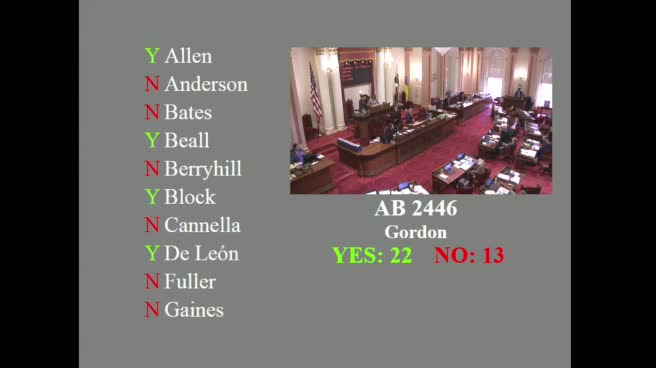 4MIN
Senate Floor
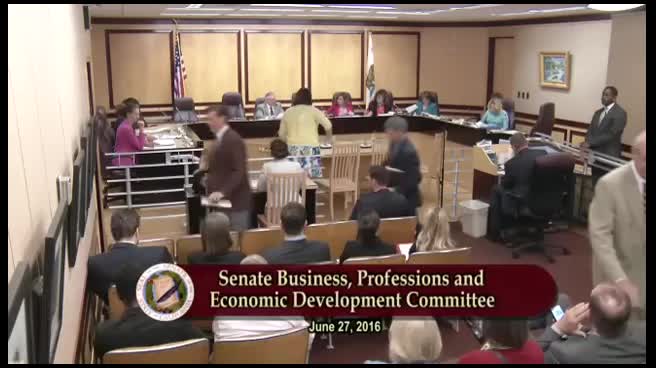 4MIN
Senate Standing Committee on Business, Professions and Economic Development
Bill Author

Bill Co-Author(s):