AB 1176: Theft: firearms.
- Session Year: 2015-2016
- House: Assembly
- Latest Version Date: 2016-07-01
(1)The existing Safe Neighborhoods and Schools Act, enacted as an initiative statute by Proposition 47, as approved by the electors at the November 4, 2014, statewide general election, makes the theft of property that does not exceed $950 in value petty theft, and makes that crime punishable as a misdemeanor, with certain exceptions.
The California Constitution authorizes the Legislature to amend an initiative statute by another statute that becomes effective only when approved by the electors.
This bill would amend that initiative statute by making the theft of a firearm grand theft in all cases and punishable by imprisonment in the state prison for 16 months, or 2 or 3 years.
(2)Under existing law, a person who buys or receives property that has been stolen, knowing the property to be stolen, or who conceals, sells, withholds, or aids in concealing, selling, or withholding property from the owner, knowing the property to be stolen, is guilty of a misdemeanor or a felony, except that if the value of the property does not exceed $950, Proposition 47 makes the offense punishable as a misdemeanor if the defendant has not previously been convicted of one or more specified serious or violent felonies or an offense requiring registration as a sex offender.
This bill would amend that initiative statute by making the buying or receiving of a stolen firearm, with knowledge that the property was stolen, or the concealing, selling, withholding, or aiding in concealing, selling, or withholding of a firearm, with knowledge that the property was stolen, a misdemeanor or a felony.
(3)Existing law generally prohibits a person who has been convicted of certain misdemeanors from possessing a firearm within 10 years of the conviction. Under existing law, a violation of this prohibition is a crime, punishable by imprisonment in a county jail not exceeding one year or in the state prison, by a fine not exceeding $1,000, or by both that imprisonment and fine.
This bill would add to the list of misdemeanors, the conviction for which is subject to the above prohibition on possessing a firearm within 10 years of the conviction, the petty theft of a firearm and the buying, receiving, concealing, selling, withholding, or aiding in concealing, selling, or withholding, of stolen property consisting of a firearm, as specified. Because a violation of this provision would be a crime, this bill would impose a state-mandated local program.
The California Constitution requires the state to reimburse local agencies and school districts for certain costs mandated by the state. Statutory provisions establish procedures for making that reimbursement.
This bill would provide that no reimbursement is required by this act for a specified reason.
(4)This bill would call a special election to be consolidated with the November 8, 2016, statewide general election. This bill would require the Secretary of State to submit the provisions of the bill that amend the initiative statute, as described in (1) and (2) above, to the electors for their approval at the November 8, 2016, consolidated election.
This bill would declare that it is to take effect immediately as an act calling an election.
(1)Existing law establishes the California Alternative and Renewable Fuel, Vehicle Technology, Clean Air, and Carbon Reduction Act of 2007, which includes the Alternative and Renewable Fuel and Vehicle Technology Program, administered by the State Energy Resources Conservation and Development Commission, and the Air Quality Improvement Program, administered by the State Air Resources Board. Existing law requires the emphasis of the Alternative and Renewable Fuel and Vehicle Technology Program to be to develop and deploy technology and alternative and renewable fuels in the marketplace, without adopting any one preferred fuel or technology. Existing law requires the primary purpose of the Air Quality Improvement Program to be the funding of projects to reduce criteria air pollutants, to improve air quality, and to fund research to determine and improve the air quality impacts of alternative transportation fuels and vehicles, vessels, and equipment technologies.
This bill would establish the Advanced Low-Carbon Diesel Fuels Access Program, to be administered by the commission, in consultation with the state board, for the purpose of reducing the greenhouse gas emissions of diesel motor vehicles by providing capital assistance for projects that expand advanced low-carbon diesel fueling infrastructure in communities that are disproportionately impacted by environmental hazards and additionally where the greatest air quality impacts can be identified.
This bill would authorize the commission as part of the Alternative and Renewable Fuel and Vehicle Technology Program to amend a contract, grant, loan, or other agreement or award to extend the terms of that contract, grant, loan, or other agreement or award by 2 years if the moneys are reprioritized by the commission to apply toward a project that provides benefits to disadvantaged communities.
(2)This bill would declare that it is to take effect immediately as an urgency statute.
(1)Existing law establishes the California Alternative and Renewable Fuel, Vehicle Technology, Clean Air, and Carbon Reduction Act of 2007, which includes the Alternative and Renewable Fuel and Vehicle Technology Program, administered by the State Energy Resources Conservation and Development Commission, and the Air Quality Improvement Program, administered by the State Air Resources Board. Existing law requires the emphasis of the Alternative and Renewable Fuel and Vehicle Technology Program to be to develop and deploy technology and alternative and renewable fuels in the marketplace, without adopting any one preferred fuel or technology. Existing law requires the primary purpose of the Air Quality Improvement Program to be the funding of projects to reduce criteria air pollutants, to improve air quality, and to fund research to determine and improve the air quality impacts of alternative transportation fuels and vehicles, vessels, and equipment technologies.
This bill would establish the Advanced Low-Carbon Diesel Fuels Access Program, to be administered by the commission, in consultation with the state board, for the purpose of reducing the greenhouse gas emissions of diesel motor vehicles by providing capital assistance for projects that expand advanced low-carbon diesel fueling infrastructure in communities that are disproportionately impacted by environmental hazards and additionally where the greatest air quality impacts can be identified.
This bill would authorize the commission as part of the Alternative and Renewable Fuel and Vehicle Technology Program, Program to amend a contract, grant, loan, or other agreement or award to extend the terms of that contract, grant, loan, or other agreement or award by 2 years if the moneys are reprioritized by the commission to apply toward a project that provides benefits to disadvantaged communities.
(2)This bill would declare that it is to take effect immediately as an urgency statute.
(1)Existing law establishes the California Alternative and Renewable Fuel, Vehicle Technology, Clean Air, and Carbon Reduction Act of 2007, which includes the Alternative and Renewable Fuel and Vehicle Technology Program, administered by the State Energy Resources Conservation and Development Commission, and the Air Quality Improvement Program, administered by the State Air Resources Board. Existing law requires the emphasis of the Alternative and Renewable Fuel and Vehicle Technology Program to be to develop and deploy technology and alternative and renewable fuels in the marketplace, without adopting any one preferred fuel or technology. Existing law requires the primary purpose of the Air Quality Improvement Program to be the funding of projects to reduce criteria air pollutants, to improve air quality, and to fund research to determine and improve the air quality impacts of alternative transportation fuels and vehicles, vessels, and equipment technologies.
This bill would establish the Advanced Low-Carbon Diesel Fuels Access Program, to be administered by the commission, in consultation with the state board, for the purpose of reducing the greenhouse gas emissions of diesel motor vehicles by providing capital assistance for projects that expand advanced low-carbon diesel fueling infrastructure in communities that are disproportionately impacted by environmental hazards and additionally where the greatest air quality impacts can be identified.
This bill would authorize the commission as part of the Alternative and Renewable Fuel and Vehicle Technology Program, to amend a contract, grant, loan, or other agreement or award to extend the terms of that contract, grant, loan, or other agreement or award by 2 years if the moneys are reprioritized by the commission to apply toward a project that provides benefits to disadvantaged communities.
(2)This bill would declare that it is to take effect immediately as an urgency statute.
(1)Existing law establishes the California Alternative and Renewable Fuel, Vehicle Technology, Clean Air, and Carbon Reduction Act of 2007, which includes the Alternative and Renewable Fuel and Vehicle Technology Program, administered by the State Energy Resources Conservation and Development Commission, and the Air Quality Improvement Program, administered by the State Air Resources Board. Existing law requires the emphasis of the Alternative and Renewable Fuel and Vehicle Technology Program to be to develop and deploy technology and alternative and renewable fuels in the marketplace, without adopting any one preferred fuel or technology. Existing law requires the primary purpose of the Air Quality Improvement Program to be the funding of projects to reduce criteria air pollutants, to improve air quality, and to fund research to determine and improve the air quality impacts of alternative transportation fuels and vehicles, vessels, and equipment technologies.
This bill would establish the Advanced Low-Carbon Diesel Fuels Access Program, to be administered by the commission, in consultation with the state board, for the purpose of reducing the greenhouse gas emissions of diesel motor vehicles by providing capital assistance for projects that expand advanced low-carbon diesel fueling infrastructure in communities that are disproportionately impacted by environmental hazards and additionally where the greatest air quality impacts can be identified.
This bill would require the commission and the state board to allocate no less than 50% of the available moneys under the Alternative and Renewable Fuel and Vehicle Technology Program and the Air Quality Improvement Program to projects that provide direct benefits to or serve or are located in disadvantaged communities.
This bill would authorize the commission as part of the Alternative and Renewable Fuel and Vehicle Technology Program, to amend a contract, grant, loan, or other agreement or award to extend the terms of that contract, grant, loan, or other agreement or award by 2 years if the moneys are reprioritized by the commission to apply toward a project that provides benefits to disadvantaged communities.
(2)The California Global Warming Solutions Act of 2006 designates the State Air Resources Board as the state agency charged with monitoring and regulating sources of emissions of greenhouse gases. The act authorizes the state board to include the use of market-based compliance mechanisms. Existing law requires all moneys, except for fines and penalties, collected by the state board from the auction or sale of allowances as part of a market-based compliance mechanism to be deposited in the Greenhouse Gas Reduction Fund and to be available upon appropriation by the Legislature. Existing law requires the Department of Finance, in consultation with the state board and any other relevant state agency, to develop, as specified, a 3-year investment plan for the moneys deposited in the Greenhouse Gas Reduction Fund.
This bill would appropriate $35,000,000 from the fund to the commission to implement the Advanced Low-Carbon Diesel Fuels Access Program.
(3)
(2)This bill would declare that it is to take effect immediately as an urgency statute.
(1)Existing law establishes the California Alternative and Renewable Fuel, Vehicle Technology, Clean Air, and Carbon Reduction Act of 2007, which includes the Alternative and Renewable Fuel and Vehicle Technology Program, administered by the State Energy Resources Conservation and Development Commission, and the Air Quality Improvement Program, administered by the State Air Resources Board. Existing law requires the emphasis of the Alternative and Renewable Fuel and Vehicle Technology Program to be to develop and deploy technology and alternative and renewable fuels in the marketplace, without adopting any one preferred fuel or technology. Existing law requires the primary purpose of the Air Quality Improvement Program to be the funding of projects to reduce criteria air pollutants, to improve air quality, and to fund research to determine and improve the air quality impacts of alternative transportation fuels and vehicles, vessels, and equipment technologies.
This bill would establish the Advanced Low-Carbon Diesel Fuels Access Program, to be administered by the commission, in consultation with the state board, for the purpose of reducing the greenhouse gas emissions of diesel motor vehicles by providing capital assistance for projects that expand advanced low-carbon diesel fueling infrastructure in communities that are disproportionately impacted by environmental hazards and additionally where the greatest air quality impacts can be identified.
This bill would require the commission and the state board to allocate no less than 50% of the available moneys under the Alternative and Renewable Fuel and Vehicle Technology Program and the Air Quality Improvement Program to projects that provide direct benefits to or serve or are located in disadvantaged communities.
This bill would authorize the commission as part of the Alternative and Renewable Fuel and Vehicle Technology Program, to amend a contract, grant, loan, or other agreement or award to extend the terms of that contract, grant, loan, or other agreement or award by 2 years if the moneys are reprioritized by the commission to apply toward a project that provides benefits to disadvantaged communities.
(2)The California Global Warming Solutions Act of 2006 designates the State Air Resources Board as the state agency charged with monitoring and regulating sources of emissions of greenhouse gases. The act authorizes the state board to include the use of market-based compliance mechanisms. Existing law requires all moneys, except for fines and penalties, collected by the state board from the auction or sale of allowances as part of a market-based compliance mechanism to be deposited in the Greenhouse Gas Reduction Fund and to be available upon appropriation by the Legislature. Existing law requires the Department of Finance, in consultation with the state board and any other relevant state agency, to develop, as specified, a 3-year investment plan for the moneys deposited in the Greenhouse Gas Reduction Fund.
This bill would appropriate $35,000,000 from the fund to the state board commission to implement the Advanced Low-Carbon Diesel Fuels Access Program.
(3)This bill would declare that it is to take effect immediately as an urgency statute.
(1)Existing law establishes the California Alternative and Renewable Fuel, Vehicle Technology, Clean Air, and Carbon Reduction Act of 2007, which includes the Alternative and Renewable Fuel and Vehicle Technology Program, administered by the State Energy Resources Conservation and Development Commission, and the Air Quality Improvement Program, administered by the State Air Resources Board. Existing law requires the emphasis of the Alternative and Renewable Fuel and Vehicle Technology Program to be to develop and deploy technology and alternative and renewable fuels in the marketplace, without adopting any one preferred fuel or technology. Existing law requires the primary purpose of the Air Quality Improvement Program to be the funding of projects to reduce criteria air pollutants, to improve air quality, and to fund research to determine and improve the air quality impacts of alternative transportation fuels and vehicles, vessels, and equipment technologies.
This bill would establish the Advanced Low-Carbon Diesel Fuels Access Program, to be administered by the commission, in consultation with the state board, for the purpose of reducing the greenhouse gas emissions of diesel motor vehicles by providing capital assistance for projects that expand advanced low-carbon diesel fueling infrastructure in communities that are disproportionately impacted by environmental hazards and additionally where the greatest air quality impacts can be identified.
This bill would require the commission and the state board to allocate no less than 50% of the available moneys under the Alternative and Renewable Fuel and Vehicle Technology Program and the Air Quality Improvement Program to projects that provide direct benefits to or serve or are located in disadvantaged communities.
This bill would authorize the commission as part of the Alternative and Renewable Fuel and Vehicle Technology Program, to amend a contract, grant, loan, or other agreement or award to extend the terms of that contract, grant, loan, or other agreement or award by 2 years if the moneys are reprioritized by the commission to apply toward a project that provides benefits to disadvantaged communities.
(2)The California Global Warming Solutions Act of 2006 designates the State Air Resources Board as the state agency charged with monitoring and regulating sources of emissions of greenhouse gases. The act authorizes the state board to include the use of market-based compliance mechanisms. Existing law requires all moneys, except for fines and penalties, collected by the state board from the auction or sale of allowances as part of a market-based compliance mechanism to be deposited in the Greenhouse Gas Reduction Fund and to be available upon appropriation by the Legislature. Existing law requires the Department of Finance, in consultation with the state board and any other relevant state agency, to develop, as specified, a 3-year investment plan for the moneys deposited in the Greenhouse Gas Reduction Fund.
This bill would appropriate $35,000,000 from the fund to the state board to implement the Advanced Low-Carbon Diesel Fuels Access Program.
(3)This bill would declare that it is to take effect immediately as an urgency statute.
(1)Existing law establishes the California Alternative and Renewable Fuel, Vehicle Technology, Clean Air, and Carbon Reduction Act of 2007, which includes the Alternative and Renewable Fuel and Vehicle Technology Program, administered by the State Energy Resources Conservation and Development Commission, and the Air Quality Improvement Program, administered by the State Air Resources Board. Existing law requires the emphasis of the Alternative and Renewable Fuel and Vehicle Technology Program to be to develop and deploy technology and alternative and renewable fuels in the marketplace, without adopting any one preferred fuel or technology. Existing law requires the primary purpose of the Air Quality Improvement Program to be the funding of projects to reduce criteria air pollutants, to improve air quality, and to fund research to determine and improve the air quality impacts of alternative transportation fuels and vehicles, vessels, and equipment technologies.
This bill would establish the Advanced Low-Carbon Diesel Fuels Access Program, to be administered by the state board, for the purpose of reducing greenhouse gas emissions of diesel motor vehicles by providing capital assistance for projects that expand advanced low-carbon diesel fueling infrastructure in communities that are disproportionately impacted by environmental hazards and additionally where the greatest air quality impacts can be identified.
This bill would require the commission and the state board to allocate no less than 50% of the available moneys under the Alternative and Renewable Fuel and Vehicle Technology Program and the Air Quality Improvement Program to projects that provide direct benefits to or serve or are located in disadvantaged communities.
This bill would authorize the commission as part of the Alternative and Renewable Fuel and Vehicle Technology Program, to amend a contract, grant, loan, or other agreement or award to extend the terms of that contract, grant, loan, or other agreement or award by 2 years if the moneys are reprioritized by the commission to apply toward a project that provides benefits to disadvantaged communities.
(2)The California Global Warming Solutions Act of 2006 designates the State Air Resources Board as the state agency charged with monitoring and regulating sources of emissions of greenhouse gases. The act authorizes the state board to include the use of market-based compliance mechanisms. Existing law requires all moneys, except for fines and penalties, collected by the state board from the auction or sale of allowances as part of a market-based compliance mechanism to be deposited in the Greenhouse Gas Reduction Fund and to be available upon appropriation by the Legislature. Existing law requires the Department of Finance, in consultation with the state board and any other relevant state agency, to develop, as specified, a 3-year investment plan for the moneys deposited in the Greenhouse Gas Reduction Fund.
This bill would appropriate $35,000,000 from the fund to the state board to implement the Advanced Low-Carbon Diesel Fuels Access Program.
(3)This bill would declare that it is to take effect immediately as an urgency statute.
(a)In submitting this act to the electors, the Legislature finds and declares all of the following:
(1)The theft of firearms and receipt of stolen firearms pose dangers to public safety that are different in kind from other types of theft or the receipt of other types of stolen property.
(2)Many handguns have a value of less than nine hundred fifty dollars ($950). The threat to public safety in regard to stolen firearms goes above and beyond the monetary value of the firearm.
(3)Given the significant and particular threat to public safety in regard to stolen firearms, it is appropriate to restore the penalties that existed prior to the passage of the Safe Neighborhoods and Schools Act in regard to stolen firearms.
(b)It is not the intent of the Legislature in submitting this act to the electors to undermine the voters decision to decrease penalties for low-level theft and receiving stolen property, only to give the voters the opportunity to decide whether firearm thefts and the receipt of stolen firearms should be subject to the penalties that existed prior to the passage of the Safe Neighborhoods and Schools Act.
SEC. 2.Section 490.2 of the Penal Code is amended to read:490.2.(a)Notwithstanding Section 487 or any other law defining grand theft, except as provided in subdivision (c), obtaining property by theft where the value of the money, labor, real property, or personal property taken does not exceed nine hundred fifty dollars ($950) is petty theft and shall be punished as a misdemeanor, except that the person may instead be punished pursuant to subdivision (h) of Section 1170 if that person has one or more prior convictions for an offense specified in clause (iv) of subparagraph (C) of paragraph (2) of subdivision (e) of Section 667 or for an offense requiring registration pursuant to subdivision (c) of Section 290.
(b)This section does not apply to a theft that may be charged as an infraction pursuant to any other law.
(c)If the property taken is a firearm, the theft is grand theft in all cases, as specified in paragraph (2) of subdivision (d) of Section 487, and is punishable pursuant to subdivision (a) of Section 489.
SEC. 3.Section 496 of the Penal Code is amended to read:496.(a)(1)Every person who buys or receives any property that has been stolen or that has been obtained in any manner constituting theft or extortion, knowing the property to be so stolen or obtained, or who conceals, sells, withholds, or aids in concealing, selling, or withholding any property from the owner, knowing the property to be so stolen or obtained, shall be punished by imprisonment in a county jail for not more than one year, or imprisonment pursuant to subdivision (h) of Section 1170. However, except as provided in subdivision (e), if the value of the property does not exceed nine hundred fifty dollars ($950), the offense is a misdemeanor, punishable only by imprisonment in a county jail not exceeding one year, if the person has no prior convictions for an offense specified in clause (iv) of subparagraph (C) of paragraph (2) of subdivision (e) of Section 667 or for an offense requiring registration pursuant to subdivision (c) of Section 290.
(2)A principal in the actual theft of the property may be convicted pursuant to this section. However, a person may not be convicted both pursuant to this section and of the theft of the same property.
(b)(1)Every swap meet vendor, as defined in Section 21661 of the Business and Professions Code, and every person whose principal business is dealing in, or collecting, merchandise or personal property, and every agent, employee, or representative of that person, who buys or receives property of a value in excess of nine hundred fifty dollars ($950) that has been stolen or obtained in any manner constituting theft or extortion, under circumstances that should cause the person, agent, employee, or representative to make reasonable inquiry to ascertain that the person from whom the property was bought or received had the legal right to sell or deliver it, without making a reasonable inquiry, shall be punished by imprisonment in a county jail for not more than one year, or imprisonment pursuant to subdivision (h) of Section 1170.
(2)Every swap meet vendor, as defined in Section 21661 of the Business and Professions Code, and every person whose principal business is dealing in, or collecting, merchandise or personal property, and every agent, employee, or representative of that person, who buys or receives property of a value of nine hundred fifty dollars ($950) or less that has been stolen or obtained in any manner constituting theft or extortion, under circumstances that should cause the person, agent, employee, or representative to make reasonable inquiry to ascertain that the person from whom the property was bought or received had the legal right to sell or deliver it, without making a reasonable inquiry, shall be guilty of a misdemeanor.
(c)A person who has been injured by a violation of subdivision (a) or (b) may bring an action for three times the amount of actual damages, if any, sustained by the plaintiff, costs of suit, and reasonable attorneys fees.
(d)Notwithstanding Section 664, an attempt to commit any act prohibited by this section, except an offense specified in the accusatory pleading as a misdemeanor, is punishable by imprisonment in a county jail for not more than one year, or by imprisonment pursuant to subdivision (h) of Section 1170.
(e)Notwithstanding subdivision (a), a person who buys or receives a firearm that has been stolen or that has been obtained in any manner constituting theft or extortion, knowing the property to be so stolen or obtained, or who conceals, sells, withholds, or aids in concealing, selling, or withholding a firearm from the owner, knowing the property to be so stolen or obtained, shall be punished by imprisonment in a county jail for not more than one year, or imprisonment pursuant to subdivision (h) of Section 1170.
SEC. 4.Section 29805 of the Penal Code is amended to read:29805.Except as provided in Section 29855 or subdivision (a) of Section 29800, any person who has been convicted of a misdemeanor violation of Section 71, 76, 136.1, 136.5, or 140, subdivision (d) of Section 148, Section 171b, paragraph (1) of subdivision (a) of Section 171c, 171d, 186.28, 240, 241, 242, 243, 243.4, 244.5, 245, 245.5, 246.3, 247, 273.5, 273.6, 417, 417.6, 422, 490.2 if the property taken was a firearm, 496 if the property consists of a firearm, 626.9, 646.9, or 830.95, subdivision (a) of former Section 12100, as that section read at any time from when it was enacted by Section 3 of Chapter 1386 of the Statutes of 1988 to when it was repealed by Section 18 of Chapter 23 of the Statutes of 1994, Section 17500, 17510, 25300, 25800, 30315, or 32625, subdivision (b) or (d) of Section 26100, or Section 27510, or Section 8100, 8101, or 8103 of the Welfare and Institutions Code, any firearm-related offense pursuant to Sections 871.5 and 1001.5 of the Welfare and Institutions Code, or of the conduct punished in subdivision (c) of Section 27590, and who, within 10 years of the conviction, owns, purchases, receives, or has in possession or under custody or control, any firearm is guilty of a public offense, which shall be punishable by imprisonment in a county jail not exceeding one year or in the state prison, by a fine not exceeding one thousand dollars ($1,000), or by both that imprisonment and fine. The court, on forms prescribed by the Department of Justice, shall notify the department of persons subject to this section. However, the prohibition in this section may be reduced, eliminated, or conditioned as provided in Section 29855 or 29860.
SEC. 5.No reimbursement is required by this act pursuant to Section 6 of Article XIIIB of the California Constitution because the only costs that may be incurred by a local agency or school district will be incurred because this act creates a new crime or infraction, eliminates a crime or infraction, or changes the penalty for a crime or infraction, within the meaning of Section 17556 of the Government Code, or changes the definition of a crime within the meaning of Section 6 of Article XIIIB of the California Constitution.
SEC. 6.(a)Sections 2 and 3 of this act amend the Safe Neighborhoods and Schools Act, Proposition 47, an initiative statute, and shall become effective only when submitted to and approved by the voters at a statewide election.
(b)A special election is hereby called, to be held throughout the state on November 8, 2016, for approval by the voters of Sections 2 and 3 of this act. The special election shall be consolidated with the statewide general election to be held on that date. The consolidated election shall be held and conducted in all respects as if there were only one election, and only one form of ballot shall be used.
(c)Notwithstanding the requirements of Sections 9040, 9043, 9044, 9061, 9082, and 9094 of the Elections Code, or any other law, the Secretary of State shall submit Sections 2 and 3 of this act to the voters for their approval at the November 8, 2016, statewide general election.
SEC. 7.This act calls an election within the meaning of Article IV of the Constitution and shall go into immediate effect.
(a)In submitting this act to the electors, the Legislature finds and declares all of the following:
(1)The theft of firearms and receipt of stolen firearms pose dangers to public safety that are different in kind from other types of theft or the receipt of other types of stolen property.
(2)Many handguns have a value of less than nine hundred fifty dollars ($950). The threat to public safety in regard to stolen firearms goes above and beyond the monetary value of the firearm.
(3)Given the significant and particular threat to public safety in regard to stolen firearms, it is appropriate to restore the penalties that existed prior to the passage of the Safe Neighborhoods and Schools Act in regard to stolen firearms.
(b)It is not the intent of the Legislature in submitting this act to the electors to undermine the voters decision to decrease penalties for low-level theft and receiving stolen property, only to give the voters the opportunity to decide whether firearm thefts and the receipt of stolen firearms should be subject to penalties that existed prior to the passage of the Safe Neighborhoods and Schools Act.
SEC. 2.Section 490.2 of the Penal Code is amended to read:490.2.(a)Notwithstanding Section 487 or any other provision of law defining grand theft, except as provided in subdivision (c), obtaining any property by theft where the value of the money, labor, real property, or personal property taken does not exceed nine hundred fifty dollars ($950) shall be considered is petty theft and shall be punished as a misdemeanor, except that such the person may instead be punished pursuant to subdivision (h) of Section 1170 if that person has one or more prior convictions for an offense specified in clause (iv) of subparagraph (C) of paragraph (2) of subdivision (e) of Section 667 or for an offense requiring registration pursuant to subdivision (c) of Section 290.
(b)This section shall does not be applicable apply to any a theft that may be charged as an infraction pursuant to any other provision of law.
(c)If the property taken is a firearm, the theft is grand theft in all cases, as specified in paragraph (2) of subdivision (d) of Section 487, and is punishable pursuant to subdivision (a) of Section 489.
SEC. 3.Section 496 of the Penal Code is amended to read:496.(a)(1)Every person who buys or receives any property that has been stolen or that has been obtained in any manner constituting theft or extortion, knowing the property to be so stolen or obtained, or who conceals, sells, withholds, or aids in concealing, selling, or withholding any property from the owner, knowing the property to be so stolen or obtained, shall be punished by imprisonment in a county jail for not more than one year, or imprisonment pursuant to subdivision (h) of Section 1170. However, except as provided in subdivision (e), if the value of the property does not exceed nine hundred fifty dollars ($950), the offense shall be is a misdemeanor, punishable only by imprisonment in a county jail not exceeding one year, if such the person has no prior convictions for an offense specified in clause (iv) of subparagraph (C) of paragraph (2) of subdivision (e) of Section 667 or for an offense requiring registration pursuant to subdivision (c) of Section 290.
A
(2)A principal in the actual theft of the property may be convicted pursuant to this section. However, no a person may not be convicted both pursuant to this section and of the theft of the same property.
(b)(1)Every swap meet vendor, as defined in Section 21661 of the Business and Professions Code, and every person whose principal business is dealing in, or collecting, merchandise or personal property, and every agent, employee, or representative of that person, who buys or receives any property of a value in excess of nine hundred fifty dollars ($950) that has been stolen or obtained in any manner constituting theft or extortion, under circumstances that should cause the person, agent, employee, or representative to make reasonable inquiry to ascertain that the person from whom the property was bought or received had the legal right to sell or deliver it, without making a reasonable inquiry, shall be punished by imprisonment in a county jail for not more than one year, or imprisonment pursuant to subdivision (h) of Section 1170.
Every
(2)Every swap meet vendor, as defined in Section 21661 of the Business and Professions Code, and every person whose principal business is dealing in, or collecting, merchandise or personal property, and every agent, employee, or representative of that person, who buys or receives any property of a value of nine hundred fifty dollars ($950) or less that has been stolen or obtained in any manner constituting theft or extortion, under circumstances that should cause the person, agent, employee, or representative to make reasonable inquiry to ascertain that the person from whom the property was bought or received had the legal right to sell or deliver it, without making a reasonable inquiry, shall be guilty of a misdemeanor.
(c)Any A person who has been injured by a violation of subdivision (a) or (b) may bring an action for three times the amount of actual damages, if any, sustained by the plaintiff, costs of suit, and reasonable attorneys fees.
(d)Notwithstanding Section 664, any an attempt to commit any act prohibited by this section, except an offense specified in the accusatory pleading as a misdemeanor, is punishable by imprisonment in a county jail for not more than one year, or by imprisonment pursuant to subdivision (h) of Section 1170.
(e)Notwithstanding subdivision (a), a person who buys or receives a firearm that has been stolen or that has been obtained in any manner constituting theft or extortion, knowing the property to be so stolen or obtained, or who conceals, sells, withholds, or aids in concealing, selling, or withholding a firearm from the owner, knowing the property to be so stolen or obtained, shall be punished by imprisonment in a county jail for not more than one year, or imprisonment pursuant to subdivision (h) of Section 1170.
SEC. 4.Section 29805 of the Penal Code is amended to read:29805.Except as provided in Section 29855 or subdivision (a) of Section 29800, any person who has been convicted of a misdemeanor violation of Section 71, 76, 136.1, 136.5, or 140, subdivision (d) of Section 148, Section 171b, paragraph (1) of subdivision (a) of Section 171c, 171d, 186.28, 240, 241, 242, 243, 243.4, 244.5, 245, 245.5, 246.3, 247, 273.5, 273.6, 417, 417.6, 422, 490.2 if the property taken was a firearm, 496 if the property consists of a firearm, 626.9, 646.9, or 830.95, subdivision (a) of former Section 12100, as that section read at any time from when it was enacted by Section 3 of Chapter 1386 of the Statutes of 1988 to when it was repealed by Section 18 of Chapter 23 of the Statutes of 1994, Section 17500, 17510, 25300, 25800, 30315, or 32625, subdivision (b) or (d) of Section 26100, or Section 27510, or Section 8100, 8101, or 8103 of the Welfare and Institutions Code, any firearm-related offense pursuant to Sections 871.5 and 1001.5 of the Welfare and Institutions Code, or of the conduct punished in subdivision (c) of Section 27590, and who, within 10 years of the conviction, owns, purchases, receives, or has in possession or under custody or control, any firearm is guilty of a public offense, which shall be punishable by imprisonment in a county jail not exceeding one year or in the state prison, by a fine not exceeding one thousand dollars ($1,000), or by both that imprisonment and fine. The court, on forms prescribed by the Department of Justice, shall notify the department of persons subject to this section. However, the prohibition in this section may be reduced, eliminated, or conditioned as provided in Section 29855 or 29860.
SEC. 5.No reimbursement is required by this act pursuant to Section 6 of Article XIIIB of the California Constitution because the only costs that may be incurred by a local agency or school district will be incurred because this act creates a new crime or infraction, eliminates a crime or infraction, or changes the penalty for a crime or infraction, within the meaning of Section 17556 of the Government Code, or changes the definition of a crime within the meaning of Section 6 of Article XIIIB of the California Constitution.
SEC. 6.(a)Sections 2 and 3 of this act amend the Safe Neighborhoods and Schools Act, Proposition 47, an initiative statute, and shall become effective only when submitted to and approved by the voters at a statewide election.
(b)A special election is hereby called, to be held throughout the state on November 8, 2016, for approval by the voters of Sections 2 and 3 of this act. The special election shall be consolidated with the statewide general election to be held on that date. The consolidated election shall be held and conducted in all respects as if there were only one election, and only one form of ballot shall be used.
(c)Notwithstanding the requirements of Sections 9040, 9043, 9044, 9061, 9082, and 9094 of the Elections Code, or any other law, the Secretary of State shall submit Sections 2 and 3 of this act to the voters for their approval at the November 8, 2016, statewide general election.
SEC. 7.This act calls an election within the meaning of Article IV of the Constitution and shall go into immediate effect.
All matter omitted in this version of the bill appears in the bill as amended in the Senate, August 18, 2015. (JR11)(a)It is the intent of the Legislature that the California Alternative and Renewable Fuel, Vehicle Technology, Clean Air, and Carbon Reduction Act of 2007 (Chapter 8.9 (commencing with Section 44270) of Part 5 of Division 26 of the Health and Safety Code) continue the states implementation of Assembly Bill 118 (Chapter 750 of the Statutes of 2007) by directing resources to the states most impacted and disadvantaged communities to ensure activities taken pursuant to that authority will provide economic and health benefits to these communities as well.
(b)The Legislature further finds and declares all of the following:
(1)The California Communities Environmental Health Screening Tool, also known as CalEnviroScreen, which was developed by the Office of Environmental Health Hazard Assessment at the request of the California Environmental Protection Agency, is a science-based tool that identifies the California communities most burdened by pollution from multiple sources and most vulnerable to its effects.
(2)Using CalEnviroScreen, the California Environmental Protection Agency has identified the top 25 percent highest-scoring census tracts in the state based on geographic, socioeconomic, public health, and environmental hazard criteria and has designated these most impacted regions of the state as disadvantaged communities.
(3)A significant number of the total identified top 25 percent highest-scoring census tracts of disadvantaged communities are located in the San Joaquin Valley, which is impacted by heavy freight traffic moving along the Interstate 5 and Highway 99 corridors and along Interstate 710, which runs 18 miles from the Ports of Long Beach and Los Angeles to the Pomona Freeway (SR-60) in east Los Angeles and encompasses 15 cities and unincorporated areas in Los Angeles County adjacent to the freeway corridor.
(4)Both regions consistently rate in the top 25 most polluted locations in the United States and frequently exceed by significant amounts the National Ambient Air Quality Standards for ozone and fine particulate matter.
(5)Medium- and heavy-duty diesel vehicles operating on petroleum diesel fuel and traveling along these heavy freight corridors, which are located adjacent to or within many of the states most environmentally impacted disadvantaged communities, are a significant contributor to emissions from greenhouse gases and criteria pollutants.
(6)However, the majority of diesel motor vehicles on the states roads today can immediately reduce their emissions of greenhouse gases, oxides of nitrogen, particulate matter, and other emissions of concern by using low-carbon alternative and renewable biomass-based diesel fuels, such as renewable hydrocarbon diesel and biodiesel.
(7)The states policymakers can facilitate immediate and tangible reductions of greenhouse gas emissions and criteria pollution and amplify near-term health cobenefits to the states most impacted and disadvantaged communities by funding the development and deployment of alternative and renewable fueling infrastructure to facilitate greater access to these advanced low-carbon diesel fuels.
(8)It is the intent of the Legislature to provide the states most impacted and disadvantaged communities with reasonable and cost-effective opportunities to proactively participate in the states greenhouse gas emissions reduction strategies, which can provide immediate benefits in air quality, public health, the environment, and the economy.
SEC. 2.Chapter 8.8 (commencing with Section 44269) is added to Part 5 of Division 26 of the Health and Safety Code, to read:8.8.Advanced Low-Carbon Diesel Fuels Access Program44269.For purposes of this chapter, the following terms have the following meanings:
(a)Commission means the State Energy Resources Conservation and Development Commission.
(b)Disproportionately impacted by environmental hazards means public health or environmental effects from the emission or discharge of substances in a geographic area, including environmental pollution for all sources whether in a single medium or in multiple media, routinely, accidently, or otherwise released into the environment, taking into account sensitive populations and socioeconomic factors, where applicable and to the extent data is available.
(c)Low-carbon diesel fuel means a biomass-based diesel fuel that is used in diesel engines and meets the definition of low-carbon diesel fuel pursuant to the Low Carbon Fuel Standard regulation (Subarticle 7 (commencing with Section 95480) of Article 4 of Subchapter 10 of Chapter 1 of Division 3 of Title 17 of the California Code of Regulations).
(c)Low-carbon diesel fuel means a biomass-based diesel fuel that is used in diesel engines and meets both of the following requirements:
(1)Has a recognized carbon intensity pursuant to the Low Carbon Fuel Standard regulation (Subarticle 7 (commencing with Section 95480) of Article 4 of Subchapter 10 of Chapter 1 of Division 3 of Title 17 of the California Code of Regulations) of at least 50 percent lower than the petroleum diesel baseline carbon intensity value.
(2)Does not produce higher levels of oxides of nitrogen or particulate matter than petroleum diesel fuel.
(d)Low-carbon diesel fueling infrastructure means the equipment used to store and dispense low-carbon diesel fuel to motor vehicles according to industry codes and standards and that is open to the public. Types of eligible equipment include, but are not limited to, storage, loading rack components, tanks, piping, fittings, fuel dispensers, signage, point-of-sale systems, and their associated construction.
44269.2.(a)The Advanced Low-Carbon Diesel Fuels Access Program is hereby established. The commission, in consultation with the state board, shall administer the program for the purpose of reducing the greenhouse gas emissions of diesel motor vehicles by providing capital assistance for projects that expand advanced low-carbon diesel fueling infrastructure in communities that are disproportionately impacted by environmental hazards and where additionally the greatest air quality impacts can be identified.
(b)Moneys shall be available, upon appropriation by the Legislature, from the Greenhouse Gas Reduction Fund, created pursuant to Section 16428.8 of the Government Code, for the purposes of carrying out this chapter.
44269.4.On or before March 1, 2016, the commission shall do both of the following:
(a)Develop guidelines for the implementation of this chapter. The guidelines shall ensure that the program is focused on both of the following:
(1)Communities that are disproportionately impacted by environmental hazards and where the greatest vehicular air pollution impact is identified.
(2)Low-carbon diesel fuels that have approved fuel pathways under pursuant to the Low Carbon Fuel Standard regulations regulation (Subarticle 7 (commencing with Section 95480) of Article 4 of Subchapter 10 of Chapter 1 of Division 3 of Title 17 of the California Code of Regulations).
(b)Select, in consultation with the California Environmental Protection Agency, the disadvantaged communities identified pursuant to Section 39711.
44269.6.(a)In evaluating projects to be allocated moneys pursuant to this chapter, the commission shall give priority to a project with all of the following characteristics:
(1)Occurs in or near communities identified pursuant to Section 39711.
(2)Demonstrates the potential for cobenefits or multibenefit attributes, including reducing significant emissions of criteria pollutants or toxic air contaminants.
(3)Quantifies and measures cost-effectiveness and impacts on disadvantaged and low-income populations.
(4)Demonstrates the ability to leverage additional public or private funding.
(5)Demonstrates the ability to obtain immediate benefits.
(6)Includes marketing and education outreach strategies designed to increase the effectiveness of the programs goals.
(b)A project required to be undertaken pursuant to state, federal, or local laws shall not be allocated moneys pursuant to this chapter.
SEC. 3.Section 44272 of the Health and Safety Code is amended to read:44272.(a)The Alternative and Renewable Fuel and Vehicle Technology Program is hereby created. The program shall be administered by the commission. The commission shall implement the program by regulation pursuant to the requirements of Chapter 3.5 (commencing with Section 11340) of Part 1 of Division 3 of Title 2 of the Government Code. The program shall provide, upon appropriation by the Legislature, competitive grants, revolving loans, loan guarantees, loans, or other appropriate funding measures, to public agencies, vehicle and technology entities, businesses and projects, public-private partnerships, workforce training partnerships and collaboratives, fleet owners, consumers, recreational boaters, and academic institutions to develop and deploy innovative technologies that transform Californias fuel and vehicle types to help attain the states climate change policies. The emphasis of this program shall be to develop and deploy technology and alternative and renewable fuels in the marketplace, without adopting any one preferred fuel or technology.
(b)A project that receives more than seventy-five thousand dollars ($75,000) in funds from the commission shall be approved at a noticed public meeting of the commission and shall be consistent with the priorities established by the investment plan adopted pursuant to Section 44272.5. Under this article, the commission may delegate to the commissions executive director, or his or her designee, the authority to approve either of the following:
(1)A contract, grant, loan, or other agreement or award that receives seventy-five thousand dollars ($75,000) or less in funds from the commission.
(2)Amendments to a contract, grant, loan, or other agreement or award as long as the amendments do not increase the amount of the award, change the scope of the project, or modify the purpose of the agreement.
(c)The commission shall provide preferences to those projects that maximize the goals of the Alternative and Renewable Fuel and Vehicle Technology Program, based on the following criteria, as applicable:
(1)The projects ability to provide a measurable transition from the nearly exclusive use of petroleum fuels to a diverse portfolio of viable alternative fuels that meet petroleum reduction and alternative fuel use goals.
(2)The projects consistency with existing and future state climate change policy and low-carbon fuel standards.
(3)The projects ability to reduce criteria air pollutants and air toxics and reduce or avoid multimedia environmental impacts.
(4)The projects ability to decrease, on a life-cycle basis, the discharge of water pollutants or any other substances known to damage human health or the environment, in comparison to the production and use of California Phase 2 Reformulated Gasoline or diesel fuel produced and sold pursuant to California diesel fuel regulations set forth in Article 2 (commencing with Section 2280) of Chapter 5 of Division 3 of Title 13 of the California Code of Regulations.
(5)The project does not adversely impact the sustainability of the states natural resources, especially state and federal lands.
(6)The project provides nonstate matching funds. Costs incurred from the date a proposed award is noticed may be counted as nonstate matching funds. The commission may adopt further requirements for the purposes of this paragraph. The commission is not liable for costs incurred pursuant to this paragraph if the commission does not give final approval for the project or the proposed recipient does not meet requirements adopted by the commission pursuant to this paragraph.
(7)The project provides economic benefits for California by promoting California-based technology firms, jobs, and businesses.
(8)The project uses existing or proposed fueling infrastructure to maximize the outcome of the project.
(9)The projects ability to reduce on a life-cycle assessment greenhouse gas emissions by at least 10 percent, and higher percentages in the future, from current reformulated gasoline and diesel fuel standards established by the state board.
(10)The projects use of alternative fuel blends of at least 20 percent, and higher blend ratios in the future, with a preference for projects with higher blends.
(11)The project drives new technology advancement for vehicles, vessels, engines, and other equipment, and promotes the deployment of that technology in the marketplace.
(d)The commission shall rank applications for projects proposed for funding awards based on solicitation criteria developed in accordance with subdivision (c), and shall give additional preference to funding those projects with higher benefit-cost scores.
(e)Only the following shall be eligible for funding:
(1)Alternative and renewable fuel projects to develop and improve alternative and renewable low-carbon fuels, including electricity, ethanol, dimethyl ether, renewable diesel, natural gas, hydrogen, and biomethane, among others, and their feedstocks that have high potential for long-term or short-term commercialization, including projects that lead to sustainable feedstocks.
(2)Demonstration and deployment projects that optimize alternative and renewable fuels for existing and developing engine technologies.
(3)Projects to produce alternative and renewable low-carbon fuels in California.
(4)Projects to decrease the overall impact of an alternative and renewable fuels life-cycle carbon footprint and increase sustainability.
(5)Alternative and renewable fuel infrastructure, fueling stations, and equipment. The preference in paragraph (10) of subdivision (c) shall not apply to renewable diesel or biodiesel infrastructure, fueling stations, and equipment used solely for renewable diesel or biodiesel fuel.
(6)Projects to develop and improve light-, medium-, and heavy-duty vehicle technologies that provide for better fuel efficiency and lower greenhouse gas emissions, alternative fuel usage and storage, or emission reductions, including propulsion systems, advanced internal combustion engines with a 40 percent or better efficiency level over the current market standard, lightweight materials, intelligent transportation systems, energy storage, control systems and system integration, physical measurement and metering systems and software, development of design standards and testing and certification protocols, battery recycling and reuse, engine and fuel optimization electronic and electrified components, hybrid technology, plug-in hybrid technology, battery electric vehicle technology, fuel cell technology, and conversions of hybrid technology to plug-in technology through the installation of safety certified supplemental battery modules.
(7)Programs and projects that accelerate the commercialization of vehicles and alternative and renewable fuels including buy-down programs through near-market and market-path deployments, advanced technology warranty or replacement insurance, development of market niches, supply-chain development, and research related to the pedestrian safety impacts of vehicle technologies and alternative and renewable fuels.
(8)Programs and projects to retrofit medium- and heavy-duty onroad and nonroad vehicle fleets with technologies that create higher fuel efficiencies, including alternative and renewable fuel vehicles and technologies, idle management technology, and aerodynamic retrofits that decrease fuel consumption.
(9)Infrastructure projects that promote alternative and renewable fuel infrastructure development connected with existing fleets, public transit, and existing transportation corridors, including physical measurement or metering equipment and truck stop electrification.
(10)Workforce training programs related to alternative and renewable fuel feedstock production and extraction, renewable fuel production, distribution, transport, and storage, high-performance and low-emission vehicle technology and high tower electronics, automotive computer systems, mass transit fleet conversion, servicing, and maintenance, and other sectors or occupations related to the purposes of this chapter.
(11)Block grants or incentive programs administered by public entities or not-for-profit technology entities for multiple projects, education and program promotion within California, and development of alternative and renewable fuel and vehicle technology centers. The commission may adopt guidelines for implementing the block grant or incentive program, which shall be approved at a noticed public meeting of the commission.
(12)Life cycle and multimedia analyses, sustainability and environmental impact evaluations, and market, financial, and technology assessments performed by a state agency to determine the impacts of increasing the use of low-carbon transportation fuels and technologies, and to assist in the preparation of the investment plan and program implementation.
(13)A program to provide funding for homeowners who purchase a plug-in electric vehicle to offset costs associated with modifying electrical sources to include a residential plug-in electric vehicle charging station. In establishing this program, the commission shall consider funding criteria to maximize the public benefit of the program.
(f)The commission may make a single source or sole source award pursuant to this section for applied research. The same requirements set forth in Section 25620.5 of the Public Resources Code shall apply to awards made on a single source basis or a sole source basis. This subdivision does not authorize the commission to make a single source or sole source award for a project or activity other than for applied research.
(g)The commission may do all of the following:
(1)Contract with the Treasurer to expend funds through programs implemented by the Treasurer, if the expenditure is consistent with all of the requirements of this article and Article 1 (commencing with Section 44270).
(2)Contract with small business financial development corporations established by the Governors Office of Business and Economic Development to expend funds through the Small Business Loan Guarantee Program if the expenditure is consistent with all of the requirements of this article and Article 1 (commencing with Section 44270).
(3)Advance funds, pursuant to an agreement with the commission, to any of the following:
(A)A public entity.
(B)A recipient to enable it to make advance payments to a public entity that is a subrecipient of the funds and under a binding and enforceable subagreement with the recipient.
(C)An administrator of a block grant program.
(4)Amend a contract, grant, loan, or other agreement or award to extend the terms of that contract, grant, loan, or other agreement or award by two years if the moneys are reprioritized by the commission to apply toward a project that benefits communities identified pursuant to Section 39711.
SEC. 4.This act is an urgency statute necessary for the immediate preservation of the public peace, health, or safety within the meaning of Article IV of the Constitution and shall go into immediate effect. The facts constituting the necessity are:
To ensure stable funding for programs to reduce vehicular air pollution for the protection of the public health and safety, it is necessary for this act to take effect immediately.
(a)It is the intent of the Legislature that the California Alternative and Renewable Fuel, Vehicle Technology, Clean Air, and Carbon Reduction Act of 2007 (Chapter 8.9 (commencing with Section 44270) of Part 5 of Division 26 of the Health and Safety Code) continue the states implementation of Assembly Bill 118 (Chapter 750 of the Statutes of 2007) by directing resources to the states most impacted and disadvantaged communities to ensure activities taken pursuant to that authority will provide economic and health benefits to these communities as well.
(b)The Legislature further finds and declares all of the following:
(1)The California Communities Environmental Health Screening Tool, also known as CalEnviroScreen, which was developed by the Office of Environmental Health Hazard Assessment at the request of the California Environmental Protection Agency, is a science-based tool that identifies the California communities most burdened by pollution from multiple sources and most vulnerable to its effects.
(2)Using CalEnviroScreen, the California Environmental Protection Agency has identified the top 25 percent highest-scoring census tracts in the state based on geographic, socioeconomic, public health, and environmental hazard criteria and has designated these most impacted regions of the state as disadvantaged communities.
(3)A significant number of the total identified top 25 percent highest-scoring census tracts of disadvantaged communities are located in the San Joaquin Valley, which is impacted by heavy freight traffic moving along the Interstate 5 and Highway 99 corridors and along Interstate 710, which runs 18 miles from the Ports of Long Beach and Los Angeles to the Pomona Freeway (SR-60) in east Los Angeles and encompasses 15 cities and unincorporated areas in Los Angeles County adjacent to the freeway corridor.
(4)Both regions consistently rate in the top 25 most polluted locations in the United States and frequently exceed by significant amounts the National Ambient Air Quality Standards for ozone and fine particulate matter.
(5)Medium- and heavy-duty diesel vehicles operating on petroleum diesel fuel and traveling along these heavy freight corridors, which are located adjacent to or within many of the states most environmentally impacted disadvantaged communities, are a significant contributor to emissions from greenhouse gases and criteria pollutants.
(6)However, the majority of diesel motor vehicles on the states roads today can immediately reduce their emissions of greenhouse gases, oxides of nitrogen, particulate matter, and other emissions of concern by using low-carbon alternative and renewable biomass-based diesel fuels, such as renewable hydrocarbon diesel and low blends of biodiesel.
(7)The states policymakers can facilitate immediate and tangible reductions of greenhouse gas emissions and criteria pollution and amplify near-term health cobenefits to the states most impacted and disadvantaged communities by funding the development and deployment of alternative and renewable fueling infrastructure to facilitate greater access to these advanced low-carbon diesel fuels.
(8)It is the intent of the Legislature to provide the states most impacted and disadvantaged communities with reasonable and cost-effective opportunities to proactively participate in the states greenhouse gas emissions reduction strategies, which can provide immediate benefits in air quality, public health, the environment, and the economy.
SEC. 2.Chapter 8.8 (commencing with Section 44269) is added to Part 5 of Division 26 of the Health and Safety Code, to read:8.8.Advanced Low-Carbon Diesel Fuels Access Program44269.For purposes of this chapter, the following terms have the following meanings:
(a)Commission means the State Energy Resources Conservation and Development Commission.
(b)Disproportionately impacted by environmental hazards means public health or environmental effects from the emission or discharge of substances in a geographic area, including environmental pollution for all sources whether in a single medium or in multiple media, routinely, accidently, or otherwise released into the environment, taking into account sensitive populations and socioeconomic factors, where applicable and to the extent data is available.
(c)Low-carbon diesel fuel means a biomass-based diesel fuel that is used in diesel engines and meets all of the following criteria: the definition of low-carbon diesel fuel pursuant to the Low Carbon Fuel Standard regulation (Subarticle 7 (commencing with Section 95480) of Article 4 of Subchapter 10 of Chapter 1 of Division 3 of Title 17 of the California Code of Regulations).
(1)Meets the definition of low-carbon diesel fuel pursuant to the Low Carbon Fuel Standard regulation (Subarticle 7 (commencing with Section 95480) of Article 4 of Subchapter 10 of Chapter 1 of Division 3 of Title 17 of the California Code of Regulations).
(2)Contains a minimum of 21 percent biomass-based content.
(3)Complies with the Commercialization of Alternative Diesel Fuels regulation (Subarticle 2 (commencing with Section 2293) of Article 3 of Chapter 5 of Division 3 of Title 13 of the California Code of Regulations), once that regulation becomes final.
(4)Has a recognized carbon intensity under the Low Carbon Fuel Standard regulation (Subarticle 7 (commencing with Section 95480) of Article 4 of Subchapter 10 of Chapter 1 of Division 3 of Title 17 of the California Code of Regulations) of at least 50 percent lower than the petroleum diesel baseline carbon intensity valuation.
(5)Does not produce higher levels of oxides of nitrogen or particulate matter than petroleum diesel fuel.
(d)Low-carbon diesel fueling infrastructure means the equipment used to store and dispense low-carbon diesel fuel to motor vehicles according to industry codes and standards and that is open to the public. Types of eligible equipment include, but are not limited to, storage, loading rack components, tanks, piping, fittings, fuel dispensers, signage, point-of-sale systems, and their associated construction.
44269.2.(a)The Advanced Low-Carbon Diesel Fuels Access Program is hereby established. The commission, in consultation with the state board, shall administer the program for the purpose of reducing the greenhouse gas emissions of diesel motor vehicles by providing capital assistance for projects that expand advanced low-carbon diesel fueling infrastructure in communities that are disproportionately impacted by environmental hazards and where additionally the greatest air quality impacts can be identified.
(b)Moneys shall be available, upon appropriation by the Legislature, from the Greenhouse Gas Reduction Fund, created pursuant to Section 16428.8 of the Government Code, for the purposes of carrying out this chapter.
44269.4.On or before March 1, 2016, the commission shall do both of the following:
(a)Develop guidelines for the implementation of this chapter. The guidelines shall ensure that the program is focused on communities both of the following:
(1)Communities that are disproportionately impacted by environmental hazards and where the greatest vehicular air pollution impact is identified.
(2)Low-carbon diesel fuels that have approved fuel pathways under the Low Carbon Fuel Standard regulations (Subarticle 7 (commencing with Section 95480) of Article 4 of Subchapter 10 of Chapter 1 of Division 3 of Title 17 of the California Code of Regulations).
(b)Select, in consultation with the California Environmental Protection Agency, the disadvantaged communities identified pursuant to Section 39711.
44269.6.(a)In evaluating projects to be allocated moneys pursuant to this chapter, the commission shall give priority to a project with all of the following characteristics:
(1)Occurs in or near communities identified pursuant to Section 39711.
(2)Demonstrates the potential for cobenefits or multibenefit attributes, including reducing significant emissions of criteria pollutants or toxic air contaminants.
(3)Quantifies and measures cost-effectiveness and impacts on disadvantaged and low-income populations.
(4)Demonstrates the ability to leverage additional public or private funding.
(5)Demonstrates the ability to obtain immediate benefits.
(6)Includes marketing and education outreach strategies designed to increase the effectiveness of the programs goals.
(b)A project required to be undertaken pursuant to state, federal, or local laws shall not be allocated moneys pursuant to this chapter.
SEC. 3.Section 44272 of the Health and Safety Code is amended to read:44272.(a)The Alternative and Renewable Fuel and Vehicle Technology Program is hereby created. The program shall be administered by the commission. The commission shall implement the program by regulation pursuant to the requirements of Chapter 3.5 (commencing with Section 11340) of Part 1 of Division 3 of Title 2 of the Government Code. The program shall provide, upon appropriation by the Legislature, competitive grants, revolving loans, loan guarantees, loans, or other appropriate funding measures, to public agencies, vehicle and technology entities, businesses and projects, public-private partnerships, workforce training partnerships and collaboratives, fleet owners, consumers, recreational boaters, and academic institutions to develop and deploy innovative technologies that transform Californias fuel and vehicle types to help attain the states climate change policies. The emphasis of this program shall be to develop and deploy technology and alternative and renewable fuels in the marketplace, without adopting any one preferred fuel or technology.
(b)A project that receives more than seventy-five thousand dollars ($75,000) in funds from the commission shall be approved at a noticed public meeting of the commission and shall be consistent with the priorities established by the investment plan adopted pursuant to Section 44272.5. Under this article, the commission may delegate to the commissions executive director, or his or her designee, the authority to approve either of the following:
(1)A contract, grant, loan, or other agreement or award that receives seventy-five thousand dollars ($75,000) or less in funds from the commission.
(2)Amendments to a contract, grant, loan, or other agreement or award as long as the amendments do not increase the amount of the award, change the scope of the project, or modify the purpose of the agreement.
(c)The commission shall provide preferences to those projects that maximize the goals of the Alternative and Renewable Fuel and Vehicle Technology Program, based on the following criteria, as applicable:
(1)The projects ability to provide a measurable transition from the nearly exclusive use of petroleum fuels to a diverse portfolio of viable alternative fuels that meet petroleum reduction and alternative fuel use goals.
(2)The projects consistency with existing and future state climate change policy and low-carbon fuel standards.
(3)The projects ability to reduce criteria air pollutants and air toxics and reduce or avoid multimedia environmental impacts.
(4)The projects ability to decrease, on a life-cycle basis, the discharge of water pollutants or any other substances known to damage human health or the environment, in comparison to the production and use of California Phase 2 Reformulated Gasoline or diesel fuel produced and sold pursuant to California diesel fuel regulations set forth in Article 2 (commencing with Section 2280) of Chapter 5 of Division 3 of Title 13 of the California Code of Regulations.
(5)The project does not adversely impact the sustainability of the states natural resources, especially state and federal lands.
(6)The project provides nonstate matching funds. Costs incurred from the date a proposed award is noticed may be counted as nonstate matching funds. The commission may adopt further requirements for the purposes of this paragraph. The commission is not liable for costs incurred pursuant to this paragraph if the commission does not give final approval for the project or the proposed recipient does not meet requirements adopted by the commission pursuant to this paragraph.
(7)The project provides economic benefits for California by promoting California-based technology firms, jobs, and businesses.
(8)The project uses existing or proposed fueling infrastructure to maximize the outcome of the project.
(9)The projects ability to reduce on a life-cycle assessment greenhouse gas emissions by at least 10 percent, and higher percentages in the future, from current reformulated gasoline and diesel fuel standards established by the state board.
(10)The projects use of alternative fuel blends of at least 20 percent, and higher blend ratios in the future, with a preference for projects with higher blends.
(11)The project drives new technology advancement for vehicles, vessels, engines, and other equipment, and promotes the deployment of that technology in the marketplace.
(d)The commission shall rank applications for projects proposed for funding awards based on solicitation criteria developed in accordance with subdivision (c), and shall give additional preference to funding those projects with higher benefit-cost scores.
(e)Only the following shall be eligible for funding:
(1)Alternative and renewable fuel projects to develop and improve alternative and renewable low-carbon fuels, including electricity, ethanol, dimethyl ether, renewable diesel, natural gas, hydrogen, and biomethane, among others, and their feedstocks that have high potential for long-term or short-term commercialization, including projects that lead to sustainable feedstocks.
(2)Demonstration and deployment projects that optimize alternative and renewable fuels for existing and developing engine technologies.
(3)Projects to produce alternative and renewable low-carbon fuels in California.
(4)Projects to decrease the overall impact of an alternative and renewable fuels life-cycle carbon footprint and increase sustainability.
(5)Alternative and renewable fuel infrastructure, fueling stations, and equipment. The preference in paragraph (10) of subdivision (c) shall not apply to renewable diesel or biodiesel infrastructure, fueling stations, and equipment used solely for renewable diesel or biodiesel fuel.
(6)Projects to develop and improve light-, medium-, and heavy-duty vehicle technologies that provide for better fuel efficiency and lower greenhouse gas emissions, alternative fuel usage and storage, or emission reductions, including propulsion systems, advanced internal combustion engines with a 40 percent or better efficiency level over the current market standard, lightweight materials, intelligent transportation systems, energy storage, control systems and system integration, physical measurement and metering systems and software, development of design standards and testing and certification protocols, battery recycling and reuse, engine and fuel optimization electronic and electrified components, hybrid technology, plug-in hybrid technology, battery electric vehicle technology, fuel cell technology, and conversions of hybrid technology to plug-in technology through the installation of safety certified supplemental battery modules.
(7)Programs and projects that accelerate the commercialization of vehicles and alternative and renewable fuels including buy-down programs through near-market and market-path deployments, advanced technology warranty or replacement insurance, development of market niches, supply-chain development, and research related to the pedestrian safety impacts of vehicle technologies and alternative and renewable fuels.
(8)Programs and projects to retrofit medium- and heavy-duty onroad and nonroad vehicle fleets with technologies that create higher fuel efficiencies, including alternative and renewable fuel vehicles and technologies, idle management technology, and aerodynamic retrofits that decrease fuel consumption.
(9)Infrastructure projects that promote alternative and renewable fuel infrastructure development connected with existing fleets, public transit, and existing transportation corridors, including physical measurement or metering equipment and truck stop electrification.
(10)Workforce training programs related to alternative and renewable fuel feedstock production and extraction, renewable fuel production, distribution, transport, and storage, high-performance and low-emission vehicle technology and high tower electronics, automotive computer systems, mass transit fleet conversion, servicing, and maintenance, and other sectors or occupations related to the purposes of this chapter.
(11)Block grants or incentive programs administered by public entities or not-for-profit technology entities for multiple projects, education and program promotion within California, and development of alternative and renewable fuel and vehicle technology centers. The commission may adopt guidelines for implementing the block grant or incentive program, which shall be approved at a noticed public meeting of the commission.
(12)Life cycle and multimedia analyses, sustainability and environmental impact evaluations, and market, financial, and technology assessments performed by a state agency to determine the impacts of increasing the use of low-carbon transportation fuels and technologies, and to assist in the preparation of the investment plan and program implementation.
(13)A program to provide funding for homeowners who purchase a plug-in electric vehicle to offset costs associated with modifying electrical sources to include a residential plug-in electric vehicle charging station. In establishing this program, the commission shall consider funding criteria to maximize the public benefit of the program.
(f)The commission may make a single source or sole source award pursuant to this section for applied research. The same requirements set forth in Section 25620.5 of the Public Resources Code shall apply to awards made on a single source basis or a sole source basis. This subdivision does not authorize the commission to make a single source or sole source award for a project or activity other than for applied research.
(g)The commission may do all of the following:
(1)Contract with the Treasurer to expend funds through programs implemented by the Treasurer, if the expenditure is consistent with all of the requirements of this article and Article 1 (commencing with Section 44270).
(2)Contract with small business financial development corporations established by the Governors Office of Business and Economic Development to expend funds through the Small Business Loan Guarantee Program if the expenditure is consistent with all of the requirements of this article and Article 1 (commencing with Section 44270).
(3)Advance funds, pursuant to an agreement with the commission, to any of the following:
(A)A public entity.
(B)A recipient to enable it to make advance payments to a public entity that is a subrecipient of the funds and under a binding and enforceable subagreement with the recipient.
(C)An administrator of a block grant program.
(4)Amend a contract, grant, loan, or other agreement or award to extend the terms of that contract, grant, loan, or other agreement or award by two years if the moneys are reprioritized by the commission to apply toward a project that complies with Section 44271.3. benefits communities identified pursuant to Section 39711.
SEC. 4.This act is an urgency statute necessary for the immediate preservation of the public peace, health, or safety within the meaning of Article IV of the Constitution and shall go into immediate effect. The facts constituting the necessity are:
To ensure stable funding for programs to reduce vehicular air pollution for the protection of the public health and safety, it is necessary for this act to take effect immediately.
(a)It is the intent of the Legislature that the California Alternative and Renewable Fuel, Vehicle Technology, Clean Air, and Carbon Reduction Act of 2007 (Chapter 8.9 (commencing with Section 44270) of Part 5 of Division 26 of the Health and Safety Code) continue the states implementation of Assembly Bill 118 (Chapter 750 of the Statutes of 2007) by directing resources to the states most impacted and disadvantaged communities to ensure activities taken pursuant to that authority will provide economic and health benefits to these communities as well.
(b)The Legislature further finds and declares all of the following:
(1)The California Communities Environmental Health Screening Tool, also known as CalEnviroScreen, which was developed by the Office of Environmental Health Hazard Assessment at the request of the California Environmental Protection Agency, is a science-based tool that identifies the California communities most burdened by pollution from multiple sources and most vulnerable to its effects.
(2)Using CalEnviroScreen, the California Environmental Protection Agency has identified the top 25 percent highest-scoring census tracts in the state based on geographic, socioeconomic, public health, and environmental hazard criteria and has designated these most impacted regions of the state as disadvantaged communities.
(3)A significant number of the total identified top 25 percent highest-scoring census tracts of disadvantaged communities are located in the San Joaquin Valley, which is impacted by heavy freight traffic moving along the Interstate 5 and Highway 99 corridors and along Interstate 710, which runs 18 miles from the Ports of Long Beach and Los Angeles to the Pomona Freeway (SR-60) in east Los Angeles and encompasses 15 cities and unincorporated areas in Los Angeles County adjacent to the freeway corridor.
(4)Both regions consistently rate in the top 25 most polluted locations in the United States and frequently exceed by significant amounts the National Ambient Air Quality Standards for ozone and fine particulate matter.
(5)Medium- and heavy-duty diesel vehicles operating on petroleum diesel fuel and traveling along these heavy freight corridors, which are located adjacent to or within many of the states most environmentally impacted disadvantaged communities, are a significant contributor to emissions from greenhouse gases and criteria pollutants.
(6)However, the majority of diesel motor vehicles on the states roads today can immediately reduce their emissions of greenhouse gases, oxides of nitrogen, particulate matter, and other emissions of concern by using low-carbon alternative and renewable biomass-based diesel fuels, such as renewable hydrocarbon diesel and low blends of biodiesel.
(7)The states policymakers can facilitate immediate and tangible reductions of greenhouse gas emissions and criteria pollution and amplify near-term health cobenefits to the states most impacted and disadvantaged communities by funding the development and deployment of alternative and renewable fueling infrastructure to facilitate greater access to these advanced low-carbon diesel fuels.
(8)It is the intent of the Legislature to provide the states most impacted and disadvantaged communities with reasonable and cost-effective opportunities to proactively participate in the states greenhouse gas emissions reduction strategies, which can provide immediate benefits in air quality, public health, the environment, and the economy.
SEC. 2.Chapter 8.8 (commencing with Section 44269) is added to Part 5 of Division 26 of the Health and Safety Code, to read:8.8.Advanced Low-Carbon Diesel Fuels Access Program44269.For purposes of this chapter, the following terms have the following meanings:
(a)Commission means the State Energy Resources Conservation and Development Commission.
(b)Disproportionately impacted by environmental hazards means public health or environmental effects from the emission or discharge of substances in a geographic area, including environmental pollution for all sources whether in a single medium or in multiple media, routinely, accidently, or otherwise released into the environment, taking into account sensitive populations and socioeconomic factors, where applicable and to the extent data is available.
(c)Low-carbon diesel fuel means a biomass-based diesel fuel that is used in diesel engines and meets all of the following criteria:
(1)Meets the definition of low-carbon diesel fuel pursuant to the Low Carbon Fuel Standard regulation (Subarticle 7 (commencing with Section 95480) of Article 4 of Subchapter 10 of Chapter 1 of Division 3 of Title 17 of the California Code of Regulations).
(2)Contains a minimum of 21 percent biomass-based content.
(3)Complies with the Commercialization of Alternative Diesel Fuels regulation (Subarticle 2 (commencing with Section 2293) of Article 3 of Chapter 5 of Division 3 of Title 13 of the California Code of Regulations), once that regulation becomes final.
(4)Has a recognized carbon intensity under the Low Carbon Fuel Standard regulation (Subarticle 7 (commencing with Section 95480) of Article 4 of Subchapter 10 of Chapter 1 of Division 3 of Title 17 of the California Code of Regulations) of at least 50 percent lower than the petroleum diesel baseline carbon intensity valuation.
(5)Does not produce higher levels of oxides of nitrogen or particulate matter than petroleum diesel fuel.
(d)Low-carbon diesel fueling infrastructure means the equipment used to store and dispense low-carbon diesel fuel to motor vehicles according to industry codes and standards and that is open to the public. Types of eligible equipment include, but are not limited to, storage, tanks, piping, fittings, fuel dispensers, signage, point-of-sale systems, and their associated construction.
44269.2.(a)The Advanced Low-Carbon Diesel Fuels Access Program is hereby established. The commission, in consultation with the state board, shall administer the program for the purpose of reducing the greenhouse gas emissions of diesel motor vehicles by providing capital assistance for projects that expand advanced low-carbon diesel fueling infrastructure in communities that are disproportionately impacted by environmental hazards and where additionally the greatest air quality impacts can be identified.
(b)Moneys shall be available, upon appropriation by the Legislature, from the Greenhouse Gas Reduction Fund, created pursuant to Section 16428.8 of the Government Code, for the purposes of carrying out this chapter.
44269.4.On or before March 1, 2016, the commission shall do both of the following:
(a)Develop guidelines for the implementation of this chapter. The guidelines shall ensure that the program is focused on communities that are disproportionately impacted by environmental hazards and where the greatest vehicular air pollution impact is identified.
(b)Select, in consultation with the California Environmental Protection Agency, the disadvantaged communities identified pursuant to Section 39711.
44269.6.(a)In evaluating projects to be allocated moneys pursuant to this chapter, the commission shall give priority to a project with all of the following characteristics:
(1)Occurs in or near communities identified pursuant to Section 39711.
(2)Demonstrates the potential for cobenefits or multibenefit attributes, including reducing significant emissions of criteria pollutants or toxic air contaminants.
(3)Quantifies and measures cost-effectiveness and impacts on disadvantaged and low-income populations.
(4)Demonstrates the ability to leverage additional public or private funding.
(5)Demonstrates the ability to obtain immediate benefits.
(6)Includes marketing and education outreach strategies designed to increase the effectiveness of the programs goals.
(b)A project required to be undertaken pursuant to state, federal, or local laws shall not be allocated moneys pursuant to this chapter.
SEC. 3.Section 44271.3 is added to the Health and Safety Code, to read:44271.3.The commission and the state board shall allocate no less than 50 percent of the moneys available pursuant to this chapter to projects that meet either of the following criteria:
(a)Provide direct benefits to communities identified pursuant to Section 39711.
(b)Serve or are located within communities described in Section 39711.
SEC. 4.SEC. 3.Section 44272 of the Health and Safety Code is amended to read:44272.(a)The Alternative and Renewable Fuel and Vehicle Technology Program is hereby created. The program shall be administered by the commission. The commission shall implement the program by regulation pursuant to the requirements of Chapter 3.5 (commencing with Section 11340) of Part 1 of Division 3 of Title 2 of the Government Code. The program shall provide, upon appropriation by the Legislature, competitive grants, revolving loans, loan guarantees, loans, or other appropriate funding measures, to public agencies, vehicle and technology entities, businesses and projects, public-private partnerships, workforce training partnerships and collaboratives, fleet owners, consumers, recreational boaters, and academic institutions to develop and deploy innovative technologies that transform Californias fuel and vehicle types to help attain the states climate change policies. The emphasis of this program shall be to develop and deploy technology and alternative and renewable fuels in the marketplace, without adopting any one preferred fuel or technology.
(b)A project that receives more than seventy-five thousand dollars ($75,000) in funds from the commission shall be approved at a noticed public meeting of the commission and shall be consistent with the priorities established by the investment plan adopted pursuant to Section 44272.5. Under this article, the commission may delegate to the commissions executive director, or his or her designee, the authority to approve either of the following:
(1)A contract, grant, loan, or other agreement or award that receives seventy-five thousand dollars ($75,000) or less in funds from the commission.
(2)Amendments to a contract, grant, loan, or other agreement or award as long as the amendments do not increase the amount of the award, change the scope of the project, or modify the purpose of the agreement.
(c)The commission shall provide preferences to those projects that maximize the goals of the Alternative and Renewable Fuel and Vehicle Technology Program, based on the following criteria, as applicable:
(1)The projects ability to provide a measurable transition from the nearly exclusive use of petroleum fuels to a diverse portfolio of viable alternative fuels that meet petroleum reduction and alternative fuel use goals.
(2)The projects consistency with existing and future state climate change policy and low-carbon fuel standards.
(3)The projects ability to reduce criteria air pollutants and air toxics and reduce or avoid multimedia environmental impacts.
(4)The projects ability to decrease, on a life-cycle basis, the discharge of water pollutants or any other substances known to damage human health or the environment, in comparison to the production and use of California Phase 2 Reformulated Gasoline or diesel fuel produced and sold pursuant to California diesel fuel regulations set forth in Article 2 (commencing with Section 2280) of Chapter 5 of Division 3 of Title 13 of the California Code of Regulations.
(5)The project does not adversely impact the sustainability of the states natural resources, especially state and federal lands.
(6)The project provides nonstate matching funds. Costs incurred from the date a proposed award is noticed may be counted as nonstate matching funds. The commission may adopt further requirements for the purposes of this paragraph. The commission is not liable for costs incurred pursuant to this paragraph if the commission does not give final approval for the project or the proposed recipient does not meet requirements adopted by the commission pursuant to this paragraph.
(7)The project provides economic benefits for California by promoting California-based technology firms, jobs, and businesses.
(8)The project uses existing or proposed fueling infrastructure to maximize the outcome of the project.
(9)The projects ability to reduce on a life-cycle assessment greenhouse gas emissions by at least 10 percent, and higher percentages in the future, from current reformulated gasoline and diesel fuel standards established by the state board.
(10)The projects use of alternative fuel blends of at least 20 percent, and higher blend ratios in the future, with a preference for projects with higher blends.
(11)The project drives new technology advancement for vehicles, vessels, engines, and other equipment, and promotes the deployment of that technology in the marketplace.
(d)The commission shall rank applications for projects proposed for funding awards based on solicitation criteria developed in accordance with subdivision (c), and shall give additional preference to funding those projects with higher benefit-cost scores.
(e)Only the following shall be eligible for funding:
(1)Alternative and renewable fuel projects to develop and improve alternative and renewable low-carbon fuels, including electricity, ethanol, dimethyl ether, renewable diesel, natural gas, hydrogen, and biomethane, among others, and their feedstocks that have high potential for long-term or short-term commercialization, including projects that lead to sustainable feedstocks.
(2)Demonstration and deployment projects that optimize alternative and renewable fuels for existing and developing engine technologies.
(3)Projects to produce alternative and renewable low-carbon fuels in California.
(4)Projects to decrease the overall impact of an alternative and renewable fuels life-cycle carbon footprint and increase sustainability.
(5)Alternative and renewable fuel infrastructure, fueling stations, and equipment. The preference in paragraph (10) of subdivision (c) shall not apply to renewable diesel or biodiesel infrastructure, fueling stations, and equipment used solely for renewable diesel or biodiesel fuel.
(6)Projects to develop and improve light-, medium-, and heavy-duty vehicle technologies that provide for better fuel efficiency and lower greenhouse gas emissions, alternative fuel usage and storage, or emission reductions, including propulsion systems, advanced internal combustion engines with a 40 percent or better efficiency level over the current market standard, lightweight materials, intelligent transportation systems, energy storage, control systems and system integration, physical measurement and metering systems and software, development of design standards and testing and certification protocols, battery recycling and reuse, engine and fuel optimization electronic and electrified components, hybrid technology, plug-in hybrid technology, battery electric vehicle technology, fuel cell technology, and conversions of hybrid technology to plug-in technology through the installation of safety certified supplemental battery modules.
(7)Programs and projects that accelerate the commercialization of vehicles and alternative and renewable fuels including buy-down programs through near-market and market-path deployments, advanced technology warranty or replacement insurance, development of market niches, supply-chain development, and research related to the pedestrian safety impacts of vehicle technologies and alternative and renewable fuels.
(8)Programs and projects to retrofit medium- and heavy-duty onroad and nonroad vehicle fleets with technologies that create higher fuel efficiencies, including alternative and renewable fuel vehicles and technologies, idle management technology, and aerodynamic retrofits that decrease fuel consumption.
(9)Infrastructure projects that promote alternative and renewable fuel infrastructure development connected with existing fleets, public transit, and existing transportation corridors, including physical measurement or metering equipment and truck stop electrification.
(10)Workforce training programs related to alternative and renewable fuel feedstock production and extraction, renewable fuel production, distribution, transport, and storage, high-performance and low-emission vehicle technology and high tower electronics, automotive computer systems, mass transit fleet conversion, servicing, and maintenance, and other sectors or occupations related to the purposes of this chapter.
(11)Block grants or incentive programs administered by public entities or not-for-profit technology entities for multiple projects, education and program promotion within California, and development of alternative and renewable fuel and vehicle technology centers. The commission may adopt guidelines for implementing the block grant or incentive program, which shall be approved at a noticed public meeting of the commission.
(12)Life cycle and multimedia analyses, sustainability and environmental impact evaluations, and market, financial, and technology assessments performed by a state agency to determine the impacts of increasing the use of low-carbon transportation fuels and technologies, and to assist in the preparation of the investment plan and program implementation.
(13)A program to provide funding for homeowners who purchase a plug-in electric vehicle to offset costs associated with modifying electrical sources to include a residential plug-in electric vehicle charging station. In establishing this program, the commission shall consider funding criteria to maximize the public benefit of the program.
(f)The commission may make a single source or sole source award pursuant to this section for applied research. The same requirements set forth in Section 25620.5 of the Public Resources Code shall apply to awards made on a single source basis or a sole source basis. This subdivision does not authorize the commission to make a single source or sole source award for a project or activity other than for applied research.
(g)The commission may do all of the following:
(1)Contract with the Treasurer to expend funds through programs implemented by the Treasurer, if the expenditure is consistent with all of the requirements of this article and Article 1 (commencing with Section 44270).
(2)Contract with small business financial development corporations established by the Governors Office of Business and Economic Development to expend funds through the Small Business Loan Guarantee Program if the expenditure is consistent with all of the requirements of this article and Article 1 (commencing with Section 44270).
(3)Advance funds, pursuant to an agreement with the commission, to any of the following:
(A)A public entity.
(B)A recipient to enable it to make advance payments to a public entity that is a subrecipient of the funds and under a binding and enforceable subagreement with the recipient.
(C)An administrator of a block grant program.
(4)Amend a contract, grant, loan, or other agreement or award to extend the terms of that contract, grant, loan, or other agreement or award by two years if the moneys are reprioritized by the commission to apply toward a project that complies with Section 44271.3.
SEC. 5.Notwithstanding Section 39718 of the Health and Safety Code, the sum of thirty-five million dollars ($35,000,000) is hereby appropriated from the Greenhouse Gas Reduction Fund, created pursuant to Section 16428.8 of the Government Code, to the State Energy Resources Conservation and Development Commission for the purpose of implementing the Advanced Low-Carbon Diesel Fuels Access Program (Chapter 8.8 (commencing with Section 44269) of Part 5 of Division 26 of the Health and Safety Code).
SEC. 6.SEC. 4.This act is an urgency statute necessary for the immediate preservation of the public peace, health, or safety within the meaning of Article IV of the Constitution and shall go into immediate effect. The facts constituting the necessity are:
To ensure stable funding for programs to reduce vehicular air pollution for the protection of the public health and safety, it is necessary for this act to take effect immediately.
(a)It is the intent of the Legislature that the California Alternative and Renewable Fuel, Vehicle Technology, Clean Air, and Carbon Reduction Act of 2007 (Chapter 8.9 (commencing with Section 44270) of Part 5 of Division 26 of the Health and Safety Code) continue the states implementation of Assembly Bill 118 (Chapter 750 of the Statutes of 2007) by directing resources to the states most impacted and disadvantaged communities to ensure activities taken pursuant to that authority will provide economic and health benefits to these communities as well.
(b)The Legislature further finds and declares all of the following:
(1)The California Communities Environmental Health Screening Tool, also known as CalEnviroScreen, which was developed by the Office of Environmental Health Hazard Assessment at the request of the California Environmental Protection Agency, is a science-based tool that identifies the California communities most burdened by pollution from multiple sources and most vulnerable to its effects.
(2)Using CalEnviroScreen, the California Environmental Protection Agency has identified the top 25 percent highest-scoring census tracts in the state based on geographic, socioeconomic, public health, and environmental hazard criteria and has designated these most impacted regions of the state as disadvantaged communities.
(3)A significant number of the total identified top 25 percent highest-scoring census tracts of disadvantaged communities are located in the San Joaquin Valley, which is impacted by heavy freight traffic moving along the Interstate 5 and Highway 99 corridors and along Interstate 710, which runs 18 miles from the Ports of Long Beach and Los Angeles to the Pomona Freeway (SR-60) in east Los Angeles and encompasses 15 cities and unincorporated areas in Los Angeles County adjacent to the freeway corridor.
(4)Both regions consistently rate in the top 25 most polluted locations in the United States and frequently exceed by significant amounts the National Ambient Air Quality Standards for ozone and fine particulate matter.
(5)Medium- and heavy-duty diesel vehicles operating on petroleum diesel fuel and traveling along these heavy freight corridors, which are located adjacent to or within many of the states most environmentally impacted disadvantaged communities, are a significant contributor to emissions from greenhouse gases and criteria pollutants.
(6)However, the majority of diesel motor vehicles on the states roads today can immediately reduce their emissions of greenhouse gases, oxides of nitrogen, particulate matter, and other emissions of concern by using low-carbon alternative and renewable biomass-based diesel fuels, such as renewable hydrocarbon diesel and low blends of biodiesel.
(7)The states policymakers can facilitate immediate and tangible reductions of greenhouse gas emissions and criteria pollution and amplify near-term health cobenefits to the states most impacted and disadvantaged communities by funding the development and deployment of alternative and renewable fueling infrastructure to facilitate greater access to these advanced low-carbon diesel fuels.
(8)It is the intent of the Legislature to provide the states most impacted and disadvantaged communities with reasonable and cost-effective opportunities to proactively participate in the states greenhouse gas emissions reduction strategies, which can provide immediate benefits in air quality, public health, the environment, and the economy.
SEC. 2.Chapter 8.8 (commencing with Section 44269) is added to Part 5 of Division 26 of the Health and Safety Code, to read:8.8.Advanced Low-Carbon Diesel Fuels Access Program44269.For purposes of this chapter, the following terms have the following meanings:
(a)Commission means the State Energy Resources Conservation and Development Commission.
(b)Disproportionately impacted by environmental hazards means public health or environmental effects from the emission or discharge of substances in a geographic area, including environmental pollution for all sources whether in a single medium or in multiple media, routinely, accidently, or otherwise released into the environment, taking into account sensitive populations and socioeconomic factors, where applicable and to the extent data is available.
(c)Low-carbon diesel fuel means a biomass-based diesel fuel that is used in diesel engines and meets all of the following criteria:
(1)Meets the definition of low-carbon diesel fuel pursuant to the Low Carbon Fuel Standard regulation (Subarticle 7 (commencing with Section 95480) of Article 4 of Subchapter 10 of Chapter 1 of Division 3 of Title 17 of the California Code of Regulations).
(2)Contains a minimum of 21 percent biomass-based content.
(3)Complies with the Commercialization of Alternative Diesel Fuels regulation (Subarticle 2 (commencing with Section 2293) of Article 3 of Chapter 5 of Division 3 of Title 13 of the California Code of Regulations), once that regulation becomes final.
(4)Has a recognized carbon intensity under the Low Carbon Fuel Standard regulation (Subarticle 7 (commencing with Section 95480) of Article 4 of Subchapter 10 of Chapter 1 of Division 3 of Title 17 of the California Code of Regulations) of at least 50 percent lower than the petroleum diesel baseline carbon intensity valuation.
(5)Does not produce higher levels of oxides of nitrogen or particulate matter than petroleum diesel fuel.
(d)Low-carbon diesel fueling infrastructure means the equipment used to store and dispense low-carbon diesel fuel to motor vehicles according to industry codes and standards and that is open to the public. Types of eligible equipment include, but are not limited to, storage, tanks, piping, fittings, fuel dispensers, signage, point-of-sale systems, and their associated construction.
44269.2.(a)The Advanced Low-Carbon Diesel Fuels Access Program is hereby established. The commission, in consultation with the state board, shall administer the program for the purpose of reducing the greenhouse gas emissions of diesel motor vehicles by providing capital assistance for projects that expand advanced low-carbon diesel fueling infrastructure in communities that are disproportionately impacted by environmental hazards and where additionally the greatest air quality impacts can be identified.
(b)Moneys shall be available, upon appropriation by the Legislature, from the Greenhouse Gas Reduction Fund, created pursuant to Section 16428.8 of the Government Code, for the purposes of carrying out this chapter.
44269.4.On or before March 1, 2016, the commission shall do both of the following:
(a)Develop guidelines for the implementation of this chapter. The guidelines shall ensure that the program is focused on communities that are disproportionately impacted by environmental hazards and where the greatest vehicular air pollution impact is identified.
(b)Select, in consultation with the California Environmental Protection Agency, the disadvantaged communities identified pursuant to Section 39711.
44269.6.(a)In evaluating projects to be allocated moneys pursuant to this chapter, the commission shall give priority to a project with all of the following characteristics:
(1)Occurs in or near communities identified pursuant to Section 39711.
(2)Demonstrates the potential for cobenefits or multibenefit attributes, including reducing significant emissions of criteria pollutants or toxic air contaminants.
(3)Quantifies and measures cost-effectiveness and impacts on disadvantaged and low-income populations.
(4)Demonstrates the ability to leverage additional public or private funding.
(5)Demonstrates the ability to obtain immediate benefits.
(6)Includes marketing and education outreach strategies designed to increase the effectiveness of the programs goals.
(b)A project required to be undertaken pursuant to state, federal, or local laws shall not be allocated moneys pursuant to this chapter.
SEC. 3.Section 44271.3 is added to the Health and Safety Code, to read:44271.3.The commission and the state board shall allocate no less than 50 percent of the moneys available pursuant to this chapter to projects that meet either of the following criteria:
(a)Provide direct benefits to communities identified pursuant to Section 39711.
(b)Serve or are located within communities described in Section 39711.
SEC. 4.Section 44272 of the Health and Safety Code is amended to read:44272.(a)The Alternative and Renewable Fuel and Vehicle Technology Program is hereby created. The program shall be administered by the commission. The commission shall implement the program by regulation pursuant to the requirements of Chapter 3.5 (commencing with Section 11340) of Part 1 of Division 3 of Title 2 of the Government Code. The program shall provide, upon appropriation by the Legislature, competitive grants, revolving loans, loan guarantees, loans, or other appropriate funding measures, to public agencies, vehicle and technology entities, businesses and projects, public-private partnerships, workforce training partnerships and collaboratives, fleet owners, consumers, recreational boaters, and academic institutions to develop and deploy innovative technologies that transform Californias fuel and vehicle types to help attain the states climate change policies. The emphasis of this program shall be to develop and deploy technology and alternative and renewable fuels in the marketplace, without adopting any one preferred fuel or technology.
(b)A project that receives more than seventy-five thousand dollars ($75,000) in funds from the commission shall be approved at a noticed public meeting of the commission and shall be consistent with the priorities established by the investment plan adopted pursuant to Section 44272.5. Under this article, the commission may delegate to the commissions executive director, or his or her designee, the authority to approve either of the following:
(1)A contract, grant, loan, or other agreement or award that receives seventy-five thousand dollars ($75,000) or less in funds from the commission.
(2)Amendments to a contract, grant, loan, or other agreement or award as long as the amendments do not increase the amount of the award, change the scope of the project, or modify the purpose of the agreement.
(c)The commission shall provide preferences to those projects that maximize the goals of the Alternative and Renewable Fuel and Vehicle Technology Program, based on the following criteria, as applicable:
(1)The projects ability to provide a measurable transition from the nearly exclusive use of petroleum fuels to a diverse portfolio of viable alternative fuels that meet petroleum reduction and alternative fuel use goals.
(2)The projects consistency with existing and future state climate change policy and low-carbon fuel standards.
(3)The projects ability to reduce criteria air pollutants and air toxics and reduce or avoid multimedia environmental impacts.
(4)The projects ability to decrease, on a life-cycle basis, the discharge of water pollutants or any other substances known to damage human health or the environment, in comparison to the production and use of California Phase 2 Reformulated Gasoline or diesel fuel produced and sold pursuant to California diesel fuel regulations set forth in Article 2 (commencing with Section 2280) of Chapter 5 of Division 3 of Title 13 of the California Code of Regulations.
(5)The project does not adversely impact the sustainability of the states natural resources, especially state and federal lands.
(6)The project provides nonstate matching funds. Costs incurred from the date a proposed award is noticed may be counted as nonstate matching funds. The commission may adopt further requirements for the purposes of this paragraph. The commission is not liable for costs incurred pursuant to this paragraph if the commission does not give final approval for the project or the proposed recipient does not meet requirements adopted by the commission pursuant to this paragraph.
(7)The project provides economic benefits for California by promoting California-based technology firms, jobs, and businesses.
(8)The project uses existing or proposed fueling infrastructure to maximize the outcome of the project.
(9)The projects ability to reduce on a life-cycle assessment greenhouse gas emissions by at least 10 percent, and higher percentages in the future, from current reformulated gasoline and diesel fuel standards established by the state board.
(10)The projects use of alternative fuel blends of at least 20 percent, and higher blend ratios in the future, with a preference for projects with higher blends.
(11)The project drives new technology advancement for vehicles, vessels, engines, and other equipment, and promotes the deployment of that technology in the marketplace.
(d)The commission shall rank applications for projects proposed for funding awards based on solicitation criteria developed in accordance with subdivision (c), and shall give additional preference to funding those projects with higher benefit-cost scores.
(e)Only the following shall be eligible for funding:
(1)Alternative and renewable fuel projects to develop and improve alternative and renewable low-carbon fuels, including electricity, ethanol, dimethyl ether, renewable diesel, natural gas, hydrogen, and biomethane, among others, and their feedstocks that have high potential for long-term or short-term commercialization, including projects that lead to sustainable feedstocks.
(2)Demonstration and deployment projects that optimize alternative and renewable fuels for existing and developing engine technologies.
(3)Projects to produce alternative and renewable low-carbon fuels in California.
(4)Projects to decrease the overall impact of an alternative and renewable fuels life-cycle carbon footprint and increase sustainability.
(5)Alternative and renewable fuel infrastructure, fueling stations, and equipment. The preference in paragraph (10) of subdivision (c) shall not apply to renewable diesel or biodiesel infrastructure, fueling stations, and equipment used solely for renewable diesel or biodiesel fuel.
(6)Projects to develop and improve light-, medium-, and heavy-duty vehicle technologies that provide for better fuel efficiency and lower greenhouse gas emissions, alternative fuel usage and storage, or emission reductions, including propulsion systems, advanced internal combustion engines with a 40 percent or better efficiency level over the current market standard, lightweight materials, intelligent transportation systems, energy storage, control systems and system integration, physical measurement and metering systems and software, development of design standards and testing and certification protocols, battery recycling and reuse, engine and fuel optimization electronic and electrified components, hybrid technology, plug-in hybrid technology, battery electric vehicle technology, fuel cell technology, and conversions of hybrid technology to plug-in technology through the installation of safety certified supplemental battery modules.
(7)Programs and projects that accelerate the commercialization of vehicles and alternative and renewable fuels including buy-down programs through near-market and market-path deployments, advanced technology warranty or replacement insurance, development of market niches, supply-chain development, and research related to the pedestrian safety impacts of vehicle technologies and alternative and renewable fuels.
(8)Programs and projects to retrofit medium- and heavy-duty onroad and nonroad vehicle fleets with technologies that create higher fuel efficiencies, including alternative and renewable fuel vehicles and technologies, idle management technology, and aerodynamic retrofits that decrease fuel consumption.
(9)Infrastructure projects that promote alternative and renewable fuel infrastructure development connected with existing fleets, public transit, and existing transportation corridors, including physical measurement or metering equipment and truck stop electrification.
(10)Workforce training programs related to alternative and renewable fuel feedstock production and extraction, renewable fuel production, distribution, transport, and storage, high-performance and low-emission vehicle technology and high tower electronics, automotive computer systems, mass transit fleet conversion, servicing, and maintenance, and other sectors or occupations related to the purposes of this chapter.
(11)Block grants or incentive programs administered by public entities or not-for-profit technology entities for multiple projects, education and program promotion within California, and development of alternative and renewable fuel and vehicle technology centers. The commission may adopt guidelines for implementing the block grant or incentive program, which shall be approved at a noticed public meeting of the commission.
(12)Life cycle and multimedia analyses, sustainability and environmental impact evaluations, and market, financial, and technology assessments performed by a state agency to determine the impacts of increasing the use of low-carbon transportation fuels and technologies, and to assist in the preparation of the investment plan and program implementation.
(13)A program to provide funding for homeowners who purchase a plug-in electric vehicle to offset costs associated with modifying electrical sources to include a residential plug-in electric vehicle charging station. In establishing this program, the commission shall consider funding criteria to maximize the public benefit of the program.
(f)The commission may make a single source or sole source award pursuant to this section for applied research. The same requirements set forth in Section 25620.5 of the Public Resources Code shall apply to awards made on a single source basis or a sole source basis. This subdivision does not authorize the commission to make a single source or sole source award for a project or activity other than for applied research.
(g)The commission may do all of the following:
(1)Contract with the Treasurer to expend funds through programs implemented by the Treasurer, if the expenditure is consistent with all of the requirements of this article and Article 1 (commencing with Section 44270).
(2)Contract with small business financial development corporations established by the Governors Office of Business and Economic Development to expend funds through the Small Business Loan Guarantee Program if the expenditure is consistent with all of the requirements of this article and Article 1 (commencing with Section 44270).
(3)Advance funds, pursuant to an agreement with the commission, to any of the following:
(A)A public entity.
(B)A recipient to enable it to make advance payments to a public entity that is a subrecipient of the funds and under a binding and enforceable subagreement with the recipient.
(C)An administrator of a block grant program.
(4)Amend a contract, grant, loan, or other agreement or award to extend the terms of that contract, grant, loan, or other agreement or award by two years if the moneys are reprioritized by the commission to apply toward a project that complies with Section 44271.3.
SEC. 5.Notwithstanding Section 39718 of the Health and Safety Code, the sum of thirty-five million dollars ($35,000,000) is hereby appropriated from the Greenhouse Gas Reduction Fund, created pursuant to Section 16428.8 of the Government Code, to the State Air Resources Board State Energy Resources Conservation and Development Commission for the purpose of implementing the Advanced Low-Carbon Diesel Fuels Access Program (Chapter 8.8 (commencing with Section 44269) of Part 5 of Division 26 of the Health and Safety Code).
SEC. 6.This act is an urgency statute necessary for the immediate preservation of the public peace, health, or safety within the meaning of Article IV of the Constitution and shall go into immediate effect. The facts constituting the necessity are:
To ensure stable funding for programs to reduce vehicular air pollution for the protection of the public health and safety, it is necessary for this act to take effect immediately.
(a)It is the intent of the Legislature that the California Alternative and Renewable Fuel, Vehicle Technology, Clean Air, and Carbon Reduction Act of 2007 (Chapter 8.9 (commencing with Section 44270) of Part 5 of Division 26 of the Health and Safety Code) continue the states implementation of Assembly Bill 118 (Chapter 750, 750 of the Statutes of 2007) by directing resources to the states most impacted and disadvantaged communities to ensure activities taken pursuant to that authority will provide economic and health benefits to these communities as well.
(b)The Legislature further finds and declares all of the following:
(1)The California Communities Environmental Health Screening Tool, also known as CalEnviroScreen, which was developed by the Office of Environmental Health Hazard Assessment at the request of the California Environmental Protection Agency, is a science-based tool that identifies the California communities most burdened by pollution from multiple sources and most vulnerable to its effects.
(2)Using CalEnviroScreen, the California Environmental Protection Agency has identified the top 25 percent highest-scoring census tracts in the state based on geographic, socioeconomic, public health, and environmental hazard criteria and has designated these most impacted regions of the state as disadvantaged communities.
(3)A significant number of the total identified top 25 percent highest-scoring census tracts of disadvantaged communities are located in the San Joaquin Valley, which is impacted by heavy freight traffic moving along the Interstate 5 and Highway 99 corridors, corridors and along Interstate 710, which runs 18 miles from the Ports of Long Beach and Los Angeles to the Pomona Freeway (SR-60) in east Los Angeles and encompasses 15 cities and unincorporated areas in Los Angeles County adjacent to the freeway corridor.
(4)Both regions consistently rate in the top 25 most polluted locations in the United States and frequently exceed by significant amounts the National Ambient Air Quality Standards for ozone and fine particulate matter.
(5)Medium- and heavy-duty diesel vehicles operating on petroleum diesel fuel and traveling along these heavy freight corridors, which are located adjacent to or within many of the states most environmentally impacted disadvantaged communities, are a significant contributor to emissions from greenhouse gases and criteria pollutants.
(6)However, the majority of diesel motor vehicles on the states roads today can immediately reduce their emissions of greenhouse gases, oxides of nitrogen, particulate matter, and other emissions of concern by using low-carbon alternative and renewable biomass-based diesel fuels, such as renewable hydrocarbon diesel and low blends of biodiesel.
(7)The states policymakers can facilitate immediate and tangible reductions of greenhouse gas emissions and criteria pollution and amplify near-term health cobenefits to the states most impacted and disadvantaged communities by funding the development and deployment of alternative and renewable fueling infrastructure to facilitate greater access to these advanced low-carbon diesel fuels.
(8)It is the intent of the Legislature to provide the states most impacted and disadvantaged communities with reasonable and cost-effective opportunities to proactively participate in the states greenhouse gas emissions reduction strategies, which can provide immediate benefits in air quality, public health, the environment, and the economy.
SEC. 2.Chapter 8.8 (commencing with Section 44269) is added to Part 5 of Division 26 of the Health and Safety Code, to read:8.8.Advanced Low-Carbon Diesel Fuels Access Program44269.For purposes of this chapter, the following terms have the following meanings:
(a)Biomass-based diesel fuel means a diesel fuel that is an alternative fuel, as defined in Section 43867.
(a)Commission means the State Energy Resources Conservation and Development Commission.
(b)Disproportionately impacted by environmental hazards means public health or environmental effects from the emission or discharge of substances in a geographic area, including environmental pollution for all sources whether in a single medium or in multiple media, routinely, accidently, or otherwise released into the environment, taking into account sensitive populations and socioeconomic factors, where applicable and to the extent data is available.
(c)Low-carbon diesel fuel means a biomass-based diesel fuel that is used in diesel engines and meets all of the following criteria:
(1)Meets the definition of low-carbon diesel fuel pursuant to the Low Carbon Fuel Standard regulation (Subarticle 7 (commencing with Section 95480) of Article 4 of Subchapter 10 of Chapter 1 of Division 3 of Title 17 of the California Code of Regulations).
(2)Contains a minimum of 21 percent biomass-based content.
(3)Complies with the Commercialization of Alternative Diesel Fuels regulation (Subarticle 2 (commencing with Section 2293) of Article 3 of Chapter 5 of Division 3 of Title 13 of the California Code of Regulations), once that regulation becomes final.
(4)Has a recognized carbon intensity under the Low Carbon Fuel Standard regulation (Subarticle 7 (commencing with Section 95480) of Article 4 of Subchapter 10 of Chapter 1 of Division 3 of Title 17 of the California Code of Regulations) of at least 50 percent lower than the petroleum diesel baseline carbon intensity valuation.
(5)Does not produce higher levels of oxides of nitrogen or particulate matter than petroleum diesel fuel.
(c)
(d)Low-carbon diesel fueling infrastructure means the equipment used to store and dispense biomass-based low-carbon diesel fuel to motor vehicles according to industry codes and standards and that is open to the public. Types of eligible equipment include, but are not limited to, storage, tanks, piping, fittings, fuel dispensers, signage, point-of-sale systems, and their associated construction.
44269.2.(a)The Advanced Low-Carbon Diesel Fuels Access Program is hereby established. The commission, in consultation with the state board board, shall administer the program for the purpose of reducing the greenhouse gas emissions of diesel motor vehicles by providing capital assistance for projects that expand advanced low-carbon diesel fueling infrastructure in communities that are disproportionately impacted by environmental hazards and where additionally the greatest air quality impacts can be identified.
(b)Moneys shall be available, upon appropriation by the Legislature, from the Greenhouse Gas Reduction Fund, created pursuant to Section 16428.8 of the Government Code, for the purposes of carrying out this chapter.
44269.4.On or before March 1, 2016, the state board commission shall do both of the following:
(a)Develop guidelines for the implementation of this chapter. The guidelines shall ensure that the program is focused on communities that are disproportionately impacted by environmental hazards and where the greatest vehicular air pollution impact is identified.
(b)Select, in consultation with the California Environmental Protection Agency, the disadvantaged communities identified pursuant to Section 39711.
44269.6.(a)In evaluating projects to be allocated moneys pursuant to this chapter, the state board commission shall give priority to a project with all of the following characteristics:
(1)Occurs in or near communities identified pursuant to Section 39711.
(2)Demonstrates the potential for cobenefits or multibenefit attributes, including reducing significant emissions of criteria pollutants or toxic air contaminants.
(3)Quantifies and measures cost-effectiveness and impacts on disadvantaged and low-income populations.
(4)Demonstrates the ability to leverage additional public or private funding.
(5)Demonstrates the ability to obtain immediate benefits.
(6)Includes marketing and education outreach strategies designed to increase the effectiveness of the programs goals.
(b)A project required to be undertaken pursuant to state, federal, or local laws shall not be allocated moneys pursuant to this chapter.
SEC. 3.Section 44271.3 is added to the Health and Safety Code, to read:44271.3.The commission and the state board shall allocate no less than 50 percent of the moneys available pursuant to this chapter to projects that meet either of the following criteria:
(a)Provide direct benefits to communities identified pursuant to Section 39711.
(b)Serve or are located within communities described in Section 39711.
SEC. 4.Section 44272 of the Health and Safety Code is amended to read:44272.(a)The Alternative and Renewable Fuel and Vehicle Technology Program is hereby created. The program shall be administered by the commission. The commission shall implement the program by regulation pursuant to the requirements of Chapter 3.5 (commencing with Section 11340) of Part 1 of Division 3 of Title 2 of the Government Code. The program shall provide, upon appropriation by the Legislature, competitive grants, revolving loans, loan guarantees, loans, or other appropriate funding measures, to public agencies, vehicle and technology entities, businesses and projects, public-private partnerships, workforce training partnerships and collaboratives, fleet owners, consumers, recreational boaters, and academic institutions to develop and deploy innovative technologies that transform Californias fuel and vehicle types to help attain the states climate change policies. The emphasis of this program shall be to develop and deploy technology and alternative and renewable fuels in the marketplace, without adopting any one preferred fuel or technology.
(b)A project that receives more than seventy-five thousand dollars ($75,000) in funds from the commission shall be approved at a noticed public meeting of the commission and shall be consistent with the priorities established by the investment plan adopted pursuant to Section 44272.5. Under this article, the commission may delegate to the commissions executive director, or his or her designee, the authority to approve either of the following:
(1)A contract, grant, loan, or other agreement or award that receives seventy-five thousand dollars ($75,000) or less in funds from the commission.
(2)Amendments to a contract, grant, loan, or other agreement or award as long as the amendments do not increase the amount of the award, change the scope of the project, or modify the purpose of the agreement.
(c)The commission shall provide preferences to those projects that maximize the goals of the Alternative and Renewable Fuel and Vehicle Technology Program, based on the following criteria, as applicable:
(1)The projects ability to provide a measurable transition from the nearly exclusive use of petroleum fuels to a diverse portfolio of viable alternative fuels that meet petroleum reduction and alternative fuel use goals.
(2)The projects consistency with existing and future state climate change policy and low-carbon fuel standards.
(3)The projects ability to reduce criteria air pollutants and air toxics and reduce or avoid multimedia environmental impacts.
(4)The projects ability to decrease, on a life-cycle basis, the discharge of water pollutants or any other substances known to damage human health or the environment, in comparison to the production and use of California Phase 2 Reformulated Gasoline or diesel fuel produced and sold pursuant to California diesel fuel regulations set forth in Article 2 (commencing with Section 2280) of Chapter 5 of Division 3 of Title 13 of the California Code of Regulations.
(5)The project does not adversely impact the sustainability of the states natural resources, especially state and federal lands.
(6)The project provides nonstate matching funds. Costs incurred from the date a proposed award is noticed may be counted as nonstate matching funds. The commission may adopt further requirements for the purposes of this paragraph. The commission is not liable for costs incurred pursuant to this paragraph if the commission does not give final approval for the project or the proposed recipient does not meet requirements adopted by the commission pursuant to this paragraph.
(7)The project provides economic benefits for California by promoting California-based technology firms, jobs, and businesses.
(8)The project uses existing or proposed fueling infrastructure to maximize the outcome of the project.
(9)The projects ability to reduce on a life-cycle assessment greenhouse gas emissions by at least 10 percent, and higher percentages in the future, from current reformulated gasoline and diesel fuel standards established by the state board.
(10)The projects use of alternative fuel blends of at least 20 percent, and higher blend ratios in the future, with a preference for projects with higher blends.
(11)The project drives new technology advancement for vehicles, vessels, engines, and other equipment, and promotes the deployment of that technology in the marketplace.
(d)The commission shall rank applications for projects proposed for funding awards based on solicitation criteria developed in accordance with subdivision (c), and shall give additional preference to funding those projects with higher benefit-cost scores.
(e)Only the following shall be eligible for funding:
(1)Alternative and renewable fuel projects to develop and improve alternative and renewable low-carbon fuels, including electricity, ethanol, dimethyl ether, renewable diesel, natural gas, hydrogen, and biomethane, among others, and their feedstocks that have high potential for long-term or short-term commercialization, including projects that lead to sustainable feedstocks.
(2)Demonstration and deployment projects that optimize alternative and renewable fuels for existing and developing engine technologies.
(3)Projects to produce alternative and renewable low-carbon fuels in California.
(4)Projects to decrease the overall impact of an alternative and renewable fuels life cycle life-cycle carbon footprint and increase sustainability.
(5)Alternative and renewable fuel infrastructure, fueling stations, and equipment. The preference in paragraph (10) of subdivision (c) shall not apply to renewable diesel or biodiesel infrastructure, fueling stations, and equipment used solely for renewable diesel or biodiesel fuel.
(6)Projects to develop and improve light-, medium-, and heavy-duty vehicle technologies that provide for better fuel efficiency and lower greenhouse gas emissions, alternative fuel usage and storage, or emission reductions, including propulsion systems, advanced internal combustion engines with a 40 percent or better efficiency level over the current market standard, lightweight materials, intelligent transportation systems, energy storage, control systems and system integration, physical measurement and metering systems and software, development of design standards and testing and certification protocols, battery recycling and reuse, engine and fuel optimization electronic and electrified components, hybrid technology, plug-in hybrid technology, battery electric vehicle technology, fuel cell technology, and conversions of hybrid technology to plug-in technology through the installation of safety certified supplemental battery modules.
(7)Programs and projects that accelerate the commercialization of vehicles and alternative and renewable fuels including buy-down programs through near-market and market-path deployments, advanced technology warranty or replacement insurance, development of market niches, supply-chain development, and research related to the pedestrian safety impacts of vehicle technologies and alternative and renewable fuels.
(8)Programs and projects to retrofit medium- and heavy-duty onroad and nonroad vehicle fleets with technologies that create higher fuel efficiencies, including alternative and renewable fuel vehicles and technologies, idle management technology, and aerodynamic retrofits that decrease fuel consumption.
(9)Infrastructure projects that promote alternative and renewable fuel infrastructure development connected with existing fleets, public transit, and existing transportation corridors, including physical measurement or metering equipment and truck stop electrification.
(10)Workforce training programs related to alternative and renewable fuel feedstock production and extraction, renewable fuel production, distribution, transport, and storage, high-performance and low-emission vehicle technology and high tower electronics, automotive computer systems, mass transit fleet conversion, servicing, and maintenance, and other sectors or occupations related to the purposes of this chapter.
(11)Block grants or incentive programs administered by public entities or not-for-profit technology entities for multiple projects, education and program promotion within California, and development of alternative and renewable fuel and vehicle technology centers. The commission may adopt guidelines for implementing the block grant or incentive program, which shall be approved at a noticed public meeting of the commission.
(12)Life cycle and multimedia analyses, sustainability and environmental impact evaluations, and market, financial, and technology assessments performed by a state agency to determine the impacts of increasing the use of low-carbon transportation fuels and technologies, and to assist in the preparation of the investment plan and program implementation.
(13)A program to provide funding for homeowners who purchase a plug-in electric vehicle to offset costs associated with modifying electrical sources to include a residential plug-in electric vehicle charging station. In establishing this program, the commission shall consider funding criteria to maximize the public benefit of the program.
(f)The commission may make a single source or sole source award pursuant to this section for applied research. The same requirements set forth in Section 25620.5 of the Public Resources Code shall apply to awards made on a single source basis or a sole source basis. This subdivision does not authorize the commission to make a single source or sole source award for a project or activity other than for applied research.
(g)The commission may do all of the following:
(1)Contract with the Treasurer to expend funds through programs implemented by the Treasurer, if the expenditure is consistent with all of the requirements of this article and Article 1 (commencing with Section 44270).
(2)Contract with small business financial development corporations established by the Governors Office of Business and Economic Development to expend funds through the Small Business Loan Guarantee Program if the expenditure is consistent with all of the requirements of this article and Article 1 (commencing with Section 44270).
(3)Advance funds, pursuant to an agreement with the commission, to any of the following:
(A)A public entity.
(B)A recipient to enable it to make advance payments to a public entity that is a subrecipient of the funds and under a binding and enforceable subagreement with the recipient.
(C)An administrator of a block grant program.
(4)Amend a contract, grant, loan, or other agreement or award to extend the terms of that contract, grant, loan, or other agreement or award by two years if the moneys are reprioritized by the commission to apply toward a project that complies with Section 44271.3.
SEC. 5.Notwithstanding Section 39718 of the Health and Safety Code, the sum of thirty-five million dollars ($35,000,000) is hereby appropriated from the Greenhouse Gas Reduction Fund, created pursuant to Section 16428.8 of the Government Code, to the State Air Resources Board for the purpose of implementing the Advanced Low-Carbon Diesel Fuels Access Program (Chapter 8.8 (commencing with Section 44269) of Part 5 of Division 26 of the Health and Safety Code).
SEC. 6.This act is an urgency statute necessary for the immediate preservation of the public peace, health, or safety within the meaning of Article IV of the Constitution and shall go into immediate effect. The facts constituting the necessity are:
To ensure stable funding for programs to reduce vehicular air pollution for the protection of the public health and safety, it is necessary for this act to take effect immediately.
(a)It is the intent of the Legislature that the California Alternative and Renewable Fuel, Vehicle Technology, Clean Air, and Carbon Reduction Act of 2007 (Chapter 8.9 (commencing with Section 44270) of Part 5 of Division 26 of the Health and Safety Code) continue the states implementation of Assembly Bill 118 (Chapter 750, Statutes of 2007) by directing resources to the states most impacted and disadvantaged communities to ensure activities taken pursuant to that authority will provide economic and health benefits to these communities as well.
(b)The Legislature further finds and declares all of the following:
(1)The California Communities Environmental Health Screening Tool, also known as CalEnviroScreen, which was developed by the Office of Environmental Health Hazard Assessment at the request of the California Environmental Protection Agency, is a science-based tool that identifies the California communities most burdened by pollution from multiple sources and most vulnerable to its effects.
(2)Using CalEnviroScreen, the California Environmental Protection Agency has identified the top 25 percent highest-scoring census tracts in the state based on geographic, socioeconomic, public health, and environmental hazard criteria and has designated these most impacted regions of the state as disadvantaged communities.
(3)A significant number of the total identified top 25 percent highest-scoring census tracts of disadvantaged communities are located in the San Joaquin Valley, which is impacted by heavy freight traffic moving along the Interstate 5 and Highway 99 corridors, and along Interstate 710, which runs 18 miles from the Ports of Long Beach and Los Angeles to the Pomona Freeway (SR-60) in east Los Angeles and encompasses 15 cities and unincorporated areas in Los Angeles County adjacent to the freeway corridor.
(4)Both regions consistently rate in the top 25 most polluted locations in the United States and frequently exceed by significant amounts the National Ambient Air Quality Standards for ozone and fine particulate matter.
(5)Medium- and heavy-duty diesel vehicles operating on petroleum diesel fuel and traveling along these heavy freight corridors, which are located adjacent to or within many of the states most environmentally impacted disadvantaged communities, are a significant contributor to emissions from greenhouse gases and criteria pollutants.
(6)However, the majority of diesel motor vehicles on the states roads today can immediately reduce their emissions of greenhouse gases, oxides of nitrogen, particulate matter, and other emissions of concern by using low-carbon alternative and renewable biomass-based diesel fuels, such as renewable hydrocarbon diesel and low blends of biodiesel.
(7)The states policymakers can facilitate immediate and tangible reductions of greenhouse gas emissions and criteria pollution and amplify near-term health cobenefits to the states most impacted and disadvantaged communities by funding the development and deployment of alternative and renewable fueling infrastructure to facilitate greater access to these advanced low-carbon diesel fuels.
(8)It is the intent of the Legislature to provide the states most impacted and disadvantaged communities with reasonable and cost-effective opportunities to proactively participate in the states greenhouse gas emissions reduction strategies, which can provide immediate benefits in air quality, public health, the environment, and the economy.
SEC. 2.Chapter 8.8 (commencing with Section 44269) is added to Part 5 of Division 26 of the Health and Safety Code, to read:8.8.Advanced Low-Carbon Diesel Fuels Access Program44269.For purposes of this chapter, the following terms have the following meanings:
(a)Biomass-based diesel fuel means a diesel fuel that is an alternative fuel, as defined in Section 43867.
(b)Disproportionately impacted by environmental hazards means public health or environmental effects from the emission or discharge of substances in a geographic area, including environmental pollution for all sources whether in a single medium or in multiple media, routinely, accidently, or otherwise released into the environment, taking into account sensitive populations and socioeconomic factors, where applicable and to the extent data is available.
(c)Low-carbon diesel fueling infrastructure means the equipment used to store and dispense biomass-based diesel fuel to motor vehicles according to industry codes and standards and that is open to the public.
44269.2.(a)The Advanced Low-Carbon Diesel Fuels Access Program is hereby established. The state board shall administer the program for the purpose of reducing greenhouse gas emissions of diesel motor vehicles by providing capital assistance for projects that expand advanced low-carbon diesel fueling infrastructure in communities that are disproportionately impacted by environmental hazards and where additionally the greatest air quality impacts can be identified.
(b)Moneys shall be available, upon appropriation by the Legislature, from the Greenhouse Gas Reduction Fund, created pursuant to Section 16428.8 of the Government Code, for the purposes of carrying out this chapter.
44269.4.On or before March 1, 2016, the state board shall do both of the following:
(a)Develop guidelines for the implementation of this chapter. The guidelines shall ensure that the program is focused on communities that are disproportionately impacted by environmental hazards and where the greatest vehicular air pollution impact is identified.
(b)Select, in consultation with the California Environmental Protection Agency, the disadvantaged communities identified pursuant to Section 39711.
44269.6.(a)In evaluating projects to be allocated moneys pursuant to this chapter, the state board shall give priority to a project with all of the following characteristics:
(1)Occurs in or near communities identified pursuant to Section 39711.
(2)Demonstrates the potential for cobenefits or multibenefit attributes, including reducing significant emissions of criteria pollutants or toxic air contaminants.
(3)Quantifies and measures cost-effectiveness and impacts on disadvantaged and low-income populations.
(4)Demonstrates the ability to leverage additional public or private funding.
(5)Demonstrates the ability to obtain immediate benefits.
(6)Includes marketing and education outreach strategies designed to increase the effectiveness of the programs goals.
(b)A project required to be undertaken pursuant to state, federal, or local laws shall not be allocated moneys pursuant to this chapter.
SEC. 3.Section 44271.3 is added to the Health and Safety Code, to read:44271.3.The commission and the state board shall allocate no less than 50 percent of the moneys available pursuant to this chapter to projects that meet either of the following criteria:
(a)Provide direct benefits to communities identified pursuant to Section 39711.
(b)Serve or are located within communities described in Section 39711.
SEC. 4.Section 44272 of the Health and Safety Code is amended to read:44272.(a)The Alternative and Renewable Fuel and Vehicle Technology Program is hereby created. The program shall be administered by the commission. The commission shall implement the program by regulation pursuant to the requirements of Chapter 3.5 (commencing with Section 11340) of Part 1 of Division 3 of Title 2 of the Government Code. The program shall provide, upon appropriation by the Legislature, competitive grants, revolving loans, loan guarantees, loans, or other appropriate funding measures, to public agencies, vehicle and technology entities, businesses and projects, public-private partnerships, workforce training partnerships and collaboratives, fleet owners, consumers, recreational boaters, and academic institutions to develop and deploy innovative technologies that transform Californias fuel and vehicle types to help attain the states climate change policies. The emphasis of this program shall be to develop and deploy technology and alternative and renewable fuels in the marketplace, without adopting any one preferred fuel or technology.
(b)A project that receives more than seventy-five thousand dollars ($75,000) in funds from the commission shall be approved at a noticed public meeting of the commission and shall be consistent with the priorities established by the investment plan adopted pursuant to Section 44272.5. Under this article, the commission may delegate to the commissions executive director, or his or her designee, the authority to approve either of the following:
(1)A contract, grant, loan, or other agreement or award that receives seventy-five thousand dollars ($75,000) or less in funds from the commission.
(2)Amendments to a contract, grant, loan, or other agreement or award as long as the amendments do not increase the amount of the award, change the scope of the project, or modify the purpose of the agreement.
(c)The commission shall provide preferences to those projects that maximize the goals of the Alternative and Renewable Fuel and Vehicle Technology Program, based on the following criteria, as applicable:
(1)The projects ability to provide a measurable transition from the nearly exclusive use of petroleum fuels to a diverse portfolio of viable alternative fuels that meet petroleum reduction and alternative fuel use goals.
(2)The projects consistency with existing and future state climate change policy and low-carbon fuel standards.
(3)The projects ability to reduce criteria air pollutants and air toxics and reduce or avoid multimedia environmental impacts.
(4)The projects ability to decrease, on a life-cycle basis, the discharge of water pollutants or any other substances known to damage human health or the environment, in comparison to the production and use of California Phase 2 Reformulated Gasoline or diesel fuel produced and sold pursuant to California diesel fuel regulations set forth in Article 2 (commencing with Section 2280) of Chapter 5 of Division 3 of Title 13 of the California Code of Regulations.
(5)The project does not adversely impact the sustainability of the states natural resources, especially state and federal lands.
(6)The project provides nonstate matching funds. Costs incurred from the date a proposed award is noticed may be counted as nonstate matching funds. The commission may adopt further requirements for the purposes of this paragraph. The commission is not liable for costs incurred pursuant to this paragraph if the commission does not give final approval for the project or the proposed recipient does not meet requirements adopted by the commission pursuant to this paragraph.
(7)The project provides economic benefits for California by promoting California-based technology firms, jobs, and businesses.
(8)The project uses existing or proposed fueling infrastructure to maximize the outcome of the project.
(9)The projects ability to reduce on a life-cycle assessment greenhouse gas emissions by at least 10 percent, and higher percentages in the future, from current reformulated gasoline and diesel fuel standards established by the state board.
(10)The projects use of alternative fuel blends of at least 20 percent, and higher blend ratios in the future, with a preference for projects with higher blends.
(11)The project drives new technology advancement for vehicles, vessels, engines, and other equipment, and promotes the deployment of that technology in the marketplace.
(d)The commission shall rank applications for projects proposed for funding awards based on solicitation criteria developed in accordance with subdivision (c), and shall give additional preference to funding those projects with higher benefit-cost scores.
(e)Only the following shall be eligible for funding:
(1)Alternative and renewable fuel projects to develop and improve alternative and renewable low-carbon fuels, including electricity, ethanol, dimethyl ether, renewable diesel, natural gas, hydrogen, and biomethane, among others, and their feedstocks that have high potential for long-term or short-term commercialization, including projects that lead to sustainable feedstocks.
(2)Demonstration and deployment projects that optimize alternative and renewable fuels for existing and developing engine technologies.
(3)Projects to produce alternative and renewable low-carbon fuels in California.
(4)Projects to decrease the overall impact of an alternative and renewable fuels life cycle carbon footprint and increase sustainability.
(5)Alternative and renewable fuel infrastructure, fueling stations, and equipment. The preference in paragraph (10) of subdivision (c) shall not apply to renewable diesel or biodiesel infrastructure, fueling stations, and equipment used solely for renewable diesel or biodiesel fuel.
(6)Projects to develop and improve light-, medium-, and heavy-duty vehicle technologies that provide for better fuel efficiency and lower greenhouse gas emissions, alternative fuel usage and storage, or emission reductions, including propulsion systems, advanced internal combustion engines with a 40 percent or better efficiency level over the current market standard, lightweight materials, intelligent transportation systems, energy storage, control systems and system integration, physical measurement and metering systems and software, development of design standards and testing and certification protocols, battery recycling and reuse, engine and fuel optimization electronic and electrified components, hybrid technology, plug-in hybrid technology, battery electric vehicle technology, fuel cell technology, and conversions of hybrid technology to plug-in technology through the installation of safety certified supplemental battery modules.
(7)Programs and projects that accelerate the commercialization of vehicles and alternative and renewable fuels including buy-down programs through near-market and market-path deployments, advanced technology warranty or replacement insurance, development of market niches, supply-chain development, and research related to the pedestrian safety impacts of vehicle technologies and alternative and renewable fuels.
(8)Programs and projects to retrofit medium- and heavy-duty onroad and nonroad vehicle fleets with technologies that create higher fuel efficiencies, including alternative and renewable fuel vehicles and technologies, idle management technology, and aerodynamic retrofits that decrease fuel consumption.
(9)Infrastructure projects that promote alternative and renewable fuel infrastructure development connected with existing fleets, public transit, and existing transportation corridors, including physical measurement or metering equipment and truck stop electrification.
(10)Workforce training programs related to alternative and renewable fuel feedstock production and extraction, renewable fuel production, distribution, transport, and storage, high-performance and low-emission vehicle technology and high tower electronics, automotive computer systems, mass transit fleet conversion, servicing, and maintenance, and other sectors or occupations related to the purposes of this chapter.
(11)Block grants or incentive programs administered by public entities or not-for-profit technology entities for multiple projects, education and program promotion within California, and development of alternative and renewable fuel and vehicle technology centers. The commission may adopt guidelines for implementing the block grant or incentive program, which shall be approved at a noticed public meeting of the commission.
(12)Life cycle and multimedia analyses, sustainability and environmental impact evaluations, and market, financial, and technology assessments performed by a state agency to determine the impacts of increasing the use of low-carbon transportation fuels and technologies, and to assist in the preparation of the investment plan and program implementation.
(13)A program to provide funding for homeowners who purchase a plug-in electric vehicle to offset costs associated with modifying electrical sources to include a residential plug-in electric vehicle charging station. In establishing this program, the commission shall consider funding criteria to maximize the public benefit of the program.
(f)The commission may make a single source or sole source award pursuant to this section for applied research. The same requirements set forth in Section 25620.5 of the Public Resources Code shall apply to awards made on a single source basis or a sole source basis. This subdivision does not authorize the commission to make a single source or sole source award for a project or activity other than for applied research.
(g)The commission may do all of the following:
(1)Contract with the Treasurer to expend funds through programs implemented by the Treasurer, if the expenditure is consistent with all of the requirements of this article and Article 1 (commencing with Section 44270).
(2)Contract with small business financial development corporations established by the Governors Office of Business and Economic Development to expend funds through the Small Business Loan Guarantee Program if the expenditure is consistent with all of the requirements of this article and Article 1 (commencing with Section 44270).
(3)Advance funds, pursuant to an agreement with the commission, to any of the following:
(A)A public entity.
(B)A recipient to enable it to make advance payments to a public entity that is a subrecipient of the funds and under a binding and enforceable subagreement with the recipient.
(C)An administrator of a block grant program.
(4)Amend a contract, grant, loan, or other agreement or award to extend the terms of that contract, grant, loan, or other agreement or award by two years if the moneys are reprioritized by the commission to apply toward a project that complies with Section 44271.3.
SEC. 5.Notwithstanding Section 39718 of the Health and Safety Code, the sum of thirty-five million dollars ($35,000,000) is hereby appropriated from the Greenhouse Gas Reduction Fund, created pursuant to Section 16428.8 of the Government Code, to the State Air Resources Board for the purpose of implementing the Advanced Low-Carbon Diesel Fuels Access Program (Chapter 8.8 (commencing with Section 44269) of Part 5 of Division 26 of the Health and Safety Code).
SEC. 6.This act is an urgency statute necessary for the immediate preservation of the public peace, health, or safety within the meaning of Article IV of the Constitution and shall go into immediate effect. The facts constituting the necessity are:
To ensure stable funding for programs to reduce vehicular air pollution for the protection of the public health and safety, it is necessary for this act to take effect immediately.
|
Date
|
Status
|
|---|---|
| Jun 30, 2016 | In Assembly. Concurrence in Senate amendments pending. May be considered on or after July 30 pursuant to Assembly Rule 77. |
| May 19, 2016 | Read third time. Passed. Ordered to the Assembly. |
| May 19, 2016 | Read third time. Passed. Ordered to the Assembly. (Ayes 37. Noes 2. Page 3901.). |
| Jun 21, 2016 | In Assembly. Concurrence in Senate amendments pending. May be considered on or after June 23 pursuant to Assembly Rule 77. |
| Jun 23, 2016 | Re-referred to Com. on PUB. S. pursuant to Assembly Rule 77.2. |
| Jun 30, 2016 | Action rescinded whereby the bill was read third time, passed, and to Assembly. |
| Jun 30, 2016 | Action rescinded whereby the bill was read third time, passed, and to Senate. |
| Jun 30, 2016 | Assembly Rule 63 suspended. |
| Jun 30, 2016 | Assembly Rule 63 suspended. (Ayes 51. Noes 24. Page 5593.) |
| Jun 30, 2016 | Assembly Rule 63 suspended. (Ayes 51. Noes 24.) |
| Jun 30, 2016 | Assembly Rule 77 suspended. |
| Jun 30, 2016 | Assembly Rule 77 suspended. (Ayes 51. Noes 24.) |
| Jun 30, 2016 | Assembly Rule 96 suspended. |
| Jun 30, 2016 | Assembly Rule 96 suspended. (Ayes 52. Noes 27. Page 5562.) |
| Jun 30, 2016 | Enrolled and presented to the Governor at 4:30 p.m. |
| Jun 30, 2016 | In Assembly. Concurrence in Senate amendments pending. May be considered on or after July 29 pursuant to Assembly Rule 77. |
| May 17, 2016 | Read second time. Ordered to third reading. |
| Jun 30, 2016 | In Senate. |
| Jun 30, 2016 | In Senate. Held at Desk. |
| Jun 30, 2016 | Ordered to the Senate. |
| Jun 30, 2016 | Ordered to third reading. |
| Jun 30, 2016 | Read third time and amended. Ordered to third reading. |
| Jun 30, 2016 | Read third time and amended. Ordered to third reading. (Page 4632.) |
| Jun 30, 2016 | Read third time. Passed. Ordered to the Assembly. |
| Jun 30, 2016 | Read third time. Passed. Ordered to the Assembly. (Ayes 34. Noes 1. Page 4632.). |
| Jun 30, 2016 | Senate amendments concurred in. To Engrossing and Enrolling. |
| Jun 30, 2016 | Senate amendments concurred in. To Engrossing and Enrolling. (Ayes 77. Noes 0. Page 5593.). |
| Jun 30, 2016 | Senate amendments concurred in. To Engrossing and Enrolling. (Ayes 77. Noes 0.). |
| Jun 30, 2016 | Withdrawn from committee. |
| Jul 1, 2016 | Vetoed by Governor. |
| Aug 1, 2016 | Consideration of Governor's veto pending. |
| Jun 3, 2015 | Read third time. Urgency clause adopted. Passed. Ordered to the Senate. |
| Mar 1, 2015 | From printer. May be heard in committee March 31. |
| Mar 2, 2015 | Read first time. |
| Mar 23, 2015 | Referred to Com. on TRANS. |
| Apr 16, 2015 | In committee: Set, first hearing. Hearing canceled at the request of author. |
| Apr 20, 2015 | From committee chair, with author's amendments: Amend, and re-refer to Com. on TRANS. Read second time and amended. |
| Apr 21, 2015 | Re-referred to Com. on TRANS. |
| Apr 23, 2015 | From committee chair, with author's amendments: Amend, and re-refer to Com. on TRANS. Read second time and amended. |
| Apr 27, 2015 | Re-referred to Com. on TRANS. |
| Apr 28, 2015 | From committee: Do pass and re-refer to Com. on APPR. (Ayes 15. Noes 1.) (April 27). Re-referred to Com. on APPR. |
| May 13, 2015 | In committee: Set, first hearing. Referred to APPR. suspense file. |
| May 28, 2015 | From committee: Amend, and do pass as amended. (Ayes 13. Noes 0.) (May 28). |
| Jun 1, 2015 | Read second time and amended. Ordered returned to second reading. |
| Jun 2, 2015 | Read second time. Ordered to third reading. |
| Jun 3, 2015 | In Senate. Read first time. To Com. on RLS. for assignment. |
| Feb 27, 2015 | Introduced. To print. |
| Jun 3, 2015 | Read third time. Urgency clause adopted. Passed. Ordered to the Senate. (Ayes 78. Noes 0. Page 1876.). |
| Jun 18, 2015 | Referred to Coms. on T. & H. and E.Q. |
| Jul 6, 2015 | From committee: Amend, and do pass as amended and re-refer to Com. on E.Q. (Ayes 10. Noes 0.) (June 30). |
| Jul 7, 2015 | Read second time and amended. Re-referred to Com. on E.Q. |
| Aug 17, 2015 | From committee: Amend, and do pass as amended and re-refer to Com. on APPR. (Ayes 7. Noes 0.) (July 15). |
| Aug 18, 2015 | Read second time and amended. Re-referred to Com. on APPR. |
| Aug 24, 2015 | In committee: Referred to APPR. suspense file. |
| Aug 27, 2015 | In committee: Held under submission. |
| Apr 25, 2016 | Re-referred to Com. on RLS. |
| Apr 25, 2016 | Withdrawn from committee. |
| May 4, 2016 | From committee chair, with author's amendments: Amend, and re-refer to committee. Read second time, amended, and re-referred to Com. on PUB. S. |
| May 4, 2016 | Re-referred to Com. on PUB. S. |
| May 10, 2016 | From committee: Do pass and re-refer to Com. on APPR. (Ayes 6. Noes 1.) (May 10). Re-referred to Com. on APPR. |
| May 16, 2016 | From committee: Do pass. (Ayes 7. Noes 0.) (May 16). |
|
Date
|
Description
|
Location
|
Votes
|
|
|---|---|---|---|---|
| Jun 30, 2016 | AB 1176 COOPER Concurrence in Senate Amendments | Assembly Floor |
Passed |
|
| Jun 30, 2016 | W/O REF. TO FILE AB1176 Cooper By McGuire | Senate Floor |
Passed |
|
| May 19, 2016 | Assembly 3rd Reading AB1176 Cooper By Hall | Senate Floor |
Passed |
|
| May 16, 2016 | Do pass | Senate Standing Committee on Appropriations |
Passed |
|
| May 16, 2016 | Placed on suspense file | Senate Standing Committee on Appropriations |
Failed |
|
| May 10, 2016 | Do pass, but first be re-referred to the Committee on [Appropriations] | Senate Standing Committee on Public Safety |
Passed |
|
| Aug 24, 2015 | Placed on suspense file | Senate Standing Committee on Appropriations |
Passed |
|
| Jul 15, 2015 | Do pass as amended, but first amend, and re-refer to the Committee on [Appropriations] | Senate Standing Committee on Environmental Quality |
Passed |
|
| Jun 30, 2015 | Do pass as amended, but first amend, and re-refer to the Committee on [Environmental Quality] | Senate Standing Committee on Transportation and Housing |
Passed |
|
| Jun 3, 2015 | AB 1176 PEREA Third Reading Urgency | Assembly Floor |
Passed |
|
| May 28, 2015 | Do pass as amended. | Assembly Standing Committee on Appropriations |
Passed |
|
| Apr 27, 2015 | Do pass and be re-referred to the Committee on [Appropriations] | Assembly Standing Committee on Transportation |
Passed |
This list shows positions taken on this bill by organizations on the date displayed, which is linked to the original source.
Positions by individuals are not included.
|
Organization
|
Position
|
Date
|
|---|---|---|
| 25th California Chapter to the Brady Campaign to Prevent Gun Violence | * Against | May 16, 2016 |
| Agron | ** Support | Jul 15, 2015 |
| American Civil Liberties Union of California | ** Against | Jun 30, 2016 |
| Association For Los Angeles Deputy Sheriffs | * Support | May 16, 2016 |
| California Attorneys For Criminal Justice | ** Against | Jun 30, 2016 |
| California Chamber Of Commerce | ** Against | Apr 27, 2015 |
| California Peace Officers Association | * Support | May 16, 2016 |
| California Public Defenders Association | ** Against | Jun 30, 2016 |
| California Rifle And Pistol Association, Inc. | * Support | May 10, 2016 |
| California State Sheriffs' Association | ** Support | Jun 30, 2016 |
| Coalition For Clean Air | * Support | Jul 15, 2015 |
| Fresno Chamber of Commerce | ** Support | Jul 15, 2015 |
| Law Center to Prevent Gun Violence | ** Support | Jun 30, 2016 |
| National Rifle Association Institute For Legislative Action | * Support | May 16, 2016 |
| Propel Fuels | * Support | Jul 15, 2015 |
| Properl Fuels | * Support | Jun 30, 2015 |
| San Joaquin Valley Air Pollution Control District | * Support | Jul 15, 2015 |
| San Joaquin Valley Regional Transportation Planning Agencies | ** Support | Jul 15, 2015 |
GOVERNOR'S VETO
GV Bill Id:AB 1176
Author:(Cooper, et al.)
As Enrolled Ver:July 1, 2016
2/3 vote. Urgency
ASSEMBLY: |
| (June 3, 2015) | SENATE: | 34-1 | (June 30, 2016) |
(vote not relevant)
ASSEMBLY: | 77-0 | (June 30, 2016) |
Original Committee Reference: TRANS.
SUMMARY: Calls for a special election to amend Proposition 47 and make the theft of a firearm grand theft in all cases and punishable by a state prison term.
The Senate amendments delete the Assembly version of this bill, and instead:
- Declare that the theft of a firearm is grand theft in all cases, punishable by imprisonment in the state prison for 16 months, or two or three years.
- State that every person who buys or receives a stolen firearm is guilty of an alternate felony/misdemeanor offense punishable by imprisonment in the county jail for a period of not more than one year, or by imprisonment in the county jail pursuant to realignment.
- Call for a special election to be held on November 8, 2016, for voter approval of these provisions.
- Require consolidation of the special election with the statewide general election to be held on that date.
- Require the consolidated election be held and conducted in all respects as if there were only one election, and only one form of ballot shall be used.
- Waive specified Election Code requirements to submit these provisions to the voters on the November 8, 2016 election.
EXISTING LAW:
- Divides theft into two degrees, petty theft and grand theft. (Penal Code Section (PC) 486.)
- Defines grand theft as when the money, labor, or real or personal property taken is of a value exceeding $950 dollars, except as specified. (PC 487.)
- States that notwithstanding any provision of law defining grand theft, obtaining any property by theft where the value of the money, labor, real or personal property taken does not exceed $950 shall be considered petty theft and shall be punished as a misdemeanor, except in the case where a person has prior serious, violent, or sex convictions, in which case the offense is punished as a felony by imprisonment in the county jail pursuant to realignment. (PC 490.2(a).)
- Prohibits carrying a concealed firearm upon the person or in a vehicle, and punishes that crime as a felony under certain circumstances, including if the person is an ex-felon or a gang member, or if the firearm was stolen. (PC 25400.)
- Prohibits carrying a loaded firearm on the person or in a vehicle while in any public place or on any public street and punishes that crime as a felony under certain circumstances, including if the person is an ex-felon or a gang member, or if the firearm was stolen. (PC 25850.)
- Prohibits any person previously convicted of a felony from owning, purchasing, receiving, possessing, or having in his or her custody a firearm, and punishes that offense as a felony. (PC 29800(a)(1).)
AS PASSED BY THE ASSEMBLY, this bill created the Advanced Low-Carbon Diesel Fuels Access Program, administered by the State Energy Resources Conservation and Development Commission (Commission) to fund advanced low-carbon diesel fueling infrastructure projects in disadvantaged communities
FISCAL EFFECT: According to the Senate Appropriations Committee:
- Ballot costs: One-time costs in the range of $414,000 to $552,000 (General Fund) to the Secretary of State (SOS) for printing and mailing costs to place the measure on the ballot in the next statewide election.
- State prisons: To the extent the voters approve the amendments to the Proposition, significant increase in state incarceration costs potentially in the millions of dollars (General Fund) annually for a) felony convictions for theft of a firearm, b) felony convictions for receipt of a stolen firearm for persons with a current or prior serious or violent felony conviction, and c) potential future violations of the lifetime firearms ban imposed for these felony convictions that otherwise may have been charged as misdemeanors. Separate from the initiative, potential increase in felony violations of the 10-year firearms ban under the expanded list of misdemeanor offenses. To the extent the 10-year prohibition is applied retroactively could significantly increase the potential fiscal impact to the state. Staff notes commitments to state prison for both a) theft of a firearm and b) receipt of stolen property as a principal offense decreased by about 70% after passage of Proposition 47. To the extent some defendants continue to be committed to prison for other felony convictions, while not resulting in new commitments, this bill could result in longer prison sentences for these cases.
- County jails: To the extent the voters approve the amendments to the Proposition, potentially major increase in non-reimbursable local costs (Local Funds) for felony jail sentences for receipt of stolen property violations that previously would have been subject to misdemeanor penalties, offset in minor part due to fewer jail terms for petty theft of a firearm that would be subject to a state prison term. Separate from the initiative, potentially significant increases or decreases in local costs (Local Funds) resulting from violations of the 10-year firearms ban (See Staff Comments). To the extent the 10-year firearms ban is applied retroactively would significantly increase the potential fiscal impact to counties. To the extent local agencies incur a net increase in overall costs, funding could be required from the State (Proposition 30 General Fund).
- Reduction in Proposition 47 savings: Potential reduction in future funds allocated to the Safe Neighborhoods and Schools Fund (SNSF) to the extent raising the criminal penalties for the specified firearm offenses results in a reduction in future calculated savings under Proposition 47 by the Department of Finance.
- Department of Justice (DOJ): Potentially significant increase in DOJ administration and enforcement costs in the hundreds of thousands of dollars (Special Fund*) due to increases to the Armed Prohibited Persons System (APPS) list resulting from the expanded application of the firearms prohibition. It is unclear how the DOJ would determine the convictions for receipt of stolen property that are specific to firearms (should the voters choose not to approve amendments to the initiative that would make the offense a wobbler), given that level of detail is not currently available with regard to arrests/convictions under existing law.
*Dealers Record of Sale Special Account (DROS) – Staff notes the DROS is structurally imbalanced, with less than a $1 million reserve balance projected by year-end Fiscal Year 2016-17. As a result, an appropriation from another fund source, potentially the General Fund, may be required to support the activities resulting from this bill.
COMMENTS: According to the author, "Current law makes the theft of a firearm a misdemeanor if it is valued under $950. Handguns, shotguns, rifles and AR-15 types of weapons are easy to find for sale for under the $950 at most retail gun stores. When these guns are stolen they are often sold or traded at below market value on the street. Many times these stolen guns are found to have been used in other crimes such as robberies and shootings. AB 1176 will serve as a deterrent and apply the proper criminal consequences to those who steal and transfer any type of firearm."
This bill was substantially amended in the Senate and the Assembly-approved version of this bill was deleted. This bill, as amended in the Senate, is inconsistent with Assembly actions and the provisions of this bill, as amended in the Senate, have not been heard in an Assembly policy committee.
I am returning Assembly Bill 1176 without my signature.
This bill proposes to add an initiative that is nearly identical to one which will already appear on the November 2016 ballot. While I appreciate the authors' intent in striving to enhance public safety, I feel that the objective is better attained by having the measure appear before the voters only once.
Analysis Prepared by: Sandy Uribe / PUB. S. / (916) 319-3744 FN: 0003610
Office of Senate Floor Analyses (916) 651-1520 Fax: (916) 327-4478 | AB |
THIRD READING
Bill No: AB 1176
:
PRIOR VOTES NOT RELEVANT
SENATE PUBLIC SAFETY COMMITTEE: 6-1, 5/10/16
AYES: Hancock, Anderson, Glazer, Liu, Monning, Stone
NOES: Leno
SENATE APPROPRIATIONS COMMITTEE: 7-0, 5/16/16
AYES: Lara, Bates, Beall, Hill, McGuire, Mendoza, Nielsen
ASSEMBLY FLOOR: Not relevant
DIGEST: This bills: (1) clarifies that theft of a firearm is grand theft and is punishable as a felony, as specified; (2) provides that every person who buys or receives a stolen firearm is guilty of an alternate felony/misdemeanor offense, as specified; and, (3) adds the following misdemeanor theft of a firearm (Penal Code § 490.2) and receipt of stolen property to offenses for which a conviction results in a 10-year prohibition on possession of a firearm.
Senate Floor Amendments of 6/30/16 add coauthors, and make a technical change.
Existing law:
- Provides that every person who feloniously steals, takes, carries, leads, or drives away the personal property of another is guilty of theft, as specified. (Penal Code § 484.)
- Defines “grand theft” as any theft where the money, labor, or real or personal property taken or when the property is taken from the person of another is of a value exceeding $950. (Penal Code §§ 487(a) and (c).)
- Provides that grand theft is committed when the money, labor, or real or personal property taken is of a value in excess of $950, except as specified. (Penal Code § 487(a).)
- Provides that, notwithstanding the default value of $950 to establish grand theft, grand theft is committed in any of the following cases:
- When domestic fowls, avocados, or other farm crops are taken of a value exceeding $250;
- When fish or other aqua-cultural products are taken from a commercial or research operation that is producing that product of a value exceeding $250;
- Where money, labor or property is taken by a servant or employee from his or her principal and aggregates $950 or more in any consecutive 12-month period;
- When the property is taken from the person of another;
- When the property taken is an automobile, firearm, horse, mare, gelding, bovine animal, caprine animal, mule, jack, jenny, sheep, lamb, hog, sow, boar, gilt, barrow, or pig;
- When the property is taken from the person of another; or
- When the property taken is an automobile and firearm. (Penal Code § 487(b) through (d).)
- States that if the grand theft involves the theft of a firearm, punishable by imprisonment in the state prison for 16 months, or two or three years. (Penal Code § 489(a).)
- Provides that grand theft is an alternate felony-misdemeanor, punishable by imprisonment in the county jail for up to one year, a fine of up to $1,000, or both, or by a felony jail sentence of 16 months, two years or three years pursuant to Penal Code Section 1170, subdivision (h), and a fine of up to $10,000. (Penal Code § 489(b).)
- Provides that, notwithstanding Section 487, or any other provision of law defining grand theft, obtaining any property by theft where the value of the money, labor, real or personal property taken does not exceed nine hundred fifty dollars ($950) shall be considered petty theft and shall be punished as a misdemeanor, except that such person may instead be punished pursuant to subdivision (h) of Section 1170 if that person has a prior conviction for a serious or violent felony or an offense requiring registration pursuant to 290, as specified. (Penal Code § 490.2(a).)
- Provides that any person who buys or receives any property that has been stolen or that has been obtained in any manner constituting theft or extortion, knowing the property to be so stolen or obtained, or who conceals, sells, withholds, or aids in concealing, selling, or withholding any property from the owner, knowing the property to be so stolen or obtained, shall be punished by imprisonment in a county jail for not more than one year, or imprisonment pursuant to subdivision (h) of Section 1170. However, if the value of the property does not exceed nine hundred fifty dollars ($950), the offense shall be a misdemeanor, punishable only by imprisonment in a county jail not exceeding one year, if such person has no prior convictions for an offense specified in clause (iv) of subparagraph (C) of paragraph (2) of subdivision (e) of Section 667 or for an offense requiring registration pursuant to subdivision (c) of Section 290. A principal in the actual theft of the property may be convicted pursuant to this section. However, no person may be convicted both pursuant to this section and of the theft of the same property. (Penal Code § 496 (a).)
- Requires that firearms dealers obtain certain identifying information from firearms purchasers and forward that information, via electronic transfer to Department of Justice (DOJ) to perform a background check on the purchaser to determine whether he or she is prohibited from possessing a firearm. (Penal Code § 28160-28220.)
- Requires that, upon receipt of the purchaser’s information, DOJ shall examine its records, as well as those records that it is authorized to request from the State Department of Mental Health pursuant to Section 8104 of the Welfare and Institutions Code, in order to determine if the purchaser is prohibited from purchasing a firearm. (Penal Code § 28220.)
- Prohibits anyone convicted of numerous misdemeanors involving violence or threats of violence are prohibited from owning or possessing a firearm for ten years. And, provides that a violation of these provisions is a wobbler, as specified. (Penal Code § 29805.)
This bill:
- Provides that it becomes effective only upon approval of the voters, and provides for the submission of this measure to the voters for approval at the next statewide general election.
- Makes the theft of a firearm grand theft in all cases, punishable by imprisonment in the state prison for 16 months, or 2 or 3 years.
- Provides that every person who buys or receives a stolen firearm is guilty of an alternate felony/misdemeanor offense punishable by imprisonment in the county jail for a period of not more than one year, or by imprisonment in the county jail pursuant to realignment, as specified.
- Adds the following misdemeanor offenses to those for which a conviction results in a 10-year prohibition on possession of a firearm: (1) theft of a firearm (Penal Code § 490.2) and (2) receipt of stolen property, if the property is a firearm (Penal Code § 496).
- Provides that the provisions of this legislation that amend Proposition 47 (the firearm theft and receipt of a stolen firearm penalty provisions) shall become effective only when submitted to and approved by the voters at a statewide election. This bill further provides that a special election is hereby called, to be held throughout the state on November 8, 2016. The special election shall be consolidated with the statewide general election to be held on that date. The consolidated election shall be held and conducted in all respects as if there were only one election, and only one form of ballot shall be used. This bill additionally provides that the Secretary of State shall submit the specified portions of this bill to the voters for their approval at the November 8, 2016, statewide general election.
- Calls an election within the meaning of Article IV of the Constitution and states that it goes go into effect immediately.
Comments
Proposition 47, also known as the Safe Neighborhoods and Schools Act, was approved by the voters in November 2014. Proposition 47 reduced the penalties for certain drug and property crimes and directed that the resulting state savings be directed to mental health and substance abuse treatment, truancy and dropout prevention, and victims’ services. The initiative reduced the penalties for theft, shoplifting, receiving stolen property, writing bad checks, and check forgery valued at $950 or less from felonies to misdemeanors. The measure limited the reduced penalties to offenders who do not have prior convictions for serious or violent felonies and who are not required to registered sex offenders. (See Legislative Analyst's Office analysis of Proposition 47, http://www.lao.ca.gov/ballot/2014/prop-47-110414.pdf.)
Grand Theft of a Firearm
Proposition 47 added Penal Code section 490.2 which provides a new definition for grand theft: "Notwithstanding Section 487 or any other provision of law defining grand theft, obtaining any property by theft where the value of the money, labor, real or personal property taken does not exceed nine hundred fifty dollars ($950) shall be considered petty theft and shall be punished as a misdemeanor ….." (Pen. Code, § 490.2, subd. (a), emphasis added.) In other words, Proposition 47 put in a blanket $950 threshold for conduct to be grand theft. Previously, there were a number of carve-outs which made conduct grand theft based on the conduct involved or the manner in which the crime is committed or based on the value being less than $950.
Because the new statute specifically states “notwithstanding Section 487,” it supersedes all of Penal Code section 487, including subdivision (d)(2), which says that grand theft occurs when the property taken is a firearm. The question becomes whether, notwithstanding newly-created Penal Code section 490.2, theft of a firearm remains a felony.
The drafters of Proposition 47 state that they did not intend to reduce the penalty for theft of a firearm and explain:
Proposition 47 maintained California’s numerous gun laws—the strictest in the country—enabling felony prosecution for any and all criminal activity related to guns. This includes gun thefts regardless of the value of the gun. Gun crimes are, by definition, serious crimes. Proposition 47 is exclusively limited to non-serious and nonviolent crimes. Additionally, dozens of felony provisions related to gun crimes are maintained by Proposition 47, including (but not limited to): possession of a concealed stolen gun or possession of a loaded stolen gun; use of a firearm to facilitate any crime (including when the gun involved is being stolen and theft is crime in question); stealing guns from residences, stores during non-business hours, or locked automobiles; taking a firearm from the person of another with force or fear; or possession of a concealed stolen weapon by a gang member or possession of a gun by a felon.
(http://www.safeandjust.org/prop47faq.)
A recent appellate court decision concluded otherwise in dicta. (People v. Perkins (2016) 244 Cal.App.4th 129.) In People v. Perkins, supra, the defendant was convicted of burglary, receiving stolen property, three counts of grand theft of a firearm, and several other offenses. He was sentenced to state prison. After California voters passed Proposition 47, the defendant filed a petition for resentencing to convert some of his offenses to misdemeanors. (Id. at p. 132-133.) The petition was denied and he appealed. The Court of Appeal did not squarely address the issue of whether Proposition 47 reduced the theft of a firearm to a misdemeanor when its value is less than $950. Rather, what was at issue in the case was the adequacy of the petition. The defendant actually had petitioned only for resentencing on the receiving stolen property count because the form provided by the superior court excluded the option of petitioning for resentencing grand theft offenses. (Id. at p. 136.) In affirming denial of the petition without prejudice, the court noted, “Proposition 47 added a new provision, section 490.2, subdivision (a), which reclassifies felony section 487, subdivision (d)(2) grand theft violations into misdemeanors. Thus, petitioner would be entitled to resentencing on each conviction, provided he can meet his burden of showing, separately for each firearm, that its value does not exceed $950.” (Id. at p. 141.)
Whether Proposition 47 made theft of a firearm a misdemeanor is clearly subject to interpretation and debate. Given that the proponents contend that Proposition 47 did not change the penalties for gun theft, clarifying the intent of the proponents by stating that theft of a firearm remains a felony is seemingly innocuous.
Receipt of Stolen Property: Firearm
Proposition 47 amended Penal Section 496 to state: “Every person who buys or receives any property that has been stolen or that has been obtained in any manner constituting theft or extortion, knowing the property to be so stolen or obtained, or who conceals, sells, withholds, or aids in concealing, selling, or withholding any property from the owner, knowing the property to be so stolen or obtained, shall be punished by imprisonment in a county jail for not more than one year, or imprisonment pursuant to subdivision (h) of Section 1170. However, if the district attorney or the grand jury determines that this action would be in the interests of justice, the district attorney or the grand jury, as the case may be, may, if the value of the property does not exceed nine hundred fifty dollars ($950), specify in the accusatory pleading that the offense shall be a misdemeanor, punishable only by imprisonment in a county jail not exceeding one year, if such person has no prior convictions for an offense specified in clause (iv) of subparagraph (C) of paragraph (2) of subdivision (e) of Section 667 or for an offense requiring registration pursuant to subdivision (c) of Section 290.”
Unlike theft of a firearm, pre-Proposition 47 receipt of a stolen firearm was not a felony (it was a wobbler) and, thus, was not a serious felony. (See Penal Code § 1192.7.)
The court explains how Proposition 47 changed the receipt of stolen property provision in the Penal Code,
Receiving Stolen Property [punishment: up to one year in jail]. If the value of the property received does not exceed $950, section 496(a) specifies the crime is a misdemeanor. Previously section 496(a) gave the district attorney the discretion to charge the crime as a misdemeanor if the property did not exceed $950; now the district attorney must charge the crime as a misdemeanor if the value of the property does not exceed $950.
(http://www.courts.ca.gov/documents/Prop-47-Information.pdf)
This bill adds a provision to the Penal Code making receipt of a stolen firearm a wobbler.
Firearms Prohibitions for Misdemeanor Offenses
As detailed above, current state and federal laws prohibit persons who have been convicted of specific crimes from owning or possessing firearms. For example, anyone convicted of any felony offense is prohibited for life from firearms ownership under both federal and state law. (18 U.S.C. § 922(g); Penal Code § 29800.) California goes further and imposes a 10-year firearms prohibition on persons convicted of numerous misdemeanor offenses that involve either violence or the threat of violence. (Penal Code § 29805.) Additionally, anyone who has been found to be a danger to themselves or others due to mental illness is subject to a five-year prohibition (Welfare and Institutions Code §§ 8100, 8103(f)), and people under domestic violence restraining orders are subject to a prohibition for the duration of that court order. (Penal Code § 29825.)
According to a study published in the Journal of American Medical Association:
Handgun purchasers with only 1 prior misdemeanor conviction and no convictions for offenses involving firearms or violence were nearly 5 times as likely as those with no prior criminal history to be charged with new offenses involving firearms or violence.
(Wintemute GJ. Prior Misdemeanor Convictions as a Risk Factor for Later Violent and Firearm Related Criminal Activity Among Authorized Purchasers of Handguns. Journal of the American Medical Association 1998; 280: 2083-2087.)
To this end, this bill expands the number of misdemeanor convictions resulting in a 10-year prohibition by adding theft of a firearm and receipt of a stolen firearm.
FISCAL EFFECT: Appropriation: Fiscal Com.: Local:
According to the Senate Appropriations Committee, the fiscal impact includes:
- Ballot costs: One-time costs in the range of $414,000 to $552,000 (General Fund) to the Secretary of State (SOS) for printing and mailing costs to place the measure on the ballot in the next statewide election.
- State prisons: To the extent the voters approve the amendments to the Proposition, significant increase in state incarceration costs potentially in the millions of dollars (General Fund) annually for (1) felony convictions for theft of a firearm, (2) felony convictions for receipt of a stolen firearm for persons with a current or prior serious or violent felony conviction, and (3) potential future violations of the lifetime firearms ban imposed for these felony convictions that otherwise may have been charged as misdemeanors. Separate from the initiative, potential increase in felony violations of the 10-year firearms ban under the expanded list of misdemeanor offenses. To the extent the 10-year prohibition is applied retroactively could significantly increase the potential fiscal impact to the state. Appropriations staff notes that commitments to state prison for both (1) theft of a firearm and (2) receipt of stolen property as a principal offense decreased by about 70 percent after passage of Proposition 47. To the extent some defendants continue to be committed to prison for other felony convictions, while not resulting in new commitments, this bill could result in longer prison sentences for these cases.
- County jails: To the extent the voters approve the amendments to the Proposition, potentially major increase in non-reimbursable local costs (Local Funds) for felony jail sentences for receipt of stolen property violations that previously would have been subject to misdemeanor penalties, offset in minor part due to fewer jail terms for petty theft of a firearm that would be subject to a state prison term. Separate from the initiative, potentially significant increases or decreases in local costs (Local Funds) resulting from violations of the 10-year firearms ban (See Staff Comments). To the extent the 10-year firearms ban is applied retroactively would significantly increase the potential fiscal impact to counties. To the extent local agencies incur a net increase in overall costs, funding could be required from the State (Proposition 30 General Fund).
- Reduction in Proposition 47 savings: Potential reduction in future funds allocated to the Safe Neighborhoods and Schools Fund (SNSF) to the extent raising the criminal penalties for the specified firearm offenses results in a reduction in future calculated savings under Proposition 47 by the Department of Finance.
- Department of Justice (DOJ): Potentially significant increase in DOJ administration and enforcement costs in the hundreds of thousands of dollars (Special Fund*) due to increases to the Armed Prohibited Persons System (APPS) list resulting from the expanded application of the firearms prohibition. It is unclear how the DOJ would determine the convictions for receipt of stolen property that are specific to firearms (should the voters choose not to approve amendments to the initiative that would make the offense a wobbler), given that level of detail is not currently available with regard to arrests/convictions under existing law.
*Dealers Record of Sale Special Account (DROS) – Appropriations staff notes that the DROS is structurally imbalanced, with less than a $1 million reserve balance projected by year-end FY 2016-17. As a result, an appropriation from another fund source, potentially the General Fund, may be required to support the activities resulting from this bill.
California Peace Officers’ Association
California State Sheriffs’ Association
Coalition Against Gun Violence, a Santa Barbara County Coalition
Law Center to Prevent Gun Violence
National Rifle Association
OPPOSITION: (Verified 5/17/16)
American Civil Liberties Union of California
California Attorneys for Criminal Justice
California Public Defenders Association
ARGUMENTS IN SUPPORT: The California State Sheriffs’ Association states:
We are pleased to support your measure, Assembly Bill 1176, which would restore the penalty provisions attached to the theft of a firearm that were in place prior to Proposition 47 by specifying that the theft of a firearm, regardless of its value, is a felony, punishable by imprisonment in the state prison for 16 months, two years, or three years.
The California Penal Code generally criminalizes theft and provides different penalties and parameters based upon the item that is stolen, the item’s value, and whether it was taken directly from a person. Prior to the passage of Proposition 47, the theft of a firearm, regardless of its value, was classified as grand theft, punishable as a felony carrying a state prison term of 16 months, two years, or three years.
Proposition 47 reduced the penalty for stealing a firearm to a misdemeanor, punishable by up to six months in county jail and/or a fine of up to $1,000, unless the firearm is valued at more than $950 or the defendant has at least one of a list of certain prior offenses.
Whether because of a drafting error or an intentional change, Prop 47 drastically reduces the penalty for the serious act of stealing a firearm. We can be quite confident that stealing a gun is done to facilitate other nefarious acts, not to bolster one’s firearm collection. The Legislature should remedy this significant devaluing of the criminality at issue here.
We have debated and will undoubtedly continue to discuss the merits of Proposition 47. That said, it is our hope that, regardless of where one stands on the notions underlying Prop 47, the Legislature will recognize the inherent danger in drastically reducing the penalty for stealing a gun, particularly in the context of the Legislature’s work in ensuring that persons who should not be armed do not have access to firearms.
ARGUMENTS IN OPPOSITION: According to the American Civil Liberties Union:
The American Civil Liberties Union of California regrets to inform you that we must respectfully oppose AB 1176. This bill proposes to alter the Safe Neighborhoods and Schools Act, enacted by Proposition 47, by making theft of a firearm grand theft in all cases regardless of the dollar amount of the loss, and by making buying or receiving a stolen firearm an alternate misdemeanor-felony regardless of the property value. These changes proposed by AB 1176 are both unnecessary and contrary to the will of California voters.
This bill states that “[i]t is not the intent of the Legislature in submitting this act to the electors to undermine the voter’s [sic] decision to decrease penalties for low-level theft and receiving stolen property, only to give the voters the opportunity to decide whether firearm thefts and the receipt of stolen firearms should be subject to penalties that existed prior to the passage of the Safe Neighborhoods and Schools Act.” However, California voters already had the opportunity to make a decision on this issue and on November 4, 2014, in our statewide general election, they overwhelmingly decided to approve Proposition 47.
The voters’ decision to support Proposition 47 was an informed one, the voters having made their choice after being fully apprised of the arguments now being raised in support of AB 1176. The Official Voter Information Guide, published by the Secretary of State and mailed to every voter in California, specifically explained the following arguments in opposition to the ballot initiative:
- “Stealing any handgun valued at less than $950 will no longer be a felony.” [Footnote omitted.]
- “Prop. 47 would eliminate automatic felony prosecution for stealing a gun. Under current law, stealing a gun is a felony, period. Prop. 47 would redefine grand theft in such a way that theft of a firearm could only be considered a felony if the value of the gun is greater than $950. Almost all handguns (which are the most stolen kind of firearm) retail for well below $950. People don’t steal guns just so they can add to their gun collection. They steal guns to commit another crime. People stealing guns are protected under Proposition 47.” [Footnote omitted.]
- “Reduces penalties for stealing guns.” [Footnote omitted.]
In response to the arguments against Proposition 47, the Guide provided voters with the following rebuttal argument:
- “Proposition 47 maintains penalties for gun crimes. Under Prop. 47, possessing a stolen concealed gun remains a felony. Additional felony penalties to prevent felons and gang members from obtaining guns also apply.” [Footnote omitted.]
After reviewing the arguments both in favor and against the ballot initiative, the majority of California voters chose to approve Proposition 47. The arguments in favor of the initiative were true in 2014 and remain true today: there are already numerous state and federal laws that impose felony penalties on those who steal guns or use stolen guns to commit crimes. Proposition 47 did nothing to change those laws. California voters understood the decision they made when they approved Proposition 47, and there is no justification for nullifying their decision.
Prepared by: Jessica Devencenzi / PUB. S. /
6/30/16 10:18:31
**** END ****
(Without Reference to File)
CONCURRENCE IN SENATE AMENDMENTS
CSA1 Bill Id:AB 1176
Author:(Cooper)
As Amended Ver:June 30, 2016
Majority vote
ASSEMBLY: |
| (June 3, 2015) | SENATE: | 33-1 | (June 30, 2016) |
(vote not relevant)
Original Committee Reference: PUB. S.
SUMMARY: Calls for a special election to amend Proposition 47 and make the theft of a firearm grand theft in all cases and punishable by a state prison term.
The Senate amendments delete the Assembly version of this bill, and instead:
- Declare that the theft of a firearm is grand theft in all cases, punishable by imprisonment in the state prison for 16 months, or two, or three years.
- State that every person who buys or receives a stolen firearm is guilty of an alternate felony/misdemeanor offense punishable by imprisonment in the county jail for a period of not more than one year, or by imprisonment in the county jail pursuant to realignment.
- Call for a special election to be held on November 8, 2016, for voter approval of these provisions.
- Require consolidation of the special election with the statewide general election to be held on that date.
- Require the consolidated election be held and conducted in all respects as if there were only one election, and only one form of ballot shall be used.
- Waive specified Election Code requirements to submit these provisions to the voters on the November 8, 2016 election.
EXISTING LAW:
- Divides theft into two degrees, petty theft and grand theft. (Penal Code Section (PC) 486.)
- Defines grand theft as when the money, labor, or real or personal property taken is of a value exceeding $950 dollars, except as specified. (PC 487.)
- States that notwithstanding any provision of law defining grand theft, obtaining any property by theft where the value of the money, labor, real or personal property taken does not exceed $950 shall be considered petty theft and shall be punished as a misdemeanor, except in the case where a person has prior serious, violent, or sex convictions, in which case the offense is punished as a felony by imprisonment in the county jail pursuant to realignment. (PC 490.2(a)).
- Prohibits carrying a concealed firearm upon the person or in a vehicle, and punishes that crime as a felony under certain circumstances, including if the person is an ex-felon or a gang member, or if the firearm was stolen. (PC 25400.)
- Prohibits carrying a loaded firearm on the person or in a vehicle while in any public place or on any public street and punishes that crime as a felony under certain circumstances, including if the person is an ex-felon or a gang member, or if the firearm was stolen. (PC 25850.)
- Prohibits any person previously convicted of a felony from owning, purchasing, receiving, possessing, or having in his or her custody a firearm, and punishes that offense as a felony. (PC 29800(a)(1)).
AS PASSED BY THE ASSEMBLY, this bill created the Advanced Low-Carbon Diesel Fuels Access Program, administered by the State Energy Resources Conservation and Development Commission (Commission) to fund advanced low-carbon diesel fueling infrastructure projects in disadvantaged communities
FISCAL EFFECT: According to the Senate Appropriations Committee:
- Ballot costs: One-time costs in the range of $414,000 to $552,000 (General Fund) to the Secretary of State (SOS) for printing and mailing costs to place the measure on the ballot in the next statewide election.
- State prisons: To the extent the voters approve the amendments to the Proposition, significant increase in state incarceration costs potentially in the millions of dollars (General Fund) annually for a) felony convictions for theft of a firearm, b) felony convictions for receipt of a stolen firearm for persons with a current or prior serious or violent felony conviction, and c) potential future violations of the lifetime firearms ban imposed for these felony convictions that otherwise may have been charged as misdemeanors. Separate from the initiative, potential increase in felony violations of the 10-year firearms ban under the expanded list of misdemeanor offenses. To the extent the 10-year prohibition is applied retroactively could significantly increase the potential fiscal impact to the state. Staff notes commitments to state prison for both a) theft of a firearm and b) receipt of stolen property as a principal offense decreased by about 70% after passage of Proposition 47. To the extent some defendants continue to be committed to prison for other felony convictions, while not resulting in new commitments, this bill could result in longer prison sentences for these cases.
- County jails: To the extent the voters approve the amendments to the Proposition, potentially major increase in non-reimbursable local costs (Local Funds) for felony jail sentences for receipt of stolen property violations that previously would have been subject to misdemeanor penalties, offset in minor part due to fewer jail terms for petty theft of a firearm that would be subject to a state prison term. Separate from the initiative, potentially significant increases or decreases in local costs (Local Funds) resulting from violations of the 10-year firearms ban (See Staff Comments). To the extent the 10-year firearms ban is applied retroactively would significantly increase the potential fiscal impact to counties. To the extent local agencies incur a net increase in overall costs, funding could be required from the State (Proposition 30 General Fund).
- Reduction in Proposition 47 savings: Potential reduction in future funds allocated to the Safe Neighborhoods and Schools Fund (SNSF) to the extent raising the criminal penalties for the specified firearm offenses results in a reduction in future calculated savings under Proposition 47 by the Department of Finance.
- Department of Justice (DOJ): Potentially significant increase in DOJ administration and enforcement costs in the hundreds of thousands of dollars (Special Fund*) due to increases to the Armed Prohibited Persons System (APPS) list resulting from the expanded application of the firearms prohibition. It is unclear how the DOJ would determine the convictions for receipt of stolen property that are specific to firearms (should the voters choose not to approve amendments to the initiative that would make the offense a wobbler), given that level of detail is not currently available with regard to arrests/convictions under existing law.
*Dealers Record of Sale Special Account (DROS) – Staff notes the DROS is structurally imbalanced, with less than a $1 million reserve balance projected by year-end fiscal year 2016-17. As a result, an appropriation from another fund source, potentially the General Fund, may be required to support the activities resulting from this bill.
COMMENTS: According to the author, "Current law makes the theft of a firearm a misdemeanor if it is valued under $950. Handguns, shotguns, rifles and AR-15 types of weapons are easy to find for sale for under the $950 at most retail gun stores. When these guns are stolen they are often sold or traded at below market value on the street. Many times these stolen guns are found to have been used in other crimes such as robberies and shootings. AB 1176 will serve as a deterrent and apply the proper criminal consequences to those who steal and transfer any type of firearm."
This bill was substantially amended in the Senate and the Assembly-approved version of this bill was deleted. This bill, as amended in the Senate, is inconsistent with Assembly actions and the provisions of this bill, as amended in the Senate, have not been heard in an Assembly policy committee.
Analysis Prepared by: Sandy Uribe / PUB. S. / (916) 319-3744 FN: 0003479
Office of Senate Floor Analyses (916) 651-1520 Fax: (916) 327-4478 | AB |
THIRD READING
Bill No: AB 1176
:
PRIOR VOTES NOT RELEVANT
SENATE PUBLIC SAFETY COMMITTEE: 6-1, 5/10/16
AYES: Hancock, Anderson, Glazer, Liu, Monning, Stone
NOES: Leno
SENATE APPROPRIATIONS COMMITTEE: 7-0, 5/16/16
AYES: Lara, Bates, Beall, Hill, McGuire, Mendoza, Nielsen
ASSEMBLY FLOOR: Not relevant
DIGEST: This bills: (1) clarifies that theft of a firearm is grand theft and is punishable as a felony, as specified; (2) provides that every person who buys or receives a stolen firearm is guilty of an alternate felony/misdemeanor offense, as specified; and, (3) adds the following misdemeanor theft of a firearm (Penal Code § 490.2) and receipt of stolen property to offenses for which a conviction results in a 10-year prohibition on possession of a firearm.
Existing law:
- Provides that every person who feloniously steals, takes, carries, leads, or drives away the personal property of another is guilty of theft, as specified. (Penal Code § 484.)
- Defines “grand theft” as any theft where the money, labor, or real or personal property taken or when the property is taken from the person of another is of a value exceeding $950. (Penal Code §§ 487(a) and (c).)
- Provides that grand theft is committed when the money, labor, or real or personal property taken is of a value in excess of $950, except as specified. (Penal Code § 487(a).)
- Provides that, notwithstanding the default value of $950 to establish grand theft, grand theft is committed in any of the following cases:
- When domestic fowls, avocados, or other farm crops are taken of a value exceeding $250;
- When fish or other aqua-cultural products are taken from a commercial or research operation that is producing that product of a value exceeding $250;
- Where money, labor or property is taken by a servant or employee from his or her principal and aggregates $950 or more in any consecutive 12-month period;
- When the property is taken from the person of another;
- When the property taken is an automobile, firearm, horse, mare, gelding, bovine animal, caprine animal, mule, jack, jenny, sheep, lamb, hog, sow, boar, gilt, barrow, or pig;
- When the property is taken from the person of another; or
- When the property taken is an automobile and firearm. (Penal Code § 487(b) through (d).)
- States that if the grand theft involves the theft of a firearm, punishable by imprisonment in the state prison for 16 months, or two or three years. (Penal Code § 489(a).)
- Provides that grand theft is an alternate felony-misdemeanor, punishable by imprisonment in the county jail for up to one year, a fine of up to $1,000, or both, or by a felony jail sentence of 16 months, two years or three years pursuant to Penal Code Section 1170, subdivision (h), and a fine of up to $10,000. (Penal Code § 489(b).)
- Provides that, notwithstanding Section 487, or any other provision of law defining grand theft, obtaining any property by theft where the value of the money, labor, real or personal property taken does not exceed nine hundred fifty dollars ($950) shall be considered petty theft and shall be punished as a misdemeanor, except that such person may instead be punished pursuant to subdivision (h) of Section 1170 if that person has a prior conviction for a serious or violent felony or an offense requiring registration pursuant to 290, as specified. (Penal Code § 490.2(a).)
- Provides that any person who buys or receives any property that has been stolen or that has been obtained in any manner constituting theft or extortion, knowing the property to be so stolen or obtained, or who conceals, sells, withholds, or aids in concealing, selling, or withholding any property from the owner, knowing the property to be so stolen or obtained, shall be punished by imprisonment in a county jail for not more than one year, or imprisonment pursuant to subdivision (h) of Section 1170. However, if the value of the property does not exceed nine hundred fifty dollars ($950), the offense shall be a misdemeanor, punishable only by imprisonment in a county jail not exceeding one year, if such person has no prior convictions for an offense specified in clause (iv) of subparagraph (C) of paragraph (2) of subdivision (e) of Section 667 or for an offense requiring registration pursuant to subdivision (c) of Section 290. A principal in the actual theft of the property may be convicted pursuant to this section. However, no person may be convicted both pursuant to this section and of the theft of the same property. (Penal Code § 496 (a).)
- Requires that firearms dealers obtain certain identifying information from firearms purchasers and forward that information, via electronic transfer to Department of Justice (DOJ) to perform a background check on the purchaser to determine whether he or she is prohibited from possessing a firearm. (Penal Code § 28160-28220.)
- Requires that, upon receipt of the purchaser’s information, DOJ shall examine its records, as well as those records that it is authorized to request from the State Department of Mental Health pursuant to Section 8104 of the Welfare and Institutions Code, in order to determine if the purchaser is prohibited from purchasing a firearm. (Penal Code § 28220.)
- Prohibits anyone convicted of numerous misdemeanors involving violence or threats of violence are prohibited from owning or possessing a firearm for ten years. And, provides that a violation of these provisions is a wobbler, as specified. (Penal Code § 29805.)
This bill:
- Provides that it becomes effective only upon approval of the voters, and provides for the submission of this measure to the voters for approval at the next statewide general election.
- Makes the theft of a firearm grand theft in all cases, punishable by imprisonment in the state prison for 16 months, or 2 or 3 years.
- Provides that every person who buys or receives a stolen firearm is guilty of an alternate felony/misdemeanor offense punishable by imprisonment in the county jail for a period of not more than one year, or by imprisonment in the county jail pursuant to realignment, as specified.
- Adds the following misdemeanor offenses to those for which a conviction results in a 10-year prohibition on possession of a firearm: (1) theft of a firearm (Penal Code § 490.2) and (2) receipt of stolen property, if the property is a firearm (Penal Code § 496).
- Provides that the provisions of this legislation that amend Proposition 47 (the firearm theft and receipt of a stolen firearm penalty provisions) shall become effective only when submitted to and approved by the voters at a statewide election. This bill further provides that a special election is hereby called, to be held throughout the state on November 8, 2016. The special election shall be consolidated with the statewide general election to be held on that date. The consolidated election shall be held and conducted in all respects as if there were only one election, and only one form of ballot shall be used. This bill additionally provides that the Secretary of State shall submit the specified portions of this bill to the voters for their approval at the November 8, 2016, statewide general election.
- Calls an election within the meaning of Article IV of the Constitution and states that it goes go into effect immediately.
Comments
Proposition 47, also known as the Safe Neighborhoods and Schools Act, was approved by the voters in November 2014. Proposition 47 reduced the penalties for certain drug and property crimes and directed that the resulting state savings be directed to mental health and substance abuse treatment, truancy and dropout prevention, and victims’ services. The initiative reduced the penalties for theft, shoplifting, receiving stolen property, writing bad checks, and check forgery valued at $950 or less from felonies to misdemeanors. The measure limited the reduced penalties to offenders who do not have prior convictions for serious or violent felonies and who are not required to registered sex offenders. (See Legislative Analyst's Office analysis of Proposition 47, http://www.lao.ca.gov/ballot/2014/prop-47-110414.pdf.)
Grand Theft of a Firearm
Proposition 47 added Penal Code section 490.2 which provides a new definition for grand theft: "Notwithstanding Section 487 or any other provision of law defining grand theft, obtaining any property by theft where the value of the money, labor, real or personal property taken does not exceed nine hundred fifty dollars ($950) shall be considered petty theft and shall be punished as a misdemeanor ….." (Pen. Code, § 490.2, subd. (a), emphasis added.) In other words, Proposition 47 put in a blanket $950 threshold for conduct to be grand theft. Previously, there were a number of carve-outs which made conduct grand theft based on the conduct involved or the manner in which the crime is committed or based on the value being less than $950.
Because the new statute specifically states “notwithstanding Section 487,” it supersedes all of Penal Code section 487, including subdivision (d)(2), which says that grand theft occurs when the property taken is a firearm. The question becomes whether, notwithstanding newly-created Penal Code section 490.2, theft of a firearm remains a felony.
The drafters of Proposition 47 state that they did not intend to reduce the penalty for theft of a firearm and explain:
Proposition 47 maintained California’s numerous gun laws—the strictest in the country—enabling felony prosecution for any and all criminal activity related to guns. This includes gun thefts regardless of the value of the gun. Gun crimes are, by definition, serious crimes. Proposition 47 is exclusively limited to non-serious and nonviolent crimes. Additionally, dozens of felony provisions related to gun crimes are maintained by Proposition 47, including (but not limited to): possession of a concealed stolen gun or possession of a loaded stolen gun; use of a firearm to facilitate any crime (including when the gun involved is being stolen and theft is crime in question); stealing guns from residences, stores during non-business hours, or locked automobiles; taking a firearm from the person of another with force or fear; or possession of a concealed stolen weapon by a gang member or possession of a gun by a felon.
(http://www.safeandjust.org/prop47faq.)
A recent appellate court decision concluded otherwise in dicta. (People v. Perkins (2016) 244 Cal.App.4th 129.) In People v. Perkins, supra, the defendant was convicted of burglary, receiving stolen property, three counts of grand theft of a firearm, and several other offenses. He was sentenced to state prison. After California voters passed Proposition 47, the defendant filed a petition for resentencing to convert some of his offenses to misdemeanors. (Id. at p. 132-133.) The petition was denied and he appealed. The Court of Appeal did not squarely address the issue of whether Proposition 47 reduced the theft of a firearm to a misdemeanor when its value is less than $950. Rather, what was at issue in the case was the adequacy of the petition. The defendant actually had petitioned only for resentencing on the receiving stolen property count because the form provided by the superior court excluded the option of petitioning for resentencing grand theft offenses. (Id. at p. 136.) In affirming denial of the petition without prejudice, the court noted, “Proposition 47 added a new provision, section 490.2, subdivision (a), which reclassifies felony section 487, subdivision (d)(2) grand theft violations into misdemeanors. Thus, petitioner would be entitled to resentencing on each conviction, provided he can meet his burden of showing, separately for each firearm, that its value does not exceed $950.” (Id. at p. 141.)
Whether Proposition 47 made theft of a firearm a misdemeanor is clearly subject to interpretation and debate. Given that the proponents contend that Proposition 47 did not change the penalties for gun theft, clarifying the intent of the proponents by stating that theft of a firearm remains a felony is seemingly innocuous.
Receipt of Stolen Property: Firearm
Proposition 47 amended Penal Section 496 to state: “Every person who buys or receives any property that has been stolen or that has been obtained in any manner constituting theft or extortion, knowing the property to be so stolen or obtained, or who conceals, sells, withholds, or aids in concealing, selling, or withholding any property from the owner, knowing the property to be so stolen or obtained, shall be punished by imprisonment in a county jail for not more than one year, or imprisonment pursuant to subdivision (h) of Section 1170. However, if the district attorney or the grand jury determines that this action would be in the interests of justice, the district attorney or the grand jury, as the case may be, may, if the value of the property does not exceed nine hundred fifty dollars ($950), specify in the accusatory pleading that the offense shall be a misdemeanor, punishable only by imprisonment in a county jail not exceeding one year, if such person has no prior convictions for an offense specified in clause (iv) of subparagraph (C) of paragraph (2) of subdivision (e) of Section 667 or for an offense requiring registration pursuant to subdivision (c) of Section 290.”
Unlike theft of a firearm, pre-Proposition 47 receipt of a stolen firearm was not a felony (it was a wobbler) and, thus, was not a serious felony. (See Penal Code § 1192.7.)
The court explains how Proposition 47 changed the receipt of stolen property provision in the Penal Code,
Receiving Stolen Property [punishment: up to one year in jail]. If the value of the property received does not exceed $950, section 496(a) specifies the crime is a misdemeanor. Previously section 496(a) gave the district attorney the discretion to charge the crime as a misdemeanor if the property did not exceed $950; now the district attorney must charge the crime as a misdemeanor if the value of the property does not exceed $950.
(http://www.courts.ca.gov/documents/Prop-47-Information.pdf)
This bill adds a provision to the Penal Code making receipt of a stolen firearm a wobbler.
Firearms Prohibitions for Misdemeanor Offenses
As detailed above, current state and federal laws prohibit persons who have been convicted of specific crimes from owning or possessing firearms. For example, anyone convicted of any felony offense is prohibited for life from firearms ownership under both federal and state law. (18 U.S.C. § 922(g); Penal Code § 29800.) California goes further and imposes a 10-year firearms prohibition on persons convicted of numerous misdemeanor offenses that involve either violence or the threat of violence. (Penal Code § 29805.) Additionally, anyone who has been found to be a danger to themselves or others due to mental illness is subject to a five-year prohibition (Welfare and Institutions Code §§ 8100, 8103(f)), and people under domestic violence restraining orders are subject to a prohibition for the duration of that court order. (Penal Code § 29825.)
According to a study published in the Journal of American Medical Association:
Handgun purchasers with only 1 prior misdemeanor conviction and no convictions for offenses involving firearms or violence were nearly 5 times as likely as those with no prior criminal history to be charged with new offenses involving firearms or violence.
(Wintemute GJ. Prior Misdemeanor Convictions as a Risk Factor for Later Violent and Firearm Related Criminal Activity Among Authorized Purchasers of Handguns. Journal of the American Medical Association 1998; 280: 2083-2087.)
To this end, this bill expands the number of misdemeanor convictions resulting in a 10-year prohibition by adding theft of a firearm and receipt of a stolen firearm.
FISCAL EFFECT: Appropriation: Fiscal Com.: Local:
According to the Senate Appropriations Committee, the fiscal impact includes:
- Ballot costs: One-time costs in the range of $414,000 to $552,000 (General Fund) to the Secretary of State (SOS) for printing and mailing costs to place the measure on the ballot in the next statewide election.
- State prisons: To the extent the voters approve the amendments to the Proposition, significant increase in state incarceration costs potentially in the millions of dollars (General Fund) annually for (1) felony convictions for theft of a firearm, (2) felony convictions for receipt of a stolen firearm for persons with a current or prior serious or violent felony conviction, and (3) potential future violations of the lifetime firearms ban imposed for these felony convictions that otherwise may have been charged as misdemeanors. Separate from the initiative, potential increase in felony violations of the 10-year firearms ban under the expanded list of misdemeanor offenses. To the extent the 10-year prohibition is applied retroactively could significantly increase the potential fiscal impact to the state. Appropriations staff notes that commitments to state prison for both (1) theft of a firearm and (2) receipt of stolen property as a principal offense decreased by about 70 percent after passage of Proposition 47. To the extent some defendants continue to be committed to prison for other felony convictions, while not resulting in new commitments, this bill could result in longer prison sentences for these cases.
- County jails: To the extent the voters approve the amendments to the Proposition, potentially major increase in non-reimbursable local costs (Local Funds) for felony jail sentences for receipt of stolen property violations that previously would have been subject to misdemeanor penalties, offset in minor part due to fewer jail terms for petty theft of a firearm that would be subject to a state prison term. Separate from the initiative, potentially significant increases or decreases in local costs (Local Funds) resulting from violations of the 10-year firearms ban (See Staff Comments). To the extent the 10-year firearms ban is applied retroactively would significantly increase the potential fiscal impact to counties. To the extent local agencies incur a net increase in overall costs, funding could be required from the State (Proposition 30 General Fund).
- Reduction in Proposition 47 savings: Potential reduction in future funds allocated to the Safe Neighborhoods and Schools Fund (SNSF) to the extent raising the criminal penalties for the specified firearm offenses results in a reduction in future calculated savings under Proposition 47 by the Department of Finance.
- Department of Justice (DOJ): Potentially significant increase in DOJ administration and enforcement costs in the hundreds of thousands of dollars (Special Fund*) due to increases to the Armed Prohibited Persons System (APPS) list resulting from the expanded application of the firearms prohibition. It is unclear how the DOJ would determine the convictions for receipt of stolen property that are specific to firearms (should the voters choose not to approve amendments to the initiative that would make the offense a wobbler), given that level of detail is not currently available with regard to arrests/convictions under existing law.
*Dealers Record of Sale Special Account (DROS) – Appropriations staff notes that the DROS is structurally imbalanced, with less than a $1 million reserve balance projected by year-end FY 2016-17. As a result, an appropriation from another fund source, potentially the General Fund, may be required to support the activities resulting from this bill.
California Peace Officers’ Association
California State Sheriffs’ Association
Coalition Against Gun Violence, a Santa Barbara County Coalition
Law Center to Prevent Gun Violence
National Rifle Association
OPPOSITION: (Verified 5/17/16)
American Civil Liberties Union of California
California Attorneys for Criminal Justice
California Public Defenders Association
ARGUMENTS IN SUPPORT: The California State Sheriffs’ Association states:
We are pleased to support your measure, Assembly Bill 1176, which would restore the penalty provisions attached to the theft of a firearm that were in place prior to Proposition 47 by specifying that the theft of a firearm, regardless of its value, is a felony, punishable by imprisonment in the state prison for 16 months, two years, or three years.
The California Penal Code generally criminalizes theft and provides different penalties and parameters based upon the item that is stolen, the item’s value, and whether it was taken directly from a person. Prior to the passage of Proposition 47, the theft of a firearm, regardless of its value, was classified as grand theft, punishable as a felony carrying a state prison term of 16 months, two years, or three years.
Proposition 47 reduced the penalty for stealing a firearm to a misdemeanor, punishable by up to six months in county jail and/or a fine of up to $1,000, unless the firearm is valued at more than $950 or the defendant has at least one of a list of certain prior offenses.
Whether because of a drafting error or an intentional change, Prop 47 drastically reduces the penalty for the serious act of stealing a firearm. We can be quite confident that stealing a gun is done to facilitate other nefarious acts, not to bolster one’s firearm collection. The Legislature should remedy this significant devaluing of the criminality at issue here.
We have debated and will undoubtedly continue to discuss the merits of Proposition 47. That said, it is our hope that, regardless of where one stands on the notions underlying Prop 47, the Legislature will recognize the inherent danger in drastically reducing the penalty for stealing a gun, particularly in the context of the Legislature’s work in ensuring that persons who should not be armed do not have access to firearms.
ARGUMENTS IN OPPOSITION: According to the American Civil Liberties Union:
The American Civil Liberties Union of California regrets to inform you that we must respectfully oppose AB 1176. This bill proposes to alter the Safe Neighborhoods and Schools Act, enacted by Proposition 47, by making theft of a firearm grand theft in all cases regardless of the dollar amount of the loss, and by making buying or receiving a stolen firearm an alternate misdemeanor-felony regardless of the property value. These changes proposed by AB 1176 are both unnecessary and contrary to the will of California voters.
This bill states that “[i]t is not the intent of the Legislature in submitting this act to the electors to undermine the voter’s [sic] decision to decrease penalties for low-level theft and receiving stolen property, only to give the voters the opportunity to decide whether firearm thefts and the receipt of stolen firearms should be subject to penalties that existed prior to the passage of the Safe Neighborhoods and Schools Act.” However, California voters already had the opportunity to make a decision on this issue and on November 4, 2014, in our statewide general election, they overwhelmingly decided to approve Proposition 47.
The voters’ decision to support Proposition 47 was an informed one, the voters having made their choice after being fully apprised of the arguments now being raised in support of AB 1176. The Official Voter Information Guide, published by the Secretary of State and mailed to every voter in California, specifically explained the following arguments in opposition to the ballot initiative:
- “Stealing any handgun valued at less than $950 will no longer be a felony.” [Footnote omitted.]
- “Prop. 47 would eliminate automatic felony prosecution for stealing a gun. Under current law, stealing a gun is a felony, period. Prop. 47 would redefine grand theft in such a way that theft of a firearm could only be considered a felony if the value of the gun is greater than $950. Almost all handguns (which are the most stolen kind of firearm) retail for well below $950. People don’t steal guns just so they can add to their gun collection. They steal guns to commit another crime. People stealing guns are protected under Proposition 47.” [Footnote omitted.]
- “Reduces penalties for stealing guns.” [Footnote omitted.]
In response to the arguments against Proposition 47, the Guide provided voters with the following rebuttal argument:
- “Proposition 47 maintains penalties for gun crimes. Under Prop. 47, possessing a stolen concealed gun remains a felony. Additional felony penalties to prevent felons and gang members from obtaining guns also apply.” [Footnote omitted.]
After reviewing the arguments both in favor and against the ballot initiative, the majority of California voters chose to approve Proposition 47. The arguments in favor of the initiative were true in 2014 and remain true today: there are already numerous state and federal laws that impose felony penalties on those who steal guns or use stolen guns to commit crimes. Proposition 47 did nothing to change those laws. California voters understood the decision they made when they approved Proposition 47, and there is no justification for nullifying their decision.
Prepared by: Jessica Devencenzi / PUB. S. /
5/18/16 16:21:33
**** END ****
SENATE COMMITTEE ON
Senator Ricardo Lara, Chair
2015 - 2016 Regular Session
AB 1176 (Cooper) - Theft: firearms
Version: | Policy Vote: 0 |
Urgency: No | Mandate: |
Hearing Date: | Consultant: |
This bill meets the criteria for referral to the Suspense File.
Bill Summary:
AB 1176 would call for a special election to amend Proposition 47 and make the theft of a firearm grand theft in all cases, punishable by a state prison term, as specified. Additionally, this bill:
- Provides that every person who buys or receives a stolen firearm is guilty of an alternate felony/misdemeanor offense punishable by imprisonment in the county jail for up to one year, or by imprisonment in the county jail or state prison for 16 months, two years, or three years, as specified.
- Expands the list of misdemeanor offenses subject to the 10-year prohibition from possession of a firearm to include (1) theft of a firearm, and (2) buying or receiving a stolen firearm.
Fiscal Impact:
- Ballot costs: One-time costs in the range of $414,000 to $552,000 (General Fund) to the Secretary of State (SOS) for printing and mailing costs to place the measure on the ballot in the next statewide election.
- State prisons: To the extent the voters approve the amendments to the Proposition, significant increase in state incarceration costs potentially in the millions of dollars (General Fund) annually for (1) felony convictions for theft of a firearm, (2) felony convictions for receipt of a stolen firearm for persons with a current or prior serious or violent felony conviction, and (3) potential future violations of the lifetime firearms ban imposed for these felony convictions that otherwise may have been charged as misdemeanors. Separate from the initiative, potential increase in felony violations of the 10-year firearms ban under the expanded list of misdemeanor offenses. To the extent the 10-year prohibition is applied retroactively could significantly increase the potential fiscal impact to the state. Staff notes commitments to state prison for both (1) theft of a firearm and (2) receipt of stolen property as a principal offense decreased by about 70 percent after passage of Proposition 47. To the extent some defendants continue to be committed to prison for other felony convictions, while not resulting in new commitments, this bill could result in longer prison sentences for these cases.
- County jails: To the extent the voters approve the amendments to the Proposition, potentially major increase in non-reimbursable local costs (Local Funds) for felony jail sentences for receipt of stolen property violations that previously would have been subject to misdemeanor penalties, offset in minor part due to fewer jail terms for petty theft of a firearm that would be subject to a state prison term. Separate from the initiative, potentially significant increases or decreases in local costs (Local Funds) resulting from violations of the 10-year firearms ban (See Staff Comments). To the extent the 10-year firearms ban is applied retroactively would significantly increase the potential fiscal impact to counties. To the extent local agencies incur a net increase in overall costs, funding could be required from the State (Proposition 30 General Fund).
- Reduction in Proposition 47 savings: Potential reduction in future funds allocated to the Safe Neighborhoods and Schools Fund (SNSF) to the extent raising the criminal penalties for the specified firearm offenses results in a reduction in future calculated savings under Proposition 47 by the Department of Finance.
- Department of Justice (DOJ): Potentially significant increase in DOJ administration and enforcement costs in the hundreds of thousands of dollars (Special Fund*) due to increases to the Armed Prohibited Persons System (APPS) list resulting from the expanded application of the firearms prohibition. It is unclear how the DOJ would determine the convictions for receipt of stolen property that are specific to firearms (should the voters choose not to approve amendments to the initiative that would make the offense a wobbler), given that level of detail is not currently available with regard to arrests/convictions under existing law.
*Dealers Record of Sale Special Account (DROS) – Staff notes the DROS is structurally imbalanced, with less than a $1 million reserve balance projected by year-end FY 2016-17. As a result, an appropriation from another fund source, potentially the General Fund, may be required to support the activities resulting from this bill.
Background:
Proposition 47, also known as the Safe Neighborhoods and Schools Act, was approved by the voters in November 2014. Proposition 47 reduced the penalties for certain drug and property crimes and directed that the resulting state savings be directed to mental health and substance abuse treatment, truancy and dropout prevention, and victims’ services. The initiative reduced the penalties for theft, shoplifting, receiving stolen property, writing bad checks, and check forgery valued at $950 or less from felonies to misdemeanors. The measure limited the reduced penalties to offenders who do not have prior convictions for serious or violent felonies and who are not required to registered sex offenders.
Grand Theft of a Firearm
Proposition 47 added Penal Code § 490.2, which by virtue of specifically defining petty theft, narrowed the pre-existing provisions that constituted grand theft, as follows: "Notwithstanding Section 487 or any other provision of law defining grand theft, obtaining any property by theft where the value of the money, labor, real or personal property taken does not exceed nine hundred fifty dollars ($950) shall be considered petty theft and shall be punished as a misdemeanor ….." (PC § 490.2 (a).) In other words, Proposition 47 put in a blanket $950 threshold for conduct to be classified as grand theft. Previously, there were a number of carve-outs which constituted grand theft based on the conduct involved, the manner in which the crime was committed, or the type of property stolen, irrespective of its value. Because the new statute specifically includes the phrase, “Notwithstanding Section 487,” it supersedes all of Penal Code § 487, including subdivision (d)(2), which specifies that grand theft occurs when the property taken is a firearm.
Receipt/Purchase of a Stolen Firearm
Under existing law, knowingly purchasing or receiving any stolen property is an alternate felony-misdemeanor, punishable by imprisonment in a county jail for not more than one year, or by imprisonment in county jail or state prison for 16 months, two or three years. Prior to the passage of Proposition 47, in cases where the value of the property did not exceed $950, the district attorney or grand jury could specify in the accusatory pleading that the offense shall be a misdemeanor. Proposition 47 amended this section of law to specify that in all cases in which the value of the property (including a firearm) does not exceed $950, the offense shall be a misdemeanor, punishable only by imprisonment in a county jail not exceeding one year, if such person has no prior convictions for a serious or violent felony or an offense requiring registration as a sex offender.
10-Year Firearms Prohibition
Existing law prohibits persons who have been convicted of specified crimes from owning or possessing firearms. Under both federal and state law, for example, any individual convicted of a felony offense is prohibited for life from firearms ownership. Existing state law also imposes a 10-year firearms prohibition on any person convicted of numerous misdemeanor offenses involving violence or the threat of violence. A violation of this provision is an alternate felony-misdemeanor (wobbler), punishable by imprisonment in a state prison for 16 months, two, or three years, or in a county jail for up to one year, a fine not exceeding $1,000, or both. (PC § 29805.)
Proposed Law:
This bill would call for a special election to amend Proposition 47 and make the theft of a firearm grand theft in all cases and punishable by a state prison term. Specifically, this bill:
- Declares that the theft of a firearm is grand theft in all cases, punishable by imprisonment in the state prison for 16 months, or two or three years.
- States that every person who buys or receives a stolen firearm is guilty of an alternate felony/misdemeanor offense punishable by imprisonment in the county jail for a period of not more than one year, or by imprisonment in the county jail for 16 months, two or three years (or state prison in the defendant has a current or prior serious or violent felony conviction or a conviction for an offense requiring sex offender registration).
- Adds the following misdemeanor offenses to those for which a conviction results in a 10-year prohibition on possession of a firearm: (1) theft of a firearm, and, (2) receipt of stolen property, if the property is a firearm.
- Calls for a special election to be held on November 8, 2016, for voter approval of these provisions.
- Requires consolidation of the special election with the statewide general election to be held on that date. Requires the consolidated election be held and conducted in all respects as if there were only one election, and only one form of ballot shall be used.
Related Legislation:
AB 2854 (Cooper) 2016 is substantially similar to this measure but does not include the provision expanding the list of misdemeanor offenses subject to the 10-year prohibition from possession of a firearm. AB 2854 failed passage in the Assembly Committee on Public Safety.
Prior Legislation: AB 150 (Melendez) 2015 was substantially similar to this measure but did not include the provision expanding the list of misdemeanor offenses subject to the 10-year prohibition from possession of a firearm. AB 150 was held on the Suspense File of the Assembly Committee on Appropriations.
SB 452 (Galgiani) 2015 would have clarified that theft of a firearm is grand theft and is punishable as a felony, as specified. SB 452 was not set for hearing in this Committee.
SB 347 (Jackson) 2015 would have added specified offenses, including theft of a firearm and receipt of stolen property if the property is a firearm, to the list of misdemeanors that result in a 10-year prohibition from firearms possession. SB 347 was vetoed by the Governor with the following message:
Each of these bills creates a new crime - usually by finding a novel way to characterize and criminalize conduct that is already proscribed. This multiplication and particularization of criminal behavior creates increasing complexity without commensurate benefit.
Over the last several decades, California's criminal code has grown to more than 5,000 separate provisions, covering almost every conceivable form of human misbehavior. During the same period, our jail and prison populations have exploded.
Before we keep going down this road, I think we should pause and reflect on how our system of criminal justice could be made more human, more just and more cost-effective.
Staff Comments:
Special Election
The SOS has indicated that printing and mailing costs associated with placing a measure on the statewide ballot are approximately $69,000 per page, depending on the length of the ballot. This fiscal estimate of $414,000 to $552,000 (General Fund) reflects the costs for the addition of six to eight pages in the Voter Information Guide. Actual costs would depend upon the length of the title and summary, analysis by the Legislative Analyst’s Office, proponent and opponent arguments, and text of the proposal.
Theft of a firearm – grand theft in all cases
By specifying the theft of a firearm is grand theft in all cases, this bill could result in additional or longer commitments to state prison. Data from the CDCR indicates a reduction of over 70 percent (29 commitments in 2014, 8 commitments in 2015) in the number of commitments to state prison for theft of a firearm as a principal offense. To the extent this bill results in a comparable increase in commitments to prison over the decrease experienced post-Proposition 47, annual costs could increase by over $600,000 annually based on the contract bed rate of $29,000 per inmate. To the extent the defendants formerly committed for theft of a firearm as a principal offense continue to be committed to prison under other felony offenses would not result in new commitments but could potentially result in longer prison sentences for these cases.
Purchase or receipt of a stolen firearm
This bill increases the penalty for purchase or receipt of a stolen firearm to an alternative felony/misdemeanor offense in all cases, irrespective of the value of the stolen firearm, punishable by up to one year in county jail or by 16 months, two or three years in county jail or state prison dependent on the defendant’s criminal history. As a result, this bill could result in cost increases to both state prisons and county jails for felony convictions for violations that previously would have been subject to a misdemeanor charge should the firearm be valued under $950.
Data from the DOJ reflects a 47 percent decrease in felony arrests for receipt of stolen property from 2014 (33,310 arrests) to 2015 (17,689 arrests), and over a 100 percent increase in misdemeanor arrests over the same period. Likewise felony convictions decreased by nearly 65 percent. Data from the CDCR indicates a decrease of nearly 69 percent for commitments to state prison for receipt of stolen property as a principal offense (396 commitments in 2014, and 123 commitments in 2015). Although the number of commitments specific to receipt of a stolen firearm is unknown, it is likely some portion of these offenses would be impacted. Assuming 20 percent of the reduction in cases was attributable to stolen firearms, costs for state incarceration could increase by about $1.6 million per year. To the extent the percentage of cases is higher or lower, the impact to state prison costs could vary greatly.
Lifetime firearms ban
To the extent the two provisions above – theft of a firearm and purchase/receipt of a stolen firearm – result in additional felony convictions that otherwise would have been charged as misdemeanors, this bill could have the effect of imposing the lifetime firearms ban on a larger group of individuals. A violation of the lifetime prohibition from firearms possession is a felony.
Expanded list of misdemeanors subject to 10-year firearms ban
By expanding the list of misdemeanors subject to the 10-year firearms prohibition, this bill could result in future increases in commitments to state prison and county jail for violations of the firearms ban resulting in felony or misdemeanor convictions, respectively. Data from the DOJ indicates nearly 3,000 misdemeanor convictions per year on average for each of three years (2012-2014) for the “receipt of stolen property,” although the data cannot be broken out to specifically identify that the stolen property was a firearm. Staff notes to the extent the voters approve the amendments to the Proposition, theft of a firearm will no longer be classified as petty theft, a misdemeanor, and the addition of this offense to the list of applicable crimes subject to the 10-year firearms ban will not have an effect prospectively. The receipt of stolen property offense will still be classified as an alternate felony/misdemeanor should the voters so decide, but will no longer have the straight misdemeanor charge for property valued at less than $950, so the impact may be somewhat mitigated.
Data from the CDCR indicates that only 20 individuals per year have been committed to state prison on average for each of three years (2012-2014) for a violation of the 10-year prohibition on firearms possession for existing crimes subject to the ban. While it is unknown how many additional individuals will be committed to state prison under this provision of law, future costs could potentially be significant given the size of the applicable population, especially if the application is determined to be retroactive.
Local jails will potentially incur significant increases and decreases in local costs under the firearm prohibition provisions of this measure. New commitments to county jail for misdemeanor violations of the 10-year firearms ban under the expanded list of applicable crimes will result in increased costs of an unknown, but potentially significant amount.
Staff notes that the offense of receipt of stolen property is an alternate felony/misdemeanor, with felony convictions subject to punishment pursuant to PC § 1170(h). Unless the defendant has a current or prior conviction for a serious or violent felony, or a felony requiring sex offender registration, the felony sentence will be served in county jail. Data from the DOJ indicates nearly 6,500 felony convictions per year on average attributable to the crime of receipt of stolen property. To the extent some percentage of felony convictions resulting in county jail sentences are instead charged as misdemeanors due to the additional public safety provision of the mandated 10-year ban on firearms possession, local jails could realize cost savings due to shorter jail sentences. While the net impact to local agencies cannot be known with certainty and would vary by county, it is estimated the amount of potential savings to county jails could be substantial given the number of felony convictions annually.
Under 2011 Realignment Legislation, the state provided funding to the counties to place offenders in county jail for specified felonies that previously would have required a state prison sentence. Pursuant to Proposition 30 (2012), legislation enacted after September 30, 2012, that has an overall effect of increasing the costs already borne by a local agency for programs or levels of service mandated by the 2011 Realignment Legislation apply to local agencies only to the extent that the state provides annual funding for the cost increase. Proposition 30 specifies that legislation defining a new crime or changing the definition of an existing crime is not subject to this provision, however, legislation changing the penalty for a crime is not similarly exempted. To the extent it is determined that the provisions of this bill change the penalty for specified crimes, any net increase in costs to local agencies could potentially require annual funding from the State (General Fund).
Staff notes it is unclear whether the firearms prohibition would apply retroactively to those persons convicted of applicable misdemeanors prior to the effective date of this bill should it be enacted – this determination would be dependent on whether the firearms prohibition is considered an administrative function or part of the penalty for the underlying offense triggering the prohibition. As a result, the estimated fiscal impacts to the state and counties could vary widely.
Similarly, to the extent the firearms prohibition is applied retroactively to prior misdemeanor convictions could result in a significant increase in DOJ administration and enforcement costs to input and address new listings on APPS.
-- END --
SENATE COMMITTEE ON PUBLIC SAFETY
Senator Loni Hancock, Chair
2015 - 2016 Regular
Bill No: AB 1176 Hearing Date: May 10, 2016
Author: | Cooper | ||
Version: | May 4, 2016 | ||
Urgency: | No | Fiscal: | Yes |
Consultant: | JRD | ||
Subject: Theft: Firearms
HISTORY
Source: Author
Prior Legislation: SB 452 (Galgiani) – died Senate Appropriations, 2015
Support: Law Center to Prevent Gun Violence; California Peace Officers’ Association;
Coalition Against Gun Violence, a Santa Barbara County Coalition; National Rifle Association; California State Sheriffs’ Association
Opposition: American Civil Liberties Union of California; California Attorneys for Criminal Justice; California Public Defenders Association
Assembly Floor Vote: Not Relevant
PURPOSE
The purpose of this legislation is to: (1) clarify that theft of a firearm is grand theft and is punishable as a felony, as specified; (2) provide that every person who buys or receives a stolen firearm is guilty of an alternate felony/misdemeanor offense, as specified; and, (3) add the following misdemeanor theft of a firearm (Penal Code § 490.2) and receipt of stolen property to offenses for which a conviction results in a 10-year prohibition on possession of a firearm.
This bill would provide that it would become effective only upon approval of the voters, and would provide for the submission of this measure to the voters for approval at the next statewide general election.
Firearm Theft
Existing law provides that every person who feloniously steals, takes, carries, leads, or drives away the personal property of another is guilty of theft, as specified. (Penal Code § 484.)
Existing law defines “grand theft” as any theft where the money, labor, or real or personal property taken or when the property is taken from the person of another is of a value exceeding $950. (Penal Code §§ 487(a) and (c).)
Existing law provides that grand theft is committed when the money, labor, or real or personal property taken is of a value in excess of $950, except as specified. (Penal Code § 487(a).)
Existing law provides that, notwithstanding the default value of $950 to establish grand theft, grand theft is committed in any of the following cases:
- When domestic fowls, avocados, or other farm crops are taken of a value exceeding $250;
- When fish or other aqua-cultural products are taken from a commercial or research operation that is producing that product of a value exceeding $250;
- Where money, labor or property is taken by a servant or employee from his or her principal and aggregates $950 or more in any consecutive 12-month period;
- When the property is taken from the person of another;
- When the property taken is an automobile, firearm, horse, mare, gelding, bovine animal, caprine animal, mule, jack, jenny, sheep, lamb, hog, sow, boar, gilt, barrow, or pig;
- When the property is taken from the person of another; or
- When the property taken is an automobile and firearm.
(Penal Code § 487(b) through (d).)
Existing law states that if the grand theft involves the theft of a firearm, punishable by imprisonment in the state prison for 16 months, or two or three years. (Penal Code § 489(a).)
Existing law provides that grand theft is an alternate felony-misdemeanor, punishable by imprisonment in the county jail for up to one year, a fine of up to $1,000, or both, or by a felony jail sentence of 16 months, two years or three years pursuant to Penal Code Section 1170, subdivision (h), and a fine of up to $10,000. (Penal Code § 489(b).)
Existing law provides that, notwithstanding Section 487, or any other provision of law defining grand theft, obtaining any property by theft where the value of the money, labor, real or personal property taken does not exceed nine hundred fifty dollars ($950) shall be considered petty theft and shall be punished as a misdemeanor, except that such person may instead be punished pursuant to subdivision (h) of Section 1170 if that person has a prior conviction for a serious or violent felony or an offense requiring registration pursuant to 290, as specified. (Penal Code § 490.2(a).)
This bill would make the theft of a firearm grand theft in all cases, punishable by imprisonment in the state prison for 16 months, or 2 or 3 years.
Receipt of Stolen Firearm
Existing law provides that any person who buys or receives any property that has been stolen or that has been obtained in any manner constituting theft or extortion, knowing the property to be so stolen or obtained, or who conceals, sells, withholds, or aids in concealing, selling, or withholding any property from the owner, knowing the property to be so stolen or obtained, shall be punished by imprisonment in a county jail for not more than one year, or imprisonment pursuant to subdivision (h) of Section 1170. However, if the value of the property does not exceed nine hundred fifty dollars ($950), the offense shall be a misdemeanor, punishable only by imprisonment in a county jail not exceeding one year, if such person has no prior convictions for an offense specified in clause (iv) of subparagraph (C) of paragraph (2) of subdivision (e) of Section 667 or for an offense requiring registration pursuant to subdivision (c) of Section 290.
A principal in the actual theft of the property may be convicted pursuant to this section. However, no person may be convicted both pursuant to this section and of the theft of the same property. (Penal Code § 496 (a).)
This bill provides that every person who buys or receives a stolen firearm is guilty of an alternate felony/misdemeanor offense punishable by imprisonment in the county jail for a period of not more than one year, or by imprisonment in the county jail pursuant to realignment, as specified.
Firearms Prohibition
Existing law requires that firearms dealers obtain certain identifying information from firearms purchasers and forward that information, via electronic transfer to Department of Justice (DOJ) to perform a background check on the purchaser to determine whether he or she is prohibited from possessing a firearm. (Penal Code § 28160-28220.)
Existing law requires that, upon receipt of the purchaser’s information, DOJ shall examine its records, as well as those records that it is authorized to request from the State Department of Mental Health pursuant to Section 8104 of the Welfare and Institutions Code, in order to determine if the purchaser is prohibited from purchasing a firearm. (Penal Code § 28220.)
Current federal law provides that certain people are prohibited from owning or possessing a firearm:
Any person who:
- Has been convicted in any court of, a crime punishable by imprisonment for a term exceeding one year;
- Is a fugitive from justice;
- Is an unlawful user of or addicted to any controlled substance, as defined;
- Has been adjudicated as a mental defective or who has been committed to a mental institution;
- Being an alien —
- is illegally or unlawfully in the United States; or
- except as specified, has been admitted to the United States under a nonimmigrant visa, as defined;
- Has been discharged from the Armed Forces under dishonorable conditions;
- Having been a citizen of the United States, has renounced his citizenship;
- Is subject to a court order that —
- was issued after a hearing of which such person received actual notice, and at which such person had an opportunity to participate;
- restrains such person from harassing, stalking, or threatening an intimate partner of such person or child of such intimate partner or person, or engaging in other conduct that would place an intimate partner in reasonable fear of bodily injury to the partner or child; and
- includes a finding that such person represents a credible threat to the physical safety of such intimate partner or child; or
- by its terms explicitly prohibits the use, attempted use, or threatened use of physical force against such intimate partner or child that would reasonably be expected to cause bodily injury; or
- Has been convicted in any court of a misdemeanor crime of domestic violence.
(18 USC § 922(g).)
Current California law provides that certain people are prohibited from owning or possessing a firearm, including:
Lifetime Ban
- Anyone convicted of a felony;
- Anyone addicted to a narcotic drug;
- Any juvenile convicted of a violent crime with a gun and tried in adult court;
- Any person convicted of a federal crime that would be a felony in California and sentenced to more than 30 days in prison, or a fine of more than $1,000;
- Anyone convicted of certain violent misdemeanors, e.g., assault with a firearm; inflicting corporal injury on a spouse or significant other, or brandishing a firearm in the presence of a police officer.
(Penal Code §§ 29800, 23515 and 29805.)
Existing law provides that a violation of these provisions is a felony. (Id.)
Ten Year Ban
Anyone convicted of numerous misdemeanors involving violence or threats of violence. (Penal Code § 29805.)
Existing law provides that a violation of these provisions is a wobbler, as specified. (Id.)
Five Year Ban
Any person taken into custody, assessed, and admitted to a designated facility due to that person being found to be a danger to themselves or others as a result of a mental disorder, is prohibited from possessing a firearm during treatment and for five years from the date of their discharge. (Welfare and Institutions Code §§ 8100 and 8103(f).)
Existing law provides that a violation of these provisions is a wobbler, as specified. (Id.)
Temporary Bans
Persons who are bound by a temporary restraining order or injunction or a protective order issued under the Family Code or the Welfare and Institutions Code, may be prohibited from firearms ownership for the duration of that court order. (Penal Code § 29825.)
Existing law provides that the violation of these provisions is a wobbler or a misdemeanor, as specified. (Id.)
This bill would add the following misdemeanor offenses to those for which a conviction results in a 10-year prohibition on possession of a firearm: (1) theft of a firearm (Penal Code § 490.2) and (2) receipt of stolen property, if the property is a firearm (Penal Code § 496).
This bill provides that the provisions of this legislation that amend Proposition 47 (the firearm theft and receipt of a stolen firearm penalty provisions) shall become effective only when submitted to and approved by the voters at a statewide election. This legislation further provides that a special election is hereby called, to be held throughout the state on November 8, 2016. The special election shall be consolidated with the statewide general election to be held on that date. The consolidated election shall be held and conducted in all respects as if there were only one election, and only one form of ballot shall be used. This legislation additionally provides that the Secretary of State shall submit the specified portions of this legislation to the voters for their approval at the November 8, 2016, statewide general election.
This bill calls an election within the meaning of Article IV of the Constitution and states that it goes go into effect immediately.
RECEIVERSHIP/OVERCROWDING CRISIS AGGRAVATION
For the past several years this Committee has scrutinized legislation referred to its jurisdiction for any potential impact on prison overcrowding. Mindful of the United States Supreme Court ruling and federal court orders relating to the state’s ability to provide a constitutional level of health care to its inmate population and the related issue of prison overcrowding, this Committee has applied its “ROCA” policy as a content-neutral, provisional measure necessary to ensure that the Legislature does not erode progress in reducing prison overcrowding.
On February 10, 2014, the federal court ordered California to reduce its in-state adult institution population to 137.5% of design capacity by February 28, 2016, as follows:
- 143% of design bed capacity by June 30, 2014;
- 141.5% of design bed capacity by February 28, 2015; and,
- 137.5% of design bed capacity by February 28, 2016.
In December of 2015 the administration reported that as “of December 9, 2015, 112,510 inmates were housed in the State’s 34 adult institutions, which amounts to 136.0% of design bed capacity, and 5,264 inmates were housed in out-of-state facilities. The current population is 1,212 inmates below the final court-ordered population benchmark of 137.5% of design bed capacity, and has been under that benchmark since February 2015.” (Defendants’ December 2015 Status Report in Response to February 10, 2014 Order, 2:90-cv-00520 KJM DAD PC, 3-Judge Court, Coleman v. Brown, Plata v. Brown (fn. omitted).) One year ago, 115,826 inmates were housed in the State’s 34 adult institutions, which amounted to 140.0% of design bed capacity, and 8,864 inmates were housed in out-of-state facilities. (Defendants’ December 2014 Status Report in Response to February 10, 2014 Order, 2:90-cv-00520 KJM DAD PC, 3-Judge Court, Coleman v. Brown, Plata v. Brown (fn. omitted).)
While significant gains have been made in reducing the prison population, the state must stabilize these advances and demonstrate to the federal court that California has in place the “durable solution” to prison overcrowding “consistently demanded” by the court. (Opinion Re: Order Granting in Part and Denying in Part Defendants’ Request For Extension of December 31, 2013 Deadline, NO. 2:90-cv-0520 LKK DAD (PC), 3-Judge Court, Coleman v. Brown, Plata v. Brown (2-10-14). The Committee’s consideration of bills that may impact the prison population therefore will be informed by the following questions:
- Whether a proposal erodes a measure which has contributed to reducing the prison population;
- Whether a proposal addresses a major area of public safety or criminal activity for which there is no other reasonable, appropriate remedy;
- Whether a proposal addresses a crime which is directly dangerous to the physical safety of others for which there is no other reasonably appropriate sanction;
- Whether a proposal corrects a constitutional problem or legislative drafting error; and
- Whether a proposal proposes penalties which are proportionate, and cannot be achieved through any other reasonably appropriate remedy.
COMMENTS
1. Proposition 47: Effect of this Legislation
Proposition 47, also known as the Safe Neighborhoods and Schools Act, was approved by the voters in November 2014. Proposition 47 reduced the penalties for certain drug and property crimes and directed that the resulting state savings be directed to mental health and substance abuse treatment, truancy and dropout prevention, and victims’ services. The initiative reduced the penalties for theft, shoplifting, receiving stolen property, writing bad checks, and check forgery valued at $950 or less from felonies to misdemeanors. The measure limited the reduced penalties to offenders who do not have prior convictions for serious or violent felonies and who are not required to registered sex offenders. (See Legislative Analyst's Office analysis of Proposition 47, http://www.lao.ca.gov/ballot/2014/prop-47-110414.pdf.)
Grand Theft of a Firearm
Proposition 47 added Penal Code section 490.2 which provides a new definition for grand theft: "Notwithstanding Section 487 or any other provision of law defining grand theft, obtaining any property by theft where the value of the money, labor, real or personal property taken does not exceed nine hundred fifty dollars ($950) shall be considered petty theft and shall be punished as a misdemeanor ….." (Pen. Code, § 490.2, subd. (a), emphasis added.) In other words, Proposition 47 put in a blanket $950 threshold for conduct to be grand theft. Previously, there were a number of carve-outs which made conduct grand theft based on the conduct involved or the manner in which the crime is committed or based on the value being less than $950.
Because the new statute specifically states “notwithstanding Section 487,” it supersedes all of Penal Code section 487, including subdivision (d)(2), which says that grand theft occurs when the property taken is a firearm. The question becomes whether, notwithstanding newly-created Penal Code section 490.2, theft of a firearm remains a felony.
The drafters of Proposition 47 state that they did not intend to reduce the penalty for theft of a firearm and explain:
Proposition 47 maintained California’s numerous gun laws—the strictest in the country—enabling felony prosecution for any and all criminal activity related to guns. This includes gun thefts regardless of the value of the gun. Gun crimes are, by definition, serious crimes. Proposition 47 is exclusively limited to non-serious and nonviolent crimes. Additionally, dozens of felony provisions related to gun crimes are maintained by Proposition 47, including (but not limited to): possession of a concealed stolen gun or possession of a loaded stolen gun; use of a firearm to facilitate any crime (including when the gun involved is being stolen and theft is crime in question); stealing guns from residences, stores during non-business hours, or locked automobiles; taking a firearm from the person of another with force or fear; or possession of a concealed stolen weapon by a gang member or possession of a gun by a felon.
(http://www.safeandjust.org/prop47faq.)
A recent appellate court decision concluded otherwise in dicta. (People v. Perkins (2016) 244 Cal.App.4th 129.) In People v. Perkins, supra, the defendant was convicted of burglary, receiving stolen property, three counts of grand theft of a firearm, and several other offenses. He was sentenced to state prison. After California voters passed Proposition 47, the defendant filed a petition for resentencing to convert some of his offenses to misdemeanors. (Id. at p. 132-133.) The petition was denied and he appealed. The Court of Appeal did not squarely address the issue of whether Proposition 47 reduced the theft of a firearm to a misdemeanor when its value is less than $950. Rather, what was at issue in the case was the adequacy of the petition. The defendant actually had petitioned only for resentencing on the receiving stolen property count because the form provided by the superior court excluded the option of petitioning for resentencing grand theft offenses. (Id. at p. 136.) In affirming denial of the petition without prejudice, the court noted, “Proposition 47 added a new provision, section 490.2, subdivision (a), which reclassifies felony section 487, subdivision (d)(2) grand theft violations into misdemeanors. Thus, petitioner would be entitled to resentencing on each conviction, provided he can meet his burden of showing, separately for each firearm, that its value does not exceed $950.” (Id. at p. 141.)
Whether Proposition 47 made theft of a firearm a misdemeanor is clearly subject to interpretation and debate. Given that the proponents contend that Proposition 47 did not change the penalties for gun theft, clarifying the intent of the proponents by stating that theft of a firearm remains a felony is seemingly innocuous.
SHOULD THE LAW BE CLARIFIED TO EXPLICITLY STATE THAT THEFT OF A FIREARM IS A FELONY?
Receipt of Stolen Property: Firearm
Proposition 47 amended Penal Section 496 to state: “Every person who buys or receives any property that has been stolen or that has been obtained in any manner constituting theft or extortion, knowing the property to be so stolen or obtained, or who conceals, sells, withholds, or aids in concealing, selling, or withholding any property from the owner, knowing the property to be so stolen or obtained, shall be punished by imprisonment in a county jail for not more than one year, or imprisonment pursuant to subdivision (h) of Section 1170. However, if the district attorney or the grand jury determines that this action would be in the interests of justice, the district attorney or the grand jury, as the case may be, may, if the value of the property does not exceed nine hundred fifty dollars ($950), specify in the accusatory pleading that the offense shall be a misdemeanor, punishable only by imprisonment in a
county jail not exceeding one year, if such person has no prior convictions for an offense specified in clause (iv) of subparagraph (C) of paragraph (2) of subdivision (e) of Section 667 or for an offense requiring registration pursuant to subdivision (c) of Section 290.” Unlike theft of a firearm, pre-Proposition 47 receipt of a stolen firearm was not a felony (it was a wobbler) and, thus, was not a serious felony. (See Penal Code § 1192.7.)
The court explains how Proposition 47 changed the receipt of stolen property provision in the Penal Code,
Receiving Stolen Property [punishment: up to one year in jail]. If the value of the property received does not exceed $950, section 496(a) specifies the crime is a misdemeanor. Previously section 496(a) gave the district attorney the discretion to charge the crime as a misdemeanor if the property did not exceed $950; now the district attorney must charge the crime as a misdemeanor if the value of the property does not exceed $950.
(http://www.courts.ca.gov/documents/Prop-47-Information.pdf)
This legislation would add a provision to the Penal Code making receipt of a stolen firearm a wobbler.
SHOULD RECEIPT OF A STOLEN FIREARM BE A WOBBLER?
3. Firearms Prohibitions for Misdemeanor Offenses
As detailed above, current state and federal laws prohibit persons who have been convicted of specific crimes from owning or possessing firearms. For example, anyone convicted of any felony offense is prohibited for life from firearms ownership under both federal and state law. (18 U.S.C. § 922(g); Penal Code § 29800.) California goes further and imposes a 10-year firearms prohibition on persons convicted of numerous misdemeanor offenses that involve either violence or the threat of violence. (Penal Code § 29805.) Additionally, anyone who has been found to be a danger to themselves or others due to mental illness is subject to a five-year prohibition (Welfare and Institutions Code §§ 8100, 8103(f)), and people under domestic violence restraining orders are subject to a prohibition for the duration of that court order. (Penal Code § 29825.)
According to a study published in the Journal of American Medical Association:
Handgun purchasers with only 1 prior misdemeanor conviction and no convictions for offenses involving firearms or violence were nearly 5 times as likely as those with no prior criminal history to be charged with new offenses involving firearms or violence.
(Wintemute GJ. Prior Misdemeanor Convictions as a Risk Factor for Later Violent and Firearm Related Criminal Activity Among Authorized Purchasers of Handguns. Journal of the American Medical Association 1998; 280: 2083-2087.)
To this end, this bill would expand the number of misdemeanor convictions resulting in a 10-year prohibition by adding theft of a firearm and receipt of a stolen firearm.
4. California Constitutional Limitations on Amending a Voter Initiative
Because Proposition 47 was a voter initiative, the Legislature may not amend the statute without subsequent voter approval unless the initiative permits such amendment, and then only upon whatever conditions the voters attached to the Legislature’s amendatory powers. (People v. Superior Court (Pearson) (2010) 48 Cal.4th 564, 568; see also Cal. Const., art. II, § 10, subd. (c).) The California Constitution states, “The Legislature may amend or repeal referendum statutes. It may amend or repeal an initiative statute by another statute that becomes effective only when approved by the electors unless the initiative statute permits amendment or repeal without their approval.” (Cal. Const., art. II, § 10, subd. (c).) Therefore, unless the initiative expressly authorizes the Legislature to amend, only the voters may alter statutes created by initiative.
As to the Legislature’s authority to amend the initiative, Proposition 47 states: “This act shall be broadly construed to accomplish its purposes. The provisions of this measure may be amended by a two‑thirds vote of the members of each house of the Legislature and signed by the Governor so long as the amendments are consistent with and further the intent of this act. The Legislature may by majority vote amend, add, or repeal provisions to further reduce the penalties for any of the offenses addressed by this act.” (http://vig.cdn.sos.ca.gov/2014/general/pdf/text-of-proposed-laws1.pdf#prop47.)
This bill provides that the Proposition 47 provisions go to the voters for ratification.
– END –
AB 1176 (Perea) Page 4 of 4
SENATE COMMITTEE ON APPROPRIATIONS
Senator Ricardo Lara, Chair
2015 - 2016 Regular Session
AB 1176 (Perea) - Vehicular air pollution.
|
|
Version: July 7, 2015 |
Policy Vote: T. & H. 10 - 0, E.Q. 7 - 0 |
Urgency: Yes |
Mandate: No |
Hearing Date: August 24, 2015 |
Consultant: Marie Liu |
This bill meets the criteria for referral to the Suspense File.
Bill Summary:
AB 1176 would create the Advanced Low-Carbon Diesel Fuels Access Program which will provide capital assistance for projects that expand advanced low-carbon diesel fueling infrastructure in communities that are disproportionately impacted by environmental health hazards and where the greatest air quality impacts can be identified.
Fiscal Impact:
Ongoing annual costs of $225,000 to the Greenhouse Gas Reduction Fund (GGRF, special) for program development, grant administration, and review of contract extensions.
Ongoing annual costs of up to $350,000 to the GGRF (special) for the ARB to provide project review and GGRF expenditure oversight.
Background:
GGRF: The California Global Warming Solutions Act of 2006 (referred to as AB 32, HSC §38500 et seq.) requires the California Air Resources Board (ARB) to determine the 1990 statewide greenhouse gas (GHG) emissions level, to approve a statewide GHG emissions limit equivalent to that level that will be achieved by 2020, and to adopt GHG emissions reductions measures by regulation. ARB is authorized to include the use of market-based mechanisms to comply with the regulations. Under this authority, the ARB initiated the cap-and-trade program. All monies, except for fines and penalties, collected pursuant to the cap-and-trade program deposited in the Greenhouse Gas Reduction Fund (GGRF) (Government Code §16428.8).
Existing law requires that the GGRF only be used to facilitate the achievement of reductions of GHG emissions consistent with AB 32 (HSC §39710 et seq.). To this end, the Department of Finance, in consultation with the ARB and any other relevant state agencies, is required to develop, as specified, a three-year investment plan for the moneys deposited in the GGRF. The investment plan must allocate a minimum of 25% of the funds to projects that benefit disadvantaged communities and to allocate 10% of the funds to projects located within disadvantaged communities. Additionally, the ARB, in consultation with CalEPA, is required to develop funding guidelines for administering agencies receiving allocations of GGRF funds that include a component for how agencies should maximize benefits to disadvantaged communities.
LCFS: The Low Carbon Fuel Standard (LCFS) was adopted by the ARB in 2009 in response to an executive order by Governor Schwarzenegger for with the goal of reducing GHG emissions from the transportation sector by 16 million metric tons by 2020. The LCFS requires producers of petroleum based fuels to reduce the carbon intensity (CI) of transportation fuels by 10% by 2020. The CI is based on emissions from the production, delivery, and use of the fuel.
CalEnviroScreen: CalEnviroScreen was developed by the Office of Environmental Health Hazard Assessment on behalf of the California Environmental Protection Agency for the purpose of identifying communities that are disproportionately burned by multiple sources of pollution. CalEnviroScreen is used to designate disadvantaged communities that must benefit from a minimum of 25% of the expenditures of GGRF.
Proposed Law:
This bill would create the Advanced Low-Carbon Diesel Fuels Access Program which will provide capital assistance for projects that expand advanced low-carbon diesel fueling infrastructure in communities that are disproportionately impacted by environmental health hazards and where the greatest air quality impacts can be identified.
The program would give priority to projects that meet all of the following:
Located in or near disadvantaged communities as identified by CalEnviroScreen.
Demonstrates the potential for cobenefits, including reducing emissions of criteria pollutants or toxic air contaminants.
Quantifies and measures cost-effectiveness and impacts on disadvantaged and low-income populations.
Ability to leverage additional public or private funding.
Has the ability to obtain immediate benefits.
Includes marketing and education outreach strategies designed to increase the cost effectiveness of the program’s goals.
The program would be administered by the CEC in consultation with the ARB and be funded by the GGRF. The CEC would be required to develop guidelines for the program by March 1, 2016.
This bill would also the CEC to extend a contract, grant, loan, or award issued under the Alternative and Renewable Fuel and Vehicle Technology Program (ARFVTP) for two years if the moneys are reprioritized by the CEC to apply towards a project that benefits disadvantaged communities.
Staff Comments:
To implement this bill, the CEC would need 1 position to develop guidelines for the grant program the implement and manage the grants at an annual cost of $170,000. Staff notes that these costs are considerably lower than typical estimates to develop and implement grant programs. The lower cost can be partially a result of the CEC having previously administered grants for similar projects, particularly under the ARFVTP. These guidelines could be used as the basis for the new program envisioned under this bill. Still, the CEC’s costs may be viewed as a minimum.
Staff notes that the bill requires the guidelines to be developed by March 1, 2016. Presuming this bill goes into effect in October of this year as an urgency measure, the CEC would have five months to develop the guidelines, which presumably would be considered regulations and therefore subject to the Administrative Procedures Act (APA). The development of regulations takes at least one year, typically two. Even emergency regulations typically take one year at the CEC. Thus is unclear whether the CEC could meet the timelines established in the bill. Typically adopting a regulation on short-frame results in additional administrative costs that do not appear to be considered in the CEC’s estimate for this bill.
The CEC also anticipates approximately $50,000 in additional workload annually to consider requests to extend contracts under the ARFVTP.
The ARB also notes that it would have costs associated with this bill. Specifically, the ARB notes workload associated with coordinating with the CEC for the administration of the new grant program, ensure compliance with the Low Carbon Fuel Standard, the Alternative Diesel Fuel Regulation, developing quantification methodologies, reporting on program and project status, and evaluating disadvantaged community benefits. For these responsibilities the ARB estimates it would need two positions at an annual ongoing cost of $350,000 assuming the grant program will not be allocated more than $20 million in GGRF funding. Staff notes that ARB’s estimated workload may be duplicative of work that would be performed by the CEC as the administering agency of the grant program.
Staff notes that there are multiple programs under CEC and ARB that fund infrastructure related to clean cars. By creating a new program, the state may be spending more on administration of multiple programs relative to the amount of financial assistance issued.
One of the programs that previously offered assistance to low-carbon diesel was the ARFVTP. However, the 2015-16 investment plan update does not include additional funding for diesel substitute infrastructure because private investment is supporting large-scale biodiesel blending. Staff notes that if there is sufficient private investment in low-carbon diesel so that it is no longer an eligible project under the ARFVTP, will use of GGRF for this purpose be a cost-effective way of reducing GHG emissions?
Staff notes that expenditures of GGRF must reduce GHG emissions. However, the list of eligible equipment under the bill includes some items that may not lead to a reduction of GHG emissions- in particular, signage and point-of-sale systems. Additionally, staff notes that the GHG emission reductions associated with expanded fueling infrastructure will be dependent on how much fuel is dispensed. Thus the emission reductions for these projects are somewhat uncertain and will not likely be realized in the short-term.
This bill directs the CEC to fund projects that are in communities that are “disproportionately impacted by environmental hazards,” which is defined. However, the bill also directs the CEC to use disadvantaged communities identified by CalEnviroScreen pursuant to SB 535. Staff recommends that if the CEC is to use the SB 535 definition of disadvantaged communities, the phrase “disproportionately impacted by environmental health hazards” can be deleted from the bill to avoid confusion.
Staff notes that there are multiple bills being considered by both houses of the Legislature that propose projects that would be eligible to receive GGRF funds. It is unclear how these bills will interact with each other. Staff notes that a discussion on the spending of GGRF is anticipated in August as part of a budget discussion.
-- END --
AB 1176 (Perea) Page 11 of 11
SENATE COMMITTEE ON ENVIRONMENTAL QUALITY
Senator Wieckowski, Chair
2015 - 2016 Regular
Bill No: AB 1176
Author: |
Perea |
||
Version: |
7/7/2015 |
Hearing Date: |
7/15/2015 |
Urgency: |
Yes |
Fiscal: |
Yes |
Consultant: |
Rebecca Newhouse |
||
SUBJECT: Vehicular air pollution.
ANALYSIS:
Existing law:
Under the California Global Warming Solutions Act of 2006 (commonly referred to as AB 32), requires the Air Resources Board (ARB) to determine the 1990 statewide greenhouse gas (GHG) emissions level and approve a statewide GHG emissions limit that is equivalent to that level, to be achieved by 2020, and to adopt GHG emissions reductions measures by regulation. ARB is authorized to include the use of market-based mechanisms to comply with these regulations. (Health and Safety Code (HSC) §38500 et seq.)
Establishes the Greenhouse Gas Reduction Fund (GGRF) in the State Treasury and requires all moneys, except for fines and penalties, collected pursuant to a market-based mechanism be deposited in the fund and requires the Department of Finance, in consultation with ARB and any other relevant state agency, to develop, as specified, a three-year investment plan for the moneys deposited in GGRF. (Government Code §16428.8)
Requires the investment plan to allocate a minimum of 25% of the available moneys in the fund to projects that provide benefits to disadvantaged communities, and a minimum of 10% of the available moneys in the fund to projects located within disadvantaged communities. (HSC §39713).
Requires moneys from GGRF be used to facilitate the achievement of reductions of GHG emissions in this state consistent with the California Global Warming Solutions Act of 2006, and to the extent feasible complement efforts to improve air quality, and direct investment toward the most disadvantaged communities and households in the state, among other things. (HSC §39712).
Requires the State Energy Resources Conservation and Development Commission (CEC) to implement the Alternative and Renewable Fuels and Vehicle Technology Program (ARFVTP) to provide funding measures to specified entities to develop and deploy technologies and alternative and renewable fuels in the marketplace to help attain the state’s climate change policies. (HSC §43865 et seq.),
Creates the Air Quality Improvement Program (AQIP), to be administered by ARB in consultation with local air districts, to fund air quality improvement projects. (HSC §44274).
Establishes certain vehicle and vessel related surcharges and fees, until January 1, 2016, including an $8 fee increase in the smog abatement, a $3 fee increase in the annual vehicle registration fee, a $5 fee increase for special identification plates and a $10-20 fee increase for vessel registration, to fund the AQIP and ARFVT programs, among others. (HSC §44060.5 and Vehicle Code §§9250.1, 9261.1, & 9853.6).
Establishes the Carl Moyer Program, administered by ARB, to fund the incremental cost of cleaner-than-required vehicles, engines, and equipment and authorizes the funding of projects reducing NOx, particulate matter (PM) and reactive organic gases emissions under the Carl Moyer Program until January 1, 2015, after which date, only the reduction of oxides of nitrogen (NOx) emission reduction projects will be eligible for funding. (HSC §44275).
Creates the California Clean Truck, Bus, and Off-Road Vehicle and Equipment Technology Program, to fund development, demonstration, pre-commercial pilot, and early commercial deployment of zero- and near-zero-emission truck, bus, and off-road vehicle and equipment technologies.
This bill:
Establishes the Advanced Low-Carbon Diesel Fuels Access Program under CEC, in consultation with ARB.
Requires the program to provide capital assistance for projects to expand low-carbon diesel fueling infrastructure in communities that are disproportionately impacted by environmental hazards and where additionally the greatest air quality impacts can be identified.
Defines “low-carbon diesel fuel” as a biomass-based diesel fuel that meets the definition of a low-carbon diesel fuel under the Low Carbon Fuel Standard Regulation.
Defines “low-carbon diesel fueling infrastructure” as equipment to store and dispense low-carbon diesel fuel to motor vehicles that is open to the public. Eligible equipment includes, but is not limited to, storage, tanks, piping, fittings, fuel dispensers, signage, and point-of-sale systems.
Provides for the program to be funded with GGRF moneys, upon appropriation by the Legislature.
Requires CEC, by March 1, 2016, to develop guidelines to ensure the program focuses on communities that are disproportionately impacted by environmental hazards and where the greatest vehicular pollution is identified, and on low-carbon diesel fuels that have approved fuel pathways, as specified.
Requires CEC to select disadvantaged communities for funding in consultation with the California Environmental Protection Agency.
Requires the CEC, in evaluating projects for funding, to prioritize the following characteristics:
Occurs in or near disadvantaged communities.
Demonstrates potential for co-benefits or multi-benefits, including reducing significant emissions of criteria pollutants or toxic air contaminants.
Quantifies and measures cost-effectiveness and impacts on disadvantaged and low-income populations.
Demonstrates the ability to leverage additional public or private funding.
Demonstrates the ability to obtain immediate benefits.
Includes marketing and education outreach strategies designed to increase the effectiveness of program goals.
Prohibits the program from funding a project that is already required to be undertaken pursuant to state, federal, or local laws.
Specifies that CEC may amend a contract, grant, loan, or other agreement awarded under the Alternative and Renewable Fuels and Vehicle Technology Program to extend the terms of that contract, grant, loan, or other agreement or award by two years if the moneys are reprioritized by the commission to apply toward a project that benefits disadvantaged communities.
Background
Cap-and-trade auction revenue. ARB has conducted 11 cap-and-trade auctions. The first 10 have generated almost $1.6 billion in proceeds to the state.
Several bills in 2012, and one in 2014, provided legislative direction for the expenditure of auction proceeds including the following:
SB 535 (de León, Chapter 830, Statutes of 2012) requires that 25% of auction revenue be used to benefit disadvantaged communities and requires that 10% of auction revenue be invested in disadvantaged communities.
AB 1532 (J. Pérez, Chapter 807, Statutes of 2012) directs the Department of Finance to develop and periodically update a three-year investment plan that identifies feasible and cost-effective GHG emission reduction investments to be funded with cap-and-trade auction revenues. AB 1532 specifies that GGRF moneys may be allocated to reduce GHG emissions through investments including, but not limited to, development of state-of-the-art systems to move goods and freight, advanced technology vehicles and vehicle infrastructure, advanced biofuels, and low-carbon and efficient public transportation.
SB 1018 (Budget and Fiscal Review Committee, Chapter 39, Statutes of 2012) created the GGRF, into which all auction revenue is to be deposited. The legislation requires that before departments can spend moneys from the GGRF, they must prepare a record specifying, among other things, how the expenditures will be used, and how the expenditures will further the purposes of AB 32.
SB 862 (Budget Committee, Chapter 36, Statutes of 2014) requires the ARB to develop guidelines on maximizing benefits for disadvantaged communities by agencies administering GGRF funds, and guidance for administering agencies on GHG emission reduction reporting and quantification methods.
Legal consideration of cap-and-trade auction revenues. The 2012-13 Budget analysis of cap-and-trade auction revenue by the Legislative Analyst’s Office noted that, based on an opinion from the Office of Legislative Counsel, the auction revenues should be considered mitigation fee revenues, and their use requires that a clear nexus exist between an activity for which a mitigation fee is used and the adverse effects related to the activity on which that fee is levied. Therefore, in order for their use to be valid as mitigation fees, revenues from the cap-and-trade auction must be used to mitigate GHG emissions or the harms caused by GHG emissions.
In 2012, the California Chamber of Commerce filed a lawsuit against the ARB claiming that cap-and-trade auction revenues constitute illegal tax revenue. In November 2013, the superior court ruling declined to hold the auction a tax, concluding that it is more akin to a regulatory fee. The plaintiffs filed an appeal with the 3rd District Court of Appeal in Sacramento in February of last year.
AB 32 auction revenue investment plan. The first three-year investment plan for cap-and-trade auction proceeds, submitted by Department of Finance, in consultation with ARB and other state agencies in May of 2013, identified sustainable communities and clean transportation, clean energy and energy efficiency, and natural resources and waste diversion, as the three key sectors that provide the best opportunities for achieving the legislative goals and supporting the purposes of AB 32. The plan recommended the aforementioned sector receive the largest allocation of funds from the GGRF, but did not specify a monetary amount.
Budget allocations. The 2014-15 Budget allocates $832 million in GGRF revenues to a variety of transportation, energy, and resources programs aimed at reducing GHG emissions. Various agencies are in the process of implementing this funding. SB 862 (Committee on Budget and Fiscal Review), a budget trailer bill, established a long-term cap-and-trade expenditure plan by continuously appropriating portions of the funds for designated programs or purposes. The legislation appropriates 25% for the state’s high-speed rail project, 20% for affordable housing and sustainable communities grants, 10% to the Transit and Intercity Rail Capital Program, and 5% for low-carbon transit operations. The remaining 40% is available for annual appropriation by the Legislature.
Of that 40%, $200 million was appropriated to ARB to implement low carbon transportation programs.
LCFS. The Low Carbon Fuel Standard (LCFS) was established through a Governor’s Executive Order in January 2007. ARB adopted the LCFS regulation in April 2009, effective the following year. The LCFS aims to reduce GHG emissions from the transportation sector by about 16 million metric tons by 2020. It is also designed to reduce California’s dependence on petroleum, create a lasting market for clean transportation technology, and stimulate the production and use of alternative low-carbon fuels.
The LCFS requires producers of petroleum-based fuels to reduce the carbon intensity (CI) of transportation fuels (“well to wheels” accounting of GHG emissions from the production, delivery and use of the fuel) used in California by an average of 10% by 2020. It consists of two elements: a cap on total GHG emissions from the entire fuel sector, and a carbon credit-trading mechanism that incentivizes the production and use of low-carbon fuels. Petroleum importers, refiners, and wholesalers may either develop their own low-carbon fuel products or buy LCFS credits from other companies that sell low-carbon alternative fuels such as biofuels, electricity, natural gas, or hydrogen. The CI has been frozen at 1% since 2013 as a result of litigation, but ARB plans to re-adopt the LCFS this year. After re-adoption, the CI will begin to decrease toward the 10% reduction required by 2020.
NOx and ozone. Smog is formed from the reaction of oxides of nitrogen (NOx) with volatile organic compounds (VOCs) to produce ground-level ozone, or tropospheric ozone. Ozone has a number of negative health effects including irritated respiratory system, reduced lung function, aggravated asthma and inflammation and damage of the lining of the lung. Active children are the group at highest risk from ozone exposure. In addition to negative public health impacts, ozone itself is a powerful SCLP.
Under the federal Clean Air Act, the United States Environmental Protection Agency (US EPA) established National Ambient Air Quality Standards (NAAQS) that apply for outdoor air throughout the country. These standards exist for several air pollutants due to their negative impact on public health above specified concentrations, including ozone. ARB has also adopted state ambient air quality standards for various air pollutants that are, in some cases, more stringent than federal standards. Local air districts are required to adopt and enforce rules to achieve and maintain the state and federal ambient air quality standards. Nonattainment areas are regions that do not meet the ambient air quality standard for one of those pollutants. There are several nonattainment designations ranging from concentrations slightly above the standard, termed marginal nonattainment, to extreme nonattainment, where pollution levels far exceed the national standard.
To comply with the standards for ozone, local air districts have regulations limiting emissions of NOx and VOCs for stationary sources located in their jurisdiction. These local air district requirements have cut in half the emissions of VOCs and NOx, and significantly reduced ozone concentrations throughout California.
On November 25, 2014, the US EPA proposed to strengthen the current 2008 NAAQS for ground-level ozone, based on extensive scientific evidence about ozone’s effects on public health and welfare. US EPA’s proposal finds that the current level of the standard, 75 parts per billion, is not adequate to protect public health.
The San Joaquin and South Coast air basins are both in extreme nonattainment for the 2008 NAAQS for ozone. States with nonattainment areas would have until 2020 to late 2037 to meet the proposed health standard, with attainment dates varying based on the ozone level in the area.
Renewable diesel and biodiesel. Renewable diesel, often called “green diesel” or “second generation diesel,” refers to fuels derived from recently living biological sources but has the same chemical makeup as petroleum diesel, and can be produced using a variety of feedstocks, such as vegetable oils and animal fats.
Biodiesel is also created using a large variety of feedstocks, such as soybean oil, waste vegetable oil, animal fats or algae. Biodiesel is chemically different from petroleum diesel and renewable diesel. Biodiesel can be used in its pure form, or blended with petroleum-based diesel as an additive. A fuel blend comprised of 20% biodiesel and 80% petroleum diesel is called B20. Renewable diesel can be blended in the same way (where a similar blend of renewable fuel and petroleum diesel would be termed R20).
CI of biodiesel and renewable diesel. Depending on the feedstock, the carbon intensity of biodiesel and renewable diesel can range from one of the lowest of any alternative fuel available (with fuels from waste oils or tallow), to a CI near that of conventional diesel (when using Midwest soybeans to produce the fuel).
NOx of renewable diesel and biodiesel. Although renewable diesel reduces NOx emissions relative to conventional diesel, biodiesel can increase NOx emissions compared to diesel fuel.
Alternative fuels and infrastructure funding. AB 118 (Núñez, Chapter 750, Statutes of 2007) created the Alternative and Renewable Fuels and Vehicle Technology program (ARFVT) and the Air Quality Improvement program (AQIP). AQIP, administered by ARB in consultation with local air districts, provides competitive grants to fund projects to improve the air quality impacts of alternative fuels and vehicles, vessels, and equipment technologies. AB 118 provides, upon appropriation by the Legislature, approximately $180 million annually until 2023 for these programs. These funds primarily come from additional fees on vehicle registrations and vessel registrations.
ARFVTP, administered by CEC, provides funding for development and deployment of alternative and renewable fuels and advanced transportation technologies to help attain the state’s climate change goals. Eligible projects include, for example, development, improvement, and production of alternative and renewable low-carbon fuels; improvement of light-, medium-, and heavy-duty vehicle technologies; and expansion of infrastructure connected with existing fleets, public transit, and transportation corridors.
Comments
Purpose of Bill. According to the author, “AB 1176 provides an opportunity for the Legislature and the Governor to facilitate important cost-effective transportation infrastructure that can achieve immediate, tangible, and measurable air quality benefits for residents living in California communities most impacted by pollution and GHG emissions. Just as importantly, the bill provides a cost-effective way for thousands of Californians of moderate- or low-income means, including my constituents living in the San Joaquin Valley, to participate in California's low carbon economy, thereby making significant contributions on their own towards meeting California’s important environmental and public health objectives.”
The author states that AB 1176 is needed because the current funding available in the private sector for clean energy infrastructure projects is very limited. Additionally, the author notes that there exist other business and contractual impediments and practices that substantially impede the market penetration of renewable fuels in California and throughout the nation. As examples, the author cites fuel contracts that can have terms of 20 years or longer and typically require supplier exclusivity and allow distributors to sell only those fuels made available by the supplier. The author also notes that often contracts require minimum sales volumes of branded fuels, meaning increased sales of renewable fuels could jeopardize the retailer’s ability to meet minimum volume quotas for fossil-based fuels. Additionally, the author states that branding agreements discourage or prohibit retailers from promoting or advertising the availability of renewable fuels.
Do we need another program? There are already multiple programs under CEC and ARB to fund infrastructure related to clean cars. The committee may wish to weigh the benefits of creating another new program against providing more funding to existing programs.
Not just a financing problem. Although more funding for infrastructure designated for low carbon diesel may help make low carbon diesel more available, as noted by the author, there seem to be broader contractual issues preventing the widespread availability of biodiesel and renewable diesel that cannot necessarily be addressed through creation of a new grant program. It may be more prudent for the author to work to address these issues before creating a new program to fund a specific type of alternative fueling infrastructure, especially in light of the fact that CEC already administers a program broadly focused on funding infrastructure for vehicles that run on alternative fuels.
Appropriate use of GGRF funds? GGRF funds are required to facilitate the achievement of GHG emission reductions. This bill provides GGRF funding for low-carbon diesel fueling infrastructure that includes equipment such as signage and point-of-sale systems. It is unclear how ARB could quantify the GHG emissions of such equipment.
Definition. Concerns were raised in the Senate Transportation and Housing Committee staff analysis that there may only be one company (the sponsor, Propel Fuels) “currently producing fuel that meets the requirements of this bill.” In order to allow more fuel types to qualify, amendments taken in that committee struck all of the requirements that narrowed what types of fuels would qualify and instead simply defined “low-carbon diesel fuel” as a biomass-based diesel fuel that is used in diesel engines and meets the definition of low-carbon diesel fuel pursuant to the LCFS regulations.
However, the LCFS regulations do not define low-carbon diesel fuel. Therefore, a diesel fuel that is blended with any amount of biomass-based diesel may qualify as a “low-carbon diesel fuel” under the current definition in the bill.
If the committee believes this bill is necessary, an amendment is needed to redefine “low-carbon diesel fuel” as a biomass-based diesel fuel that has a carbon intensity of at least 50% lower than petroleum diesel, to ensure that there are GHG emission reduction benefits from using this fuel, and thereby providing justification for the use of GGRF moneys.
Additionally, as noted in the background, some blends of biofuel result in an increase in NOx emission relative to conventional diesel. As the bill proposes infrastructure in disadvantaged communities, many of which are severe nonattainment areas for ozone pollution as well as particulate matter, it is critical that these fuels do not exacerbate ozone, or other air pollution problems in these regions. To address this issue, an amendment is needed to require that “low carbon diesel fuel,” as defined in the bill, does not increase either NOx, or particulate matter, as compared to conventional diesel.
If you build it, will they use it? Proponents state that AB 1176 will result in GHG emission reductions, and criteria air pollutant reductions from low-carbon renewable diesels and biodiesels as compared to conventional diesel. One of the benefits of these types of fuels is that they are “drop in” fuels, and can be used in diesel-engine vehicles in place of conventional fossil-fuel diesel. Therefore, proponents note that they do not require changing out the vehicle fleet to realize the benefits of the fuel. This differs from other types of technologies where the vehicle technology requires a certain type of alternative fuel, as is the case for fuel cell vehicles that only run on hydrogen. In the fuel cell vehicle case, getting fuel cell vehicles on the road ensures a market for the hydrogen fuel. However, diesel trucks, as noted, can run on conventional diesel or low-carbon diesel fuels. How then does the funding of this infrastructure ensure fleets will change over to these low-carbon diesel fuels? How much infrastructure is needed to make significant market gains and change consumer behavior?
Reprioritize funding. In addition to creating a new program to fund low-carbon diesel infrastructure, AB 1176 amends CEC’s Alternative and Renewable Fuel and Vehicle Technology (ARFVT) Program that currently funds alternative vehicle and fuels infrastructure. This bill would amend that program to specify that CEC can extend by two years contracts or grants awarded under that program if the moneys are reprioritized by CEC to apply toward projects in disadvantaged communities.
It is unclear why this provision is needed, since CEC already has the authority to extend contracts or grants awarded through the ARFVT program.
Piece by piece. GGRF investments must facilitate the achievement of GHG emissions reductions. However, after that requirement is fulfilled, there are number of other policy goals that should be considered, including benefits to environmental quality, resource protection, public health and the economy, as well as benefits to disadvantaged communities. And although the fund is growing, it is still a limited source of revenue. In order to create an optimized investment strategy from GGRF moneys, proposals should not be considered in isolation, but be assessed in aggregate to determine what suite of measures best meets the requirements of the fund, uses resources most efficiently, and maximizes policy objectives.
As budget discussions on a cap-and-trade investment strategy have been pushed to later this session, an opportunity exists to have a comprehensive discussion on the universe of GGRF proposals currently in the Legislature, during budget negotiations this summer. If the Legislature feels that the program established through AB 1176 is an appropriate expenditure of GGRF moneys, then this measure should also be considered through the budget process for cap-and-trade expenditures, along with all other measures proposing to expend, or authorize for expenditure, GGRF moneys.
Related/Prior Legislation
AB 692 (Quirk) would require 3% of the aggregate amount of transportation fuel purchased by state agencies to be procured from very low-carbon fuel sources. AB 692 is also being heard by this committee today.
DOUBLE REFERRAL:
This
measure was heard in Senate Transportation and Housing Committee on
June 30, 2015, and passed out of committee with a vote of 10-0.
SOURCE:
Propel Fuels
SUPPORT:
Agron
Fresno Chamber of Commerce
San Joaquin Valley Air Pollution Control District
San Joaquin Valley Regional Transportation Planning Agencies
Coalition for Clean Air
OPPOSITION:
None received
-- END --
AB 1176 (Perea) Page 6 of 6
SENATE COMMITTEE ON TRANSPORTATION AND HOUSING
Senator Jim Beall, Chair
2015 - 2016 Regular
Bill No: AB 1176 Hearing Date: 6/30/2015
Author: |
Perea |
||
Version: |
6/1/2015 |
||
Urgency: |
Yes |
Fiscal: |
Yes |
Consultant: |
Erin Riches |
||
SUBJECT: Advanced Low-Carbon Diesel Fuels Access Program
DIGEST: This urgency bill establishes the Advanced Low-Carbon Diesel Fuels Access Program to fund low-carbon diesel fueling infrastructure projects in communities that are disproportionately impacted by environmental hazards and where the greatest air quality impacts can be identified.
ANALYSIS:
California Global Warming Solution Act of 2006 and Greenhouse Gas Reduction Fund
AB 32 (Núñez, Chapter 488, Statutes of 2006) requires the state Air Resources Board (ARB) to develop a plan by 2020of how to reduce emissions to 1990 levels. AB 32 also requires ARB to ensure that greenhouse gas (GHG) emission reduction requirements and programs, to the extent feasible, direct public and private investment toward the most disadvantaged communities in the state. It authorizes ARB to adopt a schedule of fees to be paid by GHG emission sources regulated under AB 32 and deposited into the Greenhouse Gas Reduction Fund (GGRF), available upon appropriation by the Legislature to carry out AB 32 requirements.
SB 535 (De León, Chapter 830, Statutes of 2012) requires the Department of Finance, when developing the three-year investment plan for GGRF monies, to allocate 25% of these funds to projects that provide benefits to disadvantaged communities, and a minimum of 10% to projects located within disadvantaged communities.
Low Carbon Fuel Standard
The Low Carbon Fuel Standard (LCFS) was established through a Governor’s Executive Order in January 2007. ARB adopted the LCFS regulation in April 2009, effective the following year. The LCFS aims to reduce GHG emissions from the transportation sector by about 16 million metric tons by 2020. It is also designed to reduce California’s dependence on petroleum, create a lasting market for clean transportation technology, and stimulate the production and use of alternative low-carbon fuels.
The LCFS requires producers of petroleum-based fuels to reduce the carbon intensity (CI) of transportation fuels used in California by an average of 10% by 2020. It consists of two elements: a cap on total GHG emissions from the entire fuel sector, and a carbon credit-trading mechanism that incentivizes the production and use of low-carbon fuels. Petroleum importers, refiners, and wholesalers may either develop their own low-carbon fuel products or buy LCFS credits from other companies that sell low-carbon alternative fuels such as biofuels, electricity, natural gas, or hydrogen. The CI has been frozen at 1% since 2013 as a result of litigation, but ARB plans to re-adopt the LCFS this year. After re-adoption, the CI will begin to decrease toward the 10% reduction required by 2020.
The baseline LCFS fuels are reformulated gasoline mixed with corn-derived ethanol and low -ulfur diesel. Lower carbon fuels may include ethanol, biodiesel, renewable diesel, or blends of these fuels with gasoline or diesel as appropriate. Compressed natural gas may also be a low-carbon fuel, as well as hydrogen and electricity.
Alternative and Renewable Fuel and Vehicle Technology Program (ARFVTP)
Existing law also establishes ARFVTP, administered by the California Energy Commission (CEC). ARFVTP funds development and deployment of alternative and renewable fuels and advanced transportation technologies to help attain the state’s climate change goals. Eligible projects include, for example, development, improvement, and production of alternative and renewable low-carbon fuels; improvement of light-, medium-, and heavy-duty vehicle technologies; and expansion of infrastructure connected with existing fleets, public transit, and transportation corridors.
Carl Moyer Memorial Air Quality Standards Attainment Program (Carl Moyer Program)
Existing law, AB 1571 (Villaraigosa, Chapter 923, Statutes of 1999), establishes the Carl Moyer Program under ARB. This program provides grants through the state’s 35 local air quality management and air pollution control districts (air districts) for deployment of engines, equipment, and emission-reduction technologies that are cleaner than required by current laws or regulations. The program provides approximately $60 million for projects each year throughout the state.
AB 118 Advanced Technology Demonstration Projects
This program, administered by ARB, provides grants to local air districts and other public agencies to fund advanced technology vehicle, equipment, or emission-control projects that are not yet commercialized.
This bill:
Establishes the Advanced Low-Carbon Diesel Fuels Access Program under the CEC, in consultation with ARB.
Requires the program to provide capital assistance for projects to expand low-carbon diesel fueling infrastructure in communities that are disproportionately impacted by environmental hazards and where additionally the greatest air quality impacts can be identified.
Defines “low-carbon diesel fuel” as a biomass-based diesel fuel that meets the following criteria:
Meets LCFS requirements.
Contains a minimum of 21% biomass-based content.
Complies with the Commercialization of Alternative Diesel Fuels regulation once the regulation becomes final.
Has a recognized carbon intensity under the LCFS regulation of at least 50% lower than the petroleum diesel baseline carbon intensity valuation.
Does not produce higher levels of oxides of nitrogen (NOx) or particulate matter (PM) than petroleum diesel fuel.
Defines “low-carbon diesel fueling infrastructure” as equipment to store and dispense low-carbon diesel fuel to motor vehicles that is open to the public. Eligible equipment includes, but is not limited to, storage, tanks, piping, fittings, fuel dispensers, signage, and point-of-sale systems.
Provides for the program to be funded with GGRF monies, upon appropriation by the Legislature.
Requires the CEC, by March 1, 2016, to develop guidelines to ensure the program focuses on communities that are disproportionately impacted by environmental hazards and where the greatest vehicular pollution is identified, and to select disadvantaged communities for funding in consultation with the California Environmental Protection Agency.
Requires the CEC, in evaluating projects for funding, to prioritize the following characteristics:
Occurs in or near disadvantaged communities.
Demonstrates potential for co-benefits or multi-benefits, including reducing significant emissions of criteria pollutants or toxic air contaminants.
Quantifies and measures cost-effectiveness and impacts on disadvantaged and low-income populations.
Demonstrates the ability to leverage additional public or private funding.
Demonstrates the ability to obtain immediate benefits.
Includes marketing and education outreach strategies designed to increase the effectiveness of program goals.
Prohibits the program from funding a project that is already required to be undertaken pursuant to state, federal, or local laws.
COMMENTS:
Purpose. The author states that a significant number of disadvantaged communities are located in the San Joaquin Valley, which is impacted by heavy freight traffic moving along the Interstate 5 and Highway 99 corridors, and along Interstate 710 from the Ports of Long Beach and Los Angeles to the Pomona Freeway (SR 60) in east Los Angeles. Both regions consistently rank among the top 25 most polluted locations in the U.S. and frequently significantly exceed federal air-quality standards. Medium- and heavy-duty diesel vehicles can immediately reduce emissions by using low-carbon alternative and renewable biomass-based diesel fuels such as renewable hydrocarbon diesel and low blends of biodiesel. By helping to fund the development and deployment of alternative and renewable fueling infrastructure, this bill can help provide greater access to advanced low-carbon diesel fuels and facilitate immediate and tangible reductions of GHG emissions and criterion pollution in the state’s most impacted and disadvantaged communities.
Appropriate use of GGRF funds? GGRF funds are intended to help reduce GHG emissions. This bill provides GGRF funding for low-carbon diesel fueling infrastructure that includes equipment such as signage and point-of-sale systems. It is unclear how ARB could quantify the GHG emissions of such equipment. The sponsor of this bill, Propel Fuels, states that focusing investments in low-carbon fueling infrastructure in disadvantaged communities is a highly cost-effective and environmentally impactful way to provide immediate and substantial reductions of GHG emissions and the associated co-benefits.
Opening up the marketplace? The committee understands that the only company currently producing fuel that meets the requirements of this bill is Propel Fuels, the sponsor of this bill. The committee recognizes, however, that in order to achieve GHG reductions, a market for these fuels must be created, which may well require state assistance in terms of infrastructure support. By infusing state funds into this market, this bill could help other companies enter it.
Do we need another program? There are already multiple programs under CEC and ARB to fund infrastructure related to clean cars. The committee may wish to weigh the benefits of creating another new program against providing more funding to existing programs.
Technical amendments. The prior version of this bill additionally required CEC and ARB to allocate at least 50% of ARFVTP and Air Quality Improvement Program funds to projects providing direct benefits to, or serving or located in, disadvantaged communities. This provision was removed in the Assembly Appropriations Committee, along with a $35 million appropriation of GGRF monies for the program created by this bill. However, a provision was inadvertently left in that would authorize CEC, as part of ARFVTP, to amend a contract, grant, loan, or other agreement or award to extend its terms by two years if the monies are reprioritized by CEC to apply toward a project that provides benefits to disadvantaged communities. The author will accept amendments to remove this provision.
Double-referred. This bill has also been referred to the Senate Environmental Quality Committee.
Related Legislation:
AB 904 (Perea) — establishes the Clean Reused Vehicle Rebate Project to provide incentives for the purchase or lease of used electric vehicles and requires ARB to coordinate with other programs to enhance outreach to low-income and moderate-income communities. AB 904 is also being heard by this committee today.
AB 692 (Quirk) — requires 3% of the aggregate amount of transportation fuel purchased by state agencies to be procured from very low-carbon fuel sources. AB 692 is also being heard by this committee today.
Assembly Votes:
Floor: 78-0
Appr: 13-0
Trans: 15-1
FISCAL EFFECT: Appropriation: No Fiscal Com.: Yes Local: No
POSITIONS: (Communicated to the committee before noon on Wednesday,
June 24, 2015.)
SUPPORT:
Propel Fuels (sponsor)
Coalition for Clean Air
Fresno Chamber of Commerce
San Joaquin Valley Air Pollution Control District
San Joaquin Valley Regional Transportation Planning Agencies
OPPOSITION:
None received
-- END --
AB 1176
Page 3
ASSEMBLY THIRD READING
AB 1176
(Perea)
As Amended June 1, 2015
2/3 vote. Urgency
Committee |
Votes |
Ayes |
Noes |
Transportation |
15-1 |
Frazier, Achadjian, Bloom, Chu, Daly, Dodd, Eduardo Garcia, Gomez, Kim, Linder, Medina, Melendez, Nazarian, O'Donnell, Santiago |
Baker |
Appropriations |
13-0 |
Gomez, Bigelow, Bonta, Calderon, Daly, Eggman, Eduardo Garcia, Gordon, Holden, Quirk, Rendon, Weber, Wood |
|
SUMMARY: Creates the Advanced Low-Carbon Diesel Fuels Access Program, administered by the State Energy Resources Conservation and Development Commission (Commission) to fund advanced low-carbon diesel fueling infrastructure projects in disadvantaged communities. Specifically, this bill:
Makes declarations regarding the disproportional air quality impacts experienced by disadvantaged communities as a result of heavy freight traffic moving along major transportation corridors; and states the Legislature's intent to direct resources toward those communities to provide economic and health benefits.
Defines a variety of terms.
Creates the Advanced Low-Carbon Diesel Fuels Access Program (Program) to be administered by the Commission, in consultation with the Air Resources Board (ARB) to reduce greenhouse gas (GHG) emissions of diesel motor vehicles by providing funding assistance for projects that expand advanced low-carbon diesel fueling infrastructure in disadvantaged communities.
Provides that the Program be funded from the Greenhouse Gas Reduction Fund (GGRF), established by AB 32 (Núñez), Chapter 488, Statutes of 2006, upon appropriation by the Legislature.
Requires the Commission, on or before March 1, 2016, to complete the following:
Develop implementation guidelines for the Program that ensure focus on communities with the greatest impact from vehicular air pollution; and,
Select the disadvantaged communities to receive Program funds, in consultation with the California Environmental Protection Agency (CalEPA).
Requires that the Commission give priority to projects that provide quantifiable benefits to disadvantaged communities, demonstrate co- or multi-benefits, leverage additional monies, provide immediate benefits, and include marketing, education and outreach strategies designed to increase effectiveness.
Prohibits the Program from being used to fund projects undertaken pursuant to state, federal, or local laws.
Authorizes the Commission to reprioritize Alternative and Renewable Fuel and Vehicle Technology Program (ARFVTP) contracts and extend them by two years if Program requirements are met and if the project directly benefits disadvantaged communities or is located within a disadvantaged community.
Makes related, technical amendments.
Includes an urgency clause.
FISCAL EFFECT: According to the Assembly Appropriations Committee, ongoing CEC administrative costs of around $400,000 for three positions to drafting program guidelines, implementing a rulemaking, reviewing, awarding and monitoring grants, and working with grantees and recipient communities.
COMMENTS: Approximately 40% of emissions generated in California can be attributed to the transportation sector. As a result, California is making a concerted effort to increase the use of alternative fuels to help reduce GHG emissions and other toxic air pollutants associated with conventional petroleum-based fuels. A number of legislative measures and regulations have targeted at increasing the use of renewable fuels including. Specifically, AB 1007 (Pavley), Chapter 371, Statutes of 2005, required ARB and the Commission to develop a plan to increase alternative fuels use in California and AB 118 (Núñez), Chapter 750, Statutes of 2007, established the Air Quality Improvement program, administered by ARB in consultation with local air districts, to provide competitive grants to fund air quality improvement projects such as the development and deployment of alternative and renewable fuels and advanced transportation technologies.
The Low Carbon Fuel Standard (LCFS), administered by ARB, established in 2007 through Exectuive Order S-01-07, uses a market-based, cap and trade, approach to lowering the GHG emissions from petroleum-based transportation fuels. The LCFS requires producers of petroleum-based fuels to reduce the carbon intensity of their products beginning with a 0.25% in 2011 and culminating in a 10% reduction in 2020. Petroleum importers, refiners, and wholesalers can either develop their own low carbon fuel products or buy LCFS credits from other companies that develop and sell low carbon fuel alternative fuels, such as biofuels, electricity, natural gas, and hydrogen.
According to the author, the top 25% of disadvantaged communities are located in the San Joaquin Valley and these communities suffer from some of the poorest air quality in the state, oftentimes as a direct result of heavy freight traffic that moves along the nearby Interstate-5 (I-5) and State Route (SR) 99 corridors. The author also points out that other disadvantaged communities experiencing poor air quality as a result of freight movement also lie along the I-710 and SR 60 corridors near the Ports of Los Angeles and Long Beach.
The author believes that these communities could realize immediate, significant reductions in GHG and criteria pollutant emissions if the vehicles using these freight corridors had ready access to low-carbon fueling infrastructure. The sponsor of this bill, Propel Fuels, indicates that many low-carbon fuel options are available to consumers, often at lower price points than conventional diesel, but due to lack of available alternative fueling infrastructure, these low-carbon diesel options are underutilized. The sponsor contends that the only thing holding back widespread use of low-carbon diesel is lack of available infrastructure. Specifically, he contends that once low-carbon fuel use is more widespread, there will be immediate GHG reductions and commensurate air quality benefits. To substantiate this contention, the sponsor points to studies showing that renewable diesel can achieve up to 70% GHG reductions when compared to conventional diesel use.
To make these low-carbon fuels more readily available along key freight corridors in and near disadvantaged communities, the author has introduced this bill which would create a program to fund the installation of low-carbon fueling stations. Specifically, low-carbon diesel fueling infrastructure would be located in disadvantaged communities that are disproportionately impacted by poor air quality, selected using the CalEnviroScreen census tract information created by CalEPA pursuant to SB 535 (De León), Chapter 830, Statutes of 2012. The alternative fueling stations would be located near conventional fueling stations and be available to the public.
Despite being less costly and resulting in fewer emissions, the sponsor contends that low-carbon diesel is not widely available to consumers because existing fueling stations are under long-term contracts with fuel producers to dispense conventional, contracted fuels and these products utilize all of the station's fueling storage and dispensing infrastructure (tanks and dispensing facilities). The sponsor notes that these contractual arrangements have made it difficult for low-carbon fuels to "break into" the conventional fueling marketplace.
The Advanced Low-Carbon Diesel Fuels Access Program, created by this bill, would provide funding to allow for the installation of alternative low-carbon fueling infrastructure (tanks, pumps, fuel lines, etc.) at or near conventional fueling stations along major freight corridors thereby increasing consumer options for its use.
Please see the policy committee analysis for full discussion of this bill.
Analysis Prepared by: Victoria Alvarez / TRANS. / (916) 319-2093 FN: 0000707
AB 1176
Page 2
Date of Hearing: May 13, 2015
ASSEMBLY COMMITTEE ON APPROPRIATIONS
Jimmy Gomez, Chair
AB 1176
(Perea) – As Amended April 23, 2015
Policy Committee: |
Transportation |
Vote: |
15 - 1 |
|
|
|
|
|
|
|
|
Urgency: Yes State Mandated Local Program: No Reimbursable: No
SUMMARY:
This bill creates the Advanced Low-Carbon Diesel Fuels Access Program, to be administered by the California Energy Commission (CEC), in consultation with the Air Resources Board (ARB), to reduce greenhouse gas (GHG) emissions of diesel motor vehicles by providing funding assistance for projects that expand advanced low-carbon diesel fueling infrastructure in disadvantaged communities. Specifically, this bill:
Provides that the program be funded, upon appropriation by the Legislature, from the Greenhouse Gas Reduction Fund (GGRF), established by AB 32 of 2006, and appropriates $35 million from the GGRF for the program.
Requires the CEC, by March 1, 2016, to develop implementation guidelines for the program that ensure focus on communities with the greatest impact from vehicular air pollution, and select the disadvantaged communities to receive program funds, in consultation with the California Environmental Protection Agency (CalEPA).
Requires that the commission give priority to projects that provide quantifiable benefits to disadvantaged communities and to allocate at least 50% of available program funds to projects that provide direct benefits to disadvantaged communities or that serve or are located within disadvantaged communities.
Prohibits program funds to be used for projects that are already required to be undertaken pursuant to state, federal, or local laws.
FISCAL EFFECT:
One-time $35 million special fund appropriation. [GGRF]
Ongoing CEC administrative costs of around $400,000 for three positions to drafting program guidelines, implementing a rulemaking, reviewing, awarding and monitoring grants, and working with grantees and recipient communities. [GGRF]
COMMENTS:
Background and Purpose. According to the author, the top 25% of disadvantaged communities are located in the San Joaquin Valley and these communities suffer from some of the poorest air quality in the state, oftentimes as a direct result of heavy freight traffic that moves along the nearby Interstate-5 (I-5) and State Route (SR) 99 corridors. The author also notes that other disadvantaged communities experiencing poor air quality as a result of freight movement lie along the I-710 and SR 60 corridors near the Ports of Los Angeles and Long Beach.
The author believes that these communities could realize immediate, significant reductions in GHG and criteria pollutant emissions if the vehicles using these freight corridors had ready access to low-carbon fueling infrastructure. The sponsor of AB 1176, Propel Fuels, indicates that many low-carbon fuel options are available to consumers, often at lower price points than conventional diesel, but due to lack of available alternative fueling infrastructure, these low-carbon diesel options are underutilized. To make these low-carbon fuels more readily available along key freight corridors in and near disadvantaged communities, the Advanced Low-Carbon Diesel Fuels Access Program would provide funding for the installation of alternative low-carbon fueling infrastructure (tanks, pumps, fuel lines, etc.) at or near conventional fueling stations along major freight corridors, thereby increasing consumer options for its use.
Program Funding. The program is proposed to be funded from GGRF, which receives its revenues from cap and trade auctions pursuant to AB 32. Sixty percent of these revenues are continuously appropriated for specific purposes. Through 2015-16, the remaining 40% are available for appropriation by the Legislature for investments in programs that include low-carbon transportation, energy efficiency and renewable energy, and natural resources and waste diversion. The Governor's January budget proposal assumed $1 billion in cap-and-trade revenues in 2015-16. The Legislative Analyst's Office predicts these revenues will be considerably higher.
Prior Legislation. SB 535 (De Leon), Chapter 830, Statutes of 2013, required that a minimum of 25% of the available moneys in the GGRF go to projects benefitting identified disadvantaged communities, and that a minimum of 10% of the available moneys go to projects located within identified disadvantaged communities.
Analysis Prepared by: Chuck Nicol / APPR. / (916) 319-2081
AB 1176
Page 5
Date of Hearing: April 27, 2015
ASSEMBLY COMMITTEE ON TRANSPORTATION
Jim Frazier, Chair
AB 1176
(Perea) – As Amended April 23, 2015
SUBJECT: Vehicular air pollution
SUMMARY: Creates the Advanced Low-Carbon Diesel Fuels Access Program, administered by the State Energy Resources Conservation and Development Commission (Commission) to fund advanced low-carbon diesel fueling infrastructure projects in disadvantaged communities. Specifically, this bill:
Makes declarations regarding the disproportional air quality impacts experienced by disadvantaged communities as a result of heavy freight traffic moving along major transportation corridors; and states the Legislature's intent to direct resources toward those communities to provide economic and health benefits.
Defines a variety of terms.
Creates the Advanced Low-Carbon Diesel Fuels Access Program (Program) to be administered by the Commission, in consultation with the Air Resources Board (ARB) to reduce greenhouse gas (GHG) emissions of diesel motor vehicles by providing funding assistance for projects that expand advanced low-carbon diesel fueling infrastructure in disadvantaged communities.
Provides that the Program be funded from the Greenhouse Gas Reduction Fund (GGRF), established by AB 32 (Nunez), Chapter 488, Statutes of 2006, upon appropriation by the Legislature.
Requires the Commission, on or before March 1, 2016, to complete the following:
Develop implementation guidelines for the Program that ensure focus on communities with the greatest impact from vehicular air pollution; and,
Select the disadvantaged communities to receive Program funds, in consultation with the California Environmental Protection Agency (CalEPA).
Requires that the Commission give priority to projects that provide quantifiable benefits to disadvantaged communities, demonstrate co- or multi-benefits, leverage additional monies, provide immediate benefits, and include marketing, education and outreach strategies designed to increase effectiveness.
Prohibits the Program from being used to fund projects undertaken pursuant to state, federal, or local laws.
Requires the Commission and ARB to allocate at least 50% of available program funds to projects that provide direct benefits to disadvantaged communities or that serve or are located within disadvantaged communities.
Authorizes the Commission to reprioritize Alternative and Renewable Fuel and Vehicle Technology Program (ARFVTP) contracts and extend them by two years if Program requirements are met and if the project directly benefits a disadvantaged communities or is located within a disadvantaged community.
Appropriates $35 million from the GGRF to the Commission for the purpose of implementing the Advanced Low-Carbon Diesel Fuels Access Program.
Makes related, technical amendments.
Includes an urgency clause.
EXISTING LAW:
Requires ARB, pursuant to AB 32, to develop a plan of how to reduce statewide GHG emissions to 1990 levels by 2020. Under AB 32, ARB is authorized to include the use of market-based mechanisms to comply with these regulations (such as cap and trade mechanism).
Establishes the GGRF in the State Treasury and requires all money collected pursuant to cap and trade, with limited exceptions, be deposited into the fund.
Creates the ARFVTP, pursuant to AB 118 (Nunez), Chapter 750, Statutes of 2007, and requires the Commission to fund projects that develop and deploy technologies and alternative and renewable fuels in the marketplace to help meet the state’s climate change policies.
Creates the Air Quality Improvement Program (AQIP), administered by ARB and the Commission, in consultation with local air districts, to fund specified air quality improvement projects.
Created the Low Carbon Fuel Standard (LCFS), pursuant to Executive Order (EO) S-01-07, which calls for a of a 10% reduction in the carbon intensity of California's transportation fuels by 2020 using a market-based approach.
FISCAL EFFECT: Unknown
COMMENTS:
Approximately 40% of emissions generated in California can be
attributed to the transportation sector. As a result, California is
making a concerted effort to increase the use of alternative fuels to
help reduce GHG emissions and other toxic air pollutants associated
with conventional petroleum-based fuels. A number of legislative
measures and regulations are targeted at increasing the use of
renewable fuels including AB 1007 (Pavley), Chapter 371, Statutes of
2005, which required ARB and the Commission to develop a plan to
increase alternative fuels use in California.
Subsequent legislation, AB 118, established AQIP which is administered by ARB in consultation with local air districts, and funded through various fees and surcharges on vehicles. AQIP provides competitive grants to fund projects that improve air quality and encompasses programs such as the Hybrid and Zero-Emission Truck and Bus Voucher Incentive Program, which is administered by ARB and provides vouchers to California fleet owners to help purchase hybrid and zero-emission trucks and buses.
AB 118 also established the ARFVTP, which is administered by the Commission and provides funding for development and deployment of alternative and renewable fuels and advanced transportation technologies to help attain the state’s climate change goals. Eligible projects include, for example, the development, improvement, and production of alternative and renewable low-carbon fuels; improvement of light-, medium-, and heavy-duty vehicle technologies; and expansion of infrastructure connected with existing fleets, public transit, and transportation corridors.
The
LCFS, administered by ARB, was established in 2007 through EO
S-01-07. The LCFS uses a market-based,
cap and trade, approach to lowering the GHG emissions from
petroleum-based transportation fuels. The LCFS requires producers of
petroleum-based fuels to reduce the carbon intensity of their
products beginning with a 0.25% in 2011 and culminating in a 10%
reduction in 2020. Petroleum importers, refiners, and wholesalers
can either develop their own low carbon fuel products or buy LCFS
credits from other companies that develop and sell low carbon fuel
alternative fuels, such as biofuels, electricity, natural gas, and
hydrogen.
According to the author, the top 25% of disadvantaged communities are located in the San Joaquin Valley and these communities suffer from some of the poorest air quality in the state, oftentimes as a direct result of heavy freight traffic that moves along the nearby Interstate-5 (I-5) and State Route (SR) 99 corridors. The author also points out that other disadvantaged communities experiencing poor air quality as a result of freight movement also lie along the I-710 and SR 60 corridors near the Ports of Los Angeles and Long Beach.
The author believes that these communities could realize immediate, significant reductions in GHG and criteria pollutant emissions if the vehicles using these freight corridors had ready access to low-carbon fueling infrastructure. The sponsor of AB 1176, Propel Fuels, indicates that many low-carbon fuel options are available to consumers, often at lower price points than conventional diesel, but due to lack of available alternative fueling infrastructure, these low-carbon diesel options are underutilized. The sponsor contends that the only thing holding back widespread use of low-carbon diesel is lack of available infrastructure and he notes that once low-carbon fuel use is more widespread, there will be immediate GHG reductions and commensurate air quality benefits. To substantiate this contention, the sponsor points to studies showing that renewable diesel can achieve up to 70% GHG reductions when compared to conventional diesel use.
To make these low-carbon fuels more readily available along key freight corridors in and near disadvantaged communities, the author has introduced AB 1176 which would create a program to fund the installation of low-carbon fueling stations. Specifically, low-carbon diesel fueling infrastructure would be located in disadvantaged communities that are disproportionately impacted by poor air quality, selected using the CalEnviroScreen census tract information created by CalEPA pursuant to SB 535 (De Leon), Chapter 830, Statutes of 2013. The alternative fueling stations would be located near conventional fueling stations and be available to the public.
Despite being less costly and resulting in fewer emissions, the sponsor contends that low-carbon diesel is not widely available to consumers because existing fueling stations are under long-term contracts with fuel producers to dispense conventional, contracted fuels and these products utilize all of the station's fueling storage and dispensing infrastructure (tanks and dispensing facilities). The sponsor notes that these contractual arrangements have made it difficult for low-carbon fuels to "break into" the conventional fueling marketplace.
The Advanced Low-Carbon Diesel Fuels Access Program would provide funding to allow for the installation of alternative low-carbon fueling infrastructure (tanks, pumps, fuel lines, etc.) at or near conventional fueling stations along major freight corridors thereby increasing consumer options for its use.
Writing in support of AB 1176, the Coalition for Clean Air, states that AB 1176 would help facilitate the deployment of low-carbon, liquid fueling infrastructure where the availability of low-carbon fuels is badly needed. The sponsor, also writing in support, notes that targeting investments on low-carbon fuel infrastructure is disadvantaged communities is a cost-effective and environmental impactful way to provide immediate and substantial reductions of GHG emissions and associated co-benefits.
Related legislation: AB 857 (Perea), re-establishes, after 2018, the priorities of the California Clean Truck, Bus, and Off-Road Vehicle and Equipment Technology Program (Technology Program) by providing that no less than 80% (or $100 million, whichever is greater) of program funds go to certain heavy-duty trucks that meet specified emissions standards. AB 857 passed out of this committee on April 13, 2015, with a 16-0 vote and is scheduled to be heard in the Assembly Natural Resources Committee on April 27, 2015.
Previous legislation: AB 8 (Perea), Chapter 401, Statutes of 2013, extended until January 1, 2024, extra fees on vehicle registrations, boat registrations, and tire sales in order to fund the programs that support the production, distribution, and sale of alternative fuels and vehicle technologies, as well as air emissions reduction efforts.
SB 535 (De Leon), Chapter 830, Statutes of 2013, required that a minimum of 25% of the available moneys in the GGRF go to projects that provide benefits to identified disadvantaged communities and that a minimum of 10% of the available moneys in the fund to projects located within identified disadvantaged communities.
AB 118, Nunez, Chapter 750, Statutes of 2007, created the California Alternative and Renewable Fuel, Vehicle Technology, Clean Air, and Carbon Reduction Act of 2007 that required the Commission to implement the ARFVTP and provide funding measures to specified entities to develop and deploy technologies and alternative and renewable fuels in the marketplace to help attain the state’s climate change policies.
AB 32 (Nunez), Chapter 488, Statutes of 2006, required the ARB to develop a plan of how to reduce emissions to 1990 levels by the year 2020 and also required ARB to ensure that, to the extent feasible, GHGs reduction requirement and programs direct public and private investment toward the most disadvantaged communities.
AB 1007 (Pavley), Chapter 371, Statutes of 2005, required ARB and the Commission to develop a plan to increase alternative fuels use in California.
REGISTERED SUPPORT / OPPOSITION:
Support
Propel Fuels (Sponsor)
Opposition
California Chamber of Commerce
Analysis Prepared by: Victoria Alvarez / TRANS. / (916) 319-2093
Discussed in Hearing
 4MIN
Assembly Floor
 15MIN
Senate Floor
 3MIN
Senate Floor
 2MIN
Senate Standing Committee on Appropriations
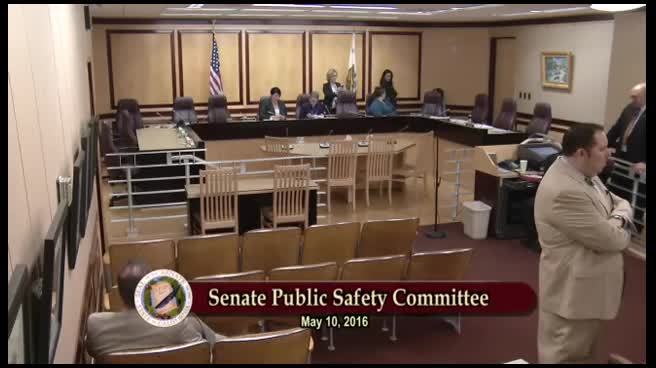 2MIN
Senate Standing Committee on Public Safety
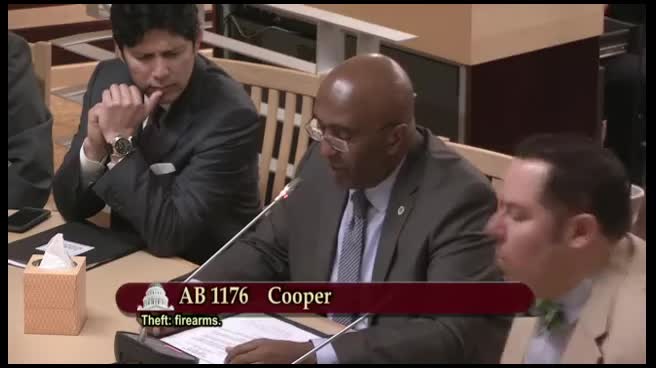 18MIN
Senate Standing Committee on Public Safety
 32SEC
Senate Standing Committee on Appropriations
 10MIN
Senate Standing Committee on Environmental Quality




Bill Co-Author(s):