AB 1194: Mental health: involuntary commitment.
- Session Year: 2015-2016
- House: Assembly
- Latest Version Date: 2015-10-07
Existing law, the Lanterman-Petris-Short Act, provides for the involuntary commitment and treatment of persons with specified mental disorders for the protection of the persons so committed. Under the act, when a person, as a result of mental health disorder, is a danger to others, or to himself or herself, or gravely disabled, he or she may, upon probable cause, be taken into custody by a peace officer, member of the attending staff of an evaluation facility, designated members of a mobile crisis team, or other designated professional person, and placed in a facility designated by the county and approved by the State Department of Social Services as a facility for 72-hour treatment and evaluation. Existing law requires, when determining if probable cause exists to take a person into custody, or cause a person to be taken into custody pursuant to the provisions described above, any person who is authorized to take or cause that person to be taken into custody to consider available relevant information about the historical course of the persons mental disorder, as specified, if the authorized person determines that information has a reasonable bearing on the determination described above.
This bill would provide that, when determining if a person should be taken into custody pursuant to the provisions described above, the individual making that determination shall consider available relevant information about the historical course of the persons mental disorder if the individual concludes that the information has a reasonable bearing on the determination, and that the individual shall not be limited to consideration of the danger of imminent harm.
Existing law requires the admitting facility to require an application in writing stating the circumstances under which the persons condition was called to the attention of those persons authorized to make the determination of probable cause, and stating that he or she has probable cause, as specified.
The bill would also require the application to record whether the historical course of a persons mental disorder was considered in the determination of probable cause.
By imposing additional duties on local officials, the bill would impose a state-mandated local program.
The California Constitution requires the state to reimburse local agencies and school districts for certain costs mandated by the state. Statutory provisions establish procedures for making that reimbursement.
This bill would provide that, if the Commission on State Mandates determines that the bill contains costs mandated by the state, reimbursement for those costs shall be made pursuant to these statutory provisions.
Existing law, the Lanterman-Petris-Short Act, provides for the involuntary commitment and treatment of persons with specified mental disorders for the protection of the persons so committed. Under the act, when a person, as a result of mental health disorder, is a danger to others, or to himself or herself, or gravely disabled, he or she may, upon probable cause, be taken into custody by a peace officer, member of the attending staff of an evaluation facility, designated members of a mobile crisis team, or other designated professional person, and placed in a facility designated by the county and approved by the State Department of Social Services as a facility for 72-hour treatment and evaluation. Existing law requires, when determining if probable cause exists to take a person into custody, or cause a person to be taken into custody pursuant to the provisions described above, any person who is authorized to take or cause that person to be taken into custody to consider available relevant information about the historical course of the persons mental disorder, as specified, if the authorized person determines that information has a reasonable bearing on the determination described above.
This bill would require, provide that, when determining if a person is a danger to himself or herself, or to others, as a result of a mental health disorder, that should be taken into custody pursuant to the provisions described above, the individual making that determination shall consider available relevant information about the historical course of the persons mental disorder, as that phrase is defined, disorder if the individual concludes that the information has a reasonable bearing on the determination. determination, and that the individual shall not be limited to consideration of the danger of imminent harm.
Existing law requires the admitting facility to require an application in writing stating the circumstances under which the persons condition was called to the attention of those persons authorized to make the determination of probable cause, and stating that he or she has probable cause, as specified.
The bill would also require the application to record whether the historical course of a persons mental disorder was considered in the determination of probable cause.
By imposing additional duties on local officials, the bill would impose a state-mandated local program.
The California Constitution requires the state to reimburse local agencies and school districts for certain costs mandated by the state. Statutory provisions establish procedures for making that reimbursement.
This bill would provide that, if the Commission on State Mandates determines that the bill contains costs mandated by the state, reimbursement for those costs shall be made pursuant to these statutory provisions.
Existing law, the Lanterman-Petris-Short Act, provides for the involuntary commitment and treatment of persons with specified mental disorders for the protection of the persons so committed. Under the act, when a person, as a result of mental health disorder, is a danger to others, or to himself or herself, or gravely disabled, he or she may, upon probable cause, be taken into custody by a peace officer, member of the attending staff of an evaluation facility, designated members of a mobile crisis team, or other designated professional person, and placed in a facility designated by the county and approved by the State Department of Social Services as a facility for 72-hour treatment and evaluation. Existing law requires, when determining if probable cause exists to take a person into custody, or cause a person to be taken into custody pursuant to the provisions described above, any person who is authorized to take or cause that person to be taken into custody to consider available relevant information about the historical course of the persons mental disorder, as specified, if the authorized person determines that information has a reasonable bearing on the determination described above.
This bill would require, when determining if a person is a danger to himself or herself, or to others, as a result of a mental health disorder, that the individual making that determination consider available relevant information about the historical course of the persons mental disorder, as that phrase is defined, if the individual concludes that the information has a reasonable bearing on the determination.
Existing law requires the admitting facility to require an application in writing stating the circumstances under which the persons condition was called to the attention of those persons authorized to make the determination of probable cause, and stating that he or she has probable cause, as specified.
The bill would also require the application to record whether the historical course of a persons mental disorder was considered in the determination of probable cause.
By imposing additional duties on local officials, the bill would impose a state-mandated local program.
The California Constitution requires the state to reimburse local agencies and school districts for certain costs mandated by the state. Statutory provisions establish procedures for making that reimbursement.
This bill would provide that, if the Commission on State Mandates determines that the bill contains costs mandated by the state, reimbursement for those costs shall be made pursuant to these statutory provisions.
Existing law, the Lanterman-Petris-Short Act, provides for the involuntary commitment and treatment of persons with specified mental disorders for the protection of the persons so committed. Under the act, when a person, as a result of mental health disorder, is a danger to others, or to himself or herself, or gravely disabled, he or she may, upon probable cause, be taken into custody by a peace officer, member of the attending staff of an evaluation facility, designated members of a mobile crisis team, or other designated professional person, and placed in a facility designated by the county and approved by the State Department of Social Services as a facility for 72-hour treatment and evaluation. Existing law requires, when determining if probable cause exists to take a person into custody, or cause a person to be taken into custody pursuant to the provisions described above, any person who is authorized to take or cause that person to be taken into custody to consider available relevant information about the historical course of the persons mental disorder, as specified, if the authorized person determines that information has a reasonable bearing on the determination described above.
This bill would provide that for purposes of determining whether a person, as a result of a mental health disorder, is a danger to others, or to himself or herself, danger constitutes a present risk of harm that requires consideration of the historical course of a persons mental health disorder and shall not be limited to imminent or immediate risk of harm to others or to himself or herself. require, when determining if a person is a danger to himself or herself, or to others, as a result of a mental health disorder, that the individual making that determination consider available relevant information about the historical course of the persons mental disorder, as that phrase is defined, if the individual concludes that the information has a reasonable bearing on the determination.
Existing law requires the admitting facility to require an application in writing stating the circumstances under which the persons condition was called to the attention of those persons authorized to make the determination of probable cause, and stating that he or she has probable cause, as specified.
The bill would also require the application to record whether the historical course of a persons mental disorder was considered in the determination of probable cause.
By imposing additional duties on local officials, the bill would impose a state-mandated local program.
The California Constitution requires the state to reimburse local agencies and school districts for certain costs mandated by the state. Statutory provisions establish procedures for making that reimbursement.
This bill would provide that, if the Commission on State Mandates determines that the bill contains costs mandated by the state, reimbursement for those costs shall be made pursuant to these statutory provisions.
Existing law, the Lanterman-Petris-Short Act, provides for the involuntary commitment and treatment of persons with specified mental disorders for the protection of the persons so committed. Under the act, when a person, as a result of mental health disorder, is a danger to others, or to himself or herself, or gravely disabled, he or she may, upon probable cause, be taken into custody by a peace officer, member of the attending staff of an evaluation facility, designated members of a mobile crisis team, or other designated professional person, and placed in a facility designated by the county and approved by the State Department of Social Services as a facility for 72-hour treatment and evaluation. Existing law requires, when determining if probable cause exists to take a person into custody, or cause a person to be taken into custody pursuant to the provisions described above, any person who is authorized to take or cause that person to be taken into custody to consider available relevant information about the historical course of the persons mental disorder, as specified, if the authorized person determines that information has a reasonable bearing on the determination described above.
This bill would provide that for purposes of determining whether a person, as a result of a mental health disorder, is a danger to others, or to himself or herself, danger constitutes a present risk of harm that requires consideration of the historical course of a persons mental health disorder and shall not be limited to imminent or immediate risk of harm to others or to himself or herself.
Existing law requires the admitting facility to require an application in writing stating the circumstances under which the persons condition was called to the attention of those persons authorized to make the determination of probable cause, and stating that he or she has probable cause, as specified.
The bill would also require the application to record whether the historical course of a persons mental disorder was considered in the determination of probable cause.
By imposing additional duties on local officials, the bill would impose a state-mandated local program.
The California Constitution requires the state to reimburse local agencies and school districts for certain costs mandated by the state. Statutory provisions establish procedures for making that reimbursement.
This bill would provide that, if the Commission on State Mandates determines that the bill contains costs mandated by the state, reimbursement for those costs shall be made pursuant to these statutory provisions.
(a)When a person, as a result of a mental health disorder, is a danger to others, or to himself or herself, or gravely disabled, a peace officer, professional person in charge of a facility designated by the county for evaluation and treatment, member of the attending staff, as defined by regulation, of a facility designated by the county for evaluation and treatment, designated members of a mobile crisis team, or professional person designated by the county may, upon probable cause, take, or cause to be taken, the person into custody for a period of up to 72 hours for assessment, evaluation, and crisis intervention, or placement for evaluation and treatment in a facility designated by the county for evaluation and treatment and approved by the State Department of Health Care Services. At a minimum, assessment, as defined in Section 5150.4, and evaluation, as defined in subdivision (a) of Section 5008, shall be conducted and provided on an ongoing basis. Crisis intervention, as defined in subdivision (e) of Section 5008, may be provided concurrently with assessment, evaluation, or any other service.
(b)When determining if a person should be taken into custody pursuant to subdivision (a), the individual making that determination shall apply the provisions of Section 5150.05, and shall not be limited to consideration of the danger of imminent harm.
(c)The professional person in charge of a facility designated by the county for evaluation and treatment, member of the attending staff, or professional person designated by the county shall assess the person to determine whether he or she can be properly served without being detained. If, in the judgment of the professional person in charge of the facility designated by the county for evaluation and treatment, member of the attending staff, or professional person designated by the county, the person can be properly served without being detained, he or she shall be provided evaluation, crisis intervention, or other inpatient or outpatient services on a voluntary basis. Nothing in this subdivision shall be interpreted to prevent a peace officer from delivering individuals to a designated facility for assessment under this section. Furthermore, the assessment requirement of this subdivision shall not be interpreted to require peace officers to perform any additional duties other than those specified in Sections 5150.1 and 5150.2.
(d)Whenever a person is evaluated by a professional person in charge of a facility designated by the county for evaluation or treatment, member of the attending staff, or professional person designated by the county and is found to be in need of mental health services, but is not admitted to the facility, all available alternative services provided pursuant to subdivision (c) shall be offered as determined by the county mental health director.
(e)If, in the judgment of the professional person in charge of the facility designated by the county for evaluation and treatment, member of the attending staff, or the professional person designated by the county, the person cannot be properly served without being detained, the admitting facility shall require an application in writing stating the circumstances under which the persons condition was called to the attention of the peace officer, professional person in charge of the facility designated by the county for evaluation and treatment, member of the attending staff, or professional person designated by the county, and stating that the peace officer, professional person in charge of the facility designated by the county for evaluation and treatment, member of the attending staff, or professional person designated by the county has probable cause to believe that the person is, as a result of a mental health disorder, a danger to others, or to himself or herself, or gravely disabled. The application shall also record whether the historical course of the persons mental disorder was considered in the determination, pursuant to Section 5150.05. If the probable cause is based on the statement of a person other than the peace officer, professional person in charge of the facility designated by the county for evaluation and treatment, member of the attending staff, or professional person designated by the county, the person shall be liable in a civil action for intentionally giving a statement that he or she knows to be false.
(f)At the time a person is taken into custody for evaluation, or within a reasonable time thereafter, unless a responsible relative or the guardian or conservator of the person is in possession of the persons personal property, the person taking him or her into custody shall take reasonable precautions to preserve and safeguard the personal property in the possession of or on the premises occupied by the person. The person taking him or her into custody shall then furnish to the court a report generally describing the persons property so preserved and safeguarded and its disposition, in substantially the form set forth in Section 5211, except that if a responsible relative or the guardian or conservator of the person is in possession of the persons property, the report shall include only the name of the relative or guardian or conservator and the location of the property, whereupon responsibility of the person taking him or her into custody for that property shall terminate. As used in this section, responsible relative includes the spouse, parent, adult child, domestic partner, grandparent, grandchild, or adult brother or sister of the person.
(g)(1)Each person, at the time he or she is first taken into custody under this section, shall be provided, by the person who takes him or her into custody, the following information orally in a language or modality accessible to the person. If the person cannot understand an oral advisement, the information shall be provided in writing. The information shall be in substantially the following form:
My name is . I am a(peace officer/mental health professional) . with(name of agency) . You are not under criminal arrest, but I am taking you for an examination by mental health professionals at . (name of facility) You will be told your rights by the mental health staff. |
(2)If taken into custody at his or her own residence, the person shall also be provided the following information:
You may bring a few personal items with you, which I will have to approve. Please inform me if you need assistance turning off any appliance or water. You may make a phone call and leave a note to tell your friends or family where you have been taken.
(h)The designated facility shall keep, for each patient evaluated, a record of the advisement given pursuant to subdivision (g) which shall include all of the following:
(1)The name of the person detained for evaluation.
(2)The name and position of the peace officer or mental health professional taking the person into custody.
(3)The date the advisement was completed.
(4)Whether the advisement was completed.
(5)The language or modality used to give the advisement.
(6)If the advisement was not completed, a statement of good cause, as defined by regulations of the State Department of Health Care Services.
(i)(1)Each person admitted to a facility designated by the county for evaluation and treatment shall be given the following information by admission staff of the facility. The information shall be given orally and in writing and in a language or modality accessible to the person. The written information shall be available to the person in English and in the language that is the persons primary means of communication. Accommodations for other disabilities that may affect communication shall also be provided. The information shall be in substantially the following form:
My name is. |
My position here is. |
You are being placed into this psychiatric facility because it is our professional opinion that, as a result of a mental health disorder, you are likely to (check applicable): |
Harm yourself. |
(list of the facts upon which the allegation of dangerous |
You will be held for a period up to 72 hours. During the 72 hours you may also be transferred to another facility. You may request to be evaluated or treated at a facility of your choice. You may request to be evaluated or treated by a mental health professional of your choice. We cannot guarantee the facility or mental health professional you choose will be available, but we will honor your choice if we can. |
During these 72 hours you will be evaluated by the facility staff, and you may be given treatment, including medications. It is possible for you to be released before the end of the 72 hours. But if the staff decides that you need continued treatment you can be held for a longer period of time. If you are held longer than 72 hours, you have the right to a lawyer and a qualified interpreter and a hearing before a judge. If you are unable to pay for the lawyer, then one will be provided to you free of charge. |
If you have questions about your legal rights, you may contact the county Patients Rights Advocate at (phone number for the county Patients Rights Advocacy office). Your 72-hour period began (date/time). |
(2)If the notice is given in a county where weekends and holidays are excluded from the 72-hour period, the patient shall be informed of this fact.
(j)For each patient admitted for evaluation and treatment, the facility shall keep with the patients medical record a record of the advisement given pursuant to subdivision (i), which shall include all of the following:
(1)The name of the person performing the advisement.
(2)The date of the advisement.
(3)Whether the advisement was completed.
(4)The language or modality used to communicate the advisement.
(5)If the advisement was not completed, a statement of good cause.
SEC. 2.If the Commission on State Mandates determines that this act contains costs mandated by the state, reimbursement to local agencies and school districts for those costs shall be made pursuant to Part 7 (commencing with Section 17500) of Division 4 of Title 2 of the Government Code.
(a)When a person, as a result of a mental health disorder, is a danger to others, or to himself or herself, or gravely disabled, a peace officer, professional person in charge of a facility designated by the county for evaluation and treatment, member of the attending staff, as defined by regulation, of a facility designated by the county for evaluation and treatment, designated members of a mobile crisis team, or professional person designated by the county may, upon probable cause, take, or cause to be taken, the person into custody for a period of up to 72 hours for assessment, evaluation, and crisis intervention, or placement for evaluation and treatment in a facility designated by the county for evaluation and treatment and approved by the State Department of Health Care Services. At a minimum, assessment, as defined in Section 5150.4, and evaluation, as defined in subdivision (a) of Section 5008, shall be conducted and provided on an ongoing basis. Crisis intervention, as defined in subdivision (e) of Section 5008, may be provided concurrently with assessment, evaluation, or any other service.
(b)When determining if a person is a danger to himself or herself, or to others, as a result of a mental health disorder, the individual making that determination shall consider available relevant information about the historical course of the persons mental disorder, as that phrase is defined in Section 5150.05, if the individual concludes that the information has a reasonable bearing on the determination. For purposes of this section, danger is not limited to danger of imminent harm.
(c)The professional person in charge of a facility designated by the county for evaluation and treatment, member of the attending staff, or professional person designated by the county shall assess the person to determine whether he or she can be properly served without being detained. If, in the judgment of the professional person in charge of the facility designated by the county for evaluation and treatment, member of the attending staff, or professional person designated by the county, the person can be properly served without being detained, he or she shall be provided evaluation, crisis intervention, or other inpatient or outpatient services on a voluntary basis. Nothing in this subdivision shall be interpreted to prevent a peace officer from delivering individuals to a designated facility for assessment under this section. Furthermore, the assessment requirement of this subdivision shall not be interpreted to require peace officers to perform any additional duties other than those specified in Sections 5150.1 and 5150.2.
(d)Whenever a person is evaluated by a professional person in charge of a facility designated by the county for evaluation or treatment, member of the attending staff, or professional person designated by the county and is found to be in need of mental health services, but is not admitted to the facility, all available alternative services provided pursuant to subdivision (b) (c) shall be offered as determined by the county mental health director.
(e)If, in the judgment of the professional person in charge of the facility designated by the county for evaluation and treatment, member of the attending staff, or the professional person designated by the county, the person cannot be properly served without being detained, the admitting facility shall require an application in writing stating the circumstances under which the persons condition was called to the attention of the peace officer, professional person in charge of the facility designated by the county for evaluation and treatment, member of the attending staff, or professional person designated by the county, and stating that the peace officer, professional person in charge of the facility designated by the county for evaluation and treatment, member of the attending staff, or professional person designated by the county has probable cause to believe that the person is, as a result of a mental health disorder, a danger to others, or to himself or herself, or gravely disabled. The application shall also record whether the historical course of the persons mental disorder was considered in the determination, pursuant to Section 5150.05. If the probable cause is based on the statement of a person other than the peace officer, professional person in charge of the facility designated by the county for evaluation and treatment, member of the attending staff, or professional person designated by the county, the person shall be liable in a civil action for intentionally giving a statement that he or she knows to be false.
(f)At the time a person is taken into custody for evaluation, or within a reasonable time thereafter, unless a responsible relative or the guardian or conservator of the person is in possession of the persons personal property, the person taking him or her into custody shall take reasonable precautions to preserve and safeguard the personal property in the possession of or on the premises occupied by the person. The person taking him or her into custody shall then furnish to the court a report generally describing the persons property so preserved and safeguarded and its disposition, in substantially the form set forth in Section 5211, except that if a responsible relative or the guardian or conservator of the person is in possession of the persons property, the report shall include only the name of the relative or guardian or conservator and the location of the property, whereupon responsibility of the person taking him or her into custody for that property shall terminate. As used in this section, responsible relative includes the spouse, parent, adult child, domestic partner, grandparent, grandchild, or adult brother or sister of the person.
(g)(1)Each person, at the time he or she is first taken into custody under this section, shall be provided, by the person who takes him or her into custody, the following information orally in a language or modality accessible to the person. If the person cannot understand an oral advisement, the information shall be provided in writing. The information shall be in substantially the following form:
My name is . I am a(peace officer/mental health professional) . with(name of agency) . You are not under criminal arrest, but I am taking you for an examination by mental health professionals at . (name of facility) You will be told your rights by the mental health staff. |
(2)If taken into custody at his or her own residence, the person shall also be provided the following information:
You may bring a few personal items with you, which I will have to approve. Please inform me if you need assistance turning off any appliance or water. You may make a phone call and leave a note to tell your friends or family where you have been taken.
(h)The designated facility shall keep, for each patient evaluated, a record of the advisement given pursuant to subdivision (f) (g) which shall include all of the following:
(1)The name of the person detained for evaluation.
(2)The name and position of the peace officer or mental health professional taking the person into custody.
(3)The date the advisement was completed.
(4)Whether the advisement was completed.
(5)The language or modality used to give the advisement.
(6)If the advisement was not completed, a statement of good cause, as defined by regulations of the State Department of Health Care Services.
(i)(1)Each person admitted to a facility designated by the county for evaluation and treatment shall be given the following information by admission staff of the facility. The information shall be given orally and in writing and in a language or modality accessible to the person. The written information shall be available to the person in English and in the language that is the persons primary means of communication. Accommodations for other disabilities that may affect communication shall also be provided. The information shall be in substantially the following form:
My name is. |
My position here is. |
You are being placed into this psychiatric facility because it is our professional opinion that, as a result of a mental health disorder, you are likely to (check applicable): |
Harm yourself. |
(list of the facts upon which the allegation of dangerous |
You will be held for a period up to 72 hours. During the 72 hours you may also be transferred to another facility. You may request to be evaluated or treated at a facility of your choice. You may request to be evaluated or treated by a mental health professional of your choice. We cannot guarantee the facility or mental health professional you choose will be available, but we will honor your choice if we can. |
During these 72 hours you will be evaluated by the facility staff, and you may be given treatment, including medications. It is possible for you to be released before the end of the 72 hours. But if the staff decides that you need continued treatment you can be held for a longer period of time. If you are held longer than 72 hours, you have the right to a lawyer and a qualified interpreter and a hearing before a judge. If you are unable to pay for the lawyer, then one will be provided to you free of charge. |
If you have questions about your legal rights, you may contact the county Patients Rights Advocate at (phone number for the county Patients Rights Advocacy office). Your 72-hour period began (date/time). |
(2)If the notice is given in a county where weekends and holidays are excluded from the 72-hour period, the patient shall be informed of this fact.
(j)For each patient admitted for evaluation and treatment, the facility shall keep with the patients medical record a record of the advisement given pursuant to subdivision (i), which shall include all of the following:
(1)The name of the person performing the advisement.
(2)The date of the advisement.
(3)Whether the advisement was completed.
(4)The language or modality used to communicate the advisement.
(5)If the advisement was not completed, a statement of good cause.
SEC. 2.If the Commission on State Mandates determines that this act contains costs mandated by the state, reimbursement to local agencies and school districts for those costs shall be made pursuant to Part 7 (commencing with Section 17500) of Division 4 of Title 2 of the Government Code.
(a)When a person, as a result of a mental health disorder, is a danger to others, or to himself or herself, or gravely disabled, a peace officer, professional person in charge of a facility designated by the county for evaluation and treatment, member of the attending staff, as defined by regulation, of a facility designated by the county for evaluation and treatment, designated members of a mobile crisis team, or professional person designated by the county may, upon probable cause, take, or cause to be taken, the person into custody for a period of up to 72 hours for assessment, evaluation, and crisis intervention, or placement for evaluation and treatment in a facility designated by the county for evaluation and treatment and approved by the State Department of Health Care Services. At a minimum, assessment, as defined in Section 5150.4, and evaluation, as defined in subdivision (a) of Section 5008, shall be conducted and provided on an ongoing basis. Crisis intervention, as defined in subdivision (e) of Section 5008, may be provided concurrently with assessment, evaluation, or any other service.
(b)For purposes of determining, under this section, whether a person, as a result of a mental health disorder, is a danger to others, or a danger to himself or herself, danger constitutes a present risk of harm that requires consideration of the historical course of a persons mental health disorder pursuant to Section 5150.05, and shall not be limited to imminent or immediate risk of harm to others or to himself or herself.
(b)When determining if a person is a danger to himself or herself, or to others, as a result of a mental health disorder, the individual making that determination shall consider available relevant information about the historical course of the persons mental disorder, as that phrase is defined in Section 5150.05, if the individual concludes that the information has a reasonable bearing on the determination. For purposes of this section, danger is not limited to danger of imminent harm.
(c)The professional person in charge of a facility designated by the county for evaluation and treatment, member of the attending staff, or professional person designated by the county shall assess the person to determine whether he or she can be properly served without being detained. If If, in the judgment of the professional person in charge of the facility designated by the county for evaluation and treatment, member of the attending staff, or professional person designated by the county, the person can be properly served without being detained, he or she shall be provided evaluation, crisis intervention, or other inpatient or outpatient services on a voluntary basis. Nothing in this subdivision shall be interpreted to prevent a peace officer from delivering individuals to a designated facility for assessment under this section. Furthermore, the assessment requirement of this subdivision shall not be interpreted to require peace officers to perform any additional duties other than those specified in Sections 5150.1 and 5150.2.
(d)Whenever a person is evaluated by a professional person in charge of a facility designated by the county for evaluation or treatment, member of the attending staff, or professional person designated by the county and is found to be in need of mental health services, but is not admitted to the facility, all available alternative services provided pursuant to subdivision (b) shall be offered as determined by the county mental health director.
(e)If, in the judgment of the professional person in charge of the facility designated by the county for evaluation and treatment, member of the attending staff, or the professional person designated by the county, the person cannot be properly served without being detained, the admitting facility shall require an application in writing stating the circumstances under which the persons condition was called to the attention of the peace officer, professional person in charge of the facility designated by the county for evaluation and treatment, member of the attending staff, or professional person designated by the county, and stating that the peace officer, professional person in charge of the facility designated by the county for evaluation and treatment, member of the attending staff, or professional person designated by the county has probable cause to believe that the person is, as a result of a mental health disorder, a danger to others, or to himself or herself, or gravely disabled. The application shall also record whether the historical course of the persons mental disorder was considered in the determination, pursuant to Section 5150.05. If the probable cause is based on the statement of a person other than the peace officer, professional person in charge of the facility designated by the county for evaluation and treatment, member of the attending staff, or professional person designated by the county, the person shall be liable in a civil action for intentionally giving a statement that he or she knows to be false.
(f)At the time a person is taken into custody for evaluation, or within a reasonable time thereafter, unless a responsible relative or the guardian or conservator of the person is in possession of the persons personal property, the person taking him or her into custody shall take reasonable precautions to preserve and safeguard the personal property in the possession of or on the premises occupied by the person. The person taking him or her into custody shall then furnish to the court a report generally describing the persons property so preserved and safeguarded and its disposition, in substantially the form set forth in Section 5211, except that if a responsible relative or the guardian or conservator of the person is in possession of the persons property, the report shall include only the name of the relative or guardian or conservator and the location of the property, whereupon responsibility of the person taking him or her into custody for that property shall terminate. As used in this section, responsible relative includes the spouse, parent, adult child, domestic partner, grandparent, grandchild, or adult brother or sister of the person.
(g)(1)Each person, at the time he or she is first taken into custody under this section, shall be provided, by the person who takes him or her into custody, the following information orally in a language or modality accessible to the person. If the person cannot understand an oral advisement, the information shall be provided in writing. The information shall be in substantially the following form:
My name is . I am a(peace officer/mental health professional) . with(name of agency) . You are not under criminal arrest, but I am taking you for an examination by mental health professionals at . (name of facility) You will be told your rights by the mental health staff. |
(2)If taken into custody at his or her own residence, the person shall also be provided the following information:
You may bring a few personal items with you, which I will have to approve. Please inform me if you need assistance turning off any appliance or water. You may make a phone call and leave a note to tell your friends or family where you have been taken.
(h)The designated facility shall keep, for each patient evaluated, a record of the advisement given pursuant to subdivision (f) which shall include all of the following:
(1)The name of the person detained for evaluation.
(2)The name and position of the peace officer or mental health professional taking the person into custody.
(3)The date the advisement was completed.
(4)Whether the advisement was completed.
(5)The language or modality used to give the advisement.
(6)If the advisement was not completed, a statement of good cause, as defined by regulations of the State Department of Health Care Services.
(i)(1)Each person admitted to a facility designated by the county for evaluation and treatment shall be given the following information by admission staff of the facility. The information shall be given orally and in writing and in a language or modality accessible to the person. The written information shall be available to the person in English and in the language that is the persons primary means of communication. Accommodations for other disabilities that may affect communication shall also be provided. The information shall be in substantially the following form:
My name is. |
My position here is. |
You are being placed into this psychiatric facility because it is our professional opinion that, as a result of a mental health disorder, you are likely to (check applicable): |
Harm yourself. |
(list
of the facts upon which the allegation of dangerous |
You will be held for a period up to 72 hours. During the 72 hours you may also be transferred to another facility. You may request to be evaluated or treated at a facility of your choice. You may request to be evaluated or treated by a mental health professional of your choice. We cannot guarantee the facility or mental health professional you choose will be available, but we will honor your choice if we can. |
During these 72 hours you will be evaluated by the facility staff, and you may be given treatment, including medications. It is possible for you to be released before the end of the 72 hours. But if the staff decides that you need continued treatment you can be held for a longer period of time. If you are held longer than 72 hours, you have the right to a lawyer and a qualified interpreter and a hearing before a judge. If you are unable to pay for the lawyer, then one will be provided to you free of charge. |
If you have questions about your legal rights, you may contact the county Patients Rights Advocate at (phone number for the county Patients Rights Advocacy office). Your 72-hour period began (date/time). |
(2)If the notice is given in a county where weekends and holidays are excluded from the 72-hour period, the patient shall be informed of this fact.
(j)For each patient admitted for evaluation and treatment, the facility shall keep with the patients medical record a record of the advisement given pursuant to subdivision (i), which shall include all of the following:
(1)The name of the person performing the advisement.
(2)The date of the advisement.
(3)Whether the advisement was completed.
(4)The language or modality used to communicate the advisement.
(5)If the advisement was not completed, a statement of good cause.
SEC. 2.If the Commission on State Mandates determines that this act contains costs mandated by the state, reimbursement to local agencies and school districts for those costs shall be made pursuant to Part 7 (commencing with Section 17500) of Division 4 of Title 2 of the Government Code.
(a)When a person, as a result of a mental health disorder, is a danger to others, or to himself or herself, or gravely disabled, a peace officer, professional person in charge of a facility designated by the county for evaluation and treatment, member of the attending staff, as defined by regulation, of a facility designated by the county for evaluation and treatment, designated members of a mobile crisis team, or professional person designated by the county may, upon probable cause, take, or cause to be taken, the person into custody for a period of up to 72 hours for assessment, evaluation, and crisis intervention, or placement for evaluation and treatment in a facility designated by the county for evaluation and treatment and approved by the State Department of Health Care Services. At a minimum, assessment, as defined in Section 5150.4, and evaluation, as defined in subdivision (a) of Section 5008, shall be conducted and provided on an ongoing basis. Crisis intervention, as defined in subdivision (e) of Section 5008, may be provided concurrently with assessment, evaluation, or any other service.
(b)For purposes of determining, under this section, whether a person, as a result of a mental health disorder, is a danger to others, or a danger to himself or herself, danger constitutes a present risk of harm that requires consideration of the historical course of a persons mental health disorder pursuant to Section 5150.05, and shall not be limited to imminent or immediate risk of harm to others or to himself or herself.
(b)
(c)The professional person in charge of a facility designated by the county for evaluation and treatment, member of the attending staff, or professional person designated by the county shall assess the person to determine whether he or she can be properly served without being detained. If in the judgment of the professional person in charge of the facility designated by the county for evaluation and treatment, member of the attending staff, or professional person designated by the county, the person can be properly served without being detained, he or she shall be provided evaluation, crisis intervention, or other inpatient or outpatient services on a voluntary basis. Nothing in this subdivision shall be interpreted to prevent a peace officer from delivering individuals to a designated facility for assessment under this section. Furthermore, the assessment requirement of this subdivision shall not be interpreted to require peace officers to perform any additional duties other than those specified in Sections 5150.1 and 5150.2.
(c)
(d)Whenever a person is evaluated by a professional person in charge of a facility designated by the county for evaluation or treatment, member of the attending staff, or professional person designated by the county and is found to be in need of mental health services, but is not admitted to the facility, all available alternative services provided pursuant to subdivision (b) shall be offered as determined by the county mental health director.
(d)
(e)If, in the judgment of the professional person in charge of the facility designated by the county for evaluation and treatment, member of the attending staff, or the professional person designated by the county, the person cannot be properly served without being detained, the admitting facility shall require an application in writing stating the circumstances under which the persons condition was called to the attention of the peace officer, professional person in charge of the facility designated by the county for evaluation and treatment, member of the attending staff, or professional person designated by the county, and stating that the peace officer, professional person in charge of the facility designated by the county for evaluation and treatment, member of the attending staff, or professional person designated by the county has probable cause to believe that the person is, as a result of a mental health disorder, a danger to others, or to himself or herself, or gravely disabled. The application shall also record whether the historical course of the persons mental disorder was considered in the determination, pursuant to Section 5150.05. If the probable cause is based on the statement of a person other than the peace officer, professional person in charge of the facility designated by the county for evaluation and treatment, member of the attending staff, or professional person designated by the county, the person shall be liable in a civil action for intentionally giving a statement which that he or she knows to be false.
(e)
(f)At the time a person is taken into custody for evaluation, or within a reasonable time thereafter, unless a responsible relative or the guardian or conservator of the person is in possession of the persons personal property, the person taking him or her into custody shall take reasonable precautions to preserve and safeguard the personal property in the possession of or on the premises occupied by the person. The person taking him or her into custody shall then furnish to the court a report generally describing the persons property so preserved and safeguarded and its disposition, in substantially the form set forth in Section 5211, except that if a responsible relative or the guardian or conservator of the person is in possession of the persons property, the report shall include only the name of the relative or guardian or conservator and the location of the property, whereupon responsibility of the person taking him or her into custody for that property shall terminate. As used in this section, responsible relative includes the spouse, parent, adult child, domestic partner, grandparent, grandchild, or adult brother or sister of the person.
(f)
(g)(1)Each person, at the time he or she is first taken into custody under this section, shall be provided, by the person who takes him or her into custody, the following information orally in a language or modality accessible to the person. If the person cannot understand an oral advisement, the information shall be provided in writing. The information shall be in substantially the following form:
My name is . I am a(peace officer/mental health professional) . with(name of agency) . You are not under criminal arrest, but I am taking you for an examination by mental health professionals at . (name of facility) You will be told your rights by the mental health staff. |
(2)If taken into custody at his or her own residence, the person shall also be provided the following information:
You may bring a few personal items with you, which I will have to approve. Please inform me if you need assistance turning off any appliance or water. You may make a phone call and leave a note to tell your friends or family where you have been taken.
(g)
(h)The designated facility shall keep, for each patient evaluated, a record of the advisement given pursuant to subdivision (f) which shall include all of the following:
(1)The name of the person detained for evaluation.
(2)The name and position of the peace officer or mental health professional taking the person into custody.
(3)The date the advisement was completed.
(4)Whether the advisement was completed.
(5)The language or modality used to give the advisement.
(6)If the advisement was not completed, a statement of good cause, as defined by regulations of the State Department of Health Care Services.
(h)
(i)(1)Each person admitted to a facility designated by the county for evaluation and treatment shall be given the following information by admission staff of the facility. The information shall be given orally and in writing and in a language or modality accessible to the person. The written information shall be available to the person in English and in the language that is the persons primary means of communication. Accommodations for other disabilities that may affect communication shall also be provided. The information shall be in substantially the following form:
My name is. |
My position here is. |
You are being placed into this psychiatric facility because it is our professional opinion that, as a result of a mental health disorder, you are likely to (check applicable): |
Harm yourself. |
(list of the facts upon which the allegation of dangerous |
You will be held for a period up to 72 hours. During the 72 hours you may also be transferred to another facility. You may request to be evaluated or treated at a facility of your choice. You may request to be evaluated or treated by a mental health professional of your choice. We cannot guarantee the facility or mental health professional you choose will be available, but we will honor your choice if we can. |
During these 72 hours you will be evaluated by the facility staff, and you may be given treatment, including medications. It is possible for you to be released before the end of the 72 hours. But if the staff decides that you need continued treatment you can be held for a longer period of time. If you are held longer than 72 hours, you have the right to a lawyer and a qualified interpreter and a hearing before a judge. If you are unable to pay for the lawyer, then one will be provided to you free of charge. |
If you have questions about your legal rights, you may contact the county Patients Rights Advocate at (phone number for the county Patients Rights Advocacy office). Your 72-hour period began (date/time). |
(2)If the notice is given in a county where weekends and holidays are excluded from the 72-hour period, the patient shall be informed of this fact.
(i)
(j)For each patient admitted for evaluation and treatment, the facility shall keep with the patients medical record a record of the advisement given pursuant to subdivision (h), (i), which shall include all of the following:
(1)The name of the person performing the advisement.
(2)The date of the advisement.
(3)Whether the advisement was completed.
(4)The language or modality used to communicate the advisement.
(5)If the advisement was not completed, a statement of good cause.
SEC. 2.If the Commission on State Mandates determines that this act contains costs mandated by the state, reimbursement to local agencies and school districts for those costs shall be made pursuant to Part 7 (commencing with Section 17500) of Division 4 of Title 2 of the Government Code.
|
Date
|
Status
|
|---|---|
| Sep 9, 2015 | Assembly Rule 77 suspended. |
| Jul 6, 2015 | Read second time and amended. Re-referred to Com. on APPR. |
| Aug 17, 2015 | From committee: Be placed on second reading file pursuant to Senate Rule 28.8. |
| Aug 18, 2015 | Read second time. Ordered to third reading. |
| Sep 2, 2015 | Read third time and amended. Ordered to second reading. |
| Sep 3, 2015 | Read second time. Ordered to third reading. |
| Sep 8, 2015 | In Assembly. Concurrence in Senate amendments pending. May be considered on or after September 10 pursuant to Assembly Rule 77. |
| Sep 8, 2015 | Read third time. Passed. Ordered to the Assembly. |
| Sep 8, 2015 | Read third time. Passed. Ordered to the Assembly. (Ayes 40. Noes 0. Page 2579.). |
| Jul 2, 2015 | From committee: Amend, and do pass as amended and re-refer to Com. on APPR. (Ayes 7. Noes 0.) (July 1). |
| Sep 9, 2015 | Assembly Rule 77 suspended. (Page 2990.) |
| Sep 9, 2015 | Senate amendments concurred in. To Engrossing and Enrolling. |
| Sep 9, 2015 | Senate amendments concurred in. To Engrossing and Enrolling. (Ayes 80. Noes 0. Page 3004.). |
| Sep 9, 2015 | Senate amendments concurred in. To Engrossing and Enrolling. (Ayes 80. Noes 0.). |
| Sep 17, 2015 | Enrolled and presented to the Governor at 4 p.m. |
| Oct 7, 2015 | Approved by the Governor. |
| Oct 7, 2015 | Chaptered by Secretary of State - Chapter 570, Statutes of 2015. |
| Feb 27, 2015 | Introduced. To print. |
| Jun 25, 2015 | In committee: Set, first hearing. Hearing canceled at the request of author. |
| Jun 11, 2015 | Referred to Com. on HEALTH. |
| Jun 1, 2015 | Read third time. Passed. Ordered to the Senate. (Ayes 79. Noes 0. Page 1686.) |
| Jun 1, 2015 | Read third time. Passed. Ordered to the Senate. |
| Jun 1, 2015 | In Senate. Read first time. To Com. on RLS. for assignment. |
| May 22, 2015 | Ordered to third reading. |
| May 22, 2015 | From Consent Calendar. |
| May 14, 2015 | Read second time. Ordered to Consent Calendar. |
| May 13, 2015 | From committee: Do pass. To Consent Calendar. (Ayes 17. Noes 0.) (May 13). |
| May 7, 2015 | Re-referred to Com. on APPR. |
| May 6, 2015 | From committee chair, with author's amendments: Amend, and re-refer to Com. on APPR. Read second time and amended. |
| Apr 15, 2015 | From committee: Do pass and re-refer to Com. on APPR. (Ayes 16. Noes 0.) (April 14). Re-referred to Com. on APPR. |
| Mar 23, 2015 | Referred to Com. on HEALTH. |
| Mar 2, 2015 | Read first time. |
| Mar 1, 2015 | From printer. May be heard in committee March 31. |
|
Date
|
Description
|
Location
|
Votes
|
|
|---|---|---|---|---|
| Sep 9, 2015 | AB 1194 EGGMAN Concurrence in Senate Amendments | Assembly Floor |
Passed |
|
| Sep 8, 2015 | Assembly 3rd Reading AB1194 Eggman By Hernandez | Senate Floor |
Passed |
|
| Jul 1, 2015 | Do pass as amended, but first amend, and re-refer to the Committee on [Appropriations] | Senate Standing Committee on Health |
Passed |
|
| Jun 1, 2015 | AB 1194 EGGMAN Assembly Third Reading | Assembly Floor |
Passed |
|
| May 13, 2015 | Do pass. To Consent Calendar. | Assembly Standing Committee on Appropriations |
Passed |
|
| Apr 14, 2015 | Do pass and be re-referred to the Committee on [Appropriations] | Assembly Standing Committee on Health |
Passed |
This list shows positions taken on this bill by organizations on the date displayed, which is linked to the original source.
Positions by individuals are not included.
|
Organization
|
Position
|
Date
|
|---|---|---|
| American Federation of State, County and Municipal Employees | ** Support | Sep 8, 2015 |
| California Association Of Marriage And Family Therapists | ** Support | Sep 8, 2015 |
| California Association of Mental Health Peer Run Organizations | * Against | Apr 14, 2015 |
| California Association Of Psychiatric Technicians | * Support | Apr 14, 2015 |
| California Association of Social Rehabilitation Agencies | * Against | Apr 14, 2015 |
| California Chapter of the American College of Emergency Physicians | ** Support | Sep 8, 2015 |
| California Hospital Association | ** Support | Sep 8, 2015 |
| California Medical Association, Inc. | ** Support | Sep 8, 2015 |
| California Police Chiefs Association | ** Support | Sep 8, 2015 |
| California Probation, Parole And Correctional Association | ** Support | Sep 8, 2015 |
| California Psychiatric Association | ** Support | Sep 8, 2015 |
| California State Sheriffs' Association | ** Support | Sep 8, 2015 |
| California Treatment Advocacy Coalition | ** Support | Sep 8, 2015 |
| Contra Costa Mental Health Community Coalition | ** Support | Sep 8, 2015 |
| Dignity Heath | ** Support | Apr 14, 2015 |
| Disability Rights California | ** Against | Sep 8, 2015 |
| Latino Coalition for a Healthy California | ** Support | Sep 8, 2015 |
| Mental Health America of Northern California | * Against | Apr 14, 2015 |
| mentalillnesspolicy.org | * Support | Apr 14, 2015 |
| Nami California | ** Support | Sep 8, 2015 |
| NAMI Contra Costa | ** Support | Sep 8, 2015 |
| NAMI Orange County | ** Support | Sep 8, 2015 |
| St. Joseph's Behavioral Health Center | ** Support | Sep 8, 2015 |
| The Mental Health Advocacy Project of the Law Foundation of Silicon Valley | * Against | Apr 14, 2015 |
| Treatment Advocacy Center | ** Support | Sep 8, 2015 |
| Union Of American Physicians And Dentists | * Support | Apr 14, 2015 |
| Your Family, Your Choice | * Support | Jul 1, 2015 |
AB 1194
Page 2
CONCURRENCE IN SENATE AMENDMENTS
AB 1194
(Eggman)
As Amended September 2, 2015
Majority vote
ASSEMBLY: |
79-0 |
(June 1, 2015) |
SENATE: |
40-0 |
(September 8, 2015) |
Original Committee Reference: HEALTH
SUMMARY: Requires, when an individual is determining if a person is a danger as a result of a mental health disorder (for the purposes of deciding whether the person meets criteria for a "5150" involuntary hold), the individual to consider available relevant information about the historical course of the person's mental disorder, if the individual concludes that the information has a reasonable bearing on the determination. It also specifies danger is not limited to danger of imminent harm.
The Senate amendments make technical non-substantive changes.
EXISTING LAW:
Establishes the Lanterman-Petris Short Act (LPS Act), which authorizes a person to be involuntarily detained for a period of up to 72 hours for assessment, evaluation, and crisis intervention, when, as a result of a mental disorder, the person is a danger to him or herself or to others, or is "gravely disabled." Defines "gravely disabled" to mean a condition in which a person, as a result of a mental disorder, is unable to provide for his or her basic personal needs for food, clothing, or shelter.
Requires, when determining if probable cause exists to take a person into custody, or cause a person to be taken into custody, pursuant to Welfare and Institutions Code (WIC) Section 5150, any person who is authorized to take that person into to consider available relevant information about the historical course of the person's mental disorder if the authorized person determines that the information has a reasonable bearing on the determination as to whether the person is a danger to others, or to himself or herself, or is gravely disabled as a result of the mental disorder.
FISCAL EFFECT: According to the Senate Appropriations Committee, pursuant to Senate Rule 28.8, negligible state costs.
COMMENTS: According to the author, current law does not make clear what constitutes danger when a person, as a result of a mental health disorder, is a danger to themselves or others and requires law enforcement or other qualified individuals to respond due to WIC Section 5150. The author argues that this bill simply clarifies that when a person with a mental health disorder is a danger to themselves or others, the term danger is not limited to imminent or immediate risk of harm to themselves or others. Rather, danger constitutes a present risk or harm that requires consideration of the historical course of a person's mental health disorder. The purpose of this bill is to ensure that those who are a danger to themselves or others receive the appropriate care under WIC Section 5150.
LPS Act (WIC) Section 5150 allows peace officers, staff-members of county-designated evaluation facilities, or other county-designated professional persons, to take an individual into custody and place him in a facility for 72-hour treatment and evaluation if they believe that, due to a mental disorder, the individual is a danger to himself, herself, or others, or is gravely disabled – i.e., unable to provide for basic personal needs for food, clothing, or shelter due to a mental disability. The LPS Act, enacted in the 1960s, was intended to balance the goals of maintaining the constitutional right to personal liberty and choice in mental health treatment, with the goal of safety. At the time of its enactment, the LPS Act was considered progressive because it afforded the mentally disordered more legal rights than most other states. Since its passage in 1967, the law in the field of mental health has continued to evolve toward greater legal rights for mentally disordered persons.
The sponsors of this bill, the California Psychiatric Association, state in support that this bill will provide more timely access to treatment for people in psychiatric crisis who, without that treatment, may harm themselves or others. In particular, this bill could prevent a current risk of harm from escalating into overt acts of violence. Clarifying what danger does and does not constitute can assure uniform application of the law where now there is wide variability in interpretation of danger throughout California. The sponsors write that seen from the ill person's and family's point of view, people with schizophrenia can keeps signs of aberrant behavior in check for the 20 minutes it might take police to interview them, and present no good reason for an officer to take any action. Once the officer leaves, the person may openly evince psychosis with agitation, incoherent yelling, and threats that caused the call by family members to the police in the first place.
Disability Rights California (DRC) states in opposition that a present risk of harm as defined in this bill is overly broad, arguing most anything could be considered dangerous and thus involuntary detention could occur for anyone with a history of a mental health disability. Determination of the risk of danger requires consideration of the type of risk and type of potential harm in order to justify confining a person in a mental health treatment facility against their will. DRC states that the determination of present danger should be based on all of the circumstances including historical course. The proposed definition suggests that consideration of historical course alone can lead to a finding of present danger. Singling out historical course puts too much emphasis on it. It opens the door to the possibility that someone will be involuntarily confined for mental health disability who poses no danger to themselves or others.
Analysis Prepared by: Paula Villescaz / HEALTH / (916) 319-2097 FN: 0002098
AB 1194
Page 6
|
Office of Senate Floor Analyses (916) 651-1520 Fax: (916) 327-4478 |
THIRD READING
Bill No: AB 1194
Amended: 9/2/15 in Senate
SENATE HEALTH COMMITTEE: 7-0, 7/1/15
AYES: Hernandez, Nguyen, Hall, Mitchell, Monning, Pan, Roth
NO VOTE RECORDED: Nielsen, Wolk
SENATE APPROPRIATIONS COMMITTEE: Senate Rule 28.8
ASSEMBLY FLOOR: 79-0, 6/1/15 - See last page for vote
SUBJECT: Mental health: involuntary commitment
SOURCE: California Psychiatric Association
DIGEST: This bill requires a person who determines that an individual should be taken into custody, because he or she is a danger to him- or herself or others, to consider available information related to the historical course of the individual’s mental health disorder, as specified. This bill requires, when a person is determined to need detainment, an admitting facility to require a written application that records whether information about the person’s historical course, as specified, was considered.
Senate Floor Amendments of 9/2/15 specify that a determination about whether an individual should be taken into custody should not be limited to the consideration of the danger of imminent harm.
Existing law:
Establishes the Lanterman-Petris-Short Act (LPS Act), which authorizes a person to be involuntarily detained for a period of up to 72 hours for assessment, evaluation, and crisis intervention, when, as a result of a mental health disorder, the person is a danger to him- or herself or to others, or is gravely disabled. Defines “gravely disabled” to mean a condition in which a person, as a result of a mental health disorder, is unable to provide for his or her basic personal needs for food, clothing, or shelter.
Requires, when determining if probable cause exists to take, or cause a person to be taken, into custody, relevant information about the historical course of the person’s mental health disorder be considered, if an authorized person determines that the information has a reasonable bearing on the determination of a person’s mental condition.
Specifies that “information about the historical course of the person’s mental disorder” includes evidence presented by:
the person who has provided or is providing mental health or related support services to a person subject to a determination;
one or more members of the family of a person subject to a determination; or
a person subject to a determination or anyone designated by that person.
Requires, when a person cannot be properly served without being detained, an admitting facility to require an application in writing stating the circumstances under which a person’s mental condition was called to the attention of an authorized person and that there was probable cause to believe that a person was a danger to him- or herself or others, or was gravely disabled, due to a mental health disorder.
Specifies that an “authorized person” includes a:
Peace officer;
Professional person in charge of a facility designated by the county for evaluation and treatment;
Member of the attending staff of a facility designated by the county for evaluation and treatment;
Designated members of a mobile crisis team; or,
Professional person designated by the county.
This bill:
Requires an authorized person, in determining if a person is a danger to him- or herself or others as a result of a mental health disorder, to consider the relevant information about the historical course of an individual’s mental health disorder. Prohibits the determination from being limited to the consideration of the danger of imminent harm.
Requires the application, required in 4) above, to also record whether the historical course of a person’s mental health disorder was considered when making a determination of probable cause.
Comments
Author’s statement. According to the author, current law does not make clear what constitutes danger when a person, as a result of a mental health disorder, is a danger to him- or herself or others, and requires law enforcement or other qualified individuals to respond as according to provisions in the Welfare and Institutions Code Section 5150 (“5150”). This lack of clarity results in an uneven application during a 5150 incident in the event where a person in question is not presenting an immediate or imminent safety risk when a peace officer or other qualified person responds. AB 1194 simply clarifies that when a person with a mental health disorder is a danger to him- or herself or others, the term “danger” is not limited to imminent or immediate risk of harm to him- or herself or others. Rather, “danger” constitutes a present risk or harm that requires consideration of the historical course of a person’s mental health disorder. The purpose of this bill is to ensure that those who are a danger to themselves or others receive the appropriate care during a 5150 incident.
Background. According to National Alliance on Mental Illness (NAMI) California’s Web site, the LPS Act ended the inappropriate, indefinite, and involuntary commitment of mentally disordered persons to institutions and encouraged the full use of existing agencies, personnel, and funds to provide treatment, supervision, and placement of gravely disabled persons. The authors of the LPS Act envisioned an expanded system of community based mental health centers providing appropriate and timely support to those in need at a reduced cost to the state.
The LPS Act requires authorized people making a determination if a person is a danger to him- or herself or others, or gravely disabled, to assess whether or not the person can be properly served without being detained. If a person can be properly served without being detained, he or she is entitled to receive an evaluation, crisis intervention, or other inpatient or outpatient services on a voluntary basis.
Some anecdotal data provided by the author shows that 5150 situations are not always handled uniformly. Some law enforcement departments and mental health agencies interpret the term “danger to him- or herself or others” to apply only in situations where a person poses an immediate danger. The word “danger” is not defined in current law, which has created a challenge in applying Section 5150 in certain cases.
Related/Prior Legislation
AB 193 (Maienschein - 2015) permits a judge presiding over a probate conservatorship to recommend to the county investigating officer the establishment of an LPS conservatorship when there is evidence of grave disability as a result of a mental health disorder or impairment by chronic alcoholism. AB 193 is currently pending on the Senate Floor.
AB 110 (Blumenfield, Chapter 20, Statutes of 2013), enacted the 2013-14 Budget Act, which included, among its other provisions, $206 million ($142 million General Fund one-time) for a major investment in mental health services, including additional residential treatment capacity, crisis treatment teams, and triage personnel.
AB 1424 (Thomson, Chapter 506, Statutes of 2001), made various changes to the LPS Act to: increase the involvement of family members in commitment hearings for the mentally ill; required more use of a patient's medical and psychiatric records in these hearings; and prohibited health plans and insurers from using the commitment status of a mentally ill person to determine eligibility for claim reimbursement.
SB 665 (Petris, Chapter 681, Statutes of 1991), established the right, under the LPS Act, to refuse antipsychotic medication and established hearing procedures to determine a person's capacity to refuse treatment with antipsychotic medication.
FISCAL EFFECT: Appropriation: No Fiscal Com.: Yes Local: Yes
California Psychiatric Association (source)
American Federation of State, County and Municipal Employees
California Association of Marriage and Family Therapists
California Chapter of the American College of Emergency Physicians
California Hospital Association
California Medical Association
California Police Chiefs Association
California Probation, Parole and Correctional Association
California State Sheriffs’ Association
California Treatment Advocacy Coalition
Contra Costa Mental Health Community Coalition
Latino Coalition for a Healthy California
NAMI California
NAMI Contra Costa
NAMI Orange County
St. Joseph’s Behavioral Health Center
Treatment Advocacy Center
Department of Health Care Services
Disability Rights California
ARGUMENTS IN SUPPORT: Supporters of this bill, comprising medical professionals, law enforcement, and mental health advocates, argue that this bill will provide more timely access to treatment for people in psychiatric crises who, without treatment, may harm themselves or others. They state that this bill could prevent certain situations from escalating into overt acts of violence. Supporters further state that current law is unclear whether the term “danger” is limited to danger of imminent harm, and this bill will allow a more consistent interpretation and determination of an individual’s level of dangerousness.
ARGUMENTS IN OPPOSITION: Disability Rights California (DRC) states that a present risk of harm, as defined in this bill, is too broad and most anything could be considered dangerous, resulting in involuntary detention for anyone with a history of mental health disability. DRC states that the proposed definition has the potential to cause more problems than it solved, and if people are not likely to harm themselves or others at the present time, they should not be subject to involuntary detention. The Department of Health Care Services argues that this bill lowers the standard for placing an individual on a 5150 hold, as the additional language adds a broad and vague standard that is not specific enough to ensure appropriate application of involuntary detainments for mental health treatment.
ASSEMBLY FLOOR: 79-0, 6/1/15
AYES: Achadjian, Alejo, Travis Allen, Baker, Bigelow, Bloom, Bonilla, Bonta, Brough, Brown, Burke, Calderon, Campos, Chang, Chau, Chávez, Chiu, Chu, Cooley, Cooper, Dababneh, Dahle, Daly, Dodd, Eggman, Frazier, Beth Gaines, Gallagher, Cristina Garcia, Eduardo Garcia, Gatto, Gipson, Gomez, Gonzalez, Gordon, Gray, Grove, Hadley, Harper, Roger Hernández, Holden, Irwin, Jones, Jones-Sawyer, Kim, Lackey, Levine, Linder, Lopez, Low, Maienschein, Mathis, Mayes, McCarty, Medina, Melendez, Mullin, Nazarian, Obernolte, O'Donnell, Olsen, Patterson, Perea, Quirk, Rendon, Ridley-Thomas, Rodriguez, Salas, Santiago, Steinorth, Mark Stone, Thurmond, Ting, Waldron, Weber, Wilk, Williams, Wood, Atkins
NO VOTE RECORDED: Wagner
Prepared by: Reyes Diaz / HEALTH /
9/3/15 15:32:01
**** END ****
AB 1194
Page 6
|
Office of Senate Floor Analyses (916) 651-1520 Fax: (916) 327-4478 |
THIRD READING
Bill No: AB 1194
Amended: 7/6/15 in Senate
SENATE HEALTH COMMITTEE: 7-0, 7/1/15
AYES: Hernandez, Nguyen, Hall, Mitchell, Monning, Pan, Roth
NO VOTE RECORDED: Nielsen, Wolk
SENATE APPROPRIATIONS COMMITTEE: Senate Rule 28.8
ASSEMBLY FLOOR: 79-0, 6/1/15 - See last page for vote
SUBJECT: Mental health: involuntary commitment
SOURCE: California Psychiatric Association
DIGEST: This bill requires an authorized person, when determining if a person is a danger to him- or herself or others because of a mental health disorder, to consider available information related to the person’s historical course of his or her mental health disorder, as specified. This bill requires, when a person is determined to need detainment, an admitting facility to require a written application that records whether information about the person’s historical course, as specified, was considered.
Existing law:
Establishes the Lanterman-Petris-Short Act (LPS Act), which authorizes a person to be involuntarily detained for a period of up to 72 hours for assessment, evaluation, and crisis intervention, when, as a result of a mental health disorder, the person is a danger to him- or herself or to others, or is gravely disabled. Defines “gravely disabled” to mean a condition in which a person, as a result of a mental health disorder, is unable to provide for his or her basic personal needs for food, clothing, or shelter.
Requires, when determining if probable cause exists to take, or cause a person to be taken, into custody, relevant information about the historical course of the person’s mental health disorder be considered, if an authorized person determines that the information has a reasonable bearing on the determination of a person’s mental condition.
Specifies that “information about the historical course of the person’s mental disorder” includes evidence presented by:
the person who has provided or is providing mental health or related support services to a person subject to a determination;
one or more members of the family of a person subject to a determination; or,
a person subject to a determination or anyone designated by that person.
Requires, when a person cannot be properly served without being detained, an admitting facility to require an application in writing stating the circumstances under which a person’s mental condition was called to the attention of an authorized person and that there was probable cause to believe that a person was a danger to him- or herself or others, or was gravely disabled, due to a mental health disorder.
Specifies that an “authorized person” includes a:
Peace officer;
Professional person in charge of a facility designated by the county for evaluation and treatment;
Member of the attending staff of a facility designated by the county for evaluation and treatment;
Designated members of a mobile crisis team; or,
Professional person designated by the county.
This bill:
Requires an authorized person, in determining if a person is a danger to him- or herself or others as a result of a mental health disorder, to consider available relevant “information about the historical course,” as specified in 3) above, of a person’s mental health disorder if the authorized person concludes that the information has a reasonable bearing on the determination of a person’s mental condition. Specifies that “danger” is not limited to danger of imminent harm.
Requires the application, required in 4) above, to also record whether the historical course of a person’s mental health disorder was considered when making a determination of probable cause.
Comments
Author’s statement. According to the author, current law does not make clear what constitutes danger when a person, as a result of a mental health disorder, is a danger to him- or herself or others, and requires law enforcement or other qualified individuals to respond as according to provisions in the Welfare and Institutions Code Section 5150 (“5150”). This lack of clarity results in an uneven application during a 5150 incident in the event where a person in question is not presenting an immediate or imminent safety risk when a peace officer or other qualified person responds. AB 1194 simply clarifies that when a person with a mental health disorder is a danger to him- or herself or others, the term “danger” is not limited to imminent or immediate risk of harm to him- or herself or others. Rather, “danger” constitutes a present risk or harm that requires consideration of the historical course of a person’s mental health disorder. The purpose of this bill is to ensure that those who are a danger to themselves or others receive the appropriate care during a 5150 incident.
Background. According to National Alliance on Mental Illness (NAMI) California’s Web site, the LPS Act ended the inappropriate, indefinite, and involuntary commitment of mentally disordered persons to institutions and encouraged the full use of existing agencies, personnel, and funds to provide treatment, supervision, and placement of gravely disabled persons. The authors of the LPS Act envisioned an expanded system of community based mental health centers providing appropriate and timely support to those in need at a reduced cost to the state.
The LPS Act requires authorized people making a determination if a person is a danger to him- or herself or others, or gravely disabled, to assess whether or not the person can be properly served without being detained. If a person can be properly served without being detained, he or she is entitled to receive an evaluation, crisis intervention, or other inpatient or outpatient services on a voluntary basis.
Some anecdotal data provided by the author shows that 5150 situations are not always handled uniformly. Some law enforcement departments and mental health agencies interpret the term “danger to him- or herself or others” to apply only in situations where a person poses an immediate danger. The word “danger” is not defined in current law, which has created a challenge in applying Section 5150 in certain cases.
Related/Prior Legislation
AB 193 (Maienschein - 2015) permits a judge presiding over a probate conservatorship to recommend to the county investigating officer the establishment of an LPS conservatorship when there is evidence of grave disability as a result of a mental health disorder or impairment by chronic alcoholism. AB 193 is currently pending in the Senate Appropriations Committee.
AB 110 (Blumenfield, Chapter 20, Statutes of 2013), enacted the 2013-14 Budget Act, which included, among its other provisions, $206 million ($142 million General Fund one-time) for a major investment in mental health services, including additional residential treatment capacity, crisis treatment teams, and triage personnel.
AB 1424 (Thomson, Chapter 506, Statutes of 2001), made various changes to the LPS Act to: increase the involvement of family members in commitment hearings for the mentally ill; require more use of a patient's medical and psychiatric records in these hearings; and prohibit health plans and insurers from using the commitment status of a mentally ill person to determine eligibility for claim reimbursement.
SB 665 (Petris, Chapter 681, Statutes of 1991), established the right, under the LPS Act, to refuse antipsychotic medication and established hearing procedures to determine a person's capacity to refuse treatment with antipsychotic medication.
FISCAL EFFECT: Appropriation: No Fiscal Com.: Yes Local: Yes
California Psychiatric Association (source)
American Federation of State, County and Municipal Employees
California Association of Marriage and Family Therapists
California Chapter of the American College of Emergency Physicians
California Hospital Association
California Medical Association
California Police Chiefs Association
California Probation, Parole and Correctional Association
California State Sheriffs’ Association
California Treatment Advocacy Coalition
Contra Costa Mental Health Community Coalition
Latino Coalition for a Healthy California
NAMI California
NAMI Contra Costa
NAMI Orange County
St. Joseph’s Behavioral Health Center
Treatment Advocacy Center
OPPOSITION: (Verified 8/19/15)
Disability Rights California
ARGUMENTS IN SUPPORT: Supporters of this bill, comprising medical professionals, law enforcement, and mental health advocates, argue that this bill will provide more timely access to treatment for people in psychiatric crises who, without treatment, may harm themselves or others. They state that this bill could prevent certain situations from escalating into overt acts of violence. Supporters further state that current law is unclear whether the term “danger” is limited to danger of imminent harm, and this bill will allow a more consistent interpretation and determination of an individual’s level of dangerousness.
ARGUMENTS IN OPPOSITION: Disability Rights California (DRC) states that a present risk of harm, as defined in this bill, is too broad and most anything could be considered dangerous, resulting in involuntary detention for anyone with a history of mental health disability. DRC states that the proposed definition has the potential to cause more problems than it solved, and if people are not likely to harm themselves or others at the present time, they should not be subject to involuntary detention.
ASSEMBLY FLOOR: 79-0, 6/1/15
AYES: Achadjian, Alejo, Travis Allen, Baker, Bigelow, Bloom, Bonilla, Bonta, Brough, Brown, Burke, Calderon, Campos, Chang, Chau, Chávez, Chiu, Chu, Cooley, Cooper, Dababneh, Dahle, Daly, Dodd, Eggman, Frazier, Beth Gaines, Gallagher, Cristina Garcia, Eduardo Garcia, Gatto, Gipson, Gomez, Gonzalez, Gordon, Gray, Grove, Hadley, Harper, Roger Hernández, Holden, Irwin, Jones, Jones-Sawyer, Kim, Lackey, Levine, Linder, Lopez, Low, Maienschein, Mathis, Mayes, McCarty, Medina, Melendez, Mullin, Nazarian, Obernolte, O'Donnell, Olsen, Patterson, Perea, Quirk, Rendon, Ridley-Thomas, Rodriguez, Salas, Santiago, Steinorth, Mark Stone, Thurmond, Ting, Waldron, Weber, Wilk, Williams, Wood, Atkins
NO VOTE RECORDED: Wagner
Prepared by: Reyes Diaz / HEALTH /
8/19/15 20:56:02
**** END ****
AB 1194 (Eggman) Page 4 of 4
SENATE COMMITTEE ON HEALTH
Senator Ed Hernandez, O.D., Chair
BILL NO: AB 1194
AUTHOR: |
Eggman |
||
VERSION: |
May 6, 2015 |
||
HEARING DATE: |
July 1, 2015 |
|
|
CONSULTANT: |
Reyes Diaz |
||
SUBJECT: Mental health: involuntary commitment.
SUMMARY:
Requires an authorized person, when determining if a person is a danger to him- or herself or others because of a mental health disorder, to consider available information related to the person’s historical course of his or her mental health disorder, as specified. Requires, when a person is determined to need detainment, an admitting facility to require a written application that records whether information about the person’s historical course, as specified, was considered.
Existing law:
Establishes the Lanterman-Petris-Short Act (LPS Act), which authorizes a person to be involuntarily detained for a period of up to 72 hours for assessment, evaluation, and crisis intervention, when, as a result of a mental health disorder, the person is a danger to him- or herself or to others, or is gravely disabled. Defines “gravely disabled” to mean a condition in which a person, as a result of a mental health disorder, is unable to provide for his or her basic personal needs for food, clothing, or shelter.
Requires, when determining if probable cause exists to take, or cause a person to be taken, into custody, relevant information about the historical course of the person’s mental health disorder be considered, if an authorized person determines that the information has a reasonable bearing on the determination of a person’s mental condition.
Specifies that “information about the historical course of the person’s mental disorder” includes evidence presented by:
the person who has provided or is providing mental health or related support services to a person subject to a determination;
one or more members of the family of a person subject to a determination; or,
a person subject to a determination or anyone designated by that person.
Requires, when a person cannot be properly served without being detained, an admitting facility to require an application in writing stating the circumstances under which a person’s mental condition was called to the attention of an authorized person and that there was probable cause to believe that a person was a danger to him- or herself or others, or was gravely disabled, due to a mental health disorder.
Specifies that an “authorized person” includes a:
Peace officer;
Professional person in charge of a facility designated by the county for evaluation and treatment;
Member of the attending staff of a facility designated by the county for evaluation and treatment;
Designated members of a mobile crisis team; or,
Professional person designated by the county.
This bill:
Requires an authorized person, in determining if a person is a danger to him- or herself or others as a result of a mental health disorder, to consider available relevant “information about the historical course,” as specified in 3) above, of a person’s mental health disorder if the authorized person concludes that the information has a reasonable bearing on the determination of a person’s mental condition. Specifies that “danger” is not limited to danger of imminent harm.
Requires the application, required in 4) above, to also record whether the historical course of a person’s mental health disorder was considered when making a determination of probable cause.
FISCAL EFFECT:
According to the Assembly Appropriations Committee, this bill has negligible state fiscal effect.
PRIOR VOTES:
Assembly Floor: |
79 - 0 |
Assembly Appropriations Committee: |
17 - 0 |
Assembly Health Committee: |
16 - 0 |
COMMENTS:
Author’s statement. According to the author, current law does not make clear what constitutes danger when a person, as a result of a mental health disorder, is a danger to him- or herself or others, and requires law enforcement or other qualified individuals to respond as according to provisions in the Welfare and Institutions Code Section 5150 (“5150”). This lack of clarity results in an uneven application during a 5150 incident in the event where a person in question is not presenting an immediate or imminent safety risk when a peace officer or other qualified person responds. AB 1194 simply clarifies that when a person with a mental health disorder is a danger to him- or herself or others, the term “danger” is not limited to imminent or immediate risk of harm to him- or herself or others. Rather, “danger” constitutes a present risk or harm that requires consideration of the historical course of a person’s mental health disorder. The purpose of this bill is to ensure that those who are a danger to themselves or others receive the appropriate care during a 5150 incident.
Background. According to National Alliance on Mental Illness (NAMI) California’s Web site, the LPS act ended the inappropriate, indefinite, and involuntary commitment of mentally disordered persons to institutions and encouraged the full use of existing agencies, personnel, and funds to provide treatment, supervision, and placement of gravely disabled persons. The authors of the LPS act envisioned an expanded system of community based mental health centers providing appropriate and timely support to those in need at a reduced cost to the state.
The LPS Act requires authorized people making a determination if a person is a danger to him- or herself or others, or gravely disabled, to assess whether or not the person can be
properly served without being detained. If a person can be properly served without being detained, he or she is entitled to receive an evaluation, crisis intervention, or other inpatient or outpatient services on a voluntary basis.
Some anecdotal data provided by the author shows that 5150 situations are not always handled uniformly. Some law enforcement departments and mental health agencies interpret the term “danger to him- or herself or others” to apply only in situations where a person poses an immediate danger. The word “danger” is not defined in current law, which has created a challenge in applying Section 5150 in certain cases.
Related legislation. AB 193 (Maienschein), permits a judge presiding over a probate conservatorship to recommend to the county investigating officer the establishment of an LPS conservatorship when there is evidence of grave disability as a result of a mental health disorder or impairment by chronic alcoholism. AB 193 is set for hearing in the Senate Judiciary Committee on June 30, 2015.
Prior legislation. AB 110 (Blumenfield, Chapter 20, Statutes of 2013), enacted the 2013-14 Budget Act, which included, among its other provisions, $206 million ($142 million General Fund one-time) for a major investment in mental health services, including additional residential treatment capacity, crisis treatment teams, and triage personnel.
AB 1424 (Thomson, Chapter 506, Statutes of 2001), made various changes to the LPS Act to: increase the involvement of family members in commitment hearings for the mentally ill; require more use of a patient's medical and psychiatric records in these hearings; and prohibit health plans and insurers from using the commitment status of a mentally ill person to determine eligibility for claim reimbursement.
SB 665 (Petris, Chapter 681, Statutes of 1991), established the right, under the LPS Act, to refuse antipsychotic medication and established hearing procedures to determine a person's capacity to refuse treatment with antipsychotic medication.
Support. Supporters of this bill, comprising medical professionals, law enforcement, and mental health advocates, argue that this bill will provide more timely access to treatment for people in psychiatric crises who, without treatment, may harm themselves or others. They state that this bill could prevent certain situations from escalating into overt acts of violence. Supporters further state that current law is unclear whether the term “danger” is limited to danger of imminent harm, and this bill will allow a more consistent interpretation and determination of an individual’s level of dangerousness.
Opposition. Disability Rights California (DRC) states that a present risk of harm, as defined in this bill, is too broad and most anything could be considered dangerous, resulting in involuntary detention for anyone with a history of mental health disability. DRC states that the proposed definition has the potential to cause more problems than it solved, and if people are not likely to harm themselves or others at the present time, they should not be subject to involuntary detention.
Technical amendments. The author may wish to consider the following technical amendments:
On page 4, line 12, strike out “subdivision (b)” and insert:
subdivision (c)
On page 6, line 5, strike out “subdivision (f)” and insert:
subdivision (g)
SUPPORT AND OPPOSITION:
Support: California Psychiatric Association (sponsor)
California Association of Marriage and Family Therapists
California Chapter of the American College of Emergency Physicians
California Hospital Association
California Medical Association
California Police Chiefs Association
California Probation, Parole and Correctional Association
California State Sheriffs’ Association
California Treatment Advocacy Coalition
Contra Costa Mental Health Community Coalition
Latino Coalition for a Healthy California
NAMI California
NAMI Contra Costa
NAMI Orange County
St. Joseph’s Behavioral Health Center
Treatment Advocacy Center
Numerous individuals
Oppose: Disability Rights California
-- END --
AB 1194 (Eggman) Page 4 of 4
SENATE COMMITTEE ON HEALTH
Senator Ed Hernandez, O.D., Chair
BILL NO: AB 1194
AUTHOR: |
Eggman |
||
VERSION: |
May 6, 2015 |
||
HEARING DATE: |
June 24, 2015 |
|
|
CONSULTANT: |
Reyes Diaz |
||
SUBJECT: Mental health: involuntary commitment.
SUMMARY:
Requires an authorized person, when determining if a person is a danger to him- or herself or others because of a mental health disorder, to consider available information related to the person’s historical course of his or her mental health disorder, as specified. Requires, when a person is determined to need detainment, an admitting facility to require a written application that records whether information about the person’s historical course, as specified, was considered.
Existing law:
Establishes the Lanterman-Petris-Short Act (LPS Act), which authorizes a person to be involuntarily detained for a period of up to 72 hours for assessment, evaluation, and crisis intervention, when, as a result of a mental health disorder, the person is a danger to him- or herself or to others, or is gravely disabled. Defines “gravely disabled” to mean a condition in which a person, as a result of a mental health disorder, is unable to provide for his or her basic personal needs for food, clothing, or shelter.
Requires, when determining if probable cause exists to take, or cause a person to be taken, into custody, relevant information about the historical course of the person’s mental health disorder be considered, if an authorized person determines that the information has a reasonable bearing on the determination of a person’s mental condition.
Specifies that “information about the historical course of the person’s mental disorder” includes evidence presented by:
the person who has provided or is providing mental health or related support services to a person subject to a determination;
one or more members of the family of a person subject to a determination; or,
a person subject to a determination or anyone designated by that person.
Requires, when a person cannot be properly served without being detained, an admitting facility to require an application in writing stating the circumstances under which a person’s mental condition was called to the attention of an authorized person and that there was probable cause to believe that a person was a danger to him- or herself or others, or was gravely disabled, due to a mental health disorder.
Specifies that an “authorized person” includes a:
Peace officer;
Professional person in charge of a facility designated by the county for evaluation and treatment;
Member of the attending staff of a facility designated by the county for evaluation and treatment;
Designated members of a mobile crisis team; or,
Professional person designated by the county.
This bill:
Requires an authorized person, in determining if a person is a danger to him- or herself or others as a result of a mental health disorder, to consider available relevant “information about the historical course,” as specified in 3) above, of a person’s mental health disorder if the authorized person concludes that the information has a reasonable bearing on the determination of a person’s mental condition. Specifies that “danger” is not limited to danger of imminent harm.
Requires the application, required in 4) above, to also record whether the historical course of a person’s mental health disorder was considered when making a determination of probable cause.
FISCAL EFFECT:
According to the Assembly Appropriations Committee, this bill has negligible state fiscal effect.
PRIOR VOTES:
Assembly Floor: |
79 - 0 |
Assembly Appropriations Committee: |
17 - 0 |
Assembly Health Committee: |
16 - 0 |
COMMENTS:
Author’s statement. According to the author, current law does not make clear what constitutes danger when a person, as a result of a mental health disorder, is a danger to him- or herself or others, and requires law enforcement or other qualified individuals to respond as according to provisions in the Welfare and Institutions Code Section 5150 (“5150”). This lack of clarity results in an uneven application during a 5150 incident in the event where a person in question is not presenting an immediate or imminent safety risk when a peace officer or other qualified person responds. AB 1194 simply clarifies that when a person with a mental health disorder is a danger to him- or herself or others, the term “danger” is not limited to imminent or immediate risk of harm to him- or herself or others. Rather, “danger” constitutes a present risk or harm that requires consideration of the historical course of a person’s mental health disorder. The purpose of this bill is to ensure that those who are a danger to themselves or others receive the appropriate care during a 5150 incident.
Background. According to National Alliance on Mental Illness (NAMI) California’s Web site, the LPS act ended the inappropriate, indefinite, and involuntary commitment of mentally disordered persons to institutions and encouraged the full use of existing agencies, personnel, and funds to provide treatment, supervision, and placement of gravely disabled persons. The authors of the LPS act envisioned an expanded system of community based mental health centers providing appropriate and timely support to those in need at a reduced cost to the state.
The LPS Act requires authorized people making a determination if a person is a danger to him- or herself or others, or gravely disabled, to assess whether or not the person can be
properly served without being detained. If a person can be properly served without being detained, he or she is entitled to receive an evaluation, crisis intervention, or other inpatient or outpatient services on a voluntary basis.
Some anecdotal data provided by the author shows that 5150 situations are not always handled uniformly. Some law enforcement departments and mental health agencies interpret the term “danger to him- or herself or others” to apply only in situations where a person poses an immediate danger. The word “danger” is not defined in current law, which has created a challenge in applying Section 5150 in certain cases.
Related legislation. AB 193 (Maienschein), permits a judge presiding over a probate conservatorship to recommend to the county investigating officer the establishment of an LPS conservatorship when there is evidence of grave disability as a result of a mental health disorder or impairment by chronic alcoholism. AB 193 is set for hearing in the Senate Judiciary Committee on June 30, 2015.
Prior legislation. AB 110 (Blumenfield, Chapter 20, Statutes of 2013), enacted the 2013-14 Budget Act, which included, among its other provisions, $206 million ($142 million General Fund one-time) for a major investment in mental health services, including additional residential treatment capacity, crisis treatment teams, and triage personnel.
AB 1424 (Thomson, Chapter 506, Statutes of 2001), made various changes to the LPS Act to: increase the involvement of family members in commitment hearings for the mentally ill; require more use of a patient's medical and psychiatric records in these hearings; and prohibit health plans and insurers from using the commitment status of a mentally ill person to determine eligibility for claim reimbursement.
SB 665 (Petris, Chapter 681, Statutes of 1991), established the right, under the LPS Act, to refuse antipsychotic medication and established hearing procedures to determine a person's capacity to refuse treatment with antipsychotic medication.
Support. Supporters of this bill, comprising medical professionals, law enforcement, and mental health advocates, argue that this bill will provide more timely access to treatment for people in psychiatric crises who, without treatment, may harm themselves or others. They state that this bill could prevent certain situations from escalating into overt acts of violence. Supporters further state that current law is unclear whether the term “danger” is limited to danger of imminent harm, and this bill will allow a more consistent interpretation and determination of an individual’s level of dangerousness.
Opposition. Disability Rights California (DRC) states that a present risk of harm, as defined in this bill, is too broad and most anything could be considered dangerous, resulting in involuntary detention for anyone with a history of mental health disability. DRC states that the proposed definition has the potential to cause more problems than it solved, and if people are not likely to harm themselves or others at the present time, they should not be subject to involuntary detention.
Technical amendments. The author may wish to consider the following technical amendments:
On page 4, line 12, strike out “subdivision (b)” and insert:
subdivision (c)
On page 6, line 5, strike out “subdivision (f)” and insert:
subdivision (g)
SUPPORT AND OPPOSITION:
Support: California Psychiatric Association (sponsor)
California Association of Marriage and Family Therapists
California Chapter of the American College of Emergency Physicians
California Hospital Association
California Medical Association
California Police Chiefs Association
California Probation, Parole and Correctional Association
California State Sheriffs’ Association
California Treatment Advocacy Coalition
Contra Costa Mental Health Community Coalition
Latino Coalition for a Healthy California
NAMI California
NAMI Contra Costa
NAMI Orange County
St. Joseph’s Behavioral Health Center
Treatment Advocacy Center
Numerous individuals
Oppose: Disability Rights California
-- END --
AB 1194
Page 2
ASSEMBLY THIRD READING
AB 1194
(Eggman)
As Amended May 6, 2015
Majority vote
Committee |
Votes |
Ayes |
Noes |
Health |
16-0 |
Bonta, Maienschein, Burke, Chávez, Chiu, Gomez, Gonzalez, Lackey, Nazarian, Patterson, Ridley-Thomas, Rodriguez, Santiago, Thurmond, Waldron, Wood |
|
Appropriations |
17-0 |
Gomez, Bigelow, Bloom, Bonta, Calderon, Chang, Daly, Eggman, Gallagher, Eduardo Garcia, Holden, Jones, Quirk, Rendon, Wagner, Weber, Wood |
|
SUMMARY: This bill requires, when an individual is determining if a person is a danger as a result of a mental health disorder (for the purposes of deciding whether the person meets criteria for a "5150" involuntary hold), the individual to consider available relevant information about the historical course of the person’s mental disorder, if the individual concludes that the information has a reasonable bearing on the determination. It also specifies danger is not limited to danger of imminent harm.
EXISTING LAW:
Establishes the Lanterman-Petris Short Act (LPS Act), which authorizes a person to be involuntarily detained for a period of up to 72 hours for assessment, evaluation, and crisis intervention, when, as a result of a mental disorder, the person is a danger to him or herself or to others, or is "gravely disabled." Defines "gravely disabled" to mean a condition in which a person, as a result of a mental disorder, is unable to provide for his or her basic personal needs for food, clothing, or shelter.
Requires, when determining if probable cause exists to take a person into custody, or cause a person to be taken into custody, pursuant to Welfare and Institutions Code (WIC) Section 5150, any person who is authorized to take that person into to consider available relevant information about the historical course of the person's mental disorder if the authorized person determines that the information has a reasonable bearing on the determination as to whether the person is a danger to others, or to himself or herself, or is gravely disabled as a result of the mental disorder.
FISCAL EFFECT: According to the Assembly Appropriations Committee, negligible state fiscal effect.
COMMENTS: According to the author, current law does not make clear what constitutes danger when a person, as a result of a mental health disorder, is a danger to themselves or others and requires law enforcement or other qualified individuals to respond due to WIC Section 5150. The author argues that this bill simply clarifies that when a person with a mental health disorder is a danger to themselves or others, the term danger is not limited to imminent or immediate risk of harm to themselves or others. Rather, danger constitutes a present risk or harm that requires consideration of the historical course of a person’s mental health disorder. The purpose of this bill is to ensure that those who are a danger to themselves or others receive the appropriate care under WIC Section 5150.
LPS Act Section 5150 allows peace officers, staff-members of county-designated evaluation facilities, or other county-designated professional persons, to take an individual into custody and place him in a facility for 72-hour treatment and evaluation if they believe that, due to a mental disorder, the individual is a danger to himself, herself, or others, or is gravely disabled – i.e., unable to provide for basic personal needs for food, clothing, or shelter due to a mental disability. The LPS Act, enacted in the 1960s, was intended to balance the goals of maintaining the constitutional right to personal liberty and choice in mental health treatment, with the goal of safety. At the time of its enactment, the LPS Act was considered progressive because it afforded the mentally disordered more legal rights than most other states. Since its passage in 1967, the law in the field of mental health has continued to evolve toward greater legal rights for mentally disordered persons.
The sponsors of this bill, the California Psychiatric Association, state in support that this bill will provide more timely access to treatment for people in psychiatric crisis who, without that treatment, may harm themselves or others. In particular, this bill could prevent a current risk of harm from escalating into overt acts of violence. Clarifying what danger does and does not constitute can assure uniform application of the law where now there is wide variability in interpretation of danger throughout California. The sponsors write that seen from the ill person's and family's point of view, people with schizophrenia can keeps signs of aberrant behavior in check for the 20 minutes it might take police to interview them, and present no good reason for an officer to take any action. Once the officer leaves, the person may openly evince psychosis with agitation, incoherent yelling, and threats that caused the call by family members to the police in the first place.
Disability Rights California (DRC) states in opposition that a present risk of harm as defined in this bill is overly broad, arguing most anything could be considered dangerous and thus involuntary detention could occur for anyone with a history of a mental health disability. Determination of the risk of danger requires consideration of the type of risk and type of potential harm in order to justify confining a person in a mental health treatment facility against their will. DRC states that the determination of present danger should be based on all of the circumstances including historical course. The proposed definition suggests that consideration of historical course alone can lead to a finding of present danger. Singling out historical course puts too much emphasis on it. It opens the door to the possibility that someone will be involuntarily confined for mental health disability who poses no danger to themselves or others.
Analysis Prepared by: Paula Villescaz / HEALTH / (916) 319-2097 FN: 0000508
AB 1194
Page 2
Date of Hearing: May 13, 2015
ASSEMBLY COMMITTEE ON APPROPRIATIONS
Jimmy Gomez, Chair
AB 1194
(Eggman) – As Amended May 6, 2015
Policy Committee: |
Health |
Vote: |
16 - 0 |
|
|
|
|
|
|
|
|
Urgency: No State Mandated Local Program: Yes Reimbursable: Yes
SUMMARY:
This bill requires, when an individual is determining if a person is a danger as a result of a mental health disorder (for the purposes of deciding whether the person meets criteria for a "5150" involuntary hold), the individual to consider available relevant information about the historical course of the person’s mental disorder, if the individual concludes that the information has a reasonable bearing on the determination. It also specifies danger is not limited to danger of imminent harm.
FISCAL EFFECT:
Negligible state fiscal effect.
There is a theoretical potential for state-reimbursable mandate costs associated with the requirement that an application for detention must record whether the historical course of the person's mental disorder was taken into consideration, and with the requirement to consider historical course of a mental disorder under certain circumstances. However, the additional effort required to collect this data appears unlikely to generate significant state-reimbursable costs.
COMMENTS:
Purpose. The author argues that this bill simply clarifies that when a person with a mental health disorder is a danger to themselves or others, the term danger is not limited to imminent or immediate risk of harm to themselves or others. Rather, danger constitutes a present risk or harm that requires consideration of the historical course of a person’s mental health disorder. The purpose of this bill is to provide clarity and ensure consistent statewide application of Section 5150 of the Welfare and Institutions Code (WIC), which allows involuntary detention. The author contends standards are applied unevenly. This bill is sponsored by the California Psychiatric Association.
Background. Welfare and Institutions Code Section 5150 allows specified individuals to take a person into custody and place the individual in a facility for 72-hour treatment and evaluation if they believe that, due to a mental disorder, the individual is a danger to himself, herself, or others, or is gravely disabled—i.e., unable to provide for basic personal needs for food, clothing, or shelter due to a mental disability. The Lanterman-Petris-Short (LPS) Act, of which Section 5150 is a part, attempts to balance constitutional rights to personal liberty with public safety.
Opposition. Disability Rights California (DRC) was opposed to a similar, prior version of this bill, arguing that it was overly broad and that involuntary detention could occur for anyone with a history of a mental health disability under its provisions.
Analysis Prepared by: Lisa Murawski / APPR. / (916) 319-2081
AB 1194
Page 4
Date of Hearing: April 14, 2015
ASSEMBLY COMMITTEE ON HEALTH
Rob Bonta, Chair
AB 1194
(Eggman) – As Introduced February 27, 2015
SUBJECT: Mental health: involuntary commitment.
SUMMARY: Requires that, for purposes of determining whether a person is a danger to themselves or others, danger be defined as constituting a present risk of harm that requires consideration of the historical course of a person's mental health disorder. Specifically, this bill:
Requires that when an individual is being taken into custody pursuant to Welfare and Institutions Code (WIC) Section 5150, consideration of the historical course of a person's mental health disorder be made, and consideration of the risk shall not be limited to imminent or immediate risk of harm to others or to themselves.
Requires an application determining whether an individual was a danger to others or themselves or gravely disabled to also record whether the historical course of the person's mental disorder was taken into consideration.
EXISTING LAW:
Establishes the Lanterman-Petris Short Act (LPS Act), which authorizes a person to be involuntarily detained for a period of up to 72 hours for assessment, evaluation, and crisis intervention, when, as a result of a mental disorder, the person is a danger to him or herself or to others, or is “gravely disabled.” Defines “gravely disabled” to mean a condition in which a person, as a result of a mental disorder, is unable to provide for his or her basic personal needs for food, clothing, or shelter.
Allows, under the LPS Act, a person who is gravely disabled to be involuntarily detained for further inpatient mental health treatment for an additional 14 days, as provided, which can be extended for 14 days if the person presents an imminent threat of taking his or her own life or 30 days if the county has authorized the program and the person remains gravely disabled.
Allows, under the LPS Act, a court to order an imminently dangerous person to be confined for further inpatient intensive health treatment for an additional 180 days, as provided.
Requires, when determining if probable cause exists to take a person into custody, or cause a person to be taken into custody, pursuant to WIC Section 5150, any person who is authorized to take that person into to consider available relevant information about the historical course of the person’s mental disorder if the authorized person determines that the information has a reasonable bearing on the determination as to whether the person is a danger to others, or to himself or herself, or is gravely disabled as a result of the mental disorder.
FISCAL EFFECT: This bill has not yet been analyzed by a fiscal committee.
COMMENTS:
PURPOSE OF THIS BILL. According to the author, current law does not make clear what constitutes danger when a person, as a result of a mental health disorder, is a danger to themselves or others and requires law enforcement or other qualified individuals to respond due to WIC Section 5150. This lack of clarity results in an uneven application of WIC Section 5150 in the event where the person in question is not presenting an immediate or imminent safety risk when a peace officer or other qualified person responds.
The author argues that this bill simply clarifies that when a person with a mental health disorder is a danger to themselves or others, the term danger is not limited to imminent or immediate risk of harm to themselves or others. Rather, danger constitutes a present risk or harm that requires consideration of the historical course of a person’s mental health disorder. The purpose of this bill is to ensure that those who are a danger to themselves or others receive the appropriate care under WIC Section 5150.
BACKGROUND. Section 5150 of the LPS Act allows peace officers, staff-members of county-designated evaluation facilities, or other county-designated professional persons, to take an individual into custody and place him in a facility for 72-hour treatment and evaluation if they believe that, due to a mental disorder, the individual is a danger to himself, herself, or others, or is gravely disabled—i.e., unable to provide for basic personal needs for food, clothing, or shelter due to a mental disability. The LPS Act, enacted in the 1960s, was intended to balance the goals of maintaining the constitutional right to personal liberty and choice in mental health treatment, with the goal of safety. At the time of its enactment, the LPS Act was considered progressive because it afforded the mentally disordered more legal rights than most other states. Since its passage in 1967, the law in the field of mental health has continued to evolve toward greater legal rights for mentally disordered persons.
SUPPORT. The sponsors of the bill, the California Psychiatric Association, states in support that this bill will provide more timely access to treatment for people in psychiatric crisis who, without that treatment, may harm themselves or others. In particular, this bill could prevent a current risk of harm from escalating into overt acts of violence. Clarifying what danger does and does not constitute can assure uniform application of the law where now there is wide variability in interpretation of danger throughout California. The sponsors write that seen from the ill person’s and family’s point of view, people with schizophrenia can keeps signs of aberrant behavior in check for the 20 minutes it might take police to interview them, and present no good reason for an officer to take any action. Once the officer leaves, the person may openly evince psychosis with agitation, incoherent yelling, and threats that caused the call by family members to the police in the first place.
OPPOSITION. Disability Rights California (DRC) states in opposition that a present risk of harm as defined in this bill is overly broad, arguing most anything could be considered dangerous and thus involuntary detention could occur for anyone with a history of a mental health disability. Determination of the risk of danger requires consideration of the type of risk and type of potential harm in order to justify confining a person in a mental health treatment facility against their will. DRC states that the determination of present danger should be based on all of the circumstances including historical course. The proposed definition suggests that consideration of historical course alone can lead to a finding of present danger. Singling out historical course puts too much emphasis on it. It opens the door to the possibility that someone will be involuntarily confined for mental health disability who poses no danger to themselves or others.
RELATED LEGISLATION.
AB 193 (Maienschein) permits a judge presiding over a probate conservatorship to recommend to the county investigating officer the establishment of an LPS conservatorship when there is evidence of grave disability as a result of a mental disorder or impairment by chronic alcoholism. AB 193 is pending a hearing in the Assembly Judiciary Committee.AB 59 (Waldron) changes requirements for county participation in the AOT Demonstration Project and increases the maximum period of imposed outpatient treatment under the AOT Demonstration Project from six months to one year. AB 59 will be heard in the Assembly Health Committee on April 14, 2015.
AB 1193 (Eggman) mandates county implementation of the AOT Demonstration Project, known as Laura's Law, and authorizes a superior court judge to request a petition to obtain assisted outpatient treatment for a person who appears before the judge. AB 1193 will be heard in the Assembly Health Committee on April 14, 2015.
PREVIOUS LEGISLATION.
AB 110 (Blumenfield), Chapter 20, Statutes of 2013, enacts the 2013-14 Budget Act, which includes, among its other provisions, $206 million ($142 million General Fund one-time) for a major investment in mental health services, including additional residential treatment capacity, crisis treatment teams, and triage personnel.
SB 585 (Steinberg), Chapter 288, Statutes of 2013, clarifies that Mental Health Services Act funds and various County Realignment accounts may be used to provide mental health services under the AOT Demonstration Project Act of 2002, or Laura's Law, and allows counties to opt to implement Laura's Law through the county budget process.
AB 1424 (Thomson), Chapter 506, Statutes of 2001, makes various changes to the LPS Act to: increase the involvement of family members in commitment hearings for the mentally ill; require more use of a patient's medical and psychiatric records in these hearings; and, prohibit health plans and insurers from using the commitment status of a mentally ill person to determine eligibility for claim reimbursement.
SB 665 (Petris), Chapter 681, Statutes of 1991, establishes the right, under the LPS Act, to refuse antipsychotic medication and establishes hearing procedures to determine a person's capacity to refuse treatment with antipsychotic medication.
POLICY COMMENTS. It is unclear how this bill's requirement that an individual's mental health history is taken into account provides any more protection or clarification than what is in current law. Existing law provides that, when determining if probable cause exists to take a person into custody pursuant to Section 5150, any person who is authorized to take that person into custody shall consider available relevant information about the historical course of the person’s mental disorder [WIC Code Section 5150.05 (a)].
This bill's proposal that the determination should not be limited to an immediate risk of harm is intended to ensure that an individual that at one point in time may not appear dangerous but who has a mental health history who makes them unstable can still be taken into custody. This expansion of "risk of harm" to not only include an immediate or imminent risk is designed to grant authorities more latitude in what factors to consider regarding to whether or not an individual qualifies to be taken into custody. Such consideration of the course of the person's mental health disorder be subject to abuse by other individuals at the scene who could provide authorities inaccurate or misleading information to further their own desire to prompt authorities to act.
REGISTERED SUPPORT / OPPOSITION:
Support
California
Psychiatric Association (sponsor)
California Chapter of the
American College of Emergency Physicians
California Hospital
Association
California Medical Association
California State
Sheriffs’ Association
California Treatment Advocacy
Coalition
Dignity Heath
Opposition
Disability Rights
California
Analysis Prepared by: Paula Villescaz / HEALTH / (916) 319-2097


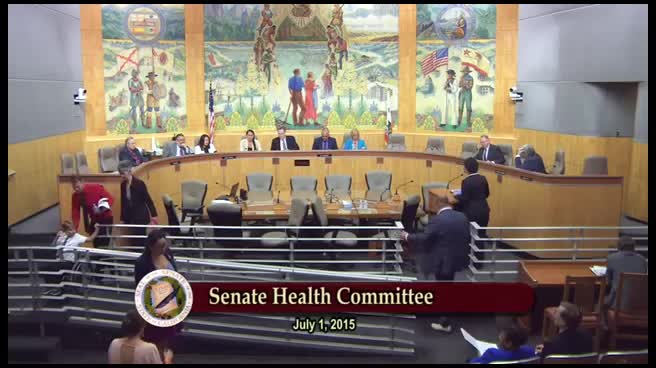

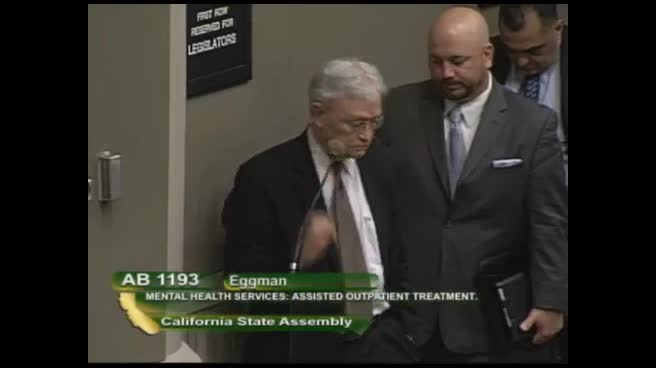
Bill Author

Bill Co-Author(s):