AB 1211: Health care facilities: congregate living health facility.
- Session Year: 2015-2016
- House: Assembly
- Latest Version Date: 2015-10-04
Existing law provides for the licensure and regulation by the State Department of Public Health of health facilities, including congregate living health facilities. A violation of these provisions is a misdemeanor. For this purpose, existing law defines congregate living health facility as a residential home with a capacity of no more than 12 beds, that provides inpatient care and skilled nursing care on a recurring, intermittent, extended, or continuous basis.
This bill would include in the definition of congregate living health facility a residential home with a capacity of no more than 18 beds that provides inpatient and skilled nursing care, as specified. By changing the definition of a crime, this bill would impose a state-mandated local program. The bill would make other technical, nonsubstantive changes.
The California Constitution requires the state to reimburse local agencies and school districts for certain costs mandated by the state. Statutory provisions establish procedures for making that reimbursement.
This bill would provide that no reimbursement is required by this act for a specified reason.
This bill would declare that it is to take effect immediately as an urgency statute.
Existing law provides for the licensure and regulation by the State Department of Public Health of health facilities, including congregate living health facilities. A violation of these provisions is a misdemeanor. For this purpose, existing law defines congregate living health facility as a residential home with a capacity of no more than 12 beds, that provides inpatient care and skilled nursing care on a recurring, intermittent, extended, or continuous basis.
This bill would include in the definition of congregate living health facility a residential home with a capacity of no more than 18 beds that provides inpatient and skilled nursing care, as specified. By changing the definition of a crime, this bill would impose a state-mandated local program. The bill would make other technical, nonsubstantive changes.
The California Constitution requires the state to reimburse local agencies and school districts for certain costs mandated by the state. Statutory provisions establish procedures for making that reimbursement.
This bill would provide that no reimbursement is required by this act for a specified reason.
This bill would declare that it is to take effect immediately as an urgency statute.
Existing law provides for the licensure and regulation by the State Department of Public Health of health facilities, including congregate living health facilities. A violation of these provisions is a misdemeanor. For this purpose, existing law defines congregate living health facility as a residential home with a capacity of no more than 12 beds, that provides inpatient care and skilled nursing care on a recurring, intermittent, extended, or continuous basis.
This bill would include in the definition of congregate living health facility a residential home with a capacity of no more than 18 beds that provides inpatient and skilled nursing care, as specified. By increasing changing the definition of a crime, this bill would impose a state-mandated local program. The bill would make other technical, nonsubstantive changes.
The California Constitution requires the state to reimburse local agencies and school districts for certain costs mandated by the state. Statutory provisions establish procedures for making that reimbursement.
This bill would provide that no reimbursement is required by this act for a specified reason.
This bill would declare that it is to take effect immediately as an urgency statute.
Existing law provides for the licensure and regulation by the State Department of Public Health of health facilities, including congregate living health facilities. A violation of these provisions is a misdemeanor. For this purpose, existing law defines congregate living health facility as a residential home with a capacity of no more than 12 beds, that provides inpatient care and skilled nursing care on a recurring, intermittent, extended, or continuous basis.
This bill would include in the definition of congregate living health facility a residential home with a capacity of no more than 18 beds that provides inpatient and skilled nursing care, as specified. By increasing the definition of a crime, this bill would impose a state-mandated local program. The bill would make other technical, nonsubstantive changes.
The California Constitution requires the state to reimburse local agencies and school districts for certain costs mandated by the state. Statutory provisions establish procedures for making that reimbursement.
This bill would provide that no reimbursement is required by this act for a specified reason.
Existing law provides for the licensure and regulation by the State Department of Public Health of health facilities, including congregate living health facilities. A violation of these provisions is a misdemeanor. For this purpose, existing law defines congregate living health facility as a residential home with a capacity of no more than 12 beds, that provides inpatient care and skilled nursing care on a recurring, intermittent, extended, or continuous basis.
This bill would include in the definition of congregate living health facility a residential home with a capacity of no more than 18 beds that provides inpatient and skilled nursing care, as specified. By increasing the definition of a crime, this bill would impose a state-mandated local program.
The California Constitution requires the state to reimburse local agencies and school districts for certain costs mandated by the state. Statutory provisions establish procedures for making that reimbursement.
This bill would provide that no reimbursement is required by this act for a specified reason.
Existing law provides for the licensure of residential care facilities for the elderly by the State Department of Social Services. Existing law requires a residential care facility for the elderly to take certain actions with respect to advance directives, including providing written information, upon admission, about the right to make decisions concerning medical care, including the right to accept or refuse medical or surgical treatment and the right, under state law, to formulate advance directives and not conditioning the provision of care or otherwise discriminating based on whether or not an individual has executed an advance directive. Existing law defines advance directive, for this purpose, to include advance health care directives or some other form of instruction recognized under state law specifically addressing the provision of health care. Violation of these provisions is a crime.
This bill would specifically include in the definition of advance directive a request regarding resuscitative measures, as defined. By expanding the definition of a crime, this bill would impose a state-mandated local program.
The California Constitution requires the state to reimburse local agencies and school districts for certain costs mandated by the state. Statutory provisions establish procedures for making that reimbursement.
This bill would provide that no reimbursement is required by this act for a specified reason.
Existing law provides for the licensure of residential care facilities for the elderly by the State Department of Social Services. Existing law requires a residential care facility for the elderly to take certain actions with respect to advance directives, including providing written information, upon admission, about the right to make decisions concerning medical care, including the right to accept or refuse medical or surgical treatment and the right, under state law, to formulate advance directives and not conditioning the provision of care or otherwise discriminating based on whether or not an individual has executed an advance directive. Existing law defines advance directive, for this purpose, to include advance health care directives or some other form of instruction recognized under state law specifically addressing the provision of health care. Violation of these provisions is a crime.
This bill would specifically include in the definition of advance directive a request regarding resuscitative measures, as defined. By expanding the definition of a crime, this bill would impose a state-mandated local program.
The California Constitution requires the state to reimburse local agencies and school districts for certain costs mandated by the state. Statutory provisions establish procedures for making that reimbursement.
This bill would provide that no reimbursement is required by this act for a specified reason.
As used in this chapter, health facility means a facility, place, or building that is organized, maintained, and operated for the diagnosis, care, prevention, and treatment of human illness, physical or mental, including convalescence and rehabilitation and including care during and after pregnancy, or for any one or more of these purposes, for one or more persons, to which the persons are admitted for a 24-hour stay or longer, and includes the following types:
(a)General acute care hospital means a health facility having a duly constituted governing body with overall administrative and professional responsibility and an organized medical staff that provides 24-hour inpatient care, including the following basic services: medical, nursing, surgical, anesthesia, laboratory, radiology, pharmacy, and dietary services. A general acute care hospital may include more than one physical plant maintained and operated on separate premises as provided in Section 1250.8. A general acute care hospital that exclusively provides acute medical rehabilitation center services, including at least physical therapy, occupational therapy, and speech therapy, may provide for the required surgical and anesthesia services through a contract with another acute care hospital. In addition, a general acute care hospital that, on July 1, 1983, provided required surgical and anesthesia services through a contract or agreement with another acute care hospital may continue to provide these surgical and anesthesia services through a contract or agreement with an acute care hospital. The general acute care hospital operated by the State Department of Developmental Services at Agnews Developmental Center may, until June 30, 2007, provide surgery and anesthesia services through a contract or agreement with another acute care hospital. Notwithstanding the requirements of this subdivision, a general acute care hospital operated by the Department of Corrections and Rehabilitation or the Department of Veterans Affairs may provide surgery and anesthesia services during normal weekday working hours, and not provide these services during other hours of the weekday or on weekends or holidays, if the general acute care hospital otherwise meets the requirements of this section.
A general acute care hospital includes a rural general acute care hospital. However, a rural general acute care hospital shall not be required by the department to provide surgery and anesthesia services. A rural general acute care hospital shall meet either of the following conditions:
(1)The hospital meets criteria for designation within peer group six or eight, as defined in the report entitled Hospital Peer Grouping for Efficiency Comparison, dated December 20, 1982.
(2)The hospital meets the criteria for designation within peer group five or seven, as defined in the report entitled Hospital Peer Grouping for Efficiency Comparison, dated December 20, 1982, and has no more than 76 acute care beds and is located in a census dwelling place of 15,000 or less population according to the 1980 federal census.
(b)Acute psychiatric hospital means a health facility having a duly constituted governing body with overall administrative and professional responsibility and an organized medical staff that provides 24-hour inpatient care for persons with mental health disorders or other patients referred to in Division 5 (commencing with Section 5000) or Division 6 (commencing with Section 6000) of the Welfare and Institutions Code, including the following basic services: medical, nursing, rehabilitative, pharmacy, and dietary services.
(c)(1)Skilled nursing facility means a health facility that provides skilled nursing care and supportive care to patients whose primary need is for availability of skilled nursing care on an extended basis.
(2)Skilled nursing facility includes a small house skilled nursing facility (SHSNF), as defined in Section 1323.5.
(d)Intermediate care facility means a health facility that provides inpatient care to ambulatory or nonambulatory patients who have recurring need for skilled nursing supervision and need supportive care, but who do not require availability of continuous skilled nursing care.
(e)Intermediate care facility/developmentally disabled habilitative means a facility with a capacity of 4 to 15 beds that provides 24-hour personal care, habilitation, developmental, and supportive health services to 15 or fewer persons with developmental disabilities who have intermittent recurring needs for nursing services, but have been certified by a physician and surgeon as not requiring availability of continuous skilled nursing care.
(f)Special hospital means a health facility having a duly constituted governing body with overall administrative and professional responsibility and an organized medical or dental staff that provides inpatient or outpatient care in dentistry or maternity.
(g)Intermediate care facility/developmentally disabled means a facility that provides 24-hour personal care, habilitation, developmental, and supportive health services to persons with developmental disabilities whose primary need is for developmental services and who have a recurring but intermittent need for skilled nursing services.
(h)Intermediate care facility/developmentally disabled-nursing means a facility with a capacity of 4 to 15 beds that provides 24-hour personal care, developmental services, and nursing supervision for persons with developmental disabilities who have intermittent recurring needs for skilled nursing care but have been certified by a physician and surgeon as not requiring continuous skilled nursing care. The facility shall serve medically fragile persons with developmental disabilities or who demonstrate significant developmental delay that may lead to a developmental disability if not treated.
(i)(1)Congregate living health facility means a residential home with a capacity, except as provided in paragraph (4), of no more than 18 beds, that provides inpatient care, including the following basic services: medical supervision, 24-hour skilled nursing and supportive care, pharmacy, dietary, social, recreational, and at least one type of service specified in paragraph (2). The primary need of congregate living health facility residents shall be for availability of skilled nursing care on a recurring, intermittent, extended, or continuous basis. This care is generally less intense than that provided in general acute care hospitals but more intense than that provided in skilled nursing facilities.
(2)Congregate living health facilities shall provide one or more of the following services:
(A)Services for persons who are mentally alert, persons with physical disabilities, who may be ventilator dependent.
(B)Services for persons who have a diagnosis of terminal illness, a diagnosis of a life-threatening illness, or both. Terminal illness means the individual has a life expectancy of six months or less as stated in writing by his or her attending physician and surgeon. A life-threatening illness means the individual has an illness that can lead to a possibility of a termination of life within five years or less as stated in writing by his or her attending physician and surgeon.
(C)Services for persons who are catastrophically and severely disabled. A person who is catastrophically and severely disabled means a person whose origin of disability was acquired through trauma or nondegenerative neurologic illness, for whom it has been determined that active rehabilitation would be beneficial and to whom these services are being provided. Services offered by a congregate living health facility to a person who is catastrophically disabled shall include, but not be limited to, speech, physical, and occupational therapy.
(3)A congregate living health facility license shall specify which of the types of persons described in paragraph (2) to whom a facility is licensed to provide services.
(4)(A)A facility operated by a city and county for the purposes of delivering services under this section may have a capacity of 59 beds.
(B)A congregate living health facility not operated by a city and county servicing persons who are terminally ill, persons who have been diagnosed with a life-threatening illness, or both, that is located in a county with a population of 500,000 or more persons, or located in a county of the 16th class pursuant to Section 28020 of the Government Code, may have not more than 25 beds for the purpose of serving persons who are terminally ill.
(5)A congregate living health facility shall have a noninstitutional, homelike environment.
(j)(1)Correctional treatment center means a health facility operated by the Department of Corrections and Rehabilitation, the Department of Corrections and Rehabilitation, Division of Juvenile Facilities, or a county, city, or city and county law enforcement agency that, as determined by the department, provides inpatient health services to that portion of the inmate population who do not require a general acute care level of basic services. This definition shall not apply to those areas of a law enforcement facility that houses inmates or wards who may be receiving outpatient services and are housed separately for reasons of improved access to health care, security, and protection. The health services provided by a correctional treatment center shall include, but are not limited to, all of the following basic services: physician and surgeon, psychiatrist, psychologist, nursing, pharmacy, and dietary. A correctional treatment center may provide the following services: laboratory, radiology, perinatal, and any other services approved by the department.
(2)Outpatient surgical care with anesthesia may be provided, if the correctional treatment center meets the same requirements as a surgical clinic licensed pursuant to Section 1204, with the exception of the requirement that patients remain less than 24 hours.
(3)Correctional treatment centers shall maintain written service agreements with general acute care hospitals to provide for those inmate physical health needs that cannot be met by the correctional treatment center.
(4)Physician and surgeon services shall be readily available in a correctional treatment center on a 24-hour basis.
(5)It is not the intent of the Legislature to have a correctional treatment center supplant the general acute care hospitals at the California Medical Facility, the California Mens Colony, and the California Institution for Men. This subdivision shall not be construed to prohibit the Department of Corrections and Rehabilitation from obtaining a correctional treatment center license at these sites.
(k)Nursing facility means a health facility licensed pursuant to this chapter that is certified to participate as a provider of care either as a skilled nursing facility in the federal Medicare Program under Title XVIII of the federal Social Security Act (42 U.S.C. Sec. 1395 et seq.) or as a nursing facility in the federal Medicaid Program under Title XIX of the federal Social Security Act (42 U.S.C. Sec. 1396 et seq.), or as both.
(l)Regulations defining a correctional treatment center described in subdivision (j) that is operated by a county, city, or city and county, the Department of Corrections and Rehabilitation, or the Department of Corrections and Rehabilitation, Division of Juvenile Facilities, shall not become effective prior to, or, if effective, shall be inoperative until January 1, 1996, and until that time these correctional facilities are exempt from any licensing requirements.
(m)Intermediate care facility/developmentally disabled-continuous nursing (ICF/DD-CN) means a homelike facility with a capacity of four to eight, inclusive, beds that provides 24-hour personal care, developmental services, and nursing supervision for persons with developmental disabilities who have continuous needs for skilled nursing care and have been certified by a physician and surgeon as warranting continuous skilled nursing care. The facility shall serve medically fragile persons who have developmental disabilities or demonstrate significant developmental delay that may lead to a developmental disability if not treated. ICF/DD-CN facilities shall be subject to licensure under this chapter upon adoption of licensing regulations in accordance with Section 1275.3. A facility providing continuous skilled nursing services to persons with developmental disabilities pursuant to Section 14132.20 or 14495.10 of the Welfare and Institutions Code shall apply for licensure under this subdivision within 90 days after the regulations become effective, and may continue to operate pursuant to those sections until its licensure application is either approved or denied.
(n)Hospice facility means a health facility licensed pursuant to this chapter with a capacity of no more than 24 beds that provides hospice services. Hospice services include, but are not limited to, routine care, continuous care, inpatient respite care, and inpatient hospice care as defined in subdivision (d) of Section 1339.40, and is operated by a provider of hospice services that is licensed pursuant to Section 1751 and certified as a hospice pursuant to Part 418 of Title 42 of the Code of Federal Regulations.
SEC. 2.No reimbursement is required by this act pursuant to Section 6 of Article XIIIB of the California Constitution because the only costs that may be incurred by a local agency or school district will be incurred because this act creates a new crime or infraction, eliminates a crime or infraction, or changes the penalty for a crime or infraction, within the meaning of Section 17556 of the Government Code, or changes the definition of a crime within the meaning of Section 6 of Article XIIIB of the California Constitution.
SEC. 3.This act is an urgency statute necessary for the immediate preservation of the public peace, health, or safety within the meaning of Article IV of the Constitution and shall go into immediate effect. The facts constituting the necessity are:
In order to immediately ensure that eligible patients of congregate living health facilities are able to obtain essential care, and to enable these facilities to provide care for patients currently on a waiting list, it is necessary that this act take effect immediately.
As used in this chapter, health facility means a facility, place, or building that is organized, maintained, and operated for the diagnosis, care, prevention, and treatment of human illness, physical or mental, including convalescence and rehabilitation and including care during and after pregnancy, or for any one or more of these purposes, for one or more persons, to which the persons are admitted for a 24-hour stay or longer, and includes the following types:
(a)General acute care hospital means a health facility having a duly constituted governing body with overall administrative and professional responsibility and an organized medical staff that provides 24-hour inpatient care, including the following basic services: medical, nursing, surgical, anesthesia, laboratory, radiology, pharmacy, and dietary services. A general acute care hospital may include more than one physical plant maintained and operated on separate premises as provided in Section 1250.8. A general acute care hospital that exclusively provides acute medical rehabilitation center services, including at least physical therapy, occupational therapy, and speech therapy, may provide for the required surgical and anesthesia services through a contract with another acute care hospital. In addition, a general acute care hospital that, on July 1, 1983, provided required surgical and anesthesia services through a contract or agreement with another acute care hospital may continue to provide these surgical and anesthesia services through a contract or agreement with an acute care hospital. The general acute care hospital operated by the State Department of Developmental Services at Agnews Developmental Center may, until June 30, 2007, provide surgery and anesthesia services through a contract or agreement with another acute care hospital. Notwithstanding the requirements of this subdivision, a general acute care hospital operated by the Department of Corrections and Rehabilitation or the Department of Veterans Affairs may provide surgery and anesthesia services during normal weekday working hours, and not provide these services during other hours of the weekday or on weekends or holidays, if the general acute care hospital otherwise meets the requirements of this section.
A general acute care hospital includes a rural general acute care hospital. However, a rural general acute care hospital shall not be required by the department to provide surgery and anesthesia services. A rural general acute care hospital shall meet either of the following conditions:
(1)The hospital meets criteria for designation within peer group six or eight, as defined in the report entitled Hospital Peer Grouping for Efficiency Comparison, dated December 20, 1982.
(2)The hospital meets the criteria for designation within peer group five or seven, as defined in the report entitled Hospital Peer Grouping for Efficiency Comparison, dated December 20, 1982, and has no more than 76 acute care beds and is located in a census dwelling place of 15,000 or less population according to the 1980 federal census.
(b)Acute psychiatric hospital means a health facility having a duly constituted governing body with overall administrative and professional responsibility and an organized medical staff that provides 24-hour inpatient care for persons with mental health disorders or other patients referred to in Division 5 (commencing with Section 5000) or Division 6 (commencing with Section 6000) of the Welfare and Institutions Code, including the following basic services: medical, nursing, rehabilitative, pharmacy, and dietary services.
(c)(1)Skilled nursing facility means a health facility that provides skilled nursing care and supportive care to patients whose primary need is for availability of skilled nursing care on an extended basis.
(2)Skilled nursing facility includes a small house skilled nursing facility (SHSNF), as defined in Section 1323.5.
(d)Intermediate care facility means a health facility that provides inpatient care to ambulatory or nonambulatory patients who have recurring need for skilled nursing supervision and need supportive care, but who do not require availability of continuous skilled nursing care.
(e)Intermediate care facility/developmentally disabled habilitative means a facility with a capacity of 4 to 15 beds that provides 24-hour personal care, habilitation, developmental, and supportive health services to 15 or fewer persons with developmental disabilities who have intermittent recurring needs for nursing services, but have been certified by a physician and surgeon as not requiring availability of continuous skilled nursing care.
(f)Special hospital means a health facility having a duly constituted governing body with overall administrative and professional responsibility and an organized medical or dental staff that provides inpatient or outpatient care in dentistry or maternity.
(g)Intermediate care facility/developmentally disabled means a facility that provides 24-hour personal care, habilitation, developmental, and supportive health services to persons with developmental disabilities whose primary need is for developmental services and who have a recurring but intermittent need for skilled nursing services.
(h)Intermediate care facility/developmentally disabled-nursing means a facility with a capacity of 4 to 15 beds that provides 24-hour personal care, developmental services, and nursing supervision for persons with developmental disabilities who have intermittent recurring needs for skilled nursing care but have been certified by a physician and surgeon as not requiring continuous skilled nursing care. The facility shall serve medically fragile persons with developmental disabilities or who demonstrate significant developmental delay that may lead to a developmental disability if not treated.
(i)(1)Congregate living health facility means a residential home with a capacity, except as provided in paragraph (4), of no more than 18 beds, that provides inpatient care, including the following basic services: medical supervision, 24-hour skilled nursing and supportive care, pharmacy, dietary, social, recreational, and at least one type of service specified in paragraph (2). The primary need of congregate living health facility residents shall be for availability of skilled nursing care on a recurring, intermittent, extended, or continuous basis. This care is generally less intense than that provided in general acute care hospitals but more intense than that provided in skilled nursing facilities.
(2)Congregate living health facilities shall provide one or more of the following services:
(A)Services for persons who are mentally alert, persons with physical disabilities, who may be ventilator dependent.
(B)Services for persons who have a diagnosis of terminal illness, a diagnosis of a life-threatening illness, or both. Terminal illness means the individual has a life expectancy of six months or less as stated in writing by his or her attending physician and surgeon. A life-threatening illness means the individual has an illness that can lead to a possibility of a termination of life within five years or less as stated in writing by his or her attending physician and surgeon.
(C)Services for persons who are catastrophically and severely disabled. A person who is catastrophically and severely disabled means a person whose origin of disability was acquired through trauma or nondegenerative neurologic illness, for whom it has been determined that active rehabilitation would be beneficial and to whom these services are being provided. Services offered by a congregate living health facility to a person who is catastrophically disabled shall include, but not be limited to, speech, physical, and occupational therapy.
(3)A congregate living health facility license shall specify which of the types of persons described in paragraph (2) to whom a facility is licensed to provide services.
(4)(A)A facility operated by a city and county for the purposes of delivering services under this section may have a capacity of 59 beds.
(B)A congregate living health facility not operated by a city and county servicing persons who are terminally ill, persons who have been diagnosed with a life-threatening illness, or both, that is located in a county with a population of 500,000 or more persons, or located in a county of the 16th class pursuant to Section 28020 of the Government Code, may have not more than 25 beds for the purpose of serving persons who are terminally ill.
(5)A congregate living health facility shall have a noninstitutional, homelike environment.
(j)(1)Correctional treatment center means a health facility operated by the Department of Corrections and Rehabilitation, the Department of Corrections and Rehabilitation, Division of Juvenile Facilities, or a county, city, or city and county law enforcement agency that, as determined by the department, provides inpatient health services to that portion of the inmate population who do not require a general acute care level of basic services. This definition shall not apply to those areas of a law enforcement facility that houses inmates or wards who may be receiving outpatient services and are housed separately for reasons of improved access to health care, security, and protection. The health services provided by a correctional treatment center shall include, but are not limited to, all of the following basic services: physician and surgeon, psychiatrist, psychologist, nursing, pharmacy, and dietary. A correctional treatment center may provide the following services: laboratory, radiology, perinatal, and any other services approved by the department.
(2)Outpatient surgical care with anesthesia may be provided, if the correctional treatment center meets the same requirements as a surgical clinic licensed pursuant to Section 1204, with the exception of the requirement that patients remain less than 24 hours.
(3)Correctional treatment centers shall maintain written service agreements with general acute care hospitals to provide for those inmate physical health needs that cannot be met by the correctional treatment center.
(4)Physician and surgeon services shall be readily available in a correctional treatment center on a 24-hour basis.
(5)It is not the intent of the Legislature to have a correctional treatment center supplant the general acute care hospitals at the California Medical Facility, the California Mens Colony, and the California Institution for Men. This subdivision shall not be construed to prohibit the Department of Corrections and Rehabilitation from obtaining a correctional treatment center license at these sites.
(k)Nursing facility means a health facility licensed pursuant to this chapter that is certified to participate as a provider of care either as a skilled nursing facility in the federal Medicare Program under Title XVIII of the federal Social Security Act (42 U.S.C. Sec. 1395 et seq.) or as a nursing facility in the federal Medicaid Program under Title XIX of the federal Social Security Act (42 U.S.C. Sec. 1396 et seq.), or as both.
(l)Regulations defining a correctional treatment center described in subdivision (j) that is operated by a county, city, or city and county, the Department of Corrections and Rehabilitation, or the Department of Corrections and Rehabilitation, Division of Juvenile Facilities, shall not become effective prior to, or, if effective, shall be inoperative until January 1, 1996, and until that time these correctional facilities are exempt from any licensing requirements.
(m)Intermediate care facility/developmentally disabled-continuous nursing (ICF/DD-CN) means a homelike facility with a capacity of four to eight, inclusive, beds that provides 24-hour personal care, developmental services, and nursing supervision for persons with developmental disabilities who have continuous needs for skilled nursing care and have been certified by a physician and surgeon as warranting continuous skilled nursing care. The facility shall serve medically fragile persons who have developmental disabilities or demonstrate significant developmental delay that may lead to a developmental disability if not treated. ICF/DD-CN facilities shall be subject to licensure under this chapter upon adoption of licensing regulations in accordance with Section 1275.3. A facility providing continuous skilled nursing services to persons with developmental disabilities pursuant to Section 14132.20 or 14495.10 of the Welfare and Institutions Code shall apply for licensure under this subdivision within 90 days after the regulations become effective, and may continue to operate pursuant to those sections until its licensure application is either approved or denied.
(n)Hospice facility means a health facility licensed pursuant to this chapter with a capacity of no more than 24 beds that provides hospice services. Hospice services include, but are not limited to, routine care, continuous care, inpatient respite care, and inpatient hospice care as defined in subdivision (d) of Section 1339.40, and is operated by a provider of hospice services that is licensed pursuant to Section 1751 and certified as a hospice pursuant to Part 418 of Title 42 of the Code of Federal Regulations.
SEC. 2.No reimbursement is required by this act pursuant to Section 6 of Article XIIIB of the California Constitution because the only costs that may be incurred by a local agency or school district will be incurred because this act creates a new crime or infraction, eliminates a crime or infraction, or changes the penalty for a crime or infraction, within the meaning of Section 17556 of the Government Code, or changes the definition of a crime within the meaning of Section 6 of Article XIIIB of the California Constitution.
SEC. 3.This act is an urgency statute necessary for the immediate preservation of the public peace, health, or safety within the meaning of Article IV of the Constitution and shall go into immediate effect. The facts constituting the necessity are:
In order to immediately ensure that eligible patients of congregate living health facilities are able to obtain essential care, and to enable these facilities to provide care for patients currently on a waiting list, it is necessary that this act take effect immediately.
As used in this chapter, health facility means a facility, place, or building that is organized, maintained, and operated for the diagnosis, care, prevention, and treatment of human illness, physical or mental, including convalescence and rehabilitation and including care during and after pregnancy, or for any one or more of these purposes, for one or more persons, to which the persons are admitted for a 24-hour stay or longer, and includes the following types:
(a)General acute care hospital means a health facility having a duly constituted governing body with overall administrative and professional responsibility and an organized medical staff that provides 24-hour inpatient care, including the following basic services: medical, nursing, surgical, anesthesia, laboratory, radiology, pharmacy, and dietary services. A general acute care hospital may include more than one physical plant maintained and operated on separate premises as provided in Section 1250.8. A general acute care hospital that exclusively provides acute medical rehabilitation center services, including at least physical therapy, occupational therapy, and speech therapy, may provide for the required surgical and anesthesia services through a contract with another acute care hospital. In addition, a general acute care hospital that, on July 1, 1983, provided required surgical and anesthesia services through a contract or agreement with another acute care hospital may continue to provide these surgical and anesthesia services through a contract or agreement with an acute care hospital. The general acute care hospital operated by the State Department of Developmental Services at Agnews Developmental Center may, until June 30, 2007, provide surgery and anesthesia services through a contract or agreement with another acute care hospital. Notwithstanding the requirements of this subdivision, a general acute care hospital operated by the Department of Corrections and Rehabilitation or the Department of Veterans Affairs may provide surgery and anesthesia services during normal weekday working hours, and not provide these services during other hours of the weekday or on weekends or holidays, if the general acute care hospital otherwise meets the requirements of this section.
A general acute care hospital includes a rural general acute care hospital. However, a rural general acute care hospital shall not be required by the department to provide surgery and anesthesia services. A rural general acute care hospital shall meet either of the following conditions:
(1)The hospital meets criteria for designation within peer group six or eight, as defined in the report entitled Hospital Peer Grouping for Efficiency Comparison, dated December 20, 1982.
(2)The hospital meets the criteria for designation within peer group five or seven, as defined in the report entitled Hospital Peer Grouping for Efficiency Comparison, dated December 20, 1982, and has no more than 76 acute care beds and is located in a census dwelling place of 15,000 or less population according to the 1980 federal census.
(b)Acute psychiatric hospital means a health facility having a duly constituted governing body with overall administrative and professional responsibility and an organized medical staff that provides 24-hour inpatient care for persons with mental health disorders or other patients referred to in Division 5 (commencing with Section 5000) or Division 6 (commencing with Section 6000) of the Welfare and Institutions Code, including the following basic services: medical, nursing, rehabilitative, pharmacy, and dietary services.
(c)(1)Skilled nursing facility means a health facility that provides skilled nursing care and supportive care to patients whose primary need is for availability of skilled nursing care on an extended basis.
(2)Skilled nursing facility includes a small house skilled nursing facility (SHSNF), as defined in Section 1323.5.
(d)Intermediate care facility means a health facility that provides inpatient care to ambulatory or nonambulatory patients who have recurring need for skilled nursing supervision and need supportive care, but who do not require availability of continuous skilled nursing care.
(e)Intermediate care facility/developmentally disabled habilitative means a facility with a capacity of 4 to 15 beds that provides 24-hour personal care, habilitation, developmental, and supportive health services to 15 or fewer persons with developmental disabilities who have intermittent recurring needs for nursing services, but have been certified by a physician and surgeon as not requiring availability of continuous skilled nursing care.
(f)Special hospital means a health facility having a duly constituted governing body with overall administrative and professional responsibility and an organized medical or dental staff that provides inpatient or outpatient care in dentistry or maternity.
(g)Intermediate care facility/developmentally disabled means a facility that provides 24-hour personal care, habilitation, developmental, and supportive health services to persons with developmental disabilities whose primary need is for developmental services and who have a recurring but intermittent need for skilled nursing services.
(h)Intermediate care facility/developmentally disabled-nursing means a facility with a capacity of 4 to 15 beds that provides 24-hour personal care, developmental services, and nursing supervision for persons with developmental disabilities who have intermittent recurring needs for skilled nursing care but have been certified by a physician and surgeon as not requiring continuous skilled nursing care. The facility shall serve medically fragile persons with developmental disabilities or who demonstrate significant developmental delay that may lead to a developmental disability if not treated.
(i)(1)Congregate living health facility means a residential home with a capacity, except as provided in paragraph (4), of no more than 18 beds, that provides inpatient care, including the following basic services: medical supervision, 24-hour skilled nursing and supportive care, pharmacy, dietary, social, recreational, and at least one type of service specified in paragraph (2). The primary need of congregate living health facility residents shall be for availability of skilled nursing care on a recurring, intermittent, extended, or continuous basis. This care is generally less intense than that provided in general acute care hospitals but more intense than that provided in skilled nursing facilities.
(2)Congregate living health facilities shall provide one or more of the following services:
(A)Services for persons who are mentally alert, persons with physical disabilities, who may be ventilator dependent.
(B)Services for persons who have a diagnosis of terminal illness, a diagnosis of a life-threatening illness, or both. Terminal illness means the individual has a life expectancy of six months or less as stated in writing by his or her attending physician and surgeon. A life-threatening illness means the individual has an illness that can lead to a possibility of a termination of life within five years or less as stated in writing by his or her attending physician and surgeon.
(C)Services for persons who are catastrophically and severely disabled. A person who is catastrophically and severely disabled means a person whose origin of disability was acquired through trauma or nondegenerative neurologic illness, for whom it has been determined that active rehabilitation would be beneficial and to whom these services are being provided. Services offered by a congregate living health facility to a person who is catastrophically disabled shall include, but not be limited to, speech, physical, and occupational therapy.
(3)A congregate living health facility license shall specify which of the types of persons described in paragraph (2) to whom a facility is licensed to provide services.
(4)(A)A facility operated by a city and county for the purposes of delivering services under this section may have a capacity of 59 beds.
(B)A congregate living health facility not operated by a city and county servicing persons who are terminally ill, persons who have been diagnosed with a life-threatening illness, or both, that is located in a county with a population of 500,000 or more persons, or located in a county of the 16th class pursuant to Section 28020 of the Government Code, may have not more than 25 beds for the purpose of serving persons who are terminally ill.
(5)A congregate living health facility shall have a noninstitutional, homelike environment.
(j)(1)Correctional treatment center means a health facility operated by the Department of Corrections and Rehabilitation, the Department of Corrections and Rehabilitation, Division of Juvenile Facilities, or a county, city, or city and county law enforcement agency that, as determined by the department, provides inpatient health services to that portion of the inmate population who do not require a general acute care level of basic services. This definition shall not apply to those areas of a law enforcement facility that houses inmates or wards who may be receiving outpatient services and are housed separately for reasons of improved access to health care, security, and protection. The health services provided by a correctional treatment center shall include, but are not limited to, all of the following basic services: physician and surgeon, psychiatrist, psychologist, nursing, pharmacy, and dietary. A correctional treatment center may provide the following services: laboratory, radiology, perinatal, and any other services approved by the department.
(2)Outpatient surgical care with anesthesia may be provided, if the correctional treatment center meets the same requirements as a surgical clinic licensed pursuant to Section 1204, with the exception of the requirement that patients remain less than 24 hours.
(3)Correctional treatment centers shall maintain written service agreements with general acute care hospitals to provide for those inmate physical health needs that cannot be met by the correctional treatment center.
(4)Physician and surgeon services shall be readily available in a correctional treatment center on a 24-hour basis.
(5)It is not the intent of the Legislature to have a correctional treatment center supplant the general acute care hospitals at the California Medical Facility, the California Mens Colony, and the California Institution for Men. This subdivision shall not be construed to prohibit the Department of Corrections and Rehabilitation from obtaining a correctional treatment center license at these sites.
(k)Nursing facility means a health facility licensed pursuant to this chapter that is certified to participate as a provider of care either as a skilled nursing facility in the federal Medicare Program under Title XVIII of the federal Social Security Act (42 U.S.C. Sec. 1395 et seq.) or as a nursing facility in the federal Medicaid Program under Title XIX of the federal Social Security Act (42 U.S.C. Sec. 1396 et seq.), or as both.
(l)Regulations defining a correctional treatment center described in subdivision (j) that is operated by a county, city, or city and county, the Department of Corrections and Rehabilitation, or the Department of Corrections and Rehabilitation, Division of Juvenile Facilities, shall not become effective prior to, or, if effective, shall be inoperative until January 1, 1996, and until that time these correctional facilities are exempt from any licensing requirements.
(m)Intermediate care facility/developmentally disabled-continuous nursing (ICF/DD-CN) means a homelike facility with a capacity of four to eight, inclusive, beds that provides 24-hour personal care, developmental services, and nursing supervision for persons with developmental disabilities who have continuous needs for skilled nursing care and have been certified by a physician and surgeon as warranting continuous skilled nursing care. The facility shall serve medically fragile persons who have developmental disabilities or demonstrate significant developmental delay that may lead to a developmental disability if not treated. ICF/DD-CN facilities shall be subject to licensure under this chapter upon adoption of licensing regulations in accordance with Section 1275.3. A facility providing continuous skilled nursing services to persons with developmental disabilities pursuant to Section 14132.20 or 14495.10 of the Welfare and Institutions Code shall apply for licensure under this subdivision within 90 days after the regulations become effective, and may continue to operate pursuant to those sections until its licensure application is either approved or denied.
(n)Hospice facility means a health facility licensed pursuant to this chapter with a capacity of no more than 24 beds that provides hospice services. Hospice services include, but are not limited to, routine care, continuous care, inpatient respite care, and inpatient hospice care as defined in subdivision (d) of Section 1339.40, and is operated by a provider of hospice services that is licensed pursuant to Section 1751 and certified as a hospice pursuant to Part 418 of Title 42 of the Code of Federal Regulations.
SEC. 2.No reimbursement is required by this act pursuant to Section 6 of Article XIIIB of the California Constitution because the only costs that may be incurred by a local agency or school district will be incurred because this act creates a new crime or infraction, eliminates a crime or infraction, or changes the penalty for a crime or infraction, within the meaning of Section 17556 of the Government Code, or changes the definition of a crime within the meaning of Section 6 of Article XIIIB of the California Constitution.
SEC. 3.This act is an urgency statute necessary for the immediate preservation of the public peace, health, or safety within the meaning of Article IV of the Constitution and shall go into immediate effect. The facts constituting the necessity are:
In order to immediately ensure that eligible patients of congregate living health facilities are able to obtain essential care, and to enable these facilities to provide care for patients currently on a waiting list, it is necessary that this act take effect immediately.
As used in this chapter, health facility means a facility, place, or building that is organized, maintained, and operated for the diagnosis, care, prevention, and treatment of human illness, physical or mental, including convalescence and rehabilitation and including care during and after pregnancy, or for any one or more of these purposes, for one or more persons, to which the persons are admitted for a 24-hour stay or longer, and includes the following types:
(a)General acute care hospital means a health facility having a duly constituted governing body with overall administrative and professional responsibility and an organized medical staff that provides 24-hour inpatient care, including the following basic services: medical, nursing, surgical, anesthesia, laboratory, radiology, pharmacy, and dietary services. A general acute care hospital may include more than one physical plant maintained and operated on separate premises as provided in Section 1250.8. A general acute care hospital that exclusively provides acute medical rehabilitation center services, including at least physical therapy, occupational therapy, and speech therapy, may provide for the required surgical and anesthesia services through a contract with another acute care hospital. In addition, a general acute care hospital that, on July 1, 1983, provided required surgical and anesthesia services through a contract or agreement with another acute care hospital may continue to provide these surgical and anesthesia services through a contract or agreement with an acute care hospital. The general acute care hospital operated by the State Department of Developmental Services at Agnews Developmental Center may, until June 30, 2007, provide surgery and anesthesia services through a contract or agreement with another acute care hospital. Notwithstanding the requirements of this subdivision, a general acute care hospital operated by the Department of Corrections and Rehabilitation or the Department of Veterans Affairs may provide surgery and anesthesia services during normal weekday working hours, and not provide these services during other hours of the weekday or on weekends or holidays, if the general acute care hospital otherwise meets the requirements of this section.
A general acute care hospital includes a rural general acute care hospital. However, a rural general acute care hospital shall not be required by the department to provide surgery and anesthesia services. A rural general acute care hospital shall meet either of the following conditions:
(1)The hospital meets criteria for designation within peer group six or eight, as defined in the report entitled Hospital Peer Grouping for Efficiency Comparison, dated December 20, 1982.
(2)The hospital meets the criteria for designation within peer group five or seven, as defined in the report entitled Hospital Peer Grouping for Efficiency Comparison, dated December 20, 1982, and has no more than 76 acute care beds and is located in a census dwelling place of 15,000 or less population according to the 1980 federal census.
(b)Acute psychiatric hospital means a health facility having a duly constituted governing body with overall administrative and professional responsibility and an organized medical staff that provides 24-hour inpatient care for persons with mental health disorders or other patients referred to in Division 5 (commencing with Section 5000) or Division 6 (commencing with Section 6000) of the Welfare and Institutions Code, including the following basic services: medical, nursing, rehabilitative, pharmacy, and dietary services.
(c)(1)Skilled nursing facility means a health facility that provides skilled nursing care and supportive care to patients whose primary need is for availability of skilled nursing care on an extended basis.
(2)Skilled nursing facility includes a small house skilled nursing facility (SHSNF), as defined in Section 1323.5.
(d)Intermediate care facility means a health facility that provides inpatient care to ambulatory or nonambulatory patients who have recurring need for skilled nursing supervision and need supportive care, but who do not require availability of continuous skilled nursing care.
(e)Intermediate care facility/developmentally disabled habilitative means a facility with a capacity of 4 to 15 beds that provides 24-hour personal care, habilitation, developmental, and supportive health services to 15 or fewer persons with developmental disabilities who have intermittent recurring needs for nursing services, but have been certified by a physician and surgeon as not requiring availability of continuous skilled nursing care.
(f)Special hospital means a health facility having a duly constituted governing body with overall administrative and professional responsibility and an organized medical or dental staff that provides inpatient or outpatient care in dentistry or maternity.
(g)Intermediate care facility/developmentally disabled means a facility that provides 24-hour personal care, habilitation, developmental, and supportive health services to persons with developmental disabilities whose primary need is for developmental services and who have a recurring but intermittent need for skilled nursing services.
(h)Intermediate care facility/developmentally disabled-nursing means a facility with a capacity of 4 to 15 beds that provides 24-hour personal care, developmental services, and nursing supervision for persons with developmental disabilities who have intermittent recurring needs for skilled nursing care but have been certified by a physician and surgeon as not requiring continuous skilled nursing care. The facility shall serve medically fragile persons with developmental disabilities or who demonstrate significant developmental delay that may lead to a developmental disability if not treated.
(i)(1)Congregate living health facility means a residential home with a capacity, except as provided in paragraph (4), of no more than 18 beds, that provides inpatient care, including the following basic services: medical supervision, 24-hour skilled nursing and supportive care, pharmacy, dietary, social, recreational, and at least one type of service specified in paragraph (2). The primary need of congregate living health facility residents shall be for availability of skilled nursing care on a recurring, intermittent, extended, or continuous basis. This care is generally less intense than that provided in general acute care hospitals but more intense than that provided in skilled nursing facilities.
(2)Congregate living health facilities shall provide one or more of the following services:
(A)Services for persons who are mentally alert, persons with physical disabilities, who may be ventilator dependent.
(B)Services for persons who have a diagnosis of terminal illness, a diagnosis of a life-threatening illness, or both. Terminal illness means the individual has a life expectancy of six months or less as stated in writing by his or her attending physician and surgeon. A life-threatening illness means the individual has an illness that can lead to a possibility of a termination of life within five years or less as stated in writing by his or her attending physician and surgeon.
(C)Services for persons who are catastrophically and severely disabled. A person who is catastrophically and severely disabled means a person whose origin of disability was acquired through trauma or nondegenerative neurologic illness, for whom it has been determined that active rehabilitation would be beneficial and to whom these services are being provided. Services offered by a congregate living health facility to a person who is catastrophically disabled shall include, but not be limited to, speech, physical, and occupational therapy.
(3)A congregate living health facility license shall specify which of the types of persons described in paragraph (2) to whom a facility is licensed to provide services.
(4)(A)A facility operated by a city and county for the purposes of delivering services under this section may have a capacity of 59 beds.
(B)A congregate living health facility not operated by a city and county servicing persons who are terminally ill, persons who have been diagnosed with a life-threatening illness, or both, that is located in a county with a population of 500,000 or more persons, or located in a county of the 16th class pursuant to Section 28020 of the Government Code, may have not more than 25 beds for the purpose of serving persons who are terminally ill.
(C)A congregate living health facility not operated by a city and county serving persons who are catastrophically and severely disabled, as defined in subparagraph (C) of paragraph (2) that is located in a county of 500,000 or more persons may have not more than 18 beds for the purpose of serving persons who are catastrophically and severely disabled.
(5)A congregate living health facility shall have a noninstitutional, homelike environment.
(j)(1)Correctional treatment center means a health facility operated by the Department of Corrections and Rehabilitation, the Department of Corrections and Rehabilitation, Division of Juvenile Facilities, or a county, city, or city and county law enforcement agency that, as determined by the department, provides inpatient health services to that portion of the inmate population who do not require a general acute care level of basic services. This definition shall not apply to those areas of a law enforcement facility that houses inmates or wards who may be receiving outpatient services and are housed separately for reasons of improved access to health care, security, and protection. The health services provided by a correctional treatment center shall include, but are not limited to, all of the following basic services: physician and surgeon, psychiatrist, psychologist, nursing, pharmacy, and dietary. A correctional treatment center may provide the following services: laboratory, radiology, perinatal, and any other services approved by the department.
(2)Outpatient surgical care with anesthesia may be provided, if the correctional treatment center meets the same requirements as a surgical clinic licensed pursuant to Section 1204, with the exception of the requirement that patients remain less than 24 hours.
(3)Correctional treatment centers shall maintain written service agreements with general acute care hospitals to provide for those inmate physical health needs that cannot be met by the correctional treatment center.
(4)Physician and surgeon services shall be readily available in a correctional treatment center on a 24-hour basis.
(5)It is not the intent of the Legislature to have a correctional treatment center supplant the general acute care hospitals at the California Medical Facility, the California Mens Colony, and the California Institution for Men. This subdivision shall not be construed to prohibit the Department of Corrections and Rehabilitation from obtaining a correctional treatment center license at these sites.
(k)Nursing facility means a health facility licensed pursuant to this chapter that is certified to participate as a provider of care either as a skilled nursing facility in the federal Medicare Program under Title XVIII of the federal Social Security Act (42 U.S.C. Sec. 1395 et seq.) or as a nursing facility in the federal Medicaid Program under Title XIX of the federal Social Security Act (42 U.S.C. Sec. 1396 et seq.), or as both.
(l)Regulations defining a correctional treatment center described in subdivision (j) that is operated by a county, city, or city and county, the Department of Corrections and Rehabilitation, or the Department of Corrections and Rehabilitation, Division of Juvenile Facilities, shall not become effective prior to, or or, if effective, shall be inoperative until January 1, 1996, and until that time these correctional facilities are exempt from any licensing requirements.
(m)Intermediate care facility/developmentally disabled-continuous nursing (ICF/DD-CN) means a homelike facility with a capacity of four to eight, inclusive, beds that provides 24-hour personal care, developmental services, and nursing supervision for persons with developmental disabilities who have continuous needs for skilled nursing care and have been certified by a physician and surgeon as warranting continuous skilled nursing care. The facility shall serve medically fragile persons who have developmental disabilities or demonstrate significant developmental delay that may lead to a developmental disability if not treated. ICF/DD-CN facilities shall be subject to licensure under this chapter upon adoption of licensing regulations in accordance with Section 1275.3. A facility providing continuous skilled nursing services to persons with developmental disabilities pursuant to Section 14132.20 or 14495.10 of the Welfare and Institutions Code shall apply for licensure under this subdivision within 90 days after the regulations become effective, and may continue to operate pursuant to those sections until its licensure application is either approved or denied.
(n)Hospice facility means a health facility licensed pursuant to this chapter with a capacity of no more than 24 beds that provides hospice services. Hospice services include, but are not limited to, routine care, continuous care, inpatient respite care, and inpatient hospice care as defined in subdivision (d) of Section 1339.40, and is operated by a provider of hospice services that is licensed pursuant to Section 1751 and certified as a hospice pursuant to Part 418 of Title 42 of the Code of Federal Regulations.
SEC. 2.No reimbursement is required by this act pursuant to Section 6 of Article XIIIB of the California Constitution because the only costs that may be incurred by a local agency or school district will be incurred because this act creates a new crime or infraction, eliminates a crime or infraction, or changes the penalty for a crime or infraction, within the meaning of Section 17556 of the Government Code, or changes the definition of a crime within the meaning of Section 6 of Article XIIIB of the California Constitution.
As used in this chapter, health facility means a facility, place, or building that is organized, maintained, and operated for the diagnosis, care, prevention, and treatment of human illness, physical or mental, including convalescence and rehabilitation and including care during and after pregnancy, or for any one or more of these purposes, for one or more persons, to which the persons are admitted for a 24-hour stay or longer, and includes the following types:
(a)General acute care hospital means a health facility having a duly constituted governing body with overall administrative and professional responsibility and an organized medical staff that provides 24-hour inpatient care, including the following basic services: medical, nursing, surgical, anesthesia, laboratory, radiology, pharmacy, and dietary services. A general acute care hospital may include more than one physical plant maintained and operated on separate premises as provided in Section 1250.8. A general acute care hospital that exclusively provides acute medical rehabilitation center services, including at least physical therapy, occupational therapy, and speech therapy, may provide for the required surgical and anesthesia services through a contract with another acute care hospital. In addition, a general acute care hospital that, on July 1, 1983, provided required surgical and anesthesia services through a contract or agreement with another acute care hospital may continue to provide these surgical and anesthesia services through a contract or agreement with an acute care hospital. The general acute care hospital operated by the State Department of Developmental Services at Agnews Developmental Center may, until June 30, 2007, provide surgery and anesthesia services through a contract or agreement with another acute care hospital. Notwithstanding the requirements of this subdivision, a general acute care hospital operated by the Department of Corrections and Rehabilitation or the Department of Veterans Affairs may provide surgery and anesthesia services during normal weekday working hours, and not provide these services during other hours of the weekday or on weekends or holidays, if the general acute care hospital otherwise meets the requirements of this section.
A general acute care hospital includes a rural general acute care hospital. However, a rural general acute care hospital shall not be required by the department to provide surgery and anesthesia services. A rural general acute care hospital shall meet either of the following conditions:
(1)The hospital meets criteria for designation within peer group six or eight, as defined in the report entitled Hospital Peer Grouping for Efficiency Comparison, dated December 20, 1982.
(2)The hospital meets the criteria for designation within peer group five or seven, as defined in the report entitled Hospital Peer Grouping for Efficiency Comparison, dated December 20, 1982, and has no more than 76 acute care beds and is located in a census dwelling place of 15,000 or less population according to the 1980 federal census.
(b)Acute psychiatric hospital means a health facility having a duly constituted governing body with overall administrative and professional responsibility and an organized medical staff that provides 24-hour inpatient care for persons with mental health disorders or other patients referred to in Division 5 (commencing with Section 5000) or Division 6 (commencing with Section 6000) of the Welfare and Institutions Code, including the following basic services: medical, nursing, rehabilitative, pharmacy, and dietary services.
(c)(1)Skilled nursing facility means a health facility that provides skilled nursing care and supportive care to patients whose primary need is for availability of skilled nursing care on an extended basis.
(2)Skilled nursing facility includes a small house skilled nursing facility (SHSNF), as defined in Section 1323.5.
(d)Intermediate care facility means a health facility that provides inpatient care to ambulatory or nonambulatory patients who have recurring need for skilled nursing supervision and need supportive care, but who do not require availability of continuous skilled nursing care.
(e)Intermediate care facility/developmentally disabled habilitative means a facility with a capacity of 4 to 15 beds that provides 24-hour personal care, habilitation, developmental, and supportive health services to 15 or fewer persons with developmental disabilities who have intermittent recurring needs for nursing services, but have been certified by a physician and surgeon as not requiring availability of continuous skilled nursing care.
(f)Special hospital means a health facility having a duly constituted governing body with overall administrative and professional responsibility and an organized medical or dental staff that provides inpatient or outpatient care in dentistry or maternity.
(g)Intermediate care facility/developmentally disabled means a facility that provides 24-hour personal care, habilitation, developmental, and supportive health services to persons with developmental disabilities whose primary need is for developmental services and who have a recurring but intermittent need for skilled nursing services.
(h)Intermediate care facility/developmentally disabled-nursing means a facility with a capacity of 4 to 15 beds that provides 24-hour personal care, developmental services, and nursing supervision for persons with developmental disabilities who have intermittent recurring needs for skilled nursing care but have been certified by a physician and surgeon as not requiring continuous skilled nursing care. The facility shall serve medically fragile persons with developmental disabilities or who demonstrate significant developmental delay that may lead to a developmental disability if not treated.
(i)(1)Congregate living health facility means a residential home with a capacity, except as provided in paragraph (4), of no more than 12 18 beds, that provides inpatient care, including the following basic services: medical supervision, 24-hour skilled nursing and supportive care, pharmacy, dietary, social, recreational, and at least one type of service specified in paragraph (2). The primary need of congregate living health facility residents shall be for availability of skilled nursing care on a recurring, intermittent, extended, or continuous basis. This care is generally less intense than that provided in general acute care hospitals but more intense than that provided in skilled nursing facilities.
(2)Congregate living health facilities shall provide one or more of the following services:
(A)Services for persons who are mentally alert, persons with physical disabilities, who may be ventilator dependent.
(B)Services for persons who have a diagnosis of terminal illness, a diagnosis of a life-threatening illness, or both. Terminal illness means the individual has a life expectancy of six months or less as stated in writing by his or her attending physician and surgeon. A life-threatening illness means the individual has an illness that can lead to a possibility of a termination of life within five years or less as stated in writing by his or her attending physician and surgeon.
(C)Services for persons who are catastrophically and severely disabled. A person who is catastrophically and severely disabled means a person whose origin of disability was acquired through trauma or nondegenerative neurologic illness, for whom it has been determined that active rehabilitation would be beneficial and to whom these services are being provided. Services offered by a congregate living health facility to a person who is catastrophically disabled shall include, but not be limited to, speech, physical, and occupational therapy.
(3)A congregate living health facility license shall specify which of the types of persons described in paragraph (2) to whom a facility is licensed to provide services.
(4)(A)A facility operated by a city and county for the purposes of delivering services under this section may have a capacity of 59 beds.
(B)A congregate living health facility not operated by a city and county servicing persons who are terminally ill, persons who have been diagnosed with a life-threatening illness, or both, that is located in a county with a population of 500,000 or more persons, or located in a county of the 16th class pursuant to Section 28020 of the Government Code, may have not more than 25 beds for the purpose of serving persons who are terminally ill.
(C)A congregate living health facility not operated by a city and county serving persons who are catastrophically and severely disabled, as defined in subparagraph (C) of paragraph (2) that is located in a county of 500,000 or more persons may have not more than 12 18 beds for the purpose of serving persons who are catastrophically and severely disabled.
(5)A congregate living health facility shall have a noninstitutional, homelike environment.
(j)(1)Correctional treatment center means a health facility operated by the Department of Corrections and Rehabilitation, the Department of Corrections and Rehabilitation, Division of Juvenile Facilities, or a county, city, or city and county law enforcement agency that, as determined by the department, provides inpatient health services to that portion of the inmate population who do not require a general acute care level of basic services. This definition shall not apply to those areas of a law enforcement facility that houses inmates or wards who may be receiving outpatient services and are housed separately for reasons of improved access to health care, security, and protection. The health services provided by a correctional treatment center shall include, but are not limited to, all of the following basic services: physician and surgeon, psychiatrist, psychologist, nursing, pharmacy, and dietary. A correctional treatment center may provide the following services: laboratory, radiology, perinatal, and any other services approved by the department.
(2)Outpatient surgical care with anesthesia may be provided, if the correctional treatment center meets the same requirements as a surgical clinic licensed pursuant to Section 1204, with the exception of the requirement that patients remain less than 24 hours.
(3)Correctional treatment centers shall maintain written service agreements with general acute care hospitals to provide for those inmate physical health needs that cannot be met by the correctional treatment center.
(4)Physician and surgeon services shall be readily available in a correctional treatment center on a 24-hour basis.
(5)It is not the intent of the Legislature to have a correctional treatment center supplant the general acute care hospitals at the California Medical Facility, the California Mens Colony, and the California Institution for Men. This subdivision shall not be construed to prohibit the Department of Corrections and Rehabilitation from obtaining a correctional treatment center license at these sites.
(k)Nursing facility means a health facility licensed pursuant to this chapter that is certified to participate as a provider of care either as a skilled nursing facility in the federal Medicare Program under Title XVIII of the federal Social Security Act (42 U.S.C. Sec. 1395 et seq.) or as a nursing facility in the federal Medicaid Program under Title XIX of the federal Social Security Act (42 U.S.C. Sec. 1396 et seq.), or as both.
(l)Regulations defining a correctional treatment center described in subdivision (j) that is operated by a county, city, or city and county, the Department of Corrections and Rehabilitation, or the Department of Corrections and Rehabilitation, Division of Juvenile Facilities, shall not become effective prior to, or if effective, shall be inoperative until January 1, 1996, and until that time these correctional facilities are exempt from any licensing requirements.
(m)Intermediate care facility/developmentally disabled-continuous nursing (ICF/DD-CN) means a homelike facility with a capacity of four to eight, inclusive, beds that provides 24-hour personal care, developmental services, and nursing supervision for persons with developmental disabilities who have continuous needs for skilled nursing care and have been certified by a physician and surgeon as warranting continuous skilled nursing care. The facility shall serve medically fragile persons who have developmental disabilities or demonstrate significant developmental delay that may lead to a developmental disability if not treated. ICF/DD-CN facilities shall be subject to licensure under this chapter upon adoption of licensing regulations in accordance with Section 1275.3. A facility providing continuous skilled nursing services to persons with developmental disabilities pursuant to Section 14132.20 or 14495.10 of the Welfare and Institutions Code shall apply for licensure under this subdivision within 90 days after the regulations become effective, and may continue to operate pursuant to those sections until its licensure application is either approved or denied.
(n)Hospice facility means a health facility licensed pursuant to this chapter with a capacity of no more than 24 beds that provides hospice services. Hospice services include, but are not limited to, routine care, continuous care, inpatient respite care, and inpatient hospice care as defined in subdivision (d) of Section 1339.40, and is operated by a provider of hospice services that is licensed pursuant to Section 1751 and certified as a hospice pursuant to Part 418 of Title 42 of the Code of Federal Regulations.
SEC. 2.No reimbursement is required by this act pursuant to Section 6 of Article XIIIB of the California Constitution because the only costs that may be incurred by a local agency or school district will be incurred because this act creates a new crime or infraction, eliminates a crime or infraction, or changes the penalty for a crime or infraction, within the meaning of Section 17556 of the Government Code, or changes the definition of a crime within the meaning of Section 6 of Article XIIIB of the California Constitution.
SECTION 1.Section 1569.156 of the Health and Safety Code is amended to read:1569.156.(a) A residential care facility for the elderly shall do all of the following:
(1) Not condition the provision of care or otherwise discriminate based on whether or not an individual has executed an advance directive, consistent with applicable laws and regulations.
(2) Provide education to staff on issues concerning advance directives.
(3) Provide written information, upon admission, about the right to make decisions concerning medical care, including the right to accept or refuse medical or surgical treatment and the right, under state law, to formulate advance directives.
(4) Provide written information about policies of the facility regarding the implementation of the rights described in paragraph (3).
(b) For purposes of this section, advance directive means an advance health care directive, as defined in Section 4605 of the Probate Code, or some other form of instruction recognized under state law specifically addressing the provision of health care, including a request regarding resuscitative measures, as defined in Section 4780 of the Probate Code.
SEC. 2.No reimbursement is required by this act pursuant to Section 6 of Article XIIIB of the California Constitution because the only costs that may be incurred by a local agency or school district will be incurred because this act creates a new crime or infraction, eliminates a crime or infraction, or changes the penalty for a crime or infraction, within the meaning of Section 17556 of the Government Code, or changes the definition of a crime within the meaning of Section 6 of Article XIIIB of the California Constitution.
(a) A residential care facility for the elderly shall do all of the following:
(1) Not condition the provision of care or otherwise discriminate based on whether or not an individual has executed an advance directive, consistent with applicable laws and regulations.
(2) Provide education to staff on issues concerning advance directives.
(3) Provide written information, upon admission, about the right to make decisions concerning medical care, including the right to accept or refuse medical or surgical treatment and the right, under state law, to formulate advance directives.
(4) Provide written information about policies of the facility regarding the implementation of the rights described in paragraph (3).
(b) For purposes of this section, advance directive means an advance health care directive, as defined in Section 4605 of the Probate Code, or some other form of instruction recognized under state law specifically addressing the provision of health care, including a request regarding resuscitative measures, as defined in Section 4780 of the Probate Code.
SEC. 2.No reimbursement is required by this act pursuant to Section 6 of Article XIIIB of the California Constitution because the only costs that may be incurred by a local agency or school district will be incurred because this act creates a new crime or infraction, eliminates a crime or infraction, or changes the penalty for a crime or infraction, within the meaning of Section 17556 of the Government Code, or changes the definition of a crime within the meaning of Section 6 of Article XIIIB of the California Constitution.
|
Date
|
Status
|
|---|---|
| May 28, 2015 | Referred to Com. on HEALTH. |
| Oct 4, 2015 | Chaptered by Secretary of State - Chapter 483, Statutes of 2015. |
| Oct 4, 2015 | Approved by the Governor. |
| Sep 10, 2015 | Enrolled and presented to the Governor at 4 p.m. |
| Sep 1, 2015 | Urgency clause adopted. Senate amendments concurred in. To Engrossing and Enrolling. (Ayes 80. Noes 0.). |
| Sep 1, 2015 | Urgency clause adopted. Senate amendments concurred in. To Engrossing and Enrolling. (Ayes 80. Noes 0. Page 2743.). |
| Sep 1, 2015 | Assembly Rule 77 suspended. (Page 2729.) |
| Sep 1, 2015 | Assembly Rule 77 suspended. |
| Aug 31, 2015 | Read third time. Urgency clause adopted. Passed. Ordered to the Assembly. (Ayes 40. Noes 0. Page 2296.). |
| Aug 31, 2015 | Read third time. Urgency clause adopted. Passed. Ordered to the Assembly. |
| Aug 31, 2015 | In Assembly. Concurrence in Senate amendments pending. May be considered on or after September 2 pursuant to Assembly Rule 77. |
| Aug 20, 2015 | Read second time. Ordered to third reading. |
| Aug 19, 2015 | Read third time and amended. Ordered to second reading. |
| Aug 18, 2015 | Read second time. Ordered to third reading. |
| Aug 17, 2015 | From committee: Be placed on second reading file pursuant to Senate Rule 28.8. |
| Jul 2, 2015 | From committee: Do pass and re-refer to Com. on APPR. (Ayes 8. Noes 0.) (July 1). Re-referred to Com. on APPR. |
| Feb 27, 2015 | Introduced. To print. |
| May 28, 2015 | From committee chair, with author's amendments: Amend, and re-refer to committee. Read second time, amended, and re-referred to Com. on HEALTH. |
| May 14, 2015 | Read third time. Passed. Ordered to the Senate. (Ayes 78. Noes 0. Page 1450.) |
| May 14, 2015 | Read third time. Passed. Ordered to the Senate. |
| May 14, 2015 | In Senate. Read first time. To Com. on RLS. for assignment. |
| May 7, 2015 | Read second time. Ordered to Consent Calendar. |
| May 6, 2015 | From committee: Do pass. To Consent Calendar. (Ayes 17. Noes 0.) (May 6). |
| Apr 29, 2015 | From committee: Do pass and re-refer to Com. on APPR. with recommendation: To Consent Calendar. (Ayes 19. Noes 0.) (April 28). Re-referred to Com. on APPR. |
| Apr 16, 2015 | From committee: Be re-referred to Com. on HEALTH. Re-referred. (Ayes 11. Noes 0.) (April 16). Re-referred to Com. on HEALTH. |
| Apr 6, 2015 | Re-referred to Com. on RLS. pursuant to Assembly Rule 96. |
| Mar 25, 2015 | Re-referred to Com. on JUD. |
| Mar 24, 2015 | From committee chair, with author's amendments: Amend, and re-refer to Com. on JUD. Read second time and amended. |
| Mar 23, 2015 | Referred to Coms. on JUD. and AGING & L.T.C. |
| Mar 2, 2015 | Read first time. |
| Mar 1, 2015 | From printer. May be heard in committee March 31. |
|
Date
|
Description
|
Location
|
Votes
|
|
|---|---|---|---|---|
| Sep 1, 2015 | AB 1211 MAIENSCHEIN Concurrence - Urgency Added | Assembly Floor |
Passed |
|
| Aug 31, 2015 | Assembly 3rd Reading AB1211 Maienschein By Hancock Urgency Clause | Senate Floor |
Passed |
|
| Jul 1, 2015 | Do pass, but first be re-referred to the Committee on [Appropriations] | Senate Standing Committee on Health |
Passed |
|
| May 14, 2015 | AB 1211 MAIENSCHEIN Consent Calendar Second Day Regular Session | Assembly Floor |
Passed |
|
| May 6, 2015 | Do pass. To Consent Calendar. | Assembly Standing Committee on Appropriations |
Passed |
|
| Apr 28, 2015 | Do pass and be re-referred to the Committee on [Appropriations] with recommendation: To Consent Calendar | Assembly Standing Committee on Health |
Passed |
|
| Apr 16, 2015 | Be re-referred to the Committee on [Health] | Assembly Standing Committee on Rules |
Passed |
This list shows positions taken on this bill by organizations on the date displayed, which is linked to the original source.
Positions by individuals are not included.
|
Organization
|
Position
|
Date
|
|---|---|---|
| Adaptive Business Leaders | ** Support | Jul 1, 2015 |
| Adaptive Business Leaders Organization | ** Support | Aug 31, 2015 |
| Anthem Blue Cross | ** Support | Jul 1, 2015 |
| CareMeridian | ** Support | Aug 31, 2015 |
| CareMeridian, Granite Bay | ** Support | Aug 31, 2015 |
| Davita | ** Support | Aug 31, 2015 |
| HealthCap Partners | ** Support | Aug 31, 2015 |
| Heart to Heart Health Care | ** Support | Aug 31, 2015 |
| Learning Services | ** Support | Aug 31, 2015 |
| Long Term Care Medical Group | ** Support | Aug 31, 2015 |
| Merit Profiles | ** Support | Aug 31, 2015 |
| Rehabilitation Associates Medical Group | ** Support | Aug 31, 2015 |
| Rehabilitation Nurses Society | ** Support | Aug 31, 2015 |
| Sabra Health Care REIT, Inc. | ** Support | Aug 31, 2015 |
| San Diego Brain Injury Foundation | ** Support | Aug 31, 2015 |
| San Dimas HEROES | ** Support | Jul 1, 2015 |
| Select Data | ** Support | Jul 1, 2015 |
| Select Data Winways Rehab and Solutions Rehab | ** Support | Aug 31, 2015 |
| Winways Rehab and Solutions Rehab | ** Support | Jul 1, 2015 |
AB 1211
Page 2
CONCURRENCE IN SENATE AMENDMENTS
AB 1211
(Maienschein)
As Amended August 19, 2015
2/3 vote. Urgency
ASSEMBLY: |
78-0 |
(May 14, 2015) |
SENATE: |
40-0 |
(August 31, 2015) |
Original Committee Reference: HEALTH
SUMMARY: Increases the maximum number of beds allowed in congregate living health facilities (CLHFs) to provide basic services for inpatient care, as specified. Contains an urgency clause to ensure that the provisions of this bill go into immediate effect upon enactment.
The Senate amendments are technical and nonsubstantive.
FISCAL EFFECT: According to the Senate Appropriations Committee, pursuant to Senate Rule 28.8, negligible state costs.
COMMENTS: The author states the demand for CLHF services to provide alternative, non-institutional settings for patients is increasing beyond current capacity. The author asserts the only current alternative to expanding the number of beds from 12 to 18 is for operators to construct new CLHFs within the same community, which lengthens the time it takes to place in-need patients in a CLHF and increases the number of facilities that DPH must oversee. The author maintains that by increasing the number of licensed beds from 12 to 18, providers may reduce the fixed costs related to operating a CLHF, rather than increasing costs due to new construction, to meet the increasing demand. The author also explains a cap of 18 would allow the program to stay residential in nature but provide additional economies of scale to help keep average fixed cost per bed of the program down. The author states this bill will increase parity between the restrictions placed upon private and public sector CLHF-licensed programs.
CLHFs in California. CLHFs are one type of long-term care facility licensed by DPH in California. DPH requires that the primary need of CLHF residents be for skilled nursing care on a recurring, intermittent, extended, or continuous basis. CLHFs are designed to provide care that is generally less intense than that provided in general acute care hospitals but more intense than that provided in skilled nursing facilities. There are currently 84 licensed CLHFs operating throughout the state, with a total bed capacity of 661. The sponsor states occupancy rates at its facilities have consistently run over 92% within the last few years.
There are currently three classifications of licensure for CLHFs:
CLHF "A" facilities provide services for individuals who are mentally alert, physically disabled individuals who may be ventilator dependent;
CHLF "B" facilities allow for services for individuals who have a diagnosis of terminal illness, a diagnosis of a life-threatening illness, or both; and,
CLHF "C" facilities provide services for individuals who are catastrophically and severely disabled. Services offered to catastrophically disabled persons include, but are not limited to, speech, physical, and occupational therapy.
Expansion of CHLFs. The sponsors of this bill point to referral records demonstrating the necessity to turn patients away due to the lack of availability of beds with the current CLHF bed capacity limits. Anecdotal evidence from supporters of this bill suggests there is a great demand for increased access to CLHF facilities. Current statute mandates CHLFs to maintain a residential, home-like setting for its patients in order to maintain valid CLHF licensure; thus, unless legislation is enacted to change these requirements, a simple expansion on the maximum allowable beds in CLHFs in statute must adhere to these provisions. However, existing law also allows for exemptions on maximum bed capacity for CHLFs in specified locations in California, with some capacities of 25 beds or 59 beds. The expansion allowed in this bill still remains significantly under the current allowable maximum capacity of those counties exempt from the current 12 bed limit for CLHFs.
CareMeridian, the sponsor of this bill, states as healthcare inflation continues to increase, providers must look for ways to lower the cost of patient care. The sponsor states by increasing the number of licensed beds from 12 to 18, providers may reduce the fixed costs related to operating a CLHF, rather than increasing costs due to other factors, such as new construction, to meet patient demand. The sponsor asserts that CLHFs with greater than 12 beds can still maintain the same high quality, home-like appearance and feel as programs operating at the lower bed threshold.
Supporters contend with the rising demand from non-institutional settings, increasing the number of beds in current CLHFs provides more options for patients needing more intense medical care and rehabilitation than what can be provided in a standard skilled nursing facility. Supporters state this bill will allow for improved access to community-based, highly-skilled care for patients and comfort to their families.
There is no known opposition to this bill.
Analysis Prepared by: An-Chi Tsou / HEALTH / (916) 319-2097 FN: 0001462
AB 1211
Page 5
|
Office of Senate Floor Analyses (916) 651-1520 Fax: (916) 327-4478 |
THIRD READING
Bill No: AB 1211
Amended: 8/19/15 in Senate
SENATE HEALTH COMMITTEE: 8-0, 7/1/15
AYES: Hernandez, Nguyen, Hall, Mitchell, Monning, Nielsen, Pan, Roth
NO VOTE RECORDED: Wolk
SENATE APPROPRIATIONS COMMITTEE: Senate Rule 28.8
ASSEMBLY FLOOR: 78-0, 5/14/15 (Consent) - See last page for vote
SUBJECT: Health care facilities: congregate living health facility
DIGEST: This bill increases the maximum capacity of congregate living health facilities, except those that are specifically permitted to have larger capacities due to meeting specified exemptions, from 12 to 18 beds.
Senate Floor Amendments of 8/19/15 add an urgency clause, so that this bill will take effect immediately upon enactment.
Existing law:
Licenses and regulates congregate living health facilities (CLHFs) by the Department of Public Health (DPH), which are defined as residential homes with a capacity of no more than 12 beds that provide inpatient care that is generally less intense than that provided in a general acute care hospital, but more intense than that provided in a skilled nursing facility, and that includes medical supervision, 24-hour skilled nursing care, pharmacy, dietary, social, recreational, and at least one of the following types of services:
Services for persons who are mentally alert, persons with physical disabilities, who may be ventilator dependent;
Services for persons who have a diagnosis of terminal illness, a diagnosis of a life-threatening illness, or both. Defines terminal illness as a life expectancy of six months or less; or,
Services for persons who are catastrophically and severely disabled, which is defined as a person whose origin of disability was acquired through trauma or nondegenerative neurologic illness, for whom it has been determined that active rehabilitation would be beneficial and to whom services such as speech, physical, and occupational therapy are being provided.
Requires a CLHF to have a noninstitutional, homelike environment.
Permits a CLHF operated by a city and county to have a capacity of 59 beds.
Permits a CLHF serving the terminally ill or those who have been diagnosed with a life-threatening illness that is located in a county with a population of 500,000 or more, or in Santa Barbara County, to have up to 25 beds.
Requires CLHFs to be freestanding, but permits multiple CHLFs to exist in one multi-floor building, if certain requirements are met, including that the CLHFs must be located on the former McClellan Air Force Base.
Requires a CLHF serving six or fewer persons to be considered a residential use of property for purposes of any zoning ordinance, but requires any CLHF of more than six beds to be subject to the conditional use permit requirements of the city or county in which it is located, unless waived by the city or county.
States it is the policy of the state to prevent overconcentrations of intermediate care facilities, CLHFs, and pediatric day health and respite care facilities, and requires DPH to deny an application for a new license of one of these types of facilities if the location of the new facility is in close proximity to an existing facility. For purposes of CLHFs, overconcentration means facilitates that are separated by less than 1,000 feet.
This bill:
Increases the maximum capacity of CLHFs except those that are specifically permitted to have larger capacities due to meeting specified exemptions, from 12 to 18 beds.
Contains an urgency clause, so that this bill will take effect immediately upon enactment. States that this urgency clause is necessary to ensure that eligible patients of congregate living health facilities are able to obtain essential care, and to enable these facilities to provide care for patients currently on a waiting list.
Comments
Author’s statement. According to the author, CLHFs provide critical services for patients who are deemed sufficiently stable to no longer meet criteria for an acute hospital stay but are too medically fragile to go a skilled nursing facility or directly home. Presently, CLHFs not operated by a city or county are limited to a maximum of 12 beds; however, CLHFs operated by a city or county can be licensed up to a capacity of 59 beds. Patient and family demand for alternative, non-institutional settings is increasing. As required by law, CLHFs provide a home-like setting for patients who meet licensed criteria. CLHFs also provide younger, non-geriatric patients an age-appropriate alternative to a skilled nursing facility. Presently, demand for CLHF services is increasing beyond the current capacity and the only alternative to expanding the number of beds permitted from 12 to 18 is for operators to construct new CLHFs in the same community. New and unnecessary construction lengthens the time it takes to place patients who need care in a CLHF, and adds to the number of facilities that DPH would have to oversee. Further, as healthcare inflation continues its upward climb, providers must look for ways to lower the cost of patient care. By increasing the number of licensed beds from 12 to 18, providers may reduce the fixed costs related to operating a CLHF, rather than increasing costs due to new construction, etc. to meet patient demand. This does not diminish the residential, home-like feeling of the CLHF but it does offer the following:
Better economies of scale as fixed costs can be spread among a larger patient population, and therefore reduced cost to patients.
Increased access to appropriate and necessary care.
Reduced burden on the state to oversee additional CLHF facilities to meet same demand.
Greater parity between the restrictions placed upon private and public sector CLHF licensed programs.
Striking a balance between residential settings and access. One of the distinguishing features of a CLHF is its requirement to be a home-like setting, rather than the more institutional-like feel of a traditional skilled nursing facility. As originally created, CLHFs were limited to six beds. Over the years, there have been some exceptions added, including for CLHFs in large counties (counties with more than 500,000 people are permitted to have CLHFs with up to 25 beds when they are serving the terminally ill, though not when serving the catastrophically disabled). In 2005, legislation was enacted increasing the capacity of all CLHFs to 12 beds. CLHFs are limited to having no more than two residents per room. By expanding capacity to 18 beds, these homes could have up to nine bedrooms. At some point, if the Legislature continues to allow for larger and larger capacities, these CLHFs will start to lose the home-like quality that is their distinguishing characteristic. The proponents argue that the demand is outstripping the current availability of CLHF beds, and that expanding capacity will better allow California to meet the demand for noninstitutional inpatient care, while still maintaining the residential quality of these facilities. The policy question for the Legislature is whether an increase to 18 beds continues to strike this balance.
FISCAL EFFECT: Appropriation: No Fiscal Com.: Yes Local: Yes
CareMeridian (source)
Adaptive Business Leaders Organization
CareMeridian, Granite Bay
DaVita
HealthCap Partners
Heart to Heart Health Care
Learning Services
Long Term Care Medical Group
Merit Profiles
Rehabilitation Associates Medical Group
Rehabilitation Nurses Society
Sabra Health Care REIT, Inc.
San Diego Brain Injury Foundation
San Dimas H.E.R.O.E.S.
Select Data
Winways Rehab and Solutions Rehab
OPPOSITION: (Verified 8/20/15)
None received
ARGUMENTS IN SUPPORT: According to the author, this bill is sponsored by CareMeridian, which states that with the rising demand for non-institutional settings, increasing the number of beds in current CLHFs provides more options for patients needing more intense medical care and rehabilitation than what can be provided in a standard skilled nursing facility. CareMeridian states that it is a leader in post-acute neuro-rehabilitation for patients suffering from catastrophic injuries or illnesses. According to CareMeridian, many of these patients are too fragile to go to a post-acute facility and too medically complex to enter an acute rehabilitation program, and that it offers a home-like, community-based setting with highly skilled staff to bring individualized treatment to patients and comfort to the family. DaVita states in support that it is the largest provider of dialysis services in California, and that a certain amount of the patients they serve rely on CLHFs for their health care needs.
DaVita states that this bill provides more options for patients, like those with kidney failure, who need more intense medical care.
ASSEMBLY FLOOR: 78-0, 5/14/15
AYES: Achadjian, Alejo, Travis Allen, Baker, Bigelow, Bloom, Bonilla, Bonta, Brough, Brown, Burke, Calderon, Campos, Chang, Chau, Chávez, Chiu, Chu, Cooley, Cooper, Dababneh, Dahle, Daly, Dodd, Eggman, Frazier, Beth Gaines, Gallagher, Cristina Garcia, Eduardo Garcia, Gatto, Gipson, Gomez, Gonzalez, Gordon, Gray, Grove, Hadley, Harper, Roger Hernández, Holden, Irwin, Jones, Jones-Sawyer, Kim, Lackey, Levine, Lopez, Low, Maienschein, Mathis, Mayes, McCarty, Melendez, Mullin, Nazarian, Obernolte, O'Donnell, Olsen, Patterson, Perea, Quirk, Rendon, Ridley-Thomas, Rodriguez, Salas, Santiago, Steinorth, Mark Stone, Thurmond, Ting, Wagner, Waldron, Weber, Wilk, Williams, Wood, Atkins
NO VOTE RECORDED: Linder, Medina
Prepared by: Vince Marchand / HEALTH /
8/21/15 10:34:58
**** END ****
AB 1211 (Maienschein) Page 5 of 5
SENATE COMMITTEE ON HEALTH
Senator Ed Hernandez, O.D., Chair
BILL NO: AB 1211
AUTHOR: |
Maienschein |
||
VERSION: |
May 28, 2015 |
||
HEARING DATE: |
July 1, 2015 |
|
|
CONSULTANT: |
Vince Marchand |
||
SUBJECT: Health care facilities: congregate living health facility.
SUMMARY:
Increases the maximum capacity of congregate living health facilities, except those that are specifically permitted to have larger capacities due to meeting specified exemptions, from 12 to 18 beds.
Existing law:
Licenses and regulates congregate living health facilities (CLHFs) by the Department of Public Health (DPH), which are defined as residential homes with a capacity of no more than 12 beds that provide inpatient care that is generally less intense than that provided in a general acute care hospital, but more intense than that provided in a skilled nursing facility, and that includes medical supervision, 24-hour skilled nursing care, pharmacy, dietary, social, recreational, and at least one of the following types of services:
Services for persons who are mentally alert, persons with physical disabilities, who may be ventilator dependent;
Services for persons who have a diagnosis of terminal illness, a diagnosis of a life-threatening illness, or both. Defines terminal illness as a life expectancy of six months or less; or,
Services for persons who are catastrophically and severely disabled, which is defined as a person whose origin of disability was acquired through trauma or nondegenerative neurologic illness, for whom it has been determined that active rehabilitation would be beneficial and to whom services such as speech, physical, and occupational therapy are being provided.
Requires a CLHF to have a noninstitutional, homelike environment.
Permits a CLHF operated by a city and county to have a capacity of 59 beds.
Permits a CLHF serving the terminally ill or those who have been diagnosed with a life-threatening illness that is located in a county with a population of 500,000 or more, or in Santa Barbara County, to have up to 25 beds.
Requires CLHFs to be freestanding, but permits multiple CHLFs to exist in one multi-floor building, if certain requirements are met, including that the CLHFs must be located on the former McClellan Air Force Base.
Requires a CLHF serving six or fewer persons to be considered a residential use of property for purposes of any zoning ordinance, but requires any CLHF of more than six beds to be subject to the conditional use permit requirements of the city or county in which it is located, unless waived by the city or county.
States it is the policy of the state to prevent overconcentrations of intermediate care facilities, CLHFs, and pediatric day health and respite care facilities, and requires DPH to deny an application for a new license of one of these types of facilities if the location of the new facility is in close proximity to an existing facility. For purposes of CLHFs, overconcentration means facilitates that are separated by less than 1,000 feet.
This bill: Increases the maximum capacity of congregate living health facilities, except those that are specifically permitted to have larger capacities due to meeting specified exemptions, from 12 to 18 beds.
FISCAL EFFECT:
According to the Assembly Appropriations Committee, this bill would have negligible state fiscal effect.
PRIOR VOTES:
Assembly Floor: |
78 - 0 |
Assembly Appropriations Committee: |
17 - 0 |
Assembly Rules Committee: |
11 - 0 |
COMMENTS:
Author’s statement. According to the author, CLHFs provide critical services for patients who are deemed sufficiently stable to no longer meet criteria for an acute hospital stay but are too medically fragile to go a skilled nursing facility or directly home. Presently, CLHFs not operated by a city or county are limited to a maximum of 12 beds; however, CLHFs operated by a city or county can be licensed up to a capacity of 59 beds. Patient and family demand for alternative, non-institutional settings is increasing. As required by law, CLHFs provide a home-like setting for patients who meet licensed criteria. CLHFs also provide younger, non-geriatric patients an age-appropriate alternative to a skilled nursing facility. Presently, demand for CLHF services is increasing beyond the current capacity and the only alternative to expanding the number of beds permitted from 12 to 18 is for operators to construct new CLHFs in the same community. New and unnecessary construction lengthens the time it takes to place patients who need care in a CLHF, and adds to the number of facilities that DPH would have to oversee. Further, as healthcare inflation continues its upward climb, providers must look for ways to lower the cost of patient care. By increasing the number of licensed beds from 12 to 18, providers may reduce the fixed costs related to operating a CLHF, rather than increasing costs due to new construction, etc. to meet patient demand. This does not diminish the residential, home-like feeling of the CLHF but it does offer the following:
Better economies of scale as fixed costs can be spread among a larger patient population, and therefore reduced cost to patients.
Increased access to appropriate and necessary care.
Reduced burden on the state to oversee additional CLHF facilities to meet same demand
Greater parity between the restrictions placed upon private and public sector CLHF licensed programs.
DPH has still not adopted CLHF-specific regulations. Ever since the CLHF licensure category was created in 1986, DPH has been required to adopt regulations for the licensure of CLHFs. Originally, DPH had a deadline of January 1, 1991 to adopt these regulations, though in 1992, AB 3347 (Wright, Chapter 494, Statutes of 1992) eliminated this deadline. These regulations are to include minimum standards of adequacy, safety, and sanitation of the physical plant and equipment, minimum standards for staffing with duly qualified personnel, and training of the staff, and minimum standards for providing the services offered. Until these regulations are adopted, existing law requires CLHFs to be licensed by DPH if they meet certain statutory requirements that are specific to CLHFs (which would become inoperative upon the adoption of regulations), and if they conform to regulations that govern licensed skilled nursing facilities, with a long list of specific exemptions from certain sections of these regulations. According to DPH, it is in the process of hiring and redirecting staff to address these and other longstanding licensing and certification regulatory needs, but does not have an estimated completion date at this time.
Related legislation. AB 1147 (Maienschein) revises the definition of a pediatric day health and respite care facility (PDHRCF), which is currently limited to children 21 years of age or younger, to also permit an individual who is 22 years of age or older to receive care in a PDHRCF if the facility receives approval from DPH for a Transitional Health Care Needs Optional Service Unit.
Prior legislation. SB 534 (Hernandez, Chapter 722, Statutes of 2013), among other provisions not related to this bill, permitted multiple CHLFs to exist in one multi-floor building, notwithstanding the requirement that CHLFs be freestanding, if certain conditions were met, including being located on the former McClellen Air Force Base.
SB 620 (Buchannan, Chapter 674, Statues of 2013), required specified health facilities, including congregate living health facilities, to develop and comply with an absentee notification plan for the purpose of addressing issues that arise when a patient, resident, or participant, as applicable, is missing from the facility.
SB 177 (Strickland, Chapter 331, Statutes of 2011), raised the bed limit for congregate living health facilities that serve terminally ill patients in Santa Barbara County from 12 to 25 beds.
SB 666 (Aanestad, Chapter 443, Statutes of 2005), increased the capacity of a CLHF from no more than six beds, to no more than 12 beds. Maintained an exception to allow CLHFs which serve terminally ill patients and which are located in counties with 500,000 or more persons to have 25 beds.
AB 3347 (Wright, Chapter 494, Statutes of 1992) deleted the January 1, 1991 deadline for DPH to adopt regulations for CLHF licensing standards, extended requirements for CLHFs serving the terminally ill or catastrophically disabled to CLHFs serving the mentally alert but physically disabled.
AB 3535 (Wright, Chapter 1459, Statutes of 1986), created the CLHF licensure category, and defined a CLHF as a residential home with a capacity of no more than six beds, which provides inpatient care to mentally alert, physically disabled residents, who may be ventilator dependent.
Support. According to the author, this bill is sponsored by CareMeridian, which states that with the rising demand for non-institutional settings, increasing the number of beds in current CLHFs provides more options for patients needing more intense medical care and rehabilitation than what can be provided in a standard skilled nursing facility. CareMeridian states that it is a leader in post-acute neuro-rehabilitation for patients suffering from catastrophic injuries or illnesses. According to CareMeridian, many of these patients are too fragile to go to a post-acute facility and too medically complex to enter an acute rehabilitation program, and that it offers a home-like, community-based setting with highly skilled staff to bring individualized treatment to patients and comfort to the family. DaVita states in support that it is the largest provider of dialysis services in California, and that a certain amount of the patients they serve rely on CLHFs for their health care needs. DaVita states that this bill provides more options for patients, like those with kidney failure, who need more intense medical care.
Striking a balance between residential settings and access. One of the distinguishing features of a CLHF is its requirement to be a home-like setting, rather than the more institutional-like feel of a traditional skilled nursing facility. As originally created, CLHFs were limited to six beds. Over the years, there have been some exceptions added, including for CLHFs in large counties (counties with more than 500,000 people are permitted to have CLHFs with up to 25 beds when they are serving the terminally ill, though not when serving the catastrophically disabled). In 2005, legislation was enacted increasing the capacity of all CLHFs to 12 beds. CLHFs are limited to having no more than two residents per room. By expanding capacity to 18 beds, these homes could have up to 9 bedrooms. At some point, if the Legislature continues to allow for larger and larger capacities, these CLHFs will start to lose the home-like quality that is their distinguishing characteristic. The proponents argue that the demand is outstripping the current availability of CLHF beds, and that expanding capacity will better allow California to meet the demand for noninstitutional inpatient care, while still maintaining the residential quality of these facilities. The policy question for the Legislature is whether an increase to 18 beds continues to strike this balance.
Policy comment. As noted above, while DPH has not adopted CLHF-specific regulations, this is not to suggest that these facilities do not have a regulatory structure. There are a number of statutory requirements specific to CLHFs, and these facilities must adhere to a large body of regulations that were adopted for skilled nursing facilities, but that have been applied to CLHFs in the absence of CLHF regulations. However, this is another example of the longstanding problem in DPH of ignoring mandates to adopt regulations. In some instances, the lack of the timely adoption of regulations by DPH has left some facilities unregulated entirely. While this Committee has approved a piecemeal approach to the problem of outdated or nonexistent regulations, the longstanding reluctance of DPH to utilize the standard rulemaking process is troubling. It is encouraging that DPH is currently engaged in an effort to update Title 22 regulations. DPH should also examine what the barriers have been to using the Administrative Procedures Act process in an effort to make that a more routine part of their role as a regulator.
SUPPORT AND OPPOSITION:
Support: CareMeridian (sponsor)
Adaptive Business Leaders Organization
CareMeridian, Granite Bay
DaVita
HealthCap Partners
Heart to Heart Health Care
Learning Services
Long Term Care Medical Group
Merit Profiles
Rehabilitation Associates Medical Group
Rehabilitation Nurses Society
Sabra Health Care REIT, Inc.
San Diego Brain Injury Foundation
San Dimas H.E.R.O.E.S.
Select Data
Winways Rehab and Solutions Rehab
Numerous individuals
Oppose: None received
-- END --
AB 1211
Page 1
Date of Hearing: May 6, 2015
ASSEMBLY COMMITTEE ON APPROPRIATIONS
Jimmy Gomez, Chair
AB 1211
(Maienschein) – As Amended March 24, 2015
Policy Committee: |
Rules |
Vote: |
11 - 0 |
|
Health |
|
19 - 0 |
|
|
|
|
Urgency: No State Mandated Local Program: Yes Reimbursable: No
SUMMARY:
This bill increases the maximum number of beds allowed in congregate living health facilities (CLHFs) from 12 to 18.
FISCAL EFFECT:
Negligible state fiscal effect.
COMMENTS:
Purpose. The author states the demand for CLHF services to provide alternative, non-institutional settings for patients is increasing beyond current capacity. The author asserts the only current alternative to expanding the number of beds from 12 to 18 is for operators to construct new CLHFs within the same community, which lengthens the time it takes to place in-need patients in a CLHF and increases the number of facilities that DPH must oversee. The author maintains that by increasing the number of licensed beds from 12 to 18, providers may reduce the fixed costs related to operating a CLHF, rather than increasing costs due to new construction, to meet the increasing demand. This bill is supported by numerous health care entities who operate CLHFs.
CLHFs in California. CLHFs are one type of long-term care facility licensed by CDPH. CLHFs provide care that is less intensive than that provided in general acute care hospitals but more intensive than that provided in skilled nursing facilities.
There are currently 84 licensed CLHFs operating throughout the state, with a total bed capacity of 661.
Analysis Prepared by: Lisa Murawski / APPR. / (916) 319-2081
AB 1211
Page 4
Date of Hearing: April 28, 2015
ASSEMBLY COMMITTEE ON HEALTH
Rob Bonta, Chair
AB 1211
(Maienschein) – As Amended March 24, 2015
SUBJECT: Health care facilities: congregate living health facility.
SUMMARY:
Increases the maximum number of beds allowed in congregate living
health facilities (CLHFs) to provide basic services for inpatient
care, as specified. Specifically, this bill:
Defines a CLHF as a residential home, with no more than 18 beds, to provide specified basic services for in-patient care.
Prohibits a CLHF not operated by a city and county that is serving persons who are catastrophically and severely disabled, as defined, and which is located in a county of 500,000 or more persons from having more than 18 beds if they are for the purpose of serving persons who are catastrophically and severely disabled.
Requires CLHFs to provide one or more of the following, in addition to other basic services in existing law:
Services for persons who are mentally alert, persons with physical disabilities, who may be ventilator dependent;
Services for persons who have a diagnosis of terminal illness, a diagnosis of a life-threatening illness, or both. Terminal illness means the individual has a life expectancy of six months or less as stated in writing by his or her attending physician and surgeon. A “life-threatening illness” means the individual has an illness that can lead to a possibility of a termination of life within five years or less as stated in writing by his or her attending physician and surgeon; and,
Services for persons who are catastrophically and severely disabled. Requires services offered by a CLHF to a person who is catastrophically disabled to include, but not be limited to, speech, physical, and occupational therapy.
EXISTING LAW:
Requires the Department of Public Health (DPH) to regulate and license health facilities, including CLHFs.
Authorizes CLHFs to have up to 12 beds to provide basic services for inpatient care, including medical supervision, 24-hour skilled nursing and supportive care, pharmacy, dietary, social, recreational, and at least one of the following services:
Services for persons who are mentally alert, persons with physical disabilities, who may be ventilator dependent;
Services for persons who have a diagnosis of terminal illness, a diagnosis of a life-threatening illness, or both; or,
Services for persons who are catastrophically and severely disabled. Requires services offered by a congregate living health facility to a person who is catastrophically disabled to include, but not be limited to, speech, physical, and occupational therapy.
Requires CLHFs to identify which of the types of persons to whom a facility is licensed to provide services.
Allows for the following maximum capacities for CLHFs:
A facility operated by a city and county to have a capacity of 59 beds;
CLHFs not operated by a city and county servicing persons who are terminally ill, persons who have been diagnosed with a life-threatening illness, or both, that is located in a county with a population of 500,000 or more persons, or located in Santa Barbara County, may have a maximum of 25 beds for the purpose of serving persons who are terminally ill; and,
CLHFs not operated by a city and county serving persons who are catastrophically and severely disabled, that is located in a county of 500,000 or more persons may have a maximum of 12 beds for the purpose of serving persons who are catastrophically and severely disabled.
Requires CLHFs to have a noninstitutional, homelike environment.
FISCAL EFFECT:
This bill has not yet been analyzed by a fiscal committee.
COMMENTS:
PURPOSE OF THIS BILL. The author states the demand for CLHF services to provide alternative, non-institutional settings for patients is increasing beyond current capacity. The author asserts the only current alternative to expanding the number of beds from 12 to 18 is for operators to construct new CLHFs within the same community, which lengthens the time it takes to place in-need patients in a CLHF and increases the number of facilities that DPH must oversee. The author maintains that by increasing the number of licensed beds from 12 to 18, providers may reduce the fixed costs related to operating a CLHF, rather than increasing costs due to new construction, to meet the increasing demand. The author also explains a cap of 18 would allow the program to stay residential in nature but provide additional economies of scale to help keep average fixed cost per bed of the program down. The author states this bill will increase parity between the restrictions placed upon private and public sector CLHF-licensed programs.
BACKGROUND.
CLHFs in California. CLHFs are one type of long-term care facility licensed by DPH in California. DPH requires that the primary need of CLHF residents be for skilled nursing care on a recurring, intermittent, extended, or continuous basis. CLHFs are designed to provide care that is generally less intense than that provided in general acute care hospitals but more intense than that provided in skilled nursing facilities. There are currently 84 licensed CLHFs operating throughout the state, with a total bed capacity of 661. The sponsor states occupancy rates at its facilities have consistently run over 92% within the last few years.
There
are currently three classifications of licensure for CLHFs:
CLHF "A" facilities provide services for individuals who are mentally alert, physically disabled individuals who may be ventilator dependent;
CHLF "B" facilities allow for services for individuals who have a diagnosis of terminal illness, a diagnosis of a life-threatening illness, or both; and,
CLHF "C" facilities provide services for individuals who are catastrophically and severely disabled. Services offered to catastrophically disabled persons include, but are not limited to, speech, physical, and occupational therapy.
Expansion of CHLFs. The sponsors of the bill point to referral records demonstrating the necessity to turn patients away due to the lack of availability of beds with the current CLHF bed capacity limits. Anecdotal evidence from supporters of the bill suggests there is a great demand for increased access to CLHF facilities. Current statute mandates CHLFs to maintain a residential, home-like setting for its patients in order to maintain valid CLHF licensure; thus, unless legislation is enacted to change these requirements, a simple expansion on the maximum allowable beds in CLHFs in statute must adhere to these provisions. However, existing law also allows for exemptions on maximum bed capacity for CHLFs in specified locations in California, with some capacities of 25 or 59 beds. The expansion allowed in this bill still remains significantly under the current allowable maximum capacity of those counties exempt from the current 12 bed limit for CLHFs.
SUPPORT. CareMeridian, the sponsor of the bill, states as healthcare inflation continues to increase, providers must look for ways to lower the cost of patient care. The sponsor states by increasing the number of licensed beds from 12 to 18, providers may reduce the fixed costs related to operating a CLHF, rather than increasing costs due to other factors, such as new construction, to meet patient demand. The sponsor asserts that CLHFs with greater than 12 beds can still maintain the same high quality, home-like appearance and feel as programs operating at the lower bed threshold.
Supporters contend with the rising demand from non-institutional
settings, increasing the number of beds in current CLHFs provides
more options for patients needing more intense medical care and
rehabilitation than what can be provided in a standard skilled
nursing facility. Supporters state this bill will allow for improved
access to community-based, highly-skilled care for patients and
comfort to their families.
PREVIOUS LEGISLATION.
SB 534 (Ed Hernandez), Chapter 722, Statutes of 2013, authorizes the establishment of multiple CLHFs in one multi-floor building if certain requirements are met, including, among others, that each facility is separated by a wall, floor, or other permanent partition, and is located on former McClellan Air Force Base, as specified.
SB 620 (Buchanan), Chapter 674, Statutes of 2013, requires specified health facilities, including CLHFs, to develop and comply with an absentee notification plan for the purpose of addressing issues that arise when a patient, resident, or participant, as applicable, is missing from the facility.
SB 135 (Ed Hernandez), Chapter 673, Statutes of 2012, establishes a new health facility licensing category of hospice facility, and permits a licensed and certified hospice services provider to provide inpatient hospice services through the operation of a hospice facility, either as a free-standing health facility, or adjacent to, physically connected to, or on the building grounds of another health facility or a residential care facility.
SB 177 (Strickland), Chapter 331, Statutes of 2011, raises the bed limit from 12 to 25 for CLHFs that serve terminally ill patients in Santa Barbara County.
SB 666 (Aanested), Chapter 443, Statutes of 2005, increases the capacity of a CLHF from no more than six beds, to no more than 12 beds. Maintains an exception to allow CLHFs which serve terminally ill patients, and those which are located in counties with greater than 500,000 people, to have 25 beds.
REGISTERED SUPPORT / OPPOSITION:
Support
CareMeridian
(sponsor)
Adaptive Business Leaders
Anthem Blue
Cross
DaVita
Merit Profiles
Rehabilitation Associates
Medical Group
San Diego Brain Injury Foundation
San Dimas
HEROES
Select Data
Numerous individuals
Opposition
None on file.
Analysis Prepared by: An-Chi Tsou / HEALTH / (916) 319-2097
Discussed in Hearing
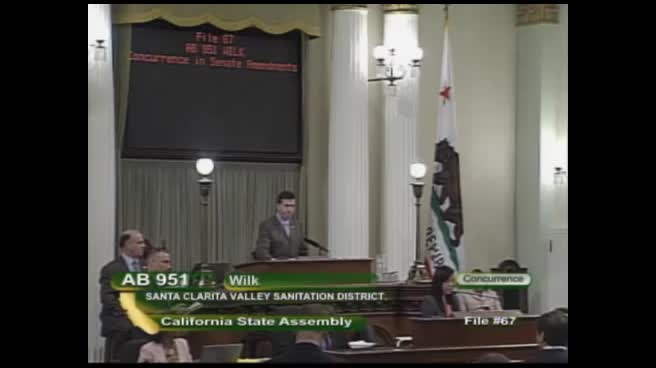 49SEC
Assembly Floor
 2MIN
Senate Floor
 2MIN
Senate Standing Committee on Health
Bill Author
Bill Co-Author(s):