AB 1289: Transportation network companies: participating drivers: penalties.
- Session Year: 2015-2016
- House: Assembly
- Latest Version Date: 2016-09-28
(1)The Passenger Charter-party Carriers Act defines a transportation network company as an organization, whether a corporation, partnership, sole proprietor, or other form, operating in California that provides prearranged transportation services for compensation using an online-enabled platform to connect passengers with drivers using their personal vehicles. A transportation network company is subject to regulation by the Public Utilities Commission, which requires, among other things, a criminal background check of each participating driver. A transportation network company is also required to have a specified certificate or permit, as appropriate, from the commission, and is subject to various other requirements. A violation of the act is generally a misdemeanor and subject to a fine of not less than $1,000 and not more than $5,000 or by imprisonment in a county jail for not more than 3 months, or by both that fine and imprisonment.
This bill would require a transportation network company to conduct, or have a 3rd party conduct, a local and national criminal background check for each participating driver, as specified. The bill would prohibit a transportation network company from contracting with, employing, or retaining a driver if he or she, among other things, is currently registered on the United States Department of Justice National Sex Offender Public Website, has been convicted of any of certain terrorism-related felonies or a violent felony, as defined, or, within the previous 7 years, has been convicted of any misdemeanor assault or battery, any domestic violence offense, driving under the influence of alcohol or drugs, or any of a specified list of felonies.
The bill would additionally provide that a transportation network company that violates, or fails to comply with, its provisions is subject to a penalty of not less than $1,000 nor more than $5,000 for each offense.
(2)Existing law provides that an investigative consumer reporting agency shall furnish an investigative consumer report only under specified circumstances and, except as specified, existing law also prohibits an investigative consumer reporting agency from making or furnishing any investigative consumer report containing certain items of information, including, among other things, records of an arrest, indictment, information, misdemeanor complaint, or conviction of a crime that, from the date of disposition, release, or parole, antedates the report by more than 7 years.
This bill would, notwithstanding these provisions, authorize an investigative consumer reporting agency to furnish an investigative consumer report to a transportation network company about a person seeking to become a participating driver, regardless of whether the participating driver is to be an employee or an independent contractor of the transportation network company. The bill would provide that the prohibition on including the criminal history information referenced above in an investigative consumer report does not apply to a report furnished to a transportation network company under these provisions.
(3)Because a violation of the act is a crime, and this bill would expand the scope of the act, this bill would impose a state-mandated local program.
(4)The California Constitution requires the state to reimburse local agencies and school districts for certain costs mandated by the state. Statutory provisions establish procedures for making that reimbursement.
This bill would provide that no reimbursement is required by this act for a specified reason.
(1)The Passenger Charter-party Carriers Act defines a transportation network company as an organization, whether a corporation, partnership, sole proprietor, or other form, operating in California that provides prearranged transportation services for compensation using an online-enabled platform to connect passengers with drivers using their personal vehicles. A transportation network company is subject to regulation by the Public Utilities Commission, which requires, among other things, a criminal background check of each participating driver. A transportation network company is also required to have a specified certificate or permit, as appropriate, from the commission, and is subject to various other requirements. A violation of the act is generally a misdemeanor and subject to a fine of not less than $1,000 and not more than $5,000 or by imprisonment in a county jail for not more than 3 months, or by both that fine and imprisonment.
This bill would require a transportation network company to conduct, or have a 3rd party conduct, a local and national criminal background check for each participating driver, as specified. The bill would prohibit a transportation network company from contracting with, employing, or retaining a driver if he or she she, among other things, is currently registered on the United States Department of Justice National Sex Offender Public Website, has been convicted of any of certain terrorism-related felonies or a violent felony, as defined, or, within the previous 7 years, has been convicted of any misdemeanor assault or battery, any domestic violence offense, or driving under the influence of alcohol or drugs. drugs, or any of a specified list of felonies.
The bill would additionally provide that a transportation network company that violates, or fails to comply with, its provisions is subject to a penalty of not less than $1,000 nor more than $5,000 for each offense.
(2)Existing law provides that an investigative consumer reporting agency shall furnish an investigative consumer report only under specified circumstances and, except as specified, existing law also prohibits an investigative consumer reporting agency from making or furnishing any investigative consumer report containing certain items of information, including, among other things, records of an arrest, indictment, information, misdemeanor complaint, or conviction of a crime that, from the date of disposition, release, or parole, antedates the report by more than 7 years.
This bill would, notwithstanding these provisions, authorize an investigative consumer reporting agency to furnish an investigative consumer report to a transportation network company about a person seeking to become a participating driver, regardless of whether the participating driver is to be an employee or an independent contractor of the transportation network company. The bill would provide that the prohibition on including the criminal history information referenced above in an investigative consumer report does not apply to a report furnished to a transportation network company under these provisions.
(3)Because a violation of the act is a crime, and this bill would expand the scope of the act, this bill would impose a state-mandated local program.
(4)The California Constitution requires the state to reimburse local agencies and school districts for certain costs mandated by the state. Statutory provisions establish procedures for making that reimbursement.
This bill would provide that no reimbursement is required by this act for a specified reason.
(1)The Passenger Charter-party Carriers Act defines a transportation network company as an organization, whether a corporation, partnership, sole proprietor, or other form, operating in California that provides prearranged transportation services for compensation using an online-enabled platform to connect passengers with drivers using their personal vehicles. A transportation network company is subject to regulation by the Public Utilities Commission, which requires, among other things, a criminal background check of each participating driver. A transportation network company is also required to have a specified certificate or permit, as appropriate, from the commission, and is subject to various other requirements. A violation of the act is generally a misdemeanor and subject to a fine of not less than $1,000 and not more than $5,000 or by imprisonment in a county jail for not more than 3 months, or by both that fine and imprisonment.
This bill would require a transportation network company to conduct comprehensive criminal background checks conduct, or have a 3rd party conduct, a local and national criminal background check for each participating driver that include local, state, and federal law enforcement records. driver, as specified. The bill would prohibit a transportation network company from contracting with, employing, or retaining a driver if he or she is required by any law to register as a sex offender or is currently registered on the United States Department of Justice National Sex Offender Public Website, has been convicted of any violent felony, sexual offense, nonfelony violent crime, identity theft, act of fraud, act of terror, as defined, or, within the previous 7 years, of any crime involving property damage, theft, has been convicted of any misdemeanor assault or battery, any domestic violence offense, or driving under the influence of alcohol or drugs.
The bill would additionally provide that a transportation network company that violates, or fails to comply with, its provisions is subject to a penalty of not less than $500 $1,000 nor more than $50,000 $5,000 for each offense.
(2)Existing law provides that an investigative consumer reporting agency shall furnish an investigative consumer report only under specified circumstances and, except as specified, existing law also prohibits an investigative consumer reporting agency from making or furnishing any investigative consumer report containing certain items of information, including, among other things, records of an arrest, indictment, information, misdemeanor complaint, or conviction of a crime that, from the date of disposition, release, or parole, antedates the report by more than 7 years.
This bill would, notwithstanding these provisions, authorize an investigative consumer reporting agency to furnish an investigative consumer report to a transportation network company about a person seeking to become a participating driver, regardless of whether the participating driver is to be an employee or an independent contractor of the transportation network company. The bill would provide that the prohibition on including the criminal history information referenced above in an investigative consumer report does not apply to a report furnished to a transportation network company under these provisions.
(3)Because a violation of the act is a crime, and this bill would expand the scope of the act, this bill would impose a state-mandated local program.
(4)The California Constitution requires the state to reimburse local agencies and school districts for certain costs mandated by the state. Statutory provisions establish procedures for making that reimbursement.
This bill would provide that no reimbursement is required by this act for a specified reason.
(1)The Passenger Charter-party Carriers Act defines a transportation network company as an organization, whether a corporation, partnership, sole proprietor, or other form, operating in California that provides prearranged transportation services for compensation using an online-enabled platform to connect passengers with drivers using their personal vehicles. A transportation network company is subject to regulation by the Public Utilities Commission, which requires, among other things, a criminal background check of each participating driver. A transportation network company is also required to have a specified certificate or permit, as appropriate, from the commission, and is subject to various other requirements. A violation of the act is generally a misdemeanor and subject to a fine of not less than $1,000 and not more than $5,000 or by imprisonment in a county jail for not more than 3 months, or by both that fine and imprisonment.
This bill would require a transportation network company to conduct comprehensive criminal background checks for each participating driver that include local, state, and federal law enforcement records. The bill would prohibit a transportation network company from contracting with, employing, or continuing to retain retaining a driver if he or she is required by any law to register as a sex offender or has been convicted of any violent felony, sexual offense, driving under the influence offense, non-felony nonfelony violent crime, identity theft, act of fraud, act of terror, or or, within the previous 7 years, of any crime involving property damage or theft. damage, theft, or driving under the influence of alcohol or drugs.
The bill would additionally provide that a transportation network company that violates, or fails to comply with, its provisions is subject to a penalty of not less that than $500 nor more than $50,000 for each offense.
(2)Existing law provides that an investigative consumer reporting agency shall furnish an investigative consumer report only under specified circumstances and, except as specified, existing law also prohibits an investigative consumer reporting agency from making or furnishing any investigative consumer report containing certain items of information, including, among other things, records of an arrest, indictment, information, misdemeanor complaint, or conviction of a crime that, from the date of disposition, release, or parole, antedates the report by more than 7 years.
This bill would, notwithstanding these provisions, authorize an investigative consumer reporting agency to furnish an investigative consumer report to a transportation network company about a person seeking to become a participating driver, regardless of whether the participating driver is to be an employee or an independent contractor of the transportation network company. The bill would provide that the prohibition on including the criminal history information referenced above in an investigative consumer report does not apply to a report furnished to a transportation network company under these provisions.
(2)
(3)Because a violation of the act is a crime, and this bill would expand the scope of the act, this bill would impose a state-mandated local program.
(3)
(4)The California Constitution requires the state to reimburse local agencies and school districts for certain costs mandated by the state. Statutory provisions establish procedures for making that reimbursement.
This bill would provide that no reimbursement is required by this act for a specified reason.
(1)The Passenger Charter-party Carriers Act defines a transportation network company as an organization, whether a corporation, partnership, sole proprietor, or other form, operating in California that provides prearranged transportation services for compensation using an online-enabled platform to connect passengers with drivers using their personal vehicles. A transportation network company is subject to regulation by the Public Utilities Commission, which requires, among other things, a criminal background check of each participating driver. A transportation network company is also required to have a specified certificate or permit, as appropriate, from the commission, and is subject to various other requirements. A violation of the act is generally a misdemeanor and subject to a fine of not less than $1,000 and not more than $5,000 or by imprisonment in a county jail for not more than 3 months, or by both that fine and imprisonment.
This bill would require a transportation network company to conduct comprehensive criminal background checks for each participating driver that include local, state, and federal law enforcement records. The bill would prohibit a transportation network company from contracting with, employing, or continuing to retain a driver if he or she is required by any law to register as a sex offender or has been convicted of any violent felony, sexual offense, driving under the influence offense, non-felony violent crime, act of fraud, act of terror, or crime involving property damage or theft.
The bill would additionally provide that a transportation network company that violates, or fails to comply with, its provisions is subject to a penalty of not less that $500 nor more than $50,000 for each offense.
(2)Because a violation of the act is a crime, and this bill would expand the scope of the act, this bill would impose a state-mandated local program.
(3)The California Constitution requires the state to reimburse local agencies and school districts for certain costs mandated by the state. Statutory provisions establish procedures for making that reimbursement.
This bill would provide that no reimbursement is required by this act for a specified reason.
Existing law establishes the Commission on Peace Officer Standards and Training in the Department of Justice and requires the commission to adopt rules establishing minimum standards regarding the recruitment of peace officers. Existing law also requires the commission to develop guidelines and implement courses of instruction regarding racial profiling, handling domestic violence, hate crimes, and human trafficking, among others.
This bill would require the commission to conduct a study of community policing and engagement programs, efforts, strategies, and policies in the state, and to report its findings with regard to the study to the Legislature by December 31, 2017.
Existing law establishes the Legislative Analysts Office (LAO) in state government Commission on Peace Officer Standards and Training in the Department of Justice and requires the LAO commission to perform various duties with regard to the analysis, impacts, and expected costs of proposed legislation. adopt rules establishing minimum standards regarding the recruitment of peace officers. Existing law also requires the commission to develop guidelines and implement courses of instruction regarding racial profiling, handling domestic violence, hate crimes, and human trafficking, among others.
This bill would require the Legislative Analysts Office commission to conduct a study of community policing and engagement programs, efforts, strategies, and policies in the state, and to report its findings with regard to the study to the Legislature by December 31, 2017.
Existing law establishes the Community Policing and Mentoring for School Safety Pilot Program under the administration of the State Department of Education in order to ensure that pupils enrolled in California public schools attend campuses that are safe, secure, and orderly, and are places in which pupils and staff are free to learn and teach without the threat of physical or psychological harm. Existing law makes a statement of legislative findings and declarations relating to the pilot program. Legislative Analysts Office (LAO) in state government and requires the LAO to perform various duties with regard to the analysis, impacts, and expected costs of proposed legislation.
This bill would make nonsubstantive changes to that statement require the Legislative Analysts Office to conduct a study of community policing and engagement programs, efforts, strategies, and policies in the state, and to report its findings with regard to the study to the Legislature by December 31, 2017.
Existing law establishes the Community Policing and Mentoring for School Safety Pilot Program under the administration of the State Department of Education in order to ensure that pupils enrolled in California public schools attend campuses that are safe, secure, and orderly, and are places in which pupils and staff are free to learn and teach without the threat of physical or psychological harm. Existing law makes a statement of legislative findings and declarations relating to the pilot program.
This bill would make nonsubstantive changes to that statement.
(a)(1)A transportation network company shall conduct, or have a third party conduct, a local and national criminal background check for each participating driver that shall include both of the following:
(A)A multistate and multijurisdiction criminal records locator or other similar commercial nationwide database with validation.
(B)A search of the United States Department of Justice National Sex Offender Public Web site.
(2)A transportation network company shall not contract with, employ, or retain a driver if he or she meets either of the following criteria:
(A)Is currently registered on the United States Department of Justice National Sex Offender Public Web site.
(B)Has been convicted of any of the following offenses:
(i)A violent felony, as defined in Section 667.5 of the Penal Code.
(ii)A violation of Section 11413, 11418, 11418.5, or 11419 of the Penal Code.
(3)A transportation network company shall not contract with, employ, or retain a driver if he or she has been convicted of any of the following offenses within the previous seven years.
(A)Misdemeanor assault or battery.
(B)A domestic violence offense.
(C)Driving under the influence of alcohol or drugs.
(D)A felony violation of Section 18540 of the Elections Code, or of Section 67, 68, 85, 86, 92, 93, 137, 138, 165, 518, 530, or 18500 of, subdivision (a) of Section 484 of, subdivision (a) of Section 487 of, or subdivision (b) of Section 25540 of, the Penal Code.
(4)Paragraphs (2) and (3) shall apply regarding a conviction of any offense committed in another jurisdiction that includes all of the elements of any of the offenses described or defined in those paragraphs.
(5)Nothing in this section shall be interpreted to prevent a transportation network company from imposing additional standards.
(b)A transportation network company that violates, or fails to comply with, this section is subject to a penalty of not less than one thousand dollars ($1,000) nor more than five thousand dollars ($5,000) for each offense.
(c)(1)Notwithstanding Section 1786.12 of the Civil Code, an investigative consumer reporting agency may furnish an investigative consumer report to a transportation network company about a person seeking to become a participating driver, regardless of whether the participating driver is to be an employee or an independent contractor of the transportation network company.
(2)Paragraph (7) of subdivision (a) of Section 1786.18 of the Civil Code shall not apply to an investigative consumer report furnished to a transportation network company pursuant to paragraph (1).
SEC. 2.No reimbursement is required by this act pursuant to Section 6 of Article XIIIB of the California Constitution because the only costs that may be incurred by a local agency or school district will be incurred because this act creates a new crime or infraction, eliminates a crime or infraction, or changes the penalty for a crime or infraction, within the meaning of Section 17556 of the Government Code, or changes the definition of a crime within the meaning of Section 6 of Article XIIIB of the California Constitution.
(a)(1)A transportation network company shall conduct, or have a third party conduct, a local and national criminal background check for each participating driver that shall include both of the following:
(A)A multistate and multijurisdiction criminal records locator or other similar commercial nationwide database with validation.
(B)A search of the United States Department of Justice National Sex Offender Public Website. Web site.
(2)A transportation network company shall not contract with, employ, or retain a driver if he or she is meets either of the following criteria:
(A)Is currently registered on the United States Department of Justice National Sex Offender Public Website, has Web site.
(B)Has been convicted of a any of the following offenses:
(i)A violent felony, as defined in Section 667.5 of the Penal Code, or, within Code.
(ii)A violation of Section 11413, 11418, 11418.5, or 11419 of the Penal Code.
(3)A transportation network company shall not contract with, employ, or retain a driver if he or she has been convicted of any of the following offenses within the previous seven years, has been convicted of any misdemeanor years.
(A)Misdemeanor assault or battery, any domestic battery.
(B)A domestic violence offense, or driving under the influence of alcohol or drugs. offense.
(C)Driving under the influence of alcohol or drugs.
(D)A felony violation of Section 18540 of the Elections Code, or of Section 67, 68, 85, 86, 92, 93, 137, 138, 165, 518, 530, or 18500 of, subdivision (a) of Section 484 of, subdivision (a) of Section 487 of, or subdivision (b) of Section 25540 of, the Penal Code.
(4)Paragraphs (2) and (3) shall apply regarding a conviction of any offense committed in another jurisdiction that includes all of the elements of any of the offenses described or defined in those paragraphs.
(3)
(5)Nothing in this section shall be interpreted to prevent a transportation network company from imposing additional standards.
(b)A transportation network company that violates, or fails to comply with, this section is subject to a penalty of not less than one thousand dollars ($1,000) nor more than five thousand dollars ($5,000) for each offense.
(c)(1)Notwithstanding Section 1786.12 of the Civil Code, an investigative consumer reporting agency may furnish an investigative consumer report to a transportation network company about a person seeking to become a participating driver, regardless of whether the participating driver is to be an employee or an independent contractor of the transportation network company.
(2)Paragraph (7) of subdivision (a) of Section 1786.18 of the Civil Code shall not apply to an investigative consumer report furnished to a transportation network company pursuant to paragraph (1).
SEC. 2.No reimbursement is required by this act pursuant to Section 6 of Article XIIIB of the California Constitution because the only costs that may be incurred by a local agency or school district will be incurred because this act creates a new crime or infraction, eliminates a crime or infraction, or changes the penalty for a crime or infraction, within the meaning of Section 17556 of the Government Code, or changes the definition of a crime within the meaning of Section 6 of Article XIIIB of the California Constitution.
(a)(1)A transportation network company shall conduct comprehensive criminal background checks conduct, or have a third party conduct, a local and national criminal background check for each participating driver that shall include local, state, and federal law enforcement records. both of the following:
(A)A multistate and multijurisdiction criminal records locator or other similar commercial nationwide database with validation.
(B)A search of the United States Department of Justice National Sex Offender Public Website.
(2)A transportation network company shall not contract with, employ, or retain a driver if he or she is required by any law to register as a sex offender or is currently registered on the United States Department of Justice National Sex Offender Public Website, has been convicted of any of the following: any a violent felony, sexual offense, nonfelony violent crime, identity theft, act of fraud, act of terror, as defined in Section 667.5 of the Penal Code, or, within the previous seven years, any crime involving property damage, theft, has been convicted of any misdemeanor assault or battery, any domestic violence offense, or driving under the influence of alcohol or drugs.
(3)Nothing in this section shall be interpreted to prevent a transportation network company from imposing additional standards.
(b)A transportation network company that violates, or fails to comply with, this section is subject to a penalty of not less than five hundred dollars ($500) one thousand dollars ($1,000) nor more than fifty five thousand dollars ($50,000) ($5,000) for each offense.
(c)(1)Notwithstanding Section 1786.12 of the Civil Code, an investigative consumer reporting agency may furnish an investigative consumer report to a transportation network company about a person seeking to become a participating driver, regardless of whether the participating driver is to be an employee or an independent contractor of the transportation network company.
(2)Paragraph (7) of subdivision (a) of Section 1786.18 of the Civil Code shall not apply to an investigative consumer report furnished to a transportation network company pursuant to paragraph (1).
SEC. 2.No reimbursement is required by this act pursuant to Section 6 of Article XIIIB of the California Constitution because the only costs that may be incurred by a local agency or school district will be incurred because this act creates a new crime or infraction, eliminates a crime or infraction, or changes the penalty for a crime or infraction, within the meaning of Section 17556 of the Government Code, or changes the definition of a crime within the meaning of Section 6 of Article XIIIB of the California Constitution.
(a)(1)A transportation network company shall conduct comprehensive criminal background checks for each participating driver that shall include local, state, and federal law enforcement records.
(2)A transportation network company shall not contract with, employ, or continue to retain a driver if he or she is required by any law to register as a sex offender or has been convicted of any of the following: any violent felony, sexual offense, driving under the influence offense, non-felony nonfelony violent crime, identity theft, act of fraud, act of terror, or or, within the previous seven years, any crime involving property damage or theft. damage, theft, or driving under the influence of alcohol or drugs.
(b)A transportation network company that violates, or fails to comply with, this section is subject to a penalty of not less that than five hundred dollars ($500) nor more than fifty thousand dollars ($50,000) for each offense.
(c)(1)Notwithstanding Section 1786.12 of the Civil Code, an investigative consumer reporting agency may furnish an investigative consumer report to a transportation network company about a person seeking to become a participating driver, regardless of whether the participating driver is to be an employee or an independent contractor of the transportation network company.
(2)Paragraph (7) of subdivision (a) of Section 1786.18 of the Civil Code shall not apply to an investigative consumer report furnished to a transportation network company pursuant to paragraph (1).
SEC. 2.No reimbursement is required by this act pursuant to Section 6 of Article XIIIB of the California Constitution because the only costs that may be incurred by a local agency or school district will be incurred because this act creates a new crime or infraction, eliminates a crime or infraction, or changes the penalty for a crime or infraction, within the meaning of Section 17556 of the Government Code, or changes the definition of a crime within the meaning of Section 6 of Article XIIIB of the California Constitution.
(a)(1)A transportation network company shall conduct comprehensive criminal background checks for each participating driver that shall include local, state, and federal law enforcement records.
(2)A transportation network company shall not contract with, employ, or continue to retain a driver if he or she is required by any law to register as a sex offender or has been convicted of any violent felony, sexual offense, driving under the influence offense, non-felony violent crime, act of fraud, act of terror, or crime involving property damage or theft.
(b)A transportation network company that violates, or fails to comply with, this section is subject to a penalty of not less that five hundred dollars ($500) nor more than fifty thousand dollars ($50,000) for each offense.
SEC. 2.No reimbursement is required by this act pursuant to Section 6 of Article XIIIB of the California Constitution because the only costs that may be incurred by a local agency or school district will be incurred because this act creates a new crime or infraction, eliminates a crime or infraction, or changes the penalty for a crime or infraction, within the meaning of Section 17556 of the Government Code, or changes the definition of a crime within the meaning of Section 6 of Article XIIIB of the California Constitution.
SECTION 1.(a)The Commission on Peace Officer Standards and Training shall conduct a study to determine the effectiveness of community policing and engagement programs, efforts, strategies, and policies in the state, including, but not limited to, police activities leagues, neighborhood watch, and integrated policing. The Commission on Peace Officer Standards and Training shall report its findings with regard to the study to the Legislature by December 31, 2017.
(b)The report required to be submitted pursuant to subdivision (a) shall be submitted in compliance with Section 9795 of the Government Code.
(a)The Legislative Analysts Office (LAO) Commission on Peace Officer Standards and Training shall conduct a study to determine the effectiveness of community policing and engagement programs, efforts, strategies, and policies in the state, including, but not limited to, police activities leagues, neighborhood watch, and integrated policing. The LAO Commission on Peace Officer Standards and Training shall report its findings with regard to the study to the Legislature by December 31, 2017.
(b)The report required to be submitted pursuant to subdivision (a) shall be submitted in compliance with Section 9795 of the Government Code.
(a)The Legislative Analysts Office (LAO) shall conduct a study to determine the effectiveness of community policing and engagement programs, efforts, strategies, and policies in the state, including, but not limited to, police activities leagues, neighborhood watch, and integrated policing. The LAO shall report its findings with regard to the study to the Legislature by December 31, 2017.
(b)The report required to be submitted pursuant to subdivision (a) shall be submitted in compliance with Section 9795 of the Government Code.
SECTION 1.Section 49350 of the Education Code is amended to read:49350.(a)The Legislature finds and declares all of the following:
(1)Studies have shown that indicators of risk for violence are associated with a childs experiences at school. Antisocial behavior or aggressiveness, which is sometimes combined with isolation, withdrawal, hyperactivity, or attention deficit disorder, places children at an increased risk of violence.
(2)These children are at risk of persistent antisocial behavior, such as skipping school, getting into fights, and misbehaving in class. Young people of both genders who engage in these activities are at increased risk of experiencing drug abuse, juvenile delinquency, violence, dropping out of school, and teen pregnancy.
(3)It is well-known that some youth, even though exposed to multiple risk factors, do not succumb to violent, antisocial behavior. One of the defining factors for this outcome is bondingpositive relationships with family members, teachers, police officers, sheriffs deputies, and other adults.
(4)The Community Policing and Mentoring for School Safety Pilot Program brings this successful law enforcement strategy to Californias schools. By providing funding assistance, strict participation guidelines, and assessments, the Community Policing and Mentoring for School Safety Pilot Program will bring highly trained law enforcement officers onto school campuses to work with pupils during and after school. Community policing in schools will provide the necessary opportunities for pupils active involvement in positive activities, as well as trained personnel to teach them skills so that they may pursue later opportunities successfully. Community policing in schools provides a consistent system of recognition and reinforcement of positive behavior.
(5)Many school safety approaches, including metal detectors, drug-sniffing dogs, armed private security personnel, and similar security measures, are more one-dimensional in their approach to school safety. The Community Policing and Mentoring for School Safety Pilot Program takes a multidimensional approach by involving the community, schools, parents or guardians, and law enforcement personnel in the design of the program that will serve their schools. The relationships developed, as a result of this process and the programs themselves, will be a strong preventative alternative to antisocial behavior in Californias schools.
(b)As used in this article, community policing means an approach to crime prevention that is founded on developing positive relationships between law enforcement and the community. In community policing, law enforcement becomes an integral facet of the community because officers work directly with the community and develop positive relationships with members of the community. Community members become more involved in their communitys activities because they know they have the personal support of law enforcement. Community policing identifies factors that put young people at risk for violence in order to reduce or eliminate these factors and strengthen protective factors such as positive relationships with adults.
(a)The Legislature finds and declares all of the following:
(1)Studies have shown that indicators of risk for violence are associated with a childs experiences at school. Antisocial behavior or aggressiveness, which is sometimes combined with isolation, withdrawal, hyperactivity, or attention deficit disorder, places children at an increased risk of violence.
(2)These children are at risk of persistent antisocial behavior, such as skipping school, getting into fights, and misbehaving in class. Young people of both genders who engage in these activities are at increased risk of experiencing drug abuse, juvenile delinquency, violence, dropping out of school, and teen pregnancy.
(3)It is well-known that some youth, even though exposed to multiple risk factors, do not succumb to violent, antisocial behavior. One of the defining factors for this outcome is bondingpositive relationships with family members, teachers, police officers, sheriffs deputies, and other adults.
(4)The Community Policing and Mentoring for School Safety Pilot Program brings this successful law enforcement strategy to Californias schools. By providing funding assistance, strict participation guidelines guidelines, and assessments, the Community Policing and Mentoring for School Safety Pilot Program will bring highly trained law enforcement officers onto school campuses to work with students pupils during and after school. Community policing in schools will provide the necessary opportunities for students pupils active involvement in positive activities, as well as trained personnel to teach them skills so that they may pursue later opportunities successfully. Community policing in schools provides a consistent system of recognition and reinforcement of positive behavior.
(5)Many school safety approaches, including metal detectors, drug-sniffing dogs, armed private security personnel, and similar security measures, are more one-dimensional in their approach to school safety. The Community Policing and Mentoring for School Safety Pilot Program takes a multidimensional approach by involving the community, schools, parents or guardians, and law enforcement personnel in the design of the program that will serve their schools. The relationships developed, as a result of this process and the programs themselves, will be a strong preventative alternative to antisocial behavior in Californias schools.
(b)As used in this article, community policing means an approach to crime prevention that is founded on developing positive relationships between law enforcement and the community. In community policing, law enforcement becomes an integral facet of the community because officers work directly with the community and develop positive relationships with members of the community. Community members become more involved in their communitys activities because they know they have the personal support of law enforcement. Community policing identifies factors that put young people at risk for violence in order to reduce or eliminate these factors and strengthen protective factors such as positive relationships with adults.
|
Date
|
Status
|
|---|---|
| Aug 22, 2016 | Read second time. Ordered to third reading. |
| Jun 14, 2016 | From committee: Do pass and re-refer to Com. on PUB. S. (Ayes 11. Noes 0.) (June 13). Re-referred to Com. on PUB. S. |
| Jun 21, 2016 | From committee chair, with author's amendments: Amend, and re-refer to committee. Read second time, amended, and re-referred to Com. on PUB. S. |
| Jun 29, 2016 | From committee: Do pass and re-refer to Com. on APPR. (Ayes 5. Noes 2.) (June 28). Re-referred to Com. on APPR. |
| Aug 1, 2016 | In committee: Hearing postponed by committee. |
| Aug 2, 2016 | From committee chair, with author's amendments: Amend, and re-refer to committee. Read second time, amended, and re-referred to Com. on APPR. |
| Aug 8, 2016 | From committee: Be placed on second reading file pursuant to Senate Rule 28.8. |
| Aug 9, 2016 | Read second time. Ordered to third reading. |
| Aug 19, 2016 | Read third time and amended. Ordered to second reading. |
| Jan 28, 2016 | Re-referred to Coms. on E., U., & C. and PUB. S. |
| Aug 23, 2016 | Read third time. Passed. Ordered to the Assembly. |
| Aug 23, 2016 | Read third time. Passed. Ordered to the Assembly. (Ayes 39. Noes 0. Page 5299.). |
| Aug 24, 2016 | In Assembly. Concurrence in Senate amendments pending. May be considered on or after August 26 pursuant to Assembly Rule 77. |
| Aug 25, 2016 | Re-referred to Com. on U. & C. pursuant to Assembly Rule 77.2. |
| Aug 30, 2016 | From committee: That the Senate amendments be concurred in. (Ayes 11. Noes 1.) (August 30). |
| Aug 31, 2016 | Senate amendments concurred in. To Engrossing and Enrolling. |
| Sep 9, 2016 | Enrolled and presented to the Governor at 2:30 p.m. |
| Apr 29, 2015 | In committee: Set, first hearing. Referred to APPR. suspense file. |
| Mar 1, 2015 | From printer. May be heard in committee March 31. |
| Mar 2, 2015 | Read first time. |
| Mar 26, 2015 | From committee chair, with author's amendments: Amend, and re-refer to Com. on PUB. S. Read second time and amended. |
| Mar 26, 2015 | Referred to Com. on PUB. S. |
| Apr 6, 2015 | Re-referred to Com. on PUB. S. |
| Apr 16, 2015 | From committee chair, with author's amendments: Amend, and re-refer to Com. on PUB. S. Read second time and amended. |
| Apr 20, 2015 | Re-referred to Com. on PUB. S. |
| Apr 22, 2015 | From committee: Do pass and re-refer to Com. on APPR. with recommendation: To Consent Calendar. (Ayes 7. Noes 0.) (April 21). Re-referred to Com. on APPR. |
| Feb 27, 2015 | Introduced. To print. |
| May 28, 2015 | From committee: Do pass. (Ayes 17. Noes 0.) (May 28). |
| May 28, 2015 | Read second time. Ordered to third reading. |
| Jun 1, 2015 | In Senate. Read first time. To Com. on RLS. for assignment. |
| Jun 1, 2015 | Read third time. Passed. Ordered to the Senate. |
| Jun 1, 2015 | Read third time. Passed. Ordered to the Senate. (Ayes 80. Noes 0. Page 1727.) |
| Jun 11, 2015 | Referred to Com. on RLS. |
| Sep 3, 2015 | From committee chair, with author's amendments: Amend, and re-refer to committee. Read second time, amended, and re-referred to Com. on RLS. |
|
Date
|
Description
|
Location
|
Votes
|
|
|---|---|---|---|---|
| Aug 31, 2016 | AB 1289 COOPER Concurrence in Senate Amendments | Assembly Floor |
Passed |
|
| Aug 30, 2016 | With recommendation: That Senate amendments be concurred in. | Assembly Standing Committee on Utilities and Commerce |
Passed |
|
| Aug 23, 2016 | Assembly 3rd Reading AB1289 Cooper By Monning | Senate Floor |
Passed |
|
| Jun 28, 2016 | Do pass, but first be re-referred to the Committee on [Appropriations] | Senate Standing Committee on Public Safety |
Passed |
|
| Jun 13, 2016 | Do pass, but first be re-referred to the Committee on [Public Safety] | Senate Standing Committee on Energy, Utilities and Communications |
Passed |
|
| Jun 1, 2015 | AB 1289 COOPER Assembly Third Reading | Assembly Floor |
Passed |
|
| May 28, 2015 | Do pass. | Assembly Standing Committee on Appropriations |
Passed |
|
| Apr 21, 2015 | Do pass and be re-referred to the Committee on [Appropriations] with recommendation: To Consent Calendar | Assembly Standing Committee on Public Safety |
Passed |
This list shows positions taken on this bill by organizations on the date displayed, which is linked to the original source.
Positions by individuals are not included.
|
Organization
|
Position
|
Date
|
|---|---|---|
| Alamino Associates | * Indeterminate | Jun 28, 2016 |
| California Association Of Realtors | * Support | Jun 27, 2018 |
| California Delivery Association | ** Support | Aug 23, 2016 |
| California Public Defenders Association | ** Support | Jun 1, 2015 |
| Conflict of Action Alliance | * Indeterminate | Jun 28, 2016 |
| East Bay Community Law Center | ** Against | Aug 23, 2016 |
| Fraternal Order of Police, California State Lodge | ** Support | Jun 1, 2015 |
| Kp Public Affairs | * Support | Aug 30, 2016 |
| Legal Services for Prisoners with Children | ** Against | Aug 23, 2016 |
| Long Beach Police Officers Association | ** Support | Jun 1, 2015 |
| Los Angeles County Professional Peace Officers Association | ** Support | Jun 1, 2015 |
| Lyft, Inc. | * Indeterminate | Jun 28, 2016 |
| National Employment Law Project | ** Against | Aug 23, 2016 |
| Peace Officers Research Association Of California | ** Support | Aug 23, 2016 |
| Sacramento County Deputy Sheriffs' Association | ** Support | Jun 1, 2015 |
| San Diego International Airport | ** Support | Aug 23, 2016 |
| San Francisco Green Cab | * Against | Aug 30, 2016 |
| San Francisco Taxi Alliance | * Support | Jun 13, 2016 |
| San Francisco Taxi Drivers | * Support | Jun 13, 2016 |
| San Francisco Taxi Workers Alliance | * Support | Jun 13, 2016 |
| Santa Ana Police Officers Association | ** Support | Jun 1, 2015 |
| Uber | * Support | Aug 30, 2016 |
| Yellow Cab | * Support | Jun 13, 2016 |
| Yellow Cab San Francisco | * Support | Jun 13, 2016 |
CONCURRENCE IN SENATE AMENDMENTS
CSA2 Bill Id:AB 1289
Author:(Cooper)
As Amended Ver:August 19, 2016
Majority vote
ASSEMBLY: |
| (June 1, 2015) | SENATE: | 39-0 | (August 23, 2016) |
(vote not relevant)
COMMITTEE VOTE: | 11-1 | (August 30, 2016) | RECOMMENDATION: | concur |
(U. & C.)
Original Committee Reference: PUB. S.
SUMMARY: Requires a Transportation Network Company (TNC) to conduct a criminal background check for each participating driver.
The Senate amendments delete the previous content of this bill and replace it with the following:
- Require a TNC to conduct, or have a third party conduct, a local and national criminal background check for each participating driver that including the following:
- A multistate and multijurisdictional criminal records locator or other similar commercial nationwide database with validation; and
- A search of the United States Department of Justice National Sex Offender Public Web site.
- Prohibit a TNC from contracting with, employing, or retaining a driver if he or she meets either of the following criteria:
- Is currently registered on the United States Department of Justice National Sex Offender Public Web site; or
- Has been convicted of specified felonies.
- Prohibit a TNC from contracting with, employing, or retaining a driver if he or she has been convicted of any of the following offenses within the previous seven years:
- Misdemeanor assault or battery;
- A domestic violence offense;
- Driving under the influence of alcohol or drugs; or
- A felony violation, as specified.
- Subject a TNC that violates, or fails to comply with, the specified requirements, to a penalty of not less than $1,000 nor more than $5,000 for each offense.
- Authorize an investigative consumer reporting agency to furnish an investigative consumer report to a TNC about a person seeking to become a participating driver, regardless of whether the participating driver is to be employee or an independent contractor of the TNC.
EXISTING LAW:
- Establishes the "Passenger Charter-Party Carriers Act," which directs the CPUC to issue permits or certificates to Charter Party Carriers (CPCs), investigate complaints against carriers, and cancel, revoke, or suspend permits and certificates for specific violations. (Public Utilities Code Section 5381 et seq.)
- Defines a "transportation network company" to mean an organization, including, but not limited to, a corporation, limited liability company, partnership, sole proprietor, or any other entity, operating in California that provides prearranged transportation services for compensation using an online-enabled application or platform to connect passengers with drivers using a personal vehicle. (Public Utilities Code Section 5431)
- Requires the Department of Justice (DOJ) to furnish state summary criminal history information to specified entities, if needed in the course of their duties and, when specifically authorized, federal-level criminal history information, upon showing of a compelling need, provided that when information is furnished to assist an agency, officer, or official of state or local government, a public utility, or any other entity in fulfilling employment, certification, or licensing duties, as specified. (Penal Code Section 11105)
- Authorizes the DOJ or any state or local law enforcement agency to require the submission of fingerprints for the purpose of conducting summary criminal history information checks that are authorized by law. (Penal Code Section 11105)
- Requires, notwithstanding any other law, whenever state summary criminal history information is initially furnished, as specified, the DOJ to disseminate the following information:
- Every conviction rendered against the applicant.
- Every arrest for an offense for which the applicant is presently awaiting trial, whether the applicant is incarcerated or has been released on bail or on his or her own recognizance pending trial.
- Every arrest for an offense for which the records of the DOJ do not contain a disposition or did not result in a conviction, provided that the DOJ first makes a genuine effort to determine the disposition of the arrest. However, information concerning an arrest shall not be disclosed if the records of the DOJ indicate or if the genuine effort reveals that the subject was exonerated, successfully completed a diversion or deferred entry of judgment program, or the arrest was deemed a detention.
- Every date and agency name associated with all retained peace officer or nonsworn law enforcement agency employee preemployment criminal offender record information search requests.
- Sex offender registration status of the applicant. (Penal Code Section 11105)
FISCAL EFFECT: According to the Senate Appropriations Committee, pursuant to Senate Rule 28.8, negligible state costs.
COMMENTS:
- Background: California Constitution, Article XII establishes the CPUC and grants it the authority to regulate public utilities. In addition, the CPUC has more limited authority over other corporations, including railroads, rail transit, and CPCs, among others. Beginning as early as 2009, a new model of transportation known as TNCs allowed patrons to prearrange transportation services through an online application on their smartphone or computer. Although TNCs do not neatly fall into the conventional definition of a CPC, the CPUC believes that TNCs are currently providing passengers transportation for compensation, and reasonably concludes that TNCs are CPCs, therefore, falling under the CPUC's existing jurisdiction over such services.
- Criminal Background Checks: CPUC regulations require TNCs to run criminal background checks on all hired drivers, but it does not specify the parameters for which TNCs must go about doing these background checks. There are various forms of background checks ranging from simple name checks to fingerprint checks that are run through the Federal Bureau of Investigation database or through a state or local level law enforcement database.
TNCs generally contract with third party firms that they argue provide a more comprehensive review necessary to ensure passenger safety. For example, Uber argues that its background screening process checks primary sources and court records going back seven years, in addition to other national databases. However, news reports continue to identify situations in which TNC drivers have been accused of criminal situations such as rape, assault, kidnapping, among others. The CPUC currently has a pending rulemaking process examining TNC regulations, including whether or not to require fingerprints as part of the TNC background checks.
This bill would require TNCs to conduct, or have a third party conduct, a local and national criminal background check for each participating driver that includes: a) a multistate and multijurisdictional criminal records locator or other similar commercial nationwide database with validation, and b) a search of the United States Department of Justice National Sex Offender Public Web site.
This bill prohibits a TNC from contracting with, employing, or retaining a driver if he or she is currently registered on the United State Department of Justice National Sex Offender Public Web site, has been convicted of specified felonies, or, within the previous seven years, has been convicted of a misdemeanor assault or battery, a domestic violence offense, driving under the influence of alcohol or drugs, or a specified felony violation. This bill subjects a TNC that violates, or fails to comply with, the specified requirements, to a penalty of not less than $1,000 nor more than $5,000 for each offense.
Analysis Prepared by: Edmond Cheung / U. & C. / (916) 319-2083 FN: 0004995
CONCURRENCE IN SENATE AMENDMENTS
CSA1 Bill Id:AB 1289
Author:(Cooper)
As Amended Ver:August 19, 2016
Majority vote
ASSEMBLY: | 80-0 | (June 1, 2016) | SENATE: | 39-0 | (August 23, 2016) |
Original Committee Reference: PUB. S.
SUMMARY: Requires a Transportation Network Company (TNC) to conduct a criminal background check for each participating driver.
The Senate amendments delete the previous content of this bill and replace it with the following:
- Require a TNC to conduct, or have a third party conduct, a local and national criminal background check for each participating driver that including the following:
- A multistate and multijurisdictional criminal records locator or other similar commercial nationwide database with validation; and
- A search of the United States Department of Justice National Sex Offender Public Web site.
- Prohibit a TNC from contracting with, employing, or retaining a driver if he or she meets either of the following criteria:
- Is currently registered on the United States Department of Justice National Sex Offender Public Web site; or
- Has been convicted of specified felonies.
- Prohibit a TNC from contracting with, employing, or retaining a driver if he or she has been convicted of any of the following offenses within the previous seven years:
- Misdemeanor assault or battery;
- A domestic violence offense;
- Driving under the influence of alcohol or drugs; or
- A felony violation, as specified.
- Subject a TNC that violates, or fails to comply with, the specified requirements, to a penalty of not less than $1,000 nor more than $5,000 for each offense.
- Authorize an investigative consumer reporting agency to furnish an investigative consumer report to a TNC about a person seeking to become a participating driver, regardless of whether the participating driver is to be employee or an independent contractor of the TNC.
EXISTING LAW:
- Establishes the "Passenger Charter-Party Carriers Act," which directs the CPUC to issue permits or certificates to Charter Party Carriers (CPCs), investigate complaints against carriers, and cancel, revoke, or suspend permits and certificates for specific violations. (Public Utilities Code Section (PUC) 5381 et seq.)
- Defines a "transportation network company" to mean an organization, including, but not limited to, a corporation, limited liability company, partnership, sole proprietor, or any other entity, operating in California that provides prearranged transportation services for compensation using an online-enabled application or platform to connect passengers with drivers using a personal vehicle. (PUC 5431)
- Requires the Department of Justice (DOJ) to furnish state summary criminal history information to specified entities, if needed in the course of their duties and, when specifically authorized, federal-level criminal history information, upon showing of a compelling need, provided that when information is furnished to assist an agency, officer, or official of state or local government, a public utility, or any other entity in fulfilling employment, certification, or licensing duties, as specified. (Penal Code Section (PEN) 11105)
- Authorizes the DOJ or any state or local law enforcement agency to require the submission of fingerprints for the purpose of conducting summary criminal history information checks that are authorized by law. (PEN 11105)
- Requires, notwithstanding any other law, whenever state summary criminal history information is initially furnished, as specified, the DOJ to disseminate the following information:
- Every conviction rendered against the applicant.
- Every arrest for an offense for which the applicant is presently awaiting trial, whether the applicant is incarcerated or has been released on bail or on his or her own recognizance pending trial.
- Every arrest for an offense for which the records of the DOJ do not contain a disposition or did not result in a conviction, provided that the DOJ first makes a genuine effort to determine the disposition of the arrest. However, information concerning an arrest shall not be disclosed if the records of the DOJ indicate or if the genuine effort reveals that the subject was exonerated, successfully completed a diversion or deferred entry of judgment program, or the arrest was deemed a detention.
- Every date and agency name associated with all retained peace officer or nonsworn law enforcement agency employee preemployment criminal offender record information search requests.
- Sex offender registration status of the applicant. (PEN 11105)
FISCAL EFFECT: According to the Senate Appropriations Committee, pursuant to Senate Rule 28.8, negligible state costs.
COMMENTS:
- Background: California Constitution, Article XII establishes the CPUC and grants it the authority to regulate public utilities. In addition, the CPUC has more limited authority over other corporations, including railroads, rail transit, and CPCs, among others. Beginning as early as 2009, a new model of transportation known as TNCs allowed patrons to prearrange transportation services through an online application on their smartphone or computer. Although TNCs do not neatly fall into the conventional definition of a CPC, the CPUC believes that TNCs are currently providing passengers transportation for compensation, and reasonably concludes that TNCs are CPCs, therefore, falling under the CPUC's existing jurisdiction over such services.
- Criminal Background Checks: CPUC regulations require TNCs to run criminal background checks on all hired drivers, but it does not specify the parameters for which TNCs must go about doing these background checks. There are various forms of background checks ranging from simple name checks to fingerprint checks that are run through the Federal Bureau of Investigation database or through a state or local level law enforcement database.
TNCs generally contract with third party firms that they argue provide a more comprehensive review necessary to ensure passenger safety. For example, Uber argues that its background screening process checks primary sources and court records going back seven years, in addition to other national databases. However, news reports continue to identify situations in which TNC drivers have been accused of criminal situations such as rape, assault, kidnapping, among others. The CPUC currently has a pending rulemaking process examining TNC regulations, including whether or not to require fingerprints as part of the TNC background checks.
This bill would require TNCs to conduct, or have a third party conduct, a local and national criminal background check for each participating driver that includes: a) a multistate and multijurisdictional criminal records locator or other similar commercial nationwide database with validation, and b) a search of the United States Department of Justice National Sex Offender Public Web site.
This bill prohibits a TNC from contracting with, employing, or retaining a driver if he or she is currently registered on the United State Department of Justice National Sex Offender Public Web site, has been convicted of specified felonies, or, within the previous seven years, has been convicted of a misdemeanor assault or battery, a domestic violence offense, driving under the influence of alcohol or drugs, or a specified felony violation. This bill subjects a TNC that violates, or fails to comply with, the specified requirements, to a penalty of not less than $1,000 nor more than $5,000 for each offense.
Analysis Prepared by: Edmond Cheung / U. & C. / (916) 319-2083 FN: 0004828
Office of Senate Floor Analyses (916) 651-1520 Fax: (916) 327-4478 | AB |
THIRD READING
Bill No: AB 1289
:
SENATE ENERGY, U. & C. COMMITTEE: 11-0, 6/13/16
AYES: Hueso, Morrell, Cannella, Gaines, Hertzberg, Hill, Lara, Leyva, McGuire, Pavley, Wolk
SENATE PUBLIC SAFETY COMMITTEE: 5-2, 6/28/16
AYES: Hancock, Glazer, Leno, Liu, Monning
NOES: Anderson, Stone
SENATE APPROPRIATIONS COMMITTEE: Senate Rule 28.8
ASSEMBLY FLOOR: 80-0, 6/1/15 - See last page for vote
DIGEST: This bill requires a transportation network company (TNC) to conduct, or have a third party conduct, a local and national criminal background check for each participating driver, that includes multistate and multijurisdiction criminal records locator. This bill prohibits a TNC from retaining a driver who is required by any law to register as a sex offender or has been convicted of specified list of felonies. This bill sets minimum and maximum fines for violating these requirements and exempts consumer report agencies from furnishing TNCs with currently prohibited non-conviction information of applicant drivers.
Senate Floor Amendments of 8/19/16 clarify, narrow and expand the penal code violations that can be considered in assessing whether a prospective driver can be hired, contracted with, or retained by a TNC.
Existing law:
- Provides that the California Public Utilities Commission (CPUC) may fix rates and establish rules for the transportation of passengers and property by transportation companies, prohibit discrimination, and award reparation for the exaction of unreasonable, excessive, or discriminatory charges. (Article XII, §4 of the California Constitution)
- Establishes the CPUC’s authority to regulate, require license or permit to operate, require insurance and workers compensation, take appropriate enforcement action and other provisions related to passenger stage corporations and transportation charter-party carriers. (Public Utilities Code §§1031 et. seq. and 5351).
- Defines a TNC as an organization, including, but not limited to, a corporation, limited-liability company, partnership, sole proprietor, or any other entity, operating in California that provides prearranged transportation services for compensation using an online-enabled application or platform to connect passengers with drivers using a personal vehicle. (Public Utilities Code §5431)
- Requires the Department of Justice (DOJ) to maintain state summary criminal history information. (Penal Code §11105(a))
- Requires the DOJ to furnish state summary criminal history information to specified entities, if needed in the course of their duties, provided that when information is furnished to assist an agency, officer, or official of state or local government, a public utility, or any other entity in fulfilling employment, certification, or licensing duties, specified restrictions listed in the Labor Code are followed. (Penal Code §11105 (b))
- Allows the DOJ to furnish state summary criminal history information to specified entities and, when specifically authorized, federal-level criminal history information, upon a showing of a compelling need, provided that when information is furnished to assist an agency, officer, or official of state or local government, a public utility, or any other entity in fulfilling employment, certification, or licensing duties, specified restrictions listed in the Labor Code are followed. (Penal Code §11105 (c))
- Authorizes any local criminal justice agency as defined to compile local summary criminal history information and requires the local criminal justice agency to furnish this information and requires the local criminal justice agency to furnish this information to any of the specified entities. (Penal Code §13300)
- Defines violent felony to mean: murder or voluntary manslaughter, rape, a felony in which defendant inflicts great bodily injury, arson, kidnapping, attempted murder, carjacking, burglary of first degree, and several other offenses. (Penal Code §667.5 )
- Provides that an investigative consumer reporting agency shall only furnish an investigative report under the specified purpose including that it is intended to be used for information for employment purposes. (Civil Code §1786.12)
- Prohibits a consumer reporting agency from furnishing specified items including records of arrest, indictment, information, misdemeanor complaint, or conviction of a crime that is more than seven years old. (Civil Code §1786.18 (7)(a))
This bill:
- Requires a TNC to conduct, or have a third party conduct, a local and national criminal background check for each participating driver that includes both (1) multistate and multijurisdiction criminal records locator or other similar commercial nationwide database with validation and (2) a search of the United States Department of Justice National Sex Offender Public Website.
- Prohibits a TNC from contracting, employing, or retaining a driver who is currently registered on the United States Department of Justice National Sex Offender Public Website, has been convicted of a any of a list of specified offenses, including violent felony and acts of terror, or, within the previous seven years, has been convicted of any misdemeanor assault or battery, a domestic violence offense, driving under the influence of alcohol or drugs, or any of a specified list of felonies.
- Prohibits a TNC from contracting, employing, or retaining a driver who has been convicted of an offense committed in another jurisdiction that includes all of the elements of any of the offenses specified in the bill.
- Provides that a TNC is not prevented from imposing additional standards beyond those mentioned in this bill.
- Provides that a TNC that violates or fails to comply with these requirements is subject to a penalty of not less than one thousand dollars ($1,000) nor more than five thousand dollars ($5,000) for each offense.
- Provides that an investigative consumer reporting agency may furnish an investigative consumer report to a TNC about a person seeking to become a participating driver, regardless of whether the participating driver is to be an employee or an independent contractor of the TNC.
- Exempts an investigative consumer report furnished to a TNC from the requirements of current statute that prohibit the release non-conviction information.
Background
Criminal background check. A criminal background check is a search of confidential law enforcement databases which can be cross-referenced with a person’s name, social security number or other personal identifier (also known as biometric identification). The cross-referencing and the biometric identification (such as a fingerprint) ensures that even if a person uses multiple names or another person in the database exists with the same name, the result of the search will be accurate. [Daus, Matthew W. and Pasqualino Russo. One Standard for All: Criminal Background Checks for Taxicab, For-hire, and Transportation Network Company Drivers. May 2015.] These background checks can be conducted by private vendors or directly by a government agency. The various types of criminal background checks range from a simplified name check to social security number check to a fingerprint check, or combination thereof, which is run through the Federal Bureau of Investigations (FBI) database or through a state or local level law enforcement database.
TNCs and criminal background checks. The recent growth and popularity of technology-enabled transportation ride-hailing services from companies like Lyft and Uber have raised questions about whether these services are adequately regulated to ensure public safety. A year ago, the LA Times found that at least four men who were ticketed by Los Angeles International Airport police while driving for a TNC have criminal convictions that would have barred them from operating a taxi – including convictions of child exploitation, manslaughter and identify theft. In August, district attorneys of Los Angeles and San Francisco filed amended complaints against the same TNC citing 25 instances they found of California drivers for this company with criminal records. Earlier this year, the district attorneys and the company reached a settlement agreement of $25 million of a lawsuit focused on consumer protection and public safety whereby the district attorneys accused the company of overstating its customer-safety policy in marketing materials. The company was originally claiming it has the “safest ride on the road” and described its background checks as “the gold standard.” These are claims the company can no longer make. More recently, the City of LA sent the CPUC a letter requesting a pilot project on criminal background checks that would require finger print background checks. However, the CPUC declined.
Varying requirements. The various types of transportation for-hire services (e.g., TNCs, limousines, taxi cabs) have varying regulations related to criminal background checks. Taxicab services are required to undergo extensive criminal background check requirements, including a LiveScan – fingerprint check – that is run through the FBI and other databases. Unlike taxicab services, TNCs are not required to perform fingerprint criminal background checks that use the United States Department of Justice FBI database. While the CPUC does require TNCs to perform criminal background checks on their drivers, fingerprinting is not required. Instead, TNCs contract with a third-party to run a namecheck background check which does not include the FBI database. However, the CPUC has stated its intention to address the issue of criminal background checks in a third phase of its current proceeding related to TNC regulations and is currently soliciting public comments on whether fingerprinting should be required. The agency has also recently required fingerprint background checks via the TrustLine finger print check system for TNCs that serve unaccompanied minors and market themselves as chauffeuring services to take kids to school or afterschool activities. The TrustLine fingerprint check system searches federal and state law enforcement databases as is commonly used for professions that require interaction with children and minors, such as teachers, school volunteers, school bus drivers and others.
Need for fingerprinting. While no one background check system is completely full-proof, a combination of name and social security checks with a biometric identifier, such as a fingerprint, would ensure the greatest level of accuracy, and therefore, the best protection of public safety and fairness to potential drivers. On June 22, the CPUC assigned commissioner issued a ruling seeking comments from parties and all interested stakeholders on whether the CPUC should require fingerprint-based background checks of TNC drivers. Moreover, the Senate Committee on Public Safety in its analysis noted: “Historically, this Committee [Public Safety] has not passed bills providing for background checks that are not fingerprint based. Name based checks are not as reliable as similar names exist and there is not check on the information.” However, fingerprinting requires applicants to visit a police station or other channeling office in order to provide fingerprints that can be used to search in federal, state, and local law enforcement databases. The TNCs argue that such delay in hiring drivers could jeopardize their business model which relies on signing-up drivers fairly instantaneously via a phone application. The author’s intent to enhance public safety can be strengthened by including language that would require the CPUC to assess the use of biometric, including fingerprint background checks, for TNCs and determine what type of background check should be required. As currently drafted, this bill does not include fingerprinting or other biometric requirements as part of a background check.
Prohibited offenses. This bill largely expands, but also narrows, the CPUC’s current list of convictions that can be used to prohibit TNCs from retaining an applicant-driver. Currently, the CPUC requires TNCs to conduct a criminal background check for each driver that uses the national criminal background check, including the national sex offender database utilizing the applicant’s social security number and not just the applicant’s name. The CPUC also requires that any felony criminal conviction within the prior seven years would make the applicant-driver ineligible, specifically: driving under the influence of drugs or alcohol, fraud, use of a motor vehicle to commit a felony, a violent crime or act of terror, a sexual offense, a crime involving property damage, and/or theft. This bill expands the list by prohibiting TNCs from contracting, employing or retaining drivers who have been convicted of a violent felony regardless of the how long ago the offense occurred, adds misdemeanor assault and battery, domestic violence offense to those convictions occurring within the prior seven years, several bribery convictions, extortion, false impersonation, larceny and other offenses . However, this bill also narrows the list of convictions which TNCs must consider by not including specified criminal convictions in this bill, including: fraud, use of a motor vehicle to commit a felony, a sexual offense, and a crime involving property damage.
Arrest records. According to the Senate Committee on Public Safety:
When the DOJ releases a criminal history based on a fingerprint check it may not release arrest information unless and until they can make a determination as to the final disposition of the arrest. The DOJ process ensures that a record is not released if the charges were dropped, the wrong person was arrested, the person was acquitted or any other situation where an arrest should not be used against a person. However, non-fingerprint checks do not utilize the DOJ database, which as a result, do not stop a TNC from receiving an arrest record where an arrest record should not be used against a person. Additionally, this bill creates an exception to the Civil Code provision prohibiting an investigative consumer reporting agency from furnishing specified items including records of arrest, indictment, information, misdemeanor complaint, or conviction of a crime that is more than seven years old.
Prior/Related Legislation
AB 2777 (Nazarian, 2016) would have allowed, but not require, a TNC to ask the DOJ to provide summary criminal history information for its employees and contractors. The bill failed passage on the Assembly floor.
SB 1035 (Hueso, 2016) would have required, among other things, the CPUC to study several driver background check protocols, including the United States DOJ background check, and to adopt any for TNCs that would enhance public safety by capturing records of any criminal offense. The bill failed in Senate Committee on Transportation and Housing.
AB 1422 (Cooper, Chapter 791, Statutes of 2015) required TNCs to participate in the Department of Motor Vehicles Pull Notice System to regularly check the driving records of participating drivers.
FISCAL EFFECT: Appropriation: Fiscal Com.: Local:
California Delivery Association
Peace Officers Research Association of California
San Diego International Airport
American Civil Liberties Union
East Bay Community Law Center
Legal Services for Prisoners with Children
National Employment Law Project
ARGUMENTS IN SUPPORT: According to the author, this bill seeks to improve the safety of consumers utilizing TNC services. AB 1289 “will assist TNCs uncover the complete criminal history of prospective drivers and will help ensure the safety of passengers utilizing TNC services.” The San Diego Airport Authority in supporting this bill, states “the Airport Authority is continually seeking ways to enhance the safety of passengers and employees at San Diego International Airport. Accordingly, this bill could reduce the potential risk posed by drivers with criminal records to individuals utilizing TNCs to access the airport.”
ARGUMENTS IN OPPOSITION: Many of the opponents of this bill argue that background checks are known to contain errors which could wrongly deprive qualified applicants of economic opportunities. The opponents also argue that even if the information is true, past criminal convictions do not predict future behavior. Additionally, many of those opposed raised concerns about the lack of clarity regarding the list of offenses stated in this bill that would be used to filter potential drivers.
ASSEMBLY FLOOR: 80-0, 6/1/15
AYES: Achadjian, Alejo, Travis Allen, Baker, Bigelow, Bloom, Bonilla, Bonta, Brough, Brown, Burke, Calderon, Campos, Chang, Chau, Chávez, Chiu, Chu, Cooley, Cooper, Dababneh, Dahle, Daly, Dodd, Eggman, Frazier, Beth Gaines, Gallagher, Cristina Garcia, Eduardo Garcia, Gatto, Gipson, Gomez, Gonzalez, Gordon, Gray, Grove, Hadley, Harper, Roger Hernández, Holden, Irwin, Jones, Jones-Sawyer, Kim, Lackey, Levine, Linder, Lopez, Low, Maienschein, Mathis, Mayes, McCarty, Medina, Melendez, Mullin, Nazarian, Obernolte, O'Donnell, Olsen, Patterson, Perea, Quirk, Rendon, Ridley-Thomas, Rodriguez, Salas, Santiago, Steinorth, Mark Stone, Thurmond, Ting, Wagner, Waldron, Weber, Wilk, Williams, Wood, Atkins
8/22/16 22:10:23
**** END ****
Office of Senate Floor Analyses (916) 651-1520 Fax: (916) 327-4478 | AB |
THIRD READING
Bill No: AB 1289
:
SENATE ENERGY, U. & C. COMMITTEE: 11-0, 6/13/16
AYES: Hueso, Morrell, Cannella, Gaines, Hertzberg, Hill, Lara, Leyva, McGuire, Pavley, Wolk
SENATE PUBLIC SAFETY COMMITTEE: 5-2, 6/28/16
AYES: Hancock, Glazer, Leno, Liu, Monning
NOES: Anderson, Stone
SENATE APPROPRIATIONS COMMITTEE: Senate Rule 28.8
ASSEMBLY FLOOR: 80-0, 6/1/15 - See last page for vote
DIGEST: This bill requires a transportation network company (TNC) to conduct, or have a third party conduct, a local and national criminal background checks for each participating driver, that includes multistate and multijurisdiction criminal records locator. This bill prohibits a TNC from retaining a driver who is required by any law to register as a sex offender or has been convicted of any violent felony, or within the prior seven years has been convicted of any misdemeanor assault or battery, any domestic violence offense, or driving under the influence of alcohol or drugs. This bill sets minimum and maximum fines for violating these requirements and exempts consumer report agencies from furnishing TNCs with currently prohibited non-conviction information of applicant drivers.
Existing law:
- Provides that the California Public Utilities Commission (CPUC) may fix rates and establish rules for the transportation of passengers and property by transportation companies, prohibit discrimination, and award reparation for the exaction of unreasonable, excessive, or discriminatory charges. (Article XII, §4 of the California Constitution)
- Establishes the CPUC’s authority to regulate, require license or permit to operate, require insurance and workers compensation, take appropriate enforcement action and other provisions related to passenger stage corporations and transportation charter-party carriers. (Public Utilities Code §§1031 et. seq. and 5351).
- Defines a TNC as an organization, including, but not limited to, a corporation, limited-liability company, partnership, sole proprietor, or any other entity, operating in California that provides prearranged transportation services for compensation using an online-enabled application or platform to connect passengers with drivers using a personal vehicle. (Public Utilities Code §5431)
- Requires the Department of Justice (DOJ) to maintain state summary criminal history information. (Penal Code §11105(a))
- Requires the DOJ to furnish state summary criminal history information to specified entities, if needed in the course of their duties, provided that when information is furnished to assist an agency, officer, or official of state or local government, a public utility, or any other entity in fulfilling employment, certification, or licensing duties, specified restrictions listed in the Labor Code are followed. (Penal Code §11105 (b))
- Allows the DOJ to furnish state summary criminal history information to specified entities and, when specifically authorized, federal-level criminal history information, upon a showing of a compelling need, provided that when information is furnished to assist an agency, officer, or official of state or local government, a public utility, or any other entity in fulfilling employment, certification, or licensing duties, specified restrictions listed in the Labor Code are followed. (Penal Code §11105 (c))
- Authorizes any local criminal justice agency as defined to compile local summary criminal history information and requires the local criminal justice agency to furnish this information and requires the local criminal justice agency to furnish this information to any of the specified entities. (Penal Code §13300)
- Defines violent felony to mean: murder or voluntary manslaughter, rape, a felony in which defendant inflicts great bodily injury, arson, kidnapping, attempted murder, carjacking, burglary of first degree, and several other offenses. (Penal Code §667.5 )
- Provides that an investigative consumer reporting agency shall only furnish an investigative report under the specified purpose including that it is intended to be used for information for employment purposes. (Civil Code §1786.12)
- Prohibits a consumer reporting agency from furnishing specified items including records of arrest, indictment, information, misdemeanor complaint, or conviction of a crime that is more than seven years old. (Civil Code §1786.18 (7)(a))
This bill:
- Requires a TNC to conduct, or have a third party conduct, a local and national criminal background check for each participating driver that includes both (1) multistate and multijurisdiction criminal records locator or other similar commercial nationwide database with validation and (2) a search of the United States Department of Justice National Sex Offender Public Website.
- Prohibits a TNC from contracting, employing, or retaining a driver who is currently registered on the United States Department of Justice National Sex Offender Public Website, has been convicted of a violent felony, or, within the previous seven years, has been convicted of any misdemeanor assault or battery, any domestic violence offense, or driving under the influence of alcohol or drugs.
- Provides that a TNC is not prevented from imposing additional standards beyond those mentioned in this bill.
- Provides that a TNC that violates or fails to comply with these requirements is subject to a penalty of not less than one thousand dollars ($1,000) nor more than five thousand dollars ($5,000) for each offense.
- Provides that an investigative consumer reporting agency may furnish an investigative consumer report to a TNC about a person seeking to become a participating driver, regardless of whether the participating driver is to be an employee or an independent contractor of the TNC.
- Exempts an investigative consumer report furnished to a TNC from the requirements of current statute that prohibit the release non-conviction information.
Background
Criminal background check. A criminal background check is a search of confidential law enforcement databases which can be cross-referenced with a person’s name, social security number or other personal identifier (also known as biometric identification). The cross-referencing and the biometric identification (such as a fingerprint) ensures that even if a person uses multiple names or another person in the database exists with the same name, the result of the search will be accurate. [Daus, Matthew W. and Pasqualino Russo. One Standard for All: Criminal Background Checks for Taxicab, For-hire, and Transportation Network Company Drivers. May 2015.] These background checks can be conducted by private vendors or directly by a government agency. The various types of criminal background checks range from a simplified name check to social security number check to a fingerprint check, or combination thereof, which is run through the Federal Bureau of Investigations (FBI) database or through a state or local level law enforcement database.
TNCs and criminal background checks. The recent growth and popularity of technology-enabled transportation ride-hailing services from companies like Lyft and Uber have raised questions about whether these services are adequately regulated to ensure public safety. A year ago, the LA Times found that at least four men who were ticketed by Los Angeles International Airport police while driving for a TNC have criminal convictions that would have barred them from operating a taxi – including convictions of child exploitation, manslaughter and identify theft. In August, district attorneys of Los Angeles and San Francisco filed amended complaints against the same TNC citing 25 instances they found of California drivers for this company with criminal records. Earlier this year, the district attorneys and the company reached a settlement agreement of $25 million of a lawsuit focused on consumer protection and public safety whereby the district attorneys accused the company of overstating its customer-safety policy in marketing materials. The company was originally claiming it has the “safest ride on the road” and described its background checks as “the gold standard.” These are claims the company can no longer make. More recently, the City of LA sent the CPUC a letter requesting a pilot project on criminal background checks that would require finger print background checks. However, the CPUC declined.
Varying requirements. The various types of transportation for-hire services (e.g., TNCs, limousines, taxi cabs) have varying regulations related to criminal background checks. Taxicab services are required to undergo extensive criminal background check requirements, including a LiveScan – fingerprint check – that is run through the FBI and other databases. Unlike taxicab services, TNCs are not required to perform fingerprint criminal background checks that use the United States Department of Justice FBI database. While the CPUC does require TNCs to perform criminal background checks on their drivers, fingerprinting is not required. Instead, TNCs contract with a third-party to run a namecheck background check which does not include the FBI database. However, the CPUC has stated its intention to address the issue of criminal background checks in a third phase of its current proceeding related to TNC regulations and is currently soliciting public comments on whether fingerprinting should be required. The agency has also recently required fingerprint background checks via the TrustLine finger print check system for TNCs that serve unaccompanied minors and market themselves as chauffeuring services to take kids to school or afterschool activities. The TrustLine fingerprint check system searches federal and state law enforcement databases as is commonly used for professions that require interaction with children and minors, such as teachers, school volunteers, school bus drivers and others.
Need for fingerprinting. While no one background check system is completely full-proof, a combination of name and social security checks with a biometric identifier, such as a fingerprint, would ensure the greatest level of accuracy, and therefore, the best protection of public safety and fairness to potential drivers. On June 22, the CPUC assigned commissioner issued a ruling seeking comments from parties and all interested stakeholders on whether the CPUC should require fingerprint-based background checks of TNC drivers. Moreover, the Senate Committee on Public Safety noted in its analysis: “Historically, this Committee [Public Safety] has not passed bills providing for background checks that are not fingerprint based. Name based checks are not as reliable as similar names exist and there is not check on the information.” However, fingerprinting requires applicants to visit a police station or other channeling office in order to provide fingerprints that can be used to search in federal, state, and local law enforcement databases. The TNCs argue that such delay in hiring drivers could jeopardize their business model which relies on signing-up drivers fairly instantaneously via a phone application. The author’s intent to enhance public safety can be strengthened by including language that would require the CPUC to assess the use of biometric, including fingerprint background checks, for TNCs and determine what type of background check should be required. As currently drafted, this bill does not include fingerprinting or other biometric requirements as part of a background check.
Prohibited offenses. This bill both expands and narrows the current list of convictions that can be used to prohibit TNCs from retaining an applicant-driver. Currently, the CPUC requires TNCs to conduct a criminal background check for each driver that uses the national criminal background check including the national sex offender database utilizing the applicant’s social security number and not just the applicant’s name. The CPUC also requires that any felony criminal conviction within the prior seven years would make the applicant-driver ineligible, specifically: driving under the influence of drugs or alcohol, fraud, use of a motor vehicle to commit a felony, a violent crime or act of terror, a sexual offense, a crime involving property damage, and/or theft. This bill expands the list by prohibiting TNCs from contracting, employing or retaining drivers who have been convicted of a violent felony regardless of the how long ago the offense occurred and adds misdemeanor assault and battery, domestic violence offense to those convictions occurring within the prior seven years. However, this bill also narrows the list of convictions which TNCs must consider by not including specified criminal convictions in this bill, including: fraud, acts of terror, use of a motor vehicle to commit a felony, a sexual offense, a crime involving property damage.
Arrest records. According to the Senate Committee on Public Safety:
When the DOJ releases a criminal history based on a fingerprint check it may not release arrest information unless and until they can make a determination as to the final disposition of the arrest. The DOJ process ensures that a record is not released if the charges were dropped, the wrong person was arrested, the person was acquitted or any other situation where an arrest should not be used against a person. However, non-fingerprint checks do not utilize the DOJ database, which as a result, do not stop a TNC from receiving an arrest record where an arrest record should not be used against a person. Additionally, this bill creates an exception to the Civil Code provision prohibiting an investigative consumer reporting agency from furnishing specified items including records of arrest, indictment, information, misdemeanor complaint, or conviction of a crime that is more than seven years old.
Prior/Related Legislation
AB 2777 (Nazarian, 2016) would have allowed, but not require, a TNC to ask the DOJ to provide summary criminal history information for its employees and contractors. The bill failed passage on the Assembly floor.
SB 1035 (Hueso, 2016) would have required, among other things, the CPUC to study several driver background check protocols, including the United States DOJ background check, and to adopt any for TNCs that would enhance public safety by capturing records of any criminal offense. The bill failed in Senate Committee on Transportation and Housing.
AB 1422 (Cooper, Chapter 791, Statutes of 2015) required TNCs to participate in the Department of Motor Vehicles Pull Notice System to regularly check the driving records of participating drivers.
FISCAL EFFECT: Appropriation: Fiscal Com.: Local:
California Delivery Association
Peace Officers Research Association of California
San Diego International Airport
American Civil Liberties Union
East Bay Community Law Center
Legal Services for Prisoners with Children
National Employment Law Project
ARGUMENTS IN SUPPORT: According to the author, this bill seeks to improve the safety of consumers utilizing TNC services. AB 1289 “will assist TNCs uncover the complete criminal history of prospective drivers and will help ensure the safety of passengers utilizing TNC services.” The San Diego Airport Authority in supporting this bill, states “the Airport Authority is continually seeking ways to enhance the safety of passengers and employees at San Diego International Airport. Accordingly, this bill could reduce the potential risk posed by drivers with criminal records to individuals utilizing TNCs to access the airport.”
ARGUMENTS IN OPPOSITION: Many of the opponents of this bill argue that background checks are known to contain errors which could wrongly deprive qualified applicants of economic opportunities. The opponents also argue that even if the information is true, past criminal convictions do not predict future behavior. Additionally, many of those opposed raised concerns about the lack of clarity regarding the list of offenses stated in this bill that would be used to filter potential drivers.
ASSEMBLY FLOOR: 80-0, 6/1/15
AYES: Achadjian, Alejo, Travis Allen, Baker, Bigelow, Bloom, Bonilla, Bonta, Brough, Brown, Burke, Calderon, Campos, Chang, Chau, Chávez, Chiu, Chu, Cooley, Cooper, Dababneh, Dahle, Daly, Dodd, Eggman, Frazier, Beth Gaines, Gallagher, Cristina Garcia, Eduardo Garcia, Gatto, Gipson, Gomez, Gonzalez, Gordon, Gray, Grove, Hadley, Harper, Roger Hernández, Holden, Irwin, Jones, Jones-Sawyer, Kim, Lackey, Levine, Linder, Lopez, Low, Maienschein, Mathis, Mayes, McCarty, Medina, Melendez, Mullin, Nazarian, Obernolte, O'Donnell, Olsen, Patterson, Perea, Quirk, Rendon, Ridley-Thomas, Rodriguez, Salas, Santiago, Steinorth, Mark Stone, Thurmond, Ting, Wagner, Waldron, Weber, Wilk, Williams, Wood, Atkins
8/10/16 15:45:24
**** END ****
SENATE COMMITTEE ON PUBLIC SAFETY
Senator Loni Hancock, Chair
2015 - 2016 Regular
Bill No: AB 1289 Hearing Date: June 28, 2016
Author: | Cooper | ||
Version: | June 21, 2016 | ||
Urgency: | No | Fiscal: | Yes |
Consultant: | MK | ||
Subject: Transportation Network Companies: Participating Drivers: Penalties
HISTORY
Source: Author
Prior Legislation: None applicable
Support: California Delivery Association; Peace Officers Research Association of California; San Diego International Airport
Opposition: American Civil Liberties Union; East Bay Community Law Center; Legal Services for Prisoners with Children
Assembly Floor Vote: Not Relevant
PURPOSE
The purpose of this bill is to require transportation network companies to do a non-fingerprint based background check on their drivers.
Existing law requires the Department of Justice (DOJ) to maintain state summary criminal history information. (Penal Code § 11105(a).)
Existing law authorizes DOJ to furnish state summary criminal history information to the following specified entities: the courts of California; peace officers, as defined; district attorneys of California; prosecuting city attorneys; city attorneys pursuing civil gang injunctions or drug abatement actions; probation officers of California; parole officers of California; a public defender or attorney of record when representing a person in proceedings upon a petition for a certificate of rehabilitation and pardon; a public defender or attorney of record when representing a person in a criminal case, or a parole, mandatory supervision, or postrelease community supervision revocation or revocation extension proceeding, and if authorized access by statutory or decisional law; any agency, officer, or official of the state if the criminal history information is required to implement a statute or regulation that expressly refers to specific criminal conduct applicable to the subject person of the state summary criminal history information, and contains requirements or exclusions, or both, expressly based upon that specified criminal conduct; any city or county, city and county, district, or any officer or official thereof if access is needed in order to assist that agency, officer, or official in fulfilling employment, certification, or licensing duties, and if the access is specifically authorized by the city council, board of supervisors, or governing board of the city, county, or district if the criminal history information is required to implement a statute, ordinance, or regulation that expressly refers to specific criminal conduct applicable to the subject person of the state summary criminal history information, and contains requirements or exclusions, or both, expressly based upon that specified criminal conduct; the subject of the state summary criminal history information; any person or entity when access is expressly authorized by statute if the criminal history information is required to implement a statute or regulation that expressly refers to specific criminal conduct applicable to the subject person of the state summary criminal history information, and contains requirements or exclusions, or both, expressly based upon that specified criminal conduct; Health officers of a city, county, city and county, or district when in the performance of their official duties preventing the spread of communicable diseases; any managing or supervising correctional officer of a county jail or other county correctional facility; any humane society, or society for the prevention of cruelty to animals for the appointment of humane officers; local child support agencies; county child welfare agency personnel who have been delegated the authority of county probation officers to access state summary criminal history information for the specified purposes; the court of a tribe, or court of a consortium of tribes, that has entered into an agreement with the state as specified; child welfare agency personnel of a tribe or consortium of tribes that has entered into an agreement with the state as specified; an officer providing conservatorship investigations; a person authorized to conduct a guardianship investigation; and, a humane officer for the purposes of performing his or her duties. (Penal Code § 11105 (b).)
Existing law states that DOJ may furnish state summary criminal history information, when specifically authorized, and federal-level criminal history information upon a showing of compelling need to any of the specified agencies, provided that when information is furnished to assist an agency, officer, or official of state or local government, a public utility, or any other entity in fulfilling employment, certification, or licensing duties, the employer must follow restrictions listed in the Labor Code. (Penal Code § 11105(c).)
Existing law authorizes any local criminal justice agency as defined to compile local summary criminal history information and requires the local criminal justice agency to furnish this information to any of the specified entities. (Penal Code § 13300.)
Existing law provides that a “transportation network company” is an organization, including, but not limited to, a corporation, limited liability company, partnership, sole proprietor, or any other entity, operating in California that provides prearranged transportation services for compensation using an online-enabled application or platform to connect passengers with drivers using a personal vehicle. (Public Utilities Code §5431)
This bill provides that a transportation network company shall conduct comprehensive criminal background checks for each participating driver that shall include local, state, and federal law enforcement records.
This bill provides that a transportation network company shall not contract with, employ, or retain a driver if he or she is required by any law to register as a sex offender or has bene convicted of any of the following: any violent felony, sexual offense, nonfelony violent crime, identity theft, act of fraud, act of terror, or within the previous seven years, any crime involving property damage, theft, or driving under the influence of alcohol or drugs.
This bill provides that a transportation network company that violates, or fails to comply with, this section is subject to a penalty of not less than $500 nor more than $50,000 for each offense.
Existing law provides that an investigative consumer reporting agency shall only furnish an investigative report under the specified purpose including that it is intended to be used for information for employment purposes. (Civil Code § 1786.12)
This bill provides that notwithstanding the above, an investigative consumer reporting agency may furnish an investigative consumer report to a transportation network company about a person seeking to become a participating driver, regardless of whether the participating driver is to be an employee or an independent contractor of the transportation network company.
Existing law prohibits a consumer reporting agency from furnishing specified items including records of arrest, indictment, information, misdemeanor complaint, or conviction of a crime that is more than 7 years old. (Civil Code § 1786.18 (a)(7))
This bill provides that the above shall not apply to an investigative consumer report furnished to a transportation network company.
RECEIVERSHIP/OVERCROWDING CRISIS AGGRAVATION
For the past several years this Committee has scrutinized legislation referred to its jurisdiction for any potential impact on prison overcrowding. Mindful of the United States Supreme Court ruling and federal court orders relating to the state’s ability to provide a constitutional level of health care to its inmate population and the related issue of prison overcrowding, this Committee has applied its “ROCA” policy as a content-neutral, provisional measure necessary to ensure that the Legislature does not erode progress in reducing prison overcrowding.
On February 10, 2014, the federal court ordered California to reduce its in-state adult institution population to 137.5% of design capacity by February 28, 2016, as follows:
- 143% of design bed capacity by June 30, 2014;
- 141.5% of design bed capacity by February 28, 2015; and,
- 137.5% of design bed capacity by February 28, 2016.
In December of 2015 the administration reported that as “of December 9, 2015, 112,510 inmates were housed in the State’s 34 adult institutions, which amounts to 136.0% of design bed capacity, and 5,264 inmates were housed in out-of-state facilities. The current population is 1,212 inmates below the final court-ordered population benchmark of 137.5% of design bed capacity, and has been under that benchmark since February 2015.” (Defendants’ December 2015 Status Report in Response to February 10, 2014 Order, 2:90-cv-00520 KJM DAD PC, 3-Judge Court, Coleman v. Brown, Plata v. Brown (fn. omitted).) One year ago, 115,826 inmates were housed in the State’s 34 adult institutions, which amounted to 140.0% of design bed capacity, and 8,864 inmates were housed in out-of-state facilities. (Defendants’ December 2014 Status Report in Response to February 10, 2014 Order, 2:90-cv-00520 KJM DAD PC, 3-Judge Court, Coleman v. Brown, Plata v. Brown (fn. omitted).)
While significant gains have been made in reducing the prison population, the state must stabilize these advances and demonstrate to the federal court that California has in place the “durable solution” to prison overcrowding “consistently demanded” by the court. (Opinion Re: Order Granting in Part and Denying in Part Defendants’ Request For Extension of December 31, 2013 Deadline, NO. 2:90-cv-0520 LKK DAD (PC), 3-Judge Court, Coleman v. Brown, Plata v. Brown (2-10-14). The Committee’s consideration of bills that may impact the prison population therefore will be informed by the following questions:
- Whether a proposal erodes a measure which has contributed to reducing the prison population;
- Whether a proposal addresses a major area of public safety or criminal activity for which there is no other reasonable, appropriate remedy;
- Whether a proposal addresses a crime which is directly dangerous to the physical safety of others for which there is no other reasonably appropriate sanction;
- Whether a proposal corrects a constitutional problem or legislative drafting error; and
- Whether a proposal proposes penalties which are proportionate, and cannot be achieved through any other reasonably appropriate remedy.
COMMENTS
1. Need for This Bill
According to the author:
AB 1289 requires Transportation Network Companies (TNCs) to conduct comprehensive criminal background checks on prospective drivers. Additionally the bill prohibits TNCs from employing drivers with violent, sexual, driving under the influence (DUI) or other specified offenses and imposes a fine of up to $50,000 for each violation.
As recently as last year, District Attorneys in Los Angeles and San Francisco uncovered 25 participating TNC drivers with convictions for murder, assault, DUI, and other criminal offenses.
AB 1289 will assist TNCs uncover the complete criminal history of prospective drivers and will help ensure the safety of passengers utilizing TNC services.
2. Non-fingerprint Based Background Check for Transportation Network Drivers
This bill requires a transportation network company (Uber, Lyft, etc.) to conduct a “comprehensive criminal background check” for each participating driver. The background check shall include local, state and federal law enforcement records. It also prohibits the hiring of people with specified offenses on their record and provides for a fine if a company fails to do the background check.
- Not Fingerprint Based
Historically, this Committee has not passed bills providing for background checks that are not finger-print based. Name based checks are not as reliable as similar names exist and there is not check on the information. This bill does not require a fingerprint based check, does this cause any concern that people will be rejected from the opportunity to drive for one of these companies possibly on a flawed background check?
- Comprehensive Check
The bill requires a “comprehensive background check”, since this is not fingerprint based it is not clear what “comprehensive background check” means. Can they use any private company that claims to provide background checks?
- Prohibited Offenses
This bill prohibits contracting with or employing a driver if he or she is required to register as a sex offender, or has been convicted of any violent felony, sex offense, nonfelony violent crime, identity theft, act of fraud, act of terror row within the previous 7 years any crime involving property damage, theft, or DUI.
Violent felony is a term of art and is a specific list of crimes. How are these companies supposed to know what a “nonfelony violent crime” is? Do they just rely on their own thoughts? Do they have to figure out what it was the person was charged with and the facts of the case? They can face a large fine if they fail to comply with the section. Is the information they get from the non-fingerprint based checks something that the transportation network company will be able to interpret enough to determine whether a criminal history falls in any of these prohibited areas?
- Arrest Records
When the Department of Justice releases a criminal history based on a fingerprint based check it may not release arrest information unless and until they can make a determination as to the final disposition of the arrest. This to make sure that a record is not released if the charges were dropped, the wrong person was arrested, the person was acquitted or any other situation where an arrest record should not be used against a person.
Because it is not a DOJ, fingerprint based check, this bill would not stop a transportation network company from receiving an arrest record. The bill states they should not hire a person with specified convictions but how should they react to arrest records that may not have a disposition with it. Should they even be able to see anything other than convictions and if so how can we assure that they are not given that information.
Actually, this bill creates an exception to the Civil Code provision prohibiting an investigative consumer reporting agency from furnishing specified items including records of arrest, indictment, information, misdemeanor complaint, or conviction of a crime that is more than 7 years old. Again, what is a transportation network company supposed to do with anything short of a conviction? Couldn’t that prejudice a company against an individual even if the arrest is years old?
-- END –
SENATE COMMITTEE ON ENERGY, UTILITIES AND COMMUNICATIONS
Senator Ben Hueso, Chair
2015 - 2016 Regular
Bill No: AB 1289 Hearing Date: 6/13/2016
Author: | Cooper | ||
Version: | 9/3/2015 As Amended | ||
Urgency: | No | Fiscal: | Yes |
Consultant: | Nidia Bautista | ||
SUBJECT: Transportation network companies: participating drivers: penalties
DIGEST: This bill would require a transportation network company (TNC) to conduct comprehensive criminal background checks for each participating driver that include local, state, and federal law enforcement records and prohibit a TNC from retaining a driver who is required by any law to register as a sex offender or has been convicted of any violent felony, sexual offense, driving under the influence offense, non-felony violent crime, act of fraud, act of terror, or crime involving property damage or theft.
ANALYSIS:
Existing law:
- Provides that the California Public Utilities Commission (CPUC) may fix rates and establish rules for the transportation of passengers and property by transportation companies, prohibit discrimination, and award reparation for the exaction of unreasonable, excessive, or discriminatory charges. (Article XII, §4 of the California Constitution)
- Establishes the CPUC’s authority to regulate, require license or permit to operate, require insurance and workers compensation, take appropriate enforcement action and other provisions related to passenger stage corporations and transportation charter-party carriers. (Public Utilities Code §§1031 et. seq. and 5351).
- Defines a TNC as an organization, including, but not limited to, a corporation, limited liability company, partnership, sole proprietor, or any other entity, operating in California that provides prearranged transportation services for compensation using an online-enabled application or platform to connect passengers with drivers using a personal vehicle. (Public Utilities Code §5431)
- Requires the Department of Justice (DOJ) to furnish state summary criminal history information to specified entities, if needed in the course of their duties, provided that when information is furnished to assist an agency, officer, or official of state or local government, a public utility, or any other entity in fulfilling employment, certification, or licensing duties, specified restrictions listed in the Labor Code are followed. (Penal Code §11105 (b))
- Allows the DOJ to furnish state summary criminal history information to specified entities and, when specifically authorized, federal-level criminal history information, upon a showing of a compelling need, provided that when information is furnished to assist an agency, officer, or official of state or local government, a public utility, or any other entity in fulfilling employment, certification, or licensing duties, specified restrictions listed in the Labor Code are followed. (Penal Code §11105 (c))
This bill:
- Requires a TNC to conduct comprehensive criminal background checks for each participating driver that includes local, state, and federal law enforcement records.
- Prohibits a TNC from contracting, employing, or retaining a driver who is required by any law to register as a sex offender or has been convicted of any violent felony, sexual offense, driving under the influence, non-felony violent crime, act of fraud, act of terror, or crime involving property damage or theft.
- Provides that a TNC that violates or fails to comply with these requirements is subject to a penalty of not less than five hundred dollars ($500) nor more than fifty thousand dollars ($50,000) for each offense.
Background
Criminal background check. A criminal background check is a search of confidential law enforcement databases which can be cross-referenced with a person’s name, social security number or other personal identifier (also known as biometric identification). The cross-referencing and the biometric identification (such as a fingerprint) ensures that even if a person uses multiple names or another person in the database exists with the same name, the result of the search will be accurate.[1] These background checks can be conducted by private vendors or directly by a government agency. The various types of criminal background checks range from a simplified name check to social security number check to a fingerprint check, or combination thereof, which is run through the Federal Bureau of Investigations (FBI) database or through a state or local level law enforcement database.
TNCs and criminal background checks. The recent growth and popularity of technology-enabled transportation ride-hailing services from companies like Lyft and Uber have raised questions about whether these services are adequately regulated to ensure public safety. A year ago, the LA Times found that at least four men who were ticketed by Los Angeles International Airport police while driving for a TNC have criminal convictions that would have barred them from operating a taxi – including convictions of child exploitation, manslaughter and identify theft. In August, district attorneys of Los Angeles and San Francisco filed amended complaints against the same TNC citing 25 instances they found of California drivers for this company with criminal records. Earlier this year, the district attorneys and the company reached a settlement agreement of $25 million of a lawsuit focused on consumer protection and public safety whereby the district attorneys accused the company of overstating its customer-safety policy in marketing materials. The company was originally claiming it has the “safest ride on the road” and described its background checks as “the gold standard.” These are claims the company can no longer make. More recently, the City of LA sent the CPUC a letter requesting a pilot project on criminal background checks that would require finger print background checks. However, the CPUC declined.
Varying requirements. The various types of transportation for-hire services (e.g., TNCs, limousines, taxi cabs) have varying regulations related to criminal background checks. Taxicab services are required to undergo extensive criminal background check requirements, including a Live scan – fingerprint check – that is run through the FBI and other databases. Unlike taxicab services, TNCs are not required to perform fingerprint criminal background checks that use the United States Department of Justice FBI database. While the CPUC does require TNCs to perform criminal background checks on their drivers, fingerprinting is not required. However, the CPUC has stated its intention to address the issue of criminal background checks in a third phase of its current proceeding related to TNC regulations. The agency has also recently required fingerprint background checks via the TrustLine finger print check system for TNCs that are focused on serving unaccompanied minors. The TrustLine fingerprint check system searches federal and state law enforcement databases as is commonly used for professions that require interaction with children and minors, such as teachers, school volunteers, school bus drivers and others. Additionally, the CPUC does not provide requirements related to convictions and offenses that occurred more than seven years prior to the driver-applicant’s submission. By including specific offenses in the statute, TNCs would be required to prohibit applicant-drivers with these offenses regardless of how long ago they occurred.
Enhancing public safety. While no one background check system is completely full-proof, it seems a combination of name and social security checks with a biometric identifier, such as a finger print, would ensure the greatest level of accuracy, and therefore the best protection of public safety. However, fingerprinting requires applicants to visit a police station or other channeling office in order to provide fingerprints that can be used to search in federal, state, and local law enforcement databases. The author’s intent to enhance public safety can be strengthened by including language that would require the CPUC to consider biometric, including fingerprint background checks, for TNCs. As currently drafted, it is unclear whether the CPUC would be required to consider any biometric requirements. The author and committee may wish to amend the bill to require the CPUC to consider requiring the use of biometric identifiers in administering criminal background checks.
Double Referral. Should this bill be approved by the committee, it will be re-referred to the Senate Committee on Public Safety for its consideration.
Prior/Related Legislation
AB 1422 (Cooper, Chapter 791, Statutes of 2015) required TNCs to participate in the Department of Motor Vehicles Pull Notice System to regularly check the driving records of participating drivers.
AB 2777 (Nazarian, 2016) would have allowed, but not require, a TNC to ask the DOJ to provide summary criminal history information for its employees and contractors. The bill failed passage on the Assembly floor.
SB 1035 (Hueso, 2016) would have required, among other things, the CPUC to study several driver background check protocols, including the United States DOJ background check, and to adopt any for TNCs that would enhance public safety by capturing records of any criminal offense. SB 1035 failed in Senate Committee on Transportation and Housing.
FISCAL EFFECT: Appropriation: No Fiscal Com.: Yes Local: Yes
SUPPORT:
California Delivery Association
Peace Officers Research Association of California
San Diego International Airport
OPPOSITION:
None received
ARGUMENTS IN SUPPORT: According to the author, this bill seeks to improve the safety of consumers utilizing TNC services. AB 1289 “will assist TNCs uncover the complete criminal history of prospective drivers and will help ensure the safety of passengers utilizing TNC services.” The San Diego Airport Authority in supporting the bill, states “the Airport Authority is continually seeking ways to enhance the safety of passengers and employees at San Diego International Airport. Accordingly, this bill could reduce the potential risk posed by drivers with criminal records to individuals utilizing TNCs to access the airport.”
-- END --
Daus, Matthew W. and Pasqualino Russo. One Standard for All: Criminal Background Checks for Taxicab, For-hire, and Transportation Network Company Drivers. May 2015. ↑
AB 1289
Page 2
ASSEMBLY THIRD READING
AB 1289
(Cooper)
As Amended April 16, 2015
Majority vote
Committee |
Votes |
Ayes |
Noes |
Public Safety |
7-0 |
Quirk, Melendez, Jones-Sawyer, Lackey, Low, Santiago, Thurmond |
|
Appropriations |
17-0 |
Gomez, Bigelow, Bonta, Calderon, Chang, Daly, Eggman, Gallagher, Eduardo Garcia, Gordon, Holden, Jones, Quirk, Rendon, Wagner, Weber, Wood |
|
SUMMARY:
Require the Commission on Peace Officer Standards and Training (POST) to conduct a study of community policing and engagement programs, efforts, strategies, and policies in the state, and to report its findings the Legislature. Specifically, this bill:
Requires POST to conduct a study to determine the effectiveness of community policing and engagement programs, efforts, strategies, and policies in the state, including, but not limited to, police activities leagues, neighborhood watch, and integrated policing.
Requires POST to report its findings with regard to the study to the Legislature by December 31, 2017.
States that the report must comply with the requirements for submission of reports by state or local agencies.
EXISTING LAW:
Establishes POST.
Empowers POST to develop and implement programs to increase the effectiveness of law enforcement.
Authorizes POST, for the purpose of raising the level of competence of local law enforcement officers, to adopt rules establishing minimum standards related to physical, mental and moral fitness and training that shall govern the recruitment of any peace officers in California.
Requires POST to conduct research concerning job-related educational standards and job-related selection standards to include vision, hearing, physical ability, and emotional stability and adopt standards supported by this research.
Requires POST to establish a certification program for peace officers, which shall be considered professional certificates.
Requires POST to undertake a feasibility study when a person or persons desire peace-officer status, or a person or persons desire a change in peace-officer designation or status.
Requires POST to develop regulations and professional standards for the operation of law enforcement agencies.
FISCAL EFFECT:
According to the Assembly Appropriations Committee, one-time minor costs to POST in the range of $50,000 (General Fund) to conduct the required study.
COMMENTS:
According to the author, "AB 1289 helps California take stock of community policing efforts, programs, policies and best practices statewide in order to reevaluate, recommit, and renew a focus on sustaining and enhancing trusting community-police relationships with all segments of the community."
Analysis Prepared by: Sandy Uribe / PUB. S. / (916) 319-3744 FN: 0000649
AB 1289
Page 2
Date of Hearing: April 29, 2015
ASSEMBLY COMMITTEE ON APPROPRIATIONS
Jimmy Gomez, Chair
AB 1289
(Cooper) – As Amended April 16, 2015
Policy Committee: |
Public Safety |
Vote: |
7 - 0 |
|
|
|
|
|
|
|
|
Urgency: No State Mandated Local Program: No Reimbursable: No
SUMMARY:
This bill requires the Commission of Peace Officer Standards and Training (POST) to conduct a study on community policing and engagement programs, and report its finding to the Legislature by December 31, 2017.
FISCAL EFFECT:
One-time minor costs to POST in the range of $50,000 (GF) to conduct the required study.
COMMENTS:
Purpose. According to the author, "AB 1289 helps California take stock of community policing efforts, programs, policies and best practices statewide in order to reevaluate, recommit, and renew a focus on sustaining and enhancing trusting community-police relationships with all segments of the community."
Background. POST was created by the legislature in 1959 to set minimum selection and training standards for California law enforcement. Their mandate includes establishing minimum standards for training of peace officers in California. As of 1989, all peace officers in California are required to complete an introductory course of training prescribed by POST, and demonstrate completion of that course by passing an examination. POST is also tasked with developing and implementing programs to increase the effectiveness of law enforcement.
Community policing is generally defined as involving three key components: a) developing community partnerships, b) engaging in problem solving, and c) implementing community policing organizational features. A recent report from the United States Conference of Mayors notes, "Recent events have demonstrated that, despite instituting community policing in many departments and realizing substantial reductions in the crime rate in many cities, mistrust between the police and the communities they serve and protect continues to be a challenge that must be addressed."
Argument in Support. According to the Fraternal Order of Police, California State Lodge, "The purpose of collecting and analyzing this information is to ultimately improve community outreach programs. These programs are critical in ensuring that the community and local law enforcement agencies work in partnership to improve public safety.
"The studies to be conducted pursuant to AB 1289 will provide much needed data for the legislature to consider in their future deliberations regarding the maintenance, funding and establishment of such programs. Better information will hopefully result in better programs."
Related Legislation: AB 1227 (Cooper), also on today's committee agenda, requires that POST study and submit a report to the Legislature assessing the status of training courses on peace officer interactions with mentally ill or developmentally disabled persons.
Analysis Prepared by: Pedro R. Reyes / APPR. / (916) 319-2081
AB 1289
Page 3
Date of Hearing: April 21, 2015
Counsel: Sandra Uribe
ASSEMBLY COMMITTEE ON PUBLIC SAFETY
Bill Quirk, Chair
AB 1289
(Cooper) – As Amended April 16, 2015
SUMMARY:
Require the Commission on Peace Officer Standards and Training (POST)
to conduct a study of community policing and engagement programs,
efforts, strategies, and policies in the state, and to report its
findings the Legislature. Specifically, this bill:
Requires POST to conduct a study to determine the effectiveness of community policing and engagement programs, efforts, strategies, and policies in the state, including, but not limited to, police activities leagues, neighborhood watch, and integrated policing.
Requires POST to report its findings with regard to the study to the Legislature by December 31, 2017.
States that the report must comply with the requirements for submission of reports by state or local agencies.
EXISTING LAW:
Establishes POST. (Pen. Code, § 13500.)
Empowers POST to develop and implement programs to increase the effectiveness of law enforcement. (Pen. Code, §13503.)
Authorizes POST, for the purpose of raising the level of competence of local law enforcement officers, to adopt rules establishing minimum standards related to physical, mental and moral fitness and training that shall govern the recruitment of any peace officers in California. (Pen. Code, § 13510, subd. (a).)
Requires POST to conduct research concerning job-related educational standards and job-related selection standards to include vision, hearing, physical ability, and emotional stability and adopt standards supported by this research. (Pen. Code, § 13510, subd. (b).)
Requires POST to establish a certification program for peace officers, which shall be considered professional certificates. (Pen. Code, § 13510.1, subd. (a).)
Requires POST to undertake a feasibility study when a person or persons desire peace-officer status, or a person or persons desire a change in peace-officer designation or status. (Pen. Code, § 13540.)
Requires POST to develop regulations and professional standards for the operation of law enforcement agencies. (Pen. Code, § 13551.)
FISCAL EFFECT:
Unknown
COMMENTS:
Author's Statement: According to the author, "AB 1289 helps California take stock of community policing efforts, programs, policies and best practices statewide in order to reevaluate, recommit, and renew a focus on sustaining and enhancing trusting community-police relationships with all segments of the community."
Community Policing: "Community policing is, in essence, a collaboration between the police and the community that identifies and solves community problems. With the police no longer the sole guardians of law and order, all members of the community become active allies in the effort to enhance the safety and quality of neighborhoods. Community policing has far-reaching implications. The expanded outlook on crime control and prevention, the new emphasis on making community members active participants in the process of problem solving, and the patrol officers' pivotal role in community policing require profound changes within the police organization. The neighborhood patrol officer, backed by the police organization, helps community members mobilize support and resources to solve problems and enhance their quality of life. Community members voice their concerns, contribute advice, and take action to address these concerns. Creating a constructive partnership will require the energy, creativity, understanding, and patience of all involved." (See U.S. Department of Justice, Bureau of Justice Assistance, Understanding Community Policing: A Framework for Action, p. vii.)
A recent report from the United States Conference of Mayors notes, "Recent events have demonstrated that, despite instituting community policing in many departments and realizing substantial reductions in the crime rate in many cities, mistrust between the police and the communities they serve and protect continues to be a challenge that must be addressed." (See Strengthening Police Community Relations in America's Cities, Jan. 22, 2015, <http://www.usmayors.org/83rdWinterMeeting/media/012215-report-policing.pdf>.)
There are many examples of community policing taking place in California. This bill requires POST to conduct a study to determine the effectiveness of community policing and engagement programs, efforts, strategies, and policies in the state.
POST: POST was created by the legislature in 1959 to set minimum selection and training standards for California law enforcement. (Pen. Code, § 13500, subd. (a).) Their mandate includes establishing minimum standards for training of peace officers in California. (Pen. Code, § 13510, subd. (a).) As of 1989, all peace officers in California are required to complete an introductory course of training prescribed by POST, and demonstrate completion of that course by passing an examination. (Pen. Code, § 832, subd. (a).) POST is also tasked with developing and implementing programs to increase the effectiveness of law enforcement. (Pen. Code, § 13503, subd. (e).)
Does POST have the capabilities to conduct the study required by this bill? Should another agency be tasked with conducting the study?
Argument in Support: According to the Fraternal Order of Police, California State Lodge, "The purpose of collecting and analyzing this information is to ultimately improve community outreach programs. These programs are critical in ensuring that the community and local law enforcement agencies work in partnership to improve public safety.
"The studies to be conducted by the LAO [sic] pursuant to AB 1289 will provide much needed data for the legislature to consider in their future deliberations regarding the maintenance, funding and establishment of such programs. Better information will hopefully result in better programs."
Related Legislation: AB 1227 (Cooper) requires that POST study and submit a report to the Legislature assessing the status of training courses on peace officer interactions with mentally ill or developmentally disabled persons. AB 1227 will be heard in this Committee today.
REGISTERED SUPPORT / OPPOSITION:
Support
California
Public Defenders Association
Fraternal Order of Police,
California State Lodge
Long Beach Police Officers
Association
Los Angeles County Professional Peace Officers
Association
Sacramento County Deputy Sheriffs' Association
Santa
Ana Police Officers Association
Opposition
None
Analysis Prepared by:
Sandy Uribe / PUB. S. / (916) 319-3744
Discussed in Hearing
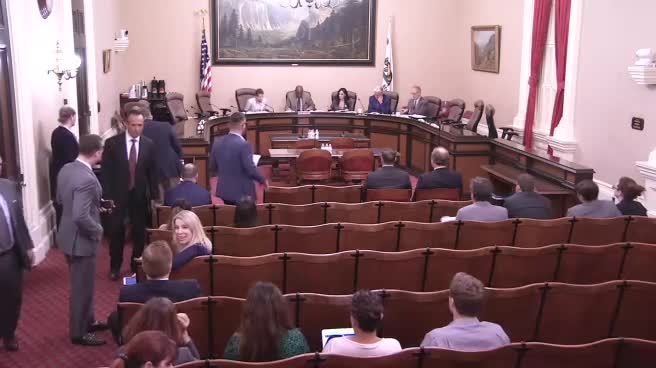 31MIN
Senate Standing Committee on Banking and Financial Institutions
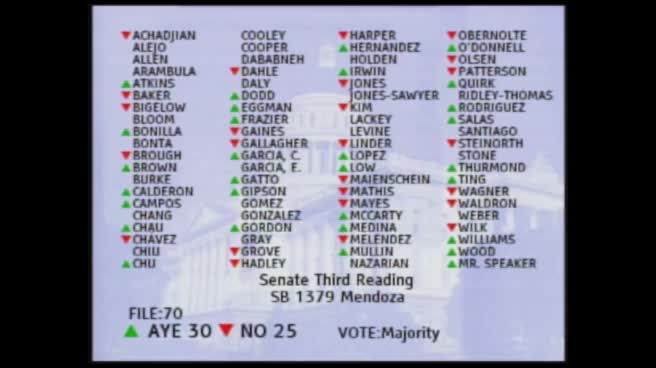 3MIN
Assembly Floor
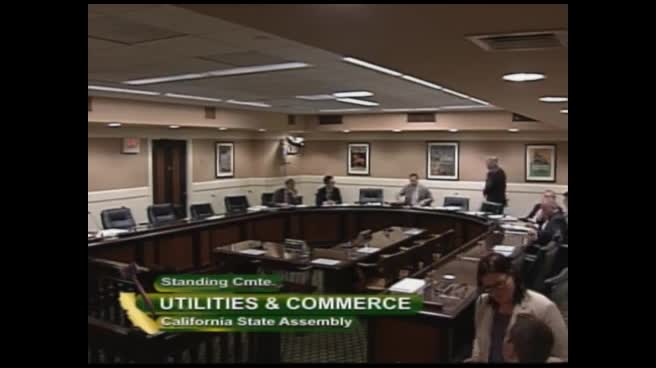 16MIN
Assembly Standing Committee on Utilities and Commerce
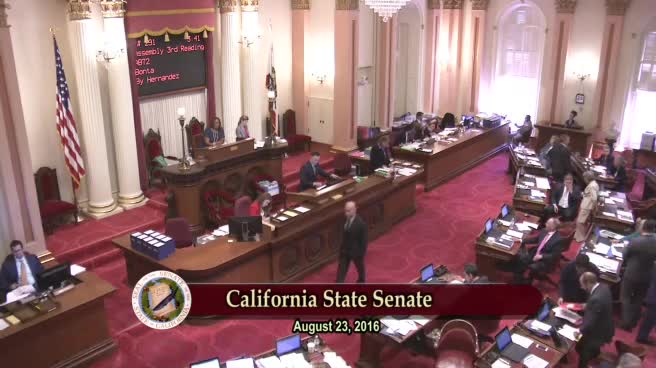 2MIN
Senate Floor
 14MIN
Senate Standing Committee on Public Safety
 9MIN
Senate Standing Committee on Energy, Utilities and Communications
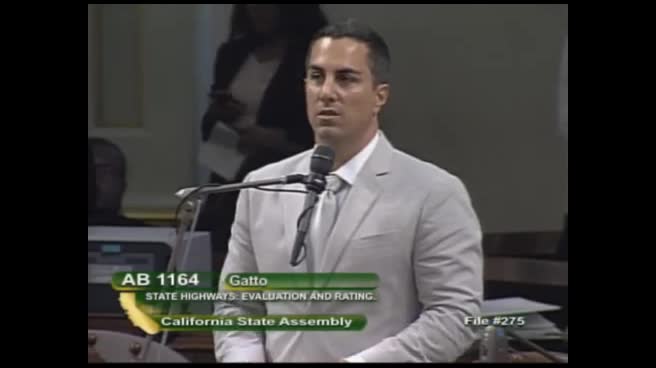 39SEC
Assembly Floor
Bill Author

Bill Co-Author(s):