AB 1354: Discrimination: equal pay: state contracting.
- Session Year: 2015-2016
- House: Assembly
- Latest Version Date: 2015-09-10
Existing law subjects an employer who is, or wishes to become, a contractor with the state for public works, or for goods or services, to various nondiscrimination requirements. Existing law authorizes requiring an employer to submit a nondiscrimination program to the Department of Fair Employment and Housing for approval and certification, prior to becoming a contractor or subcontractor with the state, as well as requiring the provision of periodic reports of contractor or subcontractor compliance with that program.
This bill would enact the Equal Pay for Equal Work Act of 2015. The bill would require an employer with 100 or more employees in state, as specified, and a contract of 30 days or more, prior to becoming a contractor or subcontractor with the state, to submit a nondiscrimination program to the Department of Fair Employment and Housing and to submit periodic reports no more than annually of its compliance with that program. The bill would authorize the department to require approval and certification of the program. The bill would permit the department to require an employer with fewer than 100 employees in state or a contract of less than 30 days to submit a nondiscrimination report. The bill would require the department to define an employee for these purposes. The bill would require the nondiscrimination program to include policies and procedures designed to ensure equal employment opportunities for all applicants and employees, an analysis of employment selection procedures, and a workforce analysis, as specified. The bill would specify that its provisions are not to be construed to negate certain exemptions established by regulation that predate its enactment or to require the department to reevaluate the validity of these exemptions, as specified. The bill would make a statement of legislative findings.
Existing law subjects an employer who is, or wishes to become, a contractor with the state for public works, or for goods or services, to various nondiscrimination requirements. Existing law authorizes requiring an employer to submit a nondiscrimination program to the Department of Fair Employment and Housing for approval and certification, prior to becoming a contractor or subcontractor with the state, as well as requiring the provision of periodic reports of contractor or subcontractor compliance with that program.
This bill would enact the Equal Pay for Equal Work Act of 2015. The bill would require an employer with 100 or more employees, employees and a contract of 30 days or more, prior to becoming a contractor or subcontractor with the state, to submit a nondiscrimination program to the Department of Fair Employment and Housing and to submit periodic reports no more than annually of its compliance with that program. The bill would authorize the department to require approval and certification of the program. The bill would permit the department to require an employer with fewer than 100 employees or a contract of less than 30 days to submit a nondiscrimination report. The bill would require the department to define an employee for these purposes. The bill would require the nondiscrimination program to include policies and procedures designed to ensure equal employment opportunities for all applicants and employees, an analysis of employment selection procedures, and a work force workforce analysis, as specified. The bill would specify that its provisions are not to be construed to negate certain exemptions established by regulation that predate its enactment or to require the department to reevaluate the validity of these exemptions, as specified. The bill would make a statement of legislative findings.
Existing law subjects an employer who is, or wishes to become, a contractor with the state for public works, or for goods or services, to various nondiscrimination requirements. Existing law authorizes requiring an employer to submit a nondiscrimination program to the Department of Fair Employment and Housing for approval and certification, prior to becoming a contractor or subcontractor with the state, as well as requiring the provision of periodic reports of contractor or subcontractor compliance with that program.
This bill would enact the Equal Pay for Equal Work Act of 2015. The bill would require an employer with 100 or more employees, prior to becoming a contractor or subcontractor with the state, to submit a nondiscrimination program to the Department of Fair Employment and Housing and to submit periodic reports no more than annually of its compliance with that program. The bill would authorize the department to require approval and certification of the program and permit the department to audit programs for compliance. program. The bill would permit the department to require an employer with fewer than 100 employees to submit a nondiscrimination report. The bill would require the department to define an employee for these purposes. The bill would require the nondiscrimination program to include policies and procedures designed to ensure equal employment opportunities for all applicants and employees, an analysis of employment selection procedures, and a work force analysis, as specified. The bill would make a statement of legislative findings.
Existing law subjects an employer who is, or wishes to become, a contractor with the state for public works, or for goods or services, to various nondiscrimination requirements. Existing law authorizes requiring an employer to submit a nondiscrimination program to the Department of Fair Employment and Housing for approval and certification, prior to becoming a contractor or subcontractor with the state, as well as requiring the provision of periodic reports of contractor or subcontractor compliance with that program.
This bill would enact the Equal Pay for Equal Work Act of 2015. The bill would require an employer with 100 or more employees, prior to becoming a contractor or subcontractor with the state, to submit an income equality a nondiscrimination program to the Department of Fair Employment and Housing for approval and certification and to submit periodic reports of its compliance with that program. The bill would authorize the department to require approval and certification of the program and permit the department to audit programs for compliance. The bill would permit the department to require an employer with fewer than 100 employees to submit a nondiscrimination report. The bill would require the income equality nondiscrimination program to include the collection of summary data on the compensation paid to employees, including data sorted by gender and race, and policies designed to ensure income equality and prevent unlawful discrimination. policies and procedures designed to ensure equal employment opportunities for all applicants and employees, an analysis of employment selection procedures, and a work force analysis, as specified. The bill would make a statement of legislative findings.
Existing law subjects an employer who is, or wishes to become, a contractor with the state for public works, or for goods or services, to various nondiscrimination requirements. Existing law authorizes requiring an employer to submit a nondiscrimination program to the Department of Fair Employment and Housing for approval and certification, prior to becoming a contractor or subcontractor with the state, as well as requiring the provision of periodic reports of contractor or subcontractor compliance with that program.
This bill would enact the Equal Pay for Equal Work Act of 2015. The bill would require an employer with 100 or more employees, prior to becoming a contractor or subcontractor with the state, to submit an income equality program to the Department of Fair Employment and Housing for approval and certification and to submit periodic reports of its compliance with that program. The bill would require the income equality program to include the collection of summary data on the compensation paid to employees, including data sorted by gender and race, and policies designed to ensure income equality and prevent unlawful discrimination. The bill would make a statement of legislative findings.
This act shall be known, and may be cited, as the Equal Pay for Equal Work Act of 2015.
SEC. 2.(a)The Legislature finds and declares the following:
(1)According to data from the United States Census Bureau, full-time working women, on average, over the last decade, have continued to earn just 77 cents for every dollar a man earns. The wage gap is greater for women of color, with African American women being paid an average of 64 cents for every dollar paid to white, non-Hispanic men in 2013 and Latinas being paid just 56 cents for every dollar paid to white, non-Hispanic men.
(2)This wage disparity amounted to a yearly average wage gap of $10,876 in 2013 between full-time working men and full-time working women. In total, the disparity represents more than $490 billion in lost wages for working women every year.
(3)Disparities in pay for women have numerous negative impacts. This pay differential shortchanges women and their families by thousands of dollars a year and potentially hundreds of thousands of dollars over a lifetime. Nearly 4 in 10 mothers are primary breadwinners in their households, and nearly two-thirds are significant earners, making pay equity critical to the economic security of their families.
(4)Equal pay for equal work is a fundamental precept in our nation and in California. Federal law, including the federal Equal Pay Act of 1963 (Public Law 88-38), Title VII of the Civil Rights Act of 1964 (Public Law 88-352), and Executive Order 11246 of September 24, 1965, entitled Equal Employment Opportunity, specifically prohibits arbitrarily compensating men and women differently for the same work, as does Californias Equal Pay Act.
(5)On August 6, 2014, the United States Department of Labors Office of Federal Contract Compliance Programs issued a notice of proposed rulemaking to required covered federal contractors and subcontractors with more than 100 employees to submit an annual equal pay report on employee compensation. In California, state contractors receiving public money are obligated to comply with equal pay laws and should provide the state with aggregate wage data to advance pay equity.
(b)It is the intent of the Legislature in enacting this act to promote pay equity and nondiscrimination in setting pay and making hiring or promotional decisions, and to obtain better data on pay equity to more wholly address the problem.
SEC. 3.Section 12990 of the Government Code is amended to read:12990.(a)Any employer who is, or wishes to become, a contractor with the state for public works or for goods or services is subject to the provisions of this part relating to discrimination in employment and to the nondiscrimination requirements of this section and any rules and regulations that implement it.
(b)(1)(A)(i)Prior to becoming a contractor or subcontractor with the state, an employer with 100 or more employees in the state and a contract of 30 days or more shall submit a nondiscrimination program to the department and shall submit periodic reports, no more than annually, of its compliance with that program. An employer with fewer than 100 employees in the state or a contract of less than 30 days may be required to submit a nondiscrimination program and, if so required, shall comply with the requirements for employers with 100 or more employees in the state. The department may require approval and certification of a nondiscrimination program. The department shall define an employee for the purposes of this paragraph.
(ii)An employee in the construction industry covered by a valid collective bargaining agreement that expressly provides for the wages, hours of work, and working conditions of employees, premium wage rates for all overtime worked, and regular hourly pay of not less than 30 percent of the state minimum wage rate shall be excluded from calculation of the employers total number of employees for purposes of this subparagraph.
(B)The changes made to this subdivision made by the act adding this subparagraph shall not be construed to negate an exemption to the requirements of this section in existence on January 1, 2016, created by the department through the exercise of its regulatory authority, or to otherwise require the department to reinterpret the validity of an exemption as a result of these changes.
(2)A nondiscrimination program shall include policies and procedures designed to ensure equal employment opportunities for all applicants and employees, an analysis of employment selection procedures, and a workforce analysis. The workforce analysis shall include the following:
(A)The total number of workers with a specific job category identified by worker race, ethnicity, and sex.
(B)Total wages required to be reported on Internal Revenue Service Form W-2 for all workers in a specific job category identified by worker race, ethnicity, and sex.
(C)The total hours worked on an annual basis for all workers in a specific job category identified by worker race, ethnicity, and sex. Exempt employees shall be presumed to work 40 hours a week for purposes of this reporting requirement.
(c)Every state contract and subcontract for public works or for goods or services shall contain a nondiscrimination clause prohibiting discrimination on the bases enumerated in this part by contractors or subcontractors. The nondiscrimination clause shall contain a provision requiring contractors and subcontractors to give written notice of their obligations under that clause to labor organizations with which they have a collective bargaining or other agreement. These contractual provisions shall be fully and effectively enforced. This subdivision does not apply to a credit card purchase of goods of two thousand five hundred dollars ($2,500) or less. The total amount of exemption authorized herein shall not exceed seven thousand five hundred dollars ($7,500) per year for each company from which a state agency is purchasing goods by credit card. It shall be the responsibility of each state agency to monitor the use of this exemption and adhere to these restrictions on these purchases.
(d)The department shall periodically develop rules and regulations for the application and implementation of this section, and submit them to the council for consideration and adoption in accordance with the provisions of Chapter 3.5 (commencing with Section 11340) of Part 1. Those rules and regulations shall describe and include, but not be limited to, all of the following:
(1)Procedures for the investigation, approval, certification, decertification, monitoring, and enforcement of nondiscrimination programs.
(2)The size of contracts or subcontracts below which any particular provision of this section shall not apply.
(3)The circumstances, if any, under which a contractor or subcontractor is not subject to this section.
(4)Criteria for determining the appropriate plant, region, division, or other unit of a contractors or subcontractors operation for which a nondiscrimination program is required.
(5)Procedures for coordinating the nondiscrimination requirements of this section and its implementing rules and regulations with the California Plan for Equal Opportunity in Apprenticeship, with the provisions and implementing regulations of Article 9.5 (commencing with Section 11135) of Chapter 1 of Part 1, and with comparable federal laws and regulations concerning nondiscrimination, equal employment opportunity, and affirmative action by those who contract with the United States.
(6)The basic principles and standards to guide the department in administering and implementing this section.
(e)Where a contractor or subcontractor is required to prepare an affirmative action, equal employment, or nondiscrimination program subject to review and approval by a federal compliance agency, that program may be filed with the department, instead of any nondiscrimination program regularly required by this section or its implementing rules and regulations. Such a program shall constitute a prima facie demonstration of compliance with this section. Where the department or a federal compliance agency has required the preparation of an affirmative action, equal employment, or nondiscrimination program subject to review and approval by the department or a federal compliance agency, evidence of such a program shall also constitute prima facie compliance with an ordinance or regulation of any city, city and county, or county that requires an employer to submit such a program to a local awarding agency for its approval prior to becoming a contractor or subcontractor with that agency.
(f)Where the department determines and certifies that the provisions of this section or its implementing rules and regulations are violated or determines a contractor or subcontractor is engaging in practices made unlawful under this part, the department may recommend appropriate sanctions to the awarding agency. Any such recommendation shall take into account the severity of the violation or violations and any other penalties, sanctions, or remedies previously imposed.
This act shall be known, and may be cited, as the Equal Pay for Equal Work Act of 2015.
SEC. 2.(a)The Legislature finds and declares the following:
(1)According to data from the United States Census Bureau, full-time working women, on average, over the last decade, have continued to earn just 77 cents for every dollar a man earns. The wage gap is greater for women of color, with African American women being paid an average of 64 cents for every dollar paid to white, non-Hispanic men in 2013 and Latinas being paid just 56 cents for every dollar paid to white, non-Hispanic men.
(2)This wage disparity amounted to a yearly average wage gap of $10,876 in 2013 between full-time working men and full-time working women. In total, the disparity represents more than $490 billion in lost wages for working women every year.
(3)Disparities in pay for women have numerous negative impacts. This pay differential shortchanges women and their families by thousands of dollars a year and potentially hundreds of thousands of dollars over a lifetime. Nearly 4 in 10 mothers are primary breadwinners in their households, and nearly two-thirds are significant earners, making pay equity critical to the economic security of their families.
(4)Equal pay for equal work is a fundamental precept in our nation and in California. Federal law, including the federal Equal Pay Act of 1963 (Public Law 88-38), Title VII of the Civil Rights Act of 1964 (Public Law 88-352), and Executive Order 11246 of September 24, 1965, entitled Equal Employment Opportunity, specifically prohibits arbitrarily compensating men and women differently for the same work, as does Californias Equal Pay Act.
(5)On August 6, 2014, the United States Department of Labors Office of Federal Contract Compliance Programs issued a notice of proposed rulemaking to required covered federal contractors and subcontractors with more than 100 employees to submit an annual equal pay report on employee compensation. In California, state contractors receiving public money are obligated to comply with equal pay laws and should provide the state with aggregate wage data to advance pay equity.
(b)It is the intent of the Legislature in enacting this act to promote pay equity and nondiscrimination in setting pay and making hiring or promotional decisions, and to obtain better data on pay equity to more wholly address the problem.
SEC. 3.Section 12990 of the Government Code is amended to read:12990.(a)Any employer who is, or wishes to become, a contractor with the state for public works or for goods or services is subject to the provisions of this part relating to discrimination in employment and to the nondiscrimination requirements of this section and any rules and regulations that implement it.
(b)(1)(A)(i)Prior to becoming a contractor or subcontractor with the state, an employer with 100 or more employees in the state and a contract of 30 days or more shall submit a nondiscrimination program to the department and shall submit periodic reports, no more than annually, of its compliance with that program. An employer with fewer than 100 employees in the state or a contract of less than 30 days may be required to submit a nondiscrimination program and, if so required, shall comply with the requirements for employers with 100 or more employees. employees in the state. The department may require approval and certification of a nondiscrimination program. The department shall define an employee for the purposes of this paragraph.
(ii)An employee in the construction industry covered by a valid collective bargaining agreement that expressly provides for the wages, hours of work, and working conditions of employees, premium wage rates for all overtime worked, and regular hourly pay of not less than 30 percent of the state minimum wage rate shall be excluded from calculation of the employers total number of employees for purposes of this subparagraph.
(B)The changes made to this subdivision made by the act adding this subparagraph shall not be construed to negate an exemption to the requirements of this section in existence on January 1, 2016, created by the department through the exercise of its regulatory authority, or to otherwise require the department to reinterpret the validity of an exemption as a result of these changes.
(2)A nondiscrimination program shall include policies and procedures designed to ensure equal employment opportunities for all applicants and employees, an analysis of employment selection procedures, and a workforce analysis. The workforce analysis shall include the following:
(A)The total number of workers with a specific job category identified by worker race, ethnicity, and sex.
(B)Total wages required to be reported on Internal Revenue Service Form W-2 for all workers in a specific job category identified by worker race, ethnicity, and sex.
(C)The total hours worked on an annual basis for all workers in a specific job category identified by worker race, ethnicity, and sex. Exempt employees shall be presumed to work 40 hours a week for purposes of this reporting requirement.
(c)Every state contract and subcontract for public works or for goods or services shall contain a nondiscrimination clause prohibiting discrimination on the bases enumerated in this part by contractors or subcontractors. The nondiscrimination clause shall contain a provision requiring contractors and subcontractors to give written notice of their obligations under that clause to labor organizations with which they have a collective bargaining or other agreement. These contractual provisions shall be fully and effectively enforced. This subdivision does not apply to a credit card purchase of goods of two thousand five hundred dollars ($2,500) or less. The total amount of exemption authorized herein shall not exceed seven thousand five hundred dollars ($7,500) per year for each company from which a state agency is purchasing goods by credit card. It shall be the responsibility of each state agency to monitor the use of this exemption and adhere to these restrictions on these purchases.
(d)The department shall periodically develop rules and regulations for the application and implementation of this section, and submit them to the council for consideration and adoption in accordance with the provisions of Chapter 3.5 (commencing with Section 11340) of Part 1. Those rules and regulations shall describe and include, but not be limited to, all of the following:
(1)Procedures for the investigation, approval, certification, decertification, monitoring, and enforcement of nondiscrimination programs.
(2)The size of contracts or subcontracts below which any particular provision of this section shall not apply.
(3)The circumstances, if any, under which a contractor or subcontractor is not subject to this section.
(4)Criteria for determining the appropriate plant, region, division, or other unit of a contractors or subcontractors operation for which a nondiscrimination program is required.
(5)Procedures for coordinating the nondiscrimination requirements of this section and its implementing rules and regulations with the California Plan for Equal Opportunity in Apprenticeship, with the provisions and implementing regulations of Article 9.5 (commencing with Section 11135) of Chapter 1 of Part 1, and with comparable federal laws and regulations concerning nondiscrimination, equal employment opportunity, and affirmative action by those who contract with the United States.
(6)The basic principles and standards to guide the department in administering and implementing this section.
(e)Where a contractor or subcontractor is required to prepare an affirmative action, equal employment, or nondiscrimination program subject to review and approval by a federal compliance agency, that program may be filed with the department, instead of any nondiscrimination program regularly required by this section or its implementing rules and regulations. Such a program shall constitute a prima facie demonstration of compliance with this section. Where the department or a federal compliance agency has required the preparation of an affirmative action, equal employment, or nondiscrimination program subject to review and approval by the department or a federal compliance agency, evidence of such a program shall also constitute prima facie compliance with an ordinance or regulation of any city, city and county, or county that requires an employer to submit such a program to a local awarding agency for its approval prior to becoming a contractor or subcontractor with that agency.
(f)Where the department determines and certifies that the provisions of this section or its implementing rules and regulations are violated or determines a contractor or subcontractor is engaging in practices made unlawful under this part, the department may recommend appropriate sanctions to the awarding agency. Any such recommendation shall take into account the severity of the violation or violations and any other penalties, sanctions, or remedies previously imposed.
This act shall be known, and may be cited, as the Equal Pay for Equal Work Act of 2015.
SEC. 2.(a)The Legislature finds and declares the following:
(1)According to data from the United States Census Bureau, full-time working women, on average, over the last decade, have continued to earn just 77 cents for every dollar a man earns. The wage gap is greater for women of color, with African American women being paid an average of 64 cents for every dollar paid to white, non-Hispanic men in 2013 and Latinas being paid just 56 cents for every dollar paid to white, non-Hispanic men.
(2)This wage disparity amounted to a yearly average wage gap of $10,876 in 2013 between full-time working men and full-time working women. In total, the disparity represents more than $490 billion in lost wages for working women every year.
(3)Disparities in pay for women have numerous negative impacts. This pay differential shortchanges women and their families by thousands of dollars a year and potentially hundreds of thousands of dollars over a lifetime. Nearly 4 in 10 mothers are primary breadwinners in their households, and nearly two-thirds are significant earners, making pay equity critical to the economic security of their families.
(4)Equal pay for equal work is a fundamental precept in our nation and in California. Federal law, including the federal Equal Pay Act of 1963 (Public Law 88-38), Title VII of the Civil Rights Act of 1964 (Public Law 88-352), and Executive Order 11246 of September 24, 1965, entitled Equal Employment Opportunity, specifically prohibits arbitrarily compensating men and women differently for the same work, as does Californias Equal Pay Act.
(5)On August 6, 2014, the United States Department of Labors Office of Federal Contract Compliance Programs issued a notice of proposed rulemaking to required covered federal contractors and subcontractors with more than 100 employees to submit an annual equal pay report on employee compensation. In California, state contractors receiving public money are obligated to comply with equal pay laws and should provide the state with aggregate wage data to advance pay equity.
(b)It is the intent of the Legislature in enacting this act to promote pay equity and nondiscrimination in setting pay and making hiring or promotional decisions, and to obtain better data on pay equity to more wholly address the problem.
SEC. 3.Section 12990 of the Government Code is amended to read:12990.(a)Any employer who is, or wishes to become, a contractor with the state for public works or for goods or services is subject to the provisions of this part relating to discrimination in employment and to the nondiscrimination requirements of this section and any rules and regulations that implement it.
(b)(1)(A)Prior to becoming a contractor or subcontractor with the state, an employer with 100 or more employees and a contract of 30 days or more shall submit a nondiscrimination program to the department and shall submit periodic reports, no more than annually, of its compliance with that program. An employer with fewer than 100 employees or a contract of less than 30 days may be required to submit a nondiscrimination program and, if so required, shall comply with the requirements for employers with 100 or more employees. The department may require approval and certification of a nondiscrimination program. The department shall define an employee for the purposes of this paragraph.
(B)The changes made to this subdivision made by the act adding this subparagraph shall not be construed to negate an exemption to the requirements of this section in existence on January 1, 2016, created by the department through the exercise of its regulatory authority, or to otherwise require the department to reinterpret the validity of an exemption as a result of these changes.
(2)A nondiscrimination program shall include policies and procedures designed to ensure equal employment opportunities for all applicants and employees, an analysis of employment selection procedures, and a work force workforce analysis. The work force workforce analysis shall include the following:
(A)An equal pay report that includes the The total number of workers with a specific job category identified by worker race, ethnicity, and gender. sex.
(B)Total wages required to be reported on Internal Revenue Service Form W-2 for all workers in a specific job category identified by worker race, ethnicity, and gender. sex.
(C)The total hours worked on an annual basis for all workers in a specific job category identified by worker race, ethnicity, and gender. sex. Exempt employees shall be presumed to work 40 hours a week for purposes of this reporting requirement.
(c)Every state contract and subcontract for public works or for goods or services shall contain a nondiscrimination clause prohibiting discrimination on the bases enumerated in this part by contractors or subcontractors. The nondiscrimination clause shall contain a provision requiring contractors and subcontractors to give written notice of their obligations under that clause to labor organizations with which they have a collective bargaining or other agreement. These contractual provisions shall be fully and effectively enforced. This subdivision does not apply to a credit card purchase of goods of two thousand five hundred dollars ($2,500) or less. The total amount of exemption authorized herein shall not exceed seven thousand five hundred dollars ($7,500) per year for each company from which a state agency is purchasing goods by credit card. It shall be the responsibility of each state agency to monitor the use of this exemption and adhere to these restrictions on these purchases.
(d)The department shall periodically develop rules and regulations for the application and implementation of this section, and submit them to the council for consideration and adoption in accordance with the provisions of Chapter 3.5 (commencing with Section 11340) of Part 1. Those rules and regulations shall describe and include, but not be limited to, all of the following:
(1)Procedures for the investigation, approval, certification, decertification, monitoring, and enforcement of nondiscrimination programs.
(2)The size of contracts or subcontracts below which any particular provision of this section shall not apply.
(3)The circumstances, if any, under which a contractor or subcontractor is not subject to this section.
(4)Criteria for determining the appropriate plant, region, division, or other unit of a contractors or subcontractors operation for which a nondiscrimination program is required.
(5)Procedures for coordinating the nondiscrimination requirements of this section and its implementing rules and regulations with the California Plan for Equal Opportunity in Apprenticeship, with the provisions and implementing regulations of Article 9.5 (commencing with Section 11135) of Chapter 1 of Part 1, and with comparable federal laws and regulations concerning nondiscrimination, equal employment opportunity, and affirmative action by those who contract with the United States.
(6)The basic principles and standards to guide the department in administering and implementing this section.
(e)Where a contractor or subcontractor is required to prepare an affirmative action, equal employment, or nondiscrimination program subject to review and approval by a federal compliance agency, that program may be filed with the department, instead of any nondiscrimination program regularly required by this section or its implementing rules and regulations. Such a program shall constitute a prima facie demonstration of compliance with this section. Where the department or a federal compliance agency has required the preparation of an affirmative action, equal employment, or nondiscrimination program subject to review and approval by the department or a federal compliance agency, evidence of such a program shall also constitute prima facie compliance with an ordinance or regulation of any city, city and county, or county that requires an employer to submit such a program to a local awarding agency for its approval prior to becoming a contractor or subcontractor with that agency.
(f)Where the department determines and certifies that the provisions of this section or its implementing rules and regulations are violated or determines a contractor or subcontractor is engaging in practices made unlawful under this part, the department may recommend appropriate sanctions to the awarding agency. Any such recommendation shall take into account the severity of the violation or violations and any other penalties, sanctions, or remedies previously imposed.
This act shall be known, and may be cited, as the Equal Pay for Equal Work Act of 2015.
SEC. 2.(a)The Legislature finds and declares the following:
(1)According to data from the United States Census Bureau, full-time working women, on average, over the last decade, have continued to earn just 77 cents for every dollar a man earns. The wage gap is greater for women of color, with African American women being paid an average of 64 cents for every dollar paid to white, non-Hispanic men in 2013 and Latinas being paid just 56 cents for every dollar paid to white, non-Hispanic men.
(2)This wage disparity amounted to a yearly average wage gap of $10,876 in 2013 between full-time working men and full-time working women. In total, the disparity represents more than $490 billion in lost wages for working women every year.
(3)Disparities in pay for women have numerous negative impacts. This pay differential shortchanges women and their families by thousands of dollars a year and potentially hundreds of thousands of dollars over a lifetime. Nearly 4 in 10 mothers are primary breadwinners in their households, and nearly two-thirds are significant earners, making pay equity critical to the economic security of their families.
(4)Equal pay for equal work is a fundamental precept in our nation and in California. Federal law, including the federal Equal Pay Act of 1963 (Public Law 88-38), Title VII of the Civil Rights Act of 1964 (Public Law 88-352), and Executive Order 11246 of September 24, 1965, entitled Equal Employment Opportunity, specifically prohibits arbitrarily compensating men and women differently for the same work, as does Californias Equal Pay Act.
(5)On August 6, 2014, the United States Department of Labors Office of Federal Contract Compliance Programs issued a notice of proposed rulemaking to required covered federal contractors and subcontractors with more than 100 employees to submit an annual equal pay report on employee compensation. In California, state contractors receiving public money are obligated to comply with equal pay laws and should provide the state with aggregate wage data to advance pay equity.
(b)It is the intent of the Legislature in enacting this act to promote pay equity and nondiscrimination in setting pay and making hiring or promotional decisions, and to obtain better data on pay equity to more wholly address the problem.
SEC. 3.Section 12990 of the Government Code is amended to read:12990.(a)Any employer who is, or wishes to become, a contractor with the state for public works or for goods or services is subject to the provisions of this part relating to discrimination in employment and to the nondiscrimination requirements of this section and any rules and regulations that implement it.
(b)(1)Prior to becoming a contractor or subcontractor with the state, an employer with 100 or more employees shall submit a nondiscrimination program to the department and shall submit periodic reports reports, no more than annually, of its compliance with that program. An employer with fewer than 100 employees may be required to submit a nondiscrimination program, and program and, if so required required, shall comply with the requirements for employers with 100 or more employees. The department may require approval and certification of a nondiscrimination program and may audit programs for compliance. program. The department shall define an employee for the purposes of this paragraph.
(2)A nondiscrimination program shall include policies and procedures designed to ensure equal employment opportunities for all applicants and employees, an analysis of employment selection procedures, and a work force analysis. The work force analysis shall include the following:
(A)An equal pay report that includes the total number of workers with a specific job category identified by worker race, ethnicity, and gender.
(B)Total wages required to be reported on Internal Revenue Service Form W-2 for all workers in a specific job category identified by worker race, ethnicity, and gender.
(C)The total hours worked on an annual basis for all workers in a specific job category identified by worker race, ethnicity, and gender. Exempt employees shall be presumed to work 40 hours a week for purposes of this reporting requirement.
(c)Every state contract and subcontract for public works or for goods or services shall contain a nondiscrimination clause prohibiting discrimination on the bases enumerated in this part by contractors or subcontractors. The nondiscrimination clause shall contain a provision requiring contractors and subcontractors to give written notice of their obligations under that clause to labor organizations with which they have a collective bargaining or other agreement. These contractual provisions shall be fully and effectively enforced. This subdivision does not apply to a credit card purchase of goods of two thousand five hundred dollars ($2,500) or less. The total amount of exemption authorized herein shall not exceed seven thousand five hundred dollars ($7,500) per year for each company from which a state agency is purchasing goods by credit card. It shall be the responsibility of each state agency to monitor the use of this exemption and adhere to these restrictions on these purchases.
(d)The department shall periodically develop rules and regulations for the application and implementation of this section, and submit them to the council for consideration and adoption in accordance with the provisions of Chapter 3.5 (commencing with Section 11340) of Part 1. Those rules and regulations shall describe and include, but not be limited to, all of the following:
(1)Procedures for the investigation, approval, certification, decertification, monitoring, and enforcement of nondiscrimination programs.
(2)The size of contracts or subcontracts below which any particular provision of this section shall not apply.
(3)The circumstances, if any, under which a contractor or subcontractor is not subject to this section.
(4)Criteria for determining the appropriate plant, region, division, or other unit of a contractors or subcontractors operation for which a nondiscrimination program is required.
(5)Procedures for coordinating the nondiscrimination requirements of this section and its implementing rules and regulations with the California Plan for Equal Opportunity in Apprenticeship, with the provisions and implementing regulations of Article 9.5 (commencing with Section 11135) of Chapter 1 of Part 1, and with comparable federal laws and regulations concerning nondiscrimination, equal employment opportunity, and affirmative action by those who contract with the United States.
(6)The basic principles and standards to guide the department in administering and implementing this section.
(e)Where a contractor or subcontractor is required to prepare an affirmative action, equal employment, or nondiscrimination program subject to review and approval by a federal compliance agency, that program may be filed with the department, instead of any nondiscrimination program regularly required by this section or its implementing rules and regulations. Such a program shall constitute a prima facie demonstration of compliance with this section. Where the department or a federal compliance agency has required the preparation of an affirmative action, equal employment, or nondiscrimination program subject to review and approval by the department or a federal compliance agency, evidence of such a program shall also constitute prima facie compliance with an ordinance or regulation of any city, city and county, or county that requires an employer to submit such a program to a local awarding agency for its approval prior to becoming a contractor or subcontractor with that agency.
(f)Where the department determines and certifies that the provisions of this section or its implementing rules and regulations are violated or determines a contractor or subcontractor is engaging in practices made unlawful under this part, the department may recommend appropriate sanctions to the awarding agency. Any such recommendation shall take into account the severity of the violation or violations and any other penalties, sanctions, or remedies previously imposed.
This act shall be known, and may be cited, as the Equal Pay for Equal Work Act of 2015.
SEC. 2.(a)The Legislature finds and declares the following:
(1)According to data from the United States Census Bureau, full-time working women, on average, over the last decade, have continued to earn just 77 cents for every dollar a man earns. The wage gap is greater for women of color, with African American women being paid an average of 64 cents for every dollar paid to white, non-Hispanic men in 2013 and Latinas being paid just 56 cents for every dollar paid to white, non-Hispanic men.
(2)This wage disparity amounted to a yearly average wage gap of $10,876 in 2013 between full-time working men and full-time working women. In total, the disparity represents more than $490 billion in lost wages for working women every year.
(3)Disparities in pay for women have numerous negative impacts. This pay differential shortchanges women and their families by thousands of dollars a year and potentially hundreds of thousands of dollars over a lifetime. Nearly 4 in 10 mothers are primary breadwinners in their households, and nearly two-thirds are significant earners, making pay equity critical to the economic security of their families.
(4)Equal pay for equal work is a fundamental precept in our nation and in California. Federal law, including the federal Equal Pay Act of 1963 (Public Law 88-38), Title VII of the Civil Rights Act of 1964 (Public Law 88352), 88-352), and Executive Order 11246 of September 24, 1965, entitled Equal Employment Opportunity, specifically prohibits arbitrarily compensating men and women differently for the same work, as does Californias Equal Pay Act.
(5)On August 6, 2014, the United States Department of Labors Office of Federal Contract Compliance Programs issued a notice of proposed rulemaking to required covered federal contractors and subcontractors with more than 100 employees to submit an annual equal pay report on employee compensation. In California, state contractors receiving public money are obligated to comply with equal pay laws and should provide the state with aggregate wage data to advance pay equity.
(b)It is the intent of the Legislature in enacting this act to promote pay equity and nondiscrimination in setting pay and making hiring or promotional decisions, and to obtain better data on income inequality pay equity to more wholly address the problem.
SEC. 3.Section 12990 of the Government Code is amended to read:12990.(a)Any employer who is, or wishes to become, a contractor with the state for public works or for goods or services is subject to the provisions of this part relating to discrimination in employment and to the nondiscrimination requirements of this section and any rules and regulations that implement it.
(b)(1)Prior to becoming a contractor or subcontractor with the state, an employer may be required to with 100 or more employees shall submit a nondiscrimination program to the department for approval and certification and may be required to and shall submit periodic reports of its compliance with that program. An employer with fewer than 100 employees may be required to submit a nondiscrimination program, and if so required shall comply with the requirements for employers with 100 or more employees. The department may require approval and certification of a nondiscrimination program and may audit programs for compliance.
(2)Prior to becoming a contractor or subcontractor with the state, an employer with 100 or more employees shall submit an income equality program to the department for approval and certification and shall be required to submit periodic reports of its compliance with that program. The income equality program shall include the collection of summary data on the compensation paid to employees, including data sorted by gender and race, and include policies designed to ensure income equality and prevent unlawful discrimination.
(2)A nondiscrimination program shall include policies and procedures designed to ensure equal employment opportunities for all applicants and employees, an analysis of employment selection procedures, and a work force analysis. The work force analysis shall include the following:
(A)An equal pay report that includes the total number of workers with a specific job category identified by worker race, ethnicity, and gender.
(B)Total wages required to be reported on Internal Revenue Service Form W-2 for all workers in a specific job category identified by worker race, ethnicity, and gender.
(C)The total hours worked for all workers in a specific job category identified by worker race, ethnicity, and gender.
(c)Every state contract and subcontract for public works or for goods or services shall contain a nondiscrimination clause prohibiting discrimination on the bases enumerated in this part by contractors or subcontractors. The nondiscrimination clause shall contain a provision requiring contractors and subcontractors to give written notice of their obligations under that clause to labor organizations with which they have a collective bargaining or other agreement. These contractual provisions shall be fully and effectively enforced. This subdivision does not apply to a credit card purchase of goods of two thousand five hundred dollars ($2,500) or less. The total amount of exemption authorized herein shall not exceed seven thousand five hundred dollars ($7,500) per year for each company from which a state agency is purchasing goods by credit card. It shall be the responsibility of each state agency to monitor the use of this exemption and adhere to these restrictions on these purchases.
(d)The department shall periodically develop rules and regulations for the application and implementation of this section, and submit them to the council for consideration and adoption in accordance with the provisions of Chapter 3.5 (commencing with Section 11340) of Part 1. Those rules and regulations shall describe and include, but not be limited to, all of the following:
(1)Procedures for the investigation, approval, certification, decertification, monitoring, and enforcement of nondiscrimination programs.
(2)The size of contracts or subcontracts below which any particular provision of this section shall not apply.
(3)The circumstances, if any, under which a contractor or subcontractor is not subject to this section.
(4)Criteria for determining the appropriate plant, region, division, or other unit of a contractors or subcontractors operation for which a nondiscrimination program is required.
(5)Procedures for coordinating the nondiscrimination requirements of this section and its implementing rules and regulations with the California Plan for Equal Opportunity in Apprenticeship, with the provisions and implementing regulations of Article 9.5 (commencing with Section 11135) of Chapter 1 of Part 1, and with comparable federal laws and regulations concerning nondiscrimination, equal employment opportunity, and affirmative action by those who contract with the United States.
(6)The basic principles and standards to guide the department in administering and implementing this section.
(e)Where a contractor or subcontractor is required to prepare an affirmative action, equal employment, or nondiscrimination program subject to review and approval by a federal compliance agency, that program may be filed with the department, instead of any nondiscrimination program regularly required by this section or its implementing rules and regulations. Such a program shall constitute a prima facie demonstration of compliance with this section. Where the department or a federal compliance agency has required the preparation of an affirmative action, equal employment, or nondiscrimination program subject to review and approval by the department or a federal compliance agency, evidence of such a program shall also constitute prima facie compliance with an ordinance or regulation of any city, city and county, or county that requires an employer to submit such a program to a local awarding agency for its approval prior to becoming a contractor or subcontractor with that agency.
(f)Where the department determines and certifies that the provisions of this section or its implementing rules and regulations are violated or determines a contractor or subcontractor is engaging in practices made unlawful under this part, the department may recommend appropriate sanctions to the awarding agency. Any such recommendation shall take into account the severity of the violation or violations and any other penalties, sanctions, or remedies previously imposed.
This act shall be known, and may be cited, as the Equal Pay for Equal Work Act of 2015.
SEC. 2.(a)The Legislature finds and declares the following:
(1)According to data from the United States Census Bureau, full-time working women, on average, over the last decade, have continued to earn just 77 cents for every dollar a man earns. The wage gap is greater for women of color, with African American women being paid an average of 64 cents for every dollar paid to white, non-Hispanic men in 2013 and Latinas being paid just 56 cents for every dollar paid to white, non-Hispanic men.
(2)This wage disparity amounted to a yearly average wage gap of $10,876 in 2013 between full-time working men and full-time working women. In total, the disparity represents more than $490 billion in lost wages for working women every year.
(3)Disparities in pay for women have numerous negative impacts. This pay differential shortchanges women and their families by thousands of dollars a year and potentially hundreds of thousands of dollars over a lifetime. Nearly 4 in 10 mothers are primary breadwinners in their households, and nearly two-thirds are significant earners, making pay equity critical to the economic security of their families.
(4)Equal pay for equal work is a fundamental precept in our nation and in California. Federal law, including the federal Equal Pay Act of 1963 (Public Law 88-38), Title VII of the Civil Rights Act of 1964 (Public Law 88352), and Executive Order 11246 of September 24, 1965, entitled Equal Employment Opportunity, specifically prohibits arbitrarily compensating men and women differently for the same work, as does Californias Equal Pay Act.
(5)On August 6, 2014, the United States Department of Labors Office of Federal Contract Compliance Programs issued a notice of proposed rulemaking to required covered federal contractors and subcontractors with more than 100 employees to submit an annual equal pay report on employee compensation. In California, state contractors receiving public money are obligated to comply with equal pay laws and should provide the state with aggregate wage data to advance pay equity.
(b)It is the intent of the Legislature in enacting this act to promote pay equity and nondiscrimination in setting pay and making hiring or promotional decisions, and to obtain better data on income inequality to more wholly address the problem.
SEC. 3.Section 12990 of the Government Code is amended to read:12990.(a)Any employer who is, or wishes to become, a contractor with the state for public works or for goods or services is subject to the provisions of this part relating to discrimination in employment and to the nondiscrimination requirements of this section and any rules and regulations that implement it.
(b)(1)Prior to becoming a contractor or subcontractor with the state, an employer may be required to submit a nondiscrimination program to the department for approval and certification and may be required to submit periodic reports of its compliance with that program.
(2)Prior to becoming a contractor or subcontractor with the state, an employer with 100 or more employees shall submit an income equality program to the department for approval and certification and shall be required to submit periodic reports of its compliance with that program. The income equality program shall include the collection of summary data on the compensation paid to employees, including data sorted by gender and race, and include policies designed to ensure income equality and prevent unlawful discrimination.
(c)Every state contract and subcontract for public works or for goods or services shall contain a nondiscrimination clause prohibiting discrimination on the bases enumerated in this part by contractors or subcontractors. The nondiscrimination clause shall contain a provision requiring contractors and subcontractors to give written notice of their obligations under that clause to labor organizations with which they have a collective bargaining or other agreement. These contractual provisions shall be fully and effectively enforced. This subdivision does not apply to a credit card purchase of goods of two thousand five hundred dollars ($2,500) or less. The total amount of exemption authorized herein shall not exceed seven thousand five hundred dollars ($7,500) per year for each company from which a state agency is purchasing goods by credit card. It shall be the responsibility of each state agency to monitor the use of this exemption and adhere to these restrictions on these purchases.
(d)The department shall periodically develop rules and regulations for the application and implementation of this section, and submit them to the council for consideration and adoption in accordance with the provisions of Chapter 3.5 (commencing with Section 11340) of Part 1. Those rules and regulations shall describe and include, but not be limited to, all of the following:
(1)Procedures for the investigation, approval, certification, decertification, monitoring, and enforcement of nondiscrimination programs.
(2)The size of contracts or subcontracts below which any particular provision of this section shall not apply.
(3)The circumstances, if any, under which a contractor or subcontractor is not subject to this section.
(4)Criteria for determining the appropriate plant, region, division, or other unit of a contractors or subcontractors operation for which a nondiscrimination program is required.
(5)Procedures for coordinating the nondiscrimination requirements of this section and its implementing rules and regulations with the California Plan for Equal Opportunity in Apprenticeship, with the provisions and implementing regulations of Article 9.5 (commencing with Section 11135) of Chapter 1 of Part 1, and with comparable federal laws and regulations concerning nondiscrimination, equal employment opportunity, and affirmative action by those who contract with the United States.
(6)The basic principles and standards to guide the department in administering and implementing this section.
(e)Where a contractor or subcontractor is required to prepare an affirmative action, equal employment, or nondiscrimination program subject to review and approval by a federal compliance agency, that program may be filed with the department, instead of any nondiscrimination program regularly required by this section or its implementing rules and regulations. Such a program shall constitute a prima facie demonstration of compliance with this section. Where the department or a federal compliance agency has required the preparation of an affirmative action, equal employment, or nondiscrimination program subject to review and approval by the department or a federal compliance agency, evidence of such a program shall also constitute prima facie compliance with an ordinance or regulation of any city, city and county, or county that requires an employer to submit such a program to a local awarding agency for its approval prior to becoming a contractor or subcontractor with that agency.
(f)Where the department determines and certifies that the provisions of this section or its implementing rules and regulations are violated or determines a contractor or subcontractor is engaging in practices made unlawful under this part, the department may recommend appropriate sanctions to the awarding agency. Any such recommendation shall take into account the severity of the violation or violations and any other penalties, sanctions, or remedies previously imposed.
|
Date
|
Status
|
|---|---|
| Jul 14, 2015 | From committee: Do pass and re-refer to Com. on APPR. (Ayes 9. Noes 3.) (July 14). Re-referred to Com. on APPR. |
| Jan 15, 2016 | Consideration of Governor's veto stricken from file. |
| Oct 11, 2015 | Vetoed by Governor. |
| Sep 17, 2015 | Enrolled and presented to the Governor at 11:30 a.m. |
| Sep 8, 2015 | Senate amendments concurred in. To Engrossing and Enrolling. (Ayes 54. Noes 25.). |
| Sep 8, 2015 | Senate amendments concurred in. To Engrossing and Enrolling. (Ayes 54. Noes 25. Page 2947.). |
| Sep 8, 2015 | Senate amendments concurred in. To Engrossing and Enrolling. |
| Sep 4, 2015 | Read third time. Passed. Ordered to the Assembly. (Ayes 26. Noes 13. Page 2505.). |
| Sep 4, 2015 | Read third time. Passed. Ordered to the Assembly. |
| Sep 4, 2015 | In Assembly. Concurrence in Senate amendments pending. May be considered on or after September 6 pursuant to Assembly Rule 77. |
| Sep 3, 2015 | Read second time. Ordered to third reading. |
| Sep 2, 2015 | Read third time and amended. Ordered to second reading. |
| Aug 31, 2015 | Read second time and amended. Ordered to third reading. |
| Aug 27, 2015 | From committee: Amend, and do pass as amended. (Ayes 5. Noes 2.) (August 27). |
| Aug 17, 2015 | In committee: Referred to APPR. suspense file. |
| Feb 27, 2015 | Introduced. To print. |
| Jul 7, 2015 | From committee chair, with author's amendments: Amend, and re-refer to committee. Read second time, amended, and re-referred to Com. on G.O. |
| Jun 18, 2015 | Referred to Com. on G.O. |
| Jun 3, 2015 | Read third time. Passed. Ordered to the Senate. (Ayes 55. Noes 23. Page 1881.) |
| Jun 3, 2015 | Read third time. Passed. Ordered to the Senate. |
| Jun 3, 2015 | In Senate. Read first time. To Com. on RLS. for assignment. |
| Jun 2, 2015 | Read second time. Ordered to third reading. |
| Jun 1, 2015 | Read second time and amended. Ordered returned to second reading. |
| May 28, 2015 | From committee: Amend, and do pass as amended. (Ayes 12. Noes 4.) (May 28). |
| May 6, 2015 | In committee: Set, first hearing. Referred to APPR. suspense file. |
| Apr 23, 2015 | From committee: Do pass and re-refer to Com. on APPR. (Ayes 5. Noes 2.) (April 22). Re-referred to Com. on APPR. |
| Mar 26, 2015 | Referred to Com. on L. & E. |
| Mar 2, 2015 | Read first time. |
| Mar 1, 2015 | From printer. May be heard in committee March 31. |
|
Date
|
Description
|
Location
|
Votes
|
|
|---|---|---|---|---|
| Sep 8, 2015 | AB 1354 DODD Concurrence in Senate Amendments | Assembly Floor |
Passed |
|
| Sep 4, 2015 | Assembly 3rd Reading AB1354 Dodd By Mitchell | Senate Floor |
Passed |
|
| Aug 27, 2015 | Do pass as amended | Senate Standing Committee on Appropriations |
Passed |
|
| Aug 17, 2015 | Placed on suspense file | Senate Standing Committee on Appropriations |
Passed |
|
| Jul 14, 2015 | Do pass, but first be re-referred to the Committee on [Appropriations] | Senate Standing Committee on Governmental Organization |
Passed |
|
| Jun 3, 2015 | AB 1354 DODD Assembly Third Reading | Assembly Floor |
Passed |
|
| May 28, 2015 | Do pass as amended. | Assembly Standing Committee on Appropriations |
Passed |
|
| Apr 22, 2015 | Do pass and be re-referred to the Committee on [Appropriations] | Assembly Standing Committee on Labor and Employment |
Passed |
This list shows positions taken on this bill by organizations on the date displayed, which is linked to the original source.
Positions by individuals are not included.
|
Organization
|
Position
|
Date
|
|---|---|---|
| 9to5, National Association of Working Women | ** Support | Sep 4, 2015 |
| Air Conditioning & Refrigeration Contractors Association | ** Against | Sep 4, 2015 |
| Air Conditioning Sheet Metal Association | ** Against | Sep 4, 2015 |
| Airconditioning & Refrigeration Contractors Association | ** Against | Sep 4, 2015 |
| American Association of University of Women | ** Support | May 6, 2015 |
| American Association of University Women | ** Support | Sep 4, 2015 |
| Associated Builders And Contractors Of California | ** Against | Sep 4, 2015 |
| Associated General Contractors | ** Against | Sep 4, 2015 |
| Association of General Contractors | * Indeterminate | Jul 14, 2015 |
| California Business Properties Association | ** Against | Sep 4, 2015 |
| California Chamber Of Commerce | ** Against | Sep 4, 2015 |
| California Employment Lawyers Association | ** Support | Sep 4, 2015 |
| California Labor Federation, Afl-Cio | * Support | May 6, 2015 |
| California Manufacturers And Technology Association | ** Against | Sep 4, 2015 |
| California Nurses Association | ** Support | Sep 4, 2015 |
| Consumer Attorneys Of California | ** Support | Sep 4, 2015 |
| Equal Rights Advocates | ** Support | Sep 4, 2015 |
| Finishing Contractors Association Of Southern California | ** Against | Sep 4, 2015 |
| Legal Aid Society | ** Support | May 6, 2015 |
| National Electrical Contractors Association - California Chapters | ** Against | Sep 4, 2015 |
| National Federation Of Independent Business | ** Against | Sep 4, 2015 |
| National Women's Law Center | ** Support | Sep 4, 2015 |
| North Bay Labor Council, AFL-CIO | ** Support | Sep 4, 2015 |
| United Contractors | ** Against | Sep 4, 2015 |
| Wall and Ceiling Alliance | ** Against | Sep 4, 2015 |
| Women in Non Traditional Employment Roles | ** Support | Sep 4, 2015 |
GOVERNOR'S VETO
AB 1354
(Dodd)
As Enrolled September 10, 2015
2/3 vote
ASSEMBLY: |
55-23 |
(June 3, 2015) |
SENATE: |
26-13 |
(September 4, 2015) |
ASSEMBLY: |
54-25 |
(September 8, 2015) |
|
|
|
Original Committee Reference: L. & E.
SUMMARY: Enacts the Equal Pay for Equal Work Act of 2015, related to state contracting, as specified.
The Senate amendments:
Add co-authors.
Specify that periodic reports by employers with 100 or more employees shall be submitted no more than annually.
Specify that the nondiscrimination program shall be required for employers with 100 or more employees "in the state."
Provide that an employee in the construction industry covered by a valid collective bargaining agreement shall be excluded from the calculation of the employer's total number of employees for purposes of the nondiscrimination program requirement.
Specify that this bill shall not be construed to negate exemptions to specified requirements in existence on January 1, 2016, as specified.
Delete reference in the work force analysis to an "equal pay report."
Change the word "gender" to "sex" throughout the bill.
Specify that a specified work force analysis shall include the total hours worked on an annual basis. Exempt employees shall be presumed to work 40 hours in a week for purposes of this reporting requirement.
FISCAL EFFECT: According to the Senate Appropriations Committee, this bill would result in minor and absorbable costs to the Department of Fair Employment and Housing (DFEH) to receive nondiscrimination programs. This bill would result in major DFEH cost pressures, potentially in the millions annually, related to the approval and certification of contractors' nondiscrimination programs.
COMMENTS: According to the author, this bill seeks to compile data on gender wage inequity among state contractors and ensure state contractors have policies for preventing unlawful discrimination.
Supporters argue that aggregate data on the wage gap women face is available. However, more nuanced data breaking down job category wages by gender and race has been not widely gathered. In order to appropriately target efforts to reduce and eliminate the wage gap, this data need to be collected. Requiring wage transparency ensures that employers are held accountable for maintaining pay structures in compliance with equal pay laws.
Opponents, including the California Chamber of Commerce, state that this bill will place an additional barrier to state contractors and expose them to enforcement actions for alleged discrimination that is already addressed by existing law. As a preliminary matter, they note that the term "income equality program" is undefined and, therefore, it is ambiguous as to what information should or needs to be included other than data regarding compensation and anti-discrimination policies. Moreover, existing law already requires state contractors to submit a "nondiscrimination program" to the DFEH that must contain specific procedures to insure equal employment opportunity for all protected classifications under the Fair Employment and Housing Act, including gender and race.
Therefore, opponents contend that existing law already precludes a contractor from engaging in
any discrimination based upon gender or race, including inequitable compensation for performing the same or similar job. To the extent this bill is simply duplicating the information already required in a nondiscrimination program, it is unnecessary and will add an additional layer to a contractor's bid with the state. To the extent this bill is seeking more information from contractors, it is unclear as to what the scope of that information is or how it will indicate income inequality based upon summary data of compensation.
This bill requires an employer with 100 or more employees to submit the details of their nondiscrimination program to the Department of Fair Employment and Housing and to submit periodic reports of its compliance with that program prior to becoming a contractor with the state.
Currently, the department requires all state contractors to develop and implement a nondiscrimination program meeting certain requirements and also certify that they have done so, under penalty of perjury. Furthermore, the department has existing authority to require a contractor to submit this information prior to contracting with the state, if noncompliance is suspected. In light of these factors, I do not believe this bill is necessary at this time.
Analysis Prepared by: Ben Ebbink / L. & E. / (916) 319-2091 FN: 0002496
AB 1354
Page 2
CONCURRENCE IN SENATE AMENDMENTS
AB 1354
(Dodd)
As Amended September 2, 2015
Majority vote
ASSEMBLY: |
55-23 |
(June 3, 2015) |
SENATE: |
26-13 |
(September 4, 2015) |
Original Committee Reference: L. & E.
SUMMARY: Enacts the Equal Pay for Equal Work Act of 2015, related to state contracting, as specified.
The Senate amendments:
Add co-authors.
Specify that periodic reports by employers with 100 or more employees shall be submitted no more than annually.
Specify that the nondiscrimination program shall be required for employers with 100 or more employees "in the state."
Provide that an employee in the construction industry covered by a valid collective bargaining agreement shall be excluded from the calculation of the employer's total number of employees for purposes of the nondiscrimination program requirement.
Specify that this bill shall not be construed to negate exemptions to specified requirements in existence on January 1, 2016, as specified.
Delete reference in the work force analysis to an "equal pay report."
Change the word "gender" to "sex" throughout the bill.
Specify that a specified work force analysis shall include the total hours worked on an annual basis. Exempt employees shall be presumed to work 40 hours in a week for purposes of this reporting requirement.
FISCAL EFFECT: According to the Senate Appropriations Committee, this bill would result in minor and absorbable costs to the Department of Fair Employment and Housing (DFEH) to receive nondiscrimination programs. This bill would result in major DFEH cost pressures, potentially in the millions annually, related to the approval and certification of contractors' nondiscrimination programs.
COMMENTS: According to the author, this bill seeks to compile data on gender wage inequity among state contractors and ensure state contractors have policies for preventing unlawful discrimination.
Supporters argue that aggregate data on the wage gap women face is available. However, more nuanced data breaking down job category wages by gender and race has been not widely gathered. In order to appropriately target efforts to reduce and eliminate the wage gap, this data need to be collected. Requiring wage transparency ensures that employers are held accountable for maintaining pay structures in compliance with equal pay laws.
Opponents, including the California Chamber of Commerce, state that this bill will place an additional barrier to state contractors and expose them to enforcement actions for alleged discrimination that is already addressed by existing law. As a preliminary matter, they note that the term "income equality program" is undefined and, therefore, it is ambiguous as to what information should or needs to be included other than data regarding compensation and anti-discrimination policies. Moreover, existing law already requires state contractors to submit a "nondiscrimination program" to the DFEH that must contain specific procedures to insure equal employment opportunity for all protected classifications under the Fair Employment and Housing Act, including gender and race.
Therefore, opponents contend that existing law already precludes a contractor from engaging in
any discrimination based upon gender or race, including inequitable compensation for performing the same or similar job. To the extent this bill is simply duplicating the information already required in a nondiscrimination program, it is unnecessary and will add an additional layer to a contractor's bid with the state. To the extent this bill is seeking more information from contractors, it is unclear as to what the scope of that information is or how it will indicate income inequality based upon summary data of compensation.
Analysis Prepared by: Ben Ebbink / L. & E. / (916) 319-2091 FN: 0002072
AB 1354
Page 7
|
Office of Senate Floor Analyses (916) 651-1520 Fax: (916) 327-4478 |
THIRD READING
Bill No: AB 1354
Amended: 9/2/15 in Senate
SENATE GOVERNMENTAL ORG. COMMITTEE: 9-3, 7/14/15
AYES: Hall, Block, Galgiani, Glazer, Hernandez, Hill, Hueso, Lara, McGuire
NOES: Gaines, Runner, Vidak
NO VOTE RECORDED: Berryhill
SENATE APPROPRIATIONS COMMITTEE: 5-2, 8/27/15
AYES: Lara, Beall, Hill, Leyva, Mendoza
NOES: Bates, Nielsen
ASSEMBLY FLOOR: 55-23, 6/3/15 - See last page for vote
SUBJECT: Discrimination: equal pay: state contracting
DIGEST: This bill enacts the Equal Pay for Equal Work Act of 2015 and requires an employer with 100 or more employees in the state and a contract of 30 days or more, prior to becoming a contractor or subcontractor with the state, to submit a nondiscrimination program to the Department of Fair Employment and Housing (DFEH) and to submit periodic reports, no more than annually, of its compliance with that program.
Senate Floor Amendments of 9/2/15 clarify that “employees” are those employed in this state and add an exemption for employees hired directly out of a hiring hall (collective bargaining agreement employees).
ANALYSIS:
Existing law:
Authorizes state agencies to enter into contracts for the acquisition of goods or services upon approval by the Department of General Services and establishes rules governing the awarding of contracts by state agencies, including general requirements for competitive bidding on contracts for the acquisition of goods or services.
Subjects an employer, who is, or wishes to become, a contractor with the state for public works, or for goods or services, to various nondiscrimination requirements.
Provides that prior to becoming a contractor or subcontractor with the state, an employer may be required to submit a nondiscrimination program to the DFEH for approval and certification and also may be required to submit periodic reports of its compliance with that program.
This bill:
Requires an employer with 100 or more employees in the state and a contract of 30 days or more, prior to becoming a contractor or subcontractor with the state, to submit a nondiscrimination program to the DFEH and periodic reports, no more than annually, of its compliance with that program.
Provides that an employer with fewer than 100 employees in the state or a contract of less than 30 days may be required to submit a nondiscrimination program and if so required shall comply with the requirements for employers with 100 or more employees.
Requires DFEH to define an “employee” for purposes of the Equal Pay for Equal Work Act of 2015 and provides that DFEH may require approval and certification of a nondiscrimination program.
Makes it explicit that this bill does not negate existing exemptions created by DFEH through the exercise of its regulatory authority.
Stipulates that a nondiscrimination program must include policies and procedures designed to ensure equal employment opportunities for all applicants and employees, an analysis of employment selection procedures, and a “workforce analysis” that includes the following:
The total number of workers with a specific job category identified by worker race, ethnicity, and sex;
Total wages required to be reported on Internal Revenue Service Form W-2 for all workers within a specific job category identified by worker race, ethnicity, and sex; and
The total hours worked on an annual basis for all workers within a specific job category identified by worker race, ethnicity, and sex. (Exempt employees shall be presumed to work 40 hours per week for purposes of this reporting requirement.)
Stipulates that an employee in the construction industry covered by a valid collective bargaining agreement that expressly provides for the wages, hours of work, and working conditions of employees, premium wage rates for all overtime worked, and regular hourly pay of not less than 30% of the state minimum wage rate shall be excluded from calculation of the employer’s total number of employees.
Makes various findings and declarations relative to the fact that disparities in pay for women have numerous negative impacts and states legislative intent to promote pay equity and nondiscrimination and to obtain better data on pay equity to fully address the problem.
Background
Purpose of AB 1354. According to the author’s office, this bill requires state contractors with 100 or more employees in the state and a contract of 30 days or more to submit an annual report to the DFEH that includes summary data on the compensation paid to employees sorted by sex and race, and a description of the employer’s policies designed to ensure pay equity and prevent unlawful discrimination. The author’s office notes that union construction contractors who are subject to a collective bargaining agreement will be exempt from the requirements of this bill due to the fact that they have no say on what gender or race of employees they will receive from the hiring hall.
The author’s office references data from the United States Census Bureau which found full-time working women, on average, over the last decade, have continued to earn only 77 cents for every dollar that a man earns. In 2013, that wage disparity amounted to an average annual wage gap of $10,876 between full-time working men and full-time working women – the disparity is even greater for women of color, with African American women earning only 64% of what white, non-Hispanic male workers earn, and Latinas averaged just 56%.
The author’s office points out that on August 6, 2014, the U.S. Department of Labor’s Office of Federal Contract Compliance Programs issued a Notice of Proposed Rulemaking requiring federal contractors and subcontractors to submit data on employee compensation. Under terms of the proposed rule, companies that have more than 100 employees and hold federal contracts or subcontracts worth $50,000 or more for at least 30 days would have to submit an annual Equal Pay Report on employee compensation to the Office of Federal Contract Compliance Programs. Information would include total number of workers within a specific job category, total W-2 wages for all workers on the job and total hours worked, broken down by race, ethnicity and sex.
The proposal fulfills the Secretary of Labor’s responsibility under President Obama’s Presidential Memorandum, “Advancing Pay Equality Through Compensation Data Collection,” to develop a rule requiring federal contractors and subcontractors to submit to the Department of Labor summary data on the compensation paid to their employees, including data by sex and race.
According to the author’s office, this bill builds on the same goal as President Obama's actions from last year through the compilation of data on gender wage inequity among state contractors and will ensure state contractors have policies for preventing unlawful discrimination.
Prior/Related Legislation
AB 1960 (Dickinson, Chapter 861, Statutes of 2012) required the Department of General Services to report on business participation levels by lesbian, gay, bisexual, and transgender owners in contracts, as specified, beginning January 1, 2013.
AB 17 (Kehoe, Chapter 752, Statutes of 2003), among other things, prohibited a state agency from entering into a contract for the acquisition of goods or services in the amount of $100,000 or more with a contractor who, in the provision of benefits, discriminates between employees with spouses and employees with domestic partners, or discriminates between the domestic partners and spouses of those employees, except under specified circumstances.
FISCAL EFFECT: Appropriation: No Fiscal Com.: Yes Local: No
According to the Senate Appropriations Committee:
Minor and absorbable DFEH costs to receive nondiscrimination programs and to define “employee” for purposes of this bill. (General Fund)
Major DFEH General Fund cost pressures, potentially in the millions annually. If DFEH exercised authority to require approval and certification contractors’ nondiscrimination programs, it would require approximately 80 PY of consultant staff, plus supervisory staff and administrative support, to support such a program. In addition, to collect and sort data on contractors’ workers by job category, race, gender, ethnicity, wages, and hours worked, DFEH would need to purchase a new software system at a one-time cost of approximately $1 million, with ongoing costs of approximately $160,000 annually (General Fund). These cost pressures could be substantially higher if DFEH further extended the requirements to subcontractors and to smaller businesses.
Potential increase in state contracting costs (various funds), to the extent contractors and subcontractors build the costs to prepare a nondiscrimination program and workforce analysis into bid prices. Contracting costs could also be impacted by a reduction in eligible contractors or subcontractors, to the extent some businesses fail to comply with this bill’s requirements and are deemed ineligible to contract with the state. Reduced competition for state contracts could lead to higher prices.
SUPPORT:
(Verified 9/3/15)
American
Association of University Women
California Employment Lawyers
Association
California Labor Federation
California Nurses
Association
Consumer Attorneys of California
Equal
Rights Advocates
National Women’s Law Center
9to5,
National Association of Working Women
North
Bay Labor Council, AFL-CIO
Women in Non Traditional Employment
Roles
OPPOSITION: (Verified 9/3/15)
Air Conditioning Sheet Metal Association
Air Conditioning & Refrigeration Contractors Association
Associated
General Contractors
California Legislative Conference of the
Plumbing, Heating and Piping Industry
Finishing Contractors Association of Southern California
National Electrical Contractors Association - California Chapters
United Contractors
Wall and Ceiling Alliance
ARGUMENTS IN SUPPORT: Proponents note that “the existing nondiscrimination and compliance employment program established in Government Code Section 12990 is a set of specific and result-oriented procedures to which a contractor or subcontractor commits itself to ensure employment opportunity for all employees or applicants for employment. This bill would build upon the existing nondiscrimination reporting program to require state contractors to provide summary data on employee compensation. This bill aims to achieve the same goal as the 2014 Presidential Memorandum – to help employers take proactive measures to ensure fair pay for their employees. Simply compiling the data will prompt some businesses to make necessary changes.”
ARGUMENTS IN OPPOSITION: Opponents argue that “current law already requires state contractors to submit a nondiscrimination program to the DFEH for all protected classifications under the Fair Employment and Housing Act. These required reports include the contractor’s policies on antidiscrimination and an analysis of employment selection procedures based on gender and race. In addition, under existing law they must provide DFEH with a ‘workforce analysis’ that lists each job title, ranks the employees from lowest to highest paid, as well as the total number of male and female employees in those job titles, and the wage rate of minorities in each job title.” Additionally, opponents note, “Existing law also precludes contractors who are subject to a collective bargaining agreement from engaging in any discrimination based upon gender or race, including inequitable compensation for performing the same job.”
ASSEMBLY FLOOR: 55-23, 6/3/15
AYES: Alejo, Bloom, Bonilla, Bonta, Brown, Burke, Calderon, Campos, Chau, Chávez, Chiu, Chu, Cooley, Cooper, Dababneh, Daly, Dodd, Eggman, Frazier, Cristina Garcia, Eduardo Garcia, Gatto, Gipson, Gomez, Gonzalez, Gordon, Gray, Roger Hernández, Holden, Irwin, Jones-Sawyer, Levine, Linder, Lopez, Low, Maienschein, McCarty, Medina, Mullin, Nazarian, O'Donnell, Perea, Quirk, Rendon, Ridley-Thomas, Rodriguez, Salas, Santiago, Mark Stone, Ting, Weber, Wilk, Williams, Wood, Atkins
NOES: Achadjian, Travis Allen, Baker, Bigelow, Brough, Dahle, Beth Gaines, Gallagher, Grove, Hadley, Harper, Jones, Kim, Lackey, Mathis, Mayes, Melendez, Obernolte, Olsen, Patterson, Steinorth, Wagner, Waldron
NO VOTE RECORDED: Chang, Thurmond
Prepared by: Arthur Terzakis / G.O. / (916) 651-1530
9/3/15 14:30:51
**** END ****
AB 1354
Page 7
|
Office of Senate Floor Analyses (916) 651-1520 Fax: (916) 327-4478 |
THIRD READING
Bill No: AB 1354
Amended: 9/2/15 in Senate
SENATE GOVERNMENTAL ORG. COMMITTEE: 9-3, 7/14/15
AYES: Hall, Block, Galgiani, Glazer, Hernandez, Hill, Hueso, Lara, McGuire
NOES: Gaines, Runner, Vidak
NO VOTE RECORDED: Berryhill
SENATE APPROPRIATIONS COMMITTEE: 5-2, 8/27/15
AYES: Lara, Beall, Hill, Leyva, Mendoza
NOES: Bates, Nielsen
ASSEMBLY FLOOR: 55-23, 6/3/15 - See last page for vote
SUBJECT: Discrimination: equal pay: state contracting
DIGEST: This bill enacts the Equal Pay for Equal Work Act of 2015 and requires an employer with 100 or more employees in the state and a contract of 30 days or more, prior to becoming a contractor or subcontractor with the state, to submit a nondiscrimination program to the Department of Fair Employment and Housing (DFEH) and to submit periodic reports, no more than annually, of its compliance with that program.
Senate Floor Amendments of 9/2/15 clarify that “employees” are those employed in this state and add an exemption for employees hired directly out of a hiring hall (collective bargaining agreement employees).
ANALYSIS:
Existing law:
Authorizes state agencies to enter into contracts for the acquisition of goods or services upon approval by the Department of General Services and establishes rules governing the awarding of contracts by state agencies, including general requirements for competitive bidding on contracts for the acquisition of goods or services.
Subjects an employer, who is, or wishes to become, a contractor with the state for public works, or for goods or services, to various nondiscrimination requirements.
Provides that prior to becoming a contractor or subcontractor with the state, an employer may be required to submit a nondiscrimination program to the DFEH for approval and certification and also may be required to submit periodic reports of its compliance with that program.
This bill:
Requires an employer with 100 or more employees in the state and a contract of 30 days or more, prior to becoming a contractor or subcontractor with the state, to submit a nondiscrimination program to the DFEH and periodic reports, no more than annually, of its compliance with that program.
Provides that an employer with fewer than 100 employees in the state or a contract of less than 30 days may be required to submit a nondiscrimination program and if so required shall comply with the requirements for employers with 100 or more employees.
Requires DFEH to define an “employee” for purposes of the Equal Pay for Equal Work Act of 2015 and provides that DFEH may require approval and certification of a nondiscrimination program.
Makes it explicit that this bill does not negate existing exemptions created by DFEH through the exercise of its regulatory authority.
Stipulates that a nondiscrimination program must include policies and procedures designed to ensure equal employment opportunities for all applicants and employees, an analysis of employment selection procedures, and a “workforce analysis” that includes the following:
The total number of workers with a specific job category identified by worker race, ethnicity, and sex;
Total wages required to be reported on Internal Revenue Service Form W-2 for all workers within a specific job category identified by worker race, ethnicity, and sex; and
The total hours worked on an annual basis for all workers within a specific job category identified by worker race, ethnicity, and sex. (Exempt employees shall be presumed to work 40 hours per week for purposes of this reporting requirement.)
Stipulates that an employee in the construction industry covered by a valid collective bargaining agreement that expressly provides for the wages, hours of work, and working conditions of employees, premium wage rates for all overtime worked, and regular hourly pay of not less than 30% of the state minimum wage rate shall be excluded from calculation of the employer’s total number of employees.
Makes various findings and declarations relative to the fact that disparities in pay for women have numerous negative impacts and states legislative intent to promote pay equity and nondiscrimination and to obtain better data on pay equity to fully address the problem.
Background
Purpose of AB 1354. According to the author’s office, this bill requires state contractors with 100 or more employees in the state and a contract of 30 days or more to submit an annual report to the DFEH that includes summary data on the compensation paid to employees sorted by sex and race, and a description of the employer’s policies designed to ensure pay equity and prevent unlawful discrimination. The author’s office notes that union construction contractors who are subject to a collective bargaining agreement will be exempt from the requirements of this bill due to the fact that they have no say on what gender or race of employees they will receive from the hiring hall.
The author’s office references data from the United States Census Bureau which found full-time working women, on average, over the last decade, have continued to earn only 77 cents for every dollar that a man earns. In 2013, that wage disparity amounted to an average annual wage gap of $10,876 between full-time working men and full-time working women – the disparity is even greater for women of color, with African American women earning only 64% of what white, non-Hispanic male workers earn, and Latinas averaged just 56%.
The author’s office points out that on August 6, 2014, the U.S. Department of Labor’s Office of Federal Contract Compliance Programs issued a Notice of Proposed Rulemaking requiring federal contractors and subcontractors to submit data on employee compensation. Under terms of the proposed rule, companies that have more than 100 employees and hold federal contracts or subcontracts worth $50,000 or more for at least 30 days would have to submit an annual Equal Pay Report on employee compensation to the Office of Federal Contract Compliance Programs. Information would include total number of workers within a specific job category, total W-2 wages for all workers on the job and total hours worked, broken down by race, ethnicity and sex.
The proposal fulfills the Secretary of Labor’s responsibility under President Obama’s Presidential Memorandum, “Advancing Pay Equality Through Compensation Data Collection,” to develop a rule requiring federal contractors and subcontractors to submit to the Department of Labor summary data on the compensation paid to their employees, including data by sex and race.
According to the author’s office, this bill builds on the same goal as President Obama's actions from last year through the compilation of data on gender wage inequity among state contractors and will ensure state contractors have policies for preventing unlawful discrimination.
Prior/Related Legislation
AB 1960 (Dickinson, Chapter 861, Statutes of 2012) required the Department of General Services to report on business participation levels by lesbian, gay, bisexual, and transgender owners in contracts, as specified, beginning January 1, 2013.
AB 17 (Kehoe, Chapter 752, Statutes of 2003), among other things, prohibited a state agency from entering into a contract for the acquisition of goods or services in the amount of $100,000 or more with a contractor who, in the provision of benefits, discriminates between employees with spouses and employees with domestic partners, or discriminates between the domestic partners and spouses of those employees, except under specified circumstances.
FISCAL EFFECT: Appropriation: No Fiscal Com.: Yes Local: No
According to the Senate Appropriations Committee:
Minor and absorbable DFEH costs to receive nondiscrimination programs and to define “employee” for purposes of this bill. (General Fund)
Major DFEH General Fund cost pressures, potentially in the millions annually. If DFEH exercised authority to require approval and certification contractors’ nondiscrimination programs, it would require approximately 80 PY of consultant staff, plus supervisory staff and administrative support, to support such a program. In addition, to collect and sort data on contractors’ workers by job category, race, gender, ethnicity, wages, and hours worked, DFEH would need to purchase a new software system at a one-time cost of approximately $1 million, with ongoing costs of approximately $160,000 annually (General Fund). These cost pressures could be substantially higher if DFEH further extended the requirements to subcontractors and to smaller businesses.
Potential increase in state contracting costs (various funds), to the extent contractors and subcontractors build the costs to prepare a nondiscrimination program and workforce analysis into bid prices. Contracting costs could also be impacted by a reduction in eligible contractors or subcontractors, to the extent some businesses fail to comply with this bill’s requirements and are deemed ineligible to contract with the state. Reduced competition for state contracts could lead to higher prices.
SUPPORT:
(Verified 9/3/15)
American
Association of University Women
California Employment Lawyers
Association
California Labor Federation
California Nurses
Association
Consumer Attorneys of California
Equal
Rights Advocates
National Women’s Law Center
9to5,
National Association of Working Women
North
Bay Labor Council, AFL-CIO
Women in Non Traditional Employment
Roles
OPPOSITION: (Verified 9/3/15)
Air Conditioning Sheet Metal Association
Air
Conditioning & Refrigeration Contractors Association
California
Legislative Conference of the Plumbing, Heating and Piping Industry
Finishing Contractors Association of Southern California
National Electrical Contractors Association - California Chapters
United Contractors
Wall and Ceiling Alliance
ARGUMENTS IN SUPPORT: Proponents note that “the existing nondiscrimination and compliance employment program established in Government Code Section 12990 is a set of specific and result-oriented procedures to which a contractor or subcontractor commits itself to ensure employment opportunity for all employees or applicants for employment. This bill would build upon the existing nondiscrimination reporting program to require state contractors to provide summary data on employee compensation. This bill aims to achieve the same goal as the 2014 Presidential Memorandum – to help employers take proactive measures to ensure fair pay for their employees. Simply compiling the data will prompt some businesses to make necessary changes.”
ARGUMENTS IN OPPOSITION: Opponents argue that “current law already requires state contractors to submit a nondiscrimination program to the DFEH for all protected classifications under the Fair Employment and Housing Act. These required reports include the contractor’s policies on antidiscrimination and an analysis of employment selection procedures based on gender and race. In addition, under existing law they must provide DFEH with a ‘workforce analysis’ that lists each job title, ranks the employees from lowest to highest paid, as well as the total number of male and female employees in those job titles, and the wage rate of minorities in each job title.” Additionally, opponents note, “Existing law also precludes contractors who are subject to a collective bargaining agreement from engaging in any discrimination based upon gender or race, including inequitable compensation for performing the same job.”
ASSEMBLY FLOOR: 55-23, 6/3/15
AYES: Alejo, Bloom, Bonilla, Bonta, Brown, Burke, Calderon, Campos, Chau, Chávez, Chiu, Chu, Cooley, Cooper, Dababneh, Daly, Dodd, Eggman, Frazier, Cristina Garcia, Eduardo Garcia, Gatto, Gipson, Gomez, Gonzalez, Gordon, Gray, Roger Hernández, Holden, Irwin, Jones-Sawyer, Levine, Linder, Lopez, Low, Maienschein, McCarty, Medina, Mullin, Nazarian, O'Donnell, Perea, Quirk, Rendon, Ridley-Thomas, Rodriguez, Salas, Santiago, Mark Stone, Ting, Weber, Wilk, Williams, Wood, Atkins
NOES: Achadjian, Travis Allen, Baker, Bigelow, Brough, Dahle, Beth Gaines, Gallagher, Grove, Hadley, Harper, Jones, Kim, Lackey, Mathis, Mayes, Melendez, Obernolte, Olsen, Patterson, Steinorth, Wagner, Waldron
NO VOTE RECORDED: Chang, Thurmond
Prepared by: Arthur Terzakis / G.O. / (916) 651-1530
9/3/15 15:04:11
**** END ****
AB 1354
Page 6
|
Office of Senate Floor Analyses (916) 651-1520 Fax: (916) 327-4478 |
THIRD READING
Bill No: AB 1354
Amended: 9/2/15 in Senate
SENATE GOVERNMENTAL ORG. COMMITTEE: 9-3, 7/14/15
AYES: Hall, Block, Galgiani, Glazer, Hernandez, Hill, Hueso, Lara, McGuire
NOES: Gaines, Runner, Vidak
NO VOTE RECORDED: Berryhill
SENATE APPROPRIATIONS COMMITTEE: 5-2, 8/27/15
AYES: Lara, Beall, Hill, Leyva, Mendoza
NOES: Bates, Nielsen
ASSEMBLY FLOOR: 55-23, 6/3/15 - See last page for vote
SUBJECT: Discrimination: equal pay: state contracting
DIGEST: This bill enacts the Equal Pay for Equal Work Act of 2015 and requires an employer with 100 or more employees in the state and a contract of 30 days or more, prior to becoming a contractor or subcontractor with the state, to submit a nondiscrimination program to the Department of Fair Employment and Housing (DFEH) and to submit periodic reports, no more than annually, of its compliance with that program.
Senate Floor Amendments of 9/2/15 clarify that “employees” are those employed in this state and add an exemption for employees hired directly out of a hiring hall (collective bargaining agreement employees).
ANALYSIS:
Existing law:
Authorizes state agencies to enter into contracts for the acquisition of goods or services upon approval by the Department of General Services and establishes rules governing the awarding of contracts by state agencies, including general requirements for competitive bidding on contracts for the acquisition of goods or services.
Subjects an employer, who is, or wishes to become, a contractor with the state for public works, or for goods or services, to various nondiscrimination requirements.
Provides that prior to becoming a contractor or subcontractor with the state, an employer may be required to submit a nondiscrimination program to the DFEH for approval and certification and also may be required to submit periodic reports of its compliance with that program.
This bill:
Requires an employer with 100 or more employees in the state and a contract of 30 days or more, prior to becoming a contractor or subcontractor with the state, to submit a nondiscrimination program to the DFEH and periodic reports, no more than annually, of its compliance with that program.
Provides that an employer with fewer than 100 employees in the state or a contract of less than 30 days may be required to submit a nondiscrimination program and if so required shall comply with the requirements for employers with 100 or more employees.
Requires DFEH to define an “employee” for purposes of the Equal Pay for Equal Work Act of 2015 and provides that DFEH may require approval and certification of a nondiscrimination program.
Makes it explicit that this bill does not negate existing exemptions created by DFEH through the exercise of its regulatory authority.
Stipulates that a nondiscrimination program must include policies and procedures designed to ensure equal employment opportunities for all applicants and employees, an analysis of employment selection procedures, and a “workforce analysis” that includes the following:
The total number of workers with a specific job category identified by worker race, ethnicity, and sex;
Total wages required to be reported on Internal Revenue Service Form W-2 for all workers within a specific job category identified by worker race, ethnicity, and sex; and
The total hours worked on an annual basis for all workers within a specific job category identified by worker race, ethnicity, and sex. (Exempt employees shall be presumed to work 40 hours per week for purposes of this reporting requirement.)
Stipulates that an employee in the construction industry covered by a valid collective bargaining agreement that expressly provides for the wages, hours of work, and working conditions of employees, premium wage rates for all overtime worked, and regular hourly pay of not less than 30% of the state minimum wage rate shall be excluded from calculation of the employer’s total number of employees.
Makes various findings and declarations relative to the fact that disparities in pay for women have numerous negative impacts and states legislative intent to promote pay equity and nondiscrimination and to obtain better data on pay equity to fully address the problem.
Background
Purpose of AB 1354. According to the author’s office, this bill requires state contractors with 100 or more employees in the state and a contract of 30 days or more to submit an annual report to the DFEH that includes summary data on the compensation paid to employees sorted by sex and race, and a description of the employer’s policies designed to ensure pay equity and prevent unlawful discrimination. The author’s office notes that union construction contractors who are subject to a collective bargaining agreement will be exempt from the requirements of this bill due to the fact that they have no say on what gender or race of employees they will receive from the hiring hall.
The author’s office references data from the United States Census Bureau which found full-time working women, on average, over the last decade, have continued to earn only 77 cents for every dollar that a man earns. In 2013, that wage disparity amounted to an average annual wage gap of $10,876 between full-time working men and full-time working women – the disparity is even greater for women of color, with African American women earning only 64% of what white, non-Hispanic male workers earn, and Latinas averaged just 56%.
The author’s office points out that on August 6, 2014, the U.S. Department of Labor’s Office of Federal Contract Compliance Programs issued a Notice of Proposed Rulemaking requiring federal contractors and subcontractors to submit data on employee compensation. Under terms of the proposed rule, companies that have more than 100 employees and hold federal contracts or subcontracts worth $50,000 or more for at least 30 days would have to submit an annual Equal Pay Report on employee compensation to the Office of Federal Contract Compliance Programs. Information would include total number of workers within a specific job category, total W-2 wages for all workers on the job and total hours worked, broken down by race, ethnicity and sex.
The proposal fulfills the Secretary of Labor’s responsibility under President Obama’s Presidential Memorandum, “Advancing Pay Equality Through Compensation Data Collection,” to develop a rule requiring federal contractors and subcontractors to submit to the Department of Labor summary data on the compensation paid to their employees, including data by sex and race.
According to the author’s office, this bill builds on the same goal as President Obama's actions from last year through the compilation of data on gender wage inequity among state contractors and will ensure state contractors have policies for preventing unlawful discrimination.
Prior/Related Legislation
AB 1960 (Dickinson, Chapter 861, Statutes of 2012) required the Department of General Services to report on business participation levels by lesbian, gay, bisexual, and transgender owners in contracts, as specified, beginning January 1, 2013.
AB 17 (Kehoe, Chapter 752, Statutes of 2003), among other things, prohibited a state agency from entering into a contract for the acquisition of goods or services in the amount of $100,000 or more with a contractor who, in the provision of benefits, discriminates between employees with spouses and employees with domestic partners, or discriminates between the domestic partners and spouses of those employees, except under specified circumstances.
FISCAL EFFECT: Appropriation: No Fiscal Com.: Yes Local: No
According to the Senate Appropriations Committee:
Minor and absorbable DFEH costs to receive nondiscrimination programs and to define “employee” for purposes of this bill. (General Fund)
Major DFEH General Fund cost pressures, potentially in the millions annually. If DFEH exercised authority to require approval and certification contractors’ nondiscrimination programs, it would require approximately 80 PY of consultant staff, plus supervisory staff and administrative support, to support such a program. In addition, to collect and sort data on contractors’ workers by job category, race, gender, ethnicity, wages, and hours worked, DFEH would need to purchase a new software system at a one-time cost of approximately $1 million, with ongoing costs of approximately $160,000 annually (General Fund). These cost pressures could be substantially higher if DFEH further extended the requirements to subcontractors and to smaller businesses.
Potential increase in state contracting costs (various funds), to the extent contractors and subcontractors build the costs to prepare a nondiscrimination program and workforce analysis into bid prices. Contracting costs could also be impacted by a reduction in eligible contractors or subcontractors, to the extent some businesses fail to comply with this bill’s requirements and are deemed ineligible to contract with the state. Reduced competition for state contracts could lead to higher prices.
SUPPORT:
(Verified 9/3/15)
American
Association of University Women
California Employment Lawyers
Association
California Labor Federation
California Nurses
Association
Consumer Attorneys of California
Equal
Rights Advocates
National Women’s Law Center
9to5,
National Association of Working Women
North
Bay Labor Council, AFL-CIO
Women in Non Traditional Employment
Roles
OPPOSITION: (Verified 9/3/15)
None received
ARGUMENTS IN SUPPORT: Proponents note that “the existing nondiscrimination and compliance employment program established in Government Code Section 12990 is a set of specific and result-oriented procedures to which a contractor or subcontractor commits itself to ensure employment opportunity for all employees or applicants for employment. This bill would build upon the existing nondiscrimination reporting program to require state contractors to provide summary data on employee compensation. This bill aims to achieve the same goal as the 2014 Presidential Memorandum – to help employers take proactive measures to ensure fair pay for their employees. Simply compiling the data will prompt some businesses to make necessary changes.”
ASSEMBLY FLOOR: 55-23, 6/3/15
AYES: Alejo, Bloom, Bonilla, Bonta, Brown, Burke, Calderon, Campos, Chau, Chávez, Chiu, Chu, Cooley, Cooper, Dababneh, Daly, Dodd, Eggman, Frazier, Cristina Garcia, Eduardo Garcia, Gatto, Gipson, Gomez, Gonzalez, Gordon, Gray, Roger Hernández, Holden, Irwin, Jones-Sawyer, Levine, Linder, Lopez, Low, Maienschein, McCarty, Medina, Mullin, Nazarian, O'Donnell, Perea, Quirk, Rendon, Ridley-Thomas, Rodriguez, Salas, Santiago, Mark Stone, Ting, Weber, Wilk, Williams, Wood, Atkins
NOES: Achadjian, Travis Allen, Baker, Bigelow, Brough, Dahle, Beth Gaines, Gallagher, Grove, Hadley, Harper, Jones, Kim, Lackey, Mathis, Mayes, Melendez, Obernolte, Olsen, Patterson, Steinorth, Wagner, Waldron
NO VOTE RECORDED: Chang, Thurmond
Prepared by: Arthur Terzakis / G.O. / (916) 651-1530
9/3/15 17:17:16
**** END ****
AB 1354 (Dodd) Page 2 of 2
SENATE COMMITTEE ON APPROPRIATIONS
Senator Ricardo Lara, Chair
2015 - 2016 Regular Session
AB 1354 (Dodd) - Discrimination: equal pay: state contracting.
|
|
Version: August 31, 2015 |
Policy Vote: G.O. 9 - 3 |
Urgency: No |
Mandate: No |
Hearing Date: August 27, 2015 |
Consultant: Mark McKenzie |
*********** ANALYSIS ADDENDUM – SUSPENSE FILE ***********
The following information is revised to reflect amendments
adopted by the committee on August 27, 2015
Bill Summary:
AB 1354 would require employers with 100 or more employees to submit a nondiscrimination program, including a specified workforce analysis, to the Department of Fair Employment and Housing (DFEH) prior to becoming a contractor or subcontractor with the state. Contractors and subcontractors would also be required to submit periodic compliance reports and DFEH would be authorized to require approval and certification of nondiscrimination programs.
Fiscal Impact:
Minor and absorbable DFEH costs to receive nondiscrimination programs and to define “employee” for purposes of the bill. (General Fund)
Major DFEH General Fund cost pressures, potentially in the millions annually. If DFEH exercised authority to require approval and certification contractors’ nondiscrimination programs, it would require approximately 80 PY of consultant staff, plus supervisory staff and administrative support, to support such a program. In addition, to collect and sort data on contractors’ workers by job category, race, gender, ethnicity, wages, and hours worked, DFEH would need to purchase a new software system at a one-time cost of approximately $1 million, with ongoing costs of approximately $160,000 annually (General Fund). These cost pressures could be substantially higher if DFEH further extended the requirements to subcontractors and to smaller businesses.
Potential increase in state contracting costs (various funds), to the extent contractors and subcontractors build the costs to prepare a nondiscrimination program and workforce analysis into bid prices. Contracting costs could also be impacted by a reduction in eligible contractors or subcontractors, to the extent some businesses fail to comply with the bill’s requirements and are deemed ineligible to contract with the state. Reduced competition for state contracts could lead to higher prices.
Author Amendments:
Amendments specify that the bill would apply to specified contractors and subcontractors with a contract of 30 days or more, and that the bill shall not be construed to negate or require a reinterpretation of the validity of an exemption to the statutory requirements in existence on January 1, 2016 that was created through regulations.
-- END --
AB 1354
Page 7
|
Office of Senate Floor Analyses (916) 651-1520 Fax: (916) 327-4478 |
THIRD READING
Bill No: AB 1354
Amended: 8/31/15 in Senate
SENATE GOVERNMENTAL ORG. COMMITTEE: 9-3, 7/14/15
AYES: Hall, Block, Galgiani, Glazer, Hernandez, Hill, Hueso, Lara, McGuire
NOES: Gaines, Runner, Vidak
NO VOTE RECORDED: Berryhill
SENATE APPROPRIATIONS COMMITTEE: 5-2, 8/27/15
AYES: Lara, Beall, Hill, Leyva, Mendoza
NOES: Bates, Nielsen
ASSEMBLY FLOOR: 55-23, 6/3/15 - See last page for vote
SUBJECT: Discrimination: equal pay: state contracting
DIGEST: This bill enacts the Equal Pay for Equal Work Act of 2015 and requires an employer with 100 or more employees and a contract of 30 days or more, prior to becoming a contractor or subcontractor with the state, to submit a nondiscrimination program to the Department of Fair Employment and Housing (DFEH) and to submit periodic reports, no more than annually, of its compliance with that program.
ANALYSIS:
Existing law:
Authorizes state agencies to enter into contracts for the acquisition of goods or services upon approval by the Department of General Services and establishes rules governing the awarding of contracts by state agencies, including general requirements for competitive bidding on contracts for the acquisition of goods or services.
Subjects an employer, who is, or wishes to become, a contractor with the state for public works, or for goods or services, to various nondiscrimination requirements.
Provides that prior to becoming a contractor or subcontractor with the state, an employer may be required to submit a nondiscrimination program to the DFEH for approval and certification and also may be required to submit periodic reports of its compliance with that program.
This bill:
Requires an employer with 100 or more employees and a contract of 30 days or more, prior to becoming a contractor or subcontractor with the state, to submit a nondiscrimination program to the DFEH and periodic reports, no more than annually, of its compliance with that program.
Provides that an employer with fewer than 100 employees or a contract of less than 30 days may be required to submit a nondiscrimination program and if so required shall comply with the requirements for employers with 100 or more employees.
Requires DFEH to define an “employee” for purposes of the Equal Pay for Equal Work Act of 2015 and provides that DFEH may require approval and certification of a nondiscrimination program.
Makes it explicit that this bill does not negate existing exemptions created by DFEH through the exercise of its regulatory authority.
Stipulates that a nondiscrimination program must include policies and procedures designed to ensure equal employment opportunities for all applicants and employees, an analysis of employment selection procedures, and a “workforce analysis” that includes the following:
The total number of workers with a specific job category identified by worker race, ethnicity, and sex;
Total wages required to be reported on Internal Revenue Service Form W-2 for all workers within a specific job category identified by worker race, ethnicity, and sex; and
The total hours worked on an annual basis for all workers within a specific job category identified by worker race, ethnicity, and sex. (Exempt employees shall be presumed to work 40 hours per week for purposes of this reporting requirement.)
Makes various findings and declarations relative to the fact that disparities in pay for women have numerous negative impacts and states legislative intent to promote pay equity and nondiscrimination and to obtain better data on pay equity to fully address the problem.
Background
Purpose of AB 1354. According to the author’s office, this bill requires state contractors with 100 or more employees and a contract of 30 days or more to submit an annual report to the DFEH that includes summary data on the compensation paid to employees sorted by sex and race, and a description of the employer’s policies designed to ensure pay equity and prevent unlawful discrimination.
The author’s office references data from the United States Census Bureau which found full-time working women, on average, over the last decade, have continued to earn only 77 cents for every dollar that a man earns. In 2013, that wage disparity amounted to an average annual wage gap of $10,876 between full-time working men and full-time working women – the disparity is even greater for women of color, with African American women earning only 64% of what white, non-Hispanic male workers earn, and Latinas averaged just 56%.
The author’s office points out that on August 6, 2014, the U.S. Department of Labor’s Office of Federal Contract Compliance Programs issued a Notice of Proposed Rulemaking requiring federal contractors and subcontractors to submit data on employee compensation. Under terms of the proposed rule, companies that have more than 100 employees and hold federal contracts or subcontracts worth $50,000 or more for at least 30 days would have to submit an annual Equal Pay Report on employee compensation to the Office of Federal Contract Compliance Programs. Information would include total number of workers within a specific job category, total W-2 wages for all workers on the job and total hours worked, broken down by race, ethnicity and sex.
The proposal fulfills the Secretary of Labor’s responsibility under President Obama’s Presidential Memorandum, “Advancing Pay Equality Through Compensation Data Collection,” to develop a rule requiring federal contractors and subcontractors to submit to the Department of Labor summary data on the compensation paid to their employees, including data by sex and race.
According to the author’s office, this bill builds on the same goal as President Obama's actions from last year through the compilation of data on gender wage inequity among state contractors and will ensure state contractors have policies for preventing unlawful discrimination.
Prior/Related Legislation
AB 1960 (Dickinson, Chapter 861, Statutes of 2012) required the Department of General Services to report on business participation levels by lesbian, gay, bisexual, and transgender owners in contracts, as specified, beginning January 1, 2013.
AB 17 (Kehoe, Chapter 752, Statutes of 2003), among other things, prohibited a state agency from entering into a contract for the acquisition of goods or services in the amount of $100,000 or more with a contractor who, in the provision of benefits, discriminates between employees with spouses and employees with domestic partners, or discriminates between the domestic partners and spouses of those employees, except under specified circumstances.
FISCAL EFFECT: Appropriation: No Fiscal Com.: Yes Local: No
According to the Senate Appropriations Committee:
Minor and absorbable DFEH costs to receive nondiscrimination programs and to define “employee” for purposes of this bill. (General Fund)
Major DFEH General Fund cost pressures, potentially in the millions annually. If DFEH exercised authority to require approval and certification contractors’ nondiscrimination programs, it would require approximately 80 PY of consultant staff, plus supervisory staff and administrative support, to support such a program. In addition, to collect and sort data on contractors’ workers by job category, race, gender, ethnicity, wages, and hours worked, DFEH would need to purchase a new software system at a one-time cost of approximately $1 million, with ongoing costs of approximately $160,000 annually (General Fund). These cost pressures could be substantially higher if DFEH further extended the requirements to subcontractors and to smaller businesses.
Potential increase in state contracting costs (various funds), to the extent contractors and subcontractors build the costs to prepare a nondiscrimination program and workforce analysis into bid prices. Contracting costs could also be impacted by a reduction in eligible contractors or subcontractors, to the extent some businesses fail to comply with this bill’s requirements and are deemed ineligible to contract with the state. Reduced competition for state contracts could lead to higher prices.
SUPPORT:
(Verified 8/28/15)
American
Association of University Women
California Employment Lawyers
Association
California Labor Federation
California Nurses
Association
Consumer Attorneys of California
Equal
Rights Advocates
National Women’s Law Center
9to5,
National Association of Working Women
North
Bay Labor Council, AFL-CIO
Women in Non Traditional Employment
Roles
OPPOSITION: (Verified 8/28/15)
Air Conditioning Sheet Metal Association
Airconditioning & Refrigeration Contractors Association
Associated
Builders and Contractors of California
Associated General
Contractors
California Business Properties
Association
California Chamber of Commerce
California
Legislative Conference of the Plumbing, Heating and Piping Industry
California
Manufacturers and Technology Association
Finishing Contractors
Association of Southern California
National Electrical Contractors Association - California Chapters
National Federation of Independent Business
United Contractors
Wall and Ceiling Alliance
ARGUMENTS IN SUPPORT: Proponents note that “the existing nondiscrimination and compliance employment program established in Government Code Section 12990 is a set of specific and result-oriented procedures to which a contractor or subcontractor commits itself to ensure employment opportunity for all employees or applicants for employment. This bill would build upon the existing nondiscrimination reporting program to require state contractors to provide summary data on employee compensation. This bill aims to achieve the same goal as the 2014 Presidential Memorandum – to help employers take proactive measures to ensure fair pay for their employees. Simply compiling the data will prompt some businesses to make necessary changes.”
ARGUMENTS IN OPPOSITION: Opponents argue that “current law already requires state contractors to submit a nondiscrimination program to the DFEH for all protected classifications under the Fair Employment and Housing Act. These required reports include the contractor’s policies on antidiscrimination and an analysis of employment selection procedures based on gender and race. In addition, under existing law they must provide DFEH with a ‘workforce analysis’ that lists each job title, ranks the employees from lowest to highest paid, as well as the total number of male and female employees in those job titles, and the wage rate of minorities in each job title.” Additionally, opponents note, “Existing law also precludes contractors who are subject to a collective bargaining agreement from engaging in any discrimination based upon gender or race, including inequitable compensation for performing the same job.”
ASSEMBLY FLOOR: 55-23, 6/3/15
AYES: Alejo, Bloom, Bonilla, Bonta, Brown, Burke, Calderon, Campos, Chau, Chávez, Chiu, Chu, Cooley, Cooper, Dababneh, Daly, Dodd, Eggman, Frazier, Cristina Garcia, Eduardo Garcia, Gatto, Gipson, Gomez, Gonzalez, Gordon, Gray, Roger Hernández, Holden, Irwin, Jones-Sawyer, Levine, Linder, Lopez, Low, Maienschein, McCarty, Medina, Mullin, Nazarian, O'Donnell, Perea, Quirk, Rendon, Ridley-Thomas, Rodriguez, Salas, Santiago, Mark Stone, Ting, Weber, Wilk, Williams, Wood, Atkins
NOES: Achadjian, Travis Allen, Baker, Bigelow, Brough, Dahle, Beth Gaines, Gallagher, Grove, Hadley, Harper, Jones, Kim, Lackey, Mathis, Mayes, Melendez, Obernolte, Olsen, Patterson, Steinorth, Wagner, Waldron
NO VOTE RECORDED: Chang, Thurmond
Prepared by: Arthur Terzakis / G.O. / (916) 651-1530
8/31/15 17:12:30
**** END ****
AB 1354 (Dodd) Page 3 of 3
SENATE COMMITTEE ON APPROPRIATIONS
Senator Ricardo Lara, Chair
2015 - 2016 Regular Session
AB 1354 (Dodd) - Discrimination: equal pay: state contracting
|
|
Version: July 7, 2015 |
Policy Vote: G.O. 9 - 3 |
Urgency: No |
Mandate: No |
Hearing Date: August 17, 2015 |
Consultant: Mark McKenzie |
This bill meets the criteria for referral to the Suspense File.
Bill Summary:
AB 1354 would require employers with 100 or more employees to submit a nondiscrimination program, including a specified workforce analysis, to the Department of Fair Employment and Housing (DFEH) prior to becoming a contractor or subcontractor with the state. Contractors and subcontractors would also be required to submit periodic compliance reports and DFEH would be authorized to require approval and certification of nondiscrimination programs.
Fiscal Impact:
Minor and absorbable DFEH costs to receive nondiscrimination programs and to define “employee” for purposes of the bill. (General Fund)
Major DFEH General Fund cost pressures, potentially in the millions annually. If DFEH exercised authority to require approval and certification contractors’ nondiscrimination programs, it would require approximately 80 PY of consultant staff, plus supervisory staff and administrative support, to support such a program. In addition, to collect and sort data on contractors’ workers by job category, race, gender, ethnicity, wages, and hours worked, DFEH would need to purchase a new software system at a one-time cost of approximately $1 million, with ongoing costs of approximately $160,000 annually (General Fund). These cost pressures could be substantially higher if DFEH further extended the requirements to subcontractors and to smaller businesses.
Potential increase in state contracting costs (various funds), to the extent contractors and subcontractors build the costs to prepare a nondiscrimination program and workforce analysis into bid prices. Contracting costs could also be impacted by a reduction in eligible contractors or subcontractors, to the extent some businesses fail to comply with the bill’s requirements and are deemed ineligible to contract with the state. Reduced competition for state contracts could lead to higher prices.
Background:
Existing law, the Unruh Civil Rights Act, generally prohibits discrimination on the basis of sex, race, color, religion, ancestry, national origin, disability, medical condition, marital status, or sexual orientation, and provides civil remedies for violations of its provisions. Existing law also prohibits discrimination in the provision of health care and insurance benefits on the basis of numerous factors, including sex, domestic partner status, or gender, gender identity, and gender expression. Existing law authorizes state agencies to enter into contracts for the acquisition of goods or services and establishes rules governing the awarding of contracts by state agencies, including general requirements for competitive bidding. Businesses that wish to contract with the state must comply with various nondiscrimination requirements.
Existing law specifies that employers may be required to submit a nondiscrimination program to DFEH for approval and certification prior to becoming a contractor or subcontractor with the state. An employer may also be required to submit periodic reports of compliance with that program. DFEH does not currently approve and certify contractor and subcontractor nondiscrimination programs.
In response to a Presidential Memorandum pertaining to pay equity, the Office of Federal Contract Compliance Programs (OFCCP) under the U.S. Department of Labor issued a Notice of Proposed Rulemaking on August 6, 2014 that would require certain federal contractors and subcontractors that have more than 100 employees to submit an annual “Equal Pay Report” on employee compensation to the OFCCP. The rulemaking is designed to require affected entities to supplement an existing Employer Information Report with summary information on compensation paid to employees, as contained in W-2 forms, by sex, race, ethnicity, and specified job categories, as well as other relevant data points such as hours worked, and the number of employees. The OFCCP intends to compile the data electronically and use the information to target compliance enforcement efforts. The comment period for this proposed rulemaking closed on January 5, 2015. It is unclear when a final rule will be adopted.
Proposed Law:
AB 1354 would enact the Equal Pay for Equal Work Act of 2015. Specifically, this bill would:
Require an employer with 100 or more employees to submit a nondiscrimination program to DFEH and periodic reports, no more than annually, on compliance with that program, prior to becoming a contractor or subcontractor with the state.
Specify that an employer with fewer than 100 employees may also be required to submit a nondiscrimination program and comply with the bill’s requirements.
Authorize DFEH to require approval and certification of a nondiscrimination program.
Require DFEH to define “employee” for purposes of these requirements.
Require a nondiscrimination program to include policies and procedures that ensure equal employment opportunities for all applicants and employees, an analysis of employment selection procedures, and a workforce analysis that includes:
An equal pay report that includes the total number of workers in a specific job category identified by worker race, ethnicity, and gender.
Total wages reported on W-2 forms for all workers in a specific job category identified by worker race, ethnicity, and gender.
The total annual hours worked for all workers in a specific job category identified by worker race, ethnicity, and gender. Exempt employees are presumed to have a 40-hour work week for purposes of this report.
Staff Comments:
This bill would require companies that wish to contract with the state to prepare and submit to DFEH a nondiscrimination program, including specified workforce data that could be used to identify wage disparities by race, ethnicity, and gender. Insofar as the bill is permissive with respect to DFEH authority to approve and certify nondiscrimination programs, and there are no requirements for DFEH to compile or analyze the aggregated worker data submitted by employers, the bill would only impose minor and absorbable costs onto DFEH to receive nondiscrimination programs and self-reported compliance efforts and to define “employee” for purposes of the employer requirements. Although DFEH currently has the authority to require employers to submit nondiscrimination programs for certification and approval prior to contracting with the state, the department has not exercised that authority to date.
AB 1354 contains a provision indicating that the Legislature intends this bill to promote pay equity and nondiscrimination, and to obtain better data on pay equity to more wholly address the problem. In order for the workforce data submitted by employers to be used to meaningfully address pay equity issues, DFEH would need to collect and compile the information in a sortable database that could be used in nondiscrimination enforcement efforts or to better inform policymakers in order to affect change. DFEH indicates that, although the bill does not explicitly require collection of aggregated data, if it were to compile electronic contractor and subcontractor workforce data, it would need a new software system with sortable capabilities at a one-time cost of approximately $1 million, and ongoing costs of approximately $160,000. Absent such a system, the workforce information would likely be simply collected by DFEH and filed in hard copy.
-- END --
AB 1354 (Dodd) Page 5 of 5
SENATE COMMITTEE ON GOVERNMENTAL ORGANIZATION
Senator Isadore Hall, III
Chair
2015 - 2016 Regular
Bill No: AB 1354 Hearing Date: 7/14/2015
Author: |
Dodd |
||
Version: |
7/7/2015 Amended |
||
Urgency: |
No |
Fiscal: |
Yes |
Consultant: |
Arthur Terzakis |
||
SUBJECT: Discrimination: equal pay: state contracting
DIGEST: This bill enacts the Equal Pay for Equal Work Act of 2015 and requires an employer with 100 or more employees, prior to becoming a contractor or subcontractor with the state, to submit a nondiscrimination program to the Department of Fair Employment and Housing (DFEH) and to submit periodic reports, no more than annually, of its compliance with that program.
ANALYSIS:
Existing law:
Authorizes state agencies to enter into contracts for the acquisition of goods or services upon approval by the Department of General Services and establishes rules governing the awarding of contracts by state agencies, including general requirements for competitive bidding on contracts for the acquisition of goods or services.
Subjects an employer, who is, or wishes to become, a contractor with the state for public works, or for goods or services, to various nondiscrimination requirements.
Provides that prior to becoming a contractor or subcontractor with the state, an employer may be required to submit a nondiscrimination program to the DFEH for approval and certification and also may be required to submit periodic reports of its compliance with that program.
This bill:
Requires an employer with 100 or more employees, prior to becoming a contractor or subcontractor with the state, to submit a nondiscrimination program to the DFEH and periodic reports, no more than annually, of its compliance with that program.
Provides that an employer with fewer than 100 employees may be required to submit a nondiscrimination program, and if so required shall comply with the requirements for employers with 100 or more employees.
Requires DFEH to define an “employee” for purposes of this Act and provides that DFEH may require approval and certification of a nondiscrimination program.
Stipulates that a nondiscrimination program must include policies and procedures designed to ensure equal employment opportunities for all applicants and employees, an analysis of employment selection procedures, and a “work force analysis” that includes the following:
An equal pay report containing the total number of workers with a specific job category identified by worker race, ethnicity, and gender;
Total wages required to be reported on Internal Revenue Service Form W-2 for all workers within a specific job category identified by worker race, ethnicity, and gender;
The total hours worked on an annual basis for all workers within a specific job category identified by worker race, ethnicity, and gender. (Exempt employees shall be presumed to work 40 hours per week for purposes of this reporting requirement.)
Makes various findings and declarations relative to the fact that disparities in pay for women have numerous negative impacts and states legislative intent to promote pay equity and nondiscrimination and to obtain better data on pay equity to fully address the problem.
Background
Purpose of AB 1354. According to the author’s office, this bill would require state contractors with 100 or more employees to submit an annual report to the DFEH that includes summary data on the compensation paid to employees sorted by gender and race, and a description of the employer’s policies designed to ensure pay equity and prevent unlawful discrimination.
The author’s office references data from the United States Census Bureau which found full-time working women, on average, over the last decade, have continued to earn only 77 cents for every dollar that a man earns. In 2013, that wage disparity amounted to an average annual wage gap of $10,876 between full-time working men and full-time working women – the disparity is even greater for women of color, with African American women earning only 64% of what white, non-Hispanic male workers earn, and Latinas averaged just 56%.
The author’s office points out that on August 6, 2014, the U.S. Department of Labor’s Office of Federal Contract Compliance Programs issued a Notice of Proposed Rulemaking requiring federal contractors and subcontractors to submit data on employee compensation. Under terms of the proposed rule, companies that have more than 100 employees and hold federal contracts or subcontracts worth $50,000 or more for at least 30 days would have to submit an annual Equal Pay Report on employee compensation to the Office of Federal Contract Compliance Programs. Information would include total number of workers within a specific job category, total W-2 wages for all workers on the job and total hours worked, broken down by race, ethnicity and sex.
The proposal fulfills the Secretary of Labor’s responsibility under President Obama’s Presidential Memorandum, 'Advancing Pay Equality Through Compensation Data Collection,' to develop a rule requiring federal contractors and subcontractors to submit to the Department of Labor summary data on the compensation paid to their employees, including data by sex and race.
According to the author’s office, this bill builds on the same goal as President Obama's actions from last year through the compilation of data on gender wage inequity among state contractors and will ensure state contractors have policies for preventing unlawful discrimination.
Prior/Related Legislation
SB 703 (Leno, 2015) prohibits a state agency from entering into contracts for the acquisition of goods or services of one hundred thousand dollars ($100,000) or more with a contractor that discriminates between employees on the basis of gender identity in the provision of benefits. (Pending in Assembly Appropriations Committee)
AB 1960 (Dickinson, Chapter 861, Statutes of 2012) required the Department of General Services to report on business participation levels by lesbian, gay, bisexual, and transgender (LGBT) owners in contracts, as specified, beginning January 1, 2013.
AB 17 (Kehoe, Chapter 752, Statutes of 2003), among other things, prohibited a state agency from entering into a contract for the acquisition of goods or services in the amount of $100,000 or more with a contractor who, in the provision of benefits, discriminates between employees with spouses and employees with domestic partners, or discriminates between the domestic partners and spouses of those employees, except under specified circumstances.
FISCAL EFFECT: Appropriation: No Fiscal Com.: Yes Local: No
SUPPORT:
American
Association of University Women
California Employment Lawyers
Association
California Labor Federation
California Nurses
Association
Consumer Attorneys of California
Equal
Rights Advocates.
National Women’s Law Center
9to5,
National Association of Working Women
North
Bay Labor Council, AFL-CIO
Women in Non Traditional Employment
Roles
OPPOSITION:
Air Conditioning Sheet Metal Association
Air-conditioning & Refrigeration Contractors Association
Associated
Builders and Contractors of California
Associated General
Contractors
California Business Properties
Association
California Chamber of Commerce
California
Legislative Conference of the Plumbing, Heating and Piping Industry
California
Manufacturers and Technology Association
Finishing Contractors
Association of Southern California
National Electrical Contractors Association (California chapters)
National Federation of Independent Business
United Contractors
Wall and Ceiling Alliance
ARGUMENTS IN SUPPORT: Proponents note that “the existing nondiscrimination and compliance employment program established in Government Code Section 12990 et seq) is a set of specific and result-oriented procedures to which a contractor or subcontractor commits itself to ensure employment opportunity for all employees or applicants for employment. This bill would build upon the existing nondiscrimination reporting program to require state contractors to provide summary data on employee compensation. This bill aims to achieve the same goal as the 2014 Presidential Memorandum – to help employers take proactive measures to ensure fair pay for their employees. Simply compiling the data will prompt some businesses to make necessary changes.”
ARGUMENTS IN OPPOSITION: Opponents argue that “current law already requires state contractors to submit a nondiscrimination program to the DFEH for all protected classifications under the Fair Employment and Housing Act. These required reports include the contractor’s policies on antidiscrimination and an analysis of employment selection procedures based on gender and race. In addition, under existing law they must provide DFEH with a ‘workforce analysis’ that lists each job title, ranks the employees from lowest to highest paid, as well as the total number of male and female employees in those job titles, and the wage rate of minorities in each job title.” Additionally, opponents note, “Existing law also precludes contractors who are subject to a collective bargaining agreement from engaging in any discrimination based upon gender or race, including inequitable compensation for performing the same job.”
AB 1354
Page 2
ASSEMBLY THIRD READING
AB 1354
(Dodd)
As Amended June 1, 2015
Majority vote
Committee |
Votes |
Ayes |
Noes |
Labor |
5-2 |
Roger Hernández, Chu, Low, McCarty, Thurmond |
Harper, Patterson |
Appropriations |
12-4 |
Gomez, Bonta, Calderon, Daly, Eggman, Eduardo Garcia, Gordon, Holden, Quirk, Rendon, Weber, Wood |
Bigelow, Gallagher, Jones, Wagner |
SUMMARY: Enacts the Equal Pay for Equal Work Act of 2015, related to state contracting, as specified. Specifically, this bill:
Provides that, prior to becoming a contractor or subcontractor with the state, an employer with 100 or more employees shall submit a nondiscrimination program to the Department of Fair Employment and Housing (DFEH) and shall submit periodic reports of its compliance with that program.
Provides that an employer with fewer than 100 employees may be required to submit a nondiscrimination program, and if so required shall comply with the requirements for employers with 100 or more employees. DFEH may require approval and certification of a nondiscrimination program and may audit programs for compliance.
Provides that a nondiscrimination program shall include policies and procedures designed to ensure equal employment opportunities for all applicants and employees, an analysis of employment selection procedures, and work force analysis.
Provides that the work force analysis shall include the following:
An equal pay report that includes the total number of workers with a specific job category identified by worker race, ethnicity, and gender.
Total wages required to be reported on the Internal Revenue Service Form W-2 for all workers in a specific job category identified by worker race, ethnicity, and gender.
The total hours worked for all workers in a specific job category identified by worker race, ethnicity, and gender.
Make related legislative findings and declarations.
FISCAL EFFECT: According to the Assembly Appropriations Committee, ongoing General Fund administrative costs to DFEH in the low hundreds of thousands of dollars to process thousands of contracts annually.
COMMENTS: According to the author, this bill seeks to compile data on gender wage inequity among state contractors and ensure state contractors have policies for preventing unlawful discrimination.
Supporters argue that aggregate data on the wage gap women face is available. However, more nuanced data breaking down job category wages by gender and race has been not widely gathered. In order to appropriately target efforts to reduce and eliminate the wage gap, this data need to be collected. Requiring wage transparency ensures that employers are held accountable for maintaining pay structures in compliance with equal pay laws.
Opponents, including the California Chamber of Commerce, state that this bill will place an additional barrier to state contractors and expose them to enforcement actions for alleged discrimination that is already addressed by existing law. As a preliminary matter, they note that the term "income equality program" is undefined and, therefore, it is ambiguous as to what information should or needs to be included other than data regarding compensation and anti-discrimination policies. Moreover, existing law already requires state contractors to submit a "nondiscrimination program" to the DFEH that must contain specific procedures to insure equal employment opportunity for all protected classifications under the Fair Employment and Housing Act, including gender and race.
Therefore, opponents contend that existing law already precludes a contractor from engaging in any discrimination based upon gender or race, including inequitable compensation for performing the same or similar job. To the extent this bill is simply duplicating the information already required in a nondiscrimination program, it is unnecessary and will add an additional layer to a contractor’s bid with the state. To the extent this bill is seeking more information from contractors, it is unclear as to what the scope of that information is or how it will indicate income inequality based upon summary data of compensation.
Analysis Prepared by: Ben Ebbink / L. & E. / (916) 319-2091 FN: 0000597
AB 1354
Page 2
Date of Hearing: May 6, 2015
ASSEMBLY COMMITTEE ON APPROPRIATIONS
Jimmy Gomez, Chair
AB 1354
(Dodd) – As Introduced February 27, 2015
Policy Committee: |
Labor and Employment |
Vote: |
5 - 2 |
|
|
|
|
|
|
|
|
Urgency: No State Mandated Local Program: No Reimbursable: No
SUMMARY:
This bill enacts the Equal Pay for Equal Work Act of 2015 related to state contracting. Specifically, this bill:
Provides that, prior to becoming a contractor or subcontractor with the state, an employer with 100 or more employees shall submit an "income equality program" to the Department of Fair Employment and Housing (DFEH) for approval and certification and shall be required to submit periodic reports of its compliance with that program.
Specifies that the "income equality program" shall include the collection of summary data on the compensation paid to employees, including data sorted by gender and race, and include policies designed to ensure income equality and prevent unlawful discrimination.
FISCAL EFFECT:
Ongoing General Fund administrative costs to DFEH in the millions of dollars to process thousands of contracts annually.
Based on a review of the Department of General Services state contract database, an average of 95,000 contracts were awarded annually over a four year period. Assuming this number of contracts, DFEH estimates approximately 80 ongoing positions would be needed to maintain the database, generate reports, provide correspondence and perform other administrative tasks. This estimate does not include review of subcontractors involved in these contracts. Information on subcontractors is not currently readily available and would likely add additional workload.
One-time costs to DFEH of approximately $1 million GF to implement a software system to collect and compile data.
COMMENTS:
Background. On August 6, 2014, the U.S. Department of Labor’s Office of Federal Contract Compliance Programs issued a Notice of Proposed Rulemaking requiring covered federal contractors and subcontractors with more than 100 employees to submit electronically an annual equal pay report on employee compensation. Information would include total number of workers within a specific job category, total W-2 wages for all workers on the job and total hours worked, broken down by race, ethnicity and sex.
The proposal fulfills the Secretary of Labor’s responsibility under President Obama’s Presidential Memorandum, 'Advancing Pay Equality Through Compensation Data Collection,' to develop a rule requiring federal contractors and subcontractors to submit to DOL summary data on the compensation paid to their employees, including data by sex and race.
Purpose. According to the author, this bill builds on the same goal as President Obama's actions from last year through the compilation of data on gender wage inequity among state contractors and will ensure state contractors have policies for preventing unlawful discrimination.
Analysis Prepared by: Misty Feusahrens / APPR. / (916) 319-2081
AB 1354
Page 5
Date of Hearing: April 22, 2015
ASSEMBLY COMMITTEE ON LABOR AND EMPLOYMENT
Roger Hernández, Chair
AB 1354
(Dodd) – As Introduced February 27, 2015
SUBJECT: Discrimination: equal pay: state contracting
SUMMARY: Enacts the Equal Pay for Equal Work Act of 2015, related to state contracting, as specified. Specifically, this bill:
Provides that, prior to becoming a contractor or subcontractor with the state, an employer with 100 or more employees shall submit an "income equality program" to the department for approval and certification and shall be required to submit periodic reports of its compliance with that program.
Specifies that the "income equality program" shall include the collection of summary data on the compensation paid to employees, including data sorted by gender and race, and include policies designed to ensure income equality and prevent unlawful discrimination.
Make related legislative findings and declarations.
FISCAL EFFECT: Unknown
COMMENTS: According to the author, this bill seeks to compile data on gender wage inequity among state contractors and ensure state contractors have policies for preventing unlawful discrimination.
Recent Proposed Federal Rule Related to Federal Contractors
On August 6, 2014, the U.S. Department of Labor’s Office of Federal Contract Compliance Programs issued a Notice of Proposed Rulemaking requiring covered federal contractors and subcontractors with more than 100 employees to submit an annual equal pay report on employee compensation. Covered employers would submit electronically three pieces of information related to employee compensation:
The total number of workers within a specific EEO-1 job category by race, ethnicity and sex;
Total W-2 wages defined as the total individual W-2 wages for all workers in the job category by race, ethnicity and sex; and
Total hours worked, defined as the number of hours worked by all employees in the job category by race, ethnicity and sex.
A fact sheet released by the Office of Federal Contract Compliance states:
"The Equal Pay Report would not collect any individual pay information, or any information on factors such as education or experience that may affect pay. OFCCP would protect the confidentiality of the Equal Pay Report data to the maximum extent permitted under existing law. The agency plans to design a web-based portal for reporting and maintaining compensation information that conforms with applicable government IT security standards.
The data will enable OFCCP to direct its enforcement resources toward federal contractors whose summary data suggests potential pay violations, while reducing the likelihood of reviewing companies that are less likely to be out of compliance. OFCCP will also release aggregate summary data on the race and gender pay gap by industry and EEO-1 category to enable contractors to review their pay data using the same metrics as OFCCP and take voluntary compliance measures. By using existing reporting frameworks contractors already maintain in electronic payroll records, including W-2 earnings, and the longstanding categories and definitions that apply to the EEO-1 Report, the agency is avoiding costly new recordkeeping requirements and minimizing to the extent feasible the compliance burden on federal contractors and subcontractors.
The Equal Pay Report is one component of a larger strategy to address the reality that, despite five decades of extraordinary legal and social progress, working women still earn only 77 cents for every dollar that working men earn. For African American women and Latinas, the pay gap is even greater. The proposal fulfills the Secretary of Labor’s responsibility under President Obama’s Presidential Memorandum, 'Advancing Pay Equality Through Compensation Data Collection,' to develop a rule requiring federal contractors and subcontractors to submit to DOL summary data on the compensation paid to their employees, including data by sex and race."
Existing Requirements Under State Statute and Regulations
Existing state law provides that, prior to becoming a contractor or subcontractor with the state, an employer may be required to submit a nondiscrimination program to the Department of Industrial Relations for approval and certification and may be required to submit periodic reports of its compliance with that program. (Government Code Section 12990(b).)
Even though the statute uses the term "may" the DFEH regulations provide that all employers who are, or wish to become, contractors with the state "must" develop and implement a nondiscrimination program, unless otherwise exempted. (Title 2, California Code of Regulations, Section 11102).
The regulations further define a nondiscrimination program to mean "a set of specific and result-oriented procedures to which a contractor or subcontractor commits itself for the purpose of insuring equal employment opportunity for all employees or applicants for employment." (Title 2, California Code of Regulations, Section 11103(a)).
The regulations further define three distinct elements of such non-discrimination programs:
Analysis of Employment Selection Procedures – the program must include an identification and analysis of contractor promotional and entry-level selection procedures and identify any such procedures that have resulted in disproportionately inhibiting the employment, promotion or retention of minorities or women.
Workforce Analysis – the program must contain a workforce analysis, which includes job titles, total number of incumbents by gender and race, and the wage rate or salary range for each job title.
Utilization Analysis – A utilization analysis evaluates the major job groups at a facility in order to determine whether women and minorities are being underutilized when compared to the availability. The regulations specify that this analysis is only required for employers with 250 or more employees.
As mentioned above, the regulations contain specified exemptions to these requirements, including for contractors with fewer than 50 employees who provide alternative information. (Title 2, California Code of Regulations, Section 11111).
A contractor that does not comply with these requirements may be subject to sanctions “including but not limited to cancellation, termination, or suspension of the contract in whole or in part, by the contract awarding agency or decertification from future opportunities to contract with the State of California by the DFEH.” (Title 2, California Code of Regulations, Section 11107).
ARGUMENTS IN SUPPORT
According to the author, in order to build on the same goal as President Obama's actions from last year, this bill aims to help employers take proactive measures to ensure fair pay for their employees. Simply compiling the data will hopefully prompt some businesses to make necessary changes.
Supporters argue that aggregate data on the wage gap women face is available. However, more nuanced data breaking down job category wages by gender and race has been not widely gathered. In order to appropriately target efforts to reduce and eliminate the wage gap, this data need to be collected. Requiring wage transparency ensures that employers are held accountable for maintaining pay structures in compliance with equal pay laws.
ARGUMENTS IN OPPOSITION
Opponents, including the California Chamber of Commerce, state that this bill will place an additional barrier to state contractors and expose them to enforcement actions for alleged discrimination that is already addressed by existing law.
As a preliminary matter, they note that the term “income equality program” is undefined and, therefore, it is ambiguous as to what information should or needs to be included other than data regarding compensation and anti-discrimination policies.
Moreover, existing law already requires state contractors to submit a “nondiscrimination program” to the DFEH that must contain specific procedures to insure equal employment opportunity for all protected classifications under the Fair Employment and Housing Act, including gender and race. Specifically, the report must include the contractor’s anti-discrimination policies, employment selection procedures, any existing practices that have resulted in disparate treatment to those protected classifications, a workforce analysis that lists each job title identified in an applicable collective bargaining agreement that ranks the employees from lowest to highest paid, as well as the total number of male and female employees in those job titles, and finally an analysis that identifies the wage rate or salary range of minorities in each job title.
Therefore, opponents contend that existing law already precludes a contractor from engaging in any discrimination based upon gender or race, including inequitable compensation for performing the same or similar job. To the extent this bill is simply duplicating the information already required in a nondiscrimination program, it is unnecessary and will add an additional layer to a contractor’s bid with the state. To the extent this bill is seeking more information from contractors, it is unclear as to what the scope of that information is or how it will indicate income inequality based upon summary data of compensation.
COMMITTEE STAFF COMMENTS
As opponents note, existing regulations largely require certain state contractors to provide much of the information required by this bill.
However, there have been some concerns raised about the effectiveness of the current regulatory structure and whether DFEH is adequately mandating and enforcing the current state contractor requirements. Therefore, codifying certain elements (and placing a greater priority on gender pay issues) may serve to re-invigorate this program.
However, should this bill move forward, the author may wish to work with stakeholders to integrate the requirements of this bill with the existing nondiscrimination program requirement under current law in order to avoid duplication or contradiction between the statutory and regulatory language. In addition, some of the terms used in this bill are fairly vague. The author may wish to work with stakeholders to develop definitions and more specific language as added clarity would likely be helpful to all stakeholders.
REGISTERED SUPPORT / OPPOSITION:
Support
9to5, National Association of Working Women and California Chapter
American Association of University of Women
California Employment Lawyers Association (co-sponsor)
California Labor Federation, AFL-CIO
Consumer Attorneys of California
Equal Rights Advocates (co-sponsor)
Legal Aid Society
National Women's Law Center
North Bay Labor Council, AFL-CIO
Women in Non Traditional Employment Roles
Opposition
Associated Builders and Contractors of California
Associated General Contractors
California Business Properties Association
California Chamber of Commerce
California Manufacturers and Technology Association
National Federation of Independent Business
Analysis Prepared by: Ben Ebbink / L. & E. / (916) 319-2091
Discussed in Hearing
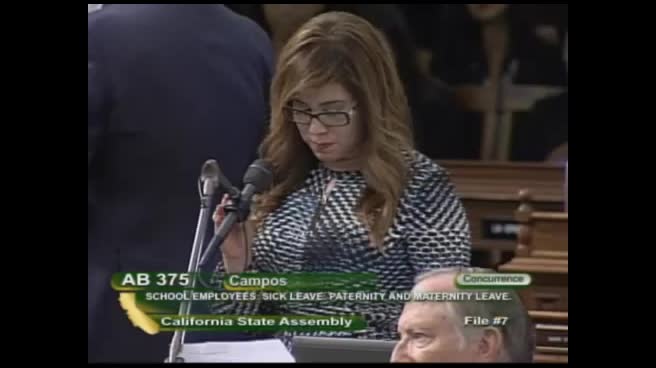 1MIN
Assembly Floor
 4MIN
Senate Floor
 45SEC
Senate Standing Committee on Appropriations
 4MIN
Senate Standing Committee on Governmental Organization
 5MIN
Assembly Floor
 2MIN