AB 1363: Animals: estrays: alpacas, llamas, and goats.
- Session Year: 2015-2016
- House: Assembly
- Latest Version Date: 2015-10-02
Existing law prescribes requirements for the seizure, management, and care of estrays. Existing law, for purposes of those provisions, defines estray to mean any impounded or seized bovine animal, horse, mule, sheep, swine, or burro whose owner is unknown or cannot be located. Existing law requires that any animal that is seized by, or comes into the possession of, an inspector pursuant to those provisions be disposed of in accordance with specified requirements. Existing law makes it a misdemeanor to violate specified provisions in the Food and Agricultural Code governing the care and treatment of animals, including estrays.
This bill would additionally include any alpaca, llama, or goat within that definition of estray, and would require that any animal that is seized by, or comes into the possession of, an inspector pursuant to those provisions be managed, rather than disposed of, in accordance with the specified requirements. The inclusion of alpacas, llamas, and goats within the definition of estray would expand the definition of a crime, thereby imposing a state-mandated local program.
Existing law requires the poundkeeper, other pound officer, or public animal control agency or shelter to immediately notify the Secretary of Food and Agriculture upon the impounding of any bovine animal, horse, mule, or burro.
This bill would also make that notification requirement applicable to the impounding of sheep, swine, alpacas, llamas, or goats.
The California Constitution requires the state to reimburse local agencies and school districts for certain costs mandated by the state. Statutory provisions establish procedures for making that reimbursement.
This bill would provide that no reimbursement is required by this act for a specified reason.
Existing law prescribes requirements for the seizure, management, and care of estrays. Existing law, for purposes of those provisions, defines estray to mean any impounded or seized bovine animal, horse, mule, sheep, swine, or burro whose owner is unknown or cannot be located. Existing law requires that any animal that is seized by, or comes into the possession of, an inspector pursuant to those provisions, provisions be disposed of in accordance with specified requirements. Existing law makes it a misdemeanor to violate specified provisions in the Food and Agricultural Code governing the care and treatment of animals, including estrays.
This bill would additionally include any alpaca alpaca, llama, or goat within that definition of estray, and would instead require that any animal that is seized by, or comes into the possession of, an inspector pursuant to those provisions be managed managed, rather than disposed of, in accordance with the specified requirements. The inclusion of alpacas alpacas, llamas, and goats within the definition of estray would expand the definition of a crime, thereby imposing a state-mandated local program.
Existing law requires the poundkeeper, other pound officer, or public animal control agency or shelter to immediately notify the Secretary of Food and Agriculture, Agriculture upon the impounding of any bovine animal, horse, mule, or burro.
This bill would also make that notification requirement applicable to the impounding of sheep, swine, alpacas, llamas, or goats.
The California Constitution requires the state to reimburse local agencies and school districts for certain costs mandated by the state. Statutory provisions establish procedures for making that reimbursement.
This bill would provide that no reimbursement is required by this act for a specified reason.
Existing law prescribes requirements for the seizure, management, and care of estrays. Existing law, for purposes of those provisions, defines estray to mean any impounded or seized bovine animal, horse, mule, sheep, swine, or burro whose owner is unknown or cannot be located. Existing law requires that any animal that is seized by, or comes into the possession of, an inspector pursuant to those provisions, be disposed of in accordance with specified requirements. Existing law makes it a misdemeanor to violate specified provisions in the Food and Agricultural Code governing the care and treatment of animals, including estrays.
This bill would additionally include any other livestock animal alpaca or goat within that definition of estray, and would instead require that any animal that is seized by, or comes into the possession of, an inspector pursuant to those provisions be managed in accordance with specified requirements. The inclusion of other livestock animals alpacas and goats within the definition of estray would expand the definition of a crime, thereby imposing a state-mandated local program.
Existing law requires the poundkeeper, other pound officer, or public animal control agency or shelter to immediately notify the Secretary of Food and Agriculture, upon the impounding of any bovine animal, horse, mule, or burro.
This bill would also make that notification requirement applicable to the impounding of sheep, swine, or other livestock animal. alpacas, or goats.
The California Constitution requires the state to reimburse local agencies and school districts for certain costs mandated by the state. Statutory provisions establish procedures for making that reimbursement.
This bill would provide that no reimbursement is required by this act for a specified reason.
Existing law prescribes requirements for the seizure, management, and care of estrays. Existing law, for purposes of those provisions, defines estray to mean any impounded or seized bovine animal, horse, mule, sheep, swine, or burro whose owner is unknown or cannot be located. Existing law requires that any animal that is seized by, or comes into the possession of, an inspector pursuant to those provisions, be disposed of in accordance with specified requirements. Existing law makes it a misdemeanor to violate specified provisions in the Food and Agricultural Code governing the care and treatment of animals, including estrays.
This bill would additionally include any other livestock animal within that definition of estray, and would instead require that any animal that is seized by, or comes into the possession of, an inspector pursuant to those provisions be managed in accordance with specified requirements. The inclusion of other livestock animals within the definition of estray would expand the definition of a crime, thereby imposing a state-mandated local program.
Existing law requires the poundkeeper, other pound officer, or public animal control agency or shelter to immediately notify the Secretary of Food and Agriculture, upon the impounding of any bovine animal, horse, mule, or burro.
This bill would also make that notification requirement applicable to the impounding of sheep, swine, or other livestock animal.
The California Constitution requires the state to reimburse local agencies and school districts for certain costs mandated by the state. Statutory provisions establish procedures for making that reimbursement.
This bill would provide that no reimbursement is required by this act for a specified reason.
Existing law prescribes requirements for the seizure, management, and care of estrays. Existing law, for purposes of those provisions, defines estray to mean any impounded or seized bovine animal, horse, mule, sheep, swine, or burro whose owner is unknown or cannot be located. Existing law requires that any animal that is seized by, or comes into the possession of, an inspector pursuant to those provisions, be disposed of in accordance with specified requirements. Existing law makes it a misdemeanor to violate specified provisions in the Food and Agricultural Code governing the care and treatment of animals, including estrays.
This bill would additionally include any other livestock animal within that definition of estray, and would instead require that any animal that is seized by, or comes into the possession of, an inspector pursuant to those provisions be managed in accordance with specified requirements. The inclusion of other livestock animals within the definition of estray would expand the definition of a crime, thereby imposing a state-mandated local program.
The California Constitution requires the state to reimburse local agencies and school districts for certain costs mandated by the state. Statutory provisions establish procedures for making that reimbursement.
This bill would provide that no reimbursement is required by this act for a specified reason.
Existing law establishes the Department of Food and Agriculture and vests with the department various duties and obligations related to regulation of the agricultural industry of the state. Existing law requires the department to supply the Department of Water Resources with a specified forecast that estimates the amount of production of food, fiber, livestock, and other farm products, as specified.
This bill would make nonsubstantive changes in the provisions relating to that forecast.
For the purpose of this chapter, estray means any impounded or seized bovine animal, horse, mule, sheep, swine, burro, alpaca, llama, or goat whose owner is unknown or cannot be located.
SEC. 2.Section 17002 of the Food and Agricultural Code is amended to read:17002.Any animal that is seized by, or comes into the possession of, an inspector pursuant to this part shall be managed pursuant to this chapter.
SEC. 3.Section 17003 of the Food and Agricultural Code is amended to read:17003.(a)Except as provided in this section, this chapter does not affect any law, ordinance, or regulation regarding estrays, the poundkeeper, or other pound officer, or a public animal control agency or shelter within the limits of any city or county where such laws, ordinances, or regulations are in force.
(b)Upon the impounding of any bovine animal, horse, mule, sheep, swine, burro, alpaca, llama, or goat, the poundkeeper, other pound officer, or public animal control agency or shelter shall immediately notify the secretary. Upon receipt of that notice, the secretary shall take possession of any bovine animal and shall manage it pursuant to this chapter.
(c)Any city, county, or city and county that establishes or has established laws, ordinances, or regulations regarding estrays, may opt to follow those laws, ordinances, or regulations instead of this chapter in the handling of estrays that are not bovine animals in accordance with the applicable laws, ordinances, or regulations of the city, county, or city and county.
(d)This section does not authorize any act that violates Section 597 of the Penal Code.
SEC. 4.No reimbursement is required by this act pursuant to Section 6 of Article XIIIB of the California Constitution because the only costs that may be incurred by a local agency or school district will be incurred because this act creates a new crime or infraction, eliminates a crime or infraction, or changes the penalty for a crime or infraction, within the meaning of Section 17556 of the Government Code, or changes the definition of a crime within the meaning of Section 6 of Article XIIIB of the California Constitution.
For the purpose of this chapter, estray means any impounded or seized bovine animal, horse, mule, sheep, swine, burro, alpaca, llama, or goat whose owner is unknown or cannot be located.
SEC. 2.Section 17002 of the Food and Agricultural Code is amended to read:17002.Any animal that is seized by, or comes into the possession of, an inspector pursuant to this part shall be managed pursuant to this chapter.
SEC. 3.Section 17003 of the Food and Agricultural Code is amended to read:17003.(a)Except as provided in this section, this chapter does not affect any law, ordinance, or regulation regarding estrays, the poundkeeper, or other pound officer, or a public animal control agency or shelter within the limits of any city or county where such laws, ordinances, or regulations are in force.
(b)Upon the impounding of any bovine animal, horse, mule, sheep, swine, burro, alpaca, llama, or goat, the poundkeeper, other pound officer, or public animal control agency or shelter shall immediately notify the secretary. Upon receipt of that notice, the secretary shall take possession of any bovine animal and shall dispose of manage it pursuant to this chapter.
(c)Any city, county, or city and county that establishes or has established laws, ordinances, or regulations regarding estrays, may opt to follow those laws, ordinances, or regulations instead of this chapter in the handling of estrays that are not bovine animals in accordance with the applicable laws, ordinances, or regulations of the city, county, or city and county.
(d)This section does not authorize any act that violates Section 597 of the Penal Code.
SEC. 4.No reimbursement is required by this act pursuant to Section 6 of Article XIIIB of the California Constitution because the only costs that may be incurred by a local agency or school district will be incurred because this act creates a new crime or infraction, eliminates a crime or infraction, or changes the penalty for a crime or infraction, within the meaning of Section 17556 of the Government Code, or changes the definition of a crime within the meaning of Section 6 of Article XIIIB of the California Constitution.
For the purpose of this chapter, estray means any impounded or seized bovine animal, horse, mule, sheep, swine, burro, or other livestock animal alpaca, or goat whose owner is unknown or cannot be located.
SEC. 2.Section 17002 of the Food and Agricultural Code is amended to read:17002.Any animal that is seized by, or comes into the possession of, an inspector pursuant to this part shall be managed pursuant to this chapter.
SEC. 3.Section 17003 of the Food and Agricultural Code is amended to read:17003.(a)Except as provided in this section, this chapter does not affect any law, ordinance, or regulation regarding estrays, the poundkeeper, or other pound officer, or a public animal control agency or shelter within the limits of any city or county where such laws, ordinances, or regulations are in force.
(b)Upon the impounding of any bovine animal, horse, mule, sheep, swine, burro, or other livestock animal, alpaca, or goat, the poundkeeper, other pound officer, or public animal control agency or shelter shall immediately notify the secretary. Upon receipt of that notice, the secretary shall take possession of any bovine animal and shall dispose of it pursuant to this chapter.
(c)Any city, county, or city and county that establishes or has established laws, ordinances, or regulations regarding estrays, may opt to follow those laws, ordinances, or regulations instead of this chapter in the handling of estrays that are not bovine animals in accordance with the applicable laws, ordinances, or regulations of the city, county, or city and county.
(d)This section does not authorize any act that violates Section 597 of the Penal Code.
SEC. 4.No reimbursement is required by this act pursuant to Section 6 of Article XIIIB of the California Constitution because the only costs that may be incurred by a local agency or school district will be incurred because this act creates a new crime or infraction, eliminates a crime or infraction, or changes the penalty for a crime or infraction, within the meaning of Section 17556 of the Government Code, or changes the definition of a crime within the meaning of Section 6 of Article XIIIB of the California Constitution.
For the purpose of this chapter, estray means any impounded or seized bovine animal, horse, mule, sheep, swine, burro, or other livestock animal whose owner is unknown or cannot be located.
SEC. 2.Section 17002 of the Food and Agricultural Code is amended to read:17002.Any animal that is seized by, or comes into the possession of, an inspector pursuant to this part shall be managed pursuant to this chapter.
SEC. 3.Section 17003 of the Food and Agricultural Code is amended to read:17003.(a)Except as provided in this section, this chapter does not affect any law, ordinance, or regulation regarding estrays, the poundkeeper, or other pound officer, or a public animal control agency or shelter within the limits of any city or county where such laws, ordinances, or regulations are in force.
(b)Upon the impounding of any bovine animal, horse, mule, or sheep, swine, burro, or other livestock animal, the poundkeeper, other pound officer, or public animal control agency or shelter shall immediately notify the secretary. Upon receipt of that notice, the secretary shall take possession of any bovine animal and shall dispose of it pursuant to this chapter.
(c)Any city, county, or city and county that establishes or has established laws, ordinances, or regulations regarding estrays, may opt to follow those laws, ordinances, or regulations instead of this chapter in the handling of estrays that are not bovine animals in accordance with the applicable laws, ordinances, or regulations of the city, county, or city and county.
(d)This section does not authorize any act that violates Section 597 of the Penal Code.
SEC. 3.SEC. 4.No reimbursement is required by this act pursuant to Section 6 of Article XIIIB of the California Constitution because the only costs that may be incurred by a local agency or school district will be incurred because this act creates a new crime or infraction, eliminates a crime or infraction, or changes the penalty for a crime or infraction, within the meaning of Section 17556 of the Government Code, or changes the definition of a crime within the meaning of Section 6 of Article XIIIB of the California Constitution.
For the purpose of this chapter, estray means any impounded or seized bovine animal, horse, mule, sheep, swine, or burro, or other livestock animal whose owner is unknown or cannot be located.
SEC. 2.Section 17002 of the Food and Agricultural Code is amended to read:17002.Any animal which that is seized by, or comes into the possession of, an inspector pursuant to this part shall be disposed of managed pursuant to this chapter.
SEC. 3.No reimbursement is required by this act pursuant to Section 6 of Article XIIIB of the California Constitution because the only costs that may be incurred by a local agency or school district will be incurred because this act creates a new crime or infraction, eliminates a crime or infraction, or changes the penalty for a crime or infraction, within the meaning of Section 17556 of the Government Code, or changes the definition of a crime within the meaning of Section 6 of Article XIIIB of the California Constitution.
SECTION 1.Section 411 of the Food and Agricultural Code is amended to read:411.(a)The Department of Food and Agriculture shall supply the Department of Water Resources with a forecast that estimates the amount of production of food, fiber, livestock, and other farm products.
(b)As part of the forecast, the Department of Food and Agricultures assumptions shall be based upon 20-year estimates that include, but are not limited to, the following data:
(1)Land use conversion rates and the amount of land that is available for agricultural production.
(2)The growing need for food, fiber, livestock and other farm products as the states and the nations populations grow.
(3)Implementation of irrigation technology and other on-farm water conservation measures.
(4)Advances in crop yields and production techniques.
(5)Alternate uses of crops.
(c)Department of Food and Agriculture shall include an additional table in the forecast that estimates the agricultural water needs based upon food security considerations that include, at a minimum, all of the following:
(1)Population growth estimates.
(2)Production of farm products sufficient to feed the states population, as well as continue to provide at least 25 percent of the nations table food.
(3)Production necessary to meet the growth in export markets.
(d)To the extent feasible, the Department of Food and Agriculture may cooperate with the Department of Finance, the University of California, and other institutions and organizations in obtaining information for the forecasts.
(e)The Department of Food and Agriculture shall furnish the forecast to the Department of Water Resources for estimating related water usage, as well as to the Chairs of the Assembly Committee on Agriculture, the Assembly Committee on Water, Parks, and Wildlife, and the Senate Committee on Agriculture and Water Resources. The Department of Water Resources shall include this information in Bulletin 160.
(a)The Department of Food and Agriculture shall supply the Department of Water Resources with a forecast that estimates the amount of production of food, fiber, livestock, and other farm products.
(b)As part of the forecast, the Department of Food and Agricultures assumptions shall be based upon 20-year estimates that include, but are not limited to, the following data:
(1)Land use conversion rates and the amount of land that is available for agricultural production.
(2)The growing need for food, fiber, livestock and other farm products as the states and the nations populations grow.
(3)Implementation of irrigation technology and other on-farm water conservation measures.
(4)Advances in crop yields and production techniques.
(5)Alternate uses of crops.
(c)The department Department of Food and Agriculture shall include an additional table in the forecast that estimates the agricultural water needs based upon food security considerations that include, at a minimum, all of the following:
(1)Population growth estimates.
(2)Production of farm products sufficient to feed the states population, as well as continue to provide at least 25 percent of the nations table food.
(3)Production necessary to meet the growth in export markets.
(d)To the extent feasible, the Department of Food and Agriculture may cooperate with the Department of Finance, the University of California, and other institutions and organizations in obtaining information for the forecasts.
(e)The Department of Food and Agriculture shall furnish the forecast to the Department of Water Resources for estimating related water usage, as well as to the Chairs of the Assembly Committee on Agriculture, the Assembly Committee on Water, Parks, and Wildlife, and the Senate Committee on Agriculture and Water Resources. The Department of Water Resources shall include this information in Bulletin 160.
|
Date
|
Status
|
|---|---|
| Jun 30, 2015 | In committee: Set, first hearing. Hearing canceled at the request of author. |
| Oct 2, 2015 | Chaptered by Secretary of State - Chapter 444, Statutes of 2015. |
| Oct 2, 2015 | Approved by the Governor. |
| Sep 25, 2015 | Enrolled and presented to the Governor at 2 p.m. |
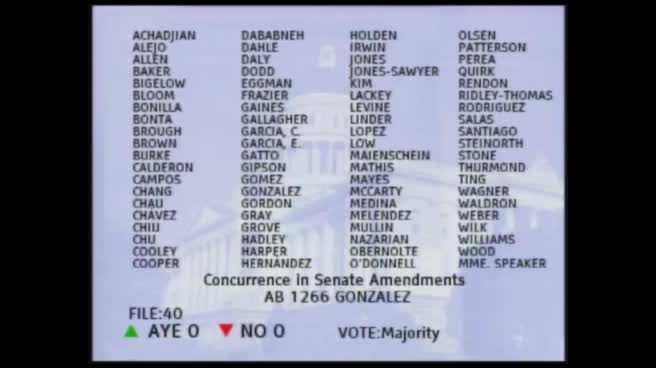
| Sep 11, 2015 | Senate amendments concurred in. To Engrossing and Enrolling. (Ayes 79. Noes 0.). |
| Sep 11, 2015 | Senate amendments concurred in. To Engrossing and Enrolling. (Ayes 79. Noes 0. Page 3151.). |
| Sep 11, 2015 | Senate amendments concurred in. To Engrossing and Enrolling. |
| Sep 10, 2015 | Read third time. Passed. Ordered to the Assembly. (Ayes 40. Noes 0. Page 2689.). |
| Sep 10, 2015 | Read third time. Passed. Ordered to the Assembly. |
| Sep 10, 2015 | In Assembly. Concurrence in Senate amendments pending. |
| Aug 18, 2015 | Read second time and amended. Ordered to third reading. |
| Aug 17, 2015 | From committee: Be placed on second reading file pursuant to Senate Rule 28.8 and be amended. |
| Jul 14, 2015 | Read second time and amended. Re-referred to Com. on APPR. |
| Jul 13, 2015 | From committee: Amend, and do pass as amended and re-refer to Com. on APPR. (Ayes 5. Noes 0.) (July 7). |
| Feb 27, 2015 | Introduced. To print. |
| Jun 4, 2015 | Referred to Com. on AGRI. |
| May 22, 2015 | Read third time. Passed. Ordered to the Senate. (Ayes 75. Noes 0. Page 1555.) |
| May 22, 2015 | Read third time. Passed. Ordered to the Senate. |
| May 22, 2015 | In Senate. Read first time. To Com. on RLS. for assignment. |
| May 20, 2015 | Read second time. Ordered to third reading. |
| May 19, 2015 | Read second time and amended. Ordered returned to second reading. |
| May 18, 2015 | From committee: Amend, and do pass as amended. (Ayes 17. Noes 0.) (May 13). |
| Apr 29, 2015 | From committee: Do pass and re-refer to Com. on APPR. with recommendation: To Consent Calendar. (Ayes 9. Noes 0.) (April 29). Re-referred to Com. on APPR. |
| Apr 6, 2015 | Re-referred to Com. on AGRI. |
| Mar 26, 2015 | Referred to Com. on AGRI. |
| Mar 26, 2015 | From committee chair, with author's amendments: Amend, and re-refer to Com. on AGRI. Read second time and amended. |
| Mar 2, 2015 | Read first time. |
| Mar 1, 2015 | From printer. May be heard in committee March 31. |
|
Date
|
Description
|
Location
|
Votes
|
|
|---|---|---|---|---|
| Sep 11, 2015 | AB 1363 SALAS Concurrence in Senate Amendments | Assembly Floor |
Passed |
|
| Sep 10, 2015 | Assembly 3rd Reading AB1363 Salas By Vidak | Senate Floor |
Passed |
|
| Jul 7, 2015 | Do pass as amended, but first amend, and re-refer to the Committee on [Appropriations] | Senate Standing Committee on Agriculture |
Passed |
|
| May 22, 2015 | AB 1363 SALAS Assembly Third Reading | Assembly Floor |
Passed |
|
| May 13, 2015 | Do pass as amended. | Assembly Standing Committee on Appropriations |
Passed |
|
| Apr 29, 2015 | Do pass and be re-referred to the Committee on [Appropriations] with recommendation: To Consent Calendar | Assembly Standing Committee on Agriculture |
Passed |
This list shows positions taken on this bill by organizations on the date displayed, which is linked to the original source.
Positions by individuals are not included.
|
Organization
|
Position
|
Date
|
|---|---|---|
| Association Of California Egg Farmers | ** Support | Sep 10, 2015 |
| California Grain and Feed Association | ** Support | Sep 10, 2015 |
AB 1363
Page 1
CONCURRENCE IN SENATE AMENDMENTS
AB 1363
(Salas)
As Amended August 18, 2015
Majority vote
ASSEMBLY: |
75-0 |
(May 22, 2015) |
SENATE: |
40-0 |
(September 10, 2015) |
Original Committee Reference: AGRI.
SUMMARY: Would add "alpaca and goat" to the definition of "estray"; adds "sheep, swine, alpaca, llama or goat" to the list of animals that require a pound keeper or public animal control agency or shelter to immediately notify the Secretary of the California Department of Food and Agriculture (CDFA) upon impoundment; requires CDFA to take possession of that animal and makes technical changes.
The Senate amendments narrow the language from "other livestock" to "alpaca, llama or goat" and does not significantly change the policy as heard in the Assembly.
EXISTING LAW: Defines "estray" to mean any impounded or seized bovine animal, horse, mule, sheep, swine, or burro whose owner is unknown or cannot be located; requires any person who seizes an estray animal to immediately notify CDFA with a description of the animal, any brands or markings, approximated animal value, and the date and location where the animal was found and the location where the animal is now confined; requires the pound keeper or public animal control agency or shelter to immediately notify CDFA of any impounded bovine animal, horse, mule or burro and, upon receipt of that notice, requires CDFA to take possession of that animal; requires CDFA to take specified measures to find and notify the owner of any impounded estray animal, including searching brand records and posting a description of the animal in the classified section of livestock industry publications; authorizes CDFA, after 14 days from the date of first notice, to sell any estray animal for which the owner cannot be located, ownership cannot be proven, or the owner fails to pay all incurred expenses; and, authorizes local governments to follow local laws, ordinances, and regulations instead of state law regarding the handling of estray animals that are not bovine animals.
FISCAL EFFECT: According to the Senate Committee on Appropriations, pursuant to Senate Rule 28.8, this bill has negligible state costs.
COMMENTS: According to the author, "Assembly Bill 1363 expands the definition of “estray” to include all livestock, and would require that any animal that is seized by, or comes into the possession of, an inspector be managed in accordance with existing regulations. This bill better reflects additional livestock popular with California farmers, ranchers, and landowners. Although the variety of livestock has increased, regulations for the management and care of strayed farm animals have not been expanded to protect all livestock."
According to the 2012 United States Department of Agriculture Census, California had a total of 140,042 goats living on 4,470 individual farms; 7,229 alpacas on 468 farms; and 3,824 llamas on 763 farms. California is ranked second in the nation for the highest number of goats and fifth for both alpacas and llamas.
Analysis Prepared by: Jim Collin / AGRI. / (916) 319-2084 FN: 0001555
AB 1363
Page 3
|
Office of Senate Floor Analyses (916) 651-1520 Fax: (916) 327-4478 |
THIRD READING
Bill No: AB 1363
Amended: 8/18/15 in Senate
SENATE AGRICULTURE COMMITTEE: 5-0, 7/7/15
AYES: Galgiani, Cannella, Berryhill, Pan, Wolk
SENATE APPROPRIATIONS COMMITTEE: Senate Rule 28.8
ASSEMBLY FLOOR: 75-0, 5/22/15 - See last page for vote
SUBJECT: Animals: estrays: alpacas, llamas, and goats
DIGEST: This bill adds alpacas, llamas and goats to the definition of “estray”; adds sheep, swine, alpacas, llamas, and goats to the list of animals that require a pound keeper or public animal control agency or shelter to immediately notify the secretary of the California Department of Food and Agriculture (CDFA) upon impoundment; and requires CDFA to take possession of that animal.
Existing law:
Defines “estray” to mean any impounded or seized bovine animal, horse, mule, sheep, swine, or burro whose owner is unknown or cannot be located.
Requires any person who seizes an estray animal to immediately notify CDFA with a description of the animal, any brands or markings, approximated animal value, and the date and location where the animal was found and the location where the animal is now confined.
Requires the pound keeper or public animal control agency or shelter to immediately notify CDFA of any impounded bovine animal, horse, mule or burro and, upon receipt of that notice, requires CDFA to take possession of that animal.
Requires CDFA to take specified measures to find and notify the owner of any impounded estray animal, including searching brand records and posting a description of the animal in the classified section of livestock industry publications.
Authorizes CDFA, after 14 days from the date of first notice, to sell any estray animal for which the owner cannot be located, ownership cannot be proven, or the owner fails to pay all incurred expenses.
Authorizes local governments to follow local laws, ordinances, and regulations instead of state law regarding the handling of estray animals that are not bovine animals.
This bill:
Adds alpacas, llamas, and goats to the definition of “estray.”
Adds sheep, swine, alpacas, llamas, and goats to the list of animals that require a pound keeper or public animal control agency or shelter to immediately notify CDFA upon impoundment, and requires CDFA to take possession of that animal.
Comments
Alpacas, goats, and llamas. According to the 2012 U.S. Department of Agriculture Census, California had a total of 140,042 goats living on 4,470 individual farms; 7,229 alpacas on 468 farms; and 3,824 llamas on 763 farms. California is ranked second in the nation for the highest number of goats and fifth for both alpacas and llamas.
FISCAL EFFECT: Appropriation: No Fiscal Com.: Yes Local: Yes
Association of California Egg Farmers
California Grain and Feed Association
OPPOSITION: (Verified 8/19/15)
None received
ARGUMENTS IN SUPPORT: According to the author, this bill expands the definition of “estray” and requires that any animal that is seized by, or comes into the possession of, an inspector be managed in accordance with existing regulations. This bill better reflects additional livestock species popular with California farmers, ranchers, and landowners. Although the variety of livestock has increased, regulations for the management and care of strayed farm animals have not been expanded to protect these livestock.
ASSEMBLY FLOOR: 75-0, 5/22/15
AYES: Achadjian, Travis Allen, Baker, Bigelow, Bloom, Bonilla, Bonta, Brough, Brown, Burke, Calderon, Campos, Chang, Chau, Chávez, Chiu, Chu, Cooley, Cooper, Dababneh, Dahle, Daly, Dodd, Eggman, Frazier, Beth Gaines, Gallagher, Cristina Garcia, Eduardo Garcia, Gatto, Gipson, Gomez, Gonzalez, Gordon, Gray, Grove, Hadley, Harper, Roger Hernández, Holden, Irwin, Jones, Jones-Sawyer, Kim, Lackey, Levine, Linder, Lopez, Low, Maienschein, Mathis, Mayes, McCarty, Medina, Melendez, Mullin, Nazarian, Obernolte, Patterson, Perea, Quirk, Rendon, Ridley-Thomas, Rodriguez, Salas, Santiago, Steinorth, Mark Stone, Thurmond, Ting, Wagner, Wilk, Williams, Wood, Atkins
NO VOTE RECORDED: Alejo, O'Donnell, Olsen, Waldron, Weber
Prepared by: Anne Megaro / AGRI. / (916) 651-1508
8/19/15 20:34:40
**** END ****
AB 1363 (Salas) Page 3 of 3
SENATE COMMITTEE ON AGRICULTURE
Senator Cathleen Galgiani, Chair
2015 - 2016 Regular
Bill No: AB 1363 Hearing Date: 7/7/15
Author: |
Salas |
||
Version: |
5/19/15 Amended |
||
Urgency: |
No |
Fiscal: |
Yes |
Consultant: |
Anne Megaro |
||
Subject: Animals: estrays: livestock animals.
SUMMARY
:
This bill would add “all livestock animals” to the definition of “estray”; adds “sheep, swine, or other livestock animal” to the list of animals that require a pound keeper or public animal control agency or shelter to immediately notify the secretary of the California Department of Food and Agriculture (CDFA) upon impoundment; and requires CDFA to take possession of that animal.
BACKGROUND AND EXISTING LAW
:
Existing law:
Defines “estray” to mean any impounded or seized bovine animal, horse, mule, sheep, swine, or burro whose owner is unknown or cannot be located.
Requires any person who seizes an estray animal to immediately notify CDFA with a description of the animal, any brands or markings, approximated animal value, and the date and location where the animal was found and the location where the animal is now confined.
Requires the pound keeper or public animal control agency or shelter to immediately notify CDFA of any impounded bovine animal, horse, mule or burro and, upon receipt of that notice, requires CDFA to take possession of that animal.
Requires CDFA to take specified measures to find and notify the owner of any impounded estray animal, including searching brand records and posting a description of the animal in the classified section of livestock industry publications.
Authorizes CDFA, after 14 days from the date of first notice, to sell any estray animal for which the owner cannot be located, ownership cannot be proven, or the owner fails to pay all incurred expenses.
Authorizes local governments to follow local laws, ordinances, and regulations instead of state law regarding the handling of estray animals that are not bovine animals.
PROPOSED LAW
:
This bill:
Adds “all livestock animals” to the definition of “estray.”
Adds “sheep, swine, or other livestock animal” to the list of animals that require a pound keeper or public animal control agency or shelter to immediately notify CDFA upon impoundment, and requires CDFA to take possession of that animal.
ARGUMENTS IN SUPPORT:
According to the author, “Assembly Bill 1363 expands the definition of “estray” to include all livestock, and would require that any animal that is seized by, or comes into the possession of, an inspector be managed in accordance with existing regulations. This bill better reflects additional livestock popular with California farmers, ranchers, and landowners. Although the variety of livestock has increased, regulations for the management and care of strayed farm animals have not been expanded to protect all livestock.”
COMMENTS
:
Alpacas, goats, and llamas. According to the 2012 U.S. Department of Agriculture Census, California had a total of 140,042 goats living on 4,470 individual farms; 7,229 alpacas on 468 farms; and 3,824 llamas on 763 farms. California is ranked second in the nation for the highest number of goats and fifth for both alpacas and llamas.
All livestock animals. It is unclear what additional animals would be included in the term “all livestock animals.” Within other chapters of this division, “livestock” is defined to include “any cattle, sheep, swine, goat, or any horse, mule or other equine.” The author has provided the committee with information on the growing number of goats and alpacas; however, “livestock” could potentially be construed to also include poultry, llamas, pet farm animals, and other specialty animals.
If there is concern as to estray alpacas and goats specifically, the committee may wish to consider whether this bill should be more narrowly tailored to add only goats and alpacas rather than all livestock animals.
RELATED LEGISLATION
:
SB 1176 (Aanestad), Chapter 325, Statutes of 2010. Clarifies that local governments may follow local laws, ordinances, and regulations instead of state law regarding the handling of estray animals that are not bovine animals.
PRIOR ACTIONS
:
Assembly Floor: |
75 - 0 |
Assembly Appropriations Committee: |
17 - 0 |
Assembly Agriculture Committee: |
9 - 0 |
SUPPORT
:
Association of California Egg Farmers
California Grain and Feed Association
OPPOSITION
:
None received
-- END --
AB 1363 (Salas) Page 3 of 3
SENATE COMMITTEE ON AGRICULTURE
Senator Cathleen Galgiani, Chair
2015 - 2016 Regular
Bill No: AB 1363 Hearing Date: 6/30/15
Author: |
Salas |
||
Version: |
5/19/15 Amended |
||
Urgency: |
No |
Fiscal: |
Yes |
Consultant: |
Anne Megaro |
||
Subject: Animals: estrays: livestock animals.
SUMMARY
:
This bill would add “all livestock animals” to the definition of “estray”; adds “sheep, swine, or other livestock animal” to the list of animals that require a pound keeper or public animal control agency or shelter to immediately notify the secretary of the California Department of Food and Agriculture (CDFA) upon impoundment; and requires CDFA to take possession of that animal.
BACKGROUND AND EXISTING LAW
:
Existing law:
Defines “estray” to mean any impounded or seized bovine animal, horse, mule, sheep, swine, or burro whose owner is unknown or cannot be located.
Requires any person who seizes an estray animal to immediately notify CDFA with a description of the animal, any brands or markings, approximated animal value, and the date and location where the animal was found and the location where the animal is now confined.
Requires the pound keeper or public animal control agency or shelter to immediately notify CDFA of any impounded bovine animal, horse, mule or burro and, upon receipt of that notice, requires CDFA to take possession of that animal.
Requires CDFA to take specified measures to find and notify the owner of any impounded estray animal, including searching brand records and posting a description of the animal in the classified section of livestock industry publications.
Authorizes CDFA, after 14 days from the date of first notice, to sell any estray animal for which the owner cannot be located, ownership cannot be proven, or the owner fails to pay all incurred expenses.
Authorizes local governments to follow local laws, ordinances, and regulations instead of state law regarding the handling of estray animals that are not bovine animals.
PROPOSED LAW
:
This bill:
Adds “all livestock animals” to the definition of “estray.”
Adds “sheep, swine, or other livestock animal” to the list of animals that require a pound keeper or public animal control agency or shelter to immediately notify CDFA upon impoundment, and requires CDFA to take possession of that animal.
ARGUMENTS IN SUPPORT:
According to the author, “Assembly Bill 1363 expands the definition of “estray” to include all livestock, and would require that any animal that is seized by, or comes into the possession of, an inspector be managed in accordance with existing regulations. This bill better reflects additional livestock popular with California farmers, ranchers, and landowners. Although the variety of livestock has increased, regulations for the management and care of strayed farm animals have not been expanded to protect all livestock.”
COMMENTS
:
Alpacas, goats, and llamas. According to the 2012 U.S. Department of Agriculture Census, California had a total of 140,042 goats living on 4,470 individual farms; 7,229 alpacas on 468 farms; and 3,824 llamas on 763 farms. California is ranked second in the nation for the highest number of goats and fifth for both alpacas and llamas.
All livestock animals. It is unclear what additional animals would be included in the term “all livestock animals.” Within other chapters of this division, “livestock” is defined to include “any cattle, sheep, swine, goat, or any horse, mule or other equine.” The author has provided the committee with information on the growing number of goats and alpacas; however, “livestock” could potentially be construed to also include poultry, llamas, pet farm animals, and other specialty animals.
If there is concern as to estray alpacas and goats specifically, the committee may wish to consider whether this bill should be more narrowly tailored to add only goats and alpacas rather than all livestock animals.
RELATED LEGISLATION
:
SB 1176 (Aanestad), Chapter 325, Statutes of 2010. Clarifies that local governments may follow local laws, ordinances, and regulations instead of state law regarding the handling of estray animals that are not bovine animals.
PRIOR ACTIONS
:
Assembly Floor: |
75 - 0 |
Assembly Appropriations Committee: |
17 - 0 |
Assembly Agriculture Committee: |
9 - 0 |
SUPPORT
:
None received
OPPOSITION
:
None received
-- END --
AB 1363
Page 1
ASSEMBLY THIRD READING
AB 1363
(Salas)
As Amended May 19, 2015
Majority vote
Committee |
Votes |
Ayes |
Noes |
Agriculture |
9-0 |
Perea, Gallagher, Cooper, Dodd, Eggman, Irwin, Mathis, Quirk, Salas |
|
SUMMARY: Adds "other livestock animals" to the list of animals defined as estray when impounded or seized and the owner is unknown, and makes technical, conforming changes.
EXISTING LAW establishes requirements for the seizure, management, and care of estrays; defines "estray" to mean any impounded or seized bovine animal, horse, mule, sheep, swine, or burro whose owner is unknown or cannot be located; requires that any animal seized by, or that comes into the possession of, an inspector pursuant to those provisions, be disposed of in accordance with specified requirements; and, makes it a misdemeanor to violate specified provisions governing the care and treatment of animals, including estrays.
FISCAL EFFECT: According to the Assembly Appropriations Committee, this bill has negligible costs to local law enforcement; likely minor and absorbable enforcement costs, if any, to the California Department of Food and Agriculture.
COMMENTS: According to the author, this bill seeks to expand the definition of what the state defines as an "estray" to better reflect additional types of domestic animals popular with California farmers, ranchers, and landowners, including but not limited to, goats and alpacas.
According to the United States Department of Agriculture Census on Agriculture in 2012, California had a total of 43,252 dairy goats living on 1,416 individual farms, more than any other state with the exception of Wisconsin. A similar trend exists for alpacas. Since their introduction to California, in 1983, alpaca ownership now extends to nearly 200 farms in California and the state boasts 67 individual alpaca breeders (several with herd sizes in excess of 100) serving the growing industry.
By expanding the definition of "estray" livestock owners can be assured that their farm animals will be granted the protection of the existing regulations and that the law will be followed when dealing with all types of livestock animals.
Analysis Prepared by: Jim Collin / AGRI. / (916) 319-2084 FN: 0000380
AB 1363
Page 1
Date of Hearing: May 13, 2015
ASSEMBLY COMMITTEE ON APPROPRIATIONS
Jimmy Gomez, Chair
AB 1363
(Salas) – As Amended March 26, 2015
Policy Committee: |
Agriculture |
Vote: |
9 - 0 |
Urgency: No State Mandated Local Program: Yes Reimbursable: No
SUMMARY:
This bill adds "other livestock animals" to the list of animals defined as estray (which includes bovines, horses, mules, sheep, swine, and burros) when impounded or seized and the owner is unknown, and makes other technical changes to the Food and Agriculture Code.
FISCAL EFFECT:
Negligible costs to local law enforcement; likely minor and absorbable enforcement costs, if any, to the Department of Food and Agriculture.
COMMENTS:
1) Purpose. According to the author, this bill expands the definition of estray to better reflect additional domestic animals popular with California farmers and ranchers, including goats and alpacas. According to US Department of Agriculture Census on Agriculture data from 2012, California had more dairy goats than any state except Wisconsin, and California's alpaca herds have grown substantially in the past 30 years.
2) Lord Blackstone's Lost Sheep. Under English common law, an estray is any domestic animal found wandering or lost, particularly if the owner is unknown. It usually refers to domesticated animals and not pets. Under early common law, estrays were forfeited to the king or lord of the manor, and that lord or any other person taking up an estray was granted a qualified property interest in the animal. Such property interest became absolute if the owner failed to claim the animal within a time limit. If the original owner did claim the animal, he could still be liable to the finder for the reasonable costs of maintaining the animal.
Analysis Prepared by: Joel Tashjian / APPR. / (916) 319-2081
AB 1363
Page 2
Date of Hearing: April 29, 2015
ASSEMBLY COMMITTEE ON AGRICULTURE
Henry T. Perea, Chair
AB 1363
(Salas) – As Amended March 26, 2015
SUBJECT: Animals: estrays: livestock animals.
SUMMARY: Adds "other livestock animals" to the list of animals defined as estray when impounded or seized and the owner is unknown, and makes technical changes.
EXISTING LAW establishes requirements for the seizure, management, and care of estrays; defines “estray” to mean any impounded or seized bovine animal, horse, mule, sheep, swine, or burro whose owner is unknown or cannot be located; requires that any animal seized by, or that comes into the possession of, an inspector pursuant to those provisions, be disposed of in accordance with specified requirements; and, makes it a misdemeanor to violate specified provisions governing the care and treatment of animals, including estrays.
FISCAL EFFECT: Unknown. Legislative Counsel has keyed this bill fiscal.
COMMENTS: According to the author, this bill seeks to expand the definition of what the state defines as an “estray” to better reflect additional types of domestic animals popular with California farmers, ranchers, and landowners, including but not limited to, goats and alpacas.
According to the USDA Census on Agriculture in 2012, California had a total of 43,252 dairy goats living on 1,416 individual farms, more than any other state with the exception of Wisconsin. A similar trend exists for alpacas. Since their introduction to California in 1983, alpaca ownership now extends to nearly 200 farms in California and the state boasts sixty-seven individual alpaca breeders (several with herd sizes in excess of 100) serving the growing industry.
By expanding the definition of “estray” livestock owners can be assured that their farm animals will be granted the protection of the existing regulations and that the law will be followed when dealing with all types of livestock animals.
The estray law was originally directed toward commercial livestock and animals. The committee may wish to consider if this proposed definition expansion of "estray" is too broad and should be narrowed. Limiting the definition to goats and alpacas may be sufficient to protect the commercial operations of these animals while not including domesticated animals used as pets or for non-commercial purposes. The cost of recapture and caring for these animals has been increasing, and while many non-profit shelters offer their services, there remains a cost to the state, counties and cities in the handling of such estrays. Many of these animals may not have a commercial purpose but be housed as pets or be rescued animals due to mistreatment.
REGISTERED SUPPORT / OPPOSITION:
Support
None on file
Opposition
None on file
Analysis Prepared by: Jim Collin / AGRI. / (916) 319-2084
Discussed in Hearing
 45SEC
Assembly Floor
 2MIN
Senate Floor
 43SEC
Assembly Floor
 3MIN
Assembly Standing Committee on Appropriations
Bill Author

Bill Co-Author(s):