AB 1369: Special education: dyslexia.
- Session Year: 2015-2016
- House: Assembly
- Latest Version Date: 2015-10-08
(1)Existing law requires all children with disabilities residing in the state, regardless of the severity of their disabilities, and who are in need of special education and related services, to be identified, located, and assessed. Existing law provides that a pupil who is assessed as being dyslexic and meets certain eligibility criteria for the federal Individuals with Disabilities Education Act category of specific learning disabilities is entitled to special education and related services. Existing law defines a specific learning disability as a disorder in one or more of the basic psychological processes involved in understanding or in using language, and includes in that definition dyslexia and other specified conditions.
This bill would require the Superintendent of Public Instruction to develop, and to complete in time for use no later than the beginning of the 201718 academic year, program guidelines for dyslexia to be used to assist regular education teachers, special education teachers, and parents to identify and assess pupils with dyslexia, and to plan, provide, evaluate, and improve educational services, as defined, to pupils with dyslexia. The bill would require the Superintendent to disseminate the program guidelines through the State Department of Educations Internet Web site and to provide technical assistance regarding their use and implementation to specified persons.
(2)Existing regulations adopted by the State Board of Education include specific basic psychological processes in the definition of specific learning disability.
This bill would require the state board to include phonological processing in that description of basic psychological processes.
(1)Existing law requires all children with disabilities residing in the state, regardless of the severity of their disabilities, and who are in need of special education and related services, to be identified, located, and assessed. Existing law provides that a pupil who is assessed as being dyslexic and meets certain eligibility criteria for the federal Individuals with Disabilities Education Act category of specific learning disabilities is entitled to special education and related services. Existing law defines a specific learning disability as a disorder in one or more of the basic psychological processes involved in understanding or in using language, and includes in that definition dyslexia and other specified conditions.
This bill would require local educational agencies to screen all pupils enrolled in kindergarten and grades 1 to 3, inclusive, as provided, to identify dyslexia or other reading and writing dysfunctions, and to notify a pupils parent or legal guardian of any identified dyslexia or other reading and writing dysfunction, as specified. The bill would define dyslexia and specific learning disability, as specified. By imposing additional duties on local educational agencies, the bill would impose a state-mandated local program.
(2)Existing law encourages local in-service training programs for regular education teachers and special education teachers to include a component on, and institutions of higher education that provide teacher training programs to emphasize, the recognition of, and teaching strategies for, specific learning disabilities, including dyslexia and related disorders.
This bill would instead require local in-service training programs for school psychologists, regular education teachers, and special education teachers in local educational agencies to include a component on, and, commencing with the 201617 academic year, the Commission on Teacher Credentialing to require institutions of higher education that provide teacher training programs to include instruction in, the recognition of, and appropriate evidence-based teaching methodologies for, dyslexia or other reading and writing dysfunctions. By requiring local educational agencies to expand their local in-service training programs, the bill would impose a state-mandated local program.
(3)This
This bill would require the Superintendent of Public Instruction to develop, on or before January 1, 2017, and to complete in time for use no later than the beginning of the 201718 academic year, program guidelines for dyslexia or other reading and writing dysfunctions to be used to assist regular education teachers, special education teachers, and parents to identify, assess, identify and assess pupils with dyslexia, and to plan, provide, evaluate, and improve educational services services, as defined, to pupils, as specified. The bill would require the Superintendent to adopt, on or before January 1, 2017, an evidence-based screening instrument to identify pupils, and an evidence-based, multisensory, direct, explicit, structured, and sequential approach to instructing pupils, who have dyslexia or other reading and writing dysfunctions. pupils with dyslexia. The bill would require the Superintendent to disseminate the program guidelines through the State Department of Educations Internet Web site and to provide technical assistance regarding their use and implementation to specified persons.
(4)The California Constitution requires the state to reimburse local agencies and school districts for certain costs mandated by the state. Statutory provisions establish procedures for making that reimbursement.
This bill would provide that, if the Commission on State Mandates determines that the bill contains costs mandated by the state, reimbursement for those costs shall be made pursuant to these statutory provisions.
(2)Existing regulations adopted by the State Board of Education include specific basic psychological processes in the definition of specific learning disability.
This bill would require the state board to include phonological processing in that description of basic psychological processes.
(1)Existing law requires all children with disabilities residing in the state, regardless of the severity of their disabilities, and who are in need of special education and related services, to be identified, located, and assessed. Existing law provides that a pupil who is assessed as being dyslexic and meets certain eligibility criteria for the federal Individuals with Disabilities Education Act category of specific learning disabilities is entitled to special education and related services. Existing law defines a specific learning disability as a disorder in one or more of the basic psychological processes involved in understanding or in using language, and includes in that definition dyslexia and other specified conditions.
This bill would require local educational agencies to screen all pupils enrolled in kindergarten and grades 1 to 3, inclusive, as provided, to identify dyslexia or other reading and writing dysfunctions, and to notify a pupils parent or legal guardian of any identified dyslexia or other reading and writing dysfunction, as specified. The bill would define dyslexia and specific learning disability, as specified. By imposing additional duties on local educational agencies, the bill would impose a state-mandated local program.
(2)Existing law encourages local in-service training programs for regular education teachers and special education teachers to include a component on, and institutions of higher education that provide teacher training programs to emphasize, the recognition of, and teaching strategies for, specific learning disabilities, including dyslexia and related disorders.
This bill would instead require local in-service training programs for school psychologists, regular education teachers, and special education teachers in local educational agencies to include a component on, and, commencing with the 201617 academic year, the Commission on Teacher Credentialing to require institutions of higher education that provide teacher training programs to include instruction in, the recognition of, and appropriate evidence-based teaching methodologies for, dyslexia or other reading and writing dysfunctions. By requiring local educational agencies to expand their local in-service training programs, the bill would impose a state-mandated local program.
(3)This bill would require the Superintendent of Public Instruction to develop, on or before January 1, 2017, program guidelines for dyslexia or other reading and writing dysfunctions to be used to assist regular education teachers, special education teachers, and parents to identify, assess, plan, provide, evaluate, and improve educational services to pupils, as specified. The bill would require the Superintendent to adopt, on or before January 1, 2017, an evidence-based screening instrument to identify pupils, and an evidence-based, multisensory, direct, explicit, structured, and sequential approach to instructing pupils, who have dyslexia or other reading and writing dysfunctions.
(4)The California Constitution requires the state to reimburse local agencies and school districts for certain costs mandated by the state. Statutory provisions establish procedures for making that reimbursement.
This bill would provide that, if the Commission on State Mandates determines that the bill contains costs mandated by the state, reimbursement for those costs shall be made pursuant to these statutory provisions.
The state board shall include phonological processing in the description of basic psychological processes in Section 3030 of Title 5 of the California Code of Regulations.
SEC. 2.Section 56335 is added to the Education Code, to read:56335.(a)The Superintendent shall develop program guidelines for dyslexia to be used to assist regular education teachers, special education teachers, and parents to identify and assess pupils with dyslexia, and to plan, provide, evaluate, and improve educational services to pupils with dyslexia. For purposes of this section, educational services means an evidence-based, multisensory, direct, explicit, structured, and sequential approach to instructing pupils who have dyslexia.
(b)The program guidelines shall include, but shall not be limited to, characteristics typical of pupils with dyslexia and strategies for their remediation, as well as information to assist educators in distinguishing between characteristics of dyslexia and characteristics of normal growth and development.
(c)In developing program guidelines pursuant to subdivision (a), the Superintendent shall consult with teachers, school administrators, other educational professionals, medical professionals, parents, and other professionals involved in the identification and education of pupils with dyslexia.
(d)The Superintendent shall complete the program guidelines in time for use no later than the beginning of the 201718 academic year.
(e)The Superintendent shall disseminate the program guidelines through the departments Internet Web site and provide technical assistance regarding their use and implementation to parents, teachers, school administrators, and faculty members in teacher training programs of institutions of higher education.
Commencing with the 201617 academic year, the commission shall require institutions of higher education that provide teacher training programs to include in those programs instruction in the recognition of, and appropriate evidence-based teaching methodologies for, dyslexia, as defined in Section 56025.5, or other reading and writing dysfunctions, including dyscalculia, dysgraphia, auditory and visual processing disabilities, and related disorders.
SEC. 3.Section 56025.5 is added to the Education Code, to read:56025.5.Dyslexia means a specific learning disability that is neurological in origin and characterized by difficulties with accurate or fluent word recognition and by poor spelling and decoding abilities. These difficulties typically result from a deficit in the phonological component of language that is often unexpected in relation to other cognitive abilities and the provision of effective classroom instruction. Secondary consequences may include problems in reading comprehension and reduced reading experience that can impede the growth of vocabulary and background knowledge. Other characteristics include, but are not limited to, difficulty in acquiring language skills; inability to comprehend oral or written language; difficulty in rhyming words; difficulty in naming letters, recognizing letters, matching letters to sounds, and blending sounds when speaking and reading words; difficulty recognizing and remembering sight words; consistent transposition of number sequences, and letter reversals, inversions, and substitutions; and difficulty in replication of content.
SEC. 4.Section 56031.5 is added to the Education Code, to read:56031.5.Specific learning disability includes dyslexia, dyscalculia, dysgraphia, auditory and visual processing disabilities, and related disorders.
SECTION 1.Section 56334 is added to the Education Code, to read:56334.The state board shall include phonological processing in the description of basic psychological processes in Section 3030 of Title 5 of the California Code of Regulations.
SEC. 5.SEC. 2.Section 56049 56335 is added to the Education Code, to read:56049.56335.(a)On or before January 1, 2017, the The Superintendent shall develop program guidelines for dyslexia or other reading and writing dysfunctions to be used to assist regular education teachers, special education teachers, and parents to identify, assess, identify and assess pupils with dyslexia, and to plan, provide, evaluate, and improve educational services to pupils. pupils with dyslexia. For purposes of this section, educational services means an evidence-based, multisensory, direct, explicit, structured, and sequential approach to instructing pupils who have dyslexia.
(b)The program guidelines shall include include, but shall not be limited to, characteristics typical of pupils with dyslexia or other reading and writing dysfunctions, and evidence-based strategies for their remediation. remediation, as well as information to assist educators in distinguishing between characteristics of dyslexia and characteristics of normal growth and development.
(c)The In developing program guidelines pursuant to subdivision (a), the Superintendent shall consult with teachers, school administrators, school psychologists, other educational professionals, medical professionals, parents, and other educational professionals involved in the identification and treatment education of dyslexia or other reading and writing dysfunctions. pupils with dyslexia.
(d)The Superintendent shall complete the program guidelines in time for use no later than the beginning of the 201718 academic year.
(d)
(e)The Superintendent shall disseminate the program guidelines through the departments Internet Web site and provide technical assistance regarding their use and implementation to parents, teachers, school administrators, other education professionals, and faculty members in teacher training programs of institutions of higher education.
SEC. 6.Section 56245 of the Education Code is repealed.SEC. 7.Section 56245 is added to the Education Code, to read:56245.Local in-service training programs for school psychologists, regular education teachers, and special education teachers in local educational agencies shall include a component on the recognition of, and appropriate evidence-based teaching methodologies for, dyslexia, as defined in Section 56025.5, or other reading and writing dysfunctions, including dyscalculia, dysgraphia, auditory and visual processing disabilities, and related disorders.
SEC. 8.Section 56337.6 is added to the Education Code, to read:56337.6.(a)On or before January 1, 2017, the Superintendent shall adopt both of the following:
(1)An evidence-based screening instrument to identify pupils who have dyslexia or other reading and writing dysfunctions.
(2)An evidence-based, multisensory, direct, explicit, structured, and sequential approach to instructing pupils who have dyslexia or other reading and writing dysfunctions.
(b)Commencing with the 201718 academic year, a local educational agency shall use the screening instrument specified in paragraph (1) of subdivision (a) to identify pupils who have dyslexia or other reading and writing dysfunctions, and shall implement the evidence-based multisensory approach to instructing pupils who have dyslexia or other reading and writing dysfunctions specified in paragraph (2) of subdivision (a). A local educational agency shall ensure that teachers receive appropriate training on the screening instrument and the instruction approach.
SEC. 9.Section 56337.7 is added to the Education Code, to read:56337.7.A local educational agency shall screen all pupils enrolled in kindergarten and grades 1 to 3, inclusive, at least once per academic year in which a pupil is enrolled in those grade levels, to identify dyslexia, as defined in Section 56025.5, or other reading and writing dysfunctions. If the screening identifies dyslexia, as defined in Section 56025.5, or other reading and writing dysfunctions in a pupil, the local educational agency that administered the screening shall notify the pupils parent or legal guardian of the finding in writing within 30 calendar days.
SEC. 10.If the Commission on State Mandates determines that this act contains costs mandated by the state, reimbursement to local agencies and school districts for those costs shall be made pursuant to Part 7 (commencing with Section 17500) of Division 4 of Title 2 of the Government Code.
Commencing with the 201617 academic year, the commission shall require institutions of higher education that provide teacher training programs to include in those programs instruction in the recognition of, and appropriate evidence-based teaching methodologies for, dyslexia, as defined in Section 56025.5, or other reading and writing dysfunctions, including dyscalculia, dysgraphia, auditory and visual processing disabilities, and related disorders.
SEC. 3.Section 56025.5 is added to the Education Code, to read:56025.5.Dyslexia means a specific learning disability that is neurological in origin and characterized by difficulties with accurate or fluent word recognition and by poor spelling and decoding abilities. These difficulties typically result from a deficit in the phonological component of language that is often unexpected in relation to other cognitive abilities and the provision of effective classroom instruction. Secondary consequences may include problems in reading comprehension and reduced reading experience that can impede the growth of vocabulary and background knowledge. Other characteristics include, but are not limited to, difficulty in acquiring language skills; inability to comprehend oral or written language; difficulty in rhyming words; difficulty in naming letters, recognizing letters, matching letters to sounds, and blending sounds when speaking and reading words; difficulty recognizing and remembering sight words; consistent transposition of number sequences, and letter reversals, inversions, and substitutions; and difficulty in replication of content.
SEC. 4.Section 56031.5 is added to the Education Code, to read:56031.5.Specific learning disability includes dyslexia, dyscalculia, dysgraphia, auditory and visual processing disabilities, and related disorders.
SEC. 5.Section 56049 is added to the Education Code, to read:56049.(a)On or before January 1, 2017, the Superintendent shall develop program guidelines for dyslexia or other reading and writing dysfunctions to be used to assist regular education teachers, special education teachers, and parents to identify, assess, plan, provide, evaluate, and improve educational services to pupils.
(b)The program guidelines shall include characteristics typical of pupils with dyslexia or other reading and writing dysfunctions, and evidence-based strategies for their remediation.
(c)The Superintendent shall consult with teachers, school administrators, school psychologists, and other educational professionals involved in the identification and treatment of dyslexia or other reading and writing dysfunctions.
(d)The Superintendent shall disseminate the program guidelines and provide technical assistance regarding their use and implementation to parents, teachers, school administrators, other education professionals, and faculty members in teacher training programs of institutions of higher education.
SEC. 6.Section 56245 of the Education Code is repealed.SEC. 7.Section 56245 is added to the Education Code, to read:56245.Local in-service training programs for school psychologists, regular education teachers, and special education teachers in local educational agencies shall include a component on the recognition of, and appropriate evidence-based teaching methodologies for, dyslexia, as defined in Section 56025.5, or other reading and writing dysfunctions, including dyscalculia, dysgraphia, auditory and visual processing disabilities, and related disorders.
SEC. 8.Section 56337.6 is added to the Education Code, to read:56337.6.(a)On or before January 1, 2017, the Superintendent shall adopt both of the following:
(1)An evidence-based screening instrument to identify pupils who have dyslexia or other reading and writing dysfunctions.
(2)An evidence-based, multisensory, direct, explicit, structured, and sequential approach to instructing pupils who have dyslexia or other reading and writing dysfunctions.
(b)Commencing with the 201718 academic year, a local educational agency shall use the screening instrument specified in paragraph (1) of subdivision (a) to identify pupils who have dyslexia or other reading and writing dysfunctions, and shall implement the evidence-based multisensory approach to instructing pupils who have dyslexia or other reading and writing dysfunctions specified in paragraph (2) of subdivision (a). A local educational agency shall ensure that teachers receive appropriate training on the screening instrument and the instruction approach.
SEC. 9.Section 56337.7 is added to the Education Code, to read:56337.7.A local educational agency shall screen all pupils enrolled in kindergarten and grades 1 to 3, inclusive, at least once during the period per academic year in which a pupil is enrolled in those grade levels, to identify dyslexia, as defined in Section 56025.5, or other reading and writing dysfunctions. If the screening identifies dyslexia, as defined in Section 56025.5, or other reading and writing dysfunctions in a pupil, the local educational agency that administered the screening shall notify the pupils parent or legal guardian of the finding in writing within 30 calendar days.
SEC. 10.If the Commission on State Mandates determines that this act contains costs mandated by the state, reimbursement to local agencies and school districts for those costs shall be made pursuant to Part 7 (commencing with Section 17500) of Division 4 of Title 2 of the Government Code.
The Legislature encourages institutions of higher education to provide, in teacher training programs, increased emphasis on the recognition of, and teaching strategies for, specific learning disabilities, including dyslexia and related disorders. Experts in the field of these disabilities should be utilized for that purpose.
SEC. 2.Section 44227.7 is added to the Education Code, to read:44227.7.Commencing with the 201617 academic year, the commission shall require institutions of higher education that provide teacher training programs to include in those programs instruction in the recognition of, and appropriate evidence-based teaching methodologies for, dyslexia, as defined in Section 56025.5, or other reading and writing dysfunctions, including dyscalculia, dysgraphia, auditory and visual processing disabilities, and related disorders.
SEC. 3.Section 56025.5 is added to the Education Code, to read:56025.5.Dyslexia means a specific learning disability that is neurological in origin and characterized by difficulties with accurate or fluent word recognition and by poor spelling and decoding abilities. These difficulties typically result from a deficit in the phonological component of language that is often unexpected in relation to other cognitive abilities and the provision of effective classroom instruction. Secondary consequences may include problems in reading comprehension and reduced reading experience that can impede the growth of vocabulary and background knowledge. Other characteristics include, but are not limited to, difficulty in acquiring language skills; inability to comprehend oral or written language; difficulty in rhyming words; difficulty in naming letters, recognizing letters, matching letters to sounds, and blending sounds when speaking and reading words; difficulty recognizing and remembering sight words; consistent transposition of number sequences, and letter reversals, inversions, and substitutions; and difficulty in replication of content.
SEC. 4.Section 56031.5 is added to the Education Code, to read:56031.5.Specific learning disability includes dyslexia, dyscalculia, dysgraphia, auditory and visual processing disabilities, and related disorders.
SEC. 5.Section 56049 is added to the Education Code, to read:56049.(a)On or before January 1, 2017, the Superintendent shall develop program guidelines for dyslexia or other reading and writing dysfunctions to be used to assist regular education teachers, special education teachers, and parents to identify, assess, plan, provide, evaluate, and improve educational services to pupils.
(b)The program guidelines shall include characteristics typical of pupils with dyslexia or other reading and writing dysfunctions, and evidence-based strategies for their remediation.
(c)The Superintendent shall consult with teachers, administrators, school psychologists, and other educational professionals involved in the identification and treatment of dyslexia or other reading and writing dysfunctions.
(d)The Superintendent shall disseminate the program guidelines and provide technical assistance regarding their use and implementation to parents, teachers, administrators, other education professionals, and faculty members in teacher training programs of institutions of higher education.
SEC. 6.Section 56245 of the Education Code is repealed.56245.The Legislature encourages the inclusion, in local in-service training programs for regular education teachers and special education teachers in local educational agencies, of a component on the recognition of, and teaching strategies for, specific learning disabilities, including dyslexia and related disorders.
SEC. 7.Section 56245 is added to the Education Code, to read:56245.Local in-service training programs for school psychologists, regular education teachers, and special education teachers in local educational agencies shall include a component on the recognition of, and appropriate evidence-based teaching methodologies for, dyslexia, as defined in Section 56025.5, or other reading and writing dysfunctions, including dyscalculia, dysgraphia, auditory and visual processing disabilities, and related disorders.
SEC. 8.Section 56337.6 is added to the Education Code, to read:56337.6.(a)On or before January 1, 2017, the Superintendent shall adopt both of the following:
(1)An evidence-based screening instrument to identify pupils who have dyslexia or other reading and writing dysfunctions.
(2)An evidence-based, multisensory, direct, explicit, structured, and sequential approach to instructing pupils who have dyslexia or other reading and writing dysfunctions.
(b)Commencing with the 201718 academic year, a local educational agency shall use the screening instrument specified in paragraph (1) of subdivision (a) to identify pupils who have dyslexia or other reading and writing dysfunctions, and shall implement the evidence-based multisensory approach to instructing pupils who have dyslexia or other reading and writing dysfunctions specified in paragraph (2) of subdivision (a). A local educational agency shall ensure that teachers receive appropriate training on the screening instrument and the instruction approach.
SEC. 9.Section 56337.7 is added to the Education Code, to read:56337.7.A local educational agency shall screen all pupils enrolled in kindergarten and grades 1 to 3, inclusive, at least once during the period in which a pupil is enrolled in those grade levels, to identify dyslexia, as defined in Section 56025.5, or other reading and writing dysfunctions. If the screening identifies dyslexia, as defined in Section 56025.5, or other reading and writing dysfunctions in a pupil, the local educational agency that administered the screening shall notify the pupils parent or legal guardian of the finding in writing within 30 calendar days.
SEC. 10.If the Commission on State Mandates determines that this act contains costs mandated by the state, reimbursement to local agencies and school districts for those costs shall be made pursuant to Part 7 (commencing with Section 17500) of Division 4 of Title 2 of the Government Code.
|
Date
|
Status
|
|---|---|
| Jun 1, 2015 | Read third time. Passed. Ordered to the Senate. |
| Oct 8, 2015 | Chaptered by Secretary of State - Chapter 647, Statutes of 2015. |
| Oct 8, 2015 | Approved by the Governor. |
| Sep 16, 2015 | Enrolled and presented to the Governor at 4 p.m. |
| Sep 3, 2015 | Read third time. Passed. Ordered to the Assembly. (Ayes 39. Noes 0. Page 2458.). |
| Sep 3, 2015 | Read third time. Passed. Ordered to the Assembly. |
| Sep 3, 2015 | In Assembly. Ordered to Engrossing and Enrolling. |
| Aug 31, 2015 | Read second time. Ordered to third reading. |
| Aug 27, 2015 | From committee: Do pass. (Ayes 7. Noes 0.) (August 27). |
| Aug 17, 2015 | In committee: Referred to APPR. suspense file. |
| Jul 8, 2015 | From committee: Do pass and re-refer to Com. on APPR. (Ayes 9. Noes 0.) (July 8). Re-referred to Com. on APPR. |
| Jun 19, 2015 | In committee: Set, first hearing. Hearing canceled at the request of author. |
| Jun 11, 2015 | Referred to Com. on ED. |
| Jun 1, 2015 | Read third time. Passed. Ordered to the Senate. (Ayes 80. Noes 0. Page 1729.) |
| Feb 27, 2015 | Introduced. To print. |
| Jun 1, 2015 | In Senate. Read first time. To Com. on RLS. for assignment. |
| May 28, 2015 | Read second time. Ordered to third reading. |
| May 28, 2015 | From committee: Do pass. (Ayes 17. Noes 0.) (May 28). |
| May 13, 2015 | In committee: Set, first hearing. Referred to APPR. suspense file. |
| May 5, 2015 | Re-referred to Com. on APPR. |
| May 4, 2015 | Read second time and amended. |
| Apr 30, 2015 | From committee: Amend, and do pass as amended and re-refer to Com. on APPR. (Ayes 7. Noes 0.) (April 22). |
| Apr 15, 2015 | Re-referred to Com. on ED. |
| Apr 14, 2015 | From committee chair, with author's amendments: Amend, and re-refer to Com. on ED. Read second time and amended. |
| Mar 23, 2015 | Referred to Com. on ED. |
| Mar 2, 2015 | Read first time. |
| Mar 1, 2015 | From printer. May be heard in committee March 31. |
|
Date
|
Description
|
Location
|
Votes
|
|
|---|---|---|---|---|
| Sep 3, 2015 | Assembly 3rd Reading AB1369 Frazier By Monning | Senate Floor |
Passed |
|
| Aug 27, 2015 | Do pass | Senate Standing Committee on Appropriations |
Passed |
|
| Aug 17, 2015 | Placed on suspense file | Senate Standing Committee on Appropriations |
Passed |
|
| Jul 8, 2015 | Do pass, but first be re-referred to the Committee on [Appropriations] | Senate Standing Committee on Education |
Passed |
|
| Jun 1, 2015 | AB 1369 FRAZIER Assembly Third Reading | Assembly Floor |
Passed |
|
| May 28, 2015 | Do pass. | Assembly Standing Committee on Appropriations |
Passed |
|
| Apr 22, 2015 | Do pass as amended and be re-referred to the Committee on [Appropriations] | Assembly Standing Committee on Education |
Passed |
This list shows positions taken on this bill by organizations on the date displayed, which is linked to the original source.
Positions by individuals are not included.
|
Organization
|
Position
|
Date
|
|---|---|---|
| Alamo | * Indeterminate | Jul 8, 2015 |
| Albatross, California | * Indeterminate | Jul 8, 2015 |
| Association Of California School Administrators | ** Against | Sep 3, 2015 |
| Association Of Regional Center Agencies | * Indeterminate | Jul 8, 2015 |
| Bakersfield, CA | * Indeterminate | Jul 8, 2015 |
| Cal State East Bay | * Support | Aug 17, 2015 |
| California Association Of School Psychologists | ** Against | Sep 3, 2015 |
| California College And University Police Chiefs Association | * Support | Aug 17, 2015 |
| California Local Conservation Corps | * Support | Aug 17, 2015 |
| California Narcotic Officers' Association | * Support | Aug 17, 2015 |
| California School Boards Association | * Against | May 13, 2015 |
| California State PTA | ** Support | Sep 3, 2015 |
| California Teachers Association | * Indeterminate | Apr 22, 2015 |
| California Teachers Association | * Against | Apr 22, 2015 |
| Campbell | * Indeterminate | Jul 8, 2015 |
| Carlsbad | * Indeterminate | Jul 8, 2015 |
| Charles Armstrong School | ** Support | Sep 3, 2015 |
| Children's Health Council | ** Support | Sep 3, 2015 |
| Children's Health Council, Sand Hill School | ** Support | Sep 3, 2015 |
| Children's Health Council, The Center, Evaluation, Therapy, Learning | ** Support | Sep 3, 2015 |
| Congresswoman Julia Brownley | ** Support | Apr 22, 2015 |
| Decoding Dyslexia California | ** Support | Sep 3, 2015 |
| Disability Rights Education & Defense Fund | ** Support | Sep 3, 2015 |
| Dyslexia Training Institute | ** Support | Sep 3, 2015 |
| Dyslexic Community | * Indeterminate | Jul 8, 2015 |
| Dyslexic Commmunity | * Indeterminate | Jul 8, 2015 |
| Headstrong Nation | ** Support | Sep 3, 2015 |
| International Dyslexia Association, Southern California Tri-Counties Branch | ** Support | Sep 3, 2015 |
| Learn 2 Read, Orange County | ** Support | Sep 3, 2015 |
| Learning Ally | ** Support | Apr 22, 2015 |
| Lieutenant Governor Gavin Newsom | ** Support | Sep 3, 2015 |
| Literate Nation California Coalition | ** Support | Sep 3, 2015 |
| Marin County | * Indeterminate | Jul 8, 2015 |
| Martinez, California | * Indeterminate | Jul 8, 2015 |
| Oakland | * Indeterminate | Jul 8, 2015 |
| Oakland, CA | * Indeterminate | Jul 8, 2015 |
| Oakland, California | * Indeterminate | Jul 8, 2015 |
| Parental Advocacy for Children in Exceptional Situations | ** Support | Sep 3, 2015 |
| Pleasant Hill | * Indeterminate | Jul 8, 2015 |
| Rancho Cucamonga | * Indeterminate | Jul 8, 2015 |
| Redding | * Indeterminate | Jul 8, 2015 |
| San Diego | * Indeterminate | Jul 8, 2015 |
| San Diego | * N/A | Jul 8, 2015 |
| San Mateo County SELPA | * Indeterminate | Jul 8, 2015 |
| San Ramon | * Indeterminate | Jul 8, 2015 |
| Santa Cruz | * Indeterminate | Jul 8, 2015 |
| SELPA Administrators of California | * Against | Apr 22, 2015 |
| SELPA Administrators of California | * Indeterminate | Apr 22, 2015 |
| SELPA Adminstrators of California | * Against | May 13, 2015 |
| Special Education Local Plan Area Administrators of California | ** Against | Sep 3, 2015 |
| State Council on Developmental Disabilities | ** Support | Sep 3, 2015 |
| The International Dyslexia Association, Northern California Branch | ** Support | Sep 3, 2015 |
| Tustin, California | * Indeterminate | Jul 8, 2015 |
| University of California San Francisco | ** Support | Sep 3, 2015 |
| Upland | * Indeterminate | Jul 8, 2015 |
| Windsor, CA | * Indeterminate | Jul 8, 2015 |
| Yolo County SELPA | * Indeterminate | Apr 22, 2015 |
AB 1369
Page 6
|
Office of Senate Floor Analyses (916) 651-1520 Fax: (916) 327-4478 |
THIRD READING
Bill No: AB 1369
Amended: 5/4/15 in Assembly
SENATE EDUCATION COMMITTEE: 9-0, 7/8/15
AYES: Liu, Runner, Block, Hancock, Leyva, Mendoza, Monning, Pan, Vidak
SENATE APPROPRIATIONS COMMITTEE: 7-0, 8/27/15
AYES: Lara, Bates, Beall, Hill, Leyva, Mendoza, Nielsen
ASSEMBLY FLOOR: 80-0, 6/1/15 - See last page for vote
SUBJECT: Special education: dyslexia
SOURCE: Decoding Dyslexia California
DIGEST: This bill expands the description of psychological processes to include “phonological processing,” and requires the Superintendent of Public Instruction to develop program guidelines for dyslexia to assist teachers and parents to identify and assess students with dyslexia, and to plan, provide, evaluate and improve educational services for students with dyslexia.
Existing law:
Defines a specific learning disability as a disorder in one or more of the basic psychological processes involved in understanding or in using language, spoken or written, which may manifest itself in the imperfect ability to listen, think, speak, read, write, spell, or perform mathematical calculations.
(United States Code, Title 20, § 1401, and Education Code § 56337)
Includes in the definition of a specific learning disability conditions such as perceptual disabilities, brain injury, minimal brain dysfunction, dyslexia, and developmental aphasia. Existing regulations specify that the basic psychological processes include attention, visual processing, auditory processing, sensory-motor skills, cognitive abilities (including association), conceptualization and expression. (California Code of Regulations, Title 5, § 3030)
Provides that a student who is assessed as being dyslexic and meets eligibility criteria for the category of specific learning disabilities is entitled to special education and related services. (EC § 56337.5)
Provides that if a student who exhibits the characteristics of dyslexia or another related reading dysfunction is not found to be eligible for special education and related services, the student’s instructional program is to be provided in the regular education program. (EC § 56337.5)
Encourages institutions of higher education to provide, in teacher training programs, increased emphasis on the recognition of, and teaching strategies for, specific learning disabilities, including dyslexia and related disorders. (EC § 44227.7)
Encourages the inclusion of a component on the recognition of, and teaching strategies for, specific learning disabilities, including dyslexia and related disorders, in local in-service training programs for regular education teachers and special education teachers in local educational agencies. (EC § 56245)
Requires, in an uncodified section, the Superintendent of Public Instruction (SPI) to develop program guidelines for specific learning disabilities, including dyslexia and related disorders, for use by regular and special educators and parents to assist them in identifying, assessing, planning, providing, evaluating, and improving educational services to students. (AB 3040, Speier, Chapter 1501, Statutes of 1990)
States legislative intent that the program guidelines for specific learning disabilities, including dyslexia and other related disorders, be available for use by teachers and parents in order for them to have knowledge of the strategies that can be utilized with pupils for the remediation of the various types of specific learning disabilities. (EC § 56337.5)
This bill:
Requires the State Board of Education (SBE) to include "phonological processing" in the description of basic psychological processes in regulations.
Requires the SPI to develop program guidelines for dyslexia to be used to assist regular education teachers, special education teachers, and parents to identify and assess students with dyslexia, and to plan, provide, evaluate, and improve educational services to students with dyslexia.
Defines "educational services" as an evidence-based, multisensory, direct, explicit, structured, and sequential approach to instructing students who have dyslexia.
Requires the program guidelines to:
Include characteristics typical of students with dyslexia and strategies for their remediation, as well as information to assist educators in distinguishing between characteristics of dyslexia and characteristics of normal growth and development.
Be developed in consultation with teachers, school administrators, other educational professionals, medical professionals, parents, and other professionals involved in the identification and education of students with dyslexia.
Be completed in time for use by the beginning of the 2017-18 academic year.
Requires the SPI to disseminate the program guidelines through the California Department of Education’s (CDE) website and provide technical assistance regarding their use and implementation to parents, teachers, school administrators, and faculty members in teacher training programs of institutions of higher education.
Comments
Phonological
processing. Existing
regulations specify that the basic psychological processes include
attention, visual processing, auditory processing, sensory-motor
skills, cognitive abilities (including association),
conceptualization and expression. This bill requires
the SBE to include “phonological processing” in the description
of basic psychological processes in regulations. Phonological
processing is related to the ability to recognize and understand
(process) units of words, and is distinct from visual or auditory
processing. It appears expanding regulations to include phonological
processing could result in the use of additional measures and areas
of consideration when assessing a student who is suspected of having
dyslexia or other specific learning disabilities. This bill may
result in the provision of support for students who are not currently
identified as being eligible for special education, thereby expanding
eligibility for special education and related services.
Program guidelines. Legislation passed in 1990 required the SPI to develop program guidelines for specific learning disabilities, including dyslexia and related disorders, for use by regular and special educators and parents to assist them in identifying, assessing, planning, providing, evaluating, and improving educational services to students. Those program guidelines where developed but are no longer readily available and are certainly outdated. This bill requires the SPI to once again develop program guidelines, which are not mandatory for local educational agencies to follow.
FISCAL EFFECT: Appropriation: No Fiscal Com.: Yes Local: No
According to the Senate Appropriations Committee:
According to the CDE, one-time costs of about $103,000 and three partial staff to modify regulations and develop and disseminate program guidelines on dyslexia. Costs also include creating webinars to provide technical assistance, and travel costs associated with stakeholder meetings. (General Fund)
After year one, ongoing costs of about $130,000 for one position and a partial position to provide technical assistance to the field, update and disseminate information, and respond to complaints of non-compliance with the new guidelines. (General Fund)
Significant local cost pressures to implement the guidelines developed by the CDE.
Decoding Dyslexia California (source)
Lieutenant Governor Gavin Newsom
California State PTA
Charles Armstrong School
Children’s Health Council
Children’s Health Council, Sand Hill School
Children’s Health Council, The Center, Evaluation, Therapy, Learning
Disability Rights Education & Defense Fund
Dyslexia Training Institute
Headstrong Nation
International Dyslexia Association, Southern California Tri-Counties Branch
Learn 2 Read, Orange County
Literate Nation California Coalition
Parental Advocacy for Children in Exceptional Situations
State Council on Developmental Disabilities
The International Dyslexia Association, Northern California Branch
University of California San Francisco
Numerous individuals
OPPOSITION: (Verified 8/27/15)
Association of California School Administrators
California Association of School Psychologists
Special Education Local Plan Area Administrators of California
ARGUMENTS IN SUPPORT: According to Decoding Dyslexia California, “Dyslexia was included in the federal Individuals with Disabilities Education Act as a qualifying condition under the special education eligibility category of Specific Learning Disability. Since that time we have collected a tremendous amount of evidence about how dyslexia manifests in the brain, how it manifests in the classroom, the genetic component of dyslexia, but more importantly, we know what type of instruction works for students with dyslexia. Despite this mountain of research which has been well-documented and available to anyone interested in laymen’s terms, parents and advocates attend individualized education program (IEP) and school meetings on a regular basis where the IEP team repeatedly tells parents and advocates that dyslexia does not exist, that it is a broad term, that public schools do not work with dyslexia and the list of unfounded comments goes on and on.”
ARGUMENTS IN OPPOSITION: According to the Special Education Local Plan Area Administrators of California, “AB 1369 mandates unique new special education requirements that will result in substantial costs to the state. First, the bill requests that the State Board of Education modify California regulations regarding ‘basic psychological processes’ to include ‘phonological processing.’ This addition, which does not conform to federal law, would create a new right in California without compelling evidence for the need. In addition, the revised standards would open the door for every student who may be having any difficulty reading to request a new type of special education assessment.”
ASSEMBLY FLOOR: 80-0, 6/1/15
AYES: Achadjian, Alejo, Travis Allen, Baker, Bigelow, Bloom, Bonilla, Bonta, Brough, Brown, Burke, Calderon, Campos, Chang, Chau, Chávez, Chiu, Chu, Cooley, Cooper, Dababneh, Dahle, Daly, Dodd, Eggman, Frazier, Beth Gaines, Gallagher, Cristina Garcia, Eduardo Garcia, Gatto, Gipson, Gomez, Gonzalez, Gordon, Gray, Grove, Hadley, Harper, Roger Hernández, Holden, Irwin, Jones, Jones-Sawyer, Kim, Lackey, Levine, Linder, Lopez, Low, Maienschein, Mathis, Mayes, McCarty, Medina, Melendez, Mullin, Nazarian, Obernolte, O'Donnell, Olsen, Patterson, Perea, Quirk, Rendon, Ridley-Thomas, Rodriguez, Salas, Santiago, Steinorth, Mark Stone, Thurmond, Ting, Wagner, Waldron, Weber, Wilk, Williams, Wood, Atkins
Prepared by: Lynn Lorber / ED. / (916) 651-4105
8/31/15 9:05:51
**** END ****
AB 1369 (Frazier) Page 3 of 3
SENATE COMMITTEE ON APPROPRIATIONS
Senator Ricardo Lara, Chair
2015 - 2016 Regular Session
AB 1369 (Frazier) - Special education: dyslexia.
|
|
Version: May 4, 2015 |
Policy Vote: ED. 9 - 0 |
Urgency: No |
Mandate: No |
Hearing Date: August 17, 2015 |
Consultant: Jillian Kissee |
This bill meets the criteria for referral to the Suspense File.
Bill Summary:
This bill requires the State Board of Education to include “phonological processing” in the description of basic psychological processes in the state’s regulations. The Superintendent of Public Instruction is required to develop program guidelines for dyslexia, post them on the California Department of Education’s (CDE) website, and provide technical assistance regarding their use.
Fiscal Impact:
According to the CDE, one-time costs of about $103,000 and three partial staff to modify regulations and develop and disseminate program guidelines on dyslexia. Costs also include creating webinars to provide technical assistance, and travel costs associated with stakeholder meetings. (General Fund)
After year one, ongoing costs of about $130,000 for one position and a partial position to provide technical assistance to the field, update and disseminate information, and respond to complaints of non-compliance with the new guidelines. (General Fund)
Significant local cost pressures to implement the guidelines developed by the CDE.
Background:
Existing law:
Defines a specific learning disability as a disorder in one or more of the basic psychological processes involved in understanding or in using language, spoken or written, which may manifest itself in the imperfect ability to listen, think, speak, read, write, spell, or perform mathematical calculations.
(United States Code, Title 20, § 1401, and Education Code § 56337)
Includes in the definition of a specific learning disability conditions such as perceptual disabilities, brain injury, minimal brain dysfunction, dyslexia, and developmental aphasia. Existing regulations specify that the basic psychological processes include attention, visual processing, auditory processing, sensory-motor skills, cognitive abilities (including association), conceptualization and expression. (California Code of Regulations, Title 5, § 3030)
Provides that a student who is assessed as being dyslexic and meets eligibility criteria for the category of specific learning disabilities is entitled to special education and related services. (EC § 56337.5)
Provides that if a student who exhibits the characteristics of dyslexia or another related reading dysfunction is not found to be eligible for special education and related services, the student’s instructional program is to be provided in the regular education program. (EC § 56337.5)
Encourages institutions of higher education to provide, in teacher training programs, increased emphasis on the recognition of, and teaching strategies for, specific learning disabilities, including dyslexia and related disorders. (EC § 44227.7)
Encourages the inclusion of a component on the recognition of, and teaching strategies for, specific learning disabilities, including dyslexia and related disorders, in local in-service training programs for regular education teachers and special education teachers in local educational agencies. (EC § 56245)
According to the American Speech-Language Hearing Association, a phonological process disorder involves patterns of sound errors, such as substituting “k” sounds for “g” sounds. According to the National Institute of Neurological Disorders and Stroke, dyslexia is a brain-based type of learning disability that specifically impairs a person's ability to read. Common characteristics among people with dyslexia are difficulty with phonological processing (the manipulation of sounds), spelling, and/or rapid visual-verbal responding.
Proposed Law:
This bill requires the State Board of Education to include “phonological processing” in the description of basic psychological processes in the state’s regulations.
This bill also requires the Superintendent to, before the beginning of the 2017-18 academic year, develop program guidelines for dyslexia to be used to: (1) assist regular and special education teachers, and parents to identify and assess students with dyslexia, and (2) plan, provide, evaluate, and improve educational services to students with dyslexia. Educational services are specifically defined as “an evidence-based, multisensory, direct, explicit, structured, and sequential approach to instructing pupils who have dyslexia.”
In developing the program guidelines the Superintendent must consult with a number of individuals and professionals involved in the identification and education of students with dyslexia. The Superintendent is required to post the guidelines on the CDE’s website and to provide technical assistance regarding their use and implementation.
Staff Comments:
Current law provides that a student who is assessed as being dyslexic, as specified, is entitled to special education and related services under the specific learning disability category. Existing law defines a specific learning disability as a disorder in one or more of the basic psychological processes involved in understanding or in using language, spoken or written. State regulations specify that the basic psychological processes include attention, visual processing, auditory processing, sensory-motor skills, cognitive abilities, conceptualization and expression. The description of psychological processes and the inclusion of phonological processes appear to be an expansion to beyond federal law. To the extent expanding the definition of psychological processes results in required expansion of services beyond federal law, costs for implementing these services could be determined to be a reimbursable state mandate.
This bill also requires the CDE to develop program guidelines for dyslexia to be used to assist teachers and other individuals to identify and assess students with dyslexia and to plan, provide, evaluate, and improve educational services to students with dyslexia. This bill provides a specific definition for educational services. These program guidelines would only be advisory to local educational agencies and would therefore not be eligible for reimbursement under state mandate law but would create cost pressures to implement them.
-- END --
AB 1369 (Frazier) Page 4 of 4
SENATE COMMITTEE ON EDUCATION
Senator Carol Liu, Chair
2015 - 2016 Regular
Bill No: AB 1369
Author: |
Frazier |
||
Version: |
May 4, 2015 Hearing Date: July 8, 2015 |
||
Urgency: |
No |
Fiscal: |
Yes |
Consultant: |
Lynn Lorber |
||
Subject: Special education: dyslexia
SUMMARY
This bill expands the description of psychological processes to include “phonological processing,” and requires the Superintendent of Public Instruction to develop program guidelines for dyslexia to assist teachers and parents to identify and assess students with dyslexia, and to plan, provide, evaluate and improve educational services for students with dyslexia.
BACKGROUND
Existing law:
Defines a specific learning disability as a disorder in one or more of the basic psychological processes involved in understanding or in using language, spoken or written, which may manifest itself in the imperfect ability to listen, think, speak, read, write, spell, or perform mathematical calculations.
(United States Code, Title 20, § 1401, and Education Code § 56337)
Includes in the definition of a specific learning disability conditions such as perceptual disabilities, brain injury, minimal brain dysfunction, dyslexia, and developmental aphasia. Existing regulations specify that the basic psychological processes include attention, visual processing, auditory processing, sensory-motor skills, cognitive abilities (including association), conceptualization and expression. (California Code of Regulations, Title 5, § 3030)
Provides that a student who is assessed as being dyslexic and meets eligibility criteria for the category of specific learning disabilities is entitled to special education and related services. (EC § 56337.5)
Provides that if a student who exhibits the characteristics of dyslexia or another related reading dysfunction is not found to be eligible for special education and related services, the student’s instructional program is to be provided in the regular education program. (EC § 56337.5)
Encourages institutions of higher education to provide, in teacher training programs, increased emphasis on the recognition of, and teaching strategies for, specific learning disabilities, including dyslexia and related disorders. (EC § 44227.7)
Encourages the inclusion of a component on the recognition of, and teaching strategies for, specific learning disabilities, including dyslexia and related disorders, in local in-service training programs for regular education teachers and special education teachers in local educational agencies. (EC § 56245)
Requires, in an uncodified section, the Superintendent of Public Instruction to develop program guidelines for specific learning disabilities, including dyslexia and related disorders, for use by regular and special educators and parents to assist them in identifying, assessing, planning, providing, evaluating, and improving educational services to students. (AB 3040, Speier, Ch. 1501, 1990)
States Legislative intent that the program guidelines for specific learning disabilities, including dyslexia and other related disorders, be available for use by teachers and parents in order for them to have knowledge of the strategies that can be utilized with pupils for the remediation of the various types of specific learning disabilities. (EC § 56337.5)
ANALYSIS
This bill expands the description of psychological processes to include “phonological processing,” and requires the Superintendent of Public Instruction (SPI) to develop program guidelines for dyslexia to assist teachers and parents to identify and assess students with dyslexia, and to plan, provide, evaluate and improve educational services for students with dyslexia. Specifically, this bill:
Requires the State Board of Education to include "phonological processing" in the description of basic psychological processes in regulations.
Requires the SPI to develop program guidelines for dyslexia to be used to assist regular education teachers, special education teachers, and parents to identify and assess students with dyslexia, and to plan, provide, evaluate, and improve educational services to students with dyslexia.
Defines "educational services" as an evidence-based, multisensory, direct, explicit, structured, and sequential approach to instructing students who have dyslexia.
Requires the program guidelines to:
Include characteristics typical of students with dyslexia and strategies for their remediation, as well as information to assist educators in distinguishing between characteristics of dyslexia and characteristics of normal growth and development.
Be developed in consultation with teachers, school administrators, other educational professionals, medical professionals, parents, and other professionals involved in the identification and education of students with dyslexia.
Be completed in time for use by the beginning of the 2017-18 academic year.
Requires the SPI to disseminate the program guidelines through the California Department of Education’s website and provide technical assistance regarding their use and implementation to parents, teachers, school administrators, and faculty members in teacher training programs of institutions of higher education.
STAFF COMMENTS
Need for the bill. According to the author, “Currently the law states that a child qualifies for special education services if they have an auditory or visual processing disorder. However, many students are missed and not qualified for services because dyslexia is a phonological processing disorder. California code ‘encourages’ districts to use an appropriate program for a student with dyslexia or suspected of having dyslexia. However, districts have failed to put the encouragement into action. For children with dyslexia to be successful students and citizens that they are capable of becoming, schools have the responsibility to use the intervention that science has showed time and time again is effective.”
Phonological processing. Existing regulations specify that the basic psychological processes include attention, visual processing, auditory processing, sensory-motor skills, cognitive abilities (including association), conceptualization and expression. This bill requires the State Board of Education to include “phonological processing” in the description of basic psychological processes in regulations. Phonological processing is related to the ability to recognize and understand (process) units of words, and is distinct from visual or auditory processing. It appears expanding regulations to include phonological processing could result in the use of additional measures and areas of consideration when assessing a student who is suspected of having dyslexia or other specific learning disabilities. This bill may result in the provision of support for students who are not currently identified as being eligible for special education, thereby expanding eligibility for special education and related services.
Program guidelines. Legislation passed in 1990 required the Superintendent of Public Instruction (SPI) to develop program guidelines for specific learning disabilities, including dyslexia and related disorders, for use by regular and special educators and parents to assist them in identifying, assessing, planning, providing, evaluating, and improving educational services to students. Those program guidelines where developed but are no longer readily available and are certainly outdated. This bill requires the SPI to once again develop program guidelines, which are not mandatory for local educational agencies (LEA) to follow.
Fiscal impact. According to the Assembly Appropriations Committee, this bill would impose:
One-time General Fund (GF) administrative costs to the California Department of Education of approximately $170,000 and ongoing GF costs of approximately $110,000. This includes staff support to the State Board of Education for regulatory reform, and the development and dissemination of guidelines.
Potential Proposition 98/GF reimbursable state mandated costs to LEA to the extent expanded services are provided as a result of the revised definition of psychological processes. This bill requires the California Code of Regulations to be updated to include "phonological processing" in the description of basic psychological processes. This definition appears to exceed federal law and
could trigger state mandated costs if services are expanded beyond
that which is authorized under the federal Individuals with
Disabilities Education Act.
SUPPORT
California Lieutenant Governor, Gavin Newsom
California State PTA
Charles Armstrong School
Children’s Health Council
Children’s Health Council, Sand Hill School
Children’s Health Council, The Center, Evaluation, Therapy, Learning
Decoding Dyslexia California
Dyslexia Training Institute
Headstrong Nation
International Dyslexia Association, So CA Tri-Counties Branch
Learn 2 Read, Orange County
Literate Nation California Coalition
Parental Advocacy for Children in Exceptional Situations
State Council on Developmental Disabilities
The International Dyslexia Association, Northern California Branch
University of California San Francisco
Numerous individuals
OPPOSITION
Special Education Local Plan Area (SELPA) Administrators of California
-- END --
AB 1369
Page 4
ASSEMBLY THIRD READING
AB 1369
(Frazier)
As Amended May 4, 2015
Majority vote
Committee |
Votes |
Ayes |
Noes |
Education |
7-0 |
O'Donnell, Chávez, Kim, McCarty, Santiago, Thurmond, Weber |
|
Appropriations |
17-0 |
Gomez, Bigelow, Bonta, Calderon, Chang, Daly, Eggman, Gallagher, Eduardo Garcia, Gordon, Holden, Jones, Quirk, Rendon, Wagner, Weber, Wood |
|
SUMMARY: Requires the State Board of Education (SBE) revise regulations to include "phonological processing" in the description of basic psychological processes used to identify students with specific learning disabilities, and requires the Superintendent of Public Instruction (SPI) to develop program guidelines for dyslexia to assist teachers and parents in providing educational services to students with dyslexia. Specifically, this bill:
Requires the SBE to include "phonological processing" in the description of basic psychological processes used to identify students with specific learning disabilities in state regulations.
Requires the SPI to develop program guidelines for to be used to assist regular education teachers, special education teachers, and parents to identify and assess pupils with dyslexia, and to plan, provide, evaluate, and improve educational services to students with dyslexia. Defines, for purposes of this act, "educational services" to mean an evidence-based, multisensory, direct, explicit, structured, and sequential approach to instructing students who have dyslexia. Requires the program guidelines to:
Include characteristics typical of pupils with dyslexia and strategies for their remediation, as well as information to assist educators in distinguishing between characteristics of dyslexia and characteristics of normal growth and development.
Be developed in consultation with teachers, school administrators, other educational professionals, medical professionals, parents, and other professionals involved in the identification and education of pupils with dyslexia.
Be completed in time for use no later than the beginning of the 2017-18 academic year.
Requires the SPI to disseminate the program guidelines through the California Department of Education (CDE) Web site and provide technical assistance regarding their use and implementation to parents, teachers, school administrators, and faculty members in teacher training programs of institutions of higher education.
EXISTING LAW:
Encourages institutions of higher education to provide, in teacher training programs, increased emphasis on the recognition of, and teaching strategies for, specific learning disabilities, including dyslexia and related disorders.
Encourages the inclusion, in local in-service training programs for regular education teachers and special education teachers in local educational agencies, of a component on the recognition of, and teaching strategies for, specific learning disabilities, including dyslexia and related disorders.
Defines a specific learning disability, as defined in United States Code Title 20, Section 1401 (30), as "a disorder in one or more of the basic psychological processes involved in understanding or in using language, spoken or written, which may manifest itself in the imperfect ability to listen, think, speak, read, write, spell, or perform mathematical calculations."
Requires that a student who is assessed as being dyslexic and meets eligibility criteria for the category of specific learning disabilities is entitled to special education and related services.
Requires that if a student who exhibits the characteristics of dyslexia or another related reading dysfunction is not found to be eligible for special education and related services, the pupil's instructional program shall be provided in the regular education program.
States the intent of the Legislature that the program guidelines for specific learning disabilities, including dyslexia and other related disorders, be available for use by teachers and parents in order for them to have knowledge of the strategies that can be utilized with pupils for the remediation of the various types of specific learning disabilities.
Requires, in an uncodified section, the SPI to develop program guidelines for specific learning disabilities, including dyslexia and other related disorders, for use by regular and special educators and parents to assist them in identifying assessing planning, providing, evaluating, and improving education services to pupils.
FISCAL EFFECT: According to the Assembly Appropriations Committee:
One-time General Fund (GF) administrative costs to the California Department of Education (CDE) of approximately $170,000 and ongoing GF costs of approximately $110,000. This includes staff support to the SBE for regulatory reform, and the development and dissemination of guidelines.
Potential Proposition 98 (1988)/GF reimbursable state mandated costs to local education agencies to the extent expanded services are provided as a result of the revised definition of psychological processes. This bill requires the California Code of Regulations (CCR) to be updated to include "phonological processing" in the description of basic psychological processes. This definition appears to exceed federal law and could trigger state mandated costs if services are expanded beyond that which is authorized under the federal Individuals with Disabilities Education Act (IDEA).
COMMENTS:
Definition of specific learning disabilities, including dyslexia. Federal law establishes 13 disability categories which states use to determine if students qualify for services. The category of Specific Learning Disability is defined in federal law as follows [emphasis added]: "Specific learning disability means a disorder in one or more of the basic psychological processes involved in understanding or in using language, spoken or written, that may manifest itself in the imperfect ability to listen, think, speak, read, write, spell, or to do mathematical calculations, including conditions such as perceptual disabilities, brain injury, minimal brain dysfunction, dyslexia, and developmental aphasia." California law mirrors the federal definition.
How do schools determine if a student has a specific learning disability, such as dyslexia? Federal law requires several steps to be taken to determine if a student has a specific learning disability. When a student is identified as struggling, the school must first try to meet a student’s needs through the general education program. Schools generally use Student Study Teams (SSTs) or an approach called Response to Intervention (RtI). RtI is an instructional approach designed to identify struggling students and provide interventions explicitly targeted to meet their needs. If the school finds that these actions do not meet a student's needs, they refer the student (with parental consent) for a professional evaluation. The evaluator assesses the student to determine if the student has a disability and whether that disability interferes with the student’s education. If the student meets both criteria federal law requires that services be provided, and a team of stakeholders come together to prepare an individualized education plan (IEP), which determines the services which must be provided for that student.
Identification of phonological processing deficits. This bill is a result of concerns among parents that many students who are dyslexic are not being identified as such, and as a result are being deprived of needed educational services.
As described above, federal definitions of disabilities are used by California in identifying students with special needs. Dyslexia is one condition listed in the federal (and state) definition of a specific learning disability. Federal law states that a specific learning is disability a disorder in a psychological process. State regulations (5 CCR Section 3030) specify these psychological processes: "The basic psychological processes include attention, visual processing, auditory processing, sensory-motor skills, cognitive abilities including association, conceptualization and expression."
This bill would add phonological processing – which proponents say is a hallmark of dyslexia – to the list of psychological processes in state regulations. Proponents of this bill argue that, under current regulations, when school districts review assessment data for a given student, school personnel look for visual and auditory processing deficits – but often ignore evidence of phonological deficits – because visual and auditory deficits are specified in the above definition. They note that dyslexia is not a visual or auditory deficit and that not all individuals with dyslexia have processing deficits.
Improving instruction for dyslexic students. This bill is also a result of parents' concerns that current instructional methods for students identified as dyslexic are deficient. They argue that an effective approach is one which is "evidence-based, multisensory, direct, explicit, structured, and sequential." If this approach is indeed effective, the state may have an interest in providing information on it to school districts and institutions of higher education so that they may more effectively meet the needs of dyslexic students and train new teachers, respectively. Current law AB 3040 (Speier), Chapter 1501, Statutes of 1990, enacted 25 years ago as an uncodified section, requires the CDE to develop program guidelines which would do the above. Those guidelines are no longer in use. This bill would revive this requirement and revise it to reflect current conditions.
Analysis Prepared by: Tanya Lieberman / ED. / (916) 319-2087 FN: 0000720
AB 1369
Page 2
Date of Hearing: May 13, 2015
ASSEMBLY COMMITTEE ON APPROPRIATIONS
Jimmy Gomez, Chair
AB 1369
(Frazier) – As Amended May 4, 2015
Policy Committee: |
Education |
Vote: |
7 - 0 |
|
|
|
|
|
|
|
|
Urgency: No State Mandated Local Program: Yes Reimbursable: Yes
SUMMARY:
This bill requires the State Board of Education (SBE) to update regulations to include “phonological processing” in the description of basic psychological processes. Further, requires the Superintendent of Public Instruction (SPI) to develop program guidelines for dyslexia to be used to assist teachers and parents to identify and assess pupils with dyslexia, and to plan, provide, evaluate, and improve educational services to pupils with dyslexia. Specifically, this bill:
Requires the program guidelines to include, but not be limited to, characteristics typical of pupils with dyslexia and strategies for their remediation, as well as information to assist educators in distinguishing between characteristics of dyslexia and characteristics of normal growth and development.
Requires the SPI, in developing guidelines, to consult with teachers, school administrators, other educational professionals, medical professionals, parents, and other professionals involved in the identification and education of pupils with dyslexia.
Requires the SPI to complete the program guidelines in time for use no later than the beginning of the 2017–18 academic year and requires the guidelines to be disseminated through the department’s Internet Web site. Further, requires the SPI to provide technical assistance regarding their use and implementation to parents, teachers, school administrators, and faculty members in teacher training programs of institutions of higher education.
FISCAL EFFECT:
One-time General Fund administrative costs to the California Department of Education (CDE) of approximately $170,000 and ongoing GF costs of approximately $110,000. This includes staff support to the SBE for regulatory reform, and the development and dissemination of guidelines.
Potential Proposition 98/GF reimbursable state mandated costs to local education agencies to the extent expanded services are provided as a result of the revised definition of psychological processes. This bill requires the California Code of Regulations to be updated to include "phonological processing" in the description of basic psychological processes. This definition appears to exceed federal law and could trigger state mandated costs if services are expanded beyond that which is authorized under the federal Individuals with Disabilities Education Act (IDEA).
COMMENTS:
Purpose. This bill is motivated by concerns among parents that many students who are dyslexic are not being identified as such, and as a result are being deprived of needed educational services. Proponents also argue that current instructional methods for students identified as dyslexic are deficient.
Dyslexia is one condition listed in the federal (and state) definition of a specific learning disability. Federal law states that a specific learning is disability a disorder in a psychological process. Further, state regulations specify these psychological processes: "The basic psychological processes include attention, visual processing, auditory processing, sensory-motor skills, cognitive abilities including association, conceptualization and expression." Not included in that list of processes is a phonological processing deficit, which proponents of this bill say is a hallmark of dyslexia. This bill expands state regulations to include "phonological processing" in this description.
This bill also requires SPI to develop program guidelines for dyslexia to be used to assist teachers and parents to identify and assess pupils with dyslexia, and to plan, provide, evaluate, and improve educational services to pupils with dyslexia. This requirement is very similar to uncodified law enacted by AB 3040 (Speier), Chapter 1501, Statutes of 1990. This bill essentially updates and codifies this requirement.
Analysis Prepared by: Misty Feusahrens / APPR. / (916) 319-2081
AB 1369
Page 8
Date of Hearing: April 22, 2015
ASSEMBLY COMMITTEE ON EDUCATION
Patrick O'Donnell, Chair
AB 1369
(Frazier) – As Amended April 14, 2015
SUBJECT: Special education: dyslexia
SUMMARY: Requires schools to annually screen all students in Kindergarten and grades 1 through 3 for dyslexia, identify students with dyslexia with a specified screening instrument, and instruct students with dyslexia with a specified instructional approach. Requires the Superintendent of Public Instruction (SPI) to adopt program guidelines, a screening instrument, and an instructional approach for this purpose. Specifically, this bill:
Requires the Commission on Teacher Credentialing, commencing with the 2016–17 academic year, to require institutions of higher education that provide teacher training programs to include instruction in the recognition of, and appropriate evidence-based teaching methodologies for, dyslexia, or other reading and writing dysfunctions, including dyscalculia, dysgraphia, auditory and visual processing disabilities, and related disorders.
Defines “dyslexia” to mean a specific learning disability that is neurological in origin and characterized by difficulties with accurate or fluent word recognition and by poor spelling and decoding abilities. Further defines dyslexia:
states that these difficulties typically result from a deficit in the phonological component of language that is often unexpected in relation to other cognitive abilities and the provision of effective classroom instruction
states that secondary consequences may include problems in reading comprehension and reduced reading experience that can impede the growth of vocabulary and background knowledge
states that other characteristics include, but are not limited to, difficulty in acquiring language skills; inability to comprehend oral or written language; difficulty in rhyming words; difficulty in naming letters, recognizing letters, matching letters to sounds, and blending sounds when speaking and reading words; difficulty recognizing and remembering sight words; consistent transposition of number sequences, and letter reversals, inversions, and substitutions; and difficulty in replication of content
Defines “specific learning disability” to include dyslexia, dyscalculia, dysgraphia, auditory and visual processing disabilities, and related disorders.
Requires that, on or before January 1, 2017, the SPI to develop program guidelines for dyslexia or other reading and writing dysfunctions to be used to assist regular education teachers, special education teachers, and parents to identify, assess, plan, provide, evaluate, and improve educational services to pupils.
Requires the program guidelines include characteristics typical of pupils with dyslexia or other reading and writing dysfunctions, and evidence-based strategies for their remediation.
Requires the SPI to consult with teachers, administrators, school psychologists, and other educational professionals involved in the identification and treatment of dyslexia or other reading and writing dysfunctions.
Requires the SPI to disseminate the program guidelines and provide technical assistance regarding their use and implementation to parents, teachers, administrators, other education professionals, and faculty members in teacher training programs of institutions of higher education.
Requires local in-service training programs for school psychologists, regular education teachers, and special education teachers in local educational agencies (LEAs) to include a component on the recognition of, and appropriate evidence-based teaching methodologies for, dyslexia, or other reading and writing dysfunctions, including dyscalculia, dysgraphia, auditory and visual processing disabilities, and related disorders.
Requires, on or before January 1, 2017, the SPI to adopt both the following:
an evidence-based screening instrument to identify pupils who have dyslexia or other reading and writing dysfunctions.
an evidence-based, multisensory, direct, explicit, structured, and sequential approach to instructing pupils who have dyslexia or other reading and writing dysfunctions.
Requires that, commencing with the 2017–18 academic year, LEAs use the screening instrument to identify students who have dyslexia or other reading and writing dysfunctions.
Requires that, commending with the 2017-18 academic year, LEAs use the evidence-based multisensory approach.
Requires LEAS to ensure that teachers receive appropriate training on the screening instrument and the instructional approach.
Requires that LEAs screen all students enrolled in kindergarten and grades 1 to 3, at least once per year, to identify dyslexia. If the screening identifies dyslexia or other reading and writing dysfunctions in a pupil, the LEA would be required to notify the student’s parent or legal guardian in writing within 30 calendar days.
EXISTING LAW:
Encourages institutions of higher education to provide, in teacher training programs, increased emphasis on the recognition of, and teaching strategies for, specific learning disabilities, including dyslexia and related disorders.
Encourages the inclusion, in local in-service training programs for regular education teachers and special education teachers in local educational agencies, of a component on the recognition of, and teaching strategies for, specific learning disabilities, including dyslexia and related disorders.
Defines a specific learning disability, as defined in Section 1401(30) of Title 20 of the United States Code, as “a disorder in one or more of the basic psychological processes involved in understanding or in using language, spoken or written, which may manifest itself in the imperfect ability to listen, think, speak, read, write, spell, or perform mathematical calculations. The term “specific learning disability” includes conditions such as perceptual disabilities, brain injury, minimal brain dysfunction, dyslexia, and developmental aphasia. That term does not include a learning problem that is primarily the result of visual, hearing, or motor disabilities, of intellectual disabilities, of emotional disturbance, or of environmental, cultural, or economic disadvantage.”
Requires that a student who is assessed as being dyslexic and meets eligibility criteria for the category of specific learning disabilities is entitled to special education and related services.
Requires that if a student who exhibits the characteristics of dyslexia or another related reading dysfunction is not found to be eligible for special education and related services, the pupil’s instructional program shall be provided in the regular education program.
States the intent of the Legislature that the program guidelines for specific learning disabilities, including dyslexia and other related disorders, be available for use by teachers and parents in order for them to have knowledge of the strategies that can be utilized with pupils for the remediation of the various types of specific learning disabilities.
Requires, in an uncodified section, the SPI to develop program guidelines for specific learning disabilities, including dyslexia and other related disorders, for use by regular and special educators and parents to assist them in identifying assessing planning, providing, evaluating, and improving education services to pupils.
FISCAL EFFECT: This bill has been keyed as a state-mandated local program by the Office of Legislative Counsel.
COMMENTS:
Definition of specific learning disabilities, including dyslexia. Federal law establishes 13 disability categories which states use to determine if students qualify for services. The category of Specific Learning Disability is defined in federal law as follows [emphasis added]: “Specific learning disability means a disorder in one or more of the basic psychological processes involved in understanding or in using language, spoken or written, that may manifest itself in the imperfect ability to listen, think, speak, read, write, spell, or to do mathematical calculations, including conditions such as perceptual disabilities, brain injury, minimal brain dysfunction, dyslexia, and developmental aphasia.” California law mirrors the federal definition in Education Code Section 56377.
According to the author, the definition of dyslexia in this bill reflects the definition used by the International Dyslexia Association and the National Institute of Child Health and Human Development (National Institutes of Health). The bill also seeks to broaden the number of conditions defined as specific learning disabilities beyond what is included in federal and state law.
Number of students with specific learning disabilities. According to the CDE, over 700,000 California students received Special Education services in the 2013-14 academic year, and of these, the largest group (over 280,000 students) were provided services for a Specific Learning Disability. The subset of those who are diagnosed with dyslexia is not reported, but is it believed to be a significant portion of the total. The next largest category of disability is Speech or Language Impairment, with over 160,000 students served.
How do schools determine if a student has a specific learning disability, such as dyslexia? Federal law requires several steps to be taken to determine if a student has a specific learning disability or another disability.
When a student is identified as struggling, the school must first try to meet a student’s needs through the general education program. Schools generally use Student Study Teams (SSTs) or an approach called Response to Intervention (RtI). RtI is an instructional approach designed to identify struggling students and provide interventions explicitly targeted to meet their needs. If the school finds that these actions do not meet a student’s needs, they refer the student (with parental consent) for a professional evaluation. The evaluator assesses the student to determine if the student has a disability and whether that disability interferes with the student’s education. If the student meets both criteria federal law requires that services be provided, and a team of stakeholders come together to prepare an individualized education plan (IEP), which determines the services which must be provided for that student.
Federal law and state regulations require that no single score or product of scores be used as the sole criterion for the decision regarding a child's eligibility for special education.
What precedent does this bill set? Staff is unaware of any precedent in California law for a number of requirements in this bill, including:
defining a disability in state law in a manner that is different than federal law
expanding the definition of a federal disability category
universal screening for a disability
requiring the identification of a single screening tool for determining eligibility for services
requiring the identification of a single instructional approach for the education of students with a disability
mandating the use of a single screening tool
mandating the use of an instructional approach
establishing a process for determining eligibility for services which is separate from the process in federal law
In reviewing this legislation, the Committee may wish to consider whether the problems identified by the proponents merit such a significant departure from current policy (with associated mandated costs), and what precedent it might set for other disability categories.
What is at the root of the problem the proponents wish to fix? This bill is motivated by concerns among parents that many students who are dyslexic are not being identified as such, and as a result are being deprived of needed educational services. Proponents also argue that current instructional methods for students identified as dyslexic are deficient.
The first concern of the proponents has to do with what they view as the under-identification of students with dyslexia. As described above, federal definitions of disabilities are used by California in identifying students with special needs. Dyslexia is one condition listed in the federal (and state) definition of a specific learning disability. Federal law states that a specific learning is disability a disorder in a psychological process.
State regulations (5 CCR § 3030) specify these psychological processes:
The basic psychological processes include attention, visual processing, auditory processing, sensory-motor skills, cognitive abilities including association, conceptualization and expression.
Not included in that list of processes is a phonological processing deficit, which proponents of this bill say is a hallmark of dyslexia. They state that when school districts review assessment data for a given student, school personnel look for visual and auditory processing deficits – but often ignore evidence of phonological deficits - because visual and auditory deficits are specified in the above definition. They note that dyslexia is not a visual or auditory deficit and that not all individuals with dyslexia have processing deficits. Staff notes that these regulations are written in a manner which allows school districts to identify more processes than are delineated in this regulation, so there is nothing preventing school districts from using evidence of phonological deficits in their determinations.
The Committee may wish to consider that, if this definition is at the root of the problem, the solution, rather than the numerous mandates in this bill, may be to instead amend statute so that the list of psychological processes identified in state regulations (5 CCR § 3030) includes – or may include - phonological processing.
The second concern expressed by the proponents is that that current instruction for dyslexic students who do qualify as having a specific learning disability is often not appropriate for students’ needs. They argue that an effective approach is one which is “evidence-based, multisensory, direct, explicit, structured, and sequential.” This bill requires the identification and use of such an approach. If this approach is indeed effective, the state may have an interest in providing information on it to school districts and institutions of higher education so that they may more effectively meet the needs of dyslexic students and train new teachers, respectively.
There is precedent for this, and it is very similar to several provisions of this bill. Staff notes that current law AB 3040 (Speier), Chapter 1501, Statutes of 1990, enacted 25 years ago as an uncodified section, actually requires the CDE to develop program guidelines which would do the above. Specifically, existing law is as follows.
The Superintendent of Public Instruction shall develop program guidelines for specific learning disabilities, including dyslexia and other related disorders, for use by regular and special educators and parents to assist them in identifying assessing planning, providing, evaluating, and improving education services to pupils. The program guidelines shall include characteristics typical of pupils with dyslexia and related disorders and include strategies for their remediation. The superintendent shall consult with teachers, administrators, other education professionals, medical professionals, parents, and professionals involved in the identification and treatment of specific learning disabilities, including dyslexia and other related disorders.
The program guidelines shall be completed in time for use no later than the beginning of the 1992–93 academic year. Once the program guidelines are completed the superintendent shall disseminate them, and provide technical assistance regarding their use and implementation, to parents, teachers, administrators, and faculty members and teacher training programs of institutions of higher education. (Also states that the CDE is to use available discretionary federal funds for this purpose.)
The Committee may wish to consider if the above sections, updated for current conditions and limited to dyslexia, could address the second problem raised by the proponents. Should the Committee wish to require such a project again, staff would recommend that 1) the to meet the requirement of dissemination of the guidelines the CDE be required to post them on its website, 2) the guidelines also identify which symptoms, such as letter reversals, are a normal part of growth and development, and 3) require that the guidance regarding instruction focus on an instructional approach which is “evidence-based, multisensory, direct, explicit, structured, and sequential,” 4) limit the scope to dyslexia (not other specific learning disabilities or “related disorders”), and 5) require the completion of the guidelines by [a specified date to be determined in consultation with the CDE].
Arguments in support. The Southern California Tri-Counties Branch of the International Dyslexia Association writes: “Our dyslexic students struggle to gain essential literacy skills because of their specific learning disability. Dyslexia is the most common learning disability, affecting over 1 million students in California public schools. Although dyslexia has been in our California Education Code since 1990, it is still not recognized by most public schools. Teachers and psychologists are not trained to either recognize when a student is dyslexic nor provide evidence-based interventions, and students do not receive early screening to identify their learning disability. AB 1369, by requiring early screening, improving teacher training, and setting high standards for evidence-based interventions, will benefit hundreds of thousands of California students and their families by providing those students the opportunity to achieve proficient literacy skills.”
The sponsor of this bill, Decoding Dyslexia California writes: “[There is] a tremendous amount of evidence about how dyslexia manifests in the brain, how it manifests in the classroom, the genetic component of dyslexia, but more importantly, we know what type of instruction works for students with dyslexia.
This intervention is a multisensory, explicit, systematic investigation of the structure of the English language which is implemented by someone trained in not only the strategies of this type of intervention but who also understands why a student with dyslexia needs this type of intervention. This intervention is not disguised as Balanced Literacy, but is the deep instruction into how words are built based on language patterns. Despite this mountain of research, parents and advocates attend IEP and school meetings on a regular basis where the IEP team repeatedly tells these parents and advocates that dyslexia does not exist, that it is a broad term (which it is not, it is SLD that is the broad term), that public schools do not work with dyslexia - the list of unfounded comments goes on and on. Our concern is that these bright children are marginalized despite the vast amount of research. They are held back and asked to change, when the instruction is what needs to change. They are denied their potential due to schools continued lack of education in the area of dyslexia.”
The author states, “Current law does not provide for appropriate screening for dyslexia. Currently, assessment/screenings focus on visual, auditory or processing deficits. Dyslexia is not a visual or auditory deficit and not all individuals with dyslexia will have a processing deficit. This bill would establish appropriate screening requirements that would include identification of a phonological processing deficit in the areas of reading and writing.”
Arguments in opposition. The California Teachers Association writes, “CTA believes testing of students should not detract from time allocated for the delivery of required curriculum or cause negative impact on students’ academic performance. Mass testing of all students in early grades will result in over-identifying dyslexia, other specific learning disabilities, or other related disorders. Many young children display behaviors that can be misidentified as learning issues, when those behaviors are developmentally appropriate and will not be manifested as lifelong learning disabilities. New mandated screening/testing of all students in grades K-3 lessens the instructional time available for learning required curriculum; and adversely affects students’ ability to learn the curriculum in a timely manner to master grade level skills and academic state standards. Local educational agencies have adequate systems in place for identifying students who may need special education services.”
The SELPA Administrators of California write, “While we appreciate the author’s intent with this proposal, our concerns are as follows. First and foremost, reversals in numbers, letters or words are a part of normal growth and development up through second grade. Therefore, screening for reversals prior to this time is inappropriate because most children simply outgrow them. In fact, dyslexia has been dropped from the fifth edition of the Diagnostic and Statistical Manual of Mental Disorders (DSM-V), released in May 2013 by the American Psychological Association.
Second, screening for dyslexia as proposed by this bill would create an unfunded mandate that would not result in any benefit for students in terms of early intervention. We do not believe this mandate is necessary because the federal Individuals with Disabilities Act (IDEA) does in fact provide for identification of children with specific learning disabilities, including visual and motor impairments, after normal growth and development has been ruled out. This includes vision and hearing screenings early on but not for reversals for the reasons noted above.”
The California School Boards Association writes, “CSBA is supportive of including components on recognizing and addressing dyslexia and other reading and writing dysfunctions in teacher preparation programs, along with providing in-service training to currently credentialed school personnel. As more children with special needs are being mainstreamed in general education classrooms, teachers need to be better prepared to address their issues. However, we must strongly oppose the provisions of your legislation that would have every student in Kindergarten and grades 1 through 3 screened for dyslexia each year.”
Special Education Task Force report. Earlier this year the Special Education Task Force, convened by the CDE, the State Board of Education, and the Commission on Teacher Credentialing issued a report entitled “One System: Reforming Education to Serve ALL Students.” The report contains a broad set of recommendations for the reform of Special Education programs. It does not contain recommendations specific to dyslexia screening or instruction.
Prior legislation. AB 1938 (Speier) of the 1999-2000 Session, as heard in the Assembly, would have re-enacted the Miller-Unruh Basic Reading Act of 1965 and required school districts to provide in-service training that included a learning disability component. That bill was held in the Assembly Appropriations Committee.
REGISTERED SUPPORT / OPPOSITION:
Support
Decoding Dyslexia California (sponsor)
International Dyslexia Association, Southern California Tri-Counties Branch
Learning Ally
Literate Nation California Coalition
Congresswoman Julia Brownley
5,500 letters from individuals
Opposition
California School Boards Association
California Teachers Association
SELPA Administrators of California
Analysis Prepared by: Tanya Lieberman / ED. / (916) 319-2087
Discussed in Hearing
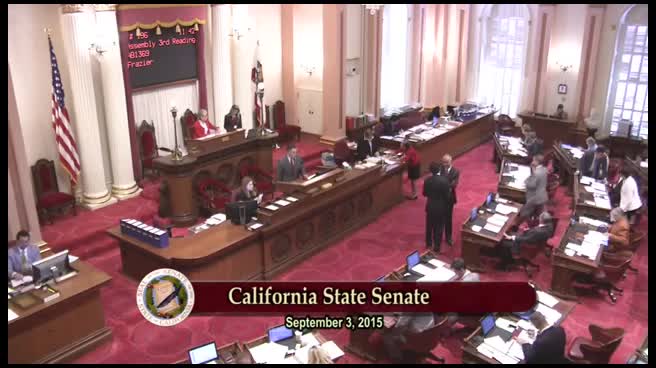 2MIN
Senate Floor
 17MIN
Senate Standing Committee on Appropriations
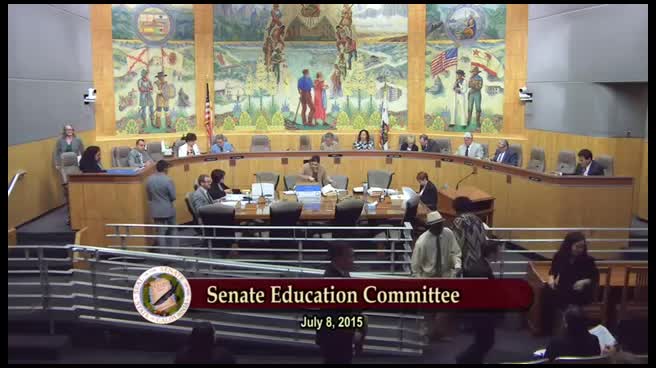 32MIN
Senate Standing Committee on Education
 42SEC
Assembly Floor
 15MIN
Assembly Standing Committee on Appropriations
 43MIN
Assembly Standing Committee on Education
Bill Author



