AB 1425: Small employers: health reimbursement arrangements.
- Session Year: 2015-2016
- House: Assembly
- Latest Version Date: 2015-02-27
Existing law, the Knox-Keene Health Care Service Plan Act of 1975, provides for the licensure and regulation of health care service plans by the Department of Managed Health Care and makes a willful violation of the act a crime. Existing law also provides for the regulation of health insurers by the Department of Insurance. Existing law requires, on and after October 1, 2013, a health care service plan or health insurer to fairly and affirmatively offer, market, and sell all of the plans or insurers small employer health benefit plans for plan years on or after January 1, 2014, to all small employers in each service area or geographic region in which the plan or insurer provides or arranges for health care services or benefits. Existing law requires a health care service plan or health insurer to fairly and affirmatively renew a grandfathered plan contract or health benefit plan with small employers. For nongrandfathered small employer health care service plan contracts or health insurance policies, existing law requires employer contributions toward health reimbursement accounts and health savings accounts to count toward the actuarial value of the product in the manner specified in federal rules and guidance.
This bill would prohibit a health care service plan or health insurer from prohibiting the pairing of a specific health coverage product issued by a plan or insurer to a small employer with a health reimbursement arrangement or other employer-sponsored method for reimbursing employees for all or part of their deductibles, copayments, or other out-of-pocket medical expenses under the plan contract or policy. The bill would prohibit a plan or insurer from entering into a contract with a solicitor, or an agent or broker that results in compensation paid to a solicitor, or an agent or broker for the sale of a health care service plan contract or a health benefit plan to be varied because the small employer is or will implement a health reimbursement arrangement to supplement the benefits of the plan contract or health benefit plan for its employees. Because a willful violation of the bills provisions by a health care service plan would be a crime, this bill would impose a state-mandated local program.
The California Constitution requires the state to reimburse local agencies and school districts for certain costs mandated by the state. Statutory provisions establish procedures for making that reimbursement.
This bill would provide that no reimbursement is required by this act for a specified reason.
This act shall be known, and may be cited as, the Small Business Access to Coverage Act.
SEC. 2.(a)The Legislature finds and declares that the federal Affordable Care Act provides additional protections for small business employers to ensure access to affordable health insurance coverage for California employers. Small employers with fewer than 50 employees represent more than 95 percent of California employers and more than one-half of our states workforce. Over the past decade, employer-sponsored health coverage has declined by 1 percent per year as small businesses struggle to provide coverage to their employees. While small employers are not required to offer employer-sponsored coverage under the federal Affordable Care Act, more than 45 percent of employers with 50 or fewer employees continue to offer affordable group health coverage.
(b)It is the intent of the Legislature, with the enactment of this act, to protect access to alternative coverage options for small businesses and support employers offering employer-sponsored coverage, in both the private commercial marketplace and the public marketplace, the Small Business Health Options Program (SHOP).
SEC. 3.Section 1357.03 of the Health and Safety Code is amended to read:1357.03.(a)(1)Upon the effective date of this article, a plan shall fairly and affirmatively offer, market, and sell all of the plans health care service plan contracts that are sold to small employers or to associations that include small employers to all small employers in each service area in which the plan provides or arranges for the provision of health care services.
(2)Each plan shall make available to each small employer all small employer health care service plan contracts that the plan offers and sells to small employers or to associations that include small employers in this state.
(3)No plan or solicitor shall induce or otherwise encourage a small employer to separate or otherwise exclude an eligible employee from a health care service plan contract that is provided in connection with the employees employment or membership in a guaranteed association.
(4)A plan contracting to participate in the voluntary purchasing pool for small employers provided for under Article 4 (commencing with Section 10730) of Chapter 8 of Part 2 of Division 2 of the Insurance Code shall be deemed in compliance with the requirements of paragraph (1) for a contract offered through the voluntary purchasing pool established under Article 4 (commencing with Section 10730) of Chapter 8 of Part 2 of Division 2 of the Insurance Code in those geographic regions in which plans participate in the pool, if the contract is offered exclusively through the pool.
(5)(A)A plan shall be deemed to meet the requirements of paragraphs (1) and (2) with respect to a plan contract that qualifies as a grandfathered health plan under Section 1251 of PPACA if all of the following requirements are met:
(i)The plan offers to renew the plan contract, unless the plan withdraws the plan contract from the small employer market pursuant to subdivision (e) of Section 1357.11.
(ii)The plan provides appropriate notice of the grandfathered status of the contract in any materials provided to an enrollee of the contract describing the benefits provided under the contract, as required under PPACA.
(iii)The plan makes no changes to the benefits covered under the plan contract other than those required by a state or federal law, regulation, rule, or guidance and those permitted to be made to a grandfathered health plan under PPACA.
(B)For purposes of this paragraph, PPACA means the federal Patient Protection and Affordable Care Act (Public Law 111-148), as amended by the federal Health Care and Education Reconciliation Act of 2010 (Public Law 111-152), and any rules, regulations, or guidance issued thereunder. For purposes of this paragraph, a grandfathered health plan shall have the meaning set forth in Section 1251 of PPACA.
(6)A plan shall not prohibit the pairing of a specific health coverage product issued by the plan to a small employer with a health reimbursement arrangement or other employer-sponsored method for reimbursing employees for all or part of their deductibles, copayments, or other out-of-pocket expenses under the health care service plan contract.
(b)Every plan shall file with the director the reasonable employee participation requirements and employer contribution requirements that will be applied in offering its plan contracts. Participation requirements shall be applied uniformly among all small employer groups, except that a plan may vary application of minimum employee participation requirements by the size of the small employer group and whether the employer contributes 100 percent of the eligible employees premium. Employer contribution requirements shall not vary by employer size. A health care service plan shall not establish a participation requirement that (1) requires a person who meets the definition of a dependent in subdivision (a) of Section 1357 to enroll as a dependent if he or she is otherwise eligible for coverage and wishes to enroll as an eligible employee and (2) allows a plan to reject an otherwise eligible small employer because of the number of persons that waive coverage due to coverage through another employer. Members of an association eligible for health coverage under subdivision (o) of Section 1357, but not electing any health coverage through the association, shall not be counted as eligible employees for purposes of determining whether the guaranteed association meets a plans reasonable participation standards.
(c)The plan shall not reject an application from a small employer for a health care service plan contract if all of the following are met:
(1)The small employer, as defined by paragraph (1) of subdivision (l) of Section 1357, offers health benefits to 100 percent of its eligible employees, as defined by paragraph (1) of subdivision (b) of Section 1357. Employees who waive coverage on the grounds that they have other group coverage shall not be counted as eligible employees.
(2)The small employer agrees to make the required premium payments.
(3)The small employer agrees to inform the small employers employees of the availability of coverage and the provision that those not electing coverage must wait one year to obtain coverage through the group if they later decide they would like to have coverage.
(4)The employees and their dependents who are to be covered by the plan contract work or reside in the service area in which the plan provides or otherwise arranges for the provision of health care services.
(d)No plan or solicitor shall, directly or indirectly, engage in the following activities:
(1)Encourage or direct small employers to refrain from filing an application for coverage with a plan because of the health status, claims experience, industry, occupation of the small employer, or geographic location provided that it is within the plans approved service area. area, or because the small employer is or will implement a health reimbursement arrangement to supplement the benefits of the plan contract for its employees.
(2)Encourage or direct small employers to seek coverage from another plan or the voluntary purchasing pool established under Article 4 (commencing with Section 10730) of Chapter 8 of Part 2 of Division 2 of the Insurance Code because of the health status, claims experience, industry, occupation of the small employer, or geographic location provided that it is within the plans approved service area. area, or because the small employer is or will implement a health reimbursement arrangement to supplement the benefits of the plan contract for its employees.
(e)A plan shall not, directly or indirectly, enter into any contract, agreement, or arrangement with a solicitor that provides for or results in the compensation paid to a solicitor for the sale of a health care service plan contract to be varied because of the health status, claims experience, industry, occupation, or geographic location of the small employer. employer, or because the small employer is or will implement a health reimbursement arrangement to supplement the benefits of the plan contract for its employees. This subdivision does not apply to a compensation arrangement that provides compensation to a solicitor on the basis of percentage of premium, provided that the percentage shall not vary because of the health status, claims experience, industry, occupation, or geographic area of the small employer. employer, or because the small employer is or will implement a health reimbursement arrangement to supplement the benefits of the plan contract for its employees.
(f)A policy or contract that covers two or more employees shall not establish rules for eligibility, including continued eligibility, of an individual, or dependent of an individual, to enroll under the terms of the plan based on any of the following health status-related factors:
(1)Health status.
(2)Medical condition, including physical and mental illnesses.
(3)Claims experience.
(4)Receipt of health care.
(5)Medical history.
(6)Genetic information.
(7)Evidence of insurability, including conditions arising out of acts of domestic violence.
(8)Disability.
(g)A plan shall comply with the requirements of Section 1374.3.
SEC. 4.Section 1357.503 of the Health and Safety Code is amended to read:1357.503.(a)(1)On and after October 1, 2013, a plan shall fairly and affirmatively offer, market, and sell all of the plans small employer health care service plan contracts for plan years on or after January 1, 2014, to all small employers in each service area in which the plan provides or arranges for the provision of health care services.
(2)On and after October 1, 2013, a plan shall make available to each small employer all small employer health care service plan contracts that the plan offers and sells to small employers or to associations that include small employers in this state for plan years on or after January 1, 2014. Health coverage through an association that is not related to employment shall be considered individual coverage pursuant to Section 144.102(c) of Title 45 of the Code of Federal Regulations.
(3)A plan that offers qualified health plans through the Exchange shall be deemed to be in compliance with paragraphs (1) and (2) with respect to small employer health care service plan contracts offered through the Exchange in those geographic regions in which the plan offers plan contracts through the Exchange.
(4)A plan shall not prohibit the pairing of a specific health coverage product issued by the plan to a small employer with a health reimbursement arrangement or other employer-sponsored method for reimbursing employees for all or part of their deductibles, copayments, or other out-of-pocket expenses under the health care service plan contract.
(b)A plan shall provide enrollment periods consistent with PPACA and described in Section 155.725 of Title 45 of the Code of Federal Regulations. Commencing January 1, 2014, a plan shall provide special enrollment periods consistent with the special enrollment periods described in Section 1399.849, to the extent permitted by PPACA, except for the triggering events identified in paragraphs (d)(3) and (d)(6) of Section 155.420 of Title 45 of the Code of Federal Regulations with respect to plan contracts offered through the Exchange.
(c)No plan or solicitor shall induce or otherwise encourage a small employer to separate or otherwise exclude an eligible employee from a health care service plan contract that is provided in connection with employees employment or membership in a guaranteed association.
(d)Every plan shall file with the director the reasonable employee participation requirements and employer contribution requirements that will be applied in offering its plan contracts. Participation requirements shall be applied uniformly among all small employer groups, except that a plan may vary application of minimum employee participation requirements by the size of the small employer group and whether the employer contributes 100 percent of the eligible employees premium. Employer contribution requirements shall not vary by employer size. A health care service plan shall not establish a participation requirement that (1) requires a person who meets the definition of a dependent in Section 1357.500 to enroll as a dependent if he or she is otherwise eligible for coverage and wishes to enroll as an eligible employee and (2) allows a plan to reject an otherwise eligible small employer because of the number of persons that waive coverage due to coverage through another employer. Members of an association eligible for health coverage under subdivision (m) of Section 1357.500, but not electing any health coverage through the association, shall not be counted as eligible employees for purposes of determining whether the guaranteed association meets a plans reasonable participation standards.
(e)The plan shall not reject an application from a small employer for a small employer health care service plan contract if all of the following conditions are met:
(1)The small employer offers health benefits to 100 percent of its eligible employees. Employees who waive coverage on the grounds that they have other group coverage shall not be counted as eligible employees.
(2)The small employer agrees to make the required premium payments.
(3)The small employer agrees to inform the small employers employees of the availability of coverage and the provision that those not electing coverage must wait until the next open enrollment or a special enrollment period to obtain coverage through the group if they later decide they would like to have coverage.
(4)The employees and their dependents who are to be covered by the plan contract work or reside in the service area in which the plan provides or otherwise arranges for the provision of health care services.
(f)No plan or solicitor shall, directly or indirectly, engage in the following activities:
(1)Encourage or direct small employers to refrain from filing an application for coverage with a plan because of the health status, claims experience, industry, occupation of the small employer, or geographic location provided that it is within the plans approved service area. area, or because the small employer is or will implement a health reimbursement arrangement to supplement the benefits of the plan contract for its employees.
(2)Encourage or direct small employers to seek coverage from another plan because of the health status, claims experience, industry, occupation of the small employer, or geographic location provided that it is within the plans approved service area. area, or because the small employer is or will implement a health reimbursement arrangement to supplement the benefits of the plan contract for its employees.
(3)Employ marketing practices or benefit designs that will have the effect of discouraging the enrollment of individuals with significant health needs or discriminate based on an individuals race, color, national origin, present or predicted disability, age, sex, gender identity, sexual orientation, expected length of life, degree of medical dependency, quality of life, or other health conditions.
(g)A plan shall not, directly or indirectly, enter into any contract, agreement, or arrangement with a solicitor that provides for or results in the compensation paid to a solicitor for the sale of a health care service plan contract to be varied because of the health status, claims experience, industry, occupation, or geographic location of the small employer. employer, or because the small employer is or will implement a health reimbursement arrangement to supplement the benefits of the plan contract for its employees. This subdivision does not apply to a compensation arrangement that provides compensation to a solicitor on the basis of percentage of premium, provided that the percentage shall not vary because of the health status, claims experience, industry, occupation, or geographic area of the small employer. employer, or because the small employer is or will implement a health reimbursement arrangement to supplement the benefits of the plan contract for its employees.
(h)(1)A policy or contract that covers a small employer, as defined in Section 1304(b) of PPACA and in Section 1357.500, shall not establish rules for eligibility, including continued eligibility, of an individual, or dependent of an individual, to enroll under the terms of the policy or contract based on any of the following health status-related factors:
(A)Health status.
(B)Medical condition, including physical and mental illnesses.
(C)Claims experience.
(D)Receipt of health care.
(E)Medical history.
(F)Genetic information.
(G)Evidence of insurability, including conditions arising out of acts of domestic violence.
(H)Disability.
(I)Any other health status-related factor as determined by any federal regulations, rules, or guidance issued pursuant to Section 2705 of the federal Public Health Service Act.
(2)Notwithstanding Section 1389.1, a health care service plan shall not require an eligible employee or dependent to fill out a health assessment or medical questionnaire prior to enrollment under a small employer health care service plan contract. A health care service plan shall not acquire or request information that relates to a health status-related factor from the applicant or his or her dependent or any other source prior to enrollment of the individual.
(i)(1)A health care service plan shall consider as a single risk pool for rating purposes in the small employer market the claims experience of all enrollees in all nongrandfathered small employer health benefit plans offered by the health care service plan in this state, whether offered as health care service plan contracts or health insurance policies, including those insureds and enrollees who enroll in coverage through the Exchange and insureds and enrollees covered by the health care service plan outside of the Exchange.
(2)At least each calendar year, and no more frequently than each calendar quarter, a health care service plan shall establish an index rate for the small employer market in the state based on the total combined claims costs for providing essential health benefits, as defined pursuant to Section 1302 of PPACA and Section 1367.005, within the single risk pool required under paragraph (1). The index rate shall be adjusted on a marketwide basis based on the total expected marketwide payments and charges under the risk adjustment and reinsurance programs established for the state pursuant to Sections 1343 and 1341 of PPACA and Exchange user fees, as described in subdivision (d) of Section 156.80 of Title 45 of the Code of Federal Regulations. The premium rate for all of the nongrandfathered small employer health benefit plans within the single risk pool required under paragraph (1) shall use the applicable marketwide adjusted index rate, subject only to the adjustments permitted under paragraph (3).
(3)A health care service plan may vary premium rates for a particular nongrandfathered small employer health care service plan contract from its index rate based only on the following actuarially justified plan-specific factors:
(A)The actuarial value and cost-sharing design of the plan contract.
(B)The plan contracts provider network, delivery system characteristics, and utilization management practices.
(C)The benefits provided under the plan contract that are in addition to the essential health benefits, as defined pursuant to Section 1302 of PPACA. These additional benefits shall be pooled with similar benefits within the single risk pool required under paragraph (1) and the claims experience from those benefits shall be utilized to determine rate variations for plan contracts that offer those benefits in addition to essential health benefits.
(D)With respect to catastrophic plans, as described in subsection (e) of Section 1302 of PPACA, the expected impact of the specific eligibility categories for those plans.
(E)Administrative costs, excluding any user fees required by the Exchange.
(j)A plan shall comply with the requirements of Section 1374.3.
(k)(1)Except as provided in paragraph (2), if Section 2702 of the federal Public Health Service Act (42 U.S.C. Sec. 300gg-1), as added by Section 1201 of PPACA, is repealed, this section shall become inoperative 12 months after the repeal date, in which case health care service plans subject to this section shall instead be governed by Section 1357.03 to the extent permitted by federal law, and all references in this article to this section shall instead refer to Section 1357.03 except for purposes of paragraph (2).
(2)Subdivision (b) shall remain operative with respect to health care service plan contracts offered through the Exchange.
SEC. 5.Section 1357.604 of the Health and Safety Code is amended to read:1357.604.(a)(1)A plan shall fairly and affirmatively renew a grandfathered health plan contract with a small employer.
(2)Each plan shall make available to each small employer all nongrandfathered small employer health care service plan contracts that the plan offers and sells to small employers or to associations that include small employers in this state consistent with Article 3.1 (commencing with Section 1357).
(3)No plan or solicitor shall induce or otherwise encourage a small employer to separate or otherwise exclude an eligible employee from a health care service plan contract that is provided in connection with the employees employment or membership in a guaranteed association.
(4)A plan shall not prohibit the pairing of a specific health coverage product issued by the plan to a small employer with a health reimbursement arrangement or other employer-sponsored method for reimbursing employees for all or part of their deductibles, copayments, or other out-of-pocket expenses under the health care service plan contract.
(b)Every plan shall file with the director the reasonable employee participation requirements and employer contribution requirements that will be applied in renewing its grandfathered health care service plan contracts. Participation requirements shall be applied uniformly among all small employer groups, except that a plan may vary application of minimum employee participation requirements by the size of the small employer group and whether the employer contributes 100 percent of the eligible employees premium. Employer contribution requirements shall not vary by employer size. A health care service plan shall not establish a participation requirement that (1) requires a person who meets the definition of a dependent in subdivision (a) of Section 1357.600 to enroll as a dependent if he or she is otherwise eligible for coverage and wishes to enroll as an eligible employee and (2) allows a plan to reject an otherwise eligible small employer because of the number of persons that waive coverage due to coverage through another employer. Members of an association eligible for health coverage under subdivision (n) of Section 1357.600, but not electing any health coverage through the association, shall not be counted as eligible employees for purposes of determining whether the guaranteed association meets a plans reasonable participation standards.
(c)No plan or solicitor shall, directly or indirectly, engage in the following activities:
(1)Encourage or direct small employers to refrain from filing an application for coverage or renewal of coverage with a plan because of the health status, claims experience, industry, occupation of the small employer, or geographic location provided that it is within the plans approved service area. area, or because the small employer is or will implement a health reimbursement arrangement to supplement the benefits of the plan contract for its employees.
(2)Encourage or direct small employers to seek coverage from another plan, or coverage offered through the California Health Benefit Exchange, because of the health status, claims experience, industry, occupation of the small employer, or geographic location provided that it is within the plans approved service area. area, or because the small employer is or will implement a health reimbursement arrangement to supplement the benefits of the plan contract for its employees.
(d)A plan shall not, directly or indirectly, enter into any contract, agreement, or arrangement with a solicitor that provides for or results in the compensation paid to a solicitor for the sale of a health care service plan contract to be varied because of the health status, claims experience, industry, occupation, or geographic location of the small employer. employer, or because the small employer is or will implement a health reimbursement arrangement to supplement the benefits of the plan contract for its employees. This subdivision does not apply to a compensation arrangement that provides compensation to a solicitor on the basis of percentage of premium, provided that the percentage shall not vary because of the health status, claims experience, industry, occupation, or geographic area of the small employer or small employers employees. employees, or because the small employer is or will implement a health reimbursement arrangement to supplement the benefits of the plan contract for its employees.
(e)A policy or contract that covers a small employer, as defined in Section 1304(b) of PPACA and in subdivision (k) of Section 1357.600 shall not establish rules for eligibility, including continued eligibility, of an individual, or dependent of an individual, to enroll under the terms of the plan based on any of the following health status-related factors:
(1)Health status.
(2)Medical condition, including physical and mental illnesses.
(3)Claims experience.
(4)Receipt of health care.
(5)Medical history.
(6)Genetic information.
(7)Evidence of insurability, including conditions arising out of acts of domestic violence.
(8)Disability.
(9)Any other health status-related factor as determined by any federal regulations, rules, or guidance issued pursuant to Section 2705 of the federal Public Health Service Act.
(f)A plan shall comply with the requirements of Section 1374.3.
SEC. 6.Section 10700 of the Insurance Code is amended to read:10700.As used in this chapter:
(a)Agent or broker means a person or entity licensed under Chapter 5 (commencing with Section 1621) of Part 2 of Division 1.
(b)Benefit plan design means a specific health coverage product issued by a carrier to small employers, to trustees of associations that include small employers, or to individuals if the coverage is offered through employment or sponsored by an employer. It includes services covered and the levels of copayment and deductibles, and it may include the professional providers who are to provide those services and the sites where those services are to be provided. A benefit plan design may also be an integrated system for the financing and delivery of quality health care services which has significant incentives for the covered individuals to use the system. A benefit plan design shall not prohibit the pairing of a health coverage product issued by a carrier to a small employer with a health reimbursement arrangement or other employer-sponsored method for reimbursing employees for all or part of their deductibles, copayments, or other out-of-pocket medical expenses under the policy.
(c)Board means the Major Risk Medical Insurance Board.
(d)Carrier means any disability insurance company or any other entity that writes, issues, or administers health benefit plans that cover the employees of small employers, regardless of the situs of the contract or master policyholder. For the purposes of Articles 3 (commencing with Section 10719) and 4 (commencing with Section 10730), carrier also includes health care service plans.
(e)Dependent means the spouse or child of an eligible employee, subject to applicable terms of the health benefit plan covering the employee, and includes dependents of guaranteed association members if the association elects to include dependents under its health coverage at the same time it determines its membership composition pursuant to subdivision (z).
(f)Eligible employee means either of the following:
(1)Any permanent employee who is actively engaged on a full-time basis in the conduct of the business of the small employer with a normal workweek of at least 30 hours, in the small employers regular place of business, who has met any statutorily authorized applicable waiting period requirements. The term includes sole proprietors or partners of a partnership, if they are actively engaged on a full-time basis in the small employers business, and they are included as employees under a health benefit plan of a small employer, but does not include employees who work on a part-time, temporary, or substitute basis. It includes any eligible employee, as defined in this paragraph, who obtains coverage through a guaranteed association. Employees of employers purchasing through a guaranteed association shall be deemed to be eligible employees if they would otherwise meet the definition except for the number of persons employed by the employer. A permanent employee who works at least 20 hours but not more than 29 hours is deemed to be an eligible employee if all four of the following apply:
(A)The employee otherwise meets the definition of an eligible employee except for the number of hours worked.
(B)The employer offers the employee health coverage under a health benefit plan.
(C)All similarly situated individuals are offered coverage under the health benefit plan.
(D)The employee must have worked at least 20 hours per normal workweek for at least 50 percent of the weeks in the previous calendar quarter. The insurer may request any necessary information to document the hours and time period in question, including, but not limited to, payroll records and employee wage and tax filings.
(2)Any member of a guaranteed association as defined in subdivision (z).
(g)Enrollee means an eligible employee or dependent who receives health coverage through the program from a participating carrier.
(h)Financially impaired means, for the purposes of this chapter, a carrier that, on or after the effective date of this chapter, is not insolvent and is either:
(1)Deemed by the commissioner to be potentially unable to fulfill its contractual obligations.
(2)Placed under an order of rehabilitation or conservation by a court of competent jurisdiction.
(i)Fund means the California Small Group Reinsurance Fund.
(j)Health benefit plan means a policy or contract written or administered by a carrier that arranges or provides health care benefits for the covered eligible employees of a small employer and their dependents. The term does not include accident only, credit, disability income, coverage of Medicare services pursuant to contracts with the United States government, Medicare supplement, long-term care insurance, dental, vision, coverage issued as a supplement to liability insurance, automobile medical payment insurance, or insurance under which benefits are payable with or without regard to fault and that is statutorily required to be contained in any liability insurance policy or equivalent self-insurance.
(k)In force business means an existing health benefit plan issued by the carrier to a small employer.
(l)Late enrollee means an eligible employee or dependent who has declined health coverage under a health benefit plan offered by a small employer at the time of the initial enrollment period provided under the terms of the health benefit plan and who subsequently requests enrollment in a health benefit plan of that small employer, provided that the initial enrollment period shall be a period of at least 30 days. It also means any member of an association that is a guaranteed association as well as any other person eligible to purchase through the guaranteed association when that person has failed to purchase coverage during the initial enrollment period provided under the terms of the guaranteed associations health benefit plan and who subsequently requests enrollment in the plan, provided that the initial enrollment period shall be a period of at least 30 days. However, an eligible employee, another person eligible for coverage through a guaranteed association pursuant to subdivision (z), or an eligible dependent shall not be considered a late enrollee if any of the following is applicable:
(1)The individual meets all of the following requirements:
(A)He or she was covered under another employer health benefit plan, the Healthy Families Program, the Access for Infants and Mothers (AIM) Program, or the Medi-Cal program at the time the individual was eligible to enroll.
(B)He or she certified at the time of the initial enrollment that coverage under another employer health benefit plan, the Healthy Families Program, the AIM Program, or the Medi-Cal program was the reason for declining enrollment provided that, if the individual was covered under another employer health plan, the individual was given the opportunity to make the certification required by this subdivision and was notified that failure to do so could result in later treatment as a late enrollee.
(C)He or she has lost or will lose coverage under another employer health benefit plan as a result of termination of employment of the individual or of a person through whom the individual was covered as a dependent, change in employment status of the individual, or of a person through whom the individual was covered as a dependent, the termination of the other plans coverage, cessation of an employers contribution toward an employee or dependents coverage, death of the person through whom the individual was covered as a dependent, legal separation, or divorce; or he or she has lost or will lose coverage under the Healthy Families Program, the AIM Program, or the Medi-Cal program.
(D)He or she requests enrollment within 30 days after termination of coverage or employer contribution toward coverage provided under another employer health benefit plan, or requests enrollment within 60 days after termination of Medi-Cal program coverage, AIM Program coverage, or Healthy Families Program coverage.
(2)The individual is employed by an employer who offers multiple health benefit plans and the individual elects a different plan during an open enrollment period.
(3)A court has ordered that coverage be provided for a spouse or minor child under a covered employees health benefit plan.
(4)(A)In the case of an eligible employee as defined in paragraph (1) of subdivision (f), the carrier cannot produce a written statement from the employer stating that the individual or the person through whom an individual was eligible to be covered as a dependent, prior to declining coverage, was provided with, and signed acknowledgment of, an explicit written notice in boldface type specifying that failure to elect coverage during the initial enrollment period permits the carrier to impose, at the time of the individuals later decision to elect coverage, an exclusion from coverage for a period of 12 months as well as a six-month preexisting condition exclusion unless the individual meets the criteria specified in paragraph (1), (2), or (3).
(B)In the case of an eligible employee who is a guaranteed association member, the plan cannot produce a written statement from the guaranteed association stating that the association sent a written notice in boldface type to all potentially eligible association members at their last known address prior to the initial enrollment period informing members that failure to elect coverage during the initial enrollment period permits the plan to impose, at the time of the members later decision to elect coverage, an exclusion from coverage for a period of 12 months as well as a six-month preexisting condition exclusion unless the member can demonstrate that he or she meets the requirements of subparagraphs (A), (C), and (D) of paragraph (1) or meets the requirements of paragraph (2) or (3).
(C)In the case of an employer or person who is not a member of an association, was eligible to purchase coverage through a guaranteed association, and did not do so, and would not be eligible to purchase guaranteed coverage unless purchased through a guaranteed association, the employer or person can demonstrate that he or she meets the requirements of subparagraphs (A), (C), and (D) of paragraph (1), or meets the requirements of paragraph (2) or (3), or that he or she recently had a change in status that would make him or her eligible and that application for coverage was made within 30 days of the change.
(5)The individual is an employee or dependent who meets the criteria described in paragraph (1) and was under a COBRA continuation provision and the coverage under that provision has been exhausted. For purposes of this section, the definition of COBRA set forth in subdivision (e) of Section 10116.5 shall apply.
(6)The individual is a dependent of an enrolled eligible employee who has lost or will lose his or her coverage under the Healthy Families Program, the AIM Program, or the Medi-Cal program and requests enrollment within 60 days after termination of that coverage.
(7)The individual is an eligible employee who previously declined coverage under an employer health benefit plan and who has subsequently acquired a dependent who would be eligible for coverage as a dependent of the employee through marriage, birth, adoption, or placement for adoption, and who enrolls for coverage under that employer health benefit plan on his or her behalf and on behalf of his or her dependent within 30 days following the date of marriage, birth, adoption, or placement for adoption, in which case the effective date of coverage shall be the first day of the month following the date the completed request for enrollment is received in the case of marriage, or the date of birth, or the date of adoption or placement for adoption, whichever applies. Notice of the special enrollment rights contained in this paragraph shall be provided by the employer to an employee at or before the time the employee is offered an opportunity to enroll in plan coverage.
(8)The individual is an eligible employee who has declined coverage for himself or herself or his or her dependents during a previous enrollment period because his or her dependents were covered by another employer health benefit plan at the time of the previous enrollment period. That individual may enroll himself or herself or his or her dependents for plan coverage during a special open enrollment opportunity if his or her dependents have lost or will lose coverage under that other employer health benefit plan. The special open enrollment opportunity shall be requested by the employee not more than 30 days after the date that the other health coverage is exhausted or terminated. Upon enrollment, coverage shall be effective not later than the first day of the first calendar month beginning after the date the request for enrollment is received. Notice of the special enrollment rights contained in this paragraph shall be provided by the employer to an employee at or before the time the employee is offered an opportunity to enroll in plan coverage.
(m)New business means a health benefit plan issued to a small employer that is not the carriers in force business.
(n)Participating carrier means a carrier that has entered into a contract with the program to provide health benefits coverage under this part.
(o)Plan of operation means the plan of operation of the fund, including articles, bylaws, and operating rules adopted by the fund pursuant to Article 3 (commencing with Section 10719).
(p)Program means the Health Insurance Plan of California.
(q)Preexisting condition provision means a policy provision that excludes coverage for charges or expenses incurred during a specified period following the insureds effective date of coverage, as to a condition for which medical advice, diagnosis, care, or treatment was recommended or received during a specified period immediately preceding the effective date of coverage.
(r)Creditable coverage means:
(1)Any individual or group policy, contract, or program, that is written or administered by a disability insurer, health care service plan, fraternal benefits society, self-insured employer plan, or any other entity, in this state or elsewhere, and that arranges or provides medical, hospital, and surgical coverage not designed to supplement other private or governmental plans. The term includes continuation or conversion coverage but does not include accident only, credit, coverage for onsite medical clinics, disability income, Medicare supplement, long-term care, dental, vision, coverage issued as a supplement to liability insurance, insurance arising out of a workers compensation or similar law, automobile medical payment insurance, or insurance under which benefits are payable with or without regard to fault and that is statutorily required to be contained in any liability insurance policy or equivalent self-insurance.
(2)The federal Medicare Program pursuant to Title XVIII of the federal Social Security Act (42 U.S.C. Sec. 1395 et seq.).
(3)The Medicaid Program pursuant to Title XIX of the federal Social Security Act (42 U.S.C. Sec. 1396 et seq.).
(4)Any other publicly sponsored program, provided in this state or elsewhere, of medical, hospital, and surgical care.
(5)10 U.S.C. Chapter 55 (commencing with Section 1071) (Civilian Health and Medical Program of the Uniformed Services (CHAMPUS)).
(6)A medical care program of the Indian Health Service or of a tribal organization.
(7)A state health benefits risk pool.
(8)A health plan offered under 5 U.S.C. Chapter 89 (commencing with Section 8901) (Federal Employees Health Benefits Program (FEHBP)).
(9)A public health plan as defined in federal regulations authorized by Section 2701(c)(1)(I) of the federal Public Health Service Act, as amended by Public Law 104-191, the federal Health Insurance Portability and Accountability Act of 1996.
(10)A health benefit plan under Section 5(e) of the federal Peace Corps Act (22 U.S.C. Sec. 2504(e)).
(11)Any other creditable coverage as defined by subdivision (c) of Section 2701 of Title XXVII of the federal Public Health Service Act (42 U.S.C. Sec. 300gg(c)).
(s)Rating period means the period for which premium rates established by a carrier are in effect and shall be no less than six months.
(t)Risk adjusted employee risk rate means the rate determined for an eligible employee of a small employer in a particular risk category after applying the risk adjustment factor.
(u)Risk adjustment factor means the percent adjustment to be applied equally to each standard employee risk rate for a particular small employer, based upon any expected deviations from standard claims. This factor may not be more than 120 percent or less than 80 percent until July 1, 1996. Effective July 1, 1996, this factor may not be more than 110 percent or less than 90 percent.
(v)Risk category means the following characteristics of an eligible employee: age, geographic region, and family size of the employee, plus the benefit plan design selected by the small employer.
(1)No more than the following age categories may be used in determining premium rates:
Under 30
3039
4049
5054
5559
6064
65 and over
However, for the 65 and over age category, separate premium rates may be specified depending upon whether coverage under the health benefit plan will be primary or secondary to benefits provided by the federal Medicare Program pursuant to Title XVIII of the federal Social Security Act.
(2)Small employer carriers shall base rates to small employers using no more than the following family size categories:
(A)Single.
(B)Married couple.
(C)One adult and child or children.
(D)Married couple and child or children.
(3)(A)In determining rates for small employers, a carrier that operates statewide shall use no more than nine geographic regions in the state, have no region smaller than an area in which the first three digits of all its ZIP Codes are in common within a county, and shall divide no county into more than two regions. Carriers shall be deemed to be operating statewide if their coverage area includes 90 percent or more of the states population. Geographic regions established pursuant to this section shall, as a group, cover the entire state, and the area encompassed in a geographic region shall be separate and distinct from areas encompassed in other geographic regions. Geographic regions may be noncontiguous.
(B)In determining rates for small employers, a carrier that does not operate statewide shall use no more than the number of geographic regions in the state than is determined by the following formula: the population, as determined in the last federal census, of all counties which are included in their entirety in a carriers service area divided by the total population of the state, as determined in the last federal census, multiplied by nine. The resulting number shall be rounded to the nearest whole integer. No region may be smaller than an area in which the first three digits of all its ZIP Codes are in common within a county and no county may be divided into more than two regions. The area encompassed in a geographic region shall be separate and distinct from areas encompassed in other geographic regions. Geographic regions may be noncontiguous. No carrier shall have less than one geographic area.
(w)Small employer means either of the following:
(1)Any person, proprietary or nonprofit firm, corporation, partnership, public agency, or association that is actively engaged in business or service that, on at least 50 percent of its working days during the preceding calendar quarter, or preceding calendar year, employed at least 2, but not more than 50, eligible employees, the majority of whom were employed within this state, that was not formed primarily for purposes of buying health insurance and in which a bona fide employer-employee relationship exists. In determining whether to apply the calendar quarter or calendar year test, the insurer shall use the test that ensures eligibility if only one test would establish eligibility. However, for purposes of subdivisions (b) and (h) of Section 10705, the definition shall include employers with at least three eligible employees until July 1, 1997, and two eligible employees thereafter. In determining the number of eligible employees, companies that are affiliated companies and that are eligible to file a combined income tax return for purposes of state taxation shall be considered one employer. Subsequent to the issuance of a health benefit plan to a small employer pursuant to this chapter, and for the purpose of determining eligibility, the size of a small employer shall be determined annually. Except as otherwise specifically provided, provisions of this chapter that apply to a small employer shall continue to apply until the health benefit plan anniversary following the date the employer no longer meets the requirements of this definition. It includes any small employer as defined in this paragraph who purchases coverage through a guaranteed association, and any employer purchasing coverage for employees through a guaranteed association.
(2)Any guaranteed association, as defined in subdivision (y), that purchases health coverage for members of the association.
(x)Standard employee risk rate means the rate applicable to an eligible employee in a particular risk category in a small employer group.
(y)Guaranteed association means a nonprofit organization comprised of a group of individuals or employers who associate based solely on participation in a specified profession or industry, accepting for membership any individual or employer meeting its membership criteria which (1) includes one or more small employers as defined in paragraph (1) of subdivision (w), (2) does not condition membership directly or indirectly on the health or claims history of any person, (3) uses membership dues solely for and in consideration of the membership and membership benefits, except that the amount of the dues shall not depend on whether the member applies for or purchases insurance offered by the association, (4) is organized and maintained in good faith for purposes unrelated to insurance, (5) has been in active existence on January 1, 1992, and for at least five years prior to that date, (6) has been offering health insurance to its members for at least five years prior to January 1, 1992, (7) has a constitution and bylaws, or other analogous governing documents that provide for election of the governing board of the association by its members, (8) offers any benefit plan design that is purchased to all individual members and employer members in this state, (9) includes any member choosing to enroll in the benefit plan design offered to the association provided that the member has agreed to make the required premium payments, and (10) covers at least 1,000 persons with the carrier with which it contracts. The requirement of 1,000 persons may be met if component chapters of a statewide association contracting separately with the same carrier cover at least 1,000 persons in the aggregate.
This subdivision applies regardless of whether a master policy by an admitted insurer is delivered directly to the association or a trust formed for or sponsored by an association to administer benefits for association members.
For purposes of this subdivision, an association formed by a merger of two or more associations after January 1, 1992, and otherwise meeting the criteria of this subdivision shall be deemed to have been in active existence on January 1, 1992, if its predecessor organizations had been in active existence on January 1, 1992, and for at least five years prior to that date and otherwise met the criteria of this subdivision.
(z)Members of a guaranteed association means any individual or employer meeting the associations membership criteria if that person is a member of the association and chooses to purchase health coverage through the association. At the associations discretion, it may also include employees of association members, association staff, retired members, retired employees of members, and surviving spouses and dependents of deceased members. However, if an association chooses to include those persons as members of the guaranteed association, the association must so elect in advance of purchasing coverage from a plan. Health plans may require an association to adhere to the membership composition it selects for up to 12 months.
(aa)Affiliation period means a period that, under the terms of the health benefit plan, must expire before health care services under the plan become effective.
(ab)Health reimbursement arrangement means an employer-sponsored method for reimbursing employees for all or part of their deductibles, copayments, or other out-of-pocket medical expenses. A health reimbursement arrangement includes, but is not limited to, arrangements governed under Section 105, 125, or 223 of the Internal Revenue Code.
SEC. 7.Section 10705 of the Insurance Code is amended to read:10705.Upon the effective date of this act:
(a)No group or individual policy or contract or certificate of group insurance or statement of group coverage providing benefits to employees of small employers as defined in this chapter shall be issued or delivered by a carrier subject to the jurisdiction of the commissioner regardless of the situs of the contract or master policyholder or of the domicile of the carrier nor, except as otherwise provided in Sections 10270.91 and 10270.92, shall a carrier provide coverage subject to this chapter until a copy of the form of the policy, contract, certificate, or statement of coverage is filed with and approved by the commissioner in accordance with Sections 10290 and 10291, and the carrier has complied with the requirements of Section 10717.
(b)(1)Each carrier, except a self-funded employer, shall fairly and affirmatively offer, market, and sell all of the carriers benefit plan designs that are sold to, offered through, or sponsored by, small employers or associations that include small employers to all small employers in each geographic region in which the carrier makes coverage available or provides benefits.
(2)A carrier contracting to participate in the Voluntary Alliance Uniting Employers Purchasing Program shall be deemed to be in compliance with paragraph (1) for a benefit plan design offered through the program in those geographic regions in which the carrier participates in the program and the benefit plan design is offered exclusively through the program.
(3)(A)A carrier shall be deemed to meet the requirements of paragraph (1) and subdivision (c) with respect to a benefit plan design that qualifies as a grandfathered health plan under Section 1251 of PPACA if all of the following requirements are met:
(i)The carrier offers to renew the benefit plan design, unless the carrier withdraws the benefit plan design from the small employer market pursuant to subdivision (e) of Section 10713.
(ii)The carrier provides appropriate notice of the grandfathered status of the benefit plan design in any materials provided to an insured of the design describing the benefits provided under the design, as required under PPACA.
(iii)The carrier makes no changes to the benefits covered under the benefit plan design other than those required by a state or federal law, regulation, rule, or guidance and those permitted to be made to a grandfathered health plan under PPACA.
(B)For purposes of this paragraph, PPACA means the federal Patient Protection and Affordable Care Act (Public Law 111-148), as amended by the federal Health Care and Education Reconciliation Act of 2010 (Public Law 111-152), and any rules, regulations, or guidance issued thereunder. For purposes of this paragraph, a grandfathered health plan shall have the meaning set forth in Section 1251 of PPACA.
(4)Nothing in this section shall be construed to require an association, or a trust established and maintained by an association to receive a master insurance policy issued by an admitted insurer and to administer the benefits thereof solely for association members, to offer, market or sell a benefit plan design to those who are not members of the association. However, if the association markets, offers or sells a benefit plan design to those who are not members of the association it is subject to the requirements of this section. This shall apply to an association that otherwise meets the requirements of paragraph (8) formed by merger of two or more associations after January 1, 1992, if the predecessor organizations had been in active existence on January 1, 1992, and for at least five years prior to that date and met the requirements of paragraph (5).
(5)A carrier which (A) effective January 1, 1992, and at least 20 years prior to that date, markets, offers, or sells benefit plan designs only to all members of one association and (B) does not market, offer or sell any other individual, selected group, or group policy or contract providing medical, hospital and surgical benefits shall not be required to market, offer, or sell to those who are not members of the association. However, if the carrier markets, offers or sells any benefit plan design or any other individual, selected group, or group policy or contract providing medical, hospital and surgical benefits to those who are not members of the association it is subject to the requirements of this section.
(6)Each carrier that sells health benefit plans to members of one association pursuant to paragraph (5) shall submit an annual statement to the commissioner which states that the carrier is selling health benefit plans pursuant to paragraph (5) and which, for the one association, lists all the information required by paragraph (7).
(7)Each carrier that sells health benefit plans to members of any association shall submit an annual statement to the commissioner which lists each association to which the carrier sells health benefit plans, the industry or profession which is served by the association, the associations membership criteria, a list of officers, the state in which the association is organized, and the site of its principal office.
(8)For purposes of paragraphs (4) and (5), an association is a nonprofit organization comprised of a group of individuals or employers who associate based solely on participation in a specified profession or industry, accepting for membership any individual or small employer meeting its membership criteria, which do not condition membership directly or indirectly on the health or claims history of any person, which uses membership dues solely for and in consideration of the membership and membership benefits, except that the amount of the dues shall not depend on whether the member applies for or purchases insurance offered by the association, which is organized and maintained in good faith for purposes unrelated to insurance, which has been in active existence on January 1, 1992, and at least five years prior to that date, which has a constitution and bylaws, or other analogous governing documents which provide for election of the governing board of the association by its members, which has contracted with one or more carriers to offer one or more health benefit plans to all individual members and small employer members in this state.
(c)Each carrier shall make available to each small employer all benefit plan designs that the carrier offers or sells to small employers or to associations that include small employers. Notwithstanding subdivision (d) of Section 10700, for purposes of this subdivision, companies that are affiliated companies or that are eligible to file a consolidated income tax return shall be treated as one carrier.
(d)Each carrier shall do all of the following:
(1)Prepare a brochure that summarizes all of its benefit plan designs and make this summary available to small employers, agents and brokers upon request. The summary shall include for each benefit plan design information on benefits provided, a generic description of the manner in which services are provided, such as how access to providers is limited, benefit limitations, required copayments and deductibles, standard employee risk rates, an explanation of how creditable coverage is calculated if a preexisting condition or affiliation period is imposed, and a telephone number that can be called for more detailed benefit information. Carriers are required to keep the information contained in the brochure accurate and up to date, and, upon updating the brochure, send copies to agents and brokers representing the carrier. Any entity that provides administrative services only with regard to a benefit plan design written or issued by another carrier shall not be required to prepare a summary brochure which includes that benefit plan design.
(2)For each benefit plan design, prepare a more detailed evidence of coverage and make it available to small employers, agents and brokers upon request. The evidence of coverage shall contain all information that a prudent buyer would need to be aware of in making selections of benefit plan designs. An entity that provides administrative services only with regard to a benefit plan design written or issued by another carrier shall not be required to prepare an evidence of coverage for that benefit plan design.
(3)Provide to small employers, agents, and brokers, upon request, for any given small employer the sum of the standard employee risk rates and the sum of the risk adjusted standard employee risk rates. When requesting this information, small employers, agents and brokers shall provide the carrier with the information the carrier needs to determine the small employers risk adjusted employee risk rate.
(4)Provide copies of the current summary brochure to all agents or brokers who represent the carrier and, upon updating the brochure, send copies of the updated brochure to agents and brokers representing the carrier for the purpose of selling health benefit plans.
(5)Notwithstanding subdivision (d) of Section 10700, for purposes of this subdivision, companies that are affiliated companies or that are eligible to file a consolidated income tax return shall be treated as one carrier.
(e)Every agent or broker representing one or more carriers for the purpose of selling health benefit plans to small employers shall do all of the following:
(1)When providing information on a health benefit plan to a small employer but making no specific recommendations on particular benefit plan designs:
(A)Advise the small employer of the carriers obligation to sell to any small employer any of the benefit plan designs it offers to small employers and provide them, upon request, with the actual rates that would be charged to that employer for a given benefit plan design.
(B)Notify the small employer that the agent or broker will procure rate and benefit information for the small employer on any benefit plan design offered by a carrier for whom the agent or broker sells health benefit plans.
(C)Notify the small employer that, upon request, the agent or broker will provide the small employer with the summary brochure required in paragraph (1) of subdivision (d) for any benefit plan design offered by a carrier whom the agent or broker represents.
(2)When recommending a particular benefit plan design or designs, advise the small employer that, upon request, the agent will provide the small employer with the brochure required by paragraph (1) of subdivision (d) containing the benefit plan design or designs being recommended by the agent or broker.
(3)Prior to filing an application for a small employer for a particular health benefit plan:
(A)For each of the benefit plan designs offered by the carrier whose benefit plan design the agent or broker is presenting, provide the small employer with the benefit summary required in paragraph (1) of subdivision (d) and the sum of the standard employee risk rates for that particular employer.
(B)Notify the small employer that, upon request, the agent or broker will provide the small employer with an evidence of coverage brochure for each benefit plan design the carrier offers.
(C)Notify the small employer that, from July 1, 1993, to July 1, 1996, actual rates may be 20 percent higher or lower than the sum of the standard employee risk rates, and from July 1, 1996, and thereafter, actual rates may be 10 percent higher or lower than the sum of the standard employee risk rates depending on how the carrier assesses the risk of the small employers group.
(D)Notify the small employer that, upon request, the agent or broker will submit information to the carrier to ascertain the small employers sum of the risk adjusted standard employee risk rate for any benefit plan design the carrier offers.
(E)Obtain a signed statement from the small employer acknowledging that the small employer has received the disclosures required by this paragraph and Section 10716.
(f)No carrier, agent, or broker shall induce or otherwise encourage a small employer to separate or otherwise exclude an eligible employee from a health benefit plan which, in the case of an eligible employee meeting the definition in paragraph (1) of subdivision (f) of Section 10700, is provided in connection with the employees employment or which, in the case of an eligible employee as defined in paragraph (2) of subdivision (f) of Section 17000, is provided in connection with a guaranteed association.
(g)No carrier shall reject an application from a small employer for a benefit plan design provided:
(1)The small employer as defined by paragraph (1) of subdivision (w) of Section 10700 offers health benefits to 100 percent of its eligible employees as defined in paragraph (1) of subdivision (f) of Section 10700. Employees who waive coverage on the grounds that they have other group coverage shall not be counted as eligible employees.
(2)The small employer agrees to make the required premium payments.
(h)No carrier or agent or broker shall, directly or indirectly, engage in the following activities:
(1)Encourage or direct small employers to refrain from filing an application for coverage with a carrier because of the health status, claims experience, industry, occupation, or geographic location within the carriers approved service area of the small employer or the small employers employees. employees, or because the small employer is or will implement a health reimbursement arrangement to supplement the benefits of the health benefit plan for its employees.
(2)Encourage or direct small employers to seek coverage from another carrier or the program because of the health status, claims experience, industry, occupation, or geographic location within the carriers approved service area of the small employer or the small employers employees. employees, or because the small employer is or will implement a health reimbursement arrangement to supplement the benefits of the health benefit plan for its employees.
(i)No carrier shall, directly or indirectly, enter into any contract, agreement, or arrangement with an agent or broker that provides for or results in the compensation paid to an agent or broker for a health benefit plan to be varied because of the health status, claims experience, industry, occupation, or geographic location of the small employer or the small employers employees. employees, or because the small employer is or will implement a health reimbursement arrangement to supplement the benefits of the health benefit plan for its employees. This subdivision shall not apply with respect to a compensation arrangement that provides compensation to an agent or broker on the basis of percentage of premium, provided that the percentage shall not vary because of the health status, claims experience, industry, occupation, or geographic area of the small employer. employer, or because the small employer is or will implement a health reimbursement arrangement to supplement the benefits of the health benefit plan for its employees.
(j)Except in the case of a late insured, or for satisfaction of a preexisting condition clause in the case of initial coverage of an eligible employee, a disability insurer may not exclude any eligible employee or dependent who would otherwise be entitled to health care services on the basis of any of the following: the health status, the medical condition, including both physical and mental illnesses, the claims experience, the medical history, the genetic information, or the disability or evidence of insurability, including conditions arising out of acts of domestic violence of that employee or dependent. No health benefit plan may limit or exclude coverage for a specific eligible employee or dependent by type of illness, treatment, medical condition, or accident, except for preexisting conditions as permitted by Section 10198.7 or 10708.
(k)If a carrier enters into a contract, agreement, or other arrangement with a third-party administrator or other entity to provide administrative, marketing, or other services related to the offering of health benefit plans to small employers in this state, the third-party administrator shall be subject to this chapter.
(l)(1)With respect to the obligation to provide coverage newly issued under subdivision (d), the carrier may cease enrolling new small employer groups and new eligible employees as defined by paragraph (2) of subdivision (f) of Section 10700 if it certifies to the commissioner that the number of eligible employees and dependents, of the employers newly enrolled or insured during the current calendar year by the carrier equals or exceeds: (A) in the case of a carrier that administers any self-funded health benefits arrangement in California, 10 percent of the total number of eligible employees, or eligible employees and dependents, respectively, enrolled or insured in California by that carrier as of December 31 of the preceding year, or (B) in the case of a carrier that does not administer any self-funded health benefit arrangements in California, 8 percent of the total number of eligible employees, or eligible employees and dependents, respectively, enrolled or insured by the carrier in California as of December 31 of the preceding year.
(2)Certification shall be deemed approved if not disapproved within 45 days after submission to the commissioner. If that certification is approved, the small employer carrier shall not offer coverage to any small employers under any health benefit plans during the remainder of the current year. If the certification is not approved, the carrier shall continue to issue coverage as required by subdivision (d) and be subject to administrative penalties as established in Section 10718.
SEC. 8.Section 10753 of the Insurance Code is amended to read:10753.(a)Agent or broker means a person or entity licensed under Chapter 5 (commencing with Section 1621) of Part 2 of Division 1.
(b)Benefit plan design means a specific health coverage product issued by a carrier to small employers, to trustees of associations that include small employers, or to individuals if the coverage is offered through employment or sponsored by an employer. It includes services covered and the levels of copayment and deductibles, and it may include the professional providers who are to provide those services and the sites where those services are to be provided. A benefit plan design may also be an integrated system for the financing and delivery of quality health care services which has significant incentives for the covered individuals to use the system. A benefit plan design shall not prohibit the pairing of a health coverage product issued by a carrier to a small employer with a health reimbursement arrangement or other employer-sponsored method for reimbursing employees for all or part of their deductibles, copayments, or other out-of-pocket medical expenses under the policy.
(c)Carrier means a health insurer or any other entity that writes, issues, or administers health benefit plans that cover the employees of small employers, regardless of the situs of the contract or master policyholder.
(d)Child means a child described in Section 22775 of the Government Code and subdivisions (n) to (p), inclusive, of Section 599.500 of Title 2 of the California Code of Regulations.
(e)Dependent means the spouse or registered domestic partner, or child, of an eligible employee, subject to applicable terms of the health benefit plan covering the employee, and includes dependents of guaranteed association members if the association elects to include dependents under its health coverage at the same time it determines its membership composition pursuant to subdivision (s).
(f)Eligible employee means either of the following:
(1)Any permanent employee who is actively engaged on a full-time basis in the conduct of the business of the small employer with a normal workweek of an average of 30 hours per week over the course of a month, in the small employers regular place of business, who has met any statutorily authorized applicable waiting period requirements. The term includes sole proprietors or partners of a partnership, if they are actively engaged on a full-time basis in the small employers business, and they are included as employees under a health benefit plan of a small employer, but does not include employees who work on a part-time, temporary, or substitute basis. It includes any eligible employee, as defined in this paragraph, who obtains coverage through a guaranteed association. Employees of employers purchasing through a guaranteed association shall be deemed to be eligible employees if they would otherwise meet the definition except for the number of persons employed by the employer. A permanent employee who works at least 20 hours but not more than 29 hours is deemed to be an eligible employee if all four of the following apply:
(A)The employee otherwise meets the definition of an eligible employee except for the number of hours worked.
(B)The employer offers the employee health coverage under a health benefit plan.
(C)All similarly situated individuals are offered coverage under the health benefit plan.
(D)The employee must have worked at least 20 hours per normal workweek for at least 50 percent of the weeks in the previous calendar quarter. The insurer may request any necessary information to document the hours and time period in question, including, but not limited to, payroll records and employee wage and tax filings.
(2)Any member of a guaranteed association as defined in subdivision (s).
(g)Enrollee means an eligible employee or dependent who receives health coverage through the program from a participating carrier.
(h)Exchange means the California Health Benefit Exchange created by Section 100500 of the Government Code.
(i)Financially impaired means, for the purposes of this chapter, a carrier that, on or after the effective date of this chapter, is not insolvent and is either:
(1)Deemed by the commissioner to be potentially unable to fulfill its contractual obligations.
(2)Placed under an order of rehabilitation or conservation by a court of competent jurisdiction.
(j)Health benefit plan means a policy of health insurance, as defined in Section 106, for the covered eligible employees of a small employer and their dependents. The term does not include coverage of Medicare services pursuant to contracts with the United States government, or coverage that provides excepted benefits, as described in Sections 2722 and 2791 of the federal Public Health Service Act, subject to Section 10701.
(k)In force business means an existing health benefit plan issued by the carrier to a small employer.
(l)Late enrollee means an eligible employee or dependent who has declined health coverage under a health benefit plan offered by a small employer at the time of the initial enrollment period provided under the terms of the health benefit plan consistent with the periods provided pursuant to Section 10753.05 and who subsequently requests enrollment in a health benefit plan of that small employer, except where the employee or dependent qualifies for a special enrollment period provided pursuant to Section 10753.05. It also means any member of an association that is a guaranteed association as well as any other person eligible to purchase through the guaranteed association when that person has failed to purchase coverage during the initial enrollment period provided under the terms of the guaranteed associations health benefit plan consistent with the periods provided pursuant to Section 10753.05 and who subsequently requests enrollment in the plan, except where the employee or dependent qualifies for a special enrollment period provided pursuant to Section 10753.05.
(m)New business means a health benefit plan issued to a small employer that is not the carriers in force business.
(n)Preexisting condition provision means a policy provision that excludes coverage for charges or expenses incurred during a specified period following the insureds effective date of coverage, as to a condition for which medical advice, diagnosis, care, or treatment was recommended or received during a specified period immediately preceding the effective date of coverage.
(o)Creditable coverage means:
(1)Any individual or group policy, contract, or program, that is written or administered by a health insurer, health care service plan, fraternal benefits society, self-insured employer plan, or any other entity, in this state or elsewhere, and that arranges or provides medical, hospital, and surgical coverage not designed to supplement other private or governmental plans. The term includes continuation or conversion coverage but does not include accident only, credit, coverage for onsite medical clinics, disability income, Medicare supplement, long-term care, dental, vision, coverage issued as a supplement to liability insurance, insurance arising out of a workers compensation or similar law, automobile medical payment insurance, or insurance under which benefits are payable with or without regard to fault and that is statutorily required to be contained in any liability insurance policy or equivalent self-insurance.
(2)The federal Medicare Program pursuant to Title XVIII of the federal Social Security Act (42 U.S.C. Sec. 1395 et seq.).
(3)The Medicaid Program pursuant to Title XIX of the federal Social Security Act (42 U.S.C. Sec. 1396 et seq.).
(4)Any other publicly sponsored program, provided in this state or elsewhere, of medical, hospital, and surgical care.
(5)10 U.S.C. Chapter 55 (commencing with Section 1071) (Civilian Health and Medical Program of the Uniformed Services (CHAMPUS)).
(6)A medical care program of the Indian Health Service or of a tribal organization.
(7)A health plan offered under 5 U.S.C. Chapter 89 (commencing with Section 8901) (Federal Employees Health Benefits Program (FEHBP)).
(8)A public health plan as defined in federal regulations authorized by Section 2701(c)(1)(I) of the federal Public Health Service Act, as amended by Public Law 104-191, the federal Health Insurance Portability and Accountability Act of 1996.
(9)A health benefit plan under Section 5(e) of the federal Peace Corps Act (22 U.S.C. Sec. 2504(e)).
(10)Any other creditable coverage as defined by subdivision (c) of Section 2704 of Title XXVII of the federal Public Health Service Act (42 U.S.C. Sec. 300gg-3(c)).
(p)Rating period means the period for which premium rates established by a carrier are in effect and shall be no less than 12 months from the date of issuance or renewal of the health benefit plan.
(q)(1)Small employer means either of the following:
(A)For plan years commencing on or after January 1, 2014, and on or before December 31, 2015, any person, firm, proprietary or nonprofit corporation, partnership, public agency, or association that is actively engaged in business or service, that, on at least 50 percent of its working days during the preceding calendar quarter or preceding calendar year, employed at least one, but no more than 50, eligible employees, the majority of whom were employed within this state, that was not formed primarily for purposes of buying health benefit plans, and in which a bona fide employer-employee relationship exists. For plan years commencing on or after January 1, 2016, any person, firm, proprietary or nonprofit corporation, partnership, public agency, or association that is actively engaged in business or service, that, on at least 50 percent of its working days during the preceding calendar quarter or preceding calendar year, employed at least one, but no more than 100, eligible employees, the majority of whom were employed within this state, that was not formed primarily for purposes of buying health benefit plans, and in which a bona fide employer-employee relationship exists. In determining whether to apply the calendar quarter or calendar year test, a carrier shall use the test that ensures eligibility if only one test would establish eligibility. In determining the number of eligible employees, companies that are affiliated companies and that are eligible to file a combined tax return for purposes of state taxation shall be considered one employer. Subsequent to the issuance of a health benefit plan to a small employer pursuant to this chapter, and for the purpose of determining eligibility, the size of a small employer shall be determined annually. Except as otherwise specifically provided in this chapter, provisions of this chapter that apply to a small employer shall continue to apply until the plan contract anniversary following the date the employer no longer meets the requirements of this definition. It includes any small employer as defined in this subparagraph who purchases coverage through a guaranteed association, and any employer purchasing coverage for employees through a guaranteed association. This subparagraph shall be implemented to the extent consistent with PPACA, except that the minimum requirement of one employee shall be implemented only to the extent required by PPACA.
(B)Any guaranteed association, as defined in subdivision (r), that purchases health coverage for members of the association.
(2)For plan years commencing on or after January 1, 2014, the definition of an employer, for purposes of determining whether an employer with one employee shall include sole proprietors, certain owners of S corporations, or other individuals, shall be consistent with Section 1304 of PPACA.
(r)Guaranteed association means a nonprofit organization comprised of a group of individuals or employers who associate based solely on participation in a specified profession or industry, accepting for membership any individual or employer meeting its membership criteria which (1) includes one or more small employers as defined in subparagraph (A) of paragraph (1) of subdivision (q), (2) does not condition membership directly or indirectly on the health or claims history of any person, (3) uses membership dues solely for and in consideration of the membership and membership benefits, except that the amount of the dues shall not depend on whether the member applies for or purchases insurance offered by the association, (4) is organized and maintained in good faith for purposes unrelated to insurance, (5) has been in active existence on January 1, 1992, and for at least five years prior to that date, (6) has been offering health insurance to its members for at least five years prior to January 1, 1992, (7) has a constitution and bylaws, or other analogous governing documents that provide for election of the governing board of the association by its members, (8) offers any benefit plan design that is purchased to all individual members and employer members in this state, (9) includes any member choosing to enroll in the benefit plan design offered to the association provided that the member has agreed to make the required premium payments, and (10) covers at least 1,000 persons with the carrier with which it contracts. The requirement of 1,000 persons may be met if component chapters of a statewide association contracting separately with the same carrier cover at least 1,000 persons in the aggregate.
This subdivision applies regardless of whether a master policy by an admitted insurer is delivered directly to the association or a trust formed for or sponsored by an association to administer benefits for association members.
For purposes of this subdivision, an association formed by a merger of two or more associations after January 1, 1992, and otherwise meeting the criteria of this subdivision shall be deemed to have been in active existence on January 1, 1992, if its predecessor organizations had been in active existence on January 1, 1992, and for at least five years prior to that date and otherwise met the criteria of this subdivision.
(s)Members of a guaranteed association means any individual or employer meeting the associations membership criteria if that person is a member of the association and chooses to purchase health coverage through the association. At the associations discretion, it may also include employees of association members, association staff, retired members, retired employees of members, and surviving spouses and dependents of deceased members. However, if an association chooses to include those persons as members of the guaranteed association, the association must so elect in advance of purchasing coverage from a plan. Health plans may require an association to adhere to the membership composition it selects for up to 12 months.
(t)Grandfathered health plan has the meaning set forth in Section 1251 of PPACA.
(u)Nongrandfathered health benefit plan means a health benefit plan that is not a grandfathered health plan.
(v)Plan year has the meaning set forth in Section 144.103 of Title 45 of the Code of Federal Regulations.
(w)PPACA means the federal Patient Protection and Affordable Care Act (Public Law 111-148), as amended by the federal Health Care and Education Reconciliation Act of 2010 (Public Law 111-152), and any rules, regulations, or guidance issued thereunder.
(x)Waiting period means a period that is required to pass with respect to the employee before the employee is eligible to be covered for benefits under the terms of the contract.
(y)Registered domestic partner means a person who has established a domestic partnership as described in Section 297 of the Family Code.
(z)Family means the policyholder and his or her dependents.
(aa)Health reimbursement arrangement means an employer-sponsored method for reimbursing employees for all or part of their deductibles, copayments, or other out-of-pocket medical expenses. A health reimbursement arrangement includes, but is not limited to, arrangements governed under Section 105, 125, or 223 of the Internal Revenue Code.
SEC. 9.Section 10753.05 of the Insurance Code is amended to read:10753.05.(a)No group or individual policy or contract or certificate of group insurance or statement of group coverage providing benefits to employees of small employers as defined in this chapter shall be issued or delivered by a carrier subject to the jurisdiction of the commissioner regardless of the situs of the contract or master policyholder or of the domicile of the carrier nor, except as otherwise provided in Sections 10270.91 and 10270.92, shall a carrier provide coverage subject to this chapter until a copy of the form of the policy, contract, certificate, or statement of coverage is filed with and approved by the commissioner in accordance with Sections 10290 and 10291, and the carrier has complied with the requirements of Section 10753.17.
(b)(1)On and after October 1, 2013, each carrier shall fairly and affirmatively offer, market, and sell all of the carriers health benefit plans that are sold to, offered through, or sponsored by, small employers or associations that include small employers for plan years on or after January 1, 2014, to all small employers in each geographic region in which the carrier makes coverage available or provides benefits.
(2)A carrier that offers qualified health plans through the Exchange shall be deemed to be in compliance with paragraph (1) with respect to health benefit plans offered through the Exchange in those geographic regions in which the carrier offers plans through the Exchange.
(3)A carrier shall provide enrollment periods consistent with PPACA and described in Section 155.725 of Title 45 of the Code of Federal Regulations. Commencing January 1, 2014, a carrier shall provide special enrollment periods consistent with the special enrollment periods described in Section 10965.3, to the extent permitted by PPACA, except for the triggering events identified in paragraphs (d)(3) and (d)(6) of Section 155.420 of Title 45 of the Code of Federal Regulations with respect to health benefit plans offered through the Exchange.
(4)Nothing in this section shall be construed to require an association, or a trust established and maintained by an association to receive a master insurance policy issued by an admitted insurer and to administer the benefits thereof solely for association members, to offer, market, or sell a benefit plan design to those who are not members of the association. However, if the association markets, offers, or sells a benefit plan design to those who are not members of the association it is subject to the requirements of this section. This shall apply to an association that otherwise meets the requirements of paragraph (8) formed by merger of two or more associations after January 1, 1992, if the predecessor organizations had been in active existence on January 1, 1992, and for at least five years prior to that date and met the requirements of paragraph (5).
(5)A carrier which (A) effective January 1, 1992, and at least 20 years prior to that date, markets, offers, or sells benefit plan designs only to all members of one association and (B) does not market, offer, or sell any other individual, selected group, or group policy or contract providing medical, hospital, and surgical benefits shall not be required to market, offer, or sell to those who are not members of the association. However, if the carrier markets, offers, or sells any benefit plan design or any other individual, selected group, or group policy or contract providing medical, hospital, and surgical benefits to those who are not members of the association it is subject to the requirements of this section.
(6)Each carrier that sells health benefit plans to members of one association pursuant to paragraph (5) shall submit an annual statement to the commissioner which states that the carrier is selling health benefit plans pursuant to paragraph (5) and which, for the one association, lists all the information required by paragraph (7).
(7)Each carrier that sells health benefit plans to members of any association shall submit an annual statement to the commissioner which lists each association to which the carrier sells health benefit plans, the industry or profession which is served by the association, the associations membership criteria, a list of officers, the state in which the association is organized, and the site of its principal office.
(8)For purposes of paragraphs (4) and (6), an association is a nonprofit organization comprised of a group of individuals or employers who associate based solely on participation in a specified profession or industry, accepting for membership any individual or small employer meeting its membership criteria, which do not condition membership directly or indirectly on the health or claims history of any person, which uses membership dues solely for and in consideration of the membership and membership benefits, except that the amount of the dues shall not depend on whether the member applies for or purchases insurance offered by the association, which is organized and maintained in good faith for purposes unrelated to insurance, which has been in active existence on January 1, 1992, and at least five years prior to that date, which has a constitution and bylaws, or other analogous governing documents which provide for election of the governing board of the association by its members, which has contracted with one or more carriers to offer one or more health benefit plans to all individual members and small employer members in this state. Health coverage through an association that is not related to employment shall be considered individual coverage pursuant to Section 144.102(c) of Title 45 of the Code of Federal Regulations.
(c)On and after October 1, 2013, each carrier shall make available to each small employer all health benefit plans that the carrier offers or sells to small employers or to associations that include small employers for plan years on or after January 1, 2014. Notwithstanding subdivision (c) of Section 10753, for purposes of this subdivision, companies that are affiliated companies or that are eligible to file a consolidated income tax return shall be treated as one carrier.
(d)Each carrier shall do all of the following:
(1)Prepare a brochure that summarizes all of its health benefit plans and make this summary available to small employers, agents, and brokers upon request. The summary shall include for each plan information on benefits provided, a generic description of the manner in which services are provided, such as how access to providers is limited, benefit limitations, required copayments and deductibles, and a telephone number that can be called for more detailed benefit information. Carriers are required to keep the information contained in the brochure accurate and up to date, and, upon updating the brochure, send copies to agents and brokers representing the carrier. Any entity that provides administrative services only with regard to a health benefit plan written or issued by another carrier shall not be required to prepare a summary brochure which includes that benefit plan.
(2)For each health benefit plan, prepare a more detailed evidence of coverage and make it available to small employers, agents, and brokers upon request. The evidence of coverage shall contain all information that a prudent buyer would need to be aware of in making selections of benefit plan designs. An entity that provides administrative services only with regard to a health benefit plan written or issued by another carrier shall not be required to prepare an evidence of coverage for that health benefit plan.
(3)Provide copies of the current summary brochure to all agents or brokers who represent the carrier and, upon updating the brochure, send copies of the updated brochure to agents and brokers representing the carrier for the purpose of selling health benefit plans.
(4)Notwithstanding subdivision (c) of Section 10753, for purposes of this subdivision, companies that are affiliated companies or that are eligible to file a consolidated income tax return shall be treated as one carrier.
(e)Every agent or broker representing one or more carriers for the purpose of selling health benefit plans to small employers shall do all of the following:
(1)When providing information on a health benefit plan to a small employer but making no specific recommendations on particular benefit plan designs:
(A)Advise the small employer of the carriers obligation to sell to any small employer any of the health benefit plans it offers to small employers, consistent with PPACA, and provide them, upon request, with the actual rates that would be charged to that employer for a given health benefit plan.
(B)Notify the small employer that the agent or broker will procure rate and benefit information for the small employer on any health benefit plan offered by a carrier for whom the agent or broker sells health benefit plans.
(C)Notify the small employer that, upon request, the agent or broker will provide the small employer with the summary brochure required in paragraph (1) of subdivision (d) for any benefit plan design offered by a carrier whom the agent or broker represents.
(D)Notify the small employer of the availability of coverage and the availability of tax credits for certain employers consistent with PPACA and state law, including any rules, regulations, or guidance issued in connection therewith.
(2)When recommending a particular benefit plan design or designs, advise the small employer that, upon request, the agent will provide the small employer with the brochure required by paragraph (1) of subdivision (d) containing the benefit plan design or designs being recommended by the agent or broker.
(3)Prior to filing an application for a small employer for a particular health benefit plan:
(A)For each of the health benefit plans offered by the carrier whose health benefit plan the agent or broker is presenting, provide the small employer with the benefit summary required in paragraph (1) of subdivision (d) and the premium for that particular employer.
(B)Notify the small employer that, upon request, the agent or broker will provide the small employer with an evidence of coverage brochure for each health benefit plan the carrier offers.
(C)Obtain a signed statement from the small employer acknowledging that the small employer has received the disclosures required by this paragraph and Section 10753.16.
(f)No carrier, agent, or broker shall induce or otherwise encourage a small employer to separate or otherwise exclude an eligible employee from a health benefit plan which, in the case of an eligible employee meeting the definition in paragraph (1) of subdivision (f) of Section 10753, is provided in connection with the employees employment or which, in the case of an eligible employee as defined in paragraph (2) of subdivision (f) of Section 10753, is provided in connection with a guaranteed association.
(g)No carrier shall reject an application from a small employer for a health benefit plan provided:
(1)The small employer as defined by subparagraph (A) of paragraph (1) of subdivision (q) of Section 10753 offers health benefits to 100 percent of its eligible employees as defined in paragraph (1) of subdivision (f) of Section 10753. Employees who waive coverage on the grounds that they have other group coverage shall not be counted as eligible employees.
(2)The small employer agrees to make the required premium payments.
(h)No carrier or agent or broker shall, directly or indirectly, engage in the following activities:
(1)Encourage or direct small employers to refrain from filing an application for coverage with a carrier because of the health status, claims experience, industry, occupation, or geographic location within the carriers approved service area of the small employer or the small employers employees. employees, or because the small employer is or will implement a health reimbursement arrangement to supplement the benefits of the health benefit plan for its employees.
(2)Encourage or direct small employers to seek coverage from another carrier because of the health status, claims experience, industry, occupation, or geographic location within the carriers approved service area of the small employer or the small employers employees. employees, or because the small employer is or will implement a health reimbursement arrangement to supplement the benefits of the health benefit plan for its employees.
(3)Employ marketing practices or benefit designs that will have the effect of discouraging the enrollment of individuals with significant health needs or discriminate based on the individuals race, color, national origin, present or predicted disability, age, sex, gender identity, sexual orientation, expected length of life, degree of medical dependency, quality of life, or other health conditions.
This subdivision shall be enforced in the same manner as Section 790.03, including through Sections 790.035 and 790.05.
(i)No carrier shall, directly or indirectly, enter into any contract, agreement, or arrangement with an agent or broker that provides for or results in the compensation paid to an agent or broker for a health benefit plan to be varied because of the health status, claims experience, industry, occupation, or geographic location of the small employer or the small employers employees. employees, or because the small employer is or will implement a health reimbursement arrangement to supplement the benefits of the health benefit plan for its employees. This subdivision shall not apply with respect to a compensation arrangement that provides compensation to an agent or broker on the basis of percentage of premium, provided that the percentage shall not vary because of the health status, claims experience, industry, occupation, or geographic area of the small employer. employer, or because the small employer is or will implement a health reimbursement arrangement to supplement the benefits of the health benefit plan for its employees.
(j)(1)A health benefit plan offered to a small employer, as defined in Section 1304(b) of PPACA and in Section 10753, shall not establish rules for eligibility, including continued eligibility, of an individual, or dependent of an individual, to enroll under the terms of the plan based on any of the following health status-related factors:
(A)Health status.
(B)Medical condition, including physical and mental illnesses.
(C)Claims experience.
(D)Receipt of health care.
(E)Medical history.
(F)Genetic information.
(G)Evidence of insurability, including conditions arising out of acts of domestic violence.
(H)Disability.
(I)Any other health status-related factor as determined by any federal regulations, rules, or guidance issued pursuant to Section 2705 of the federal Public Health Service Act.
(2)Notwithstanding Section 10291.5, a carrier shall not require an eligible employee or dependent to fill out a health assessment or medical questionnaire prior to enrollment under a health benefit plan. A carrier shall not acquire or request information that relates to a health status-related factor from the applicant or his or her dependent or any other source prior to enrollment of the individual.
(k)(1)A carrier shall consider as a single risk pool for rating purposes in the small employer market the claims experience of all insureds in all nongrandfathered small employer health benefit plans offered by the carrier in this state, whether offered as health care service plan contracts or health insurance policies, including those insureds and enrollees who enroll in coverage through the Exchange and insureds and enrollees covered by the carrier outside of the Exchange.
(2)At least each calendar year, and no more frequently than each calendar quarter, a carrier shall establish an index rate for the small employer market in the state based on the total combined claims costs for providing essential health benefits, as defined pursuant to Section 1302 of PPACA and Section 10112.27, within the single risk pool required under paragraph (1). The index rate shall be adjusted on a marketwide basis based on the total expected marketwide payments and charges under the risk adjustment and reinsurance programs established for the state pursuant to Sections 1343 and 1341 of PPACA and Exchange user fees, as described in subdivision (d) of Section 156.80 of Title 45 of the Code of Federal Regulations. The premium rate for all of the nongrandfathered health benefit plans within the single risk pool required under paragraph (1) shall use the applicable marketwide adjusted index rate, subject only to the adjustments permitted under paragraph (3).
(3)A carrier may vary premium rates for a particular nongrandfathered health benefit plan from its index rate based only on the following actuarially justified plan-specific factors:
(A)The actuarial value and cost-sharing design of the health benefit plan.
(B)The health benefit plans provider network, delivery system characteristics, and utilization management practices.
(C)The benefits provided under the health benefit plan that are in addition to the essential health benefits, as defined pursuant to Section 1302 of PPACA. These additional benefits shall be pooled with similar benefits within the single risk pool required under paragraph (1) and the claims experience from those benefits shall be utilized to determine rate variations for health benefit plans that offer those benefits in addition to essential health benefits.
(D)Administrative costs, excluding any user fees required by the Exchange.
(E)With respect to catastrophic plans, as described in subsection (e) of Section 1302 of PPACA, the expected impact of the specific eligibility categories for those plans.
(l)If a carrier enters into a contract, agreement, or other arrangement with a third-party administrator or other entity to provide administrative, marketing, or other services related to the offering of health benefit plans to small employers in this state, the third-party administrator shall be subject to this chapter.
(m)(1)Except as provided in paragraph (2), this section shall become inoperative if Section 2702 of the federal Public Health Service Act (42 U.S.C. Sec. 300gg-1), as added by Section 1201 of PPACA, is repealed, in which case, 12 months after the repeal, carriers subject to this section shall instead be governed by Section 10705 to the extent permitted by federal law, and all references in this chapter to this section shall instead refer to Section 10705, except for purposes of paragraph (2).
(2)Paragraph (3) of subdivision (b) of this section shall remain operative as it relates to health benefit plans offered through the Exchange.
SEC. 10.Section 10755 of the Insurance Code is amended to read:10755.As used in this chapter, the following definitions shall apply:
(a)Agent or broker means a person or entity licensed under Chapter 5 (commencing with Section 1621) of Part 2 of Division 1.
(b)Benefit plan design means a specific health coverage product issued by a carrier to small employers, to trustees of associations that include small employers, or to individuals if the coverage is offered through employment or sponsored by an employer. It includes services covered and the levels of copayment and deductibles, and it may include the professional providers who are to provide those services and the sites where those services are to be provided. A benefit plan design may also be an integrated system for the financing and delivery of quality health care services which has significant incentives for the covered individuals to use the system. A benefit plan design shall not prohibit the pairing of a health coverage product issued by a carrier to a small employer with a health reimbursement arrangement or other employer-sponsored method for reimbursing employees for all or part of their deductibles, copayments, or other out-of-pocket medical expenses under the policy.
(c)Carrier means any disability insurance company or any other entity that writes, issues, or administers health benefit plans that cover the employees of small employers, regardless of the situs of the contract or master policyholder.
(d)Dependent means the spouse or registered domestic partner, or child, of an eligible employee, subject to applicable terms of the health benefit plan covering the employee, and includes dependents of guaranteed association members if the association elects to include dependents under its health coverage at the same time it determines its membership composition pursuant to subdivision (t).
(e)Eligible employee means either of the following:
(1)Any permanent employee who is actively engaged on a full-time basis in the conduct of the business of the small employer with a normal workweek of an average of 30 hours per week over the course of a month, in the small employers regular place of business, who has met any statutorily authorized applicable waiting period requirements. The term includes sole proprietors or partners of a partnership, if they are actively engaged on a full-time basis in the small employers business, and they are included as employees under a health benefit plan of a small employer, but does not include employees who work on a part-time, temporary, or substitute basis. It includes any eligible employee, as defined in this paragraph, who obtains coverage through a guaranteed association. Employees of employers purchasing through a guaranteed association shall be deemed to be eligible employees if they would otherwise meet the definition except for the number of persons employed by the employer. A permanent employee who works at least 20 hours but not more than 29 hours is deemed to be an eligible employee if all four of the following apply:
(A)The employee otherwise meets the definition of an eligible employee except for the number of hours worked.
(B)The employer offers the employee health coverage under a health benefit plan.
(C)All similarly situated individuals are offered coverage under the health benefit plan.
(D)The employee must have worked at least 20 hours per normal workweek for at least 50 percent of the weeks in the previous calendar quarter. The insurer may request any necessary information to document the hours and time period in question, including, but not limited to, payroll records and employee wage and tax filings.
(2)Any member of a guaranteed association as defined in subdivision (t).
(f)Enrollee means an eligible employee or dependent who receives health coverage through the program from a participating carrier.
(g)Financially impaired means, for the purposes of this chapter, a carrier that, on or after the effective date of this chapter, is not insolvent and is either:
(1)Deemed by the commissioner to be potentially unable to fulfill its contractual obligations.
(2)Placed under an order of rehabilitation or conservation by a court of competent jurisdiction.
(h)Health benefit plan means a policy or contract written or administered by a carrier that arranges or provides health care benefits for the covered eligible employees of a small employer and their dependents. The term does not include accident only, credit, disability income, coverage of Medicare services pursuant to contracts with the United States government, Medicare supplement, long-term care insurance, dental, vision, coverage issued as a supplement to liability insurance, automobile medical payment insurance, or insurance under which benefits are payable with or without regard to fault and that is statutorily required to be contained in any liability insurance policy or equivalent self-insurance.
(i)In force business means an existing health benefit plan issued by the carrier to a small employer.
(j)Late enrollee means an eligible employee or dependent who has declined health coverage under a health benefit plan offered by a small employer at the time of the initial enrollment period provided under the terms of the health benefit plan and who subsequently requests enrollment in a health benefit plan of that small employer, provided that the initial enrollment period shall be a period of at least 30 days. It also means any member of an association that is a guaranteed association as well as any other person eligible to purchase through the guaranteed association when that person has failed to purchase coverage during the initial enrollment period provided under the terms of the guaranteed associations health benefit plan and who subsequently requests enrollment in the plan, provided that the initial enrollment period shall be a period of at least 30 days. However, an eligible employee, another person eligible for coverage through a guaranteed association pursuant to subdivision (t), or an eligible dependent shall not be considered a late enrollee if any of the following is applicable:
(1)The individual meets all of the following requirements:
(A)He or she was covered under another employer health benefit plan, the Healthy Families Program, the Access for Infants and Mothers (AIM) Program, the Medi-Cal program, or coverage through the California Health Benefit Exchange at the time the individual was eligible to enroll.
(B)He or she certified at the time of the initial enrollment that coverage under another employer health benefit plan, the Healthy Families Program, the AIM Program, the Medi-Cal program, or the California Health Benefit Exchange was the reason for declining enrollment provided that, if the individual was covered under another employer health plan, the individual was given the opportunity to make the certification required by this subdivision and was notified that failure to do so could result in later treatment as a late enrollee.
(C)He or she has lost or will lose coverage under another employer health benefit plan as a result of termination of employment of the individual or of a person through whom the individual was covered as a dependent, change in employment status of the individual, or of a person through whom the individual was covered as a dependent, the termination of the other plans coverage, cessation of an employers contribution toward an employee or dependents coverage, death of the person through whom the individual was covered as a dependent, legal separation, or divorce; or he or she has lost or will lose coverage under the Healthy Families Program, the AIM Program, the Medi-Cal program, or the California Health Benefit Exchange.
(D)He or she requests enrollment within 30 days after termination of coverage or employer contribution toward coverage provided under another employer health benefit plan, or requests enrollment within 60 days after termination of Medi-Cal program coverage, AIM Program coverage, Healthy Families Program coverage, or coverage offered through the California Health Benefit Exchange.
(2)The individual is employed by an employer who offers multiple health benefit plans and the individual elects a different plan during an open enrollment period.
(3)A court has ordered that coverage be provided for a spouse or minor child under a covered employees health benefit plan.
(4)(A) In the case of an eligible employee as defined in paragraph (1) of subdivision (e), the carrier cannot produce a written statement from the employer stating that the individual or the person through whom an individual was eligible to be covered as a dependent, prior to declining coverage, was provided with, and signed acknowledgment of, an explicit written notice in boldface type specifying that failure to elect coverage during the initial enrollment period permits the carrier to impose, at the time of the individuals later decision to elect coverage, an exclusion from eligibility for coverage until the next open enrollment period, unless the individual meets the criteria specified in paragraph (1), (2), or (3). This exclusion from eligibility for coverage shall not be considered a waiting period in violation of Section 10198.7 or 10755.08.
(B)In the case of an eligible employee who is a guaranteed association member, the plan cannot produce a written statement from the guaranteed association stating that the association sent a written notice in boldface type to all potentially eligible association members at their last known address prior to the initial enrollment period informing members that failure to elect coverage during the initial enrollment period permits the plan to impose, at the time of the members later decision to elect coverage, an exclusion from eligibility for coverage until the next open enrollment period, unless the member can demonstrate that he or she meets the requirements of subparagraphs (A), (C), and (D) of paragraph (1) or meets the requirements of paragraph (2) or (3). This exclusion from eligibility for coverage shall not be considered a waiting period in violation of Section 10198.7 or 10755.08.
(C)In the case of an employer or person who is not a member of an association, was eligible to purchase coverage through a guaranteed association, and did not do so, and would not be eligible to purchase guaranteed coverage unless purchased through a guaranteed association, the employer or person can demonstrate that he or she meets the requirements of subparagraphs (A), (C), and (D) of paragraph (1), or meets the requirements of paragraph (2) or (3), or that he or she recently had a change in status that would make him or her eligible and that application for coverage was made within 30 days of the change.
(5)The individual is an employee or dependent who meets the criteria described in paragraph (1) and was under a COBRA continuation provision and the coverage under that provision has been exhausted. For purposes of this section, the definition of COBRA set forth in subdivision (e) of Section 10116.5 shall apply.
(6)The individual is a dependent of an enrolled eligible employee who has lost or will lose his or her coverage under the Healthy Families Program, the AIM Program, the Medi-Cal program, or the California Health Benefit Exchange and requests enrollment within 60 days after termination of that coverage.
(7)The individual is an eligible employee who previously declined coverage under an employer health benefit plan, including a plan offered through the California Health Benefit Exchange, and who has subsequently acquired a dependent who would be eligible for coverage as a dependent of the employee through marriage, birth, adoption, or placement for adoption, and who enrolls for coverage under that employer health benefit plan on his or her behalf and on behalf of his or her dependent within 30 days following the date of marriage, birth, adoption, or placement for adoption, in which case the effective date of coverage shall be the first day of the month following the date the completed request for enrollment is received in the case of marriage, or the date of birth, or the date of adoption or placement for adoption, whichever applies. Notice of the special enrollment rights contained in this paragraph shall be provided by the employer to an employee at or before the time the employee is offered an opportunity to enroll in plan coverage.
(8)The individual is an eligible employee who has declined coverage for himself or herself or his or her dependents during a previous enrollment period because his or her dependents were covered by another employer health benefit plan, including a plan offered through the California Health Benefit Exchange, at the time of the previous enrollment period. That individual may enroll himself or herself or his or her dependents for plan coverage during a special open enrollment opportunity if his or her dependents have lost or will lose coverage under that other employer health benefit plan. The special open enrollment opportunity shall be requested by the employee not more than 30 days after the date that the other health coverage is exhausted or terminated. Upon enrollment, coverage shall be effective not later than the first day of the first calendar month beginning after the date the request for enrollment is received. Notice of the special enrollment rights contained in this paragraph shall be provided by the employer to an employee at or before the time the employee is offered an opportunity to enroll in plan coverage.
(k)Preexisting condition provision means a policy provision that excludes coverage for charges or expenses incurred during a specified period following the insureds effective date of coverage, as to a condition for which medical advice, diagnosis, care, or treatment was recommended or received during a specified period immediately preceding the effective date of coverage.
(l)Creditable coverage means:
(1)Any individual or group policy, contract, or program, that is written or administered by a disability insurer, health care service plan, fraternal benefits society, self-insured employer plan, or any other entity, in this state or elsewhere, and that arranges or provides medical, hospital, and surgical coverage not designed to supplement other private or governmental plans. The term includes continuation or conversion coverage but does not include accident only, credit, coverage for onsite medical clinics, disability income, Medicare supplement, long-term care, dental, vision, coverage issued as a supplement to liability insurance, insurance arising out of a workers compensation or similar law, automobile medical payment insurance, or insurance under which benefits are payable with or without regard to fault and that is statutorily required to be contained in any liability insurance policy or equivalent self-insurance.
(2)The federal Medicare Program pursuant to Title XVIII of the federal Social Security Act (42 U.S.C. Sec. 1395 et seq.).
(3)The Medicaid Program pursuant to Title XIX of the federal Social Security Act (42 U.S.C. Sec. 1396 et seq.).
(4)Any other publicly sponsored program, provided in this state or elsewhere, of medical, hospital, and surgical care.
(5)10 U.S.C. Chapter 55 (commencing with Section 1071) (Civilian Health and Medical Program of the Uniformed Services (CHAMPUS)).
(6)A medical care program of the Indian Health Service or of a tribal organization.
(7)A health plan offered under 5 U.S.C. Chapter 89 (commencing with Section 8901) (Federal Employees Health Benefits Program (FEHBP)).
(8)A public health plan as defined in federal regulations authorized by Section 2701(c)(1)(I) of the federal Public Health Service Act, as amended by Public Law 104-191, the federal Health Insurance Portability and Accountability Act of 1996.
(9)A health benefit plan under Section 5(e) of the federal Peace Corps Act (22 U.S.C. Sec. 2504(e)).
(10)Any other creditable coverage as defined by subdivision (c) of Section 2704 of Title XXVII of the federal Public Health Service Act (42 U.S.C. Sec. 300gg-3(c)).
(m)Rating period means the period for which premium rates established by a carrier are in effect and shall be no less than 12 months from the date of issuance or renewal of the health benefit plan.
(n)Risk adjusted employee risk rate means the rate determined for an eligible employee of a small employer in a particular risk category after applying the risk adjustment factor.
(o)Risk adjustment factor means the percent adjustment to be applied equally to each standard employee risk rate for a particular small employer, based upon any expected deviations from standard claims. This factor may not be more than 110 percent or less than 90 percent.
(p)Risk category means the following characteristics of an eligible employee: age, geographic region, and family size of the employee, plus the benefit plan design selected by the small employer.
(1)No more than the following age categories may be used in determining premium rates:
Under 30
3039
4049
5054
5559
6064
65 and over
However, for the 65 and over age category, separate premium rates may be specified depending upon whether coverage under the health benefit plan will be primary or secondary to benefits provided by the federal Medicare Program pursuant to Title XVIII of the federal Social Security Act.
(2)Small employer carriers shall base rates to small employers using no more than the following family size categories:
(A)Single.
(B)Married couple or registered domestic partners.
(C)One adult and child or children.
(D)Married couple or registered domestic partners and child or children.
(3)(A)In determining rates for small employers, a carrier that operates statewide shall use no more than nine geographic regions in the state, have no region smaller than an area in which the first three digits of all its ZIP Codes are in common within a county, and shall divide no county into more than two regions. Carriers shall be deemed to be operating statewide if their coverage area includes 90 percent or more of the states population. Geographic regions established pursuant to this section shall, as a group, cover the entire state, and the area encompassed in a geographic region shall be separate and distinct from areas encompassed in other geographic regions. Geographic regions may be noncontiguous.
(B)In determining rates for small employers, a carrier that does not operate statewide shall use no more than the number of geographic regions in the state than is determined by the following formula: the population, as determined in the last federal census, of all counties which are included in their entirety in a carriers service area divided by the total population of the state, as determined in the last federal census, multiplied by nine. The resulting number shall be rounded to the nearest whole integer. No region may be smaller than an area in which the first three digits of all its ZIP Codes are in common within a county and no county may be divided into more than two regions. The area encompassed in a geographic region shall be separate and distinct from areas encompassed in other geographic regions. Geographic regions may be noncontiguous. No carrier shall have less than one geographic area.
(q)(1)Small employer means either of the following:
(A)For plan years commencing on or after January 1, 2014, and on or before December 31, 2015, any person, firm, proprietary or nonprofit corporation, partnership, public agency, or association that is actively engaged in business or service, that, on at least 50 percent of its working days during the preceding calendar quarter or preceding calendar year, employed at least one, but no more than 50, eligible employees, the majority of whom were employed within this state, that was not formed primarily for purposes of buying health benefit plans, and in which a bona fide employer-employee relationship exists. For plan years commencing on or after January 1, 2016, any person, firm, proprietary or nonprofit corporation, partnership, public agency, or association that is actively engaged in business or service, that, on at least 50 percent of its working days during the preceding calendar quarter or preceding calendar year, employed at least one, but no more than 100, eligible employees, the majority of whom were employed within this state, that was not formed primarily for purposes of buying health benefit plans, and in which a bona fide employer-employee relationship exists. In determining whether to apply the calendar quarter or calendar year test, a carrier shall use the test that ensures eligibility if only one test would establish eligibility. In determining the number of eligible employees, companies that are affiliated companies and that are eligible to file a combined tax return for purposes of state taxation shall be considered one employer. Subsequent to the issuance of a health benefit plan to a small employer pursuant to this chapter, and for the purpose of determining eligibility, the size of a small employer shall be determined annually. Except as otherwise specifically provided in this chapter, provisions of this chapter that apply to a small employer shall continue to apply until the plan contract anniversary following the date the employer no longer meets the requirements of this definition. It includes any small employer as defined in this subparagraph who purchases coverage through a guaranteed association, and any employer purchasing coverage for employees through a guaranteed association. This subparagraph shall be implemented to the extent consistent with PPACA, except that the minimum requirement of one employee shall be implemented only to the extent required by PPACA.
(B)Any guaranteed association, as defined in subdivision (s), that purchases health coverage for members of the association.
(2)For plan years commencing on or after January 1, 2014, the definition of an employer, for purposes of determining whether an employer with one employee shall include sole proprietors, certain owners of S corporations, or other individuals, shall be consistent with Section 1304 of PPACA.
(r)Standard employee risk rate means the rate applicable to an eligible employee in a particular risk category in a small employer group.
(s)Guaranteed association means a nonprofit organization comprised of a group of individuals or employers who associate based solely on participation in a specified profession or industry, accepting for membership any individual or employer meeting its membership criteria which (1) includes one or more small employers as defined in subparagraph (A) of paragraph (1) of subdivision (q), (2) does not condition membership directly or indirectly on the health or claims history of any person, (3) uses membership dues solely for and in consideration of the membership and membership benefits, except that the amount of the dues shall not depend on whether the member applies for or purchases insurance offered by the association, (4) is organized and maintained in good faith for purposes unrelated to insurance, (5) has been in active existence on January 1, 1992, and for at least five years prior to that date, (6) has been offering health insurance to its members for at least five years prior to January 1, 1992, (7) has a constitution and bylaws, or other analogous governing documents that provide for election of the governing board of the association by its members, (8) offers any benefit plan design that is purchased to all individual members and employer members in this state, (9) includes any member choosing to enroll in the benefit plan design offered to the association provided that the member has agreed to make the required premium payments, and (10) covers at least 1,000 persons with the carrier with which it contracts. The requirement of 1,000 persons may be met if component chapters of a statewide association contracting separately with the same carrier cover at least 1,000 persons in the aggregate.
This subdivision applies regardless of whether a master policy by an admitted insurer is delivered directly to the association or a trust formed for or sponsored by an association to administer benefits for association members.
For purposes of this subdivision, an association formed by a merger of two or more associations after January 1, 1992, and otherwise meeting the criteria of this subdivision shall be deemed to have been in active existence on January 1, 1992, if its predecessor organizations had been in active existence on January 1, 1992, and for at least five years prior to that date and otherwise met the criteria of this subdivision.
(t)Members of a guaranteed association means any individual or employer meeting the associations membership criteria if that person is a member of the association and chooses to purchase health coverage through the association. At the associations discretion, it may also include employees of association members, association staff, retired members, retired employees of members, and surviving spouses and dependents of deceased members. However, if an association chooses to include those persons as members of the guaranteed association, the association must so elect in advance of purchasing coverage from a plan. Health plans may require an association to adhere to the membership composition it selects for up to 12 months.
(u)Grandfathered health benefit plan means a health benefit plan that constitutes a grandfathered health plan.
(v)Grandfathered health plan has the meaning set forth in Section 1251 of PPACA.
(w)Nongrandfathered health benefit plan means a health benefit plan that is not a grandfathered health plan.
(x)Plan year has the meaning set forth in Section 144.103 of Title 45 of the Code of Federal Regulations.
(y)PPACA means the federal Patient Protection and Affordable Care Act (Public Law 111-148), as amended by the federal Health Care and Education Reconciliation Act of 2010 (Public Law 111-152), and any rules, regulations, or guidance issued thereunder.
(z)Waiting period means a period that is required to pass with respect to the employee before the employee is eligible to be covered for benefits under the terms of the contract.
(aa)Registered domestic partner means a person who has established a domestic partnership as described in Section 297 of the Family Code.
(ab)Health reimbursement arrangement means an employer-sponsored method for reimbursing employees for all or part of their deductibles, copayments, or other out-of-pocket medical expenses. A health reimbursement arrangement includes, but is not limited to, arrangements governed under Section 105, 125, or 223 of the Internal Revenue Code.
SEC. 11.Section 10755.05 of the Insurance Code is amended to read:10755.05.(a)(1)Each carrier, except a self-funded employer, shall fairly and affirmatively renew all of the carriers health benefit plans that are sold to small employers or associations that include small employers.
(2)Nothing in this section shall be construed to require an association, or a trust established and maintained by an association to receive a master insurance policy issued by an admitted insurer and to administer the benefits thereof solely for association members, to offer, market or sell a benefit plan design to those who are not members of the association. However, if the association markets, offers or sells a benefit plan design to those who are not members of the association it is subject to the requirements of this section. This shall apply to an association that otherwise meets the requirements of paragraph (6) formed by merger of two or more associations after January 1, 1992, if the predecessor organizations had been in active existence on January 1, 1992, and for at least five years prior to that date and met the requirements of paragraph (3).
(3)A carrier which (A) effective January 1, 1992, and at least 20 years prior to that date, markets, offers, or sells benefit plan designs only to all members of one association and (B) does not market, offer or sell any other individual, selected group, or group policy or contract providing medical, hospital and surgical benefits shall not be required to market, offer, or sell to those who are not members of the association. However, if the carrier markets, offers or sells any benefit plan design or any other individual, selected group, or group policy or contract providing medical, hospital and surgical benefits to those who are not members of the association it is subject to the requirements of this section.
(4)Each carrier that sells health benefit plans to members of one association pursuant to paragraph (3) shall submit an annual statement to the commissioner which states that the carrier is selling health benefit plans pursuant to paragraph (3) and which, for the one association, lists all the information required by paragraph (5).
(5)Each carrier that sells health benefit plans to members of any association shall submit an annual statement to the commissioner which lists each association to which the carrier sells health benefit plans, the industry or profession which is served by the association, the associations membership criteria, a list of officers, the state in which the association is organized, and the site of its principal office.
(6)For purposes of paragraphs (2) and (3), an association is a nonprofit organization comprised of a group of individuals or employers who associate based solely on participation in a specified profession or industry, accepting for membership any individual or small employer meeting its membership criteria, which do not condition membership directly or indirectly on the health or claims history of any person, which uses membership dues solely for and in consideration of the membership and membership benefits, except that the amount of the dues shall not depend on whether the member applies for or purchases insurance offered by the association, which is organized and maintained in good faith for purposes unrelated to insurance, which has been in active existence on January 1, 1992, and at least five years prior to that date, which has a constitution and bylaws, or other analogous governing documents which provide for election of the governing board of the association by its members, which has contracted with one or more carriers to offer one or more health benefit plans to all individual members and small employer members in this state.
(b)Each carrier shall make available to each small employer all nongrandfathered health benefit plans that the carrier offers or sells to small employers or to associations that include small employers. Notwithstanding subdivision (c) of Section 10755, for purposes of this subdivision, companies that are affiliated companies or that are eligible to file a consolidated income tax return shall be treated as one carrier.
(c)Each carrier shall do all of the following:
(1)Prepare a brochure that summarizes all of its health benefit plans and make this summary available to small employers, agents, and brokers upon request. The summary shall include for each health benefit plan information on benefits provided, a generic description of the manner in which services are provided, such as how access to providers is limited, benefit limitations, required copayments and deductibles, standard employee risk rates, and a telephone number that can be called for more detailed benefit information. Carriers are required to keep the information contained in the brochure accurate and up to date, and, upon updating the brochure, send copies to agents and brokers representing the carrier. Any entity that provides administrative services only with regard to a benefit plan design written or issued by another carrier shall not be required to prepare a summary brochure which includes that benefit plan design.
(2)For each health benefit plan, prepare a more detailed evidence of coverage and make it available to small employers, agents and brokers upon request. The evidence of coverage shall contain all information that a prudent buyer would need to be aware of in making selections of benefit plan designs. An entity that provides administrative services only with regard to a benefit plan design written or issued by another carrier shall not be required to prepare an evidence of coverage for that benefit plan design.
(3)Provide to small employers and agents and brokers, upon request, for any given small employer the sum of the standard employee risk rates and the sum of the risk adjusted employee risk rates. When requesting this information, small employers and agents and brokers shall provide the plan with the information the plan needs to determine the small employers risk adjusted employee risk rate.
(4)Provide copies of the current summary brochure to all agents or brokers who represent the carrier and, upon updating the brochure, send copies of the updated brochure to agents and brokers representing the carrier for the purpose of selling health benefit plans.
(5)Notwithstanding subdivision (c) of Section 10755, for purposes of this subdivision, companies that are affiliated companies or that are eligible to file a consolidated income tax return shall be treated as one carrier.
(d)No carrier, agent, or broker shall induce or otherwise encourage a small employer to separate or otherwise exclude an eligible employee from a health benefit plan which, in the case of an eligible employee meeting the definition in paragraph (1) of subdivision (e) of Section 10755, is provided in connection with the employees employment or which, in the case of an eligible employee as defined in paragraph (2) of subdivision (e) of Section 10755, is provided in connection with a guaranteed association.
(e)No carrier or agent or broker shall, directly or indirectly, engage in the following activities:
(1)Encourage or direct small employers to refrain from filing an application for coverage with a carrier because of the health status, claims experience, industry, occupation, or geographic location within the carriers approved service area of the small employer or the small employers employees. employees, or because the small employer is or will implement a health reimbursement arrangement to supplement the benefits of the health benefit plan for its employees.
(2)Encourage or direct small employers to seek coverage from another carrier or the California Health Benefit Exchange because of the health status, claims experience, industry, occupation, or geographic location within the carriers approved service area of the small employer or the small employers employees. employees, or because the small employer is or will implement a health reimbursement arrangement to supplement the benefits of the health benefit plan for its employees.
(f)No carrier shall, directly or indirectly, enter into any contract, agreement, or arrangement with an agent or broker that provides for or results in the compensation paid to an agent or broker for a health benefit plan to be varied because of the health status, claims experience, industry, occupation, or geographic location of the small employer or the small employers employees. employees, or because the small employer is or will implement a health reimbursement arrangement to supplement the benefits of the health benefit plan for its employees. This subdivision shall not apply with respect to a compensation arrangement that provides compensation to an agent or broker on the basis of percentage of premium, provided that the percentage shall not vary because of the health status, claims experience, industry, occupation, or geographic area of the small employer. employer, or because the small employer is or will implement a health reimbursement arrangement to supplement the benefits of the health benefit plan for its employees.
(g)A policy or contract that covers a small employer, as defined in Section 1304(b) of PPACA and in subdivision (q) of Section 10755 shall not establish rules for eligibility, including continued eligibility, of an individual, or dependent of an individual, to enroll under the terms of the plan based on any of the following health status-related factors:
(1)Health status.
(2)Medical condition, including physical and mental illnesses.
(3)Claims experience.
(4)Receipt of health care.
(5)Medical history.
(6)Genetic information.
(7)Evidence of insurability, including conditions arising out of acts of domestic violence.
(8)Disability.
(9)Any other health status-related factor as determined by any federal regulations, rules, or guidance issued pursuant to Section 2705 of the federal Public Health Service Act.
(h)If a carrier enters into a contract, agreement, or other arrangement with a third-party administrator or other entity to provide administrative, marketing, or other services related to the offering of health benefit plans to small employers in this state, the third-party administrator shall be subject to this chapter.
SEC. 12.No reimbursement is required by this act pursuant to Section 6 of Article XIIIB of the California Constitution because the only costs that may be incurred by a local agency or school district will be incurred because this act creates a new crime or infraction, eliminates a crime or infraction, or changes the penalty for a crime or infraction, within the meaning of Section 17556 of the Government Code, or changes the definition of a crime within the meaning of Section 6 of Article XIIIB of the California Constitution.
|
Date
|
Status
|
|---|---|
| Feb 27, 2015 | Introduced. To print. |
| Mar 1, 2015 | From printer. May be heard in committee March 31. |
| Mar 2, 2015 | Read first time. |
| Mar 26, 2015 | Referred to Com. on HEALTH. |
| Apr 21, 2015 | In committee: Set, first hearing. Failed passage. Reconsideration granted. |
| Jan 31, 2016 | Died pursuant to Article IV, Sec. 10(c) of the Constitution. |
| Feb 1, 2016 | From committee: Filed with the Chief Clerk pursuant to Joint Rule 56. |
|
Date
|
Description
|
Location
|
Votes
|
|
|---|---|---|---|---|
| Apr 21, 2015 | Reconsideration. | Assembly Standing Committee on Health |
Passed |
|
| Apr 21, 2015 | Do pass and be re-referred to the Committee on [Appropriations] | Assembly Standing Committee on Health |
Failed |
This list shows positions taken on this bill by organizations on the date displayed, which is linked to the original source.
Positions by individuals are not included.
|
Organization
|
Position
|
Date
|
|---|---|---|
| 360 Systems Broadcast | ** Support | Apr 21, 2015 |
| Above the Line, Homes for Kids | ** Support | Apr 21, 2015 |
| Aegir Systems | ** Support | Apr 21, 2015 |
| American River Bank | ** Support | Apr 21, 2015 |
| Anacal Engineering Co | ** Support | Apr 21, 2015 |
| Anthem Blue Cross | ** Against | Apr 21, 2015 |
| Apex Auto Glass | ** Support | Apr 21, 2015 |
| Association Of California Life & Health Insurance Companies | * Against | Apr 21, 2015 |
| Azteca Landscape | ** Support | Apr 21, 2015 |
| Barbara McClaskey Insurance Services | ** Support | Apr 21, 2015 |
| Benelect | * Support | Apr 21, 2015 |
| Boyett Farms | ** Support | Apr 21, 2015 |
| California Asian Pacific Chamber Of Commerce | ** Support | Apr 21, 2015 |
| California Association for Micro Enterprise Opportunity | ** Support | Apr 21, 2015 |
| California Association Joint Powers Authorities | * Support | Apr 21, 2015 |
| California Association Of Health Plans | * Against | Apr 21, 2015 |
| California Small Business Association | ** Support | Apr 21, 2015 |
| California Wire Cloth | ** Support | Apr 21, 2015 |
| Capital City Benefits | ** Support | Apr 21, 2015 |
| Catron Contracting Inc. | ** Support | Apr 21, 2015 |
| Central Coast Federal Credit Union | ** Support | Apr 21, 2015 |
| Central Petroleum Maintenance Co. | ** Support | Apr 21, 2015 |
| Chambers & Chambers Wine Merchants | ** Support | Apr 21, 2015 |
| Coalition for Business Healthcare Choices | ** Support | Apr 21, 2015 |
| CommTrac Floors, Inc. | ** Support | Apr 21, 2015 |
| Con J. Franke Electric, Inc. | ** Support | Apr 21, 2015 |
| CS Marine Constructors, Inc. | ** Support | Apr 21, 2015 |
| Dedicated Media, Inc. | ** Support | Apr 21, 2015 |
| Delano Growers Grape Products | ** Support | Apr 21, 2015 |
| Dupree, Inc. | ** Support | Apr 21, 2015 |
| Eureka, CA | * Support | Apr 21, 2015 |
| Falcon Trading Company, Inc. | ** Support | Apr 21, 2015 |
| Fear Insurance Services | ** Support | Apr 21, 2015 |
| Finance& Thrift | ** Support | Apr 21, 2015 |
| Follmer Development, Inc. | ** Support | Apr 21, 2015 |
| Fork Lift Specialties, Inc. | ** Support | Apr 21, 2015 |
| Fresno, CA | * Support | Apr 21, 2015 |
| Grace Hospice, Inc. | ** Support | Apr 21, 2015 |
| Hal Crumly, Inc. | ** Support | Apr 21, 2015 |
| Halby Financial & Insurance Services | ** Support | Apr 21, 2015 |
| Hands on Fresno, Inc. | ** Support | Apr 21, 2015 |
| Health Access California | * Against | Apr 21, 2015 |
| Health Access Foundation | * Against | Apr 21, 2015 |
| Helistrand, Inc. | ** Support | Apr 21, 2015 |
| Honor Plastics, Inc. | ** Support | Apr 21, 2015 |
| J.L. Fisher Inc. | ** Support | Apr 21, 2015 |
| JHC Benefits | ** Support | Apr 21, 2015 |
| Keeney Truck Lines, Inc. | ** Support | Apr 21, 2015 |
| Kiwi Transport | ** Support | Apr 21, 2015 |
| Kwan Henmi Architecture & Planning, Inc. | ** Support | Apr 21, 2015 |
| La Hacienda Nursery & Landscape, Inc. | ** Support | Apr 21, 2015 |
| LaFollette Enterprises Incorporated | ** Support | Apr 21, 2015 |
| Lambesis, Inc. | ** Support | Apr 21, 2015 |
| Mercotac Inc. | ** Support | Apr 21, 2015 |
| Michael Strmiska Consulting dba Advanced Nut Crop Sciences | ** Support | Apr 21, 2015 |
| Microcorre Diagnostic Laboratory | ** Support | Apr 21, 2015 |
| Mitchell-Duckett Corp. dba M&M Machine | ** Support | Apr 21, 2015 |
| Motorsports Technical Center, Inc. | ** Support | Apr 21, 2015 |
| MultiMedical Systems, Inc. | ** Support | Apr 21, 2015 |
| Mulvaney Barry Beatty Linn & Mayers LLP | ** Support | Apr 21, 2015 |
| National Federation Of Independent Business | * Support | Apr 21, 2015 |
| NetEnrich, Inc. | ** Support | Apr 21, 2015 |
| Northwest Hydraulic Consultants | ** Support | Apr 21, 2015 |
| NVB Equipment, Inc. | ** Support | Apr 21, 2015 |
| Oliva & Associates, ALC | ** Support | Apr 21, 2015 |
| OmniUpdate, Inc. | ** Support | Apr 21, 2015 |
| Parilla & Ettinger, LLP | ** Support | Apr 21, 2015 |
| Patrick James Multichannel, Inc. | ** Support | Apr 21, 2015 |
| Poms & Associates | ** Support | Apr 21, 2015 |
| Poolsafe, Inc. | ** Support | Apr 21, 2015 |
| R.J. McGlennon Co. Inc. | ** Support | Apr 21, 2015 |
| Redi-Gro Corporation | ** Support | Apr 21, 2015 |
| Redwood Health Services | * Support | Apr 21, 2015 |
| Reliable Monitoring Services | ** Support | Apr 21, 2015 |
| Rita Gibson Insurance & Investment Services Inc. | ** Support | Apr 21, 2015 |
| Rossi Building Materials, Inc. | ** Support | Apr 21, 2015 |
| Russell Harris Farms Land Management | ** Support | Apr 21, 2015 |
| San Diego Cardiac Center | ** Support | Apr 21, 2015 |
| San Joaquin Imagine | ** Support | Apr 21, 2015 |
| Scott Laboratories, Inc. | ** Support | Apr 21, 2015 |
| Shepler & Fear General Agency | ** Support | Apr 21, 2015 |
| Silicon Valley Dream Homes, Inc. | ** Support | Apr 21, 2015 |
| Skyline Flower Growers | ** Support | Apr 21, 2015 |
| Small Business California | ** Support | Apr 21, 2015 |
| Small Business Majority | * Support | Apr 21, 2015 |
| Specialty Sales LLC | ** Support | Apr 21, 2015 |
| STAr-KVD Technologies, Inc. | ** Support | Apr 21, 2015 |
| SunbriteTV | ** Support | Apr 21, 2015 |
| TAM+CZ Architects | ** Support | Apr 21, 2015 |
| Thermo King | ** Support | Apr 21, 2015 |
| Trowbridge Insurance Agency | ** Support | Apr 21, 2015 |
| TV Santa Barbara | ** Support | Apr 21, 2015 |
| Valley Preparatory Academy | ** Support | Apr 21, 2015 |
| Valley Transport Refrigeration | ** Support | Apr 21, 2015 |
| Visalia Chamber of Commerce | ** Support | Apr 21, 2015 |
| VistaraIT, Inc. | ** Support | Apr 21, 2015 |
| Visual Terrain, Inc. | ** Support | Apr 21, 2015 |
| Weworski & Associates | ** Support | Apr 21, 2015 |
AB 1425
Page 9
Date of Hearing: April 21, 2015
ASSEMBLY COMMITTEE ON HEALTH
Rob Bonta, Chair
AB 1425
(Travis Allen) – As Introduced February 27, 2015
SUBJECT: Small employers: health reimbursement arrangements
SUMMARY: Prohibits a health care service plan (plan) or health insurer (insurer) from disallowing the pairing of a small group plan or insurance policy with a health reimbursement arrangement (HRA) or other employer-sponsored method to reimburse employees for out-of-pocket cost-sharing or medical expenses. Specifically, this bill:
Prohibits a plan or insurer from disallowing the pairing an HRA or other employer-sponsored method for reimbursing employees for all or part of their deductibles, copayments, or other out-of-pocket expenses with a health insurance product issued to a small employer.
Prohibits plans, insurers, solicitors, agents, or brokers from performing any of the following actions because the small employer is or will implement an HRA to supplement the benefits of the plan contract for its employees:
Encouraging or directing small employers to refrain from filing an application for coverage or renewal of coverage; or,
Directing small employers to seek coverage from another plan or insurer, or coverage through the California Health Benefits Exchange (Exchange) or other state-administered employer purchasing pool.
Prohibits plans and insurers from varying the compensation paid to a solicitor, agent, or broker for the sale of a plan or insurance policy contract because the small employer is or will implement an HRA to supplement the benefits of the plan contract for its employees.
Prohibits a benefit plan design of a health coverage product issued by a health insurer to a small employer from prohibiting the pairing of the product with an HRA or other employer-sponsored method to reimburse employees for all or part of their deductibles, copayments, or other out-of-pocket medical expenses.
Defines "HRA" as an employer-sponsored method for reimbursing employees for all or part of their deductibles, copayments, or other out-of-pocket medical expenses, and specifies that HRAs include flexible spending accounts (FSAs), and health savings accounts (HSAs), as defined in federal law.
Declares legislative intent that this bill protects access to alternative coverage options for small businesses and supports employers offering employer-sponsored coverage in the commercial marketplace.
EXISTING LAW:
Establishes, under federal law, the federal Patient Protection and Affordable Care Act (ACA), which sets forth various requirements on states; plans and insurers; employers; and individuals regarding health care coverage.
Establishes the Knox-Keene Health Care Service Plan Act of 1975, the body of law governing plans in the state, and provides for the licensure and regulation of plans by the Department of Managed Health Care.
Provides for the regulation of health insurers, and health insurance agents and brokers, by the California Department of Insurance (CDI).
Defines a health insurance agent as a “life licensee,” which is a person authorized to transact insurance coverage for sickness, bodily injury, or accidental death and may include benefits for disability income, and defines a health plan "solicitor" as any person who, on behalf of a plan, advertises, or presents information regarding the plan, or services offered and related charges, for the purpose of inducing a person to enroll in the plan.
Prohibits a plan, insurer, solicitor, agent, or broker from encouraging or directing small employers to refrain from filing an application for coverage, or to seek coverage from another plan, because of the health status, claims experience, industry occupation of the employer, or geographic location. Also prohibits plans and insurers from varying the compensation of a solicitor, agent, or broker to be varied based on these factors.
Defines a small employer as any person, firm, proprietary or nonprofit corporation, partnership, public agency, or association that employs up to 50 eligible employees.
Requires health plans and insurers to fairly and affirmatively offer, market, and sell all of the plan's small employer plan and policy contracts to all small employers in each service area in which the plan provides or arranges for the provision of health care services.
Requires plans and insurers, for the purposes of rating in the small employer market, to consider the claims experience of all enrollees in all small employer health benefit plans offered in the state, whether offered as plans, insurance policies, or inside or outside of the Exchange, as a single risk pool.
Requires plans and insurers to meet specified actuarial value requirements in the small group market, and requires employer contributions toward HRAs and HSAs to count toward the actuarial value of the product, as specified.
FISCAL EFFECT: This bill has not yet been analyzed by a fiscal committee.
COMMENTS:
PURPOSE OF THIS BILL. According to the author, his office has been inundated with letters from small businesses who claim to have been discriminated against because plans and insurers are not permitting them to establish an HRA or FSA, even though they allow them for large employers. The author states that high-deductible health plans (HDHPs) are available and most feature benefits in which an employee’s out-of-pocket exposure for high health claims increases dramatically. The author states that, in an effort to compromise, many small employers are willing to purchase HDHPs and wrap them with an HRA or FSA as a way to cut costs without reducing benefits. The author asserts that the current prohibition on HRAs by insurance carriers specifically targets small employers who are already paying more than large employers for their health care benefits. The author states that this bill provides for good public policy by prohibiting plans and insurers from disallowing small businesses from having HRAs or FSAs, encouraging more small employers to offer coverage rather than dropping it and pushing employees into the individual market or public health programs.
BACKGROUND.
Coverage requirements in the small group market. This bill would apply to both grandfathered plans, which are not required to comply with ACA requirements, as well as to non-grandfathered plans, which pursuant to the ACA and California law are required to comply with specified insurance market reforms as described below.
Health plans and insurance policies offered in the small group market are required to offer a comprehensive package of benefits knows as essential health benefits (EHBs). Pursuant to current federal law, EHBs include items and services from at least the following 10 categories: ambulatory patient services; emergency services; hospitalization; maternity and newborn care; mental health and substance use disorder services, including behavioral health treatment; prescription drugs; rehabilitative and habilitative services and devices; laboratory services; preventive and wellness services and chronic disease management; and, pediatric services, including oral and vision care.
Additionally
small group plans and policies are required to meet specified
actuarial value requirements. Actuarial value is the percentage of
health care expenses the plan or policy will cover for a typical
group of enrollees. These plans or policies cannot be sold in the
small group market if they do not meet the following actuarial
values:
Bronze – 60% (represents minimum creditable coverage allowed under the law);
Silver – 70%;
Gold – 80%; and,
Platinum – 90%.
Under state law, a plan or insurer's actuarial value may not to vary more than plus or minus 2%. Additionally, pursuant to state law, any employer contributions toward HRAs and HSAs must be counted toward the actuarial value of the product as specified in federal rules and guidance.
In terms of rates, plans, and insurers in the small group market may only vary rates on age, geographic region, and whether the plan or policy is for an individual or family. Additionally, once a plan or policy is issued or renewed, the rate for that plan or policy may not change for at least 12 months.
Health coverage requirements for the large group market (50 or more employees) differ from those governing the non-grandfathered small group market. For example, large group plans are not required to meet actuarial value requirements, or to cover all EHBs. Additionally, the ACA imposes a penalty on large employers which do not offer coverage to employees. Small employers are not required to offer coverage under the ACA, and are not subject to penalties if they do not offer coverage.
HRAs, FSAs, and HSAs. An HRA is an employer-funded health benefit plan that allows employers to make contributions to an employee account to help employees pay for medical expenses, including premiums, deductibles, co-pays, or qualified services not covered by insurance. Employees are not allowed to contribute to HRAs, and employers are able to limit the types of health care expenses that can be reimbursed. There is no maximum to the amount an employer may contribute to the HRA, and employer contributions are tax deductible. Employers have the option to keep any unused amount left in an HRA at the end of the year, or allow it to carry forward for reimbursement in later years. Employee reimbursements for qualified medical expenses from an HRA are tax-free.
HRAs are often offered in conjunction with HDHPs. This arrangement is often marketed to employers as a way to contain costs through lower premiums, and assisting employees with funds to use toward out-of-pocket expenses.
An FSA is also an employer-established benefit plan that is usually funded by an employee who elects to have an amount voluntarily withheld from his or her pay on a pre-tax basis to be deposited into the FSA. Employers may also contribute to the FSA. Withdrawals are generally tax-free if used to pay qualified medical expenses. Contributions to FSAs are currently capped at $2500 per year, and contributions that are not spent by the end of the year generally are forfeited. However, the plan can provide for a grace period or a carryover of funds.
HSAs differ from HRAs and FSAs in that they are tax-exempt accounts owned and funded by the employee. Employers have the option to contribute to an employee's HSA. The contributions roll over from one year to the next and in the account until they are used, and HSAs are portable, meaning that they stay with the employee even if the employee changes employers or leaves the workforce. In order to qualify for an HSA, an individual must be covered under an HDHP. According to the IRS, an employee covered by an HDHP and an FSA or HRA generally cannot also make contributions to an HSA. Employees may open an HSA at any time and independently of their employer.
Some plans and insurers integrate HRAs, FSAs, or HSAs with a plan product to market and sell in the small and large group markets. For example, given that an individual must have an HDHP in order to have an HSA, some plans offer products that integrate the HDHP with the HSA and sell it as one product. However, an HRA, FSA, or HSA may be sold separately from a plan or insurance policy, and employers may choose to separately purchase HRAs or FSAs as a supplement to an existing plan it already offers its employees. This is commonly referred to as “wrapping” an HRA or FSA product.
Some plans and insurers disallow HRA wrapping in the small group market due to concerns over changes to actuarial value, utilization increases, and challenges with rate setting.
CDI regulations. In 2012, CDI issued proposed regulations regarding HRA wrapping in the small group market. According to CDI, despite requirements for insurers to offer, market, and sell all of their small employer products to all small employers, many insurers were prohibiting the sale of policies to employers who wrap them with HRAs. CDI also specified that existing law limits the ability of insurers to vary rates among different insureds, and if some employers wrap, increased medical claim costs would likely be passed on to all small employers. CDI stated this would likely result in small employers who do not use wrapping to subsidize those that do. The proposed regulations would have required the insurers to set forth wrapping restrictions in their benefit design plans filed with the department, and provide actuarial evidence that wrapping would result in increased claims payments. The proposed regulations were not promulgated.
Coverage in the small group market. According to a California HealthCare Foundation (CHCF) report published in March 2015 entitled "California Employer Health Benefits: Rising Costs, Shrinking Coverage," the percentage of employers offering coverage continues to decline in California, with many covered workers seeing reduced benefits and increased cost sharing. In 2014, California firms with three to 49 workers accounted for 92% of all employers, but just 20% of workers with health coverage. CHCF reports that insurance coverage rates among California employers offering health coverage have been fairly stable since 2006. However, coverage rates for small employers decreased from 69% to 62% between 2006 and 2014. The report indicates that, in 2014, employees of small firms were much more likely to pay more than half of the premium for family coverage than employees of large firms. Additionally, about 1/3 of workers in small firms had an annual deductible of $1,000 or more for single coverage in 2014, up from 21% in 2009.
According to CHCF, 65% of all California employers offered an HDHP in 2014. Of these employers, 11% offered an HDHP with an HRA, while 33% offered an HDHP with an HSA account.
According to research conducted by the RAND Corporation and published in 2012, health care spending by those enrolled in HDHPs with a deductible of at least $1,000 was 14% lower than those enrolled in other plans, and as families reduced medical spending, they also cut back on preventive care even though the care was not subject to a deductible. Additionally, utilization rose when employers made contributions to workers’ HSAs of over half of the deductible.
RAND research also indicated differences in spending depending on whether an HSA was paired with an HDHP versus and HRA. Specifically, families in HDHPs paired with HSAs reduced spending by about 30%, while families with HRAs attached to their HDHPs reduced spending by 13%.
SUPPORT. The Coalition for Business Healthcare Choices (CBHC) states that this bill is needed to help small businesses as they struggle to provide health care for their employees, and to stop major insurers from prohibiting small employers from establishing HRAs or FSAs. The CHBC states that this bill will allow small businesses to incorporate HRAs or FSAs with their health plan, and will ensure that no retaliation takes place against employers or their insurance agents who do so by prohibiting them from reducing their compensation. The CBHC argues that small businesses should have the same coverage options currently available to large employers. The CBHC cites research from the U.S. Government Accountability Office which compared data from 2005 and 2007 regarding changes in health spending and utilization of two large employers that introduced an HRA option, and found that spending and utilization for enrollees in HRAs generally increased by a smaller amount or decreased compared with those in traditional plans. CBHC also cites a 2012 study by a third party administrator, which found that 98% of the employers with wrapped HRAs saved money, and that changes to risk factors were minimal.
Over 100 small businesses support this bill, stating that they have reduced coverage costs through the use of HRAs, and that with HRAs, they are able to provide better benefits with lower out-of-pocket costs for employees. They argue that under the law, employers of any size are permitted to establish HRAs and FSAs. Other supporters state that mid-sized businesses with 51-100 employees will soon be defined as small businesses come January 2016, and with this change, thousands of businesses will become subject to this prohibition by plans and insurers.
OPPOSITION. Health Access California (HAC) states that HRAs generally benefit the more affluent given that they benefit most from tax savings and the healthy that are unlikely to need an HRA for medically necessary care. HAC states that HRAs are problematic because the employer owns the account, not the employee, and unless the employer opts to allow the employee to keep unspent funds in the account, the employer sweeps the money at the end of each tax year back into the employer's bottom line. HAC concludes by stating that HRAs change the functional actuarial value of small group coverage, and if an employer wishes to provide more generous coverage, they can do so by purchasing a higher actuarial value product for their employees. HAC states that premiums for small employers are based on age, geographic region, and actuarial value tier, not the use of tax avoidance devices; because the rating rules in the small market do not allow health plans and insurers to take into account such tax avoidance devices, employers who offer HRAs shift the effect of higher premiums to other employers who purchase bronze or silver tier coverage without offering HRA.
Plans and insurers state that wrapping an HRA or FSA with a health care service product is a practice that is inconsistent with state law and would conflict with specific requirements relating to actuarial value. They argue that the actuarial value of a health plan is based in part on the cost sharing between the plan or insurer and the enrollee, and that state law requires them to factor employer contributions for employer cost sharing in the actuarial value calculation. They state that the addition of a wrapped HRA or FSA to a traditional health product reduces the costs to the member, which increases the actuarial value of the plan, putting it out of compliance with what the regulator previously approved. The plans and insurers also argue that this bill would allow small employers to offer richer benefits within their health plans, increasing utilization without the plan or insurer being able to accurately reflect those costs within their rates. They state this will lead to higher premiums for the entire small group market. Plans and insurers also contend that they are required to meet standard benefit design requirements and to mirror plans sold inside and outside of the Exchange, and adding an HRA or FSA to a product would change the overall benefit design, putting it out of compliance with standard benefit design requirements.
RELATED LEGISLATION. AB 1163 (Rodriguez) prohibits a material change made by a health care service plan or a health insurer to the terms and conditions of a contract between the plan or insurer and an agent or broker from becoming effective until the plan or insurer has provided at least 120 days of notice of the change. AB 1163 was passed by the Assembly Health Committee on April 14, 2015, and will be referred to the Assembly Insurance Committee.
PREVIOUS LEGISLATION.
SB 639 (Ed Hernandez), Chapter 316, Statutes of 2013, codifies provisions of the ACA relating to out-of-pocket maximums on cost-sharing, plan and insurer actuarial value coverage levels.
AB 1083 (Monning), Chapter 852, Statutes of 2012, makes conforming changes to state law governing the sale of small group health insurance products to implement the ACA.
POLICY COMMENT. Although the premise of this bill appears simple – prohibiting industry policies that disallow HRA and FSA wraps in the small group market – the potential impact of wrapping HRAs and FSAs with small group products could have broader implications in the small group market. Specifically, if utilization rises as a result of employees having additional funds to apply toward their cost sharing, rates would likely also rise. Given the rules governing how rates are set in the small market, rate increases would likely have to be absorbed across the market, potentially resulting in employers and employees without HRAs paying higher rates to cover higher costs of employees with HRAs. Additionally, plans and insurers are required to count employer contributions to HRAs and HSAs in order to calculate actuarial value when they submit a product for review and approval from regulators, and it is unclear how they can adjust their actuarial value for a wrap after the product has been approved for issuance and changes the value of the plan.
REGISTERED SUPPORT / OPPOSITION:
Support
Coalition for Business Healthcare Choices (sponsor)
360 Systems Broadcast
Above the Line, Homes for Kids
Aegir Systems
American River Bank
Anacal Engineering Co
Apex Auto Glass
Azteca Landscape
Barbara McClaskey Insurance Services
Boyett Farms
Catron Contracting Inc.
Central Petroleum Maintenance Co.
City of Soledad
California Association for Micro Enterprise Opportunity
California Asian Pacific Chamber of Commerce
California Automotive Wholesalers Association
California Small Business Association
California Wire Cloth
Capital City Benefits
Central Coast Federal Credit Union
Chambers & Chambers Wine Merchants
CommTrac Floors, Inc.
Con J. Franke Electric, Inc.
CS Marine Constructors, Inc.
Davis Waste Removal Co., Inc.
Dedicated Media, Inc.
Delano Growers Grape Products
Dupree, Inc.
Falcon Trading Company, Inc.
Fear Insurance Services
Finance& Thrift
Follmer Development, Inc.
Fork Lift Specialties, Inc.
Ganduglia Trucking, Inc.
Grace Hospice, Inc.
Hal Crumly, Inc.
Halby Financial & Insurance Services
Hands on Fresno, Inc.
Helistrand, Inc.
Honor Plastics, Inc.
JHC Benefits
J.L. Fisher Inc.
Keeney Truck Lines, Inc.
Kiwi Transport
Kwan Henmi Architecture & Planning, Inc.
La Hacienda Nursery & Landscape, Inc.
LaFollette Enterprises Incorporated
Lambesis, Inc.
Mercotac Inc.
Michael Strmiska Consulting dba Advanced Nut Crop Sciences
Microcorre Diagnostic Laboratory
Mitchell-Duckett Corp. dba M&M Machine
Motorsports Technical Center, Inc.
MultiMedical Systems, Inc.
Mulvaney Barry Beatty Linn & Mayers LLP
National Federation of Independent Business
NetEnrich, Inc.
Northwest Hydraulic Consultants
NVB Equipment, Inc.
Oliva & Associates, ALC
OmniUpdate, Inc.
Parilla & Ettinger, LLP
Patrick James Multichannel, Inc.
Poolsafe, Inc.
Poms & Associates
Redi-Gro Corporation
Reliable Monitoring Services
Taylor Brothers, Inc. dba RES*COM
Rita Gibson Insurance & Investment Services Inc.
R.J. McGlennon Co. Inc.
Rossi Building Materials, Inc.
Russell Harris Farms Land Management
San Diego Cardiac Center
San Joaquin Imagine
Small Business California
Small Business Majority
Scott Laboratories, Inc.
Shepler & Fear General Agency
Silicon Valley Dream Homes, Inc.
Skyline Flower Growers
Specialty Sales LLC
STAr-KVD Technologies, Inc.
SunbriteTV
TAM+CZ Architects
Thermo King
Trowbridge Insurance Agency
TV Santa Barbara
Valley Preparatory Academy
Valley Transport Refrigeration
Visalia Chamber of Commerce
VistaraIT, Inc.
Visual Terrain, Inc.
Weworski & Associates
Opposition
Anthem Blue Cross
Association of California Life and Health Insurance Companies
Health Access California
Analysis Prepared by: Kelly Green / HEALTH / (916) 319-2097
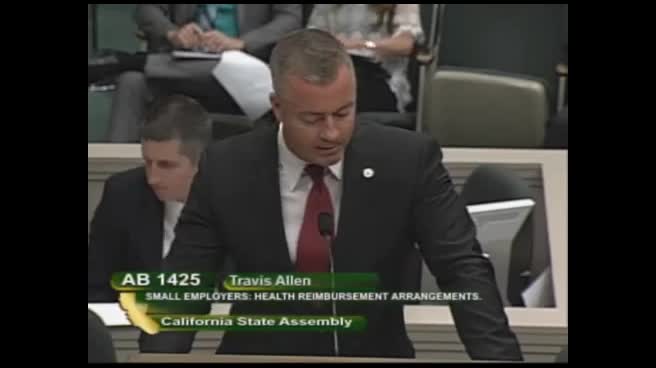
Bill Author

Bill Co-Author(s):