AB 1432: Monterey Bay and the Bays of San Francisco, San Pablo, and Suisun: pilotage rates: technology surcharge.
- Session Year: 2015-2016
- House: Assembly
- Latest Version Date: 2016-08-17
Existing law provides for the regulation and licensure of pilots for Monterey Bay and the Bays of San Francisco, San Pablo, and Suisun by the Board of Pilot Commissioners for the Bays of San Francisco, San Pablo, and Suisun within the Transportation Agency. Existing law prescribes the rates of bar pilotage fees and other surcharges required to be charged by pilots and paid by vessels inward or outward bound through those bays.
Existing law, until January 1, 2011, authorized the board to authorize a movement fee, to be paid as a navigation technology surcharge, in order to recover the pilots costs for the purchase, lease, or maintenance of navigation software, hardware, and ancillary equipment purchased after November 5, 2008, and before January 1, 2011.This bill would, until January 1, 2021, authorize the board to authorize that fee, not to exceed a cumulative amount of $1,200,000, to be paid as a navigation technology surcharge, in order to recover the pilots costs for that software, hardware, and ancillary equipment that is authorized by the board as reasonable and necessary on or after January 1, 2017.
Existing law provides for the regulation and licensure of pilots for Monterey Bay and the Bays of San Francisco, San Pablo, and Suisun by the Board of Pilot Commissioners for the Bays of San Francisco, San Pablo, and Suisun within the Transportation Agency. Existing law prescribes the rates of bar pilotage fees and other surcharges required to be charged by pilots and paid by vessels inward or outward bound through those bays. Existing law also imposes, among other things, a board operations surcharge, of up to 7.5% of all bar pilotage fees charged by bar pilots, which is paid into the State Treasury to the credit of the Board of Pilot Commissioners Special Fund and continuously appropriated to the board to compensate the board and the agency for their services and expenses in this regard.
This bill would, consistent with the boards April 2015 adoption of rate recommendations, increase the rates of those bar pilotage fees, as provided. By increasing the rates of those fees, and thereby increasing the amount of surcharges deposited in the Board of Pilot Commissioners Special Fund, the bill would make an appropriation.
Existing law, until January 1, 2011, authorized the board to authorize a movement fee, to be paid as a navigation technology surcharge, in order to recover the pilots costs for the purchase, lease, or maintenance of navigation software, hardware, and ancillary equipment purchased after November 5, 2008, and before January 1, 2011.This bill would, until January 1, 2020, January 1 2021, authorize the board to authorize that fee fee, not to exceed a cumulative amount of $1,200,000, to be paid as a navigation surcharge technology surcharge, in order to recover the pilots costs for that software, hardware, and ancillary equipment purchased that is authorized by the board as reasonable and necessary on or after January 1, 2016. 2017.
Existing law provides for the regulation and licensure of pilots for Monterey Bay and the Bays of San Francisco, San Pablo, and Suisun by the Board of Pilot Commissioners for the Bays of San Francisco, San Pablo, and Suisun within the Transportation Agency. Existing law prescribes the rates of bar pilotage fees required to be charged by pilots and paid by vessels inward or outward bound through those bays. Existing law also imposes, among other things, a board operations surcharge, of up to 7.5% of all bar pilotage fees charged by bar pilots, which is paid into the State Treasury to the credit of the Board of Pilot Commissioners Special Fund and continuously appropriated to the board to compensate the board and the agency for their services and expenses in this regard.
This bill would, consistent with the boards April 2015 adoption of rate recommendations, increase the rates of those bar pilotage fees, as provided. By increasing the rates of those fees, and thereby increasing the amount of surcharges deposited in the Board of Pilot Commissioners Special Fund, the bill would make an appropriation.
Existing law, until January 1, 2011, authorized the board to authorize a movement fee, to be paid as a navigation technology surcharge, in order to recover the pilots costs for the purchase, lease, or maintenance of navigation software, hardware, and ancillary equipment purchased after November 5, 2008, and before January 1, 2011.
This bill would, until January 1, 2020, authorize the board to authorize that fee as a navigation surcharge in order to recover the pilots costs for that software, hardware, and ancillary equipment purchased after January 1, 2016.
Existing law requires the State Department of Health Care Services to administer all statewide service programs related to alcohol and drug abuse. Existing law authorizes the department to receive federal funds to implement programs that provide services to alleviate the problems related to alcohol and other drug use.
This bill would require the State Department of Health Care Services to submit an application to the federal Centers for Medicare and Medicaid Services for a waiver to implement a demonstration project to accomplish specified goals, including furthering the delivery of high-quality and cost-efficient care for communities and consumers with substance use disorders and co-occurring disorders, and ensuring the long-term viability of the delivery system following the expansion of Medi-Cal eligibility under the federal Patient Protection and Affordable Care Act. The bill would require the department to submit an implementation plan to the Legislature prior to implementing an approved waiver.
Existing law requires the State Department of Health Care Services to administer all statewide service programs related to alcohol and drug abuse. Existing law authorizes the department to receive federal funds to implement programs that provide services to alleviate the problems related to alcohol and other drug use.
This bill would make a technical, nonsubstantive change to a provision related to drug and alcohol abuse programs.
(a)Every vessel spoken inward or outward bound shall pay the following rate of bar pilotage through the Golden Gate and into or out of the Bays of San Francisco, San Pablo, and Suisun:
(1)Eight dollars and eleven cents ($8.11) per draft foot of the vessels deepest draft and fractions of a foot pro rata, and an additional charge of 73.01 mills per high gross registered ton as changed pursuant to law in effect on December 31, 1999. The mill rates established by this paragraph may be changed as follows:
(A)(i)On and after January 1, 2010, if the number of pilots licensed by the board is 58 or 59 pilots, the mill rate in effect on December 31, 2006, shall be decreased by an incremental amount that is proportionate to one-half of the last audited annual average net income per pilot for each pilot licensed by the board below 60 pilots.
(ii)On and after January 1, 2010, if the number of pilots licensed by the board is fewer than 58 pilots, the mill rate in effect on December 31, 2006, shall be adjusted in accordance with the method described in clause (i) as though there are 58 pilots licensed by the board.
(iii)The incremental mill rate adjustment authorized by this subparagraph shall be calculated using the data reported to the board for the number of gross registered tons handled by pilots licensed under this division during the same 12-month period as the audited annual average net income per pilot. The incremental mill rate adjustment shall become effective at the beginning of the immediately following quarter, commencing January 1, April 1, July 1, or October 1, as directed by the board.
(iv)On and after January 1, 2010, if, during any quarter described in this paragraph, the number of pilots licensed by the board is equal to or greater than 60, clauses (i) to (iii), inclusive, shall become inoperative on the first day of the immediately following quarter.
(B)There shall be an incremental rate of additional mills per high gross registered ton as is necessary and authorized by the board to recover the pilots costs of obtaining new pilot boats and of funding design and engineering modifications for the purposes of extending the service life of existing pilot boats, excluding costs for repair or maintenance. The incremental mill rate charge authorized by this subparagraph shall be identified as a pilot boat surcharge on the pilots invoices and separately accounted for in the accounting required by Section 1136. Net proceeds from the sale of existing pilot boats shall be used to reduce the debt on the new pilot boats and any debt associated with the modification of pilot boats under this subparagraph. The board may adjust a pilot boat surcharge to reflect any associated operational savings resulting from the modification of pilot boats under this subparagraph, including, but not limited to, reduced repair and maintenance expenses.
(C)In addition to the incremental rate specified in subparagraph (B), the mill rate established by this subdivision may be adjusted at the direction of the board if, after a hearing conducted pursuant to Article 9 (commencing with Section 11120) of Chapter 1 of Part 1 of Division 3 of Title 2 of the Government Code, the board determines that there has been a catastrophic cost increase to the pilots that would result in at least a 2-percent increase in the overall annual cost of providing pilot services.
(2)A minimum charge for bar pilotage shall be six hundred sixty-two dollars ($662) for each vessel piloted.
(3)The vessels deepest draft shall be the maximum draft attained, on a stillwater basis, at any part of the vessel during the course of such transit inward or outward.
(b)The rate specified in subdivision (a) shall apply only to a pilotage that passes through the Golden Gate to or from the high seas to or from a berth within an area bounded by the Union Pacific Railroad Bridge to the north and Hunters Point to the south. The rate for pilotage to or from the high seas to or from a point past the Union Pacific Railroad Bridge or Hunters Point shall include a movement fee in addition to the basic bar pilotage rate as specified by the board pursuant to Section 1191.
(c)The rate established in paragraph (1) of subdivision (a) shall be for a trip from the high seas to dock or from the dock to high seas. The rate specified in Section 1191 shall not be charged by pilots for docking and undocking vessels. This subdivision does not apply to the rates charged by inland pilots for their services.
(d)The board shall determine the number of pilots to be licensed based on the 1986 manpower study adopted by the board.
(e)Consistent with the boards May 2002 adoption of rate recommendations, the rates imposed pursuant to paragraph (1) of subdivision (a) that are in effect on December 31, 2002, shall be increased by 4 percent on January 1, 2003; those in effect on December 31, 2003, shall be increased by 4 percent on January 1, 2004; those in effect on December 31, 2004, shall be increased by 3 percent on January 1, 2005; and those in effect on December 31, 2005, shall be increased by 3 percent on January 1, 2006.
SEC. 2.Section 1190.4 is added to the Harbors and Navigation Code, to read:1190.4.(a)There shall be a movement fee imposed as is necessary and authorized by the board to recover a pilots costs for the purchase, lease, or maintenance of navigation software, hardware, and ancillary equipment that is authorized by the board as reasonable and necessary on or after January 1, 2017.
(b)The software, equipment, and technology covered by this section shall be used strictly and exclusively to aid in piloting on the pilotage grounds.
(c)The movement fee authorized by this section shall be identified as a navigation technology surcharge on a pilots invoices and separately accounted for in the accounting required by subdivision (b) of Section 1136.
(d)The cumulative amount of the surcharge collected pursuant to this section shall not exceed one million two hundred thousand dollars ($1,200,000).
(e)The board shall review and adjust as necessary the navigation technology surcharge authorized by this section at least quarterly.
(f)This section shall remain in effect only until January 1, 2021, and as of that date is repealed, unless a later enacted statute, that is enacted before January 1, 2021, deletes or extends that date.
(a)Every vessel spoken inward or outward bound shall pay the following rate of bar pilotage through the Golden Gate and into or out of the Bays of San Francisco, San Pablo, and Suisun:
(1)Eight dollars and eleven cents ($8.11) per draft foot of the vessels deepest draft and fractions of a foot pro rata, and an additional charge of 73.01 mills per high gross registered ton as changed pursuant to law in effect on December 31, 1999. The mill rates established by this paragraph may be changed as follows:
(A)(i)On and after January 1, 2010, if the number of pilots licensed by the board is 58 or 59 pilots, the mill rate in effect on December 31, 2006, shall be decreased by an incremental amount that is proportionate to one-half of the last audited annual average net income per pilot for each pilot licensed by the board below 60 pilots.
(ii)On and after January 1, 2010, if the number of pilots licensed by the board is fewer than 58 pilots, the mill rate in effect on December 31, 2006, shall be adjusted in accordance with the method described in clause (i) as though there are 58 pilots licensed by the board.
(iii)The incremental mill rate adjustment authorized by this subparagraph shall be calculated using the data reported to the board for the number of gross registered tons handled by pilots licensed under this division during the same 12-month period as the audited annual average net income per pilot. The incremental mill rate adjustment shall become effective at the beginning of the immediately following quarter, commencing January 1, April 1, July 1, or October 1, as directed by the board.
(iv)On and after January 1, 2010, if, during any quarter described in this paragraph, the number of pilots licensed by the board is equal to or greater than 60, clauses (i) to (iii), inclusive, shall become inoperative on the first day of the immediately following quarter.
(B)There shall be an incremental rate of additional mills per high gross registered ton as is necessary and authorized by the board to recover the pilots costs of obtaining new pilot boats and of funding design and engineering modifications for the purposes of extending the service life of existing pilot boats, excluding costs for repair or maintenance. The incremental mill rate charge authorized by this subparagraph shall be identified as a pilot boat surcharge on the pilots invoices and separately accounted for in the accounting required by Section 1136. Net proceeds from the sale of existing pilot boats shall be used to reduce the debt on the new pilot boats and any debt associated with the modification of pilot boats under this subparagraph. The board may adjust a pilot boat surcharge to reflect any associated operational savings resulting from the modification of pilot boats under this subparagraph, including, but not limited to, reduced repair and maintenance expenses.
(C)In addition to the incremental rate specified in subparagraph (B), the mill rate established by this subdivision may be adjusted at the direction of the board if, after a hearing conducted pursuant to Article 9 (commencing with Section 11120) of Chapter 1 of Part 1 of Division 3 of Title 2 of the Government Code, the board determines that there has been a catastrophic cost increase to the pilots that would result in at least a 2-percent increase in the overall annual cost of providing pilot services.
(2)A minimum charge for bar pilotage shall be six hundred sixty-two dollars ($662) for each vessel piloted.
(3)The vessels deepest draft shall be the maximum draft attained, on a stillwater basis, at any part of the vessel during the course of such transit inward or outward.
(b)The rate specified in subdivision (a) shall apply only to a pilotage that passes through the Golden Gate to or from the high seas to or from a berth within an area bounded by the Union Pacific Railroad Bridge to the north and Hunters Point to the south. The rate for pilotage to or from the high seas to or from a point past the Union Pacific Railroad Bridge or Hunters Point shall include a movement fee in addition to the basic bar pilotage rate as specified by the board pursuant to Section 1191.
(c)The rate established in paragraph (1) of subdivision (a) shall be for a trip from the high seas to dock or from the dock to high seas. The rate specified in Section 1191 shall not be charged by pilots for docking and undocking vessels. This subdivision does not apply to the rates charged by inland pilots for their services.
(d)The board shall determine the number of pilots to be licensed based on the 1986 manpower study adopted by the board.
(e)Consistent with the boards May 2002 adoption of rate recommendations, the rates imposed pursuant to paragraph (1) of subdivision (a) that are in effect on December 31, 2002, shall be increased by 4 percent on January 1, 2003; those in effect on December 31, 2003, shall be increased by 4 percent on January 1, 2004; those in effect on December 31, 2004, shall be increased by 3 percent on January 1, 2005; and those in effect on December 31, 2005, shall be increased by 3 percent on January 1, 2006.
(f)(1)There shall be a movement fee as is necessary and authorized by the board to recover a pilots costs for the purchase, lease, or maintenance of navigation software, hardware, and ancillary equipment purchased after November 5, 2008, and before January 1, 2011.
(2)The software, equipment, and technology covered by this subdivision shall be used strictly and exclusively to aid in piloting on the pilotage grounds. The movement fee authorized by this subdivision shall be identified as a navigation technology surcharge on a pilots invoices and separately accounted for in the accounting required by Section 1136. The board shall review and adjust as necessary the navigation technology surcharge at least quarterly. This subdivision shall become inoperative on January 1, 2011.
SEC. 2.Section 1190.4 is added to the Harbors and Navigation Code, to read:1190.4.(a)There shall be a movement fee imposed as is necessary and authorized by the board to recover a pilots costs for the purchase, lease, or maintenance of navigation software, hardware, and ancillary equipment that is authorized by the board as reasonable and necessary on or after January 1, 2017.
(b)The software, equipment, and technology covered by this section shall be used strictly and exclusively to aid in piloting on the pilotage grounds.
(c)The movement fee authorized by this section shall be identified as a navigation technology surcharge on a pilots invoices and separately accounted for in the accounting required by subdivision (b) of Section 1136.
(d)The cumulative amount of the surcharge collected pursuant to this section shall not exceed one million two hundred thousand dollars ($1,200,000).
(e)The board shall review and adjust as necessary the navigation technology surcharge authorized by this section at least quarterly.
(f)This section shall remain in effect only until January 1, 2021, and as of that date is repealed, unless a later enacted statute, that is enacted before January 1, 2021, deletes or extends that date.
SECTION 1.Section 1190 of the Harbors and Navigation Code is amended to read:1190.(a)Every vessel spoken inward or outward bound shall pay the following rate of bar pilotage through the Golden Gate and into or out of the Bays of San Francisco, San Pablo, and Suisun:
(1)Eight dollars and eleven cents ($8.11) per draft foot of the vessels deepest draft and fractions of a foot pro rata, and an additional charge of 73.01 mills per high gross registered ton as changed pursuant to law in effect on December 31, 1999. The mill rates established by this paragraph may be changed as follows:
(A)(i)On and after January 1, 2010, if the number of pilots licensed by the board is 58 or 59 pilots, the mill rate in effect on December 31, 2006, shall be decreased by an incremental amount that is proportionate to one-half of the last audited annual average net income per pilot for each pilot licensed by the board below 60 pilots.
(ii)On and after January 1, 2010, if the number of pilots licensed by the board is fewer than 58 pilots, the mill rate in effect on December 31, 2006, shall be adjusted in accordance with the method described in clause (i) as though there are 58 pilots licensed by the board.
(iii)The incremental mill rate adjustment authorized by this subparagraph shall be calculated using the data reported to the board for the number of gross registered tons handled by pilots licensed under this division during the same 12-month period as the audited annual average net income per pilot. The incremental mill rate adjustment shall become effective at the beginning of the immediately following quarter, commencing January 1, April 1, July 1, or October 1, as directed by the board.
(iv)On and after January 1, 2010, if, during any quarter described in this paragraph, the number of pilots licensed by the board is equal to or greater than 60, clauses (i) to (iii), inclusive, shall become inoperative on the first day of the immediately following quarter.
(B)There shall be an incremental rate of additional mills per high gross registered ton as is necessary and authorized by the board to recover the pilots costs of obtaining new pilot boats and of funding design and engineering modifications for the purposes of extending the service life of existing pilot boats, excluding costs for repair or maintenance. The incremental mill rate charge authorized by this subparagraph shall be identified as a pilot boat surcharge on the pilots invoices and separately accounted for in the accounting required by Section 1136. Net proceeds from the sale of existing pilot boats shall be used to reduce the debt on the new pilot boats and any debt associated with the modification of pilot boats under this subparagraph. The board may adjust a pilot boat surcharge to reflect any associated operational savings resulting from the modification of pilot boats under this subparagraph, including, but not limited to, reduced repair and maintenance expenses.
(C)In addition to the incremental rate specified in subparagraph (B), the mill rate established by this subdivision may be adjusted at the direction of the board if, after a hearing conducted pursuant to Article 9 (commencing with Section 11120) of Chapter 1 of Part 1 of Division 3 of Title 2 of the Government Code, the board determines that there has been a catastrophic cost increase to the pilots that would result in at least a 2-percent increase in the overall annual cost of providing pilot services.
(2)A minimum charge for bar pilotage shall be six hundred sixty-two dollars ($662) for each vessel piloted.
(3)The vessels deepest draft shall be the maximum draft attained, on a stillwater basis, at any part of the vessel during the course of such transit inward or outward.
(b)The rate specified in subdivision (a) shall apply only to a pilotage that passes through the Golden Gate to or from the high seas to or from a berth within an area bounded by the Union Pacific Railroad Bridge to the north and Hunters Point to the south. The rate for pilotage to or from the high seas to or from a point past the Union Pacific Railroad Bridge or Hunters Point shall include a movement fee in addition to the basic bar pilotage rate as specified by the board pursuant to Section 1191.
(c)The rate established in paragraph (1) of subdivision (a) shall be for a trip from the high seas to dock or from the dock to high seas. The rate specified in Section 1191 shall not be charged by pilots for docking and undocking vessels. This subdivision does not apply to the rates charged by inland pilots for their services.
(d)The board shall determine the number of pilots to be licensed based on the 1986 manpower study adopted by the board.
(e)Consistent with the boards April 2015 adoption of rate recommendations, the rates imposed pursuant to paragraph (1) of subdivision (a) that are in effect on December 31, 2015, shall be increased by 3 percent on January 1, 2016; and those in effect on December 31, 2016, shall be increased by 3 percent on January 1, 2017.
(f)(1)There shall be a movement fee as is necessary and authorized by the board to recover a pilots costs for the purchase, lease, or maintenance of navigation software, hardware, and ancillary equipment purchased after January 1, 2016.
(2)The software, equipment, and technology covered by this subdivision shall be used strictly and exclusively to aid in piloting on the pilotage grounds. The movement fee authorized by this subdivision shall be identified as a navigation technology surcharge on a pilots invoices and separately accounted for in the accounting required by Section 1136. The board shall review and adjust as necessary the navigation technology surcharge at least quarterly. This subdivision shall become inoperative on January 1, 2020.
SEC. 2.Section 1191 of the Harbors and Navigation Code is amended to read:1191.(a)The board, pursuant to Chapter 6 (commencing with Section 1200), shall recommend that the Legislature, by statute, adopt a schedule of pilotage rates providing fair and reasonable return to pilots engaged in ship movements or special operations if rates for those movements or operations are not specified in Section 1190.
(b)A vessel using pilots for ship movements or special operations that do not constitute bar pilotage shall pay the rate specified in the schedule of pilotage rates adopted by the Legislature.
(c)Consistent with the boards adoption of rate recommendations in April 2015, the minimum rates imposed pursuant to this section that are in effect on December 31, 2015, shall be increased by 3 percent on January 1, 2016; and those in effect on December 31, 2016, shall be increased by 3 percent on January 1, 2017.
(a)Every vessel spoken inward or outward bound shall pay the following rate of bar pilotage through the Golden Gate and into or out of the Bays of San Francisco, San Pablo, and Suisun:
(1)Eight dollars and eleven cents ($8.11) per draft foot of the vessels deepest draft and fractions of a foot pro rata, and an additional charge of 73.01 mills per high gross registered ton as changed pursuant to law in effect on December 31, 1999. The mill rates established by this paragraph may be changed as follows:
(A)(i)On and after January 1, 2010, if the number of pilots licensed by the board is 58 or 59 pilots, the mill rate in effect on December 31, 2006, shall be decreased by an incremental amount that is proportionate to one-half of the last audited annual average net income per pilot for each pilot licensed by the board below 60 pilots.
(ii)On and after January 1, 2010, if the number of pilots licensed by the board is fewer than 58 pilots, the mill rate in effect on December 31, 2006, shall be adjusted in accordance with the method described in clause (i) as though there are 58 pilots licensed by the board.
(iii)The incremental mill rate adjustment authorized by this subparagraph shall be calculated using the data reported to the board for the number of gross registered tons handled by pilots licensed under this division during the same 12-month period as the audited annual average net income per pilot. The incremental mill rate adjustment shall become effective at the beginning of the immediately following quarter, commencing January 1, April 1, July 1, or October 1, as directed by the board.
(iv)On and after January 1, 2010, if, during any quarter described in this paragraph, the number of pilots licensed by the board is equal to or greater than 60, clauses (i) to (iii), inclusive, shall become inoperative on the first day of the immediately following quarter.
(B)There shall be an incremental rate of additional mills per high gross registered ton as is necessary and authorized by the board to recover the pilots costs of obtaining new pilot boats and of funding design and engineering modifications for the purposes of extending the service life of existing pilot boats, excluding costs for repair or maintenance. The incremental mill rate charge authorized by this subparagraph shall be identified as a pilot boat surcharge on the pilots invoices and separately accounted for in the accounting required by Section 1136. Net proceeds from the sale of existing pilot boats shall be used to reduce the debt on the new pilot boats and any debt associated with the modification of pilot boats under this subparagraph. The board may adjust a pilot boat surcharge to reflect any associated operational savings resulting from the modification of pilot boats under this subparagraph, including, but not limited to, reduced repair and maintenance expenses.
(C)In addition to the incremental rate specified in subparagraph (B), the mill rate established by this subdivision may be adjusted at the direction of the board if, after a hearing conducted pursuant to Article 9 (commencing with Section 11120) of Chapter 1 of Part 1 of Division 3 of Title 2 of the Government Code, the board determines that there has been a catastrophic cost increase to the pilots that would result in at least a 2-percent increase in the overall annual cost of providing pilot services.
(2)A minimum charge for bar pilotage shall be six hundred sixty-two dollars ($662) for each vessel piloted.
(3)The vessels deepest draft shall be the maximum draft attained, on a stillwater basis, at any part of the vessel during the course of such transit inward or outward.
(b)The rate specified in subdivision (a) shall apply only to a pilotage that passes through the Golden Gate to or from the high seas to or from a berth within an area bounded by the Union Pacific Railroad Bridge to the north and Hunters Point to the south. The rate for pilotage to or from the high seas to or from a point past the Union Pacific Railroad Bridge or Hunters Point shall include a movement fee in addition to the basic bar pilotage rate as specified by the board pursuant to Section 1191.
(c)The rate established in paragraph (1) of subdivision (a) shall be for a trip from the high seas to dock or from the dock to high seas. The rate specified in Section 1191 shall not be charged by pilots for docking and undocking vessels. This subdivision does not apply to the rates charged by inland pilots for their services.
(d)The board shall determine the number of pilots to be licensed based on the 1986 manpower study adopted by the board.
(e)Consistent with the boards April 2015 adoption of rate recommendations, the rates imposed pursuant to paragraph (1) of subdivision (a) that are in effect on December 31, 2015, shall be increased by 3 percent on January 1, 2016; and those in effect on December 31, 2016, shall be increased by 3 percent on January 1, 2017; those in effect on December 31, 2017, shall be increased by 2 percent on January 1, 2018; and those in effect on December 31, 2018, shall be increased by 2 percent on January 1, 2019. 2017.
(f)(1)There shall be a movement fee as is necessary and authorized by the board to recover a pilots costs for the purchase, lease, or maintenance of navigation software, hardware, and ancillary equipment purchased after January 1, 2016.
(2)The software, equipment, and technology covered by this subdivision shall be used strictly and exclusively to aid in piloting on the pilotage grounds. The movement fee authorized by this subdivision shall be identified as a navigation technology surcharge on a pilots invoices and separately accounted for in the accounting required by Section 1136. The board shall review and adjust as necessary the navigation technology surcharge at least quarterly. This subdivision shall become inoperative on January 1, 2020.
SEC. 2.Section 1191 of the Harbors and Navigation Code is amended to read:1191.(a)The board, pursuant to Chapter 6 (commencing with Section 1200), shall recommend that the Legislature, by statute, adopt a schedule of pilotage rates providing fair and reasonable return to pilots engaged in ship movements or special operations if rates for those movements or operations are not specified in Section 1190.
(b)A vessel using pilots for ship movements or special operations that do not constitute bar pilotage shall pay the rate specified in the schedule of pilotage rates adopted by the Legislature.
(c)Consistent with the boards adoption of rate recommendations in April 2015, the minimum rates imposed pursuant to this section that are in effect on December 31, 2015, shall be increased by 3 percent on January 1, 2016; and those in effect on December 31, 2016, shall be increased by 3 percent on January 1, 2017; those in effect on December 31, 2017, shall be increased by 2 percent on January 1, 2018; and those in effect on December 31, 2018, shall be increased by 2 percent on January 1, 2019. 2017.
(a)Every vessel spoken inward or outward bound shall pay the following rate of bar pilotage through the Golden Gate and into or out of the Bays of San Francisco, San Pablo, and Suisun:
(1)Eight dollars and eleven cents ($8.11) per draft foot of the vessels deepest draft and fractions of a foot pro rata, and an additional charge of 73.01 mills per high gross registered ton as changed pursuant to law in effect on December 31, 1999. The mill rates established by this paragraph may be changed as follows:
(A)(i)On and after January 1, 2010, if the number of pilots licensed by the board is 58 or 59 pilots, the mill rate in effect on December 31, 2006, shall be decreased by an incremental amount that is proportionate to one-half of the last audited annual average net income per pilot for each pilot licensed by the board below 60 pilots.
(ii)On and after January 1, 2010, if the number of pilots licensed by the board is fewer than 58 pilots, the mill rate in effect on December 31, 2006, shall be adjusted in accordance with the method described in clause (i) as though there are 58 pilots licensed by the board.
(iii)The incremental mill rate adjustment authorized by this subparagraph shall be calculated using the data reported to the board for the number of gross registered tons handled by pilots licensed under this division during the same 12-month period as the audited annual average net income per pilot. The incremental mill rate adjustment shall become effective at the beginning of the immediately following quarter, commencing January 1, April 1, July 1, or October 1, as directed by the board.
(iv)On and after January 1, 2010, if, during any quarter described in this paragraph, the number of pilots licensed by the board is equal to or greater than 60, clauses (i) to (iii), inclusive, shall become inoperative on the first day of the immediately following quarter.
(B)There shall be an incremental rate of additional mills per high gross registered ton as is necessary and authorized by the board to recover the pilots costs of obtaining new pilot boats and of funding design and engineering modifications for the purposes of extending the service life of existing pilot boats, excluding costs for repair or maintenance. The incremental mill rate charge authorized by this subparagraph shall be identified as a pilot boat surcharge on the pilots invoices and separately accounted for in the accounting required by Section 1136. Net proceeds from the sale of existing pilot boats shall be used to reduce the debt on the new pilot boats and any debt associated with the modification of pilot boats under this subparagraph. The board may adjust a pilot boat surcharge to reflect any associated operational savings resulting from the modification of pilot boats under this subparagraph, including, but not limited to, reduced repair and maintenance expenses.
(C)In addition to the incremental rate specified in subparagraph (B), the mill rate established by this subdivision may be adjusted at the direction of the board if, after a hearing conducted pursuant to Article 9 (commencing with Section 11120) of Chapter 1 of Part 1 of Division 3 of Title 2 of the Government Code, the board determines that there has been a catastrophic cost increase to the pilots that would result in at least a 2-percent increase in the overall annual cost of providing pilot services.
(2)A minimum charge for bar pilotage shall be six hundred sixty-two dollars ($662) for each vessel piloted.
(3)The vessels deepest draft shall be the maximum draft attained, on a stillwater basis, at any part of the vessel during the course of such transit inward or outward.
(b)The rate specified in subdivision (a) shall apply only to a pilotage that passes through the Golden Gate to or from the high seas to or from a berth within an area bounded by the Union Pacific Railroad Bridge to the north and Hunters Point to the south. The rate for pilotage to or from the high seas to or from a point past the Union Pacific Railroad Bridge or Hunters Point shall include a movement fee in addition to the basic bar pilotage rate as specified by the board pursuant to Section 1191.
(c)The rate established in paragraph (1) of subdivision (a) shall be for a trip from the high seas to dock or from the dock to high seas. The rate specified in Section 1191 shall not be charged by pilots for docking and undocking vessels. This subdivision does not apply to the rates charged by inland pilots for their services.
(d)The board shall determine the number of pilots to be licensed based on the 1986 manpower study adopted by the board.
(e)Consistent with the boards April 2015 adoption of rate recommendations, the rates imposed pursuant to paragraph (1) of subdivision (a) that are in effect on December 31, 2015, shall be increased by 3 percent on January 1, 2016; those in effect on December 31, 2016, shall be increased by 3 percent on January 1, 2017; those in effect on December 31, 2017, shall be increased by 2 percent on January 1, 2018; and those in effect on December 31, 2018, shall be increased by 2 percent on January 1, 2019.
(f)(1)There shall be a movement fee as is necessary and authorized by the board to recover a pilots costs for the purchase, lease, or maintenance of navigation software, hardware, and ancillary equipment purchased after January 1, 2016.
(2)The software, equipment, and technology covered by this subdivision shall be used strictly and exclusively to aid in piloting on the pilotage grounds. The movement fee authorized by this subdivision shall be identified as a navigation technology surcharge on a pilots invoices and separately accounted for in the accounting required by Section 1136. The board shall review and adjust as necessary the navigation technology surcharge at least quarterly. This subdivision shall become inoperative on January 1, 2020.
SEC. 2.Section 1191 of the Harbors and Navigation Code is amended to read:1191.(a)The board, pursuant to Chapter 6 (commencing with Section 1200), shall recommend that the Legislature, by statute, adopt a schedule of pilotage rates providing fair and reasonable return to pilots engaged in ship movements or special operations if rates for those movements or operations are not specified in Section 1190.
(b)A vessel using pilots for ship movements or special operations that do not constitute bar pilotage shall pay the rate specified in the schedule of pilotage rates adopted by the Legislature.
(c)Consistent with the boards adoption of rate recommendations in April 2015, the minimum rates imposed pursuant to this section that are in effect on December 31, 2015, shall be increased by 3 percent on January 1, 2016; those in effect on December 31, 2016, shall be increased by 3 percent on January 1, 2017; those in effect on December 31, 2017, shall be increased by 2 percent on January 1, 2018; and those in effect on December 31, 2018, shall be increased by 14 2 percent on January 1, 2019.
(a)Every vessel spoken inward or outward bound shall pay the following rate of bar pilotage through the Golden Gate and into or out of the Bays of San Francisco, San Pablo, and Suisun:
(1)Eight dollars and eleven cents ($8.11) per draft foot of the vessels deepest draft and fractions of a foot pro rata, and an additional charge of 73.01 mills per high gross registered ton as changed pursuant to law in effect on December 31, 1999. The mill rates established by this paragraph may be changed as follows:
(A)(i)On and after January 1, 2010, if the number of pilots licensed by the board is 58 or 59 pilots, the mill rate in effect on December 31, 2006, shall be decreased by an incremental amount that is proportionate to one-half of the last audited annual average net income per pilot for each pilot licensed by the board below 60 pilots.
(ii)On and after January 1, 2010, if the number of pilots licensed by the board is fewer than 58 pilots, the mill rate in effect on December 31, 2006, shall be adjusted in accordance with the method described in clause (i) as though there are 58 pilots licensed by the board.
(iii)The incremental mill rate adjustment authorized by this subparagraph shall be calculated using the data reported to the board for the number of gross registered tons handled by pilots licensed under this division during the same 12-month period as the audited annual average net income per pilot. The incremental mill rate adjustment shall become effective at the beginning of the immediately following quarter, commencing January 1, April 1, July 1, or October 1, as directed by the board.
(iv)On and after January 1, 2010, if, during any quarter described in this paragraph, the number of pilots licensed by the board is equal to or greater than 60, clauses (i) to (iii), inclusive, shall become inoperative on the first day of the immediately following quarter.
(B)There shall be an incremental rate of additional mills per high gross registered ton as is necessary and authorized by the board to recover the pilots costs of obtaining new pilot boats and of funding design and engineering modifications for the purposes of extending the service life of existing pilot boats, excluding costs for repair or maintenance. The incremental mill rate charge authorized by this subparagraph shall be identified as a pilot boat surcharge on the pilots invoices and separately accounted for in the accounting required by Section 1136. Net proceeds from the sale of existing pilot boats shall be used to reduce the debt on the new pilot boats and any debt associated with the modification of pilot boats under this subparagraph. The board may adjust a pilot boat surcharge to reflect any associated operational savings resulting from the modification of pilot boats under this subparagraph, including, but not limited to, reduced repair and maintenance expenses.
(C)In addition to the incremental rate specified in subparagraph (B), the mill rate established by this subdivision may be adjusted at the direction of the board if, after a hearing conducted pursuant to Article 9 (commencing with Section 11120) of Chapter 1 of Part 1 of Division 3 of Title 2 of the Government Code, the board determines that there has been a catastrophic cost increase to the pilots that would result in at least a 2-percent increase in the overall annual cost of providing pilot services.
(2)A minimum charge for bar pilotage shall be six hundred sixty-two dollars ($662) for each vessel piloted.
(3)The vessels deepest draft shall be the maximum draft attained, on a stillwater basis, at any part of the vessel during the course of such transit inward or outward.
(b)The rate specified in subdivision (a) shall apply only to a pilotage that passes through the Golden Gate to or from the high seas to or from a berth within an area bounded by the Union Pacific Railroad Bridge to the north and Hunters Point to the south. The rate for pilotage to or from the high seas to or from a point past the Union Pacific Railroad Bridge or Hunters Point shall include a movement fee in addition to the basic bar pilotage rate as specified by the board pursuant to Section 1191.
(c)The rate established in paragraph (1) of subdivision (a) shall be for a trip from the high seas to dock or from the dock to high seas. The rate specified in Section 1191 shall not be charged by pilots for docking and undocking vessels. This subdivision does not apply to the rates charged by inland pilots for their services.
(d)The board shall determine the number of pilots to be licensed based on the 1986 manpower study adopted by the board.
(e)Consistent with the boards May 2002 April 2015 adoption of rate recommendations, the rates imposed pursuant to paragraph (1) of subdivision (a) that are in effect on December 31, 2002, 2015, shall be increased by 4 3 percent on January 1, 2003; 2016; those in effect on December 31, 2003, 2016, shall be increased by 4 3 percent on January 1, 2004; 2017; those in effect on December 31, 2004, 2017, shall be increased by 3 2 percent on January 1, 2005; 2018; and those in effect on December 31, 2005, 2018, shall be increased by 3 2 percent on January 1, 2006. 2019.
(f)(1)There shall be a movement fee as is necessary and authorized by the board to recover a pilots costs for the purchase, lease, or maintenance of navigation software, hardware, and ancillary equipment purchased after November 5, 2008, and before January 1, 2011. January 1, 2016.
(2)The software, equipment, and technology covered by this subdivision shall be used strictly and exclusively to aid in piloting on the pilotage grounds. The movement fee authorized by this subdivision shall be identified as a navigation technology surcharge on a pilots invoices and separately accounted for in the accounting required by Section 1136. The board shall review and adjust as necessary the navigation technology surcharge at least quarterly. This subdivision shall become inoperative on January 1, 2011. 2020.
SEC. 2.Section 1191 of the Harbors and Navigation Code is amended to read:1191.(a)The board, pursuant to Chapter 6 (commencing with Section 1200), shall recommend that the Legislature, by statute, adopt a schedule of pilotage rates providing fair and reasonable return to pilots engaged in ship movements or special operations if rates for those movements or operations are not specified in Section 1190.
(b)A vessel using pilots for ship movements or special operations that do not constitute bar pilotage shall pay the rate specified in the schedule of pilotage rates adopted by the Legislature.
(c)Consistent with the boards adoption of rate recommendations in May 2002, April 2015, the minimum rates imposed pursuant to this section that are in effect on December 31, 2002, 2015, shall be increased by 26 3 percent on January 1, 2003; 2016; those in effect on December 31, 2003, 2016, shall be increased by 26 3 percent on January 1, 2004; 2017; those in effect on December 31, 2004, 2017, shall be increased by 14 2 percent on January 1, 2005; 2018; and those in effect on December 31, 2005, 2018, shall be increased by 14 percent on January 1, 2006. 2019.
SECTION 1.Section 11775.5 is added to the Health and Safety Code, to read:11775.5.(a)The State Department of Health Care Services shall submit an application to the federal Centers for Medicare and Medicaid Services for a waiver to implement a demonstration project to accomplish all of the following:
(1)Further the delivery of high-quality and cost-efficient care for communities and consumers with substance use disorders and co-occurring disorders.
(2)Ensure the long-term viability of the delivery system following the expansion of Medi-Cal eligibility under the federal Patient Protection and Affordable Care Act.
(3)Continue Californias momentum and successes in innovation achieved under the 2010 Bridge to Reform Waiver.
(b)In developing the waiver application, the department shall consult with interested stakeholders and the Legislature.
(c)The department shall submit an implementation plan to the Legislature prior to implementing the demonstration project authorized pursuant to an approved waiver.
(a)The State Department of Health Care Services shall submit an application to the federal Centers for Medicare and Medicaid Services for a waiver to implement a demonstration project to accomplish all of the following:
(1)Further the delivery of high-quality and cost-efficient care for communities and consumers with substance use disorders and co-occurring disorders.
(2)Ensure the long-term viability of the delivery system following the expansion of Medi-Cal eligibility under the federal Patient Protection and Affordable Care Act.
(3)Continue Californias momentum and successes in innovation achieved under the 2010 Bridge to Reform Waiver.
(b)In developing the waiver application, the department shall consult with interested stakeholders and the Legislature.
(c)The department shall submit an implementation plan to the Legislature prior to implementing the demonstration project authorized pursuant to an approved waiver.
SECTION 1.Section 11750 of the Health and Safety Code is amended to read:11750.(a)It is the intent of the Legislature that the administrative and programmatic functions of the State Department of Alcohol and Drug Programs be transferred to the State Department of Health Care Services and the State Department of Public Health effective July 1, 2013. It is further the intent of the Legislature that this transfer happen efficiently and effectively, with no interruptions in service delivery. This transfer is designed to do all of the following:
(1)Consolidate within a single state department, the State Department of Health Care Services, all substance use disorder functions and programs from the State Department of Alcohol and Drug Programs.
(2)Align with federal and county partners by consolidating substance use disorder and community mental health functions and programs within one department.
(3)Promote opportunities for the improvement of health care delivery by integrating the state-level administration of substance use disorders, community mental health, and physical health to the benefit of communities and consumers with substance use disorders and cooccurring disorders.
(4)Ensure appropriate state oversight by consolidating the two key public funding sources, the Substance Abuse Prevention and Treatment Block Grant and the Drug Medi-Cal Treatment Program, for the substance use disorder system in one state department.
(5)Provide effective state leadership on substance use disorder issues by positioning the State Department of Health Care Services to serve as a unified, strong voice to advocate, at both the state and federal levels, on behalf of the needs of communities, county partners, and consumers with substance use disorders.
(b)Effective July 1, 2013, the administrative and programmatic functions that were previously performed by the State Department of Alcohol and Drug Programs are transferred to the State Department of Health Care Services and the State Department of Public Health in accordance with the act that added this section. Further, except as provided in Section 131055.2, any reference in state statute or regulation to the State Department of Alcohol and Drug Programs or the State Department of Alcohol and Drug Abuse shall refer to the State Department of Health Care Services.
(a)It is the intent of the Legislature that the administrative and programmatic functions of the State Department of Alcohol and Drug Programs be transferred to the State Department of Health Care Services and the State Department of Public Health effective July 1, 2013. It is further the intent of the Legislature that this transfer happen efficiently and effectively, with no interruptions in service delivery. This transfer is designed to: to do all of the following:
(1)Consolidate within a single state department, the State Department of Health Care Services, all substance use disorder functions and programs from the State Department of Alcohol and Drug Programs.
(2)Align with federal and county partners by consolidating substance use disorder and community mental health functions and programs within one department.
(3)Promote opportunities for the improvement of health care delivery by integrating the state-level administration of substance use disorders, community mental health, and physical health to the benefit of communities and consumers with substance use disorders and cooccurring disorders.
(4)Ensure appropriate state oversight by consolidating the two key public funding sources, the Substance Abuse Prevention and Treatment Block Grant and the Drug Medi-Cal Treatment Program, for the substance use disorder system in one state department.
(5)Provide effective state leadership on substance use disorder issues by positioning the State Department of Health Care Services to serve as a unified, strong voice to advocate, at both the state and federal levels, on behalf of the needs of communities, county partners, and consumers with substance use disorders.
(b)Effective July 1, 2013, the administrative and programmatic functions that were previously performed by the State Department of Alcohol and Drug Programs are transferred to the State Department of Health Care Services and the State Department of Public Health in accordance with the act that added this section. Further, except as provided in Section 131055.2, any reference in state statute or regulation to the State Department of Alcohol and Drug Programs or the State Department of Alcohol and Drug Abuse shall refer to the State Department of Health Care Services.
|
Date
|
Status
|
|---|---|
| May 26, 2016 | Read third time. Passed. Ordered to the Assembly. (Ayes 29. Noes 7. Page 3963.). |
| Aug 25, 2015 | Read second time. Ordered to third reading. |
| Sep 4, 2015 | Read third time and amended. Ordered to second reading. |
| Sep 8, 2015 | Read second time. Ordered to third reading. |
| Sep 10, 2015 | Ordered to inactive file at the request of Senator Wieckowski. |
| May 11, 2016 | From inactive file. |
| May 11, 2016 | Ordered to second reading. |
| May 11, 2016 | Read second time and amended. Ordered returned to second reading. |
| May 12, 2016 | Read second time. Ordered to third reading. |
| May 26, 2016 | In Assembly. Concurrence in Senate amendments pending. May be considered on or after May 28 pursuant to Assembly Rule 77. |
| May 26, 2016 | Read third time. Passed. Ordered to the Assembly. |
| Aug 24, 2015 | From committee: Do pass. (Ayes 6. Noes 1.) (August 24). |
| May 27, 2016 | Re-referred to Com. on TRANS. pursuant to Assembly Rule 77.2. |
| Jun 13, 2016 | In committee: Hearing postponed by committee. |
| Jun 20, 2016 | In committee: Hearing postponed by committee. |
| Jun 28, 2016 | From committee: That the Senate amendments be concurred in. (Ayes 15. Noes 0.) (June 27). |
| Aug 1, 2016 | Senate amendments concurred in. To Engrossing and Enrolling. |
| Aug 1, 2016 | Senate amendments concurred in. To Engrossing and Enrolling. (Ayes 70. Noes 0. Page 5635.). |
| Aug 5, 2016 | Enrolled and presented to the Governor at 2:30 p.m. |
| Aug 17, 2016 | Approved by the Governor. |
| Aug 17, 2016 | Chaptered by Secretary of State - Chapter 119, Statutes of 2016. |
| Apr 23, 2015 | Read third time. Passed. Ordered to the Senate. (Ayes 78. Noes 0. Page 1110.) |
| Mar 1, 2015 | From printer. May be heard in committee March 31. |
| Mar 2, 2015 | Read first time. |
| Mar 26, 2015 | From committee chair, with author's amendments: Amend, and re-refer to Com. on HEALTH. Read second time and amended. |
| Mar 26, 2015 | Referred to Com. on HEALTH. |
| Apr 6, 2015 | Re-referred to Com. on HEALTH. |
| Apr 13, 2015 | From committee: Do pass and re-refer to Com. on APPR. with recommendation: To Consent Calendar. (Ayes 18. Noes 0.) (April 7). Re-referred to Com. on APPR. |
| Apr 15, 2015 | From committee: Do pass. Ordered to Consent Calendar. (Ayes 16. Noes 0.) (April 15). |
| Apr 15, 2015 | From committee: Do pass. To Consent Calendar. (Ayes 16. Noes 0.) (April 15). |
| Apr 16, 2015 | Read second time. Ordered to consent calendar. |
| Apr 23, 2015 | In Senate. Read first time. To Com. on RLS. for assignment. |
| Feb 27, 2015 | Introduced. To print. |
| Apr 23, 2015 | Read third time. Passed. Ordered to the Senate. (Ayes 78. Noes 0.) |
| May 7, 2015 | Referred to Com. on HEALTH. |
| Jun 29, 2015 | From committee chair, with author's amendments: Amend, and re-refer to committee. Read second time, amended, and re-referred to Com. on HEALTH. |
| Jun 29, 2015 | Re-referred to Com. on RLS. |
| Jun 29, 2015 | Withdrawn from committee. |
| Jul 1, 2015 | Re-referred to Com. on G.O. |
| Jul 16, 2015 | From committee: Amend, and do pass as amended and re-refer to Com. on APPR. (Ayes 9. Noes 3.) (July 14). |
| Jul 16, 2015 | Read second time and amended. Re-referred to Com. on APPR. |
| Aug 17, 2015 | In committee: Hearing postponed by committee. |
|
Date
|
Description
|
Location
|
Votes
|
|
|---|---|---|---|---|
| Aug 1, 2016 | AB 1432 BONTA Concurrence in Senate Amendments | Assembly Floor |
Passed |
|
| Jun 27, 2016 | With recommendation: That Senate amendments be concurred in. | Assembly Standing Committee on Transportation |
Passed |
|
| May 26, 2016 | Assembly 3rd Reading AB1432 Bonta By Wieckowski | Senate Floor |
Passed |
|
| Aug 24, 2015 | Do pass | Senate Standing Committee on Appropriations |
Passed |
|
| Jul 14, 2015 | Do pass as amended, but first amend, and re-refer to the Committee on [Appropriations] | Senate Standing Committee on Governmental Organization |
Passed |
|
| Apr 23, 2015 | AB 1432 BONTA Consent Calendar Second Day Regular Session | Assembly Floor |
Passed |
|
| Apr 15, 2015 | Do pass. To Consent Calendar. | Assembly Standing Committee on Appropriations |
Passed |
|
| Apr 7, 2015 | Do pass and be re-referred to the Committee on [Appropriations] with recommendation: To Consent Calendar | Assembly Standing Committee on Health |
Passed |
This list shows positions taken on this bill by organizations on the date displayed, which is linked to the original source.
Positions by individuals are not included.
|
Organization
|
Position
|
Date
|
|---|---|---|
| California Chamber Of Commerce | ** Against | May 26, 2016 |
| California College and University Police Chiefs | ** Support | Jul 14, 2015 |
| California Farm Bureau Federation | ** Against | May 26, 2016 |
| California Fresh Fruit Association | ** Against | May 26, 2016 |
| California Labor Federation, Afl-Cio | * Support | Jun 27, 2016 |
| California Rice | ** Against | May 26, 2016 |
| Cruise Lines International Association | ** Against | May 26, 2016 |
| Cruiseline Industry Association | * Against | Aug 24, 2015 |
| Maersk Lines | ** Against | May 26, 2016 |
| Pacific Merchant Shipping Association | * Support | Jun 27, 2016 |
| San Francisco Bar Pilots | * Support | Jun 27, 2016 |
| Western Agricultural Processors | ** Against | May 26, 2016 |
| Western Plant Health Association | ** Against | May 26, 2016 |
| Western States Petroleum Association | * Support | Jun 27, 2016 |
CONCURRENCE IN SENATE AMENDMENTS
CSA2 Bill Id:AB 1432
Author:(Bonta)
As Amended Ver:May 11, 2016
Majority vote
ASSEMBLY: |
| (April 23, 2015) | SENATE: | 29-7 | (May 26, 2016) |
(vote not relevant)
COMMITTEE VOTE: | 15-0 | (June 27, 2016) | RECOMMENDATION: | Concur |
(Trans.)
Original Committee Reference: HEALTH
SUMMARY: Establishes a limited surcharge on vessels sailing into and out of the San Francisco Bay (and its environs) to reimburse the San Francisco bar pilots for costs associated with the purchase, lease, or maintenance of certain navigation equipment. Specifically, this bill:
- Deletes language authorizing the Board of Pilot Commissioners (BOPC) to establish and collect a movement fee on an ongoing basis and in advance of expenditures related to the purchase, lease, or maintenance of navigation equipment.
- Authorizes the BOPC to establish, and for San Francisco bar pilots to collect, a movement fee to recover costs associated with the purchase, lease, or maintenance of certain navigational equipment on or after January 1, 2017.
- Requires that the specified navigational equipment be used strictly and exclusively to aid San Francisco bar pilots working in areas under their jurisdiction.
- Requires that the movement fee be identified as a navigation technology surcharge on San Francisco bar pilot invoices and accounted for separately.
- Prohibits the cumulative amount of the surcharge collected from exceeding $1.2 million.
- Requires the BOPC to conduct a quarterly review of the surcharge and to adjust it, as needed.
- Requires that the surcharge sunset on January 1, 2021.
FISCAL EFFECT: According to the Senate Appropriations Committee, no direct state impacts, but the bill would result in unknown indirect surcharge revenue gains to the Board of Pilot Commissioners' Special Fund.
Pilotage fees and surcharges, including the "technology navigation surcharge," are paid directly to the bar pilots and are not deposited into the State Treasury. Staff notes, however, that specified surcharges for the operations of the Board and for pilot training and continuing education programs are transferred by the Board for deposit into the Board of Pilot Commissioners' Special Fund. Since the "board operations surcharge" is based upon the pilotage fee rates, this bill would technically make an appropriation by impacting the amount of fees deposited into a continuously appropriated fund. The Board has the authority to reduce the rate of the surcharge, with the approval of the Department of Finance, if revenues are out of balance with expenditures.
COMMENTS: Prior to the American Revolution, pilotage was regulated by colonial legislatures which generally provided for the commissioning of pilots, apprenticeship requirements, and establishing fees. When the United States Constitution was adopted, it recognized that pilotage fell within the domain of the federal government because it involved foreign commerce. One of the first acts of the newly formed Congress in 1789 was to recognize state laws regulating pilotage and to delegate that authority to the states. In California, the San Francisco bar pilots have been guiding ships into the San Francisco Bay since at least 1835 and one of the first legislative enactments by the newly formed California Legislature in 1850 was to address the regulation of San Francisco bar pilots.
Specifically, San Francisco bar pilots are responsible for steering large commercial vessels through the Golden Gate of San Francisco Bay and adjoining navigable waters, which include San Pablo Bay, Suisun Bay, the Sacramento River, and associated tributaries. When a vessel arrives at a point eleven miles west of the Golden Gate Bridge, a San Francisco bar pilot boards the ship, takes navigational control, and guides the ship to its berth. The same process occurs in reverse as ships depart from the San Francisco Bay. The San Francisco bar pilot's primary function is to ensure that large commercial vessels are navigated safely through the San Francisco Bay's confined waters. They provide service for all types of commercial vessels, from 100-foot tugs to 1000-foot supertankers.
This bill would allow the BOPC to impose a fee on vessels entering the San Francisco Bay to recover costs incurred for the purchase, lease, or maintenance of specified navigation equipment such as software, hardware, and ancillary equipment following a public approval process of the required technology by the BOPC. The navigation technology surcharge authorized by this bill would sunset on January 1, 2021, and be capped at $1.2 million.
Earlier versions of this bill would have authorized the surcharge to be collected indefinitely which, opponents argued, essentially amounted to a pilotage rate increase - an issue that has been the subject of much debate between commercial vessel owners and the BOPC for many years. The parties agreed to terms, reflected in the May 11, 2016, amendments of this bill, and have agreed to continue discussions with regard to rate increases in general in the coming months.
Writing in support of this bill, the Pacific Merchant Shipping Association notes that it is extremely important that vessels entering and exiting the San Francisco Bay be piloted safely and they agree that providing San Francisco bar pilots with state-of-the-art navigation technology would enhance safety and reduce the risk of an accident or environmental catastrophe (such as an oil spill).
There is no formal opposition on file.
Please see the policy committee analysis for full discussion of this bill.
Analysis Prepared by: Victoria Alvarez / TRANS. / (916) 319-2093 FN: 0003538
CONCURRENCE IN SENATE AMENDMENTS
CSA1 Bill Id:AB 1432
Author:(Bonta)
As Amended Ver:May 11, 2016
Majority vote
ASSEMBLY: |
|
| SENATE: | 29-7 | (May 26, 2016) |
(vote not relevant)
Original Committee Reference: HEALTH
SUMMARY: Establishes a navigation technology surcharge for commercial vessels calling on ports (inbound and outbound transits) in San Francisco, San Pablo, Suisun, and Monterey Bays, including the Sacramento River to the Port of Sacramento and the San Joaquin River to the Port of Stockton.
The Senate amendments delete the Assembly version of the bill and instead:
- Reinstitute, until January 1, 2021, a navigation technology surcharge for the purchase or lease by the pilots of new navigation hardware and software to enhance navigation safety.
- Prohibits the cumulative amount of the surcharge collected from exceeding $1.2 million.
EXISTING LAW:
- Provides for the regulation and licensure of pilots for Monterey Bay and the Bays of San Francisco, San Pablo, and Suisun by the Board of Pilot Commissioners (Board) within the California State Transportation Agency.
- Specifies that the Board shall consist of seven members appointed by the Governor and one ex-officio non-voting member (the Secretary of the Transportation Agency). Two members are pilots licensed by the Board; two are industry members (one from the tanker industry and one from the dry cargo industry); and, three public members who are neither pilots nor work for companies that use pilots.
- Prescribes the rates of pilotage fees required to be charged by pilots and paid by vessels.
- Requires that the Board recommend that the Legislature, by statute, adopt a schedule of pilotage rates providing fair and reasonable return to pilots engaged in ship movements or special operations.
- Provides for a movement fee as necessary and authorized by the Board to recover a pilot's costs for the purchase, lease, or maintenance of navigation software, hardware, and ancillary equipment purchased after November 5, 2008 and before January 1, 2011.
AS PASSED BY THE ASSEMBLY, this bill required the State Department of Health Care Services (DHCS) to submit an application to the federal Centers for Medicare and Medicaid Services for a waiver to implement a demonstration project to accomplish specified goals and requires DHCS to submit an implementation plan to the Legislature prior to implementing an approved waiver.
FISCAL EFFECT: According to the Senate Appropriations Committee, no direct state impacts, but the bill would result in unknown indirect surcharge revenue gains to the Board of Pilot Commissioners' Special Fund.
COMMENTS: Bar pilots have been guiding ships into San Francisco Bay, one of the most treacherous passages in the world, since at least 1835. The work that bar pilots performed was so important that one of the first legislative enactments by the newly formed California Legislature that met in San Jose in 1850 was to address the regulation of bar pilots.
California's history of piloting parallels to a large extent the history of pilotage throughout the United States. Prior to the American Revolution, pilotage was regulated by colonial legislatures. They generally provided for the commissioning of pilots, apprenticeship requirements to become a pilot, specified the type and size of pilot boats used in the service, and established fees to be charged. When the United States Constitution was adopted, it recognized that pilotage fell within the domain of the federal government because it involved regulation of instruments of foreign commerce. One of the first acts of the newly formed Congress in 1789 was to recognize the existing state laws regulating pilots and delegate to the states the authority to continue to regulate pilotage because of its unique character.
Bar pilots are responsible for steering an arriving vessel through the Golden Gate of San Francisco Bay, the Bay waters and adjoining navigable waters, which include San Pablo Bay, Suisun Bay, the Sacramento River and its tributaries. When a vessel approaches the "SF" buoy several miles west of the Golden Gate Bridge, a bar pilot boards the ship and takes navigational control. (Pilots in San Francisco are called "Bar Pilots" because they board and disembark ships just beyond a treacherous sand bar which provides a natural obstacle to shipping.) It becomes the pilot's responsibility to guide the ship to its berth. The bar pilots provide service to all types of vessels, from 100-foot tugs to 1000-foot supertankers.
Pilots are generally mandatory in every major port throughout the world and their pilotage service is paid for by the vessel owner/agent. As noted above, the San Francisco Bar Pilots have been state regulated and licensed since 1850 to pilot vessels to various ports in the Bay Area such as San Francisco, Oakland, Redwood City, Martinez, Richmond, Pittsburgh, Vallejo, Rodeo, Antioch, Stockton, Sacramento and more recently including Monterey.
This bill reinstitutes a navigation technology surcharge for the purchase or lease by the pilots of new navigation hardware and software to enhance navigation safety. This surcharge was initially used from 2010 to 2011 to upgrade pilots' navigation safety equipment in the wake of the Cosco Busan oil spill. Under this bill, the Board would have a window of time to approve new equipment for purchase or lease by pilots that would be paid for by the surcharge, which would then sunset in 2021. The surcharge and the cap on how much may be collected are the result of negotiations between the pilots and the shipping industry and reflect a safety issue that both groups agree is worth paying for.
Analysis Prepared by: Justin Behrens / Victoria Alvarez / TRANS. / (916) 319-2093 FN: 0002970
Office of Senate Floor Analyses (916) 651-1520 Fax: (916) 327-4478 | AB |
THIRD READING
Bill No: AB 1432
:
SENATE GOVERNMENTAL ORG. COMMITTEE: 9-3, 7/14/15
AYES: Hall, Block, Galgiani, Glazer, Hernandez, Hill, Hueso, Lara, McGuire
NOES: Gaines, Runner, Vidak
NO VOTE RECORDED: Berryhill
SENATE APPROPRIATIONS COMMITTEE: 6-1, 8/24/15
AYES: Lara, Beall, Hill, Leyva, Mendoza, Nielsen
NOES: Bates
ASSEMBLY FLOOR: 78-0, 4/23/15 (Consent) - See last page for vote
DIGEST: This bill authorizes until January 1, 2021 a technology surcharge, not to exceed a cumulative amount of $1.2 million, to recover a pilot’s costs for the purchase or lease of navigation hardware and software to enhance navigation safety.
Senate Floor Amendments of 5/11/16 gut the contents of the existing bill relating to across-the-board pilotage rate increases, as specified, as well as a similar technology surcharge provision.
ANALYSIS:
Existing law:
- Provides for the regulation and licensure of pilots for Monterey Bay and the Bays of San Francisco, San Pablo, and Suisun by the Board of Pilot Commissioners (Board) within the Transportation Agency.
- Specifies that the Board shall consist of seven members appointed by the Governor and one ex-officio non-voting member (the Secretary of the Transportation Agency). Two members are pilots licensed by the Board; two are industry members (one from the tanker industry and one from the dry cargo industry); and, three public members who are neither pilots nor work for companies that use pilots.
- Prescribes the rates of pilotage fees required to be charged by pilots and paid by vessels. The rates involved are set forth in Sections 1190 and 1191 of the Harbors and Navigation Code. Section 1190 relates to bar pilotage for every vessel inward or outward bound over the San Francisco Bar, which lies west of the Golden Gate Bridge, and charges vary, depending on a vessel’s gross registered tonnage and draft. Section 1191 of the Harbors and Navigation Code relates to charges for transits that originate and are concluded inland of Golden Gate Bridge – charges for these transits are flat amounts, with the amounts varying with the places at which the transit begins and ends.
- Stipulates that the Board shall recommend that the Legislature, by statute, adopt a schedule of pilotage rates providing fair and reasonable return to pilots engaged in ship movements or special operations if rates for those movements or operations are not specified in Section 1190 of the Harbors and Navigation Code.
- Provides for a movement fee as is necessary and authorized by the Board to recover a pilot’s costs for the purchase, lease, or maintenance of navigation software, hardware, and ancillary equipment purchased after November 5, 2008 and before January 1, 2011.
This bill:
- Reinstitutes, until January 1, 2021, a technology surcharge, not to exceed a cumulative amount of $1.2 million to recover a pilot’s costs for the purchase, lease, or maintenance of navigation software, hardware, and ancillary equipment that is authorized by the Board as reasonable and necessary on or after January 1, 2017.
- Makes it explicit that the software, equipment, and technology shall be used strictly and exclusively to aid in piloting on the pilotage grounds.
- Requires the Board to review and adjust as necessary the navigation technology surcharge at least quarterly.
- Makes other conforming code maintenance changes.
Background
Brief historical perspective. Bar pilots have been guiding ships into San Francisco Bay, one of the most treacherous passages in the world, since at least 1835. The work that bar pilots performed was so important that one of the first legislative enactments by the newly formed California Legislature that met in San Jose in 1850 was to address the regulation of bar pilots.
California’s history of piloting parallels to a large extent the history of pilotage throughout the United States. Prior to the American Revolution, pilotage was regulated by colonial legislatures. They generally provided for the commissioning of pilots, apprenticeship requirements to become a pilot, specified the type and size of pilot boats used in the service, and established fees to be charged. When the United States Constitution was adopted, it recognized that pilotage fell within the domain of the federal government because it involved regulation of instruments of foreign commerce. One of the first acts of the newly formed Congress in 1789 was to recognize the existing state laws regulating pilots and delegate to the states the authority to continue to regulate pilotage because of its unique character.
Bar pilots are responsible for steering an arriving vessel through the Golden Gate of San Francisco Bay, the Bay waters and adjoining navigable waters, which include San Pablo Bay, Suisun Bay, the Sacramento River and its tributaries. When a vessel approaches the “SF” buoy several miles west of the Golden Gate Bridge, a bar pilot boards the ship and takes navigational control. (Pilots in San Francisco are called “Bar Pilots” because they board and disembark ships just beyond a treacherous sand bar which provides a natural obstacle to shipping.) It becomes the pilot’s responsibility to guide the ship to its berth. The bar pilots provide service to all types of vessels, from 100-foot tugs to 1000-foot supertankers.
Pilots are generally mandatory in every major port throughout the world and their pilotage service is paid for by the vessel owner/agent. As noted above, the San Francisco Bar Pilots have been state regulated and licensed since 1850 to pilot vessels to various ports in the Bay Area such as San Francisco, Oakland, Redwood City, Martinez, Richmond, Pittsburgh, Vallejo, Rodeo, Antioch, Stockton, Sacramento and more recently including Monterey.
Purpose of AB 1432. According to the author’s office, this bill simply reflects an agreement reached between the San Francisco Bar Pilots and the Pacific Merchant Shipping Association to re-establish the navigation technology surcharge which was allowed to sunset in 2011.
Prior Legislation
SB 300 (Yee, Chapter 497, Statutes of 2009) among other things, established a surcharge for payment of navigational aids for bar pilots.
FISCAL EFFECT: Appropriation: Fiscal Com.: Local:
Unknown with latest amendments.
SUPPORT:
(Verified 5/12/16)
Pacific Merchant Shipping Association
San Francisco Bar Pilots
OPPOSITION: (Verified 5/12/16)
None received
AYES: Achadjian, Alejo, Travis Allen, Baker, Bigelow, Bloom, Bonilla, Bonta, Brough, Brown, Burke, Calderon, Chang, Chau, Chávez, Chiu, Chu, Cooley, Cooper, Dababneh, Dahle, Daly, Dodd, Eggman, Frazier, Beth Gaines, Gallagher, Cristina Garcia, Eduardo Garcia, Gatto, Gipson, Gomez, Gonzalez, Gordon, Gray, Grove, Hadley, Harper, Roger Hernández, Holden, Irwin, Jones, Jones-Sawyer, Kim, Lackey, Levine, Linder, Lopez, Low, Maienschein, Mathis, Mayes, McCarty, Medina, Melendez, Mullin, Nazarian, Obernolte, O'Donnell, Olsen, Patterson, Perea, Quirk, Rendon, Ridley-Thomas, Rodriguez, Santiago, Steinorth, Mark Stone, Thurmond, Ting, Wagner, Waldron, Weber, Wilk, Williams, Wood, Atkins
NO VOTE RECORDED: Campos, Salas
5/13/16 11:54:21
**** END ****
AB 1432
Page 8
|
Office of Senate Floor Analyses (916) 651-1520 Fax: (916) 327-4478 |
THIRD READING
Bill No: AB 1432
Amended: 9/4/15 in Senate
SENATE GOVERNMENTAL ORG. COMMITTEE: 9-3, 7/14/15
AYES: Hall, Block, Galgiani, Glazer, Hernandez, Hill, Hueso, Lara, McGuire
NOES: Gaines, Runner, Vidak
NO VOTE RECORDED: Berryhill
SENATE APPROPRIATIONS COMMITTEE: 6-1, 8/24/15
AYES: Lara, Beall, Hill, Leyva, Mendoza, Nielsen
NOES: Bates
ASSEMBLY FLOOR: Not relevant
SUBJECT: Harbors and ports: Monterey Bay and the Bays of San Francisco, San Pablo, and Suisun: pilotage rates
SOURCE: San Francisco Bar Pilots
DIGEST: This bill increases pilotage fees and rates, as specified, for commercial vessels calling on ports (inbound and outbound transits) in San Francisco, San Pablo, Suisun, and Monterey Bay, including the Sacramento River to the Port of Sacramento and the San Joaquin River to the Port of Stockton. This bill also reinstitutes a navigation technology surcharge for the purchase or lease by the pilots of new navigation hardware and software to enhance navigation safety.
Senate Floor Amendments of 9/4/15 delete the pilotage rate increases of 2% in each of 2018 and 2019.
ANALYSIS:
Existing law:
Provides for the regulation and licensure of pilots for Monterey Bay and the Bays of San Francisco, San Pablo, and Suisun by the Board of Pilot Commissioners (Board) within the Transportation Agency.
Specifies that the Board shall consist of seven members appointed by the Governor and one ex-officio non-voting member (the Secretary of the Transportation Agency). Two members are pilots licensed by the Board; two are industry members (one from the tanker industry and one from the dry cargo industry); and, three public members who are neither pilots nor work for companies that use pilots.
Prescribes the rates of pilotage fees required to be charged by pilots and paid by vessels. The rates involved are set forth in Sections 1190 and 1191 of the Harbors and Navigation Code. Section 1190 relates to bar pilotage for every vessel inward or outward bound over the San Francisco Bar, which lies west of the Golden Gate Bridge, and charges vary, depending on a vessel’s gross registered tonnage and draft. Section 1191 of the Harbors and Navigation Code relates to charges for transits that originate and are concluded inland of Golden Gate Bridge – charges for these transits are flat amounts, with the amounts varying with the places at which the transit begins and ends.
Stipulates that the Board shall recommend that the Legislature, by statute, adopt a schedule of pilotage rates providing fair and reasonable return to pilots engaged in ship movements or special operations if rates for those movements or operations are not specified in Section 1190 of the Harbors and Navigation Code.
Provides that a vessel using pilots for ship movements or special operations that do not constitute bar pilotage shall pay the rate specified in the schedule of pilotage rates adopted by the Legislature.
Provides for a movement fee as is necessary and authorized by the Board to recover a pilot’s costs for the purchase, lease, or maintenance of navigation software, hardware, and ancillary equipment purchased after November 5, 2008 and before January 1, 2011.
This bill:
Increases the draft foot and mill rates in effect under Harbors and Navigation Code Section 1190(a)(1) as follows: those rates that are in effect on December 31, 2015, shall be increased by 3% on January 1, 2016; and those in effect on December 31, 2016, shall be increased by 3% on January 1, 2017.
Increases the minimum schedule of pilotage rates for ship movements and special operations in effect under Section 1191(c) of the Harbors and Navigation Code as follows: those rates that are in effect on December 31, 2015, shall be increased by 3% on January 1, 2016; and those in effect on December 31, 2016, shall be increased by 3% on January 1, 2017.
Reinstitutes, until January 1, 2020, a navigation technology surcharge for the purchase or lease by the pilots of new navigation hardware and software to enhance navigation safety.
Background
Brief historical perspective. Bar pilots have been guiding ships into San Francisco Bay, one of the most treacherous passages in the world, since at least 1835. The work that bar pilots performed was so important that one of the first legislative enactments by the newly formed California Legislature that met in San Jose in 1850 was to address the regulation of bar pilots.
California’s history of piloting parallels to a large extent the history of pilotage throughout the United States. Prior to the American Revolution, pilotage was regulated by colonial legislatures. They generally provided for the commissioning of pilots, apprenticeship requirements to become a pilot, specified the type and size of pilot boats used in the service, and established fees to be charged. When the United States Constitution was adopted, it recognized that pilotage fell within the domain of the federal government because it involved regulation of instruments of foreign commerce. One of the first acts of the newly formed Congress in 1789 was to recognize the existing state laws regulating pilots and delegate to the states the authority to continue to regulate pilotage because of its unique character.
Bar pilots are responsible for steering an arriving vessel through the Golden Gate of San Francisco Bay, the Bay waters and adjoining navigable waters, which include San Pablo Bay, Suisun Bay, the Sacramento River and its tributaries. When a vessel approaches the “SF” buoy several miles west of the Golden Gate Bridge, a bar pilot boards the ship and takes navigational control. (Pilots in San Francisco are called “Bar Pilots” because they board and disembark ships just beyond a treacherous sand bar which provides a natural obstacle to shipping.) It becomes the pilot’s responsibility to guide the ship to its berth. The bar pilots provide service to all types of vessels, from 100-foot tugs to 1000-foot supertankers.
Pilots are generally mandatory in every major port throughout the world and their pilotage service is paid for by the vessel owner/agent. As noted above, the San Francisco Bar Pilots (SFBP) have been state regulated and licensed since 1850 to pilot vessels to various ports in the Bay Area such as San Francisco, Oakland, Redwood City, Martinez, Richmond, Pittsburgh, Vallejo, Rodeo, Antioch, Stockton, Sacramento and more recently including Monterey.
Board of Pilot Commissioners recommendations. In February 2015, the SFBP filed a petition for an increase in pilotage rates under the provisions of Section 1200 through 1203 of the Harbors and Navigation Code. Under these provisions, the Board itself does not set pilotage rates but instead makes recommendations to the Legislature concerning adjustment of pilotage rates. The SFBP petition requested a 5% increase in rates in 2016 and 2017 and a further increase of 4% each in 2018 and 2019. The Pacific Merchant Shipping Association subsequently filed its opposition to the petition requesting that the Board reject the increases submitted by the SFBP.
On April 10, 2015, the Board, in accordance with the Bagley-Keene Open Meeting Act voted on two different rate adjustment proposals. In the first vote (a 2-4 vote), it declined to recommend approval of the rate increase proposed by SFBP in its petition. In the second vote (6-0 vote), the Board recommended that the Legislature adopt across-the-board pilotage rate increases of 3% in each of 2016 and 2017 and 2% in each of 2018 and 2019. The Board also recommended reinstitution of the navigation technology surcharge so that pilot’s may recover their costs for the purchase, lease, or maintenance of navigation equipment.
The Board stated, “The last time the Legislature authorized an increase in pilotage rates was in 2002, 13 years ago. At that time, the Legislature approved a phased annual percentage increase in rates, ending with a final percentage increase in 2006. In the nine years since that last increase in 2006, the cost to the pilots of providing pilot services has risen by 33%. During that same period, due to a reduction in the number and size of the ships calling in the Bay Area during the economic downturn, the gross revenue to the pilots has dipped as much as 13% from a high in 2006. Only recently has gross revenue reached and slightly exceeded the 2006 total. The overall net increase in gross revenue over that nine-year period is 1.3%.”
Additionally,
the Board noted, “Pilot net income is what is left for division
among the pilots after the cost of providing pilot services is
subtracted from gross revenue. There have been significant drops in
pilot net income since 2006. In 2010, pilot net income was 26% less
than in 2006. Overall, the decrease in pilot net income between 2006
and 2014 has been 9.5%. Although pilot net income has increased from
the low in 2010, it is still short of where it was in 2006 because of
increases over the last nine years in the cost of providing pilot
services. In early 2015, pilot net income has dipped nearly 50% from
2014 levels because of the slowdown associated with the labor dispute
between the Pacific Merchant Shipping Association and the
International Longshore and Warehouse Union.”
Furthermore,
the Board found that “since the last increase in 2006, the consumer
price index for the San Francisco-Oakland-San Jose area has risen
20.5%. Of the 10 ports deemed comparable to one another in the
Board’s regulations, the San Francisco Bay Area trails only New
York City in the cost of living.”
Comments
Purpose of AB 1432. According to the author’s office, this bill is intended to implement only the 2016 and 2017 across-the-board pilotage rate increases of 3% in each year as recommended by the Board on April 10, 2015.
As noted above, vessels entering the San Francisco Bay are required by law to utilize the services of a licensed SFBP and are charged fees for those services. The 58 pilots currently licensed by the Board are members of a private unincorporated association (the San Francisco Bar Pilots Association) which is essentially a “regulated monopoly,” with membership and rates fixed by statute. Among other things, the San Francisco Bar Pilots Association maintains pilot boats, rents office space, provides dispatch and billing services, and hires pilot-boat crews and office staff. After the expenses of running the business are subtracted from the revenue that the pilots generate with their services, the pilots share equally in the net proceeds. The SFBP are the only coastal pilots that have their rates set in statute by the Legislature. For example, the Los Angeles Pilot Service, which dates back to 1907, and ensures a safe flow of ship traffic to and from Los Angeles Harbor, consists of pilots who are employees of the City of Los Angeles. Additionally, the Port of Long Beach contracts with a private pilot service.
Prior Legislation
AB 907 (Ma, 2011), among other things, would have increased pilotage fees and rates, as specified for Monterey Bay and the Bays of San Francisco, San Pablo and Suisun and established a fuel surcharge for all vessel moves using pilotage service to be determined by the board. (Failed passage in the Senate Governmental Organization Committee and was subsequently gutted and amended for other purposes)
AB 1025 (Skinner, Chapter 324, Statutes of 2011) made the following substantive changes to existing provisions of law relating to bar pilotage : (a) modified the definition of “inland pilot” to mean a person holding an inland pilot license prior to January 1, 2011 and deleted all references to inland pilots, (b) required the Board’s assistant director be appointed by the Secretary of Business, Transportation and Housing, instead of the Governor, and to serve at the pleasure of the Secretary, (c) recast certain provisions relating to violations of safety standards to require the executive director instead of an assigned commission investigator to perform investigations, make findings and recommendations and report to the Board, and (d) authorized the Board to charge an examination fee, as specified, to each applicant to the pilot trainee training program.
SB 300 (Yee, Chapter 497, Statutes of 2009) established a surcharge for payment of navigational aids for bar pilots and revised the pilotage rate based upon the current number of bar pilots.
SB 1627 (Wiggins, Chapter 567, Statutes of 2008) made numerous substantive, clarifying and technical changes to the body of law relating to the Board of Pilot Commissioners by injecting ongoing and continuous legislative oversight and administrative responsibility within the existing pilot licensing framework, without altering the Board, its charge, or composition and without changing current pilotage rates, pilot pension benefits, or duties and responsibilities of current, past or future licensed pilots. Also, directed the State Auditor to conduct a comprehensive performance/financial audit of the Board.
SB 1353 (Perata, Chapter 765, Statutes of 2002) established a schedule of incremental changes (through January 1, 2006) to the rates and special surcharges that bar pilots may impose on vessels that move in and out of the Bays of San Francisco, San Pablo and Suisun.
FISCAL EFFECT: Appropriation: Yes Fiscal Com.: Yes Local: No
According to the Senate Appropriations Committee this bill will have no direct state impacts, but will result in unknown indirect surcharge revenue gains to the Board of Pilot Commissioners’ Special Fund.
SUPPORT:
(Verified 9/8/15)
San Francisco Bar Pilots (source)
Bay Institute
California Labor Federation
Sailors’ Union of the Pacific
OPPOSITION: (Verified 9/8/15)
California Chamber of Commerce
California Farm Bureau Federation
California Fresh Fruit Association
California Manufacturers & Technology Association
California Rice
Cruise Lines International Association
Maersk Lines
Pacific Merchant Shipping Association
Western Agricultural Processors
Western Plant Health Association
Western States Petroleum Association
ARGUMENTS IN SUPPORT: Writing in support, the San Francisco Bar Pilots (SFBP) state, “We endorse AB 1432 and the Board of Pilot Commissioners findings and recommendations.” The SFBP also point out, “When the maritime industry experiences increased costs, it increases its rates to its customers. For example, Matson Navigation Company increased rates for its Hawaiian service by an average of 5.4% in each of the last four years. It reported income of $25 million during the first quarter of 2015, seven times the earnings for the same quarter last year. The SFBP cannot simply increase rates as a result of an increase in costs or to keep up with inflation. Our only recourse is through legislation following a hearing before the Board of Pilot Commissioners.”
ARGUMENTS IN OPPOSITION: Opponents argue that evidence does not provide a reasonable justification for rate increases and claim that growth in pilotage fee revenues actually outpaced growth in pilot expenses. Opponents contend that pilotage revenues collected by the SFBP in 2014 outperformed even its own stated income goals from 2011 – and did so without a rate increase. In addition, opponents emphasize that this bill might appear to reflect a compromise between industry and the SFBP when in fact it does not.
According to the
Pacific Merchant Shipping Association (PMSA), “in 2010, the average
net income per San Francisco Bay Pilot was $393,207. This was down
from the average net income of $427,153 per pilot in 2009 because of
the overall decline in ship traffic using the San Francisco Bay
system as a result of the ongoing recession. Overall, today tonnage
is up significantly since 2010, and as a result pilots’ salaries
exceeded $450,000 in 2014 without any benefit of a rate increase
thanks solely to increased Bay traffic and ship tonnage. It
is anticipated that, as the trend towards larger ships being brought
into service continues, pilot income will continue to grow
accordingly without increasing pilotage rates.”
Prepared by: Arthur Terzakis / G.O. / (916) 651-1530
9/9/15 9:38:02
**** END ****
AB 1432
Page 7
|
Office of Senate Floor Analyses (916) 651-1520 Fax: (916) 327-4478 |
THIRD READING
Bill No: AB 1432
Amended: 7/16/15 in Senate
SENATE GOVERNMENTAL ORG. COMMITTEE: 9-3, 7/14/15
AYES: Hall, Block, Galgiani, Glazer, Hernandez, Hill, Hueso, Lara, McGuire
NOES: Gaines, Runner, Vidak
NO VOTE RECORDED: Berryhill
SENATE APPROPRIATIONS COMMITTEE: 6-1, 8/24/15
AYES: Lara, Beall, Hill, Leyva, Mendoza, Nielsen
NOES: Bates
ASSEMBLY FLOOR: 78-0, 4/23/15 (Consent) - See last page for vote
SUBJECT: Harbors and ports: Monterey Bay and the Bays of San Francisco, San Pablo, and Suisun: pilotage rates.
SOURCE: San Francisco Bar Pilots
DIGEST: This bill increases pilotage fees and rates, as specified, for commercial vessels calling on ports (inbound and outbound transits) in San Francisco, San Pablo, Suisun, and Monterey Bay, including the Sacramento River to the Port of Sacramento and the San Joaquin River to the Port of Stockton. This bill also reinstitutes a navigation technology surcharge for the purchase or lease by the pilots of new navigation hardware and software to enhance navigation safety.
ANALYSIS:
Existing law:
Provides for the regulation and licensure of pilots for Monterey Bay and the Bays of San Francisco, San Pablo, and Suisun by the Board of Pilot Commissioners (Board) within the Transportation Agency.
Specifies that the Board shall consist of seven members appointed by the Governor and one ex-officio non-voting member (the Secretary of the Transportation Agency). Two members are pilots licensed by the Board; two are industry members (one from the tanker industry and one from the dry cargo industry); and, three public members who are neither pilots nor work for companies that use pilots.
Prescribes the rates of pilotage fees required to be charged by pilots and paid by vessels. The rates involved are set forth in Sections 1190 and 1191 of the Harbors and Navigation Code. Section 1190 relates to bar pilotage for every vessel inward or outward bound over the San Francisco Bar, which lies west of the Golden Gate Bridge, and charges vary, depending on a vessel’s gross registered tonnage and draft. Section 1191 of the Harbors and Navigation Code relates to charges for transits that originate and are concluded inland of Golden Gate Bridge – charges for these transits are flat amounts, with the amounts varying with the places at which the transit begins and ends.
Stipulates that the Board shall recommend that the Legislature, by statute, adopt a schedule of pilotage rates providing fair and reasonable return to pilots engaged in ship movements or special operations if rates for those movements or operations are not specified in Section 1190 of the Harbors and Navigation Code.
Provides that a vessel using pilots for ship movements or special operations that do not constitute bar pilotage shall pay the rate specified in the schedule of pilotage rates adopted by the Legislature.
Provides for a movement fee as is necessary and authorized by the Board to recover a pilot’s costs for the purchase, lease, or maintenance of navigation software, hardware, and ancillary equipment purchased after November 5, 2008 and before January 1, 2011.
This bill:
Increases the draft foot and mill rates in effect under Harbors and Navigation Code Section 1190(a)(1) as follows: those rates that are in effect on December 31, 2015, shall be increased by 3% on January 1, 2016; those in effect on December 31, 2016, shall be increased by 3% on January 1, 2017; those in effect on December 31, 2017, shall be increased by 2% on January 1, 2018; and those in effect on December 31, 2018, shall be increased by 2% on January 1, 2019.
Increases the minimum schedule of pilotage rates for ship movements and special operations in effect under Section 1191(c) of the Harbors and Navigation Code as follows: those rates that are in effect on December 31, 2015, shall be increased by 3% on January 1, 2016; those in effect on December 31, 2016, shall be increased by 3% on January 1, 2017; those in effect on December 31, 2017, shall be increased by 2% on January 1, 2018; and those in effect on December 31, 2018, shall be increased 2% on January 1, 2019.
Reinstitutes, until January 1, 2020, a navigation technology surcharge for the purchase or lease by the pilots of new navigation hardware and software to enhance navigation safety.
Background
Brief historical perspective. Bar pilots have been guiding ships into San Francisco Bay, one of the most treacherous passages in the world, since at least 1835. The work that bar pilots performed was so important that one of the first legislative enactments by the newly formed California Legislature that met in San Jose in 1850 was to address the regulation of bar pilots.
California’s history of piloting parallels to a large extent the history of pilotage throughout the United States. Prior to the American Revolution, pilotage was regulated by colonial legislatures. They generally provided for the commissioning of pilots, apprenticeship requirements to become a pilot, specified the type and size of pilot boats used in the service, and established fees to be charged. When the United States Constitution was adopted, it recognized that pilotage fell within the domain of the federal government because it involved regulation of instruments of foreign commerce. One of the first acts of the newly formed Congress in 1789 was to recognize the existing state laws regulating pilots and delegate to the states the authority to continue to regulate pilotage because of its unique character.
Bar pilots are responsible for steering an arriving vessel through the Golden Gate of San Francisco Bay, the Bay waters and adjoining navigable waters, which include San Pablo Bay, Suisun Bay, the Sacramento River and its tributaries. When a vessel approaches the “SF” buoy several miles west of the Golden Gate Bridge, a bar pilot boards the ship and takes navigational control. (Pilots in San Francisco are called “Bar Pilots” because they board and disembark ships just beyond a treacherous sand bar which provides a natural obstacle to shipping.) It becomes the pilot’s responsibility to guide the ship to its berth. The bar pilots provide service to all types of vessels, from 100-foot tugs to 1000-foot supertankers.
Pilots are generally mandatory in every major port throughout the world and their pilotage service is paid for by the vessel owner/agent. As noted above, the San Francisco Bar Pilots (SFBP) have been state regulated and licensed since 1850 to pilot vessels to various ports in the Bay Area such as San Francisco, Oakland, Redwood City, Martinez, Richmond, Pittsburgh, Vallejo, Rodeo, Antioch, Stockton, Sacramento and more recently including Monterey.
Board of Pilot Commissioners recommendations. In February 2015, the SFBP filed a petition for an increase in pilotage rates under the provisions of Section 1200 through 1203 of the Harbors and Navigation Code. Under these provisions, the Board itself does not set pilotage rates but instead makes recommendations to the Legislature concerning adjustment of pilotage rates. The SFBP petition requested a 5% increase in rates in 2016 and 2017 and a further increase of 4% each in 2018 and 2019. The Pacific Merchant Shipping Association subsequently filed its opposition to the petition requesting that the Board reject the increases submitted by the SFBP.
On April 10, 2015, the Board, in accordance with the Bagley-Keene Open Meeting Act voted on two different rate adjustment proposals. In the first vote (a 2-4 vote), it declined to recommend approval of the rate increase proposed by SFBP in its petition. In the second vote (6-0 vote), the Board recommended that the Legislature adopt across-the-board pilotage rate increases of 3% in each of 2016 and 2017 and 2% in each of 2018 and 2019. The Board also recommended reinstitution of the navigation technology surcharge so that pilot’s may recover their costs for the purchase, lease, or maintenance of navigation equipment.
The Board stated, “The last time the Legislature authorized an increase in pilotage rates was in 2002, 13 years ago. At that time, the Legislature approved a phased annual percentage increase in rates, ending with a final percentage increase in 2006. In the nine years since that last increase in 2006, the cost to the pilots of providing pilot services has risen by 33%. During that same period, due to a reduction in the number and size of the ships calling in the Bay Area during the economic downturn, the gross revenue to the pilots has dipped as much as 13% from a high in 2006. Only recently has gross revenue reached and slightly exceeded the 2006 total. The overall net increase in gross revenue over that nine-year period is 1.3%.”
Additionally,
the Board noted, “Pilot net income is what is left for division
among the pilots after the cost of providing pilot services is
subtracted from gross revenue. There have been significant drops in
pilot net income since 2006. In 2010, pilot net income was 26% less
than in 2006. Overall, the decrease in pilot net income between 2006
and 2014 has been 9.5%. Although pilot net income has increased from
the low in 2010, it is still short of where it was in 2006 because of
increases over the last nine years in the cost of providing pilot
services. In early 2015, pilot net income has dipped nearly 50% from
2014 levels because of the slowdown associated with the labor dispute
between the Pacific Merchant Shipping Association and the
International Longshore and Warehouse Union.”
Furthermore,
the Board found that “since the last increase in 2006, the consumer
price index for the San Francisco-Oakland-San Jose area has risen
20.5%. Of the 10 ports deemed comparable to one another in the
Board’s regulations, the San Francisco Bay Area trails only New
York City in the cost of living.”
Comments
Purpose of AB 1432. According to the author’s office, this measure is intended to implement the April 10, 2015 pilotage rate recommendations issued by the Board.
As noted above, vessels entering the San Francisco Bay are required by law to utilize the services of a licensed SFBP and are charged fees for those services. The 58 pilots currently licensed by the Board are members of a private unincorporated association (the San Francisco Bar Pilots Association) which is essentially a “regulated monopoly,” with membership and rates fixed by statute. Among other things, the San Francisco Bar Pilots Association maintains pilot boats, rents office space, provides dispatch and billing services, and hires pilot-boat crews and office staff. After the expenses of running the business are subtracted from the revenue that the pilots generate with their services, the pilots share equally in the net proceeds. The SFBP are the only coastal pilots that have their rates set in statute by the Legislature. For example, the Los Angeles Pilot Service, which dates back to 1907, and ensures a safe flow of ship traffic to and from Los Angeles Harbor, consists of pilots who are employees of the City of Los Angeles. Additionally, the Port of Long Beach contracts with a private pilot service.
FISCAL EFFECT: Appropriation: Yes Fiscal Com.: Yes Local: No
According to the Senate Appropriations Committee this bill will have no direct state impacts, but will result in unknown indirect surcharge revenue gains to the Board of Pilot Commissioners’ Special Fund.
SUPPORT:
(Verified 8/24/15)
San Francisco Bar Pilots (source)
Bay Institute
California Labor Federation
Sailors’ Union of the Pacific
OPPOSITION: (Verified 9/2/15)
California Chamber of Commerce
California Farm Bureau Federation
California Fresh Fruit Association
California Manufacturers & Technology Association
California Rice
Cruise Lines International Association
Maersk Lines
Pacific Merchant Shipping Association
Western Agricultural Processors
Western Plant Health Association
Western States Petroleum Association
ARGUMENTS IN SUPPORT: Writing in support, the San Francisco Bar Pilots (SFBP) state, “We endorse AB 1432 and the Board of Pilot Commissioners findings and recommendations.” The SFBP also point out, “When the maritime industry experiences increased costs, it increases its rates to its customers. For example, Matson Navigation Company increased rates for its Hawaiian service by an average of 5.4% in each of the last four years. It reported income of $25 million during the first quarter of 2015, seven times the earnings for the same quarter last year. The SFBP cannot simply increase rates as a result of an increase in costs or to keep up with inflation. Our only recourse is through legislation following a hearing before the Board of Pilot Commissioners.”
ARGUMENTS IN OPPOSITION: The Pacific Merchant Shipping Association (PMSA) has expressed opposition to this bill and emphasizes that evidence does not provide a reasonable justification for rate increases. PMSA argues that growth in pilotage fee revenues actually outpaced growth in pilot expenses. PMSA claims that pilotage revenues collected by the SFBP in 2014 outperformed even its own stated income goals from 2011 – and did so without a rate increase.
According to PMSA, “in 2010, the average net income per San
Francisco Bay Pilot was $393,207. This was down from the average net
income of $427,153 per pilot in 2009 because of the overall decline
in ship traffic using the San Francisco Bay system as a result of the
ongoing recession. Overall, today tonnage is up significantly since
2010, and as a result pilots’ salaries exceeded $450,000 in 2014
without any benefit of a rate increase thanks solely to increased Bay
traffic and ship tonnage. It is anticipated that, as the
trend towards larger ships being brought into service continues,
pilot income will continue to grow accordingly without increasing
pilotage rates.”
ASSEMBLY FLOOR: 78-0, 4/23/15
AYES: Achadjian, Alejo, Travis Allen, Baker, Bigelow, Bloom, Bonilla, Bonta, Brough, Brown, Burke, Calderon, Chang, Chau, Chávez, Chiu, Chu, Cooley, Cooper, Dababneh, Dahle, Daly, Dodd, Eggman, Frazier, Beth Gaines, Gallagher, Cristina Garcia, Eduardo Garcia, Gatto, Gipson, Gomez, Gonzalez, Gordon, Gray, Grove, Hadley, Harper, Roger Hernández, Holden, Irwin, Jones, Jones-Sawyer, Kim, Lackey, Levine, Linder, Lopez, Low, Maienschein, Mathis, Mayes, McCarty, Medina, Melendez, Mullin, Nazarian, Obernolte, O'Donnell, Olsen, Patterson, Perea, Quirk, Rendon, Ridley-Thomas, Rodriguez, Santiago, Steinorth, Mark Stone, Thurmond, Ting, Wagner, Waldron, Weber, Wilk, Williams, Wood, Atkins
NO VOTE RECORDED: Campos, Salas
Prepared by: Arthur Terzakis / G.O. / (916) 651-1530
9/2/15 13:35:29
**** END ****
AB 1432
Page 7
|
Office of Senate Floor Analyses (916) 651-1520 Fax: (916) 327-4478 |
THIRD READING
Bill No: AB 1432
Amended: 7/16/15 in Senate
SENATE GOVERNMENTAL ORG. COMMITTEE: 9-3, 7/14/15
AYES: Hall, Block, Galgiani, Glazer, Hernandez, Hill, Hueso, Lara, McGuire
NOES: Gaines, Runner, Vidak
NO VOTE RECORDED: Berryhill
SENATE APPROPRIATIONS COMMITTEE: 6-1, 8/24/15
AYES: Lara, Beall, Hill, Leyva, Mendoza, Nielsen
NOES: Bates
ASSEMBLY FLOOR: 78-0, 4/23/15 (Consent) - See last page for vote
SUBJECT: Harbors and ports: Monterey Bay and the Bays of San Francisco, San Pablo, and Suisun: pilotage rates.
SOURCE: San Francisco Bar Pilots
DIGEST: This bill increases pilotage fees and rates, as specified, for commercial vessels calling on ports (inbound and outbound transits) in San Francisco, San Pablo, Suisun, and Monterey Bay, including the Sacramento River to the Port of Sacramento and the San Joaquin River to the Port of Stockton. This bill also reinstitutes a navigation technology surcharge for the purchase or lease by the pilots of new navigation hardware and software to enhance navigation safety.
ANALYSIS:
Existing law:
Provides for the regulation and licensure of pilots for Monterey Bay and the Bays of San Francisco, San Pablo, and Suisun by the Board of Pilot Commissioners (Board) within the Transportation Agency.
Specifies that the Board shall consist of seven members appointed by the Governor and one ex-officio non-voting member (the Secretary of the Transportation Agency). Two members are pilots licensed by the Board; two are industry members (one from the tanker industry and one from the dry cargo industry); and, three public members who are neither pilots nor work for companies that use pilots.
Prescribes the rates of pilotage fees required to be charged by pilots and paid by vessels. The rates involved are set forth in Sections 1190 and 1191 of the Harbors and Navigation Code. Section 1190 relates to bar pilotage for every vessel inward or outward bound over the San Francisco Bar, which lies west of the Golden Gate Bridge, and charges vary, depending on a vessel’s gross registered tonnage and draft. Section 1191 of the Harbors and Navigation Code relates to charges for transits that originate and are concluded inland of Golden Gate Bridge – charges for these transits are flat amounts, with the amounts varying with the places at which the transit begins and ends.
Stipulates that the Board shall recommend that the Legislature, by statute, adopt a schedule of pilotage rates providing fair and reasonable return to pilots engaged in ship movements or special operations if rates for those movements or operations are not specified in Section 1190 of the Harbors and Navigation Code.
Provides that a vessel using pilots for ship movements or special operations that do not constitute bar pilotage shall pay the rate specified in the schedule of pilotage rates adopted by the Legislature.
Provides for a movement fee as is necessary and authorized by the Board to recover a pilot’s costs for the purchase, lease, or maintenance of navigation software, hardware, and ancillary equipment purchased after November 5, 2008 and before January 1, 2011.
This bill:
Increases the draft foot and mill rates in effect under Harbors and Navigation Code Section 1190(a)(1) as follows: those rates that are in effect on December 31, 2015, shall be increased by 3% on January 1, 2016; those in effect on December 31, 2016, shall be increased by 3% on January 1, 2017; those in effect on December 31, 2017, shall be increased by 2% on January 1, 2018; and those in effect on December 31, 2018, shall be increased by 2% on January 1, 2019.
Increases the minimum schedule of pilotage rates for ship movements and special operations in effect under Section 1191(c) of the Harbors and Navigation Code as follows: those rates that are in effect on December 31, 2015, shall be increased by 3% on January 1, 2016; those in effect on December 31, 2016, shall be increased by 3% on January 1, 2017; those in effect on December 31, 2017, shall be increased by 2% on January 1, 2018; and those in effect on December 31, 2018, shall be increased 2% on January 1, 2019.
Reinstitutes, until January 1, 2020, a navigation technology surcharge for the purchase or lease by the pilots of new navigation hardware and software to enhance navigation safety.
Background
Brief historical perspective. Bar pilots have been guiding ships into San Francisco Bay, one of the most treacherous passages in the world, since at least 1835. The work that bar pilots performed was so important that one of the first legislative enactments by the newly formed California Legislature that met in San Jose in 1850 was to address the regulation of bar pilots.
California’s history of piloting parallels to a large extent the history of pilotage throughout the United States. Prior to the American Revolution, pilotage was regulated by colonial legislatures. They generally provided for the commissioning of pilots, apprenticeship requirements to become a pilot, specified the type and size of pilot boats used in the service, and established fees to be charged. When the United States Constitution was adopted, it recognized that pilotage fell within the domain of the federal government because it involved regulation of instruments of foreign commerce. One of the first acts of the newly formed Congress in 1789 was to recognize the existing state laws regulating pilots and delegate to the states the authority to continue to regulate pilotage because of its unique character.
Bar pilots are responsible for steering an arriving vessel through the Golden Gate of San Francisco Bay, the Bay waters and adjoining navigable waters, which include San Pablo Bay, Suisun Bay, the Sacramento River and its tributaries. When a vessel approaches the “SF” buoy several miles west of the Golden Gate Bridge, a bar pilot boards the ship and takes navigational control. (Pilots in San Francisco are called “Bar Pilots” because they board and disembark ships just beyond a treacherous sand bar which provides a natural obstacle to shipping.) It becomes the pilot’s responsibility to guide the ship to its berth. The bar pilots provide service to all types of vessels, from 100-foot tugs to 1000-foot supertankers.
Pilots are generally mandatory in every major port throughout the world and their pilotage service is paid for by the vessel owner/agent. As noted above, the San Francisco Bar Pilots (SFBP) have been state regulated and licensed since 1850 to pilot vessels to various ports in the Bay Area such as San Francisco, Oakland, Redwood City, Martinez, Richmond, Pittsburgh, Vallejo, Rodeo, Antioch, Stockton, Sacramento and more recently including Monterey.
Board of Pilot Commissioners recommendations. In February 2015, the SFBP filed a petition for an increase in pilotage rates under the provisions of Section 1200 through 1203 of the Harbors and Navigation Code. Under these provisions, the Board itself does not set pilotage rates but instead makes recommendations to the Legislature concerning adjustment of pilotage rates. The SFBP petition requested a 5% increase in rates in 2016 and 2017 and a further increase of 4% each in 2018 and 2019. The Pacific Merchant Shipping Association subsequently filed its opposition to the petition requesting that the Board reject the increases submitted by the SFBP.
On April 10, 2015, the Board, in accordance with the Bagley-Keene Open Meeting Act voted on two different rate adjustment proposals. In the first vote (a 2-4 vote), it declined to recommend approval of the rate increase proposed by SFBP in its petition. In the second vote (6-0 vote), the Board recommended that the Legislature adopt across-the-board pilotage rate increases of 3% in each of 2016 and 2017 and 2% in each of 2018 and 2019. The Board also recommended reinstitution of the navigation technology surcharge so that pilot’s may recover their costs for the purchase, lease, or maintenance of navigation equipment.
The Board stated, “The last time the Legislature authorized an increase in pilotage rates was in 2002, 13 years ago. At that time, the Legislature approved a phased annual percentage increase in rates, ending with a final percentage increase in 2006. In the nine years since that last increase in 2006, the cost to the pilots of providing pilot services has risen by 33%. During that same period, due to a reduction in the number and size of the ships calling in the Bay Area during the economic downturn, the gross revenue to the pilots has dipped as much as 13% from a high in 2006. Only recently has gross revenue reached and slightly exceeded the 2006 total. The overall net increase in gross revenue over that nine-year period is 1.3%.”
Additionally,
the Board noted, “Pilot net income is what is left for division
among the pilots after the cost of providing pilot services is
subtracted from gross revenue. There have been significant drops in
pilot net income since 2006. In 2010, pilot net income was 26% less
than in 2006. Overall, the decrease in pilot net income between 2006
and 2014 has been 9.5%. Although pilot net income has increased from
the low in 2010, it is still short of where it was in 2006 because of
increases over the last nine years in the cost of providing pilot
services. In early 2015, pilot net income has dipped nearly 50% from
2014 levels because of the slowdown associated with the labor dispute
between the Pacific Merchant Shipping Association and the
International Longshore and Warehouse Union.”
Furthermore,
the Board found that “since the last increase in 2006, the consumer
price index for the San Francisco-Oakland-San Jose area has risen
20.5%. Of the 10 ports deemed comparable to one another in the
Board’s regulations, the San Francisco Bay Area trails only New
York City in the cost of living.”
Comments
Purpose of AB 1432. According to the author’s office, this measure is intended to implement the April 10, 2015 pilotage rate recommendations issued by the Board.
As noted above, vessels entering the San Francisco Bay are required by law to utilize the services of a licensed SFBP and are charged fees for those services. The 58 pilots currently licensed by the Board are members of a private unincorporated association (the San Francisco Bar Pilots Association) which is essentially a “regulated monopoly,” with membership and rates fixed by statute. Among other things, the San Francisco Bar Pilots Association maintains pilot boats, rents office space, provides dispatch and billing services, and hires pilot-boat crews and office staff. After the expenses of running the business are subtracted from the revenue that the pilots generate with their services, the pilots share equally in the net proceeds. The SFBP are the only coastal pilots that have their rates set in statute by the Legislature. For example, the Los Angeles Pilot Service, which dates back to 1907, and ensures a safe flow of ship traffic to and from Los Angeles Harbor, consists of pilots who are employees of the City of Los Angeles. Additionally, the Port of Long Beach contracts with a private pilot service.
FISCAL EFFECT: Appropriation: Yes Fiscal Com.: Yes Local: No
According to the Senate Appropriations Committee this bill will have no direct state impacts, but will result in unknown indirect surcharge revenue gains to the Board of Pilot Commissioners’ Special Fund.
SUPPORT:
(Verified 8/24/15)
San Francisco Bar Pilots (source)
Bay Institute
California Labor Federation
Sailors’ Union of the Pacific
OPPOSITION: (Verified 8/24/15)
Pacific Merchant Shipping Association
ARGUMENTS IN SUPPORT: Writing in support, the San Francisco Bar Pilots (SFBP) state, “We endorse AB 1432 and the Board of Pilot Commissioners findings and recommendations.” The SFBP also point out, “When the maritime industry experiences increased costs, it increases its rates to its customers. For example, Matson Navigation Company increased rates for its Hawaiian service by an average of 5.4% in each of the last four years. It reported income of $25 million during the first quarter of 2015, seven times the earnings for the same quarter last year. The SFBP cannot simply increase rates as a result of an increase in costs or to keep up with inflation. Our only recourse is through legislation following a hearing before the Board of Pilot Commissioners.”
ARGUMENTS IN OPPOSITION: The Pacific Merchant Shipping Association (PMSA) has expressed opposition to this bill and emphasizes that evidence does not provide a reasonable justification for rate increases. PMSA argues that growth in pilotage fee revenues actually outpaced growth in pilot expenses. PMSA claims that pilotage revenues collected by the SFBP in 2014 outperformed even its own stated income goals from 2011 – and did so without a rate increase.
According to PMSA, “in 2010, the average net income per San
Francisco Bay Pilot was $393,207. This was down from the average net
income of $427,153 per pilot in 2009 because of the overall decline
in ship traffic using the San Francisco Bay system as a result of the
ongoing recession. Overall, today tonnage is up significantly since
2010, and as a result pilots’ salaries exceeded $450,000 in 2014
without any benefit of a rate increase thanks solely to increased Bay
traffic and ship tonnage. It is anticipated that, as the
trend towards larger ships being brought into service continues,
pilot income will continue to grow accordingly without increasing
pilotage rates.”
ASSEMBLY FLOOR: 78-0, 4/23/15
AYES: Achadjian, Alejo, Travis Allen, Baker, Bigelow, Bloom, Bonilla, Bonta, Brough, Brown, Burke, Calderon, Chang, Chau, Chávez, Chiu, Chu, Cooley, Cooper, Dababneh, Dahle, Daly, Dodd, Eggman, Frazier, Beth Gaines, Gallagher, Cristina Garcia, Eduardo Garcia, Gatto, Gipson, Gomez, Gonzalez, Gordon, Gray, Grove, Hadley, Harper, Roger Hernández, Holden, Irwin, Jones, Jones-Sawyer, Kim, Lackey, Levine, Linder, Lopez, Low, Maienschein, Mathis, Mayes, McCarty, Medina, Melendez, Mullin, Nazarian, Obernolte, O'Donnell, Olsen, Patterson, Perea, Quirk, Rendon, Ridley-Thomas, Rodriguez, Santiago, Steinorth, Mark Stone, Thurmond, Ting, Wagner, Waldron, Weber, Wilk, Williams, Wood, Atkins
NO VOTE RECORDED: Campos, Salas
Prepared by: Arthur Terzakis / G.O. / (916) 651-1530
8/25/15 16:07:58
**** END ****
AB 1432 (Bonta) Page 4 of 4
SENATE COMMITTEE ON APPROPRIATIONS
Senator Ricardo Lara, Chair
2015 - 2016 Regular Session
AB 1432 (Bonta) - Harbors and ports: Monterey Bay and the Bays of San Francisco, San Pablo, and Suisun: pilotage rates
|
|
Version: July 16, 2015 |
Policy Vote: G.O. 9 - 3 |
Urgency: No |
Mandate: No |
Hearing Date: August 24, 2015 |
Consultant: Mark McKenzie |
This bill does not meet the criteria for referral to the Suspense File.
Bill Summary:
AB 1432 would increase bar pilotage rates paid by commercial vessels that are piloted through the Golden Gate and into or out of the Bays of San Francisco, San Pablo, and Suisun by specified rates in each year over the next four years. The rate increases would also apply to vessels piloted in Monterey Bay. The bill would also impose an additional “technology navigation surcharge” on those vessels until January 1, 2020.
Fiscal Impact:
No direct state impacts, but the bill would result in unknown indirect surcharge revenue gains to the Board of Pilot Commissioners’ Special Fund.
Pilotage fees and surcharges, including the “technology navigation surcharge,” are paid directly to the San Francisco Bar Pilots (SFBP) and are not deposited into the State Treasury. Staff notes, however, that specified surcharges for the operations of the Board of Pilot Commissioners and for pilot training and continuing education programs are transferred by the SFBP to the Board for deposit into the Board of Pilot Commissioners’ Special Fund. Since the “board operations surcharge” is based upon the pilotage fee rates, this bill would technically make an appropriation by impacting the amount of fees deposited into a continuously appropriated fund. The Board has the authority to reduce the rate of the surcharge, with the approval of the Department of Finance, if revenues are out of balance with expenditures.
Background:
Existing law requires inward or outward bound vessels to pay a specified rate of bar pilotage through the Golden Gate. Vessels that use a pilot while navigating Monterey Bay pay the same pilotage rates as vessels piloted through the Golden Gate. The Board of Pilot Commissioners (Board) regulates pilotage and licenses, regulates, and manages the maritime pilots who guide these vessels. Existing law prescribes pilotage rates based upon a vessel’s gross registered tonnage and draft, and authorizes the Board to adjust those rates under specified circumstances. Specifically, current law requires an adjustment to rates when the number of pilots falls below 60 or rises above 60, and authorizes an additional incremental rate as necessary to recover pilots’ costs of new pilot boats and modifications to existing pilot boats. For general pilotage rate adjustments, however, the Board makes recommendations based on proposals by the SFBP and responses from the shipping industry, and the adjustments must be adopted through legislation. The last statutory increase to pilotage rates was enacted by SB 1353 (Perata), Ch. 765/2002, which included incremental increases through 2006 based upon the Board’s May 2002 adoption of rate recommendations.
In addition to the pilotage rates, vessel operators pay a “board operation surcharge” on pilotage fees, a “pilot trainee surcharge,” and a “pilot and inland pilot continuing education surcharge” to be deposited into the Board of Pilot Commissioners’ Special Fund. This fund is continuously appropriated to pay expenses and compensation of the board, its officers and employees, and pilot training and continuing education programs. The “board operation surcharge” is imposed by the Board in an amount not to exceed 7.5 percent of all pilotage fees, unless the Board establishes a lesser percentage, as specified. This surcharge is currently set at a rate of 1.0 percent of the pilotage fees.
Existing law also authorized the Board to charge an additional navigation technology surcharge to recover pilots’ costs for the purchase, lease, or maintenance of navigation software, hardware, and ancillary equipment purchased from November 5, 2008 until January 1, 2011.
There are currently 58 pilots licensed by the Board who are members of a private unincorporated association, the SFBP, which functionally operates as a “regulated monopoly” whose services must be used by all vessels entering the San Francisco Bay through the Golden Gate. Pilotage fees are fixed by statute and used by the SFBP to pay for all expenses related to the conduct of the private business of providing pilot services, including pilot boats, rents for office space, dispatch and billing services, and hiring pilot-boat crews and office staff. The 58 licensed bar pilots share equally in the net proceeds of pilotage revenues, after deducting all of these necessary business expenses.
Proposed Law:
AB 1432 would incrementally increase bar pilotage fees imposed upon commercial vessels traveling through the Golden Gate (and by cross-reference, those navigating Monterey Bay), and increase specified fees for ship movements or special operations that do not constitute bar pilotage, according to the following schedule:
The minimum rates in effect on December 31, 2015 would increase by three percent on January 1, 2016.
The rates in effect on December 31, 2016 would increase by three percent on January 1, 2017.
The rates in effect on December 31, 2017 would increase by two percent on January 1, 2018.
The rates in effect on December 31, 2018 would increase by two percent on January 1, 2019.
The bill would also reauthorize the imposition of an additional navigation technology surcharge to recover pilots’ costs for the purchase, lease, or maintenance of navigation software, hardware, and ancillary equipment purchased from January 2, 2016 until January 1, 2020. This new surcharge would be reviewed and adjusted by the Board at least quarterly.
Related Legislation:
AB 907 (Ma), of the 20011-12 Session, would have increased pilotage fees and rates, based upon recommendations of the Board in April of 2011, for Monterey Bay and the Bays of San Francisco, San Pablo, and Suisun, and would have established a fuel surcharge for all vessel moves using pilotage service, to be determined by the board. AB 907 failed passage in the Senate Governmental Organization Committee and was subsequently amended for other purposes.
SB 300 (Yee), Ch. 497/2009, authorized the Board to charge a navigation technology surcharge to recover pilots’ costs for navigation software, hardware, and ancillary equipment purchased from November 5, 2008 until January 1, 2011.
SB 1353 (Perata), Ch. 765/2002, increased pilotage fees through a schedule of incremental rate increases over four years, based upon recommendations of the Board in May of 2002, for Monterey Bay and the Bays of San Francisco, San Pablo, and Suisun.
Staff Comments:
This bill is intended to implement the recommended pilotage rate increase approved by the Board in April of 2015. The Board cannot approve the increases directly, but must instead submit recommendations for pilotage rate changes to the Legislature for approval, pursuant to statute. The Board rejected the SFBP’s initial proposal for rate increases of five percent in both 2016 and 2017, followed by subsequent increases of four percent in 2018 and 2019, respectively, noting that rate increases of this size could be unwarranted because the aggregate gross registered tonnage of vessels piloted has trended upward since 2012, and pilot net income may increase somewhat even if the rates remain what they are now. The Board subsequently approved a recommendation for increasing rates in the amounts specified in this bill, and to re-authorize a navigation technology surcharge.
With respect to the surcharge, the Board noted technological advances in navigation equipment, including incorporation of independent Differential GPS receivers and Rate of Turn generators, as well as precision equipment used to pilot Ultra-Large Container Vessels, necessitates the lease or purchase of new hardware and software at a considerable cost to the pilots. The SFBP anticipates spending a total of approximately $1.86 million to upgrade, augment, and replace navigation equipment over the next four years. AB 1432 would authorize the Board to establish a fee sufficient to cover the costs for the pilots’ equipment purchases and upgrades.
Regarding the percentage increases in pilotage rates, the Board used 2006 as a baseline year, noting the rising costs of providing pilot services, relatively flat growth in gross pilot revenues, and reductions in pilot net revenues since that year. Staff notes that 2006 was in some ways an outlier year in that net revenue per pilot was at a historic high, the ratio of pilot expenses as a percentage of pilotage fees was at a historic low, and it was just prior to a significant economic downturn. The Board also found that increasing rates by the recommended amount would not appear to have any negative economic effect on the local shipping industry, jobs, or the State’s economy. According to the Board’s findings, the pilotage rate increases would not negatively affect the volume of shipping traffic because oil tanker traffic is generally not divertible, and although container traffic is more divertible, the recent trend of yearly increases in aggregate gross tonnage of vessels piloted is likely to continue for the four years over which the rate increases would be effective.
Staff notes that the recommendations of the Board are focused solely on matters pertaining to piloting vessels through the Golden Gate, but the rate increases would also apply to vessels that use a pilot to navigate Monterey Bay. Regardless of whether changes to rates are justified for piloting vessels in the Bays of San Francisco, San Pablo, and Suisun, it is unclear if the increases are justifiable for Monterey Bay.
Average net income per pilot is dependent upon the pilotage rates set by statute, the ships that call on the San Francisco Bay Area (in both number of vessels and gross registered tonnage), and the expenses related to offering pilotage services. At historic peak levels in 2006, net income per pilot was $491,892, dropping to a low of $393,207 in 2010 at the low point during the recession, and rebounding to $453,766 in 2014. Staff notes that although pilot expenses are expected to increase over the next four years, the recent trend of annual increases in aggregate gross tonnage of vehicles is also likely to continue over this same period, according to the Board’s findings. While there is some uncertainty in predicting future shipping volumes, the trend in recent years (since 2012) has been that gross revenues based upon current pilotage rates have increased at a faster pace than expenses (which have actually decreased since 2012). While this trend is not likely to apply to 2015 because of protracted labor issues at west coast ports, the rate increases in this bill would directly result in significant increases to the average net income per pilot.
-- END --
AB 1432 (Bonta) Page 9 of 9
SENATE COMMITTEE ON GOVERNMENTAL ORGANIZATION
Senator Isadore Hall, III
Chair
2015 - 2016 Regular
Bill No: AB 1432 Hearing Date: 7/14/2015
Author: |
Bonta |
||
Version: |
6/29/2015 Amended |
||
Urgency: |
No |
Fiscal: |
Yes |
Consultant: |
Arthur Terzakis |
||
SUBJECT: Harbors and ports: Monterey Bay and the Bays of San Francisco, San Pablo, and Suisun: pilotage rates
DIGEST: This bill increases pilotage fees and rates, as specified, for commercial vessels calling on ports (inbound and outbound transits) in San Francisco, San Pablo, Suisun, and Monterey Bay, including the Sacramento River to the Port of Sacramento and the San Joaquin River to the Port of Stockton. This bill also reinstitutes a navigation technology surcharge for the purchase or lease by the pilots of new navigation hardware and software to enhance navigation safety.
ANALYSIS:
Existing law:
Provides for the regulation and licensure of pilots for Monterey Bay and the Bays of San Francisco, San Pablo, and Suisun by the Board of Pilot Commissioners (Board) within the Transportation Agency.
Specifies that the Board shall consist of seven members appointed by the Governor and one ex-officio non-voting member (the Secretary of the Transportation Agency). Two members are pilots licensed by the Board; two are industry members (one from the tanker industry and one from the dry cargo industry); and, three public members who are neither pilots nor work for companies that use pilots.
Prescribes the rates of pilotage fees required to be charged by pilots and paid by vessels. The rates involved are set forth in Sections 1190 and 1191 of the Harbors and Navigation Code. Section 1190 relates to bar pilotage for every vessel inward or outward bound over the San Francisco Bar, which lies west of the Golden Gate Bridge, and charges vary, depending on a vessel’s gross registered tonnage and draft. Section 1191 of the Harbors and Navigation Code relates to charges for transits that originate and are concluded inland of Golden Gate Bridge – charges for these transits are flat amounts, with the amounts varying with the places at which the transit begins and ends.
Stipulates that the Board shall recommend that the Legislature, by statute, adopt a schedule of pilotage rates providing fair and reasonable return to pilots engaged in ship movements or special operations if rates for those movements or operations are not specified in Section 1190 of the Harbors and Navigation Code.
Provides that a vessel using pilots for ship movements or special operations that do not constitute bar pilotage shall pay the rate specified in the schedule of pilotage rates adopted by the Legislature.
Provides for a movement fee as is necessary and authorized by the Board to recover a pilot’s costs for the purchase, lease, or maintenance of navigation software, hardware, and ancillary equipment purchased after November 5, 2008 and before January 1, 2011.
This bill:
Increases the draft foot and mill rates in effect under Harbors and Navigation Code Section 1190(a)(1) as follows: those rates that are in effect on December 31, 2015, shall be increased by 3% on January 1, 2016; those in effect on December 31, 2016, shall be increased by 3% on January 1, 2017; those in effect on December 31, 2017, shall be increased by 2% on January 1, 2018; and those in effect on December 31, 2018, shall be increased by 2% on January 1, 2019.
Increases the minimum schedule of pilotage rates for ship movements and special operations in effect under Section 1191(c) of the Harbors and Navigation Code as follows: those rates that are in effect on December 31, 2015, shall be increased by 3% on January 1, 2016; those in effect on December 31, 2016, shall be increased by 3% on January 1, 2017; those in effect on December 31, 2017, shall be increased by 2% on January 1, 2018; and those in effect on December 31, 2018, shall be increased 14% on January 1, 2019.
Reinstitutes, until January 1, 2020, a navigation technology surcharge for the purchase or lease by the pilots of new navigation hardware and software to enhance navigation safety.
Background
Brief Historical Perspective. Bar pilots have been guiding ships into San Francisco Bay, one of the most treacherous passages in the world, since at least 1835. The work that bar pilots performed was so important that one of the first legislative enactments by the newly formed California Legislature that met in San Jose in 1850 was to address the regulation of bar pilots.
California’s history of piloting parallels to a large extent the history of pilotage throughout the United States. Prior to the American Revolution, pilotage was regulated by colonial legislatures. They generally provided for the commissioning of pilots, apprenticeship requirements to become a pilot, specified the type and size of pilot boats used in the service, and established fees to be charged. When the United States Constitution was adopted, it recognized that pilotage fell within the domain of the federal government because it involved regulation of instruments of foreign commerce. One of the first acts of the newly formed Congress in 1789 was to recognize the existing state laws regulating pilots and delegate to the states the authority to continue to regulate pilotage because of its unique character.
Bar pilots are responsible for steering an arriving vessel through the Golden Gate of San Francisco Bay, the Bay waters and adjoining navigable waters, which include San Pablo Bay, Suisun Bay, the Sacramento River and its tributaries. When a vessel approaches the “SF” buoy several miles west of the Golden Gate Bridge, a bar pilot boards the ship and takes navigational control. (Pilots in San Francisco are called “Bar Pilots” because they board and disembark ships just beyond a treacherous sand bar which provides a natural obstacle to shipping.) It becomes the pilot’s responsibility to guide the ship to its berth. The bar pilots provide service to all types of vessels, from 100-foot tugs to 1000-foot supertankers.
Pilots are generally mandatory in every major port throughout the world and their pilotage service is paid for by the vessel owner/agent. As noted above, the San Francisco Bar Pilots (SFBP) have been state regulated and licensed since 1850 to pilot vessels to various ports in the Bay Area such as San Francisco, Oakland, Redwood City, Martinez, Richmond, Pittsburgh, Vallejo, Rodeo, Antioch, Stockton, Sacramento and more recently including Monterey.
Board of Pilot Commissioners Recommendations. In February 2015, the SFBP filed a petition for an increase in pilotage rates under the provisions of Section 1200 through 1203 of the Harbors and Navigation Code. Under these provisions, the Board itself does not set pilotage rates but instead makes recommendations to the Legislature concerning adjustment of pilotage rates. The SFBP petition requested a 5% increase in rates in 2016 and 2017 and a further increase of 4% each in 2018 and 2019. The Pacific Merchant Shipping Association (PMSA) subsequently filed its opposition to the petition requesting that the Board reject the increases submitted by the SFBP.
On April 10, 2015, the Board, in accordance with the Bagley-Keene Open Meeting Act voted on two different rate adjustment proposals. In the first vote (a 2-4 vote), it declined to recommend approval of the rate increase proposed by SFBP in its petition. In the second vote (6-0 vote), the Board recommended that the Legislature adopt across-the-board pilotage rate increases of 3% in each of 2016 and 2017 and 2% in each of 2018 and 2019. The Board also recommended reinstitution of the navigation technology surcharge so that pilot’s may recover their costs for the purchase, lease, or maintenance of navigation equipment.
The Board stated, “The last time the Legislature authorized an increase in pilotage rates was in 2002, 13 years ago. At that time, the Legislature approved a phased annual percentage increase in rates, ending with a final percentage increase in 2006. In the nine years since that last increase in 2006, the cost to the pilots of providing pilot services has risen by 33%. During that same period, due to a reduction in the number and size of the ships calling in the Bay Area during the economic downturn, the gross revenue to the pilots has dipped as much as 13% from a high in 2006. Only recently has gross revenue reached and slightly exceeded the 2006 total. The overall net increase in gross revenue over that nine-year period is 1.3%.”
Additionally,
the Board noted, “Pilot net income is what is left for division
among the pilots after the cost of providing pilot services is
subtracted from gross revenue. There have been significant drops in
pilot net income since 2006. In 2010, pilot net income was 26% less
than in 2006. Overall, the decrease in pilot net income between 2006
and 2014 has been 9.5%. Although pilot net income has increased from
the low in 2010, it is still short of where it was in 2006 because of
increases over the last nine years in the cost of providing pilot
services. In early 2015, pilot net income has dipped nearly 50% from
2014 levels because of the slowdown associated with the labor dispute
between the Pacific Merchant Shipping Association and the
International Longshore and Warehouse Union.”
Furthermore,
the Board found that “since the last increase in 2006, the consumer
price index for the San Francisco-Oakland-San Jose area has risen
20.5%. Of the 10 ports deemed comparable to one another in the
Board’s regulations, the San Francisco Bay Area trails only New
York City in the cost of living.”
Purpose of AB 1432. According to the author’s office, this measure is intended to implement the April 10, 2015 pilotage rate recommendations issued by the Board.
Staff comments. As noted above, vessels entering the San Francisco Bay are required by law to utilize the services of a licensed SFBP and are charged fees for those services. The Board regulates and contracts for the services of the bar pilots who are independent contractors, not state employees. The 58 pilots currently licensed by the Board are members of a private unincorporated association (the San Francisco Bar Pilots Association) which is essentially a “regulated monopoly,” with membership and rates fixed by statute. Among other things, the San Francisco Bar Pilots Association maintains pilot boats, rents office space, provides dispatch and billing services, and hires pilot-boat crews and office staff. After the expenses of running the business are subtracted from the revenue that the pilots generate with their services, the pilots share equally in the net proceeds. The SFBP are the only coastal pilots that have their rates set in statute by the Legislature. For example, the Los Angeles Pilot Service, which dates back to 1907, and ensures a safe flow of ship traffic to and from Los Angeles Harbor, consists of pilots who are employees of the City of Los Angeles. Additionally, the Port of Long Beach contracts with a private pilot service.
Suggested amendment. As currently drafted, this bill does not fully reflect the Board’s recommendations. The author may wish to consider amending this bill as follows: On page 5, line 39, strike “14 percent” and insert “2 percent.”
Prior/Related Legislation
AB 2287 (Swanson, of 2012) stated the intent of the Legislature to enact legislation that would require a 2nd bar pilot for safety in the San Francisco Bay and its tributaries for ultra large container vessels, and what the appropriate compensation is for the 2nd pilot. (Held in Assembly Appropriations Committee)
AB 2042 (Huber, 2012) would have eliminated the Board of Pilot Commissioners, effective January 1, 2022, and transferred the board’s functions and duties to the Secretary of Business, Transportation and Housing. Also, would have recast and reenacted certain provisions that regulate pilots for those bays, as provided. (Held in this committee at author’s request)
AB 907 (Ma, 2011), among other things, would have increased pilotage fees and rates, as specified for Monterey Bay and the Bays of San Francisco, San Pablo and Suisun and established a fuel surcharge for all vessel moves using pilotage service to be determined by the board. (Failed passage in this committee and was subsequently gutted and amended for other purposes)
AB 1025 (Skinner, Chapter 324, Statutes of 2011) made the following substantive changes to existing provisions of law relating to bar pilotage : (a) modified the definition of “inland pilot” to mean a person holding an inland pilot license prior to January 1, 2011 and deleted all references to inland pilots, (b) required the Board’s assistant director be appointed by the Secretary of Business, Transportation and Housing, instead of the Governor, and to serve at the pleasure of the Secretary, (c) recast certain provisions relating to violations of safety standards to require the executive director instead of an assigned commission investigator to perform investigations, make findings and recommendations and report to the Board, and (d) authorized the Board to charge an examination fee, as specified, to each applicant to the pilot trainee training program.
AB 1888 (Ma, Chapter 455, Statutes of 2010), among other things, revised the terms for members of the board who are licensed pilots and members who represent the industry and exempted from those pilotage fees and surcharges noncommercial vessels that are maritime academy training vessels and vessels owned and operated by nonprofit museums or foundations. These vessels would be subject to the board operations surcharge.
SB 300 (Yee, Chapter 497, Statutes of 2009) established a surcharge for payment of navigational aids for bar pilots and revised the pilotage rate based upon the current number of bar pilots.
SB 1627 (Wiggins, Chapter 567, Statutes of 2008) made numerous substantive, clarifying and technical changes to the body of law relating to the Board of Pilot Commissioners by injecting ongoing and continuous legislative oversight and administrative responsibility within the existing pilot licensing framework, without altering the Board, its charge, or composition and without changing current pilotage rates, pilot pension benefits, or duties and responsibilities of current, past or future licensed pilots. Also, directed the State Auditor to conduct a comprehensive performance/financial audit of the Board.
SB 1217 (Yee, Chapter 568, Statutes of 2008) required the Board of Pilot Commissioners to appoint a physician or physicians who are qualified to determine the suitability of a person to perform his or her duties as a pilot, an inland pilot, or a pilot trainee in accordance with specified requirements. Also, required the Board to terminate a pilot trainee or suspend or revoke the license of a pilot or an inland pilot who fails to submit the prescribed medication information required by these provisions.
AB 852 (Leno, Chapter 129, Statutes of 2005), among other things, authorized revenue generated by the pilot boat surcharge to be used to pay for pilot boat design and engineering modifications intended to extend the service life of existing boats, in addition to the existing purpose of purchasing new pilot boats.
SB 1303 (Torlakson, Chapter 560, Statutes of 2004) made a minor change to an existing provision of law relative to representation on the Board of Pilot Commissioners by clarifying that the Board’s two industry members must be substantial users of any of the waters of the Bays of San Francisco, San Pablo, Suisun, or Monterey.
SB 1353 (Perata, Chapter 765, Statutes of 2002) established a schedule of incremental changes (through January 1, 2006) to the rates and special surcharges that bar pilots may impose on vessels that move in and out of the Bays of San Francisco, San Pablo and Suisun.
SB 637 (McPherson, Chapter 177, Statutes of 2001) allowed San Francisco bar pilots to pilot commercial vessels calling on ports in “Monterey Bay” by including Monterey Bay within the system of state regulated pilotage for the Bays of San Francisco, San Pablo and Suisun.
SB 2177 (McPherson, 2000) would have applied existing provisions of law relative to the regulation, licensing, and management of pilots for the Bays of San Francisco, San Pablo and Suisun to persons who pilot vessels into or out of the waters of Monterey Bay. (Held in Assembly policy committee at author’s request)
SB 2144 (Perata, Chapter 394, Statutes of 2000) made various modifications to provisions of law governing the licensing of bar pilots.
SB 1109 (Burton, Chapter 786, Statutes of 2000), among other things, required a vessel owner and its operators to defend, indemnify, and hold harmless, a bar pilot from any liability and expenses in connection with any civil claim suit as action arising out of the pilot’s performance of the pilotage services, except for acts of willful misconduct.
AB 951 (Wiggins, Chapter 261, Statutes of 1999) codified the agreement on bar pilot rate increases reached between the San Francisco Bar Pilots and the Pacific Merchant Shipping Association.
SB 1741 (Johnston, Chapter 1115, Statutes of 1996), among other things, established a schedule of bar pilotage rate increases that were phased in over a three-year period (1997-99).
SB 496 (M. Thompson, Chapter 711, Statutes of 1995) revised the formula the fiduciary uses to calculate the quarterly adjustment for pilotage rates. Also, changed the schedule of pilotage fees for ship movements and internal operations, as specified.
SB 2068 (Johnston, Chapter 385, Statutes of 1994) increased the pilotage rate from 60.70 mills to 64.88 mills and required the board to temporarily reduce the additional charge, as specified, if maintenance and repair costs of two pilot boats are less than $200,000.
SB 238 (Lockyer, Chapter 1192, Statutes of 1993) increased the rate of the additional pilotage charge from 60.56 mills per high gross registered ton to 60.70 mills. Also, included inland pilots, as defined, in the pension benefit program.
AB 1768 (Papan, Chapter 1653, Statutes of 1984) among other things, established a unified system of state regulated pilotage whereby inland pilots became members of the San Francisco Bar Pilots Association and the combined group assumed joint responsibility for all pilotage moves on the pilotage grounds (San Francisco, San Pablo, and Suisun Bays and all other ports included therein.)
AB 1061 (Agnos, Chapter 1306, Statutes of 1983) increased pilotage rates and pension benefits, as specified.
AB 2027 (Felando, 1983), among other things, would have created three classes of pilots (pilots, inland pilots, and company pilots) and would have repealed existing law relative to the Legislature establishing pilotage rates. (Held in this Committee at author’s request)
AB 3603 (Brown, W., 1982) would have provided a unified system of state regulated bar and inland pilotage. (Dropped at author’s request in Senate Finance Committee)
FISCAL EFFECT: Appropriation: Yes Fiscal Com.: Yes Local: No
SUPPORT:
San Francisco Bar Pilots
Bay Institute
CA Labor Federation
Sailors’ Union of the Pacific
OPPOSITION:
Pacific Merchant Shipping Association
ARGUMENTS IN SUPPORT: Writing in support, the San Francisco Bar Pilots (SFBP) state, “We endorse AB 1432 and the Board of Pilot Commissioners findings and recommendations.” The SFBP also point out, “When the maritime industry experiences increased costs, it increases its rates to its customers. For example, Matson Navigation Company increased rates for its Hawaiian service by an average of 5.4% in each of the last four years. It reported income of $25 million during the first quarter of 2015, seven times the earnings for the same quarter last year. The SFBP cannot simply increase rates as a result of an increase in costs or to keep up with inflation. Our only recourse is through legislation following a hearing before the Board of Pilot Commissioners.”
ARGUMENTS IN OPPOSITION: The Pacific Merchant Shipping Association (PMSA) has expressed opposition to this bill and emphasizes that evidence does not provide a reasonable justification for rate increases. PMSA argues that growth in pilotage fee revenues actually outpaced growth in pilot expenses. PMSA claims that pilotage revenues collected by the SFBP in 2014 outperformed even its own stated income goals from 2011 – and did so without a rate increase.
According
to PMSA, “in 2010, the average net income per San Francisco Bay
Pilot was $393,207. This was down from the average net income of
$427,153 per pilot in 2009 because of the overall decline in ship
traffic using the San Francisco Bay system as a result of the ongoing
recession. Overall, today tonnage is up significantly since 2010,
and as a result pilots’ salaries exceeded $450,000 in 2014 without
any benefit of a rate increase thanks solely to increased Bay traffic
and ship tonnage. It is anticipated that, as the trend
towards larger ships being brought into service continues, pilot
income will continue to grow accordingly without increasing pilotage
rates.”
AB 1432
Page 2
Date of Hearing: April 15, 2015
ASSEMBLY COMMITTEE ON APPROPRIATIONS
Jimmy Gomez, Chair
AB 1432
(Bonta) – As Amended March 26, 2015
Policy Committee: |
Health |
Vote: |
18 - 0 |
|
|
|
|
|
|
|
|
Urgency: No State Mandated Local Program: No Reimbursable: No
SUMMARY:
This bill requires the Department of Health Care Services (DHCS) to:
Submit an application to the federal Centers for Medicare and Medicaid Services (CMS) for a waiver to implement a demonstration project to improve care for communities and consumers with substance abuse disorders and co-occurring disorders.
Submit an implementation plan to the Legislature prior to implementing an approved waiver.
FISCAL EFFECT:
This bill in its current form does not result in additional state costs. DHCS is already incurring staff costs for development of a waiver related to substance abuse and co-occurring disorders. However, if the bill is amended to include specific waiver provisions, such provisions are likely to have significant fiscal effects.
COMMENTS:
Purpose. The author believes this bill is necessary to ensure the provisions of a waiver amendment, an amendment currently being sought by DHCS to improve the Drug Medi-Cal (DMC) delivery system, has needed legislative authority and oversight.
DMC. Drug Medi-Cal services currently include limited residential treatment, outpatient counseling, and narcotic treatment (primarily methadone maintenance treatment for opioid addition). An effort is underway at DHCS to enhance and better organize services, providing a continuum of care for substance use and co-occurring disorders. To this end, on November 21, 2014, DHCS submitted a proposal to amend the Special Terms and Conditions of California's current Section 1115 "Bridge to Reform" Waiver. California's DMC Organized Delivery System (DMC-ODS) 1115 demonstration waiver amendment provides a nationally recognized continuum of care model and would implement, on a county opt-in basis, local coordinated delivery systems for substance use services.
Related Legislation. AB 72 (Bonta and Atkins), also being heard today in committee, requires DHCS to submit an application to CMS for a comprehensive new waiver addressing various aspects of the Medi-Cal program. These bills do not conflict.
Analysis Prepared by: Lisa Murawski / APPR. / (916) 319-2081
AB 1432
Page 4
Date of Hearing: April 7, 2015
ASSEMBLY COMMITTEE ON HEALTH
Bonta, Chair
AB 1432
(Bonta) – As Amended March 26, 2015
SUBJECT:
Drug and alcohol abuse programs.
SUMMARY:
Requires the State Department of Health Care Services (DHCS) to submit an application to the federal Centers for Medicare and Medicaid Services (CMS) for a waiver to implement a demonstration project to accomplish specified goals and requires DHCS to submit an implementation plan to the Legislature prior to implementing an approved waiver. Specifically, this bill:
Requires DHCS to submit an application to CMS for a waiver to implement a demonstration project that does all of the following:
Furthers the delivery of high-quality and cost-efficient care for communities and consumers with substance abuse disorders and co-occurring disorders;
Ensures the long-term viability of the delivery system following the expansion of Medi-Cal eligibility under the federal Patient Protection and Affordable Care Act (ACA); and,
Continues California’s momentum and successes in innovation achieved under the 2010 “Bridge to Reform” Waiver.
Requires DHCS to consult with interested stakeholders and the Legislature in developing the waiver application.
EXISTING LAW:
Establishes the Medi-Cal program, administered by DHCS, under which qualified low-income persons receive health care benefits. Medi-Cal is California’s version of the federal Medicaid program and is jointly funded by the state and federal government.
Establishes the Drug Medi-Cal program (DMC), which provides substance use disorder services to Medi-Cal recipients.
Allows DHCS to enter into contracts with counties for the provision of DMC services. Requires DHCS to contract for services in the county to ensure beneficiary access, if a county declines to contract with DHCS.
Requires DHCS to adopt emergency regulations governing the DMC program by July 1, 2014.
FISCAL EFFECT:
This bill has not yet been analyzed by a fiscal committee.
COMMENTS:
PURPOSE OF THIS BILL. The author states that an important goal of the new DMC Organized Delivery System demonstration project authorized by the amendment to the Section 1115 Waiver will be to maximize mental health and substance abuse disorder services for Californians. This bill is necessary to ensure that the provisions of the final DMC Organized Delivery System demonstration project amendment have the legislative authority necessary to be implemented.
BACKGROUND. DMC services are reimbursed on a fee-for-service basis at rates set by the state, and are not provided through Medi-Cal managed care plans. These services are carved out from the regular Medi-Cal program: they are delivered by a specialized system of providers certified by the state rather than through participating physicians or health plans. DMC services include outpatient drug free services, which consist mostly of group counseling and some limited individual counseling for persons in crisis; narcotic treatment programs, which provide methadone replacement therapy; intensive outpatient services; and, residential services. There are about 800 active DMC providers in the state.
Federal Section 1115 Waivers. Medicaid (known as Medi-Cal in California) is a joint federal-state program to provide health coverage to low-income individuals. Section 1115 of the federal Social Security Act (Act) gives the Secretary of the Department of Health and Human Services (HHS) authority to waive provisions of major health and welfare programs authorized under the Act. This includes certain federal Medicaid requirements in any experimental pilot or demonstration project which, in the judgment of the HHS Secretary, is likely to assist in promoting the objectives of Medicaid. In addition, Section 1115 also allows states to use federal Medicaid funds to reimburse for costs in ways that are not otherwise allowed under federal Medicaid law.
Section 1115 waivers are approved at the discretion of the Secretary of HHS through negotiations between a state and CMS for projects that the Secretary determines promote Medicaid program objectives. Section 1115 waivers are generally approved for a five-year period and then must be renewed. Although not required by statute or regulation, longstanding federal administrative policy has required waivers to be “budget neutral” for the federal government, meaning that federal spending under a waiver must not be more than projected federal spending in the state without the waiver. The DMC Organized Delivery System Program (ODS) waiver was submitted as an amendment to the California Section 1115 Bridge to Reform Waiver.
Bridge to Reform Waiver. California’s existing Section 1115 “California Bridge to Reform Demonstration” Waiver is a five-year demonstration of health care reform initiatives that was projected to provide an additional $10 billion in federal funds over the lifetime of the waiver. The waiver prepared the state for successful implementation of health care reform through an early expansion of Medicaid, and tested innovations in health care support for safety net providers. California is currently in the fourth year of this waiver, which began November 1, 2010 and expires October 31, 2015. Under the current waiver, California is required to submit an extension request no later than six months prior to the expiration date of the current demonstration. California also operates its Medi-Cal managed care delivery system under this federal waiver.
DMC Waiver Amendment. On November 21, 2014, DHCS submitted a proposal to amend the Special Terms and Conditions the California Section 1115 Bridge to Reform Waiver. California's DMC Organized Delivery System (DMC-ODS) 1115 demonstration waiver provides a continuum of care modeled after the American Society of Addiction Medicine Criteria for substance use disorder treatment services.
The waiver amendment will make improvements to the DMC service delivery system, will create more local control and accountability in selection of high quality providers, will improve local coordination of case management services, will ensure implementation of evidence based practices in substance abuse treatment, and will increase coordination with other systems of care including physical health. The DMC-ODS waiver amendment will demonstrate how organized substance use disorder care increases the success of DMC beneficiaries while decreasing other system health care costs. Participation for providing services under this waiver is voluntary; eight to 12 counties are expected to initially opt-in to waiver participation.
This waiver amendment would allow the state to extend the DMC Residential Treatment Service, as an integral aspect of the continuum of care, to additional beneficiaries. Historically, the Residential Treatment Service was only available to pregnant/postpartum beneficiaries in facilities with a capacity of 16 or less beds. This waiver will create a Residential Treatment Service operable in facilities with no bed capacity limit.
SUPPORT. The California College and University Police Chiefs Association state that the public safety challenges that take place disproportionately in their jurisdictions, primarily institutions of higher education, could be improved by enhanced substance abuse program access.
RELATED LEGISLATION. AB 72 (Bonta and Atkins) requires DHCS to submit an application to CMS for a waiver to implement the provisions of the state’s Section 1115 Waiver Demonstration entitled “Medi-Cal 2020: Key Concepts for Renewal.” AB 72 is pending in the Assembly Health Committee.
PREVIOUS LEGISLATION.
AB 1967 (Pan), Chapter 461, Statutes of 2014, requires DHCS, if it commences or concludes an investigation of a DMC provider, to notify counties that contract with the provider.
SB 1529 (Alquist), Chapter 797, Statutes of 2012, revises screening, enrollment, disenrollment, suspensions, and other sanctions for fee-for service Medi-Cal providers and suppliers to conform to the ACA.
SB 857 (Speier), Chapter 601, Statutes of 2003, makes numerous changes to the Medi-Cal program intended to address provider fraud, including establishing new Medi-Cal application requirements for new providers, existing providers at new locations, and providers applying for continued enrollment.
REGISTERED SUPPORT / OPPOSITION:
Support
California College and University Police Chiefs
Opposition
None on file.
Analysis Prepared by:
Paula Villescaz / HEALTH / (916) 319-2097
Discussed in Hearing
 2MIN
Assembly Floor
 5MIN
Assembly Standing Committee on Transportation
 3MIN
Senate Floor
 13MIN
Senate Standing Committee on Appropriations
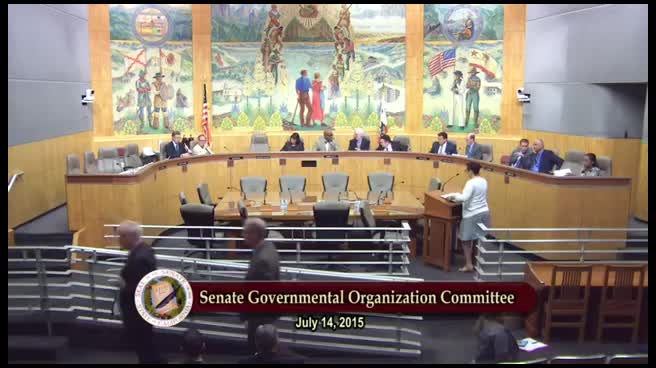 12MIN
Senate Standing Committee on Governmental Organization
Bill Author

Bill Co-Author(s):