AB 1584: Public social services: SSI/SSP.
- Session Year: 2015-2016
- House: Assembly
- Latest Version Date: 2016-08-25
Existing law provides for the State Supplementary Program for the Aged, Blind and Disabled (SSP), which requires the State Department of Social Services to contract with the United States Secretary of Health and Human Services to make payments to SSP recipients to supplement Supplemental Security Income (SSI) payments made available pursuant to the federal Social Security Act.
Under existing law, benefit payments under SSP are calculated by establishing the maximum level of nonexempt income and federal SSI and state SSP benefits for each category of eligible recipient. The state SSP payment is the amount required, when added to the nonexempt income and SSI benefits available to the recipient, to provide the maximum benefit payment. Existing law prohibits, for each calendar year, commencing with the 2011 calendar year, any cost-of-living adjustment from being made to the maximum benefit payment unless otherwise specified by statute, except for the pass along of any cost-of-living increase in the federal SSI benefits. Existing law continuously appropriates funds for the implementation of SSP.
This bill would reinstate the cost-of-living adjustment beginning January 1 of the 2018 calendar year.
By reinstating the cost-of-living adjustment, this bill would make an appropriation.
Existing law provides for the State Supplementary Program for the Aged, Blind and Disabled (SSP), which requires the State Department of Social Services to contract with the United States Secretary of Health and Human Services to make payments to SSP recipients to supplement Supplemental Security Income (SSI) payments made available pursuant to the federal Social Security Act.
Under existing law, benefit payments under SSP are calculated by establishing the maximum level of nonexempt income and federal SSI and state SSP benefits for each category of eligible recipient. The state SSP payment is the amount required, when added to the nonexempt income and SSI benefits available to the recipient, to provide the maximum benefit payment. Existing law prohibits, for each calendar year, commencing with the 2011 calendar year, any cost-of-living adjustment from being made to the maximum benefit payment unless otherwise specified by statute, except for the pass along of any cost-of-living increase in the federal SSI benefits. Existing law continuously appropriates funds for the implementation of SSP.
This bill would reinstate the cost-of-living adjustment beginning January 1 of the 2017 2018 calendar year. The bill would also require a maximum aid payment provided to an individual or a married couple that does not equal or exceed 96% of the 2016 federal poverty level, or 100% of the 2017 federal poverty level, as specified, to be increased to an amount that equals 96% or 100% of the federal poverty level, respectively.
By reinstating the cost-of-living adjustment and by increasing the amount of benefits paid under the SSP, adjustment, this bill would make an appropriation.
Existing law provides for the State Supplementary Program for the Aged, Blind and Disabled (SSP), which requires the State Department of Social Services to contract with the United States Secretary of Health and Human Services to make payments to SSP recipients to supplement Supplemental Security Income (SSI) payments made available pursuant to the federal Social Security Act.
Under existing law, benefit payments under SSP are calculated by establishing the maximum level of nonexempt income and federal SSI and state SSP benefits for each category of eligible recipient. The state SSP payment is the amount required, when added to the nonexempt income and SSI benefits available to the recipient, to provide the maximum benefit payment. Existing law prohibits, for each calendar year, commencing with the 2011 calendar year, any cost-of-living adjustment from being made to the maximum benefit payment unless otherwise specified by statute, except for the pass along of any cost-of-living increase in the federal SSI benefits. Existing law continuously appropriates funds for the implementation of SSP.
This bill would reinstate the cost-of-living adjustment beginning January 1 of the 2017 calendar year. The bill would also require a maximum aid payment provided to an individual or a married couple that does not equal or exceed 96% of the 2016 federal poverty level based on family size, level, or 100% of the 2017 federal poverty level based on family size, level, as specified, to be increased to an amount that equals 96% or 100% of the federal poverty level, respectively.
By reinstating the cost-of-living adjustment and by increasing the amount of benefits paid under the SSP, this bill would make an appropriation.
Existing law provides for the State Supplementary Program for the Aged, Blind and Disabled (SSP), which requires the State Department of Social Services to contract with the United States Secretary of Health and Human Services to make payments to SSP recipients to supplement Supplemental Security Income (SSI) payments made available pursuant to the federal Social Security Act.
Under existing law, benefit payments under SSP are calculated by establishing the maximum level of nonexempt income and federal SSI and state SSP benefits for each category of eligible recipient. The state SSP payment is the amount required, when added to the nonexempt income and SSI benefits available to the recipient, to provide the maximum benefit payment. Existing law prohibits, for each calendar year, commencing with the 2011 calendar year, any cost-of-living adjustment from being made to the maximum benefit payment unless otherwise specified by statute, except for the pass along of any cost-of-living increase in the federal SSI benefits. Existing law continuously appropriates funds for the implementation of SSP.
This bill would reinstate the cost-of-living adjustment beginning January 1 of the 2017 calendar year. The bill would also require a maximum aid payment that falls below does not equal or exceed 96% of the 2016 federal poverty line as of December 31, 2016, level based on family size, or 100% of the 2017 federal poverty line as of December 31, 2017, level based on family size, to be increased to an amount that equals 96% or 100% of the federal poverty line, level, respectively. The bill would require the increases to be provided in addition to the required cost-of-living adjustments.
By reinstating the cost-of-living adjustment and by increasing the amount of benefits paid under the SSP, this bill would make an appropriation.
Existing law provides for the State Supplementary Program for the Aged, Blind and Disabled (SSP), which requires the State Department of Social Services to contract with the United States Secretary of Health and Human Services to make payments to SSP recipients to supplement Supplemental Security Income (SSI) payments made available pursuant to the federal Social Security Act.
Under existing law, benefit payments under SSP are calculated by establishing the maximum level of nonexempt income and federal SSI and state SSP benefits for each category of eligible recipient. The state SSP payment is the amount required, when added to the nonexempt income and SSI benefits available to the recipient, to provide the maximum benefit payment. Existing law prohibits, for each calendar year, commencing with the 2011 calendar year, any cost-of-living adjustment from being made to the maximum benefit payment unless otherwise specified by statute, except for the pass along of any cost-of-living increase in the federal SSI benefits. Existing law continuously appropriates funds for the implementation of SSP.
This bill would reinstate the cost-of-living adjustment beginning July January 1 of the 2017 calendar year. The bill would successively increase aid grants for specified applicants and recipients by the amount of $21 on January 1 in 2017, 2018, 2019, and 2020. also require a maximum aid payment that falls below 96% of the federal poverty line as of December 31, 2016, or 100% of the federal poverty line as of December 31, 2017, to be increased to an amount that equals 96% or 100% of the federal poverty line, respectively. The bill would require the increases to be provided in addition to the required cost-of-living adjustments.
By reinstating the cost-of-living adjustment and by increasing the amount of benefits paid under the SSP, this bill would make an appropriation.
Existing law provides for the State Supplementary Program for the Aged, Blind and Disabled (SSP), which requires the State Department of Social Services to contract with the United States Secretary of Health and Human Services to make payments to SSP recipients to supplement Supplemental Security Income (SSI) payments made available pursuant to the federal Social Security Act.
Under existing law, benefit payments under SSP are calculated by establishing the maximum level of nonexempt income and federal SSI and state SSP benefits for each category of eligible recipient. The state SSP payment is the amount required, when added to the nonexempt income and SSI benefits available to the recipient, to provide the maximum benefit payment. Existing law prohibits, for each calendar year, commencing with the 2011 calendar year, any cost-of-living adjustment from being made to the maximum benefit payment unless otherwise specified by statute, except for the pass along of any cost-of-living increase in the federal SSI benefits. Existing law continuously appropriates funds for the implementation of SSP.
This bill would reinstate the cost-of-living adjustment beginning July 1 of the 2017 calendar year. The bill would successively increase aid grants for specified applicants and recipients by the amount of $21 on January 1 in 2017, 2018, 2019, and 2020.
By reinstating the cost-of-living adjustment and by increasing the amount of benefits paid under the SSP, this bill would make an appropriation.
(a)Except as provided in subdivision (d) or (g), the payment schedules set forth in Section 12200 shall be adjusted annually to reflect any increases or decreases in the cost of living. Except as provided in subdivision (e) or (f), these adjustments shall become effective January 1 of each year. The cost-of-living adjustment shall be based on the changes in the California Necessities Index, which as used in this section shall be the weighted average of changes for food, clothing, fuel, utilities, rent, and transportation for low-income consumers. The computation of annual adjustments in the California Necessities Index shall be made in accordance with the following steps:
(1)The base period expenditure amounts for each expenditure category within the California Necessities Index used to compute the annual grant adjustment are:
Food | $3,027 |
Clothing (apparel and upkeep) | 406 |
Fuel and other utilities | 529 |
Rent, residential | 4,883 |
Transportation | 1,757 |
Total | $10,602 |
(2)Based on the appropriate components of the Consumer Price Index for All Urban Consumers, as published by the United States Department of Labor, Bureau of Labor Statistics, the percentage change shall be determined for the 12-month period that ends 12 months prior to the January in which the cost-of-living adjustment will take effect, for each expenditure category specified in paragraph (1) within the following geographical areas: Los Angeles-Long Beach-Anaheim, San Francisco-Oakland, San Diego, and, to the extent statistically valid information is available from the Bureau of Labor Statistics, additional geographical areas within the state that include not less than 80 percent of recipients of aid under this chapter.
(3)Calculate a weighted percentage change for each of the expenditure categories specified in paragraph (1) using the applicable weighting factors for each area used by the Department of Industrial Relations to calculate the California Consumer Price Index (CCPI).
(4)Calculate a category adjustment factor for each expenditure category in paragraph (1) by (1) adding 100 to the applicable weighted percentage change as determined in paragraph (2) and (2) dividing the sum by 100.
(5)Determine the expenditure amounts for the current year by multiplying each expenditure amount determined for the prior year by the applicable category adjustment factor determined in paragraph (4).
(6)Determine the overall adjustment factor by dividing (1) the sum of the expenditure amounts as determined in paragraph (4) for the current year by (2) the sum of the expenditure amounts as determined in paragraph (4) for the prior year.
(b)The overall adjustment factor determined by the preceding computational steps shall be multiplied by the payment schedules established pursuant to Section 12200 as are in effect during the month of December preceding the calendar year in which the adjustments are to occur, and the product rounded to the nearest dollar. The resultant amounts shall constitute the new schedules for the categories given under subdivisions (a), (b), (c), (d), (e), (f), and (g) of Section 12200, and shall be filed with the Secretary of State. The amount as set forth in subdivision (h) of Section 12200 shall be adjusted annually pursuant to this section in the event that the secretary agrees to administer payment under that subdivision. The payment schedule for subdivision (i) of Section 12200 shall be computed as specified, based on the new payment schedules for subdivisions (a), (b), (c), and (d) of Section 12200.
(c)The department shall adjust any amounts of aid under this chapter to ensure that the minimum level required by the Social Security Act in order to maintain eligibility for funds under Title XIX of that act is met.
(d)(1)No adjustment shall be made under this section for the 1991, 1992, 1993, 1994, 1995, 1996, 1997, 1998, 2004, 2006, 2007, 2008, 2009, and 2010 calendar years to reflect any change in the cost of living. Elimination of the cost-of-living adjustment pursuant to this paragraph shall satisfy the requirements of Section 12201.05, and no further reduction shall be made pursuant to that section.
(2)Any cost-of-living adjustment granted under this section for any calendar year shall not include adjustments for any calendar year in which the cost-of-living adjustment was suspended pursuant to paragraph (1).
(e)For the 2003 calendar year, the adjustment required by this section shall become effective June 1, 2003.
(f)For the 2005 calendar year, the adjustment required by this section shall become effective April 1, 2005.
(g)(1)For the 2011 calendar year to the 2017 calendar year, inclusive, no adjustment shall be made under this section unless otherwise specified by statute.
(2)Notwithstanding paragraph (1), the pass along of federal benefits provided for in Section 12201.05 shall be effective on January 1 of each calendar year.
(a)Commencing January 1, 2017, any maximum aid payment provided to an individual pursuant to Section 12200 and adjusted pursuant to Section 12201 that does not equal or exceed 96 percent of the 2016 federal poverty level for a household of one shall be increased to an amount that equals 96 percent of the 2016 federal poverty level for a household of one.
(b)Commencing January 1, 2017, any maximum aid payment provided to a married couple pursuant to Section 12200 and adjusted pursuant to Section 12201 that does not equal or exceed 96 percent of the 2016 federal poverty level for a household of two shall be increased to an amount that equals 96 percent of the 2016 federal poverty level for a household of two.
(c)Commencing January 1, 2018, any maximum aid payment provided to an individual pursuant to Section 12200 and adjusted pursuant to Section 12201 that does not equal or exceed 100 percent of the 2017 federal poverty level for a household of one shall be increased to an amount that equals 100 percent of the 2017 federal poverty level for a household of one.
(d)Commencing January 1, 2018, any maximum aid payment provided to a married couple pursuant to Section 12200 and adjusted pursuant to Section 12201 that does not equal or exceed 100 percent of the 2017 federal poverty level for a household of two shall be increased to an amount that equals 100 percent of the 2017 federal poverty level for a household of two.
(e)This section is not intended to result in the reduction of any payment provided to an individual that exceeds 96 percent of the 2016 federal poverty level for a household of one during the 2017 calendar year, or that exceeds 100 percent of the 2017 federal poverty level for a household of one during the 2018 calendar year.
(f)This section is not intended to result in the reduction of any payment provided to a married couple that exceeds 96 percent of the 2016 federal poverty level for a household of two during the 2017 calendar year, or that exceeds 100 percent of the 2017 federal poverty level for a household of two during the 2018 calendar year.
SEC. 2.SECTION 1.Section 12201 of the Welfare and Institutions Code is amended to read:12201.(a)Except as provided in subdivision (d), (d) or (g), the payment schedules set forth in Section 12200 shall be adjusted annually to reflect any increases or decreases in the cost of living. Except as provided in subdivision (e) or (f), these adjustments shall become effective January 1 of each year. The cost-of-living adjustment shall be based on the changes in the California Necessities Index, which as used in this section shall be the weighted average of changes for food, clothing, fuel, utilities, rent, and transportation for low-income consumers. The computation of annual adjustments in the California Necessities Index shall be made in accordance with the following steps:
(1)The base period expenditure amounts for each expenditure category within the California Necessities Index used to compute the annual grant adjustment are:
Food | $3,027 |
Clothing (apparel and upkeep) | 406 |
Fuel and other utilities | 529 |
Rent, residential | 4,883 |
Transportation | 1,757 |
Total | $10,602 |
(2)Based on the appropriate components of the Consumer Price Index for All Urban Consumers, as published by the United States Department of Labor, Bureau of Labor Statistics, the percentage change shall be determined for the 12-month period that ends 12 months prior to the January in which the cost-of-living adjustment will take effect, for each expenditure category specified in paragraph (1) within the following geographical areas: Los Angeles-Long Beach-Anaheim, San Francisco-Oakland, San Diego, and, to the extent statistically valid information is available from the Bureau of Labor Statistics, additional geographical areas within the state that include not less than 80 percent of recipients of aid under this chapter.
(3)Calculate a weighted percentage change for each of the expenditure categories specified in paragraph (1) using the applicable weighting factors for each area used by the Department of Industrial Relations to calculate the California Consumer Price Index (CCPI).
(4)Calculate a category adjustment factor for each expenditure category in paragraph (1) by (1) adding 100 to the applicable weighted percentage change as determined in paragraph (2) and (2) dividing the sum by 100.
(5)Determine the expenditure amounts for the current year by multiplying each expenditure amount determined for the prior year by the applicable category adjustment factor determined in paragraph (4).
(6)Determine the overall adjustment factor by dividing (1) the sum of the expenditure amounts as determined in paragraph (4) for the current year by (2) the sum of the expenditure amounts as determined in paragraph (4) for the prior year.
(b)The overall adjustment factor determined by the preceding computational steps shall be multiplied by the payment schedules established pursuant to Section 12200 as are in effect during the month of December preceding the calendar year in which the adjustments are to occur, and the product rounded to the nearest dollar. The resultant amounts shall constitute the new schedules for the categories given under subdivisions (a), (b), (c), (d), (e), (f), and (g) of Section 12200, and shall be filed with the Secretary of State. The amount as set forth in subdivision (h) of Section 12200 shall be adjusted annually pursuant to this section in the event that the secretary agrees to administer payment under that subdivision. The payment schedule for subdivision (i) of Section 12200 shall be computed as specified, based on the new payment schedules for subdivisions (a), (b), (c), and (d) of Section 12200.
(c)The department shall adjust any amounts of aid under this chapter to ensure that the minimum level required by the Social Security Act in order to maintain eligibility for funds under Title XIX of that act is met.
(d)(1)No adjustment shall be made under this section for the 1991, 1992, 1993, 1994, 1995, 1996, 1997, 1998, 2004, 2006, 2007, 2008, 2009, and 2010 calendar years to reflect any change in the cost of living. Elimination of the cost-of-living adjustment pursuant to this paragraph shall satisfy the requirements of Section 12201.05, and no further reduction shall be made pursuant to that section.
(2)Any cost-of-living adjustment granted under this section for any calendar year shall not include adjustments for any calendar year in which the cost-of-living adjustment was suspended pursuant to paragraph (1).
(e)For the 2003 calendar year, the adjustment required by this section shall become effective June 1, 2003.
(f)For the 2005 calendar year, the adjustment required by this section shall become effective April 1, 2005.
(g)(1)For the 2011 calendar year to the 2017 calendar year, inclusive, no adjustment shall be made under this section unless otherwise specified by statute.
(2)Notwithstanding paragraph (1), the pass along of federal benefits provided for in Section 12201.05 shall be effective on January 1 of each calendar year.
(a)Commencing January 1, 2017, any maximum aid payment provided to an individual pursuant to Section 12200 and adjusted pursuant to Section 12201 that does not equal or exceed 96 percent of the 2016 federal poverty level based on family size for a household of one shall be increased to an amount that equals 96 percent of the 2016 federal poverty level based on family size. for a household of one.
(b)Commencing January 1, 2017, any maximum aid payment provided to a married couple pursuant to Section 12200 and adjusted pursuant to Section 12201 that does not equal or exceed 96 percent of the 2016 federal poverty level for a household of two shall be increased to an amount that equals 96 percent of the 2016 federal poverty level for a household of two.
(b)
(c)Commencing January 1, 2018, any maximum aid payment provided to an individual pursuant to Section 12200 and adjusted pursuant to Section 12201 that does not equal or exceed 100 percent of the 2017 federal poverty level based on family size for a household of one shall be increased to an amount that equals 100 percent of the 2017 federal poverty level based on family size. for a household of one.
(d)Commencing January 1, 2018, any maximum aid payment provided to a married couple pursuant to Section 12200 and adjusted pursuant to Section 12201 that does not equal or exceed 100 percent of the 2017 federal poverty level for a household of two shall be increased to an amount that equals 100 percent of the 2017 federal poverty level for a household of two.
(c)
(e)This section is not intended to result in the reduction of any payment provided to an individual that exceeds 96 percent of the 2016 federal poverty level based on family size for a household of one during the 2017 calendar year, or that exceeds 100 percent of the 2017 federal poverty level based on family size for a household of one during the 2018 calendar year.
(f)This section is not intended to result in the reduction of any payment provided to a married couple that exceeds 96 percent of the 2016 federal poverty level for a household of two during the 2017 calendar year, or that exceeds 100 percent of the 2017 federal poverty level for a household of two during the 2018 calendar year.
SEC. 2.Section 12201 of the Welfare and Institutions Code is amended to read:12201.(a)Except as provided in subdivision (d), the payment schedules set forth in Section 12200 shall be adjusted annually to reflect any increases or decreases in the cost of living. Except as provided in subdivision (e) or (f), these adjustments shall become effective January 1 of each year. The cost-of-living adjustment shall be based on the changes in the California Necessities Index, which as used in this section shall be the weighted average of changes for food, clothing, fuel, utilities, rent, and transportation for low-income consumers. The computation of annual adjustments in the California Necessities Index shall be made in accordance with the following steps:
(1)The base period expenditure amounts for each expenditure category within the California Necessities Index used to compute the annual grant adjustment are:
Food | $3,027 |
Clothing (apparel and upkeep) | 406 |
Fuel and other utilities | 529 |
Rent, residential | 4,883 |
Transportation | 1,757 |
Total | $10,602 |
(2)Based on the appropriate components of the Consumer Price Index for All Urban Consumers, as published by the United States Department of Labor, Bureau of Labor Statistics, the percentage change shall be determined for the 12-month period that ends 12 months prior to the January in which the cost-of-living adjustment will take effect, for each expenditure category specified in paragraph (1) within the following geographical areas: Los Angeles-Long Beach-Anaheim, San Francisco-Oakland, San Diego, and, to the extent statistically valid information is available from the Bureau of Labor Statistics, additional geographical areas within the state that include not less than 80 percent of recipients of aid under this chapter.
(3)Calculate a weighted percentage change for each of the expenditure categories specified in paragraph (1) using the applicable weighting factors for each area used by the Department of Industrial Relations to calculate the California Consumer Price Index (CCPI).
(4)Calculate a category adjustment factor for each expenditure category in paragraph (1) by (1) adding 100 to the applicable weighted percentage change as determined in paragraph (2) and (2) dividing the sum by 100.
(5)Determine the expenditure amounts for the current year by multiplying each expenditure amount determined for the prior year by the applicable category adjustment factor determined in paragraph (4).
(6)Determine the overall adjustment factor by dividing (1) the sum of the expenditure amounts as determined in paragraph (4) for the current year by (2) the sum of the expenditure amounts as determined in paragraph (4) for the prior year.
(b)The overall adjustment factor determined by the preceding computational steps shall be multiplied by the payment schedules established pursuant to Section 12200 as are in effect during the month of December preceding the calendar year in which the adjustments are to occur, and the product rounded to the nearest dollar. The resultant amounts shall constitute the new schedules for the categories given under subdivisions (a), (b), (c), (d), (e), (f), and (g) of Section 12200, and shall be filed with the Secretary of State. The amount as set forth in subdivision (h) of Section 12200 shall be adjusted annually pursuant to this section in the event that the secretary agrees to administer payment under that subdivision. The payment schedule for subdivision (i) of Section 12200 shall be computed as specified, based on the new payment schedules for subdivisions (a), (b), (c), and (d) of Section 12200.
(c)The department shall adjust any amounts of aid under this chapter to ensure that the minimum level required by the Social Security Act in order to maintain eligibility for funds under Title XIX of that act is met.
(d)(1)No adjustment shall be made under this section for the 1991, 1992, 1993, 1994, 1995, 1996, 1997, 1998, 2004, 2006, 2007, 2008, 2009, and 2010 calendar years to reflect any change in the cost of living. Elimination of the cost-of-living adjustment pursuant to this paragraph shall satisfy the requirements of Section 12201.05, and no further reduction shall be made pursuant to that section.
(2)Any cost-of-living adjustment granted under this section for any calendar year shall not include adjustments for any calendar year in which the cost-of-living adjustment was suspended pursuant to paragraph (1).
(e)For the 2003 calendar year, the adjustment required by this section shall become effective June 1, 2003.
(f)For the 2005 calendar year, the adjustment required by this section shall become effective April 1, 2005.
(a)Notwithstanding any other law, a Commencing January 1, 2017, any maximum aid payment provided pursuant to Section 12200 and adjusted pursuant to Section 12201 that falls below does not equal or exceed 96 percent of the 2016 federal poverty level as of December 31, 2016, based on family size shall be increased to an amount that equals 96 percent of the 2016 federal poverty level. level based on family size.
(b)Notwithstanding any other law, commencing Commencing January 1, 2018, a any maximum aid payment that falls below does not equal or exceed 100 percent of the 2017 federal poverty level as of December 31, 2017, based on family size shall be increased to an amount that equals 100 percent of the 2017 federal poverty level. level based on family size.
(c)This section is not intended to result in the reduction of any payment that exceeds 96 percent of the 2016 federal poverty level on December 31, 2016, based on family size during the 2017 calendar year, or that exceeds 100 percent of the 2017 federal poverty line on December 31, 2017. level based on family size during the 2018 calendar year.
(d)The increases required by this section shall be provided in addition to the cost-of-living adjustments required by Section 12201.
SEC. 2.Section 12201 of the Welfare and Institutions Code is amended to read:12201.(a)Except as provided in subdivision (d) or (g), (d), the payment schedules set forth in Section 12200 shall be adjusted annually to reflect any increases or decreases in the cost of living. Except as provided in subdivision (e), (f), or (g), (e) or (f), these adjustments shall become effective January 1 of each year. The cost-of-living adjustment shall be based on the changes in the California Necessities Index, which as used in this section shall be the weighted average of changes for food, clothing, fuel, utilities, rent, and transportation for low-income consumers. The computation of annual adjustments in the California Necessities Index shall be made in accordance with the following steps:
(1)The base period expenditure amounts for each expenditure category within the California Necessities Index used to compute the annual grant adjustment are:
Food | $3,027 |
Clothing (apparel and upkeep) | 406 |
Fuel and other utilities | 529 |
Rent, residential | 4,883 |
Transportation | 1,757 |
Total | $10,602 |
(2)Based on the appropriate components of the Consumer Price Index for All Urban Consumers, as published by the United States Department of Labor, Bureau of Labor Statistics, the percentage change shall be determined for the 12-month period which that ends 12 months prior to the January in which the cost-of-living adjustment will take effect, for each expenditure category specified in paragraph (1) within the following geographical areas: Los Angeles-Long Beach-Anaheim, San Francisco-Oakland, San Diego, and, to the extent statistically valid information is available from the Bureau of Labor Statistics, additional geographical areas within the state which that include not less than 80 percent of recipients of aid under this chapter.
(3)Calculate a weighted percentage change for each of the expenditure categories specified in paragraph (1) using the applicable weighting factors for each area used by the Department of Industrial Relations to calculate the California Consumer Price Index (CCPI).
(4)Calculate a category adjustment factor for each expenditure category in paragraph (1) by (1) adding 100 to the applicable weighted percentage change as determined in paragraph (2) and (2) dividing the sum by 100.
(5)Determine the expenditure amounts for the current year by multiplying each expenditure amount determined for the prior year by the applicable category adjustment factor determined in paragraph (4).
(6)Determine the overall adjustment factor by dividing (1) the sum of the expenditure amounts as determined in paragraph (4) for the current year by (2) the sum of the expenditure amounts as determined in paragraph (4) for the prior year.
(b)The overall adjustment factor determined by the preceding computational steps shall be multiplied by the payment schedules established pursuant to Section 12200 as are in effect during the month of December preceding the calendar year in which the adjustments are to occur, and the product rounded to the nearest dollar. The resultant amounts shall constitute the new schedules for the categories given under subdivisions (a), (b), (c), (d), (e), (f), and (g) of Section 12200, and shall be filed with the Secretary of State. The amount as set forth in subdivision (h) of Section 12200 shall be adjusted annually pursuant to this section in the event that the secretary agrees to administer payment under that subdivision. The payment schedule for subdivision (i) of Section 12200 shall be computed as specified, based on the new payment schedules for subdivisions (a), (b), (c), and (d) of Section 12200.
(c)The department shall adjust any amounts of aid under this chapter to ensure that the minimum level required by the Social Security Act in order to maintain eligibility for funds under Title XIX of that act is met.
(d)(1)No adjustment shall be made under this section for the 1991, 1992, 1993, 1994, 1995, 1996, 1997, 1998, 2004, 2006, 2007, 2008, 2009, and 2010 calendar years to reflect any change in the cost of living. Elimination of the cost-of-living adjustment pursuant to this paragraph shall satisfy the requirements of Section 12201.05, and no further reduction shall be made pursuant to that section.
(2)Any cost-of-living adjustment granted under this section for any calendar year shall not include adjustments for any calendar year in which the cost-of-living adjustment was suspended pursuant to paragraph (1).
(e)For the 2003 calendar year, the adjustment required by this section shall become effective June 1, 2003.
(f)For the 2005 calendar year, the adjustment required by this section shall become effective April 1, 2005.
(g)(1)For the 2011 to the 2016 calendar year, inclusive, no adjustment shall be made under this section unless otherwise specified by statute.
(2)Notwithstanding paragraph (1), the pass along of federal benefits provided for in Section 12201.05 shall be effective on January 1 of each calendar year.
Notwithstanding any other law, on the following dates the maximum aid payments in accordance with subdivision (c) of Section 12200 for an applicant or recipient who is not entitled to an allowance pursuant to subdivision (e) of Section 12200 shall be increased by twenty-one dollars ($21) per month:
(a)January 1, 2017.
(b)January 1, 2018.
(c)January 1, 2019.
(d)January 1, 2020.
SECTION 1.Section 12200.7 is added to the Welfare and Institutions Code, to read:12200.7.(a)Notwithstanding any other law, a maximum aid payment that falls below 96 percent of the federal poverty level as of December 31, 2016, shall be increased to an amount that equals 96 percent of the federal poverty level.
(b)Notwithstanding any other law, commencing January 1, 2018, a maximum aid payment that falls below 100 percent of the federal poverty level as of December 31, 2017, shall be increased to an amount that equals 100 percent of the federal poverty level.
(c)This section is not intended to result in the reduction of any payment that exceeds 96 percent of the federal poverty level on December 31, 2016, or 100 percent of the federal poverty line on December 31, 2017.
(d)The increases required by this section shall be provided in addition to the cost-of-living adjustments required by Section 12201.
SEC. 2.Section 12201 of the Welfare and Institutions Code is amended to read:12201.(a)Except as provided in subdivision (d) or (g), the payment schedules set forth in Section 12200 shall be adjusted annually to reflect any increases or decreases in the cost of living. Except as provided in subdivision (e), (f), or (g), or (h) these adjustments shall become effective January 1 of each year. The cost-of-living adjustment shall be based on the changes in the California Necessities Index, which as used in this section shall be the weighted average of changes for food, clothing, fuel, utilities, rent, and transportation for low-income consumers. The computation of annual adjustments in the California Necessities Index shall be made in accordance with the following steps:
(1)The base period expenditure amounts for each expenditure category within the California Necessities Index used to compute the annual grant adjustment are:
Food | $3,027 |
Clothing (apparel and upkeep) | 406 |
Fuel and other utilities | 529 |
Rent, residential | 4,883 |
Transportation | 1,757 |
Total | $10,602 |
(2)Based on the appropriate components of the Consumer Price Index for All Urban Consumers, as published by the United States Department of Labor, Bureau of Labor Statistics, the percentage change shall be determined for the 12-month period which ends 12 months prior to the January in which the cost-of-living adjustment will take effect, for each expenditure category specified in paragraph (1) within the following geographical areas: Los Angeles-Long Beach-Anaheim, San Francisco-Oakland, San Diego, and, to the extent statistically valid information is available from the Bureau of Labor Statistics, additional geographical areas within the state which include not less than 80 percent of recipients of aid under this chapter.
(3)Calculate a weighted percentage change for each of the expenditure categories specified in paragraph (1) using the applicable weighting factors for each area used by the Department of Industrial Relations to calculate the California Consumer Price Index (CCPI).
(4)Calculate a category adjustment factor for each expenditure category in paragraph (1) by (1) adding 100 to the applicable weighted percentage change as determined in paragraph (2) and (2) dividing the sum by 100.
(5)Determine the expenditure amounts for the current year by multiplying each expenditure amount determined for the prior year by the applicable category adjustment factor determined in paragraph (4).
(6)Determine the overall adjustment factor by dividing (1) the sum of the expenditure amounts as determined in paragraph (4) for the current year by (2) the sum of the expenditure amounts as determined in paragraph (4) for the prior year.
(b)The overall adjustment factor determined by the preceding computational steps shall be multiplied by the payment schedules established pursuant to Section 12200 as are in effect during the month of December preceding the calendar year in which the adjustments are to occur, and the product rounded to the nearest dollar. The resultant amounts shall constitute the new schedules for the categories given under subdivisions (a), (b), (c), (d), (e), (f), and (g) of Section 12200, and shall be filed with the Secretary of State. The amount as set forth in subdivision (h) of Section 12200 shall be adjusted annually pursuant to this section in the event that the secretary agrees to administer payment under that subdivision. The payment schedule for subdivision (i) of Section 12200 shall be computed as specified, based on the new payment schedules for subdivisions (a), (b), (c), and (d) of Section 12200.
(c)The department shall adjust any amounts of aid under this chapter to ensure that the minimum level required by the Social Security Act in order to maintain eligibility for funds under Title XIX of that act is met.
(d)(1)No adjustment shall be made under this section for the 1991, 1992, 1993, 1994, 1995, 1996, 1997, 1998, 2004, 2006, 2007, 2008, 2009, and 2010 calendar years to reflect any change in the cost of living. Elimination of the cost-of-living adjustment pursuant to this paragraph shall satisfy the requirements of Section 12201.05, and no further reduction shall be made pursuant to that section.
(2)Any cost-of-living adjustment granted under this section for any calendar year shall not include adjustments for any calendar year in which the cost-of-living adjustment was suspended pursuant to paragraph (1).
(e)For the 2003 calendar year, the adjustment required by this section shall become effective June 1, 2003.
(f)For the 2005 calendar year, the adjustment required by this section shall become effective April 1, 2005.
(g)(1)For the 2011 to the 2016 calendar year, inclusive, no adjustment shall be made under this section unless otherwise specified by statute.
(2)Notwithstanding paragraph (1), the pass along of federal benefits provided for in Section 12201.05 shall be effective on January 1 of each calendar year.
(h)For the 2017 calendar year, the adjustment required by this section shall become effective July 1, 2017.
Notwithstanding any other law, on the following dates the maximum aid payments in accordance with subdivision (c) of Section 12200 for an applicant or recipient who is not entitled to an allowance pursuant to subdivision (e) of Section 12200 shall be increased by twenty-one dollars ($21) per month:
(a)January 1, 2017.
(b)January 1, 2018.
(c)January 1, 2019.
(d)January 1, 2020.
SEC. 2.Section 12201 of the Welfare and Institutions Code is amended to read:12201.(a)Except as provided in subdivision (d), (d) or (g), the payment schedules set forth in Section 12200 shall be adjusted annually to reflect any increases or decreases in the cost of living. Except as provided in subdivision (e), (f), or (g), (g), or (h) these adjustments shall become effective January 1 of each year. The cost-of-living adjustment shall be based on the changes in the California Necessities Index, which as used in this section shall be the weighted average of changes for food, clothing, fuel, utilities, rent, and transportation for low-income consumers. The computation of annual adjustments in the California Necessities Index shall be made in accordance with the following steps:
(1)The base period expenditure amounts for each expenditure category within the California Necessities Index used to compute the annual grant adjustment are:
Food | $3,027 |
Clothing (apparel and upkeep) | 406 |
Fuel and other utilities | 529 |
Rent, residential | 4,883 |
Transportation | 1,757 |
Total | $10,602 |
(2)Based on the appropriate components of the Consumer Price Index for All Urban Consumers, as published by the United States Department of Labor, Bureau of Labor Statistics, the percentage change shall be determined for the 12-month period which ends 12 months prior to the January in which the cost-of-living adjustment will take effect, for each expenditure category specified in paragraph (1) within the following geographical areas: Los Angeles-Long Beach-Anaheim, San Francisco-Oakland, San Diego, and, to the extent statistically valid information is available from the Bureau of Labor Statistics, additional geographical areas within the state which include not less than 80 percent of recipients of aid under this chapter.
(3)Calculate a weighted percentage change for each of the expenditure categories specified in paragraph (1) using the applicable weighting factors for each area used by the Department of Industrial Relations to calculate the California Consumer Price Index (CCPI).
(4)Calculate a category adjustment factor for each expenditure category in paragraph (1) by (1) adding 100 to the applicable weighted percentage change as determined in paragraph (2) and (2) dividing the sum by 100.
(5)Determine the expenditure amounts for the current year by multiplying each expenditure amount determined for the prior year by the applicable category adjustment factor determined in paragraph (4).
(6)Determine the overall adjustment factor by dividing (1) the sum of the expenditure amounts as determined in paragraph (4) for the current year by (2) the sum of the expenditure amounts as determined in paragraph (4) for the prior year.
(b)The overall adjustment factor determined by the preceding computational steps shall be multiplied by the payment schedules established pursuant to Section 12200 as are in effect during the month of December preceding the calendar year in which the adjustments are to occur, and the product rounded to the nearest dollar. The resultant amounts shall constitute the new schedules for the categories given under subdivisions (a), (b), (c), (d), (e), (f), and (g) of Section 12200, and shall be filed with the Secretary of State. The amount as set forth in subdivision (h) of Section 12200 shall be adjusted annually pursuant to this section in the event that the secretary agrees to administer payment under that subdivision. The payment schedule for subdivision (i) of Section 12200 shall be computed as specified, based on the new payment schedules for subdivisions (a), (b), (c), and (d) of Section 12200.
(c)The department shall adjust any amounts of aid under this chapter to ensure that the minimum level required by the Social Security Act in order to maintain eligibility for funds under Title XIX of that act is met.
(d)(1)No adjustment shall be made under this section for the 1991, 1992, 1993, 1994, 1995, 1996, 1997, 1998, 2004, 2006, 2007, 2008, 2009, and 2010 calendar years to reflect any change in the cost of living. Elimination of the cost-of-living adjustment pursuant to this paragraph shall satisfy the requirements of Section 12201.05, and no further reduction shall be made pursuant to that section.
(2)Any cost-of-living adjustment granted under this section for any calendar year shall not include adjustments for any calendar year in which the cost-of-living adjustment was suspended pursuant to paragraph (1).
(e)For the 2003 calendar year, the adjustment required by this section shall become effective June 1, 2003.
(f)For the 2005 calendar year, the adjustment required by this section shall become effective April 1, 2005.
(g)(1)For the 2011 calendar year and each calendar year thereafter, to the 2016 calendar year, inclusive, no adjustment shall be made under this section unless otherwise specified by statute.
(2)Notwithstanding paragraph (1), the pass along of federal benefits provided for in Section 12201.05 shall be effective on January 1 of each calendar year.
(h)For the 2017 calendar year, the adjustment required by this section shall become effective July 1, 2017.
|
Date
|
Status
|
|---|---|
| Jun 6, 2016 | In Senate. Read first time. To Com. on RLS. for assignment. |
| Aug 30, 2016 | Enrolled and presented to the Governor at 4 p.m. |
| Aug 23, 2016 | Senate amendments concurred in. To Engrossing and Enrolling. (Ayes 79. Noes 0. Page 6155.). |
| Aug 23, 2016 | Senate amendments concurred in. To Engrossing and Enrolling. |
| Aug 19, 2016 | In Assembly. Concurrence in Senate amendments pending. May be considered on or after August 21 pursuant to Assembly Rule 77. |
| Aug 18, 2016 | Read third time. Passed. Ordered to the Assembly. (Ayes 38. Noes 0.). |
| Aug 18, 2016 | Read third time. Passed. Ordered to the Assembly. (Ayes 38. Noes 0. Page 5116.). |
| Aug 18, 2016 | Read third time. Passed. Ordered to the Assembly. |
| Aug 15, 2016 | Read second time and amended. Ordered to third reading. |
| Aug 11, 2016 | From committee: Amend, and do pass as amended. (Ayes 7. Noes 0.) (August 11). |
| Aug 1, 2016 | In committee: Referred to APPR. suspense file. |
| Jun 30, 2016 | Read second time and amended. Re-referred to Com. on APPR. |
| Jun 29, 2016 | From committee: Amend, and do pass as amended and re-refer to Com. on APPR. (Ayes 5. Noes 0.) (June 28). |
| Jun 9, 2016 | Referred to Com. on HUMAN S. |
| Jan 6, 2016 | Read first time. To print. |
| Jun 2, 2016 | Read third time. Passed. Ordered to the Senate. (Ayes 76. Noes 0.) |
| Jun 2, 2016 | Read third time. Passed. Ordered to the Senate. (Ayes 76. Noes 0. Page 5236.) |
| Jun 2, 2016 | Read third time. Passed. Ordered to the Senate. |
| May 31, 2016 | Read second time. Ordered to third reading. |
| May 27, 2016 | From committee: Do pass. (Ayes 16. Noes 0.) (May 27). |
| Apr 20, 2016 | In committee: Set, first hearing. Referred to APPR. suspense file. |
| Apr 7, 2016 | Re-referred to Com. on APPR. |
| Apr 6, 2016 | Read second time and amended. |
| Apr 5, 2016 | From committee: Amend, and do pass as amended and re-refer to Com. on APPR. (Ayes 6. Noes 0.) (March 29). |
| Mar 28, 2016 | Re-referred to Com. on HUM. S. |
| Mar 18, 2016 | From committee chair, with author's amendments: Amend, and re-refer to Com. on HUM. S. Read second time and amended. |
| Feb 1, 2016 | Referred to Com. on HUM. S. |
| Jan 7, 2016 | From printer. May be heard in committee February 6. |
|
Date
|
Description
|
Location
|
Votes
|
|
|---|---|---|---|---|
| Aug 23, 2016 | AB 1584 BROWN Concurrence in Senate Amendments | Assembly Floor |
Passed |
|
| Aug 18, 2016 | Assembly 3rd Reading AB1584 Brown By Liu | Senate Floor |
Passed |
|
| Aug 11, 2016 | Do pass as amended | Senate Standing Committee on Appropriations |
Passed |
|
| Aug 1, 2016 | Placed on suspense file | Senate Standing Committee on Appropriations |
Passed |
|
| Jun 28, 2016 | Do pass as amended, but first amend, and re-refer to the Committee on [Appropriations] | Senate Standing Committee on Human Services |
Passed |
|
| Jun 2, 2016 | AB 1584 BROWN Assembly Third Reading | Assembly Floor |
Passed |
|
| May 27, 2016 | Do pass. | Assembly Standing Committee on Appropriations |
Passed |
|
| Mar 29, 2016 | Do pass as amended and be re-referred to the Committee on [Appropriations] | Assembly Standing Committee on Human Services |
Passed |
This list shows positions taken on this bill by organizations on the date displayed, which is linked to the original source.
Positions by individuals are not included.
|
Organization
|
Position
|
Date
|
|---|---|---|
| 2-1-1 Humboldt County | ** Support | Mar 29, 2016 |
| AARP | ** Support | Aug 18, 2016 |
| AFSCME Local 3930 | ** Support | Aug 18, 2016 |
| Alameda County Board of Supervisors | ** Support | Aug 18, 2016 |
| Alameda County Developmental Disabilities Council | ** Support | Aug 18, 2016 |
| Alameda County Food Bank | * Support | Aug 1, 2016 |
| American Civil Liberties Union of California | ** Support | Aug 18, 2016 |
| Association Of Regional Center Agencies | ** Support | Mar 29, 2016 |
| Beacon Presbyterian Fellowship | ** Support | Mar 29, 2016 |
| Berkeley Food Pantry | ** Support | Mar 29, 2016 |
| Board of Supervisors of Solano County | * Support | Aug 1, 2016 |
| California Alliance for Retired Americans Senior Disability Action in San Francisco | * Support | Jun 28, 2016 |
| California Alliance Of Child And Family Services | * Support | Mar 29, 2016 |
| California Association Of Food Banks | * Support | Aug 1, 2016 |
| California Association Of Public Authorities For Ihss | ** Support | Aug 18, 2016 |
| California Association of Retired Americans | * Support | Jun 28, 2016 |
| California Catholic Conference | ** Support | Aug 18, 2016 |
| California Council of Blind | * Support | Mar 29, 2016 |
| California Council Of The Blind | ** Support | Mar 29, 2016 |
| California Food Policy Advocates | * Support | Jun 28, 2016 |
| California for Policy Advocates | * Support | Mar 29, 2016 |
| California Foundation For Independent Living Centers | * Support | Jun 28, 2016 |
| California Hunger Action Coalition | * Support | Jun 28, 2016 |
| California Immigrant Policy Center | ** Support | Aug 18, 2016 |
| California In-Home Supportive Services Consumers Alliance | ** Support | Mar 29, 2016 |
| California Long Term-Care Ombudsman Association | * Support | Mar 29, 2016 |
| California PACE Association | ** Support | Aug 18, 2016 |
| California Partnership of the Health and Human Services Network | * Support | Mar 29, 2016 |
| California State Long Term Care Ombudsman | * Support | Mar 29, 2016 |
| Californians for Disability Rights | * Support | Aug 1, 2016 |
| Californians for SSI | ** Support | Aug 18, 2016 |
| City and County of San Francisco | ** Support | Aug 18, 2016 |
| Coalition California Welfare Rights Organization | * Support | Jun 28, 2016 |
| Communities Actively Living Independent & Free | ** Support | Mar 29, 2016 |
| Community Food Bank | ** Support | Mar 29, 2016 |
| Community of Activists from San Francisco | * Support | Jun 28, 2016 |
| Community Resources for Independent Living | ** Support | Mar 29, 2016 |
| County Of Alameda | ** Support | Aug 18, 2016 |
| County Welfare Directors Association of California | ** Support | Aug 18, 2016 |
| Disability Organizing Group for Initiating Total Equality | * Support | Jun 28, 2016 |
| Disability Rights California | ** Support | Aug 18, 2016 |
| Dogfight | * Support | Aug 1, 2016 |
| East Bay Legislative Coalition | ** Support | Aug 18, 2016 |
| Educate. Advocate. | ** Support | Mar 29, 2016 |
| Feeding America San Diego | ** Support | Mar 29, 2016 |
| Food Bank of Contra Costa | * Support | Mar 29, 2016 |
| Food Bank of Contra Costa & Solano Counties | ** Support | Mar 29, 2016 |
| Food Bank of Contra Costa and Solano | * Support | Jun 28, 2016 |
| Food for People | * Support | Jun 28, 2016 |
| Handicap | * Support | Jun 28, 2016 |
| Hunger Action Los Angeles | ** Support | Mar 29, 2016 |
| Insight Center for Community Economic Development | ** Support | Mar 29, 2016 |
| Interfaith Counsel of Contra Costa County | * Support | Jun 28, 2016 |
| Jewish Family Service of Los Angeles | ** Support | Mar 29, 2016 |
| Jewish Labor Committee Western Region | ** Support | Mar 29, 2016 |
| Jewish Public Affairs Committee Of California | ** Support | Aug 18, 2016 |
| Justice in Aging | ** Support | Mar 29, 2016 |
| Los Robles Apartments Food Pantry | ** Support | Mar 29, 2016 |
| Maldev | * Support | Mar 29, 2016 |
| Mercy Brown Bag Program | * Support | Mar 29, 2016 |
| Mexican American Legal Defense and Educational Fund | ** Support | Aug 18, 2016 |
| Mission for the Homeless | ** Support | Mar 29, 2016 |
| Multi-faith Action Coalition | ** Support | Aug 18, 2016 |
| Napa Valley Food Bank | ** Support | Mar 29, 2016 |
| National Alliance on Mental Illness California | * Support | Mar 29, 2016 |
| National Association of Social Workers | ** Support | Aug 18, 2016 |
| National Association Of Social Workers, California Chapter | * Support | Aug 1, 2016 |
| National Evangelist Ministries | * Support | Mar 29, 2016 |
| Office of the State Long-Term Care Ombudsman | ** Support | Aug 18, 2016 |
| Orange County Food Access | ** Support | Mar 29, 2016 |
| Orange County Food Bank | ** Support | Mar 29, 2016 |
| Personal Assistance Services Council | ** Support | Mar 29, 2016 |
| Personal Assistance Services Council of Los Angeles County | ** Support | Mar 29, 2016 |
| Project Angel Food | ** Support | Mar 29, 2016 |
| Public Authority Yolo County | * Support | Mar 29, 2016 |
| Redwood Empire Food Bank | ** Support | Mar 29, 2016 |
| Resources For Independent Living | * Support | Mar 29, 2016 |
| Retired Public Employees Association | ** Support | Aug 18, 2016 |
| Sacramento | * Support | Jun 28, 2016 |
| San Diego Regional Center | ** Support | Aug 18, 2016 |
| San Francisco Commission on Aging Advisory Council | ** Support | Aug 18, 2016 |
| San Francisco Food Bank | * Support | Mar 29, 2016 |
| San Francisco Food Security Task Force | ** Support | Mar 29, 2016 |
| San Francisco-Marin Food Bank | ** Support | Mar 29, 2016 |
| Santa Clara Board of Supervisors | ** Support | Aug 18, 2016 |
| Santa Clara County Board of Supervisors | ** Support | Aug 18, 2016 |
| Seniors Disability Action | * Support | Jun 28, 2016 |
| SF-Marin Food Bank | ** Support | Mar 29, 2016 |
| Silicon Valley Independent Living Center | ** Support | Mar 29, 2016 |
| Solano County Board of Supervisors | ** Support | Aug 18, 2016 |
| Southern California Resources Services for Independent Living | ** Support | Mar 29, 2016 |
| SSI for California coalitiion | * Support | Jun 28, 2016 |
| St. Anthony Foundation | * Support | Jun 28, 2016 |
| Time for Change Foundation | ** Support | Mar 29, 2016 |
| Viola Blythe Center | ** Support | Mar 29, 2016 |
| Western Center On Law And Poverty Inc. | * Support | Jun 28, 2016 |
GOVERNOR'S VETO
GV Bill Id:AB 1584
Author:(Brown)
As Enrolled Ver:August 30, 2016
2/3 vote
ASSEMBLY: | 76-0 | (June 2, 2016) | SENATE: | 38-0 | (August 18, 2016) |
ASSEMBLY: | 79-0 | (August 23, 2016) |
Original Committee Reference: HUM. S.
SUMMARY: Reinstates, as of January 1, 2018, the cost-of-living adjustment (COLA) for the State Supplementary Program for the Aged, Blind and Disabled (SSP).
The Senate amendments:
- Delay the reinstatement of the SSP COLA to January 1, 2018.
- Reinsert language, found in current law, requiring the pass-along of federal benefits, as specified, to be effective on January 1 of each calendar year.
- Delete provisions indexing, in 2017 and 2018, the maximum Supplemental Security Income (SSI)/SSP aid payments to specified percentages of the federal poverty level.
- Make technical amendments.
EXISTING LAW:
- Establishes the State Supplementary Program for Aged, Blind and Disabled, which is intended to supplement SSI and provide persons whose need results from age, blindness or disability with assistance and services that help them meet basic needs and maintain or increase independence. (Welfare and Institutions Code Section (WIC) 12000 et seq.)
- Provides that eligibility requirements for SSP match federal SSI criteria, and requires a minimum level of SSP benefits to be provided in order to maintain federal Medicaid funding, as specified. (WIC 12000 et seq.)
- Defines the California Necessities Index (CNI) to be the weighted average of changes for food, clothing, fuel, utilities, rent, and transportation for low-income consumers, and specifies the methods with which the computation of annual adjustments to the CNI shall be made. (WIC 12201)
- Requires annual adjustments, based on the CNI, to SSI/SSP payment schedules to reflect increases or decreases in the cost of living, as specified, but further stipulates that such adjustments shall not be made, unless otherwise required by statute, for the 2011 calendar year and each calendar year thereafter. (WIC 12201)
FISCAL EFFECT: According to the Senate Appropriations Committee on August 11, 2016, this bill could result in estimated costs to the Department of Social Services (DSS) of $75 million to $100 million for fiscal year 2017-18 and ongoing costs of $150-200 million per year to apply a COLA to the SSI/SSP grant. These estimates assume the COLA would raise the grant by a CNI of 3.62%.
COMMENTS:
SSI/SSP: The SSI/SSP program provides a monthly cash benefit to needy aged, blind, and disabled individuals and couples to help them pay for basic living expenses, such as food, clothing and shelter. In order to be eligible for SSI/SSP, an individual must be 65 years of age or older, blind, or have disabilities (children who are blind or have disabilities can qualify), and must meet certain federal income and resource requirements. The SSI portion of the benefit is federally-funded and only provided through an approved application to the Social Security Administration (SSA), while the SSP portion is paid for with General Fund dollars, and a qualified SSI recipient is automatically qualified for SSP. The SSI portion of the grant is meant to provide an income floor for qualifying low-income individuals and couples.
SSI/SSP grants are adjusted based on whether a recipient is aged, blind or disabled, the individual's or couple's living arrangement, a recipient's marital status, and a recipient's status as a minor. The current SSI/SSP maximum grant levels are $889.40 per month for an individual ($156.40 SSP) and $1,496 per month for couples ($396.20 SSP), which places individuals at 90% of poverty and couples at 112% of poverty based on federal guidelines. The estimated SSI/SSP caseload for 2016-17 is 1.31 million cases (including 1.51 million people), which is comprised of 28% aged persons, 1% blind persons and 71% persons with disabilities. Over 81% of SSI/SSP cases are individual cases.
The SSA applies an annual COLA to the SSI portion of the grant pursuant to annual increases in the Consumer Price Index (CPI). This federal COLA is passed through to SSI/SSP recipients in California, which allows SSI/SSP grants to remain at the minimum level allowed under federal law for individuals and couples, thereby allowing the state to maintain its federal Medicaid funding. During the state's economic downturn, the SSI/SSP program was one of many safety net programs negatively impacted. The COLA California once applied to the SSP amount was made inoperative as part of the 2009-10 Budget Act.
The 2016-17 State Budget included a one-time cost-of-living increase to the SSP on January 1, 2017, that is equal to the CNI, estimated to be 2.76%.
Need for this bill: In a March 2015 Joint Hearing of the Assembly Committee on Aging and Long Term Care and the Assembly Committee on Human Services titled Who Can Afford to Get Old? Senior Poverty in the Golden State, numerous aged individuals and individuals with disabilities provided public comment about the financial hardship they and people they know were facing due, in part, to the low SSI/SSP grant amount, which is the sole source of income for many of them. In addition to pointing out how the SSI/SSP grant amount has not kept up with inflation, many members of the public spoke about how too many aged individuals and individuals with disabilities had to make tough decisions about which expenses they were going to be able to pay each month, understanding that their SSI/SSP grant amounts weren't high enough to meet even their most basic needs. More specifically, a presentation prepared for the hearing by the California Budget & Policy Center revealed that the current Fair Market Rent for a studio apartment exceeds the maximum SSI/SSP grant level for an individual in 15 counties, and exceeds 50% of the maximum SSI/SSP grant for an individual in all 58 counties.
The California Elder Economic Security Index (EESI) is a county-specific measure of the minimum income necessary to cover basic expenses for people age 65 years and older. Factoring in housing, food, health care, and transportation costs, the EESI illustrates the shortcomings of the current SSI/SSP grant amount for seniors. According to the EESI, a single renter living alone in a one-bedroom apartment in Kern County needs $1,565 per month to pay for basic expenses, which increases to $2,193 needed for a couple renting that same apartment. In San Diego County, the amount needed is $2,031 for a single elderly renter and $2,629 for a couple. The minimum income is even higher in Alameda County at $2,170 for a single elderly renter and $2,888 for a couple. By reinstating the COLA in order to increase the monthly SSI/SSP grant amount, the author of this bill seeks to eventually better align the income of individuals who are unable to work with the actual costs of their needs.
According to the author, "Aged, Blind and disabled Californians need our help. Eye-watering recession-era cuts to the SSI/SSP program plunged over 1 million Californians into poverty, and their only way 'out' is through the actions of the Governor and the Legislature. There is no 'Do-Over' for SSI/SSP recipients whom due to age, blindness or disability are unable to enter the work-force, or re-train to acquire new skills. They are at the mercy of state policy. [This bill] advances a first-step toward total restoration of recession era cuts. By increasing the state portion of the SSI/SSP grant, California's eligible aged, blind and disabled adults will have financial resources to manage California's unusually high costs of living, while stimulating needed economic activity in communities hit hardest by the recession."
PRIOR LEGISLATION:
AB 474 (Brown) of 2015, would have, beginning with the 2015-16 fiscal year, required the state maximum SSP grant to be annually adjusted such that the maximum SSI/SSP combined payment would have equaled 112% of the federal poverty level. It died in the Assembly Budget Committee pursuant to the Constitution Article IV, Section 10(c).
I am returning the following five bills without my signature:
Assembly Bill 492
Assembly Bill 885
Assembly Bill 1584
Assembly Bill 1770
Assembly Bill 1838
Each of these bills make changes to a worthy program that results in increased funding, a few of which received increases in this year's budget. These bills are an end run of the budget process, and would commit us to spending an additional $240 million every year.
The budget process allows for all spending proposals to be weighed equally through public hearings, negotiations and, finally, approval of a balanced budget. This is the best way to evaluate and prioritize all new spending proposals, including those that increase the cost of existing programs. This process is even more important when the state's budget is precariously balanced.
The budget process begins again on January 10, 2017, which is the appropriate time to discuss these proposals.
Analysis Prepared by: Daphne Hunt / HUM. S. / (916) 319-2089 FN: 0005095
CONCURRENCE IN SENATE AMENDMENTS
CSA1 Bill Id:AB 1584
Author:(Brown)
As Amended Ver:August 15, 2016
2/3 vote
ASSEMBLY: | 76-0 | (June 2, 2016) | SENATE: | 38-0 | (August 18, 2016) |
Original Committee Reference: HUM. S.
SUMMARY: Reinstates, as of January 1, 2018, the cost-of-living adjustment (COLA) for the State Supplementary Program for the Aged, Blind and Disabled (SSP).
The Senate amendments:
- Delay the reinstatement of the SSP COLA to January 1, 2018.
- Reinsert language, found in current law, requiring the pass-along of federal benefits, as specified, to be effective on January 1 of each calendar year.
- Delete provisions indexing, in 2017 and 2018, the maximum Supplemental Security Income (SSI)/SSP aid payments to specified percentages of the federal poverty level.
- Make technical amendments.
EXISTING LAW:
- Establishes the State Supplementary Program for Aged, Blind and Disabled, which is intended to supplement SSI and provide persons whose need results from age, blindness or disability with assistance and services that help them meet basic needs and maintain or increase independence. (Welfare and Institutions Code Section (WIC) 12000 et seq.)
- Provides that eligibility requirements for SSP match federal SSI criteria, and requires a minimum level of SSP benefits to be provided in order to maintain federal Medicaid funding, as specified. (WIC 12000 et seq.)
- Defines the California Necessities Index (CNI) to be the weighted average of changes for food, clothing, fuel, utilities, rent, and transportation for low-income consumers, and specifies the methods with which the computation of annual adjustments to the CNI shall be made. (WIC 12201)
- Requires annual adjustments, based on the CNI, to SSI/SSP payment schedules to reflect increases or decreases in the cost of living, as specified, but further stipulates that such adjustments shall not be made, unless otherwise required by statute, for the 2011 calendar year and each calendar year thereafter. (WIC 12201)
FISCAL EFFECT: According to the Senate Appropriations Committee on August 11, 2016, this bill could result in estimated costs to the Department of Social Services (DSS) of $75 million to $100 million for fiscal year 2017-18 and ongoing costs of $150-200 million per year to apply a COLA to the SSI/SSP grant. These estimates assume the COLA would raise the grant by a CNI of 3.62%.
COMMENTS:
SSI/SSP: The SSI/SSP program provides a monthly cash benefit to needy aged, blind, and disabled individuals and couples to help them pay for basic living expenses, such as food, clothing and shelter. In order to be eligible for SSI/SSP, an individual must be 65 years of age or older, blind, or have disabilities (children who are blind or have disabilities can qualify), and must meet certain federal income and resource requirements. The SSI portion of the benefit is federally-funded and only provided through an approved application to the Social Security Administration (SSA), while the SSP portion is paid for with General Fund dollars, and a qualified SSI recipient is automatically qualified for SSP. The SSI portion of the grant is meant to provide an income floor for qualifying low-income individuals and couples.
SSI/SSP grants are adjusted based on whether a recipient is aged, blind or disabled, the individual's or couple's living arrangement, a recipient's marital status, and a recipient's status as a minor. The current SSI/SSP maximum grant levels are $889.40 per month for an individual ($156.40 SSP) and $1,496 per month for couples ($396.20 SSP), which places individuals at 90% of poverty and couples at 112% of poverty based on federal guidelines. The estimated SSI/SSP caseload for 2016-17 is 1.31 million cases (including 1.51 million people), which is comprised of 28% aged persons, 1% blind persons and 71% persons with disabilities. Over 81% of SSI/SSP cases are individual cases.
The SSA applies an annual COLA to the SSI portion of the grant pursuant to annual increases in the Consumer Price Index (CPI). This federal COLA is passed through to SSI/SSP recipients in California, which allows SSI/SSP grants to remain at the minimum level allowed under federal law for individuals and couples, thereby allowing the state to maintain its federal Medicaid funding. During the state's economic downturn, the SSI/SSP program was one of many safety net programs negatively impacted. The COLA California once applied to the SSP amount was made inoperative as part of the 2009-10 Budget Act.
The 2016-17 State Budget included a one-time cost-of-living increase to the SSP on January 1, 2017, that is equal to the CNI, estimated to be 2.76%.
Need for this bill: In a March 2015 Joint Hearing of the Assembly Committee on Aging and Long Term Care and the Assembly Committee on Human Services titled Who Can Afford to Get Old? Senior Poverty in the Golden State, numerous aged individuals and individuals with disabilities provided public comment about the financial hardship they and people they know were facing due, in part, to the low SSI/SSP grant amount, which is the sole source of income for many of them. In addition to pointing out how the SSI/SSP grant amount has not kept up with inflation, many members of the public spoke about how too many aged individuals and individuals with disabilities had to make tough decisions about which expenses they were going to be able to pay each month, understanding that their SSI/SSP grant amounts weren't high enough to meet even their most basic needs. More specifically, a presentation prepared for the hearing by the California Budget & Policy Center revealed that the current Fair Market Rent for a studio apartment exceeds the maximum SSI/SSP grant level for an individual in 15 counties, and exceeds 50% of the maximum SSI/SSP grant for an individual in all 58 counties.
The California Elder Economic Security Index (EESI) is a county-specific measure of the minimum income necessary to cover basic expenses for people age 65 years and older. Factoring in housing, food, health care, and transportation costs, the EESI illustrates the shortcomings of the current SSI/SSP grant amount for seniors. According to the EESI, a single renter living alone in a one-bedroom apartment in Kern County needs $1,565 per month to pay for basic expenses, which increases to $2,193 needed for a couple renting that same apartment. In San Diego County, the amount needed is $2,031 for a single elderly renter and $2,629 for a couple. The minimum income is even higher in Alameda County at $2,170 for a single elderly renter and $2,888 for a couple. By reinstating the COLA in order to increase the monthly SSI/SSP grant amount, the author of this bill seeks to eventually better align the income of individuals who are unable to work with the actual costs of their needs.
According to the author, "Aged, Blind and disabled Californians need our help. Eye-watering recession-era cuts to the SSI/SSP program plunged over 1 million Californians into poverty, and their only way 'out' is through the actions of the Governor and the Legislature. There is no 'Do-Over' for SSI/SSP recipients whom due to age, blindness or disability are unable to enter the work-force, or re-train to acquire new skills. They are at the mercy of state policy. [This bill] advances a first-step toward total restoration of recession era cuts. By increasing the state portion of the SSI/SSP grant, California's eligible aged, blind and disabled adults will have financial resources to manage California's unusually high costs of living, while stimulating needed economic activity in communities hit hardest by the recession."
PRIOR LEGISLATION:
AB 474 (Brown) of 2015, would have, beginning with the 2015-16 fiscal year, required the state maximum SSP grant to be annually adjusted such that the maximum SSI/SSP combined payment would have equaled 112% of the federal poverty level. It died in the Assembly Budget Committee pursuant to the Constitution Article IV, Section 10(c).
Analysis Prepared by: Daphne Hunt / HUM. S. / (916) 319-2089 FN: 0004735
Office of Senate Floor Analyses (916) 651-1520 Fax: (916) 327-4478 | AB |
THIRD READING
Bill No: AB 1584
: 8/15/16
SENATE HUMAN SERVICES COMMITTEE: 5-0, 6/28/16
AYES: McGuire, Berryhill, Hancock, Liu, Nguyen
SENATE APPROPRIATIONS COMMITTEE: 7-0, 8/11/16
AYES: Lara, Bates, Beall, Hill, McGuire, Mendoza, Nielsen
ASSEMBLY FLOOR: 76-0, 6/2/16 - See last page for vote
DIGEST: This bill reinstates the annual California Necessities Index (CNI) cost-of-living adjustment (COLA) for the Supplemental Security Income/State Supplementary Payment (SSI/SSP) Program effective January 1 of each year after the 2017 calendar year.
Existing law:
- Establishes, in federal law, the national SSI program, which provides supplemental security income to individuals who have attained age 65 or are blind or disabled. (SSI SEC. 1601. (42 U.S.C. 1381 et. seq.))
- Establishes, in California law, the SSP which supplements federal SSI payments in order to provide persons who are aged, blind or disabled with assistance and services that help them meet basic needs and maintain or increase independence. (WIC 12000 et seq.)
- Provides that eligibility requirements for state SSP match federal SSI criteria, and requires a minimum level of SSP benefits be provided in order to maintain federal Medicaid funding, as specified. (WIC 12000 et seq.)
- Defines the CNI to be the weighted average of changes for food, clothing, fuel, utilities, rent, and transportation for low-income consumers, and specifies the methods that the computation of annual adjustments to the CNI shall be made. (WIC 12201)
- Requires annual adjustments, based on the CNI, to SSI/SSP payment schedules to reflect increases or decreases in the cost of living, but further stipulates that such adjustments shall not be made, unless otherwise required by statute, for the 2011 calendar year and each calendar year thereafter. (WIC 12201)
This bill establishes a sunset date of 2017 for the prohibition against annual adjustments to SSI/SSP payments reflecting increases or decreases in the cost of living, unless otherwise required by statute.
Background
According to the Federal Poverty Level (FPL), an individual must earn at least $981 per month to make ends meet, and avoid "poverty." In 2013, the US Census Bureau issued a report that indicated that nearly 25% of California’s 38 million residents (8.9 million) were living in poverty. Using a slightly different methodology, the Public Policy Institute of California (PPIC) issued The California Poverty Measure: A New Look at the Social Safety Net which placed the statewide poverty rate at 22 percent. The same PPIC report indicated that 19 percent of adults over 65 years of age were living in poverty. According to PPIC, some of the highest poverty rates were in the San Francisco Bay Area and coastal communities. At 27 percent, Los Angeles County had the highest poverty rate in the state, followed by Napa County with 25.5 percent.
In a March 2015 Joint Hearing of the Assembly Committee on Aging and Long Term Care and the Assembly Committee on Human Services titled Who Can Afford to Get Old? Senior Poverty in the Golden State, many aged individuals and individuals with disabilities testified about the financial hardship they and people they know were facing due, in part, to the low SSI/SSP grant amount. In addition to pointing out how the SSI/SSP grant amount has not kept up with inflation, witnesses testified that aged individuals and individuals with disabilities had to make difficult decisions about which expenses they were going to pay each month because their SSI/SSP grant amounts weren't high enough to meet basic needs. For example, a presentation by the California Budget & Policy Center revealed that the Fair Market Rent for a studio apartment exceeded the maximum SSI/SSP grant level for an individual in 15 California counties.
SSI/SSP
The SSI/SSP program provides a monthly cash benefit to qualified individuals and couples in order to help them pay for basic living expenses, such as food, clothing and shelter. In order to be eligible for SSI/SSP, a person must be at least 65 years old, blind or disabled (including disabled children) and meet certain income and resource requirements. A qualified SSI recipient is automatically qualified for SSP. SSI is a federally funded benefit. The SSP benefit is funded with the state’s General Fund and California sets its own SSP rates.
The estimated SSI/SSP caseload for Fiscal Year (FY) 2016-17 is 1.31 million cases, which is comprised of 28 percent aged persons, 1 percent blind persons and 71 percent persons with disabilities. More than 81 percent of SSI/SSP cases are individual cases – the remaining cases are couples.
SSI/SSP maximum payment for individuals was as high as $907 in January 2009 (before the recession) and decreased to $830.40 in June 2011. The state’s SSP contribution was at its lowest level in June 2011 at $156.40 and has not been increased since then. The current SSI/SSP maximum grant levels are $889.40 per month for an individual and $1,496 per month for couples, which places individuals at 90 percent of poverty and couples at 112 percent of the poverty level based on federal guidelines.
SSI/SSP COLAs. The federal Social Security Administration provides an annual COLA to the SSI which is based on the Consumer Price Index. While the federal government has regularly increased its SSI contribution since 2011, the state has frozen or decreased its SSP contribution in recent years. Specifically, the state-funded COLAs for SSP were suspended periodically throughout the 1990s and into the 2000s and spending reductions were routinely enacted during the Great Recession.
Additionally, in the past, the state has not passed through federal COLAs to grant recipients in past years. This meant the state reduced its SSP portion of the grant by an amount equivalent to the federal COLA provided, which generated state savings but also caused the total SSI/SSP grant to remain at the same level despite the federal COLA.
AB 1603 (Assembly Committee on Budget, Chapter 25, Statues of 2016), which enacts the human services budget for FY 2016-17, includes a one-time increase to the SSP (calculated at 2.76 percent of CNI) beginning January 1, 2017. This will give individuals an increase of $4.32 and couples an increase of $10.94 per month. As of January 1, 2017, SSI/SSP payments for an individual will be $893.72, couples will receive $1,107.14. With this increase, SSI/SSP benefit level still will not be restored to its highest level of $907 for individuals and $1,579 for couples, which was in place in January 2009.
“Automatic” COLAs for SSP recipients were repealed in 2011 by statute. Prior to 2011, budget language frequently suspended the automatic COLA. No state-funded COLA was authorized between FY 2004-05 and January 1, 2017. After 2011, when the law required statute to provide a COLA, the default was that no COLA would be provided. This bill proposes to reinstate the automatic COLA effective 2017.
Cash Aid Program for Immigrants. The Cash Aid Program for Immigrants (CAPI) provides benefits to aged, blind, and disabled legal immigrants. The CAPI benefits are equivalent to SSI/SSP program benefits, less $10 per individual and $20 per couple. The grant levels are statutorily tied to the SSI/SSP grant levels so the grant increases for individuals would have an equivalent effect for the CAPI grants. Approximately 12,400 recipients will receive the increased grant amounts in 2017 and about 13,200 recipients will receive the increased grant amounts in 2018.
Related/Prior Legislation
AB 474 (Brown, 2015) would have, beginning with FY 2015-16, required the state maximum SSP grant to be annually adjusted such that the maximum SSI/SSP combined payment would have equaled 112 percent of the federal poverty level. The bill did not pass out of the Assembly Budget Committee.
FISCAL EFFECT: Appropriation: Fiscal Com.: Local:
According to the Senate Appropriations Committee:
- Estimated costs to the Department of Social Services of $75 million to $100 million for fiscal year 2017-18 and ongoing costs of $150 million to $200 million per year to apply a COLA to the SSI/SSP grant. These estimates assume the COLA would raise the grant by a CNI of 3.62%.
AARP
Alameda County Board of Supervisors
Alameda County Developmental Disabilities Council
American Civil Liberties Union of California
Arc and United Cerebral Palsy California Collaboration
California Association of Public Authorities for IHSS
California Catholic Conference
California Immigrant Policy Center
California PACE Association
Californians for SSI
City and County of San Francisco
County of Alameda
County Welfare Directors Association of California
Disability Rights California
East Bay Legislative Coalition
Jewish Public Affairs Committee of California
Master of Social Work Program at CSU, San Bernardino
Mexican American Legal Defense and Educational Fund
Multi-faith Action Coalition
National Association of Social Workers
Office of the State Long-Term Care Ombudsman
San Diego Regional Center
Santa Clara Board of Supervisors
Santa Clara County Board of Supervisors
Solano County Board of Supervisors
Retired Public Employees Association
San Francisco Commission on Aging Advisory Council
UDW/AFSCME Local 3930
OPPOSITION: (Verified 8/12/16)
California Department of Finance
ARGUMENTS IN SUPPORT: The author states that SSI/SSP recipients, by definition, are unable to work due to disability, and are thus unable to close the financial gap they face each month leaving them disabled and destitute. The author of this bill seeks to eventually align the income of individuals who are unable to work with the actual costs of their needs.
ARGUMENTS IN OPPOSITION: The Department of Finance “opposes this bill because it creates significant new ongoing General Fund costs in the SSI/SSP program, thereby placing tremendous pressure on the state’s budget which remains precariously balanced after paying for existing obligations.”
ASSEMBLY FLOOR: 76-0, 6/2/16
AYES: Achadjian, Alejo, Travis Allen, Arambula, Atkins, Baker, Bloom, Bonilla, Bonta, Brough, Brown, Burke, Calderon, Campos, Chang, Chau, Chávez, Chiu, Cooley, Cooper, Dababneh, Dahle, Daly, Dodd, Eggman, Gallagher, Cristina Garcia, Eduardo Garcia, Gatto, Gipson, Gomez, Gonzalez, Gordon, Gray, Grove, Hadley, Harper, Roger Hernández, Holden, Irwin, Jones, Jones-Sawyer, Kim, Lackey, Levine, Linder, Lopez, Low, Maienschein, Mathis, Mayes, McCarty, Medina, Melendez, Mullin, Nazarian, Obernolte, O'Donnell, Olsen, Patterson, Quirk, Ridley-Thomas, Rodriguez, Salas, Santiago, Steinorth, Mark Stone, Thurmond, Ting, Wagner, Waldron, Weber, Wilk, Williams, Wood, Rendon
NO VOTE RECORDED: Bigelow, Chu, Frazier, Beth Gaines
8/15/16 20:33:19
**** END ****
SENATE COMMITTEE ON APPROPRIATIONS
Senator Ricardo Lara, Chair
2015 - 2016 Regular Session
AB 1584 (Brown) - Public social services: SSI/SSP
Version: June 30, 2016 | Policy Vote: HUMAN S. 5 - 0 |
Urgency: No | Mandate: No |
Hearing Date: August 11, 2016 | Consultant: Debra Cooper |
*********** ANALYSIS ADDENDUM – SUSPENSE FILE ***********
The following information is revised to reflect amendments
adopted by the committee on August 11, 2016
Bill Summary:
AB 1584 would reinstate the annual California Necessities Index (CNI) cost-of-living adjustment (COLA) for the Supplemental Security Income/State Supplementary Payment (SSI/SSP) Program effective January 1 of each year after the 2017 calendar year.
Fiscal Impact:
- Estimated costs to the Department of Social Services (DSS) of $75-100 million for fiscal year 2017-18 and ongoing costs of $150-200 million per year to apply a COLA to the SSI/SSP grant. These estimates assume the COLA would raise the grant by a CNI of 3.62%.
Author Amendments:
- Strikes language to require the maximum SSI/SSP aid payments to be indexed to the federal poverty level.
- Prohibits a COLA for SSI/SSP from calendar year 2011 through calendar year 2017, inclusive, unless specified by statute.
- Requires the pass along of federal benefits in any year where no COLA is made.
-- END --
SENATE COMMITTEE ON
Senator Ricardo Lara, Chair
2015 - 2016 Regular Session
AB 1584 (Brown) - Public social services: SSI/SSP
Version: | Policy Vote: |
Urgency: | Mandate: |
Hearing Date: | Consultant: |
This bill meets the criteria for referral to the Suspense File.
Bill Summary:
AB 1584 would reinstate the cost-of-living adjustment (COLA) in the State Supplementary Program (SSP) for the Aged, Blind and Disabled and index the maximum Supplemental Security Income/State Supplementary Payment (SSI/SSP) benefit to the federal poverty level (FPL) beginning January 1, 2017.
Fiscal Impact:
- Estimated costs to the Department of Social Services (DSS) of $0.6 billion for fiscal year 2016-17 to increase grants to 96% of the FPL.
- Estimated costs of $1.4 billion for fiscal year 2017-18, to increase grants to 96% of the FPL for July–Dec 2017 and to 100% of the FPL for Jan–June 2018.
- Estimated ongoing costs of $1.7 billion per year starting in fiscal year 2018-19 to increase grants to 100% of the FPL.
Background:
The 2016 Federal Poverty Guidelines set 100% FPL at $990 per month for an individual and $1,335 per month for a couple. In 2013, the US Census Bureau issued a report that indicated that nearly a quarter of California’s residents were living in poverty. The California Elder Economic Security Standard Index (Elder Index) measures the minimum income necessary to cover basic expenses for people 65 years of age or older in each of California’s counties. According to the Elder Index, on average statewide, a single renter living alone in a one-bedroom apartment needs $1,926 per month to pay for basic expenses, which increases to $2,667 for a couple renting that same apartment.
The SSI/SSP program provides monthly cash benefits to qualified low-income seniors and people with disabilities to help them pay for basic living expenses such as food, clothing, and shelter. Qualified SSI recipients are automatically qualified for SSP. SSI is a federal benefit, while the SSP benefit is funded with the state’s General Fund. The estimated SSI/SSP caseload for fiscal year 2016-17 is 1.31 million cases, comprising more than 81% individual cases and the remaining cases are couples.
The current SSI/SSP maximum grant level is $889.40 per month ($156.40 SSP) for an individual and $1,496 per month ($396.20 SSP) for couples. This places individuals at 90% of the FPL and couples at 112% of the FPL.
The federal Social Security Administration provides an annual COLA to the SSI based on the Consumer Price Index. The state’s SSP COLA was at its lowest in June 2011 at $156.40 which has not been increased since then, and the SSP COLA was permanently repealed in 2011 through statute.
AB 1603 (Assembly Committee on Budget, Chapter 25, Statutes of 2016) includes a one-time 2.76% increase to the SSP beginning January 1, 2017. This will give individuals an increase of $4.32 per month and couples an increase of $10.94 per month. Total SSI/SSP benefits will increase to $893.72 per month for an individual and $1,506.94 for couples.
Proposed Law:
This bill would:
- Require annual COLAs, as measured by the California Necessities Index, to be applied to SSI/SSP payment schedules, as of January 1, 2017.
- Require, beginning January 1, 2017, maximum SSI/SSP aid payments to an individual that do not equal or exceed 96% of the 2016 federal poverty level (FPL) based on a household of one to be increased to an amount equal to 96% of the 2016 FPL for a household of one
- Require, beginning January 1, 2018, maximum SSI/SSP aid payments to an individual that do not equal 100% of the 2017 FPL based on a household of one to be increased to an amount equal to 100% of the 2017 FPL for a household of one
- Require, beginning January 1, 2018, maximum SSI/SSP aid payments to a married couple that do not equal 100% of the 2017 FPL based on a household of two to be increased to an amount equal to 100% of the 2017 FPL for a household of two
- States that the requirements to index the maximum aid payments to 96% or 100% of the FPL are not intended to reduce any payments that already exceed 96% or 100% of the FPL, as specified.
- Repeals the code that prohibits a COLA for SSI/SSP from 2011 and forward, unless specified by statute.
Related Legislation:
AB 1603 (Assembly Committee on Budget, Chapter 25, Statutes of 2016), among other things, includes a one-time 2.76% increase to the SSP beginning January 1, 2017.
AB 474 (Brown, 2015) would have, beginning with the 2015-16 fiscal year, required the state maximum SSP grant for individuals to be annually adjusted so that the maximum SSI/SSP payment would equal 112% of the FPL. This bill was held in the Assembly Budget Committee.
Staff Comments:
Fiscal estimates are based on the 2016 enacted state budget SSI/SSP caseload of 1,290,782 (and assumes an SSP annual caseload growth of 0.1% thereafter) and utilize the 2016 Federal Poverty Guidelines. The estimates for the 2017 calendar year reflect the difference between the 2.76%, one-time State COLA effective January 1, 2017, and the increase to 96% of FPL.
-- END --
ASSEMBLY THIRD READING
ATR Bill Id:
Author:(Brown)
As Amended Ver:April 6, 2016
2/3 vote
Committee | Votes | Ayes | Noes |
Human Services | 6-0 | Bonilla, Calderon, Lopez, Maienschein, Mark Stone, Thurmond | |
Appropriations | 16-0 | Gonzalez, Bigelow, Bloom, Bonilla, Bonta, Calderon, Chang, Daly, Eggman, Eduardo Garcia, Roger Hernández, Holden, Quirk, Santiago, Weber, Wood |
|
SUMMARY: Reinstates the cost-of-living adjustment (COLA) for the State Supplementary Program for the Aged, Blind and Disabled and indexes the maximum Supplemental Security Income/State Supplementary Payment (SSI/SSP) benefit to the federal poverty level. Specifically, this bill:
- Requires, as of January 1, 2017, annual COLAs, as measured by the California Necessities Index (CNI), to be applied to SSI/SSP payment schedules.
- Requires, beginning January 1, 2017, maximum SSI/SSP aid payments that fall below 96% of the 2016 federal poverty level based on family size to be increased to an amount equal to 96% of the 2016 federal poverty level based on family size. Further requires, beginning January 1, 2018, maximum aid payments that fall below 100% of the 2017 federal poverty level based on family size to be increased to an amount equal to 100% of the 2017 federal poverty level based on family size.
- States that the requirements to index the maximum aid payments to the federal poverty level are not intended to reduce any payments that already exceed 96% or 100% of the federal poverty level, as specified.
- Makes technical amendments.
EXISTING LAW:
- Establishes the State Supplementary Program for Aged, Blind and Disabled, which is intended to supplement SSI and provide persons whose need results from age, blindness or disability with assistance and services that help them meet basic needs and maintain or increase independence. (Welfare and Institutions Code Section (WIC) 12000 et seq.)
- Provides that eligibility requirements for SSP match federal SSI criteria, and requires a minimum level of SSP benefits to be provided in order to maintain federal Medicaid funding, as specified. (WIC 12000 et seq.)
- Defines the CNI to be the weighted average of changes for food, clothing, fuel, utilities, rent, and transportation for low-income consumers, and specifies the methods with which the computation of annual adjustments to the CNI shall be made. (WIC 12201)
- Requires annual adjustments, based on the CNI, to SSI/SSP payment schedules to reflect increases or decreases in the cost of living, as specified, but further stipulates that such adjustments shall not be made, unless otherwise required by statute, for the 2011 calendar year and each calendar year thereafter. (WIC 12201)
FISCAL EFFECT: According to the Assembly Appropriations Committee, this bill may result in the following costs:
- Projected costs of $292 million (General Fund) for six months in Fiscal Year (FY) 2016-17, $749 million (General Fund) full year cost in FY 2017-18 and $918 million (General Fund) beginning in FY 2018-19, and on-going, to fund the grant increases. These figures include the COLAs, federal poverty level adjustments and the Cash Assistance Program for Immigrants (CAPI) impacts as follows:
- COLAs to the SSP (2.96% CNI) and the SSI (1.39% CPI - federally funded) which, combined, would increase the maximum grant by $24.55 per month for individuals and by $41.30 per month for couples. This brings the total monthly grant amounts to $913.95 for individuals (92% of the federal poverty level of $990) and $1,527.50 for couples (115% of the federal poverty level of $1,335).
- Required adjustments to reach 96% of the federal poverty level by 2017 and 100% of the federal poverty level by 2018 would increase the SSP grant amount by $43.37 per month beginning January 2017 and an additional $23.60 per month beginning in 2018. Because the maximum monthly grant for couples exceeds 100% of the federal poverty level, this adjustment only applies to individuals, approximately one million recipients.
- CAPI provides benefits to aged, blind, and disabled legal immigrants. The CAPI benefits are equivalent to SSI/SSP program benefits, less $10 per individual and $20 per couple. The grant levels are statutorily tied to the SSI/SSP grant levels so the grant increases for individuals would have an equivalent effect for the CAPI grants. Approximately 12,400 and 13,200 recipients will receive the increased grant amounts in 2017 and 2018 respectively.
The Assembly Appropriations Committee notes that existing law continuously appropriates funds for the implementation of SSP. By reinstating the COLA and by increasing the amount of benefits paid under the SSP, this bill would make an appropriation.
COMMENTS:
SSI/SSP: The SSI/SSP program provides a monthly cash benefit to needy aged, blind, and disabled individuals and couples to help them pay for basic living expenses, such as food, clothing and shelter. In order to be eligible for SSI/SSP, an individual must be 65 years of age or older, blind, or have disabilities (children who are blind or have disabilities can qualify), and must meet certain federal income and resource requirements. The SSI portion of the benefit is federally-funded and only provided through an approved application to the Social Security Administration (SSA), while the SSP portion is paid for with General Fund dollars, and a qualified SSI recipient is automatically qualified for SSP. The SSI portion of the grant is meant to provide an income floor for qualifying low-income individuals and couples.
SSI/SSP grants are adjusted based on whether a recipient is aged, blind or disabled, the individual's or couple's living arrangement, a recipient's marital status, and a recipient's status as a minor. The current SSI/SSP maximum grant levels are $889.40 per month for an individual ($156.40 SSP) and $1,496 per month for couples ($396.20 SSP), which places individuals at 90% of poverty and couples at 112% of poverty based on federal guidelines. The estimated SSI/SSP caseload for 2016-17 is 1.31 million cases (including 1.51 million people), which is comprised of 28% aged persons, 1% blind persons and 71% persons with disabilities. Over 81% of SSI/SSP cases are individual cases.
The SSA applies an annual COLA to the SSI portion of the grant pursuant to annual increases in the Consumer Price Index (CPI). This federal COLA is passed through to SSI/SSP recipients in California, which allows SSI/SSP grants to remain at the minimum level allowed under federal law for individuals and couples, thereby allowing the state to maintain its federal Medicaid funding. During the state's economic downturn, the SSI/SSP program was one of many safety net programs negatively impacted. The COLA California once applied to the SSP amount was made inoperative as part of the 2009-10 Budget Act.
The Governor's 2016-17 proposed Budget includes a cost-of-living increase to the SSP beginning January 1, 2017, that is equal to the CNI, currently estimated to be 2.76%.
Need for this bill: In a March 2015 Joint Hearing of the Assembly Committee on Aging and Long Term Care and the Assembly Committee on Human Services titled Who Can Afford to Get Old? Senior Poverty in the Golden State, numerous aged individuals and individuals with disabilities provided public comment about the financial hardship they and people they know were facing due, in part, to the low SSI/SSP grant amount, which is the sole source of income for many of them. In addition to pointing out how the SSI/SSP grant amount has not kept up with inflation, many members of the public spoke about how too many aged individuals and individuals with disabilities had to make tough decisions about which expenses they were going to be able to pay each month, understanding that their SSI/SSP grant amounts weren't high enough to meet even their most basic needs. More specifically, a presentation prepared for the hearing by the California Budget & Policy Center revealed that the current Fair Market Rent for a studio apartment exceeds the maximum SSI/SSP grant level for an individual in 15 counties, and exceeds 50% of the maximum SSI/SSP grant for an individual in all 58 counties.
The California Elder Economic Security Index (EESI) is a county-specific measure of the minimum income necessary to cover basic expenses for people age 65 years and older. Factoring in housing, food, health care, and transportation costs, the EESI illustrates the shortcomings of the current SSI/SSP grant amount for seniors. According to the EESI, a single renter living alone in a one-bedroom apartment in Kern County needs $1,565 per month to pay for basic expenses, which increases to $2,193 needed for a couple renting that same apartment. In San Diego County, the amount needed is $2,031 for a single elderly renter and $2,629 for a couple. The minimum income is even higher in Alameda County at $2,170 for a single elderly renter and $2,888 for a couple. By reinstating the COLA in order to increase the monthly SSI/SSP grant amount, the author of this bill seeks to eventually better align the income of individuals who are unable to work with the actual costs of their needs.
According to the author, "Aged, Blind and disabled Californians need our help. Eye-watering recession-era cuts to the SSI/SSP program plunged over 1 million Californians into poverty, and their only way 'out' is through the actions of the Governor and the Legislature. There is no 'Do-Over' for SSI/SSP recipients whom due to age, blindness or disability are unable to enter the work-force, or re-train to acquire new skills. They are at the mercy of state policy. [This bill] advances a first-step toward total restoration of recession era cuts. By increasing the state portion of the SSI/SSP grant, California's eligible aged, blind and disabled adults will have financial resources to manage California's unusually high costs of living, while stimulating needed economic activity in communities hit hardest by the recession. The strategy embodied in [this bill] (as amended) is two-fold: first: restore the Cost-of-living-adjustment, or 'COLA,' a built-in 'inflator' to compensate for ongoing cost of living increases that impact everyone. Second: a two-year, initial restoration effort to assure that no recipient finds their income below the federal poverty level (FPL) by extending incremental restoration during a two-year period to first raise all grants to a minimum of 96% of the FPL, then to 100% of the FPL."
PRIOR LEGISLATION:
AB 474 (Brown) of 2015, would have, beginning with the 2015-16 fiscal year, required the state maximum SSP grant to be annually adjusted such that the maximum SSI/SSP combined payment would have equaled 112% of the federal poverty level. It died in the Assembly Budget Committee pursuant to the Constitution Article IV, Section 10(c).
Analysis Prepared by: Daphne Hunt / HUM. S. / (916) 319-2089 FN: 0003196
Date of Hearing: April 20, 2016
ASSEMBLY COMMITTEE ON APPROPRIATIONS
Lorena Gonzalez, Chair
ABPCA Bill Id:AB 1584
Author:(Brown) – As Amended Ver:April 6, 2016
Policy Committee: | Human Services | Vote: | 6 - 0 |
|
|
Urgency: No State Mandated Local Program: No Reimbursable: No
SUMMARY: This bill reinstates the cost-of-living adjustment for the State Supplementary Program (SSP) for the Aged, Blind and Disabled and indexes the maximum Supplemental Security Income/State Supplementary Payment (SSI/SSP) benefit to the federal poverty level (FPL). Specifically, this bill:
- Requires, as of January 1, 2017, annual cost-of-living adjustments (COLAs), as measured by the California Necessities Index (CNI), to be applied to SSI/SSP payment schedules.
- Requires maximum SSI/SSP aid payments that fall below 96% of the 2016 FPL to be increased to an amount equal to 96% of the FPL based on family size. Further requires, beginning January 1, 2018, maximum aid payments that fall below 100% of the 2017 FPL based on family size, to be increased to an amount equal to 100% of the 2017 FPL based on family size.
- States that the requirements to index the maximum aid payments to the FPL are not intended to reduce any payments that already exceed 96% or 100% of the FPL, as applicable.
FISCAL EFFECT:
- Projected costs of $292 million (GF) for six months in FY 2016-17, $749 million (GF) full year cost in FY 2017-18 and $918 million (GF) beginning in FY 2018-19, and on-going, to fund the grant increases. These figures include the cost-of-living adjustments, FPL adjustments and the Cash Assistance Program for Immigrants (CAPI) impacts as follows:
- Cost-of-living adjustments to the SSP (2.96% CNI) and the SSI (1.39% CPI - federally funded) which, combined, would increase the maximum grant by $24.55 per month for individuals and by $41.30 per month for couples. This brings the total monthly grant amounts to $913.95 for individuals (92% of the FPL of $990) and $1,527.50 for couples (115% of the FPL of $1,335).
- Required adjustments to reach 96% of the federal poverty level by 2017 and 100% of the federal poverty level by 2018 would increase the SSP grant amount by $43.37 per month beginning January 2017 and an additional $23.60 per month beginning in 2018. Because the maximum monthly grant for couples exceeds 100% of the FPL, this adjustment only applies to individuals, approximately one million recipients.
- CAPI provides benefits to aged, blind, and disabled legal immigrants. The CAPI benefits are equivalent to SSI/SSP program benefits, less $10 per individual and $20 per couple. The grant levels are statutorily tied to the SSI/SSP grant levels so the grant increases for individuals would have an equivalent effect for the CAPI grants. Approximately 12,400 and 13,200 recipients will receive the increased grant amounts in 2017 and 2018 respectively.
- Existing law continuously appropriates funds for the implementation of SSP. By reinstating the cost-of-living adjustment and by increasing the amount of benefits paid under the SSP, this bill would make an appropriation.
COMMENTS:
- Purpose. According to the author, “Aged, blind and disabled Californians need our help. Eye-watering recession-era cuts to the SSI/SSP program plunged over one million Californians into poverty, and their only way 'out' is through the actions of the Governor and the Legislature. There is no ‘Do-Over’ for SSI/SSP recipients whom due to age, blindness or disability are unable to enter the work-force, or re-train to acquire new skills. They are at the mercy of state policy. This bill advances a first-step toward total restoration of recession era cuts. By increasing the state portion of the SSI/SSP grant, California’s eligible aged, blind and disabled adults will have financial resources to manage California’s unusually high costs of living, while stimulating needed economic activity in communities hit hardest by the recession.”
- Background. The SSI/SSP program provides a monthly cash benefit to enable needy aged, blind, and disabled individuals and couples to meet their basic living expenses for food, clothing and shelter. The state’s General Fund provides the SSP portion of the grant while federal funds pay for the SSI portion of the grant. The 2015-16 Governor’s Budget includes $10.1 billion ($7.3 billion federal funds, $2.8 billion General Fund) for the SSI/SSP program.
To be eligible for SSI/SSP, an individual must be at least 65 years old, blind, or disabled (including blind or disabled children). A qualified recipient must file an application with the Social Security Administration (SSA). Federal criteria are used to determine eligibility. A qualified SSI recipient is automatically qualified for SSP. To be eligible for SSI and maintain eligibility, a person must meet certain income and resource requirements.
- Current Case Load and Grant Levels. Caseload is estimated to be 1.53 million individual recipients in 2015-16, a 0.6 percent increase over the 2014-15 caseload. This includes 1.073 million individuals in the program and 230,000 couple cases (two persons in each couple). The caseload consists of 27 percent aged, 2 percent blind, and 71 percent disabled persons.
The Governor’s Budget includes the federal cost-of-living adjustment (COLA) for SSI/SSP recipients, 1.39% for 2016. This keeps the SSI/SSP grant levels at their minimum as allowed under federal law for both couples and individuals in order for the state to maintain eligibility for Medicaid funding. The grant level that individuals and couples receive varies based on existing income and falling into a specific eligibility category. There are 25 eligibility categories, each with a unique maximum grant level. Effective January 1, 2016, maximum grant levels are $889 per month for an individual and $1,496 per month for couples.
- Governor's Budget. The Governor’s 2016-17 Budget proposed in January includes $41 million for a cost-of-living increase to the SSP for six months in FY 2016-2017, that is equal to the CNI, estimated to be 2.96%. This will have the effect of increasing SSI/SSP monthly grant amounts by $17 for individuals and $31 for couples.
- Clarifying Amendments. Recent amendments indicate that the FPL adjustments be "based on family size." This terminology is not defined for this program and should be clarified to indicate that the adjustments apply to grants for individuals or couples.
- Prior Legislation. AB 474 (Brown), 2015, would have, beginning with the 2015-16 fiscal year, required the state maximum SSP grant to be annually adjusted such that the maximum SSI/SSP combined payment would have equaled 112% of the federal poverty level. It was held in the Assembly Budget Committee.
Analysis Prepared by: Jennifer Swenson / APPR. / (916) 319-2081
Date of Hearing: March 29, 2016
ASSEMBLY COMMITTEE ON HUMAN SERVICES
Susan Bonilla, Chair
ABPCA Bill Id:AB 1584 (
Author:Brown) – As Amended Ver:March 18, 2016
SUBJECT: Public social services: SSI/SSP
SUMMARY: Reinstates the cost-of-living adjustment for the State Supplementary Program for the Aged, Blind and Disabled and indexes the maximum Supplemental Security Income/State Supplementary Payment (SSI/SSP) benefit to the federal poverty level.
Specifically, this bill:
- Requires, as of January 1, 2017, annual cost-of-living adjustments (COLAs), as measured by the California Necessities Index (CNI), to be applied to SSI/SSP payment schedules.
- Requires maximum SSI/SSP aid payments that fall below 96% of the federal poverty level as of December 31, 2016, to be increased to an amount equal to 96% of the federal poverty level. Further requires, beginning January 1, 2018, maximum aid payments that fall below 100% of the federal poverty level as of December 31, 2017, to be increased to an amount equal to 100% of the federal poverty level.
- States that the requirements to index the maximum aid payments to the federal poverty level are not intended to reduce any payments that already exceed 96% or 100% of the federal poverty level, as applicable.
- Requires payment increases resulting from indexing to the federal poverty level to be in addition to required COLAs, as specified.
EXISTING LAW:
- Establishes the State Supplementary Program for Aged, Blind and Disabled, which is intended to supplement SSI and provide persons whose need results from age, blindness or disability with assistance and services that help them meet basic needs and maintain or increase independence. (WIC 12000 et seq.)
- Provides that eligibility requirements for SSP match federal SSI criteria, and requires a minimum level of SSP benefits to be provided in order to maintain federal Medicaid funding, as specified. (WIC 12000 et seq.)
- Defines the CNI to be the weighted average of changes for food, clothing, fuel, utilities, rent, and transportation for low-income consumers, and specifies the methods with which the computation of annual adjustments to the CNI shall be made. (WIC 12201)
- Requires annual adjustments, based on the CNI, to SSI/SSP payment schedules to reflect increases or decreases in the cost of living, as specified, but further stipulates that such adjustments shall not be made, unless otherwise required by statute, for the 2011 calendar year and each calendar year thereafter. (WIC 12201)
FISCAL EFFECT: Unknown.
COMMENTS:
SSI/SSP: The SSI/SSP program provides a monthly cash benefit to needy aged, blind, and disabled individuals and couples to help them pay for basic living expenses, such as food, clothing and shelter. In order to be eligible for SSI/SSP, an individual must be 65 years of age or older, blind, or have disabilities (children who are blind or have disabilities can qualify), and must meet certain federal income and resource requirements. The SSI portion of the benefit is federally-funded and only provided through an approved application to the Social Security Administration (SSA), while the SSP portion is paid for with General Fund dollars, and a qualified SSI recipient is automatically qualified for SSP. The SSI portion of the grant is meant to provide an income floor for qualifying low-income individuals and couples.
SSI/SSP grants are adjusted based on whether a recipient is aged, blind or disabled, the individual’s or couple’s living arrangement, a recipient’s marital status, and a recipient’s status as a minor. The current SSI/SSP maximum grant levels are $889.40 per month for an individual ($156.40 SSP) and $1,496 per month for couples ($396.20 SSP), which places individuals at 90% of poverty and couples at 112% of poverty based on federal guidelines. The estimated SSI/SSP caseload for 2016-17 is 1.31 million cases (including 1.51 million people), which is comprised of 28% aged persons, 1% blind persons and 71% persons with disabilities. Over 81% of SSI/SSP cases are individual cases.
The SSA applies an annual COLA to the SSI portion of the grant pursuant to annual increases in the Consumer Price Index (CPI). This federal COLA is passed through to SSI/SSP recipients in California, which allows SSI/SSP grants to remain at the minimum level allowed under federal law for individuals and couples, thereby allowing the state to maintain its federal Medicaid funding. During the state’s economic downturn, the SSI/SSP program was one of many safety net programs negatively impacted. The COLA California once applied to the SSP amount was made inoperative as part of the 2009-10 Budget Act.
The Governor’s 2016-17 Budget proposed in January includes a cost-of-living increase to the SSP beginning January 1, 2017, that is equal to the CNI, estimated to be 2.96%. This will have the effect of increasing SSI/SSP monthly grant amounts by $17 for individuals and $31 for couples.
Need for this bill: In a March 2015 Joint Hearing of the Assembly Committee on Aging and Long Term Care and the Assembly Committee on Human Services titled Who Can Afford to Get Old? Senior Poverty in the Golden State, numerous aged individuals and individuals with disabilities provided public comment about the financial hardship they and people they know were facing due, in part, to the low SSI/SSP grant amount, which is the sole source of income for many of them. In addition to pointing out how the SSI/SSP grant amount has not kept up with inflation, many members of the public spoke about how too many aged individuals and individuals with disabilities had to make tough decisions about which expenses they were going to be able to pay each month, understanding that their SSI/SSP grant amounts weren’t high enough to meet even their most basic needs. More specifically, a presentation prepared for the hearing by the California Budget & Policy Center revealed that the current Fair Market Rent for a studio apartment exceeds the maximum SSI/SSP grant level for an individual in 15 counties, and exceeds 50% of the maximum SSI/SSP grant for an individual in all 58 counties.
The California Elder Economic Security Index (EESI) is a county-specific measure of the minimum income necessary to cover basic expenses for people age 65 years and older. Factoring in housing, food, health care, and transportation costs, the EESI illustrates the shortcomings of the current SSI/SSP grant amount for seniors. According to the EESI, a single renter living alone in a one-bedroom apartment in Kern County needs $1,565 per month to pay for basic expenses, which increases to $2,193 needed for a couple renting that same apartment. In San Diego County, the amount needed is $2,031 for a single elderly renter and $2,629 for a couple. The minimum income is even higher in Alameda County at $2,170 for a single elderly renter and $2,888 for a couple. By reinstating the COLA in order to increase the monthly SSI/SSP grant amount, the author of this bill seeks to eventually better align the income of individuals who are unable to work with the actual costs of their needs.
According to the author, “Aged, Blind and disabled Californians need our help. Eye-watering recession-era cuts to the SSI/SSP program plunged over 1 million Californians into poverty, and their only way 'out' is through the actions of the Governor and the Legislature. There is no ‘Do-Over’ for SSI/SSP recipients whom due to age, blindness or disability are unable to enter the work-force, or re-train to acquire new skills. They are at the mercy of state policy. [This bill] advances a first-step toward total restoration of recession era cuts. By increasing the state portion of the SSI/SSP grant, California’s eligible aged, blind and disabled adults will have financial resources to manage California’s unusually high costs of living, while stimulating needed economic activity in communities hit hardest by the recession. The strategy embodied in [this bill] (as amended) is two-fold: first: restore the Cost-of-living-adjustment, or ‘COLA,’ a built-in ‘inflator’ to compensate for ongoing cost of living increases that impact everyone. Second: a two-year, initial restoration effort to assure that no recipient finds their income below the federal poverty level (FPL) by extending incremental restoration during a two-year period to first raise all grants to a minimum of 96% of the FPL, then to 100% of the FPL.”
Recommended amendments:
- In order to make clear that the SSI/SSP payment schedules are to first be adjusted per the CNI, and then the resulting amounts indexed, as specified, to the federal poverty level, committee staff recommends the following amendments to Section 12200.7 of the bill, starting on line 14 of page 2:
14
12200.7. (a) Notwithstanding any other law, Commencing January 1, 2017, any maximum aid
15
payment pursuant to section 12200 and adjusted pursuant to section 12201 that falls below does not equal or exceed 96 percent of the 2016 federal poverty level based upon family size as
16
of December 31, 2016, shall be increased to an amount that equals
17
96 percent of the 2016 federal poverty level based upon family size.
18
(b) Notwithstanding any other law, c Commencing January 1,
19
2018, any maximum aid payment that falls below does not equal or exceed 100 percent of the
20
2017 federal poverty level based on family size as of December 31, 2017, shall be increased
21
to an amount that equals 100 percent of the 2017 federal poverty level based on family size.
P3 1
(c) This section is not intended to result in the reduction of any
2
payment that exceeds 96 percent of the 2016 federal poverty level based on family size during calendar year 2017, on
3
December 31, 2016, or that exceeds 100 percent of the 2017 federal poverty level line based on family size during calendar year 2018. on
4
December 31, 2017.
5
(d) The increases required by this section shall be provided in
6
addition to the cost-of-living adjustments required by Section
7
12201.
- Because the SSP COLA is reinstated by this bill, the reference to the ongoing prohibition on the application of this COLA can be deleted. Committee staff recommends the following amendments:
On line 10 of page 3, strike “or (g)”; and
On page 5, strike lines 15 through 21.
PRIOR LEGISLATION:
AB 474 (Brown), 2015, would have, beginning with the 2015-16 fiscal year, required the state maximum SSP grant to be annually adjusted such that the maximum SSI/SSP combined payment would have equaled 112% of the federal poverty level. It died in the Assembly Budget Committee pursuant to Article IV, Sec. 10(c) of the Constitution.
REGISTERED SUPPORT / OPPOSITION:
Support
2-1-1 Humboldt County
AARP
Alameda County Community Food Bank
Association of Regional Center Agencies (ARCA)
Beacon Presbyterian Fellowship
Berkeley Food Pantry
California Alliance for Retired Americans (CARA)
California Association of Food Banks
California Catholic Conference
California Council of the Blind (CCB)
California Immigrant Policy Center
California In-Home Supportive Services Consumers Alliance
California Long-Term Care Ombudsman Association (CLTCOA)
Coalition of California Welfare Rights Organizations, Inc.
Communities Actively Living Independent & Free
Community Food Bank
Community Resources for Independent Living
County of Alameda
County Welfare Directors Association of California (CWDA)
Disability Organizing Group For Initiating Total Equality
Disability Rights California
Educate. Advocate.
Feeding America San Diego
Food Bank of Contra Costa & Solano Counties
Food for People, Inc.
Hunger Action Los Angeles
Insight Center for Community Economic Development
Jewish Family Service of Los Angeles
Jewish Labor Committee Western Region
Jewish Public Affairs Committee of CA (JPAC)
Justice in Aging
Los Robles Apartments Food Pantry
MALDEF (Mexican American Legal Defense and Education Fund)
Mercy Brown Bag Program
Mission for the Homeless
Napa Valley Food Bank
National Association of Social Workers – California Chapter (NASW-CA)
Orange County Food Access
Orange County Food Bank
Personal Assistance Services Council
Personal Assistance Services Council of Los Angeles County
Project Angel Food
Redwood Empire Food Bank
Resources for Independent Living
San Francisco Food Security Task Force
San Francisco-Marin Food Bank
Senior & Disability Action
SF-Marin Food Bank
Silicon Valley Independent Living Center
Southern California Resources Services for Independent Living
St. Anthony Foundation
Time for Change Foundation
UDW/AFSCME Local 3930
Viola Blythe Center
Opposition
None on file.
Analysis Prepared by: Myesha Jackson/Daphne Hunt / HUM. S. / (916) 319-2089
Discussed in Hearing
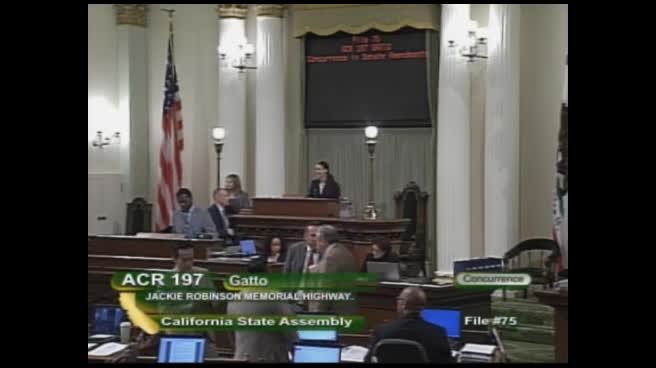 1MIN
Assembly Floor
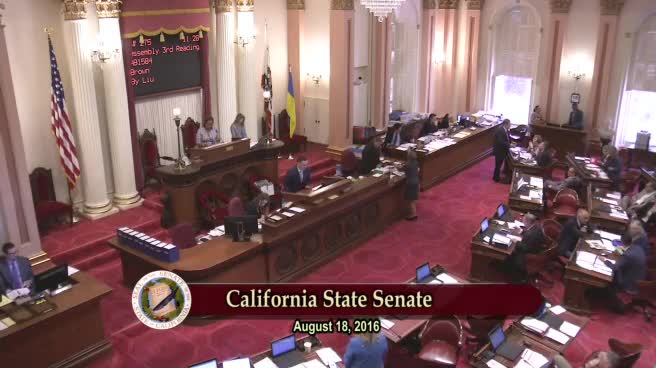 2MIN
Senate Floor
 4MIN
Senate Standing Committee on Appropriations
 7MIN
Senate Standing Committee on Human Services
 2MIN
Assembly Standing Committee on Appropriations
 30MIN
Assembly Standing Committee on Human Services
Bill Author

Bill Co-Author(s):
