AB 1606: Developmental services.
- Session Year: 2015-2016
- House: Assembly
- Latest Version Date: 2016-06-27
(1)Existing law vests in the State Department of Developmental Services jurisdiction over developmental centers for the provision of residential care to individuals with developmental disabilities, including the Sonoma Developmental Center, the Fairview Developmental Center, and the Porterville Developmental Center.
This bill would require the department to report quarterly to the Joint Legislative Budget Committee the estimated amount of General Fund expenditures used to backfill federal funding as a result of the decertification of intermediate care facility units at the Sonoma Developmental Center. The bill would also require, if the intermediate care facility units at the Fairview Developmental Center or the Porterville Developmental Center are decertified by the federal government in the 201617 fiscal year, the department to report quarterly to the Joint Legislative Budget Committee the estimated amount of General Fund expenditures used to backfill federal funding as a result of the decertification or decertifications.
(2)Existing law requires the department to comply with procedural requirements when closing a developmental center, including submitting a detailed plan to the Legislature and holding at least one public hearing. Existing law requires the State Department of Developmental Services to submit, on or before October 1, 2015, a plan to the Legislature to close one or more developmental centers.
This bill would require the department to include an update to the Legislature in the 201718 May Revision regarding how the department will ensure access to crisis services after the closure of a developmental center and how the state will maintain its role in providing residential services to those whom private sector vendors cannot or will not serve. The bill would also require the department to post on its Internet Web site a monthly progress report regarding the development of residential capacity by each regional center, as specified.
(3)Existing law requires the State Department of Developmental Services to provide followup services to help ensure a smooth transition to the community when an individual transitions from a developmental center to a community living arrangement.
Existing law establishes the Medi-Cal program, administered by the State Department of Health Care Services, under which basic health care services are provided to qualified low-income persons. The Medi-Cal program is, in part, governed and funded by federal Medicaid provisions. Existing law authorizes the department to provide health care services to beneficiaries through various models of managed care, including through a comprehensive program of managed health care plan services for Medi-Cal recipients residing in clearly defined geographical areas.
This bill would require the State Department of Developmental Services and the State Department of Health Care Services to coordinate the transition of health care services for Medi-Cal eligible consumers who are transitioning from a developmental center into the community, as specified. The bill would require the State Department of Health Care Services to issue transition requirements for specified consumers. The bill would authorize the State Department of Health Care Services to implement those provisions by means of all-county letters, plan letters, plan or provider bulletins, or similar instructions. The bill would provide that its provisions shall be implemented only to the extent that any necessary federal approvals are obtained and federal financial participation is available.
(4)Existing law, the Lanterman Developmental Disabilities Services Act, requires the State Department of Developmental Services to contract with regional centers to provide services and supports to individuals with developmental disabilities and their families.
Existing law also requires the department to implement an improved, unified quality assessment system, as specified. Existing law requires each regional center to, on or before August 1 of each year, submit to the department and the State Council on Developmental Disabilities a program budget plan for the subsequent budget year, as specified.
This bill would require the department to, on or before February 1 of each year, report to the Legislature and post on its Internet Web site specified supplemental budget information, including an estimate for the annual budget for each developmental center and the current fiscal year allocations of total and per capita funding for operations and purchase of services for each regional center. The bill would require the department to develop and implement a plan to monitor, evaluate, and improve the quality of community-based services through the use of a performance dashboard, to be published annually and include, among other things, recognized quality and access measures. The bill would require that, with the fiscal and research resources included as part of the Budget Act of 2016, the department annually assess specified data, including the performance dashboard data.
(5)Existing law requires the State Department of Developmental Services and regional centers to annually collaborate to compile specified data relating to purchase of service authorization, utilization, and expenditure by each regional center. Existing law requires each regional center to annually report to the department regarding its implementation of specified requirements and requires the report to include, among other things, whether the data indicates a need to reduce disparities in the purchase of services among consumers in the regional centers catchment area, and if so, the regional centers recommendations and plan to promote equity and reduce disparities in the purchase of services. Existing law requires the department to, subject to available funding, allocate funding to regional centers to assist with the implementation of those recommendations and plans.
This bill would require each regional center to consult with stakeholders regarding activities that may be effective in addressing disparities in the receipt of regional center services and the regional centers proposed requests for the above-mentioned funding and would also require each regional center to identify the stakeholders consulted with and to include information on how it incorporated stakeholder input into its requests. The bill would require the department to review requests for funding within 45 days from a specified deadline and would require each regional center to report to the department, as specified, how the funding allocations were used, among other things.
(6)Existing law requires regional center vendors that provide residential services or supported living services, long-term health care facilities, as defined, and acute psychiatric hospitals, as defined, to report each death or serious injury of a person occurring during, or related to, the use of seclusion, physical restraint, or chemical restraint, as specified.
This bill would additionally require regional center vendors that provide crisis services to make those reports. The bill would also require regional center vendors that provide crisis or residential services or supported living services, long-term health care facilities, and acute psychiatric hospitals, to report any unexpected or suspicious death, regardless of whether the cause is immediately known, any allegation of sexual assault, as defined, in which the alleged perpetrator is a staff member, service provider, or facility employee or contractor, and any report made to the local law enforcement agency in the jurisdiction in which the facility is located that involves physical abuse, as defined, in which a staff member, service provider, or facility employee or contractor is implicated. In addition, the bill would require those entities to report on a monthly basis, as specified, the number of incidents of seclusion and the duration of time spent per incident in seclusion, the number of incidents of the use of behavioral restraints and the duration of time spent per incident of restraint, and the number of times an involuntary emergency medication is used to control behavior.
(7)Existing law requires the State Department of Developmental Services, contingent upon approval of federal funding, to establish and implement a state Self-Determination Program, as defined, that would be available in every regional center catchment area to provide participants and their families, within an individual budget, increased flexibility and choice and greater control over decisions, resources, and needed and desired services and supports to implement their individual program plan (IPP), in accordance with prescribed requirements. Existing law makes each regional center responsible for implementing the Self-Determination Program, as specified. Existing law also requires each regional center to contract with local consumer of family-run organizations to conduct outreach through local meetings and to collaborate with local consumer or family-run organizations to jointly conduct training about the Self-Determination Program. Existing law requires each regional center to establish a local volunteer advisory committee to provide oversight of the Self-Determination Program.
This bill would require each regional center to consult with the local volunteer advisory committee in conducting the above-described outreach and training and would authorize the advisory committee to designate members to represent the committee at the training.
(8)The Lanterman Developmental Disabilities Services Act requires the State Department of Developmental Services to contract with regional centers to provide respite services and supported employment services. Existing law, effective June 9, 2016, and commencing July 1, 2016, requires the rate for family-member provided respite services authorized by the department and in operation on June 30, 2016, to be increased by 5%.
This bill would additionally require the rates for out-of-home respites services in effect on June 30, 2016, to be increased by 5%.
(9)Existing law requires the State Department of Developmental Services to establish guidelines and oversee a program, to the extent funds are appropriated in the annual Budget Act for this purpose, to increase paid internship opportunities for individuals with developmental disabilities, as specified, and to fund incentive payments for these internships on and after July 1, 2016. Existing law requires the program to be administered by community service providers, subject to specified criteria. On and after July 1, 2016, existing law also provides incentive payments for purposes of increasing employment placements by providers of supported employment services, as specified.
The bill would require the individual placed for employment to be employed for at least 30 days in order for a provider to receive the first incentive payment for an initial employment placement under these provisions. The bill would clarify that these payments are not available to providers that place individuals into internships, until the individual transitions into a competitive integrated employment placement. The bill would provide that these incentive payments apply to regional center service providers, rather than providers of supported employment services, and would prohibit payments made under the program from being in addition to specified placement payments for supported employment services. The bill would make other clarifying changes to these provisions with regard to payments, as specified.
(10)Existing law, the California Early Intervention Services Act, provides a statewide system of coordinated, comprehensive, family-centered, multidisciplinary, and interagency programs that are responsible for providing appropriate early intervention services and support to all eligible infants and toddlers, as defined, and their families. The act requires these services to be provided pursuant to the existing regional center system.
Existing law requires the State Department of Developmental Services to contract with an organization representing one or more family resource centers, as defined, to provide outreach, information, and referral services for at-risk babies who are not otherwise eligible for the early intervention services. Existing law also requires regional centers to refer at-risk babies to the family resource centers.
This bill would repeal the above requirement for the department to contract with an organization representing one or more family resource centers to provide outreach, information, and referral services for at-risk babies, and would repeal the requirement that regional centers refer at-risk babies to the family resource centers.
(11)Existing law requires the minimum wage for all industries, on and after January 1, 2016, to be not less than $10 per hour. Existing law requires the minimum wage for all industries to be not less than specified amounts to be increased from January 1, 2017, to January 1, 2022, inclusive, for employers employing 26 or more employees and from January 1, 2018, to January 1, 2023, inclusive, for employers employing 25 or fewer employees, except as specified.
Existing law sets forth the State Department of Developmental Servicess and the regional centers authority to establish provider rates. Existing law prohibits certain provider rate increases but, commencing July 1, 2014, authorizes increases to those rates as necessary to adjust employee wages to meet the state minimum wage law.
This bill would authorize adjustment of prescribed provider rates commencing January 1, 2017, if the adjustment is necessary in order to pay employees no less than the increased minimum wage, as described above.
(12)Existing law prohibits a regional center from approving a service level for a residential service provider if the approval would result in an increase in the rate to be paid to the provider that is greater than the rate that is in effect on June 30, 2008, unless the regional center demonstrates to the State Department of Developmental Services that the approval is necessary to protect the consumers health or safety and the department has granted prior written authorization.
This bill would additionally prohibit that approval if it would result in an increase in state costs. The bill would require the department to, effective July 1, 2016, establish a rate schedule for residential community care facilities vendored to provide services to a maximum of four persons with developmental disabilities. The bill would exempt from the prohibition described above only residential community care facilities vendored to provide services to a maximum of four persons with developmental disabilities if either the regional center demonstrates to the department that the approval is necessary to protect the consumers health or safety and the department has granted prior written authorization or if the approved service level is not higher than the service level in effect at the time of implementation of the new rate schedule. The bill would require regional centers to submit a specified report to the department by February 1, 2017, regarding the number residential community care facilities with those rates.
(13)Under existing law, the State Department of Social Services regulates the licensure and operation of various care facilities, including community care facilities and enhanced behavioral supports homes. Existing law prohibits community care facilities, among other health and care facilities, from using physical restraint or containment as an extended procedure.
This bill would prohibit enhanced behavioral supports homes from using physical restraint or containment for more than 15 consecutive minutes, except as specified.
(14)Existing law provides that specified contracts entered into by any state agency for goods, services, or other specified activities, whether awarded through competitive bidding or not, are void unless and until approved by the Department of General Services, and requires denial of approval if the contract does not meet the required specifications of the bidding process. That law exempts certain transactions and contracts from that law, as specified.
This bill would make those laws inapplicable, subject to the approval of the Director of Developmental Services, to specified employees of the department for the purpose of the employee becoming a vendor of a regional center for persons with developmental disabilities, as specified.
(15)Existing law appropriates $287,000,000 to the State Department of Developmental Services to, commencing July 1, 2016, among other things, increase rates and wages for certain developmental services providers and fund incentive payments for competitive integrated employment opportunities and internships for individuals with developmental disabilities.
This bill would appropriate $186,200,000 in reimbursements associated with the above-mentioned appropriated funds to the State Department of Developmental Services for the same specified purposes.
(16)This bill would declare that it is to take effect immediately as a bill providing for appropriations related to the Budget Bill.
Discussed in Hearing
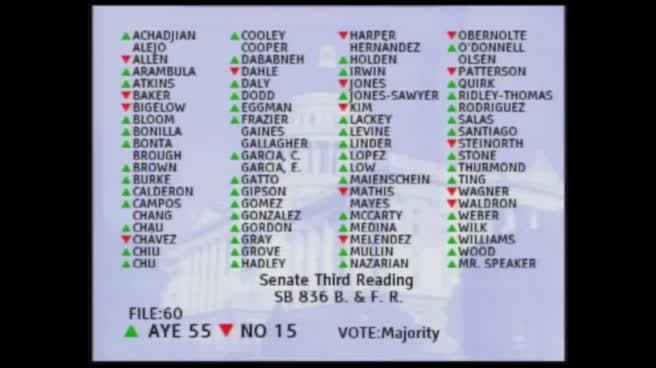 1MIN
1MINAssembly Floor
 3MIN
3MINSenate Floor
 19MIN
19MIN