AB 1655: Medi-Cal: beneficiary maintenance needs: personal needs allowance.
- Session Year: 2015-2016
- House: Assembly
- Latest Version Date: 2016-01-13
Existing law provides for the Medi-Cal program, which is administered by the State Department of Health Care Services, under which qualified low-income individuals receive health care services. The Medi-Cal program is, in part, governed and funded by federal Medicaid provisions. Qualified individuals under the Medi-Cal program include medically needy persons and medically needy family persons who meet the required eligibility criteria, including applicable income and share of cost requirements. Existing law prohibits medically needy persons or medically needy family persons from receiving health care services during any month in which their share of cost has not been met.
Existing law, for purposes of determining the share of cost for those medically needy persons or medically needy family persons, requires the department to establish income levels for maintenance need at the lowest levels that reasonably permit a medically needy individual to meet his or her basic needs for food, clothing, and shelter, and for which federal financial participation will still be provided under applicable federal law. In calculating the income of a medically needy individual who is in a medical institution or nursing facility, or a person receiving institutional or noninstitutional services from a Program of All-Inclusive Care for the Elderly organization, the required monthly maintenance amount includes, among other things, an amount providing for the personal and incidental needs in an amount not less than $35 while a patient, and authorizes the department, by regulation, to increase this amount as necessitated by increasing costs of personal incidental needs. This amount is also referred to as the personal needs allowance.
This bill would increase the personal needs allowance amount from $35 to $80 per month while a person is a patient as described above, and instead would require the department to annually increase this amount based on the percentage increase in the California Consumer Price Index. Because counties are required to make Medi-Cal eligibility determinations, and this bill would expand eligibility by increasing the personal needs allowance and would increase the responsibility of counties in determining Medi-Cal eligibility, this bill would impose a state-mandated local program.
The California Constitution requires the state to reimburse local agencies and school districts for certain costs mandated by the state. Statutory provisions establish procedures for making that reimbursement.
This bill would provide that, if the Commission on State Mandates determines that the bill contains costs mandated by the state, reimbursement for those costs shall be made pursuant to these statutory provisions.
(a)For the purposes of Sections 14005.4 and 14005.7, the department shall establish the income levels for maintenance need at the lowest levels that reasonably permit medically needy persons to meet their basic needs for food, clothing, and shelter, and for which federal financial participation will still be provided under Title XIX of the federal Social Security Act. It is the intent of the Legislature that the income levels for maintenance need for medically needy aged, blind, and disabled adults, in particular, shall be based upon amounts that adequately reflect their needs.
(1)Subject to paragraph (2), reductions in the maximum aid payment levels set forth in subdivision (a) of Section 11450 in the 199192 fiscal year, and thereafter, shall not result in a reduction in the income levels for maintenance under this section.
(2)(A)The department shall seek any necessary federal authorization for maintaining the income levels for maintenance at the levels in effect June 30, 1991.
(B)If federal authorization is not obtained, medically needy persons shall not be required to pay the difference between the share of cost as determined based on the payment levels in effect on June 30, 1991, under Section 11450, and the share of cost as determined based on the payment levels in effect on July 1, 1991, and thereafter.
(3)Any medically needy person who was eligible for benefits under this chapter as categorically needy for the calendar month immediately preceding the effective date of the reductions in the minimum basic standards of adequate care for the Aid to Families with Dependent Children program as set forth in Section 11452.018 made in the 199596 Regular Session of the Legislature shall not be responsible for paying his or her share of cost if all of the following apply:
(A)He or she had eligibility as categorically needy terminated by the reductions in the minimum basic standards of adequate care.
(B)He or she, but for the reductions, would be eligible to continue receiving benefits under this chapter as categorically needy.
(C)He or she is not eligible to receive benefits without a share of cost as a medically needy person pursuant to paragraph (1) or (2).
(b)In the case of a single individual, the amount of the income level for maintenance per month shall be 80 percent of the highest amount that would ordinarily be paid to a family of two persons, without any income or resources, under subdivision (a) of Section 11450, multiplied by the federal financial participation rate.
(c)In the case of a family of two adults, the income level for maintenance per month shall be the highest amount that would ordinarily be paid to a family of three persons without income or resources under subdivision (a) of Section 11450, multiplied by the federal financial participation rate.
(d)For the purposes of Sections 14005.4 and 14005.7, for a person in a medical institution or nursing facility, or for a person receiving institutional or noninstitutional services from a Program of All-Inclusive Care for the Elderly organization pursuant to Chapter 8.75 (commencing with Section 14591), the amount considered as required for maintenance per month shall be computed in accordance with, and for those purposes required by, Title XIX of the federal Social Security Act, and regulations adopted pursuant thereto. Those amounts shall be computed pursuant to regulations which include providing for the following purposes:
(1)Personal and incidental needs in the amount of not less than thirty-five dollars ($35) eighty dollars ($80) per month while a patient. The department may, shall, by regulation, annually increase this amount as necessitated by increasing costs of personal and incidental needs. based on the percentage increase in the California Consumer Price Index. A long-term health care facility shall not charge an individual for the laundry services or periodic hair care specified in Section 14110.4.
(2)The upkeep and maintenance of the home.
(3)The support and care of his or her minor children, or any disabled relative for whose support he or she has contributed regularly, if there is no community spouse.
(4)If the person is an institutionalized spouse, for the support and care of his or her community spouse, minor or dependent children, dependent parents, or dependent siblings of either spouse, provided the individuals are residing with the community spouse.
(5)The community spouse monthly income allowance shall be established at the maximum amount permitted in accordance with Section 1924(d)(1)(B) of Title XIX of the federal Social Security Act (42 U.S.C. Sec. 1396r-5(d)(1)(B)).
(6)The family allowance for each family member residing with the community spouse shall be computed in accordance with the formula established in Section 1924(d)(1)(C) of Title XIX of the federal Social Security Act (42 U.S.C. Sec. 1396r-5(d)(1)(C)).
(e)For the purposes of Sections 14005.4 and 14005.7, with regard to a person in a licensed community care facility, the amount considered as required for maintenance per month shall be computed pursuant to regulations adopted by the department department, which provide for the support and care of his or her spouse, minor children, or any disabled relative for whose support he or she has contributed regularly.
(f)The income levels for maintenance per month, except as specified in subdivisions (b) to (d), inclusive, shall be equal to the highest amounts that would ordinarily be paid to a family of the same size without any income or resources under subdivision (a) of Section 11450, multiplied by the federal financial participation rate.
(g)The federal financial participation rate, as used in this section, shall mean means 1331/3 percent, or such other rate set forth in Section 1903 of the federal Social Security Act (42 U.S.C. Sec. 1396(b)), or its successor provisions.
(h)The income levels for maintenance per month shall not be decreased to reflect the presence in the household of persons receiving forms of aid other than Medi-Cal.
(i)When family members maintain separate residences, but eligibility is determined as a single unit under Section 14008, the income levels for maintenance per month shall be established for each household in accordance with subdivisions (b) to (h), inclusive. The total of these levels shall be the level for the single eligibility unit.
(j)The income levels for maintenance per month established pursuant to subdivisions (b) to (i), inclusive, shall be calculated on an annual basis, rounded to the next higher multiple of one hundred dollars ($100), and then prorated.
SEC. 2.If the Commission on State Mandates determines that this act contains costs mandated by the state, reimbursement to local agencies and school districts for those costs shall be made pursuant to Part 7 (commencing with Section 17500) of Division 4 of Title 2 of the Government Code.
|
Date
|
Status
|
|---|---|
| Jan 13, 2016 | Read first time. To print. |
| Jan 14, 2016 | From printer. May be heard in committee February 13. |
| Feb 4, 2016 | Referred to Com. on HEALTH. |
| Mar 16, 2016 | From committee: Do pass and re-refer to Com. on APPR. (Ayes 18. Noes 0.) (March 15). Re-referred to Com. on APPR. |
| Apr 6, 2016 | In committee: Set, first hearing. Referred to APPR. suspense file. |
| May 27, 2016 | In committee: Held under submission. |
|
Date
|
Description
|
Location
|
Votes
|
|
|---|---|---|---|---|
| Mar 15, 2016 | Do pass and be re-referred to the Committee on [Appropriations] | Assembly Standing Committee on Health |
Passed |
This list shows positions taken on this bill by organizations on the date displayed, which is linked to the original source.
Positions by individuals are not included.
|
Organization
|
Position
|
Date
|
|---|---|---|
| California Advocates for Nursing Home Reform | ** Support | Mar 15, 2016 |
| California Dialysis Council | ** Support | Mar 15, 2016 |
| California Long Term Care Ombudsman Association | * Support | Mar 15, 2016 |
| California Senior Legislature | * Support | Mar 15, 2016 |
| Congress of California Seniors | * Support | Mar 15, 2016 |
| County of San Bernardino | ** Support | Mar 15, 2016 |
| Justice in Aging | ** Support | Mar 15, 2016 |
| UDW AFSCME Local 3930 | * Support | Mar 15, 2016 |
Date of Hearing: April 6, 2016
ASSEMBLY COMMITTEE ON APPROPRIATIONS
Lorena Gonzalez, Chair
ABPCA Bill Id:AB 1655
Author:(Dodd) – As Introduced Ver:January 13, 2016
Policy Committee: | Health | Vote: | 18 - 0 |
|
|
Urgency: No State Mandated Local Program: Yes Reimbursable: No
SUMMARY:
This bill increases the personal needs allowance (PNA) amount from $35 to $80 per month for Medi-Cal-eligible individuals who live in a medical institution or nursing facility, or receive services from a Program of All-Inclusive Care for the Elderly (PACE) organization.
It also requires the Department of Health Care Services (DHCS) to annually increase the PNA based on the percentage increase in the California Consumer Price Index (CPI).
FISCAL EFFECT:
- Assuming all eligible beneficiaries make use of the higher PNA, costs to Medi-Cal would be $23.6 million ($11.8 million General Fund based on 50% matching ratio).
Since increasing the PNA reduces the contribution certain individuals pay for their own institutional care, costs to Medi-Cal will increase commensurate with the increase in the PNA. The cost to Medi-Cal is $45/month per person to whom the bill applies –those residing in an institution or receiving PACE services. Medi-Cal pays for an estimated 530,000 months of institutional care and PACE annually on behalf of Medi-Cal eligible "Share of Cost" beneficiaries to which this bill would apply.
- The California CPI adjustment will also increase costs, assuming positive CPI growth. For example, a hypothetical CPI of 2.5% would increase costs by around $600,000 for the first year of adjustment, and costs would grow on a similar basis in each future year.
- This bill is tagged as a reimbursable mandate, but is not expected to result in mandate claims due to the reimbursement structure for Medi-Cal administration. Eligibility for Medi-Cal is administered by counties, and administrative costs are reimbursed through contract with the state. This change will require minor adjustments in county policies and practices. The total cost pressure associated with this small change is unknown but likely minor. Minor information technology automation changes may be required as well.
COMMENTS:
- Purpose. This bill updates the PNA to better reflect the costs of personal items like clothing, hair and body products, and outside activities for individuals residing in nursing facilities.
- Share of Cost Medi-Cal and the PNA. Through the Medically Needy/Share of Cost program, individuals whose income is otherwise too high to qualify for Medi-Cal can become eligible. Under this program, Medi-Cal will pay for services in a particular month if a beneficiary incurs high health care costs and pays a significant amount out of pocket first (called their "share of cost").
Once a beneficiary incurs their share of cost for a month, they are "certified," which means Medi-Cal will cover eligible medical expenses in that month. Although share-of-cost certification is a determined month-by-month, given the high cost of long-term care, individuals receiving such care generally meet their share of cost and become certified.
For someone receiving care in a facility or through a PACE program, the beneficiary share of cost is calculated as the following:
Share of cost | = | Countable income (income, minus specified deductions) | minus | "Maintenance income needs level" (the lowest income levels that reasonably permit medically needy persons to meet their basic needs for food, clothing, and shelter.) |
The maintenance income needs level includes a variety of allowances, including a PNA of $35 that was established in 1985. Increasing the PNA to $80 would increase this maintenance needs income level by $45 and reduce an individual's share of cost by the same amount. The state's costs would then increase, because the state pays whatever costs remain after a beneficiary's share of cost has been met. The General Fund pays half of the increased cost and federal funds pay the other half, based on the state's 50% Medi-Cal matching rate for this population.
- DHCS can increase PNA. Current law authorizes DHCS, by regulation, to annually increase the PNA amount as necessitated by increasing costs of personal and incidental needs. However, DHCS has never increased the PNA and it remains at $35. In order to ensure the amount is adjusted to reflect the cost of living, this bill requires DHCS to increase the amount annually by the California CPI.
- Related Legislation.
- AB 1235 (Gipson) of 2015 established a home upkeep allowance and transitional personal needs fund for certain Medi-Cal eligible long-term care facility residents. AB 1235 was held in the Senate Appropriations Committee.
- AB 1319 (Dababneh) of 2015 would have increased the personal and incidental needs deduction for Medi-Cal beneficiaries residing in a licensed community care facility from $20 to $50. AB 1319 was held in the Senate Appropriations Committee.
- AB 789 (Campbell) of 1999, which was vetoed, increased the PNA to $40.
Analysis Prepared by: Lisa Murawski / APPR. / (916) 319-2081
Date of Hearing: March 15, 2016
ASSEMBLY COMMITTEE ON HEALTH
Jim Wood, Chair
ABPCA Bill Id:AB 1655 (
Author:Dodd) – As Introduced Ver:January 13, 2016
SUBJECT: Medi-Cal: beneficiary maintenance needs: personal needs allowance.
SUMMARY: Increases the personal needs allowance (PNA) amount from $35 to $80 per month for Medi-Cal-eligible individuals who live in a medical institution, nursing facility, or receive services from a Program of All-Inclusive Care for the Elderly (PACE) organization. Requires the Department of Health Care Services (DHCS) to annually increase the PNA based on the percentage increase in the California Consumer Price Index (CPI).
EXISTING LAW:
- Establishes the Medi-Cal program within DHCS, as California’s Medicaid program, to provide qualifying aged, blind, disabled, and low-income individuals health care and a uniform schedule of benefits.
- Requires DHCS to establish the income levels for the lowest levels of maintenance need that reasonably and adequately allow medically needy individuals to meet their basic requirements for food, clothing, and shelter, and for which federal financial participation (FFP) will still be provided, as specified.
- Requires the amount of the income level for maintenance per month to be calculated by multiplying the federal financial participation rate by defined factors, based on family size, as specified.
- Requires DHCS to establish regulations for the method of computation of the maintenance per month for a person living in a medical institution or nursing facility or receiving services from a PACE organization. Requires the regulations to provide the following:
- A personal needs allowance in an amount of not less than $35 per month for a qualified patient and authority for DHCS to increase the amount as necessary through regulation;
- The upkeep and maintenance of the home;
- The support and care of a patient’s minor children, or any disabled relative for whose support he or she has contributed regularly, if there is no community spouse;
- The support and care of an institutionalized person’s community spouse or his or her minor or dependent children, dependent parents, or dependent siblings of either spouse providing they are living with the community spouse, as specified; and,
- A community spouse monthly income allowance and a family allowance for each member residing with the community spouse, to be established at the maximum amount permitted by federal law.
- A personal needs allowance in an amount of not less than $35 per month for a qualified patient and authority for DHCS to increase the amount as necessary through regulation;
- Requires DHCS to establish regulations to calculate the maintenance per month for a person living in a licensed community care facility, to provide for the support and care of his or her spouse, minor children, or any disabled relative for whose support he or she has contributed regularly.
- Defines the “FFP rate,” as 133.3%, or as otherwise defined in federal law.
FISCAL EFFECT: This bill has not yet been analyzed by a fiscal committee.
COMMENTS:
- PURPOSE OF THIS BILL. According to the author, the PNA is crucial to enhancing the quality of life of residents in nursing homes by covering the costs of haircuts, clothes, shoes, personal care items, reading materials, postage, and meals outside the facility. The author states that the current PNA does not adequately fund the cost of these needs and limits opportunities for recreation and enrichment that could promote better health outcomes for these individuals. The author contends that because California’s payment to long-term care (LTC) facilities is matched by the federal government at a rate of 50%, increasing the PNA will serve to draw down more matching funds from the federal government to further support needy individuals.
- BACKGROUND.
- Medicaid, Nursing Homes, and Post-Eligibility Treatment of Income. Medicaid is the nation’s major publicly-financed health insurance program, covering the acute and long-term services and supports (LTSS) needs of millions of low-income Americans of all ages. Existing federal law requires Medicaid to cover LTC or nursing home services to all eligible people 21 years of age and older. Medicaid also covers home and community-based services for people who would be in a nursing home if they did not receive home care services.
- Medicaid, Nursing Homes, and Post-Eligibility Treatment of Income. Medicaid is the nation’s major publicly-financed health insurance program, covering the acute and long-term services and supports (LTSS) needs of millions of low-income Americans of all ages. Existing federal law requires Medicaid to cover LTC or nursing home services to all eligible people 21 years of age and older. Medicaid also covers home and community-based services for people who would be in a nursing home if they did not receive home care services.
Federal law requires that state Medicaid agencies reduce costs by using available income from beneficiaries to cover LTSS provided to most Medicaid beneficiaries. Each state calculates the available income for a beneficiary once they become eligible for Medicaid. When making the post-eligibility calculation, states deduct certain allowances for patient’s basic needs, including an allowance for personal needs, i.e., PNA, maintenance of the patient’s spouse or family, and other expenses. Federal law requires the PNA for each state to be at least $30 per month. Once allowances have been deducted, any remaining income is contributed toward the cost of the beneficiary’s care in the facility.
- PNAs in California vs. other states. California’s current PNA is $35 per member per month, a rate that has been constant since 1985. DHCS does not have data on the number of individuals using their PNA, however its anecdotal evidence demonstrates that patients typically do use it. DHCS stated an increase in the PNA has not been proposed by DHCS, thus the allowance has remained the same.
- PNAs in California vs. other states. California’s current PNA is $35 per member per month, a rate that has been constant since 1985. DHCS does not have data on the number of individuals using their PNA, however its anecdotal evidence demonstrates that patients typically do use it. DHCS stated an increase in the PNA has not been proposed by DHCS, thus the allowance has remained the same.
A report by the AARP Public Policy Institute demonstrates that in 2009, California had one of the lowest PNAs in the country, with only Alabama, Illinois, Missouri, and North Carolina using a lower allowance. The value of state PNAs vary greatly from state to state. According to their state Websites, the PNAs per month in 2015 for Connecticut, Colorado, Minnesota, and Texas, were $60; $77.25; $97; and $60, respectively. The 2015 PNA for New York ranged between $40 and $55 per month, depending on the type of financial assistance the beneficiary was receiving. Many states have introduced or passed legislation to increase their PNAs to higher than the federal minimum of $30 per month per eligible beneficiary. Some states, such as Colorado, have included an automatic annual adjustment to the allowance.
- CPI. The CPI is a measure of the average change over time in the prices paid by urban consumers for a fixed market basket of goods and services. The CPI provides a way to compare what a particular market basket of goods and services costs at one time point with what the same market basket costs at a different time point. The CPI market basket is developed from detailed expenditure information provided by families and individuals on what they have purchased in the past. The CPI is typically used for three major purposes: i) as an economic indicator; ii) as a deflator of other economic series; and, iii) as a means of adjusting dollar values. While the CPI is often used to cost-of-living adjustments, it is not actually a cost-of-living index because it does not account for changes in buying patterns that consumers make to adjust to relative price changes. For example, if the price of beef increases significantly relative to that of chicken, consumers will often opt to purchase the chicken; the CPI does reflect this type of short-term adjustment as a cost-of-living index does.
- SUPPORT. Supporters of this bill state the current PNA is inadequate and that this bill will help promote a healthy lifestyle that will help to ensure California’s neediest patients can receive proper care. Supporters assert that the personal possessions of nursing home residents are often a last remaining symbol of their independence, and that increasing the PNA to reflect the current cost of living will help restore dignity to the state’s most vulnerable individuals living in these facilities.
- PREVIOUS LEGISLATION.
- AB 1235 (Gipson) of 2015 would have required the home upkeep allowance for eligible Medi-Cal beneficiaries in LTC facilities to be based on the actual minimum cost of maintaining the resident’s home. AB 1235 would have allowed a LTC facility resident who does not have a home to establish a transitional personal needs fund of up to $7,500, to be set aside from the income that otherwise would be applied toward the resident’s Medi-Cal share of cost for residing in the LTC facility. AB 1235 was held in the Senate Appropriations Committee.
- AB 1319 (Dababneh) of 2015 would have increased the personal and incidental needs deduction for Medi-Cal beneficiaries residing in a licensed community care facility from $20 to $50. AB 1319 was held in the Senate Appropriations Committee.
- AB 789 (Campbell) of 1999 would have increased the PNA to not less than $40 per month. AB 789 was vetoed by the Governor with the following message:
“This bill would increase the minimum monthly personal and incidental needs allowance for age, blind or disabled Medi-Cal beneficiaries in institutional care. This bill, while well intentioned, would result in estimated new annual General Fund costs in excess of $2 million that was not included in the 1999-2000 budget. Any increase in the personal and incidental needs allowance should be considered as part of the annual budget deliberations.”
REGISTERED SUPPORT / OPPOSITION:
Support
California Senior Legislature (sponsor)
American Federation of State, County and Municipal Employees (AFSCME), AFL-CIO
California Advocates for Nursing Home Reform
California Dialysis Council
California Long-Term Care Ombudsman Association
County of San Bernardino
Justice in Aging
United Domestic Workers of America – AFSCME Local 3930 / AFL-CIO
Opposition
None on file.
Analysis Prepared by: An-Chi Tsou / HEALTH / (916) 319-2097
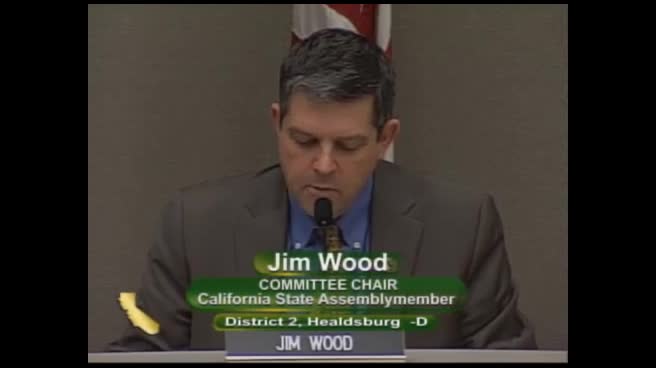
Bill Author

Bill Co-Author(s):