AB 1669: Displaced employees: service contracts: collection and transportation of solid waste.
- Session Year: 2015-2016
- House: Assembly
- Latest Version Date: 2016-09-30
Existing law requires a local government agency letting a public transit service contract out to bid to give a bidding preference for contractors and subcontractors who agree to retain for a specified period certain employees who were employed to perform essentially the same services by the previous contractor or subcontractor. Such a contractor or subcontractor is required to offer employment to those employees, except for reasonable and substantiated cause. Existing law requires a successor contractor or subcontractor that determines that fewer employees are needed than under the prior contract to retain qualified employees by seniority within the job classification. The existing contractor is required to provide prescribed information regarding employment under the existing service contract to the awarding authority, any entity that the awarding authority identifies as a bona fide bidder, and the successor contractor. Existing law authorizes an employee who was not offered employment or who has been discharged in violation of existing law, or his or her agent, to bring an action against the successor contractor or subcontractor in any superior court having jurisdiction over the successor contractor or subcontractor. Existing law authorizes an awarding authority to terminate a service contract under prescribed circumstances.
This bill would expand the application of these provisions to exclusive contracts for the collection and transportation of solid waste. The bill would require the information provided to a bona fide bidder to be made available in writing at least 30 days before bids for the service contract are due. The bill would establish certain provisions applicable only to service contracts for the collection and transportation of solid waste, including limits on the requirement to retain employees and specified requirements for notice and opportunity to cure in the context of civil action or termination. The bill would not apply to contracts awarded before January 1, 2017, or to contracts for which the bid process has been completed before January 1, 2017. By requiring local agencies to give a bidding preference under these provisions to those contractors and subcontractors for the collection and transportation of solid waste, this bill would impose a state-mandated local program.
The California Constitution requires the state to reimburse local agencies and school districts for certain costs mandated by the state. Statutory provisions establish procedures for making that reimbursement.
This bill would provide that, if the Commission on State Mandates determines that the bill contains costs mandated by the state, reimbursement for those costs shall be made pursuant to these statutory provisions.
Existing law requires a local government agency letting a public transit service contract out to bid to give a bidding preference for contractors and subcontractors who agree to retain for a specified period certain employees who were employed to perform essentially the same services by the previous contractor or subcontractor. Such a contractor or subcontractor must is required to offer employment to those employees, except for reasonable and substantiated cause. Existing law requires a successor contractor or subcontractor that determines that fewer employees are needed than under the prior contract to retain qualified employees by seniority within the job classification. The existing contractor must is required to provide prescribed information regarding employment under the existing service contract to the awarding authority, any entity that the awarding authority identifies as a bona fide bidder, and the successor contractor. Existing law authorizes an employee who was not offered employment or who has been discharged in violation of existing law, or his or her agent, to bring an action against the successor contractor or subcontractor in any superior court having jurisdiction over the successor contractor or subcontractor. Existing law authorizes an awarding authority to terminate a service contract under prescribed circumstances.
This bill would make expand the application of these provisions applicable to exclusive contracts for the collection and transportation of solid waste. The bill would require the information provided to a bona fide bidder to be made available in writing at least 30 days before bids for the service contract are due. The bill would establish certain provisions applicable only to service contracts for the collection and transportation of solid waste, including limits on the requirement to retain employees and specified requirements for notice and opportunity to cure in the context of civil action or termination. By requiring local agencies to give a bidding preference under these provisions to those contractors and subcontractors for the collection and transportation of solid waste, this bill would impose a state-mandated local program.
The California Constitution requires the state to reimburse local agencies and school districts for certain costs mandated by the state. Statutory provisions establish procedures for making that reimbursement.
This bill would provide that, if the Commission on State Mandates determines that the bill contains costs mandated by the state, reimbursement for those costs shall be made pursuant to these statutory provisions.
Existing law requires a local government agency letting a public transit service contract out to bid to give a bidding preference for contractors and subcontractors who agree to retain for a specified period certain employees who were employed to perform essentially the same services by the previous contractor or subcontractor. Such a contractor or subcontractor must offer employment to those employees, except for reasonable and substantiated cause. Existing law requires a successor contractor or subcontractor that determines that fewer employees are needed than under the prior contract to retain qualified employees by seniority within the job classification. The existing contractor must provide prescribed information regarding employment under the existing service contract to the awarding authority, any entity that the awarding authority identifies as a bona fide bidder, and the successor contractor.
This bill would add employees of solid waste collection and transportation contractors and subcontractors to those provisions. make these provisions applicable to contracts for the collection and transportation of solid waste. By requiring local agencies to give a bidding preference under these provisions to those contractors and subcontractors, subcontractors for the collection and transportation of solid waste, this bill would impose a state-mandated local program.
The California Constitution requires the state to reimburse local agencies and school districts for certain costs mandated by the state. Statutory provisions establish procedures for making that reimbursement.
This bill would provide that, if the Commission on State Mandates determines that the bill contains costs mandated by the state, reimbursement for those costs shall be made pursuant to these statutory provisions.
Existing law requires a local government agency letting a public transit service contract out to bid to give a bidding preference for contractors and subcontractors who agree to retain for a specified period certain employees who were employed to perform essentially the same services by the previous contractor or subcontractor. Such a contractor or subcontractor must offer employment to those employees, except for reasonable and substantiated cause. Existing law requires a successor contractor or subcontractor that determines that fewer employees are needed than under the prior contract to retain qualified employees by seniority within the job classification. The existing contractor must provide prescribed information regarding employment under the existing service contract to the awarding authority, any entity that the awarding authority identifies as a bona fide bidder, and the successor contractor.
This bill would add employees of solid waste collection and transportation contractors and subcontractors to those provisions. By requiring local agencies to give a bidding preference to those contractors and subcontractors, this bill would impose a state-mandated local program.
The California Constitution requires the state to reimburse local agencies and school districts for certain costs mandated by the state. Statutory provisions establish procedures for making that reimbursement.
This bill would provide that, if the Commission on State Mandates determines that the bill contains costs mandated by the state, reimbursement for those costs shall be made pursuant to these statutory provisions.
The Legislature finds and declares all of the following:
(a)That when public agencies with jurisdiction over public transit services or the collection and transportation of solid waste award contracts to operate bus and rail services, or to provide for the collection and transportation of solid waste to a new contractor, qualified employees of the prior contractor who are not reemployed by the successor contractor face significant economic dislocation as a result.
(b)That those displaced employees rely unnecessarily upon the unemployment insurance system, public social services, and health programs, increasing costs to these vital government programs and placing a significant burden upon both the government and the taxpayers.
(c)That it serves an important social purpose to establish incentives for contractors who bid on public transit service contracts or contracts for the collection and transportation of solid waste to retain qualified employees of the prior contractor to perform the same or similar work.
SEC. 3.Section 1071 of the Labor Code is amended to read:1071.The following definitions apply to this chapter:
(a)Awarding authority means any local government agency, including any city, county, special district, transit district, joint powers authority, or nonprofit corporation that awards or otherwise enters into contracts for public transit services or for the collection and transportation of solid waste performed within the State of California.
(b)Bidder means any person who submits a bid to an awarding authority for a public transit service contract, an exclusive contract for the collection and transportation of solid waste, or a subcontract.
(c)Contractor means any person who enters into a public transit service contract or an exclusive contract for the collection and transportation of solid waste with an awarding authority.
(d)Employee means any individual who works for a contractor or subcontractor under a contract. Employee does not include an executive, administrative, or professional employee exempt from the payment of overtime compensation within the meaning of subdivision (a) of Section 515 or any person who is not an employee as defined under Section 2(3) of the National Labor Relations Act (29 U.S.C. Sec. 152(3)).
(e)Person means any individual, proprietorship, partnership, joint venture, corporation, limited liability company, trust, association, or other entity that may employ individuals or enter into contracts.
(f)Public transit services means the provision of passenger transportation services to the general public, including paratransit service.
(g)Service contract means any contract the principal purpose of which is to provide public transit services or the exclusive right to provide collection and transportation of solid waste through the use of employees.
(h)Solid waste has the same meaning as defined in Section 40191 of the Public Resources Code.
(i)Subcontractor means any person who is not an employee who enters into a contract with a contractor to perform a portion of the contractors express obligations under a service contract. Subcontractor does not include a contractors vendors, suppliers, insurers, or other service providers.
SEC. 4.Section 1072 of the Labor Code is amended to read:1072.(a)A bidder shall declare as part of the bid for a service contract whether or not the bidder will retain the employees of the prior contractor or subcontractor for a period of not less than 90 days, as provided in this chapter, if awarded the service contract.
(b)An awarding authority letting a service contract out to bid shall give a 10 percent preference to any bidder who agrees to retain the employees of the prior contractor or subcontractor pursuant to subdivision (a).
(c)(1)If the awarding authority announces that it intends to let a service contract out to bid, the existing service contractor, within a reasonable time, shall provide to the awarding authority the number of employees who are performing services under the service contract and the wage rates, benefits, and job classifications of those employees. In addition, the existing service contractor shall make this information available to any entity that the awarding authority has identified as a bona fide bidder. This information shall be made available to each bona fide bidder in writing at least 30 days before bids for the service contract are due, whether by inclusion of the information in the request for bids or otherwise. If the successor service contract is awarded to a new contractor, the existing contractor shall provide the names, addresses, dates of hire, wages, benefit levels, and job classifications of employees to the successor contractor. The duties imposed by this subdivision shall be contained in all service contracts.
(2)A successor contractor or subcontractor who agrees to retain employees pursuant to subdivision (a) shall retain employees who have been employed by the prior contractor or subcontractors, except for reasonable and substantiated cause. That cause is limited to the particular employees performance or conduct while working under the prior contract or the employees failure of any controlled substances and alcohol test, physical examination, criminal background check required by law as a condition of employment, or other standard hiring qualification lawfully required by the successor contractor or subcontractor.
(3)The successor contractor or subcontractor shall make a written offer of employment to each employee to be retained pursuant to subdivision (a). That offer shall state the time within which the employee must accept that offer, but in no case less than 10 days. Nothing in this section requires the successor contractor or subcontractor to pay the same wages or offer the same benefits provided by the prior contractor or subcontractor.
(4)If, at any time, the successor contractor or subcontractor determines that fewer employees are required than were required under the prior contract or subcontract, the successor contractor or subcontractor shall retain qualified employees by seniority within the job classification. In determining those employees who are qualified, the successor contractor or subcontractor may require an employee to possess any license that is required by law to operate the equipment that the employee will operate as an employee of the successor contractor or subcontractor.
SEC. 5.Section 1075 is added to the Labor Code, to read:1075.Notwithstanding any other provision of this chapter, the following shall apply to service contracts for the collection and transportation of solid waste:
(a)A successor contractor or subcontractor shall be required to retain only employees of a contractor or subcontractor under a prior service contract whose employment would be terminated if the service contract were awarded to another contractor or subcontractor.
(b)A successor contractor or subcontractor shall not be required to retain an employee of a contractor or subcontractor under a prior service contract under any of the following circumstances:
(1)If the employee of the prior contractor or subcontractor does not meet any standard hiring qualification lawfully required by the successor contractor or subcontractor for the position.
(2)If the successor contractor or subcontractor would be required to terminate or reassign an existing employee covered under a collective bargaining agreement with the successor contractor or subcontractor in order to hire the employee of the prior contractor or subcontractor.
(3)If, and to the extent, the actual number of employees meeting the requirements of this chapter exceeds the number of those employees communicated to bona fide bidders in accordance with paragraph (1) of subdivision (c) of Section 1072.
(c)An employee or his or her agent shall not bring an action against a successor contractor or subcontractor under subdivision (a) of Section 1073 without first giving the successor contractor or subcontractor written notice of the violation or breach and 30 days to cure the violation or breach. An awarding authority shall not terminate a service contract under subdivision (a) of Section 1074 without first giving the successor contractor or subcontractor written notice of the violation or breach and 30 days to cure the violation or breach.
(d)This chapter shall only apply to service contracts for the collection and transportation of solid waste when an awarding agency decides to let an exclusive solid waste collection and transportation contract out to bid. It is not intended to determine whether or not a local agency should procure a service contract by inviting bids, extend an existing service contract, renegotiate its service contract with the prior contractor, or exercise any other right it possesses pursuant to Section 40059 of the Public Resources Code to determine aspects of solid waste handling that are of local concern.
(e)This chapter does not modify, limit, or abrogate in any manner any franchise, contract, license, or permit granted or extended by a city, county, or other local government agency before January 1, 2017.
SEC. 6.Section 1076 is added to the Labor Code, to read:1076.The amendments and additions to this chapter made by the act adding this section shall not apply to contracts awarded before January 1, 2017, or to contracts for which the bid process has been completed before January 1, 2017.
SEC. 7.If the Commission on State Mandates determines that this act contains costs mandated by the state, reimbursement to local agencies and school districts for those costs shall be made pursuant to Part 7 (commencing with Section 17500) of Division 4 of Title 2 of the Government Code.
The Legislature finds and declares all of the following:
(a)That when public agencies with jurisdiction over public transit services or the collection and transportation of solid waste award contracts to operate bus and rail services, or to provide for the collection and transportation of solid waste to a new contractor, qualified employees of the prior contractor who are not reemployed by the successor contractor face significant economic dislocation as a result.
(b)That those displaced employees rely unnecessarily upon the unemployment insurance system, public social services, and health programs, increasing costs to these vital government programs and placing a significant burden upon both the government and the taxpayers.
(c)That it serves an important social purpose to establish incentives for contractors who bid on public transit service contracts or contracts for the collection and transportation of solid waste to retain qualified employees of the prior contractor to perform the same or similar work.
SEC. 3.Section 1071 of the Labor Code is amended to read:1071.The following definitions apply to this chapter:
(a)Awarding authority means any local government agency, including any city, county, special district, transit district, joint powers authority, or nonprofit corporation that awards or otherwise enters into contracts for public transit services or for the collection and transportation of solid waste performed within the State of California.
(b)Bidder means any person who submits a bid to an awarding authority for a public transit service contract, an exclusive contract for the collection and transportation of solid waste, or a subcontract.
(c)Contractor means any person who enters into a public transit service contract or an exclusive contract for the collection and transportation of solid waste with an awarding authority.
(d)Employee means any individual who works for a contractor or subcontractor under a contract. Employee does not include an executive, administrative, or professional employee exempt from the payment of overtime compensation within the meaning of subdivision (a) of Section 515 or any person who is not an employee as defined under Section 2(3) of the National Labor Relations Act (29 U.S.C. Sec. 152(3)).
(e)Person means any individual, proprietorship, partnership, joint venture, corporation, limited liability company, trust, association, or other entity that may employ individuals or enter into contracts.
(f)Public transit services means the provision of passenger transportation services to the general public, including paratransit service.
(g)Service contract means any contract the principal purpose of which is to provide public transit services or the exclusive right to provide collection and transportation of solid waste through the use of employees.
(h)Solid waste has the same meaning as defined in Section 40191 of the Public Resources Code.
(i)Subcontractor means any person who is not an employee who enters into a contract with a contractor to perform a portion of the contractors express obligations under a service contract. Subcontractor does not include a contractors vendors, suppliers, insurers, or other service providers.
SEC. 4.Section 1072 of the Labor Code is amended to read:1072.(a)A bidder shall declare as part of the bid for a service contract whether or not the bidder will retain the employees of the prior contractor or subcontractor for a period of not less than 90 days, as provided in this chapter, if awarded the service contract.
(b)An awarding authority letting a service contract out to bid shall give a 10 percent preference to any bidder who agrees to retain the employees of the prior contractor or subcontractor pursuant to subdivision (a).
(c)(1)If the awarding authority announces that it intends to let a service contract out to bid, the existing service contractor, within a reasonable time, shall provide to the awarding authority the number of employees who are performing services under the service contract and the wage rates, benefits, and job classifications of those employees. In addition, the existing service contractor shall make this information available to any entity that the awarding authority has identified as a bona fide bidder. This information shall be made available to each bona fide bidder in writing at least 30 days before bids for the service contract are due, whether by inclusion of the information in the request for bids or otherwise. If the successor service contract is awarded to a new contractor, the existing contractor shall provide the names, addresses, dates of hire, wages, benefit levels, and job classifications of employees to the successor contractor. The duties imposed by this subdivision shall be contained in all service contracts.
(2)A successor contractor or subcontractor who agrees to retain employees pursuant to subdivision (a) shall retain employees who have been employed by the prior contractor or subcontractors, except for reasonable and substantiated cause. That cause is limited to the particular employees performance or conduct while working under the prior contract or the employees failure of any controlled substances and alcohol test, physical examination, criminal background check required by law as a condition of employment, or other standard hiring qualification lawfully required by the successor contractor or subcontractor.
(3)The successor contractor or subcontractor shall make a written offer of employment to each employee to be retained pursuant to subdivision (a). That offer shall state the time within which the employee must accept that offer, but in no case less than 10 days. Nothing in this section requires the successor contractor or subcontractor to pay the same wages or offer the same benefits provided by the prior contractor or subcontractor.
(4)If, at any time, the successor contractor or subcontractor determines that fewer employees are required than were required under the prior contract or subcontract, the successor contractor or subcontractor shall retain qualified employees by seniority within the job classification. In determining those employees who are qualified, the successor contractor or subcontractor may require an employee to possess any license that is required by law to operate the equipment that the employee will operate as an employee of the successor contractor or subcontractor.
SEC. 5.Section 1075 is added to the Labor Code, to read:1075.Notwithstanding any other provision of this chapter, the following shall apply to service contracts for the collection and transportation of solid waste:
(a)A successor contractor or subcontractor shall be required to retain only employees of a contractor or subcontractor under a prior service contract whose employment would be terminated if the service contract were awarded to another contractor. contractor or subcontractor.
(b)A successor contractor or subcontractor shall not be required to retain an employee of a contractor or subcontractor under a prior service contract under any of the following circumstances:
(1)If the employee of the prior contractor or subcontractor does not meet any standard hiring qualification lawfully required by the successor contractor or subcontractor for the position.
(2)If the successor contractor or subcontractor would be required to terminate or reassign an existing employee covered under a collective bargaining agreement with the successor contractor or subcontractor in order to hire the employee of the prior contractor or subcontractor.
(3)If, and to the extent, the actual number of employees meeting the requirements of this chapter exceeds the number of those employees communicated to bona fide bidders in accordance with paragraph (1) of subdivision (c) of Section 1072.
(c)An employee or his or her agent shall not bring an action against a successor contractor or subcontractor under subdivision (a) of Section 1073 without first giving the successor contractor or subcontractor written notice of the violation or breach and 30 days to cure the violation or breach. An awarding authority shall not terminate a service contract under subdivision (a) of Section 1074 without first giving the successor contractor or subcontractor written notice of the violation or breach and 30 days to cure the violation or breach.
SEC. 6.Section 1076 is added to the Labor Code, to read:1076.The amendments and additions to this chapter made by the act adding this section shall not apply to contracts awarded before January 1, 2017, or to contracts for which the bid process has been completed before January 1, 2017.
SEC. 6.SEC. 7.If the Commission on State Mandates determines that this act contains costs mandated by the state, reimbursement to local agencies and school districts for those costs shall be made pursuant to Part 7 (commencing with Section 17500) of Division 4 of Title 2 of the Government Code.
The Legislature finds and declares all of the following:
(a)That when public agencies with jurisdiction over public transit services or the collection and transportation of solid waste award contracts to operate bus and rail services, or to provide for the collection and transportation of solid waste to a new contractor, qualified employees of the prior contractor who are not reemployed by the successor contractor face significant economic dislocation as a result.
(b)That those displaced employees rely unnecessarily upon the unemployment insurance system, public social services, and health programs, increasing costs to these vital government programs and placing a significant burden upon both the government and the taxpayers.
(c)That it serves an important social purpose to establish incentives for contractors who bid on public transit service contracts or contracts for the collection and transportation of solid waste to retain qualified employees of the prior contractor to perform the same or similar work.
SEC. 3.Section 1071 of the Labor Code is amended to read:1071.The following definitions apply to this chapter:
(a)Awarding authority means any local government agency, including any city, county, special district, transit district, joint powers authority, or nonprofit corporation that awards or otherwise enters into contracts for public transit services or for the collection and transportation of solid waste performed within the State of California.
(b)Bidder means any person who submits a bid to an awarding agency authority for a public transit service contract, a an exclusive contract for the collection and transportation of solid waste, or a subcontract.
(c)Contractor means any person who enters into a public transit service contract or a an exclusive contract for the collection and transportation of solid waste with an awarding authority.
(d)Employee means any person individual who works for a contractor or subcontractor under a contract. Employee does not include an executive, administrative, or professional employee exempt from the payment of overtime compensation within the meaning of subdivision (a) of Section 515 or any person who is not an employee as defined under Section 2(3) of the National Labor Relations Act (29 U.S.C. Sec. 152(3)).
(e)Person means any individual, proprietorship, partnership, joint venture, corporation, limited liability company, trust, association, or other entity that may employ individuals or enter into contracts.
(f)Public transit services means the provision of passenger transportation services to the general public, including paratransit service.
(g)Service contract means any contract the principal purpose of which is to provide public transit services or the exclusive right to provide collection and transportation of solid waste through the use of service employees.
(h)Solid waste has the same meaning as defined in Section 40191 of the Public Resources Code.
(i)Subcontractor means any person who is not an employee who enters into a contract with a contractor to assist the contractor in performing perform a portion of the contractors express obligations under a service contract. Subcontractor does not include a contractors vendors, suppliers, insurers, or other service providers.
SEC. 4.Section 1072 of the Labor Code is amended to read:1072.(a)A bidder shall declare as part of the bid for a service contract whether or not he or she the bidder will retain the employees of the prior contractor or subcontractor for a period of not less than 90 days. days, as provided in this chapter, if awarded the service contract.
(b)An awarding authority letting a service contract out to bid shall give a 10 percent preference to any bidder who agrees to retain the employees of the prior contractor or subcontractor pursuant to subdivision (a).
(c)(1)If the awarding authority announces that it intends to let a service contract out to bid, the existing service contractor, within a reasonable time, shall provide to the awarding authority the number of employees who are performing services under the service contract and the wage rates, benefits, and job classifications of those employees. In addition, the existing service contractor shall make this information available to any entity that the awarding authority has identified as a bona fide bidder. This information shall be made available to each bona fide bidder in writing at least 30 days before bids for the service contract are due, whether by inclusion of the information in the request for bids or otherwise. If the successor service contract is awarded to a new contractor, the existing contractor shall provide the names , names, addresses, dates of hire, wages, benefit levels, and job classifications of employees to the successor contractor. The duties imposed by this subdivision shall be contained in all service contracts.
(2)A successor contractor or subcontractor who agrees to retain employees pursuant to subdivision (a) shall retain employees who have been employed by the prior contractor or subcontractors, except for reasonable and substantiated cause. That cause is limited to the particular employees performance or conduct while working under the prior contract or the employees failure of any controlled substances and alcohol test, physical examination, criminal background check required by law as a condition of employment, or other standard hiring qualification lawfully required by the successor contractor or subcontractor.
(3)The successor contractor or subcontractor shall make a written offer of employment to each employee to be rehired. retained pursuant to subdivision (a). That offer shall state the time within which the employee must accept that offer, but in no case less than 10 days. Nothing in this section requires the successor contractor or subcontractor to pay the same wages or offer the same benefits provided by the prior contractor or subcontractor.
(4)If, at any time, the successor contractor or subcontractor determines that fewer employees are required than were required under the prior contract or subcontract, he or she the successor contractor or subcontractor shall retain qualified employees by seniority within the job classification. In determining those employees who are qualified, the successor contractor or subcontractor may require an employee to possess any license that is required by law to operate the equipment that the employee will operate as an employee of the successor contractor or subcontractor.
SEC. 5.Section 1075 is added to the Labor Code, to read:1075.Notwithstanding any other provision of this chapter, the following shall apply to service contracts for the collection and transportation of solid waste:
(a)A successor contractor or subcontractor shall be required to retain only employees of a contractor or subcontractor under a prior service contract whose employment would be terminated if the service contract were awarded to another contractor.
(b)A successor contractor or subcontractor shall not be required to retain an employee of a contractor or subcontractor under a prior service contract under any of the following circumstances:
(1)If the employee of the prior contractor or subcontractor does not meet any standard hiring qualification lawfully required by the successor contractor or subcontractor for the position.
(2)If the successor contractor or subcontractor would be required to terminate or reassign an existing employee covered under a collective bargaining agreement with the successor contractor or subcontractor in order to hire the employee of the prior contractor or subcontractor.
(3)If, and to the extent, the actual number of employees meeting the requirements of this chapter exceeds the number of those employees communicated to bona fide bidders in accordance with paragraph (1) of subdivision (c) of Section 1072.
(c)An employee or his or her agent shall not bring an action against a successor contractor or subcontractor under subdivision (a) of Section 1073 without first giving the successor contractor or subcontractor written notice of the violation or breach and 30 days to cure the violation or breach. An awarding authority shall not terminate a service contract under subdivision (a) of Section 1074 without first giving the successor contractor or subcontractor written notice of the violation or breach and 30 days to cure the violation or breach.
SEC. 4.SEC. 6.If the Commission on State Mandates determines that this act contains costs mandated by the state, reimbursement to local agencies and school districts for those costs shall be made pursuant to Part 7 (commencing with Section 17500) of Division 4 of Title 2 of the Government Code.
The Legislature finds and declares all of the following:
(a)That when public agencies with jurisdiction over public transit or solid waste collection and transportation services services or the collection and transportation of solid waste award contracts to operate bus and rail services, or to provide solid waste collection and transportation services, to for the collection and transportation of solid waste to a new contractor, qualified employees of the prior contractor who are not reemployed by the successor contractor face significant economic dislocation as a result.
(b)That those displaced employees rely unnecessarily upon the unemployment insurance system, public social services, and health programs, increasing costs to these vital government programs and placing a significant burden upon both the government and the taxpayers.
(c)That it serves an important social purpose to establish incentives for contractors who bid on public transit or solid waste collection and transportation service contracts service contracts or contracts for the collection and transportation of solid waste to retain qualified employees of the prior contractor to perform the same or similar work.
SEC. 3.Section 1071 of the Labor Code is amended to read:1071.The following definitions apply to this chapter:
(a)Awarding authority means any local government agency, including any city, county, special district, transit district, joint powers authority, or nonprofit corporation that awards or otherwise enters into contracts for public transit or solid waste collection and transportation services services or for the collection and transportation of solid waste performed within the State of California.
(b)Bidder means any person who submits a bid to an awarding agency for a public transit or solid waste collection and transportation service contract or subcontract. service contract, a contract for the collection and transportation of solid waste, or a subcontract.
(c)Contractor means any person who enters into a public transit or solid waste collection and transportation service contract service contract or a contract for the collection and transportation of solid waste with an awarding authority.
(d)Employee means any person who works for a contractor or subcontractor under a contract. Employee does not include an executive, administrative, or professional employee exempt from the payment of overtime compensation within the meaning of subdivision (a) of Section 515 or any person who is not an employee as defined under Section 2(3) of the National Labor Relations Act (29 U.S.C. Sec. 152(3)).
(e)Person means any individual, proprietorship, partnership, joint venture, corporation, limited liability company, trust, association, or other entity that may employ individuals or enter into contracts.
(f)Public transit services means the provision of passenger transportation services to the general public, including paratransit service.
(g)Service contract means any contract the principal purpose of which is to provide public transit or solid waste collection and transportation services or the collection and transportation of solid waste through the use of service employees.
(h)Solid waste has the same meaning as defined in Section 40191 of the Public Resources Code.
(i)Subcontractor means any person who is not an employee who enters into a contract with a contractor to assist the contractor in performing a service contract.
SEC. 4.If the Commission on State Mandates determines that this act contains costs mandated by the state, reimbursement to local agencies and school districts for those costs shall be made pursuant to Part 7 (commencing with Section 17500) of Division 4 of Title 2 of the Government Code.
The Legislature finds and declares all of the following:
(a)That when public transit agencies with jurisdiction over public transit or solid waste collection and transportation services award contracts to operate bus and rail services rail services, or to provide solid waste collection and transportation services, to a new contractor, qualified employees of the prior contractor who are not reemployed by the successor contractor face significant economic dislocation as a result.
(b)That those displaced employees rely unnecessarily upon the unemployment insurance system, public social services, and health programs, increasing costs to these vital government programs and placing a significant burden upon both the government and the taxpayers.
(c)That it serves an important social purpose to establish incentives for contractors who bid on public transit services or solid waste collection and transportation service contracts to retain qualified employees of the prior contractor to perform the same or similar work.
SEC. 3.Section 1071 of the Labor Code is amended to read:1071.The following definitions apply throughout to this chapter:
(a)Awarding authority means any local government agency, including any city, county, special district, transit district, joint powers authority, or nonprofit corporation that awards or otherwise enters into contracts for public transit or solid waste collection and transportation services performed within the State of California.
(b)Bidder means any person who submits a bid to an awarding agency for a public transit or solid waste collection and transportation service contract or subcontract.
(c)Contractor means any person who enters into a public transit or solid waste collection and transportation service contract with an awarding authority.
(d)Employee means any person who works for a contractor or subcontractor under a contract. Employee does not include an executive, administrative, or professional employee exempt from the payment of overtime compensation within the meaning of subdivision (a) of Section 515 or any person who is not an employee as defined under Section 2(3) of the National Labor Relations Act (29 U.S.C. Sec. 152(3)).
(e)Person means any individual, proprietorship, partnership, joint venture, corporation, limited liability company, trust, association, or other entity that may employ individuals or enter into contracts.
(f)Public transit services means the provision of passenger transportation services to the general public, including paratransit service.
(g)Service contract means any contract the principal purpose of which is to provide public transit or solid waste collection and transportation services through the use of service employees.
(h)Solid waste has the same meaning as defined in Section 40191 of the Public Resources Code.
(h)
(i)Subcontractor means any person who is not an employee who enters into a contract with a contractor to assist the contractor in performing a service contract.
SEC. 4.If the Commission on State Mandates determines that this act contains costs mandated by the state, reimbursement to local agencies and school districts for those costs shall be made pursuant to Part 7 (commencing with Section 17500) of Division 4 of Title 2 of the Government Code.
|
Date
|
Status
|
|---|---|
| May 12, 2016 | Referred to Com. on L. & I.R. |
| Aug 30, 2016 | Enrolled and presented to the Governor at 4 p.m. |
| Aug 23, 2016 | Senate amendments concurred in. To Engrossing and Enrolling. (Ayes 50. Noes 28. Page 6117.). |
| Aug 23, 2016 | Senate amendments concurred in. To Engrossing and Enrolling. |
| Aug 16, 2016 | Read third time. Passed. Ordered to the Assembly. (Ayes 22. Noes 13.). |
| Aug 16, 2016 | Read third time. Passed. Ordered to the Assembly. (Ayes 22. Noes 13. Page 5023.). |
| Aug 16, 2016 | Read third time. Passed. Ordered to the Assembly. |
| Aug 16, 2016 | In Assembly. Concurrence in Senate amendments pending. May be considered on or after August 18 pursuant to Assembly Rule 77. |
| Aug 15, 2016 | Read second time. Ordered to third reading. |
| Aug 11, 2016 | From committee: Do pass. (Ayes 5. Noes 2.) (August 11). |
| Aug 1, 2016 | In committee: Referred to APPR. suspense file. |
| Jun 27, 2016 | From committee chair, with author's amendments: Amend, and re-refer to committee. Read second time, amended, and re-referred to Com. on APPR. |
| Jun 22, 2016 | From committee: Do pass and re-refer to Com. on APPR. (Ayes 4. Noes 1.) (June 22). Re-referred to Com. on APPR. |
| Jun 9, 2016 | From committee chair, with author's amendments: Amend, and re-refer to committee. Read second time, amended, and re-referred to Com. on L. & I.R. |
| Jan 15, 2016 | Read first time. To print. |
| May 5, 2016 | Read third time. Passed. Ordered to the Senate. (Ayes 52. Noes 26. Page 4673.) |
| May 5, 2016 | Read third time. Passed. Ordered to the Senate. |
| May 5, 2016 | In Senate. Read first time. To Com. on RLS. for assignment. |
| Apr 28, 2016 | Read third time and amended. Ordered to third reading. (Page 4567.) |
| Apr 28, 2016 | Read third time and amended. Ordered to third reading. |
| Apr 21, 2016 | Read second time. Ordered to third reading. |
| Apr 20, 2016 | From committee: Do pass. (Ayes 11. Noes 5.) (April 20). |
| Apr 14, 2016 | From committee: Do pass and re-refer to Com. on APPR. (Ayes 6. Noes 3.) (April 13). Re-referred to Com. on APPR. |
| Apr 7, 2016 | From committee: Do pass and re-refer to Com. on L. GOV. (Ayes 5. Noes 2.) (April 6). Re-referred to Com. on L. GOV. |
| Mar 9, 2016 | Re-referred to Com. on L. & E. |
| Mar 8, 2016 | From committee chair, with author's amendments: Amend, and re-refer to Com. on L. & E. Read second time and amended. |
| Feb 4, 2016 | Referred to Coms. on L. & E. and L. GOV. |
| Jan 19, 2016 | From printer. May be heard in committee February 18. |
|
Date
|
Description
|
Location
|
Votes
|
|
|---|---|---|---|---|
| Aug 23, 2016 | AB 1669 HERNÁNDEZ Concurrence in Senate Amendments | Assembly Floor |
Passed |
|
| Aug 16, 2016 | Assembly 3rd Reading AB1669 Roger Hernández By Leno | Senate Floor |
Passed |
|
| Aug 11, 2016 | Do pass | Senate Standing Committee on Appropriations |
Passed |
|
| Aug 1, 2016 | Placed on suspense file | Senate Standing Committee on Appropriations |
Passed |
|
| Jun 22, 2016 | Do pass, but first be re-referred to the Committee on [Appropriations] | Senate Standing Committee on Labor and Industrial Relations |
Passed |
|
| May 5, 2016 | AB 1669 HERNÁNDEZ Assembly Third Reading | Assembly Floor |
Passed |
|
| Apr 20, 2016 | Do pass. | Assembly Standing Committee on Appropriations |
Passed |
|
| Apr 13, 2016 | Do pass and be re-referred to the Committee on [Appropriations] | Assembly Standing Committee on Local Government |
Passed |
|
| Apr 6, 2016 | Do pass and be re-referred to the Committee on [Local Government] | Assembly Standing Committee on Labor and Employment |
Passed |
This list shows positions taken on this bill by organizations on the date displayed, which is linked to the original source.
Positions by individuals are not included.
|
Organization
|
Position
|
Date
|
|---|---|---|
| California Labor Federation, Afl-Cio | ** Support | Aug 16, 2016 |
| California Special Districts Association | ** Against | Aug 16, 2016 |
| California State Association Of Counties | ** Against | Aug 16, 2016 |
| California Teamsters Public Affairs Council | ** Support | Aug 16, 2016 |
| Inland Empire Disposal Association | ** Against | Aug 16, 2016 |
| Integrated Waste Management Task Force | ** Against | Aug 16, 2016 |
| League Of California Cities | ** Against | Aug 16, 2016 |
| Local 396 | * Support | Jun 22, 2016 |
| Los Angeles County Board of Supervisors | * Against | Jun 22, 2016 |
| Los Angeles County Solid Waste Management Committee | ** Against | Aug 16, 2016 |
| Los Angeles County Waste Management Association | ** Against | Aug 16, 2016 |
| Recology | ** Support | Aug 16, 2016 |
| Solid Waste Association of Northern America | ** Against | Aug 16, 2016 |
| Solid Waste Association Of Orange County | ** Against | Aug 16, 2016 |
| Trisaid Community Cycling | * Support | Apr 13, 2016 |
| Water Management | * Support | Apr 13, 2016 |
CONCURRENCE IN SENATE AMENDMENTS
CSA1 Bill Id:AB 1669
Author:(Roger Hernández)
As Amended Ver:June 27, 2016
Majority vote
ASSEMBLY: | 52-26 | (May 5, 2016) | SENATE: | 22-13 | (August 16, 2016) |
Original Committee Reference: L. & E.
SUMMARY: Extends an existing bid preference for public transit contractors who agree to retain employees to also include contracts for the collection and transportation of solid waste, as specified.
The Senate amendments:
- Provide that this bill shall not apply to contracts awarded before January 1, 2017, or to contracts for which the bid process has been completed before January 1, 2017.
- Provide that this bill shall only apply to service contracts for the collection and transportation of solid waste when an awarding agency decides to let an exclusive solid waste collection and transportation contract out to bid.
- Provide that this bill is not intended to determine whether or not a local agency should procure a service contract by inviting bids, extend an existing service contract, renegotiate its service contract with the prior contractor, or exercise any other right it possesses pursuant to specified existing law to determine aspects of solid waste handling that are of local concern.
- Provide that this bill does not modify, limit, or abrogate in any manner any franchise, contract, license, or permit granted or extended by a city, county, or other local government agency before January 1, 2017.
EXISTING LAW:
- Requires all bidders on public transit service contracts to advise the awarding authority whether they will retain the employees of the prior contractor/subcontractor.
- Requires awarding authorities who put out a bid for public transit service to provide a 10% bidding preference to contractors and subcontractors who agree to retain the employees of the prior contractor/subcontractor for a period of at least 90 days.
- Requires existing contractors to provide awarding authorities with specified employee information, which will assist bidding contractors/subcontractors in costing their bids.
- Exempts contractors/subcontractors from retaining employees for "cause," as defined.
- Authorizes the new contractor/subcontractor to pay alternate wages and provide alternate benefits from those of the prior contractor/subcontractor.
- Authorizes the new contractor/subcontractor to retain fewer employees than the prior contractor, if necessary. In such a situation, the employees shall be retained by seniority within the given job classification.
- Authorizes employees who have not been offered employment or who have been discharged in violation of the provisions of this bill to bring suit against the contractor/subcontractor in superior court.
- Provides for remedy in the form of reinstatement, back pay, benefits and attorney's fees and costs.
- Obliges an awarding authority, after public hearing, to terminate a contract substantially breached by a contractor/subcontractor.
- Provides that such a terminated contractor/subcontractor is ineligible to bid or be awarded a contract/subcontract with the terminating awarding authority for between one and three years, to be determined by the awarding authority.
- Also provides for employment retention protection for employees of janitorial and building maintenance contractors, as specified.
FISCAL EFFECT: According to the Senate Appropriations Committee, this bill could result in a General Fund state reimbursable mandate on local government, the magnitude of which is unknown, but potentially in the low hundreds of thousands of dollars annually.
COMMENTS: Existing law already establishes a 10% bidding preference for public transit service contractors and subcontractors who agree to retain employees of the previous contractor for a period of at least 90 days. That requirement was enacted by SB 158 (Alarcón), Chapter 103, Statues of 2003. This bill would extend those requirements to contractors and subcontractors who submit bids for contracts for the collection and transportation of solid waste.
This bill is sponsored by the California Teamsters Public Affairs Council. The sponsor states that this bill is intended to prevent keeping workers from being displaced when a city's contract for solid waste services changes companies. They argue that when cities and counties contract for services like solid waste disposal, they are often focused on the costs of the bids, the level of service provided, and the type of diversion offered. In many cases, the workers fall through the cracks when contracts change hands. The existing workforce, trained and experienced, is summarily laid off and replaced.
The sponsor contends that this bill rewards companies who retain existing solid waste service employees for 90 days after the new contract takes effect with a 10% bid preference. This allows the company an opportunity to decide whether to retain the employee, while giving the employee additional time to prepare for a possible layoff job.
Opponents argue that, while well-intentioned, the type of bid preference created by this bill is nonessential to the service being delivered. There are many other considerations for contracting with a waste hauler in order to provide maximum benefit, such as rates, ability to service a community, and the ability to meet state diversion requirements. Opponents argue that there are already significant limitations for what local governments can and cannot contract. This bill simply adds another unnecessary layer of bureaucratic red tape at the expense of scare taxpayer resources.
Analysis Prepared by: Ben Ebbink / L. & E. / (916) 319-2091 FN: 0004008
Office of Senate Floor Analyses (916) 651-1520 Fax: (916) 327-4478 | AB |
THIRD READING
Bill No: AB 1669
:
SENATE LABOR & IND. REL. COMMITTEE: 4-1, 6/22/16
AYES: Mendoza, Jackson, Leno, Mitchell
NOES: Stone
SENATE APPROPRIATIONS COMMITTEE: 5-2, 8/11/16
AYES: Lara, Beall, Hill, McGuire, Mendoza
NOES: Bates, Nielsen
ASSEMBLY FLOOR: 52-26, 5/5/16 - See last page for vote
SOURCE: California Teamsters Public Affairs Council
DIGEST: This bill requires a 10 percent bid preference for bidders who agree to retain for a period of 90 days the employees of the prior contractor or subcontractor on local agency contracts for the collection and transportation of solid waste.
Existing law:
- Requires all bidders on public transit service contracts to advise the awarding authority whether or not they will retain the employees of the prior contractor/subcontractor.
- Requires awarding authorities who put out a bid for public transit service to provide a 10 percent bidding preference to contractors and subcontractors who agree to retain the employees of the prior contractor/subcontractor for a period of at least 90 days.
- Requires existing contractors to provide awarding authorities with specified employee information, including the number of employees performing services under the service contract and their wages, benefits and job classifications to assist contractors and subcontractors in costing their bids.
- Exempts contractors/subcontractors from retaining employees for "cause," limited to the employee’s performance or conduct or failure to pass any required substance and alcohol test, physical examination, criminal background check required by law or any other lawful qualification.
- Authorizes the new contractor/subcontractor to pay alternate wages and provide alternate benefits from those of the prior contractor/subcontractor.
- Authorizes the new contractor/subcontractor to retain fewer employees than the prior contractor, if necessary. In such a situation, the employees shall be retained by seniority within the given job classification.
- Authorizes employees who have not been offered employment or who have been discharged in violation of the provisions of this bill to bring suit against the contractor/subcontractor in superior court and provides for remedy in the form of reinstatement, back pay, benefits and attorney's fees and costs.
- Obliges an awarding authority, after public hearing, to terminate a contract substantially breached by a contractor/subcontractor. Provides that such a terminated contractor/subcontractor is ineligible to bid or be awarded a contract/subcontract with the terminating awarding authority for between one and three years, to be determined by the awarding authority.
- Provides similar employment retention provisions for employees of janitorial and building maintenance contractors, as specified.
This bill:
- Extends the existing 10 percent bid preference (as specified above) to contracts for the collection and transportation of solid waste.
- Provides a definition of “solid waste” found in the Public Resources Code.
- Specifies that “subcontractor” includes any person who performs a portion of the contractor’s express obligations under a service contract but does not include a contractor’s vendors, suppliers, insurers, or other service providers.
- Requires existing service contractors (for both public transit and solid waste contracts) to provide specified employee information – total number, wages, benefits – to bona fide bidders in writing at least 30 days before bids for the service contract are due.
- Specifies that the following applies to service contracts for the collection and transportation of solid waste:
- A successor contractor/subcontractor is required to retain only employees whose employment would be terminated with the contract changes.
- A successor contractor/subcontractor is not required to retain an employee under a prior service contract under any of the following circumstances:
- If the employee does not meet any standard hiring qualification lawfully required by the successor contractor or subcontractor for the position.
- If the successor would be required to terminate or reassign an existing employee covered under a collective bargaining agreement in order to hire the employee of the prior contractor/subcontractor.
- If, and to the extent, the actual number of employees meeting the retention requirements exceeds the number previously communicated to bidders.
- An employee or his/her agent shall not bring an action against a successor contractor or subcontractor without first giving written notice of the violation or breach and 30 days to cure.
- An awarding authority shall not terminate a service contract without first giving the successor contractor or subcontractor written notice of the violation or breach and 30 days to cure.
- Specifies that these provisions shall only apply to service contracts when an awarding agency decides to let an exclusive solid waste collection and transportation contract out to bid. It is not intended to determine whether or not a local agency should procure a service contract by inviting bids, extend an existing service contract, renegotiate its service contract with the prior contractor, or exercise any other right it possesses to determine aspects of solid waste handling that are of local concern.
- Specifies that these provisions do not modify, limit, or abrogate in any manner any franchise, contract, license, or permit granted or extended by a city, county, or other local government agency before January 1, 2017.
- Specifies that these provisions do not apply to contracts awarded before January 1, 2017, or to contracts for which the bid process has been completed before January 1, 2017.
Background
Existing law already provides a 10 percent bidding preference for public transit service contractors and subcontractors who agree to retain employees of the previous contractor for a period of at least 90 days. That requirement was enacted by SB 158 (Alarcón, Chapter 103, Statutes of 2003). The author believes this bill is necessary to also protect the workers against a loss of a job due to contract changes in the collection and transportation of solid waste. This bill extends these provisions to public contracts for the collection and transportation of solid waste.
Related/Prior Legislation
SB 599(Mendoza, 2015) would have extended the provisions on the existing 10% bid preference for transit contracts to such contracts with the State of California. The bill was vetoed by Governor Brown.
AB 508(Swanson, 2011) was very similar, but not identical, to this bill and would have added contracts for solid waste handling and recycling to the existing 10% bid preference provisions. AB 508 was referred to, but never heard, in the Senate Appropriations Committee.
FISCAL EFFECT: Appropriation: Fiscal Com.: Local:
According to the Senate Appropriations Committee, this bill could result in a General Fund state reimbursable mandate on local government, the magnitude of which is unknown, but potentially in the low hundreds of thousands of dollars annually.
California Teamsters Public Affairs Council (source)
California Labor Federation, AFL-CIO
Recology
OPPOSITION: (Verified 8/12/16)
California Special Districts Association
California State Association of Counties
Inland Empire Disposal Association
Integrated Waste Management Task Force
League of California Cities
Los Angeles County Solid Waste Management Committee
Los Angeles County Waste Management Association
Solid Waste Association of Northern America
Solid Waste Association of Orange County
Waste Connections Inc.
ARGUMENTS IN SUPPORT: Proponents argue that when cities and counties contract for services like solid waste disposal, they are often focused on the costs of the bids, the level of service provided, and the type of diversion offered. In many cases, the workers fall through the cracks when contracts change hands. The existing workforce, trained and experienced, is summarily laid off and replaced.
Proponents argue that these mass layoffs hurt individual families, but also impact the local economy. Promoting a stable workforce allows workers to invest in and contribute to their community. It also means fewer workers relying on unemployment benefits or other taxpayer-funded programs.
The sponsor contends that this bill rewards companies who retain existing solid waste service employees for 90 days after the new contract takes effect with a 10 percent bid preference. This allows the company an opportunity to decide whether to retain the employee, while giving the employee additional time to prepare for a possible layoff job.
ARGUMENTS IN OPPOSITION: According to opponents of this bill, while well intentioned, this bill infringes on local control and flexibility. Opponents state that, although rehiring employees who are threatened with the loss of their jobs is common in the solid waste industry, they oppose the idea that this voluntary practice should be codified into law. They argue that there is no evidence of a widespread failure to rehire employees when a solid waste contracts change.
They also argue that local governments implement bidding processes for services primarily to assure services are rendered at the most affordable cost for residents. When 10 additional percentage points are factored into the overall score of a contractor’s bid, as proposed in this bill, the contract may be awarded to a bidder whose price is higher than the lowest responsible bidder. This preference may result in increases to ratepayers’ fees for waste collection, recycling, and disposal services, which could result in higher costs to consumers for many years to come.
Additionally, they argue that this type of requirement would make it difficult to switch providers even if there were problems with the very same employees to which this bill requires that an agency give preference. Finally, opponents argue that with limited resources, it is critical that local governments have authority over contracting and employment decisions to provide the most cost effective services.
ASSEMBLY FLOOR: 52-26, 5/5/16
AYES: Alejo, Arambula, Atkins, Bloom, Bonilla, Bonta, Brown, Burke, Calderon, Campos, Chang, Chau, Chiu, Chu, Cooley, Cooper, Dababneh, Daly, Dodd, Eggman, Frazier, Cristina Garcia, Eduardo Garcia, Gatto, Gipson, Gomez, Gonzalez, Gordon, Gray, Roger Hernández, Holden, Irwin, Jones-Sawyer, Levine, Lopez, Low, McCarty, Medina, Mullin, O'Donnell, Quirk, Ridley-Thomas, Rodriguez, Salas, Santiago, Mark Stone, Thurmond, Ting, Weber, Williams, Wood, Rendon
NOES: Achadjian, Travis Allen, Baker, Bigelow, Brough, Chávez, Dahle, Gallagher, Grove, Hadley, Harper, Jones, Kim, Lackey, Linder, Maienschein, Mathis, Mayes, Melendez, Obernolte, Olsen, Patterson, Steinorth, Wagner, Waldron, Wilk
NO VOTE RECORDED: Beth Gaines, Nazarian
8/15/16 20:17:18
SENATE COMMITTEE ON
Senator Ricardo Lara, Chair
2015 - 2016 Regular Session
AB 1669 (Roger Hernández) - Displaced employees: service contracts: collection and transportation of solid waste
Version: | Policy Vote: |
Urgency: | Mandate: |
Hearing Date: | Consultant: |
This bill meets the criteria for referral to the Suspense File.
Bill Summary:
AB 1669 would require a ten percent bid preference for bidders who agree to retain the employees of the prior contractor or subcontractor on local agency contracts for the collection and transportation of solid waste.
Fiscal Impact:
This bill could result in a General Fund state reimbursable mandate on local government, the magnitude of which is unknown, but potentially in the low hundreds of thousands of dollars annually.
Background:
Current law requires local agencies that put out a bid for public transit services to provide a 10 percent bidding preference to any bidder who agrees to retain employees of the prior contractor or subcontractor for at least 90 days. The law does not require a new contractor to retain employees of the prior contractor unless the bid preference is granted, nor does it require a new contractor to pay the same wages or offer the same benefits as the former contractor. The law, which has been in place since 2003, is intended to provide a measure of job security to transit workers when a local agency changes transit service contracts.
Proposed Law:
This bill would extend the existing 10 percent bid preference for public transit contractors who agree to retain employees, as specified, from a prior contractor or subcontractor to also include contracts for the collection and transportation of solid waste.
Related Legislation:
- SB 599 (Mendoza) of 2015 would have extended the provisions on the existing 10 percent bid preference for transit contracts to such contracts with the State. This bill was vetoed by the Governor.
- AB 508 (Swanson) of 2011 was very similar, but not identical, to this bill and would have added contracts for solid waste handling and recycling to the existing 10 percent bid preference provisions. AB 508 was referred to, but never heard, in this Committee.
- SB 158 (Alarcon), Statutes of 2003, Chapter 103, created the bid preference for contracted transit services for public agencies.
Staff Comments:
The California Constitution requires the State to reimburse local agencies and school districts for certain costs it mandates. If the Commission on State Mandates (Commission) were to determine that the bill contains such mandated costs, state reimbursement would be required. The bill would apply to any local government agency, including any city, county, special district, transit district, joint powers authority, or nonprofit corporation that awards or otherwise enters into contracts for the collection and transportation of solid waste in California. Consequently, the fiscal impact of this bill depends on the extent to which local agencies file claims with the Commission. The number of future claims in unknown.
As previously noted, current law authorizes a similar local bid preference for public transit services. No test claims have been filed with the Commission for the public transit bid preference.
-- END --
SENATE COMMITTEE ON LABOR AND INDUSTRIAL RELATIONS
Senator Tony Mendoza, Chair
2015 - 2016 Regular
Bill No: AB 1669 Hearing Date: June 22, 2016
Author: | Roger Hernández | ||
Version: | June 9, 2016 | ||
Urgency: | No | Fiscal: | Yes |
Consultant: | Alma Perez-Schwab | ||
Subject: Displaced employees: service contracts: collection and transportation of solid waste
KEY ISSUE
Should the Legislature require a ten percent bid preference for bidders who agree to retain the employees of the prior contractor or subcontractor on contracts for the collection and transportation of solid waste?
ANALYSIS
Existing law:
- Requires all bidders on public transit service contracts to advise the awarding authority whether or not they will retain the employees of the prior contractor/subcontractor. (Labor Code §1070-1074)
- Requires awarding authorities who put out a bid for public transit service to provide a 10 percent bidding preference to contractors and subcontractors who agree to retain the employees of the prior contractor/subcontractor for a period of at least 90 days.
- Requires existing contractors to provide awarding authorities with specified employee information, including the number of employees performing services under the service contract and their wages, benefits and job classifications to assist bidding contractors and subcontractors in costing their bids.
- Exempts contractors/subcontractors from retaining employees for "cause," limited to the employee’s performance or conduct or failure to pass any required substance and alcohol test, physical examination, criminal background check required by law or any other lawful qualification.
- Authorizes the new contractor/subcontractor to pay alternate wages and provide alternate benefits from those of the prior contractor/subcontractor.
- Authorizes the new contractor/subcontractor to retain fewer employees than the prior contractor, if necessary. In such a situation, the employees shall be retained by seniority within the given job classification.
- Authorizes employees who have not been offered employment or who have been discharged in violation of the provisions of this bill to bring suit against the contractor/subcontractor in superior court and provides for remedy in the form of reinstatement, back pay, benefits and attorney's fees and costs.
- Obliges an awarding authority, after public hearing, to terminate a contract substantially breached by a contractor/subcontractor. Provides that such a terminated contractor/subcontractor is ineligible to bid or be awarded a contract/subcontract with the terminating awarding authority for between one and three years, to be determined by the awarding authority.
- Provides similar employment retention provisions for employees of janitorial and building maintenance contractors, as specified. (Labor Code §1060-1065)
This Bill would extend the existing 10 percent bid preference for public transit contractors who agree to retain employees (as specified above) from a prior contractor or subcontractor to also include contracts for the collection and transportation of solid waste.
Additionally, this bill would:
- Provide a definition of “solid waste” found in the Public Resources Code.
- Specify that “subcontractor” includes any person who performs a portion of the contractor’s express obligations under a service contract but does not include a contractor’s vendors, suppliers, insurers, or other service providers.
- Require that existing service contractors (for both public transit and solid waste contracts) provide the specified employee information – total number, wages, benefits – to bona fide bidders in writing at least 30 days before bids for the service contract are due.
- Specify that the following applies to service contracts for the collection and transportation of solid waste:
- A successor contractor/subcontractor is required to retain only employees whose employment would be terminated with the contractor changes.
- A successor contractor/subcontractor is not required to retain an employee under a prior service contract under any of the following circumstances:
- If the employee does not meet any standard hiring qualification lawfully required by the successor contractor or subcontractor for the position.
- If the successor would be required to terminate or reassign an existing employee covered under a collective bargaining agreement in order to hire the employee of the prior contractor/subcontractor.
- If, and to the extent, the actual number of employees meeting the retention requirements exceeds the number previously communicated to bidders.
- An employee or his/her agent shall not bring an action against a successor contractor or subcontractor without first giving written notice of the violation or breach and 30 days to cure.
- An awarding authority shall not terminate a service contract without first giving the successor contractor or subcontractor written notice of the violation or breach and 30 days to cure.
- Specify that these provisions do not apply to contracts awarded before January 1, 2017, or to contracts for which the bid process has been completed before January 1, 2017.
COMMENTS
1. Need for this bill?
Existing law already establishes a 10 percent bidding preference for public transit service contractors and subcontractors who agree to retain employees of the previous contractor for a period of at least 90 days. That requirement was enacted by Senate Bill 158 (Alarcón) of 2003. The author believes this bill is necessary to also protect the workers against a loss of a job due to contract changes in the collection and transportation of solid waste. This bill would extend these provisions to public contracts for the collection and transportation of solid waste.
2. Proponent Arguments:
This bill is sponsored by the California Teamsters Public Affairs Council who state that this bill is intended to prevent workers from being displaced when a city’s contract for solid waste services changes companies. They argue that when cities and counties contract for services like solid waste disposal, they are often focused on the costs of the bids, the level of service provided, and the type of diversion offered. In many cases, the workers fall through the cracks when contracts change hands. The existing workforce, trained and experienced, is summarily laid off and replaced.
Proponents argue that these mass layoffs hurt individual families, but also impact the local economy. Promoting a stable workforce allows workers to invest in and contribute to their community. It means people can stay in their homes, kids can stay in their schools, and families can retain health insurance. It also means fewer workers relying on unemployment benefits or other taxpayer-funded programs.
The sponsor contends that this bill rewards companies who retain existing solid waste service employees for ninety days after the new contract takes effect with a 10 percent bid preference. This allows the company an opportunity to decide whether to retain the employee, while giving the employee additional time to prepare for a possible layoff job.
3. Opponent Arguments:
According to opponents of this measure, while well intentioned, this bill would infringe on local control and flexibility. Opponents state that, although rehiring employees who are threatened with the loss of their jobs is common in the solid waste industry, they oppose the idea that this voluntary practice should be codified into law. They argue that there is no evidence of a widespread failure to rehire employees when a solid waste contract changes hands. They also argue that local governments implement bidding processes for services primarily to assure services are rendered at the most affordable cost for residents. When ten additional percentage points are factored into the overall score of a contractor’s bid, as proposed in the bill, the contract may be awarded to a bidder whose price is higher than the lowest responsible bidder. This preference may result in increases to ratepayers’ fees for waste collection, recycling, and disposal services, which could result in higher costs to consumers for many years to come.
Additionally, they argue that this type of requirement would make it difficult to switch providers even if there were problems with the very same employees to which this bill requires that an agency give preference. Finally, opponents argue that sustaining the necessary degree of local control over solid waste collection activities has been a cornerstone of California policy for over 100 years. With limited resources, they argue that it is critical that local governments have authority over contracting and employment decisions to provide the most cost effective services.
4. Prior and Related Legislation:
SB 599(Mendoza) of 2015 would have extended the provisions on the existing 10% bid preference for transit contracts to such contracts with the State of California. This bill was vetoed by Governor Brown.
AB 508(Swanson) of 2011 was very similar, but not identical, to this bill and would have added contracts for solid waste handling and recycling to the existing 10% bid preference provisions.AB 508 was referred to, but never heard, in the Senate Appropriations Committee.
SB 158 (Alarcon), Statutes of 2003, Chapter 103, created the bid preference for contracted transit services for public agencies.
SUPPORT
California Teamsters Public Affairs Council (Sponsor)
California Labor Federation, AFL-CIO
Recology
OPPOSITION
California Special Districts Association
California State Association of Counties
Inland Empire Disposal Association
Integrated Waste Management Task Force
League of California Cities
Los Angeles County Solid Waste Management Committee
Los Angeles County Waste Management Association
Solid Waste Association of Northern America
Solid Waste Association of Orange County
Waste Connections Inc.
-- END --
ASSEMBLY THIRD READING
ATR Bill Id:AB 1669
Author:(Roger Hernández)
As Amended Ver:April 28, 2016
Majority vote
Committee | Votes | Ayes | Noes |
Labor | 5-2 | Roger Hernández, Chu, McCarty, O'Donnell, Thurmond | Patterson, Linder |
Local Government | 6-3 | Eggman, Alejo, Bonilla, Chiu, Cooley, Gordon | Waldron, Beth Gaines, Linder |
Appropriations | 11-5 | Gonzalez, Bloom, Bonilla, Bonta, Calderon, Daly, Eggman, Roger Hernández, Quirk, Santiago, Wood | Bigelow, Chang, Gallagher, Obernolte, Wagner |
SUMMARY: Extends an existing bid preference for public transit contractors who agree to retain employees to also include contracts for the collection and transportation of solid waste, as specified.
EXISTING LAW:
- Requires all bidders on public transit service contracts to advise the awarding authority whether they will retain the employees of the prior contractor/subcontractor.
- Requires awarding authorities who put out a bid for public transit service to provide a 10% bidding preference to contractors and subcontractors who agree to retain the employees of the prior contractor/subcontractor for a period of at least 90 days.
- Requires existing contractors to provide awarding authorities with specified employee information, which will assist bidding contractors/subcontractors in costing their bids.
- Exempts contractors/subcontractors from retaining employees for "cause," as defined.
- Authorizes the new contractor/subcontractor to pay alternate wages and provide alternate benefits from those of the prior contractor/subcontractor.
- Authorizes the new contractor/subcontractor to retain fewer employees than the prior contractor, if necessary. In such a situation, the employees shall be retained by seniority within the given job classification.
- Authorizes employees who have not been offered employment or who have been discharged in violation of the provisions of this bill to bring suit against the contractor/subcontractor in superior court.
- Provides for remedy in the form of reinstatement, back pay, benefits and attorney's fees and costs.
- Obliges an awarding authority, after public hearing, to terminate a contract substantially breached by a contractor/subcontractor.
- Provides that such a terminated contractor/subcontractor is ineligible to bid or be awarded a contract/subcontract with the terminating awarding authority for between one and three years, to be determined by the awarding authority.
- Also provides for employment retention protection for employees of janitorial and building maintenance contractors, as specified.
FISCAL EFFECT: According to the Assembly Appropriations Committee, this bill will result in potential General Fund state reimbursable mandated costs, likely minor, to extend a 10% bid preference to solid waste handling and recycling contractors. Existing law authorizes a similar local bid preference for public transit services. No test claims have been filed with the State Mandates Commission for the public transit bid preference.
COMMENTS: Existing law already establishes a 10% bidding preference for public transit service contractors and subcontractors who agree to retain employees of the previous contractor for a period of at least 90 days. That requirement was enacted by SB 158 (Alarcón), Chapter 103, Statues of 2003. This bill would extend those requirements to contractors and subcontractors who submit bids for contracts for the collection and transportation of solid waste.
This bill is sponsored by the California Teamsters Public Affairs Council. The sponsor states that this bill is intended to prevent keeping workers from being displaced when a city's contract for solid waste services changes companies. They argue that when cities and counties contract for services like solid waste disposal, they are often focused on the costs of the bids, the level of service provided, and the type of diversion offered. In many cases, the workers fall through the cracks when contracts change hands. The existing workforce, trained and experienced, is summarily laid off and replaced.
The sponsor contends that this bill rewards companies who retain existing solid waste service employees for 90 days after the new contract takes effect with a 10% bid preference. This allows the company an opportunity to decide whether to retain the employee, while giving the employee additional time to prepare for a possible layoff job.
Opponents state that, although rehiring employees who are threatened with the loss of their jobs is common in the solid waste industry, they oppose the idea that this voluntary practice should be codified into law. They state that there is no evidence of a widespread failure to rehire employees when a solid waste contract changes hands. Moreover, competition in the solid waste industry has resulted in a consolidation of contractors. Opponents argue that to the extent that a new state law requiring a bid preference will mean an increase to operating costs, it may drive even more companies into extinction. Finally, they argue that sustaining the necessary degree of local control over solid waste collection activities has been a cornerstone of California policy for over 100 years.
Analysis Prepared by: Ben Ebbink / L. & E. / (916) 319-2091 FN: 0002790
ASSEMBLY THIRD READING
ATR Bill Id:AB 1669
Author:(Roger Hernández)
As Amended Ver:March 8, 2016
Majority vote
Committee | Votes | Ayes | Noes |
Labor | 5-2 | Roger Hernández, Chu, McCarty, O'Donnell, Thurmond | Patterson, Linder |
Local Government | 6-3 | Eggman, Alejo, Bonilla, Chiu, Cooley, Gordon | Waldron, Beth Gaines, Linder |
Appropriations | 11-5 | Gonzalez, Bloom, Bonilla, Bonta, Calderon, Daly, Eggman, Roger Hernández, Quirk, Santiago, Wood | Bigelow, Chang, Gallagher, Obernolte, Wagner |
SUMMARY: Extends an existing bid preference for public transit contractors who agree to retain employees (as specified) to also include contracts for the collection and transportation of solid waste.
EXISTING LAW:
- Requires all bidders on public transit service contracts to advise the awarding authority whether they will retain the employees of the prior contractor/subcontractor.
- Requires awarding authorities who put out a bid for public transit service to provide a 10% bidding preference to contractors and subcontractors who agree to retain the employees of the prior contractor/subcontractor for a period of at least 90 days.
- Requires existing contractors to provide awarding authorities with specified employee information, which will assist bidding contractors/subcontractors in costing their bids.
- Exempts contractors/subcontractors from retaining employees for "cause," as defined.
- Authorizes the new contractor/subcontractor to pay alternate wages and provide alternate benefits from those of the prior contractor/subcontractor.
- Authorizes the new contractor/subcontractor to retain fewer employees than the prior contractor, if necessary. In such a situation, the employees shall be retained by seniority within the given job classification.
- Authorizes employees who have not been offered employment or who have been discharged in violation of the provisions of this bill to bring suit against the contractor/subcontractor in superior court.
- Provides for remedy in the form of reinstatement, back pay, benefits and attorney's fees and costs.
- Obliges an awarding authority, after public hearing, to terminate a contract substantially breached by a contractor/subcontractor.
- Provides that such a terminated contractor/subcontractor is ineligible to bid or be awarded a contract/subcontract with the terminating awarding authority for between one and three years, to be determined by the awarding authority.
- Also provides for employment retention protection for employees of janitorial and building maintenance contractors, as specified.
FISCAL EFFECT: According to the Assembly Appropriations Committee, this bill will result in potential General Fund state reimbursable mandated costs, likely minor, to extend a 10% bid preference to solid waste handling and recycling contractors. Existing law authorizes a similar local bid preference for public transit services. No test claims have been filed with the Commission on State Mandates for the public transit bid preference.
COMMENTS: Existing law already establishes a 10% bidding preference for public transit service contractors and subcontractors who agree to retain employees of the previous contractor for a period of at least 90 days. That requirement was enacted by SB 158 (Alarcón), Chapter 103, Statues of 2003. This bill would extend those requirements to contractors and subcontractors who submit bids for contracts for the collection and transportation of solid waste.
This bill is sponsored by the California Teamsters Public Affairs Council. The sponsor states that this bill is intended to prevent keeping workers from being displaced when a city's contract for solid waste services changes companies. They argue that when cities and counties contract for services like solid waste disposal, they are often focused on the costs of the bids, the level of service provided, and the type of diversion offered. In many cases, the workers fall through the cracks when contracts change hands. The existing workforce, trained and experienced, is summarily laid off and replaced.
The sponsor contends that this bill rewards companies who retain existing solid waste service employees for 90 days after the new contract takes effect with a 10% bid preference. This allows the company an opportunity to decide whether to retain the employee, while giving the employee additional time to prepare for a possible layoff job.
Opponents state that, although rehiring employees who are threatened with the loss of their jobs is common in the solid waste industry, they oppose the idea that this voluntary practice should be codified into law. They state that there is no evidence of a widespread failure to rehire employees when a solid waste contract changes hands. Moreover, competition in the solid waste industry has resulted in a consolidation of contractors. Opponents argue that to the extent that a new state law requiring a bid preference will mean an increase to operating costs, it may drive even more companies into extinction. Finally, they argue that sustaining the necessary degree of local control over solid waste collection activities has been a cornerstone of California policy for over 100 years.
Analysis Prepared by: Ben Ebbink / L. & E. / (916) 319-2091 FN: 0002755
Date of Hearing: April 20, 2016
ASSEMBLY COMMITTEE ON APPROPRIATIONS
Lorena Gonzalez, Chair
ABPCA Bill Id:AB 1669
Author:(Roger Hernández) – As Amended Ver:March 8, 2016
Policy Committee: | Labor and Employment | Vote: | 5 - 2 |
Local Government | 6- 3 | ||
|
|
Urgency: No State Mandated Local Program: Yes Reimbursable: Yes
SUMMARY:
This bill extends an existing bid preference for public transit contractors who agree to retain employees to also include contracts for the collection and transportation of solid waste.
FISCAL EFFECT:
Potential GF state reimbursable mandated costs, likely minor, to extend a 10 percent bid preference to solid waste handling and recycling contractors. Existing law authorizes a similar local bid preference for public transit services. No test claims have been filed with the Commission on State Mandates for the public transit bid preference.
COMMENTS:
- Purpose. Current law requires local agencies that put out a bid for public transit services to provide a 10% bidding preference to any bidder who agrees to retain employees of the prior contractor or subcontractor for at least 90 days. The law does not require a new contractor to retain employees of the prior contractor unless the bid preference is granted, nor does it require a new contractor to pay the same wages or offer the same benefits as the former contractor. The law, which has been in place since 2003, is intended to provide a measure of job security to transit workers when a local agency changes transit service contracts.
This bill, sponsored by the California Teamsters Public Affairs Council, would apply the 10% bid preference to contractors for the collection and transportation of solid waste. This bill would apply to any local government agency, including any city, county, special district, transit district, joint powers authority, or nonprofit corporation that awards or otherwise enters into contracts for the collection and transportation of solid waste in California. This bill is sponsored by the California Teamsters Public Affairs Council.
- Prior related legislation. This bill is similar to AB 508 (Swanson) from 2011. AB 508 was referred to, but never heard, in the Senate Appropriations Committee.
- Support. According to the sponsor, when cities and counties contract for services like solid waste disposal, they are often focused on the costs of the bids, the level of service provided, and the type of diversion offered. In many cases, the workers fall through the cracks and are laid off or replaced when a new contract is put in place. This bill rewards companies who retain existing solid waste service employees for ninety days after the new contract takes effect with a 10% bid preference. This allows the company an opportunity to decide whether to retain the employee, while giving the employee additional time to prepare for a possible layoff job. Existing law already provides such a preference in bids for transit services.
- Opposition. The Solid Waste Association of North America is opposed to this bill. According to the opposition, local governments should have authority over contracting and employment decisions to provide the most cost effective services. Preference for one contractor or subcontractor over another should not be pre-determined by a requirement that may be inappropriate based on unique contracting, staffing, and economic circumstances that local governments may face. Bidders have the option to retain previous employees and local governments already have the right to put such terms in procurement documents to meet local needs.
Analysis Prepared by: Misty Feusahrens / APPR. / (916) 319-2081
Date of Hearing: April 13, 2016
ASSEMBLY COMMITTEE ON LOCAL GOVERNMENT
Susan Talamantes Eggman, Chair
ABPCA Bill Id:AB 1669 (
Author:Roger Hernández) – As Amended Ver:March 8, 2016
SUBJECT: Displaced employees: service contracts: collection and transportation of solid waste.
SUMMARY: Requires any local government agency that awards contracts for the collection and transportation of solid waste to give a 10% preference to any bidder who agrees to retain, for at least 90 days, employees of a previous contractor or subcontractor. Specifically, this bill:
- Expands an existing 10% bid preference for public transit service contract bidders who agree to retain, for a period of not less than 90 days, employees of a previous contractor or subcontractor to also apply to contracts for the collection and transportation of solid waste.
- Defines “solid waste” to mean all putrescible and nonputrescible solid, semisolid, and liquid wastes, including garbage, trash, refuse, paper, rubbish, ashes, industrial wastes, demolition and construction wastes, abandoned vehicles and parts thereof, discarded home and industrial appliances, dewatered, treated, or chemically fixed sewage sludge which is not hazardous waste, manure, vegetable or animal solid and semisolid wastes, and other discarded solid and semisolid wastes. “Solid waste” does not include any of the following wastes:
- Hazardous waste, as specified;
- Radioactive waste regulated, pursuant to the Radiation Control Law, as specified; and,
- Medical waste regulated, pursuant to the Medical Waste Management Act, as specified.
- Makes findings and declarations regarding the economic impacts when a local agency awards a solid waste contract to a new contractor and the new contractor does not retain employees of the prior contractor, such as unnecessary reliance on unemployment insurance, public social services, and health programs.
- Provides that, if the Commission on State Mandates determines that this bill contains costs mandated by the state, reimbursement to local agencies and school districts for those costs shall be made, pursuant to Part 7 (commencing with Section 17500) of Division 4 of Title 2 of the Government Code.
EXISTING LAW:
- Requires all bidders on local agency public transit service contracts to declare as part of the bid whether or not they will retain the employees of the prior contractor or subcontractor for a period of not less than 90 days.
- Requires local agencies that put out a bid for public transit services to provide a 10% bidding preference to any bidder who agrees to retain the employees of the prior contractor or subcontractor for a period of not less than 90 days.
- Requires existing contractors to provide local agencies with specified employee information to assist bidding contractors or subcontractors in costing their bids.
- Exempts contractors or subcontractors from their obligation to retain employees for "cause," as defined.
- Provides that the new contractor or subcontractor is not required to pay the same wages or offer the same benefits as those of the prior contractor or subcontractor.
- Authorizes the new contractor or subcontractor to retain fewer employees than the prior contractor, if necessary. In such a situation, the employees shall be retained by seniority within the given job classification.
- Authorizes employees who have not been offered employment or who have been discharged in violation of the provisions of current law to bring suit against the contractor or subcontractor in superior court, and provides for remedy in the form of reinstatement, back pay, benefits and attorney's fees and costs.
- Requires a local agency, after a public hearing, to terminate a contract substantially breached by a contractor or subcontractor. A terminated contractor or subcontractor is ineligible to bid or be awarded a contract with the terminating local agency for between one and three years, to be determined by the local agency.
- Provides for employment retention protection for employees of janitorial and building maintenance contractors, as specified.
FISCAL EFFECT: This bill is keyed fiscal.
COMMENTS:
- Author's Statement. According to the author, "Even as the economy shows signs of recovery, many workers who have lost their jobs are finding it difficult or nearly impossible to find new ones. When cities or counties contract for garbage services, they are often focused on the costs of the bids and the level of service provided. In many cases, workers fall through the cracks when contracts change hands. The existing workforce, trained and experienced, is summarily laid off and replaced.
"These mass layoffs hurt individual families, but also impact the local economy. Promoting a stable workforce allows workers to invest in and contribute to their community. It means people can stay in their homes, kids can stay in their schools, and families can retain health insurance. It also means fewer workers are relying on unemployment insurance or other taxpayer-funded programs."
- Background and Bill Summary. Current law requires local agencies that put out a bid for public transit services to provide a 10% bidding preference to any bidder who agrees to retain employees of the prior contractor or subcontractor for at least 90 days. The law does not require a new contractor to retain employees of the prior contractor unless the bid preference is granted, nor does it require a new contractor to pay the same wages or offer the same benefits as the former contractor. The law, which has been in place since 2003, is intended to provide a measure of job security to transit workers when a local agency changes transit service contracts.
This bill would add contracts for the collection and transportation of solid waste to these provisions, thereby offering the same protections to solid waste workers. This bill would apply to any local government agency, including any city, county, special district, transit district, joint powers authority, or nonprofit corporation that awards or otherwise enters into contracts for the collection and transportation of solid waste in California. This bill is sponsored by the California Teamsters Public Affairs Council.
- Previous Legislation. SB 158 (Alarcon), Chapter 103, Statutes of 2003, established a bidding preference for public transit service contractors and subcontractors who agree to retain, for a period of at least 90 days, employees of a previous contractor or subcontractor.
AB 2189 (Koretz) of 2002 would have required a public transit contractor to retain the employees of a former contractor during a 60-day transition employment period. AB 2189 was vetoed with the following message:
"Unlike the problems that plague workers in the janitorial industry, workers that labor under public contracts are not subject to the exploitation that motivated me to sign the legislation for janitorial workers."
SB 20 (Alarcon), Chapter 795, Statutes of 2001, created the Displaced Janitor Opportunity Act, which requires successor janitorial contractors with 25 or more employees to retain for 60 days employees of the previous employer performing janitorial or building maintenance service duties with four months or more service.
- State Mandate. This bill is keyed a state mandate, which means the state could be required to reimburse local agencies for implementing the bill's provisions if the Commission on State Mandates determines that the bill contains costs mandated by the state.
- Arguments in Support. The California Teamsters Public Affairs Council, sponsor of this measure, states, "The current law for transit service contracts has been in effect for nearly fifteen years. It has stabilized the industry, allowing drivers to retain work. There have been no reported cases of litigation on the issue, which is a strong indication of how smoothly this law has functioned. As a practical matter, in the vast majority of cases, all of the bidders take the preference, which results in no difference in the cost to the contracting entity but avoids needless job displacement."
- Arguments in Opposition. The Solid Waste Association of North America, in opposition, writes, "This legislation would infringe on local control and flexibility. With limited resources, it is critical that local governments have authority over contracting and employment decisions to provide the most cost effective services. Preference for one contractor or subcontractor over another should not be pre-determined by a requirement that may be inappropriate based on unique contracting, staffing, and economic circumstances that local governments may face. Bidders have the option to retain previous employees and local governments already have the right to put such terms in procurement documents to meet local needs."
- Double-Referral. This bill was heard by the Labor and Employment Committee on April 6, 2016, where it passed with a 5-2 vote.
REGISTERED SUPPORT / OPPOSITION:
Support
California Teamsters Public Affairs Council
California Labor Federation
Opposition
Inland Empire Disposal Association
Los Angeles County Waste Management Association
Solid Waste Association of North America
Solid Waste Association of Orange County
Analysis Prepared by: Angela Mapp / L. GOV. / (916) 319-3958
Date of Hearing: April 6, 2016
ASSEMBLY COMMITTEE ON LABOR AND EMPLOYMENT
Roger Hernández, Chair
ABPCA Bill Id:AB 1669 (
Author:Roger Hernández) – As Amended Ver:March 8, 2016
SUBJECT: Displaced employees: service contracts: collection and transportation of solid waste
SUMMARY: Extends an existing bid preference for public transit contractors who agree to retain employees (as specified) to also include contracts for the collection and transportation of solid waste.
EXISTING LAW:
- Requires all bidders on public transit service contracts to advise the awarding authority whether they will retain the employees of the prior contractor/subcontractor.
- Requires awarding authorities who put out a bid for public transit service to provide a 10 percent bidding preference to contractors and subcontractors who agree to retain the employees of the prior contractor/subcontractor for a period of at least 90 days.
- Requires existing contractors to provide awarding authorities with specified employee information, which will assist bidding contractors/subcontractors in costing their bids.
- Exempts contractors/subcontractors from retaining employees for "cause," as defined.
- Authorizes the new contractor/subcontractor to pay alternate wages and provide alternate benefits from those of the prior contractor/subcontractor.
- Authorizes the new contractor/subcontractor to retain fewer employees than the prior contractor, if necessary. In such a situation, the employees shall be retained by seniority within the given job classification.
- Authorizes employees who have not been offered employment or who have been discharged in violation of the provisions of this bill to bring suit against the contractor/subcontractor in superior court.
- Provides for remedy in the form of reinstatement, back pay, benefits and attorney's fees and costs.
- Obliges an awarding authority, after public hearing, to terminate a contract substantially breached by a contractor/subcontractor.
- Provides that such a terminated contractor/subcontractor is ineligible to bid or be awarded a contract/subcontract with the terminating awarding authority for between one and three years, to be determined by the awarding authority.
- Also provides for employment retention protection for employees of janitorial and building maintenance contractors, as specified.
FISCAL EFFECT: Unknown
COMMENTS: Existing law already establishes a 10 percent bidding preference for public transit service contractors and subcontractors who agree to retain employees of the previous contractor for a period of at least 90 days. That requirement was enacted by Senate Bill 158 (Alarcón) of 2003.
This bill would simply extend those requirements to contractors and subcontractors who submit bids for contracts for the collection and transportation of solid waste.
This bill is double referred to the Local Government Committee upon passage out of this Committee
Arguments in Support
This bill is sponsored by the California Teamsters Public Affairs Council. The sponsor states that this bill is intended to prevent keeping workers from being displaced when a city’s contract for solid waste services changes companies.
They argue that when cities and counties contract for services like solid waste disposal, they are often focused on the costs of the bids, the level of service provided, and the type of diversion offered. In many cases, the workers fall through the cracks when contracts change hands. The existing workforce, trained and experienced, is summarily laid off and replaced.
These mass layoffs hurt individual families, but also impact the local economy. Promoting a stable workforce allows workers to invest in and contribute to their community. It means people can stay in their homes, kids can stay in their schools, and families can retain health insurance. It also means fewer workers relying on unemployment benefits or other taxpayer-funded programs.
The sponsor contends that this bill rewards companies who retain existing solid waste service employees for ninety days after the new contract takes effect with a 10 percent bid preference. This allows the company an opportunity to decide whether to retain the employee, while giving the employee additional time to prepare for a possible layoff job. Existing law already provides such a preference in bids for transit services.
Arguments in Opposition
Opponents state that, although rehiring employees who are threatened with the loss of their jobs is common in the solid waste industry, they oppose the idea that this voluntary practice should be codified into law. They state that there is no evidence of a widespread failure to rehire employees when a solid waste contract changes hands. Moreover, competition in the solid waste industry has resulted in a consolidation of contractors. Opponents argue that to the extent that a new state law requiring a bid preference will mean an increase to operating costs, it may drive even more companies into extinction. Finally, they argue that sustaining the necessary degree of local control over solid waste collection activities has been a cornerstone of California policy for over 100 years.
Prior Related Legislation
This bill is similar, but not identical to, AB 508 (Swanson) from 2011. AB 508 was referred to, but never heard, in the Senate Appropriations Committee.
REGISTERED SUPPORT / OPPOSITION:
Support
California Labor Federation, AFL-CIO
California Teamsters Public Affairs Council (sponsor)
Opposition
Inland Empire Disposal Association
Los Angeles County Waste Management Association
Solid Waste Association of North America
Solid Waste Association of Orange County
Analysis Prepared by: Ben Ebbink / L. & E. / (916) 319-2091
Discussed in Hearing
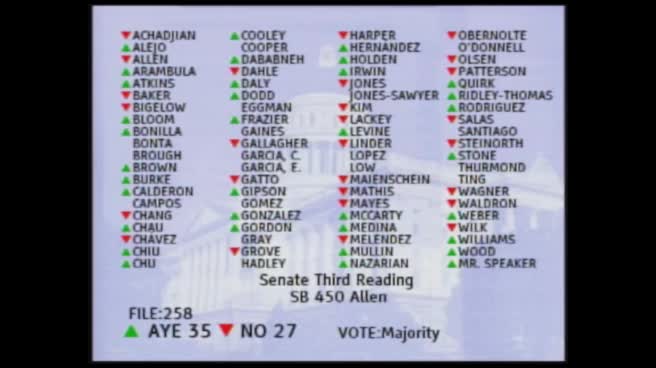 2MIN
Assembly Floor
 6MIN
Senate Floor
 21MIN
Senate Standing Committee on Labor and Industrial Relations
 1MIN
Assembly Floor
 2MIN
Assembly Floor
 2MIN
Assembly Standing Committee on Appropriations
 12MIN
Assembly Standing Committee on Local Government
Bill Author

Bill Co-Author(s):