AB 1717: Greenhouse Gas Reduction Fund.
- Session Year: 2015-2016
- House: Assembly
- Latest Version Date: 2016-03-18
The California Global Warming Solutions Act of 2006 designates the State Air Resources Board as the state agency charged with monitoring and regulating sources of emissions of greenhouse gases. The act authorizes the state board to include use of market-based compliance mechanisms. Existing law requires all moneys, except for fines and penalties, collected by the state board as part of a market-based compliance mechanism to be deposited in the Greenhouse Gas Reduction Fund and to be available upon appropriation. Existing law continuously appropriates 60% of the annual proceeds of the fund for various purposes, including 10% for the Transit and Intercity Rail Capital Program administered by the Transportation Agency and 25% for certain components of the initial operating segment and Phase I Blended System of the high-speed rail project as described in the 2012 business plan adopted by the High-Speed Rail Authority.
This bill would reappropriate the 25% share of the annual proceeds of the fund designated for the high-speed rail project to the Transportation Agency for the Transit and Intercity Rail Capital Program under specified conditions. The bill would make legislative findings and declarations.
Existing law establishes the California Alternative and Renewable Fuel, Vehicle Technology, Clean Air, and Carbon Reduction Act of 2007, which includes the Alternative and Renewable Fuel and Vehicle Technology Program and the Air Quality Improvement Program. Existing law defines specified terms for purposes of the act.
This bill would make nonsubstantive changes to those definitions.
The Legislature finds and declares all of the following:
(a)According to the American Lung Associations 2015 State of the Air report, Southern California remains home to some of the most polluted air in the United States. Emissions from the transportation sector are the leading source of pollution in the region, bringing significant lung health burdens.
(b)Senate Bill No. 535 (Chapter 830, Statutes of 2012) requires that 25 percent of funds generated by the states cap-and-trade program must benefit disadvantaged communities. Disadvantaged communities include areas disproportionately affected by environmental pollution and areas with concentrations of people that are of low income, high unemployment, low levels of homeownership, high rent burden, sensitive populations, or low levels of educational attainment.
(c)More than 50 percent of the most disadvantaged census tracts identified by the California Environmental Protection Agency are located in southern California.
(d)Less than 5 percent of disadvantaged census tracts are located in the nine San Francisco Bay Area counties.
(e)Senate Bill No. 862 (Chapter 36, Statutes of 2014) continuously appropriates 25 percent of cap-and-trade funds for the high-speed rail program. Prior to obtaining this funding, the High-Speed Rail Authority committed in a June 14, 2014, letter to Senator Fran Pavley to accelerate reductions in greenhouse gas emissions (GHG) and put new emphasis on improvements in urban areas utilizing the funding that would be provided through the ongoing commitment of cap and trade proceeds, as contained in Senate Bill (SB) 862.... At the same time, with cap and trade funds we would accelerate work on the segment from Burbank to Palmdale, so that we would be building the initial operating segment from two directions, north to south, and south to north. The Burbank-Palmdale segment, which potentially could become an operating segment on its own, would accelerate benefits to the Los Angeles region.
(f)The High-Speed Rail Authority further committed to this approach through adoption of Board Resolution #14-19 declaring The Authority Board concurs with the priority to move forward with the approach outlined in the CEOs letter to State Senator Fran Pavley, including the prioritization of the Palmdale to Burbank project section for expenditure of cap and trade proceeds as they become available and in accordance with provisions of the law.
(g)The Legislature approved cap-and-trade funds for high-speed rail only for purposes consistent with this commitment. SB 862 establishes that the first operating high-speed rail segment must reach southern California, as described in the 2012 business plan.
(h)SB 862 specifies that any subsequent decision by the High-Speed Rail Authority to deprioritize southern California and direct construction funding for an alternative route would not be eligible for funding.
(i)SB 862 requires that any redirection of cap-and-trade investments away from some of the states most disadvantaged communities in southern California would require reauthorization by the Legislature.
(j)It is the intent of the Legislature to establish conditions for use of any cap-and-trade funds voluntarily forfeited by the High-Speed Rail Authority. Nothing in this act shall be interpreted to alter or in any way affect the conditions of funding eligibility established by SB 862.
SEC. 2.Section 39719 of the Health and Safety Code is amended to read:39719.(a)The Legislature shall appropriate the annual proceeds of the fund for the purpose of reducing greenhouse gas emissions in this state in accordance with the requirements of Section 39712.
(b)To carry out a portion of the requirements of subdivision (a), annual proceeds are continuously appropriated for the following:
(1)Beginning in the 201516 fiscal year, and notwithstanding Section 13340 of the Government Code, 35 percent of annual proceeds are continuously appropriated, without regard to fiscal years, for transit, affordable housing, and sustainable communities programs as following:
(A)Ten percent of the annual proceeds of the fund is hereby continuously appropriated to the Transportation Agency for the Transit and Intercity Rail Capital Program created by Part 2 (commencing with Section 75220) of Division 44 of the Public Resources Code.
(B)Five percent of the annual proceeds of the fund is hereby continuously appropriated to the Low Carbon Transit Operations Program created by Part 3 (commencing with Section 75230) of Division 44 of the Public Resources Code. Funds shall be allocated by the Controller, according to requirements of the program, and pursuant to the distribution formula in subdivision (b) or (c) of Section 99312 of, and Sections 99313 and 99314 of, the Public Utilities Code.
(C)Twenty percent of the annual proceeds of the fund is hereby continuously appropriated to the Strategic Growth Council for the Affordable Housing and Sustainable Communities Program created by Part 1 (commencing with Section 75200) of Division 44 of the Public Resources Code. Of the amount appropriated in this subparagraph, no less than 10 percent of the annual proceeds, shall be expended for affordable housing, consistent with the provisions of that program.
(2)Beginning in the 201516 fiscal year, notwithstanding Section 13340 of the Government Code, 25 percent of the annual proceeds of the fund is hereby continuously appropriated to the High-Speed Rail Authority for the following components of the initial operating segment and Phase I Blended System as described in the 2012 business plan adopted pursuant to Section 185033 of the Public Utilities Code:
(A)Acquisition and construction costs of the project.
(B)Environmental review and design costs of the project.
(C)Other capital costs of the project.
(D)Repayment of any loans made to the authority to fund the project.
(c)If the high-speed rail project becomes ineligible for funding under paragraph (2) of subdivision (b) due to selection by the High-Speed Rail Authority of an alternative initial operating segment that is not as described in the authoritys 2012 business plan, the proceeds in paragraph (2) of subdivision (b) shall instead be continuously appropriated to the Transportation Agency for the Transit and Intercity Rail Capital Program created by Part 2 (commencing with Section 75220) of Division 44 of the Public Resources Code.
(c)
(d)In determining the amount of annual proceeds of the fund for purposes of the calculation in subdivision (b), the funds subject to Section 39719.1 shall not be included.
SECTION 1.Section 44270.3 of the Health and Safety Code is amended to read:44270.3.For purposes of this chapter, the following terms have the following meanings:
(a)Benefit-cost score, for the Alternative and Renewable Fuel and Vehicle Technology Program created pursuant to Section 44272, means a projects expected or potential greenhouse gas emissions reduction per dollar awarded by the commission to the project from the Alternative and Renewable Fuel and Vehicle Technology Fund.
(b)Commission means the State Energy Resources Conservation and Development Commission.
(c)Full fuel-cycle assessment or life-cycle assessment means evaluating and comparing the full environmental and health impacts of each step in the life cycle of a fuel, including, but not limited to, all of the following:
(1)Feedstock production, extraction, cultivation, transport, and storage, and the transportation and use of water and changes in land use and land cover therein.
(2)Fuel production, manufacture, distribution, marketing, transport, and storage, and the transportation and use of water therein.
(3)Vehicle operation, including refueling, combustion, conversion, permeation, and evaporation.
(d)Vehicle technology means any vehicle, boat, off-road equipment, or locomotive, or component thereof, including its engine, propulsion system, transmission, or construction materials.
(e)For purposes of the Air Quality Improvement Program created pursuant to Section 44274, the following terms have the following meanings:
(1)Benefit-cost score means the reasonably expected or potential criteria pollutant emission reductions achieved per dollar awarded by the state board for the project.
(2)Project means a category of investments identified for potential funding by the state board, including, but not limited to, competitive grants, revolving loans, loan guarantees, loans, vouchers, rebates, and other appropriate funding measures for specific vehicles, equipment, technologies, or initiatives authorized by Section 44274.
For the purposes of this chapter, the following terms have the following meanings:
(a)Benefit-cost score, for the Alternative and Renewable Fuel and Vehicle Technology Program created pursuant to Section 44272, means a projects expected or potential greenhouse gas emissions reduction per dollar awarded by the commission to the project from the Alternative and Renewable Fuel and Vehicle Technology Fund.
(b)Commission means the State Energy Resources Conservation and Development Commission.
(c)Full fuel-cycle assessment or life-cycle assessment means evaluating and comparing the full environmental and health impacts of each step in the life cycle of a fuel, including, but not limited to, all of the following:
(1)Feedstock production, extraction, cultivation, transport, and storage, and the transportation and use of water and changes in land use and land cover therein.
(2)Fuel production, manufacture, distribution, marketing, transport, and storage, and the transportation and use of water therein.
(3)Vehicle operation, including refueling, combustion, conversion, permeation, and evaporation.
(d)Vehicle technology means any vehicle, boat, off-road equipment, or locomotive, or component thereof, including its engine, propulsion system, transmission, or construction materials.
(e)For purposes of the Air Quality Improvement Program created pursuant to Section 44274, the following terms have the following meanings:
(1)Benefit-cost score means the reasonably expected or potential criteria pollutant emission reductions achieved per dollar awarded by the state board for the project.
(2)Project means a category of investments identified for potential funding by the state board, including, but not limited to, competitive grants, revolving loans, loan guarantees, loans, vouchers, rebates, and other appropriate funding measures for specific vehicles, equipment, technologies, or initiatives authorized by Section 44274.
|
Date
|
Status
|
|---|---|
| Jan 27, 2016 | Read first time. To print. |
| Jan 28, 2016 | From printer. May be heard in committee February 27. |
| Mar 17, 2016 | Referred to Coms. on NAT. RES. and TRANS. |
| Mar 18, 2016 | From committee chair, with author's amendments: Amend, and re-refer to Com. on NAT. RES. Read second time and amended. |
| Mar 28, 2016 | Re-referred to Com. on NAT. RES. |
| Mar 28, 2016 | Re-referred to Coms. on TRANS. and NAT. RES. pursuant to Assembly Rule 96. |
| Apr 12, 2016 | In committee: Set, first hearing. Failed passage. Reconsideration granted. |
|
Date
|
Description
|
Location
|
Votes
|
|
|---|---|---|---|---|
| Apr 11, 2016 | Reconsideration. | Assembly Standing Committee on Transportation |
Passed |
|
| Apr 11, 2016 | Do pass and be re-referred to the Committee on [Natural Resources] | Assembly Standing Committee on Transportation |
Failed |
This list shows positions taken on this bill by organizations on the date displayed, which is linked to the original source.
Positions by individuals are not included.
|
Organization
|
Position
|
Date
|
|---|---|---|
| Howard Jarvis Taxpayer Association | ** Support | Apr 11, 2016 |
| State Building & Construction Trades Council Of California | * Against | Apr 11, 2016 |
Date of Hearing: April 11, 2016
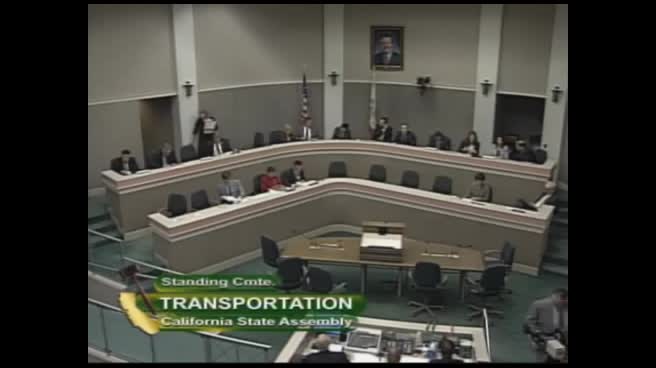
ASSEMBLY COMMITTEE ON TRANSPORTATION
Jim Frazier, Chair
ABPCA Bill Id:AB 1717 (
Author:Hadley) – As Amended Ver:March 18, 2016
SUBJECT: Greenhouse Gas Reduction Fund
SUMMARY: Redirects the 25% of Greenhouse Gas Reduction Fund (GGRF) revenues that are currently continuously appropriated to high-speed rail to the Transit and Intercity Rail Capital Program (TIRCP). Specifically, this bill:
- Makes various findings and declarations relating to the Legislature’s intent with the passage of SB 535 (de León), Chapter 830, Statutes of 2012, which required that a minimum of 25% GGRF funds be used to benefit disadvantaged communities and SB 862 (Committee on Budget and Fiscal Review), Chapter 36, Statues of 2014, which directed 25% of GGRF funds to high-speed rail.
- Requires the 25% of GGRF funds continuously appropriated to the high-speed rail project to be redirected to the TIRCP, if the California High-Speed Rail Authority selects an alternative Initial Operating Segment (IOS) other than what was identified in the 2012 business plan.
EXISTING LAW:
- Establishes the California High-Speed Rail Authority (Authority) and vests with it the responsibility to develop and implement a high-speed rail system in California.
Requires the California Air Resources Board (ARB), pursuant to AB 32 (Núñez), Chapter 488, Statutes of 2006, to develop a plan of how to reduce statewide greenhouse gas emissions to 1990 levels by 2020. Under AB 32, ARB is authorized to include the use of market-based mechanisms to comply with these regulations (cap and trade).
- Establishes the GGRF in the State Treasury and requires all money collected pursuant to cap and trade, with limited exceptions, be deposited into the fund and makes the GGRF funds available for appropriation by the Legislature.
- Continuously appropriates 25% of GGRF funds for the high-speed rail project.
- Creates the TIRCP, administered by the California State Transportation Agency (CalSTA), and continuously appropriates 10% of GGRF funds for the program.
- Requires that a minimum of 25% of GGRF expenditures be used to benefit disadvantaged communities.
FISCAL EFFECT: Unknown
COMMENTS: SB 862 created a variety of programs to help reach the state's greenhouse gas emission reduction goals and appropriated cap and trade revenues to these programs. Included in SB 862 is a 10% continuous appropriation for TIRCP, which is managed by the CalSTA, and a 25% continuous appropriation for high-speed rail project, which is managed by the Authority. Regarding the high-speed rail appropriation, SB 862 specifically appropriated the funds for the IOS and Phase I Blended System as described in the 2012 business plan.
The Authority’s Revised 2012 Business Plan (and the 2014 Business Plan) defined the IOS as a 300-mile segment from Merced to the San Fernando Valley with service starting in 2022. Full Phase I of the system, which includes the IOS, was defined as 520 miles from San Francisco to Los Angeles and Anaheim, with service starting in 2026.
In February of this year, the Authority released its "Draft 2016 Business Plan" that proposed a shift from a southern-oriented IOS as previously identified to a northern IOS, from San Jose to north of Shafter in Kern County, dubbed the Silicon Valley to Central Valley line. The northern IOS includes the current construction underway in the Central Valley from Madera to Wasco in Kern County and would continue to Gilroy and end at Diridon Station in San Jose.
The author asserts that, since SB 862 appropriated funds for the IOS and Phase 1 Blended System as set forth in the 2012 Business Plan and since a different IOS is now proposed, the
SB 862 appropriation cannot not be used on the revised IOS. AB 1717 directs those funds instead to CalSTA for the TIRCP.
Committee concerns:
- SB 862 provides funding for the IOS and Phase I Blended with cap and trade funds, as described in the 2012 Business Plan. Although the IOS orientation is proposed to shift, all sections of the newly proposed northern IOS are included in the Phase I Blended as defined in the 2012 Business Plan. Consequently, since the SB 862 appropriation provides funding for the Phase 1 Blended, and since all sections of the proposed northern IOS are included in the Phase 1 Blended, then arguably the SB 862 appropriation can be applied to the northern IOS.
- The author uses as further evidence that SB 862 appropriation was envisioned for a purpose other than what is currently proposed by the Authority, a letter dated June 14, 2014, from the Authority to Senator Fran Pavley. In that letter, the Authority committed to use the cap and trade funds granted to their agency through SB 862 to “accelerate work on the segment from Burbank to Palmdale... The Burbank-Palmdale segment, which potentially could become an operating segment on its own, would accelerate benefits to the Los Angeles region.” This intent was formally adopted by the Authority Board of Directors in Resolution #HSRA 14-19 that resolved that, “The Authority Board concurs with the priority to move forward with the approach outlined in the CEO’s letter to State Senator Fran Pavley, including the prioritization of the Palmdale to Burbank project section for expenditure of cap and trade proceeds as they become viable and in accordance with provisions of the law.”
Although the letter to State Senator Pavley does convey a commitment to accelerate work on the Burbank to Palmdale sections, that level of specificity was not referenced in SB 862 as a requirement for the appropriation.
- AB 1717 includes the following two legislative findings and declarations that are particularly troublesome:
- “SB 862 specifies that any subsequent decision by the High-Speed Rail Authority to deprioritize southern California and direct construction funding for an alternative route would not be eligible for funding;" and,
- “SB 862 requires that any redirection of cap-and-trade investments away from some of the state’s most disadvantaged communities in southern California would require reauthorization by the Legislature.”
Although one might interpret SB 862 to have this intent and meaning, SB 862 does not actually include these specific requirements. Given the litigious nature of this project already, the Legislature should be careful not to muddy the facts with misleading findings.
Double referral: This bill will be referred to the Assembly Natural Resources Committee should it pass out of this committee.
Previous legislation: SB 862 (Committee on Budget and Fiscal Review), Chapter 36, Statues of 2014, continuously appropriated 25% of GGRF funds to the high-speed rail project and 10% to the TIRCP.
SB 535 (de León), Chapter 830, Statutes of 2012, required, among other things, that a minimum of 25% of the moneys available in GGRF be used to benefit disadvantaged communities.
REGISTERED SUPPORT / OPPOSITION:
Support
Howard Jarvis Taxpayer Association
Opposition
None on file
Analysis Prepared by: Melissa White / TRANS. / (916) 319-2093
Discussed in Hearing
 13MIN
Senate Standing Committee on Transportation and Housing
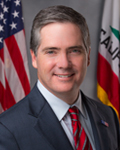
Bill Author
Bill Co-Author(s):