AB 1732: Single-user restrooms.
- Session Year: 2015-2016
- House: Assembly
- Latest Version Date: 2016-09-29
Existing law requires a public agency, as defined, that serves the public or is open to the public and maintains toilet facilities to make those facilities available to the public free of charge. Existing law requires publicly and privately owned facilities where the public congregates, as defined, to maintain a sufficient number of temporary or permanent toilet facilities to meet the needs of the public at peak hours. Existing law also requires each business establishment to provide, within reasonable access, a sufficient number of toilet facilities for the use of the employees.
This bill would, commencing March 1, 2017, require all single-user toilet facilities in any business establishment, place of public accommodation, or government agency to be identified as all-gender toilet facilities, as specified. The bill would authorize inspectors, building officials, or other local officials responsible for code enforcement to inspect for compliance with these provisions during any inspection.
Existing law requires a public agency, as defined, that serves the public or is open to the public and maintains toilet facilities to make those facilities available to the public free of charge. Existing law requires publicly and privately owned facilities where the public congregates, as defined, to maintain a sufficient number of temporary or permanent toilet facilities to meet the needs of the public at peak hours. Existing law also requires each business establishment to provide, within reasonable access, a sufficient number of toilet facilities for the use of the employees.
This bill would, commencing March 1, 2017, require all single-user toilet facilities in any business establishment, place of public accommodation, or government agency to be identified as all-gender toilet facilities, as specified. The bill would authorize health officers or inspectors inspectors, building officials, or other local officials responsible for code enforcement to inspect for compliance with these provisions during any inspection.
Existing law requires a public agency, as defined, that serves the public or is open to the public and maintains toilet facilities to make those facilities available to the public free of charge. Existing law requires publicly and privately owned facilities where the public congregates, as defined, to maintain a sufficient number of temporary or permanent toilet facilities to meet the needs of the public at peak hours. Existing law also requires each business establishment to provide, within reasonable access, a sufficient number of toilet facilities for the use of the employees.
This bill would would, commencing March 1, 2017, require any business or place of public accommodation to identify a toilet facility that has only one water closet as an all gender toilet facility. all single-user toilet facilities in any business establishment, place of public accommodation, or government agency to be identified as all-gender toilet facilities, as specified. The bill would authorize health officers or inspectors to inspect for compliance with these provisions during any inspection.
Existing law requires a public agency, as defined, that serves the public or is open to the public and maintains toilet facilities to make those facilities available to the public free of charge. Existing law requires publicly and privately owned facilities where the public congregates, as defined, to maintain a sufficient number of temporary or permanent toilet facilities to meet the needs of the public at peak hours. Existing law also requires each business establishment to provide, within reasonable access, a sufficient number of toilet facilities for the use of the employees.
This bill would require any business or place of public accommodation to identify a toilet facility that has only one water closet as an all gender toilet facility. The bill would authorize health officers or inspectors to inspect for compliance with these provisions during any inspection.
(a)All single-user toilet facilities in any business establishment, place of public accommodation, or state or local government agency shall be identified as all-gender toilet facilities by signage that complies with Title 24 of the California Code of Regulations, and designated for use by no more than one occupant at a time or for family or assisted use.
(b)During any inspection of a business or a place of public accommodation by an inspector, building official, or other local official responsible for code enforcement, the inspector or official may inspect for compliance with this section.
(c)For the purposes of this section, single-user toilet facility means a toilet facility with no more than one water closet and one urinal with a locking mechanism controlled by the user.
(d)This section shall become operative on March 1, 2017.
(a)All single-user toilet facilities in any business establishment, place of public accommodation, or state or local government agency shall be identified as all-gender toilet facilities, facilities by signage that complies with Title 24 of the California Code of Regulations, and designated for use by no more than one occupant at a time or for family or assisted use.
(b)During any inspection of a business or a place of public accommodation by an inspector, building official, or other local official responsible for code enforcement, the inspector or official may inspect for compliance with this section.
(c)For the purposes of this section, single-user toilet facility means a toilet facility with no more than one water closet and one urinal with a locking mechanism controlled by the user.
(d)This section shall become operative on March 1, 2017.
(a)All single-user toilet facilities in any business establishment, place of public accommodation, or state or local government agency shall be identified as all-gender toilet facilities, and designated for use by no more than one occupant at a time or for family or assisted use.
(b)During any inspection of a business or a place of public accommodation by a health officer or inspector, the inspector may inspect for compliance with this section.
(b)During any inspection of a business or a place of public accommodation by an inspector, building official, or other local official responsible for code enforcement, the inspector or official may inspect for compliance with this section.
(c)For the purposes of this section, single-user toilet facility means a toilet facility with no more than one water closet and one urinal with a locking mechanism controlled by the user.
(d)This section shall become operative on March 1, 2017.
(a)If a toilet facility located in any business or place of public accommodation has only one water closet, that facility shall be identified as an all gender toilet facility.
118600.(a)All single-user toilet facilities in any business establishment, place of public accommodation, or state or local government agency shall be identified as all-gender toilet facilities, and designated for use by no more than one occupant at a time or for family or assisted use.
(b)During any inspection of a business or a place of public accommodation by a health officer or inspector, the inspector may inspect for compliance with this section.
(c)For the purposes of this section, single-user toilet facility means a toilet facility with no more than one water closet and one urinal with a locking mechanism controlled by the user.
(d)This section shall become operative on March 1, 2017.
(a)If a toilet facility located in any business or place of public accommodation has only one water closet, that facility shall be identified as an all gender toilet facility.
(b)During any inspection of a business or a place of public accommodation by a health officer or inspector, the inspector may inspect for compliance with this section.
|
Date
|
Status
|
|---|---|
| May 19, 2016 | Referred to Com. on T. & H. |
| Aug 26, 2016 | Enrolled and presented to the Governor at 4:30 p.m. |
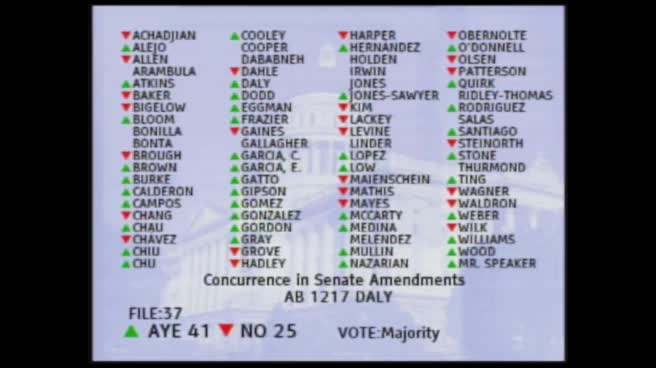
| Aug 22, 2016 | Senate amendments concurred in. To Engrossing and Enrolling. (Ayes 57. Noes 18. Page 6055.). |
| Aug 22, 2016 | Senate amendments concurred in. To Engrossing and Enrolling. |
| Aug 19, 2016 | In Assembly. Concurrence in Senate amendments pending. May be considered on or after August 21 pursuant to Assembly Rule 77. |
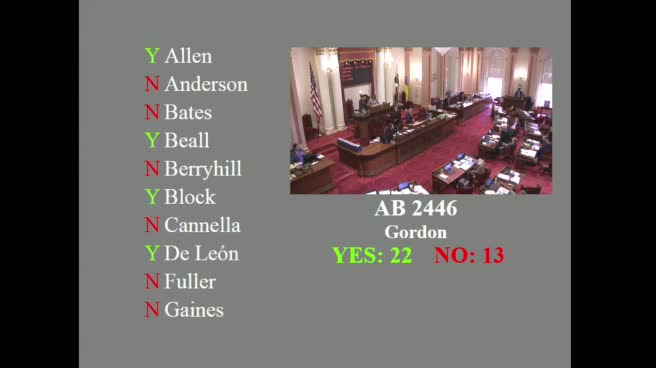
| Aug 18, 2016 | Read third time. Passed. Ordered to the Assembly. (Ayes 28. Noes 7.). |
| Aug 18, 2016 | Read third time. Passed. Ordered to the Assembly. (Ayes 28. Noes 7. Page 5132.). |
| Aug 18, 2016 | Read third time. Passed. Ordered to the Assembly. |
| Aug 9, 2016 | Read second time and amended. Ordered to third reading. |
| Aug 8, 2016 | From committee: Be placed on second reading file pursuant to Senate Rule 28.8 and be amended. |
| Aug 1, 2016 | In committee: Hearing postponed by committee. |
| Jun 22, 2016 | From committee: Do pass and re-refer to Com. on APPR. (Ayes 9. Noes 2.) (June 21). Re-referred to Com. on APPR. |
| Jun 6, 2016 | In committee: Hearing postponed by committee. |
| Jan 28, 2016 | Read first time. To print. |
| May 9, 2016 | Read third time. Passed. Ordered to the Senate. (Ayes 55. Noes 19. Page 4716.) |
| May 9, 2016 | Read third time. Passed. Ordered to the Senate. |
| May 9, 2016 | In Senate. Read first time. To Com. on RLS. for assignment. |
| Apr 21, 2016 | Read second time. Ordered to third reading. |
| Apr 20, 2016 | From committee: Do pass. (Ayes 11. Noes 4.) (April 20). |
| Apr 12, 2016 | Re-referred to Com. on APPR. |
| Apr 11, 2016 | Read second time and amended. |
| Apr 7, 2016 | From committee: Amend, and do pass as amended and re-refer to Com. on APPR. (Ayes 14. Noes 0.) (April 5). |
| Mar 31, 2016 | Re-referred to Com. on B. & P. |
| Mar 30, 2016 | From committee chair, with author's amendments: Amend, and re-refer to Com. on B. & P. Read second time and amended. |
| Feb 18, 2016 | Referred to Com. on B. & P. |
| Jan 29, 2016 | From printer. May be heard in committee February 28. |
|
Date
|
Description
|
Location
|
Votes
|
|
|---|---|---|---|---|
| Aug 22, 2016 | AB 1732 TING Concurrence in Senate Amendments | Assembly Floor |
Passed |
|
| Aug 18, 2016 | Assembly 3rd Reading AB1732 Ting By Leno | Senate Floor |
Passed |
|
| Jun 21, 2016 | Do pass, but first be re-referred to the Committee on [Appropriations] | Senate Standing Committee on Transportation and Housing |
Passed |
|
| May 9, 2016 | AB 1732 TING Assembly Third Reading | Assembly Floor |
Passed |
|
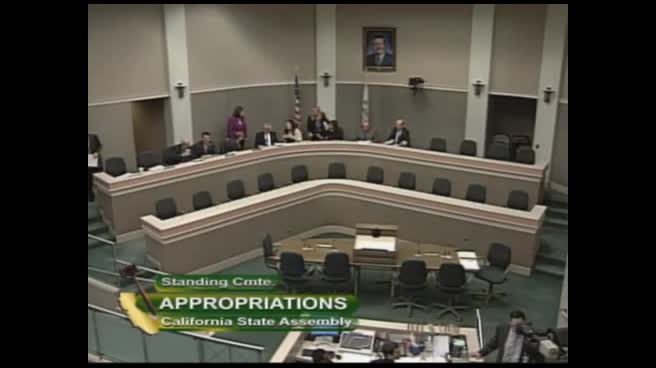
| Apr 20, 2016 | Do pass. | Assembly Standing Committee on Appropriations |
Passed |
|
| Apr 5, 2016 | Do pass as amended and be re-referred to the Committee on [Appropriations] | Assembly Standing Committee on Business and Professions |
Passed |
This list shows positions taken on this bill by organizations on the date displayed, which is linked to the original source.
Positions by individuals are not included.
|
Organization
|
Position
|
Date
|
|---|---|---|
| ACLU of California | * Support | Jun 21, 2016 |
| American Academy of Pediatrics | ** Support | Aug 18, 2016 |
| Anti-Defamation League | ** Support | Aug 18, 2016 |
| California NOW | ** Support | Aug 18, 2016 |
| Campaign for Children and Families | * Against | Jun 21, 2016 |
| City of West Hollywood | ** Support | Aug 18, 2016 |
| Equality California | ** Support | Aug 18, 2016 |
| HP | ** Support | Aug 18, 2016 |
| Los Angeles Unified School District | * Support | Jun 21, 2016 |
| National Association of Social Workers | ** Support | Aug 18, 2016 |
| National Association of Social Workers - California | * Support | Jun 21, 2016 |
| Paypal | ** Support | Aug 18, 2016 |
| Quality California | * Support | Jun 21, 2016 |
| SacLEGAL | ** Support | Aug 18, 2016 |
| Salesforce | ** Support | Aug 18, 2016 |
| San Francisco Unified School District | ** Support | Aug 18, 2016 |
| San Mateo County Board of Supervisors | ** Support | Aug 18, 2016 |
| San Mateo County-City/County Association Of Governments | * Support | Jun 21, 2016 |
| Santa Clara County Board of Supervisors | ** Support | Aug 18, 2016 |
| Transgender Law Center | ** Support | Aug 18, 2016 |
CONCURRENCE IN SENATE AMENDMENTS
CSA1 Bill Id:AB 1732
Author:(Ting)
As Amended Ver:August 9, 2016
Majority vote
ASSEMBLY: | 55-19 | (May 9, 2016) | SENATE: | 28-7 | (August 18, 2016) |
Original Committee Reference: B. & P.
SUMMARY: Requires, commencing on March 1, 2017, businesses, places of public accommodation, or state or local government agencies that offer a single-user toilet facility to be designated as an all-gender toilet facility, as specified, and authorizes an inspector, as specified to inspect for compliance.
The Senate amendments:
- Specify that the signage requirements for a single-user toilet facility comply with Title 24 of the California Code of Regulations.
- Clarify who may inspect for compliance.
FISCAL EFFECT: According to the Senate Appropriations Committee, pursuant to Senate Rule 28.8, this bill will result in negligible state costs.
COMMENTS:
Purpose. This bill is sponsored by California NOW, Equality California, and the Transgender Law Center. According to the author, "restrooms are a necessity of life, and access to them influences our ability to participate in public life. However, current practices that restrict access to single-occupancy restrooms by gender create problems of safety, fairness, and convenience. This burden disproportionately impacts members of the LGBT community, women, and parents or caretakers of dependents of the opposite gender. We must change our focus from segregating access to equalizing access to this solitary room. This will enable everyone to get in and out on the same terms. [This bill] eliminates the fears and frustration that many people experience in public restrooms on a daily basis by requiring all single-occupancy restrooms to be designated as "all gender." This is not a novel concept, as restrooms in homes and airplanes, for example, are not gender-specific. This bill follows a best practice for the workplace set by the United States Department of Labor's Occupational Safety and Health Administration (OSHA) and is similar to local ordinances adopted by cities across the nation to ensure that everyone's rights are protected."
Background. The scope of this bill is limited to single-user toilets located in a business, a place of public accommodation or state or local government agency. This bill does not address multi-stall restrooms. For those entities that offer single-user restrooms, they will be required to make those restrooms all-gender accessible. Current law requires certain public and privately owned facilities to maintain a designated number of restroom facilities made accessible to employees or the general public depending on California Building Standards Code (CBC) or other municipal code requirements. People have become accustomed to the traditional "male" and "female" designations in order to determine the appropriate restroom facility to use.
This bill will not change existing laws with respect to the number of, specifications for, or other facility requirements for restrooms that a business or entity must comply with under the existing CBC or current local ordinances, but changes the restroom access designation. The author notes that the traditions of gender-based restroom restrictions create three categories of problems: 1) convenience; 2) fairness; and, 3) safety. In an effort to address those concerns, this bill will require those businesses with "single-user" restrooms to be universally accessible regardless of a person's gender designation.
A universal access toilet facility may make it easier for parents or caregivers of opposite genders to utilize an available restroom and provides easier access for transgender or gender non-conforming individuals to choose the appropriate restroom to use. According to an article in the Journal of Public Management and Social Policy, Gender Restrooms and Minority Stress: The Public Regulation of Gender and its Impact on Transgender People's Lives", noted that "All people share the real human need for safe restroom facilities when we go to work, go to school, and participate in public life. Since the need is universal, one would think that it would be a priority of our society to make sure restrooms are safe and available for all people. Yet, the way gendered public restrooms are designed and constructed harms transgender and gender non-conforming people, some of whom may not conform to reified expectations of how men and women will look and act."
The California Building Standards Commission (CBSC) is responsible for developing building standards for state owned buildings, including University and State College buildings, and for developing green building standards for most buildings except for housing, public schools, and hospitals. The CBSC publishes the CBC in Title 24 of the California Code of Regulations every three years and its supplements, such as the California Green Building Standards Code, in intervening years. The building codes apply to all building occupancies and related features and equipment throughout the state, and set requirements for structural, mechanical, electrical, and plumbing systems, and require measures for energy conservation, green design, construction and maintenance, fire and life safety, and accessibility. The size of the facility, its purpose, the number of occupants, or location can determine the requirements for the number of water closets or toilet facilities an entity is required to have. This bill does not require businesses to add or remove existing restroom facilities or alter current restroom structures, it simply requires a single-user toilet facility (meant for one single-user occupant at a time) to be made available to any person, regardless of a person's gender designation. Enforcement of this bill is delegated to a health officer or inspector, at the local level, but does not require those inspectors to do so.
Signage Requirements. The CBC requires certain signage designations for restroom facilities which include only a geometric symbol. Terms frequently seen on restroom doors such as "restroom," "male," or "female" are not currently required under the current CBC. Symbols are required on restroom doors or immediately adjacent to restroom entrances when doors are not available. Geometric symbols are intended for visually impaired persons to identify the appropriate restroom facility to use. If word designations are included on the sign, then there are additional compliance requirements including type, size and font. Compliance with the CBC requirements for bathroom signage is typically handled by local building officials. According to the Department of General Services, geometric signage designations were not required under state law until 1982. This bill does not require businesses to add or remove existing restroom facilities or alter current restroom structures, it simply requires a single-user restroom facility (meant for one single-user occupant at a time) to be made available to any person.
California and Other States. Several cities and a number of educational institutions are in the process or have already transitioned to a "universal access" approach to restroom facilities. In the City and County of San Francisco, an ordinance was proposed in January of 2016, that would mandate businesses and places of public accommodation designate single-user toilet facilities that are available to the public or employees as all-gender and accessible to persons of any gender identity, as specified. A January 11, 2016, article in Time Magazine stated that if that ordinance passes, "it will add San Francisco alongside Philadelphia, Seattle, Washington, D.C., West Hollywood, Calif[ornia]. and Austin, Texas, to the list of cities with gender-neutral bathroom provisions. More than 150 United States colleges and universities have also instituted such measures, including the entire University of California system."
Analysis Prepared by: Elissa Silva / B. & P. / (916) 319-3301 FN: 0003957
Office of Senate Floor Analyses (916) 651-1520 Fax: (916) 327-4478 | AB |
THIRD READING
Bill No: AB 1732
: 8/9/16
SENATE TRANS. & HOUSING COMMITTEE: 9-2, 6/21/16
AYES: Beall, Cannella, Allen, Galgiani, Leyva, McGuire, Mendoza, Roth, Wieckowski
NOES: Bates, Gaines
SENATE APPROPRIATIONS COMMITTEE: Senate Rule 28.8
ASSEMBLY FLOOR: 55-19, 5/9/16 - See last page for vote
Equality California
Transgender Law Center
DIGEST: This bill requires that all single-user restroom facilities in businesses, places of public accommodation, and state and local government agencies be identified as all-gender facilities.
Existing law:
- Requires every public agency that conducts an establishment serving or open to the public and equipped with restrooms intended for public use to make those restrooms available to the public free of cost or charge.
- Requires publicly and privately owned sports and entertainment arenas, stadiums, community and convention halls, specialty event centers, amusement facilities, and ski resorts to be equipped with sufficient temporary or permanent restrooms to meet the needs of the public at peak hours. For facilities owned or occupied by the state, the State Building Standards Commission must adopt standards to enforce this requirement. For other facilities, the Office of the State Architect must adopt standards. Standards must conform to the State Plumbing Code and be published in the State Building Standards Code.
- Specifies, by regulation, formulas for determining the number of restrooms that must be made available in public and private facilities based on the number of occupants the facility was designed to accommodate.
This bill:
- Requires that, beginning March 1, 2017, all single-user toilet facilities in business establishments, places of public accommodation, or state or local government agencies be identified as all-gender facilities and designated for use by single occupants, families, and people who require assistance.
- Defines “single-user toilet facilities” as those with no more than one water closet and one urinal that have a locking mechanism controlled by the user.
- Authorizes inspectors, building officials, and other local officials responsible for code enforcement to check businesses and places of public accommodation for compliance with this requirement as part of their inspections.
Comments
- Purpose. Current law requires public and private facilities to maintain a sufficient number of restrooms to meet the needs of the public. According to the author, however, gender-based restroom restrictions create problems of convenience, fairness, and safety for countless individuals and undermine the applicability and intent of current law. The author emphasizes that this burden is disproportionately experienced by the lesbian, gay, bisexual, and transgender (LGBT) community, women, and parents or caretakers of dependents of a different gender. The author states that the goal of this bill is to eliminate the fears and frustration that many people experience in restrooms on a daily basis by designating single-user bathrooms as “all gender.”
- Scope. This bill applies to restroom facilities with one toilet and/or urinal and one sink, with a door that the user can lock. These restrooms accommodate one user, and possibly one caregiver, at a time. The debate over how transgender individuals should be accommodated in multiuser restrooms is currently a major national policy issue, particularly with respect to school settings, so it is important to be clear that this bill does not apply to bathrooms with multiple stalls that can be used by multiple individuals at one time. Additionally, this bill does not require that single-user restrooms be installed or constructed where none currently exist. As the author states, “Compliance with the bill is a matter of adjusting a sign on a restroom door.” The bill gives inspectors the authority to enforce this requirement, but it does not require them to do so.
- Keeping people safe. The most obvious benefit of this bill is that it protects transgender and gender non-conforming individuals from harassment and violence. Using a public restroom is inherently risky for these individuals: In a 2013 survey of people who identify as transgender or gender non-conforming, 70% of respondents reported being denied access to or verbally harassed or physically assaulted in public restrooms. By removing “male” and “female” designations from single-user restrooms, this bill would separate the routine, daily act of using public bathrooms from the personal matter of defining and declaring one’s gender identity, allowing transgender and gender non-conforming people to maintain their privacy — and, by extension, their safety. While this bill does not guarantee that all-gender bathrooms will be available in all cases, it does de-gender public facilities where the barriers to doing so are lowest.
- Supporting caregivers — and evening out the lines. Transgender and gender non-conforming people are not the only groups that benefit from de-gendering single-user bathrooms. Gender-restricted bathrooms pose a dilemma for parents with differently gendered children, as well as for other caregivers assisting people of a different gender. Supporters of this bill note that people in this situation often have no choice but to break a social norm. Making single-occupancy restrooms available to all genders makes public bathrooms more accessible to families, children, the elderly, and people with disabilities. The author notes that it also helps address the problem of inadequate facilities for women — and the resultant, widely observed disparity in wait times for men’s and women’s restrooms.
- No new signage regulations required. The California Building Code (CBC) requires only that restroom doors be marked with one of three geometric symbols to indicate whether they are intended for use by men, women, or all genders. Most of the information typically displayed on restroom signs —including the side-by-side male and female figures used to denote unisex facilities — exceeds these requirements. The bill explicitly states that its new requirement can be met by signage that complies with the CBC. No adjustments to the CBC are necessary for implementation of this bill.
- Other cities and states. If passed, this bill would be the first of its kind to be adopted at the state level; however, it is not without precedent. Several cities have turned to single-user bathrooms as a means of promoting equality for the transgender community and increasing bathroom accessibility across the board. Austin, New York, Philadelphia, Santa Fe, Seattle, and Washington, D.C. have adopted provisions requiring single-occupancy bathrooms to be labeled for all-gender use. In California, the city of West Hollywood has mandated gender-nonspecific single-user bathrooms since 2014; Berkeley, Cathedral City, and San Francisco have also adopted similar measures. A January 2016 article in Time magazine notes that more than 150 U.S. colleges and universities have also instituted such policies, including the entire University of California system. The United States Department of Labor’s Occupational Safety and Health Administration has listed gender-nonspecific single-occupancy restrooms as a best practice in the workplace since 2015.
FISCAL EFFECT: Appropriation: Fiscal Com.: Local:
California NOW (co-source)
Equality California (co-source)
Transgender Law Center (co-source)
American Academy of Pediatrics
American Civil Liberties Union
Anti-Defamation League
City of West Hollywood
HP Inc.
National Association of Social Workers
PayPal
SacLEGAL
Salesforce
San Francisco Unified School District
San Mateo County Board of Supervisors
Santa Clara County Board of Supervisors
The Secular Coalition for California
None received
ASSEMBLY FLOOR: 55-19, 5/9/16
AYES: Alejo, Arambula, Atkins, Baker, Bloom, Bonilla, Bonta, Brown, Burke, Calderon, Campos, Chang, Chau, Chiu, Chu, Cooley, Cooper, Dababneh, Daly, Dodd, Eggman, Frazier, Cristina Garcia, Gatto, Gipson, Gomez, Gonzalez, Gordon, Gray, Roger Hernández, Holden, Irwin, Jones-Sawyer, Kim, Levine, Lopez, Low, Maienschein, McCarty, Medina, Mullin, Nazarian, O'Donnell, Quirk, Ridley-Thomas, Rodriguez, Salas, Santiago, Mark Stone, Thurmond, Ting, Weber, Williams, Wood, Rendon
NOES: Achadjian, Travis Allen, Bigelow, Brough, Dahle, Gallagher, Grove, Harper, Jones, Lackey, Linder, Mathis, Melendez, Obernolte, Patterson, Steinorth, Wagner, Waldron, Wilk
NO VOTE RECORDED: Chávez, Beth Gaines, Eduardo Garcia, Hadley, Mayes, Olsen
8/10/16 15:53:12
**** END ****
SENATE COMMITTEE ON TRANSPORTATION AND HOUSING
Senator Jim Beall, Chair
2015 - 2016 Regular
Bill No: AB 1732 Hearing Date: 6/21/2016
Author: | Ting | ||
Version: | 4/11/2016 | ||
Urgency: | No | Fiscal: | Yes |
Consultant: | Sarah Carvill | ||
SUBJECT: Single-user restrooms
DIGEST: This bill requires that all single-user restroom facilities in businesses, places of public accommodation, and state and local government agencies be identified as all-gender facilities.
ANALYSIS:
Existing law:
- Requires every public agency that conducts an establishment serving or open to the public and equipped with restrooms intended for public use to make those restrooms available to the public free of cost or charge.
- Requires publicly and privately owned sports and entertainment arenas, stadiums, community and convention halls, specialty event centers, amusement facilities, and ski resorts to be equipped with sufficient temporary or permanent restrooms to meet the needs of the public at peak hours. For facilities owned or occupied by the state, the State Building Standards Commission must adopt standards to enforce this requirement. For other facilities, the Office of the State Architect must adopt standards. Standards must conform to the State Plumbing Code and be published in the State Building Standards Code.
- Specifies, by regulation, formulas for determining the number of restrooms that must be made available in public and private facilities based on the number of occupants the facility was designed to accommodate.
This bill:
- Requires that, beginning March 1, 2017, all single-user toilet facilities in business establishments, places of public accommodation, or state or local government agencies be identified as all-gender facilities and designated for use by single occupants, families, and people who require assistance.
- Defines “single-user toilet facilities” as those with no more than one water closet and one urinal that have a locking mechanism controlled by the user.
- Authorizes inspectors, building officials, and other local officials responsible for code enforcement to check businesses and places of public accommodation for compliance with this requirement as part of their inspections.
COMMENTS:
- Purpose. Current law requires public and private facilities to maintain a sufficient number of restrooms to meet the needs of the public. According to the author, however, gender-based restroom restrictions create problems of convenience, fairness, and safety for countless individuals and undermine the applicability and intent of current law. The author emphasizes that this burden is disproportionately experienced by the lesbian, gay, bisexual, and transgender (LGBT) community, women, and parents or caretakers of dependents of a different gender. The author states that the goal of this bill is to eliminate the fears and frustration that many people experience in restrooms on a daily basis by designating single-user bathrooms as “all gender.”
- Scope. This bill applies to restroom facilities with one toilet and/or urinal and one sink, with a door that the user can lock. These restrooms accommodate one user, and possibly one caregiver, at a time. The debate over how transgender individuals should be accommodated in multiuser restrooms is currently a major national policy issue, particularly with respect to school settings, so it is important to be clear that this bill does not apply to bathrooms with multiple stalls that can be used by multiple individuals at one time. Additionally, this bill does not require that single-user restrooms be installed or constructed where none currently exist. As the author states, “Compliance with the bill is a matter of adjusting a sign on a restroom door.” The bill gives inspectors the authority to enforce this requirement, but it does not require them to do so.
- Keeping people safe. The most obvious benefit of this bill is that it protects transgender and gender non-conforming individuals from harassment and violence. Using a public restroom is inherently risky for these individuals: In a 2013 survey of people who identify as transgender or gender non-conforming, 70% of respondents reported being denied access to or verbally harassed or physically assaulted in public restrooms. By removing “male” and “female” designations from single-user restrooms, this bill would separate the routine, daily act of using public bathrooms from the personal matter of defining and declaring one’s gender identity, allowing transgender and gender non-conforming people to maintain their privacy — and, by extension, their safety. While this bill does not guarantee that all-gender bathrooms will be available in all cases, it does de-gender public facilities where the barriers to doing so are lowest.
- Supporting caregivers — and evening out the lines. Transgender and gender non-conforming people are not the only groups that benefit from de-gendering single-user bathrooms. Gender-restricted bathrooms pose a dilemma for parents with differently gendered children, as well as for other caregivers assisting people of a different gender. Supporters of this bill note that people in this situation often have no choice but to break a social norm. Making single-occupancy restrooms available to all genders makes public bathrooms more accessible to families, children, the elderly, and people with disabilities. The author notes that it also helps address the problem of inadequate facilities for women — and the resultant, widely observed disparity in wait times for men’s and women’s restrooms.
- No new signage regulations required. The California Building Code (CBC) requires only that restroom doors be marked with one of three geometric symbols to indicate whether they are intended for use by men, women, or all genders. Most of the information typically displayed on restroom signs —including the side-by-side male and female figures used to denote unisex facilities — exceeds these requirements. Consequently, no adjustments to the CBC are necessary for implementation of this bill.
- Other cities and states. If passed, this bill would be the first of its kind to be adopted at the state level; however, it is not without precedent. Several cities have turned to single-user bathrooms as a means of promoting equality for the transgender community and increasing bathroom accessibility across the board. Austin, Philadelphia, Seattle, and Washington, D.C. have adopted provisions requiring single-occupancy bathrooms to be labeled for all-gender use. In California, the city of West Hollywood has mandated gender-nonspecific single-user bathrooms since 2014, and San Francisco is currently considering a similar measure. A January 2016 article in Time magazine notes that more than 150 U.S. colleges and universities have also instituted such policies, including the entire University of California system. The United States Department of Labor’s Occupational Safety and Health Administration has listed gender nonspecific single-occupancy restrooms as a best practice in the workplace since 2015.
Assembly Votes:
Floor: 55-19
Appr: 11-4
B. & P.: 14-0
FISCAL EFFECT: Appropriation: Fiscal Com.: Local:
POSITIONS: (Communicated to the committee before noon on Wednesday,
June 15, 2016.)
SUPPORT:
California NOW (co-sponsor)
Equality California (co-sponsor)
Transgender Law Center (co-sponsor)
American Academy of Pediatrics
American Civil Liberties Union
Anti-Defamation League
City of West Hollywood
HP Inc.
National Association of Social Workers
PayPal
SacLEGAL
Salesforce
San Francisco Unified School District
San Mateo County Board of Supervisors
Santa Clara County Board of Supervisors
The Secular Coalition for California
OPPOSITION:
None received
-- END --
ASSEMBLY THIRD READING
ATR Bill Id:AB 1732
Author:(Ting)
As Amended Ver:April 11, 2016
Majority vote
Committee | Votes | Ayes | Noes |
Business & Professions | 14-0 | Salas, Baker, Bloom, Campos, Chávez, Dahle, Dodd, Eggman, Gatto, Gomez, Holden, Mullin, Ting, Wood | |
Appropriations | 11-4 | Gonzalez, Bloom, Bonilla, Bonta, Calderon, Daly, Eggman, Roger Hernández, Quirk, Santiago, Wood | Bigelow, Gallagher, Obernolte, Wagner |
SUMMARY: Requires, commencing on March 1, 2017, businesses, places of public accommodation, or state or local government agencies that offer a single-user toilet facility to be designated as an all-gender toilet facility, as specified, and authorizes a local health officer or health inspector to inspect for compliance. Specifically, this bill:
- Requires all single-user toilet facilities in any business establishment, place of public accommodation, or state or local government agency to be identified as all-gender toilet facilities, and designated for use by no more than one occupant at a time or for family or assisted use, beginning March 1, 2017.
- Defines a "single-user toilet facility" to mean a toilet facility with no more than one water closet and one urinal with a locking mechanism controlled by the user.
- Specifies that during any inspection of a business or a place of public accommodation by an inspector, building official, or other local official responsible for code enforcement, the inspector or official may inspect for compliance.
FISCAL EFFECT: According to the Assembly Appropriations Committee, likely negligible state costs. It is assumed that there are currently very few, if any, single-use restrooms in state facilities that are designated for use by only one gender.
COMMENTS:
Purpose. This bill is sponsored by California NOW, Equality California, and the Transgender Law Center. According to the author, "restrooms are a necessity of life, and access to them influences our ability to participate in public life. However, current practices that restrict access to single-occupancy restrooms by gender create problems of safety, fairness, and convenience. This burden disproportionately impacts members of the LGBT community, women, and parents or caretakers of dependents of the opposite gender. We must change our focus from segregating access to equalizing access to this solitary room. This will enable everyone to get in and out on the same terms. [This bill] eliminates the fears and frustration that many people experience in public restrooms on a daily basis by requiring all single-occupancy restrooms to be designated as "all gender." This is not a novel concept, as restrooms in homes and airplanes, for example, are not gender-specific. The bill follows a best practice for the workplace set by the United States Department of Labor's Occupational Safety and Health Administration (OSHA) and is similar to local ordinances adopted by cities across the nation to ensure that everyone’s rights are protected."
Background. The scope of this bill is limited to single-user toilets located in a business, a place of public accommodation or state or local government agency. This bill does not address multi-stall restrooms. For those entities that offer single-user restrooms, they will be required to make those restrooms all-gender accessible. Current law requires certain public and privately owned facilities to maintain a designated number of restroom facilities made accessible to employees or the general public depending on California Building Standards Code (CBC) or other municipal code requirements. People have become accustomed to the traditional "male" and "female" designations in order to determine the appropriate restroom facility to use.
This bill will not change existing laws with respect to the number of, specifications for, or other facility requirements for restrooms that a business or entity must comply with under the existing CBC or current local ordinances, but changes the restroom access designation. The author notes that the traditions of gender-based restroom restrictions create three categories of problems: 1) convenience; 2) fairness; and, 3) safety. In an effort to address those concerns, this bill will require those businesses with "single-user" restrooms to be universally accessible regardless of a person's gender designation.
A universal access toilet facility may make it easier for parents or caregivers of opposite genders to utilize an available restroom and provides easier access for transgender or gender non-conforming individuals to choose the appropriate restroom to use. According to an article in the Journal of Public Management and Social Policy, Gender Restrooms and Minority Stress: The Public Regulation of Gender and its Impact on Transgender People's Lives", noted that "All people share the real human need for safe restroom facilities when we go to work, go to school, and participate in public life. Since the need is universal, one would think that it would be a priority of our society to make sure restrooms are safe and available for all people. Yet, the way gendered public restrooms are designed and constructed harms transgender and gender non-conforming people, some of whom may not conform to reified expectations of how men and women will look and act."
The California Building Standards Commission (CBSC) is responsible for developing building standards for state owned buildings, including University and State College buildings, and for developing green building standards for most buildings except for housing, public schools, and hospitals. The CBSC publishes the CBC in Title 24 of the California Code of Regulations every three years and its supplements, such as the California Green Building Standards Code, in intervening years. The building codes apply to all building occupancies and related features and equipment throughout the state, and set requirements for structural, mechanical, electrical, and plumbing systems, and require measures for energy conservation, green design, construction and maintenance, fire and life safety, and accessibility. The size of the facility, its purpose, the number of occupants, or location can determine the requirements for the number of water closets or toilet facilities an entity is required to have. This bill does not require businesses to add or remove existing restroom facilities or alter current restroom structures, it simply requires a single-user toilet facility (meant for one single-user occupant at a time) to be made available to any person, regardless of a person's gender designation. Enforcement of this bill is delegated to a health officer or inspector, at the local level, but does not require those inspectors to do so.
Signage Requirements. The CBC requires certain signage designations for restroom facilities which include only a geometric symbol. Terms frequently seen on restroom doors such as "restroom," "male," or "female" are not currently required under the current CBC. Symbols are required on restroom doors or immediately adjacent to restroom entrances when doors are not available. Geometric symbols are intended for visually impaired persons to identify the appropriate restroom facility to use. If word designations are included on the sign, then there are additional compliance requirements including type, size and font. Compliance with the CBC requirements for bathroom signage is typically handled by local building officials. According to the Department of General Services, geometric signage designations were not required under state law until 1982. This bill does not require businesses to add or remove existing restroom facilities or alter current restroom structures, it simply requires a single-user restroom facility (meant for one single-user occupant at a time) to be made available to any person.
California and Other States. Several cities and a number of educational institutions are in the process or have already transitioned to a "universal access" approach to restroom facilities. In the City and County of San Francisco, an ordinance was proposed in January of 2016, that would mandate businesses and places of public accommodation designate single-user toilet facilities that are available to the public or employees as all-gender and accessible to persons of any gender identity, as specified. A January 11, 2016 article in Time Magazine stated that if that ordinance passes, "it will add San Francisco alongside Philadelphia, Seattle, Washington, D.C., West Hollywood, Calif[ornia]. and Austin, Texas, to the list of cities with gender-neutral bathroom provisions. More than 150 United States colleges and universities have also instituted such measures, including the entire University of California system."
Analysis Prepared by: Elissa Silva / B. & P. / (916) 319-3301 FN: 0002766
Date of Hearing: April 20, 2016
ASSEMBLY COMMITTEE ON APPROPRIATIONS
Lorena Gonzalez, Chair
ABPCA Bill Id:AB 1732
Author:(Ting) – As Amended Ver:April 11, 2016
Policy Committee: | Business and Professions | Vote: | 14 - 0 |
|
|
Urgency: No State Mandated Local Program: No Reimbursable: No
SUMMARY:
This bill, commencing March 1, 2017, requires that any single-user toilet facility at business, place of public accommodation, or state or local government agency be designated as an all-gender toilet facility, for use by no more than one occupant at a time or for family or assisted use. The bill also authorizes a local code enforcement official to inspect for compliance with this requirement.
FISCAL EFFECT:
Likely negligible state costs. It is assumed that there are currently very few, if any, single-use restrooms in state facilities that are designated for use by only one gender.
COMMENTS:
Purpose. According to the author, "restrooms are a necessity of life, and access to them influences our ability to participate in public life. However, current practices that restrict access to single-occupancy restrooms by gender create problems of safety, fairness, and convenience. This burden disproportionately impacts members of the LGBT community, women, and parents or caretakers of dependents of the opposite gender. We must change our focus from segregating access to equalizing access to this solitary room. This will enable everyone to get in and out on the same terms. [This bill] eliminates the fears and frustration that many people experience in public restrooms on a daily basis by requiring all single-occupancy restrooms to be designated as 'all gender.'"
This bill will not change existing laws with respect to the number of, specifications for, or other facility requirements for restrooms that a business or entity must comply with under the existing CBC or current local ordinances, but changes the restroom access designation. The author notes that the traditions of gender-based restroom restrictions create three categories of problems: 1) convenience; 2) fairness; and, 3) safety. In an effort to address those concerns, this bill will require those businesses with "single-user" restrooms to be universally accessible regardless of a person's gender designation.
Analysis Prepared by: Chuck Nicol / APPR. / (916) 319-2081
Date of Hearing: April 5, 2016
ASSEMBLY COMMITTEE ON BUSINESS AND PROFESSIONS
Rudy Salas, Chair
ABPCA Bill Id:AB 1732
Author:(Ting) – As Amended Ver:March 30, 2016
SUBJECT: Single-user restrooms.
SUMMARY: Requires, commencing on March 1, 2017, businesses, places of public accommodation, or state or local government agencies that offer a single-user toilet facility to be designated as an all-gender toilet facility, as specified, and authorizes a local health officer or health inspector to inspect for compliance.
EXISTING LAW:
1) Requires publicly and privately owned facilities where the public congregates to be equipped with sufficient temporary or permanent restrooms to meet the needs of the public at peak hours. (Health and Safety Code (HSC) Section 118505(a))
2) Requires every public agency that conducts an establishment serving the public or open to the public and that maintains therein restroom facilities for the public, shall make every water closet for each sex maintained within the facilities available without cost or charge to the patrons, guests, or invitees of the establishment, and defines “public agency” to mean only the state and any agency of the state and a city, a county, and a city and county. (HSC Section 118500)
3) Requires that public facilities have a particular number of water closets based on total occupancy using a formula listed in the Plumbing Code based on the number of male and female occupants. (Title 24, California Code of Regulations (CCR) Section 422.1)
4) Specifies that theaters, concert halls, and auditoriums with fixed seating and sporting facilities with spectator seating and amusement parks, grandstands, and stadiums, are required to have three (3) water closets for every 400 male occupants and eight (8) water closets for every 400 female occupants and also requires one additional toilet for every 500 men and for every 125 women beyond 400. (24 CCR Section 422.1)
THIS BILL:
1) Requires all single-user toilet facilities in any business establishment, place of public accommodation, or state or local government agency to be identified as all-gender toilet facilities, and designated for use by no more than one occupant at a time or for family or assisted use, beginning March 1, 2017.
2) Defines a "single-user toilet facility" to mean a toilet facility with no more than one water closet and one urinal with a locking mechanism controlled by the user.
3) Specifies that during any inspection of a business or place of public accommodation by a health officer or inspector, the inspector may inspect for compliance, as specified.
FISCAL EFFECT: Unknown. This bill is keyed fiscal by the Legislative Counsel.
COMMENTS:
Purpose. This bill is sponsored by California NOW, Equality California, and the Transgender Law Center. According to the author, "restrooms are a necessity of life, and access to them influences our ability to participate in public life. However, current practices that restrict access to single-occupancy restrooms by gender create problems of safety, fairness, and convenience. This burden disproportionately impacts members of the LGBT community, women, and parents or caretakers of dependents of the opposite gender. We must change our focus from segregating access to equalizing access to this solitary room. This will enable everyone to get in and out on the same terms. [This bill] eliminates the fears and frustration that many people experience in public restrooms on a daily basis by requiring all single-occupancy restrooms to be designated as “all gender.” This is not a novel concept, as restrooms in homes and airplanes, for example, are not gender-specific. The bill follows a best practice for the workplace set by the United States Department of Labor’s Occupational Safety and Health Administration (OSHA) and is similar to local ordinances adopted by cities across the nation to ensure that everyone’s rights are protected."
Background. The scope of this bill is limited to single-user toilets located in a business, a place of public accommodation or state or local government agency. This bill does not address multi-stall restrooms. For those entities that offer single-user restrooms, they will be required to make those restrooms all-gender accessible. Current law requires certain public and privately owned facilities to maintain a designated number of restroom facilities made accessible to employees or the general public depending on California Building Standards Code (CBC) or other municipal code requirements. People have become accustomed to the traditional "male" and "female" designations in order to determine the appropriate restroom facility to use.
This bill will not change existing laws with respect to the number of, specifications for, or other facility requirements for restrooms that a business or entity must comply with under the existing CBC or current local ordinances, but changes the restroom access designation. The author notes that the traditions of gender-based restroom restrictions create three categories of problems: 1) convenience; 2) fairness; and, 3) safety. In an effort to address those concerns, this bill will require those businesses with "single-user" restrooms to be universally accessible regardless of a person's gender designation.
A universal access toilet facility may make it easier for parents or caregivers of opposite genders to utilize an available restroom and provides easier access for transgender or gender non-conforming individuals to choose the appropriate restroom to use. According to an article in the Journal of Public Management and Social Policy, Gender Restrooms and Minority Stress: The Public Regulation of Gender and its Impact on Transgender People's Lives", noted that "All people share the real human need for safe restroom facilities when we go to work, go to school, and participate in public life. Since the need is universal, one would think that it would be a priority of our society to make sure restrooms are safe and available for all people. Yet, the way gendered public restrooms are designed and constructed harms transgender and gender non-conforming people, some of whom may not conform to reified expectations of how men and women will look and act."
The California Building Standards Commission (CBSC) is responsible for developing building standards for state owned buildings, including University and State College buildings, and for developing green building standards for most buildings except for housing, public schools, and hospitals. The CBSC publishes the CBC in Title 24 of the California Code of Regulations every three years and its supplements, such as the California Green Building Standards Code, in intervening years. The building codes apply to all building occupancies and related features and equipment throughout the state, and set requirements for structural, mechanical, electrical, and plumbing systems, and require measures for energy conservation, green design, construction and maintenance, fire and life safety, and accessibility. The size of the facility, its purpose, the number of occupants, or location can determine the requirements for the number of water closets or toilet facilities an entity is required to have. This bill does not require businesses to add or remove existing restroom facilities or alter current restroom structures, it simply requires a single-user toilet facility (meant for one single-user occupant at a time) to be made available to any person, regardless of a person's gender designation. Enforcement of this bill is delegated to a health officer or inspector, at the local level, but does not require those inspectors to do so.
Signage Requirements. The CBC requires certain signage designations for restroom facilities which include only a geometric symbol. Terms frequently seen on restroom doors such as "restroom" "male" or "female" are not currently required under the current CBC. Symbols are required on restroom doors or immediately adjacent to restroom entrances when doors are not available. Geometric symbols are intended for visually impaired persons to identify the appropriate restroom facility to use. If word designations are included on the sign, then there are additional compliance requirements including type, size and font. Compliance with the CBC requirements for bathroom signage is typically handled by local building officials. According to the Department of General Services, geometric signage designations were not required under state law until 1982. This bill does not require businesses to add or remove existing restroom facilities or alter current restroom structures, it simply requires a single-user restroom facility (meant for one single-user occupant at a time) to be made available to any person.
California and Other States. Several cities and a number of educational institutions are in the process or have already transitioned to a "universal access" approach to restroom facilities. In the City and County of San Francisco, an ordinance was proposed in January of 2016, that would mandate businesses and places of public accommodation designate single-user toilet facilities that are available to the public or employees as all-gender and accessible to persons of any gender identity, as specified. A January 11, 2016 article in Time Magazine stated that if that ordinance passes, "it will add San Francisco alongside Philadelphia, Seattle, Washington, D.C., West Hollywood, Calif[ornia]. and Austin, Texas, to the list of cities with gender-neutral bathroom provisions. More than 150 U.S. colleges and universities have also instituted such measures, including the entire University of California system."
Prior Related Legislation. AB 662 (Bonilla), Chapter 742, Statutes of 2015, requires a person, private firm, organization, or corporation that owns or manages a commercial place of public amusement to install and maintain at least one adult changing station for persons with a physical disability, as specified.
SB 1350 (Lara) of 2014, would have directed the CBSC, as part of the next triennial update of the California Building Standards Code adopted after January 1, 2015, to require that, if a baby changing station is installed in a new or newly renovated restroom in a place of public accommodation, the station be equally available regardless of gender. NOTE: This bill was vetoed by Governor Brown. In his veto message he indicated that the bill was unnecessary and could be adequately handled by the private sector.
SB 1358 (Wolk and Lara) of 2014, would have required buildings owned, or partially owned by state or local governments, as well as other private buildings open to the public, as specified, to maintain at least one safe, sanitary, and convenient baby diaper changing station that is accessible to both women and men. NOTE: This bill was vetoed by Governor Brown. In his veto statement he indicated that the bill was unnecessary regulation that could be adequately handled by the private sector.
ARGUMENTS IN SUPPORT:
Equality California writes in support, "[This bill] will help resolve safety concerns of transgender and gender non-conforming people, promote bathroom equity for everyone, regardless of gender, and give greater convenience for parents of different-gender children and people with disabilities who rely on caretakers of a different gender. [This bill] eliminates the fears and frustration that many people experience in restrooms on a daily basis. Unrestricted restroom access is not a novel concept. Restrooms in homes and airplanes, for example, are not gender-specific. The same is true for portable restrooms, existing restrooms in many small businesses (such as small restaurants or coffee shops), and existing “family restrooms” in airports and other commercial locations. The value of equal access to single occupancy restrooms is increasingly being recognized. In 2015, the United States Department of Labor’s Occupational Safety and Health Administration (OSHA) named gender nonspecific single-occupancy restrooms as a best practice in the workplace. This bill allows people to use the restroom that is right for them."
ARGUMENTS IN OPPOSITION:
The Health Officers Association of California writes in opposition, "while health officers recognize the need to ensure equitable restroom access to every individual, public restroom signage falls outside of the health officers' purview. As introduced, [this bill] would create the expectation that local health officers should inspect restroom signage in every business or pace of public accommodation. This is greatly outside of the health officers' scope, and is an issue that does not require the health officers' medical and public health expertise."
POLICY ISSUE FOR CONSIDERATION:
As currently drafted, this bill authorizes a health officer or inspector to inspect for compliance with the new restroom access requirements; however, as noted by the Health Officers Association of California, this type of inspection is currently outside of their scope. The author may wish to remove the health officers from this bill to ensure enforcement of this requirement is delegated to the appropriate authority.
AMENDMENT:
In order to address the issue raised above, the author should amend the bill as follows:
On page, 2, strike lines 15 through 17, inclusive, and insert, During any inspection of a business or a place of public accommodation by an inspector, building official, or other local official responsible for code enforcement, the inspector or official may inspect for compliance with this section.
REGISTERED SUPPORT:
Equality California (co-sponsor)
American Civil Liberties Union of California
San Francisco Unified School District
Santa Clara County Board of Supervisors
REGISTERED OPPOSITION:
Health Officers Association of California
California Right to Life Committee, Inc.
Analysis Prepared by: Elissa Silva / B. & P. / (916) 319-3301
Bill Author



