AB 174: University of California: medical education.
- Session Year: 2015-2016
- House: Assembly
- Latest Version Date: 2015-06-01
Existing provisions of the California Constitution establish the University of California as a public trust under the administration of the Regents of the University of California. The University of California system includes 10 campuses, which are located in Berkeley, Davis, Irvine, Los Angeles, Merced, Riverside, San Diego, San Francisco, Santa Barbara, and Santa Cruz.
This bill would express findings and declarations of the Legislature relating to the role of the University of California with respect to access to health care in the San Joaquin Valley.
The bill would appropriate $1,855,000 $1,255,000 from the General Fund to the regents each fiscal year, commencing with the 201617 fiscal year, for allocation to the University of California to support expansion of the San Joaquin Valley Program in Medical Education, as specified.
The bill would appropriate $1,000,000 from the General Fund to the Regents of the University of California during the 201617 fiscal year for allocation to the University of California to support a 2-year planning effort geared toward the establishment of a separate traditional medical school at the University of California, Merced, as specified.
Existing provisions of the California Constitution establish the University of California as a public trust under the administration of the Regents of the University of California. The University of California system includes 10 campuses, which are located in Berkeley, Davis, Irvine, Los Angeles, Merced, Riverside, San Diego, San Francisco, Santa Barbara, and Santa Cruz.
This bill would express findings and declarations of the Legislature relating to the role of the University of California with respect to access to health care in the San Joaquin Valley.
The bill would appropriate $1,855,000 from the General Fund to the regents each fiscal year, commencing with the 201517 201617 fiscal year, for allocation to the University of California to support expansion of the San Joaquin Valley Program in Medical Education, as specified.
The bill would appropriate $1,000,000 from the General Fund to the Regents of the University of California during the 201517 201617 fiscal year for allocation to the University of California to support a 2-year planning effort geared toward the establishment of a separate traditional medical school at the University of California, Merced, as specified.
Existing provisions of the California Constitution establish the University of California as a public trust under the administration of the Regents of the University of California. The University of California system includes 10 campuses, which are located in Berkeley, Davis, Irvine, Los Angeles, Merced, Riverside, San Diego, San Francisco, Santa Barbara, and Santa Cruz.
This bill would express findings and declarations of the Legislature relating to the role of the University of California with respect to access to health care in the San Joaquin Valley.
The bill would appropriate $1,855,000 from the General Fund to the regents each fiscal year, commencing with the 201517 fiscal year, for allocation to the University of California to support expansion of the San Joaquin Valley Program in Medical Education, as specified.
The bill would appropriate $1,000,000 from the General Fund to the Regents of the University of California during the 201517 fiscal year for allocation to the University of California to support a 2-year planning effort geared toward the establishment of a separate traditional medical school at the University of California, Merced, as specified.
The Legislature finds and declares all of the following:
(a)The federal Patient Protection and Affordable Care Act provides millions of previously uninsured Californians access to health services, including physician care. As a result of this additional demand for physician services, the projected statewide physician shortfall is 17,000 for 2015.
(b)The San Joaquin Valley, which runs from Stockton to Bakersfield, is rich in cultural diversity and is the nations leading agricultural region. However, the valley is disproportionately affected by the states physician shortage, which is expected to intensify in the years ahead given the high rate of population growth in the area. Access to health care is 31 percent lower in the San Joaquin Valley than in the rest of California.
(c)Several regions of the San Joaquin Valley are federally designated Medically Underserved Areas (MUAs). The calculation of MUAs involves four variables: the ratio of primary medical care physicians per 1,000 population, the infant mortality rate, the percentage of the population with incomes below the poverty level, and the percentage of the population 65 years of age or over.
(d)To help address Californias physician workforce needs, the Regents of the University of California engaged in a comprehensive strategic planning process and, in May 2008, approved moving forward with planning efforts leading to the development of a possible medical school at the campus of the University of California, Merced (UC Merced). At that time, the regents also approved moving forward with other preparations, such as planning for the initial basic sciences and clinical infrastructure. Upon completion of these and other activities, the regents envisioned that a formal proposal to establish a new medical school eventually could be developed.
(e)The medical schools of the University of California, including a possible future medical school at UC Merced, will play an important role in addressing Californias physician shortages.
(f)Medical education and a possible future UC Merced School of Medicine will further contribute to the economic growth of the San Joaquin Valley and the state, as well as expand educational opportunities for valley residents, and will further support UC Merceds trajectory toward becoming a top-tier university.
(g)UC Merceds San Joaquin Valley Program in Medical Education (PRIME) is providing a key interim resource for training valley health care providers. This program accomplishes all of the following:
(1)Strengthens the desire for new physicians to practice in the San Joaquin Valley, which is one of Californias most medically underserved areas.
(2)Reduces health disparities and inequalities in the San Joaquin Valley.
(3)Forms lasting relationships between the program and communities, hospitals, clinics, and physicians to enhance health care in the region.
(h)Students who take part in PRIME benefit from firsthand experience with interdisciplinary health care by providing care in medically underserved communities, working with patients and families from culturally diverse backgrounds, and developing a true understanding of the issues and conditions that impact access to and quality of health care in the region.
(i)Despite its numerous benefits for its region, PRIME lacks an ongoing source of funding for its current enrollment as well as the financial resources to expand capacity to meet the needs of the valley.
(j)Given the San Joaquin Valleys health care needs and the critical role that a possible future medical school at UC Merced would play in addressing those needs, it is essential for the State of California to continue developing the valleys health care resources by sustaining the current PRIME enrollment, expanding that programs capacity, and continuing to move toward the establishment of a medical school at UC Merced.
SEC. 2.The sum of one million eight two hundred fifty-five thousand dollars ($1,855,000) ($1,255,000) is hereby appropriated from the General Fund to the Regents of the University of California each fiscal year, commencing with the 201617 fiscal year, for allocation to the University of California to support expansion of the San Joaquin Valley PRIME program to admit up to 12 students per year and operate the program with up to 48 student participants from across the four-year curriculum annually.
SEC. 3.The sum of one million dollars ($1,000,000) is hereby appropriated from the General Fund to the Regents of the University of California during the 201617 fiscal year for allocation to the University of California, to support a two-year planning effort geared toward the establishment of a separate traditional medical school at the University of California, Merced. The effort shall include determination of the necessary program components such as basic and clinical science courses, curriculum, capital needs, one-time and ongoing operational funding, student support services, and other necessary components. The University of California shall submit a report to the appropriate policy and fiscal committees of the Legislature by March 1, 2019, summarizing its planning efforts and providing recommendations and estimates for the infrastructure, personnel, and funding, and time necessary to establish and maintain such a program.
The Legislature finds and declares all of the following:
(a)The federal Patient Protection and Affordable Care Act, when fully implemented in 2014, will mean that Act provides millions of previously uninsured Californians will be seeking access to health services, including physician care. As a result of this additional demand for physician services, the projected statewide physician shortfall is 17,000 for 2015.
(b)The San Joaquin Valley, which runs from Stockton to Bakersfield, is rich in cultural diversity and is the nations leading agricultural region. However, the valley is disproportionately affected by the states physician shortage, which is expected to intensify in the years ahead given the high rate of population growth in the area. Access to health care is 31 percent lower in the San Joaquin Valley than in the rest of California.
(c)Several regions of the San Joaquin Valley are federally designated Medically Underserved Areas (MUAs). The calculation of MUAs involves four variables: the ratio of primary medical care physicians per 1,000 population, the infant mortality rate, the percentage of the population with incomes below the poverty level, and the percentage of the population 65 years of age or over.
(d)To help address Californias physician workforce needs, the Regents of the University of California engaged in a comprehensive strategic planning process and, in May 2008, approved moving forward with planning efforts leading to the development of a possible medical school at the campus of the University of California, Merced (UC Merced). At that time, the regents also approved moving forward with other preparations, such as planning for the initial basic sciences and clinical infrastructure. Upon completion of these and other activities, the regents envisioned that a formal proposal to establish a new medical school eventually could be developed.
(e)The medical schools of the University of California, including a possible future medical school at UC Merced, will play an important role in addressing Californias physician shortages.
(f)Medical education and a possible future UC Merced School of Medicine will further contribute to the economic growth of the San Joaquin Valley and the state, as well as expand educational opportunities for valley residents, and will further support UC Merceds trajectory toward becoming a top-tier university.
(g)UC Merceds San Joaquin Valley Program in Medical Education (PRIME) is providing a key interim resource for training valley health care providers. This program accomplishes all of the following:
(1)Strengthens the desire for new physicians to practice in the San Joaquin Valley, which is one of Californias most medically underserved areas.
(2)Reduces health disparities and inequalities in the San Joaquin Valley.
(3)Forms lasting relationships between the program and communities, hospitals, clinics, and physicians to enhance health care in the region.
(h)Students who take part in PRIME benefit from firsthand experience with interdisciplinary health care by providing care in medically underserved communities, working with patients and families from culturally diverse backgrounds, and developing a true understanding of the issues and conditions that impact access to and quality of health care in the region.
(i)Despite its numerous benefits for its region, PRIME lacks an ongoing source of funding for its current enrollment as well as the financial resources to expand capacity to meet the needs of the valley.
(j)Given the San Joaquin Valleys health care needs and the critical role that a possible future medical school at UC Merced would play in addressing those needs, it is essential for the State of California to continue developing the valleys health care resources by sustaining the current PRIME enrollment, expanding that programs capacity, and continuing to move toward the establishment of a medical school at UC Merced.
SEC. 2.The sum of one million eight hundred fifty-five thousand dollars ($1,855,000) is hereby appropriated from the General Fund to the Regents of the University of California each fiscal year, commencing with the 201517 201617 fiscal year, for allocation to the University of California to support expansion of the San Joaquin Valley PRIME program to admit up to 12 students per year and operate the program with up to 48 student participants from across the four-year curriculum annually.
SEC. 3.The sum of one million dollars ($1,000,000) is hereby appropriated from the General Fund to the Regents of the University of California during the 201517 201617 fiscal year for allocation to the University of California, to support a two-year planning effort geared toward the establishment of a separate traditional medical school at the University of California, Merced. The effort shall include determination of the necessary program components such as basic and clinical science courses, curriculum, capital needs, one-time and ongoing operational funding, student support services, and other necessary components. The University of California shall submit a report to the appropriate policy and fiscal committees of the Legislature by March 1, 2018, 2019, summarizing its planning efforts and providing recommendations and estimates for the infrastructure, personnel, and funding, and time necessary to establish and maintain such a program.
The Legislature finds and declares all of the following:
(a)The federal Patient Protection and Affordable Care Act, when fully implemented in 2014, will mean that millions of previously uninsured Californians will be seeking health services, including physician care. As a result of this additional demand for physician services, the projected statewide physician shortfall is 17,000 for 2015.
(b)The San Joaquin Valley, which runs from Stockton to Bakersfield, is rich in cultural diversity and is the nations leading agricultural region. However, the valley is disproportionately affected by the states physician shortage, which is expected to intensify in the years ahead given the high rate of population growth in the area. Access to health care is 31 percent lower in the San Joaquin Valley than in the rest of California.
(c)Several regions of the San Joaquin Valley are federally designated Medically Underserved Areas (MUAs). The calculation of MUAs involves four variables: the ratio of primary medical care physicians per 1,000 population, the infant mortality rate, the percentage of the population with incomes below the poverty level, and the percentage of the population 65 years of age or over.
(d)To help address Californias physician workforce needs, the Regents of the University of California engaged in a comprehensive strategic planning process and, in May 2008, approved moving forward with planning efforts leading to the development of a possible medical school at the campus of the University of California, Merced (UC Merced). At that time, the regents also approved moving forward with other preparations, such as planning for the initial basic sciences and clinical infrastructure. Upon completion of these and other activities, the regents envisioned that a formal proposal to establish a new medical school eventually could be developed.
(e)The medical schools of the University of California, including a possible future medical school at UC Merced, will play an important role in addressing Californias physician shortages.
(f)Medical education and a possible future UC Merced School of Medicine will further contribute to the economic growth of the San Joaquin Valley and the state, as well as expand educational opportunities for valley residents, and will further support UC Merceds trajectory toward becoming a top-tier university.
(g)UC Merceds San Joaquin Valley Program in Medical Education (PRIME) is providing a key interim resource for training valley health care providers. This program accomplishes all of the following:
(1)Strengthens the desire for new physicians to practice in the San Joaquin Valley, which is one of Californias most medically underserved areas.
(2)Reduces health disparities and inequalities in the San Joaquin Valley.
(3)Forms lasting relationships between the program and communities, hospitals, clinics, and physicians to enhance health care in the region.
(h)Students who take part in PRIME benefit from firsthand experience with interdisciplinary health care by providing care in medically underserved communities, working with patients and families from culturally diverse backgrounds, and developing a true understanding of the issues and conditions that impact access to and quality of health care in the region.
(i)Despite its numerous benefits for its region, PRIME lacks an ongoing source of funding for its current enrollment as well as the financial resources to expand capacity to meet the needs of the valley.
(j)Given the San Joaquin Valleys health care needs and the critical role that a possible future medical school at UC Merced would play in addressing those needs, it is essential for the State of California to continue developing the valleys health care resources by sustaining the current PRIME enrollment, expanding that programs capacity, and continuing to move toward the establishment of a medical school at UC Merced.
SEC. 2.The sum of one million eight hundred fifty-five thousand dollars ($1,855,000) is hereby appropriated from the General Fund to the Regents of the University of California each fiscal year, commencing with the 201517 fiscal year, for allocation to the University of California to support expansion of the San Joaquin Valley PRIME program to admit up to 12 students per year and operate the program with up to 48 student participants from across the four-year curriculum annually.
SEC. 3.The sum of one million dollars ($1,000,000) is hereby appropriated from the General Fund to the Regents of the University of California during the 201517 fiscal year for allocation to the University of California, to support a two-year planning effort geared toward the establishment of a separate traditional medical school at the University of California, Merced. The effort shall include determination of the necessary program components such as basic and clinical science courses, curriculum, capital needs, one-time and ongoing operational funding, student support services, and other necessary components. The University of California shall submit a report to the appropriate policy and fiscal committees of the Legislature by March 1, 2018, summarizing its planning efforts and providing recommendations and estimates for the infrastructure, personnel, and funding, and time necessary to establish and maintain such a program.
|
Date
|
Status
|
|---|---|
| Jun 1, 2015 | Read second time and amended. Ordered returned to second reading. |
| Aug 27, 2015 | In committee: Held under submission. |
| Aug 17, 2015 | In committee: Referred to APPR. suspense file. |
| Jul 8, 2015 | From committee: Do pass and re-refer to Com. on APPR. (Ayes 7. Noes 0.) (July 8). Re-referred to Com. on APPR. |
| Jun 18, 2015 | Referred to Com. on ED. |
| Jun 3, 2015 | Read third time. Passed. Ordered to the Senate. (Ayes 72. Noes 2. Page 1886.) |
| Jun 3, 2015 | Read third time. Passed. Ordered to the Senate. |
| Jun 3, 2015 | In Senate. Read first time. To Com. on RLS. for assignment. |
| Jun 2, 2015 | Read second time. Ordered to third reading. |
| Jan 22, 2015 | Read first time. To print. |
| May 28, 2015 | From committee: Amend, and do pass as amended. (Ayes 16. Noes 1.) (May 28). |
| Mar 25, 2015 | In committee: Set, first hearing. Referred to suspense file. |
| Mar 4, 2015 | From committee: Do pass and re-refer to Com. on APPR. (Ayes 12. Noes 1.) (March 3). Re-referred to Com. on APPR. |
| Feb 10, 2015 | Re-referred to Com. on HIGHER ED. |
| Feb 9, 2015 | From committee chair, with author's amendments: Amend, and re-refer to Com. on HIGHER ED. Read second time and amended. |
| Feb 2, 2015 | Referred to Com. on HIGHER ED. |
| Jan 23, 2015 | From printer. May be heard in committee February 22. |
|
Date
|
Description
|
Location
|
Votes
|
|
|---|---|---|---|---|
| Aug 17, 2015 | Placed on suspense file | Senate Standing Committee on Appropriations |
Passed |
|
| Jul 8, 2015 | Do pass, but first be re-referred to the Committee on [Appropriations] | Senate Standing Committee on Education |
Passed |
|
| Jun 3, 2015 | AB 174 GRAY Assembly Third Reading | Assembly Floor |
Passed |
|
| May 28, 2015 | Do pass as amended. | Assembly Standing Committee on Appropriations |
Passed |
|
| Mar 3, 2015 | Do pass and be re-referred to the Committee on [Appropriations] | Assembly Standing Committee on Higher Education |
Passed |
This list shows positions taken on this bill by organizations on the date displayed, which is linked to the original source.
Positions by individuals are not included.
|
Organization
|
Position
|
Date
|
|---|---|---|
| College Board The | * Support | Jul 8, 2015 |
| Insurance Commissioner, Dave Jones | ** Support | Jul 8, 2015 |
| Physicians CAPG | ** Support | Jul 8, 2015 |
| u None received. | ** Against | Jul 8, 2015 |
AB 174 (Gray) Page 2 of 2
SENATE COMMITTEE ON APPROPRIATIONS
Senator Ricardo Lara, Chair
2015 - 2016 Regular Session
AB 174 (Gray) - University of California: medical education.
|
|
Version: June 1, 2015 |
Policy Vote: ED. 7 - 0 |
Urgency: No |
Mandate: No |
Hearing Date: August 17, 2015 |
Consultant: Jillian Kissee |
This bill meets the criteria for referral to the Suspense File.
Bill Summary:
This bill makes an annual General Fund appropriation of $1.255 million to the University of California (UC) to support the expansion of UC Merced’s San Joaquin Valley (SJV) Program in Medical Education (PRIME). This bill makes legislative findings and declarations relative to health care needs in the San Joaquin Valley.
Fiscal Impact:
$1.255 million annually, beginning in 2016-17. Additional cost pressure of up to $600,000 to fund an additional 18 students under the program’s existing funding structure. (General Fund)
Potentially significant cost pressure to expand PRIME programs at other UC campuses.
Background:
UC Programs in Medical Education (PRIME) is a medical education program focused on meeting the needs of California’s underserved populations in both rural communities and urban areas by combining specialized coursework, structured clinical experiences, advanced independent study, and mentoring. Each new program has an area of focus that is selected based upon faculty expertise, the populations served by each school and its medical center, and other local considerations. Each PRIME program is designed to educate and train future physician leaders, researchers, and advocates for the communities they will serve. For example, PRIME in San Joaquin Valley (SJV) emphasizes improving the health of people in the Central Valley region. As of 2014-15, there are an estimated 333 medical students in PRIME.
SJV PRIME
was established in 2010 as a partnership between UC Merced, UC Davis
School of Medicine, and UCSF Fresno to train medical students in the
region. The first class of students entered the program in the fall
of 2011. There were 27 students enrolled in the program for the
2014-15 school year.
Proposed Law:
This bill appropriates $1.255 million from the General Fund to the University of California (UC) annually, beginning with the 2016-17 fiscal year to support expansion of the San Joaquin Valley PRIME program to admit up to 12 students per year and operate the program with up to 48 student participants from across the four-year curriculum annually.
This
bill provides Legislative findings and declarations that, among other
things, medical education and a possible future UC Merced School of
Medicine will further contribute to the economic growth of the San
Joaquin Valley and the state, and will further support UC Merced’s
trajectory toward becoming a top-tier university. It also provides
that UC Merced’s SJV PRIME is providing a key interim resource for
training valley health care providers.
Related
Legislation:
SB 131 (Cannella, 2015) and SB 841 (Canella, 2014) are substantially similar to this bill, but instead appropriated $1.855 million to the UC from the General Fund for the SJV PRIME program. These bills were held in this Committee.
Staff Comments:
This bill appropriates funding to support a total of 30 students in the San Joaquin Valley PRIME across the four years based on the program’s current cost structure. To support total enrollment above 30 students, an additional appropriation will be needed or the program will have to absorb the costs of increased enrollment. This bill creates a cost pressure of up to $600,000 to fund an additional 18 students, for total program enrollment of 48 and costs of $1.855 million. An additional cost pressure could potentially arise to expand other PRIME programs.
Staff notes that efforts have been made in recent budgets to support the development of two UC medical schools. The Budget Act of 2015 includes provisional language requiring the UC to continue planning for a school of medicine at the Merced campus, and requires the UC to allocate up to $1 million from its budget appropriation or other funds available to the university for this purpose. The Budget Act of 2013 included trailer bill language requiring UC to allocate $15 million for planning and startup costs associated with academic programs to be offered by the School of Medicine at UC Riverside.
-- END --
AB 174 (Gray) Page 3 of 3
SENATE COMMITTEE ON EDUCATION
Senator Carol Liu, Chair
2015 - 2016 Regular
Bill No: AB 174
Author: |
Gray |
||
Version: |
June 1, 2015 Hearing Date: July 8, 2015 |
||
Urgency: |
No |
Fiscal: |
Yes |
Consultant: |
Olgalilia Ramirez |
||
Subject: University of California: medical education
SUMMARY
This bill commencing with the 2016-17 fiscal year, appropriates $1.25 million from the State General Fund to the Regents of the University of California (UC) to support the expansion of the San Joaquin Valley (SJV) Program in Medical Education (PRIME).
BACKGROUND
UC operates six schools of medicine at Davis, Irvine, Los Angeles, Riverside, San Diego, and San Francisco. In 2014-15, total enrollment in these programs was approximately 3,000 medical students and more than 5,000 medical residents. Nearly 50% of medical students and medical residents in California are trained by the UC.
PRIME
UC PRIME is an innovative training program focused on meeting the needs of California’s underserved populations in both rural communities and urban areas by combining specialized coursework, structured clinical experiences, advanced independent study, and mentoring. These activities are organized and structured to prepare highly motivated, socially conscious students as future clinicians, leaders, and policymakers. Each new program has an area of focus that is selected based upon faculty expertise, the populations served by each school and its medical center, and other local considerations. Each continues to develop and improve its guidelines for admission and recruitment of students and its new curriculum designed to educate and train future physician leaders, researchers and advocates for the communities they will serve.
ANALYSIS
This bill commencing with the 2016-17 fiscal year, appropriates $1.25 million from the State General Fund to the Regents of the UC to support the expansion of SJV PRIME. Specifically, this bill:
Makes findings and declarations in support of the proposed appropriations.
Appropriates funds to support expansion of the SJV PRIME program to admit up to 12 students per year and operate the program with up to 48 student participants over the four-year curriculum annually.
STAFF
COMMENTS
Need for the bill. According to the author, California faces a shortage in the number of physicians available to serve its residents, and the San Joaquin Valley (SJV) is disproportionately affected by this shortage. Furthermore access to health care in the SJV which extends from Stockton to Bakersfield is already well below the recommended level of primary care physicians with a patient to doctor ratio that is 31 percent less than the rest of California. The author also asserts that despite its numerous benefits for the SJV, the Program in Medical Education (PRIME) program lacks ongoing funding for its current enrollment as well as the financial resources needed to expand capacity as an interim step to meeting the region’s health care needs. This bill seeks to expand the number of physicians that can serve the state and address the need of quality health care in SJV.
SJV PRIME Program. Building on the success of the PRIME program at all University of California (UC) medical schools and its medical education programs throughout the state, the UC Regents approved the UC Merced SJV PRIME program in September 2010 to help provide a unique solution to the healthcare issues of the central valley.
The program is a collaboration between UC Davis, UC Merced, and the University of San Francisco’s Fresno Medical Education Program and intended to strengthen the recruitment and retention of new physicians in the SJV – one of California’s most medically underserved areas. The SJV PRIME program allows a small number of students to enroll in the UC Davis Medical School and complete the clinic portion of their degree in SJV clinics thereby strengthening the desire for new physicians to practice in the area.
Recognizing the health problems in the valley, the program partners with communities to reverse long-standing health inequities and address the social determinants of health disparities. The program also actively promotes inter–professional education as a pathway toward improved health and health care. For the 2015 academic year, only eight students were admitted to SJV PRIME and overall enrollment in the program stands at 27 students. This bill would appropriate funds to support 12 students per year and operate the SJV PRIME program with up to 48 student participants.
Related Budget Activity. The Budget Act of 2015 includes language requiring the University of California to continue planning for a School of Medicine at the Merced campus in accordance with the action approved by the UC Regents on May 14, 2008, and requires the UC to allocate up to $1 million from the budget appropriation or other funds available to the university for this purpose.
Related and prior legislation.
SB 131 (Cannella, 2015) identical to this bill, appropriates the $1.2 million to the UC from the General Fund for the SJV PRIME program. The bill was held on suspense in the Senate Appropriations Committee.
SB 841 (Canella, 2014) as introduced was identical to AB 174 but was subsequently amended to remove the appropriation for the University of California, Merced Medical School. This bill was held in the Senate Appropriations Committee.
SUPPORT
California Chapter of the American College of Emergency Physicians
CAPG
Insurance Commissioner, Dave Jones
OPPOSITION
None received.
-- END --
AB 174
Page 2
ASSEMBLY THIRD READING
AB 174
(Gray)
As Amended June 1, 2015
2/3 vote
Committee |
Votes |
Ayes |
Noes |
Higher Education |
12-1 |
Medina, Baker, Bloom, Chávez, Irwin, Jones-Sawyer, Levine, Linder, Low, Santiago, Weber, Williams |
Harper |
Appropriations |
16-1 |
Gomez, Bigelow, Bonta, Calderon, Chang, Daly, Eggman, Eduardo Garcia, Gordon, Holden, Jones, Quirk, Rendon, Wagner, Weber, Wood |
Gallagher |
SUMMARY:
Would appropriate $1.255 million from the General Fund to the University of California (UC) to, commencing with the 2016-17 Fiscal Year, admit up to 12 students per year and operate the program with up to 48 participants from across the four-year curriculum.
FISCAL EFFECT:
According to the Assembly Appropriations Committee, costs of $1,225,000 in 2016-17, $1,645,000 in 2018-19, and $1,855,000 in 2019-20 and each year thereafter.
COMMENTS:
Currently, UC operates the largest health sciences instructional program in the nation, enrolling more than 14,000 students across 17 schools at seven campuses; six are medical schools (Davis, Irvine, Los Angeles, Riverside, San Diego, and San Francisco).
In 2004, UC launched a systemwide medical education initiative, Programs in Medical Education (PRIME), intended to help address state needs and focus on the needs of medically underserved communities. UC Irvine launched the first UC PRIME focusing on the growing needs of California's Latino communities. Three other UC schools (Davis, San Diego and San Francisco) admitted their first classes in Fall 2007 in programs focused on rural health and telemedicine (Davis), health equity (San Diego), and the urban underserved (San Francisco). In 2008, UCLA launched its PRIME program, training physicians to proactively address the needs of diverse disadvantaged communities by delivering culturally competent clinical care, providing leadership for health delivery systems and conducting research on health disparities.
UC Merced currently offers degrees in fields that satisfy medical school preparatory requirements and is developing plans intended to lead to a School of Medicine. In 2010, UC Merced opened a PRIME program in partnership with the UC Davis School of Medicine and UC San Francisco focused the health needs of the San Joaquin Valley. Students admitted to UC Merced PRIME spend their first two years at the UC Davis campus in Sacramento. The groups' third and fourth years are spent conducting clinical rotations at San Joaquin Valley clinics and hospitals.
According to UC, as of the 2014-15 academic year, UC will enroll 333 medical students in PRIME. UC notes, however, that only 78 PRIME positions are currently funded by the state. UC indicates that a permanent funding source must be identified to continue this enrollment level for PRIME.
Analysis Prepared by: Laura Metune / HIGHER ED. / (916) 319-3960 FN: 0000687
AB 174
Page 2
Date of Hearing: March 25, 2015
ASSEMBLY COMMITTEE ON APPROPRIATIONS
Jimmy Gomez, Chair
AB 174
(Gray) – As Amended February 9, 2015
Policy Committee: |
Higher Education |
Vote: |
12 - 1 |
|
|
|
|
|
|
|
|
Urgency: No State Mandated Local Program: No Reimbursable:
SUMMARY:
This bill:
Appropriates $1,855,000 from the General Fund annually, beginning in 2016-17, to the University of California (UC) to support the San Joaquin Valley Program in Medical Education (PRIME) at UC Merced and to expand enrollment to 12 students per year (48 students total across a four-year curriculum).
Appropriates $1 million from the General Fund to UC for 2016-17 to undertake planning for the establishment of a medical school at UC Merced. UC is to report its plan and funding requirements and development schedule for the medical school by March 1, 2019.
FISCAL EFFECT:
One-time cost of $1 million and ongoing cost of $1,855,000 as specified in the bill.
Cost to develop and operate a new medical school would be several tens of millions of dollars one-time and low tens of millions of dollars ongoing.
COMMENTS:
Background. UC operates 17 health professional schools and programs, enrolling over 14,000 students, at seven campuses, including six medical schools (Davis, Irvine, Los Angeles, Riverside, San Diego, and San Francisco).
UC PRIME is a training program focused on meeting the needs of California’s underserved populations in both rural communities and urban areas by combining specialized coursework, structured clinical experiences, advanced independent study and mentoring. Five of UC's medical schools operate PRIMEs.
UC Merced currently offers degrees in fields that satisfy medical school preparatory requirements and is developing plans intended to lead to a School of Medicine. In 2010, UC Merced opened a PRIME in partnership with the UC Davis School of Medicine and UCSF focused the health needs of the San Joaquin Valley.
Purpose. The UC Merced PRIME to date has not received state funding. (In fact, UC indicates that only 78 of the 333 medical students statewide in PRIME are funded by the state.) This bill funds support for the existing program at UC Merced and expansion of enrollment from six to 12 students per year (48 students total), which would make the program comparable in size to the other PRIMEs. In addition, the bill provides funding to plan for a new medical school at UC Merced.
According to the author, "despite its numerous benefits for the
region PRIME lacks an ongoing source of funding for its current
enrollment as well as the financial resources to expand capacity to
meet the needs of the valley. Additionally, state support is vital
to the continued expansion of the campus of UC Merced and to lay the
foundation of a new UC Medical School."
PRIME Over-appropriated. For the UC Merced PRIME program to expand over four years, total program costs would be $1,225,000 in 2016-17 (for 30 students), $1,435,000 in 2017-18 (for 36 students), $1,645,000 in 2018-19 (for 42 students), and $1,855,000 in 2018-19 and each year thereafter (for 48 students).
Related Legislation. SB 131 (Cannella), pending in the Senate Budget and Fiscal Review, contains the same appropriation for UC Merced PRIME.
Prior Legislation. In 2014, AB 2232 (Gray), was substantially similar when it passed this committee. The bill, which was subsequently amended to delete the $1 million for planning, was held on Suspense in Senate Appropriations.
The 2013 Budget Act included trailer bill language requiring UC to
allocate $15 million for planning and startup costs associated with
academic programs to be offered by the School of Medicine at UC
Riverside.
Analysis Prepared by: Chuck Nicol / APPR. / (916) 319-2081
AB 174
Page 3
Date of Hearing: March 3, 2015
ASSEMBLY COMMITTEE ON HIGHER EDUCATION
Medina, Chair
AB 174
(Gray) – As Amended February 9, 2015
SUBJECT:
University of California: medical education
SUMMARY:
Would appropriate funding to the University of California (UC) to support the UC Merced Programs in Medical Education Program (PRIME) and a study of the creation of a permanent medical school at UC Merced. Specifically, this bill:
Finds and declares that the federal Patient Protection and Affordable Care Act provides millions of previously uninsured Californians access to health services. A result of this increased demand is a projected physician shortfall of 17,000 by 2015; the San Joaquin Valley faces health care access 31% lower than the rest of the state and many regions are designated Medically Underserved Areas (MUAs); funding the UC Merced Program in Medical Education (PRIME) is key to meeting the region's needs.
Appropriates $1,855,000 from the General Fund to UC each fiscal year, commencing with the 2016-17 fiscal year, for allocation to the UC San Joaquin Valley PRIME to admit up to 12 students per year and operate the program with up to 48 participants from across the four-year curriculum.
Appropriates $1,000,000 from the General Fund to UC to support a two-year planning effort geared toward the establishment of a traditional medical school at UC Merced. UC would be required to submit a report to the Legislature by March 1, 2019 regarding planning efforts and recommendations for infrastructure, personnel, and funding necessary for creation.
FISCAL EFFECT:
Unknown. However, at least $2,855,000 from the General Fund in direct appropriations to support the programs outlined in this bill.
COMMENTS:
Background on PRIME. Currently, UC operates the largest health sciences instructional program in the nation, enrolling more than 14,000 students across 17 schools at seven campuses; six are medical schools (Davis, Irvine, Los Angeles, Riverside, San Diego, and San Francisco).
In 2004, UC launched a systemwide medical education initiative, Programs in Medical Education (PRIME), intended to help address state needs and focus on the needs of medically underserved communities. UC Irvine launched the first UC PRIME focusing on the growing needs of California’s Latino communities. Three other UC schools (Davis, San Diego and San Francisco) admitted their first classes in fall 2007 in programs focused on rural health and telemedicine (Davis), health equity (San Diego), and the urban underserved (San Francisco). In 2008, UCLA launched its PRIME program, training physicians to proactively address the needs of diverse disadvantaged communities by delivering culturally competent clinical care, providing leadership for health delivery systems and conducting research on health disparities.
UC Merced currently offers degrees in fields that satisfy medical school preparatory requirements and is developing plans intended to lead to a School of Medicine. In 2010, UC Merced opened a PRIME program in partnership with the UC Davis School of Medicine and UCSF focused the health needs of the San Joaquin Valley. Students admitted to UC Merced PRIME spend their first two years at the UC Davis campus in Sacramento. The groups’ third and fourth years are spent conducting clinical rotations at San Joaquin Valley clinics and hospitals.
According to UC, as of the 2014-15 academic year, UC will enroll 333 medical students in PRIME. UC notes, however, that only 78 PRIME positions are currently funded by the state. UC indicates that a permanent funding source must be identified to continue this enrollment level for PRIME. This bill would appropriate $1,855,000 from the General Fund to UC each fiscal year, commencing with the 2016-17 fiscal year, for allocation to the UC San Joaquin Valley PRIME to admit up to 12 students per year and operate the program with up to 48 participants from across the four-year curriculum.
Background on UC Merced. UC Merced opened with 875 students and 60 faculty in 2005, as the tenth UC campus. As of Fall 2014, enrollment at the Merced campus reached 6,300 students. The UC Office of the President has been providing interim supplemental support for the campus as the campus grows. In order to meet the goal of 10,000 students by 2020, UC Merced has embarked on a major initiative to further expand and develop the campus. The "2020 Project" will require a significant investment of state resources.
This bill appropriates $1,000,000 from the General Fund to UC to support a two-year planning effort geared toward the establishment of a traditional medical school at UC Merced. Devoting limited state General Fund resources for the long-term planning necessary for a medical school could divert energy and resources from the development of the core infrastructure necessary for the overall campus to grow.
Evaluation of new programs. Prior to 2011, the California Postsecondary Education Commission (CPEC) was charged with reviewing and making recommendations regarding proposals for new programs at California’s public colleges and universities. Specifically, CPEC's review was intended to determine whether the costs of a program are justified by societal need and student demand for that program. Since the de-funding of CPEC in 2011, no additional state program reviews have occurred. The Legislature is now placed in the position of examining and reviewing the academic, programmatic, and fiscal implications of new programs.
Purpose of this bill. According to the author, "despite its numerous benefits for the region PRIME lacks an ongoing source of funding for its current enrollment as well as the financial resources to expand capacity to meet the needs of the valley. Additionally, state support is vital to the continued expansion of the campus of UC Merced and to lay the foundation of a new UC Medical School."
UC position. UC has not taken a position on this bill. However, on prior legislation regarding a medical school at UC Merced, UC indicated that it is a higher priority to build the general campus rather than develop a medical program. UC noted that accreditation by the Liaison Committee for Medical Education (LCME) is required for all Doctor of Medicine programs and that the resources required for accreditation standards are considerable. Based on the experience with the UC Riverside medical school, UC did not believe that LCME would accredit UC Merced for a medical program without a significant financial contribution.
Related and prior legislation. SB 131 (Canella) is virtually identical to this bill and is currently pending in the Senate. AB 2232 (Gray) and SB 841 (Cannella), of 2014, as introduced, were identical to this bill but subsequently amended to remove the appropriation and accompanying language in support of planning for a medical school. Both bills were held in the Senate Appropriations Committee. SB 21 (Roth), Chapter 203, Statutes of 2014, requested the School of Medicine at UC Riverside develop a program, consistent with its mission, in conjunction with the health facilities of its medical residency programs, to identify eligible medical residents and to assist those medical residents to apply for physician retention programs, as specified.
REGISTERED SUPPORT / OPPOSITION:
Support
American Federation of State, County and Municipal Employees (AFSCME), AFL-CIO
Opposition
None on File
Analysis Prepared by:
Laura Metune/HIGHER ED./(916) 319-3960
Discussed in Hearing
 41SEC
Senate Standing Committee on Appropriations
 3MIN
Senate Standing Committee on Education
 1MIN
Assembly Floor
 14MIN
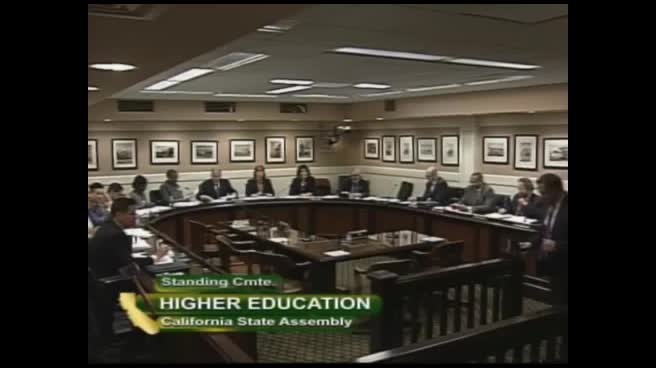
Assembly Standing Committee on Higher Education
Bill Author

Bill Co-Author(s):