AB 1748: Pupils: pupil health: opioid antagonist.
- Session Year: 2015-2016
- House: Assembly
- Latest Version Date: 2016-09-24
(1)Existing law authorizes a pharmacy to furnish epinephrine auto-injectors to a school district, county office of education, or charter school if certain conditions are met. Existing law requires the school district, county office of education, or charter school to maintain records regarding the acquisition and disposition of epinephrine auto-injectors furnished by the pharmacy for a period of 3 years from the date the records were created.
This bill would authorize a pharmacy to furnish naloxone hydrochloride or another opioid antagonist to a school district, county office of education, or charter school if certain conditions are met. The bill would require the school district, county office of education, or charter school to maintain records regarding the acquisition and disposition of naloxone hydrochloride or another opioid antagonist furnished by the pharmacy for a period of 3 years from the date the records were created.
(2)Under existing law, the governing board of a school district is required to give diligent care to the health and physical development of pupils and may employ properly certified persons for that work. Existing law requires school districts, county offices of education, and charter schools to provide emergency epinephrine auto-injectors to school nurses or trained volunteer personnel and authorizes school nurses and trained personnel to use epinephrine auto-injectors to provide emergency medical aid to persons suffering, or reasonably believed to be suffering, from an anaphylactic reaction, as provided.
This bill would authorize a school district, county office of education, or charter school to provide emergency naloxone hydrochloride or another opioid antagonist to school nurses and trained personnel who have volunteered, as specified, and authorizes school nurses and trained personnel to use naloxone hydrochloride or another opioid antagonist to provide emergency medical aid to persons suffering, or reasonably believed to be suffering, from an opioid overdose. The bill would expressly authorize each public and private elementary and secondary school in the state to voluntarily determine whether or not to make emergency naloxone hydrochloride or another opioid antagonist and trained personnel available at its school and to designate one or more school personnel to receive prescribed training regarding naloxone hydrochloride or another opioid antagonist from individuals in specified positions.
The bill would require the Superintendent of Public Instruction to establish minimum standards of training for the administration of naloxone hydrochloride or another opioid antagonist, to review these standards every 5 years or sooner as specified, and to consult with organizations and providers with expertise in administering naloxone hydrochloride or another opioid antagonist and administering medication in a school environment in developing and reviewing those standards. The bill would require the State Department of Education to include on its Internet Web site a clearinghouse for best practices in training nonmedical personnel to administer naloxone hydrochloride or another opioid antagonist to pupils.
The bill would require a school district, county office of education, or charter school choosing to exercise the authority to provide emergency naloxone hydrochloride or another opioid antagonist to provide the training for the volunteers at no cost to the volunteers and during the volunteers regular working hours. The bill would require a qualified supervisor of health or administrator at a school district, county office of education, or charter school electing to utilize naloxone hydrochloride or another opioid antagonist for emergency medical aid to obtain the prescription for naloxone hydrochloride or another opioid antagonist from an authorizing physician and surgeon, as defined, and would authorize the prescription to be filled by local or mail order pharmacies or naloxone hydrochloride or another opioid antagonist manufacturers.
The bill would authorize school nurses or, if the school does not have a school nurse, a person who has received training regarding naloxone hydrochloride or another opioid antagonist to immediately administer naloxone hydrochloride or another opioid antagonist under certain circumstances. The bill would provide that volunteers may administer naloxone hydrochloride or another opioid antagonist only by nasal spray or by auto-injector, as specified.
The bill would prohibit an authorizing physician and surgeon from being subject to professional review, being liable in a civil action, or being subject to criminal prosecution for any act in the issuing of a prescription or order, pursuant to these provisions, unless the act constitutes gross negligence or willful or malicious conduct. The bill would prohibit a person trained under these provisions who administers naloxone hydrochloride or another opioid antagonist, in good faith and not for compensation, to a person who appears to be experiencing an opioid overdose from being subject to professional review, being liable in a civil action, or being subject to criminal prosecution for this administration.
Discussed in Hearing
 54SEC
54SECAssembly Floor
 3MIN
3MINSenate Floor
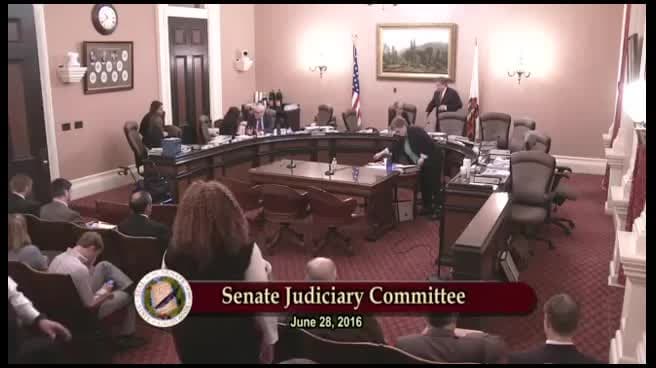 6MIN
6MINSenate Standing Committee on Judiciary
 6MIN
6MINSenate Standing Committee on Education
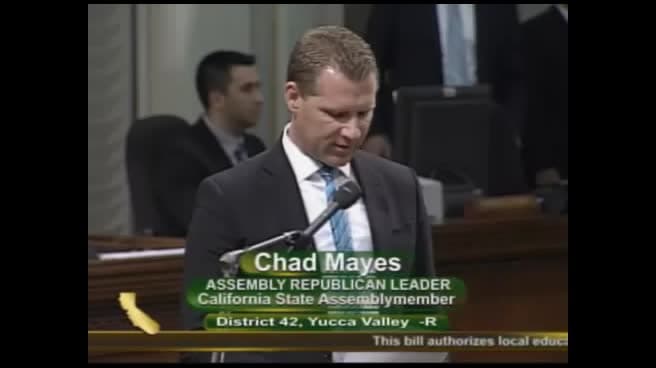 1MIN
1MINAssembly Floor
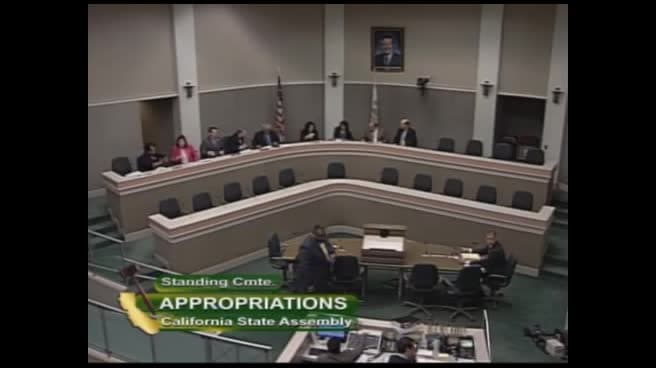 3MIN
3MINAssembly Standing Committee on Appropriations
 10MIN
10MIN