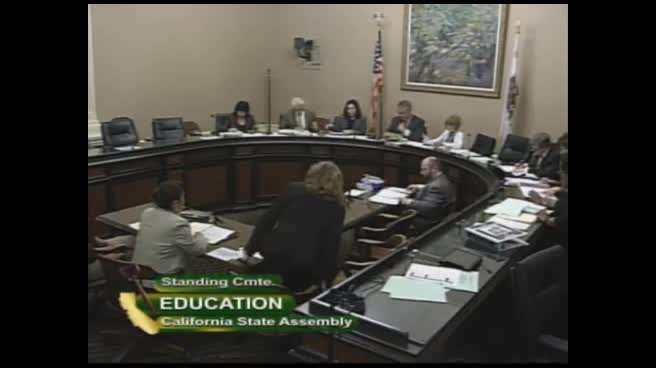
AB 1783: School facilities: nonstructural earthquake hazards: inspection.
- Session Year: 2015-2016
- House: Assembly
- Latest Version Date: 2016-08-26
Existing law, the Field Act, generally requires the Department of General Services to supervise the design and construction of, the reconstruction or alteration of, or the addition to, a school building to ensure, among other things, that plans and specifications comply with adopted rules and regulations and building standards, including those relating to seismic safety. Existing law requires the Office of Emergency Services, in cooperation with the State Department of Education, the Department of General Services, and the Alfred E. Alquist Seismic Safety Commission, to develop an educational pamphlet for use by school personnel to identify and mitigate the risks posed by nonstructural earthquake hazards.
This bill would require each school district, county office of education, and charter school, on or before January 1, 2020, to complete an inspection of the contents in areas that are accessible to or occupied by pupils in each of its school buildings located in an area of higher seismicity, as defined, to assess whether the contents in each area comply with the guidelines set forth in the pamphlet and to develop corrective actions to bring noncompliant contents into compliance with the published guidelines. The bill would require, within 60 days of completing the inspection for each area within a school building, that a checklist of compliant and noncompliant contents be reported to the governing board of the school district, the county board of education, or the governing body of the charter school, as applicable, with a prioritization of noncompliant items that threaten the safety of pupils and school personnel and a set of recommended corrective actions to bring high-priority noncompliant contents into compliance with the published guidelines. By imposing additional duties on local educational agency officials, the bill would impose a state-mandated local program. The bill would require the Department of Conservation, on or before February 1, 2017, to post instructions or a hyperlink on its Internet Web site on how to determine whether a school district, county office of education, or charter school building is located in an area of higher seismicity. The bill would make implementation of these provisions contingent upon funding being provided in the annual Budget Act or another statute.
The California Constitution requires the state to reimburse local agencies and school districts for certain costs mandated by the state. Statutory provisions establish procedures for making that reimbursement.
This bill would provide that, if the Commission on State Mandates determines that the bill contains costs mandated by the state, reimbursement for those costs shall be made pursuant to these statutory provisions.
Existing law, the Field Act, generally requires the Department of General Services to supervise the design and construction of, the reconstruction or alteration of, or the addition to, a school building to ensure, among other things, that plans and specifications comply with adopted rules and regulations and building standards, including those relating to seismic safety. Existing law requires the Office of Emergency Services, in cooperation with the State Department of Education, the Department of General Services, and the Alfred E. Alquist Seismic Safety Commission, to develop an educational pamphlet for use by school personnel to identify and mitigate the risks posed by nonstructural earthquake hazards.
This bill would require each school district, county office of education, and charter school, on or before January 1, 2020, to complete an inspection of the contents in areas that are accessible to or occupied by pupils in each of its school buildings located in an area of higher seismicity, as defined, to assess whether the contents in each area comply with the guidelines set forth in the pamphlet and to develop corrective actions to bring noncompliant contents into compliance with the published guidelines. The bill would require, within 60 days of completing the inspections for each area within a school building, that a checklist of compliant and noncompliant contents be reported to the governing board of the school district, the county board of education, or the governing body of the charter school, as applicable, with a prioritization of noncompliant items that threaten the safety of pupils and school personnel and a set of recommended corrective actions to bring high-priority noncompliant contents into compliance with the published guidelines. By imposing additional duties on local educational agency officials, the bill would impose a state-mandated local program. The bill would require the Department of Conservation, on or before February 1, 2017, to post instructions or a hyperlink on its Internet Web site on how to determine whether a school district, county office of education, or charter school building is located in an area of higher seismicity. The bill would make implementation of these provisions contingent upon funding being provided in the annual Budget Act or another statute.
The California Constitution requires the state to reimburse local agencies and school districts for certain costs mandated by the state. Statutory provisions establish procedures for making that reimbursement.
This bill would provide that, if the Commission on State Mandates determines that the bill contains costs mandated by the state, reimbursement for those costs shall be made pursuant to these statutory provisions.
Existing law, the Field Act, generally requires the Department of General Services to supervise the design and construction of, the reconstruction or alteration of, or the addition to, a school building to ensure, among other things, that plans and specifications comply with adopted rules and regulations and building standards, including those relating to seismic safety. Existing law requires the Office of Emergency Services, in cooperation with the State Department of Education, the Department of General Services, and the Alfred E. Alquist Seismic Safety Commission, to develop an educational pamphlet for use by school personnel to identify and mitigate the risks posed by nonstructural earthquake hazards.
This bill would require each school district, county office of education, and charter school located in an area of higher seismicity, as defined, school, on or before January 1, 2018, 2020, to develop a plan for the complete an inspection of the contents in each of its school buildings of areas that are accessible to or occupied by pupils in each of its school buildings located in an area of higher seismicity, as defined, to assess whether the contents in each area comply with the guidelines set forth in the pamphlet, to identify school building contents that do not comply with the guidelines, pamphlet and to develop corrective actions to bring noncompliant contents into compliance. The bill would require, among other things, that the plan be developed in consultation with specified persons, that it designate the responsible person or persons who will perform the assessment and develop the corrective action plans for noncompliant contents, and that it include a cost estimate for the assessment. The bill would require each school district, county office of education, and charter school to complete the assessment on or before January 1, 2020. compliance with the published guidelines. The bill would require, within 60 days of completing an assessment the inspections for each area within a school building, that a checklist of compliant and noncompliant contents be reported to the governing board of the school district, the county board of education, or the governing body of the charter school, as applicable, with a prioritization of noncompliant items that threaten the safety of pupils and school personnel and a set of recommended corrective actions to bring high-priority noncompliant contents into compliance with the published guidelines. By imposing additional duties on local educational agency officials, the bill would impose a state-mandated local program. The bill would require the Department of Conservation, on or before February 1, 2017, to post instructions or a hyperlink on its Internet Web site on how to determine whether a school district, county office of education, or charter school building is located in an area of higher seismicity.
The California Constitution requires the state to reimburse local agencies and school districts for certain costs mandated by the state. Statutory provisions establish procedures for making that reimbursement.
This bill would provide that, if the Commission on State Mandates determines that the bill contains costs mandated by the state, reimbursement for those costs shall be made pursuant to these statutory provisions.
Existing law, the Field Act, generally requires the Department of General Services to supervise the design and construction of, the reconstruction or alteration of, or the addition to, a school building to ensure, among other things, that plans and specifications comply with adopted rules and regulations and building standards, including those relating to seismic safety. Existing law requires the Office of Emergency Services, in cooperation with the State Department of Education, the Department of General Services, and the Alfred E. Alquist Seismic Safety Commission, to develop an educational pamphlet for use by school personnel to identify and mitigate the risks posed by nonstructural earthquake hazards.
This bill would require each school district, county office of education, and charter school located in an area of higher seismicity, as defined, on or before January 1, 2018, to develop a plan for the inspection of the contents in each of its school buildings of areas that are accessible to or occupied by pupils to assess whether the contents comply with the guidelines set forth in the pamphlet, to identify school building contents that do not comply with the guidelines, and to develop corrective actions to bring noncompliant contents into compliance. The bill would require, among other things, that the plan be developed in consultation with specified persons, that it designate the responsible person or persons who will perform the assessment and develop the corrective action plans for noncompliant contents, and that it include a cost estimate for the assessment. The bill would require each school district, county office of education, and charter school to complete the assessment on or before January 1, 2020. The bill would require, within 60 days of completing an assessment for each school building, that a checklist of compliant and noncompliant contents be reported to the governing board of the school district, the county board of education, or the governing body of the charter school, as applicable, with a prioritization of noncompliant items that threaten the safety of pupils and school personnel and a set of recommended corrective actions to bring high-priority noncompliant contents into compliance with the published guidelines. By imposing additional duties on local educational agency officials, the bill would impose a state-mandated local program.
The California Constitution requires the state to reimburse local agencies and school districts for certain costs mandated by the state. Statutory provisions establish procedures for making that reimbursement.
This bill would provide that, if the Commission on State Mandates determines that the bill contains costs mandated by the state, reimbursement for those costs shall be made pursuant to these statutory provisions.
Existing law, the Field Act, generally requires the Department of General Services to supervise the design and construction of, the reconstruction or alteration of, or the addition to, a school building to ensure, among other things, that plans and specifications comply with adopted rules and regulations and building standards, including those relating to seismic safety. Existing law requires the Office of Emergency Services, in cooperation with the State Department of Education, the Department of General Services, and the Alfred E. Alquist Seismic Safety Commission, to develop an educational pamphlet for use by school personnel to identify and mitigate the risks posed by nonstructural earthquake hazards.
This bill would require each school district, county office of education, and charter school, school located in an area of higher seismicity, as defined, on or before January 1, 2018, to develop a plan for the inspection of the contents in each of its school buildings of areas that are accessible to or occupied by pupils to assess whether the contents comply with the guidelines set forth in the pamphlet, to identify school building contents that do not comply with the guidelines, and to develop corrective actions to bring noncompliant contents into compliance. The bill would require, among other things, that the plan be developed in consultation with specified persons, that it designate the responsible person or persons who will perform the assessment and develop the corrective action plans for noncompliant contents, and that it include a cost estimate for the assessment. The bill would require each school district, county office of education, and charter school to complete the assessment on or before January 1, 2020. The bill would require, within 60 days of completing an assessment for each school building, that a checklist of compliant and noncompliant contents be reported to the governing board of the school district, the county board of education, or the governing body of the charter school, as applicable, with a prioritization of noncompliant items that threaten the safety of pupils and school personnel and a set of recommended corrective actions to bring high-priority noncompliant contents into compliance with the published guidelines. By imposing additional duties on local educational agency officials, the bill would impose a state-mandated local program.
The California Constitution requires the state to reimburse local agencies and school districts for certain costs mandated by the state. Statutory provisions establish procedures for making that reimbursement.
This bill would provide that, if the Commission on State Mandates determines that the bill contains costs mandated by the state, reimbursement for those costs shall be made pursuant to these statutory provisions.
Existing law, the Field Act, generally requires the Department of General Services to supervise the design and construction of, the reconstruction or alteration of, or the addition to, a school building to ensure, among other things, that plans and specifications comply with adopted rules and regulations and building standards, including those relating to seismic safety. Existing law requires the Office of Emergency Services, in cooperation with the State Department of Education, the Department of General Services, and the Alfred E. Alquist Seismic Safety Commission, to develop an educational pamphlet for use by school personnel to identify and mitigate the risks posed by nonstructural earthquake hazards.
This bill would require each school district, county office of education, and charter school, on or before January 1, 2018, to develop a plan for the annual inspection of the contents in each of its school buildings for purposes to assess whether the contents comply with the guidelines set forth in the pamphlet, to identify school building contents that do not comply with the guidelines, and to develop corrective actions to bring noncompliant content contents into compliance. The bill would require, among other things, that the plan be developed in consultation with specified persons, that it designate the responsible person or persons who will perform the assessment and develop the corrective action plans for noncompliant contents, and that it include a cost estimate for the annual assessment. The bill would require each school district, county office of education, and charter school to complete its initial annual the assessment on or before January 1, 2019, and to complete each subsequent annual assessment on or before January 1 of each year thereafter. 2020. The bill would require, within 60 days of completing an assessment for each school building, that a checklist of compliant and noncompliant contents to be presented be reported to the governing board of the school district, the county board of education, or the governing body of the charter school, as applicable, with a prioritization of noncompliant items that threaten the safety of pupils and school personnel and a set of recommenced recommended corrective actions to bring all high-priority noncompliant contents into compliance with the published guidelines and a recommended schedule to implement the corrective actions, as specified. guidelines. By imposing additional duties on local educational agency officials, the bill would impose a state-mandated local program.
The California Constitution requires the state to reimburse local agencies and school districts for certain costs mandated by the state. Statutory provisions establish procedures for making that reimbursement.
This bill would provide that, if the Commission on State Mandates determines that the bill contains costs mandated by the state, reimbursement for those costs shall be made pursuant to these statutory provisions.
Existing law, the Field Act, generally requires the Department of General Services to supervise the design and construction of, the reconstruction or alteration of, or the addition to, a school building to ensure, among other things, that plans and specifications comply with adopted rules and regulations and building standards, including those relating to seismic safety. Existing law requires the Office of Emergency Services, in cooperation with the State Department of Education, the Department of General Services, and the Alfred E. Alquist Seismic Safety Commission, to develop an educational pamphlet for use by school personnel to identify and mitigate the risks posed by nonstructural earthquake hazards.
This bill would require each school district, county office of education, and charter school, on or before January 1, 2018, to develop a plan for the annual inspection of the contents in each of its school buildings for purposes to assess whether the contents comply with the guidelines set forth in the pamphlet, to identify school building contents that do not comply with the guidelines, and to develop corrective actions to bring noncompliant content into compliance. The bill would require, among other things, that the plan be developed in consultation with specified persons, that it designate the responsible person or persons who will perform the assessment and develop the corrective action plans for noncompliant contents, and that it include a cost estimate for the annual assessment. The bill would require each school district, county office of education, and charter school to complete its initial annual assessment on or before January 1, 2019, and to complete each subsequent annual assessment on or before January 1 of each year thereafter. The bill would require, within 60 days of completing an assessment for each school building, a checklist of compliant and noncompliant contents to be presented to the governing board of the school district, the county board of education, or the governing body of the charter school, as applicable, with a set of recommenced corrective actions to bring all noncompliant contents into compliance with the published guidelines and a recommended schedule to implement the corrective actions, as specified. By imposing additional duties on local educational agency officials, the bill would impose a state-mandated local program.
The California Constitution requires the state to reimburse local agencies and school districts for certain costs mandated by the state. Statutory provisions establish procedures for making that reimbursement.
This bill would provide that, if the Commission on State Mandates determines that the bill contains costs mandated by the state, reimbursement for those costs shall be made pursuant to these statutory provisions.
The Legislature finds and declares all of the following:
(a)Following significant damage to school buildings in the 1933 Long Beach earthquake, the Field Act was enacted to mandate the earthquake-resistant construction of schools.
(b)The Division of the State Architect (DSA) reviews the design, construction, alteration, addition, and rehabilitation of K12 public schools and community colleges.
(c)The DSA also monitors the safety of nonstructural components installed in school facilities.
(d)Implementation of the Field Act, as defined pursuant to Section 17281 of the Education Code, depends upon a complex interrelationship with dispersed responsibilities among state departments and agencies, school districts, local government building departments, educational institutions, and the construction industry.
(e)The South Napa earthquake struck in the early morning on August 24, 2014. Structural damage to schools was minimal. However, nonstructural damage was significant and could have been life threatening had the earthquake occurred during school hours.
(f)The earthquake highlighted dangers posed by light fixtures, unrestrained bookcases, storage units, furniture, and other similar school contents that are not subject to the Field Acts requirements.
(g)The DSA has issued guidelines for nonstructural earthquake hazards in California schools, which include furniture and equipment. However, there are no requirements in state law similar to the requirements of the Field Act that require the DSA, local fire agencies, or school districts to inspect schools to ensure that school contents comply with the DSA nonstructural component guidelines.
(h)School classrooms should be examined to ensure that furnishings and equipment are properly located, anchored, and braced to prevent harm to pupils and school personnel, and to ensure egress from any room after an earthquake.
SEC. 2.Chapter 8 (commencing with Section 17660) is added to Part 10.5 of Division 1 of Title 1 of the Education Code, to read:8.Nonstructural Earthquake Hazards17660.(a)(1)On or before January 1, 2020, each school district, county office of education, and charter school shall complete an inspection of the contents, as described in Section 17661, in areas that are accessible to or occupied by pupils, including classrooms, hallways, libraries, gymnasiums, multipurpose rooms, cafeterias, computer rooms, administrative offices, and other similar spaces in each of its school buildings located in an area of higher seismicity to assess whether the contents in each area comply with the guidelines set forth in Chapter 3 (Furniture and Equipment) of the Guide and Checklist for Nonstructural Earthquake Hazards in California Schools, published by the Office of Emergency Services in cooperation with the State Department of Education, the Department of General Services, and the Alfred E. Alquist Seismic Safety Commission pursuant to Section 8587.7 of the Government Code, and to develop corrective actions to bring noncompliant contents into compliance with the published guidelines.
(2)For purposes of this section, higher seismicity means an area with the result of .30g or greater on the California Geological Surveys Ground Motion Interpolator found on the Department of Conservation Internet Web site.
(3)The Department of Conservation, on or before February 1, 2017, shall post instructions or a hyperlink on its Internet Web site on how to determine whether a school district, county office of education, or charter school building is located in an area of higher seismicity.
(b)(1)Within 60 days of completing the inspection for each area within a school building described in subdivision (a), a checklist of compliant and noncompliant contents shall be reported to the governing board of the school district, the county board of education, or the governing body of the charter school, as applicable. The report shall include a prioritization of noncompliant items that present an immediate and serious threat to the safety of pupils and school personnel and a set of recommended corrective actions to bring high-priority noncompliant contents into compliance with the published guidelines.
(2)The governing board of the school district, the county board of education, or the governing body of the charter school, as applicable, shall review the report in a public meeting held pursuant to the Ralph M. Brown Act (Chapter 9 (commencing with Section 54950) of Part 1 of Division 2 of Title 5 of the Government Code), or, in the case of a statewide charter school, the Bagley-Keene Open Meeting Act (Article 9 (commencing with Section 11120) of Chapter 1 of Part 1 of Division 3 of Title 2 of the Government Code), and shall post the report on its Internet Web site.
(c)(1)The superintendent of a school district, the county superintendent of schools, or the chief administrator of a charter school, as applicable, shall annually certify in writing to the governing board of the school district, the county board of education, or the governing body of the charter school, as applicable, which corrective actions recommended in the report submitted pursuant to paragraph (1) of subdivision (b) have been taken and completed.
(2)The certifications for each school building shall be posted to the school districts, county office of educations, or charter schools Internet Web site, as applicable.
(d)If a school district, county office of education, or charter school completes an inspection pursuant to subdivision (a) before January 1, 2017, the school district, county office of education, or charter school may report the inspection and any corresponding corrective actions it takes to the governing board of the school district, the county board of education, or the governing body of the charter school, as applicable, to comply with paragraph (1) of subdivision (b).
17661.For purposes of this chapter, contents includes, but is not limited to, file cabinets, bookcases, desktop and countertop equipment, equipment on carts, display cases, art objects, potted plants, aquariums, equipment on wheels or rollers, such as pianos and chalkboards, office equipment, refrigerators, vending machines, shop and gym equipment, gas cylinders, gas piping, and storage racks.
17662.This chapter shall not be implemented unless funding is provided for its implementation in the annual Budget Act or another statute.
SEC. 3.If the Commission on State Mandates determines that this act contains costs mandated by the state, reimbursement to local agencies and school districts for those costs shall be made pursuant to Part 7 (commencing with Section 17500) of Division 4 of Title 2 of the Government Code.
The Legislature finds and declares all of the following:
(a)Following significant damage to school buildings in the 1933 Long Beach earthquake, the Field Act was enacted to mandate the earthquake-resistant construction of schools.
(b)The Division of the State Architect (DSA) reviews the design, construction, alteration, addition, and rehabilitation of K12 public schools and community colleges.
(c)The DSA also monitors the safety of nonstructural components installed in school facilities.
(d)Implementation of the Field Act, as defined pursuant to Section 17281 of the Education Code, depends upon a complex interrelationship with dispersed responsibilities among state departments and agencies, school districts, local government building departments, educational institutions, and the construction industry.
(e)The South Napa earthquake struck in the early morning on August 24, 2014. Structural damage to schools was minimal. However, nonstructural damage was significant and could have been life threatening had the earthquake occurred during school hours.
(f)The earthquake highlighted dangers posed by light fixtures, unrestrained bookcases, storage units, furniture, and other similar school contents that are not subject to the Field Acts requirements.
(g)The DSA has issued guidelines for nonstructural earthquake hazards in California schools, which include furniture and equipment. However, there are no requirements in state law similar to the requirements of the Field Act that require the DSA, local fire agencies, or school districts to inspect schools to ensure that school contents comply with the DSA nonstructural component guidelines.
(h)School classrooms should be examined to ensure that furnishings and equipment are properly located, anchored, and braced to prevent harm to pupils and school personnel, and to ensure egress from any room after an earthquake.
SEC. 2.Chapter 8 (commencing with Section 17660) is added to Part 10.5 of Division 1 of Title 1 of the Education Code, to read:8.Nonstructural Earthquake Hazards17660.(a)(1)By no later than On or before January 1, 2018, 2020, each school district, county office of education, and charter school located in an area of higher seismicity shall develop a plan for the shall complete an inspection of the contents, as described in Section 17662, 17661, in each of its school buildings of areas that are accessible to or occupied by pupils, including classrooms, hallways, libraries, gymnasiums, multipurpose rooms, cafeterias, computer rooms, administrative offices, and other similar spaces. spaces in each of its school buildings located in an area of higher seismicity to assess whether the contents in each area comply with the guidelines set forth in Chapter 3 (Furniture and Equipment) of the Guide and Checklist for Nonstructural Earthquake Hazards in California Schools, published by the Office of Emergency Services in cooperation with the State Department of Education, the Department of General Services, and the Alfred E. Alquist Seismic Safety Commission pursuant to Section 8587.7 of the Government Code, and to develop corrective actions to bring noncompliant contents into compliance with the published guidelines.
(2)For purposes of this section, higher seismicity means an area with the result of .30g or greater on the California Geological Surveys Ground Motion Interpolator found on the Department of Conservation Internet Web site.
(3)The Department of Conservation, on or before February 1, 2017, shall post instruction instructions or a hyperlink on its Internet Web site on how to determine whether a school district, county office of education, or charter school building is located in an area of higher seismicity.
(b)The purpose of the plan shall be to assess whether the contents comply with the guidelines set forth in Chapter 3 (Furniture and Equipment) of the Guide and Checklist for Nonstructural Earthquake Hazards in California Schools, the educational pamphlet published by the Office of Emergency Services, in cooperation with the State Department of Education, the Department of General Services, and the Alfred E. Alquist Seismic Safety Commission pursuant to Section 8587.7 of the Government Code, to identify school building contents that do not comply with the guidelines, and to develop corrective actions to bring noncompliant contents into compliance.
(c)The plan shall be developed in consultation with a California licensed civil or structural engineer or a California licensed architect, a representative of a local fire service agency, a school administrator or school business official, a classroom teacher, and a representative of classified school employees.
(d)The plan shall designate the responsible person or persons in the school district, county office of education, or charter school, as applicable, who will perform the assessment and develop the corrective action plans for noncompliant contents. The plan shall also identify all school buildings that are to be assessed and the order of assessment.
(e)The plan shall include a cost estimate for the assessment.
(f)The plan shall be presented to the governing board of the school district, the county board of education, or the governing body of the charter school, as applicable, at a public meeting held pursuant to the Ralph M. Brown Act (Chapter 9 (commencing with Section 54950) of Part 1 of Division 2 of Title 5 of the Government Code), or, in the case of a statewide charter school, the Bagley-Keene Open Meeting Act (Article 9 (commencing with Section 11120) of Chapter 1 of Part 1 of Division 3 of Title 2 of the Government Code).
(b)(1)Within 60 days of completing the inspection for each area within school building described in subdivision (a), a checklist of compliant and noncompliant contents shall be reported to the governing board of the school district, the county board of education, or the governing body of the charter school, as applicable. The report shall include a prioritization of noncompliant items that present an immediate and serious threat to the safety of pupils and school personnel and a set of recommended corrective actions to bring high-priority noncompliant contents into compliance with the published guidelines.
(2)The governing board of the school district, the county board of education, or the governing body of the charter school, as applicable, shall review the report in a public meeting held pursuant to the Ralph M. Brown Act (Chapter 9 (commencing with Section 54950) of Part 1 of Division 2 of Title 5 of the Government Code), or, in the case of a statewide charter school, the Bagley-Keene Open Meeting Act (Article 9 (commencing with Section 11120) of Chapter 1 of Part 1 of Division 3 of Title 2 of the Government Code), and shall post the report on its Internet Web site.
(c)(1)The superintendent of a school district, the county superintendent of schools, or the chief administrator of a charter school, as applicable, shall annually certify in writing to the governing board of the school district, the county board of education, or the governing body of the charter school, as applicable, which corrective actions recommended in the report submitted pursuant to paragraph (1) of subdivision (b) have been taken and completed.
(2)The certifications for each school building shall be posted to the school districts, county office of educations, or charter schools Internet Web site, as applicable.
(d)If a school district, county office of education, or charter school completes an inspection pursuant to subdivision (a) before January 1, 2017, the school district, county office of education, or charter school may report the inspection and any corresponding corrective actions it takes to the governing board of the school district, the county board of education, or the governing body of the charter school, as applicable, to comply with paragraph (1) of subdivision (b).
17661.(a)Each school district, county office of education, and charter school shall complete an assessment pursuant to the plan developed pursuant to Section 17660 on or before January 1, 2020.
(b)The person or persons designated pursuant to subdivision (d) of Section 17660 shall, at minimum, complete the checklist published in the Guide and Checklist for Nonstructural Earthquake Hazards in California Schools to identify all compliant and noncompliant contents found pursuant to Chapter 3 of the checklist.
(c)(1)Within 60 days of completing an assessment for each school building, the checklist of compliant and noncompliant contents shall be reported to the governing board of the school district, the county board of education, or the governing body of the charter school, as applicable. The report shall include a prioritization of noncompliant items that present an immediate and serious threat to the safety of pupils and school personnel and a set of recommended corrective actions to bring high-priority noncompliant contents into compliance with the published guidelines.
(2)The governing board of the school district, the county board of education, or the governing body of the charter school, as applicable, shall review the report in a public meeting held pursuant to the Ralph M. Brown Act (Chapter 9 (commencing with Section 54950) of Part 1 of Division 2 of Title 5 of the Government Code), or, in the case of a statewide charter school, the Bagley-Keene Open Meeting Act (Article 9 (commencing with Section 11120) of Chapter 1 of Part 1 of Division 3 of Title 2 of the Government Code), and shall post the report on its Internet Web site.
(d)(1)The superintendent of a school district, the county superintendent of schools, or the chief administrator of a charter school, as applicable, shall annually certify in writing to the governing board of the school district, the county board of education, or the governing body of the charter school, as applicable, which corrective actions have been taken and completed.
(2)The certifications for each school building shall be posted to the school districts, county office of educations, or charter schools Internet Web site, as applicable.
(e)If a school district, county office of education, or charter school completes an assessment pursuant to subdivision (a) before January 1, 2017, the school district, county office of education, or charter school may report the assessment and any corresponding corrective actions it takes to the governing board of the school district, the county board of education, or the governing body of the charter school, as applicable, to comply with paragraph (1) of subdivision (c).
17662.17661.For purposes of this chapter, contents includes, but is not limited to, file cabinets, bookcases, desktop and countertop equipment, equipment on carts, display cases, art objects, potted plants, aquariums, equipment on wheels or rollers, such as pianos and chalkboards, office equipment, refrigerators, vending machines, shop and gym equipment, gas cylinders, gas piping, and storage racks.
SEC. 3.If the Commission on State Mandates determines that this act contains costs mandated by the state, reimbursement to local agencies and school districts for those costs shall be made pursuant to Part 7 (commencing with Section 17500) of Division 4 of Title 2 of the Government Code.
The Legislature finds and declares all of the following:
(a)Following significant damage to school buildings in the 1933 Long Beach earthquake, the Field Act was enacted to mandate the earthquake-resistant construction of schools.
(b)The Division of the State Architect (DSA) reviews the design, construction, alteration, addition, and rehabilitation of K12 public schools and community colleges.
(c)The DSA also monitors the safety of nonstructural components installed in school facilities.
(d)Implementation of the Field Act, as defined pursuant to Section 17281 of the Education Code, depends upon a complex interrelationship with dispersed responsibilities among state departments and agencies, school districts, local government building departments, educational institutions, and the construction industry.
(e)The South Napa earthquake struck in the early morning on August 24, 2014. Structural damage to schools was minimal. However, nonstructural damage was significant and could have been life threatening had the earthquake occurred during school hours.
(f)The earthquake highlighted dangers posed by light fixtures, unrestrained bookcases, storage units, furniture, and other similar school contents that are not subject to the Field Acts requirements.
(g)The DSA has issued guidelines for nonstructural earthquake hazards in California schools, which include furniture and equipment. However, there are no requirements in state law similar to the requirements of the Field Act that require the DSA, local fire agencies, or school districts to inspect schools to ensure that school contents comply with the DSA nonstructural component guidelines.
(h)School classrooms should be examined to ensure that furnishings and equipment are properly located, anchored anchored, and braced to prevent harm to pupils and school personnel, and to ensure egress from any room after an earthquake.
SEC. 2.Chapter 8 (commencing with Section 17660) is added to Part 10.5 of Division 1 of Title 1 of the Education Code, to read:8.Nonstructural Earthquake Hazards17660.(a)(1)By no later than January 1, 2018, each school district, county office of education, and charter school located in an area of higher seismicity shall develop a plan for the inspection of the contents, as described in Section 17662, in each of its school buildings of areas that are accessible to or occupied by pupils, including classrooms, hallways, libraries, gymnasiums, multipurpose rooms, cafeterias, computer rooms, administrative offices, and other similar spaces.
(2)For purposes of this section, higher seismicity means an area with the result of .30g or greater on the California Geological Surveys Ground Motion Interpolator found on the Department of Conservation Internet Web site.
(3)The Department of Conservation, on or before February 1, 2017, shall post instruction or a hyperlink on its Internet Web site on how to determine whether a school district, county office of education, or charter school is located in an area of higher seismicity.
(b)The purpose of the plan shall be to assess whether the contents comply with the guidelines set forth in Chapter 3 (Furniture and Equipment) of the Guide and Checklist for Nonstructural Earthquake Hazards in California Schools, the educational pamphlet published by the Office of Emergency Services, in cooperation with the State Department of Education, the Department of General Services, and the Alfred E. Alquist Seismic Safety Commission pursuant to Section 8587.7 of the Government Code, to identify school building contents that do not comply with the guidelines, and to develop corrective actions to bring noncompliant contents into compliance.
(c)The plan shall be developed in consultation with a California licensed civil or structural engineer or a California licensed architect, a representative of a local fire service agency, a school administrator or school business official, a classroom teacher, and a representative of classified school employees.
(d)The plan shall designate the responsible person or persons in the school district, county office of education, or charter school, as applicable, who will perform the assessment and develop the corrective action plans for noncompliant contents. The plan shall also identify all school buildings that are to be assessed and the order of assessment.
(e)The plan shall include a cost estimate for the assessment.
(f)The plan shall be presented to the governing board of the school district, the county board of education, or the governing body of the charter school, as applicable, at a public meeting held pursuant to the Ralph M. Brown Act (Chapter 9 (commencing with Section 54950) of Part 1 of Division 2 of Title 5 of the Government Code), or, in the case of a statewide charter school, the Bagley-Keene Open Meeting Act (Article 9 (commencing with Section 11120) of Chapter 1 of Part 1 of Division 3 of Title 2 of the Government Code).
17661.(a)Each school district, county office of education, and charter school shall complete an assessment pursuant to the plan developed pursuant to Section 17660 on or before January 1, 2020.
(b)The person or persons designated pursuant to subdivision (d) of Section 17660 shall, at minimum, complete the checklist published in the Guide and Checklist for Nonstructural Earthquake Hazards in California Schools to identify all compliant and noncompliant contents found pursuant to Chapter 3 of the checklist.
(c)(1)Within 60 days of completing an assessment for each school building, the checklist of compliant and noncompliant contents shall be reported to the governing board of the school district, the county board of education, or the governing body of the charter school, as applicable. The report shall include a prioritization of noncompliant items that present an immediate and serious threat to the safety of pupils and school personnel and a set of recommended corrective actions to bring high-priority noncompliant contents into compliance with the published guidelines.
(2)The governing board of the school district, the county board of education, or the governing body of the charter school, as applicable, shall review the report in a public meeting held pursuant to the Ralph M. Brown Act (Chapter 9 (commencing with Section 54950) of Part 1 of Division 2 of Title 5 of the Government Code), or, in the case of a statewide charter school, the Bagley-Keene Open Meeting Act (Article 9 (commencing with Section 11120) of Chapter 1 of Part 1 of Division 3 of Title 2 of the Government Code), and shall post the report on its Internet Web site.
(d)(1)The superintendent of a school district, the county superintendent of schools, or the chief administrator of a charter school, as applicable, shall annually certify in writing to the governing board of the school district, the county board of education, or the governing body of the charter school, as applicable, which corrective actions have been taken and completed.
(2)The certifications for each school building shall be posted to the school districts, county office of educations, or charter schools Internet Web site, as applicable.
(e)If a school district, county office of education, or charter school completes an assessment pursuant to subdivision (a) before January 1, 2017, the school district, county office of education, or charter school may report the assessment and any corresponding corrective actions it takes to the governing board of the school district, the county board of education, or the governing body of the charter school, as applicable, to comply with paragraph (1) of subdivision (c).
17662.For purposes of this chapter, contents includes, but is not limited to, file cabinets, bookcases, desktop and countertop equipment, equipment on carts, display cases, art objects, potted plants, aquariums, equipment on wheels or rollers, such as pianos and chalkboards, office equipment, refrigerators, vending machines, shop and gym equipment, gas cylinders, gas piping, and storage racks.
SEC. 3.If the Commission on State Mandates determines that this act contains costs mandated by the state, reimbursement to local agencies and school districts for those costs shall be made pursuant to Part 7 (commencing with Section 17500) of Division 4 of Title 2 of the Government Code.
The Legislature finds and declares all of the following:
(a)Following significant damage to school buildings in the 1933 Long Beach earthquake, the Field Act was enacted to mandate the earthquake-resistant construction of schools.
(b)The Division of the State Architect (DSA) reviews the design, construction, alteration, addition, and rehabilitation of K12 public schools and community colleges.
(c)The DSA also monitors the safety of nonstructural components installed in school facilities.
(d)Implementation of the Field Act, as defined pursuant to Section 17281 of the Education Code, depends upon a complex interrelationship with dispersed responsibilities among state departments and agencies, school districts, local government building departments, educational institutions, and the construction industry.
(e)The South Napa earthquake struck in the early morning on August 24, 2014. Structural damage to schools was minimal. However, nonstructural damage was significant and could have been life threatening had the earthquake occurred during school hours.
(f)The earthquake highlighted dangers posed by light fixtures, unrestrained bookcases, storage units, furniture, and other similar school contents that are not subject to the Field Acts requirements.
(g)The DSA has issued guidelines for nonstructural earthquake hazards in California schools, which include furniture and equipment. However, there are no requirements in state law similar to the requirements of the Field Act that require the DSA, local fire agencies, or school districts to inspect schools to ensure that school contents comply with the DSA nonstructural component guidelines.
(h)School classrooms should be examined to ensure that furnishings and equipment are properly located, anchored and braced to prevent harm to pupils and school personnel, and to ensure egress from any room after an earthquake.
SEC. 2.Chapter 8 (commencing with Section 17660) is added to Part 10.5 of Division 1 of Title 1 of the Education Code, to read:8.Nonstructural Earthquake Hazards17660.(a)(1)By no later than January 1, 2018, each school district, county office of education, and charter school located in an area of higher seismicity shall develop a plan for the inspection of the contents, as described in Section 17662, in each of its school buildings. buildings of areas that are accessible to or occupied by pupils, including classrooms, hallways, libraries, gymnasiums, multipurpose rooms, cafeterias, computer rooms, administrative offices, and other similar spaces.
(2)For purposes of this section, higher seismicity means an area with the result of .30g or greater on the California Geological Surveys Ground Motion Interpolator found on the Department of Conservation Internet Web site.
(3)The Department of Conservation, on or before February 1, 2017, shall post instruction or a hyperlink on its Internet Web site on how to determine whether a school district, county office of education, or charter school is located in an area of higher seismicity.
(b)The purpose of the plan shall be to assess whether the contents comply with the guidelines set forth in Chapter 3 (Furniture and Equipment) of the Guide and Checklist for Nonstructural Earthquake Hazards in California Schools, the educational pamphlet published by the Office of Emergency Services, in cooperation with the State Department of Education, the Department of General Services, and the Alfred E. Alquist Seismic Safety Commission pursuant to Section 8587.7 of the Government Code, to identify school building contents that do not comply with the guidelines, and to develop corrective actions to bring noncompliant contents into compliance.
(c)The plan shall be developed in consultation with a California licensed civil or structural engineer or a California licensed architect, a representative of the a local fire service agency of each school building, agency, a school administrator or school business official, a classroom teacher, and a representative of classified school employees.
(d)The plan shall designate the responsible person or persons in the school district, county office of education, or charter school, as applicable, who will perform the assessment and develop the corrective action plans for noncompliant contents. The plan shall also identify all school buildings that are to be assessed and the order of assessment.
(e)The plan shall include a cost estimate for the assessment.
(f)The plan shall be presented to the governing board of the school district, the county board of education, or the governing body of the charter school, as applicable, at a public meeting held pursuant to the Ralph M. Brown Act (Chapter 9 (commencing with Section 54950) of Part 1 of Division 2 of Title 5 of the Government Code), or, in the case of a statewide charter school, the Bagley-Keene Open Meeting Act (Article 9 (commencing with Section 11120) of Chapter 1 of Part 1 of Division 3 of Title 2 of the Government Code).
17661.(a)Each school district, county office of education, and charter school shall complete an assessment pursuant to the plan developed pursuant to Section 17660 on or before January 1, 2020.
(b)The person or persons designated pursuant to subdivision (d) of Section 17660 shall, at minimum, complete the checklist published in the Guide and Checklist for Nonstructural Earthquake Hazards in California Schools to identify all compliant and noncompliant contents found pursuant to Chapter 3 of the checklist.
(c)(1)Within 60 days of completing an assessment for each school building, the checklist of compliant and noncompliant contents shall be reported to the governing board of the school district, the county board of education, or the governing body of the charter school, as applicable. The report shall include a prioritization of noncompliant items that present an immediate and serious threat to the safety of pupils and school personnel and a set of recommended corrective actions to bring high-priority noncompliant contents into compliance with the published guidelines.
(2)The governing board of the school district, the county board of education, or the governing body of the charter school, as applicable, shall review the report in a public meeting held pursuant to the Ralph M. Brown Act (Chapter 9 (commencing with Section 54950) of Part 1 of Division 2 of Title 5 of the Government Code), or, in the case of a statewide charter school, the Bagley-Keene Open Meeting Act (Article 9 (commencing with Section 11120) of Chapter 1 of Part 1 of Division 3 of Title 2 of the Government Code), and shall post the report on its Internet Web site.
(d)(1)If corrective actions for noncompliant contents in each school building in the school district, the county office of education, or charter school are completed, the
(d)(1)The superintendent of the a school district, the county superintendent of schools, or the chief administrator of the a charter school, as applicable, shall annually certify in writing to the governing board of the school district, the county board of education, or the governing body of the charter school, as applicable, which corrective actions have been taken and completed.
(2)The certifications for each school building shall be posted to the school districts, county office of educations, or charter schools Internet Web site, as applicable.
17662.For purposes of this chapter, contents includes, but is not limited to, file cabinets, bookcases, desktop and countertop equipment, equipment on carts, display cases, art objects, potted plants, aquariums, equipment on wheels or rollers, such as pianos and chalkboards, office equipment, refrigerators, vending machines, shop and gym equipment, gas cylinders, gas piping, and storage racks, electrical equipment, mechanical equipment, plumbing equipment, and kitchen equipment. racks.
SEC. 3.If the Commission on State Mandates determines that this act contains costs mandated by the state, reimbursement to local agencies and school districts for those costs shall be made pursuant to Part 7 (commencing with Section 17500) of Division 4 of Title 2 of the Government Code.
The Legislature finds and declares all of the following:
(a)Following significant damage to school buildings in the 1933 Long Beach earthquake, the Field Act was enacted to mandate the earthquake-resistant construction of schools.
(b)The Division of the State Architect (DSA) reviews the design, construction, alteration, addition, and rehabilitation of K12 public schools and community colleges.
(c)The DSA also monitors the safety of nonstructural components installed in school facilities.
(d)Implementation of the Field Act, as defined pursuant to Section 17281 of the Education Code, is depends upon a complex interrelationship with dispersed responsibilities between among state departments and agencies, school districts, local government building departments, educational institutions, and the construction industry.
(e)The South Napa earthquake struck in the early morning on August 24, 2014. Structural damage to schools was minimal. However, nonstructural damage was significant and could have been life threatening had the earthquake occurred during school hours.
(f)The earthquake highlighted dangers posed by light fixtures, unrestrained bookcases, storage units, furniture, and other similar school contents that are not subject to the Field Acts requirements.
(g)The DSA has issued guidelines for nonstructural earthquake hazards in California schools, which include furniture and equipment. However, there are no requirements in state law similar to the requirements of the Field Act that require the DSA, local fire agencies, or school districts to inspect schools to ensure that school contents comply with the DSA nonstructural component guidelines.
(h)School classrooms should be examined on an annual basis to ensure that furnishings and equipment are properly located, anchored and braced to prevent harm to pupils and school personnel, and to ensure egress from any room after an earthquake.
SEC. 2.Chapter 8 (commencing with Section 17660) is added to Part 10.5 of Division 1 of Title 1 of the Education Code, to read:8.Nonstructural Earthquake Hazards17660.(a)By no later than January 1, 2018, each school district, county office of education, and charter school shall develop a plan for the annual inspection of the contents, as described in Section 17762, 17662, in each of its school buildings.
(b)The purpose of the plan shall be to assess whether the contents comply with the guidelines set forth in Chapter 3 (Furniture and Equipment) of the Guide and Checklist for Nonstructural Earthquake Hazards in California Schools, the educational pamphlet published by the Office of Emergency Services, in cooperation with the State Department of Education, the Department of General Services, and the Alfred E. Alquist Seismic Safety Commission pursuant to Section 8587.7 of the Government Code, to identify school building contents that do not comply with the guidelines, and to develop corrective actions to bring noncompliant content contents into compliance.
(c)The plan shall be developed in consultation with a California licensed civil or structural engineer or a California licensed architect, a representative of the local fire service agency of each school building, a school administrator or school business official, a classroom teacher, and a representative of classified school employees.
(d)The plan shall designate the responsible person or persons in the school district, county office of education, or charter school, as applicable, who will perform the assessment and develop the corrective action plans for noncompliant contents. The plan shall also identify all school buildings that are to be assessed and the order of assessment.
(e)The plan shall include a cost estimate for the annual assessment.
(f)The plan shall be presented to the governing board of the school district, the county board of education, or the governing body of the charter school, as applicable, at a public meeting held pursuant to the Ralph M. Brown Act (Chapter 9 (commencing with Section 54950) of Part 1 of Division 2 of Title 5 of the Government Code), or, in the case of a statewide charter school, the Bagley-Keene Open Meeting Act (Article 9 (commencing with Section 11120) of Chapter 1 of Part 1 of Division 3 of Title 2 of the Government Code).
17661.(a)Each school district, county office of education, and charter school shall complete its initial annual an assessment pursuant to the plan developed pursuant to Section 17660 on or before January 1, 2019, and shall complete each subsequent annual assessment on or before January 1 of each year thereafter. 2020.
(b)The person or persons designated pursuant to subdivision (d) of Section 17660 shall, at minimum, complete the checklist published in the Guide and Checklist for Nonstructural Earthquake Hazards in California Schools, identifying Schools to identify all compliant and noncompliant contents found pursuit pursuant to the checklist.
(c)(1)Within 60 days of completing an assessment for each school building, the checklist of compliant and noncompliant contents shall be presented reported to the governing board of the school district, the county board of education, or the governing body of the charter school, as applicable, with applicable. The report shall include a prioritization of noncompliant items that present an immediate and serious threat to the safety of pupils and school personnel and a set of recommended corrective actions to bring all high-priority noncompliant contents into compliance with the published guidelines and a recommended schedule to implement the corrective actions. guidelines.
(2)The governing board of the school district, the county board of education, or the governing body of the charter school, as applicable, shall review and approve the recommended corrective actions the report in a public meeting held pursuant to the Ralph M. Brown Act (Chapter 9 (commencing with Section 54950) of Part 1 of Division 2 of Title 5 of the Government Code), or, in the case of a statewide charter school, the Bagley-Keene Open Meeting Act (Article 9 (commencing with Section 11120) of Chapter 1 of Part 1 of Division 3 of Title 2 of the Government Code), and shall post each assessment and the recommended approved actions the report on its Internet Web site.
(d)(1)Upon completion of all of the recommended If corrective actions for noncompliant contents in each school building in the school district, the county office of education, or charter school, school are completed, the superintendent of the school district, the county superintendent of schools, or the chief administrator of the charter school, as applicable, shall certify in writing to the governing board of the school district, the county board of education, or the governing body of the charter school, as applicable, and the local fire service agency consulted pursuant to subdivision (c) of Section 17760, the State Department of Education, and the Division of the State Architect that all which corrective actions have been taken and completed.
(2)The certifications for each school building shall be posted to the school districts, county office of educations, or charter schools Internet Web site, as applicable.
17662.For purposes of this chapter, contents includes, but is not limited to, file cabinets, bookcases, desktop and countertop equipment, equipment on carts, display cases, art objects, potted plants, aquariums, equipment on wheels or rollers, such as pianos and chalkboards, office equipment, refrigerators, vending machines, shop and gym equipment, gas cylinders, gas piping, storage racks, electrical equipment, mechanical equipment, plumbing equipment, and kitchen equipment.
SEC. 3.If the Commission on State Mandates determines that this act contains costs mandated by the state, reimbursement to local agencies and school districts for those costs shall be made pursuant to Part 7 (commencing with Section 17500) of Division 4 of Title 2 of the Government Code.
The Legislature finds and declares all of the following:
(a)Following significant damage to school buildings in the 1933 Long Beach earthquake, the Field Act was enacted to mandate the earthquake-resistant construction of schools.
(b)The Division of the State Architect (DSA) reviews the design, construction, alteration, addition, and rehabilitation of K12 public schools and community colleges.
(c)The DSA also monitors the safety of nonstructural components installed in school facilities.
(d)Implementation of the Field Act, as defined pursuant to Section 17281 of the Education Code, is a complex interrelationship with dispersed responsibilities between state departments and agencies, school districts, local government building departments, educational institutions, and the construction industry.
(e)The South Napa earthquake struck in the early morning on August 24, 2014. Structural damage to schools was minimal. However, nonstructural damage was significant and could have been life threatening had the earthquake occurred during school hours.
(f)The earthquake highlighted dangers posed by light fixtures, unrestrained bookcases, storage units, furniture, and other similar school contents that are not subject to the Field Acts requirements.
(g)The DSA has issued guidelines for nonstructural earthquake hazards in California schools, which include furniture and equipment. However, there are no requirements in state law similar to the requirements of the Field Act that require the DSA, local fire agencies, or school districts to inspect schools to ensure that school contents comply with the DSA nonstructural component guidelines.
(h)School classrooms should be examined on an annual basis to ensure that furnishings and equipment are properly located, anchored and braced to prevent harm to pupils and school personnel, and to ensure egress from any room after an earthquake.
SEC. 2.Chapter 8 (commencing with Section 17660) is added to Part 10.5 of Division 1 of Title 1 of the Education Code, to read:8.Nonstructural Earthquake Hazards17660.(a)By no later than January 1, 2018, each school district, county office of education, and charter school shall develop a plan for the annual inspection of the contents, as described in Section 17762, in each of its school buildings.
(b)The purpose of the plan shall be to assess whether the contents comply with the guidelines set forth in Chapter 3 (Furniture and Equipment) of the Guide and Checklist for Nonstructural Earthquake Hazards in California Schools, the educational pamphlet published by the Office of Emergency Services, in cooperation with the State Department of Education, the Department of General Services, and the Alfred E. Alquist Seismic Safety Commission pursuant to Section 8587.7 of the Government Code, to identify school building contents that do not comply with the guidelines, and to develop corrective actions to bring noncompliant content into compliance.
(c)The plan shall be developed in consultation with a California licensed civil or structural engineer or a California licensed architect, a representative of the local fire service agency of each school building, a school administrator or school business official, a classroom teacher, and a representative of classified school employees.
(d)The plan shall designate the responsible person or persons in the school district, county office of education, or charter school, as applicable, who will perform the assessment and develop the corrective action plans for noncompliant contents. The plan shall also identify all school buildings that are to be assessed and the order of assessment.
(e)The plan shall include a cost estimate for the annual assessment.
(f)The plan shall be presented to the governing board of the school district, the county board of education, or the governing body of the charter school, as applicable, at a public meeting held pursuant to the Ralph M. Brown Act (Chapter 9 (commencing with Section 54950) of Part 1 of Division 2 of Title 5 of the Government Code), or, in the case of a statewide charter school, the Bagley-Keene Open Meeting Act (Article 9 (commencing with Section 11120) of Chapter 1 of Part 1 of Division 3 of Title 2 of the Government Code).
17661.(a)Each school district, county office of education, and charter school shall complete its initial annual assessment pursuant to the plan developed pursuant to Section 17660 on or before January 1, 2019, and shall complete each subsequent annual assessment on or before January 1 of each year thereafter.
(b)The person or persons designated pursuant to subdivision (d) of Section 17660 shall, at minimum, complete the checklist published in the Guide and Checklist for Nonstructural Earthquake Hazards in California Schools, identifying all compliant and noncompliant contents found pursuit to the checklist.
(c)(1)Within 60 days of completing an assessment for each school building, the checklist of compliant and noncompliant contents shall be presented to the governing board of the school district, the county board of education, or the governing body of the charter school, as applicable, with a set of recommended corrective actions to bring all noncompliant contents into compliance with the published guidelines and a recommended schedule to implement the corrective actions.
(2)The governing board of the school district, the county board of education, or the governing body of the charter school, as applicable, shall review and approve the recommended corrective actions in a public meeting held pursuant to the Ralph M. Brown Act (Chapter 9 (commencing with Section 54950) of Part 1 of Division 2 of Title 5 of the Government Code), or, in the case of a statewide charter school, the Bagley-Keene Open Meeting Act (Article 9 (commencing with Section 11120) of Chapter 1 of Part 1 of Division 3 of Title 2 of the Government Code), and shall post each assessment and the recommended approved actions on its Internet Web site.
(d)(1)Upon completion of all of the recommended corrective actions for noncompliant contents in each school building in the school district, the county office of education, or charter school, the superintendent of the school district, the county superintendent of schools, or the chief administrator of the charter school, as applicable, shall certify in writing to the governing board of the school district, the county board of education, or the governing body of the charter school, as applicable, and the local fire service agency consulted pursuant to subdivision (c) of Section 17760, the State Department of Education, and the Division of the State Architect that all corrective actions have been completed.
(2)The certifications for each school building shall be posted to the school districts, county office of educations, or charter schools Internet Web site, as applicable.
17662.For purposes of this chapter, contents includes, but is not limited to, file cabinets, bookcases, desktop and countertop equipment, equipment on carts, display cases, art objects, potted plants, aquariums, equipment on wheels or rollers, such as pianos and chalkboards, office equipment, refrigerators, vending machines, shop and gym equipment, gas cylinders, gas piping, storage racks, electrical equipment, mechanical equipment, plumbing equipment, and kitchen equipment.
SEC. 3.If the Commission on State Mandates determines that this act contains costs mandated by the state, reimbursement to local agencies and school districts for those costs shall be made pursuant to Part 7 (commencing with Section 17500) of Division 4 of Title 2 of the Government Code.
|
Date
|
Status
|
|---|---|
| Jun 2, 2016 | Read third time. Passed. Ordered to the Senate. (Ayes 79. Noes 0.) |
| Aug 31, 2016 | Enrolled and presented to the Governor at 4 p.m. |
| Aug 24, 2016 | Senate amendments concurred in. To Engrossing and Enrolling. (Ayes 80. Noes 0. Page 6187.). |
| Aug 24, 2016 | Senate amendments concurred in. To Engrossing and Enrolling. |
| Aug 17, 2016 | Read third time. Passed. Ordered to the Assembly. (Ayes 39. Noes 0.). |
| Aug 17, 2016 | Read third time. Passed. Ordered to the Assembly. (Ayes 39. Noes 0. Page 5049.). |
| Aug 17, 2016 | Read third time. Passed. Ordered to the Assembly. |
| Aug 17, 2016 | In Assembly. Concurrence in Senate amendments pending. May be considered on or after August 19 pursuant to Assembly Rule 77. |
| Aug 16, 2016 | Read second time and amended. Ordered to third reading. |
| Aug 15, 2016 | From committee: Amend, and do pass as amended. (Ayes 7. Noes 0.) (August 11). |
| Aug 1, 2016 | In committee: Referred to APPR. suspense file. |
| Aug 1, 2016 | From committee chair, with author's amendments: Amend, and re-refer to committee. Read second time, amended, and re-referred to Com. on APPR. |
| Jun 22, 2016 | From committee: Do pass and re-refer to Com. on APPR. (Ayes 9. Noes 0.) (June 22). Re-referred to Com. on APPR. |
| Jun 9, 2016 | Referred to Com. on ED. |
| Jun 6, 2016 | In Senate. Read first time. To Com. on RLS. for assignment. |
| Feb 4, 2016 | Read first time. To print. |
| Jun 2, 2016 | Read third time. Passed. Ordered to the Senate. (Ayes 79. Noes 0. Page 5178.) |
| Jun 2, 2016 | Read third time. Passed. Ordered to the Senate. |
| May 31, 2016 | Read second time. Ordered to third reading. |
| May 27, 2016 | Read second time and amended. Ordered returned to second reading. |
| May 27, 2016 | From committee: Amend, and do pass as amended. (Ayes 20. Noes 0.) (May 27). |
| Apr 20, 2016 | In committee: Set, first hearing. Referred to APPR. suspense file. |
| Apr 14, 2016 | Re-referred to Com. on APPR. |
| Apr 13, 2016 | Read second time and amended. |
| Apr 12, 2016 | From committee: Amend, and do pass as amended and re-refer to Com. on APPR. (Ayes 7. Noes 0.) (April 6). |
| Mar 29, 2016 | Re-referred to Com. on ED. |
| Mar 28, 2016 | From committee chair, with author's amendments: Amend, and re-refer to Com. on ED. Read second time and amended. |
| Feb 18, 2016 | Referred to Com. on ED. |
| Feb 5, 2016 | From printer. May be heard in committee March 6. |
|
Date
|
Description
|
Location
|
Votes
|
|
|---|---|---|---|---|
| Aug 24, 2016 | AB 1783 DODD Concurrence in Senate Amendments | Assembly Floor |
Passed |
|
| Aug 17, 2016 | Assembly 3rd Reading AB1783 Dodd By Wolk | Senate Floor |
Passed |
|
| Aug 11, 2016 | Do pass as amended | Senate Standing Committee on Appropriations |
Passed |
|
| Aug 1, 2016 | Placed on suspense file | Senate Standing Committee on Appropriations |
Passed |
|
| Jun 22, 2016 | Do pass, but first be re-referred to the Committee on [Appropriations] | Senate Standing Committee on Education |
Passed |
|
| Jun 2, 2016 | AB 1783 DODD Assembly Third Reading | Assembly Floor |
Passed |
|
| May 27, 2016 | Do pass as amended. | Assembly Standing Committee on Appropriations |
Passed |
|
| Apr 6, 2016 | Do pass as amended and be re-referred to the Committee on [Appropriations] | Assembly Standing Committee on Education |
Passed |
This list shows positions taken on this bill by organizations on the date displayed, which is linked to the original source.
Positions by individuals are not included.
|
Organization
|
Position
|
Date
|
|---|---|---|
| American Red Cross | ** Support | Aug 17, 2016 |
| California Association Of School Business Officials | * Neutral | Apr 6, 2016 |
| California Charter Schools Association | * Indeterminate | Jun 22, 2016 |
| California School Boards Association | * Against | Apr 6, 2016 |
| California School Boards Association | * Neutral | Apr 6, 2016 |
| California School Employees Association | ** Support | Jun 22, 2016 |
| California State PTA | ** Support | Aug 17, 2016 |
| California Teachers Association | ** Support | Aug 17, 2016 |
| Coalition For Adequate School Housing | * Neutral | Apr 6, 2016 |
| Napa Valley Unified School District | * Support | Apr 6, 2016 |
| Structural Engineers Association of California | ** Support | Aug 17, 2016 |
| u None received. | ** Against | Jun 22, 2016 |
GOVERNOR'S VETO
GV Bill Id:AB 1783
Author:(Dodd)
As Enrolled Ver:August 31, 2016
2/3 vote
ASSEMBLY: | 79-0 | (June 2, 2016) | SENATE: | 39-0 | (August 17, 2016) |
ASSEMBLY: | 80-0 | (August 24, 2016) |
|
|
Original Committee Reference: ED.
SUMMARY: Requires a local educational agency located in an area of higher seismicity to conduct an inspection of the contents in each school building to assess whether furniture and equipment meet specified safety guidelines in the event of an earthquake. Specifically, this bill:
- Requires, by January 1, 2020, each school district, county office of education (COE), and charter school to complete an inspection of the contents in areas that are accessible to or occupied by pupils, including classrooms, hallways, libraries, gymnasiums, multipurpose rooms, cafeterias, computer rooms, administrative offices, and other similar spaces in each of its school buildings located in an area of higher seismicity to assess whether the contents comply with the guidelines set forth in Chapter 3 of the "Guide and Checklist for Nonstructural Earthquake Hazards in California School" (Guide) on furniture and equipment, published by the Office of Emergency Services (OES), and to develop corrective actions.
- Defines "higher seismicity" as an area with the result of .30g or greater on the California Geological Survey's Ground Motion Interpolator found on the Department of Conservation Internet Web site.
- Requires the Department of Conservation (DOC), on or before February 1, 2017, to post instructions or a hyperlink on its Internet Web site on how to determine whether a school district, COE, or charter school is located in an area of higher seismicity.
- Requires, within 60 days of completing the inspection, the checklist of compliant and noncompliant contents to be reported to the governing bodies of the school district, COE or charter school. Requires the report to include a prioritization of noncompliant items that present an immediate and serious threat to the safety of pupils and school personnel and a set of recommended corrective actions.
- Requires the governing bodies to review the report in a public meeting and to post the report on their respective Internet Web site.
- Requires the superintendent of a school district, the county superintendent of schools, or the chief administrator of a charter school to annually certify in writing to their respective governing bodies which corrective actions have been taken and requires the certifications to be posted on each governing body's Internet Web site.
- Specifies that if a school district, COE, or charter school completes an inspection before January 1, 2017, the school district, COE, or charter school may report the inspection and any corresponding corrective actions it takes to its respective governing bodies to meet the reporting requirement.
- Defines "contents" as including, but not limited to, file cabinets, bookcases, desktop and countertop equipment, equipment on carts, display cases, art objects, potted plants, aquariums, equipment on wheels or rollers, such as pianos and chalkboards, office equipment, refrigerators, vending machines, shop and gym equipment, gas cylinders, gas piping and storage racks.
- Makes findings and declarations regarding damages from major California earthquakes and that the August 24, 2014 South Napa earthquake caused significant nonstructural damage that could have been life threatening had the earthquake occurred during school hours. Further finds and declares that school classrooms should be examined to ensure that furnishings and equipment are property located, anchored and braced to prevent harm to pupils and school personnel, and to ensure egress from any room after an earthquake.
- Specifies that the provisions of this bill shall not be implemented unless funding is provided in the annual Budget Act or another statute.
The Senate amendments:
- Delete the requirement to conduct a plan for the assessment of schools.
- Change the term "assessment" to "inspection."
- Make the implementation of this bill contingent upon the provision of funding in the annual Budget Act or another statute.
FISCAL EFFECT: According to the Senate Appropriations Committee:
- Unknown state cost pressure to provide funding for this bill, but likely at least in the millions. Assuming about 30 counties are subject to the requirements of this bill, representing about 4.5 million students, the inspection requirement for an estimated 150,000 classrooms could cost almost $2 million. If an estimated 600 school districts within the 30 counties possibly located in higher seismicity areas spent $2,000 on retrofitting buildings, statewide costs would be about $1.2 million. Charter schools would also incur significant costs for these activities. Actual costs would depend upon a number of unknown factors. (Proposition 98)
- Minor costs to the Department of Conservation to provide guidance on how to determine whether a local educational agency has school buildings located in an area of higher seismicity.
- Potential significant cost avoidance at the local level to the extent the preventative measures required by this bill mitigates damage and injuries in the event of an earthquake.
COMMENTS: Local educational agencies are eligible for state school facilities bond funds administered through the School Facility Program (SFP). The SFP requires a local educational agency to receive approval from the California Department of Education, to ensure that the selected site and school specifications are safe and meet the school's education plan, and the Division of State Architect (DSA), to ensure that the architectural design plans meet fire, life and safety requirements, Field Act requirements, and access requirements under the Americans with Disability Act. The Field Act, named after the author of the bill establishing the Act, Assemblymember C. Don Field, was enacted in 1933 after an earthquake in Long Beach. The Act authorized the State Architect to develop a statewide building code to make all buildings, especially school buildings, safe from earthquakes. The Act has been strengthened since then and California's public schools are commonly considered to be the safest public buildings in the state. When DSA determines that the project plans comply with all the necessary building codes and the Field Act, the school district may proceed to construction of the project.
The Field addresses the structure of buildings. There are no requirements regarding the contents, although there are guidelines established in regulations under the Division of Industrial Safety or requirements for insurance purposes. Following the 1994 Northridge earthquake, SB 1122 (Alarcon), Chapter 294, Statutes of 1999, was enacted to require the OES to develop an educational pamphlet. According to a Senate Committee analysis of the bill, the author stated that while the Northridge earthquake caused minimal structural damage, nonstructural hazards (e.g., light fixtures, ceilings, storage cabinets, broken glass, etc.) may be life threatening to students. The California Emergency Management Agency, in consultation with the DSA, the Seismic Safety Commission and the California Department of Education, developed the "Guide and Checklist for Nonstructural Earthquake Hazards in California School." The Guide covers three components within a building – Ceilings and Overhead, Walls and Wall Mounted, and Furniture and Equipment. It is unclear how many school districts have used the recommendations in the Guide to secure nonstructural contents within a school building.
This bill, contingent upon funding provided for its purposes in the Budget Act or another statute, requires school districts, COEs and charter schools located in areas of higher seismicity to conduct an inspection for assessing whether furniture and equipment are in compliance with the recommendations established in the Guide. Examples of recommendations in the chapter for Furniture and Equipment include arranging and fastening together file cabinets that are more than three feet or securing the cabinets to walls to prevent overturning, and restraining large or heavy office equipment to prevent sliding or from blocking an exit way.
Under this bill, school districts, COEs and charter schools can determine whether they are required to conduct the inspection by using a tool located on the DOC's Internet Web site. Those that meet the threshold established by the bill, intended to be those located in areas where there is a higher risk of an earthquake, are required to complete the inspection of all schools in their jurisdictions by January 1, 2020, and submit a report to each of their governing bodies within 60 days after completing the inspections. School districts, COEs, or charter schools that complete inspections that are consistent with the requirements of this bill prior to January 1, 2017 will not be required to conduct additional inspections and may, instead, submit the pre-January 1, 2017 inspections to the governing bodies to meet the reporting requirement. The bill also requires district superintendents, county superintendents and chief administrators of charter schools to annually certify in writing corrective actions that have been taken.
The author states, "The South Napa Earthquake struck early in the morning on August 24, 2014. Structural damage to schools was minimal. However, nonstructural damage was significant and could have been life-threatening had the earthquake occurred during school hours. Post-earthquake inspection showed file cabinets had collapsed on desks, a drill press lying on the floor, and bookcases blocking exits, among many other hazards. The safety hazards posed by school contents during the South Napa earthquake have been found in the aftermath of a number of other earthquakes elsewhere in the state in previous years." According to the author, replacing and repairing contents damaged by the earthquake was estimated at $9 million for schools in the Napa Unified School District.
To Members of the California State Assembly:
I am returning the following four bills without my signature:
Assembly Bill 1198
Assembly Bill 1783
Assembly Bill 2182
Senate Bill 1113
Each of these bills creates unfunded new programs.
Despite significant funding increases for local educational agencies over the past few years, the Local Control Funding Formula remains only 96 percent funded. Given the precarious balance of the state budget, establishing new programs with the expectation of funding in the future is counterproductive to the Administration's efforts to sustain a balanced budget and to fully fund the Local Control Funding Formula.
Additional spending to support new programs must be considered in the annual budget process.
Analysis Prepared by: Sophia Kwong Kim / ED. / (916) 319-2087 FN: 0005113
CONCURRENCE IN SENATE AMENDMENTS
CSA1 Bill Id:AB 1783
Author:(Dodd)
As Amended Ver:August 16, 2016
Majority vote
ASSEMBLY: | 79-0 | (June 2, 2016) | SENATE: | 39-0 | (August 17, 2016) |
Original Committee Reference: ED.
SUMMARY: Requires a local educational agency located in an area of higher seismicity to conduct an inspection of the contents in each school building to assess whether furniture and equipment meet specified safety guidelines in the event of an earthquake. Specifically, this bill:
- Requires, by January 1, 2020, each school district, county office of education (COE), and charter school to complete an inspection of the contents in areas that are accessible to or occupied by pupils, including classrooms, hallways, libraries, gymnasiums, multipurpose rooms, cafeterias, computer rooms, administrative offices, and other similar spaces in each of its school buildings located in an area of higher seismicity to assess whether the contents comply with the guidelines set forth in Chapter 3 of the "Guide and Checklist for Nonstructural Earthquake Hazards in California School" (Guide) on furniture and equipment, published by the Office of Emergency Services (OES), and to develop corrective actions.
- Defines "higher seismicity" as an area with the result of .30g or greater on the California Geological Survey's Ground Motion Interpolator found on the Department of Conservation Internet Web site.
- Requires the Department of Conservation (DOC), on or before February 1, 2017, to post instructions or a hyperlink on its Internet Web site on how to determine whether a school district, COE, or charter school is located in an area of higher seismicity.
- Requires, within 60 days of completing the inspection, the checklist of compliant and noncompliant contents to be reported to the governing bodies of the school district, COE or charter school. Requires the report to include a prioritization of noncompliant items that present an immediate and serious threat to the safety of pupils and school personnel and a set of recommended corrective actions.
- Requires the governing bodies to review the report in a public meeting and to post the report on their respective Internet Web site.
- Requires the superintendent of a school district, the county superintendent of schools, or the chief administrator of a charter school to annually certify in writing to their respective governing bodies which corrective actions have been taken and requires the certifications to be posted on each governing body's Internet Web site.
- Specifies that if a school district, COE, or charter school completes an inspection before January 1, 2017, the school district, COE, or charter school may report the inspection and any corresponding corrective actions it takes to its respective governing bodies to meet the reporting requirement.
- Defines "contents" as including, but not limited to, file cabinets, bookcases, desktop and countertop equipment, equipment on carts, display cases, art objects, potted plants, aquariums, equipment on wheels or rollers, such as pianos and chalkboards, office equipment, refrigerators, vending machines, shop and gym equipment, gas cylinders, gas piping and storage racks.
- Makes findings and declarations regarding damages from major California earthquakes and that the August 24, 2014 South Napa earthquake caused significant nonstructural damage that could have been life threatening had the earthquake occurred during school hours. Further finds and declares that school classrooms should be examined to ensure that furnishings and equipment are property located, anchored and braced to prevent harm to pupils and school personnel, and to ensure egress from any room after an earthquake.
- Specifies that the provisions of this bill shall not be implemented unless funding is provided in the annual Budget Act or another statute.
The Senate amendments:
- Delete the requirement to conduct a plan for the assessment of schools.
- Change the term "assessment" to "inspection."
- Make the implementation of this bill contingent upon the provision of funding in the annual Budget Act or another statute.
FISCAL EFFECT: According to the Senate Appropriations Committee:
- Unknown state cost pressure to provide funding for this bill, but likely at least in the millions. Assuming about 30 counties are subject to the requirements of this bill, representing about 4.5 million students, the inspection requirement for an estimated 150,000 classrooms could cost almost $2 million. If an estimated 600 school districts within the 30 counties possibly located in higher seismicity areas spent $2,000 on retrofitting buildings, statewide costs would be about $1.2 million. Charter schools would also incur significant costs for these activities. Actual costs would depend upon a number of unknown factors. (Proposition 98 of 1988)
- Minor costs to the Department of Conservation to provide guidance on how to determine whether a local educational agency has school buildings located in an area of higher seismicity.
- Potential significant cost avoidance at the local level to the extent the preventative measures required by this bill mitigates damage and injuries in the event of an earthquake.
COMMENTS: Local educational agencies are eligible for state school facilities bond funds administered through the School Facility Program (SFP). The SFP requires a local educational agency to receive approval from the California Department of Education, to ensure that the selected site and school specifications are safe and meet the school's education plan, and the Division of State Architect (DSA), to ensure that the architectural design plans meet fire, life and safety requirements, Field Act requirements, and access requirements under the Americans with Disability Act. The Field Act (Act), named after the author of the bill establishing the Act, Assemblymember C. Don Field, was enacted in 1933 after an earthquake in Long Beach. The Act authorized the State Architect to develop a statewide building code to make all buildings, especially school buildings, safe from earthquakes. The Act has been strengthened since then and California's public schools are commonly considered to be the safest public buildings in the state. When DSA determines that the project plans comply with all the necessary building codes and the Field Act, the school district may proceed to construction of the project.
The Field addresses the structure of buildings. There are no requirements regarding the contents, although there are guidelines established in regulations under the Division of Industrial Safety or requirements for insurance purposes. Following the 1994 Northridge earthquake, SB 1122 (Alarcon), Chapter 294, Statutes of 1999, was enacted to require the OES to develop an educational pamphlet. According to a Senate Committee analysis of the bill, the author stated that while the Northridge earthquake caused minimal structural damage, nonstructural hazards (e.g., light fixtures, ceilings, storage cabinets, broken glass, etc.) may be life threatening to students. The California Emergency Management Agency, in consultation with the DSA, the Seismic Safety Commission and the California Department of Education, developed the "Guide and Checklist for Nonstructural Earthquake Hazards in California School." The Guide covers three components within a building – Ceilings and Overhead, Walls and Wall Mounted, and Furniture and Equipment. It is unclear how many school districts have used the recommendations in the Guide to secure nonstructural contents within a school building.
This bill, contingent upon funding provided for its purposes in the Budget Act or another statute, requires school districts, COEs and charter schools located in areas of higher seismicity to conduct an inspection for assessing whether furniture and equipment are in compliance with the recommendations established in the Guide. Examples of recommendations in the chapter for Furniture and Equipment include arranging and fastening together file cabinets that are more than three feet or securing the cabinets to walls to prevent overturning, and restraining large or heavy office equipment to prevent sliding or from blocking an exit way.
Under this bill, school districts, COEs and charter schools can determine whether they are required to conduct the inspection by using a tool located on the DOC's Internet Web site. Those that meet the threshold established by the bill, intended to be those located in areas where there is a higher risk of an earthquake, are required to complete the inspection of all schools in their jurisdictions by January 1, 2020, and submit a report to each of their governing bodies within 60 days after completing the inspections. School districts, COEs, or charter schools that complete inspections that are consistent with the requirements of this bill prior to January 1, 2017 will not be required to conduct additional inspections and may, instead, submit the pre-January 1, 2017 inspections to the governing bodies to meet the reporting requirement. The bill also requires district superintendents, county superintendents and chief administrators of charter schools to annually certify in writing corrective actions that have been taken.
The author states, "The South Napa Earthquake struck early in the morning on August 24, 2014. Structural damage to schools was minimal. However, nonstructural damage was significant and could have been life-threatening had the earthquake occurred during school hours. Post-earthquake inspection showed file cabinets had collapsed on desks, a drill press lying on the floor, and bookcases blocking exits, among many other hazards. The safety hazards posed by school contents during the South Napa earthquake have been found in the aftermath of a number of other earthquakes elsewhere in the state in previous years." According to the author, replacing and repairing contents damaged by the earthquake was estimated at $9 million for schools in the Napa Unified School District.
Analysis Prepared by: Sophia Kwong Kim / ED. / (916) 319-2087 FN: 0004378
Office of Senate Floor Analyses (916) 651-1520 Fax: (916) 327-4478 | AB |
THIRD READING
Bill No: AB 1783
:
SENATE EDUCATION COMMITTEE: 9-0, 6/22/16
AYES: Liu, Block, Hancock, Huff, Leyva, Mendoza, Monning, Pan, Vidak
SENATE APPROPRIATIONS COMMITTEE: 7-0, 8/11/16
AYES: Lara, Bates, Beall, Hill, McGuire, Mendoza, Nielsen
ASSEMBLY FLOOR: 79-0, 6/2/16 - See last page for vote
DIGEST: This bill, subject to an appropriation, requires a local educational agency (LEA) located in an area of higher seismicity to complete an inspection of the contents in each school building to assess whether furniture and equipment meet specified safety guidelines in the event of an earthquake.
Existing law:
- Establishes the Leroy F. Greene School Facilities Act of 1998 for the purpose of providing state funds for the construction or modernization of K-12 school facilities pursuant to the School Facilities Program (SFP). The SFP provides funding for the design, construction, testing, inspection, and furniture and equipment costs related to the actual construction of the school facility, and requires the State Allocation Board (SAB) to utilize a per-pupil allocation formula to provide the funds for these costs. Additionally, the SFP provides funding for site acquisition, site development, and certain other construction related costs. (Education Code § 17070.10, et seq.)
- Establishes the Field Act, which provides reasonable minimum standards for the design and construction of new school buildings, as specified. (Education Code § 17365-17374)
- Requires the Office of Emergency Services (OES), in cooperation with the California Department of Education, the Department of General Services, and the Seismic Safety Commission to develop an educational pamphlet for use by grades K-14 personnel to identify and mitigate the risks posed by nonstructural earthquake hazards. The OES is required to print and distribute the pamphlet to the school and community college districts and also make it available to private schools upon request. (Government Code § 8587.7)
This bill:
- Makes various legislative findings and declarations regarding damages from major California earthquakes and that school classrooms should be examined to ensure that furnishings and equipment are property located, anchored and braced to prevent harm to pupils and school personnel.
- Requires, by January 1, 2020, each LEA located in an area of higher seismicity to complete an inspection of the contents in each of its school buildings of areas that are accessible to or occupied by pupils, including classrooms, hallways, libraries, gymnasiums, multipurpose rooms, cafeterias, computer rooms, administrative offices, and other similar spaces.
- Provides that within 60 days of completing the inspection, a checklist of compliant and noncompliant contents shall be reported to the governing board of the school district, county board of education, or the governing board of the charter school. The report shall include a prioritization of noncompliant items that present an immediate and serious threat to the safety of pupils and school personnel and a set of recommended corrective actions to bring high-priority noncompliant contents into compliance with the published guidelines.
- Requires the governing board of the school district, county board of education, or the governing body of the charter school to review the report in a public meeting, as specified, and post the report on its Internet Web site.
- Requires the superintendent of a school district, the county superintendent of schools, or the chief administrator of a charter school to annually certify in writing which corrective actions have been taken and requires the certifications to be posted on each governing body's Internet Web site.
- Specifies that if an LEA completes an assessment before January 1, 2017, it may report the assessment and any corresponding corrective actions it takes to its respective governing bodies to meet the reporting requirement.
- Defines "higher seismicity" as an area with the result of .30g or greater on the California Geological Survey's Ground Motion Interpolator found on the Department of Conservation Internet Web site.
- Requires the Department of Conservation, on or before February 1, 2017, to post instruction or a hyperlink on its Internet Web site on how to determine whether an LEA is located in an area of higher seismicity.
- Defines "contents" as including, but not limited to, file cabinets, bookcases, desktop and countertop equipment, equipment on carts, display cases, art objects, potted plants, aquariums, equipment on wheels or rollers, such as pianos and chalkboards, office equipment, refrigerators, vending machines, shop and gym equipment, gas cylinders, gas piping and storage racks.
- Provides that the bill’s provisions shall only be implemented if funding is provided for these purposes in the annual Budget Act or another statute.
Comments
Need for the bill. According to the author’s office, “the South Napa earthquake struck early in the morning on August 24, 2014. Structural damage to schools was minimal. However, nonstructural damage was significant and could have been life-threatening had the earthquake occurred during school hours. Post-earthquake inspection showed file cabinets had collapsed on desks, a drill press lying on the floor, and bookcases blocking exists, among many other hazards. The safety hazards posed by school contents during the South Napa earthquake have been found in the aftermath of a number of other earthquakes elsewhere in the state in previous years. In addition to the school contents related life safety hazards during the South Napa earthquake, there were significant financial impacts. Replacing and repairing contents damaged by the earthquake was estimated at $9 million for schools in Napa Unified. The observed damage was essentially all non-structural, affecting the building cladding, interior partitions and ceilings, mechanical, electrical, and plumbing equipment and contents.”
School Facility Program and Field Act. LEAs may apply for and receive state bond funds for school facility new construction and/or modernization projects through the SFP. As part of the application process, the SFP requires an LEA to receive approval from the California Department of Education for the proposed school site that is selected site to ensure that the school site specifications are safe and meet the school's education plan. The LEA must also receive approval from the Division of State Architect to ensure that the architectural design plans meet fire, life and safety requirements, Field Act requirements, and access requirements under the Americans with Disability Act. The Field Act was enacted in 1933 after an earthquake in Long Beach, and authorized the Division of the State Architect (DSA) to develop a statewide building code to make all buildings, especially school buildings, safe from earthquakes. Because of this, public schools are commonly considered to be the safest public buildings in the state.
Field Act does not apply to building contents. While the Field Act addresses the structural integrity of buildings, there are no requirements that apply to their contents. Following the 1994 Northridge earthquake, SB 1122 (Alarcon, Chapter 294, Statutes of 1999) was enacted to require the OES to develop an educational pamphlet. As a result, the California Emergency Management Agency, in consultation with the DSA, the Seismic Safety Commission and the California Department of Education, developed the "Guide and Checklist for Nonstructural Earthquake Hazards in California School." This guide covers several components within a building, including the ceilings, walls, and furniture, and specifies various guidelines and recommendations for ensuring earthquake safety related to these components. However, it is unclear how many school districts have actually used the recommendations to secure the contents within their school buildings.
FISCAL EFFECT: Appropriation: Fiscal Com.: Local:
According to the Senate Appropriations Committee, there would be unknown state cost pressure to provide funding for this bill, but likely at least in the millions. Assuming about 30 counties are subject to the requirements of this bill, representing about 4.5 million students, the inspection requirement for an estimated 150,000 classrooms could cost almost $2 million. If an estimated 600 school districts within the 30 counties possibly located in higher seismicity areas spent $2,000 on retrofitting buildings, statewide costs would be about $1.2 million. Charter schools would also incur significant costs for these activities. Actual costs would depend upon a number of unknown factors. (Proposition 98)
There would also be minor costs to the Department of Conservation to provide guidance on how to determine whether an LEA has school buildings located in an area of higher seismicity, and potential significant cost avoidance at the local level to the extent the preventative measures required by this bill mitigates damage and injuries in the event of an earthquake.
American Red Cross
California State PTA
California Teachers Association
Structural Engineers Association of California
OPPOSITION: (Verified 8/12/16)
None received
ASSEMBLY FLOOR: 79-0, 6/2/16
AYES: Achadjian, Alejo, Travis Allen, Arambula, Atkins, Baker, Bigelow, Bloom, Bonilla, Bonta, Brough, Brown, Burke, Calderon, Campos, Chang, Chau, Chávez, Chiu, Chu, Cooley, Cooper, Dababneh, Dahle, Daly, Dodd, Eggman, Frazier, Gallagher, Cristina Garcia, Eduardo Garcia, Gatto, Gipson, Gomez, Gonzalez, Gordon, Gray, Grove, Hadley, Harper, Roger Hernández, Holden, Irwin, Jones, Jones-Sawyer, Kim, Lackey, Levine, Linder, Lopez, Low, Maienschein, Mathis, Mayes, McCarty, Medina, Melendez, Mullin, Nazarian, Obernolte, O'Donnell, Olsen, Patterson, Quirk, Ridley-Thomas, Rodriguez, Salas, Santiago, Steinorth, Mark Stone, Thurmond, Ting, Wagner, Waldron, Weber, Wilk, Williams, Wood, Rendon
NO VOTE RECORDED: Beth Gaines
8/17/16 16:05:12
**** END ****
SENATE COMMITTEE ON APPROPRIATIONS
Senator Ricardo Lara, Chair
2015 - 2016 Regular Session
AB 1783 (Dodd) - School facilities: nonstructural earthquake hazards: inspection
Version: August 1, 2016 | Policy Vote: ED. 9 - 0 |
Urgency: No | Mandate: Yes |
Hearing Date: August 11, 2016 | Consultant: Jillian Kissee |
*********** ANALYSIS ADDENDUM – SUSPENSE FILE ***********
The following information is revised to reflect amendments
adopted by the committee on August 11, 2016
Bill Summary:
This bill requires, upon an appropriation, local educational agencies (LEAs) to complete an inspection of the contents in each of its school buildings accessible by students and located in an area of higher seismicity, as defined. The purpose of the inspection is to assess whether the contents comply with specified guidelines and to develop corrective actions.
Fiscal Impact:
- Unknown state cost pressure to provide funding for this bill, but likely at least in the millions. Assuming about 30 counties are subject to the requirements of this bill, representing about 4.5 million students, the inspection requirement for an estimated 150,000 classrooms could cost almost $2 million. If an estimated 600 school districts within the 30 counties possibly located in higher seismicity areas spent $2,000 on retrofitting buildings, statewide costs would be about $1.2 million. Charter schools would also incur significant costs for these activities. Actual costs would depend upon a number of unknown factors. See staff comments. (Proposition 98)
- Minor costs to the Department of Conservation to provide guidance on how to determine whether an LEA has school buildings located in an area of higher seismicity.
- Potential significant cost avoidance at the local level to the extent the preventative measures required by this bill mitigates damage and injuries in the event of an earthquake.
Committee Amendments:
Makes implementation of this bill contingent upon an appropriation for this purpose.
-- END --
SENATE COMMITTEE ON
Senator Ricardo Lara, Chair
2015 - 2016 Regular Session
AB 1783 (Dodd) - School facilities: nonstructural earthquake hazards: assessment
Version: | Policy Vote: |
Urgency: | Mandate: |
Hearing Date: | Consultant: |
This bill meets the criteria for referral to the Suspense File.
Bill Summary:
This bill requires local educational agencies (LEAs) to complete an inspection of the contents in each of its school buildings accessible by students and located in an area of higher seismicity, as defined. The purpose of the inspection is to assess whether the contents comply with specified guidelines and to develop corrective actions.
Fiscal Impact:
- Mandate: Unknown significant reimbursable mandate costs to the state. Costs are likely to be in the low millions. Assuming about 30 counties are subject to the requirements of this bill, representing about 4.5 million students, the inspection requirement for an estimated 150,000 classrooms could cost almost $2 million. If an estimated 600 school districts within the 30 counties possibly located in higher seismicity areas spent $2,000 on retrofitting buildings, statewide costs would be about $1.2 million. Charter schools would incur similar costs but are not eligible for reimbursement on mandate claims. Actual costs would depend upon a number of unknown factors. See staff comments. (Proposition 98)
- Minor costs to the Department of Conservation to provide guidance on how to determine whether an LEA has school buildings located in an area of higher seismicity.
- Potential significant cost avoidance to the extent the preventative measures required by this bill mitigate damage (and more importantly injuries) in the event of an earthquake.
Background:
On August 24, 2014 a 6.0 magnitude earthquake struck South Napa and while there was very minimal structural damage, Napa Unified School District sustained significant nonstructural damage. According to the author’s office, file cabinets had collapsed on desks, for example, and damage had mostly affected such things as interior partitions, ceilings, mechanical, electrical, and plumbing equipment.
When LEAs apply for state bond funds for new construction and/or modernization projects through the State School Facility Program, the LEA must receive approval from the California Department of Education (CDE) to ensure the school site specifications are safe and meet the school’s education plan. In addition, the LEA must receive approval from the Division of State Architect (DSA) to ensure that the architectural design plans meet fire, life, and safety requirements pursuant to the Field Act. The Field Act was enacted in 1933 after an earthquake in Long Beach, and authorized the DSA to develop a statewide building code to make all buildings, especially school buildings, safe from earthquakes. Because of this, public schools are commonly considered to be the safest public buildings in the state.
While the Field Act addresses the structural integrity of buildings, there are no requirements that apply to their contents. Following the 1994 Northridge earthquake, SB 1122 (Alarcon, Chapter 294, Statutes of 1999) was enacted to require the Office of Emergency Services to develop an educational pamphlet. As a result, the California Emergency Management Agency, in consultation with the DSA, the Seismic Safety Commission and the CDE, developed the "Guide and Checklist for Nonstructural Earthquake Hazards in California School." This guide covers several components within a building, including the ceilings, walls, and furniture, and specifies various guidelines and recommendations for ensuring earthquake safety related to these components.
Proposed Law:
This bill requires that by January 1, 2020, each LEA complete an inspection of the contents in each of its school buildings accessible by students and located in an area of higher seismicity, as defined. The purpose of the inspection is to assess whether the contents in each area comply with the guidelines set forth in the “Guide and Checklist for Nonstructural Earthquake Hazards in California Schools” and to develop corrective actions.
The following requirements apply to LEAs with buildings in areas of higher seismicity:
- Within 60 days of completing the inspection, report to the governing board of the LEA a checklist of compliant and noncompliant contents. The report must include prioritization of the most serious threats to safety and include a set of recommended corrective actions for those high-priority contents. This bill provides that if an LEA completes an inspection before January 1, 2017, the LEA may report the inspection and any corresponding corrective actions it takes to its governing board to comply with this requirement.
- The governing board of an LEA must review the report in a public meeting and post it on its website.
- The superintendent or chief administrator, as applicable, must annually certify to the governing board of the LEA which corrective actions have been completed and post the certifications online.
This bill requires the Department of Conservation to post instructions or a hyperlink on its website on how to determine whether an LEA building is located in an area of higher seismicity.
This bill specifies that “contents” include, but are not limited to, file cabinets, bookcases, desktop and countertop equipment, equipment on carts, display cases, art objects, potted plants, aquariums, equipment on wheels or rollers, such as pianos and chalkboards, office equipment, refrigerators, vending machines, shop and gym equipment, gas cylinders, gas piping, and storage racks.
Staff Comments:
The costs of this bill will depend on a number of factors and therefore a precise estimate is unknown. The cost of this bill largely depends on the number of LEAs subject to the requirements of this bill, and the staff time to conduct inspections, develop corrective actions, report to the governing board of the LEA, and the oversight, review, and certification conducted by the governing board to monitor completion of corrective actions. These activities would likely be determined to be a reimbursable state mandate by the Commission on State Mandates, however would only be applicable to the LEAs located in areas with “higher seismicity”.
Higher seismicity in this bill is defined as a probabilistic ground acceleration of 0.3g as estimated through the California Geological Survey’s Ground Motion Interpolator found on the Department of Conservation website. This generally means how fast the ground will move during an earthquake. A list of LEAs in areas with higher seismicity is unavailable at this time. However, based on the Ground Motion Interpolator, these areas are likely to be coastal and Inland Empire areas of the state.
Assuming about 30 counties are subject to the requirements of this bill, the inspection requirement could cost almost $2 million. Additional requirements to develop corrective actions, report to the governing board, and for board review and certification of corrective actions could drive additional costs in the hundreds of thousands. If an LEA has already completed an inspection prior to the implementation of this bill, the LEA may report these results to the governing board in lieu of conducting an additional inspection, which will mitigate statewide costs. According to the Los Angeles Unified School District, this provision would apply to the district.
To the extent the Commission on State Mandates determines that the cost of implementing the corrective actions are reimbursable under state mandate law, this could drive additional significant costs to the state. However, these costs would vary widely by LEA depending upon the extent to which they are out of compliance, the remedies chosen to become compliant, and the size of the LEA. If an estimated 600 school districts within the 30 counties possibly located in higher seismicity areas spent $2,000 on retrofitting buildings, statewide costs would be $1.2 million. Possible corrective actions pursuant to the guidelines referenced in this bill include securing the cabinets to walls to prevent overturning, and restraining large or heavy office equipment to prevent sliding or blocking an exit way.
To the extent that conducting the required inspections and implementing any necessary corrective actions mitigates future damages, or more importantly, prevents injuries in the event of an earthquake, greater future costs may be avoided. According to the author’s office, replacing and repairing contents damaged by the earthquake was estimated at $9 million for schools in Napa Unified School District.
Staff notes that with the funding enacted in the 2016-17 Budget Act to pay down owed mandate claims the estimated outstanding debt is estimated to be $1.6 billion by the end of the current budget year.
-- END --
SENATE COMMITTEE ON EDUCATION
Senator Carol Liu, Chair
2015 - 2016 Regular
Bill No:
Author: | Dodd | ||
Version: | Hearing Date: June 22, 2016 | ||
Urgency: | Fiscal: | ||
Consultant: | |||
Subject:
SUMMARY
This bill requires a local educational agency (LEA) located in an area of higher seismicity to develop a plan and to conduct an assessment of the contents in each school building to assess whether furniture and equipment meet specified safety guidelines in the event of an earthquake.
BACKGROUND
Existing law:
- Establishes the Leroy F. Greene School Facilities Act of 1998 for the purpose of providing state funds for the construction or modernization of K-12 school facilities pursuant to the School Facilities Program (SFP). The SFP provides funding for the design, construction, testing, inspection, and furniture and equipment costs related to the actual construction of the school facility, and requires the State Allocation Board (SAB) to utilize a per-pupil allocation formula to provide the funds for these costs. Additionally, the SFP provides funding for site acquisition, site development, and certain other construction related costs. (Education Code § 17070.10, et seq.)
- Establishes the Field Act, which provides reasonable minimum standards for the design and construction of new school buildings, as specified.
(Education Code § 17365-17374)
- Requires the Office of Emergency Services (OES), in cooperation with the California Department of Education, the Department of General Services, and the Seismic Safety Commission to develop an educational pamphlet for use by grades K-14 personnel to identify and mitigate the risks posed by nonstructural earthquake hazards. The OES is required to print and distribute the pamphlet to the school and community college districts and also make it available to private schools upon request. (Government Code § 8587.7)
ANALYSIS
This bill:
- Makes various legislative findings and declarations regarding damages from major California earthquakes and that school classrooms should be examined to ensure that furnishings and equipment are property located, anchored and braced to prevent harm to pupils and school personnel.
- Requires, by January 1, 2018, each school district, county office of education (COE), and charter school located in an area of higher seismicity to develop a plan for the inspection of the contents in each of its school buildings of areas that are accessible to or occupied by pupils, including classrooms, hallways, libraries, gymnasiums, multipurpose rooms, cafeterias, computer rooms, administrative offices, and other similar spaces.
- Defines "higher seismicity" as an area with the result of .30g or greater on the California Geological Survey's Ground Motion Interpolator found on the Department of Conservation Internet Web site.
- Requires the Department of Conservation (DOC), on or before February 1, 2017, to post instruction or a hyperlink on its Internet Web site on how to determine whether a school district, COE, or charter school is located in an area of higher seismicity.
- Provides that the purpose of the plan shall be to assess whether the contents comply with the guidelines set forth in Chapter 3 of the "Guide and Checklist for Nonstructural Earthquake Hazards in California Schools" (Guide), published by the Office of Emergency Services, to identify school building contents that do not comply with the guidelines, and to develop corrective actions.
- Requires the plan to be developed in consultation with a California licensed civil or structural engineer or a California licensed architect, a representative of a local fire service agency, a school administrator or school business official, a classroom teacher, and a representative of classified school employees.
- Requires the plan to designate the person responsible for performing the assessment and developing corrective actions; identify all school buildings that are to be assessed and the order of assessment; and include a cost estimate for the assessment.
- Requires the plan to be submitted to the governing board of the school district, the county office of education, or the governing body of the charter school at a public meeting, as specified.
- Requires each school district, county office of education, and charter school to complete the assessment by January 1, 2020. Requires the person conducting the inspection to, at minimum, complete the checklist for Chapter 3 published in the Guide.
- Requires, within 60 days of completing the assessment, the checklist of compliant and noncompliant contents to be reported to the governing bodies of the school district, county office of education, or charter school. Requires the report to include a prioritization of noncompliant items that present an immediate and serious threat to the safety of pupils and school personnel and a set of recommended corrective actions.
- Requires the governing bodies to review the report in a public meeting and post the report on their Internet Web site.
- Requires the superintendent of a school district, the county superintendent of schools, or the chief administrator of a charter school to annually certify in writing which corrective actions have been taken and requires the certifications to be posted on each governing body's Internet Web site.
- Specifies that if a school district, county office of education, or charter school completes an assessment before January 1, 2017, it may report the assessment and any corresponding corrective actions it takes to its respective governing bodies to meet the reporting requirement.
- Defines "contents" as including, but not limited to, file cabinets, bookcases, desktop and countertop equipment, equipment on carts, display cases, art objects, potted plants, aquariums, equipment on wheels or rollers, such as pianos and chalkboards, office equipment, refrigerators, vending machines, shop and gym equipment, gas cylinders, gas piping and storage racks.
STAFF COMMENTS
- Need for the bill. According to the author’s office, “the South Napa earthquake struck early in the morning on August 24, 2014. Structural damage to schools was minimal. However, nonstructural damage was significant and could have been life-threatening had the earthquake occurred during school hours. Post-earthquake inspection showed file cabinets had collapsed on desks, a drill press lying on the floor, and bookcases blocking exists, among many other hazards. The safety hazards posed by school contents during the South Napa earthquake have been found in the aftermath of a number of other earthquakes elsewhere in the state in previous years. In addition to the school contents related life safety hazards during the South Napa earthquake, there were significant financial impacts. Replacing and repairing contents damaged by the earthquake was estimated at $9 million for schools in Napa Unified. The observed damage was essentially all non-structural, affecting the building cladding, interior partitions and ceilings, mechanical, electrical, and plumbing equipment and contents.”
- School Facility Program and Field Act. Local educational agencies (LEAs) may apply for and receive state bond funds for school facility new construction and/or modernization projects through the State School Facility Program (SFP). As part of the application process, the SFP requires an LEA to receive approval from the California Department of Education for the proposed school site that is selected site to ensure that the school site specifications are safe and meet the school's education plan. The LEA must also receive approval from the Division of State Architect to ensure that the architectural design plans meet fire, life and safety requirements, Field Act requirements, and access requirements under the Americans with Disability Act. The Field Act was enacted in 1933 after an earthquake in Long Beach, and authorized the Division of the State Architect (DSA) to develop a statewide building code to make all buildings, especially school buildings, safe from earthquakes. Because of this, public schools are commonly considered to be the safest public buildings in the state.
- Field Act does not apply to building contents. While the Field Act addresses the structural integrity of buildings, there are no requirements that apply to their contents. Following the 1994 Northridge earthquake, SB 1122 (Alarcon, Chapter 294, Statutes of 1999) was enacted to require the Office of Emergency Services (OES) to develop an educational pamphlet. As a result, the California Emergency Management Agency, in consultation with the DSA, the Seismic Safety Commission and the California Department of Education, developed the "Guide and Checklist for Nonstructural Earthquake Hazards in California School." This guide covers several components within a building, including the ceilings, walls, and furniture, and specifies various guidelines and recommendations for ensuring earthquake safety related to these components. However, it is unclear how many school districts have actually used the recommendations to secure the contents within their school buildings.
- Fiscal impact. This bill would apply to school districts in areas of higher seismicity, as defined. This is likely to affect a majority of the districts located outside of the Sacramento Valley and the Central Valley.
According to the Assembly Appropriations Committee, unknown Proposition 98/General Fund state mandated costs, likely in the low millions of dollars, for school districts to develop and implement plans for the inspection of school building areas accessible to children. Costs per district could range from several hundred dollars to over $200,000. Costs to implement a plan will vary depending on the size of the district, the approach to review, and whether a plan has already been developed. Additional resources may be needed to make corrective actions if deemed necessary.
SUPPORT
American Red Cross
California School Employees Association
California State PTA
California Teachers Association
Structural Engineers Association of California
OPPOSITION
None received.
-- END --
ASSEMBLY THIRD READING
ATR Bill Id:AB 1783
Author:(Dodd)
As Amended Ver:
Majority vote
Committee | Votes | Ayes | Noes |
Education | 7-0 | O'Donnell, Olsen, Kim, McCarty, Santiago, Thurmond, Weber | |
Appropriations | 20-0 | Gonzalez, Bigelow, Bloom, Bonilla, Bonta, Calderon, Chang, Daly, Eggman, Gallagher, Eduardo Garcia, Roger Hernández, Holden, Jones, Obernolte, Quirk, Santiago, Wagner, Weber, Wood |
SUMMARY: Requires a local educational agency located in an area of higher seismicity to develop a plan and to conduct an assessment of the contents in each school building to assess whether furniture and equipment meet specified safety guidelines in the event of an earthquake. Specifically, this bill:
- Requires, by January 1, 2018, each school district, county office of education (COE), and charter school located in an area of higher seismicity to develop a plan for the inspection of the contents in each of its school buildings of areas that are accessible to or occupied by pupils, including classrooms, hallways, libraries, gymnasiums, multipurpose rooms, cafeterias, computer rooms, administrative offices, and other similar spaces.
- Defines "higher seismicity" as an area with the result of .30g or greater on the California Geological Survey's Ground Motion Interpolator found on the Department of Conservation Internet Web site.
- Requires the Department of Conservation (DOC), on or before February 1, 2017, to post instruction or a hyperlink on its Internet Web site on how to determine whether a school district, COE, or charter school is located in an area of higher seismicity.
- Specifies that the purpose of the plan shall be to assess whether the contents comply with the guidelines set forth in Chapter 3 of the "Guide and Checklist for Nonstructural Earthquake Hazards in California School" (Guide) on furniture and equipment published by the Office of Emergency Services (OES), to identify school building contents that do not comply with the guidelines, and to develop corrective actions.
- Requires the plan to be developed in consultation with a California licensed civil or structural engineer or a California licensed architect, a representative of a local fire service agency, a school administrator or school business official, a classroom teacher, and a representative of classified school employees.
- Requires the plan to include the following:
- Designate the person responsible for performing the assessment and developing corrective actions.
- Identify all school buildings that are to be assessed and the order of assessment.
- A cost estimate for the assessment.
- Requires the plan to be submitted to the governing board of the school district, the COE, or the governing body of the charter school at a public meeting.
- Requires each school district, COE, and charter school to complete the assessment by January 1, 2020. Requires the person conducting the inspection to, at minimum, complete the checklist for Chapter 3 published in the Guide.
- Requires, within 60 days of completing the assessment, the checklist of compliant and noncompliant contents to be reported to the governing bodies of the school district, COE or charter school. Requires the report to include a prioritization of noncompliant items that present an immediate and serious threat to the safety of pupils and school personnel and a set of recommended corrective actions.
- Requires the governing bodies to review the report in a public meeting and post the report on their Internet Web site.
- Requires the superintendent of a school district, the county superintendent of schools, or the chief administrator of a charter school to annually certify in writing which corrective actions have been taken and requires the certifications to be posted on each governing body's Internet Web site.
- Specifies that if a school district, COE, or charter school completes an assessment before January 1, 2017, the school district, COE, or charter school may report the assessment and any corresponding corrective actions it takes to its respective governing bodies to meet the reporting requirement.
- Defines "contents" as including, but not limited to, file cabinets, bookcases, desktop and countertop equipment, equipment on carts, display cases, art objects, potted plants, aquariums, equipment on wheels or rollers, such as pianos and chalkboards, office equipment, refrigerators, vending machines, shop and gym equipment, gas cylinders, gas piping and storage racks.
- Makes findings and declarations regarding damages from major California earthquakes and that the August 24, 2014 South Napa earthquake caused significant nonstructural damage that could have been life threatening had the earthquake occurred during school hours. Further finds and declares that school classrooms should be examined to ensure that furnishings and equipment are property located, anchored and braced to prevent harm to pupils and school personnel, and to ensure egress from any room after an earthquake.
FISCAL EFFECT: According to the Assembly Appropriations Committee, unknown Proposition 98/General Fund state mandated costs, likely in the low millions of dollars, for school districts to develop and implement plans for the inspection of school building areas accessible to children. Costs per district could range from several hundred dollars to over $200,000. Costs to implement a plan will vary depending on the size of the district, the approach to review, and whether a plan has already been developed. Additional resources may be needed to make corrective actions if deemed necessary.
COMMENTS: Local educational agencies are eligible for state school facilities bond funds administered through the School Facility Program (SFP). The SFP requires a local educational agency to receive approval from the California Department of Education, to ensure that the selected site and school specifications are safe and meet the school's education plan, and the Division of State Architect (DSA), to ensure that the architectural design plans meet fire, life and safety requirements, Field Act requirements, and access requirements under the Americans with Disability Act. The Field Act, named after the author of the bill establishing the Act, Assemblymember C. Don Field, was enacted in 1933 after an earthquake in Long Beach. The Act authorized the State Architect to develop a statewide building code to make all buildings, especially school buildings, safe from earthquakes. The Act has been strengthened since then and California's public schools are commonly considered to be the safest public buildings in the state. When DSA determines that the project plans comply with all the necessary building codes and the Field Act, the school district may proceed to construction of the project.
The Field addresses the structure of buildings. There are no requirements regarding the contents, although there are guidelines established in regulations under the Division of Industrial Safety or requirements for insurance purposes. Following the 1994 Northridge earthquake, SB 1122 (Alarcon), Chapter 294, Statutes of 1999, was enacted to require the OES to develop an educational pamphlet. According to a Senate Committee analysis of the bill, the author stated that while the Northridge earthquake caused minimal structural damage, nonstructural hazards (e.g., light fixtures, ceilings, storage cabinets, broken glass, etc.) may be life threatening to students. The California Emergency Management Agency, in consultation with the DSA, the Seismic Safety Commission and the California Department of Education, developed the "Guide and Checklist for Nonstructural Earthquake Hazards in California School." The Guide covers three components within a building – Ceilings and Overhead, Walls and Wall Mounted, and Furniture and Equipment. It is unclear how many school districts have used the recommendations in the Guide to secure nonstructural contents within a school building.
This bill requires school districts, COEs and charter schools located in areas of higher seismicity to develop a plan for assessing whether furniture and equipment are in compliance with the recommendations established in the Guide. Examples of recommendations in the chapter for Furniture and Equipment include arranging and fastening together file cabinets that are more than three feet or securing the cabinets to walls to prevent overturning, and restraining large or heavy office equipment to prevent sliding or from blocking an exit way.
Under this bill, school districts, COEs and charter schools can determine whether they are required to conduct the assessment by using a tool located on the DOC's Internet Web site. Those that meet the threshold established by the bill, intended to be those located in areas where there is a higher risk of an earthquake, are required to complete a plan by January 1, 2018, conduct the assessment of all schools in their jurisdictions by January 1, 2020, and submit a report to each of their governing bodies within 60 days after completing the assessment. Amendments adopted in the Assembly Appropriations Committee allow assessments conducted prior to January 1, 2017 to be submitted to the governing bodies to meet the reporting requirement. The bill also requires district superintendents, county superintendents and chief administrators of charter schools to annually certify in writing corrective actions that have been taken.
The author states, "The South Napa Earthquake struck early in the morning on August 24, 2014. Structural damage to schools was minimal. However, nonstructural damage was significant and could have been life-threatening had the earthquake occurred during school hours. Post-earthquake inspection showed file cabinets had collapsed on desks, a drill press lying on the floor, and bookcases blocking exits, among many other hazards. The safety hazards posed by school contents during the South Napa earthquake have been found in the aftermath of a number of other earthquakes elsewhere in the state in previous years." According to the author, replacing and repairing contents damaged by the earthquake was estimated at $9 million for schools in the Napa Unified School District.
Analysis Prepared by: Sophia Kwong Kim / ED. / (916) 319-2087 FN: 0003295
Date of Hearing: April 20, 2016
ASSEMBLY COMMITTEE ON APPROPRIATIONS
Lorena Gonzalez, Chair
ABPCA Bill Id:AB 1783
Author:(Dodd) – As Amended Ver:April 13, 2016
Policy Committee: | Education | Vote: | 7 - 0 |
|
| ||
|
|
Urgency: No State Mandated Local Program: Yes Reimbursable: Yes
SUMMARY:
This bill requires certain local educational agencies (LEAs) to develop a plan to assess items in each school building to determine whether the contents meet earthquake safety guidelines. Specifically, this bill:
- Requires, by July 1, 2018, each school district, county office of education (COE), and charter school located in areas with "higher seismicity", to develop a plan for the inspection of school building areas accessible to children. The purpose of the plan is to determine whether the contents of the area comply with the guidelines set forth the Office of Emergency Services (OES) "Guide and Checklist for Nonstructural Earthquake Hazards in California School" (Guide).
- Defines "higher seismicity" as a school district, COE or charter school located in an area with the result of .30g or greater on the California Geological Survey's Ground Motion Interpolator on the Department of Conservation website.
- Requires the California Geological Survey to post instructions or links on their website related to determining whether an LEA is in a high seismicity area.
- Requires the plan to be developed in consultation with a California licensed civil or structural engineer or a California licensed architect, a representative of the local fire service agency, a school administrator or school business official, a classroom teacher, and a representative of classified school employees.
- Requires the plan to designate a person to assess and develop corrective action plans, identify all school buildings that are to be assessed and the order of assessment, and provide a cost estimate for the assessment.
- Requires the plan to be submitted to the governing board of the school district, the COE, or the governing body of the charter school at a public meeting.
- Requires each school district, COE, and charter school to complete the assessment by January 1, 2020. Requires the person conducting the inspection to, at minimum, complete the checklist published in the Guide.
- Requires the governing bodies to review the report in a public meeting and post the report on their Internet Web site.
- Requires compliant and noncompliant items to be reported to the LEA within 60 days of completing the assessment. Sets forth priorities for remedying noncompliant issues. Requires the district superintendent, COE superintendent or chief administrator of the charter school to annually certify corrective actions taken.
FISCAL EFFECT:
- Unknown Proposition 98/GF state mandated costs, likely in the tens of millions of dollars, for school districts to develop and implement plans for the inspection of school building areas accessible to children.
LEAs that meet the high seismicity requirements of the bill are unknown; however, looking at regions with high seismic risk, it is likely the requirements of the bill will affect several hundred school districts, COEs and charter schools. Costs to implement a plan will vary depending on the size of the district and the resources needed to review school sites. Costs per district could range from several hundred dollars to over $200,000. For illustration, Los Angeles Unified School District has approximately 30,000 classrooms. Assuming a 15 minute inspection per classroom at an hourly rate of $15, it would take a total of 7,500 hours to inspect all classrooms at a cost of $112,500. Districts are also required to meet with stakeholders to develop both an assessment and corrective action plan. Additional resources will be needed to make corrective actions if deemed necessary.
COMMENTS:
- Purpose. According to the author, this bill is in response to the South Napa Earthquake that struck early in the morning on August 24, 2014. Structural damage to schools was minimal. However, nonstructural damage was significant and could have been life-threatening had the earthquake occurred during school hours. According to the author, replacing and repairing contents damaged by the earthquake was estimated at $9 million for schools in the Napa Unified School District.
- Background. The Field Act, named after the author of the bill establishing the Act, Assemblymember C. Don Field, was enacted in 1933 after an earthquake in Long Beach. The Field Act addresses the structure of buildings. There are no requirements regarding the contents inside the buildings, although, there are guidelines established in regulations under the Division of Industrial Safety or requirements for insurance purposes.
Following the 1994 Northridge earthquake, SB 1122 (Alarcon), Chapter 294, Statutes of 1999, was enacted to require the OES to develop an educational pamphlet. The California Emergency Management Agency developed the "Guide and Checklist for Nonstructural Earthquake Hazards in California School." The Guide covers three components within a building – Ceilings and Overhead, Walls and Wall Mounted, and Furniture and Equipment. It is unclear how many school districts have used the recommendations in the Guide to secure nonstructural contents within a school building.
Analysis Prepared by: Misty Feusahrens / APPR. / (916) 319-2081
Date of Hearing: April 6, 2016
ASSEMBLY COMMITTEE ON EDUCATION
Patrick O'Donnell, Chair
ABPCA Bill Id:AB 1783 (
Author:Dodd) – As Amended Ver:March 28, 2016
SUBJECT: School facilities: nonstructural earthquake hazards: annual assessment
SUMMARY: Requires local educational agencies to develop a plan and to conduct an assessment of the contents in each school building to assess whether furniture and equipment meet specified safety guidelines in the event of an earthquake. Specifically, this bill:
- Requires, by January 1, 2018, each school district, county office of education (COE), and charter schools to develop a plan for the inspection of the contents in all school buildings.
- Specifies that the purpose of the plan shall be to assess whether the contents comply with the guidelines set forth in Chapter 3 of the "Guide and Checklist for Nonstructural Earthquake Hazards in California School" (Guide) on furniture and equipment published by the Office of Emergency Services (OES), to identify school building contents that do not comply with the guidelines, and to develop corrective actions.
- Requires the plan to be developed in consultation with a California licensed civil or structural engineer or a California licensed architect, a representative of the local fire service agency of each school building, a school administrator or school business official, a classroom teacher, and a representative of classified school employees.
- Requires the plan to include the following:
- Designate the person responsible for performing the assessment and developing corrective actions.
- Identify all school buildings that are to be assessed and the order of assessment.
- A cost estimate for the assessment.
- Requires the plan to be submitted to the governing board of the school district, the COE, or the governing body of the charter school at a public meeting.
- Requires each school district, COE, and charter school to complete the assessment by January 1, 2020. Requires the person conducting the inspection to, at minimum, complete the checklist published in the Guide.
- Requires, within 60 days of completing the assessment, the checklist of compliant and noncompliant contents to be reported to the governing bodies of the school district, COE or charter school. Requires the report to include a prioritization of noncompliant items that present an immediate and serious threat to the safety of pupils and school personnel and a set of recommended corrective actions.
- Requires the governing bodies to review the report in a public meeting and post the report on their Internet Web site.
- Specifies that if corrective actions have been taken, the superintendent of a school district, the county superintendent of schools, or the chief administrator of a charter school shall certify in writing to each governing body which corrective actions have been taken and requires the certifications to be posted on each governing body's Internet Web site.
- Defines "contents" as including, but not limited to, file cabinets, bookcases, desktop and countertop equipment, equipment on carts, display cases, art objects, potted plants, aquariums, equipment on wheels or rollers, such as pianos and chalkboards, office equipment, refrigerators, vending machines, shop and gym equipment, gas cylinders, gas piping, storage racks, electrical equipment, mechanical equipment, plumbing equipment, and kitchen equipment.
- Makes findings and declarations regarding damages from major California earthquakes and that the August 24, 2014 South Napa earthquake caused significant nonstructural damage that could have been life threatening had the earthquake occurred during school hours. Further finds and declares that school classrooms should be examined to ensure that furnishings and equipment are property located, anchored and braced to prevent harm to pupils and school personnel, and to ensure egress from any room after an earthquake.
EXISTING LAW:
- Prohibits the State Allocation Board from apportioning school bond funds to any school district that has not received approval from the Division of State Architect (DSA) that the project meets Field Act requirements.
- Requires the DSA, under the police power of the state, to supervise the design and construction of any school building or the reconstruction or alteration of or addition to any school building to ensure that plans and specifications comply with existing law and Title 24 regulations.
- Requires the OES to develop and disseminate an educational pamphlet for identifying and mitigating nonstructural earthquake hazards in schools and community colleges.
FISCAL EFFECT: Unknown. The Legislative Counsel has keyed this bill as a state-mandated local program.
COMMENTS: Local educational agencies (LEAs) are eligible for state school facilities bond funds administered through the School Facility Program (SFP). The SFP requires a local educational agency to receive approval from the California Department of Education, to ensure that the selected site and school specifications are safe and meet the school's education plan; and the DSA, to ensure that the architectural design plans meet fire, life and safety requirements, Field Act requirements, and access requirements under the Americans with Disability Act. The Field Act, named after the author of the bill establishing the Act, Assemblymember C. Don Field, was enacted in 1933 after an earthquake in Long Beach. The Act authorized the State Architect to develop a statewide building code to make all buildings, especially school buildings, safe from earthquakes. The Act has been strengthened since then and California's public schools are commonly considered to be the safest public buildings in the state. When DSA determines that the project plans comply with all the necessary building codes and the Field Act, the school district may proceed to construction of the project.
The Field addresses the structure of buildings. There are no requirements regarding the contents, although there are guidelines established in regulations under the Division of Industrial Safety or requirements for insurance purposes. Following the 1994 Northridge earthquake, SB 1122 (Alarcon), Chapter 294, Statutes of 1999, was enacted to require the OES to develop an educational pamphlet. According to a Senate Committee analysis of the bill, the author stated that while the Northridge earthquake caused minimal structural damage, nonstructural hazards (e.g., light fixtures, ceilings, storage cabinets, broken glass, etc.) may be life threatening to students. The California Emergency Management Agency, in consultation with the DSA, the Seismic Safety Commission and the California Department of Education, developed the "Guide and Checklist for Nonstructural Earthquake Hazards in California School." The Guide covers three components within a building – Ceilings and Overhead, Walls and Wall Mounted, and Furniture and Equipment. It is unclear how many school districts have used the recommendations in the Guide to secure nonstructural contents within a school building.
What does this bill do? This bill requires school districts, COEs and charter schools to develop a plan for assessing whether furniture and equipment are in compliance with the recommendations established in the Guide. Examples of recommendations in the chapter for Furniture and Equipment include arranging and fastening together file cabinets that are more than three feet or securing the cabinets to walls to prevent overturning, and restraining large or heavy office equipment to prevent sliding or from blocking an exit way.
School districts, COEs and charter schools are required to complete the plan by January 1, 2018, conduct the assessment of all schools in their jurisdictions by January 1, 2020, and submit a report to each of their governing bodies within 60 days after completing the assessment. The bill requires the report to prioritize the noncompliant items that present an immediate and serious threat to the safety of pupils and school personnel along with recommended corrective actions. The bill requires district superintendents, county superintendents and chief administrators of charter schools to certify in writing corrective actions that have been taken.
Committee amendments:
- The bill requires the plan to be developed in consultation with specified individuals, including a representative of the local fire service agency of each school building. It is not clear why there needs to more than one fire service agency representative for a districtwide plan. Staff recommends requiring one representative of a local fire service agency rather than one representative serving each school building.
- Staff recommends limiting the requirement to school districts located in areas of higher seismicity.
- Staff recommends limiting assessments to areas in a school that are accessible to or that are occupied by students, including classrooms, hallways, libraries, gymnasiums/multipurpose rooms, cafeterias, computer rooms, administrative offices, and other similar spaces.
- The bill requires the person conducting the assessment to complete the checklist published in the Guide. The checklist includes all components (ceilings and walls) that are not addressed by this bill. Staff recommends clarifying that the checklist to be covered are those for Chapter 3 for furniture and equipment minus electrical equipment, mechanical equipment, plumbing equipment and kitchen equipment that are already addressed by the DSA. Staff recommends making conforming changes to the definition of "contents."
- The bill requires a district superintendent, a county superintendent and a charter school administrator to inform their respective governing bodies in writing upon completion of a corrective action. Staff recommends requiring a report once a year on all corrective actions taken during the year rather following every action taken.
Arguments in support. The author states, "The South Napa Earthquake struck early in the morning on August 24, 2014. Structural damage to schools was minimal. However, nonstructural damage was significant and could have been life-threatening had the earthquake occurred during school hours. Post-earthquake inspection showed file cabinets had collapsed on desks, a drill press lying on the floor, and bookcases blocking exits, among many other hazards. The safety hazards posed by school contents during the South Napa earthquake have been found in the aftermath of a number of other earthquakes elsewhere in the state in previous years." According to the author, replacing and repairing contents damaged by the earthquake was estimated at $9 million for schools in the Napa Unified School District.
Arguments in opposition. The California School Boards Association (CSBA) has an "oppose unless amended" position, and states, "A properly developed compliance document would distinguish between higher risks and minor ones. For example, is it equally important that LEAs secure potted plants placed on the floor to the wall with cables and bolts, and that they secure ceiling- or wall-mounted HVAC units? Treating all risks as equal and effectively making these recommendations statutory requirements, would impose a significant burden on LEAs without consideration of the relative value of each recommendation." CSBA made a number of suggested amendments, a couple of which were incorporated in the March 28th amendments.
REGISTERED SUPPORT / OPPOSITION:
Support
Structural Engineers Association of California
Opposition
California School Boards Association (unless amended)
Analysis Prepared by: Sophia Kwong Kim / ED. / (916) 319-2087