AB 1794: Central Basin Municipal Water District.
- Session Year: 2015-2016
- House: Assembly
- Latest Version Date: 2016-09-21
Existing law, the Municipal Water District Law of 1911, provides for the formation of municipal water districts and grants to those districts specified powers. Existing law permits a district to acquire, control, distribute, store, spread, sink, treat, purify, recycle, recapture, and salvage any water for the beneficial use of the district, its inhabitants, or the owners of rights to water in the district. Existing law requires the board of directors of a district to consist of 5 members and each director to be a resident of the division from which the director is elected.
This bill would require the board of directors of the Central Basin Municipal Water District to be composed of 8 directors until the directors elected at the November 8, 2022, election take office, when the board would be composed of 7 directors, as prescribed. By imposing new duties on the district, this bill would create a state-mandated local program.
The California Constitution requires the state to reimburse local agencies and school districts for certain costs mandated by the state. Statutory provisions establish procedures for making that reimbursement.
This bill would provide that, if the Commission on State Mandates determines that the bill contains costs mandated by the state, reimbursement for those costs shall be made pursuant to these statutory provisions.
This bill would make its operation contingent on the enactment of SB 953 of the 201516 Regular Session.
Existing law, the Municipal Water District Law of 1911, provides for the formation of municipal water districts and grants to those districts specified powers. Existing law permits a district to acquire, control, distribute, store, spread, sink, treat, purify, recycle, recapture, and salvage any water for the beneficial use of the district, its inhabitants, or the owners of rights to water in the district. Existing law requires the board of directors of a district to consist of 5 members and each director to be a resident of the division from which the director is elected.
This bill would require the board of directors of the Central Basin Municipal Water District to be composed of 8 directors, directors until the directors elected at the November 6, 2018, 8, 2022, election take office, when the board would be composed of 7 directors, as prescribed. This bill would require the Central Basin Municipal Water District to establish a technical oversight committee composed of 5 water purveyors selected every 2 years, as specified, to meet on at least a quarterly basis for certain purposes. By imposing new duties on the district, this bill would create a state-mandated local program.
The California Constitution requires the state to reimburse local agencies and school districts for certain costs mandated by the state. Statutory provisions establish procedures for making that reimbursement.
This bill would provide that, if the Commission on State Mandates determines that the bill contains costs mandated by the state, reimbursement for those costs shall be made pursuant to these statutory provisions.
This bill would declare that it is to take effect immediately as an urgency statute.
This bill would make its operation contingent on the enactment of SB 953 of the 201516 Regular Session.
Existing law, the Municipal Water District Law of 1911, provides for the formation of municipal water districts and grants to those districts specified powers. Existing law permits a district to acquire, control, distribute, store, spread, sink, treat, purify, recycle, recapture, and salvage any water for the beneficial use of the district, its inhabitants, or the owners of rights to water in the district. Existing law requires the board of directors of a district to consist of 5 members and each director to be a resident of the division from which the director is elected.
This bill would require the board of directors of the Central Basin Municipal Water District to be composed of 8 directors, until the directors elected at the November 6, 2018, election take office, when the board would be composed of 7 directors, as prescribed. This bill would require the Central Basin Municipal Water District to establish a technical advisory oversight committee composed of 5 water purveyors selected every 2 years, as specified, to meet on at least a quarterly basis for certain purposes. By imposing new duties on the district, this bill would create a state-mandated local program.
The California Constitution requires the state to reimburse local agencies and school districts for certain costs mandated by the state. Statutory provisions establish procedures for making that reimbursement.
This bill would provide that, if the Commission on State Mandates determines that the bill contains costs mandated by the state, reimbursement for those costs shall be made pursuant to these statutory provisions.
This bill would declare that it is to take effect immediately as an urgency statute.
Existing law, the Municipal Water District Law of 1911, provides for the formation of municipal water districts and grants to those districts specified powers. Existing law permits a district to acquire, control, distribute, store, spread, sink, treat, purify, recycle, recapture, and salvage any water for the beneficial use of the district, its inhabitants, or the owners of rights to water in the district. Existing law requires the board of directors of a district to consist of 5 members and each director to be a resident of the division from which the director is elected.
This bill would require the board of directors of the Central Basin Municipal Water District to be composed of 8 directors, until the directors elected at the November 6, 2018, election take office, when the board would be composed of 7 directors, as prescribed. This bill would require the Central Basin Municipal Water District to establish a technical advisory committee composed of 5 water purveyors selected every 2 years, as specified, to meet on a quarterly basis for certain purposes. By imposing new duties on the district, this bill would create a state-mandated local program.
The California Constitution requires the state to reimburse local agencies and school districts for certain costs mandated by the state. Statutory provisions establish procedures for making that reimbursement.
This bill would provide that, if the Commission on State Mandates determines that the bill contains costs mandated by the state, reimbursement for those costs shall be made pursuant to these statutory provisions.
This bill would declare that it is to take effect immediately as an urgency statute.
Existing law, the Municipal Water District Law of 1911, provides for the formation of municipal water districts and grants to those districts specified powers. Existing law permits a district to acquire, control, distribute, store, spread, sink, treat, purify, recycle, recapture, and salvage any water for the beneficial use of the district, its inhabitants, or the owners of rights to water in the district. Existing law requires the board of directors of a district to consist of 5 members and each director to be a resident of the division from which the director is elected.
This bill would make a nonsubstantive change in these provisions. require the board of directors of the Central Basin Municipal Water District to be composed of 8 directors, until the directors elected at the November 6, 2018, election take office, when the board would be composed of 7 directors, as prescribed. This bill would require the Central Basin Municipal Water District to establish a technical advisory committee composed of 5 water purveyors selected every 2 years, as specified, to meet on a quarterly basis for certain purposes. By imposing new duties on the district, this bill would create a state-mandated local program.
The California Constitution requires the state to reimburse local agencies and school districts for certain costs mandated by the state. Statutory provisions establish procedures for making that reimbursement.
This bill would provide that, if the Commission on State Mandates determines that the bill contains costs mandated by the state, reimbursement for those costs shall be made pursuant to these statutory provisions.
Existing law, the Municipal Water District Law of 1911, provides for the formation of municipal water districts and grants to those districts specified powers. Existing law permits a district to acquire, control, distribute, store, spread, sink, treat, purify, recycle, recapture, and salvage any water for the beneficial use of the district, its inhabitants, or the owners of rights to water in the district. Existing law requires the board of directors of a district to consist of 5 members and each director to be a resident of the division from which the director is elected.
This bill would make a nonsubstantive change in these provisions.
For the purposes of this chapter:
(a)District means the Central Basin Municipal Water District.
(b)Large water purveyor means a public water system that is one of the top five purveyors of water as measured by the total purchase of potable and recycled water from the district for the three prior fiscal years.
(c)Public water system has the same meaning as in Section 116275 of the Health and Safety Code.
(d)Relevant technical expertise means employment or consulting for a total period of at least five years, prior to the date of first appointment, in one or more positions materially responsible for performing services relating to the management, operations, engineering, construction, financing, contracting, regulation, or resource management of a public water system.
(e)Small water purveyor means a public water system with less than 5,000 connections.
71266.(a)Except as provided in subdivision (c) and notwithstanding any other provision of this division, the board of directors of the district shall be composed of seven directors as follows:
(1)Four directors, one director elected for each division established pursuant to subdivision (d) by the voters of the division. Each director shall be a resident of the division from which he or she is elected. An election pursuant to this paragraph shall be in accordance with the Uniform District Election Law (Part 4 (commencing with Section 10500) of Division 10 of the Elections Code).
(2)Three directors appointed by the water purveyors of the district in accordance with Section 71267.
(b)The district shall be subject to Section 84308 of the Government Code.
(c)Until the directors elected at the November 8, 2022, election take office, the board of directors shall be composed of eight directors as follows:
(1)Five directors in accordance with Section 71250.
(2)Three directors appointed by the water purveyors of the district pursuant to Section 71267.
(d)The board of directors shall divide the district into four divisions in a manner as to equalize, as nearly as practicable, the population in the respective divisions pursuant to Section 71540.
71267.(a)The general manager of the district shall notify each water purveyor of the district and provide a 60-day period during which the district will accept nominations for appointment of individuals to the board of directors.
(b)Individuals nominated for appointment to the board of directors shall demonstrate eligibility and relevant technical expertise.
(c)(1)The three directors appointed by the water purveyors shall be selected by the water purveyors of the district every four years as follows:
(A)One director shall be selected by all large water purveyors from the nominees of large water purveyors. Each large water purveyor shall have one vote.
(B)One director shall be selected by all cities that are water purveyors of the district from the nominees of cities. Each city shall have one vote.
(C)One director shall be selected by all of the water purveyors of the district from any nominee. The vote of each purveyor shall be weighted to reflect the number of service connections of that water purveyor within the district. If the selection of a director under this subparagraph would result in a violation of paragraph (2), the first eligible candidate receiving the next highest number of votes shall be selected.
(2)The appointment of directors pursuant to paragraph (1) shall not result in any of the following:
(A)The appointment of three directors that are all employed by or representatives of entities that are all large water purveyors.
(B)The appointment of three directors that are all employed by or representatives of entities that are all cities.
(C)The appointment of three directors that are all employed by or representatives of entities that are all small water purveyors.
(3)Each nominee for director who receives the highest number of votes cast for each office described in paragraph (1) is appointed as a director to the board of directors and shall take office in accordance with Section 71512. The general manager shall collect the votes and report the results to the water purveyors. Votes for an appointed director are public records.
(d)Each appointed director shall live or work within the district.
(e)In order to ensure continuity of knowledge, the directors appointed at the first purveyor selection shall classify themselves by lot so that two of them shall hold office until the selection of their successors at the first succeeding purveyor selection and one of them shall hold office until the selection of his or her successor at the second succeeding purveyor selection.
(f)(1)The term of a director appointed pursuant to subparagraph (A) of paragraph (1) of subdivision (c) is terminated if the appointed director no longer is employed by or a representative of a large water purveyor.
(2)The term of a director appointed pursuant to subparagraph (B) of paragraph (1) of subdivision (c) is terminated if the appointed director no longer is employed by or a representative of a city.
(3)The term of a director appointed pursuant to subparagraph (C) of paragraph (1) of subdivision (c) is terminated if the appointed director no longer is employed by or a representative of a water purveyor.
(g)(1)An appointed director shall not do any of the following:
(A)Hold an elected office.
(B)Hold more than 0.5 percent ownership in a company regulated by the Public Utilities Commission.
(C)Hold more than one consecutive term of office on the board.
(2)An appointed director shall be subject to all applicable conflict-of-interest and ethics provisions and shall recuse himself or herself from participating in a decision that could have a direct material benefit on the financial interests of the director.
(h)A vacancy in an office of appointed director shall be filled in accordance with the selection process described in subdivisions (a) to (c), inclusive.
(i)(1)An appointed director shall be eligible for all of the following:
(A)Reimbursement for travel and conference expenses pursuant to the Central Basin Municipal Water District Administrative Code.
(B)Compensation for up to 10 meetings per month at the per meeting rate provided by the Central Basin Municipal Water District Administrative Code.
(C)Health insurance benefits, if those benefits are not provided by the directors employer.
(2)An appointed director shall not be eligible to receive communication or car allowances. For purposes of this paragraph, car allowances does not include travel expenses incurred as described in paragraph (1).
(3)An appointed director may waive the reimbursement and compensation described in paragraph (1) and may be required to reimburse his or her employer for any compensation received.
SEC. 2.If the Commission on State Mandates determines that this act contains costs mandated by the state, reimbursement to local agencies and school districts for those costs shall be made pursuant to Part 7 (commencing with Section 17500) of Division 4 of Title 2 of the Government Code.
SEC. 3.This act shall only become operative if Senate Bill 953 of the 201516 Regular Session is enacted and becomes effective.
For the purposes of this chapter:
(a)District means the Central Basin Municipal Water District.
(b)Large water purveyor means a public water system that is one of the top five purveyors of water as measured by the total purchase of potable and recycled water from the district for the three prior fiscal years.
(c)Public water system has the same meaning as in Section 116275 of the Health and Safety Code.
(d)Relevant technical expertise means employment or consulting for a total period of at least five years, prior to the date of first appointment, in one or more positions materially responsible for performing services relating to the management, operations, engineering, construction, financing, contracting, regulation, or resource management of a public water system.
(e)Small water purveyor means a public water system with less than 5,000 connections.
71266.(a)Except as provided in subdivision (b) (c) and notwithstanding any other provision of this division, the board of directors of the district shall be composed of seven directors as follows:
(1)Four directors, one director elected for each division established pursuant to subdivision (d) by the voters of the division. Each director shall be a resident of the division from which he or she is elected. An election pursuant to this paragraph shall be in accordance with the Uniform District Election Law (Part 4 (commencing with Section 10500) of Division 10 of the Election Code).
(2)Three directors appointed by the water purveyors of the district in accordance with Section 71267.
(b)The district shall be subject to Section 84308 of the Government Code.
(c)Until the directors elected at the November 6, 2018, 8, 2022, election take office, the board of directors shall be composed of eight directors as follows:
(1)Five directors in accordance with Section 71250.
(2)Three directors appointed by the water purveyors of the district pursuant to Section 71267.
(d)The board of directors shall divide the district into four divisions in a manner as to equalize, as nearly as practicable, the population in the respective divisions pursuant to Section 71540.
71267.(a)The general manager of the district shall notify each water purveyor of the district and provide a 60-day period during which the district will accept nominations for appointment of individuals to the board of directors.
(b)Individuals nominated for appointment to the board of directors shall demonstrate eligibility and relevant technical expertise.
(c)(1)The three directors appointed by the water purveyors shall be selected by the water purveyors of the district every four years as follows:
(A)One director shall be selected by all large water purveyors from the nominees of large water purveyors. Each large water purveyor shall have one vote.
(B)One director shall be selected by all cities that are water purveyors of the district from the nominees of cities. Each city shall have one vote.
(C)One director shall be selected by all of the water purveyors of the district from any nominee. The vote of each purveyor shall be weighted to reflect the number of service connections of that water purveyor within the district. If the selection of a director under this subparagraph would result in a violation of paragraph (2), the first eligible candidate receiving the next highest number of votes shall be selected.
(2)The appointment of directors pursuant to paragraph (1) shall not result in any of the following:
(A)The appointment of three directors that are all employed by or representatives of entities that are all large water purveyors.
(B)The appointment of three directors that are all employed by or representatives of entities that are all cities.
(C)The appointment of three directors that are all employed by or representatives of entities that are all small water purveyors.
(3)Each nominee for director who receives the highest number of votes cast for each office described in paragraph (1) is appointed as a director to the board of directors and shall take office in accordance with Section 71512. The general manager shall collect the votes and report the results to the water purveyors. Votes for an appointed director are public records.
(d)Each appointed director shall live or work within the district.
(e)In order to ensure continuity of knowledge, the directors appointed at the first purveyor selection shall classify themselves by lot so that two of them shall hold office until the selection of their successors at the first succeeding purveyor selection and one of them shall hold office until the selection of his or her successor at the second succeeding purveyor selection.
(f)(1)The term of a director appointed pursuant to subparagraph (A) of paragraph (1) of subdivision (c) is terminated if the appointed director no longer is employed by or a representative of a large water purveyor.
(2)The term of a director appointed pursuant to subparagraph (B) of paragraph (1) of subdivision (c) is terminated if the appointed director no longer is employed by or a representative of a city.
(3)The term of a director appointed pursuant to subparagraph (C) of paragraph (1) of subdivision (c) is terminated if the appointed director no longer is employed by or a representative of a water purveyor.
(g)(1)An appointed director shall not do either any of the following:
(A)Hold an elected office.
(B)Hold more than 0.5 percent ownership in a company regulated by the Public Utilities Commission.
(C)Hold more than one consecutive term of office on the board.
(2)An appointed director shall be subject to all applicable conflict-of-interest and ethics provisions and shall recuse himself or herself from participating in a decision that could have a direct material benefit on the financial interests of the director.
(h)A vacancy in an office of appointed director shall be filled in accordance with the selection process described in subdivisions (a) to (c), inclusive.
(i)(1)An appointed director shall be eligible for all of the following:
(A)Reimbursement for travel and conference expenses pursuant to the Central Basin Municipal Water District Administrative Code.
(B)Compensation for up to 10 meetings per month at the per meeting rate provided by the Central Basin Municipal Water District Administrative Code.
(C)Health insurance benefits, if those benefits are not provided by the directors employer.
(2)An appointed director shall not be eligible to receive communication or car allowances. For purposes of this paragraph, car allowances does not include travel expenses incurred as described in paragraph (1).
(3)An appointed director may waive the reimbursement and compensation described in paragraph (1) and may be required to reimburse his or her employer for any compensation received.
71268.(a)(1)The board of directors shall establish a technical oversight committee composed of the representatives of five water purveyors selected before December 31, 2016, and every two years thereafter, as follows:
(A)One position shall be selected by the large water purveyors from nominated large water purveyors, each large water purveyor having one vote.
(B)One position shall be selected by the cities that are water purveyors of the district from nominated cities, each city having one vote.
(C)One position shall be selected by the small water purveyors from nominated small water purveyors, each small water purveyor having one vote.
(D)Two positions shall be selected by all water purveyors of the district from nominated water purveyors with the vote of each purveyor weighted to reflect the number of service connections of that water purveyor.
(2)If a position for a large water purveyor, small water purveyor, or city that is a water purveyor cannot be filled by someone in that category, the position shall be selected by the purveyors at large.
(3)Each nominated water purveyor that receives the highest number of votes cast for each position described in paragraph (1) is selected to the position. The general manager shall collect the votes and report the results to the water purveyors. Votes for a position on the technical oversight committee are public records.
(b)In composing the technical oversight committee, a person and an alternate from each water purveyor selected to a position pursuant to subdivision (a) shall serve on the technical oversight committee. A purveyor may change the person or alternate that serves on the technical oversight committee at any time. Those selected shall demonstrate eligibility and relevant technical expertise.
(c)The general manager of the district shall notify each water purveyor of the district and provide a 60-day period during which the district will accept nominations to serve on the technical oversight committee.
(d)(1)To be eligible to serve on the technical oversight committee, a water purveyor shall not have an individual employed by or representing that water purveyor on the board of directors.
(2)A water purveyor shall not hold more than one technical oversight committee seat.
(3)A member of the technical oversight committee shall not own more than 1 percent of a company regulated by the Public Utilities Commission.
(4)A member of the technical oversight committee shall be subject to all applicable conflict-of-interest and ethics provisions and shall recuse himself or herself from participating in a decision that could have a direct material benefit on the financial interests of the member.
(5)A member of the technical oversight committee may request reimbursement from the district for actual, necessary, and reasonable expenses incurred in furtherance of his or her duties on the technical oversight committee. Those reimbursements shall not exceed five hundred dollars ($500) during a 12-month time period.
71269.(a)The technical oversight committee shall meet at least on a quarterly basis for the following purposes:
(1)To review the districts budget and projects for the purpose of providing nonbinding advice to the districts general manager and the board of directors.
(2)To review and approve proposed changes to the administrative code relating to ethics, director compensation, and benefits.
(3)To review and approve proposed changes relating to procurement.
(b)The board of directors shall not make a change described in paragraph (2) or (3) of subdivision (a) unless the technical oversight committee approves the change by majority vote before the change comes to a vote of the board of directors.
SEC. 2.If the Commission on State Mandates determines that this act contains costs mandated by the state, reimbursement to local agencies and school districts for those costs shall be made pursuant to Part 7 (commencing with Section 17500) of Division 4 of Title 2 of the Government Code.
SEC. 3.This act is an urgency statute necessary for the immediate preservation of the public peace, health, or safety within the meaning of Article IV of the Constitution and shall go into immediate effect. The facts constituting the necessity are:
In order that the provisions of this act take effect before the November 8, 2016, election for the board of directors of the Central Basin Municipal Water District, it is necessary that this act take effect immediately.
SEC. 3.This act shall only become operative if Senate Bill 953 of the 201516 Regular Session is enacted and becomes effective.
For the purposes of this chapter:
(a)District means the Central Basin Municipal Water District.
(b)Large water purveyor means a public water system that is one of the top five purveyors of water as measured by the total purchase of potable and recycled water from the district for the three prior fiscal years.
(c)Public water system has the same meaning as in Section 116275 of the Health and Safety Code.
(d)Relevant technical expertise means employment or consulting for a total period of at least five years, prior to the date of first appointment, in one or more positions materially responsible for performing services relating to the management, operations, engineering, construction, financing, contracting, regulation, or resource management of a public water system.
(e)Small water purveyor means a public water system with less than 5,000 connections.
71266.(a)Except as provided in subdivision (b) and notwithstanding any other provision of this division, the board of directors of the district shall be composed of seven directors as follows:
(1)Four directors, one director elected for each division established pursuant to subdivision (c) (d) by the voters of the division. Each director shall be a resident of the division from which he or she is elected. An election pursuant to this paragraph shall be in accordance with the Uniform District Election Law (Part 4 (commencing with Section 10500) of Division 10 of the Election Code).
(2)Three directors appointed by the water purveyors of the district in accordance with Section 71267.
(b)The district shall be subject to Section 84308 of the Government Code.
(b)
(c)Until the directors elected at the November 6, 2018, election take office, the board of directors shall be composed of eight directors as follows:
(1)Five directors in accordance with Section 71250.
(2)Three directors appointed by the water purveyors of the district pursuant to Section 71267.
(c)
(d)The board of directors shall divide the district into four divisions in a manner as to equalize, as nearly as practicable, the population in the respective divisions pursuant to Section 71540.
71267.(a)The general manager of the district shall notify each water purveyor of the district and provide a 60-day period during which the district will accept nominations for appointment of individuals to the board of directors.
(b)Individuals nominated for appointment to the board of directors shall demonstrate eligibility and relevant technical expertise.
(c)(1)The three directors appointed by the water purveyors shall be selected by the water purveyors of the district every four years as follows:
(A)One director shall be selected by all large water purveyors from the nominees of large water purveyors. Each large water purveyor shall have one vote.
(B)One director shall be selected by all cities that are water purveyors of the district from the nominees of cities. Each city shall have one vote.
(C)One director shall be selected by all of the water purveyors of the district from any nominee. The vote of each purveyor shall be weighted to reflect the number of service connections of that water purveyor. purveyor within the district. If the selection of a director under this subparagraph would result in a violation of paragraph (2), the first eligible candidate receiving the next highest number of votes shall be selected.
(2)The appointment of directors pursuant to paragraph (1) shall not result in any of the following:
(A)The appointment of three directors that are all employed by or representatives of entities that are all large water purveyors.
(B)The appointment of three directors that are all employed by or representatives of entities that are all cities.
(C)The appointment of three directors that are all employed by or representatives of entities that are all small water purveyors.
(2)
(3)Each nominee for director who receives the highest number of votes cast for each office described in paragraph (1) is appointed as a director to the board of directors and shall take office in accordance with Section 71512. The general manager shall collect the votes and report the results to the water purveyors. Votes for an appointed director are public records.
(d)Each appointed director shall live or work within the district.
(e)In order to ensure continuity of knowledge, the directors appointed at the first purveyor selection shall classify themselves by lot so that two of them shall hold office until the selection of their successors at the first succeeding purveyor selection and one of them shall hold office until the selection of his or her successor at the second succeeding purveyor selection.
(f)(1)The term of a director appointed pursuant to subparagraph (A) of paragraph (1) of subdivision (c) is terminated if the appointed director no longer is employed by or a representative of a large water purveyor.
(2)The term of a director appointed pursuant to subparagraph (B) of paragraph (1) of subdivision (c) is terminated if the appointed director no longer is employed by or a representative of a city.
(3)The term of a director appointed pursuant to subparagraph (C) of paragraph (1) of subdivision (c) is terminated if the appointed director no longer is employed by or a representative of a water purveyor.
(g)(1)An appointed director shall not do either of the following:
(1)
(A)Hold an elected office.
(2)Be a president, vice president, chief financial officer, or shareholder of a private company that purchases water from the district.
(B)Hold more than 0.5 percent ownership in a company regulated by the Public Utilities Commission.
(2)An appointed director shall be subject to all applicable conflict-of-interest and ethics provisions and shall recuse himself or herself from participating in a decision that could have a direct material benefit on the financial interests of the director.
(h)A vacancy in an office of appointed director shall be filled in accordance with the selection process described in subdivisions (a) to (c), inclusive.
(i)(1)An appointed director shall be eligible for all of the following:
(A)Reimbursement for travel and conference expenses pursuant to the Central Basin Municipal Water District Administrative Code.
(B)Compensation for up to 10 meetings per month at the per meeting rate provided by the Central Basin Municipal Water District Administrative Code.
(C)Health insurance benefits, if those benefits are not provided by the directors employer.
(2)An appointed director shall not be eligible to receive communication or car allowances. For purposes of this paragraph, car allowances does not include travel expenses incurred as described in paragraph (1).
(3)An appointed director may waive the reimbursement and compensation described in paragraph (1) and may be required to reimburse his or her employer for any compensation received.
71268.(a)(1)The board of directors shall establish a technical advisory oversight committee composed of the representatives of five water purveyors selected before December 31, 2016, and every two years thereafter, as follows:
(A)One position shall be selected by the large water purveyors from nominated large water purveyors, each large water purveyor having one vote.
(B)One position shall be selected by the cities that are water purveyors of the district from nominated cities, each city having one vote.
(C)One position shall be selected by the small water purveyors from nominated small water purveyors, each small water purveyor having one vote.
(C)
(D)Three Two positions shall be selected by all water purveyors of the district from nominated water purveyors with the vote of each purveyor weighted to reflect the number of service connections of that water purveyor.
(2)If a position for a large water purveyor, small water purveyor, or city that is a water purveyor cannot be filled by someone in that category, the position shall be selected by the purveyors at large.
(2)
(3)Each nominated water purveyor that receives the highest number of votes cast for each position described in paragraph (1) is selected to the position. The general manager shall collect the votes and report the results to the water purveyors. Votes for a position on the technical advisory oversight committee are public records.
(b)In composing the technical advisory oversight committee, a person and an alternate from each water purveyor selected to a position pursuant to subdivision (a) shall serve on the technical advisory oversight committee. A purveyor may change the person or alternate that serves on the technical advisory oversight committee at any time. Those selected shall demonstrate eligibility and relevant technical expertise.
(c)The general manager of the district shall notify each water purveyor of the district and provide a 60-day period during which the district will accept nominations to serve on the technical advisory oversight committee.
(d)(1)To be eligible to serve on the technical advisory oversight committee, a water purveyor shall not have an individual employed by or representing that water purveyor on the board of the directors.
(2)A water purveyor shall not hold more than one technical advisory oversight committee seat.
(3)No person selected to represent a water purveyor on the committee shall be a president, vice president, chief financial officer, or shareholder of a private company that purchases water from the district.
(3)A member of the technical oversight committee shall not own more than 1 percent of a company regulated by the Public Utilities Commission.
(4)A member of the technical oversight committee shall be subject to all applicable conflict-of-interest and ethics provisions and shall recuse himself or herself from participating in a decision that could have a direct material benefit on the financial interests of the member.
(5)A member of the technical oversight committee may request reimbursement from the district for actual, necessary, and reasonable expenses incurred in furtherance of his or her duties on the technical oversight committee. Those reimbursements shall not exceed five hundred dollars ($500) during a 12-month time period.
71269.(a)The technical advisory oversight committee shall meet at least on a quarterly basis for the following purposes:
(1)To review the districts budget and projects for the purpose of providing nonbinding advice to the districts general manager and the board of directors.
(2)To review and approve proposed changes to the administrative code relating to ethics, director compensation, and benefits.
(3)To review and approve proposed changes relating to procurement.
(b)The board of directors shall not make a change described in paragraph (2) or (3) of subdivision (a) unless the technical advisory oversight committee approves the change by majority vote before the change comes to a vote of the board of the directors.
SEC. 2.If the Commission on State Mandates determines that this act contains costs mandated by the state, reimbursement to local agencies and school districts for those costs shall be made pursuant to Part 7 (commencing with Section 17500) of Division 4 of Title 2 of the Government Code.
SEC. 3.This act is an urgency statute necessary for the immediate preservation of the public peace, health, or safety within the meaning of Article IV of the Constitution and shall go into immediate effect. The facts constituting the necessity are:
In order that the provisions of this act take effect before the November 8, 2016, election for the board of directors of the Central Basin Municipal Water District, it is necessary that this act take effect immediately.
For the purposes of this chapter:
(a)District means the Central Basin Municipal Water District.
(b)Large water purveyor means one of the top five purveyors of water as measured by the total purchase of potable and recycled water from the district for the three prior fiscal years.
71266.(a)Except as provided in subdivision (b) and notwithstanding any other provision of this division, the board of directors of the district shall be composed of seven directors as follows:
(1)Four directors, one director elected for each division established pursuant to subdivision (c) by the voters of the division. Each director shall be a resident of the division from which he or she is elected.
(2)Three directors appointed by the water purveyors of the district in accordance with Section 71267.
(b)Until the directors elected at the November 6, 2018, election take office, the board of the district directors shall be composed of eight directors as follows:
(1)Five directors in accordance with Section 71250.
(2)Three directors appointed by the water purveyors of the district pursuant to Section 71267.
(c)The board of the district directors shall divide the district into four divisions in a manner as to equalize, as nearly as practicable, the population in the respective divisions pursuant to Section 71540.
71267.(a)The executive director general manager of the district shall notify each water purveyor of the district and provide a 60-day period during which the district will accept nominations for appointment of individuals to the board of the district. directors.
(b)Individuals nominated for appointment to the board of directors shall demonstrate eligibility and relevant technical expertise.
(c)(1)The three directors appointed by the water purveyors shall be selected by the water purveyors of the district every four years as follows:
(A)One director shall be selected by all large water purveyors from the nominees of large water purveyors. Each large water purveyor shall have one vote.
(B)One director shall be selected by all cities that are water purveyors of the district from the nominees of cities. Each city shall have one vote.
(C)One director shall be selected by all of the water purveyors of the district from any nominee. The vote of each purveyor shall be weighted to reflect the number of service connections of that water purveyor.
(2)Each nominee for director who receives the highest number of votes cast for each office described in paragraph (1) is appointed as a director to the board of the district directors and shall take office in accordance with Section 71512. The district general manager shall collect the votes and report the results to the water purveyors. Votes for an appointed director are public records.
(d)Each appointed director shall live or work within the district.
(e)In order to ensure continuity of knowledge, the directors appointed at the first purveyor selection shall classify themselves by lot so that two of them shall hold office until the selection of their successors at the first succeeding purveyor selection and one of them shall hold office until the selection of his or her successor at the second succeeding purveyor selection.
(f)(1)The term of a director appointed pursuant to subparagraph (A) of paragraph (1) of subdivision (c) is terminated if the appointed director no longer is employed by or a representative of a large water purveyor.
(2)The term of a director appointed pursuant to subparagraph (B) of paragraph (1) of subdivision (c) is terminated if the appointed director no longer is employed by or a representative of a city.
(3)The term of a director appointed pursuant to subparagraph (C) of paragraph (1) of subdivision (c) is terminated if the appointed director no longer is employed by or a representative of a water purveyor.
(g)An appointed director shall not do either of the following:
(1)Hold an elected office.
(2)Be a president, vice president, chief financial officer, or shareholder of a private company that purchases water from the district.
(h)A vacancy in an office of appointed director shall be filled in accordance with the selection process described in subdivisions (a) to (c), inclusive.
71268.(a)(1)The district board of directors shall establish a technical advisory committee composed of the representatives of five water purveyors selected before December 31, 2016, and every two years thereafter, as follows:
(A)One position shall be selected by the large water purveyors from nominated large water purveyors, each large water purveyor having one vote.
(B)One position shall be selected by the cities that are water purveyors of the district from nominated cities, each city having one vote.
(C)Three positions shall be selected by all water purveyors of the district from nominated water purveyors with the vote of each purveyor weighted to reflect the number of service connections of that water purveyor.
(2)Each nominated water purveyor that receives the highest number of votes cast for each position described in paragraph (1) is selected to the position. The district general manager shall collect the votes and report the results to the water purveyors. Votes for a position on the technical advisory committee are public records.
(b)In composing the technical advisory committee, a person and an alternate from each water purveyor selected to a position pursuant to subdivision (a) shall serve on the technical advisory committee. A purveyor may change the person or alternate that serves on the technical advisory committee at any time. Those selected shall demonstrate eligibility and relevant technical expertise.
(c)The executive director general manager of the district shall notify each water purveyor of the district and provide a 60-day period during which the district will accept nominations to serve on the technical advisory committee.
(d)(1)To be eligible to serve on the technical advisory committee, a water purveyor shall not have an individual employed by or representing that water purveyor on the board of the district. directors.
(2)A water purveyor shall not hold more than one technical advisory committee seat.
(3)No person selected to represent a water purveyor on the committee shall be a president, vice president, chief financial officer, or shareholder of a private company that purchases water from the district.
71269.(a)The technical advisory committee shall meet on a quarterly basis for the following purposes:
(1)To review the districts budget and projects for the purpose of providing nonbinding advice to the districts general manager. manager and the board of directors.
(2)To review and approve proposed changes to the administrative code relating to ethics, director compensation, and benefits.
(3)To review and approve proposed changes relating to procurement.
(b)The board of the district directors shall not make a change described in paragraph (2) or (3) of subdivision (a) unless the technical advisory committee approves the change by majority vote before the change comes to a vote of the board of the directors.
SEC. 2.If the Commission on State Mandates determines that this act contains costs mandated by the state, reimbursement to local agencies and school districts for those costs shall be made pursuant to Part 7 (commencing with Section 17500) of Division 4 of Title 2 of the Government Code.
SEC. 3.This act is an urgency statute necessary for the immediate preservation of the public peace, health, or safety within the meaning of Article IV of the Constitution and shall go into immediate effect. The facts constituting the necessity are:
In order that the provisions of this act take effect before the November 8, 2016, election for the board of directors of the Central Basin Municipal Water District, it is necessary that this act take effect immediately.
For the purposes of this chapter:
(a)District means the Central Basin Municipal Water District.
(b)Large water purveyor means one of the top five purveyors of water as measured by the total purchase of water from the district for the three prior fiscal years.
71266.(a)Except as provided in subdivision (b) and notwithstanding any other provision of this division, the board of the district shall be composed of seven directors as follows:
(1)Four directors, one director elected for each division established pursuant to subdivision (c) by the voters of the division. Each director shall be a resident of the division from which he or she is elected.
(2)Three directors appointed by the water purveyors of the district in accordance with Section 71267.
(b)Until the directors elected at the November 6, 2018, election take office, the board of the district shall be composed of eight directors as follows:
(1)Five directors in accordance with Section 71250.
(2)Three directors appointed by the water purveyors of the district pursuant to Section 71267.
(c)The board of the district shall divide the district into four divisions in a manner as to equalize, as nearly as practicable, the population in the respective divisions pursuant to Section 71540.
71267.(a)The executive director of the district shall notify each water purveyor of the district and provide a 60-day period during which the district will accept nominations for appointment of individuals to the board of the district.
(b)Individuals nominated for appointment to the board of directors shall demonstrate eligibility and relevant technical expertise.
(c)(1)The three directors appointed by the water purveyors shall be selected by the water purveyors of the district every four years as follows:
(A)One director shall be selected by all large water purveyors from the nominees of large water purveyors. Each large water purveyor shall have one vote.
(B)One director shall be selected by all cities that are water purveyors of the district from the nominees of cities. Each city shall have one vote.
(C)One director shall be selected by all of the water purveyors of the district from any nominee. The vote of each purveyor shall be weighted to reflect the number of service connections of that water purveyor.
(2)Each nominee for director who receives the highest number of votes cast for each office described in paragraph (1) is appointed as a director to the board of the district and shall take office in accordance with Section 71512. The district shall collect the votes and report the results to the water purveyors. Votes for an appointed director are public records.
(d)Each appointed director shall live or work within the district.
(e)In order to ensure continuity of knowledge, the directors appointed at the first purveyor selection shall classify themselves by lot so that two of them shall hold office until the selection of their successors at the first succeeding purveyor selection and one of them shall hold office until the selection of his or her successor at the second succeeding purveyor selection.
(f)(1)The term of a director appointed pursuant to subparagraph (A) of paragraph (1) of subdivision (c) is terminated if the appointed director no longer is employed by or a representative of a large water purveyor.
(2)The term of a director appointed pursuant to subparagraph (B) of paragraph (1) of subdivision (c) is terminated if the appointed director no longer is employed by or a representative of a city.
(3)The term of a director appointed pursuant to subparagraph (C) of paragraph (1) of subdivision (c) is terminated if the appointed director no longer is employed by or a representative of a water purveyor.
(g)An appointed director shall not do either of the following:
(1)Hold an elected office.
(2)Be a president, vice president, chief financial officer, or shareholder of a private company that purchases water from the district.
(h)A vacancy in an office of appointed director shall be filled in accordance with the selection process described in subdivisions (a) to (c), inclusive.
71268.(a)(1)The district shall establish a technical advisory committee composed of the representatives of five water purveyors selected before December 31, 2016, and every two years thereafter, as follows:
(A)One position shall be selected by the large water purveyors from nominated large water purveyors, each large water purveyor having one vote.
(B)One position shall be selected by the cities that are water purveyors of the district from nominated cities, each city having one vote.
(C)Three positions shall be selected by all water purveyors of the district from nominated water purveyors with the vote of each purveyor weighted to reflect the number of service connections of that water purveyor.
(2)Each nominated water purveyor that receives the highest number of votes cast for each position described in paragraph (1) is selected to the position. The district shall collect the votes and report the results to the water purveyors. Votes for a position on the technical advisory committee are public records.
(b)In composing the technical advisory committee, a person and an alternate from each water purveyor selected to a position pursuant to subdivision (a) shall serve on the technical advisory committee. A purveyor may change the person or alternate that serves on the technical advisory committee at any time. Those selected shall demonstrate eligibility and relevant technical expertise.
(c)The executive director of the district shall notify each water purveyor of the district and provide a 60-day period during which the district will accept nominations to serve on the technical advisory committee.
(d)(1)To be eligible to serve on the technical advisory committee, a water purveyor shall not have an individual employed by or representing that water purveyor on the board of the district.
(2)A water purveyor shall not hold more than one technical advisory committee seat.
(3)No person selected to represent a water purveyor on the committee shall be a president, vice president, chief financial officer, or shareholder of a private company that purchases water from the district.
71269.(a)The technical advisory committee shall meet on a quarterly basis for the following purposes:
(1)To review the districts budget and projects for the purpose of providing nonbinding advice to the districts general manager.
(2)To review and approve proposed changes to the administrative code relating to ethics, director compensation, and benefits.
(3)To review and approve proposed changes relating to procurement.
(b)The board of the district shall not make a change described in paragraph (2) or (3) of subdivision (a) unless the technical advisory committee approves the change by majority vote before the change comes to a vote of the board of the directors.
SEC. 2.If the Commission on State Mandates determines that this act contains costs mandated by the state, reimbursement to local agencies and school districts for those costs shall be made pursuant to Part 7 (commencing with Section 17500) of Division 4 of Title 2 of the Government Code.
SECTION 1.Section 71250 of the Water Code is amended to read:71250.The board of directors shall consist of five members. Each director shall be a resident of the division from which he or she is elected.
The board of directors shall consist of five members. Each director shall be a resident of the division from which he or she is elected.
|
Date
|
Status
|
|---|---|
| Aug 11, 2016 | From committee: Amend, and do pass as amended. (Ayes 5. Noes 0.) (August 11). |
| Jun 2, 2016 | Read third time. Urgency clause adopted. Passed. Ordered to the Senate. (Ayes 78. Noes 0.). |
| Jun 2, 2016 | Reconsideration granted. |
| Jun 2, 2016 | Reconsideration granted. (Page 5227.) |
| Jun 6, 2016 | In Senate. Read first time. To Com. on RLS. for assignment. |
| Jun 9, 2016 | From committee chair, with author's amendments: Amend, and re-refer to committee. Read second time, amended, and re-referred to Com. on GOV. & F. |
| Jun 9, 2016 | Referred to Com. on GOV. & F. |
| Jun 22, 2016 | From committee: Do pass and re-refer to Com. on APPR. (Ayes 5. Noes 1.) (June 22). Re-referred to Com. on APPR. |
| Aug 1, 2016 | In committee: Referred to APPR. suspense file. |
| Jun 2, 2016 | Read third time. Urgency clause adopted. Passed. Ordered to the Senate. (Ayes 78. Noes 0. Page 5227.). |
| Aug 15, 2016 | Read second time and amended. Ordered to third reading. |
| Aug 19, 2016 | In Assembly. Concurrence in Senate amendments pending. May be considered on or after August 21 pursuant to Assembly Rule 77. |
| Aug 19, 2016 | Read third time. Passed. Ordered to the Assembly. (Ayes 31. Noes 4. Page 5161.). |
| Aug 19, 2016 | Read third time. Passed. Ordered to the Assembly. (Ayes 31. Noes 4.). |
| Aug 24, 2016 | Senate amendments concurred in. To Engrossing and Enrolling. |
| Aug 24, 2016 | Senate amendments concurred in. To Engrossing and Enrolling. (Ayes 80. Noes 0. Page 6206.). |
| Aug 31, 2016 | Enrolled and presented to the Governor at 4 p.m. |
| Feb 4, 2016 | Read first time. To print. |
| Jun 2, 2016 | Read third time. Urgency clause adopted. Passed. Ordered to the Senate. |
| Jun 1, 2016 | Read third time. Urgency clause refused adoption. (Ayes 50. Noes 0.) |
| Jun 1, 2016 | Read third time. Urgency clause refused adoption. (Ayes 50. Noes 0. Page 5145.) |
| Jun 1, 2016 | Read third time. Urgency clause refused adoption. |
| Jun 1, 2016 | Motion to reconsider made by Assembly Member Cristina Garcia. |
| May 27, 2016 | Read second time. Ordered to third reading. |
| May 27, 2016 | From committee: Do pass. (Ayes 20. Noes 0.) (May 27). |
| Apr 27, 2016 | In committee: Set, first hearing. Referred to APPR. suspense file. |
| Apr 12, 2016 | Re-referred to Com. on APPR. |
| Apr 11, 2016 | Read second time and amended. |
| Apr 7, 2016 | From committee: Amend, and do pass as amended and re-refer to Com. on APPR. (Ayes 8. Noes 0.) (April 6). |
| Mar 28, 2016 | Re-referred to Com. on L. GOV. |
| Mar 17, 2016 | Referred to Com. on L. GOV. |
| Mar 17, 2016 | From committee chair, with author's amendments: Amend, and re-refer to Com. on L. GOV. Read second time and amended. |
| Feb 5, 2016 | From printer. May be heard in committee March 6. |
|
Date
|
Description
|
Location
|
Votes
|
|
|---|---|---|---|---|
| Aug 24, 2016 | AB 1794 GARCIA, C. Concurrence in Senate Amendments | Assembly Floor |
Passed |
|
| Aug 19, 2016 | Assembly 3rd Reading AB1794 Cristina Garcia By Lara | Senate Floor |
Passed |
|
| Aug 11, 2016 | Do pass as amended | Senate Standing Committee on Appropriations |
Passed |
|
| Aug 1, 2016 | Placed on suspense file | Senate Standing Committee on Appropriations |
Passed |
|
| Jun 22, 2016 | Do pass, but first be re-referred to the Committee on [Appropriations] | Senate Standing Committee on Governance and Finance |
Passed |
|
| Jun 2, 2016 | AB 1794 GARCIA, C. Third Reading Urgency | Assembly Floor |
Passed |
|
| Jun 1, 2016 | AB 1794 GARCIA, C. Third Reading Urgency | Assembly Floor |
Failed |
|
| May 27, 2016 | Do pass. | Assembly Standing Committee on Appropriations |
Passed |
|
| Apr 6, 2016 | Do pass as amended and be re-referred to the Committee on [Appropriations] | Assembly Standing Committee on Local Government |
Passed |
This list shows positions taken on this bill by organizations on the date displayed, which is linked to the original source.
Positions by individuals are not included.
|
Organization
|
Position
|
Date
|
|---|---|---|
| California Association Of Mutual Water Companies | ** Support | Aug 19, 2016 |
| California Domestic Water Company | ** Support | Aug 19, 2016 |
| California Water Association | ** Support | Aug 19, 2016 |
| Central Basin Municipal Water District | ** Support | Aug 19, 2016 |
| Central Basin Water Association | ** Support | Aug 19, 2016 |
| Cities of Bellflower, Lakewood, Norwalk, and Paramount | ** Support | Jun 1, 2016 |
| Maywood Mutual Water Company | ** Support | Aug 19, 2016 |
| Maywood Mutual Water Company #1 | ** Support | Jun 1, 2016 |
| Midland Park Water Trust | ** Support | Aug 19, 2016 |
| Montebello Land and Water Company | ** Support | Aug 19, 2016 |
| Norwalk, City Of And Norwalk Redevelopment Agency | ** Support | Aug 19, 2016 |
| Pico Water District | ** Support | Aug 19, 2016 |
| Rubio Caxf1on Land and Water Association | ** Support | Aug 19, 2016 |
| South Mesa Water Company | ** Support | Aug 19, 2016 |
CONCURRENCE IN SENATE AMENDMENTS
CSA1 Bill Id:AB 1794
Author:(Cristina Garcia)
As Amended Ver:August 15, 2016
Majority vote
ASSEMBLY: | 78-0 | (June 2, 2016) | SENATE: | 31-4 | (August 19, 2016) |
Original Committee Reference: L. GOV.
SUMMARY: Establishes, in Municipal Water District Law, a governance structure for the Central Basin Municipal Water District Board of Directors.
The Senate amendments:
- Remove all provisions relating to the creation and composition of a Technical Advisory Committee.
- Revise the election date for the Central Basin Municipal Water District (District) Board of Directors from November 6, 2018, to November 8, 2022, to transition from the interim Board.
- Require the election of directors to be in accordance with the Uniform District Election Law.
- Prohibit the appointment of directors from resulting in any of the following:
- The appointment of three directors that are all employed by or representatives of all large water purveyors;
- The appointment of three directors that are all employed by or representatives of all cities; and,
- The appointment of three directors that are all employed by or representatives of all small water purveyors.
- Delete the prohibition on a president, vice president, chief financial officer or shareholder of a private company that purchases water from the District from serving as an appointed director, and instead prohibit an appointed director from holding more than 0.5% ownership in a company regulated by the Public Utilities Commission.
- Prohibit an appointed director from holding more than one consecutive term of office on the Board.
- Require an appointed director to be subject to all applicable conflict-of-interest and ethics provisions and require that they recuse themselves from participating in a decision that could have a direct material benefit on the financial interests of the director.
- Require an appointed director to be eligible for all of the following:
- Reimbursement for travel and conference expenses pursuant to the District's Administrative Code;
- Compensation for up to 10 meetings per month at the per meeting rate provided in the District's Administrative Code; and,
- Health insurance benefits, if those benefits are not provided by the director's employer.
- Prohibit an appointed director from being eligible to receive communication or car allowances. Clarify for the purposes of this bill car allowances does not include travel expenses, as specified.
- Require the District to be subject to a specified statute in the Political Reform Act which imposes limits on, and requires disclosure of, contributions to public officials.
- Add the following definitions:
- "Public water system" to mean a system for the provision of water for human consumption through pipes or other constructed conveyances that have 15 or more services connections or regularly serves at least 25 individuals daily at least 60 days out of the year, and includes specified water systems;
- "Relevant technical expertise" to mean "employment or consulting for a total period of at least five years, prior to the date of first appointment, in one or more positions materially responsible for performing services relating to the management, operations, engineering, construction, financing, contracting, regulation, or resource management of a public water system"; and,
- "Small water purveyor" to mean "a public water system with less than 5,000 connections".
- Remove the urgency clause.
- Provide that this bill only becomes operative if SB 953 (Lara) of this legislative session is enacted and becomes effective.
EXISTING LAW establishes the Municipal Water District Law, which requires a municipal water district board of directors to consist of five members elected by the voters in each of the five divisions of the district.
AS PASSED BY THE ASSEMBLY, this bill:
- Established, in Municipal Water District Law, a governance structure for the Board and required the Board to establish a Technical Advisory Committee.
- Required the Board to be composed of seven directors, as follows:
- Four directors elected by division by the voters of that division. Required each director to be a resident of the division he or she is elected from; and,
- Three directors appointed by the water purveyors of the District, pursuant to the appointment process described in 4) below.
- Established an interim governance structure for the Board until the directors elected, pursuant to 2) a) above, at the November 6, 2018, election take office. Required the Board to be composed of eight directors, as follows:
- Five directors in accordance with the Municipal Water District Law which required each of the five directors to be a resident from the division which they are elected from; and
- Three directors appointed by the water purveyors of the District, pursuant to the appointment process described in 4) below.
- Established an appointment process for the three directors appointed by water purveyors every four years, as follows:
- One director selected by large water purveyors from the nominees of large water purveyors. Required each water purveyor to have one vote.
- One director selected by cities that are water purveyors of the District from the nominees of cities. Required each city to have one vote.
- One director selected by all water purveyors of the District from any nominee. Established a weighted vote for each purveyor to reflect their number of service connections.
- Established a nomination process and required each nominee that received the highest number of votes cast for each director to be appointed to the Board.
- Required individuals nominated for an appointment to the Board to demonstrate eligibility and relevant technical expertise, and required each appointed director to live or work within the District.
- Prohibited an appointed director from holding elected office or from being a president, vice president, chief financial officer, or shareholder of a private company that purchases water from the District.
- Required the Board to establish a Technical Advisory Committee composed of representatives of five water purveyors, as specified, selected by December 31, 2016. Required the Technical Advisory Committee to meet for specified purposes regarding the District's budget, changes to the administrative code, and procurement.
- Defined "Large Water Purveyor" to mean one of the top five purveyors of water as measured by the total purchase of potable and recycled water from the District for the three prior fiscal years.
- Contained an urgency clause.
- Provided that, if the Commission on State Mandates determines that this bill contains costs mandated by the state, reimbursement to local agencies and school districts for those costs shall be made, pursuant to current law governing state mandated local costs.
FISCAL EFFECT: According to the Senate Appropriations Committee, unknown local costs, some of which may be reimbursable by the state General Fund. Potentially reimbursable costs may exceed $100,000. Actual costs would depend upon a determination by the Commission on State Mandates regarding what expenses incurred by [the District] in implementing this bill are deemed to be subject to state reimbursement.
See staff comments in the [Senate Appropriations Committee] analysis from the August 1 hearing for a discussion of potentially reimbursable costs. Staff notes that the amendments adopted by this Committee reduce the potentially reimbursable costs. Specifically, eliminating the technical oversight committee and delaying the redistricting process until after the next census (at which time the District would be required to update district division boundaries anyway) would reduce local costs that may be subject to reimbursement.
COMMENTS:
- Central Basin Municipal Water District. The District was formed in 1952 by the voters, pursuant to the Municipal Water District Act of 1911 to help mitigate the overpumping of groundwater in southeast Los Angeles County. The District is a member agency of Metropolitan Water District of Southern California (Metropolitan) and purchases imported water from Metropolitan to wholesale to 40 retail water agencies and one wholesaler, which includes cities, water districts, mutual water companies, investor-owned utilities, and private companies. A smaller source of the District's incoming revenue is from the sale of recycled water for municipal, commercial, and industrial use. The District serves nearly two million people in 24 cities in southeast Los Angeles County and in some unincorporated areas of the County.
The District is governed by a five-member Board with each director representing a division within the District. Voters within each division elect a director to a four-year term. There are no term limits for the Board as some directors are currently serving their fourth and fifth terms on the Board. Directors in three of the five divisions are up for election in November of 2016.
The District has been under increased scrutiny as news reports have highlighted the District's misuse of public funds, inappropriate contracting and employment practices, and several lawsuits.
Audit Findings. In December 2015, the Bureau of State Audits (BSA) issued a report that identified several key findings: a) the Board has failed to provide the leadership necessary for the District to fulfill its responsibilities; b) a lack of policies to safeguard the District's long-term financial viability; c) the District's debt coverage ratio is insufficient and the District's credit rating has been downgraded several times; d) the Board's actions caused the District to lose its insurance coverage; e) the Board violated state law in 2010 when it approved the establishment of a legal trust fund without adequate public disclosure; f) the District frequently inappropriately avoided its competitive bidding processes while awarding contracts to vendors; g) the District spent thousands of dollars on purposes unrelated to its underlying authority; and, h) the District failed to follow its policies for hiring employees and failed to ensure stability in its key executive management position. To address these findings the audit made numerous recommendations most of which do not require legislation. Additionally, the audit included an addendum report from the District which includes actions to put in place many of the recommendations contained in the audit.
The audit only includes one recommendation that requires legislation: "To ensure the efficient and effective delivery of imported and recycled water in southeastern Los Angeles County, the Legislature should pass special legislation to preserve the district as an independent entity but modify the District's governance structure. In doing so, the Legislature should consider a governance structure that ensures the District remains accountable to those it serves, for example, by changing the District's board from one elected by the public at large to one appointed by the District's customers."
- Bill Summary. This bill builds upon the recommendation of the BSA audit and establishes a new governance structure for the District's Board. This bill requires a seven-member Board: four directors elected by residents within their divisions, and three directors appointed by water purveyors of the District. Prior to the November 8, 2022 election, this bill adds an additional three appointed seats to the existing five-member elected Board. This bill establishes an appointment process for the three directors and requires that one director is appointed by large water purveyors, one director is appointed by cities that are water purveyors and one director is appointed by small water purveyors. The three appointed directors must have technical expertise, be employed by or be a representative of their respective purveyor category, and live or work within the District. This bill is author-sponsored.
- Author's Statement. According to the author, "While the District has made strides to address the questions raised by the auditor report, it is important to have a governance structure that will protect consumers moving forward. In order to increase accountability a new governance structure is needed that balances input from the purveyors, who are the direct customers, with input from the public through elections. AB 1794 creates a new governance structure to ensure that the [District] will effectively fulfill its responsibilities moving forward. The strategies that will be implemented by this bill reflect the input from working groups with the purveyors led by an independent auditor."
- Related Legislation. SB 953 (Lara) of the current legislative session establishes restrictions on the District's use of sole source contracting. This bill and SB 953 (Lara) contain language that requires contingent enactment.
- Policy Consideration. According to the BSA report, "Given the concerns we raise in this report, a dissolution or restructuring may become necessary in the future. Should the board not succeed in maintaining a stable leadership team, should the district experience additional lawsuits, or should it lose its insurance coverage again, it will risk not being able to operate effectively as an independent entity. However, because of the recent progress, a complete dissolution may be premature at this time." The Legislature may wish to consider if the internal changes made by the District, combined with proposed changes to the governance structure, will be enough to address the multitude of issues identified by the audit.
- Arguments in Support. Supporters argue that this bill protects consumers and will improve the District's effectiveness as a water wholesaler by enhancing the technical knowledge of the Board and by encouraging the participation of the water retailers that are responsible for water delivery directly to the customers.
- Arguments in Opposition. None on file.
Analysis Prepared by: Misa Lennox / L. GOV. / (916) 319-3958 FN: 0004353
Office of Senate Floor Analyses (916) 651-1520 Fax: (916) 327-4478 | AB |
THIRD READING
Bill No: AB 1794
:
SENATE GOVERNANCE & FIN. COMMITTEE: 5-1, 6/22/16
AYES: Hertzberg, Nguyen, Beall, Hernandez, Pavley
NOES: Moorlach
NO VOTE RECORDED: Lara
SENATE APPROPRIATIONS COMMITTEE: 5-0, 8/11/16
AYES: Lara, Beall, Hill, McGuire, Mendoza
NO VOTE RECORDED: Bates, Nielsen
ASSEMBLY FLOOR: 78-0, 6/2/16 - See last page for vote
DIGEST: This bill adds appointed directors to the Central Basin Municipal Water District’s (CBMWD) governing board.
Existing law:
- Governs, pursuant to the Municipal Water District Law of 1911, the formation, internal organization, and elections for municipal water districts.
- Requires the board of directors of a municipal water district to consist of five members elected by voters in each of five divisions of the district, and requires each board member to be a resident of the division that he or she represents.
This bill:
- Requires that, when the CBWMD directors elected at the November 6, 2018 election take office, CBWMD’s board of directors must be composed of seven directors as follows:
- Four directors must be elected by the voters in each of four divisions established by CBWMD’s board pursuant to specified requirements. Each director must be a resident of the division from which he or she is elected and the election must be in accordance with the Uniform District Election Law.
- Three directors must be appointed by the water purveyors of the district, as specified.
- Requires, until the directors elected at the November 8, 2022 election take office, that CBMWD’s board of directors must be composed of eight directors, with five directors elected in accordance with the statute establishing the board’s current structure, and three directors appointed by the water purveyors of the district, as specified.
- Requires CBWMD to be subject to a specified statute in the Political Reform Act imposing limits on, and requiring disclosure of, contributions to public officials.
- Establishes the process by which water purveyors must appoint and select three directors to serve four-year terms on CBMWD’s board and specifies that:
- One director must be selected by all large water purveyors, as defined, from the nominees of large water purveyors. Each large water purveyor must have one vote.
- One director must be selected by all cities that are water purveyors of the district from the nominees of cities. Each city must have one vote.
- One director must be selected by all of the water purveyors of the district from any nominee. The vote of each purveyor must be weighted to reflect the number of service connections of that water purveyor within the district.
- Prohibits the appointment of directors from resulting in any of the following:
- The appointment of three directors that are all employed by or representatives of entities that are all large water purveyors.
- The appointment of three directors that are all employed by or representatives of entities that are all cities.
- The appointment of three directors that are all employed by or representatives of entities that are all small water purveyors.
- Requires that if the selection process for directors would result in a violation of any of these prohibited outcomes, the first eligible candidate receiving the next highest number of votes must be selected.
- Specifies the manner in which CBMWD must stagger the term served by appointed directors.
- Requires that an appointed director’s term is terminated if the appointed director is no longer employed by, or a representative of, a water purveyor or city, as specified. This bill specifies the manner in which a vacancy in an office of appointed director must be filled.
- Requires that appointed directors must:
- Live or work within CBMWD’s boundaries.
- Not hold an elected office.
- Not hold more than 0.5% ownership in a company regulated by the Public Utilities Commission.
- Hold more than one consecutive term of office on the board.
- Be subject to all applicable conflict-of-interest and ethics provisions and to recuse himself or herself from participating in a decision that could have a direct material benefit on the financial interests of the director.
- Requires that an appointed director must be eligible for specified reimbursement, compensation, and benefits, and allows an appointed director to waive these sources of reimbursement and compensation subject to specified conditions.
- Prohibits an appointed director from receiving communication or car allowances, with a specified exception.
- Provides that its provisions only become operative if SB 953 (Lara, 2016) is enacted and becomes effective.
Background
The CBMWD was established by voters in 1952 to help mitigate groundwater overpumping in southeast Los Angeles County. CBMWD purchases imported water from the Metropolitan Water District of Southern California for sale to retail water suppliers, including cities, other water districts, mutual water companies, investor-owned utilities, and private companies within the district’s boundaries. Those water retailers, in turn, provide water to residents and businesses within their respective service areas. CBMWD serves a population of more than two million people living in 24 cities and some unincorporated areas within the district’s approximately 227 square-mile service area. The five members of CBMWD’s board of directors are each elected by voters residing in one of five divisions within the district’s boundaries.
An audit report issued in December of 2015 by the Bureau of State Audits identified numerous concerns with various aspects of CBMWD’s operations, including deficiencies in the district’s contracting practices, a pattern of expenditures that may have constituted gifts of public funds, and inadequate leadership by the board of directors. Specifically, the audit report found that:
- CBMWD often inappropriately circumvented its competitive bidding processes when it awarded contracts to vendors during the period that was audited. In support of this finding, the audit report noted that the district did not use competitive bidding for 13 of the 20 contracts reviewed by auditors and did not adequately justify why it failed to competitively bid for 11 of those 13 sole source contracts.
- CBMWD spent thousands of dollars of district money on purposes unrelated to its underlying authority, some of which likely constitute gifts of public funds. For example, the audit report noted that CBMWD provided thousands of dollars in community outreach funds to each board member annually, which various board members had the district donate on their behalf to golf tournaments, a legislator’s breakfast panel, religious organizations, high school sports programs, pageants, and car shows.
- The board of director’s poor leadership has impeded CBMWD’s ability to effectively meet its responsibilities. In support of this finding, the audit report cited the board’s failure to provide stability in the district’s general manager position, lack of essential policies necessary to safeguard the district’s long-term financial viability, inability to maintain the district’s insurance coverage, and failure to disclose the district’s establishment of a legal trust fund and transfers of money into the trust fund.
All but one of the more than two dozen recommendations contained in the audit report are the CBMWD’s responsibility to implement. However, one recommendation in the audit report is directed to the Legislature. Specifically, the audit report suggests a change in state law that would preserve the district as an independent entity but modify the district's governance structure to ensure that the district remains accountable to those it serves.
Comments
Purpose of the bill. This bill implements a recommendation made in the audit report published by the Bureau of State Audits last year to improve CBMWD’s governance. Specifically, this bill implements the auditor’s recommendation for legislation to change the membership of CBMWD’s governing board. By requiring the board to include three additional appointed members and establishing an independent technical oversight committee, this bill adds independent participants to the CBMWD’s policymaking process, allows CBMWD’s board to draw upon more technical expertise, and makes the board more representative and accountable to a broader range of stakeholders. By requiring the technical oversight committee to approve changes to CBMD’s ethics, compensation, and benefits policies, this bill makes it less likely that the District will continue some of the compensation and spending practices that were criticized in last year’s audit report. The changes this bill makes to state law will promote public transparency, sound fiscal management, and improved governance at CBMWD, benefitting the more than two million people served by the District.
Finding the right balance. This bill adds three new appointed members to CBMWD’s governing board, representing different categories of water purveyors served by the District. By making water purveyors responsible for appointing the three new district board members, this bill ensures that the appointees will bring some independent perspectives and technical expertise to CBMWD’s board. However, because some water purveyors are private companies or investor-owned utilities, this bill gives those purveyors, and the investors who hold them accountable, an expanded role in the governance of a public agency. This bill also reduces the number of board seats held by directors who are elected by voters who reside within the District, which has the effect of diluting voters’ representation on CBMWD’s board. While the water purveyors are most directly affected by CBMWD’s actions, all water consumers within the district’s service area have an interest in ensuring that the District is well-managed and performing its intended purpose. It is unclear whether this bill strikes the right balance between adding new perspectives to CBMWD’s governance without unnecessarily diluting its responsiveness to district voters.
Mandate. The California Constitution requires the state to reimburse local governments for the costs of new or expanded state mandated local programs. Because this bill imposes additional duties on CBMWD, Legislative Counsel says that it imposes a new state mandate. This bill requires the state to reimburse local agencies if the Commission on State Mandates determines that the bill imposes a reimbursable mandate.
FISCAL EFFECT: Appropriation: Fiscal Com.: Local:
According to the Senate Appropriations Committee, this bill creates unknown local costs, some of which may be reimbursable by the state General Fund. Potentially reimbursable costs may be in the hundreds of thousands annually. Actual costs would depend upon a determination by the Commission on State Mandates regarding what expenses incurred by CBMWD in implementing the bill are deemed to be subject to state reimbursement.
California Association of Mutual Water Companies
California Domestic Water Company
California Water Association
Central Basin Municipal Water District
Central Basin Water Association
City of Bellflower
City of Lakewood
City of Norwalk
City of Paramount
Pico Water District
Maywood Mutual Water Company
Midland Park Water Trust
Montebello Land and Water Company
Rubio Cañon Land and Water Association
South Mesa Water Company
OPPOSITION: (Verified 8/11/16)
None received
ASSEMBLY FLOOR: 78-0, 6/2/16
AYES: Achadjian, Alejo, Travis Allen, Arambula, Atkins, Baker, Bloom, Bonilla, Bonta, Brough, Brown, Burke, Calderon, Campos, Chang, Chau, Chávez, Chiu, Chu, Cooley, Cooper, Dababneh, Dahle, Daly, Dodd, Eggman, Frazier, Gallagher, Cristina Garcia, Eduardo Garcia, Gatto, Gipson, Gomez, Gonzalez, Gordon, Gray, Grove, Hadley, Harper, Roger Hernández, Holden, Irwin, Jones, Jones-Sawyer, Kim, Lackey, Levine, Linder, Lopez, Low, Maienschein, Mathis, Mayes, McCarty, Medina, Melendez, Mullin, Nazarian, Obernolte, O'Donnell, Olsen, Patterson, Quirk, Ridley-Thomas, Rodriguez, Salas, Santiago, Steinorth, Mark Stone, Thurmond, Ting, Wagner, Waldron, Weber, Wilk, Williams, Wood, Rendon
NO VOTE RECORDED: Bigelow, Beth Gaines
8/15/16 20:33:23
**** END ****
SENATE COMMITTEE ON
Senator Ricardo Lara, Chair
2015 - 2016 Regular Session
AB 1794 (Cristina Garcia) - Central Basin Municipal Water District
Version: | Policy Vote: |
Urgency: | Mandate: |
Hearing Date: | Consultant: |
*********** ANALYSIS ADDENDUM – SUSPENSE FILE ***********
The following information is revised to reflect amendments
adopted by the committee on August 11, 2016
Bill Summary:
AB 1794 would revise the composition of the Central Basin Water District’s (CBMWD’s) board of directors, as specified.
Fiscal Impact:
Unknown local costs, some of which may be reimbursable by the state General Fund. Potentially reimbursable costs may exceed $100,000. Actual costs would depend upon a determination by the Commission on State Mandates regarding what expenses incurred by CBMWD in implementing the bill are deemed to be subject to state reimbursement.
See staff comments in the analysis from the August 1 hearing for a discussion of potentially reimbursable costs. Staff notes that the amendments adopted by this Committee reduce the potentially reimbursable costs. Specifically, eliminating the technical oversight committee and delaying the redistricting process until after the next census (at which time the CBMWD would be required to update district division boundaries anyway) would reduce local costs that may be subject to reimbursement.
Author Amendments:
- Change the date when the CBMWD board changes from eight members to seven members to November 8, 2022, which delays the time by which the district must be divided into four equalized electorate divisions, rather than the current five divisions.
- Add a provision that prohibits an appointed director from holding more than one consecutive term of office on the board.
- Strike out provisions that establish a technical oversight committee.
- Strike out the urgency clause.
- Make the bill contingent upon the enactment of SB 953 (Lara), of the 2015-16 Regular Session.
-- END --
SENATE COMMITTEE ON APPROPRIATIONS
Senator Ricardo Lara, Chair
2015 - 2016 Regular Session
AB 1794 (Cristina Garcia) - Central Basin Municipal Water District
Version: June 9, 2016 | Policy Vote: GOV. & F. 5 - 1 |
Urgency: Yes | Mandate: Yes |
Hearing Date: August 1, 2016 | Consultant: Mark McKenzie |
This bill meets the criteria for referral to the Suspense File.
Bill Summary:
AB 1794, an urgency measure, would revise the composition of the Central Basin Water District’s (CBMWD’s) board of directors, as specified, and establish a technical oversight committee (TOC), comprised of five water purveyors, that would review and approve certain CBMWD actions.
Fiscal Impact:
Unknown local costs, some of which may be reimbursable by the state General Fund. Potentially reimbursable costs may be in the hundreds of thousands annually. Actual costs would depend upon a determination by the Commission on State Mandates (Commission) regarding what expenses incurred by CBMWD in implementing the bill are deemed to be subject to state reimbursement. See staff comments for a discussion of potentially reimbursable costs.
Background:
Existing law, the Municipal Water District Law of 1911, governs the formation, internal organization, and elections for municipal water districts. That law requires the board of directors of a municipal water district to consist of five members elected by voters in each of five divisions of the district, and requires each board member to be a resident of the division that he or she represents. Existing law requires board members to receive compensation of up to $100 per day, up to six days per month, for attendance at board meetings or other service rendered as a board member, plus expenses incurred in the performance of official duties. Municipal water districts have the authority to fix rates at which water is sold, as specified, to cover operating expenses, repairs and maintenance, improvements, and principal and interest on debt payments.
The CBMWD was established by voters in 1952 to help mitigate groundwater overpumping in southeast Los Angeles County. CBMWD purchases imported water from the Metropolitan Water District of Southern California for sale to retail water suppliers, including cities, other water districts, mutual water companies, investor‑owned utilities, and private companies within the district’s boundaries. Those water retailers in turn provide water to residents and businesses within their respective service areas. CBMWD serves a population of more than 2 million people living in 24 cities and some unincorporated areas within the district’s approximately 227 square mile service area.
An audit report issued in December of 2015 by the Bureau of State Audits (BSA) identified numerous concerns with various aspects of CBMWD’s operations, including deficiencies in the district’s contracting practices, a pattern of expenditures that may have constituted gifts of public funds, and inadequate leadership by the board of directors. Specifically, the audit report found that:
- CBMWD often inappropriately circumvented its competitive bidding processes when it awarded contracts to vendors during the period that was audited. The BSA noted that the district did not use competitive bidding for 13 of the 20 contracts reviewed by auditors, and did not adequately justify why it failed to competitively bid for 11 of those 13 sole source contracts.
- CBMWD spent thousands of dollars of district money on purposes unrelated to its underlying authority, some of which likely constitute gifts of public funds. For example, the audit report noted that CBMWD provided thousands of dollars in community outreach funds to each board member annually, which various board members had the district donate on their behalf to golf tournaments, a legislator’s breakfast panel, religious organizations, high school sports programs, pageants, and car shows.
- Poor leadership by the board of directors has impeded CBMWD’s ability to effectively meet its responsibilities. In support of this finding, the audit report cited the board’s failure to provide stability in the district’s general manager position, lack of essential policies necessary to safeguard the district’s long-term financial viability, inability to maintain the district’s insurance coverage, and failure to disclose the district’s establishment of a legal trust fund and transfers of money into the trust fund.
All but one of the more than two dozen recommendations contained in the audit report are the CBMWD’s responsibility to implement. However, one recommendation in the audit report is directed to the Legislature. Specifically, the audit report suggests a change in state law that would preserve the district as an independent entity but modify the district's governance structure to ensure that the district remains accountable to those it serves.
Proposed Law:
AB 1794 would make changes regarding the composition of CBMWD’s board of directors. Specifically, this bill would:
- Require the board of directors to be composed of eight directors until the November 8, 2018 election by adding three directors appointed by water purveyors to the existing five-member elected board, as specified.
- Require the board of directors to undergo a process to divide the district into four divisions (rather than the current five divisions) that equalizes the populations for purposes of future board member elections.
- Require the board of directors to be composed of seven directors after the November 8, 2018 election, composed of four elected directors and three directors appointed by water purveyors, as specified.
- Specify a process by which water purveyors appoint and select three directors to serve four-year terms on the CBMWD board. One director would be selected by large water purveyors from nominees selected by those purveyors, one would be selected by all cities that are water purveyors from nominees by those cities, and one would be selected by all CBMWD water purveyors from any nominee.
- Specify eligibility criteria and other requirements for appointed directors.
- Require that appointed directors are eligible for: (1) reimbursement for travel and conference expenses; (2) per diem compensation for up to 10 meetings per month; and health insurance benefits, if they are not already provided by the director’s employer. An appointed director may waive reimbursement and compensation, and may be required to reimburse his or her employer for compensation received.
AB 1794 also requires the CBMWD board of directors to establish a TOC composed of the representatives of five water purveyors selected before December 31, 2016, and every two years thereafter, as specified. One position must be selected by large water purveyors, one must be selected by cities that are water purveyors, one must be selected by small water purveyors, and two must be selected by all water purveyors. The bill specifies eligibility and other requirements for members of the TOC, and authorizes those members to request reimbursement for actual and necessary expenses incurred for TOC duties, up to $500 per year. AB 1794 also requires the TOC to meet at least quarterly for the following purposes: (1) to review the district’s budget and projects to provide nonbinding advice to the general manager and board of directors; (2) review and approve changes to the administrative code of ethics, director compensation, and benefits; and (2) review and approve proposed changes related to procurement.
Related Legislation:
SB 953 (Lara), which is currently pending in the Assembly Appropriations Committee, would add two appointed members to the CBMWD’s board of directors, prohibit the use of district funds for board members to conduct community outreach, and make specified changes to CBMWD’s contracting practices.
Staff Comments:
AB 1794 would impose new duties and costs on the CBMWD by revising the composition of the board of directors and expanding board membership, and requiring the board to establish a TOC, as specified.
Board of directors: This bill would expand the size of CBMWD’s board of directors from five to eight members on a temporary basis, and to seven members on a permanent basis, as specified. The CBMWD indicates that it could incur the following annual expenses related to each new board member: $27,960 in per diem compensation, $24,000 in health benefits, and $7,000 in conference and travel expenses. CBMWD also notes, however, that the bill provides for waivers or reductions of allowable reimbursements and benefits, which could substantially reduce those expenses. Staff notes that current law only requires board member compensation of up to $100 per day for a maximum of six days per month ($7,200 per year), plus reimbursement of expenses incurred in the performance of official duties; any other compensation is provided at the discretion of the board. The BSA audit report noted that some of the benefits provided to board members, such as full health benefits and a substantial automobile allowance, may be overly generous considering board members essentially work part time. The CBMWD also estimates that the additional board members may also drive indirect costs of $50,000 per director for district staff and general counsel services. Since most of the board member compensation costs cited by the district are discretionary, except per diem and reimbursements, they are not likely to be subject to state reimbursement.
AB 1794 would temporarily add three appointed members to the existing board, but following the election on November 6, 2018, the elected membership of the board would be reduced from five to four directors. As a result, CBMWD would need to undergo a redistricting process to divide the district into four equalized divisions, rather than the current five divisions. CBMWD estimates that one-time costs associated with this redistricting process, including public outreach as well as legal, demographic, and communications consultant contracts, would be approximately $320,000. Actual costs subject to state reimbursement would be determined by the Commission, if the district files a successful reimbursement claim.
TOC: This bill would also require the CBMWD board of directors to establish a TOC composed of five appointed representatives of water purveyors, as specified. The TOC would have a number of administrative tasks, such as reviewing the district’s budget and any district projects and advising the general manager and board of directors. The TOC would also review and approve any proposed changes to procurement procedures or any changes to the administrative code related to ethics, director compensation, and benefits. CBMWD estimates costs related to the TOC would be in the range of $22,000 to $54,000 annually, depending on the number of meetings each year (up to ten). Actual costs subject to state reimbursement would be determined by the Commission, if the district files a successful reimbursement claim.
Mandate reimbursement: Under the mandates process, local governments, including special districts, may file test claims with the Commission alleging that statutes, regulations, and executive orders impose new programs or increased levels of service upon local entities. The Commission primarily relies on Article XIII of the California Constitution and related case law to make determinations. Reimbursement is required under Article XIII B, section 6 only when the local agency is subject to constitutional tax and spend limitations, and reimbursement is not required when costs are for expenses that are recoverable from sources other than tax revenue (service charges, fees, or assessments).
The CBMWD is an enterprise special district with revenues derived from water rates. Existing law provides the district with the authority to set those rates to cover operating expenses, repairs and maintenance, improvements, and principal and interest on debt payments.
Two recent Commission decisions raise questions about whether any new costs imposed upon CBMWD by AB 1974 would be deemed eligible for reimbursement. The Commission’s Statement of Decision on AB 1234, Chapter 700, Statutes of 2005, (Case # 07-TC-04) regarding new requirements for local agency officials to comply with certain ethics training requirements, denied reimbursement authority for special districts that are not funded by proceeds of taxes and are not subject to the tax and spend restrictions of articles XIII A and XIII B of the CA Constitution. According to special district reports filed with the State Controller’s Office, the CBMWD does not receive any proceeds of taxes. In addition, the Commission denied reimbursement to urban retail water suppliers and agricultural water suppliers in its combined Statement of Decision on SBx7 7, Chapter 4, seventh extraordinary session of 2009-10 (Case # 10-TC-12), and Agricultural Water Measurement regulations promulgated by the Department of Water Resources (Case # 12-TC-01). These measures imposed new water conservation requirements on water suppliers and expanded their duties when adopting urban water management plans. The Commission found in this decision that enterprise districts funded exclusively through user fees, charges, or assessments are ineligible for mandate reimbursement. As noted above, the CBMWD is also an enterprise district funded through service charges, fees, or assessments.
Staff notes, however, that decisions by the Commission are not precedential, and each test claim is decided on its individual merits. To the extent that CBMWD is deemed eligible to claim reimbursement, and successfully files a claim with the Commission, reimbursable costs could be in the hundreds of thousands annually. Actual costs would be dependent upon what the Commission determines are eligible mandated costs subject to reimbursement.
Recommended Amendments:
The bill should be amended to make the following correction: On page 3, line 1, strike out “subdivision (b)” and insert: “subdivision (c)”
-- END --
SENATE COMMITTEE ON GOVERNANCE AND FINANCE
Senator Robert M. Hertzberg, Chair
2015 - 2016 Regular
Bill No: | AB 1794 | Hearing Date: | 6/22/16 |
Author: | Cristina Garcia | Tax Levy: | No |
Version: | 6/9/16 | Fiscal: | Yes |
Consultant: | Weinberger | ||
Central Basin Municipal Water District
Adds appointed directors to the Central Basin Municipal Water District’s governing board and creates a technical advisory committee to perform specified functions for the District.
Background
The Central Basin Municipal Water District (CBMWD) was established by voters in 1952 to help mitigate groundwater overpumping in southeast Los Angeles County. CBMWD purchases imported water from the Metropolitan Water District of Southern California for sale to retail water suppliers, including cities, other water districts, mutual water companies, investor‑owned utilities, and private companies within the district’s boundaries. Those water retailers in turn provide water to residents and businesses within their respective service areas. CBMWD serves a population of more than two million people living in 24 cities and some unincorporated areas within the district’s approximately 227 square mile service area. The five members of CBMWD’s board of directors are each elected by voters residing in one of five divisions within the district’s boundaries.
An audit report issued in December of 2015 by the Bureau of State Audits identified numerous concerns with various aspects of CBMWD’s operations, including deficiencies in the district’s contracting practices, a pattern of expenditures that may have constituted gifts of public funds, and inadequate leadership by the board of directors. Specifically, the audit report found that:
- CBMWD often inappropriately circumvented its competitive bidding processes when it awarded contracts to vendors during the period that was audited. In support of this finding, the audit report noted that the district did not use competitive bidding for 13 of the 20 contracts reviewed by auditors and did not adequately justify why it failed to competitively bid for 11 of those 13 sole source contracts.
- CBMWD spent thousands of dollars of district money on purposes unrelated to its underlying authority, some of which likely constitute gifts of public funds. For example, the audit report noted that CBMWD provided thousands of dollars in community outreach funds to each board member annually, which various board members had the district donate on their behalf to golf tournaments, a legislator’s breakfast panel, religious organizations, high school sports programs, pageants, and car shows.
- The board of director’s poor leadership has impeded CBMWD’s ability to effectively meet its responsibilities. In support of this finding, the audit report cited the board’s failure to provide stability in the district’s general manager position, lack of essential policies necessary to safeguard the district’s long-term financial viability, inability to maintain the district’s insurance coverage, and failure to disclose the district’s establishment of a legal trust fund and transfers of money into the trust fund.
All but one of the more than two dozen recommendations contained in the audit report are the CBMWD’s responsibility to implement. However, one recommendation in the audit report is directed to the Legislature. Specifically, the audit report suggests a change in state law that would preserve the district as an independent entity but modify the district's governance structure to ensure that the district remains accountable to those it serves.
Proposed Law
Assembly Bill 1794 adds appointed directors to CBMWD’s governing board and creates a technical advisory committee to perform specified functions for the District.
Governing Board Structure. Assembly Bill 1794 requires that, when the CBWMD directors elected at the November 6, 2018 election take office, CBWMD’s board of directors must be composed of seven directors as follows:
- Four directors must be elected by the voters in each of four divisions established by CBWMD’s board pursuant to specified requirements. Each director must be a resident of the division from which he or she is elected and the election must be in accordance with the Uniform District Election Law.
- Three directors must be appointed by the water purveyors of the district, as specified.
Until the directors elected at the November 6, 2018 election take office, AB 1794 requires CBMWD’s board of directors to be composed of eight directors, with five directors elected in accordance with the statute establishing the board’s current structure, and three directors appointed by the water purveyors of the district, as specified.
AB 1794 requires CBWMD to be subject to a specified statute in the Political Reform Act imposing limits on, and requiring disclosure of, contributions to public officials.
Appointed Directors. AB 1794 establishes the process by which water purveyors must appoint and select three directors to serve four-year terms on CBMWD’s board and specifies that:
- One director must be selected by all large water purveyors, as defined, from the nominees of large water purveyors. Each large water purveyor must have one vote.
- One director must be selected by all cities that are water purveyors of the district from the nominees of cities. Each city must have one vote.
- One director must be selected by all of the water purveyors of the district from any nominee. The vote of each purveyor must be weighted to reflect the number of service connections of that water purveyor within the district.
AB 1794 prohibits the appointment of directors from resulting in any of the following:
- The appointment of three directors that are all employed by or representatives of entities that are all large water purveyors.
- The appointment of three directors that are all employed by or representatives of entities that are all cities.
- The appointment of three directors that are all employed by or representatives of entities that are all small water purveyors.
The bill requires that if the selection process for directors would result in a violation of any of these prohibited outcomes, the first eligible candidate receiving the next highest number of votes must be selected.
AB 1794 specifies the manner in which CBMWD must stagger the term served by appointed directors.
AB 1794 requires that an appointed director’s term is terminated if the appointed director is no longer employed by, or a representative of, a water purveyor or city, as specified. The bill specifies the manner in which a vacancy in an office of appointed director must be filled.
AB 1794 requires that appointed directors must:
- Live or work within CBMWD’s boundaries.
- Not hold an elected office.
- Not hold more than 0.5% ownership in a company regulated by the Public Utilities Commission.
- Be subject to all applicable conflict-of-interest and ethics provisions and to recuse himself or herself from participating in a decision that could have a direct material benefit on the financial interests of the director.
AB 1794 requires that an appointed director must be eligible for specified reimbursement, compensation, and benefits, and allows an appointed director to waive these sources of reimbursement and compensation subject to specified conditions.
AB 1794 prohibits an appointed director from receiving communication or car allowances, with a specified exception.
Technical Oversight Committee. AB 1794 requires CBWMD’s board of directors to establish a technical oversight committee composed of the representatives of five water purveyors selected before December 31, 2016, and every two years thereafter, as follows:
- One position must be selected by the large water purveyors from nominated large water purveyors, each large water purveyor having one vote.
- One position must be selected by the cities that are water purveyors of the district from nominated cities, each city having one vote.
- One position must be selected by the small water purveyors from nominated small water purveyors, each small water purveyor having one vote.
- Two positions must be selected by all water purveyors of the district from nominated water purveyors with the vote of each purveyor weighted to reflect the number of service connections of that water purveyor.
AB 1794 establishes the process by which water purveyors are nominated and selected to each position on the technical oversight committee. AB 1794 requires that a person and an alternate from each water purveyor selected to a position must serve on the technical oversight committee and allows a purveyor to change the person or alternate who serves on the technical oversight committee at any time. Those selected must demonstrate eligibility and relevant technical expertise, as defined.
AB 1794 prohibits a water purveyor that has an individual employed by or representing that water purveyor on the board of directors from being eligible to serve on the technical oversight committee. A water purveyor cannot hold more than one technical oversight committee seat.
AB 1794 prohibits a member of the technical oversight committee from owning more than 1% of a company regulated by the Public Utilities Commission.
AB 1794 requires a member of the technical oversight committee to be subject to all applicable conflict-of-interest and ethics provisions and to recuse himself or herself from participating in a decision that could have a direct material benefit on the financial interests of the member.
AB 1794 allows a member of the technical oversight committee to request reimbursement from the district for actual, necessary, and reasonable expenses incurred in furtherance of his or her duties on the technical oversight committee. The bill limits reimbursements to no more than $500 during a 12-month time period.
AB 1794 requires the technical oversight committee to meet on at least a quarterly basis to:
- Review the district’s budget and projects for the purpose of providing nonbinding advice to the district’s general manager and the board of directors.
- Review and approve proposed changes to the administrative code relating to ethics, director compensation, and benefits.
- Review and approve proposed changes relating to procurement.
Before CBMWD’s board of directors votes on any administrative code changes relating to ethics, director compensation, and benefits or changes relating to procurement, AB 1794 requires the technical oversight committee to approve those changes by a majority vote.
AB 1794 defines several terms that appear in the bill’s provisions.
State Revenue Impact
No estimate.
Comments
1. Purpose of the bill. AB 1794 implements a recommendation made in the audit report published by the Bureau of State Audits last year to improve CBMWD’s governance. Specifically, the bill implements the auditor’s recommendation for legislation to change the membership of CBMWD’s governing board. By requiring the board to include three additional appointed members and establishing an independent technical oversight committee, AB 1794 adds independent participants to the CBMWD’s policymaking process, allows CBMWD’s board to draw upon more technical expertise, and makes the board more representative and accountable to a broader range of stakeholders. By requiring the technical oversight committee to approve changes to CBMD’s ethics, compensation, and benefits policies, AB 1794 makes it less likely that the district will continue some of the compensation and spending practices that were criticized in last year’s audit report. The changes AB 1794 makes to state law will promote public transparency, sound fiscal management, and improved governance at CBMWD, benefitting the more than 2 million people served by the District.
2. Finding the right balance. AB 1794 adds three new appointed members to CBMWD’s governing board, representing different categories of water purveyors served by the District. By making water purveyors responsible for appointing the three new district board members, the bill ensures that the appointees will bring some independent perspectives and technical expertise to CBMWD’s board. However, because some water purveyors are private companies or investor-owned utilities, AB 1794 gives those purveyors, and the investors who hold them accountable, an expanded role in the governance of a public agency. The bill also reduces the number of board seats held by directors who are elected by voters who reside within the district, which has the effect of diluting voters’ representation on CBMWD’s board. While the water purveyors are most directly affected by CBMWD’s actions, all water consumers within the district’s service area have an interest in ensuring that the district is well-managed and performing its intended purpose. It is unclear whether AB 1794 strike the right balance between adding new perspectives to CBMWD’s governance without unnecessarily diluting its responsiveness to district voters.
3. Special legislation. The California Constitution prohibits special legislation when a general law can apply (Article IV, §16). Typically, when a bill’s provisions apply only to a single special district, it would include findings and declarations to explain the need for the special legislation. To comply with the Constitution’s special legislation provisions, the Committee may wish to consider amending AB 1794 to add findings and declarations relating to the need for a bill that applies only to CBMWD.
4. Mandate. The California Constitution requires the state to reimburse local governments for the costs of new or expanded state mandated local programs. Because AB 1794 imposes additional duties on CBMWD, Legislative Counsel says that it imposes a new state mandate. AB 1794 requires the state to reimburse local agencies if the Commission on State Mandates determines that the bill imposes a reimbursable mandate.
5. Urgency. Regular statutes take effect on January 1 following their enactment; bills passed in 2014 take effect on January 1, 2015. The California Constitution allows bills with urgency clauses to take effect immediately if they're needed for the public peace, health, and safety. AB 1794 contains an urgency clause declaring that it is necessary for its provisions to go into effect immediately to ensure that the bill’s provisions take effect before the November 8, 2016, election for the board of directors of the Central Basin Municipal Water District.
6. Related legislation. Earlier this year, the Senate Governance & Finance Committee voted 5-1 to approve SB 953 (Lara), which proposes different changes to the membership of the Central Basin Municipal Water District’s board of directors and imposes restrictions on the district’s use of sole source contracts. SB 953 is set for a hearing on June 29, 2016 in the Assembly Local Government Committee.
Assembly Actions
Assembly Local Government Committee: 8-0
Assembly Appropriations Committee: 20-0
Assembly Floor: 78-0
Support and Opposition
(6/16/16)
Support: California Association of Mutual Water Companies; California Domestic Water Company; California Water Association; Central Basin Municipal Water District; Central Basin Water Association; Cities of Bellflower, Lakewood, Norwalk, Paramount, Pico Water District; Maywood Mutual Water Company; Midland Park Water Trust; Montebello Land and Water Company; Rubio Cañon Land and Water Association; South Mesa Water Company;.
Opposition: Unknown.
-- END --
ASSEMBLY THIRD READING
ATR Bill Id:AB 1794
Author:(Cristina Garcia)
As Amended Ver:April 11, 2016
2/3 vote. Urgency
Committee | Votes | Ayes | Noes |
Local Government | 8-0 | Eggman, Waldron, Mullin, Chiu, Cooley, Beth Gaines, Gordon, Linder | |
Appropriations | 20-0 | Gonzalez, Bigelow, Bloom, Bonilla, Bonta, Calderon, Chang, Daly, Eggman, Gallagher, Eduardo Garcia, Roger Hernández, Holden, Jones, Obernolte, Quirk, Santiago, Wagner, Weber, Wood |
|
SUMMARY: Establishes, in Municipal Water District Law, a governance structure for the Central Basin Municipal Water District Board of Directors. Specifically, this bill:
- Establishes, in Municipal Water District Law, a governance structure for the Board of Directors (Board) of the Central Basin Municipal Water District (District) and requires the Board to establish a Technical Advisory Committee.
- Requires the Board to be composed of seven directors, as follows:
- Four directors elected by division by the voters of that division. Requires each director to be a resident of the division he or she is elected from; and,
- Three directors appointed by the water purveyors of the District, pursuant to the appointment process described in 5) below.
- Establishes an interim governance structure for the Board until the directors elected, pursuant to 2) a) above, at the November 6, 2018, election take office. Requires the Board to be composed of eight directors, as follows:
- Five directors in accordance with the Municipal Water District Law which requires each of the five directors to be a resident from the division which they are elected from; and
- Three directors appointed by the water purveyors of the District, pursuant to the appointment process described in 5) below.
- Requires the Board to divide the District into four divisions to equalize, as nearly as practicable, the population into respective divisions, pursuant to the process established in Municipal Water District Law and the Elections Code.
- Establishes an appointment process for the three directors appointed by water purveyors every four years, as follows:
- One director selected by large water purveyors from the nominees of large water purveyors. Requires each water purveyor to have one vote. Terminates the term of an appointed director if the director is no longer employed by or a representative of a large water purveyor.
- One director selected by cities that are water purveyors of the District from the nominees of cities. Requires each city to have one vote. Terminates the term of an appointed director if the director is no longer employed by or a representative of a city.
- One director selected by all water purveyors of the District from any nominee. Establishes a weighted vote for each purveyor to reflect their number of service connections. Terminates the term of an appointed director if the director is no longer employed by or a representative of a water purveyor.
- Requires the District's general manager (general manager) to notify each water purveyor and provide a 60-day period to accept nominations for appointments to the Board.
- Requires each nominee that receives the highest number of votes cast for each director as described pursuant to 5) above, to be appointed to the Board and to take office pursuant to existing law which requires an appointed director to qualify and serve in office exactly as if elected at a general district election. Requires the general manager to collect the votes and report the results to the water purveyors. Provides that the votes for an appointed director are public records.
- Requires individuals nominated for an appointment to the Board to demonstrate eligibility and relevant technical expertise, and requires each appointed director to live or work within the District.
- Requires, in order to ensure continuity of knowledge, directors appointed at the first purveyor selection to classify themselves by lot, as follows:
- Requires two directors to hold office until the selection of their successors at the first succeeding purveyor selection; and,
- Requires one director to hold office until the selection of their successor at the second succeeding purveyor selection.
- Prohibits an appointed director from holding elected office or from being a president, vice president, chief financial officer, or shareholder of a private company that purchases water from the District.
- Requires a vacancy for an appointed director to be filled in accordance with the selection process described in 5) above.
- Requires the Board to establish a Technical Advisory Committee composed of representatives of five water purveyors selected by December 31, 2016, and every two-years thereafter, as follows:
- One position selected by large water purveyors from nominated large water purveyors. Provides each large water purveyor with one vote.
- One position selected by cities that are water purveyors of the District from nominated cities. Provides each city with one vote.
- Three positions selected by all water purveyors of the District from nominated water purveyors. Provides each water purveyor with a weighted vote to reflect their number of service connections.
- Requires the general manager to notify each water purveyor and provide a 60-day period for the District to accept nominations for appointments to the Technical Advisory Committee.
- Requires each nominee that receives the highest number of votes cast for each position as described, pursuant to 12) above, to be appointed to the Technical Advisory Committee. Requires the general manager to collect the votes and report the results to the water purveyors. Provides that the votes for a position on the Technical Advisory Committee are public records.
- Requires, in composing the Technical Advisory Committee, a person and an alternate from each water purveyor selected to a position, pursuant to 12) above, to serve on the Technical Advisory Committee.
- Authorizes a water purveyor to change their appointed position or alternate on the Technical Advisory Committee at any time.
- Requires those selected to serve on the Technical Advisory Committee to demonstrate eligibility and relevant technical expertise.
- Prohibits a person selected to represent a water purveyor on the Technical Advisory Committee from being a president, vice president, chief financial officer, or shareholder of a private company that purchases water from the District.
- Prohibits a water purveyor from holding more than one seat on the Technical Advisory Committee or from serving on the Technical Advisory Committee if the water purveyor has an individual employed by or representing them on the Board.
- Requires the Technical Advisory Committee to meet on a quarterly basis for the following purposes:
- To review the District's budget and projects for the purpose of providing nonbinding advice to the general manager;
- To review and approve proposed changes to the administrative code relating to ethics, director compensation, and benefits; and,
- To review and approve proposed changes relating to procurement.
- Prohibits the Board from voting on a proposed change described in 20) b) or c) above, until the Technical Advisory Committee approves the change by a majority vote.
- Defines "Large Water Purveyor" to mean one of the top five purveyors of water as measured by the total purchase of potable and recycled water from the District for the three prior fiscal years.
- Contains an urgency clause.
- Provides that, if the Commission on State Mandates determines that this bill contains costs mandated by the state, reimbursement to local agencies and school districts for those costs shall be made, pursuant to current law governing state mandated local costs.
EXISTING LAW:
- Establishes the Municipal Water District Law, which governs the formation, internal organization, and elections for municipal water districts.
- Requires a municipal water district board of directors to consist of five members elected by the voters in each of the five divisions of the district. Requires that each director elected is a resident of that division.
FISCAL EFFECT: According to the Assembly Appropriations Committee:
- One-time costs to the District in the range of $200,000 to establish the technical advisory committee and implement other requirements in the bill.
- On-going costs to the District, likely in the range of $350,000 per year, some of which may be reimbursable by the state General Fund. Actual costs would depend upon a determination by the Commission on State Mandates regarding what expenses incurred by the District in implementing the bill are deemed to be subject to state reimbursement.
COMMENTS:
- Central Basin Municipal Water District. The District was formed in 1952 by the voters, pursuant to the Municipal Water District Act of 1911 to help mitigate the overpumping of groundwater in southeast Los Angeles County. The District is a member agency of Metropolitan Water District of Southern California (Metropolitan) and purchases imported water from Metropolitan to wholesale to 40 retail water agencies and one wholesaler, which includes cities, water districts, mutual water companies, investor-owned utilities, and private companies. A smaller source of the District's incoming revenue is from the sale of recycled water for municipal, commercial, and industrial use. The District serves nearly two million people in 24 cities in southeast Los Angeles County and in some unincorporated areas of the County.
The District is governed by a five-member Board with each director representing a division within the District. Voters within each division elect a director to a four-year term. There are no term limits for the Board as some directors are currently serving their fourth and fifth terms on the Board. Directors in three of the five divisions are up for election in November of 2016.
The District has been under increased scrutiny as news reports have highlighted the District's misuse of public funds, inappropriate contracting and employment practices, and several lawsuits. In June of 2014, the Los Angeles County Board of Supervisors directed the County Chief Executive Office, County Counsel, and Department of Public Works to consult with the District to ensure all necessary steps were being taken to address and correct their ongoing problems, investigate options to ensure continued water availability and service to the District's customers, and report back to the Board of Supervisors with findings and recommendations. While the report contained a section discussing the transfer of ownership of the District to another entity and the dissolution process outlined in current law, the ultimate recommendation to the Board of Supervisors was to request a comprehensive audit of the District by the California State Auditor.
- Audit Findings. In December 2015, the Bureau of State Audits (BSA) issued a report that identified several key findings: a) the Board has failed to provide the leadership necessary for the District to fulfill its responsibilities; b) a lack of policies to safeguard the District's long-term financial viability; c) the District's debt coverage ratio is insufficient and the District's credit rating has been downgraded several times; d) the Board's actions caused the District to lose its insurance coverage; e) the Board violated state law in 2010 when it approved the establishment of a legal trust fund without adequate public disclosure; f) the District frequently inappropriately avoided its competitive bidding processes while awarding contracts to vendors; g) the District spent thousands of dollars on purposes unrelated to its underlying authority; and, h) the District failed to follow its policies for hiring employees and failed to ensure stability in its key executive management position. To address these findings the audit made numerous recommendations most of which do not require legislation. Additionally, the audit included an addendum report from the District which includes actions to put in place many of the recommendations contained in the audit.
The audit only includes one recommendation that requires legislation: "To ensure the efficient and effective delivery of imported and recycled water in southeastern Los Angeles County, the Legislature should pass special legislation to preserve the district as an independent entity but modify the District's governance structure. In doing so, the Legislature should consider a governance structure that ensures the District remains accountable to those it serves, for example, by changing the District's board from one elected by the public at large to one appointed by the District's customers."
- Bill Summary. This bill builds upon the recommendation of the BSA audit and establishes a new governance structure for the District's Board. This bill requires a seven-member Board: four directors elected by residents within their divisions, and three directors appointed by water purveyors of the District. Prior to the November 8, 2018 election, this bill adds an additional three appointed seats to the existing five-member elected Board. Under this bill, the District must change the division boundaries to establish four divisions instead of the existing five divisions for the elected positions.
This bill establishes an appointment process for the three directors and requires that one director is appointed by large water purveyors, one director is appointed by cities that are water purveyors and one director is appointed by all water purveyors. The three appointed directors must have technical expertise, be employed by or be a representative of their respective purveyor category, and live or work within the District. This bill prohibits the appointed directors and members of the Technical Advisory Committee from holding office or from being a president, vice president, chief financial officer, or shareholder of a private company that purchases water from the District.
Additionally, this bill requires the Board to establish a Technical Advisory Committee and specifies its composition and purpose. The Technical Advisory Committee will be composed of representatives of five water purveyors within the District. The appointment process, similar to the Board, is separated into three categories, one position selected by large water purveyors, one position selected by cities, and three positions selected by all water purveyors. The Technical Advisory Committee must review the District's budget and review and approve proposed changes relating to procurement and to the administrative code relating to ethics, director compensation, and benefits. This bill prohibits the Board from making any proposed changes to those issues in the administrative code or to procurement without the Technical Advisory Committee first approving the change by a majority vote. This bill is author-sponsored.
- Author's Statement. According to the author,
In the last decade, [the District] has lost credibility with the communities it serves, as it battled other water agencies in its region and its directors' actions were questioned. An auditor report from 2015 highlights the problems of leadership and ethics within the Board that governs the District. While Central Basin has responsibilities to respond to the auditor report over the next year, permanent changes in governance are needed for real long-term reform. One of the biggest conclusions of the auditor is that the change in governance needs [to] make the Central Basin . . . more accountable to its direct customers, the purveyors of the [District].
The California Auditor report detailed a number of poor or unethical practices that occurred between July 2010 and June 2015 within the [District]. A lack of leadership on key decisions has led to the District having issues meeting its responsibilities. High turn-over in the positions of general manager and finance director helped lead to a lack of strategic planning and two credit rating downgrades. The District hired unqualified staff, which lead to legal suits, and had poor management of contracts. The District made 134 amendments to 65 contracts, which increased the cost from 14 million dollars to 30 million dollars. Many of the board members lacked technical expertise and the benefits given to board members were too generous. Members also created a legal trust fund containing $2.75 million without adequate public disclosure and did not ensure these monies were spent properly. The District now ends up paying more for general liability and employment practices liability insurance coverage.
While the District has made strides to address the questions raised by the auditor report, it is important to have a governance structure that will protect consumers moving forward. In order to increase accountability a new governance structure is needed that balances input from the purveyors, who are the direct customers, with input from the public through elections. AB 1794 creates a new governance structure to ensure that the [District] will effectively fulfill its responsibilities moving forward. The strategies that will be implemented by this bill reflect the input from working groups with the purveyors led by an independent auditor. In combination these two major changes will provide the mix of oversight, expertise, and accountability to protect the more than two million people served by Central Basin.
- Related Legislation. SB 953 (Lara) of the current legislative session, pending in the Senate, also establishes a governance structure for the District. SB 953 establishes a seven-member Board composed of five directors elected pursuant to the Municipal Water District Law and two directors appointed by the Local Angeles County Board of Supervisors in a public meeting. The two appointed directors must reside within the boundaries of the District and have knowledge of the water industry and familiarity with the role and responsibilities of a municipal water district.
SB 953 also contains language pertaining to the contracting practices of the District and prohibits funds from being provided to the Board for community outreach activities.
- Policy Considerations. The Legislature may wish to ask the author to consider the following:
- Eligibility Requirements for Appointed Positions. This bill defines "large water purveyor," but does not include a definition for "water purveyor". The Legislature may wish to ask the author to define this term to clarify who is eligible to vote and serve in the appointed positions on the Board and Technical Advisory Committee.
This bill prohibits a president, vice president, chief financial officer, or shareholder of a private company that purchases water from the District from being appointed to serve on the Board and the Technical Advisory Committee. The Legislature may wish to consider if this provision provides adequate protection to ensure that any individual with a vested financial interest and is not held directly accountable to the voters pursuant to an elected process cannot serve on the Board.
- Compensation. Under this bill, the three appointments to the Board and five appointments to the Technical Advisory Committee will be individuals that do not hold elected office and are instead employed by or a representative of a water purveyor. This bill is silent on the issue of compensation provided to these appointed positions. The Committee may wish to ask the author to address the issue of compensation for these appointments by specifying a per diem amount for appointed members of the Board and a prohibition on compensation for the Technical Advisory Committee positions.
- Technical Advisory Committee. This bill does not require the Technical Advisory Committee to review and approve proposed changes to hiring practices or policies for employees including the general manager. In light of the audit findings regarding the Board's inability to follow its own hiring policy, the Committee may wish to ask the author if this will be addressed in the bill.
- Elections. Existing law requires that changes in division boundaries do not affect the term of office of any director. This bill requires the District to change its divisions from five to four. Given this protection in current law and protections provided by the Constitution regarding changes to a current term of office, the Legislature may wish to ask the author to review the timelines for elections and provide a more clearly defined framework for when changes to the governance structure will occur. Additionally, the Committee may wish to ask the author to clarify that elections held pursuant to this bill must be done in accordance with the Uniform District Elections Law in the Elections Code.
- Will a change to the governance structure be enough? According to the BSA report, "Given the concerns we raise in this report, a dissolution or restructuring may become necessary in the future. Should the board not succeed in maintaining a stable leadership team, should the district experience additional lawsuits, or should it lose its insurance coverage again, it will risk not being able to operate effectively as an independent entity. However, because of the recent progress, a complete dissolution may be premature at this time." The Committee may wish to consider if the internal changes made by the District, combined with proposed changes to the governance structure, will be enough to address the multitude of issues identified by the audit.
- Urgency. This bill contains an urgency clause and requires a two-thirds vote on the Assembly Floor.
- Arguments in Support. Supporters argue that this bill protects consumers and will improve the District's effectiveness as a water wholesaler by enhancing the technical knowledge of the Board and by encouraging the participation of the water retailers that are responsible for water delivery directly to the customers.
- Arguments in Opposition. None on file.
Analysis Prepared by: Misa Lennox / L. GOV. / (916) 319-3958 FN: 0003137
Date of Hearing: April 27, 2016
ASSEMBLY COMMITTEE ON APPROPRIATIONS
Lorena Gonzalez, Chair
ABPCA Bill Id:AB 1794
Author:(Cristina Garcia) – As Amended Ver:April 11, 2016
Policy Committee: | Local Government | Vote: | 8 - 0 |
|
| ||
|
|
Urgency: Yes State Mandated Local Program: Yes Reimbursable: Yes
SUMMARY:
This bill revises the governance structure of the Central Basin Municipal Water District (CBMWD) by specifying a seven-member board of directors comprised of four elected directors and three directors appointed by water purveyors. The bill provides for an interim board structure until the permanent board, elected at the November 6, 2018 election, takes office. The bill also requires the board to establish a technical advisory committee within the CBMWD.
FISCAL EFFECT:
- One-time costs to the District in the range of $200,000 to establish the technical advisory committee and implement other requirements in the bill.
- On-going costs to the District, likely in the range of $350,000 per year, some of which may be reimbursable by the state General Fund. Actual costs would depend upon a determination by the Commission on State Mandates (Commission) regarding what expenses incurred by CBMWD in implementing the bill are deemed to be subject to state reimbursement.
COMMENTS:
- Purpose. According to the author, "In the last decade, [the District] has lost credibility with the communities it serves, as it battled other water agencies in its region and its directors’ actions were questioned. An auditor report from 2015 highlights the problems of leadership and ethics within the Board that governs the District. While Central Basin has responsibilities to respond to the auditor report over the next year, permanent changes in governance are needed for real long-term reform. One of the biggest conclusions of the auditor is that the change in governance needs [to] make the Central Basin . . . more accountable to its direct customers, the purveyors of the [District]." This bill implements changes to the District's governance structure recommended by the audit.
- Central Basin Municipal Water District. Existing law, the Municipal Water District Law of 1911, governs the formation, internal organization, and elections for municipal water districts. That law requires the board of directors of a municipal water district to consist of five members elected by voters in each of five divisions of the district, and requires each board member to be a resident of the division that he or she represents. Existing law requires board members to receive compensation of up to $100 per day, up to six days per month, for attendance at board meetings or other service rendered as a board member, plus expenses incurred in the performance of official duties. Municipal water districts have the authority to fix rates at which water is sold, as specified, to cover operating expenses, repairs and maintenance, improvements, and principal and interest on debt payments.
The CBMWD was established by voters in 1952 to help mitigate groundwater overpumping in southeast Los Angeles County. CBMWD purchases imported water from the Metropolitan Water District of Southern California for sale to retail water suppliers, including cities, other water districts, mutual water companies, investor‑owned utilities, and private companies within the district’s boundaries. Those water retailers in turn provide water to residents and businesses within their respective service areas. CBMWD serves a population of more than 2 million people living in 24 cities and some unincorporated areas within the district’s approximately 227 square mile service area.
An audit report issued in December of 2015 by the Bureau of State Audits (BSA) identified numerous concerns with various aspects of CBMWD’s operations, including deficiencies in the district’s contracting practices, a pattern of expenditures that may have constituted gifts of public funds, and inadequate leadership by the board of directors. Among other issues, the audit report found that:
"Poor leadership by the board of directors has impeded CBMWD’s ability to effectively meet its responsibilities. In support of this finding, the audit report cited the board’s failure to provide stability in the district’s general manager position, lack of essential policies necessary to safeguard the district’s long-term financial viability, inability to maintain the district’s insurance coverage, and failure to disclose the district’s establishment of a legal trust fund and transfers of money into the trust fund."
All but one of the more than two dozen recommendations contained in the audit report are the CBMWD’s responsibility to implement. However, one recommendation in the audit report is directed to the Legislature. Specifically, the audit report suggests a change in state law that would preserve the district as an independent entity but modify the district's governance structure to ensure that the district remains accountable to those it serves.
- Related Legislation. SB 953 (Lara), pending on the Suspense file in the Senate Appropriations Committee, would add two appointed members to the Central Basin Municipal Water District’s (CBMWD’s) board of directors, prohibit the use of district funds for board members to conduct community outreach, and make specified changes to CBMWD’s contracting practices.
Analysis Prepared by: Jennifer Swenson / APPR. / (916) 319-2081
Date of Hearing: April 6, 2016
ASSEMBLY COMMITTEE ON LOCAL GOVERNMENT
Susan Talamantes Eggman, Chair
ABPCA Bill Id:AB 1794 (
Author:Cristina Garcia) – As Amended Ver:March 17, 2016
SUBJECT: Central Basin Municipal Water District.
SUMMARY: Establishes, in Municipal Water District Law, a governance structure for the Central Basin Municipal Water District Board of Directors. Specifically, this bill:
- Establishes, in Municipal Water District Law, a governance structure for the Board of Directors (Board) of the Central Basin Municipal Water District (District) and requires the Board to establish a Technical Advisory Committee.
- Requires the Board to be composed of seven (7) directors, as follows:
- Four (4) directors elected by division by the voters of that division. Requires each director to be a resident of the division he or she is elected from; and,
- Three (3) directors appointed by the water purveyors of the District, pursuant to the appointment process described in 5), below.
- Establishes an interim governance structure for the Board until the directors elected, pursuant to 2), a), above, at the November 6, 2018 election take office. Requires the Board to be composed of eight (8) directors, as follows:
- Five (5) directors in accordance with the Municipal Water District Law which requires each of the five directors to be a resident from the division which they are elected from; and
- Three (3) directors appointed by the water purveyors of the District, pursuant to the appointment process described in 5), below.
- Requires the Board to divide the District into four divisions to equalize, as nearly as practicable, the population into respective divisions, pursuant to the process established in Municipal Water District Law and the Elections Code.
- Establishes an appointment process for the three (3) directors appointed by water purveyors every four years, as follows:
- One (1) director selected by large water purveyors from the nominees of large water purveyors. Requires each water purveyor to have one vote. Terminates the term of an appointed director if the director is no longer employed by or a representative of a large water purveyor.
- One (1) director selected by cities that are water purveyors of the District from the nominees of cities. Requires each city to have one vote. Terminates the term of an appointed director if the director is no longer employed by or a representative of a city.
- One (1) director selected by all water purveyors of the District from any nominee. Establishes a weighted vote for each purveyor to reflect their number of service connections. Terminates the term of an appointed director if the director is no longer employed by or a representative of a water purveyor.
- Requires the District's executive director to notify each water purveyor and provide a 60-day period to accept nominations for appointments to the Board.
- Requires each nominee that receives the highest number of votes cast for each director as described pursuant to 5), above, to be appointed to the Board and to take office pursuant to existing law which requires an appointed director to qualify and serve in office exactly as
if elected at a general district election. Requires the District to collect the votes and report the results to the water purveyors. Provides that the votes for an appointed director are public records. - Requires individuals nominated for an appointment to the Board to demonstrate eligibility and relevant technical expertise, and requires each appointed director to live or work within the District.
- Requires, in order to ensure continuity of knowledge, directors appointed at the first purveyor selection to classify themselves by lot, as follows:
- Requires two directors to hold office until the selection of their successors at the first succeeding purveyor selection; and,
- Requires one director to hold office until the selection of their successor at the second succeeding purveyor selection.
- Prohibits an appointed director from holding elected office or from being a president, vice president, chief financial officer, or shareholder of a private company that purchases water from the District.
- Requires a vacancy for an appointed director to be filled in accordance with the selection process described in 5), above.
- Requires the District to establish a Technical Advisory Committee composed of representatives of five (5) water purveyors selected by December 31, 2016, and every two-years thereafter, as follows:
- One (1) position selected by large water purveyors from nominated large water purveyors. Provides each large water purveyor with one vote.
- One (1) position selected by cities that are water purveyors of the District from nominated cities. Provides each city with one vote.
- Three (3) positions selected by all water purveyors of the District from nominated water purveyors. Provides each water purveyor with a weighted vote to reflect their number of service connections.
- Requires the District's executive director to notify each water purveyor and provide a 60-day period for the District to accept nominations for appointments to the Technical Advisory Committee.
- Requires each nominee that receives the highest number of votes cast for each position as described, pursuant to 12), above, to be appointed to the Technical Advisory Committee. Requires the District to collect the votes and report the results to the water purveyors. Provides that the votes for a position on the Technical Advisory Committee are public records.
- Requires, in composing the Technical Advisory Committee, a person and an alternate from each water purveyor selected to a position, pursuant to 12), above, to serve on the Technical Advisory Committee.
- Authorizes a water purveyor to change their appointed position or alternate on the Technical Advisory Committee at any time.
- Requires those selected to serve on the Technical Advisory Committee to demonstrate eligibility and relevant technical expertise.
- Prohibits a person selected to represent a water purveyor on the Technical Advisory Committee from being a president, vice president, chief financial officer, or shareholder of a private company that purchases water from the District.
- Prohibits a water purveyor from holding more than one seat on the Technical Advisory Committee or from serving on the Technical Advisory Committee if the water purveyor has an individual employed by or representing them on the Board.
- Requires the Technical Advisory Committee to meet on a quarterly basis for the following purposes:
- To review the District's budget and projects for the purpose of providing nonbinding advice to the District's general manager;
- To review and approve proposed changes to the administrative code relating to ethics, director compensation, and benefits; and,
- To review and approve proposed changes relating to procurement.
- Prohibits the Board from voting on a proposed change described in 20) b), or c), above, until the Technical Advisory Committee approves the change by a majority vote.
- Defines the following terms:
- "District" to mean the Central Basin Municipal Water District; and,
- "Large Water Purveyor" to mean one of the top five purveyors of water as measured by the total purchase of water from the District for the three prior fiscal years.
- Provides that, if the Commission on State Mandates determines that this bill contains costs mandated by the state, reimbursement to local agencies and school districts for those costs shall be made, pursuant to current law governing state mandated local costs.
EXISTING LAW:
- Establishes the Municipal Water District Law, which governs the formation, internal organization, and elections for municipal water districts.
- Requires a municipal water district board of directors to consist of five members elected by the voters in each of the five divisions of the district. Requires that each director elected is a resident of that division.
- Requires directors to be elected at general district elections, which means the election of directors held in each even-numbered year at the time of the general election.
FISCAL EFFECT: This bill is keyed fiscal.
COMMENTS:
- Central Basin Municipal Water District. The District was formed in 1952 by the voters, pursuant to the Municipal Water District Act of 1911 to help mitigate the overpumping of groundwater in southeast Los Angeles County. The District is a member agency of Metropolitan Water District of Southern California (Metropolitan) and purchases imported water from Metropolitan to wholesale to 40 retail water agencies and one wholesaler, which includes cities, water districts, mutual water companies, investor-owned utilities, and private companies. A smaller source of the District's incoming revenue is from the sale of recycled water for municipal, commercial, and industrial use. The District serves nearly two million people in 24 cities in southeast Los Angeles County and in some unincorporated areas of the County.
The District is governed by a five-member Board with each director representing a division within the District. Voters within each division elect a director to a four-year term. There are no term limits for the Board as some directors are currently serving their fourth and fifth terms on the Board. Directors in three of the five divisions are up for election in November of 2016.
The District has been under increased scrutiny as news reports have highlighted the District's misuse of public funds, inappropriate contracting and employment practices, and several lawsuits. In June of 2014, the Los Angeles County Board of Supervisors directed the County Chief Executive Office, County Counsel, and Department of Public Works to consult with the District to ensure all necessary steps were being taken to address and correct their ongoing problems, investigate options to ensure continued water availability and service to the District's customers, and report back to the Board of Supervisors with findings and recommendations. While the report contained a section discussing the transfer of ownership of the District to another entity and the dissolution process outlined in current law, the ultimate recommendation to the Board of Supervisors was to request a comprehensive audit of the District by the California State Auditor.
- Audit Findings. In December 2015, the Bureau of State Audits (BSA) issued a report that identified several key findings: 1) the Board has failed to provide the leadership necessary for the District to fulfill its responsibilities; 2) a lack of policies to safeguard the District's long-term financial viability; 3) the District's debt coverage ratio is insufficient and the District's credit rating has been downgraded several times; 4) the Board's actions caused the District to lose its insurance coverage; 5) the Board violated state law in 2010 when it approved the establishment of a legal trust fund without adequate public disclosure; 6) the District frequently inappropriately avoided its competitive bidding processes while awarding contracts to vendors; 7) the District spent thousands of dollars on purposes unrelated to its underlying authority; and, 8) the District failed to follow its policies for hiring employees and failed to ensure stability in its key executive management position. To address these findings the audit made numerous recommendations most of which do not require legislation. Additionally, the audit included an addendum report from the District which includes actions to put in place many of the recommendations contained in the audit.
The audit only includes one recommendation that requires legislation: "To ensure the efficient and effective delivery of imported and recycled water in southeastern Los Angeles County, the Legislature should pass special legislation to preserve the district as an independent entity but modify the District's governance structure. In doing so, the Legislature should consider a governance structure that ensures the District remains accountable to those it serves, for example, by changing the District's board from one elected by the public at large to one appointed by the District's customers."
- Bill Summary. This bill builds upon the recommendation of the BSA audit and establishes a new governance structure for the District's Board. This bill requires a seven-member Board: four directors elected by residents within their divisions, and three directors appointed by water purveyors of the District. Prior to the November 8, 2018 election, this bill adds an additional three appointed seats to the existing five-member elected Board. Under this bill, the District must change the division boundaries to establish four divisions instead of the existing five divisions for the elected positions.
This bill establishes an appointment process for the three directors and requires that one director is appointed by large water purveyors, one director is appointed by cities that are water purveyors and one director is appointed by all water purveyors. The three appointed directors must have technical expertise, be employed by or be a representative of their respective purveyor category, and live or work within the District. This bill prohibits the appointed directors and members of the Technical Advisory Committee from holding office or from being a president, vice president, chief financial officer, or shareholder of a private company that purchases water from the District.
Additionally, this bill requires the Board to establish a Technical Advisory Committee and specifies its composition and purpose. The Technical Advisory Committee will be composed of representatives of five water purveyors within the District. The appointment process, similar to the Board, is separated into three categories, one position selected by large water purveyors, one position selected by cities, and three positions selected by all water purveyors. The Technical Advisory Committee must review the District's budget and review and approve proposed changes relating to procurement and to the administrative code relating to ethics, director compensation, and benefits. This bill prohibits the Board from making any proposed changes to those issues in the administrative code or to procurement without the Technical Advisory Committee first approving the change by a majority vote. This bill is author-sponsored.
- Author's Statement. According to the author, "In the last decade, [the District] has lost credibility with the communities it serves, as it battled other water agencies in its region and its directors’ actions were questioned. An auditor report from 2015 highlights the problems of leadership and ethics within the Board that governs the District. While Central Basin has responsibilities to respond to the auditor report over the next year, permanent changes in governance are needed for real long-term reform. One of the biggest conclusions of the auditor is that the change in governance needs [to] make the Central Basin . . . more accountable to its direct customers, the purveyors of the [District].
"The California Auditor report detailed a number of poor or unethical practices that occurred between July 2010 and June 2015 within the [District]. A lack of leadership on key decisions has led to the District having issues meeting its responsibilities. High turn-over in the positions of general manager and finance director helped lead to a lack of strategic planning and two credit rating downgrades. The District hired unqualified staff, which lead to legal suits, and had poor management of contracts. The District made 134 amendments to 65 contracts, which increased the cost from 14 million dollars to 30 million dollars. Many of the board members lacked technical expertise and the benefits given to board members were too generous. Members also created a legal trust fund containing $2.75 million without adequate public disclosure and did not ensure these monies were spent properly. The District now ends up paying more for general liability and employment practices liability insurance coverage.
"While the District has made strides to address the questions raised by the auditor report, it is important to have a governance structure that will protect consumers moving forward. In order to increase accountability a new governance structure is needed that balances input from the purveyors, who are the direct customers, with input from the public through elections. AB 1794 creates a new governance structure to ensure that the [District] will effectively fulfill its responsibilities moving forward. The strategies that will be implemented by this bill reflect the input from working groups with the purveyors led by an independent auditor. In combination these two major changes will provide the mix of oversight, expertise, and accountability to protect the more than two million people served by Central Basin."
- Related Legislation. SB 953 (Lara), pending in the Senate Governance and Finance Committee, also establishes a governance structure for the District. SB 953 establishes a seven-member Board composed of five directors elected pursuant to the Municipal Water District Law and two directors appointed by the Local Angeles County Board of Supervisors in a public meeting. The two appointed directors must reside within the boundaries of the District and have knowledge of the water industry and familiarity with the role and responsibilities of a municipal water district. SB 953 also contains language pertaining to the contracting practices of the District and prohibits funds from being provided to the Board for community outreach activities.
- Policy Considerations. The Committee may wish to ask the author to consider the following:
- Eligibility Requirements for Appointed Positions. This bill defines "large water purveyor," but does not include a definition for "water purveyor". The Committee may wish to ask the author to define this term to clarify who is eligible to vote and serve in the appointed positions on the Board and Technical Advisory Committee.
This bill prohibits a president, vice president, chief financial officer, or shareholder of a private company that purchases water from the District from being appointed to serve on the Board and the Technical Advisory Committee. The Committee may wish to consider if this provision provides adequate protection to ensure that any individual with a vested financial interest and is not held directly accountable to the voters pursuant to an elected process cannot serve on the Board.
- Compensation. Under this bill, the three appointments to the Board and five appointments to the Technical Advisory Committee will be individuals that do not hold elected office and are instead employed by or a representative of a water purveyor. This bill is silent on the issue of compensation provided to these appointed positions. The Committee may wish to ask the author to address the issue of compensation for these appointments by specifying a per diem amount for appointed members of the Board and a prohibition on compensation for the Technical Advisory Committee positions.
- Technical Advisory Committee. This bill does not require the Technical Advisory Committee to review and approve proposed changes to hiring practices or policies for employees including the general manager. In light of the audit findings regarding the Board's inability to follow its own hiring policy, the Committee may wish to ask the author if this will be addressed in the bill.
- Elections. Existing law requires that changes in division boundaries do not affect the term of office of any director. This bill requires the District to change its divisions from five to four. Given this protection in current law and protections provided by the Constitution regarding changes to a current term of office, the Committee may wish to ask the author to review the timelines for elections and provide a more clearly defined framework for when changes to the governance structure will occur. Additionally, the Committee may wish to ask the author to clarify that elections held pursuant to this bill must be done in accordance with the Uniform District Elections Law in the Elections Code.
- Will a change to the governance structure be enough? According to the BSA report, "Given the concerns we raise in this report, a dissolution or restructuring may become necessary in the future. Should the board not succeed in maintaining a stable leadership team, should the district experience additional lawsuits, or should it lose its insurance coverage again, it will risk not being able to operate effectively as an independent entity. However, because of the recent progress, a complete dissolution may be premature at this time." The Committee may wish to consider if the internal changes made by the District, combined with proposed changes to the governance structure, will be enough to address the multitude of issues identified by the audit.
- Amendments and Urgency. Amendments to be adopted in Committee do the following:
- Contain an urgency clause;
- Make changes to the definition of "large water purveyor" to clarify that the top five purveyors of water are measured by the total purchase of potable and recycled water from the District for the three prior fiscal years;
- Replace references to the District's executive director with the correct term general manager;
- Specify the District's general manager shall collect the votes and report the results to the water purveyors for the appointed positions on the Board and on the Technical Advisory Committee;
- Specify the District's Board shall establish a Technical Advisory Committee;
- Add a co-author; and,
- Make other technical changes.
- Arguments in Support. Supporters argue that this bill protects consumers and will improve the District's effectiveness as a water wholesaler by enhancing the technical knowledge of the Board and by encouraging the participation of the water retailers that are responsible for water delivery directly to the customers.
- Arguments in Opposition. None on file.
REGISTERED SUPPORT / OPPOSITION:
Support
California Water Association (if amended)
Central Basin Water Association
Cities of Bellflower, Lakewood, Norwalk, and Paramount
Maywood Mutual Water Company #1
Midland Park Water Trust
Montebello Land and Water Company
Opposition
None on file
Analysis Prepared by: Misa Lennox / L. GOV. / (916) 319-3958
Discussed in Hearing
View Older Hearings
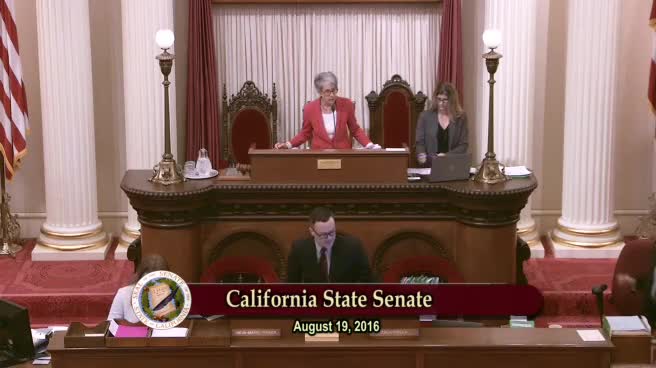
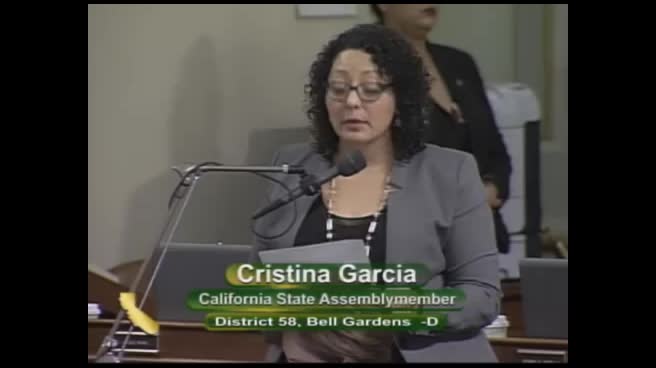
Bill Author



