AB 1854: Bail: attorney's fees: forfeited bail.
- Session Year: 2015-2016
- House: Assembly
- Latest Version Date: 2016-09-16
Existing law sets forth procedures under which the court is authorized to declare forfeited the undertaking of bail or the money or property deposited as bail if, without sufficient excuse, a defendant fails to appear for certain proceedings. Existing law requires the district attorney, county counsel, or applicable prosecuting agency to recover, out of the forfeited bail money, the costs incurred in successfully opposing a motion to vacate the forfeiture prior to the division of the forfeited bail money between the cities and counties in accordance with specified provisions.
This bill would require the district attorney, county counsel, or applicable prosecuting agency to, in addition, recover attorneys fees out of the forfeited bail money.
The district attorney, county counsel, or applicable prosecuting agency, as the case may be, shall recover, out of the forfeited bail money, the costs and attorneys fees incurred in successfully opposing a motion to vacate the forfeiture and in collecting on the summary judgment prior to the division of the forfeited bail money between the cities and counties in accordance with Section 1463.001.
The district attorney, county counsel, or applicable prosecuting agency, as the case may be, shall recover, out of the forfeited bail money, the costs and attorneys fees incurred in successfully opposing a motion to vacate the forfeiture and in collecting on the summary judgment prior to the division of the forfeited bail money between the cities and counties in accordance with Section 1463.001.
The district attorney, county counsel, or applicable prosecuting agency, as the case may be, shall recover, out of the forfeited bail money, the costs and attorneys fees incurred in successfully opposing a motion to vacate the forfeiture and in collecting on the summary judgment prior to the division of the forfeited bail money between the cities and counties in accordance with Section 1463. 1463.001.
|
Date
|
Status
|
|---|---|
| Jun 14, 2016 | From committee: Do pass. (Ayes 7. Noes 0.) (June 14). |
| Sep 16, 2016 | Chaptered by Secretary of State - Chapter 378, Statutes of 2016. |
| Sep 16, 2016 | Approved by the Governor. |
| Aug 22, 2016 | Enrolled and presented to the Governor at 4 p.m. |
| Aug 16, 2016 | In Assembly. Ordered to Engrossing and Enrolling. |
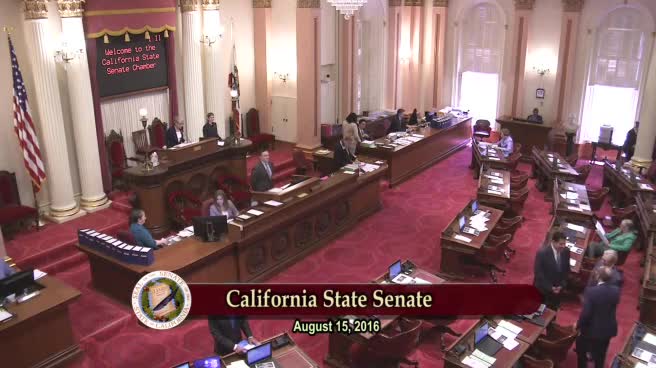
| Aug 15, 2016 | Read third time. Passed. Ordered to the Assembly. (Ayes 38. Noes 0.). |
| Aug 15, 2016 | Read third time. Passed. Ordered to the Assembly. (Ayes 38. Noes 0. Page 4949.). |
| Aug 15, 2016 | Read third time. Passed. Ordered to the Assembly. |
| Jun 15, 2016 | Read second time. Ordered to third reading. |
| Feb 10, 2016 | Read first time. To print. |
| Apr 28, 2016 | Referred to Com. on PUB. S. |
| Apr 7, 2016 | Read third time. Passed. Ordered to the Senate. (Ayes 74. Noes 2. Page 4226.) |
| Apr 7, 2016 | Read third time. Passed. Ordered to the Senate. |
| Apr 7, 2016 | In Senate. Read first time. To Com. on RLS. for assignment. |
| Mar 16, 2016 | Read second time. Ordered to third reading. |
| Mar 15, 2016 | From committee: Do pass. (Ayes 7. Noes 0.) (March 15). |
| Feb 25, 2016 | Referred to Com. on PUB. S. |
| Feb 11, 2016 | From printer. May be heard in committee March 12. |
|
Date
|
Description
|
Location
|
Votes
|
|
|---|---|---|---|---|
| Aug 15, 2016 | Assembly 3rd Reading AB1854 Bloom By Hertzberg | Senate Floor |
Passed |
|
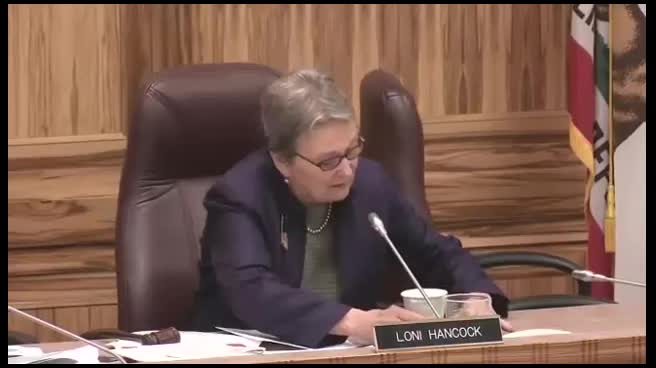
| Jun 14, 2016 | Do pass | Senate Standing Committee on Public Safety |
Passed |
|
| Apr 7, 2016 | AB 1854 BLOOM Assembly Third Reading | Assembly Floor |
Passed |
|
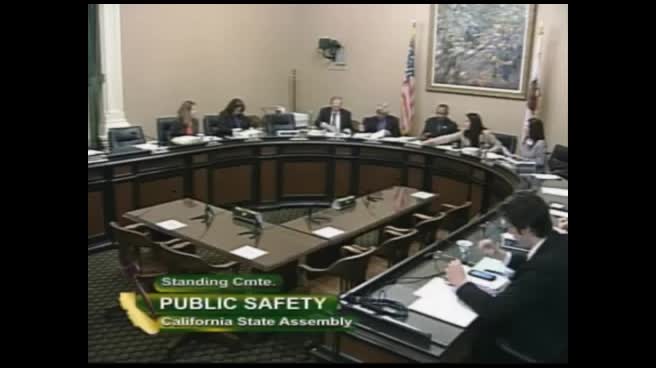
| Mar 15, 2016 | Do pass. | Assembly Standing Committee on Public Safety |
Passed |
This list shows positions taken on this bill by organizations on the date displayed, which is linked to the original source.
Positions by individuals are not included.
|
Organization
|
Position
|
Date
|
|---|---|---|
| Association For Los Angeles Deputy Sheriffs | * Support | Jun 14, 2016 |
| California Department of Insurance | ** Support | Aug 15, 2016 |
| California District Attorneys Association | ** Support | Aug 15, 2016 |
| California Police Chiefs Association | ** Support | Aug 15, 2016 |
| California State Association Of Counties | ** Support | Aug 15, 2016 |
| County Counsels' Association of California | ** Support | Mar 15, 2016 |
| League Of California Cities | ** Support | Aug 15, 2016 |
| Los Angeles County District Attorney | ** Support | Aug 15, 2016 |
| Los Angeles County Professional Peace Officers Association | ** Support | Aug 15, 2016 |
| Los Angeles County Sheriff'S Department | ** Support | Aug 15, 2016 |
| Orange County Bail Agents Association | ** Against | Aug 15, 2016 |
| Orange County Board of Supervisors | ** Support | Aug 15, 2016 |
| San Diego County Board of Supervisors | ** Support | Aug 15, 2016 |
| San Diego County District Attorney | ** Support | Aug 15, 2016 |
| Solano County Board of Supervisors | ** Support | Aug 15, 2016 |
| u Analysis Prepared PUB. S. | ** Against | Mar 15, 2016 |
Office of Senate Floor Analyses (916) 651-1520 Fax: (916) 327-4478 | AB |
THIRD READING
Bill No: AB 1854
:
SENATE PUBLIC SAFETY COMMITTEE: 7-0, 6/14/16
AYES: Hancock, Anderson, Glazer, Leno, Liu, Monning, Stone
ASSEMBLY FLOOR: 74-2, 4/7/16 - See last page for vote
SOURCE: California State Association of Counties
Los Angeles County District Attorney
DIGEST: This bill provides that the district attorney, county counsel, or applicable prosecuting agency that successfully opposes a motion to vacate bail forfeiture shall receive attorney’s fees out of forfeited bail money, payable prior to any other distribution of the bail funds.
Existing law:
- States that bail permits a defendant to be released from custody by posting bond, which is a promise to pay the bond amount unless the defendant meets the conditions, which is generally to make all of their court appearances. (Pen. Code § 1269.)
- Entitles defendants to bail prior to conviction as a matter of right unless the offense is punishable by death or a public safety exception is established. (Cal. Const., Art. I, Sec. 12.)
- States that bail is set by the magistrate at the defendant’s first court appearance. (Cal. Const. Art. I, Section 12; Pen. Code § 1271.)
- States that judges fix the bail amount according to a countywide schedule which sets bail amounts according to the offense charged. (Pen. Code § 1269b, subd. (c).)
- Allows judges to adjust the bail up or down from the fee schedule when certain conditions exist, but public safety is the primary concern. (Pen. Code § 1268, 1269c, 1275, 1289.)
- Permits judges to attach conditions on bail which, if violated, can result in forfeiture of the bail. (Pen. Code § 1269c)
- States that a defendant forfeits bail when he or she fails to appear for their court hearing without a valid excuse. (Pen. Code § 1275, 1305.)
- Allows the bail surety agents to contest bail forfeiture by filing a motion to vacate the forfeiture of bail. (Pen. Code § 1305.)
- States that county counsel, district attorneys or other applicable prosecuting agency shall recover costs incurred when the attorneys successfully oppose a motion to vacate bail forfeiture. (Pen. Code § 1305.3.)
- Provides that costs do not include attorney’s fees in bail forfeiture hearings. (People v. U.S. Fire Ins. Co. (2012) 210 Cal.App4th 1423, 1426.)
This bill provides that county counsel, district attorneys or other applicable prosecuting agencies shall recover out of the forfeited bail money attorney’s fees, in addition to costs, incurred through successfully opposing a motion to vacate bail forfeiture.
Background
According to the author:
AB 1854 would help restore funding for the costs incurred by prosecutorial agencies in litigating bail forfeiture motions. Forfeiture of bail due to failure of a defendant to appear in court is often followed by a counter-motion to challenge the forfeiture. A significant amount of time and costs are involved in opposing these motions, and financially strapped local prosecutors, district attorneys, and county counsels bear the costs. This bill would allow them to recover a portion of those costs out of the forfeited bail money when they have successfully opposed a motion to vacate a bail forfeiture.
Following enactment of Penal Code section 1305.3 in 1993 - directing that the costs of the district attorney in a bail forfeiture case be recovered from forfeited bail - prosecutorial agencies successfully recovered attorneys’ fees in a number of bail forfeiture cases. For example, in Lincoln General Ins. Co. & Aladdin Bail Bonds v. Superior Court (Los. Angeles Co. No. NA052587), the Los Angeles District Attorney’s Office received $2,024.95 in attorney fees. Unfortunately, in November of 2012, the Court of Appeal in People v. U.S. Fire Ins. Co. (2012) 210 Cal.App4th 1423, 1426, found that the reference in section 1305.3 to “costs” did not include attorney fees, as the usual meaning of “costs” has only encompassed reporter’s transcripts and filing costs, not attorneys’ fees.
Specifically, this bill would insert the term ‘attorney fees’ into the statute. Prosecuting offices are often financially constrained and currently fund all of these bail forfeiture cases. Since these cases often involve multiple court appearances and unique legal issues, the costs for the hours spent on them by deputy district attorneys are significant. Due to denial of attorney fee recovery, local government prosecutors sometimes avoid bail forfeiture litigation altogether. This bill provides a revenue stream that would otherwise have been lost
Bail is a contract for release of a person from jail upon a promise to appear at future court hearings. The promise is backed by a bond issued through a bail agent. A bailed defendant is said to be in the constructive custody of the bail agent. (Taylor v. Taintor (1862) (16 Wall.) 83U.S. 366, 372.) “In pre-Norman England, a bondsman … [could] suffer the same penalty as the fugitive. This … led to the allowance of rather extreme measures for capture [of the fugitive].” (Ouzts v. Maryland National Ins. Co. (1974) 505 F.2d 547, 550.) However, it appears that bail in England was typically posted in the form of pledges of land or property by the defendant personally or by a relative. Commercial bail – bail posted by private businesses for profit – was an innovation of the American frontier in the early 1880s. (Illegal Globally, Bail for Profit Remains in U.S., Liptak, New York Times, Jan. 29, 2008.) A defendant forfeits the bail they posted when they fail to appear in court or when they do not fulfill the conditions of their bail, such as committing another offense or intimidating witnesses in their case. A motion to vacate forfeiture of bail is simply a motion to seeking a court order to forfeit the bail posted by the defendant. These motions are filed either by defense counsel or the bond surety agent in order to recover the bail funds they posted. When defense counsel, or a surety agent, file a motion to vacate forfeiture of bail, a prosecuting attorney has the option to contest the motion.
When bail is forfeited, state penalties, county penalties, special penalties, service charges, and penalty allocations are distributed to the proper funds first. The arresting agency and courts then receive their portions of the bail funds to alleviate their costs. After these distributions are made, the prosecuting attorney who successfully defends a motion to vacate forfeiture of bail can recover their costs. This bill allows the prosecuting attorneys to recover their attorneys’ fees. After collection of costs (and attorneys’ fees should this bill become law), the cities and counties receive the remainder according to Penal Code Sections 1463.001 and 1463.002.
FISCAL EFFECT: Appropriation: Fiscal Com.: Local:
California State Association of Counties (co-source)
Los Angeles County District Attorney (co-source)
California Department of Insurance
California District Attorneys Association
California Police Chiefs' Association
League of California Cities
Los Angeles County Professional Peace Officers Association
Los Angeles County Sheriff’s Department
Orange County Board of Supervisors
San Diego County Board of Supervisors
San Diego County District Attorney
Solano County Board of Supervisors
OPPOSITION: (Verified 6/14/16)
Orange County Bail Agents Association
ASSEMBLY FLOOR: 74-2, 4/7/16
AYES: Achadjian, Alejo, Atkins, Baker, Bigelow, Bloom, Bonilla, Bonta, Brown, Burke, Calderon, Chang, Chau, Chávez, Chiu, Chu, Cooley, Cooper, Dababneh, Dahle, Daly, Dodd, Eggman, Frazier, Beth Gaines, Gallagher, Cristina Garcia, Eduardo Garcia, Gatto, Gipson, Gomez, Gonzalez, Gordon, Gray, Grove, Hadley, Harper, Holden, Irwin, Jones, Jones-Sawyer, Kim, Lackey, Linder, Lopez, Low, Maienschein, Mathis, Mayes, McCarty, Medina, Melendez, Mullin, Nazarian, Obernolte, O'Donnell, Olsen, Patterson, Quirk, Ridley-Thomas, Rodriguez, Salas, Santiago, Steinorth, Mark Stone, Thurmond, Ting, Wagner, Waldron, Weber, Wilk, Williams, Wood, Rendon
NOES: Travis Allen, Brough
NO VOTE RECORDED: Campos, Roger Hernández, Levine
6/27/16 16:47:54
**** END ****
SENATE COMMITTEE ON PUBLIC SAFETY
Senator Loni Hancock, Chair
2015 - 2016 Regular
Bill No: AB 1854 Hearing Date: June 14, 2016
Author: | Bloom | ||
Version: | February 10, 2016 | ||
Urgency: | No | Fiscal: | No |
Consultant: | JM | ||
Subject: Bail: Attorney’s Fees: Forfeited Bail
HISTORY
Source: California State Association of Counties; Los Angeles County District Attorney
Prior Legislation: SB 989 (Vargas) – Ch.129, Stats. of 2012
AB 2854 (Dymally) – 2006, Vetoed
SB 1245 (Polanco) – Ch. 434, Stats. of 1995
SB 1649 (Johannessen) – Ch. 170, Stats. of 1994
AB 734 (Johnson) – Ch. 524, Stats. of 1993
Support: California Department of Insurance; California District Attorneys Association;
California Police Chiefs' Association; League of California Cities;
Los Angeles County Professional Peace Officers Association; Los Angeles County Sheriff’s Department; Orange County Board of Supervisors; San Diego County Board of Supervisors; San Diego County District Attorney; Solano County Board of Supervisors
Opposition: Orange County Bail Agents Association
Assembly Floor Vote: 74 - 2
PURPOSE
The purpose of this bill is to provide that the district attorney, county counsel, or applicable prosecuting agency that successfully opposes a motion to vacate bail forfeiture shall receive attorney’s fees out of forfeited bail money, payable prior to any other distribution of the bail funds.
Existing law states that bail permits a defendant to be released from custody by posting bond, which is a promise to pay the bond amount unless the defendant meets the conditions, which is generally to make all of their court appearances. (Pen. Code, § 1269.)
Existing law entitles defendants to bail prior to conviction as a matter of right unless the offense is punishable by death or a public safety exception is established. (Cal. Const., art. I, sec. 12.)
Existing law states that bail is set by the magistrate at the defendant’s first court appearance. (Cal. Const. art. I, section 12; Pen. Code, § 1271.)
Existing law states that judges fix the bail amount according to a countywide schedule which sets bail amounts according to the offense charged. (Pen. Code, § 1269b, subd. (c).)
Existing law allows judges to adjust the bail up or down from the fee schedule when certain conditions exist, but public safety is the primary concern. (Pen. Code, § 1268, 1269c, 1275, 1289.)
Existing law permits judges to attach conditions on bail which, if violated, can result in forfeiture of the bail. (Pen. Code, § 1269c)
Existing law states that a defendant forfeits bail when he or she fails to appear for their court hearing without a valid excuse. (Pen. Code, § 1275, 1305.)
Existing law allows the bail surety agents may contest bail forfeiture by filing a motion to vacate the forfeiture of bail. (Pen. Code, § 1305.)
Existing law states that county counsel, district attorneys or other applicable prosecuting agency shall recover costs incurred when the attorneys successfully oppose a motion to vacate bail forfeiture. (Pen. Code, § 1305.3.)
Existing law holds that costs do not include attorney’s fees in bail forfeiture hearings. (People v. U.S. Fire Ins. Co. (2012) 210 Cal.App4th 1423, 1426.)
This bill provides that that county counsel, district attorneys or other applicable prosecuting agencies shall recover out of the forfeited bail money attorney’s fees, in addition to costs, incurred through successfully opposing a motion to vacate bail forfeiture.
RECEIVERSHIP/OVERCROWDING CRISIS AGGRAVATION
For the past several years this Committee has scrutinized legislation referred to its jurisdiction for any potential impact on prison overcrowding. Mindful of the United States Supreme Court ruling and federal court orders relating to the state’s ability to provide a constitutional level of health care to its inmate population and the related issue of prison overcrowding, this Committee has applied its “ROCA” policy as a content-neutral, provisional measure necessary to ensure that the Legislature does not erode progress in reducing prison overcrowding.
On February 10, 2014, the federal court ordered California to reduce its in-state adult institution population to 137.5% of design capacity by February 28, 2016, as follows:
- 143% of design bed capacity by June 30, 2014;
- 141.5% of design bed capacity by February 28, 2015; and,
- 137.5% of design bed capacity by February 28, 2016.
In December of 2015 the administration reported that as “of December 9, 2015, 112,510 inmates were housed in the State’s 34 adult institutions, which amounts to 136.0% of design bed capacity, and 5,264 inmates were housed in out-of-state facilities. The current population is 1,212 inmates below the final court-ordered population benchmark of 137.5% of design bed capacity, and has been under that benchmark since February 2015.” (Defendants’ December 2015 Status Report in Response to February 10, 2014 Order, 2:90-cv-00520 KJM DAD PC, 3-Judge Court, Coleman v. Brown, Plata v. Brown (fn. omitted).) One year ago, 115,826 inmates were housed in the State’s 34 adult institutions, which amounted to 140.0% of design bed capacity, and 8,864 inmates were housed in out-of-state facilities. (Defendants’ December 2014 Status Report in Response to February 10, 2014 Order, 2:90-cv-00520 KJM DAD PC, 3-Judge Court, Coleman v. Brown, Plata v. Brown (fn. omitted).)
While significant gains have been made in reducing the prison population, the state must stabilize these advances and demonstrate to the federal court that California has in place the “durable solution” to prison overcrowding “consistently demanded” by the court. (Opinion Re: Order Granting in Part and Denying in Part Defendants’ Request For Extension of December 31, 2013 Deadline, NO. 2:90-cv-0520 LKK DAD (PC), 3-Judge Court, Coleman v. Brown, Plata v. Brown (2-10-14). The Committee’s consideration of bills that may impact the prison population therefore will be informed by the following questions:
- Whether a proposal erodes a measure which has contributed to reducing the prison population;
- Whether a proposal addresses a major area of public safety or criminal activity for which there is no other reasonable, appropriate remedy;
- Whether a proposal addresses a crime which is directly dangerous to the physical safety of others for which there is no other reasonably appropriate sanction;
- Whether a proposal corrects a constitutional problem or legislative drafting error; and
- Whether a proposal proposes penalties which are proportionate, and cannot be achieved through any other reasonably appropriate remedy.
COMMENTS
- Need for This Bill
According to the author:
AB 1854 would help restore funding for the costs incurred by prosecutorial agencies in litigating bail forfeiture motions. Forfeiture of bail due to failure of a defendant to appear in court is often followed by a counter-motion to challenge the forfeiture. A significant amount of time and costs are involved in opposing these motions, and financially strapped local prosecutors, district attorneys, and county counsels bear the costs. This bill would allow them to recover a portion of those costs out of the forfeited bail money when they have successfully opposed a motion to vacate a bail forfeiture.
Following enactment of Penal Code section 1305.3 in 1993 - directing that the costs of the district attorney in a bail forfeiture case be recovered from forfeited bail - prosecutorial agencies successfully recovered attorneys’ fees in a number of bail forfeiture cases. For example, in Lincoln General Ins. Co. & Aladdin Bail Bonds v. Superior Court (Los. Angeles Co. No. NA052587), the Los Angeles District Attorney’s Office received $2,024.95 in attorney fees. Unfortunately, in November of 2012, the Court of Appeal in People v. U.S. Fire Ins. Co. (2012) 210 Cal.App4th 1423, 1426, found that the reference in section 1305.3 to “costs” did not include attorney fees, as the usual meaning of “costs” has only encompassed reporter’s transcripts and filing costs, not attorneys’ fees.
Specifically, this bill would insert the term ‘attorney fees’ into the statute. Prosecuting offices are often financially constrained and currently fund all of these bail forfeiture cases. Since these cases often involve multiple court appearances and unique legal issues, the costs for the hours spent on them by deputy district attorneys are significant. Due to denial of attorney fee recovery, local government prosecutors sometimes avoid bail forfeiture litigation altogether. This bill provides a revenue stream that would otherwise have been lost
- Abbreviated History of Bail
Bail is a contract for release of a person from jail upon a promise to appear at future court hearings. The promise is backed by a bond issued through a bail agent. A bailed defendant is said to be in the constructive custody of the bail agent. (Taylor v. Taintor (1862) (16 Wall.) 83U.S. 366, 372.) “In pre-Norman England, a bondsman … [could] suffer the same penalty as the fugitive. This … led to the allowance of rather extreme measures for capture [of the fugitive].” (Ouzts v. Maryland National Ins. Co. (1974) 505 F.2d 547, 550.) However, it appears that bail in England was typically posted in the form of pledges of land or property by the defendant personally or by a relative. Commercial bail – bail posted by private businesses for profit – was an innovation of the American frontier in the early 1880s. (Illegal Globally, Bail for Profit Remains in U.S., Liptak, New York Times, Jan. 29, 2008.)
- Bail Forfeiture
A defendant forfeits the bail they posted when they fail to appear in court or when they do not fulfill the conditions of their bail, such as committing another offense or intimidating witnesses in their case. A motion to vacate forfeiture of bail is simply a motion to seeking a court order to forfeit the bail posted by the defendant. These motions are filed either by defense counsel or the bond surety agent in order to recover the bail funds they posted. When defense counsel, or a surety agent, file a motion to vacate forfeiture of bail, a prosecuting attorney has the option to contest the motion.
- Distribution of Bail Forfeiture Funds
When bail is forfeited, state penalties, county penalties, special penalties, service charges, and penalty allocations are distributed to the proper funds first. The arresting agency and courts then receive their portions of the bail funds to alleviate their costs. After these distributions are made, the prosecuting attorney who successfully defends a motion to vacate forfeiture of bail can recover their costs. This bill would allow the prosecuting attorneys to recover their attorneys’ fees. After collection of costs (and attorneys’ fees should this bill becomes law), the cities and counties receive the remainder according to Penal Code Sections 1463.001 and 1463.002.
-- END –
ASSEMBLY THIRD READING
ATR Bill Id:AB 1854
Author:(Bloom)
As Introduced Ver:February 10, 2016
Majority vote
Committee | Votes | Ayes | Noes |
Public Safety | 7-0 | Jones-Sawyer, Melendez, Lackey, Lopez, Low, Quirk, Santiago |
SUMMARY: Allows for the recovery of incurred attorney's fees out of forfeited bail money when the district attorney, county counsel, or applicable prosecuting agency successfully opposes a motion to vacate the forfeiture or in collecting on the summary judgment. Specifically, this bill, states that county counsel, district attorneys or other applicable prosecuting agencies shall recover costs and attorney's fees incurred when those attorneys successfully oppose a motion to vacate bail forfeiture.
EXISTING LAW:
- States that bail permits a defendant to be released from custody by posting bond, which is a promise to pay the bond amount unless the defendant meets the conditions, which is generally to make all of their court appearances.
- Entitles defendants to bail prior to conviction as a matter of right unless the offense is punishable by death or a public safety exception is established.
- States that bail is set by the magistrate at the defendant’s first court appearance.
- States that judges fix the bail amount according to a countywide schedule which sets bail amounts according to the offense charged.
- States that the availability of bail after conviction in felony cases is up to the judge's discretion if the felony is one of the enumerated felonies.
- Allows judges to adjust the bail up or down from the fee schedule when certain conditions exist, but public safety is the primary concern.
- Permits judges to attach conditions on bail which, if violated, can result in forfeiture of the bail.
- States that defendants forfeit their bail when they abscond, i.e. when the defendant fails to appear for their court hearing without a valid excuse.
- Allows the bail surety agents may contest bail forfeiture by filing a motion to vacate the forfeiture of bail.
- States that county counsel, district attorneys or other applicable prosecuting agency shall recover costs incurred when the attorneys successfully oppose a motion to vacate bail forfeiture.
- Holds that costs do not include attorney's fees in bail forfeiture hearings.
FISCAL EFFECT: Unknown. This bill has been keyed non-fiscal by the Legislative Counsel.
COMMENTS: According to the author, "AB 1854 would help restore funding for the costs incurred by prosecutorial agencies in litigating bail forfeiture motions. Forfeiture of bail due to failure of a defendant to appear in court is often followed by a counter-motion to challenge the forfeiture. A significant amount of time and attorney's fees are involved in opposing these motions, and financially strapped local prosecutors, district attorneys, and county counsels bear the costs. This bill would allow them to recover a portion of those costs out of the forfeited bail money when they have successfully opposed a motion to vacate a bail forfeiture.”
- Summary: A defendant forfeits the bail they posted when they fail to appear in court or when they do not fulfill the conditions of their bail, such as committing another offense or intimidating witnesses in their case. A motion to vacate forfeiture of bail is simply a motion to contest the forfeiture of the bail posted by the defendant. These motions are filed either by defense counsel or the bond surety agent in order to recover the bail funds they posted. When defense counsel, or a surety agent, file a motion to vacate forfeiture of bail, a prosecuting attorney has the option to contest the motion. This bill would allow those prosecuting attorneys to recover their attorneys’ fees when they successfully contest motions to vacate forfeiture of bail.
Analysis Prepared by: Matt Dean / PUB. S. / (916) 319-3744 FN: 0002661
Date of Hearing: March 15, 2016
Consultant: Matt Dean
ASSEMBLY COMMITTEE ON
, Sr., Chair
ABPCA Bill Id:
Author:() – As Ver:February 10, 2016
SUMMARY: Allows for the recovery of incurred attorney’s fees out of forfeited bail money when the district attorney, county counsel, or applicable prosecuting agency successfully opposes a motion to vacate the forfeiture or in collecting on the summary judgment. Specifically, this bill: States that county counsel, district attorneys or other applicable prosecuting agencies shall recover costs and attorney’s fees incurred when those attorneys successfully oppose a motion to vacate bail forfeiture.
EXISTING LAW:
- States that bail permits a defendant to be released from custody by posting bond, which is a promise to pay the bond amount unless the defendant meets the conditions, which is generally to make all of their court appearances. (Pen. Code, § 1269.)
- Entitles defendants to bail prior to conviction as a matter of right unless the offense is punishable by death or a public safety exception is established. (Cal. Const., art. I, sec. 12.)
- States that bail is set by the magistrate at the defendant’s first court appearance. (Cal. Const. art. I, section 12; Pen. Code, § 1271.)
- States that judges fix the bail amount according to a countywide schedule which sets bail amounts according to the offense charged. (Pen. Code, § 1269b, subd. (c).)
- States that the availability of bail after conviction in felony cases is up to the judge’s discretion if the felony is one of the enumerated felonies. (Pen. Code, § 292.)
- Allows judges to adjust the bail up or down from the fee schedule when certain conditions exist, but public safety is the primary concern. (Pen. Code, § 1268, 1269c, 1275, 1289.)
- Permits judges to attach conditions on bail which, if violated, can result in forfeiture of the bail. (Pen. Code, § 1269c)
- States that defendants forfeit their bail when they abscond, i.e. when the defendant fails to appear for their court hearing without a valid excuse. (Pen. Code, § 1275, 1305.)
- Allows the bail surety agents may contest bail forfeiture by filing a motion to vacate the forfeiture of bail. (Pen. Code, § 1305.)
- States that county counsel, district attorneys or other applicable prosecuting agency shall recover costs incurred when the attorneys successfully oppose a motion to vacate bail forfeiture. (Pen. Code, § 1305.3.)
- Holds that costs do not include attorney’s fees in bail forfeiture hearings. (People v. U.S. Fire Ins. Co. (2012) 210 Cal.App4th 1423, 1426.)
FISCAL EFFECT: Unknown
COMMENTS:
- Author's Statement: According to the author, "AB 1854 would help restore funding for the costs incurred by prosecutorial agencies in litigating bail forfeiture motions. Forfeiture of bail due to failure of a defendant to appear in court is often followed by a counter-motion to challenge the forfeiture. A significant amount of time and attorney’s fees are involved in opposing these motions, and financially strapped local prosecutors, district attorneys, and county counsels bear the costs. This bill would allow them to recover a portion of those costs out of the forfeited bail money when they have successfully opposed a motion to vacate a bail forfeiture.”
- Summary: A defendant forfeits the bail they posted when they fail to appear in court or when they do not fulfill the conditions of their bail, such as committing another offense or intimidating witnesses in their case. A motion to vacate forfeiture of bail is simply a motion to contest the forfeiture of the bail posted by the defendant. These motions are filed either by defense counsel or the bond surety agent in order to recover the bail funds they posted. When defense counsel, or a surety agent, file a motion to vacate forfeiture of bail, a prosecuting attorney has the option to contest the motion. This bill would allow those prosecuting attorneys to recover their attorneys’ fees when they successfully contest motions to vacate forfeiture of bail.
- Background: As provided by the author, “This proposal would restore funding for prosecutorial agencies and county counsel offices for the costs that are incurred in successfully opposing a motion to vacate the forfeiture of bail. It would amend Section 1305.3 of the Penal Code to include ‘attorney fees.’
“Existing law sets forth procedures under which the court is authorized to declare forfeited the undertaking of bail or the money or property deposited as bail if, without sufficient excuse, a defendant fails to appear for certain proceedings. The defendant’s surety or bail bond agency in turn often files a motion to vacate the forfeiture--challenging the court’s forfeiture and countering with a claim explaining why the bail should not be forfeited. There are significant costs for district attorney, county counsel, and prosecuting offices in opposing these motions.
“California Penal Code section 1305.3 states:
‘The district attorney, county counsel, or applicable prosecuting agency, as
the case may be, shall recover, out of the forfeited bail money, the costs
incurred in successfully opposing a motion to vacate the forfeiture and in
collecting on the summary judgment prior to the division of the forfeited
bail money between the cities and counties in accordance with Section 1463.’
“Following the enactment of Penal Code section 1305.3, prosecutorial agencies successfully recovered attorneys’ fees in a number of bail forfeiture cases. For example, in Lincoln General Ins. Co. & Aladdin Bail Bonds v. Superior Court (Case No. SJ1570; Crim. Case No.NA052587), after upholding the trial court’s forfeiture on appeal, the Los Angeles District Attorney’s Office received $2,024.95 in attorney fees. Similarly, in People v. Hernandez (Aegis Security Ins. Co.) (Case No. 0SJ0213; Crim. Case No. GA047929), the trial court awarded LADA $3,181.21 in attorneys’ fees.
“Unfortunately, in November of 2012, the Court of Appeal in People v. U.S. Fire Ins. Co. (2012) 210 Cal.App4th 1423, 1426, found that the provision in section 1305.3 allowing the recovery of “costs” did not include attorney fees. They reached this conclusion by holding that the ordinary and usual meaning of “costs” in California has only encompassed reporter’s transcripts and filing costs, but not attorney fees.
“The court in People v. U.S. Fire Ins. Co. (2012) stated: “In sum, applying the rules of statutory construction and the law regarding the award of attorney fees as costs, we must conclude that an award of costs under section 1305.3 does not include attorney fees. Including attorney fees as costs in this context is a change that should be left to the Legislature.
“This proposal seeks to insert the term ‘attorney fees’ into the statute.
“Prosecuting offices are often financially constrained and currently fund all of these bail forfeiture cases. This bill would allow them to recover a significant portion of the costs and lessen the cost burden. Since these cases can often involve multiple court appearances and unique legal issues, the attorney costs generated are significant. Los Angeles County District Attorney Office observed, ‘Given the financial constraints faced by our Office, it is imperative that all deputies make every effort to recover attorneys’ fees when they have successfully opposed a motion to vacate a bail forfeiture.’
“Due to denial of attorney fee recovery, local government prosecutors sometimes avoid bail forfeiture litigation altogether. This bill provides a revenue stream that would otherwise have been lost.”
- Distribution of Bail Forfeiture Funds: When bail is forfeited, state penalties, county penalties, special penalties, service charges, and penalty allocations are distributed to the proper funds first. The arresting agency and courts then receive their portions of the bail funds to alleviate their costs. After these distributions are made, the prosecuting attorney who successfully defends a motion to vacate forfeiture of bail can recover their costs. This bill would allow the prosecuting attorneys to recover their attorneys’ fees. After collection of costs (and attorneys’ fees should this bill becomes law), the cities and counties receive the remainder according to Penal Code Sections 1463.001 and 1463.002.
- Bail: The 8th Amendment to the United States of America states: "Excessive bail shall not be required, nor excessive fines imposed, nor cruel and unusual punishments inflicted."
- Generally: Bail is a security given to the court to guarantee a defendant's future attendance at court proceedings. The amount of bail required is typically set according to the local bail schedule that lists common offended and a suggested amount. These bail schedules are set by county judges. At arraignment, the magistrate will review the case and set bail in an amount he or she deems sufficient to ensure the defendant's appearance. While the usual practice is to adhere to scheduled bail, either the prosecution or the defense may argue for a departure from the bail schedule based on aggravating and mitigating factors, danger to the public, and ties to the community.
- Generally: Bail is a security given to the court to guarantee a defendant's future attendance at court proceedings. The amount of bail required is typically set according to the local bail schedule that lists common offended and a suggested amount. These bail schedules are set by county judges. At arraignment, the magistrate will review the case and set bail in an amount he or she deems sufficient to ensure the defendant's appearance. While the usual practice is to adhere to scheduled bail, either the prosecution or the defense may argue for a departure from the bail schedule based on aggravating and mitigating factors, danger to the public, and ties to the community.
Bail permits a defendant to be released from actual custody into the constructive custody of a surety on a bond given to procure the defendant's release. Bail, once posted, stands until forfeited or exonerated to ensure the defendant's appearance at all stages of the proceedings on the original charge. (Pen. Code §§ 1273, 1278 subd. (a), 1458-1459.) If bail was posted through a bail bond agency, the agent and the defendant sign a bail agreement that will usually fix the term of the bail bond as one year. The defendant must pay a renewal premium for any additional period.
- Bail Bonds: A bail bond is a document, executed by a surety, that is a promise to pay the face amount of the bond equivalent to the sum set as bail, unless the defendant fulfills the conditions of the bond. (Pen. Code § 1269.)
- Bail Forfeiture: If a defendant fails to appear as ordered by the court and does not have a sufficient excuse, the court must declare the bail forfeited. (Pen. Code § 1305.) Sufficient reasons for failure to appear are usually based on representations made by counsel. (People v. Amwest Sur. Ins. Co. (1997) 56 CA4th 915, 925.)
A surety or the surety and the defendant must appear before the court within 180 calendar days after notice of forfeiture to establish a satisfactory excuse for the defendant's neglect. (Pen. Code § 1305.) The surety is entitled to be released from the forfeiture if any of the following applies (Pen. Code § 1305.):- The court fails to meet the requirement of mailing notice;
- The defendant and his or her surety appear with a satisfactory excuse for the defendant's absence;
- The defendant surrenders to the court or to custody;
- The defendant dies or has permanent inability to appear due to illness, insanity, or detention by other authorities, all without connivance of the surety.
- The court fails to meet the requirement of mailing notice;
- Bail Bonds: A bail bond is a document, executed by a surety, that is a promise to pay the face amount of the bond equivalent to the sum set as bail, unless the defendant fulfills the conditions of the bond. (Pen. Code § 1269.)
Forfeiture of the defendant's bail as a result of his or her failure to appear is proper only when the defendant failed to appear on the charges for which the bail was posted. People v. King Bail Bond Agency (1990) 224 CA3d 1120.
Before forfeiture, the surety or other person who deposited the assets may surrender the defendant into custody to obtain exoneration of the bail money. (Pen. Code, § 1300, subd. (a).)
- Argument in Support: According to the Los Angeles County District Attorney's Office, a sponsor of this bill, “AB 1854 will help restore funding for the costs incurred by prosecutorial agencies in litigating bail forfeiture motions. Forfeiture of bail due to failure of a defendant to appear in court is often followed by a counter-motion to challenge the forfeiture. A significant amount of time and attorney's fees are involved in opposing these motions, and financially strapped local prosecutors, district attorneys, and county counsels bear the costs. AB 1854 will allow prosecutorial offices and county counsels to recover the cost for litigating these motions out of the forfeited bail money when they have successfully opposed a motion to vacate a bail forfeiture.
“Existing law sets forth procedures under which the court is authorized to declare forfeited the undertaking of bail or the money or property deposited as bail if, without sufficient excuse, a defendant fails to appear for certain proceedings. The defendant's surety or bail bond agency in turn often files a motion to vacate the forfeiture--challenging the court's forfeiture and countering with a claim explaining why the bail should not be forfeited. There are significant costs for district attorney, county counsel, and prosecuting offices in opposing these motions.
“California Penal Code section 1305.3 states:
"The district attorney, county counsel, or applicable prosecuting agency, as the case may be, shall recover, out of the forfeited bail money, the costs incurred in successfully opposing a motion to vacate the forfeiture and in collecting on the summary judgment prior to the division of the forfeited bail money between the cities and counties in accordance with Section 1463.
Since 1994, prosecutorial agencies successfully recovered attorneys' fees pursuant to Penal Code section 1305.3. Unfortunately, in November of 2012, the Court of Appeal in People v. US. Fire Ins. Co. (2012) 210 Cal.App4th 1423, 1426, found that the provision in section 1305.3 allowing the recovery of "costs" did not include attorney fees. They reached this conclusion by holding that the ordinary and usual meaning of "costs" in California has only encompassed reporter's transcripts and filing costs, but not attorney fees.
The court in People v. U S. Fire Ins. Co. (2012) stated:
‘In sum, applying the rules of statutory construction and the law regarding the award of attorney fees as costs, we must conclude that an award of costs under section 1305.3 does not include attorney fees. Including attorney fees as costs in this context is a change that should be left to the Legislature.’
“AB 1854 inserts the term "attorney fees" into the statute.
“Prosecuting offices are often financially constrained and currently fund all of these bail forfeiture cases. This bill would allow them to recover a significant portion of the costs and lessen the cost burden. Since these cases can often involve multiple court appearances and unique legal issues, the attorney costs generated are significant. Los Angeles County District Attorney Office observed, "Given the financial constraints faced by our Office, it is imperative that all deputies make every effort to recover attorneys' fees when they have successfully opposed a motion to vacate a bail forfeiture."
“Due to denial of attorney fee recovery, local government prosecutors sometimes avoid bail forfeiture litigation altogether.”
- Argument in Opposition: According to the Golden State Bail Agents Association, “GSBAA opposes AB 1854 (Bloom) because it seeks to create a one-way attorney fee provision where attorney fees would only be awarded when the county counsel or district attorney prevails in a motion to vacate a bail forfeiture. Bail agents would not be awarded attorney fees when they prevail in a motion to vacate a forfeiture. This would not only be unfair to bail agents, it will lead to oppressive negotiation of disputes, oppressive litigation tactics and will negatively impact bail consumers, as shown below.
“Most bail bond forfeitures are paid without the need for litigation, however, occasionally disputes arise and litigation ensues. Under current law, when bail bond forfeitures are contested, each side to the litigation pays their own attorney fees. In 2012, the 5th District Court of Appeals [sic] made it clear that county counsel is not entitled to attorney fees when they prevail in bail bond forfeiture litigation:
“Appellant further argues that the legislative history for section 1305.3 supports awarding attorney fees as costs. This history primarily explains that the statute was amended to make clear that county counsel, while not technically a prosecuting agency, should be able to recover costs for successfully opposing the vacation of forfeiture before the money is divided between cities and counties. However, contrary to appellant’s position, county counsel being given the ability to recoup some operating costs before the bail money is divided does not demonstrate a legislative intent to award county counsel attorney fees. (People v. U.S. Fire Ins. Co. (2012) 210 Cal.App.4th 1423, 1428.)
“This bill will overrule the above case and allow county counsel to recover attorney fees out of the forfeited bail money when they prevail. These attorney fees would be paid prior to the division of the forfeited bail money between cities and counties in accordance with Penal Code § 1463. Since county counsel would be paid their fees prior to division, this bill would reduce the county’s share of the forfeiture money.
“The public policy behind the enactment of Civil Code § 1717 is applicable to the proposed one-way attorney fee provision of AB 1854. Civil Code § 1717 provides that a contract with a one-way attorney fee provision is deemed to implement two-way fee shifting:
“’[T]he party who is determined to be the prevailing party on the contract, whether he or she is the party specified in the contract or not, shall be entitled to reasonable attorney fees.” (Civil Code Sec. 1717(a))
“The public policy purpose of Civil Code § 1717 is not solely to protect weaker individuals, but also to prevent oppressive negotiation of contracts, oppressive negotiation of disputes, and oppressive litigation tactics. As stated by the California Court of Appeal:
““Civil Code section 1717 is not designed exclusively for the benefit of individuals or unsophisticated, weaker parties to a contract. Rather, it reflects a general policy to prevent one-sided attorney fee provisions. Thus, it promotes certainty, and prevents overreaching both in the negotiation of a contract and in the use of the courts during litigation. ‘One-sided attorney’s fees clauses can . . . be used as instruments of oppression to force settlements of dubious or unmeritorious claims.’ This litigation concern applies, whether the parties are of different or equal bargaining strength in the negotiation of the contract.” (ABF Capital Corp. v. Grove Props. Co., (2005) 126 Cal. App. 4th 204, 218-219, quoting Int’l Billing Servs., Inc. v. Emigh, (2000) 84 Cal.App.4th 1175, 1188)
“As was the case with contract one-way attorney fee provisions before Civil Code § 1717, enactment of AB 1854’s proposed one-way attorney fee provision would lead to a greater number of frivolous oppositions to bail bond forfeiture motions and other oppressive litigation tactics. These oppressive litigation tactics would especially impact small mom and pop bail agencies and the defendants who buy bail bonds because it will lead to increased litigation costs which will be passed on to bail bond co-signers, thereby increasing the cost of bail.”
- Prior Legislation:
- AB 1082 (Linder) of the 2015-2016 Legislative Session, would have extended from 10 to 12 days the notice of motion a surety must give the court prior to requesting an extension of the 180 day period in which the surety must return an offender to court in order to avoid a permanent forfeiture of bail. AB 1082 was referred to this committee but was never heard.
- AB 1118 (Hagman), of the 2013-14 Legislative Session, requires the Judicial Council, on or before January 1, 2015, to prepare, adopt and annually revise a statewide bail schedule for all bailable felony, misdemeanor, and infraction offenses except Vehicle Code infractions. The version of the bill that passed out of this Committee also required the superior courts, in annually adopting countywide bail schedules, to consider the statewide bail schedule. That provision was later deleted in an amendment. AB 1118 failed passage in the Senate Committee on Public Safety.
- AB 805 (Jones-Sawyer), Chapter 17, Statutes of 2013, provides that in setting bail, a judge or magistrate may consider factors such as the report prepared by investigative staff for the purpose of recommending whether a defendant should be released on his/her own recognizance.
- AB 723 (Quirk), of the 2013-14 Legislative Session, allows a person on post-release community supervision who has a revocation petition filed against him or her to file an application for bail with the superior court. AB 723 was held on the Senate Committee on Appropriations' Suspense File.
- AB 1264 (Hagman), of the 2011-12 Legislative Session, would have repealed the uniform countywide schedule of bail and instead establish the Statewide Bail Commission. The bill would require the commission to prepare, adopt, and annually revise a statewide bail schedule for all bailable felony offenses and for all misdemeanor and infraction offenses except Vehicle Code infractions. AB 1264 was never heard by this Committee and returned to the Chief Clerk.
- AB 1082 (Linder) of the 2015-2016 Legislative Session, would have extended from 10 to 12 days the notice of motion a surety must give the court prior to requesting an extension of the 180 day period in which the surety must return an offender to court in order to avoid a permanent forfeiture of bail. AB 1082 was referred to this committee but was never heard.
REGISTERED SUPPORT / OPPOSITION:
Support
Los Angeles County District Attorney’s Office (Sponsor)
County Counsels' Association of California (Sponsor)
California Department of Insurance
California Police Chiefs Association
California State Association of Counties
California State Association of Counties
San Diego County District Attorney’s Office
Opposition
Golden State Bail Agents Association
Analysis Prepared by:
Discussed in Hearing
 1MIN
Senate Floor
 4MIN
Senate Standing Committee on Public Safety
 3MIN
Assembly Floor
 10MIN
Assembly Standing Committee on Public Safety
Bill Author

Bill Co-Author(s):