AB 187: Medi-Cal: managed care: California Children’s Services program.
- Session Year: 2015-2016
- House: Assembly
- Latest Version Date: 2015-10-10
Existing law provides for the Medi-Cal program, which is administered by the State Department of Health Care Services and under which qualified low-income persons receive health care benefits. The Medi-Cal program is, in part, governed and funded by federal Medicaid provisions. Existing law provides for the department to enter into contracts with managed care systems, hospitals, and prepaid health plans for the provision of various Medi-Cal benefits. Existing law prohibits services covered by the California Childrens Services program (CCS) from being incorporated into a Medi-Cal managed care contract entered into after August 1, 1994, until January 1, 2016, except with respect to contracts entered into for county organized health systems in specified counties.
This bill would extend the termination of the prohibition against CCS covered services being incorporated into a Medi-Cal managed care contract entered into after August 1, 1994, until January 1, 2017.
Existing law provides for the Medi-Cal program, which is administered by the State Department of Health Care Services and under which qualified low-income persons receive health care benefits. The Medi-Cal program is, in part, governed and funded by federal Medicaid provisions. Existing law provides for the department to enter into contracts with managed care systems, hospitals, and prepaid health plans for the provision of various Medi-Cal benefits. Existing law prohibits services covered by the California Childrens Services program (CCS) from being incorporated into a Medi-Cal managed care contract entered into after August 1, 1994, until January 1, 2016, except with respect to contracts entered into for county organized health systems in specified counties.
This bill would extend the termination of the prohibition against CCS covered services being incorporated into a Medi-Cal managed care contract entered into after August 1, 1994, until January 1, 2017.
Existing law provides for the Medi-Cal program, which is administered by the State Department of Health Care Services and under which qualified low-income persons receive health care benefits. The Medi-Cal program is, in part, governed and funded by federal Medicaid provisions. Existing law provides for a demonstration project, Californias Bridge to Reform Section 1115(a) Demonstration, under the Medi-Cal program until October 31, 2015, to implement specified objectives, including improved health care quality and outcomes and maximization of opportunities to reduce the number of uninsured individuals.
Existing law provides for the department to enter into contracts with managed care systems, hospitals, and prepaid health plans for the provision of various Medi-Cal benefits. Existing law prohibits services covered by the California Childrens Services program (CCS) from being incorporated into a Medi-Cal managed care contract entered into after August 1, 1994, until January 1, 2016, except with respect to contracts entered into for county organized health systems in specified counties.
This bill would extend the termination of the prohibition against CCS covered services being incorporated into a Medi-Cal managed care contract entered into after August 1, 1994, until the department has completed evaluations of specified pilot programs created as part of Californias Bridge to Reform Section 1115(a) Demonstration. January 1, 2017.
Existing law provides for the Medi-Cal program, which is administered by the State Department of Health Care Services and under which qualified low-income persons receive health care benefits. The Medi-Cal program is, in part, governed and funded by federal Medicaid provisions. Existing law provides for a demonstration project, Californias Bridge to Reform Section 1115(a) Demonstration, under the Medi-Cal program until October 31, 2015, to implement specified objectives, including improved health care quality and outcomes and maximization of opportunities to reduce the number of uninsured individuals.
Existing law provides for the department to enter into contracts with managed care systems, hospitals, and prepaid health plans for the provision of various Medi-Cal benefits. Existing law prohibits services covered by the California Childrens Services program (CCS) from being incorporated into a Medi-Cal managed care contract entered into after August 1, 1994, until January 1, 2016, except with respect to contracts entered into for county organized health systems in specified counties.
This bill would extend the termination of the prohibition against CCS covered services being incorporated into a Medi-Cal managed care contract entered into after August 1, 1994, until the department has completed evaluations of specified pilot programs created as part of Californias Bridge to Reform Section 1115(a) Demonstration.
The California Childrens Services Program (CCS program) is a statewide program providing medically necessary services required by physically handicapped children whose parents are unable to pay for those services. The State Department of Health Care Services administers the CCS program. Counties, based on population size, are also charged with administering the program, either independently or jointly, with the department. The services covered by the CCS program include expert diagnosis, medical treatment, surgical treatment, hospital care, physical therapy, occupational therapy, special treatment, materials, and the supply of appliances and their upkeep, maintenance, and transportation. Funding for the program comes from county, state, and federal sources. In order to be eligible for the CCS program, an applicant must be under 21 years of age, have or be suspected of having a condition covered by the program, and meet certain financial eligibility standards established by the department.
Existing law prohibits services covered by the CCS program from being incorporated into a Medi-Cal managed care contract entered into after August 1, 1994, until January 1, 2016, except with respect to contracts entered into for county organized health systems in specified counties.
The bill would make technical, nonsubstantive changes to the CCS managed care contract provisions.
The California Childrens Services Program (CCS program) is a statewide program providing medically necessary services required by physically handicapped children whose parents are unable to pay for those services. The State Department of Health Care Services administers the CCS program. Counties, based on population size, are also charged with administering the program, either independently or jointly, with the department. The services covered by the CCS program include expert diagnosis, medical treatment, surgical treatment, hospital care, physical therapy, occupational therapy, special treatment, materials, and the supply of appliances and their upkeep, maintenance, and transportation. Funding for the program comes from county, state, and federal sources. In order to be eligible for the CCS program, an applicant must be under 21 years of age, have or be suspected of having a condition covered by the program, and meet certain financial eligibility standards established by the department.
Existing law prohibits services covered by the CCS program from being incorporated into a Medi-Cal managed care contract entered into after August 1, 1994, until January 1, 2016, except with respect to contracts entered into for county organized health systems in specified counties.
The bill would make technical, nonsubstantive changes to the CCS managed care contract provisions.
(a)Notwithstanding this article or Section 14093.05 or 14094.1, CCS covered services shall not be incorporated into any Medi-Cal managed care contract entered into after August 1, 1994, pursuant to Article 2.7 (commencing with Section 14087.3), Article 2.8 (commencing with Section 14087.5), Article 2.9 (commencing with Section 14088), Article 2.91 (commencing with Section 14089), Article 2.95 (commencing with Section 14092); or either Article 1 (commencing with Section 14200), or Article 7 (commencing with Section 14490) of Chapter 8, until January 1, 2017, except for contracts entered into for county organized health systems or Regional Health Authority in the Counties of San Mateo, Santa Barbara, Solano, Yolo, Marin, and Napa.
(b)Notwithstanding any other provision of this chapter, providers serving children under the CCS program who are enrolled with a Medi-Cal managed care contractor but who are not enrolled in a pilot project pursuant to subdivision (c) shall continue to submit billing for CCS covered services on a fee-for-service basis until CCS covered services are incorporated into the Medi-Cal managed care contracts described in subdivision (a).
(c)(1)The department may authorize a pilot project in Solano County in which reimbursement for conditions eligible under the CCS program may be reimbursed on a capitated basis pursuant to Section 14093.05, and provided all CCS programs guidelines, standards, and regulations are adhered to, and CCS programs case management is utilized.
(2)During the time period described in subdivision (a), the department may approve, implement, and evaluate limited pilot projects under the CCS program to test alternative managed care models tailored to the special health care needs of children under the CCS program. The pilot projects may include, but need not be limited to, coverage of different geographic areas, focusing on certain subpopulations, and the employment of different payment and incentive models. Pilot project proposals from CCS program-approved providers shall be given preference. All pilot projects shall utilize CCS program-approved standards and providers pursuant to Section 14094.1.
(d)For purposes of this section, CCS covered services include all program benefits administered by the program specified in Section 123840 of the Health and Safety Code regardless of the funding source.
(e)Nothing in this section shall be construed to exclude or restrict CCS eligible children from enrollment with a managed care contractor, or from receiving from the managed care contractor with which they are enrolled primary and other health care unrelated to the treatment of the CCS eligible condition.
(a)Notwithstanding this article or Section 14093.05 or 14094.1, CCS covered services shall not be incorporated into any Medi-Cal managed care contract entered into after August 1, 1994, pursuant to Article 2.7 (commencing with Section 14087.3), Article 2.8 (commencing with Section 14087.5), Article 2.9 (commencing with Section 14088), Article 2.91 (commencing with Section 14089), Article 2.95 (commencing with Section 14092); or either Article 1 (commencing with Section 14200), or Article 7 (commencing with Section 14490) of Chapter 8, until January 1, 2017, except for contracts entered into for county organized health systems or Regional Health Authority in the Counties of San Mateo, Santa Barbara, Solano, Yolo, Marin, and Napa.
(b)Notwithstanding any other provision of this chapter, providers serving children under the CCS program who are enrolled with a Medi-Cal managed care contractor but who are not enrolled in a pilot project pursuant to subdivision (c) shall continue to submit billing for CCS covered services on a fee-for-service basis until CCS covered services are incorporated into the Medi-Cal managed care contracts described in subdivision (a).
(c)(1)The department may authorize a pilot project in Solano County in which reimbursement for conditions eligible under the CCS program may be reimbursed on a capitated basis pursuant to Section 14093.05, and provided all CCS programs guidelines, standards, and regulations are adhered to, and CCS programs case management is utilized.
(2)During the time period described in subdivision (a), the department may approve, implement, and evaluate limited pilot projects under the CCS program to test alternative managed care models tailored to the special health care needs of children under the CCS program. The pilot projects may include, but need not be limited to, coverage of different geographic areas, focusing on certain subpopulations, and the employment of different payment and incentive models. Pilot project proposals from CCS program-approved providers shall be given preference. All pilot projects shall utilize CCS program-approved standards and providers pursuant to Section 14094.1.
(d)For purposes of this section, CCS covered services include all program benefits administered by the program specified in Section 123840 of the Health and Safety Code regardless of the funding source.
(e)Nothing in this section shall be construed to exclude or restrict CCS eligible children from enrollment with a managed care contractor, or from receiving from the managed care contractor with which they are enrolled primary and other health care unrelated to the treatment of the CCS eligible condition.
(a)Notwithstanding this article or Section 14093.05 or 14094.1, CCS covered services shall not be incorporated into any Medi-Cal managed care contract entered into after August 1, 1994, pursuant to Article 2.7 (commencing with Section 14087.3), Article 2.8 (commencing with Section 14087.5), Article 2.9 (commencing with Section 14088), Article 2.91 (commencing with Section 14089), Article 2.95 (commencing with Section 14092); or either Article 1 (commencing with Section 14200), or Article 7 (commencing with Section 14490) of Chapter 8, until the department has completed evaluations of the CCS pilot programs created pursuant to subdivision (c) as part of Californias Bridge to Reform Section 1115(a) Demonstration developed pursuant to Section 14180, January 1, 2017, except for contracts entered into for county organized health systems or Regional Health Authority in the Counties of San Mateo, Santa Barbara, Solano, Yolo, Marin, and Napa.
(b)Notwithstanding any other provision of this chapter, providers serving children under the CCS program who are enrolled with a Medi-Cal managed care contractor but who are not enrolled in a pilot project pursuant to subdivision (c) shall continue to submit billing for CCS covered services on a fee-for-service basis until CCS covered services are incorporated into the Medi-Cal managed care contracts described in subdivision (a).
(c)(1)The department may authorize a pilot project in Solano County in which reimbursement for conditions eligible under the CCS program may be reimbursed on a capitated basis pursuant to Section 14093.05, and provided all CCS programs guidelines, standards, and regulations are adhered to, and CCS programs case management is utilized.
(2)During the time period described in subdivision (a), the department may approve, implement, and evaluate limited pilot projects under the CCS program to test alternative managed care models tailored to the special health care needs of children under the CCS program. The pilot projects may include, but need not be limited to, coverage of different geographic areas, focusing on certain subpopulations, and the employment of different payment and incentive models. Pilot project proposals from CCS program-approved providers shall be given preference. All pilot projects shall utilize CCS program-approved standards and providers pursuant to Section 14094.1.
(d)For purposes of this section, CCS covered services include all program benefits administered by the program specified in Section 123840 of the Health and Safety Code regardless of the funding source.
(e)Nothing in this section shall be construed to exclude or restrict CCS eligible children from enrollment with a managed care contractor, or from receiving from the managed care contractor with which they are enrolled primary and other health care unrelated to the treatment of the CCS eligible condition.
(a)Notwithstanding this article or Section 14093.05 or 14094.1, CCS covered services shall not be incorporated into any Medi-Cal managed care contract entered into after August 1, 1994, pursuant to Article 2.7 (commencing with Section 14087.3), Article 2.8 (commencing with Section 14087.5), Article 2.9 (commencing with Section 14088), Article 2.91 (commencing with Section 14089), Article 2.95 (commencing with Section 14092); or either Article 2 Article 1 (commencing with Section 14200), or Article 7 (commencing with Section 14490) of Chapter 8, until January 1, 2016, the department has completed evaluations of the CCS pilot programs created pursuant to subdivision (c) as part of Californias Bridge to Reform Section 1115(a) Demonstration developed pursuant to Section 14180, except for contracts entered into for county organized health systems or Regional Health Authority in the Counties of San Mateo, Santa Barbara, Solano, Yolo, Marin, and Napa.
(b)Notwithstanding any other provision of this chapter, providers serving children under the CCS program who are enrolled with a Medi-Cal managed care contractor but who are not enrolled in a pilot project pursuant to subdivision (c) shall continue to submit billing for CCS covered services on a fee-for-service basis until CCS covered services are incorporated into the Medi-Cal managed care contracts described in subdivision (a).
(c)(1)The department may authorize a pilot project in Solano County in which reimbursement for conditions eligible under the CCS program may be reimbursed on a capitated basis pursuant to Section 14093.05, and provided all CCS programs guidelines, standards, and regulations are adhered to, and CCS programs case management is utilized.
(2)During the time period described in subdivision (a), the department may approve, implement, and evaluate limited pilot projects under the CCS program to test alternative managed care models tailored to the special health care needs of children under the CCS program. The pilot projects may include, but need not be limited to, coverage of different geographic areas, focusing on certain subpopulations, and the employment of different payment and incentive models. Pilot project proposals from CCS program-approved providers shall be given preference. All pilot projects shall utilize CCS program-approved standards and providers pursuant to Section 14094.1.
(d)For purposes of this section, CCS covered services include all program benefits administered by the program specified in Section 123840 of the Health and Safety Code regardless of the funding source.
(e)Nothing in this section shall be construed to exclude or restrict CCS eligible children from enrollment with a managed care contractor, or from receiving from the managed care contractor with which they are enrolled primary and other health care unrelated to the treatment of the CCS eligible condition.
SECTION 1.Section 14094.3 of the Welfare and Institutions Code is amended to read:14094.3.(a)Notwithstanding this article or Section 14093.05 or 14094.1, CCS covered services shall not be incorporated into any Medi-Cal managed care contract entered into after August 1, 1994, pursuant to Article 2.7 (commencing with Section 14087.3), Article 2.8 (commencing with Section 14087.5), Article 2.9 (commencing with Section 14088), Article 2.91 (commencing with Section 14089), Article 2.95 (commencing with Section 14092); or either Article 1 (commencing with Section 14200), or Article 7 (commencing with Section 14490) of Chapter 8, until January 1, 2016, except for contracts entered into for county organized health systems or Regional Health Authority in the Counties of San Mateo, Santa Barbara, Solano, Yolo, Marin, and Napa.
(b)Notwithstanding any other provision of this chapter, providers serving children under the CCS program who are enrolled with a Medi-Cal managed care contractor but who are not enrolled in a pilot project pursuant to subdivision (c) shall continue to submit billing for CCS covered services on a fee-for-service basis until CCS covered services are incorporated into the Medi-Cal managed care contracts described in subdivision (a).
(c)(1)The department may authorize a pilot project in Solano County in which reimbursement for conditions eligible under the CCS program may be reimbursed on a capitated basis pursuant to Section 14093.05, and provided all CCS programs guidelines, standards, and regulations are adhered to, and CCS programs case management is utilized.
(2)During the time period described in subdivision (a), the department may approve, implement, and evaluate limited pilot projects under the CCS program to test alternative managed care models tailored to the special health care needs of children under the CCS program. The pilot projects may include, but need not be limited to, coverage of different geographic areas, focusing on certain subpopulations, and the employment of different payment and incentive models. Pilot project proposals from CCS program-approved providers shall be given preference. All pilot projects shall utilize CCS program-approved standards and providers pursuant to Section 14094.1.
(d)For purposes of this section, CCS covered services include all program benefits administered by the program specified in Section 123840 of the Health and Safety Code regardless of the funding source.
(e)This section shall not be construed to exclude or restrict CCS eligible children from enrollment with a managed care contractor, or from receiving from the managed care contractor with which they are enrolled primary and other health care unrelated to the treatment of the CCS eligible condition.
(a)Notwithstanding this article or Section 14093.05 or 14094.1, CCS covered services shall not be incorporated into any Medi-Cal managed care contract entered into after August 1, 1994, pursuant to Article 2.7 (commencing with Section 14087.3), Article 2.8 (commencing with Section 14087.5), Article 2.9 (commencing with Section 14088), Article 2.91 (commencing with Section 14089), Article 2.95 (commencing with Section 14092); or either Article 2 Article 1 (commencing with Section 14200), or Article 7 (commencing with Section 14490) of Chapter 8, until January 1, 2016, except for contracts entered into for county organized health systems or Regional Health Authority in the Counties of San Mateo, Santa Barbara, Solano, Yolo, Marin, and Napa.
(b)Notwithstanding any other provision of this chapter, providers serving children under the CCS program who are enrolled with a Medi-Cal managed care contractor but who are not enrolled in a pilot project pursuant to subdivision (c) shall continue to submit billing for CCS covered services on a fee-for-service basis until CCS covered services are incorporated into the Medi-Cal managed care contracts described in subdivision (a).
(c)(1)The department may authorize a pilot project in Solano County in which reimbursement for conditions eligible under the CCS program may be reimbursed on a capitated basis pursuant to Section 14093.05, and provided all CCS programs guidelines, standards, and regulations are adhered to, and CCS programs case management is utilized.
(2)During the time period described in subdivision (a), the department may approve, implement, and evaluate limited pilot projects under the CCS program to test alternative managed care models tailored to the special health care needs of children under the CCS program. The pilot projects may include, but need not be limited to, coverage of different geographic areas, focusing on certain subpopulations, and the employment of different payment and incentive models. Pilot project proposals from CCS program-approved providers shall be given preference. All pilot projects shall utilize CCS program-approved standards and providers pursuant to Section 14094.1.
(d)For purposes of this section, CCS covered services include all program benefits administered by the program specified in Section 123840 of the Health and Safety Code regardless of the funding source.
(e)Nothing in this section shall This section shall not be construed to exclude or restrict CCS eligible children from enrollment with a managed care contractor, or from receiving from the managed care contractor with which they are enrolled primary and other health care unrelated to the treatment of the CCS eligible condition.
|
Date
|
Status
|
|---|---|
| Jun 2, 2015 | Read third time. Passed. Ordered to the Senate. (Ayes 78. Noes 0. Page 1797.) |
| Oct 10, 2015 | Chaptered by Secretary of State - Chapter 738, Statutes of 2015. |
| Oct 10, 2015 | Approved by the Governor. |
| Sep 16, 2015 | Enrolled and presented to the Governor at 4 p.m. |
| Sep 3, 2015 | Read third time. Passed. Ordered to the Assembly. (Ayes 40. Noes 0. Page 2455.). |
| Sep 3, 2015 | Read third time. Passed. Ordered to the Assembly. |
| Sep 3, 2015 | In Assembly. Ordered to Engrossing and Enrolling. |
| Aug 31, 2015 | Read second time. Ordered to third reading. |
| Aug 27, 2015 | From committee: Do pass. (Ayes 7. Noes 0.) (August 27). |
| Aug 17, 2015 | In committee: Referred to APPR. suspense file. |
| Jul 9, 2015 | From committee: Do pass and re-refer to Com. on APPR. (Ayes 8. Noes 0.) (July 8). Re-referred to Com. on APPR. |
| Jun 11, 2015 | Referred to Com. on HEALTH. |
| Jan 27, 2015 | Read first time. To print. |
| Jun 2, 2015 | In Senate. Read first time. To Com. on RLS. for assignment. |
| Jun 1, 2015 | Read second time. Ordered to third reading. |
| May 28, 2015 | Read second time and amended. Ordered returned to second reading. |
| May 28, 2015 | From committee: Amend, and do pass as amended. (Ayes 17. Noes 0.) (May 28). |
| Apr 22, 2015 | In committee: Set, first hearing. Referred to APPR. suspense file. |
| Apr 14, 2015 | In committee: Hearing postponed by committee. |
| Apr 8, 2015 | From committee: Do pass and re-refer to Com. on APPR. (Ayes 16. Noes 0.) (April 7). Re-referred to Com. on APPR. |
| Mar 5, 2015 | Re-referred to Com. on HEALTH. |
| Mar 4, 2015 | From committee chair, with author's amendments: Amend, and re-refer to Com. on HEALTH. Read second time and amended. |
| Mar 2, 2015 | Referred to Com. on HEALTH. |
| Jan 28, 2015 | From printer. May be heard in committee February 27. |
|
Date
|
Description
|
Location
|
Votes
|
|
|---|---|---|---|---|
| Sep 3, 2015 | Assembly 3rd Reading AB187 Bonta By Hernandez | Senate Floor |
Passed |
|
| Aug 27, 2015 | Do pass | Senate Standing Committee on Appropriations |
Passed |
|
| Aug 17, 2015 | Placed on suspense file | Senate Standing Committee on Appropriations |
Passed |
|
| Jul 8, 2015 | Do pass, but first be re-referred to the Committee on [Appropriations] | Senate Standing Committee on Health |
Passed |
|
| Jun 2, 2015 | AB 187 BONTA Assembly Third Reading | Assembly Floor |
Passed |
|
| May 28, 2015 | Do pass as amended. | Assembly Standing Committee on Appropriations |
Passed |
|
| Apr 7, 2015 | Do pass and be re-referred to the Committee on [Appropriations] | Assembly Standing Committee on Health |
Passed |
This list shows positions taken on this bill by organizations on the date displayed, which is linked to the original source.
Positions by individuals are not included.
|
Organization
|
Position
|
Date
|
|---|---|---|
| Alameda County Department of Public Health | ** Support | Sep 3, 2015 |
| Alta California Regional Center | ** Support | Sep 3, 2015 |
| American Academy of Pediatrics | ** Support | Sep 3, 2015 |
| American Federation of State, County and Municipal Employees | ** Support | Sep 3, 2015 |
| California Academy of Physician Assistants | ** Support | Sep 3, 2015 |
| California Asian Americans Advancing Justice - Los Angeles | ** Support | Sep 3, 2015 |
| California Association Of Health Plans | ** Support | Sep 3, 2015 |
| California Children'S Hospital Association | ** Support | Sep 3, 2015 |
| California Chronic Care Coalition | ** Support | Sep 3, 2015 |
| California Downs Syndrome Advocacy Coalition | ** Support | Sep 3, 2015 |
| California Hepatitis C Task Force | ** Support | Sep 3, 2015 |
| California Medical Association, Inc. | ** Support | Sep 3, 2015 |
| California Pharmacists Association | ** Support | Sep 3, 2015 |
| California Women, Infants and Children Association | ** Support | Sep 3, 2015 |
| Children Now Children's Defense Fund-California | ** Support | Sep 3, 2015 |
| Children'S Specialty Care Coalition | ** Support | Sep 3, 2015 |
| Disability Rights California | ** Support | Sep 3, 2015 |
| Down Syndrome Association of Orange County | ** Support | Sep 3, 2015 |
| Down Syndrome Information Alliance | ** Support | Sep 3, 2015 |
| Epilepsy California | ** Support | Sep 3, 2015 |
| Exceptional Parents Unlimited | ** Support | Sep 3, 2015 |
| Family Soup | ** Support | Sep 3, 2015 |
| Hemophilia Council Of California | ** Support | Sep 3, 2015 |
| International Foundation for Autoimmune Arthritis | ** Support | Sep 3, 2015 |
| Lucile Packard Children's Hospital at Stanford | ** Support | Sep 3, 2015 |
| March of Dimes | ** Support | Sep 3, 2015 |
| Maternal and Child Health Access | ** Support | Sep 3, 2015 |
| Miller Children's and Women's Hospital Long Beach | ** Support | Sep 3, 2015 |
| National Association of Hepatitis Task Forces | ** Support | Sep 3, 2015 |
| National Downs Syndrome Congress | ** Support | Sep 3, 2015 |
| National Downs Syndrome Society | ** Support | Sep 3, 2015 |
| National Health Law Program | ** Support | Sep 3, 2015 |
| Sickle Cell Disease Foundation of California | ** Support | Sep 3, 2015 |
| The Children's Partnership | ** Support | Sep 3, 2015 |
| The FAIR Foundation | ** Support | Sep 3, 2015 |
| UCSF Benioff Children's Hospital at Oakland | ** Support | Sep 3, 2015 |
| United Ways Of California | ** Support | Sep 3, 2015 |
| University of California | ** Support | Sep 3, 2015 |
| Valley Children's Healthcare | ** Support | Sep 3, 2015 |
AB 187
Page 7
|
Office of Senate Floor Analyses (916) 651-1520 Fax: (916) 327-4478 |
THIRD READING
Bill No: AB 187
Amended: 5/28/15 in Assembly
SENATE HEALTH COMMITTEE: 8-0, 7/8/15
AYES: Hernandez, Nguyen, Hall, Monning, Nielsen, Pan, Roth, Wolk
NO VOTE RECORDED: Mitchell
SENATE APPROPRIATIONS COMMITTEE: 7-0, 8/27/15
AYES: Lara, Bates, Beall, Hill, Leyva, Mendoza, Nielsen
ASSEMBLY FLOOR: 78-0, 6/2/15 - See last page for vote
SUBJECT: Medi-Cal: managed care: California Children’s Services program.
DIGEST: This bill extends the sunset date on the California Children's Services (CCS) “carve out” by an additional one year, under which CCS-covered services are prohibited from being incorporated in a Medi-Cal managed care plan.
Existing law:
Establishes the Medi-Cal Program, administered by the Department of Health Care Services (DHCS), which provides comprehensive health benefits to low-income children up to 266% of the federal poverty level (FPL), parents and adults up to 138% of the FPL, pregnant women, and elderly, blind or disabled persons, who meet specified eligibility criteria.
Establishes the CCS Program to provide specified medical care and therapy services to children with eligible conditions.
Authorizes the state to contract for comprehensive managed health care services for Medi-Cal beneficiaries, and to require mandatory enrollment of Medi-Cal beneficiaries in specified eligibility categories into managed care plans.
Prohibits CCS covered services from being be incorporated into any Medi-Cal managed care (MCMC) plan contract entered into after August 1, 1994, until January 1, 2016, except for contracts entered into for county organized health systems (COHS) or Regional Health Authority in the Counties of San Mateo, Santa Barbara, Solano, Yolo, Marin, and Napa. This is known as the CCS “carve out.”
Requires the Director of DHCS to establish, by January 1, 2012, organized health care delivery models for CCS-eligible children. Requires these models to be chosen from the following:
An enhanced primary care case management program;
A provider-based accountable care organization;
A specialty health care plan; or,
A Medi-Cal managed care plan that includes payment and coverage for CCS-eligible conditions.
This bill extends the sunset date on the CCS “carve out” by an additional one year, until January 1, 2017. Under the CCS carve out, CCS-covered services are prohibited from being incorporated in a MCMC plan.
Comments
Author’s statement. According to the author, CCS is a vital program that the state’s most medically vulnerable children rely on to provide them with timely and adequate access to specialty health care services. The most recent CCS carve-out is expiring in January of 2016, and this bill extends the CCS carve-out from Medi-Cal Managed Care until 2017. DHCS has convened workgroups with stakeholders to determine the future of the CCS program, however, any large change in the program will need adequate time for implementation. The Legislature has a responsibility to ensure that future administration of the CCS program maintains high standards of care, continues to allow providers to make fiscally disinterested decisions and strengthens care coordination for families.
CCS. The CCS program provides diagnostic and treatment services, medical case management, and physical and occupational therapy health care services to children under 21 years of age with CCS-eligible conditions (e.g., severe genetic diseases, chronic medical conditions, infectious diseases producing major sequelae, and traumatic injuries) from families unable to afford catastrophic health care costs. A child eligible for CCS must be a resident of California, have a CCS-eligible condition, and be in a family with an adjusted gross income of $40,000 or less in the most recent tax year. Children in families with higher incomes may still be eligible for CCS if the estimated cost of care to the family in one year is expected to exceed 20% of the family's adjusted gross income.
The CCS program is administered as a partnership between county health departments and DHCS. In counties with populations greater than 200,000 (independent counties), county staff perform all case management activities for eligible children residing within their county. This includes determining all phases of program eligibility, evaluating needs for specific services, determining the appropriate provider(s), and authorizing for medically necessary care. For counties with populations under 200,000 (dependent counties), the Children's Medical Services Branch of DHCS provides medical case management and eligibility and benefits determination through its regional offices. CCS authorizes and pays for specific medical services and equipment provided by CCS-approved specialists. CCS rates for physician services provided under CCS are reimbursed at rates which are 39.7% greater than applicable Medi-Cal rate. CCS hospital inpatient rates are the same as those in Medi-Cal.
As of January 2010, there were 178,530 children enrolled in CCS. According to DHCS, 90% of CCS enrollees are also eligible for Medi-Cal and 10% were CCS-only or were covered by other insurance.Medi-Cal managed care and the CCS carve out. Most Medi-Cal beneficiaries, including children, are required to enroll in Medi-Cal managed care plans. However, for children who are enrolled in both Medi-Cal and CCS, CCS services were carved out of Medi-Cal managed care pursuant to SB 1371 (Bergeson, Chapter 917, Statutes of 1994). Under the carve out, CCS-covered services for CCS-eligible children are not incorporated into Medi-Cal managed care, and are instead provided and paid for on a fee-for-service basis through the CCS Program. The initial carve out under SB 1371 was for three years. The CCS carve out has been extended repeatedly since then, usually for three or four year periods. The first extension allowed the COHS in the counties of San Mateo, Santa Barbara, Solano, and Napa to include CCS services. Later extensions also allowed Yolo and Marin counties to include CCS services. DHCS indicates the division of payment and care between CCS and the primary Medi-Cal managed care plan has posed challenges, including delays in care for children, fragmentation and a lack of coordination, and increased cost to the state.
Medi-Cal Waiver and CCS pilots. SB 208 (Steinberg, Chapter 714, Statutes of 2010), was one of two bills in 2010 implementing the 2010 Medi-Cal waiver renewal. One provision of SB 208 was a requirement that the DHCS director establish, by January 1, 2012, organized health care delivery models for CCS-eligible children, from four specified models. Five demonstration applicants (San Mateo Health Plan, Alameda County, L.A. Care, Children’s Hospital Orange County, and Rady Children’s Hospital in San Diego) were approved in 2011, but only the San Mateo Health Plan pilot has been implemented. The Rady Children’s Hospital in San Diego is for a subset of CCS-eligible children with specified conditions but it has not been implemented.
DHCS CCS proposal. DHCS has implemented a stakeholder process to investigate potential improvements or changes to the CCS program in partnership with the UCLA Center for Health Policy Research. A CCS Redesign Stakeholder Advisory Board (RSAB) composed of individuals from various organizations and backgrounds with expertise in both the CCS program and care for children and youth with special health care needs, was assembled in September of 2014 to lead this process.
In June 2015, DHCS released its proposal for the CCS program based on a “whole-child model.” DHCS released its proposed CCS legislative language on July 16, 2015, and released revised language on August 27, 2015. To date, the DHCS language has not been amended into a bill.
Under DHCS’ proposed language, the CCS carve-in would be
implemented in specified counties no sooner than January 2017. The
first phase would allow DHCS to incorporate CCS services into
Medi-Cal managed care plans into three COHS plans in 14 additional
counties upon DHCS review and certification of the COHS meeting
readiness criteria. Those counties are Del Norte, Humboldt, Lake,
Lassen, Mendocino, Merced, Modoc, Monterey, Santa Cruz, San Luis
Obispo, Shasta, Siskiyou, Sonoma, and Trinity. DHCS would be
authorized to incorporate CCS into Orange County (also a COHS county)
upon DHCS review and certification of COHS readiness no sooner than
July 1, 2017.
Under
the whole-child model, health plans would be at full financial risk
for CCS. In addition, DHCS proposes to repeal the requirement that
there be a separate actuarially sound rate for CCS-eligible children.
Medi-Cal managed care plans would be required to demonstrate support
from stakeholders and be subject to a readiness review by DHCS prior
to implementation. The readiness review would include evidence of
adequate network of CCS-paneled providers, evidence of policies and
procedures regarding access to specialty care outside of designated
catchment area, a CCS family advisory committee in each county, and
an integrated electronic health records system. Under the
“whole-child model,” care coordination and service authorization
will shift from counties to health plans. Counties and health plans
will jointly develop Memorandums of Understanding (MOU) to document
transition plans for these activities. Counties (or the state, for
dependent counties) will continue to perform initial and periodic
financial, residential, and medical eligibility determinations.
Counties will maintain responsibility for medical therapy programs,
and MOUs will be required with health plans and counties. To improve
continuity of care and access to specialty providers for youth aging
out of CCS and transitioning to Medi-Cal managed care, DHCS is
requiring all Medi-Cal managed care plans, on a phased-in basis, to
contract with CCS providers or providers who meet the CCS panel
requirements.
In addition to the COHS counties, the
whole-child model could also be implemented in up to four non-COHS
counties. The determination of these counties will be based on an
application of interest to DHCS from at least one plan in the county,
a demonstration of support from stakeholders and a readiness review
by DHCS. Based on the application and subject to federal approval,
DHCS may propose that CCS be incorporated into only one Medi-Cal
managed care plan in a two plan model county. In the remaining 33
counties where the whole-child model is not offered, DHCS is
proposing to extend the carve-out for three additional years, until
January 1, 2019, or until completion and submission of a newly
required evaluation of the CCS carve in that is implemented in COHS
counties.
FISCAL EFFECT: Appropriation: No Fiscal Com.: Yes Local: No
According to the Senate Appropriations Committee, unknown impact on overall Medi-Cal expenditures for services provided to CCS-eligible Medi-Cal beneficiaries (General Fund and federal funds). Historically, the state has assumed that shifting Medi-Cal beneficiaries into managed care will reduce costs, relative to the fee-for-service system, due to better coordination of care and less utilization of high-cost services. Whether the Department would actually begin shifting CCS children to managed care after the expiration of the “carve out” is highly uncertain, given the serious health issues experienced by CCS-eligible children. In addition, the serious health issues faced by CCS children make it difficult to determine whether cost savings are likely to be achieved through integration with managed care.
Alameda County Department of Public Health
Alta California Regional Center
American Academy of Pediatrics
American Federation of State, County and Municipal Employees
California Academy of Physician Assistants
California Asian Americans Advancing Justice - Los Angeles
California Association of Health Plans
California Children’s Hospital Association
California Chronic Care Coalition
California Downs Syndrome Advocacy Coalition
California Hepatitis C Task Force
California Medical Association
California Pharmacists Association
California Women, Infants and Children Association
Children Now Children's Defense Fund-California
Children's Specialty Care Coalition
Disability Rights California
Down Syndrome Association of Orange County
Down Syndrome Information Alliance
Epilepsy California
Exceptional Parents Unlimited
Family Soup
Hemophilia Council of California
International Foundation for Autoimmune Arthritis
Lucile Packard Children’s Hospital at Stanford
March of Dimes
Maternal and Child Health Access
Miller Children’s and Women’s Hospital Long Beach
National Association of Hepatitis Task Forces
National Downs Syndrome Congress
National Downs Syndrome Society
National Health Law Program
SEIU California
Sickle Cell Disease Foundation of California
The Children’s Partnership
The FAIR Foundation
The Los Angeles Trust for Children's Health
UCSF Benioff Children’s Hospital at Oakland
United Ways of California
University of California
Valley Children’s Healthcare
OPPOSITION: (Verified 8/28/15)
None received
ARGUMENTS IN SUPPORT: The Children's Specialty Care Coalition (CSCC) writes in support that the CCS carve-out has been extended repeatedly to protect access to the specialty care for this vulnerable population. CSCC believes that this bill is necessary to ensure the care that children receive through CCS is not disrupted, while efforts are underway by DHCS and RSAB to explore new ways to enhance delivery of care. The CSCC writes that, while it appreciates the DHCS stakeholder process, it has significant concerns with the DHCS proposal regarding network adequacy, monitoring of CCS standards of care, and the lack of experience that some of the plans have in dealing with children with chronic and serious health conditions. CSCC states the DHCS bill language has not been released, and it believes that with nearly two months left in the legislative session, the CCS transition must be done thoroughly and correctly and passing legislation in haste could have serious unintended consequences.
ASSEMBLY FLOOR: 78-0, 6/2/15
AYES: Achadjian, Alejo, Travis Allen, Baker, Bigelow, Bloom, Bonilla, Bonta, Brough, Brown, Burke, Calderon, Campos, Chang, Chau, Chiu, Chu, Cooley, Cooper, Dababneh, Dahle, Daly, Dodd, Eggman, Frazier, Beth Gaines, Gallagher, Cristina Garcia, Eduardo Garcia, Gatto, Gipson, Gomez, Gonzalez, Gordon, Gray, Hadley, Harper, Roger Hernández, Holden, Irwin, Jones, Jones-Sawyer, Kim, Lackey, Levine, Linder, Lopez, Low, Maienschein, Mathis, Mayes, McCarty, Medina, Melendez, Mullin, Nazarian, Obernolte, O'Donnell, Olsen, Patterson, Perea, Quirk, Rendon, Ridley-Thomas, Rodriguez, Salas, Santiago, Steinorth, Mark Stone, Thurmond, Ting, Wagner, Waldron, Weber, Wilk, Williams, Wood, Atkins
NO VOTE RECORDED: Chávez, Grove
Prepared by: Scott Bain / HEALTH /
8/31/15 8:32:45
**** END ****
AB 187 (Bonta) Page 2 of 2
SENATE COMMITTEE ON APPROPRIATIONS
Senator Ricardo Lara, Chair
2015 - 2016 Regular Session
AB 187 (Bonta) - Medi-Cal: managed care: California Children’s Services program
|
|
Version: May 28, 2015 |
Policy Vote: HEALTH 8 - 0 |
Urgency: No |
Mandate: No |
Hearing Date: August 17, 2015 |
Consultant: Brendan McCarthy |
This bill meets the criteria for referral to the Suspense File.
Bill Summary:
AB 187 would extend the current “carve out” of the California Children’s Services program from Medi-Cal managed care for one year.
Fiscal Impact:
Unknown impact on overall Medi-Cal expenditures for services provided to CCS-eligible Medi-Cal beneficiaries (General Fund and federal funds). Historically, the state has assumed that shifting Medi-Cal beneficiaries into managed care will reduce costs, relative to the fee-for-service system, due to better coordination of care and less utilization of high-cost services. Whether the Department would actually begin shifting CCS children to managed care after the expiration of the “carve out” is highly uncertain, given the serious health issues experienced by CCS-eligible children. In addition, the serious health issues faced by CCS children make it difficult to determine whether cost savings are likely to be achieved through integration with managed care.
Background:
Under state and federal law, the Department of Health Care Services operates the Medi-Cal program, which provides health care coverage to low income individuals, families, and children. Medi-Cal provides coverage to childless adults and parents with household incomes up to 138% of the federal poverty level and to children with household incomes up to 266% of the federal poverty level. The federal government provides matching funds that vary from 50% to 90% of expenditures depending on the category of beneficiary.
In addition, the Department operates the California Children’s Services program which provides diagnosis, treatment, and case management to children under age 21 who have complex medical needs. (90% of CCS enrollees are Medi-Cal eligible. About 10% are eligible only for CCS services, paid for with county funds). Under current law, the CCS program is “carved out” of Medi-Cal managed care, meaning that the program is operated on a fee-for-service basis. (CCS eligible children receive services related to their CCS eligible condition through the program, but receive other health care services through Medi-Cal managed care.) Under current law, the carve out expires at the end of 2015, at which time the Department could transition the CCS population fully into managed care.
Current law allows the Department to establish pilot projects for integrated care for CCS enrollees. Five demonstration projects have been approved, but only one has been implemented (operated by the San Mateo Health Plan).
The Department has been conducting a stakeholder process to seek input on the future of the CCS program. In June 2015 the Department released a draft proposal for the redesign of the CCC program, which they have entitled the “Whole-Child Model”. Under this proposal, CCS services would be integrated (i.e. “carved in”) to Medi-Cal managed care plans in select counties beginning in 2017. Under the proposal, the integration of CCS services into Medi-Cal managed care would begin in the six counties with a county organized health system and would expand over time to 19 additional counties.
Proposed Law:
AB 187 would extend the current “carve out” of the California Children’s Services program from Medi-Cal managed care for one year.
Related Legislation:
SB 586 (Hernandez) would eliminate the existing sunset of the “carve out” of the California Children’s Services (CCS) program from Medi-Cal managed care. Instead, the bill would require the Department of Health Care Services to enter into contracts with one or more Kids Integrated Delivery Systems (KIDS) to provide integrated care that includes both existing CCS benefits and all other health care services provided under the Medi-Cal program. That bill is pending in the Assembly Health Committee.
-- END --
AB 187 (Bonta) Page 5 of 5
SENATE COMMITTEE ON HEALTH
Senator Ed Hernandez, O.D., Chair
BILL NO: AB 187
AUTHOR: |
Bonta |
||
VERSION: |
May 28, 2015 |
||
HEARING DATE: |
July 8, 2015 |
|
|
CONSULTANT: |
Scott Bain |
||
SUBJECT: Medi-Cal: managed care: California Children’s Services program.
SUMMARY:
Extends the sunset date on the California Children's Services (CCS) “carve out” by an additional one year, under which CCS-covered services are prohibited from being incorporated in a Medi-Cal managed care plan.
Existing law:
Establishes the Medi-Cal Program, administered by DHCS, which provides comprehensive health benefits to low-income children up to 266% of the federal poverty level (FPL), parents and adults up to 138% of the FPL, pregnant women, and elderly, blind or disabled persons, who meet specified eligibility criteria.
Establishes the CCS Program to provide specified medical care and therapy services to children with eligible conditions.
Authorizes the state to contract for comprehensive managed health care services for Medi-Cal beneficiaries, and to require mandatory enrollment of Medi-Cal beneficiaries in specified eligibility categories into managed care plans.
Prohibits CCS covered services from being be incorporated into any Medi-Cal managed care (MCMC) plan contract entered into after August 1, 1994 until January 1, 2016, except for contracts entered into for county organized health systems or Regional Health Authority in the Counties of San Mateo, Santa Barbara, Solano, Yolo, Marin, and Napa. This is known as the CCS “carve out.”
Requires the Director of DHCS to establish, by January 1, 2012, organized health care delivery models for CCS-eligible children. Requires these models to be chosen from the following:
An enhanced primary care case management program;
A provider-based accountable care organization;
A specialty health care plan; or,
A Medi-Cal managed care plan that includes payment and coverage for CCS-eligible conditions.
This bill: Extends the sunset date on the CCS “carve out” by an additional one year, until January 1, 2017. Under the CCS carve out, CCS-covered services are prohibited from being incorporated in a MCMC plan.
FISCAL EFFECT:
According to the Assembly Appropriations Committee, there is no direct increase in state costs, as this continues the current practice of "carving out" CCS services. This bill prohibits the incorporation of CCS services into managed care contracts for one year. It is unlikely to have a fiscal impact as compared to the status quo, as a current stakeholder process is underway to redesign the CCS delivery system and it is unlikely that children would enroll in managed care before January 1, 2017.
PRIOR VOTES:
Assembly Floor: |
78 - 0 |
Assembly Appropriations Committee: |
17 - 0 |
Assembly Health Committee: |
16 - 0 |
COMMENTS:
Author’s statement. According to the author, CCS is a vital program that our most medically vulnerable children rely on to provide them with timely and adequate access to specialty health care services. The most recent CCS carve-out is expiring in January of 2016, and this bill extends the CCS carve-out from Medi-Cal Managed Care until 2017. DHCS is currently convening workgroups with stakeholders to determine the future of the CCS program, however, any large change in the program will need adequate time for implementation. The Legislature has a responsibility to ensure that future administration of the CCS program maintains high standards of care, continues to allow providers to make fiscally disinterested decisions and strengthens care coordination for families.
CCS. The CCS program provides diagnostic and treatment services, medical case management, and physical and occupational therapy health care services to children under 21 years of age with CCS-eligible conditions (e.g., severe genetic diseases, chronic medical conditions, infectious diseases producing major sequelae, and traumatic injuries) from families unable to afford catastrophic health care costs. A child eligible for CCS must be a resident of California, have a CCS-eligible condition, and be in a family with an adjusted gross income of $40,000 or less in the most recent tax year. Children in families with higher incomes may still be eligible for CCS if the estimated cost of care to the family in one year is expected to exceed 20% of the family's adjusted gross income.
The CCS program is administered as a partnership between county health departments and DHCS. In counties with populations greater than 200,000 (independent counties), county staff perform all case management activities for eligible children residing within their county. This includes determining all phases of program eligibility, evaluating needs for specific services, determining the appropriate provider(s), and authorizing for medically necessary care. For counties with populations under 200,000 (dependent counties), the Children's Medical Services Branch of DHCS provides medical case management and eligibility and benefits determination through its regional offices. CCS authorizes and pays for specific medical services and equipment provided by CCS-approved specialists. CCS rates for physician services provided under CCS are reimbursed at rates which are 39.7% greater than applicable Medi-Cal rate. CCS hospital inpatient rates are the same as those in Medi-Cal.
As of January, 2010, there were 178,530 children enrolled in CCS. According to DHCS, 90% of CCS enrollees are also eligible for Medi-Cal and 10% were CCS-only or were covered by other insurance.Medi-Cal managed care and the CCS carve out. Most Medi-Cal beneficiaries, including children, are required to enroll in Medi-Cal managed care plans. However, for children who are enrolled in both Medi-Cal and CCS, CCS services were carved out of Medi-Cal managed care pursuant to SB 1371 (Bergeson, Chapter 917), Statutes of 1994. Under the carve out, CCS-covered services for CCS-eligible children are not incorporated into Medi-Cal managed care, and are instead provided and paid for on a FFS basis through the CCS Program. The initial carve out under SB 1371 was for three years. The CCS carve out has been extended repeatedly since then, usually for three or four year periods. The first extension allowed the COHS in the counties of San Mateo, Santa Barbara, Solano, and Napa to include CCS services. Later extensions also allowed Yolo and Marin counties to include CCS services. DHCS indicates the division of payment and care between CCS and the primary Medi-Cal managed care plan has posed challenges, including delays in care for children, fragmentation and a lack of coordination, and increased cost to the state.
Medi-Cal Waiver and CCS pilots. SB 208 (Steinberg, Chapter 714), Statutes of 2010, was one of two bills in 2010 implementing the 2010 Medi-Cal waiver renewal. One provision of SB 208 was a requirement that the DHCS director establish, by January 1, 2012, organized health care delivery models for CCS-eligible children, from four specified models. Five demonstration applicants (San Mateo Health Plan, Alameda County, LA Care, Children’s Hospital Orange County, and Rady Children’s Hospital in San Diego) were approved in 2011, but only the San Mateo Health Plan pilot has been implemented. The Rady Children’s Hospital in San Diego is for a subset of CCS-eligible children with specified conditions but it has not been implemented.
DHCS CCS proposal. DHCS has implemented a stakeholder process to investigate potential improvements or changes to the CCS program in partnership with the UCLA Center for Health Policy Research. A CCS Redesign Stakeholder Advisory Board (RSAB) composed of individuals from various organizations and backgrounds with expertise in both the CCS program and care for children and youth with special health care needs, was assembled in September of 2014 to lead this process.
In June 2015, DHCS released is proposal for the CCS program based on a “whole-child model” that would be implemented in specified counties no sooner than January 2017. The first phase would incorporate CCS services into Medi-Cal managed care plans into three COHS plans in 15 additional counties. Those counties are Del Norte, Humboldt, Lake, Lassen, Mendocino, Merced, Modoc, Monterey, Orange, Santa Cruz, San Luis Obispo, Shasta, Siskiyou, Sonoma, and Trinity.
Under the whole-child model, health plans would be at full financial risk. Medi-Cal managed care plans would be required to demonstrate support from stakeholders and be subject to a readiness review by DHCS. The readiness review would include evidence of adequate network of CCS-paneled providers, evidence of policies and procedures regarding access to specialty care outside of designated catchment area, a CCSM family advisory committee in each county, and an integrated electronic health records system. Under the “whole-child model,” care coordination and service authorization will shift from counties to health plans. Counties and health plans will jointly develop Memorandums of Understanding (MOU) to document transition plans for these activities. Counties (or the state, for dependent counties) will continue to perform initial and periodic financial, residential, and medical eligibility determinations. Counties will maintain responsibility for medical therapy programs, and MOUs will be required with health plans and counties. To improve continuity of care and access to specialty providers for youth aging out of CCS and transitioning to Medi-Cal managed care, DHCS is requiring all Medi-Cal managed care plans, on a phased-in basis, to contract with CCS providers or providers who meet the CCS panel requirements.
In addition to the COHS counties, the whole-child model could also be implemented in up to four counties in the two-plan Medi-Cal managed care model. The determination of these counties will be based on an application of interest to DHCS from at least one plan in the county, a demonstration of support from stakeholders and a readiness review by DHCS. Based on the application and subject to federal approval, DHCS may propose that CCS be incorporated into only one Medi-Cal managed care plan in a two plan model county. Implementation in the two-plan model counties would begin no earlier than July 2017.
Under the DHCS proposal, children enrolled in existing fully integrated models (such as Kaiser) would provide whole-child care. In the remaining 33 counties where the whole-child model is not offered, DHCS is proposing to extend the carve-out for three additional years, until January 1, 2019.
Related legislation. SB 586 (Hernandez), would require DHCS to enter into contracts with one or more Kids Integrated Delivery System (KIDS) networks authorized by this bill to provide the full range of CCS and Medi-Cal services to children eligible for the CCS and Medi-Cal. This bill allows an individual on Medi-Cal who is up to 26 years of age who was previously treated for a CCS-eligible condition in the twelve months prior to his or her 21st birthday to remain in a KIDS network that accepts individuals up to age 26 under its contract with DHCS. SB 586 would also make permanent, the CCS "carve out" of CCS services from Medi-Cal managed care, except for existing counties and for the newly created KIDS established by this bill. SB 586 is awaiting hearing in the Assembly Health Committee.
Prior legislation. AB 301 (Pan, Chapter 460, Statutes of 2011), extended the CCS carve out sunset date from January 1, 2012, to January 1, 2016.
SB 208 (Steinberg, Chapter 714, Statutes of 2010), implemented the new 2010 Medi-Cal Section 1115 Waiver, and required DHCS to establish a pilot project and seek proposals to test four models exploring potential options to redesign the CCS Program.
AB 2379 (Chan, Chapter 333, Statutes of 2007), extended the CCS carve out sunset date from August 1, 2008, to January 1, 2012.
SB 1103 (Committee on Budget and Fiscal Review), Chapter 228, Statutes of 2004, extended the sunset on the carve-out from August 1, 2005 to September 1, 2008.
AB 3049 (Committee on Health, Chapter 536, Statutes of 2002), extended the CCS carve out sunset on the carve-out from August 1, 2003 to August 1, 2005 and added COHS in Yolo and Marin counties to the list of exceptions to the carve-out.
AB 1107 (Cedillo, Chapter 146, Statutes of 1999), extended the CCS carve out sunset date until August 1, 2003.
AB 469 (Papan, 1999) would have
allowed Medi-Cal beneficiaries in the CCS Program to disenroll from
mandatory managed care if certain conditions are met. AB
469 was vetoed by then Governor Davis.
SB 391 (Solis, Chapter 294, Statutes of 1997), extended the CCS carve-out until August 1, 2000, except for contracts entered into for COHS in the counties of San Mateo, Santa Barbara, Solano, and Napa.
SB 1371 (Bergeson, Chapter 917, Statutes of 1994), required that CCS-eligible services be carved out of any Medi-Cal managed care contract until three years after the effective date of the contract.
8) Support. The Children's Specialty Care Coalition (CSCC) writes in support that the CCS carve-out has been extended repeatedly to protect access to the specialty care for this vulnerable population. CSCC believes that this bill is necessary to ensure the care that children receive through CCS is not disrupted, while efforts are underway by DHCS and RSAB to explore new ways to enhance delivery of care. The CSCC writes that, while it appreciates the DHCS stakeholder process, it has significant concerns with the DHCS proposal regarding network adequacy, monitoring of CCS standards of care, and the lack of experience that some of the plans have in dealing with children with chronic and serious health conditions. CSCC states the DHCS bill language has not been released, and it believes that with nearly two months left in the legislative session, the CCS transition must be done thoroughly and correctly and passing legislation in haste could have serious unintended consequences.
SUPPORT AND OPPOSITION:
Support: American Federation of State, County and Municipal Employees
California Association of Health Plans
California Children’s Hospital Association
Children's Specialty Care Coalition
Disability Rights California
March of Dimes California Chapter
UCSF Benioff Children’s Hospital
University of California
Oppose: None received
-- END --
AB 187
Page 2
ASSEMBLY THIRD READING
AB 187
(Bonta)
As Amended May 28, 2015
Majority vote
Committee |
Votes |
Ayes |
Noes |
Health |
16-0 |
Bonta, Maienschein, Bonilla, Burke, Chávez, Chiu, Gomez, Lackey, Nazarian, Patterson, Ridley-Thomas, Rodriguez, Santiago, Thurmond, Waldron, Wood |
|
Appropriations |
17-0 |
Gomez, Bigelow, Bonta, Calderon, Chang, Daly, Eggman, Gallagher, Eduardo Garcia, Gordon, Holden, Jones, Quirk, Rendon, Wagner, Weber, Wood |
|
SUMMARY: Extends the sunset date on the prohibition on incorporating California Children's Services (CCS) covered services in a Medi-Cal managed care (MCMC) contract for one year to January 1, 2017.
EXISTING LAW:
Establishes the Medi-Cal Program, administered by the Department of Health Care Services (DHCS), which provides comprehensive health benefits to low-income children, their parents or caretaker relatives, pregnant women, elderly, blind or disabled persons, nursing home residents, and refugees who meet specified eligibility criteria.
Establishes the CCS Program to provide specified medical care and therapy services to children with eligible conditions.
Prohibits, until January 1, 2016, CCS covered services from being incorporated into MCMC contracts, except in county organized health systems plans originally established.
FISCAL EFFECT: According to the Assembly Appropriations Committee, there is no direct increase in state costs, as this continues the current practice of "carving out" CCS services. This bill prohibits the incorporation of CCS services into managed care contracts for one year. It is unlikely to have a fiscal impact as compared to the status quo, as a current stakeholder process is underway to redesign the CCS delivery system and it is unlikely that children would enroll in managed care before January 1, 2017.
COMMENTS: Originally established in 1927, the CCS Program provides diagnostic and treatment services, medical case management, and physical and occupational therapy services to children under age 21 with CCS-eligible medical conditions. Some examples of CCS-eligible conditions include chronic medical conditions such as cystic fibrosis, hemophilia, cerebral palsy, heart disease, cancer, traumatic injuries, and certain infectious diseases. CCS also provides medical therapy services that are delivered at public schools.
Mandatory enrollment of families and children into a MCMC full risk plan was authorized as part of the state budget of 1992. In implementing this mandatory enrollment, the former Department of Health Services (now DHCS) released a strategic plan in 1993. With regard to CCS, the Strategic Plan stated that the department desired Medi-Cal children participating in managed care to continue to have direct access to the level of highly specialized services provided under the CCS Program. In order to assure that CCS-eligible children received the benefit of fully-coordinated care, it would be the responsibility of the managed care plan to identify children with CCS-eligible conditions, arrange for referral to the local CCS office and coordinate the provision of care. CCS services would continue to be provided through the CCS program while children would be mandatorily enrolled in a health plan in the counties covered by the managed care expansion for purposes of receiving primary care and other services unrelated to the conditions being treated by the CCS Program.
Consistent with the Strategic Plan, SB 1371 (Bergeson), Chapter 917, Statutes of 1994, was enacted to provide that CCS-covered services, for CCS-eligible children, would not be incorporated into managed care, termed a "carve out" and would be provided and paid for on a fee-for service basis through the CCS Program for three years. The carve out has been extended repeatedly since then, usually for three or four year periods.
According to the Children's Specialty Care Coalition, CCS carve-out has been extended repeatedly to protect access to the specialty care for this vulnerable population. Recently, DHCS, in its effort to strengthen the program, assembled the CCS Redesign Stakeholder Advisory Board (RSAB). The RSAB is composed of stakeholders including the Children's Specialty Care Coalition to assess the CCS program in its current state and develop a framework for a new model of care going forward. The development and implementation of any new model will take time, and must be phased in slowly. The Children's Specialty Care Coalition believes that this bill is necessary to ensure the care that children receive through CCS is not disrupted, while efforts are underway by DHCS and RSAB to explore new ways to enhance delivery of care.
This bill has no known opposition.
Analysis Prepared by: Paula Villescaz / HEALTH / (916) 319-2097 FN: 0000848
AB 187
Page 2
Date of Hearing: April 22, 2015
ASSEMBLY COMMITTEE ON APPROPRIATIONS
Jimmy Gomez, Chair
AB 187
(Bonta) – As Amended March 4, 2015
Policy Committee: |
Health |
Vote: |
16 - 0 |
|
|
|
|
|
|
|
|
Urgency: No State Mandated Local Program: No Reimbursable: No
SUMMARY:
This bill prohibits services covered through the California Children's Services (CCS) program from being incorporated into Medi-Cal managed care contracts, until the Department of Health Care Services (DHCS) completes an evaluation of specified CCS pilot programs.
FISCAL EFFECT:
There is no direct increase in state costs, as this continues the current practice of "carving out" CCS services. However, this bill prohibits the incorporation of CCS services into managed care contracts for an open-ended period of time, and could result in foregone cost savings, potentially in the millions of dollars (GF/federal funds) if it hampers the state's ability to make program improvements. Cost savings could potentially come from administrative streamlining, better care coordination, reduced utilization or duplication, or other program improvements.
COMMENTS:
Purpose. The author states extending the sunset on prohibiting the integration of CCS services into managed care contracts maintains CCS as a separate, organized system that meets the needs of eligible children. They contend without extending the January 1, 2016, sunset on this prohibition, CCS-eligible children with catastrophic and chronic medical conditions will not be protected from potential disruption of services. This measure is sponsored by the Children's Specialty Care Coalition, a coalition of providers of pediatric specialty medical care.
Background. Originally established in 1927, the CCS Program provides diagnostic and treatment services, medical case management, and physical and occupational therapy services to children under age 21 with CCS-eligible medical conditions. Examples of CCS-eligible conditions include, but are not limited to, serious and chronic medical conditions such as cystic fibrosis, hemophilia, cerebral palsy, heart disease, cancer, traumatic injuries, and certain infectious diseases.
CCS Carve-out. During the 1990s, as California began enrolling increasing numbers of Medi-Cal beneficiaries (including children) into managed care plans, providers and children's advocates became concerned that CCS-eligible children would fail to receive the same quality of care as they did through CCS. As a result, in 1994, a "carve-out" for CCS-eligible children, who are enrolled in Medi-Cal managed care, became law, requiring these children to continue receiving highly specialized care for their CCS-eligible condition through CCS, while receiving preventive and general care through a managed care plan. The law contained a sunset that has since been extended several times. Most recently, AB 301 (Pan), Chapter 460, Statutes of 2011, extended this sunset until January 1, 2016.
CCS Redesign. While the CCS carve-out has been effective in providing access to high-quality pediatric specialty care for eligible children, it has also been identified by stakeholders as a barrier to effective care coordination because children are forced to seek care through two separate systems. Furthermore, independent reviews have identified a broad array of other program challenges, including significant program variation across counties, a complex and burdensome financial structure, various access problems, and an inefficient authorization process for services. The 2010 "Bridge to Reform" Medi-Cal waiver authorized pilot programs to test new models of care in CCS. Due to myriad challenges, only two pilots have gone forward: those proposed by San Mateo Health Plan and Rady Children's Hospital. This bill would continue the carve-out until these pilots have been evaluated.
Meanwhile, DHCS, with support from UCLA, convened stakeholders in 2014, to further discuss ways to improve the CCS program. At a December 2, 2014 stakeholder meeting, DHCS stated, "without regard to sunset of the CCS “carve-out,” DHCS is not predisposed to mandatorily enroll CCS eligible children into managed care for CCS services."
Related Legislation. SB 586 (Ed Hernández), scheduled to be heard today in the Senate Health Committee, removes the CCS carve-out sunset date and creates a new health plan, the Kids Integrated Delivery System (KIDS) plan. The KIDS plan is required to coordinate, integrate, and provide or arrange for the full range of Medi-Cal and CCS services.
Prior Legislation. In addition to AB 301, discussed above, AB 2379 (Chan), Chapter 333, Statutes of 2007, extended the sunset date from August 1, 2008, to January 1, 2012, on the CCS carve-out. Several other bills prior to AB 2379 have also extended the sunset.
SB 208 (Steinberg), Chapter 714, Statutes of 2010, required DHCS to seek proposals for the CCS pilots whose evaluations are the trigger of this bill.
Staff Comments. This bill raises three issues. First, it is unclear when the evaluations will be completed, making it difficult to ascertain the true effect of the bill. Second, it may hamper the state's ability to pursue improvements to the program until such evaluations have been completed. For example, the current stakeholder process may identify program improvements that necessitate incorporating some CCS services into managed care contracts. If this bill became law, however, this would be prohibited. Third, it is unclear that waiting until the pilots are evaluated is an appropriate trigger for removing the prohibition. As there are only two pilot programs going forward, it is unclear whether even the evaluation will be sufficiently robust to offer meaningful conclusions that can inform the potential design of the program statewide. For example, there may be local factors that influence the success or failure of aspects of the pilot in the two specific areas. Instead of tying the prohibition to evaluation of the pilots, the author may wish to consider an alternate way to balance the intent to preserve the current protections offered by the carve-out with flexibility to pursue improvements that may otherwise be prohibited for years.
Analysis Prepared by: Lisa Murawski / APPR. / (916) 319-2081
AB 187
Page 6
Date of Hearing: April 7, 2015
ASSEMBLY COMMITTEE ON HEALTH
Rob Bonta, Chair
AB 187
(Bonta) – As Amended March 4, 2015
SUBJECT: Medi-Cal: managed care: California Children’s Services program.
SUMMARY: Extends the sunset date on the prohibition on incorporating California Children's Services (CCS) covered services in a Medi-Cal managed care (MCMC) contract until the Department of Health Care Services (DHCS) has completed evaluations of CCS pilot programs.
EXISTING LAW:
Establishes the Medi-Cal Program, administered by DHCS, which provides comprehensive health benefits to low-income children, their parents or caretaker relatives, pregnant women, elderly, blind or disabled persons, nursing home residents, and refugees who meet specified eligibility criteria.
Establishes the CCS Program to provide specified medical care and therapy services to children with eligible conditions.
Authorizes the state to contract for comprehensive managed health care services for Medi-Cal beneficiaries and requires mandatory enrollment of beneficiaries in specified eligibility categories.
Prohibits, until January 1, 2016, CCS covered services from being incorporated into MCMC contracts, except in county organized health systems (COHS) plans originally established.
Requires DHCS to seek proposals to establish models of organized health care delivery for Medi-Cal eligible children with CCS-eligible conditions and conduct an evaluation.
FISCAL EFFECT: This bill has not yet been analyzed by a fiscal committee.
COMMENTS:
PURPOSE OF THIS BILL. According to the author, CCS is a vital program that our most medically vulnerable children rely on to provide them with timely and adequate access to specialty health care services. The author states that the most recent CCS carve-out is expiring in January of 2016, and the Legislature has a responsibility to ensure that future administration of the CCS program maintains high standards of care, continues to allow providers to make fiscally disinterested decisions and strengthens care coordination for families. This bill continues excluding the CCS program from MCMC until DHCS has completed an evaluation of two CCS pilots that were authorized in 2010. The author concludes that after the evaluations are completed, stakeholders, the Legislature and administration will have more information which will allow an adequate evaluation of the future of CCS.
BACKGROUND. Originally established in 1927, the CCS Program provides diagnostic and treatment services, medical case management, and physical and occupational therapy services to children under age 21 with CCS-eligible medical conditions. Some examples of CCS-eligible conditions include chronic medical conditions such as cystic fibrosis, hemophilia, cerebral palsy, heart disease, cancer, traumatic injuries, and certain infectious diseases. CCS also provides medical therapy services that are delivered at public schools.
The CCS program is administered as a partnership between county health departments and DHCS. As of January, 2010, there were 178,530 children enrolled in CCS. According to DHCS, 90% of CCS enrollees are also eligible for Medi-Cal and 10% were CCS-only or were covered by other insurance. The Medi-Cal Program reimburses providers for Medi-Cal eligible beneficiaries.
CCS is a statewide program. In counties with populations greater than 200,000 (independent counties), county staff perform all case management activities for eligible children residing within their county. This includes determining all phases of program eligibility, evaluating needs for specific services, determining the appropriate provider(s), and authorizing for medically necessary care. For counties with populations under 200,000 (dependent counties), the Children's Medical Services Branch of DHCS provides medical case management and eligibility and benefits determination through its regional offices located in Sacramento, San Francisco, and Los Angeles. CCS authorizes and pays for specific medical services and equipment provided by CCS-approved specialists.
MCMC. MCMC contracts for health care services through established networks of organized systems of care, which emphasize primary and preventive care. Managed care plans are a cost-effective use of health care resources that improve health care access and assure quality of care. Approximately 8.8 million Medi-Cal beneficiaries in all 58 California counties receive their health care through six different models of managed care.
Mandatory enrollment of families and children into a MCMC full risk plan was authorized as part of the state budget of 1992. In implementing this mandatory enrollment, the former Department of Health Services (now DHCS) released a strategic plan in 1993. With regard to CCS, the Strategic Plan stated that the department desired Medi-Cal children participating in managed care to continue to have direct access to the level of highly specialized services provided under the CCS Program. In order to assure that CCS-eligible children received the benefit of fully-coordinated care, it would be the responsibility of the managed care plan to identify children with CCS-eligible conditions, arrange for referral to the local CCS office and coordinate the provision of care. CCS services would continue to be provided through the CCS program while children would be mandatorily enrolled in a health plan in the counties covered by the managed care expansion for purposes of receiving primary care and other services unrelated to the conditions being treated by the CCS Program.
CCS “CARVE OUT.” Consistent with the Strategic Plan, SB 1371 (Bergeson), Chapter 917, Statutes of 1994, was enacted to provide that CCS-covered services, for CCS-eligible children, would not be incorporated into managed care, termed a "carve out" and would be provided and paid for on a fee-for service basis through the CCS Program for three years. Also in line with the Strategic Plan, SB 1371 authorized pilot projects to test alternative managed care models tailored to the special health care needs of CCS program, including using different payment and incentive models. No pilot projects were ever approved.
The carve out has been extended repeatedly since then, usually for three or four year periods. The first extension allowed the COHS in the counties of San Mateo, Santa Barbara, Solano, and Napa to include CCS services. Later extensions also allowed Yolo and Marin counties to include CCS services
CCS REDESIGN STAKEHOLDER ADVISORY BOARD. DHCS has implemented a stakeholder process to investigate potential improvements or changes to the CCS program, in partnership with the University of California, Los Angeles Center for Health Policy Research. A CCS Redesign Stakeholder Advisory Board (RSAB) composed of individuals from various organizations and backgrounds with expertise in both the CCS program and care for children and youth with special health care needs, was assembled in September of 2014 to lead this process. RSAB meets on a bi-monthly bases and the last convening will be in July of 2015.
According to DHCS, the CCS RSAB goals are to:
Implement Patient and Family Centered Approach: provide comprehensive treatment, and focus on the whole-child rather than only their CCS eligible conditions.
Improve Care Coordination through an Organized Delivery System: provide enhanced care coordination among primary, specialty, inpatient, outpatient, mental health, and behavioral health services through an organized delivery system that improves the care experience of the patient and family.
Maintain Quality: ensure providers and organized delivery systems meet quality standards and outcome measures specific to the CCS population.
Streamline Care Delivery: improve the efficiency and effectiveness of the CCS health care delivery system.
Build on Lessons Learned: consider lessons learned from current pilots and prior reform efforts, as well as delivery system changes for other Medi-Cal populations.
Cost-Effective: ensure costs are no more than the projected cost that would otherwise occur for CCS children, including all state-funded delivery systems. Consider simplification of the funding structure and value-based payments, to support a coordinated service delivery approach.
SECTION 1115 WAIVERS. Section 1115 of the Social Security Act authorizes the federal Secretary of Health and Human Services to allow states to receive federal Medicaid matching funds without complying with all of the federal Medicaid rules. On November 1, 2010, California received federal approval for a five year Section 1115 Medi-Cal Demonstration Project Waiver, entitled “A Bridge to Reform.” Authorization for the Bridge to Reform Waiver expires on October 2, 2015. Traditionally designed as research and demonstration programs to test innovative program improvements and to facilitate coverage expansions to populations not otherwise eligible, they are also used to modify benefits structures and financing mechanisms.
The 2010 Bridge to Reform Waiver included authorization for CCS pilot programs aimed at improving health outcomes, improving cost-effectiveness, creating clearer accountability, improving satisfaction with care, and promoting timely access to care and family-centered care.
Four potential models for CCS pilot projects emerged from the CCS Technical Working Group and the Stakeholder Advisory Committee:
Existing Medi-Cal Managed Care Organization Plans (MCOs);
Specialty Health Care Plan;
Enhanced Primary Care Case Management, and
Provider-based Accountable Care Organization.
Five counties were awarded grants to carry out the four pilots on October 12, 2011.
On March 27, 2015, DHCS submitted a request to renew the state’s section 1115 Medicaid Waiver for a new five-year term. The new Waiver, “Medi-Cal 2020,” seeks approximately $17 billion in federal investment to further the achievements California has made in health care reform through a set of payment and delivery system transformation strategies. The Medi-Cal 2020 Waiver program includes extended authorization for the CCS pilot programs authorized in 2010.
CCS PILOTS. SB 208 (Steinberg), Chapter 714, Statutes of 2010, requires DHCS to seek proposals to test these models either statewide or on a more limited geographic basis and not limited to the provision of CCS services. SB 208 requires the models to be established by January 1, 2012 and requires they be selected from among the models developed by the Children with Special Health Care Needs Technical Workgroup. There was no specified number of pilots and no ending date.
Five CCS pilots were ultimately authorized under the 2010 1115 Waiver, focused on exploring new service delivery models that would improve the CCS Program and meet both stakeholder and the state’s needs. The proposed pilots varied by types of providers participating, enrollment criteria, and eligibility criteria. Only two pilot projects were undertaken, the San Mateo Health Plan MCO pilot and the Rady Children’s Hospital Provider Based MCO pilot.
Rady Children’s Hospital San Diego. The County CCS program determines if CCS children met the criteria to be in the accountable care organization demonstration project based on three qualifying health conditions. They estimated 625 members would be eligible. Beneficiaries are placed in a delivery system designed to meet his/her needs.
Health Plan of San Mateo. All 2,000 CCS children in San Mateo would be eligible for the MCO plan. They will provide holistic care including primary care, specialty care, social and psychological care, as well as whatever services are necessary to address the child and family’s well-being. The pilot launched in April of 2013.
These models were required to meet specified standards including establishing a network that includes CCS-approved providers and maintain the current system of regionalized pediatric specialty and subspecialty services. SB 208 also requires DHCS to conduct a simultaneous evaluation, to assess the effectiveness of each model in improving the delivery of health care services for these children and specifies the measures for the evaluation. These measures included, at minimum, the following:
The types of services and expenditures for services;
Improvement in the coordination of care for children;
Improvement in the quality of care;
Improvement in the value of care provided;
The rate of growth of expenditures; and,
Parent/Provider satisfaction.
SUPPORT. According to the Children's Specialty Care Coalition, CCS carve-out has been extended repeatedly to protect access to the specialty care for this vulnerable population. Recently, DHCS, in its effort to strengthen the program, assembled the CCS RSAB. The RSAB is composed of stakeholders including the Children's Specialty Care Coalition to assess the CCS program in its current state and develop a framework for a new model of care going forward. The development and implementation of any new model will take time, and must be phased in slowly. The Children's Specialty Care Coalition believes that this bill is necessary to ensure the care that children receive through CCS is not disrupted, while efforts are underway by DHCS and RSAB to explore new ways to enhance delivery of care.
RELATED LEGISLATION. SB 586 (Ed Hernandez), removes the CCS carve-out sunset date and creates a new health plan, the Kids Integrated Delivery System (KIDS) plan. The KIDS plan is required to coordinate, integrate, and provide or arrange for the full range of Medi-Cal and CCS services. This bill is scheduled to be heard on April 22, 2014 in the Senate Health Committee.
PREVIOUS LEGISLATION.
AB 301 (Pan), Chapter 460, Statutes of 2011, extends the sunset date from January 1, 2012, to January 1, 2016 on the CCS carve-out.
SB 208 (Steinberg), Chapter 714, Statutes of 2010, implements the new 2010 Medi-Cal Section 1115 Waiver, and requires DHCS to establish a pilot project and seek proposals to test four models exploring potential options to redesign the CCS Program.
AB 2379 (Chan), Chapter 333, Statutes of 2007, extends the sunset date from August 1, 2008, to January 1, 2012 on the CCS carve-out.
SB 1103 (Committee on Budget and Fiscal Review), Chapter 228, Statutes of 2004, extends the sunset on the carve-out from August 1, 2005 to September 1, 2008.
AB 3049 (Committee on Health), Chapter 536, Statutes of 2002, extends the sunset on the carve-out from August 1, 2003 to August 1, 2005 and added COHS in Yolo and Marin counties to the list of exceptions to the carve-out.
AB 1107 (Cedillo), Chapter 146, Statutes of 1999, extends the sunset on the carve-out until August 1, 2003.
AB 469 (Papan) of 1999 would have allowed Medi-Cal beneficiaries in the CCS Program to disenroll from mandatory managed care if certain conditions are met. AB 469 was vetoed by then Governor Davis.
SB 391 (Solis), Chapter 294, Statutes of 1997, extended the CCS carve-out until August 1, 2000, except for contracts entered into for COHS in the counties of San Mateo, Santa Barbara, Solano, and Napa.
SB 1371 (Bergeson), Chapter 917, Statutes of 1994, required that CCS-eligible services be carved out of any MCMC contract until three years after the effective date of the contract.
REGISTERED SUPPORT / OPPOSITION:
Support
American Academy of Pediatrics, California
Children's Specialty Care Coalition
Opposition
None on file.
Analysis Prepared by: Paula Villescaz / HEALTH / (916) 319-2097
Discussed in Hearing
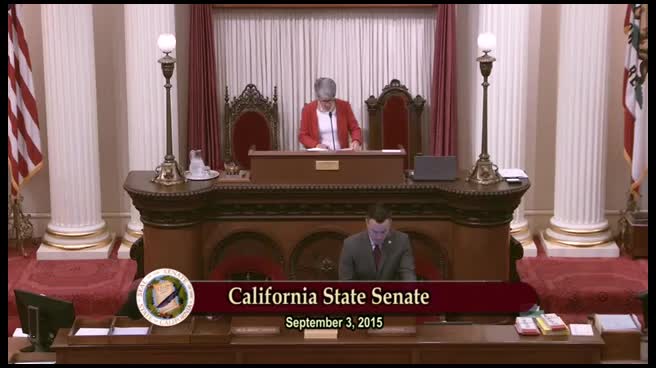 6MIN
Senate Floor
 47SEC
Senate Standing Committee on Appropriations
 54SEC
Assembly Floor
Bill Author
Bill Co-Author(s):