AB 1911: Dual status minors.
- Session Year: 2015-2016
- House: Assembly
- Latest Version Date: 2016-09-26
Existing law requires the probation department and the child welfare services department in each county to jointly develop a written protocol, as specified, to ensure appropriate local coordination in the assessment of a minor who is both a dependent child and a ward of the juvenile court. Existing law requires, whenever a minor appears to be both a dependent child and a ward of the juvenile court, the county probation department and the child welfare services department, pursuant to that jointly developed written protocol, to initially determine which status will serve the best interests of the minor and the protection of society.
Existing law authorizes the probation department and the child welfare services department in a county to create a jointly written protocol to allow the 2 departments to jointly assess and produce a recommendation that the child be designated as a dual status child, as specified. Existing law requires the protocol to include a plan to collect data, and requires the Judicial Council to collect and compile the data. Existing law requires the Judicial Council to prepare an evaluation of the results of the implementation of the protocol, as specified, and to report its findings and any resulting recommendations to the Legislature within 2 years of the date those counties first deem a child to be a dual status child.
This bill would instead require the Judicial Council to convene a committee comprised of stakeholders involved in serving the needs of dependents or wards of the juvenile court, as specified. The bill would require the committee, by January 1, 2018, to develop and report to the Legislature its recommendations to facilitate and enhance comprehensive data and outcome tracking for the states youth involved in both the child welfare system and the juvenile justice system, and would require the recommendations to include specified information, including standardized definitions related to these youth. The bill would also require the State Department of Social Services, on or before January 1, 2019, to implement a function within the applicable case management system that will enable county child welfare agencies and county probation departments to identify youth described above who are within their counties, and to issue instructions to all counties on the manner in which to completely and consistently track the involvement of these youth in both the child welfare system and the juvenile justice system.
Existing law requires the probation department and the child welfare services department in each county to jointly develop a written protocol, as specified, to ensure appropriate local coordination in the assessment of a minor who is both a dependent child and a ward of the juvenile court. Existing law requires, whenever a minor appears to be both a dependent child and a ward of the juvenile court, the county probation department and the child welfare services department, pursuant to that jointly developed written protocol, to initially determine which status will serve the best interests of the minor and the protection of society.
Existing law authorizes the probation department and the child welfare services department in a county to create a jointly written protocol to allow the 2 departments to jointly assess and produce a recommendation that the child be designated as a dual status child, as specified. Existing law requires the protocol to include a plan to collect data, and requires the Judicial Council to collect and compile the data. Existing law requires the Judicial Council to prepare an evaluation of the results of the implementation of the protocol, as specified, and to report its findings and any resulting recommendations to the Legislature within 2 years of the date those counties first deem a child to be a dual status child.
This bill would instead require the Judicial Council to convene a committee comprised of stakeholders involved in serving the needs of dependents or wards of the juvenile court, as specified. The bill would require the committee, by January 1, 2018, to develop and report to the Legislature its recommendations to facilitate and enhance comprehensive data and outcome tracking for the states youth involved in both the child welfare system and the juvenile justice system, and would require the recommendations to include specified information, including standardized definitions related to these youth. The bill would also require the State Department of Social Services, on or before January 1, 2019, to implement a function within the Child Welfare Services/Case Management System (CWS/CMS) applicable case management system that will enable county child welfare agencies and county probation departments to identify youth described above who are within their counties, and to issue instructions to all counties on the manner in which to completely and consistently track the involvement of these youth in both the child welfare system and the juvenile justice system.
Existing law requires the probation department and the child welfare services department in each county to jointly develop a written protocol, as specified, to ensure appropriate local coordination in the assessment of a minor who is both a dependent child and a ward of the juvenile court. Existing law requires, whenever a minor appears to be both a dependent child and a ward of the juvenile court, the county probation department and the child welfare services department, pursuant to that jointly developed written protocol, to initially determine which status will serve the best interests of the minor and the protection of society.
Existing law authorizes the probation department and the child welfare services department in a county to create a jointly written protocol to allow the 2 departments to jointly assess and produce a recommendation that the child be designated as a dual status child, as specified. Existing law requires the protocol to include a plan to collect data, and requires the Judicial Council to collect and compile the data. Existing law requires the Judicial Council to prepare an evaluation of the results of the implementation of the protocol, as specified, and to report its findings and any resulting recommendations to the Legislature within 2 years of the date those counties first deem a child to be a dual status child.
This bill would instead require the Judicial Council to convene a committee comprised of stakeholders involved in serving the needs of dependents or wards of the juvenile court, as specified. The bill would require the committee, by January 1, 2018, to develop and report to the Legislature its recommendations to facilitate and enhance comprehensive data and outcome tracking for the states youth involved in both the child welfare system and the juvenile justice system, and would require the recommendations to include specified information, including standardized definitions related to these youth. The bill would also require the State Department of Social Services, on or before January 1, 2019, to implement a function within the Child Welfare Services/Case Management System (CWS/CMS) that will enable county child welfare agencies and county probation departments to identify youth described above who are within their counties, and to issue instructions to all counties on the manner in which to completely and consistently track the involvement of these youth in both the child welfare system and the juvenile justice system.
Existing law requires the probation department and the child welfare services department in each county to jointly develop a written protocol, as specified, to ensure appropriate local coordination in the assessment of a minor who is both a dependent child and a ward of the juvenile court. Existing law requires, whenever a minor appears to be both a dependent child and a ward of the juvenile court, the county probation department and the child welfare services department, pursuant to that jointly developed written protocol, to initially determine which status will serve the best interests of the minor and the protection of society.
Existing law authorizes the probation department and the child welfare services department in a county to create a jointly written protocol to allow the 2 departments to jointly assess and produce a recommendation that the child be designated as a dual status child, as specified. Existing law requires the protocol to include a plan to collect data, and requires the Judicial Council to collect and compile the data. Existing law requires the Judicial Council to prepare an evaluation of the results of the implementation of the protocol, as specified, and to report its findings and any resulting recommendations to the Legislature within 2 years of the date those counties first deem a child to be a dual status child.
This bill would instead require the Judicial Council to convene a committee comprised of stakeholders involved in serving the needs of dependents or wards of the juvenile court, as specified. The bill would require the committee, by January 1, 2018, to develop and report to the Legislature its recommendations to facilitate and enhance comprehensive data and outcome tracking for the states youth involved in both the child welfare system and the juvenile justice system, and would require the recommendations to include specified information, including standardized definitions related to these youth. The bill would also require the State Department of Social Services, on or before January 31, 1, 2019, to implement a function within the Child Welfare Services/Case Management System (CWS/CMS) that will enable county child welfare agencies and county probation departments to identify youth described above who are residing within their counties, and to issue guidance instructions to all counties on the manner in which to track joint assessment hearing information completely and consistently for these youth. completely and consistently track the involvement of these youth in both the child welfare system and the juvenile justice system.
Existing law requires the probation department and the child welfare service services department in each county to jointly develop a written protocol, as specified, to ensure appropriate local coordination in the assessment of a minor who is both a dependent child and a ward of the juvenile court. Existing law requires, whenever a minor appears to be both a dependent child and a ward of the juvenile court, the county probation department and the child welfare services department, pursuant to that jointly developed written protocol, to initially determine which status will best serve the best interests of the minor and the protection of society. Existing
Existing law authorizes the probation department and the child welfare services department in a county to create a jointly written protocol to allow the 2 departments to jointly assess and produce a recommendation that the child be designated as a dual status child, as specified. Existing law requires the protocol to include a plan to collect data, and requires the Judicial Council to collect and compile that the data. Existing law requires the Judicial Council to prepare an evaluation of the results of the implementation of the protocol, as specified, and to report its findings and any resulting recommendations to the Legislature within 2 years of the date those counties first deem a child to be a dual status child.
This bill would instead require the Judicial Council to, on or before January 31, 2017, to convene a committee comprised of stakeholders involved in serving the needs of dependents or wards of the juvenile court, as specified. The bill would require the committee committee, by January 1, 2018, to develop and report to the Legislature its recommendations to facilitate and enhance comprehensive data and outcome tracking for the states dually involved, crossover, and dual status youth, youth involved in both the child welfare system and the juvenile justice system, and would require the recommendations to include specified information, including standardized definitions related to the populations of youth involved in both the child welfare system and the probation system. these youth. The bill would also require the State Department of Social Services to, Services, on or before January 31, 2017, 2019, to implement a function within the Child Welfare Services/Case Management System (CWS/CMS) that will enable county child welfare agencies and county probation departments to identify the dually involved youth described above who are residing within their counties, and to issue guidance to all counties on the manner in which to track joint assessment hearing information completely and consistently for dually involved these youth.
Existing law requires the probation department and child welfare service department in each county to jointly develop a written protocol, as specified, to ensure appropriate local coordination in the assessment of a minor who is both a dependent child and a ward of the juvenile court. Existing law requires, whenever a minor appears to be both a dependent child and a ward of the juvenile court, the county probation department and the child welfare services department, pursuant to that jointly developed written protocol, to initially determine which status will best serve the best interests of the minor and the protection of society. Existing law requires the protocol to include a plan to collect data, and requires the Judicial Council to collect and compile that data. Existing law requires the Judicial Council to prepare an evaluation of the results of the implementation of the protocol, as specified, and to report its findings and any resulting recommendations to the Legislature within 2 years of the date those counties first deem a child to be a dual status child.
This bill would make technical, nonsubstantive changes to those provisions. require the Judicial Council to, on or before January 31, 2017, convene a committee comprised of stakeholders involved in serving the needs of dependents or wards of the juvenile court, as specified. The bill would require the committee to develop and report to the Legislature its recommendations to facilitate and enhance comprehensive data and outcome tracking for the states dually involved, crossover, and dual status youth, and would require the recommendations to include specified information, including standardized definitions related to the populations of youth involved in both the child welfare system and the probation system. The bill would also require the State Department of Social Services to, on or before January 31, 2017, implement a function within the Child Welfare Services/Case Management System (CWS/CMS) that will enable county child welfare agencies and county probation departments to identify the dually involved youth residing within their counties, and to issue guidance to all counties on the manner in which to track joint assessment hearing information completely and consistently for dually involved youth.
Existing law requires the probation department and child welfare service department in each county to jointly develop a written protocol, as specified, to ensure appropriate local coordination in the assessment of a minor who is both a dependent child and a ward of the juvenile court. Existing law requires, whenever a minor appears to be both a dependent child and a ward of the juvenile court, the county probation department and the child welfare services department, pursuant to that jointly developed written protocol, to initially determine which status will best serve the best interests of the minor and the protection of society.
This bill would make technical, nonsubstantive changes to those provisions.
(a)The Judicial Council shall convene a committee comprised of stakeholders involved in serving the needs of dependents or wards of the juvenile court, including, but not limited to, judges, probation officers, social workers, youth involved in both the child welfare system and the juvenile justice system, child welfare and juvenile justice attorneys, child welfare and juvenile justice advocates, education officials, and representatives from the State Department of Social Services, county child welfare agencies, and county probation departments. By January 1, 2018, the committee shall develop and report to the Legislature, pursuant to Section 9795 of the Government Code, its recommendations to facilitate and enhance comprehensive data and outcome tracking for the states youth involved in both the child welfare system and the juvenile justice system. The committees recommendations shall include, but not be limited to, all of the following:
(1)A common identifier for counties to use to reconcile data across child welfare and juvenile justice systems statewide.
(2)Standardized definitions for terms related to the populations of youth involved in both the child welfare system and the juvenile justice system.
(3)Identified and defined outcomes for counties to track youth involved in both the child welfare system and the juvenile justice system, including, but not limited to, outcomes related to recidivism, health, pregnancy, homelessness, employment, and education.
(4)Established baselines and goals for the identified and defined outcomes specified in paragraph (3).
(5)An assessment as to the costs and benefits associated with requiring all counties to implement the committees recommendations.
(6)An assessment of whether a single technology system, including, but not limited to, the State Department of Social Services Child Welfare Services/Case Management System (CWS/CMS) or the Child Welfare Services-New System (CWS-NS), is needed to track youth in the child welfare system and the juvenile justice system.
(b)The State Department of Social Services shall, on or before January 1, 2019, implement a function within the applicable case management system that will enable county child welfare agencies and county probation departments to identify youth involved in both the child welfare system and the juvenile justice system who are within their counties and shall issue instructions to all counties on how to completely and consistently track the involvement of these youth in both the child welfare system and the juvenile justice system.
(a)The Judicial Council shall convene a committee comprised of stakeholders involved in serving the needs of dependents or wards of the juvenile court, including, but not limited to, judges, probation officers, social workers, youth involved in both the child welfare system and the juvenile justice system, child welfare and juvenile justice attorneys, child welfare and juvenile justice advocates, education officials, and representatives from the State Department of Social Services, county child welfare agencies, and county probation departments. By January 1, 2018, the committee shall develop and report to the Legislature, pursuant to Section 9795 of the Government Code, its recommendations to facilitate and enhance comprehensive data and outcome tracking for the states youth involved in both the child welfare system and the juvenile justice system. The committees recommendations shall include, but not be limited to, all of the following:
(1)A common identifier for counties to use to reconcile data across child welfare and juvenile justice systems statewide.
(2)Standardized definitions for terms related to the populations of youth involved in both the child welfare system and the juvenile justice system.
(3)Identified and defined outcomes for counties to track youth involved in both the child welfare system and the juvenile justice system, including, but not limited to, outcomes related to recidivism, health, pregnancy, homelessness, employment, and education.
(4)Established baselines and goals for the identified and defined outcomes specified in paragraph (3).
(5)An assessment as to the costs and benefits associated with requiring all counties to implement the committees recommendations.
(6)An assessment of whether a single technology system, including, but not limited to, the State Department of Social Services Child Welfare Services/Case Management System (CWS/CMS), (CWS/CMS) or the Child Welfare Services-New System (CWS-NS), is needed to track youth in the child welfare system and the juvenile justice system.
(b)The State Department of Social Services shall, on or before January 1, 2019, implement a function within the CWS/CMS applicable case management system that will enable county child welfare agencies and county probation departments to identify youth involved in both the child welfare system and the juvenile justice system who are within their counties and shall issue instructions to all counties on how to completely and consistently track the involvement of these youth in both the child welfare system and the juvenile justice system.
(a)The Judicial Council shall convene a committee comprised of stakeholders involved in serving the needs of dependents or wards of the juvenile court, including, but not limited to, judges, probation officers, social workers, youth involved in both the child welfare system and the juvenile justice system, child welfare and juvenile justice attorneys, child welfare and juvenile justice advocates, education officials, and representatives from the State Department of Social Services, county child welfare agencies, and county probation departments. By January 1, 2018, the committee shall develop and report to the Legislature, pursuant to Section 9795 of the Government Code, its recommendations to facilitate and enhance comprehensive data and outcome tracking for the states youth involved in both the child welfare system and the juvenile justice system. The committees recommendations shall include, but not be limited to, all of the following:
(1)A common identifier for counties to use to reconcile data across child welfare and juvenile justice systems statewide.
(2)Standardized definitions for terms related to the populations of youth involved in both the child welfare system and the juvenile justice system.
(3)Identified and defined outcomes for counties to track youth involved in both the child welfare system and the juvenile justice system, including, but not limited to, outcomes related to recidivism, health, pregnancy, homelessness, employment, and education.
(4)Established baselines and goals for the identified and defined outcomes specified in paragraph (3).
(5)An assessment as to the costs and benefits associated with requiring all counties to implement the committees recommendations.
(6)An assessment of whether a single technology system, including, but not limited to, the State Department of Social Services Child Welfare Services/Case Management System (CWS/CMS), is needed to track youth in the child welfare system and the juvenile justice system.
(b)The State Department of Social Services shall, on or before January 1, 2019, implement a function within the Child Welfare Services/Case Management System (CWS/CMS) CWS/CMS that will enable county child welfare agencies and county probation departments to identify youth involved in both the child welfare system and the juvenile justice system who are within their counties and shall issue instructions to all counties on how to completely and consistently track the involvement of these youth in both the child welfare system and the juvenile justice system.
(a)The Judicial Council shall convene a committee comprised of stakeholders involved in serving the needs of dependents or wards of the juvenile court, including, but not limited to, judges, probation officers, social workers, youth involved in both the child welfare system and the juvenile justice system, child welfare and juvenile justice attorneys, child welfare and juvenile justice advocates, education officials, and representatives from the State Department of Social Services. Services, county child welfare agencies, and county probation departments. By January 1, 2018, the committee shall develop and report to the Legislature, pursuant to Section 9795 of the Government Code, its recommendations to facilitate and enhance comprehensive data and outcome tracking for the states youth involved in both the child welfare system and the juvenile justice system. The committees recommendations shall include, but not be limited to, all of the following:
(1)A common identifier for counties may to use to reconcile data across child welfare and juvenile justice systems statewide.
(2)Standardized definitions for terms related to the populations of youth involved in both the child welfare system and the juvenile justice system.
(3)Identified and defined outcomes for counties to track youth involved in both the child welfare system and the juvenile justice system, including, but not limited to, outcomes related to recidivism recidivism, health, pregnancy, homelessness, employment, and education.
(4)Established baselines and goals for the identified and defined outcomes specified in paragraph (3).
(5)An assessment as to the costs and benefits associated with requiring all counties to implement the committees recommendations.
(b)The State Department of Social Services shall, on or before January 31, 1, 2019, implement a function within the Child Welfare Services/Case Management System (CWS/CMS) that will enable county child welfare agencies and county probation departments to identify youth involved in both the child welfare system and the juvenile justice system who are residing within their counties and shall issue guidance instructions to all counties on how to track joint assessment hearing information completely and consistently for these youth. track the involvement of these youth in both the child welfare system and the juvenile justice system.
(a)The Judicial Council shall, on or before January 31, 2017, shall convene a committee comprised of stakeholders involved in serving the needs of dependents or wards of the juvenile court, including, but not limited to, judges, probation officers, social workers, youth involved in both the child welfare system and the juvenile justice system, child welfare and juvenile justice attorneys, child welfare and juvenile justice advocates, and representatives from the State Department of Social Services. Within one year from the date of its first meeting, By January 1, 2018, the committee shall develop and report to the Legislature Legislature, pursuant to Section 9795 of the Government Code, its recommendations to facilitate and enhance comprehensive data and outcome tracking for the states dually involved, crossover, and dual status youth. youth involved in both the child welfare system and the juvenile justice system. The committees recommendations shall include, but not be limited to, all of the following:
(1)A common identifier counties may use to reconcile data across child welfare and probation data juvenile justice systems statewide.
(2)Standardized definitions for terms related to the populations of youth involved in both the child welfare system and the probation juvenile justice system.
(3)Identified and defined outcomes for counties to track for dually involved, crossover, and dual status youth, such as youth involved in both the child welfare system and the juvenile justice system, including, but not limited to, outcomes related to recidivism and education.
(4)Established baselines and goals for the identified and defined outcomes specified in paragraph (3).
(5)An assessment as to the costs and benefits associated with requiring all counties to implement the committees recommendations.
(b)The State Department of Social Services shall, on or before January 31, 2017, 2019, implement a function within the Child Welfare Services/Case Management System (CWS/CMS) that will enable county child welfare agencies and county probation departments to identify the dually involved youth involved in both the child welfare system and the juvenile justice system who are residing within their counties and shall issue guidance to all counties on how to track joint assessment hearing information completely and consistently for dually involved these youth.
The Judicial Council shall collect and compile all of the data to be collected pursuant to paragraph (4) of subdivision (e) of Section 241.1 and shall prepare an evaluation of the results of the implementation of the protocol authorized in that subdivision for a representative sample of the counties that create a protocol pursuant to that provision. The Judicial Council shall report its findings and any resulting recommendations to the Legislature within two years of the date those counties first deem a child to be a dual status child. The Judicial Council shall review all proposed protocols to ensure that they provide for the collection of adequate, standardized data to perform these evaluations. In order to assist counties with data collection and evaluation, the Judicial Council may prepare model data collection and evaluation provisions that a county must include in their protocol.
SEC. 2.Section 241.2 is added to the Welfare and Institutions Code, to read:241.2.(a)The Judicial Council shall, on or before January 31, 2017, convene a committee comprised of stakeholders involved in serving the needs of dependents or wards of the juvenile court, including, but not limited to, judges, probation officers, social workers, and representatives from the State Department of Social Services. Within one year from the date of its first meeting, the committee shall develop and report to the Legislature its recommendations to facilitate and enhance comprehensive data and outcome tracking for the states dually involved, crossover, and dual status youth. The committees recommendations shall include, but not be limited to, all of the following:
(1)A common identifier counties may use to reconcile data across child welfare and probation data systems statewide.
(2)Standardized definitions for terms related to the populations of youth involved in both the child welfare system and the probation system.
(3)Identified and defined outcomes for counties to track for dually involved, crossover, and dual status youth, such as outcomes related to recidivism and education.
(4)Established baselines and goals for the identified and defined outcomes specified in paragraph (3).
(5)An assessment as to the costs and benefits associated with requiring all counties to implement the committees recommendations.
(b)The State Department of Social Services shall, on or before January 31, 2017, implement a function within the Child Welfare Services/Case Management System (CWS/CMS) that will enable county child welfare agencies and county probation departments to identify the dually involved youth residing within their counties and shall issue guidance to all counties on how to track joint assessment hearing information completely and consistently for dually involved youth.
SECTION 1.Section 241.1 of the Welfare and Institutions Code is amended to read:241.1.(a)Whenever a minor appears to come within the description of both Section 300 and Section 601 or 602, the county probation department and the child welfare services department shall, pursuant to a jointly developed written protocol described in subdivision (b), initially determine which status will serve the best interests of the minor and the protection of society. The recommendations of both departments shall be presented to the juvenile court with the petition that is filed on behalf of the minor, and the court shall determine which status is appropriate for the minor. Any other juvenile court having jurisdiction over the minor shall receive notice from the court, within five calendar days, of the presentation of the recommendations of the departments. The notice shall include the name of the judge to whom, or the courtroom to which, the recommendations were presented.
(b)(1)The probation department and the child welfare services department in each county shall jointly develop a written protocol to ensure appropriate local coordination in the assessment of a minor described in subdivision (a), and the development of recommendations by these departments for consideration by the juvenile court.
(2)These protocols shall require, but shall not be limited to, consideration of the nature of the referral, the age of the minor, the prior record of the minors parents for child abuse, the prior record of the minor for out-of-control or delinquent behavior, the parents cooperation with the minors school, the minors functioning at school, the nature of the minors home environment, and the records of other agencies that have been involved with the minor and his or her family. The protocols also shall contain provisions for resolution of disagreements between the probation and child welfare services departments regarding the need for dependency or ward status and provisions for determining the circumstances under which filing a new petition is required to change the minors status.
(3)(A)These protocols may also require immediate notification of the child welfare services department and the minors dependency attorney upon referral of a dependent minor to probation, procedures for release to, and placement by, the child welfare services department pending resolution of the determination pursuant to this section, timelines for dependents in secure custody to ensure timely resolution of the determination pursuant to this section for detained dependents, and nondiscrimination provisions to ensure that dependents are provided with any option that would otherwise be available to a nondependent minor.
(B)If the alleged conduct that appears to bring a dependent minor within the description of Section 601 or 602 occurs in, or under the supervision of, a foster home, group home, or other licensed facility that provides residential care for minors, the county probation department and the child welfare services department may consider whether the alleged conduct was within the scope of behaviors to be managed or treated by the foster home or facility, as identified in the minors case plan, needs and services plan, placement agreement, facility plan of operation, or facility emergency intervention plan, in determining which status will serve the best interests of the minor and the protection of society pursuant to subdivision (a).
(4)The protocols shall contain all of the following processes:
(A)A process for determining which agency and court shall supervise a child whose jurisdiction is modified from delinquency jurisdiction to dependency jurisdiction pursuant to paragraph (2) of subdivision (b) of Section 607.2 or subdivision (i) of Section 727.2.
(B)A process for determining which agency and court shall supervise a nonminor dependent under the transition jurisdiction of the juvenile court.
(C)A process that specifically addresses the manner in which supervision responsibility is determined when a nonminor dependent becomes subject to adult probation supervision.
(c)Whenever a minor who is under the jurisdiction of the juvenile court of a county pursuant to Section 300, 601, or 602 is alleged to come within the description of Section 300, 601, or 602 by another county, the county probation department or child welfare services department in the county that has jurisdiction under Section 300, 601, or 602 and the county probation department or child welfare services department of the county alleging the minor to be within one of those sections shall initially determine which status will best serve the best interests of the minor and the protection of society. The recommendations of both departments shall be presented to the juvenile court in which the petition is filed on behalf of the minor, and the court shall determine which status is appropriate for the minor. In making their recommendation to the juvenile court, the departments shall conduct an assessment consistent with the requirements of subdivision (b). Any other juvenile court having jurisdiction over the minor shall receive notice from the court in which the petition is filed within five calendar days of the presentation of the recommendations of the departments. The notice shall include the name of the judge to whom, or the courtroom to which, the recommendations were presented.
(d)Except as provided in subdivision (e), this section shall not authorize the filing of a petition or petitions, or the entry of an order by the juvenile court, to make a minor simultaneously both a dependent child and a ward of the court.
(e)Notwithstanding subdivision (d), the probation department and the child welfare services department, in consultation with the presiding judge of the juvenile court, in any county may create a jointly written protocol to allow the county probation department and the child welfare services department to jointly assess and produce a recommendation that the child be designated as a dual status child, allowing the child to be simultaneously a dependent child and a ward of the court. This protocol shall be signed by the chief probation officer, the director of the county social services agency, and the presiding judge of the juvenile court prior to its implementation. A juvenile court shall not order that a child is simultaneously a dependent child and a ward of the court pursuant to this subdivision unless and until the required protocol has been created and entered into. This protocol shall include all of the following:
(1)A description of the process to be used to determine whether the child is eligible to be designated as a dual status child.
(2)A description of the procedure by which the probation department and the child welfare services department will assess the necessity for dual status for specified children and the process to make joint recommendations for the courts consideration prior to making a determination under this section. These recommendations shall ensure a seamless transition from wardship to dependency jurisdiction, as appropriate, so that services to the child are not disrupted upon termination of the wardship.
(3)A provision for ensuring communication between the judges who hear petitions concerning children for whom dependency jurisdiction has been suspended while they are within the jurisdiction of the juvenile court pursuant to Section 601 or 602. A judge may communicate by providing a copy of any reports filed pursuant to Section 727.2 concerning a ward to a court that has jurisdiction over dependency proceedings concerning the child.
(4)A plan to collect data in order to evaluate the protocol pursuant to Section 241.2.
(5)Counties that exercise the option provided for in this subdivision shall adopt either an on-hold system as described in subparagraph (A) or a lead court/lead agency system as described in subparagraph (B). There shall not be any simultaneous or duplicative case management or services provided by both the county probation department and the child welfare services department. It is the intent of the Legislature that judges, in cases in which more than one judge is involved, shall not issue conflicting orders.
(A)In counties in which an on-hold system is adopted, the dependency jurisdiction shall be suspended or put on hold while the child is subject to jurisdiction as a ward of the court. When it appears that termination of the courts jurisdiction, as established pursuant to Section 601 or 602, is likely and that reunification of the child with his or her parent or guardian would be detrimental to the child, the county probation department and the child welfare services department shall jointly assess and produce a recommendation for the court regarding whether the courts dependency jurisdiction shall be resumed.
(B)In counties in which a lead court/lead agency system is adopted, the protocol shall include a method for identifying which court or agency will be the lead court/lead agency. That court or agency shall be responsible for case management, conducting statutorily mandated court hearings, and submitting court reports.
(f)Whenever the court determines pursuant to this section or Section 607.2 or 727.2 that it is necessary to modify the courts jurisdiction over a dependent or ward who was removed from his or her parent or guardian and placed in foster care, the court shall ensure that all of the following conditions are met:
(1)The petition under which jurisdiction was taken at the time the dependent or ward was originally removed is not dismissed until the new petition has been sustained.
(2)The order modifying the courts jurisdiction contains all of the following provisions:
(A)Reference to the original removal findings and a statement that findings that continuation in the home is contrary to the childs welfare, and that reasonable efforts were made to prevent removal, remain in effect.
(B)A statement that the child continues to be removed from the parent or guardian from whom the child was removed under the original petition.
(C)Identification of the agency that is responsible for placement and care of the child based upon the modification of jurisdiction.
(a)Whenever a minor appears to come within the description of both Section 300 and Section 601 or 602, the county probation department and the child welfare services department shall, pursuant to a jointly developed written protocol described in subdivision (b), initially determine which status will serve the best interests of the minor and the protection of society. The recommendations of both departments shall be presented to the juvenile court with the petition that is filed on behalf of the minor, and the court shall determine which status is appropriate for the minor. Any other juvenile court having jurisdiction over the minor shall receive notice from the court, within five calendar days, of the presentation of the recommendations of the departments. The notice shall include the name of the judge to whom, or the courtroom to which, the recommendations were presented.
(b)(1)The probation department and the child welfare services department in each county shall jointly develop a written protocol to ensure appropriate local coordination in the assessment of a minor described in subdivision (a), and the development of recommendations by these departments for consideration by the juvenile court.
(2)These protocols shall require, but shall not be limited to, consideration of the nature of the referral, the age of the minor, the prior record of the minors parents for child abuse, the prior record of the minor for out-of-control or delinquent behavior, the parents cooperation with the minors school, the minors functioning at school, the nature of the minors home environment, and the records of other agencies that have been involved with the minor and his or her family. The protocols also shall contain provisions for resolution of disagreements between the probation and child welfare services departments regarding the need for dependency or ward status and provisions for determining the circumstances under which filing a new petition is required to change the minors status.
(3)(A)These protocols may also require immediate notification of the child welfare services department and the minors dependency attorney upon referral of a dependent minor to probation, procedures for release to, and placement by, the child welfare services department pending resolution of the determination pursuant to this section, timelines for dependents in secure custody to ensure timely resolution of the determination pursuant to this section for detained dependents, and nondiscrimination provisions to ensure that dependents are provided with any option that would otherwise be available to a nondependent minor.
(B)If the alleged conduct that appears to bring a dependent minor within the description of Section 601 or 602 occurs in, or under the supervision of, a foster home, group home, or other licensed facility that provides residential care for minors, the county probation department and the child welfare services department may consider whether the alleged conduct was within the scope of behaviors to be managed or treated by the foster home or facility, as identified in the minors case plan, needs and services plan, placement agreement, facility plan of operation, or facility emergency intervention plan, in determining which status will serve the best interests of the minor and the protection of society pursuant to subdivision (a).
(4)The protocols shall contain all of the following processes:
(A)A process for determining which agency and court shall supervise a child whose jurisdiction is modified from delinquency jurisdiction to dependency jurisdiction pursuant to paragraph (2) of subdivision (b) of Section 607.2 or subdivision (i) of Section 727.2.
(B)A process for determining which agency and court shall supervise a nonminor dependent under the transition jurisdiction of the juvenile court.
(C)A process that specifically addresses the manner in which supervision responsibility is determined when a nonminor dependent becomes subject to adult probation supervision.
(c)Whenever a minor who is under the jurisdiction of the juvenile court of a county pursuant to Section 300, 601, or 602 is alleged to come within the description of Section 300, 601, or 602 by another county, the county probation department or child welfare services department in the county that has jurisdiction under Section 300, 601, or 602 and the county probation department or child welfare services department of the county alleging the minor to be within one of those sections shall initially determine which status will best serve the best interests of the minor and the protection of society. The recommendations of both departments shall be presented to the juvenile court in which the petition is filed on behalf of the minor, and the court shall determine which status is appropriate for the minor. In making their recommendation to the juvenile court, the departments shall conduct an assessment consistent with the requirements of subdivision (b). Any other juvenile court having jurisdiction over the minor shall receive notice from the court in which the petition is filed within five calendar days of the presentation of the recommendations of the departments. The notice shall include the name of the judge to whom, or the courtroom to which, the recommendations were presented.
(d)Except as provided in subdivision (e), this section shall not authorize the filing of a petition or petitions, or the entry of an order by the juvenile court, to make a minor simultaneously both a dependent child and a ward of the court.
(e)Notwithstanding subdivision (d), the probation department and the child welfare services department, in consultation with the presiding judge of the juvenile court, in any county may create a jointly written protocol to allow the county probation department and the child welfare services department to jointly assess and produce a recommendation that the child be designated as a dual status child, allowing the child to be simultaneously a dependent child and a ward of the court. This protocol shall be signed by the chief probation officer, the director of the county social services agency, and the presiding judge of the juvenile court prior to its implementation. A juvenile court shall not order that a child is simultaneously a dependent child and a ward of the court pursuant to this subdivision unless and until the required protocol has been created and entered into. This protocol shall include all of the following:
(1)A description of the process to be used to determine whether the child is eligible to be designated as a dual status child.
(2)A description of the procedure by which the probation department and the child welfare services department will assess the necessity for dual status for specified children and the process to make joint recommendations for the courts consideration prior to making a determination under this section. These recommendations shall ensure a seamless transition from wardship to dependency jurisdiction, as appropriate, so that services to the child are not disrupted upon termination of the wardship.
(3)A provision for ensuring communication between the judges who hear petitions concerning children for whom dependency jurisdiction has been suspended while they are within the jurisdiction of the juvenile court pursuant to Section 601 or 602. A judge may communicate by providing a copy of any reports filed pursuant to Section 727.2 concerning a ward to a court that has jurisdiction over dependency proceedings concerning the child.
(4)A plan to collect data in order to evaluate the protocol pursuant to Section 241.2.
(5)Counties that exercise the option provided for in this subdivision shall adopt either an on-hold system as described in subparagraph (A) or a lead court/lead agency system as described in subparagraph (B). There shall not be any simultaneous or duplicative case management or services provided by both the county probation department and the child welfare services department. It is the intent of the Legislature that judges, in cases in which more than one judge is involved, shall not issue conflicting orders.
(A)In counties in which an on-hold system is adopted, the dependency jurisdiction shall be suspended or put on hold while the child is subject to jurisdiction as a ward of the court. When it appears that termination of the courts jurisdiction, as established pursuant to Section 601 or 602, is likely and that reunification of the child with his or her parent or guardian would be detrimental to the child, the county probation department and the child welfare services department shall jointly assess and produce a recommendation for the court regarding whether the courts dependency jurisdiction shall be resumed.
(B)In counties in which a lead court/lead agency system is adopted, the protocol shall include a method for identifying which court or agency will be the lead court/lead agency. That court or agency shall be responsible for case management, conducting statutorily mandated court hearings, and submitting court reports.
(f)Whenever the court determines pursuant to this section or Section 607.2 or 727.2 that it is necessary to modify the courts jurisdiction over a dependent or ward who was removed from his or her parent or guardian and placed in foster care, the court shall ensure that all of the following conditions are met:
(1)The petition under which jurisdiction was taken at the time the dependent or ward was originally removed is not dismissed until the new petition has been sustained.
(2)The order modifying the courts jurisdiction contains all of the following provisions:
(A)Reference to the original removal findings and a statement that findings that continuation in the home is contrary to the childs welfare, and that reasonable efforts were made to prevent removal, remain in effect.
(B)A statement that the child continues to be removed from the parent or guardian from whom the child was removed under the original petition.
(C)Identification of the agency that is responsible for placement and care of the child based upon the modification of jurisdiction.
|
Date
|
Status
|
|---|---|
| May 12, 2016 | Read third time. Passed. Ordered to the Senate. (Ayes 78. Noes 0. Page 4786.) |
| Aug 30, 2016 | Enrolled and presented to the Governor at 4 p.m. |
| Aug 23, 2016 | Senate amendments concurred in. To Engrossing and Enrolling. (Ayes 80. Noes 0. Page 6164.). |
| Aug 23, 2016 | Senate amendments concurred in. To Engrossing and Enrolling. |
| Aug 19, 2016 | In Assembly. Concurrence in Senate amendments pending. May be considered on or after August 21 pursuant to Assembly Rule 77. |
| Aug 18, 2016 | Read third time. Passed. Ordered to the Assembly. (Ayes 38. Noes 0.). |
| Aug 18, 2016 | Read third time. Passed. Ordered to the Assembly. (Ayes 38. Noes 0. Page 5118.). |
| Aug 18, 2016 | Read third time. Passed. Ordered to the Assembly. |
| Aug 15, 2016 | Read second time and amended. Ordered to third reading. |
| Aug 11, 2016 | From committee: Amend, and do pass as amended. (Ayes 7. Noes 0.) (August 11). |
| Aug 1, 2016 | In committee: Referred to APPR. suspense file. |
| Jun 22, 2016 | From committee: Do pass and re-refer to Com. on APPR. with recommendation: To Consent Calendar. (Ayes 7. Noes 0.) (June 21). Re-referred to Com. on APPR. |
| Jun 16, 2016 | Read second time and amended. Re-referred to Com. on JUD. |
| Jun 15, 2016 | From committee: Amend, and do pass as amended and re-refer to Com. on JUD. with recommendation: To Consent Calendar. (Ayes 4. Noes 0.) (June 14). |
| May 19, 2016 | Referred to Coms. on HUMAN S. and JUD. |
| May 12, 2016 | Read third time. Passed. Ordered to the Senate. (Ayes 78. Noes 0.) |
| Feb 11, 2016 | Read first time. To print. |
| May 12, 2016 | Read third time. Passed. Ordered to the Senate. |
| May 12, 2016 | In Senate. Read first time. To Com. on RLS. for assignment. |
| May 5, 2016 | Read second time. Ordered to Consent Calendar. |
| May 4, 2016 | From committee: Do pass. To Consent Calendar. (Ayes 20. Noes 0.) (May 4). |
| Apr 13, 2016 | From committee: Do pass and re-refer to Com. on APPR. with recommendation: To Consent Calendar. (Ayes 7. Noes 0.) (April 12). Re-referred to Com. on APPR. |
| Apr 5, 2016 | From committee: Do pass and re-refer to Com. on HUM. S. with recommendation: To Consent Calendar. (Ayes 10. Noes 0.) (April 5). Re-referred to Com. on HUM. S. |
| Apr 4, 2016 | Re-referred to Com. on JUD. |
| Mar 31, 2016 | From committee chair, with author's amendments: Amend, and re-refer to Com. on JUD. Read second time and amended. |
| Mar 29, 2016 | Re-referred to Com. on JUD. |
| Mar 28, 2016 | Re-referred to Com. on JUD. |
| Mar 28, 2016 | From committee chair, with author's amendments: Amend, and re-refer to Com. on JUD. Read second time and amended. |
| Mar 18, 2016 | From committee chair, with author's amendments: Amend, and re-refer to Com. on JUD. Read second time and amended. |
| Mar 17, 2016 | Referred to Coms. on JUD. and HUM. S. |
| Feb 12, 2016 | From printer. May be heard in committee March 13. |
|
Date
|
Description
|
Location
|
Votes
|
|
|---|---|---|---|---|
| Aug 23, 2016 | AB 1911 EGGMAN Concurrence in Senate Amendments | Assembly Floor |
Passed |
|
| Aug 18, 2016 | Assembly 3rd Reading AB1911 Eggman By Hancock | Senate Floor |
Passed |
|
| Aug 11, 2016 | Do pass as amended | Senate Standing Committee on Appropriations |
Passed |
|
| Aug 1, 2016 | Placed on suspense file | Senate Standing Committee on Appropriations |
Passed |
|
| Jun 21, 2016 | Do pass, but first be re-referred to the Committee on [Appropriations] with the recommendation: To Consent Calendar | Senate Standing Committee on Judiciary |
Passed |
|
| Jun 14, 2016 | Do pass as amended, but first amend, and re-refer to the Committee on [Judiciary] with the recommendation: To Consent Calendar | Senate Standing Committee on Human Services |
Passed |
|
| May 12, 2016 | AB 1911 EGGMAN Consent Calendar Second Day Regular Session | Assembly Floor |
Passed |
|
| May 4, 2016 | Do pass. To Consent Calendar. | Assembly Standing Committee on Appropriations |
Passed |
|
| Apr 12, 2016 | Do pass and be re-referred to the Committee on [Appropriations] with recommendation: To Consent Calendar | Assembly Standing Committee on Human Services |
Passed |
|
| Apr 5, 2016 | Do pass and be re-referred to the Committee on [Human Services] with recommendation: To Consent Calendar | Assembly Standing Committee on Judiciary |
Passed |
This list shows positions taken on this bill by organizations on the date displayed, which is linked to the original source.
Positions by individuals are not included.
|
Organization
|
Position
|
Date
|
|---|---|---|
| ASSEMBLY FLOOR: 78-0, 5 | ** Against | Aug 18, 2016 |
| Children Now | ** Support | Aug 18, 2016 |
| Children's Advocacy - Sponsor | ** Support | Aug 18, 2016 |
| Children's Advocacy Institute | ** Support | Aug 18, 2016 |
| Department Of Finance | ** Against | Aug 18, 2016 |
| NO VOTE RECORDED: Burke, Jones-Sawyer | ** Against | Aug 18, 2016 |
CONCURRENCE IN SENATE AMENDMENTS
CSA1 Bill Id:AB 1911
Author:(Eggman)
As Amended Ver:August 15, 2016
Majority vote
ASSEMBLY: | 78-0 | (May 12, 2016) | SENATE: | 38-0 | (August 18, 2016) |
Original Committee Reference: JUD.
SUMMARY: Requires the development and implementation of standardized definitions and defined goals for youth involved with both the child welfare system and the juvenile justice system. Specifically, this bill:
- Requires the Judicial Council to convene a committee of stakeholders serving the needs of dependents and wards of the juvenile court, including judges; social workers; probation officers; education officials; youth, attorneys and advocates involved with both the child welfare and juvenile justice; and representatives from the Department of Social Services (DSS), child welfare agencies and probation agencies. Requires the committee, by January 1, 2018, to develop and report to the Legislature recommendations to facilitate and enhance comprehensive data and outcome tracking for youth involved in both the child welfare and juvenile justice systems. Recommendations must include:
- Common identifiers and standard definitions for counties to use across child welfare and juvenile justice systems;
- Identified and defined outcomes for counties to track youth involved in both systems, including, but not limited to, outcomes related to recidivism, health, pregnancy, homelessness, employment and education;
- Established baselines for outcomes to be tracked;
- An assessment of costs and benefits associated with requiring counties to implement the committee's recommendations; and
- An assessment of whether a single technology system is needed to track youth in the child welfare and juvenile justice systems.
- Requires DSS, by January 1, 2019, to implement a function within the applicable case management system that will allow county child welfare and juvenile justice departments to identify youth involved in both systems and to issue instructions to all counties on how to track completely and consistently the involvement of these youth in both systems.
The Senate amendments require that the committee recommendations include an assessment of whether a single technology system is needed to track youth in the child welfare and juvenile justice systems.
EXISTING LAW:
- Provides that a juvenile court has jurisdiction over a child who is subject to abuse or neglect. (Welfare and Institutions Code (WIC) Section 300. Unless stated otherwise, all further statutory references are to that code.)
- Provides that a juvenile court has jurisdiction over a child when that child has committed acts that trigger delinquency jurisdiction rendering the child a ward. (WIC Sections 601 and 602.)
- Requires that, if a child is both a dependent and a delinquent, the probation department and child welfare services agency must initially determine which status will best serve the interests of the child and the protection of society. Notwithstanding the above, authorizes the probation department and the child welfare services agency in any county, in consultation with the presiding juvenile court judge, to create a dual status protocol which would permit a minor who meets specified criteria to be designated simultaneously as both a dependent child and a ward of the juvenile court. (WIC Section 241.1.)
FISCAL EFFECT: According to the Senate Appropriations:
- Judicial Council: Potential costs of about $100,000 (General Fund*) to chair and direct the activities of the committee, including the development of a legislative report including recommendations.
- DSS: Minor, absorbable costs (General Fund) to implement a case management system function to identify dual status youth, as this functionality is currently being incorporated into the Child Welfare Services-New System (CWS-NS), which is projected for rollout within the timeframes specified in this measure. However, should the report to the Legislature recommend an alternate or new technology system to be used, costs to meet the case management system functionality could be significant.
- Report recommendations: Unknown, potential major future cost pressure (General Fund) to facilitate and enhance comprehensive data and outcome tracking by child welfare services, probation departments, and potentially other agencies, as recommended in the yet to be completed report.
*Trial Court Trust Fund
COMMENTS: There is general agreement that youth involved with both the child welfare system and the juvenile justice system have greater challenges to overcome to become responsible adults than both youth involved with neither system and youth involved with only one of those systems. Youth involved with both of those systems have significantly poorer outcomes and require greater support and services to address the underlying abuse or neglect, reduce recidivism and foster rehabilitation. Over the years, various legislation and pilot projects have attempted to address the needs of these youth, but there has yet to be a comprehensive statewide approach to meeting the needs of these youth and helping them successfully transition to adulthood.
To help address how to better meet the needs of these youth, the Joint Legislative Audit Committee, at the request of this bill's author, asked the State Auditor to determine how well counties are serving youth involved with both the child welfare and juvenile welfare systems. Unfortunately, the Auditor was unable to determine which counties had successful programs because the Auditor found that counties were unable to accurately identify and track these dually involved youth. As a result, the Auditor recommended that the state child welfare automation system identify dually involved youth and that stakeholders, under the leadership of the Judicial Council, develop common data to collect, track and evaluate outcomes for these youth and report those recommendations to the Legislature. This bill seeks to implement those recommendations.
This bill seeks to implement the recommendations of the State Auditor by doing two key things. First, this bill requires the Judicial Council to convene a group of stakeholders serving the needs of dependents and wards of the juvenile court. The committee is required to develop recommendations to facilitate and enhance comprehensive data and outcome tracking for youth involved in both the child welfare and juvenile justice systems. The recommendations must be reported to the Legislature by January 1, 2018. This will allow the Legislature, two years from now, to review the recommendations and decide what is appropriate to mandate, on a statewide-level in order to better track, assist and serve these youth and help them transition to adulthood more successfully. This bill should start the process to provide the Legislature with the information it lacks today to determine how best to help these youth.
The bill also requires DSS, by January 1, 2019, to implement a function with the appropriate case management system that will allow county child welfare and juvenile justice departments to identify youth involved in both systems and then, hopefully, provide better, targeted services to them. DSS is also required to issue instructions to the counties to tell them how to track completely and consistently the involvement of these youth in both systems. This should help ensure that the counties properly use the new function and then are able to identify and provide appropriate services to these vulnerable youth. Again, this new identification and tracking tool is only the means to the end.
This bill is the first step for the state to design, implement and perhaps mandate programs across the board to help this most vulnerable group of youth. It will help create common terms and outcomes to be tracked and will allow the Legislature to determine, two years from now, whether those terms and outcomes should be used implement and studied statewide, so that California can develop the best approaches to support these youth and help them better transition to successful adulthood.
Analysis Prepared by: Leora Gershenzon / JUD. / (916) 319-2334 FN: 0004258
Office of Senate Floor Analyses (916) 651-1520 Fax: (916) 327-4478 | AB 1911 |
THIRD READING
Bill No: AB 1911
Amended: 8/15/16 in Senate
SENATE HUMAN SERVICES COMMITTEE: 4-0, 6/14/16
AYES: McGuire, Hancock, Liu, Nguyen
NO VOTE RECORDED: Berryhill
SENATE JUDICIARY COMMITTEE: 7-0, 6/21/16
AYES: Jackson, Moorlach, Anderson, Hertzberg, Leno, Monning, Wieckowski
SENATE APPROPRIATIONS COMMITTEE: 7-0, 8/11/16
AYES: Lara, Bates, Beall, Hill, McGuire, Mendoza, Nielsen
ASSEMBLY FLOOR: 78-0, 5/12/16 (Consent) - See last page for vote
SOURCE: The Children’s Advocacy Institute
DIGEST: This bill requires the Judicial Council to convene a committee of stakeholders involved in serving the needs of juvenile dependents and wards to develop and report to the Legislature, by January 1, 2018, recommendations to facilitate and enhance comprehensive data and outcome tracking for the state’s dual-status youth. This bill also requires the California Department of Social Services (CDSS), on or before January, 1, 2019, to implement a function within the applicable child welfare case management system that will enable county child welfare agencies and probation departments to identify dual-status youth within their counties, and to issue instructions to all counties on the manner in which to completely and consistently track the involvement of these youth in both systems.
Existing law:
- Establishes a child welfare system for children who are or are at risk of being physically, sexually or emotionally abused, being neglected or being exploited to ensure their safety, protection and physical and emotional well-being. (Welfare and Institutions Code (WIC) 300, et seq.)
- Establishes a juvenile justice system for any child or youth who violates any state, federal or local law, except those crimes serious enough to warrant prosecution as an adult if committed by a youth over age 14. (WIC 602)
- Requires that whenever a minor appears to come within both the dependency and delinquency descriptions, the county probation and the child welfare services departments shall jointly determine which status will serve the best interests of the minor and the protection of society, and develop a joint written protocol to ensure coordination. Both recommendations shall be presented to the juvenile court with the petition that is filed on behalf of the minor, and the court shall determine which status is appropriate for the minor. (WIC 241.1)
- Prohibits the filing of a petition or petitions, or the entry of an order by the juvenile court, to make a minor simultaneously both a dependent child and a ward of the court, except under specific written protocol that allows the county probation department and the child welfare services department to jointly assess and produce a recommendation that the child be designated as a dual status child. (WIC 241.1 (d))
- Requires that any dual status protocol include a plan to collect data in order to evaluate the protocol, as specified. (WIC 241.1. (d)(4))
- Requires the Judicial Council to collect and compile all of the data and to prepare an evaluation of the results of the new protocol for a representative sample of the counties that create a protocol for dual status minors. Requires the Judicial Council to report its findings and any resulting recommendations to the Legislature within two years of the date those counties first deem a child to be a dual status child. (WIC 241.2)
- Requires the Judicial Council to review all proposed protocols to ensure that they provide for the collection of adequate, standardized data to perform these evaluations. In order to assist counties with data collection and evaluation, permits the Judicial Council to prepare model data collection and evaluation provisions that a county must include in their protocol. (WIC 241.2)
This bill:
- Deletes WIC Section 241.2, which mandates data collection and analysis of the dual status protocols and requires a report to the Legislature on its findings.
- Creates a new Section 241.2, which requires the Judicial Council to convene a committee of stakeholders serving the needs of dependents and wards of the juvenile court, including judges, social workers, probation officers, education officials, youth, attorneys and advocates involved with both the child welfare and juvenile justice systems, and representatives from CDSS, child welfare agencies and probation agencies.
- Requires the committee, by January 1, 2018, to develop and report to the Legislature recommendations to facilitate and enhance comprehensive data and outcome tracking for youth involved in both the child welfare and juvenile justice systems, as specified.
- Requires that the committee’s recommendations to include, but not be limited to, all of the following:
- A common identifier for counties to use to reconcile data across child welfare and juvenile justice systems statewide.
- Standardized definitions for terms related to the populations of youth involved in both the child welfare system and the juvenile justice system.
- Identified and defined outcomes for counties to track youth involved in both the child welfare system and the juvenile justice system, including, but not limited to, outcomes related to recidivism, health, pregnancy, homelessness, employment, and education.
- Established baselines and goals for the identified and defined outcomes, as specified.
- An assessment as to the costs and benefits associated with requiring all counties to implement the committee’s recommendations.
- An assessment of whether a single technology system, including, but not limited to, the State Department of Social Services’ Child Welfare Services/Case Management System (CWS/CMS) or the Child Welfare Services-New System (CWS-NS), is needed to track youth in the child welfare system and the juvenile justice system.
- Requires CDSS, by January 1, 2019, to implement a function within the applicable case management system that will enable county child welfare agencies and county probation departments to identify youth involved in both systems, and to issue instructions to all counties on how to completely and consistently track the involvement of these youth in both systems.
Background
This bill seeks to facilitate counties’ ability to identify and track youth who are involved in both the child welfare and the juvenile justice systems. Currently, lack of common identifiers, standardized definitions, and defined outcomes make it difficult to track this population of youth.
Dual Status Youth
In 2004, California passed AB 129 (Cohn, Chapter 468, Statutes of 2004), which made it possible for “dual status youth” who are involved in both the child welfare services and the juvenile justice systems to receive the oversight and benefits of both systems. Prior to passage of AB 129, the law required that cases involving foster youth who were also involved in the juvenile justice system had to be placed into either the child welfare or the justice system.
AB 129 allowed counties to voluntarily adopt formal dual status protocols, through which youth can simultaneously be under the formal jurisdiction of both the dependency and delinquency courts. Per AB 129, those protocols must describe the process for assessing the eligibility for and necessity of dual status youth, the communication between judges in the dependency and delinquency courts, the collection of data for the Judicial Council evaluation, and the adoption of either a “lead court/lead agency” or “on-hold” model.
AB 129 also required Judicial Council to collect and compile data, to evaluate the results of implementing the dual status protocols, and reports its finding to the Legislature. The study, which was conducted in 2007, revealed that the counties’ implementation of protocols and experiences varied greatly.
According to the Judicial Council Web site, only 18 of California's 58 counties have elected to develop dual status protocols. Because of the local flexibility, the dual status jurisdictions have different operating protocols and may or may not be comparable. Additionally, some of the counties that have not opted to adopt dual status protocols are working on independent projects to help dual status youth.
State Auditor findings. In June 2015, the Joint Legislative Audit Committee directed the Bureau of State Audits, at the request of the author of this bill, to determine whether counties are addressing the needs of dual status youth. The resulting report was issued in February 2016. However, because the state has not issued guidelines to the counties on how to track or identify dual status youth, the State Auditor was unable to determine how county programs were performing.
Per the Auditor, “the State has not defined key terms or established outcomes to track related to dually involved youth, thus it cannot monitor the outcomes for this population statewide. Furthermore, the state cannot perform a robust comparison between the populations of youth involved in dual status and nondual status counties.” Without consistent definitions, and tracking of attributes and outcomes, it is impossible to reach conclusions about best models and practices, determined the Auditor. For example, the counties all defined recidivism differently, so it was not possible to say which protocols, programs or services might be working to reduce recidivism in these youth.
The Auditor recommended that the Legislature require Judicial Council to work with a variety specified of stakeholders to develop common definitions and outcome measures. The Auditor also recommended that CDSS, which operates the state case management automation system for tracking youth in the child welfare system (CWS/CMS), develop a function in that system to allow staff in both the child welfare and juvenile justice systems to identify youth involved with both systems and issue guidance on how to use that function and fully track those youth. This bill generally implements the Auditor’s recommendations.
Technology
CDSS is in the process of replacing its automated CWS/CMS with a new system, which it calls Child Welfare Services-New System. The case management module, which would contain functionality for tracking dual status youth, is projected to begin development work in FY 2017/18 and to be completed by end of 2020.
As noted by the Auditor, there is no statewide automated system for the probation departments. In fact, the Judicial Council noted in its response to the audit that, “while there is a case management system that collects data on a statewide basis for the child welfare system, there is no comparable system for juvenile justice data. The Legislature recently directed the Board of State and Community Corrections to assemble a Juvenile Justice Data Working Group, which submitted its final report and recommendations to the Legislature earlier this year. That report documents the lack of a statewide system and the resultant problems in measuring recidivism or evaluating different programs and processes in the juvenile justice system. Given these shortcomings we would simply note that it may be difficult for recommendations on dual status data collection to be implemented by a council committee on a timely basis without an effective statewide data system for collecting juvenile justice-related data and outcomes.”
Prior Legislation
AB 388 (Chesbro, Chapter 760, Statutes of 2014) specified that a dependent ward of the juvenile court is not necessarily subject to other sanctions because of his or her status as a dependent of the court.
AB 12 (Beall, Chapter 559, Statutes of 2010) authorized the juvenile court to retain jurisdiction over a child who has been adjudicated a dependent because of abuse or neglect until the ward or dependent child attains the age of 21 years.
AB 129 (Cohn, Chapter 468, Statutes of 2004) authorized the probation department and child welfare services department in any county to create a protocol which would permit a minor who meets specified criteria to be designated as both a dependent child and ward of the juvenile court. The bill also required the Judicial Council to collect and compile data, to evaluate the results of implementing the protocol, and to report its findings to the Legislature.
FISCAL EFFECT: Appropriation: No Fiscal Com.: Yes Local: No
According to the Senate Appropriations Committee:
- Judicial Council: Potential costs of about $100,000 (General Fund*) to chair and direct the activities of the committee, including the development of a legislative report including recommendations.
- CDSS: Minor, absorbable costs (General Fund) to implement a case management system function to identify dual status youth, as this functionality is currently being incorporated into the CWS-NS, which is projected for rollout within the timeframes specified in this measure. However, should the report to the Legislature recommend an alternate or new technology system to be used, costs to meet the case management system functionality could be significant.
- Report recommendations: Unknown, potential major future cost pressure (General Fund) to facilitate and enhance comprehensive data and outcome tracking by child welfare services, probation departments, and potentially other agencies, as recommended in the yet to be completed report.
The Children’s Advocacy Institute (source)
Children Now
OPPOSITION: (Verified 8/12/16)
Department of Finance
ASSEMBLY FLOOR: 78-0, 5/12/16
AYES: Achadjian, Alejo, Travis Allen, Arambula, Atkins, Baker, Bigelow, Bloom, Bonilla, Bonta, Brough, Brown, Calderon, Campos, Chang, Chau, Chávez, Chiu, Chu, Cooley, Cooper, Dababneh, Dahle, Daly, Dodd, Eggman, Frazier, Beth Gaines, Gallagher, Cristina Garcia, Eduardo Garcia, Gatto, Gipson, Gomez, Gonzalez, Gordon, Gray, Grove, Hadley, Harper, Roger Hernández, Holden, Irwin, Jones, Kim, Lackey, Levine, Linder, Lopez, Low, Maienschein, Mathis, Mayes, McCarty, Medina, Melendez, Mullin, Nazarian, Obernolte, O'Donnell, Olsen, Patterson, Quirk, Ridley-Thomas, Rodriguez, Salas, Santiago, Steinorth, Mark Stone, Thurmond, Ting, Wagner, Waldron, Weber, Wilk, Williams, Wood, Rendon
NO VOTE RECORDED: Burke, Jones-Sawyer
Prepared by: Taryn Smith / HUMAN S. / (916) 651-1524
8/15/16 20:10:11
**** END ****
SENATE COMMITTEE ON
Senator Ricardo Lara, Chair
2015 - 2016 Regular Session
AB 1911 (Eggman) - Dual status minors
Version: | Policy Vote: |
Urgency: | Mandate: |
Hearing Date: | Consultant: |
*********** ANALYSIS ADDENDUM – SUSPENSE FILE ***********
The following information is revised to reflect amendments
adopted by the committee on August 11, 2016
Bill Summary:
AB 1911 would do the following:
- Require the Judicial Council to convene a committee comprised of stakeholders involved in serving the needs of juvenile dependents or wards to develop and report to the Legislature, by January 1, 2018, its recommendations to facilitate and enhance comprehensive data and outcome tracking for the state’s dual status youth.
- Require the Department of Social Services (DSS) to, on or before January 1, 2019, implement a function within the applicable case management system that will enable county child welfare agencies and county probation departments to identify dual status youth.
Fiscal Impact:
- Judicial Council: Potential costs of about $100,000 (General Fund*) to chair and direct the activities of the committee, including the development of a legislative report including recommendations.
- DSS: Minor, absorbable costs (General Fund) to implement a case management system function to identify dual status youth, as this functionality is currently being incorporated into the Child Welfare Services-New System (CWS-NS), which is projected for rollout within the timeframes specified in this measure. However, should the report to the Legislature recommend an alternate or new technology system to be used, costs to meet the case management system functionality could be significant.
- Report recommendations: Unknown, potential major future cost pressure (General Fund) to facilitate and enhance comprehensive data and outcome tracking by child welfare services, probation departments, and potentially other agencies, as recommended in the yet to be completed report.
*Trial Court Trust Fund
Author Amendments:
On page 3, in line 26, strike out “(CWS/CMS),” and insert: (CWS/CMS) or the Child Welfare Services-New System (CWS-NS),
On page 3, in line 30, strike out “CWS/CMS” and insert: applicable case management system
SENATE COMMITTEE ON
Senator Ricardo Lara, Chair
2015 - 2016 Regular Session
AB 1911 (Eggman) - Dual status minors
Version: | Policy Vote: |
Urgency: | Mandate: |
Hearing Date: | Consultant: |
This bill meets the criteria for referral to the Suspense File.
Bill Summary:
AB 1911 would do the following:
- Require the Judicial Council to convene a committee comprised of stakeholders involved in serving the needs of juvenile dependents or wards to develop and report to the Legislature, by January 1, 2018, its recommendations to facilitate and enhance comprehensive data and outcome tracking for the state’s dual status youth.
- Require the Department of Social Services (DSS) to, on or before January 1, 2019, implement a function within the Child Welfare Services/Case Management System (CWS/CMS) that will enable county child welfare agencies and county probation departments to identify dual status youth.
Fiscal Impact:
- Judicial Council: Potential costs of about $100,000 (General Fund*) to chair and direct the activities of the committee, including the development of a legislative report including recommendations.
- DSS: Minor, absorbable costs (General Fund) to implement a case management system function to identify dual status youth, as this functionality is currently being incorporated into the Child Welfare Services-New System (CWS-NS), which is projected for rollout within the timeframes specified in this measure. However, should the report to the Legislature recommend an alternate or new technology system to be used, costs to meet the case management system functionality could be significant.
- Report recommendations: Unknown, potential major future cost pressure (General Fund) to facilitate and enhance comprehensive data and outcome tracking by child welfare services, probation departments, and potentially other agencies, as recommended in the yet to be completed report.
*Trial Court Trust Fund
Background:
Existing law requires, if a child is both a dependent and a delinquent, the probation department and child welfare services department to determine which status will best serve the interests of the child and the protection of society, and authorizes the probation department and the child welfare services department in any county, in consultation with the presiding juvenile court judge, to create a dual status protocol which would permit a minor who meets specified criteria to be designated simultaneously as both a dependent child and a ward of the juvenile court. (Welfare & Institutions Code § 241.1.)
In its report, “Dually Involved Youth: The State Cannot Determine the Effectiveness of Efforts to Serve Youth Who Are Involved in Both the Child Welfare and Juvenile Justice Systems” (Report 2015-115, February 2016), the California State Auditor stated the following results of its review:
State-level agencies have provided limited guidance to county agencies regarding youth who are involved in both the child welfare system and the juvenile justice system (dually involved youth) because state law does not require them to do so. As a result, counties have used their own discretion in determining the degree to which they track the population and outcomes of these youth. While the State does not mandate such tracking, best practice models recommend collecting data and tracking outcomes. Since January 2005, state law grants counties the option of developing local dual status protocols that designate certain youth as both dependents and wards of the court in order to maximize support for these children. Depending on the county in which they live, when youth who are already dependents of the court are adjudicated wards of the court, they may either have their dependency case closed (crossover youth) or fall under the jurisdiction of both dependency and delinquency simultaneously (dual status youth). Previously, state law required counties to terminate the dependency cases of youth in the child welfare system who were declared wards of the court, thus placing these youth within the sole jurisdiction of the counties' probation agencies. Before the law changed, California was one of only two states in the nation that did not use some form of dual status. As of February 2016, the Judicial Council reports that 18 counties have adopted dual status protocols. Six of these counties have populations greater than 1 million—the counties of Los Angeles, San Diego, Orange, Riverside, San Bernardino, and Santa Clara. Collectively, these 18 counties represent 67 percent of the State's population.
Since the initial implementation of dual status protocols in 2005, state agencies have provided the counties with only limited guidance related to tracking dually involved youth. Specifically, the State has not defined key terms or established outcomes to track related to dually involved youth, thus it cannot monitor the outcomes for this population statewide. For example, our review of three counties that adopted dual status protocols (dual status counties)—Los Angeles, Riverside, and Santa Clara—and three nondual status counties—Alameda, Kern, and Sacramento—revealed that the six counties had different definitions for recidivism. Some counties define recidivism based on the period when the subsequent offense occurs as well as the severity of the offense. Specifically, counties' various definitions of the recidivism period included the youth's probationary period, the six-month period following disposition, the six‑month period following the termination of the youth's probation, and the three-year period following the youth's first entry into probation.1 County definitions of recidivism events also differ, as some counties consider new sustained violations of probation as recidivism while others include only new citations and arrests. Until the State establishes standard definitions, the outcomes counties decide to track are unlikely to be comparable, making it difficult to determine the success of county efforts.
The report additionally provided the following highlights:
- Since 2005 State agencies have provided limited guidance to county agencies related to tracking dually involved youth and cannot monitor the outcomes for this population statewide.
- Counties use their own discretion in determining the degree to which they track the population and outcomes of these youth.
- The outcomes counties track are likely not comparable, and therefore, it is difficult to measure the success of their efforts.
- To facilitate county tracking of dually involved youth, the State could require the California Department of Social Services to improve its statewide case management system's functionality.
- Five of the six counties we reviewed could not accurately identify the total number of youth they had declared as dually involved from January 2012 through December 2014—most of the counties use their own data systems for identifying this population which contain inaccurate or incomplete data.
- In reviewing the case files of 166 youth, it was found that youth in dual status counties received more continuity of services from social workers and dependency attorneys than did the youth in nondual status counties.
- Counties provided little in the way of continuity of court appointed special advocates.
This bill seeks to address many of the issued identified by the State Auditor in its report.
Proposed Law:
This bill would require the Judicial Council to convene a committee comprised of stakeholders involved in serving the needs of dependents or wards of the juvenile court, including, but not limited to, judges, probation officers, social workers, youth involved in both the child welfare system and the juvenile justice system, child welfare and juvenile justice attorneys, child welfare and juvenile justice advocates, education officials, and representatives from the DSS, county child welfare agencies, and county probation departments. Additionally, this bill:
- Requires the committee, by January 1, 2018, to develop and report to the Legislature its recommendations to facilitate and enhance comprehensive data and outcome tracking for the state’s youth involved in both the child welfare system and the juvenile justice system.
- Requires the committee’s recommendations to include, but not be limited to, all of the following:
- A common identifier for counties to use to reconcile data across child welfare and juvenile justice systems statewide.
- Standardized definitions for terms related to the populations of youth involved in both the child welfare system and the juvenile justice system.
- Identified and defined outcomes for counties to track youth involved in both the child welfare system and the juvenile justice system, including, but not limited to, outcomes related to recidivism, health, pregnancy, homelessness, employment, and education.
- Established baselines and goals for the identified and defined outcomes specified above.
- An assessment as to the costs and benefits associated with requiring all counties to implement the committee’s recommendations.
- An assessment of whether a single technology system, including, but not limited to, the DSS’ CWS/CMS, is needed to track youth in the child welfare system and the juvenile justice system.
- Requires the DSS to, on or before January 1, 2019, implement a function within the CWS/CMS that will enable county child welfare agencies and county probation departments to identify youth involved in both the child welfare system and the juvenile justice system who are within their counties and shall issue instructions to all counties on how to completely and consistently track the involvement of these youth in both the child welfare system and the juvenile justice system.
Prior Legislation:
AB 129 (Cohn) Chapter 468/2004 authorizes a minor who is designated as both a dependent child and a ward of the juvenile court to be known as a dual status child. This bill authorizes the probation department and the child welfare services department in any county to create a protocol which would permit a minor who meets specified criteria to be designated as both a dependent child and a ward of the juvenile court.
-- END --
Senator Hannah-Beth Jackson, Chair
2015-2016 Regular Session
Bill No: AB 1911 (Author:Eggman)
Version: June 16, 2016
Hearing Date: June 21, 2016
Fiscal: Yes
Urgency: No
Consultant: NR
SUBJECT
Dual-status minors
DESCRIPTION
This bill would require the Judicial Council to convene a committee comprised of stakeholders involved in serving the needs of juvenile dependents and wards to develop and report to the Legislature, by January 1, 2018, its recommendations to facilitate and enhance comprehensive data and outcome tracking for the state’s dual-status youth.
This bill would also require the State Department of Social Services, on or before January, 1, 2019, to implement a function within the Child Welfare Services/Case Management System that will enable county child welfare agencies and county probation departments to identify dual-status youth within their counties, and to issue instructions to all counties on the manner in which to completely and consistently track the involvement of these youth in both the child welfare system and the juvenile justice system.
BACKGROUND
Together, the dependency and delinquency systems make up California’s juvenile justice system. The Welfare & Institutions Code governs the juvenile justice system, and provides for the treatment and care of dependent children, as well as the punishment and rehabilitation of delinquent children. While components of the same system, these two entities are separate in many respects. They are often physically separate, and there are separate judges, separate agencies, and separate attorneys to help children navigate through these processes. Research shows that the outcomes for youth who crossover from dependency to delinquency are dismal. Crossover youth demonstrate a higher incidence of substance abuse, mental health problems, and educational difficulties when compared with their peers who are involved in only one system. One Los Angeles-based study found that over 83 percent of crossover youth had mental health or substance abuse problems and over 45 percent were truant. When compared with their peers who are only involved in the dependency system, crossover youth are more likely to experience substantial difficulty transitioning to adulthood. They are more likely to be on public welfare, two to three times more likely to access at least two or three government service systems, and are less likely to be consistently employed within a few years of emancipation. (Wylie, Closing the Crossover Gap: Amending Fostering Connections to Provide Independent Living Services for Foster Youth Who Crossover to the Justice System (2014) 52 Fam. Ct. Rev. 298, 300.)
Prior to 2005, all California counties exercised “exclusive jurisdiction” over these youth, meaning a child could only receive services from either the dependency or delinquency system. In cases where the court terminated dependency jurisdiction after the child violated the law, the child lost child welfare benefits, such as drug rehabilitation services, mental health counseling, and court-appointed parental supervision, in exchange for probation. (Jessica Springer, Orange County’s Answer to the Dual Jurisdictional Dilemma (2014) 56 Orange County Lawyer 30.) Recognizing the needs of this particular population, the Legislature passed AB 129 (Cohn, Ch. 468, Stats. 2004) which gave counties the discretion to exercise either dual or exclusive jurisdiction over crossover youths. Despite this authority, only nine counties have adopted protocols in response to AB 129 and, thus, most still operate under an exclusive jurisdiction system. The State Auditor, directed by the Joint Legislative Audit Committee, was asked last year to determine how well counties are serving crossover youth. The State Auditor found it could generally not determine how county programs were performing because the state had not issued guidelines to the counties on how to track or even identify these youth, and thus, it was “difficult to determine the success of county efforts.” (California State Auditor, Dually Involved Youth: The State Cannot Determine the Effectiveness of Efforts to Serve Youth Who Are Involved in Both the Child Welfare and Juvenile Justice Systems Report 2015-115 (Feb. 2016) p. 2.)
Accordingly, this bill would require the Judicial Council to convene a committee for the purpose of establishing recommendations to facilitate and enhance comprehensive data and outcome tracking for crossover youth. The bill would also require the State Department of Social Services to implement a function within the Child Welfare Services/Case Management System that will allow counties and probation departments to identify youth involved in both the child welfare system and the juvenile justice system who are residing within their counties, and to issue instructions on how to track the involvement of these youth in both systems.
CHANGES TO EXISTING LAW
Existing law provides that a minor may be removed from the physical custody of his or her parents and become a dependent of the juvenile court for serious abuse or neglect, or risk of serious abuse or neglect, as specified. (Welf. & Inst. Code Sec. 300.)
Existing law provides that a juvenile court has jurisdiction over a child when that child has committed acts that trigger delinquency jurisdiction rendering the child a ward. (Welf. & Inst. Code Secs. 601 and 602.)
Existing law requires, if a child is both a dependent and a delinquent, the probation department and child welfare services department to determine which status will best serve the interests of the child and the protection of society, and authorizes the probation department and the child welfare services department in any county, in consultation with the presiding juvenile court judge, to create a dual status protocol which would permit a minor who meets specified criteria to be designated simultaneously as both a dependent child and a ward of the juvenile court. (Welf. & Inst. Code Sec. 241.1.)
This bill would require the Judicial Council to convene a committee of stakeholders serving the needs of dependents and wards of the juvenile court, including judges; social workers; probation officers; education officials; youth, attorneys and advocates involved with both the child welfare and juvenile justice systems; and representatives from the Department of Social Services (DSS), child welfare agencies and probation agencies.
This bill would require the committee, by January 1, 2018, to develop and report to the Legislature recommendations to facilitate and enhance comprehensive data and outcome tracking for youth involved in both the child welfare and juvenile justice systems including:
- common identifiers and standard definitions for counties to use across child welfare and juvenile justice systems;
- identified and defined outcomes for counties to track youth involved in both systems, including, but not limited to, outcomes related to recidivism, health, pregnancy, homelessness, employment and education;
- established baselines for outcomes to be tracked; and
- an assessment of costs and benefits associated with requiring counties to implement the committee's recommendations.
This bill would require, by January 1, 2019, DSS to implement a function within the child welfare automation system that will allow county child welfare and juvenile justice departments to identify youth involved in both systems and to issue instructions to all counties on how to track completely and consistently the involvement of these youth in both systems.
COMMENT
- Stated need for the bill
According to the author:
The key issue this bill is raising is the ability for counties to identify and track youth who are involved in both the child welfare and juvenile justice systems. The lack of common identifiers, standardized definitions for youth involved in both systems and identified outcomes for tracking leaves the counties without the information needed to track this population.
- If identified, dual status youth could be provided better care and services
Despite the separation between the dependency and the delinquency system, there is considerable overlap with the children that are involved in both systems. Research consistently confirms that children who are abused and maltreated are much more likely to engage in delinquent and criminal behavior than the general population. It is estimated that “child abuse and neglect increase the risk of any arrest of a juvenile by 55 percent and the risk of committing a violent crime by 96 percent.” (Schaumleffel, Kiley Dual Jurisdiction in California: How the Juvenile Courts are Failing Crossover Youth (2013) 17 UC Davis J. Juv. L. & Pol’y 77, 82.)
The link between dependency and delinquency has been of interest to state policy makers for over a decade. As early as 2005, the Administrative Office of the Courts noted that “much of the difficulty in establishing the scope of the relationship between juvenile dependency and delinquency arises from the lack of research and data in general and from methodological differences with the studies that do exist.” (See Intersection Between Juvenile Dependency and Delinquency: Available Research (2005) <http://www.courts.ca.gov/documents/Ab129-FactSheetMay05.pdf> [as of May 23, 2016].) In 2004, the Legislature passed AB 129 (see Background) allowing counties to create local protocols for crossover youth. There have since been numerous bills on the classification of sexually trafficked youth, and since AB 12 (Beall & Bass, Ch. 559, Stats. 2010) many bills on the ability of youth to continue in, or reenter, foster care until 21 years of age.
Yet, despite the profusion of legislation, research, and studies, crossover youth in California remain largely unidentified and underserviced. This bill would take a measured and proactive approach to address the lack of data and services related to this population. First, this bill would require the Judicial Council to convene a committee comprised of professionals who are involved with serving the needs youth in the dependency and delinquency systems to develop and report to the Legislature recommendations including: (1) a common identifier for counties to use to reconcile data across child welfare and juvenile justice systems statewide; (2) standardized definitions for terms related to crossover youth; (3) identified and defined outcomes for counties to track youth involved in both the child welfare system and the juvenile justice system; and (4) established baselines and goals for these youth, as specified.
Secondly, this bill would require, within one year after the committee is required to submit recommendations to the Legislature, the Department of Social Services to (1) update the statewide Child Welfare Services/Case Management System with a function that will enable county child welfare agencies and county probation departments to identify crossover youth within their respective systems, and (2) instruct all counties on how to completely and consistently track the involvement of these youth in both the child welfare and juvenile justice system.
In support, the Children’s Advocacy Institute at the University of San Diego School of Law argues that these children are in the greatest need of services, which this bill would help identify.
Although dual-status youth often make up only a small portion of those in the foster care system (in California, about 3,000 foster youth enter the juvenile justice system at a given time), these youth are by definition uniquely in need of an attentive and loving upbringing, even among a broader population of abused or neglected children.
Support: Children Now
Opposition: None Known
HISTORY
Source: Children’s Advocacy Institute
Related Pending Legislation: None Known
Prior Legislation:
AB 2573 (Stone, 2014) would have authorized a court to assume or resume transition jurisdiction over a nonminor who attained 18 years of age while subject to an order for foster care placement without consideration of whether the rehabilitative goals of the nonminor ward, as set forth in the case plan, had been met. This bill was held on suspense in the Senate Appropriations Committee.
AB 787 (Stone, Ch. 487, Stats. 2013) made clarifying and technical changes to the California Fostering Connections to Success Act (Act) to ensure the continued implementation of the Act.
AB 1712 (Beall, Ch. 846, Stats. 2012) made technical and clarifying changes to the California Fostering Connections to Success Act.
AB 212 (Beall, Ch. 459, Stats. 2011) made technical and clarifying changes to the California Fostering Connections to Success Act.
AB 12 (Beall and Bass, Ch. 559, Stats. 2010) established the California Fostering Connections to Success Act, which extended transitional foster care services to eligible youth between ages 18 and 21 and required California to seek federal financial participation for Kin-GAP.
Prior Vote:
Senate Human Services Committee (Ayes 4, Noes 0)
Assembly Floor (Ayes 78, Noes 0)
Assembly Appropriations Committee (Ayes 20, Noes 0)
Assembly Human Services Committee (Ayes 7, Noes 0)
Assembly Judiciary Committee (Ayes 10, Noes 0)
**************
SENATE COMMITTEE ON HUMAN SERVICES
Senator McGuire, Chair
2015 - 2016 Regular
Bill No: AB 1911
Author: | Eggman | ||
Version: | March 31, 2016 | Hearing Date: | June 14, 2016 |
Urgency: | No | Fiscal: | Yes |
Consultant: | Taryn Smith | ||
Subject: Dual-status minors
SUMMARY
This bill requires the Judicial Council to convene a stakeholder committee which, by January 1, 2018, must develop and report to the Legislature recommendations to facilitate and enhance comprehensive data and outcome tracking for youth involved in both the child welfare and juvenile justice systems. It also requires the California Department of Social Services (CDSS) to enable county child welfare agencies and county probation departments to identify and track the involvement of these youth in both systems, as specified.
ABSTRACT
Existing law:
- Establishes a child welfare system for children who are or are at risk of being physically, sexually or emotionally abused, being neglected or being exploited to ensure their safety, protection and physical and emotional well-being. (WIC 300, et seq.)
- Establishes a juvenile justice system for any child or youth who violates any state, federal or local law, except those crimes serious enough to warrant prosecution as an adult if committed by a youth over age 14. (WIC 602)
- Requires that whenever a minor appears to come within both the dependency and delinquency descriptions, the county probation department and the child welfare services department shall jointly determine which status will serve the best interests of the minor and the protection of society, and ultimately develop a joint written protocol to ensure coordination. Both recommendations shall be presented to the juvenile court with the petition that is filed on behalf of the minor, and the court shall determine which status is appropriate for the minor. (WIC 241.1)
- Prohibits the filing of a petition or petitions, or the entry of an order by the juvenile court, to make a minor simultaneously both a dependent child and a ward of the court, except under specific written protocol that allows the county probation department and the child welfare services department to jointly assess and produce a recommendation that the child be designated as a dual status child. (WIC 241.1 (d))
- Requires that any dual status protocol include a plan to collect data in order to evaluate the protocol, as specified. (WIC 241.1. (d)(4))
- Requires the Judicial Council to collect and compile all of the data and to prepare an evaluation of the results of the new protocol for a representative sample of the counties that create a protocol for dual status minors. Requires the Judicial Council to report its findings and any resulting recommendations to the Legislature within two years of the date those counties first deem a child to be a dual status child. (WIC 241.2)
- Requires the Judicial Council to review all proposed protocols to ensure that they provide for the collection of adequate, standardized data to perform these evaluations. In order to assist counties with data collection and evaluation, permits the Judicial Council to prepare model data collection and evaluation provisions that a county must include in their protocol. (WIC 241.2)
This bill:
- Deletes WIC Section 241.2, which mandates data collection and analysis of the dual status protocols and requires a report to the Legislature on its findings.
- Creates a new section 241.2, which requires the Judicial Council to convene a committee of stakeholders serving the needs of dependents and wards of the juvenile court, including judges, social workers, probation officers, education officials, youth, attorneys and advocates involved with both the child welfare and juvenile justice systems, and representatives from CDSS, child welfare agencies and probation agencies.
- Requires the committee, by January 1, 2018, to develop and report to the Legislature recommendations to facilitate and enhance comprehensive data and outcome tracking for youth involved in both the child welfare and juvenile justice systems, as specified.
- Requires DSS, by January 1, 2019, to implement a function within the child welfare services automation system that will allow county child welfare and juvenile justice departments to identify youth involved in both systems, and to issue instructions to all counties on how to completely and consistently track the involvement of these youth in both systems.
- Requires that the committee’s recommendations to include, but not be limited to, all of the following:
- A common identifier for counties to use to reconcile data across child welfare and juvenile justice systems statewide.
- Standardized definitions for terms related to the populations of youth involved in both the child welfare system and the juvenile justice system.
- Identified and defined outcomes for counties to track youth involved in both the child welfare system and the juvenile justice system, including, but not limited to, outcomes related to recidivism, health, pregnancy, homelessness, employment, and education.
- Established baselines and goals for the identified and defined outcomes, as specified.
- An assessment as to the costs and benefits associated with requiring all counties to implement the committee’s recommendations.
- Requires CDSS to implement a function within the Child Welfare Services/Case Management System (CWS/CMS) that will enable county child welfare agencies and county probation departments to identify youth involved in both the child welfare system and the juvenile justice system who are within their counties. Additionally requires CDSS to issue instructions to all counties on how to completely and consistently track the involvement of these youth in both the child welfare system and the juvenile justice systems.
FISCAL IMPACT
According to an analysis by the Assembly Committee on Appropriations, this bill will incur costs of approximately $100,000 to the Judicial Council to convene a stakeholder group and to develop and report recommendations to the Legislature. The analysis noted that there may also be minor and absorbable costs to CDSS, as CDSS indicates it is already working to implement these requirements from a State Auditor's report.
BACKGROUND AND DISCUSSION
Purpose of the bill:
This bill seeks to facilitate counties’ ability to identify and track youth who are involved in both the child welfare and the juvenile justice systems. Currently, lack of common identifiers, standardized definitions, and defined outcomes make it difficult to track this population of youth.
Per the author, AB 1911 will provide guidance to the counties to better track youth involved in both the child welfare system and the juvenile justice system. This bill will require the Judicial Council to convene a committee of stakeholders involved in serving the needs of dependents and wards of the juvenile court to report recommendations to the Legislature to facilitate and enhance comprehensive data and outcome tracking of youth involved in both systems. There are currently no standardized definitions for terms relating to youth involved in both systems, per the author. The stakeholder committee will be charged with creating standardized definitions for these terms as well as common identifiers the counties can use to track outcomes for this population. The committee will also provide an assessment as to the cost and benefits associated with requiring all counties to implement the committee’s recommendations. Lastly, this bill will require CDSS to implement a function within the Child Welfare Services/Case Management System that will enable county agencies to identify and track youth in their counties involved in both the child welfare and juvenile justice system.
Dual Status Youth
In 2004, California passed AB 129 (Cohn, Chapter 468, Statutes of 2004), which made it possible for “dual status youth” who are involved in both the child welfare services and the juvenile justice systems to receive the oversight and benefits of both systems. Prior to passage of AB 129, the law required that cases involving foster youth who were also involved in the juvenile justice system had to be placed into either the child welfare or the justice system.
AB 129 allowed counties to voluntarily adopt formal dual status protocols, through which youth can simultaneously be under the formal jurisdiction of both the dependency and delinquency courts. Per AB 129, those protocols must describe the process for assessing the eligibility for and necessity of dual status youth, the communication between judges in the dependency and delinquency courts, the collection of data for the Judicial Council evaluation, and the adoption of either a “lead court/lead agency” or “on-hold” model.
AB 129 also required Judicial Council to collect and compile data, to evaluate the results of implementing the dual status protocols, and reports its finding to the Legislature. The study, which was conducted in 2007, revealed that the counties’ implementation of protocols and experiences varied greatly.
According to the Judicial Council website, only 18 of California's 58 counties have elected to develop dual status protocols. Because of the local flexibility, the dual status jurisdictions have different operating protocols and may or may not be comparable. Additionally, some of the counties that have not opted to adopt dual status protocols are working on independent projects to help dual status youth.
State Auditor Findings
In June 2015, the Joint Legislative Audit Committee directed the Bureau of State Audits, at the request of the author of this bill, to conduct an audit to determine whether counties are addressing the needs of dual status youth. The resulting report was issued in February 2016.[1] However, because the state has not issued guidelines to the counties on how to track or identify dual status youth, the State Auditor was unable to determine how county programs were performing.
Per the auditor, “the State has not defined key terms or established outcomes to track related to dually involved youth, thus it cannot monitor the outcomes for this population statewide. Furthermore, the State cannot perform a robust comparison between the populations of youth involved in dual status and nondual status counties.” Without consistent definitions, and tracking of attributes and outcomes, it is impossible to reach conclusions about best models and practices, determined the Auditor. For example, the counties all defined recidivism differently, so it was not possible to say which protocols, programs or services might be working to reduce recidivism in these youth.
The Auditor recommends that the Legislature require Judicial Council to work with a variety specified of stakeholders to develop common definitions and outcome measures. The Auditor also recommends that CDSS, which operates the state case management automation system for tracking youth in the child welfare system (CWS/CMS), develop a function in that system to allow staff in both the child welfare and juvenile justice systems to identify youth involved with both systems and issue guidance on how to use that function and fully track those youth. This bill would generally implement the Auditor’s recommendations.
Technology
CDSS is in the process of replacing its automated CWS/CMS with a new system, which it calls Child Welfare Services-New System (CWS-NS). The case management module, which would contain functionality for tracking dual status youth, is projected to begin development work in FY 2017/18 and to be completed by end of 2020. This bill requires the committee of stakeholders to issue its recommendations for how to facilitate and enhance comprehensive data and outcome tracking for youth involved in both the child welfare and juvenile justice systems by January 1, 2018. Those recommendations could potentially feed into the project development of the case management module.
The bill also requires CDSS to implement a function within the statewide case management automation system that will allow child welfare departments and juvenile justice departments to identify youth involved in both systems. It also requires CDSS to issue instructions to all counties on how to completely and consistently track the involvement of these youth in both systems, by January 1, 2019. Given that the case management module for CWS-NS is projected to be completed by the end of 2020, CDSS may not be able to meet the January 1, 2019 deadline within the CMS-NS project. However, there may be some interim programming options for the legacy CWS/CMS that could facilitate implementation of the new dual youth identifiers, definitions and outcomes that would allow for data collection before the case management module for CMS-NS is launched.
As noted by the Auditor, there is no statewide automated system for the probation departments. In fact, the Judicial Council noted in their response to the audit that, “while there is a case management system that collects data on a statewide basis for the child welfare system, there is no comparable system for juvenile justice data. The Legislature recently directed the Board of State and Community Corrections to assemble a Juvenile Justice Data Working Group, which submitted its final report and recommendations to the Legislature earlier this year.[2] That report documents the lack of a statewide system and the resultant problems in measuring recidivism or evaluating different programs and processes in the juvenile justice system. Given these shortcomings we would simply note that it may be difficult for recommendations on dual status data collection to be implemented by a council committee on a timely basis without an effective statewide data system for collecting juvenile justice-related data and outcomes.”
Related legislation:
AB 2813 (Bloom 2016) prohibits a probation officer from considering a minor’s status as a foster youth or current availability of a placement when making the decision whether or not to detain, and requires a probation officer to immediately release a minor to the custody of the child welfare services department, a caregiver, or a foster parent, unless it can be demonstrated that the minor’s detention is necessary. This bill is pending in Senate Public Safety Committee.
AB 388 (Chesbro, Chapter 760, Statutes of 2014) specified that a dependent ward of the juvenile court is not necessarily subject to other sanctions because of his or her status as a dependent of the court.
AB 12 (Beall, Chapter 559, Statutes of 2010) authorized the juvenile court to retain jurisdiction over a child who has been adjudicated a dependent because of abuse or neglect until the ward or dependent child attains the age of 21 years.
AB 129 (Cohn, Chapter 468, Statutes of 2004) authorized the probation department and child welfare services department in any county to create a protocol which would permit a minor who meets specified criteria to be designated as both a dependent child and ward of the juvenile court. This bill also required the Judicial Council to collect and compile data, to evaluate the results of implementing the protocol, and to report its findings to the Legislature.
COMMENTS
Developing and adopting common definitions for use by child welfare department and juvenile justice departments is key to ensuring the state and counties obtain meaningful and accurate data on dual status youth. Having the technology to accept and process that data is also significantly important. However, it is not clear that a technology solution is available to both CWS and juvenile justice systems.
While probation departments currently have access to the state’s CWS/CMS system, not all of them use the system. Due to lack of direction from the state, those counties that use CWS/CMS are not using it consistently. While this bill requires CDSS to issue instructions to all counties on how to track dual status youth in both the child welfare system and the juvenile justice system, CDSS does not have the authority to require probation departments to follow those instructions.
It is unclear if implementation of the new committee’s recommendations and CDSS’s new CWS-NS will resolve that issue and thus allow for consistent data collection and tracking of dual status youth or if a new technology system will be created for the juvenile justice system. Therefore, this committee recommends the following amendment:
WIC 241.2.
(a) The Judicial Council shall convene a committee comprised of stakeholders involved in serving the needs of dependents or wards of the juvenile court, including, but not limited to, judges, probation officers, social workers, youth involved in both the child welfare system and the juvenile justice system, child welfare and juvenile justice attorneys, child welfare and juvenile justice advocates, education officials, and representatives from the State Department of Social Services, county child welfare agencies, and county probation departments. By January 1, 2018, the committee shall develop and report to the Legislature, pursuant to Section 9795 of the Government Code, its recommendations to facilitate and enhance comprehensive data and outcome tracking for the state’s youth involved in both the child welfare system and the juvenile justice system. The committee’s recommendations shall include, but not be limited to, all of the following:
(1) A common identifier for counties to use to reconcile data across child welfare and juvenile justice systems statewide.
(2) Standardized definitions for terms related to the populations of youth involved in both the child welfare system and the juvenile justice system.
(3) Identified and defined outcomes for counties to track youth involved in both the child welfare system and the juvenile justice system, including, but not limited to, outcomes related to recidivism, health, pregnancy, homelessness, employment, and education.
(4) Established baselines and goals for the identified and defined outcomes specified in paragraph (3).
(5) An assessment as to the costs and benefits associated with requiring all counties to implement the committee’s recommendations.
(6) An assessment of whether a single technology system, including but not limited to the Department of Social Services’ statewide case management system for child welfare, is needed to track youth in the child welfare system and the juvenile justice system.
PRIOR VOTES
Assembly Floor: | 78 - 0 |
Assembly Appropriations Committee: | 20 - 0 |
Assembly Judiciary Committee: | 10 - 0 |
POSITIONS
Support:
The Children’s Advocacy Institute (Sponsor)
Children Now
Oppose:
None
-- END --
https://www.bsa.ca.gov/pdfs/reports/2015-115.pdf ↑
http://www.bscc.ca.gov/downloads/JJDWG%20Report%20FINAL%201-11-16.pdf ↑
Date of Hearing: May 4, 2016
ASSEMBLY COMMITTEE ON APPROPRIATIONS
Lorena Gonzalez, Chair
ABPCA Bill Id:AB 1911
Author:(Eggman) – As Amended Ver:March 31, 2016
Policy Committee: | Judiciary | Vote: | 10 - 0 |
Human Services | 7 - 0 | ||
|
|
Urgency: No State Mandated Local Program: No Reimbursable: No
SUMMARY: This bill requires the development and implementation of standardized definitions and defined goals for youth involved with both the child welfare system and the juvenile justice system. Specifically, this bill:
- Requires the Judicial Council to convene a committee of stakeholders serving the needs of dependents and wards of the juvenile court, including judges, social workers, probation officers, education officials, youth, attorneys and advocates involved with both the child welfare and juvenile justice systems, and representatives from the Department of Social Services (DSS), child welfare agencies and probation agencies.
- Requires the committee, by January 1, 2018, to develop and report to the Legislature recommendations to facilitate and enhance comprehensive data and outcome tracking for youth involved in both the child welfare and juvenile justice systems, as specified.
- Requires DSS, by January 1, 2019, to implement a function within the child welfare services automation system that will allow county child welfare and juvenile justice departments to identify youth involved in both systems, and to issue instructions to all counties on how to completely and consistently track the involvement of these youth in both systems.
FISCAL EFFECT:
- Costs of approximately $100,000 to the Judicial Council to convene a stakeholder group and to develop and report recommendations to the Legislature.
- Minor and absorbable costs to DSS. DSS indicates they are already working to implement these requirements from the State Auditor's report.
COMMENTS:
- Purpose. This bill seeks to implement recommendations from the State Auditor's Report issued in February 2016. According to the author, “For youth involved in both the child welfare and juvenile justice systems, coordination is critical in order to ensure the proper services are identified and delivered. In current law, there are no standardized definitions for terms relating to youth involved in both systems, nor is there an integrated system to track and monitor youth and outcomes. Without standardized definitions of what it means to be a youth involved in both the child welfare and juvenile justice systems or identified outcomes for counties to track, there is little that can be done to track this population of youth. This bill provides guidance to the counties, including definitions, common identifiers, and identified outcomes to better track youth involved in both the child welfare system and the juvenile justice system. Proper tracking systems will enable California to better serve one of its most vulnerable populations.”
- State Auditor report. At the direction of the Joint Legislative Audit Committee, the California State Auditor was tasked with determining how well counties are serving youth involved with both the child welfare and delinquency system. Because the state has not issued guidelines to the counties on how to track or identify youth, the State Auditor was unable to determine how county programs were performing.
The Auditor, therefore, recommended that DSS, which is tasked with operating the state case management automation system for tracking youth in the child welfare system –the Child Welfare Services/Case Management System– develop a function in the system that will allow child welfare and juvenile justice systems staff to identify and track dual status youth. The goal of this recommendation is to ensure that California has statewide consistency in its management systems that will help ensure dual-status youth receive all necessary supports and services.
- Dual status jurisdiction. Current law authorizes counties to adopt dual status protocols in order to allow for better oversight and provision of services to youth who are involved in both the child welfare and juvenile justice systems. Counties that elect to participate in this voluntary program are tasked with creating a dual status protocol to permit a youth who meets specified criteria to be designated as both a dependent child and a ward of the court simultaneously.
According to Judicial Council, only 18 of California’s 58 counties have elected to develop these protocols, but these include the largest counties, Los Angeles, San Diego, Santa Clara, Riverside, and San Bernardino, so most youth involved with both the dependency and delinquency systems in California today live in dual-status jurisdictions.
- Related Legislation. AB 2813 (Bloom), 2016, prohibits a probation officer from considering a minor’s status as a foster youth or current availability of a placement when making the decision whether or not to detain, and requires a probation officer to immediately release a minor to the custody of the child welfare services department, a caregiver, or a foster parent, unless it can be demonstrated that the minor’s detention is necessary. This bill is before this Committee today.
- Prior Legislation. AB 388 (Chesbro), Chapter 760, Statutes of 2014, specified that a dependent ward of the juvenile court is not necessarily subject to other sanctions because of his or her status as a dependent of the court.
Analysis Prepared by: Jennifer Swenson / APPR. / (916) 319-2081
Date of Hearing: April 12, 2016
ASSEMBLY COMMITTEE ON HUMAN SERVICES
Susan Bonilla, Chair
ABPCA Bill Id:AB 1911 (
Author:Eggman) – As Amended Ver:March 31, 2016
SUBJECT: Dual-status minors
SUMMARY: Requires the development and implementation of standardized definitions and defined goals for youth involved with both the child welfare system and the juvenile justice system.
Specifically, this bill:
- Requires the Judicial Council to convene a committee of stakeholders serving the needs of dependents and wards of the juvenile court, including judges, social workers, probation officers, education officials, youth, attorneys and advocates involved with both the child welfare and juvenile justice systems, and representatives from the Department of Social Services (DSS), child welfare agencies and probation agencies.
- Requires the committee, by January 1, 2018, to develop and report to the Legislature recommendations to facilitate and enhance comprehensive data and outcome tracking for youth involved in both the child welfare and juvenile justice systems, and further requires recommendations to include:
- A common identifier and standard definitions for counties to use across child welfare and juvenile justice systems;
- Outcomes for counties to track youth involved in both systems, including, but not limited to, outcomes related to recidivism, health, pregnancy, homelessness, employment and education;
- Established baselines and goals for outcomes to be tracked; and
- An assessment of costs and benefits associated with requiring counties to implement the committee's recommendations.
- A common identifier and standard definitions for counties to use across child welfare and juvenile justice systems;
- Requires DSS, by January 1, 2019, to implement a function within the child welfare services automation system that will allow county child welfare and juvenile justice departments to identify youth involved in both systems and to issue instructions to all counties on how to completely and consistently track the involvement of these youth in both systems.
EXISTING LAW:
- Provides that a juvenile court has jurisdiction over a child who is subject to abuse or neglect. (WIC 300)
- Provides that a juvenile court has jurisdiction over a child when that child has committed acts that trigger delinquency jurisdiction rendering the child a ward. (WIC 601 and 602)
- Requires that, if a child is both a dependent and a delinquent, the probation department and child welfare services agency must initially determine which status will best serve the interests of the child and the protection of society. Notwithstanding the above, authorizes the probation department and the child welfare services agency in any county, in consultation with the presiding juvenile court judge, to create a dual status protocol which would permit a minor who meets specified criteria to be designated simultaneously as both a dependent child and a ward of the juvenile court. (WIC 241.1)
FISCAL EFFECT: Unknown.
COMMENTS:
Dual status youth: It has been acknowledged that youth involved in the juvenile justice system and the child welfare system face greater challenges and adversity as they move into adulthood. They often face challenges that youth involved in only one of the systems or youth involved in neither of the systems face, and their outcomes are often poorer and require greater supports and services to address their needs, reduce recidivism and foster rehabilitation. The State of California has passed legislation and authorized various pilot projects in an attempt to address the needs of these youth, but a comprehensive statewide approach to meet those needs and help youth successfully transition to adulthood does not yet exist.
At the request of this bill’s author, the Joint Legislative Audit Committee asked the State Auditor (Auditor) to determine if and how counties are serving these “dual status” minors -- that is, youth who are part of both the juvenile justice system and the child welfare system. The Auditor, however, was unable to determine which counties had successful programs, as counties were unable to accurately identify and track these dually involved youth. One of the Auditor’s resulting recommendations was that the state child welfare automation system identify dually involved youth and stakeholders and, under the leadership of the Judicial Council, develop common data to collect, track and evaluate outcomes for these youth and report these outcomes to the Legislature.
Dual status jurisdiction: Counties are enabled to adopt dual status protocols in order to allow for better oversight and provision of services to youth who are involved in both the child welfare and juvenile justice systems. Dual status for children who are both wards of the court and dependent children allow for better oversight and coordination between the child welfare services and probation systems. Counties that elect to participate in this voluntary program are tasked with creating a dual status protocol to permit a youth who meets specified criteria to be designated as both a dependent child and a ward of the court simultaneously.
However, according to the Judicial Council website, only 18 of California’s 58 counties have elected to develop these protocols. Still, the counties that have elected to participate include: Los Angeles, San Diego, Santa Clara, Riverside, and San Bernardino Counties, so that most youth involved with both the dependency and delinquency systems in California today live in dual-status jurisdictions.
State Auditor report: At the direction of the Joint Legislative Audit Committee, the California State Auditor was tasked with determining how well counties are serving youth involved with both the child welfare and delinquency system. Because the state has not issued guidelines to the counties on how to track or identify youth, the State Auditor was unable to determine how county programs were performing.
The Auditor therefore recommended that DSS, which is tasked with operating the state case management automation system for tracking youth in the child welfare system –the Child Welfare Services/Case Management System– develop a function in the system that will allow child welfare and juvenile justice systems staff to identify and track dual status youth. The goal of this recommendation is to ensure that California has statewide consistency in its management systems that will help ensure dual status youth receive all necessary supports and services.
Need for this bill: According to the author, “For youth involved in both the child welfare and juvenile justice systems, coordination is critical in order to ensure the proper services are identified and delivered. In current law, there are no standardized definitions for terms relating to youth involved in both systems, nor is there an integrated system to track and monitor youth and outcomes. Without standardized definitions of what it means to be a youth involved in both the child welfare and juvenile justice systems or identified outcomes for counties to track, there is little that can be done to track this population of youth. This bill provides guidance to the counties, including definitions, common identifiers, and identified outcomes to better track youth involved in both the child welfare system and the juvenile justice system. Proper tracking systems will enable California to better serve one of its most vulnerable populations.”
SECOND COMMITTEE OF REFERENCE. This bill was previously heard in the Assembly Judiciary Committee, on April 5, 2016, and was approved on a 10-0 vote.
RELATED LEGISLATION:
AB 2813 (Bloom), 2016, prevents a probation officer from detaining a youth unnecessarily if it is determined that the child is in need of child welfare services, or is already a part of the child welfare system. This bill will be heard in Assembly Human Services on April 12th.
AB 388 (Chesbro), Chapter 760, Statutes of 2014, specified that a dependent ward of the juvenile court is not necessarily subject to other sanctions because of his or her status as a dependent of the court.
REGISTERED SUPPORT / OPPOSITION:
Support
Children’s Advocacy – Sponsor
Children Now
Opposition
None on file.
Analysis Prepared by: Kelsy C. Castillo / HUM. S. / (916) 319-2089
Date of Hearing: April 5, 2016
ASSEMBLY COMMITTEE ON JUDICIARY
Mark Stone, Chair
ABPCA Bill Id:AB 1911
Author:(Eggman) – As Amended Ver:March 31, 2016
PROPOSED CONSENT
SUBJECT: Dual-status minorS: DATA COLLECTION
KEY ISSUE: IN ORDER TO BETTER UNDERSTAND HOW TO HELP YOUTH WHO ARE INVOLVED WITH BOTH THE CHILD WELFARE AND THE JUVENILE JUSTICE SYSTEMS, should COMMON IDENTIFIERS AND GOALS BE DEVELOPED TO ASSIST COUNTIES IN better IDENTIFYING THESE DUALLY INVOLVED YOUTH, BETTER ASSISTING THEM AND BETTER helping THEM TRANSITION TO ADULTHOOD?
SYNOPSIS
There is general agreement that youth involved with both the child welfare system and the juvenile justice system have greater challenges to overcome to become responsible adults than both youth involved with neither system and youth involved with only one of those systems. Youth involved with both of those systems have significantly poorer outcomes and require greater support and services to address the underlying abuse or neglect, reduce recidivism and foster rehabilitation. Over the years, various legislation and pilot projects have attempted to address the needs of these youth, but there has yet to be a comprehensive statewide approach to meeting the needs of these youth and helping them successfully transition to adulthood.
To help address how to better meet the needs of these youth, the Joint Legislative Audit Committee, at the request of this bill's author, asked the State Auditor to determine how well counties are serving youth involved with both the child welfare and juvenile welfare systems. Unfortunately, the Auditor was unable to determine which counties had successful programs because the Auditor found that counties were unable to accurately identify and track these dually involved youth. As a result, the Auditor recommended that the state child welfare automation system identify dually involved youth and that stakeholders, under the leadership of the Judicial Council, develop common data to collect, track and evaluate outcomes for these youth and report those recommendations to the Legislature. This bill, sponsored by the Children's Advocacy Institute, seeks to implement those recommendations. This bill is supported by Children Now and has no opposition.
SUMMARY: Requires the development and implementation of standardized definitions and defined goals for youth involved with both the child welfare system and the juvenile justice system. Specifically, this bill:
- Requires the Judicial Council to convene a committee of stakeholders serving the needs of dependents and wards of the juvenile court, including judges; social workers; probation officers; education officials; youth, attorneys and advocates involved with both the child welfare and juvenile justice; and representatives from the Department of Social Services (DSS), child welfare agencies and probation agencies. Requires the committee, by January 1, 2018, to develop and report to the Legislature recommendations to facilitate and enhance comprehensive data and outcome tracking for youth involved in both the child welfare and juvenile justice systems. Recommendations must include:
- Common identifiers and standard definitions for counties to use across child welfare and juvenile justice systems;
- Identified and defined outcomes for counties to track youth involved in both systems, including, but not limited to, outcomes related to recidivism, health, pregnancy, homelessness, employment and education;
- Established baselines for outcomes to be tracked; and
- An assessment of costs and benefits associated with requiring counties to implement the committee's recommendations.
- Requires DSS, by January 1, 2019, to implement a function within the child welfare automation system that will allow county child welfare and juvenile justice departments to identify youth involved in both systems and to issue instructions to all counties on how to track completely and consistently the involvement of these youth in both systems.
EXISTING LAW:
- Provides that a juvenile court has jurisdiction over a child who is subject to abuse or neglect. (Welfare and Institutions Code Section 300. Unless stated otherwise, all further statutory references are to that code.)
- Provides that a juvenile court has jurisdiction over a child when that child has committed acts that trigger delinquency jurisdiction rendering the child a ward. (Sections 601 and 602.)
- Requires that, if a child is both a dependent and a delinquent, the probation department and child welfare services agency must initially determine which status will best serve the interests of the child and the protection of society. Notwithstanding the above, authorizes the probation department and the child welfare services agency in any county, in consultation with the presiding juvenile court judge, to create a dual status protocol which would permit a minor who meets specified criteria to be designated simultaneously as both a dependent child and a ward of the juvenile court. (Section 241.1.)
FISCAL EFFECT: As currently in print this bill is keyed fiscal.
COMMENTS: There is general agreement that youth involved with both the child welfare system and the juvenile justice system have greater challenges to overcome to become responsible adults than both youth involved with neither system and youth involved with only one of those systems. Youth involved with both of those systems have significantly poorer outcomes and require greater support and services to address the underlying abuse or neglect, reduce recidivism and foster rehabilitation. Over the years, various legislation and pilot projects have attempted to address the needs of these youth, but there has yet to be a comprehensive statewide approach to meeting the needs of these youth and helping them successfully transition to adulthood.
To help address how to better meet the needs of these youth, the Joint Legislative Audit Committee, at the request of this bill's author, asked the State Auditor to determine how well counties are serving youth involved with both the child welfare and juvenile welfare systems. Unfortunately, the Auditor was unable to determine which counties had successful programs because the Auditor found that counties were unable to accurately identify and track these dually involved youth. As a result, the Auditor recommended that the state child welfare automation system identify dually involved youth and that stakeholders, under the leadership of the Judicial Council, develop common data to collect, track and evaluate outcomes for these youth and report those recommendations to the Legislature. This bill seeks to implement those recommendations.
Foster youth too often end up in the delinquency system and may need even greater support and services in order to transition effectively to adulthood. Foster youth are far more likely than the general population to become involved with the juvenile justice system:
Youth put in care were three times more likely to be arrested, convicted, and imprisoned as adults compared to those who were allowed to remain at home. This indicates that, after controlling for abuse severity, foster care experience has some additional impact on future criminality beyond the effects of abuse and neglect…. For children and juveniles in out-of-home placements, experiences of abuse and neglect are often compounded by other negative experiences and factors…. The extensive needs of children who are placed in foster care often go unmet, increasing the likelihood that youth will engage in future delinquent behavior.
(Erin McLaughlin, Dual-System Youth: The Need for Systems Integration to Improve Outcomes for Foster Youth who Commit Delinquent Acts 16-17 (2009).) Foster youth are “not only more likely to be arrested as juveniles than their peers not in care, they are also more likely to be arrested at a younger age and more likely to recidivate.” (Id. at 11.)
Other youth may begin involvement with the delinquency system, but their involvement in that system may actually stem, at least in part, from a chaotic home life, and there may be no safe and supportive home to which they may return after their juvenile justice involvement. Thus they begin their involvement with the juvenile justice system, but end up involved with the child welfare system. For some of these youth, if their home life had been better understood initially, they may have been able to avoid the juvenile justice system entirely and obtain the needed protection and support from the child welfare system.
The outcomes for youth involved with both the child welfare and the juvenile justice systems are far bleaker than youth involved with only one of those systems. According to a study conducted in 2011 of youth in Los Angeles County, youth involved in both the child welfare and the juvenile justice systems had less desirable outcomes on a whole host of measures, including subsequent jail time, lower educational attainment, and a lower likelihood of being consistently employed, as compared with youth involved with only one of the systems. (Dennis Culhane, et al., Young Adult Outcomes of Youth Exiting Dependent or Delinquent Care In Los Angeles County (2011).)
Describing the results of that study, the California Child Welfare Co-Investment Partnership wrote:
Young people who come into contact with both the child welfare and juvenile justice systems are among the most vulnerable of California’s children. These young people are more likely to be separated from their families, experience frequent placement changes, suffer behavioral health problems, and have poor educational outcomes when compared with children not in contact with both systems. (California Child Welfare Co-Investment Partnership, Crossover Youth: A Shared Responsibility p.1 Volume X (Winner 2016) (citation omitted).)
Moreover, a higher percentage of young adults who had been involved with both systems were extremely poor, as compared with youth involved with only one of the systems: Roughly half of young adults who had been involved with both systems as youth were in extreme poverty, as compared with a quarter of those formerly involved with the juvenile justice system and a third of those formerly involved with the child welfare system. Taken together, these findings make clear that the prospects for youth involved with both systems is much bleaker than for other youth.
Dual Status Jurisdiction: In an effort to allow for better oversight of youth who are involved with both the child welfare and juvenile justice systems, counties, should they so elect, may adopt dual status protocols which permit children to be both dependents and wards at the same time. (AB 129 (Cohn), Chap. 468, Stats. 2004.) Dual status for children who are both wards and dependents allows for better oversight and coordination between child welfare and probation. This voluntary program authorizes the probation department and the child welfare agency in any county, in consultation with the presiding juvenile court judge, to create a dual status protocol to permit a youth who meets specified criteria to be designated simultaneously as both a dependent child and a ward of the juvenile court.
According to the Judicial Council website, only 18 of California's 58 counties have elected to develop these protocols, but those counties include Los Angeles, San Diego, Santa Clara, Riverside and San Bernardino Counties, so that most youth involved with both the dependency and delinquency systems in California today live in dual-status jurisdictions. Because of the local flexibility, the dual status jurisdictions have different operating protocols and may or may not be comparable. Additionally, even some counties who have not elected to establish dual-status protocols are still working on their own projects to help this most vulnerable population.
State Auditor unable to report on best practices because neither state nor local agencies consistently tracked data for youth involved with both the child welfare and juvenile justice systems. The State Auditor, as directed by the Joint Legislative Audit Committee, was to determine how well counties are serving youth involved with both the child welfare and juvenile justice systems. Unfortunately, the State Auditor found it could not generally determine how county programs were performing because the state had not issued guidelines to the counties on how to track or even identify these youth, and thus, it was "difficult to determine the success of county efforts." (California State Auditor, Dually Involved Youth: The State Cannot Determine the Effectiveness of Efforts to Serve Youth Who Are Involved in Both the Child Welfare and Juvenile Justice Systems Report 2015-115 p. 2 (Feb. 2016).)
The State Auditor first determined that while the dual status jurisdiction legislation has existed for over a decade, state agencies have provided little guidance to the counties on how to track and support those youth who are both dependents and wards, including defining the relevant terms or establishing outcomes that counties should track. The Auditor then reviewed six counties, three that have adopted the dual-status protocols – Los Angeles, Riverside and Santa Clara – and three that have not – Alameda, Kern and Sacramento – and found that there was no consistent way to track terms and outcomes. Without consistent definitions, and tracking of attributes and outcomes, it is impossible to reach conclusions about best models and practices, determined the Auditor. For example, the counties all defined recidivism differently, so it was impossible to say which protocols, programs or services might be working to reduce recidivism in these youth. Even more disconcerting, according to the Auditor, fully five of the six counties reviewed could not even accurately identify the total number of youth they had determined were dually involved. However, four of the six counties are now starting to develop mechanisms to better track various data and outcomes
Additionally, the counties only track a small subset of outcomes. For example, none of the counties tracked education measures, such as graduation rates, and most counties did not even track future juvenile justice involvement for dually involved youth, rather they only tracked outcomes for youth generally involved in the juvenile justice system. Thus, even if the counties were to define terms consistently, the state would still not be able to determine best practices unless the counties track the same outcome measures. Regardless, the Auditor was able to determine that the model the counties chose to use – whether dual status or not – appeared to have only a small impact on outcomes for these youth or on the services offered to them. Thus, the State Auditor’s recommendations are all based on developing uniform measurements for better tracking youth involved in both the child welfare and juvenile justice systems, so that the state can begin to understand what the best practices may be.
The Auditor also recommends that DSS, which operates the state case management automation system for tracking youth in the child welfare system – Child Welfare Services/Case Management System, develop a function in that system to allow staff in both the child welfare and juvenile justice systems to identify youth involved with both systems and issue guidance to the counties on how to use that function and fully track those youth. This should help ensure that California has a true statewide system and helps ensure that youth do not get lost in any cracks that exist between counties.
This bill implements the recommendations of the State Auditor. This bill seeks to implement the recommendations of the State Auditor by doing two key things. First, this bill requires the Judicial Council to convene a group of stakeholders serving the needs of dependents and wards of the juvenile court. The stakeholders include judges; social workers; probation officers; education officials; youth, attorneys and advocates involved with both the child welfare and juvenile justice; and representatives from DSS, child welfare agencies and probation agencies. The committee is required to develop recommendations to facilitate and enhance comprehensive data and outcome tracking for youth involved in both the child welfare and juvenile justice systems. Recommendations must include: (1) common identifiers and standard definitions for counties to use across child welfare and juvenile justice systems; (2) identified and defined outcomes for counties to track youth involved in both systems, including outcomes related to recidivism, health, pregnancy, homelessness, employment and education; (3) established baselines for outcomes to be tracked; and (4) an assessment of costs and benefits associated with requiring counties to implement the committee's recommendations.
To ensure that the stakeholder committee has broad authority to determine how best to define and track these youth, this legislation provides a very broad definition of dually involved youth – youth that have some involvement in both the child welfare and juvenile justice systems. This does not require that these youths have become both dependents and wards of the juvenile court, which would require the court to rule on their status. Rather, it simply requires some level of involvement from both systems, perhaps just complaints and investigations on the child welfare side and arrests only on the juvenile justice side. Leaving the definition broad allows the stakeholder committee to determine what the best way is to track and support youth involved with both systems.
The recommendations must be reported to the Legislature by January 1, 2018. This will allow the Legislature, two years from now, to review the recommendations and decide what is appropriate to mandate, on a statewide-level in order to better track, assist and serve these youth and help them transition to adulthood more successfully. This bill should start the process to provide the Legislature with the information it lacks today to determine how best to help these youth.
The bill also requires DSS, by January 1, 2019, to implement a function with the child welfare automation system -- the Child Welfare Services/Case Management System (CWS/CMS) -- that will allow county child welfare and juvenile justice departments to identify youth involved in both systems and then, hopefully, provide better, targeted services to them. DSS is also required to issue instructions to the counties to tell them how to track completely and consistently the involvement of these youth in both systems. This should help ensure that the counties properly use the new function and then are able to identify and provide appropriate services to these vulnerable youth. Again, this new identification and tracking tool is only the means to the end. The hoped for end is that, with this new tool, counties are able to provide better support and services to youth involved with both the child welfare and juvenile justice systems.
This bill is the first step for the state to design, implement and perhaps mandate programs across the board to help this most vulnerable group of youth. It will help create common terms and outcomes to be tracked and will allow the Legislature to determine, two years from now, whether those terms and outcomes should be used implement and studied statewide, so that California can develop the best approaches to support these youth and help them better transition to successful adulthood.
REGISTERED SUPPORT / OPPOSITION:
Support
Children's Advocacy Institute (sponsor)
Children Now
Opposition
None on file
Analysis Prepared by: Leora Gershenzon / JUD. / (916) 319-2334
Discussed in Hearing
View Older Hearings
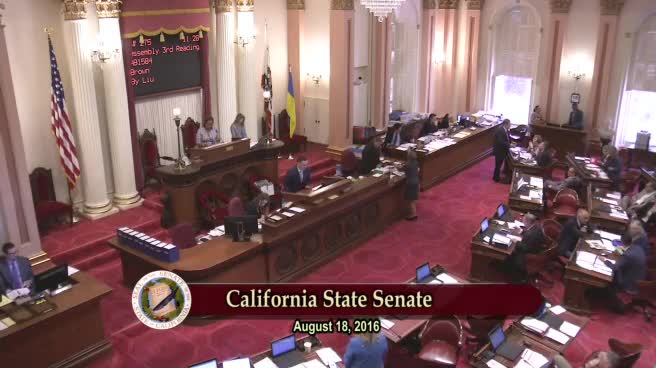
Bill Author

Bill Co-Author(s):