AB 1919: Local transportation authorities: bonds.
- Session Year: 2015-2016
- House: Assembly
- Latest Version Date: 2016-09-28
The Local Transportation Authority and Improvement Act provides for the creation in any county of a local transportation authority and authorizes the imposition of a retail transactions and use tax by ordinance, subject to approval of the ordinance by 2/3 of the voters. Existing law authorizes the ballot proposition submitted to the voters to include a provision authorizing bonds to be issued that would be payable from the proceeds of the transactions and use tax. Existing law requires the bond proceeds to be placed in the treasury of the local transportation authority and to be used for allowable transportation purposes, except that accrued interest and premiums received on the sale of the bonds are required to be placed in a fund to be used for the payment of bond debt service.
This bill would instead require the premiums received on the sale of the bonds to be placed in the treasury of the local transportation authority to be used for allowable transportation purposes.
The Local Transportation Authority and Improvement Act provides for the creation in any county of a local transportation authority and authorizes the imposition of a retail transactions and use tax by ordinance, subject to approval of the ordinance by 2/3 of the voters. Existing law authorizes the ballot proposition submitted to the voters to include a provision authorizing bonds to be issued that would be payable from the proceeds of the transactions and use tax. Existing law requires the bond proceeds to be placed in the treasury of the local transportation authority and to be used for allowable transportation purposes, except that accrued interest and premiums received on the sale of the bonds are required to be placed in a fund to be used for the payment of bond debt service.
This bill would instead provide for accrued interest and require the premiums received on the sale of the bonds to be placed in the treasury of the local transportation authority to be used for allowable transportation purposes.
The Local Transportation Authority and Improvement Act provides for the creation in any county of a local transportation authority and authorizes the imposition of a retail transactions and use tax by ordinance, subject to approval of the ordinance by 2/3 of the voters. Existing law authorizes the ballot proposition submitted to the voters to include a provision authorizing bonds to be issued that would be payable from the proceeds of the transactions and use tax. Existing law requires the bond proceeds to be placed in the treasury of the local transportation authority and to be used for allowable transportation purposes, except that accrued interest and premiums received on the sale of the bonds are required to be placed in a fund to be used for the payment of bond debt service.
This bill would instead provide for accrued interest and premiums received on the sale of the bonds to be placed in the treasury of the local transportation authority to be used for allowable transportation purposes.
All accrued interest received on the sale of the bonds shall be placed in the fund to be used for the payment of the principal of, and interest on, the bonds, and the remainder of the proceeds of the bonds shall be placed in the treasury of the authority and applied to secure the bonds or for the purposes for which the debt was incurred. However, when the purposes have been accomplished, any money remaining shall be either (a) transferred to the fund to be used for the payment of principal of, and interest on, the bonds or (b) placed in a fund to be used for the purchase of the outstanding bonds in the open market at prices and in the manner, either at public or private sale or otherwise, as determined by the authority. Bonds so purchased shall be canceled immediately.
All accrued interest received on the sale of the bonds shall be placed in the fund to be used for the payment of the principal of, and interest on, the bonds, and the remainder of the proceeds of the bonds shall be placed in the treasury of the authority and applied to secure the bonds or for the purposes for which the debt was incurred. However, when the purposes have been accomplished, any money remaining shall be either (a) transferred to the fund to be used for the payment of principal of, and interest on, the bonds or (b) placed in a fund to be used for the purchase of the outstanding bonds in the open market at prices and in the manner, either at public or private sale or otherwise, as determined by the authority. Bonds so purchased shall be canceled immediately.
All bond proceeds, including proceeds from accrued interest and premiums received on the sale of the bonds, bonds shall be placed in the fund to be used for the payment of the principal of, and interest on, the bonds, and the remainder of the proceeds of the bonds shall be placed in the treasury of the authority and applied to secure the bonds or for the purposes for which the debt was incurred. However, when the purposes have been accomplished, any money remaining shall be either (a) transferred to the fund to be used for the payment of principal of, and interest on, the bonds or (b) placed in a fund to be used for the purchase of the outstanding bonds in the open market at prices and in the manner, either at public or private sale or otherwise, as determined by the authority. Bonds so purchased shall be canceled immediately.
All bond proceeds, including proceeds from accrued interest and premiums received on the sale of the bonds bonds, shall be placed in the fund to be used for the payment of the principal of, and interest on, the bonds, and the remainder of the proceeds of the bonds shall be placed in the treasury of the authority and applied to secure the bonds or for the purposes for which the debt was incurred. However, when the purposes have been accomplished, any money remaining shall be either (a) transferred to the fund to be used for the payment of principal of, and interest on, the bonds or (b) placed in a fund to be used for the purchase of the outstanding bonds in the open market at prices and in the manner, either at public or private sale or otherwise, as determined by the authority. Bonds so purchased shall be canceled immediately.
|
Date
|
Status
|
|---|---|
| May 12, 2016 | Read third time. Passed. Ordered to the Senate. |
| Aug 22, 2016 | Enrolled and presented to the Governor at 4 p.m. |
| Aug 16, 2016 | Read third time. Passed. Ordered to the Assembly. (Ayes 27. Noes 11.). |
| Aug 16, 2016 | Read third time. Passed. Ordered to the Assembly. (Ayes 27. Noes 11. Page 5006.). |
| Aug 16, 2016 | Read third time. Passed. Ordered to the Assembly. |
| Aug 16, 2016 | In Assembly. Ordered to Engrossing and Enrolling. |
| Jun 16, 2016 | Read second time. Ordered to third reading. |
| Jun 15, 2016 | From committee: Do pass. (Ayes 9. Noes 2.) (June 14). |
| May 19, 2016 | Referred to Com. on T. & H. |
| May 12, 2016 | Read third time. Passed. Ordered to the Senate. (Ayes 48. Noes 30.) |
| May 12, 2016 | Read third time. Passed. Ordered to the Senate. (Ayes 48. Noes 30. Page 4777.) |
| Feb 11, 2016 | Read first time. To print. |
| May 12, 2016 | In Senate. Read first time. To Com. on RLS. for assignment. |
| May 9, 2016 | Read second time. Ordered to third reading. |
| May 5, 2016 | From committee: Do pass. (Ayes 6. Noes 2.) (May 4). |
| Apr 18, 2016 | In committee: Hearing postponed by committee. |
| Apr 11, 2016 | Re-referred to Com. on L. GOV. pursuant to Assembly Rule 96. |
| Apr 5, 2016 | Re-referred to Com. on TRANS. |
| Apr 4, 2016 | From committee chair, with author's amendments: Amend, and re-refer to Com. on TRANS. Read second time and amended. |
| Mar 29, 2016 | In committee: Set, first hearing. Hearing canceled at the request of author. |
| Feb 25, 2016 | Referred to Com. on TRANS. |
| Feb 12, 2016 | From printer. May be heard in committee March 13. |
|
Date
|
Description
|
Location
|
Votes
|
|
|---|---|---|---|---|
| Aug 16, 2016 | Assembly 3rd Reading AB1919 Quirk By Allen | Senate Floor |
Passed |
|
| Jun 14, 2016 | Do pass | Senate Standing Committee on Transportation and Housing |
Passed |
|
| May 12, 2016 | AB 1919 QUIRK Assembly Third Reading | Assembly Floor |
Passed |
|
| May 4, 2016 | Do pass. | Assembly Standing Committee on Local Government |
Passed |
This list shows positions taken on this bill by organizations on the date displayed, which is linked to the original source.
Positions by individuals are not included.
|
Organization
|
Position
|
Date
|
|---|---|---|
| Alameda County Transportation Commission | ** Support | Aug 16, 2016 |
| ASSEMBLY FLOOR: 48-30, 5 | ** Against | Aug 16, 2016 |
| Howard Jarvis Taxpayers Association | ** Against | Aug 16, 2016 |
| Planning and Policy | * Indeterminate | May 4, 2016 |
| Self-Help Counties Coaltion | * Support | Jun 14, 2016 |
| Western Manufactured Housing Communities Association | * Indeterminate | Jun 26, 2018 |
Office of Senate Floor Analyses (916) 651-1520 Fax: (916) 327-4478 | AB |
THIRD READING
Bill No: AB 1919
:
SENATE TRANS. & HOUSING COMMITTEE: 9-2, 6/14/16
AYES: Beall, Cannella, Allen, Galgiani, Leyva, McGuire, Mendoza, Roth, Wieckowski
NOES: Bates, Gaines
ASSEMBLY FLOOR: 48-30, 5/12/16 - See last page for vote
DIGEST: This bill removes a bond requirement in existing law in order to increase a local transportation authority’s flexibility in utilizing bond proceeds sold for transportation capital projects.
Existing law:
- Establishes the Local Transportation Authority and Improvement Act and provides for the formation, administration, powers, taxing, and bonding authority for a local transportation authority (authority).
- Authorizes an authority to issue limited tax bonds secured by a pledge of revenues from the proceeds of retail transactions and use tax approved by the voters.
- Requires all accrued interest and premiums received on the sale of bonds to be placed in the fund to be used for the payment of the principal of and interest on the bonds. Requires the reminder of the proceeds to be placed in the authority's treasury to be applied to secure the bonds or for the purposes for which the debt was incurred.
This bill removes, specifically for local transportation authorities, the requirement in existing law to use premiums from the sale of bonds to pay for the principal and interest of the bonds, thereby allowing those bond premiums to be used for other purposes (e.g., capital improvement projects).
Comments
- Purpose. The author notes, “Current language limits an issuer’s ability to structure municipal bonds to best meet investor demand, and in doing so promotes structures that lead to higher interest costs. Commonly, in California and nationally, municipal issuers can issue bonds with either a par structure, discount structure, or premium structure. All proceeds from the bond sale, including any premium generated through a premium bond structure, are eligible to be used for project costs. For authorities, current law does not allow bond premiums to be used to fund capital projects. This reduces the flexibility of issuers and eliminates the incentive or financial benefit to the transportation authority to offer a premium structure to investors.”
- What are premium bonds? Premium bonds are bonds that trade above their par value (i.e., the face value of the bond). Generally, a bond will trade at a premium when it offers a coupon rate (i.e., the yield on the bond paid on its issue date; however, this rate changes as the value of the bond changes) that is higher than prevailing interest rates. Typically, this occurs because investors desire a higher yield and will pay more for it. For example, a Los Angeles wastewater system bond with a par value of $100 million is selling for $119 million because of favorable market conditions. Under current law, authorities are prohibited from using the additional revenue generated ($19 million in the example above) from the sale of premium bonds on transportation capital projects; rather, this specific revenue is required to be used for debt service on the actual par value of the bond.
This bill does not change any requirements tied to a local transportation authority’s responsibility to pay back bond proceeds over a required time period. Rather, this bill merely provides additional flexibility for local transportation authority by allowing the additional revenue generated in the selling of premium bonds to be used for capital projects.
FISCAL EFFECT: Appropriation: Fiscal Com.: Local:
Alameda County Transportation Commission
OPPOSITION: (Verified 6/17/16)
Howard Jarvis Taxpayers Association
ASSEMBLY FLOOR: 48-30, 5/12/16
AYES: Alejo, Arambula, Atkins, Bloom, Bonilla, Bonta, Brown, Calderon, Campos, Chau, Chiu, Chu, Cooley, Cooper, Dababneh, Daly, Dodd, Eggman, Frazier, Cristina Garcia, Eduardo Garcia, Gipson, Gomez, Gonzalez, Gordon, Gray, Roger Hernández, Holden, Levine, Lopez, Low, McCarty, Medina, Mullin, Nazarian, O'Donnell, Quirk, Ridley-Thomas, Rodriguez, Salas, Santiago, Mark Stone, Thurmond, Ting, Weber, Williams, Wood, Rendon
NOES: Achadjian, Travis Allen, Baker, Bigelow, Brough, Chang, Chávez, Dahle, Beth Gaines, Gallagher, Gatto, Grove, Hadley, Harper, Irwin, Jones, Kim, Lackey, Linder, Maienschein, Mathis, Mayes, Melendez, Obernolte, Olsen, Patterson, Steinorth, Wagner, Waldron, Wilk
NO VOTE RECORDED: Burke, Jones-Sawyer
6/17/16 15:03:34
**** END ****
SENATE COMMITTEE ON TRANSPORTATION AND HOUSING
Senator Jim Beall, Chair
2015 - 2016 Regular
Bill No: AB 1919 Hearing Date: June 14, 2016
Author: | Quirk | ||
Version: | 4/4/2016 | ||
Urgency: | No | Fiscal: | No |
Consultant: | Manny Leon | ||
SUBJECT: Local transportation authorities: bonds
DIGEST: This bill removes a bond requirement in existing law in order to increase a local transportation authority’s flexibility in utilizing bond proceeds sold for transportation capital projects.
ANALYSIS:
Existing law:
- Establishes the Local Transportation Authority and Improvement Act and provides for the formation, administration, powers, taxing, and bonding authority for a local transportation authority (authority).
- Authorizes an authority to issue limited tax bonds secured by a pledge of revenues from the proceeds of retail transactions and use tax approved by the voters.
- Requires all accrued interest and premiums received on the sale of bonds to be placed in the fund to be used for the payment of the principal of and interest on the bonds. Requires the reminder of the proceeds to be placed in the authority's treasury to be applied to secure the bonds or for the purposes for which the debt was incurred.
This bill removes, specifically for local transportation authorities, the requirement in existing law to use premiums from the sale of bonds to pay for the principal and interest of the bonds, thereby allowing those bond premiums to be used for other purposes (e.g., capital improvement projects).
COMMENTS:
- Purpose. The author notes, “Current language limits an issuer’s ability to structure municipal bonds to best meet investor demand, and in doing so promotes structures that lead to higher interest costs. Commonly, in California and nationally, municipal issuers can issue bonds with either a par structure, discount structure, or premium structure. All proceeds from the bond sale, including any premium generated through a premium bond structure, are eligible to be used for project costs. For authorities, current law does not allow bond premiums to be used to fund capital projects. This reduces the flexibility of issuers and eliminates the incentive or financial benefit to the transportation authority to offer a premium structure to investors.”
- What are premium bonds? Premium bonds are bonds that trade above their par value (i.e., the face value of the bond). Generally, a bond will trade at a premium when it offers a coupon rate (i.e., the yield on the bond paid on its issue date; however, this rate changes as the value of the bond changes) that is higher than prevailing interest rates. Typically, this occurs because investors desire a higher yield and will pay more for it. For example, a Los Angeles wastewater system bond with a par value of $100 million is selling for $119 million because of favorable market conditions. Under current law, authorities are prohibited from using the additional revenue generated ($19 million in the example above) from the sale of premium bonds on transportation capital projects; rather, this specific revenue is required to be used for debt service on the actual par value of the bond.
This bill does not change any requirements tied to a local transportation authority’s responsibility to pay back bond proceeds over a required time period. Rather, this bill merely provides additional flexibility for local transportation authority by allowing the additional revenue generated in the selling of premium bonds to be used for capital projects.
Assembly Votes:
Floor: 48-30
Local Gov: 6-2
FISCAL EFFECT: Appropriation: Fiscal Com.: Local:
POSITIONS: (Communicated to the committee before noon on Wednesday,
June 8, 2016.)
SUPPORT:
Alameda County Transportation Commission
OPPOSITION:
None received
-- END --
ASSEMBLY THIRD READING
ATR Bill Id:AB 1919
Author:(Quirk)
As Amended Ver:April 4, 2016
Majority vote
Committee | Votes | Ayes | Noes |
Local Government | 6-2 | Eggman, Mullin, Bonilla, Chiu, Cooley, Gordon | Waldron, Linder |
SUMMARY: Removes, for local transportation authorities, the requirement in existing law to use premiums from the sale of bonds to be used to pay for the principal and interest of the bonds, thereby allowing those bond premiums to be used for other purposes.
EXISTING LAW:
- Establishes the Local Transportation Authority and Improvement Act and provides for the formation, administration, powers, taxing, and bonding authority for a local transportation authority (authority).
- Authorizes an authority to issue limited tax bonds secured by a pledge of revenues from the proceeds of a retail transactions and use tax approved by the voters.
- Requires all accrued interest and premiums received on the sale of bonds to be placed in the fund to be used for the payment of the principal of and interest on the bonds. Requires the remainder of the proceeds to be placed in the authority's treasury to be applied to secure the bonds or for the purposes for which the debt was incurred.
- Requires, when the purposes have been accomplished, any money remaining to be either:
- Transferred to the fund to be used for payments for the principal and interest on the bonds; or,
- Placed in a fund for the purchase of the outstanding bonds in the open market at prices in the manner determined by the authority.
FISCAL EFFECT: None
COMMENTS:
- Background and Bill Summary. Existing law provides transportation authorities the ability to issue bonds in order to finance capital needs. When an investor purchases a bond they are in turn lending money to the local transportation authority that issued the bond. In return for buying the bond, the local transportation agency must pay the investor debt service, the principal amount of bond and interest, which is the cost of borrowing the money. Bond proceeds are used by local transportation authorities to fund capital projects, the costs of bond issuance and debt service. Local transportation authorities are required to use all interest and premiums (the amount by which the price of a bonds exceeds its principal amount) received from the sale of bonds on the debt service of the bond.
This bill removes, for local transportation authorities, the requirement in existing law to use premiums from the sale of bonds to be used to pay for the principal and interest of the bonds, thereby allowing those bond premiums to be used for other purposes. This bill is sponsored by the Alameda County Transportation Commission.
- Author's Statement. According to the author, "Current language limits an issuer's ability to structure municipal bonds to best meet investor demand and in doing so promotes structures that lead to higher interest costs. Commonly in California and nationally, municipal issuers can issue bonds with either a par structure, discount structure or premium structure. All proceeds from the bond sale, including any premium generated through a premium bond structure, are eligible to be used for project costs.
"Current law does not allow bond premium to be used to fund capital projects. This reduces the flexibility of issuers and eliminates the incentive or financial benefit to the transportation authority to offer a premium structure to investors. This restriction is inconsistent with current practice in the municipal bond market and promotes bond structures that have higher costs which, in turn, reduce the amount of money available for transportation projects.
"A transportation authority organized under the Local Transportation Authority and Improvement Act should be able to issue bonds consistent with investor demand in order to minimize borrowing costs and use more taxpayer dollars for projects. This should include the ability to issue premium bonds to fund eligible project costs if and when this structure results in the lowest borrowing cost. The goal for the proposed changes is to remove the restrictive language that currently requires bond premium from the sale of bonds to be used only for the payment of principal and interest on the bonds."
- Arguments in Support. The Alameda County Transportation Commission argues that removing the current restriction on the use of premiums will lower the cost of the bond transaction, lower the amount of debt the transportation authority must carry, and thus increase the amount of local sales tax dollars available for project delivery.
- Arguments in Opposition. The Howard Jarvis Taxpayers Association argues "…we are concerned that diverting accrued interest payments for these purposes represents poor fiscal planning and establishes a bad precedent by shifting more of the long-term costs of these bonds onto taxpayers."
Analysis Prepared by: Misa Lennox / L. GOV. / (916) 319-3958 FN: 0002905
Date of Hearing: May 4, 2016
ASSEMBLY COMMITTEE ON LOCAL GOVERNMENT
Susan Talamantes Eggman, Chair
ABPCA Bill Id:AB 1919 (
Author:Quirk) – As Amended Ver:April 4, 2016
SUBJECT: Local transportation authorities: bonds.
SUMMARY: Removes, for local transportation authorities, the requirement in existing law to use premiums from the sale of bonds to be used to pay for the principal and interest of the bonds, thereby allowing those bond premiums to be used for other purposes.
EXISTING LAW:
- Establishes the Local Transportation Authority and Improvement Act and provides for the formation, administration, powers, taxing, and bonding authority for a local transportation authority (authority).
- Authorizes an authority to issue limited tax bonds secured by a pledge of revenues from the proceeds of a retail transactions and use tax approved by the voters.
- Requires all accrued interest and premiums received on the sale of bonds to be placed in the fund to be used for the payment of the principal of and interest on the bonds. Requires the reminder of the proceeds to be placed in the authority's treasury to be applied to secure the bonds or for the purposes for which the debt was incurred.
- Requires, when the purposes have been accomplished, any money remaining to be either:
- Transferred to the fund to be used for payments for the principal and interest on the bonds or,
- Placed in a fund for the purchase of the outstanding bonds in the open market at prices in the manner determined by the authority.
FISCAL EFFECT: None
COMMENTS:
- Background and Bill Summary. Existing law provides transportation authorities the ability to issue bonds in order to finance capital needs. When an investor purchases a bond they are in turn lending money to the local transportation authority that issued the bond. In return for buying the bond, the local transportation agency must pay the investor debt service, the principal amount of bond and interest, which is the cost of borrowing the money. Bond proceeds are used by local transportation authorities to fund capital projects, the costs of bond issuance and debt service. Local transportation authorities are required to use all interest and premiums (the amount by which the price of a bonds exceeds its principal amount) received from the sale of bonds on the debt service of the bond.
This bill removes, for local transportation authorities, the requirement in existing law to use premiums from the sale of bonds to be used to pay for the principal and interest of the bonds, thereby allowing those bond premiums to be used for other purposes. This bill is sponsored by the Alameda County Transportation Commission.
- Author's Statement. According to the author, "Current language limits an issuer’s ability to structure municipal bonds to best meet investor demand and in doing so promotes structures that lead to higher interest costs. Commonly in California and nationally, municipal issuers can issue bonds with either a par structure, discount structure or premium structure. All proceeds from the bond sale, including any premium generated through a premium bond structure, are eligible to be used for project costs.
"Current law, does not allow bond premium to be used to fund capital projects. This reduces the flexibility of issuers and eliminates the incentive or financial benefit to the transportation authority to offer a premium structure to investors. This restriction is inconsistent with current practice in the municipal bond market and promotes bond structures that have higher costs which, in turn, reduce the amount of money available for transportation projects.
"A transportation authority organized under the Local Transportation Authority and Improvement Act should be able to issue bonds consistent with investor demand in order to minimize borrowing costs and use more taxpayer dollars for projects. This should include the ability to issue premium bonds to fund eligible project costs if and when this structure results in the lowest borrowing cost. The goal for the proposed changes is to remove the restrictive language that currently requires bond premium from the sale of bonds to be used only for the payment of principal and interest on the bonds."
- Arguments in Support. The Alameda County Transportation Commission argues that removing the current restriction on the use of premiums will lower the cost of the bond transaction, lower the amount of debt the transportation authority must carry, and thus increase the amount of local sales tax dollars available for project delivery.
- Arguments in Opposition. None on file.
REGISTERED SUPPORT / OPPOSITION:
Support
Alameda County Transportation Commission
Opposition
None on file
Analysis Prepared by: Misa Lennox / L. GOV. / (916) 319-3958
Discussed in Hearing
 3MIN
Senate Standing Committee on Governmental Organization
 4MIN
Senate Floor
 10MIN
Senate Standing Committee on Transportation and Housing
 1MIN
Assembly Floor
 8MIN
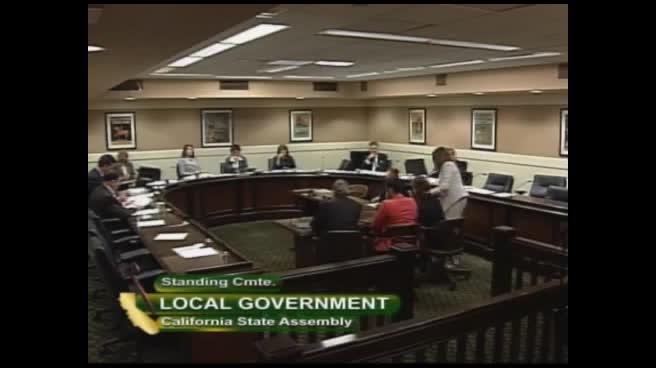
Assembly Standing Committee on Local Government
Bill Author

Bill Co-Author(s):