AB 1937: Electricity: procurement.
- Session Year: 2015-2016
- House: Assembly
- Latest Version Date: 2016-09-26
The Public Utilities Act requires the Public Utilities Commission to review and accept, modify, or reject a procurement plan for each electrical corporation in accordance with specified procedures, considerations, and objectives. The act requires that electrical corporations proposed procurement plans include certain elements, including a showing that the electrical corporations will first meet their unmet needs through all available energy efficiency and demand reduction resources that are cost effective, reliable, and feasible.
This bill would require electrical corporations proposed procurement plans to also include a showing that the electrical corporations (1), in soliciting bids for new gas-fired generating units, actively seek bids for resources that are not gas-fired generating units located in communities that suffer from cumulative pollution burdens and (2), in considering bids for, or negotiating bilateral contracts for, new gas-fired generating units, give preference to resources that are not gas-fired generating units located in those communities. The bill would require the commission, before approving a contract for any new gas-fired generating unit, to require the electrical corporation to demonstrate that it has complied with its approved procurement plan. Because this requirement would be a part of the Public Utilities Act and because a violation of an order or decision of the commission implementing its requirements would be a crime, the bill would impose a state-mandated local program by creating a new crime.
Existing law requires electrical corporations, in soliciting and procuring eligible renewable energy resources for California-based projects, to give preference to renewable energy projects that provide environmental and economic benefits to communities afflicted with poverty or high unemployment or those suffering from high emission levels of toxic air contaminants, criteria air pollutants, and greenhouse gases.
This bill would specify that the above requirements apply to all procurement of eligible renewable energy resources for California-based projects whether the procurement occurs through all-source requests for offers, eligible renewable energy resources only requests for offers, or other procurement mechanisms.
This bill would incorporate changes to Section 454.5 of the Public Utilities Code proposed by both this bill and AB 2454, which would become operative only if both bills are enacted and become effective on or before January 1, 2017, and this bill is chaptered last.
The California Constitution requires the state to reimburse local agencies and school districts for certain costs mandated by the state. Statutory provisions establish procedures for making that reimbursement.
This bill would provide that no reimbursement is required by this act for a specified reason.
The Public Utilities Act requires the Public Utilities Commission to review and accept, modify, or reject a procurement plan for each electrical corporation in accordance with specified procedures, considerations, and objectives. The act requires that electrical corporations proposed procurement plans include certain elements, including a showing that the electrical corporations will first meet their unmet needs through all available energy efficiency and demand reduction resources that are cost effective, reliable, and feasible.
This bill would require electrical corporations proposed procurement plans to also include a showing that the electrical corporations (1), in soliciting bids for new gas-fired generating units, actively seek bids for resources that are not gas-fired generating units located in communities that suffer from cumulative pollution burdens and (2), in considering bids for, or negotiating bilateral contracts for, new gas-fired generating units, give preference to resources that are not gas-fired generating units located in those communities. The bill would require the commission, before approving a contract for any new gas-fired generating unit, to require the electrical corporation to demonstrate that it has complied with its approved procurement plan. Because this requirement would be a part of the Public Utilities Act and because a violation of an order or decision of the commission implementing its requirements would be a crime, the bill would impose a state-mandated local program by creating a new crime.
Existing law requires electrical corporations, in soliciting and procuring of eligible renewable energy resources for California-based projects, to give preference to renewable energy projects that provide environmental and economic benefits to communities afflicted with poverty or high unemployment or those suffering from high emission levels of toxic air contaminants, criteria air pollutants, and greenhouse gases.
This bill would specify that the above requirements apply to all procurement of eligible renewable energy resources for California-based projects whether the procurement occurs through all-source requests for offers, eligible renewable energy resources only requests for offers, or other procurement mechanisms.
This bill would incorporate changes to Section 454.5 of the Public Utilities Code proposed by both this bill and AB 2454, which would become operative only if both bills are enacted and become effective on or before January 1, 2017, and this bill is chaptered last.
The California Constitution requires the state to reimburse local agencies and school districts for certain costs mandated by the state. Statutory provisions establish procedures for making that reimbursement.
This bill would provide that no reimbursement is required by this act for a specified reason.
The Public Utilities Act requires the Public Utilities Commission to review and accept, modify, or reject a procurement plan for each electrical corporation in accordance with specified procedures, considerations, and objectives. The act requires that electrical corporations proposed procurement plans include certain elements, including a showing that the electrical corporations will first meet their unmet needs through all available energy efficiency and demand reduction resources that are cost effective, reliable, and feasible.
This bill would require electrical corporations proposed procurement plans to also include a showing that the electrical corporations (1), in soliciting bids for new gas-fired generation resources from new facilities, generating units, actively seek bids for resources that are not gas-fired generation resources generating units located in communities that suffer from cumulative pollution burdens and (2), in considering bids for, or negotiating bilateral contracts for, new gas-fired generation resources, generating units, give preference to generation resources that are not gas-fired generation resources generating units located in those communities. The bill would require the commission, before approving a contract for any new gas-fired generation resource, generating unit, to require the electrical corporation to demonstrate that it has complied with its approved procurement plan. Because this requirement would be a part of the Public Utilities Act and because a violation of an order or decision of the commission implementing its requirements would be a crime, the bill would impose a state-mandated local program by creating a new crime.
Existing law requires electrical corporations, in soliciting and procuring of eligible renewable energy resources for California-based projects, to give preference to renewable energy projects that provide environmental and economic benefits to communities afflicted with poverty or high unemployment or those suffering from high emission levels of toxic air contaminants, criteria air pollutants, and greenhouse gases.
This bill would specify that the above requirements apply to all procurement of eligible renewable energy resources for California-based projects whether the procurement occurs through all-source requests for offers, eligible renewable energy resources only requests for offers, or other procurement mechanisms.
The California Constitution requires the state to reimburse local agencies and school districts for certain costs mandated by the state. Statutory provisions establish procedures for making that reimbursement.
This bill would provide that no reimbursement is required by this act for a specified reason.
The Public Utilities Act requires the Public Utilities Commission to review and accept, modify, or reject a procurement plan for each electrical corporation in accordance with specified procedures, considerations, and objectives. The act requires that electrical corporations proposed procurement plans include certain elements, including a showing that the electrical corporations will first meet their unmet needs through all available energy efficiency and demand reduction resources that are cost effective, reliable, and feasible.
This bill would require electrical corporations proposed procurement plans to also include a showing that the electrical corporations (1), in soliciting bids for gas-fired generation resources from new facilities, actively seek bids for resources that are not gas-fired generation resources located in communities that suffer from cumulative pollution burdens and (2), in considering bids for, or negotiating bilateral contracts for, new gas-fired generation resources, give preference to generation resources that are not gas-fired generation resources located in those communities. The bill would require the commission, before approving a contract for any new gas-fired generation resource, to require the electrical corporation to demonstrate that it has complied with its approved procurement plan. Because this requirement would be a part of the Public Utilities Act and because a violation of an order or decision of the commission implementing its requirements would be a crime, the bill would impose a state-mandated local program by creating a new crime.
Existing law requires electrical corporations, in soliciting and procuring of eligible renewable energy resources for California-based projects, to give preference to renewable energy projects that provide environmental and economic benefits to communities afflicted with poverty or high unemployment or those suffering from high emission levels of toxic air contaminants, criteria air pollutants, and greenhouse gases.
This bill would specify that the above requirements apply to all procurement of eligible renewable energy resources for California-based projects whether the procurement occurs through all-source requests for offers, eligible renewable energy resources only requests for offers, or other procurement mechanisms.
The California Constitution requires the state to reimburse local agencies and school districts for certain costs mandated by the state. Statutory provisions establish procedures for making that reimbursement.
This bill would provide that no reimbursement is required by this act for a specified reason.
The Public Utilities Act requires the Public Utilities Commission to review and accept, modify, or reject a procurement plan for each electrical corporation in accordance with specified procedures, considerations, and objectives. The act requires that electrical corporations proposed procurement plans include certain elements, including a showing that the electrical corporations will first meet their unmet needs through all available energy efficiency and demand reduction resources that are cost effective, reliable, and feasible.
This bill would require electrical corporations proposed procurement plans to also include a showing that the electrical corporations (1), in soliciting bids for gas-fired generation resources from new or repowered facilities, actively seek bids for resources that are not gas-fired generation resources located in or adjacent to communities that suffer from cumulative pollution burdens and other environmental impacts and (2), in considering bids for, or negotiating bilateral contracts for, new or repowered gas-fired generation resources, give priority preference to generation resources that are not gas-fired generation resources located in or adjacent to those communities. The bill would require the commission, before approving a contract for any new or repowered gas-fired generation resource, to require the electrical corporation to demonstrate that it has undertaken all feasible efforts to meet any identified resource need through alternative means. complied with its approved procurement plan. Because this requirement would be a part of the Public Utilities Act and because a violation of an order or decision of the commission implementing its requirements would be a crime, the bill would impose a state-mandated local program by creating a new crime.
Existing law requires electrical corporations, in soliciting and procuring of eligible renewable energy resources for California-based projects, to give preference to renewable energy projects that provide environmental and economic benefits to communities afflicted with poverty or high unemployment or those suffering from high emission levels of toxic air contaminants, criteria air pollutants, and greenhouse gases.
This bill would specify that the above requirements apply to all procurement of eligible renewable energy resources for California-based projects whether the procurement occurs through all-source requests for offers, eligible renewable energy resources only requests for offers, or other procurement mechanisms.
The California Constitution requires the state to reimburse local agencies and school districts for certain costs mandated by the state. Statutory provisions establish procedures for making that reimbursement.
This bill would provide that no reimbursement is required by this act for a specified reason.
The Public Utilities Act requires the Public Utilities Commission to review and accept, modify, or reject a procurement plan for each electrical corporation in accordance with specified procedures, considerations, and objectives. The act requires that electrical corporations proposed procurement plans include certain elements, including a showing that the electrical corporations will first meet their unmet needs through all available energy efficiency and demand reduction resources that are cost effective, reliable, and feasible.
This bill would require electrical corporations proposed procurement plans to also include a showing that the electrical corporations (1), in soliciting bids for gas-fired generation resources, resources from new or repowered facilities, actively seek bids for resources that are not gas-fired generation resources located in or adjacent to disadvantaged communities that suffer from cumulative pollution burdens and other environmental impacts and (2), in considering bids for, or negotiating bilateral contracts for, new or repowered gas-fired generation resources, give priority to generation resources that are not gas-fired generation resources located in or adjacent to disadvantaged those communities. The bill would require the commission, before approving a contract for any new or repowered gas-fired generation resource, to require the electrical corporation to demonstrate that it has undertaken all feasible efforts to meet any identified resource need through alternative means. Because this requirement would be a part of the Public Utilities Act and because a violation of an order or decision of the commission implementing its requirements would be a crime, the bill would impose a state-mandated local program by creating a new crime.
Existing law requires electrical corporations, in soliciting and procuring of eligible renewable energy resources for California-based projects, to give preference to renewable energy projects that provide environmental and economic benefits to communities afflicted with poverty or high unemployment or those suffering from high emission levels of toxic air contaminants, criteria air pollutants, and greenhouse gases.
This bill would specify that the above requirements apply to all procurement of eligible renewable energy resources for California-based projects whether the procurement occurs through all-source requests for offers, eligible renewable energy resources only requests for offers, or other procurement mechanisms.
The California Constitution requires the state to reimburse local agencies and school districts for certain costs mandated by the state. Statutory provisions establish procedures for making that reimbursement.
This bill would provide that no reimbursement is required by this act for a specified reason.
The Public Utilities Act requires the Public Utilities Commission to review and accept, modify, or reject a procurement plan for each electrical corporation in accordance with specified procedures, considerations, and objectives. The act requires that electrical corporations proposed procurement plans include certain elements, including a showing that the electrical corporations will first meet their unmet needs through all available energy efficiency and demand reduction resources that are cost effective, reliable, and feasible.
This bill would require electrical corporations proposed procurement plans to also include a showing that the electrical corporations (1), in soliciting bids for gas-fired generation resources, actively seek bids that are not located in or adjacent to disadvantaged communities and (2), in considering bids for, or negotiating bilateral contracts for, gas-fired generation resources, give priority to generation resources that are not located in or adjacent to disadvantaged communities. Because this requirement would be a part of the Public Utilities Act and because a violation of an order or decision of the commission implementing its requirements would be a crime, the bill would impose a state-mandated local program by creating a new crime.
Existing law requires electrical corporations, in soliciting and procuring of eligible renewable energy resources for California-based projects, to give preference to renewable energy projects that provide environmental and economic benefits to communities afflicted with poverty or high unemployment or those suffering from high emission levels of toxic air contaminants, criteria air pollutants, and greenhouse gases.
This bill would specify that the above requirements apply to all procurement of eligible renewable energy resources for California-based projects whether the procurement occurs through all-source requests for offers, eligible renewable energy resources only requests for offers, or other procurement mechanisms.
The California Constitution requires the state to reimburse local agencies and school districts for certain costs mandated by the state. Statutory provisions establish procedures for making that reimbursement.
This bill would provide that no reimbursement is required by this act for a specified reason.
The Warren-Alquist State Energy Resources Conservation and Development Act establishes the State Energy Resources Conservation and Development Commission and requires it to certify sufficient sites and related facilities to provide a supply of electricity sufficient to accommodate projected demand for power statewide. The act grants the commission the exclusive authority to certify any stationary or floating electrical generating facility using any source of thermal energy, with a generating capacity of 50 megawatts or more, and any facilities appurtenant to the generation facility.
This bill would require the commission, before certifying a generation facility and related facilities that use fossil fuel or natural gas resources, to assess alternative means of achieving a sufficient supply of electric power to accommodate projected demand. The bill would prohibit the commission from certifying this type of generation facility or related facilities if it finds that alternative means of achieving sufficient electric power without the use of fossil fuel or natural gas resources can be accomplished.
(a)(1)The commission shall direct each electrical corporation to annually prepare a renewable energy procurement plan that includes the matter in paragraph (5), to satisfy its obligations under the renewables portfolio standard. To the extent feasible, this procurement plan shall be proposed, reviewed, and adopted by the commission as part of, and pursuant to, a general procurement plan process. The commission shall require each electrical corporation to review and update its renewable energy procurement plan as it determines to be necessary. The commission shall require all other retail sellers to prepare and submit renewable energy procurement plans that address the requirements identified in paragraph (5).
(2)Every electrical corporation that owns electrical transmission facilities shall annually prepare, as part of the Federal Energy Regulatory Commission Order 890 process, and submit to the commission, a report identifying any electrical transmission facility, upgrade, or enhancement that is reasonably necessary to achieve the renewables portfolio standard procurement requirements of this article. Each report shall look forward at least five years and, to ensure that adequate investments are made in a timely manner, shall include a preliminary schedule when an application for a certificate of public convenience and necessity will be made, pursuant to Chapter 5 (commencing with Section 1001), for any electrical transmission facility identified as being reasonably necessary to achieve the renewable energy resources procurement requirements of this article. Each electrical corporation that owns electrical transmission facilities shall ensure that project-specific interconnection studies are completed in a timely manner.
(3)The commission shall direct each retail seller to prepare and submit an annual compliance report that includes all of the following:
(A)The current status and progress made during the prior year toward procurement of eligible renewable energy resources as a percentage of retail sales, including, if applicable, the status of any necessary siting and permitting approvals from federal, state, and local agencies for those eligible renewable energy resources procured by the retail seller, and the current status of compliance with the portfolio content requirements of subdivision (c) of Section 399.16, including procurement of eligible renewable energy resources located outside the state and within the WECC and unbundled renewable energy credits.
(B)If the retail seller is an electrical corporation, the current status and progress made during the prior year toward construction of, and upgrades to, transmission and distribution facilities and other electrical system components it owns to interconnect eligible renewable energy resources and to supply the electricity generated by those resources to load, including the status of planning, siting, and permitting transmission facilities by federal, state, and local agencies.
(C)Recommendations to remove impediments to making progress toward achieving the renewable energy resources procurement requirements established pursuant to this article.
(4)The commission shall adopt, by rulemaking, all of the following:
(A)A process that provides criteria for the rank ordering and selection of least-cost and best-fit eligible renewable energy resources to comply with the California Renewables Portfolio Standard Program obligations on a total cost and best-fit basis. This process shall take into account all of the following:
(i)Estimates of indirect costs associated with needed transmission investments.
(ii)The cost impact of procuring the eligible renewable energy resources on the electrical corporations electricity portfolio.
(iii)The viability of the project to construct and reliably operate the eligible renewable energy resource, including the developers experience, the feasibility of the technology used to generate electricity, and the risk that the facility will not be built, or that construction will be delayed, with the result that electricity will not be supplied as required by the contract.
(iv)Workforce recruitment, training, and retention efforts, including the employment growth associated with the construction and operation of eligible renewable energy resources and goals for recruitment and training of women, minorities, and disabled veterans.
(v)(I)Estimates of electrical corporation expenses resulting from integrating and operating eligible renewable energy resources, including, but not limited to, any additional wholesale energy and capacity costs associated with integrating each eligible renewable resource.
(II)No later than December 31, 2015, the commission shall approve a methodology for determining the integration costs described in subclause (I).
(vi)Consideration of any statewide greenhouse gas emissions limit established pursuant to the California Global Warming Solutions Act of 2006 (Division 25.5 (commencing with Section 38500) of the Health and Safety Code).
(vii)Consideration of capacity and system reliability of the eligible renewable energy resource to ensure grid reliability.
(B)Rules permitting retail sellers to accumulate, beginning January 1, 2011, excess procurement in one compliance period to be applied to any subsequent compliance period. The rules shall apply equally to all retail sellers. In determining the quantity of excess procurement for the applicable compliance period, the commission shall retain the rules adopted by the commission and in effect as of January 1, 2015, for the compliance period specified in subparagraphs (A) to (C), inclusive, of paragraph (1) of subdivision (b) of Section 399.15. For any subsequent compliance period, the rules shall allow the following:
(i)For electricity products meeting the portfolio content requirements of paragraph (1) of subdivision (b) of Section 399.16, contracts of any duration may count as excess procurement.
(ii)Electricity products meeting the portfolio content requirements of paragraph (2) or (3) of subdivision (b) of Section 399.16 shall not be counted as excess procurement. Contracts of any duration for electricity products meeting the portfolio content requirements of paragraph (2) or (3) of subdivision (b) of Section 399.16 that are credited towards a compliance period shall not be deducted from a retail sellers procurement for purposes of calculating excess procurement.
(iii)If a retail seller notifies the commission that it will comply with the provisions of subdivision (b) for the compliance period beginning January 1, 2017, the provisions of clauses (i) and (ii) shall take effect for that retail seller for that compliance period.
(C)Standard terms and conditions to be used by all electrical corporations in contracting for eligible renewable energy resources, including performance requirements for renewable generators. A contract for the purchase of electricity generated by an eligible renewable energy resource, at a minimum, shall include the renewable energy credits associated with all electricity generation specified under the contract. The standard terms and conditions shall include the requirement that, no later than six months after the commissions approval of an electricity purchase agreement entered into pursuant to this article, the following information about the agreement shall be disclosed by the commission: party names, resource type, project location, and project capacity.
(D)An appropriate minimum margin of procurement above the minimum procurement level necessary to comply with the renewables portfolio standard to mitigate the risk that renewable projects planned or under contract are delayed or canceled. This paragraph does not preclude an electrical corporation from voluntarily proposing a margin of procurement above the appropriate minimum margin established by the commission.
(5)Consistent with the goal of increasing Californias reliance on eligible renewable energy resources, the renewable energy procurement plan shall include all of the following:
(A)An assessment of annual or multiyear portfolio supplies and demand to determine the optimal mix of eligible renewable energy resources with deliverability characteristics that may include peaking, dispatchable, baseload, firm, and as-available capacity.
(B)Potential compliance delays related to the conditions described in paragraph (5) of subdivision (b) of Section 399.15.
(C)A bid solicitation setting forth the need for eligible renewable energy resources of each deliverability characteristic, required online dates, and locational preferences, if any.
(D)A status update on the development schedule of all eligible renewable energy resources currently under contract.
(E)Consideration of mechanisms for price adjustments associated with the costs of key components for eligible renewable energy resource projects with online dates more than 24 months after the date of contract execution.
(F)An assessment of the risk that an eligible renewable energy resource will not be built, or that construction will be delayed, with the result that electricity will not be delivered as required by the contract.
(6)In soliciting and procuring eligible renewable energy resources, each electrical corporation shall offer contracts of no less than 10 years duration, unless the commission approves of a contract of shorter duration.
(7)(A)In soliciting and procuring eligible renewable energy resources for California-based projects, each electrical corporation shall give preference to renewable energy projects that provide environmental and economic benefits to communities afflicted with poverty or high unemployment, or that suffer from high emission levels of toxic air contaminants, criteria air pollutants, and greenhouse gases.
(B)Subparagraph (A) applies to all procurement of eligible renewable energy resources for California-based projects, whether the procurement occur through all-source requests for offers, eligible renewable resources only requests for offers, or other procurement mechanisms. This subparagraph is declaratory of existing law.
(8)In soliciting and procuring eligible renewable energy resources, each retail seller shall consider the best-fit attributes of resource types that ensure a balanced resource mix to maintain the reliability of the electrical grid.
(b)A retail seller may enter into a combination of long- and short-term contracts for electricity and associated renewable energy credits. Beginning January 1, 2021, at least 65 percent of the procurement a retail seller counts toward the renewables portfolio standard requirement of each compliance period shall be from its contracts of 10 years or more in duration or in its ownership or ownership agreements for eligible renewable energy resources.
(c)The commission shall review and accept, modify, or reject each electrical corporations renewable energy resource procurement plan prior to the commencement of renewable energy procurement pursuant to this article by an electrical corporation. The commission shall assess adherence to the approved renewable energy resource procurement plans in determining compliance with the obligations of this article.
(d)Unless previously preapproved by the commission, an electrical corporation shall submit a contract for the generation of an eligible renewable energy resource to the commission for review and approval consistent with an approved renewable energy resource procurement plan. If the commission determines that the bid prices are elevated due to a lack of effective competition among the bidders, the commission shall direct the electrical corporation to renegotiate the contracts or conduct a new solicitation.
(e)If an electrical corporation fails to comply with a commission order adopting a renewable energy resource procurement plan, the commission shall exercise its authority to require compliance.
(f)(1)The commission may authorize a procurement entity to enter into contracts on behalf of customers of a retail seller for electricity products from eligible renewable energy resources to satisfy the retail sellers renewables portfolio standard procurement requirements. The commission shall not require any person or corporation to act as a procurement entity or require any party to purchase eligible renewable energy resources from a procurement entity.
(2)Subject to review and approval by the commission, the procurement entity shall be permitted to recover reasonable administrative and procurement costs through the retail rates of end-use customers that are served by the procurement entity and are directly benefiting from the procurement of eligible renewable energy resources.
(g)Procurement and administrative costs associated with contracts entered into by an electrical corporation for eligible renewable energy resources pursuant to this article and approved by the commission are reasonable and prudent and shall be recoverable in rates.
(h)Construction, alteration, demolition, installation, and repair work on an eligible renewable energy resource that receives production incentives pursuant to Section 25742 of the Public Resources Code, including work performed to qualify, receive, or maintain production incentives, are public works for the purposes of Chapter 1 (commencing with Section 1720) of Part 7 of Division 2 of the Labor Code.
SEC. 2.Section 454.5 of the Public Utilities Code is amended to read:454.5.(a)The commission shall specify the allocation of electricity, including quantity, characteristics, and duration of electricity delivery, that the Department of Water Resources shall provide under its power purchase agreements to the customers of each electrical corporation, which shall be reflected in the electrical corporations proposed procurement plan. Each electrical corporation shall file a proposed procurement plan with the commission not later than 60 days after the commission specifies the allocation of electricity. The proposed procurement plan shall specify the date that the electrical corporation intends to resume procurement of electricity for its retail customers, consistent with its obligation to serve. After the commissions adoption of a procurement plan, the commission shall allow not less than 60 days before the electrical corporation resumes procurement pursuant to this section.
(b)An electrical corporations proposed procurement plan shall include, but not be limited to, all of the following:
(1)An assessment of the price risk associated with the electrical corporations portfolio, including any utility-retained generation, existing power purchase and exchange contracts, and proposed contracts or purchases under which an electrical corporation will procure electricity, electricity demand reductions, and electricity-related products and the remaining open position to be served by spot market transactions.
(2)A definition of each electricity product, electricity-related product, and procurement related financial product, including support and justification for the product type and amount to be procured under the plan.
(3)The duration of the plan.
(4)The duration, timing, and range of quantities of each product to be procured.
(5)A competitive procurement process under which the electrical corporation may request bids for procurement-related services, including the format and criteria of that procurement process.
(6)An incentive mechanism, if any incentive mechanism is proposed, including the type of transactions to be covered by that mechanism, their respective procurement benchmarks, and other parameters needed to determine the sharing of risks and benefits.
(7)The upfront standards and criteria by which the acceptability and eligibility for rate recovery of a proposed procurement transaction will be known by the electrical corporation prior to execution of the transaction. This shall include an expedited approval process for the commissions review of proposed contracts and subsequent approval or rejection thereof. The electrical corporation shall propose alternative procurement choices in the event a contract is rejected.
(8)Procedures for updating the procurement plan.
(9)A showing that the procurement plan will achieve the following:
(A)The electrical corporation, in order to fulfill its unmet resource needs, shall procure resources from eligible renewable energy resources in an amount sufficient to meet its procurement requirements pursuant to the California Renewables Portfolio Standard Program (Article 16 (commencing with Section 399.11) of Chapter 2.3).
(B)The electrical corporation shall create or maintain a diversified procurement portfolio consisting of both short-term and long-term electricity and electricity-related and demand reduction products.
(C)The electrical corporation shall first meet its unmet resource needs through all available energy efficiency and demand reduction resources that are cost effective, reliable, and feasible.
(D)(i)The electrical corporation, in soliciting bids for new gas-fired generating units, shall actively seek bids for resources that are not gas-fired generating units located in communities that suffer from cumulative pollution burdens, including, but not limited to, high emission levels of toxic air contaminants, criteria air pollutants, and greenhouse gases.
(ii)In considering bids for, or negotiating contracts for, new gas-fired generating units, the electrical corporation shall provide greater preference to resources that are not gas-fired generating units located in communities that suffer from cumulative pollution burdens, including, but not limited to, high emission levels of toxic air contaminants, criteria air pollutants, and greenhouse gases.
(iii)This subparagraph does not apply to contracts signed by an electrical corporation and approved by the commission prior to January 1, 2017.
(10)The electrical corporations risk management policy, strategy, and practices, including specific measures of price stability.
(11)A plan to achieve appropriate increases in diversity of ownership and diversity of fuel supply of nonutility electrical generation.
(12)A mechanism for recovery of reasonable administrative costs related to procurement in the generation component of rates.
(c)The commission shall review and accept, modify, or reject each electrical corporations procurement plan and any amendments or updates to the plan. The commission shall ensure that the plan contains the elements required pursuant to this section, including the showings described in subparagraph (D) of paragraph (9) of subdivision (b). The commissions review shall consider each electrical corporations individual procurement situation, and shall give strong consideration to that situation in determining which one or more of the features set forth in this subdivision shall apply to that electrical corporation. A procurement plan approved by the commission shall contain one or more of the following features, provided that the commission may not approve a feature or mechanism for an electrical corporation if it finds that the feature or mechanism would impair the restoration of an electrical corporations creditworthiness or would lead to a deterioration of an electrical corporations creditworthiness:
(1)A competitive procurement process under which the electrical corporation may request bids for procurement-related services. The commission shall specify the format of that procurement process, as well as criteria to ensure that the auction process is open and adequately subscribed. Any purchases made in compliance with the commission-authorized process shall be recovered in the generation component of rates.
(2)An incentive mechanism that establishes a procurement benchmark or benchmarks and authorizes the electrical corporation to procure from the market, subject to comparing the electrical corporations performance to the commission-authorized benchmark or benchmarks. The incentive mechanism shall be clear, achievable, and contain quantifiable objectives and standards. The incentive mechanism shall contain balanced risk and reward incentives that limit the risk and reward of an electrical corporation.
(3)Upfront achievable standards and criteria by which the acceptability and eligibility for rate recovery of a proposed procurement transaction will be known by the electrical corporation prior to the execution of the bilateral contract for the transaction. The commission shall provide for expedited review and either approve or reject the individual contracts submitted by the electrical corporation to ensure compliance with its procurement plan. To the extent the commission rejects a proposed contract pursuant to this criteria, the commission shall designate alternative procurement choices obtained in the procurement plan that will be recoverable for ratemaking purposes.
(d)A procurement plan approved by the commission shall accomplish each of the following objectives:
(1)Enable the electrical corporation to fulfill its obligation to serve its customers at just and reasonable rates.
(2)Eliminate the need for after-the-fact reasonableness reviews of an electrical corporations actions in compliance with an approved procurement plan, including resulting electricity procurement contracts, practices, and related expenses. However, the commission may establish a regulatory process to verify and ensure that each contract was administered in accordance with the terms of the contract, and contract disputes that may arise are reasonably resolved.
(3)Ensure timely recovery of prospective procurement costs incurred pursuant to an approved procurement plan. The commission shall establish rates based on forecasts of procurement costs adopted by the commission, actual procurement costs incurred, or combination thereof, as determined by the commission. The commission shall establish power procurement balancing accounts to track the differences between recorded revenues and costs incurred pursuant to an approved procurement plan. The commission shall review the power procurement balancing accounts, not less than semiannually, and shall adjust rates or order refunds, as necessary, to promptly amortize a balancing account, according to a schedule determined by the commission. Until January 1, 2006, the commission shall ensure that any overcollection or undercollection in the power procurement balancing account does not exceed 5 percent of the electrical corporations actual recorded generation revenues for the prior calendar year excluding revenues collected for the Department of Water Resources. The commission shall determine the schedule for amortizing the overcollection or undercollection in the balancing account to ensure that the 5-percent threshold is not exceeded. After January 1, 2006, this adjustment shall occur when deemed appropriate by the commission consistent with the objectives of this section.
(4)Moderate the price risk associated with serving its retail customers, including the price risk embedded in its long-term supply contracts, by authorizing an electrical corporation to enter into financial and other electricity-related product contracts.
(5)Provide for just and reasonable rates, with an appropriate balancing of price stability and price level in the electrical corporations procurement plan.
(e)The commission shall provide for the periodic review and prospective modification of an electrical corporations procurement plan.
(f)The commission may engage an independent consultant or advisory service to evaluate risk management and strategy. The reasonable costs of any consultant or advisory service is a reimbursable expense and eligible for funding pursuant to Section 631.
(g)The commission shall adopt appropriate procedures to ensure the confidentiality of any market sensitive information submitted in an electrical corporations proposed procurement plan or resulting from or related to its approved procurement plan, including, but not limited to, proposed or executed power purchase agreements, data request responses, or consultant reports, or any combination of these, provided that the Office of Ratepayer Advocates and other consumer groups that are nonmarket participants shall be provided access to this information under confidentiality procedures authorized by the commission.
(h)Nothing in this section alters, modifies, or amends the commissions oversight of affiliate transactions under its rules and decisions or the commissions existing authority to investigate and penalize an electrical corporations alleged fraudulent activities, or to disallow costs incurred as a result of gross incompetence, fraud, abuse, or similar grounds. Nothing in this section expands, modifies, or limits the Energy Commissions existing authority and responsibilities as set forth in Sections 25216, 25216.5, and 25323 of the Public Resources Code.
(i)An electrical corporation that serves less than 500,000 electric retail customers within the state may file with the commission a request for exemption from this section, which the commission shall grant upon a showing of good cause.
(j)(1)Prior to its approval pursuant to Section 851 of any divestiture of generation assets owned by an electrical corporation on or after the date of enactment of the act adding this section, the commission shall determine the impact of the proposed divestiture on the electrical corporations procurement rates and shall approve a divestiture only to the extent it finds, taking into account the effect of the divestiture on procurement rates, that the divestiture is in the public interest and will result in net ratepayer benefits.
(2)Any electrical corporations procurement necessitated as a result of the divestiture of generation assets on or after the effective date of the act adding this subdivision shall be subject to the mechanisms and procedures set forth in this section only if its actual cost is less than the recent historical cost of the divested generation assets.
(3)Notwithstanding paragraph (2), the commission may deem proposed procurement eligible to use the procedures in this section upon its approval of asset divestiture pursuant to Section 851.
(k)The commission shall direct electrical corporations to include in their proposed procurement plans the integration costs described and determined pursuant to clause (v) of subparagraph (A) of paragraph (4) of subdivision (a) of Section 399.13.
(l)Prior to approving a contract for any new gas-fired generating unit, the commission shall require the electrical corporation to demonstrate it has complied with its approved procurement plan.
SEC. 2.5.Section 454.5 of the Public Utilities Code is amended to read:454.5.(a)The commission shall specify the allocation of electricity, including quantity, characteristics, and duration of electricity delivery, that the Department of Water Resources shall provide under its power purchase agreements to the customers of each electrical corporation, which shall be reflected in the electrical corporations proposed procurement plan. Each electrical corporation shall file a proposed procurement plan with the commission not later than 60 days after the commission specifies the allocation of electricity. The proposed procurement plan shall specify the date that the electrical corporation intends to resume procurement of electricity for its retail customers, consistent with its obligation to serve. After the commissions adoption of a procurement plan, the commission shall allow not less than 60 days before the electrical corporation resumes procurement pursuant to this section.
(b)An electrical corporations proposed procurement plan shall include, but not be limited to, all of the following:
(1)An assessment of the price risk associated with the electrical corporations portfolio, including any utility-retained generation, existing power purchase and exchange contracts, and proposed contracts or purchases under which an electrical corporation will procure electricity, electricity demand reductions, and electricity-related products and the remaining open position to be served by spot market transactions.
(2)A definition of each electricity product, electricity-related product, and procurement related financial product, including support and justification for the product type and amount to be procured under the plan.
(3)The duration of the plan.
(4)The duration, timing, and range of quantities of each product to be procured.
(5)A competitive procurement process under which the electrical corporation may request bids for procurement-related services, including the format and criteria of that procurement process.
(6)An incentive mechanism, if any incentive mechanism is proposed, including the type of transactions to be covered by that mechanism, their respective procurement benchmarks, and other parameters needed to determine the sharing of risks and benefits.
(7)The upfront standards and criteria by which the acceptability and eligibility for rate recovery of a proposed procurement transaction will be known by the electrical corporation prior to execution of the transaction. This shall include an expedited approval process for the commissions review of proposed contracts and subsequent approval or rejection thereof. The electrical corporation shall propose alternative procurement choices in the event a contract is rejected.
(8)Procedures for updating the procurement plan.
(9)A showing that the procurement plan will achieve the following:
(A)The electrical corporation, in order to fulfill its unmet resource needs, shall procure resources from eligible renewable energy resources in an amount sufficient to meet its procurement requirements pursuant to the California Renewables Portfolio Standard Program (Article 16 (commencing with Section 399.11) of Chapter 2.3).
(B)The electrical corporation shall create or maintain a diversified procurement portfolio consisting of both short-term and long-term electricity and electricity-related and demand reduction products.
(C)(i)The electrical corporation shall first meet its unmet resource needs through all available energy efficiency and demand reduction resources that are cost effective, reliable, and feasible.
(ii)In determining the availability of cost-effective, reliable, and feasible demand reduction resources, the commission shall consider the findings regarding technically and economically achievable demand reduction in the Demand Response Potential Study required pursuant to Commission Order D.14-12-024, to the extent those findings are not superseded by other demand reduction studies conducted by academic institutions or government agencies, and to the extent that any demand reduction is consistent with commission policy.
(D)(i) The electrical corporation, in soliciting bids for new gas-fired generating units, shall actively seek bids for resources that are not gas-fired generating units located in communities that suffer from cumulative pollution burdens, including, but not limited to, high emission levels of toxic air contaminants, criteria air pollutants, and greenhouse gases.
(ii)In considering bids for, or negotiating contracts for, new gas-fired generating units, the electrical corporation shall provide greater preference to resources that are not gas-fired generating units located in communities that suffer from cumulative pollution burdens, including, but not limited to, high emission levels of toxic air contaminants, criteria air pollutants, and greenhouse gases.
(iii)This subparagraph does not apply to contracts signed by an electrical corporation and approved by the commission prior to January 1, 2017.
(10)The electrical corporations risk management policy, strategy, and practices, including specific measures of price stability.
(11)A plan to achieve appropriate increases in diversity of ownership and diversity of fuel supply of nonutility electrical generation.
(12)A mechanism for recovery of reasonable administrative costs related to procurement in the generation component of rates.
(c)The commission shall review and accept, modify, or reject each electrical corporations procurement plan and any amendments or updates to the plan. The commission shall ensure that the plan contains the elements required by this section, including the elements described in subparagraphs (C) and (D) of paragraph (9) of subdivision (b). The commissions review shall consider each electrical corporations individual procurement situation, and shall give strong consideration to that situation in determining which one or more of the features set forth in this subdivision shall apply to that electrical corporation. A procurement plan approved by the commission shall contain one or more of the following features, provided that the commission may not approve a feature or mechanism for an electrical corporation if it finds that the feature or mechanism would impair the restoration of an electrical corporations creditworthiness or would lead to a deterioration of an electrical corporations creditworthiness:
(1)A competitive procurement process under which the electrical corporation may request bids for procurement-related services. The commission shall specify the format of that procurement process, as well as criteria to ensure that the auction process is open and adequately subscribed. Any purchases made in compliance with the commission-authorized process shall be recovered in the generation component of rates.
(2)An incentive mechanism that establishes a procurement benchmark or benchmarks and authorizes the electrical corporation to procure from the market, subject to comparing the electrical corporations performance to the commission-authorized benchmark or benchmarks. The incentive mechanism shall be clear, achievable, and contain quantifiable objectives and standards. The incentive mechanism shall contain balanced risk and reward incentives that limit the risk and reward of an electrical corporation.
(3)Upfront achievable standards and criteria by which the acceptability and eligibility for rate recovery of a proposed procurement transaction will be known by the electrical corporation prior to the execution of the bilateral contract for the transaction. The commission shall provide for expedited review and either approve or reject the individual contracts submitted by the electrical corporation to ensure compliance with its procurement plan. To the extent the commission rejects a proposed contract pursuant to this criteria, the commission shall designate alternative procurement choices obtained in the procurement plan that will be recoverable for ratemaking purposes.
(d)A procurement plan approved by the commission shall accomplish each of the following objectives:
(1)Enable the electrical corporation to fulfill its obligation to serve its customers at just and reasonable rates.
(2)Eliminate the need for after-the-fact reasonableness reviews of an electrical corporations actions in compliance with an approved procurement plan, including resulting electricity procurement contracts, practices, and related expenses. However, the commission may establish a regulatory process to verify and ensure that each contract was administered in accordance with the terms of the contract, and contract disputes that may arise are reasonably resolved.
(3)Ensure timely recovery of prospective procurement costs incurred pursuant to an approved procurement plan. The commission shall establish rates based on forecasts of procurement costs adopted by the commission, actual procurement costs incurred, or combination thereof, as determined by the commission. The commission shall establish power procurement balancing accounts to track the differences between recorded revenues and costs incurred pursuant to an approved procurement plan. The commission shall review the power procurement balancing accounts, not less than semiannually, and shall adjust rates or order refunds, as necessary, to promptly amortize a balancing account, according to a schedule determined by the commission. Until January 1, 2006, the commission shall ensure that any overcollection or undercollection in the power procurement balancing account does not exceed 5 percent of the electrical corporations actual recorded generation revenues for the prior calendar year excluding revenues collected for the Department of Water Resources. The commission shall determine the schedule for amortizing the overcollection or undercollection in the balancing account to ensure that the 5-percent threshold is not exceeded. After January 1, 2006, this adjustment shall occur when deemed appropriate by the commission consistent with the objectives of this section.
(4)Moderate the price risk associated with serving its retail customers, including the price risk embedded in its long-term supply contracts, by authorizing an electrical corporation to enter into financial and other electricity-related product contracts.
(5)Provide for just and reasonable rates, with an appropriate balancing of price stability and price level in the electrical corporations procurement plan.
(e)The commission shall provide for the periodic review and prospective modification of an electrical corporations procurement plan.
(f)The commission may engage an independent consultant or advisory service to evaluate risk management and strategy. The reasonable costs of any consultant or advisory service is a reimbursable expense and eligible for funding pursuant to Section 631.
(g)The commission shall adopt appropriate procedures to ensure the confidentiality of any market sensitive information submitted in an electrical corporations proposed procurement plan or resulting from or related to its approved procurement plan, including, but not limited to, proposed or executed power purchase agreements, data request responses, or consultant reports, or any combination of these, provided that the Office of Ratepayer Advocates and other consumer groups that are nonmarket participants shall be provided access to this information under confidentiality procedures authorized by the commission.
(h)Nothing in this section alters, modifies, or amends the commissions oversight of affiliate transactions under its rules and decisions or the commissions existing authority to investigate and penalize an electrical corporations alleged fraudulent activities, or to disallow costs incurred as a result of gross incompetence, fraud, abuse, or similar grounds. Nothing in this section expands, modifies, or limits the Energy Commissions existing authority and responsibilities as set forth in Sections 25216, 25216.5, and 25323 of the Public Resources Code.
(i)An electrical corporation that serves less than 500,000 electric retail customers within the state may file with the commission a request for exemption from this section, which the commission shall grant upon a showing of good cause.
(j)(1)Prior to its approval pursuant to Section 851 of any divestiture of generation assets owned by an electrical corporation on or after the date of enactment of the act adding this section, the commission shall determine the impact of the proposed divestiture on the electrical corporations procurement rates and shall approve a divestiture only to the extent it finds, taking into account the effect of the divestiture on procurement rates, that the divestiture is in the public interest and will result in net ratepayer benefits.
(2)Any electrical corporations procurement necessitated as a result of the divestiture of generation assets on or after the effective date of the act adding this subdivision shall be subject to the mechanisms and procedures set forth in this section only if its actual cost is less than the recent historical cost of the divested generation assets.
(3)Notwithstanding paragraph (2), the commission may deem proposed procurement eligible to use the procedures in this section upon its approval of asset divestiture pursuant to Section 851.
(k)The commission shall direct electrical corporations to include in their proposed procurement plans the integration costs described and determined pursuant to clause (v) of subparagraph (A) of paragraph (4) of subdivision (a) of Section 399.13.
(l)Prior to approving an electrical corporations contract for any new gas-fired generating unit, the commission shall require the electrical corporation to demonstrate compliance with its approved procurement plan.
SEC. 3.Section 2.5 of this bill incorporates amendments to Section 454.5 of the Public Utilities Code proposed by both this bill and Assembly Bill 2454. It shall only become operative if (1) both bills are enacted and become effective on or before January 1, 2017, (2) each bill amends Section 454.5 of the Public Utilities Code, and (3) this bill is enacted after Assembly Bill 2454, in which case Section 2 of this bill shall not become operative.
SEC. 4.No reimbursement is required by this act pursuant to Section 6 of Article XIIIB of the California Constitution because the only costs that may be incurred by a local agency or school district will be incurred because this act creates a new crime or infraction, eliminates a crime or infraction, or changes the penalty for a crime or infraction, within the meaning of Section 17556 of the Government Code, or changes the definition of a crime within the meaning of Section 6 of Article XIIIB of the California Constitution.
(a)(1)The commission shall direct each electrical corporation to annually prepare a renewable energy procurement plan that includes the matter in paragraph (5), to satisfy its obligations under the renewables portfolio standard. To the extent feasible, this procurement plan shall be proposed, reviewed, and adopted by the commission as part of, and pursuant to, a general procurement plan process. The commission shall require each electrical corporation to review and update its renewable energy procurement plan as it determines to be necessary. The commission shall require all other retail sellers to prepare and submit renewable energy procurement plans that address the requirements identified in paragraph (5).
(2)Every electrical corporation that owns electrical transmission facilities shall annually prepare, as part of the Federal Energy Regulatory Commission Order 890 process, and submit to the commission, a report identifying any electrical transmission facility, upgrade, or enhancement that is reasonably necessary to achieve the renewables portfolio standard procurement requirements of this article. Each report shall look forward at least five years and, to ensure that adequate investments are made in a timely manner, shall include a preliminary schedule when an application for a certificate of public convenience and necessity will be made, pursuant to Chapter 5 (commencing with Section 1001), for any electrical transmission facility identified as being reasonably necessary to achieve the renewable energy resources procurement requirements of this article. Each electrical corporation that owns electrical transmission facilities shall ensure that project-specific interconnection studies are completed in a timely manner.
(3)The commission shall direct each retail seller to prepare and submit an annual compliance report that includes all of the following:
(A)The current status and progress made during the prior year toward procurement of eligible renewable energy resources as a percentage of retail sales, including, if applicable, the status of any necessary siting and permitting approvals from federal, state, and local agencies for those eligible renewable energy resources procured by the retail seller, and the current status of compliance with the portfolio content requirements of subdivision (c) of Section 399.16, including procurement of eligible renewable energy resources located outside the state and within the WECC and unbundled renewable energy credits.
(B)If the retail seller is an electrical corporation, the current status and progress made during the prior year toward construction of, and upgrades to, transmission and distribution facilities and other electrical system components it owns to interconnect eligible renewable energy resources and to supply the electricity generated by those resources to load, including the status of planning, siting, and permitting transmission facilities by federal, state, and local agencies.
(C)Recommendations to remove impediments to making progress toward achieving the renewable energy resources procurement requirements established pursuant to this article.
(4)The commission shall adopt, by rulemaking, all of the following:
(A)A process that provides criteria for the rank ordering and selection of least-cost and best-fit eligible renewable energy resources to comply with the California Renewables Portfolio Standard Program obligations on a total cost and best-fit basis. This process shall take into account all of the following:
(i)Estimates of indirect costs associated with needed transmission investments.
(ii)The cost impact of procuring the eligible renewable energy resources on the electrical corporations electricity portfolio.
(iii)The viability of the project to construct and reliably operate the eligible renewable energy resource, including the developers experience, the feasibility of the technology used to generate electricity, and the risk that the facility will not be built, or that construction will be delayed, with the result that electricity will not be supplied as required by the contract.
(iv)Workforce recruitment, training, and retention efforts, including the employment growth associated with the construction and operation of eligible renewable energy resources and goals for recruitment and training of women, minorities, and disabled veterans.
(v)(I)Estimates of electrical corporation expenses resulting from integrating and operating eligible renewable energy resources, including, but not limited to, any additional wholesale energy and capacity costs associated with integrating each eligible renewable resource.
(II)No later than December 31, 2015, the commission shall approve a methodology for determining the integration costs described in subclause (I).
(vi)Consideration of any statewide greenhouse gas emissions limit established pursuant to the California Global Warming Solutions Act of 2006 (Division 25.5 (commencing with Section 38500) of the Health and Safety Code).
(vii)Consideration of capacity and system reliability of the eligible renewable energy resource to ensure grid reliability.
(B)Rules permitting retail sellers to accumulate, beginning January 1, 2011, excess procurement in one compliance period to be applied to any subsequent compliance period. The rules shall apply equally to all retail sellers. In determining the quantity of excess procurement for the applicable compliance period, the commission shall retain the rules adopted by the commission and in effect as of January 1, 2015, for the compliance period specified in subparagraphs (A) to (C), inclusive, of paragraph (1) of subdivision (b) of Section 399.15. For any subsequent compliance period, the rules shall allow the following:
(i)For electricity products meeting the portfolio content requirements of paragraph (1) of subdivision (b) of Section 399.16, contracts of any duration may count as excess procurement.
(ii)Electricity products meeting the portfolio content requirements of paragraph (2) or (3) of subdivision (b) of Section 399.16 shall not be counted as excess procurement. Contracts of any duration for electricity products meeting the portfolio content requirements of paragraph (2) or (3) of subdivision (b) of Section 399.16 that are credited towards a compliance period shall not be deducted from a retail sellers procurement for purposes of calculating excess procurement.
(iii)If a retail seller notifies the commission that it will comply with the provisions of subdivision (b) for the compliance period beginning January 1, 2017, the provisions of clauses (i) and (ii) shall take effect for that retail seller for that compliance period.
(C)Standard terms and conditions to be used by all electrical corporations in contracting for eligible renewable energy resources, including performance requirements for renewable generators. A contract for the purchase of electricity generated by an eligible renewable energy resource, at a minimum, shall include the renewable energy credits associated with all electricity generation specified under the contract. The standard terms and conditions shall include the requirement that, no later than six months after the commissions approval of an electricity purchase agreement entered into pursuant to this article, the following information about the agreement shall be disclosed by the commission: party names, resource type, project location, and project capacity.
(D)An appropriate minimum margin of procurement above the minimum procurement level necessary to comply with the renewables portfolio standard to mitigate the risk that renewable projects planned or under contract are delayed or canceled. This paragraph does not preclude an electrical corporation from voluntarily proposing a margin of procurement above the appropriate minimum margin established by the commission.
(5)Consistent with the goal of increasing Californias reliance on eligible renewable energy resources, the renewable energy procurement plan shall include all of the following:
(A)An assessment of annual or multiyear portfolio supplies and demand to determine the optimal mix of eligible renewable energy resources with deliverability characteristics that may include peaking, dispatchable, baseload, firm, and as-available capacity.
(B)Potential compliance delays related to the conditions described in paragraph (5) of subdivision (b) of Section 399.15.
(C)A bid solicitation setting forth the need for eligible renewable energy resources of each deliverability characteristic, required online dates, and locational preferences, if any.
(D)A status update on the development schedule of all eligible renewable energy resources currently under contract.
(E)Consideration of mechanisms for price adjustments associated with the costs of key components for eligible renewable energy resource projects with online dates more than 24 months after the date of contract execution.
(F)An assessment of the risk that an eligible renewable energy resource will not be built, or that construction will be delayed, with the result that electricity will not be delivered as required by the contract.
(6)In soliciting and procuring eligible renewable energy resources, each electrical corporation shall offer contracts of no less than 10 years duration, unless the commission approves of a contract of shorter duration.
(7)(A)In soliciting and procuring eligible renewable energy resources for California-based projects, each electrical corporation shall give preference to renewable energy projects that provide environmental and economic benefits to communities afflicted with poverty or high unemployment, or that suffer from high emission levels of toxic air contaminants, criteria air pollutants, and greenhouse gases.
(B)Subparagraph (A) applies to all procurement of eligible renewable energy resources for California-based projects, whether the procurement occur through all-source requests for offers, eligible renewable resources only requests for offers, or other procurement mechanisms. This subparagraph is declaratory of existing law.
(8)In soliciting and procuring eligible renewable energy resources, each retail seller shall consider the best-fit attributes of resource types that ensure a balanced resource mix to maintain the reliability of the electrical grid.
(b)A retail seller may enter into a combination of long- and short-term contracts for electricity and associated renewable energy credits. Beginning January 1, 2021, at least 65 percent of the procurement a retail seller counts toward the renewables portfolio standard requirement of each compliance period shall be from its contracts of 10 years or more in duration or in its ownership or ownership agreements for eligible renewable energy resources.
(c)The commission shall review and accept, modify, or reject each electrical corporations renewable energy resource procurement plan prior to the commencement of renewable energy procurement pursuant to this article by an electrical corporation. The commission shall assess adherence to the approved renewable energy resource procurement plans in determining compliance with the obligations of this article.
(d)Unless previously preapproved by the commission, an electrical corporation shall submit a contract for the generation of an eligible renewable energy resource to the commission for review and approval consistent with an approved renewable energy resource procurement plan. If the commission determines that the bid prices are elevated due to a lack of effective competition among the bidders, the commission shall direct the electrical corporation to renegotiate the contracts or conduct a new solicitation.
(e)If an electrical corporation fails to comply with a commission order adopting a renewable energy resource procurement plan, the commission shall exercise its authority to require compliance.
(f)(1)The commission may authorize a procurement entity to enter into contracts on behalf of customers of a retail seller for electricity products from eligible renewable energy resources to satisfy the retail sellers renewables portfolio standard procurement requirements. The commission shall not require any person or corporation to act as a procurement entity or require any party to purchase eligible renewable energy resources from a procurement entity.
(2)Subject to review and approval by the commission, the procurement entity shall be permitted to recover reasonable administrative and procurement costs through the retail rates of end-use customers that are served by the procurement entity and are directly benefiting from the procurement of eligible renewable energy resources.
(g)Procurement and administrative costs associated with contracts entered into by an electrical corporation for eligible renewable energy resources pursuant to this article and approved by the commission are reasonable and prudent and shall be recoverable in rates.
(h)Construction, alteration, demolition, installation, and repair work on an eligible renewable energy resource that receives production incentives pursuant to Section 25742 of the Public Resources Code, including work performed to qualify, receive, or maintain production incentives, are public works for the purposes of Chapter 1 (commencing with Section 1720) of Part 7 of Division 2 of the Labor Code.
SEC. 2.Section 454.5 of the Public Utilities Code is amended to read:454.5.(a)The commission shall specify the allocation of electricity, including quantity, characteristics, and duration of electricity delivery, that the Department of Water Resources shall provide under its power purchase agreements to the customers of each electrical corporation, which shall be reflected in the electrical corporations proposed procurement plan. Each electrical corporation shall file a proposed procurement plan with the commission not later than 60 days after the commission specifies the allocation of electricity. The proposed procurement plan shall specify the date that the electrical corporation intends to resume procurement of electricity for its retail customers, consistent with its obligation to serve. After the commissions adoption of a procurement plan, the commission shall allow not less than 60 days before the electrical corporation resumes procurement pursuant to this section.
(b)An electrical corporations proposed procurement plan shall include, but not be limited to, all of the following:
(1)An assessment of the price risk associated with the electrical corporations portfolio, including any utility-retained generation, existing power purchase and exchange contracts, and proposed contracts or purchases under which an electrical corporation will procure electricity, electricity demand reductions, and electricity-related products and the remaining open position to be served by spot market transactions.
(2)A definition of each electricity product, electricity-related product, and procurement related financial product, including support and justification for the product type and amount to be procured under the plan.
(3)The duration of the plan.
(4)The duration, timing, and range of quantities of each product to be procured.
(5)A competitive procurement process under which the electrical corporation may request bids for procurement-related services, including the format and criteria of that procurement process.
(6)An incentive mechanism, if any incentive mechanism is proposed, including the type of transactions to be covered by that mechanism, their respective procurement benchmarks, and other parameters needed to determine the sharing of risks and benefits.
(7)The upfront standards and criteria by which the acceptability and eligibility for rate recovery of a proposed procurement transaction will be known by the electrical corporation prior to execution of the transaction. This shall include an expedited approval process for the commissions review of proposed contracts and subsequent approval or rejection thereof. The electrical corporation shall propose alternative procurement choices in the event a contract is rejected.
(8)Procedures for updating the procurement plan.
(9)A showing that the procurement plan will achieve the following:
(A)The electrical corporation, in order to fulfill its unmet resource needs, shall procure resources from eligible renewable energy resources in an amount sufficient to meet its procurement requirements pursuant to the California Renewables Portfolio Standard Program (Article 16 (commencing with Section 399.11) of Chapter 2.3).
(B)The electrical corporation shall create or maintain a diversified procurement portfolio consisting of both short-term and long-term electricity and electricity-related and demand reduction products.
(C)The electrical corporation shall first meet its unmet resource needs through all available energy efficiency and demand reduction resources that are cost effective, reliable, and feasible.
(D)(i)The electrical corporation, in soliciting bids for new gas-fired generating units, shall actively seek bids for resources that are not gas-fired generating units located in communities that suffer from cumulative pollution burdens, including, but not limited to, high emission levels of toxic air contaminants, criteria air pollutants, and greenhouse gases.
(ii)In considering bids for, or negotiating contracts for, new gas-fired generating units, the electrical corporation shall provide greater preference to resources that are not gas-fired generating units located in communities that suffer from cumulative pollution burdens, including, but not limited to, high emission levels of toxic air contaminants, criteria air pollutants, and greenhouse gases.
(iii)This subparagraph does not apply to contracts signed by an electrical corporation and approved by the commission prior to January 1, 2017.
(10)The electrical corporations risk management policy, strategy, and practices, including specific measures of price stability.
(11)A plan to achieve appropriate increases in diversity of ownership and diversity of fuel supply of nonutility electrical generation.
(12)A mechanism for recovery of reasonable administrative costs related to procurement in the generation component of rates.
(c)The commission shall review and accept, modify, or reject each electrical corporations procurement plan and any amendments or updates to the plan. The commission shall ensure that the plan contains the elements required pursuant to this section, including the showings described in subparagraph (D) of paragraph (9) of subdivision (b). The commissions review shall consider each electrical corporations individual procurement situation, and shall give strong consideration to that situation in determining which one or more of the features set forth in this subdivision shall apply to that electrical corporation. A procurement plan approved by the commission shall contain one or more of the following features, provided that the commission may not approve a feature or mechanism for an electrical corporation if it finds that the feature or mechanism would impair the restoration of an electrical corporations creditworthiness or would lead to a deterioration of an electrical corporations creditworthiness:
(1)A competitive procurement process under which the electrical corporation may request bids for procurement-related services. The commission shall specify the format of that procurement process, as well as criteria to ensure that the auction process is open and adequately subscribed. Any purchases made in compliance with the commission-authorized process shall be recovered in the generation component of rates.
(2)An incentive mechanism that establishes a procurement benchmark or benchmarks and authorizes the electrical corporation to procure from the market, subject to comparing the electrical corporations performance to the commission-authorized benchmark or benchmarks. The incentive mechanism shall be clear, achievable, and contain quantifiable objectives and standards. The incentive mechanism shall contain balanced risk and reward incentives that limit the risk and reward of an electrical corporation.
(3)Upfront achievable standards and criteria by which the acceptability and eligibility for rate recovery of a proposed procurement transaction will be known by the electrical corporation prior to the execution of the bilateral contract for the transaction. The commission shall provide for expedited review and either approve or reject the individual contracts submitted by the electrical corporation to ensure compliance with its procurement plan. To the extent the commission rejects a proposed contract pursuant to this criteria, the commission shall designate alternative procurement choices obtained in the procurement plan that will be recoverable for ratemaking purposes.
(d)A procurement plan approved by the commission shall accomplish each of the following objectives:
(1)Enable the electrical corporation to fulfill its obligation to serve its customers at just and reasonable rates.
(2)Eliminate the need for after-the-fact reasonableness reviews of an electrical corporations actions in compliance with an approved procurement plan, including resulting electricity procurement contracts, practices, and related expenses. However, the commission may establish a regulatory process to verify and ensure that each contract was administered in accordance with the terms of the contract, and contract disputes that may arise are reasonably resolved.
(3)Ensure timely recovery of prospective procurement costs incurred pursuant to an approved procurement plan. The commission shall establish rates based on forecasts of procurement costs adopted by the commission, actual procurement costs incurred, or combination thereof, as determined by the commission. The commission shall establish power procurement balancing accounts to track the differences between recorded revenues and costs incurred pursuant to an approved procurement plan. The commission shall review the power procurement balancing accounts, not less than semiannually, and shall adjust rates or order refunds, as necessary, to promptly amortize a balancing account, according to a schedule determined by the commission. Until January 1, 2006, the commission shall ensure that any overcollection or undercollection in the power procurement balancing account does not exceed 5 percent of the electrical corporations actual recorded generation revenues for the prior calendar year excluding revenues collected for the Department of Water Resources. The commission shall determine the schedule for amortizing the overcollection or undercollection in the balancing account to ensure that the 5-percent threshold is not exceeded. After January 1, 2006, this adjustment shall occur when deemed appropriate by the commission consistent with the objectives of this section.
(4)Moderate the price risk associated with serving its retail customers, including the price risk embedded in its long-term supply contracts, by authorizing an electrical corporation to enter into financial and other electricity-related product contracts.
(5)Provide for just and reasonable rates, with an appropriate balancing of price stability and price level in the electrical corporations procurement plan.
(e)The commission shall provide for the periodic review and prospective modification of an electrical corporations procurement plan.
(f)The commission may engage an independent consultant or advisory service to evaluate risk management and strategy. The reasonable costs of any consultant or advisory service is a reimbursable expense and eligible for funding pursuant to Section 631.
(g)The commission shall adopt appropriate procedures to ensure the confidentiality of any market sensitive information submitted in an electrical corporations proposed procurement plan or resulting from or related to its approved procurement plan, including, but not limited to, proposed or executed power purchase agreements, data request responses, or consultant reports, or any combination of these, provided that the Office of Ratepayer Advocates and other consumer groups that are nonmarket participants shall be provided access to this information under confidentiality procedures authorized by the commission.
(h)Nothing in this section alters, modifies, or amends the commissions oversight of affiliate transactions under its rules and decisions or the commissions existing authority to investigate and penalize an electrical corporations alleged fraudulent activities, or to disallow costs incurred as a result of gross incompetence, fraud, abuse, or similar grounds. Nothing in this section expands, modifies, or limits the Energy Commissions existing authority and responsibilities as set forth in Sections 25216, 25216.5, and 25323 of the Public Resources Code.
(i)An electrical corporation that serves less than 500,000 electric retail customers within the state may file with the commission a request for exemption from this section, which the commission shall grant upon a showing of good cause.
(j)(1)Prior to its approval pursuant to Section 851 of any divestiture of generation assets owned by an electrical corporation on or after the date of enactment of the act adding this section, the commission shall determine the impact of the proposed divestiture on the electrical corporations procurement rates and shall approve a divestiture only to the extent it finds, taking into account the effect of the divestiture on procurement rates, that the divestiture is in the public interest and will result in net ratepayer benefits.
(2)Any electrical corporations procurement necessitated as a result of the divestiture of generation assets on or after the effective date of the act adding this subdivision shall be subject to the mechanisms and procedures set forth in this section only if its actual cost is less than the recent historical cost of the divested generation assets.
(3)Notwithstanding paragraph (2), the commission may deem proposed procurement eligible to use the procedures in this section upon its approval of asset divestiture pursuant to Section 851.
(k)The commission shall direct electrical corporations to include in their proposed procurement plans the integration costs described and determined pursuant to clause (v) of subparagraph (A) of paragraph (4) of subdivision (a) of Section 399.13.
(l)Prior to approving a contract for any new gas-fired generating unit, the commission shall require the electrical corporation to demonstrate it has complied with its approved procurement plan.
SEC. 2.5.Section 454.5 of the Public Utilities Code is amended to read:454.5.(a)The commission shall specify the allocation of electricity, including quantity, characteristics, and duration of electricity delivery, that the Department of Water Resources shall provide under its power purchase agreements to the customers of each electrical corporation, which shall be reflected in the electrical corporations proposed procurement plan. Each electrical corporation shall file a proposed procurement plan with the commission not later than 60 days after the commission specifies the allocation of electricity. The proposed procurement plan shall specify the date that the electrical corporation intends to resume procurement of electricity for its retail customers, consistent with its obligation to serve. After the commissions adoption of a procurement plan, the commission shall allow not less than 60 days before the electrical corporation resumes procurement pursuant to this section.
(b)An electrical corporations proposed procurement plan shall include, but not be limited to, all of the following:
(1)An assessment of the price risk associated with the electrical corporations portfolio, including any utility-retained generation, existing power purchase and exchange contracts, and proposed contracts or purchases under which an electrical corporation will procure electricity, electricity demand reductions, and electricity-related products and the remaining open position to be served by spot market transactions.
(2)A definition of each electricity product, electricity-related product, and procurement related financial product, including support and justification for the product type and amount to be procured under the plan.
(3)The duration of the plan.
(4)The duration, timing, and range of quantities of each product to be procured.
(5)A competitive procurement process under which the electrical corporation may request bids for procurement-related services, including the format and criteria of that procurement process.
(6)An incentive mechanism, if any incentive mechanism is proposed, including the type of transactions to be covered by that mechanism, their respective procurement benchmarks, and other parameters needed to determine the sharing of risks and benefits.
(7)The upfront standards and criteria by which the acceptability and eligibility for rate recovery of a proposed procurement transaction will be known by the electrical corporation prior to execution of the transaction. This shall include an expedited approval process for the commissions review of proposed contracts and subsequent approval or rejection thereof. The electrical corporation shall propose alternative procurement choices in the event a contract is rejected.
(8)Procedures for updating the procurement plan.
(9)A showing that the procurement plan will achieve the following:
(A)The electrical corporation, in order to fulfill its unmet resource needs, shall procure resources from eligible renewable energy resources in an amount sufficient to meet its procurement requirements pursuant to the California Renewables Portfolio Standard Program (Article 16 (commencing with Section 399.11) of Chapter 2.3).
(B)The electrical corporation shall create or maintain a diversified procurement portfolio consisting of both short-term and long-term electricity and electricity-related and demand reduction products.
(C)(i)The electrical corporation shall first meet its unmet resource needs through all available energy efficiency and demand reduction resources that are cost effective, reliable, and feasible.
(ii)In determining the availability of cost-effective, reliable, and feasible demand reduction resources, the commission shall consider the findings regarding technically and economically achievable demand reduction in the Demand Response Potential Study required pursuant to Commission Order D.14-12-024, to the extent those findings are not superseded by other demand reduction studies conducted by academic institutions or government agencies, and to the extent that any demand reduction is consistent with commission policy.
(D)(i) The electrical corporation, in soliciting bids for new gas-fired generating units, shall actively seek bids for resources that are not gas-fired generating units located in communities that suffer from cumulative pollution burdens, including, but not limited to, high emission levels of toxic air contaminants, criteria air pollutants, and greenhouse gases.
(ii)In considering bids for, or negotiating contracts for, new gas-fired generating units, the electrical corporation shall provide greater preference to resources that are not gas-fired generating units located in communities that suffer from cumulative pollution burdens, including, but not limited to, high emission levels of toxic air contaminants, criteria air pollutants, and greenhouse gases.
(iii)This subparagraph does not apply to contracts signed by an electrical corporation and approved by the commission prior to January 1, 2017.
(10)The electrical corporations risk management policy, strategy, and practices, including specific measures of price stability.
(11)A plan to achieve appropriate increases in diversity of ownership and diversity of fuel supply of nonutility electrical generation.
(12)A mechanism for recovery of reasonable administrative costs related to procurement in the generation component of rates.
(c)The commission shall review and accept, modify, or reject each electrical corporations procurement plan. plan and any amendments or updates to the plan. The commission shall ensure that the plan contains the elements required by this section, including the elements described in subparagraphs (C) and (D) of paragraph (9) of subdivision (b). The commissions review shall consider each electrical corporations individual procurement situation, and shall give strong consideration to that situation in determining which one or more of the features set forth in this subdivision shall apply to that electrical corporation. A procurement plan approved by the commission shall contain one or more of the following features, provided that the commission may not approve a feature or mechanism for an electrical corporation if it finds that the feature or mechanism would impair the restoration of an electrical corporations creditworthiness or would lead to a deterioration of an electrical corporations creditworthiness:
(1)A competitive procurement process under which the electrical corporation may request bids for procurement-related services. The commission shall specify the format of that procurement process, as well as criteria to ensure that the auction process is open and adequately subscribed. Any purchases made in compliance with the commission-authorized process shall be recovered in the generation component of rates.
(2)An incentive mechanism that establishes a procurement benchmark or benchmarks and authorizes the electrical corporation to procure from the market, subject to comparing the electrical corporations performance to the commission-authorized benchmark or benchmarks. The incentive mechanism shall be clear, achievable, and contain quantifiable objectives and standards. The incentive mechanism shall contain balanced risk and reward incentives that limit the risk and reward of an electrical corporation.
(3)Upfront achievable standards and criteria by which the acceptability and eligibility for rate recovery of a proposed procurement transaction will be known by the electrical corporation prior to the execution of the bilateral contract for the transaction. The commission shall provide for expedited review and either approve or reject the individual contracts submitted by the electrical corporation to ensure compliance with its procurement plan. To the extent the commission rejects a proposed contract pursuant to this criteria, the commission shall designate alternative procurement choices obtained in the procurement plan that will be recoverable for ratemaking purposes.
(d)A procurement plan approved by the commission shall accomplish each of the following objectives:
(1)Enable the electrical corporation to fulfill its obligation to serve its customers at just and reasonable rates.
(2)Eliminate the need for after-the-fact reasonableness reviews of an electrical corporations actions in compliance with an approved procurement plan, including resulting electricity procurement contracts, practices, and related expenses. However, the commission may establish a regulatory process to verify and ensure that each contract was administered in accordance with the terms of the contract, and contract disputes that may arise are reasonably resolved.
(3)Ensure timely recovery of prospective procurement costs incurred pursuant to an approved procurement plan. The commission shall establish rates based on forecasts of procurement costs adopted by the commission, actual procurement costs incurred, or combination thereof, as determined by the commission. The commission shall establish power procurement balancing accounts to track the differences between recorded revenues and costs incurred pursuant to an approved procurement plan. The commission shall review the power procurement balancing accounts, not less than semiannually, and shall adjust rates or order refunds, as necessary, to promptly amortize a balancing account, according to a schedule determined by the commission. Until January 1, 2006, the commission shall ensure that any overcollection or undercollection in the power procurement balancing account does not exceed 5 percent of the electrical corporations actual recorded generation revenues for the prior calendar year excluding revenues collected for the Department of Water Resources. The commission shall determine the schedule for amortizing the overcollection or undercollection in the balancing account to ensure that the 5 percent 5-percent threshold is not exceeded. After January 1, 2006, this adjustment shall occur when deemed appropriate by the commission consistent with the objectives of this section.
(4)Moderate the price risk associated with serving its retail customers, including the price risk embedded in its long-term supply contracts, by authorizing an electrical corporation to enter into financial and other electricity-related product contracts.
(5)Provide for just and reasonable rates, with an appropriate balancing of price stability and price level in the electrical corporations procurement plan.
(e)The commission shall provide for the periodic review and prospective modification of an electrical corporations procurement plan.
(f)The commission may engage an independent consultant or advisory service to evaluate risk management and strategy. The reasonable costs of any consultant or advisory service is a reimbursable expense and eligible for funding pursuant to Section 631.
(g)The commission shall adopt appropriate procedures to ensure the confidentiality of any market sensitive information submitted in an electrical corporations proposed procurement plan or resulting from or related to its approved procurement plan, including, but not limited to, proposed or executed power purchase agreements, data request responses, or consultant reports, or any combination, combination of these, provided that the Office of Ratepayer Advocates and other consumer groups that are nonmarket participants shall be provided access to this information under confidentiality procedures authorized by the commission.
(h)Nothing in this section alters, modifies, or amends the commissions oversight of affiliate transactions under its rules and decisions or the commissions existing authority to investigate and penalize an electrical corporations alleged fraudulent activities, or to disallow costs incurred as a result of gross incompetence, fraud, abuse, or similar grounds. Nothing in this section expands, modifies, or limits the State Energy Resources Conservation and Development Energy Commissions existing authority and responsibilities as set forth in Sections 25216, 25216.5, and 25323 of the Public Resources Code.
(i)An electrical corporation that serves less than 500,000 electric retail customers within the state may file with the commission a request for exemption from this section, which the commission shall grant upon a showing of good cause.
(j)(1)Prior to its approval pursuant to Section 851 of any divestiture of generation assets owned by an electrical corporation on or after the date of enactment of the act adding this section, the commission shall determine the impact of the proposed divestiture on the electrical corporations procurement rates and shall approve a divestiture only to the extent it finds, taking into account the effect of the divestiture on procurement rates, that the divestiture is in the public interest and will result in net ratepayer benefits.
(2)Any electrical corporations procurement necessitated as a result of the divestiture of generation assets on or after the effective date of the act adding this subdivision shall be subject to the mechanisms and procedures set forth in this section only if its actual cost is less than the recent historical cost of the divested generation assets.
(3)Notwithstanding paragraph (2), the commission may deem proposed procurement eligible to use the procedures in this section upon its approval of asset divestiture pursuant to Section 851.
(k)The commission shall direct electrical corporations to include in their proposed procurement plans the integration costs described and determined pursuant to clause (v) of subparagraph (A) of paragraph (4) of subdivision (a) of Section 399.13.
(l)Prior to approving an electrical corporations contract for any new gas-fired generating unit, the commission shall require the electrical corporation to demonstrate compliance with its approved procurement plan.
SEC. 3.Section 2.5 of this bill incorporates amendments to Section 454.5 of the Public Utilities Code proposed by both this bill and Assembly Bill 2454. It shall only become operative if (1) both bills are enacted and become effective on or before January 1, 2017, (2) each bill amends Section 454.5 of the Public Utilities Code, and (3) this bill is enacted after Assembly Bill 2454, in which case Section 2 of this bill shall not become operative.
SEC. 3.SEC. 4.No reimbursement is required by this act pursuant to Section 6 of Article XIIIB of the California Constitution because the only costs that may be incurred by a local agency or school district will be incurred because this act creates a new crime or infraction, eliminates a crime or infraction, or changes the penalty for a crime or infraction, within the meaning of Section 17556 of the Government Code, or changes the definition of a crime within the meaning of Section 6 of Article XIIIB of the California Constitution.
(a)(1)The commission shall direct each electrical corporation to annually prepare a renewable energy procurement plan that includes the matter in paragraph (5), to satisfy its obligations under the renewables portfolio standard. To the extent feasible, this procurement plan shall be proposed, reviewed, and adopted by the commission as part of, and pursuant to, a general procurement plan process. The commission shall require each electrical corporation to review and update its renewable energy procurement plan as it determines to be necessary. The commission shall require all other retail sellers to prepare and submit renewable energy procurement plans that address the requirements identified in paragraph (5).
(2)Every electrical corporation that owns electrical transmission facilities shall annually prepare, as part of the Federal Energy Regulatory Commission Order 890 process, and submit to the commission, a report identifying any electrical transmission facility, upgrade, or enhancement that is reasonably necessary to achieve the renewables portfolio standard procurement requirements of this article. Each report shall look forward at least five years and, to ensure that adequate investments are made in a timely manner, shall include a preliminary schedule when an application for a certificate of public convenience and necessity will be made, pursuant to Chapter 5 (commencing with Section 1001), for any electrical transmission facility identified as being reasonably necessary to achieve the renewable energy resources procurement requirements of this article. Each electrical corporation that owns electrical transmission facilities shall ensure that project-specific interconnection studies are completed in a timely manner.
(3)The commission shall direct each retail seller to prepare and submit an annual compliance report that includes all of the following:
(A)The current status and progress made during the prior year toward procurement of eligible renewable energy resources as a percentage of retail sales, including, if applicable, the status of any necessary siting and permitting approvals from federal, state, and local agencies for those eligible renewable energy resources procured by the retail seller, and the current status of compliance with the portfolio content requirements of subdivision (c) of Section 399.16, including procurement of eligible renewable energy resources located outside the state and within the WECC and unbundled renewable energy credits.
(B)If the retail seller is an electrical corporation, the current status and progress made during the prior year toward construction of, and upgrades to, transmission and distribution facilities and other electrical system components it owns to interconnect eligible renewable energy resources and to supply the electricity generated by those resources to load, including the status of planning, siting, and permitting transmission facilities by federal, state, and local agencies.
(C)Recommendations to remove impediments to making progress toward achieving the renewable energy resources procurement requirements established pursuant to this article.
(4)The commission shall adopt, by rulemaking, all of the following:
(A)A process that provides criteria for the rank ordering and selection of least-cost and best-fit eligible renewable energy resources to comply with the California Renewables Portfolio Standard Program obligations on a total cost and best-fit basis. This process shall take into account all of the following:
(i)Estimates of indirect costs associated with needed transmission investments.
(ii)The cost impact of procuring the eligible renewable energy resources on the electrical corporations electricity portfolio.
(iii)The viability of the project to construct and reliably operate the eligible renewable energy resource, including the developers experience, the feasibility of the technology used to generate electricity, and the risk that the facility will not be built, or that construction will be delayed, with the result that electricity will not be supplied as required by the contract.
(iv)Workforce recruitment, training, and retention efforts, including the employment growth associated with the construction and operation of eligible renewable energy resources and goals for recruitment and training of women, minorities, and disabled veterans.
(v)(I)Estimates of electrical corporation expenses resulting from integrating and operating eligible renewable energy resources, including, but not limited to, any additional wholesale energy and capacity costs associated with integrating each eligible renewable resource.
(II)No later than December 31, 2015, the commission shall approve a methodology for determining the integration costs described in subclause (I).
(vi)Consideration of any statewide greenhouse gas emissions limit established pursuant to the California Global Warming Solutions Act of 2006 (Division 25.5 (commencing with Section 38500) of the Health and Safety Code).
(vii)Consideration of capacity and system reliability of the eligible renewable energy resource to ensure grid reliability.
(B)Rules permitting retail sellers to accumulate, beginning January 1, 2011, excess procurement in one compliance period to be applied to any subsequent compliance period. The rules shall apply equally to all retail sellers. In determining the quantity of excess procurement for the applicable compliance period, the commission shall retain the rules adopted by the commission and in effect as of January 1, 2015, for the compliance period specified in subparagraphs (A) to (C), inclusive, of paragraph (1) of subdivision (b) of Section 399.15. For any subsequent compliance period, the rules shall allow the following:
(i)For electricity products meeting the portfolio content requirements of paragraph (1) of subdivision (b) of Section 399.16, contracts of any duration may count as excess procurement.
(ii)Electricity products meeting the portfolio content requirements of paragraph (2) or (3) of subdivision (b) of Section 399.16 shall not be counted as excess procurement. Contracts of any duration for electricity products meeting the portfolio content requirements of paragraph (2) or (3) of subdivision (b) of Section 399.16 that are credited towards a compliance period shall not be deducted from a retail sellers procurement for purposes of calculating excess procurement.
(iii)If a retail seller notifies the commission that it will comply with the provisions of subdivision (b) for the compliance period beginning January 1, 2017, the provisions of clauses (i) and (ii) shall take effect for that retail seller for that compliance period.
(C)Standard terms and conditions to be used by all electrical corporations in contracting for eligible renewable energy resources, including performance requirements for renewable generators. A contract for the purchase of electricity generated by an eligible renewable energy resource, at a minimum, shall include the renewable energy credits associated with all electricity generation specified under the contract. The standard terms and conditions shall include the requirement that, no later than six months after the commissions approval of an electricity purchase agreement entered into pursuant to this article, the following information about the agreement shall be disclosed by the commission: party names, resource type, project location, and project capacity.
(D)An appropriate minimum margin of procurement above the minimum procurement level necessary to comply with the renewables portfolio standard to mitigate the risk that renewable projects planned or under contract are delayed or canceled. This paragraph does not preclude an electrical corporation from voluntarily proposing a margin of procurement above the appropriate minimum margin established by the commission.
(5)Consistent with the goal of increasing Californias reliance on eligible renewable energy resources, the renewable energy procurement plan shall include all of the following:
(A)An assessment of annual or multiyear portfolio supplies and demand to determine the optimal mix of eligible renewable energy resources with deliverability characteristics that may include peaking, dispatchable, baseload, firm, and as-available capacity.
(B)Potential compliance delays related to the conditions described in paragraph (5) of subdivision (b) of Section 399.15.
(C)A bid solicitation setting forth the need for eligible renewable energy resources of each deliverability characteristic, required online dates, and locational preferences, if any.
(D)A status update on the development schedule of all eligible renewable energy resources currently under contract.
(E)Consideration of mechanisms for price adjustments associated with the costs of key components for eligible renewable energy resource projects with online dates more than 24 months after the date of contract execution.
(F)An assessment of the risk that an eligible renewable energy resource will not be built, or that construction will be delayed, with the result that electricity will not be delivered as required by the contract.
(6)In soliciting and procuring eligible renewable energy resources, each electrical corporation shall offer contracts of no less than 10 years duration, unless the commission approves of a contract of shorter duration.
(7)(A)In soliciting and procuring eligible renewable energy resources for California-based projects, each electrical corporation shall give preference to renewable energy projects that provide environmental and economic benefits to communities afflicted with poverty or high unemployment, or that suffer from high emission levels of toxic air contaminants, criteria air pollutants, and greenhouse gases.
(B)Subparagraph (A) applies to all procurement of eligible renewable energy resources for California-based projects, whether the procurement occur through all-source requests for offers, eligible renewable resources only requests for offers, or other procurement mechanisms. This subparagraph is declaratory of existing law.
(8)In soliciting and procuring eligible renewable energy resources, each retail seller shall consider the best-fit attributes of resource types that ensure a balanced resource mix to maintain the reliability of the electrical grid.
(b)A retail seller may enter into a combination of long- and short-term contracts for electricity and associated renewable energy credits. Beginning January 1, 2021, at least 65 percent of the procurement a retail seller counts toward the renewables portfolio standard requirement of each compliance period shall be from its contracts of 10 years or more in duration or in its ownership or ownership agreements for eligible renewable energy resources.
(c)The commission shall review and accept, modify, or reject each electrical corporations renewable energy resource procurement plan prior to the commencement of renewable energy procurement pursuant to this article by an electrical corporation. The commission shall assess adherence to the approved renewable energy resource procurement plans in determining compliance with the obligations of this article.
(d)Unless previously preapproved by the commission, an electrical corporation shall submit a contract for the generation of an eligible renewable energy resource to the commission for review and approval consistent with an approved renewable energy resource procurement plan. If the commission determines that the bid prices are elevated due to a lack of effective competition among the bidders, the commission shall direct the electrical corporation to renegotiate the contracts or conduct a new solicitation.
(e)If an electrical corporation fails to comply with a commission order adopting a renewable energy resource procurement plan, the commission shall exercise its authority to require compliance.
(f)(1)The commission may authorize a procurement entity to enter into contracts on behalf of customers of a retail seller for electricity products from eligible renewable energy resources to satisfy the retail sellers renewables portfolio standard procurement requirements. The commission shall not require any person or corporation to act as a procurement entity or require any party to purchase eligible renewable energy resources from a procurement entity.
(2)Subject to review and approval by the commission, the procurement entity shall be permitted to recover reasonable administrative and procurement costs through the retail rates of end-use customers that are served by the procurement entity and are directly benefiting from the procurement of eligible renewable energy resources.
(g)Procurement and administrative costs associated with contracts entered into by an electrical corporation for eligible renewable energy resources pursuant to this article and approved by the commission are reasonable and prudent and shall be recoverable in rates.
(h)Construction, alteration, demolition, installation, and repair work on an eligible renewable energy resource that receives production incentives pursuant to Section 25742 of the Public Resources Code, including work performed to qualify, receive, or maintain production incentives, are public works for the purposes of Chapter 1 (commencing with Section 1720) of Part 7 of Division 2 of the Labor Code.
SEC. 2.Section 454.5 of the Public Utilities Code is amended to read:454.5.(a)The commission shall specify the allocation of electricity, including quantity, characteristics, and duration of electricity delivery, that the Department of Water Resources shall provide under its power purchase agreements to the customers of each electrical corporation, which shall be reflected in the electrical corporations proposed procurement plan. Each electrical corporation shall file a proposed procurement plan with the commission not later than 60 days after the commission specifies the allocation of electricity. The proposed procurement plan shall specify the date that the electrical corporation intends to resume procurement of electricity for its retail customers, consistent with its obligation to serve. After the commissions adoption of a procurement plan, the commission shall allow not less than 60 days before the electrical corporation resumes procurement pursuant to this section.
(b)An electrical corporations proposed procurement plan shall include, but not be limited to, all of the following:
(1)An assessment of the price risk associated with the electrical corporations portfolio, including any utility-retained generation, existing power purchase and exchange contracts, and proposed contracts or purchases under which an electrical corporation will procure electricity, electricity demand reductions, and electricity-related products and the remaining open position to be served by spot market transactions.
(2)A definition of each electricity product, electricity-related product, and procurement related financial product, including support and justification for the product type and amount to be procured under the plan.
(3)The duration of the plan.
(4)The duration, timing, and range of quantities of each product to be procured.
(5)A competitive procurement process under which the electrical corporation may request bids for procurement-related services, including the format and criteria of that procurement process.
(6)An incentive mechanism, if any incentive mechanism is proposed, including the type of transactions to be covered by that mechanism, their respective procurement benchmarks, and other parameters needed to determine the sharing of risks and benefits.
(7)The upfront standards and criteria by which the acceptability and eligibility for rate recovery of a proposed procurement transaction will be known by the electrical corporation prior to execution of the transaction. This shall include an expedited approval process for the commissions review of proposed contracts and subsequent approval or rejection thereof. The electrical corporation shall propose alternative procurement choices in the event a contract is rejected.
(8)Procedures for updating the procurement plan.
(9)A showing that the procurement plan will achieve the following:
(A)The electrical corporation, in order to fulfill its unmet resource needs, shall procure resources from eligible renewable energy resources in an amount sufficient to meet its procurement requirements pursuant to the California Renewables Portfolio Standard Program (Article 16 (commencing with Section 399.11) of Chapter 2.3).
(B)The electrical corporation shall create or maintain a diversified procurement portfolio consisting of both short-term and long-term electricity and electricity-related and demand reduction products.
(C)The electrical corporation shall first meet its unmet resource needs through all available energy efficiency and demand reduction resources that are cost effective, reliable, and feasible.
(D)(i)The electrical corporation, in soliciting bids for new gas-fired generation resources from new facilities, generating units, shall actively seek bids for resources that are not gas-fired generation resources generating units located in communities that suffer from cumulative pollution burdens, including, but not limited to, high emission levels of toxic air contaminants, criteria air pollutants, and greenhouse gases.
(ii)In considering bids for, or negotiating contracts for, new gas-fired generation resources, generating units, the electrical corporation shall provide greater preference to resources that are not gas-fired generation resources generating units located in communities that suffer from cumulative pollution burdens, including, but not limited to, high emission levels of toxic air contaminants, criteria air pollutants, and greenhouse gases.
(iii)This subparagraph does not apply to contracts signed by an electrical corporation and approved by the commission prior to January 1, 2017.
(E)The electrical corporation shall undertake all feasible efforts to meet any identified resource need through available renewable energy, energy storage, energy efficiency, and demand reduction resources that are cost effective, reliable, and feasible.
(10)The electrical corporations risk management policy, strategy, and practices, including specific measures of price stability.
(11)A plan to achieve appropriate increases in diversity of ownership and diversity of fuel supply of nonutility electrical generation.
(12)A mechanism for recovery of reasonable administrative costs related to procurement in the generation component of rates.
(c)The commission shall review and accept, modify, or reject each electrical corporations procurement plan and any amendments or updates to the plan. The commission shall ensure that the plan contains the elements required pursuant to this section, including the elements showings described in subparagraphs subparagraph (D) and (E) of paragraph (9) of subdivision (b). The commissions review shall consider each electrical corporations individual procurement situation, and shall give strong consideration to that situation in determining which one or more of the features set forth in this subdivision shall apply to that electrical corporation. A procurement plan approved by the commission shall contain one or more of the following features, provided that the commission may not approve a feature or mechanism for an electrical corporation if it finds that the feature or mechanism would impair the restoration of an electrical corporations creditworthiness or would lead to a deterioration of an electrical corporations creditworthiness:
(1)A competitive procurement process under which the electrical corporation may request bids for procurement-related services. The commission shall specify the format of that procurement process, as well as criteria to ensure that the auction process is open and adequately subscribed. Any purchases made in compliance with the commission-authorized process shall be recovered in the generation component of rates.
(2)An incentive mechanism that establishes a procurement benchmark or benchmarks and authorizes the electrical corporation to procure from the market, subject to comparing the electrical corporations performance to the commission-authorized benchmark or benchmarks. The incentive mechanism shall be clear, achievable, and contain quantifiable objectives and standards. The incentive mechanism shall contain balanced risk and reward incentives that limit the risk and reward of an electrical corporation.
(3)Upfront achievable standards and criteria by which the acceptability and eligibility for rate recovery of a proposed procurement transaction will be known by the electrical corporation prior to the execution of the bilateral contract for the transaction. The commission shall provide for expedited review and either approve or reject the individual contracts submitted by the electrical corporation to ensure compliance with its procurement plan. To the extent the commission rejects a proposed contract pursuant to this criteria, the commission shall designate alternative procurement choices obtained in the procurement plan that will be recoverable for ratemaking purposes.
(d)A procurement plan approved by the commission shall accomplish each of the following objectives:
(1)Enable the electrical corporation to fulfill its obligation to serve its customers at just and reasonable rates.
(2)Eliminate the need for after-the-fact reasonableness reviews of an electrical corporations actions in compliance with an approved procurement plan, including resulting electricity procurement contracts, practices, and related expenses. However, the commission may establish a regulatory process to verify and ensure that each contract was administered in accordance with the terms of the contract, and contract disputes that may arise are reasonably resolved.
(3)Ensure timely recovery of prospective procurement costs incurred pursuant to an approved procurement plan. The commission shall establish rates based on forecasts of procurement costs adopted by the commission, actual procurement costs incurred, or combination thereof, as determined by the commission. The commission shall establish power procurement balancing accounts to track the differences between recorded revenues and costs incurred pursuant to an approved procurement plan. The commission shall review the power procurement balancing accounts, not less than semiannually, and shall adjust rates or order refunds, as necessary, to promptly amortize a balancing account, according to a schedule determined by the commission. Until January 1, 2006, the commission shall ensure that any overcollection or undercollection in the power procurement balancing account does not exceed 5 percent of the electrical corporations actual recorded generation revenues for the prior calendar year excluding revenues collected for the Department of Water Resources. The commission shall determine the schedule for amortizing the overcollection or undercollection in the balancing account to ensure that the 5-percent threshold is not exceeded. After January 1, 2006, this adjustment shall occur when deemed appropriate by the commission consistent with the objectives of this section.
(4)Moderate the price risk associated with serving its retail customers, including the price risk embedded in its long-term supply contracts, by authorizing an electrical corporation to enter into financial and other electricity-related product contracts.
(5)Provide for just and reasonable rates, with an appropriate balancing of price stability and price level in the electrical corporations procurement plan.
(e)The commission shall provide for the periodic review and prospective modification of an electrical corporations procurement plan.
(f)The commission may engage an independent consultant or advisory service to evaluate risk management and strategy. The reasonable costs of any consultant or advisory service is a reimbursable expense and eligible for funding pursuant to Section 631.
(g)The commission shall adopt appropriate procedures to ensure the confidentiality of any market sensitive information submitted in an electrical corporations proposed procurement plan or resulting from or related to its approved procurement plan, including, but not limited to, proposed or executed power purchase agreements, data request responses, or consultant reports, or any combination, combination of these, provided that the Office of Ratepayer Advocates and other consumer groups that are nonmarket participants shall be provided access to this information under confidentiality procedures authorized by the commission.
(h)Nothing in this section alters, modifies, or amends the commissions oversight of affiliate transactions under its rules and decisions or the commissions existing authority to investigate and penalize an electrical corporations alleged fraudulent activities, or to disallow costs incurred as a result of gross incompetence, fraud, abuse, or similar grounds. Nothing in this section expands, modifies, or limits the State Energy Resources Conservation and Development Commissions existing authority and responsibilities as set forth in Sections 25216, 25216.5, and 25323 of the Public Resources Code.
(i)An electrical corporation that serves less than 500,000 electric retail customers within the state may file with the commission a request for exemption from this section, which the commission shall grant upon a showing of good cause.
(j)(1)Prior to its approval pursuant to Section 851 of any divestiture of generation assets owned by an electrical corporation on or after the date of enactment of the act adding this section, the commission shall determine the impact of the proposed divestiture on the electrical corporations procurement rates and shall approve a divestiture only to the extent it finds, taking into account the effect of the divestiture on procurement rates, that the divestiture is in the public interest and will result in net ratepayer benefits.
(2)Any electrical corporations procurement necessitated as a result of the divestiture of generation assets on or after the effective date of the act adding this subdivision shall be subject to the mechanisms and procedures set forth in this section only if its actual cost is less than the recent historical cost of the divested generation assets.
(3)Notwithstanding paragraph (2), the commission may deem proposed procurement eligible to use the procedures in this section upon its approval of asset divestiture pursuant to Section 851.
(k)The commission shall direct electrical corporations to include in their proposed procurement plans the integration costs described and determined pursuant to clause (v) of subparagraph (A) of paragraph (4) of subdivision (a) of Section 399.13.
(l)Prior to approving a contract for any new gas-fired generation resource, generating unit, the commission shall require the electrical corporation to demonstrate it has complied with its approved procurement plan.
SEC. 3.No reimbursement is required by this act pursuant to Section 6 of Article XIIIB of the California Constitution because the only costs that may be incurred by a local agency or school district will be incurred because this act creates a new crime or infraction, eliminates a crime or infraction, or changes the penalty for a crime or infraction, within the meaning of Section 17556 of the Government Code, or changes the definition of a crime within the meaning of Section 6 of Article XIIIB of the California Constitution.
(a)(1)The commission shall direct each electrical corporation to annually prepare a renewable energy procurement plan that includes the matter in paragraph (5), to satisfy its obligations under the renewables portfolio standard. To the extent feasible, this procurement plan shall be proposed, reviewed, and adopted by the commission as part of, and pursuant to, a general procurement plan process. The commission shall require each electrical corporation to review and update its renewable energy procurement plan as it determines to be necessary. The commission shall require all other retail sellers to prepare and submit renewable energy procurement plans that address the requirements identified in paragraph (5).
(2)Every electrical corporation that owns electrical transmission facilities shall annually prepare, as part of the Federal Energy Regulatory Commission Order 890 process, and submit to the commission, a report identifying any electrical transmission facility, upgrade, or enhancement that is reasonably necessary to achieve the renewables portfolio standard procurement requirements of this article. Each report shall look forward at least five years and, to ensure that adequate investments are made in a timely manner, shall include a preliminary schedule when an application for a certificate of public convenience and necessity will be made, pursuant to Chapter 5 (commencing with Section 1001), for any electrical transmission facility identified as being reasonably necessary to achieve the renewable energy resources procurement requirements of this article. Each electrical corporation that owns electrical transmission facilities shall ensure that project-specific interconnection studies are completed in a timely manner.
(3)The commission shall direct each retail seller to prepare and submit an annual compliance report that includes all of the following:
(A)The current status and progress made during the prior year toward procurement of eligible renewable energy resources as a percentage of retail sales, including, if applicable, the status of any necessary siting and permitting approvals from federal, state, and local agencies for those eligible renewable energy resources procured by the retail seller, and the current status of compliance with the portfolio content requirements of subdivision (c) of Section 399.16, including procurement of eligible renewable energy resources located outside the state and within the WECC and unbundled renewable energy credits.
(B)If the retail seller is an electrical corporation, the current status and progress made during the prior year toward construction of, and upgrades to, transmission and distribution facilities and other electrical system components it owns to interconnect eligible renewable energy resources and to supply the electricity generated by those resources to load, including the status of planning, siting, and permitting transmission facilities by federal, state, and local agencies.
(C)Recommendations to remove impediments to making progress toward achieving the renewable energy resources procurement requirements established pursuant to this article.
(4)The commission shall adopt, by rulemaking, all of the following:
(A)A process that provides criteria for the rank ordering and selection of least-cost and best-fit eligible renewable energy resources to comply with the California Renewables Portfolio Standard Program obligations on a total cost and best-fit basis. This process shall take into account all of the following:
(i)Estimates of indirect costs associated with needed transmission investments.
(ii)The cost impact of procuring the eligible renewable energy resources on the electrical corporations electricity portfolio.
(iii)The viability of the project to construct and reliably operate the eligible renewable energy resource, including the developers experience, the feasibility of the technology used to generate electricity, and the risk that the facility will not be built, or that construction will be delayed, with the result that electricity will not be supplied as required by the contract.
(iv)Workforce recruitment, training, and retention efforts, including the employment growth associated with the construction and operation of eligible renewable energy resources and goals for recruitment and training of women, minorities, and disabled veterans.
(v)(I)Estimates of electrical corporation expenses resulting from integrating and operating eligible renewable energy resources, including, but not limited to, any additional wholesale energy and capacity costs associated with integrating each eligible renewable resource.
(II)No later than December 31, 2015, the commission shall approve a methodology for determining the integration costs described in subclause (I).
(vi)Consideration of any statewide greenhouse gas emissions limit established pursuant to the California Global Warming Solutions Act of 2006 (Division 25.5 (commencing with Section 38500) of the Health and Safety Code).
(vii)Consideration of capacity and system reliability of the eligible renewable energy resource to ensure grid reliability.
(B)Rules permitting retail sellers to accumulate, beginning January 1, 2011, excess procurement in one compliance period to be applied to any subsequent compliance period. The rules shall apply equally to all retail sellers. In determining the quantity of excess procurement for the applicable compliance period, the commission shall retain the rules adopted by the commission and in effect as of January 1, 2015, for the compliance period specified in subparagraphs (A) to (C), inclusive, of paragraph (1) of subdivision (b) of Section 399.15. For any subsequent compliance period, the rules shall allow the following:
(i)For electricity products meeting the portfolio content requirements of paragraph (1) of subdivision (b) of Section 399.16, contracts of any duration may count as excess procurement.
(ii)Electricity products meeting the portfolio content requirements of paragraph (2) or (3) of subdivision (b) of Section 399.16 shall not be counted as excess procurement. Contracts of any duration for electricity products meeting the portfolio content requirements of paragraph (2) or (3) of subdivision (b) of Section 399.16 that are credited towards a compliance period shall not be deducted from a retail sellers procurement for purposes of calculating excess procurement.
(iii)If a retail seller notifies the commission that it will comply with the provisions of subdivision (b) for the compliance period beginning January 1, 2017, the provisions of clauses (i) and (ii) shall take effect for that retail seller for that compliance period.
(C)Standard terms and conditions to be used by all electrical corporations in contracting for eligible renewable energy resources, including performance requirements for renewable generators. A contract for the purchase of electricity generated by an eligible renewable energy resource, at a minimum, shall include the renewable energy credits associated with all electricity generation specified under the contract. The standard terms and conditions shall include the requirement that, no later than six months after the commissions approval of an electricity purchase agreement entered into pursuant to this article, the following information about the agreement shall be disclosed by the commission: party names, resource type, project location, and project capacity.
(D)An appropriate minimum margin of procurement above the minimum procurement level necessary to comply with the renewables portfolio standard to mitigate the risk that renewable projects planned or under contract are delayed or canceled. This paragraph does not preclude an electrical corporation from voluntarily proposing a margin of procurement above the appropriate minimum margin established by the commission.
(5)Consistent with the goal of increasing Californias reliance on eligible renewable energy resources, the renewable energy procurement plan shall include all of the following:
(A)An assessment of annual or multiyear portfolio supplies and demand to determine the optimal mix of eligible renewable energy resources with deliverability characteristics that may include peaking, dispatchable, baseload, firm, and as-available capacity.
(B)Potential compliance delays related to the conditions described in paragraph (5) of subdivision (b) of Section 399.15.
(C)A bid solicitation setting forth the need for eligible renewable energy resources of each deliverability characteristic, required online dates, and locational preferences, if any.
(D)A status update on the development schedule of all eligible renewable energy resources currently under contract.
(E)Consideration of mechanisms for price adjustments associated with the costs of key components for eligible renewable energy resource projects with online dates more than 24 months after the date of contract execution.
(F)An assessment of the risk that an eligible renewable energy resource will not be built, or that construction will be delayed, with the result that electricity will not be delivered as required by the contract.
(6)In soliciting and procuring eligible renewable energy resources, each electrical corporation shall offer contracts of no less than 10 years duration, unless the commission approves of a contract of shorter duration.
(7)(A)In soliciting and procuring eligible renewable energy resources for California-based projects, each electrical corporation shall give preference to renewable energy projects that provide environmental and economic benefits to communities afflicted with poverty or high unemployment, or that suffer from high emission levels of toxic air contaminants, criteria air pollutants, and greenhouse gases.
(B)Subparagraph (A) applies to all procurement of eligible renewable energy resources for California-based projects, whether the procurement occur through all-source requests for offers, eligible renewable resources only requests for offers, or other procurement mechanisms. This subparagraph is declaratory of existing law.
(8)In soliciting and procuring eligible renewable energy resources, each retail seller shall consider the best-fit attributes of resource types that ensure a balanced resource mix to maintain the reliability of the electrical grid.
(b)A retail seller may enter into a combination of long- and short-term contracts for electricity and associated renewable energy credits. Beginning January 1, 2021, at least 65 percent of the procurement a retail seller counts toward the renewables portfolio standard requirement of each compliance period shall be from its contracts of 10 years or more in duration or in its ownership or ownership agreements for eligible renewable energy resources.
(c)The commission shall review and accept, modify, or reject each electrical corporations renewable energy resource procurement plan prior to the commencement of renewable energy procurement pursuant to this article by an electrical corporation. The commission shall assess adherence to the approved renewable energy resource procurement plans in determining compliance with the obligations of this article.
(d)Unless previously preapproved by the commission, an electrical corporation shall submit a contract for the generation of an eligible renewable energy resource to the commission for review and approval consistent with an approved renewable energy resource procurement plan. If the commission determines that the bid prices are elevated due to a lack of effective competition among the bidders, the commission shall direct the electrical corporation to renegotiate the contracts or conduct a new solicitation.
(e)If an electrical corporation fails to comply with a commission order adopting a renewable energy resource procurement plan, the commission shall exercise its authority to require compliance.
(f)(1)The commission may authorize a procurement entity to enter into contracts on behalf of customers of a retail seller for electricity products from eligible renewable energy resources to satisfy the retail sellers renewables portfolio standard procurement requirements. The commission shall not require any person or corporation to act as a procurement entity or require any party to purchase eligible renewable energy resources from a procurement entity.
(2)Subject to review and approval by the commission, the procurement entity shall be permitted to recover reasonable administrative and procurement costs through the retail rates of end-use customers that are served by the procurement entity and are directly benefiting from the procurement of eligible renewable energy resources.
(g)Procurement and administrative costs associated with contracts entered into by an electrical corporation for eligible renewable energy resources pursuant to this article and approved by the commission are reasonable and prudent and shall be recoverable in rates.
(h)Construction, alteration, demolition, installation, and repair work on an eligible renewable energy resource that receives production incentives pursuant to Section 25742 of the Public Resources Code, including work performed to qualify, receive, or maintain production incentives, are public works for the purposes of Chapter 1 (commencing with Section 1720) of Part 7 of Division 2 of the Labor Code.
SEC. 2.Section 454.5 of the Public Utilities Code is amended to read:454.5.(a)The commission shall specify the allocation of electricity, including quantity, characteristics, and duration of electricity delivery, that the Department of Water Resources shall provide under its power purchase agreements to the customers of each electrical corporation, which shall be reflected in the electrical corporations proposed procurement plan. Each electrical corporation shall file a proposed procurement plan with the commission not later than 60 days after the commission specifies the allocation of electricity. The proposed procurement plan shall specify the date that the electrical corporation intends to resume procurement of electricity for its retail customers, consistent with its obligation to serve. After the commissions adoption of a procurement plan, the commission shall allow not less than 60 days before the electrical corporation resumes procurement pursuant to this section.
(b)An electrical corporations proposed procurement plan shall include, but not be limited to, all of the following:
(1)An assessment of the price risk associated with the electrical corporations portfolio, including any utility-retained generation, existing power purchase and exchange contracts, and proposed contracts or purchases under which an electrical corporation will procure electricity, electricity demand reductions, and electricity-related products and the remaining open position to be served by spot market transactions.
(2)A definition of each electricity product, electricity-related product, and procurement related financial product, including support and justification for the product type and amount to be procured under the plan.
(3)The duration of the plan.
(4)The duration, timing, and range of quantities of each product to be procured.
(5)A competitive procurement process under which the electrical corporation may request bids for procurement-related services, including the format and criteria of that procurement process.
(6)An incentive mechanism, if any incentive mechanism is proposed, including the type of transactions to be covered by that mechanism, their respective procurement benchmarks, and other parameters needed to determine the sharing of risks and benefits.
(7)The upfront standards and criteria by which the acceptability and eligibility for rate recovery of a proposed procurement transaction will be known by the electrical corporation prior to execution of the transaction. This shall include an expedited approval process for the commissions review of proposed contracts and subsequent approval or rejection thereof. The electrical corporation shall propose alternative procurement choices in the event a contract is rejected.
(8)Procedures for updating the procurement plan.
(9)A showing that the procurement plan will achieve the following:
(A)The electrical corporation, in order to fulfill its unmet resource needs, shall procure resources from eligible renewable energy resources in an amount sufficient to meet its procurement requirements pursuant to the California Renewables Portfolio Standard Program (Article 16 (commencing with Section 399.11) of Chapter 2.3).
(B)The electrical corporation shall create or maintain a diversified procurement portfolio consisting of both short-term and long-term electricity and electricity-related and demand reduction products.
(C)The electrical corporation shall first meet its unmet resource needs through all available energy efficiency and demand reduction resources that are cost effective, reliable, and feasible.
(D)(i)The electrical corporation, in soliciting bids for gas-fired generation resources from new facilities, shall actively seek bids for resources that are not gas-fired generation resources located in communities that suffer from cumulative pollution burdens, including, but not limited to, high emission levels of toxic air contaminants, criteria air pollutants, and greenhouse gases.
(ii)In considering bids for, or negotiating contracts for, new gas-fired generation resources, the electrical corporation shall provide greater preference to resources that are not gas-fired generation resources located in communities that suffer from cumulative pollution burdens, including, but not limited to, high emission levels of toxic air contaminants, criteria air pollutants, and greenhouse gases.
(iii)This subparagraph does not apply to contracts signed by an electrical corporation and approved by the commission prior to January 1, 2017.
(E)(i)The electrical corporation shall undertake all feasible efforts to meet any identified resource need through available renewable energy, energy storage, energy efficiency, and demand reduction resources that are cost effective, reliable, and feasible.
(ii)Prior to approving a contract for any new gas-fired generation resource, the commission shall require the electrical corporation to demonstrate it has complied with its approved procurement plan.
(10)The electrical corporations risk management policy, strategy, and practices, including specific measures of price stability.
(11)A plan to achieve appropriate increases in diversity of ownership and diversity of fuel supply of nonutility electrical generation.
(12)A mechanism for recovery of reasonable administrative costs related to procurement in the generation component of rates.
(c)The commission shall review and accept, modify, or reject each electrical corporations procurement plan and any amendments or updates to the plan. The commission shall ensure that the plan contains the elements required pursuant to this section, including the elements described in subparagraphs (D) and (E) of paragraph (9) of subdivision (b). The commissions review shall consider each electrical corporations individual procurement situation, and shall give strong consideration to that situation in determining which one or more of the features set forth in this subdivision shall apply to that electrical corporation. A procurement plan approved by the commission shall contain one or more of the following features, provided that the commission may not approve a feature or mechanism for an electrical corporation if it finds that the feature or mechanism would impair the restoration of an electrical corporations creditworthiness or would lead to a deterioration of an electrical corporations creditworthiness:
(1)A competitive procurement process under which the electrical corporation may request bids for procurement-related services. The commission shall specify the format of that procurement process, as well as criteria to ensure that the auction process is open and adequately subscribed. Any purchases made in compliance with the commission-authorized process shall be recovered in the generation component of rates.
(2)An incentive mechanism that establishes a procurement benchmark or benchmarks and authorizes the electrical corporation to procure from the market, subject to comparing the electrical corporations performance to the commission-authorized benchmark or benchmarks. The incentive mechanism shall be clear, achievable, and contain quantifiable objectives and standards. The incentive mechanism shall contain balanced risk and reward incentives that limit the risk and reward of an electrical corporation.
(3)Upfront achievable standards and criteria by which the acceptability and eligibility for rate recovery of a proposed procurement transaction will be known by the electrical corporation prior to the execution of the bilateral contract for the transaction. The commission shall provide for expedited review and either approve or reject the individual contracts submitted by the electrical corporation to ensure compliance with its procurement plan. To the extent the commission rejects a proposed contract pursuant to this criteria, the commission shall designate alternative procurement choices obtained in the procurement plan that will be recoverable for ratemaking purposes.
(d)A procurement plan approved by the commission shall accomplish each of the following objectives:
(1)Enable the electrical corporation to fulfill its obligation to serve its customers at just and reasonable rates.
(2)Eliminate the need for after-the-fact reasonableness reviews of an electrical corporations actions in compliance with an approved procurement plan, including resulting electricity procurement contracts, practices, and related expenses. However, the commission may establish a regulatory process to verify and ensure that each contract was administered in accordance with the terms of the contract, and contract disputes that may arise are reasonably resolved.
(3)Ensure timely recovery of prospective procurement costs incurred pursuant to an approved procurement plan. The commission shall establish rates based on forecasts of procurement costs adopted by the commission, actual procurement costs incurred, or combination thereof, as determined by the commission. The commission shall establish power procurement balancing accounts to track the differences between recorded revenues and costs incurred pursuant to an approved procurement plan. The commission shall review the power procurement balancing accounts, not less than semiannually, and shall adjust rates or order refunds, as necessary, to promptly amortize a balancing account, according to a schedule determined by the commission. Until January 1, 2006, the commission shall ensure that any overcollection or undercollection in the power procurement balancing account does not exceed 5 percent of the electrical corporations actual recorded generation revenues for the prior calendar year excluding revenues collected for the Department of Water Resources. The commission shall determine the schedule for amortizing the overcollection or undercollection in the balancing account to ensure that the 5-percent threshold is not exceeded. After January 1, 2006, this adjustment shall occur when deemed appropriate by the commission consistent with the objectives of this section.
(4)Moderate the price risk associated with serving its retail customers, including the price risk embedded in its long-term supply contracts, by authorizing an electrical corporation to enter into financial and other electricity-related product contracts.
(5)Provide for just and reasonable rates, with an appropriate balancing of price stability and price level in the electrical corporations procurement plan.
(e)The commission shall provide for the periodic review and prospective modification of an electrical corporations procurement plan.
(f)The commission may engage an independent consultant or advisory service to evaluate risk management and strategy. The reasonable costs of any consultant or advisory service is a reimbursable expense and eligible for funding pursuant to Section 631.
(g)The commission shall adopt appropriate procedures to ensure the confidentiality of any market sensitive information submitted in an electrical corporations proposed procurement plan or resulting from or related to its approved procurement plan, including, but not limited to, proposed or executed power purchase agreements, data request responses, or consultant reports, or any combination, provided that the Office of Ratepayer Advocates and other consumer groups that are nonmarket participants shall be provided access to this information under confidentiality procedures authorized by the commission.
(h)Nothing in this section alters, modifies, or amends the commissions oversight of affiliate transactions under its rules and decisions or the commissions existing authority to investigate and penalize an electrical corporations alleged fraudulent activities, or to disallow costs incurred as a result of gross incompetence, fraud, abuse, or similar grounds. Nothing in this section expands, modifies, or limits the State Energy Resources Conservation and Development Commissions existing authority and responsibilities as set forth in Sections 25216, 25216.5, and 25323 of the Public Resources Code.
(i)An electrical corporation that serves less than 500,000 electric retail customers within the state may file with the commission a request for exemption from this section, which the commission shall grant upon a showing of good cause.
(j)(1)Prior to its approval pursuant to Section 851 of any divestiture of generation assets owned by an electrical corporation on or after the date of enactment of the act adding this section, the commission shall determine the impact of the proposed divestiture on the electrical corporations procurement rates and shall approve a divestiture only to the extent it finds, taking into account the effect of the divestiture on procurement rates, that the divestiture is in the public interest and will result in net ratepayer benefits.
(2)Any electrical corporations procurement necessitated as a result of the divestiture of generation assets on or after the effective date of the act adding this subdivision shall be subject to the mechanisms and procedures set forth in this section only if its actual cost is less than the recent historical cost of the divested generation assets.
(3)Notwithstanding paragraph (2), the commission may deem proposed procurement eligible to use the procedures in this section upon its approval of asset divestiture pursuant to Section 851.
(k)The commission shall direct electrical corporations to include in their proposed procurement plans the integration costs described and determined pursuant to clause (v) of subparagraph (A) of paragraph (4) of subdivision (a) of Section 399.13.
(l)Prior to approving a contract for any new gas-fired generation resource, the commission shall require the electrical corporation to demonstrate it has complied with its approved procurement plan.
SEC. 3.No reimbursement is required by this act pursuant to Section 6 of Article XIIIB of the California Constitution because the only costs that may be incurred by a local agency or school district will be incurred because this act creates a new crime or infraction, eliminates a crime or infraction, or changes the penalty for a crime or infraction, within the meaning of Section 17556 of the Government Code, or changes the definition of a crime within the meaning of Section 6 of Article XIIIB of the California Constitution.
(a)(1)The commission shall direct each electrical corporation to annually prepare a renewable energy procurement plan that includes the matter in paragraph (5), to satisfy its obligations under the renewables portfolio standard. To the extent feasible, this procurement plan shall be proposed, reviewed, and adopted by the commission as part of, and pursuant to, a general procurement plan process. The commission shall require each electrical corporation to review and update its renewable energy procurement plan as it determines to be necessary. The commission shall require all other retail sellers to prepare and submit renewable energy procurement plans that address the requirements identified in paragraph (5).
(2)Every electrical corporation that owns electrical transmission facilities shall annually prepare, as part of the Federal Energy Regulatory Commission Order 890 process, and submit to the commission, a report identifying any electrical transmission facility, upgrade, or enhancement that is reasonably necessary to achieve the renewables portfolio standard procurement requirements of this article. Each report shall look forward at least five years and, to ensure that adequate investments are made in a timely manner, shall include a preliminary schedule when an application for a certificate of public convenience and necessity will be made, pursuant to Chapter 5 (commencing with Section 1001), for any electrical transmission facility identified as being reasonably necessary to achieve the renewable energy resources procurement requirements of this article. Each electrical corporation that owns electrical transmission facilities shall ensure that project-specific interconnection studies are completed in a timely manner.
(3)The commission shall direct each retail seller to prepare and submit an annual compliance report that includes all of the following:
(A)The current status and progress made during the prior year toward procurement of eligible renewable energy resources as a percentage of retail sales, including, if applicable, the status of any necessary siting and permitting approvals from federal, state, and local agencies for those eligible renewable energy resources procured by the retail seller, and the current status of compliance with the portfolio content requirements of subdivision (c) of Section 399.16, including procurement of eligible renewable energy resources located outside the state and within the WECC and unbundled renewable energy credits.
(B)If the retail seller is an electrical corporation, the current status and progress made during the prior year toward construction of, and upgrades to, transmission and distribution facilities and other electrical system components it owns to interconnect eligible renewable energy resources and to supply the electricity generated by those resources to load, including the status of planning, siting, and permitting transmission facilities by federal, state, and local agencies.
(C)Recommendations to remove impediments to making progress toward achieving the renewable energy resources procurement requirements established pursuant to this article.
(4)The commission shall adopt, by rulemaking, all of the following:
(A)A process that provides criteria for the rank ordering and selection of least-cost and best-fit eligible renewable energy resources to comply with the California Renewables Portfolio Standard Program obligations on a total cost and best-fit basis. This process shall take into account all of the following:
(i)Estimates of indirect costs associated with needed transmission investments.
(ii)The cost impact of procuring the eligible renewable energy resources on the electrical corporations electricity portfolio.
(iii)The viability of the project to construct and reliably operate the eligible renewable energy resource, including the developers experience, the feasibility of the technology used to generate electricity, and the risk that the facility will not be built, or that construction will be delayed, with the result that electricity will not be supplied as required by the contract.
(iv)Workforce recruitment, training, and retention efforts, including the employment growth associated with the construction and operation of eligible renewable energy resources and goals for recruitment and training of women, minorities, and disabled veterans.
(v)(I)Estimates of electrical corporation expenses resulting from integrating and operating eligible renewable energy resources, including, but not limited to, any additional wholesale energy and capacity costs associated with integrating each eligible renewable resource.
(II)No later than December 31, 2015, the commission shall approve a methodology for determining the integration costs described in subclause (I).
(vi)Consideration of any statewide greenhouse gas emissions limit established pursuant to the California Global Warming Solutions Act of 2006 (Division 25.5 (commencing with Section 38500) of the Health and Safety Code).
(vii)Consideration of capacity and system reliability of the eligible renewable energy resource to ensure grid reliability.
(B)Rules permitting retail sellers to accumulate, beginning January 1, 2011, excess procurement in one compliance period to be applied to any subsequent compliance period. The rules shall apply equally to all retail sellers. In determining the quantity of excess procurement for the applicable compliance period, the commission shall retain the rules adopted by the commission and in effect as of January 1, 2015, for the compliance period specified in subparagraphs (A) to (C), inclusive, of paragraph (1) of subdivision (b) of Section 399.15. For any subsequent compliance period, the rules shall allow the following:
(i)For electricity products meeting the portfolio content requirements of paragraph (1) of subdivision (b) of Section 399.16, contracts of any duration may count as excess procurement.
(ii)Electricity products meeting the portfolio content requirements of paragraph (2) or (3) of subdivision (b) of Section 399.16 shall not be counted as excess procurement. Contracts of any duration for electricity products meeting the portfolio content requirements of paragraph (2) or (3) of subdivision (b) of Section 399.16 that are credited towards a compliance period shall not be deducted from a retail sellers procurement for purposes of calculating excess procurement.
(iii)If a retail seller notifies the commission that it will comply with the provisions of subdivision (b) for the compliance period beginning January 1, 2017, the provisions of clauses (i) and (ii) shall take effect for that retail seller for that compliance period.
(C)Standard terms and conditions to be used by all electrical corporations in contracting for eligible renewable energy resources, including performance requirements for renewable generators. A contract for the purchase of electricity generated by an eligible renewable energy resource, at a minimum, shall include the renewable energy credits associated with all electricity generation specified under the contract. The standard terms and conditions shall include the requirement that, no later than six months after the commissions approval of an electricity purchase agreement entered into pursuant to this article, the following information about the agreement shall be disclosed by the commission: party names, resource type, project location, and project capacity.
(D)An appropriate minimum margin of procurement above the minimum procurement level necessary to comply with the renewables portfolio standard to mitigate the risk that renewable projects planned or under contract are delayed or canceled. This paragraph does not preclude an electrical corporation from voluntarily proposing a margin of procurement above the appropriate minimum margin established by the commission.
(5)Consistent with the goal of increasing Californias reliance on eligible renewable energy resources, the renewable energy procurement plan shall include all of the following:
(A)An assessment of annual or multiyear portfolio supplies and demand to determine the optimal mix of eligible renewable energy resources with deliverability characteristics that may include peaking, dispatchable, baseload, firm, and as-available capacity.
(B)Potential compliance delays related to the conditions described in paragraph (5) of subdivision (b) of Section 399.15.
(C)A bid solicitation setting forth the need for eligible renewable energy resources of each deliverability characteristic, required online dates, and locational preferences, if any.
(D)A status update on the development schedule of all eligible renewable energy resources currently under contract.
(E)Consideration of mechanisms for price adjustments associated with the costs of key components for eligible renewable energy resource projects with online dates more than 24 months after the date of contract execution.
(F)An assessment of the risk that an eligible renewable energy resource will not be built, or that construction will be delayed, with the result that electricity will not be delivered as required by the contract.
(6)In soliciting and procuring eligible renewable energy resources, each electrical corporation shall offer contracts of no less than 10 years duration, unless the commission approves of a contract of shorter duration.
(7)(A)In soliciting and procuring eligible renewable energy resources for California-based projects, each electrical corporation shall give preference to renewable energy projects that provide environmental and economic benefits to communities afflicted with poverty or high unemployment, or that suffer from high emission levels of toxic air contaminants, criteria air pollutants, and greenhouse gases.
(B)Subparagraph (A) applies to all procurement of eligible renewable energy resources for California-based projects, whether the procurement occur through all-source requests for offers, eligible renewable resources only requests for offers, or other procurement mechanisms. This subparagraph is declaratory of existing law.
(8)In soliciting and procuring eligible renewable energy resources, each retail seller shall consider the best-fit attributes of resource types that ensure a balanced resource mix to maintain the reliability of the electrical grid.
(b)A retail seller may enter into a combination of long- and short-term contracts for electricity and associated renewable energy credits. Beginning January 1, 2021, at least 65 percent of the procurement a retail seller counts toward the renewables portfolio standard requirement of each compliance period shall be from its contracts of 10 years or more in duration or in its ownership or ownership agreements for eligible renewable energy resources.
(c)The commission shall review and accept, modify, or reject each electrical corporations renewable energy resource procurement plan prior to the commencement of renewable energy procurement pursuant to this article by an electrical corporation. The commission shall assess adherence to the approved renewable energy resource procurement plans in determining compliance with the obligations of this article.
(d)Unless previously preapproved by the commission, an electrical corporation shall submit a contract for the generation of an eligible renewable energy resource to the commission for review and approval consistent with an approved renewable energy resource procurement plan. If the commission determines that the bid prices are elevated due to a lack of effective competition among the bidders, the commission shall direct the electrical corporation to renegotiate the contracts or conduct a new solicitation.
(e)If an electrical corporation fails to comply with a commission order adopting a renewable energy resource procurement plan, the commission shall exercise its authority to require compliance.
(f)(1)The commission may authorize a procurement entity to enter into contracts on behalf of customers of a retail seller for electricity products from eligible renewable energy resources to satisfy the retail sellers renewables portfolio standard procurement requirements. The commission shall not require any person or corporation to act as a procurement entity or require any party to purchase eligible renewable energy resources from a procurement entity.
(2)Subject to review and approval by the commission, the procurement entity shall be permitted to recover reasonable administrative and procurement costs through the retail rates of end-use customers that are served by the procurement entity and are directly benefiting from the procurement of eligible renewable energy resources.
(g)Procurement and administrative costs associated with contracts entered into by an electrical corporation for eligible renewable energy resources pursuant to this article and approved by the commission are reasonable and prudent and shall be recoverable in rates.
(h)Construction, alteration, demolition, installation, and repair work on an eligible renewable energy resource that receives production incentives pursuant to Section 25742 of the Public Resources Code, including work performed to qualify, receive, or maintain production incentives, are public works for the purposes of Chapter 1 (commencing with Section 1720) of Part 7 of Division 2 of the Labor Code.
SEC. 2.Section 454.5 of the Public Utilities Code is amended to read:454.5.(a)The commission shall specify the allocation of electricity, including quantity, characteristics, and duration of electricity delivery, that the Department of Water Resources shall provide under its power purchase agreements to the customers of each electrical corporation, which shall be reflected in the electrical corporations proposed procurement plan. Each electrical corporation shall file a proposed procurement plan with the commission not later than 60 days after the commission specifies the allocation of electricity. The proposed procurement plan shall specify the date that the electrical corporation intends to resume procurement of electricity for its retail customers, consistent with its obligation to serve. After the commissions adoption of a procurement plan, the commission shall allow not less than 60 days before the electrical corporation resumes procurement pursuant to this section.
(b)An electrical corporations proposed procurement plan shall include, but not be limited to, all of the following:
(1)An assessment of the price risk associated with the electrical corporations portfolio, including any utility-retained generation, existing power purchase and exchange contracts, and proposed contracts or purchases under which an electrical corporation will procure electricity, electricity demand reductions, and electricity-related products and the remaining open position to be served by spot market transactions.
(2)A definition of each electricity product, electricity-related product, and procurement related financial product, including support and justification for the product type and amount to be procured under the plan.
(3)The duration of the plan.
(4)The duration, timing, and range of quantities of each product to be procured.
(5)A competitive procurement process under which the electrical corporation may request bids for procurement-related services, including the format and criteria of that procurement process.
(6)An incentive mechanism, if any incentive mechanism is proposed, including the type of transactions to be covered by that mechanism, their respective procurement benchmarks, and other parameters needed to determine the sharing of risks and benefits.
(7)The upfront standards and criteria by which the acceptability and eligibility for rate recovery of a proposed procurement transaction will be known by the electrical corporation prior to execution of the transaction. This shall include an expedited approval process for the commissions review of proposed contracts and subsequent approval or rejection thereof. The electrical corporation shall propose alternative procurement choices in the event a contract is rejected.
(8)Procedures for updating the procurement plan.
(9)A showing that the procurement plan will achieve the following:
(A)The electrical corporation, in order to fulfill its unmet resource needs, shall procure resources from eligible renewable energy resources in an amount sufficient to meet its procurement requirements pursuant to the California Renewables Portfolio Standard Program (Article 16 (commencing with Section 399.11) of Chapter 2.3).
(B)The electrical corporation shall create or maintain a diversified procurement portfolio consisting of both short-term and long-term electricity and electricity-related and demand reduction products.
(C)The electrical corporation shall first meet its unmet resource needs through all available energy efficiency and demand reduction resources that are cost effective, reliable, and feasible.
(D)(i)The electrical corporation, in soliciting bids for gas-fired generation resources from new or repowered facilities, shall actively seek bids for resources that are not gas-fired generation resources located in or adjacent to communities that suffer from cumulative pollution burdens and other environmental impacts, burdens, including, but not limited to, high emission levels of toxic air contaminants, criteria air pollutants, and greenhouse gases.
(ii)In considering bids for, or negotiating contracts for, new or repowered gas-fired generation resources, the electrical corporation shall provide greater priority preference to resources that are not gas-fired generation resources located in or adjacent to communities that suffer from cumulative pollution burdens and other environmental impacts, burdens, including, but not limited to, high emission levels of toxic air contaminants, criteria air pollutants, and greenhouse gases.
(E)(i)The electrical corporation shall undertake all feasible efforts to meet any identified resource need through available renewable energy, energy storage, energy efficiency, and demand reduction resources that are cost effective, reliable, and feasible.
(ii)Prior to approving a contract for any new or repowered gas-fired generation resource, the commission shall require the electrical corporation to demonstrate its satisfaction of clause (i). it has complied with its approved procurement plan.
(10)The electrical corporations risk management policy, strategy, and practices, including specific measures of price stability.
(11)A plan to achieve appropriate increases in diversity of ownership and diversity of fuel supply of nonutility electrical generation.
(12)A mechanism for recovery of reasonable administrative costs related to procurement in the generation component of rates.
(c)The commission shall review and accept, modify, or reject each electrical corporations procurement plan and any amendments or updates to the plan. The commission shall ensure that the plan contains the elements required pursuant to this section, including the elements described in subparagraphs (D) and (E) of paragraph (9) of subdivision (b). The commissions review shall consider each electrical corporations individual procurement situation, and shall give strong consideration to that situation in determining which one or more of the features set forth in this subdivision shall apply to that electrical corporation. A procurement plan approved by the commission shall contain one or more of the following features, provided that the commission may not approve a feature or mechanism for an electrical corporation if it finds that the feature or mechanism would impair the restoration of an electrical corporations creditworthiness or would lead to a deterioration of an electrical corporations creditworthiness:
(1)A competitive procurement process under which the electrical corporation may request bids for procurement-related services. The commission shall specify the format of that procurement process, as well as criteria to ensure that the auction process is open and adequately subscribed. Any purchases made in compliance with the commission-authorized process shall be recovered in the generation component of rates.
(2)An incentive mechanism that establishes a procurement benchmark or benchmarks and authorizes the electrical corporation to procure from the market, subject to comparing the electrical corporations performance to the commission-authorized benchmark or benchmarks. The incentive mechanism shall be clear, achievable, and contain quantifiable objectives and standards. The incentive mechanism shall contain balanced risk and reward incentives that limit the risk and reward of an electrical corporation.
(3)Upfront achievable standards and criteria by which the acceptability and eligibility for rate recovery of a proposed procurement transaction will be known by the electrical corporation prior to the execution of the bilateral contract for the transaction. The commission shall provide for expedited review and either approve or reject the individual contracts submitted by the electrical corporation to ensure compliance with its procurement plan. To the extent the commission rejects a proposed contract pursuant to this criteria, the commission shall designate alternative procurement choices obtained in the procurement plan that will be recoverable for ratemaking purposes.
(d)A procurement plan approved by the commission shall accomplish each of the following objectives:
(1)Enable the electrical corporation to fulfill its obligation to serve its customers at just and reasonable rates.
(2)Eliminate the need for after-the-fact reasonableness reviews of an electrical corporations actions in compliance with an approved procurement plan, including resulting electricity procurement contracts, practices, and related expenses. However, the commission may establish a regulatory process to verify and ensure that each contract was administered in accordance with the terms of the contract, and contract disputes that may arise are reasonably resolved.
(3)Ensure timely recovery of prospective procurement costs incurred pursuant to an approved procurement plan. The commission shall establish rates based on forecasts of procurement costs adopted by the commission, actual procurement costs incurred, or combination thereof, as determined by the commission. The commission shall establish power procurement balancing accounts to track the differences between recorded revenues and costs incurred pursuant to an approved procurement plan. The commission shall review the power procurement balancing accounts, not less than semiannually, and shall adjust rates or order refunds, as necessary, to promptly amortize a balancing account, according to a schedule determined by the commission. Until January 1, 2006, the commission shall ensure that any overcollection or undercollection in the power procurement balancing account does not exceed 5 percent of the electrical corporations actual recorded generation revenues for the prior calendar year excluding revenues collected for the Department of Water Resources. The commission shall determine the schedule for amortizing the overcollection or undercollection in the balancing account to ensure that the 5 percent 5-percent threshold is not exceeded. After January 1, 2006, this adjustment shall occur when deemed appropriate by the commission consistent with the objectives of this section.
(4)Moderate the price risk associated with serving its retail customers, including the price risk embedded in its long-term supply contracts, by authorizing an electrical corporation to enter into financial and other electricity-related product contracts.
(5)Provide for just and reasonable rates, with an appropriate balancing of price stability and price level in the electrical corporations procurement plan.
(e)The commission shall provide for the periodic review and prospective modification of an electrical corporations procurement plan.
(f)The commission may engage an independent consultant or advisory service to evaluate risk management and strategy. The reasonable costs of any consultant or advisory service is a reimbursable expense and eligible for funding pursuant to Section 631.
(g)The commission shall adopt appropriate procedures to ensure the confidentiality of any market sensitive information submitted in an electrical corporations proposed procurement plan or resulting from or related to its approved procurement plan, including, but not limited to, proposed or executed power purchase agreements, data request responses, or consultant reports, or any combination, provided that the Office of Ratepayer Advocates and other consumer groups that are nonmarket participants shall be provided access to this information under confidentiality procedures authorized by the commission.
(h)Nothing in this section alters, modifies, or amends the commissions oversight of affiliate transactions under its rules and decisions or the commissions existing authority to investigate and penalize an electrical corporations alleged fraudulent activities, or to disallow costs incurred as a result of gross incompetence, fraud, abuse, or similar grounds. Nothing in this section expands, modifies, or limits the State Energy Resources Conservation and Development Commissions existing authority and responsibilities as set forth in Sections 25216, 25216.5, and 25323 of the Public Resources Code.
(i)An electrical corporation that serves less than 500,000 electric retail customers within the state may file with the commission a request for exemption from this section, which the commission shall grant upon a showing of good cause.
(j)(1)Prior to its approval pursuant to Section 851 of any divestiture of generation assets owned by an electrical corporation on or after the date of enactment of the act adding this section, the commission shall determine the impact of the proposed divestiture on the electrical corporations procurement rates and shall approve a divestiture only to the extent it finds, taking into account the effect of the divestiture on procurement rates, that the divestiture is in the public interest and will result in net ratepayer benefits.
(2)Any electrical corporations procurement necessitated as a result of the divestiture of generation assets on or after the effective date of the act adding this subdivision shall be subject to the mechanisms and procedures set forth in this section only if its actual cost is less than the recent historical cost of the divested generation assets.
(3)Notwithstanding paragraph (2), the commission may deem proposed procurement eligible to use the procedures in this section upon its approval of asset divestiture pursuant to Section 851.
(k)The commission shall direct electrical corporations to include in their proposed procurement plans the integration costs described and determined pursuant to clause (v) of subparagraph (A) of paragraph (4) of subdivision (a) of Section 399.13.
SEC. 3.No reimbursement is required by this act pursuant to Section 6 of Article XIIIB of the California Constitution because the only costs that may be incurred by a local agency or school district will be incurred because this act creates a new crime or infraction, eliminates a crime or infraction, or changes the penalty for a crime or infraction, within the meaning of Section 17556 of the Government Code, or changes the definition of a crime within the meaning of Section 6 of Article XIIIB of the California Constitution.
(a)(1)The commission shall direct each electrical corporation to annually prepare a renewable energy procurement plan that includes the matter in paragraph (5), to satisfy its obligations under the renewables portfolio standard. To the extent feasible, this procurement plan shall be proposed, reviewed, and adopted by the commission as part of, and pursuant to, a general procurement plan process. The commission shall require each electrical corporation to review and update its renewable energy procurement plan as it determines to be necessary. The commission shall require all other retail sellers to prepare and submit renewable energy procurement plans that address the requirements identified in paragraph (5).
(2)Every electrical corporation that owns electrical transmission facilities shall annually prepare, as part of the Federal Energy Regulatory Commission Order 890 process, and submit to the commission, a report identifying any electrical transmission facility, upgrade, or enhancement that is reasonably necessary to achieve the renewables portfolio standard procurement requirements of this article. Each report shall look forward at least five years and, to ensure that adequate investments are made in a timely manner, shall include a preliminary schedule when an application for a certificate of public convenience and necessity will be made, pursuant to Chapter 5 (commencing with Section 1001), for any electrical transmission facility identified as being reasonably necessary to achieve the renewable energy resources procurement requirements of this article. Each electrical corporation that owns electrical transmission facilities shall ensure that project-specific interconnection studies are completed in a timely manner.
(3)The commission shall direct each retail seller to prepare and submit an annual compliance report that includes all of the following:
(A)The current status and progress made during the prior year toward procurement of eligible renewable energy resources as a percentage of retail sales, including, if applicable, the status of any necessary siting and permitting approvals from federal, state, and local agencies for those eligible renewable energy resources procured by the retail seller, and the current status of compliance with the portfolio content requirements of subdivision (c) of Section 399.16, including procurement of eligible renewable energy resources located outside the state and within the WECC and unbundled renewable energy credits.
(B)If the retail seller is an electrical corporation, the current status and progress made during the prior year toward construction of, and upgrades to, transmission and distribution facilities and other electrical system components it owns to interconnect eligible renewable energy resources and to supply the electricity generated by those resources to load, including the status of planning, siting, and permitting transmission facilities by federal, state, and local agencies.
(C)Recommendations to remove impediments to making progress toward achieving the renewable energy resources procurement requirements established pursuant to this article.
(4)The commission shall adopt, by rulemaking, all of the following:
(A)A process that provides criteria for the rank ordering and selection of least-cost and best-fit eligible renewable energy resources to comply with the California Renewables Portfolio Standard Program obligations on a total cost and best-fit basis. This process shall take into account all of the following:
(i)Estimates of indirect costs associated with needed transmission investments.
(ii)The cost impact of procuring the eligible renewable energy resources on the electrical corporations electricity portfolio.
(iii)The viability of the project to construct and reliably operate the eligible renewable energy resource, including the developers experience, the feasibility of the technology used to generate electricity, and the risk that the facility will not be built, or that construction will be delayed, with the result that electricity will not be supplied as required by the contract.
(iv)Workforce recruitment, training, and retention efforts, including the employment growth associated with the construction and operation of eligible renewable energy resources and goals for recruitment and training of women, minorities, and disabled veterans.
(v)(I)Estimates of electrical corporation expenses resulting from integrating and operating eligible renewable energy resources, including, but not limited to, any additional wholesale energy and capacity costs associated with integrating each eligible renewable resource.
(II)No later than December 31, 2015, the commission shall approve a methodology for determining the integration costs described in subclause (I).
(vi)Consideration of any statewide greenhouse gas emissions limit established pursuant to the California Global Warming Solutions Act of 2006 (Division 25.5 (commencing with Section 38500) of the Health and Safety Code).
(vii)Consideration of capacity and system reliability of the eligible renewable energy resource to ensure grid reliability.
(B)Rules permitting retail sellers to accumulate, beginning January 1, 2011, excess procurement in one compliance period to be applied to any subsequent compliance period. The rules shall apply equally to all retail sellers. In determining the quantity of excess procurement for the applicable compliance period, the commission shall retain the rules adopted by the commission and in effect as of January 1, 2015, for the compliance period specified in subparagraphs (A) to (C), inclusive, of paragraph (1) of subdivision (b) of Section 399.15. For any subsequent compliance period, the rules shall allow the following:
(i)For electricity products meeting the portfolio content requirements of paragraph (1) of subdivision (b) of Section 399.16, contracts of any duration may count as excess procurement.
(ii)Electricity products meeting the portfolio content requirements of paragraph (2) or (3) of subdivision (b) of Section 399.16 shall not be counted as excess procurement. Contracts of any duration for electricity products meeting the portfolio content requirements of paragraph (2) or (3) of subdivision (b) of Section 399.16 that are credited towards a compliance period shall not be deducted from a retail sellers procurement for purposes of calculating excess procurement.
(iii)If a retail seller notifies the commission that it will comply with the provisions of subdivision (b) for the compliance period beginning January 1, 2017, the provisions of clauses (i) and (ii) shall take effect for that retail seller for that compliance period.
(C)Standard terms and conditions to be used by all electrical corporations in contracting for eligible renewable energy resources, including performance requirements for renewable generators. A contract for the purchase of electricity generated by an eligible renewable energy resource, at a minimum, shall include the renewable energy credits associated with all electricity generation specified under the contract. The standard terms and conditions shall include the requirement that, no later than six months after the commissions approval of an electricity purchase agreement entered into pursuant to this article, the following information about the agreement shall be disclosed by the commission: party names, resource type, project location, and project capacity.
(D)An appropriate minimum margin of procurement above the minimum procurement level necessary to comply with the renewables portfolio standard to mitigate the risk that renewable projects planned or under contract are delayed or canceled. This paragraph does not preclude an electrical corporation from voluntarily proposing a margin of procurement above the appropriate minimum margin established by the commission.
(5)Consistent with the goal of increasing Californias reliance on eligible renewable energy resources, the renewable energy procurement plan shall include all of the following:
(A)An assessment of annual or multiyear portfolio supplies and demand to determine the optimal mix of eligible renewable energy resources with deliverability characteristics that may include peaking, dispatchable, baseload, firm, and as-available capacity.
(B)Potential compliance delays related to the conditions described in paragraph (5) of subdivision (b) of Section 399.15.
(C)A bid solicitation setting forth the need for eligible renewable energy resources of each deliverability characteristic, required online dates, and locational preferences, if any.
(D)A status update on the development schedule of all eligible renewable energy resources currently under contract.
(E)Consideration of mechanisms for price adjustments associated with the costs of key components for eligible renewable energy resource projects with online dates more than 24 months after the date of contract execution.
(F)An assessment of the risk that an eligible renewable energy resource will not be built, or that construction will be delayed, with the result that electricity will not be delivered as required by the contract.
(6)In soliciting and procuring eligible renewable energy resources, each electrical corporation shall offer contracts of no less than 10 years duration, unless the commission approves of a contract of shorter duration.
(7)(A)In soliciting and procuring eligible renewable energy resources for California-based projects, each electrical corporation shall give preference to renewable energy projects that provide environmental and economic benefits to communities afflicted with poverty or high unemployment, or that suffer from high emission levels of toxic air contaminants, criteria air pollutants, and greenhouse gases.
(B)Subparagraph (A) applies to all procurement of eligible renewable energy resources for California-based projects, whether the procurement occur through all-source requests for offers, eligible renewable resources only requests for offers, or other procurement mechanisms. This subparagraph is declaratory of existing law.
(8)In soliciting and procuring eligible renewable energy resources, each retail seller shall consider the best-fit attributes of resource types that ensure a balanced resource mix to maintain the reliability of the electrical grid.
(b)A retail seller may enter into a combination of long- and short-term contracts for electricity and associated renewable energy credits. Beginning January 1, 2021, at least 65 percent of the procurement a retail seller counts toward the renewables portfolio standard requirement of each compliance period shall be from its contracts of 10 years or more in duration or in its ownership or ownership agreements for eligible renewable energy resources.
(c)The commission shall review and accept, modify, or reject each electrical corporations renewable energy resource procurement plan prior to the commencement of renewable energy procurement pursuant to this article by an electrical corporation. The commission shall assess adherence to the approved renewable energy resource procurement plans in determining compliance with the obligations of this article.
(d)Unless previously preapproved by the commission, an electrical corporation shall submit a contract for the generation of an eligible renewable energy resource to the commission for review and approval consistent with an approved renewable energy resource procurement plan. If the commission determines that the bid prices are elevated due to a lack of effective competition among the bidders, the commission shall direct the electrical corporation to renegotiate the contracts or conduct a new solicitation.
(e)If an electrical corporation fails to comply with a commission order adopting a renewable energy resource procurement plan, the commission shall exercise its authority to require compliance.
(f)(1)The commission may authorize a procurement entity to enter into contracts on behalf of customers of a retail seller for electricity products from eligible renewable energy resources to satisfy the retail sellers renewables portfolio standard procurement requirements. The commission shall not require any person or corporation to act as a procurement entity or require any party to purchase eligible renewable energy resources from a procurement entity.
(2)Subject to review and approval by the commission, the procurement entity shall be permitted to recover reasonable administrative and procurement costs through the retail rates of end-use customers that are served by the procurement entity and are directly benefiting from the procurement of eligible renewable energy resources.
(g)Procurement and administrative costs associated with contracts entered into by an electrical corporation for eligible renewable energy resources pursuant to this article and approved by the commission are reasonable and prudent and shall be recoverable in rates.
(h)Construction, alteration, demolition, installation, and repair work on an eligible renewable energy resource that receives production incentives pursuant to Section 25742 of the Public Resources Code, including work performed to qualify, receive, or maintain production incentives, are public works for the purposes of Chapter 1 (commencing with Section 1720) of Part 7 of Division 2 of the Labor Code.
SEC. 2.Section 454.5 of the Public Utilities Code is amended to read:454.5.(a)The commission shall specify the allocation of electricity, including quantity, characteristics, and duration of electricity delivery, that the Department of Water Resources shall provide under its power purchase agreements to the customers of each electrical corporation, which shall be reflected in the electrical corporations proposed procurement plan. Each electrical corporation shall file a proposed procurement plan with the commission not later than 60 days after the commission specifies the allocation of electricity. The proposed procurement plan shall specify the date that the electrical corporation intends to resume procurement of electricity for its retail customers, consistent with its obligation to serve. After the commissions adoption of a procurement plan, the commission shall allow not less than 60 days before the electrical corporation resumes procurement pursuant to this section.
(b)An electrical corporations proposed procurement plan shall include, but not be limited to, all of the following:
(1)An assessment of the price risk associated with the electrical corporations portfolio, including any utility-retained generation, existing power purchase and exchange contracts, and proposed contracts or purchases under which an electrical corporation will procure electricity, electricity demand reductions, and electricity-related products and the remaining open position to be served by spot market transactions.
(2)A definition of each electricity product, electricity-related product, and procurement related financial product, including support and justification for the product type and amount to be procured under the plan.
(3)The duration of the plan.
(4)The duration, timing, and range of quantities of each product to be procured.
(5)A competitive procurement process under which the electrical corporation may request bids for procurement-related services, including the format and criteria of that procurement process.
(6)An incentive mechanism, if any incentive mechanism is proposed, including the type of transactions to be covered by that mechanism, their respective procurement benchmarks, and other parameters needed to determine the sharing of risks and benefits.
(7)The upfront standards and criteria by which the acceptability and eligibility for rate recovery of a proposed procurement transaction will be known by the electrical corporation prior to execution of the transaction. This shall include an expedited approval process for the commissions review of proposed contracts and subsequent approval or rejection thereof. The electrical corporation shall propose alternative procurement choices in the event a contract is rejected.
(8)Procedures for updating the procurement plan.
(9)A showing that the procurement plan will achieve the following:
(A)The electrical corporation, in order to fulfill its unmet resource needs, shall procure resources from eligible renewable energy resources in an amount sufficient to meet its procurement requirements pursuant to the California Renewables Portfolio Standard Program (Article 16 (commencing with Section 399.11) of Chapter 2.3).
(B)The electrical corporation shall create or maintain a diversified procurement portfolio consisting of both short-term and long-term electricity and electricity-related and demand reduction products.
(C)The electrical corporation shall first meet its unmet resource needs through all available energy efficiency and demand reduction resources that are cost effective, reliable, and feasible.
(D)(i)The electrical corporation, in soliciting bids for gas-fired generation resources, resources from new or repowered facilities, shall actively seek bids for generation resources that are not gas-fired generation resources located in or adjacent to disadvantaged communities identified pursuant to Section 39711 of the Health and Safety Code. In communities that suffer from cumulative pollution burdens and other environmental impacts, including, but not limited to, high emission levels of toxic air contaminants, criteria air pollutants, and greenhouse gases.
(ii)In considering bids for, or negotiating contracts for, new or repowered gas-fired generation resources, the electrical corporation shall provide greater priority to gas-fired generation resources that are not gas-fired generation resources located in or adjacent to disadvantaged communities identified pursuant to Section 39711 of the Health and Safety Code. communities that suffer from cumulative pollution burdens and other environmental impacts, including, but not limited to, high emission levels of toxic air contaminants, criteria air pollutants, and greenhouse gases.
(E)(i)The electrical corporation shall undertake all feasible efforts to meet any identified resource need through available renewable energy, energy storage, energy efficiency, and demand reduction resources that are cost effective, reliable, and feasible.
(ii)Prior to approving a contract for any new or repowered gas-fired generation resource, the commission shall require the electrical corporation to demonstrate its satisfaction of clause (i).
(10)The electrical corporations risk management policy, strategy, and practices, including specific measures of price stability.
(11)A plan to achieve appropriate increases in diversity of ownership and diversity of fuel supply of nonutility electrical generation.
(12)A mechanism for recovery of reasonable administrative costs related to procurement in the generation component of rates.
(c)The commission shall review and accept, modify, or reject each electrical corporations procurement plan and any amendments or updates to the plan to plan. The commission shall ensure that the plan contains the elements required pursuant to this section, including the element elements described in subparagraph (D) subparagraphs (D) and (E) of paragraph (9) of subdivision (b). The commissions review shall consider each electrical corporations individual procurement situation, and shall give strong consideration to that situation in determining which one or more of the features set forth in this subdivision shall apply to that electrical corporation. A procurement plan approved by the commission shall contain one or more of the following features, provided that the commission may not approve a feature or mechanism for an electrical corporation if it finds that the feature or mechanism would impair the restoration of an electrical corporations creditworthiness or would lead to a deterioration of an electrical corporations creditworthiness:
(1)A competitive procurement process under which the electrical corporation may request bids for procurement-related services. The commission shall specify the format of that procurement process, as well as criteria to ensure that the auction process is open and adequately subscribed. Any purchases made in compliance with the commission-authorized process shall be recovered in the generation component of rates.
(2)An incentive mechanism that establishes a procurement benchmark or benchmarks and authorizes the electrical corporation to procure from the market, subject to comparing the electrical corporations performance to the commission-authorized benchmark or benchmarks. The incentive mechanism shall be clear, achievable, and contain quantifiable objectives and standards. The incentive mechanism shall contain balanced risk and reward incentives that limit the risk and reward of an electrical corporation.
(3)Upfront achievable standards and criteria by which the acceptability and eligibility for rate recovery of a proposed procurement transaction will be known by the electrical corporation prior to the execution of the bilateral contract for the transaction. The commission shall provide for expedited review and either approve or reject the individual contracts submitted by the electrical corporation to ensure compliance with its procurement plan. To the extent the commission rejects a proposed contract pursuant to this criteria, the commission shall designate alternative procurement choices obtained in the procurement plan that will be recoverable for ratemaking purposes.
(d)A procurement plan approved by the commission shall accomplish each of the following objectives:
(1)Enable the electrical corporation to fulfill its obligation to serve its customers at just and reasonable rates.
(2)Eliminate the need for after-the-fact reasonableness reviews of an electrical corporations actions in compliance with an approved procurement plan, including resulting electricity procurement contracts, practices, and related expenses. However, the commission may establish a regulatory process to verify and ensure that each contract was administered in accordance with the terms of the contract, and contract disputes that may arise are reasonably resolved.
(3)Ensure timely recovery of prospective procurement costs incurred pursuant to an approved procurement plan. The commission shall establish rates based on forecasts of procurement costs adopted by the commission, actual procurement costs incurred, or combination thereof, as determined by the commission. The commission shall establish power procurement balancing accounts to track the differences between recorded revenues and costs incurred pursuant to an approved procurement plan. The commission shall review the power procurement balancing accounts, not less than semiannually, and shall adjust rates or order refunds, as necessary, to promptly amortize a balancing account, according to a schedule determined by the commission. Until January 1, 2006, the commission shall ensure that any overcollection or undercollection in the power procurement balancing account does not exceed 5 percent of the electrical corporations actual recorded generation revenues for the prior calendar year excluding revenues collected for the Department of Water Resources. The commission shall determine the schedule for amortizing the overcollection or undercollection in the balancing account to ensure that the 5 percent threshold is not exceeded. After January 1, 2006, this adjustment shall occur when deemed appropriate by the commission consistent with the objectives of this section.
(4)Moderate the price risk associated with serving its retail customers, including the price risk embedded in its long-term supply contracts, by authorizing an electrical corporation to enter into financial and other electricity-related product contracts.
(5)Provide for just and reasonable rates, with an appropriate balancing of price stability and price level in the electrical corporations procurement plan.
(e)The commission shall provide for the periodic review and prospective modification of an electrical corporations procurement plan.
(f)The commission may engage an independent consultant or advisory service to evaluate risk management and strategy. The reasonable costs of any consultant or advisory service is a reimbursable expense and eligible for funding pursuant to Section 631.
(g)The commission shall adopt appropriate procedures to ensure the confidentiality of any market sensitive information submitted in an electrical corporations proposed procurement plan or resulting from or related to its approved procurement plan, including, but not limited to, proposed or executed power purchase agreements, data request responses, or consultant reports, or any combination, provided that the Office of Ratepayer Advocates and other consumer groups that are nonmarket participants shall be provided access to this information under confidentiality procedures authorized by the commission.
(h)Nothing in this section alters, modifies, or amends the commissions oversight of affiliate transactions under its rules and decisions or the commissions existing authority to investigate and penalize an electrical corporations alleged fraudulent activities, or to disallow costs incurred as a result of gross incompetence, fraud, abuse, or similar grounds. Nothing in this section expands, modifies, or limits the State Energy Resources Conservation and Development Commissions existing authority and responsibilities as set forth in Sections 25216, 25216.5, and 25323 of the Public Resources Code.
(i)An electrical corporation that serves less than 500,000 electric retail customers within the state may file with the commission a request for exemption from this section, which the commission shall grant upon a showing of good cause.
(j)(1)Prior to its approval pursuant to Section 851 of any divestiture of generation assets owned by an electrical corporation on or after the date of enactment of the act adding this section, the commission shall determine the impact of the proposed divestiture on the electrical corporations procurement rates and shall approve a divestiture only to the extent it finds, taking into account the effect of the divestiture on procurement rates, that the divestiture is in the public interest and will result in net ratepayer benefits.
(2)Any electrical corporations procurement necessitated as a result of the divestiture of generation assets on or after the effective date of the act adding this subdivision shall be subject to the mechanisms and procedures set forth in this section only if its actual cost is less than the recent historical cost of the divested generation assets.
(3)Notwithstanding paragraph (2), the commission may deem proposed procurement eligible to use the procedures in this section upon its approval of asset divestiture pursuant to Section 851.
(k)The commission shall direct electrical corporations to include in their proposed procurement plans the integration costs described and determined pursuant to clause (v) of subparagraph (A) of paragraph (4) of subdivision (a) of Section 399.13.
SEC. 3.No reimbursement is required by this act pursuant to Section 6 of Article XIIIB of the California Constitution because the only costs that may be incurred by a local agency or school district will be incurred because this act creates a new crime or infraction, eliminates a crime or infraction, or changes the penalty for a crime or infraction, within the meaning of Section 17556 of the Government Code, or changes the definition of a crime within the meaning of Section 6 of Article XIIIB of the California Constitution.
(a)(1)The commission shall direct each electrical corporation to annually prepare a renewable energy procurement plan that includes the matter in paragraph (5), to satisfy its obligations under the renewables portfolio standard. To the extent feasible, this procurement plan shall be proposed, reviewed, and adopted by the commission as part of, and pursuant to, a general procurement plan process. The commission shall require each electrical corporation to review and update its renewable energy procurement plan as it determines to be necessary. The commission shall require all other retail sellers to prepare and submit renewable energy procurement plans that address the requirements identified in paragraph (5).
(2)Every electrical corporation that owns electrical transmission facilities shall annually prepare, as part of the Federal Energy Regulatory Commission Order 890 process, and submit to the commission, a report identifying any electrical transmission facility, upgrade, or enhancement that is reasonably necessary to achieve the renewables portfolio standard procurement requirements of this article. Each report shall look forward at least five years and, to ensure that adequate investments are made in a timely manner, shall include a preliminary schedule when an application for a certificate of public convenience and necessity will be made, pursuant to Chapter 5 (commencing with Section 1001), for any electrical transmission facility identified as being reasonably necessary to achieve the renewable energy resources procurement requirements of this article. Each electrical corporation that owns electrical transmission facilities shall ensure that project-specific interconnection studies are completed in a timely manner.
(3)The commission shall direct each retail seller to prepare and submit an annual compliance report that includes all of the following:
(A)The current status and progress made during the prior year toward procurement of eligible renewable energy resources as a percentage of retail sales, including, if applicable, the status of any necessary siting and permitting approvals from federal, state, and local agencies for those eligible renewable energy resources procured by the retail seller, and the current status of compliance with the portfolio content requirements of subdivision (c) of Section 399.16, including procurement of eligible renewable energy resources located outside the state and within the WECC and unbundled renewable energy credits.
(B)If the retail seller is an electrical corporation, the current status and progress made during the prior year toward construction of, and upgrades to, transmission and distribution facilities and other electrical system components it owns to interconnect eligible renewable energy resources and to supply the electricity generated by those resources to load, including the status of planning, siting, and permitting transmission facilities by federal, state, and local agencies.
(C)Recommendations to remove impediments to making progress toward achieving the renewable energy resources procurement requirements established pursuant to this article.
(4)The commission shall adopt, by rulemaking, all of the following:
(A)A process that provides criteria for the rank ordering and selection of least-cost and best-fit eligible renewable energy resources to comply with the California Renewables Portfolio Standard Program obligations on a total cost and best-fit basis. This process shall take into account all of the following:
(i)Estimates of indirect costs associated with needed transmission investments.
(ii)The cost impact of procuring the eligible renewable energy resources on the electrical corporations electricity portfolio.
(iii)The viability of the project to construct and reliably operate the eligible renewable energy resource, including the developers experience, the feasibility of the technology used to generate electricity, and the risk that the facility will not be built, or that construction will be delayed, with the result that electricity will not be supplied as required by the contract.
(iv)Workforce recruitment, training, and retention efforts, including the employment growth associated with the construction and operation of eligible renewable energy resources and goals for recruitment and training of women, minorities, and disabled veterans.
(v)(I)Estimates of electrical corporation expenses resulting from integrating and operating eligible renewable energy resources, including, but not limited to, any additional wholesale energy and capacity costs associated with integrating each eligible renewable resource.
(II)No later than December 31, 2015, the commission shall approve a methodology for determining the integration costs described in subclause (I).
(vi)Consideration of any statewide greenhouse gas emissions limit established pursuant to the California Global Warming Solutions Act of 2006 (Division 25.5 (commencing with Section 38500) of the Health and Safety Code).
(vii)Consideration of capacity and system reliability of the eligible renewable energy resource to ensure grid reliability.
(B)Rules permitting retail sellers to accumulate, beginning January 1, 2011, excess procurement in one compliance period to be applied to any subsequent compliance period. The rules shall apply equally to all retail sellers. In determining the quantity of excess procurement for the applicable compliance period, the commission shall retain the rules adopted by the commission and in effect as of January 1, 2015, for the compliance period specified in subparagraphs (A) to (C), inclusive, of paragraph (1) of subdivision (b) of Section 399.15. For any subsequent compliance period, the rules shall allow the following:
(i)For electricity products meeting the portfolio content requirements of paragraph (1) of subdivision (b) of Section 399.16, contracts of any duration may count as excess procurement.
(ii)Electricity products meeting the portfolio content requirements of paragraph (2) or (3) of subdivision (b) of Section 399.16 shall not be counted as excess procurement. Contracts of any duration for electricity products meeting the portfolio content requirements of paragraph (2) or (3) of subdivision (b) of Section 399.16 that are credited towards a compliance period shall not be deducted from a retail sellers procurement for purposes of calculating excess procurement.
(iii)If a retail seller notifies the commission that it will comply with the provisions of subdivision (b) for the compliance period beginning January 1, 2017, the provisions of clauses (i) and (ii) shall take effect for that retail seller for that compliance period.
(C)Standard terms and conditions to be used by all electrical corporations in contracting for eligible renewable energy resources, including performance requirements for renewable generators. A contract for the purchase of electricity generated by an eligible renewable energy resource, at a minimum, shall include the renewable energy credits associated with all electricity generation specified under the contract. The standard terms and conditions shall include the requirement that, no later than six months after the commissions approval of an electricity purchase agreement entered into pursuant to this article, the following information about the agreement shall be disclosed by the commission: party names, resource type, project location, and project capacity.
(D)An appropriate minimum margin of procurement above the minimum procurement level necessary to comply with the renewables portfolio standard to mitigate the risk that renewable projects planned or under contract are delayed or canceled. This paragraph does not preclude an electrical corporation from voluntarily proposing a margin of procurement above the appropriate minimum margin established by the commission.
(5)Consistent with the goal of increasing Californias reliance on eligible renewable energy resources, the renewable energy procurement plan shall include all of the following:
(A)An assessment of annual or multiyear portfolio supplies and demand to determine the optimal mix of eligible renewable energy resources with deliverability characteristics that may include peaking, dispatchable, baseload, firm, and as-available capacity.
(B)Potential compliance delays related to the conditions described in paragraph (5) of subdivision (b) of Section 399.15.
(C)A bid solicitation setting forth the need for eligible renewable energy resources of each deliverability characteristic, required online dates, and locational preferences, if any.
(D)A status update on the development schedule of all eligible renewable energy resources currently under contract.
(E)Consideration of mechanisms for price adjustments associated with the costs of key components for eligible renewable energy resource projects with online dates more than 24 months after the date of contract execution.
(F)An assessment of the risk that an eligible renewable energy resource will not be built, or that construction will be delayed, with the result that electricity will not be delivered as required by the contract.
(6)In soliciting and procuring eligible renewable energy resources, each electrical corporation shall offer contracts of no less than 10 years duration, unless the commission approves of a contract of shorter duration.
(7)(A)In soliciting and procuring eligible renewable energy resources for California-based projects, each electrical corporation shall give preference to renewable energy projects that provide environmental and economic benefits to communities afflicted with poverty or high unemployment, or that suffer from high emission levels of toxic air contaminants, criteria air pollutants, and greenhouse gases.
(B)Subparagraph (A) applies to all procurement of eligible renewable energy resources for California-based projects, whether the procurement occur through all-source requests for offers, eligible renewable resources only requests for offers, or other procurement mechanisms. This subparagraph is declaratory of existing law.
(8)In soliciting and procuring eligible renewable energy resources, each retail seller shall consider the best-fit attributes of resource types that ensure a balanced resource mix to maintain the reliability of the electrical grid.
(b)A retail seller may enter into a combination of long- and short-term contracts for electricity and associated renewable energy credits. Beginning January 1, 2021, at least 65 percent of the procurement a retail seller counts toward the renewables portfolio standard requirement of each compliance period shall be from its contracts of 10 years or more in duration or in its ownership or ownership agreements for eligible renewable energy resources.
(c)The commission shall review and accept, modify, or reject each electrical corporations renewable energy resource procurement plan prior to the commencement of renewable energy procurement pursuant to this article by an electrical corporation. The commission shall assess adherence to the approved renewable energy resource procurement plans in determining compliance with the obligations of this article.
(d)Unless previously preapproved by the commission, an electrical corporation shall submit a contract for the generation of an eligible renewable energy resource to the commission for review and approval consistent with an approved renewable energy resource procurement plan. If the commission determines that the bid prices are elevated due to a lack of effective competition among the bidders, the commission shall direct the electrical corporation to renegotiate the contracts or conduct a new solicitation.
(e)If an electrical corporation fails to comply with a commission order adopting a renewable energy resource procurement plan, the commission shall exercise its authority to require compliance.
(f)(1)The commission may authorize a procurement entity to enter into contracts on behalf of customers of a retail seller for electricity products from eligible renewable energy resources to satisfy the retail sellers renewables portfolio standard procurement requirements. The commission shall not require any person or corporation to act as a procurement entity or require any party to purchase eligible renewable energy resources from a procurement entity.
(2)Subject to review and approval by the commission, the procurement entity shall be permitted to recover reasonable administrative and procurement costs through the retail rates of end-use customers that are served by the procurement entity and are directly benefiting from the procurement of eligible renewable energy resources.
(g)Procurement and administrative costs associated with contracts entered into by an electrical corporation for eligible renewable energy resources pursuant to this article and approved by the commission are reasonable and prudent and shall be recoverable in rates.
(h)Construction, alteration, demolition, installation, and repair work on an eligible renewable energy resource that receives production incentives pursuant to Section 25742 of the Public Resources Code, including work performed to qualify, receive, or maintain production incentives, are public works for the purposes of Chapter 1 (commencing with Section 1720) of Part 7 of Division 2 of the Labor Code.
SEC. 2.Section 454.5 of the Public Utilities Code is amended to read:454.5.(a)The commission shall specify the allocation of electricity, including quantity, characteristics, and duration of electricity delivery, that the Department of Water Resources shall provide under its power purchase agreements to the customers of each electrical corporation, which shall be reflected in the electrical corporations proposed procurement plan. Each electrical corporation shall file a proposed procurement plan with the commission not later than 60 days after the commission specifies the allocation of electricity. The proposed procurement plan shall specify the date that the electrical corporation intends to resume procurement of electricity for its retail customers, consistent with its obligation to serve. After the commissions adoption of a procurement plan, the commission shall allow not less than 60 days before the electrical corporation resumes procurement pursuant to this section.
(b)An electrical corporations proposed procurement plan shall include, but not be limited to, all of the following:
(1)An assessment of the price risk associated with the electrical corporations portfolio, including any utility-retained generation, existing power purchase and exchange contracts, and proposed contracts or purchases under which an electrical corporation will procure electricity, electricity demand reductions, and electricity-related products and the remaining open position to be served by spot market transactions.
(2)A definition of each electricity product, electricity-related product, and procurement related financial product, including support and justification for the product type and amount to be procured under the plan.
(3)The duration of the plan.
(4)The duration, timing, and range of quantities of each product to be procured.
(5)A competitive procurement process under which the electrical corporation may request bids for procurement-related services, including the format and criteria of that procurement process.
(6)An incentive mechanism, if any incentive mechanism is proposed, including the type of transactions to be covered by that mechanism, their respective procurement benchmarks, and other parameters needed to determine the sharing of risks and benefits.
(7)The upfront standards and criteria by which the acceptability and eligibility for rate recovery of a proposed procurement transaction will be known by the electrical corporation prior to execution of the transaction. This shall include an expedited approval process for the commissions review of proposed contracts and subsequent approval or rejection thereof. The electrical corporation shall propose alternative procurement choices in the event a contract is rejected.
(8)Procedures for updating the procurement plan.
(9)A showing that the procurement plan will achieve the following:
(A)The electrical corporation, in order to fulfill its unmet resource needs, shall procure resources from eligible renewable energy resources in an amount sufficient to meet its procurement requirements pursuant to the California Renewables Portfolio Standard Program (Article 16 (commencing with Section 399.11) of Chapter 2.3).
(B)The electrical corporation shall create or maintain a diversified procurement portfolio consisting of both short-term and long-term electricity and electricity-related and demand reduction products.
(C)The electrical corporation shall first meet its unmet resource needs through all available energy efficiency and demand reduction resources that are cost effective, reliable, and feasible.
(D)The electrical corporation, in soliciting bids for gas-fired generation resources, shall actively seek bids for generation resources that are not located in or adjacent to disadvantaged communities identified pursuant to Section 39711 of the Health and Safety Code. In considering bids for, or negotiating contracts for, gas-fired generation resources, the electrical corporation shall provide greater priority to gas-fired generation resources that are not located in or adjacent to disadvantaged communities identified pursuant to Section 39711 of the Health and Safety Code.
(10)The electrical corporations risk management policy, strategy, and practices, including specific measures of price stability.
(11)A plan to achieve appropriate increases in diversity of ownership and diversity of fuel supply of nonutility electrical generation.
(12)A mechanism for recovery of reasonable administrative costs related to procurement in the generation component of rates.
(c)The commission shall review and accept, modify, or reject each electrical corporations procurement plan. plan and any amendments or updates to the plan to ensure that the plan contains the elements required pursuant to this section, including the element described in subparagraph (D) of paragraph (9) of subdivision (b). The commissions review shall consider each electrical corporations individual procurement situation, and shall give strong consideration to that situation in determining which one or more of the features set forth in this subdivision shall apply to that electrical corporation. A procurement plan approved by the commission shall contain one or more of the following features, provided that the commission may not approve a feature or mechanism for an electrical corporation if it finds that the feature or mechanism would impair the restoration of an electrical corporations creditworthiness or would lead to a deterioration of an electrical corporations creditworthiness:
(1)A competitive procurement process under which the electrical corporation may request bids for procurement-related services. The commission shall specify the format of that procurement process, as well as criteria to ensure that the auction process is open and adequately subscribed. Any purchases made in compliance with the commission-authorized process shall be recovered in the generation component of rates.
(2)An incentive mechanism that establishes a procurement benchmark or benchmarks and authorizes the electrical corporation to procure from the market, subject to comparing the electrical corporations performance to the commission-authorized benchmark or benchmarks. The incentive mechanism shall be clear, achievable, and contain quantifiable objectives and standards. The incentive mechanism shall contain balanced risk and reward incentives that limit the risk and reward of an electrical corporation.
(3)Upfront achievable standards and criteria by which the acceptability and eligibility for rate recovery of a proposed procurement transaction will be known by the electrical corporation prior to the execution of the bilateral contract for the transaction. The commission shall provide for expedited review and either approve or reject the individual contracts submitted by the electrical corporation to ensure compliance with its procurement plan. To the extent the commission rejects a proposed contract pursuant to this criteria, the commission shall designate alternative procurement choices obtained in the procurement plan that will be recoverable for ratemaking purposes.
(d)A procurement plan approved by the commission shall accomplish each of the following objectives:
(1)Enable the electrical corporation to fulfill its obligation to serve its customers at just and reasonable rates.
(2)Eliminate the need for after-the-fact reasonableness reviews of an electrical corporations actions in compliance with an approved procurement plan, including resulting electricity procurement contracts, practices, and related expenses. However, the commission may establish a regulatory process to verify and ensure that each contract was administered in accordance with the terms of the contract, and contract disputes that may arise are reasonably resolved.
(3)Ensure timely recovery of prospective procurement costs incurred pursuant to an approved procurement plan. The commission shall establish rates based on forecasts of procurement costs adopted by the commission, actual procurement costs incurred, or combination thereof, as determined by the commission. The commission shall establish power procurement balancing accounts to track the differences between recorded revenues and costs incurred pursuant to an approved procurement plan. The commission shall review the power procurement balancing accounts, not less than semiannually, and shall adjust rates or order refunds, as necessary, to promptly amortize a balancing account, according to a schedule determined by the commission. Until January 1, 2006, the commission shall ensure that any overcollection or undercollection in the power procurement balancing account does not exceed 5 percent of the electrical corporations actual recorded generation revenues for the prior calendar year excluding revenues collected for the Department of Water Resources. The commission shall determine the schedule for amortizing the overcollection or undercollection in the balancing account to ensure that the 5 percent threshold is not exceeded. After January 1, 2006, this adjustment shall occur when deemed appropriate by the commission consistent with the objectives of this section.
(4)Moderate the price risk associated with serving its retail customers, including the price risk embedded in its long-term supply contracts, by authorizing an electrical corporation to enter into financial and other electricity-related product contracts.
(5)Provide for just and reasonable rates, with an appropriate balancing of price stability and price level in the electrical corporations procurement plan.
(e)The commission shall provide for the periodic review and prospective modification of an electrical corporations procurement plan.
(f)The commission may engage an independent consultant or advisory service to evaluate risk management and strategy. The reasonable costs of any consultant or advisory service is a reimbursable expense and eligible for funding pursuant to Section 631.
(g)The commission shall adopt appropriate procedures to ensure the confidentiality of any market sensitive information submitted in an electrical corporations proposed procurement plan or resulting from or related to its approved procurement plan, including, but not limited to, proposed or executed power purchase agreements, data request responses, or consultant reports, or any combination, provided that the Office of Ratepayer Advocates and other consumer groups that are nonmarket participants shall be provided access to this information under confidentiality procedures authorized by the commission.
(h)Nothing in this section alters, modifies, or amends the commissions oversight of affiliate transactions under its rules and decisions or the commissions existing authority to investigate and penalize an electrical corporations alleged fraudulent activities, or to disallow costs incurred as a result of gross incompetence, fraud, abuse, or similar grounds. Nothing in this section expands, modifies, or limits the State Energy Resources Conservation and Development Commissions existing authority and responsibilities as set forth in Sections 25216, 25216.5, and 25323 of the Public Resources Code.
(i)An electrical corporation that serves less than 500,000 electric retail customers within the state may file with the commission a request for exemption from this section, which the commission shall grant upon a showing of good cause.
(j)(1)Prior to its approval pursuant to Section 851 of any divestiture of generation assets owned by an electrical corporation on or after the date of enactment of the act adding this section, the commission shall determine the impact of the proposed divestiture on the electrical corporations procurement rates and shall approve a divestiture only to the extent it finds, taking into account the effect of the divestiture on procurement rates, that the divestiture is in the public interest and will result in net ratepayer benefits.
(2)Any electrical corporations procurement necessitated as a result of the divestiture of generation assets on or after the effective date of the act adding this subdivision shall be subject to the mechanisms and procedures set forth in this section only if its actual cost is less than the recent historical cost of the divested generation assets.
(3)Notwithstanding paragraph (2), the commission may deem proposed procurement eligible to use the procedures in this section upon its approval of asset divestiture pursuant to Section 851.
(k)The commission shall direct electrical corporations to include in their proposed procurement plans the integration costs described and determined pursuant to clause (v) of subparagraph (A) of paragraph (4) of subdivision (a) of Section 399.13.
SEC. 3.No reimbursement is required by this act pursuant to Section 6 of Article XIIIB of the California Constitution because the only costs that may be incurred by a local agency or school district will be incurred because this act creates a new crime or infraction, eliminates a crime or infraction, or changes the penalty for a crime or infraction, within the meaning of Section 17556 of the Government Code, or changes the definition of a crime within the meaning of Section 6 of Article XIIIB of the California Constitution.
SECTION 1.Section 25500.7 is added to the Public Resources Code, to read:25500.7.(a)Before certifying a site and related facilities that use fossil fuel or natural gas resources, the commission shall assess alternative means of achieving a sufficient supply of electric power, including, but not limited to, energy efficiency, demand response, and distributed energy resources, to accommodate the demand projected in the most recent forecast of statewide and service area electric power demand.
(b)The commission shall not certify a site or related facilities that use fossil fuel or natural gas resources if it finds that alternative means of achieving sufficient electric power without the use of fossil fuel or natural gas resources can be accomplished.
(a)Before certifying a site and related facilities that use fossil fuel or natural gas resources, the commission shall assess alternative means of achieving a sufficient supply of electric power, including, but not limited to, energy efficiency, demand response, and distributed energy resources, to accommodate the demand projected in the most recent forecast of statewide and service area electric power demand.
(b)The commission shall not certify a site or related facilities that use fossil fuel or natural gas resources if it finds that alternative means of achieving sufficient electric power without the use of fossil fuel or natural gas resources can be accomplished.
|
Date
|
Status
|
|---|---|
| Aug 15, 2016 | Read second time. Ordered to third reading. |
| Jun 14, 2016 | From committee chair, with author's amendments: Amend, and re-refer to committee. Read second time, amended, and re-referred to Com. on E., U., & C. |
| Jun 23, 2016 | From committee: Amend, and do pass as amended and re-refer to Com. on RLS. (Ayes 7. Noes 3.) (June 21). |
| Jun 27, 2016 | Re-referred to Com. on E.Q. |
| Jun 27, 2016 | Read second time and amended. Re-referred to Com. on RLS. |
| Jun 30, 2016 | From committee: Do pass and re-refer to Com. on APPR. (Ayes 5. Noes 2.) (June 29). Re-referred to Com. on APPR. |
| Aug 2, 2016 | From committee: Do pass. (Ayes 5. Noes 2.) (August 1). |
| Aug 3, 2016 | Read second time. Ordered to third reading. |
| Aug 11, 2016 | Read third time and amended. Ordered to second reading. |
| Jun 9, 2016 | Referred to Com. on E., U., & C. |
| Aug 17, 2016 | Read third time and amended. Ordered to second reading. |
| Aug 18, 2016 | Read second time. Ordered to third reading. |
| Aug 22, 2016 | Read third time. Passed. Ordered to the Assembly. |
| Aug 22, 2016 | Read third time. Passed. Ordered to the Assembly. (Ayes 26. Noes 13. Page 5253.). |
| Aug 23, 2016 | In Assembly. Concurrence in Senate amendments pending. May be considered on or after August 25 pursuant to Assembly Rule 77. |
| Aug 25, 2016 | Senate amendments concurred in. To Engrossing and Enrolling. |
| Aug 25, 2016 | Senate amendments concurred in. To Engrossing and Enrolling. (Ayes 53. Noes 26. Page 6279.). |
| Sep 2, 2016 | Enrolled and presented to the Governor at 12 p.m. |
| Apr 25, 2016 | Read second time and amended. |
| Feb 16, 2016 | From printer. May be heard in committee March 17. |
| Feb 25, 2016 | Referred to Coms. on U. & C. and NAT. RES. |
| Mar 16, 2016 | In committee: Set, first hearing. Hearing canceled at the request of author. |
| Mar 28, 2016 | In committee: Set, second hearing. Hearing canceled at the request of author. |
| Apr 4, 2016 | From committee chair, with author's amendments: Amend, and re-refer to Com. on U. & C. Read second time and amended. |
| Apr 5, 2016 | Re-referred to Com. on U. & C. |
| Apr 14, 2016 | From committee: Do pass and re-refer to Com. on NAT. RES. (Ayes 10. Noes 5.) (April 13). Re-referred to Com. on NAT. RES. |
| Apr 21, 2016 | From committee: Amend, and do pass as amended and re-refer to Com. on APPR. (Ayes 6. Noes 2.) (April 18). |
| Feb 12, 2016 | Read first time. To print. |
| Apr 26, 2016 | Re-referred to Com. on APPR. |
| May 18, 2016 | From committee: Do pass. (Ayes 14. Noes 6.) (May 18). |
| May 19, 2016 | Read second time. Ordered to third reading. |
| May 23, 2016 | In Senate. Read first time. To Com. on RLS. for assignment. |
| May 23, 2016 | Read third time. Passed. Ordered to the Senate. |
| May 23, 2016 | Read third time. Passed. Ordered to the Senate. (Ayes 51. Noes 26. Page 4899.) |
| May 23, 2016 | Read third time. Passed. Ordered to the Senate. (Ayes 51. Noes 26.) |
|
Date
|
Description
|
Location
|
Votes
|
|
|---|---|---|---|---|
| Aug 25, 2016 | AB 1937 GOMEZ Concurrence in Senate Amendments | Assembly Floor |
Passed |
|
| Aug 22, 2016 | Assembly 3rd Reading AB1937 Gomez By Pavley | Senate Floor |
Passed |
|
| Aug 1, 2016 | Do pass | Senate Standing Committee on Appropriations |
Passed |
|
| Jun 29, 2016 | Do pass, but first be re-referred to the Committee on [Appropriations] | Senate Standing Committee on Environmental Quality |
Passed |
|
| Jun 21, 2016 | Do pass as amended, but first amend, and re-refer to the Committee on [Rules] | Senate Standing Committee on Energy, Utilities and Communications |
Passed |
|
| May 23, 2016 | AB 1937 GOMEZ Assembly Third Reading | Assembly Floor |
Passed |
|
| May 18, 2016 | Do pass. | Assembly Standing Committee on Appropriations |
Passed |
|
| Apr 18, 2016 | Do pass as amended and be re-referred to the Committee on [Appropriations] | Assembly Standing Committee on Natural Resources |
Passed |
|
| Apr 13, 2016 | Do pass and be re-referred to the Committee on [Natural Resources] | Assembly Standing Committee on Utilities and Commerce |
Passed |
This list shows positions taken on this bill by organizations on the date displayed, which is linked to the original source.
Positions by individuals are not included.
|
Organization
|
Position
|
Date
|
|---|---|---|
| Audubon California | ** Support | Aug 22, 2016 |
| Autobahn California | * Support | Jun 21, 2016 |
| Azul | ** Support | Aug 22, 2016 |
| California Environmental Justice Alliance and CEJA Action | ** Support | Aug 22, 2016 |
| California League Of Conservation Voters | ** Support | Aug 22, 2016 |
| Clean Power Campaign | ** Support | Aug 22, 2016 |
| Coalition For Clean Air | ** Support | Aug 22, 2016 |
| Coalition of California Utility Employees | * Indeterminate | May 18, 2016 |
| Communities for a Better Environment | * Support | Apr 18, 2016 |
| Environment California | ** Support | Aug 22, 2016 |
| Environmental Defense Fund | ** Support | Aug 22, 2016 |
| Independent Energy Producers Association | * Against Unless Amend | Jun 21, 2016 |
| Independent Energy Producers Association | * Against | Jun 21, 2016 |
| Pacific Gas & Electric Company | * Indeterminate | Apr 13, 2016 |
| San Diego Gas and Electric Company | * Indeterminate | Apr 13, 2016 |
| San Gabriel Basin Water Quality Authority | * Indeterminate | Apr 13, 2016 |
| Sierra Club California | ** Support | Aug 22, 2016 |
| Trust For Public Land, The | * Support | May 18, 2016 |
| Union Of Concerned Scientists | ** Support | Aug 22, 2016 |
CONCURRENCE IN SENATE AMENDMENTS
CSA1 Bill Id:AB 1937
Author:(Gomez and Williams)
As Amended Ver:August 17, 2016
Majority vote
ASSEMBLY: | 51-26 | (May 23, 2016) | SENATE: | 26-13 | (August 22, 2016) |
Original Committee Reference: U. & C.
SUMMARY: Requires an electric investor-owned utility (IOU) that bids for new gas-fired generation resources to consider, and give preference to, bids for resources that are not gas-fired generation resources located in communities that suffer from cumulative pollution burdens and directs the California Public Utilities Commission (CPUC) to ensure IOU procurement plans include showings that the IOU contains this element.
The Senate amendments:
- Apply the provisions of this bill to new gas-fired generation facilities, thereby excluding applying the provisions of this bill to projects that refurbish (known as repowering) gas-fired generation facilities.
- Specifies that this bill does not apply to utility contracts signed before January 1, 2017.
- Make a technical amendment to relocate provisions applicable to the CPUC to a more appropriate location in the code and makes minor technical amendments to terms used to describe gas generators.
FISCAL EFFECT: According to the Senate Appropriations Committee, one-time costs of approximately $93,000 to the CPUC (Utilities Reimbursement Account) to conduct a rulemaking.
COMMENTS:
- Procurement Plans Tell How an IOU Will Procure Electricity to Meet the Needs of its Customers: The CPUC describes its long-term procurement plan (LTPP) proceedings as intended to ensure a safe, reliable and cost-effective electricity supply in California through integration and refinement of a comprehensive set of procurement policies, practices and. LTPP proceedings take a 10-year-ahead look at system, local, and flexible needs. Proceeding assumptions are revised every two years to incorporate changes in the resource mix and revisions to state policies.
An IOU's procurement plan – part of an LTPP proceeding – details how much and sources of electricity that the IOU will procure to meet its customer demand. These plans must adhere to state policies, including the loading order, which mandates that utilities first meet the demand for electricity through cost-effective energy efficiency and demand response, followed by procurement of renewable energy and, lastly, procurement of fossil-fuel-generated electricity. If an IOU's procurement plan does not comply with state policies or adequately balance safety, reliability, cost, and environmental goals, the CPUC orders the IOU to modify the plan.
This bill requires that an IOU's procurement plan make several additional showings, each related to the IOU's procurement of new natural-gas-fired generation resources. Specifically, this bill requires the procurement plan to newly show that the IOU will:
- Actively seek bids for resources that are not gas-fired generation resources located in communities that suffer from cumulative pollution burdens, including, but not limited to, high emission levels of toxic air contaminants, criteria air pollutants, and greenhouse gases (GHGs).
- In considering bids for, or negotiating contracts for, new gas-fired generation resources, provide greater preference to resources that are not gas-fired generation resources located in communities that suffer from cumulative pollution burdens, including, but not limited to, high emission levels of toxic air contaminants, criteria air pollutants, and GHGs.
- Undertake all feasible efforts to meet any identified resource need through available renewable energy, energy storage, energy efficiency, and demand reduction resources that are cost-effective, reliable, and feasible.
Analysis Prepared by: Sue Kateley / U. & C. / (916) 319-2083 FN: 0004525
Office of Senate Floor Analyses (916) 651-1520 Fax: (916) 327-4478 | AB |
THIRD READING
Bill No: AB 1937
:
SENATE ENERGY, U. & C. COMMITTEE: 7-3, 6/21/16
AYES: Hueso, Hertzberg, Lara, Leyva, McGuire, Pavley, Wolk
NOES: Morrell, Cannella, Gaines
NO VOTE RECORDED: Hill
SENATE ENVIRONMENTAL QUALITY COMMITTEE: 5-2, 6/29/16
AYES: Wieckowski, Hill, Jackson, Leno, Pavley
NOES: Gaines, Bates
SENATE APPROPRIATIONS COMMITTEE: 5-2, 8/1/16
AYES: Lara, Beall, Hill, McGuire, Mendoza
NOES: Bates, Nielsen
ASSEMBLY FLOOR: 51-26, 5/23/16 - See last page for vote
DIGEST: This bill requires an electric investor-owned utility (IOU), when considering bids for gas-fired generation resources to consider, and give preference to, bids for resources that are not gas-fired generation resources located in communities that suffer from cumulative pollution burdens.
Senate Floor Amendments of 8/17/16 add a new section that include the provisions of AB 1937 itself, as well as the provisions of another bill – AB 2454 (Williams) – that also affects Public Utilities Code §454.5. The amendments also add a contingency clause stating that this bill only becomes effective if (a) both it and AB 2454 are enacted, (b) each bill amend Public Utilities Code §454.5, and (c) this bill is enacted after AB 2454, in which case the amended language becomes inoperative.
Senate Floor Amendments of 8/11/16 apply the requirements of this bill to “new generating units.” The prior version of this bill instead applied to bids for “gas-fired generation resources from new facilities.” The author intends the change to encompass bids for new facilitates as well as bids for new generating units at existing facilities. The amendments also remove language that would have required IOUs to undertake all feasible efforts to meet any identified resource need through available renewable energy, energy storage, energy efficiency, and demand reduction resources that are cost-effective, reliable, and feasible.
Existing law:
- Requires each IOU, in soliciting and procuring eligible renewable energy resources for Renewable Portfolio Standard (RPS)-eligible California-based projects, to give preference to renewable energy projects that provide environmental and economic benefits to communities afflicted with poverty or high unemployment, or that suffer from high emission levels of toxic air contaminants, criteria air pollutants, and greenhouse gases (GHG). (Public Utilities Code §399.13)
- Requires each IOU to file with the California Public Utilities Commission (CPUC), and requires the CPUC to review and accept, modify or reject, each IOU’s proposed electricity procurement plan. Among other elements, the procurement plan must include a showing that it will achieve the following:
- The IOU will procure eligible renewable energy resources in an amount sufficient to meet its procurement requirements pursuant to the California RPS Program.
- The IOU will create or maintain a diversified procurement portfolio consisting of both short-term and long-term electricity and electricity-related and demand reduction products.
- The IOU will first meet its unmet resource needs through all available energy efficiency and demand reduction resources that are cost effective, reliable, and feasible. (Public Utilities Code §454.5)
- Requires the CPUC to adopt a process for each IOU to file an integrated resource plan (IRP) to ensure IOUs meet the GHG emissions reduction targets for the electricity sector; procure at least 50 percent eligible renewable energy resources by December 31, 2030; enable each IOU to fulfill its obligation to serve its customers at just and reasonable rates; minimize impacts on ratepayers’ bills; ensure system and local reliability; strengthen the diversity, sustainability, and resilience of the bulk transmission and distribution systems, and local communities; enhance distribution systems and demand-side energy management; and minimize localized air pollutants and other GHG emissions, with early priority on disadvantaged communities. (Public Resources Code §454.52)
- Requires the California Environmental Protection Agency (CalEPA) to identify disadvantaged communities for purposes of cap-and-trade auction proceeds investment opportunities and requires those communities be identified based on geographic, socioeconomic, public health, and environmental hazard criteria. (HSC §39711)
- Prohibits the construction of a thermal powerplant or electric transmission line without certification from California Energy Commission (CEC), which serves as the lead permitting agency, and authorizes CEC to require the applicant for certification to submit any information, document, or data, it determines is reasonably necessary to make any decision on the application. (Public Resources Code §§25517 and 25519).
This bill:
- Requires an IOU’s proposed procurement plan to include a showing that the procurement plan will achieve the following:
- The IOU, in soliciting bids for new gas-fired generation units, actively seeking bids for resources that are not gas-fired generation resources located in communities that suffer from cumulative pollution burdens, including, but not limited to, high emission levels of toxic air contaminants, criteria air pollutants, and GHGs.
- The IOU, in considering bids for, or negotiating contracts for, new gas-fired generation units, provide greater preference to resources that are not gas-fired generation resources located in communities that suffer from cumulative pollution burdens, including, but not limited to, high emission levels of toxic air contaminants, criteria air pollutants, and GHGs.
- Requires the CPUC, prior to approving a contract for any new gas-fired generating unit, to require the IOU to demonstrate it has complied with the IOU’s approved procurement plan.
- States that the requirement in existing law – that each IOU give preference to renewable energy projects that provide environmental and economic benefits to communities afflicted with poverty or high unemployment, or that suffer from high emission levels of toxic air contaminants, criteria air pollutants, and GHGs – applies all procurement of eligible renewable energy resources for California-based projects, whether the procurement occur through all-source requests for offers, eligible renewable resources only requests for offers, or other procurement mechanisms and declares this statement to be declarative of existing law.
Background
Procurement plans tell how an IOU will procure electricity to meet the needs of its customers. The CPUC describes its long-term procurement plan (LTPP) proceedings as intended to ensure a safe, reliable and cost-effective electricity supply in California through integration and refinement of a comprehensive set of procurement policies, practices and. LTPP proceedings take a 10-year-ahead look at system, local, and flexible needs. Proceeding assumptions are revised every two years to incorporate changes in the resource mix and revisions to state policies.
An IOU’s procurement plan – part of an LTPP proceeding – details what and how an IOU is going to procure. These plans must adhere to state policies, including the loading order, which mandates that utilities seek to meet need first though cost-effective energy efficiency and demand response, followed by procurement of renewable energy and, lastly, procurement of fossil-fuel-generated electricity. If an IOU’s procurement plan does not comply with state policies or adequately balance safety, reliability, cost, and environmental goals, the CPUC orders the IOU to modify the plan.
Author seeks to modify procurement plan requirements because IOUs will continue to procure new natural gas-fired electricity generation. This bill amends the requirements of the IOUs’ procurement plans. This bill requires that an IOU’s procurement plan make several additional showings, each related to the IOU’s procurement of new natural-gas-fired generating units, whether a wholly new “greenfield” development or a new unit at an existing facility. Specifically, this bill requires the procurement plan to newly show that the IOU will:
- Actively seek bids for resources that are not gas-fired generating units located in communities that suffer from cumulative pollution burdens, including, but not limited to, high emission levels of toxic air contaminants, criteria air pollutants, and GHGs.
- In considering bids for, or negotiating contracts for, new gas-fired generating units, provide greater preference to resources that are not gas-fired generation resources located in communities that suffer from cumulative pollution burdens, including, but not limited to, high emission levels of toxic air contaminants, criteria air pollutants, and GHGs.
The IOUs will continue to procure natural-gas-fired generation resources, even as they pursue the state’s renewable and clean energy goals. The author is concerned that such procurement may result in the construction of gas-fired generators in communities already disproportionately harmed by pollution.
As an example, the author points to recent experience in the Oxnard area in Ventura County. As described in the CPUC’s proceeding documents [http://docs.cpuc.ca.gov/PublishedDocs/Efile/G000/M158/K355/158355879.PDF ], in Decision 13-02-015, issued on February 13, 2013, the CPUC ordered Southern California Edison (SCE) to procure a minimum of 215 megawatts (MW), and a maximum of 290 MW, of electrical capacity in the Moorpark sub-area of the Big Creek/Ventura local reliability area to meet identified long-term local capacity requirements by 2021. The CPUC found this need existed, in large part, due to the expected retirement of the Ormond Beach and Mandalay once-through-cooling generation facilities, which are both located in Oxnard, California. These facilities currently have approximately 2000 MW of capacity.
In response to the CPUC order, SCE, in 2014, sought approval of 11 contracts, including a 20-year contract for gas-fired generation with NRG Energy Center Oxnard, LLC for a new simple-cycle peaking facility known as the Puente Power Project. Some interested parties objected that the project would occur in a community already disproportionately harmed by pollution and in other ways disadvantaged; other parties disagreed. In any case, the CPUC determined that the CEC through the powerplant site certification process, and not the CPUC through the procurement process, has jurisdiction over environmental issues, including environmental justice. In the end, on May 26th of this year, the CPUC approved SCE’s 20-year contract with the Puente Power Project.
It seems this bill would not affect SCE’s procurement of energy from the Puente Power Project. The bill explicitly states that its provisions do not apply to contract signed by an electrical corporation and approved by the CPUC prior to January 1, 2017, and the CPUC has approved the purchase agreement. However, the author intends this bill to explicitly require an IOU, when engaged in procurement similar to that which SCE undertook in pursuant to CPUC Decision 13-02-015, to consider and give priority to energy resources that are not gas-fired generation resources located in communities disproportionately harmed by pollution.
What about integrated resource plans? In 2015, the Legislature passed SB 350 (De Leon, Chapter 547, Statutes of 2015). In addition to significantly increasing the state’s commitment to renewable energy and energy efficiency, the statute requires the IOUs (as well as the publicly owned utilities) to develop and regularly update IRPs. The plans, which the CPUC must review and approve, are to detail how each IOU is to meet the state’s clean energy and environmental objectives. Included among the objectives to be addressed by each IRP is the minimization of localized air pollutants and other GHG emissions, with early priority on disadvantaged communities. The CPUC, in approving an IOU’s proposed procurement, is to ensure the proposal is consistent with the IOU’s IRP.
There is no dispute that there is overlap between the IRP requirements and the requirements of this bill. The author says this overlap is by design. According to the author, the IRP addresses localized air pollutants and related issues at the planning stage, while the requirements of this bill address similar issues at the procurement stage. However, if the IRP process works as intended, then is no obvious need for this bill.
The IRP process is in its early stages of development. It is as yet unknown how effectively the process will function.
FISCAL EFFECT: Appropriation: No Fiscal Com.: Yes Local: Yes
According to the Senate Committee on Appropriations one-time costs of approximately $93,000 to the CPUC (Utilities Reimbursement Account) to conduct a rulemaking.
Audubon California
Azul
California Environmental Justice Alliance and CEJA Action
California League of Conservation Voters
Clean Power Campaign
Coalition for Clean Air
Environment California
Environmental Defense Fund
Sierra Club California
Union of Concerned Scientists
OPPOSITION: (Verified 8/17/16)
None received
ARGUMENTS IN SUPPORT: According to the author:
The negative public health and environmental impacts of gas-fired power plants are well documented. Air pollution and particulate matter from power plants are linked to asthma, respiratory ailments, and chronic mortality; heavy metals are linked to cancer; and carbon dioxide emissions and methane leakage contribute significantly to climate change. With the decommissioning of nuclear power plants and once-through cooling facilities, utilities are procuring new gas-fired generation. It is imperative that utilities make every feasible effort to meet reliability needs through cleaner, preferred resources. If the need to procure new, gas-fired generation persists, utilities should provide greater priority to resources that do not exacerbate the pollution burdens of communities that have disproportionately borne the brunt of environmental pollution for decades. As we transition away from fossil fuels and towards a cleaner energy future, we must ensure that California’s most impacted communities are not left behind. AB 1937 will ensure that utilities’ procurement plans examine options for siting of fossil fuel plants outside of already polluted disadvantaged communities and help them to actively seek clean, renewable generation that benefits these communities.
ASSEMBLY FLOOR: 51-26, 5/23/16
AYES: Alejo, Atkins, Baker, Bloom, Bonilla, Bonta, Brown, Burke, Calderon, Campos, Chau, Chiu, Chu, Cooley, Cooper, Dababneh, Daly, Dodd, Frazier, Cristina Garcia, Eduardo Garcia, Gatto, Gipson, Gomez, Gonzalez, Gordon, Roger Hernández, Holden, Irwin, Jones-Sawyer, Levine, Lopez, Low, Maienschein, McCarty, Medina, Mullin, Nazarian, O'Donnell, Quirk, Ridley-Thomas, Rodriguez, Salas, Santiago, Mark Stone, Thurmond, Ting, Weber, Williams, Wood, Rendon
NOES: Achadjian, Travis Allen, Bigelow, Brough, Chang, Chávez, Dahle, Beth Gaines, Gallagher, Gray, Grove, Hadley, Harper, Jones, Kim, Lackey, Linder, Mathis, Mayes, Melendez, Obernolte, Olsen, Steinorth, Wagner, Waldron, Wilk
NO VOTE RECORDED: Arambula, Eggman, Patterson
8/18/16 16:50:27
Office of Senate Floor Analyses (916) 651-1520 Fax: (916) 327-4478 | AB |
THIRD READING
Bill No: AB 1937
:
SENATE ENERGY, U. & C. COMMITTEE: 7-3, 6/21/16
AYES: Hueso, Hertzberg, Lara, Leyva, McGuire, Pavley, Wolk
NOES: Morrell, Cannella, Gaines
NO VOTE RECORDED: Hill
SENATE ENVIRONMENTAL QUALITY COMMITTEE: 5-2, 6/29/16
AYES: Wieckowski, Hill, Jackson, Leno, Pavley
NOES: Gaines, Bates
SENATE APPROPRIATIONS COMMITTEE: 5-2, 8/1/16
AYES: Lara, Beall, Hill, McGuire, Mendoza
NOES: Bates, Nielsen
ASSEMBLY FLOOR: 51-26, 5/23/16 - See last page for vote
DIGEST: This bill requires an electric investor-owned utility (IOU), when considering bids for gas-fired generation resources to consider, and give preference to, bids for resources that are not gas-fired generation resources located in communities that suffer from cumulative pollution burdens.
Senate Floor Amendments of 8/11/16 apply the requirements of this bill to “new generating units.” The prior version of this bill instead applied to bids for “gas-fired generation resources from new facilities.” The author intends the change to encompass bids for new facilitates as well as bids for new generating units at existing facilities. The amendments also remove language that would have required IOUs to undertake all feasible efforts to meet any identified resource need through available renewable energy, energy storage, energy efficiency, and demand reduction resources that are cost-effective, reliable, and feasible.
Existing law:
- Requires each IOU, in soliciting and procuring eligible renewable energy resources for Renewable Portfolio Standard (RPS)-eligible California-based projects, to give preference to renewable energy projects that provide environmental and economic benefits to communities afflicted with poverty or high unemployment, or that suffer from high emission levels of toxic air contaminants, criteria air pollutants, and greenhouse gases (GHG). (Public Utilities Code §399.13)
- Requires each IOU to file with the California Public Utilities Commission (CPUC), and requires the CPUC to review and accept, modify or reject, each IOU’s proposed electricity procurement plan. Among other elements, the procurement plan must include a showing that it will achieve the following:
- The IOU will procure eligible renewable energy resources in an amount sufficient to meet its procurement requirements pursuant to the California RPS Program.
- The IOU will create or maintain a diversified procurement portfolio consisting of both short-term and long-term electricity and electricity-related and demand reduction products.
- The IOU will first meet its unmet resource needs through all available energy efficiency and demand reduction resources that are cost effective, reliable, and feasible. (Public Utilities Code §454.5)
- Requires the CPUC to adopt a process for each IOU to file an integrated resource plan (IRP) to ensure IOUs meet the GHG emissions reduction targets for the electricity sector; procure at least 50 percent eligible renewable energy resources by December 31, 2030; enable each IOU to fulfill its obligation to serve its customers at just and reasonable rates; minimize impacts on ratepayers’ bills; ensure system and local reliability; strengthen the diversity, sustainability, and resilience of the bulk transmission and distribution systems, and local communities; enhance distribution systems and demand-side energy management; and minimize localized air pollutants and other GHG emissions, with early priority on disadvantaged communities. (Public Resources Code §454.52)
- Requires the California Environmental Protection Agency (CalEPA) to identify disadvantaged communities for purposes of cap-and-trade auction proceeds investment opportunities and requires those communities be identified based on geographic, socioeconomic, public health, and environmental hazard criteria. (HSC §39711)
- Prohibits the construction of a thermal powerplant or electric transmission line without certification from California Energy Commission (CEC), which serves as the lead permitting agency, and authorizes CEC to require the applicant for certification to submit any information, document, or data, it determines is reasonably necessary to make any decision on the application. (Public Resources Code §§25517 and 25519).
This bill:
- Requires an IOU’s proposed procurement plan to include a showing that the procurement plan will achieve the following:
- The IOU, in soliciting bids for new gas-fired generation units, actively seeking bids for resources that are not gas-fired generation resources located in communities that suffer from cumulative pollution burdens, including, but not limited to, high emission levels of toxic air contaminants, criteria air pollutants, and GHGs.
- The IOU, in considering bids for, or negotiating contracts for, new gas-fired generation units, provide greater preference to resources that are not gas-fired generation resources located in communities that suffer from cumulative pollution burdens, including, but not limited to, high emission levels of toxic air contaminants, criteria air pollutants, and GHGs.
- Requires the CPUC, prior to approving a contract for any new gas-fired generating unit, to require the IOU to demonstrate it has complied with the IOU’s approved procurement plan.
- States that the requirement in existing law – that each IOU give preference to renewable energy projects that provide environmental and economic benefits to communities afflicted with poverty or high unemployment, or that suffer from high emission levels of toxic air contaminants, criteria air pollutants, and GHGs – applies all procurement of eligible renewable energy resources for California-based projects, whether the procurement occur through all-source requests for offers, eligible renewable resources only requests for offers, or other procurement mechanisms and declares this statement to be declarative of existing law.
Background
Procurement plans tell how an IOU will procure electricity to meet the needs of its customers. The CPUC describes its long-term procurement plan (LTPP) proceedings as intended to ensure a safe, reliable and cost-effective electricity supply in California through integration and refinement of a comprehensive set of procurement policies, practices and. LTPP proceedings take a 10-year-ahead look at system, local, and flexible needs. Proceeding assumptions are revised every two years to incorporate changes in the resource mix and revisions to state policies.
An IOU’s procurement plan – part of an LTPP proceeding – details what and how an IOU is going to procure. These plans must adhere to state policies, including the loading order, which mandates that utilities seek to meet need first though cost-effective energy efficiency and demand response, followed by procurement of renewable energy and, lastly, procurement of fossil-fuel-generated electricity. If an IOU’s procurement plan does not comply with state policies or adequately balance safety, reliability, cost, and environmental goals, the CPUC orders the IOU to modify the plan.
Author seeks to modify procurement plan requirements because IOUs will continue to procure new natural gas-fired electricity generation. This bill amends the requirements of the IOUs’ procurement plans. This bill requires that an IOU’s procurement plan make several additional showings, each related to the IOU’s procurement of new natural-gas-fired generating units, whether a wholly new “greenfield” development or a new unit at an existing facility. Specifically, this bill requires the procurement plan to newly show that the IOU will:
- Actively seek bids for resources that are not gas-fired generating units located in communities that suffer from cumulative pollution burdens, including, but not limited to, high emission levels of toxic air contaminants, criteria air pollutants, and GHGs.
- In considering bids for, or negotiating contracts for, new gas-fired generating units, provide greater preference to resources that are not gas-fired generation resources located in communities that suffer from cumulative pollution burdens, including, but not limited to, high emission levels of toxic air contaminants, criteria air pollutants, and GHGs.
The IOUs will continue to procure natural-gas-fired generation resources, even as they pursue the state’s renewable and clean energy goals. The author is concerned that such procurement may result in the construction of gas-fired generators in communities already disproportionately harmed by pollution.
As an example, the author points to recent experience in the Oxnard area in Ventura County. As described in the CPUC’s proceeding documents [http://docs.cpuc.ca.gov/PublishedDocs/Efile/G000/M158/K355/158355879.PDF ], in Decision 13-02-015, issued on February 13, 2013, the CPUC ordered Southern California Edison (SCE) to procure a minimum of 215 megawatts (MW), and a maximum of 290 MW, of electrical capacity in the Moorpark sub-area of the Big Creek/Ventura local reliability area to meet identified long-term local capacity requirements by 2021. The CPUC found this need existed, in large part, due to the expected retirement of the Ormond Beach and Mandalay once-through-cooling generation facilities, which are both located in Oxnard, California. These facilities currently have approximately 2000 MW of capacity.
In response to the CPUC order, SCE, in 2014, sought approval of 11 contracts, including a 20-year contract for gas-fired generation with NRG Energy Center Oxnard, LLC for a new simple-cycle peaking facility known as the Puente Power Project. Some interested parties objected that the project would occur in a community already disproportionately harmed by pollution and in other ways disadvantaged; other parties disagreed. In any case, the CPUC determined that the CEC through the powerplant site certification process, and not the CPUC through the procurement process, has jurisdiction over environmental issues, including environmental justice. In the end, on May 26th of this year, the CPUC approved SCE’s 20-year contract with the Puente Power Project.
It seems this bill would not affect SCE’s procurement of energy from the Puente Power Project. The bill explicitly states that its provisions do not apply to contract signed by an electrical corporation and approved by the CPUC prior to January 1, 2017, and the CPUC has approved the purchase agreement. However, the author intends this bill to explicitly require an IOU, when engaged in procurement similar to that which SCE undertook in pursuant to CPUC Decision 13-02-015, to consider and give priority to energy resources that are not gas-fired generation resources located in communities disproportionately harmed by pollution.
What about integrated resource plans? In 2015, the Legislature passed SB 350 (De Leon, Chapter 547, Statutes of 2015). In addition to significantly increasing the state’s commitment to renewable energy and energy efficiency, the statute requires the IOUs (as well as the publicly owned utilities) to develop and regularly update IRPs. The plans, which the CPUC must review and approve, are to detail how each IOU is to meet the state’s clean energy and environmental objectives. Included among the objectives to be addressed by each IRP is the minimization of localized air pollutants and other GHG emissions, with early priority on disadvantaged communities. The CPUC, in approving an IOU’s proposed procurement, is to ensure the proposal is consistent with the IOU’s IRP.
There is no dispute that there is overlap between the IRP requirements and the requirements of this bill. The author says this overlap is by design. According to the author, the IRP addresses localized air pollutants and related issues at the planning stage, while the requirements of this bill address similar issues at the procurement stage. However, if the IRP process works as intended, then is no obvious need for this bill.
The IRP process is in its early stages of development. It is as yet unknown how effectively the process will function.
FISCAL EFFECT: Appropriation: No Fiscal Com.: Yes Local: Yes
According to the Senate Committee on Appropriations one-time costs of approximately $93,000 to the CPUC (Utilities Reimbursement Account) to conduct a rulemaking.
Audubon California
Azul
California Environmental Justice Alliance and CEJA Action
California League of Conservation Voters
Clean Power Campaign
Coalition for Clean Air
Environment California
Environmental Defense Fund
Sierra Club California
Union of Concerned Scientists
OPPOSITION: (Verified 8/11/16)
None received
ARGUMENTS IN SUPPORT: According to the author:
The negative public health and environmental impacts of gas-fired power plants are well documented. Air pollution and particulate matter from power plants are linked to asthma, respiratory ailments, and chronic mortality; heavy metals are linked to cancer; and carbon dioxide emissions and methane leakage contribute significantly to climate change. With the decommissioning of nuclear power plants and once-through cooling facilities, utilities are procuring new gas-fired generation. It is imperative that utilities make every feasible effort to meet reliability needs through cleaner, preferred resources. If the need to procure new, gas-fired generation persists, utilities should provide greater priority to resources that do not exacerbate the pollution burdens of communities that have disproportionately borne the brunt of environmental pollution for decades. As we transition away from fossil fuels and towards a cleaner energy future, we must ensure that California’s most impacted communities are not left behind. AB 1937 will ensure that utilities’ procurement plans examine options for siting of fossil fuel plants outside of already polluted disadvantaged communities and help them to actively seek clean, renewable generation that benefits these communities.
ASSEMBLY FLOOR: 51-26, 5/23/16
AYES: Alejo, Atkins, Baker, Bloom, Bonilla, Bonta, Brown, Burke, Calderon, Campos, Chau, Chiu, Chu, Cooley, Cooper, Dababneh, Daly, Dodd, Frazier, Cristina Garcia, Eduardo Garcia, Gatto, Gipson, Gomez, Gonzalez, Gordon, Roger Hernández, Holden, Irwin, Jones-Sawyer, Levine, Lopez, Low, Maienschein, McCarty, Medina, Mullin, Nazarian, O'Donnell, Quirk, Ridley-Thomas, Rodriguez, Salas, Santiago, Mark Stone, Thurmond, Ting, Weber, Williams, Wood, Rendon
NOES: Achadjian, Travis Allen, Bigelow, Brough, Chang, Chávez, Dahle, Beth Gaines, Gallagher, Gray, Grove, Hadley, Harper, Jones, Kim, Lackey, Linder, Mathis, Mayes, Melendez, Obernolte, Olsen, Steinorth, Wagner, Waldron, Wilk
NO VOTE RECORDED: Arambula, Eggman, Patterson
8/15/16 19:36:11
Office of Senate Floor Analyses (916) 651-1520 Fax: (916) 327-4478 | AB |
THIRD READING
Bill No: AB 1937
:
SENATE ENERGY, U. & C. COMMITTEE: 7-3, 6/21/16
AYES: Hueso, Hertzberg, Lara, Leyva, McGuire, Pavley, Wolk
NOES: Morrell, Cannella, Gaines
NO VOTE RECORDED: Hill
SENATE ENVIRONMENTAL QUALITY COMMITTEE: 5-2, 6/29/16
AYES: Wieckowski, Hill, Jackson, Leno, Pavley
NOES: Gaines, Bates
SENATE APPROPRIATIONS COMMITTEE: 5-2, 8/1/16
AYES: Lara, Beall, Hill, McGuire, Mendoza
NOES: Bates, Nielsen
ASSEMBLY FLOOR: 51-26, 5/23/16 - See last page for vote
DIGEST: This bill requires an electric investor-owned utility (IOU) that bids for new gas-fired generation resources to consider, and give preference to, bids for resources that are not gas-fired generation resources located in communities that suffer from cumulative pollution burdens.
Existing law:
- Requires electric utilities to procure 50 percent of their retail sales of electricity from renewable energy by 2030. This is known as the Renewable Portfolio Standard (RPS). (Public Utilities Code §399.11 et seq.)
- Requires each IOU, in soliciting and procuring eligible renewable energy resources for RPS-eligible California-based projects, to give preference to renewable energy projects that provide environmental and economic benefits to communities afflicted with poverty or high unemployment, or that suffer from high emission levels of toxic air contaminants, criteria air pollutants, and greenhouse gases (GHG). (Public Utilities Code §399.13)
- Requires each IOU to file with the California Public Utilities Commission (CPUC), and requires the CPUC to review and accept, modify or reject, each IOU’s proposed electricity procurement plan. Among other elements, the procurement plan must include a showing that it will achieve the following:
- The IOU will procure eligible renewable energy resources in an amount sufficient to meet its procurement requirements pursuant to the California RPS Program.
- The IOU will create or maintain a diversified procurement portfolio consisting of both short-term and long-term electricity and electricity-related and demand reduction products.
- The IOU will first meet its unmet resource needs through all available energy efficiency and demand reduction resources that are cost effective, reliable, and feasible. (Public Utilities Code §454.5)
- Requires the CPUC to adopt a process for each IOU to file an integrated resource plan (IRP) to ensure IOUs meet the GHG emissions reduction targets for the electricity sector; procure at least 50 percent eligible renewable energy resources by December 31, 2030; enable each IOU to fulfill its obligation to serve its customers at just and reasonable rates; minimize impacts on ratepayers’ bills; ensure system and local reliability; strengthen the diversity, sustainability, and resilience of the bulk transmission and distribution systems, and local communities; enhance distribution systems and demand-side energy management; and minimize localized air pollutants and other GHG emissions, with early priority on disadvantaged communities. (Public Resources Code §454.52)
- Prohibits the construction of a thermal powerplant or electric transmission line without certification from California Energy Commission (CEC), which serves as the lead permitting agency, and authorizes CEC to require the applicant for certification to submit any information, document, or data, it determines is reasonably necessary to make any decision on the application. (Public Resources Code §§25517 and 25519).
This bill:
- Requires an IOU’s proposed procurement plan to include a showing that the procurement plan will achieve the following:
- The IOU, in soliciting bids for gas-fired generation resources from new facilities, is actively seeking bids for resources that are not gas-fired generation resources located in communities that suffer from cumulative pollution burdens, including, but not limited to, high emission levels of toxic air contaminants, criteria air pollutants, and GHGs.
- The IOU, in considering bids for, or negotiating contracts for, new gas-fired generation resources, providing greater preference to resources that are not gas-fired generation resources located in communities that suffer from cumulative pollution burdens, including, but not limited to, high emission levels of toxic air contaminants, criteria air pollutants, and GHGs.
- The IOU undertaking all feasible efforts to meet any identified resource need through available renewable energy, energy storage, energy efficiency, and demand reduction resources that are cost-effective, reliable, and feasible.
- States that requirements described in 1) do not apply to contracts signed by an IOU and approved by the CPUC prior to January 1, 2017.
- Requires the CPUC, prior to approving a contract for any new or repowered gas-fired generation resource, requiring the IOU to demonstrate it has complied with the IOU’s approved procurement plan.
- States that the requirement in existing law – that each IOU give preference to renewable energy projects that provide environmental and economic benefits to communities afflicted with poverty or high unemployment, or that suffer from high emission levels of toxic air contaminants, criteria air pollutants, and GHGs – applies all procurement of eligible renewable energy resources for California-based projects, whether the procurement occur through all-source requests for offers, eligible renewable resources only requests for offers, or other procurement mechanisms and declares this statement to be declarative of existing law.
Background
Procurement plans tell how an IOU will procure electricity to meet the needs of its customers. The CPUC describes its long-term procurement plan (LTPP) proceedings as intended to ensure a safe, reliable and cost-effective electricity supply in California through integration and refinement of a comprehensive set of procurement policies, practices and. LTPP proceedings take a 10-year-ahead look at system, local, and flexible needs. Proceeding assumptions are revised every two years to incorporate changes in the resource mix and revisions to state policies.
An IOU’s procurement plan – part of an LTPP proceeding – details what and how an IOU is going to procure. These plans must adhere to state policies, including the loading order, which mandates that utilities seek to meet need first though cost-effective energy efficiency and demand response, followed by procurement of renewable energy and, lastly, procurement of fossil-fuel-generated electricity. If an IOU’s procurement plan does not comply with state policies or adequately balance safety, reliability, cost, and environmental goals, the CPUC orders the IOU to modify the plan.
This bill requires that an IOU’s procurement plan make several additional showings, each related to the IOU’s procurement of new natural-gas-fired generation resources. Specifically, this bill requires the procurement plan to newly show that the IOU will:
- Actively seek bids for resources that are not gas-fired generation resources located in communities that suffer from cumulative pollution burdens, including, but not limited to, high emission levels of toxic air contaminants, criteria air pollutants, and GHGs.
- In considering bids for, or negotiating contracts for, new gas-fired generation resources, provide greater preference to resources that are not gas-fired generation resources located in communities that suffer from cumulative pollution burdens, including, but not limited to, high emission levels of toxic air contaminants, criteria air pollutants, and GHGs.
- Undertake all feasible efforts to meet any identified resource need through available renewable energy, energy storage, energy efficiency, and demand reduction resources that are cost-effective, reliable, and feasible.
The author is concerned that the IOU’s future procurement of natural-gas fired electricity generating resources may result in the construction of gas-fired generators in communities already disproportionately harmed by pollution. As an example, the author points to recent experience in the Oxnard area in Ventura County, in which SCE, in 2014, sought approval of 11 contracts, including a 20-year contract for gas-fired generation with NRG Energy Center Oxnard, LLC for a new simple-cycle peaking facility known as the Puente Power Project. Some interested parties objected that the project would occur in a community already disproportionately harmed by pollution and in other ways disadvantaged; other parties disagreed.
What about integrated resource plans? In 2015, the Legislature passed SB 350 (De Leon, Chapter 547, Statutes of 2015). In addition to significantly increasing the state’s commitment to renewable energy and energy efficiency, the statute requires the IOUs (as well as the publicly owned utilities) to develop and regularly update IRPs. The plans, which the CPUC must review and approve, are to detail how each IOU is to meet the state’s clean energy and environmental objectives.
There is much overlap between the IRP requirements and the requirements of this bill. The author says this overlap is by design. According to the author, the IRP addresses localized air pollutants and related issues at the planning stage, while the requirements of this bill address similar issues at the procurement stage. The CPUC, conversely, contends the IRP process will subsume the LTPP process. If the IRP process works as the CPUC intends, it is unclear there is a need for this bill.
Good for the goose but not the gander? It is unclear why the protections the author seeks to apply to bids for new gas-fired generation resources would not apply to bids to repower equivalent resources. The potential environmental harm to communities that suffer from cumulative pollution burdens caused by a gas-fired powerplant is independent of whether the powerplant is new or repowered.
Prior/Related Legislation
SB 350 (De Leon, Chapter 547, Statutes of 2015) created, among other things, the obligation that IOUs develop and regularly update IRPs, which the CPUC must review and approve, and are to detail how each IOU is to meet the state’s clean energy and environmental objectives.
FISCAL EFFECT: Appropriation: Fiscal Com.: Local:
According to the Senate Committee on Appropriations, one-time costs of approximately $93,000 to the CPUC (Utilities Reimbursement Account) to conduct a rulemaking.
Audubon California
Azul
California Environmental Justice Alliance and CEJA Action
California League of Conservation Voters
Clean Power Campaign
Coalition for Clean Air
Environment California
Environmental Defense Fund
Sierra Club California
Union of Concerned Scientists
OPPOSITION: (Verified 7/28/16)
None received
ARGUMENTS IN SUPPORT: According to the author:
The negative public health and environmental impacts of gas-fired power plants are well documented. Air pollution and particulate matter from power plants are linked to asthma, respiratory ailments, and chronic mortality; heavy metals are linked to cancer; and carbon dioxide emissions and methane leakage contribute significantly to climate change. With the decommissioning of nuclear power plants and once-through cooling facilities, utilities are procuring new gas-fired generation. It is imperative that utilities make every feasible effort to meet reliability needs through cleaner, preferred resources. If the need to procure new, gas-fired generation persists, utilities should provide greater priority to resources that do not exacerbate the pollution burdens of communities that have disproportionately borne the brunt of environmental pollution for decades. As we transition away from fossil fuels and towards a cleaner energy future, we must ensure that California’s most impacted communities are not left behind. AB 1937 will ensure that utilities’ procurement plans examine options for siting of fossil fuel plants outside of already polluted disadvantaged communities and help them to actively seek clean, renewable generation that benefits these communities.
ASSEMBLY FLOOR: 51-26, 5/23/16
AYES: Alejo, Atkins, Baker, Bloom, Bonilla, Bonta, Brown, Burke, Calderon, Campos, Chau, Chiu, Chu, Cooley, Cooper, Dababneh, Daly, Dodd, Frazier, Cristina Garcia, Eduardo Garcia, Gatto, Gipson, Gomez, Gonzalez, Gordon, Roger Hernández, Holden, Irwin, Jones-Sawyer, Levine, Lopez, Low, Maienschein, McCarty, Medina, Mullin, Nazarian, O'Donnell, Quirk, Ridley-Thomas, Rodriguez, Salas, Santiago, Mark Stone, Thurmond, Ting, Weber, Williams, Wood, Rendon
NOES: Achadjian, Travis Allen, Bigelow, Brough, Chang, Chávez, Dahle, Beth Gaines, Gallagher, Gray, Grove, Hadley, Harper, Jones, Kim, Lackey, Linder, Mathis, Mayes, Melendez, Obernolte, Olsen, Steinorth, Wagner, Waldron, Wilk
NO VOTE RECORDED: Arambula, Eggman, Patterson
8/3/16 18:12:27
**** END ****
SENATE COMMITTEE ON APPROPRIATIONS
Senator Ricardo Lara, Chair
2015 - 2016 Regular Session
AB 1937 (Gomez) - Electricity: procurement
Version: June 27, 2016 | Policy Vote: E., U., & C. 7 - 3, E.Q. 5 - 2 |
Urgency: No | Mandate: Yes |
Hearing Date: August 1, 2016 | Consultant: Narisha Bonakdar |
This bill does not meet the criteria for referral to the Suspense File.
Bill Summary:
AB 1937 requires an electric investor-owned utility (IOU) that bids for new gas-fired generation resources to consider, and give preference to, bids for resources that are not gas-fired generation resources located in communities that suffer from cumulative pollution burdens.
Fiscal Impact:
- One-time costs of approximately $93,000 to the California Public Utilities Commission (Utilities Reimbursement Account) to conduct a rulemaking.
Background:
Existing law requires electric utilities to procure 50 percent of their retail sales of electricity from renewable energy by 2030. This is known as the Renewable Portfolio Standard (RPS). It also requires each IOU, in soliciting and procuring eligible renewable energy resources for RPS-eligible California-based projects, to give preference to renewable energy projects that provide environmental and economic benefits to communities afflicted with poverty or high unemployment, or that suffer from high emission levels of toxic air contaminants, criteria air pollutants, and greenhouse gases (GHG). The California Public Utilities Commission (CPUC) must review and accept, modify or reject, each IOU’s proposed electricity procurement plan based on specified criteria
Procurement plans. The CPUC describes its long-term procurement plan (LTPP) proceedings as intended to ensure a safe, reliable, and cost-effective electricity supply in California through integration and refinement of a comprehensive set of procurement policies and practices. LTPP proceedings take a 10-year-ahead look at system, local, and flexible needs. Proceeding assumptions are revised every two years to incorporate changes in the resource mix and revisions to state policies.
An IOU’s procurement plan–part of an LTPP proceeding–details what and how an IOU is going to procure. These plans must adhere to state policies, including the loading order, which mandates that utilities seek to meet need first though cost-effective energy efficiency and demand response, followed by procurement of renewable energy and, lastly, procurement of fossil-fuel-generated electricity. If an IOU’s procurement plan does not comply with state policies or adequately balance safety, reliability, cost, and environmental goals, the CPUC orders the IOU to modify the plan.
Proposed Law:
This bill:
- Requires an IOU’s proposed procurement plan to include a showing that the procurement plan will achieve the following:
- Actively seeking bids for resources that are not gas-fired generation resources located in communities that suffer from cumulative pollution burdens.
- Provides greater preference to resources that are not gas-fired generation resources located in communities that suffer from cumulative pollution burdens.
- Undertakes all feasible efforts to meet any identified resource need through available renewable energy, energy storage, energy efficiency, and demand reduction resources that are cost-effective, reliable, and feasible.
- Requires the CPUC, prior to approving a contract for any new or repowered gas-fired generation resource, to require the IOU to demonstrate it has complied with the IOU’s approved procurement plan.
- States that the bill requirements are declarative of existing law.
Related Legislation:
SB 350 (De Leon, Chapter 547, Statutes of 2015) created, among other things, the obligation that IOUs develop and regularly update IRPs, which the CPUC must review and approve, and are to detail how each IOU is to meet the state’s clean energy and environmental objectives.
Staff Comments:
Purpose. According to the author, it is imperative that when utilities solicit and procure large-scale, polluting gas-fired power plants, they prioritize resources that are not located near communities that have disproportionately borne the brunt of poverty and environmental pollution for decades. This bill requires utilities to consider other ways of meeting resource needs prior to moving forward with a gas-fired power plant.
-- END --
SENATE COMMITTEE ON ENVIRONMENTAL QUALITY
Senator Wieckowski, Chair
2015 - 2016 Regular
Bill No: AB 1937
Author: | Gomez and Williams | ||
Version: | 6/27/2016 | Hearing Date: | 6/29/2016 |
Urgency: | No | Fiscal: | Yes |
Consultant: | Rebecca Newhouse | ||
SUBJECT: Electricity: procurement.
ANALYSIS:
Existing law:
- Requires each investor-owned utility (IOU) to file with the California Public Utilities Commission (CPUC), and requires the CPUC to review and accept, modify or reject, a proposed electricity procurement plan. Among other elements, the procurement plan must include a showing that it will achieve the following:
- The IOU will procure eligible renewable energy resources in an amount sufficient to meet its procurement requirements pursuant to the California Renewables Portfolio Standard Program.
- The IOU will create or maintain a diversified procurement portfolio consisting of both short-term and long-term electricity and electricity-related and demand reduction products.
- The IOU will first meet its unmet resource needs through all available energy efficiency and demand reduction resources that are cost effective, reliable, and feasible.
- Requires each IOU, in soliciting and procuring eligible renewable energy resources for California-based projects, to give preference to renewable energy projects that provide environmental and economic benefits to communities afflicted with poverty or high unemployment, or that suffer from high emission levels of toxic air contaminants, criteria air pollutants, and greenhouse gases (GHG).
- Requires the California Environmental Protection Agency (CalEPA) to identify disadvantaged communities for purposes of cap-and-trade auction proceeds investment opportunities and requires those communities be identified based on geographic, socioeconomic, public health, and environmental hazard criteria. (HSC §39711)
This bill:
- Requires each IOU’s proposed procurement plan to include a showing that the IOU will actively seek bids, and provide greater preference in considering bids for, or negotiating contracts for, gas-fired generation resources that are not located in communities that suffer from cumulative pollution burdens, including, but not limited to, high emission levels of toxic air contaminants, criteria air pollutants, and greenhouse gases.
- Clarifies that the requirement that each IOU give preference to renewable energy projects that provide environmental and economic benefits to communities afflicted with poverty or high unemployment, or that suffer from high emission levels of toxic air contaminants, criteria air pollutants, and GHGs applies to all procurement of eligible renewable energy resources for California-based projects, whether the procurement occur through all-source requests for offers, eligible renewable resources only requests for offers, or other procurement mechanisms.
- Requires an IOU to undertake all feasible efforts to meet any identified resource need through available renewable energy, energy storage, energy efficiency, and demand reduction resources that are cost effective, reliable, and feasible.
- Requires the CPUC, prior to approving a contract for any new gas-fired generation resource, to require the IOU to demonstrate it has complied with its approved procurement plan.
Background
- The Moorpark RFO example. The CPUC issued a decision on February 13, 2013 ordering Southern California Edison (SCE) to procure, via a solicitation (called a Request for Offers, or RFO), a minimum of 215 megawatts (MW) and a maximum of 290 MW of electrical capacity in the Moorpark sub-area of the Big Creek/Ventura local reliability area to meet identified long-term local capacity requirements (LCR) by 2021. The CPUC found this local capacity requirements need existed, in large part, due to the expected retirement of the Ormond Beach and Mandalay once-through-cooling generation facilities, which are both located in Oxnard, California. These facilities currently have approximately 2000 MW of capacity.
On November 26, 2014, SCE filed an Application for approval of the results of its 2013 LCR RFO for the Moorpark sub-area seeking approval of 11 contracts.
One of the contracts is a 20-year contract for gas-fired generation (totaling 262 MW of capacity) with NRG Energy Center Oxnard, LLC (NRG) for a new simple cycle peaking facility known as the Puente Power Project (NRG Puente Project).
Environmental justice matters were raised in the proceeding in connection with the NRG Puente Power Project. One argument focuses on NRG's proposed use of a brownfield site for the NRG Puente Project. A second environmental justice argument raised in the proceeding focuses on the community surrounding the site.
In the proposed decision on January 11, 2016, Administrative Law Judge DeAngelis noted that further consideration is warranted of the contract for gas-fired generation with NRG Puente Power Project following the review by the California Energy Resources Conservation and Development Commission (CEC), prior to approval by the CPUC of the contract for the Puente Power Project. The proposed decision stated that, “While the Commission is not required to hold this proceeding until CEC review is complete, it has the authority to do so. In this instance, the CEC’s review may enhance the Commission’s independent determination of critical safety issues and environmental justice matters and also clarify reliability risks posed by locating the new electric infrastructure on the beach in the City of Oxnard.” An alternate decision issued by Commissioner Peterman in February of this year, dissented, and expressed support for approving the Puente Power Project prior to completion of CEC’s environmental review.
The final decision was issued on May 26, 2016, with the CPUC formally approving the NRG Puente Project contract. The Decision noted that, “it is clear that environmental justice issues are not only within the purview of CEC environmental review, but will be specifically considered in the CEC’s review of the Puente Project. Consideration of the NRG Puente Project contract by this Commission does not prejudge the CEC review.”
The decision also notes, “There is no clear or compelling reason based on the record of this proceeding to modify the process of allocating responsibilities between this Commission and the CEC that has been used successfully for many years, by deferring Commission contract review until the CEC environmental review is complete.”
- CEC, CEQA and Puente Power Project. The CEC is the lead agency for licensing thermal powerplants 50 megawatts and larger and the plants related facilities, including transmission lines, fuel supply lines, water pipelines, under the California Environmental Quality Act (CEQA) and has a certified regulatory program under CEQA. Under its certified program, CEC is exempt from having to prepare an environmental impact report. Its certified program, however, does require environmental analysis of the project, including an analysis of alternatives and mitigation measures to minimize any significant adverse effect the project may have on the environment and on public health and safety, and considers environmental justice populations in this analysis.
The NRG Puente Project is currently under review by the CEC for certification pursuant to CEC’s certified regulatory program under CEQA. On June 17, 2016, CEC staff released their Preliminary Staff Assessment (PSA) for the Puente Power Project. The PSA reports that, “the proposed [Puente Power] project has not been fully mitigated for all its impacts. Staff is continuing the development of CEQA mitigation measures to ensure the proposed Air Quality conditions of certification would include suitable mitigation to reduce the [Puente Power Project’s] direct and cumulative Air Quality impacts to a less than significant level, including impacts to the environmental justice population. Assuming adequate mitigation is obtained, there would be no Air Quality environmental justice issues related to the [Puente Power Project] and no minority or low-income populations would be significantly or adversely impacted.”
Comments
- Purpose of Bill. According to the author, “AB 1937 underscores the importance of environmental justice as a consideration in the state’s energy procurement. This bill requires utilities to demonstrate that they have undertaken all feasible efforts to meet demand with cleaner, preferred resources that are cost-effective, feasible and reliable. If the need to procure new gas-fired generation persists, AB 1937 requires utilities to give preference to resources that are not located in communities that have borne the brunt of multiple pollution burdens for decades. Lastly, the bill clarifies existing law as it relates to eligible renewable resources to ensure that as California moves towards a clean energy economy, our underserved communities are not left behind. Instead of becoming home to more large-scale, polluting gas-fired power plants, disadvantaged communities and communities across the state should benefit directly from the state’s transition to clean, alternative resources and help California set the stage for the global clean energy revolution.”
- Going forward. This bill would have no effect on SCE’s procurement of energy from the Puente Power Project since the CPUC has already approved the purchase agreement. However, the author intends this bill to explicitly require an IOU, when engaged in procurement similar to that which SCE undertook in pursuant to CPUC’s decision requiring they procure additional energy generation resources, to consider and give priority to energy resources that are not gas-fired generation resources located in communities disproportionately harmed by pollution.
- Repowers. The most recent set of amendments to AB 1937 exclude repowers of existing powerplants from the requirements of the bill. It is unclear why the protections the author seeks to apply to bids for new gas-fired generation resources should not also apply to bids to repower equivalent resources. The potential environmental harm to communities that suffer from cumulative pollution burdens caused by the operation of a gas-fired powerplant is independent of whether the powerplant is new or repowered.
An amendment is needed to add repowered gas-fired generation back into the bill.
DOUBLE REFERRAL:
This measure was heard in the Senate Energy, Utilities and Communication Committee on June 21, 2016, and passed out of committee with a vote of 7-3.
SOURCE:
Author
SUPPORT:
Audubon California
Azul
California Environmental Justice Alliance and CEJA Action
California League of Conservation Voters
Clean Power Campaign
Coalition for Clean Air
Environment California
Environmental Defense Fund
Sierra Club California
Union of Concerned Scientists
OPPOSITION:
None received
-- END --
SENATE COMMITTEE ON ENERGY, UTILITIES AND COMMUNICATIONS
Senator Ben Hueso, Chair
2015 - 2016 Regular
Bill No: AB 1937 Hearing Date: 6/21/2016
Author: | Gomez | ||
Version: | 6/14/2016 As Amended | ||
Urgency: | No | Fiscal: | Yes |
Consultant: | Jay Dickenson | ||
SUBJECT: Electricity: procurement
DIGEST: This bill requires an electric investor-owned utility (IOU) bids for new gas-fired generation resources to consider, and give preference to, bids for resources that are not gas-fired generation resources located in communities that suffer from cumulative pollution burdens.
ANALYSIS:
Existing law:
- Requires electric utilities to procure 50 percent of their retail sales of electricity from renewable energy by 2030. This is known as the Renewable Portfolio Standard (RPS). (Public Utilities Code §399.11 et seq.)
- Requires each IOU, in soliciting and procuring eligible renewable energy resources for RPS-eligible California-based projects, to give preference to renewable energy projects that provide environmental and economic benefits to communities afflicted with poverty or high unemployment, or that suffer from high emission levels of toxic air contaminants, criteria air pollutants, and greenhouse gases (GHG). (Public Utilities Code §399.13)
- Requires each IOU to file with the California Public Utilities Commission (CPUC), and requires the CPUC to review and accept, modify or reject, each IOU’s proposed electricity procurement plan. Among other elements, the procurement plan must include a showing that it will achieve the following:
- The IOU will procure eligible renewable energy resources in an amount sufficient to meet its procurement requirements pursuant to the California RPS Program.
- The IOU will create or maintain a diversified procurement portfolio consisting of both short-term and long-term electricity and electricity-related and demand reduction products.
- The IOU will first meet its unmet resource needs through all available energy efficiency and demand reduction resources that are cost effective, reliable, and feasible.
(Public Utilities Code §454.5)
- Requires the CPUC to adopt a process for each IOU to file an integrated resource plan (IRP) to ensure IOUs meet the GHG emissions reduction targets for the electricity sector; procure at least 50 percent eligible renewable energy resources by December 31, 2030; enable each IOU to fulfill its obligation to serve its customers at just and reasonable rates; minimize impacts on ratepayers’ bills; ensure system and local reliability; strengthen the diversity, sustainability, and resilience of the bulk transmission and distribution systems, and local communities; enhance distribution systems and demand-side energy management; and minimize localized air pollutants and other GHG emissions, with early priority on disadvantaged communities. (Public Resources Code §454.52)
- Prohibits the construction of a thermal powerplant or electric transmission line without certification from California Energy Commission (CEC), which serves as the lead permitting agency, and authorizes CEC to require the applicant for certification to submit any information, document, or data, it determines is reasonably necessary to make any decision on the application. (Public Resources Code §§25517 and 25519).
This bill:
- Requires an IOU’s proposed procurement plan to include a showing that the procurement plan will achieve the following:
- The IOU, in soliciting bids for gas-fired generation resources from new facilities, actively seeking bids for resources that are not gas-fired generation resources located in communities that suffer from cumulative pollution burdens, including, but not limited to, high emission levels of toxic air contaminants, criteria air pollutants, and GHGs.
- The IOU, in considering bids for, or negotiating contracts for, new gas-fired generation resources, providing greater preference to resources that are not gas-fired generation resources located in communities that suffer from cumulative pollution burdens, including, but not limited to, high emission levels of toxic air contaminants, criteria air pollutants, and GHGs.
- The IOU undertaking all feasible efforts to meet any identified resource need through available renewable energy, energy storage, energy efficiency, and demand reduction resources that are cost-effective, reliable, and feasible.
- The CPUC, prior to approving a contract for any new or repowered gas-fired generation resource, requiring the IOU to demonstrate it has complied with the IOU’s approved procurement plan.
- States that the requirement in existing law – that each IOU give preference to renewable energy projects that provide environmental and economic benefits to communities afflicted with poverty or high unemployment, or that suffer from high emission levels of toxic air contaminants, criteria air pollutants, and GHGs – applies all procurement of eligible renewable energy resources for California-based projects, whether the procurement occur through all-source requests for offers, eligible renewable resources only requests for offers, or other procurement mechanisms and declares this statement to be declarative of existing law.
Background
Procurement plans tell how an IOU will procure electricity to meet the needs of its customers. The CPUC describes its long-term procurement plan (LTPP) proceedings as intended to ensure a safe, reliable and cost-effective electricity supply in California through integration and refinement of a comprehensive set of procurement policies, practices and. LTPP proceedings take a 10-year-ahead look at system, local, and flexible needs. Proceeding assumptions are revised every two years to incorporate changes in the resource mix and revisions to state policies.
An IOU’s procurement plan – part of an LTPP proceeding – details what and how an IOU is going to procure. These plans must adhere to state policies, including the loading order, which mandates that utilities seek to meet need first though cost-effective energy efficiency and demand response, followed by procurement of renewable energy and, lastly, procurement of fossil-fuel-generated electricity. If an IOU’s procurement plan does not comply with state policies or adequately balance safety, reliability, cost, and environmental goals, the CPUC orders the IOU to modify the plan.
Author seeks to modify procurement plan requirements because IOUs will continue to procure new natural gas-fired electricity generation. This bill amends the requirements of the IOUs’ procurement plans. This bill requires that an IOU’s procurement plan make several additional showings, each related to the IOU’s procurement of new natural-gas-fired generation resources. Specifically, this bill requires the procurement plan to newly show that the IOU will:
- Actively seek bids for resources that are not gas-fired generation resources located in communities that suffer from cumulative pollution burdens, including, but not limited to, high emission levels of toxic air contaminants, criteria air pollutants, and GHGs.
- In considering bids for, or negotiating contracts for, new gas-fired generation resources, provide greater preference to resources that are not gas-fired generation resources located in communities that suffer from cumulative pollution burdens, including, but not limited to, high emission levels of toxic air contaminants, criteria air pollutants, and GHGs.
- Undertake all feasible efforts to meet any identified resource need through available renewable energy, energy storage, energy efficiency, and demand reduction resources that are cost-effective, reliable, and feasible.
The IOUs will continue to procure natural-gas-fired generation resources, even as they pursue the state’s renewable and clean energy goals. The author is concerned that such procurement may result in the construction of gas-fired generators in communities already disproportionately harmed by pollution.
As an example, the author points to recent experience in the Oxnard area in Ventura County. As described in the CPUC’s proceeding documents[1], in Decision 13-02-015, issued on February 13, 2013, the CPUC ordered Southern California Edison (SCE) to procure a minimum of 215 megawatts (MW), and a maximum of 290 MW, of electrical capacity in the Moorpark sub-area of the Big Creek/Ventura local reliability area to meet identified long-term local capacity requirements by 2021. The CPUC found this need existed, in large part, due to the expected retirement of the Ormond Beach and Mandalay once-through-cooling generation facilities, which are both located in Oxnard, California. These facilities currently have approximately 2000 MW of capacity.
In response to the CPUC order, SCE, in 2014, sought approval of 11 contracts, including a 20-year contract for gas-fired generation with NRG Energy Center Oxnard, LLC for a new simple-cycle peaking facility known as the Puente Power Project. Some interested parties objected that the project would occur in a community already disproportionately harmed by pollution and in other ways disadvantaged; other parties disagreed. In any case, the CPUC determined that the CEC through the powerplant site certification process, and not the CPUC through the procurement process, has jurisdiction over environmental issues, including environmental justice. In the end, on May 26th of this year, the CPUC approved SCE’s 20-year contract with the Puente Power Project.
This bill would have no effect on SCE’s procurement of energy from the Puente Power Project – the CPUC approved the purchase agreement. However, the author intends this bill to explicitly require an IOU, when engaged in procurement similar to that which SCE undertook in pursuant to CPUC Decision 13-02-015, to consider and give priority to energy resources that are not gas-fired generation resources located in communities disproportionately harmed by pollution.
What about integrated resource plans? In 2015, the Legislature passed SB 350 (De Leon, Chapter 547, Statutes of 2015). In addition to significantly increasing the state’s commitment to renewable energy and energy efficiency, the statute requires the IOUs (as well as the publicly owned utilities) to develop and regularly update IRPs. The plans, which the CPUC must review and approve, are to detail how each IOU is to meet the state’s clean energy and environmental objectives. Included among the objectives to be addressed by each IRP is the minimization of localized air pollutants and other GHG emissions, with early priority on disadvantaged communities. The CPUC, in approving an IOU’s proposed procurement, is to ensure the proposal is consistent with the IOU’s IRP.
There is no dispute that there is overlap between the IRP requirements and the requirements of this bill. The author says this overlap is by design. According to the author, the IRP addresses localized air pollutants and related issues at the planning stage, while the requirements of this bill address similar issues at the procurement stage. However, if the IRP process works as intended, then it is unclear there is a need for this bill.
The IRP process is in its early stages of development. It is as yet unknown how effectively the process will function.
Good for the goose but not the gander? New resources, but not repowers. In the latest amendments, the author modified the bill to exclude repowers of existing powerplants from the requirements of the bill. At the time this analysis was finalized, the author’s office was unable to provide a policy rationale for the amendment.
In any case, it is unclear why the protections the author seeks to apply to bids for new gas-fired generation resources would not apply to bids to repower equivalent resources. The potential environmental harm to communities that suffer from cumulative pollution burdens caused by a gas-fired powerplant is independent of whether the powerplant is new or repowered.
Representatives of organized labor, who support removing repowers from the requirement of the bill, contend that the contracting process for repowers, compared to the process for new powerplants, is relatively simple. Including repowers in this bill, these representatives continue, would complicate the contracting process, thereby reducing the likelihood a bid for repower would be successful.
When is a contract an obligation? State laws cannot impair the obligation of contracts.[2] Nor can they take effect retrospectively.
SCE has requested an amendment to this bill that states that the bill shall not apply to contracts signed before January 1, 2017. At first blush, this amendment seems unnecessary: this bill takes effect January 1, 2017, and it cannot impair the obligation of contracts in any case.
However, it is unclear that a contract signed by an IOU becomes an obligation at the time it is signed. The CPUC must approve an IOU’s contract after it has been signed. Arguably, an IOU contract is not an obligation until it has been approved by the CPUC. SCE goes further still, contending a contract might not be considered an obligation until all legal remedies are exhausted. To clarify that the provisions of this bill are not meant to apply to contracts signed before January 1, 2017, the author should amend the bill as requested by SCE.
A procurement plan can’t show what the CPUC must do. This bill makes one other requirement of an IOU’s procurement plan. As written, this bill requires an IOU’s procurement plan to include a showing of how the CPUC shall require an IOU to demonstrate the IOU has complied with its CPUC-approved procurement plan before the CPUC approves a contract for any new gas-fired generation resource. Because of where it is placed in the code, the requirement is as convoluted as the preceding sentence reads. For clarity’s sake, better to move the requirement – Public Resources Code §454.5(b)(9)(E)(ii) in the current version of this bill – to the end of the code section to stand alone as an independent requirement on the CPUC.
Double referral. Should this bill be approved by this committee, it will be re-referred to the Senate Committee on Rules.
Prior/Related Legislation
SB 350 (De Leon, Chapter 547, Statutes of 2015) created, among other things, the obligation that IOUs develop and regularly update IRPs, which the CPUC must review and approve, and are to detail how each IOU is to meet the state’s clean energy and environmental objectives.
FISCAL EFFECT: Appropriation: No Fiscal Com.: Yes Local: Yes
SUPPORT:
Audubon California
Azul
California Environmental Justice Alliance and CEJA Action
California League of Conservation Voters
Clean Power Campaign
Coalition for Clean Air
Environment California
Environmental Defense Fund
Sierra Club California
Union of Concerned Scientists
OPPOSITION:
Independent Energy Producers Association (Prior version)
ARGUMENTS IN SUPPORT: According to the author:
The negative public health and environmental impacts of gas-fired power plants are well documented. Air pollution and particulate matter from power plants are linked to asthma, respiratory ailments, and chronic mortality; heavy metals are linked to cancer; and carbon dioxide emissions and methane leakage contribute significantly to climate change. With the decommissioning of nuclear power plants and once-through cooling facilities, utilities are procuring new gas-fired generation. It is imperative that utilities make every feasible effort to meet reliability needs through cleaner, preferred resources. If the need to procure new, gas-fired generation persists, utilities should provide greater priority to resources that do not exacerbate the pollution burdens of communities that have disproportionately borne the brunt of environmental pollution for decades. As we transition away from fossil fuels and towards a cleaner energy future, we must ensure that California’s most impacted communities are not left behind. AB 1937 will ensure that utilities’ procurement plans examine options for siting of fossil fuel plants outside of already polluted disadvantaged communities and help them to actively seek clean, renewable generation that benefits these communities.
-- END --
ASSEMBLY THIRD READING
ATR Bill Id:AB 1937
Author:(Gomez and Williams)
As Amended Ver:April 25, 2016
Majority vote
Committee | Votes | Ayes | Noes |
Utilities | 10-5 | Gatto, Burke, Eggman, Cristina Garcia, Eduardo Garcia, Roger Hernández, Quirk, Santiago, Ting, Mark Stone | Patterson, Chávez, Dahle, Hadley, Obernolte |
Natural Resources | 6-2 | Williams, Cristina Garcia, Gomez, McCarty, Mark Stone, Wood | Hadley, Harper |
Appropriations | 14-6 | Gonzalez, Bloom, Bonilla, Bonta, Calderon, Daly, Eggman, Eduardo Garcia, Roger Hernández, Holden, Quirk, Santiago, Weber, Wood | Bigelow, Patterson, Gallagher, Jones, Obernolte, Wagner |
SUMMARY: Modifies procurement requirements for electrical corporations regulated by the California Public Utilities Commission (CPUC) to include additional considerations. Specifically, this bill:
- Requires investor-owned electrical utilities (IOUs) to:
- Actively seek bids, and provide greater priority, to resources that are not gas-fired generation resources located in or adjacent to communities that suffer from cumulative pollution burdens and other environmental impacts, including high emission levels of toxic air contaminants, criteria air pollutants, and greenhouse gases.
- Undertake all feasible efforts to meet any identified resource need through available renewable energy, energy storage, energy efficiency, and demand reductions that are cost effective, reliable, and feasible. Requires the CPUC to require the IOU demonstrate fulfillment of this provision prior to approving a contract for any new or repowered gas-fired generation resources.
FISCAL EFFECT: According to the Assembly Appropriations Committee, state costs are absorbable within existing CPUC resources.
COMMENTS:
- Purpose: According to the author, it is imperative that when utilities solicit and procure large-scale, polluting gas-fired power plants, they prioritize resources that are not located near communities that have disproportionately borne the brunt of poverty and environmental pollution for decades. This bill requires utilities to consider other ways of meeting resource needs prior to moving forward with a gas-fired power plant.
- Background: Under existing law, each electrical corporation is required to file a proposed procurement plan with the CPUC and the CPUC is required to review and accept, modify or reject the proposed plan based on specific requirements.
On February 13, 2013, the CPUC ordered Southern California Edison (SCE) to procure, a minimum of 215 megawatts (MW) and a maximum of 290 MW of electrical capacity in the Moorpark sub-area of the Big Creek/Ventura local reliability area (Moorpark sub-area) to meet identified long-term local capacity requirements (LCR) by 2021. The CPUC found this LCR need existed, in large part, due to the expected retirement of the Ormond Beach and Mandalay once-through-cooling generation facilities, which are both located in Oxnard, California. These facilities currently have approximately 2000 MW of capacity.
On November 26, 2014, SCE filed an application seeking approval for 11 contracts. One of the contracts is a 20-year contract for gas-fired generation (totaling 262 MW of capacity) with NRG Energy Center Oxnard, LLC (NRG) for a new simple cycle peaking facility known as the Puente Power Project (NRG Puente Project).
Environmental justice matters were raised in the proceeding in connection with the NRG Puente Project. One argument focuses on NRG's proposed use of a brownfield site for the NRG Puente Project. A second environmental justice argument raised in the proceeding focuses on the community surrounding the site.
The CPUC concluded in its alternate decision that the California Energy Commission (CEC) has jurisdiction to review environmental issues, including environmental justice. In its discussion on the decision the CPUC pointed out that CEC has clear jurisdiction to review the environmental impact of the NRG Puente Project. However, many argue that once the procurement decision is made, it predetermines the universe upon which CEC analyzes the environmental impact. This bill adds this consideration to the procurement process.
- Continuing Discussions: This bill was amended by both the Assembly Utilities and Commerce and Natural Resources Committees. Some of the language in this bill is inconsistent. The author is working with stakeholders to better specify the community area of concern, differentiate between procurement priorities and preferences, and better delineate the environmental impacts from which communities are burdened, for procurement considerations.
Analysis Prepared by: Sue Kateley / U. & C. / (916) 319-2083 FN: 0003022
Date of Hearing: May 18, 2016
ASSEMBLY COMMITTEE ON APPROPRIATIONS
Lorena Gonzalez, Chair
ABPCA Bill Id:AB 1937
Author:(Gomez) – As Amended Ver:April 25, 2016
Policy Committee: | Utilities and Commerce | Vote: | 10 - 5 |
Natural Resources | 6 - 2 |
Urgency: No State Mandated Local Program: Yes Reimbursable: No
SUMMARY:
This bill modifies procurement requirements for electrical corporations regulated by the California Public Utilities Commission (PUC) to include additional considerations. Specifically this bill requires investor-owned electrical utilities (IOUs) to:
- Actively seek bids, and provide greater priority, to resources that are not gas-fired generation resources located in or adjacent to communities that suffer from cumulative pollution burdens and other environmental impacts, including high emission levels of toxic air contaminants, criteria air pollutants, and greenhouse gases.
- Undertake all feasible efforts to meet any identified resource need through available renewable energy, energy storage, energy efficiency, and demand reductions that are cost effective, reliable, and feasible. This bill requires the PUC to require the IOU demonstrate fulfillment of this provision prior to approving a contract for any new or repowered gas-fired generation resources.
FISCAL EFFECT:
State costs are absorbable within existing PUC resources.
COMMENTS:
- Purpose. According to the author, it is imperative that when utilities solicit and procure large-scale, polluting gas-fired power plants, they prioritize resources that are not located near communities that have disproportionately borne the brunt of poverty and environmental pollution for decades. This bill requires utilities to consider other ways of meeting resource needs prior to moving forward with a gas-fired power plant.
- Background. Under existing law, each electrical corporation is required to file a proposed procurement plan with the PUC and the PUC is required to review and accept, modify or reject the proposed plan based on specific requirements.
On February 13, 2013, the PUC ordered Southern California Edison (SCE) to procure, a minimum of 215 megawatts (MW) and a maximum of 290 MW of electrical capacity in the Moorpark sub-area of the Big Creek/Ventura local reliability area (Moorpark sub-area) to meet identified long-term local capacity requirements (LCR) by 2021. The PUC found this LCR need existed, in large part, due to the expected retirement of the Ormond Beach and Mandalay once-through-cooling generation facilities, which are both located in Oxnard, California. These facilities currently have approximately 2000 MW of capacity.
On November 26, 2014, SCE filed an application seeking approval for 11 contracts. One of the contracts is a 20-year contract for gas-fired generation (totaling 262 MW of capacity) with NRG Energy Center Oxnard, LLC (NRG) for a new simple cycle peaking facility known as the Puente Power Project (NRG Puente Project).
Environmental justice matters were raised in the proceeding in connection with the NRG Puente Project. One argument focuses on NRG's proposed use of a brownfield site for the NRG Puente Project. A second environmental justice argument raised in the proceeding focuses on the community surrounding the site.
The PUC concluded in its alternate decision that the California Energy Commission (CEC) has jurisdiction to review environmental issues, including environmental justice. In its discussion on the decision the PUC pointed out that CEC has clear jurisdiction to review the environmental impact of the NRG Puente Project. However, many argue that once the procurement decision is made, it predetermines the universe upon which CEC analyzes the environmental impact. This bill adds this consideration to the procurement process.
- Continuing Discussions. This bill was amended by both the Utilities and Commerce and Natural Resources Committees. Some of the language in this bill is inconsistent. The author is working with stakeholders to better specify the community area of concern, differentiate between procurement priorities and preferences, and better delineate the environmental impacts from which communities are burdened, for procurement considerations.
Analysis Prepared by: Jennifer Galehouse / APPR. / (916) 319-2081
Date of Hearing: April 18, 2016
ASSEMBLY COMMITTEE ON NATURAL RESOURCES
Das Williams, Chair
ABPCA Bill Id:AB 1937 (
Author:Gomez) – As Amended Ver:April 4, 2016
SUBJECT: Electricity: procurement
SUMMARY: Requires each investor-owned utility's (IOU) proposed procurement plan to include a showing that the IOU will actively seek bids, and provide greater priority in considering bids for, or negotiating contracts for, gas-fired generation resources that are not located in or adjacent to identified disadvantaged communities (DACs), and makes related clarifications.
EXISTING LAW:
- Requires each IOU to file with the Public Utilities Commission (PUC), and requires the PUC to review and accept, modify or reject, a proposed electricity procurement plan. Among other elements, the procurement plan must include a showing that it will achieve the following:
- The IOU will procure eligible renewable energy resources in an amount sufficient to meet its procurement requirements pursuant to the California Renewables Portfolio Standard Program.
- The IOU will create or maintain a diversified procurement portfolio consisting of both short-term and long-term electricity and electricity-related and demand reduction products.
- The IOU will first meet its unmet resource needs through all available energy efficiency and demand reduction resources that are cost effective, reliable, and feasible.
- Requires each IOU, in soliciting and procuring eligible renewable energy resources for California-based projects, to give preference to renewable energy projects that provide environmental and economic benefits to communities afflicted with poverty or high unemployment, or that suffer from high emission levels of toxic air contaminants, criteria air pollutants, and greenhouse gases (GHG).
- Establishes the Greenhouse Gas Reduction Fund (GGRF) Investment Plan and Communities Revitalization Act [AB 1532 (John A. Pérez), Chapter 807, Statutes of 2012 and SB 535 (De Leon), Chapter 830, Statutes of 2012] to set procedures for the investment of GHG allowance auction revenues. AB 1532 authorizes a range of GHG reduction investments and establishes several additional policy objectives. SB 535 requires the GGRF Investment Plan to allocate: 1) a minimum of 25% of the available moneys in the fund to projects that provide benefits to identified DACs; and, 2) a minimum of 10% of the available moneys in the fund to projects located within identified DACs. SB 535 requires the California Environmental Protection Agency (CalEPA) to identify DACs for purposes of GGRF investment opportunities, based on geographic, socioeconomic, public health, and environmental hazard criteria.
THIS BILL:
- Requires each IOU's proposed procurement plan to include a showing that the IOU will actively seek bids, and provide greater priority in considering bids for, or negotiating contracts for, gas-fired generation resources that are not located in or adjacent to DACs identified by CalEPA for GGRF investment purposes pursuant to SB 535. Requires the PUC, in reviewing IOU procurement plans, to ensure that the plan contains this element.
- Clarifies that the requirement that each IOU give preference to renewable energy projects that provide environmental and economic benefits to communities afflicted with poverty or high unemployment, or that suffer from high emission levels of toxic air contaminants, criteria air pollutants, and GHGs applies all procurement of eligible renewable energy resources for California-based projects, whether the procurement occur through all-source requests for offers, eligible renewable resources only requests for offers, or other procurement mechanisms.
FISCAL EFFECT: Unknown
COMMENTS:
- The Moorpark RFO example. The PUC issued D.13-02-015, on February 13, 2013, and ordered Southern California Edison (SCE) to procure, via a Request for Offers (RFO), a minimum of 215 megawatts (MW) and a maximum of 290 MW of electrical capacity in the Moorpark sub-area of the Big Creek/Ventura local reliability area (Moorpark sub-area) to meet identified long-term local capacity requirements (LCR) by 2021. The PUC found this LCR need existed, in large part, due to the expected retirement of the Ormond Beach and Mandalay once-through-cooling generation facilities, which are both located in Oxnard, California. These facilities currently have approximately 2000 MW of capacity.
On November 26, 2014, SCE filed an Application for approval of the results of its 2013 LCR RFO for the Moorpark sub-area seeking approval of 11 contracts. One of the contracts is a 20-year contract for gas-fired generation (totaling 262 MW of capacity) with NRG Energy Center Oxnard, LLC (NRG) for a new simple cycle peaking facility known as the Puente Power Project (NRG Puente Project).
Environmental justice matters were raised in the proceeding in connection with the NRG Puente Project. One argument focuses on NRG's proposed use of a brownfield site for the NRG Puente Project. A second environmental justice argument raised in the proceeding focuses on the community surrounding the site.
The PUC concluded in its alternate decision that the California Energy Commission (CEC) has jurisdiction to review environmental issues, including environmental justice. In its discussion on the decision the CPUC pointed out that, "The CEC has clear jurisdiction to review the environmental impact of the NRG Puente Project."
- CalEnviroScreen. SB 535 directed that, in addition to reducing GHG emissions, a quarter of the proceeds from the GGRF must go to projects that provide a benefit to DACs, as identified by CalEPA. A minimum of 10% of the funds must be for projects located within those communities.
To identify DACs for the purpose of SB 535, CalEPA developed the California Communities Environmental Health Screening Tool (CaEnviroScreen), which assesses all census tracts in California to identify the areas disproportionately burdened by and vulnerable to multiple sources of pollution.
Census tracts identified as disadvantaged for SB 535's purposes by CalEnviroScreen 2.0 include the majority of the San Joaquin Valley; much of Los Angeles and the Inland Empire; pockets of other communities near ports, freeways, and major industrial facilities, such as refineries and power plants; and large swaths of the Coachella Valley, Imperial Valley, and Mojave Desert.
CalEnviroScreen has not thus far been used in reverse, to prioritize projects outside of DACs, or otherwise as a tool to influence or govern siting or land use.
- Author's statement:
The negative public health and environmental impacts of gas-fired power plants are well documented. Air pollution and particulate matter from power plants are linked to asthma, respiratory ailments, and chronic mortality; heavy metals are linked to cancer; and carbon dioxide emissions and methane leakage contribute significantly to climate change. With the decommissioning of nuclear power plants and once-through cooling facilities, utilities are procuring new gas-fired generation. It is imperative that utilities, if soliciting and procuring large-scale, polluting gas-fired power plants, prioritize resources that are not located in or adjacent to disadvantaged communities that have disproportionately borne the brunt of poverty and environmental pollution for decades. As we transition away from fossil fuels and increasingly meet our energy demand with cleaner distributed energy, including renewable energy, energy efficiency, demand response, and energy storage, we must ensure that California’s most impacted communities are not left behind.
- Sparing one community at the expense of another? Though this bill would not be enacted in time to affect to the Moorpark RFO, if it was applied, the bill would appear to require SCE to "prioritize" gas-fired power plants in communities other than Oxnard, such as Santa Paula or Goleta, rather than pursuing the preferred alternatives that would be better for the region and state as a whole, such as renewable energy, energy storage, energy efficiency, and/or demand reduction.
The author and the committee may wish to consider amending the bill to (1) require IOUs, when considering bids for gas-fired generation in communities with a high air pollution burden, to consider a broader range of alternative resources, rather than prioritizing gas-fired generation in other communities, and (2) require the PUC to assure that the IOU has undertaken all feasible efforts to meet the identified resource need through available renewable energy, energy storage, energy efficiency, and demand reduction resources that are cost effective, reliable, and feasible.
- Double referral/amendments. This bill passed the Assembly Utilities and Commerce Committee by a vote of 10-5 on April 13, 2016. The Utilities and Commerce Committee's action included an agreement to adopt the following amendments in this Committee:
454.5 (b)(9)(D) The electrical corporation, in soliciting bids for gas-fired generation resources from new or repowered facilities, shall actively seek bids for generation resources that are not located in or adjacent to disadvantaged communities identified pursuant to Section 39711 of the Health and Safety Code. communities afflicted with poverty or high unemployment, or that suffer from high emission levels of toxic air contaminants, criteria air pollutants, and greenhouse gases. In considering bids for, or negotiating contracts for, new or repowered gas-fired generation resources, the electrical corporation shall provide greater priority to gas-fired generation resources that are not located in or adjacent to disadvantaged communities identified pursuant to Section 39711 of the Health and Safety Code. communities afflicted with poverty or high unemployment, or that suffer from high emission levels of toxic air contaminants, criteria air pollutants, and greenhouse gases.
REGISTERED SUPPORT / OPPOSITION:
Support
Audubon California
Azul
California Environmental Justice Alliance
California League of Conservation Voters
Clean Power Campaign
Coalition for Clean Air
Environment California
Environmental Defense Fund
Opposition
Independent Energy Producers
Analysis Prepared by: Lawrence Lingbloom / NAT. RES. / (916) 319-2092
Date of Hearing: April 13, 2016
ASSEMBLY COMMITTEE ON UTILITIES AND COMMERCE
Mike Gatto, Chair
ABPCA Bill Id:AB 1937 (
Author:Gomez) – As Amended Ver:April 4, 2016
SUBJECT: Electricity: procurement
SUMMARY: Modifies the procurement requirements applicable to those electrical corporations regulated by the California Public Utilities Commission (CPUC) to include consideration of disadvantaged communities when contracting for electricity supplies. Specifically, this bill:
- Requires electrical corporations' proposed procurement plans to include a showing that the electrical corporations: a) in soliciting bids for gas-fired generation resources, actively seek bids that are not located in or adjacent to disadvantaged communities; and b) in considering bids for, or negotiating bilateral contracts for, gas-fired generation resources, give priority to generation resources that are not located in or adjacent to disadvantaged communities.
- Specifies that the above requirements apply to all procurement of eligible renewable energy resources for California-based projects whether the procurement occurs through all-source requests for offers, eligible renewable energy resources only requests for offers, or other procurement mechanisms.
EXISTING LAW:
- Establishes requirements for electric service providers to procure 50% of their electricity supplies from renewable energy by 2030, otherwise known as the Renewable Portfolio Standard (RPS). (Public Utilities Code Section 399.12)
- Requires, in soliciting and procuring eligible renewable energy resources for California-based projects, each electrical corporation to give preference to renewable energy projects that provide environmental and economic benefits to communities afflicted with poverty or high unemployment, or that suffer from high emission levels of toxic air contaminants, criteria air pollutants, and greenhouse gases. (Public Utilities Code Section 399.13)
- Requires the CPUC to specify the allocation of electricity, including quantity, characteristics, and duration of electricity delivery, that the Department of Water Resources shall provide under its power purchase agreements to the customers of each electrical corporation, which shall be reflected in the electrical corporation’s proposed procurement plan. Each electrical corporation shall file a proposed procurement plan with the commission not later than 60 days after the commission specifies the allocation of electricity. The proposed procurement plan shall specify the date that the electrical corporation intends to resume procurement of electricity for its retail customers, consistent with its obligation to serve. After the commission's adoption of a procurement plan, the CPUC shall allow not less than 60 days before the electrical corporation resumes procurement pursuant to this section. (Public Utilities Code Section 454.5)
- Requires a competitive procurement process under which the electrical corporation may request bids for procurement-related services, including the format and criteria of that procurement process. (Public Utilities Code Section 454.5)
- Establishes short-term and long-term goals and electricity procurement guidelines for electrical corporations, which are filed with the CPUC for approval. (Public Utilities Code Section 454.5)
FISCAL EFFECT: Unknown.
COMMENTS:
- Background: The CPUC issued D.13-02-015,[1] on February 13, 2013, and ordered Southern California Edison (SCE) to procure, via a Request for Offers (RFO), a minimum of 215 megawatts (MW) and a maximum of 290 MW of electrical capacity in the Moorpark sub-area of the Big Creek/Ventura local reliability area (Moorpark sub-area) to meet identified long-term local capacity requirements (LCR) by 2021. The CPUC found this LCR need existed, in large part, due to the expected retirement of the Ormond Beach and Mandalay once-through-cooling generation facilities, which are both located in Oxnard, California. These facilities currently have approximately 2000 MW of capacity.
On November 26, 2014, SCE filed an Application for approval of the results of its 2013 LCR RFO for the Moorpark sub-area seeking approval of 11 contracts. One of the contracts is a 20-year contract for gas-fired generation (totaling 262 MW of capacity). This contract is a resource adequacy (RA) purchase agreement with NRG Energy Center Oxnard, LLC (NRG) for a new simple cycle peaking facility known as the Puente Power Project (NRG Puente Project).
Environmental justice matters were raised in the proceeding in connection with the NRG Puente Project. One argument focuses on NRG's proposed use of a brownfield site for the NRG Puente Project. A second environmental justice argument raised in the proceeding focuses on the community surrounding the site.
Some groups contend that the City of Oxnard is not a disadvantaged community and that projects will be built in affluent communities. According to the author, the top 30% environmentally-burdened communities in Oxnard include:
- 85% Latino;
- 29.03% linguistic isolation (percent of households in which no one age 14 and over speaks English “very well” or speaks English only), placing these residents in the top 10% of linguistically isolated households;
- 56.44% of the population living below two times the federal poverty level, placing these residents in the top 20% of poverty stricken households; and
- 46.5% of the population over 25 years of age with less than a high school education, placing these residents in the top 10-20% of California residents.
The CPUC concluded in its alternate decision that the California Energy Commission (CEC) has jurisdiction to review environmental issues, including environmental justice. In its discussion on the decision the CPUC pointed out that, "The CEC has clear jurisdiction to review the environmental impact of the NRG Puente Project." The CEC Web site (Energy Facilities Licensing Process) at http://www.energy.ca.gov/siting/guide_license_process.html states: "The [CEC’s] thorough site certification process provides a timely review and analysis of all aspects of a proposed project, including need, public health and environmental impacts, safety, efficiency, and reliability."
- Considering Preferred Resources: The CPUC has a long-standing policy to promote "the loading order," which means that energy procurement focuses first on energy efficiency and clean energy resources prior to procuring from fossil-fuel resources. As the Center for Energy Efficiency and Renewable Technology (CEERT) points out in a March 2, 2016 letter to the CPUC Commissioners:
[….] none of these proposed decisions examine why this RFO failed for preferred resources and what could be changed to achieve different, more environmentally beneficial results. While CEERT is not a party to this application, it is clearly concerned with all of the SCE and [San Diego Gas and Electric] RFO outcomes, alone and especially in combination with each other, which are putting this State on track away from, not toward, a low carbon energy future.
The results of that RFO for California’s clean energy future are the most troubling – where the so called “reliability need” has always been in question, and the RFO resulted in less than 5% of the procurement being from preferred resources (with no demand response), and the remaining 95% represented by gas fired generation.
- Clarification needed: Current statute requires consideration of communities afflicted with poverty or high unemployment, or that suffer from high emission levels of toxic air contaminants, criteria air pollutants, and greenhouse gases in the utility solicitations for renewable energy projects. A similar statute does not exist for fossil-fueled energy projects.
This bill requires consideration of those locations that are listed in "CalEnviroScreen" tool used to inform the investment of state cap-and-trade funds specifically targeted for disadvantaged communities.
The author may wish to modify the language in the bill to reflect the same language used for renewable energy projects instead of referencing a tool that was specifically developed for cap-and-trade fund investments.
In addition, the author may wish to clarify that the provisions apply to new or repowered gas facilities.
- Suggested amendment:
454.5 (b)(9)(D). The electrical corporation, in soliciting bids for gas-fired generation resources from new or repowered facilities, shall actively seek bids for generation resources that are not located in or adjacent to disadvantaged communities identified pursuant to Section 39711 of the Health and Safety Code. communities afflicted with poverty or high unemployment, or that suffer from high emission levels of toxic air contaminants, criteria air pollutants, and greenhouse gases. In considering bids for, or negotiating contracts for, new or repowered gas-fired generation resources, the electrical corporation shall provide greater priority to gas-fired generation resources that are not located in or adjacent to disadvantaged communities identified pursuant to Section 39711 of the Health and Safety Code. communities afflicted with poverty or high unemployment, or that suffer from high emission levels of toxic air contaminants, criteria air pollutants, and greenhouse gases.
- Arguments in Support: Supporters argue that this bill will close a loophole by requiring the CPUC to consider disadvantaged communities in its energy procurement process. They point out that California's disadvantaged communities already bear disproportionate burdens of pollution and poverty.
- Arguments in Opposition: Opponents are concerned that there is a casual use of the term "environmental justice" being used as a tool to thwart projects that are needed for electric reliability purposes and they state that clean natural gas plants are important for system and local reliability requirements. These resources are also needed to complement California's move to a 50% RPS, when the sun is not shining and the wind is not blowing.
REGISTERED SUPPORT / OPPOSITION:
Support
Audubon California
Azul
California Environmental Justice Alliance
California League of Conservation Voters
Clean Power Campaign
Coalition for Clean Air
Environment California
Environmental Defense Fund
Opposition
Independent Energy Producers
Sacramento Municipal Utility District
Analysis Prepared by: Sue Kateley / U. & C. / (916) 319-2083
Discussed in Hearing
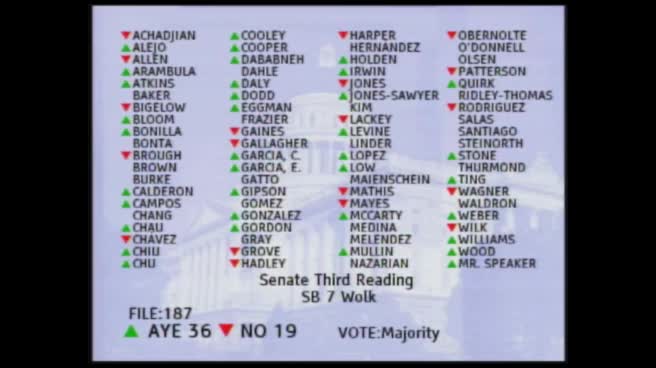 1MIN
Assembly Floor
 2MIN
Senate Floor
 2MIN
Senate Standing Committee on Appropriations
 14MIN
Senate Standing Committee on Energy, Utilities and Communications
 1MIN
Assembly Floor
 4MIN
Assembly Standing Committee on Appropriations
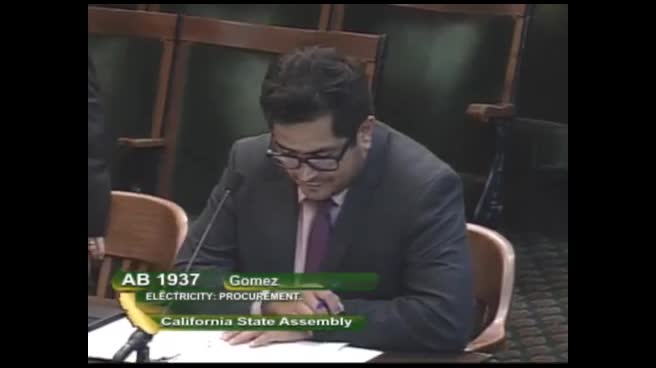 18MIN
Assembly Standing Committee on Natural Resources
 29MIN
Assembly Standing Committee on Utilities and Commerce


Bill Co-Author(s):