AB 2016: Pupil instruction: ethnic studies.
- Session Year: 2015-2016
- House: Assembly
- Latest Version Date: 2016-09-13
Existing law requires the adopted course of study for grades 7 to 12, inclusive, to include, among other subjects, the social sciences. Existing law requires the State Board of Education, with the assistance of the Superintendent of Public Instruction, to establish a list of textbooks and other instructional materials that highlight the contributions of minorities in the development of California and the United States. Existing law establishes the Instructional Quality Commission and requires the commission to, among other things, recommend curriculum frameworks to the state board.
This bill would require the Instructional Quality Commission to develop, and the state board to adopt, modify, or revise, a model curriculum in ethnic studies, and would encourage each school district and charter school that maintains any of grades 9 to 12, inclusive, that does not otherwise offer a standards-based ethnic studies curriculum to offer a course of study in ethnic studies based on the model curriculum.
Existing law requires the adopted course of study for grades 7 to 12, inclusive, to include, among other subjects, the social sciences. Existing law requires the State Board of Education, with the assistance of the Superintendent of Public Instruction, to establish a list of textbooks and other instructional materials that highlight the contributions of minorities in the development of California and the United States. Existing law establishes the Instructional Quality Commission and requires the commission to, among other things, recommend curriculum frameworks to the state board.
This bill would require the Instructional Quality Commission to develop, and for the state board to adopt, a model curriculum in ethnic studies, and would require encourage each school district and charter school that maintains any of grades 9 to 12, inclusive, that does not otherwise offer a standards-based ethnic studies curriculum to offer a course of study in ethnic studies based on the model curriculum. By imposing new duties on school districts and charter schools, the bill would impose a state-mandated local program.
The California Constitution requires the state to reimburse local agencies and school districts for certain costs mandated by the state. Statutory provisions establish procedures for making that reimbursement.
This bill would provide that, if the Commission on State Mandates determines that the bill contains costs mandated by the state, reimbursement for those costs shall be made pursuant to these statutory provisions.
Existing law requires the adopted course of study for grades 7 to 12, inclusive, to include, among other subjects, the social sciences. Existing law requires the State Board of Education, with the assistance of the Superintendent of Public Instruction, to establish a list of textbooks and other instructional materials that highlight the contributions of minorities in the development of California and the United States. Existing law establishes the Instructional Quality Commission and requires the commission to, among other things, recommend curriculum frameworks to the state board.
This bill would require the Superintendent to oversee the development of, and the state board to adopt, a model curriculum to ensure quality courses in ethnic studies. The bill would require the Instructional Quality Commission to advise, assist, and make recommendations to the Superintendent regarding the development of the model curriculum. The bill would, beginning the school year following the adoption of the model curriculum, require each school district maintaining any of grades 9 to 12, inclusive, that does not otherwise offer a standards-based ethnic studies curriculum, to offer, as an elective in the social sciences, a course of study in ethnic studies based on the model curriculum. Instructional Quality Commission to develop, and for the state board to adopt, a model curriculum in ethnic studies, and would require each school district and charter school that maintains any of grades 9 to 12, inclusive, that does not otherwise offer a standards-based ethnic studies curriculum to offer a course of study in ethnic studies based on the model curriculum. By imposing new duties on school districts, districts and charter schools, the bill would impose a state-mandated local program.
The California Constitution requires the state to reimburse local agencies and school districts for certain costs mandated by the state. Statutory provisions establish procedures for making that reimbursement.
This bill would provide that, if the Commission on State Mandates determines that the bill contains costs mandated by the state, reimbursement for those costs shall be made pursuant to these statutory provisions.
Existing law requires the adopted course of study for grades 7 to 12, inclusive, to include, among other subjects, the social sciences. Existing law requires the State Board of Education, with the assistance of the Superintendent of Public Instruction, to establish a list of textbooks and other instructional materials that highlight the contributions of minorities in the development of California and the United States. Existing law establishes the Instructional Quality Commission and requires the commission to, among other things, recommend curriculum frameworks to the state board.
This bill would require the Superintendent to oversee the development of, and the state board to adopt, a model curriculum to ensure quality courses in ethnic studies. The bill would require the Instructional Quality Commission to advise, assist, and make recommendations to the Superintendent regarding the development of the model curriculum. The bill would, beginning the school year following the adoption of the model curriculum, require each school district maintaining any of grades 9 to 12, inclusive, that does not otherwise offer a standards-based ethnic studies curriculum, to offer, as an elective in the social sciences, a course of study in ethnic studies based on the model curriculum. By imposing new duties on school districts, the bill would impose a state-mandated local program.
The California Constitution requires the state to reimburse local agencies and school districts for certain costs mandated by the state. Statutory provisions establish procedures for making that reimbursement.
This bill would provide that, if the Commission on State Mandates determines that the bill contains costs mandated by the state, reimbursement for those costs shall be made pursuant to these statutory provisions.
The Legislature finds and declares all of the following:
(a)The State of California is committed to providing excellent educational opportunities to all of its pupils.
(b)There are 92 languages other than English spoken throughout the state, with the primary languages being Arabic, Armenian, Cantonese, Korean, Russian, Spanish, Tagalog, and Vietnamese.
(c)There is a growing body of academic research that shows the importance of culturally meaningful and relevant curriculum.
(d)Based on the National Education Association (NEA) publication, The Academic and Social Value of Ethnic Studies, the inclusion of ethnic studies in a curriculum has a positive impact on pupils of color.
(e)Ethnic studies benefit pupils in observable ways, such as pupils becoming more academically engaged, increasing their performance on academic tests, improving their graduation rates, and developing a sense of self-efficacy and personal empowerment.
(f)The states educational standards should be guided by core values of equity, inclusiveness, and universally high expectations.
(g)The state is committed to its efforts to provide all pupils with excellent educational opportunities, without regard to race, gender, ethnicity, nationality, income, sexual orientation, or disability.
(h)The state is committed to its obligation to ensure its youth are college prepared and career ready, while graduating 100 percent of its pupils.
(i)The implementation of various ethnic studies courses within Californias curriculum that are A-G approved, with the objective of preparing pupils to be global citizens with an appreciation for the contributions of multiple cultures, will close the achievement gap, reduce pupil truancy, increase pupil enrollment, reduce dropout rates, and increase graduation rates.
(j)The state encourages the participation of pupils and members of the community in the development of an ethnic studies model curriculum.
SEC. 2.Section 51226.7 is added to the Education Code, to read:51226.7.(a)The Instructional Quality Commission shall develop, and the state board shall adopt, modify, or revise, a model curriculum in ethnic studies to ensure quality courses of study in ethnic studies. The model curriculum shall be developed with participation from faculty of ethnic studies programs at universities and colleges with ethnic studies programs and a group of representatives of local educational agencies, a majority of whom are kindergarten to grade 12, inclusive, teachers who have relevant experience or education background in the study and teaching of ethnic studies.
(b)The model curriculum shall be written as a guide to allow school districts to adapt their courses to reflect the pupil demographics in their communities. The model curriculum shall include examples of courses offered by local educational agencies that have been approved as meeting the A-G admissions requirements of the University of California and the California State University, including, to the extent possible, course outlines for those courses.
(c)On or before December 31, 2019, the Instructional Quality Commission shall submit the model curriculum to the state board for adoption, and the state board shall adopt the model curriculum on or before March 31, 2020.
(d)The Instructional Quality Commission shall provide a minimum of 45 days for public comment before submitting the model curriculum to the state board.
(e)Beginning in the school year following the adoption of the model curriculum pursuant to subdivision (a), each school district or charter school maintaining any of grades 9 to 12, inclusive, that does not otherwise offer a standards-based ethnic studies curriculum is encouraged to offer to all otherwise qualified pupils a course of study in ethnic studies based on the model curriculum. A school district or charter school that elects to offer a course of study in ethnic studies pursuant to this subdivision shall offer the course as an elective in the social sciences or English language arts and shall make the course available in at least one year during a pupils enrollment in grades 9 to 12, inclusive.
(f)It is the intent of the Legislature that local educational agencies submit course outlines for ethnic studies for approval as A-G courses.
The Legislature finds and declares all of the following:
(a)The State of California is committed to providing excellent educational opportunities to all of its pupils.
(b)There are 92 languages other than English spoken throughout the state, with the primary languages being Arabic, Armenian, Cantonese, Korean, Russian, Spanish, Tagalog, and Vietnamese.
(c)There is a growing body of academic research that shows the importance of culturally meaningful and relevant curriculum.
(d)Based on the National Education Association (NEA) publication, The Academic and Social Value of Ethnic Studies, the inclusion of ethnic studies in a curriculum has a positive impact on pupils of color.
(e)Ethnic studies benefit pupils in observable ways, such as pupils becoming more academically engaged, increasing their performance on academic tests, improving their graduation rates, and developing a sense of self-efficacy and personal empowerment.
(f)The states educational standards should be guided by core values of equity, inclusiveness, and universally high expectations.
(g)The state is committed to its efforts to provide all pupils with excellent educational opportunities, without regard to race, gender, ethnicity, nationality, income, sexual orientation, or disability.
(h)The state is committed to its obligation to ensure its youth are college prepared and career ready, while graduating 100 percent of its pupils.
(i)The implementation of various ethnic studies courses within Californias curriculum that are A-G approved, with the objective of preparing pupils to be global citizens with an appreciation for the contributions of multiple cultures, will close the achievement gap, reduce pupil truancy, increase pupil enrollment, reduce dropout rates, and increase graduation rates.
(j)The state should support and work with the Commission on Teacher Credentialing, California State University teaching credential programs, and other relevant parties in establishing a single subject ethnic studies credential. The state should also support efforts in recruiting, training, and retaining teachers who have relevant experience and educational background in the study and teaching of ethnic studies.
(j)The state encourages the participation of pupils and members of the community in the development of an ethnic studies model curriculum.
SEC. 2.Section 51226.7 is added to the Education Code, to read:51226.7.(a)The Instructional Quality Commission shall develop, and the state board shall adopt, modify, or revise, a model curriculum in ethnic studies to ensure quality courses of study in ethnic studies. The model curriculum shall be developed with participation from faculty of ethnic studies programs at universities and colleges with ethnic studies programs and a group of representatives of local educational agencies, a majority of whom are kindergarten to grade 12, inclusive, teachers who have relevant experience or education background in the study and teaching of ethnic studies.
(b)The model curriculum shall be written as a guide to allow school districts to adapt their courses to reflect the pupil demographics in their communities. The model curriculum shall include examples of courses offered by local educational agencies that have been approved as meeting the A-G admissions requirements of the University of California and the California State University, including, to the extent possible, course outlines for those courses.
(c)On or before June 30, December 31, 2019, the Instructional Quality Commission shall submit the model curriculum to the state board for adoption, and the state board shall adopt the model curriculum on or before November 30, 2019. March 31, 2020.
(d)The Instructional Quality Commission shall provide a minimum of 45 days for public comment before submitting the model curriculum to the state board.
(e)Beginning in the school year following the adoption of the model curriculum pursuant to subdivision (a), each school district or charter school maintaining any of grades 9 to 12, inclusive, that does not otherwise offer a standards-based ethnic studies curriculum is encouraged to offer to all otherwise qualified pupils a course of study in ethnic studies based on the model curriculum. A school district or charter school that elects to offer a course of study in ethnic studies pursuant to this subdivision shall offer the course as an elective in the social sciences or English language arts and shall make the course available in at least one year during a pupils enrollment in grades 9 to 12, inclusive.
(f)It is the intent of the Legislature that local educational agencies submit course outlines for ethnic studies for approval as A-G courses.
The Legislature finds and declares all of the following:
(a)The State of California is committed to providing excellent educational opportunities to all of its pupils.
(b)There are 92 languages other than English spoken throughout the state, with the primary languages being Arabic, Armenian, Cantonese, Korean, Russian, Spanish, Tagalog, and Vietnamese.
(c)There is a growing body of academic research that shows the importance of culturally meaningful and relevant curriculum.
(d)Based on the National Education Association (NEA) publication, The Academic and Social Value of Ethnic Studies, the inclusion of ethnic studies in a curriculum has a positive impact on pupils of color.
(e)Ethnic studies benefit pupils in observable ways, such as pupils becoming more academically engaged, increasing their performance on academic tests, improving their graduation rates, and developing a sense of self-efficacy and personal empowerment.
(f)The states educational standards should be guided by core values of equity, inclusiveness, and universally high expectations.
(g)The state is committed to its efforts to provide all pupils with excellent educational opportunities, without regard to race, gender, ethnicity, nationality, income, sexual orientation, or disability.
(h)The state is committed to its obligation to ensure its youth are college prepared and career ready, while graduating 100 percent of its pupils.
(i)The implementation of various ethnic studies courses within Californias curriculum that are A-G approved, with the objective of preparing pupils to be global citizens with an appreciation for the contributions of multiple cultures, will close the achievement gap, reduce pupil truancy, increase pupil enrollment, reduce dropout rates, and increase graduation rates.
(j)The state should support and work with the Commission on Teacher Credentialing, California State University teaching credential programs, and other relevant parties in establishing a single subject ethnic studies credential. The state should also support efforts in recruiting, training, and retaining teachers who have relevant experience and educational background in the study and teaching of ethnic studies.
SEC. 2.Section 51226.7 is added to the Education Code, to read:51226.7.(a)The Instructional Quality Commission shall develop, and the state board shall adopt, a model curriculum in ethnic studies to ensure quality courses of study in ethnic studies. The model curriculum shall be developed with participation from faculty of ethnic studies programs at universities and colleges with ethnic studies programs and a group of representatives of local educational agencies, of whom a majority of whom are kindergarten to grade 12, inclusive, teachers who have relevant experience or education background in the study and teaching of ethnic studies.
(b)The model curriculum shall be written as a guide to allow school districts to adapt their courses to reflect the pupil demographics in their communities. The curriculum shall include examples of courses offered by local educational agencies which that have been approved as meeting the A-G admissions requirements of the University of California and the California State University, including, to the extent possible, course outlines for those courses.
(c)On or before June 30, 2019, the Instructional Quality Commission shall submit the model curriculum to the state board for adoption, and the state board shall adopt the model curriculum on or before November 30, 2019.
(d)The Instructional Quality Commission shall provide 45 days for public comment before submitting the model curriculum to the state board.
(e)Beginning in the school year following the adoption of the model curriculum pursuant to subdivision (a), each school district or charter school maintaining any of grades 9 to 12, inclusive, that does not otherwise offer a standards-based ethnic studies curriculum shall is encouraged to offer to all otherwise qualified pupils a course of study in ethnic studies based on the model curriculum. The course shall be offered A school district or charter school that elects to offer a course of study in ethnic studies pursuant to this subdivision shall offer the course as an elective in the social sciences or English language arts, arts and shall be make the course available in at least one year during a pupils enrollment in grades 9 to 12, inclusive.
(f)It is the intent of the Legislature that local educational agencies submit course outlines for ethnic studies for approval as A-G courses.
SEC. 3.If the Commission on State Mandates determines that this act contains costs mandated by the state, reimbursement to local agencies and school districts for those costs shall be made pursuant to Part 7 (commencing with Section 17500) of Division 4 of Title 2 of the Government Code.
The Legislature finds and declares all of the following:
(a)The State of California is committed to providing excellent educational opportunities to all of its pupils.
(b)There are 92 languages other than English spoken throughout the state, with the primary languages being Arabic, Armenian, Cantonese, Korean, Russian, Spanish, Tagalog, and Vietnamese.
(c)There is a growing body of academic research that shows the importance of culturally meaningful and relevant curriculum.
(d)Based on the National Education Association (NEA) publication, The Academic and Social Value of Ethnic Studies, the inclusion of ethnic studies in a curriculum has a positive impact on pupils of color.
(e)Ethnic studies benefit pupils in observable ways, such as pupils becoming more academically engaged, increasing their performance on academic tests, improving their graduation rates, and developing a sense of self-efficacy and personal empowerment.
(f)The states educational standards should be guided by core values of equity, inclusiveness, and universally high expectations.
(g)The state is committed to its efforts to provide all pupils with excellent educational opportunities, without regard to race, gender, ethnicity, nationality, income, sexual orientation, or disability.
(h)The state is committed to its obligation to ensure its youth are college prepared and career ready, while graduating 100 percent of its pupils.
(i)The implementation of various ethnic studies courses within Californias curriculum that are A-G approved, with the objective of preparing pupils to be global citizens with an appreciation for the contributions of multiple cultures, will close the achievement gap, reduce pupil truancy, increase pupil enrollment, reduce dropout rates, and increase graduation rates.
(j)The state should support and work with the Commission on Teacher Credentialing, California State University teaching credential programs, and other relevant parties in establishing a single subject ethnic studies credential. The state should also support efforts in recruiting recruiting, training, and retaining teachers who have relevant experience and educational background in the study and teaching of ethnic studies.
SEC. 2.Section 51226.7 is added to the Education Code, to read:51226.7.(a)The Superintendent shall oversee the development of, and the state board shall adopt, a model curriculum to ensure quality courses of study in ethnic studies through partnerships with universities with ethnic studies programs. The model curriculum shall meet the A-G approval requirements of the Regents of the University of California.
(b)On or before the beginning of the 201718 school year, the Instructional Quality Commission shall advise, assist, and make recommendations to the Superintendent regarding the development of the model curriculum pursuant to subdivision (a).
(c)Beginning the school year following the adoption of the model curriculum pursuant to subdivision (a), each school district maintaining any of grades 9 to 12, inclusive, that does not otherwise offer a standards-based ethnic studies curriculum, shall offer to all otherwise qualified pupils in each of those grades, as an elective in the social sciences, a course of study in ethnic studies based on the model curriculum.
51226.7.(a)The Instructional Quality Commission shall develop, and the state board shall adopt, a model curriculum in ethnic studies to ensure quality courses of study in ethnic studies. The model curriculum shall be developed with participation from universities and colleges with ethnic studies programs and a group of representatives of local educational agencies, of whom a majority are kindergarten to grade 12, inclusive, teachers who have relevant experience or education background in the study and teaching of ethnic studies.
(b)The model curriculum shall be written as a guide to allow school districts to adapt their courses to reflect the pupil demographics in their communities. The curriculum shall include examples of courses offered by local educational agencies which have been approved as meeting the A-G admissions requirements of the University of California and the California State University, including, to the extent possible, course outlines for those courses.
(c)On or before June 30, 2019, the Instructional Quality Commission shall submit the model curriculum to the state board for adoption, and the state board shall adopt the model curriculum on or before November 30, 2019.
(d)The Instructional Quality Commission shall provide 45 days for public comment before submitting the model curriculum to the state board.
(e)Beginning in the school year following the adoption of the model curriculum pursuant to subdivision (a), each school district or charter school maintaining any of grades 9 to 12, inclusive, that does not otherwise offer a standards-based ethnic studies curriculum shall offer to all otherwise qualified pupils a course of study in ethnic studies based on the model curriculum. The course shall be offered as an elective in the social sciences or English language arts, and shall be available in at least one year during a pupils enrollment in grades 9 to 12, inclusive.
(f)It is the intent of the Legislature that local educational agencies submit course outlines for ethnic studies for approval as A-G courses.
SEC. 3.If the Commission on State Mandates determines that this act contains costs mandated by the state, reimbursement to local agencies and school districts for those costs shall be made pursuant to Part 7 (commencing with Section 17500) of Division 4 of Title 2 of the Government Code.
The Legislature finds and declares all of the following:
(a)The State of California is committed to providing excellent educational opportunities to all of its pupils.
(b)There are 92 languages other than English spoken throughout the state, with the primary languages being Arabic, Armenian, Cantonese, Korean, Russian, Spanish, Tagalog, and Vietnamese.
(c)There is a growing body of academic research that shows the importance of culturally meaningful and relevant curriculum.
(d)Based on the National Education Association (NEA) publication, The Academic and Social Value of Ethnic Studies, the inclusion of ethnic studies in a curriculum has a positive impact on pupils of color.
(e)Ethnic studies benefit pupils in observable ways, such as pupils becoming more academically engaged, increasing their performance on academic tests, improving their graduation rates, and developing a sense of self-efficacy and personal empowerment.
(f)The states educational standards should be guided by core values of equity, inclusiveness, and universally high expectations.
(g)The state is committed to its efforts to provide all pupils with excellent educational opportunities, without regard to race, gender, ethnicity, nationality, income, sexual orientation, or disability.
(h)The state is committed to its obligation to ensure its youth are college prepared and career ready, while graduating 100 percent of its pupils.
(i)The implementation of various ethnic studies courses within Californias curriculum that are A-G approved, with the objective of preparing pupils to be global citizens with an appreciation for the contributions of multiple cultures, will close the achievement gap, reduce pupil truancy, increase pupil enrollment, reduce dropout rates, and increase graduation rates.
(j)The state should support and work with the Commission on Teacher Credentialing, California State University teaching credential programs, and other relevant parties in establishing a single subject ethnic studies credential. The state should also support efforts in recruiting and retaining teachers who have experience and educational background in the study and teaching of ethnic studies.
SEC. 2.Section 51226.7 is added to the Education Code, to read:51226.7.(a)The Superintendent shall oversee the development of, and the state board shall adopt, a model curriculum to ensure quality courses of study in ethnic studies through partnerships with universities with ethnic studies programs. The model curriculum shall meet the A-G approval requirements of the Regents of the University of California.
(b)On or before the beginning of the 201718 school year, the Instructional Quality Commission shall advise, assist, and make recommendations to the Superintendent regarding the development of the model curriculum pursuant to subdivision (a).
(c)Beginning the school year following the adoption of the model curriculum pursuant to subdivision (a), each school district maintaining any of grades 9 to 12, inclusive, that does not otherwise offer a standards-based ethnic studies curriculum, shall offer to all otherwise qualified pupils in each of those grades, as an elective in the social sciences, a course of study in ethnic studies based on the model curriculum.
SEC. 3.If the Commission on State Mandates determines that this act contains costs mandated by the state, reimbursement to local agencies and school districts for those costs shall be made pursuant to Part 7 (commencing with Section 17500) of Division 4 of Title 2 of the Government Code.
|
Date
|
Status
|
|---|---|
| Jun 2, 2016 | Read third time. Passed. Ordered to the Senate. (Ayes 61. Noes 7.) |
| Sep 13, 2016 | Chaptered by Secretary of State - Chapter 327, Statutes of 2016. |
| Sep 13, 2016 | Approved by the Governor. |
| Aug 30, 2016 | Enrolled and presented to the Governor at 4 p.m. |
| Aug 23, 2016 | Senate amendments concurred in. To Engrossing and Enrolling. (Ayes 60. Noes 13. Page 6144.). |
| Aug 23, 2016 | Senate amendments concurred in. To Engrossing and Enrolling. |
| Aug 17, 2016 | Read third time. Passed. Ordered to the Assembly. (Ayes 32. Noes 5.). |
| Aug 17, 2016 | Read third time. Passed. Ordered to the Assembly. (Ayes 32. Noes 5. Page 5067.). |
| Aug 17, 2016 | Read third time. Passed. Ordered to the Assembly. |
| Aug 17, 2016 | In Assembly. Concurrence in Senate amendments pending. May be considered on or after August 19 pursuant to Assembly Rule 77. |
| Aug 16, 2016 | Read second time and amended. Ordered to third reading. |
| Aug 15, 2016 | From committee: Amend, and do pass as amended. (Ayes 5. Noes 2.) (August 11). |
| Aug 1, 2016 | In committee: Referred to APPR. suspense file. |
| Jun 22, 2016 | From committee: Do pass and re-refer to Com. on APPR. (Ayes 9. Noes 0.) (June 22). Re-referred to Com. on APPR. |
| Jun 9, 2016 | Referred to Com. on ED. |
| Jun 6, 2016 | In Senate. Read first time. To Com. on RLS. for assignment. |
| Feb 16, 2016 | Read first time. To print. |
| Jun 2, 2016 | Read third time. Passed. Ordered to the Senate. (Ayes 61. Noes 7. Page 5171.) |
| Jun 2, 2016 | Read third time. Passed. Ordered to the Senate. |
| Jun 2, 2016 | Read second time. Ordered to third reading. |
| Jun 2, 2016 | Assembly Rule 63 suspended. (Page 5166.) |
| Jun 2, 2016 | Assembly Rule 63 suspended. |
| Jun 1, 2016 | Read second time and amended. Ordered returned to second reading. |
| May 31, 2016 | From committee: Amend, and do pass as amended. (Ayes 14. Noes 1.) (May 27). |
| Apr 27, 2016 | In committee: Set, first hearing. Referred to APPR. suspense file. |
| Apr 25, 2016 | Re-referred to Com. on APPR. |
| Apr 21, 2016 | Read second time and amended. |
| Apr 20, 2016 | From committee: Amend, and do pass as amended and re-refer to Com. on APPR. (Ayes 5. Noes 0.) (April 13). |
| Apr 6, 2016 | In committee: Set, first hearing. Hearing canceled at the request of author. |
| Feb 29, 2016 | Referred to Com. on ED. |
| Feb 17, 2016 | From printer. May be heard in committee March 18. |
|
Date
|
Description
|
Location
|
Votes
|
|
|---|---|---|---|---|
| Aug 23, 2016 | AB 2016 ALEJO Concurrence in Senate Amendments | Assembly Floor |
Passed |
|
| Aug 17, 2016 | Assembly 3rd Reading AB2016 Alejo By Hall | Senate Floor |
Passed |
|
| Aug 11, 2016 | Do pass as amended | Senate Standing Committee on Appropriations |
Passed |
|
| Aug 1, 2016 | Placed on suspense file | Senate Standing Committee on Appropriations |
Passed |
|
| Jun 22, 2016 | Do pass, but first be re-referred to the Committee on [Appropriations] | Senate Standing Committee on Education |
Passed |
|
| Jun 2, 2016 | AB 2016 ALEJO Assembly Third Reading | Assembly Floor |
Passed |
|
| May 27, 2016 | Do pass as amended. | Assembly Standing Committee on Appropriations |
Passed |
|
| Apr 13, 2016 | Do pass as amended and be re-referred to the Committee on [Appropriations] | Assembly Standing Committee on Education |
Passed |
This list shows positions taken on this bill by organizations on the date displayed, which is linked to the original source.
Positions by individuals are not included.
|
Organization
|
Position
|
Date
|
|---|---|---|
| American Association of Blacks in Higher Education | ** Support | Aug 17, 2016 |
| American Federation of State, County and Municipal Employees | ** Support | Aug 17, 2016 |
| Asian Pacific American Legal Center/California Immigrant Policy Center | * Support | Jun 22, 2016 |
| Association of Atrase Educators | * Support | Jun 22, 2016 |
| Association of Raza Educators, Sacramento Chapter | ** Support | Jun 2, 2016 |
| Association of Raza Educators-Sacramento Chapter | ** Support | Aug 17, 2016 |
| California Faculty Association | ** Support | Aug 17, 2016 |
| California Federation Of Teachers | ** Support | Jun 2, 2016 |
| California Immigrant Policy Center | ** Support | Aug 17, 2016 |
| California School Boards Association | ** Support | Aug 17, 2016 |
| California Teachers Association | ** Support | Aug 17, 2016 |
| Ethnic Cities Now Coalition | * Support | Jun 22, 2016 |
| Ethnic Studies Now | ** Support | Jun 2, 2016 |
| George Washington Carver School of Arts and Science | * Support | Jun 22, 2016 |
| League of California Cities Latino Caucus | ** Support | Aug 17, 2016 |
| Los Angeles LGBT Center | ** Support | Aug 17, 2016 |
| Los Angeles Unified School District | ** Support | Aug 17, 2016 |
| Mexican American Legal Defense and Education Fund | ** Support | Aug 17, 2016 |
| National Action Network San Diego | ** Support | Aug 17, 2016 |
| National Association for Ethnic Studies | ** Support | Aug 17, 2016 |
| Sacramento City Unified School District | * Support | Jun 22, 2016 |
| San Francisco Unified School District | ** Support | Aug 17, 2016 |
| SIATech California | ** Support | Aug 17, 2016 |
| u California Right to Life Committee | ** Against | Jun 22, 2016 |
CONCURRENCE IN SENATE AMENDMENTS
CSA1 Bill Id:AB 2016
Author:(Alejo, et al.)
As Amended Ver:August 16, 2016
Majority vote
ASSEMBLY: | 61-7 | (June 2, 2016) | SENATE: | 32-5 | (August 17, 2016) |
Original Committee Reference: ED.
SUMMARY: Requires the Instructional Quality Commission (IQC) to develop, and the State Board of Education (SBE) to adopt, modify, or revise a model curriculum in ethnic studies, and requires that a school district or charter school which elects to offer a course in ethnic studies to offer the course as an elective in the social sciences or English language arts and make the course available in at least one year during each student's enrollment in grades nine to 12.
The Senate amendments:
- Authorize the SBE to modify or revise (in addition to adopt) the model curriculum in ethnic studies.
- Change the date by which the IQC must submit the model curriculum from June 30, 2019 to December 31, 2019, and change the date by which the SBE must adopt the model curriculum from November 30, 2019 to March 31, 2020.
- Allows the IQC to provide more than 45 days for public comment before submitting the model curriculum to the SBE.
FISCAL EFFECT: According to the Senate Appropriations Committee:
- The California Department of Education estimates one-time costs of about $763,000 over two fiscal years ($302,000 in the first year and $461,000 in the second year) to develop the model curriculum as prescribed by this bill, including required examples of courses. These costs would support 2.0 positions, a writer contract, outside curriculum experts, advisory committee meetings, and press editing.
- Local cost pressure to provide ethnic courses based on the model curriculum as expressly encouraged by this bill. To implement a new ethnic studies course, school districts would have to purchase instructional materials and either hire appropriate teachers or provide professional development to existing teachers. These costs would not be reimbursable by the state.
COMMENTS:
Research on academic value of ethnic studies. A review by the National Education Association found that "there is considerable research evidence that well-designed and well-taught ethnic studies curricula have positive academic and social outcomes for students." Another recent analysis found "a consistent, significant, positive relationship between [Mexican American Studies] participation and student academic performance."
A 2016 study from Stanford University (published as a working paper) on the effects of an ethnic studies curriculum piloted in several San Francisco Unified School District (SFUSD) high schools found that assignment to a year-long 9th grade ethnic studies course was associated with an increase of ninth-grade student attendance by 21 percentage points, GPA (grade point average) by 1.4 grade points, and credits earned by 23. The authors conclude that "these surprisingly large effects are consistent with the hypothesis that the course reduced dropout rates and suggest that culturally relevant teaching, when implemented in a supportive, high-fidelity context, can provide effective support to at-risk students." They also note, "the implementation of ethnic studies in SFUSD was, arguably, conducted with a high degree of fidelity, forethought, and planning. In particular, it appeared to draw upon the work of a core group of dedicated teachers, engaging in a regular professional learning community, with outside support from experts in the subject to create and sustain the program. As scholars from a number of disciplines have noted, the effects of such smaller-scale interventions are often very different when the same policies are implemented at scale."
Most social science ethnic studies courses do not meet A-G requirements. This bill requires that the model curriculum include examples of courses offered by schools that have been approved as meeting the A-G admissions requirements of the University of California and the California State University.
According to data reported by the CDE, 8,678 students were enrolled in ethnic studies courses in the 2014-15 school year. Of those, 5,750 students were enrolled in 505 social science ethnic studies courses in 119 schools, and 2,298 students were enrolled in 146 language arts (ethnic literature) courses in 58 schools. 162 of the 505 social science courses were identified as approved University of California/California State University (UC/CSU) A-G courses, while 107 of the 146 language arts courses were approved.
Effect of requirement. This bill does not require each school district and charter school to offer ethnic studies courses, but it does require that if a school district or charter school elects to offer a single course in ethnic studies it make the course available in at least one year during each student's enrollment in grades 9-12. In other words, if school district or charter school chooses to offer any ethnic studies courses it must provide the opportunity for all students to take an ethnic studies courses during high school. It is unclear what effect this might have on school districts' and charter schools' willingness to offer ethnic studies courses, particularly those which do not currently offer such courses.
Trend toward local graduation requirements. Several school districts have recently made completion of a course in ethnic studies a local graduation requirement. Among them are Los Angeles Unified School District (which also resolved that the total number of credits required for graduation would not increase), Montebello Unified School District, El Rancho Unified School District, and Coachella Valley Unified School District. SFUSD has resolved to offer ethnic studies courses at all high schools, and explore making it a graduation requirement in the next five years. The Oakland Unified School District has required all high schools to offer access to ethnic studies courses which confer credit toward graduation and which are A-G approved by the 2018-19 school year.
Analysis Prepared by: Tanya Lieberman / ED. / (916) 319-2087 FN: 0004309
Office of Senate Floor Analyses (916) 651-1520 Fax: (916) 327-4478 | AB |
THIRD READING
Bill No: AB 2016
: 8/16/16 Senate
SENATE EDUCATION COMMITTEE: 9-0, 6/22/16
AYES: Liu, Block, Hancock, Huff, Leyva, Mendoza, Monning, Pan, Vidak
SENATE APPROPRIATIONS COMMITTEE: 5-2, 8/11/16
AYES: Lara, Beall, Hill, McGuire, Mendoza
NOES: Bates, Nielsen
ASSEMBLY FLOOR: 61-7, 6/2/16 - See last page for vote
DIGEST: This bill requires the Instructional Quality Commission (IQC) to develop, and the State Board of Education (SBE) to adopt, a model curriculum in ethnic studies, as specified. The bill also encourages school districts and charter schools to offer an ethnic studies course based on the model curriculum to students in grades 9-12.
Existing law:
- Establishes the IQC, formerly known as the Curriculum Commission, as an advisory body to the SBE. The IQC is an advisory body to the SBE and is responsible for recommending curriculum frameworks, developing criteria for the evaluation of instructional materials, evaluate and recommend adoption of instructional materials. (Education Code § 33530 and § 60204)
- Prohibits the SBE from adopting instructional materials or undertaking the work of the IQC until the 2015-16 school year. (EC § 60200.7)
- Specifically authorizes the SBE to consider the adoption of a revised curriculum framework and evaluation criteria for history-social science. (EC § 60200.8)
- Requires IQC to consider incorporating into the history-social science framework content on specific historical events, including the Armenian, Cambodian, Darfur, and Rwandan genocides and the Great Irish Famine of 1845 to 1850. Existing law also encourages the California Department of Education (CDE) to incorporate into curriculum resources for teachers, age-appropriate materials on the Armenian, Cambodian, Darfur, and Rwandan genocides. (EC § 51226.3)
- Requires the IQC, whenever the history-social science framework is revised, to do all of the following (as appropriate and based on the subject matter of the course):
- Receive input from civics learning experts for purposes of integrating civics learning content, concepts and skills with the standards.
- Consider how civics and history instruction includes the application of that content to develop the competence and skills needed for civic engagement.
- Ensure that voter education information is included in the American government and civics curriculum at the high school level.
- Ensure that specified historical documents are incorporated into the framework. (EC § 33540)
- States legislative intent that when the history-social science framework is revised after January 1, 2015, the IQC consider whether and how to incorporate the College, Career, and Civic Life Framework for Social Studies State Standards into that framework. (EC § 33540)
- Requires the IQC, during the next revision of the history-social science framework, to consider including and recommending for adoption by the SBE, instruction on the election of President Barack Obama and the significance of the United States electing its first African American President. (EC § 33543)
This bill:
- Provides various legislative findings and declarations regarding the importance and benefits of ethnic studies, as specified.
- Requires the IQC to develop, and the SBE to adopt, modify, or revise a model curriculum in ethnic studies to ensure quality courses of study in ethnic studies.
- Provides that the model curriculum shall be developed with participation from faculty of ethnic studies programs at universities and colleges with ethnic studies programs and a group of representatives of local educational agencies (LEAs), a majority of whom are K-12 teachers who have relevant experience or education background in the study and teaching of ethnic studies.
- Requires the model curriculum to be written as a guide to allow school districts to adapt their courses to reflect the pupil demographics in their communities, and for the curriculum to include examples of courses offered by LEAs that have been approved as meeting the A-G admissions requirements of the University of California and the California State University, including, to the extent possible, course outlines for those courses.
- Requires the IQC to submit the model curriculum to the SBE on or before December 31, 2019 and provide a minimum of 45 days for public comment prior to submittal.
- Requires SBE to adopt the model curriculum on or before March 31, 2020.
- Encourages school districts and charter schools for grades 9-12 that do not otherwise offer a standards-based ethnic studies curriculum to offer a course of study in ethnic studies based on the model curriculum beginning in the school year following its adoption. Provides that this course shall be offered as an elective in the social sciences or English language arts and make the course available in at least one year during a pupil’s enrollment in grades 9-12.
- Specifies the intent of the Legislature that LEAs submit course outlines for ethnic studies for approval as A-G courses.
Comments
Need for the bill. According to the author’s office, “given California’s annual increase in diversity, it is especially important that students build knowledge of the various racial and ethnic groups in our state. Expanding the high school curriculum to include ethnic studies will help students relate to historical events and have a better understanding of their own history and history of other neighbors. Learning of the struggles for equality will teach students what it means to be an American.” The author’s office further indicates that “developing ethnic studies programs in public high schools is an integral part of cultivating a classroom environment that is accepting of diverse cultures.”
Current revision of the history-social science framework. Academic content standards define the knowledge, concepts, and skills that students should acquire at each grade level. Curricular frameworks are the blueprint for implementing the standards, and include criteria by which instructional materials are evaluated. The history-social science framework was last adopted in 2005. The revision to the history-social science framework was suspended in July 2009, and subsequently resumed in July 2014. The draft revision was released for field review in September 2014 and generated extensive public comment. The IQC also determined that more subject matter expertise was needed for certain areas, and submitted a budget request for $124,000 to hire experts through an interagency agreement. These events caused significant delays in the production of the revised framework, which was originally scheduled for adoption in May 2015. It is now expected to be adopted in the fall of 2016.
A schedule once existed for the revision and updating of curricular frameworks. That schedule was suspended in 2009 when the prohibition on that process was imposed. Current law continues to reference an eight-year cycle for revisions to frameworks and the adoption of instructional materials. It is likely that the next revision of the history-social science framework will occur in several years.
Similar measure vetoed. AB 101 (Alejo) of 2015 was substantially similar to this bill and was vetoed by Governor Brown, whose message read:
This bill would require the Superintendent of Public Instruction to oversee the development of a model curriculum in ethnic studies for adoption by the State Board of Education.
This bill creates what is essentially a redundant process. The Instructional Quality Commission is in the midst of revising the History-Social Science Framework, which includes guidance on ethnic studies courses.
Creating yet another advisory body specific to ethnic studies would be duplicative and undermine our current curriculum process.
To address the veto message of AB 101, the author has introduced this measure which now requires the IQC to develop the model curriculum, rather than a separate advisory committee.
Is the bill necessary? Current law provides for the IQC to advise on curriculum and instructional materials. In addition, various Education Code provisions already call for the incorporation of curriculum, textbooks and materials which highlight the role and contribution of various ethnic groups in California and United States history, and the existing history social-science framework for grades K-12 identifies ethnic studies as an elective course of study for grades 9-12. Further, several school districts have already made completion of a course in ethnic studies a local graduation requirement, including the Los Angeles Unified School District, Montebello Unified School District, and El Rancho Unified School District. San Francisco Unified School District has resolved to offer ethnic studies courses at all high schools, and explore ways create such a graduation requirement in the next five years. As such, the Senate may wish to consider whether a state prescribed model curriculum in ethnic studies as proposed by this measure is necessary.
According to data reported by the CDE, 8,129 students were enrolled in ethnic studies courses in the 2012-13 school year. Of those, 4,379 students were enrolled in 435 social science ethnic studies courses in 100 schools, and 3,750 students were enrolled in 137 language arts (ethnic literature) courses in 49 schools. However, only 108 of the 435 social science courses and 97 of the 137 language arts courses were identified as approved A-G courses.
Model curriculum. The SPI is required to develop or revise a model curriculum on the life and work of Cesar Chavez and submit the model curriculum to the SBE for adoption. The SPI is required to distribute the model curriculum to each school upon adoption.
The Model Curriculum for Human Rights and Genocide, adopted by the SBE, is to be made available to schools serving grades 7-12 when funding is available, and requires the Model Curriculum to be available on the CDE’s Web site. Ethnic studies courses are taught in different disciplines such as history, social sciences, and literature. For example, Montebello Unified School District offers a history elective called "Mexican American Studies" and an English/Language Arts elective called "African American Literature" while the San Francisco Unified School district offers a social studies elective called "Asian American History."
This bill does not specify the types of courses that are to be included in the model curriculum. Presumably, the advisory committee that the bill proposes to establish would be tasked with this effort which could be challenging given the various disciplines and broad spectrum of courses to choose from.
FISCAL EFFECT: Appropriation: Fiscal Com.: Local:
According to the Senate Appropriations Committee, the CDE estimates one-time costs of about $763,000 over two fiscal years ($302,000 in the first year and $461,000 in the second year) to develop the model curriculum as prescribed by this bill, including required examples of courses. These costs would support 2.0 positions, a writer contract, outside curriculum experts, advisory committee meetings, and press editing.
There would also be local cost pressure to provide ethnic courses based on the model curriculum as expressly encouraged by this bill. To implement a new ethnic studies course, school districts would have to purchase instructional materials and either hire appropriate teachers or provide professional development to existing teachers. These costs would not be reimbursable by the state.
Superintendent of Public Instruction
American Association of Blacks in Higher Education
American Federation of State, County and Municipal Employees
Association of Raza Educators-Sacramento Chapter
California Faculty Association
California Immigrant Policy Center
California School Boards Association
California Teachers Association
League of California Cities Latino Caucus
Los Angeles LGBT Center
Los Angeles Unified School District
Mexican American Legal Defense and Education Fund
National Action Network San Diego
National Association for Ethnic Studies
San Francisco Unified School District
SIATech California
Letters from individuals
OPPOSITION: (Verified 8/12/16)
California Right to Life Committee
ASSEMBLY FLOOR: 61-7, 6/2/16
AYES: Achadjian, Alejo, Arambula, Atkins, Baker, Bloom, Bonilla, Bonta, Brown, Burke, Calderon, Campos, Chang, Chau, Chávez, Chiu, Chu, Cooley, Cooper, Dababneh, Daly, Dodd, Eggman, Frazier, Cristina Garcia, Eduardo Garcia, Gatto, Gipson, Gomez, Gonzalez, Gordon, Gray, Roger Hernández, Holden, Irwin, Jones-Sawyer, Kim, Lackey, Levine, Linder, Lopez, Low, Maienschein, McCarty, Medina, Mullin, Nazarian, O'Donnell, Quirk, Ridley-Thomas, Rodriguez, Salas, Santiago, Mark Stone, Thurmond, Ting, Weber, Wilk, Williams, Wood, Rendon
NOES: Travis Allen, Beth Gaines, Gallagher, Grove, Harper, Jones, Mathis
NO VOTE RECORDED: Bigelow, Brough, Dahle, Hadley, Mayes, Melendez, Obernolte, Olsen, Patterson, Steinorth, Wagner, Waldron
8/16/16 17:33:31
**** END ****
SENATE COMMITTEE ON
Senator Ricardo Lara, Chair
2015 - 2016 Regular Session
AB 2016 (Alejo) - Pupil instruction: ethnic studies
Version: | Policy Vote: |
Urgency: | Mandate: |
Hearing Date: | Consultant: |
*********** ANALYSIS ADDENDUM – SUSPENSE FILE ***********
The following information is revised to reflect amendments
adopted by the committee on August 11, 2016
Bill Summary:
This bill requires the Instructional Quality Commission (Commission) to develop, and the State Board of Education (Board) to adopt, modify, or revise by March 31, 2020 a model curriculum in ethnic studies. This bill encourages school districts or charter schools with grades 9 through 12 to offer an ethnic studies course as an elective based on the model curriculum if they do not already offer a course.
Fiscal Impact:
- The California Department of Education estimates one-time costs of about $763,000 over two fiscal years ($302,000 in the first year and $461,000 in the second year) to develop the model curriculum as prescribed by this bill, including required examples of courses. These costs would support 2.0 positions, a writer contract, outside curriculum experts, advisory committee meetings, and press editing.
- Local cost pressure to provide ethnic courses based on the model curriculum as expressly encouraged by this bill. To implement a new ethnic studies course, school districts would have to purchase instructional materials and either hire appropriate teachers or provide professional development to existing teachers. These costs would not be reimbursable by the state.
Author Amendments:
- Delays the deadlines by which the Commission is required to submit the model curriculum to the Board and for the Board to adopt the model curriculum.
- Clarifies that the Board may modify or revise, in addition to adopt, a model curriculum developed by the Commission.
- Expands legislative findings and declarations to encourage the participation of students and members of the community in the development of the ethnic studies model curriculum.
Committee Amendments:
Deletes legislative findings and declarations that the state should support and work with the Commission on Teacher Credentialing, California State University teaching programs, and other relevant parties in establishing a single subject ethnic studies credential.
-- END --
SENATE COMMITTEE ON
Senator Ricardo Lara, Chair
2015 - 2016 Regular Session
AB 2016 (Alejo) - Pupil instruction: ethnic studies
Version: | Policy Vote: |
Urgency: | Mandate: |
Hearing Date: | Consultant: |
This bill meets the criteria for referral to the Suspense File.
Bill Summary:
This bill requires the Instructional Quality Commission (Commission) to develop, and the State Board of Education (Board) to adopt by November 30, 2019 a model curriculum in ethnic studies. This bill encourages school districts or charter schools with grades 9 through 12 to offer an ethnic studies course as an elective based on the model curriculum if they do not already offer a course.
Fiscal Impact:
- The California Department of Education estimates one-time costs of about $763,000 over two fiscal years ($302,000 in the first year and $461,000 in the second year) to develop the model curriculum as prescribed by this bill, including required examples of courses. These costs would support 2.0 positions, a writer contract, outside curriculum experts, advisory committee meetings, and press editing.
- Local cost pressure to provide ethnic courses based on the model curriculum as expressly encouraged by this bill. To implement a new ethnic studies course, school districts would have to purchase instructional materials and either hire appropriate teachers or provide professional development to existing teachers. These costs would not be reimbursable by the state.
Background:
Academic content standards define the knowledge, concepts, and skills that students should acquire at each grade level. Curricular frameworks are the blueprint for implementing the standards, and include criteria by which instructional materials are evaluated. The last revision to the history-social science framework was suspended in July 2009, subsequently resumed in July 2014, and has been recently adopted in July of 2016. The approved history-social science framework developed by the Commission, outlines high school elective courses in ethnic studies.
Existing law establishes the Commission as an advisory body to the Board on curriculum and instruction. It is responsible for recommending curriculum frameworks, developing criteria for the evaluation of instructional materials, evaluating and recommending adoption of instructional materials. (Education Code § 33530 and § 60204).
Existing law requires that instruction in social sciences include the early history of California and a study of the role and contributions of both men and women, Native Americans, African Americans, Mexican Americans, Asian Americans, Pacific Islanders, European Americans, lesbian, gay, bisexual, and transgender Americans, people with disabilities, and members of other ethnic and cultural groups, to the economic, political and social development of California and the United States, with particular emphasis on portraying the role of these groups in contemporary society. (Education Code § 51204.5)
The adopted course of study for grades 7-12 must include, among other subjects, social sciences. This instruction is required to provide a foundation for understanding, among other topics, the history, resources, development and government of California and the United States; the relations of people to their human and natural environment; eastern and western cultures and civilizations; and human rights issues. (Education Code § 51220)
Several school districts have made completion of a course in ethnic studies a local graduation requirement, including Los Angeles Unified School District, Montebello Unified School District, and El Rancho Unified School District.
Proposed Law:
This bill requires the Commission to develop by June 30, 2019, and the Board to adopt by November 30, 2019, a model curriculum in ethnic studies to ensure quality courses of study in ethnic studies. The model curriculum is required to be developed with participation from faculty of ethnic programs at universities and colleges and representatives of local educational agencies (LEAs), a majority of whom are teachers that have relevant experience in the study and teaching of ethnic studies.
The model curriculum is required to include examples of courses offered by LEAs that have been approved as meeting the A-G requirements of the University of California (UC) and the California State University (CSU), including to the extent possible, course outlines. A-G requirements are a sequence of high school courses that students must complete to be minimally eligible for admission to the UC and CSU.
This bill encourages, beginning in the school year following the adoption of the model curriculum, each school district or charter school with grades 9 to 12 that does not offer a standards-based ethnic studies curriculum to offer to all qualified students an ethnic studies course based on the model curriculum. A school district or charter school that elects to offer such a ethnic course is required to offer the course as an elective in the social sciences or English language arts and make the course available in at least one year during a student’s enrollment in grades 9 through 12.
Related Legislation:
AB 101 (Alejo, 2015) was similar to this bill and was vetoed by Governor Brown whose message says, in part: “This bill creates what is essentially a redundant process. The Instructional Quality Commission is in the midst of revising the History-Social Science Framework, which includes guidance on ethnic studies courses.”
AB 1750 (Alejo, 2014) would have required the Commission to evaluate existing standards, curricula, programs, and training regarding ethnic studies at the high school level. AB 1750 failed passage in this Committee.
Staff Comments:
Staff notes that the adopted history-social science framework includes an outline of ethnic studies courses as an elective for ninth grade. The framework defines ethnic studies as an interdisciplinary field of study that encompasses many subject areas including history, literature, economics, sociology, anthropology, and political science. It provides that through these studies, students should develop respect for cultural diversity and see the advantages of inclusion.
It is unclear which subject areas the model curriculum would cover, such as Mexican American Studies, African American Literature, or Asian American History. The course described in the curriculum framework is provided as guidance, offering a classroom example, which school districts may adapt to their local contexts and subject areas offered. However, the framework does not include examples of courses offered by LEAs that meet A-G requirements or course outlines as required by this bill.
This bill also includes in its findings and declarations that the state should support and work with the Commission on Teacher Credentialing (CTC), California State University teaching programs, and other relevant parties in establishing a single subject ethnic studies credential. If the state were to create a single subject ethnic studies credential, the CTC would likely need resources to conduct this work. This would also create pressure to create the state academic content standards for the credentialed teachers to teach to as well as the curriculum frameworks and instructional materials that are typically adopted to support the implementation of academic content standards. These activities would require significant state resources.
-- END --
SENATE COMMITTEE ON
Senator , Chair
Bill No:
Author: | |||
Version: | Hearing Date: June 22, 2016 | ||
Urgency: | Fiscal: | ||
Consultant: | |||
Subject:
SUMMARY
This bill requires the Instructional Quality Commission (IQC) to develop, and the State Board of Education (SBE) to adopt, a model curriculum in ethnic studies, as specified. The bill also encourages school districts and charter schools to offer an ethnic studies course based on the model curriculum to students in grades 9-12.
BACKGROUND
Existing law:
- Establishes the IQC, formerly known as the Curriculum Commission, as an advisory body to the SBE. The IQC is an advisory body to the SBE and is responsible for recommending curriculum frameworks, developing criteria for the evaluation of instructional materials, evaluate and recommend adoption of instructional materials. (Education Code § 33530 and § 60204)
- Prohibits the SBE from adopting instructional materials or undertaking the work of the IQC until the 2015-16 school year. (EC § 60200.7)
- Specifically authorizes the SBE to consider the adoption of a revised curriculum framework and evaluation criteria for history-social science. (EC § 60200.8)
- Requires IQC to consider incorporating into the history-social science framework content on specific historical events, including the Armenian, Cambodian, Darfur, and Rwandan genocides and the Great Irish Famine of 1845 to 1850. Existing law also encourages the California Department of Education to incorporate into curriculum resources for teachers, age-appropriate materials on the Armenian, Cambodian, Darfur, and Rwandan genocides. (EC § 51226.3)
- Requires the IQC, whenever the history-social science framework is revised, to do all of the following (as appropriate and based on the subject matter of the course):
- Receive input from civics learning experts for purposes of integrating civics learning content, concepts and skills with the standards.
- Consider how civics and history instruction includes the application of that content to develop the competence and skills needed for civic engagement.
- Ensure that voter education information is included in the American government and civics curriculum at the high school level.
- Ensure that specified historical documents are incorporated into the framework. (EC § 33540)
- Receive input from civics learning experts for purposes of integrating civics learning content, concepts and skills with the standards.
- States legislative intent that when the history-social science framework is revised after January 1, 2015, the Instructional Quality Commission (IQC) consider whether and how to incorporate the College, Career, and Civic Life Framework for Social Studies State Standards into that framework. (EC § 33540)
- Requires the IQC, during the next revision of the history-social science framework, to consider including and recommending for adoption by the State Board of Education (SBE), instruction on the election of President Barack Obama and the significance of the United States electing its first African American President. (EC § 33543)
ANALYSIS
This bill:
- Provides various legislative findings and declarations regarding the importance and benefits of ethnic studies, as specified.
- Requires the IQC to develop, and the SBE to adopt, a model curriculum in ethnic studies to ensure quality courses of study in ethnic studies.
- Provides that the model curriculum shall be developed with participation from faculty of ethnic studies programs at universities and colleges with ethnic studies programs and a group of representatives of local educational agencies (LEAs), a majority of whom are K-12 teachers who have relevant experience or education background in the study and teaching of ethnic studies.
- Requires the model curriculum to be written as a guide to allow school districts to adapt their courses to reflect the pupil demographics in their communities, and for the curriculum to include examples of courses offered by LEAs that have been approved as meeting the A-G admissions requirements of the University of California and the California State University, including, to the extent possible, course outlines for those courses.
- Requires the Instructional Quality Commission to submit the model curriculum to the SBE on or before June 30, 2019 and provide 45 days for public comment prior to submittal.
- Requires SBE to adopt the model curriculum on or before November 30, 2019.
- Encourages school districts and charter schools for grades 9-12 that do not otherwise offer a standards-based ethnic studies curriculum to offer a course of study in ethnic studies based on the model curriculum beginning in the school year following its adoption. Provides that this course shall be offered as an elective in the social sciences or English language arts and make the course available in at least one year during a pupil’s enrollment in grades 9-12.
- Specifies the intent of the Legislature that local educational agencies (LEAs) submit course outlines for ethnic studies for approval as A-G courses.
STAFF COMMENTS
- Need for the bill. According to the author’s office, “given California’s annual increase in diversity, it is especially important that students build knowledge of the various racial and ethnic groups in our state. Expanding the high school curriculum to include ethnic studies will help students relate to historical events and have a better understanding of their own history and history of other neighbors. Learning of the struggles for equality will teach students what it means to be an American.” The author’s office further indicates that “developing ethnic studies programs in public high schools is an integral part of cultivating a classroom environment that is accepting of diverse cultures.”
- Current revision of the history-social science framework. Academic content standards define the knowledge, concepts, and skills that students should acquire at each grade level. Curricular frameworks are the blueprint for implementing the standards, and include criteria by which instructional materials are evaluated. The history-social science framework was last adopted in 2005. The revision to the history-social science framework was suspended in July 2009, and subsequently resumed in July 2014. The draft revision was released for field review in September 2014 and generated extensive public comment. The Instructional Quality Commission (IQC) also determined that more subject matter expertise was needed for certain areas, and submitted a budget request for $124,000 to hire experts through an interagency agreement. These events caused significant delays in the production of the revised framework, which was originally scheduled for adoption in May 2015. It is now expected to be adopted in the fall of 2016.
A schedule once existed for the revision and updating of curricular frameworks. That schedule was suspended in 2009 when the prohibition on that process was imposed. Current law continues to reference an eight-year cycle for revisions to frameworks and the adoption of instructional materials. It is likely that the next revision of the history-social science framework will occur in several years. - Similar measure vetoed. AB 101 (Alejo) of 2015 was substantially similar to this bill and was vetoed by Governor Brown, whose message read:
This bill would require the Superintendent of Public Instruction to oversee the development of a model curriculum in ethnic studies for adoption by the State Board of Education.
This bill creates what is essentially a redundant process. The Instructional Quality Commission is in the midst of revising the History-Social Science Framework, which includes guidance on ethnic studies courses.
Creating yet another advisory body specific to ethnic studies would be duplicative and undermine our current curriculum process.
To address the veto message of AB 101, the author has introduced this measure which now requires the Instructional Quality Commission (IQC) to develop the model curriculum, rather than a separate advisory committee.
- Is the bill necessary? Current law provides for the IQC to advise on curriculum and instructional materials. In addition, various Education Code provisions already call for the incorporation of curriculum, textbooks and materials which highlight the role and contribution of various ethnic groups in California and United States history, and the existing history social-science framework for grades K-12 identifies ethnic studies as an elective course of study for grades 9-12. Further, several school districts have already made completion of a course in ethnic studies a local graduation requirement, including the Los Angeles Unified School District, Montebello Unified School District, and El Rancho Unified School District. San Francisco Unified School District has resolved to offer ethnic studies courses at all high schools, and explore ways create such a graduation requirement in the next five years. As such, the Committee may wish to consider whether a state prescribed model curriculum in ethnic studies as proposed by this measure is necessary.
According to data reported by the California Department of Education (CDE), 8,129 students were enrolled in ethnic studies courses in the 2012-13 school year. Of those, 4,379 students were enrolled in 435 social science ethnic studies courses in 100 schools, and 3,750 students were enrolled in 137 language arts (ethnic literature) courses in 49 schools. However, only 108 of the 435 social science courses and 97 of the 137 language arts courses were identified as approved A-G courses.
- Model curriculum. The Superintendent of Public Instruction (SPI) is required to develop or revise a model curriculum on the life and work of Cesar Chavez and submit the model curriculum to the State Board of Education (SBE) for adoption. The SPI is required to distribute the model curriculum to each school upon adoption.
The Model Curriculum for Human Rights and Genocide, adopted by the SBE, is to be made available to schools serving grades 7-12 when funding is available, and requires the Model Curriculum to be available on the CDE’s Web site.
Ethnic studies courses are taught in different disciplines such as history, social sciences, and literature. For example, Montebello Unified School District offers a history elective called "Mexican American Studies" and an English/Language Arts elective called "African American Literature" while the San Francisco Unified School district offers a social studies elective called "Asian American History."
This bill does not specify the types of courses that are to be included in the model curriculum. Presumably, the advisory committee that the bill proposes to establish would be tasked with this effort which could be challenging given the various disciplines and broad spectrum of courses to choose from.
- A-G requirements. Typically, California high schools submit their courses to the University of California (UC) for A-G review during the annual “A-G” update cycle. There is subject area course criteria that must be met and can include prerequisite work, substantial reading and writing, and laboratory activities. Once approved, the courses are added to the school’s official “A-G” course list maintained by the UC.
- Fiscal impact. According to the Assembly Appropriations Committee, this bill would result in unknown potentially reimbursable Proposition 98/General Fund state mandated costs for certain school districts to offer ethnic studies elective courses to students in grades 9-12. There are approximately 1,400 schools that serve grades 9-12 that do not currently provide ethnic studies courses. Assuming each school must hire one teacher at an average cost of $75,000, statewide costs could exceed $100 million. This estimate does not include additional costs for instructional materials.
- Related and prior legislation.
AB 101 (Alejo, 2015) would have required the Superintendent of Public Instruction (SPI) to oversee the development of a model curriculum in ethnic studies, and establish an advisory committee on ethnic studies to make recommendations on the development of the curriculum. As indicated in Comment No. 3, this bill was vetoed by the Governor.
AB 104 (Committee on Budget, Chapter 13, Statutes of 2015), among other things, imposes a fee on publishers who submit history-social science materials to the State Board of Education (SBE) for consideration.
AB 740 (Weber, 2015) requires the SPI to recommend to the SBE, by January 1, 2017, a schedule for the regular update of academic content standards in all subjects for which standards have been adopted by the SBE. The schedule must be aligned to the current eight-year cycle of curriculum framework updates and instructional materials adoptions. This bill failed passage in the Senate Appropriations Committee.
AB 1750 (Alejo, 2014) would have required the Instructional Quality Commission to evaluate existing standards, curricula, programs, and training regarding ethnic
studies at the high school level. This bill failed passage in the Senate Appropriations Committee.
SB 1214 (Cedillo, 2008) required the SBE to provide for such inclusion when it next revises and adopts the curriculum for the history-social science framework and instructional materials on or after January 1, 2009. SB 1214 was vetoed by the Governor, whose veto message read:
I vetoed a substantively similar bill two years ago on this issue, and I have consistently vetoed legislation that has attempted to mandate specific details or events into areas of instruction. The State Board of Education adopted content standards are developed by a diverse group of experts and are intentionally broad in order to allow coverage of various events, developments, and issues. I continue to believe that the State should establish rigorous standards and frameworks, but refrain from being overly prescriptive in specific school curriculum.
SUPPORT
American Association of Blacks in Higher Education
American Federation of State, County and Municipal Employees
Association of Raza Educators-Sacramento Chapter
California Faculty Association
California Immigrant Policy Center
California School Boards Association
California Teachers Association
League of California Cities Latino Caucus
Los Angeles LGBT Center
Los Angeles Unified School District
Mexican American Legal Defense and Education Fund
National Action Network San Diego
National Association for Ethnic Studies
San Francisco Unified School District
SIATech California
Letters from individuals
OPPOSITION
California Right to Life Committee
-- END --
(Without Reference to File)
ASSEMBLY THIRD READING
ATR Bill Id:AB 2016
Author:(Alejo, et al.)
As Amended Ver:June 1, 2016
Majority vote
Committee | Votes | Ayes | Noes |
Education | 5-0 | O'Donnell, McCarty, Santiago, Thurmond, Weber | |
Appropriations | 14-1 | Gonzalez, Bloom, Bonilla, Bonta, Calderon, Daly, Eggman, Eduardo Garcia, Roger Hernández, Holden, Quirk, Santiago, Weber, Wood | Gallagher |
SUMMARY: Requires the Instructional Quality Commission (IQC) to develop, and the State Board of Education (SBE) to adopt, a model curriculum in ethnic studies, and requires that a school district or charter school which elects to offer a course in ethnic studies to base it on the model curriculum, among other requirements.
- Requires the IQC to develop, and the SBE to adopt, a model curriculum in ethnic studies to ensure quality courses of study in ethnic studies.
- Requires that the be developed with participation from faculty of ethnic studies programs at universities and colleges with ethnic studies programs and a group of representatives of local educational agencies (LEAs), of whom a majority are teachers who have relevant experience or education background in the study and teaching of ethnic studies.
- Requires the model curriculum to:
- Be written as a guide to allow school districts to adapt their courses to reflect the pupil demographics in their communities.
- Include examples of courses offered by local educational agencies which have been approved as meeting the A-G admissions requirements of the University of California and the California State University, including, to the extent possible, course outlines for those courses.
- Requires, on or before June 30, 2019, the IQC to submit the model curriculum to the SBE for adoption, and requires the SBE to shall adopt the model curriculum on or before November 30, 2019.
- Requires the IQC to provide 45 days for public comment before submitting the model curriculum to the SBE.
- Encourages, beginning in the school year following the adoption of the model curriculum, each school district or charter school maintaining any of grades nine to 12, that does not otherwise offer a standards-based ethnic studies curriculum to offer a course in ethnic studies based on the model curriculum.
- Requires school districts and charter schools which elect to offer a course in ethnic studies in grades nine to 12 to offer a course based on the model curriculum as an elective in the social sciences or English language arts, and to make it available in at least one year during a student's enrollment in grades nine to 12.
- States the intent of the Legislature that LEAs submit course outlines for ethnic studies for approval as A-G courses.
FISCAL EFFECT: According to the Assembly Appropriations Committee, General Fund administrative costs of approximately $300,000 in the first year and $460,000 in the second year for the California Department of Education (CDE) to develop a model curriculum framework in ethnic studies. Developing curriculum framework involves an extensive process that would likely take two years to develop and would necessitate contracting with subject matter experts.
COMMENTS:
Need for the bill. The author's office states, "Developing ethnic studies programs in public high schools is an integral part of cultivating a classroom environment that is accepting of diverse cultures. It is vital for young people to learn about their history, but also important for them to feel like they can change their communities in positive ways.
"The National Education Association confirms that ethnic studies have a positive impact on students of color. The Academic and Social Value of Ethnic Studies report indicates that ethnic studies benefits students in observable ways: they became more academically engaged, improve outcomes on academic tests, graduate at higher rates, and develop a sense of self-efficacy and personal empowerment.
An ethnic studies curriculum will help close the achievement gap by reducing student truancy, increasing student enrollment, reduce drop-out rates, and better prepare Californian youth to be college-prepared and career-ready."
Most social science ethnic studies courses do not meet A-G requirements. According to data reported by the CDE, 8,678 students were enrolled in ethnic studies courses in the 2014-15 school year. Of those, 5,750 students were enrolled in 505 social science ethnic studies courses in 119 schools, and 2,298 students were enrolled in 146 language arts (ethnic literature) courses in 58 schools. 162 of the 505 social science courses were identified as approved UC/CSU A-G courses, while 107 of the 146 language arts courses were approved.
Trend toward local ethnic studies graduation requirements. Several school districts have recently made completion of a course in ethnic studies a local graduation requirement. Among them are Los Angeles Unified School District (which also resolved that the total number of credits required for graduation would not increase), Montebello Unified School District, El Rancho Unified School District, and Coachella Valley Unified School District. San Francisco Unified School District (SFUSD) has resolved to offer ethnic studies courses at all high schools, and explore making it a graduation requirement in the next five years. The Oakland Unified School District has required all high schools to offer access to ethnic studies courses which confer credit toward graduation and which are A-G approved by the 2018-19 school year.
Research on academic value of ethnic studies. A review by the National Education Association found that "there is considerable research evidence that well-designed and well-taught ethnic studies curricula have positive academic and social outcomes for students." Another recent analysis found "a consistent, significant, positive relationship between [Mexican American Studies] participation and student academic performance."
A 2016 study from Stanford University (published as a working paper) on the effects of an ethnic studies curriculum piloted in several San Francisco Unified School District (SFUSD) high schools found that assignment to a year-long ninth grade ethnic studies course was associated with an increase of ninth-grade student attendance by 21% points, grade point average (GPA) by 1.4 grade points, and credits earned by 23. The authors conclude that "these surprisingly large effects are consistent with the hypothesis that the course reduced dropout rates and suggest that culturally relevant teaching, when implemented in a supportive, high-fidelity context, can provide effective support to at-risk students." They also note, "the implementation of ethnic studies in SFUSD was, arguably, conducted with a high degree of fidelity, forethought, and planning. In particular, it appeared to draw upon the work of a core group of dedicated teachers, engaging in a regular professional learning community, with outside support from experts in the subject to create and sustain the program. As scholars from a number of disciplines have noted, the effects of such smaller-scale interventions are often very different when the same policies are implemented at scale."
Similar bill recently vetoed. AB 101 (Alejo) of this legislative session, which was approved by this Committee on a 6-1 vote, would have required the SPI to oversee the development of a model curriculum in ethnic studies, and would have established an advisory committee on ethnic studies to make recommendations on the development of the curriculum.
This bill creates what is essentially a redundant process. The Instructional Quality Commission is in the midst of revising the History-Social Science Framework, which includes guidance on ethnic studies courses. Creating yet another advisory body specific to ethnic studies would be duplicative and undermine our current curriculum process.
While AB 101 would have established an advisory committee to make recommendations to the SPI on the development of the model curriculum, this bill requires the IQC to make these recommendations. Amendments recommended below would require the IQC to develop the model curriculum.
Analysis Prepared by: Tanya Lieberman / ED. / (916) 319-2087 FN: 0003349
Date of Hearing: April 27, 2016
ASSEMBLY COMMITTEE ON APPROPRIATIONS
Lorena Gonzalez, Chair
ABPCA Bill Id:AB 2016
Author:(Alejo) – As Amended Ver:April 21, 2016
Policy Committee: | Education | Vote: | 5 - 0 |
|
|
Urgency: No State Mandated Local Program: Yes Reimbursable: Yes
SUMMARY:
This bill requires the Instructional Quality Commission (IQC) to develop a model curriculum in ethnic studies. Specifically, this bill:
- Requires the curriculum to be developed with participation from universities and colleges with ethnic studies programs and K-12 teachers who have relevant experience or education background in the study and teaching of ethnic studies.
- Requires the model curriculum to be written as a guide to allow school districts to adapt their courses to reflect the pupil demographics in their communities.
- Requires the model curriculum to include examples of traditional and online courses offered by local education agencies (LEAs) that have been approved as meeting A-G requirements for admission to the University of California and California State University systems.
- Requires the IQC to submit model curriculum, on or before June 30, 2019, and requires the SBE to adopt the curriculum by November 30, 2019. Provides for a 45 day public comment period prior to SBE adoption.
- Requires, beginning the school year following the adoption of the model curriculum, each school district maintaining any of grades 9 to 12, inclusive, that does not otherwise offer a standards-based ethnic studies curriculum, to offer to all otherwise qualified pupils, a course of study in ethnic studies based on the model curriculum as an elective in the social sciences or English language arts.
FISCAL EFFECT:
- Unknown potentially reimbursable Proposition 98/GF state mandated costs for certain school districts to offer ethnic studies elective courses to students in grades 9-12. There are approximately 1,400 schools that serve grades 9-12 that do not currently provide ethnic studies courses. Assuming each school must hire one teacher at an average cost of $75,000, statewide costs could exceed $100 million. This estimate does not include additional costs for instructional materials.
- General Fund administrative costs of approximately $300,000 in the first year and $460,000 in the second year for the California Department of Education (CDE) to develop a model curriculum framework in ethnic studies. Developing curriculum framework involves an extensive process that would likely take two years to develop and would necessitate contracting with subject matter experts.
COMMENTS:
- Purpose. Courses in ethnic studies typically explore the issues of race, ethnicity, and culture, with the goal of preparing all pupils to engage in the responsibilities of citizenship in an increasingly multicultural global society. Given California’s diversity, the author stresses the importance of student's knowledge of the various racial and ethnic groups of our state.
- Background. California curriculum is based on state-adopted content standards. The curriculum frameworks are guidelines for implementing the standards that are developed by the IQC (also referenced in statute as the "commission") and approved by the State Board of Education (SBE). In addition to curriculum development, the Superintendent of Public Instruction can be directed by law to develop model curricula on different topics, such as the life of Cesar Chavez, and human rights and genocide.
The pending history-social science curriculum framework encourages districts to offer ethnic studies courses. Completion of this framework has been delayed over the years due to budget and workload constraints but is now scheduled to be completed by the Fall of 2016.
- Mandated Costs. This bill requires school districts with students in grades 9-12 to offer a course in ethnic studies once one has been adopted by the SBE. Currently, many school districts have made the local decision to offer ethnic studies courses as an elective. Additionally, some districts, including Los Angeles Unified School District, are exceeding the requirements of this bill by not only offering ethnic studies but making completion a graduation requirement. If this bill were to become law, LEAs would likely seek reimbursement from the state for activities they are currently choosing to provide.
- Similar bill vetoed. AB 101 (Alejo) of 2015 was substantially similar to this bill. AB 101 was vetoed by Governor Brown who stated in his message:
This bill creates what is essentially a redundant process. The Instructional Quality Commission is in the midst of revising the History-Social Science Framework, which includes guidance on ethnic studies courses. Creating yet another advisory body specific to ethnic studies would be duplicative and undermine our current curriculum process.
To address the veto message of AB 101, the author is now requiring the IQC to make recommendations for the development of model curriculum, rather than a separate advisory committee.
Analysis Prepared by: Misty Feusahrens / APPR. / (916) 319-2081
Date of Hearing: April 13, 2016
ASSEMBLY COMMITTEE ON EDUCATION
Patrick O'Donnell, Chair
ABPCA Bill Id:AB 2016 (
Author:Alejo) – As Introduced Ver:February 16, 2016
SUBJECT: Pupil instruction: ethnic studies
SUMMARY: Requires the Superintendent of Public Instruction (SPI) to oversee the development of, and the State Board of Education (SBE) to adopt, a model curriculum in ethnic studies. Requires school districts to offer to each student in each of grades 9-12 an elective course in ethnic studies based on the model curriculum. Specifically, this bill:
- Makes findings and declarations relative to the importance of instruction in ethnic studies.
- Requires the SPI to oversee the development of a model curriculum in ethnic studies to ensure quality courses of study in that subject. Requires that the model curriculum be developed through partnerships with universities with ethnic studies programs.
- Requires that the model curriculum meet the A-G approval requirements of the Regents of the University of California.
- Requires the SBE to adopt the model curriculum.
- Requires, on or before the beginning of the 2017-18 school year, the Instructional Quality Commission (IQC) to advise, assist, and made recommendations to the SPI regarding the development of the model curriculum.
- Requires, beginning in the school year following the adoption of the model curriculum, each school district maintaining grades 9-12 to offer to all students in each of those grades an elective course in the social sciences a course in ethnic studies based on the model curriculum.
EXISTING LAW:
- Requires local educational agencies (LEAs) to adopt a course of study for grades 7-12 which includes English, mathematics, science, history-social studies, and other subjects.
- Establishes the IQC and requires, upon request by the SBE, that it make recommendations on courses of study.
- Requires the California Department of Education (CDE) to develop model curricula on a variety of topics, including the life of Cesar Chavez, and human rights and genocide.
FISCAL EFFECT: This bill has been keyed a state mandated local program by the Office of Legislative Counsel.
COMMENTS:
Similar bill recently vetoed. AB 101 (Alejo) of this Session, which was approved by this Committee on a 6-1 vote, would have required the SPI to oversee the development of a model curriculum in ethnic studies, and would have established an advisory committee on ethnic studies to make recommendations on the development of the curriculum.
This bill creates what is essentially a redundant process. The Instructional Quality Commission is in the midst of revising the History-Social Science Framework, which includes guidance on ethnic studies courses. Creating yet another advisory body specific to ethnic studies would be duplicative and undermine our current curriculum process.
While AB 101 would have established an advisory committee to make recommendations to the SPI on the development of the model curriculum, AB 2016 requires the IQC to make these recommendations. Amendments recommended below would require the IQC to develop the model curriculum.
Curriculum, standards, frameworks, and model curricula. California’s public school curriculum is based on content standards in various subjects, including English-Language Arts, Mathematics, Science, History-Social Science, Physical Education, English Language Development, Career Technical Education, Health Education, World Languages, and Visual and Performing Arts. These standards are developed by the IQC through a public process, and are adopted by the SBE.
These standards form the basis of California’s curriculum frameworks. These documents guide the implementation of these standards, and are used to establish criteria for the evaluation of instructional materials for state adoption for grades kindergarten through grade eight. They also guide district selection of instructional materials for grades nine through twelve.
In addition to developing standards in the above subject areas, the SPI is sometimes directed by law to develop model curricula on different topics, such as those on the life of Cesar Chavez, and on human rights and genocide.
Ethnic studies course outlined in draft History-Social Science framework. The draft History-Social Science Framework developed by the IQC describes high school elective courses in ethnic studies as follows:
Ethnic studies is an interdisciplinary field of study that encompasses many subject areas including history, literature, economics, sociology, and political science, among others. In this course, students focus on an in-depth comparative study of the history, politics, culture, contributions, challenges, and current status of ethnic groups in the United States. It is also important for students to learn the national origins of ethnic groups and their transnational linkages. In Ethnic Studies, students examine the process of racial and ethnic formation of ethnic minorities in a variety of contexts: political, legal, social, historical, economic, and cultural. The course concentrates, to a great extent, on the experiences of various ethnic minorities in the United States and the ways in which their experiences were impacted by the issues of race, ethnicity, class, gender, and the interaction among different ethnic groups. Students will also address how individuals within specific ethnic groups think and feel about themselves and their group as it can be represented by literature, memoirs, art, and music. To understand ethnic identity in their local communities, students can volunteer with local community organizations and centers that serve specific ethnic populations.
History-social science framework adoption delayed. The History-Social Science standards currently in use were adopted in 1998, and the most recent framework was published in 2005.
The Curriculum Development and Supplemental Materials Commission (now the IQC) began revising the History-Social Science Framework in January of 2008. A significant amount of the process had been completed (focus groups, selection of evaluation criteria committee members, five drafting meetings) when in 2009 the state’s fiscal emergency halted all work on instructional materials adoptions and framework revisions until the 2013-14 school year (Chapter 2, Statutes of 2009, Fourth Extraordinary Session). That suspension was later extended until the 2015-16 school year (Chapter 7, Statutes of 2011).
The IQC began work again on the revision in July, 2014, and released the draft History-Social Science framework for field review in September, 2014. The draft generated extensive public comment it generated (nearly 700 comments). The IQC also determined that more subject matter expertise was needed certain areas (including some mandated for inclusion by legislation), and submitted a budget request for $124,000 to hire experts through an interagency agreement. The IQC held a second field review for this draft from November, 2015 through February, 2016.
These events have caused significant delays in the production of the revised framework. Originally scheduled for adoption in May, 2015, this framework is now set to be recommended to the SBE by May 2016, with final publication in winter, 2016.
Requirement to offer an elective. This bill requires, beginning in the school year following the adoption of the model curriculum, each school district to offer to all 9-12th grade students an elective course in ethnic studies.
The Legislature sets broad requirements for courses of study and graduation requirements, and authorizes the development of content standards to which instruction and materials are to be aligned, but leaves the decision of which elective courses to offer to local school districts.
School districts can and are offering ethnic studies courses. As noted above, many are exceeding the requirements of this bill by not only offering ethnic studies but making completion a graduation requirement. When the revised History-Social Science framework is approved, districts will be encouraged, by the course outline quoted above, to offer ethnic studies courses.
This Committee has approved many measures authorizing the development of model curricula, including model curricula on the life of Cesar Chavez, human rights and genocide, computer science, career technical education, environmental studies, and financial literacy. These bills typically require the development of a model curriculum, developed by the CDE and adopted by the SBE, and made available to school districts for their voluntary use. The availability of a well-designed, A-G aligned model curriculum could be a valuable resource to those districts offering and requiring ethnic studies, and may further encourage the offering of these courses.
Most social science ethnic studies courses do not meet A-G requirements. According to data reported by the CDE, 8,678 students were enrolled in ethnic studies courses in the 2014-15 school year. Of those, 5,750 students were enrolled in 505 social science ethnic studies courses in 119 schools, and 2,298 students were enrolled in 146 language arts (ethnic literature) courses in 58 schools. 162 of the 505 social science courses were identified as approved UC/CSU A-G courses, while 107 of the 146 language arts courses were approved.
Trend toward local ethnic studies graduation requirements. Several school districts have recently made completion of a course in ethnic studies a local graduation requirement. Among them are Los Angeles Unified School District (which also resolved that the total number of credits required for graduation would not increase), Montebello Unified School District, El Rancho Unified School District, and Coachella Valley Unified School District. San Francisco Unified School District (SFUSD) has resolved to offer ethnic studies courses at all high schools, and explore making it a graduation requirement in the next five years. The Oakland Unified School District has required all high schools to offer access to ethnic studies courses which confer credit toward graduation and which are A-G approved by the 2018-19 school year.
Ethnic studies courses currently offered in social science and English language arts. Ethnic studies courses are taught in different disciplines (often history, social sciences, and literature) and cover varied content (often ethnic-specific).
As of the 2014-15 school year, the Montebello Unified School District offered a history elective called “Mexican American Studies” and an English language arts elective called “African American Literature.” The Oakland Unified School District offered a history-social science elective course titled “African American History,” and Los Angeles Unified School District offered an English language arts course titled “Mexican American Literature.” SFUSD offered a social studies elective called “Asian American History,” a year-long course taught in Chinese titled “Asian American Studies,” as well as a social studies elective titled “Ethnic Studies.”
Research on academic value of ethnic studies. A review by the National Education Association found that “there is considerable research evidence that well-designed and well-taught ethnic studies curricula have positive academic and social outcomes for students.” Another recent analysis found “a consistent, significant, positive relationship between [Mexican American Studies] participation and student academic performance.”
A 2016 study from Stanford University (published as a working paper) on the effects of an ethnic studies curriculum piloted in several SFUSD high schools found that assignment to a year-long 9th grade ethnic studies course was associated with an increase of ninth-grade student attendance by 21 percentage points, GPA by 1.4 grade points, and credits earned by 23. The authors conclude that “these surprisingly large effects are consistent with the hypothesis that the course reduced dropout rates and suggest that culturally relevant teaching, when implemented in a supportive, high-fidelity context, can provide effective support to at-risk students.” They also note, “the implementation of ethnic studies in SFUSD was, arguably, conducted with a high degree of fidelity, forethought, and planning. In particular, it appeared to draw upon the work of a core group of dedicated teachers, engaging in a regular professional learning community, with outside support from experts in the subject to create and sustain the program. As scholars from a number of disciplines have noted, the effects of such smaller-scale interventions are often very different when the same policies are implemented at scale.”
Recommended amendments. Staff recommends the following amendments:
- Clarify that the IQC is to develop the model curriculum. State that the model curriculum shall be developed with participation (instead of partnerships) from universities and colleges with ethnic studies programs, and participation from representatives of LEAs who have relevant experience or education background in the study and teaching of ethnic studies. Require that a majority of those representatives be current classroom teachers.
- Delete the requirement that the model curriculum meet the A-G approval requirements of the UC, and instead require that the model curriculum include examples of courses which meet those requirements, including course outlines, to the extent feasible. State the intent of the Legislature that LEAs submit these courses for A-G approval.
- Change the date by which the model curriculum must be developed to June 30, 2019, and require the SBE to adopt the curriculum by November 30, 2019. Require that the IQC provide 45 days for public comment.
- Specify that the course required to be offered be offered to students in grades 9-12 as an elective in the social sciences or English language arts, and that the requirement is to offer each student an opportunity to take a course in ethnic studies, not that the course has to be offered to every student every year in each of grades 9-12.
- Add charter schools to the requirement to offer ethnic studies courses.
Prior legislation. AB 101 (Alejo) of this Session, which was approved by this Committee on a 6-1 vote, would have required the SPI to oversee the development of a model curriculum in ethnic studies, and would have established an advisory committee on ethnic studies to make recommendations on the development of the curriculum. AB 101 was vetoed by the Governor.
AB 1750 (Alejo) of the 2013-14 Session would have required the IQC to identify a model curriculum on ethnic studies at the high school level. That bill was held in the Senate Appropriations Committee.
AB 2001 (Diaz) of the 2001-02 Session would have required the Curriculum Development and Supplemental Materials Commission (now the IQC) to identify model programs, standards, and curricula for ethnic studies at the high school level. This bill was vetoed by the Governor, who stated that existing law, teacher training, and curriculum already addressed this topic.
REGISTERED SUPPORT / OPPOSITION:
Support
Association of Raza Educators, Sacramento Chapter
California Federation of Teachers
California Immigrant Policy Center
Ethnic Studies Now
Los Angeles LGBT Center
Los Angeles Unified School District
National Action Network San Diego
National Association for Ethnic Studies
San Francisco Unified School District
SIA Tech, California
Several individuals
Opposition
California Right to Life Committee
Analysis Prepared by: Tanya Lieberman / ED. / (916) 319-2087
Discussed in Hearing
 2MIN
Assembly Floor
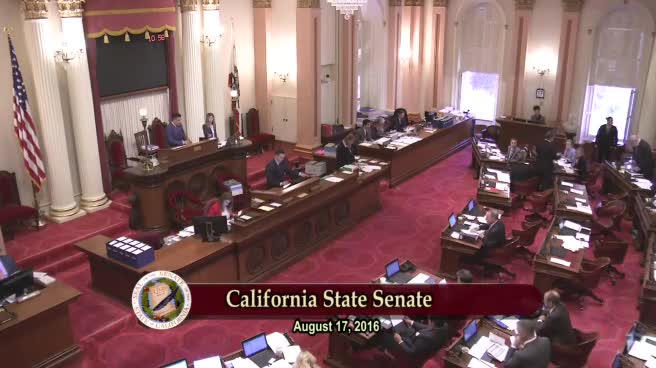 2MIN
Senate Floor
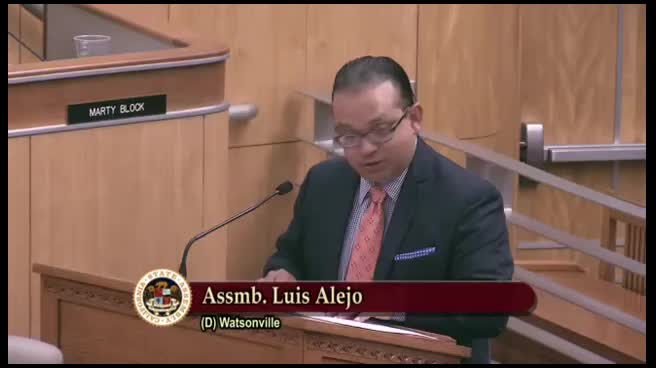 15MIN
Senate Standing Committee on Education
 7MIN
Assembly Floor



Bill Co-Author(s):