AB 2019: Public employment: California State University employees: salary adjustments.
- Session Year: 2015-2016
- House: Assembly
- Latest Version Date: 2016-03-31
Under existing law, the Department of Human Resources sets minimum and maximum salary limits for different classifications of state employees employees, and provides for intermediate steps within those limits to govern the amount of salary adjustment that an employee may receive at any one time. State Bargaining Unit 3 represents teachers, specialists, and librarians working for various state agencies, including specified members of the California Faculty Association who are employed by the California State University system. Existing law establishes the California State University, under the administration of the Trustees of the California State University, as one of the segments of public postsecondary education in this state. Existing law also authorizes the trustees to employ persons in academic, administrative, and nonacademic positions and to provide for their governance in accordance with law.
This bill would declare the policy of the state to provide for intermediate steps of salary adjustments, in an unspecified percentage, for members of the California Faculty Association within State Bargaining Unit 3 that would be based on cost-of-living adjustments tied to the California Consumer Price Index. step increases of 2.65%, or the percentage of the increase, if any, during the period between the intermediate steps, in the California Consumer Price Index For All Urban Consumers, whichever is higher, for salary adjustments for academic employees of the California State University.
Under existing law, the Department of Human Resources sets minimum and maximum salary limits for different classifications of state employees and provides for intermediate steps within those limits to govern the amount of salary adjustment that an employee may receive at any one time. State Bargaining Unit 3 represents teachers, specialists, and librarians working for various state agencies, including specified members of the California Faculty Association who are employed by the California State University system.
This bill would declare the policy of the state to provide for intermediate steps of salary adjustments, in an unspecified percentage, for members of the California Faculty Association within State Bargaining Unit 3 that would be based on cost-of-living adjustments tied to the California Consumer Price Index.
The Legislature finds and declares the following:
(a)From 2004 to 2014, inclusive, while student enrollment in the California State University (CSU) system increased by 24 percent, the numbers of CSU faculty increased by only 14 percent.
(b)Systemwide, over the last decade, the number of tenure-track and tenured faculty fell by 3 percent. While faculty numbers dropped by 338 from 2004 to 2014, the number of students grew by 75,518.
(c)Unlike every other public employee organization in state government, CSU faculty currently do not have a salary schedule.
(d)This lack of a salary schedule has resulted in compression and inversion in faculty salaries.
(e)Between increasing workloads and decreasing renumeration, there are few incentives for university faculty to stay in the profession.
(f)It is a matter of parity for these employees to establish a salary schedule for them in statute.
SEC. 2.Section 19829.2 is added to the Government Code, to read:19829.2.In order for the state to recruit and retain skilled professors, lecturers, librarians, counselors, and coaches for the California State University system, it is the policy of the state to provide for intermediate steps of ____ percent for salary adjustments for members of the California Faculty Association within State Bargaining Unit 3, based on cost-of-living adjustments to the California Consumer Price Index.
SEC. 2.Section 89528.5 is added to the Education Code, to read:89528.5.In order for the state to recruit and retain skilled professors, lecturers, librarians, counselors, and coaches for the California State University system, it is the policy of the state to provide for intermediate step increases of 2.65 percent, or the percentage of the increase, if any, during the period between the intermediate steps, in the California Consumer Price Index For All Urban Consumers, whichever is higher, for salary adjustments for academic employees of the California State University.
The Legislature finds and declares the following:
(a)From 2004 to 2014, inclusive, while student enrollment in the California State University (CSU) system increased by 24 percent, the numbers of CSU faculty increased by only 14 percent.
(b)Systemwide, over the last decade, the number of tenure-track and tenured faculty fell by 3 percent. While faculty numbers dropped by 338 from 2004 to 2014, the number of students grew by 75,518.
(c)Unlike every other public employee organization in state government, CSU faculty currently do not have a salary schedule.
(d)This lack of a salary schedule has resulted in compression and inversion in faculty salaries.
(e)Between increasing workloads and decreasing renumeration, there are few incentives for university faculty to stay in the profession.
(f)It is a matter of parity for these employees to establish a salary schedule for them in statute.
SEC. 2.Section 19829.2 is added to the Government Code, to read:19829.2.In order for the state to recruit and retain skilled professors, lecturers, librarians, counselors, and coaches for the California State University system, it is the policy of the state to provide for intermediate steps of ____ percent for salary adjustments for members of the California Faculty Association within State Bargaining Unit 3, based on cost-of-living adjustments to the California Consumer Price Index.
|
Date
|
Status
|
|---|---|
| Feb 16, 2016 | Read first time. To print. |
| Feb 17, 2016 | From printer. May be heard in committee March 18. |
| Feb 29, 2016 | Referred to Com. on P.E., R., & S.S. |
| Mar 28, 2016 | Re-referred to Com. on HIGHER ED. pursuant to Assembly Rule 96. |
| Mar 31, 2016 | From committee chair, with author's amendments: Amend, and re-refer to Com. on HIGHER ED. Read second time and amended. |
| Apr 4, 2016 | Re-referred to Com. on HIGHER ED. |
| Apr 20, 2016 | From committee: Do pass and re-refer to Com. on APPR. (Ayes 7. Noes 6.) (April 19). Re-referred to Com. on APPR. |
| May 4, 2016 | In committee: Set, first hearing. Referred to APPR. suspense file. |
| May 27, 2016 | In committee: Held under submission. |
|
Date
|
Description
|
Location
|
Votes
|
|
|---|---|---|---|---|
| Apr 19, 2016 | Do pass and be re-referred to the Committee on [Appropriations] | Assembly Standing Committee on Higher Education |
Passed |
This list shows positions taken on this bill by organizations on the date displayed, which is linked to the original source.
Positions by individuals are not included.
|
Organization
|
Position
|
Date
|
|---|---|---|
| Association of California Health Care Districts | * Indeterminate | Jun 20, 2018 |
| Beach Cities Health District | * Support | Jun 20, 2018 |
| California Faculty Association | ** Support | Apr 19, 2016 |
| California News Publishers Association | * Support | Jun 20, 2018 |
| California State University | * Against | Apr 19, 2016 |
| California State University Employees Union (Csueu) | * Support | Apr 19, 2016 |
Date of Hearing: May 4, 2016
ASSEMBLY COMMITTEE ON APPROPRIATIONS
Lorena Gonzalez, Chair
ABPCA Bill Id:AB 2019
Author:(Santiago) – As Amended Ver:March 31, 2016
Policy Committee: | Higher Education | Vote: | 7 - 6 |
Urgency: No State Mandated Local Program: No Reimbursable: No
SUMMARY:
This bill establishes, as the policy of the state, providing intermediate step increases—of 2.65%, or the percentage of the increase, if any, during the period between the intermediate steps, in the California Consumer Price Index (CPI) for All Urban Consumers, whichever is higher—for salary adjustments for academic employees of the California State University (CSU).
FISCAL EFFECT:
At the minimum increase of 2.65%, estimated General Fund costs to provide the MSA in the first year would be $48 million, and would increase about 5% annually thereafter. These increases would be greater in years when the CPI exceeds 2.65%.
COMMENTS:
- Purpose. The sponsor of this bill, the California Faculty Association (CFA), indicates that, in 1945, the Merit Salary Adjustment (MSA) system was created in statute for state civil service employees. The MSA is a 5% annual salary increase for employees below the maximum step of their salary range. The MSA is contingent on satisfactory job performance and is effective on the employee’s anniversary date. CFA argues CSU academic employees should be treated like other state employees and be provided annual salary increases similar to those provided to civil service.
CFA notes that until the early 1990s, faculty pay increases mirrored those provided to state civil service employees, and they received MSAs. In April 1994, however, during collective bargaining, the CSU Trustees proposed that MSAs be replaced with discretionary performance pay. Labor fought this proposal but, after exhausting the statutory impasse procedures of mediation and fact-finding, the CSU unilaterally withdrew steps on April 1, 1996. The MSA was replaced with the Service Salary Increase (SSI). The value of an SSI was cut in half, from 5% to 2.5%. Perhaps more importantly, SSIs are not automatic like MSAs and are awarded only in years when they are funded. As of 2016, the last SSI of 2.65% was granted eight years ago, in 2007-08.
- Recent CSU/CFR Agreement. On April 7, 2016, the CSU/CFA announced a tentative agreement, including all of the following:
- All Faculty Unit Employees on active pay status, or on leave, June 30, 2016, will receive a 5% General Salary Increase;
- All Faculty Unit Employees on active pay status, or on leave, July 1, 2016, will receive a 2% General Salary Increase;
- All Faculty Unit Employees on active pay status, or on leave, July 1, 2017, will receive a 3.5% General Salary Increase;
- There shall be a 2.65% SSI during FY 2017/18 effective on the eligible Faculty Unit Employee’s anniversary date; and,
- Effective July 1, 2016, the minimum increase on promotion shall be increased from 7.5% to 9%, which shall apply to faculty who are promoted through the 2015-2016 promotion cycle and in future Academic Years.
- Opposition. CSU notes it would cost $48 million dollars to implement at a step increase of 2.65%. According to CSU, "without guaranteed funding from the state, AB 2019 would cause the CSU’s budget to erode as it attempted to cover this proposed mandated salary increases to the detriment of the campuses and its students. This drain on the CSU’s budget would be magnified whenever the state budget has to be cut due to downturns in the economy, but CSU would still be required to provide these increases in salaries."
CSU employees are exempt from civil service and are instead covered by the Higher Education Employer-Employee Relations Act (HEERA), which provides a framework to regulate labor relations. Salary terms are a negotiated item in collective bargaining agreements and subject to CSU Board of Trustees approval.
- Comment. This bill would add another category of mandatory costs to CSU's budgeting practice. Meeting such mandatory costs during periods of severe state budget constraints could increase pressure on discretionary parts of CSU's budget, like enrollment levels, and/or increase pressure to raise revenue through higher tuition.
Analysis Prepared by: Chuck Nicol / APPR. / (916) 319-2081
Date of Hearing: April 19, 2016
ASSEMBLY COMMITTEE ON HIGHER EDUCATION
Jose Medina, Chair
ABPCA Bill Id:AB 2019 (
Author:Santiago) – As Amended Ver:March 31, 2016
SUBJECT: Public employment: California State University employees: salary adjustments
SUMMARY: Establishes the policy of the state to provide step increases for academic employees of the California State University (CSU). Specifically, this bill:
- Finds and declares all of the following:
- From 2004 to 2014, inclusive, while student enrollment in CSU increased by 24%, the numbers of CSU faculty increased by only 14%;
- Systemwide, over the last decade, the number of tenure-track and tenured faculty fell by 3%. While faculty numbers dropped by 338 from 2004 to 2014, the number of students grew by 75,518;
- Unlike every other public employee organization in state government, CSU faculty currently does not have a salary schedule;
- This lack of a salary schedule has resulted in compression and inversion in faculty salaries;
- Between increasing workloads and decreasing remuneration, there are few incentives for university faculty to stay in the profession; and,
- It is a matter of parity for these employees to establish a salary schedule for them in statute.
- Provides that, in order for the state to recruit and retain skilled professors, lecturers, librarians, counselors, and coaches for the CSU system, it is the policy of the state to provide for intermediate step increases of 2.65%, or the percentage of the increase, if any, during the period between the intermediate steps, in the California Consumer Price Index For All Urban Consumers, whichever is higher, for salary adjustments for academic employees of CSU.
EXISTING LAW:
- Establishes the CSU governed by the Board of Trustees (Trustees) and provides that that the Trustees are responsible for the rule of government of their appointees and employees (Education Code Section 89500 et seq.).
- Provides that officers and employees of the University of California (UC) and CSU are exempt from civil service (California Constitution, Article VII, Sec. 4(h)).
- Establishes the Higher Education Employer-Employee Relations Act (HEERA) to provide a statutory framework to regulate labor relations at UC, CSU, and Hastings College of Law and their employees; provides the Public Employment Relations Board (PERB) authority to enforce HEERA (Government Code Sec. 3560-3599).
- Requires the CSU Trustees to establish a supplemental salary program and, each fiscal year, (a) identify academic disciplines for which recruiting and retaining faculty has been a problem because of faculty salaries not being competitive, and (b) identify faculty members who shall qualify for participation in the supplemental savings program. Provides that the bargaining agreement shall specify implementation of the plan. Provides that the requirements are only operative in years where the Budget Act appropriates funding for this purpose. (EC Sec. 89528).
FISCAL EFFECT: Unknown.
COMMENTS: Purpose of this bill. The sponsor of this bill is the California Faculty Association (CFA). CFA argues, in 1945, the Merit Salary Adjustment (MSA) system was created in statute for state civil service employees. The MSA is a 5% annual salary increase for employees below the maximum step of their salary range. The MSA is contingent on satisfactory job performance and is effective on the employee’s anniversary date.
CFA notes that up until the early 1990s, faculty pay increases mirrored those provided to state civil service employees, and they received MSAs. In April 1994, however, during collective bargaining, the CSU Trustees proposed that MSAs be replaced with discretionary performance pay. Labor fought this proposal but, after exhausting the statutory impasse procedures of mediation and fact-finding, the CSU unilaterally withdrew steps on April 1, 1996. The MSA was replaced with the Service Salary Increase (SSI). The value of an SSI was cut in half, from 5% to 2.5%. Perhaps more importantly, SSIs are not automatic like MSAs and are awarded only in years when they are funded. As of 2016, the last SSI of 2.65% was granted eight years ago, in 2007-08. As new faculty is hired at market rates, they may earn more than experienced faculty, whose salaries have been stagnant.
CSU/CFA agreement. On April 7, 2016, the CSU/CFA tentative agreement was announced. The agreement includes, among other provisions, all of the following:
- All Faculty Unit Employees on active pay status, or on leave, June 30, 2016 will receive a 5% General Salary Increase;
- All Faculty Unit Employees on active pay status, or on leave, July 1, 2016 will receive a 2% General Salary Increase;
- All Faculty Unit Employees on active pay status, or on leave, July 1, 2017 will receive a 3.5% General Salary Increase;
- There shall be a 2.65% SSI during FY 2017/18 effective on the eligible Faculty Unit Employee’s anniversary date; and,
- Effective 07/01/2016, the minimum increase on promotion shall be increased from 7.5% to 9%, which shall apply to faculty who are promoted through the 2015-2016 promotion cycle and in future Academic Years.
CSU funding. According to the CSU, "in 2015-2016, the state fully funded the CSU support budget request for the first time since 2006-2007. The Proposed 2016-2017 CSU Support Budget Request is similar to the 2015-2016 request and will allow the CSU to meet its mandatory cost obligations, fund compensation increases, and grow systemwide student enrollment by three percent, while also dedicating funds to student success and completion priorities. Additionally, significant progress can be made on infrastructure and deferred maintenance needs. However, the governor’s multi-year funding plan only provides a $139.4 million increase in 2016-2017, which will only fund the minimum cost increases required by the CSU and allow for one percent enrollment growth."
In opposing this bill, CSU notes it would cost $48 million dollars to implement at a step increase of 2.65%. According to CSU, "without guaranteed funding from the state, AB 2019 would cause the CSU’s budget to erode as it attempted to cover this proposed mandated salary increases to the detriment of the campuses and its students. This drain on the CSU’s budget would be magnified whenever the state budget has to be cut due to downturns in the economy, but CSU would still be required to provide these increases in salaries."
Purview of the Trustees. CFA argues CSU academic employees should be treated like other state employees and be provided annual salary increases similar to those provided to civil service under the MSA (Government Code Sec. 19832). As previously noted CSU employees are explicitly exempt from civil service and instead covered by the HEERA, which provides a framework to regulate labor relations. Salary terms are a negotiated item in collective bargaining agreements and subject to Trustees approval.
CSU Employees Union. The CSU Employees Union (CSUEU), which represents CSU classified staff, has taken a support if amended position on this bill, arguing that "only two groups of state agency employees to not receive salary step increases: CSU academic employees and CSU classified staff." CSUEU has requested amendments to add classified staff to the scope of the bill, to provide equity with academic employees.
REGISTERED SUPPORT / OPPOSITION:
Support
California Faculty Association (Sponsor)
California Labor Federation
Opposition
California State University
Analysis Prepared by: Laura Metune / HIGHER ED. / (916) 319-3960
Discussed in Hearing
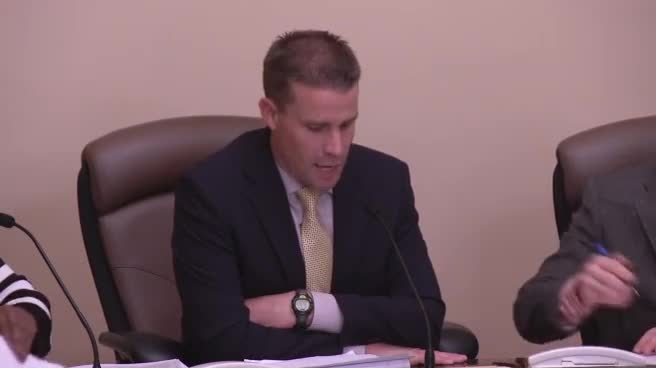 5MIN
Senate Standing Committee on Governance and Finance
 15MIN
Assembly Standing Committee on Higher Education
Bill Author

Bill Co-Author(s):