AB 2027: Victims of crime: nonimmigrant status.
- Session Year: 2015-2016
- House: Assembly
- Latest Version Date: 2016-09-28
Existing federal law provides a Form I-914, Petition for T Nonimmigrant Status (Form I-914) to request temporary immigration benefits for a person who is a victim of certain qualifying criminal activity. Existing federal law also provides a form for certifying that a person submitting a Form I-914 is a victim of human trafficking and a declaration as to cooperation by the person regarding investigating or prosecuting trafficking (Form I-914 Supplement B).
Existing state law establishes certain rights of victims and witnesses of crimes, including, among others, to be notified and to appear at all sentencing proceedings, upon request, to be notified and to appear at parole eligibility hearings, and, for certain offenses, to be notified when a convicted defendant had been ordered placed on probation.
This bill would require, upon request, that an official from a state or local entity certify victim cooperation on the Form I-914 Supplement B declaration, when the requester was a victim of human trafficking and has been cooperative, is being cooperative, or is likely to be cooperative regarding the investigation or prosecution of human trafficking. The bill would establish a rebuttable presumption that a victim is cooperative, has been cooperative, or is likely to be cooperative if the victim has not refused or failed to provide information and assistance reasonably requested by law enforcement. The bill would require the certifying entity to process a Form I-914 Supplement B declaration within 90 days of request, unless the noncitizen is in removal proceedings, in which case the declaration is required to be processed within 14 days of request. The bill would require a certifying entity that receives a request for a Form I-914 Supplement B declaration to report to the Legislature, on or before January 1, 2018, and annually thereafter, the number of victims who requested Form I-914 Supplement B declarations from the entity, the number of those declaration forms that were signed, and the number that were denied.
By imposing additional duties on local government agencies, this bill would impose a state-mandated local program.
The California Constitution requires the state to reimburse local agencies and school districts for certain costs mandated by the state. Statutory provisions establish procedures for making that reimbursement.
This bill would provide that, if the Commission on State Mandates determines that the bill contains costs mandated by the state, reimbursement for those costs shall be made pursuant to these statutory provisions.
Existing federal law provides a Form I-914, Petition for T Nonimmigrant Status (Form I-914) to request temporary immigration benefits for a person who is a victim of certain qualifying criminal activity. Existing federal law also provides a form for certifying that a person submitting a Form I-914 is a victim of human trafficking and a declaration as to cooperation by the person regarding investigating or prosecuting trafficking (Form I-914 Supplement B).
Existing state law establishes certain rights of victims and witnesses of crimes, including, among others, to be notified and to appear at all sentencing proceedings, upon request, to be notified and to appear at parole eligibility hearings, and, for certain offenses, to be notified when a convicted defendant had been ordered placed on probation.
This bill would require, upon request, that an official from a state or local entity certify victim cooperation on the Form I-914 Supplement B declaration, when the requester was a victim of human trafficking and has been cooperative, is being cooperative, or is likely to be cooperative regarding the investigation or prosecution of that human trafficking. The bill would establish a rebuttable presumption that a victim is cooperative, has been cooperative, or is likely to be cooperative if the victim has not refused or failed to provide information and assistance reasonably requested by law enforcement. The bill would require the certifying entity to process a Form I-914 Supplement B declaration within 90 days of request, unless the noncitizen is in removal proceedings, in which case the declaration is required to be processed within 14 days of request. The bill would require a certifying entity that receives a request for a Form I-914 Supplement B declaration to report to the Legislature, on or before January 1, 2018, and annually thereafter, the number of victims who requested Form I-914 Supplement B declarations from the entity, the number of those declaration forms that were signed, and the number that were denied.
By imposing additional duties on local government agencies, this bill would impose a state-mandated local program.
The California Constitution requires the state to reimburse local agencies and school districts for certain costs mandated by the state. Statutory provisions establish procedures for making that reimbursement.
This bill would provide that, if the Commission on State Mandates determines that the bill contains costs mandated by the state, reimbursement for those costs shall be made pursuant to these statutory provisions.
Existing federal law provides a Form I-914, Petition for T Nonimmigrant Status (Form I-914) to request temporary immigration benefits for a person who is a victim of certain qualifying criminal activity. Existing federal law also provides a form for certifying that a person submitting a Form I-914 is a victim of human trafficking and a declaration as to cooperation by the person regarding investigating or prosecuting trafficking (Form I-914 Supplement B).
Existing state law establishes certain rights of victims and witnesses of crimes, including, among others, to be notified and to appear at all sentencing proceedings, upon request, to be notified and to appear at parole eligibility hearings, and, for certain offenses, to be notified when a convicted defendant had been ordered placed on probation.
This bill would require, upon request, that an official from a state or local entity certify victim cooperation on the Form I-914 Supplement B declaration, when the requester was a victim of human trafficking and has been cooperative, is being cooperative, or is likely to be cooperative regarding the investigation or prosecution of that human trafficking. The bill would establish a rebuttable presumption that a victim is cooperative, has been cooperative, or is likely to be cooperative if the victim has not refused or failed to provide information and assistance reasonably requested by law enforcement. The bill would require the certifying entity to process a Form I-914 Supplement B declaration within 90 days of request, unless the noncitizen is in removal proceedings, in which case the declaration is required to be processed within 14 days of request. The bill would require a certifying entity to report to the Legislature, on or before January 1, 2018, and annually thereafter, the number of victims that who requested Form I-914 Supplement B declarations from the entity, the number of those declaration forms that were signed, and the number that were denied.
By imposing additional duties on local government agencies, this bill would impose a state-mandated local program.
The California Constitution requires the state to reimburse local agencies and school districts for certain costs mandated by the state. Statutory provisions establish procedures for making that reimbursement.
This bill would provide that, if the Commission on State Mandates determines that the bill contains costs mandated by the state, reimbursement for those costs shall be made pursuant to these statutory provisions.
Existing federal law provides a Form I-914, Petition for T Nonimmigrant Status (Form I-914) to request temporary immigration benefits for a person who is a victim of certain qualifying criminal activity. Existing federal law also provides a form for certifying that a person submitting a Form I-914 is a victim of certain qualifying criminal activity and certification human trafficking and a declaration as to cooperation by the person regarding investigating or prosecuting trafficking (Form I-914 Supplement B).
Existing state law establishes certain rights of victims and witnesses of crimes, including, among others, to be notified and to appear at all sentencing proceedings, upon request, to be notified and to appear at parole eligibility hearings, and, for certain offenses, to be notified when a convicted defendant had been ordered placed on probation.
This bill would require, upon request, that an official from a state or local entity certify victim cooperation on the Form I-914 Supplement B declaration, when the requester was a victim of criminal activity human trafficking and has been cooperative, is being cooperative, or is likely to be cooperative regarding the investigation or prosecution of that qualifying criminal activity. human trafficking. The bill would establish a rebuttable presumption that a victim is cooperative, has been cooperative, or is likely to be cooperative if the victim has not refused or failed to provide information and assistance reasonably requested by law enforcement. The bill would require the certifying entity to process a Form I-914 Supplement B certification declaration within 90 days of request, unless the noncitizen is in removal proceedings, in which case the certification declaration is required to be processed within 14 days of request. The bill would require a certifying entity to report to the Legislature, on or before January 1, 2018, and annually thereafter, the number of victims that requested Form I-914 Supplement B certifications declarations from the entity, the number of those certification declaration forms that were signed, and the number that were denied.
By imposing additional duties on local government agencies, this bill would impose a state-mandated local program.
The California Constitution requires the state to reimburse local agencies and school districts for certain costs mandated by the state. Statutory provisions establish procedures for making that reimbursement.
This bill would provide that, if the Commission on State Mandates determines that the bill contains costs mandated by the state, reimbursement for those costs shall be made pursuant to these statutory provisions.
Existing federal law provides a Form I-914, Petition for T Nonimmigrant Status (Form I-914) to request temporary immigration benefits for a person who is a victim of certain qualifying criminal activity. Existing federal law also provides a form for certifying that a person submitting a Form I-914 is a victim of certain qualifying criminal activity and certification as to cooperation by the person regarding investigating or prosecuting trafficking (Form I-914 Supplement B).
Existing state law establishes certain rights of victims and witnesses of crimes, including, among others, to be notified and to appear at all sentencing proceedings, upon request, to be notified and to appear at parole eligibility hearings, and, for certain offenses, to be notified when a convicted defendant had been ordered placed on probation.
This bill would require, upon request, that an official from a state or local entity certify victim cooperation on the Form I-914 Supplement B, when the requester was a victim of criminal activity and has been cooperative, is being cooperative, or is likely to be cooperative regarding the investigation or prosecution of that qualifying criminal activity. The bill would establish a rebuttable presumption that a victim is cooperative, has been cooperative, or is likely to be cooperative if the victim has not refused or failed to provide information and assistance reasonably requested by law enforcement. The bill would require the certifying entity to process a Form I-914 Supplement B certification within 90 days of request, unless the noncitizen is in removal proceedings, in which case the certification is required to be processed within 14 days of request. The bill would require a certifying entity to report to the Legislature, on or before January 1, 2018, and annually thereafter, the number of victims that requested Form I-914 Supplement B certifications from the entity, the number of those certification forms that were signed, and the number that were denied.
By imposing additional duties on local government agencies, this bill would impose a state-mandated local program.
The California Constitution requires the state to reimburse local agencies and school districts for certain costs mandated by the state. Statutory provisions establish procedures for making that reimbursement.
This bill would provide that, if the Commission on State Mandates determines that the bill contains costs mandated by the state, reimbursement for those costs shall be made pursuant to these statutory provisions.
(a)For purposes of this section, a certifying entity is any of the following:
(1)A state or local law enforcement agency.
(2)A prosecutor.
(3)A judge.
(4)The Department of Industrial Relations.
(5)Any other state or local government agencies that have criminal, civil, or administrative investigative or prosecutorial authority relating to human trafficking.
(b)For purposes of this section, a certifying official is any of the following:
(1)The head of the certifying entity.
(2)A person in a supervisory role who has been specifically designated by the head of the certifying entity to issue Form I-914 Supplement B declarations on behalf of that agency.
(3)A judge.
(4)Any other certifying official defined under Section 214.14(a)(2) of Title 8 of the Code of Federal Regulations.
(c)Human trafficking means severe forms of trafficking in persons pursuant to Section 7102 of Title 22 of the United States Code and includes either of the following:
(1)Sex trafficking in which a commercial sex act is induced by force, fraud, or coercion, or in which the person induced to perform such act has not attained 18 years of age.
(2)The recruitment, harboring, transportation, provision, or obtaining of a person for labor or services, through the use of force, fraud, or coercion for the purpose of subjection to involuntary servitude, peonage, debt bondage, or slavery.
(d)Human trafficking also includes criminal offenses for which the nature and elements of the offenses are substantially similar to the criminal activity described in subdivision (c), and the attempt, conspiracy, or solicitation to commit any of those offenses.
(e)Upon the request of the victim or victims family member, a certifying official from a certifying entity shall certify victim cooperation on the Form I-914 Supplement B declaration, when the victim was a victim of human trafficking and has been cooperative, is being cooperative, or is likely to be cooperative to the investigation or prosecution of human trafficking.
(f)For purposes of determining cooperation pursuant to subdivision (e), there is a rebuttable presumption that a victim is cooperative, has been cooperative, or is likely to be cooperative to the investigation or prosecution of human trafficking, if the victim has not refused or failed to provide information and assistance reasonably requested by law enforcement.
(g)The certifying official shall fully complete and sign the Form I-914 Supplement B declaration and, regarding victim cooperation, include specific details about the nature of the crime investigated or prosecuted and a detailed description of the victims cooperation or likely cooperation to the detection, investigation, or prosecution of the criminal activity.
(h)A certifying entity shall process a Form I-914 Supplement B declaration within 90 days of request, unless the noncitizen is in removal proceedings, in which case the declaration shall be processed within 14 days of request.
(i)A current investigation, the filing of charges, or a prosecution or conviction is not required for the victim to request and obtain the Form I-914 Supplement B declaration from a certifying official.
(j)A certifying official may only withdraw the certification if the victim refuses to provide information and assistance when reasonably requested.
(k)A certifying entity is prohibited from disclosing the immigration status of a victim or person requesting the Form I-914 Supplement B declaration, except to comply with federal law or legal process, or if authorized by the victim or person requesting the Form I-914 Supplement B declaration.
(l)A certifying entity that receives a request for a Form I-914 Supplement B declaration shall report to the Legislature, on or before January 1, 2018, and annually thereafter, the number of victims who requested Form I-914 Supplement B declarations from the entity, the number of those declaration forms that were signed, and the number that were denied. A report pursuant to this subdivision shall comply with Section 9795 of the Government Code.
SEC. 2.If the Commission on State Mandates determines that this act contains costs mandated by the state, reimbursement to local agencies and school districts for those costs shall be made pursuant to Part 7 (commencing with Section 17500) of Division 4 of Title 2 of the Government Code.
(a)For purposes of this section, a certifying entity is any of the following:
(1)A state or local law enforcement agency.
(2)A prosecutor.
(3)A judge.
(4)The Department of Industrial Relations.
(5)Any other state or local government agencies that have criminal, civil, or administrative investigative or prosecutorial authority relating to human trafficking.
(b)For purposes of this section, a certifying official is any of the following:
(1)The head of the certifying entity.
(2)A person in a supervisory role who has been specifically designated by the head of the certifying entity to issue Form I-914 Supplement B certifications declarations on behalf of that agency.
(3)A judge.
(4)Any other certifying official defined under Section 214.14(a)(2) of Title 8 of the Code of Federal Regulations.
(c)Human trafficking means severe forms of trafficking in persons pursuant to Section 7102 of Title 22 of the United States Code and includes either of the following:
(1)Sex trafficking in which a commercial sex act is induced by force, fraud, or coercion, or in which the person induced to perform such act has not attained 18 years of age.
(2)The recruitment, harboring, transportation, provision, or obtaining of a person for labor or services, through the use of force, fraud, or coercion for the purpose of subjection to involuntary servitude, peonage, debt bondage, or slavery.
(d)Human trafficking also includes criminal offenses for which the nature and elements of the offenses are substantially similar to the criminal activity described in subdivision (c), and the attempt, conspiracy, or solicitation to commit any of those offenses.
(e)Upon the request of the victim or victims family member, a certifying official from a certifying entity shall certify victim cooperation on the Form I-914 Supplement B declaration, when the victim was a victim of human trafficking and has been cooperative, is being cooperative, or is likely to be cooperative to the investigation or prosecution of human trafficking.
(f)For purposes of determining cooperation pursuant to subdivision (e), there is a rebuttable presumption that a victim is cooperative, has been cooperative, or is likely to be cooperative to the investigation or prosecution of human trafficking, if the victim has not refused or failed to provide information and assistance reasonably requested by law enforcement.
(g)The certifying official shall fully complete and sign the Form I-914 Supplement B declaration and, regarding victim cooperation, include specific details about the nature of the crime investigated or prosecuted and a detailed description of the victims cooperation or likely cooperation to the detection, investigation, or prosecution of the criminal activity.
(h)A certifying entity shall process an a Form I-914 Supplement B declaration within 90 days of request, unless the noncitizen is in removal proceedings, in which case the declaration shall be processed within 14 days of request.
(i)A current investigation, the filing of charges, or a prosecution or conviction is not required for the victim to request and obtain the Form I-914 Supplement B declaration from a certifying official.
(j)A certifying official may only withdraw the certification if the victim refuses to provide information and assistance when reasonably requested.
(k)A certifying entity is prohibited from disclosing the immigration status of a victim or person requesting the Form I-914 Supplement B declaration, except to comply with federal law or legal process, to allow prosecutors to comply with their constitutional obligations to provide material evidence to defendants in pending criminal proceedings pursuant to Brady v. Maryland (1963) 373 U.S. 83, or if authorized by the victim or person requesting the Form I-914 Supplement B declaration.
(l)A certifying entity that receives a request for a Form I-914 Supplement B declaration shall report to the Legislature, on or before January 1, 2018, and annually thereafter, the number of victims that who requested Form I-914 Supplement B declarations from the entity, the number of those declaration forms that were signed, and the number that were denied. A report pursuant to this subdivision shall comply with Section 9795 of the Government Code.
SEC. 2.If the Commission on State Mandates determines that this act contains costs mandated by the state, reimbursement to local agencies and school districts for those costs shall be made pursuant to Part 7 (commencing with Section 17500) of Division 4 of Title 2 of the Government Code.
(a)For purposes of this section, a certifying entity is any of the following:
(1)A state or local law enforcement agency.
(2)A prosecutor.
(3)A judge.
(4)The Department of Industrial Relations.
(5)Any other state or local government agencies that have criminal, civil, or administrative investigative or prosecutorial authority relating to human trafficking.
(b)For purposes of this section, a certifying official is any of the following:
(1)The head of the certifying entity.
(2)A person in a supervisory role who has been specifically designated by the head of the certifying entity to issue Form I-914 Supplement B certifications on behalf of that agency.
(3)A judge.
(4)Any other certifying official defined under Section 214.14(a)(2) of Title 8 of the Code of Federal Regulations.
(c)Human trafficking means severe forms of trafficking in persons pursuant to Section 7102 of Title 22 of the United States Code and includes either of the following:
(1)Sex trafficking in which a commercial sex act is induced by force, fraud, or coercion, or in which the person induced to perform such act has not attained 18 years of age.
(2)The recruitment, harboring, transportation, provision, or obtaining of a person for labor or services, through the use of force, fraud, or coercion for the purpose of subjection to involuntary servitude, peonage, debt bondage, or slavery.
(d)Human trafficking also includes criminal offenses for which the nature and elements of the offenses are substantially similar to the criminal activity described in subdivision (c), and the attempt, conspiracy, or solicitation to commit any of those offenses.
(e)Upon the request of the victim or victims family member, a certifying official from a certifying entity shall certify victim cooperation on the Form I-914 Supplement B declaration, when the victim was a victim of human trafficking and has been cooperative, is being cooperative, or is likely to be cooperative to the investigation or prosecution of human trafficking.
(f)For purposes of determining cooperation pursuant to subdivision (e), there is a rebuttable presumption that a victim is cooperative, has been cooperative, or is likely to be cooperative to the investigation or prosecution of human trafficking, if the victim has not refused or failed to provide information and assistance reasonably requested by law enforcement.
(g)The certifying official shall fully complete and sign the Form I-914 Supplement B declaration and, regarding victim cooperation, include specific details about the nature of the crime investigated or prosecuted and a detailed description of the victims cooperation or likely cooperation to the detection, investigation, or prosecution of the criminal activity.
(h)A certifying entity shall process an I-914 Supplement B declaration within 90 days of request, unless the noncitizen is in removal proceedings, in which case the declaration shall be processed within 14 days of request.
(i)A current investigation, the filing of charges, or a prosecution or conviction are is not required for the victim to request and obtain the Form I-914 Supplement B declaration from a certifying official.
(j)A certifying official may only withdraw the certification if the victim refuses to provide information and assistance when reasonably requested.
(k)A certifying entity is prohibited from disclosing the immigration status of a victim or person requesting the Form I-914 Supplement B declaration, except to comply with federal law or legal process, to allow prosecutors to comply with their constitutional obligations to provide material evidence to defendants in pending criminal proceedings pursuant to Brady v. Maryland (1963) 373 U.S. 83, or if authorized by the victim or person requesting the Form I-914 Supplement B declaration.
(l)A certifying entity that receives a request for a Form I-914 Supplemental Supplement B declaration shall report to the Legislature, on or before January 1, 2018, and annually thereafter, the number of victims that requested Form I-914 Form Supplement B declarations from the entity, the number of those declaration forms that were signed, and the number that were denied. A report pursuant to this subdivision shall comply with Section 9795 of the Government Code.
SEC. 2.If the Commission on State Mandates determines that this act contains costs mandated by the state, reimbursement to local agencies and school districts for those costs shall be made pursuant to Part 7 (commencing with Section 17500) of Division 4 of Title 2 of the Government Code.
(a)For purposes of this section, a certifying entity is any of the following:
(1)A state or local law enforcement agency.
(2)A prosecutor.
(3)A judge.
(4)Any other authority that has responsibility for the detection, investigation, or prosecution of a qualifying crime or criminal activity. The Department of Industrial Relations.
(5)Agencies that have criminal detection or investigative jurisdiction in their respective areas of expertise, including, but not limited to, child protective services, the Department of Fair Employment and Housing, and the Department of Industrial Relations. Any other state or local government agencies that have criminal, civil, or administrative investigative or prosecutorial authority relating to human trafficking.
(b)For purposes of this section, a certifying official is any of the following:
(1)The head of the certifying entity.
(2)A person in a supervisory role who has been specifically designated by the head of the certifying entity to issue Form I-914 Supplement B certifications on behalf of that agency.
(3)A judge.
(4)Any other certifying official defined under Section 214.14(a)(2) of Title 8 of the Code of Federal Regulations.
(c)Qualifying criminal activity means qualifying criminal activity pursuant to Section 7102 of Title 22 of the United States Code which means severe forms of trafficking in persons and which Human trafficking means severe forms of trafficking in persons pursuant to Section 7102 of Title 22 of the United States Code and includes either of the following:
(1)Sex trafficking in which a commercial sex act is induced by force, fraud, or coercion, or in which the person induced to perform such act has not attained 18 years of age.
(2)The recruitment, harboring, transportation, provision, or obtaining of a person for labor or services, through the use of force, fraud, or coercion for the purpose of subjection to involuntary servitude, peonage, debt bondage, or slavery.
(d)A qualifying crime Human trafficking also includes criminal offenses for which the nature and elements of the offenses are substantially similar to the criminal activity described in subdivision (c), and the attempt, conspiracy, or solicitation to commit any of those offenses.
(e)Upon the request of the victim or victims family member, a certifying official from a certifying entity shall certify victim cooperation on the Form I-914 Supplement B certification, declaration, when the victim was a victim of a qualifying criminal activity human trafficking and has been cooperative, is being cooperative, or is likely to be cooperative to the investigation or prosecution of that qualifying criminal activity. human trafficking.
(f)For purposes of determining cooperation pursuant to subdivision (e), there is a rebuttable presumption that a victim is cooperative, has been cooperative, or is likely to be cooperative to the investigation or prosecution of that qualifying criminal activity, human trafficking, if the victim has not refused or failed to provide information and assistance reasonably requested by law enforcement.
(g)The certifying official shall fully complete and sign the Form I-914 Supplement B certification declaration and, regarding victim cooperation, include specific details about the nature of the crime investigated or prosecuted and a detailed description of the victims cooperation or likely cooperation to the detection, investigation, or prosecution of the criminal activity.
(h)A certifying entity shall process an I-914 Supplement B certification declaration within 90 days of request, unless the noncitizen is in removal proceedings, in which case the certification declaration shall be processed within 14 days of request.
(i)A current investigation, the filing of charges, or a prosecution or conviction are not required for the victim to request and obtain the Form I-914 Supplement B certification declaration from a certifying official.
(j)A certifying official may only withdraw the certification if the victim refuses to provide information and assistance when reasonably requested.
(k)A certifying entity is prohibited from disclosing the immigration status of a victim or person requesting the Form I-914 Supplement B certification, declaration, except to comply with federal law or legal process, or if authorized by the victim or person requesting the Form I-914 Supplement B certification. declaration.
(l)A certifying entity that receives a request for a Form I-914 Supplemental B certification declaration shall report to the Legislature, on or before January 1, 2018, and annually thereafter, the number of victims that requested Form I-914 Form B certifications declarations from the entity, the number of those certification declaration forms that were signed, and the number that were denied. A report pursuant to this subdivision shall comply with Section 9795 of the Government Code.
SEC. 2.If the Commission on State Mandates determines that this act contains costs mandated by the state, reimbursement to local agencies and school districts for those costs shall be made pursuant to Part 7 (commencing with Section 17500) of Division 4 of Title 2 of the Government Code.
(a)For purposes of this section, a certifying entity is any of the following:
(1)A state or local law enforcement agency.
(2)A prosecutor.
(3)A judge.
(4)Any other authority that has responsibility for the detection, investigation, or prosecution of a qualifying crime or criminal activity.
(5)Agencies that have criminal detection or investigative jurisdiction in their respective areas of expertise, including, but not limited to, child protective services, the Department of Fair Employment and Housing, and the Department of Industrial Relations.
(b)For purposes of this section, a certifying official is any of the following:
(1)The head of the certifying entity.
(2)A person in a supervisory role who has been specifically designated by the head of the certifying entity to issue Form I-914 Supplement B certifications on behalf of that agency.
(3)A judge.
(4)Any other certifying official defined under Section 214.14(a)(2) of Title 8 of the Code of Federal Regulations.
(c)Qualifying criminal activity means qualifying criminal activity pursuant to Section 7102 of Title 22 of the United States Code which means severe forms of trafficking in persons and which includes either of the following:
(1)Sex trafficking in which a commercial sex act is induced by force, fraud, or coercion, or in which the person induced to perform such act has not attained 18 years of age.
(2)The recruitment, harboring, transportation, provision, or obtaining of a person for labor or services, through the use of force, fraud, or coercion for the purpose of subjection to involuntary servitude, peonage, debt bondage, or slavery.
(d)A qualifying crime includes criminal offenses for which the nature and elements of the offenses are substantially similar to the criminal activity described in subdivision (c), and the attempt, conspiracy, or solicitation to commit any of those offenses.
(e)Upon the request of the victim or victims family member, a certifying official from a certifying entity shall certify victim cooperation on the Form I-914 Supplement B certification, when the victim was a victim of a qualifying criminal activity and has been cooperative, is being cooperative, or is likely to be cooperative to the investigation or prosecution of that qualifying criminal activity.
(f)For purposes of determining cooperation pursuant to subdivision (e), there is a rebuttable presumption that a victim is cooperative, has been cooperative, or is likely to be cooperative to the investigation or prosecution of that qualifying criminal activity, if the victim has not refused or failed to provide information and assistance reasonably requested by law enforcement.
(g)The certifying official shall fully complete and sign the Form I-914 Supplement B certification and, regarding victim cooperation, include specific details about the nature of the crime investigated or prosecuted and a detailed description of the victims cooperation or likely cooperation to the detection, investigation, or prosecution of the criminal activity.
(h)A certifying entity shall process an I-914 Supplement B certification within 90 days of request, unless the noncitizen is in removal proceedings, in which case the certification shall be processed within 14 days of request.
(i)A current investigation, the filing of charges, or a prosecution or conviction are not required for the victim to request and obtain the Form I-914 Supplement B certification from a certifying official.
(j)A certifying official may only withdraw the certification if the victim refuses to provide information and assistance when reasonably requested.
(k)A certifying entity is prohibited from disclosing the immigration status of a victim or person requesting the Form I-914 Supplement B certification, except to comply with federal law or legal process, or if authorized by the victim or person requesting the Form I-914 Supplement B certification.
(l)A certifying entity that receives a request for a Form I-914 Supplemental B certification shall report to the Legislature, on or before January 1, 2018, and annually thereafter, the number of victims that requested Form I-914 Form B certifications from the entity, the number of those certification forms that were signed, and the number that were denied. A report pursuant to this subdivision shall comply with Section 9795 of the Government Code.
SEC. 2.If the Commission on State Mandates determines that this act contains costs mandated by the state, reimbursement to local agencies and school districts for those costs shall be made pursuant to Part 7 (commencing with Section 17500) of Division 4 of Title 2 of the Government Code.
|
Date
|
Status
|
|---|---|
| Jun 2, 2016 | In Senate. Read first time. To Com. on RLS. for assignment. |
| Aug 31, 2016 | Enrolled and presented to the Governor at 4 p.m. |
| Aug 24, 2016 | Senate amendments concurred in. To Engrossing and Enrolling. (Ayes 73. Noes 1. Page 6190.). |
| Aug 24, 2016 | Senate amendments concurred in. To Engrossing and Enrolling. |
| Aug 19, 2016 | In Assembly. Concurrence in Senate amendments pending. May be considered on or after August 21 pursuant to Assembly Rule 77. |
| Aug 18, 2016 | Read third time. Passed. Ordered to the Assembly. (Ayes 38. Noes 0.). |
| Aug 18, 2016 | Read third time. Passed. Ordered to the Assembly. (Ayes 38. Noes 0. Page 5121.). |
| Aug 18, 2016 | Read third time. Passed. Ordered to the Assembly. |
| Aug 16, 2016 | Read second time and amended. Ordered to third reading. |
| Aug 15, 2016 | From committee: Amend, and do pass as amended. (Ayes 7. Noes 0.) (August 11). |
| Aug 1, 2016 | In committee: Referred to APPR. suspense file. |
| Aug 1, 2016 | From committee chair, with author's amendments: Amend, and re-refer to committee. Read second time, amended, and re-referred to Com. on APPR. |
| Jun 29, 2016 | From committee: Do pass and re-refer to Com. on APPR. (Ayes 6. Noes 0.) (June 28). Re-referred to Com. on APPR. |
| Jun 9, 2016 | Referred to Com. on PUB. S. |
| Feb 16, 2016 | Read first time. To print. |
| Jun 1, 2016 | Read third time. Passed. Ordered to the Senate. (Ayes 73. Noes 0.) |
| Jun 1, 2016 | Read third time. Passed. Ordered to the Senate. (Ayes 73. Noes 0. Page 5082.) |
| Jun 1, 2016 | Read third time. Passed. Ordered to the Senate. |
| May 27, 2016 | Read second time. Ordered to third reading. |
| May 27, 2016 | From committee: Do pass. (Ayes 17. Noes 0.) (May 27). |
| May 11, 2016 | In committee: Set, first hearing. Referred to APPR. suspense file. |
| Apr 19, 2016 | From committee: Do pass and re-refer to Com. on APPR. (Ayes 9. Noes 0.) (April 19). Re-referred to Com. on APPR. |
| Apr 4, 2016 | Re-referred to Com. on JUD. |
| Mar 31, 2016 | Read second time and amended. |
| Mar 30, 2016 | From committee: Amend, and do pass as amended and re-refer to Com. on JUD. (Ayes 6. Noes 0.) (March 29). |
| Feb 29, 2016 | Referred to Coms. on PUB. S. and JUD. |
| Feb 17, 2016 | From printer. May be heard in committee March 18. |
|
Date
|
Description
|
Location
|
Votes
|
|
|---|---|---|---|---|
| Aug 24, 2016 | AB 2027 QUIRK Concurrence in Senate Amendments | Assembly Floor |
Passed |
|
| Aug 18, 2016 | Assembly 3rd Reading AB2027 Quirk By De León | Senate Floor |
Passed |
|
| Aug 11, 2016 | Do pass as amended | Senate Standing Committee on Appropriations |
Passed |
|
| Aug 1, 2016 | Placed on suspense file | Senate Standing Committee on Appropriations |
Passed |
|
| Jun 28, 2016 | Do pass, but first be re-referred to the Committee on [Appropriations] | Senate Standing Committee on Public Safety |
Passed |
|
| Jun 1, 2016 | AB 2027 QUIRK Assembly Third Reading | Assembly Floor |
Passed |
|
| May 27, 2016 | Do pass. | Assembly Standing Committee on Appropriations |
Passed |
|
| Apr 19, 2016 | Do pass and be re-referred to the Committee on [Appropriations] | Assembly Standing Committee on Judiciary |
Passed |
|
| Mar 29, 2016 | Do pass as amended and be re-referred to the Committee on [Judiciary] | Assembly Standing Committee on Public Safety |
Passed |
This list shows positions taken on this bill by organizations on the date displayed, which is linked to the original source.
Positions by individuals are not included.
|
Organization
|
Position
|
Date
|
|---|---|---|
| American Civil Liberties Union of California | ** Support | Aug 18, 2016 |
| California Police Chiefs Association | * Indeterminate | Jun 28, 2016 |
| California State Sheriffs' Association | ** Against | Aug 18, 2016 |
| Peace Officers Research Association Of California | ** Support | Aug 18, 2016 |
| PUB. S. | ** Against | Mar 29, 2016 |
| Tracking Researcher | * Indeterminate | Jun 28, 2016 |
CONCURRENCE IN SENATE AMENDMENTS
CSA1 Bill Id:AB 2027
Author:(Quirk)
As Amended Ver:August 16, 2016
Majority vote
ASSEMBLY: | 73-0 | (June 1, 2016) | SENATE: | 38-0 | (August 18, 2016) |
Original Committee Reference: PUB. S.
SUMMARY: Requires, upon the request of an immigrant victim of human trafficking, a certifying agency to certify victim cooperation on the applicable form so that the victim may apply for a T-Visa to temporarily live and work in the United States.
The Senate amendments delete a previously inserted Senate amendment.
EXISTING FEDERAL LAW:
- Allows an immigrant to receive a T-visa if the Secretary of Homeland Security determines the following:
- Is or was a victim of a severe form of trafficking in persons (which may include sex or labor trafficking), as defined by federal law;
- Is in the United States, American Samoa, the Commonwealth of the Northern Mariana Islands or at a United States (U.S.) port of entry due to trafficking;
- Has complied with any reasonable request from a law enforcement agency for assistance in the investigation or prosecution of human trafficking; and,
- Would suffer extreme hardship involving unusual and severe harm if removed from the United States.
EXISTING STATE LAW:
- Requires certifying agencies, upon the request of an immigrant victim of crime, to certify victim helpfulness on the applicable form so that he or she may apply for a U-visa.
- Creates a rebuttable presumption that an immigrant victim is helpful, has been helpful, or is likely to be helpful, if the victim has not refused or failed to provide information and assistance reasonably requested by law enforcement.
- Mandates certifying entities to complete the certification within 90 days of the request, except in cases where the applicant is in immigration removal proceedings, in which case the certification must be completed within 14 days of the request.
AS PASSED BY THE ASSEMBLY, this bill:
- Provided that upon a victim or victim's family member's request, a certifying official from a certifying entity shall certify victim cooperation on the Form I-914 Supplement B declaration, when the victim was a victim of human trafficking and has been cooperative, is being cooperative, or is likely to be cooperative with the investigation or prosecution of that crime.
- Created a rebuttable presumption of cooperation if the victim has not refused or failed to provide information and assistance reasonably requested by law enforcement.
- Required the certifying official to fully complete and sign the Form I-914 Supplemental B declaration, and regarding cooperation, include specific details about the nature of the crime investigated or prosecuted, and a detailed description of such cooperation, or likely cooperation.
- Required the certifying agency to process the declaration within 90 days, unless the person is in removal proceedings, in which case it must be processed within 14 days of request.
- Stated that a current investigation, filed charges, or a prosecution, or conviction are not required for the victim to request and obtain the Form I-914 Supplemental B declaration.
- Limited the ability of a certifying official to withdraw the certification to instances where the victim refuses to provide information and assistance when reasonably requested.
- Prohibited a certifying entity from disclosing the immigrant status of a victim or person requesting the Form I-914 Supplemental B declaration, except to comply with federal law or legal process, or upon authorization of the person requesting the declaration.
- Mandated a certifying agency that receives a request for a Form I-914 Supplemental B declaration to report to the Legislature beginning January 1, 2018, and annually thereafter, the following information:
- The number of victims that requested the declarations;
- The number of declarations that were signed; and,
- The number of denials.
- Defined a "certifying entity" as any of the following:
- A state or local law enforcement agency;
- A prosecutor;
- A judge;
- The Department of Industrial Relations; and,
- State or local government agencies that have criminal, civil, or administrative investigative or prosecutorial authority relating to human trafficking.
- Defined a "certifying official" as any of the following:
- The head of the certifying entity;
- A person in a supervisory role who has been specifically designated by the head of the certifying entity to issue Form I-914 Supplement B declarations on behalf of that agency;
- A judge; or
- Any other certifying official defined under specified federal regulations.
- Defined "human trafficking" as "severe forms of trafficking in persons" pursuant to specified federal law and which includes either of the following:
- Sex trafficking in which a commercial sex act is induced by force, fraud, or coercion, or in which the person induced to perform such act has not attained 18 years of age; and,
- The recruitment, harboring, transportation, provision, or obtaining of a person for labor or services, through the use of force, fraud, or coercion for the purpose of subjection to involuntary servitude, peonage, debt bondage, or slavery.
- Stated that "human trafficking" also includes criminal offenses for which the nature and elements of the crime are substantially similar to the criminal activity described above, as well as an attempt, conspiracy, or solicitation to commit those offenses.
FISCAL EFFECT: According to the Senate Appropriations Committee:
- TCVAP benefits: Potentially significant future increase in annual state costs (General Fund) for the Trafficking and Crime Victims Assistance Program (TCVAP), which provides state-funded benefits (including cash assistance, services, child care, and food benefits), to the extent a greater number of victims are able to file formal T Visa applications. Applicants are eligible for TCVAP when a T Visa application has been, or is preparing to be, filed with United States Immigration Services (USCIS) and eligibility continues until and unless a recipient’s application for a T Visa has been finally administratively denied, the recipient has not applied for a T Visa within one year of applying for state benefits, or the victim becomes federally eligible. For every 25 to 50 new cases, annual costs could range from $0.3 million to $0.6 million (General Fund) for grants, services, and administration. Additionally, to the extent existing TCVAP cases remain eligible for program benefits for a longer period of time due to this measure, annual costs would increase cumulatively each year.
- Form I-914 declaration process: Potential costs to state and local agencies defined as certifying entities to implement the expedited process, including completing, signing, and processing Forms I-914B within specified timelines. To the extent the new requirements are determined to place a higher level of service on local agencies than required under federal law, local agency expenditures could qualify as a reimbursable state mandate (General Fund).
- Annual report: Likely minor costs to state and local agencies acting as certifying entities to compile and submit the annual report to the Legislature. To the extent local agency expenditures qualify as a reimbursable state mandate, agencies could only claim reimbursement of costs incurred if $1,000 or more (General Fund).
- State agency certifying entities: Minor ongoing impact to the Department of Industrial Relations and the Department of Justice, as these agencies are already conducting this process for U Visa applicants. The CDCR is projected to incur minor, if any, costs should they be required to act as a certifying entity.
COMMENTS: According to the author, "Human trafficking is a form of modern-day slavery in which traffickers typically lure individuals with false promises of employment and a better life. Victims of severe forms of human trafficking are provided relief under U.S. immigration law by the Victims of Trafficking in Persons nonimmigrant visa, also known as 'T-visa.' This status allows victims of human trafficking to remain in the United States to assist in investigations or prosecutions of human trafficking violators.
"The United States government estimates that each year up to 50,000 people are trafficked illegally into the United States against their will, mostly women and children who are brought as sex slaves.
"The T-Visa provides trafficking victims from foreign countries temporary legal status, with an opportunity to apply for permanent residency and access to federal benefits if they cooperate with law enforcement in the investigations of their traffickers.
"By stabilizing their status in the United States, immigration relief can be critical to providing victims of crime a greater sense of security that also make it easier for them to assist with law enforcement and prosecutorial efforts."
Please see the policy committee analysis for a full discussion of this bill.
Analysis Prepared by: Sandy Uribe / PUB. S. / (916) 319-3744 FN: 0004419
Office of Senate Floor Analyses (916) 651-1520 Fax: (916) 327-4478 | AB |
THIRD READING
Bill No: AB 2027
:
SENATE PUBLIC SAFETY COMMITTEE: 6-0, 6/28/16
AYES: Hancock, Anderson, Glazer, Leno, Liu, Monning
NO VOTE RECORDED: Stone
SENATE APPROPRIATIONS COMMITTEE: 7-0, 8/11/16
AYES: Lara, Bates, Beall, Hill, McGuire, Mendoza, Nielsen
ASSEMBLY FLOOR: 73-0, 6/1/16 - See last page for vote
DIGEST: This bill requires, upon the request of an immigrant victim of human trafficking, a certifying agency to confirm victim cooperation on the applicable form so that the victim may apply for a T-Visa to temporarily live and work in the United States.
Existing federal law allows an immigrant to receive a T-visa if the Secretary of Homeland Security determines the following:
- Is or was a victim of a severe form of trafficking in persons (which may include sex or labor trafficking), as defined by federal law;
- Is in the United States, American Samoa, the Commonwealth of the Northern Mariana Islands or at a U.S. port of entry due to trafficking;
- Has complied with any reasonable request from a law enforcement agency for assistance in the investigation or prosecution of human trafficking; and,
- Would suffer extreme hardship involving unusual and severe harm if removed from the United States. (8 U.S.C. § 1101 (a)(15)(T).)
Existing state law:
1) Requires certifying agencies, upon the request of an immigrant victim of crime, to certify victim helpfulness on the applicable form so that he or she may apply for a U-visa. (Penal Code, § 679.10, subd. (e).)
2) Creates a rebuttable presumption that an immigrant victim is helpful, has been helpful, or is likely to be helpful, if the victim has not refused or failed to provide information and assistance reasonably requested by law enforcement. (Penal Code, § 679.10, subd. (f).)
3) Mandates certifying entities to complete the certification within 90 days of the request, except in cases where the applicant is in immigration removal proceedings, in which case the certification must be completed within 14 days of the request. (Penal Code, § 679.10, subd. (h).)
This bill:
1) Provides that upon a victim or victim’s family member's request, a certifying official from a certifying entity shall certify victim cooperation on the Form I-914 Supplement B declaration, when the victim was a victim of human trafficking and has been cooperative, is being cooperative, or is likely to be cooperative with the investigation or prosecution of that crime.
2) Creates a rebuttable presumption of cooperation if the victim has not refused or failed to provide information and assistance reasonably requested by law enforcement.
3) Requires the certifying official to fully complete and sign the Form I-914 Supplemental B declaration, and regarding cooperation, include specific details about the nature of the crime investigated or prosecuted, and a detailed description of such cooperation, or likely cooperation.
4) Requires the certifying agency to process the declaration within 90 days, unless the person is in removal proceedings, in which case it must be processed within 14 days of request.
5) States that a current investigation, filed charges, or a prosecution, or conviction are not required for the victim to request and obtain the Form I-914 Supplemental B declaration.
6) Limits the ability of a certifying official to withdraw the certification to instances where the victim refuses to provide information and assistance when reasonably requested.
7) Prohibits a certifying entity from disclosing the immigrant status of a victim or person requesting the Form I-914 Supplemental B declaration, except to comply with federal law or legal process, or upon authorization of the person requesting the declaration.
8) Mandates a certifying agency that receives a request for a Form I-914 Supplemental B declaration to report to the Legislature beginning January 1, 2018, and annually thereafter, the following information:
- The number of victims that requested the declarations;
- The number of declarations that were signed; and,
- The number of denials.
9) Defines a "certifying entity" as any of the following:
- A state or local law enforcement agency;
- A prosecutor;
- A judge;
- The State Department of Labor; or
- State or local government agencies that have criminal, civil, or administrative investigative or prosecutorial authority relating to human trafficking.
10) Defines a "certifying official" as any of the following:
- The head of the certifying entity;
- A person in a supervisory role who has been specifically designated by the head of the certifying entity to issue Form I-914 Supplement B declarations on behalf of that agency;
- A judge; or
- Any other certifying official defined under specified federal regulations.
11) Defines "human trafficking" as "severe forms of trafficking in persons" pursuant to specified federal law and which includes either of the following:
- Sex trafficking in which a commercial sex act is induced by force, fraud, or coercion, or in which the person induced to perform such act has not attained 18 years of age; and,
- The recruitment, harboring, transportation, provision, or obtaining of a person for labor or services, through the use of force, fraud, or coercion for the purpose of subjection to involuntary servitude, peonage, debt bondage, or slavery.
12) States that "human trafficking" also includes criminal offenses for which the nature and elements of the crime are substantially similar to the criminal activity described above, as well as an attempt, conspiracy, or solicitation to commit those offenses.
Background
The U and T Visa Law Enforcement Resource Guide from the Department of Homeland Security explains some of the important background and history of T-Visas:
The Victims of Trafficking and Violence Prevention Act (VTVPA) of 2000 was enacted to strengthen the ability of law enforcement agencies to investigate and prosecute serious crimes and trafficking in persons, while offering protections to victims of such crimes without the immediate risk of being removed from the country. Congress, in the VTVPA, created the T nonimmigrant status ("T visa") program out of recognition that human trafficking victims without legal status may otherwise be reluctant to help in the investigation or prosecution of this type of criminal activity. Human trafficking, also known as trafficking in persons, is a form of modern-day slavery, in which traffickers lure individuals with false promises of employment and a better life. Immigrants can be particularly vulnerable to human trafficking due to a variety of factors, including but not limited to: language barriers, separation from family and friends, lack of understanding of U.S. laws, fear of deportation, and cultural differences. Accordingly, under this law, Congress sought not only to prosecute perpetrators of crimes committed against immigrants, but also to strengthen relations between law enforcement and immigrant communities.
The T visa allows eligible victims to temporarily remain and work in the U.S., generally for four years. While in T nonimmigrant status, the victim has an ongoing duty to cooperate with law enforcement's reasonable requests for assistance in the investigation or prosecution of human trafficking. If certain conditions are met, an individual with T nonimmigrant status may apply for adjustment to lawful permanent resident status (i.e., apply for a green card in the United States) after three years in the United States or upon completion of the investigation or prosecution, whichever occurs earlier
To be eligible for a T-Visa, the immigrant victim must meet four statutory requirements: (1) he or she is or was a victim of a severe form or trafficking in person, as defined by federal law; (2) is in the United States or at a port of entry due to trafficking; (3) has complied with any reasonable request from law enforcement for assistance in the investigation or prosecution of the crime; and (4) would suffer extreme hardship if removed from the United States.
The T-visa declaration at issue in this bill is supplementary evidence of a victim's assistance to law enforcement. Although the declaration is not required for the application (contrast U-visa where a certification of cooperation is required), the U.S. Citizenship and Immigration Services gives significant weight to the declaration when considering the T-visa application.
AB 2027 requires that an official from a state or local entity certify “victim cooperation” on the Form I-914 Supplement B, when the requester was a victim of criminal activity and has been cooperative, is being cooperative, or is likely to be cooperative regarding the investigation or prosecution of that qualifying criminal activity.
FISCAL EFFECT: Appropriation: Fiscal Com.: Local:
According to the Senate Appropriations Committee:
- TCVAP benefits: Potentially significant future increase in annual state costs (General Fund) for the Trafficking and Crime Victims Assistance Program (TCVAP), which provides state-funded benefits (including cash assistance, services, child care, and food benefits), to the extent a greater number of victims are able to file formal T Visa applications. Applicants are eligible for TCVAP when a T Visa application has been, or is preparing to be, filed with USCIS and eligibility continues until and unless a recipient’s application for a T Visa has been finally administratively denied, the recipient has not applied for a T Visa within one year of applying for state benefits, or the victim becomes federally eligible. For every 25 to 50 new cases, annual costs could range from $0.3 million to $0.6 million (General Fund) for grants, services, and administration. Additionally, to the extent existing TCVAP cases remain eligible for program benefits for a longer period of time due to this measure, annual costs would increase cumulatively each year.
- Form I-914 declaration process: Potential costs to state and local agencies defined as certifying entities to implement the expedited process, including completing, signing, and processing Forms I-914B within specified timelines. To the extent the new requirements are determined to place a higher level of service on local agencies than required under federal law, local agency expenditures could qualify as a reimbursable state mandate (General Fund).
- Annual report: Likely minor costs to state and local agencies acting as certifying entities to compile and submit the annual report to the Legislature. To the extent local agency expenditures qualify as a reimbursable state mandate, agencies could only claim reimbursement of costs incurred if $1,000 or more (General Fund).
- State agency certifying entities: Minor ongoing impact to the Department of Industrial Relations and the Department of Justice, as these agencies are already conducting this process for U Visa applicants. The CDCR is projected to incur minor, if any, costs should they be required to act as a certifying entity.
American Civil Liberties Union of California
California Police Chiefs Association Inc.
Peace Officers Research Association of California
OPPOSITION: (Verified 8/12/16)
California State Sheriffs’ Association
ARGUMENTS IN SUPPORT: The American Civil Liberties Union states in part:
AB 2027 complements existing law by: requiring, upon request, that an official from a state or local entity certify 'victim cooperation' on the supplemental form when specified criteria are satisfied; establishing a rebuttable presumption of survivor cooperation; requiring the certifying entity to process the supplemental form within 90 days of the request and requiring the certifying entity to report annually to the Legislature the number of survivors requesting certification and the number of supplemental forms that were signed and denied.
AB 2027 advances the goals of the federal T visa program by streamlining the existing visa process for a vulnerable population that has been the victim of atrocious crimes, while increasing public safety at the local level by ensuring that law enforcement agencies can investigate and prosecute human traffickers.
ARGUMENTS IN OPPOSITION: The California State Sheriffs' Association states in part:
Victim cooperation can be extremely valuable when investigating criminal matters. That being said, AB 2027 contains a rebuttable presumption that effectively states that a victim is being cooperative or is likely to be cooperative unless and until he or she is not cooperative, limiting law enforcement discretion. This determination should be the sole province of the law enforcement entity being asked to sign the certification at issue here and only with regard to the nature of the victim’s cooperation.
ASSEMBLY FLOOR: 73-0, 6/1/16
AYES: Achadjian, Alejo, Travis Allen, Arambula, Atkins, Baker, Bigelow, Bloom, Bonilla, Bonta, Brough, Brown, Burke, Calderon, Campos, Chang, Chau, Chávez, Chiu, Chu, Cooley, Cooper, Dababneh, Daly, Dodd, Eggman, Frazier, Beth Gaines, Cristina Garcia, Eduardo Garcia, Gatto, Gipson, Gomez, Gonzalez, Gordon, Gray, Grove, Hadley, Roger Hernández, Holden, Irwin, Jones, Jones-Sawyer, Kim, Lackey, Levine, Linder, Lopez, Low, Maienschein, Mathis, Mayes, McCarty, Medina, Mullin, Nazarian, O'Donnell, Olsen, Quirk, Ridley-Thomas, Rodriguez, Salas, Santiago, Mark Stone, Thurmond, Ting, Wagner, Waldron, Weber, Wilk, Williams, Wood, Rendon
NO VOTE RECORDED: Dahle, Gallagher, Harper, Melendez, Obernolte, Patterson, Steinorth
Prepared by: Molly Lao / PUB. S. /
8/16/16 17:33:33
SENATE COMMITTEE ON APPROPRIATIONS
Senator Ricardo Lara, Chair
2015 - 2016 Regular Session
AB 2027 (Quirk) - Victims of crime: nonimmigrant status
Version: August 1, 2016 | Policy Vote: PUB. S. 6 - 0 |
Urgency: No | Mandate: Yes |
Hearing Date: August 11, 2016 | Consultant: Jolie Onodera |
Bill Summary:
AB 2027 would provide that upon the request of an immigrant victim, a certifying official from a certifying entity, as defined, is required to certify “victim cooperation” on the Form I-914, Supplement B (Form I-914B), when the victim was a victim of human trafficking and has been cooperative, is being cooperative, or is likely to be cooperative to the investigation or prosecution of human trafficking. This bill would require certifying entities to fully complete and sign specify timelines within which a certifying entity must process a Form I-914B request and would require a certifying entity that receives a request for a Form I-914B declaration to report to the Legislature on or before January 1, 2018, and annually thereafter, on the number of Form I-914B declarations requested, signed, and denied.
*********** ANALYSIS ADDENDUM – SUSPENSE FILE ***********
The following information is revised to reflect amendments
adopted by the committee on August 11, 2016
Fiscal Impact:
- TCVAP benefits: Potentially significant future increase in annual state costs (General Fund) for the Trafficking and Crime Victims Assistance Program (TCVAP), which provides state-funded benefits (including cash assistance, services, child care, and food benefits), to the extent a greater number of victims are able to file formal T Visa applications. Applicants are eligible for TCVAP when a T Visa application has been, or is preparing to be, filed with USCIS and eligibility continues until and unless a recipient’s application for a T Visa has been finally administratively denied, the recipient has not applied for a T Visa within one year of applying for state benefits, or the victim becomes federally eligible. For every 25 to 50 new cases, annual costs could range from $0.3 million to $0.6 million (General Fund) for grants, services, and administration. Additionally, to the extent existing TCVAP cases remain eligible for program benefits for a longer period of time due to this measure, annual costs would increase cumulatively each year.
- Form I-914 declaration process: Potential costs to state and local agencies defined as certifying entities to implement the expedited process, including completing, signing, and processing Forms I-914B within specified timelines. To the extent the new requirements are determined to place a higher level of service on local agencies than required under federal law, local agency expenditures could qualify as a reimbursable state mandate (General Fund).
- Annual report: Likely minor costs to state and local agencies acting as certifying entities to compile and submit the annual report to the Legislature. To the extent local agency expenditures qualify as a reimbursable state mandate, agencies could only claim reimbursement of costs incurred if $1,000 or more (General Fund).
- State agency certifying entities: Minor ongoing impact to the Department of Industrial Relations and the Department of Justice, as these agencies are already conducting this process for U Visa applicants. The CDCR is projected to incur minor, if any, costs should they be required to act as a certifying entity.
Committee Amendments:
Make a technical change to delete the reference to one allowable disclosure exemption on page 4, in lines 14-17, and make other technical changes.
-- END --
SENATE COMMITTEE ON
Senator Ricardo Lara, Chair
2015 - 2016 Regular Session
AB 2027 (Quirk) - Victims of crime: nonimmigrant status
Version: | Policy Vote: |
Urgency: | Mandate: |
Hearing Date: | Consultant: |
This bill meets the criteria for referral to the Suspense File.
Bill Summary:
AB 2027 would provide that upon the request of an immigrant victim, a certifying official from a certifying entity, as defined, is required to certify “victim cooperation” on the Form I-914, Supplement B (Form I-914B), when the victim was a victim of human trafficking and has been cooperative, is being cooperative, or is likely to be cooperative to the investigation or prosecution of human trafficking. This bill would require certifying entities to fully complete and sign specify timelines within which a certifying entity must process a Form I-914B request and would require a certifying entity that receives a request for a Form I-914B declaration to report to the Legislature on or before January 1, 2018, and annually thereafter, on the number of Form I-914B declarations requested, signed, and denied.
Fiscal Impact:
- TCVAP benefits: Potentially significant future increase in annual state costs (General Fund) for the Trafficking and Crime Victims Assistance Program (TCVAP), which provides state-funded benefits (including cash assistance, services, child care, and food benefits), to the extent a greater number of victims are able to file formal T Visa applications. Applicants are eligible for TCVAP when a T Visa application has been, or is preparing to be, filed with USCIS and eligibility continues until and unless a recipient’s application for a T Visa has been finally administratively denied, the recipient has not applied for a T Visa within one year of applying for state benefits, or the victim becomes federally eligible. For every 25 to 50 new cases, annual costs could range from $0.3 million to $0.6 million (General Fund) for grants, services, and administration. Additionally, to the extent existing TCVAP cases remain eligible for program benefits for a longer period of time due to this measure, annual costs would increase cumulatively each year.
- Form I-914 declaration process: Potential costs to state and local agencies defined as certifying entities to implement the expedited process, including completing, signing, and processing Forms I-914B within specified timelines. To the extent the new requirements are determined to place a higher level of service on local agencies than required under federal law, local agency expenditures could qualify as a reimbursable state mandate (General Fund).
- Annual report: Likely minor costs to state and local agencies acting as certifying entities to compile and submit the annual report to the Legislature. To the extent local agency expenditures qualify as a reimbursable state mandate, agencies could only claim reimbursement of costs incurred if $1,000 or more (General Fund).
- State agency certifying entities: Minor ongoing impact to the Department of Industrial Relations and the Department of Justice, as these agencies are already conducting this process for U Visa applicants. The CDCR is projected to incur minor, if any, costs should they be required to act as a certifying entity.
Background:
Existing federal law provides for T nonimmigrant status, which is set aside for victims (and their qualifying family members) of human trafficking who meet certain eligibility requirements and cooperate with law enforcement or government officials’ reasonable requests for assistance in the investigation or prosecution of human trafficking. Congress created the T nonimmigrant visa (T Visa) with the passage of the Victims of Trafficking and Violence Protection Act in October 2000. The legislation was intended to strengthen the ability of law enforcement agencies to investigate and prosecute cases of domestic violence, sexual assault, human trafficking, and other crimes, while also protecting victims of crimes who have suffered substantial mental or physical abuse due to the crime.
The T Visa extends critical protections to immigrant crime victims by providing temporary lawful status as a “T nonimmigrant” for up to four years, work authorization, and an opportunity to adjust to lawful permanent resident status after three years. T Visa issuances for principal applicants are capped at 5,000 annually. However, to date, the annual cap has never been reached and visas remain available to applicants who qualify.
To apply (petition) for a T Visa from the U.S. Citizenship and Immigration Services (USCIS), a petitioner is required to submit a Form I-914, Petition for T Nonimmigrant Status (Form I-914) to request temporary immigration benefits as a victim of a severe form of human trafficking, and are strongly encouraged to submit a Form I-914 Supplement B, Declaration of Law Enforcement Officer for Victim of Trafficking in Persons (Form I-914B) from a certifying agency, which must be a federal, state, or local law enforcement agency, prosecutor, or authority, or federal or state judge, authorized to certify that the petitioner submitting the Form I-914 is a victim of human trafficking and is, has been, or is likely to be cooperative in the investigation or prosecution of that criminal activity. The Form I-914B serves as the primary evidence that the applicant is or has been a victim of human trafficking and that the applicant has complied with reasonable requests from law enforcement.
Although a completed Form I-914B is not required to apply for a T Visa, the federal instructions for the T Visa indicate that submission of the I-914B is strongly advised, as the form demonstrates that the applicant has complied with any reasonable requests from federal, state, or local law enforcement in the investigation or prosecution of the trafficking crime of which the applicant was a victim. This bill creates a rebuttable presumption that when specified factors are met, a victim or victim’s family member shall have their Form I-914B completed and processed to facilitate the application for a T Visa.
Proposed Law:
This bill would provide that upon the request of the victim or the victim’s family member, a certifying official from a certifying entity shall certify victim cooperation on the Form I-914 Supplement B (Form I-914B) declaration, when the victim was a victim of human trafficking and has been cooperative, is being cooperative or is likely to be cooperative to the investigation or prosecution of human trafficking. This bill:
- Provides that for the purposes of determining cooperation there is rebuttable presumption that a victim is cooperative, has been cooperative, or is likely to be cooperative to the investigation or prosecution of human trafficking, if the victim has not refused or failed to provide information and assistance reasonably requested by the law enforcement agency.
- Requires a certifying official to fully complete and sign the Form I-914B declaration and, regarding victim cooperation, include specific details about the nature of the crime investigated or prosecuted and a detailed description of the victim’s cooperation or likely cooperation to the detection, investigation, or prosecution of the criminal activity.
- Requires a certifying entity to process a Form I-914B declaration within 90 days of the request unless the noncitizen is in removal proceedings in which case the certification shall be processed within 14 days of request.
- Provides that a current investigation, filing of charges, or a prosecution or conviction are not required for the victim to request and obtain a Form I-914B declaration from a certifying official.
- Provides that a certifying official may only withdraw the certification if the victim refuses to provide information and assistance when reasonably requested.
- Specifies that a certifying entity is prohibited from disclosing the immigration status of a victim or person requesting the Form I-914B declaration, except to comply with federal law or legal process, to allow prosecutors to comply with their constitutional obligations to provide material evidence to defendants in pending criminal proceedings pursuant to Brady v. Maryland (1963) U.S. 83, or if authorized by the victim or person requesting the declaration.
- Provides for a certifying entity that receives a request for a Form I-914B declaration to report to the Legislature on or before January 1, 2018, and annually thereafter the number of victims that requested Form I-914B declarations from the entity, the number of those that were signed and the number that were denied.
- Defines “certifying entity” as:
- A state or local law enforcement agency;
- A prosecutor;
- A judge;
- The Department of Industrial Relations;
- Any other state or local government agencies that have criminal, civil, or administrative investigative or prosecutorial authority relating to human trafficking.
- Defines “certifying official” as any of the following:
- The head of the certifying entity;
- A person in a supervisory role who has been designated to issue Form I-914 Supplement B certification;
- A judge;
- Any other certifying official as defined under federal law.
- Provides that “human trafficking” means “severe forms of trafficking in persons” pursuant to federal law and includes either of the following:
- Sex trafficking, as specified.
- The recruitment, harboring, transportation, provision, or obtaining of a person for labor or services, through the use of force, fraud, or coercion for the purpose of subjection to involuntary servitude, peonage, debt bondage, or slavery.
- Provides that “human trafficking” also includes criminal offenses for which the nature and elements of the offenses are substantially similar to the criminal activity described above, and the attempt, conspiracy, or solicitation to commit any of those offenses.
Related Legislation:
SB 674 (de Leon) Chapter 721/2015 requires that upon the request of a victim or victim’s family member, a certifying entity to certify “victim helpfulness” on the Form I-918 Supplement B (Form I-918B), when the victim was a victim of a qualifying criminal activity and has been helpful, is being helpful, or is likely to be helpful to the detection or investigation or prosecution of that criminal activity.
Staff Comments:
This bill will potentially result in a greater number of Form I-914B declarations completed, enabling a greater number of victims to submit formal T Visa applications with supporting information to USCIS for consideration and approval. As a result, a greater number of victims and their family members may become eligible for state-funded TCVAP benefits. Additionally, a greater number of victims and their family members who are currently receiving TCVAP benefits may remain eligible for TCVAP benefits for a longer period of time.
The TCVAP, which is administered by the Department of Social Services (DSS), was authorized by SB 1569 (Chapter 672/ 2006) and became effective on January 1, 2007. This program assists eligible non-citizen victims of human trafficking and domestic violence or other serious crimes by providing them with state-funded benefits and services. Under TCVAP, eligible trafficking (T Visa) and serious crime (U Visa) victims may receive benefits and services under the following state-funded programs: TCVAP Cash Assistance (for single adults or families without children), California Food Assistance Program (CFAP), Cash Assistance Program for Immigrants (CAPI), CalWORKs, and In-Home Supportive Services (IHSS). The TCVAP-eligible persons may also receive state-funded Medi-Cal that is administered by the Department of Health Care Services (DHCS). The 2016 May Revision estimates nearly 1,900 crime victims (both U and T Visa) served under the TCVAP cash assistance and CalWORKs programs at a cost of $10.6 million in FY 2016-17.
According to the DSS implementing instructions for the TCVAP (ACL 06-60, December 21, 2006), victims are eligible when a T Visa application has been, or is being prepared to be, filed with USCIS, or if a T Visa has been granted.
The TCVAP requires victims of human trafficking to file for a T nonimmigrant visa with the appropriate federal agency as the first step to apply for federal status. This is necessary to demonstrate that they are taking steps to meet the conditions for federal eligibility in order to qualify for state public social services. To remain eligible for benefits and services, victims of trafficking must show evidence that they have applied for the T visa within one year from the date of application for state public social services.
In determining potential eligibility for these applicants, county welfare agencies are required to verify that an application for a T Visa has been filed (which could include a copy of the Form I-914B declaration). Eligibility for state-funded services continue until and unless the recipient’s application for a T Visa has been finally administratively denied, the victim does not submit an application for a T Visa within one year of applying for state benefits, or the applicant becomes eligible for federal benefits. While the magnitude of the potential increase is unknown, for every 25 to 50 new cases, annual costs could range between $0.3 million and $0.6 million (General Fund). To the extent the number of cases impacted is greater or fewer, annual costs would be impacted accordingly. Additionally, to the extent existing TCVAP cases remain eligible for program benefits for a longer period of time due to this measure, annual costs would increase cumulatively each year.
USCIS data indicates over 2,200 T Visa applications received in Federal Fiscal Year 2015 and a current backlog of pending T Visa applications of about 1,600 nationwide as of March 2016. As a result, the TCVAP caseload is estimated to cumulatively increase as eligibility extends until an applicant receives a final administrative denial.
According to the U.S. Department of Homeland Security (DHS) publication, U and T Visa Law Enforcement Resource Guide, “The T visa declaration is not conclusive evidence that the applicant meets these eligibility requirements, as only USCIS can make this determination. In addition, by signing a T visa declaration, the certifying agency, official or judge is not sponsoring or endorsing the victim for a T visa. USCIS considers the T visa declaration as one part of the evidence in the T visa application. USCIS also conducts a full background check and, in considering each T visa application and the applicant’s credibility, examines the totality of the evidence and the circumstances of each case. Signing a declaration is at the certifying agency’s discretion which should be exercised on a case-by-case basis consistent with U.S. laws and regulations, and the policies and procedures outlined in this Guide, as well as internal policies of the certifying agency. (p. 11)”
This bill requires certifying entities to fully complete and sign the Form I-914B declaration, as well as meet specified processing timelines of within 90 days or within 14 days of a request if the noncitizen is in removal proceedings. The potential increase in workload would vary by agency dependent on the volume of requests received. To the extent this requirement is determined to place a higher level of service on local agencies than required under federal law, specifically with regard to the mandated timelines, local agency expenditures could potentially qualify as a reimbursable state mandate (General Fund).
Staff notes,
as drafted, it is unclear whether a certifying entity would be required to complete a Form I-914B for a qualified victim regardless of whether the certifying entity is responsible for the investigation or prosecution of the qualifying criminal activity. An informational notice from the Los Angeles City Attorney’s Office notes that in order for the City Attorney’s Office to sign the form, the case in which the person was a victim must have been handled by the City Attorney’s Office. Statements from the notice:
“The case in which you were a victim must have been handled by the Los Angeles City Attorney’s Office. That means that the law enforcement agency that responded to the crime was Los Angeles Police Department. If your case was handled by the Sheriff’s Department or by any other police department, then this is not the correct office for you to ask for help.”
“If your client was helpful to the Los Angeles Police Department and not the Los Angeles City Attorney’s Office, then your request should be made directly to the Los Angeles Police Department. This Office will not certify based on helpfulness to the police department alone.”
To the extent the provisions of this bill require local agencies to change current policies and practices, any workload and associated costs that are determined to place a higher level of service on local agencies could potentially qualify as a reimbursable state mandate (General Fund).
Given the scope of information required to be reported, state and local agencies acting as certifying entities are estimated to incur minor costs to compile and submit the annual report to the Legislature. To the extent local agency expenditures qualify as a reimbursable state mandate, agencies could only claim reimbursement for costs incurred of $1,000 or more (General Fund).
-- END --
SENATE COMMITTEE ON PUBLIC SAFETY
Senator Loni Hancock, Chair
2015 - 2016 Regular
Bill No: AB 2027 Hearing Date: June 28, 2016
Author: | Quirk | ||
Version: | March 31, 2016 | ||
Urgency: | No | Fiscal: | Yes |
Consultant: | ML | ||
Subject: Victims of Crime: Nonimmigrant Status
HISTORY
Source: Author
Prior Legislation: SB 1242 (Lara) – pending in Assembly
SB 674 (De León) – Ch. 721, Stats 2015
Support: American Civil Liberties Union of California; California Police Chiefs Association Inc.
Opposition: California State Sheriffs’ Association
Assembly Floor Vote: 73 - 0
PURPOSE
The purpose of this bill is to require, upon the request of an immigrant victim of human trafficking, a certifying agency to confirm victim cooperation on the applicable form so that the victim may apply for a T-Visa to temporarily live and work in the United States.
Existing federal law allows an immigrant to receive a T-visa if the Secretary of Homeland Security determines the following:
- Is or was a victim of a severe form of trafficking in persons (which may include sex or labor trafficking), as defined by federal law;
- Is in the United States, American Samoa, the Commonwealth of the Northern Mariana Islands or at a U.S. port of entry due to trafficking;
- Has complied with any reasonable request from a law enforcement agency for assistance in the investigation or prosecution of human trafficking; and,
- Would suffer extreme hardship involving unusual and severe harm if removed from the United States. (8 U.S.C. § 1101 (a)(15)(T).)
- Is or was a victim of a severe form of trafficking in persons (which may include sex or labor trafficking), as defined by federal law;
Existing state law requires certifying agencies, upon the request of an immigrant victim of crime, to certify victim helpfulness on the applicable form so that he or she may apply for a U-visa. (Penal Code, § 679.10, subd. (e).)
Existing state law creates a rebuttable presumption that an immigrant victim is helpful, has been helpful, or is likely to be helpful, if the victim has not refused or failed to provide information and assistance reasonably requested by law enforcement. (Penal Code, § 679.10, subd. (f).)
Existing state law mandates certifying entities to complete the certification within 90 days of the request, except in cases where the applicant is in immigration removal proceedings, in which case the certification must be completed within 14 days of the request. (Penal Code, § 679.10, subd. (h).)
This bill provides that upon a victim or victim’s family member's request, a certifying official from a certifying entity shall certify victim cooperation on the Form I-914 Supplement B declaration, when the victim was a victim of human trafficking and has been cooperative, is being cooperative, or is likely to be cooperative with the investigation or prosecution of that crime.
This bill creates a rebuttable presumption of cooperation if the victim has not refused or failed to provide information and assistance reasonably requested by law enforcement.
This bill requires the certifying official to fully complete and sign the Form I-914 Supplemental B declaration, and regarding cooperation, include specific details about the nature of the crime investigated or prosecuted, and a detailed description of such cooperation, or likely cooperation.
This bill requires the certifying agency to process the declaration within 90 days, unless the person is in removal proceedings, in which case it must be processed within 14 days of request.
This bill states that a current investigation, filed charges, or a prosecution, or conviction are not required for the victim to request and obtain the Form I-914 Supplemental B declaration.
This bill limits the ability of a certifying official to withdraw the certification to instances where the victim refuses to provide information and assistance when reasonably requested.
This bill prohibits a certifying entity from disclosing the immigrant status of a victim or person requesting the Form I-914 Supplemental B declaration, except to comply with federal law or legal process, or upon authorization of the person requesting the declaration.
This bill mandates a certifying agency that receives a request for a Form I-914 Supplemental B declaration to report to the Legislature beginning January 1, 2018, and annually thereafter, the following information:
- The number of victims that requested the declarations;
- The number of declarations that were signed; and,
- The number of denials.
This bill defines a "certifying entity" as any of the following:
- A state or local law enforcement agency;
- A prosecutor;
- A judge;
- The State Department of Labor; or
- State or local government agencies that have criminal, civil, or administrative investigative or prosecutorial authority relating to human trafficking.
This bill defines a "certifying official" as any of the following:
- The head of the certifying entity;
- A person in a supervisory role who has been specifically designated by the head of the certifying entity to issue Form I-914 Supplement B declarations on behalf of that agency;
- A judge; or
- Any other certifying official defined under specified federal regulations.
This bill defines "human trafficking" as "severe forms of trafficking in persons" pursuant to specified federal law and which includes either of the following:
- Sex trafficking in which a commercial sex act is induced by force, fraud, or coercion, or in which the person induced to perform such act has not attained 18 years of age; and,
- The recruitment, harboring, transportation, provision, or obtaining of a person for labor or services, through the use of force, fraud, or coercion for the purpose of subjection to involuntary servitude, peonage, debt bondage, or slavery.
This bill states that "human trafficking" also includes criminal offenses for which the nature and elements of the crime are substantially similar to the criminal activity described above, as well as an attempt, conspiracy, or solicitation to commit those offenses.
RECEIVERSHIP/OVERCROWDING CRISIS AGGRAVATION
For the past several years this Committee has scrutinized legislation referred to its jurisdiction for any potential impact on prison overcrowding. Mindful of the United States Supreme Court ruling and federal court orders relating to the state’s ability to provide a constitutional level of health care to its inmate population and the related issue of prison overcrowding, this Committee has applied its “ROCA” policy as a content-neutral, provisional measure necessary to ensure that the Legislature does not erode progress in reducing prison overcrowding.
On February 10, 2014, the federal court ordered California to reduce its in-state adult institution population to 137.5% of design capacity by February 28, 2016, as follows:
- 143% of design bed capacity by June 30, 2014;
- 141.5% of design bed capacity by February 28, 2015; and,
- 137.5% of design bed capacity by February 28, 2016.
In December of 2015 the administration reported that as “of December 9, 2015, 112,510 inmates were housed in the State’s 34 adult institutions, which amounts to 136.0% of design bed capacity, and 5,264 inmates were housed in out-of-state facilities. The current population is 1,212 inmates below the final court-ordered population benchmark of 137.5% of design bed capacity, and has been under that benchmark since February 2015.” (Defendants’ December 2015 Status Report in Response to February 10, 2014 Order, 2:90-cv-00520 KJM DAD PC, 3-Judge Court, Coleman v. Brown, Plata v. Brown (fn. omitted).) One year ago, 115,826 inmates were housed in the State’s 34 adult institutions, which amounted to 140.0% of design bed capacity, and 8,864 inmates were housed in out-of-state facilities. (Defendants’ December 2014 Status Report in Response to February 10, 2014 Order, 2:90-cv-00520 KJM DAD PC, 3-Judge Court, Coleman v. Brown, Plata v. Brown (fn. omitted).)
While significant gains have been made in reducing the prison population, the state must stabilize these advances and demonstrate to the federal court that California has in place the “durable solution” to prison overcrowding “consistently demanded” by the court. (Opinion Re: Order Granting in Part and Denying in Part Defendants’ Request For Extension of December 31, 2013 Deadline, NO. 2:90-cv-0520 LKK DAD (PC), 3-Judge Court, Coleman v. Brown, Plata v. Brown (2-10-14). The Committee’s consideration of bills that may impact the prison population therefore will be informed by the following questions:
- Whether a proposal erodes a measure which has contributed to reducing the prison population;
- Whether a proposal addresses a major area of public safety or criminal activity for which there is no other reasonable, appropriate remedy;
- Whether a proposal addresses a crime which is directly dangerous to the physical safety of others for which there is no other reasonably appropriate sanction;
- Whether a proposal corrects a constitutional problem or legislative drafting error; and
- Whether a proposal proposes penalties which are proportionate, and cannot be achieved through any other reasonably appropriate remedy.
COMMENTS
1. Need for This Bill
According to the author:
Human trafficking is a form of modern-day slavery in which traffickers typically lure individuals with false promises of employment and a better life. Victims of severe forms of human trafficking are provided relief under U.S. immigration law by the Victims of Trafficking in Persons nonimmigrant visa, also known as “T-visa”. This status allows victims of human trafficking to remain in the United States to assist in investigations or prosecutions of human trafficking violators.
The United States government estimates that each year up to 50,000 people are trafficked illegally into the United States against their will, mostly women and children who are brought as sex slaves.
The T-Visa provides trafficking victims from foreign countries temporary legal status, with an opportunity to apply for permanent residency and access to federal benefits if they cooperate with law enforcement in the investigations of their traffickers.
By stabilizing their status in the United States, immigration relief can be critical to providing victims of crime a greater sense of security that also make it easier for them to assist with law enforcement and prosecutorial efforts.
2. Background – T Visas
The U and T Visa Law Enforcement Resource Guide from the Department of Homeland Security[1] explains some of the important background and history of T-Visas:
The Victims of Trafficking and Violence Prevention Act (VTVPA) of 2000 was enacted to strengthen the ability of law enforcement agencies to investigate and prosecute serious crimes and trafficking in persons, while offering protections to victims of such crimes without the immediate risk of being removed from the country. Congress, in the VTVPA, created the T nonimmigrant status ("T visa") program out of recognition that human trafficking victims without legal status may otherwise be reluctant to help in the investigation or prosecution of this type of criminal activity. Human trafficking, also known as trafficking in persons, is a form of modern-day slavery, in which traffickers lure individuals with false promises of employment and a better life. Immigrants can be particularly vulnerable to human trafficking due to a variety of factors, including but not limited to: language barriers, separation from family and friends, lack of understanding of U.S. laws, fear of deportation, and cultural differences. Accordingly, under this law, Congress sought not only to prosecute perpetrators of crimes committed against immigrants, but also to strengthen relations between law enforcement and immigrant communities.[2]
The T visa allows eligible victims to temporarily remain and work in the U.S., generally for four years. While in T nonimmigrant status, the victim has an ongoing duty to cooperate with law enforcement's reasonable requests for assistance in the investigation or prosecution of human trafficking. If certain conditions are met, an individual with T nonimmigrant status may apply for adjustment to lawful permanent resident status (i.e., apply for a green card in the United States) after three years in the United States or upon completion of the investigation or prosecution, whichever occurs earlier.[3]
To be eligible for a T-Visa, the immigrant victim must meet four statutory requirements: (1) he or she is or was a victim of a severe form or trafficking in person, as defined by federal law; (2) is in the United States or at a port of entry due to trafficking; (3) has complied with any reasonable request from law enforcement for assistance in the investigation or prosecution of the crime; and (4) would suffer extreme hardship if removed from the United States.[4]
The T-visa declaration at issue in this bill is supplementary evidence of a victim's assistance to law enforcement. Although the declaration is not required for the application (contrast U-visa where a certification of cooperation is required), the U.S. Citizenship and Immigration Services gives significant weight to the declaration when considering the T-visa application.[5]
AB 2027 would require that an official from a state or local entity certify “victim cooperation” on the Form I-914 Supplement B, when the requester was a victim of criminal activity and has been cooperative, is being cooperative, or is likely to be cooperative regarding the investigation or prosecution of that qualifying criminal activity.
3. Argument in Support
The American Civil Liberties Union states in part:
AB 2027 complements existing law by: requiring, upon request, that an official from a state or local entity certify 'victim cooperation' on the supplemental form when specified criteria are satisfied; establishing a rebuttable presumption of survivor cooperation; requiring the certifying entity to process the supplemental form within 90 days of the request and requiring the certifying entity to report annually to the Legislature the number of survivors requesting certification and the number of supplemental forms that were signed and denied.
AB 2027 advances the goals of the federal T visa program by streamlining the existing visa process for a vulnerable population that has been the victim of atrocious crimes, while increasing public safety at the local level by ensuring that law enforcement agencies can investigate and prosecute human traffickers.
4. Argument in Opposition
The California State Sheriffs' Association states in part:
Victim cooperation can be extremely valuable when investigating criminal matters. That being said, AB 2027 contains a rebuttable presumption that effectively states that a victim is being cooperative or is likely to be cooperative unless and until he or she is not cooperative, limiting law enforcement discretion. This determination should be the sole province of the law enforcement entity being asked to sign the certification at issue here and only with regard to the nature of the victim’s cooperation.
-- END –
ASSEMBLY THIRD READING
ATR Bill Id:
Author:(Quirk)
As Amended Ver:March 31, 2016
Majority vote
Committee | Votes | Ayes | Noes |
Public Safety | 6-0 | Jones-Sawyer, Lackey, Lopez, Low, Quirk, Santiago | |
Judiciary | 9-0 | Mark Stone, Wagner, Alejo, Chau, Chiu, Cristina Garcia, Holden, Maienschein, Ting | |
Appropriations | 17-0 | Gonzalez, Bigelow, Bloom, Bonilla, Bonta, Calderon, Chang, Daly, Eggman, Eduardo Garcia, Roger Hernández, Holden, Quirk, Santiago, Wagner, Weber, Wood |
|
SUMMARY: Requires, upon the request of an immigrant victim of human trafficking, a certifying agency to certify victim cooperation on the applicable form so that the victim may apply for a T-Visa to temporarily live and work in the United States. Specifically, this bill:
- Provides that upon a victim or victim's family member's request, a certifying official from a certifying entity shall certify victim cooperation on the Form I-914 Supplement B declaration, when the victim was a victim of human trafficking and has been cooperative, is being cooperative, or is likely to be cooperative with the investigation or prosecution of that crime.
- Creates a rebuttable presumption of cooperation if the victim has not refused or failed to provide information and assistance reasonably requested by law enforcement.
- Requires the certifying official to fully complete and sign the Form I-914 Supplemental B declaration, and regarding cooperation, include specific details about the nature of the crime investigated or prosecuted, and a detailed description of such cooperation, or likely cooperation.
- Requires the certifying agency to process the declaration within 90 days, unless the person is in removal proceedings, in which case it must be processed within 14 days of request.
- States that a current investigation, filed charges, or a prosecution, or conviction are not required for the victim to request and obtain the Form I-914 Supplemental B declaration.
- Limits the ability of a certifying official to withdraw the certification to instances where the victim refuses to provide information and assistance when reasonably requested.
- Prohibits a certifying entity from disclosing the immigrant status of a victim or person requesting the Form I-914 Supplemental B declaration, except to comply with federal law or legal process, or upon authorization of the person requesting the declaration.
- Mandates a certifying agency that receives a request for a Form I-914 Supplemental B declaration to report to the Legislature beginning January 1, 2018, and annually thereafter, the following information:
- The number of victims that requested the declarations;
- The number of declarations that were signed; and,
- The number of denials.
- Defines a "certifying entity" as any of the following:
- A state or local law enforcement agency;
- A prosecutor;
- A judge;
- The Department of Industrial Relations; and,
- State or local government agencies that have criminal, civil, or administrative investigative or prosecutorial authority relating to human trafficking.
- Defines a "certifying official" as any of the following:
- The head of the certifying entity;
- A person in a supervisory role who has been specifically designated by the head of the certifying entity to issue Form I-914 Supplement B declarations on behalf of that agency;
- A judge; or
- Any other certifying official defined under specified federal regulations.
- Defines "human trafficking" as "severe forms of trafficking in persons" pursuant to specified federal law and which includes either of the following:
- Sex trafficking in which a commercial sex act is induced by force, fraud, or coercion, or in which the person induced to perform such act has not attained 18 years of age; and,
- The recruitment, harboring, transportation, provision, or obtaining of a person for labor or services, through the use of force, fraud, or coercion for the purpose of subjection to involuntary servitude, peonage, debt bondage, or slavery.
- States that "human trafficking" also includes criminal offenses for which the nature and elements of the crime are substantially similar to the criminal activity described above, as well as an attempt, conspiracy, or solicitation to commit those offenses.
EXISTING FEDERAL LAW:
- Allows an immigrant to receive a T-visa if the Secretary of Homeland Security determines the following:
- Is or was a victim of a severe form of trafficking in persons (which may include sex or labor trafficking), as defined by federal law;
- Is in the United States, American Samoa, the Commonwealth of the Northern Mariana Islands or at a U.S. port of entry due to trafficking;
- Has complied with any reasonable request from a law enforcement agency for assistance in the investigation or prosecution of human trafficking; and,
- Would suffer extreme hardship involving unusual and severe harm if removed from the United States.
EXISTING STATE LAW:
- Requires certifying agencies, upon the request of an immigrant victim of crime, to certify victim helpfulness on the applicable form so that he or she may apply for a U-visa.
- Creates a rebuttable presumption that an immigrant victim is helpful, has been helpful, or is likely to be helpful, if the victim has not refused or failed to provide information and assistance reasonably requested by law enforcement.
- Mandates certifying entities to complete the certification within 90 days of the request, except in cases where the applicant is in immigration removal proceedings, in which case the certification must be completed within 14 days of the request.
FISCAL EFFECT: According to the Assembly Appropriations Committee, potential moderate local reimbursable state mandated costs in excess of $300,000 General Fund(GF) by establishing a time-frame for certifying entities to process Form I-914 Supplement B requests, and for local certifying entities to report annually to the Legislature.
During a six-year period, annual certifications provided by the cities of Los Angeles and Oakland were 764 and 500, respectively. If the cost to provide the certification were $25, the reimbursable mandate to these two cities would be $31,600. There are 58 counties and 482 cities and each of them has at least one "agency" that qualifies as a certifying agency. It is reasonable to assume that the number of certifications statewide would be at least ten times those of the cities of Los Angeles and Oakland combined. The reimbursable costs for reporting will be minor.
Mandating compliance with federal law is not a reimbursable mandate. However, federal law does not impose a timeframe, nor does it require an annual report.
COMMENTS: According to the author, "Human trafficking is a form of modern-day slavery in which traffickers typically lure individuals with false promises of employment and a better life. Victims of severe forms of human trafficking are provided relief under U.S. immigration law by the Victims of Trafficking in Persons nonimmigrant visa, also known as 'T-visa.' This status allows victims of human trafficking to remain in the United States to assist in investigations or prosecutions of human trafficking violators.
"The United States government estimates that each year up to 50,000 people are trafficked illegally into the United States against their will, mostly women and children who are brought as sex slaves.
"The T-Visa provides trafficking victims from foreign countries temporary legal status, with an opportunity to apply for permanent residency and access to federal benefits if they cooperate with law enforcement in the investigations of their traffickers.
"By stabilizing their status in the United States, immigration relief can be critical to providing victims of crime a greater sense of security that also make it easier for them to assist with law enforcement and prosecutorial efforts."
Analysis Prepared by: Sandy Uribe/ PUB. S. / (916) 319-3744 FN: 0003130
Date of Hearing: May 11, 2016
ASSEMBLY COMMITTEE ON APPROPRIATIONS
Lorena Gonzalez, Chair
ABPCA Bill Id:AB 2027
Author:(Quirk) – As Amended Ver:March 31, 2016
Policy Committee: | Public Safety | Vote: | 6 - 0 |
Judiciary | 9 - 0 |
Urgency: No State Mandated Local Program: Yes Reimbursable: Yes
SUMMARY:
This bill requires specified state or local officials to certify the cooperation of a victim of human trafficking in an investigation or prosecution of those trafficking crimes, when the victim is or has been cooperative, as specified, and requests such certification on his or her application for a special "T" visa (Form I-914 Supplement B declaration) to temporarily remain in the U.S. The certifying entity is required to submit a specified annual report to the Legislature before January 1, 2018, and annually thereafter.
FISCAL EFFECT:
Potential moderate local reimbursable state mandated costs in excess of $300,000 (GF) by establishing a time-frame for certifying entities to process Form I-914 Supplement B requests, and for local certifying entities to report annually to the Legislature.
During a six-year period, annual certifications provided by the cities of Los Angeles and Oakland were 764 and 500, respectively. If the cost to provide the certification were $25, the reimbursable mandate to these two cities would be $31,600. There are 58 counties and 482 cities and each of them has at least one "agency" that qualifies as a certifying agency. It is reasonable to assume that the number of certifications statewide would be at least ten times those of the cities of Los Angeles and Oakland combined. The reimbursable costs for reporting will be minor.
Mandating compliance with federal law is not a reimbursable mandate. However, federal law does not impose a timeframe, nor does it require an annual report.
COMMENTS:
- Background/Purpose. In 2000, Congress passed the Victims of Trafficking and Violence Prevention Act (VTVPA) in order to strengthen the ability of law enforcement agencies to investigate and prosecute serious crimes and human trafficking, while offering protections to victims of such crimes without the immediate risk of being removed from the country. As part of the Act, Congress created two new visa programs (the U-Visa and the T-visa) to allow victims of certain crimes to apply to the U.S. Citizenship and Immigration Services (USCIS) to obtain temporary nonimmigrant status. The U-Visa is open to non- U.S. citizens who are the victims of serious qualifying crimes (e.g. sexual assault, kidnapping, rape, and torture), while the T-Visa is open to non-citizen victims of sex trafficking and labor trafficking, crimes defined by federal law. Both programs require the victim applicant to provide evidence of certain eligibility requirements and in the case, of the U-Visa, a certification that the victim has been helpful to the investigation or prosecution of the crime. In the case of an application for a T-visa, USCIS gives significant weight (but does not require) a certification of the victim's cooperation with the investigation or prosecution when considering his or her application.
SB 674 (De Leon), Chapter 721, Statutes of 2015, assists victims applying for a U-Visa by expediting the process of obtaining the necessary certification of helpfulness from the appropriate certifying official handling the case.
AB 2027 is closely modeled after SB 674 and seeks to enact similar provisions with respect to the T-Visa and its accompanying certification of cooperation with the prosecution or investigation of the human trafficking crime or crimes. To be eligible for a T-Visa, the immigrant victim must meet four statutory requirements, showing that he or she: (1) is or was a victim of a severe form of trafficking in person, as defined by federal law; (2) is in the United States or at a port of entry due to trafficking; (3) has complied with any reasonable request from law enforcement for assistance in the investigation or prosecution of the crime; and (4) would suffer extreme hardship if removed from the United States.
According to the author: “The United States government estimates that each year up to 50,000 people are trafficked illegally into the United States against their will, mostly women and children who are brought as sex slaves. Human trafficking is a form of modern-day slavery in which traffickers typically lure individuals with false promises of employment and a better life. Victims of severe forms of human trafficking are provided relief under U.S. immigration law by the Victims of Trafficking in Persons nonimmigrant visa, also known as 'T-visa.' The T-Visa provides trafficking victims from foreign countries temporary legal status, with an opportunity to apply for permanent residency and access to federal benefits if they cooperate with law enforcement in the investigations of their traffickers.”
- Support/Opposition. The bill is supported by the Police Chiefs Association and the ACLU, who contend that the bill advances the goals of the federal T visa program, while also increasing public safety at the local level by ensuring that law enforcement agencies can investigate and prosecute human traffickers. The bill is opposed by the California State Sheriffs' Association because they believe the rebuttable presumption of cooperation goes too far in limiting their discretion to make this determination.
Analysis Prepared by: Pedro Reyes / APPR. / (916) 319-2081
Date of Hearing: April 19, 2016
ASSEMBLY COMMITTEE ON JUDICIARY
Mark Stone, Chair
ABPCA Bill Id:AB 2027
Author:(Quirk) – As Amended Ver:March 31, 2016
SUBJECT: VICTIMS OF CRIME: NONIMMIGRANT STATUS
KEY ISSUE: in order to help immigrant victims of human trafficking to remain in the united states to assist in investigation and prosecution of human trafficking crimes, should state or local law officials be required to certify the cooperation of the victim in his or her application for a "T" VIsa when the victim has generally been cooperative, as specfied?
SYNOPSIS
In 2000, Congress passed the Victims of Trafficking and Violence Prevention Act (VTVPA) in order to strengthen the ability of law enforcement agencies to investigate and prosecute serious crimes and human trafficking, while offering protections to victims of such crimes without the immediate risk of being removed from the country. As part of the Act, Congress created two new visa programs (the U-Visa and the T-visa) to allow victims of certain crimes to apply to the U.S. Citizenship and Immigration Services (USCIS) to obtain temporary nonimmigrant status. The U-Visa is open to non- U.S. citizens who are the victims of serious qualifying crimes (e.g. sexual assault, kidnapping, rape, and torture), while the T-Visa is open to non-citizen victims of sex trafficking and labor trafficking, crimes defined by federal law. Both programs require the victim applicant to provide evidence of certain eligibility requirements and in the case, of the U-Visa, a certification that the victim has been helpful to the investigation or prosecution of the crime. In the case of an application for a T-visa, USCIS gives significant weight (but does not require) a certification of the victim's cooperation with the investigation or prosecution when considering his or her application.
Last year, the Legislature enacted SB 674 (De Leon), Ch. 721, Stats. 2015, which assists victims applying for a U-Visa by expediting the process of obtaining the necessary certification of helpfulness from the appropriate certifying official handling the case. This bill is closely modeled after SB 674 and seeks to enact similar provisions with respect to the T-Visa and its accompanying certification of cooperation with the prosecution or investigation of the human trafficking crime or crimes. Among other things, the bill creates a rebuttable presumption that the victim is cooperative, has been cooperative, or is likely to be cooperative if the victim has not refused or failed to provide information and assistance reasonably requested by law enforcement. The bill is supported by the Police Chiefs Association and the ACLU, who contend that the bill advances the goals of the federal T visa program, while also increasing public safety at the local level by ensuring that law enforcement agencies can investigate and prosecute human traffickers. The bill is opposed by the California State Sheriffs' Association because they believe the rebuttable presumption of cooperation goes too far in limiting their discretion to make this determination. This bill previously passed the Assembly Public Safety Committee by a 6-0 vote.
SUMMARY: Requires specified state or local officials to certify the cooperation of a victim of human trafficking in an investigation or prosecution of those trafficking crimes, when the victim is or has been cooperative, as specified, and requests such certification on his or her application for a special "T" visa to temporarily remain in the U.S. Specifically, this bill:
- Provides that upon a victim or victim’s family member's request, a certifying official from a certifying entity shall certify victim cooperation on the Form I-914 Supplement B declaration, when the victim was a victim of human trafficking and has been cooperative, is being cooperative, or is likely to be cooperative with the investigation or prosecution of that crime.
- Creates a rebuttable presumption that the victim is cooperative, has been cooperative, or is likely to be cooperative if the victim has not refused or failed to provide information and assistance reasonably requested by law enforcement.
- Requires the certifying official to fully complete and sign the Form I-914 Supplemental B declaration, and regarding victim cooperation, include specific details about the nature of the crime investigated or prosecuted, and a detailed description of such cooperation or likely cooperation.
- Requires the certifying agency to process the I-914 Supplemental B declaration within 90 days, unless the person is in removal proceedings, in which case it must be processed within 14 days of request.
- Provides that a current investigation, filed charges, or a prosecution, or conviction are not required for the victim to request and obtain the Form I-914 Supplemental B declaration from a certifying official.
- Authorizes a certifying official to withdraw the certification only if the victim refuses to provide information and assistance when reasonably requested.
7) Prohibits a certifying entity from disclosing the immigrant status of a victim or person requesting the Form I-914 Supplemental B declaration, except to comply with federal law or legal process, or if authorized by the victim or person requesting the declaration.
8) Requires a certifying entity that receives a request for a Form I-914 Supplemental B declaration to report to the Legislature, on or before January 1, 2018 and annually thereafter, the following information: (a) the number of victims that requested declarations from the entity; (b) the number of declarations that were signed; and (c) the number that were denied.
9) Defines "certifying entity" to mean any of the following: (a) a state or local law enforcement agency; (b) a prosecutor; (c) a judge; (d) the State Department of Labor; or (e) any state or local government agency that has criminal, civil, or administrative investigative or prosecutorial authority relating to human trafficking.
EXISTING LAW:
- Pursuant to the federal Victims of Trafficking and Violence Prevention Act (VTVPA), specifies certain minimum criteria that must all be true for a victim to be considered eligible for a T visa, including:
- The victim is or was a victim of a severe form of trafficking in persons (which may include sex or labor trafficking), as defined by federal law.
- The victim is in the United States, American Samoa, the Commonwealth of the Northern Mariana Islands or at a U.S. port of entry due to trafficking;
- The victim has complied with any reasonable request from a law enforcement agency for assistance in the investigation or prosecution of human trafficking; and,
- The victim would suffer extreme hardship involving unusual and severe harm if removed from the United States. (8 U.S.C. § 1101 (a)(15)(T).)
- Pursuant to the federal VTVPA, allows eligible victims to temporarily remain and work in the U.S., generally for a period of four years, while having the ongoing duty to cooperate with reasonable requests by law enforcement for assistance in the investigation or prosecution of human trafficking. (8 U.S.C. § 1101 (a)(15)(T).)
- Requires certifying agencies, upon the request of an immigrant victim of crime, to certify victim helpfulness on the applicable form so that he or she may apply for a U-visa (similar to a T-Visa for victims of qualifying crimes other than human trafficking). (Penal Code Section 679.10 (e).)
- Creates a rebuttable presumption that an immigrant victim is helpful, has been helpful, or is likely to be helpful, if the victim has not refused or failed to provide information and assistance reasonably requested by law enforcement. (Penal Code Section 679.10 (f).)
- Mandates certifying entities to complete the certification within 90 days of the request, except in cases where the applicant is in immigration removal proceedings, in which case the certification must be completed within 14 days of the request. (Penal Code Section 679.10 (h).)
FISCAL EFFECT: As currently in print this bill is keyed fiscal.
COMMENTS: In 2000, Congress passed the Victims of Trafficking and Violence Prevention Act (VTVPA) in order to strengthen the ability of law enforcement agencies to investigate and prosecute serious crimes and trafficking in persons, while offering protections to victims of such crimes without the immediate risk of being removed from the country. (U and T Visa Law Enforcement Resource Guide, Department of Homeland Security, p.4.) As part of the Act, Congress created two new visa programs (the U-Visa and the T-visa) to allow victims of certain crimes to apply to the U.S. Citizenship and Immigration Services (USCIS) within the Department of Homeland Security (DHS) to obtain temporary nonimmigrant status. The U-Visa is open to non-U.S. citizens who are the victims of serious qualifying crimes (e.g. sexual assault, kidnapping, rape, and torture), while the T-Visa is open to victims of sex trafficking and labor trafficking, as defined by federal law. Both programs require the victim applicant to provide evidence of certain eligibility requirements and in the case, of the U-Visa, a certification that the victim has been helpful to the investigation or prosecution of the crime.
Last year, the Legislature enacted SB 674 (De Leon), Ch. 721, Stats. 2015, which assists victims applying for a U-Visa by expediting the process of obtaining the necessary certification of helpfulness from the appropriate certifying official in the case (which varies depending on the particular investigation or prosecution being conducted). This bill is closely modeled after SB 674 and seeks to enact similar provisions with respect to the T-Visa and its accompanying certification of "cooperation" with the prosecution or investigation of human trafficking.
Background on human trafficking. Under this bill, "human trafficking" is defined as "severe forms of trafficking in persons" pursuant to 22 U.S.C. 7102 and includes either of the following: (a) sex trafficking, in which a commercial sex act is induced by force, fraud, or coercion, or in which the person induced to perform such act has not attained 18 years of age; or (b) the recruitment, harboring, transportation, provision, or obtaining of a person for labor or services, through the use of force, fraud, or coercion for the purpose of subjection to involuntary servitude, peonage, debt bondage, or slavery. According to the author:
The United States government estimates that each year up to 50,000 people are trafficked illegally into the United States against their will, mostly women and children who are brought as sex slaves. Human trafficking is a form of modern-day slavery in which traffickers typically lure individuals with false promises of employment and a better life. Victims of severe forms of human trafficking are provided relief under U.S. immigration law by the Victims of Trafficking in Persons nonimmigrant visa, also known as 'T-visa.' The T-Visa provides trafficking victims from foreign countries temporary legal status, with an opportunity to apply for permanent residency and access to federal benefits if they cooperate with law enforcement in the investigations of their traffickers.
Information about the T-Visa program, according to the Department of Homeland Security. According to the U and T Visa Law Enforcement Resource Guide, issued by the Department of Homeland Security, the T visa allows eligible victims to temporarily remain and work in the U.S., generally for four years. While in T nonimmigrant status, the victim has an ongoing duty to cooperate with law enforcement's reasonable requests for assistance in the investigation or prosecution of human trafficking. If certain conditions are met, an individual with T nonimmigrant status may apply for adjustment to lawful permanent resident status (i.e., apply for a green card in the United States) after three years in the United States, or upon completion of the investigation or prosecution, whichever occurs earlier. (Id. at pp. 9-10.)
To be eligible for a T-Visa, the immigrant victim must meet four statutory requirements, showing that he or she: (1) is or was a victim of a severe form or trafficking in person, as defined by federal law; (2) is in the United States or at a port of entry due to trafficking; (3) has complied with any reasonable request from law enforcement for assistance in the investigation or prosecution of the crime; and (4) would suffer extreme hardship if removed from the United States. (Id. at p. 9.)
The T-visa declaration at issue in this bill is supplementary evidence of a victim's assistance to law enforcement. Although the declaration is not required for the application (in contrast to the U-visa where certification of cooperation is required), the U.S. Citizenship and Immigration Services gives significant weight to the declaration when considering the T-visa application. (Id. at pp. 10-11.)
Determining cooperation with authorities; rebuttable presumption. This bill provides that, upon request by a victim or the victim’s family member, the certifying official shall certify victim cooperation on the declaration (also known as the Form I-914 Supplement B declaration), when the victim is a victim of human trafficking and has been cooperative, is being cooperative, or is likely to be cooperative with the investigation or prosecution of that crime. With respect to determining cooperation for this purpose, the bill also creates a rebuttable presumption that the victim is cooperative, has been cooperative, or is likely to be cooperative if the victim has not refused or failed to provide information and assistance reasonably requested by law enforcement.
Recent media reports have examined certification rates for applications for U-visas. One article indicates that while appropriate agencies in some jurisdictions have been supportive of immigrant victims and have readily certified the declaration form when the immigrant victims have been helpful, agencies in other jurisdictions have shown a reluctance to sign these certification forms.
In some cities, police and prosecutors readily verify that an undocumented crime victim cooperated; in others, they stonewall. From 2009 through May 2014, law enforcement in New York City verified 1,151 crime victims, according to figures provided by federal immigration authorities in response to public records requests by Reuters. Meanwhile, police and prosecutors verified 4,585 crime victims in Los Angeles, a city with less than half of New York’s population. Oakland, California, has less than 5 percent of New York’s population, yet law enforcement there verified 2,992 immigrants during the same period - more than twice as many. Sacramento, California, has a slightly higher population than Oakland, but verified just 300 crime victims. […] Wide variations in the numbers of certifications among jurisdictions of similar size suggest that thousands of victims of violent crimes who have embraced the offer of a U Visa haven’t got one. ("Special Report: U.S. visa program for crime victims is hit—or-miss prospect." Reuters (October 21, 2014).)
The California State Sheriffs' Association opposes this bill because they believe the rebuttable presumption of cooperation goes too far in limiting their discretion to make this determination. They write, "AB 2027 contains a rebuttable presumption that effectively states that a victim is being cooperative or is likely to be cooperative unless and until he or she is not cooperative, limiting law enforcement discretion. The determination should be the sole province of the law enforcement entity being asked to sign the certification at issue here and only with regard to the nature of the victim's cooperation."
As enacted last year by SB 674, California law already establishes a rebuttable presumption of "helpfulness" with respect to a victim applying for a U-visa. (Penal Code Section 679.10 (f).) In addressing this topic, the DHS resource guide states:
USCIS regulation requires that the U petitioner has been, is being, or is likely to be helpful in the detection, investigation, prosecution, conviction, or sentencing of the criminal activity. This means that since the initiation of cooperation, the victim has not unreasonably refused to cooperate or failed to provide information and assistance (emphasis added) reasonably requested by law enforcement or prosecution in connection with a criminal investigation or prosecution. USCIS will not provide a U visa to those petitioners who, after initially cooperating with the certifying official, refuse to provide continuing assistance when reasonably requested. (Id. at p. 18.)
Although the above passage is in reference to the U-visa, given that the question of cooperation or helpfulness is so similar, it appears that the rebuttable presumption created under this bill is consistent with DHS’s own interpretation of what constitutes helpfulness or cooperation. A certifying official may rebut the presumption of cooperation by simply finding that the applicant unreasonably refused to cooperate or failed to provide information and assistance. Moreover, if the certifying official is not sure, the declaration form provides an opportunity for the official to provide information to USCIS about the extent of the victim's assistance in the investigation or prosecution, and it is up to USCIS to ultimately decide whether the victim meets the requirements. (Id.)
Other measures to assist and protect applicants for the T-visa. This bill also contains a number of other measures intended to streamline the process for applying for a T-visa. For example, the bill requires the certifying agency to process the I-914 Supplemental B declaration within 90 days, unless the person is in removal proceedings, in which case it must be processed within 14 days of request. Additionally, the bill provides that a current investigation, filed charges, or a prosecution, or conviction are not required for the victim to request and obtain the Form I-914 Supplemental B declaration from a certifying official. These requirements seek to ensure that victims can have their applications completed and certified in a timely manner so they can be submitted to and considered by USCIS as soon as possible, without being subject to prolonged or uncertain delays while waiting for a certifying agency to act.
Importantly, the bill also prohibits a certifying entity from disclosing the immigrant status of a victim or person who requests the Form I-914 Supplemental B declaration, except to comply with federal law or legal process, or if authorized by the victim or person requesting the declaration. This provision is needed to protect the person's immigration status from being revealed unnecessarily, which can have a prejudicial impact on a person with respect to their ability to live and work in certain circumstances.
ARGUMENTS IN SUPPORT: According to the American Civil Liberties Union: "AB 2027 advances the goals of the federal T visa program by streamlining the existing visa process for a vulnerable population that has been the victim of atrocious crimes, while increasing public safety at the local level by ensuring that law enforcement agencies can investigate and prosecute human traffickers."
REGISTERED SUPPORT / OPPOSITION:
Support
American Civil Liberties Union (ACLU)
California Police Chiefs Association
Opposition
California State Sheriffs' Association
Analysis Prepared by: Anthony Lew / JUD. / (916) 319-2334
Date of Hearing:
Counsel: Sandra Uribe
ASSEMBLY COMMITTEE ON PUBLIC SAFETY
Reginald Byron Jones-Sawyer, Sr., Chair
ABPCA Bill Id:AB 2027
Author:(Quirk) – As Introduced Ver:February 16, 2016
As Proposed to be Amended in Committee
SUMMARY:
Requires, upon the request of an immigrant victim of human trafficking, a certifying agency to certify victim cooperation on the applicable form so that the victim may apply for a T-Visa to temporarily live and work in the United States. Specifically, this bill:
- Provides that upon a victim or victim’s family member's request, a certifying official from a certifying entity shall certify victim cooperation on the Form I-914 Supplement B declaration, when the victim was a victim of human trafficking and has been cooperative, is being cooperative, or is likely to be cooperative with the investigation or prosecution of that crime.
- Creates a rebuttable presumption of cooperation if the victim has not refused or failed to provide information and assistance reasonably requested by law enforcement.
- Requires the certifying official to fully complete and sign the Form I-914 Supplemental B declaration, and regarding cooperation, include specific details about the nature of the crime investigated or prosecuted, and a detailed description of such cooperation, or likely cooperation.
- Requires the certifying agency to process the declaration within 90 days, unless the person is in removal proceedings, in which case it must be processed within 14 days of request.
- States that a current investigation, filed charges, or a prosecution, or conviction are not required for the victim to request and obtain the Form I-914 Supplemental B declaration.
- Limits the ability of a certifying official to withdraw the certification to instances where the victim refuses to provide information and assistance when reasonably requested.
- Prohibits a certifying entity from disclosing the immigrant status of a victim or person requesting the Form I-914 Supplemental B declaration, except to comply with federal law or legal process, or upon authorization of the person requesting the declaration.
- Mandates a certifying agency that receives a request for a Form I-914 Supplemental B declaration to report to the Legislature beginning January 1, 2018, and annually thereafter, the following information:
- The number of victims that requested the declarations;
- The number of declarations that were signed; and,
- The number of denials.
- The number of victims that requested the declarations;
- Defines a "certifying entity" as any of the following:
- A state or local law enforcement agency;
- A prosecutor;
- A judge;
- The State Department of Labor; and,
- State or local government agencies that have criminal, civil, or administrative investigative or prosecutorial authority relating to human trafficking.
- A state or local law enforcement agency;
- Defines a "certifying official" as any of the following:
- The head of the certifying entity;
- A person in a supervisory role who has been specifically designated by the head of the certifying entity to issue Form I-914 Supplement B declarations on behalf of that agency;
- A judge; or
- Any other certifying official defined under specified federal regulations.
- The head of the certifying entity;
- Defines "human trafficking" as "severe forms of trafficking in persons" pursuant to specified federal law and which includes either of the following:
- Sex trafficking in which a commercial sex act is induced by force, fraud, or coercion, or in which the person induced to perform such act has not attained 18 years of age; and,
- The recruitment, harboring, transportation, provision, or obtaining of a person for labor or services, through the use of force, fraud, or coercion for the purpose of subjection to involuntary servitude, peonage, debt bondage, or slavery.
- Sex trafficking in which a commercial sex act is induced by force, fraud, or coercion, or in which the person induced to perform such act has not attained 18 years of age; and,
- States that "human trafficking" also includes criminal offenses for which the nature and elements of the crime are substantially similar to the criminal activity described above, as well as an attempt, conspiracy, or solicitation to commit those offenses.
EXISTING FEDERAL LAW:
- Allows an immigrant to receive a T-visa if the Secretary of Homeland Security determines the following:
- Is or was a victim of a severe form of trafficking in persons (which may include sex or labor trafficking), as defined by federal law;
- Is in the United States, American Samoa, the Commonwealth of the Northern Mariana Islands or at a U.S. port of entry due to trafficking;
- Has complied with any reasonable request from a law enforcement agency for assistance in the investigation or prosecution of human trafficking; and,
- Would suffer extreme hardship involving unusual and severe harm if removed from the United States. (8 U.S.C. § 1101 (a)(15)(T).)
- Is or was a victim of a severe form of trafficking in persons (which may include sex or labor trafficking), as defined by federal law;
EXISTING STATE LAW:
- Requires certifying agencies, upon the request of an immigrant victim of crime, to certify victim helpfulness on the applicable form so that he or she may apply for a U-visa. (Pen. Code, § 679.10, subd. (e).)
- Creates a rebuttable presumption that an immigrant victim is helpful, has been helpful, or is likely to be helpful, if the victim has not refused or failed to provide information and assistance reasonably requested by law enforcement. (Pen. Code, § 679.10, subd. (f).)
- Mandates certifying entities to complete the certification within 90 days of the request, except in cases where the applicant is in immigration removal proceedings, in which case the certification must be completed within 14 days of the request. (Pen. Code, § 679.10, subd. (h).)
FISCAL EFFECT:
Unknown
COMMENTS:
- Author's Statement: According to the author, "Human trafficking is a form of modern-day slavery in which traffickers typically lure individuals with false promises of employment and a better life. Victims of severe forms of human trafficking are provided relief under U.S. immigration law by the Victims of Trafficking in Persons nonimmigrant visa, also known as 'T-visa.' This status allows victims of human trafficking to remain in the United States to assist in investigations or prosecutions of human trafficking violators.
"The United States government estimates that each year up to 50,000 people are trafficked illegally into the United States against their will, mostly women and children who are brought as sex slaves.
"The T-Visa provides trafficking victims from foreign countries temporary legal status, with an opportunity to apply for permanent residency and access to federal benefits if they cooperate with law enforcement in the investigations of their traffickers.
"By stabilizing their status in the United States, immigration relief can be critical to providing victims of crime a greater sense of security that also make it easier for them to assist with law enforcement and prosecutorial efforts." - T Visas: "The Victims of Trafficking and Violence Prevention Act (VTVPA) of 2000 was enacted to strengthen the ability of law enforcement agencies to investigate and prosecute serious crimes and trafficking in persons, while offering protections to victims of such crimes without the immediate risk of being removed from the country. Congress, in the VTVPA, created the T nonimmigrant status ("T visa") program out of recognition that human trafficking victims without legal status may otherwise be reluctant to help in the investigation or prosecution of this type of criminal activity. Human trafficking, also known as trafficking in persons, is a form of modern-day slavery, in which traffickers lure individuals with false promises of employment and a better life. Immigrants can be particularly vulnerable to human trafficking due to a variety of factors, including but not limited to: language barriers, separation from family and friends, lack of understanding of U.S. laws, fear of deportation, and cultural differences. Accordingly, under this law, Congress sought not only to prosecute perpetrators of crimes committed against immigrants, but also to strengthen relations between law enforcement and immigrant communities." (See U and T Visa Law Enforcement Resource Guide, Department of Homeland Security, p. 9, < https://www.dhs.gov/sites/default/files/publications/PM_15-4344%20U%20and%20T%20Visa%20Law%20Enforcement%20Resource%20Guide%2011.pdf >.)
"The T visa allows eligible victims to temporarily remain and work in the U.S., generally for four years. While in T nonimmigrant status, the victim has an ongoing duty to cooperate with law enforcement's reasonable requests for assistance in the investigation or prosecution of human trafficking. If certain conditions are met, an individual with T nonimmigrant status may apply for adjustment to lawful permanent resident status (i.e., apply for a green card in the United States) after three years in the United States or upon completion of the investigation or prosecution, whichever occurs earlier." (Id. at pp. 9-10.)
To be eligible for a T-Visa, the immigrant victim must meet four statutory requirements: (1) he or she is or was a victim of a severe form or trafficking in person, as defined by federal law; (2) is in the United States or at a port of entry due to trafficking; (3) has complied with any reasonable request from law enforcement for assistance in the investigation or prosecution of the crime; and (4) would suffer extreme hardship if removed from the United States. (Id. at p. 9.)
The T-visa declaration at issue in this bill is supplementary evidence of a victim's assistance to law enforcement. Although the declaration is not required for the application (contrast U-visa where a certification of cooperation is required), the U.S. Citizenship and Immigration Services gives significant weight to the declaration when considering the T-visa application. (Id. at pp. 10-11.)
- Argument in Support: According to the American Civil Liberties Union, "AB 2027 complements existing law by: requiring, upon request, that an official from a state or local entity certify 'victim cooperation' on the supplemental form when specified criteria are satisfied; establishing a rebuttable presumption of survivor cooperation; requiring the certifying entity to process the supplemental form within 90 days of the request and requiring the certifying entity to report annually to the Legislature the number of survivors requesting certification and the number of supplemental forms that were signed and denied.
"AB 2027 advances the goals of the federal T visa program by streamlining the existing visa process for a vulnerable population that has been the victim of atrocious crimes, while increasing public safety at the local level by ensuring that law enforcement agencies can investigate and prosecute human traffickers." - Argument in Opposition: According to the California State Sheriffs' Association, "Victim cooperation can be extremely valuable when investigating criminal matters. That being said, AB 2027 contains a rebuttable presumption that effectively states that a victim is being cooperative or is likely to be cooperative unless and until he or she is not cooperative, limiting law enforcement discretion."
- Related Legislation: SB 1242 (Lara) authorizes a court to reduce a county jail term to alleviate immigration consequences if specified conditions are established. SB 1242 is pending in the Senate Public Safety Committee.
- Prior Legislation: SB 674 (De León), Chapter 721, Statutes of 2015, provides that upon request of a victim or victim's family member, a certifying official from a certifying entity shall certify victim helpfulness on the applicable U-Visa certification form when the victim was a victim of qualifying criminal activity and has been helpful, is being helpful, or is likely to be helpful to the detection, investigation, or prosecution of that criminal activity.
REGISTERED SUPPORT / OPPOSITION:
Support
American Civil Liberties Union
California Police Chiefs Association
Opposition
California State Sheriffs' Association
Analysis Prepared by:
Sandy Uribe / PUB. S. / (916) 319-3744
Discussed in Hearing
 1MIN
Assembly Floor
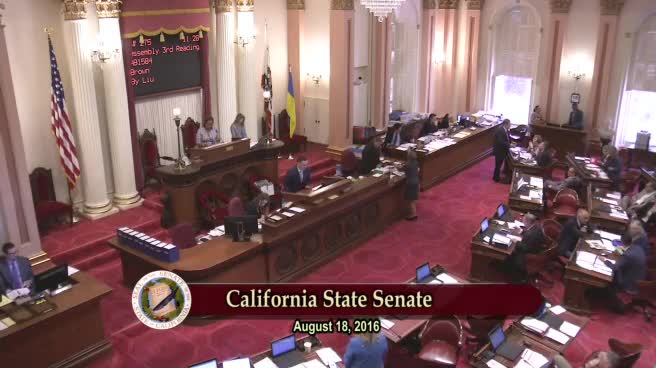 2MIN
Senate Floor
 4MIN
Senate Standing Committee on Public Safety
 2MIN
Assembly Floor
 3MIN
Assembly Standing Committee on Judiciary
 5MIN
Assembly Standing Committee on Public Safety
Bill Author

Bill Co-Author(s):