AB 2063: Work-based learning opportunities: work experience education and job shadowing.
- Session Year: 2015-2016
- House: Assembly
- Latest Version Date: 2016-07-22
Existing law authorizes a school district to offer work experience education and requires a pupil to be at least 16 years of age to receive credit for completing a work experience education program, except under specified circumstances. Existing law specifies that a pupil may participate in a job shadowing experience for a maximum of 25 hours in a specified period.
This bill would authorize work experience education credit to be granted to a pupil who is at least 14 years of age if the principal of the school in which the pupil is enrolled certifies that it is necessary for the pupils participation in a career technical education program and would also authorize a pupil to participate in a job shadowing experience for up to 40 hours in a specified period if the principal of the school in which the pupil is enrolled certifies that it is necessary for the pupils participation in a career technical education program.
Existing law authorizes a school district to offer work experience education, and requires a pupil to be at least 16 years of age to receive credit for completing a work experience education program, except under specified circumstances. Existing law specifies that a pupil may participate in a job shadowing experience for a maximum of 40 25 hours in one semester. Existing law requires a pupil to be at least 16 years of age and in 10th, 11th, or 12th grade in order to receive credit for participation in a student apprenticeship program. a specified period.
This bill would lower the minimum age for participation in work experience education from 16 to 14 years of age, except under specified circumstances. The bill would lower the minimum age to receive credit for participation in a student apprenticeship program as a registered student apprentice from 16 to 14 years of age, and would authorize pupils in 9th grade to participate in a student apprenticeship program. The bill would increase the number of hours a pupil is authorized to participate in a job shadowing experience from 25 hours to 40 hours per semester. authorize work experience education credit to be granted to a pupil who is at least 14 years of age if the principal of the school in which the pupil is enrolled certifies that it is necessary for the pupils participation in a career technical education program, and would also authorize a pupil to participate in a job shadowing experience for up to 40 hours in a specified period if the principal of the school in which the pupil is enrolled certifies that it is necessary for the pupils participation in a career technical education program.
Existing law authorizes a school district to offer work experience education, and requires a pupil to be at least 16 years of age to receive credit for completing a work experience education program, except under specified circumstances. Existing law specifies that a pupil may participate in a job shadowing experience for a maximum of 40 hours in one semester. Existing law requires a pupil to be at least 16 years of age and in 10th, 11th, or 12th grade in order to receive credit for participation in a student apprenticeship program.
This bill would lower the minimum age for participation in work experience education from 16 to 14 years of age, except under specified circumstances. The bill would lower the minimum age to receive credit for participation in a student apprenticeship program as a registered student apprentice from 16 to 14 years of age, and would authorize pupils in 9th grade to participate in a student apprenticeship program. The bill would increase the number of hours a pupil is authorized to participate in a job shadowing experience from 25 hours to 40 hours per semester.
The governing board of any school district offering work experience education pursuant to the authority of Section 51760 shall grant credit to pupils satisfactorily completing a work experience education program, in an amount not to exceed a total of 40 semester credits, of which no more than 10 credits may be conferred in any one semester, provided the pupil meets all of the following requirements:
(a)At the time of enrollment, the pupil is at least 16 years of age. Pupils under the age of 16 years may receive credit for work experience education under the following conditions:
(1)The pupil is enrolled in grade 11 or a higher grade.
(2)The principal of the school in which the pupil is enrolled certifies that the pupil is in need of immediate work experience education in order to pursue employment opportunities.
(3)The principal of the school in which the pupil is enrolled certifies that there is a probability that the pupil will no longer be enrolled as a full-time pupil without being provided the opportunity to enroll in a work experience education program.
(4)The pupil is at least 14 years of age and the principal in the school in which the pupil is enrolled certifies that it is necessary for the pupils participation in a career technical education program.
(5)The pupils individualized education program, adopted pursuant to the requirements of Part 30 (commencing with Section 56000), prescribes the type of training for which participation in a work experience program is deemed appropriate.
(b) During the course of the pupils enrollment in the program, the pupil receives as a minimum the equivalent of one instructional period per week of classroom instruction or counseling by a certificated employee. The instruction or counseling shall be offered in sessions scheduled intermittently throughout the semester.
(c)The work experience education program meets all of the requirements of law governing these programs.
SEC. 2.Section 51769 of the Education Code is amended to read:51769.(a)Notwithstanding any provision of this code or the Labor Code to the contrary, the school district, county superintendent of schools, or any school administered by the State Department of Education, under whose supervision work experience education, cooperative vocational education, or community classrooms, as defined by regulations adopted by the Superintendent, or a job shadowing experience, as defined in subdivision (b), or student apprenticeship programs registered by the Division of Apprenticeship Standards of the Department of Industrial Relations for registered student apprentices, are provided, shall be considered the employer under Division 4 (commencing with Section 3200) of the Labor Code of persons receiving this training unless the persons during the training are being paid a cash wage or salary by a private employer, except in the case of registered student apprentices, when the school district, county superintendent of schools, or any school administered by the State Department of Education elects to provide workers compensation insurance, or unless the person or firm under whom the persons are receiving work experience or occupational training elects to provide workers compensation insurance. A registered student apprentice is a registered apprentice who is (1) at least 16 years of age, (2) a full-time high school pupil in the 10th, 11th, or 12th grade, and (3) in an apprenticeship program for registered student apprentices registered with the Division of Apprenticeship Standards. An apprentice, while attending related and supplemental instruction classes, shall be considered to be in the employ of the apprentices employer and not subject to this section, unless the apprentice is unemployed. Whenever this work experience education, cooperative vocational education, community classroom education, or job shadowing, or student apprenticeship program registered by the Division of Apprenticeship Standards for registered student apprentices, is under the supervision of a regional occupational center or program operated by two or more school districts pursuant to Section 52301, the district of residence of the persons receiving the training shall be deemed the employer for the purposes of this section.
(b)For purposes of this section, job shadowing experience means a visit to a workplace for the purpose of career exploration for no less than three hours and no more than 25 hours in one semester, intersession, or summer school session.
(c)Notwithstanding subdivision (b), a pupil may participate in a job shadowing experience for up to 40 hours in one semester, intersession, or summer school session if the principal of the school in which the pupil is enrolled certifies that it is necessary for the pupils participation in a career technical education program.
The governing board of any school district offering work experience education pursuant to the authority of Section 51760 shall grant credit to pupils satisfactorily completing a work experience education program, in an amount not to exceed a total of 40 semester credits, of which no more than 10 credits may be conferred in any one semester, provided the pupil meets all of the following requirements:
(a)At the time of enrollment, the pupil is at least 14 16 years of age. Pupils under the age of 14 16 years may receive credit for work experience education under the following conditions:
(1)The pupil is enrolled in grade 11 or a higher grade.
(2)The principal of the school in which the pupil is enrolled certifies that the pupil is in need of immediate work experience education in order to pursue employment opportunities.
(3)The principal of the school in which the pupil is enrolled certifies that there is a probability that the pupil will no longer be enrolled as a full-time pupil without being provided the opportunity to enroll in a work experience education program.
(4)The pupil is at least 14 years of age and the principal in the school in which the pupil is enrolled certifies that it is necessary for the pupils participation in a career technical education program.
(4)
(5)The pupils individualized education program, adopted pursuant to the requirements of Part 30 (commencing with Section 56000), prescribes the type of training for which participation in a work experience program is deemed appropriate.
(b) During the course of the pupils enrollment in the program, the pupil receives as a minimum the equivalent of one instructional period per week of classroom instruction or counseling by a certificated employee. The instruction or counseling shall be offered in sessions scheduled intermittently throughout the semester.
(c)The work experience education program meets all of the requirements of law governing these programs.
SEC. 2.Section 51769 of the Education Code is amended to read:51769.(a)Notwithstanding any provision of this code or the Labor Code to the contrary, the school district, county superintendent of schools, or any school administered by the State Department of Education, under whose supervision work experience education, cooperative vocational education, or community classrooms, as defined by regulations adopted by the Superintendent, or a job shadowing experience, as defined in subdivision (b), or student apprenticeship programs registered by the Division of Apprenticeship Standards of the Department of Industrial Relations for registered student apprentices, are provided, shall be considered the employer under Division 4 (commencing with Section 3200) of the Labor Code of persons receiving this training unless the persons during the training are being paid a cash wage or salary by a private employer, except in the case of registered student apprentices, when the school district, county superintendent of schools, or any school administered by the State Department of Education elects to provide workers compensation insurance, or unless the person or firm under whom the persons are receiving work experience or occupational training elects to provide workers compensation insurance. A registered student apprentice is a registered apprentice who is (1) at least 14 16 years of age, (2) a full-time high school pupil in the 9th, 10th, 11th, or 12th grade, and (3) in an apprenticeship program for registered student apprentices registered with the Division of Apprenticeship Standards. An apprentice, while attending related and supplemental instruction classes, shall be considered to be in the employ of the apprentices employer and not subject to this section, unless the apprentice is unemployed. Whenever this work experience education, cooperative vocational education, community classroom education, or job shadowing, or student apprenticeship program registered by the Division of Apprenticeship Standards for registered student apprentices, is under the supervision of a regional occupational center or program operated by two or more school districts pursuant to Section 52301, the district of residence of the persons receiving the training shall be deemed the employer for the purposes of this section.
(b)For purposes of this section, job shadowing experience means a visit to a workplace for the purpose of career exploration for no less than three hours and no more than 40 25 hours in one semester, intersession, or summer school session.
(c)Notwithstanding subdivision (b), a pupil may participate in a job shadowing experience for up to 40 hours in one semester, intersession, or summer school session if the principal of the school in which the pupil is enrolled certifies that it is necessary for the pupils participation in a career technical education program.
SEC. 3.Section 3368 of the Labor Code is amended to read:3368.Notwithstanding any provision of this code or the Education Code to the contrary, the school district, county superintendent of schools, or any school administered by the State Department of Education under whose supervision work experience education, cooperative vocational education, or community classrooms, as defined by regulations adopted by the Superintendent of Public Instruction, or student apprenticeship programs registered by the Division of Apprenticeship Standards for registered student apprentices, are provided, shall be considered the employer under Division 4 (commencing with Section 3200) of persons receiving this training unless the persons during the training are being paid a cash wage or salary by a private employer. However, in the case of students being paid a cash wage or salary by a private employer in supervised work experience education or cooperative vocational education, or in the case of registered student apprentices, the school district, county superintendent of schools, or any school administered by the State Department of Education may elect to provide workers compensation coverage, unless the person or firm under whom the persons are receiving work experience or occupational training elects to provide workers compensation coverage. If the school district or other educational agency elects to provide workers compensation coverage for students being paid a cash wage or salary by a private employer in supervised work experience education or cooperative vocational education, it may only be for a transitional period not to exceed three months. A registered student apprentice is a registered apprentice who is (1) at least 14 years of age, (2) a full-time high school student in the 9th, 10th, 11th, or 12th grade, and (3) in an apprenticeship program for registered student apprentices registered with the Division of Apprenticeship Standards. An apprentice, while attending related and supplemental instruction classes, shall be considered to be in the employ of the apprentices employer and not subject to this section, unless the apprentice is unemployed. Whenever this work experience education, cooperative vocational education, community classroom education, or student apprenticeship program registered by the Division of Apprenticeship Standards for registered student apprentices, is under the supervision of a regional occupational center or program operated by two or more school districts pursuant to Section 52301 of the Education Code, the district of residence of the persons receiving the training shall be deemed the employer for the purposes of this section.
The governing board of any school district offering work experience education pursuant to the authority of Section 51760 shall grant credit to pupils satisfactorily completing a work experience education program, in an amount not to exceed a total of 40 semester credits, of which no more than 10 credits may be conferred in any one semester, provided the pupil meets all of the following requirements:
(a)At the time of enrollment, the pupil is at least 16 14 years of age. Pupils under the age of 16 14 years may receive credit for work experience education under the following conditions:
(1)The pupil is enrolled in grade 11 or a higher grade.
(2)The principal of the school in which the pupil is enrolled certifies that the pupil is in need of immediate work experience education in order to pursue employment opportunities.
(3)The principal of the school in which the pupil is enrolled certifies that there is a probability that the pupil will no longer be enrolled as a full-time pupil without being provided the opportunity to enroll in a work experience education program.
(4)The pupils individualized education program program, adopted pursuant to the requirements of Part 30 (commencing with Section 56000), prescribes the type of training for which participation in a work experience program is deemed appropriate.
(b) During the course of the pupils enrollment in the program, the pupil receives as a minimum the equivalent of one instructional period per week of classroom instruction or counseling by a certificated employee. The instruction or counseling shall be offered in sessions scheduled intermittently throughout the semester.
(c)The work experience education program meets all of the requirements of law governing these programs.
SEC. 2.Section 51769 of the Education Code is amended to read:51769.(a)Notwithstanding any provision of this code or the Labor Code to the contrary, the school district, county superintendent of schools, or any school administered by the State Department of Education, under whose supervision work experience education, cooperative vocational education, or community classrooms, as defined by regulations adopted by the Superintendent of Public Instruction, Superintendent, or a job shadowing experience, as defined in subdivision (b), or student apprenticeship programs registered by the Division of Apprenticeship Standards of the Department of Industrial Relations for registered student apprentices, are provided, shall be considered the employer under Division 4 (commencing with Section 3200) of the Labor Code of persons receiving this training unless the persons during the training are being paid a cash wage or salary by a private employer, except in the case of registered student apprentices, when the school district, county superintendent of schools, or any school administered by the State Department of Education elects to provide workers compensation insurance, or unless the person or firm under whom the persons are receiving work experience or occupational training elects to provide workers compensation insurance. A registered student apprentice is a registered apprentice who is (1) at least 16 14 years of age, (2) a full-time high school student pupil in the 9th, 10th, 11th, or 12th grade, and (3) in an apprenticeship program for registered student apprentices registered with the Division of Apprenticeship Standards. An apprentice, while attending related and supplemental instruction classes, shall be considered to be in the employ of the apprentices employer and not subject to this section, unless the apprentice is unemployed. Whenever this work experience education, cooperative vocational education, community classroom education, or job shadowing, or student apprenticeship program registered by the Division of Apprenticeship Standards for registered student apprentices, is under the supervision of a regional occupational center or program operated by two or more school districts pursuant to Section 52301, the district of residence of the persons receiving the training shall be deemed the employer for the purposes of this section.
(b)For purposes of this section, job shadowing experience means a visit to a workplace for the purpose of career exploration for no less than three hours and no more than 25 40 hours in one semester, intersession, or summer school session.
SEC. 3.Section 3368 of the Labor Code is amended to read:3368.Notwithstanding any provision of this code or the Education Code to the contrary, the school district, county superintendent of schools, or any school administered by the State Department of Education under whose supervision work experience education, cooperative vocational education, or community classrooms, as defined by regulations adopted by the Superintendent of Public Instruction, or student apprenticeship programs registered by the Division of Apprenticeship Standards for registered student apprentices, are provided, shall be considered the employer under Division 4 (commencing with Section 3200) of persons receiving this training unless the persons during the training are being paid a cash wage or salary by a private employer. However, in the case of students being paid a cash wage or salary by a private employer in supervised work experience education or cooperative vocational education, or in the case of registered student apprentices, the school district, county superintendent of schools, or any school administered by the State Department of Education may elect to provide workers compensation coverage, unless the person or firm under whom the persons are receiving work experience or occupational training elects to provide workers compensation coverage. If the school district or other educational agency elects to provide workers compensation coverage for students being paid a cash wage or salary by a private employer in supervised work experience education or cooperative vocational education, it may only be for a transitional period not to exceed three months. A registered student apprentice is a registered apprentice who is (1) at least 16 14 years of age, (2) a full-time high school student in the 9th, 10th, 11th, or 12th grade, and (3) in an apprenticeship program for registered student apprentices registered with the Division of Apprenticeship Standards. An apprentice, while attending related and supplemental instruction classes, shall be considered to be in the employ of the apprentices employer and not subject to this section, unless the apprentice is unemployed. Whenever this work experience education, cooperative vocational education, community classroom education, or student apprenticeship program registered by the Division of Apprenticeship Standards for registered student apprentices, is under the supervision of a regional occupational center or program operated by two or more school districts pursuant to Section 52301 of the Education Code, the district of residence of the persons receiving the training shall be deemed the employer for the purposes of this section.
|
Date
|
Status
|
|---|---|
| May 5, 2016 | Read third time. Passed. Ordered to the Senate. (Ayes 79. Noes 0. Page 4685.) |
| Jul 22, 2016 | Chaptered by Secretary of State - Chapter 72, Statutes of 2016. |
| Jul 22, 2016 | Approved by the Governor. |
| Jul 11, 2016 | Enrolled and presented to the Governor at 4:30 p.m. |
| Jun 30, 2016 | Read third time. Passed. Ordered to the Assembly. (Ayes 37. Noes 0. Page 4647.). |
| Jun 30, 2016 | Read third time. Passed. Ordered to the Assembly. |
| Jun 30, 2016 | In Assembly. Ordered to Engrossing and Enrolling. |
| Jun 21, 2016 | Read second time. Ordered to Consent Calendar. |
| Jun 20, 2016 | From committee: Be placed on second reading file pursuant to Senate Rule 28.8 and ordered to consent calendar. |
| Jun 8, 2016 | From committee: Do pass and re-refer to Com. on APPR. with recommendation: To Consent Calendar. (Ayes 9. Noes 0.) (June 8). Re-referred to Com. on APPR. |
| May 12, 2016 | Referred to Com. on ED. |
| Feb 17, 2016 | Read first time. To print. |
| May 5, 2016 | Read third time. Passed. Ordered to the Senate. |
| May 5, 2016 | In Senate. Read first time. To Com. on RLS. for assignment. |
| Apr 28, 2016 | Read second time. Ordered to Consent Calendar. |
| Apr 27, 2016 | From committee: Do pass. To Consent Calendar. (Ayes 19. Noes 0.) (April 27). |
| Apr 14, 2016 | Re-referred to Com. on APPR. |
| Apr 13, 2016 | Read second time and amended. |
| Apr 12, 2016 | From committee: Amend, and do pass as amended and re-refer to Com. on APPR. with recommendation: To Consent Calendar. (Ayes 7. Noes 0.) (April 6). |
| Feb 29, 2016 | Referred to Com. on ED. |
| Feb 18, 2016 | From printer. May be heard in committee March 19. |
|
Date
|
Description
|
Location
|
Votes
|
|
|---|---|---|---|---|
| Jun 30, 2016 | Consent Calendar 2nd AB2063 Gallagher | Senate Floor |
Passed |
|
| Jun 8, 2016 | Do pass, but first be re-referred to the Committee on [Appropriations] with the recommendation: To Consent Calendar | Senate Standing Committee on Education |
Passed |
|
| May 5, 2016 | AB 2063 GALLAGHER Consent Calendar Second Day Regular Session | Assembly Floor |
Passed |
|
| Apr 27, 2016 | Do pass. To Consent Calendar. | Assembly Standing Committee on Appropriations |
Passed |
|
| Apr 6, 2016 | Do pass as amended, and be re-referred to the Committee on [Appropriations] with recommendation: To Consent Calendar | Assembly Standing Committee on Education |
Passed |
This list shows positions taken on this bill by organizations on the date displayed, which is linked to the original source.
Positions by individuals are not included.
|
Organization
|
Position
|
Date
|
|---|---|---|
| California Association of County Tax Collectors and Treasurers | * Support | Jun 20, 2018 |
| California Association Of Realtors | * Support | Jun 20, 2018 |
| California Credit Union League | * Support | Jun 20, 2018 |
| california low income consumer coalition | * Support | Jun 20, 2018 |
| Clean Fund | * Indeterminate | Jun 20, 2018 |
| Kp Public Affairs | * Support | Jun 20, 2018 |
| Renew Financial | * Against | Jun 20, 2018 |
| Renovate America | * Against Unless Amend | Jun 20, 2018 |
| Wide Green Energy Fund | * Against Unless Amend | Jun 20, 2018 |
Office of Senate Floor Analyses (916) 651-1520 Fax: (916) 327-4478 | AB |
CONSENT
Bill No: AB 2063
:
SENATE EDUCATION COMMITTEE: 9-0, 6/8/16
AYES: Liu, Block, Hancock, Huff, Leyva, Mendoza, Monning, Pan, Vidak
SENATE APPROPRIATIONS COMMITTEE: Senate Rule 28.8
ASSEMBLY FLOOR: 79-0, 5/5/16 (Consent) - See last page for vote
DIGEST: This bill establishes an additional option by which a student who is at least 14 years old may participate in work experience education, and increases the time a student may participate in job shadowing from 25 to 40 hours per semester if certain conditions are met.
Existing law:
- Provides for various career technical education programs for the purpose of integrating academic and vocational education and motivating students to stay in school and graduate with the skills necessary to advance into postsecondary education, advanced workforce training, or the workforce. (Education Code § 54690, et seq. and § 52300, et seq.)
- Authorizes the governing board of school districts maintaining a high school to establish work-based learning or work experience education programs for the purpose of providing students with instruction in skills, attitudes, and understandings necessary for employment success, including providing guidance and supervision, arranging credit for work experience education courses, and authorizing the district to purchase liability insurance for students enrolled in programs of study involving work experience or vocational education at locations off school grounds. (EC § 51760)
- Requires the governing board of any school district offering work experience education to grant credit to students satisfactorily completing a work experience education program, in an amount not to exceed a total of 40 semester credits, of which no more than 10 credits may be conferred in any one semester, provided the student meets all of the following requirements:
- At the time of enrollment, the student is at least 16 years of age.
- During the course of the student’s enrollment, the student receives as a minimum the equivalent of one instructional period per week of classroom instruction or counseling by a certificated employee.
- The work experience education program meets all of the requirements of law governing these programs. (EC § 51760.3)
- At the time of enrollment, the student is at least 16 years of age.
- Authorizes students under the age of 16 years to receive credit for work experience education under the following conditions:
- The student is in grade 11 or higher.
- The principal of the school certifies that the student is in need of immediate work experience in order to pursue employment opportunities.
- The principal of the school certifies that there is a probability that the student will no longer be enrolled as a full-time student without being provided the opportunity to enroll in a work experience education program.
- The student’s individualized education program prescribes the type of training for which participation in work experience education is deemed appropriate. (EC § 51760.3)
- The student is in grade 11 or higher.
- Provides that the school district, county superintendent of schools, or any school administered by the California Department of Education, under whose supervision work experience education, cooperative vocational education, community classrooms, a job shadowing experience, or student apprenticeship programs, to be considered the employer of students receiving this training unless the student is being paid a cash wage or salary by a private employer (except in the case of registered student apprentices, as specified). (EC § 51769)
- Defines a “job shadowing experience” as a visit to a workplace for the purpose of career exploration for no less than three hours and no more than 25 hours in one semester, intersession, or summer school session. (EC § 51769)
Existing regulations require work experience education to consist of one or more of the following paid and unpaid types of on-the-job experiences which the school district may offer through a formal training agreement with each employer: career technical work experience education, general work experience education, and exploratory work experience education. (California Code of Regulations, Title 5, § 10071)
This bill:
- Authorizes a student to receive credit for work experience education if the student is at least 14 years of age and the principal of the school in which the student is enrolled certifies that it is necessary for the student’s participation in a career technical education program.
- Notwithstands the existing cap of 25 hours per semester for participation in job shadowing to authorize a student to participate in a job shadowing experience for up to 40 hours in one semester, intersession, or summer school session if the principal of the school in which the student is enrolled certifies that it is necessary for the student’s participation in a career technical education program.
Comments
Work experience education. According to the California Department of Education’s Web site, work experience education is a course of study that may be established by a governing board of any local educational agency to provide paid or unpaid on-the-job experiences for high school students through training agreements with employers. Work experience education programs combine an on-the-job component with related classroom instruction designed to maximize the value of the on-the-job experiences. Local educational agencies may offer any one or more of the following types of work experience education programs:
- Exploratory Work Experience Education: The goal of this program is to provide career guidance and ascertain their interests and aptitudes for specific careers through opportunities to observe and sample a variety of conditions of work. Exploratory work experience education includes a combination of job observations and related classroom instruction in work experience education. Students enrolled in this program may be as young as 12 years of age.
- General Work Experience Education: The purpose of this program is to provide students with opportunities for applying the basic skills of reading, writing, and computation through a combination of supervised paid employment in any occupational field and related classroom instruction.
- Career Technical Work Experience Education: The purpose of this program is to reinforce and extend vocational learning opportunities for students through a combination of related classroom instruction and supervised paid employment in the occupation for which their career technical course prepares the student.
Age of students participating in work experience education. Existing law authorizes students under the age of 16 years to receive credit for work experience education if:
- The student is enrolled in grade 11 or higher.
- The school principal certifies that the student needs to participate to pursue employment or that the student would otherwise not be enrolled in school full-time.
- The student’s individualized education program specifies that type of training.
This bill provides an option that recognizes the modern nature of work experience by referencing career technical education.
FISCAL EFFECT: Appropriation: Fiscal Com.: Local:
California School Boards Association
Kern County Superintendent of Schools
Los Angeles County Office of Education
OPPOSITION: (Verified 6/20/16)
None received
ASSEMBLY FLOOR: 79-0, 5/5/16
AYES: Achadjian, Alejo, Travis Allen, Arambula, Atkins, Baker, Bigelow, Bloom, Bonilla, Bonta, Brough, Brown, Burke, Calderon, Campos, Chang, Chau, Chávez, Chiu, Chu, Cooley, Cooper, Dababneh, Dahle, Daly, Dodd, Eggman, Frazier, Gallagher, Cristina Garcia, Eduardo Garcia, Gatto, Gipson, Gomez, Gonzalez, Gordon, Gray, Grove, Hadley, Harper, Roger Hernández, Holden, Irwin, Jones, Jones-Sawyer, Kim, Lackey, Levine, Linder, Lopez, Low, Maienschein, Mathis, Mayes, McCarty, Medina, Melendez, Mullin, Nazarian, Obernolte, O'Donnell, Olsen, Patterson, Quirk, Ridley-Thomas, Rodriguez, Salas, Santiago, Steinorth, Mark Stone, Thurmond, Ting, Wagner, Waldron, Weber, Wilk, Williams, Wood, Rendon
NO VOTE RECORDED: Beth Gaines
6/22/16 15:15:01
**** END ****
SENATE COMMITTEE ON EDUCATION
Senator Carol Liu, Chair
2015 - 2016 Regular
Bill No:
Author: | Gallagher | ||
Version: | Hearing Date: June 8, 2016 | ||
Urgency: | Fiscal: | ||
Consultant: | |||
Subject:
SUMMARY
This bill establishes an additional option by which a student who is at least 14 years old may participate in work experience education, and increases the time a student may participate in job shadowing from 25 to 40 hours per semester if certain conditions are met.
BACKGROUND
Existing law:
- Provides for various career technical education programs for the purpose of integrating academic and vocational education and motivating students to stay in school and graduate with the skills necessary to advance into postsecondary education, advanced workforce training, or the workforce.
(Education Code § 54690, et seq. and § 52300, et seq.)
- Authorizes the governing board of school districts maintaining a high school to establish work-based learning or work experience education programs for the purpose of providing students with instruction in skills, attitudes, and understandings necessary for employment success, including providing guidance and supervision, arranging credit for work experience education courses, and authorizing the district to purchase liability insurance for students enrolled in programs of study involving work experience or vocational education at locations off school grounds. (EC § 51760)
- Requires the governing board of any school district offering work experience education to grant credit to students satisfactorily completing a work experience education program, in an amount not to exceed a total of 40 semester credits, of which no more than 10 credits may be conferred in any one semester, provided the student meets all of the following requirements:
- At the time of enrollment, the student is at least 16 years of age.
- During the course of the student’s enrollment, the student receives as a minimum the equivalent of one instructional period per week of classroom instruction or counseling by a certificated employee.
- The work experience education program meets all of the requirements of law governing these programs. (EC § 51760.3)
- At the time of enrollment, the student is at least 16 years of age.
- Authorizes students under the age of 16 years to receive credit for work experience education under the following conditions:
- The student is in grade 11 or higher.
- The principal of the school certifies that the student is in need of immediate work experience in order to pursue employment opportunities.
- The principal of the school certifies that there is a probability that the student will no longer be enrolled as a full-time student without being provided the opportunity to enroll in a work experience education program.
- The student’s individualized education program prescribes the type of training for which participation in work experience education is deemed appropriate. (EC § 51760.3)
- The student is in grade 11 or higher.
- Provides that the school district, county superintendent of schools, or any school administered by the California Department of Education, under whose supervision work experience education, cooperative vocational education, community classrooms, a job shadowing experience, or student apprenticeship programs, to be considered the employer of students receiving this training unless the student is being paid a cash wage or salary by a private employer (except in the case of registered student apprentices, as specified).
(EC § 51769)
- Defines a “job shadowing experience” as a visit to a workplace for the purpose of career exploration for no less than three hours and no more than 25 hours in one semester, intersession, or summer school session. (EC § 51769)
Existing regulations require work experience education to consist of one or more of the following paid and unpaid types of on-the-job experiences which the school district may offer through a formal training agreement with each employer: career technical work experience education, general work experience education, and exploratory work experience education. (California Code of Regulations, Title 5, § 10071)
ANALYSIS
This bill establishes an additional option by which a student who is at least 14 years old may participate in work experience education, and increases the time a student may participate in job shadowing from 25 to 40 hours per semester, as specified. Specifically, this bill:
- Authorizes a student to receive credit for work experience education if the student is at least 14 years of age and the principal of the school in which the student is enrolled certifies that it is necessary for the student’s participation in a career technical education program.
- Notwithstands the existing cap of 25 hours per semester for participation in job shadowing to authorize a student to participate in a job shadowing experience for up to 40 hours in one semester, intersession, or summer school session if the principal of the school in which the student is enrolled certifies that it is necessary for the student’s participation in a career technical education program.
STAFF COMMENTS
- Need for the bill. According to the author, “Work experience education programs teach valuable life skills like financial literacy, business operations, and time management. Moreover, these programs help students choose a career path based on their skills and interests. Expanding access to these programs will help California close the predicted 1.5 million worker gap and could also help lower dropout rates. Exposing students to career technical education at a younger age is crucial.”
- Work experience education. According to the California Department of Education’s website, work experience education is a course of study that may be established by a governing board of any local educational agency to provide paid or unpaid on-the-job experiences for high school students through training agreements with employers. Work experience education programs combine an on-the-job component with related classroom instruction designed to maximize the value of the on-the-job experiences. Local educational agencies may offer any one or more of the following types of work experience education programs:
- Exploratory Work Experience Education: The goal of this program is to provide career guidance and ascertain their interests and aptitudes for specific careers through opportunities to observe and sample a variety of conditions of work. Exploratory work experience education includes a combination of job observations and related classroom instruction in work experience education. Students enrolled in this program may be as young as 12 years of age.
- General Work Experience Education: The purpose of this program is to provide students with opportunities for applying the basic skills of reading, writing, and computation through a combination of supervised paid employment in any occupational field and related classroom instruction.
- Career Technical Work Experience Education: The purpose of this program is to reinforce and extend vocational learning opportunities for students through a combination of related classroom instruction and supervised paid employment in the occupation for which their career technical course prepares the student.
- Exploratory Work Experience Education: The goal of this program is to provide career guidance and ascertain their interests and aptitudes for specific careers through opportunities to observe and sample a variety of conditions of work. Exploratory work experience education includes a combination of job observations and related classroom instruction in work experience education. Students enrolled in this program may be as young as 12 years of age.
- Age of students participating in work experience education. Existing law authorizes students under the age of 16 years to receive credit for work experience education if:
- The student is enrolled in grade 11 or higher.
- The school principal certifies that the student needs to participate to pursue employment or that the student would otherwise not be enrolled in school full-time.
- The student’s individualized education program specifies that type of training.
- The student is enrolled in grade 11 or higher.
This bill establishes an additional option for participation by a student who is at least 14 years old if the school principal certifies that it is necessary for the student’s participation in a career technical education program. This option recognizes the modern nature of work experience by referencing career technical education.
- Fiscal impact. According to the Assembly Appropriations Committee analysis, this bill would have no significant state fiscal impacts, as expansion of work experience education to 14 year olds is permissive.
SUPPORT
California School Boards Association
Kern County Superintendent of Schools
Los Angeles County Office of Education
OPPOSITION
None received.
-- END --
Date of Hearing: April 27, 2016
ASSEMBLY COMMITTEE ON APPROPRIATIONS
Lorena Gonzalez, Chair
ABPCA Bill Id:AB 2063
Author:(Gallagher) – As Amended Ver:April 13, 2016
Policy Committee: | Education | Vote: | 7 - 0 |
Urgency: No State Mandated Local Program: No Reimbursable: No
SUMMARY:
This bill authorizes a 14 year old student to participate in work experience education (WEE) and receive credit, as specified, if the principal certifies that the student's participation in WEE is necessary for participation in a career technical education (CTE) program. This bill also clarifies that a student may participate in a job shadowing experience for up to 40 hours in one semester, intersession or summer session, if approved by the principal and is determined necessary for participation in a CTE program.
FISCAL EFFECT:
No significant state fiscal impacts. Expansion of WEE to 14 year olds is permissive and there are only 523 schools that offer WEE currently.
COMMENTS:
- Purpose. According to the author, exposing students to work experience at a younger age allows them to explore more career options and gives them the knowledge and experience they need to launch their careers or further their education. This bill would make it easier for high school students to participate in WEE by lowering age for participation in work experience education.
- Background. Work experience education (WEE) is a course of study that may be established by a governing board of any local education agency (LEA) to provide paid or unpaid on-the-job experiences for high school students through training agreements with employers. WEE includes both paid and non-paid experiences.
In recent years, many districts have reduced or eliminated their general work experience programs. While general work experience is important for providing basic workplace skills the state plan for CTE calls for “more readily available vocational work experience that would provide meaningful expansion of learning for students in CTE programs.”
According to the CDE, in the 2014-15 school year, 523 schools offer some type of WEE program, with 2,007 different courses taught. There were 17,439 students enrolled in WEE programs. Compared to the enrollment in other CTE courses, these numbers are relatively low. For example, 1,140 schools offer a CTE program on Arts, Media, and Entertainment, (just one of the 15 CTE industry sectors) with 7,068 courses taught, and a total of 162,093 students enrolled.
Analysis Prepared by: Misty Feusahrens / APPR. / (916) 319-2081
Date of Hearing: April 6, 2016
ASSEMBLY COMMITTEE ON EDUCATION
Patrick O'Donnell, Chair
ABPCA Bill Id:AB 2063 (
Author:Gallagher) – As Introduced Ver:February 17, 2016
SUBJECT: Work-based learning opportunities: work experience education, registered student apprentices, and job shadowing
SUMMARY: Lowers, from 16 years of age to 14 years of age, the minimum age required for student participation in work experience education, job shadowing experiences, and apprenticeship programs. Raises the hour limit on student participation in job shadowing experiences from 25 to 40 hours per semester. Specifically, this bill:
- Lowers the age for participation in work experience education programs from 16 to 14 years of age.
- Lowers the age for participation in job shadowing experiences from 16 to 14 years of age.
- Lowers the grade limit for participation in job shadowing experiences from 10th grade to 9th grade.
- Lowers the age for participation in apprenticeship programs from 16 to 14 years of age.
- Lowers the grade limit for participation in apprenticeship programs from 10th grade to 9th grade.
- Raises the amount of hours a student can participate in job shadowing experiences from 25 hours to 40 hours per semester.
EXISTING LAW:
- Authorizes school districts that maintain high schools to establish work-based learning or work experience programs for the purpose of providing pupils with instruction in skills, attitudes, and understanding necessary for success in employment.
- Defines “work-based learning” as an educational approach or instructional methodology that uses the workplace or real work to provide pupils with knowledge and skills that help them connect school experiences to real-life work activities and career opportunities.
- Provides that work-based learning opportunities for pupils may be delivered by partnership academies, regional occupational programs, and other educational programs, and may include work experience education, community classrooms, cooperative career technical education (CTE) programs, and job shadowing.
- Requires students to be at least 16 years of age in order to receive credit for completing a work experience education program. Allows students younger than 16 to participate in work experience education under any of the following conditions:
- the student is in grade 11 or higher
- the principal of the school which the students attends certifies that the student is in need of immediate work experience in order to pursue employment opportunities
- the principal of the school in which the student attends certifies that there is a probability that the student will no longer be enrolled as a full-time student without being provided the opportunity to enroll in a work experience education program
- the student’s individual education program (IEP) prescribes the type of training for which participation in work experience education is deemed appropriate
- Defines a registered student apprentice as a student who is at least 16 years of age, a full time high school student in the grade 10 or higher, and in an apprenticeship program registered with the Division of Apprenticeship Standards.
- Specifies that school districts providing training to students through work experience education, cooperative vocational education, community classrooms, or student apprenticeship programs are considered the employer of the student receiving the training, unless the student is being paid a cash wage.
FISCAL EFFECT: Unknown.
COMMENTS:
Need for the bill. According to the author’s office, “Every 26 seconds, a student drops out of school in the United States. Students living in low-income families are more likely to drop out of school. Data from the National Center on Education Statistics shows that low-income students drop out at a rate 10 times higher compared to their peers. What is more troublesome is that most students who drop out leave in the middle of 10th grade.
Exposing students to Career Technical education is crucial. A California study showed that high school dropout rates in CTE programs averaged about half the rate of the general population. Additionally, exposing students earlier allows them to explore more career options and gives them the knowledge and experience they need to launch their careers or further their education. This will also help California close the predicted 1.5 million worker gap. Career Technical Education is key to providing students a pathway to postsecondary education and careers.”
Focus on CTE in California has grown. With dramatic changes in industry and workforce demands, as well as renewed focus on supporting students’ “career readiness,” policymakers, business leaders and educators have in recent years enacted numerous reforms to increase student access to CTE courses. There are several different state programs that support CTE opportunities, including Regional Occupational Centers and Programs (ROC/Ps), the CTE Incentive Grant Program, the Career Pathways Trust, and Partnership Academies. The Legislature has also supported CTE as an option to meet state graduation requirements.
In January, 2013, the SBE adopted revised CTE Model Curriculum Standards, which reflect the specific conditions and expectations of each industry sector. The standards are organized into 15 industry sectors, which each contain anywhere from three to seven different pathway learning approaches.
Work Experience Education: According to the CDE, work experience education (WEE) is a course of study that may be established by a governing board of any local education agency (LEA) to provide paid or unpaid on-the-job experiences for high school students through training agreements with employers. WEE programs combine an on-the-job component with related classroom instruction designed to maximize the value of the on-the-job experiences. The goal of WEE programs is to:
- Link the academic core curriculum with the world of work and promote the students’ school-to-career transition
- Help students develop skills, habits, and attitudes conductive to job success and personal growth
- Assist students in career exploration and forgoing rewarding relationships with employers
- Develop a positive work ethic and acquire or refine work related skills and job performance in actual work settings
WEE includes both paid and non-paid experiences. The school district may offer any one or more of the following types of WEE:
- Exploratory Work Experience Education (EWEE): The objective of EWEE is to provide career guidance to students and ascertain their interests and aptitudes for specific careers through opportunities to observe and sample a variety of conditions of work. EWEE includes a combination of job observations and related classroom instruction in WEE. The student may be required to perform non-paid work activities while exploring the occupation on a limited, periodic, and sampling basis. Students may not participate in EWEE programs if pay is received for similar work at the same work station or a similar job during hours when not assigned to the EWEE program. The LEA must provide Workers' Compensation Insurance for the student. Students enrolled in EWEE may be as young as 12 years of age, and students participating in EWEE do not need a work permit. In the 2014-15 school year, EWEE was offered in 96 schools, with a total of 316 different courses taught. A total of 2,383 students were enrolled in a EWEE program.
- General Work Experience Education (GWEE): The purpose of GWEE is to provide students with opportunities for applying the basic skills of reading, writing, and computation through a combination of supervised paid employment in any occupational field and related classroom instruction. Students participating in GWEE typically require a work permit. In the 2014-15 school year, GWEE was offered in 304 California schools, with a total of 1,048 different courses taught. A total of 9,772 students were enrolled in a GWEE program.
- Career Technical Work Experience Education (CTWEE). The intent of CTWEE is to reinforce and extend vocational learning opportunities for students through a combination of related classroom instruction and supervised paid or unpaid employment. Students enrolled in CTWEE must have a worksite placement or employment that is related to a previous or concurrently enrolled Career Technical Education course of study. In the 2014-15 school year, CTWEE was offered in 179 California schools, with a total of 643 different courses taught. A total of 5,284 students were enrolled in a GWEE program.
Enrollment in WEE relatively small compared to other CTE options. According to the CDE, in the 2014-15 school year, 523 schools offer some type of WEE program, with 2,007 different courses taught. There were 17,439 students enrolled in WEE programs.
Compared to the enrollment in other CTE courses, these numbers are relatively low. For example, 1,140 schools offer a CTE program on Arts, Media, and Entertainment, (just one of the 15 CTE industry sectors) with 7,068 courses taught, and a total of 162,093 students enrolled.
Does current law for WEE pose barriers to CTE? Currently, students must be at least 16 years of age to receive credit for completing a work experience program, but provides several exemptions to this age limit. A student younger than 16 may participate in WEE under any of the following conditions:
- the student is in 11th grade or higher
- the student’s principal certifies that the student is in need of immediate work experience in order to pursue employment opportunities
- the student’s principal certifies that there is a probability that the student will no longer be enrolled as a full time student without the ability to enroll in a WEE program
- the student has an IEP providing that participation in WEE is necessary
The statutes authorizing WEE date to the 1970s, and haven’t been amended in over 20 years. CTE has evolved significantly since this time. It now includes a much broader range of occupations/career pathways, has been integrated with standards-based coursework, and generally involves a more rigorous instructional methodology. Based on the age of the authorizing statutes and low participation numbers shown below, the Committee may wish to consider if WEE is well aligned to current CTE programs and standards.
The Committee may also wish to consider if the limits in current law really pose barriers to participation in the three WEE programs:
- In EWEE courses, students may be as young as 12 years old to participate.
- GWEE courses require a work permit, which may be issued to students as young as 12 years old. However, the state does prohibit 12 and 13 year olds from working before, after, or during the work day, and limits the amount of hours 14 and 15 year old students may work to 18 hours a week. According to the CDE, the majority of work permits are issued to students 16 and 17 years of age, who can work a maximum of 48 hours per week.
- For CTWEE courses, staff is unaware of any concrete examples of how the age limits in current law pose a barrier. If a student is engaged in a career pathway program starting in 9th grade, for example, there appear to be other avenues for work experience than enrollment in WEE courses, including job shadowing and internships.
According to the author, the hour participation limit creates a barrier to participation in CTE programs as 25 hours only amounts to roughly 3 days a semester. However, if the student were allowed to job shadow for 40 hours, as proposed in this bill, then she could spend an entire week on an internship during a school break or over the summer, providing a much more immersive experience.
The author states that the intent of this bill is to allow younger students to engage in WEE as a means of preventing them from dropping out of high school, and to allow for early participation in work-based education. Current law appears to provide an exemption for students at risk of dropping out of school without access to such an option, but does not provide an exemption for students engaged in career pathway programs. Staff recommends that the bill be amended to replace its current contents with an addition to the existing list of exemptions relating to participation in career pathways programs. This new exemption would allow, if a student’s principal certifies that it is necessary for participation in a career pathway program, as specified, a lowering of the age limit (down to 14 years) for WEE programs, and/or the time limits on job shadowing (up to 40 hours).
Related legislation. AB 2237 (Olsen) of this Session establishes the Science, Technology, Engineering, and Mathematics Partnership Academies program, for the purposes of providing grants to school districts to establish up to 100 partnership academies dedicated to training students in STEM occupations. This bill is currently pending in the Assembly Education Committee.
SB 1123 (Leyva) of this Session extends the existing authority for pupils to use CTE as an option to fulfill the high school graduation requirement to complete a course in visual or performing arts or foreign language until January 1, 2023. This bill is currently pending in the Senate Education Committee.
Prior legislation. AB 86 (Committee on Budget), Chapter 48, Statutes 2014, created the California Career Pathways Trust, and appropriated $250 million in competitive grants to districts to build and improve career pathways programs.
AB 104 (Committee on Budget), Chapter 13, Statutes 2014, established the California Career Technical Education Incentive Grant Program, a competitive grant program administered by the CDE to provide support for career technical education in grades K-12, and provided $400 million in 2015-16, $300 million in 2016-17, and $200 million in 2017-18 for this program.
AB 1330 (Furutani), Chapter 621, Statutes of 2011, added CTE, as defined, as an option for pupils to fulfill the existing high school graduation requirement to complete a course in visual or performing arts or foreign language and sunsets these provisions on January 1, 2017.
SB 381 (Wright) of the 2009-10 Session would have required districts adopting a college preparation curriculum for high school graduation to require students to also compete CTE courses in order to earn the high school diploma. This bill was held in the Assembly Appropriations Committee.
SB 515 (Hancock) of the 2009-10 Session would have required that at least half of sequenced CTE courses met are linked to regional or state high priority workforce needs. This measure was vetoed by Governor Schwarzenegger.
SB 725 (Hancock) of the 2009-10 Session would have authorized ROC/Ps to offer apprenticeship preparation programs. This bill was held in the Senate Appropriations Committee.
REGISTERED SUPPORT / OPPOSITION:
Support
None received
Opposition
None received
Analysis Prepared by: Christine Aurre and Tanya Lieberman / ED. / (916) 319-2087
Discussed in Hearing
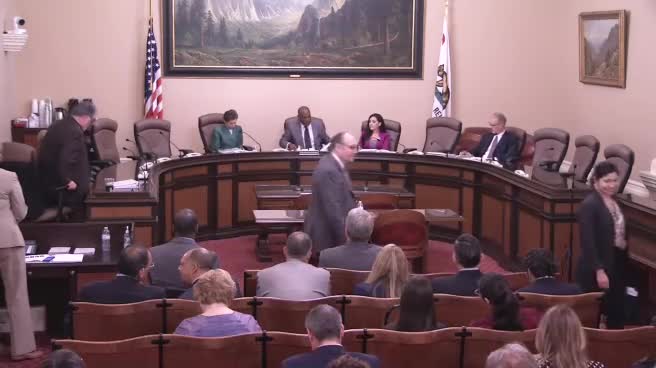 6MIN
Senate Standing Committee on Banking and Financial Institutions
Bill Author

Bill Co-Author(s):