AB 2176: Shelter crisis: emergency bridge housing communities.
- Session Year: 2015-2016
- House: Assembly
- Latest Version Date: 2016-09-27
Existing law authorizes a governing body of a political subdivision, as defined, to declare a shelter crisis if the governing body makes a specified finding. Existing law authorizes a political subdivision to allow persons unable to obtain housing to occupy designated public facilities, as defined, during the period of a shelter crisis. Existing law provides that certain state and local laws, regulations, and ordinances are suspended during a shelter crisis, to the extent that strict compliance would in any way prevent, hinder, or delay the mitigation of the effects of the shelter crisis.
This bill, until January 1, 2022, upon a declaration of a shelter crisis by the City of San Jose would authorize emergency housing to include an emergency bridge housing community for the homeless. The bill would define an emergency bridge housing community to include, but not be limited to, housing in temporary structures including, but not limited to, emergency sleeping cabins, as defined. The bill, in lieu of compliance with state and local building, housing, health, habitability, or safety standards and laws, would authorize the city to adopt by ordinance reasonable local standards for emergency bridge housing communities, as specified. The bill would require the Department of Housing and Community Development to review the draft ordinance to ensure it addresses minimum health and safety standards and to provide its findings to committees of the Legislature, as provided. The bill would require the city, among other things, to match each resident of an emergency bridge housing community to an affordable housing unit identified in the citys housing plan that will be available for the resident to live in on or before January 1, 2022, and develop a plan for emergency bridge housing communities to include on-site supportive services. The bill would further require the city to annually report to the Legislature specific information on emergency bridge housing communities, including, among other information, the number of residents in every emergency bridge housing community and the actual and projected number of permanent affordable housing units available through January 1, 2022.
This bill would make legislative findings and declarations as to the necessity of a special statute for the City of San Jose.
Existing law authorizes a governing body of a political subdivision, as defined, to declare a shelter crisis if the governing body makes a specified finding. Existing law authorizes a political subdivision to allow persons unable to obtain housing to occupy designated public facilities, as defined, during the period of a shelter crisis. Existing law provides that certain state and local laws, regulations, and ordinances are suspended during a shelter crisis, to the extent that strict compliance would in any way prevent, hinder, or delay the mitigation of the effects of the shelter crisis.
This bill, until January 1, 2022, upon a declaration of a shelter crisis by the City of San Jose would authorize emergency housing to include an emergency bridge housing community, as defined, community for the homeless. The bill would define an emergency bridge housing community to include, but not be limited to, housing in temporary structures including, but not limited to, emergency sleeping cabins, as defined. The bill, in lieu of compliance with state and local building, housing, health, habitability, or safety standards and laws, would authorize the city to adopt and enforce by ordinance reasonable local standards for emergency bridge housing communities, as specified. The bill would require the Department of Housing and Community Development to review the draft ordinance to ensure it addresses minimum health and safety standards and to provide its findings to committees of the Legislature, as provided. The bill would require the city, among other things, to match each resident of an emergency bridge housing community to an affordable housing unit identified in the citys housing plan that will be available for the resident to live in on or before January 1, 2022, and develop a plan for emergency bridge housing communities to include on-site supportive services. The bill would further require the city to annually report to the Legislature specific information on emergency bridge housing communities, including, among other information, the number of residents in every emergency bridge housing community and the actual and projected number of permanent affordable housing units available through January 1, 2022.
This bill would make legislative findings and declarations as to the necessity of a special statute for the City of San Jose.
Existing law authorizes a governing body of a political subdivision, as defined, to declare a shelter crisis if the governing body makes a specified finding. Existing law authorizes a political subdivision to allow persons unable to obtain housing to occupy designated public facilities, as defined, during the period of a shelter crisis. Existing law provides that certain state and local laws, regulations, and ordinances are suspended during a shelter crisis, to the extent that strict compliance would in any way prevent, hinder, or delay the mitigation of the effects of the shelter crisis.
This bill, until January 1, 2022, upon a declaration of a shelter crisis by the City of San Jose would authorize emergency housing to include an emergency bridge housing community, as defined, for the homeless. The bill, in lieu of state and local building, housing, health, habitability, or safety standards and laws, would authorize the city to enact local standards for emergency bridge housing communities to be operative during the shelter crisis, as provided. The bill, in lieu of compliance with state and local building, housing, health, habitability, or safety standards and laws, would authorize the city to adopt and enforce by ordinance reasonable local standards for emergency bridge housing communities, as specified. The bill would require the Department of Housing and Community Development to review the draft ordinance to ensure it addresses minimum health and safety standards and to provide its findings to committees of the Legislature, as provided. The bill would require the city, among other things, to match each resident of an emergency bridge housing community to an affordable housing unit identified in the citys housing plan that will be available for the resident to live in on or before January 1, 2022, and develop a plan for emergency bridge housing communities to include on-site supportive services. The bill would further require the city to annually report to the Legislature specific information on emergency bridge housing communities, including, among other information, the number of residents in every emergency bridge housing community and the actual and projected number of permanent affordable housing units available through January 1, 2022.
This bill would make legislative findings and declarations as to the necessity of a special statute for the City of San Jose.
Existing law authorizes a governing body of a political subdivision, as defined, to declare a shelter crisis if the governing body of that political subdivision makes a specified finding. Existing law authorizes a political subdivision to allow persons unable to obtain housing to occupy designated public facilities, as defined, during the period of a shelter crisis. Existing law provides that certain state and local laws, regulations, and ordinances are suspended during a shelter crisis, to the extent that strict compliance would in any way prevent, hinder, or delay the mitigation of the effects of the shelter crisis.
This bill, until January 1, 2022, upon a declaration of a shelter crisis by the City of San Jose would authorize emergency housing to include an emergency bridge housing community, as defined, for the homeless. The bill, in lieu of state and local building, housing, health, habitability, or safety standards and laws, would authorize the city to enact local standards for emergency bridge housing communities to be operative during the shelter crisis, as provided. The bill would require the city, among other things, to match each resident of an emergency bridge housing community to an affordable housing unit identified in the citys housing plan that will be available for the resident to live in on or before January 1, 2022, and develop a plan for emergency bridge housing communities to include on-site supportive services. The bill would further require the city to annually report to the Legislature specific information on emergency bridge housing communities, including, among other information, the number of residents in every emergency bridge housing community and the actual and projected number of permanent affordable housing units available through January 1, 2022.
This bill would make legislative findings and declarations as to the necessity of a special statute for the City of San Jose.
Existing law authorizes a political subdivision, as defined, to declare a shelter crisis if the governing body of that political subdivision makes a specified finding. Existing law authorizes a political subdivision to allow persons unable to obtain housing to occupy designated public facilities, as defined, during the period of a shelter crisis. Existing law provides that certain state and local laws, regulations, and ordinances are suspended during a shelter crisis, to the extent that strict compliance would in any way prevent, hinder, or delay the mitigation of the effects of the shelter crisis.
This bill, until January 1, 2022, upon a declaration of a shelter crisis by the City of San Jose during a shelter crisis, among other things, would authorize emergency housing to include a transitional housing an emergency bridge housing community, as defined, for the homeless. The bill, in lieu of state and local building, housing, health, habitability, or safety standards and laws, would authorize the city to enact local standards for transitional housing emergency bridge housing communities to be operative during the shelter crisis, as provided. The bill would require the city, among other things, to match each resident of an emergency bridge housing community to an affordable housing unit identified in the citys housing plan that will be available for the resident to live in on or before January 1, 2022, and develop a plan for emergency bridge housing communities to include on-site supportive services. The bill would further require the city to annually report to the Legislature specific information on emergency bridge housing communities, including, among other information, the number of residents in every emergency bridge housing community and the actual and projected number of permanent affordable housing units available through January 1, 2022.
This bill would make legislative findings and declarations as to the necessity of a special statute for the City of San Jose.
Existing law authorizes a political subdivision, as defined, to declare a shelter crisis if the governing body of that political subdivision makes a specified finding. Existing law authorizes a political subdivision to allow persons unable to obtain housing to occupy designated public facilities, as defined, during the period of a shelter crisis. Existing law provides that certain state and local laws, regulations, and ordinances are suspended during a shelter crisis, to the extent that strict compliance would in any way prevent, hinder, or delay the mitigation of the effects of the shelter crisis.
This bill, until January 2, 1, 2022, upon a declaration of a shelter crisis by the County of Santa Clara City of San Jose during the duration of the a shelter crisis, among other things, would authorize emergency housing to include a transitional housing community, as defined, for the homeless. The bill, in lieu of state and local building, housing, health, habitability, or safety standards and laws, would authorize the county city to enact local standards for transitional housing communities to be operative during the shelter crisis, as provided.
This bill would make legislative findings and declarations as to the necessity of a special statute for the County of Santa Clara. City of San Jose.
Existing law authorizes a political subdivision, as defined, to declare a shelter crisis if the governing body of that political subdivision makes a specified finding. Existing law authorizes a political subdivision to allow persons unable to obtain housing to occupy designated public facilities, as defined, during the period of a shelter crisis. Existing law provides that certain state and local laws, regulations, and ordinances are suspended during a shelter crisis, to the extent that strict compliance would in any way prevent, hinder, or delay the mitigation of the effects of the shelter crisis.
This bill, until January 2, 2022, upon a declaration of a shelter crisis by the County of Santa Clara during the duration of the shelter crisis, among other things, would authorize emergency housing to include a transitional housing community, as defined, for the homeless. The bill, in lieu of state and local building, housing, health, habitability, or safety standards and laws, would authorize the county to enact local standards for transitional housing communities to be operative during the shelter crisis, as provided.
This bill would make legislative findings and declarations as to the necessity of a special statute for the County of Santa Clara.
For purposes of this chapter, the following definitions shall apply:
(a)Political subdivision includes the state, any city, city and county, county, special district, or school district or public agency authorized by law.
(b)Governing body means the following:
(1)The Governor for the state.
(2)The legislative body for a city or city and county.
(3)The board of supervisors for a county.
(4)The governing board or board of trustees for a district or other public agency.
(5)An official designated by ordinance or resolution adopted by a governing body, as defined in paragraph (2), (3), or (4).
(c)Public facility means any facility of a political subdivision including parks, schools, and vacant or underutilized facilities which are owned, operated, leased, or maintained, or any combination thereof, by the political subdivision through money derived by taxation or assessment.
(d)Declaration of a shelter crisis means the duly proclaimed existence of a situation in which a significant number of persons are without the ability to obtain shelter, resulting in a threat to their health and safety.
(e)Emergency bridge housing community means any new or existing facilities, including, but not limited to, housing in temporary structures, including, but not limited to, emergency sleeping cabins consistent with the requirements of subdivision (h) of Section 8698.3 that are reserved for homeless persons and families, together with community support facilities, including, but not limited to, showers and bathrooms adequate to serve the anticipated number of residents all of which may be located on property leased or owned by a political subdivision. An emergency bridge housing community shall include supportive and self-sufficiency development services, have the ultimate goal of moving homeless persons to permanent housing as quickly as reasonably possible, and limit rents and service fees to an ability-to-pay formula reasonably consistent with the United States Department of Housing and Urban Developments requirements for subsidized housing for low-income persons.
SEC. 2.Section 8698.3 is added to the Government Code, to read:8698.3.Notwithstanding any other provisions in this chapter, upon a declaration of a shelter crisis by the City of San Jose, the following shall apply during a shelter crisis:
(a)Emergency housing may include an emergency bridge housing community for the homeless located or constructed on any city-owned or city-leased land, including land acquired with low- and moderate-income housing funds.
(b)(1)The city, in lieu of compliance with state and local building, housing, health, habitability, or safety standards and laws, may adopt by ordinance reasonable local standards for the design, site development, and operation of emergency bridge housing communities and the structures and facilities therein, to the extent that it is determined at the time of adoption that strict compliance with state and local standards or laws in existence at the time of that adoption would in any way prevent, hinder, or delay the mitigation of the effects of the shelter crisis. The Department of Housing and Community Development shall review the citys draft ordinance to ensure it addresses minimum health and safety standards. The department shall, as set forth in Section 9795 of the Government Code, provide its findings to the Senate and Assembly housing committees and the Senate Judiciary Committee within 30 calendar days of receiving the draft ordinance.
(2)During the shelter crisis, except as provided in this section, provisions of any state or local building, housing, health, habitability, or safety standards or laws shall be suspended for the emergency bridge housing communities provided that the city has adopted health and safety standards for emergency bridge housing communities consistent with ensuring minimal public health and safety and those standards are complied with. Landlord tenant laws codified in Sections 1941 to 1942.5, inclusive, of the Civil Code providing a cause of action for habitability or tenantability, shall be suspended for the emergency bridge housing communities provided that the city has adopted health and safety standards for emergency bridge housing communities and those standards are complied with. During the shelter crisis, the local and state law requirements for an emergency bridge housing project to be consistent with the local land use plans, including the general plan, shall be suspended.
(3)This section applies only to a public facility or an emergency bridge housing community reserved for the homeless pursuant to this chapter.
(c)An emergency bridge housing community constructed or allowed under this chapter shall not be subject to the Special Occupancy Parks Act (Part 2.3 (commencing with Section 18860) of Division 13 of the Health and Safety Code), the Mobilehome Parks Act (Part 2.1 (commencing with Section 18200) of Division 13 of the Health and Safety Code), or the Mobilehome Residency Law (Chapter 2.5 (commencing with Section 798) of Title 2 of Part 2 of Division 2 of the Civil Code).
(d)An emergency bridge housing community that complies with the applicable requirements of the Americans with Disabilities Act of 1990 (Public Law 101-336), as amended by the ADA Amendments Act of 2008 (Public Law 110-325), shall be exempt from Part 2.5 (commencing with Section 54) of Division 1 of the Civil Code and actions thereunder for the duration of the shelter crisis.
(e)The city shall match each resident of an emergency bridge housing community to an affordable housing unit identified in the citys housing plan that shall be available for the resident to live in on or before January 1, 2022.
(f)On or before July 1, 2017, the city shall develop a plan for every emergency bridge housing community to include on-site supportive services. The city shall make the report publicly available.
(g)On or before January 1, 2018, and annually thereafter, the city shall report to the Legislature the number of residents in every emergency bridge housing community, the number of residents who have moved from an emergency bridge housing community into permanent affordable housing, the average time required for a resident to receive a permanent affordable housing unit, and the actual and projected number of permanent affordable housing units available through January 1, 2022.
(h)An emergency sleeping cabin means a relocatable hard-sided structure that may be used for occupancy only pursuant to Section 8698 and this section. It shall have a raised floor area of no less than 120 square feet of interior space for two occupants and a minimum of 70 square feet of interior space for one occupant. It shall contain no plumbing or gas service. An emergency sleeping cabin shall meet a minimum of a 20 pounds per square foot live load roof structure, shall be provided light, heat, and ventilation, and shall comply with minimum emergency bridge housing design standards as follows:
(1)Electrical power available as needed to meet the light and heat requirements of this subdivision. The source of electricity may be solar power.
(2)At least one interior lighting fixture.
(3)Electrical heating equipment approved for residential use.
(4)Means of ventilation allowing for adequate air replacement.
(5)At least one GFCI-protected receptacle for use by the occupant or occupants.
(6)At least two forms of egress placed remotely from each other, one of which may be an egress window with a sill height of not more than 44 inches from the floor, a minimum net opening height of 24 inches, and a minimum width of 20 inches.
(7)A privacy lock on each door.
(8)When required to meet accessibility requirements, compliance with the applicable requirements specified in Chapter 11B of the California Building Code.
(9)One permanently wired smoke alarm with battery backup, listed and labeled in accordance with UL 217, installed in accordance with the California Residential Code and NFPA 72. Battery powered alarms are permissible in lieu of wired alarms only when the cabin is solar powered and other electrical service is not supplied to the cabin. Smoke alarms shall be listed and approved by the State Fire Marshal.
(10)This subdivision shall remain operative until the date on which the California Building Standards Commission includes standards in the California Building Standards Code that conform to this subdivision.
(i)This section shall remain in effect only until January 1, 2022, and as of that date is repealed, unless a later enacted statute, that is enacted before January 1, 2022, deletes or extends that date.
SEC. 3.The Legislature finds and declares that a special law is necessary and that a general law cannot be made applicable within the meaning of Section 16 of Article IV of the California Constitution because of the unique need to address the problem of homelessness in the City of San Jose.
For purposes of this chapter, the following definitions shall apply:
(a)Political subdivision includes the state, any city, city and county, county, special district, or school district or public agency authorized by law.
(b)Governing body means the following:
(1)The Governor for the state.
(2)The legislative body for a city or city and county.
(3)The board of supervisors for a county.
(4)The governing board or board of trustees for a district or other public agency.
(5)An official designated by ordinance or resolution adopted by a governing body, as defined in paragraph (2), (3), or (4).
(c)Public facility means any facility of a political subdivision including parks, schools, and vacant or underutilized facilities which are owned, operated, leased, or maintained, or any combination thereof, by the political subdivision through money derived by taxation or assessment.
(d)Declaration of a shelter crisis means the duly proclaimed existence of a situation in which a significant number of persons are without the ability to obtain shelter, resulting in a threat to their health and safety.
(e)Emergency bridge housing community means any new or existing facilities, including, but not limited to, housing in temporary structures, such as camping cabins or recreational vehicles that are reserved for homeless persons and families and located on property leased or owned by a political subdivision. Those facilities shall include supportive and self-sufficiency development services, including, but not limited to, emergency sleeping cabins consistent with the requirements of subdivision (h) of Section 8698.3 that are reserved for homeless persons and families, together with community support facilities, including, but not limited to, showers and bathrooms adequate to serve the anticipated number of residents all of which may be located on property leased or owned by a political subdivision. An emergency bridge housing community shall include supportive and self-sufficiency development services, have the ultimate goal of moving homeless persons to permanent housing as quickly as reasonably possible, and limit rents and service fees to an ability-to-pay formula reasonably consistent with the United States Department of Housing and Urban Developments requirements for subsidized housing for low-income persons.
SEC. 2.Section 8698.3 is added to the Government Code, to read:8698.3.Notwithstanding any other provisions in this chapter, upon a declaration of a shelter crisis by the City of San Jose, the following shall apply during a shelter crisis:
(a)Emergency housing may include an emergency bridge housing community for the homeless located or constructed on any city-owned or city-leased land, including land acquired with low- and moderate-income housing funds.
(b)(1)The city may, city, in lieu of compliance with state and local building, housing, health, habitability, or safety standards and laws, may adopt and enforce by ordinance reasonable local standards for the design, site development, and operation of emergency bridge housing communities and the structures and facilities therein, to the extent that it is determined at the time of adoption that strict compliance with state and local standards or laws in existence at the time of that adoption would in any way prevent, hinder, or delay the mitigation of the effects of the shelter crisis. The Department of Housing and Community Development shall review the citys draft ordinance to ensure it addresses minimum health and safety standards. The department shall, as set forth in Section 9795 of the Government Code, provide its findings to the Senate and Assembly housing committees and the Senate Judiciary Committee within 30 calendar days of receiving the draft ordinance.
(2)During the shelter crisis, except as provided in this section, provisions of any state or local building, housing, health, habitability, or safety standards or laws shall be suspended for the emergency bridge housing communities provided that the city has adopted health and safety standards for emergency bridge housing communities consistent with ensuring minimal public health and safety and those standards are complied with. Landlord tenant laws codified in Sections 1941 to 1942.5, inclusive, of the Civil Code providing a cause of action for habitability or tenantability, shall be suspended for the emergency bridge housing communities provided that the city has adopted health and safety standards for emergency bridge housing communities and those standards are complied with. During the shelter crisis, the local and state law requirements for an emergency bridge housing project to be consistent with the local land use plans, including the general plan, shall be suspended.
(3)This section applies only to a public facility or an emergency bridge housing community reserved for the homeless pursuant to this chapter.
(c)An emergency bridge housing community constructed or allowed under this chapter shall not be subject to the Special Occupancy Parks Act (Part 2.3 (commencing with Section 18860) of Division 13 of the Health and Safety Code), the Mobilehome Parks Act (Part 2.1 (commencing with Section 18200) of Division 13 of the Health and Safety Code), or the Mobilehome Residency Law (Chapter 2.5 (commencing with Section 798) of Title 2 of Part 2 of Division 2 of the Civil Code).
(d)An emergency bridge housing community that complies with the applicable requirements of the Americans with Disabilities Act of 1990 (Public Law 101-336), as amended by the ADA Amendments Act of 2008 (Public Law 110-325), shall be exempt from Part 2.5 (commencing with Section 54) of Division 1 of the Civil Code and actions thereunder for the duration of the shelter crisis.
(e)The city shall match each resident of an emergency bridge housing community to an affordable housing unit identified in the citys housing plan that shall be available for the resident to live in on or before January 1, 2022.
(f)On or before July 1, 2017, the city shall develop a plan for every emergency bridge housing community to include on-site supportive services. The city shall make the report publicly available.
(g)On or before January 1, 2018, and annually thereafter, the city shall report to the Legislature the number of residents in every emergency bridge housing community, the number of residents who have moved from an emergency bridge housing community into permanent affordable housing, the average time required for a resident to receive a permanent affordable housing unit, and the actual and projected number of permanent affordable housing units available through January 1, 2022.
(h)An emergency sleeping cabin means a relocatable hard-sided structure that may be used for occupancy only pursuant to Section 8698 and this section. It shall have a raised floor area of no less than 120 square feet of interior space for two occupants and a minimum of 70 square feet of interior space for one occupant. It shall contain no plumbing or gas service. An emergency sleeping cabin shall meet a minimum of a 20 pounds per square foot live load roof structure, shall be provided light, heat, and ventilation, and shall comply with minimum emergency bridge housing design standards as follows:
(1)Electrical power available as needed to meet the light and heat requirements of this subdivision. The source of electricity may be solar power.
(2)At least one interior lighting fixture.
(3)Electrical heating equipment approved for residential use.
(4)Means of ventilation allowing for adequate air replacement.
(5)At least one GFCI-protected receptacle for use by the occupant or occupants.
(6)At least two forms of egress placed remotely from each other, one of which may be an egress window with a sill height of not more than 44 inches from the floor, a minimum net opening height of 24 inches, and a minimum width of 20 inches.
(7)A privacy lock on each door.
(8)When required to meet accessibility requirements, compliance with the applicable requirements specified in Chapter 11B of the California Building Code.
(9)One permanently wired smoke alarm with battery backup, listed and labeled in accordance with UL 217, installed in accordance with the California Residential Code and NFPA 72. Battery powered alarms are permissible in lieu of wired alarms only when the cabin is solar powered and other electrical service is not supplied to the cabin. Smoke alarms shall be listed and approved by the State Fire Marshal.
(10)This subdivision shall remain operative until the date on which the California Building Standards Commission includes standards in the California Building Standards Code that conform to this subdivision.
(h)
(i)This section shall remain in effect only until January 1, 2022, and as of that date is repealed, unless a later enacted statute, that is enacted before January 1, 2022, deletes or extends that date.
SEC. 3.The Legislature finds and declares that a special law is necessary and that a general law cannot be made applicable within the meaning of Section 16 of Article IV of the California Constitution because of the unique need to address the problem of homelessness in the City of San Jose.
For purposes of this chapter, the following definitions shall apply:
(a)Political subdivision includes the state, any city, city and county, county, special district, or school district or public agency authorized by law.
(b)Governing body means the following:
(1)The Governor for the state.
(2)The legislative body for a city or city and county.
(3)The board of supervisors for a county.
(4)The governing board or board of trustees for a district or other public agency.
(5)An official designated by ordinance or resolution adopted by a governing body, as defined in paragraph (2), (3), or (4).
(c)Public facility means any facility of a political subdivision including parks, schools, and vacant or underutilized facilities which are owned, operated, leased, or maintained, or any combination thereof, by the political subdivision through money derived by taxation or assessment.
(d)Declaration of a shelter crisis means the duly proclaimed existence of a situation in which a significant number of persons are without the ability to obtain shelter, resulting in a threat to their health and safety.
(e)Emergency bridge housing community means any new or existing facilities, including, but not limited to, housing in temporary structures, such as camping cabins or recreational vehicles that are reserved for homeless persons and families and located on property leased or owned by a political subdivision. Those facilities shall include supportive and self-sufficiency development services, have the ultimate goal of moving homeless persons to permanent housing as quickly as reasonably possible, and limit rents and service fees to an ability-to-pay formula reasonably consistent with the United States Department of Housing and Urban Developments requirements for subsidized housing for low-income persons.
SEC. 2.Section 8698.3 is added to the Government Code, to read:8698.3.Notwithstanding any other provisions in this chapter, upon a declaration of a shelter crisis by the City of San Jose, the following shall apply during a shelter crisis:
(a)Emergency housing may include an emergency bridge housing community for the homeless located or constructed on any city-owned or city-leased land, including land acquired with low- and moderate-income housing funds.
(b)(1)The city may, in lieu of compliance with state and local building, housing, health, habitability, or safety standards and laws, enact adopt and enforce by ordinance reasonable local standards for the design, site development, and operation of emergency bridge housing communities to be operative during the shelter crisis if both of the following requirements are met: and the structures and facilities therein, to the extent that it is determined at the time of adoption that strict compliance with state and local standards or laws in existence at the time of that adoption would in any way prevent, hinder, or delay the mitigation of the effects of the shelter crisis. The Department of Housing and Community Development shall review the citys draft ordinance to ensure it addresses minimum health and safety standards. The department shall, as set forth in Section 9795 of the Government Code, provide its findings to the Senate and Assembly housing committees and the Senate Judiciary Committee within 30 calendar days of receiving the draft ordinance.
(A)The local standards for emergency bridge housing communities are consistent with ensuring minimal public health and safety.
(B)The city determines at the time of the enactment that strict compliance with state and local standards or laws in existence at the time of the enactment would in any way prevent, hinder, or delay the mitigation of the shelter crisis.
(2)During the shelter crisis, provisions of any state or local building, housing, health, habitability, or safety standards or laws shall be suspended for the emergency bridge housing communities provided that the city has adopted health and safety standards for emergency bridge housing communities consistent with ensuring minimal public health and safety and those standards are complied with. Landlord tenant laws codified in Sections 1941 to 1942.5, inclusive, of the Civil Code providing a cause of action for habitability or tenantability, shall be suspended for the emergency bridge housing communities provided that the city has adopted health and safety standards for emergency bridge housing communities and those standards are complied with.
(3)This section applies only to a public facility or an emergency bridge housing community reserved for the homeless pursuant to this chapter.
(c)An emergency bridge housing community constructed or allowed under this chapter shall not be subject to the Special Occupancy Parks Act (Part 2.3 (commencing with Section 18860) of Division 13 of the Health and Safety Code), the Mobilehome Parks Act (Part 2.1 (commencing with Section 18200) of Division 13 of the Health and Safety Code), or the Mobilehome Residency Law (Chapter 2.5 (commencing with Section 798) of Title 2 of Part 2 of Division 2 of the Civil Code).
(d)An emergency bridge housing community that complies with the applicable requirements of the Americans with Disabilities Act of 1990 (Public Law 101-336), as amended by the ADA Amendments Act of 2008 (Public Law 110-325), shall be exempt from Part 2.5 (commencing with Section 54) of Division 1 of the Civil Code and actions thereunder for the duration of the shelter crisis.
(e)The city shall match each resident of an emergency bridge housing community to an affordable housing unit identified in the citys housing plan that shall be available for the resident to live in on or before January 1, 2022.
(f)On or before July 1, 2017, the city shall develop a plan for every emergency bridge housing community to include on-site supportive services. The city shall make the report publicly available.
(g)On or before January 1, 2018, and annually thereafter, the city shall report to the Legislature the number of residents in every emergency bridge housing community, the number of residents who have moved from an emergency bridge housing community into permanent affordable housing, the average time required for a resident to receive a permanent affordable housing unit, and the actual and projected number of permanent affordable housing units available through January 1, 2022.
(h)This section shall remain in effect only until January 1, 2022, and as of that date is repealed, unless a later enacted statute, that is enacted before January 1, 2022, deletes or extends that date.
SEC. 3.The Legislature finds and declares that a special law is necessary and that a general law cannot be made applicable within the meaning of Section 16 of Article IV of the California Constitution because of the unique need to address the problem of homelessness in the City of San Jose.
For purposes of this chapter, the following definitions shall apply:
(a)Political subdivision includes the state, any city, city and county, county, special district, or school district or public agency authorized by law.
(b)Governing body means the following:
(1)The Governor for the state.
(2)The legislative body for a city or city and county.
(3)The board of supervisors for a county.
(4)The governing board or board of trustees for a district or other public agency.
(5)An official designated by ordinance or resolution adopted by a governing body, as defined in paragraph (2), (3), or (4).
(c)Public facility means any facility of a political subdivision including parks, schools, and vacant or underutilized facilities which are owned, operated, leased, or maintained, or any combination thereof, by the political subdivision through money derived by taxation or assessment.
(d)Declaration of a shelter crisis means the duly proclaimed existence of a situation in which a significant number of persons are without the ability to obtain shelter, resulting in a threat to their health and safety.
(e)Emergency bridge housing community means any new or existing facilities, including, but not limited to, housing in temporary structures, such as camping cabins or recreational vehicles that are reserved for homeless persons and families and located on property leased or owned by a political subdivision. Those facilities shall include supportive and self-sufficiency development services, have the ultimate goal of moving homeless persons to permanent housing as quickly as reasonably possible, and limit rents and service fees to an ability-to-pay formula reasonably consistent with the United States Department of Housing and Urban Developments requirements for subsidized housing for low-income persons.
SEC. 2.Section 8698.3 is added to the Government Code, to read:8698.3.Notwithstanding any other provisions in this chapter, upon a declaration of a shelter crisis by the City of San Jose, the following shall apply during a shelter crisis:
(a)Emergency housing may include an emergency bridge housing community for the homeless located or constructed on any city-owned or city-leased land, including land acquired with low- and moderate-income housing funds.
(b)(1)The city may, in lieu of state and local building, housing, health, habitability, or safety standards and laws, enact local standards for emergency bridge housing communities to be operative during the shelter crisis consistent if both of the following requirements are met:
(A)The local standards for emergency bridge housing communities are consistent with ensuring minimal public health and safety. During
(B)The city determines at the time of the enactment that strict compliance with state and local standards or laws in existence at the time of the enactment would in any way prevent, hinder, or delay the mitigation of the shelter crisis.
(2)During the shelter crisis, provisions of any state or local regulatory statute, regulation, or ordinance prescribing standards of building, housing, health, habitability, or safety standards or laws shall be suspended for the emergency bridge housing communities provided that the city has adopted health and safety standards for emergency bridge housing communities consistent with ensuring minimal public health and safety and those standards are complied with. Landlord tenant laws codified in Sections 1941 to 1942.5, inclusive, of the Civil Code providing a cause of action for habitability or tenantability, shall be suspended for the emergency bridge housing communities provided that the city has adopted health and safety standards for emergency bridge housing communities and those standards are complied with. This
(3)This section applies only to a public facility or an emergency bridge housing community reserved for the homeless pursuant to this chapter.
(c)An emergency bridge housing community constructed or allowed under this chapter shall not be subject to the Special Occupancy Parks Act (Part 2.3 (commencing with Section 18860) of Division 13 of the Health and Safety Code), the Mobilehome Parks Act (Part 2.1 (commencing with Section 18200) of Division 13 of the Health and Safety Code), or the Mobilehome Residency Law (Chapter 2.5 (commencing with Section 798) of Title 2 of Part 2 of Division 2 of the Civil Code).
(d)An emergency bridge housing community that complies with the applicable requirements of the Americans with Disabilities Act of 1990 (Public Law 101-336), as amended by ADA Amendments Act of 2008 (Public Law 110-325), shall be exempt from Part 2.5 (commencing with Section 54) of Division 1 of the Civil Code and actions thereunder for the duration of the shelter crisis.
(e)The city shall match each resident of an emergency bridge housing community to an affordable housing unit identified in the citys housing plan that shall be available for the resident to live in on or before January 1, 2022.
(f)On or before July 1, 2017, the city shall develop a plan for every emergency bridge housing community to include on-site supportive services. The city shall make the report publicly available.
(g)On or before January 1, 2018, and annually thereafter, the city shall report to the Legislature the number of residents in every emergency bridge housing community, the number of residents who have moved from an emergency bridge housing community into permanent affordable housing, the average time required for a resident to receive a permanent affordable housing unit, and the actual and projected number of permanent affordable housing units available through January 1, 2022.
(h)This section shall remain in effect only until January 1, 2022, and as of that date is repealed, unless a later enacted statute, that is enacted before January 1, 2022, deletes or extends that date.
SEC. 3.The Legislature finds and declares that a special law is necessary and that a general law cannot be made applicable within the meaning of Section 16 of Article IV of the California Constitution because of the unique need to address the problem of homelessness in the City of San Jose.
For purposes of this chapter, the following definitions shall apply:
(a)Political subdivision includes the state, any city, city and county, county, special district, or school district or public agency authorized by law.
(b)Governing body means the following:
(1)The Governor for the state.
(2)The legislative body for a city or city and county.
(3)The board of supervisors for a county.
(4)The governing board or board of trustees for a district or other public agency.
(5)An official designated by ordinance or resolution adopted by a governing body, as defined in paragraph (2), (3), or (4).
(c)Public facility means any facility of a political subdivision including parks, schools, and vacant or underutilized facilities which are owned, operated, leased, or maintained, or any combination thereof, by the political subdivision through money derived by taxation or assessment.
(d)Declaration of a shelter crisis means the duly proclaimed existence of a situation in which a significant number of persons are without the ability to obtain shelter, resulting in a threat to their health and safety.
(e)Emergency bridge housing community means any new or existing facilities, including, but not limited to, housing in temporary structures, such as camping cabins or recreational vehicles that are reserved for homeless persons and families and located on property leased or owned by a political subdivision. Those facilities shall include supportive and self-sufficiency development services, have the ultimate goal of moving homeless persons to permanent housing as quickly as reasonably possible, and limit rents and service fees to an ability-to-pay formula reasonably consistent with the United States Department of Housing and Urban Developments requirements for subsidized housing for low-income persons.
SEC. 2.Section 8698.3 is added to the Government Code, to read:8698.3.Notwithstanding any other provisions in this chapter, upon a declaration of a shelter crisis by the City of San Jose, the following shall apply during a shelter crisis:
(a)Emergency housing may include an emergency bridge housing community for the homeless located or constructed on any city-owned or city-leased land, including land acquired with low- and moderate-income housing funds.
(b)The city may, in lieu of state and local building, housing, health, habitability, or safety standards and laws, enact local standards for emergency bridge housing communities to be operative during the shelter crisis consistent with ensuring minimal public health and safety. During the shelter crisis, provisions of any state or local regulatory statute, regulation, or ordinance prescribing standards of building, housing, health, habitability, or safety shall be suspended for the transitional emergency bridge housing communities provided that the city has adopted health and safety standards for emergency bridge housing communities and those standards are complied with. Landlord tenant laws codified in Sections 1941 to 1942.5, inclusive, of the Civil Code providing a cause of action for habitability or tenantability, shall be suspended for the emergency bridge housing communities provided that the city has adopted health and safety standards for emergency bridge housing communities and those standards are complied with. This section applies only to a public facility or an emergency bridge housing community reserved for the homeless pursuant to this chapter.
(c)An emergency bridge housing community constructed or allowed under this chapter shall not be subject to the Special Occupancy Parks Act (Part 2.3 (commencing with Section 18860) of Division 13 of the Health and Safety Code), the Mobilehome Parks Act (Part 2.1 (commencing with Section 18200) of Division 13 of the Health and Safety Code), or the Mobilehome Residency Law (Chapter 2.5 (commencing with Section 798) of Title 2 of Part 2 of Division 2 of the Civil Code).
(d)An emergency bridge housing community that complies with the applicable requirements of the Americans with Disabilities Act of 1990 (Public Law 101-336), as amended by ADA Amendments Act of 2008 (Public Law 110-325), shall be exempt from Part 2.5 (commencing with Section 54) of Division 1 of the Civil Code and actions thereunder for the duration of the shelter crisis.
(e)The city shall match each resident of an emergency bridge housing community to an affordable housing unit identified in the citys housing plan that shall be available for the resident to live in on or before January 1, 2022.
(f)On or before July 1, 2017, the city shall develop a plan for every emergency bridge housing community to include on-site supportive services. The city shall make the report publicly available.
(g)On or before January 1, 2018, and annually thereafter, the city shall report to the Legislature the number of residents in every emergency bridge housing community, the number of residents who have moved from an emergency bridge housing community into permanent affordable housing, the average time required for a resident to receive a permanent affordable housing unit, and the actual and projected number of permanent affordable housing units available through January 1, 2022.
(h)This section shall remain in effect only until January 1, 2022, and as of that date is repealed, unless a later enacted statute, that is enacted before January 1, 2022, deletes or extends that date.
SEC. 3.The Legislature finds and declares that a special law is necessary and that a general law cannot be made applicable within the meaning of Section 16 of Article IV of the California Constitution because of the unique need to address the problem of homelessness in the City of San Jose.
For purposes of this chapter, the following definitions shall apply:
(a)Political subdivision includes the state, any city, city and county, county, special district, or school district or public agency authorized by law.
(b)Governing body means the following:
(1)The Governor for the state.
(2)The legislative body for a city or city and county.
(3)The board of supervisors for a county.
(4)The governing board or board of trustees for a district or other public agency.
(5)An official designated by ordinance or resolution adopted by a governing body, as defined in paragraph (2), (3), or (4).
(c)Public facility means any facility of a political subdivision including parks, schools, and vacant or underutilized facilities which are owned, operated, leased, or maintained, or any combination thereof, by the political subdivision through money derived by taxation or assessment.
(d)Declaration of a shelter crisis means the duly proclaimed existence of a situation in which a significant number of persons are without the ability to obtain shelter, resulting in a threat to their health and safety.
(e)Transitional housing Emergency bridge housing community means any new or existing facilities, including including, but not limited to, housing in temporary structures, such as camping cabins or recreational vehicles that are reserved for homeless persons and families and located on property leased or owned by a political subdivision. Those facilities shall include supportive and self-sufficiency development services, have the ultimate goal of moving homeless persons to permanent housing as quickly as reasonably possible, and limit rents and service fees to an ability-to-pay formula reasonably consistent with the United States Department of Housing and Urban Developments requirements for subsidized housing for low-income persons.
SEC. 2.Section 8698.3 is added to the Government Code, to read:8698.3.Notwithstanding any other provisions in this chapter, upon a declaration of a shelter crisis by the City of San Jose, the following shall apply during a shelter crisis:
(a)Emergency housing may include a transitional housing an emergency bridge housing community for the homeless located or constructed on any city-owned or city-leased land, including land acquired with low- and moderate-income housing funds.
(b)The city may, in lieu of state and local building, housing, health, habitability, or safety standards and laws, enact local standards for transitional housing emergency bridge housing communities to be operative during the shelter crisis consistent with ensuring minimal public health and safety. During the shelter crisis, provisions of any state or local regulatory statute, regulation, or ordinance prescribing standards of building, housing, health, habitability, or safety shall be suspended for the transitional housing communities provided that the city has adopted health and safety standards for transitional housing emergency bridge housing communities and those standards are complied with. Landlord tenant laws codified in Sections 1941 to 1942.5, inclusive, of the Civil Code providing a cause of action for habitability or tenantability, shall be suspended for the transitional housing emergency bridge housing communities provided that the city has adopted health and safety standards for transitional housing emergency bridge housing communities and those standards are complied with. This section applies only to a public facility or a transitional housing an emergency bridge housing community reserved for the homeless pursuant to this chapter.
(c)A transitional housing An emergency bridge housing community constructed or allowed under this chapter shall not be subject to the Special Occupancy Parks Act (Part 2.3 (commencing with Section 18860) of Division 13 of the Health and Safety Code), the Mobilehome Parks Act (Part 2.1 (commencing with Section 18200) of Division 13 of the Health and Safety Code), or the Mobilehome Residency Law (Chapter 2.5 (commencing with Section 798) of Title 2 of Part 2 of Division 2 of the Civil Code).
(d)A transitional housing An emergency bridge housing community that complies with the applicable requirements of the Americans with Disabilities Act of 1990 (Public Law 101-336), as amended by ADA Amendments Act of 2008 (Public Law 110-325), shall be exempt from Part 2.5 (commencing with Section 54) of Division 1 of the Civil Code and actions thereunder for the duration of the shelter crisis.
(e)The city shall match each resident of an emergency bridge housing community to an affordable housing unit identified in the citys housing plan that shall be available for the resident to live in on or before January 1, 2022.
(f)On or before July 1, 2017, the city shall develop a plan for every emergency bridge housing community to include on-site supportive services. The city shall make the report publicly available.
(g)On or before January 1, 2018, and annually thereafter, the city shall report to the Legislature the number of residents in every emergency bridge housing community, the number of residents who have moved from an emergency bridge housing community into permanent affordable housing, the average time required for a resident to receive a permanent affordable housing unit, and the actual and projected number of permanent affordable housing units available through January 1, 2022.
(e)
(h)This section shall remain in effect only until January 1, 2022, and as of that date is repealed, unless a later enacted statute, that is enacted before January 1, 2022, deletes or extends that date.
SEC. 3.The Legislature finds and declares that a special law is necessary and that a general law cannot be made applicable within the meaning of Section 16 of Article IV of the California Constitution because of the unique need to address the problem of homelessness in the City of San Jose.
For purposes of this chapter, the following definitions shall apply:
(a)Political subdivision includes the state, any city, city and county, county, special district, or school district or public agency authorized by law.
(b)Governing body means the following:
(1)The Governor for the state.
(2)The legislative body for a city or city and county.
(3)The board of supervisors for a county.
(4)The governing board or board of trustees for a district or other public agency.
(5)An official designated by ordinance or resolution adopted by a governing body, as defined in paragraph (2), (3), or (4).
(c)Public facility means any facility of a political subdivision including parks, schools, and vacant or underutilized facilities which are owned, operated, leased, or maintained, or any combination thereof, by the political subdivision through money derived by taxation or assessment.
(d)Declaration of a shelter crisis means the duly proclaimed existence of a situation in which a significant number of persons are without the ability to obtain shelter, resulting in a threat to their health and safety.
(e)Transitional housing community means any facilities, including housing in temporary structures structures, such as camping cabins or recreational vehicles that are reserved for homeless persons and families and located on property leased or owned by a political subdivision. Those facilities must shall include supportive and self-sufficiency development services, have the ultimate goal of moving homeless persons to permanent housing as quickly as reasonably possible, and limit rents and service fees to an ability-to-pay formula reasonably consistent with the United States Department of Housing and Urban Developments requirements for subsidized housing for low-income persons.
SEC. 2.Section 8698.3 is added to the Government Code, to read:8698.3.Notwithstanding any other provisions in this chapter, upon a declaration of a shelter crisis by the County of Santa Clara, City of San Jose, the following shall apply during the duration of the a shelter crisis. crisis:
(a)Emergency housing may include a transitional housing community for the homeless located or constructed on any county-owned or leased city-owned or city-leased land, including land acquired with low- and moderate-income housing funds.
(b)The county city may, in lieu of state and local building, housing, health, habitability habitability, or safety standards and laws, enact local standards for transitional housing communities to be operative during the shelter crisis consistent with ensuring minimal public health and safety. During the shelter crisis, provisions of any state or local regulatory statute, regulation, or ordinance prescribing standards of building, housing, health, habitability, or safety shall be suspended for the transitional housing communities provided that the county city has adopted health and safety standards for transitional housing communities and those standards are complied with. Landlord tenant laws codified in Civil Code Sections 1941 to 1942.5, inclusive, of the Civil Code providing a cause of action for habitability or tenantability, shall be suspended for the transitional housing communities provided that the county city has adopted health and safety standards for transitional housing communities and those standards are complied with. This section applies only to a public facility or a transitional housing community reserved for the homeless pursuant to this chapter.
(c)A transitional housing community constructed or allowed under this chapter shall not be subject to the Special Occupancy Parks Act, Act (Part 2.3 (commencing with Section 18860) of Division 13 of the Health and Safety Code), the Mobilehome Parks Act, Act (Part 2.1 (commencing with Section 18200) of Division 13 of the Health and Safety Code), or the Mobilehome Residency Law. Law (Chapter 2.5 (commencing with Section 798) of Title 2 of Part 2 of Division 2 of the Civil Code).
(d)A transitional housing community that complies with the applicable requirements of the Americans with Disabilities Act of 1990 (Public Law 101-336), as amended by ADA Amendments Act of 2008 (Public Law 110-325), shall be exempt from Sections 54 to 55.32, inclusive, Part 2.5 (commencing with Section 54) of Division 1 of the Civil Code and actions thereunder for the duration of the shelter crisis.
(e)This section shall remain in effect only until January 2, 1, 2022, and as of that date is repealed, unless a later enacted statute, that is enacted before January 2, 1, 2022, deletes or extends that date.
SEC. 3.The Legislature finds and declares that a special law is necessary and that a general law cannot be made applicable within the meaning of Section 16 of Article IV of the California Constitution because of the unique need to address the problem of homelessness in the County of Santa Clara. City of San Jose.
For purposes of this chapter, the following definitions shall apply:
(a)Political subdivision includes the state, any city, city and county, county, special district, or school district or public agency authorized by law.
(b)Governing body means the following:
(1)The Governor for the state.
(2)The legislative body for a city or city and county.
(3)The board of supervisors for a county.
(4)The governing board or board of trustees for a district or other public agency.
(5)An official designated by ordinance or resolution adopted by a governing body, as defined in paragraph (2), (3), or (4).
(c)Public facility means any facility of a political subdivision including parks, schools, and vacant or underutilized facilities which are owned, operated, leased, or maintained, or any combination thereof, by the political subdivision through money derived by taxation or assessment.
(d)Declaration of a shelter crisis means the duly proclaimed existence of a situation in which a significant number of persons are without the ability to obtain shelter, resulting in a threat to their health and safety.
(e)Transitional housing community means any facilities, including housing in temporary structures such as camping cabins or recreational vehicles that are reserved for homeless persons and families and located on property leased or owned by a political subdivision. Those facilities must include supportive and self-sufficiency development services, have the ultimate goal of moving homeless persons to permanent housing as quickly as reasonably possible, and limit rents and service fees to an ability-to-pay formula reasonably consistent with the United States Department of Housing and Urban Developments requirements for subsidized housing for low-income persons.
SEC. 2.Section 8698.3 is added to the Government Code, to read:8698.3.Notwithstanding any other provisions in this chapter, upon a declaration of a shelter crisis by the County of Santa Clara, the following shall apply during the duration of the shelter crisis.
(a)Emergency housing may include a transitional housing community for the homeless located or constructed on any county-owned or leased land, including land acquired with low- and moderate-income housing funds.
(b)The county may, in lieu of state and local building, housing, health, habitability or safety standards and laws, enact local standards for transitional housing communities to be operative during the shelter crisis consistent with ensuring minimal public health and safety. During the shelter crisis, provisions of any state or local regulatory statute, regulation, or ordinance prescribing standards of building, housing, health, habitability, or safety shall be suspended for the transitional housing communities provided that the county has adopted health and safety standards for transitional housing communities and those standards are complied with. Landlord tenant laws codified in Civil Code Sections 1941 to 1942.5, inclusive, of the Civil Code providing a cause of action for habitability or tenantability, shall be suspended for the transitional housing communities provided that the county has adopted health and safety standards for transitional housing communities and those standards are complied with. This section applies only to a public facility or a transitional housing community reserved for the homeless pursuant to this chapter.
(c)A transitional housing community constructed or allowed under this chapter shall not be subject to the Special Occupancy Parks Act, the Mobilehome Parks Act, or Mobilehome Residency Law.
(d)A transitional housing community that complies with the applicable requirements of the Americans with Disabilities Act shall be exempt from Sections 54 to 55.32, inclusive, of the Civil Code and actions thereunder for the duration of the shelter crisis.
(e)This section shall remain in effect only until January 2, 2022, and as of that date is repealed, unless a later enacted statute, that is enacted before January 2, 2022, deletes or extends that date.
SEC. 3.The Legislature finds and declares that a special law is necessary and that a general law cannot be made applicable within the meaning of Section 16 of Article IV of the California Constitution because of the unique need to address the problem of homelessness in the County of Santa Clara.
|
Date
|
Status
|
|---|---|
| Aug 1, 2016 | From committee: Amend, and do pass as amended. (Ayes 7. Noes 0.) (June 28). |
| Sep 9, 2016 | Enrolled and presented to the Governor at 2:30 p.m. |
| Aug 30, 2016 | Senate amendments concurred in. To Engrossing and Enrolling. (Ayes 79. Noes 0. Page 6453.). |
| Aug 30, 2016 | Senate amendments concurred in. To Engrossing and Enrolling. |
| Aug 26, 2016 | In Assembly. Concurrence in Senate amendments pending. May be considered on or after August 28 pursuant to Assembly Rule 77. |
| Aug 24, 2016 | Read third time. Passed. Ordered to the Assembly. (Ayes 39. Noes 0. Page 5369.). |
| Aug 24, 2016 | Read third time. Passed. Ordered to the Assembly. |
| Aug 22, 2016 | Read second time. Ordered to third reading. |
| Aug 19, 2016 | Read third time and amended. Ordered to second reading. |
| Aug 15, 2016 | Read second time. Ordered to third reading. |
| Aug 11, 2016 | From committee: Be placed on second reading file pursuant to Senate Rule 28.8. |
| Aug 4, 2016 | Read second time. Ordered to third reading. |
| Aug 4, 2016 | Re-referred to Com. on APPR. pursuant to Joint Rule 10.5. |
| Aug 3, 2016 | Read third time and amended. Ordered to second reading. |
| Aug 2, 2016 | Read second time and amended. Ordered to third reading. |
| Feb 18, 2016 | Read first time. To print. |
| Jun 16, 2016 | Read second time and amended. Re-referred to Com. on JUD. |
| Jun 15, 2016 | From committee: Amend, and do pass as amended and re-refer to Com. on JUD. (Ayes 10. Noes 0.) (June 14). |
| May 19, 2016 | Referred to Coms. on T. & H. and JUD. |
| May 12, 2016 | Read third time. Passed. Ordered to the Senate. (Ayes 77. Noes 0.) |
| May 12, 2016 | Read third time. Passed. Ordered to the Senate. (Ayes 77. Noes 0. Page 4770.) |
| May 12, 2016 | Read third time. Passed. Ordered to the Senate. |
| May 12, 2016 | In Senate. Read first time. To Com. on RLS. for assignment. |
| May 2, 2016 | Read second time. Ordered to third reading. |
| Apr 28, 2016 | Read second time and amended. Ordered returned to second reading. |
| Apr 27, 2016 | From committee: Amend, and do pass as amended. (Ayes 7. Noes 0.) (April 27). |
| Apr 20, 2016 | Re-referred to Com. on H. & C.D. |
| Apr 19, 2016 | From committee chair, with author's amendments: Amend, and re-refer to Com. on H. & C.D. Read second time and amended. |
| Feb 29, 2016 | Referred to Com. on H. & C.D. |
| Feb 19, 2016 | From printer. May be heard in committee March 20. |
|
Date
|
Description
|
Location
|
Votes
|
|
|---|---|---|---|---|
| Aug 30, 2016 | AB 2176 CAMPOS Concurrence in Senate Amendments | Assembly Floor |
Passed |
|
| Aug 24, 2016 | Assembly 3rd Reading AB2176 Campos By Wieckowski | Senate Floor |
Passed |
|
| Jun 28, 2016 | Do pass as amended | Senate Standing Committee on Judiciary |
Passed |
|
| Jun 14, 2016 | Do pass as amended, but first amend, and re-refer to the Committee on [Judiciary] | Senate Standing Committee on Transportation and Housing |
Passed |
|
| May 12, 2016 | AB 2176 CAMPOS Assembly Third Reading | Assembly Floor |
Passed |
|
| Apr 27, 2016 | Do pass as amended. | Assembly Standing Committee on Housing and Community Development |
Passed |
This list shows positions taken on this bill by organizations on the date displayed, which is linked to the original source.
Positions by individuals are not included.
|
Organization
|
Position
|
Date
|
|---|---|---|
| City of San Jose Housing Department | * Support | Jun 14, 2016 |
| Non-Profit Housing Association of Northern California | ** Support | Aug 24, 2016 |
| San Jose, City Of | ** Support | Aug 24, 2016 |
| Santa Clara County Board of Supervisors | ** Support | Aug 24, 2016 |
| Santa Clara Valley Water District | ** Support | Aug 24, 2016 |
| SV@Home | ** Support | Aug 24, 2016 |
CONCURRENCE IN SENATE AMENDMENTS
CSA1 Bill Id:AB 2176
Author:(Campos)
As Amended Ver:August 19, 2016
Majority vote
ASSEMBLY: | 77-0 | (May 12, 2016) | SENATE: | 39-0 | (August 24, 2016) |
Original Committee Reference: H. & C.D.
SUMMARY: Authorizes the City of San Jose to operate an emergency bridge housing community for homeless persons during a declared shelter crisis. Specifically, this bill:
- Defines "emergency bridge housing community" to mean any new or existing facilities including, but not limited to, temporary housing structures, including, but not limited to, emergency sleeping cabins, as defined, that are reserved for homeless persons and families, together with community support facilities, including, but not limited to, showers and bathrooms adequate to serve the anticipated number of residents all of which may be located on property leased or owned by a political subdivision.
- Requires an emergency bridge housing community to:
- Include supportive and self-sufficiency development services;
- Have the ultimate goal of moving homeless persons to permanent housing as quickly as reasonably possible; and
- Limit rents and service fees to an ability-to-pay formula reasonably consistent with the United States Department of Housing and Urban Development's requirements for subsidized housing for low-income persons.
- Provides that the following apply during a shelter crisis declared by the City of San Jose:
- Emergency housing may include an emergency bridge housing community for the homeless located or constructed on any city-owned or city-leased land, including land acquired with low- and moderate-income housing funds.
- The City, in lieu of compliance with state and local building, housing, health, habitability, or safety standards and laws, may adopt by ordinance reasonable local standards for the design, site development, and operation of emergency bridge housing communities
- The Department of Housing and Community Development (HCD) must review the City's draft ordinance to ensure it addresses minimum health and safety standards, and provide its findings to the Senate and Assembly housing committees and the Senate Judiciary Committee within 30 calendar days of receiving the draft ordinance.
- Provisions of any state or local building, housing, health, habitability, or safety standards or laws shall be suspended, except as specified, for the emergency bridge housing communities provided that the City has adopted health and safety standards for these communities consistent with ensuring minimal public health and safety and those standards are complied with.
- Landlord tenant laws providing for a cause of action for habitability or tenantability shall be suspended for the emergency bridge housing communities provided that the city has adopted health and safety standards for these communities and those standards are complied with.
- Provides that during the shelter crisis, the local and state law requirements for an emergency bridge housing project to be consistent with the local land use plans, including the general plan, shall be suspended.
- Provides that this section only applies to a public facility or an emergency bridge housing community reserved for the homeless.
- Defines an "emergency sleeping cabin" as a relocatable hard-sided structure that may be used for occupancy only pursuant to the Shelter Crisis Act and this section. Emergency sleeping cabins must:
- Have a raised floor area of no less than 120 square feet of interior space for two occupants and a minimum of 70 square feet of interior space for one occupant.
- Contain no plumbing or gas service.
- Meet a minimum of a 20 pounds per square foot live load roof structure, shall be provided light, heat, and ventilation, and shall comply with minimum emergency bridge housing design standards as follows:
- Electrical power available as needed to meet the light and heat requirements of this subdivision. The source of electricity may be solar power.
- At least one interior lighting fixture.
- Electrical heating equipment approved for residential use.
- Means of ventilation allowing for adequate air replacement.
- At least one ground fault circuit interrupter (GFCI)-protected receptacle for use by the occupant or occupants.
- At least two forms of egress placed remotely from each other, one of which may be an egress window with a sill height of not more than 44 inches from the floor, a minimum net opening height of 24 inches, and a minimum width of 20 inches.
- A privacy lock on each door.
- When required to meet accessibility requirements, compliance with the applicable requirements specified in Chapter 11B of the California Building Code.
- One permanently wired smoke alarm with battery backup, listed and labeled in accordance with UL 217, installed in accordance with the California Residential Code and NFPA 72. Battery powered alarms are permissible in lieu of wired alarms only when the cabin is solar powered and other electrical service is not supplied to the cabin. Smoke alarms shall be listed and approved by the State Fire Marshal.
- This subdivision shall remain operative until the date on which the California Building Standards Commission includes standards in the California Building Standards Code that conform to this subdivision.
- Exempts an emergency bridge housing community from the Special Occupancy Parks Act, the Mobilehome Parks Act, and the Mobilehome Residency Law.
- Exempts an emergency bridge housing community that complies with the applicable requirements of the Americans with Disabilities Act (ADA) from actions under that law for the duration of the shelter crisis.
- Requires the City to match each resident of an emergency bridge housing community to an affordable housing unit identified in the City's housing plan that will be available to live in on or before January 1, 2022.
- Requires the City to develop a plan for every emergency bridge housing community to include on-site supportive services by July 1, 2017.
- Requires the City to report annually to the Legislature on the number of residents in every emergency bridge housing community, the number of residents who have moved from an emergency bridge housing community into permanent affordable housing, the average time required for a resident to receive a permanent affordable housing unit, and the actual and projected number of permanent affordable housing units available through January 1, 2022.
- Provides that these provisions remain in effect only until January 1, 2022.
The Senate amendments:
- Provide further specification as to how and when the City of San Jose may adopt local standards for an emergency bridge housing community. Specifically, during a shelter crisis:
- The City may, in lieu of compliance with state and local building, housing, health, habitability, or safety standards and laws, adopt and enforce by ordinance reasonable local standards for the design, site development, and operation of emergency bridge housing communities
- The above-mentioned local standards may only be adopted to the extent that it is determined at the time of adoption that strict compliance with state and local standards or laws in existence at the time of that adoption would in any way prevent, hinder, or delay the mitigation of the effects of the shelter crisis.
- The City may, in lieu of compliance with state and local building, housing, health, habitability, or safety standards and laws, adopt and enforce by ordinance reasonable local standards for the design, site development, and operation of emergency bridge housing communities
- Require HCD to review the City's draft ordinance to ensure it addresses minimum health and safety standards, and provide its findings to the Senate and Assembly housing committees and the Senate Judiciary Committee within 30 calendar days of receiving the draft ordinance.
- Specify that an emergency bridge housing community includes emergency sleeping cabins that are reserved for homeless persons and families, together with community support facilities, including, but not limited to, showers and bathrooms adequate to serve the anticipated number of residents.
- Define "emergency sleeping cabins" and specify required building standards for emergency sleeping cabins.
- Provide that building standards for emergency sleeping cabins will remain operative until the date on which the California Building Standards Commission includes conforming standards in the California Building Standards Code.
- Provide that during the shelter crisis, the local and state law requirements for an emergency bridge housing project to be consistent with the local land use plans, including the general plan, shall be suspended.
- Make technical, non-substantive changes.
FISCAL EFFECT: None
COMMENTS:
Shelter Crisis Act: The Shelter Crisis Act allows a jurisdiction to declare a shelter crisis and provides that upon such declaration, the jurisdiction's liability for the provision of emergency housing is limited. It also provides that the jurisdiction may allow homeless persons to occupy designated public facilities for the duration of the crisis. Further, the Act suspends state and local housing, health, and safety standards for public facilities to the extent full compliance would hamper mitigation of the effects of the shelter crisis.
Emergency housing is typically provided as shelter beds allowing for an overnight stay. There are concerns that because the Act does not address protection from habitability rules and their impact on landlord tenant law, a jurisdiction would potentially incur liability in providing anything beyond transient shelter beds in facilities designated under the Act.
Tiny homes: The author and the City believe that small, minimalist housing units, sometimes referred to as "tiny homes", may provide a temporary solution as more permanent housing comes on line. Tiny homes are typically less than 400 square feet, with some as small as 80 square feet. These units often do not have running water, electricity or sewer connections. Instead, communal facilities provide for these and other basic services typically required by state and local building standards. The minimalist design of these structures has been reported to provide significant time and cost savings. Opportunity Village, a tiny home community housing homeless persons in Eugene, Oregon, reports that whereas a traditional federally funded housing unit may cost $200,000 to construct, they were able to build a total of 30 tiny homes for less than half that amount.
Need for the bill: The City of San Jose's Affordable Housing Investment Plan states that since the 1980's, the city has created 18,000 units of affordable rental units. The City currently manages a $750 million multifamily loan portfolio which provides $6.5 million in residual receipts annually that is available for additional affordable housing investments. The City's Affordable Housing Investment Plan identifies several additional funding streams and a variety of affordable housing projects in various stages of development. However, there are still nearly 4,000 homeless individuals currently in need of housing within the city. According to the author: "AB 2176 would authorize the City of San Jose to prepare local building, housing, health, habitability, or safety standards, in lieu of such state laws, for the development of an emergency bridge housing community. In doing so, AB 2176 would provide the City of San Jose the necessary tools for it to try new and innovative ways to provide housing now, while new permanent supportive housing, which can be years in the making, can be financed and constructed."
This bill authorizes a pilot program for the City of San Jose to address its shelter crisis through the construction and operation of an emergency bridge housing community for homeless persons. This bill would allow the City to adopt local standards for the community in lieu of compliance with state and local laws and standards. Senate amendments provide further specification about how and when the City may adopt local standards, and require HCD to review the City's draft ordinance to ensure it addresses minimum health and safety standards. HCD must report its findings to the Legislature. Senate amendments also specify that "emergency sleeping cabins" are a permissible category of temporary housing under the pilot program. An "emergency sleeping cabin" is defined as a "relocatable hard-sided structure", and required building standards are listed. These standards remain operative until the date on which the California Building Standards Commission includes conforming standards in the California Building Standards Code.
Analysis Prepared by: Rebecca Rabovsky/ H. & C.D. / (916) 319-2085 FN: 0004838
Office of Senate Floor Analyses (916) 651-1520 Fax: (916) 327-4478 | AB |
THIRD READING
Bill No: AB 2176
:
SENATE TRANS. & HOUSING COMMITTEE: 10-0, 6/14/16
AYES: Beall, Cannella, Bates, Gaines, Galgiani, Leyva, McGuire, Mendoza, Roth, Wieckowski
NO VOTE RECORDED: Allen
SENATE JUDICIARY COMMITTEE: 7-0, 6/28/16
AYES: Jackson, Moorlach, Anderson, Hertzberg, Leno, Monning, Wieckowski
SENATE APPROPRIATIONS COMMITTEE: Senate Rule 28.8
ASSEMBLY FLOOR: 77-0, 5/12/16 - See last page for vote
DIGEST: This bill authorizes the City of San Jose to operate an emergency bridge housing community for homeless persons during a declared shelter crisis.
Senate Floor Amendments of 8/19/16 clarify that “emergency bridge housing communities” include “emergency sleeping cabins” that are reserved for homeless persons and families, including but not limited to showers and bathrooms, and shall include supportive and self-sufficiency development services. “Emergency sleeping cabin” is defined as a relocatable hard-sided structure that may be used for occupancy only for the purposes of use in an emergency bridge housing community. These amendments also suspend the requirement for emergency bridge housing projects to be consistent with the local land use plans, including the general plan.
Senate Floor Amendments of 8/3/16 require the City of San Jose to submit a draft ordinance governing these emergency bridge housing communities to the Department of Housing and Community Development for review, to ensure the draft ordinance addresses minimum health and safety standards. Those findings shall be provided to the Senate and Assembly Housing committees and the Senate Judiciary Committee within 30 calendar days of receiving the draft ordinance. These amendments also make other technical changes.
Existing law:
- Authorizes a governing body to declare a shelter crisis. “Declaration of a shelter crisis” is defined as the duly proclaimed existence of a situation in which a significant number of persons are without the ability to obtain shelter, resulting in a threat to their health and safety. “Governing body” is defined as the Governor for the state; legislative body for a city or a city and county; the board of supervisors for a county; the governing board or board of trustees for a district or other public agency; or an official designated by ordinance or resolution by a governing body.
- Authorizes a public agency, upon declaration of a shelter crisis, to allow persons unable to obtain housing to occupy designated public facilities during the duration of the state of emergency. “Public facility” means any facility of a political subdivision, including parks, schools, and vacant or underutilized facilities which are owned, operated, leased, or maintained by the political subdivision through money derived by taxation or assessment.
- States that upon the declaration of a shelter crisis, the political subdivision shall be immune from liability for ordinary negligence in the provision of emergency housing. This limitation of liability shall apply only to conditions, acts, or omissions directly related to, and which would not occur but for, the provision of emergency housing.
- Suspends the provisions of any state or local statute, regulation, or ordinance prescribing standards of housing, health, or safety to the extent that strict compliance would in any way prevent, hinder, or delay the mitigation of the effects of the shelter crisis. Political subdivisions may, in place of such standards, enact municipal health and safety standards to be operative during the housing emergency, consistent with ensuring minimal public health and safety.
This bill:
- Defines “emergency bridge housing community” as any new or existing facilities, including but not limited to housing in temporary structures, including but not limited to emergency sleeping cabins that are reserved for homeless persons and families, together with community support facilities, including but not limited to showers and bathrooms adequate to serve the anticipated number of residents, all of which may be located on property leased or owned by a political subdivision. An emergency bridge housing community shall include supportive and self-sufficiency development services and have the ultimate goal of moving homeless persons to permanent housing as quickly as possible.
- Defines “emergency sleeping cabin” as a relocatable hard-sided structure that may be used for occupancy only for the purposes of use in an emergency bridge housing community, and shall meet specified size requirements.
- Requires emergency bridge housing communities to:
- Include supportive and self-sufficiency development services
- Have the ultimate goal of moving homeless persons to permanent housing as quickly as reasonably possible
- Limit rents and service fees to an ability-to-pay formula reasonably consistent with the U.S. Department of Housing and Urban Development’s requirements for subsidized housing for low-income persons
- Provides that the following apply during a shelter crisis declared by the City of San Jose (the city):
- Emergency housing may include an emergency bridge housing community for the homeless located or constructed on any city-owned or city-leased land, including land acquired with low- and moderate-income redevelopment housing funds
- The city may, in lieu of state and local building, housing, health, habitability, or safety standards and laws, enact local standards for emergency bridge housing communities to be operative during the shelter crisis if both the following requirements are met:
- The local standards for emergency bridge housing communities are consistent with ensuring minimal public health and safety
- The city determines at the time of the enactment that strict compliance with state and local standards or laws in existence at the time of the enactment would in any way prevent, hinder, or delay the mitigation of the shelter crisis.
- During the shelter crisis, provisions of any state or local building, housing, health, habitability, or safety standards or laws shall be suspended for the transitional housing communities, provided that the city has adopted health and safety standards for emergency bridge housing communities consistent with ensuring minimal public health and safety and those standards are complied with.
- Landlord-tenant laws providing for a cause of action for habitability or tenantability shall be suspended for the emergency bridge housing communities, provided that the city has adopted health and safety standards for emergency bridge housing communities and those standards are complied with.
- Provisions (b) through (d) above apply only to a public facility or an emergency bridge housing community reserved for the homeless.
- Exempts an emergency bridge housing community from the Special Occupancy Parks Act, the Mobilehome Parks Act, and the Mobilehome Residency Law.
- Exempts an emergency bridge housing community that complies with the applicable requirements of the Americans with Disabilities Act from actions under that law for the duration of the shelter crisis.
- Exempts an emergency bridge housing community from complying with local land use plans, including the general plan, during a shelter crisis.
- Requires the city to match each resident of an emergency bridge housing community to an affordable housing unit identified in the city’s housing plan, that shall be available to the resident to live in on or before January 1, 2022.
- Requires the city, on or before January 1, 2017, to develop a plan for every emergency bridge housing community to include on-site supportive services. The city shall make this report publicly available.
- Requires the city to report annually to the Legislature on the number of residents in every emergency bridge housing community, the number of residents who have moved from an emergency bridge housing community into permanent affordable housing, the average time required for a resident to receive a permanent supportive housing unit, and the actual and projected number of permanent supportive housing units available through January 1, 2022.
- Provides that this bill shall remain in effect only until January 1, 2022.
Comments
- Purpose. According to the author, of the 4,063 homeless individuals living in San Jose in 2015, 69% were living on the street, or in abandoned warehouses, storage structures, vehicles, or encampments. According to the City of San Jose, sponsor of this bill, over the last few years, the city and its partners have pursued several innovative homeless housing initiatives, including creating a pipeline of over 400 permanent supportive housing and rapid rehousing units; repurposing hotels and motels for the purpose of bridge housing; utilizing manufactured homes to accelerate traditional development and construction timelines; and even declaring a shelter crisis under the current law.
The City also asserts that with thousands living on the streets, immediate action is needed to ensure the continued health and well-being of San Jose’s citizens. The city is currently developing short- and long-term strategies to combat its homelessness crisis, including $103 million in the development of over 850 new housing units. The City argues that while it has a robust pipeline of projects that will be available in the next several years, there is an immediate need to address the crisis through the construction and operation of emergency bridge housing communities for homeless persons. This bill will authorize the City of San Jose to prepare local building, housing, health, habitability, or safety standards for the development of emergency bridge housing communities to address the short-term housing needs of the homeless community while new permanent supportive housing is being financed and constructed.
- Emergency bridge housing communities. The existing Shelter Crisis Act permits a local jurisdiction to declare a shelter crisis with limited liability to provide emergency housing. It also permits the jurisdiction to allow homeless persons to occupy designated public facilities for the duration of the crisis. Further, the Act suspends local housing, health, and safety standards for public facilities to the extent full compliance would hamper mitigation of the effects of the shelter crisis.
Emergency housing is typically provided as shelter beds allowing for an overnight stay. According to the City of San Jose, because the Shelter Crisis Act does not protect from habitability rules and the impact on landlord-tenant law, a jurisdiction would potentially incur liability in providing anything beyond transient shelter beds in facilities designed under the Act.
FISCAL EFFECT: Appropriation: Fiscal Com.: Yes Local:
City of San Jose (source)
Non-Profit Housing Association of Northern California
Santa Clara County Board of Supervisors
Santa Clara Valley Water District
SV@Home
OPPOSITION: (Verified 8/19/16)
None received
ASSEMBLY FLOOR: 77-0, 5/12/16
AYES: Achadjian, Alejo, Travis Allen, Arambula, Atkins, Baker, Bigelow, Bloom, Bonilla, Bonta, Brough, Brown, Calderon, Campos, Chang, Chau, Chávez, Chiu, Chu, Cooley, Cooper, Dababneh, Dahle, Daly, Dodd, Eggman, Frazier, Beth Gaines, Gallagher, Cristina Garcia, Eduardo Garcia, Gatto, Gipson, Gomez, Gonzalez, Gordon, Gray, Grove, Hadley, Roger Hernández, Holden, Irwin, Jones, Kim, Lackey, Levine, Linder, Lopez, Low, Maienschein, Mathis, Mayes, McCarty, Medina, Melendez, Mullin, Nazarian, Obernolte, O'Donnell, Olsen, Patterson, Quirk, Ridley-Thomas, Rodriguez, Salas, Santiago, Steinorth, Mark Stone, Thurmond, Ting, Wagner, Waldron, Weber, Wilk, Williams, Wood, Rendon
NO VOTE RECORDED: Burke, Harper, Jones-Sawyer
8/22/16 23:01:09
**** END ****
Office of Senate Floor Analyses (916) 651-1520 Fax: (916) 327-4478 | AB |
THIRD READING
Bill No: AB 2176
:
SENATE TRANS. & HOUSING COMMITTEE: 10-0, 6/14/16
AYES: Beall, Cannella, Bates, Gaines, Galgiani, Leyva, McGuire, Mendoza, Roth, Wieckowski
NO VOTE RECORDED: Allen
SENATE JUDICIARY COMMITTEE: 7-0, 6/28/16
AYES: Jackson, Moorlach, Anderson, Hertzberg, Leno, Monning, Wieckowski
SENATE APPROPRIATIONS COMMITTEE: Senate Rule 28.8
ASSEMBLY FLOOR: 77-0, 5/12/16 - See last page for vote
DIGEST: This bill authorizes the City of San Jose to operate an emergency bridge housing community for homeless persons during a declared shelter crisis.
Existing law:
- Authorizes a governing body to declare a shelter crisis. “Declaration of a shelter crisis” is defined as the duly proclaimed existence of a situation in which a significant number of persons are without the ability to obtain shelter, resulting in a threat to their health and safety. “Governing body” is defined as the Governor for the state; legislative body for a city or a city and county; the board of supervisors for a county; the governing board or board of trustees for a district or other public agency; or an official designated by ordinance or resolution by a governing body.
- Authorizes a public agency, upon declaration of a shelter crisis, to allow persons unable to obtain housing to occupy designated public facilities during the duration of the state of emergency. “Public facility” means any facility of a political subdivision, including parks, schools, and vacant or underutilized facilities which are owned, operated, leased, or maintained by the political subdivision through money derived by taxation or assessment.
- States that upon the declaration of a shelter crisis, the political subdivision shall be immune from liability for ordinary negligence in the provision of emergency housing. This limitation of liability shall apply only to conditions, acts, or omissions directly related to, and which would not occur but for, the provision of emergency housing.
- Suspends the provisions of any state or local statute, regulation, or ordinance prescribing standards of housing, health, or safety to the extent that strict compliance would in any way prevent, hinder, or delay the mitigation of the effects of the shelter crisis. Political subdivisions may, in place of such standards, enact municipal health and safety standards to be operative during the housing emergency, consistent with ensuring minimal public health and safety.
This bill:
- Defines “emergency bridge housing community” as any new or existing facilities, including but not limited to housing in temporary structures, such as camping cabins or recreational vehicles, that are reserved for homeless persons and families and located on property leased or owned by a political subdivision.
- Requires emergency bridge housing communities to:
- Include supportive and self-sufficiency development services.
- Have the ultimate goal of moving homeless persons to permanent housing as quickly as reasonably possible.
- Limit rents and service fees to an ability-to-pay formula reasonably consistent with the U.S. Department of Housing and Urban Development’s requirements for subsidized housing for low-income persons.
- Provides that the following apply during a shelter crisis declared by the City of San Jose (the city):
- Emergency housing may include an emergency bridge housing community for the homeless located or constructed on any city-owned or city-leased land, including land acquired with low- and moderate-income redevelopment housing funds.
- The city may, in lieu of state and local building, housing, health, habitability, or safety standards and laws, enact local standards for emergency bridge housing communities to be operative during the shelter crisis if both the following requirements are met:
- The local standards for emergency bridge housing communities are consistent with ensuring minimal public health and safety.
- The city determines at the time of the enactment that strict compliance with state and local standards or laws in existence at the time of the enactment would in any way prevent, hinder, or delay the mitigation of the shelter crisis.
- During the shelter crisis, provisions of any state or local building housing, health, habitability, or safety standards or laws shall be suspended for the transitional housing communities provided that the city has adopted health and safety standards for emergency bridge housing communities consistent with ensuring minimal public health and safety and those standards are complied with.
- Landlord tenant laws providing for a cause of action for habitability or tenantability shall be suspended for the emergency bridge housing communities provided that the city has adopted health and safety standards for emergency bridge housing communities and those standards are complied with.
- Provisions (b) through (d) above apply only to a public facility or an emergency bridge housing community reserved for the homeless.
- Exempts an emergency bridge housing community from the Special Occupancy Parks Act, the Mobilehome Parks Act, and the Mobilehome Residency Law.
- Exempts an emergency bridge housing community that complies with the applicable requirements of the Americans with Disabilities Act from actions under that law for the duration of the shelter crisis.
- Requires the city to match each resident of an emergency bridge housing community to an affordable housing unit identified in the city’s housing plan that shall be available to the resident to live in on or before January 1, 2022.
- Requires the city, on or before January 1, 2017, to develop a plan for every emergency bridge housing community to include on-site supportive services. The city shall make this report publicly available.
- Requires the city to report annually to the Legislature on the number of residents in every emergency bridge housing community, the number of residents who have moved from an emergency bridge housing community into permanent affordable housing, the average time required for a resident to receive a permanent supportive housing unit, and the actual and projected number of permanent supportive housing units available through January 1, 2022.
- Provides that this bill shall remain in effect only until January 1, 2022.
Comments
- Purpose. According to the author, of the 4,063 homeless individuals living in San Jose in 2015, 69% were living on the street, or in abandoned warehouses, storage structures, vehicles, or encampments. According to the City of San Jose, sponsor of this bill, over the last few years, the city and its partners have pursued several innovative homeless housing initiatives, including creating a pipeline of over 400 permanent supportive housing and rapid rehousing units; repurposing hotels and motels for the purpose of bridge housing; utilizing manufactured homes to accelerate traditional development and construction timelines; and even declaring a shelter crisis under the current law.
The city also asserts that with thousands living on the streets, immediate action is needed to ensure the continued health and well-being of San Jose’s citizens. The city is currently developing short- and long-term strategies to combat its homelessness crisis, including $103 million in the development of over 850 new housing units. The city argues that while it has a robust pipeline of projects that will be available in the next several years, there is an immediate need to address the crisis through the construction and operation of emergency bridge housing communities for homeless persons. This bill will authorize the City of San Jose to prepare local building, housing, health, habitability, or safety standards for the development of emergency bridge housing communities to address the short-term housing needs of the homeless community while new permanent supportive housing is being financed and constructed.
- Emergency bridge housing communities. The existing Shelter Crisis Act permits a local jurisdiction to declare a shelter crisis with limited liability to provide emergency housing. It also permits the jurisdiction to allow homeless persons to occupy designated public facilities for the duration of the crisis. Further, the Act suspends local housing, health, and safety standards for public facilities to the extent full compliance would hamper mitigation of the effects of the shelter crisis.
Emergency housing is typically provided as shelter beds allowing for an overnight stay. According to the City of San Jose, because the Shelter Crisis Act does not protect from habitability rules and the impact on landlord-tenant law, a jurisdiction would potentially incur liability in providing anything beyond transient shelter beds in facilities designed under the Act.
FISCAL EFFECT: Appropriation: Fiscal Com.: Yes Local:
City of San Jose (source)
Non-profit Housing Association of Northern California
SV@Home
None received
ASSEMBLY FLOOR: 77-0, 5/12/16
AYES: Achadjian, Alejo, Travis Allen, Arambula, Atkins, Baker, Bigelow, Bloom, Bonilla, Bonta, Brough, Brown, Calderon, Campos, Chang, Chau, Chávez, Chiu, Chu, Cooley, Cooper, Dababneh, Dahle, Daly, Dodd, Eggman, Frazier, Beth Gaines, Gallagher, Cristina Garcia, Eduardo Garcia, Gatto, Gipson, Gomez, Gonzalez, Gordon, Gray, Grove, Hadley, Roger Hernández, Holden, Irwin, Jones, Kim, Lackey, Levine, Linder, Lopez, Low, Maienschein, Mathis, Mayes, McCarty, Medina, Melendez, Mullin, Nazarian, Obernolte, O'Donnell, Olsen, Patterson, Quirk, Ridley-Thomas, Rodriguez, Salas, Santiago, Steinorth, Mark Stone, Thurmond, Ting, Wagner, Waldron, Weber, Wilk, Williams, Wood, Rendon
NO VOTE RECORDED: Burke, Harper, Jones-Sawyer
8/15/16 20:27:05
**** END ****
Senator Hannah-Beth Jackson, Chair
2015-2016 Regular Session
Bill No: AB 2176 (Author:Campos)
Version: June 16, 2016
Hearing Date: June 28, 2016
Fiscal: No
Urgency: No
Consultant: TH
SUBJECT
Shelter Crisis: Emergency Bridge Housing Communities
DESCRIPTION
This bill would, until January 1, 2022, authorize the City of San Jose to develop and operate an emergency bridge housing community for homeless residents upon declaration of a shelter crisis by the city. In lieu of state and local building, housing, health, habitability, and safety standards, this bill authorizes the city to enact local standards for an emergency bridge housing community. This bill requires the city to match each resident of an emergency bridge housing community to an affordable housing unit that will be available for the resident to live in on or before January 1, 2022, to develop a plan to provide on-site supportive services in a community, and to report specific information regarding these communities to the Legislature.
BACKGROUND
The City of San Jose, like many other cities in California, is experiencing a homelessness crisis. Economic shifts in the state have made even the most basic housing unaffordable for many Californians, forcing them to live out in the open. According to the Los Angeles Times, “Los Angeles city and county have the most chronically homeless people in the nation, and homelessness overall grew 12 [percent] from 2013 to 2015.” (Gale Holland, California Legislators Propose Spending $2 Billion to Build Housing for Homeless, Los Angeles Times (January 4, 2016) <http://www.latimes.com/local/ lanow/la-me-ln-state-homeless-funding-20160104-story.html> [as of June 19, 2016].)
In San Jose, “[m]ore than 4,060 people are homeless . . . and 69 percent of them are considered ‘unsheltered’ -- living on the streets, in storage structures, cars or homeless encampments.” (Ramona Giwargis, San Jose Approves Mobile Showers for Homeless, Looks to New Housing Projects, Mercury News (April 3, 2016) <http://www.mercurynews.com/bay-area-news/ci_29720942/san-jose-approves-mobile-showers-homeless-looks-new> [as of June 19, 2016].) The City has taken several steps to assist its homeless population, including approving “a mobile hygiene program called Project WeHOPE for people living on the streets.” (Id.) Through this program:
[a] trailer called “Dignity on Wheels” will travel to various locations in San Jose six days a week to offer 15-minute showers and a washing machine for small loads. City officials estimate the truck will provide 30 showers and 18 laundry loads each day it travels. The program is expected to help 100 unsheltered persons. (Id.)
However, “the city’s ultimate goal is getting people housed,” and “making sure they are not cost-burdened -- meaning they’re not paying more than 30 percent of their income for housing,” a category which “[r]oughly 44 percent of San Jose residents fall into.” (Id.)
This bill authorizes, until January 1, 2022, the City of San Jose to develop and operate emergency bridge housing communities, which are housing communities comprised of temporary structures, such as camping cabins or recreational vehicles, that are reserved for homeless persons and families and are located on property leased or owned by the city. This bill suspends state and local building, housing, health, habitability, and safety standards for these communities, provided the city has adopted health and safety standards for the communities and those standards are complied with.
CHANGES TO EXISTING LAW
Existing law regulates the terms and conditions of residential tenancies, and generally requires landlords to keep the rental units in a condition fit for occupancy. (Civ. Code Sec. 1940 et seq.)
Existing law, the Shelter Crisis Act, provides that the governing body of a political subdivision may declare a shelter crisis, and may take such action as is necessary to carry out the provisions of the Act, upon a finding by that governing body that a significant number of persons within the jurisdiction of the governing body are without the ability to obtain shelter, and that the situation has resulted in a threat to the health and safety of those persons. (Gov. Code Sec. 8698.2.)
Existing law authorizes a political subdivision to suspend provisions of any state or local regulatory statute, regulation, or ordinance prescribing standards of housing, health, or safety during a declared shelter crisis to the extent strict compliance would prevent, hinder, or delay the mitigation of the effects of the shelter crisis. Existing law authorizes political subdivisions, in place of such standards, to enact municipal health and safety standards to be operative during the housing emergency consistent with ensuring minimal public health and safety. (Gov. Code Sec. 8698.1.)
Existing law provides that upon declaration of a shelter crisis, a political subdivision shall be immune from liability for ordinary negligence in the provision of emergency housing, as specified. This limitation of liability shall apply only to conditions, acts, or omissions directly related to, and which would not occur but for, the provision of emergency housing. (Gov. Code Sec. 8698.1.)
This bill states that notwithstanding the above, upon a declaration of a shelter crisis by the City of San Jose, emergency housing may include an emergency bridge housing community for the homeless located or constructed on any city-owned or city-leased land, including land acquired with low- and moderate-income housing funds.
This bill states that, in lieu of state and local building, housing, health, habitability, or safety standards and laws, the city may enact local standards for emergency bridge housing communities to be operative during the shelter crisis consistent with ensuring minimal public health and safety, and that during the shelter crisis, provisions of any state or local regulatory statute, regulation, or ordinance prescribing standards of building, housing, health, habitability, or safety shall be suspended for the emergency bridge housing communities provided that the city has adopted health and safety standards for emergency bridge housing communities and those standards are complied with.
This bill states that specified landlord tenant laws providing a cause of action for habitability or tenantability shall be suspended for the emergency bridge housing communities provided that the city has adopted health and safety standards for emergency bridge housing communities and those standards are complied with, as specified.
This bill specifies that an emergency bridge housing community constructed or allowed by these provisions shall not be subject to the Special Occupancy Parks Act, the Mobilehome Parks Act, or the Mobilehome Residency Law. This bill specifies that an emergency bridge housing community that complies with the applicable requirements of the federal Americans with Disabilities Act shall be exempt from specified provisions in the Civil Code pertaining to blind and other physically disabled persons for the duration of the shelter crisis.
This bill requires the city to match each resident of an emergency bridge housing community to an affordable housing unit identified in the city’s housing plan that shall be available for the resident to live in on or before January 1, 2022.
This bill requires the city, or before July 1, 2017, to develop a plan for every emergency bridge housing community to include on-site supportive services, and to make the report publicly available.
This bill requires the city to annually report specified information concerning its emergency bridge housing communities to the Legislature.
This bill states that its provisions shall remain in effect only until January 1, 2022, and as of that date is repealed.
This bill defines “emergency bridge housing community” to mean any new or existing facilities, including, but not limited to, housing in temporary structures, such as camping cabins or recreational vehicles that are reserved for homeless persons and families and located on property leased or owned by a political subdivision. Those facilities shall include supportive and self-sufficiency development services, have the ultimate goal of moving homeless persons to permanent housing as quickly as reasonably possible, and limit rents and service fees to an ability-to-pay formula reasonably consistent with the United States Department of Housing and Urban Development’s requirements for subsidized housing for low-income persons.
This bill makes related findings and declarations.
COMMENT
- Stated need for the bill
The author writes:
In 2015 the City of San Jose conducted a survey to gain a more comprehensive understanding of the experiences of homeless persons. This survey revealed that, although some improvement was made since 2013, the homeless population was above 2011 numbers with over 4,000 homeless people. The survey also revealed that 33 [percent] of the homeless population was under the age of 25, and that 69 [percent] of the homeless were unsheltered. Housing First is an approach to ending homelessness that centers on providing people experiencing homelessness with housing as quickly as possible – and then providing services as needed. This approach has already proven successful around the country. The State of Utah reported in 2015 that the Housing First model reduced the ranks of the chronically homeless by 91 [percent]. Studies in New York City and in Utah have shown that every homeless person housed in programs such as Housing First saves taxpayers $10,000 and $8,000 a year, respectively.
To apply this approach, the City of San Jose has developed a long-term and a short-term plan to combat its homelessness crisis. In the long-term, the City has committed over $103 million in the development of new housing, with over 850 units in the pipeline identified. This permanent housing is expected to reach completion 3-5 years from now. In the short-term, the City is exploring the possibility of establishing an emergency “bridge” housing community to provide stable housing to the homeless while permanent housing is built. The envisioned emergency housing would include zero footprint mini houses, compostable toilets and a community center with shared facilities and services. However, in exploring this option, the City found that certain state codes and regulations prevent them from developing the envisioned emergency housing. The City is willing to establish local safety, health and habitability standards to ensure that an emergency housing community can operate safely, but it first needs the state to grant it the authority to do so.
AB 2176 would authorize the City of San Jose to prepare local building, housing, health, habitability, or safety standards, in lieu of such state laws, for the development of an emergency “bridge” housing community. This authorization would expire in January, 2022, by which time the City would finish transitioning residents to the permanent supportive housing that is currently in the works. This model would provide the homeless community with a structured and stable place to live while new permanent supportive housing, 3-5 years in the making, can be financed and constructed. To ensure safety and accountability, the bill also requires the city to:
- match each resident of the emergency housing community to a permanent affordable housing unit identified in the city’s plan;
- develop a plan for how [the city] will provide on-site supportive services, and make it public; and
- report data on its progress annually to the Legislature.
Unlike models that propose to put people without dedicated resources into environments not meant for long-term habitation such as campgrounds, this emergency community alternative is a much more sound option, since the proposed structures would provide much better protection than tents.
- Innovative solutions for housing the homeless
This bill authorizes the City of San Jose to develop emergency bridge housing communities for the city’s homeless on land owned or leased by the city. The housing provided in these communities, which would be co-located with on-site supportive services, falls somewhere between lawful campgrounds and low-income housing. Recent media reports suggest that San Jose is considering constructing so-called “tiny homes” to provide shelter for the homeless. According to the Mercury News:
These shed-sized homes are usually less than 300 square feet, with a locking door, closets, full-size beds and small kitchens. The units can house up to two people. The models being explored by San Jose also could have composting toilets and solar heating.
The idea is unconventional, and there are questions about how it might work, but officials say it's one of few short-term solutions to San Jose's unprecedented housing crisis -- a troubling epidemic fueled by rising rents, job uncertainties and a housing shortage.
. . .
Portland was one of the first cities to create a tiny homes community for the homeless. The idea started two decades ago with a homeless man, a raggedy tent and a few pieces of plywood. . . .Today, Dignity Village is home to 60 tiny home structures of all shapes and sizes -- from a makeshift castle to a ranch with a white-picket fence. Some have two or more people inside, while most can only fit one or two. Residents pay $35 a month for water and electricity in common areas. Residents use portable toilets and a shared space for showers and washing dishes.
Critics of the program say the residents get complacent and stay too long, instead of transitioning to permanent housing and allowing more people to use the tiny homes. One Portland man lived in his “tiny home” for more than a decade. . . . But San Jose leaders want to see if the idea could work here, especially since other housing options the city is pursuing -- using old motels for apartments or building new units -- could take years to develop. (Ramona Giwargis, San Jose: Could 'Tiny Homes' Solve the Homeless Problem?, Mercury News (June 18, 2016) <http://www.mercurynews.com/bay-area-news/ci_30030987/san-jose-could-tiny-homes-solve-homeless-problem> [as of June 19, 2016].)
By waiving state and local health and safety standards and laws, and allowing the City of San Jose to enact special regulations ensuring minimal public health and safety, this bill would enable the city to develop “tiny home” communities for homeless residents of the sort that have helped other cities house their homeless populations.
- Risk of creating substandard housing
While potentially transformative for the lives of homeless residents who obtain housing in an emergency bridge housing community, this bill could potentially authorize the City of San Jose to construct de-facto favelas to house portions of its homeless residents. Under existing law, the Shelter Crisis Act enables municipalities to open public facilities to homeless residents for use as temporary shelter during a shelter crisis. Like this bill, that Act suspends state and local rules prescribing standards for housing, health, and safety, but does so only “to the extent that strict compliance would in any way prevent, hinder, or delay the mitigation of the effects of [a] shelter crisis.” (Gov. Code Sec. 8698.1.) This bill has no such limitation. Rather, it would allow waiver of these ordinances and regulations in emergency bridge housing communities for the duration of a declared shelter crisis, or until January 1, 2022, whichever occurs first, provided the city enacts its own local standards to ensure minimal public health and safety. Additionally, this bill would authorize the city to collect rent and service fees from residents in these communities, but would remove the duty to ensure that tenancies are habitable, and would also suspend California’s robust disability access laws, retaining only those standards established under the federal Americans with Disabilities Act.
Given the pressing need to consider innovative approaches to address San Jose’s homeless crisis, the Committee may nonetheless wish to consider whether the broad waivers of housing, access, health, and safety standards proposed in this bill ought to be more limited to ensure that California’s homeless residents receive appropriate housing – even on a temporary or interim basis – that befits their dignity as human persons.
Support: Non-Profit Housing Association of Northern California; Silicon Valley at Home
Opposition: None Known
HISTORY
Source: City of San Jose
Related Pending Legislation: None Known
Prior Legislation: None Known
Prior Vote:
Senate Transportation and Housing Committee (Ayes 10, Noes 0)
Assembly Floor (Ayes 77, Noes 0)
Assembly Housing and Community Development Committee (Ayes 7, Noes 0)
**************
SENATE COMMITTEE ON TRANSPORTATION AND HOUSING
Senator Jim Beall, Chair
2015 - 2016 Regular
Bill No: Hearing Date: 6/14/2016
Author: | Campos | ||
Version: | 4/28/2016 | ||
Urgency: | No | Fiscal: | No |
Consultant: | Alison Dinmore | ||
SUBJECT:
DIGEST: This bill authorizes the City of San Jose to operate an emergency bridge housing community for homeless persons during a declared shelter crisis.
ANALYSIS:
Existing law:
1) Authorizes a governing body to declare a shelter crisis. “Declaration of a shelter crisis” is defined as the duly proclaimed existence of a situation in which a significant number of persons are without the ability to obtain shelter, resulting in a threat to their health and safety. “Governing body” is defined as the Governor for the state; legislative body for a city or a city and county; the board of supervisors for a county; the governing board or board of trustees for a district or other public agency; or an official designated by ordinance or resolution by a governing body.
2) Authorizes a public agency, upon declaration of a shelter crisis, to allow persons unable to obtain housing to occupy designated public facilities during the duration of the state of emergency. “Public facility” means any facility of a political subdivision, including parks, schools, and vacant or underutilized facilities which are owned, operated, leased, or maintained by the political subdivision through money derived by taxation or assessment.
3) States that upon the declaration of a shelter crisis, the political subdivision shall be immune from liability for ordinary negligence in the provision of emergency housing. This limitation of liability shall apply only to conditions, acts, or omissions directly related to, and which would not occur but for, the provision of emergency housing.
4) Suspends the provisions of any state or local statute, regulation, or ordinance prescribing standards of housing, health, or safety to the extent that strict compliance would in any way prevent, hinder, or delay the mitigation of the effects of the shelter crisis. Political subdivisions may, in place of such standards, enact municipal health and safety standards to be operative during the housing emergency, consistent with ensuring minimal public health and safety.
This bill:
1) Defines “emergency bridge housing community” as any new or existing facilities, including but not limited to housing in temporary structures, such as camping cabins or recreational vehicles, that are reserved for homeless persons and families and located on property leased or owned by a political subdivision.
2) Requires emergency bridge housing communities to:
a) Include supportive and self-sufficiency development services;
b) Have the ultimate goal of moving homeless persons to permanent housing as quickly as reasonably possible, and
c) Limit rents and service fees to an ability-to-pay formula reasonably consistent with the United States Department of Housing and Urban Development’s requirements for subsidized housing for low-income persons.
3) Provides that the following apply during a shelter crisis declared by the City of San Jose (the city):
a) Emergency housing may include an emergency bridge housing community for the homeless located or constructed on any city-owned or city-leased land, including land acquired with low- and moderate-income redevelopment housing funds.
b) The city may, in lieu of state and local building, housing, health, habitability, or safety standards and laws, enact local standards for emergency bridge housing communities to be operative during the shelter crisis consistent with ensuring minimal public health and safety.
c) During the shelter crisis, provisions of any state or local statute, regulation, or ordinance prescribing standards of building housing, health, habitability, or safety shall be suspended for the transitional housing communities provided that the city has adopted health and safety standards for emergency bridge housing communities and those standards are complied with.
d) Landlord tenant laws providing for a cause of action for habitability or tenantability shall be suspended for the emergency bridge housing communities provided that the city has adopted health and safety standards for emergency bridge housing communities and those standards are complied with.
e) Provisions (b) through (d) above apply only to a public facility or an emergency bridge housing community reserved for the homeless.
4) Exempts an emergency bridge housing community from the Special Occupancy Parks Act, the Mobilehome Parks Act, and the Mobilehome Residency Law.
5) Exempts an emergency bridge housing community that complies with the applicable requirements of the Americans with Disabilities Act (ADA) from actions under that law for the duration of the shelter crisis.
6) Requires the city to match each resident of an emergency bridge housing community to an affordable housing unit identified in the city’s housing plan that shall be available to the resident to live in on or before January 1, 2022.
7) Requires the city, on or before January 1, 2017, to develop a plan for every emergency bridge housing community to include on-site supportive services. The city shall make this report publicly available.
8) Requires the city to report annually to the legislature on the number of residents in every emergency bridge housing community, the number of residents who have moved from an emergency bridge housing community into permanent affordable housing, the average time required for a resident to receive a permanent supportive housing unit, and the actual and projected number of permanent supportive housing units available through January 1, 2022.
9) Provides that this bill shall remain in effect only until January 1, 2022.
COMMENTS:
1) Purpose of the bill. According to the author, of the 4,063 homeless individuals living in San Jose in 2015, 69% were living on the street, in abandoned warehouses or storage structures, vehicles, or encampments. According to the City of San Jose, sponsor of this bill, over the last few years, the city and its partners have pursued several innovative homeless housing initiatives, including creating a pipeline of over 400 permanent supportive housing and rapid rehousing units; repurposing hotels and motels for the purpose of bridge housing, utilizing manufactured homes to accelerate traditional development and construction timelines, and even declaring a shelter crisis under the current law.
The City also asserts that with thousands living on the streets, immediate action is needed to ensure the continued health and well-being of San Jose’s citizens. The city is currently developing short- and long-term strategies to combat its homelessness crisis, including $103 million in the development of over 850 new housing units. The City argues that while it has a robust pipeline of projects that will be available in the next several years, there is an immediate need to address the crisis through the construction and operation of emergency bridge housing communities for homeless persons. This bill will authorize the City of San Jose to prepare local building, housing, health, habitability, or safety standards for the development of emergency bridge housing communities to address the short-term housing needs of the homeless community while new permanent supportive housing is being financed and constructed.
2) Emergency bridge housing communities. The existing Shelter Crisis Act permits a local jurisdiction to declare a shelter crisis with limited liability to provide emergency housing. It also permits the jurisdiction to allow homeless persons to occupy designated public facilities for the duration of the crisis. Further, the Act suspends local housing, health, and safety standards for public facilities to the extent full compliance would hamper mitigation of the effects of the shelter crisis.
Emergency housing is typically provided as shelter beds allowing for an overnight stay. According to the City of San Jose, because the Shelter Crisis Act does not protect from habitability rules and the impact on landlord tenant law, a jurisdiction would potentially incur liability in providing anything beyond transient shelter beds in facilities designed under the Act.
3) Technically speaking. The committee recommends the following amendment to correct a reference from a prior version of the bill: On Page 3, lines 33-34, strike “transitional housing communities” and replace with “emergency bridge housing communities.”
4) Double-referral. This bill has been double-referred to this committee and the Senate Judiciary Committee.
Assembly votes:
Floor: 77-0
H&CD: 7-0
FISCAL EFFECT: Appropriation: No Fiscal Com.: No Local: No
POSITIONS: (Communicated to the committee before noon on Wednesday,
June 8, 2016.)
SUPPORT:
City of San Jose (sponsor)
Non-profit Housing Association of Northern California
SV@Home
OPPOSITION:
None received
-- END --
ASSEMBLY THIRD READING
ATR Bill Id:AB 2176
Author:(Campos)
As Amended Ver:April 28, 2016
Majority vote
Committee | Votes | Ayes | Noes |
Housing | 7-0 | Chiu, Steinorth, Burke, Chau, Beth Gaines, Lopez, Mullin |
SUMMARY: Authorizes the City of San Jose to operate an emergency bridge housing community for homeless persons during a declared shelter crisis. Specifically, this bill:
- Defines "emergency bridge housing community" to mean any new or existing facilities reserved for homeless persons and families that are located on property leased or owned by a political subdivision, including, but not limited to, temporary housing structures, such as camping cabins or recreational vehicles.
- Requires an emergency bridge housing community to:
- Include supportive and self-sufficiency development services;
- Have the ultimate goal of moving homeless persons to permanent housing as quickly as reasonably possible; and
- Limit rents and service fees to an ability-to-pay formula reasonably consistent with the United States Department of Housing and Urban Development's requirements for subsidized housing for low-income persons.
- Provides that the following apply during a shelter crisis declared by the City of San Jose:
- Emergency housing may include an emergency bridge housing community for the homeless located or constructed on any city-owned or city-leased land, including land acquired with low- and moderate-income redevelopment housing funds.
- The city may, in lieu of state and local building, housing, health, habitability, or safety standards and laws, enact local standards for emergency bridge housing communities to be operative during the shelter crisis consistent with ensuring minimal public health and safety.
- During the shelter crisis, provisions of any state or local regulatory statute, regulation, or ordinance prescribing standards of building, housing, health, habitability, or safety shall be suspended for the emergency bridge housing communities provided that the City has adopted health and safety standards for emergency bridge housing communities and those standards are complied with.
- Landlord tenant laws codified in Civil Code Sections 1941 to 1942.5, inclusive, providing a cause of action for habitability or tenantability, shall be suspended for the emergency bridge housing communities provided that the city has adopted health and safety standards for emergency bridge housing communities and those standards are complied with.
- Provisions b) through-d) above, apply only to a public facility or an emergency bridge housing community reserved for the homeless pursuant to this chapter.
- Exempts an emergency bridge housing community, as defined, from the Special Occupancy Parks Act (Part 2.3 (commencing with Section 18860) of Division 13 of the Health and Safety Code), the Mobilehome Parks Act (Part 2.1 (commencing with Section 18200) of Division 13 of the Health and Safety Code), and the Mobilehome Residency Law (Chapter 2.5 (commencing with Section 798) of Title 2 of Part 2 of Division 2 of the Civil Code).
- Exempts an emergency bridge housing community that complies with the applicable requirements of the Americans with Disabilities Act (ADA) of 1990 (Public Law 101-336), as amended by ADA Amendments Act of 2008 (Public Law 110-325), from Part 2.5 (commencing with Section 54) of Division 1 of the Civil Code and actions thereunder for the duration of the shelter crisis.
- Requires the City to match each resident of an emergency bridge housing community to an affordable housing unit identified in the City's housing plan that will be available to live in on or before January 1, 2022.
- Requires the City to develop a plan for every emergency bridge housing community to include on-site supportive services by July 1, 2017.
- Requires the City to report annually to the Legislature on the number of residents in every emergency bridge housing community, the number of residents who have moved from an emergency bridge housing community into permanent affordable housing, the average time required for a resident to receive a permanent affordable housing unit, and the actual and projected number of permanent affordable housing units available through January 1, 2022.
- Provides that these provisions remain in effect only until January 1, 2022.
FISCAL EFFECT: None.
COMMENTS:
Shelter Crisis Act: The Shelter Crisis Act allows a jurisdiction to declare a shelter crisis and provides that upon such declaration, the jurisdiction's liability for the provision of emergency housing is limited. It also provides that the jurisdiction may allow homeless persons to occupy designated public facilities for the duration of the crisis. Further, the Act suspends state and local housing, health, and safety standards for public facilities to the extent full compliance would hamper mitigation of the effects of the shelter crisis.
Emergency housing is typically provided as shelter beds allowing for an overnight stay. There are concerns that because Shelter Crisis Act does not address protection from habitability rules and their impact on landlord tenant law, a jurisdiction would potentially incur liability in providing anything beyond transient shelter beds in facilities designated under the Act.
Tiny homes: Tiny homes are typically less than 400 square feet, with some as small as 80 square feet. These units often do not have running water, electricity or sewer connections. Instead, communal facilities provide for these and other basic services typically required by state and local building standards. The minimalist design of these structures has been reported to provide significant time and cost savings. Opportunity Village, a tiny home community housing homeless persons in Eugene, Oregon, reports that whereas a traditional federally funded housing unit may cost $200,000 to construct, they were able to build a total of 30 tiny homes for less than half that amount.
Need for the bill: The City of San Jose's Affordable Housing Investment Plan states that since the 1980's, the city has created 18,000 units of affordable rental units. The City currently manages a $750 million multifamily loan portfolio which provides $6.5 million in residual receipts annually that is available for additional affordable housing investments. The City's Affordable Housing Investment Plan identifies several additional funding streams and a variety of affordable housing projects in various stages of development. However, there are still nearly 4,000 homeless individuals currently in need of housing within the city. According to the author: "AB 2176 would authorize the City of San Jose to prepare local building, housing, health, habitability, or safety standards, in lieu of such state laws, for the development of an emergency bridge housing community. In doing so, AB 2176 would provide the City of San Jose the necessary tools for it to try new and innovative ways to provide housing now, while new permanent supportive housing, which can be years in the making, can be financed and constructed."
This bill authorizes a pilot program for the City of San Jose to address its shelter crisis through the construction and operation of emergency bridge housing community for homeless persons. This bill would allow the City to enact local standards for the community in lieu of state and local laws and standards.
Analysis Prepared by: Ken Spence / H. & C.D. / (916) 319-2085 FN: 0002850
Date of Hearing: April 27, 2016
ASSEMBLY COMMITTEE ON HOUSING AND COMMUNITY DEVELOPMENT
David Chiu, Chair
ABPCA Bill Id:AB 2176 (
Author:Campos) – As Amended Ver:April 19, 2016
SUBJECT: Shelter crisis: declaration: public facilities
SUMMARY: Authorizes the City of San Jose to operate a transitional housing community for homeless persons during a declared shelter crisis. Specifically, this bill:
- Defines “transitional housing community” to mean any facilities reserved for homeless persons and families that are located on property leased or owned by a political subdivision, including temporary housing structures, such as camping cabins or recreational vehicles.
- Requires a transitional housing community to:
- Include supportive and self-sufficiency development services;
- Have the ultimate goal of moving homeless persons to permanent housing as quickly as reasonably possible; and
- Limit rents and service fees to an ability-to-pay formula reasonably consistent with the United States Department of Housing and Urban Development’s requirements for subsidized housing for low-income persons.
- Provides that the following apply during a shelter crisis declared by the City of San Jose:
- Emergency housing may include a transitional housing community for the homeless located or constructed on any city-owned or city-leased land, including land acquired with low- and moderate-income redevelopment housing funds.
- The city may, in lieu of state and local building, housing, health, habitability, or safety standards and laws, enact local standards for transitional housing communities to be operative during the shelter crisis consistent with ensuring minimal public health and safety.
- During the shelter crisis, provisions of any state or local regulatory statute, regulation, or ordinance prescribing standards of building, housing, health, habitability, or safety shall be suspended for the transitional housing communities provided that the City has adopted health and safety standards for transitional housing communities and those standards are complied with.
- Landlord tenant laws codified in Civil Code Sections 1941 to 1942.5, inclusive, providing a cause of action for habitability or tenantability, shall be suspended for the transitional housing communities provided that the city has adopted health and safety standards for transitional housing communities and those standards are complied with.
- Provisions b-d above apply only to a public facility or a transitional housing community reserved for the homeless pursuant to this chapter.
- Exempts a transitional housing community, as defined, from the Special Occupancy Parks Act (Part 2.3 (commencing with Section 18860) of Division 13 of the Health and Safety Code), the Mobilehome Parks Act (Part 2.1 (commencing with Section 18200) of Division 13 of the Health and Safety Code), and the Mobilehome Residency Law (Chapter 2.5 (commencing with Section 798) of Title 2 of Part 2 of Division 2 of the Civil Code).
- Exempts a transitional housing community that complies with the applicable requirements of the Americans with Disabilities Act of 1990 (Public Law 101-336), as amended by ADA Amendments Act of 2008 (Public Law 110-325), from Part 2.5 (commencing with Section 54) of Division 1 of the Civil Code and actions thereunder for the duration of the shelter crisis.
- Provides that these provisions remain in effect only until January 1, 2022.
EXISTING LAW:
- Defines “declaration of a shelter crisis” to mean the duly proclaimed existence of a situation in which a significant number of persons are without the ability to obtain shelter, resulting in a threat to their health and safety.
- Defines “political subdivision” to include the state, any city, city and county, county, special district, or school district or public agency authorized by law.
- Defines a “governing body” to include:
- The Governor.
- The legislative body for a city or city and county.
- The board of supervisors for a county.
- The governing board or board of trustees for a district or other public agency.
- An official designated by ordinance or resolution adopted by an entity referenced in b-d above.
- Defines “public facility” to mean any facility of a political subdivision including parks, schools, and vacant or underutilized facilities which are owned, operated, leased, or maintained, or any combination thereof, by the political subdivision through money derived by taxation or assessment.
- Authorizes a governing body to declare a shelter crisis.
- Authorizes political subdivision, upon declaration of a shelter crisis, to allow persons unable to obtain housing to occupy designated public facilities during the duration of the state of emergency.
- Provides during a shelter crisis a political subdivision is immune from liability for ordinary negligence in the provision of emergency housing.
- Restricts the limitation of liability only to conditions, acts, or omissions directly related to, and which would not occur but for, the provision of emergency housing; and does not limit liability for grossly negligent, reckless, or intentional conduct which causes injury.
- Suspends the provisions of any state or local regulatory statute, regulation, or ordinance prescribing standards of housing, health, or safety to the extent that strict compliance would in any way prevent, hinder, or delay the mitigation of the effects of the shelter crisis.
FISCAL EFFECT: None.
COMMENTS:
The Shelter Crisis Act, allows a jurisdiction to declare a shelter crisis, and provides that upon such declaration the jurisdiction’s liability for the provision of emergency housing is limited. It also provides that the jurisdiction may allow homeless persons to occupy designated public facilities for the duration of the crisis. Further, the act suspends state and local housing, health, and safety standards for public facilities to the extent full compliance would hamper mitigation of the effects of the shelter crisis.
Emergency housing is typically provided as shelter beds allowing for an overnight stay. According to the supporters, because the Shelter Crisis Act does not address protection from habitability rules and their impact on landlord tenant law, a jurisdiction would potentially incur liability in providing anything beyond transient shelter beds in facilities designated under the Act. AB 2176 would allow the City of San Jose to establish a transitional housing community, as defined, and enact local standards for a transitional housing community in lieu of state and local laws and standards.
Purpose of the bill: According to the author: “AB 2178 would authorize the City of San Jose to prepare local building, housing, health, habitability, or safety standards, in lieu of such state laws, for the development of a transitional housing community. In doing so, AB 2178 would provide the City of San Jose the necessary tools for it to try new and innovative ways to provide housing now, while new permanent supportive housing, which can be years in the making, can be financed and constructed.”
Arguments in support: According to the Non-Profit Housing Association: “The County of Santa Clara and City of San Jose have been working on the idea of developing a transitional housing village with onsite supportive services and a mission to transition the formerly homeless to appropriate permanent housing as soon as it can be made available. This important legislation will allow this humane and innovative approach to go forward and provide housing now while allowing time for new permanent supportive housing to be financed and constructed.”
Staff comments: The City of San Jose’s Affordable Housing Investment Plan states that since the 1980’s, the city has created 18,000 units of affordable rental units. However, there are still nearly 4,000 homeless individuals currently in need of housing within the city. The author and the City believe that small, minimalist housing units, sometimes referred to as “tiny homes”, may provide a temporary solution as more permanent housing comes on line.
Tiny homes are typically less than 400 square feet, with some as small as 80 square feet. These units often do not have running water, electricity or sewer connections. Instead, communal facilities provide for these and other basic services typically required by state and local building standards. The minimalist design of these structures has been reported to provide significant time and cost savings. Opportunity Village, a tiny home community housing homeless persons in Eugene, OR, reports that whereas a traditional federally funded housing unit may cost $200,000 to construct, they were able to build a total of 30 tiny homes for less than half that amount.
Providing tiny home communities for unsheltered homeless persons is an innovative, cutting edge approach to addressing homelessness. The City of San Jose would be among a very short list of jurisdictions in the country trying this solution, thus it is understandable that the City would like a certain degree of flexibility as they develop and implement this novel program. However, some stakeholders have expressed concerns that the temporary housing community proposed by AB 2176 may become a permanent, substandard housing situation if care is not taken, given the wide array of existing health, safety, and habitability standards the bill would waive. Providing a mechanism for state oversight, specifying the maximum amount of time a resident may reside in the community, and requiring that services be provide on-site may help to address some of these concerns.
The term “transitional housing” has specific connotations with respect to state and federal housing programs. Given the novel nature of the program AB 2176 would create, it may be helpful to refer to the community by a different name.
The City currently manages a $750 million multifamily loan portfolio which provides $6.5 million in residual receipts annual that is available for additional affordable housing investments. The City’s Affordable Housing Investment Plan identifies several additional funding streams and a variety of affordable housing projects in various stages of development. The City argues that while they have a robust pipeline of projects that will come online in the next several years, there is an immediate need for a solution to its current homelessness crisis. AB 2176 authorizes the City of San Jose to address this crisis through the construction and operation of transitional housing community for homeless persons.
To address stakeholder concerns and strengthen the policy provisions within the bill, the committee may wish to consider the following:
- Replace the name “transitional housing community” with “emergency housing community”.
- Require each resident be matched with an affordable housing unit identified in the City’s housing plan.
- Require the duration of a given resident’s stay be limited to 24 months.
- Require the City develop a plan for the community that includes on-site supportive services.
- Require the City report to the Legislature annually the number of residents in the community, number of residents who have moved into permanent housing, and the average time required for a resident to receive a permanent housing unit.
- Encourage the author to consider an alternative mechanism for HCD to permit a transitional housing community project, such as through the Specialty Occupancy Parks permitting process, with a presumption that such a permit is approved if no response is received within a specified time period.
- Page 2, line 25 after “means any” insert “new or existing”
- Page 2, line 26 after “including” insert “but not limited to”
REGISTERED SUPPORT / OPPOSITION:
Support
City of San Jose
Non-Profit Housing Association of Northern California
Opposition
None on File
Analysis Prepared by: Ken Spence / H. & C.D. / (916) 319-2085, Ken Spence / H. & C.D. / (961) 319-2085
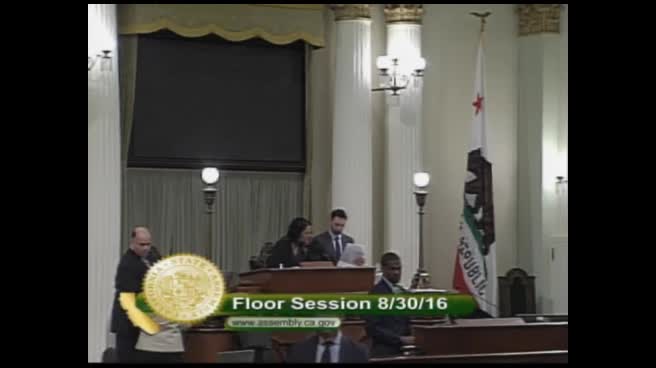
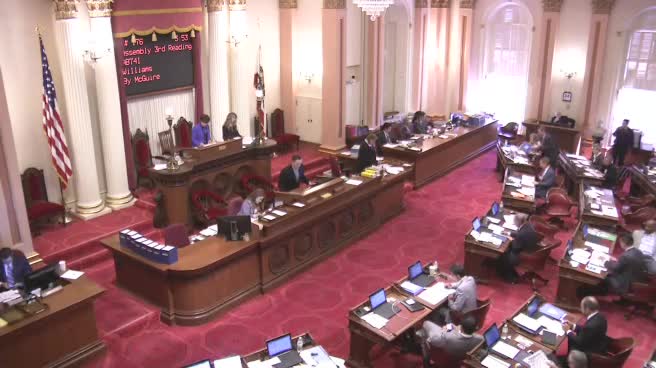
Bill Author

Bill Co-Author(s):