AB 2219: Attorney General: schedule of donors: confidentiality.
- Session Year: 2015-2016
- House: Assembly
- Latest Version Date: 2016-03-31
The California Public Records Act, except as specified, requires every state or local agency, upon request, to make records available to any person upon payment of fees to cover costs. The act exempts specific types of listed records from disclosure, including, among other things, records that are exempt or prohibited from disclosure pursuant to federal or state law, as specified.
This bill would specify that those records include a schedule of donors that is exempt from public disclosure under federal law and is provided to the Attorney General as a condition of registration or maintenance of tax exempt status by an organization that is registered as a tax exempt entity under federal law.
Existing law, the Uniform Supervision of Trustees and Fundraisers for Charitable Purposes Act, requires a commercial fundraiser for charitable purposes and a fundraising counsel for charitable purposes to register with and to file specified reports items with the Attorney Generals Registry of Charitable Trusts, Trusts and provides that these documents the register, copies of instruments, and the reports filed with the Attorney General are subject to public inspection, as specified. Existing law requires the Attorney General to withhold any instrument so filed whose content is not exclusively for charitable purposes from public inspection, as specified.
This bill would prohibit the disclosure of a schedule of donors, as defined, by any employee, agent, or official employed by the Attorney General, or any employee, agent, or official of any other agency that has received a schedule of donors from the Attorney General for governmental purposes. The bill would subject an unlawful disclosure to a civil penalty of $10,000, and an additional civil penalty of $25,000 if that disclosure was willful, intentional, or reckless, as specified. additionally include any instrument filed with the Attorney General for these purposes among those documents to be open to public inspection. The bill would, however, require the Attorney General to withhold from public inspection any report filed with any governmental entity, as specified, that is required by law to be kept confidential, specified portions of documents that do not relate to charitable purposes or charitable assets and that are not otherwise records, public and donor information that is exempt from public inspection under a certain federal law, except as specified.
Existing constitutional provisions require that a statute that limits the right of access to the meetings of public bodies or the writings of public officials and agencies be adopted with findings demonstrating the interest protected by the limitation and the need for protecting that interest.
This bill would make legislative findings to that effect.
The California Public Records Act, except as specified, requires every state or local agency, upon request, to make records available to any person upon payment of fees to cover costs. The act exempts specific types of listed records from disclosure, including, among other things, records that are exempt or prohibited from disclosure pursuant to federal or state law, as specified.
This bill would specify that those records include a schedule of donors that is exempt from public disclosure under federal law and is provided to the Attorney General as a condition of registration or maintenance of tax exempt status by an organization that is registered as a tax exempt entity under federal law.
Existing law, the Uniform Supervision of Trustees and Fundraisers for Charitable Purposes Act, requires a commercial fundraiser for charitable purposes and a fundraising counsel for charitable purposes to register with and to file specified reports with the Attorney Generals Registry of Charitable Trusts, and provides that these documents are subject to public inspection, as specified.
This bill would prohibit the disclosure of a schedule of donors, as defined, by any employee, agent, or official employed by the Attorney General, or any employee, agent, or official of any other agency that has received a schedule of donors from the Attorney General for governmental purposes. The bill would subject an unlawful disclosure to a civil penalty of $10,000, and an additional civil penalty of $25,000 if that disclosure was willful, intentional, or reckless, as specified.
Existing constitutional provisions require that a statute that limits the right of access to the meetings of public bodies or the writings of public officials and agencies be adopted with findings demonstrating the interest protected by the limitation and the need for protecting that interest.
This bill would make legislative findings to that effect.
Except as provided in Sections 6254.7 and 6254.13, this chapter does not require the disclosure of any of the following records:
(a)Preliminary drafts, notes, or interagency or intra-agency memoranda that are not retained by the public agency in the ordinary course of business, if the public interest in withholding those records clearly outweighs the public interest in disclosure.
(b)Records pertaining to pending litigation to which the public agency is a party, or to claims made pursuant to Division 3.6 (commencing with Section 810), until the pending litigation or claim has been finally adjudicated or otherwise settled.
(c)Personnel, medical, or similar files, the disclosure of which would constitute an unwarranted invasion of personal privacy.
(d)Records contained in or related to any of the following:
(1)Applications filed with any state agency responsible for the regulation or supervision of the issuance of securities or of financial institutions, including, but not limited to, banks, savings and loan associations, industrial loan companies, credit unions, and insurance companies.
(2)Examination, operating, or condition reports prepared by, on behalf of, or for the use of, any state agency referred to in paragraph (1).
(3)Preliminary drafts, notes, or interagency or intra-agency communications prepared by, on behalf of, or for the use of, any state agency referred to in paragraph (1).
(4)Information received in confidence by any state agency referred to in paragraph (1).
(e)Geological and geophysical data, plant production data, and similar information relating to utility systems development, or market or crop reports, that are obtained in confidence from any person.
(f)Records of complaints to, or investigations conducted by, or records of intelligence information or security procedures of, the office of the Attorney General and the Department of Justice, the Office of Emergency Services and any state or local police agency, or any investigatory or security files compiled by any other state or local police agency, or any investigatory or security files compiled by any other state or local agency for correctional, law enforcement, or licensing purposes. However, state and local law enforcement agencies shall disclose the names and addresses of persons involved in, or witnesses other than confidential informants to, the incident, the description of any property involved, the date, time, and location of the incident, all diagrams, statements of the parties involved in the incident, the statements of all witnesses, other than confidential informants, to the victims of an incident, or an authorized representative thereof, an insurance carrier against which a claim has been or might be made, and any person suffering bodily injury or property damage or loss, as the result of the incident caused by arson, burglary, fire, explosion, larceny, robbery, carjacking, vandalism, vehicle theft, or a crime as defined by subdivision (b) of Section 13951, unless the disclosure would endanger the safety of a witness or other person involved in the investigation, or unless disclosure would endanger the successful completion of the investigation or a related investigation. However, this division does not require the disclosure of that portion of those investigative files that reflects the analysis or conclusions of the investigating officer.
Customer lists provided to a state or local police agency by an alarm or security company at the request of the agency shall be construed to be records subject to this subdivision.
Notwithstanding any other provision of this subdivision, state and local law enforcement agencies shall make public the following information, except to the extent that disclosure of a particular item of information would endanger the safety of a person involved in an investigation or would endanger the successful completion of the investigation or a related investigation:
(1)The full name and occupation of every individual arrested by the agency, the individuals physical description including date of birth, color of eyes and hair, sex, height and weight, the time and date of arrest, the time and date of booking, the location of the arrest, the factual circumstances surrounding the arrest, the amount of bail set, the time and manner of release or the location where the individual is currently being held, and all charges the individual is being held upon, including any outstanding warrants from other jurisdictions and parole or probation holds.
(2)Subject to the restrictions imposed by Section 841.5 of the Penal Code, the time, substance, and location of all complaints or requests for assistance received by the agency and the time and nature of the response thereto, including, to the extent the information regarding crimes alleged or committed or any other incident investigated is recorded, the time, date, and location of occurrence, the time and date of the report, the name and age of the victim, the factual circumstances surrounding the crime or incident, and a general description of any injuries, property, or weapons involved. The name of a victim of any crime defined by Section 220, 236.1, 261, 261.5, 262, 264, 264.1, 265, 266, 266a, 266b, 266c, 266e, 266f, 266j, 267, 269, 273a, 273d, 273.5, 285, 286, 288, 288a, 288.2, 288.3 (as added by Chapter 337 of the Statutes of 2006), 288.3 (as added by Section 6 of Proposition 83 of the November 7, 2006, statewide general election), 288.5, 288.7, 289, 422.6, 422.7, 422.75, 646.9, or 647.6 of the Penal Code may be withheld at the victims request, or at the request of the victims parent or guardian if the victim is a minor. When a person is the victim of more than one crime, information disclosing that the person is a victim of a crime defined in any of the sections of the Penal Code set forth in this subdivision may be deleted at the request of the victim, or the victims parent or guardian if the victim is a minor, in making the report of the crime, or of any crime or incident accompanying the crime, available to the public in compliance with the requirements of this paragraph.
(3)Subject to the restrictions of Section 841.5 of the Penal Code and this subdivision, the current address of every individual arrested by the agency and the current address of the victim of a crime, if the requester declares under penalty of perjury that the request is made for a scholarly, journalistic, political, or governmental purpose, or that the request is made for investigation purposes by a licensed private investigator as described in Chapter 11.3 (commencing with Section 7512) of Division 3 of the Business and Professions Code. However, the address of the victim of any crime defined by Section 220, 236.1, 261, 261.5, 262, 264, 264.1, 265, 266, 266a, 266b, 266c, 266e, 266f, 266j, 267, 269, 273a, 273d, 273.5, 285, 286, 288, 288a, 288.2, 288.3 (as added by Chapter 337 of the Statutes of 2006), 288.3 (as added by Section 6 of Proposition 83 of the November 7, 2006, statewide general election), 288.5, 288.7, 289, 422.6, 422.7, 422.75, 646.9, or 647.6 of the Penal Code shall remain confidential. Address information obtained pursuant to this paragraph shall not be used directly or indirectly, or furnished to another, to sell a product or service to any individual or group of individuals, and the requester shall execute a declaration to that effect under penalty of perjury. This paragraph shall not be construed to prohibit or limit a scholarly, journalistic, political, or government use of address information obtained pursuant to this paragraph.
(g)Test questions, scoring keys, and other examination data used to administer a licensing examination, examination for employment, or academic examination, except as provided for in Chapter 3 (commencing with Section 99150) of Part 65 of Division 14 of Title 3 of the Education Code.
(h)The contents of real estate appraisals or engineering or feasibility estimates and evaluations made for or by the state or local agency relative to the acquisition of property, or to prospective public supply and construction contracts, until all of the property has been acquired or all of the contract agreement obtained. However, the law of eminent domain shall not be affected by this provision.
(i)Information required from any taxpayer in connection with the collection of local taxes that is received in confidence and the disclosure of the information to other persons would result in unfair competitive disadvantage to the person supplying the information.
(j)Library circulation records kept for the purpose of identifying the borrower of items available in libraries, and library and museum materials made or acquired and presented solely for reference or exhibition purposes. The exemption in this subdivision shall not apply to records of fines imposed on the borrowers.
(k)(1)Records, the disclosure of which is exempted or prohibited pursuant to federal or state law, including, but not limited to, provisions of the Evidence Code relating to privilege.
(2)This subdivision shall include, but is not limited to, a schedule of donors that is exempt from public disclosure pursuant to Section 6104 of Title 26 of the United States Code, that is contained in Schedule B of Internal Revenue Service From 990 and provided to the Attorney General as a condition of registration or maintenance of tax exempt status by an organization that is registered as a tax exempt entity under Section 501(c)(3) of the Internal Revenue Code.
(l)Correspondence of and to the Governor or employees of the Governors office or in the custody of or maintained by the Governors Legal Affairs Secretary. However, public records shall not be transferred to the custody of the Governors Legal Affairs Secretary to evade the disclosure provisions of this chapter.
(m)In the custody of or maintained by the Legislative Counsel, except those records in the public database maintained by the Legislative Counsel that are described in Section 10248.
(n)Statements of personal worth or personal financial data required by a licensing agency and filed by an applicant with the licensing agency to establish his or her personal qualification for the license, certificate, or permit applied for.
(o)Financial data contained in applications for financing under Division 27 (commencing with Section 44500) of the Health and Safety Code, if an authorized officer of the California Pollution Control Financing Authority determines that disclosure of the financial data would be competitively injurious to the applicant and the data is required in order to obtain guarantees from the United States Small Business Administration. The California Pollution Control Financing Authority shall adopt rules for review of individual requests for confidentiality under this section and for making available to the public those portions of an application that are subject to disclosure under this chapter.
(p)Records of state agencies related to activities governed by Chapter 10.3 (commencing with Section 3512), Chapter 10.5 (commencing with Section 3525), and Chapter 12 (commencing with Section 3560) of Division 4, that reveal a state agencys deliberative processes, impressions, evaluations, opinions, recommendations, meeting minutes, research, work products, theories, or strategy, or that provide instruction, advice, or training to employees who do not have full collective bargaining and representation rights under these chapters. This subdivision shall not be construed to limit the disclosure duties of a state agency with respect to any other records relating to the activities governed by the employee relations acts referred to in this subdivision.
(q)(1)Records of state agencies related to activities governed by Article 2.6 (commencing with Section 14081), Article 2.8 (commencing with Section 14087.5), and Article 2.91 (commencing with Section 14089) of Chapter 7 of Part 3 of Division 9 of the Welfare and Institutions Code, that reveal the special negotiators deliberative processes, discussions, communications, or any other portion of the negotiations with providers of health care services, impressions, opinions, recommendations, meeting minutes, research, work product, theories, or strategy, or that provide instruction, advice, or training to employees.
(2)Except for the portion of a contract containing the rates of payment, contracts for inpatient services entered into pursuant to these articles, on or after April 1, 1984, shall be open to inspection one year after they are fully executed. If a contract for inpatient services that is entered into prior to April 1, 1984, is amended on or after April 1, 1984, the amendment, except for any portion containing the rates of payment, shall be open to inspection one year after it is fully executed. If the California Medical Assistance Commission enters into contracts with health care providers for other than inpatient hospital services, those contracts shall be open to inspection one year after they are fully executed.
(3)Three years after a contract or amendment is open to inspection under this subdivision, the portion of the contract or amendment containing the rates of payment shall be open to inspection.
(4)Notwithstanding any other law, the entire contract or amendment shall be open to inspection by the Joint Legislative Audit Committee and the Legislative Analysts Office. The committee and that office shall maintain the confidentiality of the contracts and amendments until the time a contract or amendment is fully open to inspection by the public.
(r)Records of Native American graves, cemeteries, and sacred places and records of Native American places, features, and objects described in Sections 5097.9 and 5097.993 of the Public Resources Code maintained by, or in the possession of, the Native American Heritage Commission, another state agency, or a local agency.
(s)A final accreditation report of the Joint Commission on Accreditation of Hospitals that has been transmitted to the State Department of Health Care Services pursuant to subdivision (b) of Section 1282 of the Health and Safety Code.
(t)Records of a local hospital district, formed pursuant to Division 23 (commencing with Section 32000) of the Health and Safety Code, or the records of a municipal hospital, formed pursuant to Article 7 (commencing with Section 37600) or Article 8 (commencing with Section 37650) of Chapter 5 of Part 2 of Division 3 of Title 4 of this code, that relate to any contract with an insurer or nonprofit hospital service plan for inpatient or outpatient services for alternative rates pursuant to Section 10133 of the Insurance Code. However, the record shall be open to inspection within one year after the contract is fully executed.
(u)(1)Information contained in applications for licenses to carry firearms issued pursuant to Section 26150, 26155, 26170, or 26215 of the Penal Code by the sheriff of a county or the chief or other head of a municipal police department that indicates when or where the applicant is vulnerable to attack or that concerns the applicants medical or psychological history or that of members of his or her family.
(2)The home address and telephone number of prosecutors, public defenders, peace officers, judges, court commissioners, and magistrates that are set forth in applications for licenses to carry firearms issued pursuant to Section 26150, 26155, 26170, or 26215 of the Penal Code by the sheriff of a county or the chief or other head of a municipal police department.
(3)The home address and telephone number of prosecutors, public defenders, peace officers, judges, court commissioners, and magistrates that are set forth in licenses to carry firearms issued pursuant to Section 26150, 26155, 26170, or 26215 of the Penal Code by the sheriff of a county or the chief or other head of a municipal police department.
(v)(1)Records of the Managed Risk Medical Insurance Board and the State Department of Health Care Services related to activities governed by Part 6.3 (commencing with Section 12695), Part 6.5 (commencing with Section 12700), Part 6.6 (commencing with Section 12739.5), or Part 6.7 (commencing with Section 12739.70) of Division 2 of the Insurance Code, or Chapter 2 (commencing with Section 15810) or Chapter 4 (commencing with Section 15870) of Part 3.3 of Division 9 of the Welfare and Institutions Code, and that reveal any of the following:
(A)The deliberative processes, discussions, communications, or any other portion of the negotiations with entities contracting or seeking to contract with the board or the department, entities with which the board or the department is considering a contract, or entities with which the board or department is considering or enters into any other arrangement under which the board or the department provides, receives, or arranges services or reimbursement.
(B)The impressions, opinions, recommendations, meeting minutes, research, work product, theories, or strategy of the board or its staff or the department or its staff, or records that provide instructions, advice, or training to their employees.
(2)(A)Except for the portion of a contract that contains the rates of payment, contracts entered into pursuant to Part 6.3 (commencing with Section 12695), Part 6.5 (commencing with Section 12700), Part 6.6 (commencing with Section 12739.5), or Part 6.7 (commencing with Section 12739.70) of Division 2 of the Insurance Code, or Chapter 2 (commencing with Section 15810) or Chapter 4 (commencing with Section 15870) of Part 3.3 of Division 9 of the Welfare and Institutions Code, on or after July 1, 1991, shall be open to inspection one year after their effective dates.
(B)If a contract that is entered into prior to July 1, 1991, is amended on or after July 1, 1991, the amendment, except for any portion containing the rates of payment, shall be open to inspection one year after the effective date of the amendment.
(3)Three years after a contract or amendment is open to inspection pursuant to this subdivision, the portion of the contract or amendment containing the rates of payment shall be open to inspection.
(4)Notwithstanding any other law, the entire contract or amendments to a contract shall be open to inspection by the Joint Legislative Audit Committee. The committee shall maintain the confidentiality of the contracts and amendments thereto, until the contracts or amendments to the contracts are open to inspection pursuant to paragraph (3).
(w)(1)Records of the Managed Risk Medical Insurance Board related to activities governed by Chapter 8 (commencing with Section 10700) of Part 2 of Division 2 of the Insurance Code, and that reveal the deliberative processes, discussions, communications, or any other portion of the negotiations with health plans, or the impressions, opinions, recommendations, meeting minutes, research, work product, theories, or strategy of the board or its staff, or records that provide instructions, advice, or training to employees.
(2)Except for the portion of a contract that contains the rates of payment, contracts for health coverage entered into pursuant to Chapter 8 (commencing with Section 10700) of Part 2 of Division 2 of the Insurance Code, on or after January 1, 1993, shall be open to inspection one year after they have been fully executed.
(3)Notwithstanding any other law, the entire contract or amendments to a contract shall be open to inspection by the Joint Legislative Audit Committee. The committee shall maintain the confidentiality of the contracts and amendments thereto, until the contracts or amendments to the contracts are open to inspection pursuant to paragraph (2).
(x)Financial data contained in applications for registration, or registration renewal, as a service contractor filed with the Director of Consumer Affairs pursuant to Chapter 20 (commencing with Section 9800) of Division 3 of the Business and Professions Code, for the purpose of establishing the service contractors net worth, or financial data regarding the funded accounts held in escrow for service contracts held in force in this state by a service contractor.
(y)(1)Records of the Managed Risk Medical Insurance Board and the State Department of Health Care Services related to activities governed by Part 6.2 (commencing with Section 12693) or Part 6.4 (commencing with Section 12699.50) of Division 2 of the Insurance Code or Sections 14005.26 and 14005.27 of, or Chapter 3 (commencing with Section 15850) of Part 3.3 of Division 9 of, the Welfare and Institutions Code, if the records reveal any of the following:
(A)The deliberative processes, discussions, communications, or any other portion of the negotiations with entities contracting or seeking to contract with the board or the department, entities with which the board or department is considering a contract, or entities with which the board or department is considering or enters into any other arrangement under which the board or department provides, receives, or arranges services or reimbursement.
(B)The impressions, opinions, recommendations, meeting minutes, research, work product, theories, or strategy of the board or its staff, or the department or its staff, or records that provide instructions, advice, or training to employees.
(2)(A)Except for the portion of a contract that contains the rates of payment, contracts entered into pursuant to Part 6.2 (commencing with Section 12693) or Part 6.4 (commencing with Section 12699.50) of Division 2 of the Insurance Code, on or after January 1, 1998, or Sections 14005.26 and 14005.27 of, or Chapter 3 (commencing with Section 15850) of Part 3.3 of Division 9 of, the Welfare and Institutions Code shall be open to inspection one year after their effective dates.
(B)If a contract entered into pursuant to Part 6.2 (commencing with Section 12693) or Part 6.4 (commencing with Section 12699.50) of Division 2 of the Insurance Code or Sections 14005.26 and 14005.27 of, or Chapter 3 (commencing with Section 15850) of Part 3.3 of Division 9 of, the Welfare and Institutions Code, is amended, the amendment shall be open to inspection one year after the effective date of the amendment.
(3)Three years after a contract or amendment is open to inspection pursuant to this subdivision, the portion of the contract or amendment containing the rates of payment shall be open to inspection.
(4)Notwithstanding any other law, the entire contract or amendments to a contract shall be open to inspection by the Joint Legislative Audit Committee. The committee shall maintain the confidentiality of the contracts and amendments thereto until the contract or amendments to a contract are open to inspection pursuant to paragraph (2) or (3).
(5)The exemption from disclosure provided pursuant to this subdivision for the contracts, deliberative processes, discussions, communications, negotiations, impressions, opinions, recommendations, meeting minutes, research, work product, theories, or strategy of the board or its staff, or the department or its staff, shall also apply to the contracts, deliberative processes, discussions, communications, negotiations, impressions, opinions, recommendations, meeting minutes, research, work product, theories, or strategy of applicants pursuant to Part 6.4 (commencing with Section 12699.50) of Division 2 of the Insurance Code or Chapter 3 (commencing with Section 15850) of Part 3.3 of Division 9 of the Welfare and Institutions Code.
(z)Records obtained pursuant to paragraph (2) of subdivision (f) of Section 2891.1 of the Public Utilities Code.
(aa)A document prepared by or for a state or local agency that assesses its vulnerability to terrorist attack or other criminal acts intended to disrupt the public agencys operations and that is for distribution or consideration in a closed session.
(ab)Critical infrastructure information, as defined in Section 131(3) of Title 6 of the United States Code, that is voluntarily submitted to the Office of Emergency Services for use by that office, including the identity of the person who or entity that voluntarily submitted the information. As used in this subdivision, voluntarily submitted means submitted in the absence of the office exercising any legal authority to compel access to or submission of critical infrastructure information. This subdivision shall not affect the status of information in the possession of any other state or local governmental agency.
(ac)All information provided to the Secretary of State by a person for the purpose of registration in the Advance Health Care Directive Registry, except that those records shall be released at the request of a health care provider, a public guardian, or the registrants legal representative.
(ad)The following records of the State Compensation Insurance Fund:
(1)Records related to claims pursuant to Chapter 1 (commencing with Section 3200) of Division 4 of the Labor Code, to the extent that confidential medical information or other individually identifiable information would be disclosed.
(2)Records related to the discussions, communications, or any other portion of the negotiations with entities contracting or seeking to contract with the fund, and any related deliberations.
(3)Records related to the impressions, opinions, recommendations, meeting minutes of meetings or sessions that are lawfully closed to the public, research, work product, theories, or strategy of the fund or its staff, on the development of rates, contracting strategy, underwriting, or competitive strategy pursuant to the powers granted to the fund in Chapter 4 (commencing with Section 11770) of Part 3 of Division 2 of the Insurance Code.
(4)Records obtained to provide workers compensation insurance under Chapter 4 (commencing with Section 11770) of Part 3 of Division 2 of the Insurance Code, including, but not limited to, any medical claims information, policyholder information provided that nothing in this paragraph shall be interpreted to prevent an insurance agent or broker from obtaining proprietary information or other information authorized by law to be obtained by the agent or broker, and information on rates, pricing, and claims handling received from brokers.
(5)(A)Records that are trade secrets pursuant to Section 6276.44, or Article 11 (commencing with Section 1060) of Chapter 4 of Division 8 of the Evidence Code, including without limitation, instructions, advice, or training provided by the State Compensation Insurance Fund to its board members, officers, and employees regarding the funds special investigation unit, internal audit unit, and informational security, marketing, rating, pricing, underwriting, claims handling, audits, and collections.
(B)Notwithstanding subparagraph (A), the portions of records containing trade secrets shall be available for review by the Joint Legislative Audit Committee, the Bureau of State Audits, Division of Workers Compensation, and the Department of Insurance to ensure compliance with applicable law.
(6)(A)Internal audits containing proprietary information and the following records that are related to an internal audit:
(i)Personal papers and correspondence of any person providing assistance to the fund when that person has requested in writing that his or her papers and correspondence be kept private and confidential. Those papers and correspondence shall become public records if the written request is withdrawn, or upon order of the fund.
(ii)Papers, correspondence, memoranda, or any substantive information pertaining to any audit not completed or an internal audit that contains proprietary information.
(B)Notwithstanding subparagraph (A), the portions of records containing proprietary information, or any information specified in subparagraph (A) shall be available for review by the Joint Legislative Audit Committee, the Bureau of State Audits, Division of Workers Compensation, and the Department of Insurance to ensure compliance with applicable law.
(7)(A)Except as provided in subparagraph (C), contracts entered into pursuant to Chapter 4 (commencing with Section 11770) of Part 3 of Division 2 of the Insurance Code shall be open to inspection one year after the contract has been fully executed.
(B)If a contract entered into pursuant to Chapter 4 (commencing with Section 11770) of Part 3 of Division 2 of the Insurance Code is amended, the amendment shall be open to inspection one year after the amendment has been fully executed.
(C)Three years after a contract or amendment is open to inspection pursuant to this subdivision, the portion of the contract or amendment containing the rates of payment shall be open to inspection.
(D)Notwithstanding any other law, the entire contract or amendments to a contract shall be open to inspection by the Joint Legislative Audit Committee. The committee shall maintain the confidentiality of the contracts and amendments thereto until the contract or amendments to a contract are open to inspection pursuant to this paragraph.
(E)This paragraph is not intended to apply to documents related to contracts with public entities that are not otherwise expressly confidential as to that public entity.
(F)For purposes of this paragraph, fully executed means the point in time when all of the necessary parties to the contract have signed the contract.
This section does not prevent any agency from opening its records concerning the administration of the agency to public inspection, unless disclosure is otherwise prohibited by law.
This section does not prevent any health facility from disclosing to a certified bargaining agent relevant financing information pursuant to Section 8 of the National Labor Relations Act (29 U.S.C. Sec. 158).
SEC. 2.SECTION 1.Section 12590 of the Government Code is amended to read:12590.(a)Subject to reasonable rules and regulations adopted by the Attorney General and except as provided in subdivision (b), the register, copies of instruments, documents, and the reports filed with the Attorney General shall be open to public inspection. The
(b) The Attorney General shall withhold from public inspection any instrument so filed whose content is not exclusively for charitable purposes. inspection, pursuant to this subdivision or subdivision (k) of Section 6254, the following:
(1)Any report filed with any other governmental agency of this state, another state, the United States, or any governmental subdivision thereof that is required by law to be kept confidential.
(2)Upon request of a charity or charitable fiduciary, any part of a document filed with the Attorney General that does not relate to charitable purposes or charitable assets and that is not otherwise a public record.
(3)Donor information that is exempt from public disclosure pursuant to subparagraph (A) of paragraph (3) of subdivision (d) of Section 6104 of the Internal Revenue Code, unless either of the following apply:
(A)The disclosure is pursuant to a court or administrative proceeding brought pursuant to the Attorney Generals charitable trust enforcement responsibilities.
(B)The disclosure is in response to a search warrant.
(b)(1)For purposes of this subdivision, the term schedule of donors means a schedule of donors that is exempt from public disclosure pursuant to Section 6104 of Title 26 of the United States Code, and that is contained in Schedule B of Internal Revenue Service From 990 and provided to the Attorney General as a condition of registration or maintenance of tax exempt status by an organization that is registered as a tax exempt entity under Section 501(c)(3) of the Internal Revenue Code.
(2)The Attorney General or any agent or employee of the Attorney General, shall not publicly disclose the schedule of donors. This prohibition shall apply to any person or agency that the Attorney General discloses the list of donors to pursuant to any other law.
(3)Any person who violates this subdivision shall be subject to a civil penalty not to exceed ten thousand dollars ($10,000) for each violation. A willful, intentional, or reckless violation of this subdivision shall be subject to an additional civil penalty not to exceed twenty-five thousand dollars ($25,000). A civil action may be brought pursuant to this subdivision by a donor whose information is publicly disclosed or by an organization that qualifies as tax exempt under Section 501(c)(3) of the Internal Revenue Code whose donors information has been publicly disclosed in violation of this subdivision. Any civil penalty assessed pursuant to this section shall be paid to the donor or organization that brought the action.
SEC. 3.SEC. 2.The Legislature finds and declares that Section 1 of this act, which amends Section 6254 12590 of the Government Code, imposes a limitation on the publics right of access to the meetings of public bodies or the writings of public officials and agencies within the meaning of Section 3 of Article I of the California Constitution. Pursuant to that constitutional provision, the Legislature makes the following findings to demonstrate the interest protected by this limitation and the need for protecting that interest:
The limitations imposed by this act establish a necessary balance between the right of the people to access information contained in public records and the legitimate privacy interests of people who support nonprofit charitable or educational organizations that educate the public on potentially controversial topics. in a manner that is consistent with protections for the same information that is provided under federal law, including, but not limited to, subparagraph (A) of paragraph (3) of subdivision (d) of Section 6104 of the Internal Revenue Code.
Except as provided in Sections 6254.7 and 6254.13, this chapter does not require the disclosure of any of the following records:
(a)Preliminary drafts, notes, or interagency or intra-agency memoranda that are not retained by the public agency in the ordinary course of business, if the public interest in withholding those records clearly outweighs the public interest in disclosure.
(b)Records pertaining to pending litigation to which the public agency is a party, or to claims made pursuant to Division 3.6 (commencing with Section 810), until the pending litigation or claim has been finally adjudicated or otherwise settled.
(c)Personnel, medical, or similar files, the disclosure of which would constitute an unwarranted invasion of personal privacy.
(d)Records contained in or related to any of the following:
(1)Applications filed with any state agency responsible for the regulation or supervision of the issuance of securities or of financial institutions, including, but not limited to, banks, savings and loan associations, industrial loan companies, credit unions, and insurance companies.
(2)Examination, operating, or condition reports prepared by, on behalf of, or for the use of, any state agency referred to in paragraph (1).
(3)Preliminary drafts, notes, or interagency or intra-agency communications prepared by, on behalf of, or for the use of, any state agency referred to in paragraph (1).
(4)Information received in confidence by any state agency referred to in paragraph (1).
(e)Geological and geophysical data, plant production data, and similar information relating to utility systems development, or market or crop reports, that are obtained in confidence from any person.
(f)Records of complaints to, or investigations conducted by, or records of intelligence information or security procedures of, the office of the Attorney General and the Department of Justice, the Office of Emergency Services and any state or local police agency, or any investigatory or security files compiled by any other state or local police agency, or any investigatory or security files compiled by any other state or local agency for correctional, law enforcement, or licensing purposes. However, state and local law enforcement agencies shall disclose the names and addresses of persons involved in, or witnesses other than confidential informants to, the incident, the description of any property involved, the date, time, and location of the incident, all diagrams, statements of the parties involved in the incident, the statements of all witnesses, other than confidential informants, to the victims of an incident, or an authorized representative thereof, an insurance carrier against which a claim has been or might be made, and any person suffering bodily injury or property damage or loss, as the result of the incident caused by arson, burglary, fire, explosion, larceny, robbery, carjacking, vandalism, vehicle theft, or a crime as defined by subdivision (b) of Section 13951, unless the disclosure would endanger the safety of a witness or other person involved in the investigation, or unless disclosure would endanger the successful completion of the investigation or a related investigation. However, this division does not require the disclosure of that portion of those investigative files that reflects the analysis or conclusions of the investigating officer.
Customer lists provided to a state or local police agency by an alarm or security company at the request of the agency shall be construed to be records subject to this subdivision.
Notwithstanding any other provision of this subdivision, state and local law enforcement agencies shall make public the following information, except to the extent that disclosure of a particular item of information would endanger the safety of a person involved in an investigation or would endanger the successful completion of the investigation or a related investigation:
(1)The full name and occupation of every individual arrested by the agency, the individuals physical description including date of birth, color of eyes and hair, sex, height and weight, the time and date of arrest, the time and date of booking, the location of the arrest, the factual circumstances surrounding the arrest, the amount of bail set, the time and manner of release or the location where the individual is currently being held, and all charges the individual is being held upon, including any outstanding warrants from other jurisdictions and parole or probation holds.
(2)Subject to the restrictions imposed by Section 841.5 of the Penal Code, the time, substance, and location of all complaints or requests for assistance received by the agency and the time and nature of the response thereto, including, to the extent the information regarding crimes alleged or committed or any other incident investigated is recorded, the time, date, and location of occurrence, the time and date of the report, the name and age of the victim, the factual circumstances surrounding the crime or incident, and a general description of any injuries, property, or weapons involved. The name of a victim of any crime defined by Section 220, 236.1, 261, 261.5, 262, 264, 264.1, 265, 266, 266a, 266b, 266c, 266e, 266f, 266j, 267, 269, 273a, 273d, 273.5, 285, 286, 288, 288a, 288.2, 288.3 (as added by Chapter 337 of the Statutes of 2006), 288.3 (as added by Section 6 of Proposition 83 of the November 7, 2006, statewide general election), 288.5, 288.7, 289, 422.6, 422.7, 422.75, 646.9, or 647.6 of the Penal Code may be withheld at the victims request, or at the request of the victims parent or guardian if the victim is a minor. When a person is the victim of more than one crime, information disclosing that the person is a victim of a crime defined in any of the sections of the Penal Code set forth in this subdivision may be deleted at the request of the victim, or the victims parent or guardian if the victim is a minor, in making the report of the crime, or of any crime or incident accompanying the crime, available to the public in compliance with the requirements of this paragraph.
(3)Subject to the restrictions of Section 841.5 of the Penal Code and this subdivision, the current address of every individual arrested by the agency and the current address of the victim of a crime, if the requester declares under penalty of perjury that the request is made for a scholarly, journalistic, political, or governmental purpose, or that the request is made for investigation purposes by a licensed private investigator as described in Chapter 11.3 (commencing with Section 7512) of Division 3 of the Business and Professions Code. However, the address of the victim of any crime defined by Section 220, 236.1, 261, 261.5, 262, 264, 264.1, 265, 266, 266a, 266b, 266c, 266e, 266f, 266j, 267, 269, 273a, 273d, 273.5, 285, 286, 288, 288a, 288.2, 288.3 (as added by Chapter 337 of the Statutes of 2006), 288.3 (as added by Section 6 of Proposition 83 of the November 7, 2006, statewide general election), 288.5, 288.7, 289, 422.6, 422.7, 422.75, 646.9, or 647.6 of the Penal Code shall remain confidential. Address information obtained pursuant to this paragraph shall not be used directly or indirectly, or furnished to another, to sell a product or service to any individual or group of individuals, and the requester shall execute a declaration to that effect under penalty of perjury. This paragraph shall not be construed to prohibit or limit a scholarly, journalistic, political, or government use of address information obtained pursuant to this paragraph.
(g)Test questions, scoring keys, and other examination data used to administer a licensing examination, examination for employment, or academic examination, except as provided for in Chapter 3 (commencing with Section 99150) of Part 65 of Division 14 of Title 3 of the Education Code.
(h)The contents of real estate appraisals or engineering or feasibility estimates and evaluations made for or by the state or local agency relative to the acquisition of property, or to prospective public supply and construction contracts, until all of the property has been acquired or all of the contract agreement obtained. However, the law of eminent domain shall not be affected by this provision.
(i)Information required from any taxpayer in connection with the collection of local taxes that is received in confidence and the disclosure of the information to other persons would result in unfair competitive disadvantage to the person supplying the information.
(j)Library circulation records kept for the purpose of identifying the borrower of items available in libraries, and library and museum materials made or acquired and presented solely for reference or exhibition purposes. The exemption in this subdivision shall not apply to records of fines imposed on the borrowers.
(k)(1)Records, the disclosure of which is exempted or prohibited pursuant to federal or state law, including, but not limited to, provisions of the Evidence Code relating to privilege.
(2)This subdivision shall include, but is not limited to, a schedule of donors that is exempt from public disclosure pursuant to Section 6104 of Title 26 of the United States Code, that is contained in Schedule B of Internal Revenue Service From 990 and provided to the Attorney General as a condition of registration or maintenance of tax exempt status by an organization that is registered as a tax exempt entity under Section 501(c)(3) of the Internal Revenue Code.
(l)Correspondence of and to the Governor or employees of the Governors office or in the custody of or maintained by the Governors Legal Affairs Secretary. However, public records shall not be transferred to the custody of the Governors Legal Affairs Secretary to evade the disclosure provisions of this chapter.
(m)In the custody of or maintained by the Legislative Counsel, except those records in the public database maintained by the Legislative Counsel that are described in Section 10248.
(n)Statements of personal worth or personal financial data required by a licensing agency and filed by an applicant with the licensing agency to establish his or her personal qualification for the license, certificate, or permit applied for.
(o)Financial data contained in applications for financing under Division 27 (commencing with Section 44500) of the Health and Safety Code, if an authorized officer of the California Pollution Control Financing Authority determines that disclosure of the financial data would be competitively injurious to the applicant and the data is required in order to obtain guarantees from the United States Small Business Administration. The California Pollution Control Financing Authority shall adopt rules for review of individual requests for confidentiality under this section and for making available to the public those portions of an application that are subject to disclosure under this chapter.
(p)Records of state agencies related to activities governed by Chapter 10.3 (commencing with Section 3512), Chapter 10.5 (commencing with Section 3525), and Chapter 12 (commencing with Section 3560) of Division 4, that reveal a state agencys deliberative processes, impressions, evaluations, opinions, recommendations, meeting minutes, research, work products, theories, or strategy, or that provide instruction, advice, or training to employees who do not have full collective bargaining and representation rights under these chapters. This subdivision shall not be construed to limit the disclosure duties of a state agency with respect to any other records relating to the activities governed by the employee relations acts referred to in this subdivision.
(q)(1)Records of state agencies related to activities governed by Article 2.6 (commencing with Section 14081), Article 2.8 (commencing with Section 14087.5), and Article 2.91 (commencing with Section 14089) of Chapter 7 of Part 3 of Division 9 of the Welfare and Institutions Code, that reveal the special negotiators deliberative processes, discussions, communications, or any other portion of the negotiations with providers of health care services, impressions, opinions, recommendations, meeting minutes, research, work product, theories, or strategy, or that provide instruction, advice, or training to employees.
(2)Except for the portion of a contract containing the rates of payment, contracts for inpatient services entered into pursuant to these articles, on or after April 1, 1984, shall be open to inspection one year after they are fully executed. If a contract for inpatient services that is entered into prior to April 1, 1984, is amended on or after April 1, 1984, the amendment, except for any portion containing the rates of payment, shall be open to inspection one year after it is fully executed. If the California Medical Assistance Commission enters into contracts with health care providers for other than inpatient hospital services, those contracts shall be open to inspection one year after they are fully executed.
(3)Three years after a contract or amendment is open to inspection under this subdivision, the portion of the contract or amendment containing the rates of payment shall be open to inspection.
(4)Notwithstanding any other law, the entire contract or amendment shall be open to inspection by the Joint Legislative Audit Committee and the Legislative Analysts Office. The committee and that office shall maintain the confidentiality of the contracts and amendments until the time a contract or amendment is fully open to inspection by the public.
(r)Records of Native American graves, cemeteries, and sacred places and records of Native American places, features, and objects described in Sections 5097.9 and 5097.993 of the Public Resources Code maintained by, or in the possession of, the Native American Heritage Commission, another state agency, or a local agency.
(s)A final accreditation report of the Joint Commission on Accreditation of Hospitals that has been transmitted to the State Department of Health Care Services pursuant to subdivision (b) of Section 1282 of the Health and Safety Code.
(t)Records of a local hospital district, formed pursuant to Division 23 (commencing with Section 32000) of the Health and Safety Code, or the records of a municipal hospital, formed pursuant to Article 7 (commencing with Section 37600) or Article 8 (commencing with Section 37650) of Chapter 5 of Part 2 of Division 3 of Title 4 of this code, that relate to any contract with an insurer or nonprofit hospital service plan for inpatient or outpatient services for alternative rates pursuant to Section 10133 of the Insurance Code. However, the record shall be open to inspection within one year after the contract is fully executed.
(u)(1)Information contained in applications for licenses to carry firearms issued pursuant to Section 26150, 26155, 26170, or 26215 of the Penal Code by the sheriff of a county or the chief or other head of a municipal police department that indicates when or where the applicant is vulnerable to attack or that concerns the applicants medical or psychological history or that of members of his or her family.
(2)The home address and telephone number of prosecutors, public defenders, peace officers, judges, court commissioners, and magistrates that are set forth in applications for licenses to carry firearms issued pursuant to Section 26150, 26155, 26170, or 26215 of the Penal Code by the sheriff of a county or the chief or other head of a municipal police department.
(3)The home address and telephone number of prosecutors, public defenders, peace officers, judges, court commissioners, and magistrates that are set forth in licenses to carry firearms issued pursuant to Section 26150, 26155, 26170, or 26215 of the Penal Code by the sheriff of a county or the chief or other head of a municipal police department.
(v)(1)Records of the Managed Risk Medical Insurance Board and the State Department of Health Care Services related to activities governed by Part 6.3 (commencing with Section 12695), Part 6.5 (commencing with Section 12700), Part 6.6 (commencing with Section 12739.5), or Part 6.7 (commencing with Section 12739.70) of Division 2 of the Insurance Code, or Chapter 2 (commencing with Section 15810) or Chapter 4 (commencing with Section 15870) of Part 3.3 of Division 9 of the Welfare and Institutions Code, and that reveal any of the following:
(A)The deliberative processes, discussions, communications, or any other portion of the negotiations with entities contracting or seeking to contract with the board or the department, entities with which the board or the department is considering a contract, or entities with which the board or department is considering or enters into any other arrangement under which the board or the department provides, receives, or arranges services or reimbursement.
(B)The impressions, opinions, recommendations, meeting minutes, research, work product, theories, or strategy of the board or its staff or the department or its staff, or records that provide instructions, advice, or training to their employees.
(2)(A)Except for the portion of a contract that contains the rates of payment, contracts entered into pursuant to Part 6.3 (commencing with Section 12695), Part 6.5 (commencing with Section 12700), Part 6.6 (commencing with Section 12739.5), or Part 6.7 (commencing with Section 12739.70) of Division 2 of the Insurance Code, or Chapter 2 (commencing with Section 15810) or Chapter 4 (commencing with Section 15870) of Part 3.3 of Division 9 of the Welfare and Institutions Code, on or after July 1, 1991, shall be open to inspection one year after their effective dates.
(B)If a contract that is entered into prior to July 1, 1991, is amended on or after July 1, 1991, the amendment, except for any portion containing the rates of payment, shall be open to inspection one year after the effective date of the amendment.
(3)Three years after a contract or amendment is open to inspection pursuant to this subdivision, the portion of the contract or amendment containing the rates of payment shall be open to inspection.
(4)Notwithstanding any other law, the entire contract or amendments to a contract shall be open to inspection by the Joint Legislative Audit Committee. The committee shall maintain the confidentiality of the contracts and amendments thereto, until the contracts or amendments to the contracts are open to inspection pursuant to paragraph (3).
(w)(1)Records of the Managed Risk Medical Insurance Board related to activities governed by Chapter 8 (commencing with Section 10700) of Part 2 of Division 2 of the Insurance Code, and that reveal the deliberative processes, discussions, communications, or any other portion of the negotiations with health plans, or the impressions, opinions, recommendations, meeting minutes, research, work product, theories, or strategy of the board or its staff, or records that provide instructions, advice, or training to employees.
(2)Except for the portion of a contract that contains the rates of payment, contracts for health coverage entered into pursuant to Chapter 8 (commencing with Section 10700) of Part 2 of Division 2 of the Insurance Code, on or after January 1, 1993, shall be open to inspection one year after they have been fully executed.
(3)Notwithstanding any other law, the entire contract or amendments to a contract shall be open to inspection by the Joint Legislative Audit Committee. The committee shall maintain the confidentiality of the contracts and amendments thereto, until the contracts or amendments to the contracts are open to inspection pursuant to paragraph (2).
(x)Financial data contained in applications for registration, or registration renewal, as a service contractor filed with the Director of Consumer Affairs pursuant to Chapter 20 (commencing with Section 9800) of Division 3 of the Business and Professions Code, for the purpose of establishing the service contractors net worth, or financial data regarding the funded accounts held in escrow for service contracts held in force in this state by a service contractor.
(y)(1)Records of the Managed Risk Medical Insurance Board and the State Department of Health Care Services related to activities governed by Part 6.2 (commencing with Section 12693) or Part 6.4 (commencing with Section 12699.50) of Division 2 of the Insurance Code or Sections 14005.26 and 14005.27 of, or Chapter 3 (commencing with Section 15850) of Part 3.3 of Division 9 of, the Welfare and Institutions Code, if the records reveal any of the following:
(A)The deliberative processes, discussions, communications, or any other portion of the negotiations with entities contracting or seeking to contract with the board or the department, entities with which the board or department is considering a contract, or entities with which the board or department is considering or enters into any other arrangement under which the board or department provides, receives, or arranges services or reimbursement.
(B)The impressions, opinions, recommendations, meeting minutes, research, work product, theories, or strategy of the board or its staff, or the department or its staff, or records that provide instructions, advice, or training to employees.
(2)(A)Except for the portion of a contract that contains the rates of payment, contracts entered into pursuant to Part 6.2 (commencing with Section 12693) or Part 6.4 (commencing with Section 12699.50) of Division 2 of the Insurance Code, on or after January 1, 1998, or Sections 14005.26 and 14005.27 of, or Chapter 3 (commencing with Section 15850) of Part 3.3 of Division 9 of, the Welfare and Institutions Code shall be open to inspection one year after their effective dates.
(B)If a contract entered into pursuant to Part 6.2 (commencing with Section 12693) or Part 6.4 (commencing with Section 12699.50) of Division 2 of the Insurance Code or Sections 14005.26 and 14005.27 of, or Chapter 3 (commencing with Section 15850) of Part 3.3 of Division 9 of, the Welfare and Institutions Code, is amended, the amendment shall be open to inspection one year after the effective date of the amendment.
(3)Three years after a contract or amendment is open to inspection pursuant to this subdivision, the portion of the contract or amendment containing the rates of payment shall be open to inspection.
(4)Notwithstanding any other law, the entire contract or amendments to a contract shall be open to inspection by the Joint Legislative Audit Committee. The committee shall maintain the confidentiality of the contracts and amendments thereto until the contract or amendments to a contract are open to inspection pursuant to paragraph (2) or (3).
(5)The exemption from disclosure provided pursuant to this subdivision for the contracts, deliberative processes, discussions, communications, negotiations, impressions, opinions, recommendations, meeting minutes, research, work product, theories, or strategy of the board or its staff, or the department or its staff, shall also apply to the contracts, deliberative processes, discussions, communications, negotiations, impressions, opinions, recommendations, meeting minutes, research, work product, theories, or strategy of applicants pursuant to Part 6.4 (commencing with Section 12699.50) of Division 2 of the Insurance Code or Chapter 3 (commencing with Section 15850) of Part 3.3 of Division 9 of the Welfare and Institutions Code.
(z)Records obtained pursuant to paragraph (2) of subdivision (f) of Section 2891.1 of the Public Utilities Code.
(aa)A document prepared by or for a state or local agency that assesses its vulnerability to terrorist attack or other criminal acts intended to disrupt the public agencys operations and that is for distribution or consideration in a closed session.
(ab)Critical infrastructure information, as defined in Section 131(3) of Title 6 of the United States Code, that is voluntarily submitted to the Office of Emergency Services for use by that office, including the identity of the person who or entity that voluntarily submitted the information. As used in this subdivision, voluntarily submitted means submitted in the absence of the office exercising any legal authority to compel access to or submission of critical infrastructure information. This subdivision shall not affect the status of information in the possession of any other state or local governmental agency.
(ac)All information provided to the Secretary of State by a person for the purpose of registration in the Advance Health Care Directive Registry, except that those records shall be released at the request of a health care provider, a public guardian, or the registrants legal representative.
(ad)The following records of the State Compensation Insurance Fund:
(1)Records related to claims pursuant to Chapter 1 (commencing with Section 3200) of Division 4 of the Labor Code, to the extent that confidential medical information or other individually identifiable information would be disclosed.
(2)Records related to the discussions, communications, or any other portion of the negotiations with entities contracting or seeking to contract with the fund, and any related deliberations.
(3)Records related to the impressions, opinions, recommendations, meeting minutes of meetings or sessions that are lawfully closed to the public, research, work product, theories, or strategy of the fund or its staff, on the development of rates, contracting strategy, underwriting, or competitive strategy pursuant to the powers granted to the fund in Chapter 4 (commencing with Section 11770) of Part 3 of Division 2 of the Insurance Code.
(4)Records obtained to provide workers compensation insurance under Chapter 4 (commencing with Section 11770) of Part 3 of Division 2 of the Insurance Code, including, but not limited to, any medical claims information, policyholder information provided that nothing in this paragraph shall be interpreted to prevent an insurance agent or broker from obtaining proprietary information or other information authorized by law to be obtained by the agent or broker, and information on rates, pricing, and claims handling received from brokers.
(5)(A)Records that are trade secrets pursuant to Section 6276.44, or Article 11 (commencing with Section 1060) of Chapter 4 of Division 8 of the Evidence Code, including without limitation, instructions, advice, or training provided by the State Compensation Insurance Fund to its board members, officers, and employees regarding the funds special investigation unit, internal audit unit, and informational security, marketing, rating, pricing, underwriting, claims handling, audits, and collections.
(B)Notwithstanding subparagraph (A), the portions of records containing trade secrets shall be available for review by the Joint Legislative Audit Committee, the Bureau of State Audits, Division of Workers Compensation, and the Department of Insurance to ensure compliance with applicable law.
(6)(A)Internal audits containing proprietary information and the following records that are related to an internal audit:
(i)Personal papers and correspondence of any person providing assistance to the fund when that person has requested in writing that his or her papers and correspondence be kept private and confidential. Those papers and correspondence shall become public records if the written request is withdrawn, or upon order of the fund.
(ii)Papers, correspondence, memoranda, or any substantive information pertaining to any audit not completed or an internal audit that contains proprietary information.
(B)Notwithstanding subparagraph (A), the portions of records containing proprietary information, or any information specified in subparagraph (A) shall be available for review by the Joint Legislative Audit Committee, the Bureau of State Audits, Division of Workers Compensation, and the Department of Insurance to ensure compliance with applicable law.
(7)(A)Except as provided in subparagraph (C), contracts entered into pursuant to Chapter 4 (commencing with Section 11770) of Part 3 of Division 2 of the Insurance Code shall be open to inspection one year after the contract has been fully executed.
(B)If a contract entered into pursuant to Chapter 4 (commencing with Section 11770) of Part 3 of Division 2 of the Insurance Code is amended, the amendment shall be open to inspection one year after the amendment has been fully executed.
(C)Three years after a contract or amendment is open to inspection pursuant to this subdivision, the portion of the contract or amendment containing the rates of payment shall be open to inspection.
(D)Notwithstanding any other law, the entire contract or amendments to a contract shall be open to inspection by the Joint Legislative Audit Committee. The committee shall maintain the confidentiality of the contracts and amendments thereto until the contract or amendments to a contract are open to inspection pursuant to this paragraph.
(E)This paragraph is not intended to apply to documents related to contracts with public entities that are not otherwise expressly confidential as to that public entity.
(F)For purposes of this paragraph, fully executed means the point in time when all of the necessary parties to the contract have signed the contract.
This section does not prevent any agency from opening its records concerning the administration of the agency to public inspection, unless disclosure is otherwise prohibited by law.
This section does not prevent any health facility from disclosing to a certified bargaining agent relevant financing information pursuant to Section 8 of the National Labor Relations Act (29 U.S.C. Sec. 158).
SEC. 2.Section 12590 of the Government Code is amended to read:12590.(a)Subject to reasonable rules and regulations adopted by the Attorney General, General and except as provided in subdivision (b), the register, copies of instruments, and the reports filed with the Attorney General shall be open to public inspection. The Attorney General shall withhold from public inspection any instrument so filed whose content is not exclusively for charitable purposes.
(b)(1)For purposes of this subdivision, the term schedule of donors means a schedule of donors that is exempt from public disclosure pursuant to Section 6104 of Title 26 of the United States Code, and that is contained in Schedule B of Internal Revenue Service From 990 and provided to the Attorney General as a condition of registration or maintenance of tax exempt status by an organization that is registered as a tax exempt entity under Section 501(c)(3) of the Internal Revenue Code.
(2)The Attorney General or any agent or employee of the Attorney General, shall not publicly disclose the schedule of donors. This prohibition shall apply to any person or agency that the Attorney General discloses the list of donors to pursuant to any other law.
(3)Any person who violates this subdivision shall be subject to a civil penalty not to exceed ten thousand dollars ($10,000) for each violation. A willful, intentional, or reckless violation of this subdivision shall be subject to an additional civil penalty not to exceed twenty-five thousand dollars ($25,000). A civil action may be brought pursuant to this subdivision by a donor whose information is publicly disclosed or by an organization that qualifies as tax exempt under Section 501(c)(3) of the Internal Revenue Code whose donors information has been publicly disclosed in violation of this subdivision. Any civil penalty assessed pursuant to this section shall be paid to the donor or organization that brought the action.
SEC. 3.The Legislature finds and declares that Section 1 of this act, which amends Section 6254 of the Government Code, imposes a limitation on the publics right of access to the meetings of public bodies or the writings of public officials and agencies within the meaning of Section 3 of Article I of the California Constitution. Pursuant to that constitutional provision, the Legislature makes the following findings to demonstrate the interest protected by this limitation and the need for protecting that interest:
The limitations imposed by this act establish a necessary balance between the right of the people to access information contained in public records and the legitimate privacy interests of people who support nonprofit charitable or educational organizations that educate the public on potentially controversial topics.
|
Date
|
Status
|
|---|---|
| Feb 18, 2016 | Read first time. To print. |
| Feb 19, 2016 | From printer. May be heard in committee March 20. |
| Mar 3, 2016 | Referred to Com. on JUD. |
| Mar 30, 2016 | From committee: Amend, and do pass as amended and re-refer to Com. on APPR. (Ayes 9. Noes 0.) (March 29). |
| Mar 31, 2016 | Read second time and amended. |
| Apr 4, 2016 | Re-referred to Com. on APPR. |
| Apr 13, 2016 | From committee: Do pass. To Consent Calendar. (Ayes 20. Noes 0.) (April 13). |
| Apr 14, 2016 | Read second time. Ordered to Consent Calendar. |
| Apr 21, 2016 | In Senate. Read first time. To Com. on RLS. for assignment. |
| Apr 21, 2016 | Read third time. Passed. Ordered to the Senate. |
| Apr 21, 2016 | Read third time. Passed. Ordered to the Senate. (Ayes 79. Noes 0. Page 4463.) |
| May 19, 2016 | Referred to Com. on JUD. |
| Jun 21, 2016 | In committee: Set, first hearing. Failed passage. Reconsideration granted. |
|
Date
|
Description
|
Location
|
Votes
|
|
|---|---|---|---|---|
| Jun 21, 2016 | [First] hearing set for [06-22-2016]: Failed passage in Committee. Reconsideration granted | Senate Standing Committee on Judiciary |
Passed |
|
| Jun 21, 2016 | Do pass as amended, but first amend, and re-refer to the Committee on [Appropriations] | Senate Standing Committee on Judiciary |
Failed |
|
| Apr 21, 2016 | AB 2219 WAGNER Consent Calendar Second Day Regular Session | Assembly Floor |
Passed |
|
| Apr 13, 2016 | Do pass. To Consent Calendar. | Assembly Standing Committee on Appropriations |
Passed |
|
| Mar 29, 2016 | Do pass as amended and be re-referred to the Committee on [Appropriations] | Assembly Standing Committee on Judiciary |
Passed |
This list shows positions taken on this bill by organizations on the date displayed, which is linked to the original source.
Positions by individuals are not included.
Senator Hannah-Beth Jackson, Chair
2015-2016 Regular Session
Bill No: AB 2219 (Author:Wagner)
Version: March 31, 2016
Hearing Date: June 21, 2016
Fiscal: Yes
Urgency: No
Consultant: TH
SUBJECT
Attorney General: Schedule of Donors: Confidentiality
DESCRIPTION
This bill would amend the Supervision of Trustees and Fundraisers for Charitable Purposes Act to specify that certain instruments, documents, and reports filed with the Attorney General are to be withheld from public inspection.
BACKGROUND
The Supervision of Trustees and Fundraisers for Charitable Purposes Act (Gov. Code Sec. 12580 et seq.) establishes the Attorney General’s supervisory authority over charitable trustees and entities to ensure that funds received for charitable purposes are properly managed and devoted to charitable programs. This Act is derived from the Uniform Supervision of Trustees for Charitable Purposes Act, which California enacted in 1959, and requires most charities operating in California to register with the Attorney General and file annual financial reports listing their revenues and expenditures. Under existing law, any charitable organization that seeks to solicit tax deductible contributions in California must first register with the state’s Registry of Charitable Trusts and provide certain documents to the Attorney General. These documents and other annual financial reports are used by the Attorney General to investigate and litigate cases of charity fraud and mismanagement by trustees and directors.
The Registry of Charitable Trusts, along with copies of instruments and reports filed with the Attorney General, are generally open to public inspection, subject to limitations imposed through rule or regulation. However, existing law requires any instrument filed “whose content is not exclusively for charitable purposes” to be withheld from public inspection. (Gov. Code Sec. 12590.)
This bill would further require the Attorney General to withhold from public inspection:
- any report filed with any other governmental agency of this state, another state, the United States, or any governmental subdivision thereof that is required by law to be kept confidential;
- upon request of a charity or charitable fiduciary, any part of a document filed with the Attorney General that does not relate to charitable purposes or charitable assets and that is not otherwise a public record; and
- donor information that is exempt from public disclosure under the Internal Revenue Code, as specified, unless the disclosure is pursuant to a court or administrative proceeding brought pursuant to the Attorney General’s charitable trust enforcement responsibilities, or the disclosure is in response to a search warrant.
CHANGES TO EXISTING LAW
Existing law establishes the Supervision of Trustees and Fundraisers for Charitable Purposes Act, which applies to all charitable corporations, unincorporated associations, trustees, and other legal entities holding property for charitable purposes, commercial fundraisers for charitable purposes, fundraising counsel for charitable purposes, and commercial coventurers, over which the state or the Attorney General has enforcement or supervisory powers, as specified. (Gov. Code Secs. 12580, 12581.)
Existing law requires the Attorney General to establish and maintain a register of charitable corporations, unincorporated associations, trustees, and entities that hold property for charitable purposes. Existing law authorizes the Attorney General to conduct whatever investigation is necessary, and to obtain from public records, court officers, taxing authorities, trustees, and other sources, whatever information, copies of instruments, reports, and records are needed for the establishment and maintenance of the register. (Gov. Code Sec. 12584.)
Existing law directs every charitable corporation, unincorporated association, and trustee to file with the Attorney General an initial registration form, under oath, setting forth information and attaching documents prescribed in accordance with rules and regulations of the Attorney General, within 30 days after the corporation, unincorporated association, or trustee initially receives property. A trustee is not required to register as long as the charitable interest in a trust is a future interest, but shall do so within 30 days after any charitable interest in a trust becomes a present interest. (Gov. Code Sec. 12585.)
Existing law directs the Attorney General to adopt rules and regulations as to the contents of the initial registration form and the manner of executing and filing that document or documents. (Gov. Code Sec. 12585.)
Existing law requires every charitable corporation, unincorporated association, and trustee, except as specified, to file with the Attorney General periodic written reports, under oath, setting forth information as to the nature of the assets held for charitable purposes and the administration thereof by the corporation, unincorporated association, or trustee, in accordance with rules and regulations of the Attorney General. (Gov. Code Sec. 12586.)
Existing law empowers the Attorney General to investigate transactions and relationships of corporations and trustees for the purpose of ascertaining whether or not the purposes of the corporation or trust are being carried out in accordance with the terms and provisions of the articles of incorporation or other instrument. The Attorney General may require any agent, trustee, fiduciary, beneficiary, institution, association, or corporation, or other person to appear, at a named time and place, in the county where the person resides or is found, to give information under oath and to produce books, memoranda, papers, documents of title, and evidence of assets, liabilities, receipts, or disbursements in the possession or control of the person ordered to appear. (Gov. Code Sec. 12588.)
Existing law states that, subject to reasonable rules and regulations adopted by the Attorney General, the register, copies of instruments, and the reports filed with the Attorney General shall be open to public inspection, except the Attorney General shall withhold from public inspection any instrument so filed whose content is not exclusively for charitable purposes. (Gov. Code Sec. 12590.)
This bill recasts the above provision to state, subject to reasonable rules and regulations adopted by the Attorney General, the register, copies of instruments, documents, and the reports filed with the Attorney General shall be open to public inspection, except:
- any report filed with any other governmental agency of this state, another state, the United States, or any governmental subdivision thereof that is required by law to be kept confidential;
- upon request of a charity or charitable fiduciary, any part of a document filed with the Attorney General that does not relate to charitable purposes or charitable assets and that is not otherwise a public record; and
- donor information that is exempt from public disclosure under the Internal Revenue Code, unless the disclosure is pursuant to a court or administrative proceeding brought pursuant to the Attorney General’s charitable trust enforcement responsibilities, or the disclosure is in response to a search warrant.
COMMENT
- Stated need for the bill
The author writes:
Current law does not prohibit the Attorney General from publicly disclosing annual donor information of Internal Revenue Code Section 501(c)(3) tax exempt charitable, educational and scientific organizations. This is information that federal law makes confidential, but which the Attorney General has asserted that such organizations must provide to comply with California’s Charitable Trust registration requirements. Neither the Public Records Act nor the Government Code provisions authorizing the Attorney General to regulate charitable organizations contain any flat prohibitions [regarding such information]. Moreover, current law provides no penalties for intentional or inadvertent public disclosure of such donor information by the Attorney General or an official of any state agency to whom the Attorney General may provide such information.
State law should be clarified to protect against public disclosure donor information of public charities and educational institutions provided to the IRS, which federal law currently makes confidential, but which state law does not specifically make confidential in the possession of the Attorney General. While the Attorney General is considering adoption of a regulation to exempt such donor information from public disclosure, a regulation is insufficient to provide ironclad protection against public disclosure, either by the Attorney General or another public agency to which the Attorney General may provide such information. This legislation would enact such protections. AB 2219 would specify that those records are not subject to public disclosure, pursuant to federal or state law, and would include a schedule of donors that is exempt from such disclosure and is provided to the Attorney General as a condition of registration or maintenance of tax exempt status by an organization.
- Impact to proposed rulemaking
On December 11, 2015, the Department of Justice (DOJ) issued a Notice of Proposed Rulemaking (NPRM) regarding the disclosure of information pertaining to, and the filing requirements for, charitable organizations and entities over which the Attorney General has enforcement and supervisory powers. DOJ’s Initial Statement of Reasons for its proposed rule states:
Chapter 4 of Title 11, Division 1 of the California Code of Regulations implements the registration and reporting requirements of the [Supervision of Trustees and Fundraisers for Charitable Purposes Act]. Section 301 requires charitable trustees and organizations subject to the reporting requirements to annually file a copy of the Internal Revenue Service Form 990, including all schedules, with the Registry. Schedule B of Form 990 is a schedule of donors that have contributed $5,000 or more to the organization. Schedule B donor information is not subject to disclosure by the Internal Revenue Service unless the organization is classified as a private foundation or a political organization as described in Section 527 of the Internal Revenue Code. Similar to the Internal Revenue Service, the Attorney General does not disclose Schedule B donor information and does not post the document on its website or otherwise make it available to the public. . . . The proposed amendments to [Section 310 codifies] the Attorney General’s practice to exempt donor information from public disclosure. . . . The proposed [amendments] codify the Attorney General’s historical and current practice that specific donor information will be exempt from public disclosure, and are not a change in policy or procedure.
The changes proposed to existing law in this bill mirror several provisions in DOJ’s NPRM regarding the disclosure of records under its proposed regulations, with one exception -- DOJ’s proposed rule would create an exception to the disclosure restrictions “in response to an administrative subpoena of an agency, bureau, or department of this state if the agency, bureau, or department agrees to maintain the confidentiality of the information received consistent with this regulation.” (See http://oag.ca.gov/sites/all/files/agweb/pdfs/charities/pdf/proposed-text.pdf? [as of June 12, 2016].) Given that this bill arguably addresses only disclosure to the public and not to other government entities, it is unclear whether the omission of this component from the text of the bill would undermine the enforcement activities of other departments and agencies that seek donor information regarding regulated charities from the Attorney General.
Suggested Amendments:
- add a provision to the bill that parallels the missing element from DOJ’s proposed rule;
- condition enactment of the bill on DOJ failing to promulgate a rule by January 1, 2017, that is substantially similar to the proposed rule.
- Pending litigation
In the past, this Committee has raised concerns about bills that interfere with pending litigation. Any such interference could result in a direct financial windfall to a private party, prevent a court from deciding an action based upon the laws in place at the time the cause of action accrued, or create a situation where the legislative branch is used to circumvent the discretion and independence of the judicial branch.
The author has informed the Committee that the disclosure of donor information pursuant to the Supervision of Trustees and Fundraisers for Charitable Purposes Act is currently the subject of litigation in Ctr. for Competitive Politics v. Harris (E.D.Cal., No. 2:14-cv-00636-MCE-DAD). The plaintiff, Center for Competitive Politics, a non-profit educational organization under 11 U.S.C. Sec. 501(c)(3), has filed suit against the Attorney General under 42 U.S.C. Sec. 1983, seeking to enjoin her from requiring it to file an unredacted Form 990 Schedule B, arguing that disclosure of its major donors’ names is preempted by federal law and violates the right of free association guaranteed to it and its supporters by the First Amendment.
It is unlikely that the provisions of this bill would impact the Center for Competitive Politics’ ongoing litigation. As noted in Comment 2, this bill focuses on the disclosure of donor information to members of the public, not on information that must be disclosed to the Attorney General in order to operate as a charitable organization in California. As such, the concerns typically raised by the Committee regarding impacts to pending litigation are not present in this case.
Support: None Known
Opposition: None Known
HISTORY
Source: Author
Related Pending Legislation: None Known
Prior Legislation:
SB 1262 (Sher, Ch. 919, Stats. 2004) revised, recast, and added to existing law regulating charitable organizations, commercial fundraisers and fundraising counsel.
SB 2015 (Sher, Ch. 475, Stats. 2000) gave the Attorney General additional enforcement tools and resources, including enhanced civil fines, the power to revoke or suspend the registration of a charitable corporation or trustee, commercial fundraiser or fundraising counsel or coventurer, and assessments for late filings.
Prior Vote:
Assembly Floor (Ayes 79, Noes 0)
Assembly Appropriations Committee (Ayes 20, Noes 0)
Assembly Judiciary Committee (Ayes 9, Noes 0)
**************
Date of Hearing: April 13, 2016
ASSEMBLY COMMITTEE ON APPROPRIATIONS
Lorena Gonzalez, Chair
ABPCA Bill Id:AB 2219
Author:(Wagner) – As Amended Ver:March 31, 2016
Policy Committee: | Judiciary | Vote: | 9 - 0 |
|
| ||
|
|
Urgency: No State Mandated Local Program: No Reimbursable: No
SUMMARY:
This bill clarifies that although all records reported by charitable organizations to the Attorney General (AG) are generally public, the following records are not public and must be withheld from public inspection:
- Any report filed with any other governmental agency of this state, another state, the United States, or any government subdivision thereof which is required by law to be kept confidential.
- Upon request of a charity or charitable fiduciary, any part of a document filed with the Attorney General that does not relate to charitable purposes or charitable assets and that is not otherwise a public record.
- Donor information exempt from public inspection pursuant to specified federal law, except:
- In a court or administrative proceeding brought pursuant to the AG’s charitable trust enforcement responsibilities, or
- In response to a search warrant.
FISCAL EFFECT:
Any costs to the AG will be minor and absorbable.
COMMENTS:
- Background. State law, including the Supervision of Trustees and Fundraisers for Charitable Purposes Act, vests the AG with broad authority to monitor and regulate charitable organizations and public benefit corporations, including the power to require such organizations to furnish information and reports. Pursuant to state regulations, charitable organizations must file, among other things, a complete copy of the IRS Form 990 they are required to file with the IRS, including a Schedule B that identifies their major donors.
Pursuant to the authority cited above, the AG’s Office sent letters to charitable organizations registered with the State of California in 2014, instructing them to submit to the AG complete and un-redacted copies of their Form 990s, including Schedule B information about their donors. Two of the organizations that received the letters, Americans for Prosperity (AFP) and the Center for Competitive Politics (CCP), refused to comply with the AG’s request and sued in federal court to enjoin enforcement of her demand.
The federal district court ruled against AFP on the merits of all of its claims. The AFP case, argued and submitted to the 9th Circuit in December 2015, is pending decision by the Court of Appeal. In Center for Competitive Politics v. Harris, CCP argued that federal tax law preempted the Attorney General from obtaining the Form 990 with complete donor information. The court did not agree with CCP's argument and instead found that federal law “may support an argument that Congress sought to regulate the disclosures that the IRS may make, but they do not broadly prohibit other government entities from seeking that information directly from the organization.”
The AG proposed regulations (notice published December 11, 2015) to clarify that any Form 990 reported to her pursuant to her authority to regulate charitable organizations is not a public record. The AG’s office states that the proposed regulations “codify the Attorney General’s practice to exempt donor information from public disclosure” but allow the information to be disclosed in a court or administrative proceeding brought pursuant to the Attorney General’s charitable trust enforcement responsibilities or in response to a search warrant.
- Purpose. This bill merely clarifies what is likely already implied in state law—that although all records retained by the AG are presumed to be public and open, some records, including Forms 990, are confidential because they are protected from public disclosure by other state or federal law. There is no opposition to this bill.
Analysis Prepared by: Chuck Nicol / APPR. / (916) 319-2081
Date of Hearing: March 29, 2016
ASSEMBLY COMMITTEE ON JUDICIARY
Mark Stone, Chair
ABPCA Bill Id:AB 2219
Author:(Wagner) – As Introduced Ver:February 18, 2016
As Proposed to be Amended
SUBJECT: ATTORNEY GENERAL: SCHEDULE OF DONORS: CONFIDENTIALITY
KEY ISSUES:
- SHOULD THE ATTORNEY GENERAL BE PROHIBITED FROM RELEASING TO THE PUBLIC INFORMATION ABOUT CHARITABLE DONORS THAT IS REPORTED TO THE ATTORNEY GENERAL PURSUANT TO HER AUTHORITY TO REGULATE CHARITABLE ORGANIZATIONS, IN LIGHT OF THE FEDERAL LAW THAT EXEMPTS SUCH DOCUMENTS FROM PUBLIC DISCLOSURE BY THE IRS?
- SHOULD THE RULES ABOUT THE ATTORNEY GENERAL’S DISCLOSURE OF INFORMATION COLLECTED AND RETAINED ABOUT CHARITABLE ORGANIZATIONS BE UPDATED AND CLARIFIED?
SYNOPSIS
This bill is inspired by an ongoing legal dispute between California’s Attorney General (AG), Kamala Harris, and the charitable organizations she regulates. As originally introduced, this was a sweeping bill that sought to not only prohibit the AG from disclosing donor information that is reported to the AG pursuant to her authority to regulate charitable organizations, but also to impose civil liability on the AG, her agents, her employees, and anyone who received the information from the AG. The original language was unreasonable and unworkable for many reasons. It applied large monetary penalties for disclosure of the donor information, even when such disclosure was unintentional or authorized by other laws. Also, it failed to acknowledge the mandatory “presentation” requirement for claims brought against the state, which would apply to any civil action against the AG and the fact that a state employee cannot be held personally liable for an act or omission while exercising the discretion vested in them as public employees. (Government Code Section 820.2.) Also, among other issues, the proposal could not be harmonized with the Information Practices Act (IPA), which prohibits, subject to certain exceptions, state agencies from disclosing an individual’s personal information and provides remedies to the individual adversely affected by an agency’s failure to comply with the provisions of the IPA, but protects state employees from liability so long as they are acting in their official capacity. (Civil Code Section 1798.53.)
As proposed to be amended, this bill is far more limited. It merely clarifies what is likely already implied in state law: that although all records retained by the AG are presumed to be public and open, some records, including Forms 990, are confidential because they are protected from public disclosure by other state or federal law. Proposed amendments also update Section 12590 of the Government Code, the statute governing records that the AG retains about charitable organizations and whether those records are public, to account for revisions to the Uniform Supervision of Trustees for Charitable Purposes Act, upon which Section 12590 was modeled, which was revised in 2010. This author-sponsored bill has no registered support or opposition on file.
SUMMARY: Prohibits the public disclosure of confidential information, including donor information reported by charitable organizations to the AG. Specifically, this bill clarifies that although all records reported by charitable organizations to the AG are generally public, the following records are not public and must be withheld from public inspection:
- Any report filed with any other governmental agency of this state, another state, the United States, or any government subdivision thereof which is required by law to be kept confidential.
- Upon request of a charity or charitable fiduciary, any part of a document filed with the Attorney General which does not relate to charitable purposes or charitable assets and that is not otherwise a public record.
- Donor information that is exempt from public inspection pursuant to subparagraph (A) of paragraph (3) of subdivision (d) of Section 6104 of the Internal Revenue Code, except for one of the following reasons:
- In a court or administrative proceeding brought pursuant to the Attorney General’s charitable trust enforcement responsibilities.
- In response to a search warrant.
EXISTING LAW:
- Requires the Attorney General to establish and maintain a register of charitable corporations, unincorporated associations, and trustees subject to this article and of the particular trust or other relationship under which they hold property for charitable purposes and to obtain from public records, court officers, taxing authorities, trustees, and other sources, whatever information, copies of instruments, reports, and records are needed for the establishment and maintenance of the register. (Government Code Section 12584. All further statutory references are to this code, unless otherwise indicated.)
- Requires every charitable corporation, unincorporated association, and trustee subject to this article to file with the Attorney General an initial registration form, under oath, within 30 days after the corporation, unincorporated association, or trustee initially receives property. (Section 12585 (a).)
- Requires the Attorney General to adopt rules and regulations as to the contents of the initial registration form and the manner of executing and filing that document or documents. (Section 12585 (b).)
- By regulation, requires every charitable corporation to file with the Attorney General periodic written reports, under oath, setting forth information as to the nature of the assets held for charitable purposes and the administration thereof by such corporation, including the following:
- The Annual Registration Renewal Fee Report must be filed with the Registry of Charitable Trusts annually by all registered charities.
- Internal Revenue Service Form 990 must be filed on an annual basis with the Registry of Charitable Trusts, as well as with the Internal Revenue Service. (11 CCR § 301.)
- Provides, except as otherwise provided by statute, that a public entity is not liable for an injury, whether such injury arises of an act or omission of the public entity or a public employee or any other person. (Section 815.)
- Provides that public employees are not liable for any damages caused by an act or omission exercised in the discretion vested in them. (Section 820.2.)
- Provides, under the Public Records Act (PRA), that all public agency records are open to public inspection upon request, unless the records are otherwise exempt from public disclosure. (Section 6250 et seq.)
- Exempts from disclosure in response to a PRA request “Records, the disclosure of which is exempted or prohibited pursuant to federal or state law.” (Section 6254 (k).)
- Allows any agency to open its records concerning the administration of the agency to public inspection, unless disclosure is otherwise prohibited by law. (Section 6254 (f).)
- Exempts, under federal law, the name or address of any contributor to a charitable organization, from the general rule that tax information filed by charitable organizations is required to be disclosed by the IRS to the public upon request. (Internal Revenue Code Section 6104 (d)(3)(A).)
FISCAL EFFECT: As currently in print this bill is keyed fiscal.
COMMENTS: State law, including the Supervision of Trustees and Fundraisers for Charitable Purposes Act, set forth in Sections 12580 et seq., vests the Attorney General (AG) with broad authority to monitor and regulate charitable organizations and public benefit corporations, including the power to require such organizations to furnish information and reports. (Sections 12598 (a), 12581, 12584, 12586.) Pursuant to state regulations, charitable organizations must file, among other things, a complete copy of the IRS Form 990 they are required to file with the IRS, including a Schedule B that identifies their major donors. (See, e.g., Cal. Code Regs. tit. 11, Section 301 (2014).)
Pursuant to the authority cited above, the AG’s Office sent letters to charitable organizations registered with the State of California in 2014, instructing them to submit to the AG complete and un-redacted copies of their Form 990s, including Schedule B information about their donors. Two of the organizations that received the letters, Americans for Prosperity (AFP) and the Center for Competitive Politics (CCP), refused to comply with the AG’s request and sued in federal court to enjoin enforcement of her demand.
(According to media reports, AFP is a conservative 501(c)(4) organization that spends money in support of Republicans and against Democrats. The group, like its forerunner organization Citizens for a Sound Economy, was founded with the financial support of libertarian billionaire businessmen David and Charles Koch. (https://www.opensecrets.org/orgs/summary.php?id=D000024046.) The Center for Competitive Politics claims to be “America’s largest nonprofit working to promote and defend First Amendment rights to free political speech, assembly, and petition.” (http://www.campaignfreedom.org/) “With financial support that came largely from individuals he declines to name, [Bradley] Smith opened the Center for Competitive Politics a year later to begin challenging the current campaign finance system in both federal court and the court of public opinion. His first target is rules applying to independent, outside groups, not those imposed on candidates and political party committees.” http://www.politico.com/story/2008/08/conservatives-plot-on-campaign-finance-012460#ixzz43mM36ToT)
AFP’s complaint alleged that the AG’s request for the Form 990 with complete donor information violated the Supremacy Clause, the First Amendment, and 42 U.S.C. Section 1983 (which provides the right for a civil action based upon deprivation of any rights, privileges, or immunities secured by the Constitution). The federal district court ruled against AFP on the merits of all of its claims. Among other things, the district court rejected its Supremacy Clause arguments, noting that there is no evidence that Congress intended to “prevent state agencies from making requests for tax information such as Defendant’s directly from 501(c)(3) organizations in the language of Section 6104, or any other section of the [Internal Revenue Code].” The court also rejected AFP’s field and conflict preemption arguments on the basis that the Internal Revenue Code applies only to the disclosure of tax information filed with the IRS that could be disclosed to the public by the IRS, not to documents that state attorneys general seek from taxpayers or tax-exempt organizations, citing Stokwitz v. United States (9th Cir. 1987) 831 F.2d 893, 895-896. The AFP case, argued and submitted to the 9th Circuit in December 2015, is pending decision by the Court of Appeal. (See Americans for Prosperity Foundation v. Harris, 809 F.3d 536.)
In Center for Competitive Politics v. Harris, CCP argued that federal tax law preempted the Attorney General from obtaining the Form 990 with complete donor information. CCP argued that Congress intended to protect the privacy of information about donors to non-profit organizations from all public disclosure when it added 26 U.S.C. Section 6104, part of the Pension Protection Act of 2006, to the Internal Revenue Code and that allowing state attorneys general to require non-profit organizations to provide the information would conflict with that purpose. The 9th Circuit found CCP's argument to be “unavailing.” (Ctr. for Competitive Politics v. Harris (9th Cir. 2015) 784 F.3d 1307, 1318.) Instead, the court found that Section 6104 “may support an argument that Congress sought to regulate the disclosures that the IRS may make, but they do not broadly prohibit other government entities from seeking that information directly from the organization.” (Id., at p. 1319 [emphasis added].)
Nor do they create a pervasive scheme of privacy protections. Rather, these subsections represent exceptions to a general rule of disclosure. Thus, these subsections do not so clearly manifest the purpose of Congress that we could infer from them that Congress intended to bar state attorneys general from requesting the information contained in Form 990 Schedule B from entities like CCP. (Ibid.)
California is not alone in its requirement for charitable organizations to file unredacted Forms 990. At least three other states - Hawaii, Mississippi, and Kentucky – and possibly five according to one source, including Florida and New York, also require unredacted versions of donor lists submitted with the Form 990 Schedule B to be filed with state regulators. (Ctr. for Competitive Politics v. Harris, supra, 784 F.3d at p. 1310, fn 1.)
The Public Records Act Prohibits Public Disclosure by a Government Agency of Documents Confidential Under the PRA, or Any Other Law, Likely Including Forms 990. California's Public Records Act (PRA) requires that the documents and "writings" of a public agency be open and available for public inspection, unless they are exempt from disclosure. (Sections 6250-6270.) The PRA is premised on the principle that “access to information concerning the conduct of the people’s business is a fundamental and necessary right of every person in this state.” A “public record” is defined to mean “any writing containing information relating to the conduct of the public’s business prepared, owned, used, or retained by any state or local agency regardless of physical form or characteristics.” (Section 6252 (e).)
However, not all public records are required to be disclosed by a government agency upon request. The PRA does not “require the disclosure of any of the following records” (Section 6254) and lists a number of specific documents and types of documents, including “Records, the disclosure of which is exempted or prohibited pursuant to federal or state law, including but not limited to, provisions of the Evidence Code relating to privilege.” (Section 6254 (k).)
The exemption from public disclosure under subdivision (k) of Section 6254 is permissive, not mandatory. (Marken v. Santa Monica Malibu Unified Sch. Dist. (2012) 202 Cal.App.4th 1250, 1270.) However, where public disclosure is prohibited under state or federal law, the responsible California agency is also prohibited from publicly disclosing the records. Subdivision (f) of Section 6254 provides that “[t]his section shall not prevent any agency from opening its records concerning the administration of the agency to public inspection, unless disclosure is otherwise prohibited by law.” If public disclosure (distinct from disclosure to the Attorney General) of significant donor information is not authorized by federal law, it is likely not authorized by the Attorney General (or any other government agency) to the public under California law, either.
While it is not entirely clear that federal law makes the Form 990 with complete donor information confidential and therefore exempts it from public disclosure by any government entities other than the IRS, it appears, based upon her briefs in the cases discussed above, that the AG agrees that the forms are not public records. Furthermore, the AG proposed regulations (notice published December 11, 2015) to clarify that any Form 990 reported to her pursuant to her authority to regulate charitable organizations is not a public record. The AG’s office states that the proposed regulations “codify the Attorney General’s practice to exempt donor information from public disclosure” but allow the information to be disclosed under the following very limited circumstances:
(1) In a court or administrative proceeding brought pursuant to the Attorney General’s charitable trust enforcement responsibilities.
(2) In response to a search warrant. (http://oag.ca.gov/sites/all/files/agweb/pdfs/charities/pdf/notice-mod-proposed-text-regs-schedule-b.pdf)
While it seems reasonable to codify that Form 990 information received by the AG is exempt from public disclosure in response to a PRA request, the exemption does not need to be placed in Section 6254, as originally proposed by this bill. Subdivision (k) of Section 6254 incorporates the exemption for all “[r]ecords, the disclosure of which is exempted or prohibited pursuant to federal or state law” into the PRA. A more appropriate place to codify the non-public nature of Form 990 is Section 12590, as done by the proposed amendments, because it specifically addresses the subject of records collected and retained by the AG pursuant to her authority to regulate charitable organizations.
Revisions to Section 12590 to Conform with Revised Uniform Act. Section 12590 currently provides as follows:
12590. (a) Subject to reasonable rules and regulations adopted by the Attorney General and except as provided in subdivision (b), the register, copies of instruments, and the reports filed with the Attorney General shall be open to public inspection. The Attorney General shall withhold from public inspection any instrument so filed whose content is not exclusively for charitable purposes.
Section 12590 was drafted in 1959, modeled on the 1954 Uniform Supervision of Trustees for Charitable Purposes Act. It has not been revised since 1959 and there is no case law interpreting its meaning. The second sentence of this section seems problematic. Information submitted to the AG should not be withheld from public disclosure just because it is “not exclusively for charitable purposes.” Considering the strong preference in California law for government records to be open, records about charitable organizations that are retained by the AG should not be withheld because the “content is not exclusively for charitable purposes.” If the record is in the AG’s possession, it’s a government record that is presumed to be public and open, regardless of the purpose for which it is retained by the AG or for which it was submitted or used by the charity. Records should be withheld from the public because they are confidential, or not withheld at all.
Fortunately, the model act that was the template for Section 12590 has been updated. Now called the Supervision of Trustees and Fundraisers for Charitable Purposes Act, it was revised in 2010. Section 5 of the revised model act is entitled “Public Inspection of Register.” It is clearly very similar to Section 12590. At the same time, it has been significantly altered and updated. The comments to the revised section explain the reasons for the revisions:
Charity regulators involved in the drafting process noted that availability of information to the public serves an important function. The Act opens the registration and supporting documents to the public, with the exception of documents made confidential by any other law and, upon request of a charity or charity fiduciary, any part of a document that does not relate to charitable assets and is not otherwise a public record.
As updated by the revised model act, the provision similar to the problematic second sentence of Section 12590 is far more specific and limited, applying only to records that are confidential. In order to incorporate the revised model act’s revisions into Section 12590, the author has agreed to delete the problematic second sentence of Section 12590 and add the following exceptions to the general rule in Section 12590 that documents submitted to the AG are confidential:
- Any report filed with any other governmental agency of this state, another state, the United States, or any government subdivision thereof which is required by law to be kept confidential.
- Upon request of a charity or charitable fiduciary, any part of a document filed with the Attorney General which does not relate to charitable purposes or charitable assets and that is not otherwise a public record.
Findings About Legislative Intent to Limit Public Access to Donor Information. The people of California have the right, protected by our state constitution, “of access to information concerning the conduct of the people’s business.” (Cal. Const., art. I, sec. 3.) Whenever a statute limits the right of the public to access government information, the statute must be “adopted with findings demonstrating the interest protected by the limitation and the need for protecting that interest.” (Ibid.)
Because the bill, as proposed to be amended by the author, will limit the ability of the public to access donor information submitted to the AG on Forms 990, these findings are still necessary. Because of the proposed amendments to the bill, including amendments to remove Section 6254 from the bill, the findings need to be modified.
REGISTERED SUPPORT / OPPOSITION:
Support
None on file
Opposition
None on file
Analysis Prepared by: Alison Merrilees / JUD. / (916) 319-2334
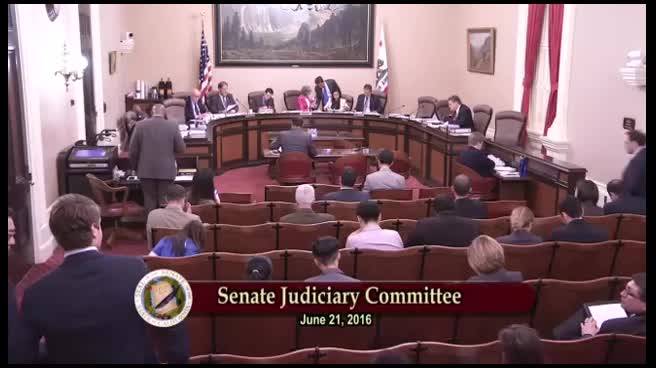
Bill Author

Bill Co-Author(s):