AB 2234: Personal income taxes: gross income exclusion: qualified principal residence indebtedness.
- Session Year: 2015-2016
- House: Assembly
- Latest Version Date: 2016-04-20
The Personal Income Tax Law provides for modified conformity to specified provisions of federal income tax law relating to an exclusion of the amount of the discharge of qualified principal residence indebtedness, as defined, from an individuals gross income if that debt is discharged after January 1, 2007, and before January 1, 2014, as provided. The federal income tax law allows this exclusion for qualified principal residence indebtedness that is discharged before January 1, 2017, or is subject to an arrangement that is entered into and evidenced in writing before January 1, 2017.
This bill would extend this state tax exclusion indefinitely to qualified principal residence indebtedness that is discharged before January 1, 2017, or subject to an arrangement that is entered into and evidenced in writing before January 1, 2017, and would also apply this exclusion retroactively to discharges of indebtedness that occurred on or after January 1, 2014, and before January 1, 2016. The bill would also provide that no penalties or interest with respect to the discharge of qualified principal residence indebtedness during the 2014 and 2015 taxable years would be due, and would make legislative findings and declarations regarding the public purpose served by the bill.
The Personal Income Tax Law provides for modified conformity to specified provisions of federal income tax law relating to an exclusion of the amount of the discharge of qualified principal residence indebtedness, as defined, from an individuals gross income if that debt is discharged after January 1, 2007, and before January 1, 2014, as provided.
This bill would extend this exclusion indefinitely and would also apply this exclusion retroactively to discharges of indebtedness that occurred on or after January 1, 2014, and before January 1, 2016. The bill would also provide that no penalties or interest with respect to the discharge of qualified principal residence indebtedness during the 2014 and 2015 taxable years would be due, and would make legislative findings and declarations regarding the public purpose served by the bill.
(a)(1)Section 108(a)(1)(E) of the Internal Revenue Code, is modified to provide that the amount excluded from gross income shall not exceed $500,000 ($250,000 in the case of a married individual filing a separate return).
(2)Section 108(a)(1)(E) of the Internal Revenue Code, is modified to delete which is discharged before January 1, 2015.
(b)Section 108(h)(2) of the Internal Revenue Code, relating to qualified principal residence indebtedness, is modified by substituting the phrase (within the meaning of section 163(h)(3)(B), applied by substituting $800,000 ($400,000 for $1,000,000 ($500,000 in clause (ii) thereof) for the phrase (within the meaning of section 163(h)(3)(B), applied by substituting $2,000,000 ($1,000,000 for $1,000,000 ($500,000 in clause (ii) thereof) contained therein.
(c)This section shall apply to discharges of indebtedness occurring on or after January 1, 2007, and, notwithstanding any other law to the contrary, no penalties or interest shall be due with respect to the discharge of qualified principal residence indebtedness during the 2007 or 2009 2007, 2009, or 2013 taxable year regardless of whether or not the taxpayer reports the discharge on his or her return for the 2007 or 2009 2007, 2009, or 2013 taxable year.
(d)The amendments made by Section 202 of the American Taxpayer Relief Act of 2012 (Public Law 112-240) to Section 108 of the Internal Revenue Code shall apply.
(e)The changes made to this section by Chapter 152 of the Statutes of 2014 shall apply to discharges of indebtedness that occur on or after January 1, 2013, and before January 1, 2014, and, notwithstanding any other law, no penalties or interest shall be due with respect to the discharge of qualified principal residence indebtedness during the 2013 taxable year, regardless of whether the taxpayer reports the discharge on his or her income tax return for the 2013 taxable year.
(f)The changes made to this section by the act adding this subdivision shall apply to discharges of indebtedness that occur on or after January 1, 2014, and notwithstanding any other law, no penalties or interest shall be due with respect to the discharge of qualified principal residence indebtedness during the 2014 or 2015 taxable year, regardless of whether the taxpayer reports the discharge on his or her income tax return for the 2014 or 2015 taxable year.
(d)(1)The amendments made by Section 151 of the federal Protecting Americans from Tax Hikes Act of 2015 (Division Q of Public Law 114-113) to Section 108 of the Internal Revenue Code, relating to income from discharge of indebtedness, shall apply to taxable years beginning on or after January 1, 2014.
(2)Notwithstanding any other law, no penalties or interest shall be due with respect to the discharge of qualified principal residence indebtedness during the 2014 or 2015 taxable year, regardless of whether the taxpayer reports the discharge on his or her income tax return for the 2014 or 2015 taxable year.
SEC. 2.The Legislature finds and declares that the amendments made by this act and the retroactive application of the exclusion for qualified principal residence indebtedness that is discharged on or after January 1, 2014, and before January 1, 2016, are necessary for the public purpose of preventing undue hardship to taxpayers whose qualified principal residence indebtedness was discharged between those dates, and do not constitute a gift of public funds within the meaning of Section 6 of Article XVI of the California Constitution.
(a)(1)Section 108(a)(1)(E) of the Internal Revenue Code, is modified to provide that the amount excluded from gross income shall not exceed $500,000 ($250,000 in the case of a married individual filing a separate return).
(2)Section 108(a)(1)(E) of the Internal Revenue Code, is modified to delete which is discharged before January 1, 2015.
(b)Section 108(h)(2) of the Internal Revenue Code, relating to qualified principal residence indebtedness, is modified by substituting the phrase (within the meaning of section 163(h)(3)(B), applied by substituting $800,000 ($400,000 for $1,000,000 ($500,000 in clause (ii) thereof) for the phrase (within the meaning of section 163(h)(3)(B), applied by substituting $2,000,000 ($1,000,000 for $1,000,000 ($500,000 in clause (ii) thereof) contained therein.
(c)This section shall apply to discharges of indebtedness occurring on or after January 1, 2007, and, notwithstanding any other law to the contrary, no penalties or interest shall be due with respect to the discharge of qualified principal residence indebtedness during the 2007 or 2009 taxable year regardless of whether or not the taxpayer reports the discharge on his or her return for the 2007 or 2009 taxable year.
(d)The amendments made by Section 202 of the American Taxpayer Relief Act of 2012 (Public Law 112-240) to Section 108 of the Internal Revenue Code shall apply.
(e)The changes made to this section by the act adding this subdivision Chapter 152 of the Statutes of 2014 shall apply to discharges of indebtedness that occur on or after January 1, 2013, and before January 1, 2014, and, notwithstanding any other law, no penalties or interest shall be due with respect to the discharge of qualified principal residence indebtedness during the 2013 taxable year, regardless of whether the taxpayer reports the discharge on his or her income tax return for the 2013 taxable year.
(f)The changes made to this section by the act adding this subdivision shall apply to discharges of indebtedness that occur on or after January 1, 2014, and notwithstanding any other law, no penalties or interest shall be due with respect to the discharge of qualified principal residence indebtedness during the 2014 or 2015 taxable year, regardless of whether the taxpayer reports the discharge on his or her income tax return for the 2014 or 2015 taxable year.
SEC. 2.The Legislature finds and declares that the amendments made by this act and the retroactive application of the exclusion for qualified principal residence indebtedness that is discharged on or after January 1, 2014, and before January 1, 2016, are necessary for the public purpose of preventing undue hardship to taxpayers whose qualified principal residence indebtedness was discharged between those dates, and do not constitute a gift of public funds within the meaning of Section 6 of Article XVI of the California Constitution.
|
Date
|
Status
|
|---|---|
| Feb 18, 2016 | Read first time. To print. |
| Feb 19, 2016 | From printer. May be heard in committee March 20. |
| Mar 3, 2016 | Referred to Com. on REV. & TAX. |
| Apr 4, 2016 | In committee: Set, first hearing. Referred to suspense file. |
| Apr 19, 2016 | From committee: Amend, and do pass as amended and re-refer to Com. on APPR. (Ayes 9. Noes 0.) (April 18). |
| Apr 20, 2016 | Read second time and amended. |
| Apr 21, 2016 | Re-referred to Com. on APPR. |
| May 4, 2016 | In committee: Set, first hearing. Referred to APPR. suspense file. |
| May 27, 2016 | In committee: Held under submission. |
|
Date
|
Description
|
Location
|
Votes
|
|
|---|---|---|---|---|
| Apr 18, 2016 | Do pass as amended and be re-referred to the Committee on [Appropriations] | Assembly Standing Committee on Revenue and Taxation |
Passed |
This list shows positions taken on this bill by organizations on the date displayed, which is linked to the original source.
Positions by individuals are not included.
|
Organization
|
Position
|
Date
|
|---|---|---|
| California School Board Assocation | * Support | Jun 20, 2018 |
| Los Angeles County Office Of Education | * Support | Jun 20, 2018 |
| Los Angeles Unified School District | * Support | Jun 20, 2018 |
| Riverside County Superintendent of Schools | * Support | Jun 20, 2018 |
| School Employers Association Of California | * Support | Jun 20, 2018 |
Date of Hearing: May 4, 2016
ASSEMBLY COMMITTEE ON APPROPRIATIONS
Lorena Gonzalez, Chair
ABPCA Bill Id:AB 2234
Author:(Steinorth) – As Amended Ver:April 20, 2016
Policy Committee: | Revenue and Taxation | Vote: | 9 - 0 |
|
|
Urgency: No State Mandated Local Program: No Reimbursable: No
SUMMARY:
This bill extends the tax relief for income generated from the discharge of qualified principal residence indebtedness (QPRI). Specifically, this bill:
- Provides that the Internal Revenue Code (IRC) Section 108, relating to income from discharge of QPRI, as amended by The Protecting Americans from Tax Hikes Act of 2015, shall apply, except as otherwise provided.
- Applies to discharges of QPRI occurring from January 1, 2014 to January 1, 2017.
- Provides that, notwithstanding any other law, no penalties or interest shall be due to the discharge of QPRI for the 2014 or 2015 taxable year, regardless of whether or not a taxpayer reports the discharge during the 2014 or 2015 taxable year.
- Makes findings and declarations stating that the retroactive application of this bill is necessary for the public purpose of preventing undue hardship to taxpayers whose QPRI was discharged on or after January 1, 2014, and before January 1, 2016, and does not consider a gift of public funds.
FISCAL EFFECT:
Annual GF revenue loss of $95 million in FY 2015-16 and $50 million in FY 2016-17.
COMMENTS:
- Purpose. According to the author, AB 2234 will remove an obstacle to financial independence for troubled homeowners. By allowing those who get mortgage debt relief to avoid paying taxes on that relief, this legislation provides relief to these families who hope to stabilize their finances.
- Background. Qualifying principal residence indebtedness is defined under federal law as the acquisition indebtedness or indebtedness incurred for substantial improvement to the residence. Current federal law allows taxpayers to exclude income up to $1 million for individuals and $2 million for married couples for discharge of the qualifying principal residence indebtedness. Current California law limits the total amount of qualifying indebtedness to $400,000 for individuals or $800,000 for married couples, and allows taxpayers to exclude income up to $250,000 for individuals and $500,000 for married couples from the discharge of the qualifying indebtedness, though that exclusion expired for income incurred after January 1, 2014.
Income from the cancellation of indebtedness is normally taxable because the individual's net worth has been increased as a result of the debt cancellation, just as any other income increases an individual's net worth. Under California case law, income is generally defined as accession to wealth, that is clearly realized, over which the taxpayer has complete dominion.
When debt is cancelled, money that was given to the taxpayer as loan is freed from future obligation, allowing the taxpayer to use it in the same manner as any other income. Without this fundamental rule, cancelled debt becomes simply a tax-free receipt of cash.
Problems can arise, however, with the collection of such tax owed because the circumstances that often gave rise to the debt cancellation reflect the inability of the borrower to pay. This is particularly true for mortgage debt, where the loan received was spent entirely on a property and is not available as a liquid asset to the borrower. Cancellation of a portion of this debt may occur in order to restructure the financial position of the borrower, and may be preferable to lenders over foreclosure. However, because the borrower realizes the value of the cancelled debt through a restructured mortgage, the borrower often does not have sufficient cash to pay the tax that results. The estimated decrease in revenues resulting from this bill reflect the lost income tax that ought to be paid on this debt cancellation, but whether FTB could successfully collect this tax without considerable effort may be debatable.
- Related legislation. SB 907 (Galgiani) would extend the state exclusion of mortgage forgiveness debt relief for three years. The bill is currently pending in the Senate Appropriations Committee.
Analysis Prepared by: Luke Reidenbach / APPR. / (916) 319-2081
Date of Hearing: April 18, 2016
ASSEMBLY COMMITTEE ON REVENUE AND TAXATION
Sebastian Ridley-Thomas, Chair
ABPCA Bill Id:AB 2234 (
Author:Steinorth) – As Introduced Ver:February 18, 2016
SUSPENSE
Majority vote. Fiscal committee.
SUBJECT: Personal income taxes: gross income exclusion: qualified principal residence indebtedness
SUMMARY: Extends indefinitely, in modified conformity to federal law, the tax relief for income generated from the discharge of qualified principal residence indebtedness (QPRI). Specifically, this bill:
- Provides that the Internal Revenue Code (IRC) Section 108, relating to income from discharge of QPRI, as amended by The Protecting Americans from Tax Hikes Act of 2015 (Division Q of Public Law 114-113), shall apply, except as otherwise provided.
- Applies discharges to QPRI occurring on or after January 1, 2014.
- Provides that, notwithstanding any other law, no penalties or interest shall be due to the discharge of QPRI for the 2014 or 2015 taxable year, regardless of whether or not a taxpayer reports the discharge during the 2014 or 2015 taxable year.
- Makes findings and declarations stating that the retroactive application of this bill is necessary for the public purpose of preventing undue hardship to taxpayers whose QPRI was discharged on and after January 1, 2014, and before January 1, 2016, and does not constitute a gift of public funds.
EXISTING FEDERAL LAW:
- Includes in the gross income of a taxpayer an amount of debt that is discharged by the lender, except for any of the following:
- Debts discharged in bankruptcy;
- Some or all of the discharged debts of an insolvent taxpayer. A taxpayer is insolvent when the amount of the taxpayer’s total debt exceeds the fair market value of the taxpayer’s total assets;
- Certain farm debts and student loans; or,
- Debt discharged resulting from a non-recourse loan in foreclosure. A non-recourse loan is a loan for which the lender’s only remedy in case of default is to repossess the property being financed or used as collateral. (IRC Section 108.)
- Requires a taxpayer to reduce certain tax attributes by the amount of the discharged indebtedness in the case where the indebtedness is excluded from the taxpayer’s gross income. (IRC Section 108.)
- Excludes from a taxpayer’s gross income cancellation of indebtedness (COD) income that resulted from the discharge of QPRI occurring on or after January 1, 2007, and before January 1, 2017.
- Defines “QPRI” as acquisition indebtedness within the meaning of IRC Section 163(h)(3)(B), which generally means indebtedness incurred in the acquisition, construction or substantial improvement of the principal residence of the individual and secured by the residence. “QPRI” also includes refinancing of such debt to the extent that the amount of the refinancing does not exceed the amount of the indebtedness being refinanced.
- Allows married taxpayers to exclude from gross income up to $2 million in QPRI (married persons filing separately may exclude up to $1 million of the amount of that indebtedness). For all taxpayers, the amount of discharge of indebtedness generally is equal to the difference between the adjusted issue price of the debt being cancelled and the amount used to satisfy the debt. For example, if a creditor forecloses on a home owned by a solvent taxpayer and sells it for $180,000 but the house was subject to a $200,000 mortgage debt, then the taxpayer would have $20,000 of income from COD.
- Specifies that if, immediately before the discharge, only a portion of a discharged indebtedness is QPRI, then the exclusion applies only to so much of the amount discharged as it exceeds the part of the debt that is not QPRI. For example, a taxpayer’s principal residence is secured by an indebtedness of $1 million, of which only $800,000 is QPRI. If the residence is sold for $700,000 and $300,000 debt is forgiven by the lender, then only $100,000 of the COD income may be excluded under IRC Section 108.
- Defines the term “principal residence” pursuant to IRC Section 121 and the applicable regulations.
- Excludes from tax a gain from the sale or exchange of the taxpayer’s principal residence if, during the five-year period ending on the date of the sale or exchange, the property has been owned and used by the taxpayer as his/her principal residence for periods aggregating two years or more. The amount of gain eligible for the exclusion is $250,000 (taxpayers filing a single return) or $500,000 (married taxpayers filing a joint return).
- Requires a taxpayer to reduce the basis in the principal residence by the amount of the excluded COD income.
EXISTING STATE LAW:
- Conforms to the federal income tax law relating to the exclusion of the discharged QPRI from the taxpayer’s gross income, with the following modifications:
- Applies to the discharge of indebtedness occurring on or after January 1, 2007 and before January 1, 2014.
- The maximum amount of QPRI is limited to $800,000 ($400,000 for a married/RDP individual filing a separate return).
- For discharges occurring in 2007 or 2008, the total amount of non-taxable COD income is limited to $250,000 ($125,000 for a married/RDP individual filing a separate return).
- For discharges occurring on or after January 1, 2009, and before January 1, 2014, the maximum cancellation of debt income exclusion is $500,000 ($250,000 for a married/RDP individual filing a separate return).
- Requires individual taxpayers to pay their estimated California income tax in four installments over the taxable year, and imposes a penalty for the underpayment of estimated tax, which is the difference between the amount of tax shown on the return for the taxable year and the amount of estimated tax paid. However, no underpayment penalty or interest is assessed for the 2007, 2009, and 2013 taxable year for discharge of QPRI regardless of whether the discharge is reported on the income tax return.
FISCAL EFFECT: The Franchise Tax Board (FTB) estimates an annual revenue loss of $95 million in fiscal year (FY) 2015-2016, $50 million in FY 2016-2017, and $46 million in FY 2017-2018.
COMMENTS:
- Author’s Statement: The author provided the following statement in support of this bill:
AB 2234 removes an unnecessary impediment to financial independence for troubled homeowners. Those who have lost their homes or are struggling to pay their mortgages should not be subject to additional taxes. California’s recovery from the recession remains sluggish and homeowners are still getting back on their feet. We can help that recovery by allowing them to keep more of their hard-earned income during such a critical time. This legislation provides relief to these families in the hope they are able to stabilize their financial situation. In addition, it will end the ongoing uncertainty caused by the piecemeal renewal of the income exclusion.
- Arguments in Support: Proponents of this bill state that the Federal Government extended the tax treatment of forgiven mortgage debt for the 2015 and 2016 tax years, so "by conforming to federal law, both restoratively for the 2014 and the 2015 tax years, AB 2234 eliminates a significant impediment for homeowners seeking viable alternatives to foreclosure during these tough economic times."
- Mortgage Debt Forgiveness: SB 1055 (Machado), Chapter 282, Statues of 2008, provided modified conformity to the Mortgage Forgiveness Debt Relief Act (MFDRA) for discharge of mortgage indebtedness in 2007 and 2008 tax years. SB 401 (Wolk), Chapter 14, Statues of 2010, provided homeowners even greater assistance. SB 401 not only extended the mortgage debt forgiveness provision until January 1, 2013, but also increased the amount of forgiven mortgage indebtedness excludable from taxpayer's gross income from $250,000 ($125,000 in case of married individual/RDP filing separate return) to $500,000 ($250,000 in case of married individual/RDP filing a separate return). On January 2, 2013, the Federal Government enacted the Federal American Taxpayer Relief Act (FATRA) as part of the "fiscal cliff" deal. FATRA extended the exclusion from gross income for COD generated from the discharge of QPRI, as provided for by the MFDRA, for one additional taxable year, beginning on or after January 1, 2013 and before January 1, 2014. On December 19, 2014, the Federal Government enacted the Tax Increase Prevention Act and again extended, for one additional year, the exclusion from gross income for COD generated from the discharge of QPRI occurring on or after January 1, 2014 and before January 1, 2015. On December 18, 2015, the Federal Government enacted the Protecting Americans from Tax Hikes Act of 2015 and again extended, for two additional years, the exclusion from gross income for COD generated from the discharge of QPRI.
- Why is COD Taxable? Most individuals find the idea of taxing debt cancellation counter intuitive, but the practice reflects sound tax policy because it recognizes the fact that an individual's net worth has increased by the cancellation of debt. According to Commissioner v. Glenshaw, the Court defined income as an accession to wealth, that is clearly realized, and over which the taxpayer has complete dominion[1]. When debt is cancelled, money that would have been used to pay that loan is now free to be used on whatever the taxpayer wants. Therefore, because certain assets have been freed, the taxpayer has experienced an accession to wealth. Additionally, under the rule of symmetry, a loan is not considered income to the borrower nor is it a deduction to the lender. A borrower's increased wealth when the loan is obtained is also offset by the obligation to pay the same amount. If the debt is cancelled, the symmetry is destroyed. The borrower is in a much better position after the debt is cancelled. As noted by Debora A. Grier, Professor of Law of Cleveland State University, in her statement before the United State Senate Committee on Finance, without this tax rule "the borrower will have received permanently tax-free cash in the year of the original receipt," i.e., the year in which the borrower received the loan. Even understanding the economic and legal policy for taxing COD, most individuals still find the taxation of cancelled home mortgage debt odd and even unfair. Existing law, however, provides several exceptions to the general rule, for example allowing a taxpayer to exclude COD income from his/her gross income if the debt is discharged in Title 11 bankruptcy, if he/she is insolvent immediately before the debt is cancelled, or if it is non-recourse debt.
- Non-Recourse Debt: Non-recourse debt is a loan that is secured by the pledge of collateral. If the borrower defaults, the lender can seize the collateral, but the recovery is limited to the collateral. In California, indebtedness incurred in purchasing a home is deemed to be non-recourse debt (Code of Civil Procedure Section 580b) and, thus, generally first mortgages are considered to be non-recourse debt. Property that is foreclosed upon is not considered COD, even if the amount of the loan exceeds the fair market value (FMV) of the property as the entire amount of the nonrecourse debt is treated as an amount realized on the disposition of the property.
However, when a lender agrees to decrease the amount of the original debt to reflect the current value of the property secured by the debt, the cancellation of non-recourse debt without a transfer of the property, such as in foreclosure, creates COD income for the taxpayer. Consequently, this bill would continue to provide relief to a solvent California homeowner who refinanced the first mortgage or obtained a home equity loan or a home equity line of credit. This bill will also continue to provide relief to a solvent homeowner who benefited from a reduction of his/her outstanding debt in a "workout" situation with the lender where the homeowner retained the ownership of the home and the lender, instead of foreclosing on the home, reduced the outstanding debt to reflect the home's current value.
- Why Exclude COD from Gross Income? Despite the economics of taxing COD, the rationale for excluding cancelled mortgage from gross income has focused on minimizing hardship for households in distress. Individuals who are in danger of losing their homes, due in part to the economic downturn, should not be forced to incur the additional hardship of paying taxes on COD. The exclusion of COD from gross income also reduces the burden on a borrower who may be attempting to write-down the loan with his or her lender or a short sale. On a macroeconomic level, economists have argued that excluding cancelled mortgage from gross income may help maintain consumer spending, which may help prevent a recession.
As noted earlier, one of the rationales for excluding mortgage forgiveness from income is to help taxpayers remain in their homes. In some instances, a lender may be able to reduce the loan amount to the home's current FMV and allow the taxpayer to retain ownership of the home. For example, a taxpayer may owe $250,000 of residential debt and after a modification the lender reduces the loan to $200,000 and forgives $50,000. Without an exclusion of the mortgage cancellation, the $50,000 would be subject to taxation. If the taxpayer is subject to a 25% tax rate, the tax liability would be $12,500. Assuming the reduction in loan was done because the taxpayer was facing financial difficulty, incurring a tax obligation on COD may prevent the taxpayer from successfully remaining in the home. [See, Congressional Research Service's report (CRS report), Analysis of the Proposed Tax Exclusion for Cancelled Mortgage Debt Income, January 8, 2008, 2 -8.]
The recession and drop in housing values are the main factors that led to the original exclusion of COD from gross income. However, over the last few years, the unemployment rate has steadily declined and home values have substantially increased. As of February 2016, California's unemployment rate stood at 5.5%, almost seven percentage points lower than its post-recession peak of 12.0%. (Employment Development Department, Historical Civilian Labor Force, California, March 2016.) Additionally, the number of seriously "underwater" homes went from a peak of 12.8 million in 2012 to just 6.9 million in the third quarter of 2015. The substantial reduction in underwater homes has primarily been triggered by a 35% increase in the national median home value since bottoming out in 2012, and a recent dramatic pick up in home sales volume and average sales price. (RealtyTrac, Number of Seriously Underwater Properties Drops 525,000 in Q3 2015 From Previous Quarter, Down 1.2 Million From Year Ago, October 21, 2015.) In light of substantial improvements to the economy, the Committee may wish to consider whether an indefinite extension of the exclusion for COD generated from the discharge of QPRI is warranted.
- QPRI Includes Secondary Loans: The exclusion for COD income realized by the taxpayer from the COD applies as long as the discharged debt was secured by a personal residence and was incurred to acquire, construct, or substantially improve the home, as well as debt that was used to refinance such debt. Debt on second homes, rental property, business property, credit cards, or car loans does not qualify for the tax-relief provision. However, the definition of QPRI includes second mortgages, home equity loans, and home equity lines of credit used to improve the residence. Yet, home equity lines of credit could have also been used to finance consumption. Thus, existing law provides a financial incentive for taxpayers to claim the COD income exclusion for secondary loans even if the proceeds of those loans were used for personal consumption.
- Importance of Federal Conformity: This bill not only conforms the exclusion from gross income for COD generated from the discharge of QPRI to federal law for discharges occurring before January 1, 2017, but indefinitely excludes COD indefinitely in future years, even if no federal exclusion is provided. Conformity with federal law reduces taxpayer errors and eases tax filing and administration. Although the federal exclusion has been extended to include every year since 2007, there is no guarantee that it will be continued past 2017. The Committee may wish to consider whether state mortgage forgiveness debt relief should apply in years when a similar federal exclusion is not provided.
- Technical Amendments: On Page 2, Line 8, strikeout “2015” and insert “2017”.
Additionally, the FTB has proposed the following technical amendments:
On Page 2, Line 21, strikeout “2007 or 2009” and insert “2007, 2009, or 2013”;
On Page 2, Line 23, strikeout “2007 or 2009” and insert “2007, 2009, or 2013”;
On Page 2, strikeout Lines 24 through 34, inclusive;
On Page 2, Line 35, strikeout “(f)” and insert “(d)”;
On Page 2, Line 35, strikeout “adding” and insert “amending”.
- Related Legislation: SB 907 (Galgiani) would extend the state exclusion of mortgage forgiveness debt relief to discharges occurring in 2014, 2015, and 2016, and would provide that no penalties or interest would be imposed on discharges occurring in 2014 or 2015. SB 907 is pending hearing by the Senate Committee on Appropriations.
- Prior Legislation: AB 99 (Perea), of the 2015-2016 Legislative Session, would have extended California’s modified conformity to the Mortgage Forgiveness Debt Relief Act for discharges of QPRI until January 1, 2015. AB 99 was vetoed.
AB 1393 (Perea), Chapter 152, Statute of 2014, extended California’s modified conformity to the Mortgage Forgiveness Debt Relief Act for discharges of QPRI until January 1, 2014.
AB 42 (Perea), of the 2013-14 Legislative Session, would have extended, for one additional taxable year, in modified conformity to federal law, the tax relief generated from the discharge of QPRI. AB 42 was held by the Assembly Appropriations Committee.
SB 30 (Calderon), of the 2013-14 Legislative Session, would have extended for one additional taxable year, in modified conformity to federal law, the tax relief generated from the discharge of QPRI. SB 30 was held by the Assembly Appropriations Committee.
AB 856 (Jeffries), of the 2011-12 Legislative Session, would have conformed fully to the Mortgage Forgiveness Debt Relief Act as extended by the Emergency Economic Stabilization Act to discharged debt occurring on or after January 1, 2010, and before January 1, 2013. AB 856 was held by this Committee.
SB 401 (Wolk), Chapter 14, Statutes of 2010, amended the PIT Law to conform to the federal extension of mortgage forgiveness debt relief provided in the Emergency Economic Stability Act, with the following modifications: (a) it applies to discharges occurring in 2009, 2010, 2011, and 2012 tax years; (b) the total amount of QPRI is limited to $800,000 ($400,000 in the case of a married individual or domestic registered partner filing a separate return; (c) the total amount excludable is limited to $500,000 ($250,000 in the case of a married individual or domestic registered partner filing a separate return); and, (d) interest and penalties are not imposed with respect to discharges that occurred in the 2009 taxable year.
REGISTERED SUPPORT / OPPOSITION:
Support
California Association of Realtors
California Bankers Association
California Credit Union League
California Mortgage Bankers Association
California Taxpayers Association
Opposition
None on file
Analysis Prepared by: Irene Ho / REV. & TAX. / (916) 319-2098
Commissioner v. Glenshaw Glass Co., 348 U.S. 426, 431 (1955). ↑
Date of Hearing: April 4, 2016
ASSEMBLY COMMITTEE ON REVENUE AND TAXATION
Sebastian Ridley-Thomas, Chair
ABPCA Bill Id:AB 2234 (
Author:Steinorth) – As Introduced Ver:February 18, 2016
Majority vote. Fiscal committee.
SUBJECT: Personal income taxes: gross income exclusion: qualified principal residence indebtedness
SUMMARY: Extends indefinitely, in modified conformity to federal law, the tax relief for income generated from the discharge of qualified principal residence indebtedness (QPRI). Specifically, this bill:
- Provides that the Internal Revenue Code (IRC) Section 108, relating to income from discharge of QPRI, as amended by The Protecting Americans from Tax Hikes Act of 2015 (Division Q of Public Law 114-113), shall apply, except as otherwise provided.
- Applies discharges to QPRI occurring on or after January 1, 2014.
- Provides that, notwithstanding any other law, no penalties or interest shall be due to the discharge of QPRI for the 2014 or 2015 taxable year, regardless of whether or not a taxpayer reports the discharge during the 2014 or 2015 taxable year.
- Makes findings and declarations stating that the retroactive application of this bill is necessary for the public purpose of preventing undue hardship to taxpayers whose QPRI was discharged on and after January 1, 2014, and before January 1, 2016, and does not constitute a gift of public funds.
EXISTING FEDERAL LAW:
- Includes in the gross income of a taxpayer an amount of debt that is discharged by the lender, except for any of the following:
- Debts discharged in bankruptcy;
- Some or all of the discharged debts of an insolvent taxpayer. A taxpayer is insolvent when the amount of the taxpayer’s total debt exceeds the fair market value of the taxpayer’s total assets;
- Certain farm debts and student loans; or,
- Debt discharged resulting from a non-recourse loan in foreclosure. A non-recourse loan is a loan for which the lender’s only remedy in case of default is to repossess the property being financed or used as collateral. (IRC Section 108.)
- Requires a taxpayer to reduce certain tax attributes by the amount of the discharged indebtedness in the case where the indebtedness is excluded from the taxpayer’s gross income. (IRC Section 108.)
- Excludes from a taxpayer’s gross income cancellation of indebtedness (COD) income that resulted from the discharge of QPRI occurring on or after January 1, 2007, and before January 1, 2017.
- Defines “QPRI” as acquisition indebtedness within the meaning of IRC Section 163(h)(3)(B), which generally means indebtedness incurred in the acquisition, construction or substantial improvement of the principal residence of the individual and secured by the residence. “QPRI” also includes refinancing of such debt to the extent that the amount of the refinancing does not exceed the amount of the indebtedness being refinanced.
- Allows married taxpayers to exclude from gross income up to $2 million in QPRI (married persons filing separately may exclude up to $1 million of the amount of that indebtedness). For all taxpayers, the amount of discharge of indebtedness generally is equal to the difference between the adjusted issue price of the debt being cancelled and the amount used to satisfy the debt. For example, if a creditor forecloses on a home owned by a solvent taxpayer and sells it for $180,000 but the house was subject to a $200,000 mortgage debt, then the taxpayer would have $20,000 of income from COD.
- Specifies that if, immediately before the discharge, only a portion of a discharged indebtedness is QPRI, then the exclusion applies only to so much of the amount discharged as it exceeds the part of the debt that is not QPRI. For example, a taxpayer’s principal residence is secured by an indebtedness of $1 million, of which only $800,000 is QPRI. If the residence is sold for $700,000 and $300,000 debt is forgiven by the lender, then only $100,000 of the COD income may be excluded under IRC Section 108.
- Defines the term “principal residence” pursuant to IRC Section 121 and the applicable regulations.
- Excludes from tax a gain from the sale or exchange of the taxpayer’s principal residence if, during the five-year period ending on the date of the sale or exchange, the property has been owned and used by the taxpayer as his/her principal residence for periods aggregating two years or more. The amount of gain eligible for the exclusion is $250,000 (taxpayers filing a single return) or $500,000 (married taxpayers filing a joint return).
- Requires a taxpayer to reduce the basis in the principal residence by the amount of the excluded COD income.
EXISTING STATE LAW:
- Conforms to the federal income tax law relating to the exclusion of the discharged QPRI from the taxpayer’s gross income, with the following modifications:
- Applies to the discharge of indebtedness occurring on or after January 1, 2007 and before January 1, 2014.
- The maximum amount of QPRI is limited to $800,000 ($400,000 for a married/RDP individual filing a separate return).
- For discharges occurring in 2007 or 2008, the total amount of non-taxable COD income is limited to $250,000 ($125,000 for a married/RDP individual filing a separate return).
- For discharges occurring on or after January 1, 2009, and before January 1, 2014, the maximum cancellation of debt income exclusion is $500,000 ($250,000 for a married/RDP individual filing a separate return).
- Requires individual taxpayers to pay their estimated California income tax in four installments over the taxable year, and imposes a penalty for the underpayment of estimated tax, which is the difference between the amount of tax shown on the return for the taxable year and the amount of estimated tax paid. However, no underpayment penalty or interest is assessed for the 2007, 2009, and 2013 taxable year for discharge of QPRI regardless of whether the discharge is reported on the income tax return.
FISCAL EFFECT: The Franchise Tax Board (FTB) estimates an annual revenue loss of $95 million in fiscal year (FY) 2015-2016, $50 million in FY 2016-2017, and $46 million in FY 2017-2018.
COMMENTS:
- Author’s Statement: The author provided the following statement in support of this bill:
AB 2234 removes an unnecessary impediment to financial independence for troubled homeowners. Those who have lost their homes or are struggling to pay their mortgages should not be subject to additional taxes. California’s recovery from the recession remains sluggish and homeowners are still getting back on their feet. We can help that recovery by allowing them to keep more of their hard-earned income during such a critical time. This legislation provides relief to these families in the hope they are able to stabilize their financial situation. In addition, it will end the ongoing uncertainty caused by the piecemeal renewal of the income exclusion.
- Arguments in Support: Proponents of this bill state that the Federal Government extended the tax treatment of forgiven mortgage debt for the 2015 and 2016 tax years, so "by conforming to federal law, both restoratively for the 2014 and the 2015 tax years, AB 2234 eliminates a significant impediment for homeowners seeking viable alternatives to foreclosure during these tough economic times."
- Mortgage Debt Forgiveness: SB 1055 (Machado), Chapter 282, Statues of 2008, provided modified conformity to the Mortgage Forgiveness Debt Relief Act (MFDRA) for discharge of mortgage indebtedness in 2007 and 2008 tax years. SB 401 (Wolk), Chapter 14, Statues of 2010, provided homeowners even greater assistance. SB 401 not only extended the mortgage debt forgiveness provision until January 1, 2013, but also increased the amount of forgiven mortgage indebtedness excludable from taxpayer's gross income from $250,000 ($125,000 in case of married individual/RDP filing separate return) to $500,000 ($250,000 in case of married individual/RDP filing a separate return). On January 2, 2013, the Federal Government enacted the Federal American Taxpayer Relief Act (FATRA) as part of the "fiscal cliff" deal. FATRA extended the exclusion from gross income for COD generated from the discharge of QPRI, as provided for by the MFDRA, for one additional taxable year, beginning on or after January 1, 2013 and before January 1, 2014. On December 19, 2014, the Federal Government enacted the Tax Increase Prevention Act and again extended, for one additional year, the exclusion from gross income for COD generated from the discharge of QPRI occurring on or after January 1, 2014 and before January 1, 2015. On December 18, 2015, the Federal Government enacted the Protecting Americans from Tax Hikes Act of 2015 and again extended, for two additional years, the exclusion from gross income for COD generated from the discharge of QPRI.
- Why is COD Taxable? Most individuals find the idea of taxing debt cancellation counter intuitive, but the practice reflects sound tax policy because it recognizes the fact that an individual's net worth has increased by the cancellation of debt. According to Commissioner v. Glenshaw, the Court defined income as an accession to wealth, that is clearly realized, and over which the taxpayer has complete dominion[1]. When debt is cancelled, money that would have been used to pay that loan is now free to be used on whatever the taxpayer wants. Therefore, because certain assets have been freed, the taxpayer has experienced an accession to wealth. Additionally, under the rule of symmetry, a loan is not considered income to the borrower nor is it a deduction to the lender. A borrower's increased wealth when the loan is obtained is also offset by the obligation to pay the same amount. If the debt is cancelled, the symmetry is destroyed. The borrower is in a much better position after the debt is cancelled. As noted by Debora A. Grier, Professor of Law of Cleveland State University, in her statement before the United State Senate Committee on Finance, without this tax rule "the borrower will have received permanently tax-free cash in the year of the original receipt," i.e., the year in which the borrower received the loan. Even understanding the economic and legal policy for taxing COD, most individuals still find the taxation of cancelled home mortgage debt odd and even unfair. Existing law, however, provides several exceptions to the general rule, for example allowing a taxpayer to exclude COD income from his/her gross income if the debt is discharged in Title 11 bankruptcy, if he/she is insolvent immediately before the debt is cancelled, or if it is non-recourse debt.
- Non-Recourse Debt: Non-recourse debt is a loan that is secured by the pledge of collateral. If the borrower defaults, the lender can seize the collateral, but the recovery is limited to the collateral. In California, indebtedness incurred in purchasing a home is deemed to be non-recourse debt (Code of Civil Procedure Section 580b) and, thus, generally first mortgages are considered to be non-recourse debt. Property that is foreclosed upon is not considered COD, even if the amount of the loan exceeds the fair market value (FMV) of the property as the entire amount of the nonrecourse debt is treated as an amount realized on the disposition of the property.
However, when a lender agrees to decrease the amount of the original debt to reflect the current value of the property secured by the debt, the cancellation of non-recourse debt without a transfer of the property, such as in foreclosure, creates COD income for the taxpayer. Consequently, this bill would continue to provide relief to a solvent California homeowner who refinanced the first mortgage or obtained a home equity loan or a home equity line of credit. This bill will also continue to provide relief to a solvent homeowner who benefited from a reduction of his/her outstanding debt in a "workout" situation with the lender where the homeowner retained the ownership of the home and the lender, instead of foreclosing on the home, reduced the outstanding debt to reflect the home's current value.
- Why Exclude COD from Gross Income? Despite the economics of taxing COD, the rationale for excluding cancelled mortgage from gross income has focused on minimizing hardship for households in distress. Individuals who are in danger of losing their homes, due in part to the economic downturn, should not be forced to incur the additional hardship of paying taxes on COD. The exclusion of COD from gross income also reduces the burden on a borrower who may be attempting to write-down the loan with his or her lender or a short sale. On a macroeconomic level, economists have argued that excluding cancelled mortgage from gross income may help maintain consumer spending, which may help prevent a recession.
As noted earlier, one of the rationales for excluding mortgage forgiveness from income is to help taxpayers remain in their homes. In some instances, a lender may be able to reduce the loan amount to the home's current FMV and allow the taxpayer to retain ownership of the home. For example, a taxpayer may owe $250,000 of residential debt and after a modification the lender reduces the loan to $200,000 and forgives $50,000. Without an exclusion of the mortgage cancellation, the $50,000 would be subject to taxation. If the taxpayer is subject to a 25% tax rate, the tax liability would be $12,500. Assuming the reduction in loan was done because the taxpayer was facing financial difficulty, incurring a tax obligation on COD may prevent the taxpayer from successfully remaining in the home. [See, Congressional Research Service's report (CRS report), Analysis of the Proposed Tax Exclusion for Cancelled Mortgage Debt Income, January 8, 2008, 2 -8.]
The recession and drop in housing values are the main factors that led to the original exclusion of COD from gross income. However, over the last few years, the unemployment rate has steadily declined and home values have substantially increased. As of February 2016, California's unemployment rate stood at 5.5%, almost seven percentage points lower than its post-recession peak of 12.0%. (Employment Development Department, Historical Civilian Labor Force, California, March 2016.) Additionally, the number of seriously "underwater" homes went from a peak of 12.8 million in 2012 to just 6.9 million in the third quarter of 2015. The substantial reduction in underwater homes has primarily been triggered by a 35% increase in the national median home value since bottoming out in 2012, and a recent dramatic pick up in home sales volume and average sales price. (RealtyTrac, Number of Seriously Underwater Properties Drops 525,000 in Q3 2015 From Previous Quarter, Down 1.2 Million From Year Ago, October 21, 2015.) In light of substantial improvements to the economy, the Committee may wish to consider whether an indefinite extension of the exclusion for COD generated from the discharge of QPRI is warranted.
- QPRI Includes Secondary Loans: The exclusion for COD income realized by the taxpayer from the COD applies as long as the discharged debt was secured by a personal residence and was incurred to acquire, construct, or substantially improve the home, as well as debt that was used to refinance such debt. Debt on second homes, rental property, business property, credit cards, or car loans does not qualify for the tax-relief provision. However, the definition of QPRI includes second mortgages, home equity loans, and home equity lines of credit used to improve the residence. Yet, home equity lines of credit could have also been used to finance consumption. Thus, existing law provides a financial incentive for taxpayers to claim the COD income exclusion for secondary loans even if the proceeds of those loans were used for personal consumption.
- Importance of Federal Conformity: This bill not only conforms the exclusion from gross income for COD generated from the discharge of QPRI to federal law for discharges occurring before January 1, 2017, but indefinitely excludes COD indefinitely in future years, even if no federal exclusion is provided. Conformity with federal law reduces taxpayer errors and eases tax filing and administration. Although the federal exclusion has been extended to include every year since 2007, there is no guarantee that it will be continued past 2017. The Committee may wish to consider whether state mortgage forgiveness debt relief should apply in years when a similar federal exclusion is not provided.
- Technical Amendments: On Page 2, Line 8, strikeout “2015” and insert “2017”.
Additionally, the FTB has proposed the following technical amendments:
On Page 2, Line 21, strikeout “2007 or 2009” and insert “2007, 2009, or 2013”;
On Page 2, Line 23, strikeout “2007 or 2009” and insert “2007, 2009, or 2013”;
On Page 2, strikeout Lines 24 through 34, inclusive;
On Page 2, Line 35, strikeout “(f)” and insert “(d)”;
On Page 2, Line 35, strikeout “adding” and insert “amending”.
- Related Legislation: SB 907 (Galgiani) would extend the state exclusion of mortgage forgiveness debt relief to discharges occurring in 2014, 2015, and 2016, and would provide that no penalties or interest would be imposed on discharges occurring in 2014 or 2015. SB 907 is pending hearing by the Senate Committee on Appropriations.
- Prior Legislation: AB 99 (Perea), of the 2015-2016 Legislative Session, would have extended California’s modified conformity to the Mortgage Forgiveness Debt Relief Act for discharges of QPRI until January 1, 2015. AB 99 was vetoed.
AB 1393 (Perea), Chapter 152, Statute of 2014, extended California’s modified conformity to the Mortgage Forgiveness Debt Relief Act for discharges of QPRI until January 1, 2014.
AB 42 (Perea), of the 2013-14 Legislative Session, would have extended, for one additional taxable year, in modified conformity to federal law, the tax relief generated from the discharge of QPRI. AB 42 was held by the Assembly Appropriations Committee.
SB 30 (Calderon), of the 2013-14 Legislative Session, would have extended for one additional taxable year, in modified conformity to federal law, the tax relief generated from the discharge of QPRI. SB 30 was held by the Assembly Appropriations Committee.
AB 856 (Jeffries), of the 2011-12 Legislative Session, would have conformed fully to the Mortgage Forgiveness Debt Relief Act as extended by the Emergency Economic Stabilization Act to discharged debt occurring on or after January 1, 2010, and before January 1, 2013. AB 856 was held by this Committee.
SB 401 (Wolk), Chapter 14, Statutes of 2010, amended the PIT Law to conform to the federal extension of mortgage forgiveness debt relief provided in the Emergency Economic Stability Act, with the following modifications: (a) it applies to discharges occurring in 2009, 2010, 2011, and 2012 tax years; (b) the total amount of QPRI is limited to $800,000 ($400,000 in the case of a married individual or domestic registered partner filing a separate return; (c) the total amount excludable is limited to $500,000 ($250,000 in the case of a married individual or domestic registered partner filing a separate return); and, (d) interest and penalties are not imposed with respect to discharges that occurred in the 2009 taxable year.
REGISTERED SUPPORT / OPPOSITION:
Support
California Bankers Association
California Credit Union League
California Mortgage Bankers Association
California Taxpayers Association
Opposition
None on file
Analysis Prepared by: Irene Ho / REV. & TAX. / (916) 319-2098
Commissioner v. Glenshaw Glass Co., 348 U.S. 426, 431 (1955). ↑
Discussed in Hearing
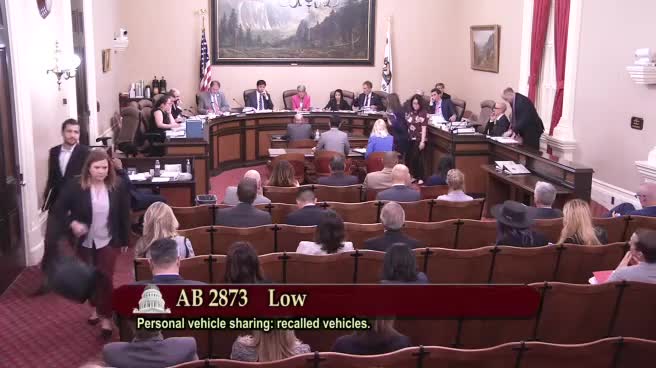 3MIN
Senate Standing Committee on Judiciary
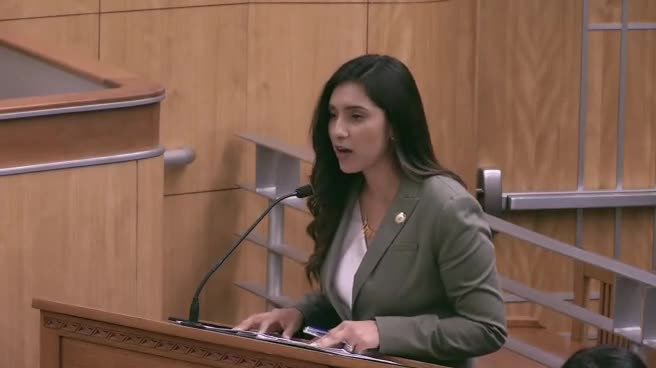 3MIN
Senate Standing Committee on Education
Bill Author

Bill Co-Author(s):