AB 2258: Unclaimed property.
- Session Year: 2015-2016
- House: Assembly
- Latest Version Date: 2016-09-22
Existing law prescribes the circumstances under which property held or owing by a business association escheats to the state. Existing law specifies that any demand, savings, or matured time deposit, or account subject to a negotiable order of withdrawal, made with a banking organization escheats to the state if the owner, for more than three years, has not increased or decreased the amount of the deposit. Existing law specifies that any demand, savings, or matured time deposit, or matured investment certificate, or account subject to a negotiable order of withdrawal, or other interest in a financial organization, escheats to the state when the owner, for more than three years, has not increased or decreased the amount of the funds or deposit.
This bill would require, commencing on or before January 1, 2018, for purposes of determining whether the above-described property escheats to the state, that a holder, as defined in existing law, regard specified transactions that are initiated electronically and are reflected in the books and records of a banking or financial organization as evidence of an increase or decrease in the amount of the funds or deposit in an account held by the banking or financial organization.
Existing law prescribes the circumstances under which property held or owing by a business association escheats to the state. Existing law specifies that any demand, savings, or matured time deposit, or account subject to a negotiable order of withdrawal, made with a banking organization escheats to the state if the owner, for more than three years, has not increased or decreased the amount of the deposit. Existing law specifies that any demand, savings, or matured time deposit, or matured investment certificate, or account subject to a negotiable order of withdrawal, or other interest in a financial organization, escheats to the state when the owner, for more than three years, has not increased or decreased the amount of the funds or deposit.
This bill would require, commencing on or before January 1, 2018, for purposes of determining whether the above-described property escheats to the state, that a holder, as defined in existing law, regard specified transactions that are initiated electronically and are reflected in the books and records of a banking or financial organization as evidence of an increase or decrease in the amount of the funds or deposit in an account held by the banking or financial organization.
Existing law prescribes the circumstances under which property held or owing by a business association escheats to the state. Existing law specifies that any demand, savings, or matured time deposit, or account subject to a negotiable order of withdrawal, made with a banking organization escheats to the state if the owner, for more than three years, has not increased or decreased the amount of the deposit. Existing law specifies that any demand, savings, or matured time deposit, or matured investment certificate, or account subject to a negotiable order of withdrawal, or other interest in a financial organization, escheats to the state when the owner, for more than three years, has not increased or decreased the amount of the funds or deposit.
This bill would provide that, require, commencing on or before January 1, 2018, for purposes of determining whether the above-described property escheats to the state, that a holder, as defined in existing law, regard specified transactions that are initiated electronically and are reflected in the books and records of a banking or financial organization would constitute as evidence of an increase or decrease in the amount of the funds or deposit in an account held by the banking or financial organization.
Existing law prescribes the circumstances under which property held or owing by a business association escheats to the state. Existing law specifies that any demand, savings, or matured time deposit, or account subject to a negotiable order of withdrawal, made with a banking organization escheats to the state if the owner, for more than three years, has not increased or decreased the amount of the deposit. Existing law specifies that any demand, savings, or matured time deposit, or matured investment certificate, or account subject to a negotiable order of withdrawal, or other interest in a financial organization, escheats to the state when the owner, for more than three years, has not increased or decreased the amount of the funds or deposit.
This bill would provide that, for purposes of determining whether the above-described property escheats to the state, specified transactions that are initiated through an electronic fund transfer, as defined by a federal regulation, electronically and are reflected in the books and records of a banking or financial organization would constitute an increase or decrease in the amount of the funds or deposit held by the banking or financial organization.
Existing law prescribes the circumstances under which property held or owing by a business association escheats to the state. Existing law specifies that any demand, savings, or matured time deposit, or account subject to a negotiable order of withdrawal, made with a banking organization escheats to the state if the owner, for more than three years, has not increased or decreased the amount of the deposit. Existing law specifies that any demand, savings, or matured time deposit, or matured investment certificate, or account subject to a negotiable order of withdrawal, or other interest in a financial organization, escheats to the state when the owner, for more than three years, has not increased or decreased the amount of the funds or deposit.
This bill would provide that, for purposes of determining whether the above-described property escheats to the state, specified transactions that are initiated electronically through automated clearing house (ACH) transactions through an electronic fund transfer, as defined by a federal regulation, and are reflected in the books and records of a banking or financial organization would constitute an increase or decrease in the amount of the funds or deposit held by the banking or financial organization.
Existing law prescribes the circumstances under which property held or owing by a business association escheats to the state. Existing law specifies that any demand, savings, or matured time deposit, or account subject to a negotiable order of withdrawal, made with a banking organization escheats to the state if the owner, for more than three years, has not increased or decreased the amount of the deposit. Existing law specifies that any demand, savings, or matured time deposit, or matured investment certificate, or account subject to a negotiable order of withdrawal, or other interest in a financial organization, escheats to the state when the owner, for more than three years, has not increased or decreased the amount of the funds or deposit.
This bill would provide that, for purposes of determining whether the above-described property escheats to the state, specified transactions that are initiated electronically through automated clearing house (ACH) transactions and are reflected in the books and records of a banking or financial organization would constitute an increase or decrease in the amount of the funds or deposit held by the banking or financial organization.
(a)Subject to Sections 1510 and 1511, the following property held or owing by a business association escheats to this state:
(1)(A)Except as provided in paragraph (6), any demand, savings, or matured time deposit, or account subject to a negotiable order of withdrawal, made with a banking organization, together with any interest or dividends thereon, excluding, from demand deposits and accounts subject to a negotiable order of withdrawal only, any reasonable service charges that may lawfully be withheld and that do not, where made in this state, exceed those set forth in schedules filed by the banking organization from time to time with the Controller, if the owner, for more than three years, has not done any of the following:
(i)Increased or decreased the amount of the deposit, cashed an interest check, or presented the passbook or other similar evidence of the deposit for the crediting of interest.
(ii)Corresponded electronically or in writing with the banking organization concerning the deposit.
(iii)Otherwise indicated an interest in the deposit as evidenced by a memorandum or other record on file with the banking organization.
(B)A deposit or account shall not, however, escheat to the state if, during the previous three years, the owner has owned another deposit or account with the banking organization or the owner has owned an individual retirement account or funds held by the banking organization under a retirement plan for self-employed individuals or a similar account or plan established pursuant to the internal revenue laws of the United States or the laws of this state, as described in paragraph (6), and, with respect to that deposit, account, or plan, the owner has done any of the acts described in clause (i), (ii), or (iii) of subparagraph (A), and the banking organization has communicated electronically or in writing with the owner, at the address to which communications regarding that deposit, account, or plan are regularly sent, with regard to the deposit or account that would otherwise escheat under subparagraph (A). For purposes of this subparagraph, communications includes account statements or statements required under the internal revenue laws of the United States.
(C)No banking organization may discontinue any interest or dividends on any savings deposit because of the inactivity contemplated by this section.
(2)(A)Except as provided in paragraph (6), any demand, savings, or matured time deposit, or matured investment certificate, or account subject to a negotiable order of withdrawal, or other interest in a financial organization or any deposit made therewith, and any interest or dividends thereon, excluding, from demand deposits and accounts subject to a negotiable order of withdrawal only, any reasonable service charges that may lawfully be withheld and that do not, where made in this state, exceed those set forth in schedules filed by the financial organization from time to time with the Controller, if the owner, for more than three years, has not done any of the following:
(i)Increased or decreased the amount of the funds or deposit, cashed an interest check, or presented an appropriate record for the crediting of interest or dividends.
(ii)Corresponded electronically or in writing with the financial organization concerning the funds or deposit.
(iii)Otherwise indicated an interest in the funds or deposit as evidenced by a memorandum or other record on file with the financial organization.
(B)A deposit or account shall not, however, escheat to the state if, during the previous three years, the owner has owned another deposit or account with the financial organization or the owner has owned an individual retirement account or funds held by the financial organization under a retirement plan for self-employed individuals or a similar account or plan established pursuant to the internal revenue laws of the United States or the laws of this state, as described in paragraph (6), and, with respect to that deposit, account, or plan, the owner has done any of the acts described in clause (i), (ii), or (iii) of subparagraph (A), and the financial organization has communicated electronically or in writing with the owner, at the address to which communications regarding that deposit, account, or plan are regularly sent, with regard to the deposit or account that would otherwise escheat under subparagraph (A). For purposes of this subparagraph, communications includes account statements or statements required under the internal revenue laws of the United States.
(C)No financial organization may discontinue any interest or dividends on any funds paid toward purchase of shares or other interest, or on any deposit, because of the inactivity contemplated by this section.
(3)Any sum payable on a travelers check issued by a business association that has been outstanding for more than 15 years from the date of its issuance, if the owner, for more than 15 years, has not corresponded in writing with the business association concerning it, or otherwise indicated an interest as evidenced by a memorandum or other record on file with the association.
(4)Any sum payable on any other written instrument on which a banking or financial organization is directly liable, including, by way of illustration but not of limitation, any draft, cashiers check, tellers check, or certified check, that has been outstanding for more than three years from the date it was payable, or from the date of its issuance if payable on demand, if the owner, for more than three years, has not corresponded electronically or in writing with the banking or financial organization concerning it, or otherwise indicated an interest as evidenced by a memorandum or other record on file with the banking or financial organization.
(5)Any sum payable on a money order issued by a business association, including a banking or financial organization, that has been outstanding for more than seven years from the date it was payable, or from the date of its issuance if payable on demand, excluding any reasonable service charges that may lawfully be withheld and that do not, when made in this state, exceed those set forth in schedules filed by the business association from time to time with the Controller, if the owner, for more than seven years, has not corresponded electronically or in writing with the business association, banking, or financial organization concerning it, or otherwise indicated an interest as evidenced by a memorandum or other record on file with the business association. For the purposes of this subdivision, reasonable service charge means a service charge that meets all of the following requirements:
(A)It is uniformly applied to all of the issuers money orders.
(B)It is clearly disclosed to the purchaser at the time of purchase and to the recipient of the money order.
(C)It does not begin to accrue until three years after the purchase date, and it stops accruing after the value of the money order escheats.
(D)It is permitted by contract between the issuer and the purchaser.
(E)It does not exceed 25 cents ($0.25) per month or the aggregate amount of twenty-one dollars ($21).
(6)(A)Any funds held by a business association in an individual retirement account or under a retirement plan for self-employed individuals or similar account or plan established pursuant to the internal revenue laws of the United States or of this state, if the owner, for more than three years after the funds become payable or distributable, has not done any of the following:
(i)Increased or decreased the principal.
(ii)Accepted payment of principal or income.
(iii)Corresponded electronically or in writing concerning the property or otherwise indicated an interest.
(B)Funds held by a business association in an individual retirement account or under a retirement plan for self-employed individuals or a similar account or plan created pursuant to the internal revenue laws of the United States or the laws of this state shall not escheat to the state if, during the previous three years, the owner has owned another such account, plan, or any other deposit or account with the business association and, with respect to that deposit, account, or plan, the owner has done any of the acts described in clause (i), (ii), or (iii) of subparagraph (A), and the business association has communicated electronically or in writing with the owner, at the address to which communications regarding that deposit, account, or plan are regularly sent, with regard to the account or plan that would otherwise escheat under subparagraph (A). For purposes of this subparagraph, communications includes account statements or statements required under the internal revenue laws of the United States.
(C)These funds are not payable or distributable within the meaning of this subdivision unless either of the following is true:
(i)Under the terms of the account or plan, distribution of all or a part of the funds would then be mandatory.
(ii)For an account or plan not subject to mandatory distribution requirement under the internal revenue laws of the United States or the laws of this state, the owner has attained 701/2 years of age.
(7)Any wages or salaries that have remained unclaimed by the owner for more than one year after the wages or salaries become payable.
(b)For purposes of this section, service charges means service charges imposed because of the inactivity contemplated by this section.
(c)A holder shall, commencing on or before January 1, 2018, regard the following transactions that are initiated electronically and are reflected in the books and records of the banking or financial organization as evidence that an owner has increased or decreased the amount of the funds or deposit in an account, for purposes of paragraphs (1) and (2) of subdivision (a):
(1)A single or recurring debit transaction authorized by the owner.
(2)A single or recurring credit transaction authorized by the owner
(3)Recurring transactions authorized by the owner that represent payroll deposits or deductions.
(4)Recurring credits authorized by the owner or a responsible party that represent the deposit of any federal benefits, including social security benefits, veterans benefits, and pension payments.
(a)Subject to Sections 1510 and 1511, the following property held or owing by a business association escheats to this state:
(1)(A)Except as provided in paragraph (6), any demand, savings, or matured time deposit, or account subject to a negotiable order of withdrawal, made with a banking organization, together with any interest or dividends thereon, excluding, from demand deposits and accounts subject to a negotiable order of withdrawal only, any reasonable service charges that may lawfully be withheld and that do not, where made in this state, exceed those set forth in schedules filed by the banking organization from time to time with the Controller, if the owner, for more than three years, has not done any of the following:
(i)Increased or decreased the amount of the deposit, cashed an interest check, or presented the passbook or other similar evidence of the deposit for the crediting of interest.
(ii)Corresponded electronically or in writing with the banking organization concerning the deposit.
(iii)Otherwise indicated an interest in the deposit as evidenced by a memorandum or other record on file with the banking organization.
(B)A deposit or account shall not, however, escheat to the state if, during the previous three years, the owner has owned another deposit or account with the banking organization or the owner has owned an individual retirement account or funds held by the banking organization under a retirement plan for self-employed individuals or a similar account or plan established pursuant to the internal revenue laws of the United States or the laws of this state, as described in paragraph (6), and, with respect to that deposit, account, or plan, the owner has done any of the acts described in clause (i), (ii), or (iii) of subparagraph (A), and the banking organization has communicated electronically or in writing with the owner, at the address to which communications regarding that deposit, account, or plan are regularly sent, with regard to the deposit or account that would otherwise escheat under subparagraph (A). For purposes of this subparagraph, communications includes account statements or statements required under the internal revenue laws of the United States.
(C)No banking organization may discontinue any interest or dividends on any savings deposit because of the inactivity contemplated by this section.
(2)(A)Except as provided in paragraph (6), any demand, savings, or matured time deposit, or matured investment certificate, or account subject to a negotiable order of withdrawal, or other interest in a financial organization or any deposit made therewith, and any interest or dividends thereon, excluding, from demand deposits and accounts subject to a negotiable order of withdrawal only, any reasonable service charges that may lawfully be withheld and that do not, where made in this state, exceed those set forth in schedules filed by the financial organization from time to time with the Controller, if the owner, for more than three years, has not done any of the following:
(i)Increased or decreased the amount of the funds or deposit, cashed an interest check, or presented an appropriate record for the crediting of interest or dividends.
(ii)Corresponded electronically or in writing with the financial organization concerning the funds or deposit.
(iii)Otherwise indicated an interest in the funds or deposit as evidenced by a memorandum or other record on file with the financial organization.
(B)A deposit or account shall not, however, escheat to the state if, during the previous three years, the owner has owned another deposit or account with the financial organization or the owner has owned an individual retirement account or funds held by the financial organization under a retirement plan for self-employed individuals or a similar account or plan established pursuant to the internal revenue laws of the United States or the laws of this state, as described in paragraph (6), and, with respect to that deposit, account, or plan, the owner has done any of the acts described in clause (i), (ii), or (iii) of subparagraph (A), and the financial organization has communicated electronically or in writing with the owner, at the address to which communications regarding that deposit, account, or plan are regularly sent, with regard to the deposit or account that would otherwise escheat under subparagraph (A). For purposes of this subparagraph, communications includes account statements or statements required under the internal revenue laws of the United States.
(C)No financial organization may discontinue any interest or dividends on any funds paid toward purchase of shares or other interest, or on any deposit, because of the inactivity contemplated by this section.
(3)Any sum payable on a travelers check issued by a business association that has been outstanding for more than 15 years from the date of its issuance, if the owner, for more than 15 years, has not corresponded in writing with the business association concerning it, or otherwise indicated an interest as evidenced by a memorandum or other record on file with the association.
(4)Any sum payable on any other written instrument on which a banking or financial organization is directly liable, including, by way of illustration but not of limitation, any draft, cashiers check, tellers check, or certified check, that has been outstanding for more than three years from the date it was payable, or from the date of its issuance if payable on demand, if the owner, for more than three years, has not corresponded electronically or in writing with the banking or financial organization concerning it, or otherwise indicated an interest as evidenced by a memorandum or other record on file with the banking or financial organization.
(5)Any sum payable on a money order issued by a business association, including a banking or financial organization, that has been outstanding for more than seven years from the date it was payable, or from the date of its issuance if payable on demand, excluding any reasonable service charges that may lawfully be withheld and that do not, when made in this state, exceed those set forth in schedules filed by the business association from time to time with the Controller, if the owner, for more than seven years, has not corresponded electronically or in writing with the business association, banking, or financial organization concerning it, or otherwise indicated an interest as evidenced by a memorandum or other record on file with the business association. For the purposes of this subdivision, reasonable service charge means a service charge that meets all of the following requirements:
(A)It is uniformly applied to all of the issuers money orders.
(B)It is clearly disclosed to the purchaser at the time of purchase and to the recipient of the money order.
(C)It does not begin to accrue until three years after the purchase date, and it stops accruing after the value of the money order escheats.
(D)It is permitted by contract between the issuer and the purchaser.
(E)It does not exceed 25 cents ($0.25) per month or the aggregate amount of twenty-one dollars ($21).
(6)(A)Any funds held by a business association in an individual retirement account or under a retirement plan for self-employed individuals or similar account or plan established pursuant to the internal revenue laws of the United States or of this state, if the owner, for more than three years after the funds become payable or distributable, has not done any of the following:
(i)Increased or decreased the principal.
(ii)Accepted payment of principal or income.
(iii)Corresponded electronically or in writing concerning the property or otherwise indicated an interest.
(B)Funds held by a business association in an individual retirement account or under a retirement plan for self-employed individuals or a similar account or plan created pursuant to the internal revenue laws of the United States or the laws of this state shall not escheat to the state if, during the previous three years, the owner has owned another such account, plan, or any other deposit or account with the business association and, with respect to that deposit, account, or plan, the owner has done any of the acts described in clause (i), (ii), or (iii) of subparagraph (A), and the business association has communicated electronically or in writing with the owner, at the address to which communications regarding that deposit, account, or plan are regularly sent, with regard to the account or plan that would otherwise escheat under subparagraph (A). For purposes of this subparagraph, communications includes account statements or statements required under the internal revenue laws of the United States.
(C)These funds are not payable or distributable within the meaning of this subdivision unless either of the following is true:
(i)Under the terms of the account or plan, distribution of all or a part of the funds would then be mandatory.
(ii)For an account or plan not subject to mandatory distribution requirement under the internal revenue laws of the United States or the laws of this state, the owner has attained 701/2 years of age.
(7)Any wages or salaries that have remained unclaimed by the owner for more than one year after the wages or salaries become payable.
(b)For purposes of this section, service charges means service charges imposed because of the inactivity contemplated by this section.
(c)A holder shall, commencing on or before January 1, 2018, regard the following transactions that are initiated electronically and are reflected in the books and records of the banking or financial organization as evidence that an owner has increased or decreased the amount of the funds or deposit in an account, for purposes of paragraphs (1) and (2) of subdivision (a):
(1)A single or recurring debit transaction authorized by the owner.
(2)A single or recurring credit transaction authorized by the owner
(3)Recurring transactions authorized by the owner that represent payroll deposits or deductions.
(4)Recurring credits authorized by the owner or a responsible party that represent the deposit of any federal benefits, including social security benefits, veterans benefits, and pension payments.
(a)Subject to Sections 1510 and 1511, the following property held or owing by a business association escheats to this state:
(1)(A)Except as provided in paragraph (6), any demand, savings, or matured time deposit, or account subject to a negotiable order of withdrawal, made with a banking organization, together with any interest or dividends thereon, excluding, from demand deposits and accounts subject to a negotiable order of withdrawal only, any reasonable service charges that may lawfully be withheld and that do not, where made in this state, exceed those set forth in schedules filed by the banking organization from time to time with the Controller, if the owner, for more than three years, has not done any of the following:
(i)Increased or decreased the amount of the deposit, cashed an interest check, or presented the passbook or other similar evidence of the deposit for the crediting of interest.
(ii)Corresponded electronically or in writing with the banking organization concerning the deposit.
(iii)Otherwise indicated an interest in the deposit as evidenced by a memorandum or other record on file with the banking organization.
(B)A deposit or account shall not, however, escheat to the state if, during the previous three years, the owner has owned another deposit or account with the banking organization or the owner has owned an individual retirement account or funds held by the banking organization under a retirement plan for self-employed individuals or a similar account or plan established pursuant to the internal revenue laws of the United States or the laws of this state, as described in paragraph (6), and, with respect to that deposit, account, or plan, the owner has done any of the acts described in clause (i), (ii), or (iii) of subparagraph (A), and the banking organization has communicated electronically or in writing with the owner, at the address to which communications regarding that deposit, account, or plan are regularly sent, with regard to the deposit or account that would otherwise escheat under subparagraph (A). For purposes of this subparagraph, communications includes account statements or statements required under the internal revenue laws of the United States.
(C)No banking organization may discontinue any interest or dividends on any savings deposit because of the inactivity contemplated by this section.
(2)(A)Except as provided in paragraph (6), any demand, savings, or matured time deposit, or matured investment certificate, or account subject to a negotiable order of withdrawal, or other interest in a financial organization or any deposit made therewith, and any interest or dividends thereon, excluding, from demand deposits and accounts subject to a negotiable order of withdrawal only, any reasonable service charges that may lawfully be withheld and that do not, where made in this state, exceed those set forth in schedules filed by the financial organization from time to time with the Controller, if the owner, for more than three years, has not done any of the following:
(i)Increased or decreased the amount of the funds or deposit, cashed an interest check, or presented an appropriate record for the crediting of interest or dividends.
(ii)Corresponded electronically or in writing with the financial organization concerning the funds or deposit.
(iii)Otherwise indicated an interest in the funds or deposit as evidenced by a memorandum or other record on file with the financial organization.
(B)A deposit or account shall not, however, escheat to the state if, during the previous three years, the owner has owned another deposit or account with the financial organization or the owner has owned an individual retirement account or funds held by the financial organization under a retirement plan for self-employed individuals or a similar account or plan established pursuant to the internal revenue laws of the United States or the laws of this state, as described in paragraph (6), and, with respect to that deposit, account, or plan, the owner has done any of the acts described in clause (i), (ii), or (iii) of subparagraph (A), and the financial organization has communicated electronically or in writing with the owner, at the address to which communications regarding that deposit, account, or plan are regularly sent, with regard to the deposit or account that would otherwise escheat under subparagraph (A). For purposes of this subparagraph, communications includes account statements or statements required under the internal revenue laws of the United States.
(C)No financial organization may discontinue any interest or dividends on any funds paid toward purchase of shares or other interest, or on any deposit, because of the inactivity contemplated by this section.
(3)Any sum payable on a travelers check issued by a business association that has been outstanding for more than 15 years from the date of its issuance, if the owner, for more than 15 years, has not corresponded in writing with the business association concerning it, or otherwise indicated an interest as evidenced by a memorandum or other record on file with the association.
(4)Any sum payable on any other written instrument on which a banking or financial organization is directly liable, including, by way of illustration but not of limitation, any draft, cashiers check, tellers check, or certified check, that has been outstanding for more than three years from the date it was payable, or from the date of its issuance if payable on demand, if the owner, for more than three years, has not corresponded electronically or in writing with the banking or financial organization concerning it, or otherwise indicated an interest as evidenced by a memorandum or other record on file with the banking or financial organization.
(5)Any sum payable on a money order issued by a business association, including a banking or financial organization, that has been outstanding for more than seven years from the date it was payable, or from the date of its issuance if payable on demand, excluding any reasonable service charges that may lawfully be withheld and that do not, when made in this state, exceed those set forth in schedules filed by the business association from time to time with the Controller, if the owner, for more than seven years, has not corresponded electronically or in writing with the business association, banking, or financial organization concerning it, or otherwise indicated an interest as evidenced by a memorandum or other record on file with the business association. For the purposes of this subdivision, reasonable service charge means a service charge that meets all of the following requirements:
(A)It is uniformly applied to all of the issuers money orders.
(B)It is clearly disclosed to the purchaser at the time of purchase and to the recipient of the money order.
(C)It does not begin to accrue until three years after the purchase date, and it stops accruing after the value of the money order escheats.
(D)It is permitted by contract between the issuer and the purchaser.
(E)It does not exceed 25 cents ($0.25) per month or the aggregate amount of twenty-one dollars ($21).
(6)(A)Any funds held by a business association in an individual retirement account or under a retirement plan for self-employed individuals or similar account or plan established pursuant to the internal revenue laws of the United States or of this state, if the owner, for more than three years after the funds become payable or distributable, has not done any of the following:
(i)Increased or decreased the principal.
(ii)Accepted payment of principal or income.
(iii)Corresponded electronically or in writing concerning the property or otherwise indicated an interest.
(B)Funds held by a business association in an individual retirement account or under a retirement plan for self-employed individuals or a similar account or plan created pursuant to the internal revenue laws of the United States or the laws of this state shall not escheat to the state if, during the previous three years, the owner has owned another such account, plan, or any other deposit or account with the business association and, with respect to that deposit, account, or plan, the owner has done any of the acts described in clause (i), (ii), or (iii) of subparagraph (A), and the business association has communicated electronically or in writing with the owner, at the address to which communications regarding that deposit, account, or plan are regularly sent, with regard to the account or plan that would otherwise escheat under subparagraph (A). For purposes of this subparagraph, communications includes account statements or statements required under the internal revenue laws of the United States.
(C)These funds are not payable or distributable within the meaning of this subdivision unless either of the following is true:
(i)Under the terms of the account or plan, distribution of all or a part of the funds would then be mandatory.
(ii)For an account or plan not subject to mandatory distribution requirement under the internal revenue laws of the United States or the laws of this state, the owner has attained 701/2 years of age.
(7)Any wages or salaries that have remained unclaimed by the owner for more than one year after the wages or salaries become payable.
(b)For purposes of this section, the following terms have the following meanings:
(1)Increased or decreased the amount of the deposit and increased or decreased the amount of the funds or deposit includes the following transactions that are initiated electronically and are reflected in the books and records of the banking or financial organization:
(A)A single or recurring debit transaction authorized by the owner.
(B)A single or recurring credit transaction authorized by the owner.
(C)Recurring transactions authorized by the owner that represent payroll deposits or deductions.
(D)Recurring credits authorized by the owner or a responsible party that represent the deposit of any federal benefits, including social security benefits, veterans benefits, and pension payments.
(2)Service charges means service charges imposed because of the inactivity contemplated by this section.
(b)For purposes of this section, service charges means service charges imposed because of the inactivity contemplated by this section.
(c)A holder shall, commencing on or before January 1, 2018, regard the following transactions that are initiated electronically and are reflected in the books and records of the banking or financial organization as evidence that an owner has increased or decreased the amount of the funds or deposit in an account, for purposes of paragraphs (1) and (2) of subdivision (a):
(1)A single or recurring debit transaction authorized by the owner.
(2)A single or recurring credit transaction authorized by the owner
(3)Recurring transactions authorized by the owner that represent payroll deposits or deductions.
(4)Recurring credits authorized by the owner or a responsible party that represent the deposit of any federal benefits, including social security benefits, veterans benefits, and pension payments.
(a)Subject to Sections 1510 and 1511, the following property held or owing by a business association escheats to this state:
(1)(A)Except as provided in paragraph (6), any demand, savings, or matured time deposit, or account subject to a negotiable order of withdrawal, made with a banking organization, together with any interest or dividends thereon, excluding, from demand deposits and accounts subject to a negotiable order of withdrawal only, any reasonable service charges that may lawfully be withheld and that do not, where made in this state, exceed those set forth in schedules filed by the banking organization from time to time with the Controller, if the owner, for more than three years, has not done any of the following:
(i)Increased or decreased the amount of the deposit, cashed an interest check, or presented the passbook or other similar evidence of the deposit for the crediting of interest.
(ii)Corresponded electronically or in writing with the banking organization concerning the deposit.
(iii)Otherwise indicated an interest in the deposit as evidenced by a memorandum or other record on file with the banking organization.
(B)A deposit or account shall not, however, escheat to the state if, during the previous three years, the owner has owned another deposit or account with the banking organization or the owner has owned an individual retirement account or funds held by the banking organization under a retirement plan for self-employed individuals or a similar account or plan established pursuant to the internal revenue laws of the United States or the laws of this state, as described in paragraph (6), and, with respect to that deposit, account, or plan, the owner has done any of the acts described in clause (i), (ii), or (iii) of subparagraph (A), and the banking organization has communicated electronically or in writing with the owner, at the address to which communications regarding that deposit, account, or plan are regularly sent, with regard to the deposit or account that would otherwise escheat under subparagraph (A). For purposes of this subparagraph, communications includes account statements or statements required under the internal revenue laws of the United States.
(C)No banking organization may discontinue any interest or dividends on any savings deposit because of the inactivity contemplated by this section.
(2)(A)Except as provided in paragraph (6), any demand, savings, or matured time deposit, or matured investment certificate, or account subject to a negotiable order of withdrawal, or other interest in a financial organization or any deposit made therewith, and any interest or dividends thereon, excluding, from demand deposits and accounts subject to a negotiable order of withdrawal only, any reasonable service charges that may lawfully be withheld and that do not, where made in this state, exceed those set forth in schedules filed by the financial organization from time to time with the Controller, if the owner, for more than three years, has not done any of the following:
(i)Increased or decreased the amount of the funds or deposit, cashed an interest check, or presented an appropriate record for the crediting of interest or dividends.
(ii)Corresponded electronically or in writing with the financial organization concerning the funds or deposit.
(iii)Otherwise indicated an interest in the funds or deposit as evidenced by a memorandum or other record on file with the financial organization.
(B)A deposit or account shall not, however, escheat to the state if, during the previous three years, the owner has owned another deposit or account with the financial organization or the owner has owned an individual retirement account or funds held by the financial organization under a retirement plan for self-employed individuals or a similar account or plan established pursuant to the internal revenue laws of the United States or the laws of this state, as described in paragraph (6), and, with respect to that deposit, account, or plan, the owner has done any of the acts described in clause (i), (ii), or (iii) of subparagraph (A), and the financial organization has communicated electronically or in writing with the owner, at the address to which communications regarding that deposit, account, or plan are regularly sent, with regard to the deposit or account that would otherwise escheat under subparagraph (A). For purposes of this subparagraph, communications includes account statements or statements required under the internal revenue laws of the United States.
(C)No financial organization may discontinue any interest or dividends on any funds paid toward purchase of shares or other interest, or on any deposit, because of the inactivity contemplated by this section.
(3)Any sum payable on a travelers check issued by a business association that has been outstanding for more than 15 years from the date of its issuance, if the owner, for more than 15 years, has not corresponded in writing with the business association concerning it, or otherwise indicated an interest as evidenced by a memorandum or other record on file with the association.
(4)Any sum payable on any other written instrument on which a banking or financial organization is directly liable, including, by way of illustration but not of limitation, any draft, cashiers check, tellers check, or certified check, that has been outstanding for more than three years from the date it was payable, or from the date of its issuance if payable on demand, if the owner, for more than three years, has not corresponded electronically or in writing with the banking or financial organization concerning it, or otherwise indicated an interest as evidenced by a memorandum or other record on file with the banking or financial organization.
(5)Any sum payable on a money order issued by a business association, including a banking or financial organization, that has been outstanding for more than seven years from the date it was payable, or from the date of its issuance if payable on demand, excluding any reasonable service charges that may lawfully be withheld and that do not, when made in this state, exceed those set forth in schedules filed by the business association from time to time with the Controller, if the owner, for more than seven years, has not corresponded electronically or in writing with the business association, banking, or financial organization concerning it, or otherwise indicated an interest as evidenced by a memorandum or other record on file with the business association. For the purposes of this subdivision, reasonable service charge means a service charge that meets all of the following requirements:
(A)It is uniformly applied to all of the issuers money orders.
(B)It is clearly disclosed to the purchaser at the time of purchase and to the recipient of the money order.
(C)It does not begin to accrue until three years after the purchase date, and it stops accruing after the value of the money order escheats.
(D)It is permitted by contract between the issuer and the purchaser.
(E)It does not exceed 25 cents ($0.25) per month or the aggregate amount of twenty-one dollars ($21).
(6)(A)Any funds held by a business association in an individual retirement account or under a retirement plan for self-employed individuals or similar account or plan established pursuant to the internal revenue laws of the United States or of this state, if the owner, for more than three years after the funds become payable or distributable, has not done any of the following:
(i)Increased or decreased the principal.
(ii)Accepted payment of principal or income.
(iii)Corresponded electronically or in writing concerning the property or otherwise indicated an interest.
(B)Funds held by a business association in an individual retirement account or under a retirement plan for self-employed individuals or a similar account or plan created pursuant to the internal revenue laws of the United States or the laws of this state shall not escheat to the state if, during the previous three years, the owner has owned another such account, plan, or any other deposit or account with the business association and, with respect to that deposit, account, or plan, the owner has done any of the acts described in clause (i), (ii), or (iii) of subparagraph (A), and the business association has communicated electronically or in writing with the owner, at the address to which communications regarding that deposit, account, or plan are regularly sent, with regard to the account or plan that would otherwise escheat under subparagraph (A). For purposes of this subparagraph, communications includes account statements or statements required under the internal revenue laws of the United States.
(C)These funds are not payable or distributable within the meaning of this subdivision unless either of the following is true:
(i)Under the terms of the account or plan, distribution of all or a part of the funds would then be mandatory.
(ii)For an account or plan not subject to mandatory distribution requirement under the internal revenue laws of the United States or the laws of this state, the owner has attained 701/2 years of age.
(7)Any wages or salaries that have remained unclaimed by the owner for more than one year after the wages or salaries become payable.
(b)For purposes of this section, the following terms have the following meanings:
(1)Increased or decreased the amount of the deposit and increased or decreased the amount of the funds or deposit includes the following transactions that are initiated through an electronic fund transfer, as defined in 12 C.F.R. 1005.3, electronically and are reflected in the books and records of the banking or financial organization:
(A)A single or recurring debit transaction authorized by the owner.
(B)A single or recurring credit transaction authorized by the owner.
(C)Recurring transactions authorized by the owner that represent payroll deposits or deductions.
(D)Recurring credits authorized by the owner or a responsible party that represent the deposit of any federal benefits, including social security benefits, veterans benefits, and pension payments.
(2)Service charges means service charges imposed because of the inactivity contemplated by this section.
(a)Subject to Sections 1510 and 1511, the following property held or owing by a business association escheats to this state:
(1)(A)Except as provided in paragraph (6), any demand, savings, or matured time deposit, or account subject to a negotiable order of withdrawal, made with a banking organization, together with any interest or dividends thereon, excluding, from demand deposits and accounts subject to a negotiable order of withdrawal only, any reasonable service charges that may lawfully be withheld and that do not, where made in this state, exceed those set forth in schedules filed by the banking organization from time to time with the Controller, if the owner, for more than three years, has not done any of the following:
(i)Increased or decreased the amount of the deposit, cashed an interest check, or presented the passbook or other similar evidence of the deposit for the crediting of interest.
(ii)Corresponded electronically or in writing with the banking organization concerning the deposit.
(iii)Otherwise indicated an interest in the deposit as evidenced by a memorandum or other record on file with the banking organization.
(B)A deposit or account shall not, however, escheat to the state if, during the previous three years, the owner has owned another deposit or account with the banking organization or the owner has owned an individual retirement account or funds held by the banking organization under a retirement plan for self-employed individuals or a similar account or plan established pursuant to the internal revenue laws of the United States or the laws of this state, as described in paragraph (6), and, with respect to that deposit, account, or plan, the owner has done any of the acts described in clause (i), (ii), or (iii) of subparagraph (A), and the banking organization has communicated electronically or in writing with the owner, at the address to which communications regarding that deposit, account, or plan are regularly sent, with regard to the deposit or account that would otherwise escheat under subparagraph (A). For purposes of this subparagraph, communications includes account statements or statements required under the internal revenue laws of the United States.
(C)No banking organization may discontinue any interest or dividends on any savings deposit because of the inactivity contemplated by this section.
(2)(A)Except as provided in paragraph (6), any demand, savings, or matured time deposit, or matured investment certificate, or account subject to a negotiable order of withdrawal, or other interest in a financial organization or any deposit made therewith, and any interest or dividends thereon, excluding, from demand deposits and accounts subject to a negotiable order of withdrawal only, any reasonable service charges that may lawfully be withheld and that do not, where made in this state, exceed those set forth in schedules filed by the financial organization from time to time with the Controller, if the owner, for more than three years, has not done any of the following:
(i)Increased or decreased the amount of the funds or deposit, cashed an interest check, or presented an appropriate record for the crediting of interest or dividends.
(ii)Corresponded electronically or in writing with the financial organization concerning the funds or deposit.
(iii)Otherwise indicated an interest in the funds or deposit as evidenced by a memorandum or other record on file with the financial organization.
(B)A deposit or account shall not, however, escheat to the state if, during the previous three years, the owner has owned another deposit or account with the financial organization or the owner has owned an individual retirement account or funds held by the financial organization under a retirement plan for self-employed individuals or a similar account or plan established pursuant to the internal revenue laws of the United States or the laws of this state, as described in paragraph (6), and, with respect to that deposit, account, or plan, the owner has done any of the acts described in clause (i), (ii), or (iii) of subparagraph (A), and the financial organization has communicated electronically or in writing with the owner, at the address to which communications regarding that deposit, account, or plan are regularly sent, with regard to the deposit or account that would otherwise escheat under subparagraph (A). For purposes of this subparagraph, communications includes account statements or statements required under the internal revenue laws of the United States.
(C)No financial organization may discontinue any interest or dividends on any funds paid toward purchase of shares or other interest, or on any deposit, because of the inactivity contemplated by this section.
(3)Any sum payable on a travelers check issued by a business association that has been outstanding for more than 15 years from the date of its issuance, if the owner, for more than 15 years, has not corresponded in writing with the business association concerning it, or otherwise indicated an interest as evidenced by a memorandum or other record on file with the association.
(4)Any sum payable on any other written instrument on which a banking or financial organization is directly liable, including, by way of illustration but not of limitation, any draft, cashiers check, tellers check, or certified check, that has been outstanding for more than three years from the date it was payable, or from the date of its issuance if payable on demand, if the owner, for more than three years, has not corresponded electronically or in writing with the banking or financial organization concerning it, or otherwise indicated an interest as evidenced by a memorandum or other record on file with the banking or financial organization.
(5)Any sum payable on a money order issued by a business association, including a banking or financial organization, that has been outstanding for more than seven years from the date it was payable, or from the date of its issuance if payable on demand, excluding any reasonable service charges that may lawfully be withheld and that do not, when made in this state, exceed those set forth in schedules filed by the business association from time to time with the Controller, if the owner, for more than seven years, has not corresponded electronically or in writing with the business association, banking, or financial organization concerning it, or otherwise indicated an interest as evidenced by a memorandum or other record on file with the business association. For the purposes of this subdivision, reasonable service charge means a service charge that meets all of the following requirements:
(A)It is uniformly applied to all of the issuers money orders.
(B)It is clearly disclosed to the purchaser at the time of purchase and to the recipient of the money order.
(C)It does not begin to accrue until three years after the purchase date, and it stops accruing after the value of the money order escheats.
(D)It is permitted by contract between the issuer and the purchaser.
(E)It does not exceed 25 cents ($0.25) per month or the aggregate amount of twenty-one dollars ($21).
(6)(A)Any funds held by a business association in an individual retirement account or under a retirement plan for self-employed individuals or similar account or plan established pursuant to the internal revenue laws of the United States or of this state, if the owner, for more than three years after the funds become payable or distributable, has not done any of the following:
(i)Increased or decreased the principal.
(ii)Accepted payment of principal or income.
(iii)Corresponded electronically or in writing concerning the property or otherwise indicated an interest.
(B)Funds held by a business association in an individual retirement account or under a retirement plan for self-employed individuals or a similar account or plan created pursuant to the internal revenue laws of the United States or the laws of this state shall not escheat to the state if, during the previous three years, the owner has owned another such account, plan, or any other deposit or account with the business association and, with respect to that deposit, account, or plan, the owner has done any of the acts described in clause (i), (ii), or (iii) of subparagraph (A), and the business association has communicated electronically or in writing with the owner, at the address to which communications regarding that deposit, account, or plan are regularly sent, with regard to the account or plan that would otherwise escheat under subparagraph (A). For purposes of this subparagraph, communications includes account statements or statements required under the internal revenue laws of the United States.
(C)These funds are not payable or distributable within the meaning of this subdivision unless either of the following is true:
(i)Under the terms of the account or plan, distribution of all or a part of the funds would then be mandatory.
(ii)For an account or plan not subject to mandatory distribution requirement under the internal revenue laws of the United States or the laws of this state, the owner has attained 701/2 years of age.
(7)Any wages or salaries that have remained unclaimed by the owner for more than one year after the wages or salaries become payable.
(b)For purposes of this section, the following terms have the following meanings:
(1)Increased or decreased the amount of the deposit and increased or decreased the amount of the funds or deposit includes the following transactions that are initiated electronically through automated clearing house (ACH) transactions through an electronic fund transfer, as defined in 12 C.F.R. 1005.3, and are reflected in the books and records of the banking or financial organization:
(A)A single or recurring debit transaction authorized by the owner.
(B)A single or recurring credit transaction authorized by the owner.
(C)Recurring transactions authorized by the owner that represent payroll deposits or deductions.
(D)Recurring credits authorized by the owner or a responsible party that represent the deposit of any federal benefits, including social security benefits, veterans benefits, and pension payments.
(2)Service charges means service charges imposed because of the inactivity contemplated by this section.
(a)Subject to Sections 1510 and 1511, the following property held or owing by a business association escheats to this state:
(1)(A)Except as provided in paragraph (6), any demand, savings, or matured time deposit, or account subject to a negotiable order of withdrawal, made with a banking organization, together with any interest or dividends thereon, excluding, from demand deposits and accounts subject to a negotiable order of withdrawal only, any reasonable service charges that may lawfully be withheld and that do not (where not, where made in this state) state, exceed those set forth in schedules filed by the banking organization from time to time with the Controller, when if the owner, for more than three years, has not done any of the following:
(i)Increased or decreased the amount of the deposit, cashed an interest check, or presented the passbook or other similar evidence of the deposit for the crediting of interest.
(ii)Corresponded electronically or in writing with the banking organization concerning the deposit.
(iii)Otherwise indicated an interest in the deposit as evidenced by a memorandum or other record on file with the banking organization.
(B)A deposit or account shall not, however, escheat to the state if, during the previous three years, the owner has owned another deposit or account with the banking organization or the owner has owned an individual retirement account or funds held by the banking organization under a retirement plan for self-employed individuals or a similar account or plan established pursuant to the internal revenue laws of the United States or the laws of this state, as described in paragraph (6), and, with respect to that deposit, account, or plan, the owner has done any of the acts described in clause (i), (ii), or (iii) of subparagraph (A), and the banking organization has communicated electronically or in writing with the owner, at the address to which communications regarding that deposit, account, or plan are regularly sent, with regard to the deposit or account that would otherwise escheat under subparagraph (A). For purposes of this subparagraph, communications includes account statements or statements required under the internal revenue laws of the United States.
(C)No banking organization may discontinue any interest or dividends on any savings deposit because of the inactivity contemplated by this section.
(2)(A)Except as provided in paragraph (6), any demand, savings, or matured time deposit, or matured investment certificate, or account subject to a negotiable order of withdrawal, or other interest in a financial organization or any deposit made therewith, and any interest or dividends thereon, excluding, from demand deposits and accounts subject to a negotiable order of withdrawal only, any reasonable service charges that may lawfully be withheld and that do not (where not, where made in this state) state, exceed those set forth in schedules filed by the financial organization from time to time with the Controller, when if the owner, for more than three years, has not done any of the following:
(i)Increased or decreased the amount of the funds or deposit, cashed an interest check, or presented an appropriate record for the crediting of interest or dividends.
(ii)Corresponded electronically or in writing with the financial organization concerning the funds or deposit.
(iii)Otherwise indicated an interest in the funds or deposit as evidenced by a memorandum or other record on file with the financial organization.
(B)A deposit or account shall not, however, escheat to the state if, during the previous three years, the owner has owned another deposit or account with the financial organization or the owner has owned an individual retirement account or funds held by the financial organization under a retirement plan for self-employed individuals or a similar account or plan established pursuant to the internal revenue laws of the United States or the laws of this state, as described in paragraph (6), and, with respect to that deposit, account, or plan, the owner has done any of the acts described in clause (i), (ii), or (iii) of subparagraph (A), and the financial organization has communicated electronically or in writing with the owner, at the address to which communications regarding that deposit, account, or plan are regularly sent, with regard to the deposit or account that would otherwise escheat under subparagraph (A). For purposes of this subparagraph, communications includes account statements or statements required under the internal revenue laws of the United States.
(C)No financial organization may discontinue any interest or dividends on any funds paid toward purchase of shares or other interest, or on any deposit, because of the inactivity contemplated by this section.
(3)Any sum payable on a travelers check issued by a business association that has been outstanding for more than 15 years from the date of its issuance, when if the owner, for more than 15 years, has not corresponded in writing with the business association concerning it, or otherwise indicated an interest as evidenced by a memorandum or other record on file with the association.
(4)Any sum payable on any other written instrument on which a banking or financial organization is directly liable, including, by way of illustration but not of limitation, any draft, cashiers check, tellers check, or certified check, that has been outstanding for more than three years from the date it was payable, or from the date of its issuance if payable on demand, when if the owner, for more than three years, has not corresponded electronically or in writing with the banking or financial organization concerning it, or otherwise indicated an interest as evidenced by a memorandum or other record on file with the banking or financial organization.
(5)Any sum payable on a money order issued by a business association (including association, including a banking or financial organization), organization, that has been outstanding for more than seven years from the date it was payable, or from the date of its issuance if payable on demand, excluding any reasonable service charges that may lawfully be withheld and that do not, when made in this state, exceed those set forth in schedules filed by the business association from time to time with the Controller, when if the owner, for more than seven years, has not corresponded electronically or in writing with the business association, banking, or financial organization concerning it, or otherwise indicated an interest as evidenced by a memorandum or other record on file with the business association. For the purposes of this subdivision, reasonable service charge means a service charge that meets all of the following requirements:
(A)It is uniformly applied to all of the issuers money orders.
(B)It is clearly disclosed to the purchaser at the time of purchase and to the recipient of the money order.
(C)It does not begin to accrue until three years after the purchase date, and it stops accruing after the value of the money order escheats.
(D)It is permitted by contract between the issuer and the purchaser.
(E)It does not exceed 25 cents ($0.25) per month or the aggregate amount of twenty-one dollars ($21).
(6)(A)Any funds held by a business association in an individual retirement account or under a retirement plan for self-employed individuals or similar account or plan established pursuant to the internal revenue laws of the United States or of this state, when if the owner, for more than three years after the funds become payable or distributable, has not done any of the following:
(i)Increased or decreased the principal.
(ii)Accepted payment of principal or income.
(iii)Corresponded electronically or in writing concerning the property or otherwise indicated an interest.
(B)Funds held by a business association in an individual retirement account or under a retirement plan for self-employed individuals or a similar account or plan created pursuant to the internal revenue laws of the United States or the laws of this state shall not escheat to the state if, during the previous three years, the owner has owned another such account, plan, or any other deposit or account with the business association and, with respect to that deposit, account, or plan, the owner has done any of the acts described in clause (i), (ii), or (iii) of subparagraph (A), and the business association has communicated electronically or in writing with the owner, at the address to which communications regarding that deposit, account, or plan are regularly sent, with regard to the account or plan that would otherwise escheat under subparagraph (A). For purposes of this subparagraph, communications includes account statements or statements required under the internal revenue laws of the United States.
(C)These funds are not payable or distributable within the meaning of this subdivision unless either of the following is true:
(i)Under the terms of the account or plan, distribution of all or a part of the funds would then be mandatory.
(ii)For an account or plan not subject to mandatory distribution requirement under the internal revenue laws of the United States or the laws of this state, the owner has attained 701/2 years of age.
(7)Any wages or salaries that have remained unclaimed by the owner for more than one year after the wages or salaries become payable.
(b)For purposes of this section service, the following terms have the following meanings:
(1)Increased or decreased the amount of the deposit and increased or decreased the amount of the funds or deposit includes the following transactions that are initiated electronically through automated clearing house (ACH) transactions and are reflected in the books and records of the banking or financial organization:
(A)A single or recurring debit transaction authorized by the owner.
(B)A single or recurring credit transaction authorized by the owner.
(C)Recurring transactions authorized by the owner that represent payroll deposits or deductions.
(D)Recurring credits authorized by the owner or a responsible party that represent the deposit of any federal benefits, including social security benefits, veterans benefits, and pension payments.
(2)Service charges means service charges imposed because of the inactivity contemplated by this section.
|
Date
|
Status
|
|---|---|
| Jun 16, 2016 | Re-referred to Com. on APPR. pursuant to Joint Rule 10.5. |
| Sep 7, 2016 | Enrolled and presented to the Governor at 12 p.m. |
| Aug 29, 2016 | Senate amendments concurred in. To Engrossing and Enrolling. (Ayes 80. Noes 0. Page 6391.). |
| Aug 29, 2016 | Senate amendments concurred in. To Engrossing and Enrolling. |
| Aug 24, 2016 | In Assembly. Concurrence in Senate amendments pending. May be considered on or after August 26 pursuant to Assembly Rule 77. |
| Aug 23, 2016 | Read third time. Passed. Ordered to the Assembly. (Ayes 39. Noes 0. Page 5306.). |
| Aug 23, 2016 | Read third time. Passed. Ordered to the Assembly. |
| Aug 19, 2016 | Read second time. Ordered to third reading. |
| Aug 18, 2016 | Read third time and amended. Ordered to second reading. |
| Aug 8, 2016 | Ordered to third reading. |
| Aug 8, 2016 | From Consent Calendar. |
| Aug 2, 2016 | Read second time. Ordered to Consent Calendar. |
| Aug 1, 2016 | From committee: Be placed on second reading file pursuant to Senate Rule 28.8 and ordered to consent calendar. |
| Jun 20, 2016 | From committee chair, with author's amendments: Amend, and re-refer to committee. Read second time, amended, and re-referred to Com. on APPR. |
| Jun 16, 2016 | Read second time. Ordered to Consent Calendar. |
| Feb 18, 2016 | Read first time. To print. |
| Jun 15, 2016 | From committee: Do pass. To Consent Calendar. (Ayes 7. Noes 0.) (June 14). |
| May 19, 2016 | Referred to Com. on JUD. |
| May 12, 2016 | Read third time. Passed. Ordered to the Senate. (Ayes 78. Noes 0.) |
| May 12, 2016 | Read third time. Passed. Ordered to the Senate. (Ayes 78. Noes 0. Page 4787.) |
| May 12, 2016 | Read third time. Passed. Ordered to the Senate. |
| May 12, 2016 | In Senate. Read first time. To Com. on RLS. for assignment. |
| May 5, 2016 | Read second time. Ordered to Consent Calendar. |
| May 4, 2016 | From committee: Do pass. To Consent Calendar. (Ayes 20. Noes 0.) (May 4). |
| Apr 19, 2016 | From committee: Do pass and re-refer to Com. on APPR. with recommendation: To Consent Calendar. (Ayes 10. Noes 0.) (April 19). Re-referred to Com. on APPR. |
| Mar 17, 2016 | Re-referred to Com. on JUD. |
| Mar 16, 2016 | From committee chair, with author's amendments: Amend, and re-refer to Com. on JUD. Read second time and amended. |
| Mar 3, 2016 | Referred to Com. on JUD. |
| Feb 19, 2016 | From printer. May be heard in committee March 20. |
|
Date
|
Description
|
Location
|
Votes
|
|
|---|---|---|---|---|
| Aug 29, 2016 | AB 2258 EGGMAN Concurrence in Senate Amendments | Assembly Floor |
Passed |
|
| Aug 23, 2016 | Assembly 3rd Reading AB2258 Eggman By Glazer | Senate Floor |
Passed |
|
| Jun 14, 2016 | Do pass and be ordered to the Consent Calendar | Senate Standing Committee on Judiciary |
Passed |
|
| May 12, 2016 | AB 2258 EGGMAN Consent Calendar Second Day Regular Session | Assembly Floor |
Passed |
|
| May 4, 2016 | Do pass. To Consent Calendar. | Assembly Standing Committee on Appropriations |
Passed |
|
| Apr 19, 2016 | Do pass and be re-referred to the Committee on [Appropriations] with recommendation: To Consent Calendar | Assembly Standing Committee on Judiciary |
Passed |
This list shows positions taken on this bill by organizations on the date displayed, which is linked to the original source.
Positions by individuals are not included.
|
Organization
|
Position
|
Date
|
|---|---|---|
| California and Nevada Credit Union Leagues | ** Support | Aug 23, 2016 |
| California Association of LAFCOs | * Support | Jun 20, 2018 |
| California Association of Local Agency Formation Commissions (CALAFCO) | * Support | Jun 26, 2018 |
| California Bankers Association | ** Support | Aug 23, 2016 |
| California Community Banking Network | ** Support | Aug 23, 2016 |
| California Credit Union League | ** Support | Aug 23, 2016 |
| California Special District Association | * Support | Jun 26, 2018 |
| California State ASsociaiton of Counties | * Support | Jun 26, 2018 |
| California State Controller | ** Support | Aug 23, 2016 |
| Reed Government Relations | * Against Unless Amend | Jun 20, 2018 |
| Rural County Representatives Of California | * Support | Jun 20, 2018 |
| State Controller's Office | ** Support | Aug 23, 2016 |
CONCURRENCE IN SENATE AMENDMENTS
CSA1 Bill Id:AB 2258
Author:(Eggman)
As Amended Ver:August 18, 2016
Majority vote
ASSEMBLY: | 78-0 | (May 12, 2016) | SENATE: | 39-0 | (August 23, 2016) |
Original Committee Reference: JUD.
SUMMARY: Clarifies that transactions that are initiated electronically shall constitute activity on the account for the purpose of determining whether the law requires escheat of funds after a specified period of inactivity. Specifically, this bill:
- Provides that a holder of property shall, commencing on or before January 1, 2018, regard the following transactions that are initiated electronically and are reflected in the books and records of the banking or financial organization as evidence that an owner has increased or decreased the amount of the funds or deposit in an account:
- A single or recurring debit transaction authorized by the owner.
- A single or recurring credit transaction authorized by the owner.
- Recurring transactions authorized by the owner that represent payroll deposits or deductions.
- Recurring credits authorized by the owner or a responsible party that represent the deposit of any federal benefits, including social security benefits, veterans' benefits, and pension payments.
The Senate amendments clarify the holder's duty to treat specified electronic transactions as evidence of activity by the owner to increase or decrease funds in his or her account, and postpone operation of this change to current law by one year, until January 1, 2018.
EXISTING LAW, the Unclaimed Property Law:
- Provides for the escheat to the state of unclaimed property, as defined, following reasonable efforts by the holder of the property to notify the owner that the property is unclaimed and will escheat to the state. Generally, unclaimed property escheats to the state after three years since the last deposit or contact with the owner or depositor of the property. (Code of Civil Procedure (CCP) Sections 1500 et seq. All further references are to this code unless otherwise stated.)
- Provides that any demand, savings, or matured time deposit, or account subject to a negotiable order of withdrawal, made with a banking organization, escheat to the state when the owner, for more than three years after the funds become payable or distributable, has not done any of the following:
- Increased or decreased the amount of the deposit, cashed an interest check, or presented the passbook or other similar evidence of the deposit for the crediting of interest;
- Corresponded electronically or in writing with the banking organization concerning the deposit;
- Otherwise indicated an interest in the deposit as evidenced by a memorandum or other record on file with the banking organization. (CCP Section 1513 (a)(1)(A))
- Provides that a deposit or account shall not, however, escheat to the state if, during the previous three years, the owner has owned another deposit or account with the banking organization, as specified, and, with respect to that deposit or account has done any of the acts described in 2a) through c) above, and the banking organization has communicated electronically or in writing with the owner, at the address to which communications regarding that deposit, account, or plan are regularly sent, with regard to the deposit or account that would otherwise escheat under 2) above. (CCP Section 1513 (a)(1)(B).)
- Applies the same rules in 2) and 3) above, with respect to escheat of any matured investment certificate, or demand, savings, or matured time deposit, or account subject to a negotiable order of withdrawal, or other interest in a financial organization or any deposit made therewith, as specified. (CCP Section 1513 (a)(2).)
FISCAL EFFECT: According to the Senate Appropriations Committee, pursuant to Senate Rule 28.8, negligible state costs.
COMMENTS: This bill, sponsored by the State Controller's Office (SCO), seeks to ensure that common electronic banking transactions are regarded as activity within a person's bank account for the purpose of determining whether there has been sufficient activity on the account to trigger the escheat process under the Unclaimed Property Law (UPL). According to the author, this simple modernization of the statute will eliminate unnecessary escheatment notices to be sent from the bank to the owner of the account that require that owner to affirm the account's active status. In addition, the author contends this change will also reduce the number of accounts that unnecessarily escheat to the SCO when there is current activity on the account in the form of electronic transactions that are not necessarily considered by financial institutions to be "activity" under current law.
Background of the UPL: The Unclaimed Property Law, enacted in 1958, establishes procedures for the escheat of unclaimed personal property to the state. Property escheated to the state means the state has custody of the property in perpetuity, until the owner claims the property. Under the UPL, there are three significant parties: the owner, the holder, and the state. The "owner" is the person to whom the property actually belongs. The "holder" is the person or entity who has possession of the property. The holder might be a bank or other money depositary (e.g., holds deposits of owner's money, holds property in a safe deposit box), or a business that has issued a check to an individual or other business, or a life insurance or annuity. Holders of unclaimed property have no interest in the unclaimed property. (Bank of America v. Cory (1985) 164 Cal.App.3d 66, 74.) A holder is simply a trustee of the property while the property is in the possession of the holder. However, while the property is in the custody of the holder, the holder generally uses the funds or the property as an asset.
The UPL has dual objectives: 1) protect unknown owners by locating them and restoring their property to them; and 2) give the state, rather than the holders of unclaimed property, the benefit of its retention, since experience shows that most abandoned property will never be claimed. (State v. Pacific Far East Line, Inc. (1962) 261 Cal.App.2d 609, 611; Douglas Aircraft Co. v. Cranston (1962) 58 Cal.2d 462, 463.) The state, through the Controller, acts as the protector of the rights of the true owner. (Bank of America v. Cory, supra, at 74.)
The UPL establishes procedures to be followed when property goes unclaimed, generally for a period of three years, and escheats to the state. Under existing law, the holder must annually report on unclaimed property and turn the property over to the Controller. (CCP Sections 1530, 1532.) In turn, the Controller is required to mail a notice to each person who appears to be entitled to unclaimed property according to the report filed by a holder, as well as publish a notice to unclaimed property owners in a newspaper of general circulation. (CCP Sections 1531 and 1531.5.) A person with an interest in escheated property may file a claim to recover the property from the state. (Sections 1540 to 1542.) The Controller maintains a Web site, (http://www.sco.ca.gov), where members of the public may search a database to discover if the state is holding any of their property and, in some cases, to submit claims to recover the funds or property.
Because of traditional notions of account "activity," some accounts today may escheat unnecessarily when activity is exclusively through recurring electronic transactions. According to its proponents, this bill seeks to harmonize the law and the daily business practices of financial institutions and consumers in order to avoid accounts erroneously escheating to the state. The issue can be boiled down to the question of what constitutes account "activity." Neither current law, nor regulations, are specific enough to answer this question, particularly in light of changing technology that has changed banking practices for many Californians. Proponents note that the financial industry has long interpreted "activity" to constitute some sort of "live" contact by the account holder with the bank itself, while distinguishing electronic activity as not necessarily evidence of "live" contact. According to the SCO, live contact includes things such as automated teller machine or in-person deposits or withdrawals, checks being written, and individual online banking transactions known as Automated Clearing House (ACH) payments; however, recurring automated ACH payments and deposits do not count as live contact.
Because this practice has apparently become an industry norm, it creates the possibility that some accounts escheat to the state unnecessarily by virtue of the fact that none of the electronic "activity" is attributed to a live account-holder. As the California Community Banking Network explains:
California law currently requires financial institutions to notify the State Controller's Office when there is no "live" contact between an account owner and their account for three years, and the financial institution is unable to contact the account owner. Thereafter, the SCO must notify the account holder that their account will be turned over to the state if it remains unclaimed. Many community bank customers have more than one bank account and set up recurring, automatic fund transfers in a secondary account to be deposited into a primary account. Even though the account holder may make regular "live" transactions using that secondary account, they may never interact with the financial institution that holds the account, which could eventually result in that account being escheated.
As recently amended in the Senate, this bill seeks to address this problem by requiring holders to regard specified transactions that are initiated electronically and are reflected in the books and records of the banking or financial organization as evidence that an owner has increased or decreased the amount of the funds or deposit in an account. This bill specifies these transactions as follows: 1) a single or recurring debit transaction authorized by the owner; 2) a single or recurring credit transaction authorized by the owner; 3) recurring transactions authorized by the owner that represent payroll deposits or deductions; 4) recurring credits authorized by the owner or a responsible party that represent the deposit of any federal benefits, including social security benefits, veterans' benefits, and pension payments. In order to give banks and other financial institutions more time to develop procedures to comply with this new requirement, Senate amendments postpone the operative date of this legislation by one year so that, if enacted, it would take effect on January 1, 2018.
Under the current system, because recurring electronic fund transfers are not recognized as account activity, financial institutions have to spend a lot of time and effort to confirm if an account is dormant. Administrative costs to send the escheatment notices place an additional burden on financial institutions. Proponents note that this solution may also increase business and administrative cost savings because banks and financial institutions would only have to send escheatment notices to truly inactive accounts. More important to consumers, unnecessary escheatment of funds to the state requires the effort to claim and receive escheated funds.
When recurring electronic transactions continue after an account holder's death. Under current law, financial institutions must notify the SCO when there is no activity between an account owner and his or her account for three years and the financial institution is unable to contact the account owner. What if the reason for no activity and no communication is that the account holder has died? Under current law, the account would presumably end up escheating to the state, as the account holder would be unable to withdraw or deposit money, engage in individual "live" transactions, or communicate with the bank. Should recurring electronic funds transfer (EFT) transactions to an account be counted as "live" activity and prevent the conditions that otherwise trigger the escheat process, it is conceivable that an account may continue to have electronic deductions made each month until the account is depleted, or until relatives or creditors of the account holder intervene and alert the bank to the death of the account holder.
According to representatives of some credit unions and banks, however, this concern is mitigated because the financial industry already uses multiple strategies to ensure a deceased account holder's account does not stay active in perpetuity. Financial institutions currently become aware of an account holder's death from a variety of sources including the Social Security Administration via death notification entry, family members, estate representatives, and obituary notices. Recurring deductions to pay monthly bills are often identified and stopped by family members or estate representatives after the services they pay for are typically stopped soon after the death of the account holder. The California and Nevada Credit Union Leagues, for example, report that the "bleeding" of funds from a decedent's account is rare and not an issue for their member institutions. They contend that modernizing this process is more beneficial for consumers and institutions alike.
Analysis Prepared by: Anthony Lew / JUD. / (916) 319-2334 FN: 0004709
Office of Senate Floor Analyses (916) 651-1520 Fax: (916) 327-4478 | AB |
THIRD READING
Bill No: AB 2258
:
SENATE JUDICIARY COMMITTEE: 7-0, 6/14/16
AYES: Jackson, Moorlach, Anderson, Hertzberg, Leno, Monning, Wieckowski
SENATE APPROPRIATIONS COMMITTEE: Senate Rule 28.8
ASSEMBLY FLOOR: 78-0, 5/12/16 (Consent) - See last page for vote
SOURCE: California State Controller
DIGEST: This bill provides that specified transactions initiated through an electronic funds transfer that are reflected in the books and records of a banking or financial organization shall constitute account activity for purposes of determining whether property is unclaimed and subject to escheat to the state.
Senate Floor Amendments of 8/18/16 recast the above provision and delay its enactment until January 1, 2018.
Existing law:
- Requires, under the Unclaimed Property Law (UPL), that property held or owing by a business association that is unclaimed for more than three years, as specified, shall be reported to the State Controller and turned over to the state. (Code Civ. Proc. Secs. 1513, 1513.5, 1530-1532.)
- States that a demand, savings, or matured time deposit, matured investment certificate, or account subject to a negotiable order of withdrawal, made with a banking or financial organization, as specified, is subject to escheat when the owner, for more than three years, has not done any of the following:
- Increased or decreased the amount of the funds or deposit, cashed an interest check, or presented the passbook or other similar evidence of the deposit or account for the crediting of interest;
- Corresponded electronically or in writing with the banking or financial organization concerning the funds or deposit; or
- Otherwise indicated an interest in the funds or deposit as evidenced by a memorandum or other record on file with the banking or financial organization. (Code Civ. Proc. Sec. 1513 (a).)
- Provides that, except as specified, when the holder of unclaimed property has in its records an address for the apparent owner of property valued at $50 or more, the holder shall make reasonable efforts to notify the owner that the owner’s property will escheat to the state on a specified date. The notice shall be mailed not less than six nor more than 12 months before the time when the owner’s property would escheat and become reportable to the Controller. (Code Civ. Proc. Sec. 1520.)
- Provides that within one year after payment or delivery of escheated property, the Controller shall cause a notice to be published, in a newspaper of general circulation which the Controller determines is most likely to give notice to the apparent owner of the property, that information concerning the amount or description of the property may be obtained by any persons possessing an interest in the property by addressing an inquiry to the Controller. (Code Civ. Proc. Sec. 1531.)
- Provides that the Controller shall also mail a notice to each person having an address listed in the report from the holder who appears to be entitled to property of the value of $50 or more that has escheated under the UPL. The Controller shall mail the notice to the apparent owner for whom a current address is obtained if the address is different from the address previously reported to the Controller. (Code Civ. Proc. Sec. 1531.)
- Authorizes any person, except another state, who claims an interest in property paid or delivered to the Controller to file a claim to the property. (Code Civ. Proc. Sec. 1540(a).)
This bill:
- States that a holder shall, commencing on or before January 1, 2018, regard the following transactions that are initiated electronically and are reflected in the books and records of the banking or financial organization as evidence that an owner has increased or decreased the amount of the funds or deposit in an account, as specified:
- A single or recurring debit transaction authorized by the owner;
- A single or recurring credit transaction authorized by the owner;
- Recurring transactions authorized by the owner that represent payroll deposits or deductions; and
- Recurring credits authorized by the owner or a responsible party that represent the deposit of any federal benefits, including social security benefits, veterans’ benefits, and pension payments.
- Makes other technical and conforming changes to existing law.
Background
The UPL, enacted in 1958, establishes procedures for the escheat of unclaimed personal property held by business associations. Under the UPL, property that remains unclaimed for a set period of time “escheats” to the state, which means the state gains custody and control over the property in perpetuity until it is claimed by the owner. The UPL assigns various rights and responsibilities to the owners and holders of unclaimed property, as well as to the state. The “owner” is the person to whom the property actually belongs. The “holder” is the person who has possession of the property. A holder might be a bank or other money depositary (e.g., one that holds deposits of an owner’s money or holds property in a safe deposit box), a business that has issued a check to an individual or other business, or the issuer of a life insurance policy or an annuity. The holders of unclaimed property have no interest in that property. (See Bank of America v. Cory (1985) 164 Cal.App.3d 66, 74.) A holder acts rather as a trustee of the property while it is in the holder’s possession.
The UPL has dual objectives: (1) to reunite owners with unclaimed funds or property; and (2) to give the state, rather than the holder, the benefit of the use of unclaimed funds or property. (Bank of America v. Cory, 164 Cal.App.3d at 74; Douglas Aircraft Co. v. Cranston (1962) 58 Cal.2d 462, 463.) The state, through the Controller, acts as the protector of the rights of the true owner. (Bank of America at 74.)
The UPL establishes procedures to be followed when property goes unclaimed, generally for a period of three years, and escheats to the state. Under existing law, the holder must annually report on unclaimed property and turn the property over to the Controller. (Code Civ. Proc. Secs. 1530, 1532.) The Controller is then required to mail a notice to each person who appears to be entitled to unclaimed property according to the report filed by the holder, and must publish notice to apparent owners of the property in newspapers of general circulation. (Code Civ. Proc. Secs. 1531, 1531.5.) The UPL also delineates the procedure by which a person with an interest in escheated property may file a claim to recover the property from the state. The Controller maintains a public Web site where individuals may discover whether or not the state is holding any of their funds or property, as well as a portal to submit claims to recover the funds or property. (See https://ucpi.sco.ca.gov/ucp/)
Generally speaking, unclaimed property is subject to escheat when the owner of the property, such as an account holder at a bank, fails to conduct any activity with respect to the property or otherwise indicate an interest in it for a period of three years. This bill provides that electronic funds transfers constitute activity for purposes of determining whether activity has occurred with respect to such property.
Comments
The author writes:
This bill clarifies that transactions made through electronic fund transfers (EFTs) shall constitute activity on an account for the purpose of determining whether the state’s unclaimed property law requires escheat of the funds after a specified period of inactivity. AB 2258 will allow all [EFT] transactions to count as a person’s “live” contact with their account if their financial institution has communicated electronically or in writing with the owner of the account during the preceding three years. As a result, “live” accounts will not unnecessarily escheat to the State Controller’s Office and account holders will not receive notices requiring them to contact their financial institution to affirm they are still using their account.
The sponsor, the California State Controller, writes:
Under current law, when a person does not have any “live” contact with accounts at a single financial institution (FI) for three years, the FI is required to contact the account owner. If the FI cannot successfully contact the owner, then SCO [the State Controller’s Office] must attempt to contact the owner. If SCO cannot locate the owner, then the account escheats to SCO. Live contact includes things such as automated teller machine or in-person deposits or withdrawals, checks being written, and individual online banking transactions known as Automated Clearing House (ACH) payments. However, recurring automated ACH payments and deposits do not count as live contact.
As a result, thousands of people who have active accounts are unnecessarily sent letters each year warning that failure to contact their FI will result in escheatment to SCO. In cases where the owner does not respond, the account does escheat . . . By allowing all ACH transactions to count as a person’s live contact with their bank account, AB 2258 will ensure account holders will not receive unnecessary notices requiring contact with an FI to affirm active status, and live accounts will not unnecessarily escheat to SCO.
Related/Prior Legislation
SB 1115 (Leno, 2016) eliminates an existing requirement that the Controller have a reason to believe a person has failed to report unclaimed property prior to examining that person’s records, and instead states that the Controller may examine records under the UPL even if the holder of those records does not believe that he or she has failed to report property under the law. The bill requires a court to award the Controller its costs and attorney fees if he or she prevails on an action to enforce the UPL. The bill is pending in the Senate Judiciary Committee.
AB 355 (Garcia, Chapter 297, Statutes of 2015) authorized the Controller to mail a separate notice to an apparent owner of a United States savings bond, war bond, or military award inside a safe deposit box or other safekeeping repository whose name is shown on or can be associated with the contents of a safe deposit box or other safekeeping repository and is different from the name of the reported owner.
AB 1275 (Chau, Chapter 128, Statutes of 2013) revised the UPL to only allow an owner of, instead of a person with an interest in, property to file a claim with the Controller’s Office for recovery of property that has escheated to the state. The bill also revised the definition of “owner” to remove a personal representative and include an estate representative, conservator, or guardian.
AB 1011 (Salas, 2013) would have required the Controller to add interest, at specified rates, to the amount of any claim paid by the Controller to an owner under the UPL. The bill died in the Assembly Appropriations Committee.
AB 2117 (Niello, 2010) would have eliminated the regular transfer of unclaimed property funds from the Abandoned Property Fund to the General Fund, would have required the Controller to add an interest payment to any claim for unclaimed property that the Controller pays to an owner, and would have extended the escheatment period for most types of unclaimed property from three years to five years. The bill failed passage in the Assembly Judiciary Committee.
AB 1291 (Niello, Chapter 522, Statutes of 2009) made various reforms to the UPL to strengthen property owners’ rights and ensure that property holders reasonably inform customers about risks associated with leaving accounts dormant and the potential for escheatment of property after a period of inactivity.
SB 1319 (Machado, 2008) would have relieved a holder of escheated property of liability if the holder complied with notification requirements, would have increased civil penalties for non-compliance with the UPL, and would have revised notification requirements for holders of unclaimed property. The bill was vetoed by Governor Schwarzenegger.
SB 86 (Committee on Budget and Fiscal Review, Chapter 179, Statutes of 2007) modified the procedures governing the disposition of unclaimed property by, among other things, requiring the Controller to mail a notice, as specified, to each person having an address listed for property reported to the Controller under the UPL who appears to be entitled to escheated property valued at $50 or more. The bill requires the Controller to establish and conduct a notification program designed to inform owners about the possible existence of unclaimed property received pursuant to the UPL, and made specified changes regarding the duties of a holder of property that has escheated and the duties of the Controller after receiving the property, including a requirement that the Controller retain the property for 18 months from specified dates.
AB 378 (Steinberg, Chapter 304, Statutes of 2003) reduced the escheatment period from five years to three years for unclaimed bank checks and deposit accounts, and from three years to one year for unclaimed wages and salaries.
AB 1772 (Harman, Chapter 813, Statutes of 2002) prescribed the notice and information that a bank or financial institution must give to owners of financial accounts that are about to escheat to the state, and required the same notice to be given by other holders of tangible and intangible property subject to the UPL.
SB 673 (Speier, 2001) would have provided for notices to be sent by mail from the Controller to apparent owners of unclaimed property, and for the Controller to take further steps, including searches of other governmental records and outreach to the general public, to alert owners that their unclaimed property had escheated to the state. The bill was held in the Assembly Appropriations Committee.
FISCAL EFFECT: Appropriation: Fiscal Com.: Local:
California State Controller (source)
California Bankers Association
California Community Banking Network
California Credit Union League
California and Nevada Credit Union Leagues
OPPOSITION: (Verified 8/19/16)
None received
ASSEMBLY FLOOR: 78-0, 5/12/16
AYES: Achadjian, Alejo, Travis Allen, Arambula, Atkins, Baker, Bigelow, Bloom, Bonilla, Bonta, Brough, Brown, Calderon, Campos, Chang, Chau, Chávez, Chiu, Chu, Cooley, Cooper, Dababneh, Dahle, Daly, Dodd, Eggman, Frazier, Beth Gaines, Gallagher, Cristina Garcia, Eduardo Garcia, Gatto, Gipson, Gomez, Gonzalez, Gordon, Gray, Grove, Hadley, Harper, Roger Hernández, Holden, Irwin, Jones, Kim, Lackey, Levine, Linder, Lopez, Low, Maienschein, Mathis, Mayes, McCarty, Medina, Melendez, Mullin, Nazarian, Obernolte, O'Donnell, Olsen, Patterson, Quirk, Ridley-Thomas, Rodriguez, Salas, Santiago, Steinorth, Mark Stone, Thurmond, Ting, Wagner, Waldron, Weber, Wilk, Williams, Wood, Rendon
NO VOTE RECORDED: Burke, Jones-Sawyer
8/19/16 18:49:16
**** END ****
Office of Senate Floor Analyses (916) 651-1520 Fax: (916) 327-4478 | AB 2258 |
THIRD READING
Bill No: AB 2258
Amended: 6/20/16 in Senate
SENATE JUDICIARY COMMITTEE: 7-0, 6/14/16
AYES: Jackson, Moorlach, Anderson, Hertzberg, Leno, Monning, Wieckowski
SENATE APPROPRIATIONS COMMITTEE: Senate Rule 28.8
ASSEMBLY FLOOR: 78-0, 5/12/16 (Consent) - See last page for vote
SOURCE: California State Controller
DIGEST:
This bill provides that specified transactions initiated through an electronic funds transfer that are reflected in the books and records of a banking or financial organization shall constitute account activity for purposes of determining whether property is unclaimed and subject to escheat to the state.
Existing law:
- Requires, under the Unclaimed Property Law (UPL), that property held or owing by a business association that is unclaimed for more than three years, as specified, shall be reported to the State Controller and turned over to the state. (Code Civ. Proc. Secs. 1513, 1513.5, 1530-1532.)
- States that a demand, savings, or matured time deposit, matured investment certificate, or account subject to a negotiable order of withdrawal, made with a banking or financial organization, as specified, is subject to escheat when the owner, for more than three years, has not done any of the following:
- Increased or decreased the amount of the funds or deposit, cashed an interest check, or presented the passbook or other similar evidence of the deposit or account for the crediting of interest;
- Corresponded electronically or in writing with the banking or financial organization concerning the funds or deposit; or
- Otherwise indicated an interest in the funds or deposit as evidenced by a memorandum or other record on file with the banking or financial organization. (Code Civ. Proc. Sec. 1513 (a).)
- Provides that, except as specified, when the holder of unclaimed property has in its records an address for the apparent owner of property valued at $50 or more, the holder shall make reasonable efforts to notify the owner that the owner’s property will escheat to the state on a specified date. The notice shall be mailed not less than six nor more than 12 months before the time when the owner’s property would escheat and become reportable to the Controller. (Code Civ. Proc. Sec. 1520.)
- Provides that within one year after payment or delivery of escheated property, the Controller shall cause a notice to be published, in a newspaper of general circulation which the Controller determines is most likely to give notice to the apparent owner of the property, that information concerning the amount or description of the property may be obtained by any persons possessing an interest in the property by addressing an inquiry to the Controller. (Code Civ. Proc. Sec. 1531.)
- Provides that the Controller shall also mail a notice to each person having an address listed in the report from the holder who appears to be entitled to property of the value of $50 or more that has escheated under the UPL. The Controller shall mail the notice to the apparent owner for whom a current address is obtained if the address is different from the address previously reported to the Controller. (Code Civ. Proc. Sec. 1531.)
- Authorizes any person, except another state, who claims an interest in property paid or delivered to the Controller to file a claim to the property. (Code Civ. Proc. Sec. 1540(a).)
This bill:
- States, for purposes of the above provisions, that the terms “increased or decreased the amount of the deposit” and “increased or decreased the amount of the funds or deposit” includes the following transactions that are initiated through an electronic fund transfer and are reflected in the books and records of the banking or financial organization, as specified:
- A single or recurring debit transaction authorized by the owner;
- A single or recurring credit transaction authorized by the owner;
- Recurring transactions authorized by the owner that represent payroll deposits or deductions; and
- Recurring credits authorized by the owner or a responsible party that represent the deposit of any federal benefits, including social security benefits, veterans’ benefits, and pension payments.
- Makes other technical and conforming changes to existing law.
Background
The UPL, enacted in 1958, establishes procedures for the escheat of unclaimed personal property held by business associations. Under the UPL, property that remains unclaimed for a set period of time “escheats” to the state, which means the state gains custody and control over the property in perpetuity until it is claimed by the owner. The UPL assigns various rights and responsibilities to the owners and holders of unclaimed property, as well as to the state. The “owner” is the person to whom the property actually belongs. The “holder” is the person who has possession of the property. A holder might be a bank or other money depositary (e.g., one that holds deposits of an owner’s money or holds property in a safe deposit box), a business that has issued a check to an individual or other business, or the issuer of a life insurance policy or an annuity. The holders of unclaimed property have no interest in that property. (See Bank of America v. Cory (1985) 164 Cal.App.3d 66, 74.) A holder acts rather as a trustee of the property while it is in the holder’s possession.
The UPL has dual objectives: (1) to reunite owners with unclaimed funds or property; and (2) to give the state, rather than the holder, the benefit of the use of unclaimed funds or property. (Bank of America v. Cory, 164 Cal.App.3d at 74; Douglas Aircraft Co. v. Cranston (1962) 58 Cal.2d 462, 463.) The state, through the Controller, acts as the protector of the rights of the true owner. (Bank of America at 74.)
The UPL establishes procedures to be followed when property goes unclaimed, generally for a period of three years, and escheats to the state. Under existing law, the holder must annually report on unclaimed property and turn the property over to the Controller. (Code Civ. Proc. Secs. 1530, 1532.) The Controller is then required to mail a notice to each person who appears to be entitled to unclaimed property according to the report filed by the holder, and must publish notice to apparent owners of the property in newspapers of general circulation. (Code Civ. Proc. Secs. 1531, 1531.5.) The UPL also delineates the procedure by which a person with an interest in escheated property may file a claim to recover the property from the state. The Controller maintains a public Web site where individuals may discover whether or not the state is holding any of their funds or property, as well as a portal to submit claims to recover the funds or property. (See https://ucpi.sco.ca.gov/ucp/)
Generally speaking, unclaimed property is subject to escheat when the owner of the property, such as an account holder at a bank, fails to conduct any activity with respect to the property or otherwise indicate an interest in it for a period of three years. This bill provides that electronic funds transfers constitute activity for purposes of determining whether activity has occurred with respect to such property.
Comments
The author writes:
This bill clarifies that transactions made through electronic fund transfers (EFTs) shall constitute activity on an account for the purpose of determining whether the state’s unclaimed property law requires escheat of the funds after a specified period of inactivity. AB 2258 will allow all [EFT] transactions to count as a person’s “live” contact with their account if their financial institution has communicated electronically or in writing with the owner of the account during the preceding three years. As a result, “live” accounts will not unnecessarily escheat to the State Controller’s Office and account holders will not receive notices requiring them to contact their financial institution to affirm they are still using their account.
The sponsor, the California State Controller, writes:
Under current law, when a person does not have any “live” contact with accounts at a single financial institution (FI) for three years, the FI is required to contact the account owner. If the FI cannot successfully contact the owner, then SCO [the State Controller’s Office] must attempt to contact the owner. If SCO cannot locate the owner, then the account escheats to SCO. Live contact includes things such as automated teller machine or in-person deposits or withdrawals, checks being written, and individual online banking transactions known as Automated Clearing House (ACH) payments. However, recurring automated ACH payments and deposits do not count as live contact.
As a result, thousands of people who have active accounts are unnecessarily sent letters each year warning that failure to contact their FI will result in escheatment to SCO. In cases where the owner does not respond, the account does escheat . . . By allowing all ACH transactions to count as a person’s live contact with their bank account, AB 2258 will ensure account holders will not receive unnecessary notices requiring contact with an FI to affirm active status, and live accounts will not unnecessarily escheat to SCO.
Related/Prior Legislation
SB 1115 (Leno, 2016) eliminates an existing requirement that the Controller have a reason to believe a person has failed to report unclaimed property prior to examining that person’s records, and would instead state that the Controller may examine records under the UPL even if the holder of those records does not believe that he or she has failed to report property under the law. The bill requires a court to award the Controller its costs and attorney fees if he or she prevails on an action to enforce the UPL. The bill is pending in the Senate Judiciary Committee.
AB 355 (Garcia, Chapter 297, Statutes of 2015) authorized the State Controller to mail a separate notice to an apparent owner of a United States savings bond, war bond, or military award inside a safe deposit box or other safekeeping repository whose name is shown on or can be associated with the contents of a safe deposit box or other safekeeping repository and is different from the name of the reported owner.
AB 1275 (Chau, Chapter 128, Statutes of 2013) revised the UPL to only allow an owner of, instead of a person with an interest in, property to file a claim with the Controller’s Office for recovery of property that has escheated to the state. The bill also revised the definition of “owner” to remove a personal representative and include an estate representative, conservator, or guardian.
AB 1011 (Salas, 2013) would have required the Controller to add interest, at specified rates, to the amount of any claim paid by the Controller to an owner under the UPL. The bill died in the Assembly Appropriations Committee.
AB 2117 (Niello, 2010) would have eliminated the regular transfer of unclaimed property funds from the Abandoned Property Fund to the General Fund, would have required the Controller to add an interest payment to any claim for unclaimed property that the Controller pays to an owner, and would have extended the escheatment period for most types of unclaimed property from three years to five years. This bill failed passage in the Assembly Judiciary Committee.
AB 1291 (Niello, Chapter 522, Statutes of 2009) made various reforms to the UPL to strengthen property owners’ rights and ensure that property holders reasonably inform customers about risks associated with leaving accounts dormant and the potential for escheatment of property after a period of inactivity.
SB 1319 (Machado, 2008) would have relieved a holder of escheated property of liability if the holder complied with notification requirements, would have increased civil penalties for non-compliance with the UPL, and would have revised notification requirements for holders of unclaimed property. The bill was vetoed by Governor Schwarzenegger.
SB 86 (Committee on Budget and Fiscal Review, Chapter 179, Statutes of 2007) modified the procedures governing the disposition of unclaimed property by, among other things, requiring the Controller to mail a notice, as specified, to each person having an address listed for property reported to the Controller under the UPL who appears to be entitled to escheated property valued at $50 or more. The bill requires the Controller to establish and conduct a notification program designed to inform owners about the possible existence of unclaimed property received pursuant to the UPL, and made specified changes regarding the duties of a holder of property that has escheated and the duties of the Controller after receiving the property, including a requirement that the Controller retain the property for 18 months from specified dates.
AB 378 (Steinberg, Chapter 304, Statutes of 2003) reduced the escheatment period from five years to three years for unclaimed bank checks and deposit accounts, and from three years to one year for unclaimed wages and salaries.
AB 1772 (Harman, Chapter 813, Statutes of 2002) prescribed the notice and information that a bank or financial institution must give to owners of financial accounts that are about to escheat to the state, and required the same notice to be given by other holders of tangible and intangible property subject to the UPL.
SB 673 (Speier, 2001) would have provided for notices to be sent by mail from the Controller to apparent owners of unclaimed property, and for the Controller to take further steps, including searches of other governmental records and outreach to the general public, to alert owners that their unclaimed property had escheated to the state. The bill was held in the Assembly Appropriations Committee.
FISCAL EFFECT: Appropriation: No Fiscal Com.: Yes Local: No
California State Controller (source)
California and Nevada Credit Union Leagues
California Bankers Association
California Community Banking Network
California Credit Union League
None received
ASSEMBLY FLOOR: 78-0, 5/12/16
AYES: Achadjian, Alejo, Travis Allen, Arambula, Atkins, Baker, Bigelow, Bloom, Bonilla, Bonta, Brough, Brown, Calderon, Campos, Chang, Chau, Chávez, Chiu, Chu, Cooley, Cooper, Dababneh, Dahle, Daly, Dodd, Eggman, Frazier, Beth Gaines, Gallagher, Cristina Garcia, Eduardo Garcia, Gatto, Gipson, Gomez, Gonzalez, Gordon, Gray, Grove, Hadley, Harper, Roger Hernández, Holden, Irwin, Jones, Kim, Lackey, Levine, Linder, Lopez, Low, Maienschein, Mathis, Mayes, McCarty, Medina, Melendez, Mullin, Nazarian, Obernolte, O'Donnell, Olsen, Patterson, Quirk, Ridley-Thomas, Rodriguez, Salas, Santiago, Steinorth, Mark Stone, Thurmond, Ting, Wagner, Waldron, Weber, Wilk, Williams, Wood, Rendon
NO VOTE RECORDED: Burke, Jones-Sawyer
Prepared by: Tobias Halvarson / JUD. / (916) 651-4113
8/9/16 10:00:40
**** END ****
Office of Senate Floor Analyses (916) 651-1520 Fax: (916) 327-4478 | AB 2258 |
CONSENT
Bill No: AB 2258
Amended: 6/20/16 in Senate
SENATE JUDICIARY COMMITTEE: 7-0, 6/14/16
AYES: Jackson, Moorlach, Anderson, Hertzberg, Leno, Monning, Wieckowski
SENATE APPROPRIATIONS COMMITTEE: Senate Rule 28.8
ASSEMBLY FLOOR: 78-0, 5/12/16 (Consent) - See last page for vote
SOURCE: California State Controller
DIGEST: This bill provides that specified transactions initiated through an electronic funds transfer that are reflected in the books and records of a banking or financial organization shall constitute account activity for purposes of determining whether property is unclaimed and subject to escheat to the state.
Existing law:
- Requires, under the Unclaimed Property Law (UPL), that property held or owing by a business association that is unclaimed for more than three years, as specified, shall be reported to the State Controller and turned over to the state. (Code Civ. Proc. Secs. 1513, 1513.5, 1530-1532.)
- States that a demand, savings, or matured time deposit, matured investment certificate, or account subject to a negotiable order of withdrawal, made with a banking or financial organization, as specified, is subject to escheat when the owner, for more than three years, has not done any of the following:
- Increased or decreased the amount of the funds or deposit, cashed an interest check, or presented the passbook or other similar evidence of the deposit or account for the crediting of interest;
- Corresponded electronically or in writing with the banking or financial organization concerning the funds or deposit; or
- Otherwise indicated an interest in the funds or deposit as evidenced by a memorandum or other record on file with the banking or financial organization. (Code Civ. Proc. Sec. 1513 (a).)
- Provides that, except as specified, when the holder of unclaimed property has in its records an address for the apparent owner of property valued at $50 or more, the holder shall make reasonable efforts to notify the owner that the owner’s property will escheat to the state on a specified date. The notice shall be mailed not less than six nor more than 12 months before the time when the owner’s property would escheat and become reportable to the Controller. (Code Civ. Proc. Sec. 1520.)
- Provides that within one year after payment or delivery of escheated property, the Controller shall cause a notice to be published, in a newspaper of general circulation which the Controller determines is most likely to give notice to the apparent owner of the property, that information concerning the amount or description of the property may be obtained by any persons possessing an interest in the property by addressing an inquiry to the Controller. (Code Civ. Proc. Sec. 1531.)
- Provides that the Controller shall also mail a notice to each person having an address listed in the report from the holder who appears to be entitled to property of the value of $50 or more that has escheated under the UPL. The Controller shall mail the notice to the apparent owner for whom a current address is obtained if the address is different from the address previously reported to the Controller. (Code Civ. Proc. Sec. 1531.)
- Authorizes any person, except another state, who claims an interest in property paid or delivered to the Controller to file a claim to the property. (Code Civ. Proc. Sec. 1540(a).)
This bill:
- States, for purposes of the above provisions, that the terms “increased or decreased the amount of the deposit” and “increased or decreased the amount of the funds or deposit” includes the following transactions that are initiated through an electronic fund transfer and are reflected in the books and records of the banking or financial organization, as specified:
- A single or recurring debit transaction authorized by the owner;
- A single or recurring credit transaction authorized by the owner;
- Recurring transactions authorized by the owner that represent payroll deposits or deductions; and
- Recurring credits authorized by the owner or a responsible party that represent the deposit of any federal benefits, including social security benefits, veterans’ benefits, and pension payments.
- Makes other technical and conforming changes to existing law.
Background
The UPL, enacted in 1958, establishes procedures for the escheat of unclaimed personal property held by business associations. Under the UPL, property that remains unclaimed for a set period of time “escheats” to the state, which means the state gains custody and control over the property in perpetuity until it is claimed by the owner. The UPL assigns various rights and responsibilities to the owners and holders of unclaimed property, as well as to the state. The “owner” is the person to whom the property actually belongs. The “holder” is the person who has possession of the property. A holder might be a bank or other money depositary (e.g., one that holds deposits of an owner’s money or holds property in a safe deposit box), a business that has issued a check to an individual or other business, or the issuer of a life insurance policy or an annuity. The holders of unclaimed property have no interest in that property. (See Bank of America v. Cory (1985) 164 Cal.App.3d 66, 74.) A holder acts rather as a trustee of the property while it is in the holder’s possession.
The UPL has dual objectives: (1) to reunite owners with unclaimed funds or property; and (2) to give the state, rather than the holder, the benefit of the use of unclaimed funds or property. (Bank of America v. Cory, 164 Cal.App.3d at 74; Douglas Aircraft Co. v. Cranston (1962) 58 Cal.2d 462, 463.) The state, through the Controller, acts as the protector of the rights of the true owner. (Bank of America at 74.)
The UPL establishes procedures to be followed when property goes unclaimed, generally for a period of three years, and escheats to the state. Under existing law, the holder must annually report on unclaimed property and turn the property over to the Controller. (Code Civ. Proc. Secs. 1530, 1532.) The Controller is then required to mail a notice to each person who appears to be entitled to unclaimed property according to the report filed by the holder, and must publish notice to apparent owners of the property in newspapers of general circulation. (Code Civ. Proc. Secs. 1531, 1531.5.) The UPL also delineates the procedure by which a person with an interest in escheated property may file a claim to recover the property from the state. The Controller maintains a public Web site where individuals may discover whether or not the state is holding any of their funds or property, as well as a portal to submit claims to recover the funds or property. (See https://ucpi.sco.ca.gov/ucp/)
Generally speaking, unclaimed property is subject to escheat when the owner of the property, such as an account holder at a bank, fails to conduct any activity with respect to the property or otherwise indicate an interest in it for a period of three years. This bill provides that electronic funds transfers constitute activity for purposes of determining whether activity has occurred with respect to such property.
Comments
The author writes:
This bill clarifies that transactions made through electronic fund transfers (EFTs) shall constitute activity on an account for the purpose of determining whether the state’s unclaimed property law requires escheat of the funds after a specified period of inactivity. AB 2258 will allow all [EFT] transactions to count as a person’s “live” contact with their account if their financial institution has communicated electronically or in writing with the owner of the account during the preceding three years. As a result, “live” accounts will not unnecessarily escheat to the State Controller’s Office and account holders will not receive notices requiring them to contact their financial institution to affirm they are still using their account.
The sponsor, the California State Controller, writes:
Under current law, when a person does not have any “live” contact with accounts at a single financial institution (FI) for three years, the FI is required to contact the account owner. If the FI cannot successfully contact the owner, then SCO [the State Controller’s Office] must attempt to contact the owner. If SCO cannot locate the owner, then the account escheats to SCO. Live contact includes things such as automated teller machine or in-person deposits or withdrawals, checks being written, and individual online banking transactions known as Automated Clearing House (ACH) payments. However, recurring automated ACH payments and deposits do not count as live contact.
As a result, thousands of people who have active accounts are unnecessarily sent letters each year warning that failure to contact their FI will result in escheatment to SCO. In cases where the owner does not respond, the account does escheat . . . By allowing all ACH transactions to count as a person’s live contact with their bank account, AB 2258 will ensure account holders will not receive unnecessary notices requiring contact with an FI to affirm active status, and live accounts will not unnecessarily escheat to SCO.
Related/Prior Legislation
SB 1115 (Leno, 2016) eliminates an existing requirement that the Controller have a reason to believe a person has failed to report unclaimed property prior to examining that person’s records, and would instead state that the Controller may examine records under the UPL even if the holder of those records does not believe that he or she has failed to report property under the law. The bill requires a court to award the Controller its costs and attorney fees if he or she prevails on an action to enforce the UPL. The bill is pending in the Senate Judiciary Committee.
AB 355 (Garcia, Chapter 297, Statutes of 2015) authorized the State Controller to mail a separate notice to an apparent owner of a United States savings bond, war bond, or military award inside a safe deposit box or other safekeeping repository whose name is shown on or can be associated with the contents of a safe deposit box or other safekeeping repository and is different from the name of the reported owner.
AB 1275 (Chau, Chapter 128, Statutes of 2013) revised the UPL to only allow an owner of, instead of a person with an interest in, property to file a claim with the Controller’s Office for recovery of property that has escheated to the state. The bill also revised the definition of “owner” to remove a personal representative and include an estate representative, conservator, or guardian.
AB 1011 (Salas, 2013) would have required the Controller to add interest, at specified rates, to the amount of any claim paid by the Controller to an owner under the UPL. The bill died in the Assembly Appropriations Committee.
AB 2117 (Niello, 2010) would have eliminated the regular transfer of unclaimed property funds from the Abandoned Property Fund to the General Fund, would have required the Controller to add an interest payment to any claim for unclaimed property that the Controller pays to an owner, and would have extended the escheatment period for most types of unclaimed property from three years to five years. This bill failed passage in the Assembly Judiciary Committee.
AB 1291 (Niello, Chapter 522, Statutes of 2009) made various reforms to the UPL to strengthen property owners’ rights and ensure that property holders reasonably inform customers about risks associated with leaving accounts dormant and the potential for escheatment of property after a period of inactivity.
SB 1319 (Machado, 2008) would have relieved a holder of escheated property of liability if the holder complied with notification requirements, would have increased civil penalties for non-compliance with the UPL, and would have revised notification requirements for holders of unclaimed property. The bill was vetoed by Governor Schwarzenegger.
SB 86 (Committee on Budget and Fiscal Review, Chapter 179, Statutes of 2007) modified the procedures governing the disposition of unclaimed property by, among other things, requiring the Controller to mail a notice, as specified, to each person having an address listed for property reported to the Controller under the UPL who appears to be entitled to escheated property valued at $50 or more. The bill requires the Controller to establish and conduct a notification program designed to inform owners about the possible existence of unclaimed property received pursuant to the UPL, and made specified changes regarding the duties of a holder of property that has escheated and the duties of the Controller after receiving the property, including a requirement that the Controller retain the property for 18 months from specified dates.
AB 378 (Steinberg, Chapter 304, Statutes of 2003) reduced the escheatment period from five years to three years for unclaimed bank checks and deposit accounts, and from three years to one year for unclaimed wages and salaries.
AB 1772 (Harman, Chapter 813, Statutes of 2002) prescribed the notice and information that a bank or financial institution must give to owners of financial accounts that are about to escheat to the state, and required the same notice to be given by other holders of tangible and intangible property subject to the UPL.
SB 673 (Speier, 2001) would have provided for notices to be sent by mail from the Controller to apparent owners of unclaimed property, and for the Controller to take further steps, including searches of other governmental records and outreach to the general public, to alert owners that their unclaimed property had escheated to the state. The bill was held in the Assembly Appropriations Committee.
FISCAL EFFECT: Appropriation: No Fiscal Com.: Yes Local: No
California State Controller (source)
California and Nevada Credit Union Leagues
California Bankers Association
California Community Banking Network
California Credit Union League
None received
ASSEMBLY FLOOR: 78-0, 5/12/16
AYES: Achadjian, Alejo, Travis Allen, Arambula, Atkins, Baker, Bigelow, Bloom, Bonilla, Bonta, Brough, Brown, Calderon, Campos, Chang, Chau, Chávez, Chiu, Chu, Cooley, Cooper, Dababneh, Dahle, Daly, Dodd, Eggman, Frazier, Beth Gaines, Gallagher, Cristina Garcia, Eduardo Garcia, Gatto, Gipson, Gomez, Gonzalez, Gordon, Gray, Grove, Hadley, Harper, Roger Hernández, Holden, Irwin, Jones, Kim, Lackey, Levine, Linder, Lopez, Low, Maienschein, Mathis, Mayes, McCarty, Medina, Melendez, Mullin, Nazarian, Obernolte, O'Donnell, Olsen, Patterson, Quirk, Ridley-Thomas, Rodriguez, Salas, Santiago, Steinorth, Mark Stone, Thurmond, Ting, Wagner, Waldron, Weber, Wilk, Williams, Wood, Rendon
NO VOTE RECORDED: Burke, Jones-Sawyer
Prepared by: Tobias Halvarson / JUD. / (916) 651-4113
8/3/16 19:31:25
**** END ****
Senator Hannah-Beth Jackson, Chair
2015-2016 Regular Session
Bill No: AB 2258 (Author:Eggman)
Version: March 16, 2016
Hearing Date: June 14, 2016
Fiscal: Yes
Urgency: No
Consultant: TH
SUBJECT
Unclaimed Property
DESCRIPTION
The Unclaimed Property Law (UPL) governs the disposition of unclaimed property, including the escheat of certain property to the state, and generally requires the State Controller to mail a notice to each person who appears to be entitled to escheated property. This bill would provide that specified transactions initiated through an electronic funds transfer that are reflected in the books and records of a banking or financial organization shall constitute account activity for purposes of determining whether property is unclaimed and subject to escheat.
BACKGROUND
The Unclaimed Property Law (UPL), enacted in 1958, establishes procedures for the escheat of unclaimed personal property held by business associations. Under the UPL, property that remains unclaimed for a set period of time “escheats” to the state, which means the state gains custody and control over the property in perpetuity until it is claimed by the owner. The UPL assigns various rights and responsibilities to the owners and holders of unclaimed property, as well as to the state. The “owner” is the person to whom the property actually belongs. The “holder” is the person who has possession of the property. A holder might be a bank or other money depositary (e.g., one that holds deposits of an owner’s money or holds property in a safe deposit box), a business that has issued a check to an individual or other business, or the issuer of a life insurance policy or an annuity. The holders of unclaimed property have no interest in that property. (See Bank of America v. Cory (1985) 164 Cal.App.3d 66, 74.) A holder acts rather as a trustee of the property while it is in the holder’s possession.
The UPL has dual objectives: (1) to reunite owners with unclaimed funds or property; and (2) to give the state, rather than the holder, the benefit of the use of unclaimed funds or property. (Bank of America v. Cory, 164 Cal.App.3d at 74; Douglas Aircraft Co. v. Cranston (1962) 58 Cal.2d 462, 463.) The state, through the Controller, acts as the protector of the rights of the true owner. (Bank of America at 74.)
The UPL establishes procedures to be followed when property goes unclaimed, generally for a period of three years, and escheats to the state. Under existing law, the holder must annually report on unclaimed property and turn the property over to the Controller. (Code Civ. Proc. Secs. 1530, 1532.) The Controller is then required to mail a notice to each person who appears to be entitled to unclaimed property according to the report filed by the holder, and must publish notice to apparent owners of the property in newspapers of general circulation. (Code Civ. Proc. Secs. 1531, 1531.5.) The UPL also delineates the procedure by which a person with an interest in escheated property may file a claim to recover the property from the state. The Controller maintains a public Web site where individuals may discover whether or not the state is holding any of their funds or property, as well as a portal to submit claims to recover the funds or property. (See https://ucpi.sco.ca.gov/ucp/)
Generally speaking, unclaimed property is subject to escheat when the owner of the property, such as an account holder at a bank, fails to conduct any activity with respect to the property or otherwise indicate an interest in it for a period of three years. This bill would provide that electronic funds transfers constitute activity for purposes of determining whether activity has occurred with respect to such property.
CHANGES TO EXISTING LAW
Existing law, the Unclaimed Property Law (UPL), requires property held or owing by a business association that is unclaimed for more than three years, as specified, to file a report with the State Controller and to turn over that property to the state. (Code Civ. Proc. Secs. 1513, 1513.5, 1530-1532.)
Existing law specifies that a demand, savings, or matured time deposit, matured investment certificate, or account subject to a negotiable order of withdrawal, made with a banking or financial organization, as specified, is subject to escheat when the owner, for more than three years, has not done any of the following:
- increased or decreased the amount of the funds or deposit, cashed an interest check, or presented the passbook or other similar evidence of the deposit or account for the crediting of interest;
- corresponded electronically or in writing with the banking or financial organization concerning the funds or deposit; or
- otherwise indicated an interest in the funds or deposit as evidenced by a memorandum or other record on file with the banking or financial organization. (Code Civ. Proc. 1513 (a).)
Existing law provides that, except as specified, when the holder of unclaimed property has in its records an address for the apparent owner of property valued at fifty dollars ($50) or more, the holder shall make reasonable efforts to notify the owner that the owner’s property will escheat to the state on a specified date. The notice shall be mailed not less than six nor more than 12 months before the time when the owner’s property would escheat and become reportable to the Controller. (Code Civ. Proc. Sec. 1520.)
Existing law provides that within one year after payment or delivery of escheated property, the Controller shall cause a notice to be published, in a newspaper of general circulation which the Controller determines is most likely to give notice to the apparent owner of the property, that information concerning the amount or description of the property may be obtained by any persons possessing an interest in the property by addressing an inquiry to the Controller. (Code Civ. Proc. Sec. 1531.)
Existing law provides that the Controller shall also mail a notice to each person having an address listed in the report from the holder who appears to be entitled to property of the value of fifty dollars ($50) or more that has escheated under the UPL. The Controller shall mail the notice to the apparent owner for whom a current address is obtained if the address is different from the address previously reported to the Controller. (Code Civ. Proc. Sec. 1531.)
Existing law authorizes any person, except another state, who claims an interest in property paid or delivered to the Controller to file a claim to the property. (Code Civ. Proc. Sec. 1540(a).)
This bill provides, for purposes of the above provisions, that the terms “increased or decreased the amount of the deposit” and “increased or decreased the amount of the funds or deposit” includes the following transactions that are initiated through an electronic fund transfer and are reflected in the books and records of the banking or financial organization, as specified:
- a single or recurring debit transaction authorized by the owner;
- a single or recurring credit transaction authorized by the owner;
- recurring transactions authorized by the owner that represent payroll deposits or deductions; and
- recurring credits authorized by the owner or a responsible party that represent the deposit of any federal benefits, including social security benefits, veterans’ benefits, and pension payments.
COMMENT
- Stated need for the bill
The author writes:
This bill clarifies that transactions made through electronic fund transfers (EFTs) shall constitute activity on an account for the purpose of determining whether the state’s unclaimed property law requires escheat of the funds after a specified period of inactivity. AB 2258 will allow all [EFT] transactions to count as a person’s “live” contact with their account if their financial institution has communicated electronically or in writing with the owner of the account during the preceding three years. As a result, “live” accounts will not unnecessarily escheat to the State Controller’s Office and account holders will not receive notices requiring them to contact their financial institution to affirm they are still using their account.
The sponsor, the California State Controller, writes:
Under current law, when a person does not have any “live” contact with accounts at a single financial institution (FI) for three years, the FI is required to contact the account owner. If the FI cannot successfully contact the owner, then SCO [the State Controller’s Office] must attempt to contact the owner. If SCO cannot locate the owner, then the account escheats to SCO. Live contact includes things such as automated teller machine or in-person deposits or withdrawals, checks being written, and individual online banking transactions known as Automated Clearing House (ACH) payments. However, recurring automated ACH payments and deposits do not count as live contact.
As a result, thousands of people who have active accounts are unnecessarily sent letters each year warning that failure to contact their FI will result in escheatment to SCO. In cases where the owner does not respond, the account does escheat . . . By allowing all ACH transactions to count as a person’s live contact with their bank account, AB 2258 will ensure account holders will not receive unnecessary notices requiring contact with an FI to affirm active status, and live accounts will not unnecessarily escheat to SCO.
- Modernization of the Unclaimed Property Law
As noted above, the Unclaimed Property Law (UPL) has two parallel objectives: (1) to reunite owners with their unclaimed funds or property; and (2) to give the state, rather than the holder, the beneficial use of unclaimed funds or property. (Bank of America v. Cory (1985) 164 Cal.App.3d 66, 74.) Despite its protective intent, the UPL occasionally causes accounts at banks and financial institutions to escheat to the state even when they are still in use by the account holder simply because the law does not recognize such use as “account activity.” This bill would update how the UPL defines account activity to take into consideration the modern prevalence of automated and electronic banking.
Technological advances in the banking and financial sectors have altered how consumers interact with these institutions and conduct transactions with respect to their accounts. Many consumers now prefer to deposit funds into accounts using automated and electronic methods such as direct deposit, in lieu of receiving and depositing paper checks at a branch office. Indeed, many employers and government agencies now require funds recipients to accept payment via direct deposit into their accounts instead of by paper check, both because of the cost savings made available through automation and because of the increased security provided by modern electronic banking systems. According to the California Community Banking Network, who writes in support of this bill:
[m]any community bank customers have more than one bank account and set up recurring, automatic fund transfers in a secondary account to be deposited into a primary account. Even though the account holder may make regular “live” transactions using that secondary account, they may never interact with the financial institution that holds the account, which could eventually result in that account being escheated.
This bill would help eliminate the unnecessary escheat of active accounts to the State Controller’s Office by recognizing that certain automated or electronic transactions constitute “activity” for purposes of determining whether an account has become unclaimed. Specifically, this bill would recognize single or recurring transactions initiated through an electronic fund transfer authorized by the account owner, such as payroll deposits and deductions, deposits of federal benefits including social security and veterans benefits, and pension payments, as qualifying activity to keep an account from escheating.
Support: California Community Banking Network; California Credit Union League
Opposition: None Known
HISTORY
Source: California State Controller
Related Pending Legislation: SB 1115 (Leno, 2016) would eliminate an existing requirement that the Controller have a reason to believe a person has failed to report unclaimed property prior to examining that person’s records, and would instead state that the Controller may examine records under the Unclaimed Property Law (UPL) even if the holder of those records does not believe that he or she has failed to report property under the law. This bill would require a court to award the Controller its costs and attorney fees if he or she prevails on an action to enforce the UPL. This bill is pending in the Senate Judiciary Committee.
Prior Legislation:
AB 355 (Garcia, Ch. 297, Stats. 2015) authorized the State Controller to mail a separate notice to an apparent owner of a United States savings bond, war bond, or military award inside a safe deposit box or other safekeeping repository whose name is shown on or can be associated with the contents of a safe deposit box or other safekeeping repository and is different from the name of the reported owner.
AB 1275 (Chau, Ch. 128, Stats. 2013) revised the UPL to only allow an owner of, instead of a person with an interest in, property to file a claim with the State Controller’s Office for recovery of property that has escheated to the state. This bill also revised the definition of “owner” to remove a personal representative and include an estate representative, conservator, or guardian.
AB 1011 (Salas, 2013) would have required the Controller to add interest, at specified rates, to the amount of any claim paid by the Controller to an owner under the UPL. This bill died in the Assembly Committee on Appropriations.
AB 2117 (Niello, 2010) would have eliminated the regular transfer of unclaimed property funds from the Abandoned Property Fund to the General Fund, would have required the Controller to add an interest payment to any claim for unclaimed property that the Controller pays to an owner, and would have extended the escheatment period for most types of unclaimed property from three years to five years. This bill failed passage in the Assembly Committee on Judiciary.
AB 1291 (Niello, Ch. 522, Stats. 2009) made various reforms to the UPL to strengthen property owners’ rights and ensure that property holders reasonably inform customers about risks associated with leaving accounts dormant and the potential for escheatment of property after a period of inactivity.
SB 1319 (Machado, 2008) would have relieved a holder of escheated property of liability if the holder complied with notification requirements, would have increased civil penalties for non-compliance with the UPL, and would have revised notification requirements for holders of unclaimed property. This bill was vetoed by Governor Schwarzenegger.
SB 86 (Committee on Budget and Fiscal Review, Ch. 179, Stats. 2007) modified the procedures governing the disposition of unclaimed property by, among other things, requiring the Controller to mail a notice, as specified, to each person having an address listed for property reported to the Controller under the UPL who appears to be entitled to escheated property valued at $50 or more. This bill requires the Controller to establish and conduct a notification program designed to inform owners about the possible existence of unclaimed property received pursuant to the UPL, and made specified changes regarding the duties of a holder of property that has escheated and the duties of the Controller after receiving the property, including a requirement that the Controller retain the property for 18 months from specified dates.
AB 378 (Steinberg, Ch. 304, Stats. 2003) reduced the escheatment period from five years to three years for unclaimed bank checks and deposit accounts, and from three years to one year for unclaimed wages and salaries.
AB 1772 (Harman, Ch. 813, Stats. 2002) prescribed the notice and information that a bank or financial institution must give to owners of financial accounts that are about to escheat to the state, and required the same notice to be given by other holders of tangible and intangible property subject to the UPL.
SB 673 (Speier, 2001) would have provided for notices to be sent by mail from the Controller to apparent owners of unclaimed property, and for the Controller to take further steps, including searches of other governmental records and outreach to the general public, to alert owners that their unclaimed property had escheated to the state. This bill was held in the Assembly Committee on Appropriations.
Prior Vote:
Assembly Floor (Ayes 78, Noes 0)
Assembly Appropriations Committee (Ayes 20, Noes 0)
Assembly Judiciary Committee (Ayes 10, Noes 0)
**************
Date of Hearing: May 4, 2016
ASSEMBLY COMMITTEE ON APPROPRIATIONS
Lorena Gonzalez, Chair
ABPCA Bill Id:AB 2258
Author:(Eggman) – As Amended Ver:March 16, 2016
Policy Committee: | Judiciary | Vote: | 10 - 0 |
Urgency: No State Mandated Local Program: No Reimbursable: No
SUMMARY:
This bill clarifies that transactions made through electronic fund transfers (EFTs) shall constitute activity on an account for the purpose of determining whether the state's unclaimed property law requires escheat of the funds after a specified period of inactivity.
FISCAL EFFECT:
Minor administrative cost savings to the State Controller's Office (SCO), which administers the state's Unclaimed Property Program.
COMMENTS:
- Background. Under the state's unclaimed property law, financial institutions are required to notify the SC) when there is no “live” activity between an account owner and his or her account for three years, and the financial institution is unable to contact the owner of the account. Thereafter, the SCO must notify the account holder that the account will be turned over (escheated) to the state if it remains unclaimed. For many years, the financial industry has interpreted “activity” to constitute some sort of human or “live” contact by the account holder (i.e. going into the bank to make a deposit/withdrawal, writing a check, etc.) Today, many account holders deposit or withdraw money from their financial institutions via an EFT, and thus do not go into bank branches. The financial industry considers such transactions as a passive activity and does not consider this dispositive evidence that the account remains active. Therefore, these active/“live” accounts are erroneously considered dormant and trigger escheatment notices, which then require the account holder to affirmatively confirm that the account is truly active.
- Purpose. The SCO, sponsor of this bill, contends that as a result of financial institutions not acknowledging EBT transfers as account activity, thousands of people who have active accounts are unnecessarily sent letters each year warning that failure to contact the financial institution will result in escheatment of funds to the SCO. Accordingly, AB 2258 seeks to harmonize industry practices with the law by specifying that transactions involving electronic fund transfers, both one-time or recurring, shall be considered activity for the purpose of determining whether there has been a period of inactivity on an account. There is no known opposition to this bill.
Analysis Prepared by: Chuck Nicol / APPR. / (916) 319-2081
Date of Hearing: April 19, 2016
ASSEMBLY COMMITTEE ON JUDICIARY
Mark Stone, Chair
ABPCA Bill Id:AB 2258
Author:(Eggman) – As Amended Ver:March 16, 2016
PROPOSED CONSENT
SUBJECT: UNCLAIMED PROPERTY
KEY ISSUE: should it be clarified that account transactions made through electronic fund transfers shall be considered interactions between the account holder and the financial institution for the purpose of determining whether there has been sufficient activity on the account to avoid escheat of the funds to the state?
SYNOPSIS
California law currently requires financial institutions to notify the State Controller’s Office (SCO) when there is no “live” activity between an account owner and his or her account for three years, and the financial institution is unable to contact the owner of the account. Thereafter, the SCO must notify the account holder that the account will be turned over to the state if it remains unclaimed. For many years, the financial industry has interpreted “activity” to constitute some sort of human or “live” contact by the account holder (i.e. going into the bank to make a deposit/withdrawal, writing a check, etc.) Today, many account holders deposit or withdraw money from their financial institutions via Automated Clearing House (ACH) transactions, also known as Electronic Fund Transfers (EFT), and do not go into bank branches. For some, depositing or withdrawing a specified monthly amount is the only type of activity that occurs in their accounts. Further, some people have savings accounts at multiple financial institutions in order to maximize interest rates while retaining their primary checking account in another financial institution. Though the account holder may consider recurring deposits/withdraws as regular account activity, the financial industry does not. Instead, the financial industry considers recurring ACH transactions as a passive activity and does not consider this dispositive evidence that the account remains active. Therefore, these active/“live” accounts are erroneously considered dormant and trigger escheatment notices, which then require the account holder to affirmatively confirm that the account is truly active. If the account holder does not respond, the State Controller’s Office (SCO) must also send a notice to the account holder. If the account holder fails to respond to the SCO’s notice, the funds in the account escheat to the state.
The sponsor of this bill, the State Controller's Office, contends that as a result of financial institutions not acknowledging recurring ACH transfers as account activity, thousands of people who have active accounts are unnecessarily sent letters each year warning that failure to contact the financial institution will result in escheatment of funds to the SCO. Accordingly, this bill seeks to harmonize industry practices with the law by specifying that transactions involving electronic fund transfers, both one-time or recurring, shall be considered activity for the purpose of determining whether there has been a period of inactivity on an account. This bill is supported by banks and credit unions and has received no opposition to date.
SUMMARY: Clarifies that transactions made through electronic fund transfer shall constitute activity on the account for the purpose of determining whether the law requires escheat of the funds after a specified period of inactivity. Specifically, this bill:
- Defines “increased or decreased the amount of the deposit” and “increased or decreased the amount of the funds or deposit” to include account transactions that are initiated through an electronic fund transfer, as defined in 12 C.F.R. 1005.3, and are reflected in the books and records of the banking or financial organization.
- Includes account activity to include the following transactions:
- A single or recurring debit transaction authorized by the owner.
- A single or recurring credit transaction authorized by the owner.
- Recurring transactions authorized by the owner that represent payroll deposits or deductions.
- Recurring credits authorized by the owner or a responsible party that represent the deposit of any federal benefits, including social security benefits, veterans’ benefits, and pension payments.
EXISTING LAW, the Unclaimed Property Law:
- Provides for the escheat to the state of unclaimed property, as defined, following reasonable efforts by the holder of the property to notify the owner that the property is unclaimed and will escheat to the state. Generally, unclaimed property escheats to the state after three years since the last deposit or contact with the owner or depositor of the property. (Code of Civil Procedure Sections 1500 et seq. All further references are to this code unless otherwise stated.)
- Provides that any demand, savings, or matured time deposit, or account subject to a negotiable order of withdrawal, made with a banking organization, escheat to the state when the owner, for more than three years after the funds become payable or distributable, has not done any of the following:
- Increased or decreased the amount of the deposit, cashed an interest check, or presented the passbook or other similar evidence of the deposit for the crediting of interest;
- Corresponded electronically or in writing with the banking organization concerning the deposit;
- Otherwise indicated an interest in the deposit as evidenced by a memorandum or other record on file with the banking organization. (Section 1513 (a)(1)(A). )
- Provides that a deposit or account shall not, however, escheat to the state if, during the previous three years, the owner has owned another deposit or account with the banking organization, as specified, and, with respect to that deposit or account has done any of the acts described in #2 a) through c) above, and the banking organization has communicated electronically or in writing with the owner, at the address to which communications regarding that deposit, account, or plan are regularly sent, with regard to the deposit or account that would otherwise escheat under #2 above. (Section 1513 (a)(1)(B).)
- Applies the same rules in #2 and 3, above, with respect to escheat of any matured investment certificate, or demand, savings, or matured time deposit, or account subject to a negotiable order of withdrawal, or other interest in a financial organization or any deposit made therewith, as specified. (Section 1513 (a)(2).)
FISCAL EFFECT: As currently in print this bill is keyed fiscal.
COMMENTS: This bill, sponsored by the State Controller's Office, seeks to designate all transactions made through electronic fund transfer (EFT) as activity with a person's bank account for the purpose of determining whether there has been sufficient activity on the account to trigger the escheat process under the Unclaimed Property Law (UPL). According to the author, this simple modernization of the statute will eliminate unnecessary escheatment notices to be sent from the bank to the account holder that require the account holder to affirm the account's active status, and will also reduce the number of accounts that unnecessarily escheat to the SCO when there is current activity on the account in the form of electronic transactions that are not necessarily considered by financial institutions to be "activity."
Background of the UPL: The Unclaimed Property Law, enacted in 1958, establishes procedures for the escheat of unclaimed personal property to the state. Property escheated to the state means the state has custody of the property in perpetuity, until the owner claims the property. Under the UPL, there are three significant parties: the owner, the holder, and the state. The "owner" is the person to whom the property actually belongs. The "holder" is the person or entity who has possession of the property. The holder might be a bank or other money depositary (e.g., holds deposits of owner's money, holds property in a safe deposit box), or a business that has issued a check to an individual or other business, or a life insurance or annuity. Holders of unclaimed property have no interest in the unclaimed property. (Bank of America v. Cory (1985) 164 Cal.App.3d 66, 74.) A holder is simply a trustee of the property while the property is in the possession of the holder. However, while the property is in the custody of the holder, the holder generally uses the funds or the property as an asset.
The UPL has dual objectives: (1) protect unknown owners by locating them and restoring their property to them; and (2) give the state, rather than the holders of unclaimed property, the benefit of its retention, since experience shows that most abandoned property will never be claimed. (State v. Pacific Far East Line, Inc. (1962) 261 Cal.App.2d 609, 611; Douglas Aircraft Co. v. Cranston (1962) 58 Cal.2d 462, 463.) The state, through the Controller, acts as the protector of the rights of the true owner. (Bank of America v. Cory, supra, at 74.)
The UPL establishes procedures to be followed when property goes unclaimed, generally for a period of three years, and escheats to the state. Under existing law, the holder must annually report on unclaimed property and turn the property over to the Controller. (Sections 1530, 1532.) In turn, the Controller is required to mail a notice to each person who appears to be entitled to unclaimed property according to the report filed by a holder, as well as publish a notice to unclaimed property owners in a newspaper of general circulation. (Sections 1531 and 1531.5.) A person with an interest in escheated property may file a claim to recover the property from the state. (Sections 1540 to 1542.) The Controller maintains a web site, (http://www.sco.ca.gov), where members of the public may search a database to discover if the state is holding any of their property and, in some cases, to submit claims to recover the funds or property.
Because of traditional notions of account "activity," some accounts today may escheat unnecessarily when activity is exclusively through recurring electronic transactions. According to its proponents, this bill seeks to harmonize the law and the daily business practices of financial institutions and consumers in order to avoid accounts erroneously escheating to the state. The issue can be boiled down to the question of what constitutes account "activity." Neither current law, nor regulations, are specific enough to answer this question, particularly in light of changing technology that has changed banking practices for many Californians. Proponents note that the financial industry has long interpreted “activity” to constitute some sort of “live” contact by the account holder with the bank itself, while distinguishing electronic activity as not necessarily evidence of "live" contact. According to the SCO, live contact includes things such as automated teller machine or in-person deposits or withdrawals, checks being written, and individual online banking transactions known as Automated Clearing House (ACH) payments; however, recurring automated ACH payments and deposits do not count as live contact.
Because this practice has apparently become an industry norm, it creates the possibility that some accounts escheat to the state unnecessarily by virtue of the fact that none of the electronic "activity" is attributed to a live account-holder. As the California Community Banking Network explains:
California law currently requires financial institutions to notify the State Controller’s Office (SCO) when there is no “live” contact between an account owner and their account for three years, and the financial institution is unable to contact the account owner. Thereafter, the SCO must notify the account holder that their account will be turned over to the state if it remains unclaimed. Many community bank customers have more than one bank account and set up recurring, automatic fund transfers in a secondary account to be deposited into a primary account. Even though the account holder may make regular “live” transactions using that secondary account, they may never interact with the financial institution that holds the account, which could eventually result in that account being escheated.
This bill remedies the problem by clarifying in statute that the term "increased or decreased the amount of the deposit" includes account transactions initiated by electronic fund transfers, thereby triggering one of the conditions that signals "live contact" with the account, effectively preventing escheatment.
Under the current system, because recurring electronic fund transfers are not recognized as account activity, financial institutions have to spend a lot of time and effort to confirm if an account is dormant. Administrative costs to send the escheatment notices place an additional burden on financial institutions. Proponents note that this solution may also increase business and administrative cost savings because banks and financial institutions would only have to send escheatment notices to truly inactive accounts. More important to consumers, unnecessary escheatment of funds to the state requires the effort to claim and receive escheated funds.
When recurring electronic transactions continue after an account holder's death. Under current law, financial institutions must notify the SCO when there is no activity between an account owner and his or her account for three years and the financial institution is unable to contact the account owner. What if the reason for no activity and no communication is that the account holder has died? Under current law, the account would presumably end up escheating to the state, as the account holder would be unable to withdraw or deposit money, engage in individual "live" transactions, or communicate with the bank. Should recurring EFT transactions to an account be counted as "live" activity and prevent the conditions that otherwise trigger the escheat process, it is conceivable that an account may continue to have electronic deductions made each month until the account is depleted, or until relatives or creditors of the account holder intervene and alert the bank to the death of the account holder.
According to representative of credit unions and banks contacted by the Committee, however, this concern is mitigated because the financial industry already uses multiple strategies to ensure a deceased account holder’s account does not stay active in perpetuity. Financial institutions currently become aware of an account holder's death from a variety of sources including the Social Security Administration via death notification entry, family members, estate representatives, and obituary notices. Recurring deductions to pay monthly bills are often identified and stopped by family members or estate representatives after the services they pay for are typically stopped soon after the death of the account holder. The California and Nevada Credit Union Leagues, for example, report that the "bleeding" of funds from a decedent's account is rare and not an issue for their member institutions. They contend that modernizing this process is more beneficial for consumers and institutions alike.
REGISTERED SUPPORT / OPPOSITION:
Support
State Controller's Office (sponsor)
California Community Banking Network
California Credit Union League
Opposition
None on file
Analysis Prepared by: Anthony Lew / JUD. / (916) 319-2334
Discussed in Hearing
 7MIN
Senate Standing Committee on Natural Resources and Water
 33MIN
Senate Standing Committee on Governance and Finance
 38SEC
Assembly Floor
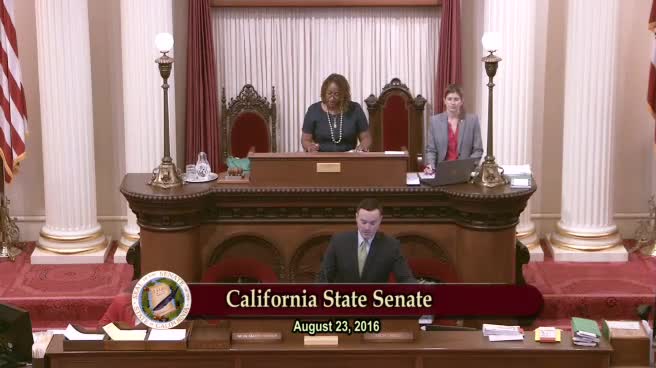 2MIN
Senate Floor
Bill Author
Bill Co-Author(s):