AB 2311: Emergency services: access and functional needs in emergencies.
- Session Year: 2015-2016
- House: Assembly
- Latest Version Date: 2016-09-23
Existing law establishes the Office of Emergency Services within the office of the Governor and under the supervision of the Director of Emergency Services and makes the office responsible for the states emergency and disaster response services for natural, technological, or manmade disasters and emergencies. Existing law defines the terms political subdivision and emergency plan for purposes of emergency services provided by local governments. Existing law requires the Office of Emergency Services to work with specified entities to improve communication with deaf and hearing-impaired persons during emergencies.
This bill would require each county, including a city and county, to integrate access and functional needs, as defined, into its emergency plan, upon the next update to its emergency plan, as specified. By increasing the duties of local officials, this bill would impose a state-mandated local program.
The California Constitution requires the state to reimburse local agencies and school districts for certain costs mandated by the state. Statutory provisions establish procedures for making that reimbursement.
This bill would provide that, if the Commission on State Mandates determines that the bill contains costs mandated by the state, reimbursement for those costs shall be made pursuant to these statutory provisions.
Existing law establishes the Office of Emergency Services within the office of the Governor and under the supervision of the Director of Emergency Services and makes the office responsible for the states emergency and disaster response services for natural, technological, or manmade disasters and emergencies. Existing law defines the terms political subdivision and emergency plan for purposes of emergency services provided by local governments. Existing law requires the Office of Emergency Services to work with specified entities to improve communication with deaf and hearing-impaired persons during emergencies.
This bill would require each political subdivision of the state county, including a city and county, to integrate access and functional needs, as defined, into its emergency plan, upon the next update to its emergency plan, as specified. By increasing the duties of local officials, this bill would impose a state-mandated local program.
The California Constitution requires the state to reimburse local agencies and school districts for certain costs mandated by the state. Statutory provisions establish procedures for making that reimbursement.
This bill would provide that, if the Commission on State Mandates determines that the bill contains costs mandated by the state, reimbursement for those costs shall be made pursuant to these statutory provisions.
Existing law establishes the Office of Emergency Services within the office of the Governor and under the supervision of the Director of Emergency Services and makes the office responsible for the states emergency and disaster response services for natural, technological, or manmade disasters and emergencies. Existing law requires every state agency and officer to cooperate with the secretary in rendering all possible assistance in carrying out the provisions of the act. Existing law defines the terms political subdivision and emergency plan for purposes of emergency services provided by local governments. Existing law requires the Office of Emergency Services to work with specified entities to improve communication with deaf and hearing-impaired persons during emergencies.
This bill would require the office, in cooperation with the Office for Access and Functional Needs, to provide or contract for a disaster response sign language interpreter credential program to train American Sign Language interpreters to effectively communicate public safety information. The bill would additionally require every state agency and every local agency to utilize a sign language interpreter who has completed that credential program to provide interpretation services at every media or public briefing and any emergency shelter where actionable information will be disseminated before, during, or after a state of war emergency, state of emergency, or local emergency. each political subdivision of the state to integrate access and functional needs, as defined, into its emergency plan, as specified. By increasing the duties of local officials, this bill would impose a state-mandated local program.
The California Constitution requires the state to reimburse local agencies and school districts for certain costs mandated by the state. Statutory provisions establish procedures for making that reimbursement.
This bill would provide that, if the Commission on State Mandates determines that the bill contains costs mandated by the state, reimbursement for those costs shall be made pursuant to these statutory provisions.
Existing law establishes the Office of Emergency Services within the office of the Governor and under the supervision of the Director of Emergency Services and makes the office responsible for the states emergency and disaster response services for natural, technological, or manmade disasters and emergencies. Existing law requires every state agency and officer to cooperate with the secretary in rendering all possible assistance in carrying out the provisions of the act.
This bill would require the office, in cooperation with the Office for Access and Functional Needs, to provide or contract for a disaster response sign language interpreter certification credential program to train individuals on the use of American Sign Language interpreters to effectively communicate public safety information. The bill would additionally require every state agency and every local agency to utilize a sign language interpreter who has completed that certification credential program to provide interpretation services at every media or public briefing and any emergency shelter where actionable information will be disseminated before, during, or after a state of war emergency, state of emergency, or local emergency. By increasing the duties of local officials, this bill would impose a state-mandated local program.
The California Constitution requires the state to reimburse local agencies and school districts for certain costs mandated by the state. Statutory provisions establish procedures for making that reimbursement.
This bill would provide that, if the Commission on State Mandates determines that the bill contains costs mandated by the state, reimbursement for those costs shall be made pursuant to these statutory provisions.
Existing law establishes the Office of Emergency Services within the office of the Governor and under the supervision of the Director of Emergency Services and makes the office responsible for the states emergency and disaster response services for natural, technological, or manmade disasters and emergencies. Existing law requires every state agency and officer to cooperate with the secretary in rendering all possible assistance in carrying out the provisions of the act.
This bill would require the office to provide or contract for a disaster response sign language interpreter certification program to train individuals on the use of American Sign Language to effectively communicate public safety information. The bill would additionally require every state agency and every local agency to utilize a sign language interpreter who has completed that certification program to provide interpretation services at every media or public briefing where actionable information will be disseminated before, during, or after a state of war emergency, state of emergency, or local emergency. By increasing the duties of local officials, this bill would impose a state-mandated local program.
The California Constitution requires the state to reimburse local agencies and school districts for certain costs mandated by the state. Statutory provisions establish procedures for making that reimbursement.
This bill would provide that, if the Commission on State Mandates determines that the bill contains costs mandated by the state, reimbursement for those costs shall be made pursuant to these statutory provisions.
(a)A county, including a city and county, shall, upon the next update to its emergency plan, integrate access and functional needs into its emergency plan by addressing, at a minimum, how the access and functional needs population is served by the following:
(1)Emergency communications, including the integration of interpreters, translators, and assistive technology.
(2)Emergency evacuation, including the identification of transportation resources and resources that are compliant with the federal Americans with Disabilities Act of 1990 (42 U.S.C. Sec. 12101 et seq.) for individuals who are dependent on public transportation.
(3)Emergency sheltering, including ensuring that designated shelters are compliant with the federal Americans with Disabilities Act of 1990 (42 U.S.C. Sec. 12101 et seq.) or can be made compliant through modification and that showers and bathrooms are fully accessible to all occupants.
(b)For purposes of this section, the access and functional needs population consists of individuals who have developmental or intellectual disabilities, physical disabilities, chronic conditions, injuries, limited English proficiency or who are non-English speaking, older adults, children, people living in institutionalized settings, or those who are low income, homeless, or transportation disadvantaged, including, but not limited to, those who are dependent on public transit or those who are pregnant.
SEC. 3.If the Commission on State Mandates determines that this act contains costs mandated by the state, reimbursement to local agencies and school districts for those costs shall be made pursuant to Part 7 (commencing with Section 17500) of Division 4 of Title 2 of the Government Code.
(a)A political subdivision shall county, including a city and county, shall, upon the next update to its emergency plan, integrate access and functional needs into its emergency plan by addressing, at a minimum, how the access and functional needs population is served by the following:
(1)Emergency communications, including the integration of interpreters, translators, and assistive technology.
(2)Emergency evacuation, including the identification of transportation resources and resources that are compliant with the federal Americans with Disabilities Act of 1990 (42 U.S.C. Sec. 12101 et seq.) for individuals who are dependent on public transportation.
(3)Emergency sheltering, including ensuring that designated shelters are compliant with the federal Americans with Disabilities Act of 1990 (42 U.S.C. Sec. 12101 et seq.) or can be made compliant through modification and that showers and bathrooms are fully accessible to all occupants.
(b)For purposes of this section, the access and functional needs population consists of individuals who have developmental or intellectual disabilities, physical disabilities, chronic conditions, injuries, limited English proficiency or who are non-English speaking, older adults, children, people living in institutionalized settings, or those who are low income, homeless, or transportation disadvantaged, including, but not limited to, those who are dependent on public transit or those who are pregnant.
SEC. 3.If the Commission on State Mandates determines that this act contains costs mandated by the state, reimbursement to local agencies and school districts for those costs shall be made pursuant to Part 7 (commencing with Section 17500) of Division 4 of Title 2 of the Government Code.
The office shall, in cooperation with the Office for Access and Functional Needs, or its successor, provide, or contract for, a disaster response sign language interpreter credential program, which shall train American Sign Language interpreters to effectively communicate public safety information.
SEC. 2.Section 8598.5 is added to the Government Code, to read:8598.5.Every state agency shall utilize a sign language interpreter who holds a disaster response sign language interpreter credential pursuant to the program specified in Section 8588.20, to provide interpretation services at every media or public briefing and any emergency shelter where actionable information will be disseminated before, during, or after a state of emergency, state of war emergency, or local emergency.
SEC. 3.Section 8635.5 is added to the Government Code, to read:8635.5.The governing body of a local agency shall utilize a sign language interpreter who holds a disaster response sign language interpreter credential pursuant to the program specified in Section 8588.20, to provide interpretation services at every media or public briefing and any emergency shelter where actionable information will be disseminated before, during, or after a state of emergency, state of war emergency, or local emergency.
SECTION 1.The heading of Article 6.5 (commencing with Section 8593) of Chapter 7 of Division 1 of Title 2 of the Government Code is amended to read:6.5.Accessibility to Emergency Services Information and ServicesSEC. 2.Section 8593.3 is added to the Government Code, to read:8593.3.(a)A political subdivision shall integrate access and functional needs into its emergency plan by addressing, at a minimum, how the access and functional needs population is served by the following:
(1)Emergency communications, including the integration of interpreters, translators, and assistive technology.
(2)Emergency evacuation, including the identification of transportation resources and resources that are compliant with the federal Americans with Disabilities Act of 1990 (42 U.S.C. Sec. 12101 et seq.) for individuals who are dependent on public transportation.
(3)Emergency sheltering, including ensuring that designated shelters are compliant with the federal Americans with Disabilities Act of 1990 (42 U.S.C. Sec. 12101 et seq.) or can be made compliant through modification and that showers and bathrooms are fully accessible to all occupants.
(b)For purposes of this section, the access and functional needs population consists of individuals who have developmental or intellectual disabilities, physical disabilities, chronic conditions, injuries, limited English proficiency or who are non-English speaking, older adults, children, people living in institutionalized settings, or those who are low income, homeless, or transportation disadvantaged, including, but not limited to, those who are dependent on public transit or those who are pregnant.
SEC. 4.SEC. 3.If the Commission on State Mandates determines that this act contains costs mandated by the state, reimbursement to local agencies and school districts for those costs shall be made pursuant to Part 7 (commencing with Section 17500) of Division 4 of Title 2 of the Government Code.
The office shall shall, in cooperation with the Office for Access and Functional Needs, or its successor, provide, or contract for, a disaster response sign language interpreter certification credential program, which shall train persons on the use of American Sign Language interpreters to effectively communicate public safety information.
SEC. 2.Section 8598.5 is added to the Government Code, to read:8598.5.Every state agency shall utilize a sign language interpreter who has completed the disaster response sign language interpreter certification program as holds a disaster response sign language interpreter credential pursuant to the program specified in Section 8588.20, to provide interpretation services at every media or public briefing and any emergency shelter where actionable information will be disseminated before, during, or after a state of emergency, state of war emergency, or local emergency.
SEC. 3.Section 8635.5 is added to the Government Code, to read:8635.5.The governing body of a local agency shall utilize a sign language interpreter who has completed the disaster response sign language interpreter certification program as holds a disaster response sign language interpreter credential pursuant to the program specified in Section 8588.20, to provide interpretation services at every media or public briefing and any emergency shelter where actionable information will be disseminated before, during, or after a state of emergency, state of war emergency, or local emergency.
SEC. 4.If the Commission on State Mandates determines that this act contains costs mandated by the state, reimbursement to local agencies and school districts for those costs shall be made pursuant to Part 7 (commencing with Section 17500) of Division 4 of Title 2 of the Government Code.
The office shall provide, or contract for, a disaster response sign language interpreter certification program, which shall train persons on the use of American Sign Language to effectively communicate public safety information.
SEC. 2.Section 8598.5 is added to the Government Code, to read:8598.5.Every state agency shall utilize a sign language interpreter who has completed the disaster response sign language interpreter certification program as specified in Section 8588.20, to provide interpretation services at every media or public briefing where actionable information will be disseminated before, during, or after a state of emergency, state of war emergency, or local emergency.
SEC. 3.Section 8635.5 is added to the Government Code, to read:8635.5.The governing body of a local agency shall utilize a sign language interpreter who has completed the disaster response sign language interpreter certification program as specified in Section 8588.20, to provide interpretation services at every media or public briefing where actionable information will be disseminated before, during, or after a state of emergency, state of war emergency, or local emergency.
SEC. 4.If the Commission on State Mandates determines that this act contains costs mandated by the state, reimbursement to local agencies and school districts for those costs shall be made pursuant to Part 7 (commencing with Section 17500) of Division 4 of Title 2 of the Government Code.
|
Date
|
Status
|
|---|---|
| Jun 6, 2016 | In Senate. Read first time. To Com. on RLS. for assignment. |
| Aug 31, 2016 | Enrolled and presented to the Governor at 4 p.m. |
| Aug 23, 2016 | Senate amendments concurred in. To Engrossing and Enrolling. (Ayes 79. Noes 1. Page 6135.). |
| Aug 23, 2016 | Senate amendments concurred in. To Engrossing and Enrolling. |
| Aug 17, 2016 | Read third time. Passed. Ordered to the Assembly. (Ayes 39. Noes 0.). |
| Aug 17, 2016 | Read third time. Passed. Ordered to the Assembly. (Ayes 39. Noes 0. Page 5047.). |
| Aug 17, 2016 | Read third time. Passed. Ordered to the Assembly. |
| Aug 17, 2016 | In Assembly. Concurrence in Senate amendments pending. May be considered on or after August 19 pursuant to Assembly Rule 77. |
| Aug 15, 2016 | Read second time and amended. Ordered to third reading. |
| Aug 11, 2016 | From committee: Amend, and do pass as amended. (Ayes 7. Noes 0.) (August 11). |
| Aug 1, 2016 | In committee: Referred to APPR. suspense file. |
| Jun 28, 2016 | From committee: Do pass and re-refer to Com. on APPR. with recommendation: To Consent Calendar. (Ayes 13. Noes 0.) (June 28). Re-referred to Com. on APPR. |
| Jun 9, 2016 | Referred to Com. on G.O. |
| Feb 18, 2016 | Read first time. To print. |
| Jun 2, 2016 | Read third time. Passed. Ordered to the Senate. (Ayes 79. Noes 0.) |
| Jun 2, 2016 | Read third time. Passed. Ordered to the Senate. (Ayes 79. Noes 0. Page 5180.) |
| Jun 2, 2016 | Read third time. Passed. Ordered to the Senate. |
| May 31, 2016 | Read second time. Ordered to third reading. |
| May 27, 2016 | Read second time and amended. Ordered returned to second reading. |
| May 27, 2016 | From committee: Amend, and do pass as amended. (Ayes 20. Noes 0.) (May 27). |
| May 4, 2016 | In committee: Set, first hearing. Referred to APPR. suspense file. |
| Apr 21, 2016 | From committee: Do pass and re-refer to Com. on APPR. (Ayes 20. Noes 0.) (April 20). Re-referred to Com. on APPR. |
| Mar 17, 2016 | Re-referred to Com. on G.O. |
| Mar 16, 2016 | From committee chair, with author's amendments: Amend, and re-refer to Com. on G.O. Read second time and amended. |
| Mar 3, 2016 | Referred to Com. on G.O. |
| Feb 19, 2016 | From printer. May be heard in committee March 20. |
|
Date
|
Description
|
Location
|
Votes
|
|
|---|---|---|---|---|
| Aug 23, 2016 | AB 2311 BROWN Concurrence in Senate Amendments | Assembly Floor |
Passed |
|
| Aug 17, 2016 | Assembly 3rd Reading AB2311 Brown By Morrell | Senate Floor |
Passed |
|
| Aug 11, 2016 | Do pass as amended | Senate Standing Committee on Appropriations |
Passed |
|
| Aug 1, 2016 | Placed on suspense file | Senate Standing Committee on Appropriations |
Passed |
|
| Jun 28, 2016 | Do pass, but first be re-referred to the Committee on [Appropriations] with the recommendation: To Consent Calendar | Senate Standing Committee on Governmental Organization |
Passed |
|
| Jun 2, 2016 | AB 2311 BROWN Assembly Third Reading | Assembly Floor |
Passed |
|
| May 27, 2016 | Do pass as amended. | Assembly Standing Committee on Appropriations |
Passed |
|
| Apr 20, 2016 | Do pass and be re-referred to the Committee on [Appropriations] | Assembly Standing Committee on Governmental Organization |
Passed |
This list shows positions taken on this bill by organizations on the date displayed, which is linked to the original source.
Positions by individuals are not included.
|
Organization
|
Position
|
Date
|
|---|---|---|
| California Association for the Deaf | * Indeterminate | May 4, 2016 |
| California Association of the Deaf | ** Support | Aug 17, 2016 |
| California Coalition of Agencies Serving the Deaf and Hard of Hearing | * Support | May 4, 2016 |
| California Disability Rights | * Support | Aug 1, 2016 |
| California School Employees Association, AFL-CIO | ** Support | Aug 17, 2016 |
| Deaf Counseling, Advocacy, & Referral Agency | ** Support | May 4, 2016 |
| Greater Los Angeles Agency on Deafness, Inc. | ** Support | Aug 17, 2016 |
| Registry of Interpreters for the Deaf, Inc. | ** Support | Aug 17, 2016 |
| Southern California Registry of Interpreters for the Deaf | ** Support | May 4, 2016 |
| Valley Registry of Interpreters for the Deaf | * Support | May 4, 2016 |
CONCURRENCE IN SENATE AMENDMENTS
CSA1 Bill Id:AB 2311
Author:(Brown)
As Amended Ver:August 15, 2016
Majority vote
ASSEMBLY: | 79-0 | (June 2, 2016) | SENATE: | 39-0 | (August 17, 2016) |
Original Committee Reference: G.O.
SUMMARY: Requires each county, including a city and county, to integrate access and functional needs, as defined, into its emergency plan. Specifically, this bill:
- Requires each political subdivision to address the following:
- Emergency communications, including the integration of interpreters, translators, and assistive technology.
- Emergency evacuation, including the identification of transportation resources and resources that are compliant with the federal Americans with Disabilities Act of 1990 for individuals who are dependent on public transportation.
- Emergency sheltering, including ensuring that designated shelters are compliant with the federal Americans with Disabilities Act of 1990 or can be made compliant through modification and that showers and bathrooms are fully accessible to all occupants.
- Defines "access and functional needs population" as individuals who have developmental or intellectual disabilities, physical disabilities, chronic conditions, injuries, limited English proficiency or who are non-English speaking, older adults, children, people living in institutionalized settings, or those who are low income, homeless, or transportation disadvantaged, including, but not limited to, those who are dependent on public transit or those who are pregnant.
- Imposes a state-mandated local program by increasing the duties of local officials.
The Senate amendments limit the requirement to integrate access and functional needs into an emergency plan to counties (rather than all political subdivisions), and only require these items to be incorporated upon the next update of the plan.
EXISTING LAW:
- Establishes CalOES by the Governor's Reorganization Plan No.2, operative July 1, 2013.
- Requires CalOES to perform a variety of duties with respect to specified emergency preparedness, mitigation, and response activities in the state, including emergency medical services.
- Specifies that the State Emergency Plan (SEP) shall be in effect in each political subdivision of the state, and the governing body of each political subdivision shall take such action as may be necessary to carry out the provisions thereof.
- Requires the Governor to coordinate SEP and those programs necessary to mitigate the effects of an emergency.
- Requires the Governor to coordinate the preparation of plans and programs for the mitigation of the effects of an emergency by the political subdivisions of the State of California, such plans and programs to be integrated into and coordinated with the State Emergency Plan and the plans and programs of the federal government and of other states to the fullest possible extent.
- Requires the director of CalOES to appoint representatives of the disabled community to serve on the evacuation, sheltering, communication, recovery, and other pertinent Standardized Emergency Management System (SEMS) committees. Representatives of the disabled community shall, to the extent practicable, be from the following groups:
- Persons who are blind or visually impaired.
- Persons with sensory or cognitive disabilities.
- Persons with physical disabilities.
- Requires CalOES, within the SEMS structure, to ensure, to the extent practicable, that the needs of the disabled community are met by ensuring all committee recommendations regarding preparedness, planning, and procedures relating to emergencies include the needs of people with disabilities.
FISCAL EFFECT: According to Senate Appropriations Committee, the fiscal effect is unknown, likely minor reimbursable mandate costs for counties to update emergency plans to identify how the access and functional needs population is served. Actual costs would depend upon a determination by the Commission on State Mandates, and the number and amount of individual claims that are deemed reimbursable.
COMMENTS:
Purpose of the bill: According to the author, "although there have been many reports written as to the lessons learned from previous disasters about the lack of accessibility to information, resources and needed services, the deaf community continues to be denied access to information and resources at the time of disasters. The following are examples of recent disasters in which deaf individuals were denied crucial information and access:
San Diego Wildfires: Interpreters were not used at news conferences, nor at shelters
Napa Earthquake: Qualified interpreters were not used at news conferences; deaf individuals did not know shelters were available or where they were, become homeless and had to go to a hotel
San Bernardino shooting: There was a deaf agency in the building, they didn't have access to information during the recovery
Interpreters, If dispatched by a local agency to a televised press conference, are not shown on screen
"We simply cannot keep hoping someone will remember to provide access for deaf and hard of hearing that uses American Sign Language. Access denied is a life not saved."
Background: In 2009, the California Legislature merged the powers, purposes, and responsibilities of the former CalOES with those of the Office of Homeland Security (OHS) into the newly- created California Emergency Management Agency (CalEMA). On July 1, 2013, Governor Edmund G. Brown Jr.'s Reorganization Plan No. 2 eliminated CalEMA and restored it to the Governor's Office, renaming it the California Governor's Office of Emergency Services (CalOES), and merging it with the Office of Public Safety Communications. Today, CalOES is responsible for overseeing and coordinating emergency preparedness, response, recovery and homeland security activities within the state.
Office for Access and Functional Needs (OAFN): In January 2008, CalOES established the OAFN. The purpose of OAFN is to identify the needs of people with disabilities and others with access and functional needs before, during, and after a disaster and to integrate disability needs and resources into emergency management systems. OAFN offers guidance to emergency managers and planners, disability and older adult service systems for planning and responding during disasters and recovery.
Standardized Emergency Management System (SEMS): SEMS is the system used for coordinating state and local emergency response in California. SEMS provides a multiple level emergency response organization that facilitates the flow of emergency information and resources. SEMS consists of the Incident Command System (ICS), mutual aid, the operational area concept and multi-interagency coordination. SEMS is designed to be flexible and adaptable to the varied emergencies that can occur in California, and to meet the emergency management needs of all responders. Government Code 8607(a), requires CalOES, in coordination with other state agencies and interested local emergency management agencies, to establish SEMS by regulation.
SB 1451 (Kehoe), Chapter 600, Statutes of 2006, required CalOES to ensure that members of the disabled community are represented on all pertinent SEMS Specialist Committees to ensure that the needs of people with disabilities are met during emergency and disaster situations. The bill also required OES to submit a report to the Legislature and appropriate state and local agencies by January 1, 2009, containing recommendations regarding emergency preparedness and the needs of people with disabilities. The bill also required CalOES to prepare and disseminate sample brochures and other materials on the emergency preparedness and evacuations needs of the disabled community.
Operational Area (OA): OAs encompass the county and all political subdivisions within the county. The OA serves as a focal point for all local emergency management information and the provision of mutual aid. It manages information, resources, and priorities among local governments within the OA. The OA also serves as the coordination and communication link between the local government level and the regional level. SEMS regulations authorize each County Board of Supervisors to designate an OA lead agency.
Related/Prior legislation: AB 615 (Torrico) of 2007-2008 Session, required OES to consider the needs of people with limited English proficiency in creating emergency and disaster response plans. (Assembly Appropriations Committee)
SB 426 (Kehoe) of 2007, established a "Deputy Director for Access and Functional Needs Coordination" position, within OES, responsible for preparedness, response and recovery services for individuals of all ages with functional limitations and disabilities - persons who have one or more functional limitations that reduce their ability to move, see, hear, walk, speak, learn, breathe, understand information, respond quickly, or manipulate or reach controls. (Senate Appropriations Committee)
SB 1451 (Kehoe), Chapter 600, Statutes of 2006, requires OES to ensure that members of the disabled community are represented on all pertinent SEMS Specialist Committees to ensure that the needs of people with disabilities are met during emergency and disaster situations. Requires OES to submit a report to the Legislature and appropriate state and local agencies by January 1, 2009 containing recommendations regarding emergency preparedness and the needs of people with disabilities. Requires OES to prepare and disseminate sample brochures and other materials on the emergency preparedness and evacuations needs of the disabled community. Requires OES and the Office of the State Fire Marshal (SFM) to seek research funding in order to develop new technologies and information systems that will assist in the effort to improve emergency services to people with disabilities.
Analysis Prepared by: Kenton Stanhope / G.O. / (916) 319-2531 FN: 0004249
Office of Senate Floor Analyses (916) 651-1520 Fax: (916) 327-4478 | AB |
THIRD READING
Bill No: AB 2311
:
SENATE GOVERNMENTAL ORG. COMMITTEE: 13-0, 6/28/16
AYES: Hall, Berryhill, Bates, Block, Gaines, Galgiani, Glazer, Hernandez, Hill, Hueso, Lara, McGuire, Vidak
SENATE APPROPRIATIONS COMMITTEE: 7-0, 8/11/16
AYES: Lara, Bates, Beall, Hill, McGuire, Mendoza, Nielsen
ASSEMBLY FLOOR: 79-0, 6/2/16 - See last page for vote
DIGEST: This bill requires each county, including a city and county of the state to integrate access and functional needs, as defined, during the next update to its emergency plan.
ANALYSIS:
Existing law:
- Establishes the Office of Emergency Services (OES) which is responsible for the state’s emergency and disaster response services for natural, technological, or manmade disasters and emergencies.
- Requires OES to work with specified entities to improve communication with deaf and hearing-impaired persons during emergencies.
- Defines “emergency plans” to mean those official and approved documents which describe the principles and methods to be applied in carrying out emergency operations or rendering mutual aid during emergencies. These plans include such elements as continuity of government, the emergency services of governmental agencies, mobilizations of resources, mutual aid, and public information.
This bill:
- Requires each county, including a city and county of the state, to integrate access and functional needs during the next update to its emergency plan by addressing, at a minimum, how the access and functional needs population is served by the following:
- Emergency communications, including the integration of interpreters, translators, and assistive technology.
- Emergency evacuation, including the identification of transportation resources that are compliant with the federal American with Disabilities Act of 1990 (ADA) for individuals who are dependent on public transportation.
- Emergency sheltering, including ensuring that designated shelters are compliant with ADA or can be made compliant through modification and that showers and bathrooms are fully accessible to all occupants.
- Specifies that “access and functional needs population” consists of individuals who have developmental or intellectual disabilities, physical disabilities, chronic conditions, injuries, limited English proficiency or who are non-English speaking, older adults, children, people living in institutionalized settings, or those who are low income, homeless, or transportation disadvantaged, including, but not limited to, those who are dependent on public transit or those who are pregnant.
Background
Purpose of the bill. According to the author, “despite ADA requirements and the existence of OES’ Office of Access and Functional Needs (OAFN), local governments and officials are not integrating access and functional needs within their emergency processes when they deliver actionable information to the public during disasters and emergencies. This oversight violates ADA and places the health and safety of California’s access and functional needs population at risk during disasters and emergencies.”
Office of Access and Functional Needs. In January 2008, OES established the OAFN with the purpose to identify the needs of people with disabilities and others with access and functional needs before, during, and after a disaster and to integrate disability needs and resources into emergency management systems. The OAFN offers guidance to emergency managers and planners, disability and older adult service systems for planning and responding during disasters and recovery.
According to the U.S. Census of 2010, approximately three million Californian’s over the age of five years have a disability. The OAFN goal is to strengthen the method and planning of emergency management for people with disabilities and others with access and functional needs.
Prior/Related Legislation
AB 918 (Cooley, Chapter 187, Statutes of 2013) required OES, on or before July 31, 2015, to update the State Emergency Plan to include proposed best practices for local governments and nongovernmental entities to use to mobilize and evacuate people with disabilities and others with access and functional needs during an emergency or natural disaster.
AB 2051 (Tran, 2010) would have authorize the California Emergency Management Agency to prepare, in voluntary cooperation with specific local governmental and nongovernmental entities, a specialized plan to mobilize senior citizens and disabled person during an emergency or natural disasters. (Held on Senate Appropriations Suspense File)
SB 426 (Kehoe, 2007) would have established a Deputy Director for OAFN position within OES responsible for preparedness, response, and recovery services for individuals of all ages with functional limitations and disabilities. (Held on the Senate Appropriations Suspense File)
FISCAL EFFECT: Appropriation: Fiscal Com.: Local:
According to the Senate Appropriations Committee, unknown, likely minor reimbursable mandate costs for counties to update emergency plans to identify how the access and functional needs population is served. Actual costs would depend upon a determination by the Commission on State Mandates, and the number and amount of individual claims that are deemed reimbursable.
California Association of the Deaf
California School Employees Association, AFL-CIO
Greater Los Angeles Agency on Deafness, Inc.
Registry of Interpreters for the Deaf, Inc.
OPPOSITION: (Verified 8/11/16)
None received
ARGUMENTS IN SUPPORT: According to the California Association of the Deaf, “barriers to access still exist, especially for those Deaf Californians who, due to language deprivation or delays, have not mastered the English language and cannot follow written instructions and/or captioning shown on media outlets. It is time that county and state officials remove barriers to communication for public safety reasons.”
ASSEMBLY FLOOR: 79-0, 6/2/16
AYES: Achadjian, Alejo, Travis Allen, Arambula, Atkins, Baker, Bigelow, Bloom, Bonilla, Bonta, Brough, Brown, Burke, Calderon, Campos, Chang, Chau, Chávez, Chiu, Chu, Cooley, Cooper, Dababneh, Dahle, Daly, Dodd, Eggman, Frazier, Gallagher, Cristina Garcia, Eduardo Garcia, Gatto, Gipson, Gomez, Gonzalez, Gordon, Gray, Grove, Hadley, Harper, Roger Hernández, Holden, Irwin, Jones, Jones-Sawyer, Kim, Lackey, Levine, Linder, Lopez, Low, Maienschein, Mathis, Mayes, McCarty, Medina, Melendez, Mullin, Nazarian, Obernolte, O'Donnell, Olsen, Patterson, Quirk, Ridley-Thomas, Rodriguez, Salas, Santiago, Steinorth, Mark Stone, Thurmond, Ting, Wagner, Waldron, Weber, Wilk, Williams, Wood, Rendon
NO VOTE RECORDED: Beth Gaines
8/15/16 20:22:20
**** END ****
SENATE COMMITTEE ON
Senator Ricardo Lara, Chair
2015 - 2016 Regular Session
AB 2311 (Brown) - Emergency services: access and functional needs in emergencies
Version: | Policy Vote: |
Urgency: | Mandate: |
Hearing Date: | Consultant: |
*********** ANALYSIS ADDENDUM – SUSPENSE FILE ***********
The following information is revised to reflect amendments
adopted by the committee on August 11, 2016
Bill Summary:
AB 2311 would require a county, upon the next update to its emergency plan, to integrate access and functional needs into the plan by addressing the emergency communications, evacuation, and sheltering requirements of specified populations with special functional and access needs.
Fiscal Impact:
Unknown, likely minor reimbursable mandate costs for counties to update emergency plans to identify how the access and functional needs population is served. Actual costs would depend upon a determination by the Commission on State Mandates, and the number and amount of individual claims that are deemed reimbursable.
Author Amendments:
Limit the requirement to integrate access and functional needs into an emergency plan to counties (rather than all political subdivisions), and only require these items to be incorporated upon the next update of the plan.
-- END --
SENATE COMMITTEE ON
Senator Ricardo Lara, Chair
2015 - 2016 Regular Session
AB 2311 (Brown) - Emergency services: access and functional needs in emergencies
Version: | Policy Vote: |
Urgency: | Mandate: |
Hearing Date: | Consultant: |
This bill meets the criteria for referral to the Suspense File.
Bill Summary:
AB 2311 would require a local agency to integrate access and functional needs into its emergency plan by addressing the emergency communications, evacuation, and sheltering requirements of specified populations with special functional and access needs.
Fiscal Impact:
Unknown, likely significant, reimbursable mandate costs for all cities, counties, and special districts to adopt or update emergency plans to identify how the access and functional needs population is served. Actual costs would depend upon a determination by the Commission on State Mandates, and the number and amount of individual claims that are deemed reimbursable. Staff notes that the bill would apply to over 2,500 local agencies, and it is unclear how many currently have an emergency plan that would be in compliance with the bill. If half of these entities submitted a successful reimbursement claim, one-time costs would likely be in the low millions.
Background:
Existing law makes the California Governor’s Office of Emergency Services (OES) responsible for overseeing and coordinating emergency preparedness, response, recovery, and homeland security efforts within the state. Existing law requires the Governor to coordinate the State Emergency Plan (SEP) necessary for the mitigation of the effects of an emergency within the state. The SEP includes proposed best practices for local governments and nongovernmental entities to use to mobilize and evacuate disabled persons and others with access and functional needs during an emergency or natural disaster. Existing law also requires OES to work with specified entities to improve communication with deaf and hearing-impaired persons during an emergency.
The Office for Access and Functional Needs (OAFN) was created within OES to identify the needs of people with disabilities and others with access and functional needs before, during, and after a disaster and to integrate disability needs and resources into all aspects of emergency management systems. The OAFN created a guidance document for integrating the needs of people with disabilities and other access and functional needs into emergency management in 2009, and has also developed training programs, an evacuation and transportation plan template, and coordinated services for use by other governmental and nongovernmental entities when planning for a disaster.
Proposed Law:
AB 2311 would require a local agency to integrate access and functional needs into its emergency plan by addressing, at a minimum, how the “access and functional needs population,” as defined, is served by the following:
- Emergency communications, including the integration of interpreters, translators, and assistive technology.
- Emergency evacuation, including the identification of transportation resources and resources that are compliant with the federal Americans with Disabilities Act of 1990 (ADA) for individuals who are dependent on public transportation.
- Emergency sheltering, including ensuring that designated shelters are ADA-compliant or can be made compliant with modification and that showers and bathrooms are fully accessible to all occupants.
The bill defines “access and functional needs population” as consisting of persons who have developmental or intellectual disabilities, physical disabilities, chronic conditions, injuries, no or limited English proficiency, older adults, children, people living in institutionalized settings, or those who are low-income, homeless, or transportation disadvantaged, including those who are dependent on public transit or pregnant.
Related Legislation:
AB 918 (Cooley), Chap. 187/2013, required OES to update the State Emergency Plan by July 31, 2015 to include proposed best practices for local governments and nongovernmental entities to use to mobilize and evacuate disabled persons and others with access and functional needs during an emergency.
Staff Comments:
The potential state costs of this bill would depend upon how many local agencies have adopted emergency plans that are compliant with the provisions of the bill, and the documented costs incurred by those local agencies who have not adopted an emergency plan that is compliant with the bill.
Staff notes that many local agencies prepare an emergency plan or emergency operations plan as a requirement for eligibility for federal funds under the Homeland Security Grant Program (HSGP). Furthermore, both the HSGP and the federal Emergency Management Program Grant (EMPG) include components that allow funds to be used for planning purposes, including emergency preparedness planning that engages the “whole community,” including children, individuals with disabilities, others with access and functional needs, and individuals with limited English proficiency. As such, most counties are likely already adopting emergency plans that are inclusive of the needs of those populations. County recipients of federal HSGP and EMPG funding are authorized, at their discretion, to pass-through some of their allocations to other local agencies within their boundaries for those purposes.
Current law, however, does not mandate that cities, counties, or special districts adopt an emergency plan. Those entities that do adopt plans may not account for all of the populations included in the bill’s definition of “access and functional needs population,” or address the communications, evacuation, and sheltering needs of those groups in the same manner that is specified in the bill. In sum, local costs to comply are unknown, and the degree to which some local agencies would currently be in full compliance is also unknown. However, if half of these agencies submitted a successful claim to incorporate the needs of those specified populations, costs would likely be in the low millions.
-- END --
SENATE COMMITTEE ON GOVERNMENTAL ORGANIZATION
Senator Isadore Hall, III
Chair
2015 - 2016 Regular
Bill No: AB Hearing Date: 6/28/2016
Author: | Brown | ||
Version: | Amended | ||
Urgency: | Fiscal: | ||
Consultant: | |||
SUBJECT:
DIGEST: This bill requires each political subdivision of the state to integrate access and functional needs, as defined, into its emergency plan.
ANALYSIS:
Existing law:
- Establishes the Office of Emergency Services (OES) which is responsible for the state’s emergency and disaster response services for natural, technological, or manmade disasters and emergencies.
- Requires OES to work with specified entities to improve communication with deaf and hearing-impaired persons during emergencies.
- Specifies that “political subdivision” includes any city, city and county, county, district, or other local governmental agency or public agency authorized by law.
- Defines “emergency plans” to mean those official and approved documents which describe the principles and methods to be applied in carrying out emergency operations or rendering mutual aid during emergencies. These plans include such elements as continuity of government, the emergency services of governmental agencies, mobilizations of resources, mutual aid, and public information.
This bill:
- Requires each political subdivision to integrate access and functional needs into its emergency plan by addressing, at a minimum, how the access and functional needs population is served by the following:
- Emergency communications, including the integration of interpreters, translators, and assistive technology.
- Emergency evacuation, including the identification of transportation resources that are compliant with the federal American with Disabilities Act of 1990 (ADA) for individuals who are dependent on public transportation.
- Emergency sheltering, including ensuring that designated shelters are compliant with ADA or can be made compliant through modification and that showers and bathrooms are fully accessible to all occupants.
- Specifies that “access and functional needs population” consists of individuals who have developmental or intellectual disabilities, physical disabilities, chronic conditions, injuries, limited English proficiency or who are non-English speaking, older adults, children, people living in institutionalized settings, or those who are low income, homeless, or transportation disadvantaged, including, but not limited to, those who are dependent on public transit or those who are pregnant.
Background
Purpose of the bill. According to the author, “despite ADA requirements and the existence of OES’ Office of Access and Functional Needs (OAFN), local governments and officials are not integrating access and functional needs within their emergency processes when they deliver actionable information to the public during disasters and emergencies. This oversight violates ADA and places the health and safety of California’s access and functional needs population at risk during disasters and emergencies.”
Office of Access and Functional Needs. In January 2008, OES established the OAFN with the purpose to identify the needs of people with disabilities and others with access and functional needs before, during, and after a disaster and to integrate disability needs and resources into emergency management systems. The OAFN offers guidance to emergency managers and planners, disability and older adult service systems for planning and responding during disasters and recovery.
According to the U.S. Census of 2010, approximately three million Californian’s over the age of five years have a disability. The OAFN goal is to strengthen the method and planning of emergency management for people with disabilities and others with access and functional needs.
Prior/Related Legislation
AB 918 (Cooley, Chapter 187, Statutes of 2013) required OES, on or before July 31, 2015, to update the State Emergency Plan to include proposed best practices for local governments and nongovernmental entities to use to mobilize and evacuate people with disabilities and others with access and functional needs during an emergency or natural disaster.
AB 2051 (Tran, 2010) would have authorize the California Emergency Management Agency to prepare, in voluntary cooperation with specific local governmental and nongovernmental entities, a specialized plan to mobilize senior citizens and disabled person during an emergency or natural disasters. (Held on Senate Appropriations Suspense File)
SB 426 (Kehoe, 2007) would have established a Deputy Director for Access and Functional Needs position within OES responsible for preparedness, response, and recovery services for individuals of all ages with functional limitations and disabilities. (Held on the Senate Appropriations Suspense File)
FISCAL EFFECT: Appropriation: No Fiscal Com.: Yes Local: Yes
SUPPORT:
California Coalition of Agencies Serving the Deaf & Hard of Hearing (Source)
California Association of the Deaf
California School Employees Association, AFL-CIO
Greater Los Angeles Agency on Deafness, Inc.
Registry of Interpreters for the Deaf, Inc.
OPPOSITION:
None received
ARGUMENTS IN SUPPORT: According to the California Coalition of Agencies Serving the Deaf & Hard of Hearing, “barriers to access still exist, especially for those deaf Californians who, due to language deprivation or delays, have not mastered the English language and cannot follow written instructions and/or captioning shown on media outlets. Having a sign language interpreter will fill a huge communication access gap that has been long ignored. It is high time that county and state officials remove barriers to communication for public safety reasons so that all Californians have access to all press/media conferences shown on TV, including those at the emergency shelters.”
ASSEMBLY THIRD READING
ATR Bill Id:AB 2311
Author:(Brown)
As Amended Ver:
Majority vote
Committee | Votes | Ayes | Noes |
Governmental Organization | 20-0 | Gray, Bigelow, Alejo, Bonta, Campos, Cooley, Cooper, Daly, Gallagher, Cristina Garcia, Eduardo Garcia, Gipson, Roger Hernández, Jones-Sawyer, Levine, Linder, Maienschein, Salas, Steinorth, Wilk | |
Appropriations | 20-0 | Gonzalez, Bigelow, Bloom, Bonilla, Bonta, Calderon, Chang, Daly, Eggman, Gallagher, Eduardo Garcia, Roger Hernández, Holden, Jones, Obernolte, Quirk, Santiago, Wagner, Weber, Wood |
SUMMARY: Requires each political subdivision of the state to integrate access and functional needs, as defined, into its emergency plan. Specifically, this bill:
- Requires each political subdivision to address the following:
- Emergency communications, including the integration of interpreters, translators, and assistive technology.
- Emergency evacuation, including the identification of transportation resources and resources that are compliant with the federal Americans with Disabilities Act of 1990 for individuals who are dependent on public transportation.
- Emergency sheltering, including ensuring that designated shelters are compliant with the federal Americans with Disabilities Act of 1990 or can be made compliant through modification and that showers and bathrooms are fully accessible to all occupants.
- Defines "access and functional needs population" as individuals who have developmental or intellectual disabilities, physical disabilities, chronic conditions, injuries, limited English proficiency or who are non-English speaking, older adults, children, people living in institutionalized settings, or those who are low income, homeless, or transportation disadvantaged, including, but not limited to, those who are dependent on public transit or those who are pregnant.
- Imposes a state-mandated local program by increasing the duties of local officials.
EXISTING LAW:
1) Establishes California Office of Emergency Services (CalOES) by the Governor's Reorganization Plan No.2, operative July 1, 2013.
2) Requires CalOES to perform a variety of duties with respect to specified emergency preparedness, mitigation, and response activities in the state, including emergency medical services.
3) Specifies that the State Emergency Plan (SEP) shall be in effect in each political subdivision of the state, and the governing body of each political subdivision shall take such action as may be necessary to carry out the provisions thereof.
4) Requires the Governor to coordinate SEP and those programs necessary to mitigate the effects of an emergency.
5) Requires the Governor to coordinate the preparation of plans and programs for the mitigation of the effects of an emergency by the political subdivisions of the State of California, such plans and programs to be integrated into and coordinated with the State Emergency Plan and the plans and programs of the federal government and of other states to the fullest possible extent.
- Requires the director of CalOES to appoint representatives of the disabled community to serve on the evacuation, sheltering, communication, recovery, and other pertinent Standardized Emergency Management System (SEMS) committees. Representatives of the disabled community shall, to the extent practicable, be from the following groups.
- Persons who are blind or visually impaired.
- Persons with sensory or cognitive disabilities.
- Persons with physical disabilities.
- Requires CalOES, within the SEMS structure, to ensure, to the extent practicable, that the needs of the disabled community are met by ensuring all committee recommendations regarding preparedness, planning, and procedures relating to emergencies include the needs of people with disabilities.
FISCAL EFFECT: According to the Assembly Appropriations Committee:
- Negligible costs to develop a credentialing program for certified sign language interpreters. OAFN already has a program in place that meets the requirements of this bill.
- Unknown reimbursable costs to local agencies for employing credentialed sign language interpreters in the event of a state-declared emergency. The estimated cost for a local agency to bring aboard an interpreter for public events on disasters, per event, is in the range of $200 to $300, which covers the hourly rate and estimated travel reimbursement. State costs would depend on the number of qualified state-declared disasters that occur in a given year, with most years having few emergencies and thus minor costs. Costs would be much greater in the event of a sustained state-declared disaster that covers many jurisdictions.
- Significant ongoing costs for CalOES in the range of $100,000 to expand coordination of current credential programs to meet increased local demand for certified sign language interpreters. Under the current model, CalOES does not bear the cost of running credentialing programs. However, CalOES staff help manage referrals and the program would need to be expanded to accommodate these new local requirements.
COMMENTS:
Purpose of the bill: According to the author, "Although there have been many reports written as to the lessons learned from previous disasters about the lack of accessibility to information, resources and needed services, the deaf community continues to be denied access to information and resources at the time of disasters. The following are examples of recent disasters in which deaf individuals were denied crucial information and access:
- San Diego Wildfires: Interpreters were not used at news conferences, nor at shelters
- Napa Earthquake: Qualified interpreters were not used at news conferences; deaf individuals did not know shelters were available or where they were, become homeless and had to go to a hotel
- San Bernardino shooting: There was a deaf agency in the building, they didn't have access to information during the recovery
- Interpreters, if dispatched by a local agency to a televised press conference, are not shown on screen
We simply cannot keep hoping someone will remember to provide access for deaf and hard of hearing that uses American Sign Language. Access denied is a life not saved."
Background: In 2009, the California Legislature merged the powers, purposes, and responsibilities of the former CalOES with those of the Office of Homeland Security (OHS) into the newly- created California Emergency Management Agency (CalEMA).On July 1, 2013, Governor Edmund G. Brown Jr.'s Reorganization Plan #2 eliminated CalEMA and restored it to the Governor's Office, renaming it the California Governor's Office of Emergency Services (CalOES), and merging it with the Office of Public Safety Communications. Today, CalOES is responsible for overseeing and coordinating emergency preparedness, response, recovery and homeland security activities within the state.
Office for Access and Functional Needs (OAFN): In January 2008, CalOES established the OAFN. The purpose of OAFN is to identify the needs of people with disabilities and others with access and functional needs before, during, and after a disaster and to integrate disability needs and resources into emergency management systems. OAFN offers guidance to emergency managers and planners, disability and older adult service systems for planning and responding during disasters and recovery.
Standardized Emergency Management System (SEMS): SEMS is the system used for coordinating state and local emergency response in California. SEMS provides a multiple level emergency response organization that facilitates the flow of emergency information and resources. SEMS consists of the Incident Command System (ICS), mutual aid, the operational area concept and multi-interagency coordination. SEMS is designed to be flexible and adaptable to the varied emergencies that can occur in California, and to meet the emergency management needs of all responders. Government Code 8607(a) requires CalOES, in coordination with other state agencies and interested local emergency management agencies, to establish SEMS by regulation.
SB 1451 (Kehoe), Chapter 600, Statutes of 2006, required CalOES to ensure that members of the disabled community are represented on all pertinent SEMS Specialist Committees to ensure that the needs of people with disabilities are met during emergency and disaster situations. The bill also required OES to submit a report to the Legislature and appropriate state and local agencies by January 1, 2009 containing recommendations regarding emergency preparedness and the needs of people with disabilities. The bill also required CalOES to prepare and disseminate sample brochures and other materials on the emergency preparedness and evacuations needs of the disabled community.
Operational Area (OA): OAs encompass the county and all political subdivisions within the county. The OA serves as a focal point for all local emergency management information and the provision of mutual aid. It manages information, resources, and priorities among local governments within the OA. The OA also serves as the coordination and communication link between the local government level and the regional level. SEMS regulations authorize each County Board of Supervisors to designate an OA lead agency.
Related/Prior legislation: AB 615 (Torrico) of the 2007-08 legislative session, requires CalOES to consider the needs of people with limited English proficiency in creating emergency and disaster response plans. (Assembly Appropriations Committee)
SB 426 (Kehoe) of 2007, would have established a "Deputy Director for Access and Functional Needs Coordination" position, within OES, responsible for preparedness, response and recovery services for individuals of all ages with functional limitations and disabilities – persons who have one or more functional limitations that reduce their ability to move, see, hear, walk, speak, learn, breathe, understand information, respond quickly, or manipulate or reach controls. (Senate Appropriations Committee)
SB 1451 (Kehoe), Chapter 600, Statutes of 2006, requires OES to ensure that members of the disabled community are represented on all pertinent SEMS Specialist Committees to ensure that the needs of people with disabilities are met during emergency and disaster situations. Requires OES to submit a report to the Legislature and appropriate state and local agencies by January 1, 2009 containing recommendations regarding emergency preparedness and the needs of people with disabilities. Requires OES to prepare and disseminate sample brochures and other materials on the emergency preparedness and evacuations needs of the disabled community. Requires OES and the Office of the State Fire Marshal to seek research funding in order to develop new technologies and information systems that will assist in the effort to improve emergency services to people with disabilities.
Analysis Prepared by: Kenton Stanhope / G.O. / (916) 319-2531 FN: 0003315
Date of Hearing: May 4, 2016
ASSEMBLY COMMITTEE ON APPROPRIATIONS
Lorena Gonzalez, Chair
ABPCA Bill Id:AB 2311
Author:(Brown) – As Amended Ver:March 16, 2016
Policy Committee: | Governmental Organization | Vote: | 20 - 0 |
|
| ||
|
|
Urgency: No State Mandated Local Program: Yes Reimbursable: Yes
SUMMARY:
This bill requires state and local agencies to utilize a credentialed sign language interpreter in public events regarding an emergency. Specifically, this bill:
- Requires the California Governor’s Office of Emergency Services (CalOES), in cooperation with the Office for Access and Functional Needs (OAFN), to provide or contract for a disaster response sign language interpreter
- Requires every state agency and every local agency to utilize a sign language interpreter who has completed the credential program to provide interpretation services at every media or public briefing and any emergency shelter where actionable information will be disseminated before, during, or after a state of war emergency, state of emergency, or local emergency.
FISCAL EFFECT:
- Negligible costs to develop a credentialing program for certified sign language interpreters. OAFN already has a program in place that meets the requirements of this bill.
- Unknown reimbursable costs to local agencies for employing credentialed sign language interpreters in the event of a state-declared emergency. The estimated cost for a local agency to bring aboard an interpreter for public events on disasters, per event, is in the range of $200 to $300, which covers the hourly rate and estimated travel reimbursement. State costs would depend on the number of qualified state-declared disasters that occur in a given year, with most years having few emergencies and thus minor costs. Costs would be much greater in the event of a sustained state-declared disaster that covers many jurisdictions.
- Significant ongoing costs for CalOES in the range of $100,000 to expand coordination of current credential programs to meet increased local demand for certified sign language interpreters. Under the current model, CalOES does not bear the cost of running credentialing programs. However, CalOES staff help manage referrals and the program would need to be expanded to accommodate these new local requirements.
COMMENTS:
- Purpose. According to the author, the deaf community continues to be denied access to information and resources at the time of disasters. This bill is intended to remove barriers to critical information for the deaf community in times of need.
- Background. In 2009, the California Legislature merged the powers, purposes, and responsibilities of the former OES with those of OHS into the newly- created California Emergency Management Agency (Cal EMA). On July 1, 2013, Governor Edmund G. Brown Jr.’s Reorganization Plan #2 eliminated Cal EMA and restored it to the Governor’s Office, renaming it the California Governor’s Office of Emergency Services (CalOES), and merging it with the Office of Public Safety Communications. Today, CalOES is responsible for overseeing and coordinating emergency preparedness, response, recovery and homeland security activities within the state.
- Office for Access and Functional Needs (OAFN). In January 2008, CalOES established the OAFN. The purpose of OAFN is to identify the needs of people with disabilities and others with access and functional needs before, during, and after a disaster and to integrate disability needs and resources into emergency management systems. OAFN offers guidance to emergency managers and planners, disability and older adult service systems for planning and responding during disasters and recovery.
- Reach of this bill. The Assembly Governmental Organization Committee’s analysis of this bill notes that CalOES currently has in place a Disaster Response Interpreter (DRI) Training Course that should satisfy certain provisions of AB 2311. This course involves partnerships with local on-call sign language services, and certified interpreters are already sent to areas affected by disaster.
AB 2311’s mandate that every local agency must utilize a certified sign language interpreter at every relevant meeting would likely result in an increased demand for interpreters. According to CalOES, there are approximately 100 statewide certified interpreters spread across various agencies statewide. The number of certified interpreters would have to increase substantially to ensure this mandate could be met on the state and local level.
Analysis Prepared by: Luke Reidenbach / APPR. / (916) 319-2081
Date of Hearing: April 20, 2016
ASSEMBLY COMMITTEE ON GOVERNMENTAL ORGANIZATION
Adam Gray, Chair
ABPCA Bill Id:AB 2311 (
Author:Brown) – As Amended Ver:March 16, 2016
SUBJECT: Emergency services: sign language interpreters
SUMMARY: Would require California Governor's Office of Emergency Services (CalOES), in cooperation with the Office for Access and Functional Needs (OAFN), to provide or contract for a disaster response sign language interpreter credential program to train American Sign Language interpreters to effectively communicate public safety information. Specifically, this bill:
- Requires every state agency and every local agency to utilize a sign language interpreter who has completed the credential program to provide interpretation services at every media or public briefing and any emergency shelter where actionable information will be disseminated before, during, or after a state of war emergency, state of emergency, or local emergency.
- Imposes a state-mandated local program.
EXISTING LAW:
1) Establishes CalOES by the Governor's Reorganization Plan No.2, operative July 1, 2013.
2) Requires CalOES to perform a variety of duties with respect to specified emergency preparedness, mitigation, and response activities in the state, including emergency medical services.
3) Specifies that the State Emergency Plan (SEP) shall be in effect in each political subdivision of the state, and the governing body of each political subdivision shall take such action as may be necessary to carry out the provisions thereof.
4) Requires the Governor to coordinate SEP and those programs necessary to mitigate the effects of an emergency.
5) Requires the Governor to coordinate the preparation of plans and programs for the mitigation of the effects of an emergency by the political subdivisions of the State of California, such plans and programs to be integrated into and coordinated with the State Emergency Plan and the plans and programs of the federal government and of other states to the fullest possible extent.
6) Requires the director of CalOES to appoint representatives of the disabled community to serve on the evacuation, sheltering, communication, recovery, and other pertinent Standardized Emergency Management System (SEMS) committees. Representatives of the disabled community shall, to the extent practicable, be from the following groups:
- Persons who are blind or visually impaired.
- Persons with sensory or cognitive disabilities.
- Persons with physical disabilities.
7) Requires CalOES, within the SEMS structure, to ensure, to the extent practicable, that the needs of the disabled community are met by ensuring all committee recommendations regarding preparedness, planning, and procedures relating to emergencies include the needs of people with disabilities.
FISCAL EFFECT: Unknown
COMMENTS:
Purpose of the bill: According to the author, “although there have been many reports written as to the lessons learned from previous disasters about the lack of accessibility to information, resources and needed services, the deaf community continues to be denied access to information and resources at the time of disasters. The following are examples of recent disasters in which deaf individuals were denied crucial information and access:
- San Diego Wildfires: Interpreters were not used at news conferences, nor at shelters
- Napa Earthquake: Qualified interpreters were not used at news conferences; deaf individuals did not know shelters were available or where they were, become homeless and had to go to a hotel
- San Bernardino shooting: There was a deaf agency in the building, they didn’t have access to information during the recovery
- Interpreters, If dispatched by a local agency to a televised press conference, are not shown on screen
We simply cannot keep hoping someone will remember to provide access for deaf and hard of hearing that uses American Sign Language. Access denied is a life not saved.”
Background: In 2009, the California Legislature merged the powers, purposes, and responsibilities of the former CalOES with those of the Office of Homeland Security (OHS) into the newly- created California Emergency Management Agency (CalEMA).On July 1, 2013, Governor Edmund G. Brown Jr.’s Reorganization Plan #2 eliminated CalEMA and restored it to the Governor’s Office, renaming it the California Governor’s Office of Emergency Services (CalOES), and merging it with the Office of Public Safety Communications. Today, CalOES is responsible for overseeing and coordinating emergency preparedness, response, recovery and homeland security activities within the state.
Office for Access and Functional Needs (OAFN): In January 2008, CalOES established the OAFN. The purpose of OAFN is to identify the needs of people with disabilities and others with access and functional needs before, during, and after a disaster and to integrate disability needs and resources into emergency management systems. OAFN offers guidance to emergency managers and planners, disability and older adult service systems for planning and responding during disasters and recovery.
Standardized Emergency Management System (SEMS): SEMS is the system used for coordinating state and local emergency response in California. SEMS provides a multiple level emergency response organization that facilitates the flow of emergency information and resources. SEMS consists of the Incident Command System (ICS), mutual aid, the operational area concept and multi-interagency coordination. SEMS is designed to be flexible and adaptable to the varied emergencies that can occur in California, and to meet the emergency management needs of all responders. Government Code 8607(a), requires CalOES, in coordination with other state agencies and interested local emergency management agencies, to establish SEMS by regulation.
SB 1451 (Kehoe), Chapter 600, Statutes of 2006, required CalOES to ensure that members of the disabled community are represented on all pertinent SEMS Specialist Committees to ensure that the needs of people with disabilities are met during emergency and disaster situations. The bill also required OES to submit a report to the Legislature and appropriate state and local agencies by January 1, 2009 containing recommendations regarding emergency preparedness and the needs of people with disabilities. The bill also required CalOES to prepare and disseminate sample brochures and other materials on the emergency preparedness and evacuations needs of the disabled community.
Operational Area (OA): OAs encompass the county and all political subdivisions within the county. The OA serves as a focal point for all local emergency management information and the provision of mutual aid. It manages information, resources, and priorities among local governments within the OA. The OA also serves as the coordination and communication link between the local government level and the regional level. SEMS regulations authorize each County Board of Supervisors to designate an OA lead agency.
Bill in practice: Section 1 of AB 2311 requires CalOES and OAFN to “provide, or contract for, a disaster response sign language interpreter credential program, which shall train persons on the use of American Sign Language interpreters to effectively communicate public safety information”.
CalOES currently provides a Disaster Response Interpreter Training Course through the California Specialized Training Institute to local certified American Sign Language interpreters – once this course is completed, they become certified Disaster Response Interpreters (DRIs). OAFN is the designated state agency for activating the DRI’s in a state of emergency.
OAFN has Partner Agencies (PAs), which are local community-based organizations that currently provide on-call sign language interpreting services on a 24/7 basis for medical, mental health and law enforcement emergencies – service areas are identified by the PAs, some which may overlap. Each PA is an independent organization and is not an employee or agent of CalOES.
In the event of an emergency it is the PAs responsibility to locate, recruit and dispatch DRI sign language interpreters, upon request from OAFN, as quickly and efficiently as possible during a declared emergency. Respond and confirm to OAFN within 30-45 minutes from the time that the request was made with the name and contact information of the DRI. The process outlined above, ostensibly, should satisfy the mandate in Section 1 of AB 2311.
Section 2 and 3 of AB 2311 mandates that any state agency or local governing body “provide interpretation services at every media or public briefing and any emergency shelter where actionable information will be disseminated before, during, or after a state of emergency, state of war emergency, or local emergency”.
Currently, there is no mandate in law requiring state and local governments to provide a certified DRI sign language interpreter at every emergency where information is being disseminated. According to CalOES, there are approximately 100 statewide DRIs spread across various PAs statewide. The number of certified DRIs would have to increase exponentially to ensure this mandate could be met on the state and local level.
Support: The California Association of the Deaf states, “During times of natural disasters and crises, all warning alert systems are sound based. CAD recognizes that the eight regions of California Coalition of Agencies Serving the Deaf & Hard of Hearing are often the main source of information and resources for our Deaf and Hard of Hearing community members because there is no other place to go. This is especially true when the local news stations fail to add
closed captioning (text) to their reports and 9-1-1 fails to respond to TTY or Video
Relay calls.”
“In the meantime, barriers to access still exist, especially for those Deaf Californians who, due to language deprivation or delays, have not mastered the English language and cannot follow written instructions and/or captioning shown on media outlets. Having a sign language interpreter will fill a huge communication access gap that has been long ignored. It is high time that county and state officials remove barriers to communication for public safety reasons so that all Californians have access to all press/media conferences shown on TV, including those at the emergency shelters. Supporting AB 2311 is a step that will save lives.”
Related/Prior legislation: AB 615 (Torrico) of 2007/2008 Session, requires OES to consider the needs of people with limited English proficiency in creating emergency and disaster response plans. (Assembly Appropriations Committee)
SB 426 (Kehoe) of 2007, establishes a "Deputy Director for Access and Functional Needs Coordination" position, within OES, responsible for preparedness, response and recovery services for individuals of all ages with functional limitations and disabilities - persons who have one or more functional limitations that reduce their ability to move, see, hear, walk, speak, learn, breathe, understand information, respond quickly, or manipulate or reach controls. (Senate Appropriations Committee)
SB 1451 (Kehoe), Chapter 600, Statutes of 2006, requires OES to ensure that members of the disabled community are represented on all pertinent SEMS Specialist Committees to ensure that the needs of people with disabilities are met during emergency and disaster situations. Requires OES to submit a report to the Legislature and appropriate state and local agencies by January 1, 2009 containing recommendations regarding emergency preparedness and the needs of people with disabilities. Requires OES to prepare and disseminate sample brochures and other materials on the emergency preparedness and evacuations needs of the disabled community. Requires OES and the Office of the State Fire Marshal (SFM) to seek research funding in order to develop new technologies and information systems that will assist in the effort to improve emergency services to people with disabilities.
REGISTERED SUPPORT / OPPOSITION:
Support
California Coalition of Agencies Serving the Deaf and Hard of Hearing Persons (Co-Sponsor)
California Association of the Deaf (Co-Sponsor)
Deaf Counseling, Advocacy, & Referral Agency
Greater Los Angeles Agency on Deafness, Inc.
Southern California Registry of Interpreters for the Deaf
Opposition
None on file
Analysis Prepared by: Kenton Stanhope / G.O. / (916) 319-2531
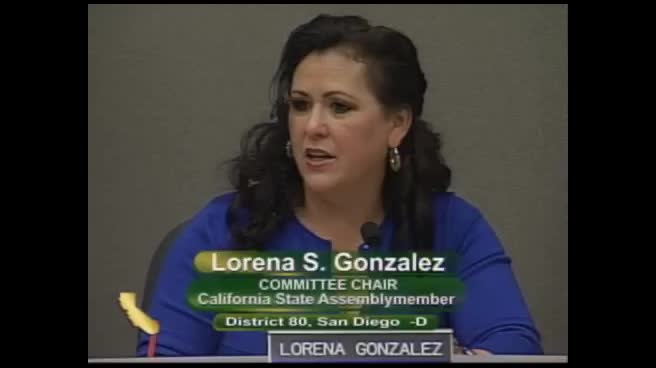
Bill Author

Bill Co-Author(s):