AB 2369: Proposition 47: repeat offenses within 12 months.
- Session Year: 2015-2016
- House: Assembly
- Latest Version Date: 2016-03-28
Existing law, the Safe Neighborhoods and Schools Act, enacted by Proposition 47, as approved by the voters at the November 4, 2014, statewide general election, reduced certain felonies to misdemeanors, including possession of specified controlled substances and theft of a firearm with a value under $950.
This bill would authorize the prosecution to charge a person with a felony if the person has been previously convicted 2 or more times in the 12-month period of the crimes reduced to a misdemeanor by Proposition 47 or, if the crime being prosecuted is petty theft, when the person had been convicted of specified other crimes, including grand theft and carjacking, at least twice in the past 12 months. The bill would specify that, for purposes of determining the 12-month period, the date the crimes were committed is used, not the date of conviction. and the date that 2 or more of the prior crimes were committed was within 36 months of the date of the commission of the crime for which the person is being punished. The bill would also make it a felony grand theft, punishable in state prison as a felony, when any of the items taken include is a firearm.
The California Constitution authorizes the Legislature to amend or repeal an initiative statute by another statute that becomes effective when approved by the electors.
This bill would provide that it would become effective only upon approval of the voters, and would provide for the submission of this measure to the voters for approval at statewide general election.
Existing law, the Safe Neighborhoods and Schools Act, enacted by Proposition 47, as approved by the voters at the November 4, 2014, statewide general election, reduced certain felonies to misdemeanors, including possession of specified controlled substances and theft of a firearm with a value under $950.
This bill would authorize the prosecution to charge a person with a felony if the person has been convicted 2 or more times in the 12-month period of the crimes reduced to a misdemeanor by Proposition 47 or, if the crime being prosecuted is petty theft, when the person had been convicted of specified other crimes, including grand theft and carjacking, at least twice in the past 12 months. The bill would specify that, for purposes of determining the 12-month period, the date the crimes were committed is used, not the date of conviction. The bill would also make it a felony when the items taken include a firearm.
The California Constitution authorizes the Legislature to amend or repeal an initiative statute by another statute that becomes effective when approved by the electors.
This bill would provide that it would become effective only upon approval of the voters, and would provide for the submission of this measure to the voters for approval at statewide general election.
(a)Notwithstanding Section 487 or any other provision of law defining grand theft, obtaining any property by theft where the value of the money, labor, real or personal property taken does not exceed nine hundred fifty dollars ($950) shall be considered petty theft and shall be punished as a misdemeanor, with the following exceptions:
(1)A person may instead be punished pursuant to subdivision (h) of Section 1170 if that person has one or more prior convictions for an offense specified in clause (iv) of subparagraph (C) of paragraph (2) of subdivision (e) of Section 667 or for an offense requiring registration pursuant to subdivision (c) of Section 290.
(2)When the items taken include a firearm, the person shall be punished pursuant to subdivision (h) of Section 1170.
(2)It is grand theft, as described in paragraph (2) of subdivision (d) of Section 487, when any of the items taken is a firearm and the person shall be punished pursuant to subdivision (a) of Section 489.
(b)This section shall not be applicable to any theft that may be charged as an infraction pursuant to any other provision of law.
SEC. 2.Section 666.1 is added to the Penal Code, to read:666.1.(a)Notwithstanding any other law, a person who has been convicted of a misdemeanor violation of any of the crimes listed in subdivision (b) two or more times in 12 months may be punished, upon a third conviction for one of the enumerated crimes that he or she commits within the same 12-month period, may be punished either by imprisonment for not more than a year in a county jail or by imprisonment pursuant to subdivision (h) of Section 1170. 1170 if the following criteria are met:
(1)The person has previously been convicted of the crimes listed in subdivision (b) two or more times.
(2)The date that two or more of the prior crimes were committed was within 36 months of the date of the commission of the crime for which the person is being punished under this subdivision.
(b)(1)Shoplifting of an item with a value of more than nine hundred fifty dollars ($950).
(2)Forgery relating to a check, bond, bank bill, note, cashiers check, travelers check, or money order, where the value of the check, bond, bank bill, note, cashiers check, travelers check, or money order does not exceed nine hundred fifty dollars ($950).
(3)A violation of Section 476a where the amount of all checks, drafts, or orders is more than four hundred fifty dollars ($450) but less than nine hundred fifty dollars ($950).
(4)Petty theft of any of the following:
(A)Domestic fowls, avocados, olives, citrus or deciduous fruits, other fruits, vegetables, nuts, artichokes, or other farm crops with a value exceeding two hundred fifty dollars ($250) but less than nine hundred fifty dollars ($950).
(B)Fish, shellfish, mollusks, crustaceans, kelp, algae, or other aquacultural products are taken from a commercial or research operation with a value exceeding two hundred fifty dollars ($250) but less than nine hundred fifty dollars ($950).
(C)Property taken from the person of another with a value of less than nine hundred fifty dollars ($950).
(D)An automobile with a value of less than nine hundred fifty dollars ($950).
(5)A violation of Section 496 where the property has a value of less than nine hundred fifty dollars ($950).
(6)Unless upon the written prescription of a physician, dentist, podiatrist, or veterinarian licensed to practice in this state, possession of a controlled substance that is any of the following:
(A)Specified in subdivision (b) or (c) or paragraph (1) of subdivision (f) of Section 11054 of the Health and Safety Code.
(B)Specified in paragraph (14), (15), or (20) of subdivision (d) of Section 11054 of the Health and Safety Code.
(C)Specified in subdivision (b) or (c) of Section 11055 of the Health and Safety Code.
(D)Specified in subdivision (h) of Section 11056 of the Health and Safety Code.
(E)A controlled substance classified in Schedule III, IV, or V that is a narcotic drug.
(7)Violation of Section 11357 or 11377 of the Health and Safety Code.
(c)In addition to the provisions of subdivision (a), a person who has been convicted is convicted of a crime of petty theft, grand theft, auto theft pursuant to subdivision (d) or (e) of Section 10851 of the Vehicle Code, burglary, carjacking, robbery, or a felony violation of Section 496 two or more times in 12 months, theft may be punished upon a conviction for petty theft that he or she commits in the same 12-month period, either by imprisonment for not more than a year in a county jail or by imprisonment pursuant to subdivision (h) of Section 1170. 1170 if the following criteria are met:
(1)The person has been convicted two or more times of petty theft, grand theft, auto theft pursuant to subdivisions (d) or (e) of Section 10851 of the Vehicle Code, burglary, carjacking, robbery, or a felony violation of Section 496, or a combination of those crimes.
(2)The date that two or more of the prior crimes were committed was within 36 months of the date of the commission of the crime for which the person is being punished under this subdivision.
(d)For purposes of determining the 12-month period required by subdivisions (a) and (c), the date the crimes were committed shall be used, not the date of the conviction.
SEC. 3.Section 1 of this act amends the Safe Neighborhoods and Schools Act, Proposition 47, an initiative statute, and shall become effective only when submitted to and approved by the voters. The Secretary of State shall submit Section 1 of this act for approval by the voters at a statewide election in accordance with Section 9040 of the Elections Code.
(a)Notwithstanding Section 487 or any other provision of law defining grand theft, obtaining any property by theft where the value of the money, labor, real or personal property taken does not exceed nine hundred fifty dollars ($950) shall be considered petty theft and shall be punished as a misdemeanor, except that such with the following exceptions:
(1)A person may instead be punished pursuant to subdivision (h) of Section 1170 if that person has one or more prior convictions for an offense specified in clause (iv) of subparagraph (C) of paragraph (2) of subdivision (e) of Section 667 or for an offense requiring registration pursuant to subdivision (c) of Section 290.
(2)When the items taken include a firearm, the person shall be punished pursuant to subdivision (h) of Section 1170.
(b)This section shall not be applicable to any theft that may be charged as an infraction pursuant to any other provision of law.
SEC. 2.Section 666.1 is added to the Penal Code, to read:666.1.(a)Notwithstanding any other law, a person who has been convicted of a misdemeanor violation of any of the crimes listed in subdivision (b) two or more times in 12 months may be punished, upon a third conviction for one of the enumerated crimes that he or she commits within the same 12-month period, either by imprisonment for not more than a year in a county jail or by imprisonment pursuant to subdivision (h) of Section 1170.
(b)(1)Shoplifting of an item with a value of more than nine hundred fifty dollars ($950).
(2)Forgery relating to a check, bond, bank bill, note, cashiers check, travelers check, or money order, where the value of the check, bond, bank bill, note, cashiers check, travelers check, or money order does not exceed nine hundred fifty dollars ($950).
(3)A violation of Section 476a where the amount of all checks, drafts, or orders is more than four hundred fifty dollars ($450) but less than nine hundred fifty dollars ($950).
(4)Petty theft of any of the following:
(A)Domestic fowls, avocados, olives, citrus or deciduous fruits, other fruits, vegetables, nuts, artichokes, or other farm crops with a value exceeding two hundred fifty dollars ($250) but less than nine hundred fifty dollars ($950).
(B)Fish, shellfish, mollusks, crustaceans, kelp, algae, or other aquacultural products are taken from a commercial or research operation with a value exceeding two hundred fifty dollars ($250) but less than nine hundred fifty dollars ($950).
(C)Property taken from the person of another with a value of less than nine hundred fifty dollars ($950).
(D)An automobile with a value of less than nine hundred fifty dollars ($950).
(5)A violation of Section 496 where the property has a value of less than nine hundred fifty dollars ($950).
(6)Unless upon the written prescription of a physician, dentist, podiatrist, or veterinarian licensed to practice in this state, possession of a controlled substance that is any of the following:
(A)Specified in subdivision (b) or (c) or paragraph (1) of subdivision (f) of Section 11054 of the Health and Safety Code.
(B)Specified in paragraph (14), (15), or (20) of subdivision (d) of Section 11054 of the Health and Safety Code.
(C)Specified in subdivision (b) or (c) of Section 11055 of the Health and Safety Code.
(D)Specified in subdivision (h) of Section 11056 of the Health and Safety Code.
(E)A controlled substance classified in Schedule III, IV, or V that is a narcotic drug.
(7)Violation of Section 11357 or 11377 of the Health and Safety Code.
(c)In addition to the provisions of subdivision (a), a person who has been convicted of a crime of petty theft, grand theft, auto theft pursuant to subdivision (d) or (e) of Section 10851 of the Vehicle Code, burglary, carjacking, robbery, or a felony violation of Section 496 two or more times in 12 months, may be punished upon a conviction for petty theft that he or she commits in the same 12-month period, either by imprisonment for not more than a year in a county jail or by imprisonment pursuant to subdivision (h) of Section 1170.
(d)For purposes of determining the 12-month period required by subdivisions (a) and (c), the date the crimes were committed shall be used, not the date of the conviction.
SEC. 3.Section 1 of this act amends the Safe Neighborhoods and Schools Act, Proposition 47, an initiative statute, and shall become effective only when submitted to and approved by the voters. The Secretary of State shall submit Section 1 of this act for approval by the voters at a statewide election in accordance with Section 9040 of the Elections Code.
|
Date
|
Status
|
|---|---|
| Feb 18, 2016 | Read first time. To print. |
| Feb 19, 2016 | From printer. May be heard in committee March 20. |
| Mar 8, 2016 | Referred to Com. on PUB. S. |
| Mar 28, 2016 | From committee chair, with author's amendments: Amend, and re-refer to Com. on PUB. S. Read second time and amended. |
| Mar 29, 2016 | In committee: Set, first hearing. Failed passage. |
| Mar 29, 2016 | Re-referred to Com. on PUB. S. |
| May 3, 2016 | From committee: Without further action pursuant to Joint Rule 62(a). |
|
Date
|
Description
|
Location
|
Votes
|
|
|---|---|---|---|---|
| Mar 29, 2016 | Do pass as amended and be re-referred to the Committee on [Appropriations] | Assembly Standing Committee on Public Safety |
Failed |
This list shows positions taken on this bill by organizations on the date displayed, which is linked to the original source.
Positions by individuals are not included.
|
Organization
|
Position
|
Date
|
|---|---|---|
| American Friends Service Committee | ** Against | Mar 29, 2016 |
| American Petroleum and Convenience Store Association | ** Support | Mar 29, 2016 |
| Association For Los Angeles Deputy Sheriffs | ** Support | Mar 29, 2016 |
| California Association Of Code Enforcement Officers | ** Support | Mar 29, 2016 |
| California Attorneys For Criminal Justice | * Against | Mar 29, 2016 |
| California College And University Police Chiefs Association | ** Support | Mar 29, 2016 |
| California Crime Stoppers | * Support | Mar 29, 2016 |
| California Police Chiefs Association | * Support | Mar 29, 2016 |
| California Retailers Association | ** Support | Mar 29, 2016 |
| California Sportsman's Lobby, Inc. | ** Support | Mar 29, 2016 |
| California State Sheriffs' Association | ** Support | Mar 29, 2016 |
| Californians for Safety and Justice | * Support | Mar 29, 2016 |
| Californians for Safety and Justice | * Against | Mar 29, 2016 |
| Californians United for a Responsible Budget | * Against | Mar 29, 2016 |
| Center on Juvenile and Criminal Justice | ** Against | Mar 29, 2016 |
| Community Coalition | ** Against | Mar 29, 2016 |
| Crossroads of the West Gun Shows | ** Support | Mar 29, 2016 |
| Drug Policy Alliance | ** Against | Mar 29, 2016 |
| Ella Baker Center For Human Rights | ** Against | Mar 29, 2016 |
| Fresno Chamber of Commerce | ** Support | Mar 29, 2016 |
| Fresno County Sheriff-Coroner | ** Support | Mar 29, 2016 |
| Fresno Police and Neighborhood Watch Association | ** Support | Mar 29, 2016 |
| Friends Committee on Legislation in California | * Against | Mar 29, 2016 |
| Friends Committee On Legislation Of California | * Against | Mar 29, 2016 |
| Justice Now | ** Against | Mar 29, 2016 |
| Kings County Sheriff's Office | ** Support | Mar 29, 2016 |
| Legal Services for Prisoners with Children | ** Against | Mar 29, 2016 |
| Los Angeles Police Protective League | ** Support | Mar 29, 2016 |
| Los Angeles Professional Peace Officers Association | ** Support | Mar 29, 2016 |
| Madera Police Department | ** Support | Mar 29, 2016 |
| National Council Of La Raza | ** Against | Mar 29, 2016 |
| National Shooting Sports Foundation, Inc. | ** Support | Mar 29, 2016 |
| Outdoor Sportsmen'S Coalition Of California | ** Support | Mar 29, 2016 |
| Peace Officers Research Association Of California | ** Support | Mar 29, 2016 |
| PICO California | ** Against | Mar 29, 2016 |
| PUB. S. | ** Against | Mar 29, 2016 |
| Sacramento Crime Alert | * Support | Mar 29, 2016 |
| Safari Club International | ** Support | Mar 29, 2016 |
| Tulare County Sheriff's Office | ** Support | Mar 29, 2016 |
| Valley Crime Stoppers | * Support | Mar 29, 2016 |
| Valley Crime Stoppers | * For If Amend | Mar 29, 2016 |
| William Lansdowne, Ret. Chief, San Diego Police Department | ** Against | Mar 29, 2016 |
Date of Hearing:
Counsel: Sandra Uribe
ASSEMBLY COMMITTEE ON PUBLIC SAFETY
Reginald Byron Jones-Sawyer, Sr., Chair
ABPCA Bill Id:AB 2369
Author:(Patterson) – As Amended Ver:March 28, 2016
As Proposed to be Amended in Committee
SUMMARY:
Limits Proposition 47 by making persons convicted of crimes reduced to misdemeanors under the provisions eligible for felony prosecution and sentencing if convicted of those crimes three times within a three-year period. Specifically, this bill:
- Provides that if a person has been convicted of specified misdemeanor violations, he or she may be punished either by imprisonment for not more than one year in county jail, or by imprisonment pursuant to realignment, if the following conditions are met:
- The person has previously been convicted of those same crimes two or more times; and,
- Those prior crimes were committed within 36 months of the date of the commission of the current qualifying crime.
- The person has previously been convicted of those same crimes two or more times; and,
- Applies this enhanced sentence to all the crimes reduced to misdemeanors under Proposition 47.
- Provides that a person who has been convicted of petty theft may be punished either by imprisonment for not more than one year in county jail, or by imprisonment pursuant to realignment, if the following conditions were met:
- The person has been convicted twice or more of any combination of the following crimes:
- Petty theft,
- Grand theft,
- Auto theft (as specified),
- Burglary,
- Carjacking,
- Robbery, or
- Felony receiving stolen property; and,
- Petty theft,
- Those prior crimes were committed within 36 months of the date of the commission of the current petty theft charge.
- The person has been convicted twice or more of any combination of the following crimes:
- Calls for a special election for voter approval of these provisions.
EXISTING LAW:
- Divides theft into two degrees, petty theft and grand theft. (Pen. Code, § 486.)
- Defines grand theft as when the money, labor, or real or personal property taken is of a value exceeding $950 dollars, except as specified. (Pen. Code, § 487.)
- Provides that notwithstanding any provision of law defining grand theft, obtaining any property by theft where the value of the money, labor, real or personal property taken does not exceed $950 shall be considered petty theft and shall be punished as a misdemeanor, except for cases in which the defendant has suffered a prior conviction for “super strike,” enumerated in Penal Code section 667, subdivision (e)(2)(C)(iv) or which requires sex offender registration; in which case the offense is punished as a felony by imprisonment in the county jail pursuant to realignment. (Pen. Code, § 490.2, subd. (a).)
- Provides that receiving stolen property where the value of the property is $950 or less is a misdemeanor, except for cases in which the defendant has suffered a prior conviction for “super strike,” enumerated in Penal Code section 667, subdivision (e)(2)(C)(iv) or which requires sex offender registration; in which case the offense is punished as a felony by imprisonment in the county jail pursuant to realignment. . (Pen. Code, § 496, subd. (a).)
- States that a felony is a crime that is punishable with death, imprisonment in the state prison, or in the county jail under the provisions of Penal Code section 1170, subdivision (h). All other crimes are misdemeanors, except those classified as infractions. (Pen. Code, § 17, subd. (a).)
FISCAL EFFECT:
Unknown
COMMENTS:
- Author's Statement: According to the author, "I have heard straight from officers in my community that criminals are walking around with calculators so they do not steal more than $950 worth of goods or others who will steal guns from the same place one at a time instead of all at once so that if they get caught it is a misdemeanor and not a felony. These actions are a direct result of Prop 47. It is not an exaggeration that crime rates are increasing in California. According to a recent report by the Public Policy Institute of California (PPIC), California Cities dominate the top of the national list for crime rate increases in 2015. That includes Sacramento topping the national chart for violent crime rate increases, and San Francisco topping the list for property crime rate increases. It is no surprise to see an increase in crime when policies do not actually help people get treatment in addition to sending messages that the state of California is soft on crime -even on such actions as stealing a gun.
"In Fresno County, one drug court has shut down and another has seen participation rate cut in half. Sacramento County has seen a 40% decrease. Part of the problem is that there is no longer the threat of a felony conviction to encourage individuals to seek help in a program in lieu of a higher penalty. AB 2369 lets voters rethink the unintended consequences of Prop 47 and allows them to decide whether they think repeat criminals, who violate laws affected by Prop 47 three times within a year or steal a gun, should receive an enhanced penalty. AB 2369 allows an individual’s prior criminal actions to be considered when sentencing repeat criminals." - Proposition 47: On November 4, 2014, California voters approved Proposition 47, also known as the Safe Neighborhoods and Schools Act, which reduced penalties for certain offenders convicted of nonserious and nonviolent property and drug crimes. Proposition 47 also allows inmates serving sentences for crimes affected by the reduced penalties to apply to be resentenced.
According to the California Secretary of State's web site, 59.6 percent of voters approved Proposition 47. (See <http://elections.cdn.sos.ca.gov/sov/2014-general/pdf/2014-complete-sov.pdf> [as of Mar. 14, 2015].) The purpose of the measure was "to maximize alternatives for nonserious, nonviolent crime, and to invest the savings generated from this act into prevention and support programs in K–12 schools, victim services, and mental health and drug treatment." (Ballot Pamp., Gen. Elec. (Nov. 4, 2014), Text of Proposed Laws, p. 70.) One of the ways the measure created savings was by requiring misdemeanor penalties instead of felonies for nonserious, nonviolent crimes like petty theft and drug possession for personal use, unless the defendant has prior convictions for specified violent crimes. (Ibid.) - Proposition 47 and Crime Rates: Recent commentary by the Public Policy Institute of California notes, "Reports of increases in violent crime in some areas have raised concerns, and the significant drawdown in the jail and prison populations—by roughly 17,000 inmates so far—certainly carries the risk of increased crime. But it would be premature to blame Proposition 47 for the uptick…."
"There are good reasons to be cautious about attributing these upticks to Proposition 47. Crime trends fluctuate frequently and widely and it is challenging to pinpoint specific causes. The first year of realignment provides a good example of this. After a long decline, both violent and property crime in California increased in 2012, the year after realignment was implemented, and many blamed the reform. However, as our careful analysis has shown, there is no evidence that realignment led to more violent crime, and the only uptick that can be attributed to the reform is auto theft. Another reason to be cautious is that other states have seen increases in crime this year—the New York Times recently reported that violent crime, as represented by murder rates, has gone up noticeably in a number of US cities. With all this in mind, at this time we urge against drawing any firm conclusions about Proposition 47’s impact on crime." (http://www.ppic.org/main/blog_detail.asp?i=1888.) - Repeat Offenders: This bill provides that if a defendant commits any of the crimes, reduced to misdemeanors by Proposition 47 three times in a three-year span, then, on the third conviction, the defendant is eligible for felony prosecution.
It should be noted that the bill does not require the prior convictions to have occurred at separate times. For example, if a defendant is convicted in one day of possession of cocaine and possession of ecstasy for personal use, under the provisions of this bill, this would count as two prior convictions for purposes of limiting the application of Proposition 47.
Further, with respect to multiple convictions of drug possession offenses, if a person uses drugs due to an addiction, it should not come as a surprise that the individual is likely to relapse before breaking the addiction cycle. In so doing, the person may suffer multiple drug possession convictions. (See e.g., In re Taylor (2003) 105 Cal.App.4th 1394, 1397 ["Anticipating that drug abusers often initially falter in their recovery, Proposition 36 gives offenders several chances at probation before permitting a court to impose jail time."].) Under this bill, such a person may not be eligible for the benefits of Proposition 47.
As to repeat offenders of property crimes, this bill provides that a person charged with petty theft can be subjected to felony prosecution and sentencing if, within the past three years, that person had any combination of two or more convictions for petty theft, grand theft, auto theft, burglary, carjacking, robbery, or felony receiving stolen property.
Before Proposition 47, the sentence-enhancement statute commonly known as "petty theft with a prior" elevated a misdemeanor petty theft to a wobbler (an alternate felony or misdemeanor) if the person has previously committed designated theft or theft-related convictions, and served a custody term for those convictions. Proposition 47 eliminated the penalties formerly associated with the "petty theft with a prior" statute except for a narrow category of sex offenders, persons with qualifying "super strikes," and those persons convicted of theft from elders or dependent adults. Those persons are still eligible for felony punishment, including a state prison sentence. (Pen. Code, § 666.)
Moreover, if a person has been convicted of carjacking within the past three years, that person is likely still serving a prison sentence because carjacking is punishable by three, five, or nine years in state prison. (Pen. Code, § 215, subd. (a).) Similarly, first-degree robbery carries a three, six, or nine year prison term; while second degree robbery carries a two, three, or five year prison term. (Pen. Code, § 213.) And first-degree burglary is punishable by a state prison term of two, four, or six years. (Pen. Code, § 461, subd. (a).) So again, as to these crimes, there is a good probability that a person would be unable to commit another theft crime during the three-year window limitation of this bill.
With regards to auto theft under Vehicle Code section 10851, Proposition 47 did not change the language making the offense punishable as an alternate felony or misdemeanor. However, there is a split of authority on whether the crime was eligible for reduced punishment, and the Supreme Court is currently considering the issue. (See People v. Page review granted 1/27/2016 (S230793/E062760), formerly at 241 Cal.App.4th 714.) Nevertheless, it is clear that for repeat offenders of auto theft, those persons are already eligible for felony sentencing of two, three, or four years. (Pen. Code, § 666.5, subd. (a).)
In sum, while Proposition 47 did reduce certain theft offenses to misdemeanors, there are still significant penalties for more egregious property crimes. - California Constitutional Limitations on Amending a Voter Initiative: Because Proposition 47 was a voter initiative, the Legislature may not amend the statute without subsequent voter approval unless the initiative permits such amendment, and then only upon whatever conditions the voters attached to the Legislature's amendatory powers. (People v. Superior Court (Pearson) (2010) 48 Cal.4th 564, 568; see also Cal. Const., art. II, § 10, subd. (c).) The California Constitution states, "The Legislature may amend or repeal referendum statutes. It may amend or repeal an initiative statute by another statute that becomes effective only when approved by the electors unless the initiative statute permits amendment or repeal without their approval." (Cal. Const., art. II, § 10, subd. (c).) Therefore, unless the initiative expressly authorizes the Legislature to amend, only the voters may alter statutes created by initiative.
The purpose of California's constitutional limitation on the Legislature's power to amend initiative statutes is to protect the people's initiative powers by precluding the Legislature from undoing what the people have done, without the electorate's consent. Courts have a duty to jealously guard the people's initiative power and, hence, to apply a liberal construction to this power wherever it is challenged in order that the right to resort to the initiative process is not improperly annulled by a legislative body. (Proposition 103 Enforcement Project v. Quackenbush (1998) 64 Cal.App.4th 1473.)
As to the Legislature's authority to amend the initiative, Proposition 47 states: "This act shall be broadly construed to accomplish its purposes. The provisions of this measure may be amended by a two‑thirds vote of the members of each house of the Legislature and signed by the Governor so long as the amendments are consistent with and further the intent of this act. The Legislature may by majority vote amend, add, or repeal provisions to further reduce the penalties for any of the offenses addressed by this act." (<http://vig.cdn.sos.ca.gov/2014/general/pdf/text-of-proposed-laws1.pdf#prop47>.)
This bill seeks to increase punishment for repeat offenders for the crimes which were reduced to misdemeanors by Proposition 47. As such, it is inconsistent with the purpose of Proposition 47. Therefore, pursuant to the above-referenced provisions of the California Constitution, only the voters may authorize the provisions.
This bill, if approved by the Legislature, calls for a special election to be held for the voters of California to approve its provisions.
- Argument in Support: According to the Peace Officers Research Association of California (PORAC), "PORAC opposed Proposition 47 for many reasons, including the fact that a criminal can commit the same crime over and over again with no limits on the repeat offense and the crime always remains a misdemeanor. One of the most egregious aspects of the initiative was the fact that the criminal can repeatedly steal a firearm and regardless of the amount of times they are convicted, it is always deemed a misdemeanor. Studies have shown that a majority of firearms used to commit crimes are stolen. This bill can help deter firearm theft in California."
- Argument in Opposition: According to Californians for Safety and Justice, "Proposition 47 maintained California state laws that provide law enforcement authority to arrest and book into custody individuals suspected of committing misdemeanor offenses. Law enforcement maintains the authority to remove individuals that commit these offenses from the community. Penal code section 836 states, '[a] peace officer may arrest a person in obedience to a warrant, or [when the] officer has probable cause to believe that the person to be arrested has committed a public offense in the officer’s presence.'
"California law also authorizes detention for individuals in misdemeanor cases, including Proposition 47 offenses, when officers have probable cause to believe a suspect has committed a crime and it is in the best interest of public safety to detain. Additionally, Proposition 47 maintains California law regarding judicial discretion at arraignment. There are also multiple avenues for pursuing targeted deterrence to address chronic offending; such as: authority to aggregate or 'bundle' multiple thefts and pursue felony charges; the power to bring felony charges for shoplifters who use 'force or fear' under Penal Code section 211; use of 'criminal conspiracy' statutes to prosecute organized retail theft – even misdemeanor theft – as a felony; and the identify theft statute, which makes any theft involving stolen identity, regardless of value, a felony.
"In addition to targeted deterrence strategies, criminal justice agencies can, and should, expand best practices in law enforcement diversion, supervised misdemeanor probation, expanded criteria for treatment programs to authorize participation for misdemeanants, and expanded use of collaborative court models, neighborhood problem solving, and a host of other strategies that focus law enforcement resources to protect public safety without wasting state prison beds." - Related Legislation:
- AB 1869 (Melendez) calls for a special election to amend Proposition 47 and make the theft of a firearm grand theft in all cases and punishable by a state prison term. AB 1869 is pending hearing in the Assembly Committee on Elections and Redistricting.
- AB 2854 (Cooper) is substantially similar to AB 1869 (Melendez), but calls for a special election to be held in June 2016. AB 2854 is pending referral.
- AB 1869 (Melendez) calls for a special election to amend Proposition 47 and make the theft of a firearm grand theft in all cases and punishable by a state prison term. AB 1869 is pending hearing in the Assembly Committee on Elections and Redistricting.
- Prior Legislation:
- AB 150 (Melendez) requires an initiative statute be put before the voters to amend Proposition 47 to make the theft of a firearm, valued at $950 or less, a felony. AB 150 was held on the Assembly Appropriations Committee suspense file.
- Proposition 47 of the November 2014 general election, the Safe Neighborhoods and Schools Act, reduced the penalties for certain drug and property crimes from felonies to misdemeanors.
- AB 150 (Melendez) requires an initiative statute be put before the voters to amend Proposition 47 to make the theft of a firearm, valued at $950 or less, a felony. AB 150 was held on the Assembly Appropriations Committee suspense file.
REGISTERED SUPPORT / OPPOSITION:
Support
American Petroleum and Convenience Store Association
Association for Los Angeles Deputy Sheriffs
California Association of Code Enforcement Officers
California College and University Police Chiefs Association
California Narcotic Officers Association
California Police Chiefs Association
California Retailers Association
California Sportsman's Lobby
California State Sheriffs' Association
Crossroads of the West Gun Shows
Fresno Chamber of Commerce
Fresno County Sheriff-Coroner
Fresno Police and Neighborhood Watch Association
Kings County Sheriff's Office
Los Angeles Police Protective League
Los Angeles Professional Peace Officers Association
Madera Police Department
National Shooting Sports Foundation
Outdoor Sportsmen's Coalition of California
Peace Officers Research Association of California
Riverside Sheriffs Association
Safari Club International
Tulare County Sheriff's Office
Opposition
American Civil Liberties Union
American Friends Service Committee
Center on Juvenile and Criminal Justice
California Attorneys for Criminal Justice
Californians for Safety and Justice
Californians United for a Responsible Budget
Community Coalition
Drug Policy Alliance
Ella Baker Center for Human Rights
Friends Committee on Legislation of California
Justice Now
Legal Services for Prisoners with Children
National Council of La Raza
PICO California
William Lansdowne, Ret. Chief, San Diego Police Department
Analysis Prepared by:
Sandy Uribe / PUB. S. / (916) 319-3744
Discussed in Hearing
 29MIN
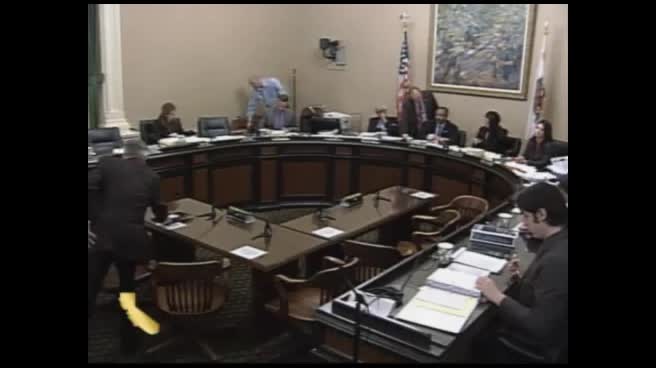
Assembly Standing Committee on Public Safety
Bill Author





