AB 2408: Greenhouse Gas Reduction Fund.
- Session Year: 2015-2016
- House: Assembly
- Latest Version Date: 2016-04-20
The California Global Warming Solutions Act of 2006 designates the State Air Resources Board as the state agency charged with monitoring and regulating sources of emissions of greenhouse gases. The state board is required to adopt a statewide greenhouse gas emissions limit equivalent to the statewide greenhouse gas emissions level in 1990, to be achieved by 2020, and to adopt rules and regulations in an open public process to achieve the maximum, technologically feasible, and cost-effective greenhouse gas emissions reductions. The act authorizes the state board to include the use of market-based compliance mechanisms. Existing law requires all moneys, except for fines and penalties, collected by the state board from the auction or sale of allowances as part of a market-based compliance mechanism to be deposited in the Greenhouse Gas Reduction Fund and to be available upon appropriation by the Legislature. Existing law authorizes the allocation of moneys from the fund for the purpose of reducing emissions of greenhouse gases through various types of investments.
This bill would authorize the allocation of moneys from the fund to maximize the delivery of integrated greenhouse gas reduction projects for households in low-income and disadvantaged communities. The bill would require state agencies and departments administering grant programs programs, as defined, receiving an allocation from the fund to update the guidelines for their grant programs to promote encourage the coordination of the grantees. The bill would require agencies to give funding priority to projects having certain characteristics.
The California Global Warming Solutions Act of 2006 designates the State Air Resources Board as the state agency charged with monitoring and regulating sources of emissions of greenhouse gases. The state board is required to adopt a statewide greenhouse gas emissions limit equivalent to the statewide greenhouse gas emissions level in 1990, to be achieved by 2020, and to adopt rules and regulations in an open public process to achieve the maximum, technologically feasible, and cost-effective greenhouse gas emissions reductions. The act authorizes the state board to include the use of market-based compliance mechanisms. Existing law requires all moneys, except for fines and penalties, collected by the state board from the auction or sale of allowances as part of a market-based compliance mechanism to be deposited in the Greenhouse Gas Reduction Fund and to be available upon appropriation by the Legislature. Existing law authorizes the allocation of moneys from the fund for the purpose of reducing emissions of greenhouse gases through various types of investments.
This bill would authorize the allocation of moneys from the fund to maximize the delivery of integrated greenhouse gas reduction projects for households in low-income and disadvantaged communities. The bill would require state agencies and departments administering grant programs receiving an allocation from the fund to update the guidelines for their grant programs to promote the coordination of the grantees. The bill would require agencies to give funding priority to projects having certain characteristics.
Existing law establishes the Department of Community Services and Development and requires the department to administer, among other things, the Energy Efficiency Low-Income Weatherization Program.
This bill would make a nonsubstantive change to this provision.
Existing law establishes the Department of Community Services and Development and requires the department to administer, among other things, the Energy Efficiency Low-Income Weatherization Program.
This bill would make a nonsubstantive change to this provision.
(a)(1)It is the intent of the Legislature that moneys shall be appropriated from the fund only in a manner consistent with the requirements of this chapter and Article 9.7 (commencing with Section 16428.8) of Chapter 2 of Part 2 of Division 4 of Title 2 of the Government Code.
(2)The state shall not approve allocations for a measure or program using moneys appropriated from the fund except after determining, based on the available evidence, that the use of those moneys furthers the regulatory purposes of Division 25.5 (commencing with Section 38500) and is consistent with law. If any expenditure of moneys from the fund for any measure or project is determined by a court to be inconsistent with law, the allocations for the remaining measures or projects shall be severable and shall not be affected.
(b)Moneys shall be used to facilitate the achievement of reductions of greenhouse gas emissions in this state consistent with Division 25.5 (commencing with Section 38500) and, where applicable and to the extent feasible:
(1)Maximize economic, environmental, and public health benefits to the state.
(2)Foster job creation by promoting in-state greenhouse gas emissions reduction projects carried out by California workers and businesses.
(3)Complement efforts to improve air quality.
(4)Direct investment toward the most disadvantaged communities and households in the state.
(5)Provide opportunities for businesses, public agencies, nonprofits, and other community institutions to participate in and benefit from statewide efforts to reduce greenhouse gas emissions.
(6)Lessen the impacts and effects of climate change on the states communities, economy, and environment.
(c)Moneys appropriated from the fund may be allocated, consistent with subdivision (a), for the purpose of reducing greenhouse gas emissions in this state through investments that may include, but are not limited to, any of the following:
(1)Funding to reduce greenhouse gas emissions through energy efficiency, clean and renewable energy generation, distributed renewable energy generation, transmission and storage, and other related actions, including, but not limited to, at public universities, state and local public buildings, and industrial and manufacturing facilities.
(2)Funding to reduce greenhouse gas emissions through the development of stateoftheart systems to move goods and freight, advanced technology vehicles and vehicle infrastructure, advanced biofuels, and lowcarbon and efficient public transportation.
(3)Funding to reduce greenhouse gas emissions associated with water use and supply, land and natural resource conservation and management, forestry, and sustainable agriculture.
(4)Funding to reduce greenhouse gas emissions through strategic planning and development of sustainable infrastructure projects, including, but not limited to, transportation and housing.
(5)Funding to reduce greenhouse gas emissions through increased in-state diversion of municipal solid waste from disposal through waste reduction, diversion, and reuse.
(6)Funding to reduce greenhouse gas emissions through investments in programs implemented by local and regional agencies, local and regional collaboratives, and nonprofit organizations coordinating with local governments.
(7)Funding research, development, and deployment of innovative technologies, measures, and practices related to programs and projects funded pursuant to this chapter.
(8)Funding to maximize the delivery of integrated greenhouse gas reduction projects, including, but not limited to, advanced clean vehicles, carsharing and vanpools, low-income rooftop solar, energy efficiency and weatherization, organic waste diversion and compost development, and drought-tolerant lawn, park, and urban greening projects, for households in low-income and disadvantaged communities.
(d)(1)For purposes of this subdivision, grant program means a program receiving an allocation from the fund that provides grants to entities implementing programs to provide benefits to eligible members of the public.
(2)State agencies administering grant programs shall update their program guidelines to promote coordination of grantees implementing regional and neighborhood programs with other grantees of grant programs, including those administered by other state agencies, to encourage both of the following:
(A)The use of a single or coordinated application by grantees to determine the eligibility of a member of the public for benefits provided by the regional and neighborhood programs.
(B)The use of a single mechanism by grantees to report to the granting agencies on the efficacy of their programs, to the extent feasible.
(3)State agencies administering grant programs shall update their guidelines to authorize the use of a percentage of the grant moneys to provide technical assistance to members of the public in applying for benefits under the grantees program.
(e)In evaluating projects receiving an allocation from the fund, state agencies shall give priority to projects that demonstrate one or more of the following characteristics:
(1)Coordination with applicants of grant programs, including grant programs administered by other state agencies, to maximize the benefits to the public.
(2)The ability to leverage additional public and private funding.
(3)The potential for multibenefits.
(4)The potential for replication of the project.
(5)The use of existing regional infrastructure and institutions.
(6)The utilization of the services of a state-certified community conservation corps.
SEC. 2.Section 39712.5 is added to the Health and Safety Code, to read:39712.5.(a)(1)For purposes of this section, grant program means a program receiving an allocation from the fund that provides grants to entities implementing programs to provide benefits to the public.
(2)State agencies administering grant programs funded pursuant to Section 39712 shall update their program guidelines to encourage grantees implementing regional and neighborhood programs to coordinate with other grantees, including those receiving grants administered by other state agencies, by promoting both of the following:
(A)The use of a single or coordinated application by grantees to determine the eligibility of a member of the public for benefits provided by the regional and neighborhood programs.
(B)The use of a single mechanism by grantees to report to the granting agencies on the efficacy of their programs, to the extent feasible.
(3)State agencies administering grant programs shall update their guidelines, to the extent feasible, to authorize the use by grantees of a percentage of the grant moneys to provide technical assistance to members of the public in applying for benefits under the grantees program.
(b)In evaluating grant programs receiving an allocation from the fund, state agencies shall give priority to programs that demonstrate one or more of the following characteristics:
(1)Coordination with other grant programs, including grant programs administered by other state agencies, to maximize the benefits to the public.
(2)The ability to leverage additional public and private funding.
(3)The potential for multiple benefits.
(4)The potential for replication of the programs.
(5)The use of existing regional infrastructure and institutions.
(6)The inclusion of workforce development programs that provide learning opportunities for veterans, former foster care recipients, farmworkers, and at-risk youth, such as state-certified conservation corps, especially in low-income or disadvantaged communities.
(a)(1)It is the intent of the Legislature that moneys shall be appropriated from the fund only in a manner consistent with the requirements of this chapter and Article 9.7 (commencing with Section 16428.8) of Chapter 2 of Part 2 of Division 4 of Title 2 of the Government Code.
(2)The state shall not approve allocations for a measure or program using moneys appropriated from the fund except after determining, based on the available evidence, that the use of those moneys furthers the regulatory purposes of Division 25.5 (commencing with Section 38500) and is consistent with law. If any expenditure of moneys from the fund for any measure or project is determined by a court to be inconsistent with law, the allocations for the remaining measures or projects shall be severable and shall not be affected.
(b)Moneys shall be used to facilitate the achievement of reductions of greenhouse gas emissions in this state consistent with Division 25.5 (commencing with Section 38500) and, where applicable and to the extent feasible:
(1)Maximize economic, environmental, and public health benefits to the state.
(2)Foster job creation by promoting in-state greenhouse gas emissions reduction projects carried out by California workers and businesses.
(3)Complement efforts to improve air quality.
(4)Direct investment toward the most disadvantaged communities and households in the state.
(5)Provide opportunities for businesses, public agencies, nonprofits, and other community institutions to participate in and benefit from statewide efforts to reduce greenhouse gas emissions.
(6)Lessen the impacts and effects of climate change on the states communities, economy, and environment.
(c)Moneys appropriated from the fund may be allocated, consistent with subdivision (a), for the purpose of reducing greenhouse gas emissions in this state through investments that may include, but are not limited to, any of the following:
(1)Funding to reduce greenhouse gas emissions through energy efficiency, clean and renewable energy generation, distributed renewable energy generation, transmission and storage, and other related actions, including, but not limited to, at public universities, state and local public buildings, and industrial and manufacturing facilities.
(2)Funding to reduce greenhouse gas emissions through the development of stateoftheart systems to move goods and freight, advanced technology vehicles and vehicle infrastructure, advanced biofuels, and lowcarbon and efficient public transportation.
(3)Funding to reduce greenhouse gas emissions associated with water use and supply, land and natural resource conservation and management, forestry, and sustainable agriculture.
(4)Funding to reduce greenhouse gas emissions through strategic planning and development of sustainable infrastructure projects, including, but not limited to, transportation and housing.
(5)Funding to reduce greenhouse gas emissions through increased in-state diversion of municipal solid waste from disposal through waste reduction, diversion, and reuse.
(6)Funding to reduce greenhouse gas emissions through investments in programs implemented by local and regional agencies, local and regional collaboratives, and nonprofit organizations coordinating with local governments.
(7)Funding research, development, and deployment of innovative technologies, measures, and practices related to programs and projects funded pursuant to this chapter.
(8)Funding to maximize the delivery of integrated greenhouse gas reduction projects, including, but not limited to, advanced clean vehicles, carsharing and vanpools, low-income rooftop solar, energy efficiency and weatherization, organic waste diversion and compost development, and drought-tolerant lawn, park, and urban greening projects, for households in low-income and disadvantaged communities.
(d)(1)For purposes of this subdivision, grant program means a program receiving an allocation from the fund that provides grants to entities implementing programs to provide benefits to eligible members of the public.
(2)State agencies administering grant programs shall update their program guidelines to promote coordination of grantees implementing regional and neighborhood programs with other grantees of grant programs, including those administered by other state agencies, to encourage both of the following:
(A)The use of a single or coordinated application by grantees to determine the eligibility of a member of the public for benefits provided by the regional and neighborhood programs.
(B)The use of a single mechanism by grantees to report to the granting agencies on the efficacy of their programs, to the extent feasible.
(3)State agencies administering grant programs shall update their guidelines to authorize the use of a percentage of the grant moneys to provide technical assistance to members of the public in applying for benefits under the grantees program.
(e)In evaluating projects receiving an allocation from the fund, state agencies shall give priority to projects that demonstrate one or more of the following characteristics:
(1)Coordination with applicants of grant programs, including grant programs administered by other state agencies, to maximize the benefits to the public.
(2)The ability to leverage additional public and private funding.
(3)The potential for multibenefits.
(4)The potential for replication of the project.
(5)The use of existing regional infrastructure and institutions.
(6)The utilization of the services of a state-certified community conservation corps.
SECTION 1.Section 12087.5 of the Government Code is amended to read:12087.5.(a)The department shall develop and administer the Energy Efficiency Low-Income Weatherization Program and expend moneys appropriated by the Legislature for the proposes of the program.
(b)The department may develop requirements, guidelines, and subgrantee contract provisions for the program.
(c)Before a subgrantee contract is executed for the provision of local service, the department shall do both of the following:
(1)No less than 30 days before finalization of the program guidelines, post the draft program guidelines on the departments Internet Web site.
(2)Hold a public hearing to obtain public input on the draft program guidelines with notice of the hearing published prominently on the departments Internet Web site no less than 15 days before the hearing.
(d)Chapter 3.5 (commencing with Section 11340) of Part 1 shall not apply to the development and adoption of program requirements, guidelines, and subgrantee contract provisions pursuant to this section.
(a)The department shall develop and administer the Energy Efficiency Low-Income Weatherization Program and expend moneys appropriated by the Legislature for the proposes of the program.
(b)The department may develop requirements, guidelines, and subgrantee contract provisions for the program.
(c)Before a subgrantee contract is executed for the provision of local service, the department shall do both of the following:
(1)No less than 30 days before finalization of the program guidelines, post the draft program guidelines on the departments Internet Web site.
(2)Hold a public hearing to obtain public input on the draft program guidelines with notice of the hearing published prominently on the departments Internet Web site no less than 15 days before the hearing.
(d)Chapter 3.5 (commencing with Section 11340) of Part 1 does shall not apply to the development and adoption of program requirements, guidelines, and subgrantee contract provisions pursuant to this section.
|
Date
|
Status
|
|---|---|
| Feb 19, 2016 | Introduced. To print. |
| Feb 21, 2016 | From printer. May be heard in committee March 22. |
| Feb 22, 2016 | Read first time. |
| Mar 17, 2016 | Referred to Com. on NAT. RES. |
| Mar 18, 2016 | From committee chair, with author's amendments: Amend, and re-refer to Com. on NAT. RES. Read second time and amended. |
| Mar 28, 2016 | Re-referred to Com. on NAT. RES. |
| Apr 19, 2016 | From committee: Amend, and do pass as amended and re-refer to Com. on APPR. (Ayes 6. Noes 1.) (April 18). |
| Apr 20, 2016 | Read second time and amended. |
| Apr 21, 2016 | Re-referred to Com. on APPR. |
| May 11, 2016 | In committee: Set, first hearing. Referred to APPR. suspense file. |
| May 27, 2016 | In committee: Held under submission. |
|
Date
|
Description
|
Location
|
Votes
|
|
|---|---|---|---|---|
| Apr 18, 2016 | Do pass as amended and be re-referred to the Committee on [Appropriations] | Assembly Standing Committee on Natural Resources |
Passed |
This list shows positions taken on this bill by organizations on the date displayed, which is linked to the original source.
Positions by individuals are not included.
|
Organization
|
Position
|
Date
|
|---|---|---|
| California Association Of Local Conservation Corps | ** Support | Apr 18, 2016 |
| California Van Pool Authority | * Support | Apr 18, 2016 |
| California Vanpool Authority | * Support | Apr 18, 2016 |
| CalTax | ** Against | Apr 18, 2016 |
| Central Coast Energy Services | ** Support | Apr 18, 2016 |
| Civicorps | ** Support | Apr 18, 2016 |
| Community Action Partnership of Kern | ** Support | Apr 18, 2016 |
| CSET | ** Support | Apr 18, 2016 |
| Fresno Economic Opportunities Commission Orange County Conservation Corps | ** Support | Apr 18, 2016 |
| NAT. RES. | ** Against | Apr 18, 2016 |
| San Joaquin County Regional Conservation Corp | * Support | Apr 18, 2016 |
| San Joaquin Regional Conservation Corps | ** Support | Apr 18, 2016 |
| Urban Corps of San Diego County | ** Support | Apr 18, 2016 |
| Valley Clean Air Now | * Support | Apr 18, 2016 |
Date of Hearing: May 11, 2016
ASSEMBLY COMMITTEE ON APPROPRIATIONS
Lorena Gonzalez, Chair
ABPCA Bill Id:AB 2408
Author:(Eggman) – As Amended Ver:April 20, 2016
Policy Committee: | Natural Resources | Vote: | 6 - 1 |
Urgency: No State Mandated Local Program: No Reimbursable: No
SUMMARY:
This bill directs allocations from AB 32 cap-and-trade revenues (Greenhouse Gas Reduction Funds) to maximize the delivery of integrated projects for households in low-income and disadvantaged communities. Specifically, this bill:
- Requires state agencies administering grant programs with Greenhouse Gas Reduction Funds (GGRF) to update guidelines and encourage the coordination of grantees by:
- The use of a single or coordinated application by grantees to determine the eligibility of a member of the public for benefits provided by the regional and neighborhood programs.
- The use of a single mechanism by grantees to report to the granting agencies on the efficacy of their programs, to the extent feasible.
- Requires state agencies administering GGRF grant programs to authorize the use of a percentage of the grant to provide technical assistance.
- Requires state agencies administering GGRF grant programs to prioritize programs that demonstrate one or more of the following characteristics:
- Coordination with other programs;
- The ability to leverage additional public or private funding;
- The potential for multiple benefits;
- The potential for program replication;
- The use of existing regional infrastructure and institutions;
- The inclusion of workforce development programs for various populations as specified, in low-income or disadvantaged communities.
FISCAL EFFECT:
- Unknown cost increases, potentially in the hundreds of thousands of dollars, for state agencies administering GGRF grant programs to revise and reprioritize their programs and coordinate across state government (GGRF). There are approximately 47 state agencies with GGRF funded programs.
- Increased ongoing costs of approximately $380,000 for the California Air Resources Board (ARB), as the GGRF administering agency, to coordinate across programs, revise guidelines, collect data, and evaluate eligibility for legal consistency (GGRF)
COMMENTS:
- Purpose. This bill is intended to require state agencies to develop systems that will allow grant applicants to apply for multiple grants and assistance programs, from multiple state agencies, with a single application. This bill additionally requires state agencies to prioritize projects based on additional funding options, co-benefits, and other factors.
- Background. The California Global Warming Solutions Act of 2006 (AB 32). AB 32 requires ARB to adopt a statewide GHG emissions limit equivalent to 1990 levels by 2020 and adopt regulations, including market-based compliance mechanisms, to achieve maximum technologically feasible and cost-effective GHG emission reductions.
As part of the implementation of AB 32 market-based compliance measures, ARB adopted a cap-and-trade program that caps the allowable statewide emissions and provides for the auctioning of emission credits, the proceeds of which are quarterly deposited into the GGRF available for appropriation by the Legislature.
SB 535 (De León), Chapter 830, Statutes of 2012, requires no less than 10% of cap-and-trade revenues fund projects located within disadvantaged communities, and that 25% of available revenues fund projects that benefit those communities.
- Environmental Justice. According to the Office of Environmental Health Hazard Assessment (OEHHA), approximately 8 million Californians (21%) live in zip codes that are
considered "highly impacted" by environmental, public health, and socioeconomic stressors.
Nearly half of all Californians live within six miles of a facility that is a significant
GHG emitter and they are disproportionately people of color.
In February of 2014, CalEPA issued an Environmental Justice Program Update, which included four main areas for future actions: 1)Increase efforts to eliminate discrimination on the basis of race, national origin, ethnic group identification, religion, age, sex, sexual orientation, color, genetic information, or disability in any program or activity conducted or funded by the state; 2)Develop guidance to promote a sound legal framework for CalEPA to advance environmental justice goals and objectives; 3)Lead an agency-wide working group dedicated to increase compliance with environmental laws in communities with relatively higher environmental burdens; and, 4)Add additional indicators to CalEnviroScreen to identify disadvantaged communities for the purpose of GGRF expenditures.
This bill targets a variety of vulnerable populations including veterans, former foster care recipients, farmworkers, and at-risk youth living in low-income or disadvantaged communities.
Analysis Prepared by: Jennifer Galehouse / APPR. / (916) 319-2081
Date of Hearing: April 18, 2016
ASSEMBLY COMMITTEE ON NATURAL RESOURCES
Das Williams, Chair
ABPCA Bill Id:AB 2408 (
Author:Eggman) – As Amended Ver:March 18, 2016
SUBJECT: Greenhouse Gas Reduction Fund
SUMMARY: Directs allocations from the Greenhouse Gas Reduction Fund (GGRF) to "integrated greenhouse gas emissions (GHG) reduction projects" for households in disadvantaged and low-income communities.
EXISTING LAW:
- Requires the Air Resources Board (ARB), pursuant to California Global Warming Solutions Act of 2006 [AB 32 (Nunez), Chapter 488, Statutes of 2006], to adopt a statewide GHG emissions limit equivalent to 1990 levels by 2020 and adopt regulations to achieve maximum technologically feasible and cost-effective GHG emission reductions. AB 32 authorizes ARB to permit the use of market-based compliance mechanisms to comply with GHG reduction regulations once specified conditions are met.
- Establishes the GGRF and requires all moneys, except for fines and penalties, collected by ARB from the auction or sale of allowances pursuant to a market-based compliance mechanism (i.e., the cap-and-trade program adopted by ARB under AB 32) to be deposited in the GGRF and available for appropriation by the Legislature.
- Establishes the GGRF Investment Plan and Communities Revitalization Act (Act) to set procedures for the investment of GHG allowance auction revenues. Authorizes a range of GHG reduction investments and establishes several policy objectives:
- Maximize economic, environmental, and public health benefits;
- Foster job creation;
- Complement efforts to improve air quality;
- Direct investment toward the most disadvantaged communities and households in the state;
- Provide opportunities for businesses, public agencies, nonprofits, and other community institutions to participate in and benefit from statewide efforts to reduce GHG emissions; and,
- Lessen the impacts and effects of climate change on the state's communities, economy, and environment.
- Maximize economic, environmental, and public health benefits;
- Specifies that moneys appropriated from the GGRF through investments that may include funding to reduce GHG emissions through:
- Energy efficiency, clean and renewable energy generation, distributed renewable energy generation, transmission and storage, and other related actions;
- The development of state-of-the-art systems to move goods and freight, advanced technology vehicles and vehicle infrastructure, advanced biofuels, and low-carbon and efficient public transportation;
- Strategic planning and development of sustainable infrastructure projects;
- Investments in programs implemented by local and regional agencies, local and regional collaboratives, and nonprofit organizations coordinating with local governments; and,
- Funding research, development, and deployment of innovative technologies, measures, and practices related to programs and projects funded pursuant to the Act.
- Energy efficiency, clean and renewable energy generation, distributed renewable energy generation, transmission and storage, and other related actions;
- Requires the investment plan to allocate (1) a minimum of 25% of the available moneys in the GGRF to projects that provide benefits to identified disadvantaged communities, and (2) a minimum of 10% of the available moneys in the GGRF to projects located within identified disadvantaged communities.
THIS BILL:
- Adds funding to maximize the delivery of integrated GHG reduction projects, including advanced clean vehicles, carsharing and vanpools, low-income rooftop solar, energy efficiency and weatherization, organic waste diversion and compost development, and drought-tolerant lawn, park, and urban greening projects for households in low-income and disadvantaged communities to the list of investment alternatives under the Act.
- Defines "grant program" to mean a program receiving an allocation from the GGRF that provides grants to entities implementing programs to provide benefits to eligible members of the public.
- Requires state agencies that administer grant programs to update their program guidelines to promote coordination of grantees implementing regional and neighborhood programs with other grantees of other grant programs, including those administered by other state agencies, to encourage:
- The use of a single or coordinated application by grantees to determine the eligibility of a member of the public for benefits provided by the regional and neighborhood programs; and,
- The use of a single mechanism by grantees to report to the granting agencies on the efficacy of their programs, to the extent feasible.
- The use of a single or coordinated application by grantees to determine the eligibility of a member of the public for benefits provided by the regional and neighborhood programs; and,
- Requires state agencies that administer grant programs to update their guidelines to authorize the use of a percentage of the grant moneys to provide technical assistance to members of the public in applying for benefits under the grantee's program.
- In evaluating projects receiving an allocation from the GGRF, state agencies shall give priority to projects that demonstrate one or more of the following characteristics:
- Coordination with applicants of grant programs, including grant programs administered by other state agencies, to maximize the benefits to the public;
- The ability to leverage additional public and private funding;
- The potential for "multibenefits;"
- The potential for replication of the project;
- The use of existing regional infrastructure and institutions; and,
- The utilization of the services of a state-certified community conservation corps.
- Coordination with applicants of grant programs, including grant programs administered by other state agencies, to maximize the benefits to the public;
FISCAL EFFECT: Unknown
COMMENTS:
- Existing GGRF funding and programs. The 2014-15 Budget Act allocated GGRF revenues for the 2014-15 fiscal year and established a long-term plan for the allocation of GGRF revenues beginning in fiscal year 2015-16. Thirty-five percent of GGRF is continuously appropriated for investments in transit, affordable housing, and sustainable communities. Twenty-five percent is continuously appropriated to continue the construction of the high-speed rail project. The remaining 40% is subject to annual appropriation by the Legislature for investments in programs that include low-carbon transportation, energy efficiency and renewable energy, and natural resources and waste diversion. An expenditure plan for the 40% was not included in the 2015-16 Budget Act, with the exception of $227 million appropriated to continue funding for specified existing programs. The remaining 2015-16 revenues, along with 2016-17 revenues, are available for appropriation this year.
The 2016 Annual Report of Cap and Trade Auction Proceeds includes an analysis of funds spent within and benefiting disadvantaged communities, excluding high speed rail spending. According to the report, 39% of expenditures were for projects located within disadvantaged communities and 51% of the overall funding benefited disadvantaged communities.
Listed below are the major GGRF program areas, administering agency, and funding to date:
- Transportation and Sustainable Communities
- High Speed Rail, High Speed Rail Authority (Authority), $850 million
- Transit and Intercity Rail Capital Program, Transportation Agency, $265 million
- Low Carbon Transit Operations Program, Department of Transportation (Caltrans), $145 million
- Affordable Housing and Sustainable Communities Program, Strategic Growth Council (SGC), $610 million
- Low Carbon Transportation, ARB, $325 million
- Clean Energy and Energy Efficiency
- Low-Income Weatherization Program, Community Services and Development (CSD), $154 million
- Energy Efficiency in Public Buildings, California Energy Commission (CEC), $20 million
- Climate Smart Agriculture, Department of Food and Agriculture (CDFA), $75 million
- Water-Energy Efficiency, Department of Water Resources (DWR), $70 million
- Natural Resources and Waste Diversion
- Wetlands and Watershed Restoration, Department of Fish and Wildlife (DFW), $27 million
- Urban Forestry, Forest Health Restoration, and Reforestation, Department of Forestry and Fire Protection (CAL FIRE), $42 million
- Waste Diversion, Department of Resources Recycling and Recovery (CalRecycle), $31 million
- Transportation and Sustainable Communities
The Governor's 2016-17 Budget proposes just under $3.1 billion in expenditures:
- Continuous Appropriations
- High Speed Rail, Authority, $500 million
- Low Carbon Transit Operations, State Transit Assistance, $100 million
- Transit and Intercity Rail Capital Program, Transportation Agency, $200 million
- Affordable Housing and Sustainable Communities Program, SGC, $400 million
- Fifty Percent Reduction in Petroleum Use
- Transit and Intercity Rail Capital Program, Transportation Agency, $400 million
- Low Carbon Road Program, Caltrans, $100 million
- Low Carbon Transportation and Fuels, ARB, $500 million
- Biofuel Facility Investments, CEC, $25 million
- Local Climate Action
- Transformative Climate Communities, SGC, $100 million
- Short-Lived Climate Pollutants
- Black Carbon Woodsmoke and Refrigerants, ARB, $60 million
- Waste Diversion, CalRecycle, $100 million
- Climate Smart Agriculture – Healthy Soils and Dairy Digesters, CDFA, $55 million
- Safeguarding California/Water Action Plan
- Water and Energy Efficiency, CDFA and DWR, $30 million
- Drought Executive Order, CEC, $60 million
- Wetlands and Watershed Restoration/CalEcoRestore, DFW, $60 million
- Safeguarding California/Carbon Sequestration
- Healthy Forests and Urban Forestry, CAL FIRE, $180 million
- Urban Greening, Natural Resources Agency, $20 million
- Energy Efficiency/Renewable Energy
- Energy Efficiency for Public Buildings, Department of General Services, $30 million
- California Lending for Energy and Environmental Needs Center, I Bank, $20 million
- Energy Corps, Conservation Corps, $15 million
- Energy Efficiency Upgrades/Weatherization, CSD, $75 million
- Renewable Energy and Energy Efficiency Projects, University of California, California State University, $60 million
- Continuous Appropriations
- Environmental justice. According to the Office of Environmental Health Hazard Assessment (OEHHA), approximately 8 million Californians (21%) live in zip codes that are
considered "highly impacted" by environmental, public health, and socioeconomic stressors.
Nearly half of all Californians live within six miles of a facility that is a significant
greenhouse gas emitter (46%), and they are disproportionately people of color (62%). Throughout California, people of color face a 50% higher risk of cancer from ambient concentrations of air pollutants listed under the Clean Air Act. These impacts are felt by all Californians. ARB estimates that air pollution exposure accounts for 19,000 premature deaths, 280,000 cases of asthma, and 1.9 million lost work days every year.
In 2000, legislation [SB 89 (Escutia), Chapter 728] required the California Environmental Protection Agency (CalEPA) to convene the Environmental Justice Working Group and develop an agency-wide environmental justice strategy. In 2001, follow up legislation [SB 828 (Alarcon), Chapter 765] established a timeline for these requirements and required CalEPA to update its report to the Legislature every three years. In October of 2004, CalEPA released its Environmental Justice Action Plan, but did not complete the required updates for a decade.
SB 535 (de León), Chapter 850, Statutes of 2012 requires the Cap and Trade Proceeds Investment Plan to direct a minimum of 25% of the available moneys in the fund to projects that provide benefits to identified disadvantaged communities; and, a minimum of 10% of the available moneys in the fund to projects located within identified disadvantaged communities. SB 535 also required CalEPA to identify disadvantaged communities (i.e., environmental justice communities). In order to accurately identify environmental justice communities, OEHHA, on behalf of CalEPA, created the California Communities Environmental Health Screening Tool (CalEnviroScreen). CalEnviroScreen is a screening methodology that can be used to help identify California communities that are disproportionately burdened by multiple sources of pollution.
In February of 2014, CalEPA issued an Environmental Justice Program Update, which included four main areas for future actions: 1)Increase efforts to eliminate discrimination on the basis of race, national origin, ethnic group identification, religion, age, sex, sexual orientation, color, genetic information, or disability in any program or activity conducted or funded by the state; 2)Develop guidance to promote a sound legal framework for CalEPA to advance environmental justice goals and objectives; 3)Lead an agency-wide working group dedicated to increase compliance with environmental laws in communities with relatively higher environmental burdens; and, 4)Add additional indicators to CalEnviroScreen.
- Integrating GGRF projects. This bill is intended to require state agencies to develop systems that will allow grant applicants to apply for multiple grants and assistance programs, from multiple state agencies, with a single application. The author provides an example of an individual applying for rooftop solar, weatherization, advanced technology vehicles, tree planting, and water efficiency from five separate state agencies using one integrated application. This bill additionally requires state agencies to prioritize projects based on additional funding options, co-benefits, and other factors.
- Author's statement:
This bill would incentivize projects where they are needed, and create a more efficient, less costly, and less time consuming delivery for services. This bill would eliminate the common barriers that delay or prevent a family from receiving the benefits of GGRF projects by requiring state agencies and department delivering GGRF services to promote and coordinate: 1)Combining multiple GGRF-funded programs at an individual household; 2)Via a single or coordinated grant application; 3)Using similar eligibility criteria; 4)The use of a single reporting mechanism for all programs; and, 5)The inclusion of technical assistance.
In addition to maximizing the amount of GHG reducing projects completed, AB 2408 would provide priority to projects with the following characteristics: 1)Ability to leverage additional public and private funding; 2)Potential for pollution reduction and public health co-benefits; 3)Potential for replication of the projects; 4)Use of existing regional infrastructure and institutions; and, 5)Utilization of the services of a state-certified community conservation corps.
- Suggested amendments. This bill is intended to require state agencies that implement grant programs funded by the GGRF to coordinate their programs to maximize their effectiveness and so that grantees have access to complementary programs. In order to ensure that the bill's language reflects its intent, the committee may wish to amend the bill to make a number of clarifying and technical amendments, including clarifying the types of GHG reduction projects that are the focus of integrated GHG reduction projects for low-income and disadvantaged communities; establishing a new code section for subdivision (d) of the bill; specifying that state agencies shall use grant funds for technical assistance only to the extent feasible; and, specifying that priority be given to workforce development programs.
REGISTERED SUPPORT / OPPOSITION:
Support
California Association of Local Conservation Corps
California Vanpool Authority
Central Coast Energy Services
Civicorps
Community Action Partnership of Kern
CSET
Fresno Economic Opportunities Commission
Orange County Conservation Corps
San Joaquin Regional Conservation Corps
Urban Corps of San Diego County
Valley Clean Air Now
Opposition
CalTax
Analysis Prepared by: Elizabeth MacMillan / NAT. RES. / (916) 319-2092
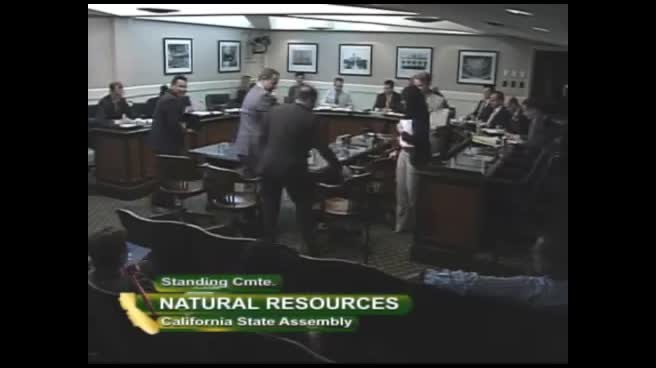
Discussed in Hearing
 9MIN
Assembly Standing Committee on Natural Resources




Bill Co-Author(s):