AB 2430: Voluntary contributions: Type 1 Diabetes Research Fund.
- Session Year: 2015-2016
- House: Assembly
- Latest Version Date: 2016-09-22
Under existing law, taxpayers are allowed to contribute amounts in excess of their personal income tax liability for the support of various funds. Existing law also contains administrative provisions that are generally applicable to voluntary contributions.
This bill would allow a taxpayer to designate an amount in excess of personal income tax liability to be deposited to the Type 1 Diabetes Research Fund, which the bill would create. The bill would require moneys transferred to the Type 1 Diabetes Research Fund, upon appropriation by the Legislature, to be allocated to the Franchise Tax Board and the Controller, as provided, and to the University of California for distribution of grants to authorized diabetes research organizations, as defined, for the purpose of type 1 diabetes research, as provided.
Under existing law, taxpayers are allowed to contribute amounts in excess of their personal income tax liability for the support of various funds. Existing law also contains administrative provisions that are generally applicable to voluntary contributions.
This bill would allow a taxpayer to designate an amount in excess of personal income tax liability to be deposited to the Type 1 Diabetes Research Fund, which the bill would create. The bill would require moneys transferred to the Type 1 Diabetes Research Fund, upon appropriation by the Legislature, to be allocated to the Franchise Tax Board and the Controller, as provided, and to the University of California for distribution of grants to authorized diabetes research organizations, as defined, for the purpose of type 1 diabetes research, as provided.
Under existing law, taxpayers are allowed to contribute amounts in excess of their personal income tax liability for the support of various funds. Existing law also contains administrative provisions that are generally applicable to voluntary contributions.
This bill would allow a taxpayer to designate an amount in excess of personal income tax liability to be deposited to the Type 1 Diabetes Research Fund, which the bill would create. The bill would require moneys transferred to the Type 1 Diabetes Research Fund, upon appropriation by the Legislature, to be allocated to the Franchise Tax Board and the Controller, as provided, and to an the University of California for distribution of grants to authorized diabetes research organization, organizations, as defined, for the purpose of type 1 diabetes research, as provided.
Under existing law, taxpayers are allowed to contribute amounts in excess of their personal income tax liability for the support of various funds. Existing law also contains administrative provisions that are generally applicable to voluntary contributions.
This bill would allow a taxpayer to designate an amount in excess of personal income tax liability to be deposited to the Juvenile Type 1 Diabetes Research Fund, which the bill would create. The bill would require moneys transferred to the Juvenile Type 1 Diabetes Research Fund, upon appropriation by the Legislature, to be allocated to the Franchise Tax Board and the Controller, as provided, and to the Juvenile Diabetes Research Fund for the purpose of fighting type 1 diabetes, an authorized diabetes research organization, as defined, for the purpose of type 1 diabetes research, as provided.
Under existing law, taxpayers are allowed to contribute amounts in excess of their personal income tax liability for the support of various funds. Existing law also contains administrative provisions that are generally applicable to voluntary contributions.
This bill would allow a taxpayer to designate an amount in excess of personal income tax liability to be deposited to the Juvenile Diabetes Research Fund, which the bill would create. The bill would require moneys transferred to the Juvenile Diabetes Research Fund, upon appropriation by the Legislature, to be allocated to the Franchise Tax Board and the Controller, as provided, and to the Juvenile Diabetes Research Fund for the purpose of fighting type 1 diabetes, as provided.
The Personal Income Tax Law imposes taxes on income and provides a definition of the Franchise Tax Board for purposes of that law.
This bill would make a nonsubstantive change to that definition.
The Personal Income Tax Law imposes taxes on income and provides a definition of the Franchise Tax Board for purposes of that law.
This bill would make a nonsubstantive change to that definition.
(a)Any individual may designate on the tax return that a contribution in excess of the tax liability, if any, be made to the Type 1 Diabetes Research Fund established by Section 18782.
(b)The contribution shall be in full dollar amounts and may be made individually by each signatory on the joint return.
(c)A designation under subdivision (a) shall be made for any taxable year on the original return for that taxable year, and once made shall be irrevocable. If payments and credits reported on the return, together with any other credits associated with the individuals account, do not exceed the individuals tax liability, the return shall be treated as though no designation has been made.
(d)(1)The Franchise Tax Board shall revise the form of the return to include a space labeled Type 1 Diabetes Research Fund to allow for the designation permitted under subdivision (a). The form shall also include in the instructions information that the contribution may be in the amount of one dollar ($1) or more and that the contribution shall be used to conduct the activities of an authorized diabetes research organization.
(2)Notwithstanding any other law, a voluntary contribution designation for the Type 1 Diabetes Research Fund shall not be added on the tax return until another voluntary contribution designation is removed or space is available, whichever occurs first.
(e)A deduction shall be allowed under Article 6 (commencing with Section 17201) of Chapter 3 of Part 10 for any contribution made pursuant to subdivision (a).
18781.5.For purposes of this article:
(a)An authorized diabetes research organization means either:
(1)A university, located within the state, with a research program.
(2)A nonprofit charitable organization exempt from federal income tax as an organization described in Section 501(c)(3) of the Internal Revenue Code that engages in research.
(b)Research shall include, but not be limited to, expenditures to develop and advance the understanding, techniques, and modalities effective in the cure, screening, and treatment of type 1 diabetes.
18782.There is hereby established in the State Treasury the Type 1 Diabetes Research Fund to receive contributions made pursuant to Section 18781. The Franchise Tax Board shall notify the Controller of both the amount of money paid by taxpayers in excess of their tax liability and the amount of refund money that taxpayers have designated pursuant to Section 18781 to be transferred to the Type 1 Diabetes Research Fund. The Controller shall transfer from the Personal Income Tax Fund to the Type 1 Diabetes Research Fund an amount not in excess of the sum of the amounts designated by individuals pursuant to Section 18781 for payment into that fund.
18783.All moneys transferred to the Type 1 Diabetes Research Fund pursuant to Section 18782, upon appropriation by the Legislature, shall be allocated as follows:
(a)To the Franchise Tax Board and the Controller for reimbursement of all costs incurred by the Franchise Tax Board and the Controller in connection with their duties under this article.
(b)(1)To the University of California for distribution of grants to authorized diabetes research organizations for the purposes of conducting research on type 1 diabetes. The University of California may use up to 5 percent of the moneys allocated to it for administrative costs.
(2)An authorized diabetes research organization that receives a grant pursuant to this section may use up to 5 percent of the grant moneys for administrative costs.
18784.(a)Except as otherwise provided in paragraph (2) of subdivision (b), this article shall remain in effect only until January 1 of the fifth taxable year following the first appearance of the Type 1 Diabetes Research Fund on the personal income tax return, and is repealed as of December 1 of that year.
(b)(1) By September 1 of the second calendar year and each subsequent calendar year that the Type 1 Diabetes Research Fund appears on the tax return, the Franchise Tax Board shall do both of the following:
(A)Determine the minimum contribution amount required to be received during the next calendar year for the fund to appear on the tax return for the taxable year that includes that next calendar year.
(B)Determine whether the amount of contributions estimated to be received during the calendar year will equal or exceed the minimum contribution amount determined by the Franchise Tax Board for the calendar year pursuant to subparagraph (A). The Franchise Tax Board shall estimate the amount of contributions to be received by using the actual amounts received and an estimate of the contributions that will be received by the end of that calendar year.
(2)If the Franchise Tax Board determines that the amount of the contributions estimated to be received during a calendar year will not at least equal the minimum contribution amount for the calendar year, this article shall be inoperative with respect to taxable years beginning on or after January 1 of that calendar year and shall be repealed on December 1 of that year.
(3)For purposes of this section, the minimum contribution amount for a calendar year means two hundred fifty thousand dollars ($250,000) for the second calendar year after the first appearance of the Type 1 Diabetes Research Fund on the personal income tax return or the minimum contribution amount as adjusted pursuant to subdivision (c).
(c)For each calendar year, beginning with the third calendar year after the first appearance of the Type 1 Diabetes Research Fund on the personal income tax return, the Franchise Tax Board shall adjust, on or before September 1 of that calendar year, the minimum contribution amount specified in subdivision (b) as follows:
(1)The minimum contribution amount for the calendar year shall be an amount equal to the product of the minimum contribution amount for the prior calendar year multiplied by the inflation factor adjustment as specified in subparagraph (A) of paragraph (2) of subdivision (h) of Section 17041, rounded off to the nearest dollar.
(2)The inflation factor adjustment used for the calendar year shall be based on the figures for the percentage change in the California Consumer Price Index for all items received on or before August 1 of the calendar year pursuant to paragraph (1) of subdivision (h) of Section 17041.
(a)Any individual may designate on the tax return that a contribution in excess of the tax liability, if any, be made to the Type 1 Diabetes Research Fund established by Section 18782.
(b)The contribution shall be in full dollar amounts and may be made individually by each signatory on the joint return.
(c)A designation under subdivision (a) shall be made for any taxable year on the original return for that taxable year, and once made shall be irrevocable. If payments and credits reported on the return, together with any other credits associated with the individuals account, do not exceed the individuals tax liability, the return shall be treated as though no designation has been made.
(d)(1)The Franchise Tax Board shall revise the form of the return to include a space labeled Type 1 Diabetes Research Fund to allow for the designation permitted under subdivision (a). The form shall also include in the instructions information that the contribution may be in the amount of one dollar ($1) or more and that the contribution shall be used to conduct the activities of an authorized diabetes research organization.
(2)Notwithstanding any other law, a voluntary contribution designation for the Type 1 Diabetes Research Fund shall not be added on the tax return until another voluntary contribution designation is removed or space is available, whichever occurs first.
(e)A deduction shall be allowed under Article 6 (commencing with Section 17201) of Chapter 3 of Part 10 for any contribution made pursuant to subdivision (a).
18781.5.For purposes of this article:
(a)An authorized diabetes research organization means either:
(1)A university, located within the state, with a research program.
(2)A nonprofit charitable organization exempt from federal income tax as an organization described in Section 501(c)(3) of the Internal Revenue Code that engages in research.
(b)Research shall include, but not be limited to, expenditures to develop and advance the understanding, techniques, and modalities effective in the cure, screening, and treatment of type 1 diabetes.
18782.There is hereby established in the State Treasury the Type 1 Diabetes Research Fund to receive contributions made pursuant to Section 18781. The Franchise Tax Board shall notify the Controller of both the amount of money paid by taxpayers in excess of their tax liability and the amount of refund money that taxpayers have designated pursuant to Section 18781 to be transferred to the Type 1 Diabetes Research Fund. The Controller shall transfer from the Personal Income Tax Fund to the Type 1 Diabetes Research Fund an amount not in excess of the sum of the amounts designated by individuals pursuant to Section 18781 for payment into that fund.
18783.All moneys transferred to the Type 1 Diabetes Research Fund pursuant to Section 18782, upon appropriation by the Legislature, shall be allocated as follows:
(a)To the Franchise Tax Board and the Controller for reimbursement of all costs incurred by the Franchise Tax Board and the Controller in connection with their duties under this article.
(b)(1)To the University of California for distribution of grants to authorized diabetes research organizations for the purposes of conducting research on type 1 diabetes. The University of California may use up to 5 percent of the moneys allocated to it for administrative costs.
(2)An authorized diabetes research organization that receives a grant pursuant to this section may use up to 5 percent of the grant moneys for administrative costs.
18784.(a)Except as otherwise provided in paragraph (2) of subdivision (b), this article shall remain in effect only until January 1 of the fifth taxable year following the first appearance of the Type 1 Diabetes Research Fund on the personal income tax return, and is repealed as of December 1 of that year.
(b)(1) By September 1 of the second calendar year and each subsequent calendar year that the Type 1 Diabetes Research Fund appears on the tax return, the Franchise Tax Board shall do both of the following:
(A)Determine the minimum contribution amount required to be received during the next calendar year for the fund to appear on the tax return for the taxable year that includes that next calendar year.
(B)Determine whether the amount of contributions estimated to be received during the calendar year will equal or exceed the minimum contribution amount determined by the Franchise Tax Board for the calendar year pursuant to subparagraph (A). The Franchise Tax Board shall estimate the amount of contributions to be received by using the actual amounts received and an estimate of the contributions that will be received by the end of that calendar year.
(2)If the Franchise Tax Board determines that the amount of the contributions estimated to be received during a calendar year will not at least equal the minimum contribution amount for the calendar year, this article shall be inoperative with respect to taxable years beginning on or after January 1 of that calendar year and shall be repealed on December 1 of that year.
(3)For purposes of this section, the minimum contribution amount for a calendar year means two hundred fifty thousand dollars ($250,000) for the second calendar year after the first appearance of the Type 1 Diabetes Research Fund on the personal income tax return or the minimum contribution amount as adjusted pursuant to subdivision (c).
(c)For each calendar year, beginning with the third calendar year after the first appearance of the Type 1 Diabetes Research Fund on the personal income tax return, the Franchise Tax Board shall adjust, on or before September 1 of that calendar year, the minimum contribution amount specified in subdivision (b) as follows:
(1)The minimum contribution amount for the calendar year shall be an amount equal to the product of the minimum contribution amount for the prior calendar year multiplied by the inflation factor adjustment as specified in subparagraph (A) of paragraph (2) of subdivision (h) of Section 17041, rounded off to the nearest dollar.
(2)The inflation factor adjustment used for the calendar year shall be based on the figures for the percentage change in the California Consumer Price Index for all items received on or before August 1 of the calendar year pursuant to paragraph (1) of subdivision (h) of Section 17041.
(a)Any individual may designate on the tax return that a contribution in excess of the tax liability, if any, be made to the Type 1 Diabetes Research Fund established by Section 18782.
(b)The contribution shall be in full dollar amounts and may be made individually by each signatory on the joint return.
(c)A designation under subdivision (a) shall be made for any taxable year on the original return for that taxable year, and once made shall be irrevocable. If payments and credits reported on the return, together with any other credits associated with the individuals account, do not exceed the individuals tax liability, the return shall be treated as though no designation has been made.
(d)(1)The Franchise Tax Board shall revise the form of the return to include a space labeledType labeled Type 1 Diabetes Research Fund to allow for the designation permitted under subdivision (a). The form shall also include in the instructions information that the contribution may be in the amount of one dollar ($1) or more and that the contribution shall be used to conduct the activities of an authorized diabetes research organization.
(2)Notwithstanding any other law, a voluntary contribution designation for the Type 1 Diabetes Research Fund shall not be added on the tax return until another voluntary contribution designation is removed or space is available, whichever occurs first.
(e)A deduction shall be allowed under Article 6 (commencing with Section 17201) of Chapter 3 of Part 10 for any contribution made pursuant to subdivision (a).
18781.5.For purposes of this article:
(a)An authorized diabetes research organization means either:
(1)A university, located within the state, with a research program.
(2)A nonprofit charitable organization exempt from federal income tax as an organization described in Section 501(c)(3) of the Internal Revenue Code that engages in research.
(b)Research shall include, but not be limited to, expenditures to develop and advance the understanding, techniques, and modalities effective in the cure, screening, and treatment of type 1 diabetes.
18782.There is hereby established in the State Treasury the Type 1 Diabetes Research Fund to receive contributions made pursuant to Section 18781. The Franchise Tax Board shall notify the Controller of both the amount of money paid by taxpayers in excess of their tax liability and the amount of refund money that taxpayers have designated pursuant to Section 18781 to be transferred to the Type 1 Diabetes Research Fund. The Controller shall transfer from the Personal Income Tax Fund to the Type 1 Diabetes Research Fund an amount not in excess of the sum of the amounts designated by individuals pursuant to Section 18781 for payment into that fund.
18783.All moneys transferred to the Type 1 Diabetes Research Fund pursuant to Section 18782, upon appropriation by the Legislature, shall be allocated as follows:
(a)To the Franchise Tax Board and the Controller for reimbursement of all costs incurred by the Franchise Tax Board and the Controller in connection with their duties under this article.
(b)The balance to an authorized diabetes research organization for the purpose of type 1 diabetes research. The authorized diabetes research organization may use up to 5 percent of the moneys allocated to it for administering and promoting the research.
(b)(1)To the University of California for distribution of grants to authorized diabetes research organizations for the purposes of conducting research on type 1 diabetes. The University of California may use up to 5 percent of the moneys allocated to it for administrative costs.
(2)An authorized diabetes research organization that receives a grant pursuant to this section may use up to 5 percent of the grant moneys for administrative costs.
18784.(a)Except as otherwise provided in paragraph (2) of subdivision (b), this article shall remain in effect only until January 1 of the fifth taxable year following the first appearance of the Type 1 Diabetes Research Fund on the personal income tax return, and is repealed as of December 1 of that year.
(b)(1) By September 1 of the second calendar year and each subsequent calendar year that the Type 1 Diabetes Research Fund appears on the tax return, the Franchise Tax Board shall do both of the following:
(A)Determine the minimum contribution amount required to be received during the next calendar year for the fund to appear on the tax return for the taxable year that includes that next calendar year.
(B)Determine whether the amount of contributions estimated to be received during the calendar year will equal or exceed the minimum contribution amount determined by the Franchise Tax Board for the calendar year pursuant to subparagraph (A). The Franchise Tax Board shall estimate the amount of contributions to be received by using the actual amounts received and an estimate of the contributions that will be received by the end of that calendar year.
(2)If the Franchise Tax Board determines that the amount of the contributions estimated to be received during a calendar year will not at least equal the minimum contribution amount for the calendar year, this article shall be inoperative with respect to taxable years beginning on or after January 1 of that calendar year and shall be repealed on December 1 of that year.
(3)For purposes of this section, the minimum contribution amount for a calendar year means two hundred fifty thousand dollars ($250,000) for the second calendar year after the first appearance of the Type 1 Diabetes Research Fund on the personal income tax return or the minimum contribution amount as adjusted pursuant to subdivision (c).
(c)For each calendar year, beginning with the third calendar year after the first appearance of the Type 1 Diabetes Research Fund on the personal income tax return, the Franchise Tax Board shall adjust, on or before September 1 of that calendar year, the minimum contribution amount specified in subdivision (b) as follows:
(1)The minimum contribution amount for the calendar year shall be an amount equal to the product of the minimum contribution amount for the prior calendar year multiplied by the inflation factor adjustment as specified in subparagraph (A) of paragraph (2) of subdivision (h) of Section 17041, rounded off to the nearest dollar.
(2)The inflation factor adjustment used for the calendar year shall be based on the figures for the percentage change in the California Consumer Price Index for all items received on or before August 1 of the calendar year pursuant to paragraph (1) of subdivision (h) of Section 17041.
(a)Any individual may designate on the tax return that a contribution in excess of the tax liability, if any, be made to the Juvenile Type 1 Diabetes Research Fund established by Section 18782 to be used by the Juvenile Diabetes Research Fund. 18782.
(b)The contribution shall be in full dollar amounts and may be made individually by each signatory on the joint return.
(c)A designation under subdivision (a) shall be made for any taxable year on the initial original return for that taxable year, and once made shall be irrevocable. If payments and credits reported on the return, together with any other credits associated with the individuals account, do not exceed the individuals tax liability, the return shall be treated as though no designation has been made.
(d)(1)The Franchise Tax Board shall revise the form of the return to include a space labeled JuvenileType 1 Diabetes Research Fund to allow for the designation permitted under subdivision (a). The form shall also include in the instructions information that the contribution may be in the amount of one dollar ($1) or more and that the contribution shall be used to conduct the activities of the Juvenile Diabetes Research Fund. an authorized diabetes research organization.
(2)Notwithstanding any other law, a voluntary contribution designation for the Juvenile Type 1 Diabetes Research Fund shall not be added on the tax return until another voluntary contribution designation is removed or space is available, whichever occurs first.
(e)A deduction shall be allowed under Article 6 (commencing with Section 17201) of Chapter 3 of Part 10 for any contribution made pursuant to subdivision (a).
18781.5.For purposes of this article:
(a)An authorized diabetes research organization means either:
(1)A university, located within the state, with a research program.
(2)A nonprofit charitable organization exempt from federal income tax as an organization described in Section 501(c)(3) of the Internal Revenue Code that engages in research.
(b)Research shall include, but not be limited to, expenditures to develop and advance the understanding, techniques, and modalities effective in the cure, screening, and treatment of type 1 diabetes.
18782.There is hereby established in the State Treasury the Juvenile Type 1 Diabetes Research Fund to receive contributions made pursuant to Section 18781. The Franchise Tax Board shall notify the Controller of both the amount of money paid by taxpayers in excess of their tax liability and the amount of refund money that taxpayers have designated pursuant to Section 18781 to be transferred to the Juvenile Type 1 Diabetes Research Fund. The Controller shall transfer from the Personal Income Tax Fund to the Juvenile Type 1 Diabetes Research Fund an amount not in excess of the sum of the amounts designated by individuals pursuant to Section 18781 for payment into that fund.
18783.All moneys transferred to the Juvenile Type 1 Diabetes Research Fund pursuant to Section 18782, upon appropriation by the Legislature, shall be allocated as follows:
(a)To the Franchise Tax Board and the Controller for reimbursement of all costs incurred by the Franchise Tax Board and the Controller in connection with their duties under this article.
(b)The balance for the purpose of fighting type 1 diabetes. to an authorized diabetes research organization for the purpose of type 1 diabetes research. The authorized diabetes research organization may use up to 5 percent of the moneys allocated to it for administering and promoting the research.
18784.(a)Except as otherwise provided in paragraph (2) of subdivision (b), this article shall remain in effect only until January 1 of the fifth taxable year following the first appearance of the Juvenile Type 1 Diabetes Research Fund on the personal income tax return, and is repealed as of December 1 of that year.
(b)(1) By September 1 of the second calendar year and each subsequent calendar year that the Juvenile Type 1 Diabetes Research Fund appears on the tax return, the Franchise Tax Board shall do both of the following:
(A)Determine the minimum contribution amount required to be received during the next calendar year for the fund to appear on the tax return for the taxable year that includes that next calendar year.
(B)Determine whether the amount of contributions estimated to be received during the calendar year will equal or exceed the minimum contribution amount determined by the Franchise Tax Board for the calendar year pursuant to subparagraph (A). The Franchise Tax Board shall estimate the amount of contributions to be received by using the actual amounts received and an estimate of the contributions that will be received by the end of that calendar year.
(2)If the Franchise Tax Board determines that the amount of the contributions estimated to be received during a calendar year will not at least equal the minimum contribution amount for the calendar year, this article shall be inoperative with respect to taxable years beginning on or after January 1 of that calendar year and shall be repealed on December 1 of that year.
(3)For purposes of this section, the minimum contribution amount for a calendar year means two hundred fifty thousand dollars ($250,000) for the second calendar year after the first appearance of the Juvenile Type 1 Diabetes Research Fund on the personal income tax return or the minimum contribution amount as adjusted pursuant to subdivision (c).
(c)For each calendar year, beginning with the third calendar year after the first appearance of the Juvenile Type 1 Diabetes Research Fund on the personal income tax return, the Franchise Tax Board shall adjust, on or before September 1 of that calendar year, the minimum contribution amount specified in subdivision (b) as follows:
(1)The minimum estimated contribution amount for the calendar year shall be an amount equal to the product of the minimum estimated contribution amount for the prior calendar year multiplied by the inflation factor adjustment as specified in subparagraph (A) of paragraph (2) of subdivision (h) of Section 17041, rounded off to the nearest dollar.
(2)The inflation factor adjustment used for the calendar year shall be based on the figures for the percentage change in the California Consumer Price Index for all items received on or before August 1 of the calendar year pursuant to paragraph (1) of subdivision (h) of Section 17041.
(d)Notwithstanding the repeal of this article, any contribution amounts designated pursuant to this article prior to its repeal shall continue to be transferred and disbursed in accordance with this article as in effect immediately prior to that repeal.
(a)Any individual may designate on the tax return that a contribution in excess of the tax liability, if any, be made to the Juvenile Diabetes Research Fund established by Section 18782 to be used by the Juvenile Diabetes Research Fund.
(b)The contribution shall be in full dollar amounts and may be made individually by each signatory on the joint return.
(c)A designation under subdivision (a) shall be made for any taxable year on the initial return for that taxable year, and once made shall be irrevocable. If payments and credits reported on the return, together with any other credits associated with the individuals account, do not exceed the individuals tax liability, the return shall be treated as though no designation has been made.
(d)(1)The Franchise Tax Board shall revise the form of the return to include a space labeled Juvenile Diabetes Research Fund to allow for the designation permitted under subdivision (a). The form shall also include in the instructions information that the contribution may be in the amount of one dollar ($1) or more and that the contribution shall be used to conduct the activities of the Juvenile Diabetes Research Fund.
(2)Notwithstanding any other law, a voluntary contribution designation for the Juvenile Diabetes Research Fund shall not be added on the tax return until another voluntary contribution designation is removed or space is available, whichever occurs first.
(e)A deduction shall be allowed under Article 6 (commencing with Section 17201) of Chapter 3 of Part 10 for any contribution made pursuant to subdivision (a).
18782.There is hereby established in the State Treasury the Juvenile Diabetes Research Fund to receive contributions made pursuant to Section 18781. The Franchise Tax Board shall notify the Controller of both the amount of money paid by taxpayers in excess of their tax liability and the amount of refund money that taxpayers have designated pursuant to Section 18781 to be transferred to the Juvenile Diabetes Research Fund. The Controller shall transfer from the Personal Income Tax Fund to the Juvenile Diabetes Research Fund an amount not in excess of the sum of the amounts designated by individuals pursuant to Section 18781 for payment into that fund.
18783.All moneys transferred to the Juvenile Diabetes Research Fund pursuant to Section 18782, upon appropriation by the Legislature, shall be allocated as follows:
(a)To the Franchise Tax Board and the Controller for reimbursement of all costs incurred by the Franchise Tax Board and the Controller in connection with their duties under this article.
(b)The balance for the purpose of fighting type 1 diabetes.
18784.(a)Except as otherwise provided in paragraph (2) of subdivision (b), this article shall remain in effect only until January 1 of the fifth taxable year following the first appearance of the Juvenile Diabetes Research Fund on the personal income tax return, and is repealed as of December 1 of that year.
(b)(1) By September 1 of the second calendar year and each subsequent calendar year that the Juvenile Diabetes Research Fund appears on the tax return, the Franchise Tax Board shall do both of the following:
(A)Determine the minimum contribution amount required to be received during the next calendar year for the fund to appear on the tax return for the taxable year that includes that next calendar year.
(B)Determine whether the amount of contributions estimated to be received during the calendar year will equal or exceed the minimum contribution amount determined by the Franchise Tax Board for the calendar year pursuant to subparagraph (A). The Franchise Tax Board shall estimate the amount of contributions to be received by using the actual amounts received and an estimate of the contributions that will be received by the end of that calendar year.
(2)If the Franchise Tax Board determines that the amount of the contributions estimated to be received during a calendar year will not at least equal the minimum contribution amount for the calendar year, this article shall be inoperative with respect to taxable years beginning on or after January 1 of that calendar year and shall be repealed on December 1 of that year.
(3)For purposes of this section, the minimum contribution amount for a calendar year means two hundred fifty thousand dollars ($250,000) for the second calendar year after the first appearance of the Juvenile Diabetes Research Fund on the personal income tax return or the minimum contribution amount as adjusted pursuant to subdivision (c).
(c)For each calendar year, beginning with the third calendar year after the first appearance of the Juvenile Diabetes Research Fund on the personal income tax return, the Franchise Tax Board shall adjust, on or before September 1 of that calendar year, the minimum contribution amount specified in subdivision (b) as follows:
(1)The minimum estimated contribution amount for the calendar year shall be an amount equal to the product of the minimum estimated contribution amount for the calendar year multiplied by the inflation factor adjustment as specified in subparagraph (A) of paragraph (2) of subdivision (h) of Section 17041, rounded off to the nearest dollar.
(2)The inflation factor adjustment used for the calendar year shall be based on the figures for the percentage change in the California Consumer Price Index for all items received on or before August 1 of the calendar year pursuant to paragraph (1) of subdivision (h) of Section 17041.
(d)Notwithstanding the repeal of this article, any contribution amounts designated pursuant to this article prior to its repeal shall continue to be transferred and disbursed in accordance with this article as in effect immediately prior to that repeal.
SECTION 1.Section 17003 of the Revenue and Taxation Code is amended to read:17003.Franchise Tax Board means the Franchise Tax Board described in Part 10 (commencing with Section 15700) of Division 3 of Title 2 of the Government Code. Board means the State Board of Equalization.
Franchise Tax Board means the Franchise Tax Board described in Part 10, Division 3, 10 (commencing with Section 15700) of Division 3 of Title 2 of the Government Code. Board means the State Board of Equalization.
|
Date
|
Status
|
|---|---|
| May 19, 2016 | From Consent Calendar. |
| Aug 23, 2016 | Enrolled and presented to the Governor at 2 p.m. |
| Aug 17, 2016 | Read third time. Passed. Ordered to the Assembly. (Ayes 38. Noes 0.). |
| Aug 17, 2016 | Read third time. Passed. Ordered to the Assembly. (Ayes 38. Noes 0. Page 5056.). |
| Aug 17, 2016 | Read third time. Passed. Ordered to the Assembly. |
| Aug 17, 2016 | In Assembly. Ordered to Engrossing and Enrolling. |
| Aug 3, 2016 | Read second time. Ordered to third reading. |
| Aug 2, 2016 | From committee: Do pass. (Ayes 7. Noes 0.) (August 1). |
| Jun 29, 2016 | From committee: Do pass and re-refer to Com. on APPR. (Ayes 5. Noes 0.) (June 29). Re-referred to Com. on APPR. |
| Jun 9, 2016 | Referred to Com. on GOV. & F. |
| May 23, 2016 | Read third time. Passed. Ordered to the Senate. (Ayes 76. Noes 0.) |
| May 23, 2016 | Read third time. Passed. Ordered to the Senate. (Ayes 76. Noes 0. Page 4904.) |
| May 23, 2016 | Read third time. Passed. Ordered to the Senate. |
| May 23, 2016 | In Senate. Read first time. To Com. on RLS. for assignment. |
| May 19, 2016 | Ordered to third reading. |
| Feb 19, 2016 | Introduced. To print. |
| May 12, 2016 | Read second time. Ordered to Consent Calendar. |
| May 11, 2016 | From committee: Do pass. To Consent Calendar. (Ayes 20. Noes 0.) (May 11). |
| Apr 28, 2016 | Re-referred to Com. on APPR. |
| Apr 27, 2016 | Read second time and amended. |
| Apr 26, 2016 | From committee: Amend, and do pass as amended and re-refer to Com. on APPR. with recommendation: To Consent Calendar. (Ayes 9. Noes 0.) (April 18). |
| Apr 14, 2016 | Re-referred to Com. on REV. & TAX. |
| Apr 13, 2016 | From committee chair, with author's amendments: Amend, and re-refer to Com. on REV. & TAX. Read second time and amended. |
| Apr 11, 2016 | In committee: Hearing postponed by committee. |
| Mar 28, 2016 | Re-referred to Com. on REV. & TAX. |
| Mar 18, 2016 | From committee chair, with author's amendments: Amend, and re-refer to Com. on REV. & TAX. Read second time and amended. |
| Mar 17, 2016 | Referred to Com. on REV. & TAX. |
| Feb 22, 2016 | Read first time. |
| Feb 21, 2016 | From printer. May be heard in committee March 22. |
|
Date
|
Description
|
Location
|
Votes
|
|
|---|---|---|---|---|
| Aug 17, 2016 | Assembly 3rd Reading AB2430 Beth Gaines By Beall | Senate Floor |
Passed |
|
| Aug 1, 2016 | Do pass | Senate Standing Committee on Appropriations |
Passed |
|
| Jun 29, 2016 | Do pass, but first be re-referred to the Committee on [Appropriations] | Senate Standing Committee on Governance and Finance |
Passed |
|
| May 23, 2016 | AB 2430 GAINES Assembly Third Reading | Assembly Floor |
Passed |
|
| May 11, 2016 | Do pass. To Consent Calendar. | Assembly Standing Committee on Appropriations |
Passed |
|
| Apr 18, 2016 | Do pass as amended, and be re-referred to the Committee on [Appropriations] with recommendation: To Consent Calendar | Assembly Standing Committee on Revenue and Taxation |
Passed |
This list shows positions taken on this bill by organizations on the date displayed, which is linked to the original source.
Positions by individuals are not included.
|
Organization
|
Position
|
Date
|
|---|---|---|
| California Department of Finance | ** Against | Aug 17, 2016 |
Office of Senate Floor Analyses (916) 651-1520 Fax: (916) 327-4478 | AB |
THIRD READING
Bill No: AB 2430
:
SENATE GOVERNANCE & FIN. COMMITTEE: 5-0, 6/29/16
AYES: Hertzberg, Nguyen, Beall, Hernandez, Moorlach
NO VOTE RECORDED: Lara, Pavley
SENATE APPROPRIATIONS COMMITTEE: 7-0, 8/1/16
AYES: Lara, Bates, Beall, Hill, McGuire, Mendoza, Nielsen
ASSEMBLY FLOOR: 76-0, 5/23/16 - See last page for vote
DIGEST: This bill requires the addition of the Type 1 Diabetes Research Fund (Fund) check-off to the personal income tax return.
Existing law:
- Allows taxpayers to contribute money to voluntary contribution funds (VCFs) by checking a box on their state income tax returns. California law requires contributions made through so-called “check-offs” to be made from taxpayers’ own resources and not from their tax liability, as is possible on federal tax returns.
- Allows contribution amounts to be claimed as charitable contributions on taxpayers’ tax returns in the subsequent year.
- Requires that each VCF is individually added to the tax return by legislation. With a few exceptions, VCFs remain on the return until they are repealed by a sunset date or fail to generate a minimum contribution amount. In general, the minimum contribution amounts are adjusted annually for inflation. For most VCFs, the minimum contribution amount is $250,000, beginning in the fund’s second year. The following check-offs do not have a minimum contribution requirement:
- California Firefighters’ Memorial Foundation Fund,
- California Peace Officer Memorial Foundation Fund, and
- California Seniors Special Fund.
This bill:
- Adds the Type 1 Diabetes Research Fund (Fund), and allows a taxpayer to make a voluntary contribution to the Fund on the state personal income tax return, beginning once an existing check-off for charitable fund contribution has been removed, or as soon as space is available.
- Requires the Fund to meet a minimum contribution threshold of $250,000 in the second calendar year the Fund appears on the tax form, and the amount is indexed yearly for inflation
- Provides that all money transferred to the Fund, upon appropriation by the Legislature, be allocated as follows:
- To the Franchise Tax Board (FTB) and the State Controller’s Office (SCO) for reimbursement of all costs incurred in administering the VCF.
- To the University of California (UC) for distribution of grants to authorized diabetes research organizations. Both the UC and the authorized research organizations may also use up to 5% of the grant moneys for administrative cost.
- Allows the UC and the authorized research organizations to use up to 5% of the grant money for administrative costs.
- Provides that the bill automatically sunsets on January 1 of the fifth taxable year following the Fund's first appearance on the personal income tax form.
Background
Current law allows taxpayers to contribute money to one or more of 19 voluntary contribution funds (VCFs) during the process of filing their state income tax return. These contributions are made from taxpayers' own resources, not from their tax liability, as is the case with federal tax returns. Check-off amounts are deductible as charitable contributions on taxpayers' returns during the subsequent tax year. With some exceptions, each voluntary contribution fund has a sunset date and is required to meet a minimum contribution amount of $250,000, adjusted annually for inflation.
When a taxpayer contributes to VCFs, FTB deposits the total of all contributions, less an administrative fee, into the fund created as part of the VCF’s legislative authorization. For some VCFs, such as the Protect Our Coast and Ocean Fund, taxpayers’ contributions are allocated to a state agency for use in a state administered grant program. The authorizing statutes of other VCFs direct administrative agencies to allocate donations to a private organization. For example, the Office of Emergency Services passes VCF funds to the American Red Cross. Other VCFs require the SCO to send the funds directly to private organizations without passing through an administrative agency, such as the California Fire Foundation. SCO and administrative agencies may deduct administration fees from the amount of donations each VCF receives.
FISCAL EFFECT: Appropriation: Fiscal Com.: Local:
According to the Senate Appropriations Committee:
- FTB estimates that, beginning in 2017- 18, this bill would result in an annual revenue loss of $8,000 (General Fund) for every $250,000 contributed by itemizing taxpayers.
- The UC, SCO, and FTB would be reimbursed for related administrative costs.
None received
California Department of Finance
ARGUMENTS IN SUPPORT: According to the author, “Diabetes has reached epidemic levels in California. As of 2012, about one in seven adult Californians have diabetes and as many as one in three will be diagnosed in the near future. The total cost for treatment of diabetes in California exceeds $24.5 billion dollars. This dollar amount includes hospitalization, outpatient treatment, disability payments, loss of individual productivity, and more. As the number of those affected increases, so too will the cost. A January 2015 audit, requested by our office, of the Department of Public Health indicated that, at a funding level of three cents per capita, California has the lowest per capita funding for diabetes prevention in the nation. As California and its Legislature debates how to address this shortfall in diabetes funding, diabetics are seeing their costs skyrocket on a daily basis. Recently, a lot of attention has been given to the study coming out of UCLA in March of 2016 on prediabetes, which generally could result in a diagnosis of Type 2 diabetes. However, little to no attention is given to Type 1 diabetes, which used to be referred to as 'juvenile diabetes' given its high incidence in children. In California, there is an estimated 190,000 people diagnosed as type 1 diabetic. While it certainly seems to be a small percentage compared to the 8 million+ of the diabetic population, the costs associated with Type 1 diabetes are immensely disproportionate. Because Type 1 diabetes is an autoimmune disease in which a person’s pancreas stops producing insulin, Type 1 diabetics have to have to carefully balance insulin doses (either by injections multiple times a day or continuous infusion through a pump) with eating and other activities throughout the day and night on a daily basis. They must also measure their blood-glucose level by pricking their fingers for blood six or more times a day. These tools (the pump, the sharps, the blood glucose meters, the testing strips, etc.) are not cheap and as technology evolves, they get more expensive. AB 2430 seeks to create a voluntary tax contribution designation on a state income tax deduction form so that taxpayers can directly donate to the Juvenile Diabetes Research Foundation (JDRF), who is the leading global organization funding Type 1 diabetes research. JDRF is the only global organization with a strategic plan to bring those living with Type 1 diabetes a continuous flow of life-changing therapies and, ultimately, a cure for the disease."
ARGUMENTS IN OPPOSITION: Opponent argues that the bill is of limited value and results in a loss to the General Fund. Additionally, it is unclear why special preference should be given to one organization over the countless others that are not on the tax form.
ASSEMBLY FLOOR: 76-0, 5/23/16
AYES: Achadjian, Alejo, Travis Allen, Atkins, Baker, Bigelow, Bloom, Bonilla, Bonta, Brough, Brown, Burke, Calderon, Campos, Chang, Chau, Chávez, Chiu, Chu, Cooley, Cooper, Dababneh, Dahle, Daly, Dodd, Frazier, Beth Gaines, Gallagher, Cristina Garcia, Eduardo Garcia, Gatto, Gipson, Gomez, Gonzalez, Gray, Grove, Hadley, Harper, Roger Hernández, Holden, Irwin, Jones, Jones-Sawyer, Kim, Lackey, Levine, Linder, Lopez, Low, Maienschein, Mathis, Mayes, McCarty, Medina, Melendez, Mullin, Nazarian, Obernolte, O'Donnell, Olsen, Quirk, Ridley-Thomas, Rodriguez, Salas, Santiago, Steinorth, Mark Stone, Thurmond, Ting, Wagner, Waldron, Weber, Wilk, Williams, Wood, Rendon
NO VOTE RECORDED: Arambula, Eggman, Gordon, Patterson
8/3/16 18:11:10
**** END ****
SENATE COMMITTEE ON
Senator Ricardo Lara, Chair
2015 - 2016 Regular Session
AB 2430 (Beth Gaines) - Voluntary contributions: Type 1 Diabetes Research Fund
Version: | Policy Vote: |
Urgency: | Mandate: |
Hearing Date: | Consultant: |
This bill does not meet the criteria for referral to the Suspense File.
Bill Summary:
AB 2430 would add the Type 1 Diabetes Research Fund check-off to the personal income tax return.
Fiscal Impact:
- The Franchise Tax Board (FTB) estimates that, beginning in 2017- 18, this bill would result in an annual revenue loss of $8,000 (General Fund) for every $250,000 contributed by itemizing taxpayers.
- The University of California (UC), State Controller’s Office (SCO) and FTB and would be reimbursed for related administrative costs.
Background:
Current law allows taxpayers to contribute money to one or more of 19 voluntary contribution funds (VCFs) during the process of filing their state income tax return. These contributions are made from taxpayers' own resources, not from their tax liability, as is the case with federal tax returns. Check-off amounts are deductible as charitable contributions on taxpayers' returns during the subsequent tax year. With some exceptions, each voluntary contribution fund has a sunset date and is required to meet a minimum contribution amount of $250,000, adjusted annually for inflation.
When a taxpayer contributes to VCFs, FTB deposits the total of all contributions, less an administrative fee, into the fund created as part of the VCF’s legislative authorization. For some VCFs, such as the Protect Our Coast and Ocean Fund, taxpayers’ contributions are allocated to a state agency for use in a state administered grant program. The authorizing statutes of other VCFs direct administrative agencies to allocate donations to a private organization. For example, the Office of Emergency Services passes VCF funds to the American Red Cross. Other VCFs require the State Controller to send the funds directly to private organizations without passing through an administrative agency, such as the California Fire Foundation. SCO and administrative agencies may deduct administration fees from the amount of donations each VCF receives.
Proposed Law:
This bill would add the Type 1 Diabetes Research Fund (Fund) check-off, and allows a taxpayer to make a voluntary contribution to the Fund on the state personal income tax return, beginning once an existing check-off for charitable fund contribution has been removed, or as soon as space is available. It would require the Fund to meet a minimum contribution threshold of $250,000 in the second calendar year the Fund appears on the tax form; the amount would be indexed yearly for inflation.
Additionally, the bill would provide that all money transferred to the Fund, upon appropriation by the Legislature, be allocated as follows: (1) to FTB and SCO for reimbursement of all costs incurred in administering the VCF, and (2) to UC for distribution of grants to authorized diabetes research organizations. Both UC and the authorized research organizations may also use up to five percent of the grant moneys for administrative cost.
The new VCF would automatically sunset on January 1 of the fifth taxable year following the Fund's first appearance on the personal income tax form.
Related Legislation:
SB 1476 (Committee on Governance and Finance) would establish general provisions for voluntary contribution funds. Specifically, the bill would (1) establish a seven-year sunset, (2) require a minimum contribution amount of $250,000 beginning in the fund’s second year, and each year thereafter, requires funds to be continuously appropriated, and (3) require administering agencies to post information online about the use of the funds. SB 1476 is currently awaiting action by the full Assembly.
Staff Comments:
FTB data indicate that in 2012, 89,335 out of 15 million taxpayers contributed a total of $4.8 million via tax check-offs. The tax check-off program typically collects $4-5 million in annual contributions for all VCFs.
-- END --
SENATE COMMITTEE ON GOVERNANCE AND FINANCE
Senator Robert M. Hertzberg, Chair
2015 - 2016 Regular
Bill No: | AB 2430 | Hearing Date: | 6/29/16 |
Author: | Beth Gaines | Tax Levy: | No |
Version: | 4/27/16 | Fiscal: | Yes |
Consultant: | Bouaziz | ||
Voluntary contributions: Type 1 Diabetes Research Fund
Requires the addition of the Type 1 Diabetes Research Fund (Fund) check-off to the personal income tax return.
Background
Existing state law allows taxpayers to contribute money to voluntary contribution funds (VCFs), by checking a box on their state income tax returns. California law requires contributions made through so-called “check-offs” to be made from taxpayers’ own resources and not from their tax liability, as is possible on federal tax returns. Check-off amounts may be claimed as charitable contributions on taxpayers’ tax returns in the subsequent year.
Each VCF is individually added to the tax return by legislation. With a few exceptions, VCFs remain on the return until they are repealed by a sunset date or fail to generate a minimum contribution amount. In general, the minimum contribution amount is $250,000, beginning in the fund’s second year, adjusted annually for inflation. The following check-offs do not have a minimum contribution requirement:
- California Firefighters’ Memorial Foundation Fund,
- California Peace Officer Memorial Foundation Fund, and
- California Seniors Special Fund.
When a taxpayer contributes to VCFs, the Franchise Tax Board (FTB) deposits the total of all contributions, less an administrative fee, into the fund created as part of the VCF’s legislative authorization. For some VCFs, such as the Protect Our Coast and Ocean Fund, taxpayers’ contributions are allocated to a state agency for use in a state administered grant program. Other VCFs’ authorizing statutes direct administrative agencies to allocate donations to a private organization. For example, the Office of Emergency Services passes VCF funds to the American Red Cross. Other funds require the State Controller to send the funds directly to private organizations without passing through an administrative agency, such as the California Fire Foundation. The Controller and administrative agencies may deduct administration fees from the amount of donations each VCF receives.
There are currently 19 check-offs listed on the tax return form. The tax check-off program typically collects $4-5 million in annual contributions for all VCFs.
Proposed Law
Assembly Bill 2430 adds the Type 1 Diabetes Research Fund (Fund) check-off, and allows a taxpayer to make a voluntary contribution to the Fund on the state personal income tax return, beginning once an existing check-off for charitable fund contribution has been removed, or as soon as space is available. The bill requires the Fund to meet a minimum contribution threshold of $250,000 in the second calendar year the Fund appears on the tax form, and the amount is indexed yearly for inflation.
Additionally, the bill provides that all money transferred to the Fund, upon appropriation by the Legislature, be allocated as follows:
- To FTB and the State Controller for reimbursement of all costs incurred in administering the VCF,
- To the University of California (UC) for distribution of grants to authorized diabetes research organizations. Both the UC and the authorized research organizations may also use up to 5% of the grant moneys for administrative cost.
The bill allows the UC and the authorized research organizations to use up to 5% of the grant money for administrative costs. AB 2430 provides that the bill automatically sunsets on January 1 of the fifth taxable year following the Fund's first appearance on the personal income tax form.
State Revenue Impact
FTB estimates annual revenue losses of roughly $8,000 for every $250,000 contributed to the Fund by taxpayers who itemize.
Comments
- Purpose of the bill. According to the author, “Diabetes has reached epidemic levels in California. As of 2012, about one in seven adult Californians have diabetes and as many as one in three will be diagnosed in the near future. The total cost for treatment of diabetes in California exceeds $24.5 billion dollars. This dollar amount includes hospitalization, outpatient treatment, disability payments, loss of individual productivity, and more. As the number of those affected increases, so too will the cost. A January 2015 audit, requested by our office, of the Department of Public Health indicated that, at a funding level of three cents per capita, California has the lowest per capita funding for diabetes prevention in the nation. As California and its Legislature debates how to address this shortfall in diabetes funding, diabetics are seeing their costs skyrocket on a daily basis. Recently, a lot of attention has been given to the study coming out of UCLA in March of 2016 on prediabetes, which generally could result in a diagnosis of Type 2 diabetes. However, little to no attention is given to Type 1 diabetes, which used to be referred to as 'juvenile diabetes' given its high incidence in children. In California, there is an estimated 190,000 people diagnosed as type 1 diabetic. While it certainly seems to be a small percentage compared to the 8 million+ of the diabetic population, the costs associated with Type 1 diabetes are immensely disproportionate. Because Type 1 diabetes is an autoimmune disease in which a person’s pancreas stops producing insulin, Type 1 diabetics have to have to carefully balance insulin doses (either by injections multiple times a day or continuous infusion through a pump) with eating and other activities throughout the day and night on a daily basis. They must also measure their blood-glucose level by pricking their fingers for blood six or more times a day. These tools (the pump, the sharps, the blood glucose meters, the testing strips, etc.) are not cheap and as technology evolves, they get more expensive. AB 2430 seeks to create a voluntary tax contribution designation on a state income tax deduction form so that taxpayers can directly donate to the Juvenile Diabetes Research Foundation (JDRF), who is the leading global organization funding Type 1 diabetes research. JDRF is the only global organization with a strategic plan to bring those living with Type 1 diabetes a continuous flow of life-changing therapies and, ultimately, a cure for the disease."
2. Is there a better way? The current tax check-off program generates a relatively small share of statewide contributions to charitable causes. In 2008, Californians donated more than $17 billion to charities. However, less than 1% of Californians use the tax check-off program to make donations to charitable organizations. FTB reports that in 2012, 89,335 out of 15 million taxpayers contributed a total of $4.8 million. In 2014, SB 1207 (Wolk) attempted to address this issue and help grow charitable giving by establishing the California Voluntary Contribution Program to promote charitable giving and collect donations. This would have allowed many more charities to participate in the program, would have screened potential participants before adding them onto the form, and eliminated the need for each organization to go through the legislative process. Under SB 1207, charities would instead apply to the office of California Volunteers for placement on the income tax form. However, SB 1207 (Wolk) was held on suspense in Assembly Appropriations.
3. Bills, bills, bills. Currently, tax check-offs must be added by the Legislature. In 2008, 11 VCFs appeared on the personal income tax return. Today, the return contains 19. With legislation introduced every year to add new VCFs, there is little reason to expect this number to stop growing. It is estimated that FTB can only handle 8 or 9 more check-offs before FTB has to create a separate tax schedule.
4. Similar Legislation. SB 1476 (Committee on Governance and Finance) establishes general provisions for voluntary contribution funds. Specifically, the bill establishes a seven year sunset, requires a minimum contribution amount of $250,000 beginning in the fund’s second year, and each year thereafter, requires funds to be continuously appropriated, and requires administering agencies to post information online about the use of the funds. SB 1476 is currently on the Assembly Floor.
Assembly Actions
Assembly Revenue and Taxation 9-0
Assembly Appropriations 20-0
Assembly Floor 76-0
Support and Opposition
(6/22/16)
Support: Unknown.
Opposition: California Department of Finance.
-- END --
ASSEMBLY THIRD READING
ATR Bill Id:AB 2430
Author:(Beth Gaines)
As Amended Ver:April 27, 2016
Majority vote
Committee | Votes | Ayes | Noes |
Revenue & Taxation | 9-0 | Ridley-Thomas, Brough, Dababneh, Gipson, Mullin, O'Donnell, Patterson, Quirk, Wagner | |
Appropriations | 20-0 | Gonzalez, Bigelow, Bloom, Bonilla, Bonta, Calderon, Chang, McCarty, Eggman, Gallagher, Eduardo Garcia, Chau, Holden, Jones, Obernolte, Quirk, Santiago, Wagner, Weber, Wood |
SUMMARY: Authorizes the addition of the Type 1 Diabetes Research Fund (Fund) checkoff to the personal income tax (PIT) return upon the removal of another voluntary contribution fund (VCF) from the return, or as soon as space is available. Specifically, this bill:
- Establishes the Fund in the State Treasury.
- Requires that all money transferred to the Fund, upon appropriation by the Legislature, will be allocated as follows:
- To the Franchise Tax Board (FTB) and the State Controller for reimbursement of all costs incurred in administering the Fund; and,
- To the University of California (UC) for distribution of grants to authorized diabetes research organizations. Both the UC and the authorized research organizations may also use up to 5% of the grant moneys for administrative cost.
- Defines an "authorized diabetes research organization" as a California-based university, with a research program or a nonprofit charitable organization that engages in research.
- Defines "research" to include expenditures to develop and advance the understanding, techniques, and modalities effective in the cure, screening, and treatment of type 1 diabetes.
- Requires the Fund to meet a standard minimum contribution requirement of $250,000 in its second year. Thereafter, the minimum contribution amount will be indexed for inflation.
- Provides for the Fund provisions' automatic sunset on either:
- January 1 of the fifth taxable year following the Fund's first appearance on the PIT return; or,
- January 1 of the calendar year in which the Fund does not meet minimum contribution amount of $250,000, as determined by the FTB.
EXISTING LAW:
- Allows taxpayers to contribute to one or more of 19 VCFs on the 2015 PIT return.
- Requires each VCF to meet an annual minimum contribution amount to remain in effect, except for the California Firefighters' Memorial Fund, the California Peace Officer Memorial Foundation Fund, and the California Seniors Special Fund.
FISCAL EFFECT: According to the Assembly Appropriation Committee:
- Minor ongoing General Fund (GF) revenue losses of up to $15,000 per year resulting from itemized taxpayer deductions.
- Minor and absorbable administrative costs for the FTB or UC, the administering agency responsible for the Fund.
COMMENTS:
- The Author's Statement. The author has provided the following statement in support of this bill:
"Diabetes has reached epidemic levels in California. As of 2012, about 1 in 7 adult Californians have diabetes and as many as 1 in 3 will be diagnosed in the near future. The total cost for treatment of diabetes in California exceeds $24.5 billion dollars. This dollar amount includes hospitalization, outpatient treatment, disability payments, loss of individual productivity, and more. As the number of those affected increases, so too will the cost.
"A January 2015 audit, requested by our office, of the Department of Public Health indicated that 'At a funding level of 3 cents per capita, California has the lowest per capita funding for diabetes prevention in the nation.' As California and its Legislature debates on how to address this shortfall in diabetes funding, diabetics are seeing their costs skyrocket on a daily basis.
"Recently, a lot of attention has been given to the study coming out of [UC Los Angeles] UCLA in March of 2016 on prediabetes, which generally could result in a diagnosis of Type 2 diabetes. However, little to no attention is given to Type 1 diabetes, which used to be referred to as 'juvenile diabetes' given its high incidence in children.
"In California, there is an estimated 190,000 people diagnosed as type 1 diabetic. While it certainly seems to be a small percentage compared to the 8 million+ of the diabetic population, the costs associated with Type 1 diabetes are immensely disproportionate. Because Type 1 diabetes is an autoimmune disease in which a person's pancreas stops producing insulin, Type 1 diabetics have to have to carefully balance insulin doses (either by injections multiple times a day or continuous infusion through a pump) with eating and other activities throughout the day and night on a daily basis. They must also measure their blood-glucose level by pricking their fingers for blood six or more times a day. These tools (the pump, the sharps, the blood glucose meters, the testing strips, etc.) are not cheap and as technology evolves, they get more expensive.
"AB 2430 seeks to create a voluntary tax contribution designation on a state income tax deduction form so that taxpayers can directly donate to the Juvenile Diabetes Research Foundation (JDRF), who is the leading global organization funding Type 1 diabetes research. JDRF is the only global organization with a strategic plan to bring those living with Type 1 diabetes a continuous flow of life-changing therapies and, ultimately, a cure for the disease."
- So many causes, so little space: There are countless worthy causes that would benefit from the inclusion of a VCF on the state's income tax returns. At the same time, space on the returns is limited. Thus, it could be argued that the current system for adding VCFs to the form is subjective and essentially rewards organizations that can convince the Legislature to include their fund on the form.
Analysis Prepared by: Oksana Jaffe / REV. & TAX. / (916) 319-2098 FN: 0003026
Date of Hearing: May 11, 2016
ASSEMBLY COMMITTEE ON APPROPRIATIONS
Lorena Gonzalez, Chair
ABPCA Bill Id:AB 2430
Author:(Beth Gaines) – As Amended Ver:April 27, 2016
Policy Committee: | Revenue and Taxation | Vote: | 9 - 0 |
|
| ||
|
|
Urgency: No State Mandated Local Program: No Reimbursable: No
SUMMARY:
This bill authorizes the addition of the Type 1 Diabetes Research Fund (Fund) checkoff to the personal income tax return upon the removal of another voluntary contribution fund (VCF) from the return, or as soon as space is available. Specifically, this bill:
- Requires that all money transferred to the Fund, upon appropriation by the Legislature, will be allocated as follows:
- To the Franchise Tax Board (FTB) and the State Controller for reimbursement of all costs incurred in administering the Fund; and,
- To the University of California (UC) for distribution of grants to authorized diabetes research organizations. Both the UC and the authorized research organizations may also use up to 5% of the grant moneys for administrative cost.
- Defines an "authorized diabetes research organization" as a California-based university, with a research program or a nonprofit charitable organization that engages in research.
- Defines "research" to include expenditures to develop and advance the understanding, techniques, and modalities effective in the cure, screening, and treatment of type 1 diabetes.
- Requires the Fund to meet a standard minimum contribution requirement of $250,000 in its second year. Thereafter, the minimum contribution amount will be indexed for inflation.
- Sunsets the Fund on the fifth taxable year following the Fund’s appearance on tax returns.
FISCAL EFFECT:
- Minor ongoing GF revenue losses of up to $15,000 per year resulting from itemized taxpayer deductions.
- Minor and absorbable administrative costs for the FTB or UC, the administering agency responsible for the Fund.
COMMENTS:
- Purpose. According to the author, AB 2430 would allow taxpayers to donate directly to an organization such as the Juvenile Diabetes research Foundation (JDRF), who is the leading global organization funding Type 1 diabetes research. The author notes that California has the lowest per capita funding for diabetes prevention in the nation.
- Background. Current state tax law allows taxpayers to make contributions on their tax returns to a number of VCFs. Like many other VCFs, AB 2430 would require the Fund to meet a current minimum contribution amount to return on state tax returns ($250,000, indexed to inflation after the second year). Moreover, AB 2430 would establish an administrating agency: The money deposited into the Fund are allocated to the University of California for distribution of grants to authorized research organizations.
- JDRF. According to the nonprofit tracking organization Guide Star, JDRF currently sponsors $568 million in scientific research in 17 countries. In 2012, JDRF provided more than $110 million in research. AB 2430 does not require funds to go to JDRF, and the author’s office notes that JDRF is one example of an organization that does critical research on Type 1 diabetes.
- New VCF Bills in 2016. Four Assembly bills were introduced in 2016 that would either extend existing VCFs or create new ones. In addition to AB 2430, those bills are:
- AB 1789 (Santiago), also on today’s Committee agenda, extends the voluntary contribution for the School Supplies for Homeless Children Fund.
- AB 2497 (Wagner), also on today’s Committee agenda, repeals the voluntary contribution for the California Senior Legislature Fund and replaces it with a voluntary contribution for the California Senior Citizen Advocacy Fund.
- AB 2371 (Frazier), also on today’s Committee agenda, adds a voluntary contribution for the Special Olympics Fund.
Analysis Prepared by: Luke Reidenbach / APPR. / (916) 319-2081
Date of Hearing: April 18, 2016
ASSEMBLY COMMITTEE ON REVENUE AND TAXATION
Sebastian Ridley-Thomas, Chair
ABPCA Bill Id:AB 2430 (
Author:Beth Gaines) – As Amended Ver:April 13, 2016
Majority vote. Fiscal committee.
SUBJECT: Voluntary contributions: Type 1 Diabetes Research Fund
SUMMARY: Authorizes the addition of the Type 1 Diabetes Research Fund (Fund) checkoff to the personal income tax (PIT) return upon the removal of another voluntary contribution fund (VCF) from the return, or as soon as space is available. Specifically, this bill:
- Establishes the Fund in the State Treasury.
- Provides that all money transferred to the Fund, upon appropriation by the Legislature, shall be allocated as follows:
- To the Franchise Tax Board (FTB) and the State Controller for reimbursement of all costs incurred in administering the Fund; and,
- The balance to an authorized diabetes research organization, as defined, for the purpose of type 1 diabetes research. Allows the authorized diabetes research organization to use up to 5% of the moneys allocated to administer and promote the research.
- To the Franchise Tax Board (FTB) and the State Controller for reimbursement of all costs incurred in administering the Fund; and,
- Defines an "authorized diabetes research organization" as either of the following:
- A university, which is located in California, with a research program; or,
- A nonprofit charitable organization exempt from federal income tax as an organization, described in Internal Revenue Code Section 501(c)(3), that engages in research.
- A university, which is located in California, with a research program; or,
- Defines "research" to include expenditures to develop and advance the understanding, techniques, and modalities effective in the cure, screening, and treatment of type 1 diabetes.
- Allows a deduction for any contribution made by an individual taxpayer to the Fund.
- Requires the Fund to meet a standard minimum contribution requirement of $250,000 in its second year. Thereafter, the minimum contribution amount will be indexed for inflation.
- Provides for the Fund provisions' automatic sunset on either January 1 of the fifth taxable year following the Fund's first appearance on the PIT return.
EXISTING LAW:
- Allows taxpayers to contribute to one or more of 19 VCFs on the 2015 PIT return.
- Requires each VCF to meet an annual minimum contribution amount to remain in effect, except for the California Firefighters' Memorial Fund, the California Peace Officer Memorial Foundation Fund, and the California Seniors Special Fund.
FISCAL EFFECT: The FTB's fiscal estimate for this bill is currently pending. Based on prior VCF bills, Committee staff estimates that this bill will result in minor General Fund losses of up to $15,000 per year resulting from itemized taxpayer deductions.
COMMENTS:
- The Author's Statement. The author has provided the following statement in support of this bill:
"Diabetes has reached epidemic levels in California. As of 2012, about 1 in 7 adult Californians have diabetes and as many as 1 in 3 will be diagnosed in the near future. The total cost for treatment of diabetes in California exceeds $24.5 billion dollars. This dollar amount includes hospitalization, outpatient treatment, disability payments, loss of individual productivity, and more. As the number of those affected increases, so too will the cost.
A January 2015 audit, requested by our office, of the Department of Public Health indicated that “At a funding level of 3 cents per capita, California has the lowest per capita funding for diabetes prevention in the nation.” As California and its Legislature debates on how to address this shortfall in diabetes funding, diabetics are seeing their costs skyrocket on a daily basis.
"Recently, a lot of attention has been given to the study coming out of UCLA in March of 2016 on prediabetes, which generally could result in a diagnosis of Type 2 diabetes. However, little to no attention is given to Type 1 diabetes, which used to be referred to as 'juvenile diabetes' given its high incidence in children.
"In California, there is an estimated 190,000 people diagnosed as type 1 diabetic. While it certainly seems to be a small percentage compared to the 8 million+ of the diabetic population, the costs associated with Type 1 diabetes are immensely disproportionate. Because Type 1 diabetes is an autoimmune disease in which a person’s pancreas stops producing insulin, Type 1 diabetics have to have to carefully balance insulin doses (either by injections multiple times a day or continuous infusion through a pump) with eating and other activities throughout the day and night on a daily basis. They must also measure their blood-glucose level by pricking their fingers for blood six or more times a day. These tools (the pump, the sharps, the blood glucose meters, the testing strips, etc.) are not cheap and as technology evolves, they get more expensive.
"AB 2430 seeks to create a voluntary tax contribution designation on a state income tax deduction form so that taxpayers can directly donate to the Juvenile Diabetes Research Foundation (JDRF), who is the leading global organization funding Type 1 diabetes research. JDRF is the only global organization with a strategic plan to bring those living with Type 1 diabetes a continuous flow of life-changing therapies and, ultimately, a cure for the disease."
- Committee Staff Comments.
- So many causes, so little space: There are countless worthy causes that would benefit from the inclusion of a VCF on the state's income tax returns. At the same time, space on the returns is limited. Thus, it could be argued that the current system for adding VCFs to the form is subjective and essentially rewards organizations that can convince the Legislature to include their fund on the form.
- Distribution of funds: This bill requires the moneys deposited in the Fund, minus administrative costs, to be transferred to an authorized diabetes research organization. Although an "authorized diabetes research organization" is defined as either a university located in California or a non-profit organization engaged in research, VCF monies are typically allocated first to a state agency for purposes of overseeing the expenditure of the funds, rather than allocated directly to a non-governmental entity. For example, the VCF established to support Habitat for Humanity first appropriates VCF monies to the Department of Housing and Community Development for distribution of grants to Habitat for Humanity affiliates. The Committee may wish to consider whether money from the Fund should first be allocated to an appropriate state agency that would be responsible for administering the funds.
- So many causes, so little space: There are countless worthy causes that would benefit from the inclusion of a VCF on the state's income tax returns. At the same time, space on the returns is limited. Thus, it could be argued that the current system for adding VCFs to the form is subjective and essentially rewards organizations that can convince the Legislature to include their fund on the form.
- Related Legislation:
- AB 1399 (Baker) would add a voluntary contribution for the California Domestic Violence Fund. AB 1399 is pending hearing by the Senate Committee on Governance and Finance.
- AB 1789 (Santiago) would extend the voluntary contribution for the School Supplies for Homeless Children Fund. AB 1789 is pending hearing by the Assembly Committee on Appropriations.
- AB 2371 (Frazier) would add a voluntary contribution for the Special Olympics Fund. AB 2371 is pending hearing by the Assembly Committee on Appropriations.
- AB 2497 (Wagner) would repeal the voluntary contribution for the California Senior Legislature Fund and replace it with a voluntary contribution for the California Senior Citizen Advocacy Fund. AB 2497 is pending hearing by the Assembly Committee on Aging and Long-Term Care.
- SB 1416 (Jeff Stone) would add a voluntary contribution for the Revive the Salton Sea Fund. SB 1416 is pending hearing by the Senate Committee on Governance and Finance.
- SB 1476 (Committee on Governance and Finance) would require additional guidelines for new or extended voluntary contributions. This bill is awaiting hearing in the Senate Committee on Governance and Finance.
REGISTERED SUPPORT / OPPOSITION:
Support
None on file
Opposition
None on file
Analysis Prepared by: Oksana Jaffe / REV. & TAX. / (916) 319-2098
Discussed in Hearing
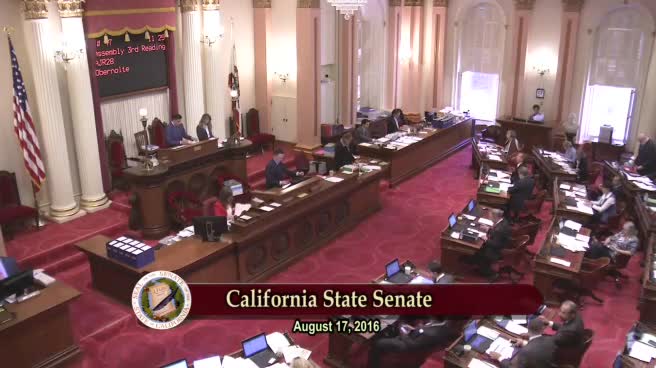 3MIN
Senate Floor
 3MIN
Senate Standing Committee on Appropriations
 4MIN
Senate Standing Committee on Governance and Finance
 4MIN
Assembly Floor
Bill Author

Bill Co-Author(s):