AB 2476: Local governments: parcel taxes: notice.
- Session Year: 2015-2016
- House: Assembly
- Latest Version Date: 2016-09-09
Existing law authorizes cities, counties, and special districts to impose a parcel tax or property-related fee for specified purposes.
This bill would require the legislative body of a local agency, as defined, to provide notice of a new parcel tax to the owner of a parcel affected by the tax, if that owner does not reside within the jurisdictional boundaries of the taxing entity. This bill would require the notice to include specified information and to be provided to the property owner in a specified manner. This bill would provide that the local agency may recover the reasonable costs of the notice from the proceeds of the parcel tax. By imposing new duties upon local county officials, this bill would impose a state-mandated local program.
The California Constitution requires the state to reimburse local agencies and school districts for certain costs mandated by the state. Statutory provisions establish procedures for making that reimbursement.
This bill would provide that with regard to certain mandates no reimbursement is required by this act for a specified reason.
Existing law authorizes cities, counties, and special districts to impose a parcel tax or property-related fee for specified purposes.
This bill would require, before the adoption of any new parcel tax, require the legislative body of a local agency, as defined, to provide notice of a new parcel tax to the owner of a parcel affected by the tax, if that owner does not reside within the jurisdictional boundaries of the taxing entity. This bill would require the notice to include specified information and to be provided to the property owner in a specified manner. This bill would provide that the local agency may recover the reasonable costs of the notice from the proceeds of the parcel tax. By imposing new duties upon local county officials, this bill would impose a state-mandated local program.
The California Constitution requires the state to reimburse local agencies and school districts for certain costs mandated by the state. Statutory provisions establish procedures for making that reimbursement.
This bill would provide that with regard to certain mandates no reimbursement is required by this act for a specified reason.
Existing law authorizes cities, counties, and special districts to impose a parcel tax or property-related fee for specified purposes.
This bill would require, before the adoption of any new parcel tax, the legislative body of a local agency, as defined, to provide notice of the vote to enact the proposed a new parcel tax to the owner of a parcel affected by the tax, if that owner does not reside within the jurisdictional boundaries of the taxing entity, within 30 days of the local agency voting to place the proposed parcel tax on the ballot. entity. This bill would require the notice to include specified information and to be provided to the property owner in a specified manner. This bill would provide that the local agency may recover the reasonable costs of the notice from the proceeds of the parcel tax. By imposing new duties upon local county officials, this bill would impose a state-mandated local program.
The California Constitution requires the state to reimburse local agencies and school districts for certain costs mandated by the state. Statutory provisions establish procedures for making that reimbursement.
This bill would provide that with regard to certain mandates no reimbursement is required by this act for a specified reason.
With regard to any other mandates, this bill would provide that, if the Commission on State Mandates determines that the bill contains costs so mandated by the state, reimbursement for those costs shall be made pursuant to the statutory provisions noted above.
Existing law authorizes cities, counties, and special districts to impose a parcel tax or property-related fee for specified purposes.
This bill would require, before the adoption of any new parcel tax, the legislative body of a local agency, as defined, to provide notice of the vote to enact the proposed parcel tax to the owner of each a parcel affected by the tax tax, if that owner does not reside within the jurisdictional boundaries of the taxing entity, within one week 30 days of the local agency voting to place the proposed parcel tax on the ballot. This bill would require the notice to include specified information and to be provided to the property owner in a specified manner. This bill would provide that the local agency may recover the reasonable costs of the notice from the proceeds of the parcel tax. By imposing new duties upon local county officials, this bill would impose a state-mandated local program.
The California Constitution requires the state to reimburse local agencies and school districts for certain costs mandated by the state. Statutory provisions establish procedures for making that reimbursement.
This bill would provide that with regard to certain mandates no reimbursement is required by this act for a specified reason.
With regard to any other mandates, this bill would provide that, if the Commission on State Mandates determines that the bill contains costs so mandated by the state, reimbursement for those costs shall be made pursuant to the statutory provisions noted above.
Existing law authorizes cities, counties, and special districts to impose a parcel tax or property-related fee for specified purposes.
This bill would require, before the adoption of any new parcel tax, the legislative body of a local agency, as defined, to provide notice of the vote to enact the proposed parcel tax to the owner of each parcel affected by the tax within one week of the local agency voting to place the proposed parcel tax on the ballot. This bill would require the notice to include specified information and to be provided to the property owner in a specified manner. This bill would provide that the local agency may recover the reasonable costs of the notice from the proceeds of the parcel tax. By imposing new duties upon local county officials, this bill would impose a state-mandated local program.
The California Constitution requires the state to reimburse local agencies and school districts for certain costs mandated by the state. Statutory provisions establish procedures for making that reimbursement.
This bill would provide that with regard to certain mandates no reimbursement is required by this act for a specified reason.
With regard to any other mandates, this bill would provide that, if the Commission on State Mandates determines that the bill contains costs so mandated by the state, reimbursement for those costs shall be made pursuant to the statutory provisions noted above.
(a)The legislative body of a local agency shall provide notice of a new parcel tax to an owner of a parcel affected by the tax, if that owner does not reside within the jurisdictional boundaries of the taxing entity.
(b)For purposes of this section:
(1)Local agency means any city, county, school district, or special district authorized to impose a parcel tax.
(2)Parcel tax means a tax levied by a local agency upon any parcel of property identified using the assessors parcel number system, or upon any person as an incident of property ownership pursuant to Section 4 of Article XIIIA of the California Constitution, that is collected via the annual property tax bill.
(c)The notice shall include, but is not limited to, all of the following information:
(1)The amount or rate of the parcel tax in sufficient detail to allow each property owner to calculate the amount of the tax to be levied against the owners property.
(2)The method and frequency for collecting the parcel tax, and the duration of time during which the parcel tax will be imposed.
(3)The telephone number and address of an individual, office, or organization that interested persons may contact to receive additional information about the parcel tax.
(d)The notice shall be accomplished through a mailing, postage prepaid, in the United States mail and shall be deemed given when so deposited. The notice shall be mailed to a property owner, if that owner does not reside within the jurisdictional boundaries of the taxing entity subject to the new tax, whose name and address appears on the last equalized county assessment roll or the State Board of Equalization assessment roll, as applicable. The notice shall be in at least 10-point type, and shall be in one of the following forms:
(1)An envelope or mailing which shall include the name of the local agency and the return address of the sender on the cover.
(2)A postcard, which shall include the name of the local agency and the return address of the sender on the front, and include the following information on the back in this format:
Dear Property Owner: | ||
| 1.Levied at a rate of[Amount or Rate of the Tax] | ||
| 2.Collected[Frequency and Method of Collection] | ||
| 3.Levied[Specify number of years or if indefinitely] | ||
| If you have any questions about the tax, please contact: | ||
| [Name and Telephone Number] | ||
| [Address] | ||
| [Email Address or Website Address] |
(e)The local agency may recover the reasonable costs of the notice required by this section from the proceeds of the parcel tax. The costs recovered for these purposes, whether recovered pursuant to this subdivision or any other provision of law, shall not exceed the reasonable costs of preparing and mailing the notice.
SEC. 2.No reimbursement is required by this act pursuant to Section 6 of Article XIIIB of the California Constitution for certain costs that may be incurred by a local agency because, in that regard, this act provides for reimbursement to a local agency in the form of additional revenues from the proceeds of a parcel tax that are sufficient in amount to fund the new duties established by this act, within the meaning of Section 17556 of the Government Code.
(a)The legislative body of a local agency shall provide notice of a new parcel tax to an owner of a parcel affected by the tax, if that owner does not reside within the jurisdictional boundaries of the taxing entity.
(b)For purposes of this section:
(1)Local agency means any city, county, school district, or special district authorized to impose a parcel tax.
(2)Parcel tax means a tax levied by a local agency upon any parcel of property identified using the assessors parcel number system, or upon any person as an incident of property ownership pursuant to Section 4 of Article XIIIA of the California Constitution, that is collected via the annual property tax bill.
(c)The notice shall include, but is not limited to, all of the following information:
(1)The amount or rate of the proposed parcel tax in sufficient detail to allow each property owner to calculate the amount of the tax to be levied against the owners property.
(2)The method and frequency for collecting the proposed parcel tax, and the duration of time during which the parcel tax will be imposed.
(3)The telephone number and address of an individual, office, or organization that interested persons may contact to receive additional information about the proposed parcel tax.
(d)The notice shall be accomplished through a mailing, postage prepaid, in the United States mail and shall be deemed given when so deposited. The notice shall be mailed to a property owner, if that owner does not reside within the jurisdictional boundaries of the taxing entity proposed to be subject to the new tax, whose name and address appears on the last equalized county assessment roll or the State Board of Equalization assessment roll, as applicable. The notice shall be in at least 10-point type, and shall be in one of the following forms:
(1)An envelope or mailing which shall include the name of the local agency and the return address of the sender on the cover.
(2)A postcard, which shall include the name of the local agency and the return address of the sender on the front, and include the following information on the back in this format:
Dear Property Owner: | ||
| 1.Levied at a rate of[Amount or Rate of Proposed the Tax] | ||
| 2.Collected[Frequency and Method of Collection] | ||
| 3.Levied[Specify number of years or if indefinitely] | ||
| If you have any questions about the proposed tax, please contact: | ||
| [Name and Telephone Number] | ||
| [Address] | ||
| [Email Address or Website Address] |
(e)The local agency may recover the reasonable costs of the notice required by this section from the proceeds of the parcel tax. The costs recovered for these purposes, whether recovered pursuant to this subdivision or any other provision of law, shall not exceed the reasonable costs of preparing and mailing the notice.
SEC. 2.No reimbursement is required by this act pursuant to Section 6 of Article XIIIB of the California Constitution for certain costs that may be incurred by a local agency because, in that regard, this act provides for reimbursement to a local agency in the form of additional revenues from the proceeds of a parcel tax that are sufficient in amount to fund the new duties established by this act, within the meaning of Section 17556 of the Government Code.
(a)Before the adoption of any new parcel tax, the The legislative body of a local agency shall provide notice of the vote to enact the proposed parcel tax to the owner of a parcel affected by the tax, if that owner does not reside within a new parcel tax to an owner of a parcel affected by the tax, if that owner does not reside within the jurisdictional boundaries of the taxing entity, within 30 days following the local agencys vote to place the proposed parcel tax on the ballot. entity.
(b)For purposes of this section:
(1)Local agency means any city, county, school district, or special district authorized to impose a parcel tax.
(2)Parcel tax means a tax levied by a local agency upon any parcel of property identified using the assessors parcel number system, or upon any person as an incident of property ownership pursuant to Section 4 of Article XIIIA of the California Constitution, that is collected via the annual property tax bill.
(c)The notice shall include, but is not limited to, all of the following information:
(1)The amount or rate of the proposed parcel tax in sufficient detail to allow each property owner to calculate the amount of the tax to be levied against the owners property.
(2)The method and frequency for collecting the proposed parcel tax, and the duration of time during which the parcel tax will be imposed.
(3)The date on which the proposed parcel tax will be voted upon.
(4)
(3)The telephone number and address of an individual, office, or organization that interested persons may contact to receive additional information about the proposed parcel tax.
(d)The notice shall be accomplished through a mailing, postage prepaid, in the United States mail and shall be deemed given when so deposited. The notice shall be mailed to a property owner, if that owner does not reside within the jurisdictional boundaries of the taxing entity proposed to be subject to the new tax, whose name and address appears on the last equalized county assessment roll or the State Board of Equalization assessment roll, as applicable. The notice shall be in at least 10-point type, and shall be in one of the following forms:
(1)An envelope or mailing which shall include the name of the local agency and the return address of the sender on the cover.
(2)A postcard, which shall include the name of the local agency and the return address of the sender on the front, and include the following information on the back in this format:
Dear Property Owner: | ||
| 1.Voted upon on[Date] | ||
| 2.1.Levied at a rate of[Amount or Rate of Proposed Tax] | ||
| 3.2.Collected[Frequency and Method of Collection] | ||
| 4.3.Levied[Specify number of years or if indefinitely] | ||
| If you have any questions about the proposed tax, please contact: | ||
| [Name and Telephone Number] | ||
| [Address] | ||
| [Email Address or Website Address] |
(e)The local agency may recover the reasonable costs of the notice required by this section from the proceeds of the parcel tax. The costs recovered for these purposes, whether recovered pursuant to this subdivision or any other provision of law, shall not exceed the reasonable costs of preparing and mailing the notice.
SEC. 2.No reimbursement is required by this act pursuant to Section 6 of Article XIIIB of the California Constitution for certain costs that may be incurred by a local agency because, in that regard, this act provides for reimbursement to a local agency in the form of additional revenues from the proceeds of a parcel tax that are sufficient in amount to fund the new duties established by this act, within the meaning of Section 17556 of the Government Code.
However, if a parcel tax is not approved by the voters, and if the Commission on State Mandates determines that this act contains costs mandated by the state, reimbursement to local agencies and school districts for those costs shall be made pursuant to Part 7 (commencing with Section 17500) of Division 4 of Title 2 of the Government Code.
(a)Before the adoption of any new parcel tax, the legislative body of a local agency shall provide notice of the vote to enact the proposed parcel tax to the owner of each a parcel affected by the tax tax, if that owner does not reside within the jurisdictional boundaries of the taxing entity, within one week 30 days following the local agencys vote to place the proposed parcel tax on the ballot.
(b)For purposes of this section:
(1)Local agency means any city, county, school district, or special district authorized to impose a parcel tax.
(2)Parcel tax means a tax levied by a local agency upon any parcel of property identified using the assessors parcel number system, or upon any person as an incident of property ownership pursuant to Section 4 of Article XIIIA of the California Constitution, that is collected via the annual property tax bill.
(c)The notice shall include, but is not limited to, all of the following information:
(1)The amount or rate of the proposed parcel tax in sufficient detail to allow each property owner to calculate the amount of the tax to be levied against the owners property.
(2)The method and frequency for collecting the proposed parcel tax, and the duration of time during which the parcel tax will be imposed.
(3)The date on which the proposed parcel tax will be voted upon.
(4)The telephone number and address of an individual, office, or organization that interested persons may contact to receive additional information about the proposed parcel tax.
(d)The notice shall be accomplished through a mailing, postage prepaid, in the United States mail and shall be deemed given when so deposited. The notice shall be mailed to all a property owners, owner, if that owner does not reside within the jurisdictional boundaries of the taxing entity proposed to be subject to the new parcel tax, by a mailing by name to those persons whose names and addresses appear name and address appears on the last equalized county assessment roll or the State Board of Equalization assessment roll, as applicable. The notice shall be in at least 10-point type, and shall be in one of the following forms:
(1)An envelope or mailing which shall include the name of the local agency and the return address of the sender on the cover.
(2)A postcard, which shall include the name of the local agency and the return address of the sender on the front, and include the following information on the back in this format:
Dear Property Owner: | ||
| 1.Voted upon on[Date] | ||
| 2.Levied at a rate of[Amount or Rate of Proposed Tax] | ||
| 3.Collected[Frequency and Method of Collection] | ||
| 4.Levied[Specify number of years or if indefinitely] | ||
| If you have any questions about the proposed tax, please contact: | ||
| [Name and Telephone Number] | ||
| [Address] | ||
| [Email Address or Website Address] |
(e)The local agency may recover the reasonable costs of the notice required by this section from the proceeds of the parcel tax. The costs recovered for these purposes, whether recovered pursuant to this subdivision or any other provision of law, shall not exceed the reasonable costs of preparing and mailing the notice.
SEC. 2.No reimbursement is required by this act pursuant to Section 6 of Article XIIIB of the California Constitution for certain costs that may be incurred by a local agency because, in that regard, this act provides for reimbursement to a local agency in the form of additional revenues from the proceeds of a parcel tax that are sufficient in amount to fund the new duties established by this act, within the meaning of Section 17556 of the Government Code.
However, if a parcel tax is not approved by the voters, and if the Commission on State Mandates determines that this act contains costs mandated by the state, reimbursement to local agencies and school districts for those costs shall be made pursuant to Part 7 (commencing with Section 17500) of Division 4 of Title 2 of the Government Code.
(a)Before the adoption of any new parcel tax, the legislative body of a local agency shall provide notice of the vote to enact the proposed parcel tax to the owner of each parcel affected by the tax within one week following the local agencys vote to place the proposed parcel tax on the ballot.
(b)For purposes of this section:
(1)Local agency means any city, county, school district, or special district authorized to impose a parcel tax.
(2)Parcel tax means a tax levied by a local agency upon any parcel of property identified using the assessors parcel number system, or upon any person as an incident of property ownership pursuant to Section 4 of Article XIIIA of the California Constitution, that is collected via the annual property tax bill.
(c)The notice shall include, but is not limited to, all of the following information:
(1)The amount or rate of the proposed parcel tax in sufficient detail to allow each property owner to calculate the amount of the tax to be levied against the owners property.
(2)The method and frequency for collecting the proposed parcel tax, and the duration of time during which the parcel tax will be imposed.
(3)The date on which the proposed parcel tax will be voted upon.
(4)The telephone number and address of an individual, office, or organization that interested persons may contact to receive additional information about the proposed parcel tax.
(d)The notice shall be accomplished through a mailing, postage prepaid, in the United States mail and shall be deemed given when so deposited. The notice shall be mailed to all property owners, proposed to be subject to the new parcel tax, by a mailing by name to those persons whose names and addresses appear on the last equalized county assessment roll or the State Board of Equalization assessment roll, as applicable. The notice shall be in at least 10-point type, and shall be in one of the following forms:
(1)An envelope or mailing which shall include the name of the local agency and the return address of the sender on the cover.
(2)A postcard, which shall include the name of the local agency and the return address of the sender on the front, and include the following information on the back in this format:
Dear Property Owner: | ||
| 1.Voted upon on[Date] | ||
| 2.Levied at a rate of[Amount or Rate of Proposed Tax] | ||
| 3.Collected[Frequency and Method of Collection] | ||
| 4.Levied[Specify number of years or if indefinitely] | ||
| If you have any questions about the proposed tax, please contact: | ||
| [Name and Telephone Number] | ||
| [Address] | ||
| [Email Address or Website Address] |
(e)The local agency may recover the reasonable costs of the notice required by this section from the proceeds of the parcel tax. The costs recovered for these purposes, whether recovered pursuant to this subdivision or any other provision of law, shall not exceed the reasonable costs of preparing and mailing the notice.
SEC. 2.No reimbursement is required by this act pursuant to Section 6 of Article XIIIB of the California Constitution for certain costs that may be incurred by a local agency because, in that regard, this act provides for reimbursement to a local agency in the form of additional revenues from the proceeds of a parcel tax that are sufficient in amount to fund the new duties established by this act, within the meaning of Section 17556 of the Government Code.
However, if a parcel tax is not approved by the voters, and if the Commission on State Mandates determines that this act contains costs mandated by the state, reimbursement to local agencies and school districts for those costs shall be made pursuant to Part 7 (commencing with Section 17500) of Division 4 of Title 2 of the Government Code.
|
Date
|
Status
|
|---|---|
| Aug 1, 2016 | From committee: Amend, and do pass as amended and re-refer to Com. on APPR. (Ayes 7. Noes 0.) (June 29). |
| Sep 9, 2016 | Chaptered by Secretary of State - Chapter 269, Statutes of 2016. |
| Sep 9, 2016 | Approved by the Governor. |
| Aug 31, 2016 | Enrolled and presented to the Governor at 4 p.m. |
| Aug 23, 2016 | Senate amendments concurred in. To Engrossing and Enrolling. (Ayes 75. Noes 3. Page 6138.). |
| Aug 23, 2016 | Senate amendments concurred in. To Engrossing and Enrolling. |
| Aug 17, 2016 | Read third time. Passed. Ordered to the Assembly. (Ayes 36. Noes 0.). |
| Aug 17, 2016 | Read third time. Passed. Ordered to the Assembly. (Ayes 36. Noes 0. Page 5052.). |
| Aug 17, 2016 | Read third time. Passed. Ordered to the Assembly. |
| Aug 17, 2016 | In Assembly. Concurrence in Senate amendments pending. May be considered on or after August 19 pursuant to Assembly Rule 77. |
| Aug 16, 2016 | Read second time. Ordered to third reading. |
| Aug 15, 2016 | Read third time and amended. Ordered to second reading. |
| Aug 9, 2016 | Read second time. Ordered to third reading. |
| Aug 8, 2016 | From committee: Be placed on second reading file pursuant to Senate Rule 28.8. |
| Aug 2, 2016 | Read second time and amended. Re-referred to Com. on APPR. |
| Feb 19, 2016 | Introduced. To print. |
| Jun 9, 2016 | Referred to Com. on GOV. & F. |
| Jun 6, 2016 | In Senate. Read first time. To Com. on RLS. for assignment. |
| Jun 2, 2016 | Read third time. Passed. Ordered to the Senate. (Ayes 71. Noes 4.) |
| Jun 2, 2016 | Read third time. Passed. Ordered to the Senate. (Ayes 71. Noes 4. Page 5181.) |
| Jun 2, 2016 | Read third time. Passed. Ordered to the Senate. |
| May 31, 2016 | Read second time. Ordered to third reading. |
| May 27, 2016 | Read second time and amended. Ordered returned to second reading. |
| May 27, 2016 | From committee: Amend, and do pass as amended. (Ayes 18. Noes 0.) (May 27). |
| May 11, 2016 | In committee: Set, first hearing. Referred to APPR. suspense file. |
| Apr 21, 2016 | From committee: Do pass and re-refer to Com. on APPR. (Ayes 5. Noes 0.) (April 20). Re-referred to Com. on APPR. |
| Mar 8, 2016 | Referred to Com. on L. GOV. |
| Feb 22, 2016 | Read first time. |
| Feb 21, 2016 | From printer. May be heard in committee March 22. |
|
Date
|
Description
|
Location
|
Votes
|
|
|---|---|---|---|---|
| Aug 23, 2016 | AB 2476 DALY Concurrence in Senate Amendments | Assembly Floor |
Passed |
|
| Aug 17, 2016 | Assembly 3rd Reading AB2476 Daly By Glazer | Senate Floor |
Passed |
|
| Jun 29, 2016 | Do pass as amended, but first amend, and re-refer to the Committee on [Appropriations] | Senate Standing Committee on Governance and Finance |
Passed |
|
| Jun 2, 2016 | AB 2476 DALY Assembly Third Reading | Assembly Floor |
Passed |
|
| May 27, 2016 | Do pass as amended. | Assembly Standing Committee on Appropriations |
Passed |
|
| Apr 20, 2016 | Do pass and be re-referred to the Committee on [Appropriations] | Assembly Standing Committee on Local Government |
Passed |
This list shows positions taken on this bill by organizations on the date displayed, which is linked to the original source.
Positions by individuals are not included.
|
Organization
|
Position
|
Date
|
|---|---|---|
| Association Of California Water Agencies | ** Against | Aug 17, 2016 |
| California Apartment Association | ** Support | Aug 17, 2016 |
| California Association Of Realtors | ** Support | Aug 17, 2016 |
| California Chamber Of Commerce | ** Support | Aug 17, 2016 |
| California Manufacturers And Technology Association | ** Support | Aug 17, 2016 |
| California Professional Firefighters | * Against | Jun 29, 2016 |
| California Special Districts Association | ** Against | Aug 17, 2016 |
| California State Association Of Counties | ** Against | Aug 17, 2016 |
| California Taxpayers' Association | ** Support | Aug 17, 2016 |
| Howard Jarvis Taxpayers Association | ** Support | Aug 17, 2016 |
| KernTax | ** Support | Aug 17, 2016 |
| San Bernardino County District Advocates for Better Schools | ** Against | Aug 17, 2016 |
| San Francisco Unified School District | ** Against | Aug 17, 2016 |
| Western Manufactured Housing Communities Association | ** Support | Aug 17, 2016 |
CONCURRENCE IN SENATE AMENDMENTS
CSA1 Bill Id:AB 2476
Author:(Daly)
As Amended Ver:August 15, 2016
Majority vote
ASSEMBLY: | 71-4 | (June 2, 2016) | SENATE: | 36-0 | (August 17, 2016) |
Original Committee Reference: L. GOV.
SUMMARY: Requires local agencies to provide specified notice of a new parcel tax to non-resident property owners.
The Senate amendments make changes to the timing of the notification to non-resident property owners to require a local agency to provide notice of a new parcel tax instead of notification of a proposed parcel tax measure.
EXISTING LAW:
- Authorizes cities, counties, and special districts to impose a special tax for specified purposes with the approval of two-thirds of the voters.
- Authorizes school districts to impose qualified special taxes, in accordance with specified procedures, including the approval of two-thirds of the voters in the district.
- Authorizes a parcel tax to fund a variety of local government services subject to approval of two-thirds of the voters.
- Restricts parcel tax revenue to only fund the specified purpose and services that voters approved.
AS PASSED BY THE ASSEMBLY, this bill:
- Required a local agency, within 30 days following a legislative body's vote, to place a proposed parcel tax on the ballot to provide specified notice to property owners affected by the tax that do not reside within the jurisdictional boundaries of the taxing entity.
- Defined the following terms:
- "Local agency" to mean "a city, county, special district, or school district authorized to impose a parcel tax;" and,
- "Parcel tax" to mean "a tax levied by a local agency upon any parcel of property identified using the assessor's parcel number system or upon any person as an incident of property ownership, pursuant to the California Constitution (Section 4 of Article XII A), that is collected via the annual property tax bill."
- Required the notice to include, but is not limited to, the following information:
- The amount or rate of the proposed parcel tax in sufficient detail to allow each property owner to calculate the amount of the tax to be levied against the owner's property;
- The method and frequency for collecting the proposed parcel tax, and the duration of time the parcel tax will be imposed;
- The date that the proposed parcel tax will be voted on; and,
- The telephone number and address of an individual, office, or organization that interested persons may contact to receive additional information about the proposed parcel tax.
- Required the notice to be mailed to non-resident property owners, who are affected by the new parcel tax, and whose names and addresses appear on the last equalized county assessment roll or the State Board of Equalization assessment roll.
- Required the notice to be accomplished through mailing, postage prepaid in the United States mail and to be deemed given when deposited.
- Required the notice to be in at least 10-point type, and to be in one of the following forms:
- An envelope or mailing, which includes the name of the local agency and the return address of the sender on the cover; or,
- A postcard, which includes the name of the local agency and the return address of the sender on the front, and includes information in a prescribed format, as specified.
- Authorized the local agency to recover the reasonable costs of the notice from the proceeds of the parcel tax. Prohibits the recovered costs from exceeding the reasonable costs of preparing and mailing the notice.
- Provided that no reimbursement is required by this bill, pursuant to the California Constitution, because a local agency or school district has the authority to levy service charges, fees, or assessments sufficient to pay for the program or level of service mandated by this bill, pursuant to current law governing state-mandated local costs.
- Required, if a parcel tax is not approved by the voters and the Commission on State Mandates determines that this bill contains costs mandated by the state, reimbursement to local agencies and school districts for those costs be made, pursuant to current laws governing state-mandated local costs.
FISCAL EFFECT: According to the Senate Appropriations Committee, pursuant to Senate Rule 28.8, negligible state costs.
COMMENTS:
- Parcel Taxes. California Constitution Article XIII, Section A, allows cities, counties, and special districts, by a two-thirds vote of the qualified electors in that jurisdiction, to impose special taxes, except ad valorem taxes on real property or a transaction tax or sales tax on the sale of real property within that city, county or special district. A parcel tax is a particular type of excise tax that is based on either a flat per-parcel rate or a rate that varies depending upon use, size, and/or number of units on each parcel. Proposition 13 (1978) contained a 1% limit on ad valorem property tax; therefore, a parcel tax based upon the value of property would constitute a violation of Proposition 13. The California Constitution specifies that only two types of taxes may be imposed upon a parcel of property: first, an ad valorem property tax imposed, pursuant to Article VIII and Article XIIIA, and second, a special tax receiving two-thirds voter approval, pursuant to Section 4 of Article XIIIA. A parcel tax must be adopted as a special tax that is not based on the property's value.
To place a parcel tax measure on the ballot, a local agency must adopt a resolution, which includes the type of tax and rate to be levied, the method of collection, and the date of the election. To adopt an ordinance, local agencies must comply with the Ralph M. Brown Act, which includes public notification and hearing requirements. For example, a local agency must post an agenda at least 72 hours prior to its meeting. Additionally, current law requires cities and counties to publish specific information 15 days after passing an ordinance. Special taxes, such as parcel taxes, are subject to additional accountability [SB 165 (Alarcón), Chapter 535, Statutes of 2000]. Current law requires local agencies to: a) issue a statement indicating the specific purpose of the tax and a requirement that the proceeds be used only for that purpose; b) create an account in which to deposit proceeds; and, c) issue an annual report that includes the amount of funds collected and expended, along with the status of any project required or authorized by the tax measure.
After the local agency has voted to place a parcel tax measure on the ballot, the election must be held on "established election dates," which means March, April, or November of an even-numbered year, or March, June, or November in an odd-numbered year. A parcel tax measure levied by a local agency requires approval by two-thirds of the qualified electors. The Court has interpreted the phrase "qualified electors of such district" to mean the registered voters voting in the election concerning the proposed tax. [Neilson v. City of California City (2005) 133 Cal. App.4th 1296, 1312.] Non-resident property owners that are not registered voters are not included among the voters voting on a proposed parcel tax. On the other hand, voters who do not own real property, but are registered within the district's boundaries, like renters or tenants, are able to vote on a parcel tax even though they may not be paying the tax, except as passed through in rent.
Only 45% of the 396 parcel tax measures placed on the ballot from 2002 through November 2013 were approved.
- Bill Summary. This bill requires a local agency, city, county, special district, or school district to provide specified notice of a new parcel tax to non-resident parcel owners. Local agencies would be required to provide the notification in one of two forms defined in the bill. This bill outlines the specific information about the parcel tax to be included in the notice and authorizes the local agency to recover reasonable costs of the notice from the proceeds of the parcel tax should it be enacted by the voters. This bill is sponsored by the California Realtors Association.
- Author's Statement. According to the author, "AB 2476 seeks to provide a measure of fairness by establishing a process for notifying the non-resident property owners. While the parcel tax on any one single-family residential parcel may be relatively little, the same tax applied to a multi-family building can be extremely costly. One East Bay city has a parcel tax of $96 for single-family residential parcels and $72 per multi-family residential parcel. If a building has, for example, 100 multi-family units that translates to a parcel tax of over seven thousand dollars. Property owners deserve to know whether they may be facing such a tax."
- Previous Legislation. The author has introduced several parcel tax measures. AB 237 (Daly) of 2015, which was held on suspense in the Assembly Appropriations Committee, was substantially similar to this bill. AB 892 (Daly) of 2013, which was held on suspense in the Assembly Appropriations Committee, would have required the Board of Equalization to report annually to the Governor on the imposition of each locally assessed parcel tax. Most recently, AB 2109 (Daly), Chapter 781, Statutes of 2014, required the State Controller to report annually on the imposition of each locally assessed parcel tax, and required each county, city, and special district to provide any information required by the Controller in order to complete the report.
- Policy Considerations. The Legislature may wish to consider the following:
- Existing Public Information. Current law requires the local agency to go through several public steps before and after they place a parcel tax on the ballot. The public, including non-resident property owners, have access to all of this information.
Additionally, existing law authorizes any person to request that a legislative body mail a copy of an agenda and all documents in an agenda packet. This provision applies to cities, counties, districts, and other public agencies and authorizes the local agencies to charge a fee to provide agendas. The Legislature may wish to consider the accessibility of information that a non-resident property owner may access even prior to the passage of a parcel tax measure.
- Funding notification instead of services? The Legislature may wish to consider if parcel tax revenue should be used to fund the services or facilities for which the voters supported instead of a notice to non-resident property owners.
- Arguments in Support. The California Association of Realtors argues that this bill "authorizes a low-cost postcard notification and requires that cost for the notice not to exceed the reasonable costs of preparing and mailing the notice. The measure also directs that the very small cost for the notice come from the proceeds of the new parcel tax."
- Arguments in Opposition. The California State Association of Counties and the California Special Districts Association argue "We believe this measure does little but incur costs to local agencies and reduce the efficacy of voter-approved parcel taxes that are intended to provide funding for local infrastructure or critical services."
Analysis Prepared by: Misa Lennox / L. GOV. / (916) 319-3958 FN: 0004245
Office of Senate Floor Analyses (916) 651-1520 Fax: (916) 327-4478 | AB |
THIRD READING
Bill No: AB 2476
:
SENATE GOVERNANCE & FIN. COMMITTEE: 7-0, 6/29/16
AYES: Hertzberg, Nguyen, Beall, Hernandez, Lara, Moorlach, Pavley
SENATE APPROPRIATIONS COMMITTEE: Senate Rule 28.8
ASSEMBLY FLOOR: 71-4, 6/2/16 - See last page for vote
SOURCE: California Association of Realtors
DIGEST: This bill requires local agencies imposing parcel taxes to send a notice with specified contents regarding the tax to nonresident landowners.
Senate Floor Amendments of 8/15/16 make technical and conforming changes.
Existing law:
- Allows school and community college districts to impose qualified special taxes that apply uniformly to all taxpayers or real property within the district, and permits districts to exempt persons over the age of 65 from the tax (AB 1440, Hannigan, Chapter 100, Statutes of 1987).
- Authorizes 15 types of local agencies to impose similar taxes, but without a similar exemption (SB 158, Committee on Local Government, Chapter 70, Statutes of 1991).
- Permits school districts to also exempt persons receiving Supplemental Security Income regardless of age (AB 385, Lieber, Chapter 41, Statutes of 2006), and then income-eligible persons receiving Social Security Disability Insurance (SB 874, Hancock, Chapter 791, Statutes of 2012).
- Requires a local agency seeking to impose a qualified special tax to first adopt a resolution in a public meeting with 72 hours advance notice, which includes the type of tax and rate to be levied, the method of collection, and the date of the election.
- Requires, additionally, local agencies seeking to impose a qualified special tax to (SB 165, Alarcón, Chapter 535, Statutes of 2000):
- Issue a statement indicating the specific purpose of the tax, and a requirement that the proceeds be used only for that purpose;
- Create an account in which to deposit proceeds; and,
- Publish an annual report that includes the amount of funds collected and expended, along with the status of any project required or authorized by the tax measure.
- Requires that an election to impose a parcel tax must be held on "established election dates," which means March, April, or November of an even-numbered year, or March, June, or November in an odd-numbered year. A parcel tax measure levied by a local agency requires approval by two-thirds of the qualified electors.
This bill:
- Requires a public agency to provide a notice of a new parcel tax to the owner of the parcel if that owner does not reside within the jurisdiction of the public agency seeking to impose the tax.
- Provides that the notice must include, but is not limited to, the following information:
- The amount or rate of the parcel tax in sufficient detail to allow each property owner to calculate the amount of the tax to be levied against the owner's property;
- The method and frequency for collecting the parcel tax, and the duration of time the parcel tax will be imposed;
- The telephone number and address of an individual, office, or organization that interested persons may contact to receive additional information about the parcel tax.
- Requires that the notice must be accomplished through prepaid postage mailing in United States Mail, which is deemed given when so deposited.
- States that the public agency must send the notice to the name and address which appears on the last equalized county or Board of Equalization assessment roll, and that the notice to be in at least 10-point type, either with an envelope or postcard which includes the name and return address of the sender and to include the specified information listed above.
- Allows the agency levying the tax to recover its costs, not to exceed the reasonable cost of preparing and mailing the notice, from the proceeds of the parcel tax.
- Defines “local agency” and “parcel tax,” as specified.
Background
Thus far, all qualified special taxes imposed by local agencies have been parcel taxes, which are not assessed based on the value of a property like ad valorem property taxes. Instead, parcel taxes are generally measured a flat rate assessed per parcel or per square foot of the parcel or its improvements, regardless of its size. Some include inflation adjustments. Districts can use revenues in any way that serves local needs, such as ongoing expenses, programs, or buildings. Property tax law generally guides parcel tax collection, where counties collect parcel taxes with property taxes, and then remit funds to the agency imposing the tax.
A parcel tax measure levied by a local agency requires approval by two-thirds of the qualified electors, which Courts have interpreted to mean the registered voters voting in the election concerning the proposed tax in Neilson v. City of California City (2005), 133 Cal. App.4th 1296, 1312. As such, non-resident property owners who are not registered voters are not included among the voters voting on a proposed parcel tax. However, renters and tenants who do not own real property, and therefore do not directly pay the tax, can vote on the ballot measure.
Between 1983 and November 2012, voters approved 322 parcel taxes in 584 elections. In response, the Legislature required entities imposing parcel taxes to report specified information to the State Controller, who must add this information in her local government financial transaction reports (AB 2109, Daly, Chapter 781, Statutes of 2014). For many years, little aggregate information existed regarding parcel taxes, but a recent report from the Public Policy Institute of California (PPIC) collected a great deal of revealing data regarding the way in which local agencies use parcel taxes. Cities placed 124 parcel tax measures before voters between 2003 and 2012, with 54 receiving the required 2/3 vote, with almost all taxes imposed by cities in the San Francisco Bay Area and Los Angeles County. School districts placed 329 parcel tax measures before voters during the same period, with 60% passing, mostly concentrated in the Bay Area. The report argues that the higher frequency of parcel taxes in the Bay Area is partly explained by higher income levels. Special districts asked voters to enact parcel taxes 238 times from 2003 to 2012, with three out of four winning. PPIC argues that the use of the parcel tax is growing, and that it has many advantages over other taxes: it has no deadweight loss, and assigns taxes in line with benefits. However, PPIC cautions that the tax has a major shortcoming in that many large parcels have little value, and are limited in their capacity to support a parcel tax.
Local agencies, including school districts, enact parcel taxes by first enacting an ordinance in a public meeting where the agenda must be published 72 hours before the meeting, and then submitting the ordinance to voters for approval. However, nonresident landowners may not be paying attention to local agency governing board hearings or elections, and can be surprised when a new parcel tax appears on their property tax bill. AB 2476 enacts a specific process for local agencies to notify these potentially affected taxpayers, which while providing potentially useful information, would subject parcel taxes to a higher standard than other local agency actions. This bill only applies to parcel taxes, but not to other local agency actions with potentially significant consequences, such as a fire district changing fire response procedures or defensible space requirements, or a school district seeking to issue a facilities construction bond. Determining who must receive notice, and then printing and mailing them to taxpayers who may be out of the state or the country, will be costly to these agencies.
FISCAL EFFECT: Appropriation: Fiscal Com.: Local:
California Association of Realtors (source)
California Apartment Association
California Chamber of Commerce
California Manufacturers and Technology Association
California Taxpayers Association
Howard Jarvis Taxpayers Association
KernTax
Western Manufactured Housing Communities Association
OPPOSITION: (Verified 8/15/16)
Association of California Water Agencies
California State Association of Counties
California Special Districts Association
San Bernardino County District Advocates for Better Schools
San Francisco Unified School District
ARGUMENTS IN SUPPORT: According to the author, “Currently, property owners are required to pay parcel taxes approved by voters on a local ballot. If a property owner is a resident of the local jurisdiction that is seeking to enact a parcel tax, they learn of that parcel tax when they receive their ballot pamphlets before an election. In contrast, non-resident property owners – who own parcels in the given community but reside elsewhere – receive absolutely no notice of a parcel tax. AB 2476 seeks to provide a measure of fairness and transparency by establishing a process for notifying non-resident property owners. Specifically, this bill would require a local agency to inform property owners about the amount of the parcel tax, and the period of time for which the tax would be collected. AB 2476 also provides that the local agency may recover the reasonable costs of the notice from the proceeds of the parcel tax, including the costs of preparation and postage.”
ARGUMENTS IN OPPOSITION: According to the California Special Districts Association “AB 2476 requires local agencies to send a notice to property owners who are not eligible to vote in that election – out-of-state property owners and others living outside the jurisdiction of the local agency. The non-resident notification comes at a cost to local agencies and their taxpayers during a time when they can least afford it. Parcel taxes are a funding tool for local governments to help address the service needs of the community. All registered voters in the jurisdiction are eligible to vote on the parcel tax, which requires 2/3 voter approval. Special districts utilize parcel taxes to help fund essential local services to benefit the local residents and provide community-wide benefits, such as libraries, public safety, and parks and recreation. It is often the special districts with the most financial needs that vote to place a parcel tax on the ballot in order to raise the funds to provide their local services. The bill places additional requirements on these local service providers.”
ASSEMBLY FLOOR: 71-4, 6/2/16
AYES: Achadjian, Alejo, Travis Allen, Arambula, Baker, Bigelow, Bloom, Brough, Brown, Burke, Calderon, Campos, Chau, Chávez, Chu, Cooley, Cooper, Dababneh, Daly, Dodd, Eggman, Frazier, Beth Gaines, Gallagher, Cristina Garcia, Eduardo Garcia, Gatto, Gipson, Gomez, Gonzalez, Gordon, Gray, Grove, Hadley, Harper, Roger Hernández, Holden, Irwin, Jones, Jones-Sawyer, Kim, Lackey, Levine, Linder, Lopez, Low, Maienschein, Mathis, Mayes, McCarty, Medina, Melendez, Mullin, Nazarian, Obernolte, O'Donnell, Olsen, Patterson, Quirk, Ridley-Thomas, Rodriguez, Salas, Santiago, Steinorth, Wagner, Waldron, Weber, Wilk, Williams, Wood, Rendon
NOES: Chiu, Dahle, Mark Stone, Ting
NO VOTE RECORDED: Atkins, Bonilla, Bonta, Chang, Thurmond
8/16/16 17:55:14
**** END ****
Office of Senate Floor Analyses (916) 651-1520 Fax: (916) 327-4478 | AB |
THIRD READING
Bill No: AB 2476
:
SENATE GOVERNANCE & FIN. COMMITTEE: 7-0, 6/29/16
AYES: Hertzberg, Nguyen, Beall, Hernandez, Lara, Moorlach, Pavley
SENATE APPROPRIATIONS COMMITTEE: Senate Rule 28.8
ASSEMBLY FLOOR: 71-4, 6/2/16 - See last page for vote
SOURCE: California Association of Realtors
DIGEST: This bill requires local agencies imposing parcel taxes to send a notice with specified contents regarding the tax to nonresident landowners.
Existing law:
- Allows school and community college districts to impose qualified special taxes that apply uniformly to all taxpayers or real property within the district, and permits districts to exempt persons over the age of 65 from the tax (AB 1440, Hannigan, Chapter 100, Statutes of 1987).
- Authorizes 15 types of local agencies to impose similar taxes, but without a similar exemption (SB 158, Committee on Local Government, Chapter 70, Statutes of 1991).
- Permits school districts to also exempt persons receiving Supplemental Security Income regardless of age (AB 385, Lieber, Chapter 41, Statutes of 2006), and then income-eligible persons receiving Social Security Disability Insurance (SB 874, Hancock, Chapter 791, Statutes of 2012).
- Requires a local agency seeking to impose a qualified special tax to first adopt a resolution in a public meeting with 72 hours advance notice, which includes the type of tax and rate to be levied, the method of collection, and the date of the election.
- Requires, additionally, local agencies seeking to impose a qualified special tax to (SB 165, Alarcón, Chapter 535, Statutes of 2000):
- Issue a statement indicating the specific purpose of the tax, and a requirement that the proceeds be used only for that purpose;
- Create an account in which to deposit proceeds; and,
- Publish an annual report that includes the amount of funds collected and expended, along with the status of any project required or authorized by the tax measure.
- Requires that an election to impose a parcel tax must be held on "established election dates," which means March, April, or November of an even-numbered year, or March, June, or November in an odd-numbered year. A parcel tax measure levied by a local agency requires approval by two-thirds of the qualified electors.
This bill:
- Requires a public agency to provide a notice of the vote to enact a parcel tax to the owner of the parcel if that owner does not reside within the jurisdiction of the public agency seeking to impose the tax.
- Provides that the notice must include, but is not limited to, the following information:
- The amount or rate of the proposed parcel tax in sufficient detail to allow each property owner to calculate the amount of the tax to be levied against the owner's property;
- The method and frequency for collecting the proposed parcel tax, and the duration of time the parcel tax will be imposed;
- The telephone number and address of an individual, office, or organization that interested persons may contact to receive additional information about the proposed parcel tax.
- Requires that the notice must be accomplished through prepaid postage mailing in United States Mail, which is deemed given when so deposited.
- States that the public agency must send the notice to the name and address which appears on the last equalized county or Board of Equalization assessment roll, and that the notice to be in at least 10-point type, either with an envelope or postcard which includes the name and return address of the sender and to include the specified information listed above.
- Allows the agency levying the tax to recover its costs, not to exceed the reasonable cost of preparing and mailing the notice, from the proceeds of the parcel tax.
- Defines “local agency” and “parcel tax,” as specified.
Background
Thus far, all qualified special taxes imposed by local agencies have been parcel taxes, which are not assessed based on the value of a property like ad valorem property taxes. Instead, parcel taxes are generally measured a flat rate assessed per parcel or per square foot of the parcel or its improvements, regardless of its size. Some include inflation adjustments. Districts can use revenues in any way that serves local needs, such as ongoing expenses, programs, or buildings. Property tax law generally guides parcel tax collection, where counties collect parcel taxes with property taxes, and then remit funds to the agency imposing the tax.
A parcel tax measure levied by a local agency requires approval by two-thirds of the qualified electors, which Courts have interpreted to mean the registered voters voting in the election concerning the proposed tax in Neilson v. City of California City (2005), 133 Cal. App.4th 1296, 1312. As such, non-resident property owners who are not registered voters are not included among the voters voting on a proposed parcel tax. However, renters and tenants who do not own real property, and therefore do not directly pay the tax, can vote on the ballot measure.
Between 1983 and November 2012, voters approved 322 parcel taxes in 584 elections. In response, the Legislature required entities imposing parcel taxes to report specified information to the State Controller, who must add this information in her local government financial transaction reports (AB 2109, Daly, Chapter 781, Statutes of 2014). For many years, little aggregate information existed regarding parcel taxes, but a recent report from the Public Policy Institute of California (PPIC) collected a great deal of revealing data regarding the way in which local agencies use parcel taxes. Cities placed 124 parcel tax measures before voters between 2003 and 2012, with 54 receiving the required 2/3 vote, with almost all taxes imposed by cities in the San Francisco Bay Area and Los Angeles County. School districts placed 329 parcel tax measures before voters during the same period, with 60% passing, mostly concentrated in the Bay Area. The report argues that the higher frequency of parcel taxes in the Bay Area is partly explained by higher income levels. Special districts asked voters to enact parcel taxes 238 times from 2003 to 2012, with three out of four winning. PPIC argues that the use of the parcel tax is growing, and that it has many advantages over other taxes: it has no deadweight loss, and assigns taxes in line with benefits. However, PPIC cautions that the tax has a major shortcoming in that many large parcels have little value, and are limited in their capacity to support a parcel tax.
Local agencies, including school districts, enact parcel taxes by first enacting an ordinance in a public meeting where the agenda must be published 72 hours before the meeting, and then submitting the ordinance to voters for approval. However, nonresident landowners may not be paying attention to local agency governing board hearings or elections, and can be surprised when a new parcel tax appears on their property tax bill. AB 2476 enacts a specific process for local agencies to notify these potentially affected taxpayers, which while providing potentially useful information, would subject parcel taxes to a higher standard than other local agency actions. This bill only applies to parcel taxes, but not to other local agency actions with potentially significant consequences, such as a fire district changing fire response procedures or defensible space requirements, or a school district seeking to issue a facilities construction bond. Determining who must receive notice, and then printing and mailing them to taxpayers who may be out of the state or the country, will be costly to these agencies.
FISCAL EFFECT: Appropriation: Fiscal Com.: Local:
California Association of Realtors (source)
California Apartment Association
California Chamber of Commerce
California Manufacturers and Technology Association
California Taxpayers Association
Howard Jarvis Taxpayers Association
KernTax
Western Manufactured Housing Communities Association
Association of California Water Agencies
California Special Districts Association
San Bernardino County District Advocates for Better Schools
San Francisco Unified School District
ARGUMENTS IN SUPPORT: According to the author, “Currently, property owners are required to pay parcel taxes approved by voters on a local ballot. If a property owner is a resident of the local jurisdiction that is seeking to enact a parcel tax, they learn of that proposed parcel tax when they receive their ballot pamphlets before an election. In contrast, non-resident property owners – who own parcels in the given community but reside elsewhere – receive absolutely no notice of a parcel tax. AB 2476 seeks to provide a measure of fairness and transparency by establishing a process for notifying non-resident property owners. Specifically, this bill would require a local agency to inform property owners about the amount of the parcel tax, and the period of time for which the tax would be collected. AB 2476 also provides that the local agency may recover the reasonable costs of the notice from the proceeds of the parcel tax, including the costs of preparation and postage.”
ARGUMENTS IN OPPOSITION: According to the California Special Districts Association “AB 2476 requires local agencies to send a notice to property owners who are not eligible to vote in that election – out-of-state property owners and others living outside the jurisdiction of the local agency. The non-resident notification comes at a cost to local agencies and their taxpayers during a time when they can least afford it. Parcel taxes are a funding tool for local governments to help address the service needs of the community. All registered voters in the jurisdiction are eligible to vote on the parcel tax, which requires 2/3 voter approval. Special districts utilize parcel taxes to help fund essential local services to benefit the local residents and provide community-wide benefits, such as libraries, public safety, and parks and recreation. It is often the special districts with the most financial needs that vote to place a parcel tax on the ballot in order to raise the funds to provide their local services. The bill places additional requirements on these local service providers.”
ASSEMBLY FLOOR: 71-4, 6/2/16
AYES: Achadjian, Alejo, Travis Allen, Arambula, Baker, Bigelow, Bloom, Brough, Brown, Burke, Calderon, Campos, Chau, Chávez, Chu, Cooley, Cooper, Dababneh, Daly, Dodd, Eggman, Frazier, Beth Gaines, Gallagher, Cristina Garcia, Eduardo Garcia, Gatto, Gipson, Gomez, Gonzalez, Gordon, Gray, Grove, Hadley, Harper, Roger Hernández, Holden, Irwin, Jones, Jones-Sawyer, Kim, Lackey, Levine, Linder, Lopez, Low, Maienschein, Mathis, Mayes, McCarty, Medina, Melendez, Mullin, Nazarian, Obernolte, O'Donnell, Olsen, Patterson, Quirk, Ridley-Thomas, Rodriguez, Salas, Santiago, Steinorth, Wagner, Waldron, Weber, Wilk, Williams, Wood, Rendon
NOES: Chiu, Dahle, Mark Stone, Ting
NO VOTE RECORDED: Atkins, Bonilla, Bonta, Chang, Thurmond
8/10/16 16:00:49
**** END ****
SENATE COMMITTEE ON GOVERNANCE AND FINANCE
Senator Robert M. Hertzberg, Chair
2015 - 2016 Regular
Bill No: | AB 2476 | Hearing Date: | 6/29/16 |
Author: | Daly | Tax Levy: | No |
Version: | 5/27/16 | Fiscal: | Yes |
Consultant: | Grinnell | ||
Local governments: parcel taxes: notice
Requires public agencies seeking voter approval of parcel taxes to send specified information to nonresident landowners within 30 days of enacting the ordinance.
Background
The California Constitution requires 2/3 voter approval when a local agency wants to impose or increase a special tax (Proposition 13, 1978). The Legislature allowed school and community college districts to impose qualified special taxes that applied uniformly to all taxpayers or real property within the district, and allowed districts to exempt persons over the age of 65 from the tax (AB 1440, Hannigan, 1988). Soon after, the Legislature also allowed 15 types of local agencies to impose similar taxes, but without a similar exemption (SB 158, Committee on Local Government, 1991). Subsequently, the Legislature allowed school districts to also exempt persons receiving Supplemental Security Income (SSI) regardless of age (AB 385, Lieber, 2006), and then income-eligible persons receiving Social Security Disability Insurance (SSDI) (SB 874, Hancock, 2012).
Thus far, all qualified special taxes imposed by local agencies have been parcel taxes, which are not assessed based on the value of a property like ad valorem property taxes. Instead, parcel taxes are generally measured a flat rate assessed per parcel or per square foot of the parcel or its improvements, regardless of its size. Some include inflation adjustments. As such, they are basically a flat tax on property ownership. Districts can use revenues in almost any way that serves local needs, such as ongoing expenses, programs, or buildings. Property tax law generally guides parcel tax collection, where counties collect parcel taxes with property taxes, and then remit funds to the agency imposing the tax.
A local agency seeking to impose a parcel tax must first adopt a resolution in a public meeting with 72 hours advance notice, which includes the type of tax and rate to be levied, the method of collection, and the date of the election. Special taxes, such as parcel taxes, are subject to additional accountability, which requires local agencies to (SB 165, Alarcón, 2000):
- Issue a statement indicating the specific purpose of the tax, and a requirement that the proceeds be used only for that purpose;
- Create an account in which to deposit proceeds; and,
- Publish an annual report that includes the amount of funds collected and expended, along with the status of any project required or authorized by the tax measure.
After the local agency has voted to place a parcel tax measure on the ballot, the election must be held on "established election dates," which means March, April, or November of an even-numbered year, or March, June, or November in an odd-numbered year. A parcel tax measure levied by a local agency requires approval by two-thirds of the qualified electors, which Courts have interpreted to mean the registered voters voting in the election concerning the proposed tax in Neilson v. City of California City (2005), 133 Cal. App.4th 1296, 1312. As such, non-resident property owners who are not registered voters are not included among the voters voting on a proposed parcel tax. However, renters and tenants who do not own real property, and therefore do not directly pay the tax, can vote on the ballot measure imposing the tax. Seeking to increase notification to nonresident landowners of upcoming parcel tax elections, the California Association of Realtors wants agencies seeking to impose parcel taxes to send specified information to nonresident landowners.
Proposed Law
Assembly Bill 2476 requires a public agency to provide a notice of the vote to enact a parcel tax to the owner of the parcel if that owner does not reside in the jurisdiction of the public agency seeking to impose the tax. The bill requires that the agency provide the notice within 30 days following the local agency’s vote to place the parcel tax measure on the ballot. The notice must include, but is not limited to, the following information:
- The amount or rate of the proposed parcel tax in sufficient detail to allow each property owner to calculate the amount of the tax to be levied against the owner's property;
- The method and frequency for collecting the proposed parcel tax, and the duration of time the parcel tax will be imposed;
- The date that the proposed parcel tax will be voted on; and,
- The telephone number and address of an individual, office, or organization that interested persons may contact to receive additional information about the proposed parcel tax.
The bill provides that the notice must be accomplished through prepaid postage mailing in United States Mail, which is deemed given when deposited. The measure requires the public agency to send the notice to the name and address which appears on the last equalized county or Board of Equalization assessment roll. AB 2476 additionally requires the notice to be in at least ten-point type, either with an envelope or postcard which includes the name and return address of the sender and to include the specified information listed above.
The measure allows the agency levying the tax to recover its costs, not to exceed the reasonable cost of preparing and mailing the notice, from the proceeds of the parcel tax. The bill states that because of this authority, the state need not reimburse the agency for these mandated costs; however, should the parcel tax measure be rejected by voters, AB 2472 states that agencies can seek reimbursement through existing statutory provisions if the Commission on State Mandates finds that the bill contains state-mandated costs.
State Revenue Impact
No estimate.
Comments
1. Purpose of the bill. According to the author, “Currently, property owners are required to pay parcel taxes approved by voters on a local ballot. If a property owner is a resident of the local jurisdiction that is seeking to enact a parcel tax, they learn of that proposed parcel tax when they receive their ballot pamphlets before an election. In contrast, non-resident property owners – who own parcels in the given community but reside elsewhere – receive absolutely no notice of a pending parcel tax vote. AB 2476 seeks to provide a measure of fairness and transparency by establishing a process for notifying non-resident property owners. Specifically, this bill would require a local agency to inform property owners about the amount of the proposed parcel tax, the period of time for which the proposed tax would be collected, and the date on which the proposed tax would be voted on by local residents. AB 2476 also provides that the local agency may recover the reasonable costs of the notice from the proceeds of the parcel tax, including the costs of preparation and postage.”
2. Process. Local agencies, including school districts, enact parcel taxes by first enacting an ordinance in a public meeting where the agenda must be published 72 hours before the meeting, and then submitting the ordinance to voters for approval. However, nonresident landowners may not be paying attention to local agency governing board hearings or elections, and can be surprised when a new parcel tax appears on their property tax bill. AB 2476 enacts a specific process for local agencies to notify these potentially affected taxpayers, which while providing potentially useful information, would subject parcel taxes to a higher standard than other local agency actions. The bill only applies to parcel taxes, but not to other local agency actions with potentially significant consequences, such as a fire district changing fire response procedures or defensible space requirements, or a school district seeking to issue a facilities construction bond. Determining who must receive notice, and then printing and mailing them to taxpayers who may be out of the state or the country, will be costly to these agencies, so why should state law subject parcel taxes to special requirements? While some agencies are more transparent than others, any citizen can keep track of a local agency’s agenda by checking its website or getting on its mailing list. The Committee may wish to consider whether parcel taxes should be subject to different notice and disclosure requirements than other local agency actions, and if so, whether it justifies the cost.
3. Timing is everything. Local agencies must comply with AB 2476’s requirements by sending a notice with specified information to nonresident landowners within 30 days of enacting the ordinance placing the measure on the ballot. As such, the bill compels agencies asking voters to approve a tax to send specified information to affected non-voters, who while unable to vote, may potentially be encouraged to politically engage in the election where voters must approve the parcel tax. However, a notice specifying some details of a pending parcel tax is not political in and of itself. Postponing the notice requirement until after the election would eliminate the measure’s potential political impact while accomplishing its goal of providing ample taxpayer notification. Additionally, an after-the-election notice would allay concerns regarding additional costs to local agencies resulting from having to prepare and mail notices within the relatively short time period of 30 days, and ensure that parcel tax proceeds exist to pay for the notice.
4. Who? AB 2476 requires agencies to send notices to “a property owner, if that owner does not reside within the jurisdictional boundaries of the taxing entity proposed to be subject to the new tax, whose name and address appears on the last equalized county assessment roll or the State Board of Equalization assessment roll, as applicable.” Agencies won’t likely know where a property owner resides based on the information they have available. While voter rolls may provide an indication, a resident property owner isn’t necessarily registered to vote. Determining residency is notoriously difficult in income tax cases, having led to extensive and costly disputes and litigation between taxpayers and the Franchise Tax Board (FTB), and agencies tasked with delivering these notices will likely have less information to do so than FTB. The Committee may wish to consider whether AB 2476’s notification requirement is feasible.
5. Parcel taxes in California. Between 1983 and November 2012, voters approved 322 parcel taxes in 584 elections. In response, the Legislature required entities imposing parcel taxes to report specified information to the State Controller, who must add this information in her local government financial transaction reports (AB 2109, Daly, 2014). For many years, little aggregate information existed regarding parcel taxes, but a recent report from the Public Policy Institute of California collected a great deal of revealing data regarding the way in which local agencies use parcel taxes. Cities placed 124 parcel tax measures before voters between 2003 and 2012, with 54 receiving the required 2/3 vote, with almost all taxes imposed by cities in the San Francisco Bay Area and Los Angeles County. School districts placed 329 parcel tax measures before voters during the same period, with 60% passing, mostly concentrated in the Bay Area. The report argues that the higher frequency of parcel taxes in the Bay Area is partly explained by higher income levels. Special districts asked voters to enact parcel taxes 238 times from 2003 to 2012, with 3 out of 4 winning. PPIC argues that the use of the parcel tax is growing, and that it has many advantages over other taxes: it has no deadweight loss, and assigns taxes in line with benefits. However, PPIC cautions that the tax has a major shortcoming in that many large parcels have little value, and are limited in their capacity to support a parcel tax.
Assembly Actions
Assembly Local Government 5-0
Assembly Appropriations 18-0
Assembly Floor 71-4
Support and Opposition
(6/23/16)
Support: California Apartment Association, California Association of Realtors, California Chamber of Commerce, California Manufacturers and Technology Association, California Taxpayers Association, Howard Jarvis Taxpayers Association, KernTax, Western Manufactured Housing Communities Association,
Opposition: Association of California Water Agencies, California Professional Firefighters, California Special Districts Association, San Bernardino County District Advocates for Better Schools, San Francisco Unified School District.
-- END --
ASSEMBLY THIRD READING
ATR Bill Id:AB 2476
Author:(Daly)
As Amended Ver:May 27, 2016
Majority vote
Committee | Votes | Ayes | Noes |
Local Government | 5-0 | Waldron, Cooley, Beth Gaines, Gordon, Linder | |
Appropriations | 18-0 | Gonzalez, Bigelow, Bloom, Bonta, Calderon, Chang, Daly, Gallagher, Eduardo Garcia, Roger Hernández, Holden, Jones, Obernolte, Quirk, Santiago, Wagner, Weber, Wood |
|
SUMMARY: Requires local agencies to provide specified notice to non-resident property owners before the adoption of any new parcel tax. Specifically, this bill:
- Requires a local agency, within 30 days following a legislative body's vote, to place a proposed parcel tax on the ballot to provide specified notice to property owners affected by the tax that do not reside within the jurisdictional boundaries of the taxing entity.
- Defines the following terms:
- "Local agency" to mean "a city, county, special district, or school district authorized to impose a parcel tax;" and,
- "Parcel tax" to mean "a tax levied by a local agency upon any parcel of property identified using the assessor's parcel number system or upon any person as an incident of property ownership, pursuant to the California Constitution (Section 4 of Article XII A), that is collected via the annual property tax bill."
- Requires the notice to include, but is not limited to, the following information:
- The amount or rate of the proposed parcel tax in sufficient detail to allow each property owner to calculate the amount of the tax to be levied against the owner's property;
- The method and frequency for collecting the proposed parcel tax, and the duration of time the parcel tax will be imposed;
- The date that the proposed parcel tax will be voted on; and,
- The telephone number and address of an individual, office, or organization that interested persons may contact to receive additional information about the proposed parcel tax.
- Requires the notice to be mailed to non-resident property owners, who are affected by the new parcel tax, and whose names and addresses appear on the last equalized county assessment roll or the State Board of Equalization assessment roll.
- Requires the notice to be accomplished through mailing, postage prepaid in the United States mail and to be deemed given when deposited.
- Requires the notice to be in at least 10-point type, and to be in one of the following forms:
- An envelope or mailing, which includes the name of the local agency and the return address of the sender on the cover; or,
- A postcard, which includes the name of the local agency and the return address of the sender on the front, and includes information in a prescribed format, as specified.
- Authorizes the local agency to recover the reasonable costs of the notice from the proceeds of the parcel tax. Prohibits the recovered costs from exceeding the reasonable costs of preparing and mailing the notice.
- Provides that no reimbursement is required by this bill, pursuant to the California Constitution, because a local agency or school district has the authority to levy service charges, fees, or assessments sufficient to pay for the program or level of service mandated by this bill, pursuant to current law governing state-mandated local costs.
- Requires, if a parcel tax is not approved by the voters and the Commission on State Mandates determines that this bill contains costs mandated by the state, reimbursement to local agencies and school districts for those costs be made, pursuant to current laws governing state-mandated local costs.
EXISTING LAW:
- Authorizes cities, counties, and special districts to impose a special tax for specified purposes with the approval of two-thirds of the voters.
- Authorizes school districts to impose qualified special taxes, in accordance with specified procedures, including the approval of two-thirds of the voters in the district.
- Authorizes a parcel tax to fund a variety of local government services subject to approval of two-thirds of the voters.
- Restricts parcel tax revenue to only fund the specified purpose and services that voters approved.
FISCAL EFFECT: According to the Assembly Appropriations Committee:
- If the parcel tax is not approved by the voters, potentially reimbursable mandate costs, potentially in the tens of thousands of dollars (GF) annually, for preparing and mailing the notices.
- If the measure is approved, the bill allows a local agency to recover reasonable costs of the notice requirement from the proceeds of the parcel tax. Local costs will vary by jurisdiction depending on the number of property owners affected. Assuming $1 per-property owner cost of printing, postage and staff time, a jurisdiction with 50,000 property owners would incur $50,000 in costs for the notification per ballot measure. Between 2002 and November 2013, 45% of the 396 measures placed on the ballot were approved (178 passed, 218 failed).
COMMENTS:
- Parcel Taxes. California Constitution Article XIII, Section A, allows cities, counties, and special districts, by a two-thirds vote of the qualified electors in that jurisdiction, to impose special taxes, except ad valorem taxes on real property or a transaction tax or sales tax on the sale of real property within that city, county or special district. A parcel tax is a particular type of excise tax that is based on either a flat per-parcel rate or a rate that varies depending upon use, size, and/or number of units on each parcel. Proposition 13 (1978) contained a 1% limit on ad valorem property tax; therefore, a parcel tax based upon the value of property would constitute a violation of Proposition 13. The California Constitution specifies that only two types of taxes may be imposed upon a parcel of property: first, an ad valorem property tax imposed, pursuant to Article VIII and Article XIIIA, and second, a special tax receiving two-thirds voter approval, pursuant to Section 4 of Article XIIIA. A parcel tax must be adopted as a special tax that is not based on the property's value.
To place a parcel tax measure on the ballot, a local agency must adopt a resolution, which includes the type of tax and rate to be levied, the method of collection, and the date of the election. To adopt an ordinance, local agencies must comply with the Ralph M. Brown Act, which includes public notification and hearing requirements. For example, a local agency must post an agenda at least 72 hours prior to its meeting. Additionally, current law requires cities and counties to publish specific information 15 days after passing an ordinance. Special taxes, such as parcel taxes, are subject to additional accountability [SB 165 (Alarcón), Chapter 535, Statutes of 2000]. Current law requires local agencies to: a) issue a statement indicating the specific purpose of the tax and a requirement that the proceeds be used only for that purpose; b) create an account in which to deposit proceeds; and, c) issue an annual report that includes the amount of funds collected and expended, along with the status of any project required or authorized by the tax measure.
After the local agency has voted to place a parcel tax measure on the ballot, the election must be held on "established election dates," which means March, April, or November of an even-numbered year, or March, June, or November in an odd-numbered year. A parcel tax measure levied by a local agency requires approval by two-thirds of the qualified electors. The Court has interpreted the phrase "qualified electors of such district" to mean the registered voters voting in the election concerning the proposed tax. [Neilson v. City of California City (2005) 133 Cal. App.4th 1296, 1312.] Non-resident property owners that are not registered voters are not included among the voters voting on a proposed parcel tax. On the other hand, voters who do not own real property, but are registered within the district's boundaries, like renters or tenants, are able to vote on a parcel tax even though they may not be paying the tax, except as passed through in rent.
- Bill Summary. Under this bill, within 30 days following a local agency's vote to place a proposed parcel tax on the ballot, that city, county, special district, or school district would be required to provide specified notice to non-resident parcel owners. Local agencies would be required to provide the notification in one of two forms defined in the bill. This bill outlines the specific information about the parcel tax to be included in the notice and authorizes the local agency to recover reasonable costs of the notice from the proceeds of the parcel tax should it be enacted by the voters. This bill is sponsored by the California Realtors Association.
- Author's Statement. According to the author, "Currently, property owners are required to pay parcel taxes approved by the voters of a local jurisdiction. If a property owner is a resident of the local jurisdiction that is seeking to enact a parcel tax, that property owner will receive a voter pamphlet prior to the election. Non-resident property owners – who own a parcel or parcels within a local jurisdiction but reside elsewhere – receive no notice of a pending parcel tax vote. AB 2476 seeks to provide a measure of fairness by establishing a process for notifying the non-resident property owners. While the parcel tax on any one single-family residential parcel may be relatively little, the same tax applied to a multi-family building can be extremely costly. One East Bay city has a parcel tax of $96 for single-family residential parcels and $72 per multi-family residential parcel. If a building has, for example, 100 multi-family units that translates to a parcel tax of over seven thousand dollars. Property owners deserve to know whether they may be facing such a tax."
- Previous Legislation. The author has introduced several parcel tax measures. AB 237 (Daly) of 2015, which was held on suspense in the Assembly Appropriations Committee, was nearly identical to this bill. AB 892 (Daly) of 2013, which was held on suspense in the Assembly Appropriations Committee, would have required the Board of Equalization to report annually to the Governor on the imposition of each locally assessed parcel tax. Most recently, AB 2109 (Daly), Chapter 781, Statutes of 2014, required the State Controller to report annually on the imposition of each locally assessed parcel tax, and required each county, city, and special district to provide any information required by the Controller in order to complete the report.
- Policy Considerations. The Legislature may wish to consider the following:
- Favoring Property Owners. This bill only requires specified notification to be sent to non-resident property owners. Opposition argues that this bill treats qualified voters who are property owners more favorably by providing them with an informational notice beyond what non-property owner voters would receive; therefore, the Legislature may wish to consider if tenants and property owners voting on a parcel tax measure should be afforded the same notification and information.
- Existing Public Information. Current law requires the local agency to go through several public steps before and after they place a parcel tax on the ballot. The public, including non-resident property owners, have access to all of this information. Opposition argues that requiring additional notice to be given to property owners is redundant and expensive.
- Other Parcel Tax Bills. Parcel taxes require a two-thirds vote of registered voters for passage. There have been several legislative attempts to lower the two-thirds voter threshold to 55% for counties, cities, special districts, and school districts. The Legislature may wish to consider if this bill goes against the trend of attempting to make it easier for local agencies to impose a parcel tax. Only 45% of the 396 measures placed on the ballot from 2002 through November 2013 were approved. Since this type of tax already requires such a high voter threshold, the Legislature may wish to consider if the additional requirements in this bill will provide yet another barrier for cash strapped local agencies to provide necessary services, and discourage local agencies from using parcel taxes as a viable financing tool.
- Arguments in Support. The California Association of Realtors argue, "Property owners may want to mount a campaign in opposition to the proposed parcel tax but not receiving timely notice of a proposed tax precludes any such action on their part. [This bill] will alert property owners as to any upcoming parcel tax ballot election and put them on notice as to the amount of any parcel tax that they may have to pay."
- Arguments in Opposition. The California Special Districts Association argues, "AB 2476 would impose additional burdens and expense on local agencies contemplating a parcel tax, while providing very limited additional benefit to their constituents." The California School Boards Association argues, "Governing board decisions regarding parcel taxes are already required to take place in open and publicly-noticed meeting in which interested parties may participate. This bill would divert resources away from the core mission of local agencies – in our case, the education of children – to provide a duplicative notice of questionable value."
Analysis Prepared by: Misa Lennox / L. GOV. / (916) 319-3958 FN: 0003237
Date of Hearing: May 11, 2016
ASSEMBLY COMMITTEE ON APPROPRIATIONS
Lorena Gonzalez, Chair
ABPCA Bill Id:AB 2476
Author:(Daly) – As Introduced Ver:February 19, 2016
Policy Committee: | Local Government | Vote: | 5 - 0 |
|
| ||
|
|
Urgency: No State Mandated Local Program: Yes Reimbursable: Yes
SUMMARY:
This bill requires a local agency, within one week following a legislative body's vote to place a proposed parcel tax on the ballot, to provide specified notice to all property owners affected by the tax. Specifically, this bill:
- Defines "local agency" to mean a city, county, special district, or school district authorized to impose a parcel tax.
- Requires the notice to include the amount or rate of the proposed parcel tax, the method and frequency for collecting the proposed parcel tax, the duration of time the parcel tax will be imposed, the date that the proposed parcel tax will be voted on, and the telephone number and address that interested persons may contact to receive additional information about the proposed parcel tax.
- Requires the notice to be mailed, for all properties proposed to be subject to the new parcel tax, to those persons whose names and addresses appear on the last equalized county assessment roll or the State Board of Equalization assessment roll.
- Authorizes the local agency to recover the reasonable costs of the notice from the proceeds
of the parcel tax, but prohibits the recovered costs from exceeding the reasonable costs of preparing and mailing the notice.
FISCAL EFFECT:
- If the parcel tax is not approved by the voters, potentially reimbursable mandate costs, potentially in the hundreds of thousands to low millions of dollars (GF) annually, for preparing and mailing the notices.
- If the measure is approved, the bill allows a local agency to recover reasonable costs of the notice requirement from the proceeds of the parcel tax.
Note: Local costs will vary by jurisdiction depending on the number of property owners affected. Assuming $1 per-property owner cost of printing, postage and staff time, a jurisdiction with 50,000 property owners would incur $50,000 in costs for the notification per ballot measure. Between 2002 and November 2013, 45% of the 396 measures placed on the ballot were approved (178 passed, 218 failed).
COMMENTS:
- Purpose. According to the author, "Currently, property owners are required to pay parcel taxes approved by the voters of a local jurisdiction. If a property owner is a resident of the local jurisdiction that is seeking to enact a parcel tax, that property owner will receive a voter pamphlet prior to the election. Non-resident property owners – who own a parcel or parcels within a local jurisdiction but reside elsewhere – receive no notice of a pending parcel tax vote. AB 2476 seeks to provide a measure of fairness by establishing a process for notifying the non-resident property owners.
This bill seeks to ensure that all property owners are notified of a pending parcel tax vote, whether or not they are entitled to vote on the measure.
- Background. A parcel tax is a particular type of special tax that is based on either a flat per-parcel rate or a rate that varies depending upon use, size, and/or number of units on each parcel. The California Constitution allows cities, counties, and special districts to impose special taxes by a two-thirds vote of the qualified electors in that jurisdiction.
To place a parcel tax measure on the ballot, a local agency must adopt a resolution stating the type of tax and rate to be levied, the method of collection, and the date of the election. In addition, local agencies must issue a statement indicating the specific purpose of the tax, create an account in which to deposit proceeds, and issue an annual report that includes the amount of funds collected and expended, and the project status of any project required or authorized by the tax measure.
A parcel tax measure levied by a local agency requires approval by two-thirds of the “qualified electors.” The Court has interpreted the phrase "qualified electors of such district" to mean the “registered voters” voting in the election concerning the proposed tax. Non-resident property owners who are not registered voters within the district's boundaries do not vote on the proposed parcel tax. Voters who do not own real property, but are registered within the district's boundaries, like renters or tenants, are able to vote on a parcel tax. However, they are not included in the notification requirement proposed by this bill.
- Prior Legislation.
- AB 237 (Daly) of 2015, was nearly identical to this bill. This bill was held on this Committee's Suspense File.
- AB 2109 (Daly), Chapter 781, Statutes of 2014, required the State Controller to report annually on the imposition of each locally assessed parcel tax, and required each county, city, and special district to provide any information required by the Controller in order to complete the report.
- AB 892 (Daly) of 2013, would have required the Board of Equalization to report annually to the Governor on the imposition of each locally assessed parcel tax. This bill was held on this Committee's Suspense File.
Analysis Prepared by: Jennifer Swenson / APPR. / (916) 319-2081
Date of Hearing: April 20, 2016
ASSEMBLY COMMITTEE ON LOCAL GOVERNMENT
Susan Talamantes Eggman, Chair
ABPCA Bill Id:AB 2476 (
Author:Daly) – As Introduced Ver:February 19, 2016
SUBJECT: Local governments: parcel taxes: notice.
SUMMARY: Requires local agencies to provide specified notice to property owners before the adoption of any new parcel tax. Specifically, this bill:
- Requires a local agency, within one week following a legislative body's vote to place a proposed parcel tax on the ballot, to provide specified notice to all property owners affected by the tax.
- Defines the following terms:
- "Local agency" to mean "a city, county, special district, or school district authorized to impose a parcel tax;" and,
- "Parcel tax" to mean "a tax levied by a local agency upon any parcel of property identified using the assessor's parcel number system or upon any person as an incident
of property ownership, pursuant to the California Constitution (Section 4 of Article XII A), that is collected via the annual property tax bill."
- Requires the notice to include, but is not limited to, the following information:
- The amount or rate of the proposed parcel tax in sufficient detail to allow each property owner to calculate the amount of the tax to be levied against the owner's property;
- The method and frequency for collecting the proposed parcel tax, and the duration of time the parcel tax will be imposed;
- The date that the proposed parcel tax will be voted on; and,
- The telephone number and address of an individual, office, or organization that interested persons may contact to receive additional information about the proposed parcel tax.
- Requires the notice to be mailed to all property owners, proposed to be subject to the new parcel tax, to those persons whose names and addresses appear on the last equalized county assessment roll or the State Board of Equalization assessment roll.
- Requires the notice to be accomplished through mailing, postage prepaid in the United States mail and to be deemed given when deposited.
- Requires the notice to be in at least 10-point type, and to be in one of the following forms:
- An envelope or mailing, which includes the name of the local agency and the return address of the sender on the cover; or,
- A postcard, which includes the name of the local agency and the return address of the sender on the front, and includes information in a prescribed format, as specified.
- Authorizes the local agency to recover the reasonable costs of the notice from the proceeds
of the parcel tax. Prohibits the recovered costs from exceeding the reasonable costs of preparing and mailing the notice. - Provides that no reimbursement is required by this bill, pursuant to the California Constitution, because a local agency or school district has the authority to levy service charges, fees, or assessments sufficient to pay for the program or level of service mandated by this bill, pursuant to current law governing state-mandated local costs.
- Requires, if a parcel tax is not approved by the voters and the Commission on State Mandates determines that this bill contains costs mandated by the state, reimbursement to local agencies and school districts for those costs be made, pursuant to current laws governing state-mandated local costs.
EXISTING LAW:
- Authorizes cities, counties, and special districts to impose a special tax for specified purposes with the approval of two-thirds of the voters.
- Authorizes school districts to impose qualified special taxes, in accordance with specified procedures, including the approval of two-thirds of the voters in the district.
- Authorizes a parcel tax to fund a variety of local government services subject to approval
of two-thirds of the voters. - Restricts parcel tax revenue to only fund the specified purpose and services that voters approved.
FISCAL EFFECT: This bill is keyed fiscal.
COMMENTS:
- Parcel Taxes. California Constitution Article XIII, Section A, allows cities, counties, and special districts, by a two-thirds vote of the qualified electors in that jurisdiction, to impose special taxes, except ad valorem taxes on real property or a transaction tax or sales tax on the sale of real property within that city, county or special district. A parcel tax is a particular type of excise tax that is based on either a flat per-parcel rate or a rate that varies depending upon use, size, and/or number of units on each parcel. Proposition 13 (1978) contained a 1% limit on ad valorem property tax; therefore, a parcel tax based upon the value of property would constitute a violation of Proposition 13. The California Constitution specifies that only two types of taxes may be imposed upon a parcel of property: first, an ad valorem property tax imposed, pursuant to Article VIII and Article XIIIA, and second, a special tax receiving two-thirds voter approval, pursuant to Section 4 of Article XIIIA. A parcel tax must be adopted as a special tax that is not based on the property's value.
To place a parcel tax measure on the ballot, a local agency must adopt a resolution, which includes the type of tax and rate to be levied, the method of collection, and the date of the election. To adopt an ordinance, local agencies must comply with the Ralph M. Brown Act, which includes public notification and hearing requirements. For example, a local agency must post an agenda at least 72 hours prior to its meeting. Additionally, current law requires cities and counties to publish specific information 15 days after passing an ordinance. Special taxes, such as parcel taxes, are subject to additional accountability [SB 165 (Alarcón), Chapter 535, Statutes of 2000]. Current law requires local agencies to: a) issue a statement indicating the specific purpose of the tax and a requirement that the proceeds be used only for that purpose; b) create an account in which to deposit proceeds; and, c) issue an annual report that includes the amount of funds collected and expended, along with the status of any project required or authorized by the tax measure.
After the local agency has voted to place a parcel tax measure on the ballot, the election must be held on "established election dates," which means March, April, or November of an even-numbered year, or March, June, or November in an odd-numbered year. A parcel tax measure levied by a local agency requires approval by two-thirds of the qualified electors. The Court has interpreted the phrase "qualified electors of such district" to mean the registered voters voting in the election concerning the proposed tax. [Neilson v. City of California City (2005) 133 Cal. App.4th 1296, 1312.] Non-resident property owners that are not registered voters are not included among the voters voting on a proposed parcel tax.
On the other hand, voters who do not own real property, but are registered within the district's boundaries, like renters or tenants, are able to vote on a parcel tax even though they may not be paying the tax, except as passed through in rent.
- Bill Summary. Under this bill, within one week following a local agency's vote to place a proposed parcel tax on the ballot, that city, county, special district, or school district would be required to provide specified notice to each affected parcel owner. Local agencies would be required to provide the notification in one of two forms defined in the bill. This bill outlines the specific information about the parcel tax to be included in the notice and authorizes the local agency to recover reasonable costs of the notice from the proceeds of the parcel tax should it be enacted by the voters. This bill is sponsored by the California Realtors Association.
- Author's Statement. According to the author, "Currently, property owners are required to pay parcel taxes approved by the voters of a local jurisdiction. If a property owner is a resident of the local jurisdiction that is seeking to enact a parcel tax, that property owner will receive a voter pamphlet prior to the election. Non-resident property owners – who own a parcel or parcels within a local jurisdiction but reside elsewhere – receive no notice of a pending parcel tax vote. AB 2476 seeks to provide a measure of fairness by establishing a process for notifying the non-resident property owners.
"While the parcel tax on any one single-family residential parcel may be relatively little, the same tax applied to a multi-family building can be extremely costly. One East Bay city has a parcel tax of $96 for single-family residential parcels and $72 per multi-family residential parcel. If a building has, for example, 100 multi-family units that translates to a parcel tax
of over seven thousand dollars. Property owners deserve to know whether they may be facing such a tax."
- Previous Legislation. The author has introduced several parcel tax measures. AB 237 (Daly) of 2015, which was held on suspense in the Assembly Appropriations Committee, was nearly identical to this bill. AB 892 (Daly) of 2013, which was held on suspense in the Assembly Appropriations Committee, would have required the Board of Equalization to report annually to the Governor on the imposition of each locally assessed parcel tax. Most recently, AB 2109 (Daly), Chapter 781, Statutes of 2014, required the State Controller to report annually on the imposition of each locally assessed parcel tax, and required each county, city, and special district to provide any information required by the Controller in order to complete the report.
- Policy Considerations. The Committee may wish to consider the following:
- Favoring Property Owners. This bill only requires specified notification to be sent to the owner of each parcel affected by the tax. Opposition argues that this bill treats qualified voters who are property owners more favorably by providing them with an informational notice beyond what non-property owner voters would receive; therefore, the Committee may wish to consider if tenants and property owners voting on a parcel tax measure should be afforded the same notification and information.
- Existing Public Information. Current law requires the local agency to go through several public steps before and after they place a parcel tax on the ballot. The public, including non-resident property owners, have access to all of this information. Opposition argues that requiring additional notice to be given to property owners is redundant and expensive.
- Timeframe for Notification. This bill requires a local agency to provide specified notification to parcel owners within one week following the local agency's vote to place the proposed parcel tax on the ballot. Opposition argues providing local agencies only one week to gather the necessary information from their county, process it, and mail the notices to all property owners is an unreasonable timeframe.
- Other Parcel Tax Bills. Parcel taxes require a two-thirds vote of registered voters for passage. There have been several legislative attempts to lower the two-thirds voter threshold to 55% for counties, cities, special districts, and school districts. The Committee may wish to consider if this bill goes against the trend of attempting to make it easier for local agencies to impose a parcel tax. Only 45% of the 396 measures placed on the ballot from 2002 through November 2013 were approved. Since this type of tax already requires such a high voter threshold, the Committee may wish to consider if the additional requirements in this bill will provide yet another barrier for cash strapped local agencies to provide necessary services, and discourage local agencies from using parcel taxes as a viable financing tool.
- Arguments in Support. The California Association of Realtors argue, "Property owners may want to mount a campaign in opposition to the proposed parcel tax but not receiving timely notice of a proposed tax precludes any such action on their part. [This bill] will alert property owners as to any upcoming parcel tax ballot election and put them on notice as to the amount of any parcel tax that they may have to pay."
- Arguments in Opposition. The California Special Districts Association argues, "AB 2476 would impose additional burdens and expense on local agencies contemplating a parcel tax, while providing very limited additional benefit to their constituents." The California School Boards Association argues, "Governing board decisions regarding parcel taxes are already required to take place in open and publicly-noticed meeting in which interested parties may participate. This bill would divert resources away from the core mission of local agencies – in our case, the education of children – to provide a duplicative notice of questionable value."
REGISTERED SUPPORT / OPPOSITION:
Support
California Association of Realtors [SPONSOR]
California Apartment Association
California Chamber of Commerce
California Manufacturers & Technology Association
California Taxpayers Association
Howard Jarvis Taxpayers Association
Western Manufactured Housing Communities Association
Opposition
California Central Valley Flood Control Association
California School Boards Association
California Special Districts Association
Analysis Prepared by: Misa Lennox / L. GOV. / (916) 319-3958
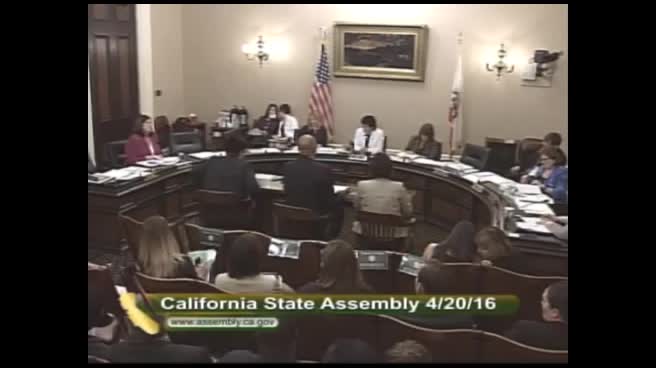
Bill Author





