AB 251: Public works: public subsidies.
- Session Year: 2015-2016
- House: Assembly
- Latest Version Date: 2015-07-21
Existing law requires that, except as specified, not less than the general prevailing rate of per diem wages, determined by the Director of Industrial Relations, be paid to workers employed on public works projects. Existing law defines public works to include, among other things, construction, alteration, demolition, installation, or repair work done under contract and paid for, in whole or in part, out of public funds, but exempts from that definition, among other projects, an otherwise private development project if the state or political subdivision provides, directly or indirectly, a public subsidy to the private development project that is de minimis in the context of the project.
This bill would provide that a public subsidy is de minimis if it is both less than $250,000 and less than 2% of the total project cost. The bill would specify that those provisions do not apply to a project that was advertised for bid, or a contract that was awarded, before July 1, 2016.
Existing law requires that, except as specified, not less than the general prevailing rate of per diem wages, determined by the Director of Industrial Relations, be paid to workers employed on public works projects. Existing law defines public works to include, among other things, construction, alteration, demolition, installation, or repair work done under contract and paid for, in whole or in part, out of public funds, but exempts from that definition, among other projects, an otherwise private development project if the state or political subdivision provides, directly or indirectly, a public subsidy to the private development project that is de minimis in the context of the project.
This bill would provide that a public subsidy is de minimis if it is both less than $75,000 $250,000 and less than 1% 2% of the total project cost. The bill would specify that those provisions do not apply to a project that was advertised for bid, or a contract that was awarded, before January 1, 2016. July 1, 2016.
Existing law requires that, except as specified, not less than the general prevailing rate of per diem wages, determined by the Director of Industrial Relations, be paid to workers employed on public works projects. Existing law defines public works to include, among other things, construction, alteration, demolition, installation, or repair work done under contract and paid for, in whole or in part, out of public funds, but exempts from that definition, among other projects, an otherwise private development project if the state or political subdivision provides, directly or indirectly, a public subsidy to the private development project that is de minimis in the context of the project.
This bill would provide that a public subsidy is de minimis if it is both less than $25,000 $75,000 and less than 1% of the total project cost. The bill would specify that those provisions do not apply to a project that was advertised for bid, or a contract that was awarded, before January 1, 2016.
Existing law requires that, except as specified, not less than the general prevailing rate of per diem wages, determined by the Director of Industrial Relations, be paid to workers employed on public works projects. Existing law defines public works to include, among other things, construction, alteration, demolition, installation, or repair work done under contract and paid for, in whole or in part, out of public funds, but exempts from that definition, among other projects, an otherwise private development project if the state or political subdivision provides, directly or indirectly, a public subsidy to the private development project that is de minimis in the context of the project.
This bill would provide that a public subsidy is de minimis if it is both less than $25,000 and less than 1% of the total project cost. The bill would specify that those provisions do not apply to a project that was advertised for bid, or a contract that was awarded, before January 1, 2016.
(a)As used in this chapter, public works means:
(1)Construction, alteration, demolition, installation, or repair work done under contract and paid for in whole or in part out of public funds, except work done directly by any public utility company pursuant to order of the Public Utilities Commission or other public authority. For purposes of this paragraph, construction includes work performed during the design and preconstruction phases of construction, including, but not limited to, inspection and land surveying work, and work performed during the postconstruction phases of construction, including, but not limited to, all cleanup work at the jobsite. For purposes of this paragraph, installation includes, but is not limited to, the assembly and disassembly of freestanding and affixed modular office systems.
(2)Work done for irrigation, utility, reclamation, and improvement districts, and other districts of this type. Public work does not include the operation of the irrigation or drainage system of any irrigation or reclamation district, except as used in Section 1778 relating to retaining wages.
(3)Street, sewer, or other improvement work done under the direction and supervision or by the authority of any officer or public body of the state, or of any political subdivision or district thereof, whether the political subdivision or district operates under a freeholders charter or not.
(4)The laying of carpet done under a building lease-maintenance contract and paid for out of public funds.
(5)The laying of carpet in a public building done under contract and paid for in whole or in part out of public funds.
(6)Public transportation demonstration projects authorized pursuant to Section 143 of the Streets and Highways Code.
(7)(A)Infrastructure project grants from the California Advanced Services Fund pursuant to Section 281 of the Public Utilities Code.
(B)For purposes of this paragraph, the Public Utilities Commission is not the awarding body or the body awarding the contract, as defined in Section 1722.
(b)For purposes of this section, paid for in whole or in part out of public funds means all of the following:
(1)The payment of money or the equivalent of money by the state or political subdivision directly to or on behalf of the public works contractor, subcontractor, or developer.
(2)Performance of construction work by the state or political subdivision in execution of the project.
(3)Transfer by the state or political subdivision of an asset of value for less than fair market price.
(4)Fees, costs, rents, insurance or bond premiums, loans, interest rates, or other obligations that would normally be required in the execution of the contract, that are paid, reduced, charged at less than fair market value, waived, or forgiven by the state or political subdivision.
(5)Money loaned by the state or political subdivision that is to be repaid on a contingent basis.
(6)Credits that are applied by the state or political subdivision against repayment obligations to the state or political subdivision.
(c)Notwithstanding subdivision (b):
(1)Private residential projects built on private property are not subject to the requirements of this chapter unless the projects are built pursuant to an agreement with a state agency, redevelopment agency, or local public housing authority.
(2)If the state or a political subdivision requires a private developer to perform construction, alteration, demolition, installation, or repair work on a public work of improvement as a condition of regulatory approval of an otherwise private development project, and the state or political subdivision contributes no more money, or the equivalent of money, to the overall project than is required to perform this public improvement work, and the state or political subdivision maintains no proprietary interest in the overall project, then only the public improvement work shall thereby become subject to this chapter.
(3)(A)If the state or a political subdivision reimburses a private developer for costs that would normally be borne by the public, or provides directly or indirectly a public subsidy to a private development project that is de minimis in the context of the project, an otherwise private development project shall not thereby become subject to the requirements of this chapter.
(B)For purposes of subparagraph (A), a public subsidy is de minimis if it is both less than two hundred fifty thousand dollars ($250,000) and less than 2 percent of the total project cost. This subparagraph shall not apply to a project that was advertised for bid, or a contract that was awarded, before July 1, 2016.
(4)The construction or rehabilitation of affordable housing units for low- or moderate-income persons pursuant to paragraph (5) or (7) of subdivision (e) of Section 33334.2 of the Health and Safety Code that are paid for solely with moneys from the Low and Moderate Income Housing Fund established pursuant to Section 33334.3 of the Health and Safety Code or that are paid for by a combination of private funds and funds available pursuant to Section 33334.2 or 33334.3 of the Health and Safety Code do not constitute a project that is paid for in whole or in part out of public funds.
(5)Unless otherwise required by a public funding program, the construction or rehabilitation of privately owned residential projects is not subject to the requirements of this chapter if one or more of the following conditions are met:
(A)The project is a self-help housing project in which no fewer than 500 hours of construction work associated with the homes are to be performed by the home buyers.
(B)The project consists of rehabilitation or expansion work associated with a facility operated on a not-for-profit basis as temporary or transitional housing for homeless persons with a total project cost of less than twenty-five thousand dollars ($25,000).
(C)Assistance is provided to a household as either mortgage assistance, downpayment assistance, or for the rehabilitation of a single-family home.
(D)The project consists of new construction, expansion, or rehabilitation work associated with a facility developed by a nonprofit organization to be operated on a not-for-profit basis to provide emergency or transitional shelter and ancillary services and assistance to homeless adults and children. The nonprofit organization operating the project shall provide, at no profit, not less than 50 percent of the total project cost from nonpublic sources, excluding real property that is transferred or leased. Total project cost includes the value of donated labor, materials, architectural, and engineering services.
(E)The public participation in the project that would otherwise meet the criteria of subdivision (b) is public funding in the form of below-market interest rate loans for a project in which occupancy of at least 40 percent of the units is restricted for at least 20 years, by deed or regulatory agreement, to individuals or families earning no more than 80 percent of the area median income.
(d)Notwithstanding any provision of this section to the contrary, the following projects shall not, solely by reason of this section, be subject to the requirements of this chapter:
(1)Qualified residential rental projects, as defined by Section 142(d) of the Internal Revenue Code, financed in whole or in part through the issuance of bonds that receive allocation of a portion of the state ceiling pursuant to Chapter 11.8 (commencing with Section 8869.80) of Division 1 of Title 2 of the Government Code on or before December 31, 2003.
(2)Single-family residential projects financed in whole or in part through the issuance of qualified mortgage revenue bonds or qualified veterans mortgage bonds, as defined by Section 143 of the Internal Revenue Code, or with mortgage credit certificates under a Qualified Mortgage Credit Certificate Program, as defined by Section 25 of the Internal Revenue Code, that receive allocation of a portion of the state ceiling pursuant to Chapter 11.8 (commencing with Section 8869.80) of Division 1 of Title 2 of the Government Code on or before December 31, 2003.
(3)Low-income housing projects that are allocated federal or state low-income housing tax credits pursuant to Section 42 of the Internal Revenue Code, Chapter 3.6 (commencing with Section 50199.4) of Part 1 of Division 31 of the Health and Safety Code, or Section 12206, 17058, or 23610.5 of the Revenue and Taxation Code, on or before December 31, 2003.
(e)If a statute, other than this section, or a regulation, other than a regulation adopted pursuant to this section, or an ordinance or a contract applies this chapter to a project, the exclusions set forth in subdivision (d) do not apply to that project.
(f)For purposes of this section, references to the Internal Revenue Code mean the Internal Revenue Code of 1986, as amended, and include the corresponding predecessor sections of the Internal Revenue Code of 1954, as amended.
(g)The amendments made to this section by either Chapter 938 of the Statutes of 2001 or the act adding this subdivision shall not be construed to preempt local ordinances requiring the payment of prevailing wages on housing projects.
(a)As used in this chapter, public works means:
(1)Construction, alteration, demolition, installation, or repair work done under contract and paid for in whole or in part out of public funds, except work done directly by any public utility company pursuant to order of the Public Utilities Commission or other public authority. For purposes of this paragraph, construction includes work performed during the design and preconstruction phases of construction, including, but not limited to, inspection and land surveying work, and work performed during the postconstruction phases of construction, including, but not limited to, all cleanup work at the jobsite. For purposes of this paragraph, installation includes, but is not limited to, the assembly and disassembly of freestanding and affixed modular office systems.
(2)Work done for irrigation, utility, reclamation, and improvement districts, and other districts of this type. Public work does not include the operation of the irrigation or drainage system of any irrigation or reclamation district, except as used in Section 1778 relating to retaining wages.
(3)Street, sewer, or other improvement work done under the direction and supervision or by the authority of any officer or public body of the state, or of any political subdivision or district thereof, whether the political subdivision or district operates under a freeholders charter or not.
(4)The laying of carpet done under a building lease-maintenance contract and paid for out of public funds.
(5)The laying of carpet in a public building done under contract and paid for in whole or in part out of public funds.
(6)Public transportation demonstration projects authorized pursuant to Section 143 of the Streets and Highways Code.
(7)(A)Infrastructure project grants from the California Advanced Services Fund pursuant to Section 281 of the Public Utilities Code.
(B)For purposes of this paragraph, the Public Utilities Commission is not the awarding body or the body awarding the contract, as defined in Section 1722.
(b)For purposes of this section, paid for in whole or in part out of public funds means all of the following:
(1)The payment of money or the equivalent of money by the state or political subdivision directly to or on behalf of the public works contractor, subcontractor, or developer.
(2)Performance of construction work by the state or political subdivision in execution of the project.
(3)Transfer by the state or political subdivision of an asset of value for less than fair market price.
(4)Fees, costs, rents, insurance or bond premiums, loans, interest rates, or other obligations that would normally be required in the execution of the contract, that are paid, reduced, charged at less than fair market value, waived, or forgiven by the state or political subdivision.
(5)Money loaned by the state or political subdivision that is to be repaid on a contingent basis.
(6)Credits that are applied by the state or political subdivision against repayment obligations to the state or political subdivision.
(c)Notwithstanding subdivision (b):
(1)Private residential projects built on private property are not subject to the requirements of this chapter unless the projects are built pursuant to an agreement with a state agency, redevelopment agency, or local public housing authority.
(2)If the state or a political subdivision requires a private developer to perform construction, alteration, demolition, installation, or repair work on a public work of improvement as a condition of regulatory approval of an otherwise private development project, and the state or political subdivision contributes no more money, or the equivalent of money, to the overall project than is required to perform this public improvement work, and the state or political subdivision maintains no proprietary interest in the overall project, then only the public improvement work shall thereby become subject to this chapter.
(3)(A)If the state or a political subdivision reimburses a private developer for costs that would normally be borne by the public, or provides directly or indirectly a public subsidy to a private development project that is de minimis in the context of the project, an otherwise private development project shall not thereby become subject to the requirements of this chapter.
(B)For purposes of subparagraph (A), a public subsidy is de minimis if it is both less than seventy-five thousand dollars ($75,000) two hundred fifty thousand dollars ($250,000) and less than 1 2 percent of the total project cost. This subparagraph shall not apply to a project that was advertised for bid, or a contract that was awarded, before January 1, 2016. July 1, 2016.
(4)The construction or rehabilitation of affordable housing units for low- or moderate-income persons pursuant to paragraph (5) or (7) of subdivision (e) of Section 33334.2 of the Health and Safety Code that are paid for solely with moneys from the Low and Moderate Income Housing Fund established pursuant to Section 33334.3 of the Health and Safety Code or that are paid for by a combination of private funds and funds available pursuant to Section 33334.2 or 33334.3 of the Health and Safety Code do not constitute a project that is paid for in whole or in part out of public funds.
(5)Unless otherwise required by a public funding program, the construction or rehabilitation of privately owned residential projects is not subject to the requirements of this chapter if one or more of the following conditions are met:
(A)The project is a self-help housing project in which no fewer than 500 hours of construction work associated with the homes are to be performed by the home buyers.
(B)The project consists of rehabilitation or expansion work associated with a facility operated on a not-for-profit basis as temporary or transitional housing for homeless persons with a total project cost of less than twenty-five thousand dollars ($25,000).
(C)Assistance is provided to a household as either mortgage assistance, downpayment assistance, or for the rehabilitation of a single-family home.
(D)The project consists of new construction, expansion, or rehabilitation work associated with a facility developed by a nonprofit organization to be operated on a not-for-profit basis to provide emergency or transitional shelter and ancillary services and assistance to homeless adults and children. The nonprofit organization operating the project shall provide, at no profit, not less than 50 percent of the total project cost from nonpublic sources, excluding real property that is transferred or leased. Total project cost includes the value of donated labor, materials, architectural, and engineering services.
(E)The public participation in the project that would otherwise meet the criteria of subdivision (b) is public funding in the form of below-market interest rate loans for a project in which occupancy of at least 40 percent of the units is restricted for at least 20 years, by deed or regulatory agreement, to individuals or families earning no more than 80 percent of the area median income.
(d)Notwithstanding any provision of this section to the contrary, the following projects shall not, solely by reason of this section, be subject to the requirements of this chapter:
(1)Qualified residential rental projects, as defined by Section 142(d) of the Internal Revenue Code, financed in whole or in part through the issuance of bonds that receive allocation of a portion of the state ceiling pursuant to Chapter 11.8 (commencing with Section 8869.80) of Division 1 of Title 2 of the Government Code on or before December 31, 2003.
(2)Single-family residential projects financed in whole or in part through the issuance of qualified mortgage revenue bonds or qualified veterans mortgage bonds, as defined by Section 143 of the Internal Revenue Code, or with mortgage credit certificates under a Qualified Mortgage Credit Certificate Program, as defined by Section 25 of the Internal Revenue Code, that receive allocation of a portion of the state ceiling pursuant to Chapter 11.8 (commencing with Section 8869.80) of Division 1 of Title 2 of the Government Code on or before December 31, 2003.
(3)Low-income housing projects that are allocated federal or state low-income housing tax credits pursuant to Section 42 of the Internal Revenue Code, Chapter 3.6 (commencing with Section 50199.4) of Part 1 of Division 31 of the Health and Safety Code, or Section 12206, 17058, or 23610.5 of the Revenue and Taxation Code, on or before December 31, 2003.
(e)If a statute, other than this section, or a regulation, other than a regulation adopted pursuant to this section, or an ordinance or a contract applies this chapter to a project, the exclusions set forth in subdivision (d) do not apply to that project.
(f)For purposes of this section, references to the Internal Revenue Code mean the Internal Revenue Code of 1986, as amended, and include the corresponding predecessor sections of the Internal Revenue Code of 1954, as amended.
(g)The amendments made to this section by either Chapter 938 of the Statutes of 2001 or the act adding this subdivision shall not be construed to preempt local ordinances requiring the payment of prevailing wages on housing projects.
(a)As used in this chapter, public works means:
(1)Construction, alteration, demolition, installation, or repair work done under contract and paid for in whole or in part out of public funds, except work done directly by any public utility company pursuant to order of the Public Utilities Commission or other public authority. For purposes of this paragraph, construction includes work performed during the design and preconstruction phases of construction, including, but not limited to, inspection and land surveying work, and work performed during the postconstruction phases of construction, including, but not limited to, all cleanup work at the jobsite. For purposes of this paragraph, installation includes, but is not limited to, the assembly and disassembly of freestanding and affixed modular office systems.
(2)Work done for irrigation, utility, reclamation, and improvement districts, and other districts of this type. Public work does not include the operation of the irrigation or drainage system of any irrigation or reclamation district, except as used in Section 1778 relating to retaining wages.
(3)Street, sewer, or other improvement work done under the direction and supervision or by the authority of any officer or public body of the state, or of any political subdivision or district thereof, whether the political subdivision or district operates under a freeholders charter or not.
(4)The laying of carpet done under a building lease-maintenance contract and paid for out of public funds.
(5)The laying of carpet in a public building done under contract and paid for in whole or in part out of public funds.
(6)Public transportation demonstration projects authorized pursuant to Section 143 of the Streets and Highways Code.
(7)(A)Infrastructure project grants from the California Advanced Services Fund pursuant to Section 281 of the Public Utilities Code.
(B)For purposes of this paragraph, the Public Utilities Commission is not the awarding body or the body awarding the contract, as defined in Section 1722.
(b)For purposes of this section, paid for in whole or in part out of public funds means all of the following:
(1)The payment of money or the equivalent of money by the state or political subdivision directly to or on behalf of the public works contractor, subcontractor, or developer.
(2)Performance of construction work by the state or political subdivision in execution of the project.
(3)Transfer by the state or political subdivision of an asset of value for less than fair market price.
(4)Fees, costs, rents, insurance or bond premiums, loans, interest rates, or other obligations that would normally be required in the execution of the contract, that are paid, reduced, charged at less than fair market value, waived, or forgiven by the state or political subdivision.
(5)Money loaned by the state or political subdivision that is to be repaid on a contingent basis.
(6)Credits that are applied by the state or political subdivision against repayment obligations to the state or political subdivision.
(c)Notwithstanding subdivision (b):
(1)Private residential projects built on private property are not subject to the requirements of this chapter unless the projects are built pursuant to an agreement with a state agency, redevelopment agency, or local public housing authority.
(2)If the state or a political subdivision requires a private developer to perform construction, alteration, demolition, installation, or repair work on a public work of improvement as a condition of regulatory approval of an otherwise private development project, and the state or political subdivision contributes no more money, or the equivalent of money, to the overall project than is required to perform this public improvement work, and the state or political subdivision maintains no proprietary interest in the overall project, then only the public improvement work shall thereby become subject to this chapter.
(3)(A)If the state or a political subdivision reimburses a private developer for costs that would normally be borne by the public, or provides directly or indirectly a public subsidy to a private development project that is de minimis in the context of the project, an otherwise private development project shall not thereby become subject to the requirements of this chapter.
(B)For purposes of subparagraph (A), a public subsidy is de minimis if it is both less than twenty-five seventy-five thousand dollars ($25,000) ($75,000) and less than 1 percent of the total project cost. This subparagraph shall not apply to a project that was advertised for bid, or a contract that was awarded, before January 1, 2016.
(4)The construction or rehabilitation of affordable housing units for low- or moderate-income persons pursuant to paragraph (5) or (7) of subdivision (e) of Section 33334.2 of the Health and Safety Code that are paid for solely with moneys from the Low and Moderate Income Housing Fund established pursuant to Section 33334.3 of the Health and Safety Code or that are paid for by a combination of private funds and funds available pursuant to Section 33334.2 or 33334.3 of the Health and Safety Code do not constitute a project that is paid for in whole or in part out of public funds.
(5)Unless otherwise required by a public funding program, the construction or rehabilitation of privately owned residential projects is not subject to the requirements of this chapter if one or more of the following conditions are met:
(A)The project is a self-help housing project in which no fewer than 500 hours of construction work associated with the homes are to be performed by the home buyers.
(B)The project consists of rehabilitation or expansion work associated with a facility operated on a not-for-profit basis as temporary or transitional housing for homeless persons with a total project cost of less than twenty-five thousand dollars ($25,000).
(C)Assistance is provided to a household as either mortgage assistance, downpayment assistance, or for the rehabilitation of a single-family home.
(D)The project consists of new construction, expansion, or rehabilitation work associated with a facility developed by a nonprofit organization to be operated on a not-for-profit basis to provide emergency or transitional shelter and ancillary services and assistance to homeless adults and children. The nonprofit organization operating the project shall provide, at no profit, not less than 50 percent of the total project cost from nonpublic sources, excluding real property that is transferred or leased. Total project cost includes the value of donated labor, materials, architectural, and engineering services.
(E)The public participation in the project that would otherwise meet the criteria of subdivision (b) is public funding in the form of below-market interest rate loans for a project in which occupancy of at least 40 percent of the units is restricted for at least 20 years, by deed or regulatory agreement, to individuals or families earning no more than 80 percent of the area median income.
(d)Notwithstanding any provision of this section to the contrary, the following projects shall not, solely by reason of this section, be subject to the requirements of this chapter:
(1)Qualified residential rental projects, as defined by Section 142(d) of the Internal Revenue Code, financed in whole or in part through the issuance of bonds that receive allocation of a portion of the state ceiling pursuant to Chapter 11.8 (commencing with Section 8869.80) of Division 1 of Title 2 of the Government Code on or before December 31, 2003.
(2)Single-family residential projects financed in whole or in part through the issuance of qualified mortgage revenue bonds or qualified veterans mortgage bonds, as defined by Section 143 of the Internal Revenue Code, or with mortgage credit certificates under a Qualified Mortgage Credit Certificate Program, as defined by Section 25 of the Internal Revenue Code, that receive allocation of a portion of the state ceiling pursuant to Chapter 11.8 (commencing with Section 8869.80) of Division 1 of Title 2 of the Government Code on or before December 31, 2003.
(3)Low-income housing projects that are allocated federal or state low-income housing tax credits pursuant to Section 42 of the Internal Revenue Code, Chapter 3.6 (commencing with Section 50199.4) of Part 1 of Division 31 of the Health and Safety Code, or Section 12206, 17058, or 23610.5 of the Revenue and Taxation Code, on or before December 31, 2003.
(e)If a statute, other than this section, or a regulation, other than a regulation adopted pursuant to this section, or an ordinance or a contract applies this chapter to a project, the exclusions set forth in subdivision (d) do not apply to that project.
(f)For purposes of this section, references to the Internal Revenue Code mean the Internal Revenue Code of 1986, as amended, and include the corresponding predecessor sections of the Internal Revenue Code of 1954, as amended.
(g)The amendments made to this section by either Chapter 938 of the Statutes of 2001 or the act adding this subdivision shall not be construed to preempt local ordinances requiring the payment of prevailing wages on housing projects.
(a)As used in this chapter, public works means:
(1)Construction, alteration, demolition, installation, or repair work done under contract and paid for in whole or in part out of public funds, except work done directly by any public utility company pursuant to order of the Public Utilities Commission or other public authority. For purposes of this paragraph, construction includes work performed during the design and preconstruction phases of construction, including, but not limited to, inspection and land surveying work, and work performed during the postconstruction phases of construction, including, but not limited to, all cleanup work at the jobsite. For purposes of this paragraph, installation includes, but is not limited to, the assembly and disassembly of freestanding and affixed modular office systems.
(2)Work done for irrigation, utility, reclamation, and improvement districts, and other districts of this type. Public work does not include the operation of the irrigation or drainage system of any irrigation or reclamation district, except as used in Section 1778 relating to retaining wages.
(3)Street, sewer, or other improvement work done under the direction and supervision or by the authority of any officer or public body of the state, or of any political subdivision or district thereof, whether the political subdivision or district operates under a freeholders charter or not.
(4)The laying of carpet done under a building lease-maintenance contract and paid for out of public funds.
(5)The laying of carpet in a public building done under contract and paid for in whole or in part out of public funds.
(6)Public transportation demonstration projects authorized pursuant to Section 143 of the Streets and Highways Code.
(7)(A)Infrastructure project grants from the California Advanced Services Fund pursuant to Section 281 of the Public Utilities Code.
(B)For purposes of this paragraph, the Public Utilities Commission is not the awarding body or the body awarding the contract, as defined in Section 1722.
(b)For purposes of this section, paid for in whole or in part out of public funds means all of the following:
(1)The payment of money or the equivalent of money by the state or political subdivision directly to or on behalf of the public works contractor, subcontractor, or developer.
(2)Performance of construction work by the state or political subdivision in execution of the project.
(3)Transfer by the state or political subdivision of an asset of value for less than fair market price.
(4)Fees, costs, rents, insurance or bond premiums, loans, interest rates, or other obligations that would normally be required in the execution of the contract, that are paid, reduced, charged at less than fair market value, waived, or forgiven by the state or political subdivision.
(5)Money loaned by the state or political subdivision that is to be repaid on a contingent basis.
(6)Credits that are applied by the state or political subdivision against repayment obligations to the state or political subdivision.
(c)Notwithstanding subdivision (b):
(1)Private residential projects built on private property are not subject to the requirements of this chapter unless the projects are built pursuant to an agreement with a state agency, redevelopment agency, or local public housing authority.
(2)If the state or a political subdivision requires a private developer to perform construction, alteration, demolition, installation, or repair work on a public work of improvement as a condition of regulatory approval of an otherwise private development project, and the state or political subdivision contributes no more money, or the equivalent of money, to the overall project than is required to perform this public improvement work, and the state or political subdivision maintains no proprietary interest in the overall project, then only the public improvement work shall thereby become subject to this chapter.
(3)(A)If the state or a political subdivision reimburses a private developer for costs that would normally be borne by the public, or provides directly or indirectly a public subsidy to a private development project that is de minimis in the context of the project, an otherwise private development project shall not thereby become subject to the requirements of this chapter.
(B)For purposes of subparagraph (A), a public subsidy is de minimis if it is both less than twenty-five thousand dollars ($25,000) and less than 1 percent of the total project cost. This subparagraph shall not apply to a project that was advertised for bid, or a contract that was awarded, before January 1, 2016.
(4)The construction or rehabilitation of affordable housing units for low- or moderate-income persons pursuant to paragraph (5) or (7) of subdivision (e) of Section 33334.2 of the Health and Safety Code that are paid for solely with moneys from the Low and Moderate Income Housing Fund established pursuant to Section 33334.3 of the Health and Safety Code or that are paid for by a combination of private funds and funds available pursuant to Section 33334.2 or 33334.3 of the Health and Safety Code do not constitute a project that is paid for in whole or in part out of public funds.
(5)Unless otherwise required by a public funding program, the construction or rehabilitation of privately owned residential projects is not subject to the requirements of this chapter if one or more of the following conditions are met:
(A)The project is a self-help housing project in which no fewer than 500 hours of construction work associated with the homes are to be performed by the home buyers.
(B)The project consists of rehabilitation or expansion work associated with a facility operated on a not-for-profit basis as temporary or transitional housing for homeless persons with a total project cost of less than twenty-five thousand dollars ($25,000).
(C)Assistance is provided to a household as either mortgage assistance, downpayment assistance, or for the rehabilitation of a single-family home.
(D)The project consists of new construction, expansion, or rehabilitation work associated with a facility developed by a nonprofit organization to be operated on a not-for-profit basis to provide emergency or transitional shelter and ancillary services and assistance to homeless adults and children. The nonprofit organization operating the project shall provide, at no profit, not less than 50 percent of the total project cost from nonpublic sources, excluding real property that is transferred or leased. Total project cost includes the value of donated labor, materials, architectural, and engineering services.
(E)The public participation in the project that would otherwise meet the criteria of subdivision (b) is public funding in the form of below-market interest rate loans for a project in which occupancy of at least 40 percent of the units is restricted for at least 20 years, by deed or regulatory agreement, to individuals or families earning no more than 80 percent of the area median income.
(d)Notwithstanding any provision of this section to the contrary, the following projects shall not, solely by reason of this section, be subject to the requirements of this chapter:
(1)Qualified residential rental projects, as defined by Section 142(d) of the Internal Revenue Code, financed in whole or in part through the issuance of bonds that receive allocation of a portion of the state ceiling pursuant to Chapter 11.8 (commencing with Section 8869.80) of Division 1 of Title 2 of the Government Code on or before December 31, 2003.
(2)Single-family residential projects financed in whole or in part through the issuance of qualified mortgage revenue bonds or qualified veterans mortgage bonds, as defined by Section 143 of the Internal Revenue Code, or with mortgage credit certificates under a Qualified Mortgage Credit Certificate Program, as defined by Section 25 of the Internal Revenue Code, that receive allocation of a portion of the state ceiling pursuant to Chapter 11.8 (commencing with Section 8869.80) of Division 1 of Title 2 of the Government Code on or before December 31, 2003.
(3)Low-income housing projects that are allocated federal or state low-income housing tax credits pursuant to Section 42 of the Internal Revenue Code, Chapter 3.6 (commencing with Section 50199.4) of Part 1 of Division 31 of the Health and Safety Code, or Section 12206, 17058, or 23610.5 of the Revenue and Taxation Code, on or before December 31, 2003.
(e)If a statute, other than this section, or a regulation, other than a regulation adopted pursuant to this section, or an ordinance or a contract applies this chapter to a project, the exclusions set forth in subdivision (d) do not apply to that project.
(f)For purposes of this section, references to the Internal Revenue Code mean the Internal Revenue Code of 1986, as amended, and include the corresponding predecessor sections of the Internal Revenue Code of 1954, as amended.
(g)The amendments made to this section by either Chapter 938 of the Statutes of 2001 or the act adding this subdivision shall not be construed to preempt local ordinances requiring the payment of prevailing wages on housing projects.
|
Date
|
Status
|
|---|---|
| Jun 23, 2015 | Read second time. Ordered to third reading. |
| Jan 15, 2016 | Consideration of Governor's veto stricken from file. |
| Aug 18, 2015 | Consideration of Governor's veto pending. |
| Aug 17, 2015 | Vetoed by Governor. |
| Aug 17, 2015 | Consideration of Governor's veto pending. |
| Aug 3, 2015 | Enrolled and presented to the Governor at 3 p.m. |
| Jul 16, 2015 | Senate amendments concurred in. To Engrossing and Enrolling. (Ayes 53. Noes 26. Page 2411.). |
| Jul 16, 2015 | Senate amendments concurred in. To Engrossing and Enrolling. |
| Jul 13, 2015 | Read third time. Passed. Ordered to the Assembly. (Ayes 24. Noes 13. Page 1906.). |
| Jul 13, 2015 | Read third time. Passed. Ordered to the Assembly. |
| Jul 13, 2015 | In Assembly. Concurrence in Senate amendments pending. May be considered on or after July 15 pursuant to Assembly Rule 77. |
| Jul 9, 2015 | Read second time. Ordered to third reading. |
| Jul 8, 2015 | Read third time and amended. Ordered to second reading. |
| Feb 9, 2015 | Read first time. To print. |
| Jun 22, 2015 | From committee: Be placed on second reading file pursuant to Senate Rule 28.8. |
| Jun 10, 2015 | From committee: Do pass and re-refer to Com. on APPR. (Ayes 4. Noes 1.) (June 10). Re-referred to Com. on APPR. |
| May 28, 2015 | From committee chair, with author's amendments: Amend, and re-refer to committee. Read second time, amended, and re-referred to Com. on L. & I.R. |
| May 7, 2015 | Referred to Com. on L. & I.R. |
| Apr 6, 2015 | Read third time. Passed. Ordered to the Senate. (Ayes 50. Noes 28. Page 771.) |
| Apr 6, 2015 | In Senate. Read first time. To Com. on RLS. for assignment. |
| Mar 26, 2015 | Read second time. Ordered to third reading. |
| Mar 25, 2015 | From committee: Do pass. (Ayes 12. Noes 4.) (March 25). |
| Mar 19, 2015 | From committee: Do pass and re-refer to Com. on APPR. (Ayes 5. Noes 2.) (March 18). Re-referred to Com. on APPR. |
| Feb 17, 2015 | Referred to Com. on L. & E. |
| Feb 10, 2015 | From printer. May be heard in committee March 12. |
|
Date
|
Description
|
Location
|
Votes
|
|
|---|---|---|---|---|
| Jul 16, 2015 | AB 251 LEVINE Concurrence in Senate Amendments | Assembly Floor |
Passed |
|
| Jul 13, 2015 | Assembly 3rd Reading AB251 Levine By Leyva | Senate Floor |
Passed |
|
| Jun 10, 2015 | Do pass, but first be re-referred to the Committee on [Appropriations] | Senate Standing Committee on Labor and Industrial Relations |
Passed |
|
| Apr 6, 2015 | AB 251 LEVINE Assembly Third Reading | Assembly Floor |
Passed |
|
| Mar 25, 2015 | Do pass. | Assembly Standing Committee on Appropriations |
Passed |
|
| Mar 18, 2015 | Do pass and be re-referred to the Committee on [Appropriations] | Assembly Standing Committee on Labor and Employment |
Passed |
This list shows positions taken on this bill by organizations on the date displayed, which is linked to the original source.
Positions by individuals are not included.
|
Organization
|
Position
|
Date
|
|---|---|---|
| Air Conditioning Trade Association | ** Against | Jul 13, 2015 |
| Associated Builders And Contractors Of California | ** Against | Jul 13, 2015 |
| Associated Builders and Contractors-San Diego Chapter | ** Against | Jul 13, 2015 |
| Associated General Contractors | ** Against | Jul 13, 2015 |
| Building And Construction Trades Council | * Support | Mar 25, 2015 |
| California Building Industry Association | ** Against | Jul 13, 2015 |
| California Concrete Contractors Association | ** Against | Jul 13, 2015 |
| California Labor Federation, Afl-Cio | ** Support | Jun 10, 2015 |
| California Precast Concrete Association | ** Against | Jul 13, 2015 |
| California State Association Of Electrical Workers | ** Support | Jul 13, 2015 |
| California State Pipe Trades Council | ** Support | Jul 13, 2015 |
| California-Nevada Conference Of Operating Engineers | * Support | Mar 18, 2015 |
| National Electrical Contractors Association | ** Support | Jul 13, 2015 |
| Plumbing-Heating-Cooling Contractors Association of California | ** Against | Jul 13, 2015 |
| Western Electrical Contractors Association | ** Against | Jun 10, 2015 |
| Western States Council Of Sheet Metal Workers | ** Support | Jul 13, 2015 |
GOVERNOR'S VETO
AB 251
(Levine)
As Enrolled July 21, 2015
2/3 vote
ASSEMBLY: |
50-28 |
(April 6, 2015) |
SENATE: |
24-13 |
(July 13, 2015) |
ASSEMBLY: |
53-26 |
(July 16, 2015) |
|
|
|
Original Committee Reference: L. & E.
SUMMARY: Provides a statutory definition for a "de minimis" public subsidy that does not trigger the requirements of prevailing wage law.
The Senate amendments:
Specify that a public subsidy is de minimis if it is both less than $250,000 and less than 2% of the total project cost.
Add co-authors.
EXISTING LAW:
Requires the prevailing wage rate to be paid to all workers on "public works" projects over $1,000.
Defines "public works" to include, among other things, construction, alteration, demolition, installation, or repair work done under contract and paid for in whole or in part out of public funds.
Establishes a definition for "paid for in whole or in part out of public funds," as specified.
Provides that if the state or a political subdivision reimburses a private developer for costs that would normally be borne by the public, or provides directly or indirectly a public subsidy to a private development project that is "de minimis" in the context of the project, an otherwise private development project shall not thereby become subject to the requirement to pay prevailing wages.
FISCAL EFFECT: According to the Senate Appropriations Committee, pursuant to Senate Rule 28.8, negligible state costs.
COMMENTS: According to the author, this bill will clearly define when a public subsidy is "de minimis" for the purpose of determining when prevailing wage law applies to certain projects.
Over a decade ago, there was much administrative and legislative action over what constituted the term "paid for in whole or in part out of public funds." This action culminated in the enactment of SB 975 (Alarcón), Chapter 938, Statutes of 2001, which codified a definition of "paid for in whole or in part out of public funds" that included certain payments, transfers, credits, reductions, waivers and performances of work. SB 975 also provided that if the state or a political subdivision reimburses a private developer for costs that would normally be borne by the public, or provides directly or indirectly a public subsidy to a private development project that is "de minimis" in the context of the project, an otherwise private development project shall not thereby become subject to the requirement to pay prevailing wages. However, SB 975 did not provide a definition for the term "de minimis."
Therefore, since the enactment of SB 975, the Department of Industrial Relations (DIR) has issued several coverage determinations attempting to define the term "de minimis."
This bill is sponsored by the State Building and Construction Trades Council of California. They argue that the legal definition of "de minimis" is "trifling, minimal... so insignificant that a court may overlook it." Unfortunately, in recent years, DIR has strayed from this legal definition of "de minimis," and lacking a definition in statute, has loosely interpreted the definition to apply to subsidies ranging from thousands to millions of dollars. As a result, the sponsor argues that there has been uncertainty over the definition of "de minimis" over the last decade. DIR has made determinations of "de minimis" on projects that have had public subsidies given to developers that have ranged from $65,710 to $4.5 million.
The sponsor concludes that a public subsidy as much or more than the definition used in this bill is a notable amount of taxpayer investment in a project and arguably is not "de minimis," so it is reasonable to require payment of prevailing wages if the developer wants a public subsidy over that amount.
Opponents argue that when SB 975 was enacted in 2001, there was extensive debate regarding the "de minimis" exception. Although never codified, opponents contend that there was general agreement among the stakeholders that the trigger for the exception was 2% of the total project cost. This was a level the stakeholders generally agreed was reasonable to ensure that there is a true and substantial public investment in the project before other state mandates come into play.
This bill is similar to AB 302 (Chau) of 2013. That measure was vetoed by Governor Brown.
This measure seeks to codify a definition of the term 'de minimis' to determine what level of public subsidy triggers prevailing wage requirements on an otherwise private project.
Longstanding practice has been to view the subsidy in context of the project and use 2% as a general threshold for determinations. There has been no showing that the current practice is unreasonable.
While I remain a staunch supporter of prevailing wages I am concerned that this measure is too restrictive and may have unintended consequences. Two years ago, I cited the same concerns when I returned a similar bill without my signature. This measure does not adequately address those concerns.
Analysis Prepared by: Ben Ebbink / L. & E. / (916) 319-2091 FN: 0001346
AB 251
Page 2
CONCURRENCE IN SENATE AMENDMENTS
AB 251
(Levine)
As Amended July 8, 2015
Majority vote
ASSEMBLY: |
50-28 |
(April 6, 2015) |
SENATE: |
24-13 |
(July 13, 2015) |
Original Committee Reference: L. & E.
SUMMARY: Provides a statutory definition for a "de minimis" public subsidy that does not trigger the requirements of prevailing wage law.
The Senate amendments:
Specify that a public subsidy is de minimis if it is both less than $250,000 and less than 2% of the total project cost.
Add co-authors.
EXISTING LAW:
Requires the prevailing wage rate to be paid to all workers on "public works" projects over $1,000.
Defines "public works" to include, among other things, construction, alteration, demolition, installation, or repair work done under contract and paid for in whole or in part out of public funds.
Establishes a definition for "paid for in whole or in part out of public funds," as specified.
Provides that if the state or a political subdivision reimburses a private developer for costs that would normally be borne by the public, or provides directly or indirectly a public subsidy to a private development project that is "de minimis" in the context of the project, an otherwise private development project shall not thereby become subject to the requirement to pay prevailing wages.
FISCAL EFFECT: According to the Senate Appropriations Committee, pursuant to Senate Rule 28.8, negligible state costs.
COMMENTS: According to the author, this bill will clearly define when a public subsidy is "de minimis" for the purpose of determining when prevailing wage law applies to certain projects.
Over a decade ago, there was much administrative and legislative action over what constituted the term "paid for in whole or in part out of public funds." This action culminated in the enactment of SB 975 (Alarcón), Chapter 938, Statutes of 2001, which codified a definition of "paid for in whole or in part out of public funds" that included certain payments, transfers, credits, reductions, waivers and performances of work. SB 975 also provided that if the state or a political subdivision reimburses a private developer for costs that would normally be borne by the public, or provides directly or indirectly a public subsidy to a private development project that is "de minimis" in the context of the project, an otherwise private development project shall not thereby become subject to the requirement to pay prevailing wages. However, SB 975 did not provide a definition for the term "de minimis."
Therefore, since the enactment of SB 975, the Department of Industrial Relations (DIR) has issued several coverage determinations attempting to define the term "de minimis."
This bill is sponsored by the State Building and Construction Trades Council of California. They argue that the legal definition of "de minimis" is "trifling, minimal...so insignificant that a court may overlook it." Unfortunately, in recent years, DIR has strayed from this legal definition of "de minimis," and lacking a definition in statute, has loosely interpreted the definition to apply to subsidies ranging from thousands to millions of dollars. As a result, the sponsor argues that there has been uncertainty over the definition of "de minimis" over the last decade. DIR has made determinations of "de minimis" on projects that have had public subsidies given to developers that have ranged from $65,710 to $4.5 million.
The sponsor concludes that a public subsidy as much or more than the definition used in this bill is a notable amount of taxpayer investment in a project and arguably is not "de minimis," so it is reasonable to require payment of prevailing wages if the developer wants a public subsidy over that amount.
Opponents argue that when SB 975 was enacted in 2001, there was extensive debate regarding the "de minimis" exception. Although never codified, opponents contend that there was general agreement among the stakeholders that the trigger for the exception was 2% of the total project cost. This was a level the stakeholders generally agreed was reasonable to ensure that there is a true and substantial public investment in the project before other state mandates come into play.
This bill is similar to AB 302 (Chau) of 2013. That measure was vetoed by Governor Brown.
Analysis Prepared by: Ben Ebbink / L. & E. / (916) 319-2091 FN: 0001179
AB 251
Page 5
|
Office of Senate Floor Analyses (916) 651-1520 Fax: (916) 327-4478 |
THIRD READING
Bill No: AB 251
Amended: 7/8/15 in Senate
SENATE LABOR & IND. REL. COMMITTEE: 4-1, 6/10/15
AYES: Mendoza, Jackson, Leno, Mitchell
NOES: Stone
SENATE APPROPRIATIONS COMMITTEE: Senate Rule 28.8
ASSEMBLY FLOOR: 50-28, 4/6/15 - See last page for vote
SUBJECT: Public works: public subsidies
SOURCE: State Building and Construction Trades Council
DIGEST: This bill provides a statutory definition for a “de minimis” public subsidy that does not trigger the requirements of prevailing wage law. Specifically, this bill defines “de minimis” to mean a public subsidy that is both less than $250,000 and less than two percent of the total project cost and will not apply to a project that was advertised for bid, or a contract that was awarded, before July 1, 2016.
Senate Floor Amendments of 7/8/15 increase the definition of a de minimis public subsidy to less than $250,000 and less than two percent of the total project cost and extend the exemption to a project that was advertised for bid, or a contract that was awarded, before July 1, 2016.
Existing law:
Requires that workers employed on public works projects in California be paid the applicable prevailing wage, as determined by the Department of Industrial Relations (DIR).
Requires that not less than the general prevailing wage rate be paid to all workers employed on a “public works” project costing over $1,000 and imposes misdemeanor penalties for a violation of this requirement. (Labor Code §1771)
Defines “paid for in whole or in part out of public funds” as, among other things, “Fees, costs, rents, insurance or bond premiums, loans, interest rates, or other obligations normally required in the execution of a contract that are paid, reduced, charged at less than fair market value, waived or forgiven.” (Labor Code §1720)
Defines “public work” to include, among other things, construction, alteration, demolition, installation or repair work done under contract and paid for in whole or in part out of public funds. (Labor Code §1720)
Defines “public works,” as the hauling of refuse from a public works site to an outside disposal location, with respect to contracts involving any state agency, including the California State University and the University of California, or any political subdivision of the state. (Labor Code §1720.3)
Provides that “hauling of refuse” includes, but is not limited to hauling soil, sand, gravel, rocks, concrete, asphalt, excavation materials, and construction debris. (Labor Code §1720.3)
Provides that the contractor to whom the contract is awarded, and any subcontractor under him, shall pay not less than the prevailing wage to all workers employed in the execution of the contract. (Labor Code §1774)
This
bill provides a statutory definition for a “de minimis” public
subsidy that does not trigger the requirements of prevailing wage
law. Specifically, this bill defines “de minimis” to mean a
public subsidy that is both less than $250,000 and less than two
percent of the total project cost and will not apply to a project
that was advertised for bid, or a contract that was awarded, before
July 1, 2016.
Background
“Public Works” Under California Law. In general, “public works” is defined to include construction, alteration, demolition, installation or repair work done under contract and “paid for in whole or in part out of public funds.”
Over a decade ago, there was much administrative and legislative action over what constituted the term “paid for in whole or in part out of public funds.” This action culminated in the enactment of SB 975 (Alarcón, Chapter 938, Statutes of 2001), which codified a definition of “paid for in whole or in part out of public funds” that included certain payments, transfers, credits, reductions, waivers and performances of work. At the time, supporters of SB 975 stated that it established a definition that conformed to several precedential coverage decisions made by the DIR. According to the bill’s sponsors, SB 975 was intended to remove ambiguity regarding the definition of public subsidy of development projects.
Need for the bill. If a project is determined as a “public work”, the Labor Code requires (except for projects of $1,000 or less) that the “prevailing wage” to be paid to all workers employed on public works projects. SB 975 provided that if the state or a political subdivision reimburses a private developer for costs that would normally be borne by the public, or provides directly or indirectly a public subsidy to a private development project that is “de minimis” in the context of the project, the project would not be subject to the requirement to pay prevailing wages. Currently there is no specific definition for “de minimis” for the purpose of determining when prevailing wage is applied to project.
According to the author, DIR has made various coverage determinations attempting to define the term “de minimis” and has interpreted “de minimis” with vastly different dollar amounts and percentages of project costs which has led to confusion and litigation as to what the term means. The author notes that DIR’s determinations of “de minimis” have ranged from $65,710 to $4.5 million or from .5 percent to two percent of a project’s total cost.
According to the author, this bill restores the original intent of SB 975 that the “de minimis” exception be limited to situations in which the public subsidy is trivial such that it should not have legal significance. AB 251 provides that a subsidy is de minimis if it is both less than $250,000 and less than two percent of the total project cost.
FISCAL EFFECT: Appropriation: No Fiscal Com.: Yes Local: No
State Building and Construction Trades Council (source)
California Association of Sheet Metal and Air Conditioning Contractors’ National Association
California Labor Federation
California Legislative Conference of the Plumbing, Heating and Piping Industry
California State Association of Electrical Workers
California State Pipe Trades Council
National Electrical Contractors Association
Western States Council of Sheet Metal Workers
Air Conditioning Trade Association
Associated Builders and Contractors of California
Associated Builders and Contractors-San Diego Chapter
Associated General Contractors
California Building Industry Association
California Concrete Contractors Association
California Precast Concrete Association
Plumbing-Heating-Cooling Contractors Association of California
Western Electrical Contractors Association
ARGUMENTS IN SUPPORT: According to proponents, Labor Code §1720(c)(3) provides that a project does not become subject to the prevailing wage law if it receives a public subsidy “that is de minimis in the context of the project.” Proponents cite the legal definition of “de minimis” as: “trifling, minimal…so insignificant that a court may overlook it.” Proponents contend that DIR has strayed from this legal definition of de minimis, and lacking a definition in statute, has loosely interpreted the definition to apply to subsidies ranging from thousands to millions of dollars. Proponents note that with this uncertainty DIR has made determinations of de minimis on projects that have had public subsidies given to developers have that ranged from $65,710 to $1,664,804 or from .5 percent to 1.75 percent of a project’s total cost. Proponents argue that a public subsidy of $75,000 is a large amount of taxpayer investment in a project and arguably is not de minimis, making it reasonable to require payment if the developer wants a public subsidy over that amount.
ARGUMENTS IN OPPOSITION: Opponents argue that current law on what constitutes “de minimis,” a subject extensively debated as part of the discussion surrounding SB 975, should be maintained to ensure there is a true and substantial public investment in the project before other state mandates come into play. Specifically, opponents note that when Labor Code §1720 was amended in 2001 (SB 975) the de minimis exception was discussed, and although never codified, was generally agreed by the parties to be 2% of the project. Opponents contend that subsequent DIR determinations have upheld this agreement by requiring a substantial public subsidy to trigger California’s Public Works Law. Opponents argue that this was a level stakeholders generally agreed was reasonable to ensure there is a true and substantial public investment in the project before other state mandates come into play.
ASSEMBLY FLOOR: 50-28, 4/6/15
AYES: Alejo, Bloom, Bonilla, Bonta, Brown, Burke, Calderon, Campos, Chau, Chiu, Chu, Cooley, Cooper, Dababneh, Daly, Dodd, Eggman, Frazier, Cristina Garcia, Eduardo Garcia, Gatto, Gipson, Gonzalez, Gordon, Gray, Holden, Irwin, Jones-Sawyer, Levine, Lopez, Low, McCarty, Medina, Mullin, Nazarian, O’Donnell, Perea, Quirk, Rendon, Ridley-Thomas, Rodriguez, Salas, Santiago, Mark Stone, Thurmond, Ting, Weber, Williams, Wood, Atkins
NOES: Achadjian, Travis Allen, Baker, Bigelow, Brough, Chang, Chávez, Dahle, Beth Gaines, Gallagher, Grove, Hadley, Harper, Jones, Kim, Lackey, Linder, Maienschein, Mathis, Mayes, Melendez, Obernolte, Olsen, Patterson, Steinorth, Wagner, Waldron, Wilk
NO VOTE RECORDED: Gomez, Roger Hernández
Prepared by: Deanna Ping / L. & I.R. / (916) 651-1556
7/10/15 15:55:29
**** END ****
AB 251
Page 5
|
Office of Senate Floor Analyses (916) 651-1520 Fax: (916) 327-4478 |
THIRD READING
Bill No: AB 251
Amended: 5/28/15 in Senate
SENATE LABOR & IND. REL. COMMITTEE: 4-1, 6/10/15
AYES: Mendoza, Jackson, Leno, Mitchell
NOES: Stone
SENATE APPROPRIATIONS COMMITTEE: Senate Rule 28.8
ASSEMBLY FLOOR: 50-28, 4/6/15 - See last page for vote
SUBJECT: Public works: public subsidies
SOURCE: State Building and Construction Trades Council
DIGEST: This bill provides a statutory definition for a "de
minimus" public subsidy that does not trigger the requirements
of prevailing wage law. Specifically, this bill defines "de
minimus" to mean a public subsidy that is both less than $75,000
and less than one percent of the total project cost and will not
apply to a project that was advertised for bid, or a contract that
was awarded, before January 1, 2016.
Existing law:
Requires that workers employed on public works projects in California be paid the applicable prevailing wage, as determined by the Department of Industrial Relations.
Requires that not less than the general prevailing wage rate be paid to all workers employed on a "public works" project costing over $1,000 and imposes misdemeanor penalties for a violation of this requirement. (Labor Code §1771)
Defines “paid for in whole or in part out of public funds” as, among other things, “Fees, costs, rents, insurance or bond premiums, loans, interest rates, or other obligations normally required in the execution of a contract that are paid, reduced, charged at less than fair market value, waived or forgiven.” (Labor Code §1720)
Defines "public work" to include, among other things, construction, alteration, demolition, installation or repair work done under contract and paid for in whole or in part out of public funds. (Labor Code §1720)
Defines “public works,” as the hauling of refuse from a public works site to an outside disposal location, with respect to contracts involving any state agency, including the California State University and the University of California, or any political subdivision of the state. (Labor Code §1720.3)
Provides that “hauling of refuse” includes, but is not limited to hauling soil, sand, gravel, rocks, concrete, asphalt, excavation materials, and construction debris. (Labor Code §1720.3)
Provides that the contractor to whom the contract is awarded, and any subcontractor under him, shall pay not less than the prevailing wage to all workers employed in the execution of the contract. (Labor Code §1774)
This
bill provides a statutory definition for a "de minimus"
public subsidy that does not trigger the requirements of prevailing
wage law. Specifically, this bill defines "de minimus" to
mean a public subsidy that is both less than $75,000 and less than
one percent of the total project cost and will not apply to a project
that was advertised for bid, or a contract that was awarded, before
January 1, 2016.
Background
"Public Works" Under California Law. In general, "public works" is defined to include construction, alteration, demolition, installation or repair work done under contract and "paid for in whole or in part out of public funds."
Over a decade ago, there was much administrative and legislative action over what constituted the term "paid for in whole or in part out of public funds." This action culminated in the enactment of SB 975 (Alarcón, Chapter 938, Statutes of 2001), which codified a definition of "paid for in whole or in part out of public funds" that included certain payments, transfers, credits, reductions, waivers and performances of work. At the time, supporters of SB 975 stated that it established a definition that conformed to several precedential coverage decisions made by the DIR. According to the bill’s sponsors, SB 975 was intended to remove ambiguity regarding the definition of public subsidy of development projects.
Need for the bill. If a project is determined as a "public work", the Labor Code requires (except for projects of $1,000 or less) that the "prevailing wage" to be paid to all workers employed on public works projects. SB 975 provided that if the state or a political subdivision reimburses a private developer for costs that would normally be borne by the public, or provides directly or indirectly a public subsidy to a private development project that is "de minimus" in the context of the project, the project would not be subject to the requirement to pay prevailing wages. Currently there is no specific definition for “de minimus” for the purpose of determining when prevailing wage is applied to project.
According to the author, DIR has made various coverage determinations attempting to define the term "de minimus" and has interpreted “de minimus” with vastly different dollar amounts and percentages of project costs which has led to confusion and litigation as to what the term means. The author notes that DIR’s determinations of “de minimus” have ranged from $65,710 to $4.5 million or from .5 percent to two percent of a project’s total cost.
According to the author, this bill restores the original intent of SB 975 that the “de minimus” exception be limited to situations in which the public subsidy is trivial such that it should not have legal significance. AB 251 provides that a subsidy is de minimus if it is both less than $75,000 and less than one percent of the total project cost.
FISCAL EFFECT: Appropriation: No Fiscal Com.: Yes Local: No
State Building and Construction Trades Council (source)
California Association of Sheet Metal and Air Conditioning Contractors’ National Association
California Labor Federation
California Legislative Conference of the Plumbing, Heating and Piping Industry
California State Association of Electrical Workers
California State Pipe Trades Council
National Electrical Contractors Association
Western States Council of Sheet Metal Workers
OPPOSITION: (Verified 6/24/15)
Air Conditioning Trade Association
Associated Builders and Contractors of California
Associated Builders and Contractors-San Diego Chapter
Associated General Contractors
California Building Industry Association
California Concrete Contractors Association
California Precast Concrete Association
Plumbing-Heating-Cooling Contractors Association of California
Western Electrical Contractors Association
ARGUMENTS IN SUPPORT: According to proponents, Labor Code §1720(c)(3) provides that a project does not become subject to the prevailing wage law if it receives a public subsidy “that is de minimus in the context of the project.” Proponents cite the legal definition of “de minimus” as: “trifling, minimal…so insignificant that a court may overlook it.” Proponents contend that DIR has strayed from this legal definition of de minimus, and lacking a definition in statute, has loosely interpreted the definition to apply to subsidies ranging from thousands to millions of dollars. Proponents note that with this uncertainty DIR has made determinations of de minimus on projects that have had public subsidies given to developers have that ranged from $65,710 to $1,664,804 or from .5 percent to 1.75 percent of a project’s total cost. Proponents argue that a public subsidy of $75,000 is a large amount of taxpayer investment in a project and arguably is not de minimus, making it reasonable to require payment if the developer wants a public subsidy over that amount.
ARGUMENTS IN OPPOSITION: Opponents argue that current law on what constitutes “de minimus,” a subject extensively debated as part of the discussion surrounding SB 975, should be maintained to ensure there is a true and substantial public investment in the project before other state mandates come into play. Specifically, opponents note that when Labor Code §1720 was amended in 2001 (SB 975) the de minimus exception was discussed, and although never codified, was generally agreed by the parties to be 2% of the project. Opponents contend that subsequent DIR determinations have upheld this agreement by requiring a substantial public subsidy to trigger California’s Public Works Law. Opponents argue that this was a level stakeholders generally agreed was reasonable to ensure there is a true and substantial public investment in the project before other state mandates come into play.
ASSEMBLY FLOOR: 50-28, 4/6/15
AYES: Alejo, Bloom, Bonilla, Bonta, Brown, Burke, Calderon, Campos, Chau, Chiu, Chu, Cooley, Cooper, Dababneh, Daly, Dodd, Eggman, Frazier, Cristina Garcia, Eduardo Garcia, Gatto, Gipson, Gonzalez, Gordon, Gray, Holden, Irwin, Jones-Sawyer, Levine, Lopez, Low, McCarty, Medina, Mullin, Nazarian, O'Donnell, Perea, Quirk, Rendon, Ridley-Thomas, Rodriguez, Salas, Santiago, Mark Stone, Thurmond, Ting, Weber, Williams, Wood, Atkins
NOES: Achadjian, Travis Allen, Baker, Bigelow, Brough, Chang, Chávez, Dahle, Beth Gaines, Gallagher, Grove, Hadley, Harper, Jones, Kim, Lackey, Linder, Maienschein, Mathis, Mayes, Melendez, Obernolte, Olsen, Patterson, Steinorth, Wagner, Waldron, Wilk
NO VOTE RECORDED: Gomez, Roger Hernández
Prepared by: Deanna Ping / L. & I.R. / (916) 651-1556
6/24/15 17:20:51
AB 251 (Levine) Page 5 of 5
SENATE COMMITTEE ON LABOR AND INDUSTRIAL RELATIONS
Senator Tony Mendoza, Chair
2015 - 2016 Regular
Bill No: AB 251 Hearing Date: June 10, 2015
Author: |
Levine |
||
Version: |
May 28, 2015 |
||
Urgency: |
No |
Fiscal: |
Yes |
Consultant: |
Deanna Ping |
||
Subject: Public works: public subsidies.
KEY ISSUE
Should the Legislature approve a statutory definition for a "de minimus" public subsidy under prevailing wage law?
ANALYSIS
Existing law defines “public works” to include, among other jobs, construction, alteration, demolition, installation, or repair work done under contract and paid for in whole or in part out of public funds. (Labor Code §1720)
Under existing law, “paid for in whole or in part out of public funds” means, among other things, the following:
The payment of money or the equivalent of money by the state or political subdivision directly to or on behalf of the public works contractor, subcontractor, or developer.
The performance of construction work by the state or political subdivision in execution of the project.
Fees, costs, rents, insurance or bond premiums, loans, interest rates, or other obligations that would normally be required in the execution of the contract, that are paid, reduced, charged at less than fair market value, waived, or forgiven by the state or political subdivision.
Money loaned by the state or political subdivision that is to be repaid on a contingent basis.
(Labor Code §1720)
Existing law defines “awarding body” or “body awarding the contract” as the department, board, authority, officer or agent awarding a contract for public work. (Labor Code §1722)
Existing law requires all employees who work on public works projects costing $1,000 or more to be paid the general prevailing rate of per diem wages and the general prevailing rate for holiday and overtime work for the specific location where the public work is to be performed. (Labor Code §1771)
Existing law states that if the state or a political subdivision reimburses a private developer for costs that would normally be borne by the public, or provides directly or indirectly a public subsidy to a private development project that is de minimus in the context of the project, an otherwise private development project shall not be subject to prevailing wage requirements. (Labor Code §1720)
This bill provides a statutory definition for a "de minimus" public subsidy that does not trigger the requirements of prevailing wage law. Specifically, this bill defines "de minimus" to mean a public subsidy that is both less than $75,000 and less than 1 percent of the total project cost and will not apply to a project that was advertised for bid, or a contract that was awarded, before January 1, 2016.
COMMENTS
1. A Brief History of State and Federal Prevailing Wage Law
State prevailing wage laws vary from state to state, but do share a common history that predates federal prevailing wage law. Many of these state laws were enacted as part of Progressive Era reform efforts to improve working conditions at the end of the 19th and the beginning of the 20th centuries. Between 1891 and 1923, seven states adopted prevailing wage laws that required payment of specified hourly wages on government construction projects, the state of Kansas being the first in 1891.
Eighteen additional states (including California in 1931) and the federal government adopted prevailing wage laws during the Great Depression of the 1930s amidst concern that acceptance of the low bid, a common requirement of government contracting for public projects, would reduce local wages and disrupt the local economies. This was particularly in the depths of the Great Depression, where, for some local economies, the government had become the primary purchaser of construction products and a significant employer.
In general, the proponents of prevailing wage legislation wanted to prevent the government from using its purchasing power to undermine the wages of its citizens. It was believed that the government should set an example, by paying the wages prevailing in a locality for each occupation hired by government contractors to build public projects. Even today, prevailing wage laws are generally meant to ensure that wages commonly paid to construction workers in a particular region will determine the minimum wage paid to the same type of workers employed on publicly funded construction projects.
2. General Background on "Public Works" Under California Law
In general, "public works" is defined to include construction, alteration, demolition, installation or repair work done under contract and "paid for in whole or in part out of public funds."
Over a decade ago, there was much administrative and legislative action over what constituted the term "paid for in whole or in part out of public funds." This action culminated in the enactment of SB 975 (Alarcón), Chapter 938, Statutes of 2001, which codified a definition of "paid for in whole or in part out of public funds" that included certain payments, transfers, credits, reductions, waivers and performances of work. At the time, supporters of SB 975 stated that it established a definition that conformed to several precedential coverage decisions made by the Department of Industrial Relations (DIR). According to the sponsors, SB 975 was intended to remove ambiguity regarding the definition of public subsidy of development projects.
3. Need for the bill
If a project is determined as a "public work" Labor Code requires (except for projects of $1,000 or less) that the "prevailing wage" to be paid to all workers employed on public works projects. SB 975 provided that if the state or a political subdivision reimburses a private developer for costs that would normally be borne by the public, or provides directly or indirectly a public subsidy to a private development project that is "de minimus" in the context of the project, the project would not be subject to the requirement to pay prevailing wages. Currently there is no specific definition for “de minimus” for the purpose of determining when prevailing wage is applied to project.
According to the author, DIR has made various coverage determinations attempting to define the term "de minimus" and has interpreted “de minimus” with vastly different dollar amounts and percentages of project costs which has led to confusion and litigation as to what the term means. The author notes that DIR’s determinations of “de minimus” have ranged from $65,710 to $4.5 million or from .5 percent to 2 percent of a project’s total cost.
According to the author, this bill would restore the original intent of SB 975 that the “de minimus” exception be limited to situations in which the public subsidy is trivial such that it should not have legal significance. AB 251 would provide that a subsidy is de minimus if it is both less than $75,000 and less than 1 percent of the total project cost.
4. Proponent Arguments:
According to proponents, Labor Code §1720(c)(3) provides that a project does not become subject to the prevailing wage law if it receives a public subsidy “that is de minimus in the context of the project.” Proponents cite the legal definition of “de minimus” as: “trifling, minimal…so insignificant that a court may overlook it.” Proponents contend that DIR has strayed from this legal definition of de minimus, and lacking a definition in statute, has loosely interpreted the definition to apply to subsidies ranging from thousands to millions of dollars. Proponents note that with this uncertainty DIR has made determinations of de minimus on projects that have had public subsidies given to developers have that ranged from $65,710 to $1,664,804 or from .5 percent to 1.75 percent of a project’s total cost. Proponents argue that a public subsidy of $75,000 is a large amount of taxpayer investment in a project and arguably is not de minimus, making it reasonable to require payment if the developer wants a public subsidy over that amount.
5. Opponent Arguments:
Opponents argue that current law on what constitutes “de minimus,” a subject extensively debated as part of the discussion surrounding SB 975, should be maintained to ensure there is a true and substantial public investment in the project before other state mandates come into play. Specifically, opponents note that when Labor Code §1720 was amended in 2001 (SB 975) the de minimus exception was discussed, and although never codified, was generally agreed by the parties to be 2% of the project. Opponents contend that subsequent DIR determinations have upheld this agreement by requiring a substantial public subsidy to trigger California’s Public Works Law. Opponents argue that this was a level stakeholders generally agreed was reasonable to ensure there is a true and substantial public investment in the project before other state mandates come into play.
6. Prior Legislation:
AB 302 (Chau) would have defined "de minimus" to mean a public subsidy that is both less than $10,000 and less than 1 percent of the total project cost and will not apply to a project that was advertised for bid, or a contract that was awarded, before January 1, 2014. The bill was vetoed by the Governor.
SB 972 (Costa), Chapter 1048, Statutes of 2002, was intended to clarify the application of SB 975 and provided exemptions from prevailing wage requirements for the construction or rehabilitation of privately-owned residential projects, as specified.
SB 975 (Alarcón), Chapter 938, Statutes of 2001, codified a definition of "paid for in whole or in part out of public funds" that included certain payments, transfers, credits, reductions, waivers and performances of work.
SUPPORT
State Building and Construction Trades Council (Sponsor)
California Labor Federation, AFL-CIO
California Legislative Conference of the Plumbing, Heating and Piping Industry
California State Association of Electrical Workers
California State Pipe Trades Council
National Electrical Contractors Association
Western States Council of Sheet Metal Workers
OPPOSITION
Air Conditioning Trade Association
Associated Builders and Contractors of California
Associated Builders and Contractors-San Diego Chapter
California Building Industry Association
California Concrete Contractors Association
Plumbing-Heating-Cooling Contractors Association of California
Western Electrical Contractors Association
-- END --
AB 251
Page 2
ASSEMBLY THIRD READING
AB 251
(Levine)
As Introduced February 9, 2015
Majority vote
Committee |
Votes |
Ayes |
Noes |
Labor |
5-2 |
Roger Hernández, Chu, Low, McCarty, Thurmond |
Harper, Patterson |
Appropriations |
12-4 |
Gomez, Bonilla, Bonta, Calderon, Daly, Eduardo Garcia, Eggman, Holden, Quirk, Rendon, Weber, Wood |
Bigelow, Chang, Gallagher, Wagner |
SUMMARY:
Provides a statutory definition for a "de minimis" public subsidy that does not trigger the requirements of prevailing wage law. Specifically, this bill:
Defines "de minimis" to mean a public subsidy that is both less than $25,000 and less that 1% of the total project cost.
Specifies that this bill does not apply to a contract that was advertised for bid, or a contract that was awarded, before January 1, 2016.
EXISTING LAW:
Requires the prevailing wage rate to be paid to all workers on "public works" projects over $1,000.
Defines "public work" to include, among other things, construction, alteration, demolition, installation, or repair work done under contract and paid for in whole or in part out of public funds.
Establishes a definition for "paid for in whole or in part out of public funds," as specified.
Provides that if the state or a political subdivision reimburses a private developer for costs that would normally be borne by the public, or provides directly or indirectly a public subsidy to a private development project that is "de minimis" in the context of the project, an otherwise private development project shall not thereby become subject to the requirement to pay prevailing wages.
FISCAL EFFECT:
According to the Assembly Appropriations Committee, this bill will result in minor, absorbable costs to the Department of Industrial Relations (DIR).
COMMENTS:
According to the author, this bill will clearly define when a public subsidy is "de minimis" for the purpose of determining when prevailing wage law applies to certain projects.
Over a decade ago, there was much administrative and legislative action over what constituted the term "paid for in whole or in part out of public funds." This action culminated in the enactment of SB 975 (Alarcón), Chapter 938, Statutes of 2001, which codified a definition of "paid for in whole or in part out of public funds" that included certain payments, transfers, credits, reductions, waivers and performances of work. SB 975 also provided that if the state or a political subdivision reimburses a private developer for costs that would normally be borne by the public, or provides directly or indirectly a public subsidy to a private development project that is "de minimis" in the context of the project, an otherwise private development project shall not thereby become subject to the requirement to pay prevailing wages. However, SB 975 did not provide a definition for the term "de minimis."
Therefore, since the enactment of SB 975, DIR has issued several coverage determinations attempting to define the term "de minimis."
This bill is sponsored by the State Building and Construction Trades Council of California. They argue that the legal definition of "de minimis" is "trifling, minimal...so insignificant that a court may overlook it." Unfortunately, in recent years, DIR has strayed from this legal definition of "de minimis," and lacking a definition in statute, has loosely interpreted the definition to apply to subsidies ranging from thousands to millions of dollars. As a result, the sponsor argues that there has been uncertainty over the definition of "de minimis" over the last decade. DIR has made determinations of "de minimis" on projects that have had public subsidies given to developers that have ranged from $65,710 to $4.5 million.
The sponsor concludes that a public subsidy as much or more than the definition used in this bill is a notable amount of taxpayer investment in a project and arguably is not "de minimis," so it is reasonable to require payment of prevailing wages if the developer wants a public subsidy over that amount.
Opponents argue that when SB 975 was enacted in 2001, there was extensive debate regarding the "de minimis" exception. Although never codified, opponents contend that there was general agreement among the stakeholders that the trigger for the exception was 2% of the total project cost. This was a level the stakeholders generally agreed was reasonable to ensure that there is a true and substantial public investment in the project before other state mandates come into play.
This bill is identical to AB 302 (Chau) of 2013. That measure was vetoed by Governor Brown.
Analysis Prepared by: Ben Ebbink / L. & E. / (916) 319-2091 FN: 0000078
AB 251
Page 2
Date of Hearing: March 25, 2015
ASSEMBLY COMMITTEE ON APPROPRIATIONS
Jimmy Gomez, Chair
AB 251
(Levine) – As Introduced February 9, 2015
Policy Committee: |
Labor |
Vote: |
|
|
|
|
|
|
|
|
|
Urgency: No State Mandated Local Program: No Reimbursable: No
SUMMARY:
This bill provides a statutory definition for a “de minimis” public subsidy that does not trigger the requirements of prevailing wage law.
Specifically,
this bill: Defines “de minimis” to mean a public subsidy
that is both less than $25,000 and less than 1% of the total project
cost, and will not apply to a project that was advertised for bid, or
a contract that was awarded, before
January 1, 2016.
FISCAL EFFECT:
Minor, absorbable costs to the Department of Industrial Relations (DIR). To the extent the definition of "de minimis" leads to the payment of a prevailing wage, private project costs will likely increase.
COMMENTS:
Background. Prevailing wage laws are generally meant to ensure that wages commonly paid to construction workers in a particular region will determine the minimum wage paid to the same type of workers employed on publicly funded construction projects. Existing law requires prevailing wage to be paid to all workers on public works projects (except for projects of $1,000 or less). In general, "public works" is defined to include construction, alteration, demolition, installation or repair work done under contract and "paid for in whole or in part out of public funds."
Statute further specifies if the state or a political subdivision reimburses a private developer for costs that would normally be borne by the public, or provides a public subsidy to a private development project that is "de minimis" in the context of the project, the private development project is not subject to public works requirements, including paying a prevailing wage. The term "de minimis", however, is not currently defined in statute and as such, has been left to DIR's interpretation.
Purpose. The State Building Construction and Trades Council of California (Council), sponsor of this measure, note the legal definition of de minimis is "trifling, minimal . . . so insignificant that a court may overlook it." The Council contends that DIR's past interpretations of de minimis – 1.64% of total project costs in the tens of millions – is not trifling.
Comments. In 2005, under Public Works Case No. 2004-024 (New Mitsubishi Auto Dealership), DIR articulated a standard for "de minimis" to mean "the public funding was proportionally small enough, in relation to the overall cost of the project, that the availability of those funds did not significantly affect the economic viability of the project". Specifically, DIR found that public reimbursement of $65,710 to a project with a total cost of $4,010,010 represented only 1.64 percent of the total project cost, and therefore could reasonably be considered "de minimis." Since 2005, DIR has applied this test and has used 2% as a general rule for threshold determination.
Prior Legislation. This bill is identical to AB 302 (Chau) from 2013. That measure was vetoed by Governor Brown, who stated the following in his veto message:
"This measure seeks to codify a definition
of the term 'de minimus' for purposes of what level of public subsidy
triggers prevailing wage requirements on an otherwise private
project.
Longstanding
practice has been to view the subsidy in context of the project and
use 2% as a general threshold for determinations. By codifying a
standard that establishes 'de minimus' as less than 1% and less than
$25,000 few, if any, projects receiving public subsidies will be
found to be exempt from prevailing wage requirements.
While
I remain a staunch supporter of prevailing wages and the associated
quality work and good paying jobs, I am concerned that this measure
is too restrictive. Finally, there has been no showing that the
current practice is unreasonable."
Analysis Prepared by: Misty Feusahrens / APPR. / (916) 319-2081
AB 251
Page 5
Date of Hearing: March 18, 2015
ASSEMBLY COMMITTEE ON LABOR AND EMPLOYMENT
Roger Hernández, Chair
AB 251
(Levine) – As Introduced February 9, 2015
SUBJECT: Public works: public subsidies
SUMMARY:
Provides a statutory definition for a "de minimis" public subsidy that does not trigger the requirements of prevailing wage law. Specifically, this bill:
Defines "de minimis" to mean a public subsidy that is both less than $25,000 and less that 1 percent of the total project cost.
Specifies that this bill does not apply to a contract that was advertised for bid, or a contract that was awarded, before January 1, 2016.
EXISTING LAW:
Requires the prevailing wage rate to be paid to all workers on "public works" projects over $1,000.
Defines "public work" to include, among other things, construction, alteration, demolition, installation or repair work done under contract and paid for in whole or in part out of public funds.
Establishes a definition for "paid for in whole or in part out of public funds," as specified.
Provides that if the state or a political subdivision reimburses a private developer for costs that would normally be borne by the public, or provides directly or indirectly a public subsidy to a private development project that is "de minimis" in the context of the project, an otherwise private development project shall not thereby become subject to the requirement to pay prevailing wages.
FISCAL EFFECT:
Unknown
COMMENTS:
According to the author, this bill will clearly define when a public subsidy is "de minimis" for the purpose of determining when prevailing wage law applies to certain projects.
A Brief History of State and Federal Prevailing Wage Law
State prevailing wage laws vary from state to state, but do share a common history that actually predates federal prevailing wage law. Many of these state laws were enacted as part of general reform efforts to improve working conditions at the end of the 19th and the beginning of the 20th centuries. Between 1891 and 1923, seven states adopted prevailing wage laws that required payment of specified hourly wages on government construction projects. The State of Kansas enacted the first prevailing wage law in 1891.
Eighteen additional states and the federal government adopted prevailing wage laws during the Great Depression of the 1930s amidst concern that acceptance of the low bid, a common requirement of government contracting for public projects when government had become the major purchaser of construction, would operate to reduce the wages paid to workers on those projects to a level that would disrupt the local economy.
California's prevailing was law was enacted in 1931.
In general, the proponents of prevailing wage legislation wanted to prevent the government from using its purchasing power to undermine the wages of its citizens. It was believed that the government should set an example, by paying the wages prevailing in a locality for each occupation hired by government contractors to build public projects. Thus, prevailing wage laws are generally meant to ensure that wages commonly paid to construction workers in a particular region will determine the minimum wage paid to the same type of workers employed on publicly funded construction projects.
Most public construction projects contracted for or by the federal government or the District of Columbia are covered by the federal prevailing wage law, the Davis-Bacon Act (Act), while 33 states have prevailing wage laws, often referred to as “little Davis-Bacon Acts,” that encompass projects financed by states and their political subdivisions.
The federal Davis-Bacon Act was enacted by Congress in 1931. The Act requires workers employed under public construction contracts of the federal government in excess of $2,000 to be paid a minimum wage that the United States Department of Labor determines to be prevailing for corresponding classes of workers. In addition, sixty separate federal laws currently specify the payment of Davis- Bacon wages for work prescribed.
The federal government also has two additional prevailing wage laws – the Walsh-Healy Public Contracts Act of 1935 (which covers federal contractors in manufacturing and supply industries), and the O'Hara-McNamara Services Act of 1965 (which covers service contracts).
The United States Supreme Court has stated the public policy underlying the Davis-Bacon Act as one of:
“protecting local wage standards by preventing contractors from basing their bids on wages lower than those prevailing in the area . . . [and] giving local labor and the local contractor a fair opportunity to participate in this building program.” Universities Research Ass'n. v. Coutu (1981) 450 U.S. 754, 773-774).
General Background on "Public Works" Under California Law
In general, "public works" is defined to include construction, alteration, demolition, installation or repair work done under contract and "paid for in whole or in part out of public funds."
Over a decade ago, there was much administrative and legislative action over what constituted the term "paid for in whole or in part out of public funds." This action culminated in the enactment of SB 975 (Alarcón), Chapter # 938, Statutes of 2001, which codified a definition of "paid for in whole or in part out of public funds" that included certain payments, transfers, credits, reductions, waivers and performances of work. At the time, supporters of SB 975 stated that it established a definition that conformed to several precedential coverage decisions made by the Department of Industrial Relations (DIR).
These coverage decisions defined payment by land, reimbursement plans, installation, grants, waiver of fees, and other types of public subsidy as public funds for purposes of prevailing wage law. According to the sponsors, SB 975 was intended to remove ambiguity regarding the definition of public subsidy of development projects.
SB 975 also exempted certain affordable housing, residential and private development projects that met certain criteria.
Follow-up legislation, SB 972 (Costa), Chapter # 1048, Statutes of 2002, was intended to clarify the application of SB 975 and was the result of extensive discussions between the State Building and Construction Trades Council (sponsor of SB 975), affordable housing advocates, and the Davis Administration. Supporters of SB 972 contended that the original legislation had unintended consequences for self-help housing and housing rehabilitation projects. As a result of that compromise, SB 972 exempted from public works requirements the construction or rehabilitation of privately-owned residential projects that met certain criteria.
Why It Matters: "Prevailing Wage"
The determination of whether a project is deemed to constitute a "public work" is important because the Labor Code requires (except for projects of $1,000 or less) that the "prevailing wage" to be paid to all workers employed on public works projects.
"De Minimis" Public Subsidies
SB 975 also provided that if the state or a political subdivision reimburses a private developer for costs that would normally be borne by the public, or provides directly or indirectly a public subsidy to a private development project that is "de minimis" in the context of the project, an otherwise private development project shall not thereby become subject to the requirement to pay prevailing wages. However, SB 975 did not provide a definition for the term "de minimis."
Therefore, since the enactment of SB 975, DIR has issued several coverage determinations attempting to define the term "de minimis."
In 2005, DIR first articulated a standard for "de minimis" in Public Works Case No. 2004-024 (New Mitsubishi Auto Dealership)(March 18, 2005). In that case, DIR noted that nothing in the prevailing wage law or the applicable legislative history of SB 975 provided guidance as to the appropriate measure of what should be considered "de minimis." Therefore, DIR looked to other statutory or regulatory schemes for other state agencies (including Franchise Tax Board and the California Coastal Commission) and articulated a standard for "de minimis" to mean "the public funding was proportionally small enough, in relation to the overall cost of the Project, that the availability of those funds did not significantly affect the economic viability of the Project" (emphasis provided). In that specific case, DIR found that public reimbursement of $65,710 to a project with a total cost of $4,010,010 represented only 1.64 percent of the total project cost, and therefore could reasonably be considered "de minimis."
Since that time, DIR has applied this test to find a "de minimis" public subsidy in the following situations: a $317,330.80 public subsidy on a $22 million project (or 1.4 percent of the total project cost), PW Case No. 2007-012 (May 15, 2008); a $123,300.67 public subsidy on a $29 million project (or 0.4 percent of the total project cost), PW Case No. 2008-010 (August 4, 2008); a public subsidy of $202,337 on a $18 million project (or 1.1 percent of the total project cost), PW Case No. 2008-037 (January 2, 2009); a $23,475 public subsidy on a $2.4 million project (or 0.99 percent of the total project costs), PW Case No. 2008-038 (April 21, 2010); a $96,553.20 public subsidy on a $8 million project (or 1.2 percent of the total project cost), PW Case No. 2009-005 (April 21, 2010), a $500,000 public subsidy on a $25.5 million project (or 1.23 percent of the total project cost), PW Case No. 2008-025 (August 16, 2009); a $1,664,804 public subsidy on a $95 million project (or 1.75 percent of the total project cost), PW Case No. 2011-033 (May 9, 2012); and a $4.5 million public subsidy on a $315 million project (or 1.42 percent of the total project cost, PW Case No. 2013-023 (September 11, 2014).
ARGUMENTS IN SUPPORT
This bill is sponsored by the State Building and Construction Trades Council of California.
They argue that the legal definition of de minimis is "trifling, minimal...so insignificant that a court may overlook it." Unfortunately, in recent years, DIR has strayed from this legal definition of "de minimis", and lacking a definition in statute, has loosely interpreted the definition to apply to subsidies ranging from thousands to millions of dollars. They contend that this bill would create a clear statutory definition by providing that a subsidy is "de minimis" if it is both less than $25,000 and less than one percent of the total project cost.
The sponsor notes that the exception was created in SB 975 in 2001. However, by not specifically defining “de minimis” for the purpose of determining when prevailing wage is applied to projects and given no other guidance as to the appropriate measure of what should be considered de minimis in the legislative history, several projects have moved forward that should have been covered by the prevailing wage law but were not.
As a result, the sponsor argues that there has been uncertainty over the definition of "de minimis" over the last decade. DIR has made determinations of "de minimis" on projects that have had public subsidies given to developers that have ranged from $65,710 to $4.5 million.
The sponsor concludes that a public subsidy as much or more than the definition used in this bill is a notable amount of taxpayer investment in a project and arguably is not "de minimis", so it is reasonable to require payment of prevailing wages if the developer wants a public subsidy over that amount.
ARGUMENTS IN OPPOSITION
Opponents argue that when SB 975 was enacted in 2001, there was extensive debate regarding the "de minimis" exception. Although never codified, opponents contend that there was general agreement among the stakeholders that the trigger for the exception was 2 percent of the total project cost. This was a level the stakeholders generally agreed was reasonable to ensure that there is a true and substantial public investment in the project before other state mandates come into play.
Opponents contend that this bill not only sets the percentage trigger well-below the "agreed upon level," but further caps that contribution at $25,000. They argue it is incomprehensible that a $25,001 public subsidy on a $52 million project should trigger prevailing wage and other requirements.
Finally, opponents note that Governor Brown vetoed identical legislation in 2013 (as discussed below).
PRIOR LEGISLATION:
This bill is identical to AB 302 (Chau) from 2013. That measure was vetoed by Governor Brown, who stated the following in his veto message:
"This measure seeks to codify a definition
of the term 'de minimus' for purposes of what level of public subsidy
triggers prevailing wage requirements on an otherwise private
project.
Longstanding
practice has been to view the subsidy in context of the project and
use 2% as a general threshold for determinations. By codifying a
standard that establishes 'de minimus' as less than 1% and less than
$25,000 few, if any, projects receiving public subsidies will be
found to be exempt from prevailing wage requirements.
While
I remain a staunch supporter of prevailing wages and the associated
quality work and good paying jobs, I am concerned that this measure
is too restrictive. Finally, there has been no showing that the
current practice is unreasonable."
REGISTERED SUPPORT / OPPOSITION:
Support
State Building and Construction Trades Council of California (Sponsor)
Opposition
Air Conditioning Trade Association
Associated Builders and Contractors of California
Associated Builders and Contractors –San Diego Chapter
Associated General Contractors
California Building Industry Association
Plumbing-Heating-Cooling Contractors Association of California
Western Electrical Contractors Association
Analysis Prepared by: Ben Ebbink / L. & E. / (916) 319-2091
Discussed in Hearing
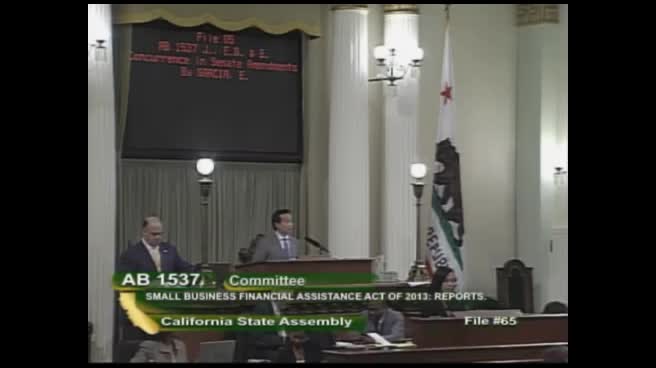 40SEC
Assembly Floor
 3MIN
Senate Floor
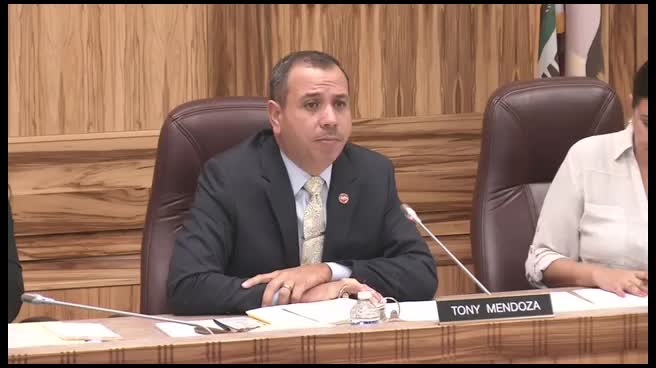 19MIN
Senate Standing Committee on Labor and Industrial Relations
 1MIN
Assembly Floor
 5MIN
Assembly Standing Committee on Appropriations
 13MIN
Assembly Standing Committee on Labor and Employment
Bill Author



