AB 2546: Pupil instruction: history-social science curriculum framework: financial literacy.
- Session Year: 2015-2016
- House: Assembly
- Latest Version Date: 2016-09-25
Existing law requires the adopted course of study for grades 1 to 6, inclusive, and for grades 7 to 12, inclusive, to offer courses in specified areas of study, including social sciences. Existing law establishes the Instructional Quality Commission and requires the commission to, among other things, recommend curriculum frameworks to the State Board of Education. Existing law requires the state board, concurrently with, but not prior to, the next revision of textbooks or curriculum frameworks in the social sciences, health, and mathematics curricula, to ensure that these academic areas integrate components of, among other things, financial literacy.
Notwithstanding that requirement on the state board, this bill would require the commission, when the history-social science curriculum framework is revised after January 1, 2017, to consider including age-appropriate information for kindergarten and grades 1 to 12, inclusive, on financial literacy, as specified.
Existing law establishes the California Financial Literacy Fund in the State Treasury to enable partnerships with the financial services community and governmental and nongovernmental stakeholders to improve Californians financial literacy. Existing law authorizes the Controller to convene a financial literacy advisory committee to provide additional oversight of the fund and develop strategies to improve financial literacy.
This bill would require the Controller, on or before July 1, 2017, to convene one or more meetings of the financial literacy advisory committee.
Existing law establishes the California Financial Literacy Fund in the State Treasury to enable partnerships with the financial services community and governmental and nongovernmental stakeholders to improve Californians financial literacy. Existing law authorizes the Controller to convene a financial literacy advisory committee to provide additional oversight of the fund and develop strategies to improve financial literacy.
This bill would declare the intent of the Legislature to enact legislation to ensure the California Financial Literacy Fund is utilized for the continuing financial education of college students and the public. require the Controller, on or before July 1, 2017, to convene one or more meetings of the financial literacy advisory committee.
Existing law establishes the California Financial Literacy Fund in the State Treasury to enable partnerships with the financial services community and governmental and nongovernmental stakeholders to improve Californians financial literacy.
This bill would declare the intent of the Legislature to enact legislation to ensure the California Financial Literacy Fund is utilized for the continuing financial education of college students and the public.
Notwithstanding Section 51284, when the history-social science curriculum framework is revised after January 1, 2017, the Instructional Quality Commission shall consider including both of the following:
(a)Age-appropriate information for grade spans, as listed in paragraphs (1) to (3), inclusive, of subdivision (b), on financial literacy that includes, but is not limited to, all of the following:
(1)Fundamentals of banking for personal use, including, but not limited to, savings and checking.
(2)Principles of budgeting and personal finance.
(3)Employment and understanding factors that affect net income.
(4)Uses and effects of credit, including the relation of debt and interest to credit.
(5)Uses and costs of loans, including student loans.
(6)Types and costs of insurance.
(7)Forms of governmental taxation.
(8)Principles of investing and building wealth.
(9)Identity theft and security.
(10)Planning and paying for postsecondary education.
(11)Charitable giving.
(b)Age-appropriate content related to the topics listed in paragraphs (1) to (11), inclusive, of subdivision (a), at least twice in each of the following grade spans:
(1)Kindergarten and grades 1 to 5, inclusive.
(2)Grades 6 to 8, inclusive.
(3)Grades 9 to 12, inclusive.
Notwithstanding Section 51284, when the history-social science curriculum framework is revised after January 1, 2017, the Instructional Quality Commission shall consider including both of the following:
(a)Age-appropriate information for grade spans, as listed in paragraphs (1) to (3), inclusive, of subdivision (b), on financial literacy that includes, but is not limited to, all of the following:
(1)Fundamentals of banking for personal use, including, but not limited to, savings and checking.
(2)Principles of budgeting and personal finance.
(3)Employment and understanding factors that affect net income.
(4)Uses and costs effects of credit, including the relation of debt and interest to credit.
(5)Uses and costs of loans, including student loans.
(6)Types and costs of insurance.
(7)Forms of governmental taxation.
(8)Principles of investing and building wealth.
(9)Identity theft and security.
(10)Planning and paying for postsecondary education.
(11)Charitable giving.
(b)Age-appropriate content related to the topics listed in paragraphs (1) to (11), inclusive, of subdivision (a), at least twice in each of the following grade spans:
(1)Kindergarten and grades 1 to 5, inclusive.
(2)Grades 6 to 8, inclusive.
(3)Grades 9 to 12, inclusive.
Notwithstanding Section 51284, when the history-social science curriculum framework is revised after January 1, 2017, the Instructional Quality Commission shall consider including both of the following:
(a)Age-appropriate information for grade spans, as listed in paragraphs (1) to (3), inclusive, of subdivision (b), on financial literacy that includes, but is not limited to, all of the following:
(1)Fundamentals of banking for personal use, including, but not limited to, savings and checking.
(2)Principles of budgeting and personal finance.
(3)Employment and understanding factors that affect net income.
(4)Uses and costs of credit, including the relation of debt and interest to credit.
(5)Uses and costs of loans, including student loans.
(6)Types and costs of insurance.
(7)Forms of governmental taxation.
(8)Principles of investing and building wealth.
(9)Identity theft and security.
(10)Planning and paying for postsecondary education.
(11)Charitable giving.
(b)Age-appropriate content related to the topics listed in paragraphs (1) to (11), inclusive, of subdivision (a), at least twice in each of the following grade spans:
(1)Kindergarten and grades 1 to 5, inclusive.
(2)Grades 6 to 8, inclusive.
(3)Grades 9 to 12, inclusive.
SECTION 1.Section 70003 of the Financial Code is amended to read:70003.On or before July 1, 2017, the Controller shall convene one or more meetings of a financial literacy advisory committee to provide additional oversight of the fund and develop strategies to improve financial literacy. The committee shall comply with the Bagley-Keene Open Meeting Act (Article 9 (commencing with Section 11120) of Chapter 1 of Part 1 of Division 3 of Title 2 of the Government Code).
The On or before July 1, 2017, the Controller may shall convene one or more meetings of a financial literacy advisory committee to provide additional oversight of the fund and develop strategies to improve financial literacy. If convened, the The committee shall comply with the Bagley-Keene Open Meeting Act (Article 9 (commencing with Section 11120) of Chapter 1 of Part 1 of Division 3 of Title 2 of the Government Code).
SECTION 1.It is the intent of the Legislature to enact legislation that would ensure the California Financial Literacy Fund is utilized for the continuing financial education of college students and the public.
It is the intent of the Legislature to enact legislation that would ensure the California Financial Literacy Fund is utilized for the continuing financial education of college students and the public.
|
Date
|
Status
|
|---|---|
| May 19, 2016 | Read third time. Passed. Ordered to the Senate. (Ayes 65. Noes 8. Page 4863.) |
| Aug 31, 2016 | Enrolled and presented to the Governor at 4 p.m. |
| Aug 23, 2016 | Senate amendments concurred in. To Engrossing and Enrolling. (Ayes 66. Noes 10. Page 6119.). |
| Aug 23, 2016 | Senate amendments concurred in. To Engrossing and Enrolling. |
| Aug 16, 2016 | Read third time. Passed. Ordered to the Assembly. (Ayes 35. Noes 0.). |
| Aug 16, 2016 | Read third time. Passed. Ordered to the Assembly. (Ayes 35. Noes 0. Page 5020.). |
| Aug 16, 2016 | Read third time. Passed. Ordered to the Assembly. |
| Aug 16, 2016 | In Assembly. Concurrence in Senate amendments pending. May be considered on or after August 18 pursuant to Assembly Rule 77. |
| Aug 15, 2016 | Read second time. Ordered to third reading. |
| Aug 11, 2016 | Read third time and amended. Ordered to second reading. |
| Aug 3, 2016 | Read second time. Ordered to third reading. |
| Aug 2, 2016 | From committee: Do pass. (Ayes 7. Noes 0.) (August 1). |
| Jun 29, 2016 | From committee: Do pass and re-refer to Com. on APPR. (Ayes 5. Noes 1.) (June 29). Re-referred to Com. on APPR. |
| Jun 15, 2016 | In committee: Set, first hearing. Hearing canceled at the request of author. |
| May 26, 2016 | Referred to Com. on ED. |
| May 19, 2016 | Read third time. Passed. Ordered to the Senate. (Ayes 65. Noes 8.) |
| Feb 19, 2016 | Introduced. To print. |
| May 19, 2016 | Read third time. Passed. Ordered to the Senate. |
| May 19, 2016 | In Senate. Read first time. To Com. on RLS. for assignment. |
| May 12, 2016 | Read second time. Ordered to third reading. |
| May 11, 2016 | From committee: Do pass. (Ayes 17. Noes 3.) (May 11). |
| Apr 21, 2016 | From committee: Do pass and re-refer to Com. on APPR. (Ayes 6. Noes 0.) (April 20). Re-referred to Com. on APPR. |
| Apr 14, 2016 | From committee: Be re-referred to Com. on ED. Re-referred. (Ayes 11. Noes 0.) (April 14). Re-referred to Com. on ED. |
| Apr 11, 2016 | Re-referred to Com. on RLS. pursuant to Assembly Rule 96. |
| Apr 11, 2016 | Re-referred to Com. on B. & F. |
| Apr 7, 2016 | From committee chair, with author's amendments: Amend, and re-refer to Com. on B. & F. Read second time and amended. |
| Mar 28, 2016 | Re-referred to Com. on B. & F. |
| Mar 17, 2016 | Referred to Com. on B. & F. |
| Mar 17, 2016 | From committee chair, with author's amendments: Amend, and re-refer to Com. on B. & F. Read second time and amended. |
| Feb 22, 2016 | Read first time. |
| Feb 21, 2016 | From printer. May be heard in committee March 22. |
|
Date
|
Description
|
Location
|
Votes
|
|
|---|---|---|---|---|
| Aug 23, 2016 | AB 2546 CALDERON Concurrence in Senate Amendments | Assembly Floor |
Passed |
|
| Aug 16, 2016 | Assembly 3rd Reading AB2546 Calderon By Mendoza | Senate Floor |
Passed |
|
| Aug 1, 2016 | Do pass | Senate Standing Committee on Appropriations |
Passed |
|
| Jun 29, 2016 | Do pass, but first be re-referred to the Committee on [Appropriations] | Senate Standing Committee on Education |
Passed |
|
| May 19, 2016 | AB 2546 CALDERON Assembly Third Reading | Assembly Floor |
Passed |
|
| May 11, 2016 | Do pass. | Assembly Standing Committee on Appropriations |
Passed |
|
| Apr 20, 2016 | Do pass and be re-referred to the Committee on [Appropriations] | Assembly Standing Committee on Education |
Passed |
|
| Apr 14, 2016 | Be re-referred to the Committee on [Education] | Assembly Standing Committee on Rules |
Passed |
This list shows positions taken on this bill by organizations on the date displayed, which is linked to the original source.
Positions by individuals are not included.
|
Organization
|
Position
|
Date
|
|---|---|---|
| Association Of California Life & Health Insurance Companies | * Support | May 11, 2016 |
| Association of National Advertisers | * Against | Jun 26, 2018 |
| California Credit Union League | ** Support | Aug 16, 2016 |
| California Jumpstart Coalition | ** Support | Aug 16, 2016 |
| California State Controller Betty Yee | ** Support | Aug 16, 2016 |
| California Teachers Association | ** Support | Aug 16, 2016 |
| Internet Business Coalition | * Against | Jun 26, 2018 |
| National Association Of Insurance And Financial Advisors | * Support | May 11, 2016 |
| Technet | * Indeterminate | Jun 26, 2018 |
| u None received. | ** Against | Aug 1, 2016 |
CONCURRENCE IN SENATE AMENDMENTS
CSA1 Bill Id:AB 2546
Author:(Calderon)
As Amended Ver:August 11, 2016
Majority vote
ASSEMBLY: | 65-8 | (May 19, 2016) | SENATE: | 35-0 | (August 16, 2016) |
Original Committee Reference: ED.
SUMMARY: Requires that, when the history-social science curriculum framework is revised after January 1, 2017, the Instructional Quality Commission (IQC) consider including specified content on financial literacy.
The Senate amendments expand the required content from the "costs of credit" to the "effects of credit."
FISCAL EFFECT: According to the Senate Appropriations Committee, any costs related to this bill are not likely to be incurred for a number of years. Some of the topics prescribed in this bill are already included in the adopted history-social science framework. The next curriculum framework revision is not expected until 2024 which will likely be based on updated content standards incorporating some additional of topics included in this bill. General Fund costs for considering topics not already addressed are unknown, but are anticipated to be minor.
COMMENTS:
Need for the bill. According to the author, "Financial illiteracy negatively impacts young people entering the labor market. Young adults aged 18 to 25 tend to have large amounts of credit card and student loan debt upon entering the workforce. Lacking a clear understanding of basic financial concepts, 18-25 year-olds are more likely to rely on high-cost methods of borrowing. Risky borrowing not only undermines future homeownership but also the ability to control one's financial future.
"Financial illiteracy also hinders adults and their hopes for retirement. Without a base knowledge of financial tools, adults are less likely to invest in retirement plans. According to the Employment Benefit Research Institute, 46% of Americans have less than $10,000 saved for retirement. Another survey found that 15% had not saved a single cent. Low saving and retirement participation rates could lead to a dramatic increase in the number of people on welfare and drive up costs nationally.
"Research has shown that early introduction to financial concepts and repetition of those lessons yields a deeper understanding. As a result, students who had financial education courses early and more often had higher rates of savings and were less likely to rely on high-cost methods of borrowing."
2016 History-Social Science Framework addresses financial literacy. The state's new History-Social Science framework, adopted by the State Board of Education in July, 2016, includes financial literacy content in at least the following grades:
Grade 1: Students acquire a beginning understanding of economics, including how people exchange money for goods and services, and how people make choices about how to spend money, including budgeting.
Grade 2: Students learn basic economic concepts of human wants, scarcity, and choice, and the importance of specialization in work today. Students also develop an understanding of their roles as consumers in a complex economy.
Economics course: Students learn about personal budgeting, banking, debt, credit cards, interest, student loan debt, mortgage debt, saving, and investing. This content is presented in relation to larger economic issues and concepts.
Financial literacy elective course outline: Students learn about credit cards and other forms of consumer debt, savings and budgeting, retirement planning, state and federal laws related to personal finance (e.g., bankruptcy), financial credit scores, credit card applications, bank account applications, simple and compound interest calculations, retirement calculations, and mortgage and interest rates. Students also learn about the importance of managing credit and debt, and about identity theft security.
Analysis Prepared by: Tanya Lieberman / ED. / (916) 319-2087 FN: 0004177
Office of Senate Floor Analyses (916) 651-1520 Fax: (916) 327-4478 | AB |
THIRD READING
Bill No: AB 2546
:
SENATE EDUCATION COMMITTEE: 5-1, 6/29/16
AYES: Block, Hancock, Leyva, Mendoza, Vidak
NOES: Liu
NO VOTE RECORDED: Huff, Monning, Pan
SENATE APPROPRIATIONS COMMITTEE: 7-0, 8/1/16
AYES: Lara, Bates, Beall, Hill, McGuire, Mendoza, Nielsen
ASSEMBLY FLOOR: 65-8, 5/19/16 - See last page for vote
DIGEST: This bill requires the Instructional Quality Commission (IQC), during the next revision of the history-social science framework, to consider including information on financial literacy.
Senate Floor Amendments of 8/11/16 add co-authors and make a minor change.
Existing law:
- Establishes the IQC (formerly known as the Curriculum Commission) as an advisory body to the State Board of Education (SBE) on matters related to curriculum, instructional materials, and content standards. (Education Code § 33530)
- Requires the SBE, during the next revision of the history-social science framework (after January 2014), to ensure the integration of components of financial literacy, among other things. (EC § 51284)
- Requires the IQC, when the history-social science framework is revised, to receive input from civics learning experts, consider how civics and history instruction includes the application of content, ensure that voter education information is included, ensure specified historical documents are incorporated, and consider incorporating additional historical documents. (EC § 33540)
- Requires the IQC, during the next revision (after 2014) of the history-social science framework, to consider including instruction on the election of President Barack Obama and the significance of the United States electing its first African American President. (EC § 33543)
- Requires the Great Irish Famine of 1845-50 to be considered in the next cycle (after mid-1990s) in which the history-social science framework is adopted. (EC § 51226.3)
- Requires the IQC to consider incorporating into the history-social science framework the Armenian, Cambodian, Darfur, and Rwandan genocides. (EC § 51226.3)
- Requires the SBE, when it revises and adopts the history-social science framework after January 1, 2016, to consider including instruction on the unconstitutional deportation to Mexico during the Great Depression of citizens and lawful permanent residents of the United States. (EC § 51226.3)
- Requires the IQC, when next revising the history-social science framework (after 2013) to ensure that voter education information is included in the American government and civics curriculum at the high school level. (EC § 33540)
- Requires the SBE to ensure that the state curriculum and framework, where appropriate, include instruction on Cesar Chavez and the history of the farm labor movement in the United States, and the role of immigrants, including Filipino Americans, in that movement, and that the state criteria for selecting textbooks include information to guide the selection of textbooks that contain sections that highlight the life and contributions of Cesar Chavez, the history of the farm labor movement in the United States, and the role of immigrants, including Filipino Americans, in that movement. (EC § 51008)
- Authorizes instruction in all areas of study to include grade-level appropriate instruction on violence awareness and prevention, as specified. (EC § 51210.5 and § 51220.3)
- Encourages the incorporation of survivor, rescuer, liberator, and witness oral testimony into the teaching of human rights, the Holocaust, and genocide.
(EC § 51226.3)
- Encourages state and local professional development activities to provide teachers with content background and resources to assist them in teaching about civil rights, human rights violations, genocide, slavery, the Armenian Genocide, the Holocaust, and the Great Irish Famine of 1845-50. (EC § 51226.3)
This bill:
- Requires the IQC, when the history-social science framework is revised after January 1, 2017, to consider including age-appropriate information on financial literacy that includes, but is not limited to, all of the following:
- Fundamentals of banking for personal use, including savings and checking.
- Principles of budgeting and personal finance.
- Employment and understanding factors that affect net income.
- Uses and costs of credit, including the relation of debt and interest to credit.
- Uses and effects of loans, including student loans.
- Types and costs of insurance.
- Forms of governmental taxation.
- Principles of investing and building wealth.
- Identity theft and security.
- Planning and paying for postsecondary education.
- Charitable giving.
- Fundamentals of banking for personal use, including savings and checking.
- Requires the IQC to consider including information on financial literacy at least twice in each of the following grade spans:
- Kindergarten to grade 5.
- Grades 6 to 8.
- Grades 9 to 12.
Comments
Already in the framework? The most recent draft of the update to the history-social science framework, approved by the IQC at its meeting on May 19-20, 2016, includes references to economics in every grade, except kindergarten. This bill requires the IQC to consider including age-appropriate information on financial literacy and prescribes a lengthy list of specific topics to be covered. Some, but not all, of the topics prescribed by this bill are already included in the draft history-social science framework.
Open process to develop frameworks. The IQC is responsible for advising the SBE on matters related to curriculum and instruction. The IQC has numerous subject matter committees, including the History-Social Science Subject Matter Committee. The process to revise the history-social science framework:
- Began in March 2008 with the recruitment of participants on the Curriculum Framework and Evaluation Criteria Committee.
- Four focus groups were held across the state from May-June 2008.
- The review committee was selected in September 2008, and met approximately every four weeks between February-June 2009 to develop the framework.
- The process was suspended in July 2009 due to budget reductions.
- The process resumed in September 2014, at which time the IQC approved the draft framework for field review.
- The draft was released for a 60-day public review and comment period.
- The History-Social Science Subject Matter Committee met in May 2015 to review the draft.
- The IQC analyzed the field review results and revised the draft framework.
- The History-Social Science Subject Matter Committee met again in October 2015.
- The IQC held a public two-day hearing in November 2015, and recommended approval of the draft framework.
- The draft framework was released for the second 60-day public comment period.
- The IQC considered and approved the draft framework in May 2016, and will present it to the SBE for adoption as early as July 2016.
The recently-revised framework for history-social science went through a lengthy public process, and generated over 1,000 public comments, including several letters sent by legislators. The IQC completed this process less than one month ago.
Not effective until 2024? The current revision of the history-social science framework is complete and near adoption by the SBE. This bill relates to the next revision of this framework after January 1, 2017. Existing law references an eight-year cycle for revisions to frameworks and the adoption of instructional materials (although a true schedule no longer exists). It is likely that the next revision of the history-social science framework will not occur for another eight years.
FISCAL EFFECT: Appropriation: Fiscal Com.: Local:
According to the Senate Appropriations Committee, any costs related to this bill are not likely to be incurred for a number of years. Some of the topics prescribed in this bill are already included in the adopted history-social science framework. The next curriculum framework revision is not expected until 2024 which will likely be based on updated content standards incorporating some additional of topics included in this bill. General Fund costs for considering topics not already addressed are unknown, but are anticipated to be minor.
California State Controller Betty Yee
California Credit Union League
California JumpStart Coalition
California Society of CPAs
California Teachers Association
OPPOSITION: (Verified 8/15/16)
None received
AYES: Achadjian, Alejo, Travis Allen, Arambula, Atkins, Baker, Bloom, Bonilla, Bonta, Brough, Brown, Burke, Calderon, Campos, Chau, Chiu, Chu, Cooley, Cooper, Dababneh, Dahle, Daly, Dodd, Eggman, Frazier, Gallagher, Cristina Garcia, Eduardo Garcia, Gatto, Gipson, Gomez, Gonzalez, Gordon, Gray, Roger Hernández, Holden, Irwin, Jones-Sawyer, Kim, Lackey, Levine, Linder, Lopez, Low, Maienschein, Medina, Mullin, Nazarian, Obernolte, O'Donnell, Patterson, Quirk, Ridley-Thomas, Rodriguez, Salas, Santiago, Steinorth, Mark Stone, Thurmond, Ting, Waldron, Weber, Wilk, Wood, Rendon
NOES: Bigelow, Chávez, Beth Gaines, Grove, Harper, Jones, Melendez, Wagner
NO VOTE RECORDED: Chang, Hadley, Mathis, Mayes, McCarty, Olsen, Williams
8/16/16 17:50:01
**** END ****
Office of Senate Floor Analyses (916) 651-1520 Fax: (916) 327-4478 | AB |
THIRD READING
Bill No: AB 2546
:
SENATE EDUCATION COMMITTEE: 5-1, 6/29/16
AYES: Block, Hancock, Leyva, Mendoza, Pan
NOES: Liu
NO VOTE RECORDED: Huff, Monning, Vidak
SENATE APPROPRIATIONS COMMITTEE: 7-0, 8/1/16
AYES: Lara, Bates, Beall, Hill, McGuire, Mendoza, Nielsen
ASSEMBLY FLOOR: 65-8, 5/19/16 - See last page for vote
DIGEST: This bill requires the Instructional Quality Commission (IQC), during the next revision of the history-social science framework, to consider including information on financial literacy.
Existing law:
- Establishes the IQC (formerly known as the Curriculum Commission) as an advisory body to the State Board of Education (SBE) on matters related to curriculum, instructional materials, and content standards. (Education Code § 33530)
- Requires the SBE, during the next revision of the history-social science framework (after January 2014), to ensure the integration of components of financial literacy, among other things. (EC § 51284)
- Requires the IQC, when the history-social science framework is revised, to receive input from civics learning experts, consider how civics and history instruction includes the application of content, ensure that voter education information is included, ensure specified historical documents are incorporated, and consider incorporating additional historical documents. (EC § 33540)
- Requires the IQC, during the next revision (after 2014) of the history-social science framework, to consider including instruction on the election of President Barack Obama and the significance of the United States electing its first African American President. (EC § 33543)
- Requires the Great Irish Famine of 1845-50 to be considered in the next cycle (after mid-1990s) in which the history-social science framework is adopted. (EC § 51226.3)
- Requires the IQC to consider incorporating into the history-social science framework the Armenian, Cambodian, Darfur, and Rwandan genocides. (EC § 51226.3)
- Requires the SBE, when it revises and adopts the history-social science framework after January 1, 2016, to consider including instruction on the unconstitutional deportation to Mexico during the Great Depression of citizens and lawful permanent residents of the United States. (EC § 51226.3)
- Requires the IQC, when next revising the history-social science framework (after 2013) to ensure that voter education information is included in the American government and civics curriculum at the high school level. (EC § 33540)
- Requires the SBE to ensure that the state curriculum and framework, where appropriate, include instruction on Cesar Chavez and the history of the farm labor movement in the United States, and the role of immigrants, including Filipino Americans, in that movement, and that the state criteria for selecting textbooks include information to guide the selection of textbooks that contain sections that highlight the life and contributions of Cesar Chavez, the history of the farm labor movement in the United States, and the role of immigrants, including Filipino Americans, in that movement. (EC § 51008)
- Authorizes instruction in all areas of study to include grade-level appropriate instruction on violence awareness and prevention, as specified. (EC § 51210.5 and § 51220.3)
- Encourages the incorporation of survivor, rescuer, liberator, and witness oral testimony into the teaching of human rights, the Holocaust, and genocide. (EC § 51226.3)
- Encourages state and local professional development activities to provide teachers with content background and resources to assist them in teaching about civil rights, human rights violations, genocide, slavery, the Armenian Genocide, the Holocaust, and the Great Irish Famine of 1845-50. (EC § 51226.3)
This bill:
- Requires the IQC, when the history-social science framework is revised after January 1, 2017, to consider including age-appropriate information on financial literacy that includes, but is not limited to, all of the following:
- Fundamentals of banking for personal use, including savings and checking.
- Principles of budgeting and personal finance.
- Employment and understanding factors that affect net income.
- Uses and costs of credit, including the relation of debt and interest to credit.
- Uses and costs of loans, including student loans.
- Types and costs of insurance.
- Forms of governmental taxation.
- Principles of investing and building wealth.
- Identity theft and security.
- Planning and paying for postsecondary education.
- Charitable giving.
- Requires the IQC to consider including information on financial literacy at least twice in each of the following grade spans:
- Kindergarten to grade 5.
- Grades 6 to 8.
- Grades 9 to 12.
Comments
Already in the framework? The most recent draft of the update to the history-social science framework, approved by the IQC at its meeting on May 19-20, 2016, includes references to economics in every grade, except kindergarten. This bill requires the IQC to consider including age-appropriate information on financial literacy and prescribes a lengthy list of specific topics to be covered. Some, but not all, of the topics prescribed by this bill are already included in the draft history-social science framework.
Open process to develop frameworks. The IQC is responsible for advising the SBE on matters related to curriculum and instruction. The IQC has numerous subject matter committees, including the History-Social Science Subject Matter Committee. The process to revise the history-social science framework:
- Began in March 2008 with the recruitment of participants on the Curriculum Framework and Evaluation Criteria Committee.
- Four focus groups were held across the state from May-June 2008.
- The review committee was selected in September 2008, and met approximately every four weeks between February-June 2009 to develop the framework.
- The process was suspended in July 2009 due to budget reductions.
- The process resumed in September 2014, at which time the IQC approved the draft framework for field review.
- The draft was released for a 60-day public review and comment period.
- The History-Social Science Subject Matter Committee met in May 2015 to review the draft.
- The IQC analyzed the field review results and revised the draft framework.
- The History-Social Science Subject Matter Committee met again in October 2015.
- The IQC held a public two-day hearing in November 2015, and recommended approval of the draft framework.
- The draft framework was released for the second 60-day public comment period.
- The IQC considered and approved the draft framework in May 2016, and will present it to the SBE for adoption as early as July 2016.
The recently-revised framework for history-social science went through a lengthy public process, and generated over 1,000 public comments, including several letters sent by legislators. The IQC completed this process less than one month ago.
Not effective until 2024? The current revision of the history-social science framework is complete and near adoption by the SBE. This bill relates to the next revision of this framework after January 1, 2017. Existing law references an eight-year cycle for revisions to frameworks and the adoption of instructional materials (although a true schedule no longer exists). It is likely that the next revision of the history-social science framework will not occur for another eight years.
FISCAL EFFECT: Appropriation: Fiscal Com.: Local:
According to the Senate Appropriations Committee, any costs related to this bill are not likely to be incurred for a number of years. Some of the topics prescribed in this bill are already included in the adopted history-social science framework. The next curriculum framework revision is not expected until 2024 which will likely be based on updated content standards incorporating some additional of topics included in this bill. General Fund costs for considering topics not already addressed are unknown, but are anticipated to be minor.
California State Controller Betty Yee
California Credit Union League
California JumpStart Coalition
California Society of CPAs
California Teachers Association
None received
ASSEMBLY FLOOR: 65-8, 5/19/16
AYES: Achadjian, Alejo, Travis Allen, Arambula, Atkins, Baker, Bloom, Bonilla, Bonta, Brough, Brown, Burke, Calderon, Campos, Chau, Chiu, Chu, Cooley, Cooper, Dababneh, Dahle, Daly, Dodd, Eggman, Frazier, Gallagher, Cristina Garcia, Eduardo Garcia, Gatto, Gipson, Gomez, Gonzalez, Gordon, Gray, Roger Hernández, Holden, Irwin, Jones-Sawyer, Kim, Lackey, Levine, Linder, Lopez, Low, Maienschein, Medina, Mullin, Nazarian, Obernolte, O'Donnell, Patterson, Quirk, Ridley-Thomas, Rodriguez, Salas, Santiago, Steinorth, Mark Stone, Thurmond, Ting, Waldron, Weber, Wilk, Wood, Rendon
NOES: Bigelow, Chávez, Beth Gaines, Grove, Harper, Jones, Melendez, Wagner
NO VOTE RECORDED: Chang, Hadley, Mathis, Mayes, McCarty, Olsen, Williams
8/3/16 19:14:33
**** END ****
SENATE COMMITTEE ON APPROPRIATIONS
Senator Ricardo Lara, Chair
2015 - 2016 Regular Session
AB 2546 (Calderon) - Pupil instruction: history-social science curriculum framework: financial literacy
Version: April 7, 2016 | Policy Vote: ED. 5 - 1 |
Urgency: No | Mandate: No |
Hearing Date: August 1, 2016 | Consultant: Jillian Kissee |
This bill does not meet the criteria for referral to the Suspense File.
Bill Summary:
This bill requires the Instructional Quality Commission (Commission), during the next revision of the history-social science framework, to consider including specified information on financial literacy at least twice in three grade spans.
Fiscal Impact:
- Any costs related to this bill are not likely to be incurred for a number of years. Some of the topics prescribed in this bill are already included in the adopted history-social science framework. The next curriculum framework revision is not expected until 2024 which will likely be based on updated content standards incorporating some additional of topics included in this bill. General Fund costs for considering topics not already addressed are unknown, but are anticipated to be minor.
Background:
Academic content standards define the knowledge, concepts, and skills that students should acquire at each grade level. Curriculum frameworks provide guidance for implementing the content standards. The Commission is responsible for advising the State Board of Education on matters related to curriculum and instruction. Curriculum frameworks are developed by the Commission in a process that includes multiple focus group meetings, framework committee and subject matter expert committee meetings, and multiple opportunities for public comment.
Existing law requires in the next revision of curriculum frameworks in the social sciences, health, and mathematics curricula, the State Board of Education to ensure that these academic areas integrate components of various financial literacy topics, including financial literacy, including, but not limited to, budgeting and managing credit, student loans, consumer debt, and identity theft security. Content on financial literacy has been integrated into the mathematics framework and will also be included in the health framework when it is revised. The history-social science framework was adopted by the State Board of Education on July 14, 2016 and includes these topics and it also includes an elective course for grade nine on financial literacy.
According to the author, “Even though the draft history-social science framework that the Instructional Quality Commission is in the process of finalizing includes basic economic concepts in early elementary grades and a semester long economics course in grade 12, financial literacy should be included throughout a student’s educational career.”
Proposed Law:
This bill requires the Commission, during the next revision of the history-social science framework, to consider including information on financial literacy that includes all of the following:
- Fundamentals of banking for personal use;
- Principles of budgeting and personal finance;
- Employment and factors that affect net income;
- Uses and costs of credit and loans;
- Types and costs of insurance;
- Forms of governmental taxation;
- Principles of investing and building wealth;
- Identity theft and security;
- Planning and paying for college; and
- Charitable giving.
Also, the Commission is required to consider including age-appropriate content on these topics at least twice in each of the following grade spans: kindergarten and grades one to five; grades six to eight; and grades nine to 12.
Staff Comments:
This bill requires the Commission to consider including specified financial literacy information when the history-social science curriculum framework is revised after January 1, 2017. The State Board of Education recently adopted the framework on July 14, 2016. Updates to curriculum frameworks typically occur on an eight year cycle which would make the next revision to the history-social science curriculum framework scheduled for 2024, contingent upon funding provided.
-- END --
SENATE COMMITTEE ON EDUCATION
Senator Carol Liu, Chair
2015 - 2016 Regular
Bill No: AB 2546
Author: | |||
Version: | April 7, 2016 Hearing Date: June 29, 2016 | ||
Urgency: | No | Fiscal: | Yes |
Consultant: | Lynn Lorber | ||
Subject: Pupil instruction: history-social science curriculum framework: financial literacy
SUMMARY
This bill requires the Instructional Quality Commission (IQC), during the next revision of the history-social science framework, to consider including information on financial literacy.
BACKGROUND
- Establishes the IQC (formerly known as the Curriculum Commission) as an advisory body to the State Board of Education (SBE) on matters related to curriculum, instructional materials, and content standards.
(Education Code § 33530)
- Requires the SBE, during the next revision of the history-social science framework (after January 2014), to ensure the integration of components of financial literacy, among other things. (EC § 51284)
- Requires the IQC, when the history-social science framework is revised, to receive input from civics learning experts, consider how civics and history instruction includes the application of content, ensure that voter education information is included, ensure specified historical documents are incorporated, and consider incorporating additional historical documents. (EC § 33540)
- Requires the IQC, during the next revision (after 2014) of the history-social science framework, to consider including instruction on the election of President Barack Obama and the significance of the United States electing its first African American President. (EC § 33543)
- Requires the Great Irish Famine of 1845-50 to be considered in the next cycle (after mid-1990s) in which the history-social science framework is adopted.
(EC § 51226.3)
- Requires the IQC to consider incorporating into the history-social science framework the Armenian, Cambodian, Darfur, and Rwandan genocides.
(EC § 51226.3)
- Requires the SBE, when it revises and adopts the history-social science framework after January 1, 2016, to consider including instruction on the
unconstitutional deportation to Mexico during the Great Depression of citizens and lawful permanent residents of the United States. (EC § 51226.3)
- Requires the Instructional Quality Commission (IQC), when next revising the history-social science framework (after 2013) to ensure that voter education information is included in the American government and civics curriculum at the high school level. (EC § 33540)
- Requires the State Board of Education (SBE) to ensure that the state curriculum and framework, where appropriate, include instruction on Cesar Chavez and the history of the farm labor movement in the United States, and the role of immigrants, including Filipino Americans, in that movement, and that the state criteria for selecting textbooks include information to guide the selection of textbooks that contain sections that highlight the life and contributions of Cesar Chavez, the history of the farm labor movement in the United States, and the role of immigrants, including Filipino Americans, in that movement. (EC § 51008)
- Authorizes instruction in all areas of study to include grade-level appropriate instruction on violence awareness and prevention, as specified.
(EC § 51210.5 and § 51220.3)
- Encourages the incorporation of survivor, rescuer, liberator, and witness oral testimony into the teaching of human rights, the Holocaust, and genocide.
(EC § 51226.3)
- Encourages state and local professional development activities to provide teachers with content background and resources to assist them in teaching about civil rights, human rights violations, genocide, slavery, the Armenian Genocide, the Holocaust, and the Great Irish Famine of 1845-50. (EC § 51226.3)
ANALYSIS
This bill requires the IQC, to consider including information on financial literacy in the history-social science framework. Specifically, this bill:
- Requires the IQC, when the history-social science framework is revised after January 1, 2017, to consider including age-appropriate information on financial literacy that includes, but is not limited to, all of the following:
- Fundamentals of banking for personal use, including savings and checking.
- Principles of budgeting and personal finance.
- Employment and understanding factors that affect net income.
- Uses and costs of credit, including the relation of debt and interest to credit.
- Uses and costs of loans, including student loans.
- Types and costs of insurance.
- Forms of governmental taxation.
- Principles of investing and building wealth.
- Identity theft and security.
- Planning and paying for postsecondary education.
- Charitable giving.
- Fundamentals of banking for personal use, including savings and checking.
- Requires the Instructional Quality Commission (IQC) to consider including information on financial literacy at least twice in each of the following grade spans:
- Kindergarten to grade 5.
- Grades 6 to 8.
- Grades 9 to 12.
- Kindergarten to grade 5.
STAFF COMMENTS
- Need for the bill. According to the author, “Financial illiteracy negatively impacts young people entering the labor market. Financial illiteracy also hinders adults and their hopes for retirement. Even though the draft history-social science framework that the Instructional Quality Commission (IQC) is in the Process of finalizing includes basic economic concepts in early elementary grades and a semester long economics course in grade 12, financial literacy should be included throughout a student’s educational career. To achieve that goal, AB 2546 will require the IQC to include financial literacy in six different grade levels during its next curriculum framework update.”
- Already in the framework? The most recent draft of the update to the history-social science framework, approved by the IQC at its meeting on May 19-20, 2016, includes references to economics in every grade, except kindergarten. This bill requires the IQC to consider including age-appropriate information on financial literacy and prescribes a lengthy list of specific topics to be covered. Some, but not all, of the topics prescribed by this bill are already included in the draft history-social science framework.
- Open process to develop frameworks. The IQC is responsible for advising the State Board of Education (SBE) on matters related to curriculum and instruction. The IQC has numerous subject matter committees, including the History-Social Science Subject Matter Committee. The process to revise the history-social science framework:
- Began in March 2008 with the recruitment of participants on the Curriculum Framework and Evaluation Criteria Committee.
- Four focus groups were held across the state from May-June 2008.
- The review committee was selected in September 2008, and met approximately every four weeks between February-June 2009 to develop the framework.
- The process was suspended in July 2009 due to budget reductions.
- The process resumed in September 2014, at which time the Instructional Quality Commission (IQC) approved the draft framework for field review.
- The draft was released for a 60-day public review and comment period.
- The History-Social Science Subject Matter Committee met in May 2015 to review the draft.
- The IQC analyzed the field review results and revised the draft framework.
- The History-Social Science Subject Matter Committee met again in October 2015.
- The IQC held a public two-day hearing in November 2015, and recommended approval of the draft framework.
- The draft framework was released for the second 60-day public comment period.
- The IQC considered and approved the draft framework in May 2016, and will present it to the State Board of Education (SBE) for adoption as early as July 2016.
The recently-revised framework for history-social science went through a lengthy public process, and generated over 1,000 public comments, including several letters sent by legislators. The IQC completed this process less than one month ago. Should the legislature prescribe content that may have already been considered, or prescribe action that may not occur for another eight years (see comment # 5)?
- Storied history of the history-social science framework. The most recent history-social science framework was developed in 2005. This framework was undergoing revisions when that process was suspended in July 2009, due to budget reductions, and subsequently resumed in July 2014. The draft revision was released for field review in September 2014, and generated extensive public comment (nearly 700 comments). The IQC determined that more subject matter expertise was needed for certain areas (including some mandated for inclusion by legislation), and received a budget augmentation of $124,000 to hire experts through an interagency agreement. The draft framework was released for the second field review in November 2015. The Instructional Quality Commission (IQC) voted at its meeting on May 19-20, 2016, to approve the draft framework for presentation to the State Board of Education (SBE), which could consider adoption of the updated framework as early as July 2016.
- Not effective until 2024? The current revision of the history-social science framework is complete and near adoption by the SBE. This bill relates to the next revision of this framework after January 1, 2017. Existing law references an eight-year cycle for revisions to frameworks and the adoption of instructional materials (although a true schedule no longer exists). It is likely that the next revision of the history-social science framework will not occur for another eight years. This Committee may wish to consider whether it is appropriate to pass legislation that may not be implemented until 2024.
- Fiscal impact. According to the Assembly Appropriations Committee analysis, this bill would have “no current fiscal effect to the California Department of Education (CDE). As written, the bill would not require additional consideration until the next framework, which is not likely to occur until 2024. It is difficult to project costs that may occur eight years from now.”
- Related legislation specific to the history-social science framework. AB 2864 (Chau) requires the IQC, when revising the history-social science framework after January 1, 2017, to consider including instruction on the Chinese Exclusion Act of 1882 and the contributions of Chinese Americans to the establishment of the transcontinental railroad. AB 2864 was heard by this Committee on June 8, and passed on a vote of 5-0.
- Prior legislation specific to the history-social science framework. AB 391 (Wieckowski, 2013) required the history social science framework, when updated, to include financial literacy, and required the one-semester instructional program entitled consumer economics already developed by the Superintendent of Public Instruction and adopted by the State Board of Education to be updated to include instruction in specified areas of financial literacy. AB 391 was held in the Assembly Appropriations Committee.
AB 659 (Nazarian, 2014) encouraged the California Department of Education to include the Armenian Genocide in its published curriculum resources, encouraged the incorporation oral testimony when teaching specific instances of genocide into existing curriculum, and encouraged including the Armenian Genocide into state and local professional development activities and in the next revision of the history/social science curriculum framework. AB 659 was referred to but never heard by this Committee.
AB 1616 (Buchanan, 2014) required the IQC, when revising the history-social science framework, to receive input from civics education experts for the purpose
of integrating civics learning content, concepts, and skills, at all appropriate grade levels. AB 1616 was never heard.
SB 521 (Wyland, 2013) required the history-social science framework to include the comparative differences between the rights of the citizens in America and those in other countries, and the connection of civics and American government to western civilizations. SB 521 was never heard.
SUPPORT
California Credit Union League
California JumpStart Coalition
California Society of CPAs
California State Controller Betty Yee
California Teachers Association
OPPOSITION
None received.
-- END --
SENATE COMMITTEE ON EDUCATION
Senator Carol Liu, Chair
2015 - 2016 Regular
Bill No:
Author: | Calderon | ||
Version: | Hearing Date: June 15, 2016 | ||
Urgency: | Fiscal: | ||
Consultant: | |||
Subject:
SUMMARY
This bill requires the Instructional Quality Commission, during the next revision of the history-social science framework, to consider including information on financial literacy.
BACKGROUND
- Establishes the Instructional Quality Commission (formerly known as the Curriculum Commission) as an advisory body to the State Board of Education (SBE) on matters related to curriculum, instructional materials, and content standards. (Education Code § 33530)
- Requires the SBE, during the next revision of the history-social science framework (after January 2014), to ensure the integration of components of financial literacy, among other things. (EC § 51284)
- Requires the IQC, when the history-social science framework is revised, to receive input from civics learning experts, consider how civics and history instruction includes the application of content, ensure that voter education information is included, ensure specified historical documents are incorporated, and consider incorporating additional historical documents. (EC § 33540)
- Requires the IQC, during the next revision (after 2014) of the history-social science framework, to consider including instruction on the election of President Barack Obama and the significance of the United States electing its first African American President. (EC § 33543)
- Requires the Great Irish Famine of 1845-50 to be considered in the next cycle (after mid-1990s) in which the history-social science framework is adopted.
(EC § 51226.3)
- Requires the IQC to consider incorporating into the history-social science framework the Armenian, Cambodian, Darfur, and Rwandan genocides.
(EC § 51226.3)
- Requires the SBE, when it revises and adopts the history-social science framework after January 1, 2016, to consider including instruction on the
unconstitutional deportation to Mexico during the Great Depression of citizens and lawful permanent residents of the United States. (EC § 51226.3)
- Requires the Instructional Quality Commission (IQC), when next revising the history-social science framework (after 2013) to ensure that voter education information is included in the American government and civics curriculum at the high school level. (EC § 33540)
- Requires the State Board of Education (SBE) to ensure that the state curriculum and framework, where appropriate, include instruction on Cesar Chavez and the history of the farm labor movement in the United States, and the role of immigrants, including Filipino Americans, in that movement, and that the state criteria for selecting textbooks include information to guide the selection of textbooks that contain sections that highlight the life and contributions of Cesar Chavez, the history of the farm labor movement in the United States, and the role of immigrants, including Filipino Americans, in that movement. (EC § 51008)
- Authorizes instruction in all areas of study to include grade-level appropriate instruction on violence awareness and prevention, as specified.
(EC § 51210.5 and § 51220.3)
- Encourages the incorporation of survivor, rescuer, liberator, and witness oral testimony into the teaching of human rights, the Holocaust, and genocide.
(EC § 51226.3)
- Encourages state and local professional development activities to provide teachers with content background and resources to assist them in teaching about civil rights, human rights violations, genocide, slavery, the Armenian Genocide, the Holocaust, and the Great Irish Famine of 1845-50. (EC § 51226.3)
ANALYSIS
This bill requires the Instructional Quality Commission (IQC), to consider including information on financial literacy in the history-social science framework. Specifically, this bill:
- Requires the IQC, when the history-social science framework is revised after January 1, 2017, to consider including age-appropriate information on financial literacy that includes, but is not limited to, all of the following:
- Fundamentals of banking for personal use, including savings and checking.
- Principles of budgeting and personal finance.
- Employment and understanding factors that affect net income.
- Uses and costs of credit, including the relation of debt and interest to credit.
- Uses and costs of loans, including student loans.
- Types and costs of insurance.
- Forms of governmental taxation.
- Principles of investing and building wealth.
- Identity theft and security.
- Planning and paying for postsecondary education.
- Charitable giving.
- Fundamentals of banking for personal use, including savings and checking.
- Requires the IQC to consider including information on financial literacy at least twice in each of the following grade spans:
- Kindergarten to grade 5.
- Grades 6 to 8.
- Grades 9 to 12.
- Kindergarten to grade 5.
STAFF COMMENTS
- Need for the bill. According to the author, “Financial illiteracy negatively impacts young people entering the labor market. Financial illiteracy also hinders adults and their hopes for retirement. Even though the draft history-social science framework that the Instructional Quality Commission (IQC) is in the Process of finalizing includes basic economic concepts in early elementary grades and a semester long economics course in grade 12, financial literacy should be included throughout a student’s educational career. To achieve that goal, AB 2546 will require the IQC to include financial literacy in six different grade levels during its next curriculum framework update.”
- Already in the framework? The most recent draft of the update to the history-social science framework, approved by the IQC at its meeting on May 19-20, 2016, includes references to economics in every grade, except kindergarten. This bill requires the IQC to consider including age-appropriate information on financial literacy and prescribes a lengthy list of specific topics to be covered. Some, but not all, of the topics prescribed by this bill are already included in the draft history-social science framework.
- Open process to develop frameworks. The IQC is responsible for advising the State Board of Education (SBE) on matters related to curriculum and instruction. The IQC has numerous subject matter committees, including the History-Social Science Subject Matter Committee. The process to revise the history-social science framework:
- Began in March 2008 with the recruitment of participants on the Curriculum Framework and Evaluation Criteria Committee.
- Four focus groups were held across the state from May-June 2008.
- The review committee was selected in September 2008, and met approximately every four weeks between February-June 2009 to develop the framework.
- The process was suspended in July 2009 due to budget reductions.
- The process resumed in September 2014, at which time the Instructional Quality Commission (IQC) approved the draft framework for field review.
- The draft was released for a 60-day public review and comment period.
- The History-Social Science Subject Matter Committee met in May 2015 to review the draft.
- The IQC analyzed the field review results and revised the draft framework.
- The History-Social Science Subject Matter Committee met again in October 2015.
- The IQC held a public two-day hearing in November 2015, and recommended approval of the draft framework.
- The draft framework was released for the second 60-day public comment period.
- The IQC considered and approved the draft framework in May 2016, and will present it to the State Board of Education (SBE) for adoption as early as July 2016.
The recently-revised framework for history-social science went through a lengthy public process, and generated over 1,000 public comments, including several letters sent by legislators. The IQC completed this process less than one month ago. Should the legislature prescribe content that may have already been considered, or prescribe action that may not occur for another eight years (see comment # 5)?
- Storied history of the history-social science framework. The most recent history-social science framework was developed in 2005. This framework was undergoing revisions when that process was suspended in July 2009, due to budget reductions, and subsequently resumed in July 2014. The draft revision was released for field review in September 2014, and generated extensive public comment (nearly 700 comments). The IQC determined that more subject matter expertise was needed for certain areas (including some mandated for inclusion by legislation), and received a budget augmentation of $124,000 to hire experts through an interagency agreement. The draft framework was released for the second field review in November 2015. The Instructional Quality Commission (IQC) voted at its meeting on May 19-20, 2016, to approve the draft framework for presentation to the State Board of Education (SBE), which could consider adoption of the updated framework as early as July 2016.
- Not effective until 2024? The current revision of the history-social science framework is complete and near adoption by the SBE. This bill relates to the next revision of this framework after January 1, 2017. Existing law references an eight-year cycle for revisions to frameworks and the adoption of instructional materials (although a true schedule no longer exists). It is likely that the next revision of the history-social science framework will not occur for another eight years. This Committee may wish to consider whether it is appropriate to pass legislation that may not be implemented until 2024.
- Fiscal impact. According to the Assembly Appropriations Committee analysis, this bill would have “no current fiscal effect to the California Department of Education (CDE). As written, the bill would not require additional consideration until the next framework, which is not likely to occur until 2024. It is difficult to project costs that may occur eight years from now.”
- Related legislation specific to the history-social science framework. AB 2864 (Chau) requires the IQC, when revising the history-social science framework after January 1, 2017, to consider including instruction on the Chinese Exclusion Act of 1882 and the contributions of Chinese Americans to the establishment of the transcontinental railroad. AB 2864 was heard by this Committee on June 8, and passed on a vote of 5-0.
- Prior legislation specific to the history-social science framework. AB 391 (Wieckowski, 2013) required the history social science framework, when updated, to include financial literacy, and required the one-semester instructional program entitled consumer economics already developed by the Superintendent of Public Instruction and adopted by the State Board of Education to be updated to include instruction in specified areas of financial literacy. AB 391 was held in the Assembly Appropriations Committee.
AB 659 (Nazarian, 2014) encouraged the California Department of Education to include the Armenian Genocide in its published curriculum resources, encouraged the incorporation oral testimony when teaching specific instances of genocide into existing curriculum, and encouraged including the Armenian Genocide into state and local professional development activities and in the next revision of the history/social science curriculum framework. AB 659 was referred to but never heard by this Committee.
AB 1616 (Buchanan, 2014) required the IQC, when revising the history-social science framework, to receive input from civics education experts for the purpose of integrating civics learning content, concepts, and skills, at all appropriate grade levels. AB 1616 was never heard.
SB 521 (Wyland, 2013) required the history-social science framework to include the comparative differences between the rights of the citizens in America and those in other countries, and the connection of civics and American government to western civilizations. SB 521 was never heard.
SUPPORT
California Credit Union League
California JumpStart Coalition
California Society of CPAs
California State Controller Betty Yee
California Teachers Association
OPPOSITION
None received.
-- END --
Date of Hearing: April 20, 2016
ASSEMBLY COMMITTEE ON EDUCATION
Patrick O'Donnell, Chair
ABPCA Bill Id:AB 2546 (
Author:Calderon) – As Amended Ver:April 7, 2016
SUBJECT: Pupil instruction: history-social science curriculum framework: financial literacy.
SUMMARY: Requires that, when the history-social science curriculum framework is revised after January 1, 2017, the Instructional Quality Commission (IQC) include specified content on financial literacy. Specifically, this bill:
- Requires that, when the history-social science curriculum framework is revised after January 1, 2017, the IQC consider including content on financial literacy at least twice in grade spans: Kindergarten through grade 5, grades 6-8, and grades 9-12.
- Requires that the IQC consider including instruction on:
- fundamentals of banking for personal use, including, but not limited to, savings and checking
- principles of budgeting and personal finance
- employment and understanding factors that affect net income
- uses and costs of credit, including the relation of debt and interest to credit
- uses and costs of loans, including student loans
- types and costs of insurance
- forms of governmental taxation
- principles of investing and building wealth
- identity theft and security
- planning and paying for postsecondary education
- charitable giving
EXISTING LAW:
- Requires that, concurrently with, but not prior to, the next revision of textbooks or curriculum frameworks in the social sciences, health, and mathematics curricula, the State Board of Education (SBE) ensure that these academic areas integrate components of human growth, human development, and human contribution to society, across the life course, and also financial literacy, including, but not limited to, budgeting and managing credit, student loans, consumer debt, and identity theft security.
- Requires the Superintendent of Public Instruction (SPI), with the approval of the SBE, to plan and develop a one-semester course entitled consumer economics, which includes instruction on the uses and costs of credit, for use in schools maintaining any of the seventh to twelfth grades, inclusive.
- Requires students to complete a one-semester course in economics in order to be eligible to graduate from high school.
- Requires the SBE to adopt statewide academic content standards in core curriculum areas, pursuant to the recommendations of IQC, for the establishment of academic content standards.
FISCAL EFFECT: Unknown
COMMENTS:
Need for the bill. According to the author, “Financial illiteracy negatively impacts young people entering the labor market. Young adults aged 18 to 25 tend to have large amounts of credit card and student loan debt upon entering the workforce. Lacking a clear understanding of basic financial concepts, 18-25 year-olds are more likely to rely on high-cost methods of borrowing. Risky borrowing not only undermines future homeownership but also the ability to control one’s financial future.
Financial literacy also hinders adults and their hopes for retirement. Without a base knowledge of financial tools, adults are less likely to invest in retirement plans. According to the Employment Benefit Research Institute, 46% of Americans have less than $10,000 saved for retirement. Another survey found that 15% had not saved a single cent. Low saving and retirement participation rates could lead to a dramatic increase in the number of people on welfare and drive up costs nationally.
Research has shown that early introduction to financial concepts and repetition of those lessons yields a deeper understanding. As a result, students who had financial education courses early and more often had higher rates of savings and were less likely to rely on high-cost methods of borrowing.”
Curriculum, standards, frameworks, and model curricula. California’s public school curriculum is based on content standards in various subjects, including English-Language Arts, Mathematics, Science, History-Social Science, Physical Education, English Language Development, Career Technical Education, Health Education, World Languages, and Visual and Performing Arts. These standards are developed by the IQC through a public process, and are adopted by the SBE.
These standards form the basis of California’s curriculum frameworks. These documents guide the implementation of these standards, and are used to establish criteria for the evaluation of instructional materials for state adoption for grades kindergarten through grade eight. They also guide district selection of instructional materials for grades nine through twelve.
In addition to developing standards in the above subject areas, the SPI is sometimes directed by law to develop model curricula on different topics, such as those on the life of Cesar Chavez, and on human rights and genocide.
Draft History-Social Science Framework revision addresses financial literacy. The CDE is in the process of revising the state’s curriculum framework in history-social science. The draft revision to the framework released in September, 2014 includes financial literacy content in at least the following grades:
Grade 1: Students acquire a beginning understanding of economics, including how people exchange money for goods and services, and how people make choices about how to spend money, including budgeting.
Grade 2: Students learn basic economic concepts of human wants, scarcity, and choice; the importance of specialization in work today. Students also develop an understanding of their roles as consumers in a complex economy.
Economics course: Students learn about personal budgeting, banking, debt, credit cards, interest, student loan debt, mortgage debt, saving, and investing. This content is presented in relation to larger economic issues and concepts.
Elective course outline: Students learn about credit cards and other forms of consumer debt, savings and budgeting, retirement planning, state and federal laws related to personal finance (e.g., bankruptcy), financial credit scores, credit card applications, bank account applications, simple and compound interest calculations, retirement calculations, and mortgage and interest rates. Students also learn about the importance of managing credit and debt, and identity theft security.
History-social science framework adoption delayed. The History-Social Science standards currently in use were adopted in 1998, and the most recent framework was published in 2005.
The Curriculum Development and Supplemental Materials Commission (now the IQC) began revising the History-Social Science Framework in January of 2008. A significant amount of the process had been completed (focus groups, selection of evaluation criteria committee members, five drafting meetings) when in 2009 the state’s fiscal emergency halted all work on instructional materials adoptions and framework revisions until the 2013-14 school year AB 4 X2 (Evans) Chapter 2, Statutes of 2009. That suspension was later extended until the 2015-16 school year by SB 70 (Committee on Budget), Chapter 7, Statutes of 2011.
The IQC began work again on the revision in July, 2014, and released the draft History-Social Science framework for field review in September, 2014. The draft generated extensive public comment it generated (nearly 700 comments). The IQC also determined that more subject matter expertise was needed certain areas (including some mandated for inclusion by legislation), and submitted a budget request for $124,000 to hire experts through an interagency agreement. The IQC held a second field review for this draft from November, 2015 through February, 2016.
These events have caused significant delays in the production of the revised framework. Originally scheduled for adoption in May, 2015, this framework is now set to be recommended to the SBE by May 2016, with final publication in winter, 2016.
Because this framework is likely to be adopted in 2016, and curriculum frameworks are revised every eight years, the requirements of this bill would likely not go into effect until 2024.
Related and prior legislation. SB 1296 (Liu) of this Session would require “consumer and homemaking education” to include financial literacy instruction on subjects including, but not limited to, student loans, credit cards, and investment and retirement accounts.
AB 166 (Hernández), Chapter 135, Statutes of 2013 requires that, concurrently with, but not prior to, the next revision of textbooks or curriculum frameworks in the social sciences, health, and mathematics curricula, the SBE ensure that these academic areas integrate components of human growth, human development, and human contribution to society, across the life course, and also financial literacy, including, but not limited to, budgeting and managing credit, student loans, consumer debt, and identity theft security.
AB 391 (Wieckowski) of the 2013-14 Session proposed the Common Cents Curriculum Act of 2013, requiring the SPI and SBE to adopt a one semester course in consumer education, include specified areas of content related to financial literacy, and encouraged financial literacy instruction to be included in the next revision of the history-social science frameworks. This bill was held in the Assembly Appropriations Committee.
SB 1080 (Lieu) of the 2011-12 Session would have authorized instruction provided in economics to include personal finances, including budgeting, savings, credit, and identity theft. The bill would have required the CDE to develop a personal finance curriculum in the next cycle in which the mathematics and history-social science curriculum framework were to be adopted. This was held in the Assembly Judiciary Committee.
SB 696 (Lieu) of the 2011-12 Session would have encouraged the instruction provided in economics to include instruction related to the understanding of personal finances, including budgeting, savings, credit, and identity theft. The bill would also make several legislative findings and declarations. This bill was not heard in any committee.
SB 1080 (Lieu) of the 2011-12 Session would have authorized instruction provided in economics to include personal finances, including, but not limited to, mathematics, budgeting, savings, credit, and identity theft. The bill would have required the CDE to develop a personal finance curriculum in the next cycle in which the mathematics and history-social science curriculum framework were to be adopted. This measure was not heard by this committee and was held in the Assembly Judiciary Committee.
SB 779 (Lieu) of the 2011-12 Session authorized a school district, as part of providing economics instruction in grades 7-12, to include personal finances, including, but not limited to, budget savings, credit, and identify theft. This bill would have also required the CDE to consider developing a personal finance curriculum in the next cycle in which the history/social science curriculum framework would have been adopted. This bill was held in the Assembly Appropriations Committee.
SB 223 (Wyland) of the 2009-10 Session would have required that one-half of the economics course required for high school graduation focus on personal finance and financial literacy. This measure was held in the Assembly Appropriations Committee.
AB 1502 (Lieu) of the 2007-08 Session would have required the SBE and the Curriculum Development and Supplemental Materials Commission (now the IQC) to ensure that information about financial literacy be included in appropriate subject area frameworks, encouraged school districts to include instruction in personal finance, as specified in economics, and authorized the SPI to accept private donations for the purposes of implementing these provisions. This measure was vetoed by Governor Schwarzenegger.
AB 1950 (Lieu) of the 2005-06 Session authorized school districts to provide instruction in personal finances in economics courses. This measure vetoed by Governor Schwarzenegger who stated that school districts already have the flexibility to incorporate money management into their lesson plans and that the state’s content standards are intentionally broad in order to allow instruction on a range of topics.
AB 2435 (Wiggins) of the 2003-04 Session authorized school districts to include instruction related to the understanding of personal finances in economics courses. This measure vetoed by Governor Schwarzenegger who stated that school districts already have the flexibility to incorporate money management into their lesson plans and that the state’s content standards are intentionally broad in order to allow instruction on a range of topics.
REGISTERED SUPPORT / OPPOSITION:
Support
None received
Opposition
None received
Analysis Prepared by: Tanya Lieberman / ED. / (916) 319-2087
ASSEMBLY THIRD READING
ATR Bill Id:AB 2546
Author:(Calderon)
As Amended Ver:April 7, 2016
Majority vote
Committee | Votes | Ayes | Noes |
Education | 6-0 | O'Donnell, Kim, McCarty, Santiago, Thurmond, Weber | |
Appropriations | 17-3 | Gonzalez, Bloom, Bonilla, Bonta, Calderon, Chang, McCarty, Eggman, Gallagher, Eduardo Garcia, Chau, Holden, Obernolte, Quirk, Santiago, Weber, Wood | Bigelow, Jones, Wagner |
SUMMARY: Requires that, when the history-social science curriculum framework is revised after January 1, 2017, the Instructional Quality Commission (IQC) consider including specified content on financial literacy. Specifically, this bill:
- Requires that, when the history-social science curriculum framework is revised after January 1, 2017, the IQC consider including content on financial literacy at least twice in grade spans: kindergarten through grade five, grades six through eight, and grades nine through 12.
- Requires that the IQC consider including instruction on:
- Fundamentals of banking for personal use, including, but not limited to, savings and checking
- Principles of budgeting and personal finance
- Employment and understanding factors that affect net income
- Uses and costs of credit, including the relation of debt and interest to credit
- Uses and costs of loans, including student loans
- Types and costs of insurance
- Forms of governmental taxation
- Principles of investing and building wealth
- Identity theft and security
- Planning and paying for postsecondary education
- Charitable giving
FISCAL EFFECT: According to the Assembly Appropriations Committee, no current fiscal effect to the California Department of Education (CDE). As written, the bill would not require additional consideration until the next framework, which is not likely to occur until 2024. It is difficult to project costs that may occur eight years from now.
COMMENTS:
Need for the bill. According to the author, "Financial illiteracy negatively impacts young people entering the labor market. Young adults aged 18 to 25 tend to have large amounts of credit card and student loan debt upon entering the workforce. Lacking a clear understanding of basic financial concepts, 18-25 year-olds are more likely to rely on high-cost methods of borrowing. Risky borrowing not only undermines future homeownership but also the ability to control one's financial future.
"Financial illiteracy also hinders adults and their hopes for retirement. Without a base knowledge of financial tools, adults are less likely to invest in retirement plans. According to the Employment Benefit Research Institute, 46% of Americans have less than $10,000 saved for retirement. Another survey found that 15% had not saved a single cent. Low saving and retirement participation rates could lead to a dramatic increase in the number of people on welfare and drive up costs nationally.
"Research has shown that early introduction to financial concepts and repetition of those lessons yields a deeper understanding. As a result, students who had financial education courses early and more often had higher rates of savings and were less likely to rely on high-cost methods of borrowing."
Curriculum, standards, frameworks, and model curricula. California's public school curriculum is based on content standards in various subjects, including English-Language Arts, Mathematics, Science, History-Social Science, Physical Education, English Language Development, Career Technical Education, Health Education, World Languages, and Visual and Performing Arts. These standards are developed by the IQC through a public process, and are adopted by the SBE.
These standards form the basis of California's curriculum frameworks. These documents guide the implementation of these standards, and are used to establish criteria for the evaluation of instructional materials for state adoption for grades kindergarten through grade eight. They also guide district selection of instructional materials for grades nine through twelve. In addition to developing standards in the above subject areas, the Superintendent of Public Instruction is sometimes directed by law to develop model curricula on different topics, such as those on the life of Cesar Chavez, and on human rights and genocide.
Draft History-Social Science Framework revision addresses financial literacy. The CDE is in the process of revising the state's curriculum framework in history-social science. The draft revision to the framework released in September, 2014 includes financial literacy content in at least the following grades:
Grade 1: Students acquire a beginning understanding of economics, including how people exchange money for goods and services, and how people make choices about how to spend money, including budgeting.
Grade 2: Students learn basic economic concepts of human wants, scarcity, and choice, and the importance of specialization in work today. Students also develop an understanding of their roles as consumers in a complex economy.
Economics course: Students learn about personal budgeting, banking, debt, credit cards, interest, student loan debt, mortgage debt, saving, and investing. This content is presented in relation to larger economic issues and concepts.
Elective course outline: Students learn about credit cards and other forms of consumer debt, savings and budgeting, retirement planning, state and federal laws related to personal finance (e.g., bankruptcy), financial credit scores, credit card applications, bank account applications, simple and compound interest calculations, retirement calculations, and mortgage and interest rates. Students also learn about the importance of managing credit and debt, and about identity theft security.
History-social science framework adoption delayed. The History-Social Science standards currently in use were adopted in 1998, and the most recent framework was published in 2005.
The Curriculum Development and Supplemental Materials Commission (now the IQC) began revising the History-Social Science Framework in January of 2008. A significant amount of the process had been completed (focus groups, selection of evaluation criteria committee members, five drafting meetings) when in 2009 the state's fiscal emergency halted all work on instructional materials adoptions and framework revisions until the 2013-14 school year AB 2 X4 (Evans) Chapter 2, Statutes of 2009-10 Fourth Extraordinary Session. That suspension was later extended until the 2015-16 school year by SB 70 (Budget and Fiscal Review Committee), Chapter 7, Statutes of 2011.
The IQC began work again on the revision in July, 2014, and released the draft History-Social Science framework for field review in September, 2014. The draft generated extensive public comment it generated (nearly 700 comments). The IQC also determined that more subject matter expertise was needed certain areas (including some mandated for inclusion by legislation), and submitted a budget request for $124,000 to hire experts through an interagency agreement. The IQC held a second field review for this draft from November 2015 through February 2016.
These events have caused significant delays in the production of the revised framework. Originally scheduled for adoption in May 2015, this framework is now set to be recommended to the SBE by May 2016, with final publication in winter, 2016. Because this framework is likely to be adopted in 2016, and curriculum frameworks are revised every eight years, the requirements of this bill would not go into effect until 2024.
Analysis Prepared by: Tanya Lieberman / ED. / (916) 319-2087 FN: 0002983
Date of Hearing: May 11, 2016
ASSEMBLY COMMITTEE ON APPROPRIATIONS
Lorena Gonzalez, Chair
ABPCA Bill Id:AB 2546
Author:(Calderon) – As Amended Ver:April 7, 2016
Policy Committee: | Rules | Vote: | 11 - 0 |
Education | 6 - 0 |
Urgency: No State Mandated Local Program: No Reimbursable: No
SUMMARY:
This bill requires, when the history-social science curriculum framework is revised after January 1, 2017, the Instructional Quality Commission (IQC) to consider including the topic of financial literacy. Specifically, this bill:
- Requires the IQC to consider including content on financial literacy at least twice in each of the following grade spans: Kindergarten through grade 5, grades 6-8, and grades 9-12.
- Requires that the IQC consider including instruction on: the fundamentals of banking for personal use, including, but not limited to, savings and checking; principles of budgeting and personal finance; employment and understanding factors that affect net income; uses and costs of credit, including the relation of debt and interest to credit; uses and costs of loans, including student loans; types and costs of insurance; forms of governmental taxation; principles of investing and building wealth; identity theft and security; planning and paying for postsecondary education and charitable giving.
FISCAL EFFECT:
No current fiscal effect to the California Department of Education (CDE). As written, the bill would not require additional consideration until the next framework, which is not likely to occur until 2024. It is difficult to project costs that may occur eight years from now.
COMMENTS:
- Purpose. According to the author, financial illiteracy negatively impacts young people entering the labor market. Young adults aged 18 to 25 tend to have large amounts of credit card and student loan debt upon entering the workforce. Risky borrowing not only undermines future homeownership but also the ability to control one’s financial future. Financial literacy also hinders adults and their hopes for retirement. Research has shown that students who had financial education courses early and more often had higher rates of savings and were less likely to rely on high-cost methods of borrowing.
- Background. Existing law requires the IQC and the SBE to include financial literacy in the history–social science, health, and mathematics frameworks. The pending History-Social Science Framework, set for adoption in May of 2016, includes financial literacy components. According to the CDE, the majority of the content called for in the bill is already included in the History–Social Science Framework. AB 166 (Hernández), Chapter 135, Statutes of 2013, required coverage of financial literacy, including, but not limited to, budgeting and managing credit, student loans, consumer debt, and identity theft security in the framework, but the final text of the framework goes considerably beyond that narrow list of topics. The IQC and CDE received extensive public comment related to financial literacy and personal finance, and integrated many of those comments into the draft as it was updated. The draft framework contains an elective course for grade nine entitled “Financial Literacy” that addresses credit and debt, savings and budgeting, retirement planning, state and federal laws related to personal finance (e.g., bankruptcy), financial credit scores, credit card applications, bank account applications, simple and compound interest calculations, retirement calculations, and mortgage and interest rates. Financial literacy topics are also mentioned in other grade levels, including a lengthy discussion in the course description for the grade twelve "Principles of Economics" course and an overview in the chapter on instructional strategies.
Analysis Prepared by: Misty Feusahrens / APPR. / (916) 319-2081
Discussed in Hearing
 6MIN
Senate Standing Committee on Judiciary
 49SEC
Assembly Floor
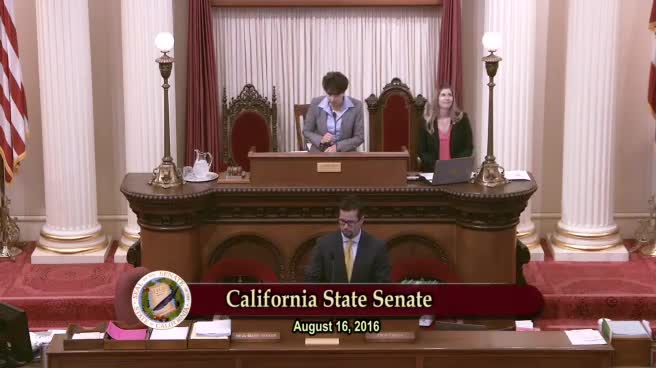 3MIN
Senate Floor
 1MIN
Senate Standing Committee on Appropriations
 3MIN
Assembly Floor
 4MIN
Assembly Standing Committee on Appropriations
 7MIN
Assembly Standing Committee on Education
Bill Author