AB 2561: Water supply planning: projects: photovoltaic or wind energy generation facility.
- Session Year: 2015-2016
- House: Assembly
- Latest Version Date: 2016-09-26
Existing law requires a city or county that determines that a project, as defined, is subject to the California Environmental Quality Act to identify any public water system that may supply water for the project and to request those public water systems to prepare a specified water supply assessment. If no public water system is identified, the city or county is required to prepare the water supply assessment.
Existing law defines project for purposes of these provisions as, among other things, a project that would demand an amount of water equivalent to, or greater than, the amount of water required by a 500 dwelling unit project. For a public water system that has fewer than 5,000 service connections, existing law defines project as development that would account for a specified increase in the number of service connections. Existing law, until January 1, 2017, exempts from the definition of project a proposed photovoltaic or wind energy generation facility that would demand no more than 75 acre-feet of water annually.
This bill would, until January 1, 2018, exempt the above-described proposed photovoltaic or wind energy generation facilities from the definition of project. The bill would thereby extend the duties on local agencies with respect to determining whether a project is subject to the water supply assessment requirements, thereby imposing a state-mandated local program.
The California Constitution requires the state to reimburse local agencies and school districts for certain costs mandated by the state. Statutory provisions establish procedures for making that reimbursement.
This bill would provide that, if the Commission on State Mandates determines that the bill contains costs mandated by the state, reimbursement for those costs shall be made pursuant to these statutory provisions.
This bill would declare that it is to take effect immediately as an urgency statute.
Existing law requires a city or county that determines that a project, as defined, is subject to the California Environmental Quality Act to identify any public water system that may supply water for the project and to request those public water systems to prepare a specified water supply assessment. If no public water system is identified, the city or county is required to prepare the water supply assessment.
Existing law defines project for purposes of these provisions as, among other things, a project that would demand an amount of water equivalent to, or greater than, the amount of water required by a 500 dwelling unit project. For a public water system that has fewer than 5,000 service connections, existing law defines project as development that would account for a specified increase in the number of service connections. Existing law, until January 1, 2017, exempts from the definition of project a proposed photovoltaic or wind energy generation facility that would demand no more than 75 acre-feet of water annually.
This bill would remove the January 1, 2017, sunset date, which would indefinitely exempt would, until January 1, 2018, exempt the above-described proposed photovoltaic or wind energy generation facilities from the definition of project. The bill would thereby extend the duties on local agencies with respect to determining whether a project is subject to the water supply assessment requirements, thereby imposing a state-mandated local program.
The California Constitution requires the state to reimburse local agencies and school districts for certain costs mandated by the state. Statutory provisions establish procedures for making that reimbursement.
This bill would provide that, if the Commission on State Mandates determines that the bill contains costs mandated by the state, reimbursement for those costs shall be made pursuant to these statutory provisions.
This bill would declare that it is to take effect immediately as an urgency statute.
Existing law requires a city or county that determines that a project, as defined, is subject to the California Environmental Quality Act to identify any public water system that may supply water for the project and to request those public water systems to prepare a specified water supply assessment. If no public water system is identified, the city or county is required to prepare the water supply assessment.
Existing law defines project for purposes of these provisions as, among other things, a project that would demand an amount of water equivalent to, or greater than, the amount of water required by a 500 dwelling unit project. For a public water system that has fewer than 5,000 service connections, existing law defines project as development that would account for a specified increase in the number of service connections. Existing law, until January 1, 2017, exempts from the definition of project a proposed photovoltaic or wind energy generation facility that would demand no more than 75 acre-feet of water annually.
This bill would remove the January 1, 2017, sunset date, which would indefinitely exempt the above-described proposed photovoltaic or wind energy generation facilities from the definition of project. The bill would thereby extend the duties on local agencies with respect to determining whether a project is subject to the water supply assessment requirements, thereby imposing a state-mandated local program.
The California Constitution requires the state to reimburse local agencies and school districts for certain costs mandated by the state. Statutory provisions establish procedures for making that reimbursement.
This bill would provide that, if the Commission on State Mandates determines that the bill contains costs mandated by the state, reimbursement for those costs shall be made pursuant to these statutory provisions.
Existing law provides for the design, development, and construction of a state-owned and state-operated veterans cemetery at the site of the former Fort Ord. Existing law establishes the California Central Coast State Veterans Cemetery at Fort Ord Endowment Fund, which is available upon appropriation by the Legislature for design, construction, and maintenance costs of the cemetery. Existing law authorizes the Secretary of Veterans Affairs to accept donations to be used for the maintenance or beautification of the veterans cemetery. Existing law further requires that those donations be deposited in the endowment fund.
This bill would establish the California Central Coast Veterans Cemetery Project Donation Fund, and would require that donations for the cemetery for a purpose specified by the donor instead be deposited in the fund, and be expended for the specific veterans cemetery maintenance or beautification project designated by the donor. This bill would continuously appropriate the fund to the department for these purposes.
Existing law provides for the design, development, and construction of a state-owned and state-operated veterans veterans cemetery at the site of the former Fort Ord. Existing law establishes the California Central Coast State Veterans Cemetery at Fort Ord Endowment Fund, which is available upon appropriation by the Legislature for design, construction, and maintenance costs of the cemetery. Existing law authorizes the Secretary of Veterans Affairs to accept donations to be used for the maintenance or beautification of the veterans veterans cemetery. Existing law further requires that those donations be deposited in the endowment fund.
This bill would establish the California Central Coast Veterans Cemetery Project Donation Fund, and would require that donations for the cemetery for a purpose specified by the donor instead be deposited in the fund, and be expended for the maintenance and repair of the cemetery or for a specified veterans cemetery maintenance or beautification project. specific veterans cemetery maintenance or beautification project designated by the donor. This bill would continuously appropriate the fund to the department for these purposes.
Existing law provides for the design, development, and construction of a state-owned and state-operated veterans cemetery at the site of the former Fort Ord. Existing law establishes the California Central Coast State Veterans Cemetery at Fort Ord Endowment Fund, which is available upon appropriation by the Legislature for design, construction, and maintenance costs of the cemetery. Existing law authorizes the Secretary of Veterans Affairs to accept donations to be used for the maintenance or beautification of the veterans cemetery. Existing law further requires that those donations be deposited in the endowment fund.
This bill would establish the California Central Coast Veterans Cemetery Project Donation Fund, and would require that donations for the cemetery be deposited in the fund, and be expended for the maintenance and repair of the cemetery or for a specified veterans cemetery maintenance or beautification project. This bill would continuously appropriate the fund to the department for these purposes.
For the purposes of this part, the following terms have the following meanings:
(a)Project means any of the following:
(1)A proposed residential development of more than 500 dwelling units.
(2)A proposed shopping center or business establishment employing more than 1,000 persons or having more than 500,000 square feet of floor space.
(3)A proposed commercial office building employing more than 1,000 persons or having more than 250,000 square feet of floor space.
(4)A proposed hotel or motel, or both, having more than 500 rooms.
(5)(A)Except as otherwise provided in subparagraph (B), a proposed industrial, manufacturing, or processing plant, or industrial park planned to house more than 1,000 persons, occupying more than 40 acres of land, or having more than 650,000 square feet of floor area.
(B)A proposed photovoltaic or wind energy generation facility approved on or after October 8, 2011, is not a project if the facility would demand no more than 75 acre-feet of water annually.
(6)A mixed-use project that includes one or more of the projects specified in this subdivision.
(7)A project that would demand an amount of water equivalent to, or greater than, the amount of water required by a 500 dwelling unit project.
(b)If a public water system has fewer than 5,000 service connections, then project means any proposed residential, business, commercial, hotel or motel, or industrial development that would account for an increase of 10 percent or more in the number of the public water systems existing service connections, or a mixed-use project that would demand an amount of water equivalent to, or greater than, the amount of water required by residential development that would represent an increase of 10 percent or more in the number of the public water systems existing service connections.
(c)Public water system means a system for the provision of piped water to the public for human consumption that has 3,000 or more service connections. A public water system includes all of the following:
(1)Any collection, treatment, storage, and distribution facility under control of the operator of the system that is used primarily in connection with the system.
(2)Any collection or pretreatment storage facility not under the control of the operator that is used primarily in connection with the system.
(3)Any person who treats water on behalf of one or more public water systems for the purpose of rendering it safe for human consumption.
(d)This section shall remain in effect only until January 1, 2018, and as of that date is repealed, unless a later enacted statute, that is enacted before January 1, 2018, deletes or extends that date.
SEC. 2.Section 10912 of the Water Code, as added by Section 2 of Chapter 588 of the Statutes of 2011, is amended to read:10912.For the purposes of this part, the following terms have the following meanings:
(a)Project means any of the following:
(1)A proposed residential development of more than 500 dwelling units.
(2)A proposed shopping center or business establishment employing more than 1,000 persons or having more than 500,000 square feet of floor space.
(3)A proposed commercial office building employing more than 1,000 persons or having more than 250,000 square feet of floor space.
(4)A proposed hotel or motel, or both, having more than 500 rooms.
(5)A proposed industrial, manufacturing, or processing plant, or industrial park planned to house more than 1,000 persons, occupying more than 40 acres of land, or having more than 650,000 square feet of floor area.
(6)A mixed-use project that includes one or more of the projects specified in this subdivision.
(7)A project that would demand an amount of water equivalent to, or greater than, the amount of water required by a 500 dwelling unit project.
(b)If a public water system has fewer than 5,000 service connections, then project means any proposed residential, business, commercial, hotel or motel, or industrial development that would account for an increase of 10 percent or more in the number of the public water systems existing service connections, or a mixed-use project that would demand an amount of water equivalent to, or greater than, the amount of water required by residential development that would represent an increase of 10 percent or more in the number of the public water systems existing service connections.
(c)Public water system means a system for the provision of piped water to the public for human consumption that has 3,000 or more service connections. A public water system includes all of the following:
(1)Any collection, treatment, storage, and distribution facility under control of the operator of the system that is used primarily in connection with the system.
(2)Any collection or pretreatment storage facility not under the control of the operator that is used primarily in connection with the system.
(3)Any person who treats water on behalf of one or more public water systems for the purpose of rendering it safe for human consumption.
(d)This section shall become operative on January 1, 2018.
SEC. 3.If the Commission on State Mandates determines that this act contains costs mandated by the state, reimbursement to local agencies and school districts for those costs shall be made pursuant to Part 7 (commencing with Section 17500) of Division 4 of Title 2 of the Government Code.
SEC. 4.This act is an urgency statute necessary for the immediate preservation of the public peace, health, or safety within the meaning of Article IV of the Constitution and shall go into immediate effect. The facts constituting the necessity are:
In order to encourage the development of photovoltaic and wind generation facilities to meet the states renewable portfolio standard and greenhouse gas emission reduction goals, it is necessary for this act to take effect immediately.
For the purposes of this part, the following terms have the following meanings:
(a)Project means any of the following:
(1)A proposed residential development of more than 500 dwelling units.
(2)A proposed shopping center or business establishment employing more than 1,000 persons or having more than 500,000 square feet of floor space.
(3)A proposed commercial office building employing more than 1,000 persons or having more than 250,000 square feet of floor space.
(4)A proposed hotel or motel, or both, having more than 500 rooms.
(5)(A)Except as otherwise provided in subparagraph (B), a proposed industrial, manufacturing, or processing plant, or industrial park planned to house more than 1,000 persons, occupying more than 40 acres of land, or having more than 650,000 square feet of floor area.
(B)A proposed photovoltaic or wind energy generation facility approved on or after October 8, 2011, is not a project if the facility would demand no more than 75 acre-feet of water annually.
(6)A mixed-use project that includes one or more of the projects specified in this subdivision.
(7)A project that would demand an amount of water equivalent to, or greater than, the amount of water required by a 500 dwelling unit project.
(b)If a public water system has fewer than 5,000 service connections, then project means any proposed residential, business, commercial, hotel or motel, or industrial development that would account for an increase of 10 percent or more in the number of the public water systems existing service connections, or a mixed-use project that would demand an amount of water equivalent to, or greater than, the amount of water required by residential development that would represent an increase of 10 percent or more in the number of the public water systems existing service connections.
(c)Public water system means a system for the provision of piped water to the public for human consumption that has 3,000 or more service connections. A public water system includes all of the following:
(1)Any collection, treatment, storage, and distribution facility under control of the operator of the system that is used primarily in connection with the system.
(2)Any collection or pretreatment storage facility not under the control of the operator that is used primarily in connection with the system.
(3)Any person who treats water on behalf of one or more public water systems for the purpose of rendering it safe for human consumption.
(d)(d)This section shall remain in effect only until January 1, 2018, and as of that date is repealed, unless a later enacted statute, that is enacted before January 1, 2018, deletes or extends that date.
SEC. 2.Section 10912 of the Water Code, as added by Section 2 of Chapter 588 of the Statutes of 2011, is repealed.SEC. 2.Section 10912 of the Water Code, as added by Section 2 of Chapter 588 of the Statutes of 2011, is amended to read:10912.For the purposes of this part, the following terms have the following meanings:
(a)Project means any of the following:
(1)A proposed residential development of more than 500 dwelling units.
(2)A proposed shopping center or business establishment employing more than 1,000 persons or having more than 500,000 square feet of floor space.
(3)A proposed commercial office building employing more than 1,000 persons or having more than 250,000 square feet of floor space.
(4)A proposed hotel or motel, or both, having more than 500 rooms.
(5)A proposed industrial, manufacturing, or processing plant, or industrial park planned to house more than 1,000 persons, occupying more than 40 acres of land, or having more than 650,000 square feet of floor area.
(6)A mixed-use project that includes one or more of the projects specified in this subdivision.
(7)A project that would demand an amount of water equivalent to, or greater than, the amount of water required by a 500 dwelling unit project.
(b)If a public water system has fewer than 5,000 service connections, then project means any proposed residential, business, commercial, hotel or motel, or industrial development that would account for an increase of 10 percent or more in the number of the public water systems existing service connections, or a mixed-use project that would demand an amount of water equivalent to, or greater than, the amount of water required by residential development that would represent an increase of 10 percent or more in the number of the public water systems existing service connections.
(c)Public water system means a system for the provision of piped water to the public for human consumption that has 3,000 or more service connections. A public water system includes all of the following:
(1)Any collection, treatment, storage, and distribution facility under control of the operator of the system that is used primarily in connection with the system.
(2)Any collection or pretreatment storage facility not under the control of the operator that is used primarily in connection with the system.
(3)Any person who treats water on behalf of one or more public water systems for the purpose of rendering it safe for human consumption.
(d)This section shall become operative on January 1, 2017. 2018.
SEC. 3.If the Commission on State Mandates determines that this act contains costs mandated by the state, reimbursement to local agencies and school districts for those costs shall be made pursuant to Part 7 (commencing with Section 17500) of Division 4 of Title 2 of the Government Code.
SEC. 4.This act is an urgency statute necessary for the immediate preservation of the public peace, health, or safety within the meaning of Article IV of the Constitution and shall go into immediate effect. The facts constituting the necessity are:
In order to encourage the development of photovoltaic and wind generation facilities to meet the states renewable portfolio standard and greenhouse gas emission reduction goals, it is necessary for this act to take effect immediately.
For the purposes of this part, the following terms have the following meanings:
(a)Project means any of the following:
(1)A proposed residential development of more than 500 dwelling units.
(2)A proposed shopping center or business establishment employing more than 1,000 persons or having more than 500,000 square feet of floor space.
(3)A proposed commercial office building employing more than 1,000 persons or having more than 250,000 square feet of floor space.
(4)A proposed hotel or motel, or both, having more than 500 rooms.
(5)(A)Except as otherwise provided in subparagraph (B), a proposed industrial, manufacturing, or processing plant, or industrial park planned to house more than 1,000 persons, occupying more than 40 acres of land, or having more than 650,000 square feet of floor area.
(B)A proposed photovoltaic or wind energy generation facility approved on or after the effective date of the amendments made to this section at the 201112 Regular Session October 8, 2011, is not a project if the facility would demand no more than 75 acre-feet of water annually.
(6)A mixed-use project that includes one or more of the projects specified in this subdivision.
(7)A project that would demand an amount of water equivalent to, or greater than, the amount of water required by a 500 dwelling unit project.
(b)If a public water system has fewer than 5,000 service connections, then project means any proposed residential, business, commercial, hotel or motel, or industrial development that would account for an increase of 10 percent or more in the number of the public water systems existing service connections, or a mixed-use project that would demand an amount of water equivalent to, or greater than, the amount of water required by residential development that would represent an increase of 10 percent or more in the number of the public water systems existing service connections.
(c)Public water system means a system for the provision of piped water to the public for human consumption that has 3,000 or more service connections. A public water system includes all of the following:
(1)Any collection, treatment, storage, and distribution facility under control of the operator of the system that is used primarily in connection with the system.
(2)Any collection or pretreatment storage facility not under the control of the operator that is used primarily in connection with the system.
(3)Any person who treats water on behalf of one or more public water systems for the purpose of rendering it safe for human consumption.
(d)This section shall remain in effect only until January 1, 2017, and as of that date is repealed, unless a later enacted statute, that is enacted before January 1, 2017, deletes or extends that date.
SEC. 2.Section 10912 of the Water Code, as added by Section 2 of Chapter 588 of the Statutes of 2011, is repealed.10912.For the purposes of this part, the following terms have the following meanings:
(a)Project means any of the following:
(1)A proposed residential development of more than 500 dwelling units.
(2)A proposed shopping center or business establishment employing more than 1,000 persons or having more than 500,000 square feet of floor space.
(3)A proposed commercial office building employing more than 1,000 persons or having more than 250,000 square feet of floor space.
(4)A proposed hotel or motel, or both, having more than 500 rooms.
(5)A proposed industrial, manufacturing, or processing plant, or industrial park planned to house more than 1,000 persons, occupying more than 40 acres of land, or having more than 650,000 square feet of floor area.
(6)A mixed-use project that includes one or more of the projects specified in this subdivision.
(7)A project that would demand an amount of water equivalent to, or greater than, the amount of water required by a 500 dwelling unit project.
(b)If a public water system has fewer than 5,000 service connections, then project means any proposed residential, business, commercial, hotel or motel, or industrial development that would account for an increase of 10 percent or more in the number of the public water systems existing service connections, or a mixed-use project that would demand an amount of water equivalent to, or greater than, the amount of water required by residential development that would represent an increase of 10 percent or more in the number of the public water systems existing service connections.
(c)Public water system means a system for the provision of piped water to the public for human consumption that has 3,000 or more service connections. A public water system includes all of the following:
(1)Any collection, treatment, storage, and distribution facility under control of the operator of the system that is used primarily in connection with the system.
(2)Any collection or pretreatment storage facility not under the control of the operator that is used primarily in connection with the system.
(3)Any person who treats water on behalf of one or more public water systems for the purpose of rendering it safe for human consumption.
(d)This section shall become operative on January 1, 2017.
SEC. 3.If the Commission on State Mandates determines that this act contains costs mandated by the state, reimbursement to local agencies and school districts for those costs shall be made pursuant to Part 7 (commencing with Section 17500) of Division 4 of Title 2 of the Government Code.
SECTION 1.Section 1457 of the Military and Veterans Code is amended to read:1457.(a)Notwithstanding Section 11005 of the Government Code, the veterans cemetery administrator may, subject to the approval of the Secretary of Veterans Affairs, accept donations of personal property, including cash or other gifts, to be used for the maintenance or beautification of the veterans cemetery.
(b)Donations in the form of cash that do not have a purpose specified by the donor shall be deposited in the Endowment Fund, and shall be expended for the maintenance and repair of the veterans cemetery upon appropriation by the Legislature.
(c)Donations in the form of cash for a purpose specified by the donor shall be deposited in the California Central Coast Veterans Cemetery Project Donation Fund, which is hereby created in the State Treasury, and shall be expended for the specified veterans cemetery maintenance or beautification project designated by the donor.
(d)Notwithstanding Section 13340 of the Government Code, donations deposited to the credit of the California Central Coast Veterans Cemetery Project Donation Fund as authorized by subdivision (c) shall be continuously appropriated to the department, without regard to fiscal year.
(a)Notwithstanding Section 11005 of the Government Code, the veterans cemetery administrator may, subject to the approval of the Secretary of Veterans Affairs, accept donations of personal property, including cash or other gifts, to be used for the maintenance or beautification of the veterans cemetery.
(b)Donations in the form of cash shall be deposited in the California Central Coast Veterans Cemetery Project Donation Fund, which is hereby created in the State Treasury, and shall be expended for the maintenance and repair of the veterans cemetery or for a specified veterans cemetery maintenance or beautification project designated by the donor.
(b)Donations in the form of cash that do not have a purpose specified by the donor shall be deposited in the Endowment Fund, and shall be expended for the maintenance and repair of the veterans cemetery upon appropriation by the Legislature.
(c)Donations in the form of cash for a purpose specified by the donor shall be deposited in the California Central Coast Veterans Cemetery Project Donation Fund, which is hereby created in the State Treasury, and shall be expended for the specified veterans cemetery maintenance or beautification project designated by the donor.
(c)
(d)Notwithstanding Section 13340 of the Government Code, donations deposited to the credit of the California Central Coast Veterans Cemetery Project Donation Fund as authorized by this section subdivision (c) shall be continuously appropriated to the department, without regard to fiscal year.
(a)Notwithstanding Section 11005 of the Government Code, the veterans cemetery administrator may, subject to the approval of the Secretary of Veterans Affairs, accept donations of personal property, including cash or other gifts, to be used for the maintenance or beautification of the veterans cemetery.
(b)Donations in the form of cash shall be deposited in the Endowment Fund California Central Coast Veterans Cemetery Project Donation Fund, which is hereby created in the State Treasury, and shall be expended for the maintenance and repair of the veterans cemetery or for a specified veterans cemetery maintenance or beautification project designated by the donor, upon appropriation by the Legislature. donor.
(c)Notwithstanding Section 13340 of the Government Code, donations deposited to the credit of the California Central Coast Veterans Cemetery Project Donation Fund as authorized by this section shall be continuously appropriated to the department, without regard to fiscal year.
|
Date
|
Status
|
|---|---|
| Aug 31, 2016 | Re-referred to Com. on N.R. & W. |
| Aug 19, 2016 | Read third time and amended. Ordered to second reading. |
| Aug 22, 2016 | Re-referred to Com. on RLS. pursuant to Senate Rule 29.10(c). |
| Aug 22, 2016 | Read second time. Ordered to third reading. |
| Aug 31, 2016 | From committee: Be placed on second reading file pursuant to Senate Rule 28.8. |
| Aug 31, 2016 | From committee: Amend, and do pass as amended and re-refer to Com. on APPR. (Ayes 8. Noes 0.) (August 31). |
| Aug 31, 2016 | From committee: Ordered to third reading. |
| Aug 31, 2016 | Joint Rules 61 and 62(a) suspended. (Ayes 39. Noes 0. Page 5582.) |
| Aug 31, 2016 | Joint Rules 61 and 62(a) suspended. (Ayes 39. Noes 0.) |
| Aug 31, 2016 | Ordered to third reading. |
| Aug 31, 2016 | Pursuant to Senate Rule 28.8. |
| Aug 18, 2016 | Read second time. Ordered to third reading. |
| Aug 31, 2016 | Read second time and amended. Re-referred to Com. on APPR. |
| Aug 31, 2016 | Read third time. Urgency clause adopted. Passed. Ordered to the Assembly. |
| Aug 31, 2016 | Read third time. Urgency clause adopted. Passed. Ordered to the Assembly. (Ayes 38. Noes 0. Page 5603.). |
| Aug 31, 2016 | Senate Rule 29.3 (b) suspended. (Ayes 39. Noes 0.) |
| Aug 31, 2016 | Senate Rule 29.3(b) suspended. (Ayes 39. Noes 0. Page 5582.) |
| Sep 1, 2016 | Assembly Rule 63 suspended. |
| Sep 1, 2016 | In Assembly. Concurrence in Senate amendments pending. |
| Sep 1, 2016 | Urgency clause adopted. Senate amendments concurred in. To Engrossing and Enrolling. |
| Sep 12, 2016 | Enrolled and presented to the Governor at 11:30 a.m. |
| Apr 28, 2016 | Read third time. Passed. Ordered to the Senate. |
| Feb 21, 2016 | From printer. May be heard in committee March 22. |
| Feb 22, 2016 | Read first time. |
| Mar 8, 2016 | Referred to Com. on V.A. |
| Mar 30, 2016 | From committee: Do pass and re-refer to Com. on APPR. (Ayes 8. Noes 0.) (March 29). Re-referred to Com. on APPR. |
| Apr 12, 2016 | From committee chair, with author's amendments: Amend, and re-refer to Com. on APPR. Read second time and amended. |
| Apr 13, 2016 | Re-referred to Com. on APPR. |
| Apr 20, 2016 | From committee: Do pass. To Consent Calendar. (Ayes 16. Noes 0.) (April 20). |
| Apr 21, 2016 | Read second time. Ordered to Consent Calendar. |
| Apr 28, 2016 | In Senate. Read first time. To Com. on RLS. for assignment. |
| Feb 19, 2016 | Introduced. To print. |
| Apr 28, 2016 | Read third time. Passed. Ordered to the Senate. (Ayes 76. Noes 0. Page 4596.) |
| Apr 28, 2016 | Read third time. Passed. Ordered to the Senate. (Ayes 76. Noes 0.) |
| May 5, 2016 | Referred to Com. on V.A. |
| Jun 14, 2016 | From committee: Do pass and re-refer to Com. on APPR. with recommendation: To Consent Calendar. (Ayes 5. Noes 0.) (June 14). Re-referred to Com. on APPR. |
| Aug 2, 2016 | From committee: Do pass. (Ayes 7. Noes 0.) (August 1). |
| Aug 3, 2016 | Read second time. Ordered to third reading. |
| Aug 11, 2016 | Ordered to inactive file at the request of Senator Nielsen. |
| Aug 17, 2016 | From inactive file. |
| Aug 17, 2016 | Ordered to second reading. |
|
Date
|
Description
|
Location
|
Votes
|
|
|---|---|---|---|---|
| Sep 1, 2016 | AB 2561 IRWIN Concurrence - Urgency Added | Assembly Floor |
Passed |
|
| Sep 1, 2016 | W/O REF. TO FILE AB2561 Irwin By Hill Urgency Clause | Senate Floor |
Passed |
|
| Aug 31, 2016 | W/O REF. TO FILE AB2561 Irwin By Hill Urgency Clause | Senate Floor |
Passed |
|
| Aug 31, 2016 | Do pass as amended, but first amend, and re-refer to the Committee on [Appropriations] | Senate Standing Committee on Natural Resources and Water |
Passed |
|
| Aug 1, 2016 | Do pass | Senate Standing Committee on Appropriations |
Passed |
|
| Jun 14, 2016 | Do pass, but first be re-referred to the Committee on [Appropriations] with the recommendation: To Consent Calendar | Senate Standing Committee on Veterans Affairs |
Passed |
|
| Apr 28, 2016 | AB 2561 V. A. Consent Calendar Second Day Regular Session | Assembly Floor |
Passed |
|
| Apr 20, 2016 | Do pass. To Consent Calendar. | Assembly Standing Committee on Appropriations |
Passed |
|
| Mar 29, 2016 | Do pass and be re-referred to the Committee on [Appropriations] | Assembly Standing Committee on Veterans Affairs |
Passed |
This list shows positions taken on this bill by organizations on the date displayed, which is linked to the original source.
Positions by individuals are not included.
|
Organization
|
Position
|
Date
|
|---|---|---|
| American G.I. Forum of California | ** Support | Aug 31, 2016 |
| American Legion - Department of California | ** Support | Aug 31, 2016 |
| AMVETS - Department of California | ** Support | Aug 31, 2016 |
| California Association Of County Veterans Service Officers | ** Support | Aug 31, 2016 |
| Veterans of Foreign Wars - Department of California | ** Support | Aug 31, 2016 |
| Vietnam Veterans of American - California State Council | ** Support | Aug 31, 2016 |
(Without Reference to File)
CONCURRENCE IN SENATE AMENDMENTS
CSA1 Bill Id:AB 2561
Author:(Irwin)
As Amended Ver:August 31, 2016
Majority vote
ASSEMBLY: | 76-0 | (April 28, 2016) | SENATE: | 38-0 | (August 31, 2016) |
Original Committee Reference: W., P., & W.
SUMMARY: Extends the existing sunset in law which excludes photovoltaic or wind energy generation if the facility would demand no more than 75 acre-feet of water annually from a water supply assessment (WSA) for one year. Specifically, this bill:
Extends the sunset exemption from a WSA for photovoltaic and wind energy in existing law from January 1, 2017, to January 1, 2018.
The Senate amendments: Remove provisions of this bill pertaining to the establishment of the California Central Coast Veterans Cemetery (CCCSVC) Project Donation Fund, and instead extend the sunset for one year for photovoltaic or wind energy generation that demand no more than 75 acre-feet annually from a WSA and add an urgency clause.
EXISTING LAW:
- Requires a WSA whenever a city or county determines a proposed project is subject to the California Environmental Quality Act (CEQA). The WSA must be included in any CEQA document prepared for the project.
- Specifies what constitutes a project that would be subject to a WSA, generally, as having the scale of 500 new residential connections and among other specific definitions, includes:
A proposed industrial, manufacturing, or processing plant, or industrial park planned to house more than 1,000 persons, occupying more than 40 acres of land, or having more than 650,000 square feet of floor area.
- Until January 1, 2017, exempts from the definition of a project a proposed photovoltaic or wind energy generation facility if the facility would demand no more than 75 acre-feet of water annually.
- Requires a WSA to:
- Identify any existing water supply entitlements, water rights, or water service contracts relevant to the identified water supply for the proposed project.
- Discuss the water systems total projected water supplies available during normal, single dry, and multiple dry water years during a 20-year projection will meet the projected water demand associated with the proposed project, in addition to the public water system’s existing and planned future uses.
- If the project relies in whole or in part on groundwater, requires additional information, including a description of any groundwater basins that will supply the project; the court or State Water Resources Control Board (SWRCB) order if the basin is adjudicated; and an analysis of the sufficiency of the groundwater from the basin or basins.
- Requires, under the Subdivision Map Act, cities and counties to demonstrate that a sufficient water supply is available as a condition of their approval of a tentative map for a subdivision with more than 500 dwelling units. Specifically requires:
- Sufficient water supply is defined as the total water supplies available during normal, single-dry, and multiple-dry years within a 20-year projection that will meet the projected demand associated with the proposed subdivision, in addition to existing and planned future uses.
- Proof of sufficient water must be based on a written verification from the applicable public water system. In order to be sufficient, the water supply must be able to meet the demands of existing and future planned uses in addition to the subdivision’s demand over the next 20 years.
- The public water system's written verification of its ability or inability to provide a sufficient water supply to meet the projected demand associated with the proposed subdivision must be supported by substantial evidence.
FISCAL EFFECT: Unknown. Similar previous legislation from 2011 had negligible state costs, if any, according to the Assembly Appropriations Committee.
COMMENTS: In 2001, the Legislature passed SB 610 (Costa), Chapter 643, Statutes of 2001, and SB 221 (Kuehl), Chapter 642, Statutes of 2001. Collectively, these two bills are also known as the "show me the water" bills. The purpose of these bills, as noted in the findings for SB 610, was "to strengthen the process pursuant to which local agencies determine the adequacy of existing and planned future water supplies to meet existing and planned future demands on those water supplies."
To assist local governments in deciding whether to approve projects, SB 610 required a WSA whenever a city or county determines a proposed project, as defined, is subject to CEQA. The WSA must be included in any CEQA document prepared for the project. In turn, a provision of CEQA requires compliance with the SB 610 requirements.
The WSA is required to include a discussion regarding whether the total projected water supplies (during normal, single dry, and multiple dry water years) over the next 20 years will meet the projected water demand associated with the proposed project, over and above that required for existing and planned future uses. Further, when a water supply for a proposed project includes groundwater, the WSA must include additional information about the sufficiency of the groundwater supply. Projects may be challenged in court for failure to prepare an adequate water supply assessment.
SB 267 (Rubio), Chapter 588, Statutes of 2011, specifically exempts from a WSA a photovoltaic or wind energy generation project if the facility demands no more than 75 acre-feet of water annually until January 1, 2017. Typically, because photovoltaic and wind energy generation projects occupy more than 40 acres, they would have been subject to a WSA prior to this exemption.
This bill came into print as a sunset elimination on August 19, 2016. This is now a one year sunset extension likely leading to a similar measure in the 2017 legislative year. SB 267 included a sunset to provide the Legislature with the opportunity to re-evaluate the exemption and determine an appropriate path forward.
What constitutes a significant use of water and a reliable water supply has dramatically changed since the "show me the water" legislation passed in 2001 and since photovoltaic and wind energy generation was exempt in 2011.
Since 2011, the state has experienced the worst drought on record and has begun regulation of groundwater. This, combined with advancements in water efficiency, makes for a very different evaluation of how each acre-foot is to be used compared to just 5 years ago. Moving forward how the "show me the water" policies are implemented will likely receive greater attention as to when a WSA will be triggered.
Questions remain about the appropriate metric that truly indicates that a project uses little water, and if specific local conditions should be considered. There are questions about the self-certification for using no more than 75 acre-feet under existing law and if there should be greater accountability in demonstrating total use. With 15 years having passed since the passage of the "show me the water" package of legislation there are questions of whether the time has come to reevaluate when and how a WSA should apply. All of these questions should be examined if and when future legislation to amend the "show me the water" comes forward.
Analysis Prepared by: Ryan Ojakian / W., P., & W. / (916) 319-2096 FN: 0005048
SENATE COMMITTEE ON NATURAL RESOURCES AND WATER
Senator Fran Pavley, Chair
2015 - 2016 Regular
Bill No: AB 2561 Hearing Date: August 31, 2016
Author: | |||
Version: | As Proposed To Be Amended | ||
Urgency: | Fiscal: | ||
Consultant: | |||
Subject: Water supply planning: projects: photovoltaic or wind energy generation facility
BACKGROUND AND EXISTING LAW
Background
In 2001, the Legislature passed, and the Governor signed SB 610 (Costa) and SB 221 (Kuehl). Collectively, these two bills are also known as the “show us the water” bills. The purpose of these bills, as noted in the findings for SB 610, was “to strengthen the process pursuant to which local agencies determine the adequacy of existing and planned future water supplies to meet existing and planned future demands on those water supplies.”
In establishing the definition of a “project,” the authors strove to develop criteria that were easily identifiable to city and county planning staff – such staff typically don’t have the background necessary to determine the water demand for a project, but could easily determine the square footage of an industrial park, for example.
In 2011, then Senator Rubio introduced SB 267. As heard in the Senate Natural Resources and Water Committee, that bill would have revised the definition of “project” to exclude a renewable energy plant that would not demand an amount of water equivalent to, or greater than, the amount of water required by a 500 dwelling unit project.
As noted in the Natural Resources and Water Committee analysis of SB 267, supporters offered at least three reasons for the bill.
- Avoiding litigation. In the aftermath of an appellate court decision clarifying the application of the 40 acre definition of a “project” under SB 610, opponents of solar projects in San Diego County and San Bernardino County are challenging the projects on the basis that the projects do not comply with CEQA because there was no “water supply assessment” (WSA.)
- Expediting Process. WSA’s can be complex, particularly where groundwater is used and no urban water management plan has been prepared (typically the case because renewable energy projects are usually in rural locales.) In addition to higher costs, preparing a WSA can add several months to getting final approval for a project.
- Expiring Tax Credits. To qualify for the Production Tax Credit for Renewable Energy, wind projects must be placed in service by 12/1/2012.
The Natural Resources and Water Committee analysis of SB 267 also noted that “[w]hile an initial review of available studies suggest that at least some photovoltaic and wind energy facilities do indeed seem to use little water, industry specific exemptions have not been tried in the context of SB 610 requirements. Consequently, it might make sense to impose a sunset on the exemption.”
Existing Law
Requires a WSA whenever a city or county determines a proposed “project” is subject to CEQA. The WSA must be included in any CEQA document prepared for the project. In turn, a provision of CEQA requires compliance with the SB 610 requirements.
- Defines a “project” requiring a WSA is any of the following:
- A proposed residential development of more than 500 dwelling units.
- A proposed shopping center or business establishment employing more than 1,000 persons or having more than 500,000 square feet of floor space.
- A proposed commercial office building employing more than 1,000 persons or having more than 250,000 square feet of floor space.
- A proposed hotel or motel, or both, having more than 500 rooms.
- A proposed industrial, manufacturing, or processing plant, or industrial park planned to house more than 1,000 persons, occupying more than 40 acres of land, or having more than 650,000 square feet of floor area.
Until 1/1/17, a proposed photovoltaic or wind energy generation facility is not a project if the facility would demand no more than 75 acre-feet of water annually. - A mixed-use project that includes one or more of the projects specified in this subdivision.
- A project that would demand an amount of water equivalent to, or greater than, the amount of water required by a 500 dwelling unit project.
- The WSA is prepared by the public water system that may provide water for the project, or, if the city or county identifies no such public water system, the city or county prepares the WSA.
- The WSA is required to include a discussion regarding whether the total projected water supplies (during normal, single dry, and multiple dry water years) over the next 20-years will meet the projected water demand associated with the proposed project, over and above that required for existing and planned future uses. Further, when a water supply for a proposed project includes groundwater, the WSA must include additional information about the sufficiency of the groundwater supply.
PROPOSED LAW
Extends for one year the current exclusion of proposed photovoltaic or wind energy facilities from the definition of a “project” required to have a WSA.
ARGUMENTS IN SUPPORT
According to the author, “AB 2561 will extend, by one year, an exclusion from water supply assessments for large solar and wind projects. These projects require very little water and thus were exempted from the assessments through previous legislation. A one year continuation of this exclusion will help ensure that California is not delayed in reaching its renewable goals and will allow a full vetting of this policy in the subsequent legislative session.”
ARGUMENTS IN OPPOSITION
The Sierra Club writes, “Water supply availability assessments are tools to ensure that projects have access to water, and should they need secondary sources, they can get that water without significant impacts. This is an important tool to prevent waterless development, a tragedy that we have faces repeatedly during this current drought. We should not drop this tool for renewable energy, but instead ensure that renewable energy is sited in places where there is adequate water to service it. This will allow for a smoother increase in renewable energy without causing water supply problems.”
COMMENTS
Buys time. In the absence of this bill, the exemption would expire. By extending the exemption one year, this bill will allow for the reasoned analysis.
Positions Uncertain. The committee has a number of letters of opposition to the August 19, 2016 version of the bill. Staff has heard that many, but not all, of those oppose intend to remove their opposition with the proposed amendments.
SUGGESTED AMENDMENTS: Per RN 16 25313
SUPORT:
CalWEA
Independent Energy Producers Association
Large Scale Solar Association
OPPOSITION
California Farm Bureau Federation
California Special Districts Association
Center for Biological Diversity
Clean Water Action
Community Water Center
Defenders of Wildlife
East Bay Municipal Utility District
Eastern Municipal Water District
Food and Water Watch
Leadership Counsel for Justice and Accountability
Sierra Club California
-- END --
Office of Senate Floor Analyses (916) 651-1520 Fax: (916) 327-4478 | AB |
THIRD READING
Bill No: AB 2561
:
PRIOR VOTES NOT RELEVANT
SENATE NATURAL RES. & WATER COMMITTEE: 8-0, 8/31/16
AYES: Pavley, Stone, Allen, Hertzberg, Jackson, Monning, Vidak, Wolk
NO VOTE RECORDED: Hueso
SENATE APPROPRIATIONS COMMITTEE: Senate Rule 28.8
SOURCE: California Wind Energy Association
Independent Energy Producers
Large-scale Solar Association
DIGEST: This bill extends, by one year, a January 1, 2017 sunset that exempts proposed photovoltaic or wind energy generation facilities that demands no more than 75 acre feet of water annually from having to do a water supply assessment.
Senate Floor Amendments of 8/19/16 delete the prior bill language regarding veterans cemeteries and replace it with language removing a January 1, 2017 sunset that exempts proposed photovoltaic or wind energy generation facilities from having to conduct a water supply assessment.
Existing law:
- Requires a “water supply assessment” (WSA) whenever a city or county determines a proposed “project” is subject to the California Environmental Quality Act (CEQA). The WSA must be included in any CEQA document prepared for the project. In turn, a provision of CEQA requires compliance with the SB 610 (Costa, Chapter 643, Statutes of 2001) requirements.
- Defines a “project” requiring a WSA is any of the following:
- A proposed residential development of more than 500 dwelling units.
- A proposed shopping center or business establishment employing more than 1,000 persons or having more than 500,000 square feet of floor space.
- A proposed commercial office building employing more than 1,000 persons or having more than 250,000 square feet of floor space.
- A proposed hotel or motel, or both, having more than 500 rooms.
- A proposed industrial, manufacturing, or processing plant, or industrial park planned to house more than 1,000 persons, occupying more than 40 acres of land, or having more than 650,000 square feet of floor area.
Until 1/1/17, a proposed photovoltaic or wind energy generation facility is not a project if the facility would demand no more than 75 acre-feet of water annually. - A mixed-use project that includes one or more of the projects specified in this subdivision.
- A project that would demand an amount of water equivalent to, or greater than, the amount of water required by a 500-dwelling unit project.
- Specifies that the WSA is prepared by the public water system that may provide water for the project, or, if the city or county identifies no such public water system, the city or county prepares the WSA.
- Requires the WSA to include a discussion regarding whether the total projected water supplies (during normal, single dry, and multiple dry water years) over the next 20 years will meet the projected water demand associated with the proposed project, over and above that required for existing and planned future uses. Further, when a water supply for a proposed project includes groundwater, the WSA must include additional information about the sufficiency of the groundwater supply.
This bill extends for one year the current exclusion of proposed photovoltaic or wind energy facilities from the definition of a “project” required to have a WSA.
Background
In 2001, the Legislature passed, and the Governor signed SB 610 (Costa) and SB 221 (Kuehl, Chapter 642). Collectively, these two bills are also known as the “show us the water” bills. The purpose of these bills, as noted in the findings for SB 610, was “to strengthen the process pursuant to which local agencies determine the adequacy of existing and planned future water supplies to meet existing and planned future demands on those water supplies.”
In establishing the definition of a “project,” the authors strove to develop criteria that were easily identifiable to city and county planning staff – such staff typically don’t have the background necessary to determine the water demand for a project, but could easily determine the square footage of an industrial park, for example.
In 2011, then Senator Rubio introduced SB 267 (Chapter 588). As heard in the Senate Natural Resources and Water Committee, that bill would have revised the definition of “project” to exclude a renewable energy plant that would not demand an amount of water equivalent to, or greater than, the amount of water required by a 500-dwelling unit project.
As noted in the Senate Natural Resources and Water Committee analysis, supporters offer at least three reasons for SB 267.
- Avoiding litigation. In the aftermath of an appellate court decision clarifying the application of the 40 acre definition of a “project” under SB 610, opponents of solar projects in San Diego County and San Bernardino County are challenging the projects on the basis that the projects do not comply with CEQA because there was no WSA.
- Expediting Process. WSA’s can be complex, particularly where groundwater is used and no urban water management plan has been prepared (typically the case because renewable energy projects are usually in rural locales.) In addition to higher costs, preparing a WSA can add several months to getting final approval for a project.
- Expiring Tax Credits. To qualify for the Production Tax Credit for Renewable Energy, wind projects must be placed in service by 12/1/2012.
The Senate Natural Resources and Water Committee analysis also noted that “[w]hile an initial review of available studies suggest that at least some photovoltaic and wind energy facilities do indeed seem to use little water, industry specific exemptions have not been tried in the context of SB 610 requirements. Consequently, it might make sense to impose a sunset on the exemption.”
Comments
Buys time. In the absence of this bill, the exemption would expire. By extending the exemption one year, this bill will allow for the reasoned analysis.
Positions Uncertain. The committee has a number of letters of opposition to the August 19, 2016 version of the bill. Staff has heard that many, but not all, of those oppose intend to remove their opposition with the proposed amendments.
FISCAL EFFECT: Appropriation: Fiscal Com.: Local:
California Wind Energy Association (co-source)
Independent Energy Producers Association (co-source)
Large Scale Solar Association (co-source)
OPPOSITION: (Verified 8/31/16)
California Farm Bureau Federation
California Special Districts Association
Center for Biological Diversity
Clean Water Action
Community Water Center
Defenders of Wildlife
East Bay Municipal Utility District
Eastern Municipal Water District
Food and Water Watch
Leadership Counsel for Justice and Accountability
Sierra Club California
ARGUMENTS IN SUPPORT: According to the author, “AB 2561 will extend, by one year, an exclusion from water supply assessments for large solar and wind projects. These projects require very little water and thus were exempted from the assessments through previous legislation. A one year continuation of this exclusion will help ensure that California is not delayed in reaching its renewable goals and will allow a full vetting of this policy in the subsequent legislative session.”
ARGUMENTS IN OPPOSITION: The Sierra Club writes, “Water supply availability assessments are tools to ensure that projects have access to water, and should they need secondary sources, they can get that water without significant impacts. This is an important tool to prevent waterless development, a tragedy that we have faces repeatedly during this current drought. We should not drop this tool for renewable energy, but instead ensure that renewable energy is sited in places where there is adequate water to service it. This will allow for a smoother increase in renewable energy without causing water supply problems.”
8/31/16 22:09:07
**** END ****
Office of Senate Floor Analyses (916) 651-1520 Fax: (916) 327-4478 | AB |
THIRD READING
Bill No: AB 2561
:
SENATE VETERANS AFFAIRS COMMITTEE: 5-0, 6/14/16
AYES: Nielsen, Hueso, Allen, Nguyen, Roth
SENATE APPROPRIATIONS COMMITTEE: 7-0, 8/1/16
AYES: Lara, Bates, Beall, Hill, McGuire, Mendoza, Nielsen
ASSEMBLY FLOOR: 76-0, 4/28/16 (Consent) - See last page for vote
DIGEST: This bill establishes the California Central Coast Veterans Cemetery (CCCVC) Project Donation Fund; specifies how certain donations will be deposited and expended; and establishes a continuous appropriation from the Fund to the Department of Veterans Affairs (CalVet) for these purposes.
Existing law:
- Provides for the design, development, and construction of a state-owned and state-operated veterans’ cemetery at the site of the former Fort Ord.
- Establishes the CCCVC at Fort Ord Endowment Fund, which is available upon appropriation by the Legislature for design, construction, and maintenance costs of the cemetery.
- Authorizes the Secretary of CalVet, to accept donations for maintenance or beautification of the veterans’ cemetery.
- Requires that those donations be deposited in the endowment fund.
This bill:
- Establishes the CCCVC at Ford Ord Project Donation Fund within the State Treasury.
- Requires – for donations in the form of cash:
- If the donor has not specified a purpose, the moneys shall be deposited in the Endowment Fund, and expended for the maintenance and repair of the veterans cemetery upon appropriation by the Legislature.
- If the donor has specified a purpose, the moneys shall be deposited in the Project Donation Fund, and be expended for the specified veterans cemetery maintenance or beautification project designated by the donor.
- Provides for continuously appropriating the Project Donation Fund to CalVet for these purposes without regard for fiscal year.
Background
The United States Department of Veterans Affairs (USDVA) builds and operates federal veterans cemeteries, including nine locations in California. The State also operates state veterans cemeteries at two locations (Yountville and Redding) with a third one under construction (CCCVC), and a fourth under consideration for Orange County.
In 1991 the federal Base Realignment and Closure Commission recommended that the United States Army post at Ford Ord in Monterey County be inactivated. The fort was closed in 1994. Part of the Base Reuse Plan includes building a veterans cemetery. The Legislature has authorized a state veterans cemetery at that location.
Since 1978, under USDVA’s State Cemetery Grants Program, the federal government will fund up to 100 percent of the cost of establishing, expanding, or improving state veterans’ cemeteries, including the acquisition of initial operating equipment, if the state agrees to cover the administrative and oversight costs in perpetuity.
The CCCVC will be the second California state veterans cemetery developed and constructed in cooperation with the USDVA Veterans Cemetery Grants Program. (The Northern California Veterans Cemetery near Redding, which opened in 2006, is California’s first such cemetery constructed under this approach.) CCCVC is currently in construction with an estimated opening in the autumn of 2016.
Once completed, the cemetery will serve all veterans, but most conveniently for the approximately 100,000 veterans and families living within 75 miles of the site, an area that includes the counties of Monterey, Santa Cruz, and San Benito, and the southern half of Santa Clara County.
The estimated interment needs of that area's veteran population are 5,600 burial and crypt sites for the initial 10 years. The actual interment sites to be provided in this initial phase will be approximately 2,800 burial and crypt sites.
The Phase I plan will develop 26 acres of the site. At a minimum, the cemetery will provide approximately 11,500 gravesites in its 20-year build-out.
AB 3035 (Laird, Chapter 291, Statutes of 2006) established an endowment to cover maintenance costs -- prior to applying for grant funding for construction. The endowment fund goal is $3.4 million. The current strategy is to sell or lease a portion of the site not required to meet burial needs for the next 100 years.
Comments
This bill conforms the Military and Veterans Code structure for the CCCVC more closely to that of the Northern California and Southern California state cemeteries, each of which have distinct donations funds.
The endowment fund for the CCCVC had the primary purpose of containing an endowment which was contemplated to be received from private sources in order to help get the CCCSVC started and to defray the costs of the initial work. This bill creates a separate fund, apart from the endowment fund, for the purpose of clearly segregating and protecting funds received from donors for maintenance and beautification projects.
FISCAL EFFECT: Appropriation: Fiscal Com.: Local:
According to the Senate Appropriations Committee:
Minor and absorbable costs to CalVet for administering the fund (CCCVC Project Donation Fund).
American G.I. Forum of California
American Legion - Department of California
AMVETS - Department of California
California Association of County Veterans Service Officers
Military Officers Association of America - California Council of Chapters
Veterans of Foreign Wars - Department of California
Vietnam Veterans of American - California State Council
None received
ASSEMBLY FLOOR: 76-0, 4/28/16
AYES: Achadjian, Alejo, Travis Allen, Arambula, Atkins, Baker, Bigelow, Bloom, Bonilla, Bonta, Brough, Brown, Burke, Calderon, Campos, Chang, Chau, Chiu, Chu, Cooley, Cooper, Dababneh, Dahle, Dodd, Eggman, Frazier, Beth Gaines, Gallagher, Cristina Garcia, Eduardo Garcia, Gatto, Gipson, Gomez, Gonzalez, Gordon, Gray, Grove, Hadley, Harper, Roger Hernández, Holden, Irwin, Jones, Jones-Sawyer, Kim, Lackey, Levine, Linder, Lopez, Low, Maienschein, Mayes, McCarty, Medina, Melendez, Mullin, Nazarian, Obernolte, O'Donnell, Patterson, Quirk, Ridley-Thomas, Rodriguez, Salas, Santiago, Steinorth, Mark Stone, Thurmond, Ting, Wagner, Waldron, Weber, Wilk, Williams, Wood, Rendon
NO VOTE RECORDED: Chávez, Daly, Mathis, Olsen
8/3/16 18:13:28
**** END ****
SENATE COMMITTEE ON APPROPRIATIONS
Senator Ricardo Lara, Chair
2015 - 2016 Regular Session
AB 2561 (Committee on Veterans Affairs) - Veterans cemeteries
Version: April 12, 2016 | Policy Vote: V.A. 5 - 0 |
Urgency: No | Mandate: No |
Hearing Date: August 1, 2016 | Consultant: Debra Cooper |
This bill does not meet the criteria for referral to the Suspense File.
Bill Summary:
AB 2561 would establish the California Central Coastal Veterans Cemetery (CCCVC) Project Donation Fund, and requires that donations for this state veterans cemetery for a specified purpose be deposited in this fund and be expended for the specified maintenance or beautification project. This bill would also continuously appropriate the fund to the Department of Veterans Affairs (CalVet) for these purposes.
Fiscal Impact:
Minor and absorbable costs to CalVet for administering the fund. (CCCVC Project Donation Fund)
Background:
California currently operates two state veterans cemeteries (Yountville and Northern California) with a third one under construction (CCCVC) and a fourth under consideration (Southern California). These state veterans cemeteries are in addition to nine federal veterans cemeteries operated by the United States Department of Veterans Affairs (USDVA).
Under USDVA’s State Cemetery Grants Program, the federal government will fund up to 100% of the cost of establishing, expanding, or improving state veterans’ cemeteries, including the acquisition of initial operating equipment if the state agrees to cover the administration, operation, and maintenance costs.
The CCCVC will be the second California Veterans Cemetery developed and constructed in cooperation with the USDVA Veterans Cemetery Grants Program. The facility will be located in Monterey County at Fort Ord, a former United States Army post. CCCVC is currently in the construction phase with an estimated opening in the Fall of 2016.
Existing law established the California Central Coast State Veterans Cemetery at Fort Ord Endowment Fund (Endowment Fund). Cash donations without a specified purpose will be deposited in the Endowment Fund which is available upon appropriation by the Legislature.
This bill would create a donation fund for the CCCVC similar to the donation funds for the existing Northern California State Veterans Cemetery and the proposed Southern California State Veterans Cemetery.
Proposed Law:
This bill would establish the CCCVC Project Donation Fund within the State Treasury. Donations in the form of cash for a purpose specified by the donor shall be deposited in this fund. Donations in the form of cash that do not have a purpose specified by the donor shall be deposited into the already established Endowment Fund. Donations deposited to the CCCVC Project Donation Fund shall be continuously appropriated to the department, without regard to fiscal year.
Related Legislation:
AB 1435 (Quirk-Silva, Chapter 646, Statutes of 2014) among other things, established the Southern California Veterans Cemetery Donations Fund, a continuously appropriated fund that would require cash donations to be expended for the maintenance, beautification, and repair of the cemetery, as specified.
AB 3035 (Laird, Chapter 291, Statutes of 2006) established the Endowment Fund which would be allowed to receive donations of personal property, including cash or other gifts, to be used for the maintenance or beautification of the CCCVC, upon appropriation by the Legislature.
Staff Comments:
Staff notes that the bill requires donations for a specified purpose to be deposited into the CCCVC Project Donation Fund. All money in this fund is continuously appropriated to CalVet for specific veterans cemetery maintenance or beautification projects. By depositing revenues into a continuously appropriated fund, the bill technically makes an appropriation.
-- END --
SENATE COMMITTEE ON
Senator Jim Nielsen, Chair
2015 - 2016 Regular
Bill No: Hearing Date: 6/14/16
Author: | Committee on Veterans Affairs | ||
Version: |
| ||
Urgency: | Fiscal: | ||
Consultant: | |||
Subject:
DESCRIPTION
Summary:
Establishes the California Central Coast Veterans Cemetery (CCCVC) Project Donation Fund, and requires that donations for this state veterans cemetery be deposited in this Fund, and be expended for the maintenance and repair of the cemetery or for a specified veterans cemetery maintenance or beautification project. This bill would continuously appropriate the fund to the department for these purposes.
Existing law
- Provides for the design, development, and construction of a state-owned and state-operated veterans’ cemetery at the site of the former Fort Ord.
- Establishes the CCCVC at Fort Ord Endowment Fund, which is available upon appropriation by the Legislature for design, construction, and maintenance costs of the cemetery.
- Authorizes the Secretary, Department of Veterans Affairs (CalVet Secretary), to accept donations for maintenance or beautification of the veterans’ cemetery.
- Requires that those donations be deposited in the endowment fund.
This bill:
- Establishes the CCCVC at Ford Ord Project Donation Fund within the State Treasury.
- Requires – for donations in the form of cash:
- If the donor has not specified a purpose, the moneys shall be deposited in the Endowment Fund, and expended for the maintenance and repair of the veterans cemetery upon appropriation by the Legislature.
- If the donor has specified a purpose, the moneys shall be deposited in the Project Donation Fund, and be expended for the specified veterans cemetery maintenance or beautification project designated by the donor.
- Provides for continuously appropriating the Project Donation Fund to CalVet for these purposes without regard for fiscal year.
BACKGROUND
The United States Department of Veterans Affairs (USDVA) builds and operates federal veterans cemeteries, including nine locations in California. The State also operates state veterans cemeteries at two locations (Yountville and Redding) with a third one under construction (CCCVC), and a fourth under consideration for Orange County.
In 1991 the federal Base Realignment and Closure Commission (BRAC) recommended that the United States Army post at Ford Ord in Monterey County be inactivated. The fort was closed in 1994. Part of the Base Reuse Plan includes building a veterans cemetery. The Legislature has authorized a state veterans cemetery at that location.
Since 1978, under USDVA’s State Cemetery Grants Program, the federal government will fund up to 100 percent of the cost of establishing, expanding, or improving state veterans’ cemeteries, including the acquisition of initial operating equipment, if the state agrees to cover the administrative and oversight costs in perpetuity.
The CCCVC will be the second California state veterans cemetery developed and constructed in cooperation with the USDVA Veterans Cemetery Grants Program. (The Northern California Veterans Cemetery near Redding, which opened in 2006, is California’s first such cemetery constructed under this approach.) CCCVC is currently in construction with an estimated opening in the autumn of 2016.
Once completed, the cemetery will serve all veterans, but most conveniently for the approximately 100,000 veterans and families living within 75 miles of the site, an area that includes the counties of Monterey, Santa Cruz, and San Benito, and the southern half of Santa Clara County.
The estimated interment needs of that area's veteran population are 5,600 burial and crypt sites for the initial 10 years. The actual interment sites to be provided in this initial phase will be approximately 2,800 burial and crypt sites.
The Phase I plan will develop 26 acres of the site. At a minimum, the cemetery will provide approximately 11,500 gravesites in its 20-year build-out.
AB 3035 (Laird, 2006) established an endowment to cover maintenance costs -- prior to applying for grant funding for construction. The endowment fund goal is $3.4 million. The current strategy is to sell or lease a portion of the site not required to meet burial needs for the next 100 years.
COMMENT
Author’s comments:
The existing Northern California State Veterans Cemetery has such a donation fund, and the statutory framework for the proposed Southern California State Veterans Cemetery has such a fund. The purpose is to provide a “fenced off” fund into which CalVet may accept private donations for the cemetery’s improvement or enhancement.
AB 2561 would require that donations for the cemetery be deposited in the fund, and be expended for the maintenance and repair of the cemetery or for a specified veterans cemetery maintenance or beautification project. AB 2561 would continuously appropriate the fund to the department for these purposes.
Committee comments:
This bill conforms the code structure for the CCCSVC more closely to that of the Northern California and Southern California state cemeteries, each of which have distinct donations funds. The endowment fund for the CCCSVC had the primary purpose of containing an endowment which was contemplated to be received from private sources in order to help get the CCCSVC started and to defray the costs of the initial work. This bill creates a separate fund, apart from the endowment fund, for the purpose of clearly segregating and protecting funds received from donors for maintenance and beautification projects.
Prior/related legislation
SB 106 (Monning, Chapter 41, Statutes of 2013) provides CalVet statutory authorization to enter into a financial agreement to receive cash advances into the Endowment Fund, contingent upon that agreement not requiring the state to repay or make payments on cash advances. This bill requires CalVet to develop and submit a State Veterans Cemetery Grant Program application to USDVA for the establishment of a veterans cemetery upon the determination of the State Controller, after consultation with the CalVet Secretary. This bill specifies that if the Secretary fails to submit a grant application to the Program, if USDVA denies the grant application, or if the grant funding is not received for any other reason, requires any amounts donated, received, or deposited to the Fund by specified entities to be refunded.
AB 1842 (Monning, Chapter 745, Statutes of 2012) This bill (1) authorizes CalVet to enter into a financial agreement to receive cash advances in the existing Endowment Fund previously created to help the proposed CCC Cemetery; (2) provides such agreements are permissible so long as no obligations of repayment are made to the state, and each agreement is reviewed and performed in consultation with the Department of Finance; (3) authorizes CalVet to use money received from the prospective federal grant, transferred to the Fund, to reimburse costs of developing and submitting the grant application, to reimburse any cash advances made to the Fund.
AB 3035 (Laird, Chapter 291 Statutes of 2006) This bill creates the CCC State Veterans Cemetery at Fort Ord Endowment Fund in the State Treasury and directs that moneys in the Endowment Fund shall be allocated, upon appropriation, to CalVet for annual administrative and oversight costs of the cemetery.
POSITIONS
Sponsor: Author.
Support:
American G.I. Forum of California
American Legion - Department of California
AMVETS - Department of California
California Association of County Veterans Service Officers
Military Officers Association of America - California Council of Chapters
Veterans of Foreign Wars - Department of California
Vietnam Veterans of American - California State Council
Oppose: None on file.
-- END --
Date of Hearing: April 20, 2016
ASSEMBLY COMMITTEE ON APPROPRIATIONS
Lorena Gonzalez, Chair
ABPCA Bill Id:AB 2561
Author:(Committee on Veterans Affairs) – As Amended Ver:April 12, 2016
Policy Committee: | Veterans Affairs | Vote: | 8 - 0 |
|
| ||
|
|
Urgency: No State Mandated Local Program: No Reimbursable: No
SUMMARY:
This bill establishes the continuously appropriated California Central Coast Veterans Cemetery (CCCSVC) Project Donation Fund (Fund), and requires that donations for specific purposes be deposited in the Fund. It also requires that general purpose cash donations be deposited in the Endowment Fund, which is available, subject to an appropriation, for the maintenance and repair of the cemetery.
FISCAL EFFECT:
Minor absorbable costs to the Department of Veterans Affairs (CalVet) for administering the funds.
The continuous appropriation provision allows CalVet to have access to the funds to accomplish the wishes of the donor.
COMMENTS:
Background/Purpose. This bill would conform the code structure for the CCCSVC more closely to that of the Northern California and Southern California state cemeteries which each have distinct donations funds. The endowment fund for the CCCSVC had the primary purpose of containing an endowment which was contemplated to be received from private sources in order to help get the CCCSVC started and to defray the costs of the initial work. This bill creates a separate fund, apart from the endowment fund, for the purpose of clearly segregating and protecting funds received from donors for maintenance and beatification projects.
Analysis Prepared by: Pedro Reyes / APPR. / (916) 319-2081
Date of Hearing: March 29, 2016
ASSEMBLY COMMITTEE ON VETERANS AFFAIRS
Jacqui Irwin, Chair
ABPCA Bill Id:AB 2561 (
Author:Committee on Veterans Affairs) – As Introduced Ver:February 19, 2016
SUBJECT: Veterans’ cemeteries
SUMMARY: This bill would establish the California Central Coast Veterans Cemetery Project Donation Fund (Fund), and would require that donations for the cemetery be deposited in the Fund, and be expended for the maintenance and repair of the cemetery or for a specified veterans cemetery maintenance or beautification project. This bill would continuously appropriate the fund to the department for these purposes.
EXISTING LAW: Existing law, Military and Veteran Code sections 1450 – 1457:
- Provides for the design, development, and construction of a state-owned and state-operated veterans’ cemetery at the site of the former Fort Ord.
- Establishes the California Central Coast State Veterans Cemetery (CCCSVC) at Fort Ord Endowment Fund, which is available upon appropriation by the Legislature for design, construction, and maintenance costs of the cemetery.
- Authorizes the Secretary of Veterans Affairs to accept donations to be used for the maintenance or beautification of the veterans’ cemetery.
- Requires that those donations be deposited in the endowment fund.
FISCAL EFFECT: Unknown at this time. Bill contains a continuous appropriation.
COMMENTS: This bill would conform the code structure for the CCCSVC more closely to that of the Northern California and Southern California state cemeteries which each have distinct donations funds. The endowment fund for the CCCSVC had the primary purpose of containing an endowment which was contemplated to be received from private sources in order to help get the CCCSVC started and to defray the costs of the initial work. This bill creates a separate fund, apart from the endowment fund, for the purpose of clearly segregating and protecting funds received from donors for maintenance and beatification projects.
Continuous appropriation from the donations fund is called for in the bill. Though the continuous appropriation issue is not a policy decision for this committee per se, it is the understanding of staff from discussions with CalVet program staff that the donations received most typically are for projects such as beautification enhancements from the basic design like benches, monuments, memorials, and other relatively modest cost elements. Moreover, CalVet must preserve the donors’ intent so it does not have unfettered discretion to spend the money from the donations fund.
REGISTERED SUPPORT / OPPOSITION:
Support
None on File
Opposition
None on File
Analysis Prepared by: John Spangler / V.A. / (916) 319-3550
Discussed in Hearing
 1MIN
Assembly Floor
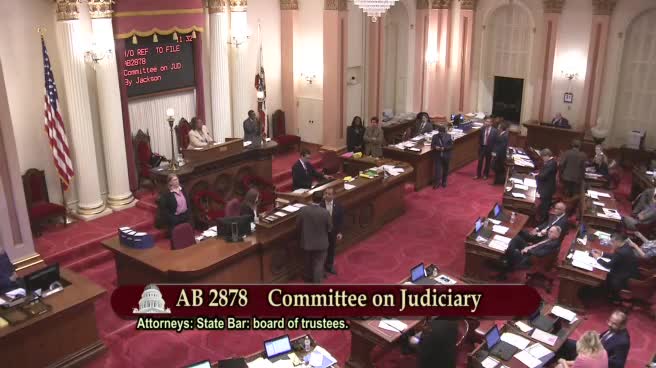 2MIN
Senate Floor
 1MIN
Senate Standing Committee on Appropriations
Bill Author

Bill Co-Author(s):