AB 2570: Telecommunications: universal service: reimbursement claims.
- Session Year: 2015-2016
- House: Assembly
- Latest Version Date: 2016-09-24
Under existing law, the Public Utilities Commission has regulatory authority over public utilities, including telephone corporations. The Moore Universal Telephone Service Act establishes the Universal Lifeline Telephone Service program in order to provide low-income households with access to affordable basic residential telephone service. The act requires that a lifeline telephone service subscriber be provided with one lifeline subscription, as defined by the commission, at his or her principal place of residence.
This bill would require the commission to adopt a portability freeze rule for the lifeline program by January 15, 2017, and would require the commission to consider including certain features as part of the rule.
Under existing law, the Public Utilities Commission has regulatory authority over public utilities, including telephone corporations. The Moore Universal Telephone Service Act establishes the Universal Lifeline Telephone Service program in order to provide low-income households with access to affordable basic residential telephone service. The act requires that a lifeline telephone service subscriber be provided with one lifeline subscription, as defined by the commission, at his or her principal place of residence.
This bill would prohibit the commission from reimbursing a telephone corporation for a reimbursement claim for providing lifeline service to a new subscriber who enrolls for service with the telephone corporation if the subscriber enrolled for lifeline service with another telephone corporation within the previous 60 days. require the commission to adopt a portability freeze rule for the lifeline program by January 15, 2017, and would require the commission to consider including certain features as part of the rule.
Under existing law, the Public Utilities Commission has regulatory authority over public utilities, including telephone corporations. The Moore Universal Telephone Service Act establishes the Universal Lifeline Telephone Service program in order to provide low-income households with access to affordable basic residential telephone service. The act requires that a lifeline telephone service subscriber be provided with one lifeline subscription, as defined by the commission, at his or her principal place of residence.
This bill would prohibit the commission from reimbursing a telephone corporation for a reimbursement claim for providing lifeline service to a new subscriber who enrolls for service with the telephone corporation if the subscriber enrolled for lifeline service with another telephone corporation within the previous 60 days. The bill would require the commission to reimburse a telephone corporation providing lifeline service within 90 days of the date the telephone corporation submits a reimbursement claim. If the commission does not reimburse a telephone corporation for a reimbursement claim for lifeline service within 90 days, the bill would require the commission to pay interest to the telephone corporation except under specified circumstances.
Under existing law, the Public Utilities Commission has regulatory authority over public utilities, including telephone corporations. The Moore Universal Telephone Service Act establishes the Universal Lifeline Telephone Service program in order to provide low-income households with access to affordable basic residential telephone service. The act requires that a lifeline telephone service subscriber be provided with one lifeline subscription, as defined by the commission, at his or her principal place of residence.
This bill would prohibit the commission from reimbursing a telephone corporation for a reimbursement claim for providing wireless lifeline service to a new subscriber who enrolls for service with the telephone corporation if the subscriber enrolled for wireless lifeline service with another telephone corporation within the previous 60 days. The bill would require the commission to reimburse a telephone corporation providing wireless lifeline service within 60 90 days of the date the telephone corporation submits a reimbursement claim. If the commission does not reimburse a telephone corporation for a reimbursement claim for wireless lifeline service within 60 90 days, the bill would require the commission to pay all of the costs of the telephone corporation resulting from the late reimbursement, including, but not limited to, financing fees, interest payments, and staff time. interest to the telephone corporation except under specified circumstances.
Under existing law, the Public Utilities Commission has regulatory authority over public utilities, including telephone corporations. The Moore Universal Telephone Service Act establishes the Universal Lifeline Telephone Service program in order to provide low-income households with access to affordable basic residential telephone service. The act requires the commission to annually designate a class of lifeline service necessary to meet minimum communications needs. The act requires that a lifeline telephone service subscriber be provided with one lifeline subscription, as defined by the commission, at his or her principal place of residence.
This bill would specify that minimum communication needs includes wireless communications. The bill would prohibit the commission from reimbursing a telephone corporation for a reimbursement claim for providing wireless lifeline service to a new subscriber who enrolls for service with the telephone corporation if the subscriber enrolled for wireless lifeline service with another telephone corporation within the previous 60 days. The bill would require the commission to reimburse a telephone corporation providing wireless lifeline service within 60 days of the date the telephone corporation submits a reimbursement claim. If the commission does not reimburse a telephone corporation for a reimbursement claim for wireless lifeline service within 60 days, the bill would require the commission to pay all of the costs of the telephone corporation resulting from the late reimbursement, including, but not limited to, financing fees, interest payments, and staff time.
Under existing law, the Public Utilities Commission has regulatory authority over public utilities and can establish its own procedures, subject to statutory limitations or directions and constitutional requirements of due process. The Public Utilities Act requires the commission to inspect and audit the books and records of certain public utilities, at specified intervals, for regulatory and tax purposes. Existing law requires reports of these inspections and audits and other pertinent information to be furnished to the State Board of Equalization for use in the assessment of public utilities.
This bill would delete the requirement that reports of the inspections and audits and other pertinent information be furnished to the State Board of Equalization.
The commission shall adopt a portability freeze rule for the lifeline program by January 15, 2017. The commission shall consider including all of the following in the rule:
(a)A 60-day duration of the portability freeze.
(b)A period of time when a subscriber would be able to terminate lifeline service without penalty, similar to provisions established in Section 4.13.5 of commission Decision 14-01-036 (January 16, 2014), Decision Adopting Revisions to Modernize and Expand the California Lifeline Program.
(c)A requirement that the administrator of the lifeline program provide a telephone corporation providing lifeline service with real-time information concerning whether a subscriber has enrolled with another telephone corporation during the period of the portability freeze adopted by the commission pursuant to this section and, if the subscriber enrolled during this period, the date of enrollment.
SECTION 1.Section 878.5 is added to the Public Utilities Code, to read:878.5.(a)The commission shall not reimburse a telephone corporation for a reimbursement claim for providing lifeline service to a new subscriber who enrolls for service with the telephone corporation if the subscriber enrolled in lifeline service with another telephone corporation within the previous 60 days.
(b)Nothing in this section shall preclude a subscriber from terminating wireless lifeline service within 14 days of service activation without incurring any charges, including an early termination fee, as authorized pursuant to Rulemaking 11-03-113.
(a)The commission shall not reimburse a telephone corporation for a reimbursement claim for providing lifeline service to a new subscriber who enrolls for service with the telephone corporation if the subscriber enrolled in lifeline service with another telephone corporation within the previous 60 days.
(b)Nothing in this section shall preclude a subscriber from terminating wireless lifeline service within 14 days of service activation without incurring any charges, including an early termination fee, as authorized pursuant to Rulemaking 11-03-113.
SEC. 2.Section 879 of the Public Utilities Code is amended to read:879.(a)The commission shall, at least annually, initiate a proceeding to set rates for lifeline telephone service. All telephone corporations providing lifeline telephone service shall annually file, on a date set by the commission, proposed lifeline telephone service rates and a statement of projected revenue needs to meet the funding requirements to provide lifeline telephone service to qualified subscribers, together with proposed funding methods to provide the necessary funding. These funding methods shall include identification of those services whose rates shall be adjusted to provide the necessary funding.
(b)The commission shall commence a proceeding within 30 days after the date set for the filings required in subdivision (a), giving interested parties an opportunity to comment on the proposed rates and funding requirements and the proposed funding methods. The commission may change the rates, funding requirements, and funding methods proposed by the telephone corporations in any manner necessary, including reasonably spreading the funding among the services offered by the telephone corporations, to meet the public interest. Within 60 days of the annual filing, the commission shall issue an order setting lifeline telephone service rates and funding methods for each telephone corporation making a filing as required in subdivision (a). The commission may establish a lifeline service pool composed of the rate adjustments and surcharges imposed by the commission pursuant to this section for the purpose of funding lifeline telephone service.
(c)Any order issued by the commission pursuant to this section shall require telephone corporations providing lifeline telephone service to apply the funding requirement in the form of a surcharge to service rates which may be separately identified on the bills of customers using those services. The commission shall not allow any surcharge under this section on the rates charged by those telephone corporations for lifeline telephone service.
(d)The commission shall permit telephone corporations operating between service areas to adjust the rates of any service which may be affected by any surcharge imposed by this section.
(e)The commission shall reimburse a telephone corporation providing lifeline service within 90 days of the date the telephone corporation submits a reimbursement claim. If the commission does not reimburse a telephone corporation for a reimbursement claim for lifeline service within 90 days, the commission shall pay interest to the telephone corporation except under the circumstances described in Section 9.9.2 of General Order 153.
(a)The commission shall not reimburse a telephone corporation for a reimbursement claim for providing wireless lifeline service to a new subscriber who enrolls for service with the telephone corporation if the subscriber enrolled in wireless lifeline service with another telephone corporation within the previous 60 days. Nothing
(b)Nothing in this section shall preclude a subscriber from terminating wireless lifeline service within 14 days of service activation without incurring any charges, including an early termination fee, as authorized pursuant to Rulemaking 11-03-113.
SEC. 2.Section 879 of the Public Utilities Code is amended to read:879.(a)The commission shall, at least annually, initiate a proceeding to set rates for lifeline telephone service. All telephone corporations providing lifeline telephone service shall annually file, on a date set by the commission, proposed lifeline telephone service rates and a statement of projected revenue needs to meet the funding requirements to provide lifeline telephone service to qualified subscribers, together with proposed funding methods to provide the necessary funding. These funding methods shall include identification of those services whose rates shall be adjusted to provide the necessary funding.
(b)The commission shall commence a proceeding within 30 days after the date set for the filings required in subdivision (a), giving interested parties an opportunity to comment on the proposed rates and funding requirements and the proposed funding methods. The commission may change the rates, funding requirements, and funding methods proposed by the telephone corporations in any manner necessary, including reasonably spreading the funding among the services offered by the telephone corporations, to meet the public interest. Within 60 days of the annual filing, the commission shall issue an order setting lifeline telephone service rates and funding methods for each telephone corporation making a filing as required in subdivision (a). The commission may establish a lifeline service pool composed of the rate adjustments and surcharges imposed by the commission pursuant to this section for the purpose of funding lifeline telephone service.
(c)Any order issued by the commission pursuant to this section shall require telephone corporations providing lifeline telephone service to apply the funding requirement in the form of a surcharge to service rates which may be separately identified on the bills of customers using those services. The commission shall not allow any surcharge under this section on the rates charged by those telephone corporations for lifeline telephone service.
(d)The commission shall permit telephone corporations operating between service areas to adjust the rates of any service which may be affected by any surcharge imposed by this section.
(e)The commission shall reimburse a telephone corporation providing wireless lifeline service within 60 90 days of the date the telephone corporation submits a reimbursement claim. If the commission does not reimburse a telephone corporation for a reimbursement claim for wireless lifeline service within 60 90 days, the commission shall pay all of the costs of the telephone corporation resulting from the late reimbursement, including, but not limited to, financing fees, interest payments, and staff time. interest to the telephone corporation except under the circumstances described in Section 9.9.2 of General Order 153.
(a)The commission shall annually do all of the following:
(1)Designate a class of lifeline service necessary to meet minimum communications needs, including wireless communications.
(2)Set the rates and charges for that service.
(3)Develop eligibility criteria for that service.
(4)Assess the degree of achievement of universal service, including telephone penetration rates by income, ethnicity, and geography.
(b)Minimum communications needs includes, but is not limited to, the ability to originate and receive calls and the ability to access electronic information services.
SEC. 2.SECTION 1.Section 878.5 is added to the Public Utilities Code, to read:878.5.The commission shall not reimburse a telephone corporation for a reimbursement claim for providing wireless lifeline service to a new subscriber who enrolls for service with the telephone corporation if the subscriber enrolled in wireless lifeline service with another telephone corporation within the previous 60 days. Nothing in this section shall preclude a subscriber from terminating wireless lifeline service within 14 days of service activation without incurring any charges, including an early termination fee, as authorized pursuant to Rulemaking 11-03-113.
SEC. 3.SEC. 2.Section 879 of the Public Utilities Code is amended to read:879.(a)The commission shall, at least annually, initiate a proceeding to set rates for lifeline telephone service. All telephone corporations providing lifeline telephone service shall annually file, on a date set by the commission, proposed lifeline telephone service rates and a statement of projected revenue needs to meet the funding requirements to provide lifeline telephone service to qualified subscribers, together with proposed funding methods to provide the necessary funding. These funding methods shall include identification of those services whose rates shall be adjusted to provide the necessary funding.
(b)The commission shall commence a proceeding within 30 days after the date set for the filings required in subdivision (a), giving interested parties an opportunity to comment on the proposed rates and funding requirements and the proposed funding methods. The commission may change the rates, funding requirements, and funding methods proposed by the telephone corporations in any manner necessary, including reasonably spreading the funding among the services offered by the telephone corporations, to meet the public interest. Within 60 days of the annual filing, the commission shall issue an order setting lifeline telephone service rates and funding methods for each telephone corporation making a filing as required in subdivision (a). The commission may establish a lifeline service pool composed of the rate adjustments and surcharges imposed by the commission pursuant to this section for the purpose of funding lifeline telephone service.
(c)Any order issued by the commission pursuant to this section shall require telephone corporations providing lifeline telephone service to apply the funding requirement in the form of a surcharge to service rates which may be separately identified on the bills of customers using those services. The commission shall not allow any surcharge under this section on the rates charged by those telephone corporations for lifeline telephone service.
(d)The commission shall permit telephone corporations operating between service areas to adjust the rates of any service which may be affected by any surcharge imposed by this section.
(e)The commission shall reimburse a telephone corporation providing wireless lifeline service within 60 days of the date the telephone corporation submits a reimbursement claim. If the commission does not reimburse a telephone corporation for a reimbursement claim for wireless lifeline service within 60 days, the commission shall pay all of the costs of the telephone corporation resulting from the late reimbursement, including, but not limited to, financing fees, interest payments, and staff time.
(a)The commission shall annually do all of the following:
(1)Designate a class of lifeline service necessary to meet minimum communications needs. needs, including wireless communications.
(2)Set the rates and charges for that service.
(3)Develop eligibility criteria for that service.
(4)Assess the degree of achievement of universal service, including telephone penetration rates by income, ethnicity, and geography.
(b)Minimum communications needs includes, but is not limited to, the ability to originate and receive calls and the ability to access electronic information services.
SEC. 2.Section 878.5 is added to the Public Utilities Code, to read:878.5.The commission shall not reimburse a telephone corporation for a reimbursement claim for providing wireless lifeline service to a new subscriber who enrolls for service with the telephone corporation if the subscriber enrolled in wireless lifeline service with another telephone corporation within the previous 60 days.
SEC. 3.Section 879 of the Public Utilities Code is amended to read:879.(a)The commission shall, at least annually, initiate a proceeding to set rates for lifeline telephone service. All telephone corporations providing lifeline telephone service shall annually file, on a date set by the commission, proposed lifeline telephone service rates and a statement of projected revenue needs to meet the funding requirements to provide lifeline telephone service to qualified subscribers, together with proposed funding methods to provide the necessary funding. These funding methods shall include identification of those services whose rates shall be adjusted to provide the necessary funding.
(b)The commission shall commence a proceeding within 30 days after the date set for the filings required in subdivision (a), giving interested parties an opportunity to comment on the proposed rates and funding requirements and the proposed funding methods. The commission may change the rates, funding requirements, and funding methods proposed by the telephone corporations in any manner necessary, including reasonably spreading the funding among the services offered by the telephone corporations, to meet the public interest. Within 60 days of the annual filing, the commission shall issue an order setting lifeline telephone service rates and funding methods for each telephone corporation making a filing as required in subdivision (a). The commission may establish a lifeline service pool composed of the rate adjustments and surcharges imposed by the commission pursuant to this section for the purpose of funding lifeline telephone service.
(c)Any order issued by the commission pursuant to this section shall require telephone corporations providing lifeline telephone service to apply the funding requirement in the form of a surcharge to service rates which may be separately identified on the bills of customers using those services. The commission shall not allow any surcharge under this section on the rates charged by those telephone corporations for lifeline telephone service.
(d)The commission shall permit telephone corporations operating between service areas to adjust the rates of any service which may be affected by any surcharge imposed by this section.
(e)The commission shall reimburse a telephone corporation providing wireless lifeline service within 60 days of the date the telephone corporation submits a reimbursement claim. If the commission does not reimburse a telephone corporation for a reimbursement claim for wireless lifeline service within 60 days, the commission shall pay all of the costs of the telephone corporation resulting from the late reimbursement, including, but not limited to, financing fees, interest payments, and staff time.
SECTION 1.Section 314.5 of the Public Utilities Code is amended to read:314.5.The commission shall inspect and audit the books and records for regulatory and tax purposes (a)at least once in every three years in the case of every electrical, gas, heat, telegraph, telephone, and water corporation serving over 1,000 customers, and (b)at least once in every five years in the case of every electrical, gas, heat, telegraph, telephone, and water corporation serving 1,000 or fewer customers. An audit conducted in connection with a rate proceeding shall be deemed to fulfill the requirements of this section.
The commission shall inspect and audit the books and records for regulatory and tax purposes (a)at least once in every three years in the case of every electrical, gas, heat, telegraph, telephone, and water corporation serving over 1,000 customers, and (b)at least once in every five years in the case of every electrical, gas, heat, telegraph, telephone, and water corporation serving 1,000 or fewer customers. An audit conducted in connection with a rate proceeding shall be deemed to fulfill the requirements of this section. Reports of such inspections and audits and other pertinent information shall be furnished to the State Board of Equalization for use in the assessment of public utilities.
|
Date
|
Status
|
|---|---|
| Aug 19, 2016 | Read third time and amended. Ordered to second reading. |
| Aug 15, 2016 | Read second time and amended. Ordered to third reading. |
| Aug 17, 2016 | Motion to reconsider made by Senator Hertzberg. |
| Aug 17, 2016 | Read third time. Passed. Ordered to the Assembly. |
| Aug 17, 2016 | Read third time. Passed. Ordered to the Assembly. (Ayes 39. Noes 0. Page 5048.). |
| Aug 17, 2016 | Read third time. Passed. Ordered to the Assembly. (Ayes 39. Noes 0.). |
| Aug 17, 2016 | Reconsideration granted. |
| Aug 17, 2016 | Reconsideration granted. (Ayes 39. Noes 0. Page 5050.) |
| Aug 17, 2016 | Reconsideration granted. (Ayes 39. Noes 0.) |
| Aug 11, 2016 | From committee: Amend, and do pass as amended. (Ayes 6. Noes 0.) (August 11). |
| Aug 22, 2016 | Read second time. Ordered to third reading. |
| Aug 23, 2016 | Read third time. Passed. Ordered to the Assembly. |
| Aug 23, 2016 | Read third time. Passed. Ordered to the Assembly. (Ayes 39. Noes 0. Page 5273.). |
| Aug 24, 2016 | In Assembly. Concurrence in Senate amendments pending. May be considered on or after August 26 pursuant to Assembly Rule 77. |
| Aug 25, 2016 | Re-referred to Com. on U. & C. pursuant to Assembly Rule 77.2. |
| Aug 30, 2016 | From committee: That the Senate amendments be concurred in. (Ayes 14. Noes 0.) (August 30). |
| Aug 31, 2016 | Senate amendments concurred in. To Engrossing and Enrolling. |
| Sep 12, 2016 | Enrolled and presented to the Governor at 11:30 a.m. |
| May 5, 2016 | Read third time. Passed. Ordered to the Senate. (Ayes 79. Noes 0. Page 4686.) |
| Feb 21, 2016 | From printer. May be heard in committee March 22. |
| Feb 22, 2016 | Read first time. |
| Mar 8, 2016 | Referred to Com. on U. & C. |
| Apr 14, 2016 | From committee: Do pass and re-refer to Com. on APPR. with recommendation: To Consent Calendar. (Ayes 15. Noes 0.) (April 13). Re-referred to Com. on APPR. |
| Apr 27, 2016 | From committee: Do pass. To Consent Calendar. (Ayes 19. Noes 0.) (April 27). |
| Apr 28, 2016 | Read second time. Ordered to Consent Calendar. |
| May 5, 2016 | In Senate. Read first time. To Com. on RLS. for assignment. |
| May 5, 2016 | Read third time. Passed. Ordered to the Senate. |
| Feb 19, 2016 | Introduced. To print. |
| May 12, 2016 | Referred to Com. on E., U., & C. |
| Jun 1, 2016 | From committee chair, with author's amendments: Amend, and re-refer to committee. Read second time, amended, and re-referred to Com. on E., U., & C. |
| Jun 8, 2016 | In committee: Hearing postponed by committee. |
| Jun 14, 2016 | From committee chair, with author's amendments: Amend, and re-refer to committee. Read second time, amended, and re-referred to Com. on E., U., & C. |
| Jun 16, 2016 | In committee: Set, first hearing. Hearing canceled at the request of author. |
| Jun 29, 2016 | From committee: Amend, and do pass as amended and re-refer to Com. on APPR. (Ayes 9. Noes 0.) (June 27). |
| Jun 30, 2016 | Read second time and amended. Re-referred to Com. on APPR. |
| Aug 1, 2016 | In committee: Referred to APPR. suspense file. |
|
Date
|
Description
|
Location
|
Votes
|
|
|---|---|---|---|---|
| Aug 31, 2016 | AB 2570 QUIRK Concurrence in Senate Amendments | Assembly Floor |
Passed |
|
| Aug 30, 2016 | With recommendation: That Senate amendments be concurred in. | Assembly Standing Committee on Utilities and Commerce |
Passed |
|
| Aug 23, 2016 | Assembly 3rd Reading AB2570 Quirk By Hertzberg | Senate Floor |
Passed |
|
| Aug 17, 2016 | Assembly 3rd Reading AB2570 Quirk By Hertzberg Reconsider | Senate Floor |
Passed |
|
| Aug 17, 2016 | Assembly 3rd Reading AB2570 Quirk By Hertzberg | Senate Floor |
Passed |
|
| Aug 11, 2016 | Do pass as amended | Senate Standing Committee on Appropriations |
Passed |
|
| Aug 1, 2016 | Placed on suspense file | Senate Standing Committee on Appropriations |
Passed |
|
| Jun 27, 2016 | Do pass as amended, but first amend, and re-refer to the Committee on [Appropriations] | Senate Standing Committee on Energy, Utilities and Communications |
Passed |
|
| May 5, 2016 | AB 2570 QUIRK Consent Calendar Second Day Regular Session | Assembly Floor |
Passed |
|
| Apr 27, 2016 | Do pass. To Consent Calendar. | Assembly Standing Committee on Appropriations |
Passed |
|
| Apr 13, 2016 | Do pass and be re-referred to the Committee on [Appropriations] with recommendation: To Consent Calendar | Assembly Standing Committee on Utilities and Commerce |
Passed |
This list shows positions taken on this bill by organizations on the date displayed, which is linked to the original source.
Positions by individuals are not included.
|
Organization
|
Position
|
Date
|
|---|---|---|
| American Chemistry Council | * Against | Jun 27, 2018 |
| ARGUMENTS IN | ** Support | Aug 17, 2016 |
| Brightline Defense Project | ** Support | Aug 23, 2016 |
| Budget PrePay Inc. | ** Support | Aug 23, 2016 |
| California Association of Competitive Telecommunications Companies | ** Support | Aug 17, 2016 |
| California Cable and Telecommunications Association | ** Support | Aug 17, 2016 |
| California Chamber Of Commerce | * Against | Jun 27, 2018 |
| California Safe Schools | * Against | Jun 27, 2018 |
| enTouch Wireless | ** Support | Aug 23, 2016 |
| Household and Commercial Products Association | * Against | Jun 27, 2018 |
| OPPOSITION : | ** Support | Aug 17, 2016 |
| Pacoima Beautiful | ** Support | Aug 23, 2016 |
| Reckitt Benckiser Pharmaceuticals, Inc. | * Against | Jun 27, 2018 |
| Salvadoran American Leadership and Educational Fund | ** Support | Aug 23, 2016 |
| State Board of Equalization | ** Support | Aug 23, 2016 |
| The Utility Reform Network | ** Support | Aug 17, 2016 |
| The Utility Reform Network | ** Against | Aug 17, 2016 |
| TruConnect Communications, Inc. | ** Support | Aug 23, 2016 |
CONCURRENCE IN SENATE AMENDMENTS
CSA2 Bill Id:AB 2570
Author:(Quirk)
As Amended Ver:August 19, 2016
Majority vote
ASSEMBLY: |
| (May 5, 2016) | SENATE: | 39-0 | (August 23, 2016) |
(vote not relevant)
COMMITTEE VOTE: | 14-0 | (August 30, 2016) | RECOMMENDATION: | concur |
(U. & C.)
Original Committee Reference: U. & C.
SUMMARY: Makes changes to the state's LifeLine universal telephone service program specific to reimbursement procedures for wireless service provided to eligible low-income subscribers.
The Senate amendments delete the previous content of the bill and replace it with the following:
- Require the California Public Utilities Commission (CPUC) to adopt a "portability freeze" rule for the state's LifeLine universal telephone service program by January 15, 2017.
- Require the CPUC to consider three criteria when adopting the port freeze rule:
- A 60-day duration of the portability freeze.
- A period of time in which participants would be able to cancel their LifeLine service without penalty.
- A requirement that the administrator of the LifeLine program service provider with information concerning the subscriber's previous enrollment date and whether or not the subscriber has enrolled with another telephone corporation during the period of the portability freeze established by the CPUC.
EXISTING LAW:
- Establishes the Moore Universal Telephone Service Act to achieve universal service by making basic telephone service affordable to low-income households through the creation of a LifeLine class of service. Requires the CPUC and telephone corporations to employ every means to ensure that every qualified household is informed and afforded the opportunity to subscribe to the service. (Public Utilities Code Section 871)
- Requires the CPUC to annually designate a class of lifeline service necessary to meet minimum communication needs, set the rates and charges for that service, develop eligibility criteria for that service, and assess the degree universal service has been achieved, including telephone penetration rates by income, ethnicity, and geography. (Public Utilities Code Section 873)
- Requires a lifeline telephone service subscriber to be provided with one lifeline subscription, as defined by the CPUC, at his or her principal place of residence, and no member of that subscriber's family or household who maintains residence at that place is eligible for lifeline telephone service. (Public Utilities Code Section 878)
- Requires the CPUC to initiate proceedings to set rates for lifeline telephone service and requires telephone corporations providing LifeLine telephone service to apply a surcharge to service rates in order to cover program costs. (Public Utilities Code Section 879)
FISCAL EFFECT: According to the Senate Appropriations Committee, this bill will have unknown minor costs to the CPUC Utilities Reimbursement Account.
COMMENTS:
- Background: The Moore Universal Service Telephone Act of 1987 made it a state priority to offer affordable telephone service to the greatest number of Californians. The subsequent California LifeLine Program provides basic telephone service to low-income households at a discounted price. The CPUC is required to set rates for LifeLine services and regulate various other aspects of the program within specified limitations. For example, LifeLine rates may not exceed more than 50% of the rate for basic telephone service. The maximum state subsidy for 2016 is about $12.65 per month. The federal LifeLine Program provides a monthly discount of about $9.25 per month. The CPUC also provides funding to cover the administrative costs of service providers, a one-time connection subsidy for new enrollees and enrollees that switch plans, and subsidies for other telephone taxes and surcharges for LifeLine enrollees. Program funds are collected from a surcharge on telephone bills for non-LifeLine customers. The CPUC adjusts the surcharge rate based on projected LifeLine program costs. A Federal Communications Commission decision adopted on March 31, 2016, noted the need to further incentivize investments by providers for high-quality LifeLine service offerings by requiring a 60-day portability freeze for voice services with exceptions to protect consumers.
- Consumer Choice vs. Portability Freeze: This bill requires the CPUC to adopt a portability freeze rule to limit the ability of an eligible enrollee to transfer service and receive a subsidy if they have previously enrolled in the LifeLine program. Senate amendments appropriately give the CPUC discretion to balance the needs of consumers and providers. This bill requires the CPUC to consider the inclusion of specific elements as part of the portability freeze rule, including a 60 day time-period for the freeze, a termination period without penalty, and a requirement that the administrator provide real-time information to verify subscriber eligibility. Further, this bill would provide an opportunity for stakeholder input in creating the rule within the CPUC rulemaking process.
Analysis Prepared by: Darion Johnston / U. & C. / (916) 319-2083 FN: 0004993
CONCURRENCE IN SENATE AMENDMENTS
CSA1 Bill Id:AB 2570
Author:(Quirk)
As Amended Ver:August 19, 2016
Majority vote
ASSEMBLY: | 79-0 | (May 5, 2016) | SENATE: | 39-0 | (August 23, 2016) |
Original Committee Reference: U. & C.
SUMMARY: Makes changes to the state's LifeLine universal telephone service program specific to reimbursement procedures for wireless service provided to eligible low-income subscribers.
The Senate amendments delete the previous content of the bill and replace it with the following:
- Requires the California Public Utilities Commission (CPUC) to adopt a "portability freeze" rule for the state's LifeLine universal telephone service program by January 15, 2017.
- Requires the CPUC to consider three criteria when adopting the port freeze rule:
- A 60-day duration of the portability freeze.
- A period of time in which participants would be able to cancel their LifeLine service without penalty.
- A requirement that the administrator of the LifeLine program service provider with information concerning the subscriber's previous enrollment date and whether or not the subscriber has enrolled with another telephone corporation during the period of the portability freeze established by the CPUC.
EXISTING LAW:
- Establishes the Moore Universal Telephone Service Act to achieve universal service by making basic telephone service affordable to low-income households through the creation of a LifeLine class of service. Requires the CPUC and telephone corporations to employ every means to ensure that every qualified household is informed and afforded the opportunity to subscribe to the service. (Public Utilities Code Section 871)
- Requires the CPUC to annually designate a class of lifeline service necessary to meet minimum communication needs, set the rates and charges for that service, develop eligibility criteria for that service, and assess the degree universal service has been achieved, including telephone penetration rates by income, ethnicity, and geography. (Public Utilities Code Section 873)
- Requires a lifeline telephone service subscriber to be provided with one lifeline subscription, as defined by the CPUC, at his or her principal place of residence, and no member of that subscriber's family or household who maintains residence at that place is eligible for lifeline telephone service. (Public Utilities Code Section 878)
- Requires the CPUC to initiate proceedings to set rates for lifeline telephone service and requires telephone corporations providing LifeLine telephone service to apply a surcharge to service rates in order to cover program costs. (Public Utilities Code Section 879)
FISCAL EFFECT: According to the Senate Appropriations Committee, this bill will have unknown minor costs to the CPUC Utilities Reimbursement Account.
COMMENTS:
- Background: The Moore Universal Service Telephone Act of 1987 made it a state priority to offer affordable telephone service to the greatest number of Californians. The subsequent California LifeLine Program provides basic telephone service to low-income households at a discounted price. The CPUC is required to set rates for LifeLine services and regulate various other aspects of the program within specified limitations. For example, LifeLine rates may not exceed more than 50% of the rate for basic telephone service. The maximum state subsidy for 2016 is about $12.65 per month. The federal LifeLine Program provides a monthly discount of about $9.25 per month. The CPUC also provides funding to cover the administrative costs of service providers, a one-time connection subsidy for new enrollees and enrollees that switch plans, and subsidies for other telephone taxes and surcharges for LifeLine enrollees. Program funds are collected from a surcharge on telephone bills for non-LifeLine customers. The CPUC adjusts the surcharge rate based on projected LifeLine program costs. A Federal Communications Commission decision adopted on March 31, 2016 noted the need to further incentivize investments by providers for high-quality LifeLine service offerings by requiring a 60-day portability freeze for voice services with exceptions to protect consumers.
- Consumer Choice vs. Portability Freeze: This bill requires the CPUC to adopt a portability freeze rule to limit the ability of an eligible enrollee to transfer service and receive a subsidy if they have previously enrolled in the LifeLine program. Senate amendments appropriately give the CPUC discretion to balance the needs of consumers and providers. This bill requires the CPUC to consider the inclusion of specific elements as part of the portability freeze rule, including a 60 day time-period for the freeze, a termination period without penalty, and a requirement that the administrator provide real-time information to verify subscriber eligibility. Further, this bill would provide an opportunity for stakeholder input in creating the rule within the CPUC rulemaking process.
Analysis Prepared by: Darion Johnston / U. & C. / (916) 319-2083 FN: 0004887
Office of Senate Floor Analyses (916) 651-1520 Fax: (916) 327-4478 | AB |
THIRD READING
Bill No: AB 2570
:
SENATE ENERGY, U. & C. COMMITTEE: 9-0, 6/27/16
AYES: Hueso, Morrell, Cannella, Gaines, Hertzberg, Hill, Lara, Leyva, McGuire
NO VOTE RECORDED: Pavley, Wolk
SENATE APPROPRIATIONS COMMITTEE: 6-0, 8/11/16
AYES: Lara, Bates, Beall, Hill, McGuire, Mendoza
NO VOTE RECORDED: Nielsen
ASSEMBLY FLOOR: 79-0, 5/5/16 (Consent) - See last page for vote
DIGEST: This bill requires the California Public Utilities Commission (CPUC) to adopt a portability freeze rule for the LifeLine program by January 15, 2017, that limits the ability of subscribers to change services, and would require the CPUC to consider including certain features as part of the rule.
Senate Floor Amendments of 8/19/16 direct the CPUC to institute a port freeze rule for the LifeLine program that would limit how often and when a subscriber could change telephone providers.
Existing law:
- Establishes the Moore Universal Telephone Service Act to achieve universal service by making basic telephone service affordable to low-income households through the creation of a LifeLine class of service. Requires the CPUC and telephone corporations to employ every means to ensure that every qualified household is informed and afforded the opportunity to subscribe to the service. (Public Utilities Code §871)
- States it is the intent of the Legislature that the CPUC initiate a proceeding investigating the feasibility of redefining universal telephone service by incorporating two-way voice, and data service as components of basic service. (Public Utilities Code §871.7)
- Defines “household” as a residential dwelling that is the principal place of residence of the lifeline telephone service subscriber, and excludes any industrial, commercial, or other nonresidential building. (Public Utilities Code §872)
- Requires the CPUC to annually designate a class of lifeline service necessary to meet minimum communication needs, set the rates and charges for that service, develop eligibility criteria for that service, assess the degree of achieving universal service, including telephone penetration rates by income, ethnicity, and geography. (Public Utilities Code §873)
- Requires a lifeline telephone service subscriber to be provided with one lifeline subscription, as defined by the CPUC, at his or her principal place of residence, and no member of that subscriber’s family or household who maintains residence at that place is eligible for lifeline telephone service. (Public Utilities Code §878)
- Requires the CPUC to, at least annually, initiate a proceeding to set rates for lifeline telephone service and requires telephone corporations providing lifeline telephone service to apply the funding requirement in the form of a surcharge to service rates which may be separately identified on the bills of customers. (Public Utilities Code §879)
This bill:
- Requires the CPUC to adopt a portability freeze rule for the LifeLine program by January 15, 2017.
- Requires the CPUC to consider including all the following in the portability freeze rule:
- A 60-day duration of the portability freeze;
- A period of time when a subscriber would be able to terminate LifeLine service without penalty, similar to provisions in CPUC Decision 14-01-036; and
- A requirement that the administrator of the LifeLine program provide participating telephone corporation with real-time information concerning whether a subscriber has enrolled with another provider during the period of the portability freeze.
Background
About the LifeLine Program. The Moore Universal Service Telephone Act of 1987 establishes the goal of offering basic telephone service at affordable rates to the greatest number of California residents. To help achieve this goal, state law directs CPUC to develop the California LifeLine Program to provide basic telephone service at a discounted cost to low-income households. The Act requires the CPUC to annually designate a class of LifeLine service necessary to meet minimum residential communications needs, develop eligibility criteria, currently 150 percent of the federal poverty level (about $36,000 annually for a family of four), and set rates for the LifeLine services, which are required to be not more than 50 percent of the rate for basic telephone service. The maximum state subsidy in the current year is about $12.65 per month. The federal government also administers the federal LifeLine Program that provides a monthly discount of about $9.25 per month. As a result, an eligible participant has a combined nearly $22 per month subsidy to cover the costs of telephone service. Additionally, the CPUC provides (1) a per enrollee monthly payment to cover carriers’ administrative costs, (2) a one-time connection subsidy for new enrollees or enrollees that switch plans, and (3) a subsidy to cover other telephone taxes and surcharges for LifeLine enrollees. The revenues to fund the program are collected from a surcharge on telephone bills for non-LifeLine customers. The CPUC adjusts the level of the surcharge based on its projections of the amount of revenue needed to cover the costs of the program.
Wireless telephone LifeLine. Historically, the LifeLine Program in California has only included traditional landline service. AB 2213 (Fuentes, Chapter 381, Statutes of 2010) made changes to state law that gave CPUC the authority to allow LifeLine customers to choose between wireline, wireless service or other technologies. In January 2014, the CPUC officially expanded the Program to allow wireless carriers to offer LifeLine service. Participating wireless plans are eligible for the same monthly subsidy amount available for traditional landline plans. However, in the case of wireless telephone service, the amount of the subsidy varies based on the number of voice and data minutes included in the telephone service plan. Wireless telephone carriers participating in the LifeLine Program must offer plans that meet specified criteria and conditions established by the CPUC related to quality of service, voice and text minutes, consumer protection requirements and others. There are roughly 34 LifeLine wireless plans available and 21 of the available plans are offered at no cost to the customer.
Increased popularity. The expansion of the LifeLine Program into wireless telephone service has increased the demand for the Program. Program enrollment had been steadily declining prior to adding wireless service in 2014. However, program enrollment doubled between the years of 2013-14 to 2014-15 as a result of the new wireless telephone service offering. With growth in enrollees, LifeLine Program costs also have increased substantially over the same time period. The surcharge on telephone service to fund the program has increased from to 5.5 percent from 1.15 percent.
Verifying subscribers. The CPUC’s third party administrator of the LifeLine Program provides a real-time verification system based on matching a person’s name and address. However, if there is no match based on name or address, then the process to verify eligibility becomes more difficult. These more difficult eligibility verifications may require up to seven days, though often only a couple days, to further verify an applicant’s eligibility.
Consumer choice vs. port freeze. This bill requires the CPUC adopt a rule to limit the ability of an eligible enrollee to transfer service and receive a subsidy if they have previously enrolled in the program, known as a portability freeze or “port freeze” rule. Considering the implications of a port freeze rule on consumer choice, it is preferable that the CPUC is provided the discretion to adopt a rule that balances the needs of consumers and providers. This bill appropriately requires the CPUC to consider including specific elements as part of the port freeze rule which this bill previously proposed to include in statute: a 60 day port freeze, termination period without penalty and requiring an administrator to provide real-time information to verify subscriber eligibility. As such, the CPUC can incorporate the concerns and perspectives of interested stakeholders prior to adopting a final rule and balance the needs of consumers, providers and ensuring the program’s efficiency and effectiveness. This bill is consistent with recent Federal Communications Commission (FCC) decision adopted on March 31 of this year regarding federal LifeLine program. In its decision, the FCC noted the need to further incentivize investments by providers for high-quality LifeLine service offerings by requiring a 60-day port freeze for voice services with exceptions to protect consumers, such as circumstances when a provider is found to be in violation of the FCC’s rules that impact the subscriber.
Prior Legislation
AB 2213 (Fuentes, Chapter 381, Statutes of 2010) deleted references to LifeLine service being a residential basic telephone service, required that an eligible low-income subscriber be provided with one lifeline subscription per household, and made findings that technologies beyond traditional landline telephones could be used to offer low-income citizens access to affordable, reliable, and high quality basic telephone service.
AB 1407 (Bradford, 2014) would have phased out the existing lifeline program for basic landline service and created a new lifeline discount of $11.85 per month for voice communication services from a telephone corporation or eligible wireless and Voice over Internet Protocol (VoIP) providers. The bill would have prohibited the CPUC from requiring state LifeLine providers to offer more than is required under the federal LifeLine Program. The bill died in the Senate Committee on Appropriations.
FISCAL EFFECT: Appropriation: Fiscal Com.: Local:
According to the Senate Appropriations Committee, there are unknown, minor costs (Utilities Reimbursement Account) to the CPUC.
Brightline Defense Project
Budget PrePay Inc.
enTouch Wireless
Pacoima Beautiful
Salvadoran American Leadership and Educational Fund
State Board of Equalization
Total Call Mobile
TruConnect Communications, Inc.
OPPOSITION: (Verified 8/19/16)
None received
ARGUMENTS IN SUPPORT: According to the author, “The CPUC initially refunded wireless lifeline providers every 45 days for the upfront costs to companies in providing a phone and the communication services. However, in early 2015, the CPUC changed its reimbursement period to 120 days which has resulted in service providers leaving the marketplace, going into debt to cover capital and operations costs, and ultimately hurting low-income consumers by reducing service options. Additionally, the enrollment process has experienced problems with customers enrolling in multiple service plans within a short period of time. This is problematic for service providers because the reimbursement subsidies from the state and federal government are eligible one time to a consumer. Providers are finding that after waiting nearly three months for the CPUC’s reimbursement, a portion of their subscribers were in fact ineligible for the service all along.”
ASSEMBLY FLOOR: 79-0, 5/5/16
AYES: Achadjian, Alejo, Travis Allen, Arambula, Atkins, Baker, Bigelow, Bloom, Bonilla, Bonta, Brough, Brown, Burke, Calderon, Campos, Chang, Chau, Chávez, Chiu, Chu, Cooley, Cooper, Dababneh, Dahle, Daly, Dodd, Eggman, Frazier, Gallagher, Cristina Garcia, Eduardo Garcia, Gatto, Gipson, Gomez, Gonzalez, Gordon, Gray, Grove, Hadley, Harper, Roger Hernández, Holden, Irwin, Jones, Jones-Sawyer, Kim, Lackey, Levine, Linder, Lopez, Low, Maienschein, Mathis, Mayes, McCarty, Medina, Melendez, Mullin, Nazarian, Obernolte, O'Donnell, Olsen, Patterson, Quirk, Ridley-Thomas, Rodriguez, Salas, Santiago, Steinorth, Mark Stone, Thurmond, Ting, Wagner, Waldron, Weber, Wilk, Williams, Wood, Rendon
NO VOTE RECORDED: Beth Gaines
8/22/16 23:05:47
**** END ****
Office of Senate Floor Analyses (916) 651-1520 Fax: (916) 327-4478 | AB |
THIRD READING
Bill No: AB 2570
:
SENATE ENERGY, U. & C. COMMITTEE: 9-0, 6/27/16
AYES: Hueso, Morrell, Cannella, Gaines, Hertzberg, Hill, Lara, Leyva, McGuire
NO VOTE RECORDED: Pavley, Wolk
SENATE APPROPRIATIONS COMMITTEE: 6-0, 8/11/16
AYES: Lara, Bates, Beall, Hill, McGuire, Mendoza
NO VOTE RECORDED: Nielsen
ASSEMBLY FLOOR: 79-0, 5/5/16 (Consent) - See last page for vote
DIGEST: This bill makes changes to the state’s LifeLine universal telephone service program specific to procedures for reimbursements related to wireless telephone service provided to eligible low-income households.
Existing law:
- Establishes the Moore Universal Telephone Service Act to achieve universal service by making basic telephone service affordable to low-income households through the creation of a LifeLine class of service. Requires the California Public Utilities Commission (CPUC) and telephone corporations to employ every means to ensure that every qualified household is informed and afforded the opportunity to subscribe to the service. (Public Utilities Code §871)
- States it is the intent of the Legislature that the CPUC initiate a proceeding investigating the feasibility of redefining universal telephone service by incorporating two-way voice, and data service as components of basic service. (Public Utilities Code §871.7)
- Defines “household” as a residential dwelling that is the principal place of residence of the lifeline telephone service subscriber, and excludes any industrial, commercial, or other nonresidential building. (Public Utilities Code §872)
- Requires the CPUC to annually designate a class of lifeline service necessary to meet minimum communication needs, set the rates and charges for that service, develop eligibility criteria for that service, assess the degree of achieving universal service, including telephone penetration rates by income, ethnicity, and geography. (Public Utilities Code §873)
- Requires a lifeline telephone service subscriber to be provided with one lifeline subscription, as defined by the CPUC, at his or her principal place of residence, and no member of that subscriber’s family or household who maintains residence at that place is eligible for lifeline telephone service. (Public Utilities Code §878)
- Requires the CPUC to, at least annually, initiate a proceeding to set rates for lifeline telephone service and requires telephone corporations providing lifeline telephone service to apply the funding requirement in the form of a surcharge to service rates which may be separately identified on the bills of customers. (Public Utilities Code §879)
This bill:
- Prohibits the CPUC from reimbursing a telephone corporation for providing LifeLine service to a new subscriber if the subscriber has enrolled in LifeLine service with another telephone corporation within the previous 60 days.
- Provides that a subscriber may terminate wireless LifeLine service within 14 days of service activation without incurring any charges, including an early termination, as authorized pursuant to Rulemaking 11-03-113.
Background
About the LifeLine Program. The Moore Universal Service Telephone Act of 1987 establishes the goal of offering basic telephone service at affordable rates to the greatest number of California residents. To help achieve this goal, state law directs CPUC to develop the California LifeLine Program to provide basic telephone service at a discounted cost to low-income households. The Act requires the CPUC to annually designate a class of LifeLine service necessary to meet minimum residential communications needs, develop eligibility criteria, currently 150 percent of the federal poverty level (about $36,000 annually for a family of four), and set rates for the LifeLine services, which are required to be not more than 50 percent of the rate for basic telephone service. The maximum state subsidy in the current year is about $12.65 per month. The federal government also administers the federal LifeLine Program that provides a monthly discount of about $9.25 per month. As a result, an eligible participant has a combined nearly $22 per month subsidy to cover the costs of telephone service. Additionally, the CPUC provides (1) a per enrollee monthly payment to cover carriers’ administrative costs, (2) a one-time connection subsidy for new enrollees or enrollees that switch plans, and (3) a subsidy to cover other telephone taxes and surcharges for LifeLine enrollees. The revenues to fund the program are collected from a surcharge on telephone bills for non-LifeLine customers. The CPUC adjusts the level of the surcharge based on its projections of the amount of revenue needed to cover the costs of the program.
Wireless telephone LifeLine. Historically, the LifeLine Program in California has only included traditional landline service. AB 2213 (Fuentes, Chapter 381, Statutes of 2010) made changes to state law that gave CPUC the authority to allow LifeLine customers to choose between wireline, wireless service or other technologies. In January 2014, the CPUC officially expanded the Program to allow wireless carriers to offer LifeLine service. Participating wireless plans are eligible for the same monthly subsidy amount available for traditional landline plans. However, in the case of wireless telephone service, the amount of the subsidy varies based on the number of voice and data minutes included in the telephone service plan. Wireless telephone carriers participating in the LifeLine Program must offer plans that meet specified criteria and conditions established by the CPUC related to quality of service, voice and text minutes, consumer protection requirements and others. There are roughly 34 LifeLine wireless plans available and 21 of the available plans are offered at no cost to the customer.
Increased popularity. The expansion of the LifeLine Program into wireless telephone service has increased the demand for the Program. Program enrollment had been steadily declining prior to adding wireless service in 2014. However, program enrollment doubled between the years of 2013-14 to 2014-15 as a result of the new wireless telephone service offering. With growth in enrollees, LifeLine Program costs also have increased substantially over the same time period. The surcharge on telephone service to fund the program has increased from to 5.5 percent from 1.15 percent.
Recent legislative budget action. Per the Senate Budget Committee analysis: As part of the May Revision, at the Legislature’s request, CPUC prepared a caseload and cost estimate package that provides revised projections of the current and budget year local assistance costs for the Universal LifeLine Program. For 2015-16, CPUC estimates LifeLine expenditures will total $483.5 million, which is an increase of $137.8 or 40 percent, compared to the 2016-17 Governor’s Budget. This projected increase in expenditures is due to increased carrier claims from wireless service providers. In addition, $53.2 million of the 2015-16 appropriation was used to pay 2014-15 carrier claims. In 2016-17, the May Revision estimates total state operations and local assistance costs of $483.1 million, which is a decrease of $142.4 million from the January proposal.
Consumer choice. This bill proposes to limit the ability of an eligible enrollee to transfer service and receive a subsidy if they have previously enrolled in the program within the previous 60 days. The CPUC’s third party administrator of the LifeLine Program provides a real-time verification system based on matching a person’s name and address. However, if there is no match based on name or address, then the process to verify eligibility becomes more difficult. These more difficult checks may require up to seven days, though often only a couple days, to further verify an applicant’s eligibility. Ultimately, an improved verification system can help reduce fraud or mistakes in enrolling someone who is not eligible. It may be that 60 days is too long a period to institute a “port freeze” on someone who may urgently need a phone and 14 days is too short to provide a subscriber the opportunity to terminate their service without a termination fee. This portion of this bill merits further attention to ensure consumers are appropriately protected.
Prior Legislation
AB 2213 (Fuentes, Chapter 381, Statutes of 2010) deleted references to LifeLine service being a residential basic telephone service, required that an eligible low-income subscriber be provided with one lifeline subscription per household, and made findings that technologies beyond traditional landline telephones could be used to offer low-income citizens access to affordable, reliable, and high quality basic telephone service.
AB 1407 (Bradford, 2014) would have phased out the existing lifeline program for basic landline service and created a new lifeline discount of $11.85 per month for voice communication services from a telephone corporation or eligible wireless and Voice over Internet Protocol (VoIP) providers. The bill would have prohibited the CPUC from requiring state LifeLine providers to offer more than is required under the federal LifeLine Program. The bill died in the Senate Committee on Appropriations.
FISCAL EFFECT: Appropriation: Fiscal Com.: Local:
According to the Senate Appropriations Committee, there are unknown, minor costs (Utilities Reimbursement Account) to the CPUC.
Brightline Defense Project
Budget PrePay Inc.
enTouch Wireless
Pacoima Beautiful
Salvadoran American Leadership and Educational Fund
State Board of Equalization
Total Call Mobile
TruConnect Communications, Inc.
OPPOSITION: (Verified 8/11/16)
The Utility Reform Network
ARGUMENTS IN SUPPORT: According to the author, “The CPUC initially refunded wireless lifeline providers every 45 days for the upfront costs to companies in providing a phone and the communication services. However, in early 2015, the CPUC changed its reimbursement period to 120 days which has resulted in service providers leaving the marketplace, going into debt to cover capital and operations costs, and ultimately hurting low-income consumers by reducing service options. Additionally, the enrollment process has experienced problems with customers enrolling in multiple service plans within a short period of time. This is problematic for service providers because the reimbursement subsidies from the state and federal government are eligible one time to a consumer. Providers are finding that after waiting nearly three months for the CPUC’s reimbursement, a portion of their subscribers were in fact ineligible for the service all along.”
ARGUMENTS IN OPPOSITION: In opposing this bill, the Utility Reform Network (TURN) argues that the issues raised in this bill are better left to decision-making by the CPUC within its proceedings. TURN asserts that AB 2570 attempts to short circuit the CPUC’s process by creating a prescriptive legislative mandate on critical issue affecting the administration of the program – restrictions on customer choice of LifeLine providers.
ASSEMBLY FLOOR: 79-0, 5/5/16
AYES: Achadjian, Alejo, Travis Allen, Arambula, Atkins, Baker, Bigelow, Bloom, Bonilla, Bonta, Brough, Brown, Burke, Calderon, Campos, Chang, Chau, Chávez, Chiu, Chu, Cooley, Cooper, Dababneh, Dahle, Daly, Dodd, Eggman, Frazier, Gallagher, Cristina Garcia, Eduardo Garcia, Gatto, Gipson, Gomez, Gonzalez, Gordon, Gray, Grove, Hadley, Harper, Roger Hernández, Holden, Irwin, Jones, Jones-Sawyer, Kim, Lackey, Levine, Linder, Lopez, Low, Maienschein, Mathis, Mayes, McCarty, Medina, Melendez, Mullin, Nazarian, Obernolte, O'Donnell, Olsen, Patterson, Quirk, Ridley-Thomas, Rodriguez, Salas, Santiago, Steinorth, Mark Stone, Thurmond, Ting, Wagner, Waldron, Weber, Wilk, Williams, Wood, Rendon
NO VOTE RECORDED: Beth Gaines
8/15/16 20:22:23
**** END ****
SENATE COMMITTEE ON APPROPRIATIONS
Senator Ricardo Lara, Chair
2015 - 2016 Regular Session
AB 2570 (Quirk) - Telecommunications: universal service: reimbursement claims
Version: June 30, 2016 | Policy Vote: E., U., & C. 9 - 0 |
Urgency: No | Mandate: No |
Hearing Date: August 11, 2016 | Consultant: Narisha Bonakdar |
*********** ANALYSIS ADDENDUM – SUSPENSE FILE ***********
The following information is revised to reflect amendments
adopted by the committee on August 11, 2016
Bill Summary:
AB 2570 makes changes to the state’s LifeLine universal telephone service program specific to procedures for reimbursements related to wireless telephone service provided to eligible low-income households.
Fiscal Impact:
Unknown, minor costs (Utilities Reimbursement Account) to the California Public Utilities Commission (CPUC).
Author Amendments:
Removes 90-day reimbursement requirement.
-- END --
SENATE COMMITTEE ON APPROPRIATIONS
Senator Ricardo Lara, Chair
2015 - 2016 Regular Session
AB 2570 (Quirk) - Telecommunications: universal service: reimbursement claims
Version: June 30, 2016 | Policy Vote: E., U., & C. 9 - 0 |
Urgency: No | Mandate: No |
Hearing Date: August 1, 2016 | Consultant: Narisha Bonakdar |
This bill meets the criteria for referral to the Suspense File.
Bill Summary:
AB 2570 makes changes to the state’s LifeLine universal telephone service program specific to procedures for reimbursements related to wireless telephone service provided to eligible low-income households.
Fiscal Impact:
- Unknown, likely significant, costs (Utilities Reimbursement Account) to the California Public Utilities Commission (CPUC). (See staff comments)
Background:
LifeLine program. The Moore Universal Service Telephone Act of 1987 establishes the goal of offering basic telephone service at affordable rates to the greatest number of California residents. To help achieve this goal, state law directs CPUC to develop the California LifeLine Program to provide basic telephone service at a discounted cost to low-income households.
The Act requires the CPUC to annually designate a class of LifeLine service necessary to meet minimum residential communications needs, develop eligibility criteria, and set rates for the LifeLine services, which are required to be not more than 50 percent of the rate for basic telephone service. Households at or below 150 percent of the federal poverty level (about $36,000 annually for a family of four) are eligible to participate in the program. The current maximum subsidy is about $22 per month (a state subsidy of $12.65 per month and a federal discount of about $9.25 per month). Additionally, the CPUC provides (1) a per enrollee monthly payment to cover carriers’ administrative costs, (2) a one-time connection subsidy for new enrollees or enrollees that switch plans, and (3) a subsidy to cover other telephone taxes and surcharges for LifeLine enrollees. The revenues to fund the program are collected from a surcharge on non-LifeLine customers, which the CPUC adjusts based on projections of the amount of revenue needed to cover the costs of the program.
General Order 153. Currently, per General Order 153, the CPUC must pay on 120-day payment cycle—60 days for carriers to submit claims and 60 days for PUC to review, correct errors and process claims. Of the 60 days allocated to the CPUC, 30 days are allocated for State Controller Office to process claims reimbursements, prepare checks, and time for delivery by USPS.
Proposed Law:
This bill:
- Prohibits the CPUC from reimbursing a telephone corporation for providing wireless lifeline service to a new subscriber if the subscriber has enrolled in wireless lifeline service with another telephone corporation within the previous 60 days.
- Provides that a subscriber may terminate wireless LifeLine service within 14 days of service activation without incurring any charges, including an early termination, as authorized pursuant to Rulemaking 11-03-113.
- Requires the CPUC to reimburse a telephone corporation providing wireless lifeline service within 90 days of the date the telephone corporation submits a reimbursement claim or pay interest to the telephone company.
Staff Comments:
Increased Interest Expense. The CPUC interprets the bill language as requiring payment of all claims within 90 days (or interest due) unless exempted by Section 9.9.2 of General Order 153. Section 9.9.2 exempts interest payments for claims filed late that lack sufficient documentation, for failure to remit surcharges, and other factors. However, this section does not address treatment of claims that are erroneous and/or inaccurate. As such, this bill could be interpreted to eliminate the CPUC’s ability to deny claims, or address inaccuracies without penalty. If a carrier does not correct errors in a timely basis, the CPUC will not be able to meet its 30-day timeframe to submit to SCO, or may have to pay additional fees for SCO to expedite claims payments.
The author and the committee may wish to consider adding language to clarify that the timeline does not begin until a complete and accurate claim is submitted to prevent erroneous claim and/or interest payments.
Impact on Customers. The CPUC notes that it is currently contemplating a reduction in the ratepayer surcharge; this bill may affect this reduction.
The CPUC also notes that, if this bill is enacted, low income consumers will likely be harmed if they wish to transfer their LifeLine service to another provider within 60 days of purchase. If consumers find that their new service is not satisfactory and they wish to move to a new provider, this bill may require an effective “early termination penalty”, require consumers to maintain unsatisfactory service for 60 days, or lose coverage for 60 days.
Language in D.14-01-036 allows wireless LifeLine providers to offer LifeLine contracts with early termination fees. Currently, none of the 14 authorized wireless providers offering LifeLine service offer plans with contracts and early termination fees. If providers are encouraged to change their business strategy as a result of this bill, consumers could face both an inability to change providers for 60 days and early termination fees. It is expected that consumers will be unhappy and/or confused resulting in additional costs to the CPUC to communicate with those who contact the CPUC.
-- END --
SENATE COMMITTEE ON ENERGY, UTILITIES AND COMMUNICATIONS
Senator Ben Hueso, Chair
2015 - 2016 Regular
Bill No: AB 2570 Hearing Date: 6/27/2016
Author: | Quirk | ||
Version: | 6/14/2016 As Amended | ||
Urgency: | No | Fiscal: | Yes |
Consultant: | Nidia Bautista | ||
SUBJECT: Telecommunications: universal service: wireless communications
DIGEST: This bill makes changes to the state’s LifeLine universal telephone service program specific to procedures for reimbursements related to wireless telephone service provided to eligible low-income households.
ANALYSIS:
Existing law:
- Establishes the Moore Universal Telephone Service Act to achieve universal service by making basic telephone service affordable to low-income households through the creation of a lifeline class of service. Requires the CPUC and telephone corporations to employ every means to ensure that every qualified household is informed and afforded the opportunity to subscribe to the service. (Public Utilities Code §871)
- States it is the intent of the Legislature that the CPUC initiate a proceeding investigating the feasibility of redefining universal telephone service by incorporating two-way voice, and data service as components of basic service. (Public Utilities Code §871.7)
- Defines “household” as a residential dwelling that is the principal place of residence of the lifeline telephone service subscriber, and excludes any industrial, commercial, or other nonresidential building. (Public Utilities Code §872)
- Requires the CPUC to annually designate a class of lifeline service necessary to meet minimum communication needs, set the rates and charges for that service, develop eligibility criteria for that service, assess the degree of achieving universal service, including telephone penetration rates by income, ethnicity, and geography. (Public Utilities Code §873)
- Requires a lifeline telephone service subscriber to be provided with one lifeline subscription, as defined by the CPUC, at his or her principal place of residence, and no member of that subscriber’s family or household who maintains residence at that place is eligible for lifeline telephone service. (Public Utilities Code §878)
- Requires the CPUC to, at least annually, initiate a proceeding to set rates for lifeline telephone service and requires telephone corporations providing lifeline telephone service to apply the funding requirement in the form of a surcharge to service rates which may be separately identified on the bills of customers. (Public Utilities Code §879)
This bill:
- Prohibits the CPUC from reimbursing a telephone corporation for providing wireless lifeline service to a new subscriber if the subscriber has enrolled in wireless lifeline service with another telephone corporation within the previous 60 days.
- Provides that a subscriber may terminate wireless LifeLine service within 14 days of service activation without incurring any charges, including an early termination, as authorized pursuant to Rulemaking 11-03-113.
- Requires the CPUC to reimburse a telephone corporation providing wireless lifeline service within 60 days of the date the telephone corporation submits a reimbursement claim.
- Requires the CPUC to pay all of the costs of the telephone corporation resulting from a late reimbursement if the CPUC does not reimburse a telephone corporation for a reimbursement claim for wireless lifeline service within 60 days, including financing fees, interest payments, and staff time.
Background
About the LifeLine program. The Moore Universal Service Telephone Act of 1987 establishes the goal of offering basic telephone service at affordable rates to the greatest number of California residents. To help achieve this goal, state law directs CPUC to develop the California LifeLine Program to provide basic telephone service at a discounted cost to low-income households. The Act requires the CPUC to annually designate a class of LifeLine service necessary to meet minimum residential communications needs, develop eligibility criteria, currently 150 percent of the federal poverty level (about $36,000 annually for a family of four), and set rates for the LifeLine services, which are required to be not more than 50 percent of the rate for basic telephone service. The maximum state subsidy in the current year is about $12.65 per month. The federal government also administers the federal LifeLine program that provides a monthly discount of about $9.25 per month. As a result, an eligible participant has a combined nearly $22 per month subsidy to cover the costs of telephone service. Additionally, the CPUC provides (1) a per enrollee monthly payment to cover carriers’ administrative costs, (2) a one-time connection subsidy for new enrollees or enrollees that switch plans, and (3) a subsidy to cover other telephone taxes and surcharges for LifeLine enrollees. The revenues to fund the program are collected from a surcharge on telephone bills for non-LifeLine customers. The CPUC adjusts the level of the surcharge based on its projections of the amount of revenue needed to cover the costs of the program.
Wireless telephone LifeLine. Historically, the LifeLine program in California has only included traditional landline service. AB 2213 (Fuentes, Chapter 381, Statutes of 2010) made changes to state law that gave CPUC the authority to allow LifeLine customers to choose between wireline, wireless service or other technologies. In January 2014, the CPUC officially expanded the program to allow wireless carriers to offer LifeLine service. Participating wireless plans are eligible for the same monthly subsidy amount available for traditional landline plans. However, in the case of wireless telephone service the amount of the subsidy varies based on the number of voice and data minutes included in the telephone service plan. Wireless telephone carriers participating in the LifeLine program must offer plans that meet specified criteria and conditions established by the CPUC related to quality of service, voice and text minutes, consumer protection requirements and others. There are roughly 34 LifeLine wireless plans available and 21 of the available plans are offered at no cost.
Increased popularity. The expansion of the LifeLine program into wireless telephone service has increased the demand for the program. Program enrollment had been steadily declining prior to adding wireless service in 2014. However, program enrollment doubled between the years of 2013-14 to 2014-15 as a result of the new wireless telephone service offering. With growth in enrollees, program costs also have increased substantially over the same time period. The surcharge on telephone service to fund the program has increased from to 5.5 percent from 1.15 percent.
Recent legislative budget action. Per the Senate Budget Committee analysis: As part of the May Revision, at the Legislature’s request, CPUC prepared a caseload and cost estimate package that provides revised projections of the current and budget year local assistance costs for the Universal LifeLine program. For 2015-16, CPUC estimates LifeLine expenditures will total $483.5 million, which is an increase of $137.8 or 40 percent, compared to the 2016-17 Governor’s Budget. This projected increase in expenditures is due to increased carrier claims from wireless service providers. In addition, $53.2 million of the 2015-16 appropriation was used to pay 2014-15 carrier claims. In 2016-17, the May Revision estimates total state operations and local assistance costs of $483.1 million, which is a decrease of $142.4 million from the January proposal.
Why only wireless? This bill attempts to address various issues of the LifeLine program from the perspective of a wireless provider. However, many of the proposed changes could be applicable to wireless, landline or other technologies should they be included in the program. The author and committee may wish to amend the bill to require technology neutral language where applicable.
Why 60 days? At the initial rollout of the wireless LifeLine program, the CPUC was paying reimbursements CPUC General Order 153 sections 9.5.2 and 9.9 specify a deadline of 60 to 120 days (depending on the when the claim is submitted) by which the California LifeLine Program may pay a claim to a qualified telephone service provider for reimbursements without incurring interest. According to the CPUC, as of this date, the LifeLine program has never had to pay any interests for late reimbursements. It’s understandable that telephone providers would desire quick reimbursements for services provided, particularly for smaller company providers whose main business is hinged on the Lifeline program. Delayed reimbursements can affect the company’s cash-flow and debt-burden. However, the desire to pay out reimbursements must be balanced against the practical limitation s of processing payments for what is quickly become a popular program. The author and committee may wish to amend the bill to require the CPUC to reimburse providers within 90 days, instead of 60 days as proposed in this bill.
Ratepayers on the hook. The bill includes sanctions on the CPUC if it fails to make a reimbursement to a provider under the specified schedule. The proposed consequences could be costly and beyond what would be reasonable, particularly requiring the CPUC to pay all of the costs of the telephone corporation resulting from the late reimbursement, including, but not limited to financing fees, interest payments, and staff time. Currently, the CPUC’s general orders require the CPUC to pay interest on late reimbursements – of which they claim to have none. The author and committee may wish to amend the bill to narrow and limit the sanctions proposed on the CPUC should they reimburse a provider within the specified time.
Consumer choice. The bill proposes to limit the ability of an eligible enrollee to transfer service and receive a subsidy if they have previously enrolled in a program within the past 60 days. The CPUC’s third party administrator of the LifeLine program provides a real-time verification system based on matching a person’s name and address. However, if there is no match based on name or address, then the process to verify eligibility becomes more difficult. Ultimately, an improved verification system can help reduce fraud or mistakes in enrolling someone who is not eligible. In those situations, the wireless provider is left holding the bag which includes the hardware – telephone and accessories. It may be that 60 days is too long a period to institute a “port freeze” on someone who may urgently need a phone and 14 days is too short to provide a subscriber the opportunity to terminate their service without a termination fee. This portion of the bill merits further attention to ensure consumers are appropriately protected.
Prior/Related Legislation
AB 2213 (Fuentes, Chapter 381, Statutes of 2010) deleted references to LifeLine service being a residential basic telephone service, required that an eligible low-income subscriber be provided with one lifeline subscription per household, and made findings that technologies beyond traditional landline telephones could be used to offer low-income citizens access to affordable, reliable, and high quality basic telephone service.
AB 1407 (Bradford, 2014) would have phased out the existing lifeline program for basic landline service and created a new lifeline discount of $11.85 per month for voice communication services from a telephone corporation or eligible wireless and Voice over Internet Protocol (VoIP) providers. The bill would have prohibit the CPUC from requiring state LifeLine providers to offer more than is required under the federal LifeLine Program. Died in the Senate Committee on Appropriations.
FISCAL EFFECT: Appropriation: No Fiscal Com.: Yes Local: No
SUPPORT:
enTouch Wireless
Pacoima Beautiful
State Board of Equalization
TruConnect Communications, Inc.
OPPOSITION (unless amended):
California Association of Competitive Telecommunications Companies
California Cable and Telecommunications Association
Consolidated Communications, Inc.
The Utility Reform Network
ARGUMENTS IN SUPPORT: According to the author, “The CPUC initially refunded wireless lifeline providers every 45 days for the upfront costs to companies in providing a phone and the communication services. However, in early 2015, the CPUC changed its reimbursement period to 120 days which has resulted in service providers leaving the marketplace, going into debt to cover capital and operations costs, and ultimately hurting low-income consumers by reducing service options. Additionally, the enrollment process has experienced problems with customers enrolling in multiple service plans within a short period of time. This is problematic for service providers because the reimbursement subsidies from the state and federal government are eligible one time to a consumer. Providers are finding that after waiting nearly three months for the CPUC’s reimbursement, a portion of their subscribers were in fact ineligible for the service all along.”
ARGUMENTS IN OPPOSITION: The opponents to this bill, CCTA and CalTEL argue that this bill’s provisions should apply to all technologies, not only wireless telephone service. They raise concerns that the reimbursement rates proposed by this bill would result in the CPUC prioritizing reimbursements for wireless providers’ ahead of reimbursements for other lifeline service providers.
In opposing this bill, the Utility Reform Network (TURN) argues that these issues raised in this bill are better left to decision-making by the CPUC within its proceedings. TURN asserts that “AB 2570 attempts to short circuit the CPUC’s process by creating a prescriptive legislative mandate on two critical issues affecting the administration of the program – carrier reimbursement payment schedules from the LifeLine Fund and restrictions on customer choice of LifeLine providers.”
-- END --
Date of Hearing: April 27, 2016
ASSEMBLY COMMITTEE ON APPROPRIATIONS
Lorena Gonzalez, Chair
ABPCA Bill Id:AB 2570
Author:(Quirk) – As Introduced Ver:February 19, 2016
Policy Committee: | Utilities and Commerce | Vote: | 15 - 0 |
|
|
Urgency: No State Mandated Local Program: No Reimbursable: No
SUMMARY:
This bill deletes the requirement for the PUC to furnish reports on inspections and audits and other pertinent information to the Board of Equalization (BOE).
FISCAL EFFECT:
No state costs.
COMMENTS:
- Rationale. In March 2014, the State Auditor issued a report in response to a request by the Joint Legislative Audit Committee concerning the PUC oversight of the utility balancing accounts of the entities it regulates.
The Auditor found the PUC lacked adequate oversight over balancing accounts, and did not always comply with legal audit requirements.
The Auditor also determined that for over three decades, the PUC failed to provide audit results to the BOE for tax purposes. Included in her recommendation, the State Auditor noted the Legislature should amend state law to remove the requirement that the CPUC provide audit reports to Equalization. This bill implements that recommendation.
- Related Legislation. AB 2168 (Williams) revises PUC reporting requirements on inspections and audits and modifies current auditing requirements. This bill implements all of the March 2014 Audit recommendations and is currently on the Assembly floor.
Analysis Prepared by: Jennifer Galehouse / APPR. / (916) 319-2081
Date of Hearing: April 13, 2016
ASSEMBLY COMMITTEE ON UTILITIES AND COMMERCE
Mike Gatto, Chair
ABPCA Bill Id:AB 2570 (
Author:Quirk) – As Introduced Ver:February 19, 2016
SUBJECT: Public Utilities Commission: inspection and audit of books and records
SUMMARY: Deletes a requirement that the California Public Utilities Commission (CPUC) furnish specified reports related to inspections and audits to the State Board of Equalization (BOE).
EXISTING LAW:
- Establishes an Office of Ratepayer Advocates to represent and advocate on behalf of public utility customers with a goal to obtain the lowest possible rate for service consistent with reliable and safe service levels with a primary focus on residential and small commercial customers. (Public Utilities Code Section 309.5)
- Requires the CPUC to inspect and audit the books and records, for regulatory or tax purposes, of every electrical, gas heat, telegraph, telephone, and water corporation serving over 1,000 customers at least once every three years and provide the inspections and audits to the BOE for the its use in the assessment of public utilities. (Public Utilities Code Section 314.5)
- Requires the CPUC to review the balancing accounts, not less than semiannually, of electrical corporations to ensure timely recovery of prospective procurement costs incurred pursuant to an approved procurement plan. Until January 1, 2006, the CPUC shall ensure that any over-collection or under-collection in the power procurement balancing account does not exceed 5% of the electrical corporation’s actual recorded generation revenues for the prior calendar year excluding revenues collected for the Department of Water Resources. Requires the CPUC to determine the schedule for amortizing the over-collection or under-collection in the balancing account to ensure that the 5% threshold is not exceeded. After January 1, 2006, this adjustment shall occur when deemed appropriate. (Public Utilities Code Section 454.5(d)(3))
- Requires the CPUC, whenever authorizing a change in rates reflecting costs that are passed through to customers, to require public utilities to maintain balancing accounts that reflect the costs and revenues, whether negative or positive, and that the CPUC take into account any adjustment any positive or negative balance remaining in the balancing account at the time of a subsequent rate adjustment. (Public Utilities Code Section 792.5)
- Requires the CPUC to periodically audit, or direct that an independent audit be periodically conducted for, all significant transactions, as specified by the CPUC, between a water corporation with more than 2,000 service connections, or an electrical, gas, or telephone corporation, and every subsidiary or affiliate of, or corporation holding a controlling interest in, that water, electrical, gas, or telephone corporation. The CPUC, in this connection, may utilize the services of an independent auditor, who shall be selected and supervised by the CPUC, or may direct a water corporation with more than 2,000 service connections, or an electrical, gas, or telephone corporation, to utilize the services of an independent auditor, who shall be selected and supervised by that water, electrical, gas, or telephone corporation. (Public Utilities Code Section 797)
FISCAL EFFECT: Unknown.
COMMENTS:
- Background: A regulatory utility presents costs to the CPUC in three main categories: capital costs, fixed‑budget costs, and pass‑through costs. The CPUC allows utilities to make a certain level of profit on capital costs, which represent the utilities' investment in the infrastructure and equipment used to provide electricity, natural gas, or water to consumers, such as a power plant or a pipeline for natural gas or water. For fixed‑budget costs, the CPUC generally authorizes a budget for the utility to recoup the costs that it can reasonably control, such as administration costs. The utility must absorb any fixed‑budget costs it incurs that are in excess of the authorized budget, but if costs are under budget, it keeps the amount saved as profit. Finally, for pass‑through costs, which are costs that are difficult to reasonably predict, such as costs of purchasing electricity, natural gas, or water, the CPUC allows the utility to recoup, through rates and without any mark‑up, all costs the utility incurs. These three types of costs, including allowed profit margins on capital costs, are incorporated into the rate that the utility proposes to collect from different classes of ratepayers (classes of customers are residential, commercial, industrial, streetlight, and agricultural).
- State Auditor's Report: In March 2014, the State Auditor issued a report in response to a request by the Joint Legislative Audit Committee, the California State Auditor (Auditor) presents this audit report concerning the CPUC oversight of utility balancing accounts of entities it regulates. The Auditor found the CPUC:
- Lacks adequate processes to provide sufficient oversight of utility balancing accounts to protect ratepayers from unfair rate increases.
- Lacks the necessary information, such as the size of a balancing account and the last time it was reviewed, to determine which balancing accounts it should review.
- In addition to not providing adequate oversight over balancing accounts, the CPUC has not always complied with a requirement to audit utilities’ books and records according to the schedule prescribed by state law.
- For over three decades, it has not provided the results of these audits to the BOE for tax assessment purposes, as required by state law.
- State Auditor's Recommendations: The Auditor made the following recommendations in the March 2014 report:
- The Legislature should amend California Public Utilities Code Section 792.5, to require the CPUC to develop a risk‑based approach for reviewing all balancing accounts periodically to ensure that the transactions recorded in the balancing accounts are for allowable purposes and supported by appropriate documentation, such as invoices.
- The CPUC should regularly update the list of balancing accounts that it authorized and verify its accuracy and use this list to guide oversight efforts.
- The CPUC should direct its energy division to perform in‑depth reviews of balancing accounts that Ratepayer Advocates has not reviewed.
- The CPUC water division should, within six months, develop policies to ensure that reviews of balancing accounts are appropriately documented, subjected to supervisory approval, and retained.
- The CPUC should follow the state law requirement to inspect and audit the accounting records of utilities it regulates within required time frames.
- The Legislature should amend state law to remove the requirement that the CPUC provide audit reports to Equalization.
This bill addresses one of the six recommendations from the State Auditor.
- AB 2168 (Williams): A substantially similar bill, AB 2168 (Williams), passed unanimously out of the Assembly Utilities and Commerce Committee on March 30, 2016. AB 2168 also deletes the requirement that reports of CPUC inspections, audits and other pertinent information be furnished to the BOE. In addition, AB 2168 addresses the other recommendations made by the State Auditor. Specifically, AB 2168:
- Creates a requirement to maintain an inventory of all balancing accounts;
- Adopts a Balancing Account Review Procedure;
- Requires that utilities include authorized amounts in the balancing account unless specifically exempted from doing so by the CPUC; and
- Requires the CPUC to develop a risk-based approach for reviewing balancing accounts periodically to ensure that ratepayer funds are used for allowable purposes and supported by appropriate documentation.
- Arguments in Support: According to the BOE, "While reviewing the [CPUC’s] role in auditing utilities and reporting that information, the State Auditor discovered that the [CPUC] discontinued providing the reports to the BOE shortly after the law became effective in 1975. The sharing ceased when BOE notified the [CPUC] that the reports were not useful to the BOE for its tax assessment purposes. The BOE obtains its own information to make annual assessments and audit public utilities. Furthermore, the BOE assessment of public utilities also covers entities that the [CPUC] may not regulate. Eliminating the requirement for the [CPUC] to share their reports with BOE means the [CPUC] will no longer be out of compliance with the law."
- Related Legislation:
AB 2168 (Williams) 2016: Deletes the requirement that reports of the inspections and audits and other pertinent information be furnished to the BOE and requires the CPUC to develop a risk-based approach for reviewing balancing accounts periodically to ensure that ratepayer funds are used for allowable purposes and supported by appropriate documentation. Pending in the Assembly Appropriations Committee.
REGISTERED SUPPORT / OPPOSITION:
Support
State Board of Equalization
Opposition
None on file.
Analysis Prepared by: Darion Johnston / U. & C. / (916) 319-2083
Discussed in Hearing
 19MIN
Senate Standing Committee on Education
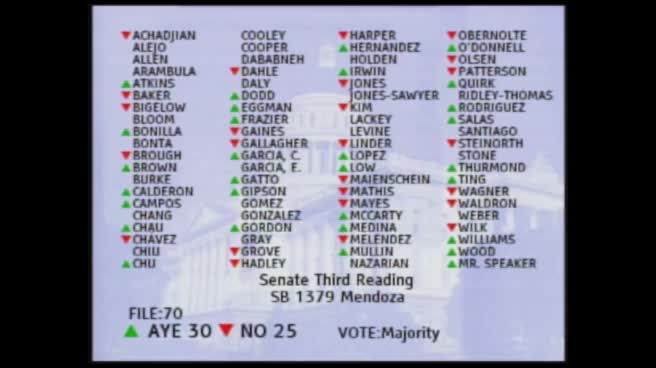 1MIN
Assembly Floor
 1MIN
Senate Floor
 1MIN
Senate Floor
Bill Author

Bill Co-Author(s):